Experimental and Numerical Assessment of Bamboo–Coir Hybrid Composite Panels for Formwork Systems

 , ,
, ,  ,
,
Abstract
1. Introduction
2. Materials and Methods
2.1. Constituent Materials
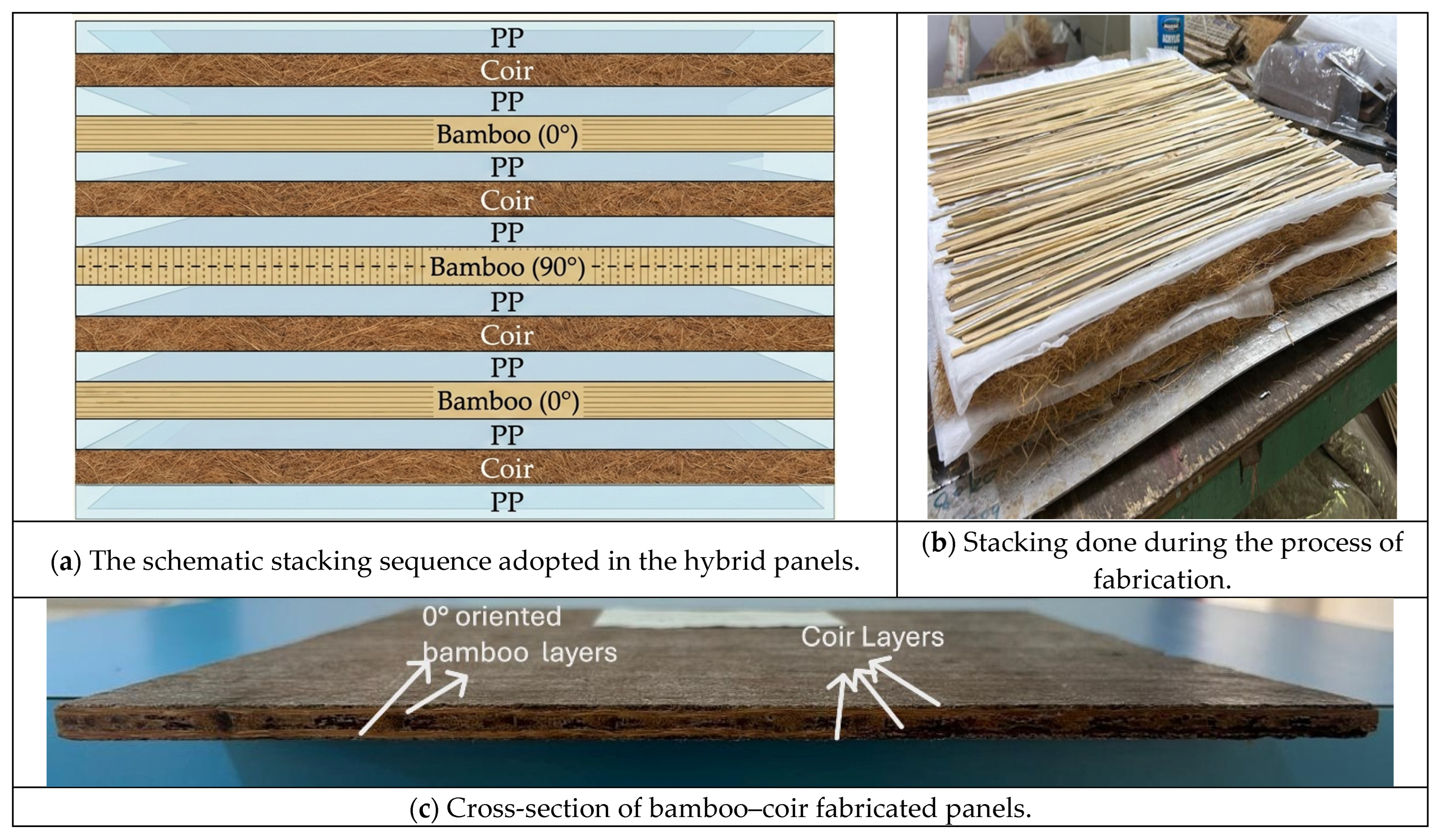
2.2. Panel Fabrication and Fiber Distribution Ratios
2.3. Formwork-Related Mechanical Testing
2.4. Fracture Testing Process
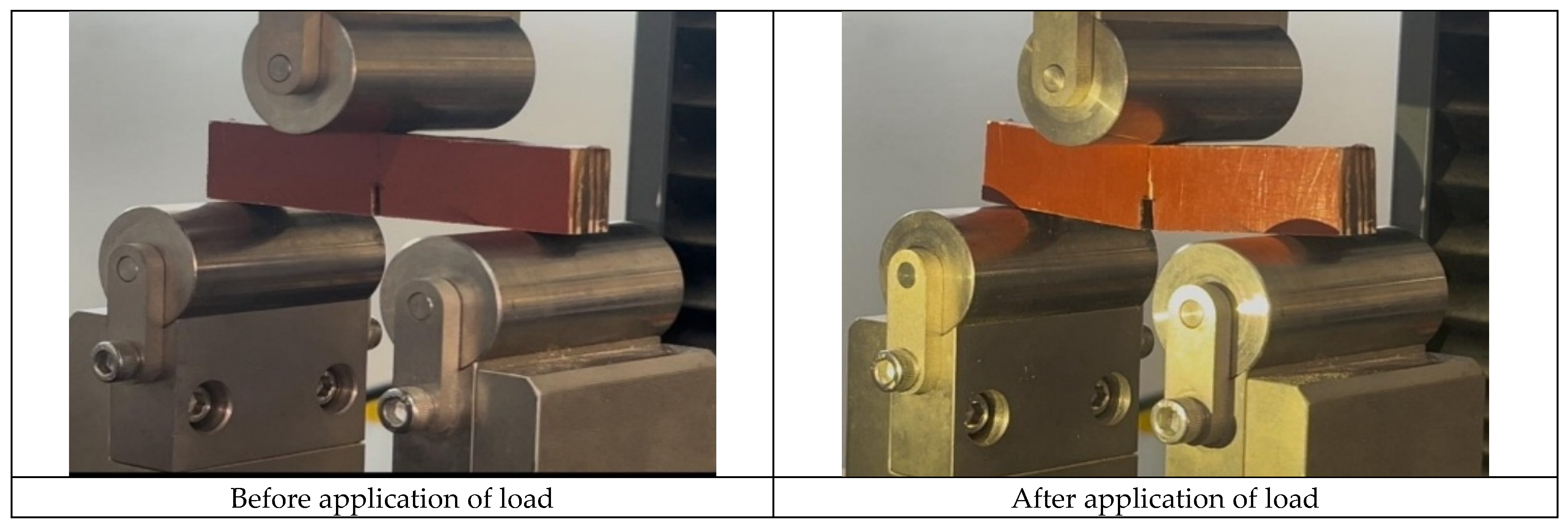
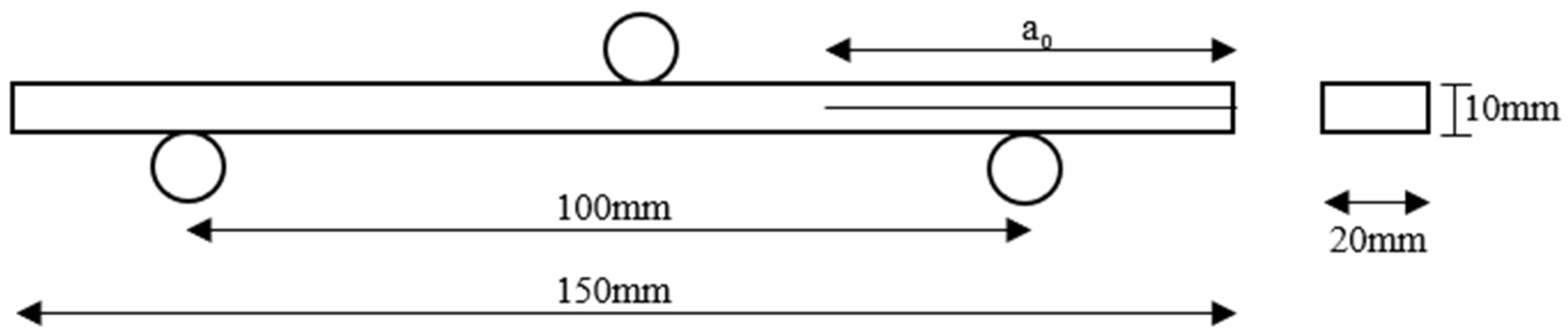
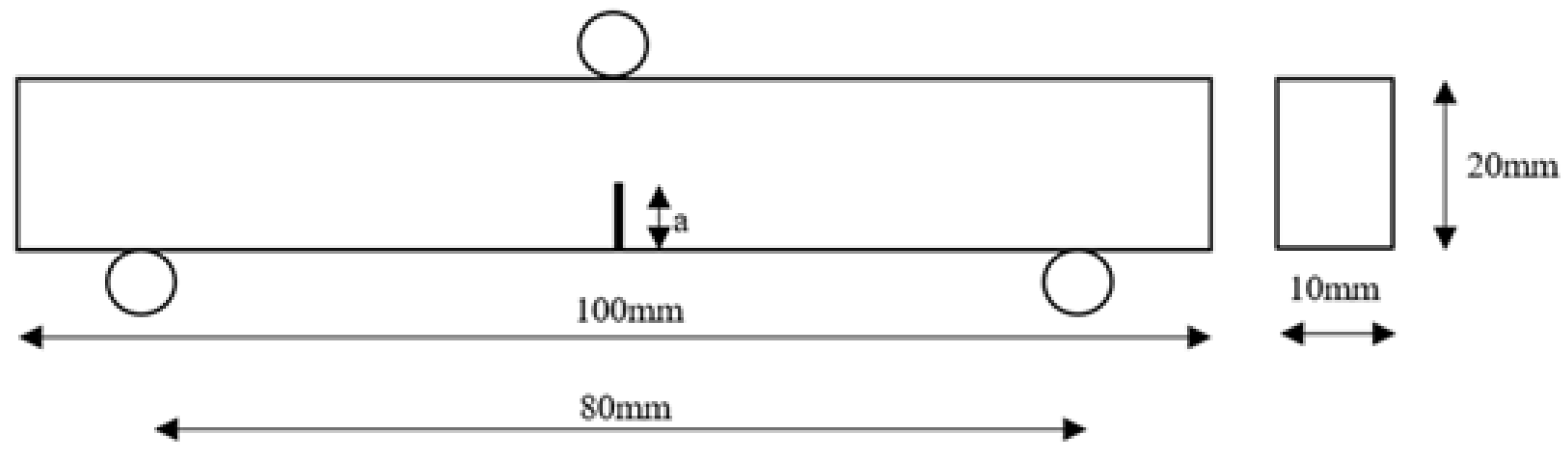
2.4.1. Mode I Fracture Testing (SENB)
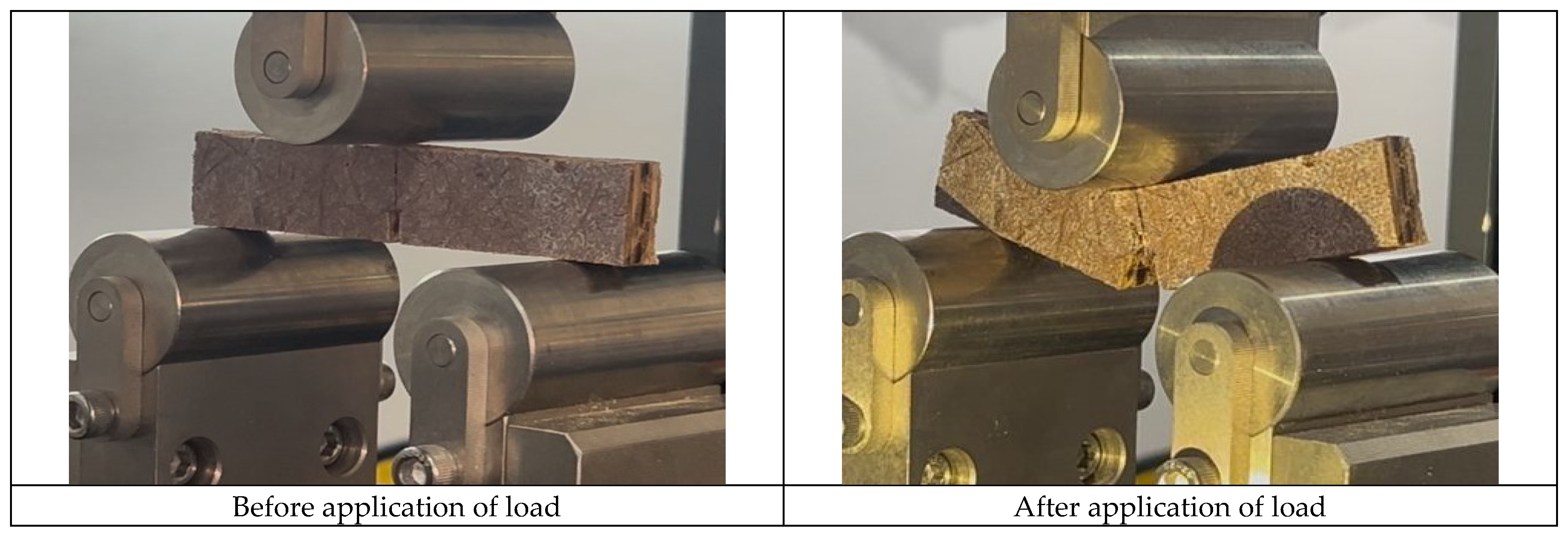
2.4.2. Mode II Fracture Testing (ENF)
2.5. Finite Element Modeling Methodology
2.6. Scanning Electron Microscopic Analysis
3. Results and Discussion
3.1. Physical and Durability Properties
3.2. Mechanical Performance of Hybrid Panels
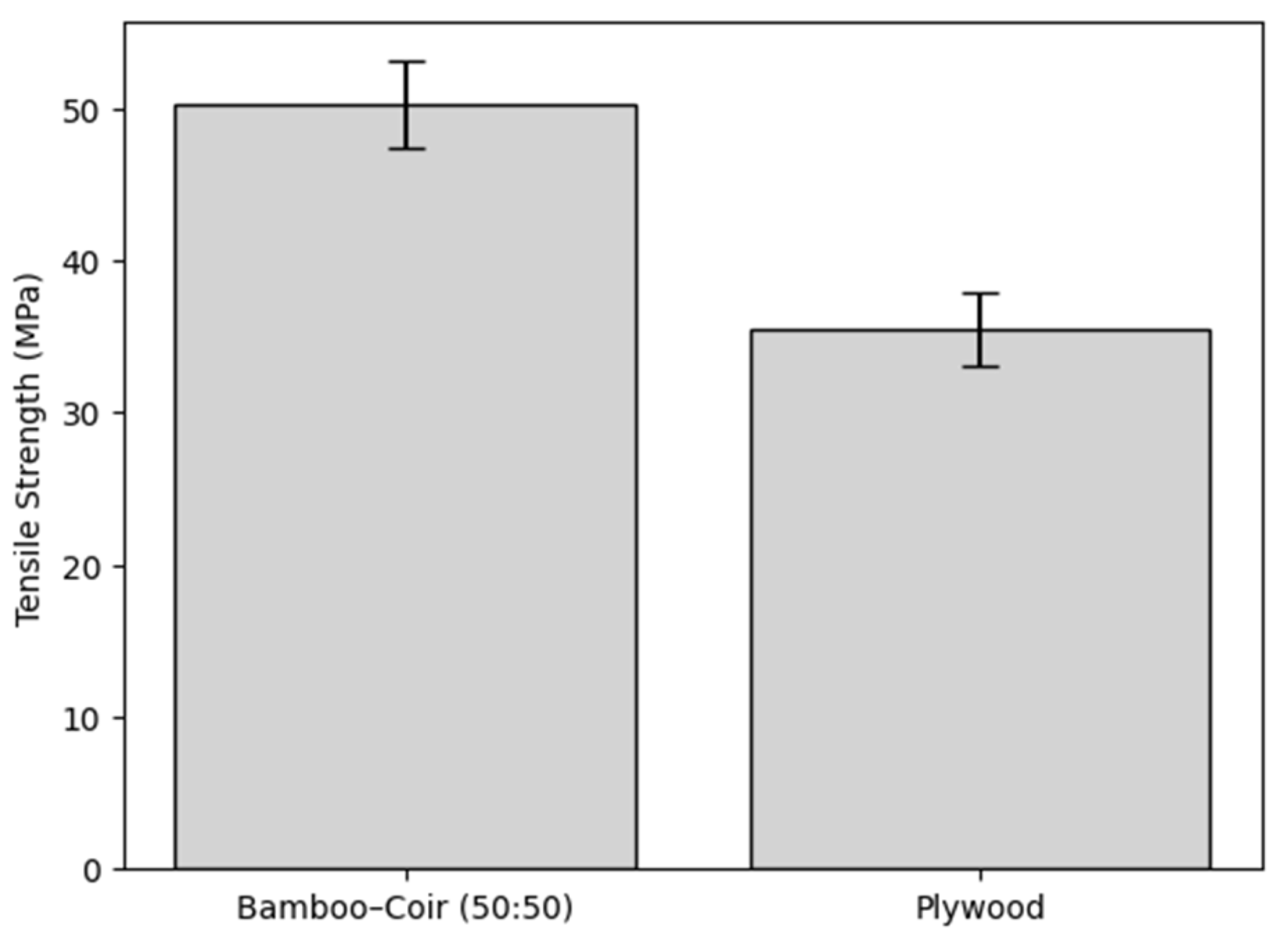
3.2.1. Tensile Behavior
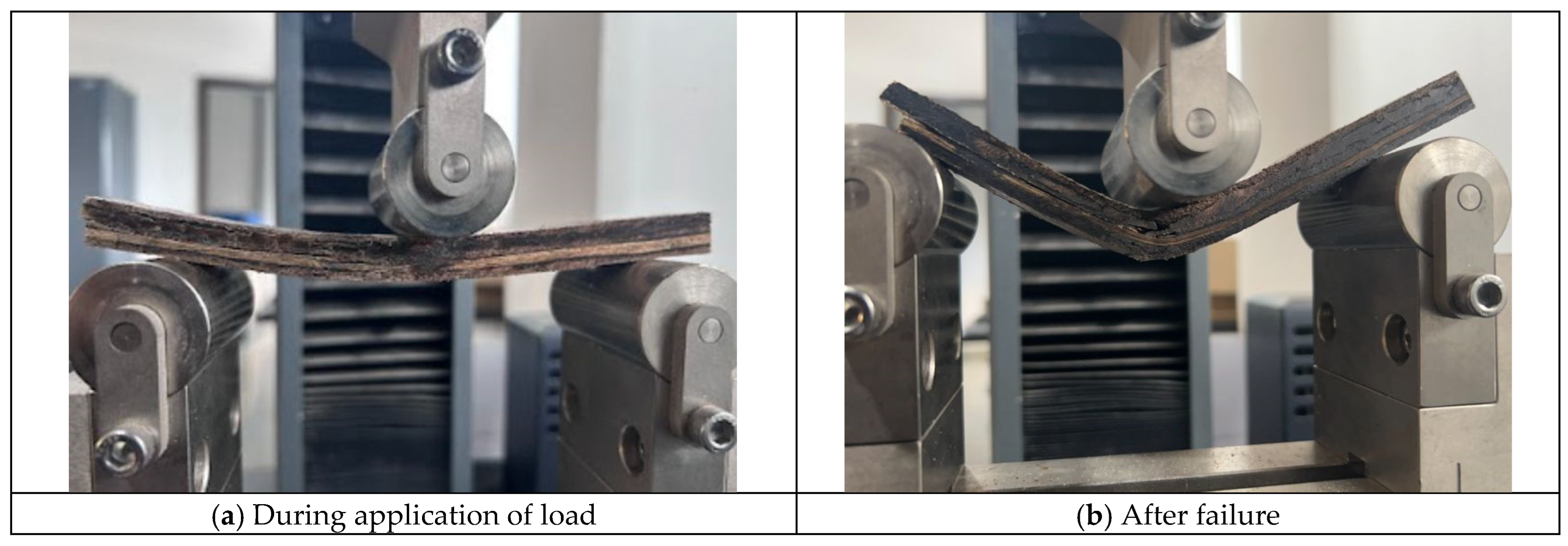
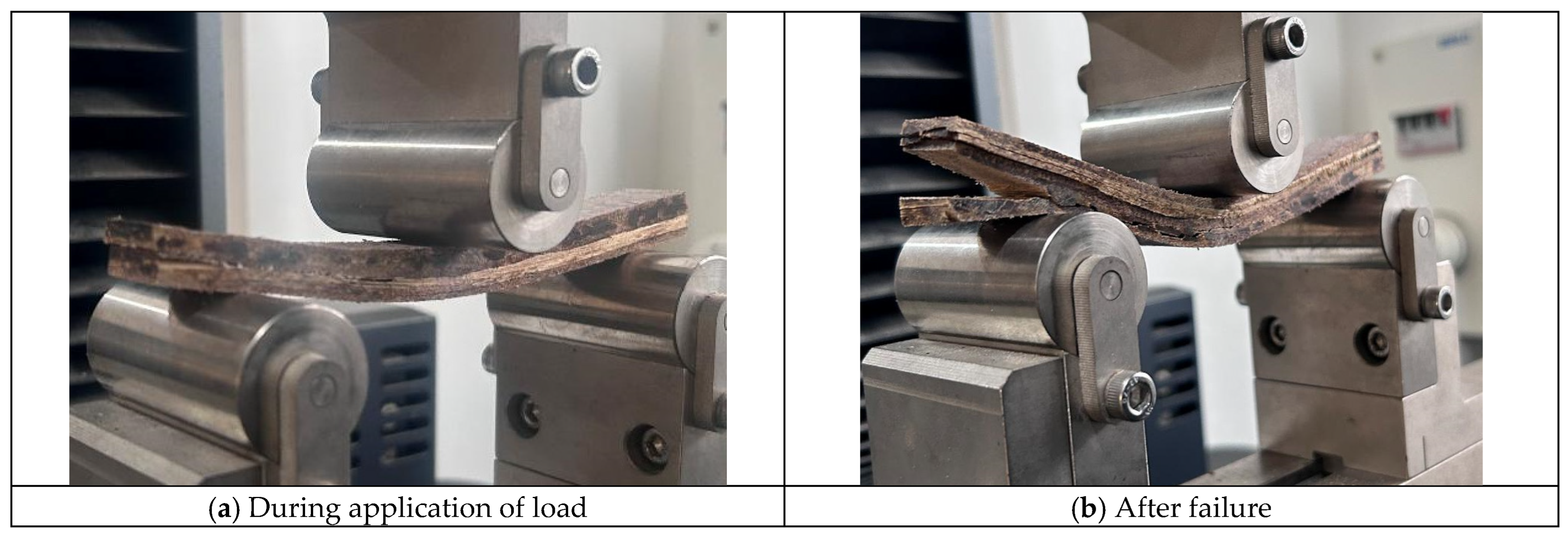
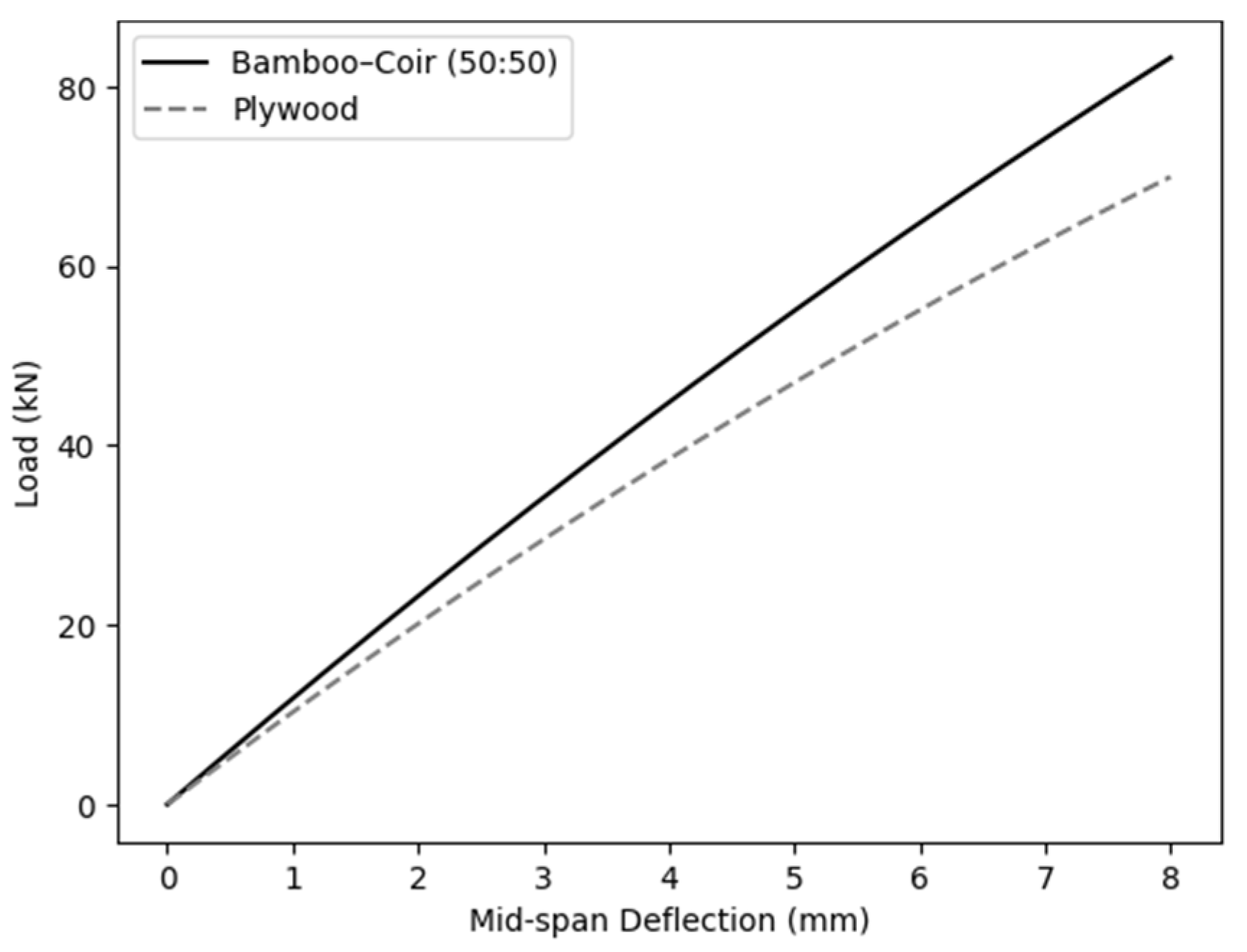
3.2.2. Flexural Behavior
3.2.3. Impact Behavior
3.3. Fracture Studies
3.3.1. Mode I Fracture Behavior (SENB)
- Experimental Results of Mode I Test
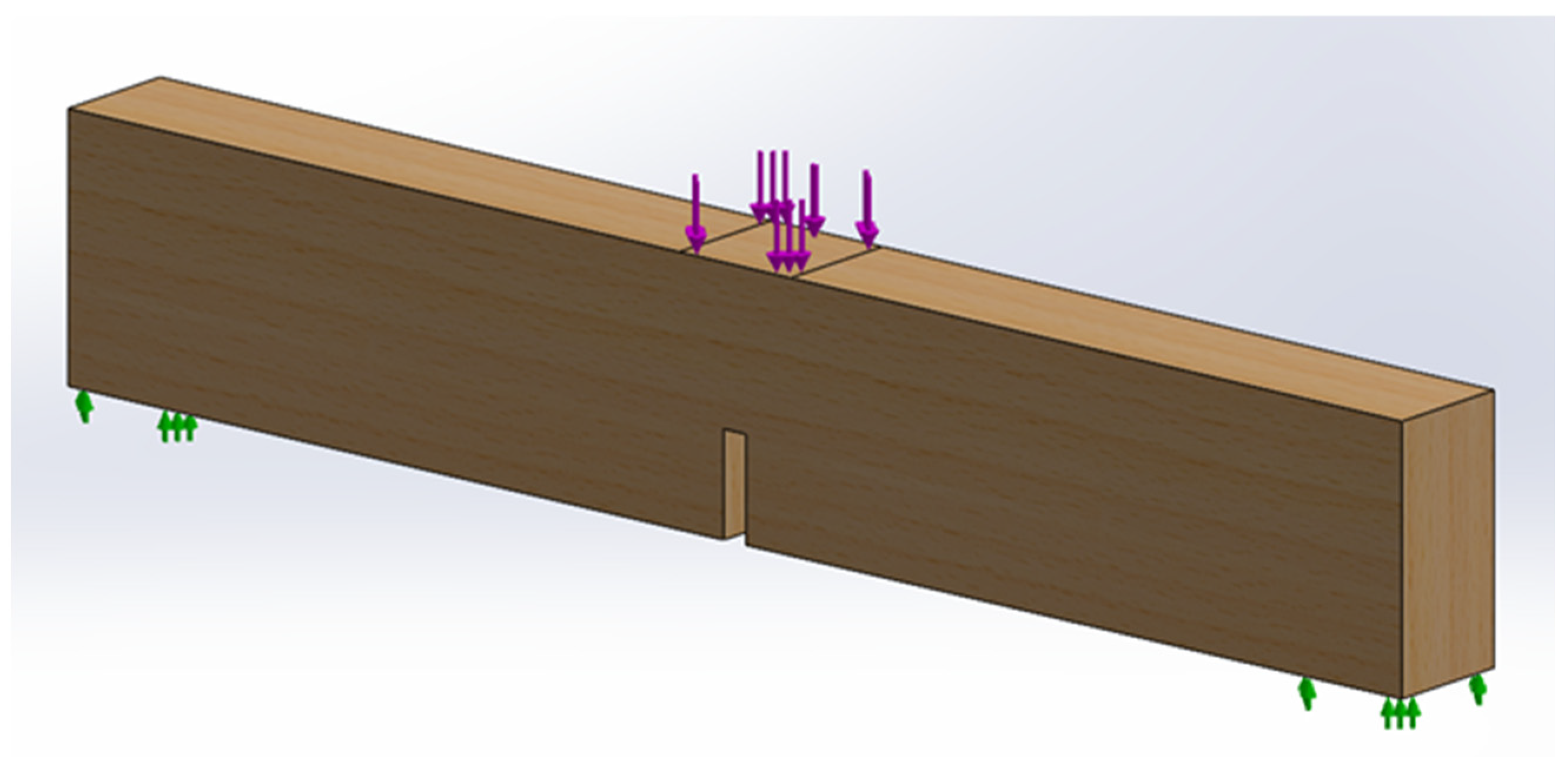
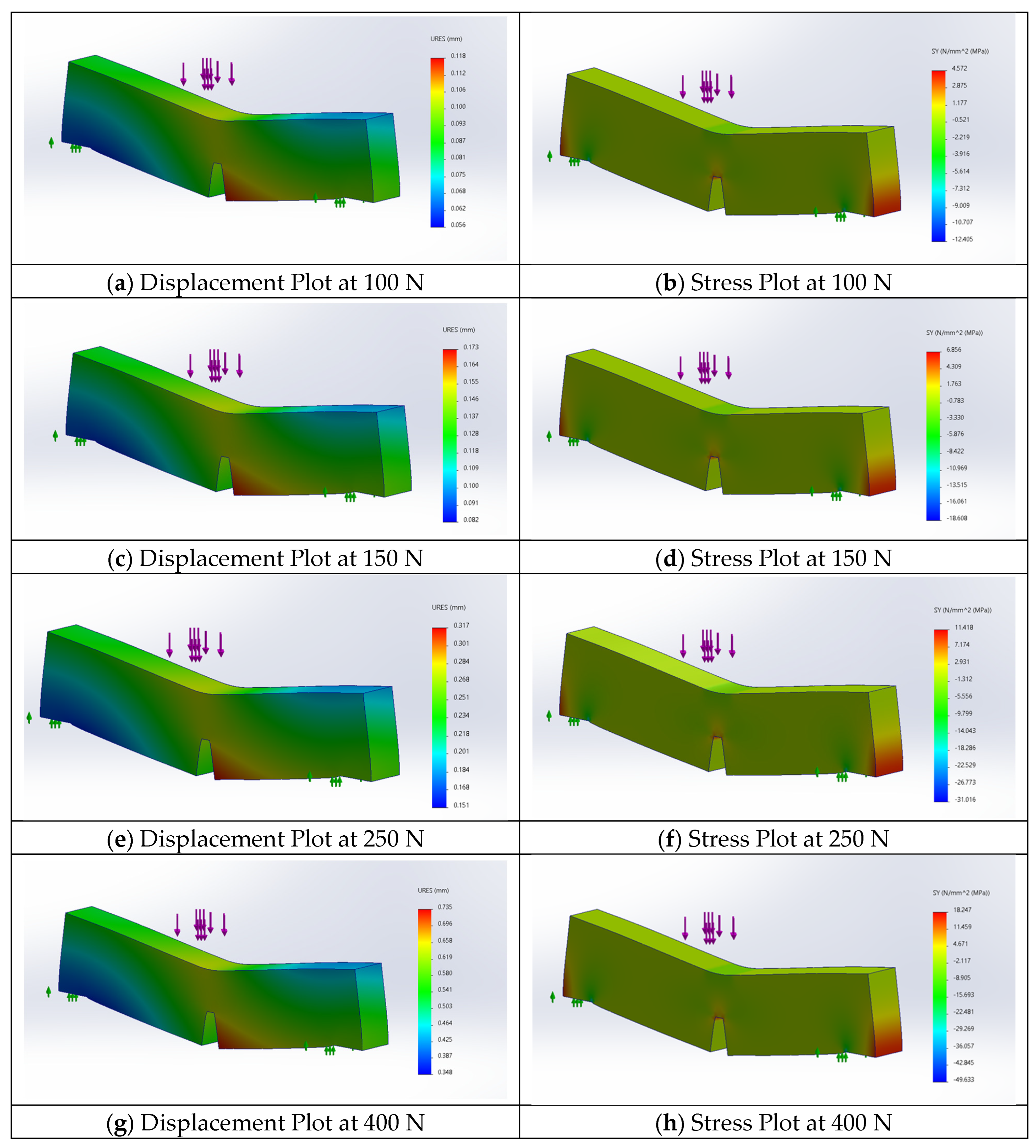
- Finite Element Analysis of Mode I Test
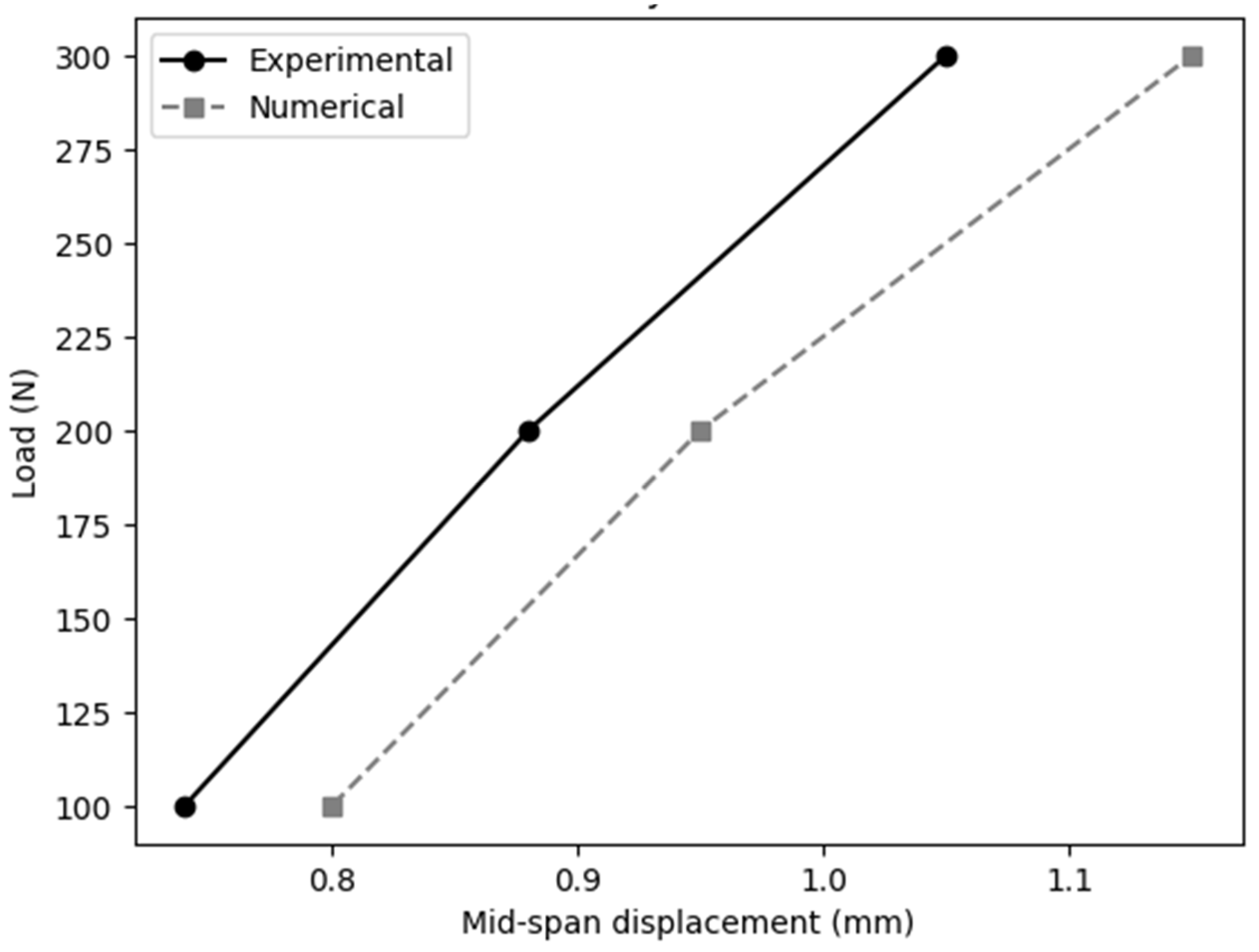
- Comparison between Experimental and Analytical Results (SENB)
3.3.2. Mode II Fracture Behavior (ENF)
- Experimental Results of Mode II test
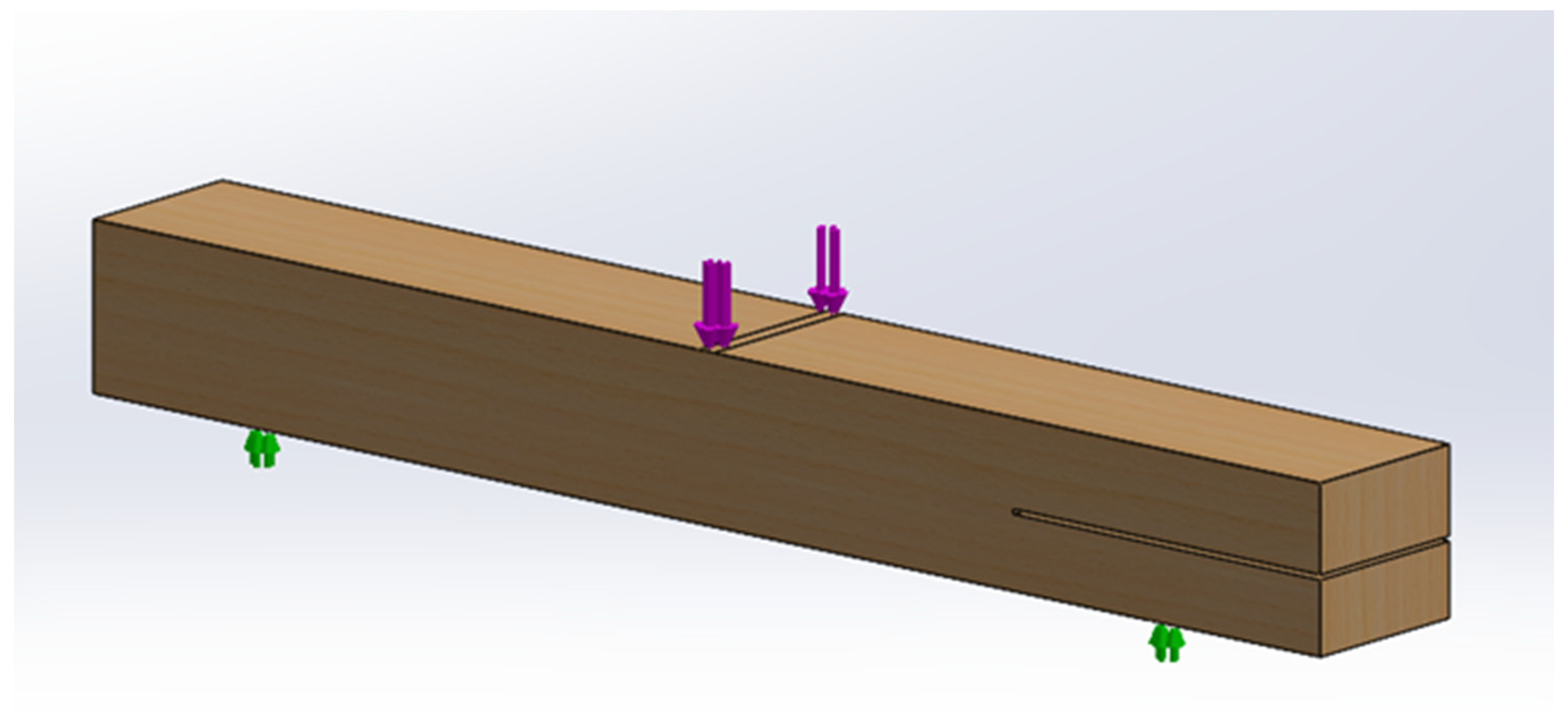
- Finite Element Analysis of Mode II Test
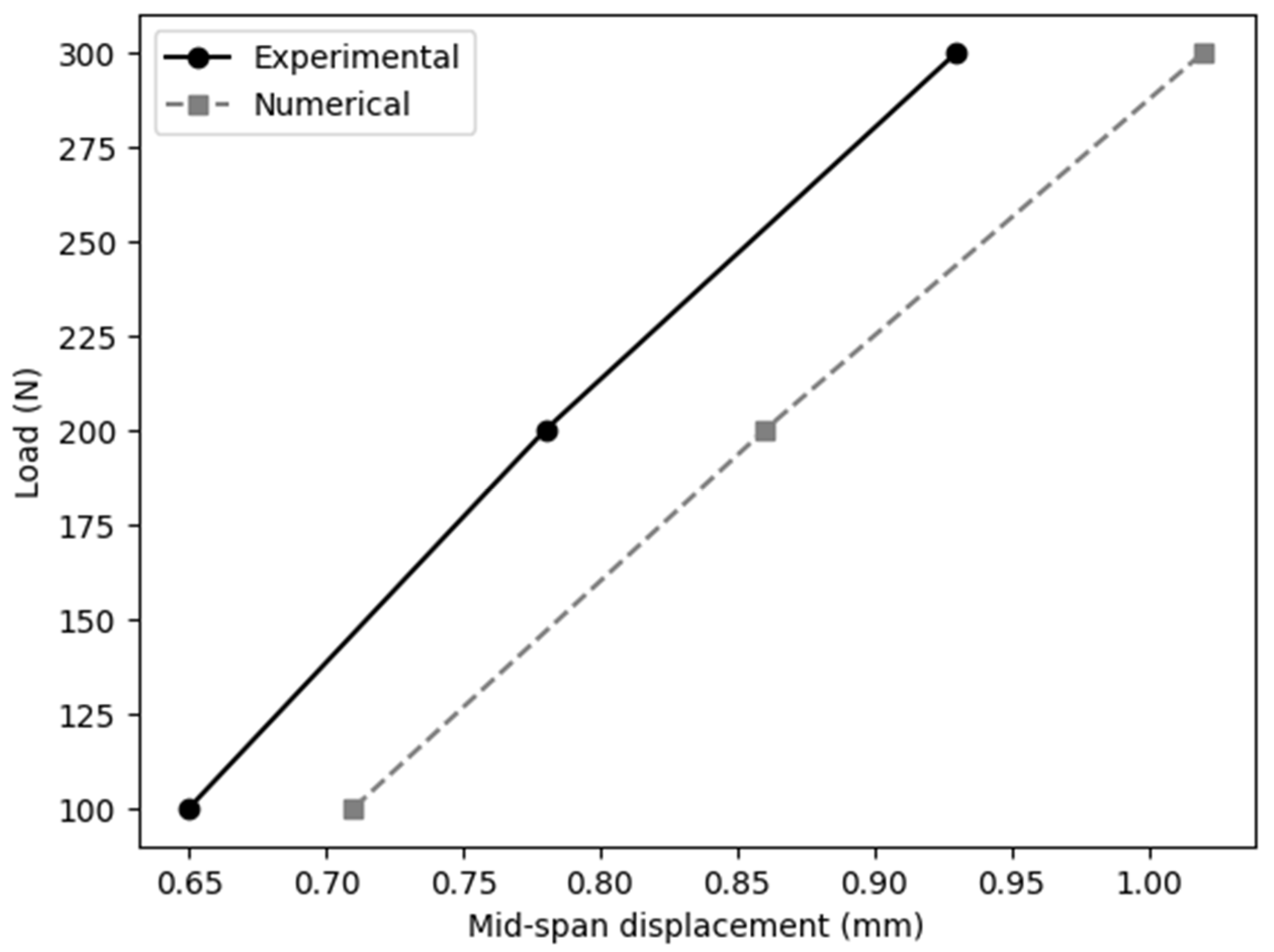
- Comparison between Experimental and Analytical Results (ENF)
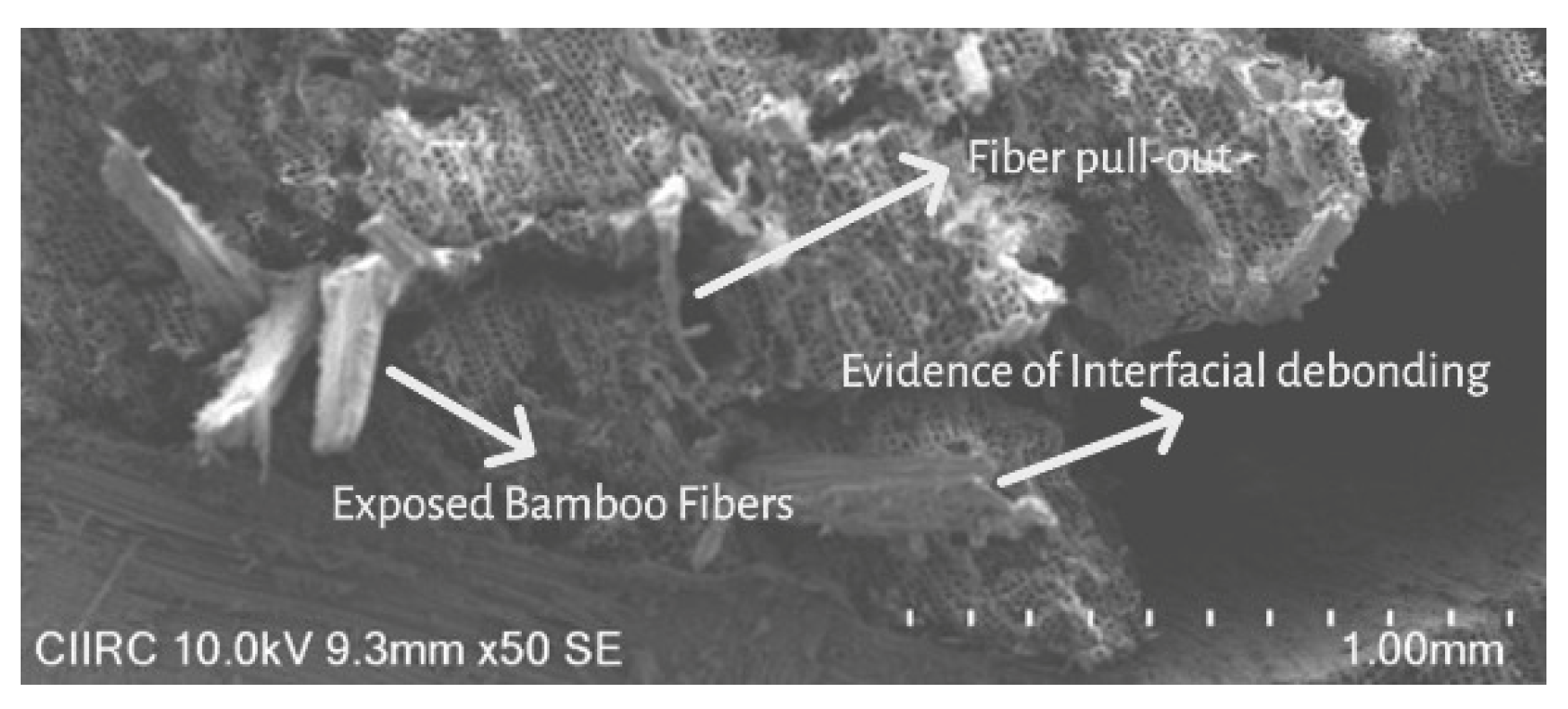
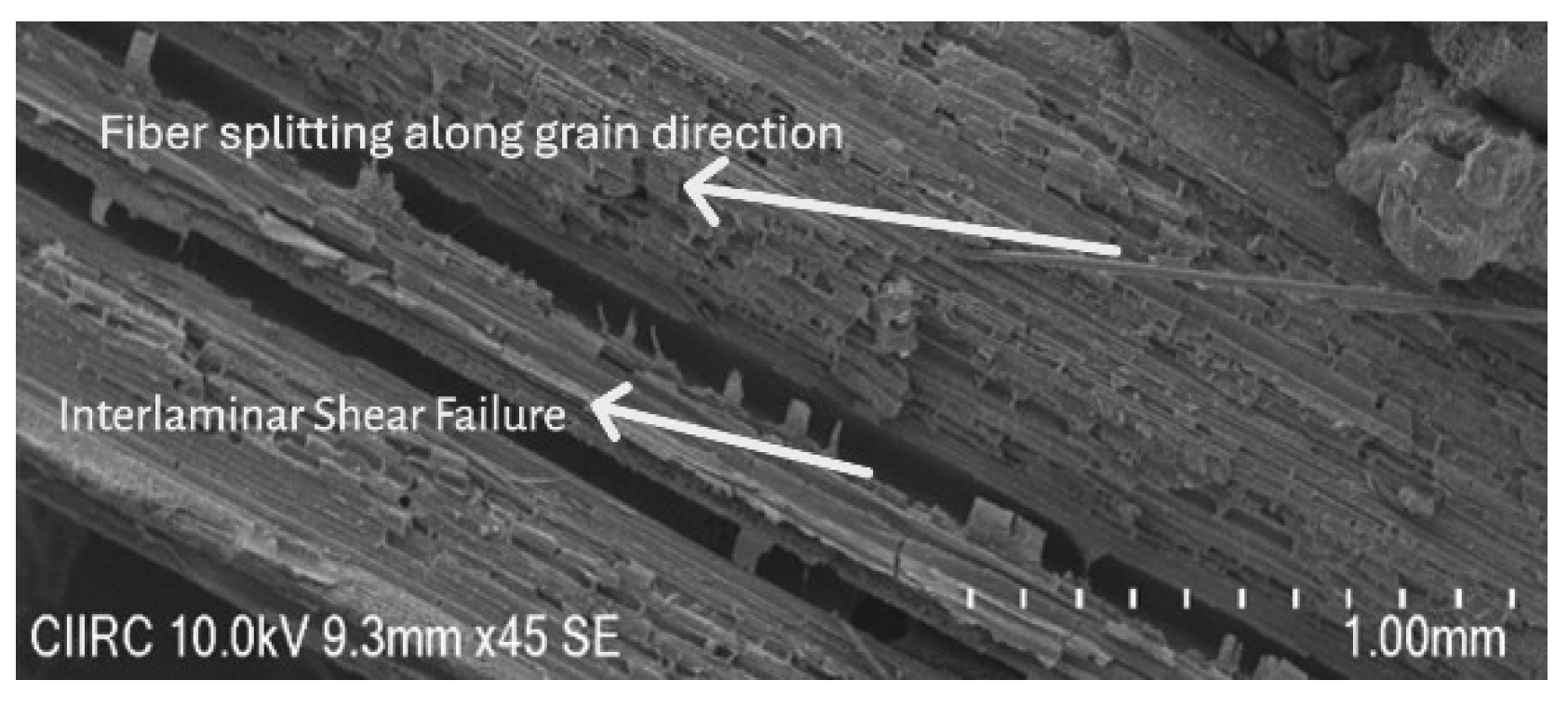
3.3.3. SEM Analysis Results
4. Conclusions
- Bamboo–coir hybrid panels fabricated with a 50:50 fiber distribution exhibited densities in the range of 805–816 kg/m3, which are closely comparable to those of plywood (801–820 kg/m3). This similarity ensures equivalent handling characteristics for formwork applications. The achieved density reflects the combined influence of bamboo strip packing and the inherent porosity of the coir mat within the polymer matrix, resulting in mass characteristics comparable to laminated wood products.
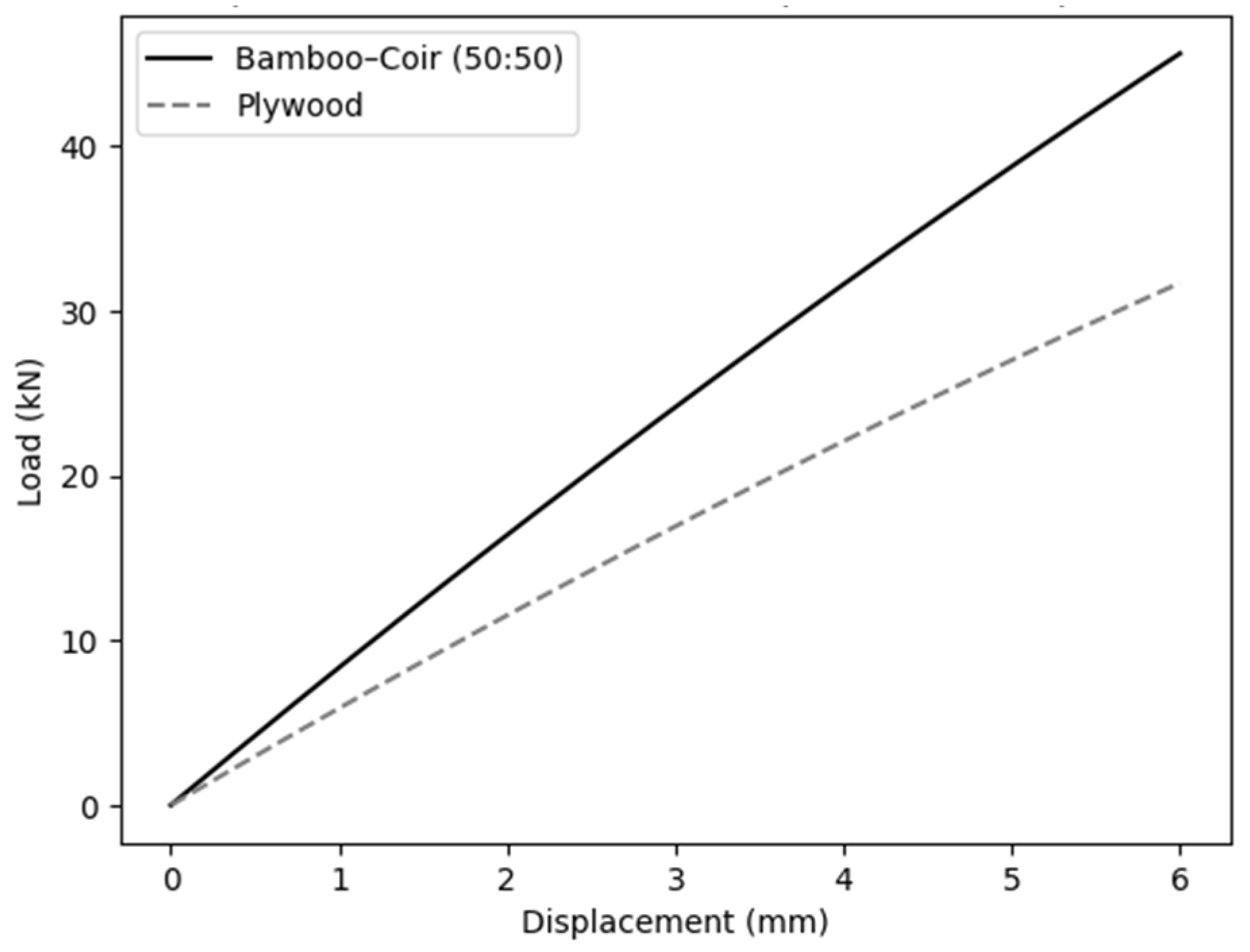
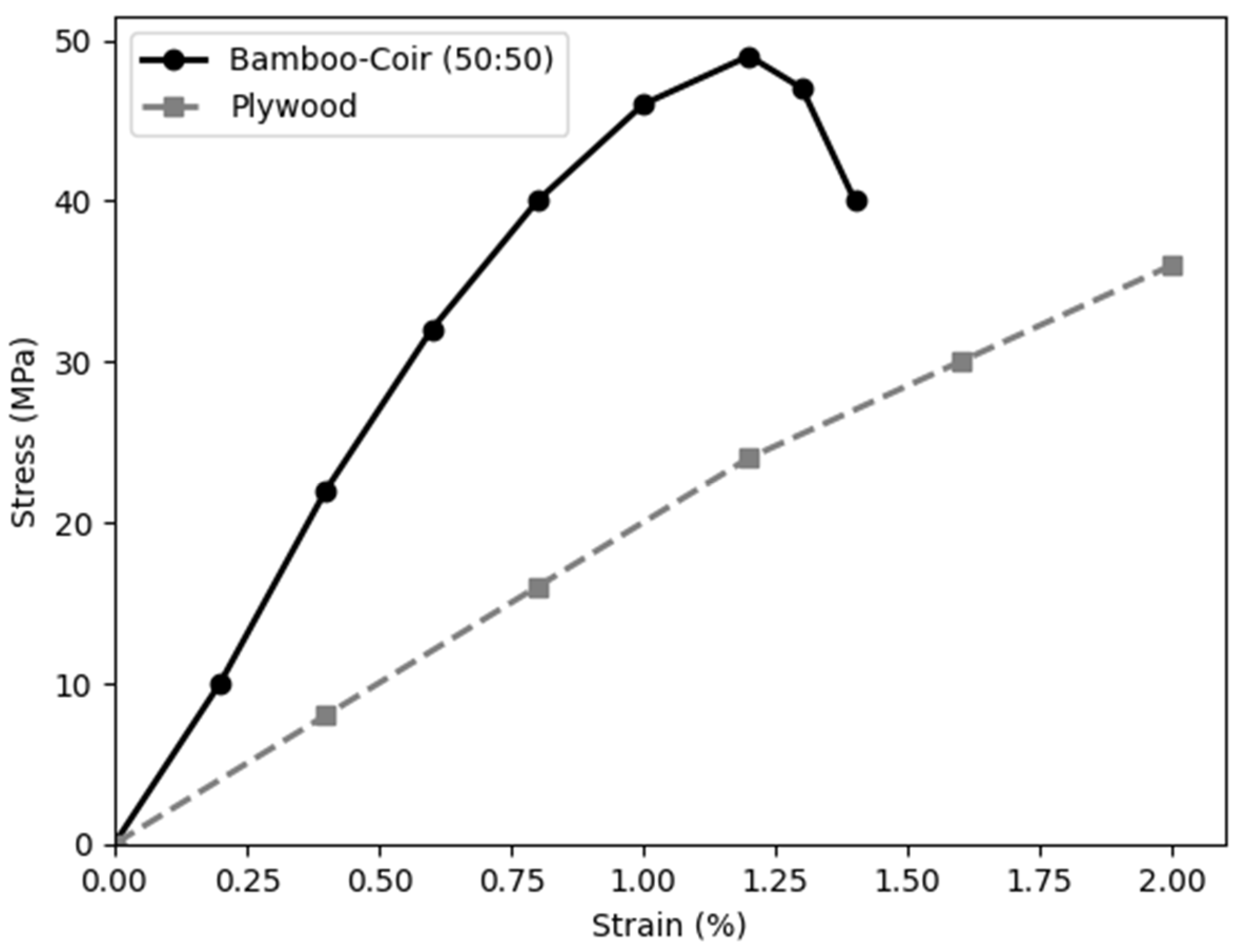
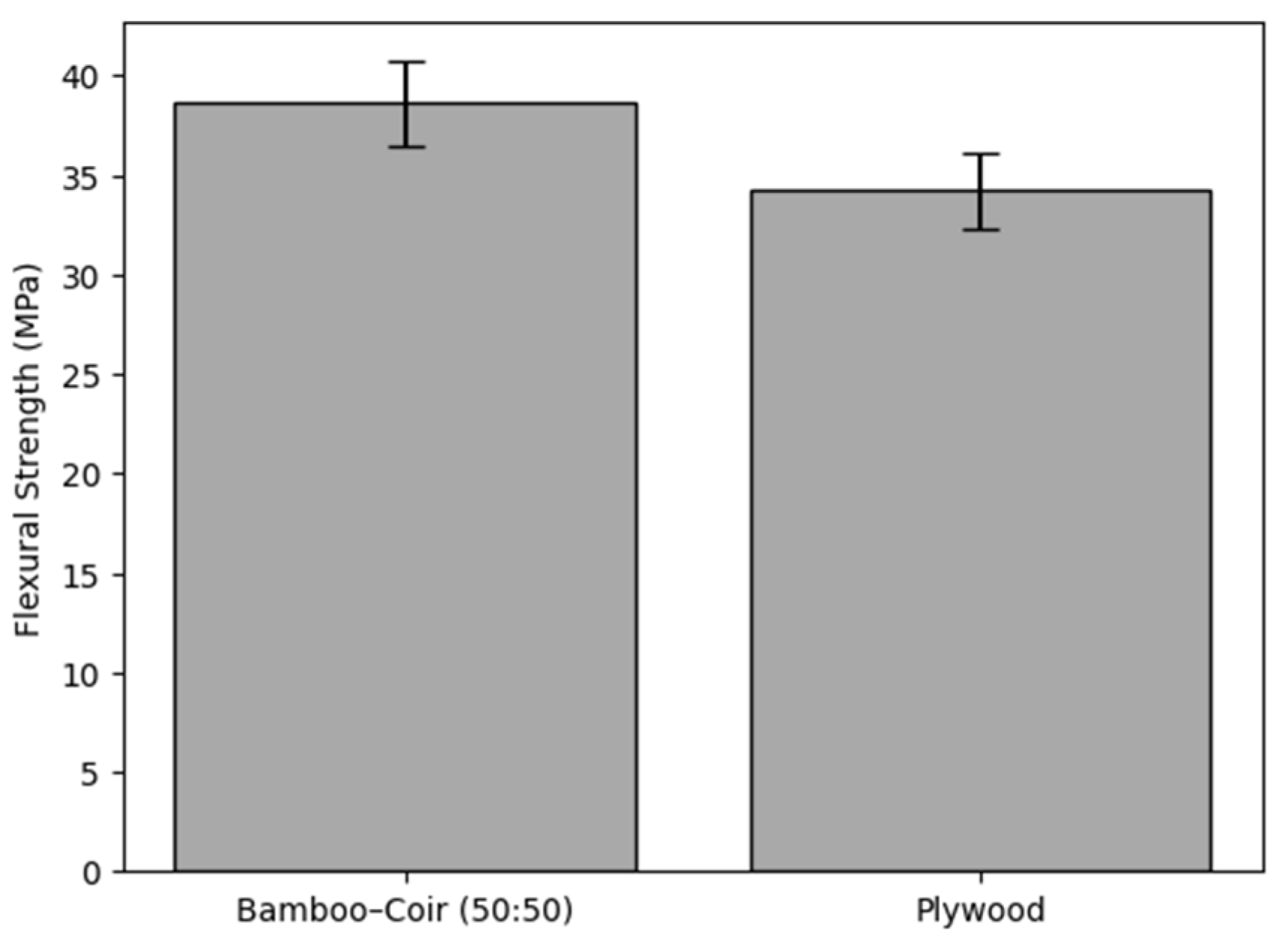
- The hybrid panels demonstrated higher tensile and flexural strengths, measuring 50.20 ± 2.85 MPa and 38.60 ± 2.10 MPa, respectively, compared to 35.40 ± 2.40 MPa and 34.20 ± 1.95 MPa for plywood. This improvement is attributed to efficient axial load transfer through bamboo fibers and enhanced transverse stress redistribution provided by the coir fibers within the hybrid architecture.
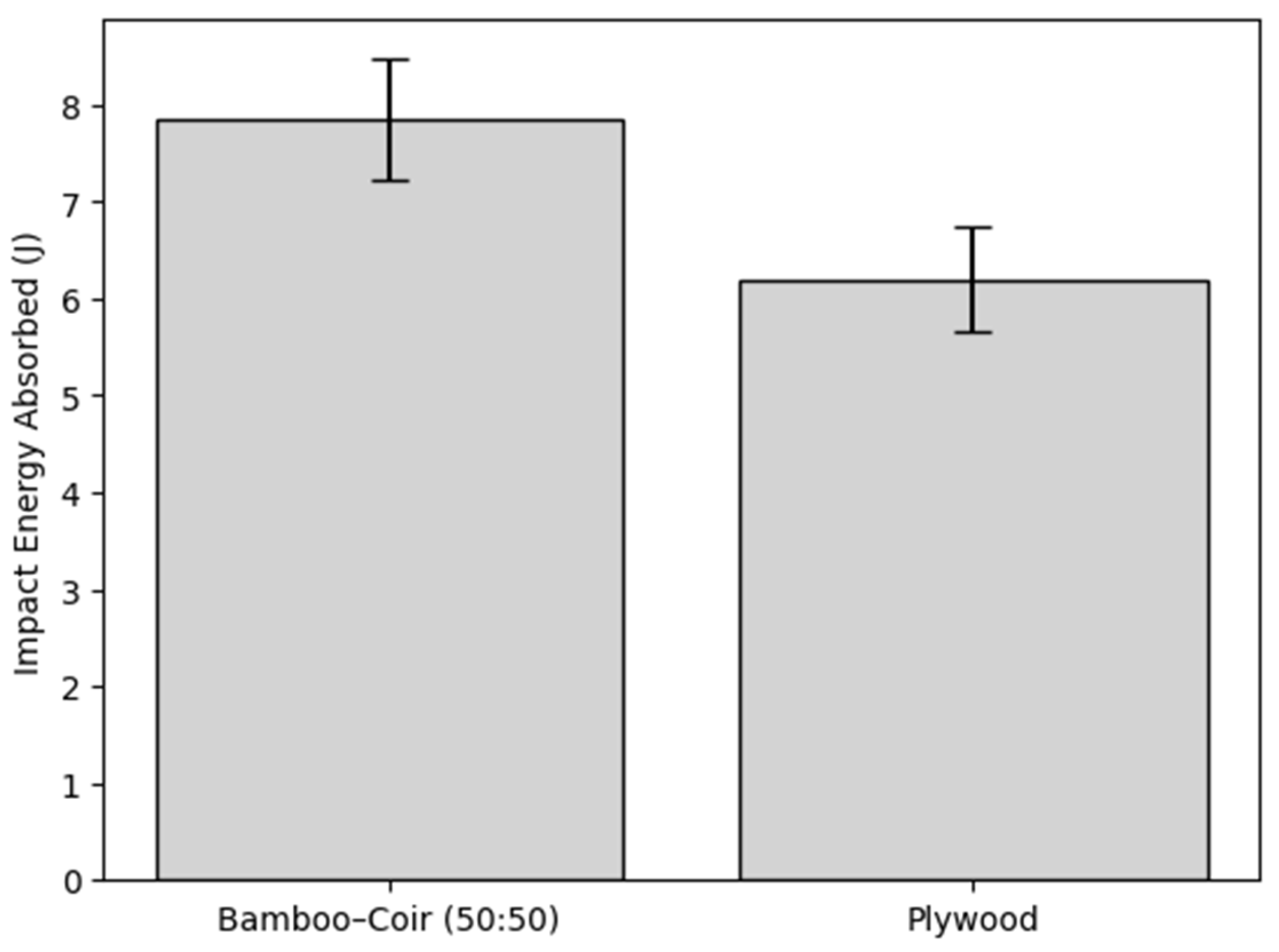
- Impact resistance of the hybrid panels was significantly higher, with absorbed energy values ranging from 7.23 to 8.47 J, compared to 5.65 to 6.75 J for plywood. The increased energy absorption is associated with fiber pull-out, matrix deformation and interfacial friction mechanisms activated during impact loading.
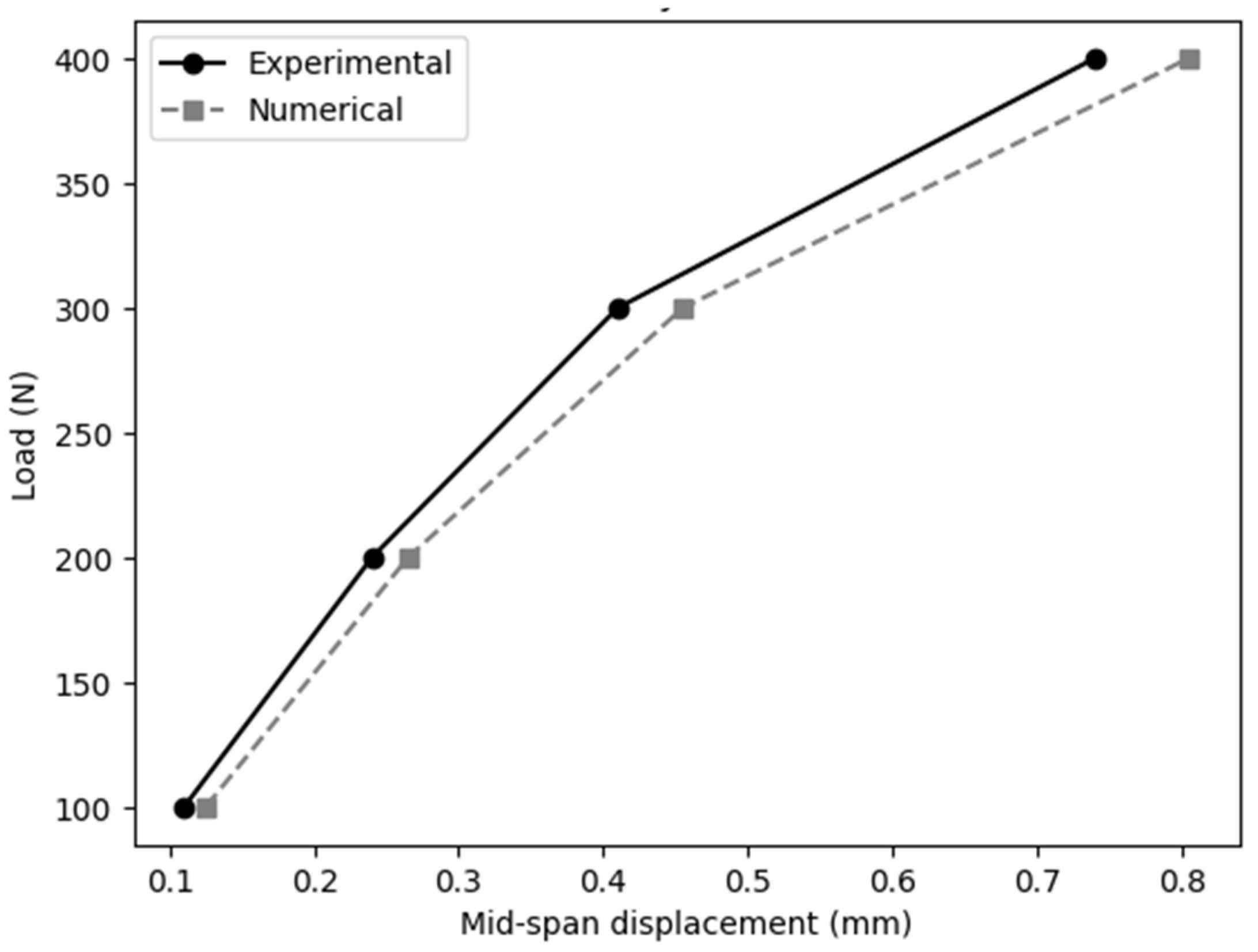
- Mode I fracture behavior obtained from SENB testing showed critical loads of 395.80 ± 14.95 N, critical displacements of 0.74 ± 0.03 mm and GIc values in the range of 432–478 J/m2 for the hybrid panels. In comparison, plywood exhibited lower critical loads (355–392 N), critical displacements of 0.62–0.72 mm and GIc values between 398 and 438 J/m2.
- Mode II fracture testing using the ENF configuration yielded GIIc values of 742–842 J/m2 for the hybrid panels and 661–746 J/m2 for plywood, with corresponding critical displacements of 0.82–0.93 mm and 0.73–0.82 mm, respectively, indicating enhanced resistance to interlaminar shear fracture in the hybrid system.
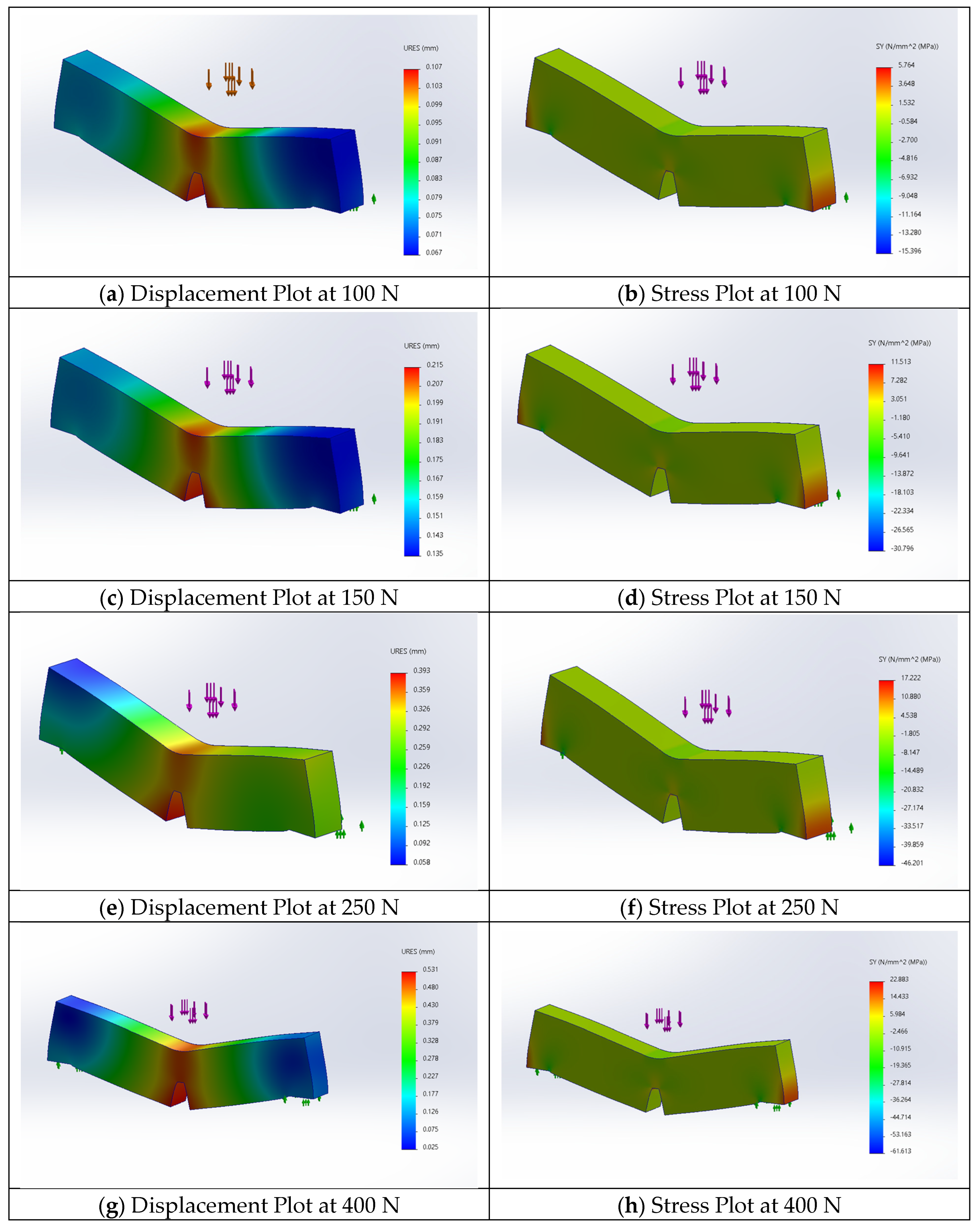
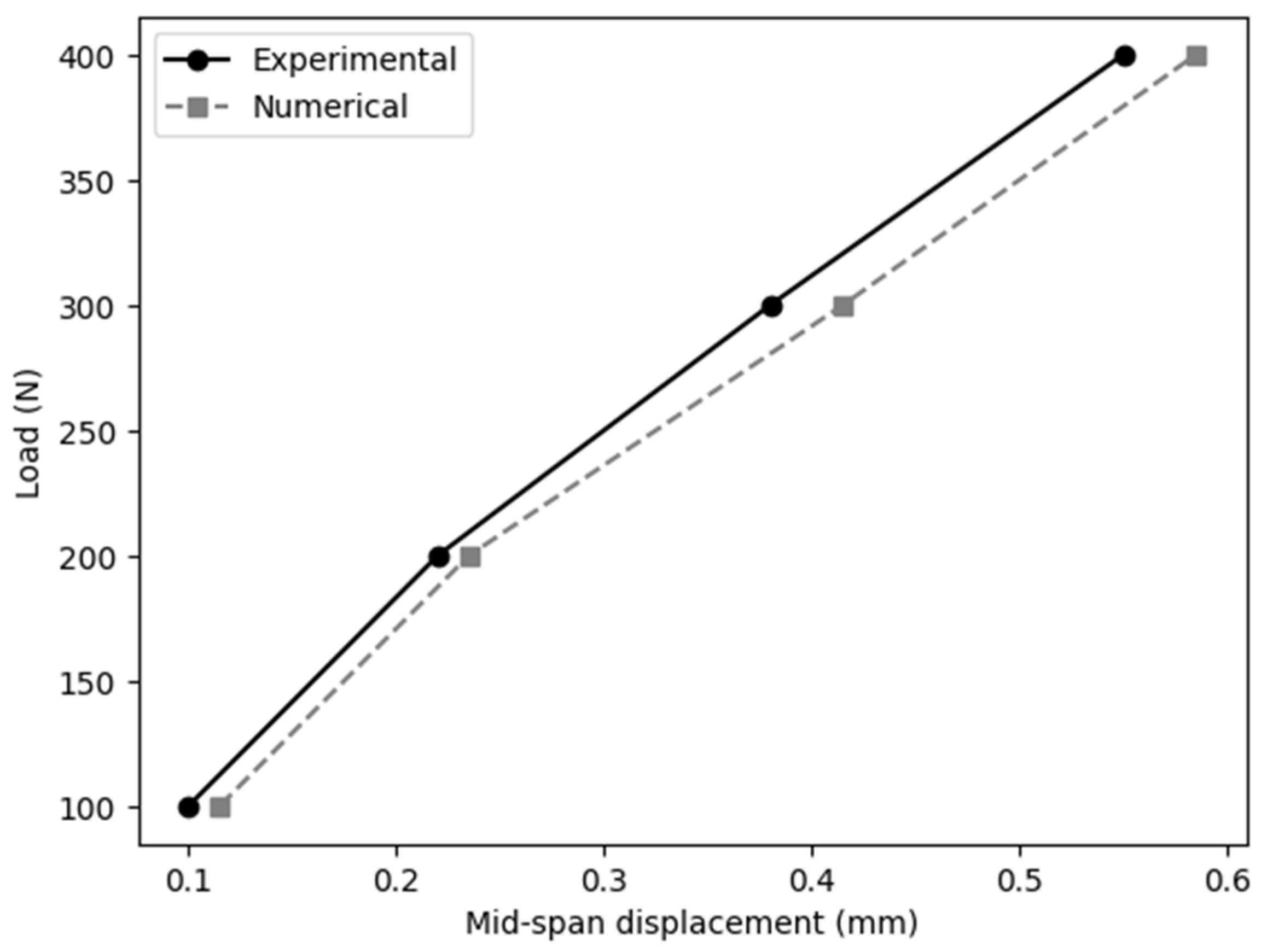
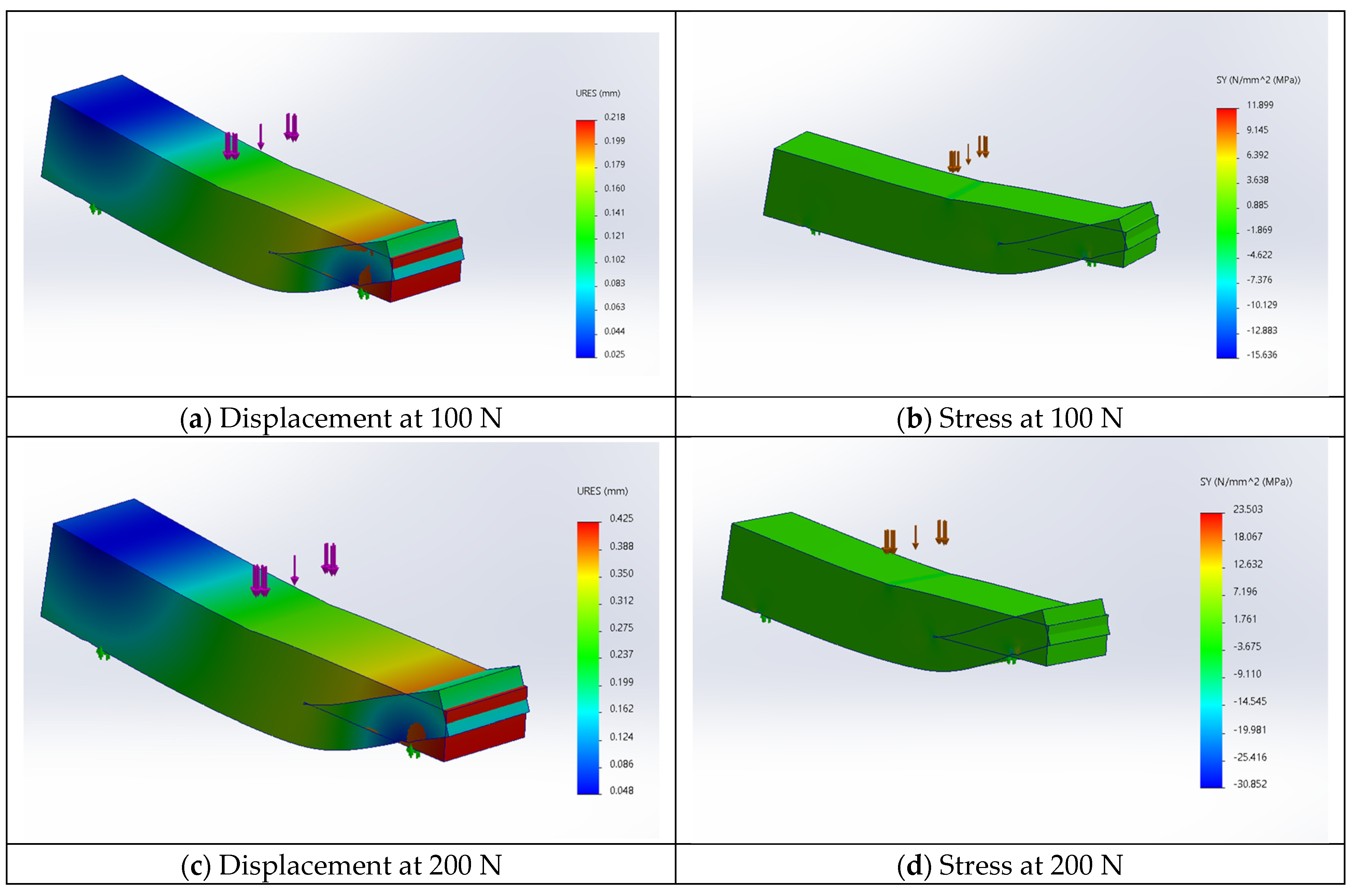
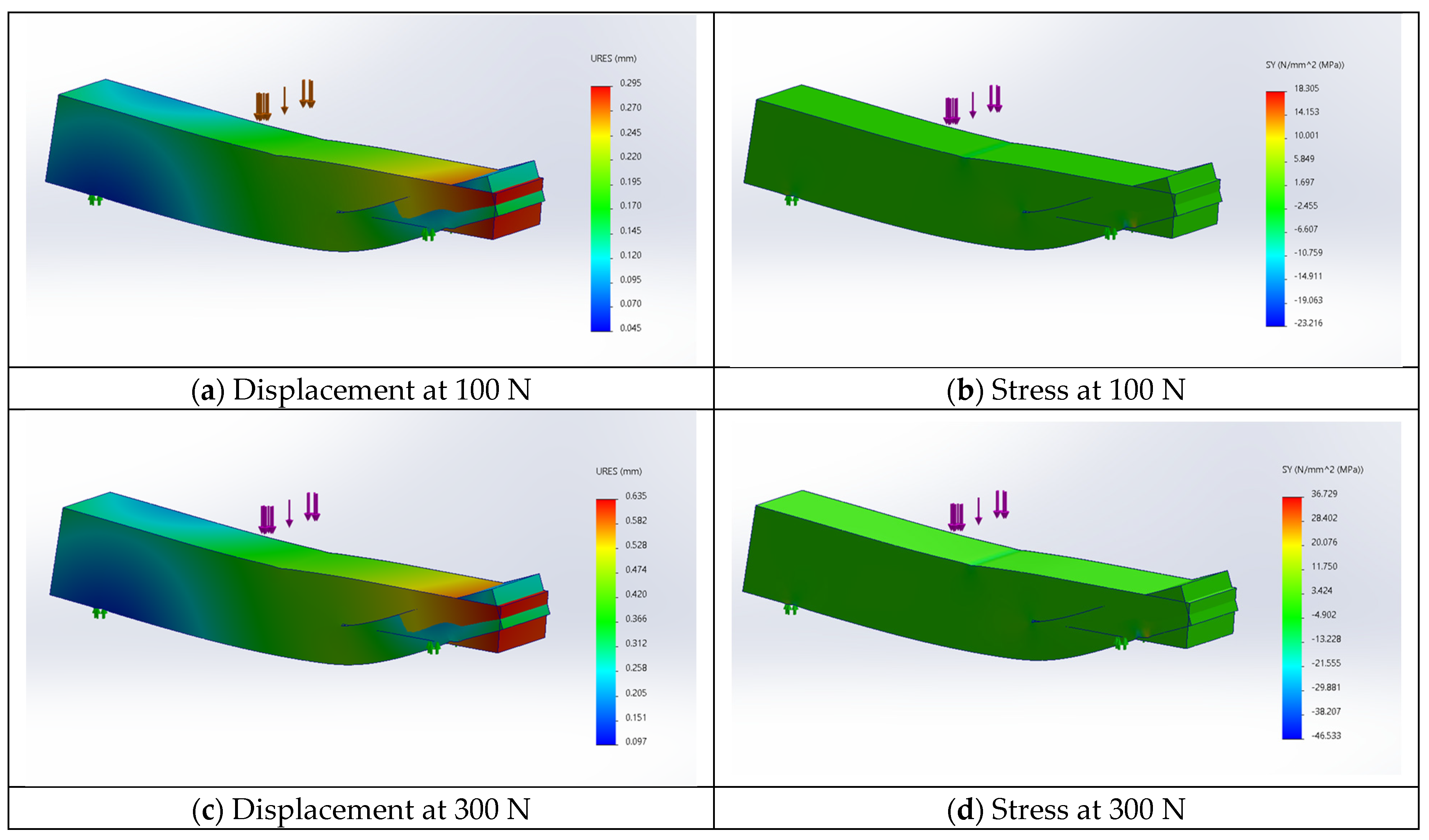
- Finite element simulations successfully reproduced the experimental load–displacement responses for both SENB and ENF configurations, with numerical deviations limited to approximately 5–13%, which is considered acceptable for LEFM-based modeling approaches.
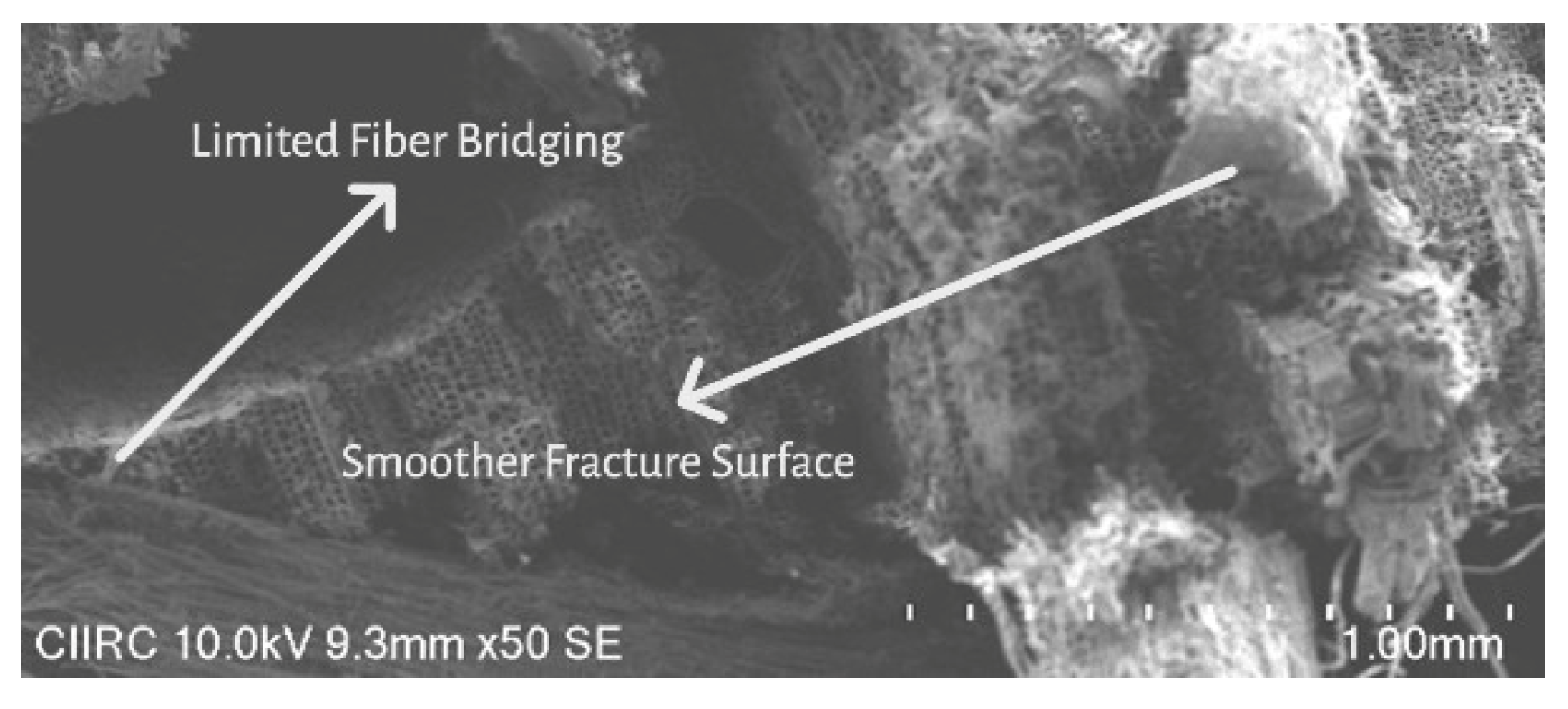
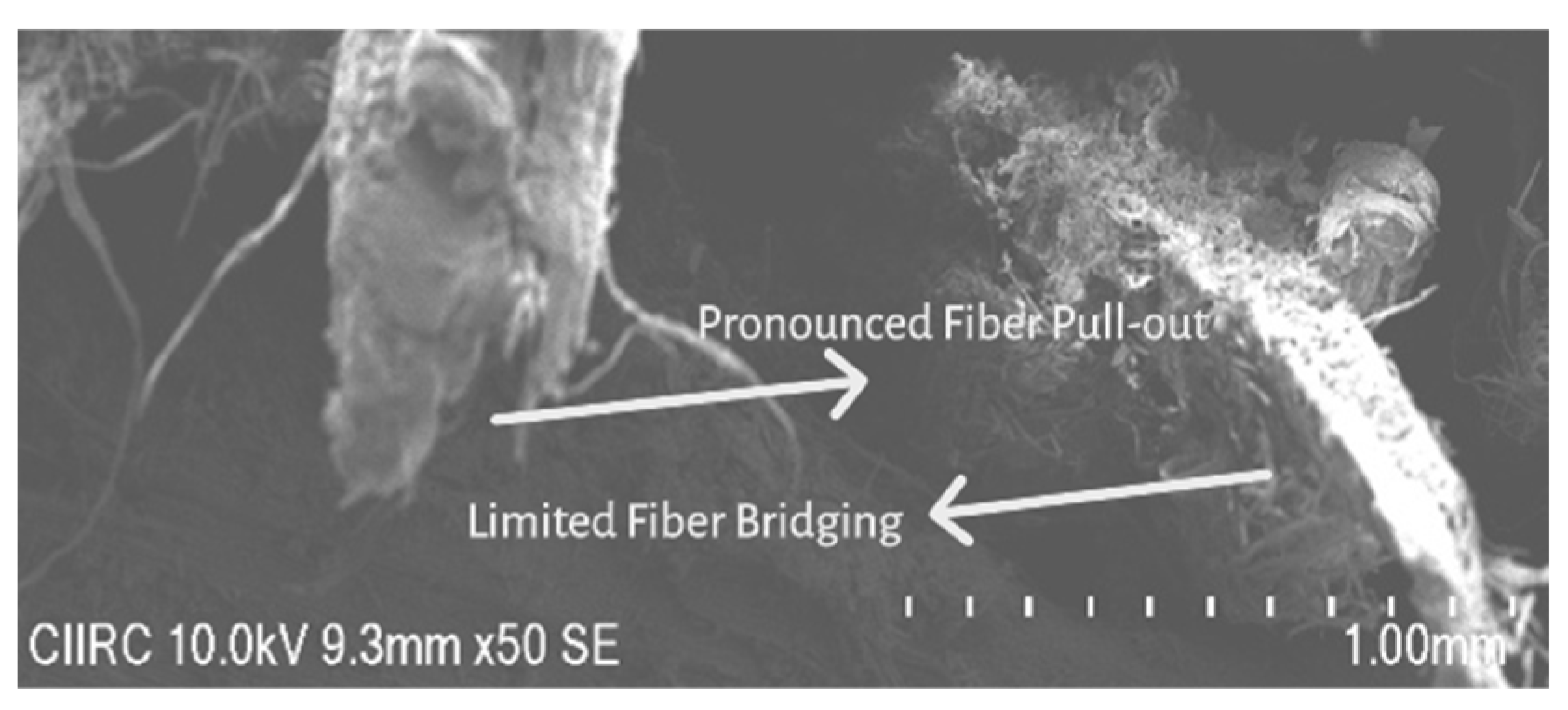
- SEM observations revealed extensive fiber bridging, coir fiber pull-out and interfacial sliding in the hybrid panels, consistent with the higher fracture energy absorption measured experimentally, with Mode I fracture energies of approximately 450–480 J/m2 and Mode II fracture energies of 780–820 J/m2. In contrast, plywood exhibited predominantly interlaminar fracture surfaces, corresponding to lower fracture energy values of about 400–430 J/m2 in Mode I and 670–710 J/m2 in Mode II.
Author Contributions
Funding
Data Availability Statement
Conflicts of Interest
References
- Worku, T.T. Formwork material selection and optimization by a comprehensive integrated subjective–objective criteria weighting MCDM model. Discov. Mater. 2025, 5, 2. [Google Scholar] [CrossRef]
- Baskaran, D.; Chockkalingam, U.; Senthil Muthalvan, R. Assessment of sustainable hybrid formwork systems using life cycle assessment and the wear-out coefficient—A case study. Buildings 2025, 15, 1630. [Google Scholar] [CrossRef]
- Cordier, M.; Johannsen, N.; Kietz, B.; Berthold, D.; Mai, C. Plywood manufacturing using various combinations of hardwood species. Forests 2025, 16, 622. [Google Scholar] [CrossRef]
- Wang, Q.; Wang, Z.; Feng, X.; Zhao, Y.; Li, Z. Mechanical properties and probabilistic models of wood and engineered wood products: A review of green construction materials. Case Stud. Constr. Mater. 2024, 21, e03796. [Google Scholar] [CrossRef]
- Karthäuser, J.; Treu, A.; Larnøy, E.; Militz, H.; Alfredsen, G. Fungal decay resistance, formaldehyde emission and weathering resistance of plywood modified with phenol-formaldehyde resin with partial substitution of phenol by pyrolysis cleavage products of softwood kraft lignin. Eur. J. Wood Wood Prod. 2025, 83, 138. [Google Scholar] [CrossRef]
- Carvalho, P.; Aguiar-Branco, J.; Guedes, R.M. Emerging materials for durable and sustainable design of aeronautic structures. Materials 2025, 18, 4922. [Google Scholar] [CrossRef]
- Hosseini, M.; Gaff, M.; Wei, Y.; Tu, C. Engineered bamboo building materials: Types, production, and applications. Forests 2025, 16, 662. [Google Scholar] [CrossRef]
- Nissar, M.; N., C.K.; Birjerane, Y.A.; Patil, S.; Shetty, S.; Das, A. Coconut coir fiber composites for sustainable architecture: A comprehensive review of properties, processing, and applications. J. Compos. Sci. 2025, 9, 516. [Google Scholar] [CrossRef]
- Bai, T.; Yan, J.; Lu, J.; Zhou, J.; Yao, H.; He, X.; Gu, S.; Tong, Z.; Shi, S.Q.; Li, J.; et al. Engineering transverse cell deformation of bamboo by controlling localized moisture content. Nat. Commun. 2025, 16, 4077. [Google Scholar] [CrossRef]
- Li, J.-N.; Singh, A.; Zhou, J.-W.; Zhang, H.-T.; Lu, Y.-C. Size and geometry effects on compressive failure of laminated bamboo: A combined experimental and multi-model theoretical approach. Buildings 2025, 15, 3261. [Google Scholar] [CrossRef]
- Pavlovic, A.; Valzania, L.; Minak, G. Effects of moisture absorption on the mechanical and fatigue properties of natural fiber composites: A review. Polymers 2025, 17, 1996. [Google Scholar] [CrossRef] [PubMed]
- Faruqui, A.N.; Akter, M.T.; Biswas, R.; Sheikh, M.R.K. Coir powder-reinforced epoxy resin composites: Fabrication and characteristics analysis. J. Polym. Sci. Eng. 2024, 7, 7394. [Google Scholar] [CrossRef]
- Arpitha, G.R.; Raghu, M.J.; Bharath, K.N.; Jain, N.; Verma, A. Mechanical and micro-structural characterization of biodegradable coir fiber–glass sheet–charcoal reinforced polymer composite: An experimental approach. Discov. Polym. 2024, 1, 7. [Google Scholar] [CrossRef]
- Raj, M.K.A.; Kumar, P.M.; Palanisamy, P.; Dharmaraju, S.; Periyasamy, S.; Palaniappan, M.; Gebreyohannes, D.T. Study on the mechanical characteristics of a natural Fiber-based hybrid polymer composite. Sci. Rep. 2025, 15, 45247. [Google Scholar] [CrossRef]
- Sriseubsai, W.; Praemettha, A. Hybrid natural fiber composites of polylactic acid reinforced with sisal and coir fibers. Polymers 2024, 17, 64. [Google Scholar] [CrossRef]
- Bhargavi, C.; Sreekeshava, K.S.; Raghu Prasad, B.K. Evolution of studies on fracture behavior of composite laminates: A scoping review. Appl. Mech. 2025, 6, 63. [Google Scholar] [CrossRef]
- Saha, S.; Das, S.; Rahman, M.Z. Hybridization in natural fiber composites: Enhanced performance and sustainability. Composites. Part B. Eng. 2026, 308, 112986. [Google Scholar] [CrossRef]
- Zhu, X.; Liu, J.; Hua, Y.; Tertuliano, O.A.; Raney, J.R. Improving structural damage tolerance and fracture energy via bamboo-inspired void patterns. Bioinspir. Biomim. 2024, 19, 056005. [Google Scholar] [CrossRef]
- Bernaert, J.V.A.; Calabrese, A.S.; Botsis, J.; Vassilopoulos, A.P. Automated crack propagation detection in adhesively bonded composite joints with Digital Image Correlation techniques. Composites. Part B Eng. 2026, 310, 113113. [Google Scholar] [CrossRef]
- Smolnicki, M.; Duda, S. Determination of interface fracture parameters in thermoplastic fiber metal laminates under mixed-mode I+II. Polymers 2025, 17, 1462. [Google Scholar] [CrossRef] [PubMed]
- Raghavendra, S.; Raghavendra, J.V.; Narayanappa, M.K.; Anjinappa, C.S.; Srinivas, K.G.; Manjunatha, B. An influence of nickel with heat treatment on the microstructure and fracture toughness of austempered ductile iron. Can. Metall. Q. 2023, 62, 221–231. [Google Scholar] [CrossRef]
- Suganth, V.; John, A.J.; Nelson, N.R. Effect of Moisture Diffusion on Mode I/II Stress Intensity Factor of Banana-Sisal Fiber-Reinforced Epoxy Composites. J. Mater. Eng. Perform. 2025, 34, 26218–26231. [Google Scholar] [CrossRef]
- Dharek, M.S.; Vengala, J.; Sunagar, P.; Sreekeshava, K.S.; Kilabanur, P.; Thejaswi, P. Biocomposites and Their Applications in Civil Engineering—An Overview. In Smart Technologies for Energy, Environment and Sustainable Development, Vol 1; Kolhe, M.L., Jaju, S.B., Diagavane, P.M., Eds.; Springer Proceedings in Energy: Cham, Switzerland, 2022. [Google Scholar] [CrossRef]
- Damanik, W.S.; Siregar, M.A.; Lubis, S. Evaluation of the effect of variations in resin and fiber composition on tensile and compressive properties of natural material composites. Hybrid Adv. 2025, 10, 100434. [Google Scholar] [CrossRef]
- Bhargavi, C.; Sreekeshava, K.S.; Sanjay, G.V.; Reddy, N. Bamboo-coir reinforced panels for sustainable formwork applications. J. Build. Eng. 2026, 120, 115386. [Google Scholar] [CrossRef]
- ASTM D638-14; Standard Test Method for Tensile Properties of Plastics. ASTM International: West Conshohocken, PA, USA, 2014. Available online: http://www.astm.org (accessed on 24 December 2025).
- ASTM D790-17; Standard Test Methods for Flexural Properties of Unreinforced and Reinforced Plastics and Electrical Insulating Materials. ASTM International: West Conshohocken, PA, USA, 2017.
- ASTM D570-98; Standard Test Method for Water Absorption of Plastics. ASTM International: West Conshohocken, PA, USA, 2018.
- ASTM D1037-12; Standard Test Methods for Evaluating Properties of Wood-Base Fiber and Particle Panel Materials, American Society for Testing and Materials. ASTM International: West Conshohocken, PA, USA, 2020. [CrossRef]
- IS 1734-1; Method of Test for Plywood: Part 1 Determination of Density and Moisture Content (Second Revision). Bureau of Indian Standards: New Delhi, India, 1983.
- ASTM D256-10; Standard Test Methods for Determining the Izod Pendulum Impact Strength of Plastics. ASTM International: West Conshohocken, PA, USA, 2018. [CrossRef]
- ASTM D1761-88; Test Methods for Mechanical Fasteners in Wood. D07 Committee; ASTM International: West Conshohocken, PA, USA, 2008. [CrossRef]
- ASTM D5045-14; Standard Test Methods for Plane-Strain Fracture Toughness and Strain Energy Release Rate of Plastic Materials. American Society of Testing Materials; ASTM International: West Conshohocken, PA, USA, 2014.
- ASTM D 7905/D7905M-14; Standard Test Method for Determination of the Mode II Interlaminar Fracture Toughness of Unidirectional Fiber-Reinforced Polymer Matrix Composites. ASTM International: West Conshohocken, PA, USA, 2015.
- Sujita, S.; Sari, N.H.; Zainuri, A. The development of laminate composites reinforced hybrid fiber Musa acuminata stem and bamboo as flooring parquete. Int. J. Eng. Trends Technol. 2024, 11, 55–60. [Google Scholar] [CrossRef]
- Cintura, E.; Nunes, L.; Molari, L.; Bettuzzi, M.; Morigi, M.P.; Brancaccio, R.; Faria, P. Hygroscopicity and morphology of bio-based boards—The influence of the formulation. Appl. Sci. 2024, 14, 873. [Google Scholar] [CrossRef]
- Samih, Y.E.I.; Raja Shahrulnizam, R.N.Z.; Idrus, N.S.; Mohd Yunus, A.A.; Gilbert Jesuet, M.S.; Abd Ghani, M.A.; Palle, I. Evaluating the impact of species and glue spread rate on hybrid plywood bonding strength. J. Korean Wood Sci. Technol. 2025, 53, 429–440. [Google Scholar] [CrossRef]
- Liu, Y.; Xu, S.; Huang, Z. Compressive behavior of glued laminated bamboo at elevated temperatures: Experimental evaluation and damage constitutive model. Eur. J. Wood Wood Prod. 2025, 83, 166. [Google Scholar] [CrossRef]
- Prasetya, R.; Gapsari, F.; Andoko, A.; Anam, K.; Raharjo, R.; Mavinkere Rangappa, S.; Siengchin, S. Moisture-induced swelling in natural fiber-reinforced composites: A critical review of chemical treatments, hybrid strategies, and environmental durability. Green Technol. Sustain. 2026, 4, 100336. [Google Scholar] [CrossRef]
- Al-Rukaibawi, L.S.; Kachichian, M.; Károlyi, G. Mechanical properties of laminated bamboo lumber N-finity according to ISO 23478-2022. J. Wood Sci. 2024, 70, 1. [Google Scholar] [CrossRef]
- Ramachandran, K.; Khan, M.; Tharuja Perera, R.A.; Daniel Jayaseelan, D. Tensile and flexural behavior of synthetic and hybrid natural fiber composites for lightweight applications. Polym. Compos. 2025, 46, S301–S313. [Google Scholar] [CrossRef]
- Jan, Q.M.U.; Habib, T.; Noor, S. Sustainable recycling of polypropylene (PP) waste: Development and optimization of rice husk reinforced PP composite. J. Thermoplast. Compos. Mater. 2025, 39, 555–591. [Google Scholar] [CrossRef]
- Bhargavi, C.; Sreekeshava, K.S.; Reddy, N.; Naik, N.D. Effect of notch depth on Mode II interlaminar fracture toughness of rubber-modified bamboo–coir composites. J. Compos. Sci. 2025, 9, 704. [Google Scholar] [CrossRef]
- Adimass, S.A. Damping properties of bamboo and glass fiber reinforced epoxy hybrid composites with edge cracks for vibration damping applications. Sci. Rep. 2025, 15, 43851. [Google Scholar] [CrossRef]
- Wang, H.; Jiang, B. Research on the mechanical properties of fiber-reinforced bamboo board and numerical simulation analysis of the structural mechanical properties of products. Appl. Sci. 2025, 15, 5288. [Google Scholar] [CrossRef]
- Tahir, D.; Abdul Karim, M.; Hu, H. Analysis of mechanical and water absorption properties of hybrid composites reinforced with micron-size bamboo fibers and ceramic particles. Int. Polym. Process. 2024, 39, 115–124. [Google Scholar] [CrossRef]
- Rajabipour, A.; Javadian, A.; Bazli, M.; Masia, M. Interlaminar shear properties of bamboo composite for structural applications. Fibers 2022, 10, 59. [Google Scholar] [CrossRef]
- Sreekeshava, K.S.; Kolathayar, S.; Vinod Chandra Menon, N.; Bhargavi, C. Civil Engineering for Multi-hazard Risk Reduction-An Introduction. In Civil Engineering for Multi-Hazard Risk Reduction; Sreekeshava, K.S., Kolathayar, S., Vinod Chandra Menon, N., Eds.; IACESD 2023, Lecture Notes in Civil Engineering; Springer: Singapore, 2024; Volume 456. [Google Scholar] [CrossRef]
- Kore, S.; Spencer, R.; Ghossein, H.; Slaven, L.; Knight, D.; Unser, J.; Vaidya, U. Performance of hybridized bamboo-carbon fiber reinforced polypropylene composites processed using wet laid technique. Compos. Part C Open Access 2021, 6, 100185. [Google Scholar] [CrossRef]
- Shelly, D.; Singhal, V.; Jaidka, S.; Banea, M.D.; Lee, S.-Y.; Park, S.-J. Mechanical performance of bio-based fiber reinforced polymer composites: A review. Polym. Compos. 2025, 46, S9–S43. [Google Scholar] [CrossRef]
- Kolathayar, S.; Sreekeshava, K.S.; Vinod Chandra Menon, N.; Shekhawat, P.; Bhargavi, C. Recent Advances in Building Materials and Technologies–An Introduction. In Recent Advances in Building Materials and Technologies; Kolathayar, S., Sreekeshava, K.S., Vinod Chandra Menon, N., Eds.; IACESD 2023, Lecture Notes in Civil Engineering; Springer: Singapore, 2024; Volume 456. [Google Scholar] [CrossRef]
- Hadiji, H.; Serra, J.; Curti, R.; Gebrehiwot, D.; Castanié, B. Characterization of mode II delamination behaviour of poplar plywood and LVL. Theor. Appl. Fract. Mech. 2024, 131, 104354. [Google Scholar] [CrossRef]
- Niemz, P.; Sonderegger, W.; Gustafsson, P.J.; Kasal, B.; Polocoşer, T. Strength Properties of Wood and Wood-Based Materials. In Springer Handbook of Wood Science and Technology; Niemz, P., Teischinger, A., Sandberg, D., Eds.; Springer Handbooks; Springer: Cham, Switzerland, 2023. [Google Scholar] [CrossRef]
- Xie, B.; Tian, R.; Zhao, H.; Ye, T.; Zhang, Y.; Hu, N. Controlling crack propagation in layered beams with architected lattice-reinforced composite interlayer designs. Constr. Build. Mater. 2024, 426, 136174. [Google Scholar] [CrossRef]
- Shrestha, P.; Elsisi, A.; Abdel-Monsef, S. Parametric analysis of CFRP flexural strengthening of steel I-beams under monotonic loading. J. Compos. Sci. 2025, 9, 696. [Google Scholar] [CrossRef]
- Widodo, R.D.; Nuryanta, M.I.; Handayani, P.A.; Ichwan, R.; Zainudin, E.S.; Muflikhun, M.A. Sustainable hybrid laminated composites reinforced with bamboo, flex banner, and glass fibers: Impact of CaCO3 filler on mechanical properties. Polymers 2026, 18, 275. [Google Scholar] [CrossRef]
- Nagaraju, S.B.; Puttegowda, M.; Thyavihalli Girijappa, Y.G.; Rawat, N.K.; Verma, A.; Rangappa, S.M.; Siengchin, S. Mechanical characterization and water absorption behavior of waste coconut leaf stalk fiber reinforced hybrid polymer composite: Impact of chemical treatment. Appl. Sci. Eng. Prog. 2024, 17, 7371. [Google Scholar] [CrossRef]
- Vinod Chandra Menon, N.; Kolathayar, S.; Rodrigues, H.; Sreekeshava, K.S.; Bhargavi, C. Recent Advances in Civil Engineering for Sustainable Communities: An Introduction. In Recent Advances in Civil Engineering for Sustainable Communities; Menon, N.V.C., Kolathayar, S., Rodrigues, H., Sreekeshava, K.S., Eds.; IACESD 2023; Lecture Notes in Civil Engineering; Springer: Singapore, 2024; Volume 459. [Google Scholar] [CrossRef]
- Jungstedt, E.; Da Costa, M.V.T.; Östlund, S.; Berglund, L.A. Fracture toughness of wood and transparent wood biocomposites in the toughest LT-direction. Mater. Des. 2023, 231, 112058. [Google Scholar] [CrossRef]
- Kolathayar, S.; Menon, N.V.C.; Sreekeshava, K.S. Sustainable communities with net zero targets. In Civil Engineering Innovations for Sustainable Communities with Net Zero Targets; CRC Press: Boca Raton, FL, USA, 2024; pp. 3–13. [Google Scholar] [CrossRef]











| Constituent Material | Form Used | Source | Density (kg/m3) | Typical Mechanical Properties | Dimensions Used in This Study | Remarks |
|---|---|---|---|---|---|---|
| Bamboo (Dendrocalamus strictus) | Strips | MKS Bamboo Suppliers, Bengaluru, Karnataka, India | 800 | Tensile strength: 200–500 MPa; elastic modulus: 20–40 GPa | Length: 450 mm; width: 8 mm; thickness: 2 mm | Used as primary load-carrying reinforcement; placed in orthogonal orientations (0°/90°) |
| Coir fiber | Non-woven mat | Sri Maruthi Coir Industries, Peenya Industrial Area, Bengaluru, Karnataka, India | 1200 | Tensile strength: 100–200 MPa; elongation at break: 15–30% | Mat size: 450 mm × 450 mm; nominal thickness: 3–4 mm | Used to enhance toughness, crack-bridging and energy absorption |
| Polypropylene (PP) | Non-woven sheets (geofabric) | Indian Oil Corporation Ltd., New Delhi, India | 900–920 | Tensile strength: 30–35 MPa; melting temperature: 165–170 °C | Sheet size: 450 mm × 450 mm; thickness per layer: 0.4–0.5 mm | Thermoplastic matrix; facilitates fiber wetting and stress transfer |
| Construction-grade plywood (reference) | Laminated board | Lal Timbers, Bengaluru, Karnataka, India | 810 | Flexural strength: 30–40 MPa; flexural modulus: 3–4 GPa | Thickness: 10 mm; standard board size | Used only for benchmarking purposes |
| Ratio | Mean Tensile Strength (MPa) | Mean Flexural Strength (MPa) |
|---|---|---|
| 40:60 | 44.3 ± 2.6 | 33.8 ± 1.9 |
| 50:50 | 50.2 ± 2.8 | 38.6 ± 2.1 |
| 60:40 | 47.5 ± 2.4 | 39.1 ± 2.0 |
| Property | Unit | 50:50 (B:C) | Plywood (10 mm) |
|---|---|---|---|
| Density | kg/m3 | 805.30 ± 10.84 | 810.60 ± 9.75 |
| Moisture absorption (24 h) | % | 6.18 ± 0.44 | 5.35 ± 0.41 |
| Thickness swelling (24 h) | % | 5.21 ± 0.47 | 4.92 ± 0.38 |
| Boiling water thickness change | % | 7.14 ± 0.69 | 6.85 ± 0.57 |
| Thickness swelling after 5 cycles | % | 6.48 ± 0.59 | 6.34 ± 0.48 |
| Specimen No. | Bamboo–Coir | Plywood | ||||
|---|---|---|---|---|---|---|
| Pc (N) | δc (mm) | GIc (J/m2) | Pc (N) | δc (mm) | GIc (J/m2) | |
| 1 | 372 | 0.69 | 432.15 | 355 | 0.63 | 402.80 |
| 2 | 385 | 0.71 | 445.80 | 362 | 0.65 | 410.25 |
| 3 | 398 | 0.74 | 458.30 | 370 | 0.67 | 418.90 |
| 4 | 410 | 0.76 | 471.60 | 378 | 0.69 | 425.35 |
| 5 | 380 | 0.70 | 439.25 | 350 | 0.62 | 398.60 |
| 6 | 402 | 0.75 | 462.40 | 382 | 0.70 | 430.15 |
| 7 | 388 | 0.72 | 447.85 | 365 | 0.66 | 415.70 |
| 8 | 420 | 0.78 | 478.10 | 392 | 0.72 | 438.40 |
| 9 | 395 | 0.73 | 455.70 | 358 | 0.64 | 407.90 |
| 10 | 408 | 0.77 | 469.35 | 375 | 0.68 | 422.60 |
| Mean | 395.80 | 0.74 | 456.65 | 368.70 | 0.67 | 417.67 |
| Standard Deviation | 14.95 | 0.03 | 15.42 | 13.84 | 0.03 | 12.86 |
| Specimen No. | Bamboo–Coir | Plywood | ||||
|---|---|---|---|---|---|---|
| Pc (N) | δc (mm) | GIIc (J/m2) | Pc (N) | δc (mm) | GIIc (J/m2) | |
| 1 | 485 | 0.82 | 742.30 | 455 | 0.74 | 668.40 |
| 2 | 498 | 0.85 | 765.20 | 468 | 0.76 | 682.10 |
| 3 | 512 | 0.88 | 792.45 | 472 | 0.77 | 695.80 |
| 4 | 525 | 0.91 | 815.60 | 480 | 0.79 | 712.35 |
| 5 | 495 | 0.84 | 758.90 | 452 | 0.73 | 661.70 |
| 6 | 518 | 0.89 | 805.30 | 486 | 0.80 | 728.15 |
| 7 | 502 | 0.86 | 778.65 | 469 | 0.76 | 689.40 |
| 8 | 535 | 0.93 | 842.10 | 492 | 0.82 | 745.90 |
| 9 | 508 | 0.87 | 798.25 | 460 | 0.75 | 675.60 |
| 10 | 522 | 0.90 | 825.40 | 475 | 0.78 | 705.80 |
| Mean | 510.00 | 0.88 | 792.42 | 470.90 | 0.77 | 696.92 |
| Standard Deviation | 15.62 | 0.03 | 30.18 | 13.45 | 0.03 | 27.85 |
Disclaimer/Publisher’s Note: The statements, opinions and data contained in all publications are solely those of the individual author(s) and contributor(s) and not of MDPI and/or the editor(s). MDPI and/or the editor(s) disclaim responsibility for any injury to people or property resulting from any ideas, methods, instructions or products referred to in the content. |
© 2026 by the authors. Licensee MDPI, Basel, Switzerland. This article is an open access article distributed under the terms and conditions of the Creative Commons Attribution (CC BY) license.
Share and Cite
Bhargavi, C.; Sreekeshava, K.S.; Dharek, M.S.; Raghu Prasad, B.K.; Raghavendra, J.V. Experimental and Numerical Assessment of Bamboo–Coir Hybrid Composite Panels for Formwork Systems. Appl. Mech. 2026, 7, 20. https://doi.org/10.3390/applmech7010020
Bhargavi C, Sreekeshava KS, Dharek MS, Raghu Prasad BK, Raghavendra JV. Experimental and Numerical Assessment of Bamboo–Coir Hybrid Composite Panels for Formwork Systems. Applied Mechanics. 2026; 7(1):20. https://doi.org/10.3390/applmech7010020
Chicago/Turabian StyleBhargavi, C., K. S. Sreekeshava, Manish S. Dharek, B. K. Raghu Prasad, and J. V. Raghavendra. 2026. "Experimental and Numerical Assessment of Bamboo–Coir Hybrid Composite Panels for Formwork Systems" Applied Mechanics 7, no. 1: 20. https://doi.org/10.3390/applmech7010020
APA StyleBhargavi, C., Sreekeshava, K. S., Dharek, M. S., Raghu Prasad, B. K., & Raghavendra, J. V. (2026). Experimental and Numerical Assessment of Bamboo–Coir Hybrid Composite Panels for Formwork Systems. Applied Mechanics, 7(1), 20. https://doi.org/10.3390/applmech7010020