Article

Statistical Decomposition of the Recent Increase in the Intensity of Tropical Storms


1
Risk Management Solutions Ltd., Peninsular House, 30 Monument Street, London EC3R 8NB, UK
2
Bath, UK
*
Author to whom correspondence should be addressed.
Oceans 2020, 1(4), 311-325; https://doi.org/10.3390/oceans1040021
Submission received: 21 October 2020 / Revised: 6 December 2020 / Accepted: 7 December 2020 / Published: 11 December 2020
(This article belongs to the Special Issue Tropical Cyclone Future Projections)

Abstract

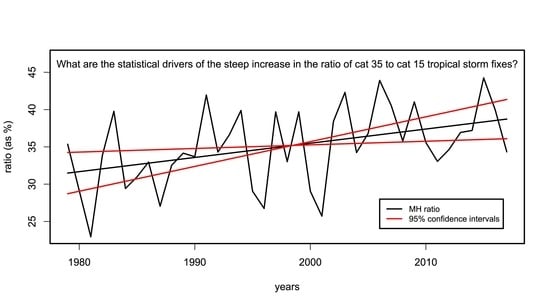
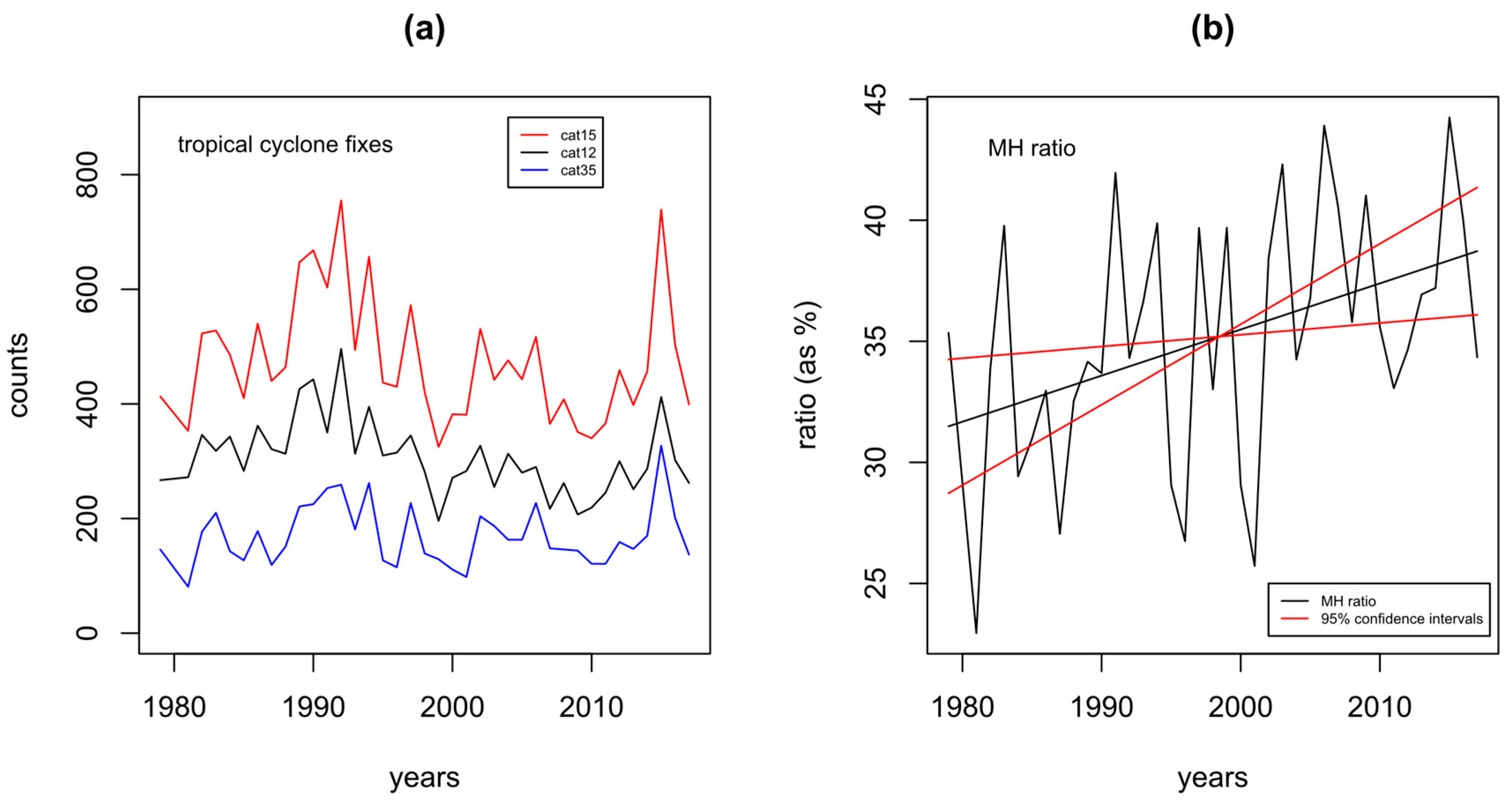
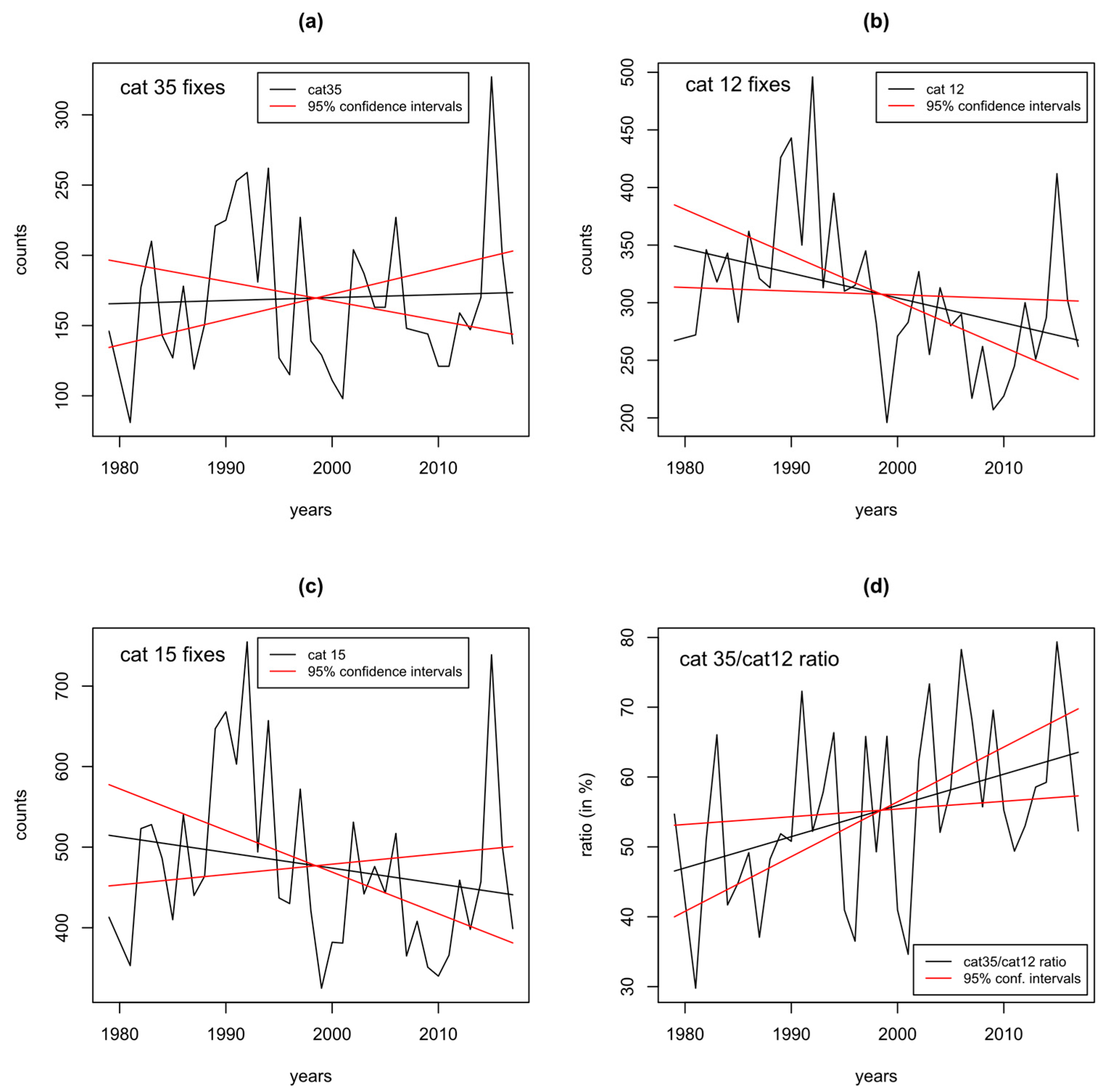
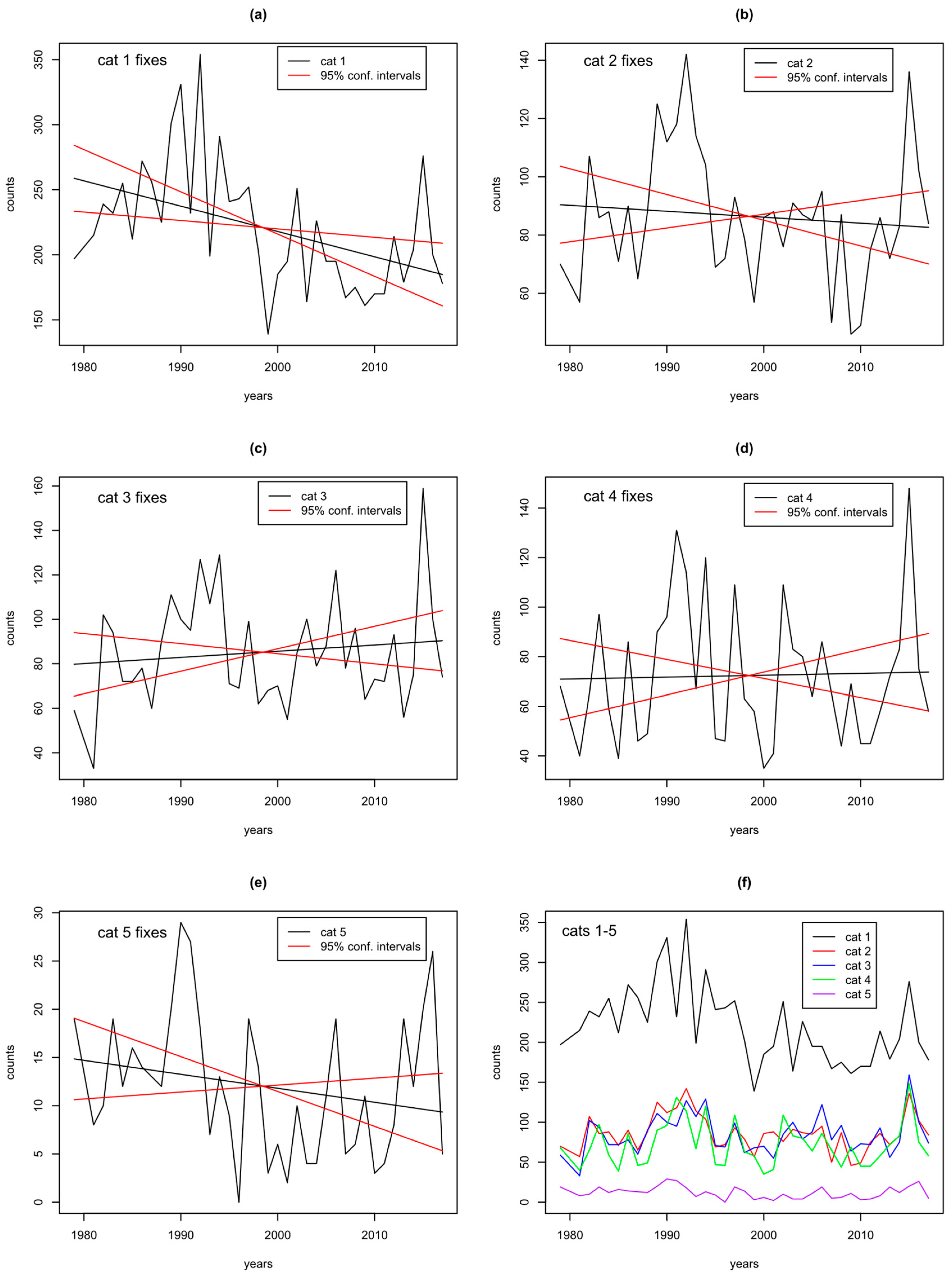
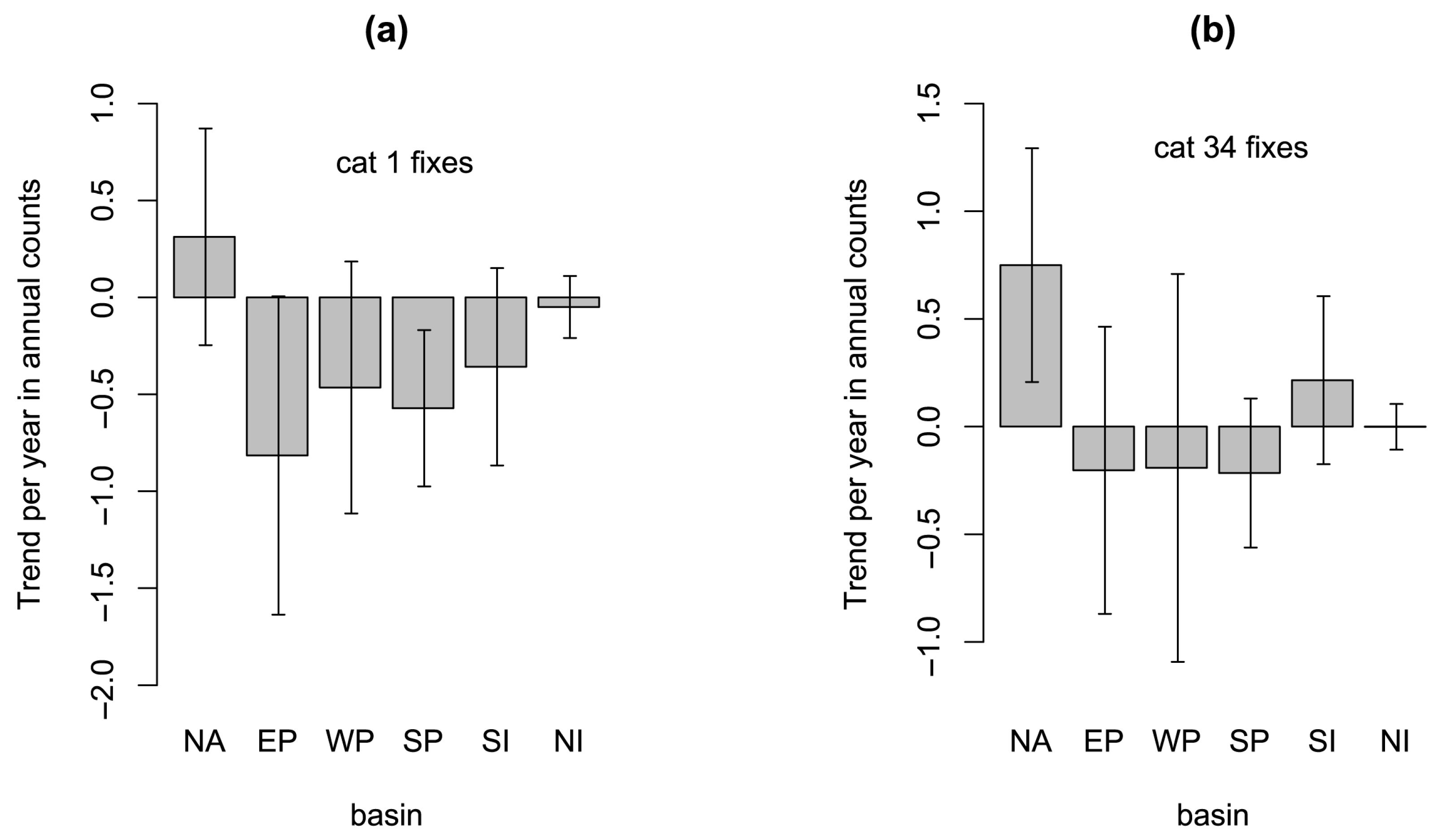
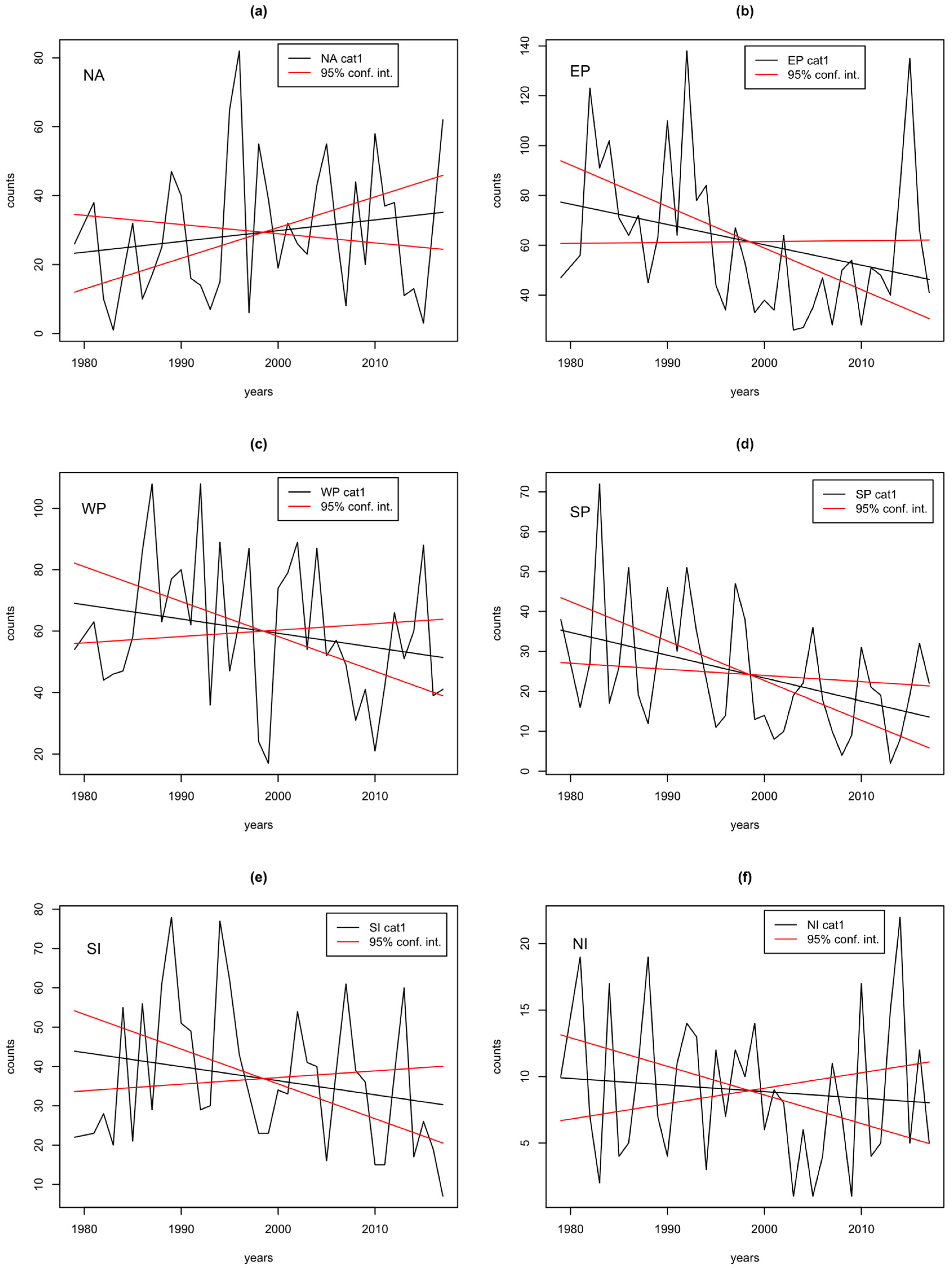
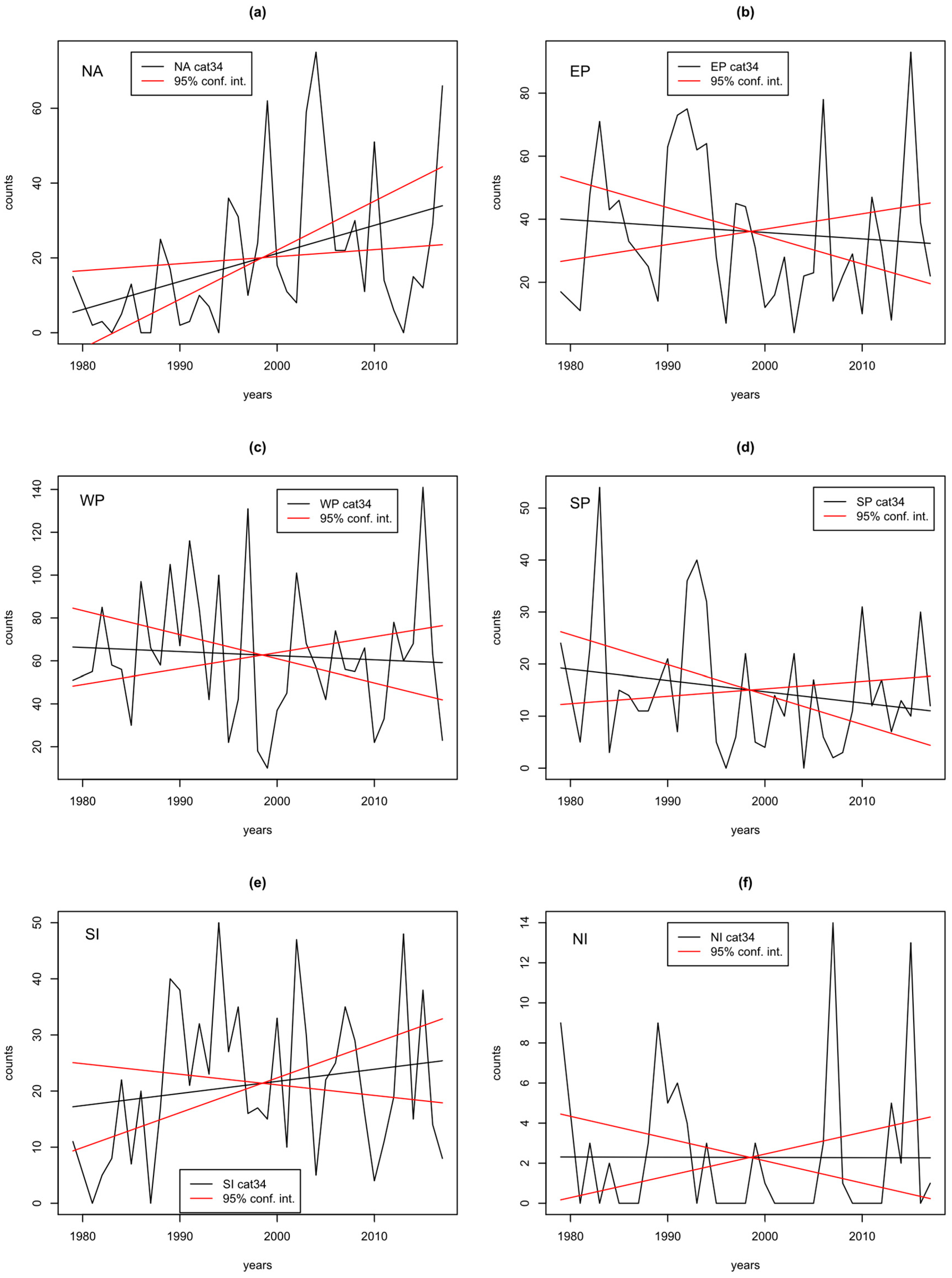
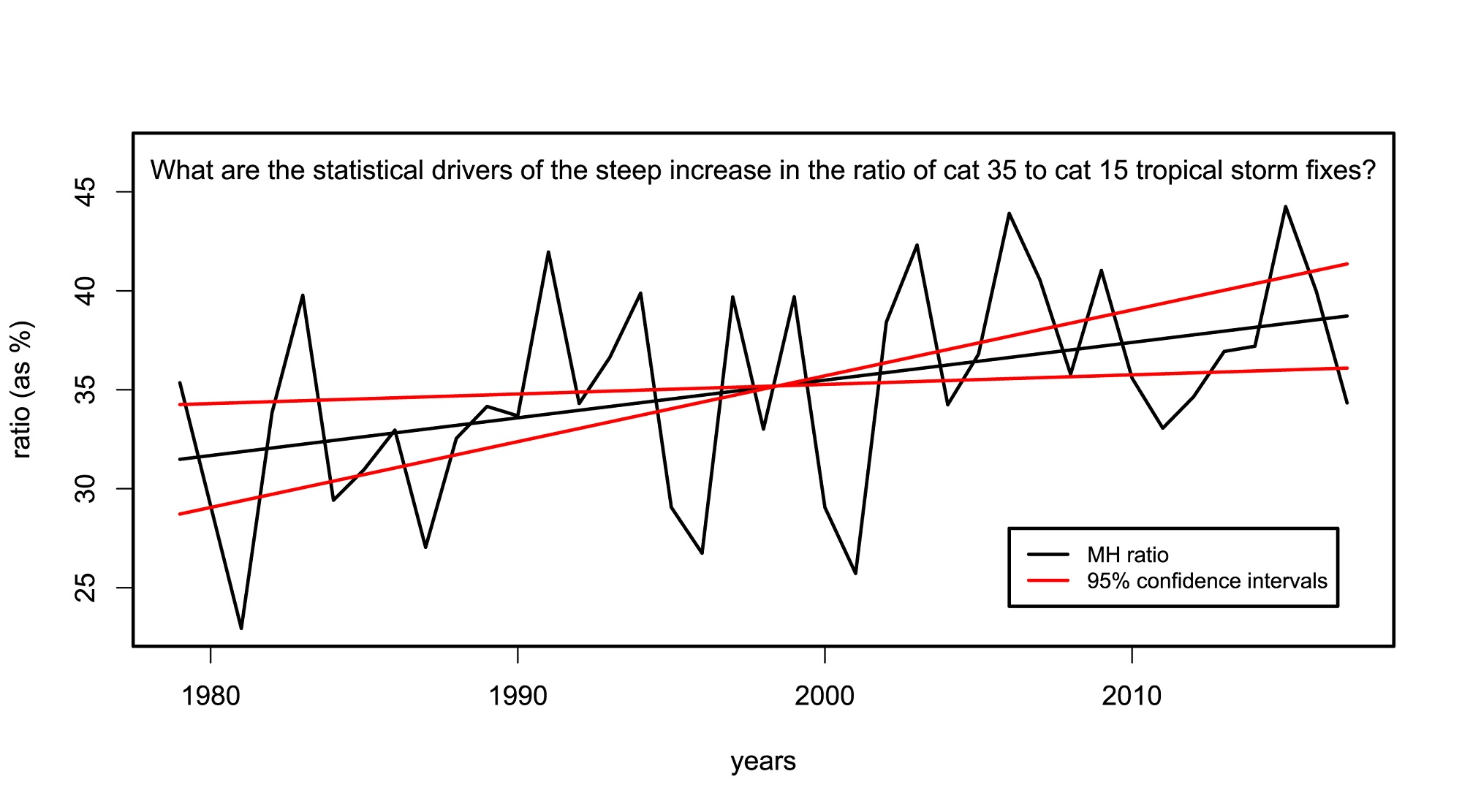
In a recent paper, Kossin et al. showed that during the period from 1979 to 2017, there was a statistically significant increase in the ratio of category 3–5 to category 1–5 tropical storm fixes in the ADT-HURSAT satellite dataset of tropical cyclone observations. The sign of this increase is consistent with previously developed theory and modelling results for how tropical cyclones may change due to climate change. However, without further analysis, it is difficult to understand what the implications of this increase might be for present day tropical cyclone risk. It is also difficult to understand how tropical cyclone risk models might be adjusted to reflect this increase, since this ratio is not typically directly represented in such models. Our goal is therefore to understand the drivers for this increase in terms of changes in the numbers of fixes of different categories of storms in different basins, which are quantities that are more directly related to tropical cyclone risk and risk modelling. We use both heuristic and quantitative methods. We find that the increase in the ratio is mainly driven by a decrease in the denominator (the number of category 1–5 fixes) and to a small extent by a slight increase in the numerator (the number of category 3–5 fixes). The decrease in the denominator is mostly driven by a statistically significant reduction in the number of category 1 fixes outside the North Atlantic. The slight increase in the numerator is mostly driven by a statistically significant increase in the number of category 3–4 fixes in the North Atlantic. Based on these results, we discuss different ways in which the increase in the ratio could be represented in risk models.
Keywords: tropical cyclones; hurricanes; climate change; tropical cyclone fixes; trends; ADT-HURSAT tropical cyclones; hurricanes; climate change; tropical cyclone fixes; trends; ADT-HURSAT
Graphical Abstract