3.1. Dynamometer Test Results
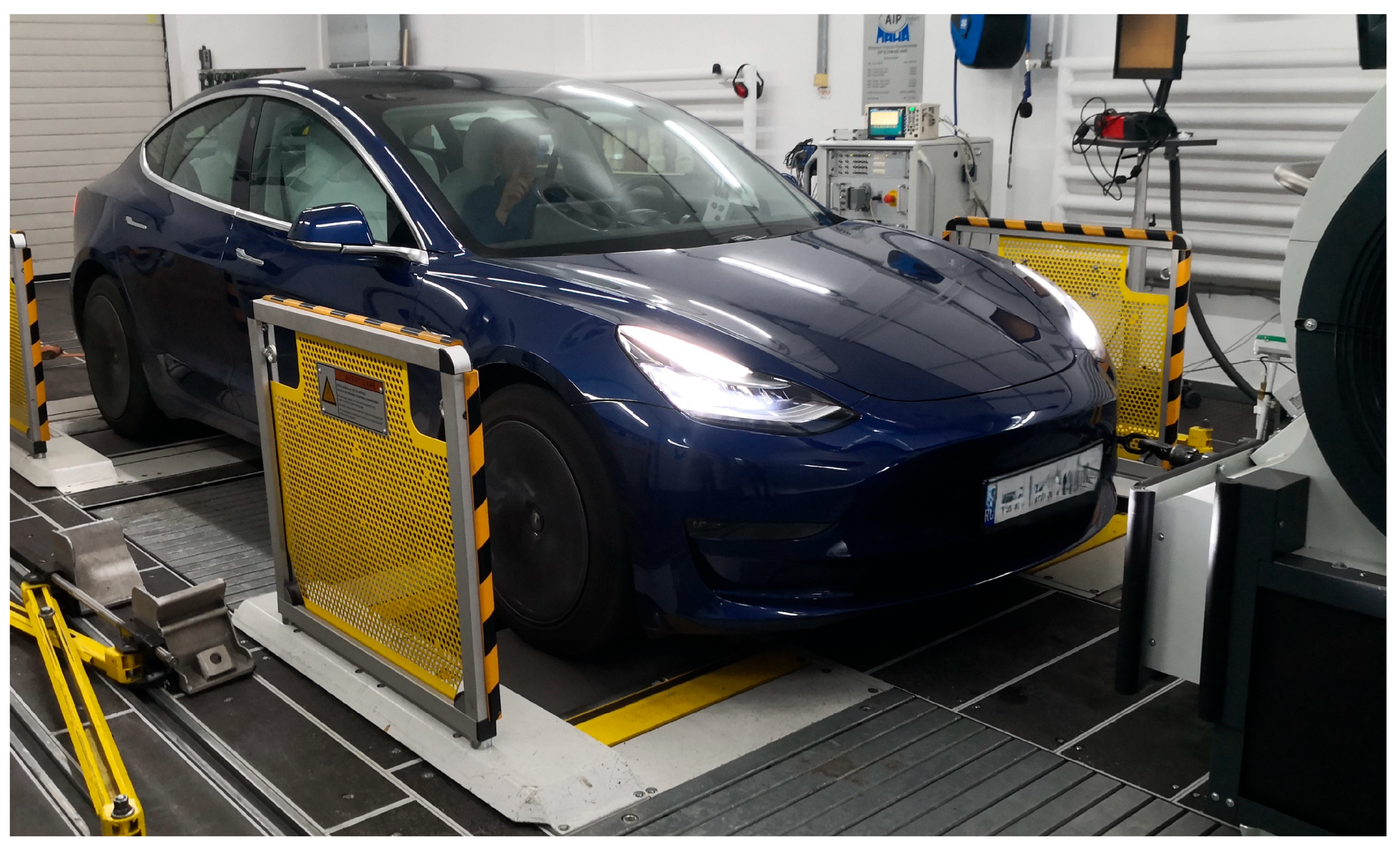
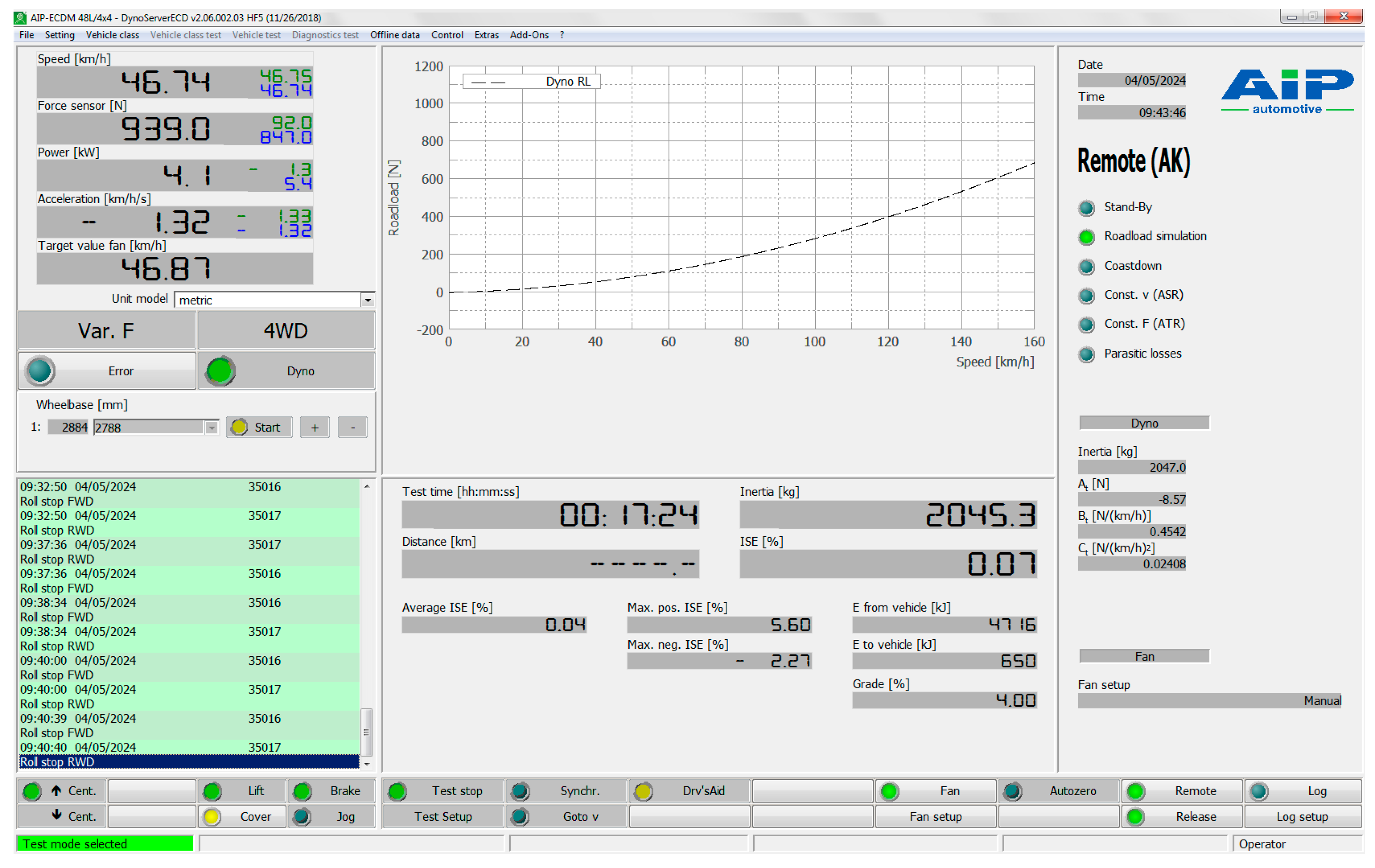
The driving range of the Tesla vehicle was experimentally evaluated on a dynamometer. In order to replicate real-world driving conditions, the dynamometer software incorporates road load simulation, including the effect of longitudinal slope. Slope resistance is mathematically modelled as an additional tractive force. By programming the dynamometer’s eddy current brake torque to match the calculated slope resistance, the system reproduces the increased energy demand associated with uphill driving. They permit manual input of gradient values so that the dynamometer can replicate uphill driving conditions during standardized test cycles. This methodology ensures that the simulated vehicle performance and energy consumption are consistent with real-world conditions, thereby enabling accurate validation of range and efficiency measurements.
The
AASHTO Geometric Design of Highways and Streets (“Green Book”) includes several tables specifying maximum and recommended longitudinal grades for different roadway classifications and design speeds. These tables define allowable slope ranges depending on the terrain type (level, rolling, and mountainous) and road category (freeways, arterials, collectors, and local roads), as presented in
Table 2.
The measurements were carried out for four ramp angle values—0%, 2%, 3% and 4%—using shortened Type 1 driving cycles. The experimental design focuses on mild longitudinal grades, as these are prevalent in urban traffic and strongly influence vehicle energy use, speed choice and comfort. In road engineering practice, longitudinal grades of a few percent are typically adopted on urban streets to satisfy drainage and safety requirements without imposing excessive demands on vehicle performance. Accordingly, we selected grade values of 2%, 3% and 4%, which span a realistic range from gentle to moderate slopes in built-up environments. We do not aim to reproduce the exact grade distribution of any specific city; instead, our goal is to study vehicle behaviour under representative urban slope conditions that cover the most frequently encountered mild gradients. The choice of a maximum road slope of 4% reflects a methodological decision rather than a limitation of the test bench itself, as the experimental setup is fully capable of accommodating higher gradient values if required.
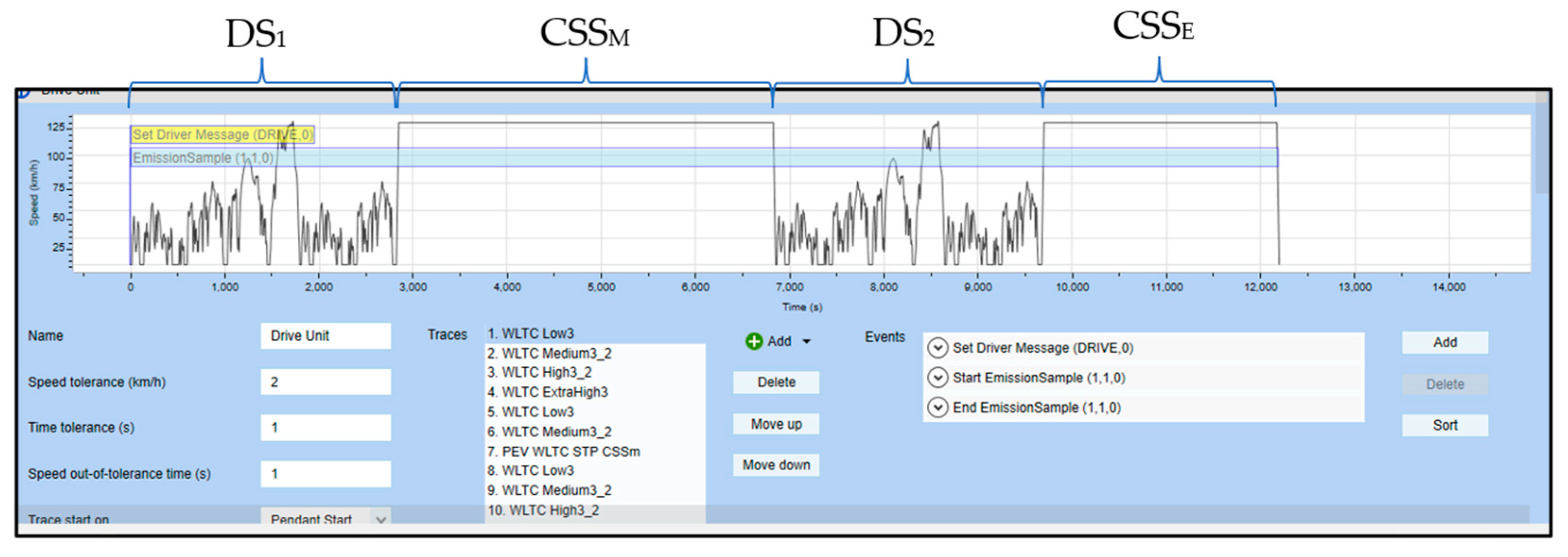
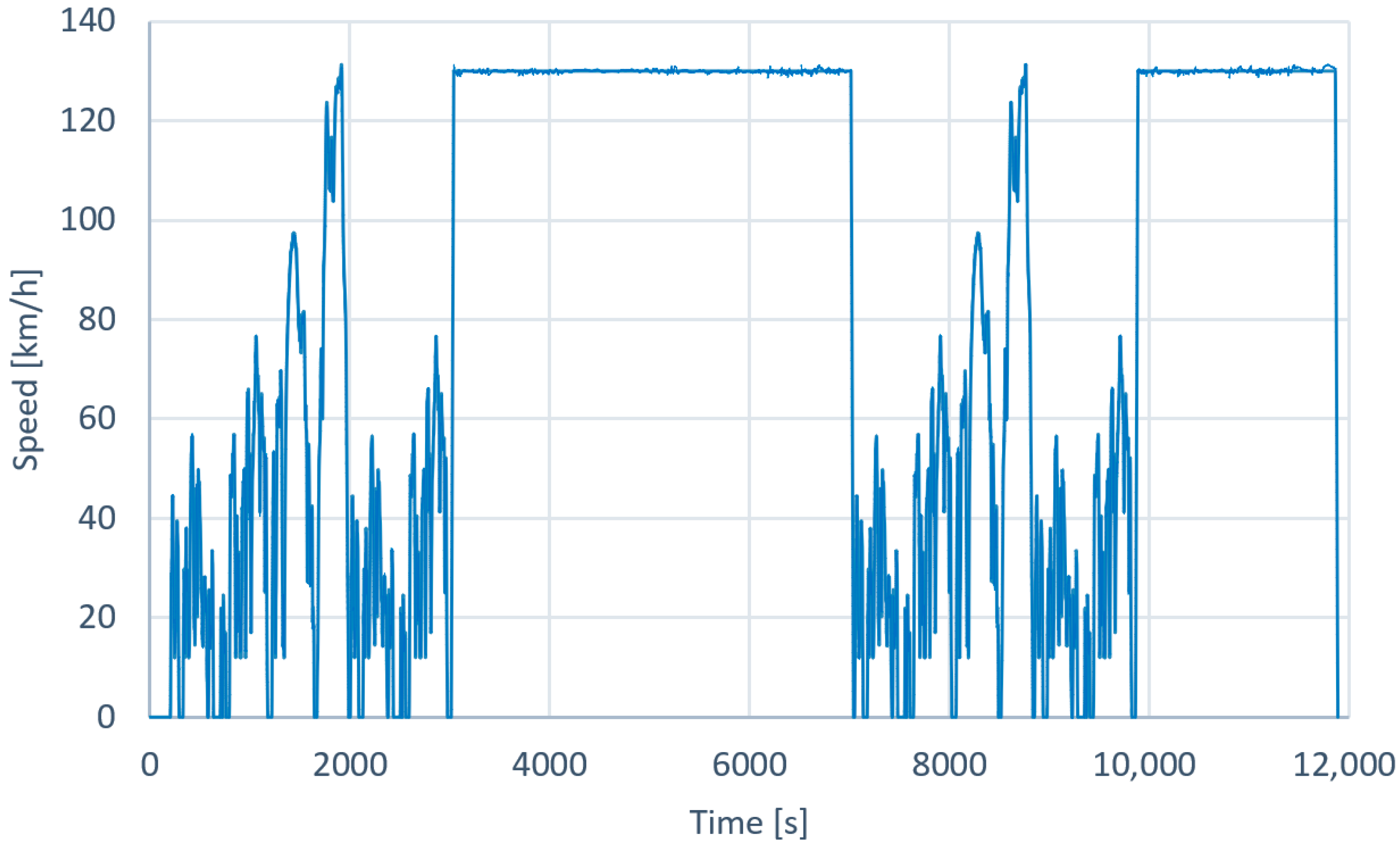
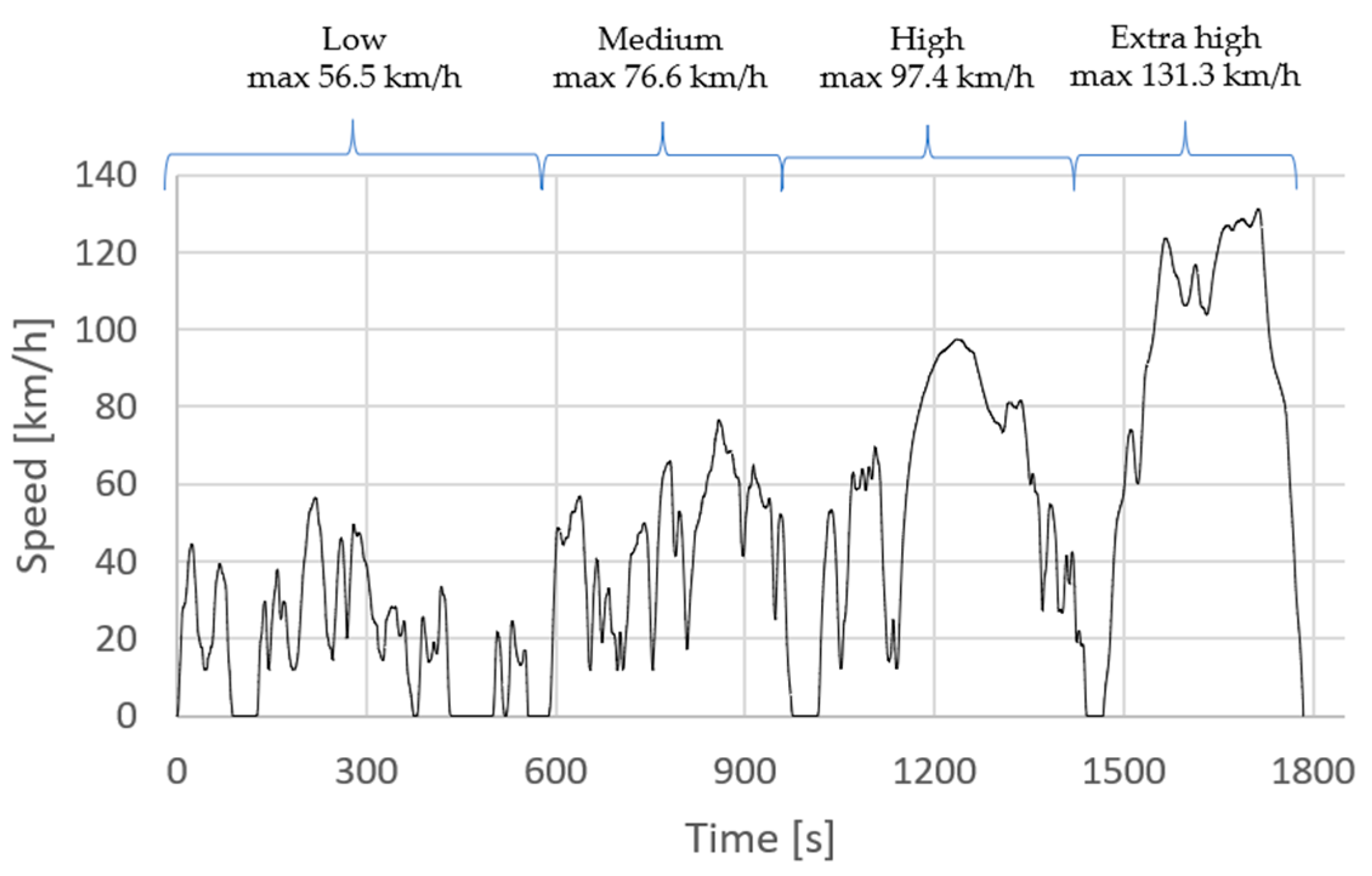
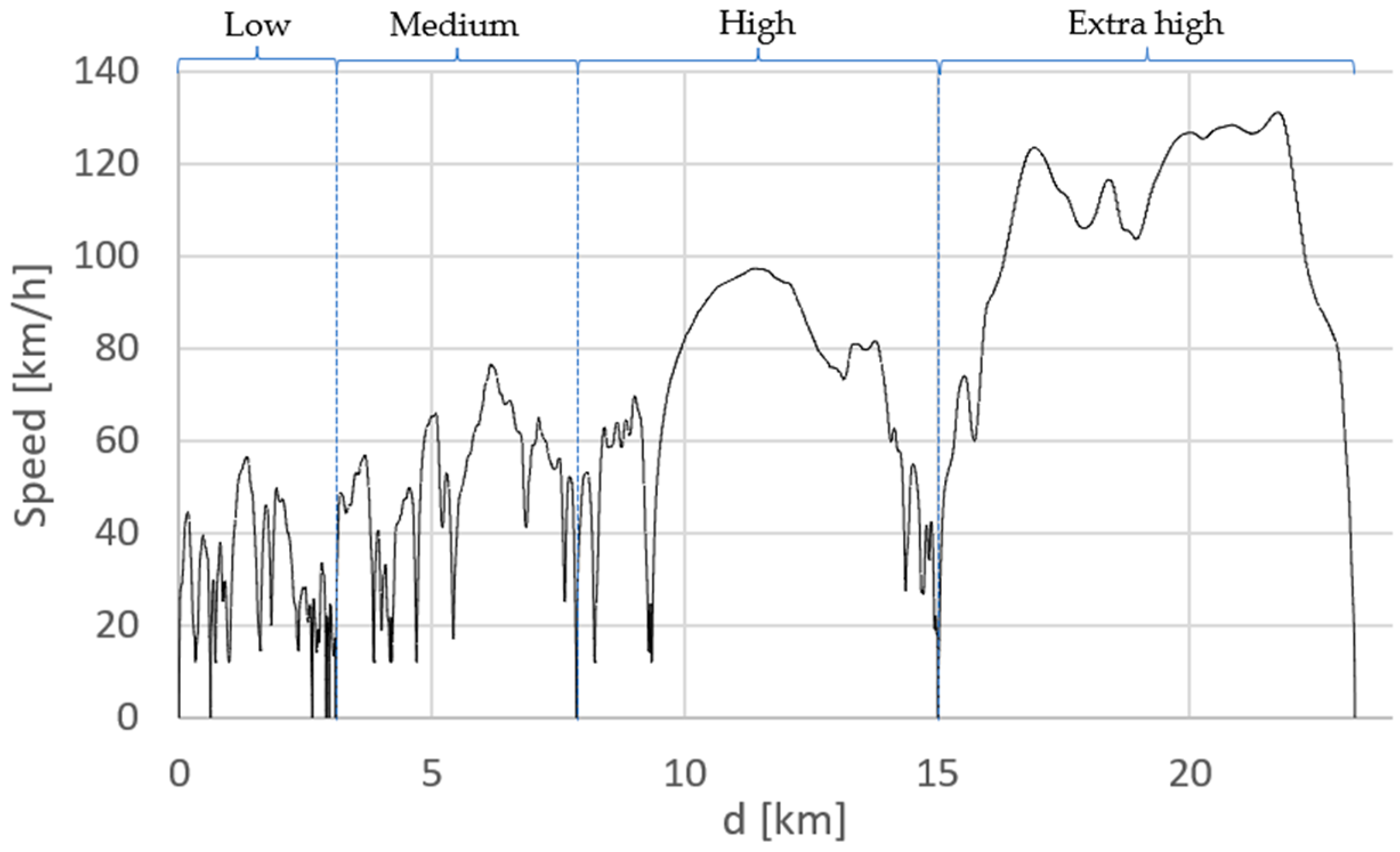
The recorded driving distance corresponds directly to the number of cycles required to discharge the battery from 80% to 10% state of charge. Within these standardized cycles, vehicle speeds reached up to 131.3 km/h, thereby ensuring that gradient effects were represented in the test results. The measured ranges are summarized in
Table 3, and
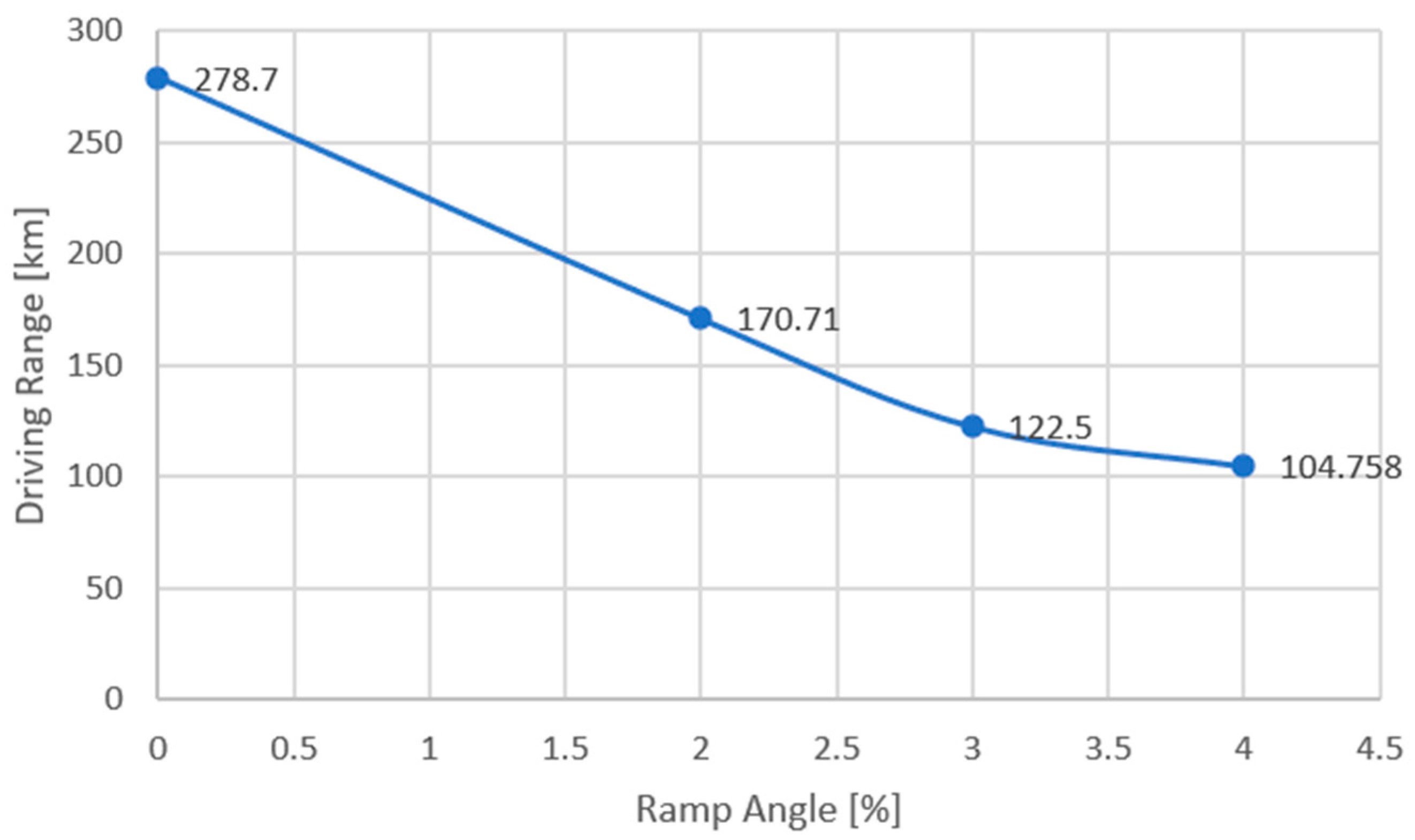
Figure 11 provides their graphical representation.
The ramp angle expressed in degrees was obtained from the relation .
The results reveal a strong inverse relationship between ramp angle and achievable driving range. At a flat ramp (0%), the vehicle achieved a maximum range of 278.7 km, while at a 4% gradient, the range decreased to 104.76 km, corresponding to a reduction of more than 62%. This trend is consistent with theoretical expectations, as increasing the ramp angle requires higher torque output from the motor, thereby elevating energy consumption and reducing effective range.
The dynamometer setup provided controlled and repeatable conditions, ensuring that the observed reductions in range are attributable to the gradient effect rather than external variability. This graphical abstract illustrates the inverse relationship between ramp angle and driving range for a Tesla electric vehicle tested on a dynamometer. As the ramp angle increases from 0% to 4%, the driving range decreases sharply, highlighting the impact of road gradient on energy consumption and vehicle efficiency.
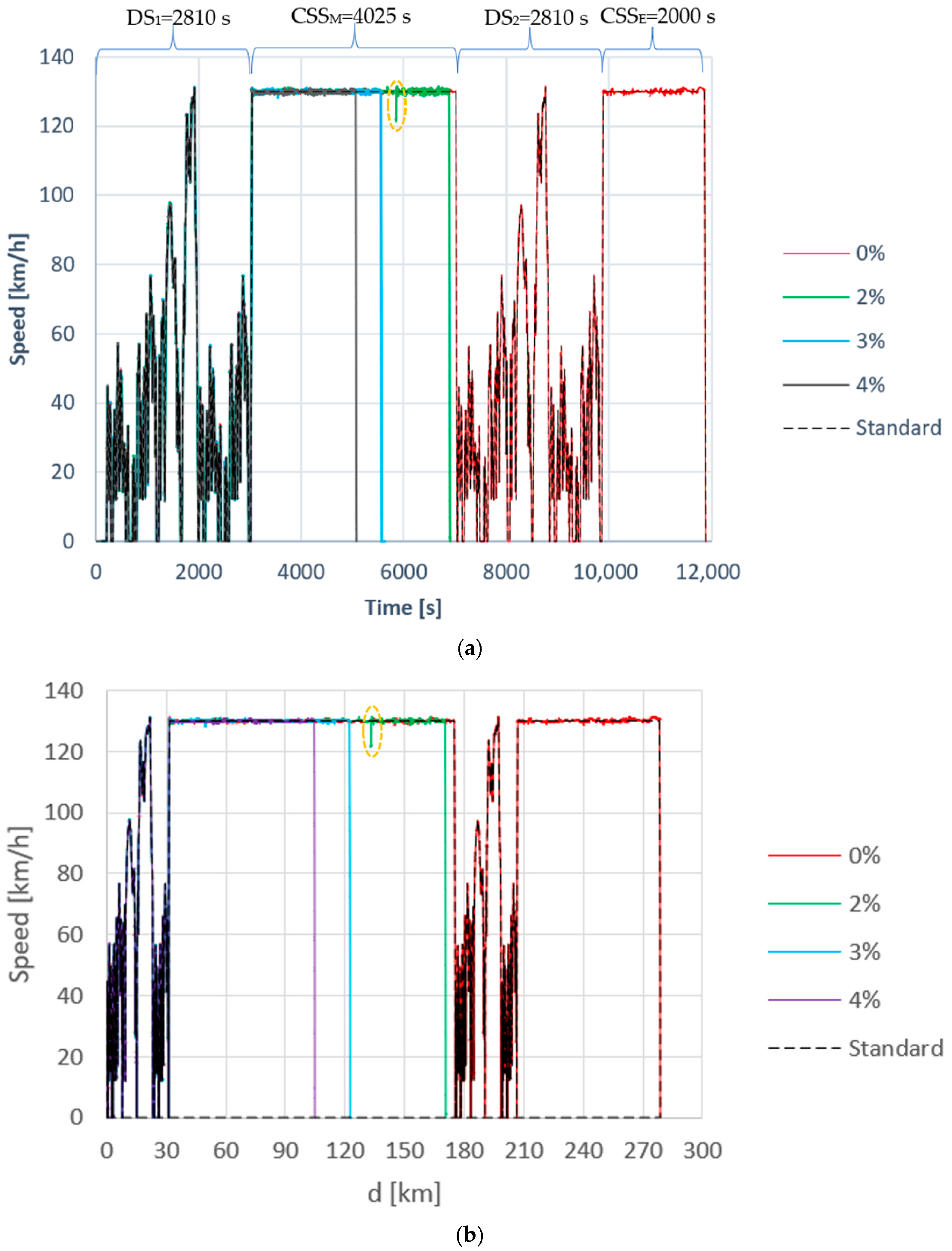
As shown in
Figure 12a,b, the measurement corresponding to the 2% slope (green) exhibited a deviation in the CSS
M segment at the target speed of 130 km/h. At time 5657 s, the vehicle was no longer able to maintain 130 km/h; its speed dropped to 121.67 km/h within 1.6 s and then recovered to 130 km/h s. Additionally, because energy consumption is lower at this gradient, even a small delay in stopping the test has a proportionally larger impact on the final recorded distance. Moreover, the SOC value displayed on the dashboard is rounded to whole percentages, meaning that the actual 10% threshold may be reached slightly earlier than the moment when the display updates. Under slow discharge conditions, the transition from approximately 11.x% to 10.x% can take longer, introducing an additional small timing variation. While a minor delay in stopping the measurement at the 2% slope cannot be entirely excluded, these factors collectively explain the slightly longer recorded driving distance.
3.2. Simulink Test Results
3.2.1. Model Validation
To validate the Simulink model, appropriate values are adopted for the battery capacity and for the energy consumed by auxiliary systems, ensuring the best possible agreement with the experimental data.
The experimental results consist of the ranges obtained for the four slope values. Therefore, the first step in the validation process is to reproduce these ranges in simulation, matching those measured on the dynamometer. The simulation results, compared with the experimental data, are presented in
Table 4.
Overall, the simulation results show a good level of agreement with the experimental data, with deviations remaining within a reasonable range for this type of study. It is important to emphasize that the experimental tests were performed on a five-year-old vehicle, for which its battery, powertrain components and auxiliary systems may no longer exhibit the performance characteristics of a new vehicle. Natural degradation processes—such as reduced battery capacity, increased internal resistance and mechanical wear—can influence the measured driving range and contribute to discrepancies between simulation and experiment. Additionally, the dynamometer procedure inherently involves human-factor variability, including pedal input, stabilization time and minor fluctuations in operating conditions. These small variations, although unavoidable in practical testing, can introduce measurement uncertainty. Other factors, such as tire condition, may also influence the recorded values.
The deviation observed in the 2% slope test is attributable to some errors during the experimental procedure, as detailed in
Section 3.1. Despite these influences, the model successfully captures the overall trend of decreasing driving range as the ramp angle increases. The errors observed at low slopes (0–2%) indicate a slight underestimation of the vehicle’s performance, while at higher slopes (3–4%), the model tends to slightly overestimate the range. This shift suggests that certain slope-dependent losses—such as rolling resistance or drivetrain efficiency—may require further refinement to better reflect real-world behaviour across the entire operating range.
Nevertheless, the magnitude and consistency of the results demonstrate that the Simulink model provides a reliable approximation of the vehicle’s behaviour, even when compared against measurements influenced by aging components and operational variability. These findings confirm that the model is suitable for further analysis and optimization, with targeted improvements expected to enhance its predictive accuracy.
To provide an additional validation reference, two WLTC simulations were performed for initial state-of-charge (SOC) levels of 100% and 80%, as shown in
Table 5.
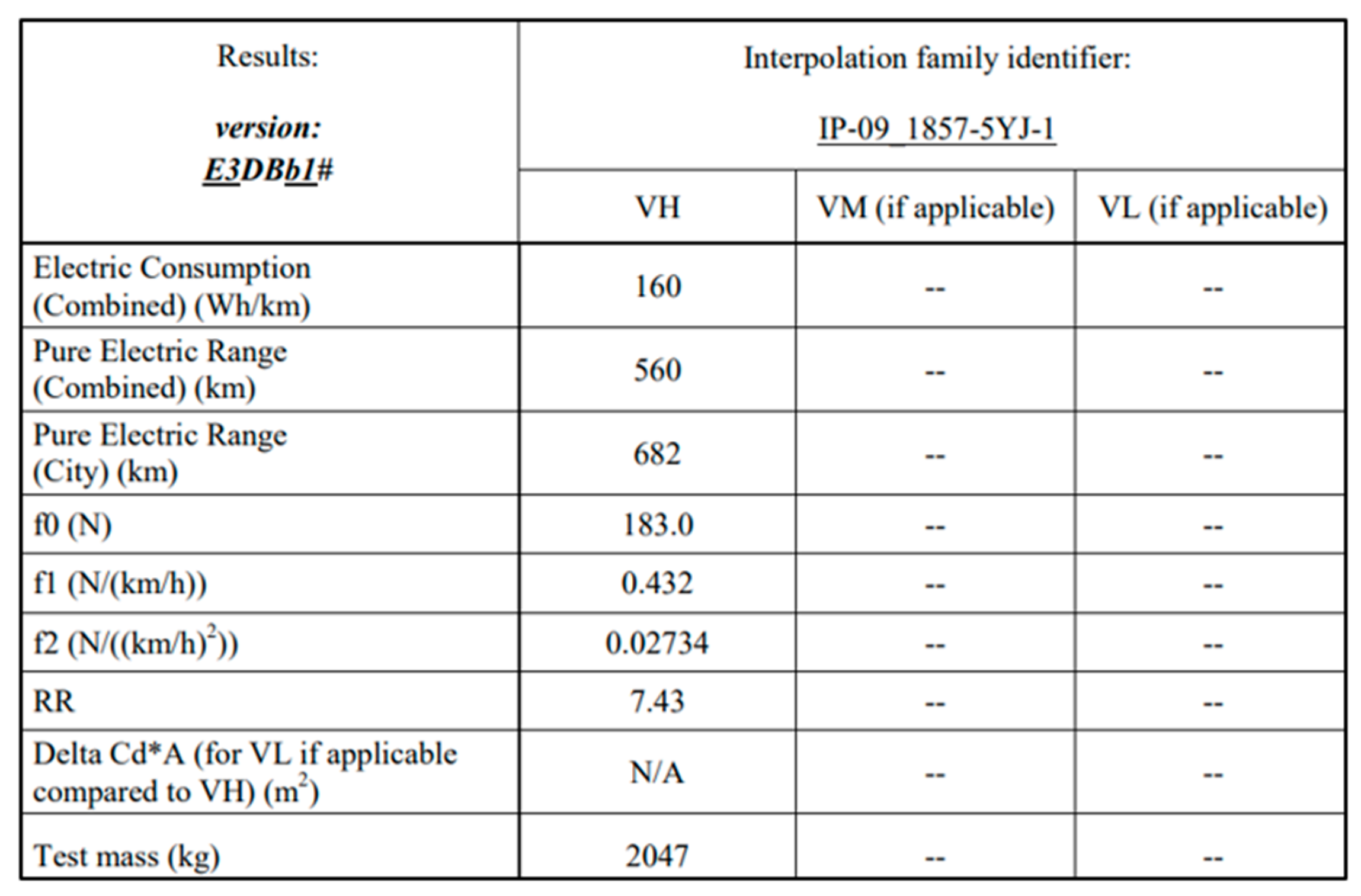
The Simulink model estimates a WLTC driving range of 513.7 km at 100% SOC and 400.1 km at 80% SOC. In comparison, the manufacturer’s declared range of 560 km (
Figure 5) corresponds to a new vehicle tested at full charge under certification conditions. The simulated value, therefore, reflects an 8% reduction relative to the certified range. This deviation is consistent with the condition of the vehicle used in the present study, which had accumulated 92,250 km. As reported in [
62,
63], the battery capacity of this vehicle had decreased from its nominal 234 Ah to 221 Ah, representing a degradation of approximately 5.6%. Such a reduction in usable capacity naturally leads to a proportional decrease in achievable driving range. The close correspondence between the simulated range reduction and the expected impact of battery aging supports the validity of the Simulink model and confirms that it accurately captures the influence of capacity fade on real-world range performance.
The simulated range at 80% SOC (400.1 km) represents approximately 78% of the simulated range at 100% SOC (513.7 km). This proportionality closely reflects the nominal SOC ratio, indicating that the model preserves a realistic scaling of available driving range with respect to the usable battery energy. The slight deviation from the ideal linear relationship can be attributed to the reduced efficiency of the powertrain and auxiliary systems at lower SOC levels, as well as the diminished usable capacity of the aged battery. Overall, the consistency between the SOC-dependent range values further supports the validity of the Simulink model in reproducing the expected behaviour of an aged traction battery under WLTC conditions.
3.2.2. Analysis of Energy Consumption in WLTC Phases
A transition from expressing the results in terms of driving range (km) to energy consumption (Wh/km) is necessary to provide a more robust and comparable assessment of the vehicle’s performance. While the driving range is strongly influenced by the initial state of charge, battery aging and test-specific conditions, the energy consumption metric offers a normalized indicator that is independent of the battery’s usable capacity. This makes Wh/km a more suitable parameter for evaluating the efficiency of the propulsion system and for comparing different operating scenarios, vehicle conditions or simulation configurations.
Moreover, as the tested vehicle had accumulated significant mileage and exhibited reduced battery capacity, the use of driving range alone could lead to misleading interpretations. By analysing the energy consumption, the influence of battery degradation and SOC variations is effectively decoupled from the vehicle’s intrinsic efficiency. This approach ensures a more accurate validation of the model and enables a clearer comparison between simulated and experimental results across different test conditions.
Using the same Simulink model, the energy consumption was calculated for the same slope values, considering both uphill and downhill driving conditions. The results are summarized in
Table 6.
The results in
Table 6 highlight the expected increase in energy consumption during uphill driving as the ramp angle becomes steeper. This trend reflects the additional mechanical work required to overcome gravitational forces at higher slopes. All EVs’ energy consumptions are affected proportionally by the gravitational force, which leads to similar slope-induced consumption trends across vehicle classes. Conversely, the downhill scenarios show a progressive reduction in energy consumption, with values becoming significantly lower—and even negative at a 4% slope—indicating that the vehicle is able to recuperate energy through regenerative braking. Such negative values are consistent with electric vehicle behaviour, where the traction motor operates in generator mode and returns energy to the battery during descent.
These findings confirm that the Simulink model accurately captures the fundamental physical mechanisms governing both traction demand and energy recuperation. The clear distinction between uphill and downhill consumption further supports the validity of the model and provides a more detailed understanding of how slope influences the vehicle’s overall energy efficiency.
To gain a deeper understanding of how road slope affects the driving range of electric vehicles, an energy consumption analysis was performed for both uphill and downhill conditions across the four WLTC phases. This approach reflects a common real-world scenario in which a vehicle travels to a destination and then returns along the same route—such as a typical daily commute—allowing the net effect of positive and negative slopes to be evaluated. The results presented in
Table 7 provide a comprehensive view of how road slope influences the energy consumption of an electric vehicle across the four WLTC phases.
By evaluating both uphill and downhill conditions and then averaging their values, the analysis reflects a realistic round-trip scenario in which a driver travels to a destination and returns along the same route. This approach is particularly relevant for daily commuting patterns, where the net effect of positive and negative gradients determines the actual energy demand experienced by the user.
As expected, uphill segments lead to a substantial increase in energy consumption, with higher slopes producing progressively larger values across all WLTC phases. Conversely, downhill driving results in significantly lower consumption and, in some cases, negative values, indicating effective regenerative braking and energy recuperation.
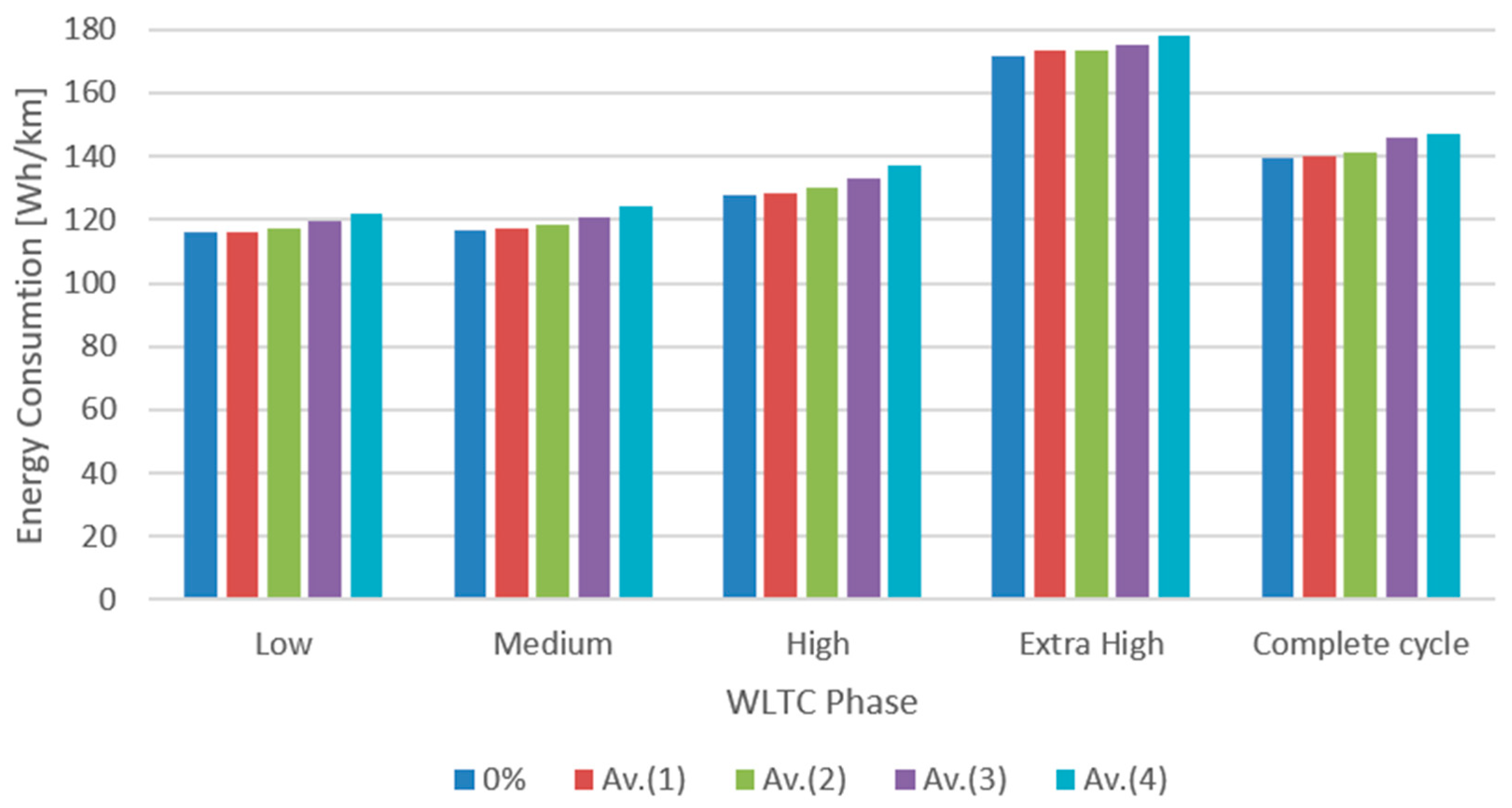
When the uphill and downhill values are averaged, the resulting consumption remains close to the horizontal (0%) reference case, especially for moderate slopes. This demonstrates that, over a complete out-and-back trip, the net energy impact of road gradients is considerably reduced. A histogram of these results is shown in
Figure 13.
The slight increase in average consumption with higher slope magnitudes reflects the fact that regenerative braking cannot fully compensate for the additional energy required during ascent. Nonetheless, the relatively small deviation from the flat-road baseline highlights the robustness of the vehicle’s energy management system and the effectiveness of regenerative braking in mitigating slope-related energy losses.
Overall, this analysis confirms that evaluating both uphill and downhill conditions provides a more realistic and balanced assessment of vehicle performance, and it reinforces the validity of the simulation model in capturing the combined effects of slope on energy consumption.
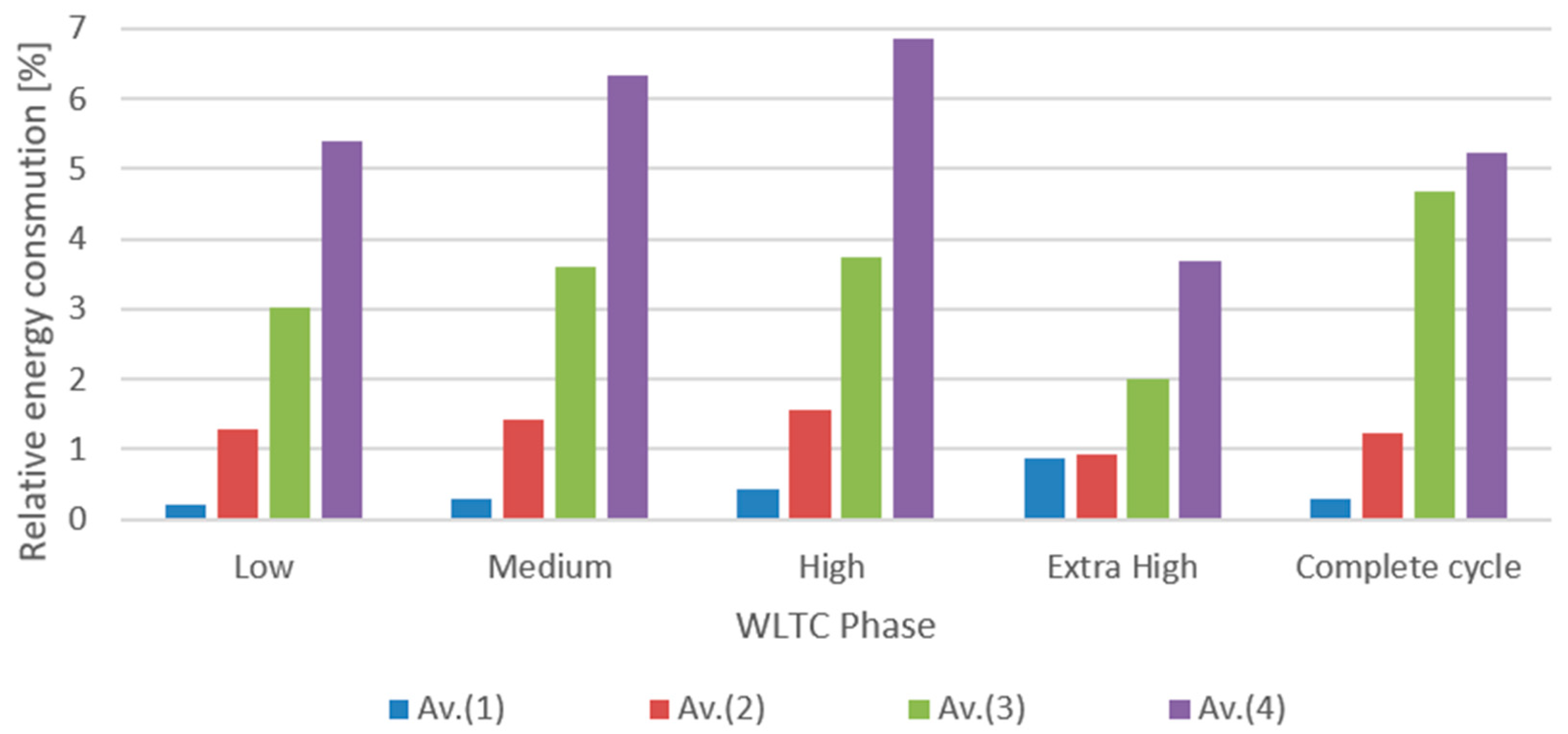
Table 8 summarizes the relative increase in average energy consumption for bidirectional driving on roadways with ramp angles ranging from 1% to 4%, reported for each WLTC phase and for the complete WLTC cycle.
Figure 14 presents a graphical representation of these results.
The relative energy consumption values in
Table 8 show a consistent and expected increase with ramp angle across all WLTC phases. Even though the absolute percentages remain small at low slopes, the progression reveals how sensitive electric vehicle efficiency becomes as the gradient increases.
For mild slopes of 1–2%, the relative increase in average energy consumption associated with bidirectional driving remains below 1.5% in the low and medium WLTC phases. Because these phases involve lower speeds and reduced aerodynamic loading, the additional gravitational demand introduced by the slope is limited. Nevertheless, the upward trend indicates that even slight gradients begin to measurably affect energy usage.
As vehicle speed rises, the influence of the slope becomes more pronounced. For ramp angles of 3–4%, the relative increase in average consumption grows substantially—reaching approximately 3–7% in the high phase and around 2–4% in the extra-high phase.
The extra-high phase exhibits slightly smaller relative increases compared with the high phase, as aerodynamic drag dominates at high speeds, reducing the proportional contribution of the slope.
Overall, these results show that mild gradients (1–2%) impose a modest but detectable increase in energy demand, whereas moderate gradients (3–4%) lead to a marked rise in relative consumption, confirming that sustained slopes significantly affect real-world driving range.
The relationship between slope and energy consumption is nonlinear, with the effect becoming particularly pronounced beyond a 2% gradient. This trend is further intensified in the higher WLTC phases, where the vehicle must counter both gravitational and aerodynamic loads. The full-cycle results also demonstrate that even moderate inclines can noticeably reduce the effective driving range, underscoring the sensitivity of electric-vehicle efficiency to road gradient.
These findings validate the model’s ability to capture slope-dependent behaviour and underline the importance of including gradient effects in range prediction and energy-management strategies.
3.2.3. Analysis of Energy Consumption at Constant Speeds
To complement the WLTC-based investigation and to better isolate the influence of road gradient on electric-vehicle efficiency, an additional analysis was performed at two constant speeds: 130 km/h, representing the legal speed limit on highways, and 50 km/h, corresponding to the typical speed limit in urban areas. Studying these two operating points makes it possible to separate the effects of aerodynamic drag (dominant at high speed) from those of rolling resistance and gravitational load (more relevant at low speed).
For each speed, the vehicle was simulated on the same four positive slopes—1%, 2%, 3%, and 4%—and the corresponding uphill, downhill and average energy consumptions were computed. The average value between uphill and downhill represents a realistic round-trip scenario, where the vehicle travels in both directions on the same road. To quantify the impact of slope, the relative energy consumption was calculated by comparing each averaged value with the horizontal reference case (0% slope). This approach provides a clear and normalized measure of how much additional energy is required due to the road gradient.
Table 9 presents the relative energy consumption at 130 km/h on flat terrain as well as on four different inclined slopes.
At 130 km/h, the uphill energy consumption increases linearly with slope, rising from 204.2 Wh/km on flat ground to 457.6 Wh/km at a 4% incline. This strong increase reflects the combined effect of gravitational load and high aerodynamic drag.
Downhill values decrease sharply with slope, becoming negative at 4%, which indicates net energy recuperation through regenerative braking.
Despite the large differences between uphill and downhill values, the average consumption remains remarkably stable, around 204 Wh/km for slopes of 1–3% and slightly higher (209 Wh/km) at 4%.
This stability occurs because at high speeds, aerodynamic drag dominates, and the additional gravitational component—although large uphill—is nearly compensated by regenerative braking downhill.
The relative consumption values reinforce this trend, showing changes that remain near zero or even slightly negative for slopes between 1% and 3%, followed by a modest increase of 2.39% at a 4% incline.
This means that at highway speeds, moderate slopes have almost no net effect on round-trip energy consumption, except when the gradient becomes steep enough that regenerative braking cannot fully compensate for the uphill demand.
Table 10 presents the relative energy consumption at 50 km/h on flat terrain and on four different inclined slopes.
At 50 km/h, uphill consumption increases significantly with slope, from 92.38 Wh/km at 0% to 345.8 Wh/km at 4%. Downhill values become strongly negative at higher slopes, reaching –129.3 Wh/km at 4%, indicating substantial energy recuperation.
Unlike the 130 km/h case, the average consumption increases steadily with slope. At low speeds, aerodynamic drag is small, so gravitational effects dominate, and regenerative braking cannot fully compensate for the uphill energy demand.
The relative increases are substantial. This shows that at urban speeds, road gradients have a strong and nonlinear impact on energy consumption, significantly affecting real-world range in hilly cities.
So, at highway speeds (130 km/h), the slope has minimal net effect on round-trip energy consumption because aerodynamic drag dominates and downhill recuperation nearly balances uphill demand. At urban speeds (50 km/h), the slope has a major impact, with relative consumption increasing up to 17% at a 4% gradient.
These results highlight the importance of considering the driving environment when estimating EV range: highways are less sensitive to slope, and urban and suburban areas with frequent gradients can significantly reduce efficiency.
The constant-speed simulations at 130 km/h and 50 km/h provide valuable insight into how road gradient affects electric-vehicle energy consumption under simplified, steady-state conditions. The results clearly show that the influence of slope is strongly dependent on vehicle speed. At highway speeds, the dominant aerodynamic drag minimizes the net effect of gradient, leading to almost unchanged average consumption for slopes up to 3% and only a modest increase at 4%. In contrast, at urban speed, where aerodynamic forces are much smaller, the gravitational component becomes the primary driver of energy demand. As a result, average consumption increases progressively with slope, reaching more than 17% at a 4% gradient. These findings highlight the importance of considering the driving environment when estimating real-world range: while highways are relatively insensitive to slope, urban and suburban routes with frequent gradients can significantly affect energy efficiency and daily driving autonomy.






 ,
,