

Investigation on the Manufacturing, Testing, and Simulation Processes of the Hood Hinge Assembly



Abstract
1. Introduction
2. Materials
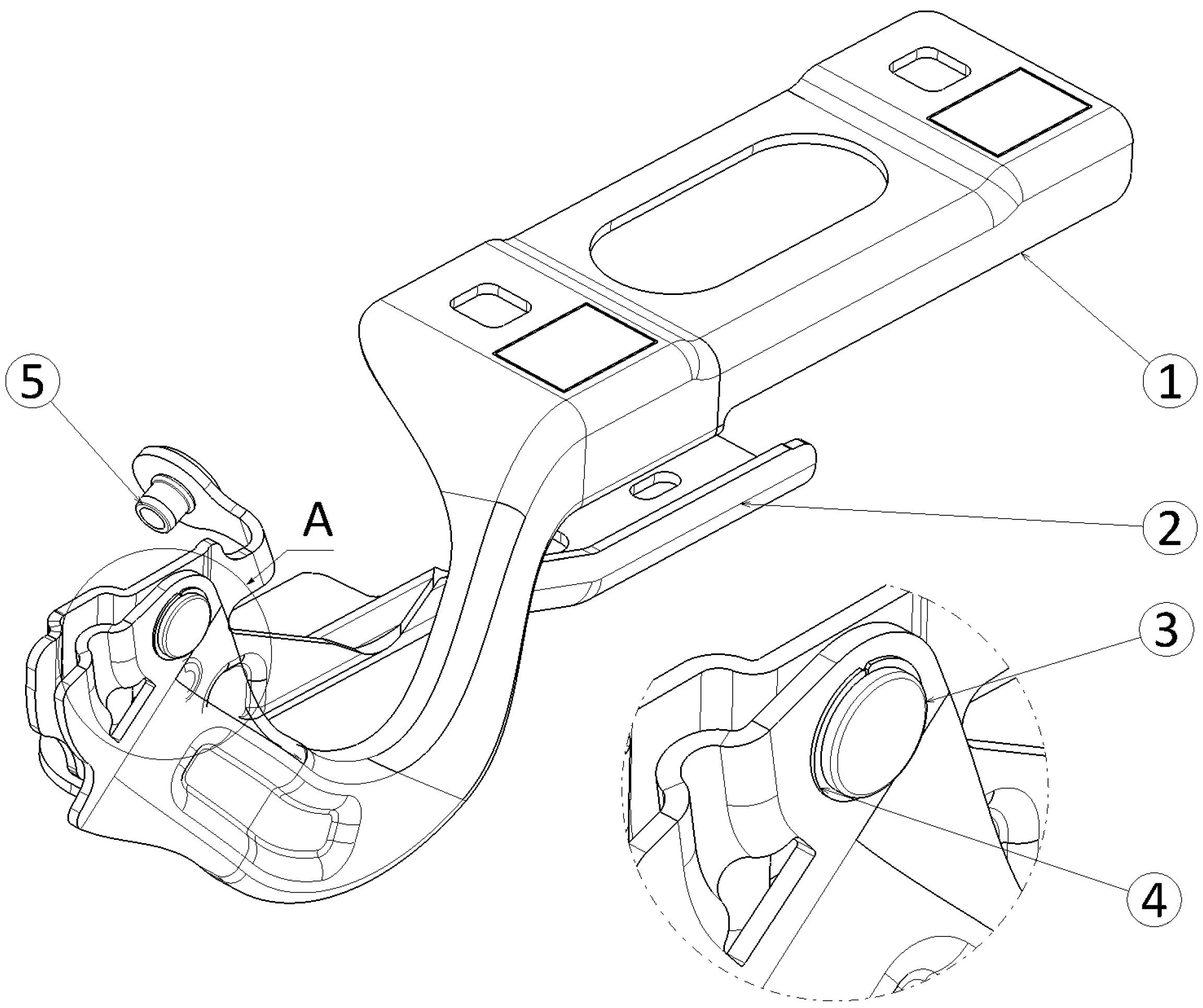
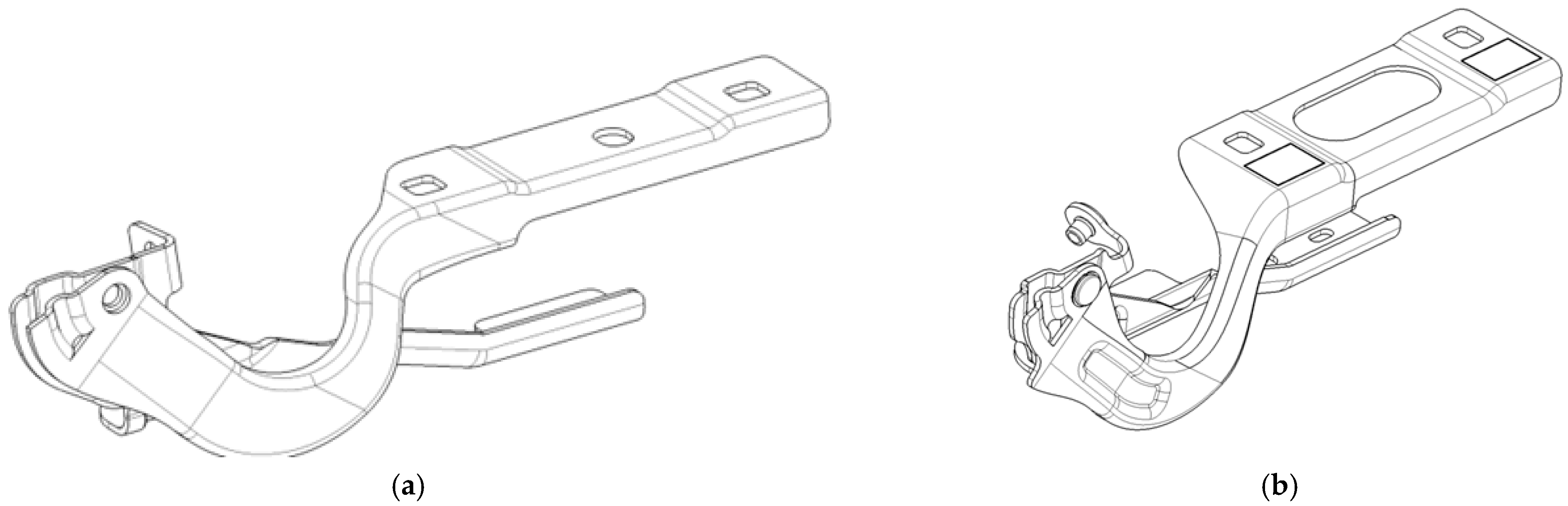
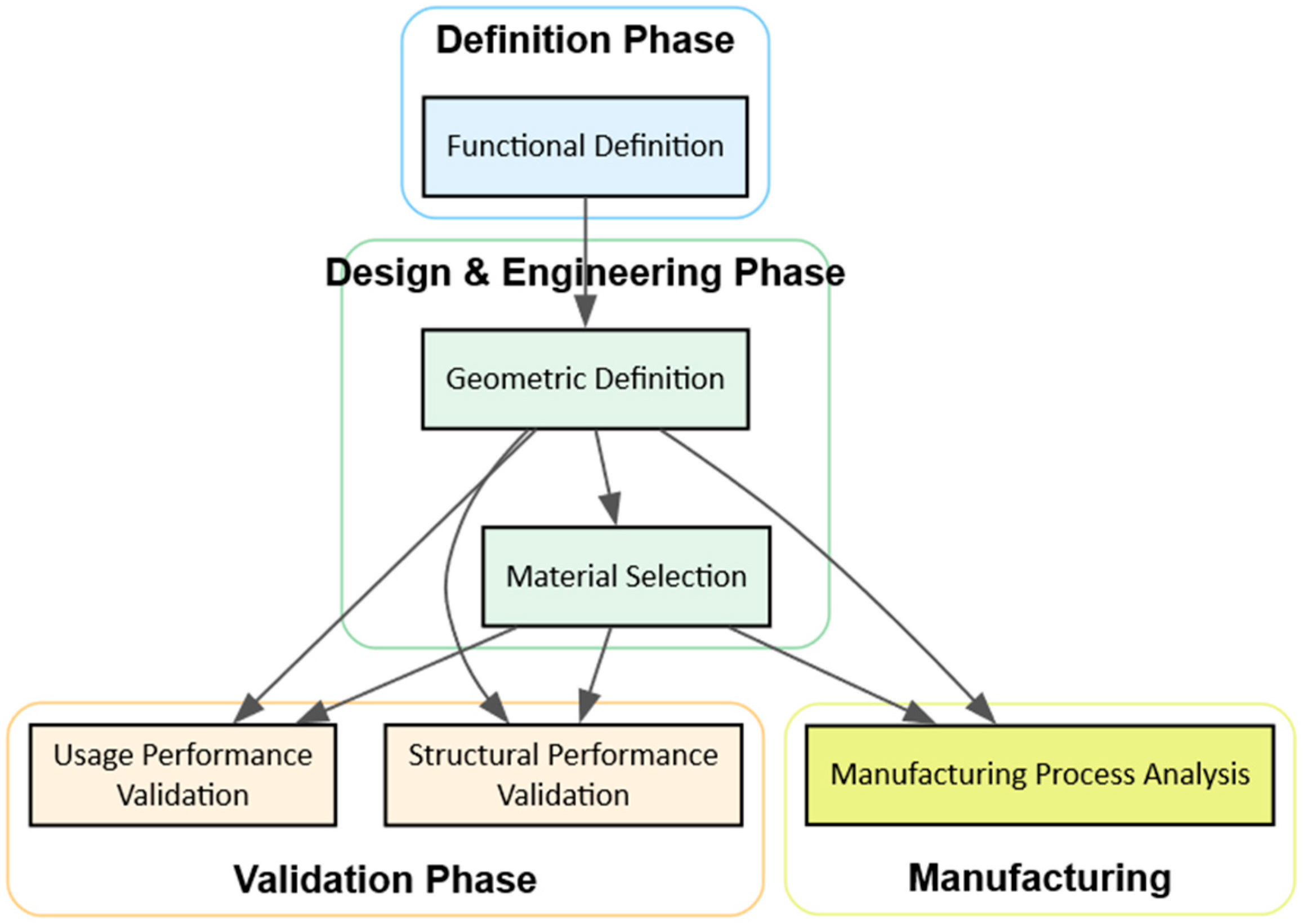
2.1. Hood Hinge Assembly
- −
- functional definition of the assembly;
- −
- geometric definition of the assembly;
- −
- manufacturing process analysis;
- −
- material selection;
- −
- usage performance validation;
- −
- structural performance validation.
- −
- to guarantee the hood functionality in opening/closing durability;
- −
- ensure a maximum angle of hood opening;
- −
- no radial and axial gap;
- −
- lateral stiffness;
- −
- hood maintained on hinges stop;
- −
- resist the exceptional forces: Strong wind on the hood maintained on the hinges stop;
- −
- resist the exceptional forces: High speed frontal crash;
- −
- repairability crash;
- −
- temperature in the current rolling conditions;
- −
- thermal and climatic behavior;
- −
- guarantee the maintenance of the security position;
- −
- maintaining the hinge during the mounting.
2.2. Material Modeling
- −
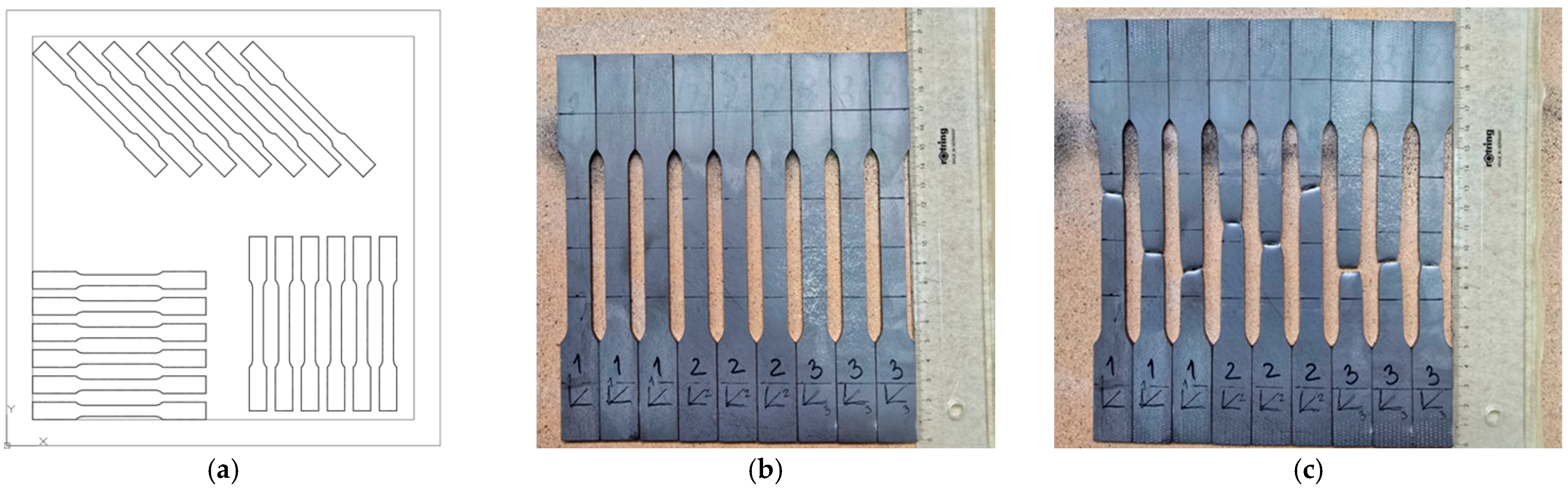
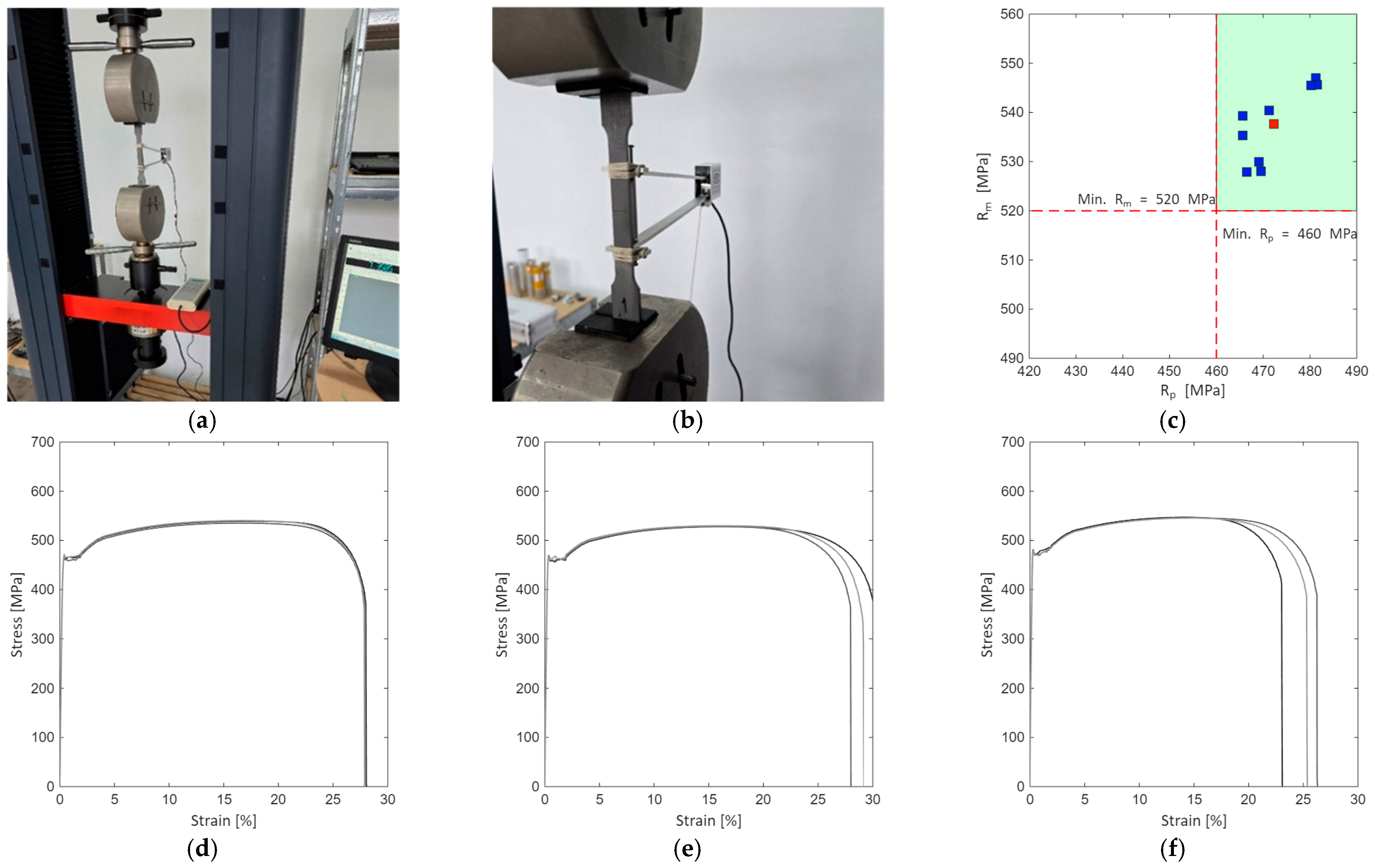
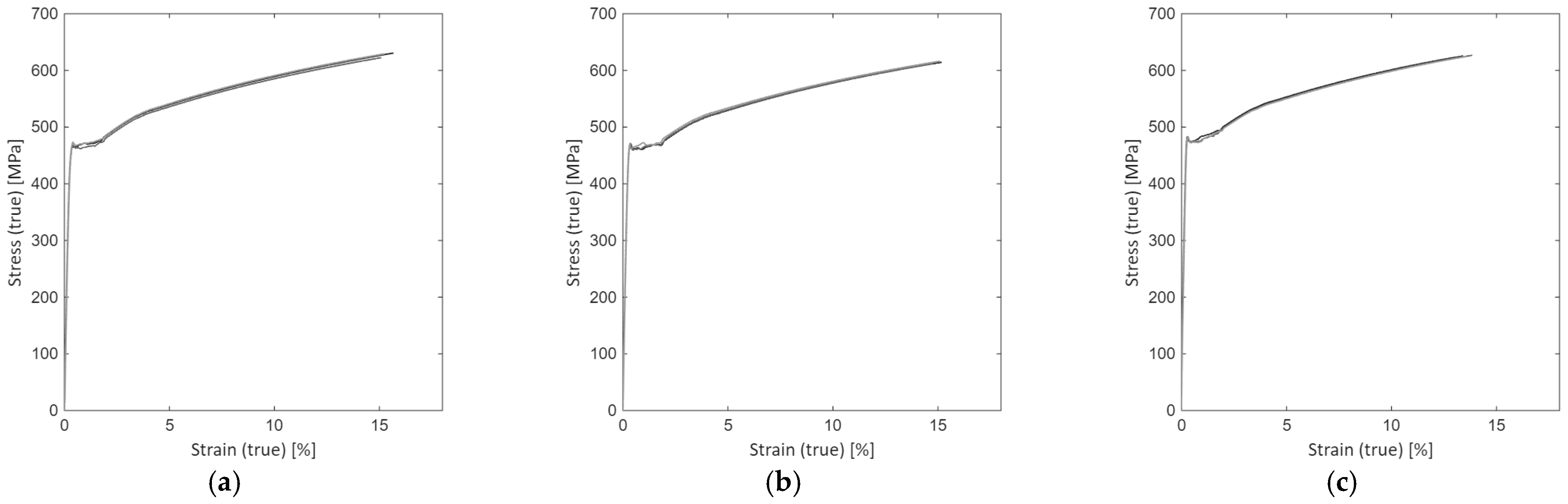
- define the measure dataset;
- −
- define the true stress strain dataset.
3. Manufacturing Process and Simulation
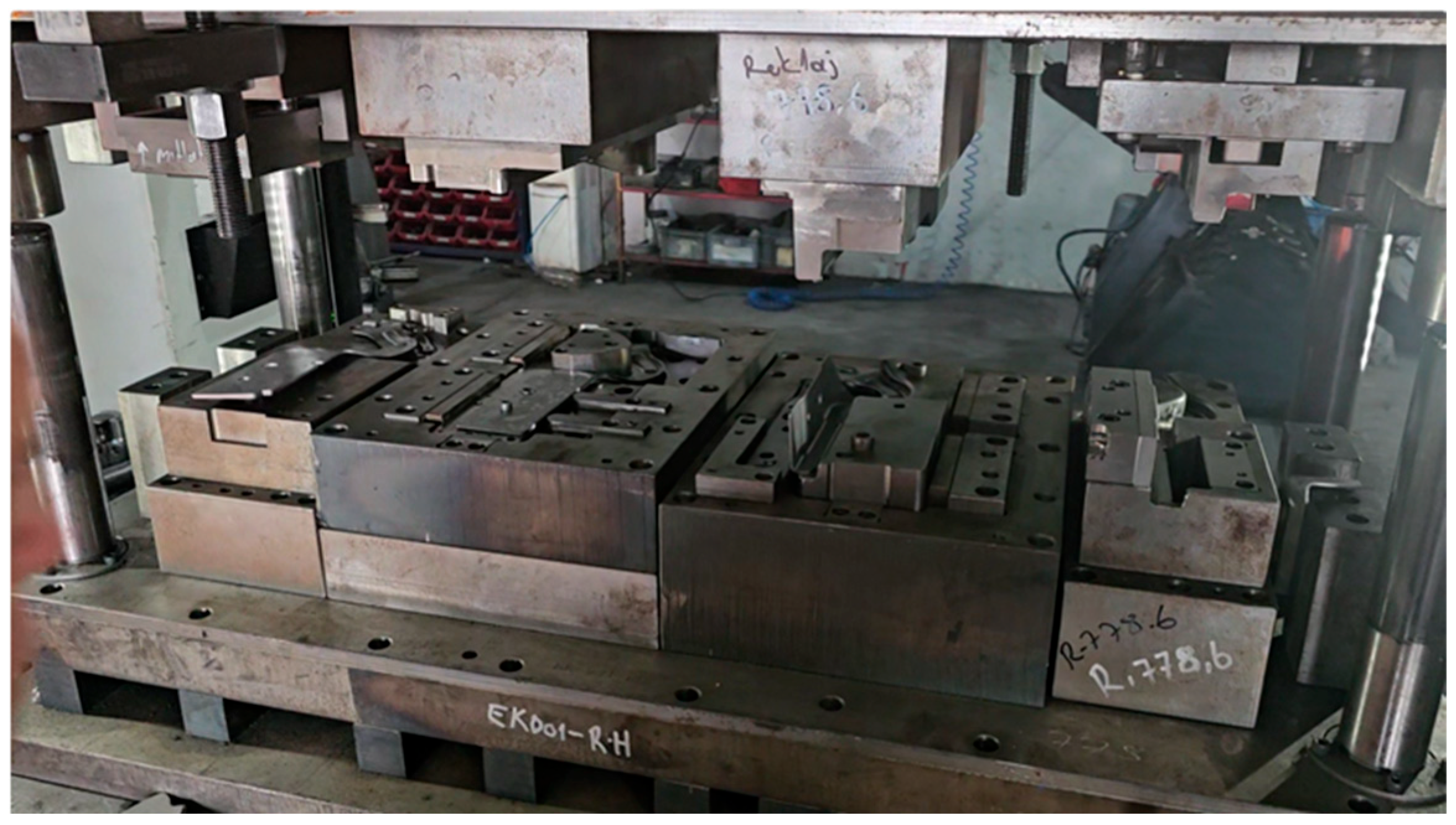
3.1. Industrial Process
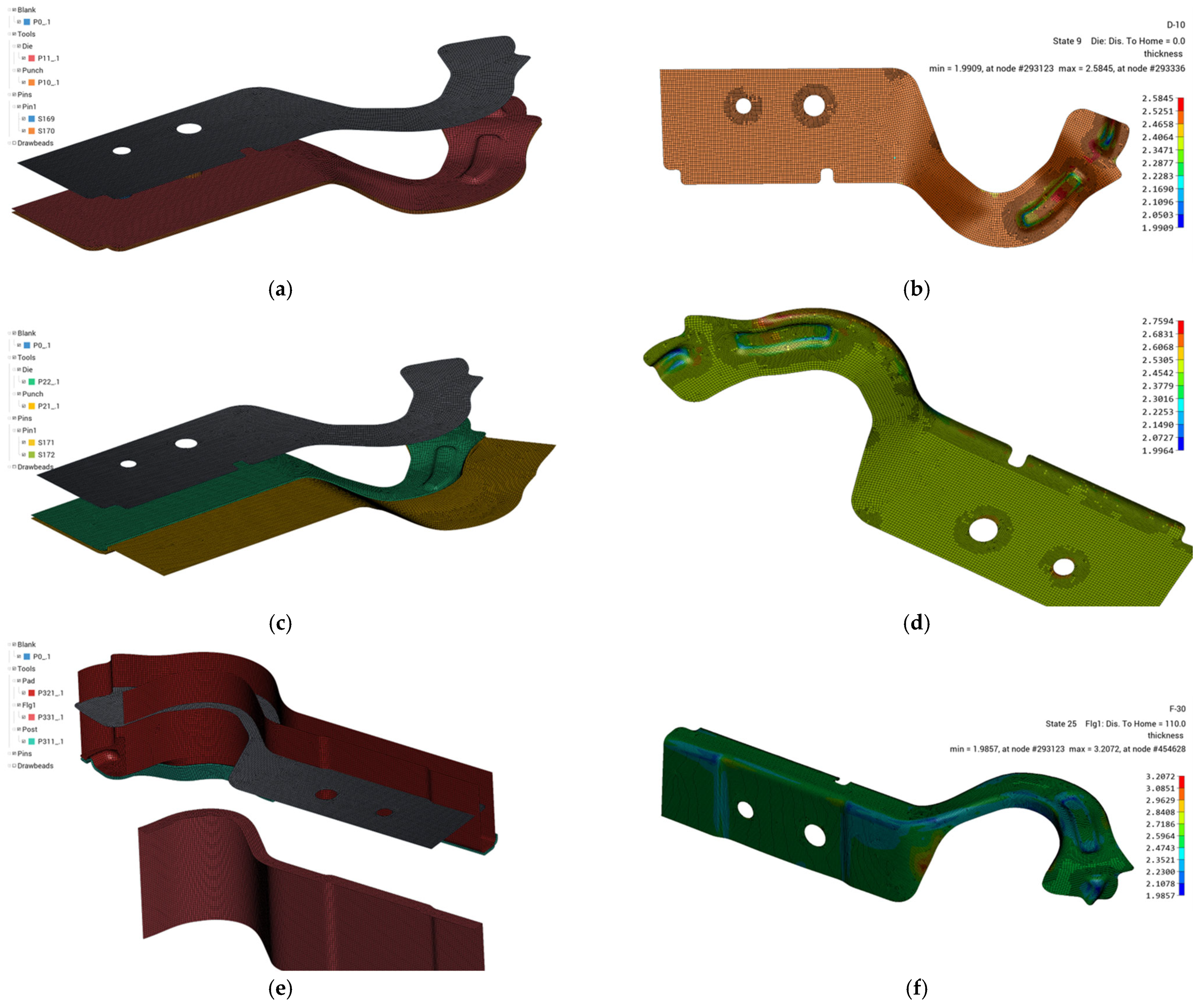
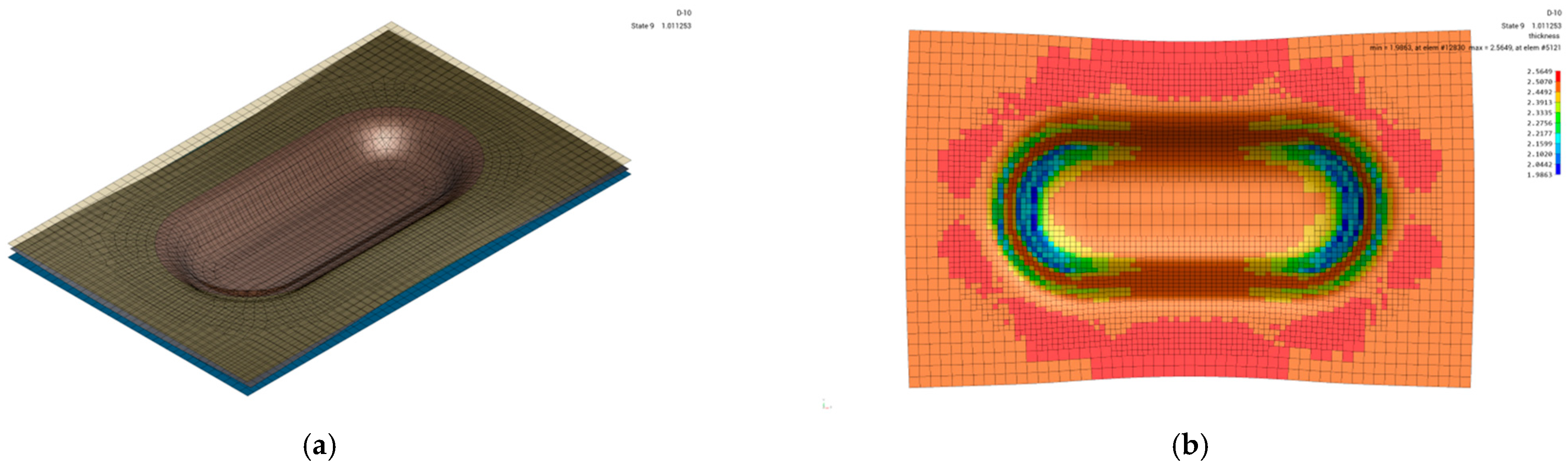
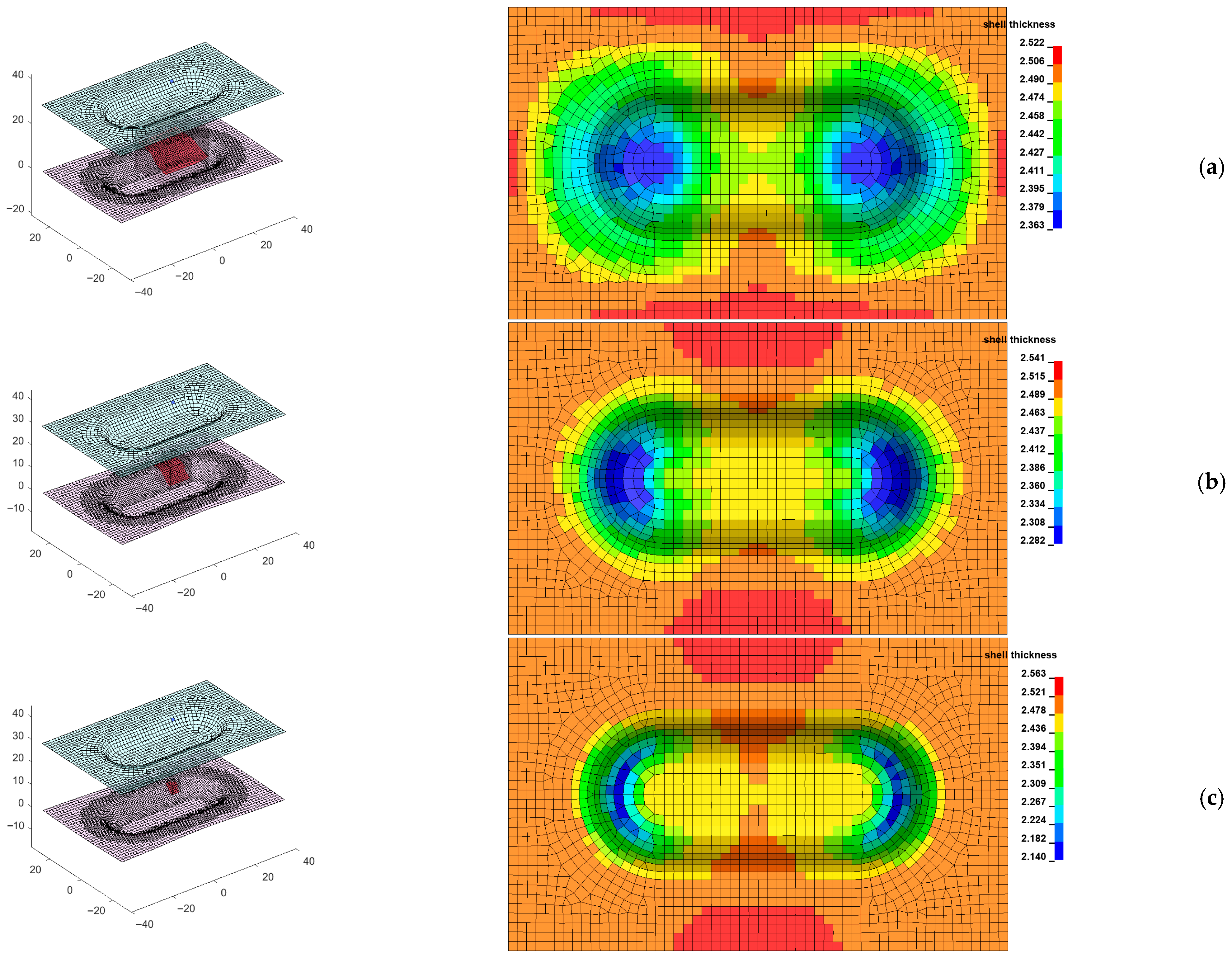
3.2. Numerical Simulation of the Forming Process
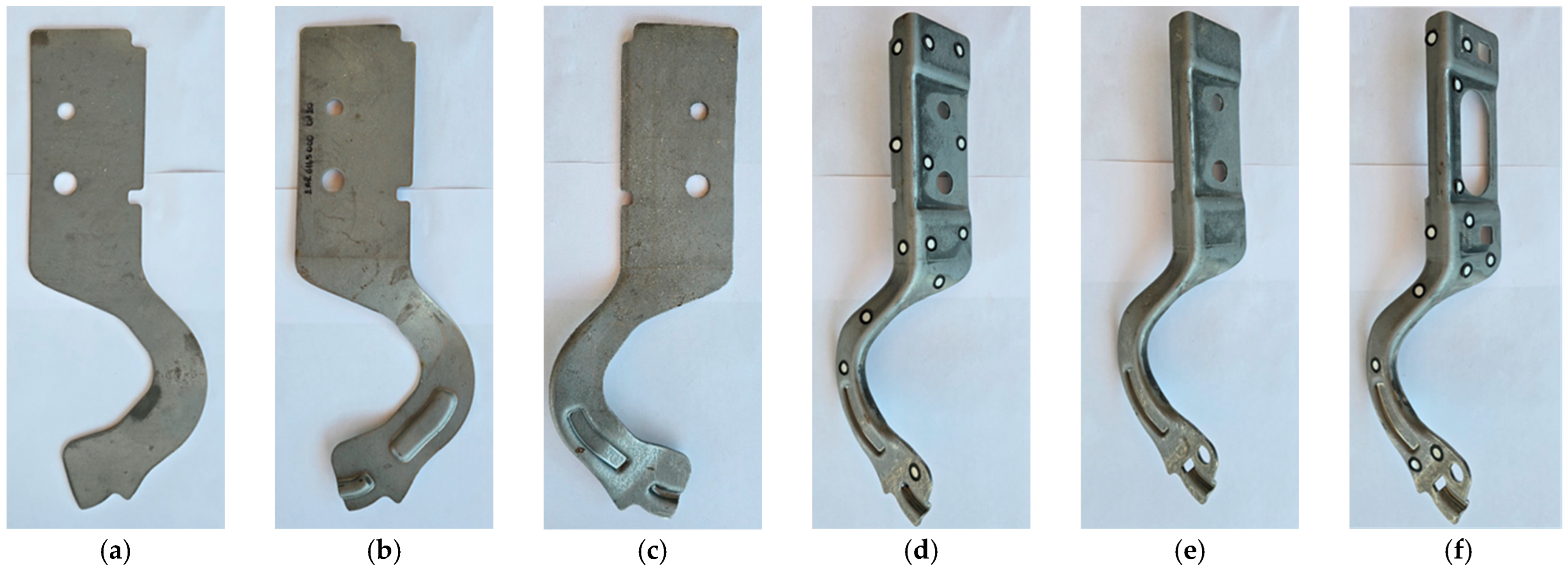
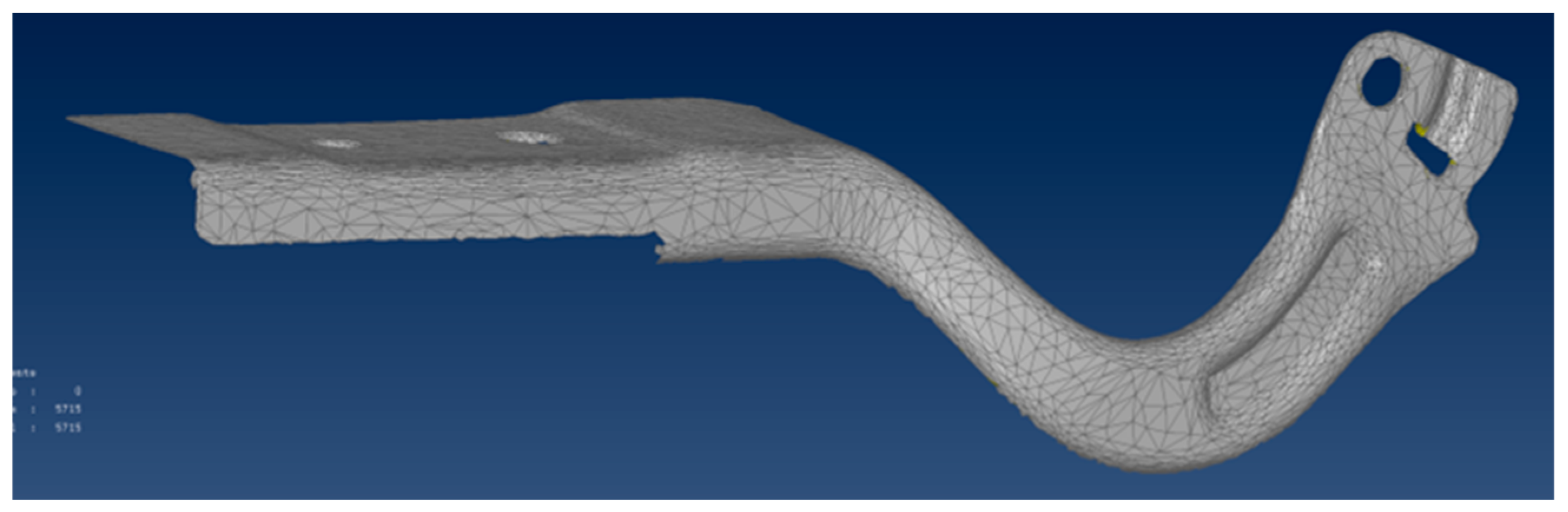
3.3. Scan from the Manufactured Part
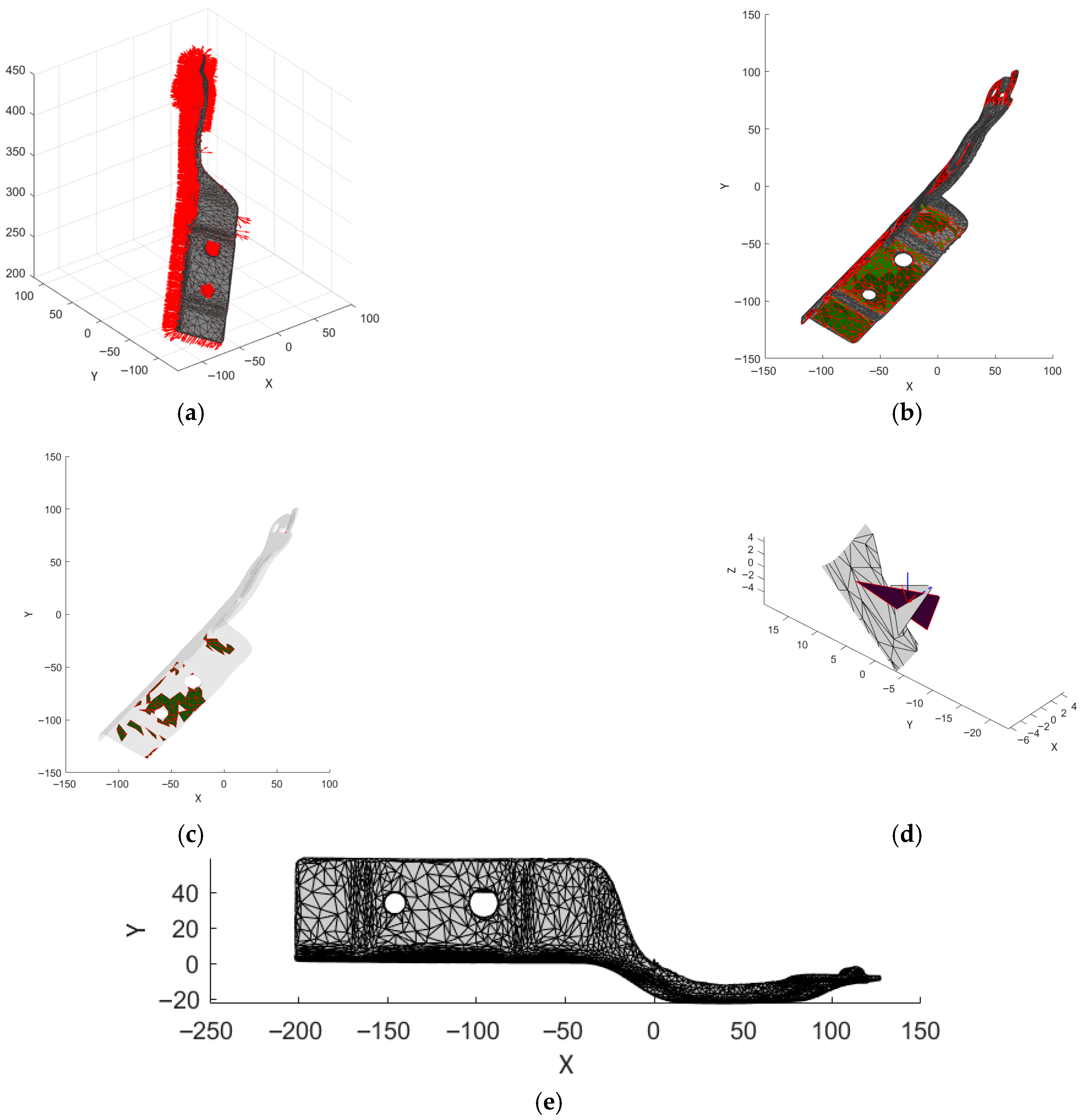
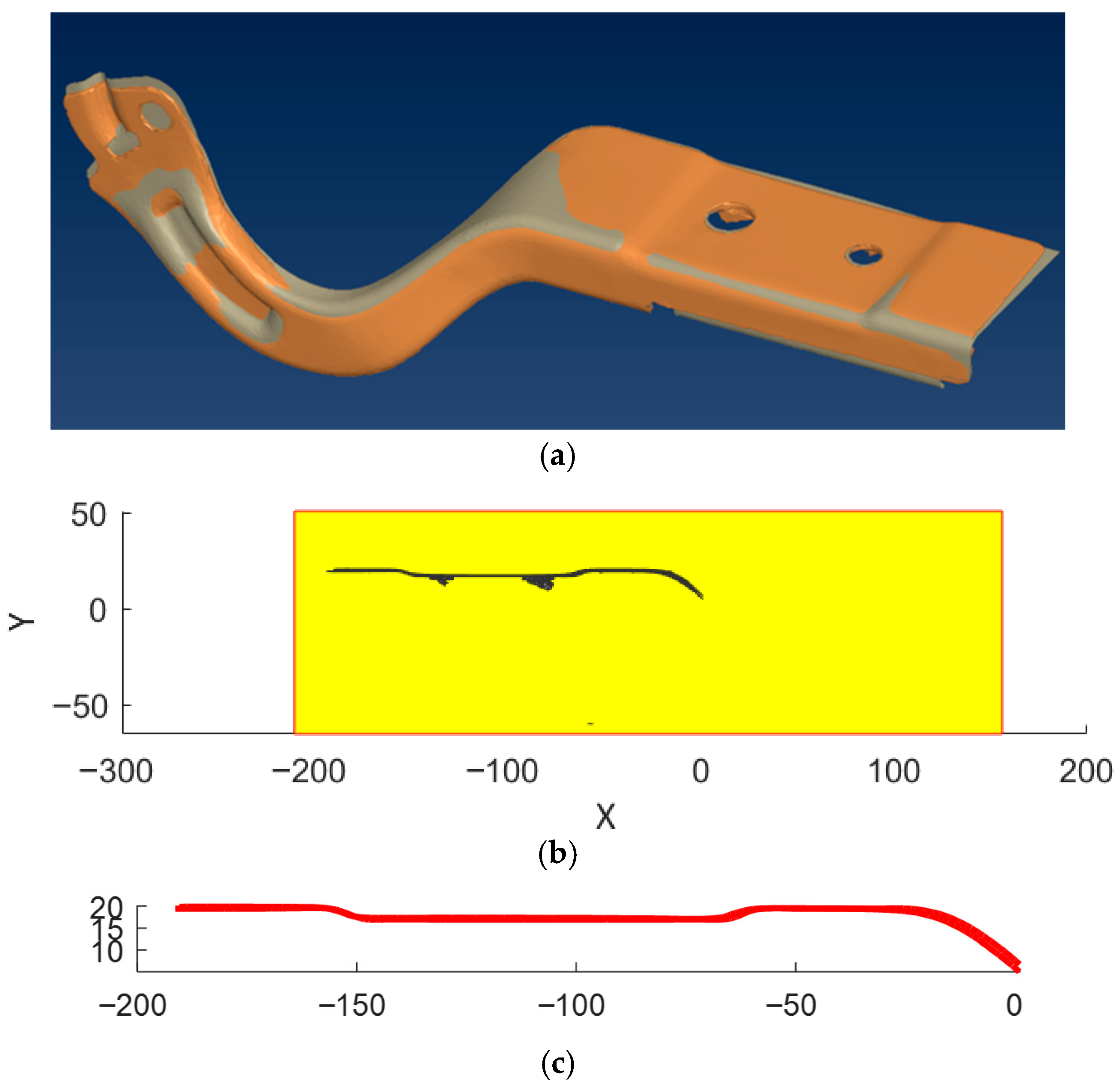
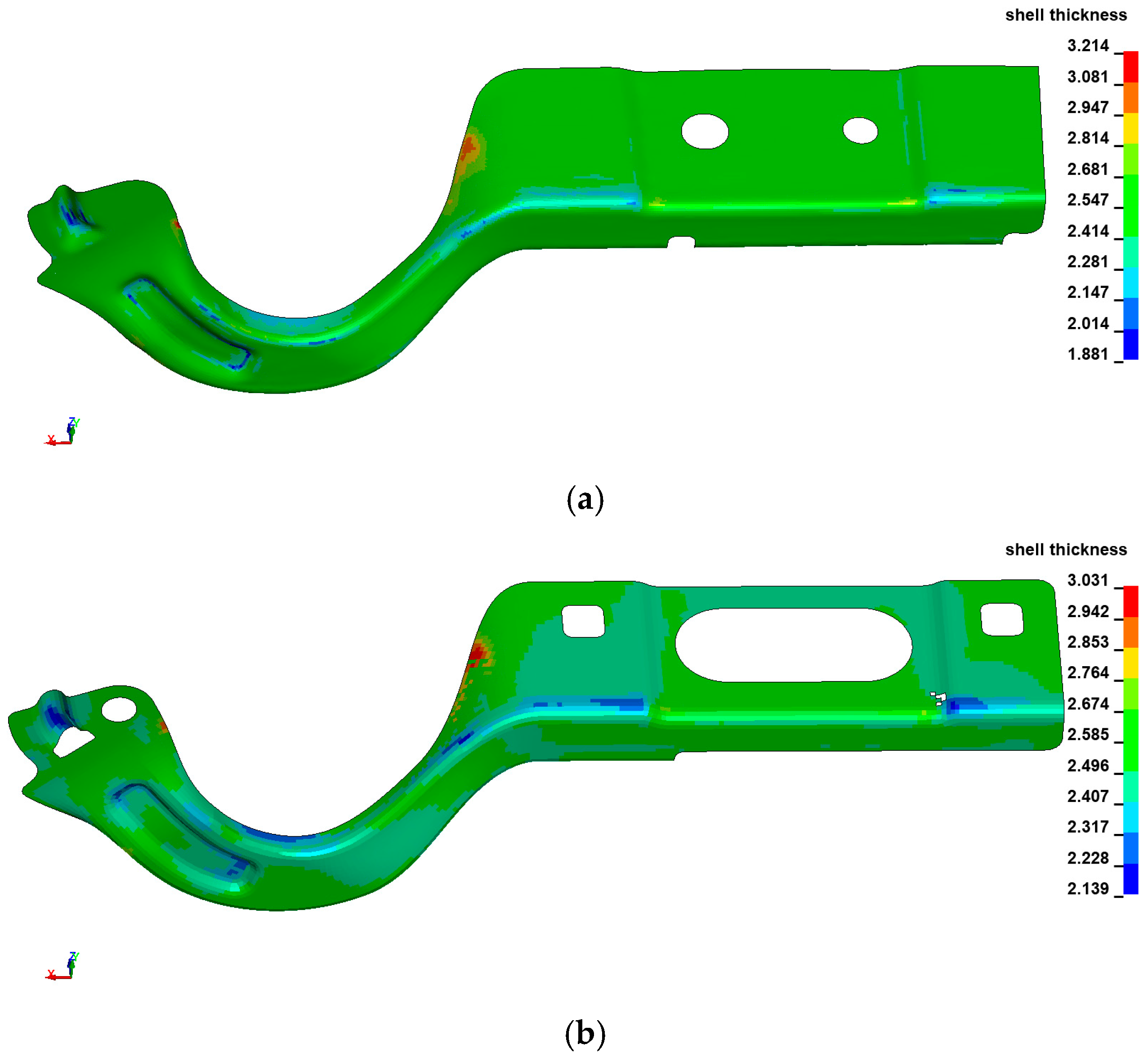
3.4. Mapping Method of the Forming Simulation
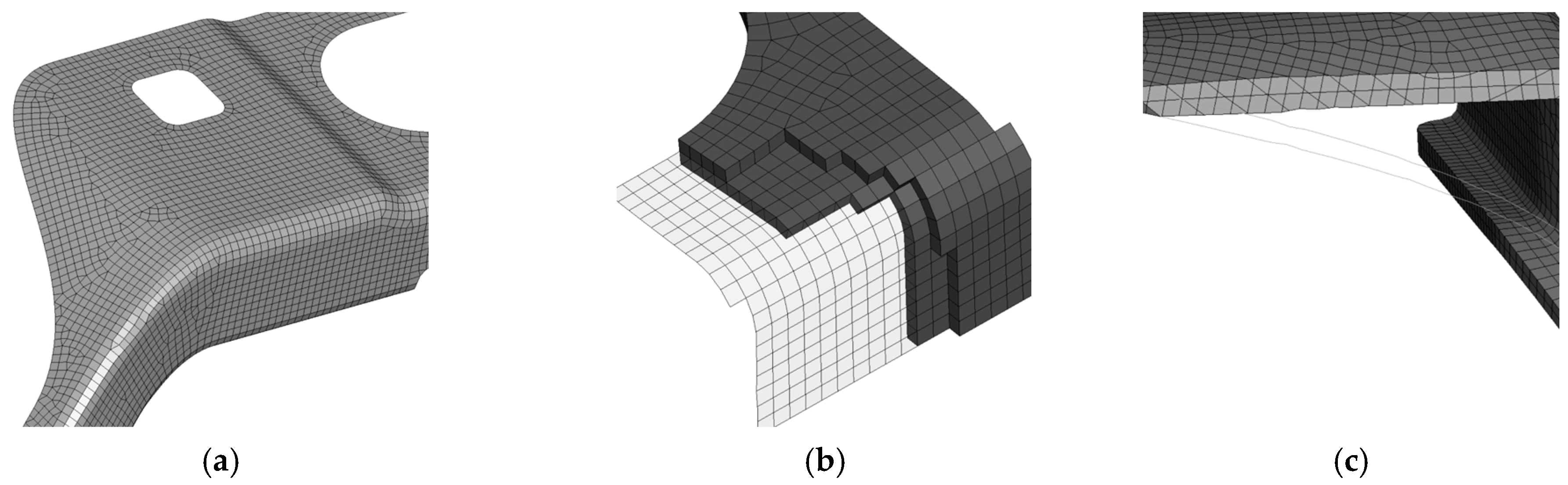
3.5. Results Mapping for 3D Elements
4. Structural Performance Analysis
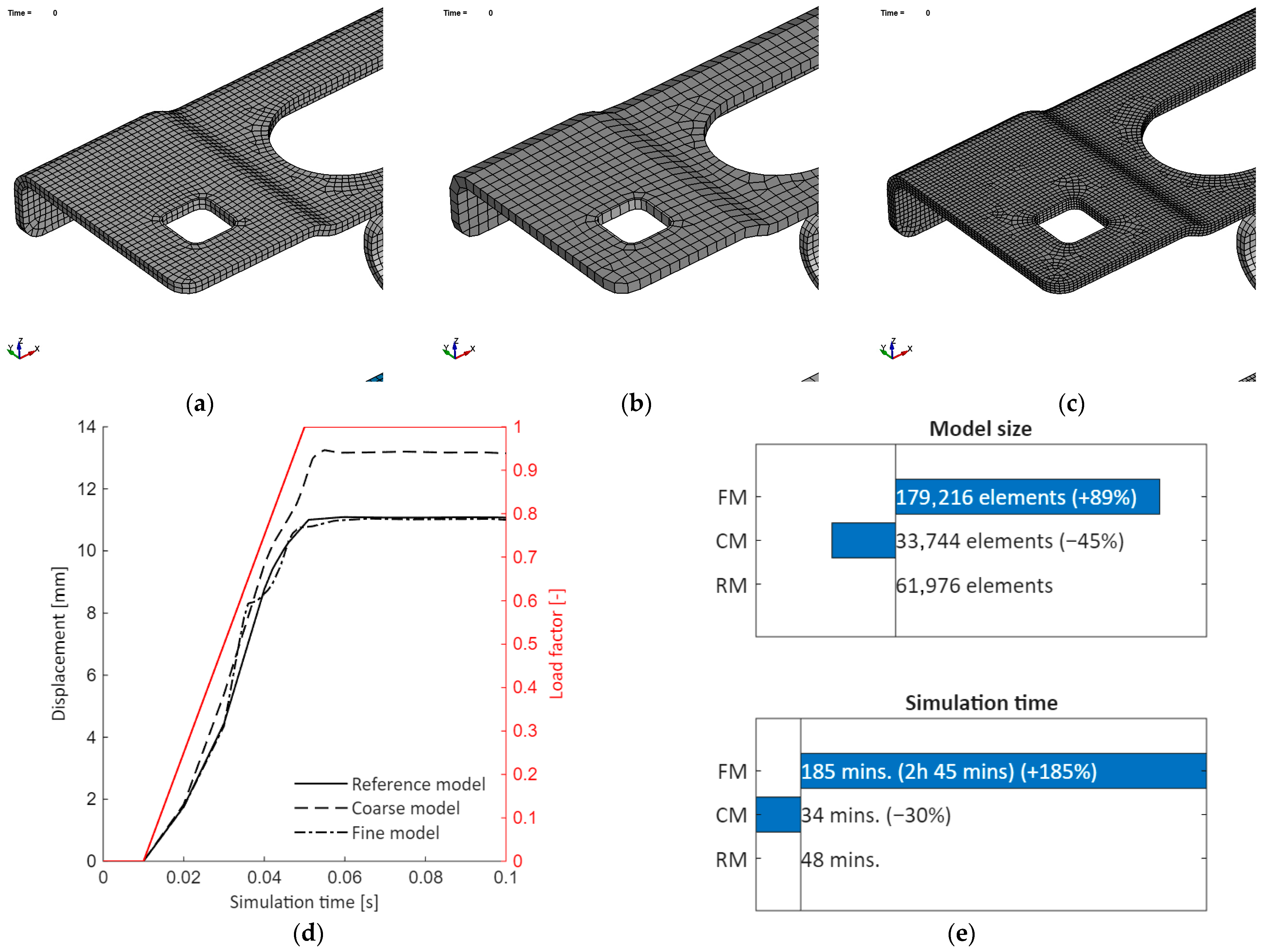
4.1. Convergene Analysis
- − initialization with a value of zero;
- − loading when ramping from zero to one;
- − load keeping with a value of 0.
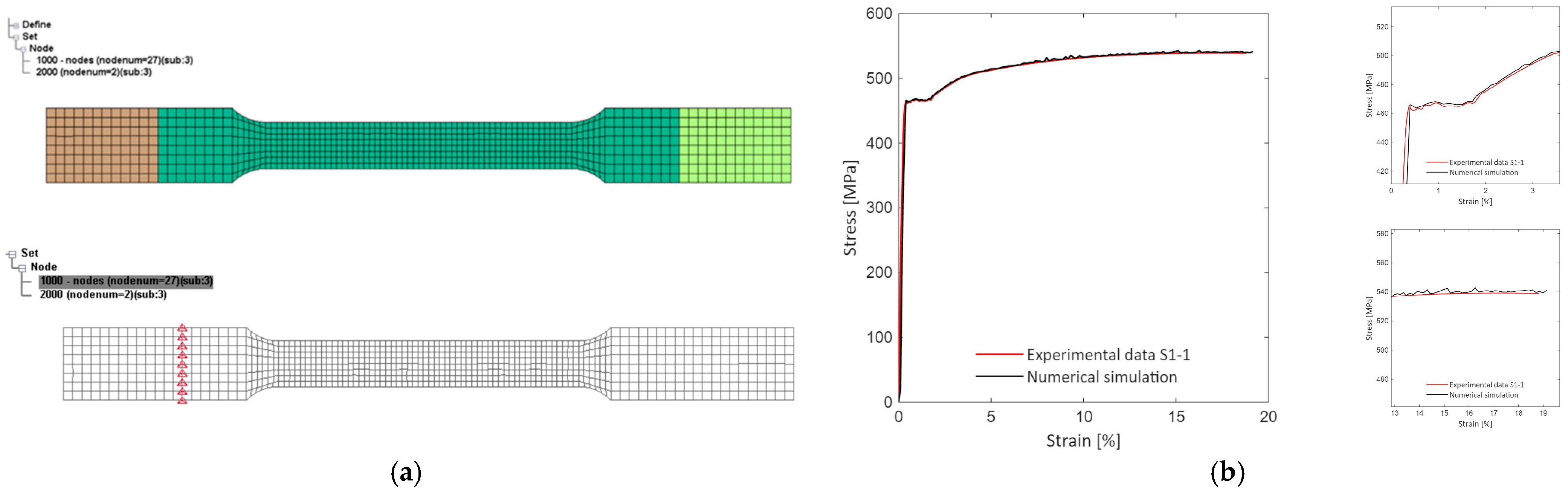
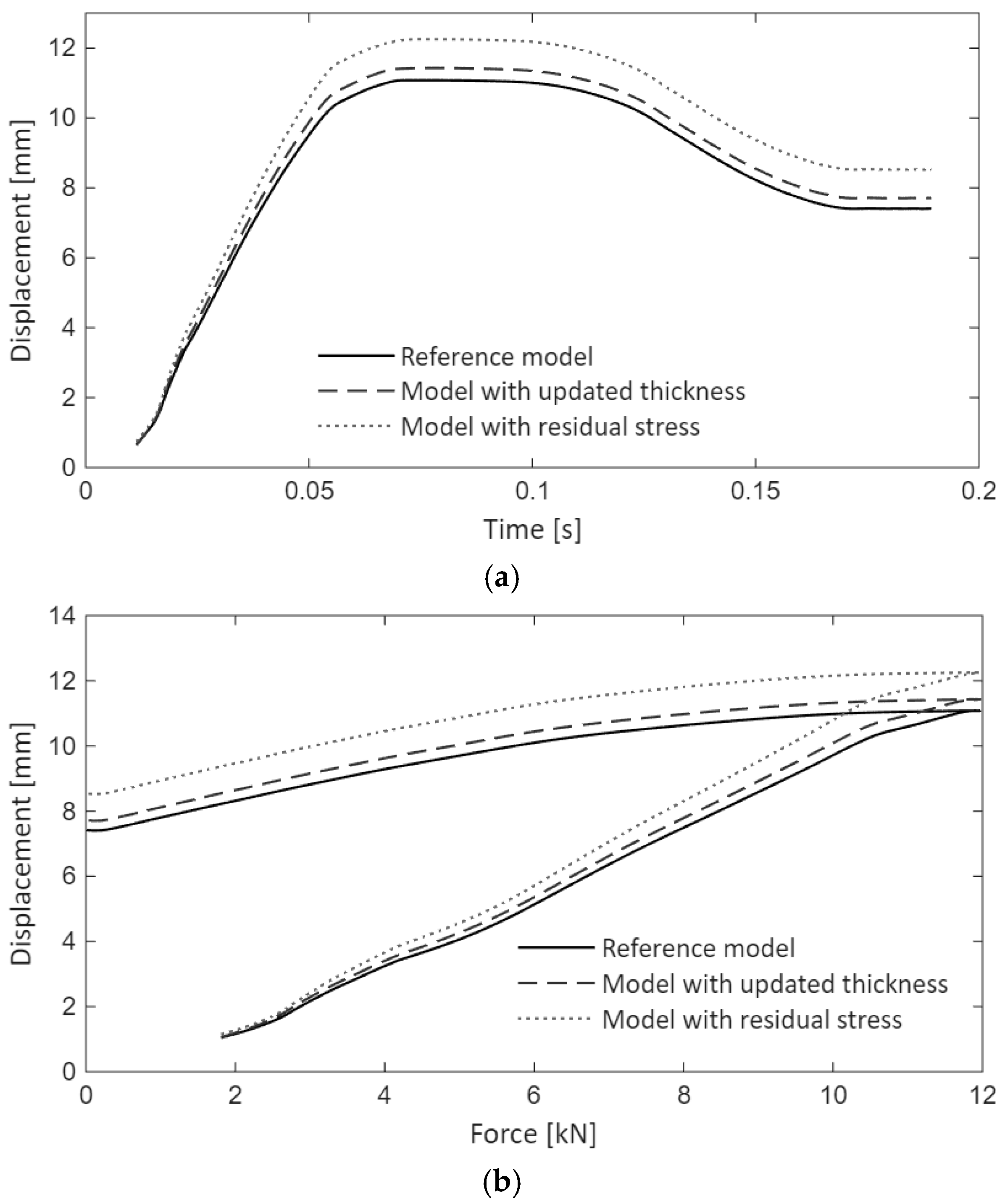
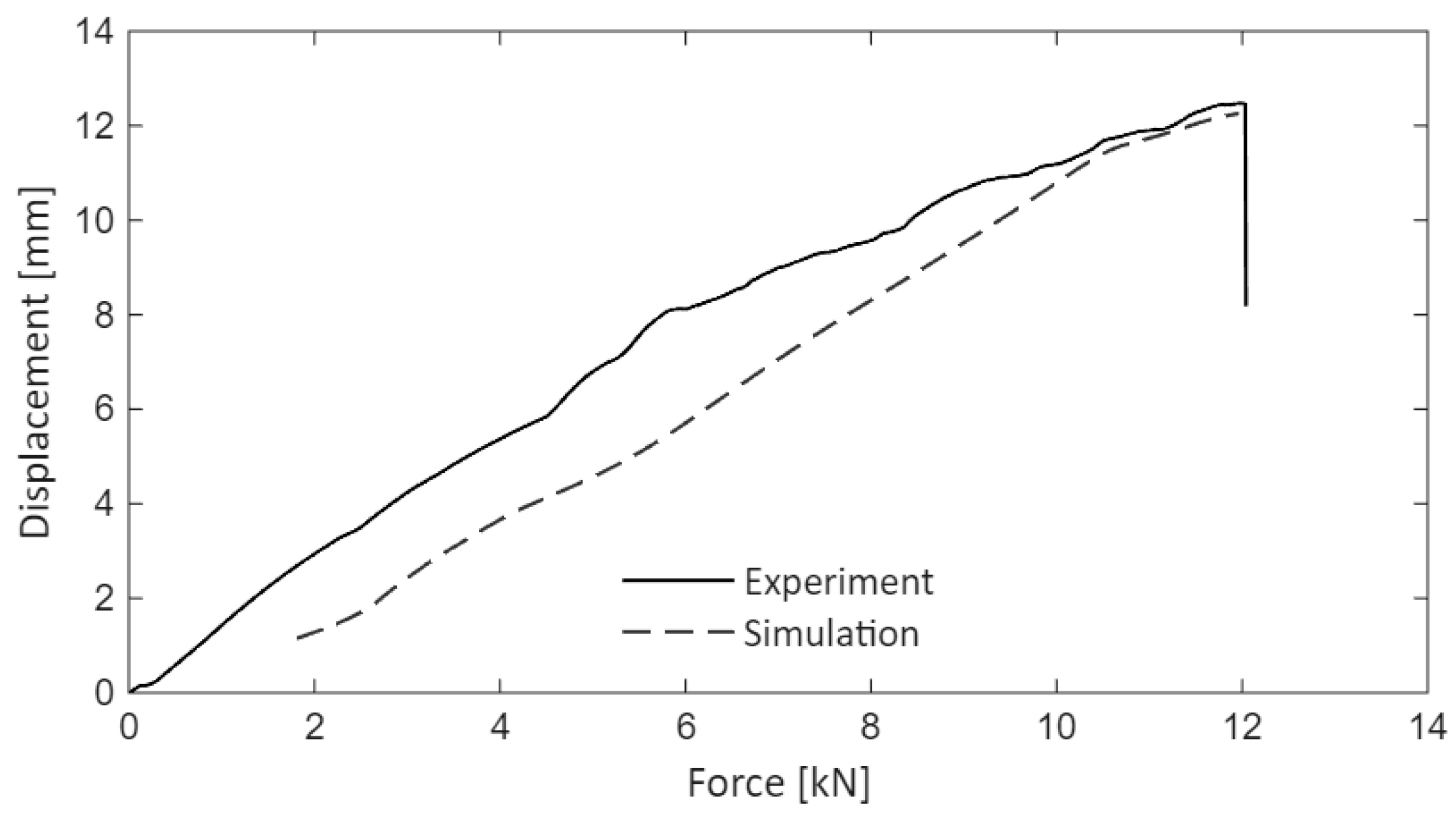
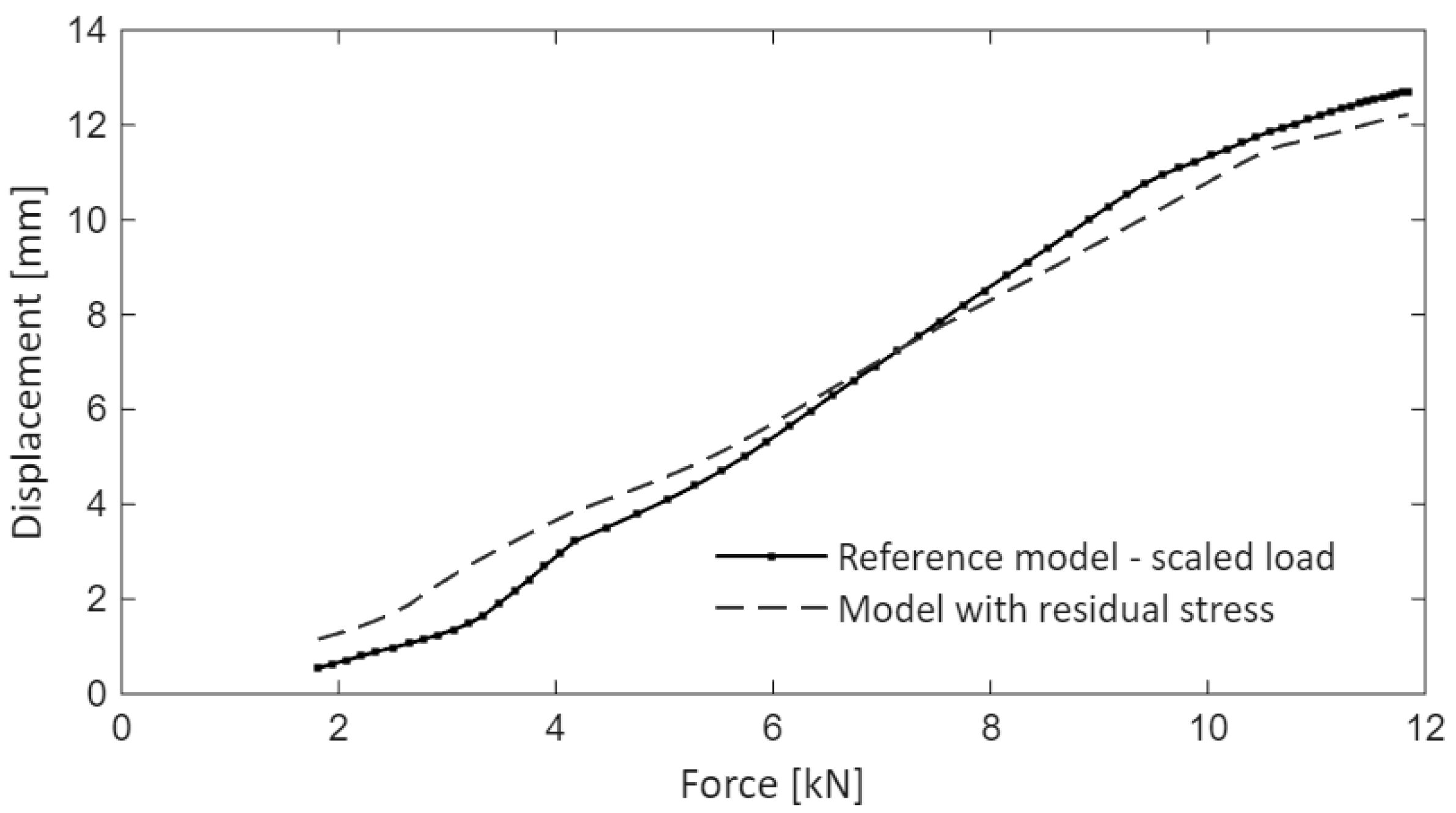
4.2. Experimental vs. Numerical Analysis
5. Discussion
6. Conclusions
- −
- analysis of the assembly and identification of the constructive elements;
- −
- study of the technical specifications;
- −
- a synthesis of the constructive and technical elements and identification of the correlation method for meeting the operating requirements;
- −
- choice of material and mechanical characterization of the material;
- −
- the technological process of manufacturing the moving part component was researched, and semi-finished parts were taken after each stage;
- −
- the semi-finished parts corresponding to the stages of the technological process were investigated:
- ○
- CAD models were created by 3D optical scanning;
- ○
- a MATLAB application was developed that allows the geometric model to be aligned with the global reference;
- ○
- CAD models of the scanned parts were compared with those obtained by numerical simulation of the manufacturing process.
- −
- a numerical model of the manufacturing process of the moving part was developed using the ANSYS Forming program:
- ○
- the CAD model of the finished product was analyzed;
- ○
- the stages of the numerical simulation process were developed in accordance with the stages of the technological process;
- ○
- for each stage, significant results that influence the structural performance of the product were presented.
- −
- a numerical model of the product was developed to evaluate the structural performance:
- ○
- the methods developed for processing the geometric model are presented;
- ○
- the methods developed for creating the numerical model are presented;
- −
- through numerical simulation of the manufacturing process, information is obtained regarding the change in thickness of the part as well as the residual stress state resulting from the technological process:
- ○
- a method was developed for transposing (mapping) the results obtained from the simulation of the technological process for the structural model;
- ○
- a method was developed for creating the 3D finite element model for structural analysis that includes specific results of the technological process;
- −
- specific scenarios for numerical simulation were defined:
- ○
- conventional model (reference);
- ○
- variable thickness model (mapping);
- ○
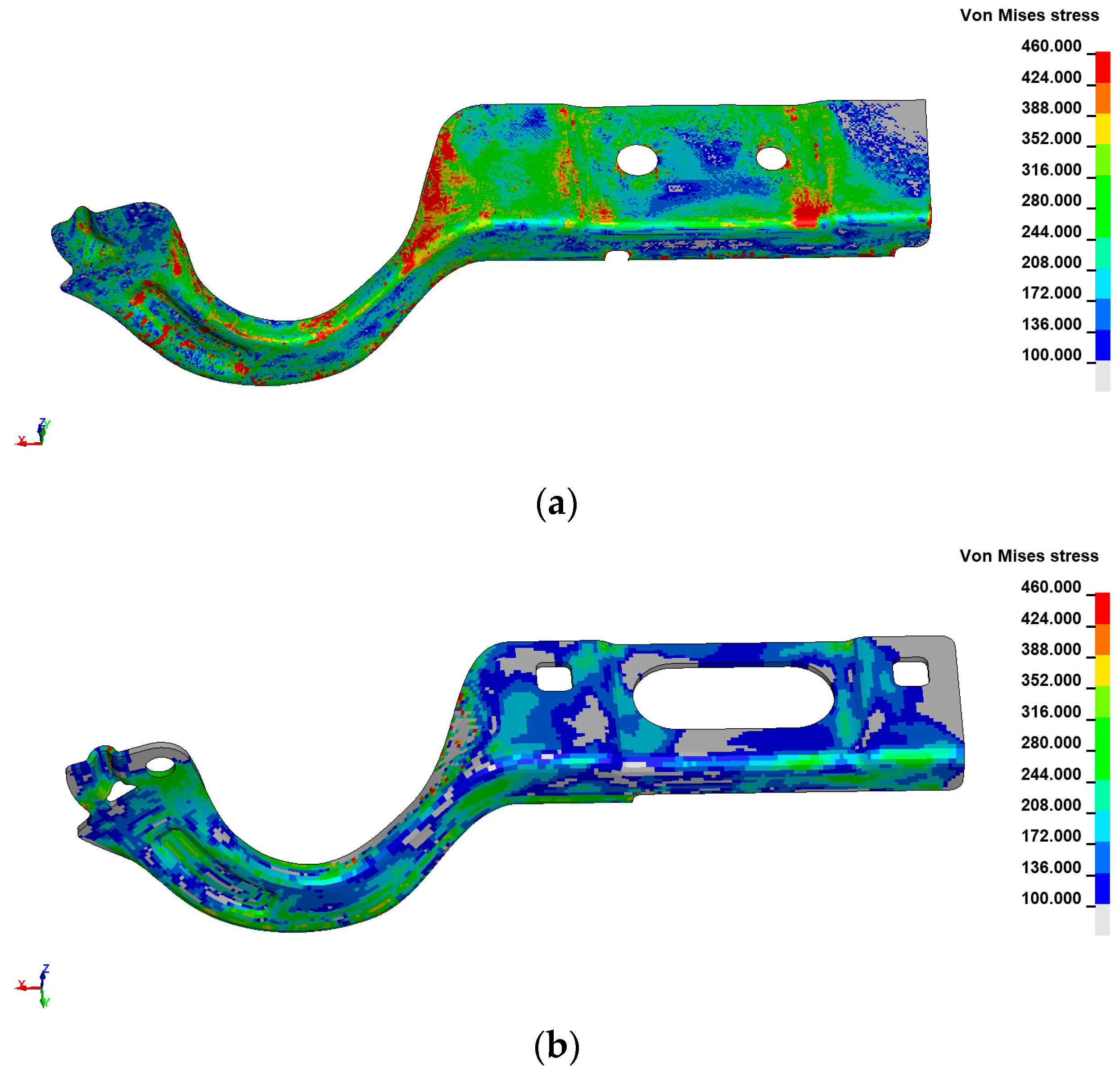
- residual stress model.
- −
- the physical assembly was experimentally investigated, and the results were processed using digital tools.
Author Contributions
Funding
Data Availability Statement
Conflicts of Interest
References
- Giampieri, A.; Ling-Chin, J.; Ma, Z.; Smallbone, A.; Roskilly, A.P. A review of the current automotive manufacturing practice from an energy perspective. Appl. Energy 2020, 261, 114074. [Google Scholar] [CrossRef]
- Dalzochio, J.; Kunst, R.; Pignaton, E.; Binotto, A.; Sanyal, S.; Favilla, J.; Barbosa, J. Machine learning and reasoning for predictive maintenance in Industry 4.0: Current status and challenges. Comput. Ind. 2020, 123, 103298. [Google Scholar] [CrossRef]
- Bongomin, O.; Mwape, M.C.; Mpofu, N.S.; Bahunde, B.K.; Kidega, R.; Mpungu, I.L.; Tumusiime, G.; Owino, C.A.; Goussongtogue, Y.M.; Yemane, A.; et al. Digital twin technology advancing industry 4.0 and industry 5.0 across sectors. Results Eng. 2025, 26, 105583. [Google Scholar] [CrossRef]
- D’Avella, S.; Avizzano, C.A.; Tripicchio, P. ROS-Industrial based robotic cell for Industry 4.0: Eye-in-hand stereo camera and visual servoing for flexible, fast, and accurate picking and hooking in the production line. Robot. Comput.-Integr. Manuf. 2023, 80, 102453. [Google Scholar] [CrossRef]
- Al-Turjman, F.; Hussain, A.A.; Alturjman, S.; Altrjman, C. Vehicle Price Classification and Prediction Using Machine Learning in the IoT Smart Manufacturing Era. Sustainability 2022, 14, 9147. [Google Scholar] [CrossRef]
- Zhao, N.; Parthasarathy, M.; Patil, S.; Coates, D.; Myers, K.; Zhu, H.; Li, W. Direct additive manufacturing of metal parts for automotive applications. J. Manuf. Syst. 2023, 68, 368–375. [Google Scholar] [CrossRef]
- Hartley, W.D.; Garcia, D.; Yoder, J.K.; Poczatek, E.; Forsmark, J.H.; Luckey, S.G.; Dillard, D.A.; Yu, H.Z. Solid-state cladding on thin automotive sheet metals enabled by additive friction stir deposition. J. Mater. Process Technol. 2021, 291, 117045. [Google Scholar] [CrossRef]
- Douimia, S.; Bekrar, A.; Cadi, A.A.E.; Hillali, Y.E.; Fillon, D. Machine learning and deep learning applications in the automotive manufacturing industry: A systematic literature review and industry insights. Robot. Comput.-Integr. Manuf. 2025, 96, 103034. [Google Scholar] [CrossRef]
- Adnan Yusuf, S.; Khan, A.; Souissi, R. Vehicle-to-everything (V2X) in the autonomous vehicles domain–A technical review of communication, sensor, and AI technologies for road user safety. Transp. Res. Interdiscip. Perspect. 2024, 23, 100980. [Google Scholar] [CrossRef]
- Tihanyi, V.; Rövid, A.; Remeli, V.; Vincze, Z.; Csonthó, M.; Pethő, Z.; Szalai, M.; Varga, B.; Khalil, A.; Szalay, Z. Towards Cooperative Perception Services for ITS: Digital Twin in the Automotive Edge Cloud. Energies 2021, 14, 5930. [Google Scholar] [CrossRef]
- Fernandez De Arroyabe, I.; Watson, T.; Phillips, I. Cybersecurity Maintenance in the Automotive Industry Challenges and Solutions: A Technology Adoption Approach. Future Internet 2024, 16, 395. [Google Scholar] [CrossRef]
- Özmerdivanlı, A.; Sönmez, Y. The Relationship Between Financial Development, Energy Consumption, Economic Growth, and Environmental Degradation: A Comparison of G7 and E7 Countries. Economies 2025, 13, 278. [Google Scholar] [CrossRef]
- Palea, V.; Santhià, C. The financial impact of carbon risk and mitigation strategies: Insights from the automotive industry. J. Clean. Prod. 2022, 344, 131001. [Google Scholar] [CrossRef]
- Li, X.; Niu, W.; Tian, H. Application of Digital Twin in Electric Vehicle Powertrain: A Review. World Electr. Veh. J. 2024, 15, 208. [Google Scholar] [CrossRef]
- Ereiz, S.; Duvnjak, I.; Jiménez-Alonso, J.F. Review of finite element model updating methods for structural applications. Structures 2022, 41, 684–723. [Google Scholar] [CrossRef]
- Thacker, J.G.; Reagan, S.W.; Pellettiere, J.A.; Pilkey, W.D.; Crandall, J.R.; Sieveka, E.M. Experiences during development of a dynamic crash response automobile model. Finite Elem. Anal. Des. 1998, 30, 279–295. [Google Scholar] [CrossRef]
- Jayasinghe, S.C.; Mahmoodian, M.; Alavi, A.; Sidiq, A.; Shahrivar, F.; Sun, Z.; Thangarajah, J.; Setunge, S. A review on the applications of artificial neural network techniques for accelerating finite element analysis in the civil engineering domain. Comput. Struct. 2025, 310, 107698. [Google Scholar] [CrossRef]
- Yokoyama, Y.; Nagasaka, K.; Masuda, I.; Sugiyama, H.; Okazawa, S. Simulation of Automobile Structural Member Deformation and Crash via Isogeometric Analysis. Vehicles 2024, 6, 967–983. [Google Scholar] [CrossRef]
- Choi, S.; Park, T.; Kim, H.; Nam, B.; Ye, B.; Kim, D. Ductile fracture prediction in thin-walled structures through a novel damage model. Heliyon 2024, 10, e40849. [Google Scholar] [CrossRef]
- Abebe, M.; Koo, B. Fatigue Life Uncertainty Quantification of Front Suspension Lower Control Arm Design. Vehicles 2023, 5, 859–875. [Google Scholar] [CrossRef]
- Li, D.; Tian, J.; Shi, S.; Wang, S.; Deng, J.; He, S. Lightweight Design of Commercial Vehicle Cab Based on Fatigue Durability. CMES-Comput. Model. Eng. Sci. 2023, 136, 421–445. [Google Scholar] [CrossRef]
- Chen, S.; Bekar, E.T.; Bokrantz, J.; Skoogh, A. AI-enhanced digital twins in maintenance: Systematic review, industrial challenges, and bridging research–practice gaps. J. Manuf. Syst. 2025, 82, 678–699. [Google Scholar] [CrossRef]
- Suo, H.; Zhou, H.; Wei, Z.; Li, R.; Zhang, Y.; Guan, W.; Cheng, H.; Luo, B.; Zhang, K. Degradation mechanisms and mechanical behavior of composite-metal bolted/riveted joints in complex service conditions: A comprehensive review. Eng. Fail. Anal. 2025, 182, 110037. [Google Scholar] [CrossRef]
- Lv, X.; Xiao, Z.; Fang, J.; Li, Q.; Lei, F.; Sun, G. On safety design of vehicle for protection of vulnerable road users: A review. Thin-Walled Struct. 2023, 182, 109990. [Google Scholar] [CrossRef]
- Radu, A.-I.; Tolea, B.-A.; Trusca, D.-D. Validation of a virtual model for the kinematic and dynamic analysis of the impact of a pedestrian’s head with a bonnet using experimental tests. Ing. Automob. 2025. Available online: https://siar.ro/wp-content/uploads/2025/08/rIA_76.pdf (accessed on 2 October 2025).
- Abbasi, M.; Reddy, S.; Ghafari-Nazari, A.; Fard, M. Multiobjective crashworthiness optimization of multi-cornered thin-walled sheet metal members. Thin-Walled Struct. 2015, 89, 31–41. [Google Scholar] [CrossRef]
- Baroutaji, A.; Sajjia, M.; Olabi, A.G. On the crashworthiness performance of thin-walled energy absorbers: Recent advances and future developments. Thin-Walled Struct. 2017, 118, 137–163. [Google Scholar] [CrossRef]
- Isaac, C.W.; Duddeck, F. Current trends in additively manufactured (3D printed) energy absorbing structures for crashworthiness application–a review. Virtual Phys. Prototyp. 2022, 17, 1058–1101. [Google Scholar] [CrossRef]
- Jones, N. Structural Impact, 1st ed.; Cambridge University Press: Cambridge, UK, 1990; ISBN 978-0-521-30180-0. [Google Scholar]
- Stirosu, M.; Tabacu, S. Experimental and numerical analysis and validation of S460 steel. Univ. Pitesti Sci. Bull.-Automot. Ser. 2024, 34, 1–9. [Google Scholar] [CrossRef]
- Vormwald, M. Fatigue of Constructional Steel S460 under Complex Cyclic Stress and Strain Sequences. Procedia Eng. 2011, 10, 270–275. [Google Scholar] [CrossRef]
- Xu, T.H.; Zhang, L.M. Numerical implementation of a bounding surface plasticity model for sand under high strain-rate loadings in LS-DYNA. Comput. Geotech. 2015, 66, 203–218. [Google Scholar] [CrossRef]
- Woelke, P.B.; Londono, J.G.; Erhart, T.; Haufe, A.; Jurendic, S.; Anderson, D. Extension of the GISSMO fracture model for thin-walled structures under combined tensile and bending loads. Eng. Fract. Mech. 2024, 311, 110574. [Google Scholar] [CrossRef]
- Hallquist, J.O. LS-DYNA ® THEORY MANUAL. Available online: https://ftp.lstc.com/anonymous/outgoing/jday/manuals/ls-dyna_theory_manual_2006.pdf (accessed on 1 July 2025).
- Rust, W.; Schweizerhof, K. Finite element limit load analysis of thin-walled structures by ANSYS (implicit), LS-DYNA (explicit) and in combination. Thin-Walled Struct. 2003, 41, 227–244. [Google Scholar] [CrossRef]
- Arriaga, A.; Pagaldai, R.; Zaldua, A.M.; Chrysostomou, A.; O’Brien, M. Impact testing and simulation of a polypropylene component. Correlation with strain rate sensitive constitutive models in ANSYS and LS-DYNA. Polym. Test. 2010, 29, 170–180. [Google Scholar] [CrossRef]
- Narasimhan, N.; Lovell, M. Predicting springback in sheet metal forming: An explicit to implicit sequential solution procedure. Finite Elem. Anal. Des. 1999, 33, 29–42. [Google Scholar] [CrossRef]
- Kim, H.-K.; Kim, W.-J. A Springback Prediction Model for Warm Forming of Aluminum Alloy Sheets Using Tangential Stresses on a Cross-Section of Sheet. Metals 2018, 8, 257. [Google Scholar] [CrossRef]
- Ahmed, G.M.S.; Ahmed, H.; Mohiuddin, M.V.; Sajid, S.M.S. Experimental Evaluation of Springback in Mild Steel and its Validation Using LS-DYNA. Procedia Mater. Sci. 2014, 6, 1376–1385. [Google Scholar] [CrossRef][Green Version]
- Bénière, R.; Subsol, G.; Gesquière, G.; Breton, F.L.; Puech, W. A comprehensive process of reverse engineering from 3D meshes to CAD models. CAD Comput. Aided Des. 2013, 45, 1382–1393. [Google Scholar] [CrossRef]
- Amaral, R.L.; Neto, D.M.; Wagre, D.; Santos, A.D.; Oliveira, M.C. Issues on the Correlation between Experimental and Numerical Results in Sheet Metal Forming Benchmarks. Metals 2020, 10, 1595. [Google Scholar] [CrossRef]
- Gavalas, E.; Pressas, I.; Papaefthymiou, S. Mesh sensitivity analysis on implicit and explicit method for rolling simulation. Int. J. Struct. Integr. 2018, 9, 465–474. [Google Scholar] [CrossRef]
- Tabacu, S.; Ducu, C. Numerical investigations of 3D printed structures under compressive loads using damage and fracture criterion: Experiments, parameter identification, and validation. Extreme Mech. Lett. 2020, 39, 100775. [Google Scholar] [CrossRef]
- Acevedo, C.; Nussbaumer, A. Effect of tensile residual stresses on fatigue crack growth and S-N curves in tubular joints loaded in compression. Int. J. Fatigue 2012, 36, 171–180. [Google Scholar] [CrossRef]
- Hassani-Gangaraj, S.M.; Carboni, M.; Guagliano, M. Finite element approach toward an advanced understanding of deep rolling induced residual stresses, and an application to railway axles. Mater. Des. 2015, 83, 689–703. [Google Scholar] [CrossRef]
- Shang, D.; Liu, X.; Shan, Y.; Jiang, E. Research on the stamping residual stress of steel wheel disc and its effect on the fatigue life of wheel. Int. J. Fatigue 2016, 93, 173–183. [Google Scholar] [CrossRef]
- Varedi, S.R.; Buffel, B.; Desplentere, F. Post-forming deformation and thermal residual stress prediction in vacuum thermoformed ABS sheets. J. Manuf. Process 2025, 155, 1162–1170. [Google Scholar] [CrossRef]
- Sandin, O.; Larour, P.; Rodríguez, J.M.; Parareda, S.; Hammarberg, S.; Kajberg, J.; Casellas, D. Numerical modelling of shear cutting in complex phase high strength steel sheets: A comprehensive study using the Particle Finite Element Method. Finite Elem. Anal. Des. 2025, 246, 104331. [Google Scholar] [CrossRef]
- Liu, T.; Zheng, P.; Bao, J. Deep learning-based welding image recognition: A comprehensive review. J. Manuf. Syst. 2023, 68, 601–625. [Google Scholar] [CrossRef]
- Leonetti, D.; Baarssen, H.; Pucillo, G.P.; Snijder, B.H.H. Measurement of crack paths using digital image correlation. Eng. Fract. Mech. 2025, 327, 111391. [Google Scholar] [CrossRef]
- Almazán-Lázaro, J.-A.; López-Alba, E.; Díaz-Garrido, F.-A. Indentation measurement of thin plates using 3D digital image correlation and experimental validation. Results Eng. 2025, 25, 104246. [Google Scholar] [CrossRef]
- Li, D.; Cheng, B.; Shi, L.; Zhang, E.; Zhao, Q. Propagation measurement for visually thin fatigue crack using homography mapping error and digital image correlation. Mech. Syst. Signal Process 2024, 220, 111628. [Google Scholar] [CrossRef]
- Wang, S.; Wu, Y.; Xu, Q.; Ma, Y.; Wang, T. Research on stamping formability and process simulation of AZ31 magnesium alloy based on deep learning. Mater. Today Commun. 2024, 40, 109807. [Google Scholar] [CrossRef]
- Zeng, C.; Tian, W.; Liao, W.H. The effect of residual stress due to interference fit on the fatigue behavior of a fastener hole with edge cracks. Eng. Fail. Anal. 2016, 66, 72–87. [Google Scholar] [CrossRef]








| Parameter | Symbol | Value | Units |
|---|---|---|---|
| Density | |||
| Young modulus | |||
| Yield stress | min. 460 | ||
| Tensile strength * | min. 520 | ||
| Tensile strength + | min. 610 | ||
| Elongation | min. 20 |
Disclaimer/Publisher’s Note: The statements, opinions and data contained in all publications are solely those of the individual author(s) and contributor(s) and not of MDPI and/or the editor(s). MDPI and/or the editor(s) disclaim responsibility for any injury to people or property resulting from any ideas, methods, instructions or products referred to in the content. |
© 2025 by the authors. Licensee MDPI, Basel, Switzerland. This article is an open access article distributed under the terms and conditions of the Creative Commons Attribution (CC BY) license (https://creativecommons.org/licenses/by/4.0/).
Share and Cite
Stirosu, M.; Tabacu, S.; Cimpeanu, G. Investigation on the Manufacturing, Testing, and Simulation Processes of the Hood Hinge Assembly. Vehicles 2025, 7, 157. https://doi.org/10.3390/vehicles7040157
Stirosu M, Tabacu S, Cimpeanu G. Investigation on the Manufacturing, Testing, and Simulation Processes of the Hood Hinge Assembly. Vehicles. 2025; 7(4):157. https://doi.org/10.3390/vehicles7040157
Chicago/Turabian StyleStirosu, Mihai, Stefan Tabacu, and Gabriel Cimpeanu. 2025. "Investigation on the Manufacturing, Testing, and Simulation Processes of the Hood Hinge Assembly" Vehicles 7, no. 4: 157. https://doi.org/10.3390/vehicles7040157
APA StyleStirosu, M., Tabacu, S., & Cimpeanu, G. (2025). Investigation on the Manufacturing, Testing, and Simulation Processes of the Hood Hinge Assembly. Vehicles, 7(4), 157. https://doi.org/10.3390/vehicles7040157