

Redox-Responsive Theranostic Nanoplatforms in Oncology: Linking Tumor Microenvironment Biology, Proteasome Targeting, and Clinical Translation


Abstract
1. Introduction
2. The Tumor Microenvironment: Redox Signaling, Metabolic Reprogramming, and Proteasomal Dysregulation
2.1. Hallmarks of the Tumor Microenvironment and Their Nanoparticle Design Implications
2.2. Reactive Oxygen Species Dynamics and Glutathione Gradients
2.3. Hypoxia and Extracellular Acidification
2.4. Proteasomal Dysregulation as a Therapeutic and Theranostic Vulnerability
3. Classification of Theranostic Nanoparticle Platforms
3.1. Organic Nanocarriers
3.1.1. Liposomes
3.1.2. Polymeric Nanoparticles
3.2. Inorganic Nanocarriers
3.2.1. Superparamagnetic Iron Oxide Nanoparticles
3.2.2. Gold Nanoparticles
3.2.3. Quantum Dots and Emerging Inorganic Platforms
3.3. Hybrid Nanoplatforms
4. Redox-Responsive and Proteasome-Targeted Theranostic Nanoplatforms
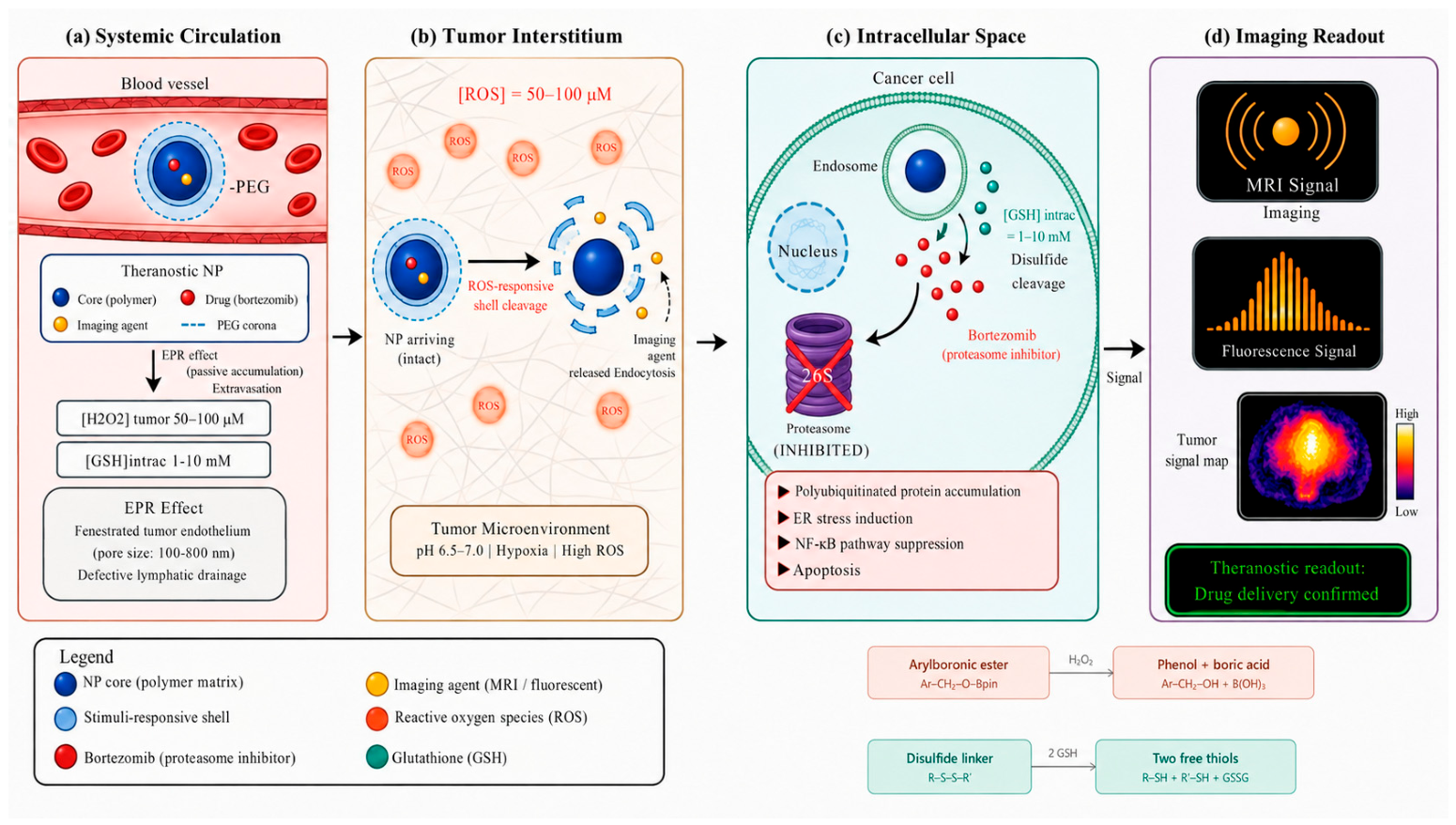
4.1. ROS-Responsive Theranostic Systems
Chemodynamic Therapy: Fenton-Based ROS Amplification
4.2. GSH-Responsive Theranostic Systems
4.3. Dual ROS/GSH-Responsive Theranostic Platforms
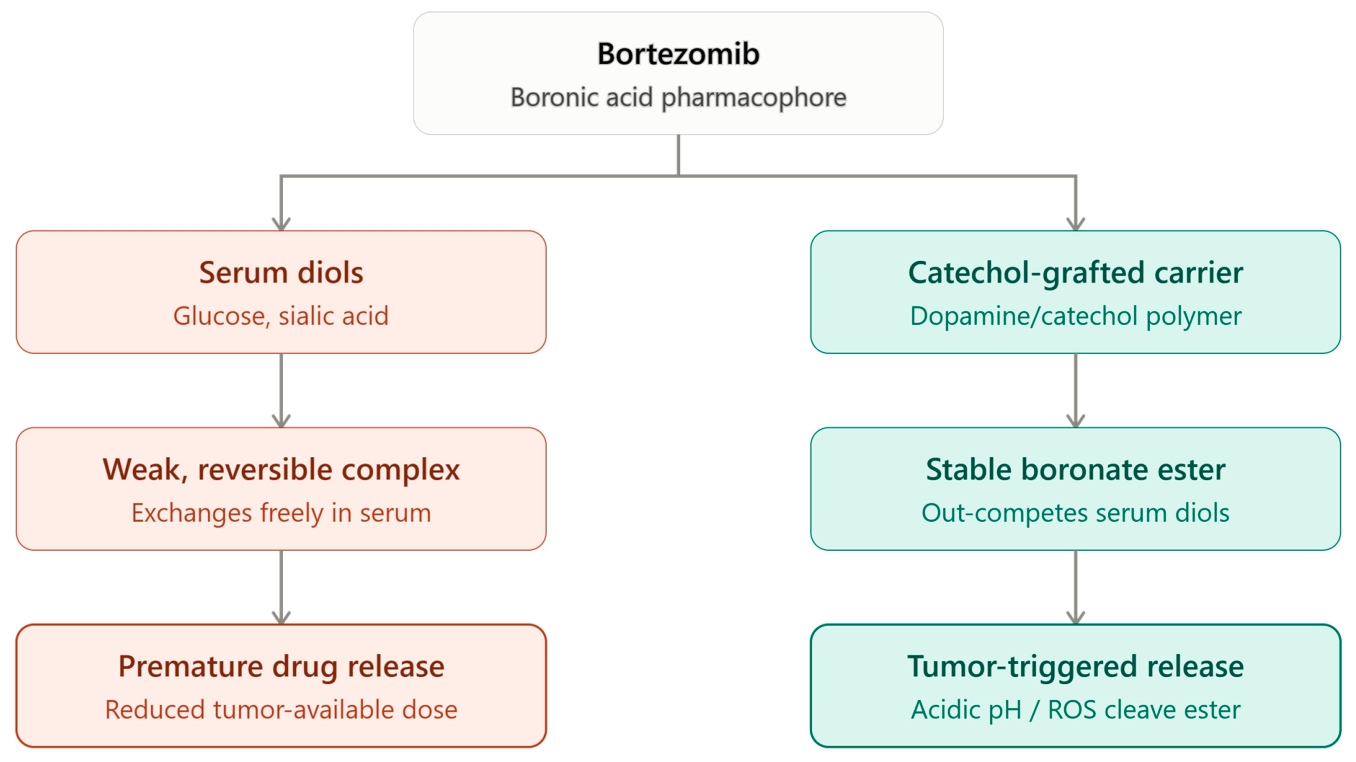
4.4. Proteasome-Targeted Theranostic Nanoparticles: A Critical Gap and Emerging Opportunity
4.5. Nano-PROTACs: An Emerging Complement to Direct Proteasome Inhibition
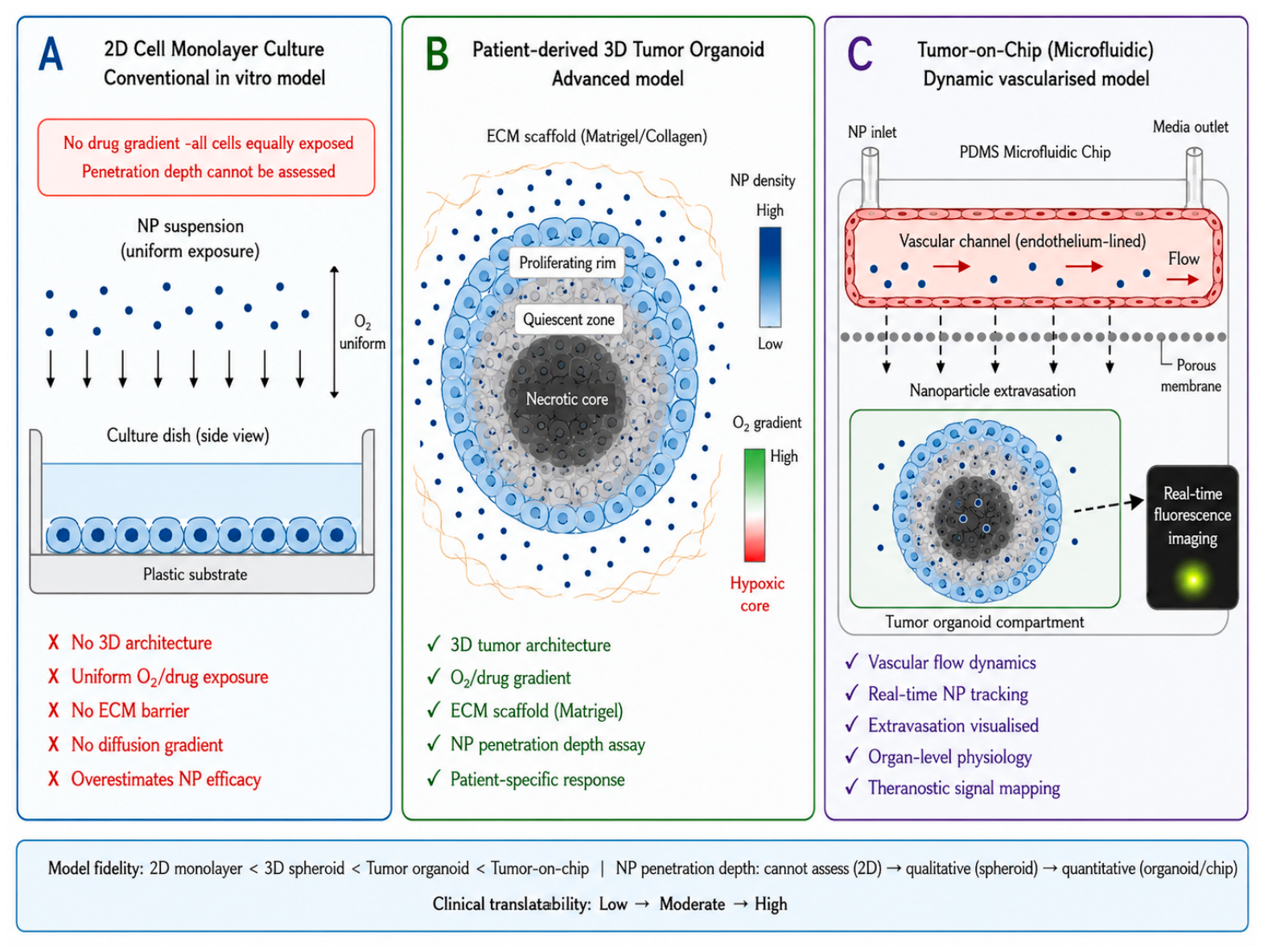
5. Three-Dimensional Organoid and Microfluidic Models for Preclinical Evaluation of Theranostic Nanoparticles
5.1. Fundamental Limitations of Conventional Two-Dimensional Models
5.2. Tumor Organoids as Predictive Theranostic Nanoparticle Testbeds
5.3. Tumor-on-Chip Microfluidic Platforms
5.4. Integration of Proteomics-Guided Nanoparticle Design with Organoid Platforms
6. Cancer Subtype-Specific Theranostic Nanoparticle Applications
6.1. Breast Cancer
6.2. Human Papillomavirus-Associated Malignancies
6.3. Colorectal Cancer
6.4. Prostate Cancer
7. Clinical Translation: Challenges, Regulatory Considerations, and the Path Forward
7.1. Overview of Clinically Approved Cancer Nanomedicines
7.2. Pharmacokinetics, Biodistribution, and Immune Clearance
7.3. Manufacturing, Scale-Up, and Quality Control
7.4. Regulatory Pathways and Clinical Trial Design
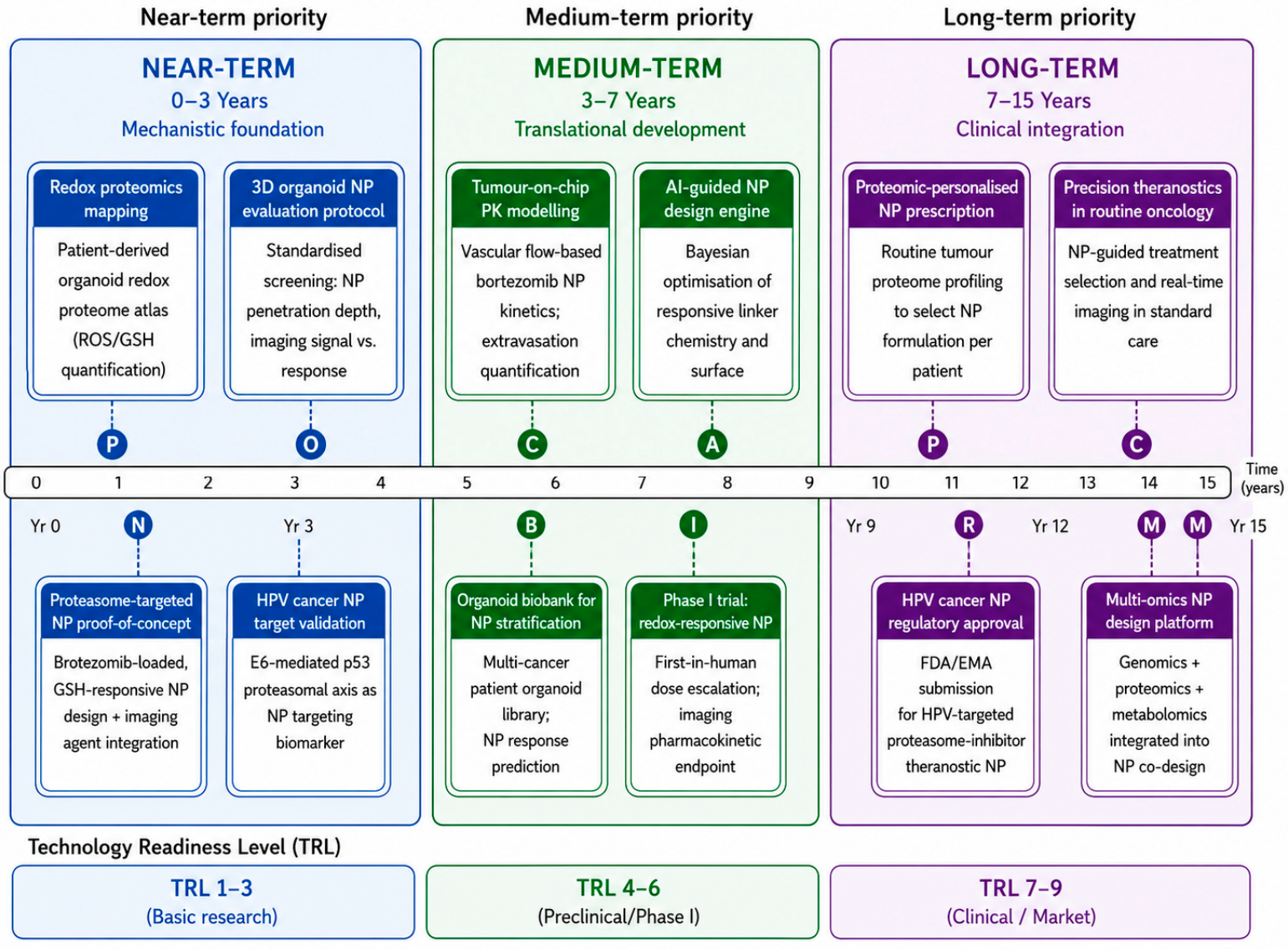
8. Future Perspectives and Proposed Research Priorities
8.1. Proteomics-Guided Nanoparticle Engineering
8.2. Artificial Intelligence-Assisted Nanoparticle Design
8.3. HPV-Associated Cancers as a Priority Theranostic Target
8.4. Standardization of Three-Dimensional Preclinical Evaluation
9. Discussion
10. Conclusions
Author Contributions
Funding
Institutional Review Board Statement
Informed Consent Statement
Data Availability Statement
Acknowledgments
Conflicts of Interest
Abbreviations
| ROS | Reactive Oxygen Species |
| GSH | Glutathione |
| EPR | Enhanced Permeability and Retention |
| TME | Tumor Microenvironment |
| HIF-1α | Hypoxia-Inducible Factor 1-alpha |
| NF-κB | Nuclear Factor kappa-light-chain-enhancer of activated B cells |
| NP(s) | Nanoparticle(s) |
| PEG | Polyethylene Glycol |
| PLGA | Poly(lactic-co-glycolic acid) |
| SPION(s) | Superparamagnetic Iron Oxide Nanoparticle(s) |
| PDI | Polydispersity Index |
| RES | Reticuloendothelial System |
| MPS | Mononuclear Phagocyte System |
| CDT | Chemodynamic Therapy |
| GOx | Glucose Oxidase |
| BTZ | Bortezomib |
| UPS | Ubiquitin–Proteasome System |
| PROTAC | Proteolysis-Targeting Chimera |
| CMC | Chemistry, Manufacturing, and Controls |
| GMP | Good Manufacturing Practice |
| CQA | Critical Quality Attribute |
| ELISA | Enzyme-Linked Immunosorbent Assay |
| SPR | Surface Plasmon Resonance |
| DLS | Dynamic Light Scattering |
| MRI | Magnetic Resonance Imaging |
| PET | Positron Emission Tomography |
| CT | Computed Tomography |
| NIR | Near-Infrared |
| SERS | Surface-Enhanced Raman Scattering |
| PDT | Photodynamic Therapy |
| HER2 | Human Epidermal Growth Factor Receptor 2 |
| EGFR | Epidermal Growth Factor Receptor |
| PSMA | Prostate-Specific Membrane Antigen |
| CEA | Carcinoembryonic Antigen |
| TBR | Tumor-to-Background Ratio |
| HPV | Human Papillomavirus |
| TNBC | Triple-Negative Breast Cancer |
| NSCLC | Non-Small Cell Lung Cancer |
| MDS | Myelodysplastic Syndrome |
| AML | Acute Myeloid Leukemia |
| ALL | Acute Lymphoblastic Leukemia |
| MM | Multiple Myeloma |
| FDA | Food and Drug Administration |
| EMA | European Medicines Agency |
| ICH | International Council for Harmonisation |
| CHMP | Committee for Medicinal Products for Human Use |
| CFR | Code of Federal Regulations |
| IND | Investigational New Drug |
| CARPA | Complement Activation-Related Pseudoallergy |
| AI | Artificial Intelligence |
| PDMS | Polydimethylsiloxane |
| TRL | Technology Readiness Level |
References
- Sung, H.; Filho, A.M.; Laversanne, M.; Ferlay, J.; Siegel, R.L.; Soerjomataram, I.; Jemal, A.; Bray, F. Global cancer statistics 2024: GLOBOCAN estimates of incidence and mortality worldwide for 34 cancers in 186 countries. CA A Cancer J. Clin. 2026, 76, e70090. [Google Scholar] [CrossRef] [Scilit] [PubMed]
- Siddique, S.; Chow, J.C.L. Recent advances in functionalized nanoparticles in cancer theranostics. Nanomaterials 2022, 12, 2826. [Google Scholar] [CrossRef] [Scilit] [PubMed]
- Shi, J.; Kantoff, P.W.; Wooster, R.; Farokhzad, O.C. Cancer nanomedicine: Progress, challenges and opportunities. Nat. Rev. Cancer 2017, 17, 20–37. [Google Scholar] [CrossRef] [Scilit] [PubMed]
- Irvine, D.J.; Dane, E.L. Enhancing cancer immunotherapy with nanomedicine. Nat. Rev. Immunol. 2020, 20, 321–334. [Google Scholar] [CrossRef] [Scilit] [PubMed]
- Peer, D.; Karp, J.M.; Hong, S.; Farokhzad, O.C.; Margalit, R.; Langer, R. Nanocarriers as an emerging platform for cancer therapy. Nat. Nanotechnol. 2007, 2, 751–760. [Google Scholar] [CrossRef] [Scilit] [PubMed]
- Xue, Y.; Gao, Y.; Meng, F.; Luo, L. Recent progress of nanotechnology-based theranostic systems in cancer treatments. Cancer Biol. Med. 2021, 18, 639–654. [Google Scholar] [CrossRef] [Scilit] [PubMed]
- Muthu, M.S.; Leong, D.T.; Mei, L.; Feng, S.-S. Nanotheranostics—Application and further development of nanomedicine strategies for advanced theranostics. Theranostics 2014, 4, 660–677. [Google Scholar] [CrossRef] [Scilit] [PubMed]
- Matsumura, Y.; Maeda, H. A new concept for macromolecular therapeutics in cancer chemotherapy: Mechanism of tumoritropic accumulation of proteins and the antitumor agent smancs. Cancer Res. 1986, 46, 6387–6392. [Google Scholar] [PubMed]
- Maeda, H. The enhanced permeability and retention (EPR) effect in tumor vasculature: The key role of tumor-selective macromolecular drug targeting. Adv. Enzym. Regul. 2001, 41, 189–207. [Google Scholar] [CrossRef] [Scilit] [PubMed]
- Hanahan, D.; Weinberg, R.A. Hallmarks of cancer: The next generation. Cell 2011, 144, 646–674. [Google Scholar] [CrossRef] [Scilit] [PubMed]
- Yang, Y.; Sun, W. Recent advances in redox-responsive nanoparticles for combined cancer therapy. Nanoscale Adv. 2022, 4, 3504–3516. [Google Scholar] [CrossRef] [Scilit] [PubMed]
- Adams, J. The proteasome: A suitable antineoplastic target. Nat. Rev. Cancer 2004, 4, 349–360. [Google Scholar] [CrossRef] [Scilit] [PubMed]
- Li, X.; Zheng, N.; Zhao, T.; Zhu, R.; Wei, Y.; Sun, J.; He, Z.; Zheng, C. Progress on the application of bortezomib and bortezomib-based nanoformulations. Biomolecules 2022, 12, 51. [Google Scholar] [CrossRef] [Scilit] [PubMed]
- Clevers, H. Modeling development and disease with organoids. Cell 2016, 165, 1586–1597. [Google Scholar] [CrossRef] [Scilit] [PubMed]
- Park, S.E.; Georgescu, A.; Huh, D. Organoids-on-a-chip. Science 2019, 364, 960–965. [Google Scholar] [CrossRef] [Scilit] [PubMed]
- El Sadda, R.R. Glutathione responsive nanomedicine leverages tumor redox imbalance for targeted cancer theranostics. Discov. Oncol. 2026, 17, 45. [Google Scholar] [CrossRef] [Scilit] [PubMed]
- Hou, M.; Zhao, R.; Wang, S.; Jiang, B.; Yan, X. Targeted protein degradation technologies: Emerging mechanisms and nano-based innovations. Nano Res. 2025, 18, 94907983. [Google Scholar] [CrossRef] [Scilit]
- Zhou, W.; Jia, Y.; Liu, Y.; Chen, Y.; Zhao, P. Tumor microenvironment-based stimuli-responsive nanoparticles for controlled release of drugs in cancer therapy. Pharmaceutics 2022, 14, 2346. [Google Scholar] [CrossRef] [Scilit] [PubMed]
- Meitzler, J.L.; Antony, S.; Wu, Y.; Juhasz, A.; Liu, H.; Jiang, G.; Lu, J.; Roy, K.; Doroshow, J.H. NADPH oxidases: A perspective on reactive oxygen species production in tumor biology. Antioxid. Redox Signal. 2014, 20, 2873–2889. [Google Scholar] [CrossRef] [Scilit] [PubMed]
- Perillo, B.; Di Donato, M.; Pezone, A.; Di Zazzo, E.; Giovannelli, P.; Galasso, G.; Castoria, G.; Migliaccio, A. ROS in cancer therapy: The bright side of the moon. Exp. Mol. Med. 2020, 52, 192–203. [Google Scholar] [CrossRef] [Scilit] [PubMed]
- Stemberger, M.B.; Ju, J.A.; Thompson, K.N.; Mathias, T.J.; Jerrett, A.E.; Chang, K.T.; Ory, E.C.; Annis, D.A.; Mull, M.L.; Gilchrist, D.E.; et al. Hydrogen peroxide induces α-tubulin detyrosination and acetylation and impacts breast cancer metastatic phenotypes. Cells 2023, 12, 1266. [Google Scholar] [CrossRef] [Scilit] [PubMed]
- Schieber, M.; Chandel, N.S. ROS function in redox signaling and oxidative stress. Curr. Biol. 2014, 24, R453–R462. [Google Scholar] [CrossRef] [Scilit] [PubMed]
- Parshad, B.; Arora, S.; Singh, B.; Pan, Y.; Tang, J.; Hu, Z.; Patra, H.K. Towards precision medicine using biochemically triggered cleavable conjugation. Commun. Chem. 2025, 8, 100. [Google Scholar] [CrossRef] [Scilit] [PubMed]
- Korani, M.; Korani, S.; Zendehdel, E.; Jaafari, M.R.; Sathyapalan, T.; Sahebkar, A. Utilization of lipid-based nanoparticles to improve the therapeutic benefits of bortezomib. Anti-Cancer Agents Med. Chem. 2020, 20, 643–650. [Google Scholar] [CrossRef] [Scilit] [PubMed]
- Barenholz, Y. Doxil—The first FDA-approved nano-drug: Lessons learned. J. Control. Release 2012, 160, 117–134. [Google Scholar] [CrossRef] [Scilit] [PubMed]
- Albanese, A.; Tang, P.S.; Chan, W.C.W. The effect of nanoparticle size, shape, and surface chemistry on biological systems. Annu. Rev. Biomed. Eng. 2012, 14, 1–16. [Google Scholar] [CrossRef] [Scilit] [PubMed]
- Kozma, G.T.; Shimizu, T.; Ishida, T.; Szebeni, J. Anti-PEG antibodies: Properties, formation, testing and role in adverse immune reactions to PEGylated nano-biopharmaceuticals. Adv. Drug Deliv. Rev. 2020, 154–155, 163–175. [Google Scholar] [CrossRef] [Scilit] [PubMed]
- Danhier, F.; Ansorena, E.; Silva, J.M.; Coco, R.; Le Breton, A.; Préat, V. PLGA-based nanoparticles: An overview of biomedical applications. J. Control. Release 2012, 161, 505–522. [Google Scholar] [CrossRef] [Scilit] [PubMed]
- Mostafa, M.M.; Amin, M.M.; Zakaria, M.Y.; Hussein, M.A.; Shamaa, M.M.; Abd El-Halim, S.M. Chitosan surface-modified PLGA nanoparticles loaded with cranberry powder extract as a potential oral delivery platform for targeting colon cancer cells. Pharmaceutics 2023, 15, 606. [Google Scholar] [CrossRef] [Scilit] [PubMed]
- Thomas, R.; Park, I.-K.; Jeong, Y.Y. Magnetic iron oxide nanoparticles for multimodal imaging and therapy of cancer. Int. J. Mol. Sci. 2013, 14, 15910–15930. [Google Scholar] [CrossRef] [Scilit] [PubMed]
- Lee, J.Y.; Na, Y.R.; Na, C.M.; Im, P.W.; Park, H.W.; Kim, M.K.; Kim, Y.; You, J.H.; Kang, D.S.; Moon, H.E.; et al. 7-nm Mn0.5Zn0.5Fe2O4 superparamagnetic iron oxide nanoparticle (SPION): A high-performance theranostic for MRI and hyperthermia applications. Theranostics 2025, 15, 2883–2902. [Google Scholar] [CrossRef] [Scilit] [PubMed]
- Kesharwani, P.; Ma, R.; Sang, L.; Fatima, M.; Sheikh, A.; Abourehab, M.A.S.; Gupta, N.; Chen, Z.-S.; Zhou, Y. Gold nanoparticles and gold nanorods in the landscape of cancer therapy. Mol. Cancer 2023, 22, 98. [Google Scholar] [CrossRef] [Scilit] [PubMed]
- Mittal, S.; Kumar, C.; Mallia, M.B.; Sarma, H.D. Re-engineered theranostic gold nanoparticles for targeting tumor hypoxia. Mater. Adv. 2024, 5, 513–520. [Google Scholar] [CrossRef] [Scilit]
- Bhattacharya, R.; Mukherjee, P. Biological properties of ‘naked’ metal nanoparticles. Adv. Drug Deliv. Rev. 2008, 60, 1289–1306. [Google Scholar] [CrossRef] [Scilit] [PubMed]
- Abrishami, A.; Bahrami, A.R.; Nekooei, S.; Saljooghi, A.S.; Matin, M.M. Hybridized quantum dot, silica, and gold nanoparticles for targeted chemo-radiotherapy in colorectal cancer theranostics. Commun. Biol. 2024, 7, 393. [Google Scholar] [PubMed]
- Ulbrich, K.; Holá, K.; Šubr, V.; Bakandritsos, A.; Tuček, J.; Zbořil, R. Targeted drug delivery with polymers and magnetic nanoparticles: Covalent and noncovalent approaches, release control, and clinical studies. Chem. Rev. 2016, 116, 5338–5431. [Google Scholar] [CrossRef] [Scilit] [PubMed]
- Cerqueira, R.; Domingues, C.; Veiga, F.; Jarak, I.; Figueiras, A. Development and characterization of curcumin-loaded TPGS/F127/P123 polymeric micelles as a potential therapy for colorectal cancer. Int. J. Mol. Sci. 2024, 25, 7577. [Google Scholar] [CrossRef] [Scilit] [PubMed]
- Su, H.; Wang, F.; Ran, W.; Zhang, W.; Dai, W.; Wang, H.; Anderson, C.F.; Wang, Z.; Zheng, C.; Zhang, P.; et al. The role of critical micellization concentration in efficacy and toxicity of supramolecular polymers. Proc. Natl. Acad. Sci. USA 2020, 117, 4518–4526. [Google Scholar] [CrossRef] [Scilit] [PubMed]
- Li, X.R.; Cheng, X.H.; Zhang, G.N.; Wang, X.X.; Huang, J.M. Cardiac safety analysis of first-line chemotherapy drug pegylated liposomal doxorubicin in ovarian cancer. J. Ovarian Res. 2022, 15, 96. [Google Scholar] [CrossRef] [Scilit] [PubMed]
- Liu, J.F.; Jang, B.; Issadore, D.; Tsourkas, A. Use of magnetic fields and nanoparticles to trigger drug release and improve tumor targeting. WIREs Nanomed. Nanobiotechnol. 2019, 11, e1571. [Google Scholar] [CrossRef] [Scilit] [PubMed]
- Vines, J.B.; Yoon, J.-H.; Ryu, N.-E.; Lim, D.-J.; Park, H. Gold nanoparticles for photothermal cancer therapy. Front. Chem. 2019, 7, 167. [Google Scholar] [CrossRef] [Scilit] [PubMed]
- Liu, X.; Meng, H. Consideration for the scale-up manufacture of nanotherapeutics—A critical step for technology transfer. View 2021, 2, 20200190. [Google Scholar] [CrossRef] [Scilit]
- Chen, M.; Juengpanich, S.; Li, S.; Topatana, W.; Lu, Z.; Zheng, Q.; Cao, J.; Hu, J.; Chan, E.; Hou, L.; et al. Bortezomib-encapsulated dual responsive copolymeric nanoparticles for gallbladder cancer targeted therapy. Adv. Sci. 2022, 9, e2103895. [Google Scholar] [CrossRef] [Scilit] [PubMed]
- Cao, W.; Jin, M.; Yang, K.; Chen, B.; Xiong, M.; Li, X.; Cao, G. Fenton/Fenton-like metal-based nanomaterials combine with oxidase for synergistic tumor therapy. J. Nanobiotechnol. 2021, 19, 325. [Google Scholar] [CrossRef] [Scilit] [PubMed]
- Gao, H.; Cao, Z.; Liu, H.; Chen, L.; Bai, Y.; Wu, Q.; Yu, X.; Wei, W.; Wang, M. Multifunctional nanomedicines-enabled chemodynamic-synergized multimodal tumor therapy via Fenton and Fenton-like reactions. Theranostics 2023, 13, 1974–2014. [Google Scholar] [CrossRef] [Scilit] [PubMed]
- Lazzari, G.; Couvreur, P.; Mura, S. Multicellular tumor spheroids: A relevant 3D model for the in vitro preclinical investigation of polymer nanomedicines. Polym. Chem. 2017, 8, 4947–4969. [Google Scholar] [CrossRef] [Scilit]
- Ri, M. Endoplasmic-reticulum stress pathway-associated mechanisms of action of proteasome inhibitors in multiple myeloma. Int. J. Hematol. 2016, 104, 273–280. [Google Scholar] [CrossRef] [Scilit] [PubMed]
- Vehlow, D.; Wong, J.P.H.; Urban, B.; Weißpflog, J.; Gebert, A.; Schumacher, M.; Gelinsky, M.; Stamm, M.; Müller, M. Catechol containing polyelectrolyte complex nanoparticles as local drug delivery system for bortezomib at bone substitute materials. Pharmaceutics 2020, 12, 799. [Google Scholar] [CrossRef] [Scilit] [PubMed]
- Wu, X.; Shu, Y.; Zheng, Y.; Zhang, P.; Cong, H.; Zou, Y.; Cai, H.; Zha, Z. Recent advances in nanomedicine: Cutting-edge research on nano-PROTAC delivery systems for cancer therapy. Pharmaceutics 2025, 17, 1037. [Google Scholar] [CrossRef] [Scilit] [PubMed]
- Zhang, Y.; Wang, K.; Yang, Y.; Gong, T.; Zhang, Z.; Liu, R.; Fu, Y. Nanoparticle-mediated targeted protein degradation (NanoTPD): Principles, rational design and mechanisms of degradation. Nano Today 2026, 66, 102926. [Google Scholar] [CrossRef] [Scilit]
- Weng, Z.; Yu, J.; Liao, Y.; Zhang, Y.; Chen, C.; Chen, W. Emerging strategies in smart nano-PROTAC for stimuli-responsive protein degradation and precision cancer therapy. Nano Biomed. Eng. 2025, 17, 315–332. [Google Scholar] [CrossRef] [Scilit]
- Londoño-Berrio, M.; Castro, C.; Cañas, A.; Ortiz, I.; Osorio, M. Advances in tumor organoids for the evaluation of drugs: A bibliographic review. Pharmaceutics 2022, 14, 2709. [Google Scholar] [CrossRef] [Scilit] [PubMed]
- Popescu, R.C.; Kopatz, V.; Andronescu, E.; Savu, D.I.; Doerr, W. Nanoparticle-mediated drug delivery of doxorubicin induces a differentiated clonogenic inactivation in 3D tumor spheroids in vitro. Int. J. Mol. Sci. 2023, 24, 2198. [Google Scholar] [CrossRef] [Scilit] [PubMed]
- Gunti, S.; Hoke, A.T.K.; Vu, K.P.; London, N.R. Organoid and spheroid tumor models: Techniques and applications. Cancers 2021, 13, 874. [Google Scholar] [CrossRef] [Scilit] [PubMed]
- Lee, Y.-H.; Chang, D.-S. Fabrication, characterization, and biological evaluation of anti-HER2 indocyanine green-doxorubicin-encapsulated PEG-b-PLGA copolymeric nanoparticles for targeted photochemotherapy of breast cancer cells. Sci. Rep. 2017, 7, 46688. [Google Scholar] [CrossRef] [Scilit] [PubMed]
- Kim, Y.M.; Jung, H.; Choi, E.K.; Lee, J.-Y.; Kang, O.-J.; Kang, S.W.; Lee, S.-W.; Kim, H.; Kim, H. Evaluation of the anti-cancer efficacy of lipid nanoparticles containing siRNA against HPV16 E6/E7 combined with cisplatin in a xenograft model of cervical cancer. PLoS ONE 2024, 19, e0298815. [Google Scholar] [CrossRef] [Scilit] [PubMed]
- Siegel, R.L.; Wagle, N.S.; Cercek, A.; Smith, R.A.; Jemal, A. Colorectal cancer statistics, 2023. CA A Cancer J. Clin. 2023, 73, 233–254. [Google Scholar] [CrossRef] [Scilit] [PubMed]
- Tran, S.; DeGiovanni, P.-J.; Piel, B.; Rai, P. Cancer nanomedicine: A review of recent success in drug delivery. Clin. Transl. Med. 2017, 6, 44. [Google Scholar] [CrossRef] [Scilit] [PubMed]
- Seifert, R.; Alberts, I.L.; Afshar-Oromieh, A.; Rahbar, K. Prostate Cancer Theranostics: PSMA Targeted Therapy. PET Clin. 2021, 16, 391–396. [Google Scholar] [CrossRef] [Scilit]
- de Martel, C.; Ferlay, J.; Franceschi, S.; Vignat, J.; Bray, F.; Forman, D.; Plummer, M. Global burden of cancers attributable to infections in 2008: A review and synthetic analysis. Lancet Oncol. 2012, 13, 607–615. [Google Scholar] [CrossRef] [Scilit] [PubMed]
- Siegel, R.L.; Miller, K.D.; Wagle, N.S.; Jemal, A. Cancer statistics, 2023. CA A Cancer J. Clin. 2023, 73, 17–48. [Google Scholar] [CrossRef] [Scilit] [PubMed]
- Caracciolo, G.; Farokhzad, O.C.; Mahmoudi, M. Biological identity of nanoparticles in vivo: Clinical implications of the protein corona. Trends Biotechnol. 2017, 35, 257–264. [Google Scholar] [CrossRef] [Scilit] [PubMed]
- Nguyen, V.H.; Lee, B.-J. Protein corona: A new approach for nanomedicine design. Int. J. Nanomed. 2017, 12, 3137–3151. [Google Scholar] [CrossRef] [Scilit] [PubMed]
- Stordy, B.; Zhang, Y.; Sepahi, Z.; Khatami, M.H.; Kim, P.M.; Chan, W.C.W. Conjugating ligands to an equilibrated nanoparticle protein corona enables cell targeting in serum. Chem. Mater. 2022, 34, 6868–6882. [Google Scholar] [CrossRef] [Scilit]
- Szebeni, J.; Simberg, D.; González-Fernández, Á.; Barenholz, Y.; Dobrovolskaia, M.A. Roadmap and strategy for overcoming infusion reactions to nanomedicines. Nat. Nanotechnol. 2018, 13, 1100–1108. [Google Scholar] [CrossRef] [Scilit] [PubMed]
- Schöttler, S.; Becker, G.; Winzen, S.; Steinbach, T.; Mohr, K.; Landfester, K.; Mailänder, V.; Wurm, F.R. Protein adsorption is required for stealth effect of poly(ethylene glycol)- and poly(phosphoester)-coated nanocarriers. Nat. Nanotechnol. 2016, 11, 372–377. [Google Scholar] [CrossRef] [Scilit] [PubMed]
- Cheng, B.; Li, D.; Li, C.; Zhuang, Z.; Wang, P.; Liu, G. The application of biomedicine in chemodynamic therapy: From material design to improved strategies. Bioengineering 2023, 10, 925. [Google Scholar] [CrossRef] [Scilit] [PubMed]
- European Medicines Agency. Reflection Paper on the Data Requirements for Intravenous Liposomal Products Developed with Reference to an Innovator Liposomal Product. EMA/CHMP/806058/2009/Rev. 02. 2020. Available online: https://www.ema.europa.eu (accessed on 17 July 2026).
- Food Drug Administration. Drug Products Including Biological Products that Contain Nanomaterials: Guidance for Industry; U.S. Department of Health and Human Services: Washington, DC, USA, 2022.
- Woythe, L.; Tito, N.B.; Albertazzi, L. A quantitative view on multivalent nanomedicine targeting. Adv. Drug Deliv. Rev. 2021, 169, 1–21. [Google Scholar] [CrossRef] [Scilit] [PubMed]
- Woythe, L.; Madhikar, P.; Feiner-Gracia, N.; Storm, C.; Albertazzi, L. A single-molecule view at nanoparticle targeting selectivity: Correlating ligand functionality and cell receptor density. ACS Nano 2022, 16, 3785–3796. [Google Scholar] [CrossRef] [Scilit] [PubMed]
- Cheng, Z.; Al Zaki, A.; Hui, J.Z.; Muzykantov, V.R.; Tsourkas, A. Multifunctional nanoparticles: Cost versus benefit of adding targeting and imaging capabilities. Science 2012, 338, 903–910. [Google Scholar] [CrossRef] [Scilit] [PubMed]
- Zhou, J.; Li, K.; Zang, X.; Xie, Y.; Song, J.; Chen, X. ROS-responsive galactosylated-nanoparticles with doxorubicin entrapment for triple negative breast cancer therapy. Int. J. Nanomed. 2023, 18, 1381–1397. [Google Scholar] [CrossRef] [Scilit] [PubMed]
- Shao, R.; Qiao, X.; Cao, L.; Man, J.; Guo, L.; Li, L.; Liu, W.; Li, L.; Wang, B.; Guo, L.; et al. Multimodal imaging and photothermal/chemodynamic therapy of cervical cancer using GSH-responsive MoS2@MnO2 theranostic nanoparticles. Discov. Nano 2023, 18, 122. [Google Scholar] [CrossRef] [Scilit] [PubMed]
- Chen, H.; Li, F.; Yao, Y.; Wang, Z.; Zhang, Z.; Tan, N. Redox dual-responsive and O2-evolving theranostic nanosystem for highly selective chemotherapy against hypoxic tumors. Theranostics 2019, 9, 90–103. [Google Scholar] [CrossRef] [Scilit] [PubMed]
- Mesri, E.A.; Feitelson, M.A.; Munger, K. Human viral oncogenesis: A cancer hallmarks analysis. Cell Host Microbe 2014, 15, 266–282. [Google Scholar] [CrossRef] [Scilit] [PubMed]



| NP Type | Size Range (nm) | Zeta Potential (Typical) | Primary Clearance Pathway | Imaging Modality | Therapeutic Modality | Key References |
|---|---|---|---|---|---|---|
| Liposomes | 80–200 | −10 to 0 mV | MPS/RES (hepatic Kupffer cells, splenic macrophages); PEGylation prolongs circulation but anti-PEG antibodies accelerate clearance on repeat dosing | MRI, fluorescence, PET | Chemotherapy, photodynamic therapy | [25,26,27] |
| PLGA nanoparticles | 100–300 | −20 to −30 mV | MPS/RES uptake + hydrolytic biodegradation (ester bonds → lactic/glycolic acid → Krebs cycle) | Fluorescence, optical | Chemotherapy, gene therapy | [26,28,29] |
| SPION | 5–50 | −30 to +30 mV | Hepatic Kupffer cell uptake (RES); iron core catabolized via endogenous iron metabolism/ferritin incorporation, not excreted | MRI (T2 contrast) | Magnetic hyperthermia, drug delivery | [30,31] |
| Gold nanoparticles | 10–100 | −20 to +30 mV | RES/hepatobiliary, long-term tissue retention (non-biodegradable core); renal filtration only if <8 nm | CT, photoacoustic, SERS | Photothermal therapy, radiosensitization | [26,32,33] |
| Quantum dots | 2–10 | ~−20 to −25 mV | Renal filtration if <5.5 nm hydrodynamic diameter; RES/hepatobiliary for larger; core heavy-metal (Cd) retention concern | Fluorescence, NIR imaging | Photodynamic therapy, drug delivery | [26,34,35] |
| Polymeric micelles | 20–100 | Near-neutral, −1 to −5 mV | RES uptake of intact micelle; below critical micelle concentration (CMC), dissociates into unimers cleared renally | Fluorescence, PET | Chemotherapy, photodynamic therapy | [36,37,38] |
| Hybrid nanoplatforms | 50–200 | ~−20 to −25 mV | Variable/component-dependent; generally RES/hepatobiliary-dominant | Multimodal (MRI + fluorescence) | Combined chemo-photothermal | [26,35] |
| Nanoplatform | Responsive Trigger | Therapeutic Agent | Cancer Model | Key Findings and Reference(s) |
|---|---|---|---|---|
| Disulfide-crosslinked polymeric NPs | GSH (intracellular) | Doxorubicin | Breast cancer (MCF-7) | GSH-triggered rapid intracellular drug release; enhanced tumor cytotoxicity vs. free drug [11] |
| Thioketal-bridged silica NPs | ROS (H2O2, singlet oxygen) | Paclitaxel + photosensitizer | Lung carcinoma (A549) | Selective drug release in high-ROS TME; combined chemo-PDT activity [16] |
| Diselenide-linked polymersomes | ROS/GSH dual-responsive | Cisplatin + NIR dye | Ovarian cancer | Simultaneous imaging and redox-triggered cytotoxic release in vivo [11] |
| pH/GSH bortezomib-loaded NPs | Acidic pH + GSH (TME) | Bortezomib (proteasome inhibitor) | Gallbladder carcinoma | Proteasome inhibition amplified by TME-triggered release; superior in vivo tumor suppression [42] |
| Liposomal bortezomib NPs | Passive (pH, TME accumulation) | Bortezomib | Multiple myeloma; TNBC | Improved pharmacokinetics vs. free BTZ; reduced peripheral neuropathy; enhanced solid-tumor penetration [24] |
| Arylboronic ester-linked NPs | H2O2 (ROS-responsive) | Doxorubicin + MRI contrast agent | Hepatocellular carcinoma | H2O2-mediated linker cleavage; theranostic MRI tracking concurrent with drug release [18] |
| Cancer Type | NP Platform | Target/Biomarker | Imaging Modality | Outcome and Reference(s) |
|---|---|---|---|---|
| HER2+ Breast cancer | Anti-HER2 PLGA-PEG NPs | HER2 receptor | Fluorescence + MRI | ~2-fold higher cellular uptake in HER2+ (MDA-MB-453) vs. HER2− (MCF7) cells, confirming receptor-specific targeting [55] |
| Triple-negative breast cancer | SPION-drug conjugates | Passive (EPR) + ROS-responsive | MRI | Nanoparticle bortezomib delivery with MRI-compatible SPION co-loading (preclinical rationale); cancer stem cell sensitization; apoptosis induction [13,24] |
| Cervical cancer (HPV+) | Polymeric NPs (proteasome inhibitor-loaded) | HPV E6/E7-driven UPS vulnerability (intracellular oncogenic axis; not surface targeting) | Fluorescence, PET | HPV16 E6/E7-targeting LNP + cisplatin combination achieved 68.8% tumor growth inhibition vs. 34.0% for cisplatin alone, with 80% E6/E7 knockdown [56] |
| Colorectal cancer | Gold nanorods (PEGylated) | EGFR, CEA | Photoacoustic + CT | Real-time photoacoustic imaging of tumor margins; photothermal ablation of primary tumors [32,57] |
| Prostate cancer | PSMA-targeted liposomes | PSMA | PET (68Ga-labeled) | High tumor-to-background ratio on PET imaging (based on PSMA radioligand clinical precedent); concurrent docetaxel delivery in preclinical models [4,58,59] |
| Oropharyngeal cancer (HPV+) | Lipid-polymer hybrid NPs | EGFR overexpression in HPV+ tumors | NIR fluorescence | Preferential tumor accumulation; cisplatin sensitization; reduced off-target toxicity [60] |
| Drug Name | NP Type | Active Agent | Indication | Regulatory Status and Reference(s) |
|---|---|---|---|---|
| Doxil (Caelyx) | PEGylated liposome | Doxorubicin | Ovarian cancer, Kaposi sarcoma, multiple myeloma | FDA-approved 1995; first nano-drug approval; reduced cardiotoxicity vs. free doxorubicin [25] |
| Abraxane (nab-paclitaxel) | Albumin-bound NP | Paclitaxel | Metastatic breast cancer, NSCLC, pancreatic cancer | FDA-approved 2005; eliminates cremophor EL vehicle toxicity; EPR-mediated accumulation [58] |
| Onivyde (MM-398) | PEGylated liposome | Irinotecan | Pancreatic ductal adenocarcinoma (second-line) | FDA-approved 2015; liposomal encapsulation prolongs plasma half-life threefold vs. free irinotecan [58] |
| Vyxeos (CPX-351) | Liposome (dual-drug) | Cytarabine + daunorubicin (5:1 molar ratio) | Newly diagnosed therapy-related AML, AML with MDS changes | FDA-approved 2017; fixed 5:1 drug ratio preserved in tumor milieu; superior OS vs. standard 7 + 3 regimen [58] |
| Marqibo | Sphingomyelin-cholesterol liposome | Vincristine | Philadelphia chromosome-negative ALL (adult) | FDA-approved 2012; sphingomyelin shell enables passive tumor accumulation; reduced peripheral neuropathy [58] |
| Strategy | Representative Payload | Imaging Modality | Key Translational Limitation | Development Stage |
|---|---|---|---|---|
| ROS-responsive (arylboronic ester, thioketal linkers) | Doxorubicin, paclitaxel | Fluorescence, MRI | Premature release in non-tumor inflammatory states with elevated ROS | Preclinical [73] |
| Chemodynamic therapy/Fenton nanozymes | Endogenous •OH generation | MRI (Fe-based), photoacoustic | Systemic metal ion toxicity; insufficient endogenous H2O2 | Preclinical, early clinical exploration [44,45] |
| GSH-responsive (disulfide, diselenide linkers) | Platinum prodrugs, doxorubicin | Fluorescence, PET | Tumor redox heterogeneity; necrotic-core GSH depletion (Section 4.2) | Preclinical to Phase I [74] |
| Dual ROS/GSH-responsive | Combination chemotherapeutics | Dual fluorescence/MRI | Formulation complexity; dual-trigger reproducibility | Preclinical [75] |
| Proteasome-targeted (bortezomib, redox-responsive shell) | Bortezomib | MRI, fluorescence | Narrow therapeutic index; premature boronic acid–diol complexation (Section 4.4) | Preclinical, limited early clinical [43,48] |
| Nano-PROTAC (redox-responsive release) | PROTAC/molecular glue | Fluorescence | Hook effect; poor payload permeability; early-stage optimization (Section 4.5) | Basic/early preclinical [49,50,51] |
Disclaimer/Publisher’s Note: The statements, opinions and data contained in all publications are solely those of the individual author(s) and contributor(s) and not of MDPI and/or the editor(s). MDPI and/or the editor(s) disclaim responsibility for any injury to people or property resulting from any ideas, methods, instructions or products referred to in the content. |
© 2026 by the authors. Licensee MDPI, Basel, Switzerland. This article is an open access article distributed under the terms and conditions of the Creative Commons Attribution (CC BY) license.
Share and Cite
Cakir, M.O.; Kurt, B.; Kurt, I.K.; Yilmaz, B.; Ozdogan, M. Redox-Responsive Theranostic Nanoplatforms in Oncology: Linking Tumor Microenvironment Biology, Proteasome Targeting, and Clinical Translation. J. Nanotheranostics 2026, 7, 18. https://doi.org/10.3390/jnt7030018
Cakir MO, Kurt B, Kurt IK, Yilmaz B, Ozdogan M. Redox-Responsive Theranostic Nanoplatforms in Oncology: Linking Tumor Microenvironment Biology, Proteasome Targeting, and Clinical Translation. Journal of Nanotheranostics. 2026; 7(3):18. https://doi.org/10.3390/jnt7030018
Chicago/Turabian StyleCakir, Muharrem Okan, Begüm Kurt, Inal Kutay Kurt, Betul Yilmaz, and Mustafa Ozdogan. 2026. "Redox-Responsive Theranostic Nanoplatforms in Oncology: Linking Tumor Microenvironment Biology, Proteasome Targeting, and Clinical Translation" Journal of Nanotheranostics 7, no. 3: 18. https://doi.org/10.3390/jnt7030018
APA StyleCakir, M. O., Kurt, B., Kurt, I. K., Yilmaz, B., & Ozdogan, M. (2026). Redox-Responsive Theranostic Nanoplatforms in Oncology: Linking Tumor Microenvironment Biology, Proteasome Targeting, and Clinical Translation. Journal of Nanotheranostics, 7(3), 18. https://doi.org/10.3390/jnt7030018