Article

Hydrodynamic Analysis of Landslide Dam Breach Formation and Outburst Flood Propagation in the Sunkoshi River Basin, Nepal


by
Irshad Ali Zardari
1,2,3,
Ningsheng Chen
1,4,5,*,
Surih Sibaghatullah Jagirani
1,2,3,
Shufeng Tian
1 and
Rosette Niyirora
1,2
1
State Key Laboratory of Mountain Hazards and Engineering Resilience, Institute of Mountain Hazards and Environment, Chinese Academy of Sciences, Chengdu 610299, China
2
University of Chinese Academy of Sciences, Beijing 100049, China
3
China-Pakistan Joint Reach Center on Earth Sciences, CAS-HEC, Islamabad 45320, Pakistan
4
Hubei Engineering Center of Unconventional Petroleum Geology and Engineering, Yangtze University, Wuhan 430100, China
5
Academy of Plateau Science and Sustainability, Xining 810016, China
*
Author to whom correspondence should be addressed.
GeoHazards 2026, 7(1), 23; https://doi.org/10.3390/geohazards7010023
Submission received: 25 August 2025 / Revised: 12 October 2025 / Accepted: 13 October 2025 / Published: 13 February 2026

Abstract

A dam breach is an uncommon but profoundly destructive event that transpires when a dam collapses, releasing accumulated water downstream and leading to extensive damage. This study focuses on the Jure landslide dam, located in the Sindhupalchowk district, Nepal. The region is characterized by complex river channels and steep terrains, which are significantly influenced by flood dynamics. This study aims to establish a compressive numerical simulation of a two-dimensional dam breach unsteady flow hydraulic model to simulate the dam breach process and downstream flood propagation. The study analyzes the dynamics of the Jure landslide dam outburst flood, emphasizing the flood characteristics, inundation, and velocity hazards in the mitigation of flood impacts. The results reveal that the peak discharge of the Jure landside dam was 5336.7 m3/s, while it decreased to 1181.4 m3/s when traveling 35 km. The flood depth obtained by 2D (HEC-RAS) downstream of the dam rages between 0.0334 and 55.9 m, while the corresponding estimated peak flow velocity of simulated breaches was 21.46 m/s, demonstrating extreme hydraulic force conditions, capable of catastrophe. The proposed hydraulic simulations reveal significant variations in overflow dynamics across different terrain types, with narrower sections exhibiting faster flood progression and greater water depths. The findings underscore the necessity of accounting for terrain heterogeneity in future flood risk assessments. This work offers valuable insights into the emergency management of landslide dams in similar regions.

1. Introduction

Landslide dams are created when mass movements, such as landslides, rock avalanches, or debris flows, obstruct river channels. These formations are typically found in geologically unstable mountainous regions [1,2,3]. Due to their composition of loose soil, clay, silt, gravel, and rock, landslide dams tend to be fragile and exhibit low resistance to erosion [4,5,6], and the longevity of such dams can vary from a few minutes to several hundred years, depending on parameters such as size and shape, material properties, inflow rate to the reservoir, reservoir dimensions and depth, and riverbed features [7,8]. According to the study of [9], out of 204 landslide dam collapses, approximately 51% happened within a week and 13% lasted longer than a year. Landslide dams may fail due to overtopping, piping, or slope failure [10,11]. In a study of 144 landslide dam failure instances, it was discovered that the majority of failures, around 91%, occurred due to overtopping, with approximately 8% attributed to piping, and just 1% to slope failure. This indicates that overtopping is the most common cause of failure for landslide dams.
Several studies on landslide dam failure and outburst floods have been published on the history of landslide dams and blocking the river, such as the Gros Ventre landslide dam in the United States in 1925 [12]; The Tangjiashan landslip dam, China, in 2008 [12]; and the Attbad landslide dam in Pakistan in 2010 [13]. Many dam failures begin with an initial breach in the structure, releasing water that had been held back upstream. This release can cause flood waves downstream of the dam [14]. Downstream residents must be made aware of the risks associated with dam breaches, as well as any required expenditures aimed at enhancing safety measures or mitigating potential hazards. Effective communication about these risks is crucial for ensuring community preparedness and resilience [15]. The fundamental objective of dam break analysis encompasses the predication and effective routing of the outflow hydrograph resulting from a breach [16]. In the study of dam breaks, the critical factors for examination are the extent of impact along the river course and the characteristics of the flood hydrograph. The integration of flood forecasting has enabled the formulation of emergency strategies designed to protect both people and assets from the risks associated with flood-related dangers [17]. In practical applications, hydraulic models are frequently utilized to accurately predict the characteristics of flood waves resulting from dam breaches and their subsequent propagation downstream in the valley [18]. However, flood hazard maps are essential for mitigating the impacts of dam failures; categorized flood hazard mapping leads to physical-based numerical models, statistical empirical methods and physical modeling. Physical-based numerical models employ numerical equations based on physical laws to simulate real-world processes [19]. Physical-based numerical modeling was performed using Hydrology Engineering Center River Analysis (HEC-RAS) [20], which is widely used for simulating dam breach scenarios, particularly those involved, and piping failures used HEC-RAS 2D flow routing and sensitivity analysis (SA) to enhance flood hazard mapping for the Grand Ethiopian Renaissance Dam (GERD). Although HEC-RAS has proven effective in modeling breach behavior [21], further refinement in SA and boundary conditions is needed to improve the predications to be reliable for scenarios involving overtopping failures, which are critical to comprehensive risk assessment [22]. We have expanded the use of HEC-RAS for modeling dam breach flood plain delineation and hazard mapping, typically relying on empirical regression equations to estimate breach parameters and peak flow discharges. SA, explored in a research paper by [23], emphasizes the impact of variation in breach parameters on flood predictions. These findings are crucial, given the uncertainties in dam breach analysis [23,24]. The role of Manning’s coefficient (n) in flood mapping, particularly in dam breach modeling, remains debated [25,26]. Some studies suggest that the dam breach models can operate without calibrating using Manning’s coefficient, while others emphasize its importance for accurate flood hazards prediction [27]. In contrast to previous applications of HEC-RAS focused on large, engineered dams, such as the Grand Ethiopian Renaissance Dam (GERD), this study uniquely addresses a natural landslide dam breach in the steep Himalayan environment of the Jure region. Here, flood behavior is significantly influenced by channel confinement, slope gradients, and heterogeneous terrain conditions. The novelty of this work lies in the application of two-dimensional hydraulic modeling to quantify flood attenuation, depth variability, and velocity extremes over a 35 km downstream reach of the Jure landslide dam outburst flood. By explicitly integrating terrain heterogeneity and geomorphic controls into our simulations, this study provides hazard-relevant insights that extend beyond conventional dam-breach analyses. It contributes a reproducible framework for flood risk assessment in mountainous regions, which is particularly critical in complex topographies like the Jure landslide dam, where risks from extreme precipitation, earthquakes, landslide dams, and glacier lake outburst floods are prevalent natural disasters.

2. Study Area

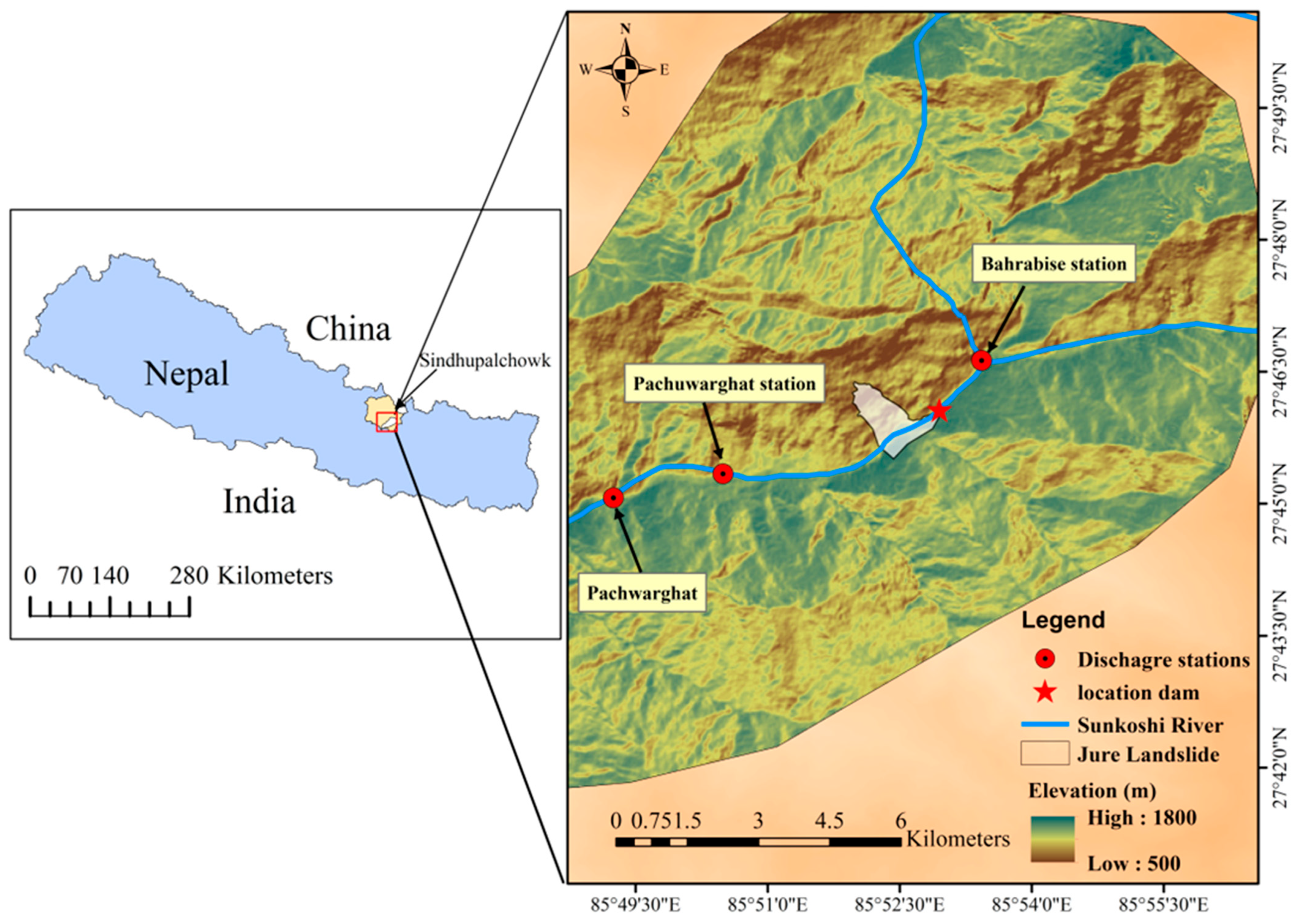
A huge landslide occurred on 2 August 2014 at the Jure village of the Sindhupalchowk district in Nepal, topographically located at 27°46′1.55″ N latitude and 85°52′17.10″ E longitude, (Saturday, at 2:36 a.m. local time), in the study area of the Jure landslide dam, shown in (Figure 1). The massive landslide formed a natural landslide dam with a width of 300 to 350 m and an estimated length of 3 km. This study analyzes the breach of the landslide dam and flood inundation mapping of the Jure landslide dam. We simulated the water level and flow rate behind the dam. The landslide dam area features diverse geological formations: mainly the Kuncha Formation, which includes meta-sandstone, chloritic schist, and pelitic schist, extending from the Gandaki Region to the Bagmati–Gosainkund Region. In the inner zone of Gorkha, the geology comprises thick sequences of dark gray, green-gray, and bluish-gray phyllite, phyllitic metasandstone, gritty phyllite, and quartzite. The Dhading Dolomite, with thicknesses of 500 to 1000 m, significantly influences slope stability and landslide dynamics. The region experiences a monsoon climate, with most rainfall occurring from June to September, averaging over 2000 mm annually. This precipitation contributes to landslide risks, particularly in steep areas with loose geological materials. Understanding the relationship between geology and precipitation is essential for assessing and managing landslide hazards. The model was calibrated using field measurements of water level and flow rates, the rainfall-runoff data were analyzed using the hydrological model of HEC-RAS and we also created a hydrograph. The physical analysis of landslide dams is crucial for understanding their behavior, potential failure characteristics, and the impact on downstream regions by conducting a thorough examination of the physical characteristics of landslide dams. This analysis plays a vital role in developing effective mitigation strategies, early warning systems, and emergency response plans to minimize the risks associated with landslide dam failures. Through a comprehensive physical analysis, we aim to enhance our understanding of these natural hazards and improve our ability to address their impacts on communities and infrastructure.

3. Materials and Methodology

3.1. Field Investigation

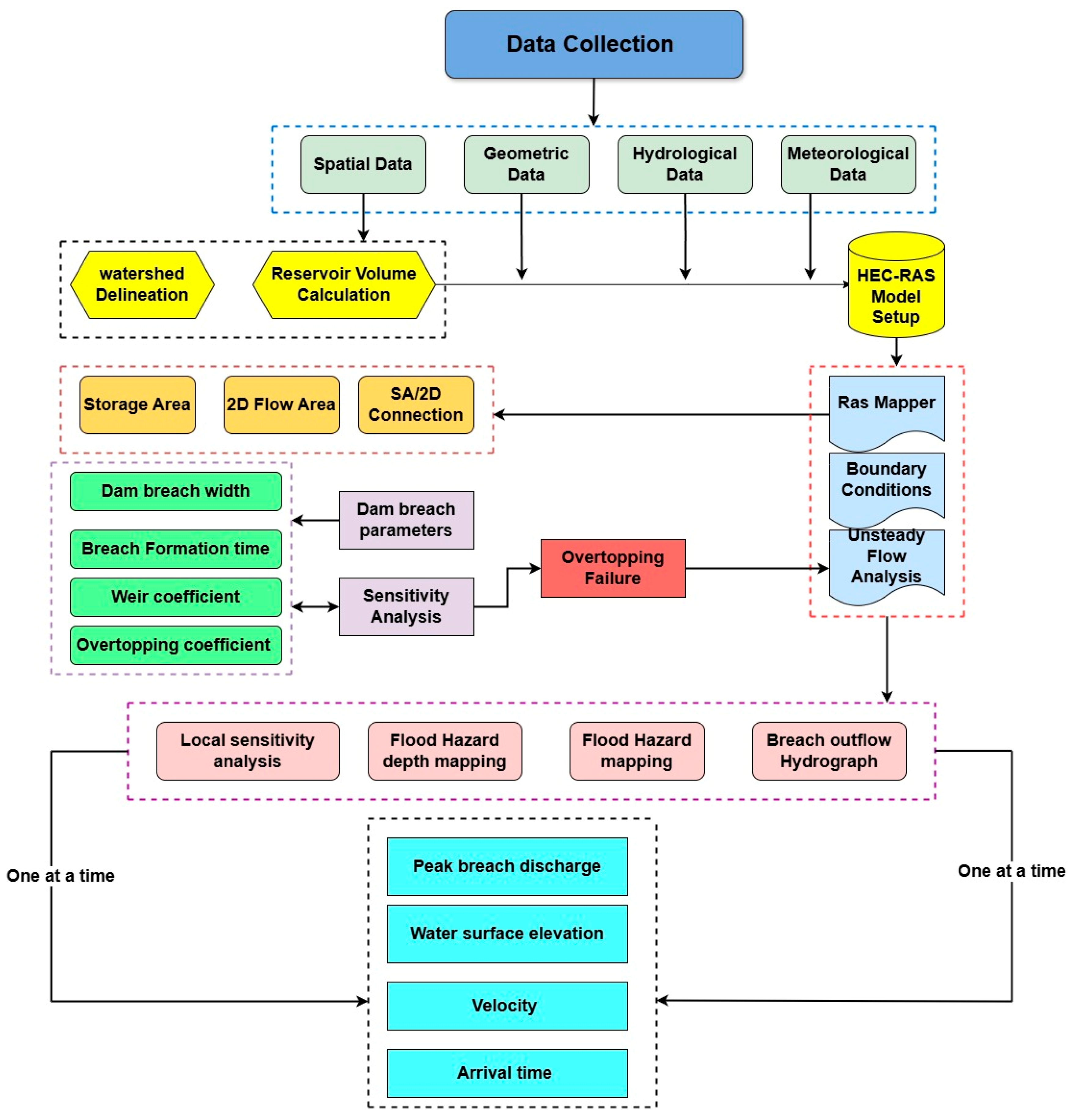
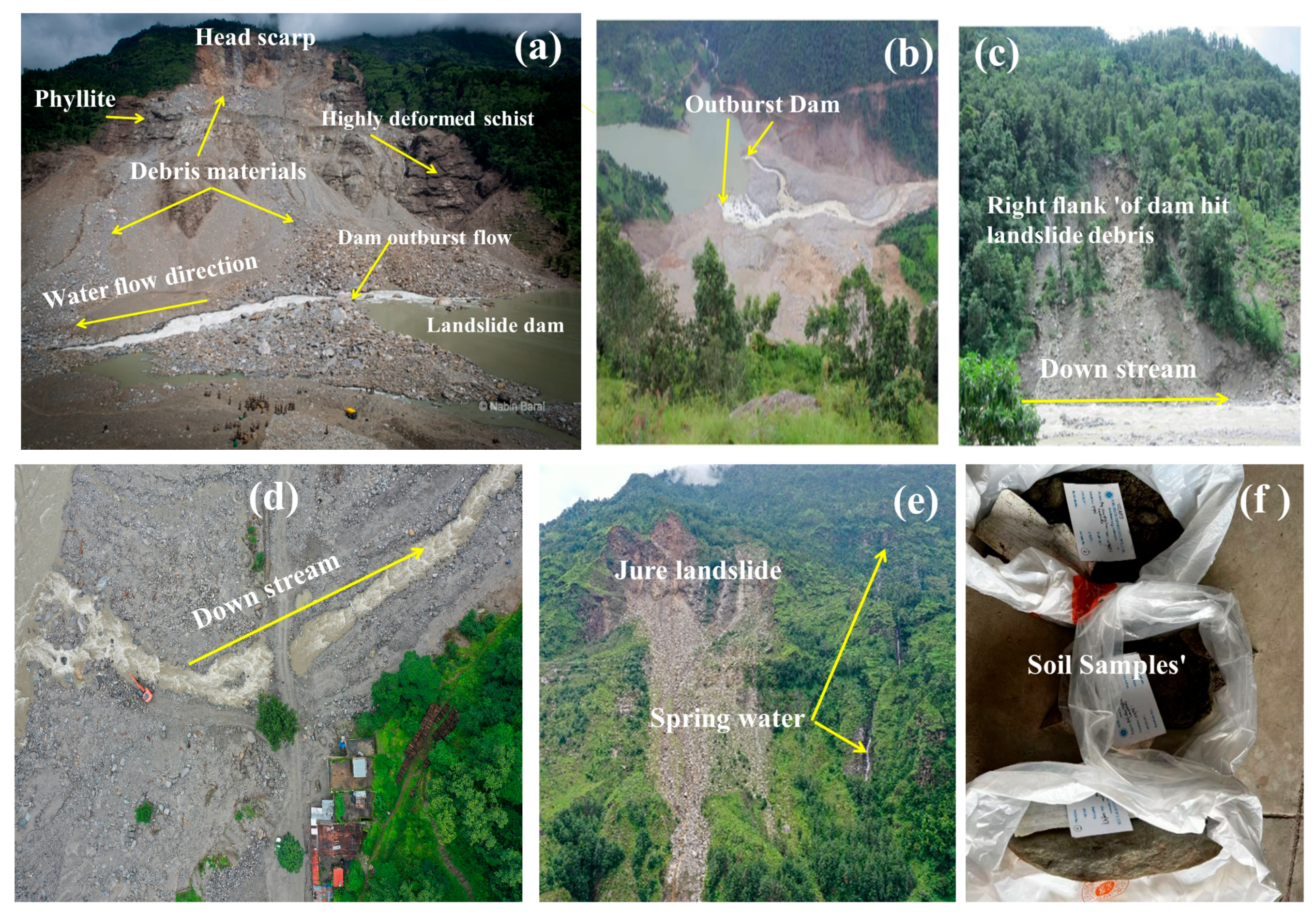
On 2 August 2014, a massive landslide occurred at the Jure village of Sindhupalchowk district, situated approximately 70 km northeast of Kathmandu, Nepal. The landslide destroyed approximately 24 houses, killing 156 people, injuring 27, and displacing 436. Figure 3 shows the field survey picture. The gradation of dam materials for natural bulk density determination, specific gravity test, grain size analysis, and direct shear and permeability tests was an average of some gradations of dam soil obtained in the field investigation of the landslide dam. For the physical analysis, dam materials, composed of mainly schist, quartz, and phyllite with different particle sizes (0.001–100 mm), were mixed and stirred evenly before the test. The majority of the sliding surface is located far below trees’ maximum rooting depth, usually more than ten meters. Landslides can be clearly recognized by the steep slopes at the toe and the concave scarps at the summit. The upper cliff, from whence the spring water emerges in Figure 3e, still has significant fissures, this study utilizes a comprehensive methodology, as depicted in Figure 2.

3.2. Jure Landslide Dam Characteristics and Data Used for the Study

The Jure landslide occurred on terrain with a very steep slope and rough terrain (Figure 3a). The lower slope exhibited a gentler gradient, with an average surface angle of 28 degrees along the sliding surface. In contrast, slope angles reaching up to 80 degrees were observed at the head scarp of the upper terrain. The landslide extended from the crown at an elevation of 1590 m to the toe at 800 m, significantly impacting the surrounding residential areas.
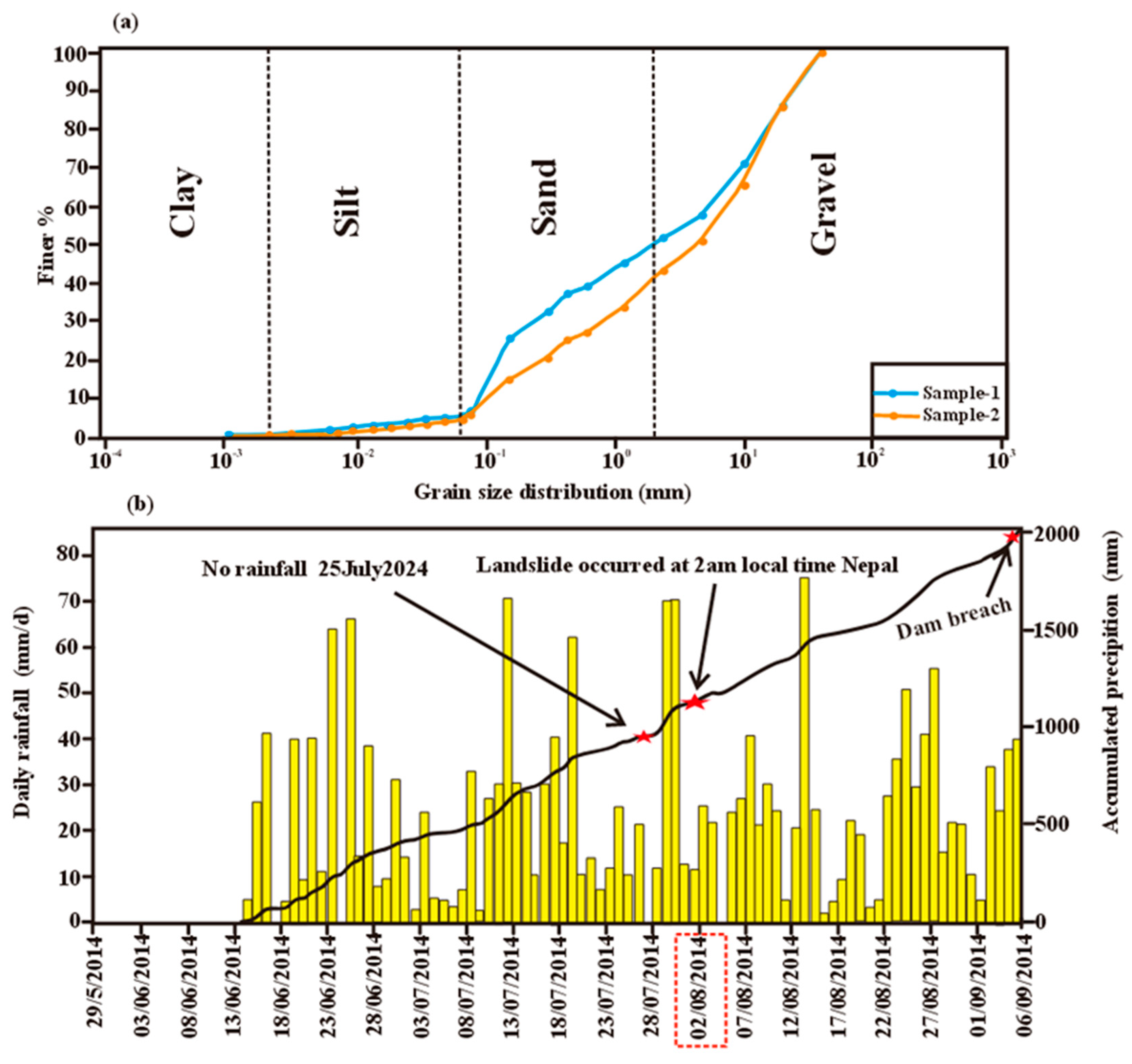
The right flank is in Figure 3c. The investigation centered on the landslide dam’s characteristics and the sediment properties of its materials, employing both fieldwork and laboratory analyses. Researchers collected samples of soil and rock to evaluate their physical properties, emphasizing factors such as grain size, composition, and density. The analysis attempted to understand the maximum sediment concentration within the dam’s bed (C* = 0.64), sediment density (σ) = 2250 kh/m3, and the tangent value of the internal friction angle (tang ϕ) = 29. The same physical parameters were determined for the riverbed materials downstream of the landslip dam. This comparative analysis aimed to understand how the dam’s presence affects sediment dynamics and stability in the downstream. Manning’s roughness coefficient (n) was adjusted to 0.05. The primary grain sizes of the landslip dam and riverbed materials, which were 0.001 and 100 mm, respectively, were explored by analyzing the collected field data and the grain size distribution of the landslip materials (Figure 4a). The depth of the erodible sediment bed in the Sunkoshi River was estimated to be roughly 9 m throughout the river reach, based on interpolated cross-sectional data.
The observed discharge, temperature, and rainfall data at Barbise and Pachuwar-ght gauging stations were obtained by the relevant monitoring authority, Nepal’s Ministry of Hydrology and Meteorology. (https://www.dhm.gov.np/hydrology/river-watch, accessed on 21 December 2024). The digital topographic data of 30 m contour intervals were taken from the open topography website. (https://portal.opentopography.org/datasets, accessed on 2 January 2025). The digital elevation model (DEM), at 12.5 m resolution for the study area, was obtained from the website (https://asf.alaska.edu/, 2 January 2025) and used in the GIS tool to create study maps. For the hydrology simulation we used the HEC-RAS model to see the simulation of the landslide dam, which is a robust tool for analyzing hydraulic and hydrologic conditions. We have expanded our explanation to include the model setup, specifying input parameters, boundary conditions, and the rationale behind our choices. Additionally, we discuss the data sources utilized for model calibration and validation, ensuring that readers have a clear understanding of how these elements contribute to the reliability of our results. By elaborating on the simulation process and the interpretation of outputs, we aim to provide a comprehensive overview that underscores the significance of HEC-RAS 2D modeling and flood hazards in our study.

3.3. Hydraulic Numerical Simulation

For the hydraulic numerical simulation analysis, we used hydraulic modeling software; HEC-RAS 6.3.1 is a popular and open-source hydrodynamic model developed by the US Army Corps of Engineers (refer https://www.hec.usace.army.mil/software/hec-ras/, accessed on 21 April 2025), and the sub-grid bathymetry that forms the basis of its 2D module uses an implicit finite volume technique to solve the Shallow Water Equations (SWE) [28]. With respect to other simulation tools, we chose the HEC-RAS 2D model due to its availability as a free resource and its capability to accurately model dam break scenarios and impulsive flood propagations in steep alpine regions [28,29]. In addition, compared to other hydrodynamic models, HEC-RAS is regularly updated, with continuous improvements to address bugs and enhance functionality. This commitment to ongoing development ensures that HEC-RAS remains at the forefront of hydrodynamic modeling tools. We mainly used the 30 m NASADEM for hydrodynamic modeling and the HMA DEM (8 m resolution) for terrain analysis and initial dam-break modeling after hydrologic conditioning (filling sinks). NASADEM is a state-of-the-art global Digital Elevation Model (DEM) and an improved version of the previous Shuttle Radar Topography Mission (SRTM) DEM, focusing on aspects like elevation control, void filling, and data addition, (https://www.earthdata.nasa.gov/esds/competitive-programs/measures/nasadem, accessed on 21 March 2025). The landslide dam was characterized as a storage zone, with a flow area constructed using 30 m mesh grids. To improve the accuracy and realism of the simulation, certain areas were modified (subtracted from the DEM surface) to fine-tune the depth. The dam was represented using an SA/2D tool, which linked the storage area to the downstream flow region. For the simulation, we applied a Manning’s roughness coefficient of 0.1, based on calibrated values from previous research [30] and surface analysis [31]. For dam-break modeling, key properties such as breach parameters, including breach formation time (Tf), bottom width (Bw), and side slopes (H:V), are vital. They were calculated using the empirical relationship defined by Equations (1) and (2), developed by Froehlich, as illustrated below:
Bavg = 0.27KoVw0.32 Hb0.04
tf = 0.0176 (Vw/gH2b)0.5
where Bavg is the average width of breach (m), Ko = 1.4 for overtopping, Vw = volume of water stored in the dam above the breach’s bottom level (m3), and Hb is the vertical distance between the crest of the dam and the breach invert height (m), tf is time in h, and g is gravity (m/s2). The dam break analysis was performed to simulate the overtopping failure mode, adhering to the guidelines established by the Courant criteria [32]. The computation intervals for the dam break analysis and downstream flood modeling varied from 5 s to 10 min. This approach enhances the accuracy and dependability of flood routing strategies, thereby boosting the scientific and practical validity of the research outcomes.

3.4. Breach Formation of Landslide Dam

Landslide dam debris comprises a mixture of intricate non-cohesive materials, such as rocks, weathered rock, and soil. Typically, this debris is either unconsolidated or poorly consolidated, due to its compatibility and morphological characteristics. The Jure landslide dam was created when landslide debris obstructed the Sunkoshi River. About 2 million cubic meters of the 3 million cubic meters of landslide material contributed to the formation of the dam. The reservoir behind it was estimated to contain around 11.1 million cubic meters of water, with a maximum depth of 52 m [33,34]. The dam measured approximately 300 m in length and 51 m in height, with a 5 m freeboard on the left bank [35].
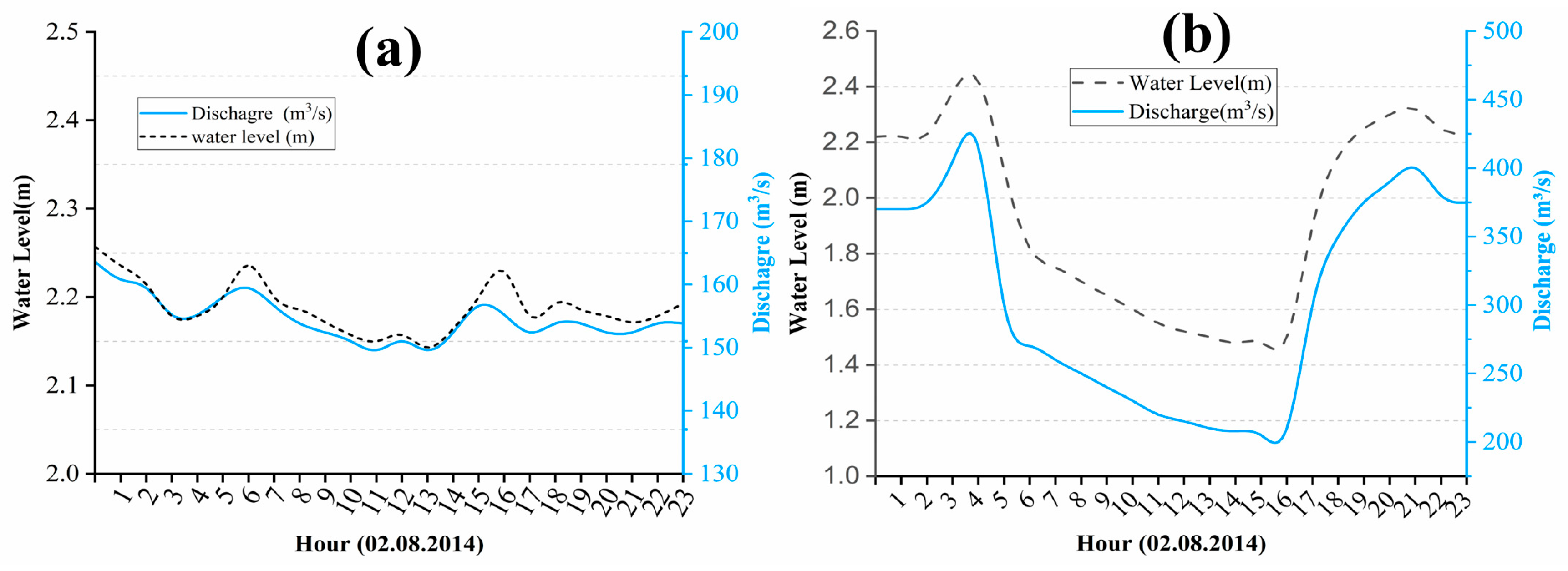
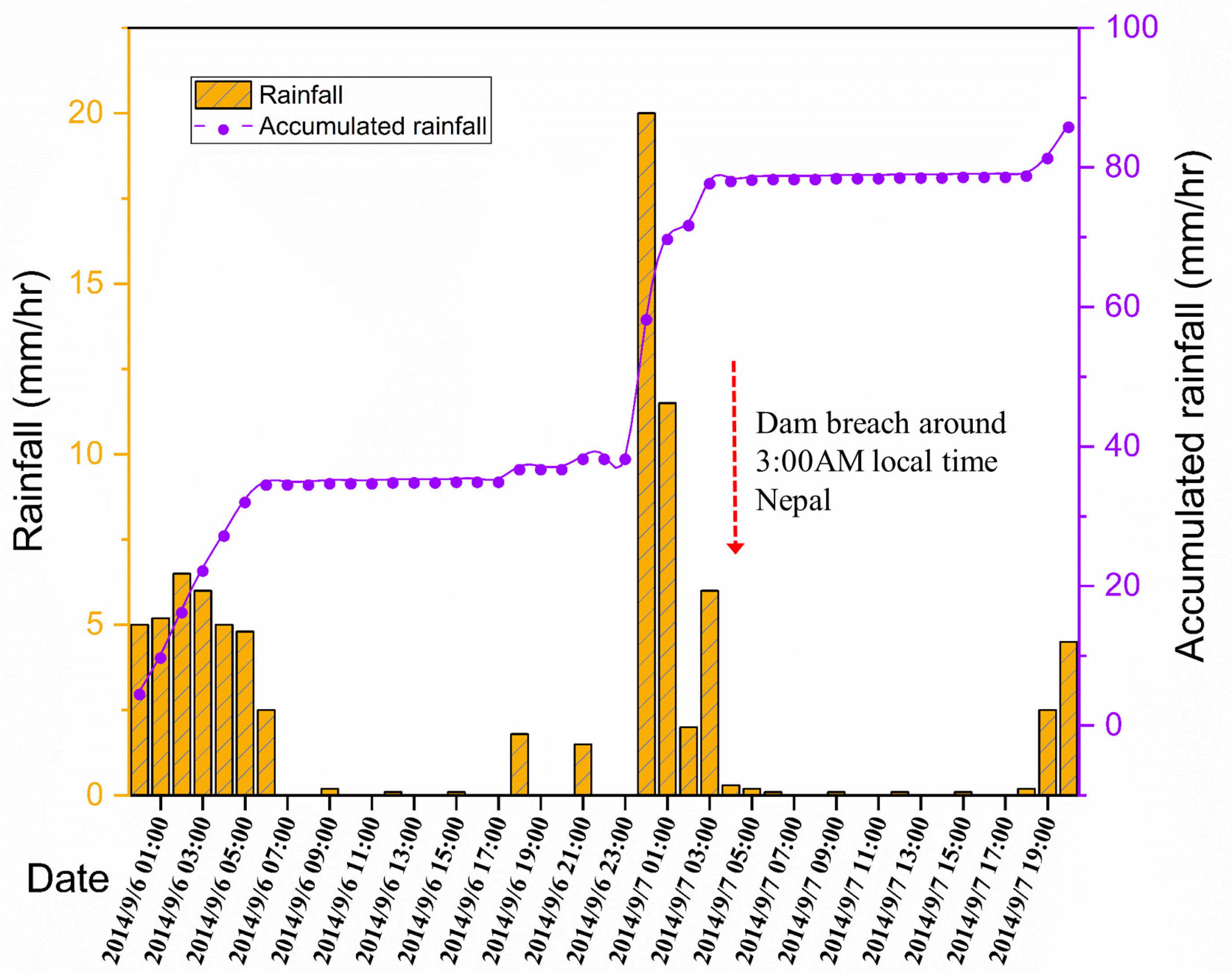
However, hydrological data, including water level and discharge measurements, were collected from two key stations, located on both the upstream and downstream sides of the landslide dam area. The discharge of the landslide, approximately around 160 m3/s, occurred on 2 August 2014 at Barbise gauge station (Figure 5a), which is upstream, at a distance of around 3.5 km, and the actual discharge must be higher than this, due to the estimated volume of the dam being 6 million cubic meters. The water level was approximately 2.2 m, rising in tandem with the river discharge, which confirms consistent data quality. Due to the landslide dam, a lake was formed by 5 p.m., resulting in a reduction in discharge from 416.3 m3/s to 214.2 m3/s, as measured at the Pachwarghat gauge station, located 35 km downstream from the dam. This clearly indicates a blockage of the Sunkoshi River between the landslide dam and the Pachwarghat location. Starting at 17:00 h, the discharge began to increase, along with the water level, and by 22:00 h, it had nearly returned to normal discharge levels of 400 m3/s (Figure 5b). The outflow from the landslide dam was initially increased on 2 August when the Nepal Army, assisted by experts from the Department of Water-Induced Disaster Prevention (DWIDP), opened an outlet channel. A second, more significant channel was created on August 30th through a controlled blast. On 6 September, the Army widened this secondary channel to 52 m. However, heavy rainfall that same day caused a rapid rise in the water level, putting the dam under immense pressure. This ultimately led to the dam’s breach on 7 September 2014. (Figure 6). The breach generated an outburst flood that caused damage to multiple houses over six kilometers downstream along the Sunkoshi River, although no human casualties were reported.

3.5. Initial Boundary Condition

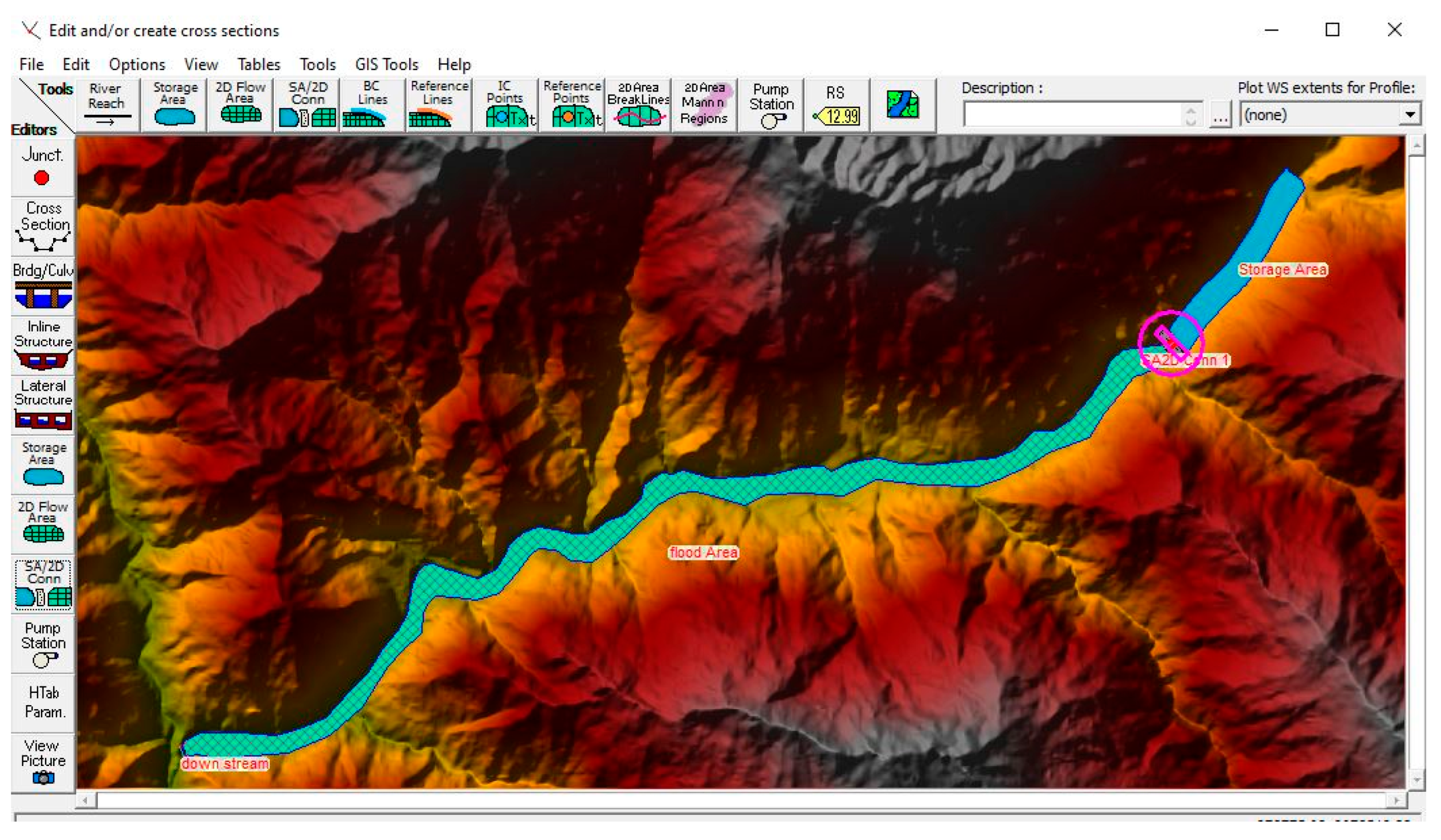
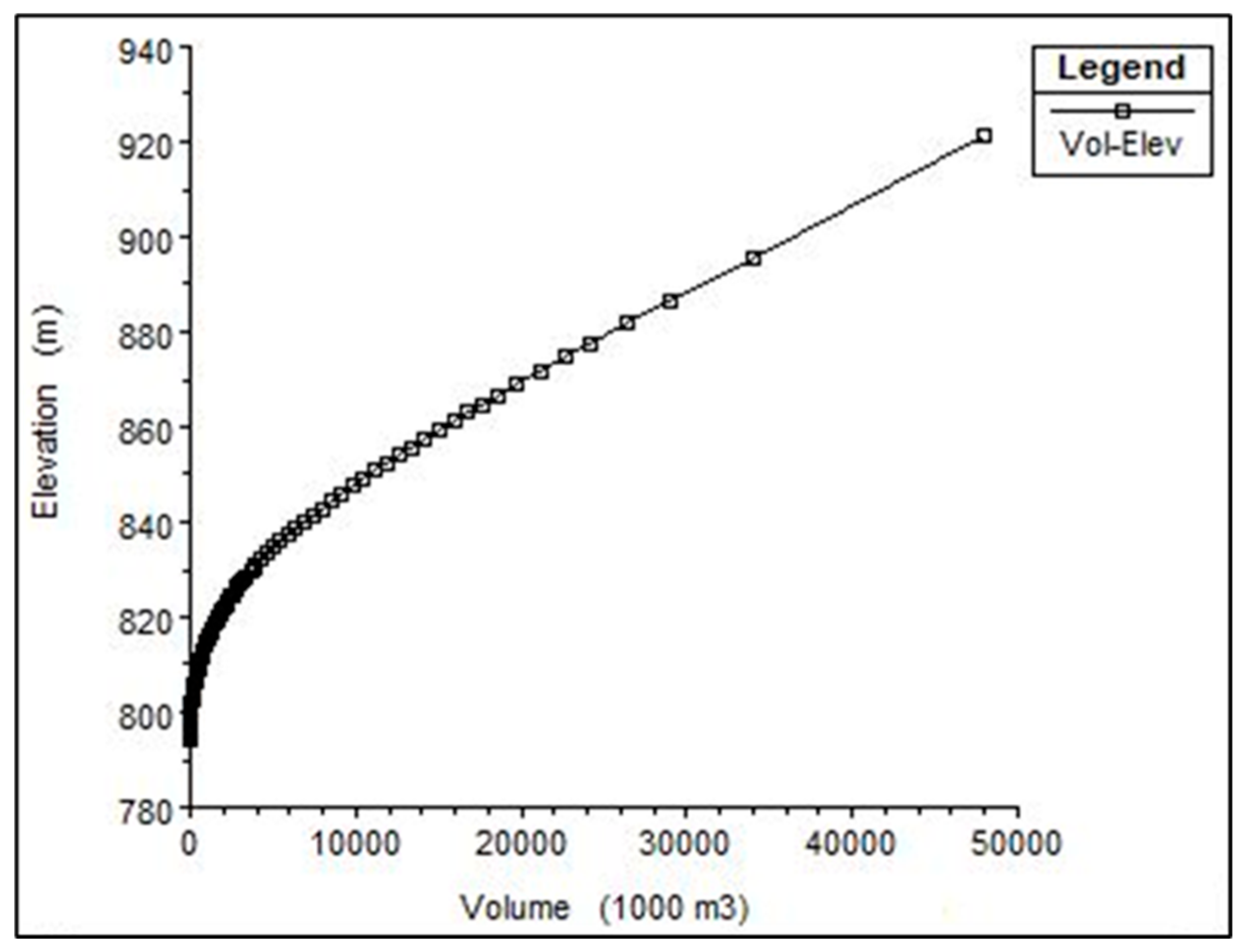
The necessary maps for the study are imported into RAS Mapper, designating the 2D flow area. The simulation begins with an initial reservoir water level of 850 m. Boundary conditions are established using a 300 min hydrograph of the probable maximum flood (PMF) from the outlet of the Jure landslide dam channel. The cell size for the two-dimensional flow area is set at 15 × 15 m, as depicted in (Figure 7). Additionally, (Figure 8) illustrates the Elevation–Volume curve of the Jure landslide dam reservoir.

4. Results

4.1. Breach Flood Hydrograph

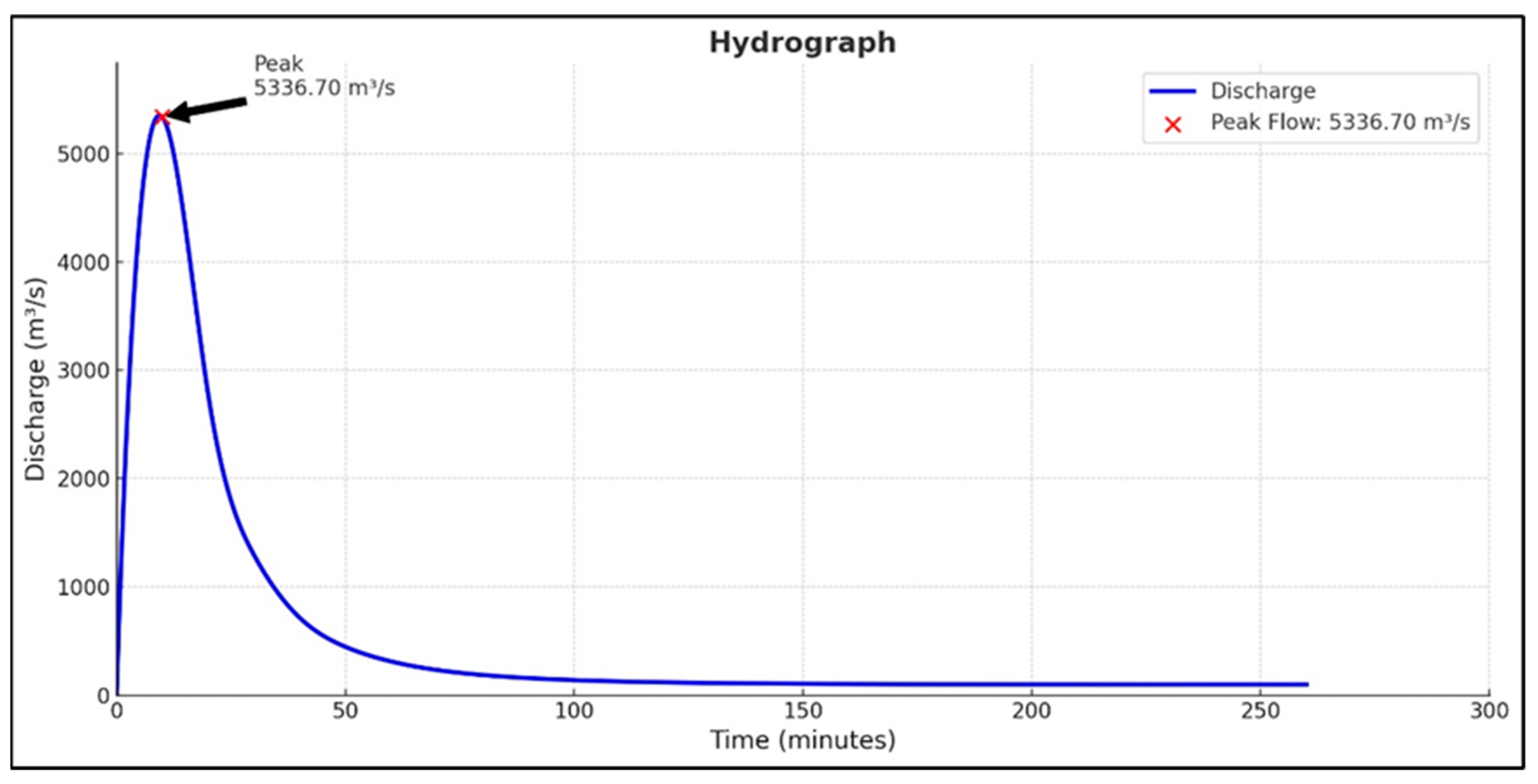
The dam breach analysis was conducted for overtopping failure mode in HEC-RAS. The stage hydrograph, breach discharge hydrograph, and velocity hydrograph were obtained from HEC-RAS dam breach simulation. The headwater stage hydrograph and the downstream hydrograph for the overtopping failure are represented in (Figure 9). The peak discharge was simulated at 5336.70 m3/s, reflecting the maximum instantaneous discharge and indicating a rapid hydrological response following the outburst of the landslide dam. The initial discharge was exceptionally high, attributed to the prolonged heavy precipitation prior to the dam breach, as shown in (Figure 6), along with approximately 11,500 m3 of impounded water in the dam.
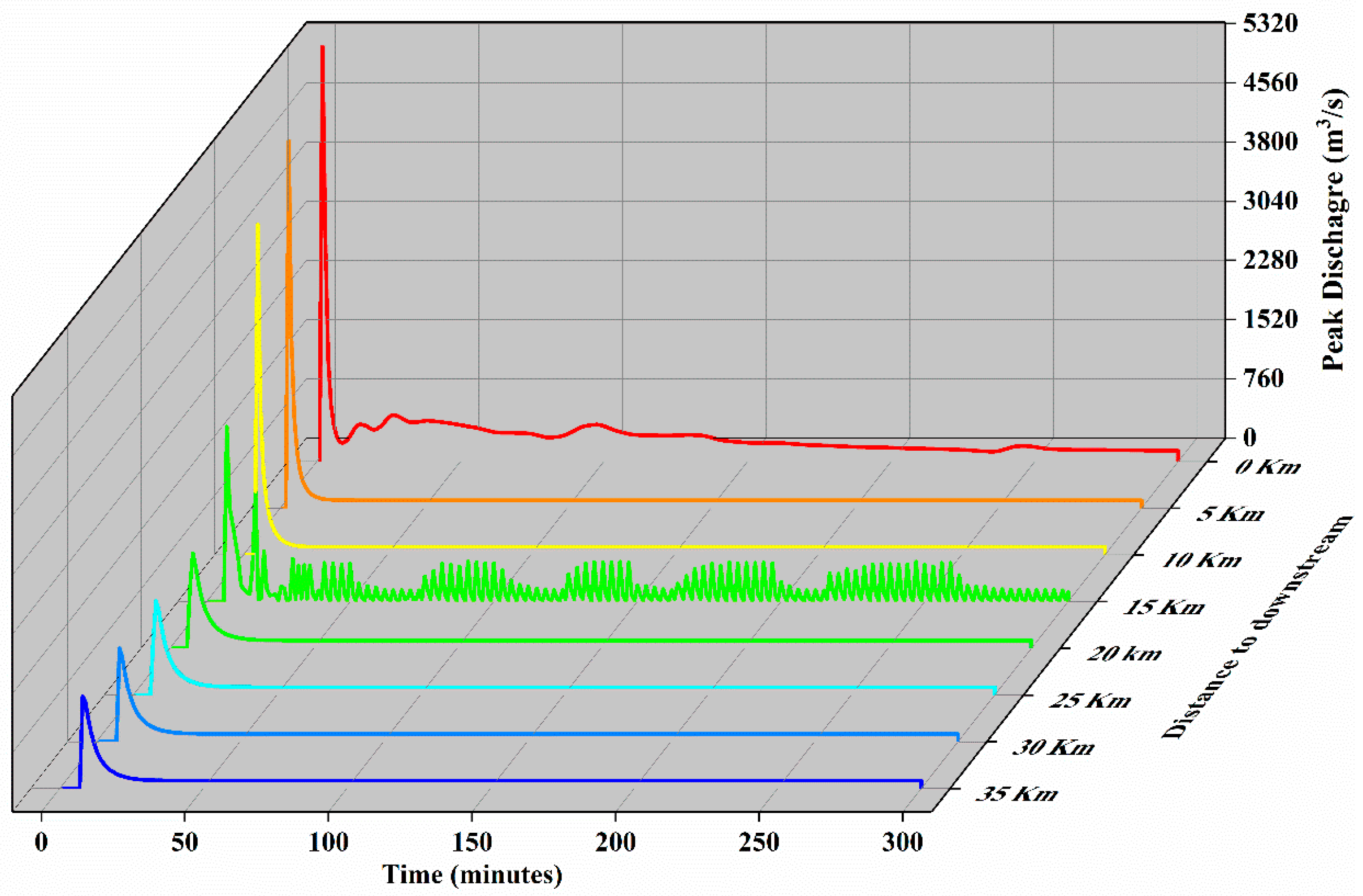
Figure 10 illustrates the routing of the flood hydrograph for the outburst dam scenario across different locations: at the dam, Sukute (15 km), Dolalghat (20 km), and the endpoint at Pachwarghat (35 km). At the dam site, the peak flow reaches 5336.70 m3/s immediately at the moment of dam rupture. At Sukute, the peak flow decreases to 2243 m3/s, which is 58% lower than the peak at the dam, occurring 33 min after the breach. At Dolalghat, located 20 km downstream, the peak discharge further drops to 1063 m3/s, reaching this level 64 min post-breach. By the time the flow reaches Pachwarghat, the peak discharge has diminished to 561 m3/s, arriving 95 min after the outburst. The rapid reduction in peak discharge—from 5336.71 m3/s at the dam to 561 m3/s at 35 km—is mainly due to two factors. First, several tributaries, particularly the Balephi River, Indrawati River, and Jhikhu Kola, contributed floodwater from their respective catchments downstream. Second, various storage areas along the route trapped a substantial amount of water through deep percolation.

4.2. Flood Inundation and Hazard Mapping

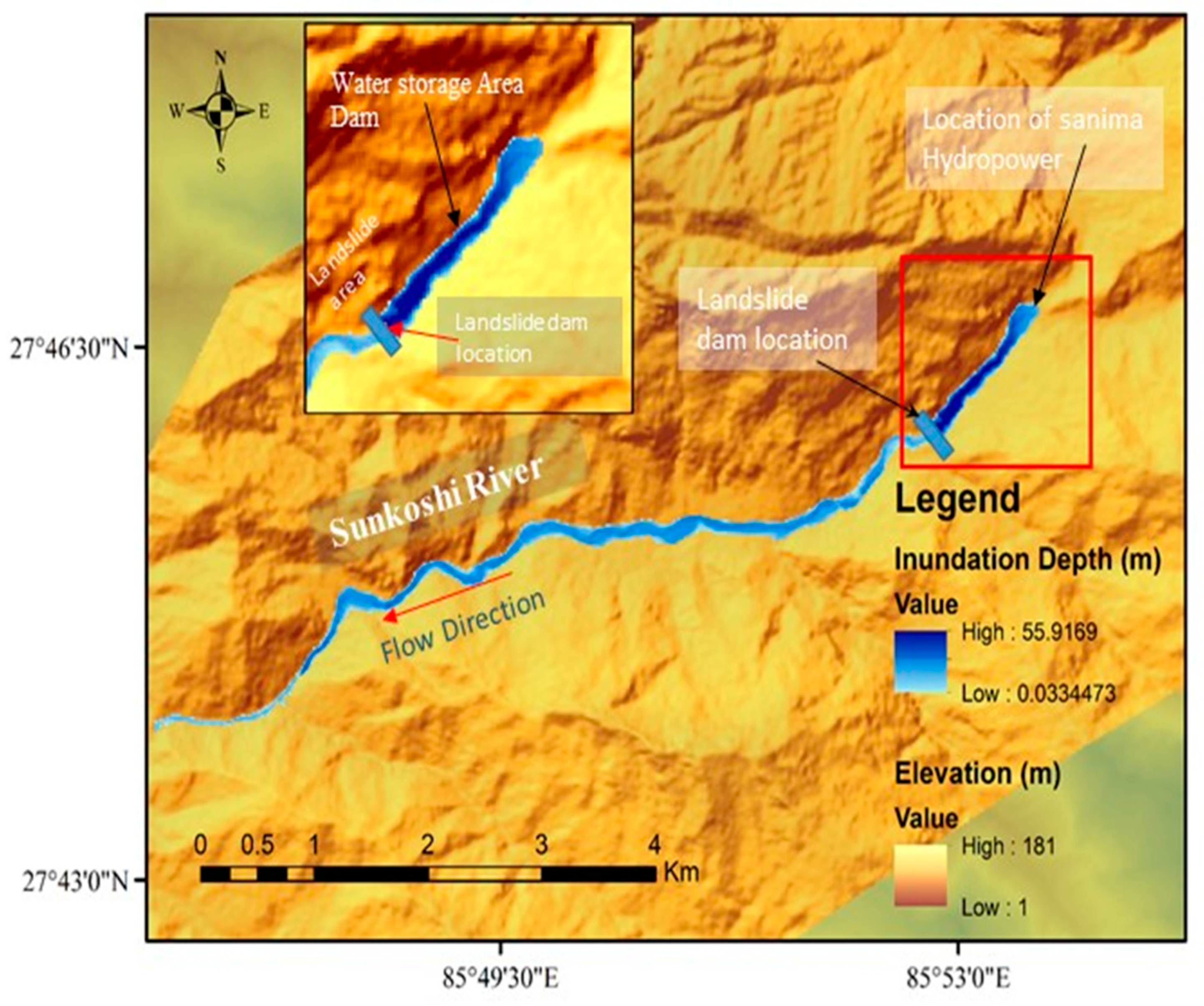
The illustration shows the calculated flood inundation upstream of the landslide dam prior to its breach, with an estimated surface area of 0.70 km2 (Figure 11). This calculated value is slightly higher than the 0.6 km2 value reported in the existing elevation–area curve for the area [33]. The calculated flood extent is consistent with the satellite-observed imagery, as shown in Figure 16b. Areas in the river valley, extending approximately 3 km upstream, were inundated as a result of the impounded water from the landslide lake.
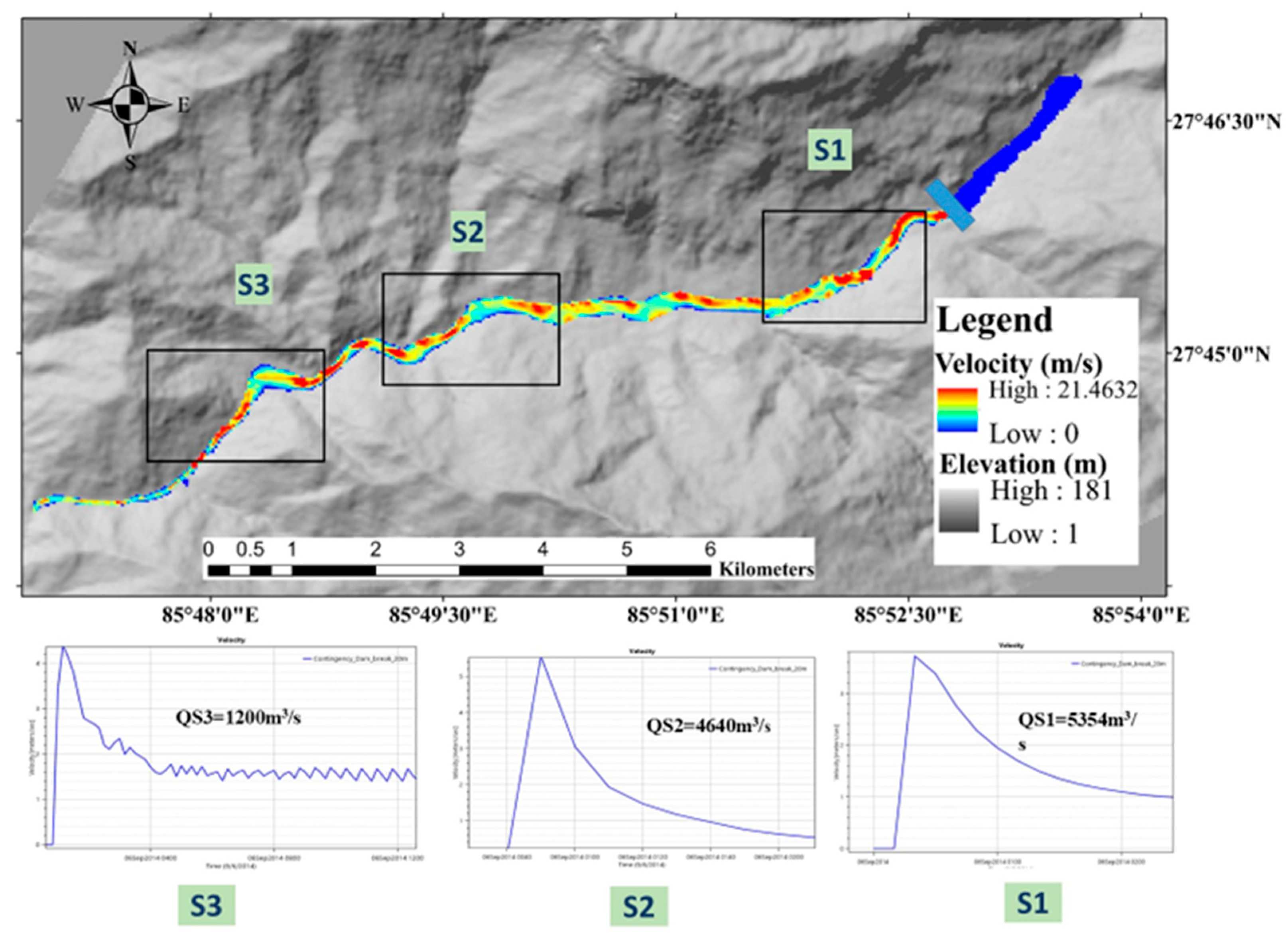
The results show the hydrodynamic simulation of the outburst flood caused by the overtopping breach of the landslide dam on 7 September 2014. The modeled scenario, carried out using the HEC-RAS 2D module, illustrates the dynamic transformation of a once-blocked river into a conduit of destructive flood energy unleashed downstream. The breach of the landslide dam initiates a surge of impounded water from the upstream reservoir, with inundation depths reaching a maximum of 55.91 m immediately downstream of the breach point. The intensity of the flood is highest near the dam location, where the steep valley topography channels the released water into a narrow and rapidly accelerating flow path. This initial energy release marks the beginning of a highly erosive and potentially devastating flood wave. Figure 12 presents a detailed flood velocity hazard map, derived from HEC-RAS simulation results of the Jure landslide outburst flood, highlighting the spatial distribution of the flood hazard along the affected river corridor. The velocity patterns are illustrated using a continuous color scale, ranging from blue (low velocity) to red/yellow (high velocity), with peak velocities reaching up to 21.46 m/s near the dam breach location. Three key observation points are delineated along the river: S1 (dam outburst point), S2 (midstream, ~18 km downstream), and S3 (Pachwarghat gage station, ~35 km downstream), to analyze longitudinal changes in flood behavior.
At S1, adjacent to the landslide dam breach, the HEC-RAS simulation outputs indicate extreme flow conditions with velocities exceeding 20 m/s and a peak discharge of approximately 5354 m3/s. The hydrograph inset at this point shows a sharp, high-magnitude peak, representing the rapid flood wave release from the impounded lake. As the flood propagates downstream to S2, velocities decrease to around 15 m/s, and peak discharge reduces to 4640 m3/s. The hydrograph here reflects a slightly delayed and attenuated peak, influenced by energy losses due to channel roughness and intermediate storage effects within the narrower midstream breaches. At S3 (Pachwarghat gage station), located approximately 35 km downstream, the simulation reveals substantial attenuation. Flood velocities range between 5 and 10 m/s, and the peak discharge drops significantly to 1200 m3/s. The hydrograph shows a broad, flattened peak with a delayed arrival, indicating marked flood energy dissipation over the extended travel path. A summarization of peak flow discharges and flood arrival times at different locations is provided in Table 1.
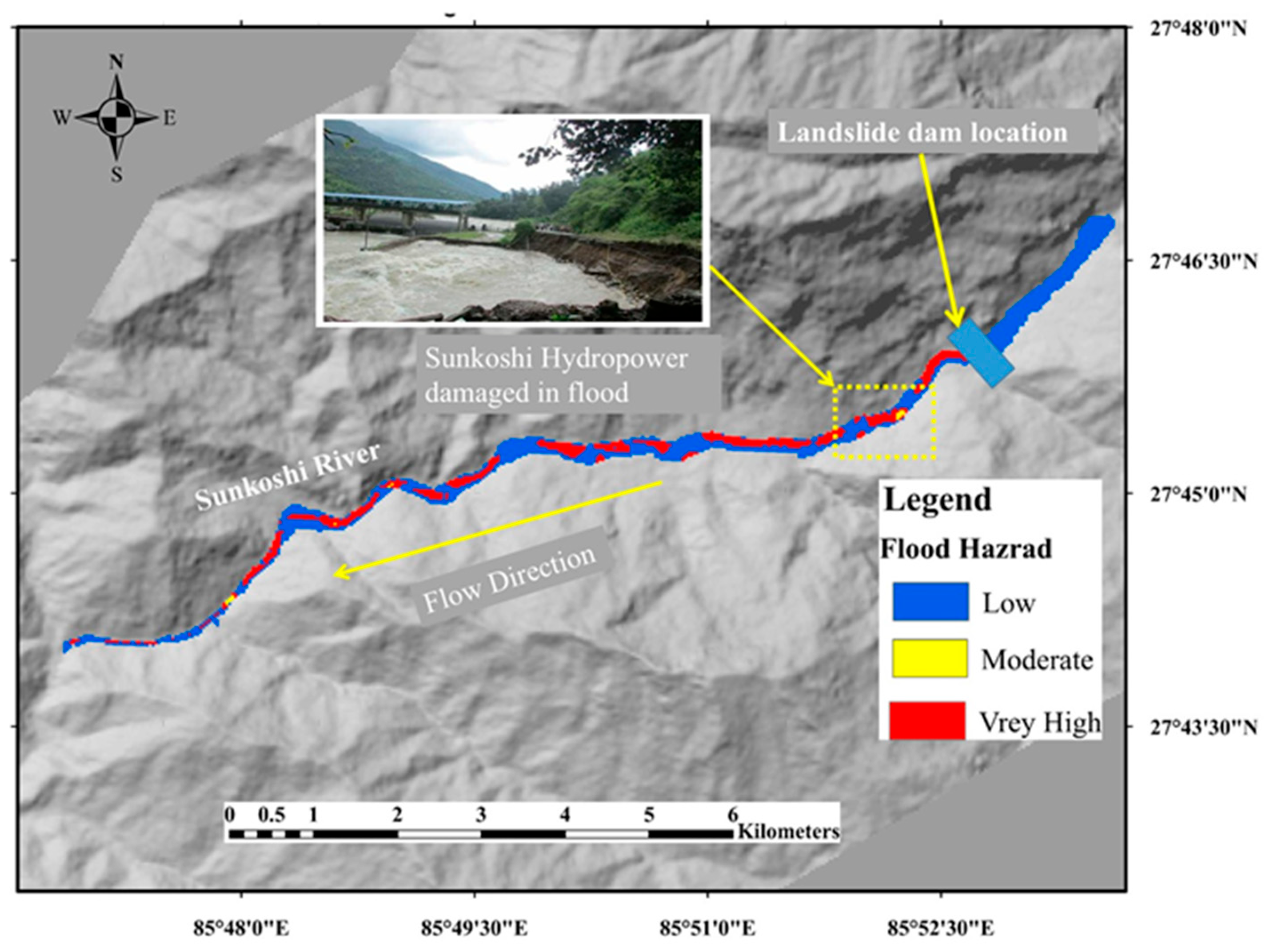
According to Figure 13, hazard mapping and forecasting of inundation are fundamental steps for flood management and adjustment. It is employed to pinpoint areas that are susceptible to flooding during heavy rainfall. Based on flow depth and velocity, the hazard map of the Jure landslide dam was created using 2D HEC-RAS 6.3.1 software, as shown in the hazard map. This shows that a dam failure could have influenced the lives of hundreds of villages, as illustrated in the dam failure hazard map, which outlines the areas at risk of flooding and Sunkoshi Hydropower damaged. This transformation is governed by a decreasing channel gradient, increased cross-sectional area, and interactions with floodplains and channel obstructions. The integration of spatial flood velocity distribution and site-specific hydrographs from HEC-RAS simulations provides clear evidence of flood wave attenuation as it travels downstream.

4.3. HEC-RAS Model Calibration and Validation

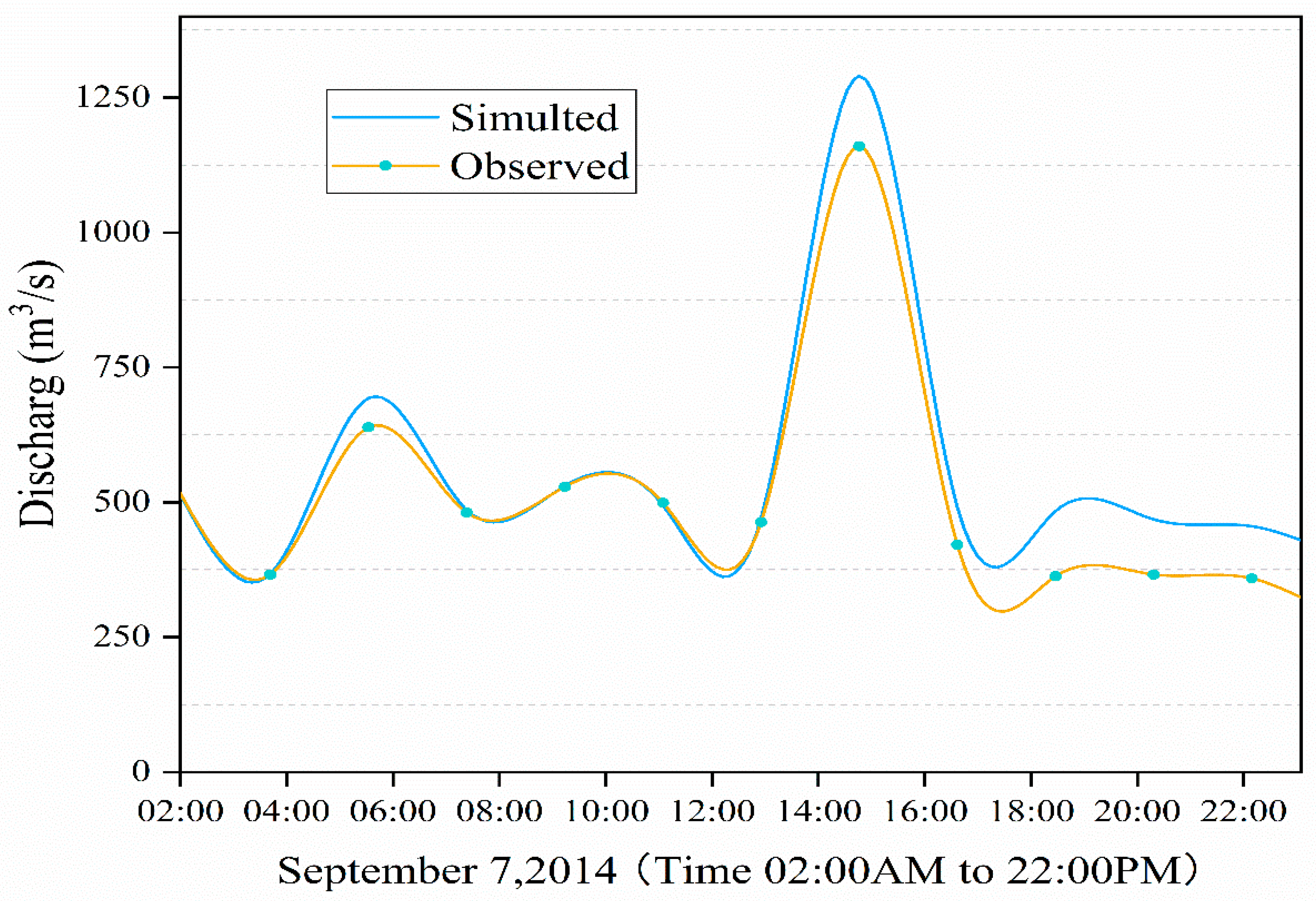
To assess the hydrodynamic reliability and predictive performance of the HEC-RAS model, a detailed validation was conducted using observed discharge data from the Pachwarghat gauging station, located approximately 35 km downstream of the modeled breach. This station provides crucial hydrological records, serving as an independent benchmark for evaluating the accuracy of the simulated flood dynamics and discharge propagation. The model was run for a representative flood event, and the resulting simulated hydrograph was systematically compared with observed discharge data at Pachwarghat. As illustrated in the validation map (Figure 14), the spatial extent of inundation and the temporal flow characteristics generated by the model closely aligned with expected hydraulic responses under high-flow conditions. Notably, the observed discharge hydrograph and the simulated output exhibit a near-identical trend, with close correspondence in peak magnitude, timing, and rising/falling limb behavior. These robust model simulations yield critical hydrodynamic parameters—including peak discharge, flow velocity, and inundation depth—which are fundamental for devising hazard mitigation strategies. Furthermore, this data is indispensable for the design of early warning systems and the formulation of precise evacuation plan for downstream communities.

5. Discussion

5.1. Senility Analysis of Landslide Outburst Dams with Different Heights

A comprehensive sensitivity analysis was conducted to evaluate the influence of varying landslide dam heights on breach formation time, peak outburst discharge, flow depth, and velocity—key parameters for flood hazard assessment in mountainous regions. Simulations were performed for hypothetical dam scenarios with heights of 10, 15, 20, 25, and 30 m, reflecting realistic blockage conditions along the Araniko Highway corridor. The results are summarized in Table 2. The Araniko Highway, connecting Nepal’s capital Kathmandu to the Chinese border, is among the most geodynamically vulnerable transport routes in South Asia [36]. Traversing steep, landslide-prone terrain, it frequently experiences river blockages and dammed lakes caused by monsoon rains or seismic activity, making it highly susceptible to catastrophic landslide dam outburst floods (LDOFs). These events pose serious threats to local communities, infrastructure, and regional connectivity [37,38].
The analysis shows that dam height does not linearly correlate with flood magnitude. The 20 m dam scenario, with a short breach time of 26 min, resulted in the highest peak in discharge (5336.17 m3/s), flow depth (55 m), and velocity (21 m/s). In contrast, the 30 m dam breached over 1 h and 54 min, producing a lower discharge (987 m3/s), depth (4 m), and velocity (4.1 m/s). This suggests that rapidly breaching moderate-sized dams may pose greater immediate hazards than larger, slower-failing ones—particularly in confined valleys like those along the Araniko Highway.

5.2. Influence of Roughness Coefficient and DEM in Hydrodynamic Modeling

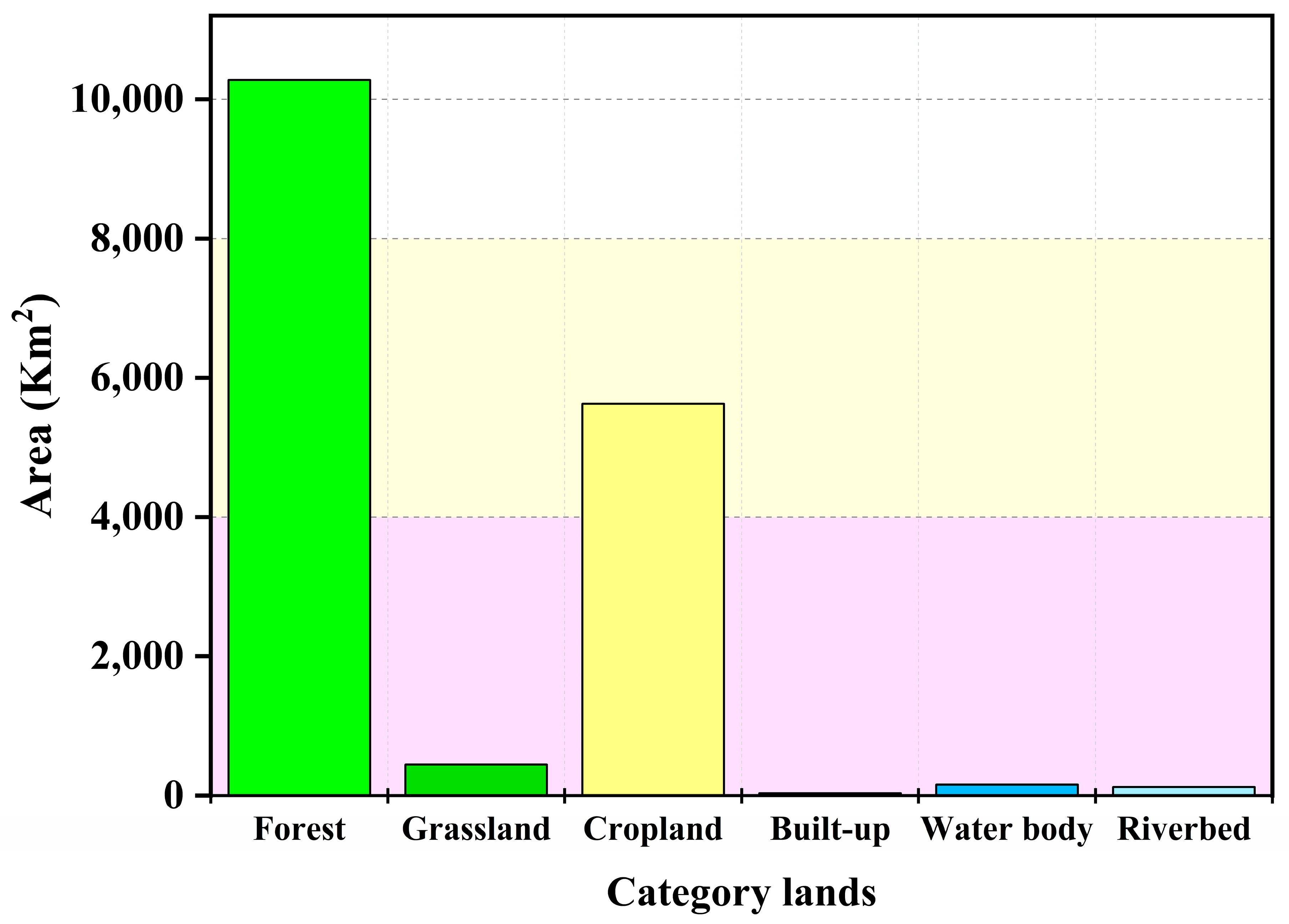
To assess the model sensitivity, we conducted dam-break flood simulations using varying landslide dam heights and spatially assigned Manning’s roughness coefficients, based on land use and land cover (LULC) data Figure 15. Compared to a constant roughness approach, the pixel-based method resulted in differences of up to 1.02/0.4 m in flood depth and 15/10 min in arrival time at the Pacharghat gauge station. Although the depth variations were minor, the significant delay in arrival time underscores the importance of incorporating spatial heterogeneity in surface roughness. LULC information was obtained from ICIMOD’s Regional Land Cover Monitoring System (https://geoapps.icimod.org/RLCMS/, 25 May 2025), showing that the area is predominantly covered by forest, along with cropland, grassland, riverbeds, built-up areas, and water bodies. These categories were each assigned appropriate Manning’s coefficients, directly influencing flow resistance and flood dynamics. Further class-wise details are provided in Figure 14. In addition, topographic uncertainty was addressed by comparing two DEM sources: High Mountain Asia (HMA, 8 m) and NASADEM (30 m). While the finer resolution of HMA offers more detail, its data voids limit usability across large regions. UAV-derived high-resolution DEMs could significantly improve terrain representation and enhance flood modeling accuracy, particularly in deep, narrow gorges.

5.3. Disaster Risk Management (DRM) in Transboundary Corridor

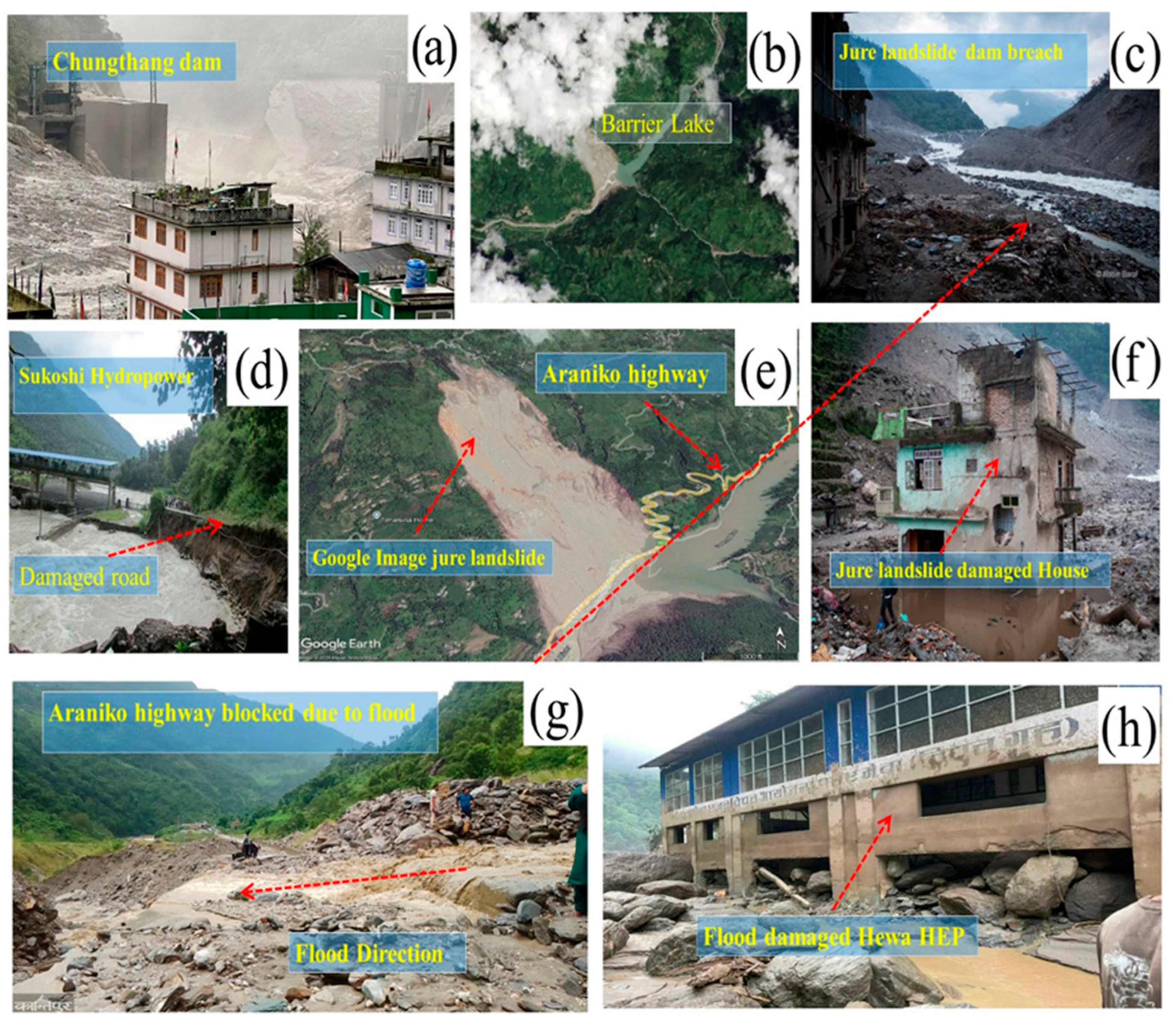
Recent studies have highlighted transboundary river basins, particularly those spanning the China–Nepal and China–India borders Figure 16, as emerging hotspots for landslide dam outburst floods (LDOFs) [39,40]. In the context of ongoing climate change, the associated risks are projected to intensify in the coming decades. Among these, the China–Nepal region is anticipated to become a primary focal point for future transboundary LDOF events [41]. As stated earlier, the Jure region site of a well-documented landslide dam outburst flood also serves as a critical transportation and economic corridor between China and Nepal. The region remains highly susceptible to multiple natural hazards, including floods, glacial lake outburst floods (GLOFs), landslides, and earthquakes [42]. As part of the Belt and Road Initiative (BRI), a 75 km-long Kerung–Nepal railway is currently under construction along the Gyirong–Trishuli corridor, an area equally vulnerable to these cascading hazards [43]. To promote sustainable development within this corridor and minimize the impacts of GLOFs and associated risks, an integrated and proactive disaster risk reduction (DRR) strategy is essential.
Key disaster risk management (DRM) measures should include the establishment and continuous operation of early warning systems, enhanced cross-border cooperation with structured and reliable communication protocols (rather than ad hoc message exchanges) [44], scientifically informed land-use zoning, and the promotion of disaster-resilient infrastructure policies. Additionally, building awareness and strengthening the technical capacity of local governments and stakeholders are critical. We strongly advocate for reinforced transboundary collaboration, effective governance, the rigorous enforcement of existing policies, and the inclusive participation of multi-level stakeholders to ensure comprehensive risk reduction across this vulnerable border region.

6. Conclusions

The purpose of this study was to investigate the breaching of the Jure landslide dam and map the inundation areas downstream of the dam. The hydrological 2D HEC-RAS model was used for the Dire Dam breach analysis. ArcGIS 10.3 was integrated into the HEC-RAS model for important geometric pieces of information and flood mapping. The dam breach parameters used for this study’s unsteady flow 2D analysis were established through regression equation methods, chosen in accordance with international limit values. The findings stem from an analysis of overtopping failure scenarios. It is anticipated that the Dire Dam will encounter breaching issues due to overtopping when the flood flow reaches 5336 m3/s. The probable maximum precipitation scenarios were considered; this condition was more hazardous than sunny days. This means if the dam fails, it will be due to precipitation scenarios. The outflow hydrograph generated from the probable maximum flood was routed along the breach, with breach formation time identified as the most sensitive parameter for the chosen peak discharge.
The breach flood inundation mapping was conducted using a 2D unsteady flow model. According to the developed map, the estimated flood depth reaches 55.9 m, while the corresponding flow velocity of the flood varies between 0.9 m/s and 21.4 m/s. The results showed that the communities’ overall situation is under significant pressure due to the sudden hazards posed by the dam breach and the resulting flood. The results from the dam breach model can be instrumental in developing an emergency management plan. These findings provide guidance for further detailed studies aimed at mitigating potential loss of life, economic impact, and damage to infrastructure located downstream of the landslide dam. Furthermore, we recommend tailored flood management measures, such as the establishment of early warning systems, reinforcement of vulnerable infrastructure, and the development of controlled breaching protocols. These strategies, alongside sustainable land-use planning and community engagement, are essential for reducing the risks posed by potential flooding in the region.

Author Contributions

I.A.Z.: Writing—review & editing—original draft, software, Methodology, Fromal analysis, Data curation, Conceptualization. N.C.: Writing—review& editing, Supervision, Funding acquisition. S.S.J.: Writing—review, Mythology. S.T.: Writing—review& editing. R.N.: Writing—review. All authors have read and agreed to the published version of the manuscript.

Funding

This research was supported by the National Natural Science Foundation of China (Grant No.42361144880) and the International Cooperation Overseas Platform Project, CAS (Grant No. 131C11KYSB20200033).

Data Availability Statement

The original contributions presented in this study are included in the article. Further inquiries can be directed to the corresponding author.

Acknowledgments

The first author gratefully acknowledges the ANSO Scholarship for Young Talents for supporting his postgraduate studies. This opportunity has been instrumental in advancing his research capabilities. Special thanks to everyone who guided and supported him throughout this research. Additionally, we would like to extend our thanks to the anonymous reviewer for their insightful suggestions, which have significantly enhanced the quality of the manuscript.

Conflicts of Interest

The authors declare no conflicts of interest.

References

  1. Duan, H.; Yao, X.; Zhang, Y.; Jin, H.; Wang, Q.; Du, Z.; Hu, J.; Wang, B.; Wang, Q. Lake volume and potential hazards of moraine-dammed glacial lakes–a case study of Bienong Co, southeastern Tibetan Plateau. Cryosphere 2023, 17, 591–616. [Google Scholar] [CrossRef]
  2. Fan, X.; Dufresne, A.; Subramanian, S.S.; Strom, A.; Hermanns, R.; Stefanelli, C.T.; Hewitt, K.; Yunus, A.P.; Dunning, S.; Capra, L. The formation and impact of landslide dams–State of the art. Earth-Sci. Rev. 2020, 203, 103116. [Google Scholar] [CrossRef]
  3. Hungr, O.; Leroueil, S.; Picarelli, L. The Varnes classification of landslide types, an update. Landslides 2014, 11, 167–194. [Google Scholar] [CrossRef]
  4. Coates, D.R. Landslide perspectives. Rev. Eng. Geol. 1977, 3, 1–28. [Google Scholar] [CrossRef]
  5. Fan, X.; Xu, Q.; van Westen, C.J.; Huang, R.; Tang, R. Characteristics and classification of landslide dams associated with the 2008 Wenchuan earthquake. Geoenviron. Disasters 2017, 4, 12. [Google Scholar] [CrossRef]
  6. Schuster, R.L. Interaction of Dams and Landslides: Case Studies and Mitigation; US Geological Survey Reston: Reston, VA, USA, 2006.
  7. Xu, C.; Tian, Y.; Zhou, B.; Ran, H.; Lyu, G. Landslide damage along Araniko highway and Pasang Lhamu highway and regional assessment of landslide hazard related to the Gorkha, Nepal earthquake of 25 April 2015. Geoenviron. Disasters 2017, 4, 14. [Google Scholar] [CrossRef]
  8. Nagy, I.V.; Asante-Duah, K.; Zsuffa, I. Hydrological Dimensioning and Operation of Reservoirs: Practical Design Concepts and Principles; Springer: Berlin/Heidelberg, Germany, 2013. [Google Scholar]
  9. Peng, M.; Zhang, L. Breaching parameters of landslide dams. Landslides 2012, 9, 13–31. [Google Scholar] [CrossRef]
  10. Chen, C.; Wang, Y.; Zhang, J.; Zhang, H.; Li, H.; Chen, Q. A preliminary study of landslide dam failures induced by the combined influence of piping and overtopping. J. Hydrol. 2023, 625, 129984. [Google Scholar] [CrossRef]
  11. Keefer, W.; Love, J. Landslides along the Gros Ventre River, Teton County, Wyoming. 1956, pp. 24–28. Available online: https://archives.datapages.com/data/wga/data/012/012001/24_wga0120024.htm (accessed on 24 August 2025).
  12. Cui, P.; Dang, C.; Zhuang, J.-Q.; You, Y.; Chen, X.-Q.; Scott, K.M. Landslide-dammed lake at Tangjiashan, Sichuan province, China (triggered by the Wenchuan Earthquake, May 12, 2008): Risk assessment, mitigation strategy, and lessons learned. Environ. Earth Sci. 2012, 65, 1055–1065. [Google Scholar] [CrossRef]
  13. Butt, M.J.; Umar, M.; Qamar, R. Landslide dam and subsequent dam-break flood estimation using HEC-RAS model in Northern Pakistan. Nat. Hazards 2013, 65, 241–254. [Google Scholar] [CrossRef]
  14. Dewals, B.; Erpicum, S.; Detrembleur, S.; Archambeau, P.; Pirotton, M. Failure of dams arranged in series or in complex. Nat. Hazards 2011, 56, 917–939. [Google Scholar] [CrossRef]
  15. DeNeale, S.T.; Baecher, G.B.; Stewart, K.M.; Smith, E.D.; Watson, D.B. Current State-of-Practice in Dam Safety Risk Assessment; Oak Ridge National Laboratory (ORNL): Oak Ridge, TN, USA, 2019. [Google Scholar]
  16. Rossi, C.L.C.U.; Marques, M.G.; Teixeira, E.D.; Melo, J.F.D.; Ferla, R.; Prá, M.D. Dam-Break analysis: Proposal of a simplified approach. RBRH 2021, 26, e02. [Google Scholar] [CrossRef]
  17. Wilby, R.L.; Keenan, R. Adapting to flood risk under climate change. Prog. Phys. Geogr. 2012, 36, 348–378. [Google Scholar] [CrossRef]
  18. Macchione, F.; Costabile, P.; Costanzo, C.; De Lorenzo, G.; Razdar, B. Dam breach modelling: Influence on downstream water levels and a proposal of a physically based module for flood propagation software. J. Hydroinform. 2016, 18, 615–633. [Google Scholar] [CrossRef]
  19. Phyo, A.P.; Yabar, H.; Richards, D. Managing dam breach and flood inundation by HEC-RAS modeling and GIS mapping for disaster risk management. Case Stud. Chem. Environ. Eng. 2023, 8, 100487. [Google Scholar] [CrossRef]
  20. Dasallas, L.; Kim, Y.; An, H. Case study of HEC-RAS 1D–2D coupling simulation: 2002 Baeksan flood event in Korea. Water 2019, 11, 2048. [Google Scholar] [CrossRef]
  21. Albu, L.-M.; Enea, A.; Iosub, M.; Breabăn, I.-G. Dam breach size comparison for flood simulations. A HEC-RAS based, GIS approach for Drăcșani Lake, Sitna River, Romania. Water 2020, 12, 1090. [Google Scholar] [CrossRef]
  22. Geeraerts, J.; Troch, P.; De Rouck, J.; Verhaeghe, H.; Bouma, J.J. Wave overtopping at coastal structures: Prediction tools and related hazard analysis. J. Clean. Prod. 2007, 15, 1514–1521. [Google Scholar] [CrossRef]
  23. Huang, Y. Appropriate Modelling for Integrated Flood Risk Assessment. PhD Thesis, University of Twente, Enschede, The Netherlands, 28 October 2005. [Google Scholar]
  24. Volz, C. Numerical simulation of embankment breaching due to overtopping. VAW-Mitteilungen 2013, 222, 1–128. [Google Scholar]
  25. Peramuna, P.; Neluwala, N.; Wijesundara, K.; DeSilva, S.; Venkatesan, S.; Dissanayake, P. Review on model development techniques for dam break flood wave propagation. Wiley Interdiscip. Rev. Water 2024, 11, e1688. [Google Scholar] [CrossRef]
  26. Silva, I.T.C.; Santos, H.A.; Pereira, L.C.O.; Nascimento, K.S.D. Global sensitivity analysis in flood mapping using HEC-RAS 2D: Effects of the floodplain manning coefficient for a dam-break case. RBRH 2024, 29, e38. [Google Scholar] [CrossRef]
  27. Manandhar, R.; Bhattarai, S.; Thakurati, R.; Maharjan, S.; Shrestha, S. Integrated Hydrological and Hydraulic Modeling for Dam Breach Analysis: A Case Study of Mahadev Khola, Bhaktapur. J. Eng. Sci. 2024, 3, 43–60. [Google Scholar] [CrossRef]
  28. Brunner, G.W. HEC-RAS River Analysis System, Version 1.0; Hydraulic Reference Manual; U.S. Army Corps of Engineers’ Hydrologic Engineering Center (HEC): Davis, CA, USA, 1995.
  29. Pilotti 1995, M.; Milanesi, L.; Bacchi, V.; Tomirotti, M.; Maranzoni, A. Dam-break wave propagation in alpine valley with HEC-RAS 2D: Experimental cancano test case. J. Hydraul. Eng. 2020, 146, 05020003. [Google Scholar] [CrossRef]
  30. Shrestha, B.B.; Nakagawa, H. Hazard assessment of the formation and failure of the Sunkoshi landslide dam in Nepal. Nat. Hazards 2016, 82, 2029–2049. [Google Scholar] [CrossRef]
  31. Chow, V.T. Hydraulic exponents. J. Hydraul. Div. 1981, 107, 1489–1499. [Google Scholar] [CrossRef]
  32. Brunner, G.W. HEC-RAS River Analysis System: User’s Manual; U.S. Army Corps of Engineers: Washington, DC, USA; Institute for Water Resources, Hydrologic: Alexandria, VA, USA, 2002. [Google Scholar]
  33. Pokharel, J.; Regmi, S.; Bhattarai, D.; Devkota, L.; Adhikari, T.; Rajauria, A.; Subedi, M.; Dawadi, P. A Report on Study of Sunkoshi Landslide Dam in Jure, Sindhupalchowk; The Nepal Engineers’ Association (NEA): Lalitpur, Nepal, 2014; Volume 18. [Google Scholar]
  34. Shrestha, A.B.; Khanal, N.R.; Shrestha, M.; Nibanupudi, H.K.; Molden, D. Eye on the Sun Koshi Landslide: Monitoring and Infrastructure Planning Key to Minimizing Scale of Disasters; International Centre for Integrated Mountain Development (ICIMOD): Kathmandu, Nepal, 2014. [Google Scholar]
  35. Malla, S.B.; Dahal, R.K.; Hasegawa, S. Local level disaster response in Nepal: Investigating the government agencies. Bull. Dep. Geol. 2020, 22, 17–23. [Google Scholar] [CrossRef]
  36. Rana, P.B.; Karmacharya, B. Nepal: A connectivity-driven development strategy. In Connecting Asia; Edward Elgar Publishing: Cheltenham, UK, 2016; pp. 330–358. [Google Scholar]
  37. Reynolds, J. The role of integrated geohazard assessments in disaster risk management. Int. J. Hydropower Dams 2023, 30, 43–56. [Google Scholar]
  38. Strom, A. Natural river damming: Climate-driven or seismically induced phenomena: Basics for landslide and seismic hazard assessment. In Engineering Geology for Society and Territory-Volume 2: Landslide Processes; Springer: Berlin/Heidelberg, Germany, 2015; pp. 33–41. [Google Scholar]
  39. Bhattarai, K.; Conway, D. The Environment. In Contemporary Environmental Problems in Nepal: Geographic Perspectives; Springer: Berlin/Heidelberg, Germany, 2020; pp. 115–199. [Google Scholar]
  40. Reynolds, J.M. On the need for transboundary management of geohazards. In Proceedings of the HYDRO 2019, Porto, Portugal, 14–16 October 2019. [Google Scholar]
  41. Guo, C.; Huang, Y.; Yao, L.; Alradi, H. Size and spatial distribution of landslides induced by the 2015 Gorkha earthquake in the Bhote Koshi river watershed. J. Mt. Sci. 2017, 14, 1938–1950. [Google Scholar] [CrossRef]
  42. Lamichhane, S.; Aryal, K.R.; Talchabhadel, R.; Thapa, B.R.; Adhikari, R.; Khanal, A.; Pandey, V.P.; Gautam, D. Assessing the prospects of transboundary multihazard dynamics: The case of Bhotekoshi–Sunkoshi Watershed in Sino–Nepal border region. Sustainability 2021, 13, 3670. [Google Scholar] [CrossRef]
  43. Murton, G.; Lord, A. Trans-Himalayan power corridors: Infrastructural politics and China’s belt and road initiative in Nepal. Political Geogr. 2020, 77, 102100. [Google Scholar] [CrossRef]
  44. Hu, S. Connecting the “One Belt and One Road” initiative with the interconnected Himalayan region—Reflections on the construction of the China–Nepal–India Economic Corridor. In Annual Report on the Development of the Indian Ocean Region (2017) The Belt and Road Initiative and South Asia; Springer: Berlin/Heidelberg, Germany, 2018; pp. 51–101. [Google Scholar]
Figure 1. Location of the study area, basin map, and landslide dam.
Geohazards 07 00023 g001
Figure 2. HEC-RAS model flow chart of unsteady HEC-RAS 2D modeling. (Source: https://www.drawio.com/, accessed on 11 December 2024).
Geohazards 07 00023 g002
Figure 3. (a) Landslide field photo and its characteristics, (b) landslide dam outburst, (c) right frank of landslide dam hit by landslide debris: (Source (ac) Google), (d) downstream of landslide dam outburst, (e) Jure landslide photo, (f) soil samples: (Source: Author took during field).
Geohazards 07 00023 g003
Figure 4. (a) Figure shows grain size distribution of sample 1 and 2. (b) Daily rainfall and monthly accumulated rainfall, recorded by Barbise gauge station from 29 May to 8 September 2014. (Data rainfall source: http://www.hydrology.gov.np, accessed on 21 December 2024).
Geohazards 07 00023 g004
Figure 5. Water level and discharge observation at (a) Barbise gauge station (upstream of landslide dam) and (b) Pachwarghat gauge station (downstream of landslide dam) on Sunkoshi River. (Data source Department of Hydrology and Meteorology, Nepal, http://www.hydrology.gov.np, accessed on 21 December 2024).
Geohazards 07 00023 g005
Figure 6. Observed precipitation at the Barbise gauge station at dam breaching time (Data source Department of Hydrology and Meteorology, Nepal).
Geohazards 07 00023 g006
Figure 7. Reservoir storage and 2D flow area geometry.
Geohazards 07 00023 g007
Figure 8. Elevation–Volume curve of Jure landslide dam reservoirs.
Geohazards 07 00023 g008
Figure 9. Dam outburst hydrograph obtained from HEC-RAS model.
Geohazards 07 00023 g009
Figure 10. Breach hydrograph of the flood water at different distance channels from dam outburst to downstream of the dam.
Geohazards 07 00023 g010
Figure 11. Flood inundation occurred both upstream and downstream of the landslide dam as a result of the water being impounded by its formation.
Geohazards 07 00023 g011
Figure 12. Flood velocity hazards mapping distribution on different sites (S1, S2 and S3).
Geohazards 07 00023 g012
Figure 13. Flood hazard map landslide dam.
Geohazards 07 00023 g013
Figure 14. HEC-RAS model validation with observed discharge.
Geohazards 07 00023 g014
Figure 15. Land use land cover (LULC) dispatching each land cover type in dam outburst (flood area).
Geohazards 07 00023 g015
Figure 16. State of different physical structures along Araniko Highway (China–Nepal corridor); pictures (b,c,e,f) are Jure landslide and Jure landslide dam and the others are along Araniko Highway. (a) Damage to the Chungthang Dam due to seasonal flood; (b) NASA image of Jure landslide dam lake; (c) landslide dam breaches’; (d) Sunkoshi hydropower damaged during Jure landslide dam outburst; (e) Google Earth image of Jure landslide; (f) Jure landslide damaged house; (g) Araniko Highway blocked due to flood; (h) Flood-damaged Hewa HEP.
Geohazards 07 00023 g016
Table 1. Summarization of peak flow discharge and flood arrival time at different locations.
Location Distance from the Dam Outlet (km) Peak Flow Discharge (m3/s) Flood Arrival Time (min)
Dam outlet_5336_
Khadichaur547157
Balephi10423923
Sukute15224333
_20121444
Dolaghat25106364
_3070280
Pachwarghat3556195
Table 2. Summarizing hypothetical dam scenarios with different dam heights along Araniko Highway mountains areas.
Dam Height (m)Dame Breach Formation TimePeak Discharge (m3/s)Depth
(m)
Velocity
(m/s)
2026 min5336.175521
251 h 15 min19325.94.8
301 h 54 min98744.1
1546 min467210.56.5
1039 min4902136.7
Disclaimer/Publisher’s Note: The statements, opinions and data contained in all publications are solely those of the individual author(s) and contributor(s) and not of MDPI and/or the editor(s). MDPI and/or the editor(s) disclaim responsibility for any injury to people or property resulting from any ideas, methods, instructions or products referred to in the content.