Appendix B.1. Summary of YouTube Transcript Sub-Discussions
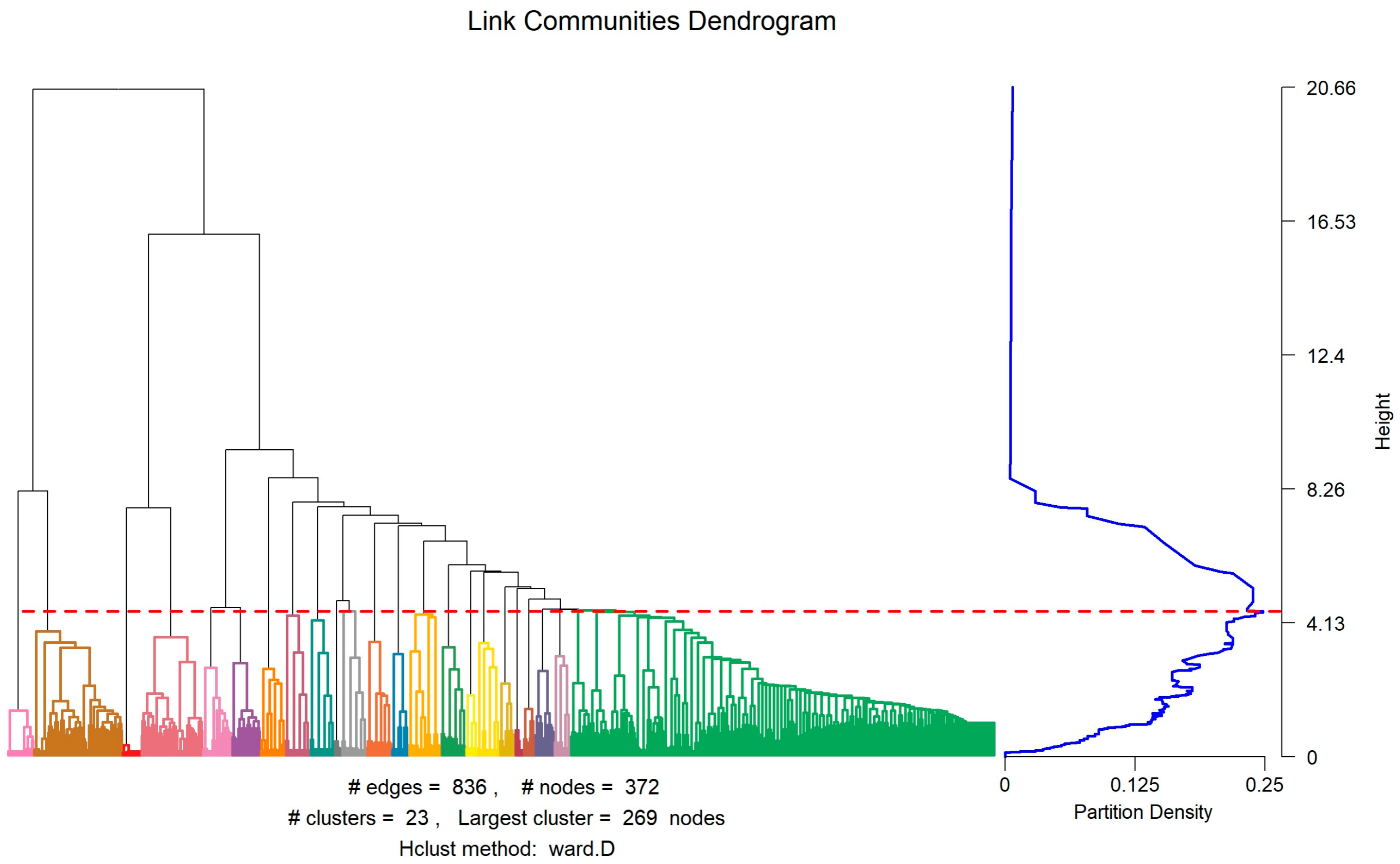
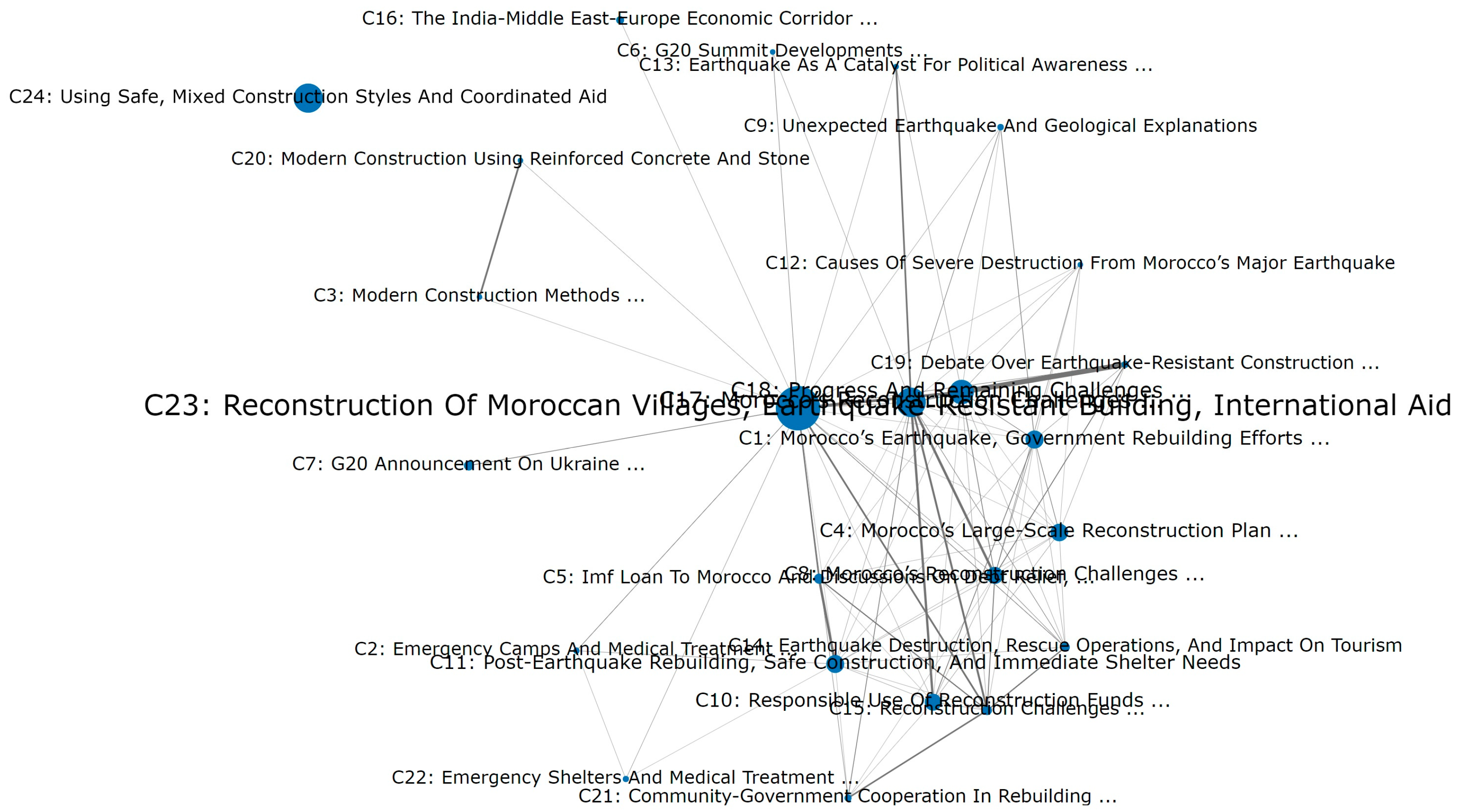
C1. Morocco’s earthquake, government rebuilding efforts, rescue operations, and the need for stronger construction standards:
A devastating earthquake in Morocco led to government support for rebuilding homes, with ongoing rescue and relief efforts. Despite the disaster, the international community plans to continue annual meetings in Morocco. The need for better construction standards to prevent future tragedies has been emphasized, with social media showing sympathy for the victims.
C2. Emergency camps and medical treatment for earthquake victims in Marrakech:
Multiple camps have been set up to shelter victims and missing persons, providing treatments in field hospitals or sending urgent cases to university or military hospitals. The wounded are receiving treatments in hospitals in Marrakech, awaiting medical teams to help them return to normal life.
C3. Modern construction methods in Morocco using reinforced concrete and “Toubiya” stone:
The conversation discussed the construction of a building using reinforced concrete at the bottom and “Toubiya,” a modern stone used in factories in Morocco. The building was described as being built in a modern way, incorporating these materials for construction.
C4. Morocco’s large-scale reconstruction plan and the challenges of post-earthquake recovery:
Morocco faces challenges in rebuilding after an earthquake, with plans to allocate $12 billion over five years. The country has completed the initial phase of its response plan and established a fund for reconstruction. International support is needed, and social media has shown a strong response to the disaster. Ongoing search and rescue operations are in progress for the 4.2 million affected people.
C5. IMF loan to Morocco and discussions on debt relief, self-sufficiency, and disaster recovery:
The International Monetary Fund has agreed to provide Morocco with a $1.3 billion loan to address climate change. There are discussions about freezing Morocco’s debts during this difficult time. The focus is on self-sufficiency and urban development. Foreign aid is being considered, but the priority is on providing shelter and support to those affected by recent disasters.
C6. G20 summit developments and transfer of presidency to Brazil:
Today at the G20 summit in India, the presidency for the next summit was handed over to Brazil. The G20 group adopted a consensus statement officially welcoming the strength of five or more. Ghassan Sweidan from the Jordanian Earthquake Monitoring Center in Amman sent his regards and prayed for the safety of those in standing buildings.
C7. G20 announcement on Ukraine and the call for adherence to international agreements:
The recent announcement from New Delhi did not explicitly address the military operation in Ukraine, but emphasized the importance of countries adhering to international agreements. Some expected a clear extension of the war in Ukraine by Russia. The G20 summit focused on economic and political aspects, with demands for countries to commit to international conventions. Russia had warned of disrupting the announcement if an explicit extension of the military operation in Ukraine was included. Observers noted that the announcement only called for adherence to international agreements, not an extension of the conflict.
C8. Morocco’s reconstruction challenges, including transport issues and lack of seismic building standards:
Morocco faces challenges in rebuilding earthquake-affected areas due to transportation issues and a lack of seismic construction standards. The government is prioritizing reconstruction efforts, including implementing laws for earthquake-resistant construction and finding financing. The Prime Minister offers condolences, the King allocates funds, and social media shows sympathy for those affected.
C9. Unexpected earthquake in Al Hawz and geological explanations:
Geologists were surprised by the recent earthquake in Al Hawz, as it occurred in an area not typically associated with seismic activity near fault lines or plate boundaries. The epicenter was in the village of Aigle, caused by the collision of the African and Eurasian plates, resulting in a rescue operation for survivors.
C10. Responsible use of reconstruction funds and international solidarity in disaster relief:
The conversation highlighted the importance of using funds wisely to rebuild homes lost in disasters and provide shelter for those in need. International support and solidarity were emphasized, along with efforts to improve rescue operations. Relief organizations are sending aid to Morocco, Saudi Arabia allocated funds for the global economy, and efforts are ongoing to provide aid to earthquake victims. Authorities in Morocco are expected to provide housing and support for those affected, while a ministerial committee works on reconstruction efforts. People are in need of assistance, with some focused on rebuilding and others on political outcomes.
C11. Post-earthquake rebuilding, safe construction, and immediate shelter needs:
The conversation discussed the importance of using funds wisely to rebuild homes lost in the earthquake, ensuring safety in construction, providing immediate shelter, and considering alternative living areas. The government, international aid, and local organizations are working together to rescue survivors and provide essential aid to affected communities. Despite aid efforts, some individuals still lack basic necessities like shelter, and Morocco plans to rebuild with a $12 billion budget over five years.
C12. Causes of severe destruction from Morocco’s major earthquake:
The conversation discusses a significant earthquake, with varying reports on its depth from Moroccan and American observatories. Factors such as the geological nature of the region, construction quality, and proximity to earthquake-prone areas are cited as reasons for the extensive destruction caused by the earthquake in Morocco.
C13. Earthquake as a catalyst for political awareness on housing and urban development:
The conversation discusses the potential impact of an earthquake disaster in Morocco on raising awareness among politicians and officials about prioritizing housing and urban development. It is believed that experiences from past earthquakes in Al Hawz could lead to positive changes in Morocco’s approach to disaster preparedness and response.
C14. Earthquake destruction, rescue operations, and impact on tourism:
A group recorded a building collapse in front of a residential building with signs of destruction. The earthquake epicenters behind the mountains caused widespread destruction in mountainous areas. Rescue services reached affected areas quickly. The earthquake’s impact included damaged buildings and the loss of lives, affecting the tourism sector in the region.
C15. Reconstruction challenges in earthquake-affected regions and long-term housing solutions:
The conversation revolves around the reconstruction efforts in a region affected by earthquakes, considering the area’s historical significance and difficult terrain. The focus is on involving technicians and engineers, learning from international experiences, and providing assistance to affected communities. The discussion also touches on the challenges faced by volunteers in delivering aid due to road closures and rugged conditions. The conversation highlights the need for long-term solutions to provide housing and support for displaced populations.
C16. The India–Middle East–Europe economic corridor announced by Saudi Arabia:
The Saudi Crown Prince announced the signing of a memorandum of understanding for the economic corridor project between India, the Middle East, and Europe. The project aims to enhance economic ties and achieve common interests. Discussions took place during a summit with Arab colleagues closely monitoring. The project includes railway connections and connecting seaports.
C17. Morocco’s reconstruction challenges after the Al Hawz earthquake:
Morocco is facing challenges in rebuilding after a devastating earthquake in the Al Hawz region, with estimated losses of $11 billion. The government is prioritizing safety in construction and preserving historical architecture while meeting earthquake-resistant standards. Efforts are being made to support those affected by the tragedy, with ongoing reconstruction plans and aid allocation. Social media users are calling for better disaster response planning.
C18. Progress and remaining challenges in Morocco’s post-earthquake housing reconstruction:
Morocco has made progress in rebuilding homes post-earthquake, with international support and financial aid. Challenges remain in providing shelter, economic recovery, and environmentally friendly construction. Discussions on financing and prioritizing reconstruction efforts are ongoing. The country aims to prioritize residents’ preferences and expert opinions in the rebuilding process.
C19. Debate over earthquake-resistant construction standards using mud and stone in Al Hawz:
Discussion revolves around implementing a law in Al Hawz, Morocco, to define standards for earthquake-resistant construction using mud and stones. Concerns were raised about the lack of adherence to standards in villages, especially among low-income farmers. There was debate over whether traditional mud-and-stone construction is as safe as modern methods. The vulnerability of natural-material houses to earthquakes was highlighted.
C20. Modern construction in Morocco using reinforced concrete and “Toubiya” stone:
The conversation discussed the construction of a building using modern materials like reinforced concrete and “Toubiya,” a type of stone assembled in factories. The building is described as being built in a modern way, incorporating these materials commonly used in Moroccan construction.
C21. Community–government cooperation in rebuilding and delivering aid to isolated villages:
Residents in a neighborhood are working together with Moroccan authorities to rebuild houses damaged by an earthquake. The Royal Armed Forces are delivering aid to cut-off villages, including food supplies. The region includes forty villages, some built with mud, lacking infrastructure. Basic priorities like food and medicine are needed for displaced people.
C22. Emergency shelters and medical treatment for earthquake victims in Marrakech:
Camps have been set up to shelter victims and missing persons in Marrakech, providing treatments in field hospitals or transferring urgent cases to university or military hospitals. The wounded are receiving treatment in civilian or military hospitals, awaiting medical teams to help them return to normal life.
C23. Reconstruction of Moroccan villages and the need for earthquake resistant building and international aid:
Reconstruction efforts in Moroccan villages post-earthquake are slow due to challenges in reaching the affected areas and a lack of labor. Morocco seeks self-sufficiency in financing, with potential international aid. A focus on earthquake-resistant construction and preserving architectural heritage is crucial. Residents refused to leave homes, emphasizing collective solutions for reconstruction involving all stakeholders. International aid is crucial for relief efforts. The earthquake highlighted the need for faster reconstruction and accurate records. Rescue operations continue in mountainous areas, showcasing the resilience of affected communities.
C24. Post-earthquake rebuilding in Morocco using safe, mixed construction styles and coordinated aid:
After a devastating earthquake in Morocco, residents are rebuilding with government and international aid. Efforts focus on combining modern and traditional construction styles while ensuring safety and compliance with building standards. Challenges include insufficient funds, the coordination of relief efforts, and rebuilding damaged schools. The importance of solidarity, caution against fake news, and early warnings for seismic activity are emphasized. Recovery efforts are ongoing, with a focus on earthquake-resistant engineering and collective decision-making. Residents express gratitude for support but highlight the urgent need for more assistance.
Appendix B.2. Summary of YouTube Comments Sub-Discussions
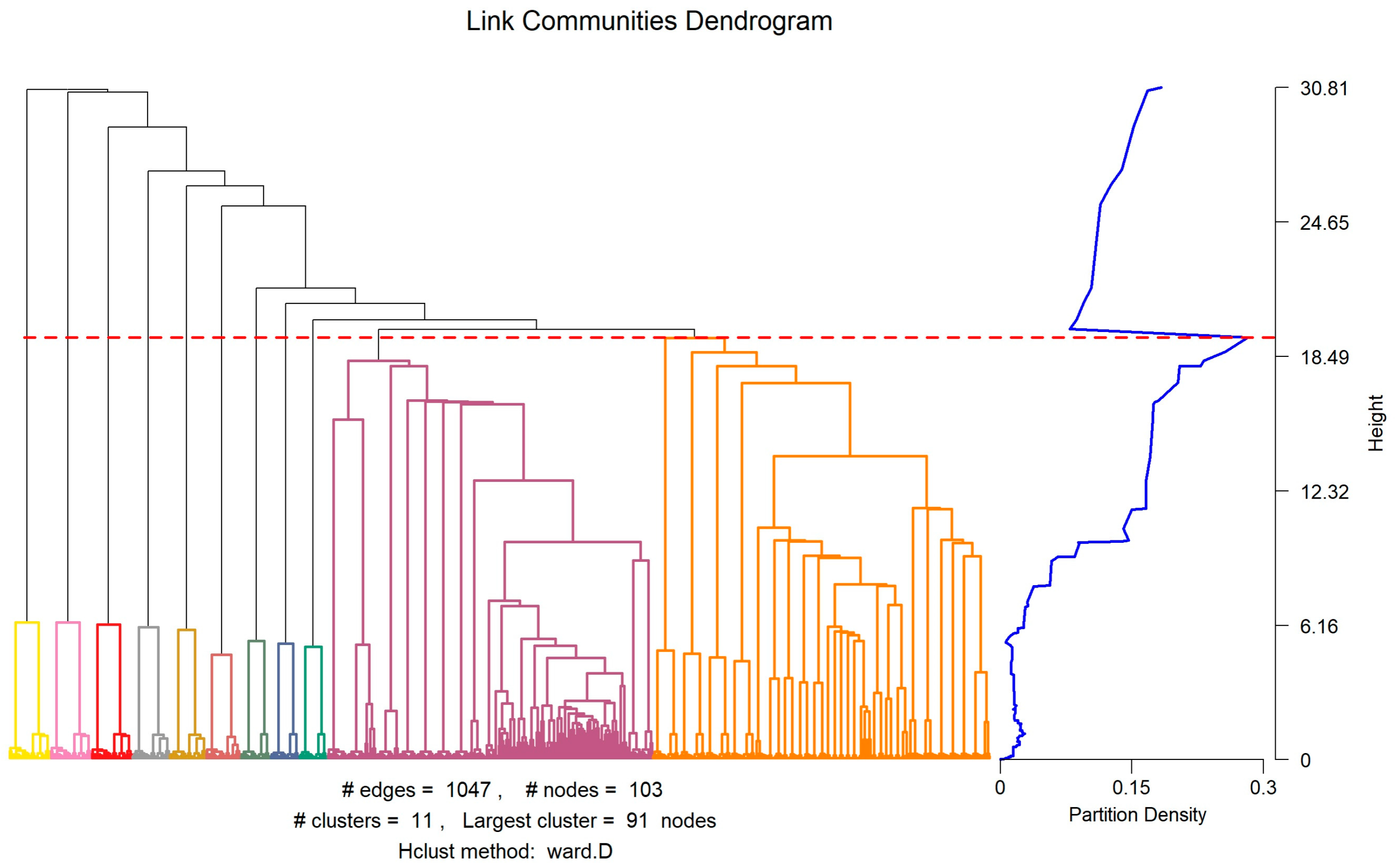
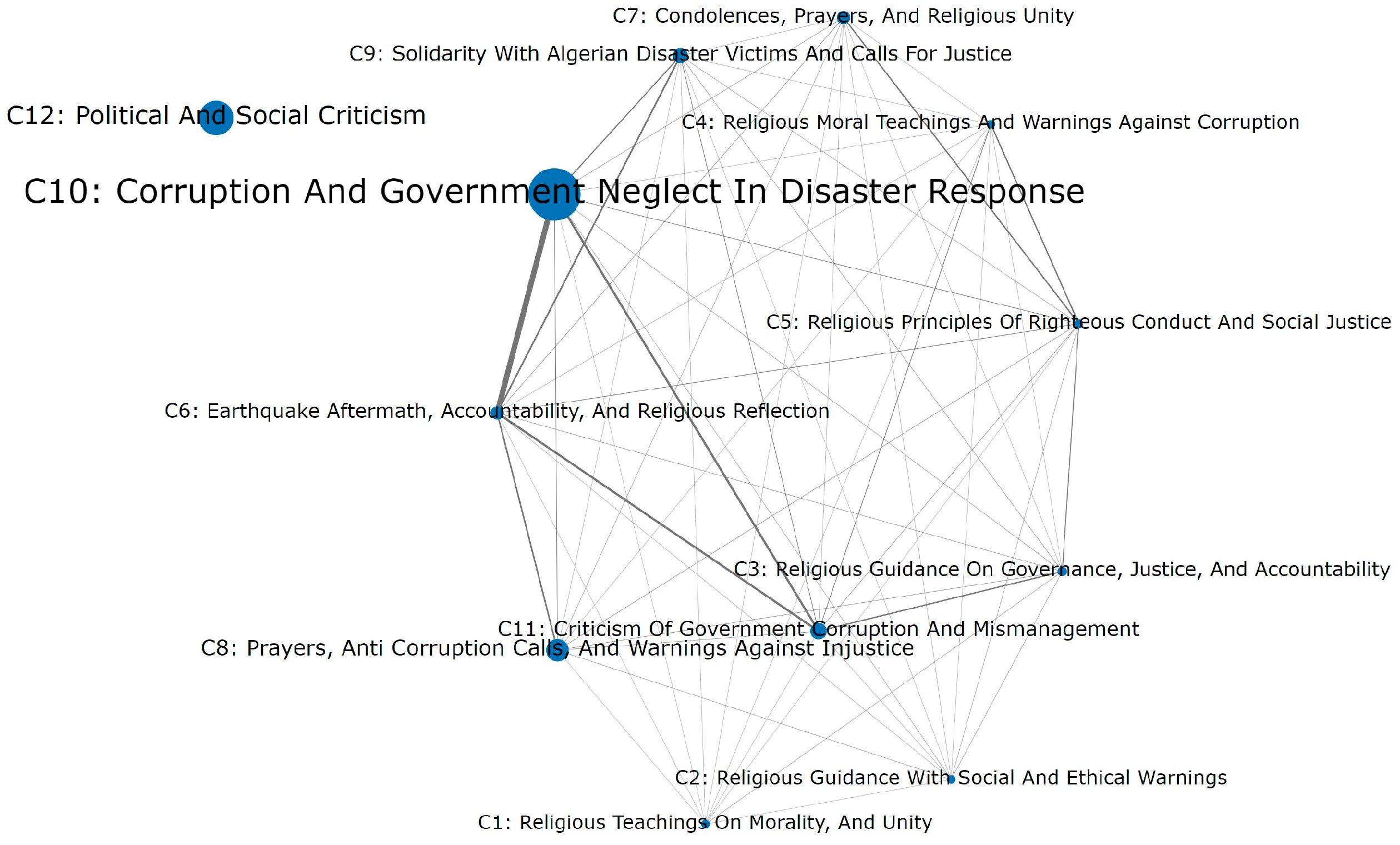
C1: Religious teachings on morality, and unity:
The conversation focuses on praising Allah, seeking forgiveness, and obeying His commands. It emphasizes repentance, unity, and avoiding sin. The importance of following Allah’s guidance, avoiding usury, and treating others justly is highlighted. The message stresses the consequences of disobedience and the need for unity and righteousness among believers.
C2: Religious guidance with social and ethical warnings:
The conversation focuses on praising Allah, seeking forgiveness, and warning against immoral behavior. It emphasizes obedience to Allah and His Messenger, repentance, and avoiding unjust actions. There are references to societal issues, financial ethics, and the need for unity among believers. Criticism of government officials for mishandling funds and neglecting earthquake victims is also mentioned.
C3: Religious guidance on governance, justice, and accountability:
The conversation covers various topics such as governance, wealth distribution, corruption, and the need for repentance and accountability. It emphasizes the importance of obeying Allah and His Messenger, avoiding sin and injustice, and seeking forgiveness. There are warnings about the consequences of disobedience and calls for unity, good deeds, and mercy.
C4: Religious moral teachings and warnings against corruption:
The conversation focuses on praising Allah, seeking forgiveness, warning against immoral behavior, and emphasizing repentance and obedience to Allah and His Messenger. It also addresses issues like usury, bribery, and the importance of unity and good deeds. The consequences of disobedience and the need to fear Allah are highlighted.
C5: Religious principles of righteous conduct and social justice:
The conversation focuses on praising Allah, repentance, obedience, and warnings against disobedience. It emphasizes the consequences of sin; the importance of unity, kindness, and generosity; and the need to avoid usury and unjust behavior. The message stresses following Allah’s guidance, seeking forgiveness, and being just in dealings.
C6: Earthquake aftermath, accountability, and religious reflection:
The conversation discusses the aftermath of an earthquake in Morocco, with concerns about the government’s response and allegations of corruption. There are calls for accountability, prayers for the deceased, and solidarity among Arab nations. The conversation also includes references to Quranic verses and pleas for mercy and protection from Allah. Participants emphasize the importance of repentance, obedience, and unity among believers, while warning against disobedience and injustice. The dialog focuses on seeking forgiveness, patience, and healing for all those affected by tragedies, with an emphasis on faith, good deeds, and avoiding division and wrongdoing.
C7: Condolences, prayers, and religious unity:
The conversation focuses on expressing condolences and prayers for those affected by natural disasters, emphasizing the importance of unity among Muslims. There are discussions about obeying Allah, seeking forgiveness, and avoiding sinful behavior. The dialog also touches on social responsibilities, the consequences of disobedience, and the need for repentance.
C8: Prayers, anti-corruption calls, and warnings against injustice:
The conversation covers various topics including prayers for protection, mercy, and blessings for Morocco, calls for accountability and honesty, concerns about corruption and poverty, and warnings against disobedience and injustice. There are also discussions about natural disasters, government officials, and the importance of seeking forgiveness and unity among Muslims.
C9: Solidarity with Algerian disaster victims and calls for justice:
The conversation focuses on expressing solidarity and support for victims of a natural disaster in Algeria, with prayers and calls for unity among Muslim believers. Concerns are raised about the lack of infrastructure and assistance in the affected region, with calls for justice and help from authorities. Prayers are offered for the victims and hope for improved conditions.
C10: Corruption and government neglect in disaster response:
The conversation discusses corruption, neglect, and mismanagement in Morocco, particularly in response to natural disasters. There are accusations of prioritizing the World Cup over citizen welfare, calls for justice and accountability, and prayers for those affected. Solidarity and support among Arab nations are also highlighted. Calls for unity, empathy, and compassion towards victims are emphasized.
C11: Criticism of government corruption and mismanagement:
The conversation involves criticism of the Moroccan government for corruption, mismanagement of funds, and a lack of support for earthquake victims. Allegations of embezzlement and the misuse of international aid are made, with calls for accountability and justice. Concerns about poverty, human rights abuses, and the King’s spending on luxury items are also discussed.
C12: Political and social criticism:
The conversation involves users discussing political and social issues in Algeria and Morocco, including corruption, mismanagement, and neglect by government officials. Accusations, insults, and allegations of aid diversion and corruption are prevalent. The conversation also touches on media coverage, housing crises, and the prioritization of events like the World Cup over citizen welfare. Calls for accountability, transparency, and change are made amidst the hostile and confrontational tone.
Appendix B.3. Summary of X Posts Sub-Discussions
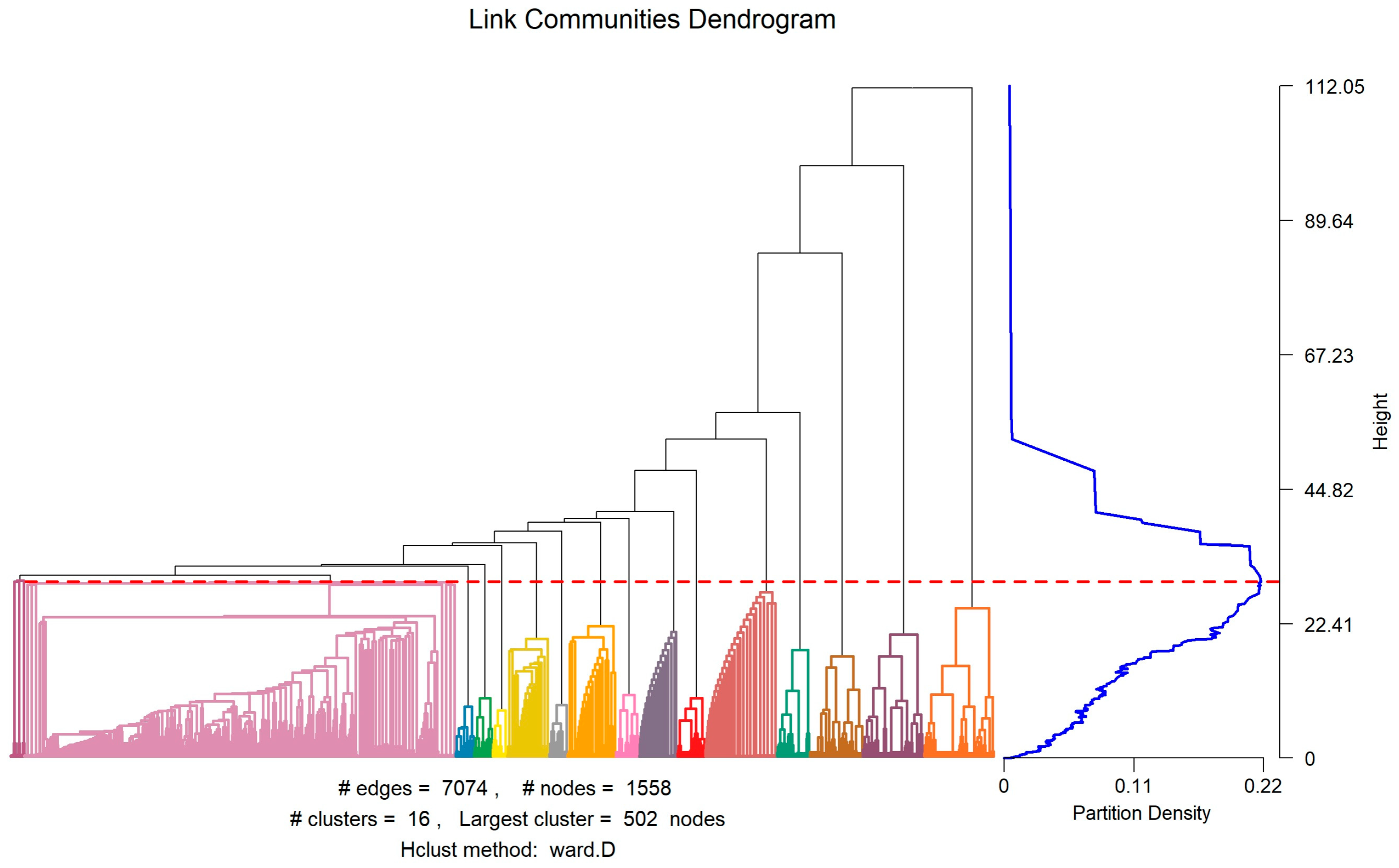
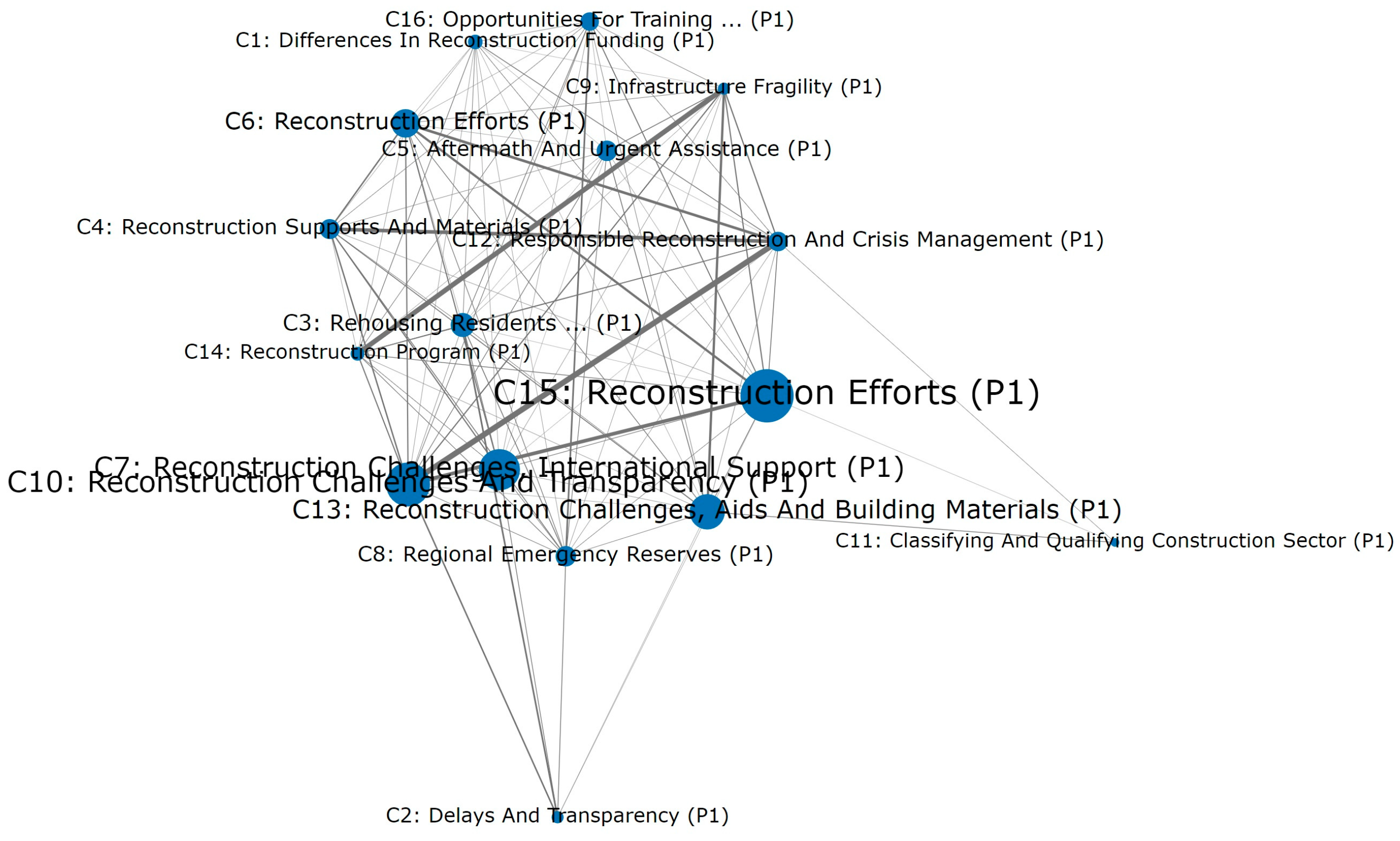
C1. Differences in reconstruction funding:
The reconstruction of areas affected by the Al Hawz earthquake is being funded by a 120-billion-dirham program chaired by King Mohammed VI. The program includes rehousing residents, rebuilding homes, rehabilitating infrastructure, and encouraging economic activities. The government is working on mechanisms to ensure ideal reconstruction conditions.
Regional authorities, institutional actors, and various stakeholders in the Chichaoua region continue to communicate comprehensively and effectively to engage in enhancing the efforts made within the framework of reconstruction at the level of the most affected territorial communities by the Al Hawz earthquake, in order to accelerate the pace of completion of this major workshop.
The Moroccan Association for Human Rights condemned the arrest of the coordinator of the Coordination of the Victims of the Al Hawz earthquake, demanding expedited compensation for all victims and hastening the reconstruction process.
The German Ambassador praised progress in reconstruction efforts after the Al Hawz earthquake during a visit with the Moroccan Minister of Equipment and Water. The Moroccan Association for the Protection of Public Funds called for the release of a civil activist sentenced to prison. Victims of the earthquake held protests demanding faster reconstruction support.
C2. Concerns about the delays and transparency in fund management:
Donations for earthquake victims in Morocco are not related to the King. The focus is on reconstruction. Financial aid has been provided to affected families, with different amounts based on the extent of damage to their homes. The aid is being distributed over 12 months, starting in November. The King’s role remains respected.
Earthquake victims in Al Hawz are organizing a protest due to flaws in reconstruction operations, a lack of government support, and slow progress. They demand transparency in the reconstruction budget and urge for faster construction to alleviate suffering. The government’s silence on these issues is criticized, calling for attention from the King.
Efforts are being made to rebuild Al-Hoceima after the earthquake, but there are concerns about compensation for victims. Some victims allegedly misused funds meant for rebuilding. Human rights organizations are calling for expedited compensation and reconstruction. There are accusations of corruption and a lack of transparency in the reconstruction process.
Reconstruction after the Al Hawz earthquake is ongoing but takes time. Victims of the Boumerdas earthquake are still waiting for housing. Most families affected by the Al Hawz earthquake have returned to suitable housing, but some are still in tents. Activists demanding faster reconstruction have faced legal consequences. Victims continue to protest for more support and reconstruction measures.
C3. Rehousing residents, rebuilding homes, and rehabilitating infrastructure:
Reconstruction efforts in Al Hawz after the earthquake are being led by King Mohammed VI with a budget of 120 billion dirhams over five years. International partners like the World Bank and the European Investment Bank are also supporting Morocco’s reconstruction. Financial aid is being provided to affected families. Agricultural Credit and the European Bank have agreed to finance reconstruction efforts with a program valued at 120 billion dirhams over five years. Plans are in place to host major sporting events in 2025 and 2030 to expand infrastructure. Investments are being made in infrastructure and water sectors, with a focus on technological sovereignty.
Efforts are being made to accelerate the reconstruction process in areas affected by the earthquake in Al Hawz, Morocco. The government has borrowed over one billion dirhams for rebuilding, with stakeholders and organizations actively participating in the reconstruction. Survivors are still struggling a year later, with many buildings needing to be rebuilt.
The Moroccan Association for Human Rights criticized the arrest of the coordinator of earthquake victims in Al Hawz, calling for quick compensation and reconstruction. Transparency Morocco released a report on the reconstruction efforts in the area. For more information, visit the provided link. #Lakome #Rights #Earthquake #Reconstruction.
Two years after the earthquake in Al Hawz, Morocco, reconstruction efforts have made significant progress. The government, under the leadership of King Mohammed VI, has achieved a 91.33% completion rate in rebuilding houses in affected regions. Despite challenges, the state has provided financial support and social assistance to affected individuals.
C4. Reconstruction support and materials:
Morocco emphasizes the need for reconstruction after the earthquake, focusing on technical standards and heritage preservation. The Royal Palace announced financial assistance for affected homes. The government is working on mechanisms for ideal reconstruction conditions. Efforts are ongoing in affected regions to support residents and accelerate the rebuilding process.
Supporters of causes abroad are reminded to not forget the earthquake-stricken areas in Morocco like Taroudant and Al Hawz. A fire destroys tents in Al Hawz, prompting calls to accelerate reconstruction. Officials in Chichaoua assure efforts are being made. Various organizations urge active participation in the ongoing reconstruction process. France24 questions the progress of reconstruction one year after the earthquake in Al Hawz.
The Moroccan Association for Human Rights criticized the arrest of the earthquake victims’ coordinator, calling for quick compensation and reconstruction. They believe the law favors the rich, as shown by the leader’s one-year sentence for advocating for justice and transparency. More information can be found at the provided link.
The reconstruction process in the regions affected by the earthquake that hit the region of Al-Hoceima in September 2023 continues rapidly, thanks to the collective mobilization of all stakeholders involved in the implementation of the royal directives.
C5. Aftermath of the devastating earthquake and call for urgent assistance:
The conversation discusses the devastation caused by the Morocco earthquake in the region of Moulay Ibrahim, with a focus on the need for reconstruction and support for affected areas. There are concerns about corruption in the reconstruction process and calls for independent oversight. King Mohammed VI has allocated a significant budget for reconstruction efforts.
Victims of the earthquake in Al Hawz are organizing a protest due to flaws in reconstruction operations and lack of support. The government has not admitted failure but remains silent. Algeria distributed 250,000 housing units to its people, contrasting with Morocco’s alleged lack of aid to earthquake victims in Al Hawz.
The European Union plans to provide 200 million euros to assist Morocco in earthquake reconstruction. Concerns raised about the misuse of funds, lack of accountability, and inefficient distribution of aid. Calls for responsible building practices and critical evaluation of reconstruction efforts. Emphasis on constructive criticism for the betterment of the country and its people.
Morocco is making progress in disaster preparedness with the establishment of 12 regional emergency reserves after the Al Hawz earthquake. The initiative, ordered by King Mohammed VI, aims to enhance the country’s capacity to face natural disasters. However, there are allegations of corruption and mismanagement in the distribution of funds and support. Despite challenges, the country is moving forward with reconstruction efforts.
C6. Reconstruction efforts:
A devastating earthquake in Morocco’s Al Hawz region has caused significant loss and destruction, with thousands dead and injured. The government has allocated a substantial budget for reconstruction, with the King overseeing a comprehensive program. The Royal Court has allocated 120 billion dirhams for rebuilding homes, improving infrastructure, and providing aid to those affected.
Supporters of causes abroad are urged to remember the earthquake-affected areas in Morocco such as Taroudant and Al Hawz. The government has borrowed over one billion dirhams to rebuild these regions, with a loan agreement of 100 million euros supervised by Fouzi Lekjaa. Aid and support for reconstruction efforts are needed. #Morocco_First #Morocco_Earthquake #Taroudant #Al_Hoceima #Marrakech
The conversation revolves around the failure of the reconstruction and rehabilitation program in areas affected by earthquakes, specifically in Al Hawz. Officials are visiting to assess progress and discuss challenges faced. Residents are still lacking shelter and services, with speculation about potential ulterior motives behind the slow reconstruction. The role of government neglect, resource distribution, and logistical challenges are questioned.
The Ambassador of the Federal Republic of Germany in Morocco praises the progress in reconstruction after the Al Hawz earthquake. However, there are concerns about halted projects due to a lack of international funding, potentially leading to delays in returning to normal life for local residents. Morocco aims to compensate through internal funding or alternative partnerships. The reconstruction efforts in Morocco have been successful, with high completion rates in various regions affected by the earthquake. The government’s approach, under the leadership of King Mohammed VI, has been proactive and effective in managing the crisis and providing support to affected individuals. The success of the reconstruction efforts reflects the strength of the Moroccan state and its commitment to protecting its citizens in times of hardship.
C7. Challenges in reconstruction, and international support:
The conversation discusses the devastating impact of the earthquake in Morocco, expressing sadness and hope for recovery. The Royal Court emphasizes responsible rebuilding under engineering supervision. The government plans to spend billions on reconstruction efforts. King Mohammed VI chairs a session on the reconstruction program with a budget of 120 billion dirhams. The World Bank President praises Morocco’s efforts, and the European Investment Bank will lend one billion euros for reconstruction. Financial aid is provided to affected families, and Morocco is preparing to host major sporting events to develop infrastructure.
The Al Hawz earthquake affected over 51 thousand families with 42 thousand reconstruction permits issued. Efforts are ongoing to accelerate the reconstruction process in the affected regions. The government borrowed over one billion dirhams for rebuilding. Survivors are still struggling in tents, awaiting reconstruction. Efforts are being made to overcome challenges.
Reconstruction efforts in the Al Hawz region post-earthquake are ongoing, with some residents expressing dissatisfaction with communication and design choices. The European Union plans to provide financial aid to Morocco for reconstruction. Various organizations and activists are calling for transparency, accountability, and fair treatment in the reconstruction process to address delays and ensure support reaches all affected residents.
Two years after the earthquake in Al Hawz, reconstruction efforts are ongoing, with progress reported in Al-Hoceima, Marrakech, Chichaoua, and Taroudant. The Moroccan government, under King Mohammed VI’s leadership, has prioritized rebuilding homes, schools, and hospitals. However, some families still live in tents due to administrative delays, prompting protests for faster support.
C8. Establishment of regional emergency reserves, and the challenges faced in rebuilding:
Morocco rejects assistance from those seeking to exploit the situation. The earthquake in Moulay Ibrahim region caused great sadness, but the affected areas will recover. The King of Morocco reassures by accelerating reconstruction. The reconstruction program includes rehousing, infrastructure rehabilitation, and economic development. Morocco is preparing to host major events to boost development.
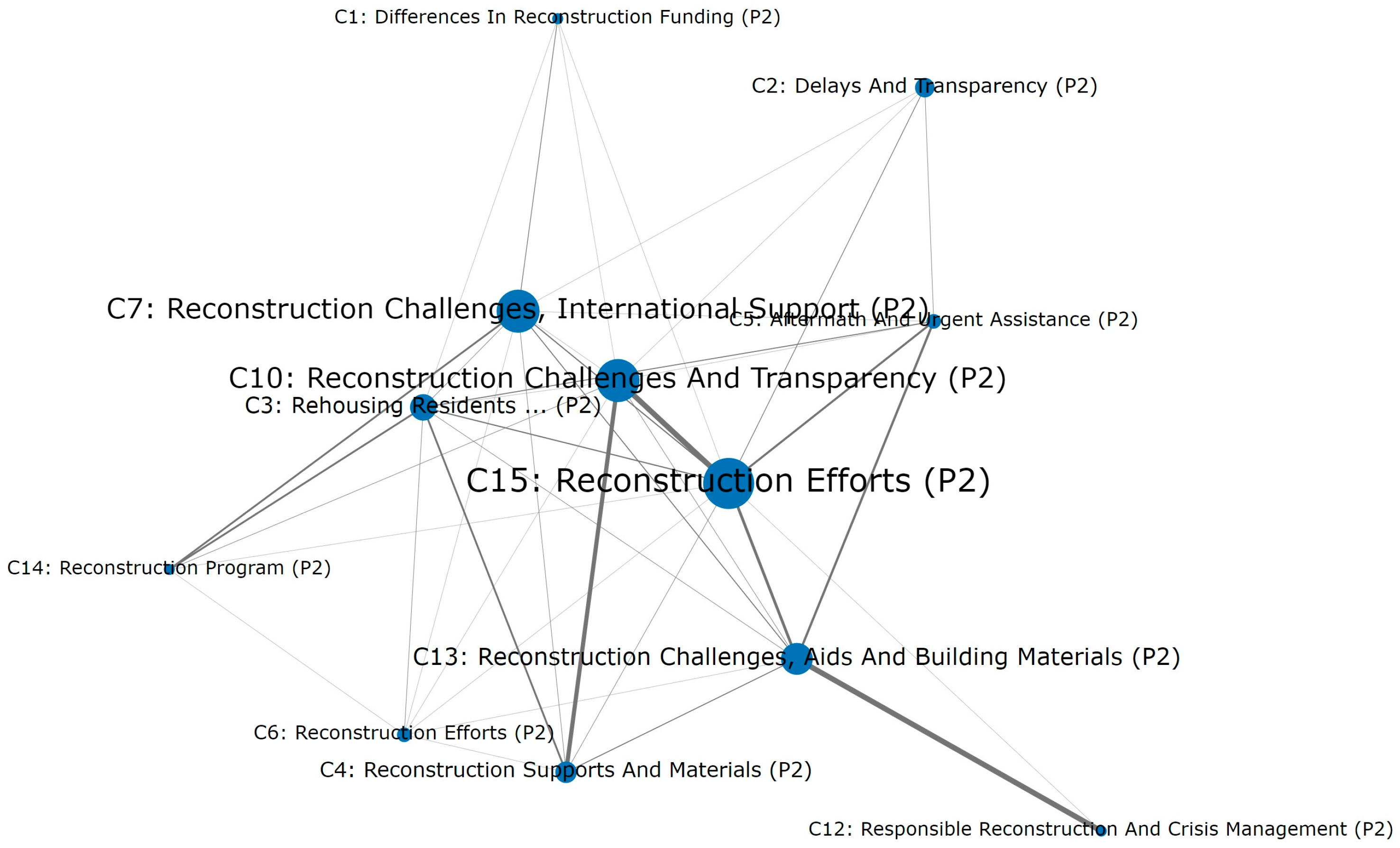
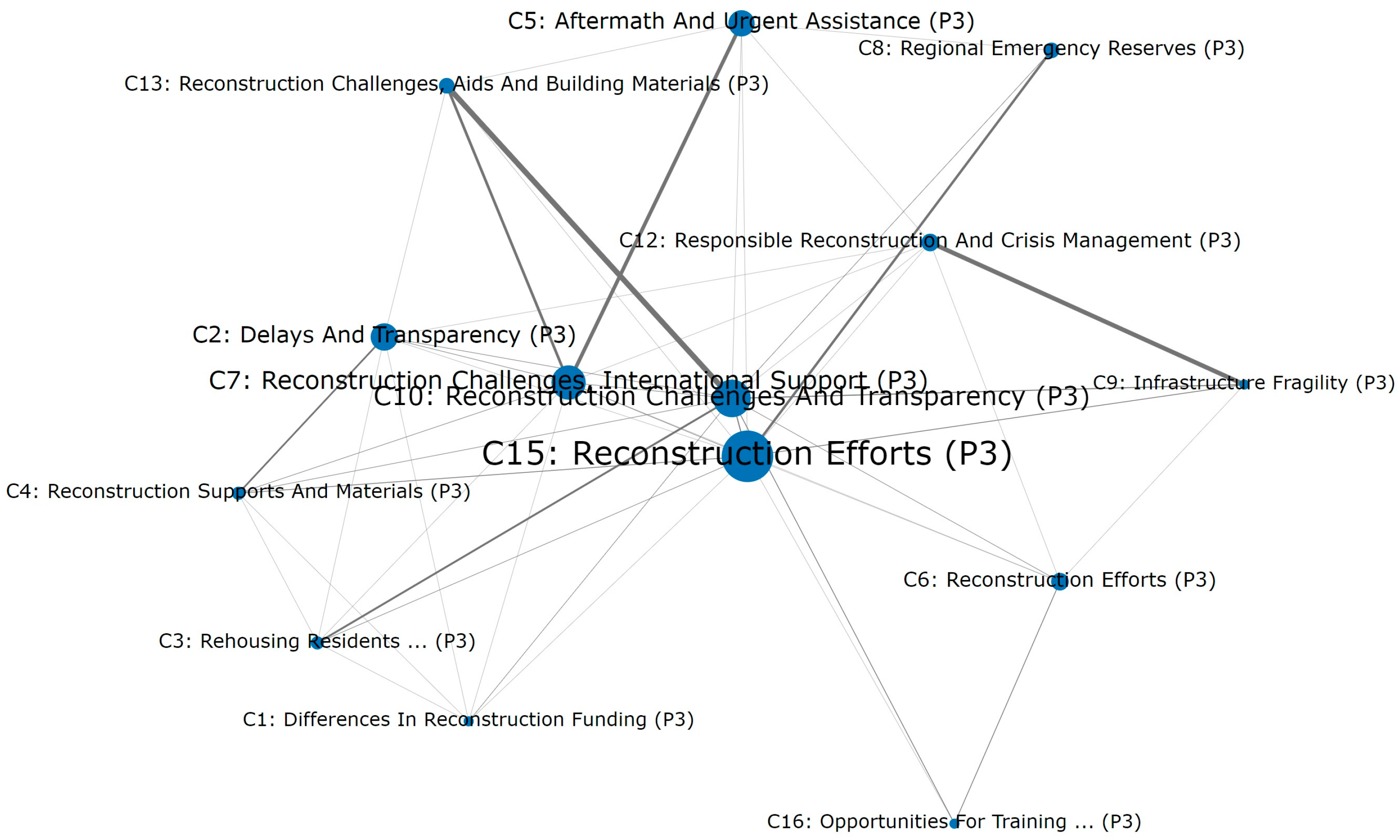
P2 (2024-03-15–2024-09-14): No discussion
P3 (2024-09-15–2025-03-14): Livelihood of population in temporary accommodations, aid distribution problems and accountability concerns
Temporary accommodation and compensation were provided by the state for earthquake victims, but there are allegations of a contractor stealing money. Concerns were raised about the lack of accountability from officials and the living conditions in tents. The government announced a budget for reconstruction, but there are doubts about the effectiveness of plastic tents in harsh conditions.
After the Al Hawz earthquake, Morocco is establishing 12 regional platforms for emergency reserves to enhance disaster response. The project costs 7 billion dirhams and prioritizes national industry. However, reconstruction delays may impact affected areas. Some criticize the government’s response, while others praise the country’s progress under the King’s leadership.
C9. Infrastructure fragility and the reconstruction program:
King Mohammed VI chaired a working session on the reconstruction program for areas affected by the Al Hawz earthquake, with a budget of 120 billion dirhams over five years. The program aims to rehouse residents, rebuild homes, rehabilitate infrastructure, and promote economic activities. The King emphasized the need for efficient governance and balanced development.
P2 (2024-03-15–2024-09-14): No discussion
P3 (2024-09-15–2025-03-14): Officials’ meetings and field inspection, aid distribution issues and accountability concerns
An official delegation visits the leadership of Trois Niaqoub in the region of Al Hawz to follow up on the reconstruction operations in the areas affected by the #Al Hawz earthquake. A field inspection tour of the sites and a closed meeting with the participation of Mohammed Dardouri (the national coordinator of the National Initiative for Human Development) and the governor of Al Hawz, the governor of Chichaoua, and the governor of Taroudant.
Morocco is progressing in reconstruction after the Al Hawz earthquake, establishing 12 regional platforms for emergency reserves. The country’s capacity to face natural disasters is being enhanced, with expected stocks and equipment in place. Reconstruction rates in affected regions are high, showcasing Morocco’s effective crisis management and rapid mobilization.
C10. Efforts and challenges to overseeing transparency in the reconstruction process and ensuring efficiency:
Morocco is rejecting assistance from those seeking to benefit from the situation after the Al Hawz earthquake. The reconstruction process is facing challenges due to harsh winter conditions, with suggestions to import materials for quick housing construction. Social media is being used to monitor the process, with medical students and professionals providing assistance. King Mohammed VI emphasizes responsible reconstruction efforts, with the government allocating $11.7 billion for reconstruction targeting 4.2 million people. The focus is on rehousing, infrastructure rehabilitation, economic activities, and job creation. The World Bank President praised Morocco’s efforts, but concerns remain about the effectiveness and impact of the reconstruction program.
Supporters are urged to remember the earthquake victims in Morocco, particularly in Taroudant and Al Hawz, and to help accelerate the reconstruction process. The government borrowed over a billion dirhams for this purpose. However, there are allegations of budget manipulation and slow progress in reconstruction, leaving many still living in tents.
Reconstruction efforts in Al Hawz region post-earthquake are progressing well, with some complaints from residents in Temsahlucht about poor communication and designs. The European Union plans to provide 200 million euros for Morocco’s reconstruction. Various groups and officials are involved in overseeing and criticizing the reconstruction process, highlighting delays and challenges faced by affected residents.
Reconstruction efforts in areas affected by the earthquake in Al Hawz are ongoing two years later, with progress rates varying across regions. While official reports show significant achievements in rebuilding homes and infrastructure, some families still live in tents due to delays. Protests continue to demand faster support and reconstruction measures.
C11. Classifying and qualifying construction sector:
The Minister discussed measures to classify and qualify construction companies, improve public contract management, and transition to electronic procedures by 2024. Mr. Nizar Baraka highlighted the importance of the construction sector in Morocco’s economy, emphasizing the need for increased public investment to benefit companies and create job opportunities.
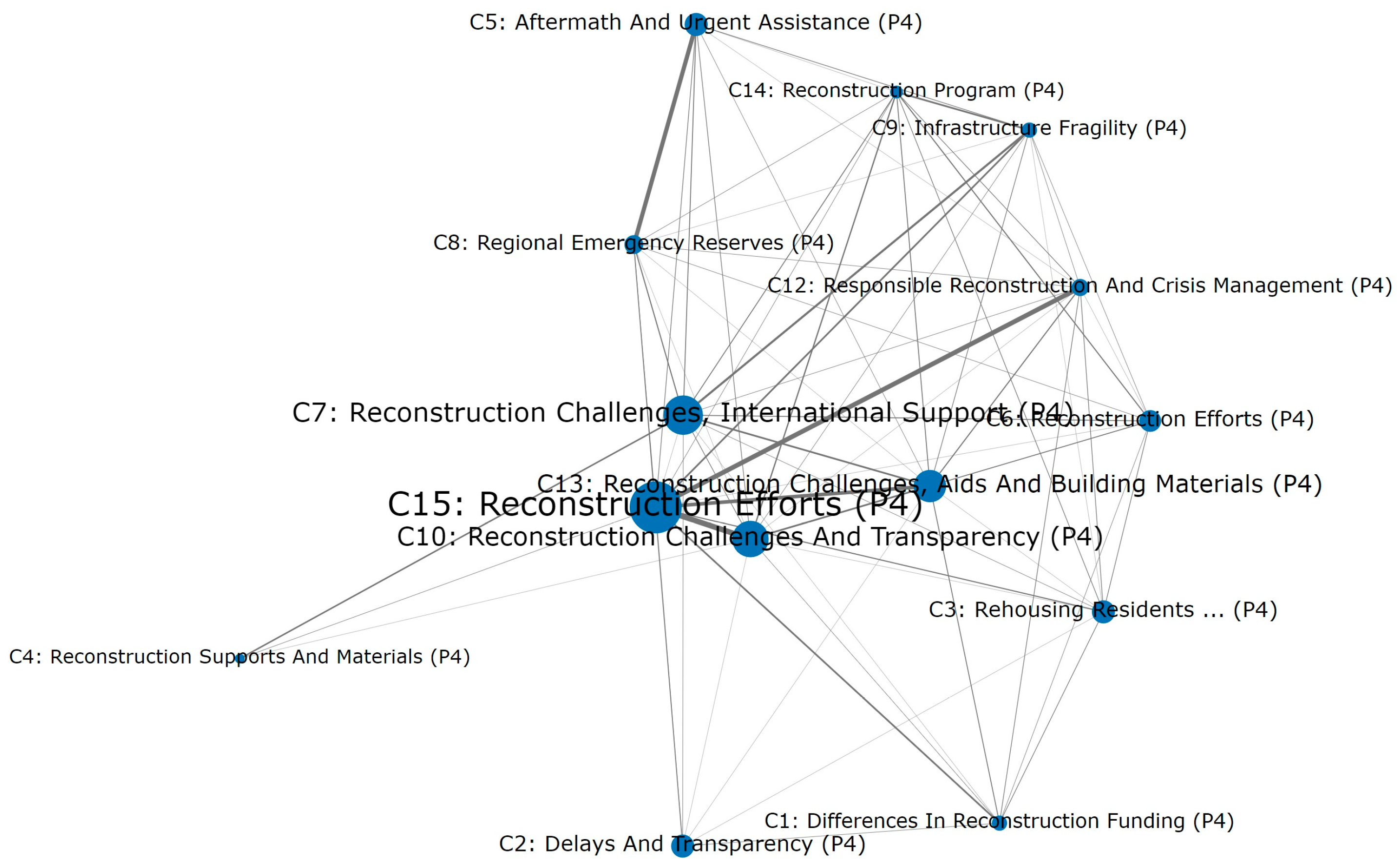
P2 (2024-03-15–2024-09-14): No discussion
P3 (2024-09-15–2025-03-14): No discussion
P4 (After 2025-03-14): No discussion
C12. Responsible reconstruction, recovery, and crisis management and temporary solutions:
King Mohammed VI chaired a meeting to discuss the reconstruction program for areas affected by the earthquake, emphasizing the importance of respecting heritage and traditions. The program will include rehousing, infrastructure rehabilitation, and social development. The government allocated funds for financial aid and urgent reconstruction projects. The construction sector is a key contributor to the country’s economy.
Discussions about rebuilding Al Hawz after the earthquake and compensating victims are ongoing. There are suggestions to provide social housing apartments in Marrakech to marginalized people. An official delegation visited Trois Niaqoub to follow up on reconstruction. However, there are concerns about the progress of implementing royal instructions and lack of attention to the issue.
Morocco is progressing in the reconstruction after the Al Hawz earthquake, establishing 12 regional platforms for emergency reserves. The project aims to enhance disaster response capacity and draw inspiration from international practices. Despite funding challenges, Morocco has made significant progress in reconstruction, with a focus on sustainable development and efficient crisis management.
C13. Reconstruction challenges, aids and building materials:
Morocco rejects outside assistance for earthquake recovery, focusing on self-reliance. Suggestions for quick housing using wooden frames and social media monitoring of reconstruction. King Mohammed VI leads $120 billion reconstruction program with Hassan II Fund contributing $2 billion. New agency established for implementation, using debris for reconstruction. Central Bank expects growth improvement with support from World Bank and European Investment Bank.
Supporters are urged to remember the earthquake devastation in areas like Taroudant and Al Hawz in Morocco, while also acknowledging poverty within the country. Comparisons are made to Algeria’s housing distribution efforts. Reconstruction progress after the earthquake is discussed, with a focus on financial assistance and challenges faced by survivors.
The European Union plans to provide 200 million euros to assist in reconstruction efforts in Morocco after a deadly earthquake. Despite ongoing work in the region of Al-Hoceima, concerns are raised about the slow pace of reconstruction and the allocation of earthquake budgets. Photos show efforts in the village of Ighilman.
After the earthquake in Al Hawz, Morocco, reconstruction efforts have been ongoing, with progress in building new houses and providing financial support to affected families. The government, under the leadership of King Mohammed VI, has been praised for its proactive approach and efficient crisis management. Challenges remain, but significant achievements have been made.
C14. Reconstruction program:
King Mohammed VI chaired a session on the reconstruction and rehabilitation program for areas affected by the Al Hawz earthquake. The program aims to rehouse residents, rebuild homes, rehabilitate infrastructure, and accelerate social and economic development. The total budget is 120 billion dirhams over five years, targeting 4.2 million people.
The government borrows more than one billion dirhams to rebuild earthquake-affected areas. The official newspaper published the decree implementing the loan agreement signed by the government to obtain financing of 100 million euros, with the aim of supporting the reconstruction and rehabilitation program for areas affected by the earthquake in Al Hawz. Fouzi Lekjaa supervised the loan.
Morocco is making significant progress in the reconstruction program after the Al Hawz earthquake, with plans to establish 12 regional platforms for emergency reserves. The initiative aims to enhance the country’s capacity to face natural disasters and has been praised for its efficient management and rapid mobilization. The royal leadership has played a crucial role in ensuring a successful and timely response to the crisis, reflecting Morocco’s commitment to protecting its citizens in times of hardship.
C15. Reconstruction efforts:
Morocco rejects exploitation in earthquake recovery efforts, focusing on transparency and accountability. King Mohammed VI donates $100 million for reconstruction. An independent committee is needed for efficient reconstruction in Al Hawz. Training unemployed youth in construction is crucial. The government aims to invest in infrastructure and boost the economy.
The Al Hawz earthquake affected over 51 thousand families and issued 42 thousand reconstruction permits. Efforts are being made to accelerate the reconstruction process in areas like Taroudant and Al Hawz. However, victims are still living in tents, facing challenges, and demanding faster reconstruction. The government borrowed over one billion dirhams for reconstruction.
Reconstruction efforts in the Al Hawz region post-earthquake are progressing well, with complaints from Temsahlucht residents about poor communication and inappropriate designs. The European Union plans to provide 200 million euros for Morocco’s reconstruction. Questions arise about delays, mismanagement, and corruption in the reconstruction process, impacting the affected population.
Reconstruction efforts in earthquake-affected areas in Morocco are progressing at varying rates, with significant improvements in housing and infrastructure. The government’s commitment to transparency in reporting results is praised, but delays in support for affected families have led to protests in Al Hawz. Overall, progress is being made despite ongoing challenges.
C16. Opportunity reconstruction presents for training unemployed youth in construction:
The reconstruction and rehabilitation program for areas affected by the Al Hawz earthquake in Morocco will involve rehousing residents, rebuilding homes, and improving infrastructure. With a budget of 120 billion dirhams over five years, the program aims to target 4.2 million people in six affected regions. The King emphasized the importance of efficient governance and tangible results.
Who bears the responsibility for the failure of the reconstruction and rehabilitation program for the areas affected by the #Houla earthquake after 15 months of the disaster? What is the progress of the reconstruction, shelter, and rehabilitation efforts, and what are the difficulties they face, and to what extent are the infrastructure plans being implemented and the local economy revitalized? Anyone have an answer, please explain to us?