Article

Integrated Protection of Levee Landward Slopes: Effects of Seamless Cement Coating and H-Type Piles on Flow Dynamics and Scour Reduction

1
Graduate School of Science and Engineering, Saitama University, Saitama 338-8570, Japan
2
Department of Resilient Society, Research Center for Social Transformation, Saitama University, 255 Shimo-okubo, Sakura-ku, Saitama 338-8570, Japan
3
Toda Corporation, 1-7-1 Kyoubashi, Chuou-ku, Tokyo 104-0031, Japan
*
Author to whom correspondence should be addressed.
GeoHazards 2026, 7(1), 20; https://doi.org/10.3390/geohazards7010020
Submission received: 29 December 2025 / Revised: 3 February 2026 / Accepted: 4 February 2026 / Published: 9 February 2026

Abstract

Levee overtopping poses a significant risk to flood defense infrastructure by inducing severe erosion and scour, particularly along the landward slope and toe regions. This study investigates the effectiveness of an integrated protection system combining seamless cement coating with strategically placed H-type piles to mitigate scour and modify flow dynamics under prolonged overflowing. A series of physical model tests were conducted to evaluate full and partial concrete slope protection with and without pile integration. Results showed that the seamless concrete revetment significantly delayed slope failure, resisted joint-related seepage, acted as a rigid cantilever, and maintained the structural integrity despite surrounding erosion. The inclusion of emergent H-type piles at the downstream toe disrupted the overflow jet, enhanced early energy dissipation, and reduced scour dimensions. The FC + P_ES (fully coated with emergent piles) configuration exhibited the strongest performance, reducing downstream scour length by 40%, upstream extent by 66.7%, and maximum scour depth by 7.7% compared to the FC_NP (fully coated, no-piles) condition. Partial slope coverage combined with emergent piles delayed scour initiation by approximately threefold, highlighting the synergistic effect of combined surface and flow-deflected structures measures. Conversely, bed-level piles redirected jet energy beneath the surface layer, intensifying vertical scour and upstream erosion, indicating the critical importance of pile placement and elevation. The findings emphasize the importance of integrating seamless surface protection with vertical flow disrupters to effectively manage flow-induced erosion and enhance levee resilience against overtopping floods. This hybrid approach offers a practical solution for flood-prone riverine levee systems.

1. Introduction

Earthen levees are still a popular choice for flood control infrastructure all over the world due to their low cost, ease of construction, and the availability of local materials such as sand, silt, and clay. Their use is particularly common in riverine environments, where semi-natural conditions and sediment deposition make them a practical solution. However, this advantage typically turns into a vulnerability under overtopping circumstances, especially under extreme hydraulic conditions such as prolonged rain, typhoon or tsunami. Such events can cause water levels to exceed the high-water level (HWL), leading to overtopping and, in many cases, catastrophic levee failures at a large number of locations across the world [1,2,3,4].
Once the flow overtops the crest, particularly in the case of an unprotected levee, the structure becomes highly susceptible to erosion and strong scouring caused by a high-velocity overflow jet. This unregulated erosion gradually weakened the levee structure, eventually leading to its collapse [5,6,7]. Sherzai et al. (2025a) [5] performed an experiment under rigid bed conditions with varying soil compositions and overflow depths to evaluate the effect of soil characteristics on slope erosion and scouring downstream of a levee. They concluded that utilizing a relatively cohesive material as a levee body greatly delayed slope erosion, whereas using such materials as the substrate increased the total time to structural breakdown. These findings highlight the critical need to study effective scour mitigation measures, particularly when relatively loose soils are employed as foundation materials in levee construction.
Scour mechanisms have also been broadly explored from the viewpoint of flow dynamics [5,8,9,10,11]. Sherzai et al. (2025b) [8] conducted experiments using physical models of scoured holes to scientifically investigate flow behavior behind levees under different overtopping conditions, using PIV. They investigated how varying overtopping and scour depths influence jet impingement patterns within scoured holes and discussed the relationship between these flow dynamics and the development of scour. Bey et al. (2007) [9] also conducted an experimental investigation to estimate scour induced by a plane wall jet, with a two-dimensional (2D) laser Doppler anemometer plotting the velocity field within the scour hole. The researchers found various flow patterns that influence scour throughout five time zones. However, their studies did not address overflow-induced scour or flow modification strategies for erosion control.
Over the years, several protective methods such as geogrid, geotextile coverings, riprap, and High-Performance Turf Reinforcement Mats (HPTRMs) have been utilized to enhance levee resistance against hydraulic attack. The effectiveness of these measures varies depending on flow condition, failure mechanism, and on the design or installation details [12,13,14,15,16,17]. For instance, Sherzai et al. (2023) [12] studied landward scouring along a rigid embankment, employing rigid and gabion steps to absorb overflow energy and minimize scouring. They employed a geogrid and a moat to shield the embankment toe from the impact of spilt water. Li et al. (2012) [15] investigated the erosion resistance of lawn reinforcement mats under combined overtopping conditions with full-scale flume and erosion function apparatus (EFA) experiments. The results revealed an upper limit of soil loss related to flow velocity and freeboard, as well as an effect of overtopping duration on erosion depth. The EFA examination revealed that grass roots considerably enhance soil stability by raising critical velocity while decreasing erodibility. Although such techniques improve protection, their long-term effectiveness may be restricted, especially in the case of earthen levees exposed to harsh hydraulic conditions.
To address the vulnerability of soft protection techniques in extreme conditions, concrete slope linings are increasingly being used as a dependable and long-term solution, especially in situations where prolonged overtopping events are predicted. Concrete surfaces improve structural integrity while also providing superior erosion resistance by dissipating the energy of high-velocity flows and reducing jet impingement impact near the levee toe or landward slope [4,15,18,19,20,21]. However, despite these advantages, critical challenges remain. In particular, the formation of surface cracks along the protected slope can significantly increase the vulnerability of the levee toe to failure. Such discontinuities may act as preferential flow paths, facilitating concentrated infiltration and accelerating localized erosion, even when a concrete protection layer is in place. This heightened susceptibility has also been demonstrated in previous physical model studies. Hatogai et al. (2012) [19], as well as Kato et al. (2013) [20], examined hydraulic models at prototype scale. They proved that the overflow initially scoured the ground surface in front of the toe block. The blocks were destabilized and further shifted, and the levee eventually collapsed. Similarly, Takahashi et al. (2019) [18] discovered a significant vulnerability in block-type concrete on the landward slope of levees. They demonstrated that overtopping flow entered through the gaps between the blocks, reached the soil beneath, and gradually produced erosion. This reduced the support for the blocks. As the overtopping continued, water pressure lifted the blocks on the back slope and carried them landward, causing the levee to fail. Although sealing the gaps between concrete blocks can help limit water infiltration, it can significantly add to construction costs and does not completely remove failure risks. Even with sealed joints, block collapse can gradually undermine the revetment foundation, compromising block stability. Once unstable, these blocks may fall, shifting the overflow jet upstream. This upstream migration of the jet exacerbates erosion along the levee body, increasing the likelihood of structural failure.
In light of these limitations, the current study proposes a novel design approach: a seamless concrete protection system combined with H-type pile installations to alter flow patterns and reduce scour. Seamless protection reduces the chance of joint intrusion, while the piles dissipate energy by intercepting and redirecting overtopping jets. These design elements are tested experimentally under extreme overflow scenarios to determine the best configurations for increasing levee resilience.
Therefore, the two main objectives of this study are (1) to evaluate the hydraulic and structural performance of a seamless concrete revetment in resisting overtopping-induced damage, and (2) to assess the effectiveness of H-type piles placed strategically in reducing flow intensity and mitigating scour progression at the landward toe.

2. Experimental Setup

2.1. Layout of the Flume, Levee Model and Overflow Condition

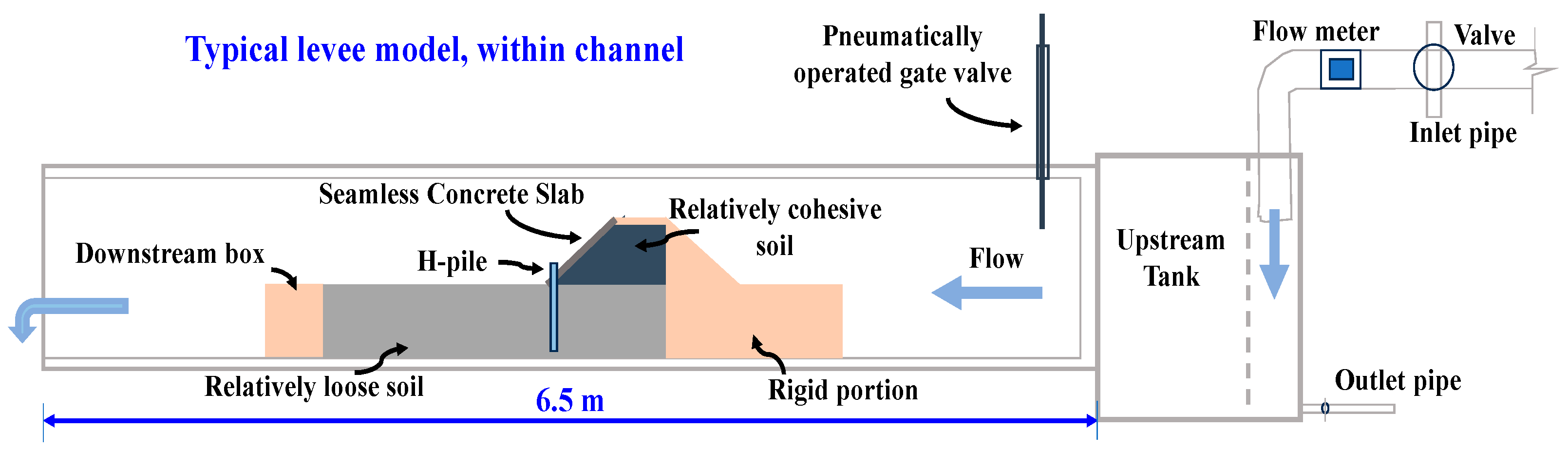
The experimental study was carried out at Saitama University’s Hydraulic Engineering Laboratory in Japan, with a recirculating flume system. The flume was 6.5 m long, 0.5 m wide, and 1.2 m high, with a horizontal bed slope. A schematic illustration of the experimental channel and text section is shown in Figure 1.
A levee model was constructed in a hybrid configuration consisting of both rigid and erodible portions. The model was constructed at a geometric scale of 1/10, with a total levee height of 0.3 m [5]. The downstream slope of the levee was fixed at a 1:2 gradient and remained constant throughout all experimental situations. The crest and upstream slope were built using wooden planks to represent the non-erodible (rigid) structure. To prevent leaks throughout the experiment, these wooden components were tightly joined using nails, sealed with rubber sealant and waterproof tape. The erodible part, located beneath the crest, was composed of natural soil and formed the main body and foundation of the levee.
Based on preliminary tests, the foundation was designed with 0.5 m in height and 1.5 m in length to reduce the interference from the channel bed during the scour process. To stabilize the test section and reduce the downstream boundary effects, a wooden box was placed at the end of the foundation.
To allow for a direct comparison of protective scenarios, each configuration of experiments was tested once under carefully controlled and identical hydraulic conditions. Due to a shortage of time, repeat tests were not carried out. Instead of evaluating variability statistically, the experiments were intended to give a comparative assessment of scour development and flow-structure interaction. Stable experimental behavior was shown by the consistent scour patterns and temporal evolution observed in each test. It is suggested that future research needs to quantify uncertainty and consistency using repeated trials.
Two digital cameras were deployed to film the erosion progression: one positioned sideways to catch side-view footage of scour development, and the other mounted above the flume to collect top-view observations. Grid lines were marked on the transparent sidewall of the flume and used as a geometric reference for calibration.
Scour length was measured as the horizontal extent of erosion from the levee toe, while scour depth was defined as the maximum vertical distance below the initial bed level based on the recorded videos and grid spacing. A digitizing program was used to obtain the scour profiles from the calibrated photos. Measurements were taken at selected time intervals and at the end of each two-hour test. Based on the grid resolution and image clarity, the measurement uncertainty was estimated to be approximately ±2 to 3 mm.
The hydraulic conditions were kept constant across all experiments, enabling meaningful comparison of scour behavior among configurations. The flume was outfitted with a digital flow meter and flow depth measuring equipment to manage and monitor hydraulic conditions. A continuous discharge of 0.0085 m3/s was maintained during each test, resulting in an overtopping flow depth of roughly 0.03 m at the center of the levee crest. Key derived hydraulic parameters at the crest are summarized in Table 1. The Froude and Reynolds numbers were calculated using the depth-averaged velocity at the levee crest, derived from the measured discharge and overtopping depth. The overtopping depth at the crest was adopted as the defining hydraulic depth for calculating the values of both dimensionless parameters. This overflow condition was adopted as a representative scenario to simulate prolonged overtopping independent of any specific geographic case. Each test lasted for two hours before the flow was terminated by shutting off the pump.
The selected overtopping depth and test duration were intended to reflect a continuous overflow condition. In laboratory experiments, overtopping depths of a few centimeters are frequently employed to replicate sustained overflow and associated scouring process [5,8,12]. The two-hour test duration was sufficient to capture the main stages of scour onset and progression observed in the experiment. While variations in overtopping depth and duration are anticipated to affect the amount and rate of scour. The applied conditions provide a consistent foundation for evaluating various protection designs.

Similarity Criteria

As mentioned above as well, the levee model was constructed at a geometric scale of 1:10. The experiments were designed based on Froude similarity, which is appropriate for gravity-dominated free-surface flows such as levee overtopping, ensuring similarity of the flow regime and overflow jet behavior.
Geometric similarity was maintained for the levee and protection configurations. However, sediment similarity was not strictly preserved, as uniform silica sand was used to qualitatively reproduce scour behavior. The results, therefore, focus on comparative scour development under identical hydraulic conditions, rather than direct prediction of prototype scour dimensions.

2.2. Landward Slope Protection and H-Type Piles

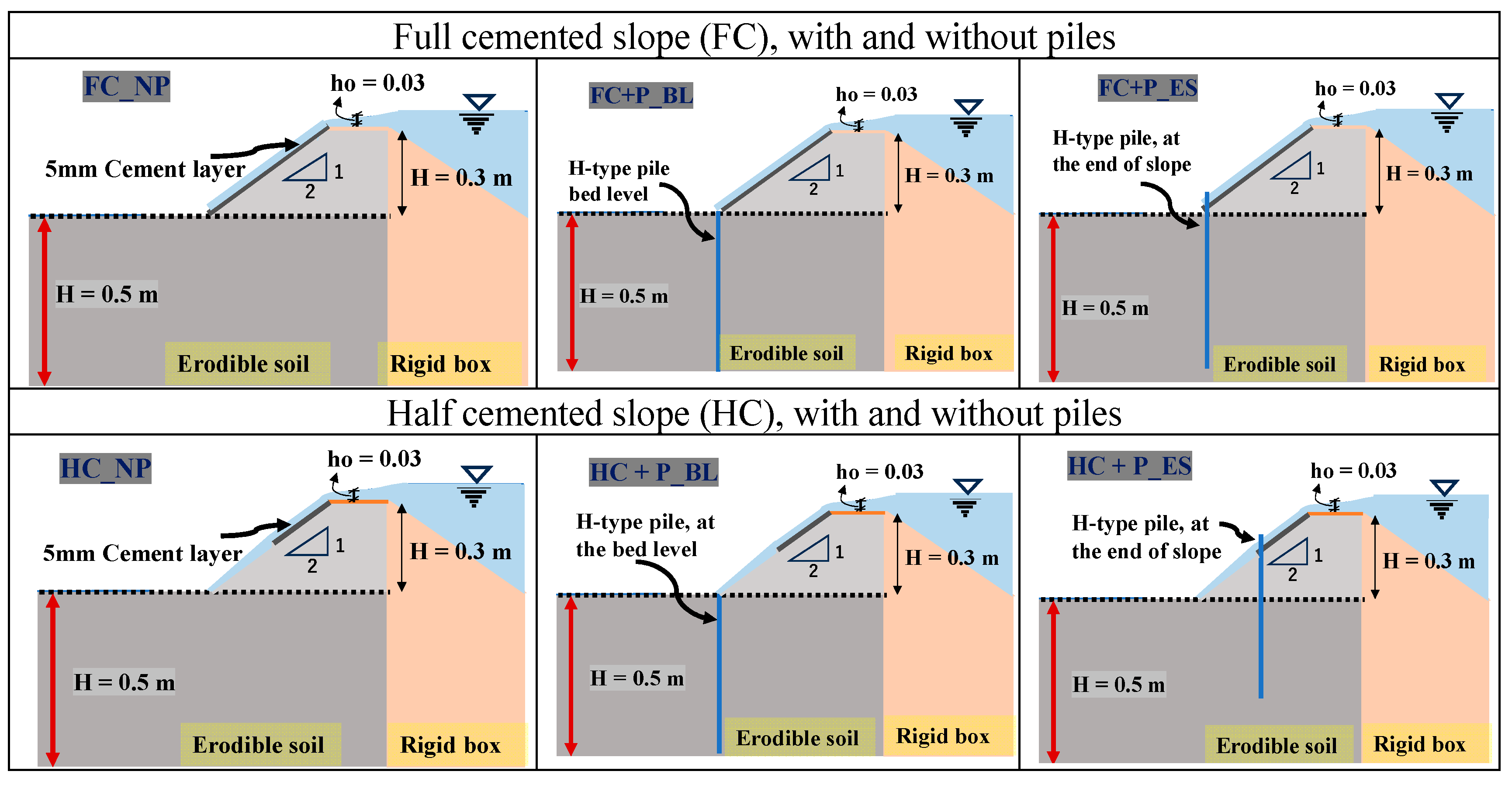
To investigate the effects of slope protection and H-pile positioning on overflow-induced scour, six experimental cases were conducted, and the tested models were prepared with varying combinations of protection coverage and pile placement, as shown in Figure 2. The downstream slope of the levee was covered with a seamless concrete slab, approximately 0.005 m thick, formed from instant cement. This rigid slab served as an erosion-resistant barrier to mitigate overflow-induced scour development. Overall, two configurations were tested: full seamless cemented slope (FC) and crest-side half seamless cemented slope (HC), where “H,” “F,” and “C” represent half, full, and cement, respectively. In each protection group (FC and HC), H-piles were placed in two different positions:
  • At the toe of the levee model (bed level: BL).
  • At the end of the cemented slope in an emergent state (ES), with the pile’s tips extending roughly 0.025 m above the front surface of the protected slope. This setup was designed to interrupt the overflowing jet before it hit the erodible bed.
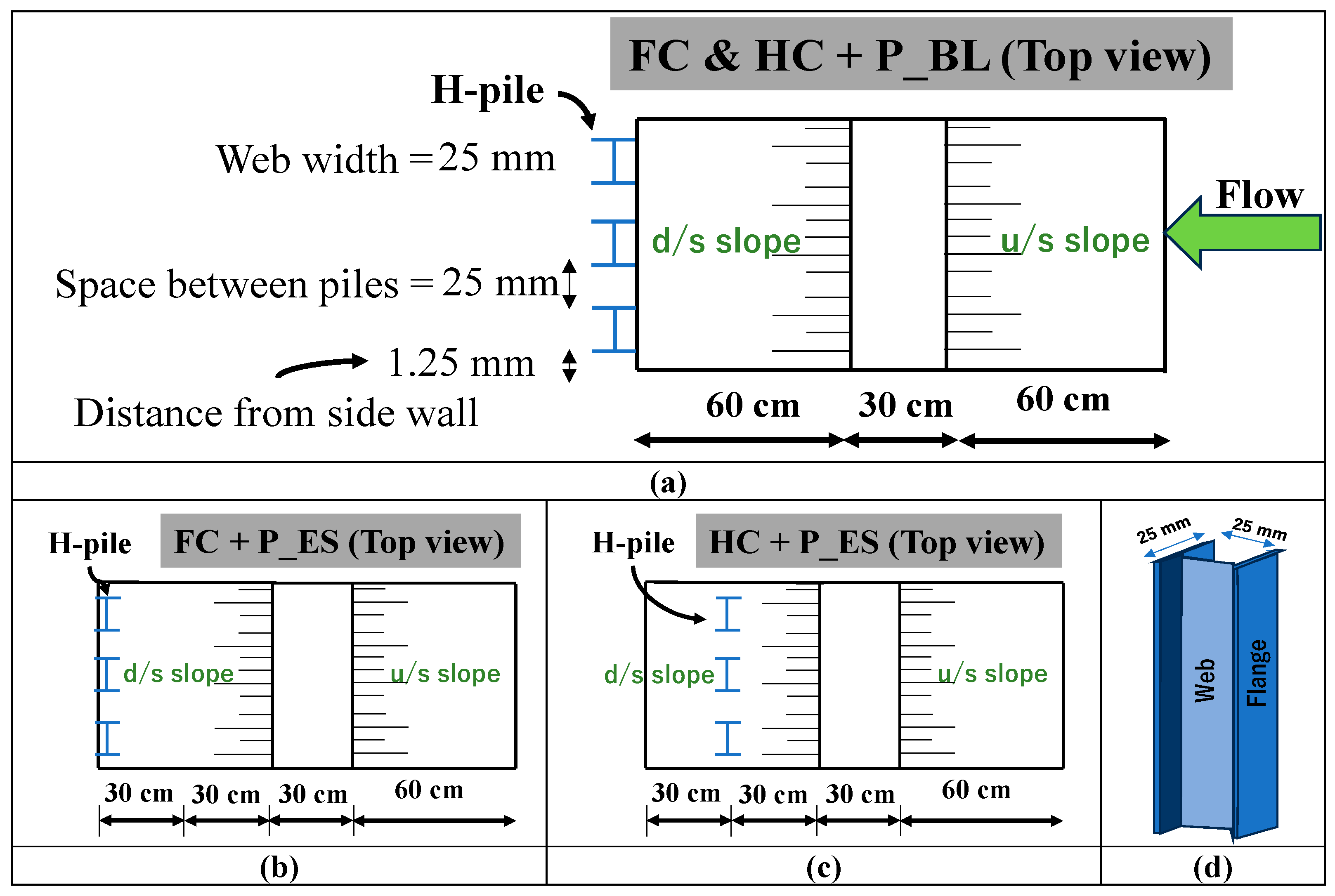
While the design and alignment of the H-piles remained consistent throughout all configurations, their positions differed depending on the extent of slope protection. The piles were installed vertically, with a pile length about equal to the foundation depth and were embedded directly into the erodible foundation without additional base anchorage. As illustrated in Figure 3a–d, the edge-to-edge spacing between consecutive piles was kept to 0.025 m, and the lateral distance from the outermost pile to the channel walls was 0.0125 m. Each pile was 0.5 m high, matching the foundation depth, and not tailored to imitate any specific regional model. The piles were fabricated from PVC, with the web orientated perpendicular to the flow direction to maximize hydraulic resistance. Both the web and flange measured 0.025 m in width.

2.3. Erodible Soil Properties and Preparation

In this study, the erodible section of the levee model was composed of two distinct zones based on building arrangement and soil composition: the levee body and the foundation. Following the experimental framework of Sherzai et al. (2025a) [5], the levee body consisted of relatively cohesive soil, containing a sand-silt mixture, while the foundation was constructed using relatively loose silica sand (No. 8) as shown in Table 2. If the permeability of the foundation is higher than that of the levee body, the levee toe becomes a weak point due to increased infiltration. This difference in permeability facilitates seepage pathways, which can initiate internal erosion along the levee toe and potentially compromise the structural stability of the levee. Therefore, it is important to minimize internal erosion at the toe of the levee.
The cohesive material used in the levee body was formulated by blending silica sand (d50 = 0.0917 mm) and silt (No. 500) in a weight ratio of 80:20, with an optimum moisture level of 18.2% to ensure maximum strength. Detailed grain-size gradation curves are reported in Igarashi & Tanaka (2025) [22]. In contrast, the foundation soil was composed solely of silica sand, prepared at a moisture content of 14.5% to simulate a loose, erodible condition. To guarantee uniform material properties and proper compaction (~90%), the soils were prepared with a concrete mixer and laid in 0.05 m layers. Each layer was compacted by dropping a 1.5 kg rammer from a height of 0.6 m, delivering six blows per spot to simulate field-like compaction conditions. While detailed shear strength parameters and erodibility impact were not objectively measured, experimental variability was reduced by consistently applying similar soil materials, moisture contents, and compaction techniques for every test.

3. Results and Discussion

3.1. Scour Development Under Varying Structural Configurations

To assess the efficiency of structural countermeasures in reducing overflow-induced erosion, an extensive study was carried out to track the temporal development and spatial extent of scour under various slope-protection designs. The study focused on determining how the presence or absence of protective features, such as slope protection and piles, influences the beginning, development, and stabilization of scour processes. Observations were conducted throughout the experiments, recording both the morphological changes in the bed profile and the accompanying hydraulic behavior. The results in the following subsections demonstrate the typical scour behavior for each structural configuration.

3.1.1. Fully Protected Slope Without Toe Piles (FC_NP)

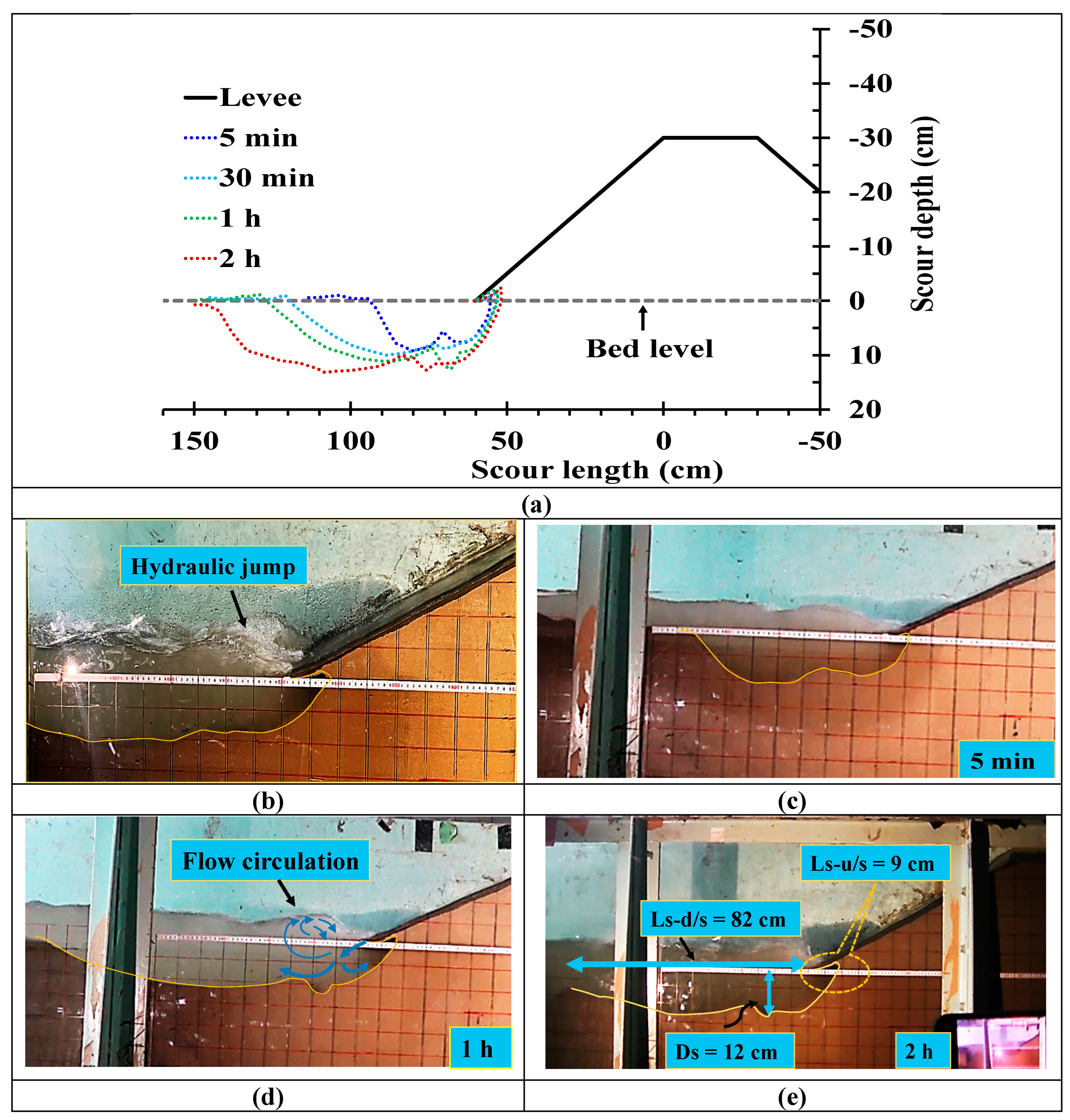
When the downstream slope was entirely covered without levee-toe reinforcement, a clear progression of scour development was observed following the commencement of overflow. The high-velocity flow was directed down the protected slope, striking the unreinforced toe zone. While the slope protection effectively prevented surface erosion along the slope, the transition zone at the toe, between the concrete and the erodible bed, emerged as a hydraulically vulnerable region (Figure 4a).
Significant scouring occurred at the toe within the first 5 min of overflow. The maximum scour depth reached around 10 cm, extending 36 cm and 4 cm upstream beneath the protective layer, as shown in the timeseries scour profile and corresponding photos (Figure 4b). This initial rapid erosion was most likely driven by a hydraulic jump formed at the toe, where sudden deceleration in the overtopping flow generated high turbulence and shear stress, facilitating sediment detachment and transport (Figure 4c).
As overflow continued, the vertical propagation of the scour slowed, suggesting a transition toward dynamic equilibrium between sediment transport and energy dissipation. After one hour, the scour depth increased slightly to 11.2 cm, while the downstream scour length expanded to 66 cm, and upstream erosion reached 7.5 cm, marking a shift from vertical incision by direct impingement to lateral expansion driven by flow circulation and bed shear within the scour hole (Figure 4d).
By 1.5 h, the scour depth stabilized at around 12 cm, indicating that an equilibrium condition had been reached in the vertical direction. However, horizontal scour expansion continued. At the end of the 2-h overflow period, the downstream scour length had extended 82 cm, and the upstream scour length reached 9 cm (Figure 4e).
According to the experimental observations, no slope failures or breaches of the protective layer were found. The slope remained intact, forming a cantilever-like structure over the developing scour hole. These results show that, although the slope protection effectively prevented surface erosion, the lack of toe reinforcement allowed for ongoing undermining and retrogressive erosion at the border between the protected structure and the unprotected bed.

3.1.2. Fully Protected Slope with Bed Level Toe Piles (FC + P_BL)

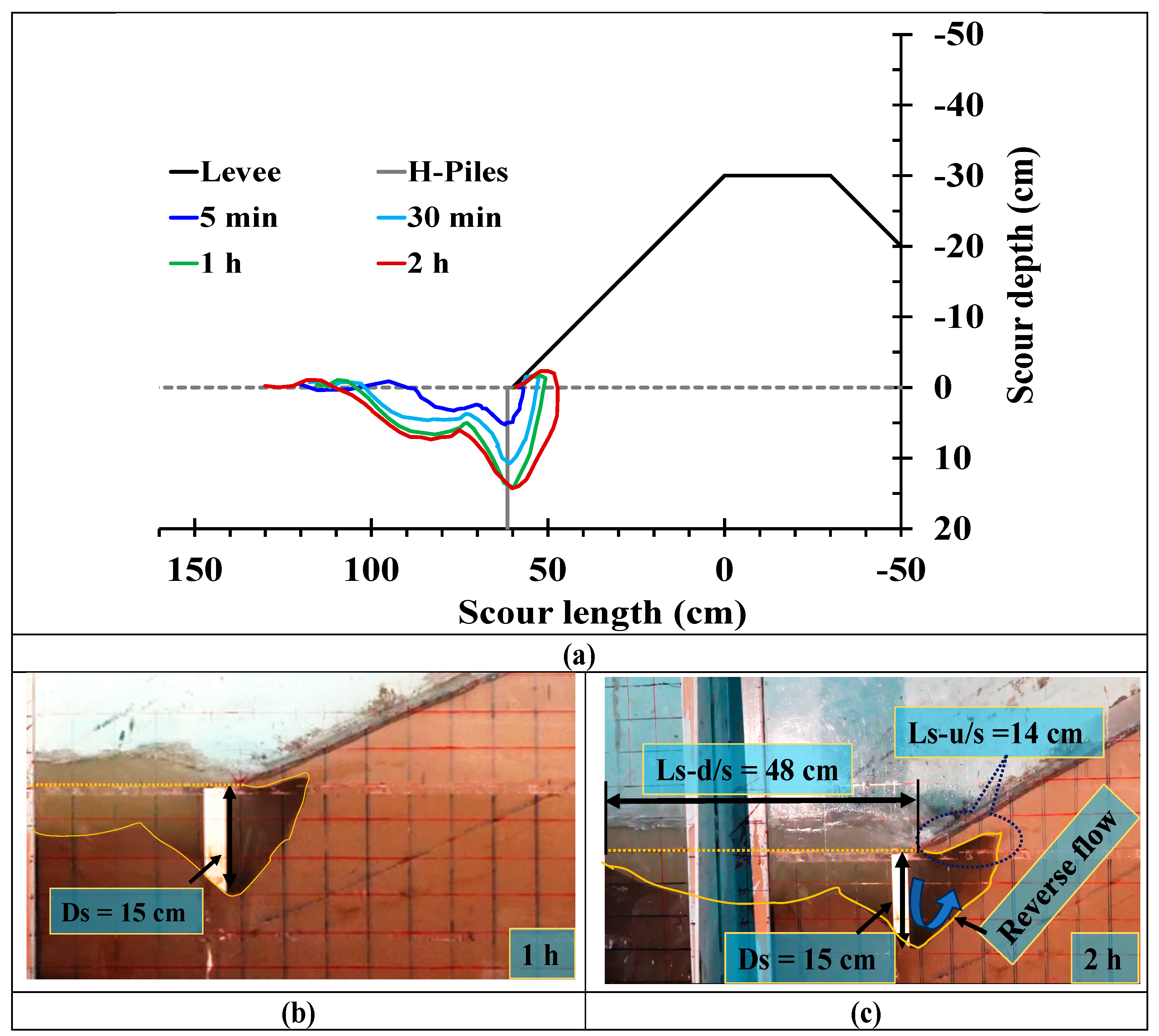
In the presence of bed-level H-type toe piles (P_BL), the development of scour on the fully protected slope exhibited distinct differences compared to the scenario without piles. During the initial stage of overflow, water flowed over the H-type piles, leading to localized scour immediately downstream of the structures. This initial erosion was primarily attributable to the direct impingement of the overflowing jet and the formation of separation zones in the wake region behind the piles (Figure 5a).
After nearly five minutes of constant overflow, the flow-structure interaction resulted in the formation of a reverse-flow zone downstream of the piles. This reverse flow gradually increased and was redirected towards the levee body, where the deepest scour was subsequently generated. The redistribution of hydraulic forces induced by the presence of the piles changed the flow path, concentrated erosive energy near the levee toe, especially along the pile alignment (Figure 5a).
Approximately one hour after overflow occurrence, the scour depth along the levee stabilized, indicating that the rate of soil removal was in balance with the available hydraulic energy. Although no structural damage or breach of the slope protection system was observed at this stage, progressive subsurface erosion was identified beneath the protection along the levee body, particularly along the pile-induced flow route (Figure 5b).
After two hours of overflow, the maximum scour depth reached 15 cm, while downstream and upstream scour lengths increased to 48 cm and 14 cm, respectively (Figure 5c). Despite the advancing erosion, the seamless concrete slab laid down along the slope remained structurally solid and unbroken. It functioned as a cantilever, withstanding slope erosion of up to 14 cm in the surrounding region.
The findings demonstrate that while H-type toe piles efficiently decreased local scour immediately behind them by modifying near-bed flow velocity and turbulence, they simultaneously contributed to the development of a reverse flow, which enhanced erosion beneath the protection. This unintentional redirection of erosive forces highlights the significance of considering flow redistribution when applying structural countermeasures. Thus, although the piles provided local protection, their impact on overall flow behavior made the levee toe more vulnerable to gradual erosion.

3.1.3. Fully Protected Slope with Emergent Piles Installed at the Slope Toe (FC + P_ES)

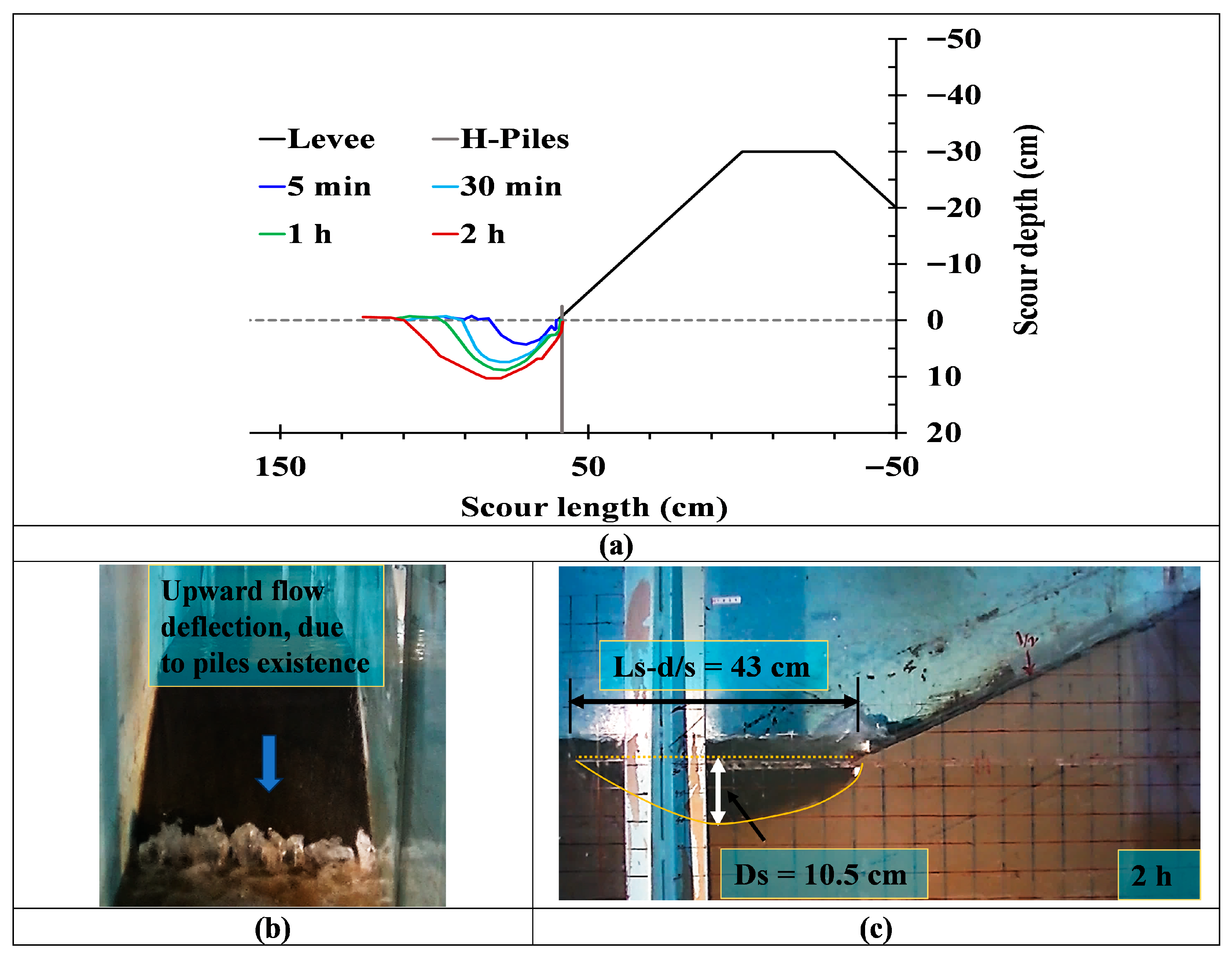
When emergent H-type piles (P_ES) were installed at the end of the protected slope, a noticeable change in flow behavior and scour development was observed (Figure 6a). These piles, positioned above the bed level, acted as effective hydraulic barriers by intercepting the flow and redirecting it upward. This vertical deflection dissipated part of the flow’s kinetic energy before it could impinge directly on the downstream bed surface (Figure 6b).
As a result, both the intensity and concentration of scour immediately downstream of the piles were significantly reduced. In comparison to the circumstances without piles and with bed-level pile placement, the downstream scour depth and extent were significantly lower. Furthermore, due to the upward diversion of the flow and associated energy loss, the scour growth on the upstream side of the piles was nearly eliminated, with the upstream scour length reduced to a negligible level (Figure 6a,c).
These results highlight the efficacy of emergent pile configurations in altering flow-structure interactions to limit erosion. By interrupting the high-velocity jet and reducing reverse flow formation, the emergent piles effectively prevented the initiation of severe scour zones at the slope toe. This underscores the potential of elevating structural components above the bed level and is an efficient strategy for reducing both upstream and downstream scour, hence improving the overall stability of the protected slope during overflow events.

3.1.4. Comparative Evaluation of Scour Development Under Three Structural Configurations

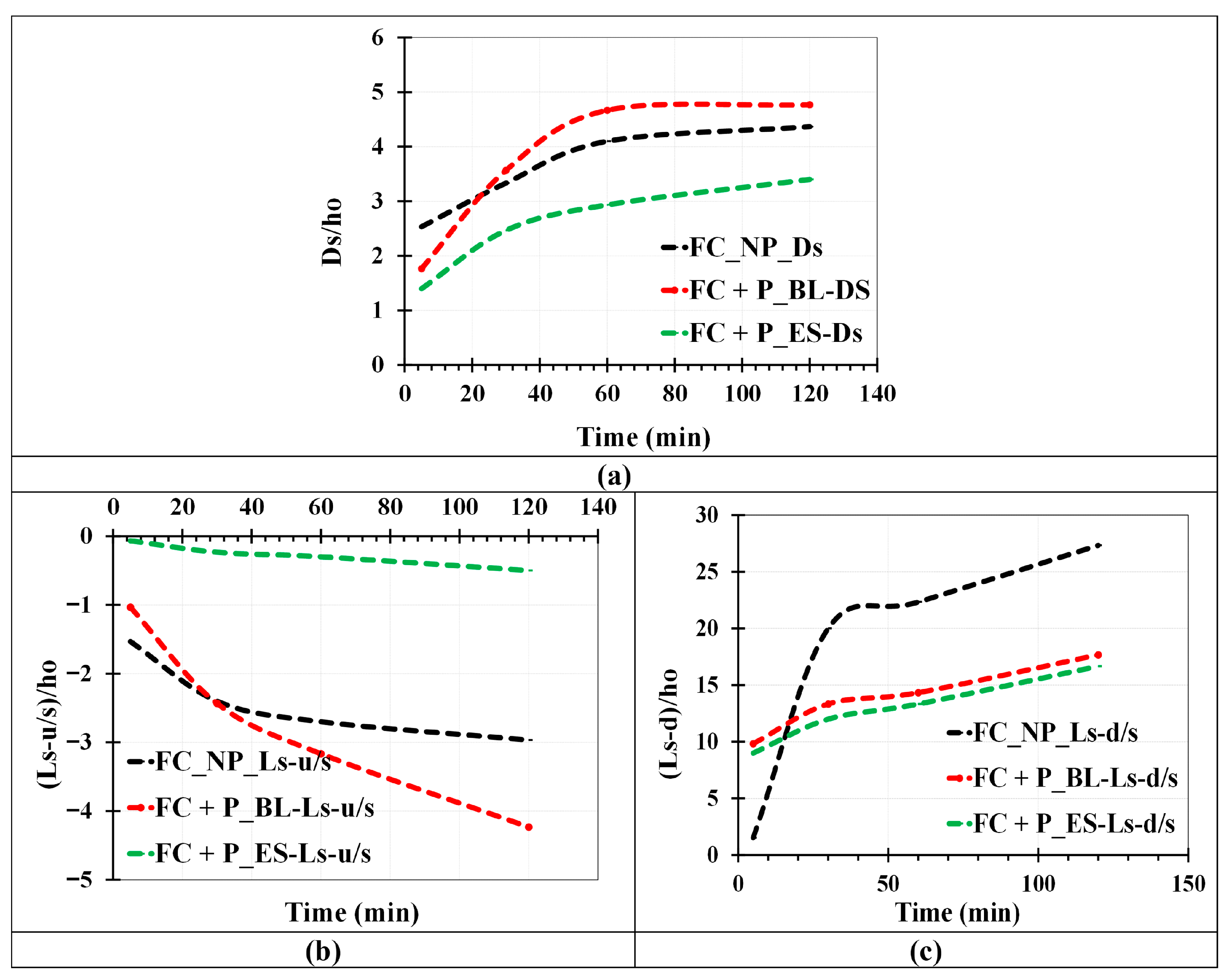
The scour characteristics observed in the three experiment configurations—(i) fully protected slope with no piles (FC_NP), (ii) fully protected slope with bed-level piles (FC + P_BL), and (iii) fully protected slope with emergent piles installed at the slope toe (FC + P_ES)—were thoroughly compared as show in (Figure 7).
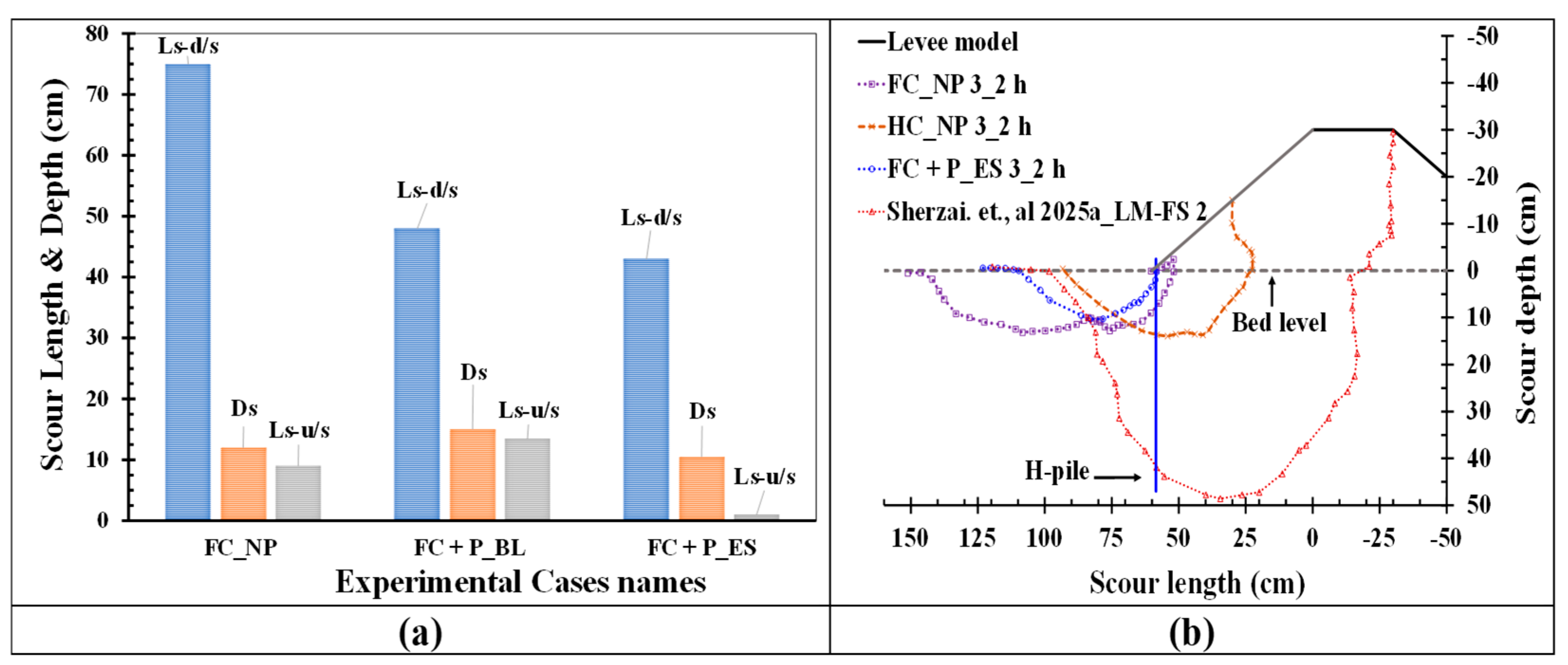
Figure 7a,b demonstrates that the FC + P_BL configuration exhibited higher scour depth and upstream scour length. This is most likely due to the presence of localized reverse flow near the levee toe, which increased near-bed velocity and shear stress, thereby intensifying erosion. In contrast, the FC + P_ES consistently produced the lowest scour depth and upstream extent. This outcome indicates that emergent piles at the slope toe efficiently diverted the overflow jet, thereby reducing near-bed flow intensity and limiting erosive forces.
Furthermore, as described in (Figure 7c), the FC_NP configuration, lacking any pile structures, resulted in the longest downstream scour length. This extended erosion is attributed to the unimpeded development and expansion of high-velocity flow near the bed. Conversely, the FC + P_ES configuration achieved the shortest downstream scour length, demonstrating that emergent piles effectively interrupted the flow field, reduced flow velocity, and limited erosion.

3.2. Scour Development in Half-Protected Slopes

In order to clarify the interaction of slope coverage and structural elements, three configurations with partial protection (half-cemented slope) were studied. The studies examined how restricted surface armoring, when coupled or unpaired with pile strengthening, influences erosion progression. Three cases were compared based on the presence and positioning of piles, focusing on the erosion mechanisms, progression patterns, and final scour geometries.

3.2.1. Crest-Side Half Cemented Slope Without Piles (HC_NP)

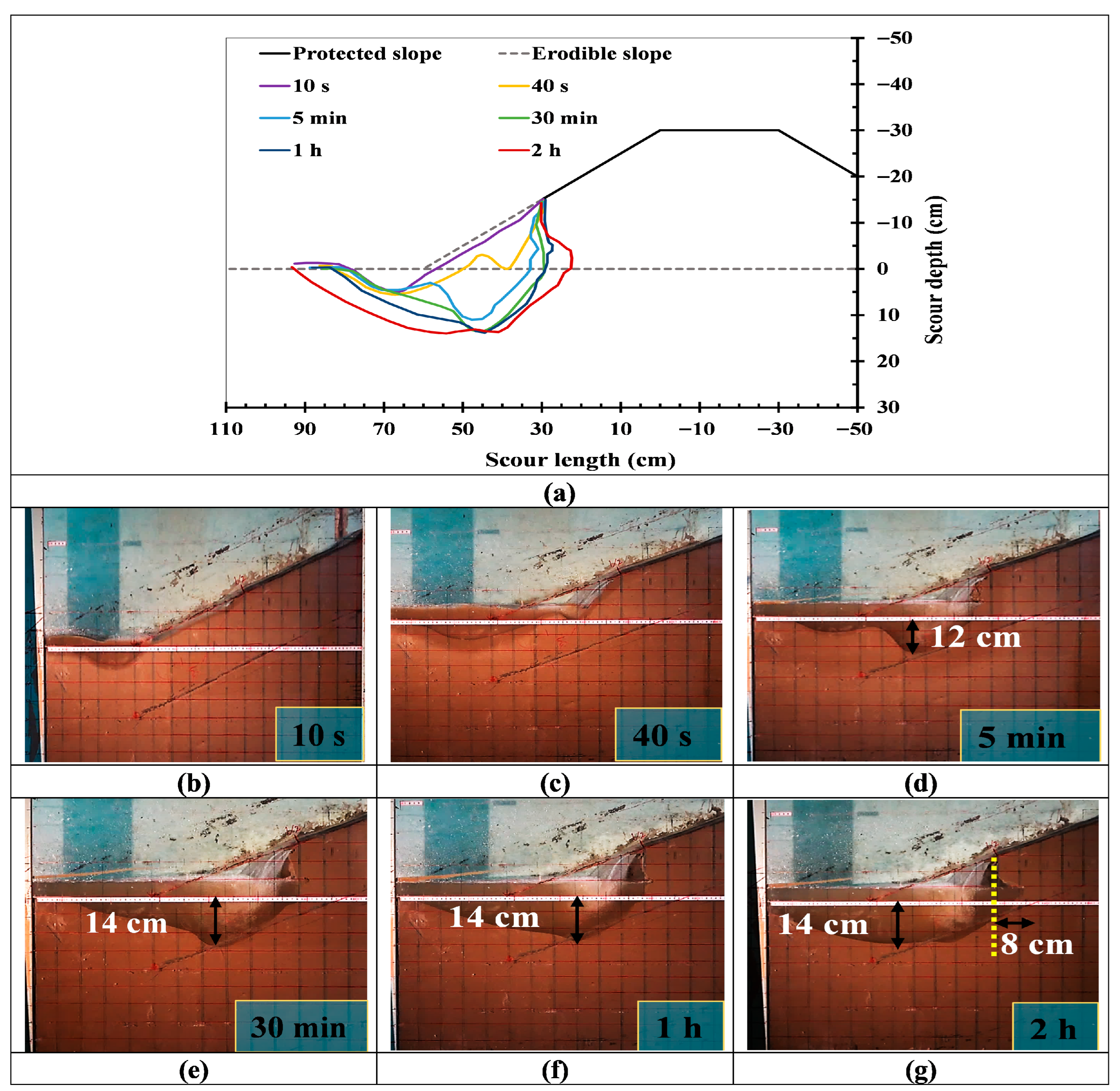
In the absence of any structural protection at the downstream toe, the overflow initiated a sheet-type erosion pattern within the first 10 s of flow onset (Figure 8a,b). This early-stage erosion was characterized by uniform detachment of surface material along the unprotected slope. As the overflow continued, the scoured toe profile altered the jet trajectory, leading to the formation of an impinging jet. This transition, triggered by a decrease in exposed slope surface elevation, intensified erosion dynamics due to concentrated kinetic energy at the impact zone.
Since the foundation materials were relatively loose, slope erosion was observed to propagate in both directions, upstream to downstream, and from the downstream toe upward. The entire downstream slope was eroded within 40 s, indicating a rapid transition from surface wear to high-intensity localized scour Figure 8c. A maximum scour depth of 12 cm was reached within the first 5 min, highlighting the initial aggressiveness of the erosive forces Figure 8a,d. However, the scour progression rate diminished thereafter as the system approached a dynamic equilibrium. Approximately 30 min into the overflow, a stable scour depth of 14 cm was attained, demonstrating a balance of erosive forces and the bed’s resisting capabilities (Figure 8a,e–g).
Notably, the downstream boundary of the scour hole was observed to gradually extend with time; however, upstream boundary erosion beneath the protected slope was minor for the first 30 min. Following this delay, adverse erosion began beneath the protected slope, most likely due to eddy formation in the pooled water of deeper scour hole. After the determined two hours of continuous overflow of the experiment, an upstream scour length of 8 cm was recorded. This pattern shows that the upstream boundary was delayed but unavoidable, as continued flow-induced excavation occurred near the protected slope toe (Figure 8a,g).

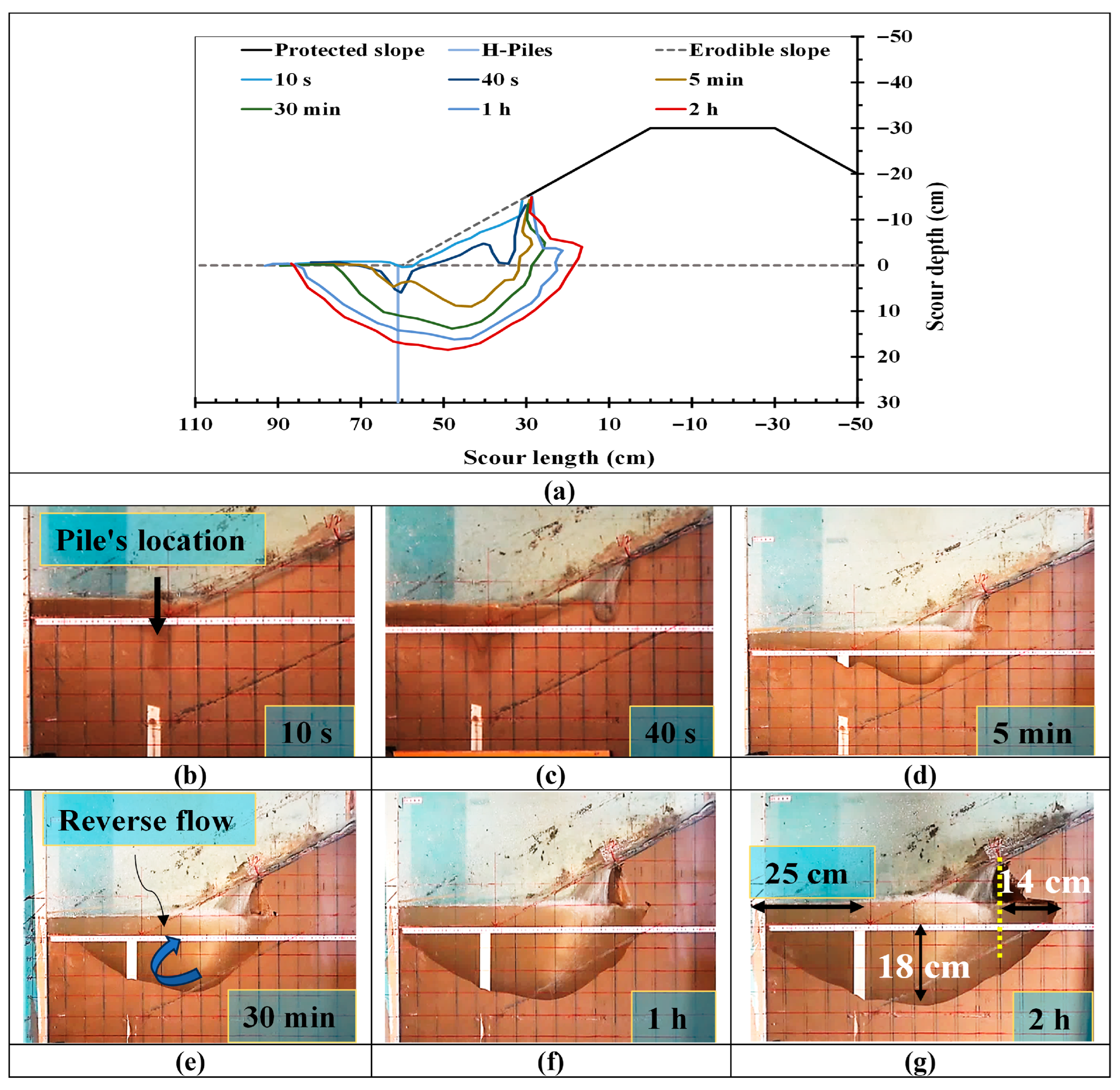
3.2.2. Crest-Side Half Cemented Slope, Piles at the Bed Level, (HC + P_BL)

When H-piles were installed at the toe of the slope (bed level) in combination with a half-protected slope, changes in erosion dynamics were clearly observed along the unprotected portion of the slope. Similar to the prior case, sheet-type erosion originated during the first 10 s of overflow (Figure 9a,b). As the slope surface was gradually lowered by ongoing erosion, the mechanism was shifted to impinging-type erosion, and the complete erosion of the slope was achieved within 43 s (Figure 9a,c).
Initially, the piles partially blocked the incoming flow from directly hitting the bed surface. As a result, scour development was both restricted and concentrated in the vicinity of the piles, indicating localized flow deflection and a partial shielding effect. Even though the downstream scour length was efficiently restricted due to the flow interference by the piles, the noteworthy changes in flow dynamics, particularly the development of reverse flow within the scour hole, were induced (Figure 9a,d–f).
By the end of the 2-h overflow period, the scour depth and downstream scour length were reached at 18 cm and 25 cm, respectively. More critically, the upstream erosion extended to 14 cm, almost double that observed in the case without piles (Figure 9a,g). These findings indicate that while downstream scour progression was successfully limited by bed-level piles, adverse flow redirection was also promoted, which enhanced erosion at the slope base (beneath the protected slope) and increased levee body weakening.

3.2.3. Crest-Side Half Cemented Slope with Emergent Piles, (HC + P_ES)

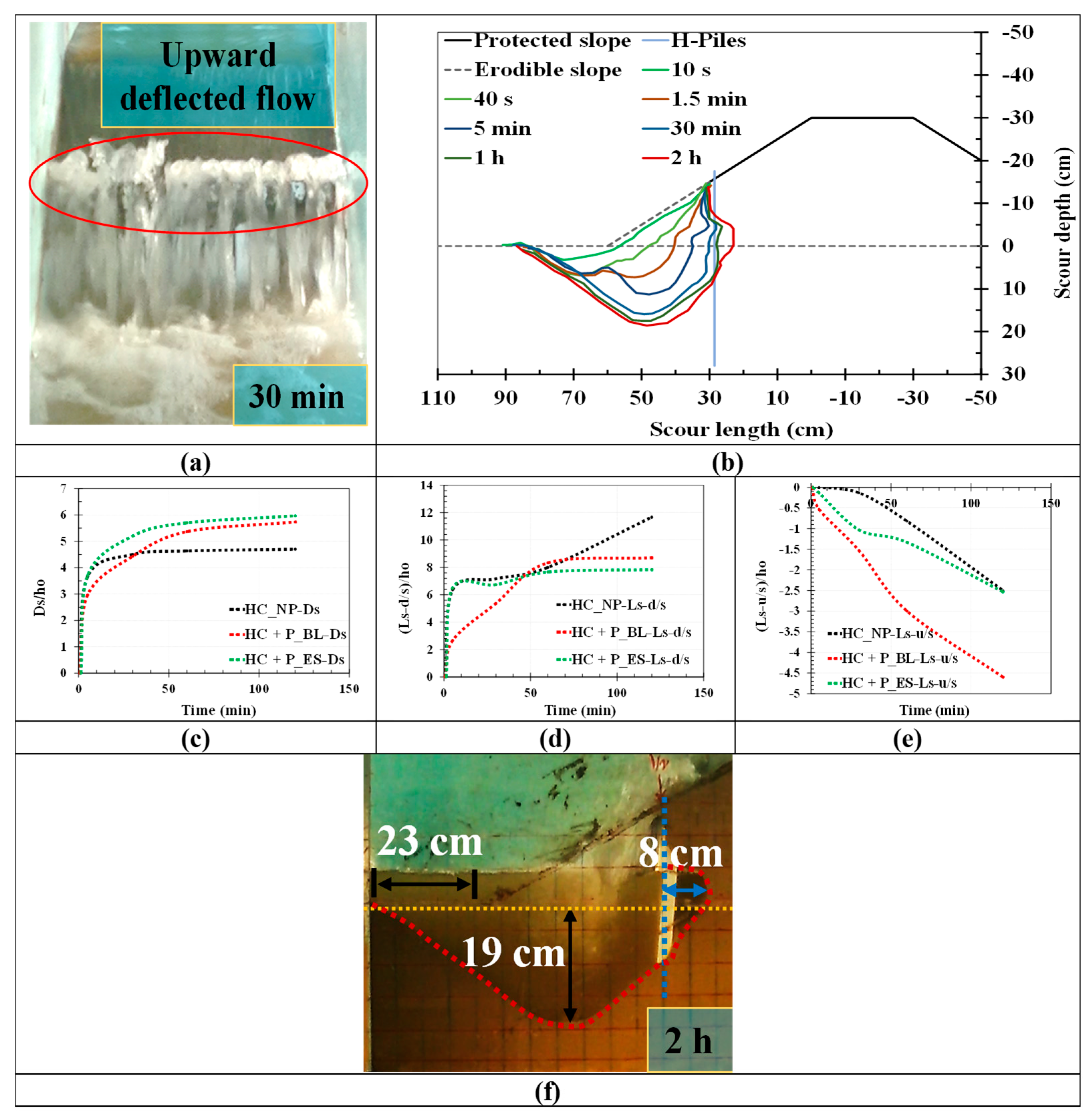
In this case, emergent H-piles were put within the protected slope’s terminal edge. These countermeasures were strategically positioned to function as vertical barriers, deflecting the overtopping flow upward and directing it to pass over the pile’s arrangement (Figure 10a). As a result, the flow jet’s course and energy distribution were changed drastically. Because of this deflection, erosion of the exposed slope was significantly slowed, with detachment taking roughly 110 s, a nearly threefold increase in resistance time compared to both the (HC_NP) and the configuration of piles installed at the levee toe (HC + P_BL) (Figure 10b).
The upward deflection of the flow elevated the impingement point and increased the head energy concentrated at the impact zone. Simultaneously, the presence of the piles induced partial flow blockage and local contraction, which reduced the effective streamwise velocity downstream while amplifying vertical velocity components and turbulence intensity in the pooled water immediately upstream of the piles. Although direct velocity or pressure measurements were not available in the present experiments, the observed scour patterns are consistent with a flow regime characterized by enhanced downward momentum flux and increased pressure fluctuations at the bed. Once scouring initiated, this localized concentration of energy promoted intensified vertical erosion, resulting in the deepest recorded scour depth among all tested configurations (Figure 10c). In contrast, the downstream extent of the scour hole remained limited due to the reduced horizontal transport capacity and restricted influence of the deflected jet beyond the pile array (Figure 10d). No substantial reduction was observed in upstream scour length when compared to the (HC_NP); however, a significant reduction was observed compared to the (HC + P_BL) configuration (Figure 10e). As shown in (Figure 10b–d), similar to previous experimental tests, the maximum scour depth and scour length in this case were also achieved within about the initial 5 min of overflow. After 2 h of continuous overflow, the maximum scour depth, downstream scour length, and upstream scour length were recorded as 18.9 cm, 23.5 cm, and 8.3 cm, respectively (Figure 10f).
These observations indicate that the scour of vertical direction was intensified by the emergent pile because of the higher impact energy at the impingement point. Nevertheless, the configuration was beneficial in delaying slope erosion and limiting scour development toward the landward side, which is a quite dangerous process before breaching of a levee through the collapse of the hanged levee body upward.

4. Discussion

4.1. Dynamics of Scour Formation and Flow Interaction

In levee overtopping scenarios, the interaction between overflow jets and erodible slope and foundations plays a critical role in determining failure risk [12,23]. In both the present study and previous experimental investigations, overtopping flows have been consistently found to trigger progressive scour, particularly near the downstream toe or foundation area of a levee [3,5,22,23,24]. The initial impact of the overflow jet typically results in a concentrated impingement zone where intense downward and lateral flow components induce erosion, which then expands in both depth and width over time. This mechanism was well illustrated in the case of FC_NP of the current study, where the fully concrete-covered slope without any toe protection underwent a three-phase scour evolution: rapid downward incision, lateral widening, and eventual undercutting toward the upstream slope consistent with the scour development pattern outlined in previous studies [5,22,25,26,27].
However, in the current study, it was observed that introducing structural elements, such as vertical H-shape piles, produced a notable alteration in scour dynamics. In the FC + P_BL (bed-level pile) configuration, reverse flow circulations and deflected shear zones became prominent near the toe of the slope. These features partly shielded the region behind the piles from direct jet impingement, thereby restricting the scour hole expansion on the downstream side. However, the high-flow energy was simultaneously redirected beneath the protection layer, intensifying the erosion in the vertical direction and increasing the risk of upstream undercutting. These findings align with those of Rahman & Tanaka (2022) [28], who demonstrated that vegetation models placed behind an embankment effectively reduced scouring by modifying the hydraulic jump location and weakening the overflow energy. Interestingly, in the current study, the result showed that the seamless concrete slab stayed structurally intact despite localized erosion beneath the slab. It acted as a cantilever-like response as the supporting soil was progressively removed. In this condition, the slab retained support near the upper slope while spanning over the scoured region. As scour developed, the unsupported portion was subjected to bending due to its self-weight and hydraulic loading, while the slab’s continuity prevented separation and collapse. No visible cracking, rotation, or joint opening was observed during the experiment, indicating that the induced bending loads remained within the slab’s capacity under the applied hydraulic conditions. From a simplified structural perspective, the slab may be interpreted as a partially supported plate experiencing increasing bending moments toward the unsupported edge, with cracking governed by slab thickness, material strength, reinforcement, and the connection to the levee body. In real-world applications, these parameters would require explicit structural design to ensure long-term performance under prolonged and extreme overtopping events. This behavior highlights a key advantage of seamless concrete slabs over block-type concrete protection, which are prone to failure due to seepage through joints, internal erosion, and uplift under overtopping flow conditions [18,21].
In contrast, the emerged pile configuration (FC + P_ES) demonstrated superior performance. The vertical component of the piles effectively interrupted jet penetration into the erodible zone and promoted early flow dissipation, significantly limiting both scour depth and extent. As illustrated in Figure 11a, this configuration significantly enhanced scour resistance, achieving a 40% reduction in downstream scour length, a 66.7% reduction in upstream length, and a 7.7% decrease in maximum scour depth compared to the no-pile condition (FC_NP). These results underscore the importance of localized flow energy dissipation in mitigating erosion and highlight the role of emergent structural elements in reinforcing slope protection and stabilizing the downstream bed.
These findings mirror the observations of Chahartaghi et al. (2021) [29], who reported that integrating perforated baffle blocks in the flow path effectively reduced scour depth by encouraging early energy loss along the chute. While different in structural form, both baffles and emergent piles serve a similar hydraulic function: they disrupt and diffuse concentrated flow energy before it reaches vulnerable zones. This general principle aligns with earlier studies, such as Igarashi et al. (2018) [30], who showed that placing a group of cylinders downstream of the levee toe can modify flow structure and help reduce scour. This consistency across studies reinforces the principle that incorporating well-positioned energy dissipation elements, whether baffles or piles, can help control scouring and enhance hydraulic structure resilience.
It should be noted that the present results reflect laterally confined laboratory flow conditions. Although pile spacing and clearance from the flume side walls were selected to limit blockage ratio and minimize direct wall effects, some influence of lateral confinement on the flow structure and scour development cannot be entirely excluded in laboratory flumes. Therefore, the results are intended to provide comparative insight into the role of emergent piles in modifying overflow-induced scour rather than direct prototype-scale predictions. Application to field-scale levees should, therefore, consider broader channels, pile spacing, embedment depth, and construction details to ensure representative flow-structure interactions and realistic scour behavior.

4.2. Partial Protection and Hybrid Performance

In the current study, the half-slope protection scenarios revealed further insights into the balance between flow dynamics and erosion control strategies under overtopping conditions. In the HC_NP, where only the upper part of the landward slope was protected, the results showed that initial scouring was delayed and remained concentrated on the downstream side. However, after a critical duration of about 30 min, the erosion beneath the protection progressed upstream toward the crest, resulting in an enlarged scoured hole. This pattern aligns with retrogressive erosion processes commonly observed in overtopped embankments [5,11,31,32].
The addition of bed-level piles in the HC + P_BL reduced the streamwise flow movement and generated a reverse flow, delaying the onset of scouring and restricting the downstream scour hole expansion as compared to HC_NP. However, the reverse flow was redirected toward the levee body by the toe piles, increasing both scour depth and especially upstream extent of erosion significantly. Remarkably, as in FC + P_BL, the seamless concrete slab remained structurally stable, resisting failure despite substantial surrounding erosion, highlighting its resilience under erosion stress. These findings show that while the slab and pile protect the downstream slope well, they may also cause more erosion upstream [28].
Notably, the configuration combining emergent piles with the half-concrete slope (HC + P_ES) offered the most effective performance among the tested cases. The piles acted as vertical barriers, promoting early energy dissipation and significantly reducing the direct impact of the flow of the jet on the exposed slope surface [29,33]. This redirection in streamwise momentum delayed the initiation of bed scouring by about three times compared to the (HC_NP) and (HC + P_BL) configurations. Additionally, the downstream side extent of the scour hole was limited, though the localized scour depth increased slightly, probably due to the elevated head energy. This observation aligns with findings that higher flow energy tends to intensify local scour while restricting its lateral spread [34].

4.3. Comparative Analysis with Previous Study [5]

A direct comparison with Sherzai et al. (2025a) [5] highlights the significant developments made in the current study. In a prior study, as shown in (Figure 11b) of Sherzai et al. (2025a) [5], the LM-FS 2 involved an unprotected landward slope under a rigid crest subjected to a 2 cm overtopping flow. This configuration resulted in rapid scour progression: the overflow jet eroded the slope and directly impinged the foundation, causing the formation of a large scour hole that ultimately led to the complete collapse of the levee body beneath the crest within just 37 min.
In contrast, despite more severe hydraulic conditions in the current study, specifically higher overflow depth of 3 cm and 2 h longer overflow duration, the scour severity was dramatically reduced through simple structural modifications. In the case of HC_NP, despite the higher energy conditions, the scour depth was reduced by approximately 72% compared to the LM-FS 2 test. This clearly illustrates the significant protective effect afforded even by partial slope coverage.
The protective influence was further improved in fully covered configurations. In the FC_NP and FC + P_ES configurations, the scour depth was reduced by approximately 75% and 79%, respectively, relative to the LM-FS 2 configuration. These results demonstrate that strategic surface protection can significantly mitigate erosion, even under intensified overtopping scenarios. This not only validates the structural efficacy of concrete slope protection but also highlights the importance of integrating vertical flow disruptors to enhance scour resistance near the toe, a region that proved particularly vulnerable in the previous study.
Overall, this study confirms that combining surface protection with subsurface reinforcement can effectively modify both the location and progression of erosion, thereby reducing levee vulnerability during prolonged overflow events. Building on these findings, from a practical perspective, the combined use of a seamless concrete slab and emergent piles provides an effective and constructible solution for reducing overtopping-induced scour. The seamless slab can be constructed using standard cast-in-place concrete techniques and eliminates joints, thereby reducing the risk of seepage and uplift compared to block-type protection systems. Emergent piles can be installed using conventional piling methods and help intercept the overtopping jet, reducing streamwise flow energy at the levee toe. Experimental results show that piles extending above the slope surface improve scour resistance; however, excessively close spacing or pile height may increase localized scour due to flow contraction. Therefore, pile spacing and elevation should be selected to balance energy dissipation and local scour development. While maintenance requirements are expected to be low, further research is recommended to evaluate cost implications and to investigate alternative pile arrangements, including reduced spacing and staggered particularly along the bed on the upstream side of the jet impact point. These modifications could improve bed stability and limit the influence of the third eddy, which was previously linked to increased erosion and potential mass collapsing [8].

5. Conclusions

This study examined overflow-induced scour development under various structural protection scenarios, with an emphasis on cement-protected slopes and pile-integrated countermeasures. The findings revealed that seamless cement-protected slopes significantly enhance levee stability by protecting slope erosion and minimizing overall scour development. These slopes, acting as rigid cantilevers, retained structural integrity under continuous overtopping conditions, reducing local turbulence and stabilizing the flow jet impact point.
A key finding was the enhanced scour resistance achieved by integrating H-type emergent piles at the end of the cement-protected slope (FC + P_ES configuration). This arrangement was extremely effective, resulting in a 40% reduction in downstream scour length, a 66.7% reduction in upstream scour length, and a 7.7% decrease in maximum scour depth compared to the no-pile condition (FC_NP). These outcomes highlight the effectiveness of toe-mounted flow disruptors in dissipating jet energy, controlling the expansion of the scour hole, and reducing the erosion beneath the protective layer. Furthermore, the combination of partial concrete slope coverage with emergent piles (HC + P_ES) delayed slope failure by nearly three times compared to configurations with no piles or bed-level piles. It also effectively limited the downstream expansion of the scour hole.
Overall, the combination of seamless protection and emergent piles results in a strong and strategically superior design for levee toe protection. This integrated method provides important insights for future hydraulic engineering applications, particularly in improving the strength of flood defense structures against overtopping floods.
To evaluate the applicability and limitations of the suggested protective system more precisely, future studies should expand the current investigation to a wider range of hydraulic situations, such as variation in flow velocity, overtopping depth, and extreme overflow scenarios. The examination of alternate pile configurations, such as staggered arrangements along the foundation and slope, which have the potential to improve flow energy dissipation and decrease local scour, may lead to further progress in scour mitigation. Additionally, when possible, integrating numerical modelling with focused field observations would offer a deeper understanding of flow-structure interaction and erosion processes, which could be helpful in building more durable and long-lasting levee protection systems.

Author Contributions

Conceptualization, J.H.S., Y.I., N.T., H.K. and T.T.; methodology, J.H.S., Y.I. and N.T.; investigation, J.H.S.; validation, Y.I. and N.T.; formal analysis, J.H.S.; resources, H.K. and T.T.; data curation, J.H.S.; writing original draft preparation, J.H.S.; writing review and editing, N.T. and Y.I.; visualization, J.H.S.; supervision, Y.I. and N.T.; project administration, N.T. All authors have read and agreed to the published version of the manuscript.

Funding

This research received no external funding.

Data Availability Statement

The original contributions presented in this study are included in the article. Further inquiries can be directed to the corresponding author.

Acknowledgments

The authors gratefully acknowledge the support from the “UEDA Memorial Foundation Scholarship for International students at Saitama University”. The authors also acknowledge the anonymous reviewers for their valuable comments to improve this manuscript.

Conflicts of Interest

The authors declare no conflicts of interest.

References

  1. Ohtsuka, S.; Sato, Y.; Yoshikawa, T.; Sugii, T.; Kodaka, T.; Maeda, K. Levee damage and revetment erosion by the 2019 Typhoon Hagibis in the Chikuma River, Japan. Soils Found. 2021, 61, 1172–1188. [Google Scholar] [CrossRef]
  2. Nagumo, N.; Ohara, M.; Kuribayashi, D.; Sawano, H. The 2015 flood impact due to the overflow and Dike breach of Kinu River in Joso City, Japan. J. Disaster Res. 2016, 11, 1112–1127. [Google Scholar] [CrossRef]
  3. Shimozono, T.; Sato, S. Coastal vulnerability analysis during tsunami-induced levee overflow and breaching by a high-resolution flood model. Coast. Eng. 2016, 107, 116–126. [Google Scholar] [CrossRef]
  4. Huang, W.C.; Liu, W.C.; Liu, H.M. Uncertainty Analysis of Overflow Due to Sea Dike Failure During Typhoon Events. J. Mar. Sci. Eng. 2025, 13, 573. [Google Scholar] [CrossRef]
  5. Sherzai, J.H.; Tanaka, N.; Igarashi, Y.; Onose, R. Effects of Soil Characteristics on Levee Erosion and the Behavior of Twin Eddies in a Scoured Hole Generated by Nappe Flow. Int. J. Civ. Eng. 2025, 23, 1287–1305. [Google Scholar] [CrossRef]
  6. Salmasi, F.; Sihag, P.; Abraham, J.; Nouri, M. Experimental investigation and prediction of free fall jet scouring using machine learning models. Int. J. Sediment Res. 2023, 38, 405–420. [Google Scholar] [CrossRef]
  7. Qiu, Y.; Lan, X.; Yang, Z.; Wang, G.; Liu, J. Study on the mechanism of soil erosion by submerged water jet vertical scouring in cohesive soils. Ocean Eng. 2024, 311, 118919. [Google Scholar] [CrossRef]
  8. Sherzai, J.H.; Tanaka, N.; Motoharu, Y. Overfalling impinging jet flow dynamics within scoured holes downstream of a levee. Environ. Fluid Mech. 2025, 25, 20. [Google Scholar] [CrossRef]
  9. Bey, A.; Faruque, M.A.; Balachandar, R. Two-dimensional scour hole problem: Role of fluid structures. J. Hydraul. Eng. 2007, 133, 414–430. [Google Scholar] [CrossRef]
  10. Dey, S.; Raikar, R.V. Scour below a high vertical drop. J. Hydraul. Eng. 2007, 133, 564–568. [Google Scholar] [CrossRef]
  11. Pagliara, S. Influence of sediment gradation on scour downstream of block ramps. J. Hydraul. Eng. 2007, 133, 1241–1248. [Google Scholar] [CrossRef]
  12. Sherzai, J.H.; De Costa, R.; Tanaka, N. Effects of roughness of an embankment slope or application of a geo-grid or moat on scouring phenomena downstream of an embankment. Arab. J. Sci. Eng. 2023, 48, 4769–4784. [Google Scholar] [CrossRef]
  13. Shao, Q.; Gu, W.; Dai, Q.Y.; Makoto, S.; Liu, Y. Effectiveness of geotextile mulches for slope restoration in semi-arid northern China. Catena 2014, 116, 1–9. [Google Scholar] [CrossRef]
  14. Wahl, T.L. Embankment overtopping protection by riprap considering interstitial flow. In Proceedings of the 2nd International Seminar on Dam Protection against Overtopping, Protections 2016, Ft. Collins, CO, USA, 7–9 September 2016. [Google Scholar]
  15. Li, L.; Pan, Y.; Amini, F.; Kuang, C. Full scale study of combined wave and surge overtopping of a levee with RCC strengthening system. Ocean Eng. 2012, 54, 70–86. [Google Scholar] [CrossRef]
  16. Pan, Y.; Li, L.; Amini, F.; Kuang, C. Overtopping erosion and failure mechanism of earthen levee strengthened by vegetated HPTRM system. Ocean Eng. 2015, 96, 139–148. [Google Scholar] [CrossRef]
  17. Pan, Y.; Li, L.; Amini, F.; Kuang, C. Influence of three levee-strengthening systems on overtopping hydraulic parameters and hydraulic equivalency analysis between steady and intermittent overtopping. J. Waterw. Port Coast. Ocean Eng. 2013, 139, 256–266. [Google Scholar] [CrossRef]
  18. Takahashi, H.; Morikawa, Y.; Mori, N.; Yasuda, T. Collapse of concrete-covered levee under composite effect of overflow and seepage. Soils Found. 2019, 59, 1787–1799. [Google Scholar] [CrossRef]
  19. Hatogai, S.; Suwa, Y.; Kato, F. Hydraulic model experiments on scour landward of the coastal dike induced by tsunami overflow. J. Jpn. Soc. Civ. Eng. Ser. B2 (Coastal Eng.) 2012, 68, I_406–I_410. (In Japanese) [Google Scholar]
  20. Kato, F.; Hatogai, S.; Suwa, Y. Structures for coastal dike with concrete armors resilient to tsunami overflow. J. Jpn. Soc. Civ. Eng. Ser. B2 (Coastal Eng.) 2013, 69, I_1021–I_1025. (In Japanese) [Google Scholar]
  21. Kurakami, Y.; Nihei, Y. Resistance of laminar drain reinforcement levee against overflow erosion. Water 2019, 11, 1768. [Google Scholar] [CrossRef]
  22. Igarashi, Y.; Tanaka, N. Modelling of bottom shear stresses in scoured hole formed by nappe flow during levee overtopping. GeoHazards 2025, 6, 11. [Google Scholar] [CrossRef]
  23. Luo, P.; Ma, M. Failure Mechanisms and Protection Measures for Expansive Soil Slopes: A Review. Sustainability 2024, 16, 5127. [Google Scholar] [CrossRef]
  24. Huang, W.C.; Weng, M.C.; Chen, R.K. Levee failure mechanisms during the extreme rainfall event: A case study in Southern Taiwan. Nat. Hazards 2014, 70, 1287–1307. [Google Scholar] [CrossRef]
  25. Kato, F.; Suwa, Y.; Watanabe, K.; Hatogai, S. Mechanisms of coastal dike failure induced by the Great East Japan Earthquake Tsunami. Coast. Eng. Proc. 2012, 1, 1–9. [Google Scholar] [CrossRef]
  26. Dargahi, B. Scour development downstream of a spillway. J. Hydraul. Res. 2003, 41, 417–426. [Google Scholar] [CrossRef]
  27. Yoshida, K.; Maeno, S.; Iiboshi, T.; Araki, D. Estimation of hydrodynamic forces acting on concrete blocks of toe protection works for coastal dikes by tsunami overflows. Appl. Ocean Res. 2018, 80, 181–196. [Google Scholar] [CrossRef]
  28. Rahman, M.A.; Tanaka, N. Countermeasure against local scouring and tsunami damage by landward forests behind a coastal embankment. Appl. Ocean Res. 2022, 120, 103070. [Google Scholar] [CrossRef]
  29. Chahartaghi, M.K.; Nazari, S.; Babarsad, M.S. Investigation of the impact of baffled-chute and divergence sidewall on the downstream scour pattern. Ain Shams Eng. J. 2021, 12, 3543–3552. [Google Scholar] [CrossRef]
  30. Igarashi, Y.; Tanaka, N.; Zaha, T. Changes in flow structures and energy reduction through compound tsunami mitigation system with embankment and lined piles. Ocean Eng. 2018, 164, 722–732. [Google Scholar] [CrossRef]
  31. Pickert, G.; Weitbrecht, V.; Bieberstein, A. Breaching of overtopped river embankments controlled by apparent cohesion. J. Hydraul. Res. 2011, 49, 143–156. [Google Scholar] [CrossRef]
  32. Powledge, G.R.; Ralston, D.C.; Miller, P.; Chen, Y.H.; Clopper, P.E.; Temple, D.M. Mechanics of overflow erosion on embankments. II: Hydraulic and design considerations. J. Hydraul. Eng. 1989, 115, 1056–1075. [Google Scholar] [CrossRef]
  33. Mitobe, Y.; Adityawan, M.B.; Roh, M.; Tanaka, H.; Otsushi, K.; Kurosawa, T. Experimental study on embankment reinforcement by steel sheet pile structure against tsunami overflow. Coast. Eng. J. 2016, 58, 1640018-1–1640018-18. [Google Scholar] [CrossRef]
  34. Richardson, E.V.; Davis, S.R. Evaluating Scour at Bridges (No. FHWA-NHI-01-001); United States Federal Highway Administration Office of Bridge Technology: Washington, DC, USA, 2001.
Figure 1. Schematic diagram of flume setup.
Geohazards 07 00020 g001
Figure 2. Schematic diagrams of experimental cases (side view). In this figure, FC, NP, ES, BL, ho and HC define the full cemented slope, no piles, end of slope, bed level, overtopping depth and half cemented slope, respectively.
Geohazards 07 00020 g002
Figure 3. (ac) Top view of the levee model showing the arrangement of H-piles for the tested configurations, (d) 3D model of H-pile. d/s and u/s represent the downstream and upstream, respectively.
Geohazards 07 00020 g003
Figure 4. Shows scour development over time without piles (FC_NP); (a) Scour development profile, (be) Experimental photos side view. Ls-d/s explains the downstream scour length from the levee toe, while Ls-u/s represent upstream scour length. Scour depth (Ds) is measured vertically downward from the initial bed level.
Geohazards 07 00020 g004
Figure 5. Shows scour development over time with piles (FC + P_BL); (a) Scour development profile, (b,c) Experimental photos side view. Ls-d/s explains the downstream scour length from the levee toe, while Ls-u/s represent upstream scour length. Scour depth (Ds) is measured vertically downward from the initial bed level.
Geohazards 07 00020 g005
Figure 6. Demonstrate scour development over time with piles (FC + P_ES); (a) Scour development profile, (b,c) Experimental photos side view.
Geohazards 07 00020 g006
Figure 7. Describe fully protected slope’s scour development over time with or without piles: (a) maximum scour depth (Ds), (b) upstream scour length (Ls-u/s), and (c) downstream scour length (Ls-d/s). Positive distance explains downstream direction from the levee toe, while negative values represent upstream erosion. Scour depth is measured vertically downward from the initial bed level. ho, represent overflow depth.
Geohazards 07 00020 g007
Figure 8. Describe scour development over time without piles (HC_NP); (a) Scour development profile, (bg) Experimental photos side view.
Geohazards 07 00020 g008
Figure 9. Elucidate scour development over time with piles (HC + P_BL); (a) Scour development profile, (bg) Experimental photos, side view.
Geohazards 07 00020 g009
Figure 10. Illustrates (HC + P_ES); (a) flow dynamic over piles, experimental photo front view, (b) scour development profile, (ce) the temporal evolution of scour characteristics the case of half-protected slopes: scour depth (Ds), upstream scour length (Ls-u/s), and downstream scour length (Ls-d/s). (f) experimental photos side view.
Geohazards 07 00020 g010
Figure 11. (a) Comparison of scour depth and scour length after 2 h (h) of overtopping with an overflow depth of 3 cm for three different configurations, (b) comparison of scour profile for the three configurations in the current study with that reported in a previous study [5]. Ds, Ls, u/s, and d/s define scour depth, scour length, and upstream and downstream, respectively.
Geohazards 07 00020 g011
Table 1. Summary of hydraulic conditions at the levee crest.
Discharge (Q)Overtopping Depth (ho)Mean Velocity at Crest (V)Froude Number (Fr)Reynolds Number (Re)
0.0085 m3/s0.03 m0.57 m/s1.051.7 × 104
Table 2. Summary of erodible soil properties used in the experiments.
NoPropertyLevee BodyFoundation
1Soil typeSand-silt mixtureSilica sand (No. 8)
2Composition80% sand + 20% silt (No. 500)100% sand
3d50 (mm)0.09170.075
4Moisture content (%)18.214.5
5Compaction level~90%~90%
6Preparation methodLayered placementLayered placement
7ReferenceSherzai et al. (2025a) [5]Sherzai et al. (2025a) [5]
Disclaimer/Publisher’s Note: The statements, opinions and data contained in all publications are solely those of the individual author(s) and contributor(s) and not of MDPI and/or the editor(s). MDPI and/or the editor(s) disclaim responsibility for any injury to people or property resulting from any ideas, methods, instructions or products referred to in the content.