

Incorporation of Spin Labels and Paramagnetic Tags for Magnetic Resonance Studies Using Cycloaddition Reactions as a Tool

Abstract
1. Introduction
2. Cycloaddition Reactions
2.1. Azide–Alkyne Cycloaddition (AAC) Reactions
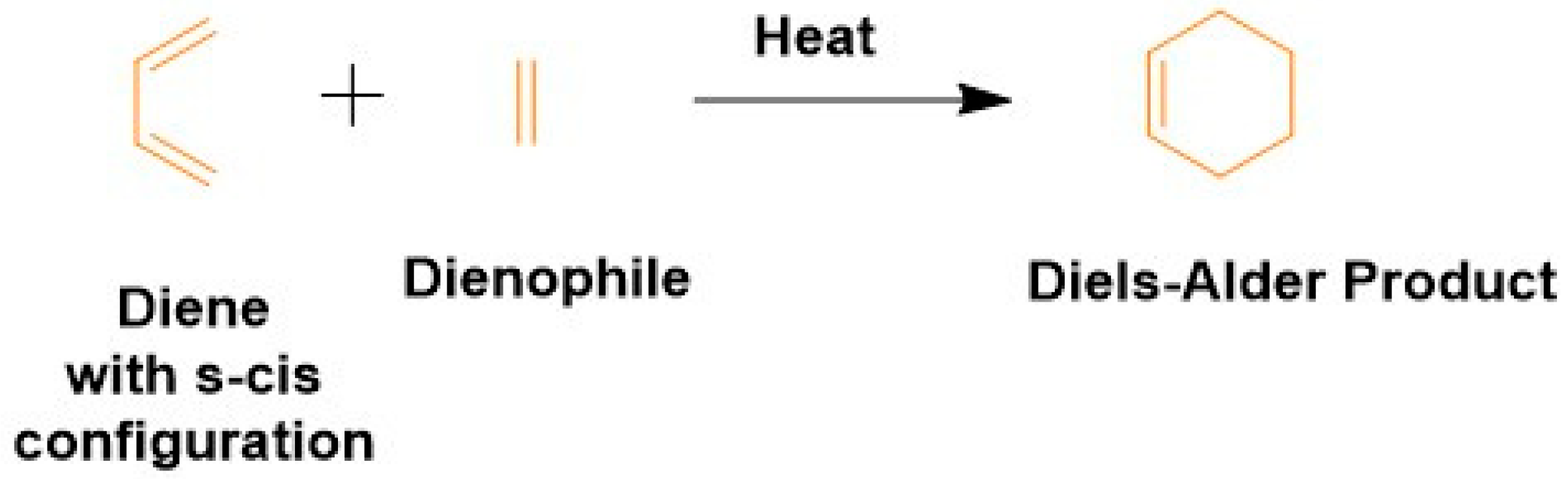
2.2. Diels–Alder Reaction
3. Magnetic Resonance Studies
3.1. Electron Paramagnetic Resonance (EPR)
3.2. Paramagnetic NMR
4. Spin Labels and Paramagnetic Tags
4.1. Spin Labels
4.2. Paramagnetic Tags
5. Incorporation of Spin Labels and Paramagnetic Tags
5.1. AAC Reactions
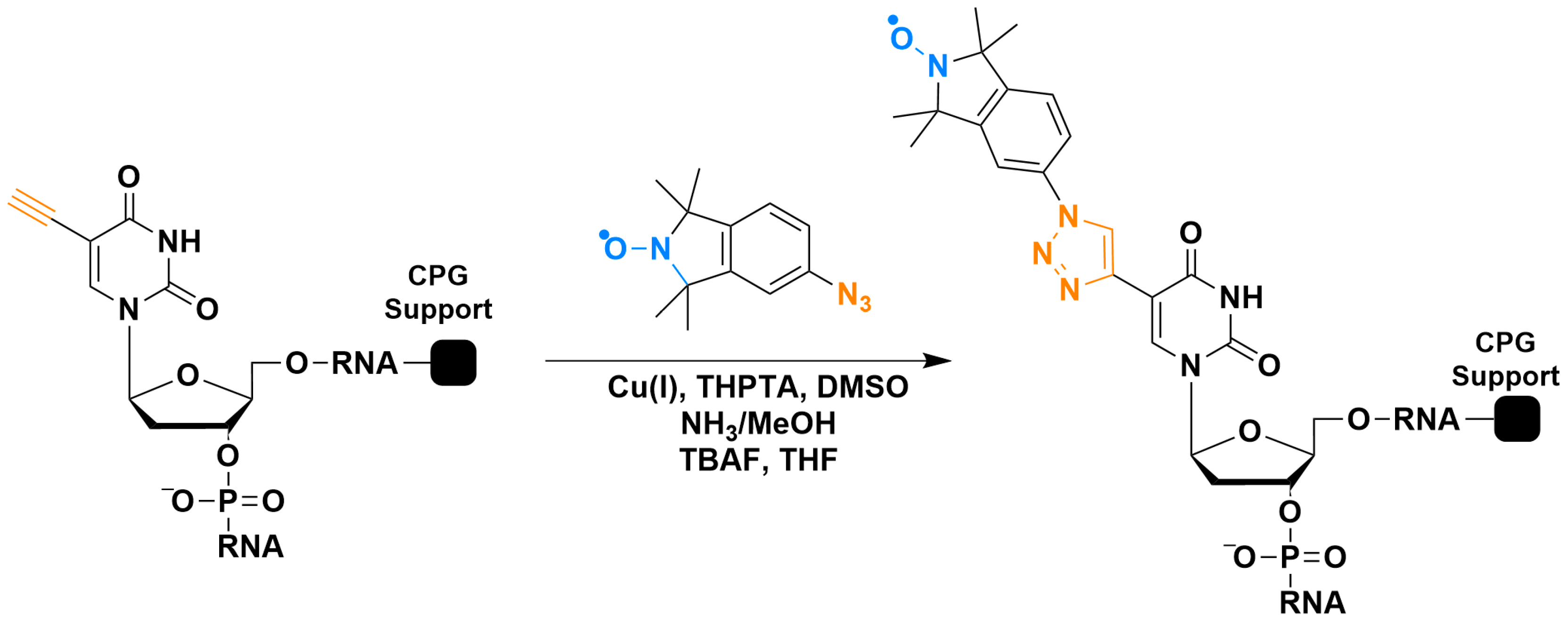
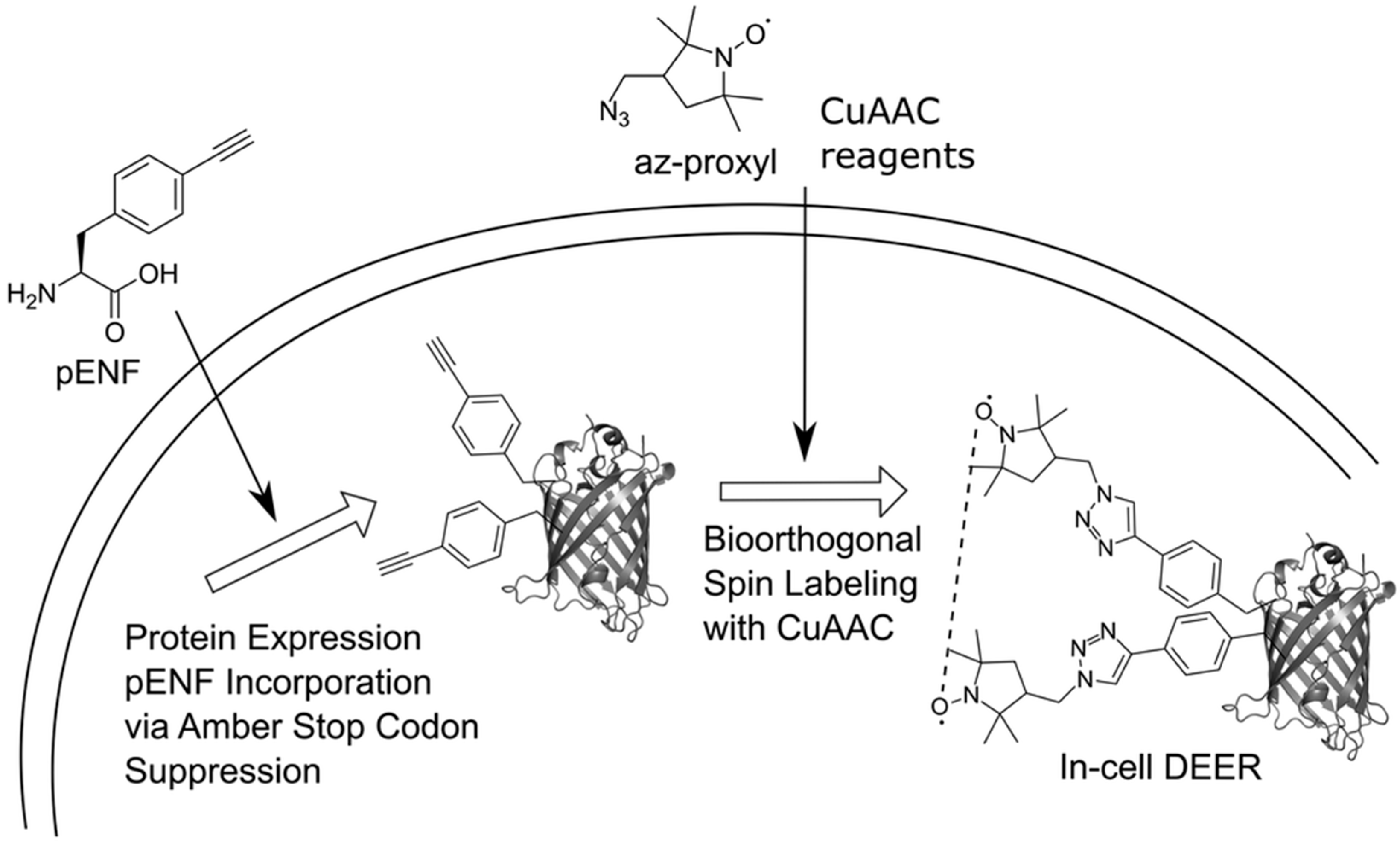
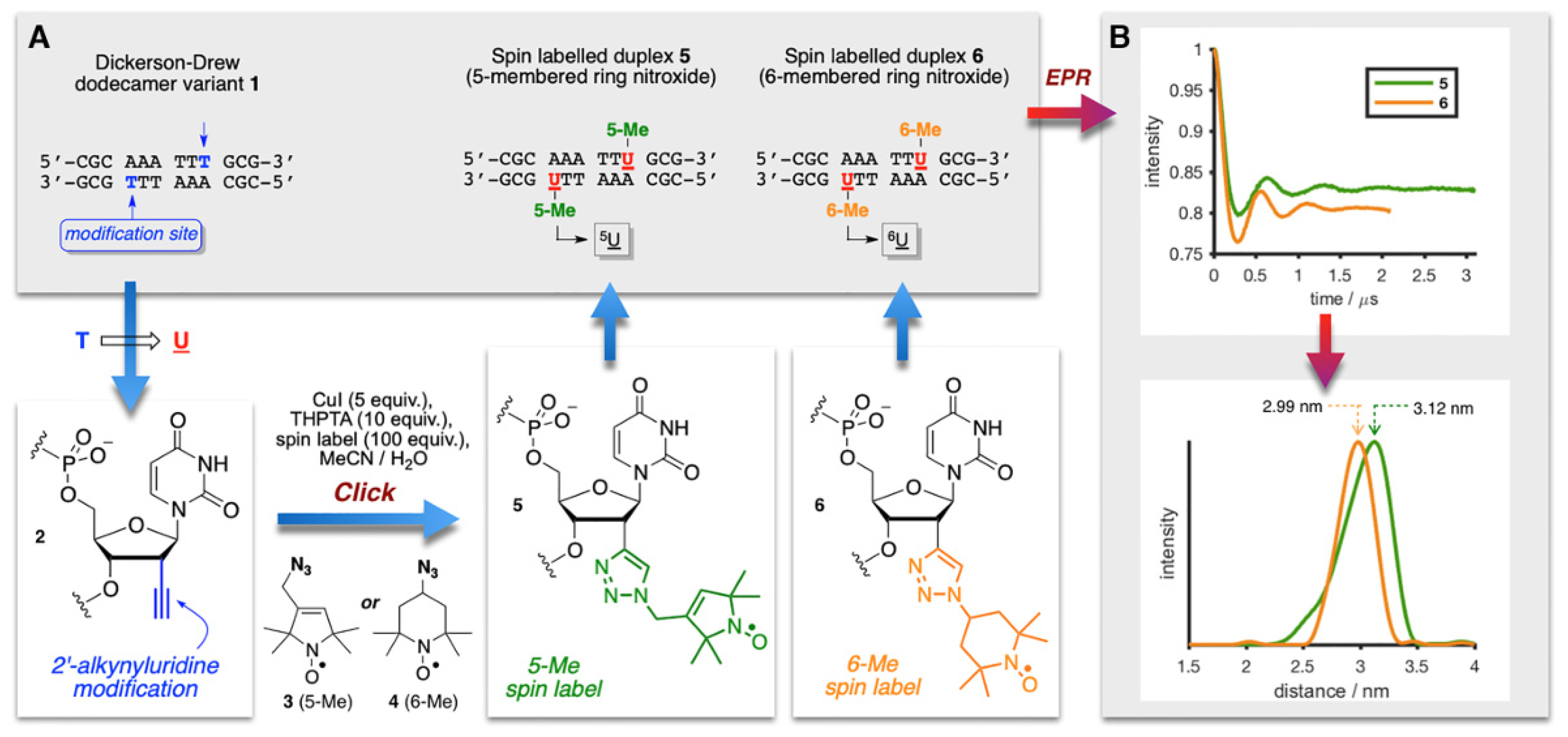
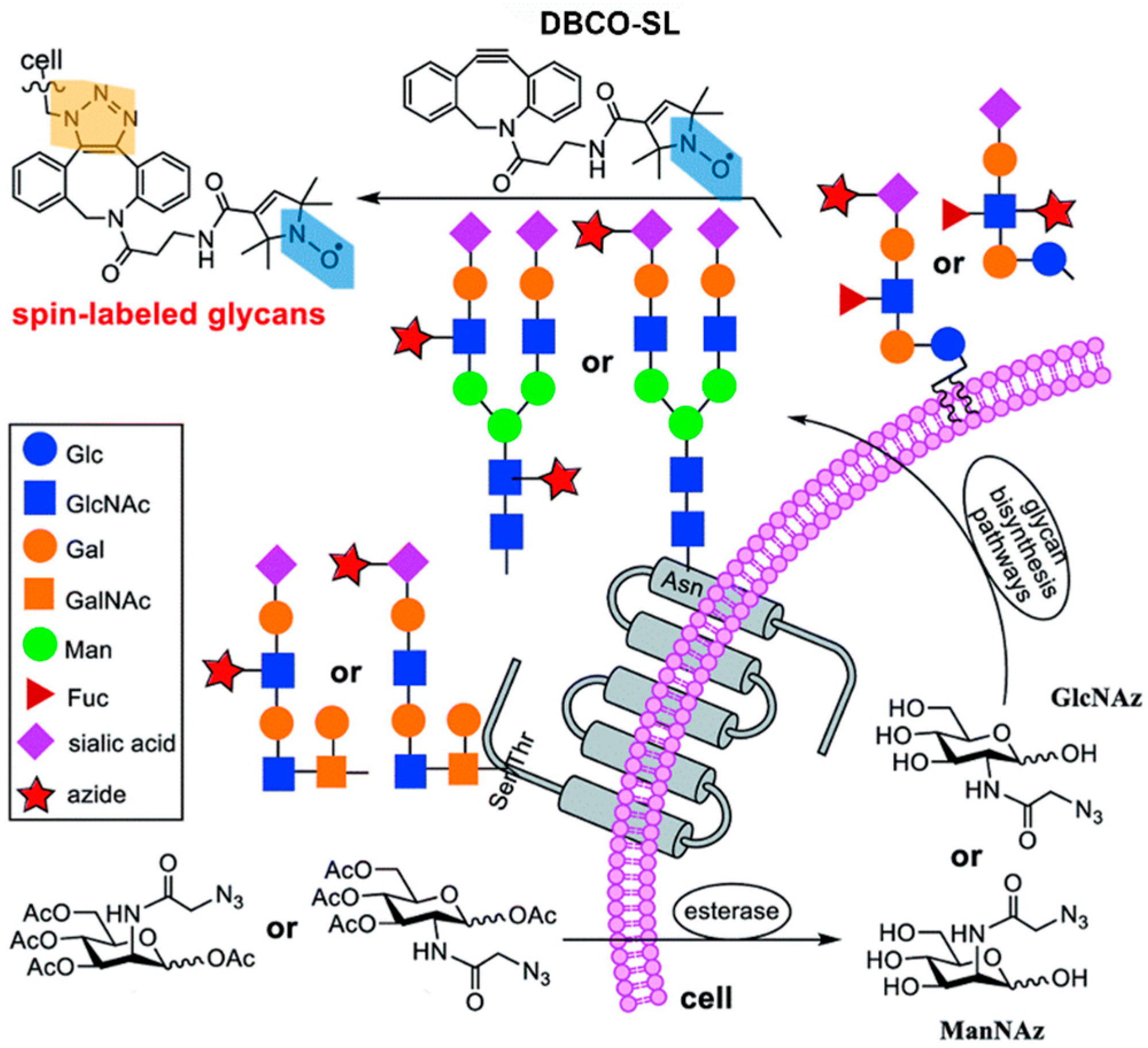
5.1.1. Nitroxide Spin Labels
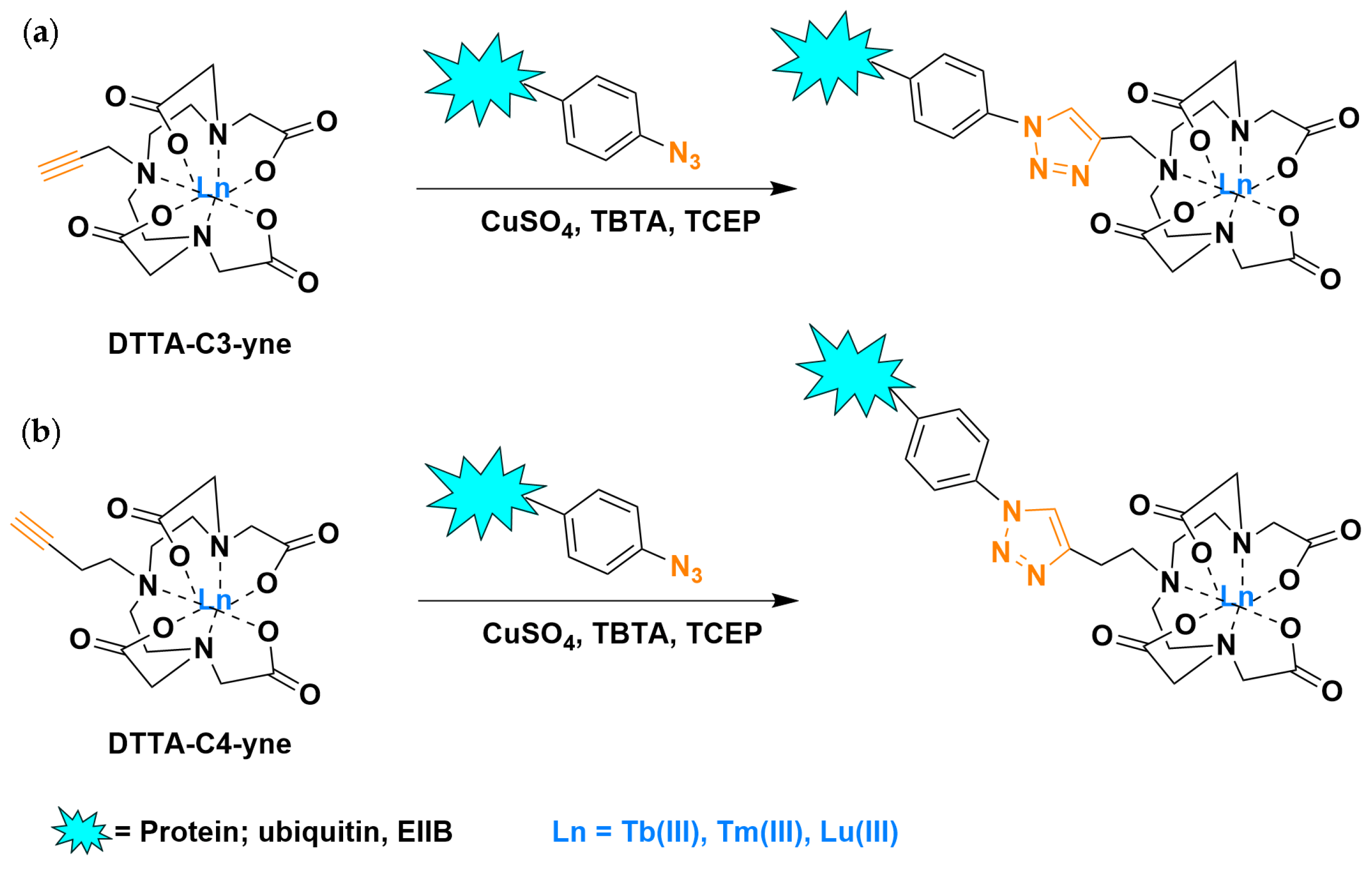
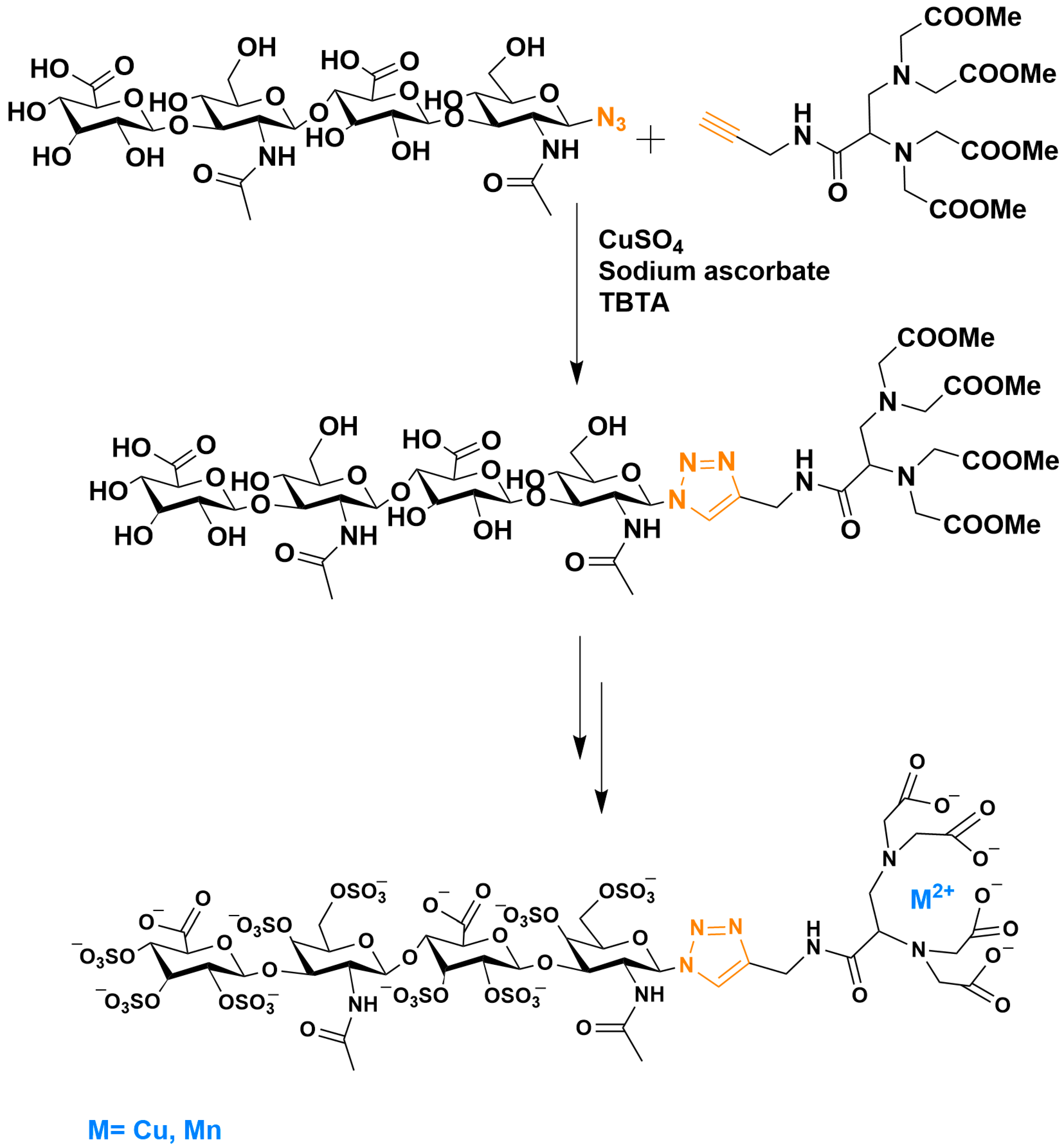
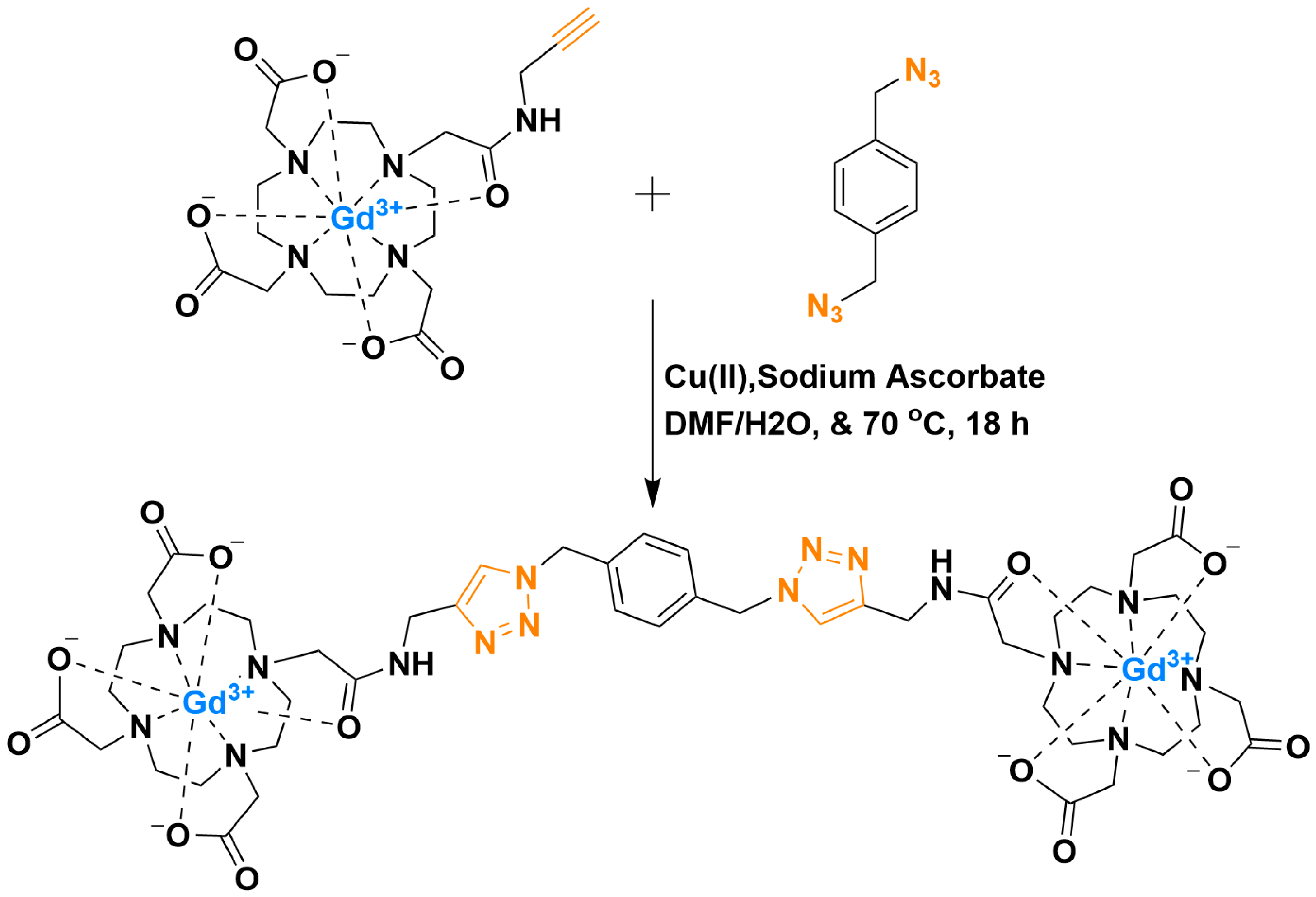
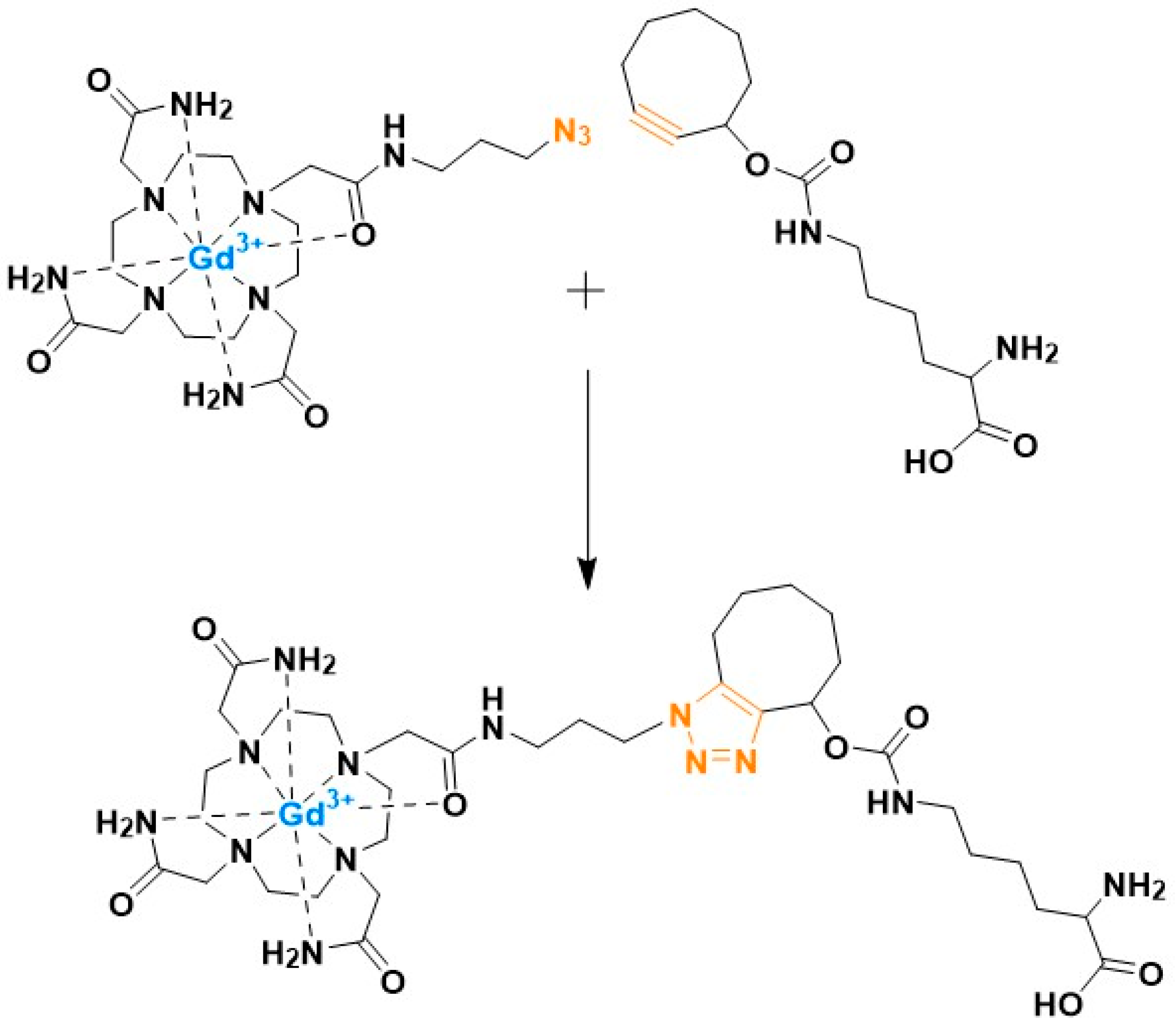
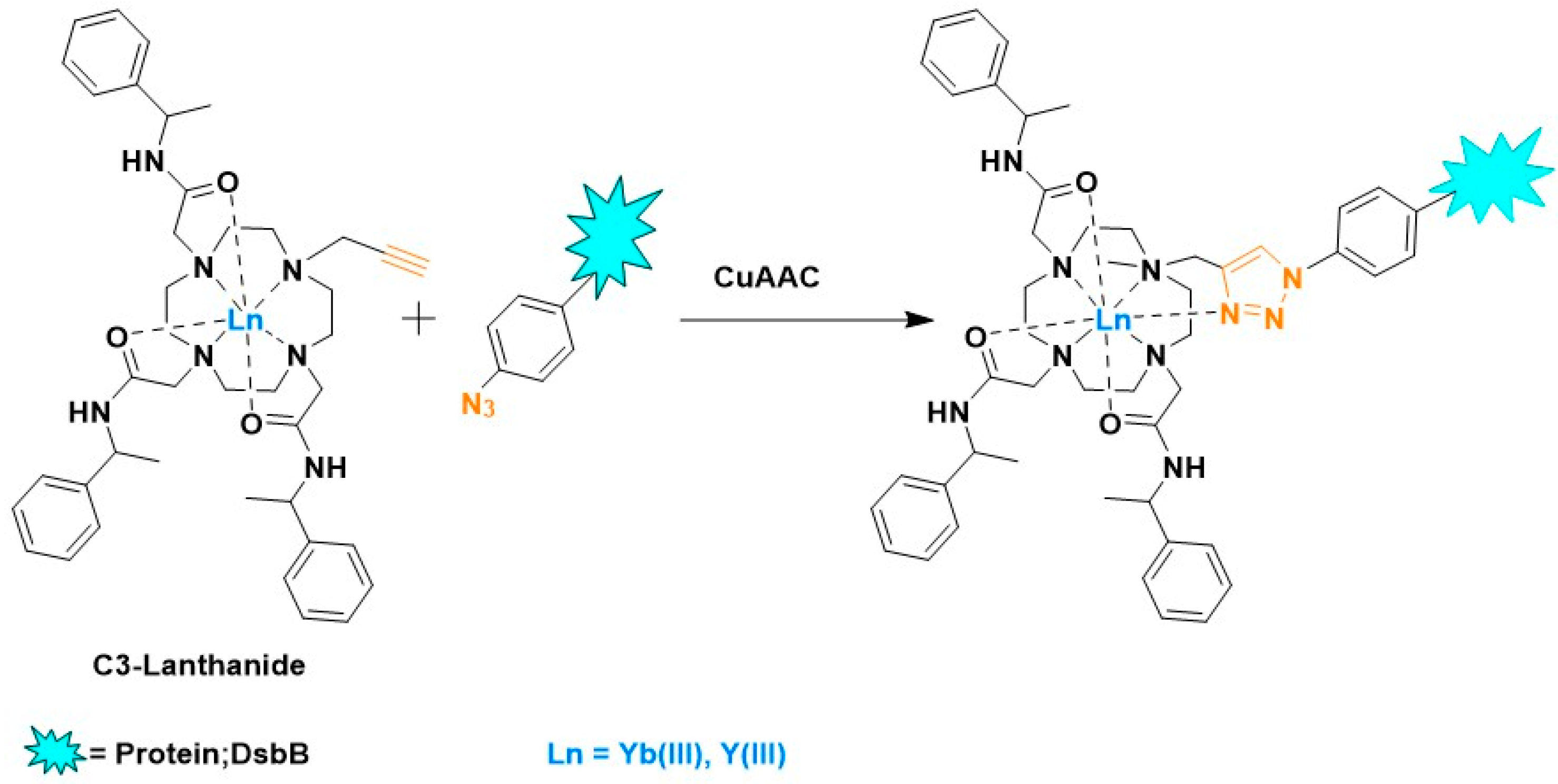
5.1.2. Paramagnetic Metal Tags
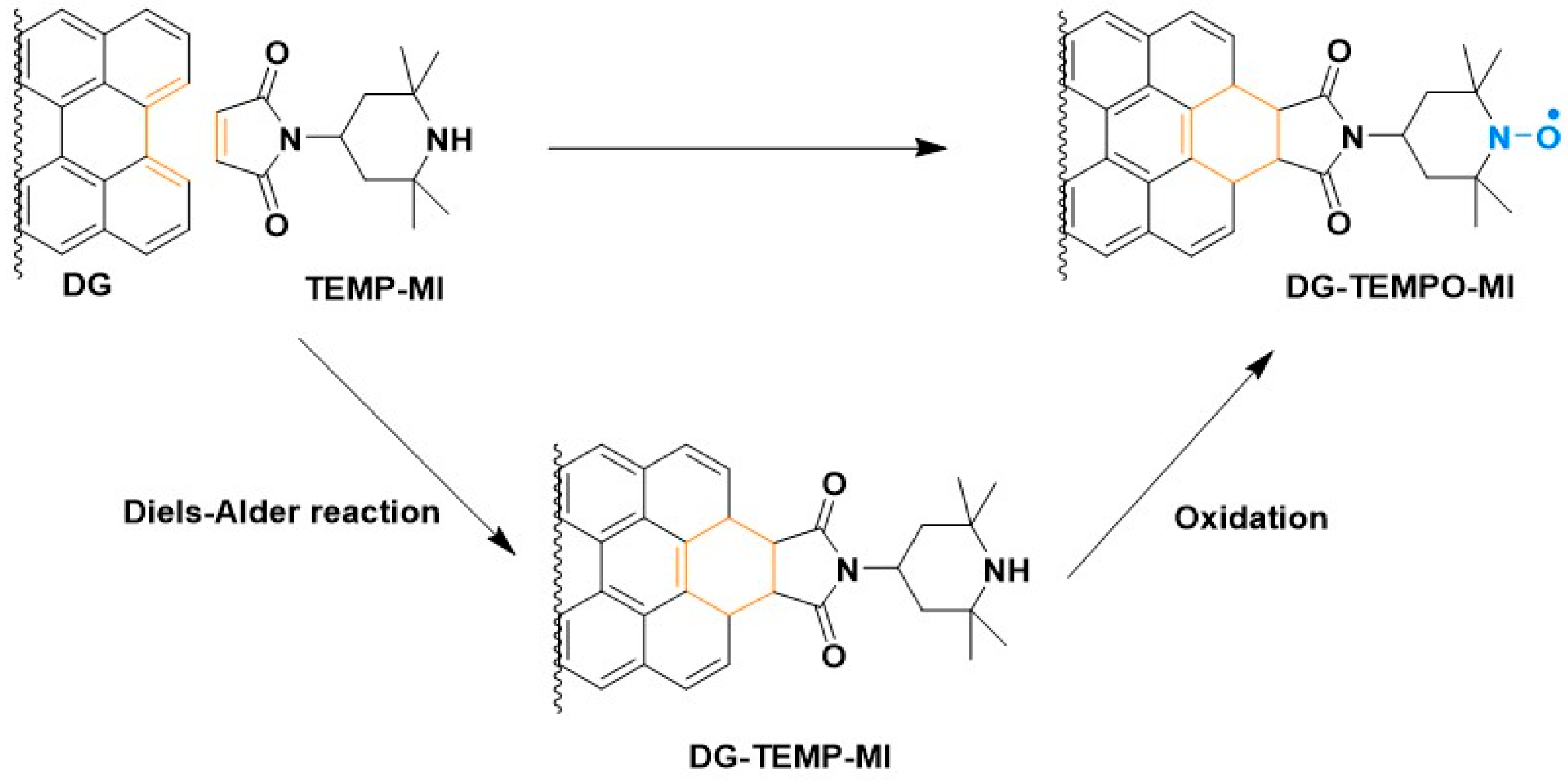
5.2. Diels–Alder Reaction
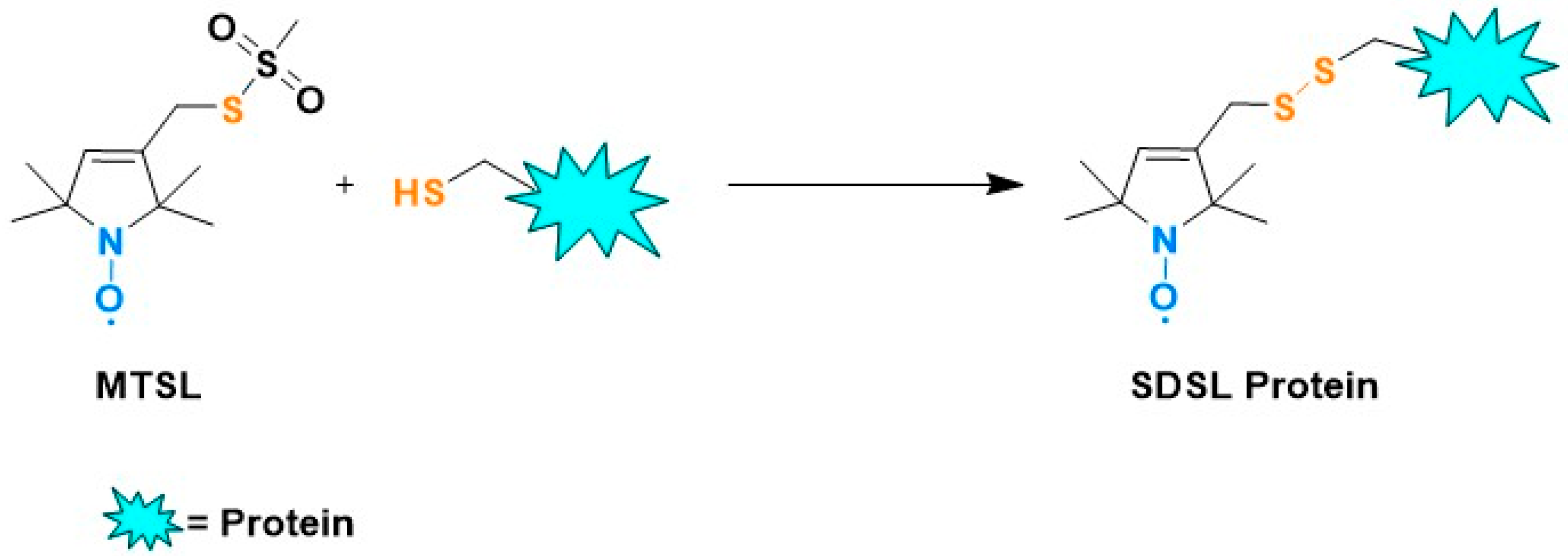
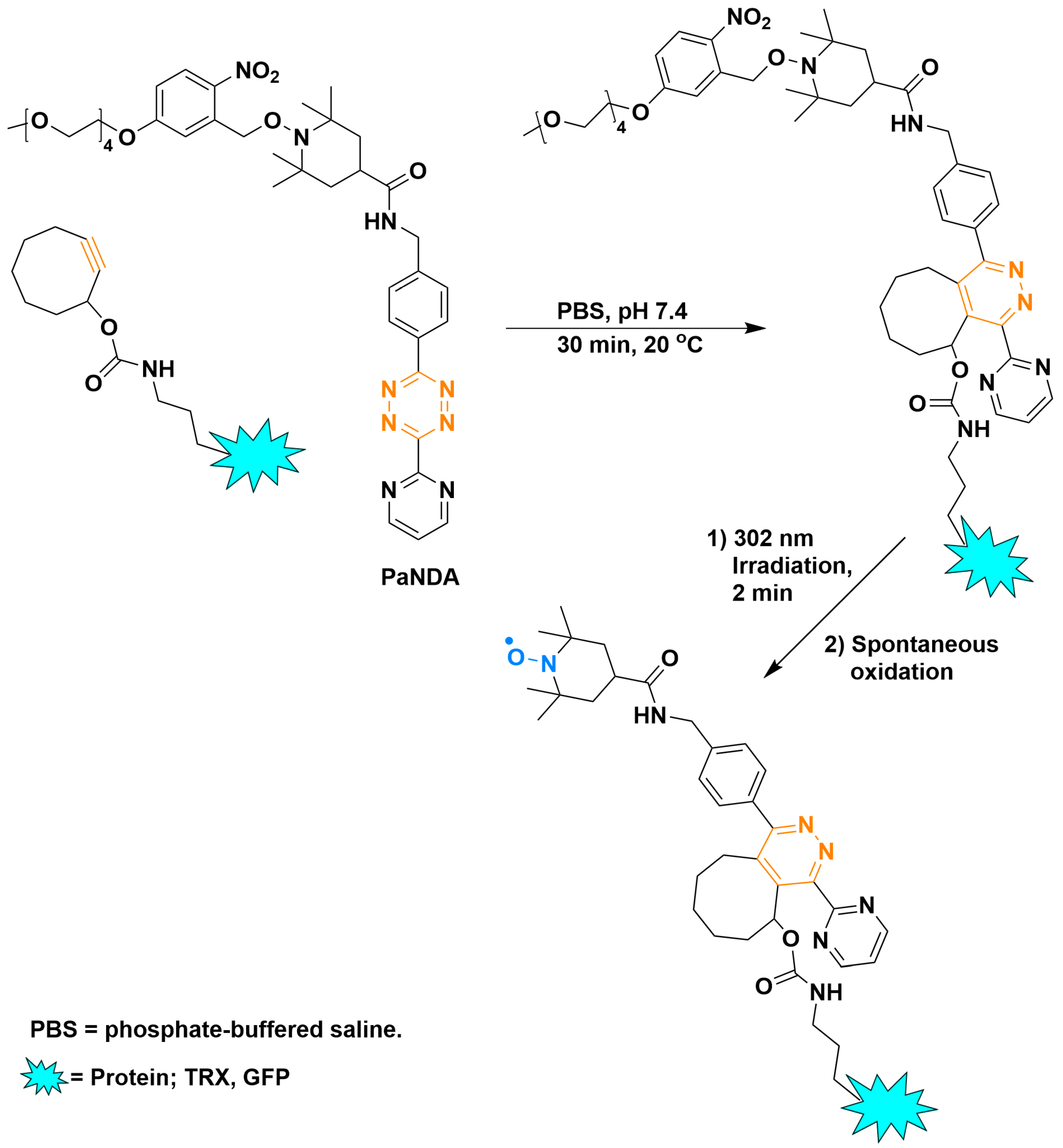
Nitroxide Spin Label
6. Summary and Outlook
Author Contributions
Funding
Institutional Review Board Statement
Informed Consent Statement
Data Availability Statement
Conflicts of Interest
References
- Nishiwaki, N. (Ed.) Methods and Applications of Cycloaddition Reactions in Organic Syntheses; John Wiley & Sons, Inc.: Hoboken, NJ, USA, 2014; pp. I–XII. [Google Scholar]
- Porte, K.; Riomet, M.; Figliola, C.; Audisio, D.; Taran, F. Click and Bio-Orthogonal Reactions with Mesoionic Compounds. Chem. Rev. 2021, 121, 6718–6743. [Google Scholar] [CrossRef]
- Yang, E.S.; Mapp, A.; Taylor, A.; Beer, P.D.; Goicoechea, J.M. Cyaphide-Azide 1,3-Dipolar Cycloaddition Reactions: Scope and Applicability. Chem. Eur. J. 2023, 29, e202301648. [Google Scholar] [CrossRef]
- Moyano, A.; Rios, R. Asymmetric Organocatalytic Cyclization and Cycloaddition Reactions. Chem. Rev. 2011, 111, 4703–4832. [Google Scholar] [CrossRef]
- Min, L.; Hu, Y.J.; Fan, J.H.; Zhang, W.; Li, C.C. Synthetic applications of type II intramolecular cycloadditions. Chem. Soc. Rev. 2020, 49, 7015–7043. [Google Scholar] [CrossRef] [PubMed]
- Cai, W.Y.; Ding, Q.N.; Zhou, L.; Chen, J. Asymmetric Synthesis of Axially Chiral Molecules via Organocatalytic Cycloaddition and Cyclization Reactions. Molecules 2023, 28, 4306. [Google Scholar] [CrossRef] [PubMed]
- Chiacchio, M.A.; Legnani, L. Density Functional Theory Calculations: A Useful Tool to Investigate Mechanisms of 1,3-Dipolar Cycloaddition Reactions. Int. J. Mol. Sci. 2024, 25, 1298. [Google Scholar] [CrossRef] [PubMed]
- Shi, M.; Wei, Y.; Zhao, M.-X.; Zhang, J. Organocatalytic Cycloadditions for Synthesis of Carbo- and Heterocycles; Wiley-VCH Verlag GmbH & Co. KGaA: Weinheim, Germany, 2018. [Google Scholar]
- Zhang, B.; Ge, H.M. Pericyclases for cycloaddition. Natl. Sci. Rev. 2022, 9, nwac229. [Google Scholar] [CrossRef]
- Sankararaman, S. Pericyclic Reactions—A Textbook: Reactions, Applications and Theory; Wiley-VCH Verlag GmbH & Co. KGaA: Weinheim, Germany, 2005. [Google Scholar]
- Kobayashi, S.; Jørgensen, K.A. Cycloaddition Reactions in Organic Synthesis; Wiley-VCH Verlag GmbH: Weinheim, Germany, 2002. [Google Scholar]
- Breugst, M.; Reissig, H.U. The Huisgen Reaction: Milestones of the 1,3-Dipolar Cycloaddition. Angew. Chem. Int. Ed. 2020, 59, 12293–12307. [Google Scholar] [CrossRef]
- Huisgen, R. 1,3-Dipolar Cycloadditions. Past and Future. Angew. Chem. Int. Ed. Engl. 1963, 2, 565–598. [Google Scholar] [CrossRef]
- Pellissier, H. Asymmetric 1,3-dipolar cycloadditions. Tetrahedron 2007, 63, 3235–3285. [Google Scholar] [CrossRef]
- Gothelf, K.V.; Jorgensen, K.A. Asymmetric 1,3-dipolar cycloaddition reactions. Chem. Rev. 1998, 98, 863–909. [Google Scholar] [CrossRef]
- Rostovtsev, V.V.; Green, L.G.; Fokin, V.V.; Sharpless, K.B. A stepwise Huisgen cycloaddition process: Copper(I)-catalyzed regioselective “ligation” of azides and terminal alkynes. Angew. Chem. Int. Ed. 2002, 41, 2596–2599. [Google Scholar] [CrossRef]
- Tornoe, C.W.; Christensen, C.; Meldal, M. Peptidotriazoles on solid phase: [1,2,3]-triazoles by regiospecific copper(I)-catalyzed 1,3-dipolar cycloadditions of terminal alkynes to azides. J. Org. Chem. 2002, 67, 3057–3064. [Google Scholar] [CrossRef]
- Kolb, H.C.; Finn, M.G.; Sharpless, K.B. Click chemistry: Diverse chemical function from a few good reactions. Angew. Chem. Int. Ed. 2001, 40, 2004–2021. [Google Scholar] [CrossRef]
- Hein, J.E.; Fokin, V.V. Copper-catalyzed azide-alkyne cycloaddition (CuAAC) and beyond: New reactivity of copper(I) acetylides. Chem. Soc. Rev. 2010, 39, 1302–1315. [Google Scholar] [CrossRef]
- Abu-Orabi, S.T.; Atfah, M.A.; Jibril, I.; Mari’i, F.M.; Ali, A.A.-S. Dipolar cycloaddition reactions of organic azides with some acetylenic compounds. J. Heterocycl. Chem. 1989, 26, 1461–1468. [Google Scholar] [CrossRef]
- Sletten, E.M.; Bertozzi, C.R. From Mechanism to Mouse: A Tale of Two Bioorthogonal Reactions. Accounts Chem. Res. 2011, 44, 666–676. [Google Scholar] [CrossRef] [PubMed]
- Dresler, E.; Wolinski, P.; Wroblewska, A.; Jasinski, R. On the Question of Zwitterionic Intermediates in the [3+2] Cycloaddition Reactions between Aryl Azides and Ethyl Propiolate. Molecules 2023, 28, 8152. [Google Scholar] [CrossRef]
- Agard, N.J.; Prescher, J.A.; Bertozzi, C.R. A strain-promoted [3+2] azide-alkyne cycloaddition for covalent modification of blomolecules in living systems. J. Am. Chem. Soc. 2004, 126, 15046–15047. [Google Scholar] [CrossRef] [PubMed]
- Plass, T.; Milles, S.; Koehler, C.; Schultz, C.; Lemke, E.A. Genetically Encoded Copper-Free Click Chemistry. Angew. Chem. Int. Ed. 2011, 50, 3878–3881. [Google Scholar] [CrossRef]
- Singh, I.; Heaney, F. Solid phase strain promoted “click” modification of DNA via [3+2]-nitrile oxide-cyclooctyne cycloadditions. Chem. Commun. 2011, 47, 2706–2708. [Google Scholar] [CrossRef]
- Chang, P.V.; Prescher, J.A.; Sletten, E.M.; Baskin, J.M.; Miller, I.A.; Agard, N.J.; Lo, A.; Bertozzi, C.R. Copper-free click chemistry in living animals. Proc. Natl. Acad. Sci. USA 2010, 107, 1821–1826. [Google Scholar] [CrossRef]
- Neef, A.B.; Schultz, C. Selective Fluorescence Labeling of Lipids in Living Cells. Angew. Chem. Int. Ed. 2009, 48, 1498–1500. [Google Scholar] [CrossRef]
- The Nobel Prize in Chemistry. 2022. Available online: https://www.nobelprize.org/uploads/2022/10/press-chemistryprize2022-2.pdf (accessed on 13 October 2025).
- Bauer, D.; Cornejo, M.A.; Hoang, T.T.; Lewis, J.S.; Zeglis, B.M. Click Chemistry and Radiochemistry: An Update. Bioconjug. Chem. 2023, 34, 1925–1950. [Google Scholar] [CrossRef]
- Diels, O.; Alder, K. Synthesen in der hydroaromatischen Reihe. Justus Liebigs Ann. Chem. 1928, 460, 98–122. [Google Scholar] [CrossRef]
- Houk, K.N.; Lin, Y.T.; Brown, F.K. Evidence for the concerted mechanism of the Diels-Alder reaction of butadiene with ethylene. J. Am. Chem. Soc. 1986, 108, 554–556. [Google Scholar] [CrossRef] [PubMed]
- Linder, M.; Johansson, A.J.; Brinck, T. Mechanistic Insights into the Stepwise Diels-Alder Reaction of 4,6-Dinitrobenzofuroxan. Org. Lett. 2012, 14, 118–121. [Google Scholar] [CrossRef] [PubMed]
- Jasinski, R. On the Question of Stepwise [4+2] Cycloaddition Reactions and Their Stereochemical Aspects. Symmetry 2021, 13, 1911. [Google Scholar] [CrossRef]
- Domingo, L.R. Molecular Electron Density Theory: A Modern View of Reactivity in Organic Chemistry. Molecules 2016, 21, 1319. [Google Scholar] [CrossRef]
- Domingo, L.R.; Pérez, P.; Sáez, J.A. Understanding the local reactivity in polar organic reactions through electrophilic and nucleophilic Parr functions. RSC Adv. 2013, 3, 1486–1494. [Google Scholar] [CrossRef]
- Denis, P.A. Organic Chemistry of Graphene: The Diels-Alder Reaction. Chem. Eur. J. 2013, 19, 15719–15725. [Google Scholar] [CrossRef]
- Sarkar, S.; Bekyarova, E.; Niyogi, S.; Haddon, R.C. Diels-Alder Chemistry of Graphite and Graphene: Graphene as Diene and Dienophile. J. Am. Chem. Soc. 2011, 133, 3324–3327. [Google Scholar] [CrossRef]
- Cao, Y.; Osuna, S.; Liang, Y.; Haddon, R.C.; Houk, K.N. Diels-Alder Reactions of Graphene: Computational Predictions of Products and Sites of Reaction. J. Am. Chem. Soc. 2013, 135, 17643–17649. [Google Scholar] [CrossRef]
- Ji, Z.; Chen, J.; Huang, L.; Shi, G.Q. High-yield production of highly conductive graphene via reversible covalent chemistry. Chem. Commun. 2015, 51, 2806–2809. [Google Scholar] [CrossRef] [PubMed]
- Seo, J.M.; Jeon, I.Y.; Baek, J.B. Mechanochemically driven solid-state Diels-Alder reaction of graphite into graphene nanoplatelets. Chem. Sci. 2013, 4, 4273–4277. [Google Scholar] [CrossRef]
- Weil, J.A.; Bolton, J.R. Electron Pramagnetic Resonance: Elementary Theory and Practical Applications, 2nd ed.; John Wiley & Sons, Inc.: New York, NY, USA, 2007. [Google Scholar]
- Eaton, G.R.; Eaton, S.S.E.; Salikhov, K.M. Foundations of Modern EPR; World Scientific Publishing Company: Hackensack, NJ, USA, 1998. [Google Scholar]
- Harriman, J.E. Theoretical Foundations of Electron Spin Resonance; Academic Press, Inc.: New York, NY, USA, 1978. [Google Scholar]
- Abragam, A.; Bleaney, B. Electron Paramagnetic Resonance of Transition Ions; Oxford University Press: Oxford, UK, 2012. [Google Scholar]
- Poole, C.P. Electron Spin Resonance: A Comprehensive Treatise on Experimental Techniques; Dover Publications, Inc.: New York, NY, USA, 1996. [Google Scholar]
- Palmer, G. Electron Paramagnetic Resonance of Metalloproteins. In Physical Methods in Bioorganic Chemistry: Spectroscopy and Magnetism; Que, L., Ed.; University Science Books: Sausalito, CA, USA, 2000; pp. 121–185. [Google Scholar]
- Banerjee, R. Radical Enzymology. Chem. Rev. 2003, 103, 2081–2456. [Google Scholar] [CrossRef]
- Pilbrow, J.R. EPR of B12-Dependent Enzyme Reactions and Related Systems. In B12; Dolphin, D., Ed.; John Wiley & Sons: New York, NY, USA, 1982; Volume 1, pp. 431–462. [Google Scholar]
- Gerfen, G.J. EPR Spectroscopy of B12-Dependent Enzymes. In Chemistry and Biochemistry of B12; Banerjee, R., Ed.; John Wiley & Sons, Inc.: New York, NY, USA, 1999; pp. 165–195. [Google Scholar]
- Schweiger, A.; Jeschke, G. Principles of Pulse Electron Paramagnetic Resonance; Oxford University Press: Oxford, UK, 2001. [Google Scholar]
- Fanucci, G.E.; Cafiso, D.S. Recent advances and applications of site-directed spin labeling. Curr. Opin. Struc. Biol. 2006, 16, 644–653. [Google Scholar] [CrossRef]
- Jeschke, G. Distance measurements in the nanometer range by pulse EPR. ChemPhysChem 2002, 3, 927–932. [Google Scholar] [CrossRef]
- Jeschke, G.; Polyhach, Y. Distance measurements on spin-labelled biomacromolecules by pulsed electron paramagnetic resonance. Phys. Chem. Chem. Phys. 2007, 9, 1895–1910. [Google Scholar] [CrossRef]
- Eaton, S.S.; Eaton, G.R. Multifrequency Pulsed EPR and the Characterization of Molecular Dynamics. Method. Enzymol. 2015, 563, 37–58. [Google Scholar] [CrossRef]
- Ledwitch, K.; Künze, G.; Okwei, E.; Sala, D.; Meiler, J. Non-canonical amino acids for site-directed spin labeling of membrane proteins. Curr. Opin. Struc. Biol. 2024, 89, 102936. [Google Scholar] [CrossRef]
- Sahu, I.D.; Lorigan, G.A. Electron Paramagnetic Resonance as a Tool for Studying Membrane Proteins. Biomolecules 2020, 10, 763. [Google Scholar] [CrossRef] [PubMed]
- Klare, J.P.; Steinhoff, H.J. Spin labeling EPR. Photosynth. Res. 2009, 102, 377–390. [Google Scholar] [CrossRef]
- Jeschke, G.; Chechik, V.; Ionita, P.; Godt, A.; Zimmermann, H.; Banham, J.; Timmel, C.R.; Hilger, D.; Jung, H. DeerAnalysis2006—A comprehensive software package for analyzing pulsed ELDOR data. Appl. Magn. Reson. 2006, 30, 473–498. [Google Scholar] [CrossRef]
- Thwaites, J.D.; Bertini, I.; Sacconi, L. Proton Resonance Studies of the Solution Equilibria of Nickel(II) Complexes with Schiff Bases Formed from Salicylaldehydes and N,N-Substituted Ethylenediamines. II. Inorg. Chem. 1966, 5, 1036–1041. [Google Scholar] [CrossRef]
- Thwaites, J.D.; Sacconi, L. Proton Resonance Studies of the Solution Equilibria of Nickel(II)Complexes with Schiff Bases Formed from Salicylaldehydes and N,N-Substituted Ethylenediamines. I. Inorg. Chem. 1966, 5, 1029–1035. [Google Scholar] [CrossRef]
- Banci, L.; Piccioli, M.; Scozzafava, A. Advances in the NMR investigation of paramagnetic molecules in solution. Coord. Chem. Rev. 1992, 120, 1–28. [Google Scholar] [CrossRef]
- Lehr, M.; Paschelke, T.; Trumpf, E.; Vogt, A.M.; Näther, C.; Sönnichsen, F.D.; McConnell, A.J. A Paramagnetic NMR Spectroscopy Toolbox for the Characterisation of Paramagnetic/Spin-Crossover Coordination Complexes and Metal-Organic Cages. Angew. Chem. Int. Ed. 2020, 59, 19344–19351. [Google Scholar] [CrossRef]
- Ravera, E.; Gigli, L.; Fiorucci, L.; Luchinat, C.; Parigi, G. The evolution of paramagnetic NMR as a tool in structural biology. Phys. Chem. Chem. Phys. 2022, 24, 17397–17416. [Google Scholar] [CrossRef]
- Columbus, L.; Kroncke, B. Solution NMR Structure Determination of Polytopic α-Helical Membrane Proteins: A Guide to Spin Label Paramagnetic Relaxation Enhancement Restraints. Membr. Proteins Eng. Purif. Cryst. 2015, 557, 329–348. [Google Scholar] [CrossRef]
- Gottstein, D.; Reckel, S.; Dötsch, V.; Güntert, P. Requirements on Paramagnetic Relaxation Enhancement Data for Membrane Protein Structure Determination by NMR. Structure 2012, 20, 1019–1027. [Google Scholar] [CrossRef]
- Maity, A.N.; Chen, J.-R.; Ke, S.-C. Exploring the mechanism of action of lysine 5,6-aminomutase using EPR and ENDOR spectroscopies. Methods Enzymol. 2022, 669, 197–228. [Google Scholar] [CrossRef] [PubMed]
- Maity, A.N.; Chen, J.-R.; Li, Q.-Y.; Ke, S.-C. The Nitrogen Atom of Vitamin B6 Is Essential for the Catalysis of Radical Aminomutases. Int. J. Mol. Sci. 2022, 23, 5210. [Google Scholar] [CrossRef] [PubMed]
- Maity, A.N.; Chen, J.R.; Ke, T.X.; Ke, S.C. 5-Hydroxylysine Captures the Suicidally-Inactivated Conformational State of Lysine 5,6-Aminomutase. Int. J. Mol. Sci. 2025, 26, 8561. [Google Scholar] [CrossRef]
- Maity, A.N.; Chen, Y.H.; Ke, S.C. Large-scale domain motions and pyridoxal-5′-phosphate assisted radical catalysis in coenzyme B12-dependent aminomutases. Int. J. Mol. Sci. 2014, 15, 3064–3087. [Google Scholar] [CrossRef] [PubMed]
- Maity, A.N.; Hsieh, C.P.; Huang, M.H.; Chen, Y.H.; Tang, K.H.; Behshad, E.; Frey, P.A.; Ke, S.C. Evidence for conformational movement and radical mechanism in the reaction of 4-thia-L-lysine with lysine 5,6-aminomutase. J. Phys. Chem. B 2009, 113, 12161–12163. [Google Scholar] [CrossRef]
- Chen, J.-R.; Ke, T.-X.; Frey, P.A.; Ke, S.-C. Electron Spin Echo Envelope Modulation Spectroscopy Reveals How Adenosylcobalamin-Dependent Lysine 5,6-Aminomutase Positions the Radical Pair Intermediates and Modulates Their Stabilities for Efficient Catalysis. ACS Catal. 2021, 11, 14352–14368. [Google Scholar] [CrossRef]
- Chen, Y.H.; Maity, A.N.; Frey, P.A.; Ke, S.C. Mechanism-based inhibition reveals transitions between two conformational states in the action of lysine 5,6-aminomutase: A combination of electron paramagnetic resonance spectroscopy, electron nuclear double resonance spectroscopy, and density functional theory study. J. Am. Chem. Soc. 2013, 135, 788–794. [Google Scholar] [CrossRef]
- Chen, Y.H.; Maity, A.N.; Pan, Y.C.; Frey, P.A.; Ke, S.C. Radical stabilization is crucial in the mechanism of action of lysine 5,6-aminomutase: Role of tyrosine-263α as revealed by electron paramagnetic resonance spectroscopy. J. Am. Chem. Soc. 2011, 133, 17152–17155. [Google Scholar] [CrossRef]
- Reed, G.H.; Mansoorabadi, S.O. The positions of radical intermediates in the active sites of adenosylcobalamin-dependent enzymes. Curr. Opin. Struc. Biol. 2003, 13, 716–721. [Google Scholar] [CrossRef][Green Version]
- Maity, A.N.; Lin, H.H.; Chiang, H.S.; Lo, H.H.; Ke, S.C. Reaction of pyridoxal-5′-phosphate-N-oxide with lysine 5,6-aminomutase: Enzyme flexibility toward cofactor analog. ACS Catal. 2015, 5, 3093–3099. [Google Scholar] [CrossRef]
- Lo, H.H.; Lin, H.H.; Maity, A.N.; Ke, S.C. The molecular mechanism of the open-closed protein conformational cycle transitions and coupled substrate binding, activation and product release events in lysine 5,6-aminomutase. Chem. Commun. 2016, 52, 6399–6402. [Google Scholar] [CrossRef] [PubMed]
- Piccioli, M. Paramagnetic NMR Spectroscopy Is a Tool to Address Reactivity, Structure, and Protein-Protein Interactions of Metalloproteins: The Case of Iron-Sulfur Proteins. Magnetochemistry 2020, 6, 46. [Google Scholar] [CrossRef]
- Li, H.; Sun, H. NMR Studies of Metalloproteins. In NMR of Proteins and Small Biomolecules; Zhu, G., Ed.; Springer: Berlin/Heidelberg, Germany, 2012; pp. 69–98. [Google Scholar]
- Ravera, E.; Gigli, L.; Suturina, E.A.; Calderone, V.; Fragai, M.; Parigi, G.; Luchinat, C. A High-Resolution View of the Coordination Environment in a Paramagnetic Metalloprotein from its Magnetic Properties. Angew. Chem. Int. Ed. 2021, 60, 14960–14966. [Google Scholar] [CrossRef]
- Braun, T.; Drescher, M.; Summerer, D. Expanding the Genetic Code for Site-Directed Spin-Labeling. Int. J. Mol. Sci. 2019, 20, 373. [Google Scholar] [CrossRef]
- Schmidt, M.J.; Borbas, J.; Drescher, M.; Summerer, D. A Genetically Encoded Spin Label for Electron Paramagnetic Resonance Distance Measurements. J. Am. Chem. Soc. 2014, 136, 1238–1241. [Google Scholar] [CrossRef] [PubMed]
- Paredes, E.; Das, S.R. Click Chemistry for Rapid Labeling and Ligation of RNA. ChemBioChem 2011, 12, 125–131. [Google Scholar] [CrossRef]
- Shelke, S.A.; Sigurdsson, S.T. Site-Directed Spin Labeling for EPR Studies of Nucleic Acids. In Modified Nucleic Acids; Nakatani, K., Tor, Y., Eds.; Springer International Publishing: Cham, Switzerland, 2016; pp. 159–187. [Google Scholar]
- Columbus, L.; Hubbell, W.L. A new spin on protein dynamics. Trends Biochem. Sci. 2002, 27, 288–295. [Google Scholar] [CrossRef]
- Roser, P.; Schmidt, M.J.; Drescher, M.; Summerer, D. Site-directed spin labeling of proteins for distance measurements in vitro and in cells. Org. Biomol. Chem. 2016, 14, 5468–5476. [Google Scholar] [CrossRef] [PubMed]
- Li, M.H.; Zhang, X.; Pan, B.B.; Su, X.C. Excellent Fe(II) Binding Tag in Protein Paramagnetic NMR Spectroscopy. Inorg. Chem. 2025, 64, 7890–7901. [Google Scholar] [CrossRef]
- Miao, Q.; Nitsche, C.; Orton, H.; Overhand, M.; Otting, G.; Ubbink, M. Paramagnetic Chemical Probes for Studying Biological Macromolecules. Chem. Rev. 2022, 122, 9571–9642. [Google Scholar] [CrossRef] [PubMed]
- Widder, P.; Schuck, J.; Summerer, D.; Drescher, M. Combining site-directed spin labeling and in-cell EPR distance determination. Phys. Chem. Chem. Phys. 2020, 22, 4875–4879. [Google Scholar] [CrossRef] [PubMed]
- Büttner, L.; Javadi-Zarnaghi, F.; Höbartner, C. Site-Specific Labeling of RNA at Internal Ribose Hydroxyl Groups: Terbium-Assisted Deoxyribozymes at Work. J. Am. Chem. Soc. 2014, 136, 8131–8137. [Google Scholar] [CrossRef]
- Hardwick, J.S.; Haugland, M.M.; El-Sagheer, A.H.; Ptchelkine, D.; Beierlein, F.R.; Lane, A.N.; Brown, T.; Lovett, J.E.; Anderson, E.A. 2′-Alkynyl spin-labelling is a minimally perturbing tool for DNA structural analysis. Nucleic Acids Res. 2020, 48, 2830–2840. [Google Scholar] [CrossRef]
- Haugland, M.M.; El-Sagheer, A.H.; Porter, R.J.; Peña, J.; Brown, T.; Anderson, E.A.; Lovett, J.E. 2′-Alkynylnucleotides: A Sequence- and Spin Label-Flexible Strategy for EPR Spectroscopy in DNA. J. Am. Chem. Soc. 2016, 138, 9069–9072. [Google Scholar] [CrossRef]
- Wunnicke, D.; Ding, P.; Yang, H.Z.; Seela, F.; Steinhoff, H.J. DNA with Parallel Strand Orientation: A Nanometer Distance Study with Spin Labels in the Watson-Crick and the Reverse Watson-Crick Double Helix. J. Phys. Chem. B 2015, 119, 13593–13599. [Google Scholar] [CrossRef]
- Ding, P.; Wunnicke, D.; Steinhoff, H.J.; Seela, F. Site-Directed Spin-Labeling of DNA by the Azide-Alkyne ‘Click’ Reaction: Nanometer Distance Measurements on 7-Deaza-2′-deoxyadenosine and 2′-Deoxyuridine Nitroxide Conjugates Spatially Separated or Linked to a ‘dA-dT’ Base Pair. Chem. Eur. J. 2010, 16, 14385–14396. [Google Scholar] [CrossRef] [PubMed]
- Jakobsen, U.; Shelke, S.A.; Vogel, S.; Sigurdsson, S.T. Site-Directed Spin-Labeling of Nucleic Acids by Click Chemistry: Detection of Abasic Sites in Duplex DNA by EPR Spectroscopy. J. Am. Chem. Soc. 2010, 132, 10424–10428. [Google Scholar] [CrossRef]
- Shelke, S.A.; Sandholt, G.B.; Sigurdsson, S.T. Nitroxide-labeled pyrimidines for non-covalent spin-labeling of abasic sites in DNA and RNA duplexes. Org. Biomol. Chem. 2014, 12, 7366–7374. [Google Scholar] [CrossRef]
- Kerzhner, M.; Abdullin, D.; Wiecek, J.; Matsuoka, H.; Hagelueken, G.; Schiemann, O.; Famulok, M. Post-synthetic Spin-Labeling of RNA through Click Chemistry for PELDOR Measurements. Chem. Eur. J. 2016, 22, 12113–12121. [Google Scholar] [CrossRef]
- Wuebben, C.; Blume, S.; Abdullin, D.; Brajtenbach, D.; Haege, F.; Kath-Schorr, S.; Schiemann, O. Site-Directed Spin Labeling of RNA with a Gem-Diethylisoindoline Spin Label: PELDOR, Relaxation, and Reduction Stability. Molecules 2019, 24, 4482. [Google Scholar] [CrossRef]
- Jaiswal, M.; Tran, T.T.; Li, Q.J.; Yan, X.; Zhou, M.W.; Kundu, K.; Fanucci, G.E.; Guo, Z.W. A metabolically engineered spin-labeling approach for studying glycans on cells. Chem. Sci. 2020, 11, 12522–12532. [Google Scholar] [CrossRef]
- Jaiswal, M.; Tran, T.T.; Guo, J.T.; Zhou, M.W.; Diaz, J.G.; Fanucci, G.E.; Guo, Z.W. Enzymatic glycoengineering-based spin labelling of cell surface sialoglycans to enable their analysis by electron paramagnetic resonance (EPR) spectroscopy. Analyst 2022, 147, 784–788. [Google Scholar] [CrossRef]
- Jaiswal, M.; Tran, T.T.; Guo, J.T.; Zhou, M.W.; Kundu, S.; Guo, Z.W.; Fanucci, G.E. Spin-Labeling Insights into How Chemical Fixation Impacts Glycan Organization on Cells. Appl. Magn. Reson. 2024, 55, 317–333. [Google Scholar] [CrossRef] [PubMed]
- Jaiswal, M.; Zhou, M.W.; Guo, J.T.; Tran, T.T.; Kundu, S.; Jaufer, A.M.; Fanucci, G.E.; Guo, Z.W. Different Biophysical Properties of Cell Surface α2,3-and α2,6-Sialoglycans Revealed by Electron Paramagnetic Resonance Spectroscopic Studies. J. Phys. Chem. B 2023, 127, 1749–1757. [Google Scholar] [CrossRef] [PubMed]
- Romanova, E.E.; Akiel, R.; Cho, F.H.; Takahashi, S. Grafting Nitroxide Radicals on Nanodiamond Surface Using Click Chemistry. J. Phys. Chem. A 2013, 117, 11933–11939. [Google Scholar] [CrossRef]
- Akiel, R.D.; Stepanov, V.; Takahashi, S. High-Frequency Electron Paramagnetic Resonance Spectroscopy of Nitroxide-Functionalized Nanodiamonds in Aqueous Solution. Cell Biochem. Biophys. 2017, 75, 151–157. [Google Scholar] [CrossRef]
- Loh, C.T.; Graham, B.; Abdelkader, E.H.; Tuck, K.L.; Otting, G. Generation of Pseudocontact Shifts in Proteins with Lanthanides Using Small “Clickable” Nitrilotriacetic Acid and Iminodiacetic Acid Tags. Chem. Eur. J. 2015, 21, 5084–5092. [Google Scholar] [CrossRef] [PubMed]
- Jiang, W.X.; Gu, X.H.; Dong, X.; Tang, C. Lanthanoid tagging via an unnatural amino acid for protein structure characterization. J. Biomol. NMR 2017, 67, 273–282. [Google Scholar] [CrossRef]
- Abdelkader, E.H.; Feintuch, A.; Yao, X.; Adams, L.A.; Aurelio, L.; Graham, B.; Goldfarb, D.; Otting, G. Protein conformation by EPR spectroscopy using gadolinium tags clicked to genetically encoded p-azido-L-phenylalanine. Chem. Commun. 2015, 51, 15898–15901. [Google Scholar] [CrossRef]
- Ledwitch, K.V.; Künze, G.; McKinney, J.R.; Okwei, E.; Larochelle, K.; Pankewitz, L.; Ganguly, S.; Darling, H.L.; Coin, I.; Meiler, J. Sparse pseudocontact shift NMR data obtained from a non-canonical amino acid-linked lanthanide tag improves integral membrane protein structure prediction. J. Biomol. NMR 2023, 77, 69–82. [Google Scholar] [CrossRef]
- Seebald, L.M.; DeMott, C.M.; Ranganathan, S.; Asare-Okai, P.N.; Glazunova, A.; Chen, A.; Shekhtman, A.; Royzen, M. Cobalt-based paramagnetic probe to study RNA-protein interactions by NMR. J. Inorg. Biochem. 2017, 170, 202–208. [Google Scholar] [CrossRef] [PubMed]
- Seebald, L.M.; DeMott, C.M.; Ranganathan, S.; Asare-Okai, P.N.; Glazunova, A.; Chen, A.; Shekhtman, A.; Royzen, M. Cu(II)-Based Paramagnetic Probe to Study RNA Protein Interactions by NMR. Inorg. Chem. 2017, 56, 3773–3780. [Google Scholar] [CrossRef]
- Köhling, S.; Künze, G.; Lemmnitzer, K.; Bermudez, M.; Wolber, G.; Schiller, J.; Huster, D.; Rademann, J. Chemoenzymatic Synthesis of Nonasulfated Tetrahyaluronan with a Paramagnetic Tag for Studying Its Complex with Interleukin-10. Chem. Eur. J. 2016, 22, 5563–5574. [Google Scholar] [CrossRef] [PubMed]
- Huynh, P.T.; Vu, H.D.; Ryu, J.; Kim, H.S.; Jung, H.S.; Youn, S.W. Gadolinium-Cyclic 1,4,7,10-Tetraazacyclododecane-1,4,7,10-Tetraacetic Acid-Click-Sulfonyl Fluoride for Probing Serine Protease Activity in Magnetic Resonance Imaging. Molecules 2023, 28, 3538. [Google Scholar] [CrossRef]
- Song, Y.; Kohlmeir, E.K.; Meade, T.J. Synthesis of multimeric MR contrast agents for cellular imaging. J. Am. Chem. Soc. 2008, 130, 6662–6663. [Google Scholar] [CrossRef] [PubMed]
- Potapov, A.; Song, Y.; Meade, T.J.; Goldfarb, D.; Astashkin, A.V.; Raitsimring, A. Distance measurements in model bis-Gd(III) complexes with flexible “bridge”. Emulation of biological molecules having flexible structure with Gd(III) labels attached. J. Magn. Reson. 2010, 205, 38–49. [Google Scholar] [CrossRef]
- Kucher, S.; Korneev, S.; Klare, J.P.; Klose, D.; Steinhoff, H.J. In cell Gd3+-based site-directed spin labeling and EPR spectroscopy of eGFP. Phys. Chem. Chem. Phys. 2020, 22, 13358–13362. [Google Scholar] [CrossRef]
- Kugele, A.; Silkenath, B.; Langer, J.; Wittmann, V.; Drescher, M. Protein Spin Labeling with a Photocaged Nitroxide Using Diels-Alder Chemistry. ChemBioChem 2019, 20, 2479–2484. [Google Scholar] [CrossRef]
- Lazar, I.M.; Rostas, A.M.; Straub, P.S.; Schleicher, E.; Weber, S.; Mülhaupt, R. Simple Covalent Attachment of Redox-Active Nitroxyl Radicals to Graphene via Diels-Alder Cycloaddition. Macromol. Chem. Phys. 2017, 218, 1700050. [Google Scholar] [CrossRef]
- Stieger, C.E.; Mcmillan, A.J.; de Geus, M.A.R.; Arafiles, J.V.V.; Franz, L.; Hackenberger, C.P.R. Unsaturated Phosphine Oxides for Modular Antibody Rebridging and Single Reagent Peptide-Cyclization-Bioconjugation. Angew. Chem. Int. Ed. 2025, 64, e202508656. [Google Scholar] [CrossRef]








Disclaimer/Publisher’s Note: The statements, opinions and data contained in all publications are solely those of the individual author(s) and contributor(s) and not of MDPI and/or the editor(s). MDPI and/or the editor(s) disclaim responsibility for any injury to people or property resulting from any ideas, methods, instructions or products referred to in the content. |
© 2026 by the authors. Licensee MDPI, Basel, Switzerland. This article is an open access article distributed under the terms and conditions of the Creative Commons Attribution (CC BY) license.
Share and Cite
Maity, A.N.; Medda, A.K.; Ke, S.-C. Incorporation of Spin Labels and Paramagnetic Tags for Magnetic Resonance Studies Using Cycloaddition Reactions as a Tool. Reactions 2026, 7, 12. https://doi.org/10.3390/reactions7010012
Maity AN, Medda AK, Ke S-C. Incorporation of Spin Labels and Paramagnetic Tags for Magnetic Resonance Studies Using Cycloaddition Reactions as a Tool. Reactions. 2026; 7(1):12. https://doi.org/10.3390/reactions7010012
Chicago/Turabian StyleMaity, Amarendra Nath, Amiya Kumar Medda, and Shyue-Chu Ke. 2026. "Incorporation of Spin Labels and Paramagnetic Tags for Magnetic Resonance Studies Using Cycloaddition Reactions as a Tool" Reactions 7, no. 1: 12. https://doi.org/10.3390/reactions7010012
APA StyleMaity, A. N., Medda, A. K., & Ke, S.-C. (2026). Incorporation of Spin Labels and Paramagnetic Tags for Magnetic Resonance Studies Using Cycloaddition Reactions as a Tool. Reactions, 7(1), 12. https://doi.org/10.3390/reactions7010012