


Abstract
Sustainable irrigation planning under increasing water scarcity requires quantitative optimization tools to balance land and water resources. This study develops a linear programming (LP)-based framework to determine optimal cropping patterns under variable seasonal water availability in three irrigation projects in Lao PDR: Nam Tong 2 (1000 ha; ≈48.16 million m3 (MCM)), Nam Hin (80 ha; ≈0.73 MCM), and Xe Salalong (1530 ha; ≈30.80 MCM). Six major crops were analyzed for each project, with crop water requirements ranging from 4000 to 12,000 m3 ha−1 and gross revenues from 1200 to 41,322 US$ ha−1. Eight irrigation scenarios were constructed by combining land suitability (suitable vs. unsuitable), crop water requirement levels, and gross revenue assumptions. The model maximizes total gross revenue subject to seasonal water and land constraints. The results indicate that under limited water availability (e.g., 5.35–6.20 MCM in Nam Tong 2), crops with lower water demand (≤6000 m3 ha−1) and higher economic return per unit of water are prioritized, improving water-use efficiency. As water availability increases, high-value but water-intensive crops expand until land suitability becomes the dominant constraint. Expanding irrigation on unsuitable land produces diminishing economic returns. The framework enhances the realism of irrigation planning and supports economically efficient, water-sustainable crop allocation in water-scarce regions.
1. Introduction
The allocation of limited resources such as water, land, soil, and manpower has long been recognized as a fundamental challenge in water resource management, particularly in irrigation projects for agricultural production [1,2,3,4]. The primary objective of such projects is to utilize available resources efficiently in order to maximize agricultural productivity and economic returns [5,6]. However, irrigation systems are dynamic rather than static; they are continuously influenced by changing environmental conditions, economic pressures, and evolving land-use patterns [7,8]. Rising energy costs, increasing operational expenses, fluctuating water availability, and declining system performance have compelled many irrigation projects to adapt and improve their management strategies [9,10]. Consequently, irrigation planning and operation must be regularly adjusted to effectively respond to the complex and evolving challenges encountered in practice [11,12,13,14].
Cropping pattern planning within irrigation areas is highly dependent on the volume of available water, which varies considerably between wet and dry seasons [15,16,17]. In particular, water scarcity during the dry season represents a major constraint on agricultural production and necessitates careful selection of crop types and cultivated areas [18,19,20]. An appropriate cropping pattern must therefore account for seasonal water availability, crop water requirements, and land suitability to ensure efficient allocation of water resources [21,22]. Without systematic planning, mismatches between water supply and crop demand may occur, leading to reduced irrigation efficiency, lower crop yields, and diminished economic returns for farmers [23,24]. Seasonal-based irrigation planning is thus essential for achieving sustainable agricultural production under conditions of limited water resources [25,26].
The irrigation projects in Laos—Nam Tong 2, Nam Hin, and Xe Salalong—face challenges similar to those described above, including limited water availability during the dry season, uneven water distribution, and cropping patterns that are not fully aligned with the physical characteristics of the irrigated areas [27,28]. In certain seasons, available water supply is insufficient to meet irrigation demand, resulting in underutilized or abandoned agricultural land and suboptimal crop yields [29]. These conditions underscore the need for improved water management and more effective allocation of land and water resources [30]. Addressing these challenges requires an integrated approach that simultaneously considers seasonal water constraints and land suitability for different crop types [31].
Optimization techniques have been widely applied as analytical tools to address water and land resource allocation problems in irrigation planning [32,33,34,35]. Among these approaches, linear programming (LP), Dynamic Programming (DP), and Genetic Algorithms (GAs) are commonly utilized [36,37,38,39]. Linear programming, in particular, has been extensively adopted due to its suitability for proportional allocation problems and its capacity to incorporate multiple constraints related to water availability and land area [40,41]. Conventional LP models, however, often assume homogeneous soil conditions and uniform crop water requirements across the entire irrigation area. Such assumptions may oversimplify actual field conditions and lead to suboptimal or unrealistic cropping pattern solutions when significant spatial variability in soil characteristics exists [42,43,44,45].
Despite the extensive application of optimization techniques for irrigation planning and cropping pattern determination, several important limitations remain. Many existing studies assume homogeneous land characteristics or apply uniform soil suitability conditions across irrigation areas, potentially oversimplifying real-world agricultural systems [46,47,48]. Furthermore, numerous optimization-based irrigation studies primarily focus on maximizing economic returns or crop yields, with limited attention to long-term sustainability considerations such as water-use efficiency, resilience under water scarcity, and adaptive land-use planning [49,50,51]. The integration of heterogeneous soil types, crop water requirements, and multiple irrigation scenarios within a unified optimization framework remains insufficiently explored, particularly in practical irrigation projects within developing regions. Addressing these gaps is essential to support sustainable irrigation planning that balances agricultural productivity, efficient water allocation, and long-term resource sustainability [52,53,54].
Therefore, this study aims to develop and apply a linear programming (LP)-based optimization framework to determine optimal cropping patterns for sustainable irrigation planning in three representative irrigation projects in Lao PDR: Nam Tong 2, Nam Hin, and Xe Salalong. The proposed model integrates heterogeneous land suitability, crop water requirements, economic returns, and seasonal water availability within a unified analytical structure. Multiple irrigation scenarios are evaluated to assess system performance under varying water supply conditions and to examine trade-offs between total economic return and water-use efficiency. By explicitly incorporating spatial variability and scenario-based water constraints, the study seeks to provide a realistic, practical decision-support tool to improve irrigation management. The outcomes are expected to enhance water productivity, strengthen system resilience under dry-season water scarcity, and support long-term agricultural sustainability in water-limited environments.
While the underlying mathematical engine of this study relies on established linear programming (LP) principles, the true novelty of this research lies in its integrated framework and contextual application. Unlike conventional LP models, which often assume homogeneous land conditions, this study explicitly integrates localized land suitability assessments with highly variable dry-season water scenarios to construct a normative decision-support baseline for a severely data-scarce region. By systematically quantifying how specific water availability thresholds interact with land suitability to drive crop prioritization, this framework bridges the gap between theoretical optimization and practical, localized agricultural policy planning in the Lao PDR context.
2. Materials and Methods
The methodology adopted in this study follows a structured, scenario-based optimization approach designed to support sustainable irrigation planning. It integrates heterogeneous land-use characteristics, crop water requirements, and economic considerations within a unified analytical framework. The overall methodological process—including data preprocessing, model formulation, scenario construction, and linear programming (LP)-based optimization—is illustrated in Figure 1.
Figure 1.
Flowchart of the scenario-based optimization framework for irrigation planning and cropping pattern design.
2.1. Study Area and Data
Three irrigation projects were selected as case studies in this research. The Nam Hin Irrigation Project is located in northern Lao PDR; the Nam Tong 2 Irrigation Project is situated in the central region; and the Xe Salalong Irrigation Project is located in the southern part of the country. Figure 2 illustrates the geographical locations of these irrigation projects. The detailed characteristics of each project are described in the following subsections.
Figure 2.
Location of the Nam Tong 2 Irrigation Project, the Nam Hin Irrigation Project, and the Xe Salalong Irrigation Project.
2.1.1. The Nam Tong 2 Irrigation Project
The Nam Tong 2 Irrigation Development Project, located in Phuong District, Vientiane Province, underwent feasibility studies and survey-design activities from 19 February 2008 to 9 September 2010, during which the survey, calculation, and design phases were completed. In the 2011–2012 fiscal year, the Nam Tong 2 Irrigation Project was incorporated into the national state investment plan. On 3 February 2012, Panyathirat Construction—Bridges, Roads, Housing and Irrigation Company Limited signed a construction contract with the Irrigation Department.
The total project investment amounts to 131,109,404,436 kip (one hundred thirty-one billion, one hundred nine million, four hundred four thousand, four hundred thirty-six kip). The project benefits six villages: Houay Deua Village, Na Ang Village, Nalang Village, Na Kheng Village, Phon Yeang Village, and Phon Thone Village. In total, 754 households comprising 865 families and a population of 4256 people (including 2182 women) benefit from the project. The irrigation command area covers approximately 1500 hectares during the rainy season and 1000 hectares during the dry season. The monthly water release for the Nam Tong 2 Project between 2020—2024 is shown in Table 1, indicating an increasing trend over the past five years.
Table 1.
Water released (×1000 m3) to the irrigation area (Nam Tong 2 Project).
2.1.2. The Nam Hin Reservoir Irrigation Project
The Nam Hin Reservoir Irrigation Project is a medium-scale water resource development scheme that plays a significant role in supporting agricultural production and improving rural livelihoods in Xay District, Oudomxay Province, Lao PDR. The project was initially surveyed and designed during 1997–1999. The provincial authority subsequently submitted the proposal for government approval in 2000, and construction was officially approved in 2001 with an estimated budget of 21.14 billion LAK, fully financed by the Government of Lao PDR.
During implementation, fluctuations in construction material prices and other operational factors meant that additional budget approval was required. The project was completed in 2009, achieving full construction completion, with a final total cost of 37.32 billion LAK.
From a technical perspective, the scheme consists of an earthfill dam with a crest width of 6.0 m, a height of 30.0 m, and a crest length of 265.0 m. The reservoir has a maximum storage capacity of 35 million m3, a normal storage capacity of 25 million m3, and a dead storage volume of 624,000 m3. The irrigation conveyance system comprises a total canal length of 5.50 km, including the main canal and lateral canals. According to post-construction operational records, the scheme is capable of irrigating approximately 150 ha during the wet-season rice crop and 80 ha during the dry-season cropping period. For the Nam Hin Project, water release data for only two years (2022—2023) is illustrated in Table 2.
Table 2.
Water released (×1000 m3) to the irrigation area (Nam Him).
2.1.3. The Xe Salalong Irrigation Project
The Xe Salalong Irrigation Project, located in Thapangthong District, Savannakhet Province, Lao PDR, is a large-scale irrigation system designed to support dry-season agricultural production. The system supplies water to downstream cultivated areas, enabling farmers to grow rice and high-value crops such as beans, maize, tomatoes, cucumbers, and watermelons. The water user association comprises approximately 256 households, reflecting active community participation in irrigation water management. Annual water delivery records for 2022–2023 indicate that total releases reached approximately 121.52 million m3 in 2022 and 156.21 million m3 in 2023, highlighting variability in water availability and operational conditions.
The Xe Salalong River serves as the primary water source for the irrigation system. The river receives inflow from the Xe Pong stream, a tributary within the Xe Bang Hieng River basin. This hydrological connection indicates that irrigation performance is strongly influenced by the seasonal flow regime of the Xe Bang Hieng basin, which is crucial to supporting agricultural development in Savannakhet Province.
The Xe Salalong Irrigation Project is a reservoir-based irrigation scheme with a total canal network length of approximately 50.868 km, delivering water to a designed command area of 2000 ha across 11 villages and 256 beneficiary households. Construction commenced on 26 November 2012 and was completed on 15 June 2014. The project was developed to enhance dry-season agricultural production and strengthen water security for the local community.
The designed command area of the project is approximately 2000 ha, of which about 1530 ha can be directly irrigated through the existing canal system. The remaining 497.55 ha has been identified as suitable for fruit plantation development, offering opportunities to improve land-use efficiency and increase the economic value of agricultural production within the command area. Monthly water release data for a three-year period (2022—2024) for the Xe Salalong Project is shown in Table 3.
Table 3.
Water released (×1000 m3) to irrigation area (Xe Salalong).
2.2. Crop Dataset of Irrigation Projects
The proposed linear programming (LP) model was applied to determine the optimal cropping pattern for the three irrigation projects. The crop dataset for each project provides the agronomic, economic, and land-use parameters required for model formulation and scenario development, as described below.
To clarify the spatial constraints within the model, the classification of land suitability (suitable vs. unsuitable) was derived from the baseline agricultural zoning and land capability assessments provided by the respective irrigation projects. Generally, ‘suitable’ land encompasses areas with favorable physical and topographical conditions that support effective irrigation and optimal crop growth. In contrast, ‘unsuitable’ land refers to areas with physical or geographical constraints that limit agricultural productivity. This practical classification ensures that the spatial constraints in the LP model accurately reflect the study areas’ realistic physical conditions and established boundaries.
2.2.1. Crop Dataset of the Nam Tong 2 Irrigation Project
Six major crop types commonly cultivated in the project area were considered in the analysis: rice, long bean (beans), maize, tomato, cucumber, and watermelon. These crops represent the dominant dry-season production system and include both staple crops and high-value commercial crops.
The agronomic and economic characteristics of the selected crops are summarized in Table 4. The table presents crop water requirement (CWR), yield range, production cost, market price range, and gross revenue per hectare. Crop water requirements were estimated based on FAO56 guidelines and relevant regional agronomic references, while yield, cost, and price data were obtained from local agricultural statistics for the period 2020–2024. These parameters serve as fundamental inputs to the LP model.
Table 4.
Agronomic and economic characteristics of major crops cultivated during the dry season (2020–2024) for Nam Tong 2 Project.
The CWR values define the physical water demand per hectare and are incorporated as water-use coefficients in the LP formulation’s irrigation constraint. Economic parameters, particularly yield and market price, were used to compute gross revenue per hectare for each crop, as presented in Table 4. The integration of water requirements and gross revenue parameters enables the LP model to evaluate trade-offs between water consumption and economic returns under limited water availability conditions [23].
Table 5 summarizes the potential cultivation area and scenario-based gross revenue parameters used in the optimization analysis. For each crop, the table specifies minimum and maximum feasible planting areas, reflecting land suitability, physical constraints, and operational considerations within the irrigation scheme. These area limits define land availability constraints in the LP model to ensure that the resulting cropping patterns remain practically feasible.
Table 5.
The potential cultivation area of major crops and gross revenue parameters used to define alternative cultivation scenarios for Nam Tong 2 Project.
In addition, Table 5 presents differentiated gross revenue values under alternative land suitability and management conditions, including maximum gross revenue, minimum gross revenue, suitable areas with slight maximum gross revenue and minimum CWR, and unsuitable areas with slight minimum gross revenue and maximum CWR. These differentiated economic parameters were used to construct multiple case-based scenarios, allowing systematic evaluation of how variations in land suitability and water demand influence optimal land allocation decisions.
The combined use of agronomic parameters (Table 4) and scenario-based land and economic parameters (Table 5) establishes the quantitative foundation for the optimization model. It enables a structured assessment of trade-offs among land allocation, water consumption, and economic performance to determine optimal cropping patterns.
2.2.2. Crop Dataset of the Nam Hin Irrigation Project
Six major crop types commonly cultivated in the project area were considered in the analysis: rice, mustard (Chinese cabbage), chili, beans, lime, and mango. These crops represent the dominant dry-season production system and include both staple crops and high-value horticultural crops suitable for the local agro-climatic conditions.
The agronomic and economic characteristics of the selected crops are summarized in Table 6. The table presents crop water requirement (CWR), yield range, production cost, market price range, and gross revenue per hectare for the period 2020–2024. Crop water requirements were used to represent the physical water demand per hectare, while yield, cost, and price data were employed to derive gross revenue values for each crop. These parameters constitute the core technical and economic inputs to the LP optimization model.
Table 6.
Agronomic and economic characteristics of major crops cultivated during the dry season (2020–2024) for Nam Hin Project.
The CWR values in Table 6 were incorporated as water-use coefficients into the LP formulation’s irrigation constraint. Gross revenue per hectare was defined as the economic return parameter in the objective function, allowing the model to maximize total economic benefit subject to water and land constraints. The use of both agronomic and economic indicators enables the evaluation of trade-offs between water consumption and economic performance in water-scarce conditions.
Table 7 presents the potential cultivation areas and scenario-based gross revenue parameters used to define alternative optimization cases. For each crop, minimum and maximum planting areas are specified, reflecting land suitability, physical limitations, and operational considerations within the irrigation scheme. These bounds were implemented as land allocation constraints in the LP model to ensure feasible, realistic cropping solutions.
Table 7.
The potential cultivation area of major crops and gross revenue parameters used to define alternative cultivation scenarios for Nam Hin Project.
In addition to the maximum and minimum gross revenue values derived from Table 6, Table 7 introduces differentiated revenue parameters under alternative land suitability and management conditions. These include (i) maximum gross revenue, (ii) suitable areas with slightly reduced gross revenue and minimum CWR, (iii) unsuitable areas with slightly reduced gross revenue and maximum CWR, and (iv) minimum gross revenue. These differentiated parameters were used to construct multiple irrigation scenarios, enabling systematic assessment of how variations in land suitability and water demand affect optimal cropping decisions.
The combined use of crop-specific agronomic characteristics (Table 6) and scenario-based land and economic parameters (Table 7) provides the quantitative foundation for the LP model. It supports a structured evaluation of land–water–economic trade-offs to determine optimal cropping patterns for the Nam Hin Irrigation Project.
2.2.3. Crop Dataset of the Xe Salalong Irrigation Project
Six major crop types commonly cultivated in the project area were considered in this study: rice, maize, cucumber, watermelon, yardlong bean, and chili. These crops represent the dominant dry-season production system and include both staple crops and high-value commercial crops cultivated under irrigation conditions.
Table 8 summarizes the agronomic and economic characteristics of these crops for the period 2020–2024. The table presents crop water requirement (CWR), yield range, production cost, market price range, and gross revenue per hectare. The CWR values represent the physical irrigation water demand per unit area and were incorporated into the LP model as water-use coefficients. Yield and price ranges were used to determine gross revenue per hectare, which serves as the economic return parameter in the optimization model’s objective function.
Table 8.
Agronomic and economic characteristics of major crops cultivated during the dry season (2020–2024) for Xe Salalong Project.
As shown in Table 8, crop water requirements vary substantially among crops, ranging from 4000 to 6000 m3 ha−1 for yardlong bean and cucumber to 9000 to 12,000 m3 ha−1 for rice. Gross revenue also differs markedly, with high-value crops such as cucumber (up to 22,000 US$/ha) and watermelon (up to 17,500 US$/ha) generating significantly higher economic returns per hectare than staple crops such as rice and maize. These variations form the economic and hydrological basis for trade-off analysis in the optimization process.
Table 9 presents the potential cultivation areas and scenario-based gross revenue parameters used to define alternative cropping scenarios. For each crop, the table specifies minimum and maximum feasible planting areas, reflecting land suitability, physical constraints, and irrigation management conditions within the project. These minimum and maximum values were incorporated as land allocation constraints in the LP formulation to ensure realistic cropping solutions.
Table 9.
The potential cultivation area of major crops and gross revenue parameters used to define alternative cultivation scenarios for Xe Salalong Project.
In addition to maximum and minimum gross revenue values derived from Table 8, Table 9 includes differentiated revenue parameters under alternative land suitability and management conditions, namely (i) maximum gross revenue, (ii) suitable areas with slightly reduced gross revenue and minimum CWR, (iii) unsuitable areas with slightly reduced gross revenue and maximum CWR, and (iv) minimum gross revenue. These differentiated parameters were used to construct case-based optimization scenarios, enabling systematic evaluation of how variations in land suitability and water demand influence optimal cropping patterns.
The combined use of agronomic parameters (Table 8) and scenario-based land and economic parameters (Table 9) provides the quantitative foundation for the LP model. It supports the structured assessment of trade-offs among land allocation, water consumption, and economic performance to determine optimal cropping patterns for the irrigation project.
2.3. Model Formulation
Linear programming (LP) was employed as the core optimization model to determine the optimal seasonal cropping pattern under limited water and land resources. The model aims to maximize total gross revenue subject to constraints on available irrigation water and land suitability across different sub-areas. The resulting cropping pattern provides a basis for seasonal planning while accounting for spatial heterogeneity in land characteristics.
The objective of the model is to maximize total gross revenue during season j:
where Zj is the gross benefit of the scenario during the season j, H is sub-area index of the scenario (h = 1, 2, 3,… H), J is seasonal index j, K is crop type (k = 1, 2, 3… K), GRhk is gross revenue of crop k in sub-area h (US$/ha), and Xhkj is irrigated area of crop k in sub-area h during season j (ha).
The model’s constraint functions can be divided into two categories: water constraints and land area constraints.
- (1)
- The total crop water demand must not exceed the available seasonal irrigation water:
- (2)
- For each sub-area h, the total allocated cropping area must not exceed the available land:
Xhkj ≥ Lhkj for h, k, j
Minimum area constraint (Lower-bound): Xhkj ≥ Lhkj to ensure the preservation of crop diversity and meet local food security requirements, an explicit lower-bound constraint was formulated. This ensures that every crop type is maintained within the optimized cropping pattern at a minimum designated area Lhkj, thereby preventing any specific crop from being completely excluded by the model.
2.4. Application of Optimization Techniques and Model Formulation
2.4.1. Application of LP to Find Crop Pattern of the Nam Tong 2 Irrigation Project
To determine the optimal crop allocation under limited land and water resources, a linear programming (LP) model was formulated for the Nam Tong 2 Irrigation Project. The model maximizes total gross revenue subject to constraints on available dry-season command area and irrigation water supply. Decision variables represent the cultivated area (ha) of six crops: rice (X1), long beans (X2), maize (X3), tomatoes (X4), cucumbers (X5), and watermelons (X6).
The crop-specific economic returns, land suitability limits, and water requirements used in the model are summarized in Table 10.
Table 10.
Summary of crop-specific economic returns, land suitability, and water requirements used in the optimization model for the Nam Tong 2 Irrigation Project.
The net irrigated area of all crops is not greater than the land area of the irrigation project. These constraints are of the following form:
where Shkj is the amount of suitable land for the cultivation of crop k in sub-area h during season j.
Objective Function
The objective function is defined as
where is the total gross revenue from agricultural production (US$), X1 is the cultivated area of rice (ha), X2 is the cultivated area of long beans (ha), X3 is the cultivated area of maize (ha), X4 is the cultivated area of tomatoes (ha), X5 is the cultivated area of cucumbers (ha), and X6 is the cultivated area of watermelons (ha).
Max Z = 2686.1X1 + 41,322X2 + 1615.9X3 + 21,810X4 + 19,742X5 + 16,068.5X6
The coefficients of the objective function represent the gross revenue per hectare (US$/ha) of each crop, derived from the economic data presented in Table 4.
Constraints
(1) Total cultivated area constraint:
where this constraint ensures that the total cultivated area does not exceed the land available within the irrigation project.
X1 + X2 + X3 + X4 + X5 + X6 ≤ 1000
(2) Water availability constraint:
12,000X1 + 6000X2 + 7000X3 + 8000X4 + 6000X5 + 6500X6 ≤ 5.35
(3) Crop-specific maximum area constraints:
where the right-hand-side values represent the maximum land area suitable for each crop (ha), based on soil suitability and agronomic conditions.
X1 ≤ 1000, X2 ≤ 800, X3 ≤ 900, X4 ≤ 700, X5 ≤ 750 and X6 ≤ 850
(4) Minimum area constraints:
Xi ≥ Li for i = 1,2,3,4,5,6
This constraint ensures that each crop is allocated a minimum cultivated area, preventing unrealistic solutions in which a crop is completely excluded from the cropping system.
All decision variables Xi are non-negative, continuous, and represent the cultivated area of each crop in hectares. The LP model integrates economic returns, land suitability, and water availability into a unified framework to identify the optimal cropping pattern for irrigation planning.
To evaluate the optimization model under varying planning conditions, the LP formulation was solved under eight predefined cases. Each case represents a specific combination of land suitability, gross revenue assumption, and crop water requirement, as derived from Table 4 and Table 5. The objective function and constraint structure remain identical across all cases. At the same time, parameters related to land suitability, economic return, and water demand are adjusted to reflect alternative management and environmental conditions.
Case 1: Suitable land with a maximum gross revenue and minimum crop water requirement.
This scenario represents the most favorable condition, combining high economic return with efficient water use. It serves as the benchmark for optimal system performance.
Case 2: Suitable land with a minimum gross revenue and minimum crop water requirement.
This case maintains favorable land and water-use efficiency but assumes lower economic return, reflecting conservative production conditions.
Case 3: Unsuitable land with a maximum gross revenue and maximum crop water requirement.
This scenario represents intensive production on poor-quality land, where higher water inputs are required to achieve high economic returns.
Case 4: Unsuitable land with a minimum gross revenue and maximum crop water requirement.
This case reflects the least favorable condition, characterized by low economic return and high water consumption.
Case 5: Suitable land with a slightly reduced gross revenue and minimum crop water requirement.
This intermediate scenario reflects realistic production conditions on suitable land with moderate economic performance.
Case 6: Unsuitable land with a slightly reduced gross revenue and maximum crop water requirement.
This case evaluates whether acceptable economic outcomes can be achieved under physical land constraints and high water demand.
Case 7: Suitable land with a slightly minimum gross revenue and minimum crop water requirement.
This scenario represents moderate economic performance under efficient water-use conditions.
Case 8: Unsuitable land with a slightly minimum gross revenue and maximum crop water requirement.
This case reflects constrained land conditions, high water demand, and reduced economic performance.
By solving the LP model separately for each case, the study systematically examines how variations in land suitability, water requirement, and economic assumptions influence optimal cropping patterns and overall system efficiency. The scenario-based approach enables identification of conditions under which water availability or land suitability becomes the dominant limiting factor, thereby supporting informed irrigation planning decisions.
2.4.2. Application of LP to Find Crop Pattern of the Nam Hin Irrigation Project
The same LP formulation described in Section 2.4.1 was applied to the Nam Hin Irrigation Project, with crop-specific parameters adjusted according to local agronomic and economic conditions. Six crops were considered: rice, mustard (Chinese cabbage), chili, beans, lime, and mango, representing the dominant dry-season production system in the project area.
Table 11 summarizes the gross revenue per hectare, land suitability limits, and crop water requirements used in the optimization model. The dry-season command area is limited to 80 ha, and the total available irrigation water is 0.729 MCM. These values were incorporated into the LP model as land and water constraints, while crop-specific gross revenue values were used as objective function coefficients.
Table 11.
Summary of crop-specific economic returns, land suitability, and water requirements used in the optimization model for the Nam Hin Irrigation Project.
The decision variables represent the cultivated area (ha) of each crop. The model maximizes total gross revenue subject to (i) total land availability, (ii) water availability, and (iii) crop-specific maximum area constraints based on land suitability. All decision variables are non-negative and continuous.
2.4.3. Application of LP to Find Crop Pattern of the Xe Salalong Irrigation Project
The same LP formulation described in Section 2.4.1 was applied to the Xe Salalong Irrigation Project, with parameter values adjusted to reflect the project’s specific agronomic and economic conditions. Six crops were considered: rice, maize, cucumber, watermelon, yardlong bean, and chili, representing the dominant dry-season cropping system in the project area.
Table 12 summarizes the crop-specific gross revenue per hectare, land suitability limits, and crop water requirements used in the optimization model. The dry-season command area is limited to 1530 ha, and the total available irrigation water is 30.8 MCM. These values were incorporated into the LP model as constraints on land and water availability, while gross revenue coefficients were used in the objective function.
Table 12.
Summary of crop-specific economic returns, land suitability, and water requirements used in the optimization model for the Xe Salalong Irrigation Project.
The decision variables represent the cultivated area (ha) of each crop. The model maximizes total gross revenue subject to (i) total land availability, (ii) seasonal water availability, and (iii) crop-specific maximum area constraints based on land suitability. All decision variables are continuous and non-negative.
2.4.4. Planning Horizon and Effective Irrigation Water Calculation
To clarify the formulation of the water constraints used in the LP model, it is essential to distinguish between the gross historical water releases and the effective irrigation water available for the scenarios.
(1) Planning Period: The planning horizon for the LP model strictly focuses on the dry season, spanning from December to April.
(2) Calculation Method and System Efficiency: Not all water released from the reservoirs is available for crop consumption. The effective irrigation water supply used in the model scenarios was derived using the following framework:
Effective Water = (Gross Dry Season Release − Ecological and Domestic Allowances)
× Overall Irrigation Efficiency
× Overall Irrigation Efficiency
(3) Project-Specific Conversions:
Nam Tong 2: The total average dry-season release is approximately 48.16 MCM. However, non-agricultural uses and river ecological maintenance require approximately 60% of this volume. The remaining 40% (approx. 19.2 MCM) is diverted to the main canal. Applying an overall irrigation efficiency of 30–35% (accounting for conveyance and field application losses) yields an effective water availability of roughly 5.35 to 6.20 MCM, which forms the basis of our scenarios.
Xe Salalong: The large volumes of 121.52 and 156.21 MCM represent the gross annual water delivery, whereas the 30.80 MCM reported in the operational tables specifically represents the dry-season diversion for agriculture. Applying an overall efficiency of 30–45% to this seasonal volume results in an effective crop water availability of 7.10 to 14.50 MCM.
Nam Hin: The 0.73 MCM (728,800 m3) represents the specific dry-season water allocated to the agricultural system. Given its smaller scale and shorter conveyance network, the system operates at a higher overall efficiency of approximately 80–85%, yielding a range of 0.565 to 0.625 MCM under the scenario constraints.
2.5. Model Evaluation Under Defined Conditions and Assumptions
The performance of the proposed LP model was evaluated under predefined scenario conditions that vary in water availability and land suitability. These two factors represent the primary physical constraints in irrigation planning and form the basis of the eight case-based scenarios described in Section 2.4. The evaluation aims to examine how variations in resource availability influence optimal cropping patterns, water allocation, and total economic return.
2.5.1. Evaluation Under Different Water Availability Conditions
Under limited water availability, the water constraint becomes binding, and the model allocates land preferentially to crops that generate a higher economic return per unit of water (US$/m3). As a result, water-intensive crops are reduced or excluded, and the total cultivated area may decline. However, the cropping pattern remains economically optimal within the available water supply.
When water availability increases, the water constraint becomes less restrictive, allowing the expansion of cultivated areas and the inclusion of crops with higher water requirements. Beyond a certain threshold, further increases in water supply do not significantly enhance economic return, as land suitability and maximum area constraints become the dominant limiting factors.
2.5.2. Evaluation Under Land Area Adjustment
Changes in available cultivable land directly affect crop allocation decisions. When land area is restricted, the model concentrates production on crops with higher gross revenue per hectare, potentially reducing crop diversity while maintaining economic efficiency. Conversely, when more suitable land is available, the model expands crop areas within the limits imposed by seasonal water availability. The magnitude of economic improvement, therefore, depends on the interaction between land availability and water constraints.
2.5.3. Overall Evaluation Framework
By solving the LP model across multiple resource scenarios, we systematically evaluate the relative influence of water availability and land suitability on irrigation system performance. This scenario-based evaluation framework provides quantitative insight into how resource constraints shape optimal cropping decisions and supports evidence-based irrigation planning under varying environmental and operational conditions.
3. Results and Discussion
3.1. Suitable Allocation Factor
The optimal cropping patterns obtained under varying irrigation water availability are presented for each irrigation project, with particular emphasis on water-limited conditions. The results illustrate how land allocation responds to changes in seasonal water supply and highlight the interaction between economic return and crop water requirement.
3.1.1. Suitable Cropping Pattern of the Nam Tong 2 Irrigation Project
Figure 3 presents the cultivation area boundaries of the Nam Tong 2 irrigation command area, which define the maximum suitable land available for each crop. These spatial and suitability constraints were incorporated into the LP model and directly influence the allocation results.
Figure 3.
Cultivation area boundary of the Nam Tong 2 Irrigation Project.
The spatial distribution of optimal cropping patterns under four representative water availability scenarios (5.35, 5.60, 6.00, and 6.20 MCM) is illustrated in Figure 4. The results demonstrate a consistent response of crop allocation to increasing water supply. As seasonal water availability increases from 5.35 to 6.20 MCM, the cultivated area allocated to tomato expands significantly, while the area devoted to cucumber gradually declines. The cultivated areas of the remaining crops remain relatively stable, indicating that tomato and cucumber are the primary crops driving the adjustment process.
Figure 4.
Spatial distribution of optimal cropping patterns under four available water scenarios (5.35, 5.60, 6.00, and 6.20 MCM) in the Nam Tong 2 irrigation command area.
Under limited water availability (5.35–5.60 MCM), cucumber is prioritized due to its lower crop water requirement while maintaining a relatively high economic return. However, as water availability increases (6.00–6.20 MCM), tomato becomes increasingly dominant because its higher gross revenue outweighs its larger water demand when the water constraint becomes less restrictive. Correspondingly, total net revenue increases steadily with water supply, reflecting enhanced production potential under relaxed irrigation constraints.
These results indicate that crop water requirements are the dominant determinant of allocation under water-scarce conditions, whereas gross economic return becomes the primary driver when water availability is sufficient. This transition between water-driven and profit-driven allocation is clearly reflected in the spatial redistribution patterns shown in Figure 4 and is consistent with established irrigation optimization principles [5,10,14].
3.1.2. Suitable Cropping Pattern of the Nam Hin Irrigation Project
Figure 5 illustrates the cultivation area boundaries of the Nam Hin irrigation command area, which define the maximum suitable land available for each crop. Due to the relatively small dry-season command area (80 ha), land suitability constraints are critical in shaping crop allocation decisions.
Figure 5.
Cultivation area boundary of the Nam Hin Irrigation Project.
Figure 6 presents the spatial distribution of optimal cropping patterns under four representative water availability scenarios (0.565, 0.58, 0.61, and 0.625 MCM). The results indicate a clear response of crop allocation to incremental increases in water supply. Under lower water availability (0.565–0.58 MCM), crops with relatively lower crop water requirements and favorable economic return per unit of water, such as mustard and beans, are prioritized. Water-intensive crops such as mango and chili are more restricted under these conditions. Water availability is defined based on the effective dry-season supply (5.35–6.20 MCM), not on total storage (48.16 MCM), accounting for losses and operational constraints.
Figure 6.
Spatial distribution of optimal cropping patterns under four available water scenarios (0.565, 0.58, 0.61, and 0.625 MCM) in the Nam Hin irrigation command area.
As water availability increases (0.61–0.625 MCM), the water constraint becomes less binding, allowing partial expansion of higher-value but more water-demanding crops, particularly chili and mango. However, due to the limited total command area, changes in allocation are moderate compared to larger irrigation projects. Total economic return increases with water availability, although the rate of increase gradually diminishes as land suitability constraints become dominant.
Overall, the results demonstrate that in smaller irrigation systems such as Nam Hin, land availability and suitability constraints interact strongly with water constraints. While water availability influences crop selection, the limited command area restricts large shifts in cropping structure, resulting in more gradual spatial redistribution patterns than in larger irrigation schemes.
3.1.3. Suitable Cropping Pattern of the Xe Salalong Irrigation Project
Figure 7 illustrates the cultivation area boundaries of the Xe Salalong irrigation command area, reflecting the maximum suitable land available for each crop within the 1530 ha dry-season command area. These land suitability limits were incorporated as constraints in the LP model and directly influence crop allocation outcomes.
Figure 7.
Cultivation area boundary of the Xe Salalong Irrigation Project.
The spatial distribution of optimal cropping patterns under four representative water availability scenarios (7.10, 7.90, 9.10, and 9.60 MCM) is shown in Figure 8. The results reveal a systematic adjustment of crop allocation in response to increasing seasonal water supply. Under lower water availability (7.10–7.90 MCM), crops with relatively lower crop water requirements and favorable economic return per unit of water—particularly cucumber and yardlong bean—are prioritized. Water-intensive crops such as rice receive comparatively smaller allocations under these constrained conditions. Water availability is defined based on the effective dry-season supply (5.35–6.20 MCM), not on total storage (48.16 MCM), accounting for losses and operational constraints.
Figure 8.
Spatial distribution of optimal cropping patterns under four available water scenarios (7.10, 7.90, 9.10, and 9.60 MCM) in the Xe Salalong irrigation command area.
As water availability increases to 9.10 and 9.60 MCM, the water constraint becomes less restrictive, allowing for the expansion of higher-value crops such as watermelon and chili. Rice area also increases moderately, reflecting improved feasibility under relaxed water limitations. Correspondingly, total economic return increases with water supply, although the rate of increase gradually diminishes as land suitability constraints become binding.
Compared to smaller irrigation schemes, the larger command area of Xe Salalong allows for a more pronounced spatial redistribution of crops across water scenarios. The results demonstrate that water availability is the primary limiting factor at lower supply levels, while land suitability and maximum area constraints dominate once sufficient irrigation water is available. This transition is clearly reflected in the spatial patterns presented in Figure 8.
3.2. Application of the Methods to Alternative Scenarios
Linear programming (LP) was applied to determine optimal cropping patterns across eight alternative scenarios designed to represent spatial variability in land suitability, gross revenue potential, and crop water requirement. These scenarios were constructed by combining suitable and unsuitable land conditions with different assumptions regarding gross revenue levels and water demand, allowing systematic evaluation of trade-offs between economic performance and irrigation water use. The results for each irrigation project for all scenarios are discussed below.
3.2.1. Crop Pattern of the Nam Tong 2 Irrigation Project
Eight alternative scenarios were evaluated to examine the combined effects of land suitability, gross revenue assumptions, and crop water requirements on optimal cropping patterns (Table 13, Table 14, Table 15, Table 16, Table 17, Table 18, Table 19 and Table 20).
Table 13.
Optimal crop pattern with net revenue under the condition of suitable land area with maximum gross revenue and minimum water requirement, considering water used from 5.35 to 6.20 MCM (Case 1: suitable land, maximum gross revenue, minimum CWR).
Table 14.
Optimal crop pattern with net revenue under the condition of suitable land area with minimum gross revenue and minimum water requirement, considering water used from 5.35 to 6.20 MCM (Case 2: suitable land, minimum gross revenue, minimum CWR).
Table 15.
Optimal crop pattern with net revenue under the condition of unsuitable land area with maximum gross revenue and maximum water requirement, considering water used from 7.30 to 8.50 MCM (Case 3: unsuitable land, maximum gross revenue, maximum CWR).
Table 16.
Optimal crop pattern with net revenue under the condition of unsuitable land with minimum gross revenue and maximum crop water requirement, considering water used from 7.30 to 8.50 MCM (Case 4: unsuitable land, minimum gross revenue, maximum CWR).
Table 17.
Optimal crop pattern with net revenue under the condition of suitable land with slightly reduced gross revenue and minimum crop water requirement, considering water used from 5.35 to 6.20 MCM (Case 5: suitable land, slightly reduced gross revenue, minimum CWR).
Table 18.
Optimal crop pattern with net revenue under the condition of unsuitable land with slightly reduced gross revenue and maximum crop water requirement, considering water used from 7.30 to 8.50 MCM (Case 6: unsuitable land, slightly reduced gross revenue, maximum CWR).
Table 19.
Optimal crop pattern with net revenue under the condition of suitable land with slightly minimum gross revenue and minimum crop water requirement, considering water used from 5.35 to 6.20 MCM (Case 7: suitable land, slightly minimum gross revenue, minimum CWR).
Table 20.
Optimal crop pattern with net revenue under the condition of unsuitable land with slightly minimum gross revenue and maximum crop water requirement, considering water used from 7.30 to 8.50 MCM (Case 8: unsuitable land, slightly minimum gross revenue, maximum CWR).
(1) Suitable Land Scenarios (Cases 1, 2, 5, and 7)
Under suitable land conditions with minimum crop water requirement (CWR), crop allocation is primarily driven by economic return per unit of water.
Case 1 (maximum gross revenue, minimum CWR) yields the highest total profit among suitable-land scenarios (Table 13). Tomato expands as water availability increases (5.35–6.20 MCM), while cucumber dominates under tighter water constraints due to its lower CWR. Total revenue increases steadily with water supply.
Case 2 (minimum gross revenue, minimum CWR) produces the lowest profit among suitable-land cases (Table 14). Cucumber becomes the dominant crop across most water levels, reflecting prioritization of water-use efficiency over total economic return.
Case 5 (slightly reduced gross revenue, minimum CWR) shows a more diversified cropping structure compared with Case 1 (Table 17). Although total profit is slightly lower than Case 1, water consumption remains constrained within the minimum CWR condition, indicating improved balance between profitability and resource use.
Case 7 (slightly minimum gross revenue, minimum CWR) represents an intermediate outcome between Cases 2 and 5 (Table 19). Economic performance improves relative to Case 2 while maintaining efficient water use, demonstrating the sensitivity of crop allocation to moderate revenue adjustments.
Overall, under suitable land conditions, economic performance improves with higher revenue assumptions, while water use remains controlled due to minimum CWR constraints. Crop allocation shifts from cucumber dominance under low water supply to increased tomato expansion as water availability rises.
(2) Unsuitable Land Scenarios (Cases 3, 4, 6, and 8)
Under unsuitable land conditions with maximum CWR, irrigation demand increases substantially (Table 15, Table 16, Table 18 and Table 20).
Case 3 (maximum gross revenue, maximum CWR) achieves one of the highest total profits (Table 15), but requires significantly higher water use (7.30–8.50 MCM). Tomato expands rapidly as water becomes available, replacing cucumber at higher supply levels.
Case 4 (minimum gross revenue, maximum CWR) yields the lowest profit among unsuitable-land cases (Table 16). Even with increased water release, total revenue improves only marginally, indicating diminishing returns to irrigation water.
Case 6 (slightly reduced gross revenue, maximum CWR) moderates water consumption compared with Case 3 while maintaining relatively high profit (Table 18). Crop allocation patterns resemble Case 3 but with slightly reduced expansion of water-intensive crops.
Case 8 (slightly minimum gross revenue, maximum CWR) produces intermediate economic performance (Table 20), but irrigation demand remains high due to maximum CWR assumptions.
Across unsuitable-land scenarios, higher economic returns are achievable only through increased water consumption. The profit–water relationship indicates diminishing marginal returns under high irrigation levels, particularly in Cases 4 and 8.
(3) Comparative Interpretation
The comparative evaluation across all eight cases confirms that land suitability is the dominant structural factor influencing system efficiency. Suitable land scenarios (Cases 1, 5, and 7) achieve higher water productivity (US$/m3) and earlier profit saturation, whereas unsuitable-land scenarios require substantially higher water input to generate comparable economic returns.
While Case 3 delivers high absolute profit, it does so at the expense of significantly greater water use. In contrast, Case 1 represents the most efficient configuration, balancing high economic return with controlled irrigation demand. These findings emphasize that maximizing profit alone does not ensure sustainable irrigation performance; optimal planning must jointly consider land suitability and water-use efficiency.
(4) Economic Performance and Water Productivity Analysis
Figure 9 (profit–water relationship) demonstrates that total gross revenue increases with seasonal water supply across all eight scenarios before reaching a clear saturation threshold. For suitable land scenarios (Cases 1, 2, 5, and 7), profit stabilizes at approximately 6.0 MCM, indicating that additional water beyond this level does not generate further economic gain. In contrast, unsuitable land scenarios (Cases 3, 4, 6, and 8) require higher water input, with saturation occurring at approximately 8.1–8.3 MCM. Among all scenarios, Case 1 achieves the highest total profit (≈17.53 million US$), followed closely by Case 3.
Figure 9.
Profit–water relationship (Nam Tong 2).
Figure 10 (water productivity comparison) reveals substantial variation in economic return per unit of water. Peak water productivity reaches 2.92 US$/m3 in Case 1, followed by 2.22 US$/m3 in Case 5 and 2.11 US$/m3 in Case 3. Conversely, Case 4 exhibits the lowest efficiency (0.56 US$/m3), despite operating at water volumes similar to those of other unsuitable scenarios.
Figure 10.
Water productivity comparison (Nam Tong 2).
The comparative analysis highlights that irrigation performance is not solely determined by water volume but is strongly influenced by land suitability and assumptions about crop water requirements. Although Case 3 generates total profits comparable to Case 1, its lower water productivity indicates that unsuitable land conditions demand greater water input to achieve similar economic outcomes. This reflects diminishing marginal returns to irrigation expansion when structural land constraints are present.
The superior water productivity of Case 5 relative to Case 3 suggests that optimizing crop allocation under suitable land conditions yields more efficient outcomes than maximizing revenue under unfavorable soil conditions. The observed saturation thresholds further confirm that land constraints become dominant once optimal cropping allocation is achieved. Beyond these thresholds, expanding the water supply produces negligible economic benefit.
In addition, the results are subject to uncertainty and simplifying assumptions. The integration of land suitability and irrigation allocation relies on deterministic estimates of crop water requirements and irrigation efficiency, which may vary under real field and climatic conditions. Such uncertainties can influence water allocation outcomes and efficiency [7,35,50]. Moreover, assuming homogeneous conditions within each suitability class may overlook spatial variability. Therefore, the results should be interpreted as a general planning guideline, and future work could incorporate uncertainty and spatial variability to improve robustness.
3.2.2. Crop Pattern of the Nam Hin Irrigation Project
Eight alternative scenarios were evaluated to assess the influence of land suitability, revenue assumptions, and crop water requirements on optimal cropping patterns in the Nam Hin irrigation scheme (Table 21, Table 22, Table 23, Table 24, Table 25, Table 26, Table 27 and Table 28).
Table 21.
Optimal crop pattern with net revenue under the condition of suitable land area with maximum gross revenue and minimum water requirement, considering water used from 0.565 to 0.625 MCM (Case 1: suitable land, maximum gross revenue, minimum CWR).
Table 22.
Optimal crop pattern with net revenue under the condition of suitable land area with minimum gross revenue and minimum water requirement, considering water used from 0.565 to 0.625 MCM (Case 2: suitable land, minimum gross revenue, minimum CWR).
Table 23.
Optimal crop pattern with net revenue under the condition of unsuitable land area with maximum gross revenue and maximum water requirement, considering water used from 0.76 to 0.85 MCM (Case 3: unsuitable land, maximum gross revenue, maximum CWR).
Table 24.
Optimal crop pattern with net revenue under the condition of unsuitable land with minimum gross revenue and maximum crop water requirement, considering water used from 0.76 to 0.85 MCM (Case 4: unsuitable land, minimum gross revenue, maximum CWR).
Table 25.
Optimal crop pattern with net revenue under the condition of suitable land with slightly reduced gross revenue and minimum crop water requirement, considering water used from 0.565 to 0.625 MCM (Case 5: suitable land, slightly reduced gross revenue, minimum CWR).
Table 26.
Optimal crop pattern with net revenue under the condition of unsuitable land with slightly reduced gross revenue and maximum crop water requirement, considering water used from 0.76 to 0.85 MCM (Case 6: unsuitable land, slightly reduced gross revenue, maximum CWR).
Table 27.
Optimal crop pattern with net revenue under the condition of suitable land with slightly minimum gross revenue and minimum crop water requirement, considering water used from 0.565 to 0.625 MCM (Case 7: suitable land, slightly minimum gross revenue, minimum CWR).
Table 28.
Optimal crop pattern with net revenue under the condition of unsuitable land with slightly minimum gross revenue and maximum crop water requirement, considering water used from 0.76 to 0.85 MCM (Case 8: unsuitable land, slightly minimum gross revenue, maximum CWR).
(1) Suitable Land Scenarios (Cases 1, 2, 5, and 7)
Under suitable land with minimum crop water requirement (0.565–0.625 MCM), crop allocation is primarily governed by economic return per unit of water.
Case 1 (maximum gross revenue, minimum CWR) produces the highest profit among suitable-land cases (Table 21). High-value crops such as chili and mango expand as water availability increases, while rice and mustard remain stable due to land suitability constraints.
Case 2 (minimum gross revenue, minimum CWR) results in lower total profit (Table 22), with allocation shifting toward crops with lower water demand and stable returns, particularly mustard and beans.
Case 5 (slightly reduced gross revenue, minimum CWR) shows a more balanced distribution among crops (Table 25), with moderate profit reduction relative to Case 1 but similar water use.
Case 7 (slightly minimum gross revenue, minimum CWR) generates intermediate economic performance between Cases 2 and 5 (Table 27), maintaining efficient water utilization under conservative revenue assumptions.
Overall, under suitable land conditions, economic performance increases with higher revenue parameters, while total water use remains within the minimum CWR range.
(2) Unsuitable Land Scenarios (Cases 3, 4, 6, and 8)
Under unsuitable land with maximum crop water requirement (0.76–0.85 MCM), irrigation demand increases significantly.
Case 3 (maximum gross revenue, maximum CWR) achieves the highest total profit among unsuitable land cases (Table 23), but requires substantially greater water input.
Case 4 (minimum gross revenue, maximum CWR) produces the lowest economic return (Table 24), demonstrating weak responsiveness of profit to increased water supply.
Case 6 (slightly reduced gross revenue, maximum CWR) moderates water consumption compared to Case 3 while maintaining relatively high profit (Table 26).
Case 8 (slightly minimum gross revenue, maximum CWR) results in intermediate profit levels (Table 28), though irrigation demand remains high due to maximum CWR assumptions.
Across unsuitable land scenarios, higher economic returns are attainable only with increased irrigation water, and marginal profit gains diminish as water availability approaches the upper bound.
(3) Comparative Interpretation
The comparative analysis confirms that land suitability strongly influences system efficiency. Suitable land scenarios achieve higher water productivity at lower water levels (0.565–0.625 MCM), whereas unsuitable land scenarios require substantially more water (0.76–0.85 MCM) to generate comparable economic outcomes.
These results indicate that, in the Nam Hin Irrigation Project, structural land constraints and limited command area (80 ha) moderate large shifts in crop allocation, making land suitability a critical determinant of sustainable irrigation performance.
(4) Economic Performance and Water Productivity Analysis
The profit–water relationship for the Nam Hin Irrigation Project (Figure 11) shows a consistent increase in total gross revenue as seasonal water supply increases across all eight scenarios. However, the response pattern differs between suitable and unsuitable land conditions. For suitable land scenarios (Cases 1, 2, 5, and 7), profit increases rapidly between 0.565 and 0.60 MCM before stabilizing at approximately 0.62–0.625 MCM. In contrast, unsuitable land scenarios (Cases 3, 4, 6, and 8) require substantially higher water input (approximately 0.84–0.85 MCM) to reach their respective saturation levels.
Figure 11.
Profit–water relationship (Nam Hin).
Among all scenarios, Case 1 achieves the highest total profit (≈426,642 US$), closely followed by Case 3 under unsuitable land conditions. Nevertheless, the water productivity comparison (Figure 12) reveals marked differences in economic efficiency. Peak water productivity reaches 0.688 US$/m3 in Case 1 and 0.599 US$/m3 in Case 5, while Case 2 records the lowest efficiency (0.213 US$/m3). Unsuitable land scenarios demonstrate intermediate efficiency levels, with Case 3 achieving 0.507 US$/m3 and Case 4 only 0.315 US$/m3.
Figure 12.
Water productivity comparison (Nam Hin).
The graphical results demonstrate that water supply expansion alone does not guarantee improved irrigation performance. Although Case 3 generates nearly the same total profit as Case 1, it requires approximately 35–40% more water to reach saturation. This discrepancy highlights the structural limitations imposed by unsuitable land conditions and reflects diminishing marginal returns to irrigation expansion.
The superior performance of Case 5 compared to all unsuitable land scenarios further emphasizes the importance of optimizing cropping patterns within suitable land before allocating additional water to less productive areas. Even under slightly reduced revenue assumptions, suitable land scenarios maintain higher water productivity than intensive strategies applied to unsuitable land.
The earlier saturation threshold observed under suitable land conditions (~0.62 MCM) indicates that optimal land allocation is achieved efficiently, beyond which additional water yields negligible economic benefit. In contrast, the delayed saturation under unsuitable land conditions suggests that more water is required to compensate for structural inefficiencies.
In addition, the identified cropping patterns should be interpreted with consideration of uncertainty and model assumptions. The optimization is based on fixed crop water requirements and economic parameters, while in practice, these may vary due to climate and market conditions. Previous studies have shown that such uncertainties can lead to different optimal allocation patterns [7,35,50]. Furthermore, temporal variability in water availability is not explicitly considered. Thus, the results represent optimal solutions under defined conditions, and future studies could incorporate stochastic or dynamic factors.
3.2.3. Crop Pattern of the Xe Salalong Irrigation Project
Eight alternative scenarios were evaluated to examine the influence of land suitability, gross revenue assumptions, and crop water requirements on optimal cropping patterns in the Xe Salalong Irrigation Project (Table 29, Table 30, Table 31, Table 32, Table 33, Table 34, Table 35 and Table 36).
Table 29.
Optimal crop pattern with net revenue under the condition of suitable land area with maximum gross revenue and minimum water requirement, considering water used from 7.10 to 9.60 MCM (Case 1: suitable land, maximum gross revenue, minimum CWR).
Table 30.
Optimal crop pattern with net revenue under the condition of suitable land area with minimum gross revenue and minimum water requirement, considering water used from 7.10 to 9.60 MCM (Case 2: suitable land, minimum gross revenue, minimum CWR).
Table 31.
Optimal crop pattern with net revenue under the condition of unsuitable land area with maximum gross revenue and maximum water requirement, considering water used from 9.70 to 14.50 MCM (Case 3: unsuitable land, maximum gross revenue, maximum CWR).
Table 32.
Optimal crop pattern with net revenue under the condition of unsuitable land with minimum gross revenue and maximum crop water requirement, considering water used from 9.70 to 14.50 MCM (Case 4: unsuitable land, minimum gross revenue, maximum CWR).
Table 33.
Optimal crop pattern with net revenue under the condition of suitable land with slightly reduced gross revenue and minimum crop water requirement, considering water used from 7.10 to 9.60 MCM (Case 5: suitable land, slightly reduced gross revenue, minimum CWR).
Table 34.
Optimal crop pattern with net revenue under the condition of unsuitable land with slightly reduced gross revenue and maximum crop water requirement, considering water used from 9.70 to 14.50 MCM (Case 6: unsuitable land, slightly reduced gross revenue, maximum CWR).
Table 35.
Optimal crop pattern with net revenue under the condition of suitable land with slightly minimum gross revenue and minimum crop water requirement, considering water used from 7.10 to 9.60 MCM (Case 7: suitable land, slightly minimum gross revenue, minimum CWR).
Table 36.
Optimal crop pattern with net revenue under the condition of unsuitable land with slightly minimum gross revenue and maximum crop water requirement, considering water used from 9.70 to 14.50 MCM (Case 8: unsuitable land, slightly minimum gross revenue, maximum CWR).
(1) Suitable Land Scenarios (Cases 1, 2, 5, and 7)
Under suitable land with minimum crop water requirement (7.10–9.60 MCM), crop allocation is primarily determined by economic return per unit of water.
Case 1 (maximum gross revenue, minimum CWR) achieves the highest profit among suitable land cases (Table 29). High-value crops such as cucumber and watermelon expand as water availability increases, while rice remains constrained by its higher water requirement.
Case 2 (minimum gross revenue, minimum CWR) results in lower total profit (Table 30), with allocation shifting toward crops with lower water demand, particularly yardlong bean and maize.
Case 5 (slightly reduced gross revenue, minimum CWR) shows a more balanced distribution among crops (Table 33), with a moderate reduction in profit compared to Case 1 but similar water consumption.
Case 7 (slightly minimum gross revenue, minimum CWR) produces intermediate economic performance between Cases 2 and 5 (Table 35), maintaining efficient water use under conservative revenue assumptions.
Overall, under suitable land conditions, total profit increases with water availability up to approximately 9.60 MCM, after which additional water does not substantially alter crop allocation due to land constraints.
(2) Unsuitable Land Scenarios (Cases 3, 4, 6, and 8)
Under unsuitable land with maximum crop water requirement (9.70–14.50 MCM), irrigation demand increases significantly.
Case 3 (maximum gross revenue, maximum CWR) generates one of the highest total profits (Table 31), but requires substantially greater water input. Watermelon and chili expand markedly at higher water levels.
Case 4 (minimum gross revenue, maximum CWR) yields the lowest profit among all unsuitable land cases (Table 32), showing a weak economic response to increased irrigation.
Case 6 (slightly reduced gross revenue, maximum CWR) moderates water use compared with Case 3 while maintaining relatively high profit (Table 34).
Case 8 (slightly minimum gross revenue, maximum CWR) results in intermediate economic outcomes (Table 36), though irrigation demand remains high due to maximum CWR assumptions.
Across unsuitable land scenarios, higher economic returns are achievable only through increased water consumption, and marginal gains diminish as water supply approaches the upper bound (≈14.50 MCM).
(3) Comparative Interpretation
The results confirm that land suitability strongly governs irrigation efficiency in the Xe Salalong project. Suitable land scenarios achieve higher water productivity within lower water ranges (7.10–9.60 MCM), whereas unsuitable land scenarios require substantially greater water input (9.70–14.50 MCM) to generate comparable profits.
The clear saturation behavior observed in suitable land cases indicates that once optimal crop allocation is achieved, additional water supply provides only a limited economic benefit. In contrast, unsuitable land scenarios exhibit greater water dependence and lower efficiency, reinforcing the importance of integrating land suitability considerations into irrigation planning.
(4) Economic Performance and Water Productivity Analysis
The profit–water relationship for the Xe Salalong Irrigation Project (Figure 13) exhibits a consistent pattern of increasing total gross revenue with rising seasonal water supply across all eight scenarios, followed by a clear saturation point. In suitable land scenarios (Cases 1, 2, 5, and 7), profit increases steadily from 7.10 to approximately 9.10 and 9.60 MCM before stabilizing. In contrast, unsuitable land scenarios (Cases 3, 4, 6, and 8) require substantially higher irrigation volumes (approximately 14.0–14.50 MCM) to reach their respective profit plateaus.
Figure 13.
Profit–water relationship (Xe Salalong).
Case 1 achieves the highest total gross revenue (≈17.0 million US$), closely followed by Case 3 under unsuitable land conditions. However, the water productivity comparison (Figure 14) reveals significant differences in efficiency. Peak water productivity reaches 1.79 US$/m3 in Case 1 and 1.55 US$/m3 in Case 5, whereas Case 4 records the lowest efficiency (0.28 US$/m3). Case 3, despite generating a high total profit, attains a lower peak efficiency (1.28 US$/m3) than suitable land alternatives.
Figure 14.
Water productivity comparison (Xe Salalong).
The results highlight the scale-dependent dynamics of irrigation efficiency in the Xe Salalong system. While both Case 1 and Case 3 achieve similar maximum economic returns, the unsuitable land scenario (Case 3) requires approximately 50% more water to reach saturation. This substantial difference indicates that land suitability exerts a dominant structural influence on irrigation performance.
The strong performance of Case 5 (1.55 US$/m3) further demonstrates that slightly moderating revenue objectives under suitable land conditions can yield higher economic efficiency than intensive production strategies applied to unsuitable areas. This finding reinforces the principle that optimizing crop allocation on structurally favorable land generates more sustainable outcomes than expanding irrigation in less productive zones.
The delayed saturation observed in unsuitable land scenarios (≈14.5 MCM) suggests that additional water is primarily compensating for inherent land constraints rather than enhancing productive efficiency. Moreover, the extremely low water productivity in Case 4 (0.28 US$/m3) illustrates the economic risk of combining poor land suitability with conservative revenue assumptions.
Compared with the smaller-scale Nam Hin system and the medium-scale Nam Tong 2 Project, Xe Salalong demonstrates higher absolute economic returns but similar structural patterns: suitable land scenarios consistently achieve higher water productivity and earlier saturation thresholds. These consistent cross-project trends strengthen the robustness of the linear programming framework in identifying economically and hydrologically efficient irrigation strategies. A simple sensitivity analysis of crop price variation (±20%) indicates that the optimal cropping pattern remains structurally stable, confirming the model’s robustness.
In addition, the scenario-based results are subject to uncertainty in water availability and system conditions. Although the selected ranges represent water-scarce situations, actual supply may vary due to hydrological and operational factors. Incorporating uncertainty has been shown to affect allocation strategies and system responses [7,35,50]. In this study, water availability is treated as fixed for each scenario, without considering temporal fluctuations. Therefore, the results should be interpreted as indicative outcomes, and future work could include stochastic water availability to enhance realism.
Overall, the findings confirm that land suitability-based optimization and efficiency-oriented indicators (US$/m3) should be prioritized during sustainable irrigation planning, rather than maximization of total economic output only.
4. Conclusions
This study developed and applied a linear programming (LP)-based optimization framework to determine optimal cropping patterns under varying land suitability and water availability conditions in three irrigation projects in Lao PDR: Nam Tong 2, Nam Hin, and Xe Salalong. Eight scenario combinations were evaluated for each project, integrating variations in gross revenue, crop water requirements, and land suitability to reflect realistic operational and environmental conditions.
The results consistently demonstrate that land suitability is the dominant structural factor influencing irrigation efficiency. For instance, under limited water availability conditions (e.g., 5.35–6.20 MCM in Nam Tong 2 and 0.565–0.625 MCM in Nam Hin), the optimization framework strategically prioritized crops with lower water demands to maximize water productivity. When water constraints were relaxed under suitable land conditions, the model achieved maximum total gross revenues—such as reaching approximately 17.0 million USD in the Xe Salalong project (Case 1)—with peak water productivity reaching up to 1.79 USD/m3. In contrast, unsuitable-land scenarios required substantially greater irrigation input (e.g., up to 14.50 MCM in Xe Salalong) to generate comparable profits, while significantly diminishing water-use efficiency to as low as 0.28 USD/m3 (Case 4). These quantitative findings emphasize that optimizing crop allocation under suitable land conditions yields far more efficient outcomes than merely increasing irrigation volume.
Comparative analysis shows that maximizing gross revenue alone does not ensure sustainable irrigation performance. In several cases, high total profit is associated with disproportionately high water consumption, resulting in lower water-use efficiency. In contrast, scenarios that align crop allocation with land suitability and minimum crop water requirements achieve more balanced outcomes between economic return and resource conservation.
Overall, the proposed LP-based framework provides a quantitative decision-support tool for integrated land–water management. By explicitly incorporating spatial heterogeneity and scenario-based evaluation, the model enables systematic assessment of trade-offs between profitability and water consumption. The findings highlight that sustainable irrigation planning should prioritize cultivation on suitable land and emphasize water productivity rather than total profit alone. This approach is particularly relevant for irrigation systems in water-scarce and climate-vulnerable regions seeking to enhance agricultural productivity while maintaining long-term resource sustainability.
Despite the significant insights provided by the current optimization framework, certain limitations should be acknowledged. The proposed LP model is fundamentally deterministic, relying on static statistical values for critical parameters such as crop prices, production costs, and crop yields. In reality, agricultural systems are highly sensitive to market volatility and the increasing frequency of extreme climate events. These dynamic uncertainties can significantly alter the economic viability and actual water requirements of the optimized cropping patterns. Therefore, future research should aim to incorporate stochastic programming or robust optimization techniques. Integrating these advanced approaches will allow for the explicit consideration of climatic and economic uncertainties, enabling the development of more resilient and adaptive irrigation management strategies under unpredictable conditions.
Author Contributions
Conceptualization, K.P., O.S., P.X. and A.K.; methodology, K.P., R.T. and A.K.; validation, K.P., R.T. and A.K.; formal analysis, K.P., R.T. and R.N.; investigation, K.P., O.S., P.X., K.S. and A.K.; resources, O.S., P.X. and A.K.; data curation, K.P., R.T., R.N. and O.S.; writing—original draft preparation, K.P., R.T., R.N., H.P. and A.K.; writing—review and editing, K.P., R.T., R.N., H.P., J.S., K.S. and A.K.; visualization, K.P. and R.T.; supervision, A.K.; project administration, A.K.; funding acquisition, A.K. All authors have read and agreed to the published version of the manuscript.
Funding
The APC was financially supported by Mahasarakham University.
Institutional Review Board Statement
Not applicable.
Informed Consent Statement
Not applicable.
Data Availability Statement
The data used to support the findings of this study are available from the corresponding author upon request.
Acknowledgments
The author would like to thank Mahasarakham University and the Department of Irrigation, Lao PDR for their support.
Conflicts of Interest
The authors declare no conflicts of interest.
References
- Yang, G.; Liu, Y.; Zhang, H.; Li, X.; Wang, J. Optimized Allocation of Irrigation Water Resources Based on Fractional Programming under Uncertainty. Water 2026, 18, 612. [Google Scholar] [CrossRef] [Scilit]
- Buri, E.; Keesara, V.; Loukika, K.; Sridhar, V. An integrated framework for optimal allocation of land and water resources in an agricultural dominant basin. Water Resour. Manag. 2024, 39, 1435–1451. [Google Scholar] [CrossRef] [Scilit]
- Quezada, L.; Holzapfel, E.; Kuschel-Otárola, M.; Rivera, D. Optimization of water and land allocation in fruit orchards under limited water availability. Water 2024, 17, 8. [Google Scholar] [CrossRef] [Scilit]
- Kangrang, A.; Chaleeraktrakoon, C. Suitable conditions of reservoir simulation for searching rule curves. J. Appl. Sci. 2008, 8, 1274–1279. Available online: https://scialert.net/abstract/?doi=jas.2008.1274.1279 (accessed on 18 March 2026). [CrossRef] [Scilit]
- Allen, R.G.; Pereira, L.S.; Raes, D.; Smith, M. Crop Evapotranspiration: Guidelines for Computing Crop Water Requirements; FAO Irrigation and Drainage Paper No. 56; Food and Agriculture Organization of the United Nations (FAO): Rome, Italy, 1998. [Google Scholar]
- Kangrang, A.; Pakoktom, W.; Nualnukul, W.; Chaleeraktrakoon, C. Adaptive reservoir rule curves by optimization and simulation. Proc. Inst. Civ. Eng. Water Manag. 2017, 170, 219–230. [Google Scholar] [CrossRef] [Scilit]
- Jie, F.; Fei, L.; Peng, Y.; Li, S.; Ge, Y. Optimal allocation of water resources in irrigation areas considering irrigation return flow and uncertainty. Appl. Sci. 2025, 15, 2380. [Google Scholar] [CrossRef] [Scilit]
- Kangrang, A.; Prasanchum, H.; Hormwichian, R. Active future rule curves for multi-purpose reservoir operation on the impact of climate and land use changes. J. Hydro-Environ. Res. 2019, 24, 1–13. [Google Scholar] [CrossRef] [Scilit]
- Wu, Z.; Zhang, H.; Li, Y.; Wang, Y. Optimizing crop spatial structure to improve irrigation water use efficiency in the Heihe River Basin. Agronomy 2024, 14, 1645. [Google Scholar] [CrossRef] [Scilit]
- Jewpanya, P.; Chaiyapa, W.; Chansiri, S. Optimization and scheduling model for crop planning and water allocation in irrigation areas. Appl. Sci. 2022, 12, 10508. [Google Scholar] [CrossRef] [Scilit]
- Prasanchum, H.; Hormwichian, R.; Techarungruengsakul, R.; Kangrang, A.; Kaewplang, S.; Ngamsert, R.; Supakosol, J.; Sriworamas, K.; Wongsasri, S. Integrated WEAP–Hippopotamus Optimization Framework for Climate-Resilience Reservoir Operation: A Case Study of Ubolrat Reservoir, Thailand. Water 2026, 18, 477. [Google Scholar] [CrossRef] [Scilit]
- Kangrang, A.; Prasanchum, H.; Sriworamas, K.; Ashrafi, S.M.; Hormwichian, R.; Techarungruengsakul, R.; Ngamsert, R. Application of optimization techniques for searching optimal reservoir rule curves: A review. Water 2023, 15, 1669. [Google Scholar] [CrossRef] [Scilit]
- Ngamsert, R.; Kangrang, A. Application of marine predators algorithm linked with reservoir simulation model considering sedimentation for reservoir operation. Adv. Civ. Eng. 2022, 2022, 1631914. [Google Scholar] [CrossRef] [Scilit]
- Singh, A. An overview of irrigation water allocation and crop planning models. Agric. Water Manag. 2012, 112, 33–42. [Google Scholar] [CrossRef] [Scilit]
- Haouari, M.; Azaiez, M.N. Optimal cropping patterns under water deficits. Eur. J. Oper. Res. 2001, 130, 133–146. [Google Scholar] [CrossRef] [Scilit]
- Juwono, P.T.; Limantara, L.M.; Rosiadi, F. Optimization of irrigation cropping pattern using linear programming. J. Water Land Dev. 2018, 36, 95–104. [Google Scholar] [CrossRef] [Scilit]
- Ronghang, R.; Patle, G.; Vashisht, A.; Kusre, B.; Jhajharia, D.; Kumar, M. Crop water demand estimation and irrigation scheduling for sustainable water management and crop planning in selected watersheds of Meghalaya, India. Water Environ. Res. 2025, 97, e70038. [Google Scholar] [CrossRef] [Scilit]
- Thongwan, T.; Kangrang, A.; Techarungruengsakul, R.; Ngamsert, R. Future inflow under land use and climate changes and participation process into the medium-sized reservoirs in Thailand. Adv. Civ. Eng. 2020, 2020, 5812530. [Google Scholar] [CrossRef] [Scilit]
- Supakosol, J.; Prasanchum, H.; Kangrang, A.; Hormwichian, R.; Busababodhin, P.; Sriworamas, K.; Muangthong, S.; Pholkern, K.; Wongsasri, S.; Chaowiwat, W. Water Scarcity Risk Assessment for Multi-Administrative Units in Agricultural Watersheds Using Integrated QSWAT–WEAP and GIS-Based Approach. Sustainability 2026, 18, 1932. [Google Scholar] [CrossRef] [Scilit]
- Zhang, C.; Li, H.; Wang, X. A simulation-based multi-objective optimization model for irrigation water allocation. Agric. Water Manag. 2023, 281, 108238. [Google Scholar] [CrossRef] [Scilit]
- Chen, Y.; Li, H.; Xu, Y.; Fu, Q.; Wang, Y.; He, B.; Li, M. Sustainable management in irrigation water distribution system under climate change: Process-driven optimization modelling considering water-food-energy-environment synergies. Agric. Water Manag. 2024, 302, 108990. [Google Scholar] [CrossRef] [Scilit]
- Huang, Y.; Wang, H.; Zhang, X. Evaluation of irrigation water use efficiency under climate change scenarios. Agric. Water Manag. 2022, 268, 107645. [Google Scholar] [CrossRef] [Scilit]
- Dai, C.; Qin, X.; Huang, G. A fuzzy fractional programming model for optimizing crop planting structure and water footprint. J. Clean. Prod. 2021, 279, 123742. [Google Scholar] [CrossRef] [Scilit]
- Sadati, S.K.; Speelman, S.; Sabouhi, M.; Gitizadeh, M.; Ghahraman, B. Optimal irrigation water allocation using a genetic algorithm under various weather conditions. Water 2014, 6, 3068–3084. [Google Scholar] [CrossRef] [Scilit]
- Salman, A.Z.; Al-Karablieh, E.K.; Fisher, F.M. An interseasonal agricultural water allocation system (SAWAS). Agric. Syst. 2001, 68, 233–252. [Google Scholar] [CrossRef] [Scilit]
- Rajput, J.; Choudhary, R.; Kothari, M. Optimization of cropping patterns in the Bhimsagar canal irrigation scheme using linear programming approach. Water Pract. Technol. 2025, 20, 15–34. [Google Scholar] [CrossRef] [Scilit]
- Ashoka, P.; Devi, B.R.; Sharma, N.; Behera, M.; Gautam, A.; Jha, A.; Sinha, G. Artificial intelligence in water management for sustainable farming: A review. J. Sci. Res. Rep. 2024, 30, 511–525. [Google Scholar] [CrossRef] [Scilit]
- Debnath, M.; Sarma, A.; Mahanta, C. Optimizing crop planning in winter fallow season using irrigation water allocation. Heliyon 2024, 10, e28404. [Google Scholar] [CrossRef] [Scilit]
- Meher, S.; Gurumayum, S.; Panchal, M. Optimal cropping pattern for economic sustainability using a linear programming model. J. Sci. Res. Rep. 2025, 31, 265–273. [Google Scholar] [CrossRef] [Scilit]
- Li, M.; Cao, X.; Liu, D.; Fu, Q.; Li, T.; Shang, R. Sustainable management of agricultural water and land resources under changing climate and socio-economic conditions: A multi-dimensional optimization approach. Agric. Water Manag. 2022, 259, 107235. [Google Scholar] [CrossRef] [Scilit]
- Choudhari, S.; Kumbhalkar, M.; Sardeshmukh, M.; Bhise, D. Irrigation planning for development of an effective cropping pattern using genetic algorithm. Multidiscip. Sci. J. 2024, 6, 2024083. [Google Scholar] [CrossRef] [Scilit]
- Wei, C.; Cheng, J.; Jiang, Y. Application of hybrid algorithms in an optimal allocation model of water and land resources. J. Hydroinformatics 2023, 25, 1547–1564. [Google Scholar] [CrossRef] [Scilit]
- Ait-Saadi, A.; Meraihi, Y.; Soukane, A.; Yahia, S.; Ramdane-Cherif, A.; Gabis, A. An enhanced African vulture optimization algorithm for solving the unmanned aerial vehicles path planning problem. Comput. Electr. Eng. 2023, 110, 108802. [Google Scholar] [CrossRef] [Scilit]
- Hussien, A.; Gharehchopogh, F.; Bouaouda, A.; Kumar, S.; Hu, G. Recent applications and advances of African vultures optimization algorithm. Artif. Intell. Rev. 2024, 57, 335. [Google Scholar] [CrossRef] [Scilit]
- Gong, X.; Zhang, H.; Ren, C.; Sun, D.; Yang, J. Optimal allocation of irrigation water resources based on crop water requirement considering effective precipitation and uncertainty. Agric. Water Manag. 2020, 239, 106264. [Google Scholar] [CrossRef] [Scilit]
- Wang, Y.; Wang, H.; Sun, J.; Qi, P.; Zhang, W.; Zhang, G. Spatially optimized allocation of water and land resources based on multi-dimensional coupling of water quantity, quality, efficiency, carbon, food, and ecology. Agric. Water Manag. 2025, 239, 109340. [Google Scholar] [CrossRef] [Scilit]
- Randall, M.; Wang, X. Optimization approaches for sustainable agricultural resource allocation: A review. Water Resour. Manag. 2024, 38, 4121–4140. [Google Scholar] [CrossRef] [Scilit]
- Kilic, M.; Ozcakal, E. Optimization of irrigation programming for different water allocation strategies at network level: Method and application. Water Resour. Manag. 2024, 38, 5991–6005. [Google Scholar] [CrossRef] [Scilit]
- Li, M.; Fu, Q.; Singh, V.; Singh, V.; Liu, D.; Li, T.; Zhou, Y. Managing agricultural water and land resources with tradeoff between economic, environmental, and social considerations: A multi-objective non-linear optimization model under uncertainty. Agric. Syst. 2020, 178, 102685. [Google Scholar] [CrossRef] [Scilit]
- Gautam, V.; Awasthi, M.; Trivedi, A. Optimum allocation of water and land resource for maximizing farm income of Jabalpur District, Madhya Pradesh. Int. J. Environ. Clim. Change 2020, 10, 224–232. [Google Scholar] [CrossRef] [Scilit]
- Imron, F.; Murtiningrum. Optimization of irrigation water allocation by using linear programming: Case study on Belitang irrigation system. IOP Conf. Ser. Earth Environ. Sci. 2021, 653, 12023. [Google Scholar] [CrossRef] [Scilit]
- Shi, R.; Guo, W. Research progress on optimal allocation of agricultural irrigation water resources. Int. J. Agric. Eng. 2024, 17, 1–15. [Google Scholar] [CrossRef]
- Sethi, L.N.; Kumar, D.N.; Panda, S.N.; Mal, B.C. Optimal crop planning and conjunctive use of water resources in a coastal river basin. Water Resour. Manag. 2002, 16, 145–169. [Google Scholar] [CrossRef] [Scilit]
- Djaman, K.; Irmak, S.; Kabenge, I.; Futakuchi, K. Evaluation of FAO-56 crop coefficient procedures for estimating evapotranspiration of irrigated rice in different climates. Agric. Water Manag. 2021, 243, 106484. [Google Scholar] [CrossRef] [Scilit]
- Zhang, Q.; Wu, Y.; Zhang, G.; Xu, Y.J.; Hu, B.; Sun, J.; Yu, Y.; Guo, Y. Optimizing the balance among water use, food production, and ecosystem integrity at the regional scale. Agric. Water Manag. 2025, 317, 109670. [Google Scholar] [CrossRef] [Scilit]
- Sharma, R.; Rallapalli, S.; Magner, J. Optimizing water-efficient agriculture: Evaluating the sustainability of soil management and irrigation synergies using fuzzy extent analysis. Sci. Rep. 2025, 15, 109670. [Google Scholar] [CrossRef] [Scilit] [PubMed]
- Zhao, Y.; Li, G.; Li, S.; Luo, Y.; Bai, Y. A review on the optimization of irrigation schedules for farmlands based on a simulation–optimization model. Water 2024, 16, 2545. [Google Scholar] [CrossRef] [Scilit]
- Mahmoodi-Eshkaftaki, M.; Rafiee, M. Optimization of irrigation management: A multi-objective approach based on crop yield, growth, evapotranspiration, water use efficiency and soil salinity. J. Clean. Prod. 2020, 252, 119901. [Google Scholar] [CrossRef] [Scilit]
- Hou, J.; Jiang, Y.; Wei, T.; Wang, Z.; Wang, X. A multi-objective simulation–optimization framework for water resources management in canal–well conjunctive irrigation area based on nexus perspective. J. Hydrol. 2024, 252, 132308. [Google Scholar] [CrossRef] [Scilit]
- Yuan, M.; Zheng, N.; Yang, Y.; Liu, C. Robust optimization for sustainable agricultural management of the water–land–food nexus under uncertainty. J. Clean. Prod. 2023, 252, 136846. [Google Scholar] [CrossRef] [Scilit]
- Xing, Y.; Wang, X. Precision agriculture and water conservation strategies for sustainable crop production in arid regions. Plants 2024, 13, 3184. [Google Scholar] [CrossRef] [Scilit]
- Li, G.; Zhang, C.; Hou, Z.; Huo, Z. An integrated multiobjective optimization model considering water-balance processes for supporting sustainable irrigated agriculture under shallow groundwater environments. J. Irrig. Drain. Eng. 2023, 149, 05023002. [Google Scholar] [CrossRef] [Scilit]
- Taheri, N.; Pishvaee, M.; Jahani, H.; Zakeri, D. Towards sustainable resource allocation in agriculture: A systematic review on cropping pattern optimization approaches. Appl. Soft Comput. 2024, 167, 112360. [Google Scholar] [CrossRef] [Scilit]
- Sethi, L.M.; Panda, S.N.; Nayak, M.K. Optimal crop planning and water resources allocation in a coastal groundwater basin, Orissa, India. Agric. Water Manag. 2006, 83, 209–220. [Google Scholar] [CrossRef] [Scilit]
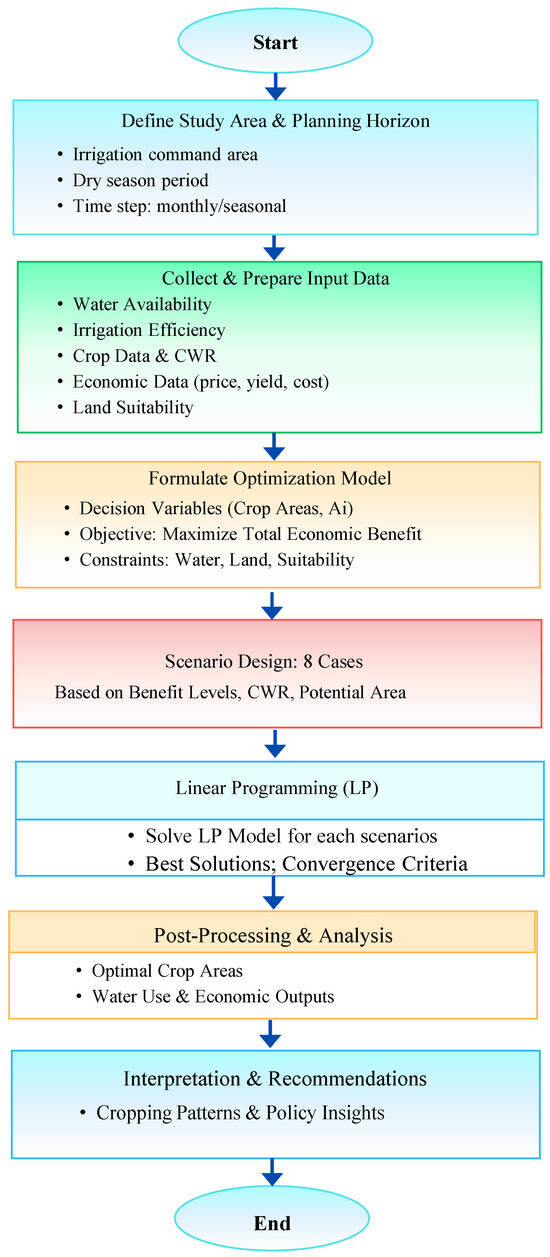
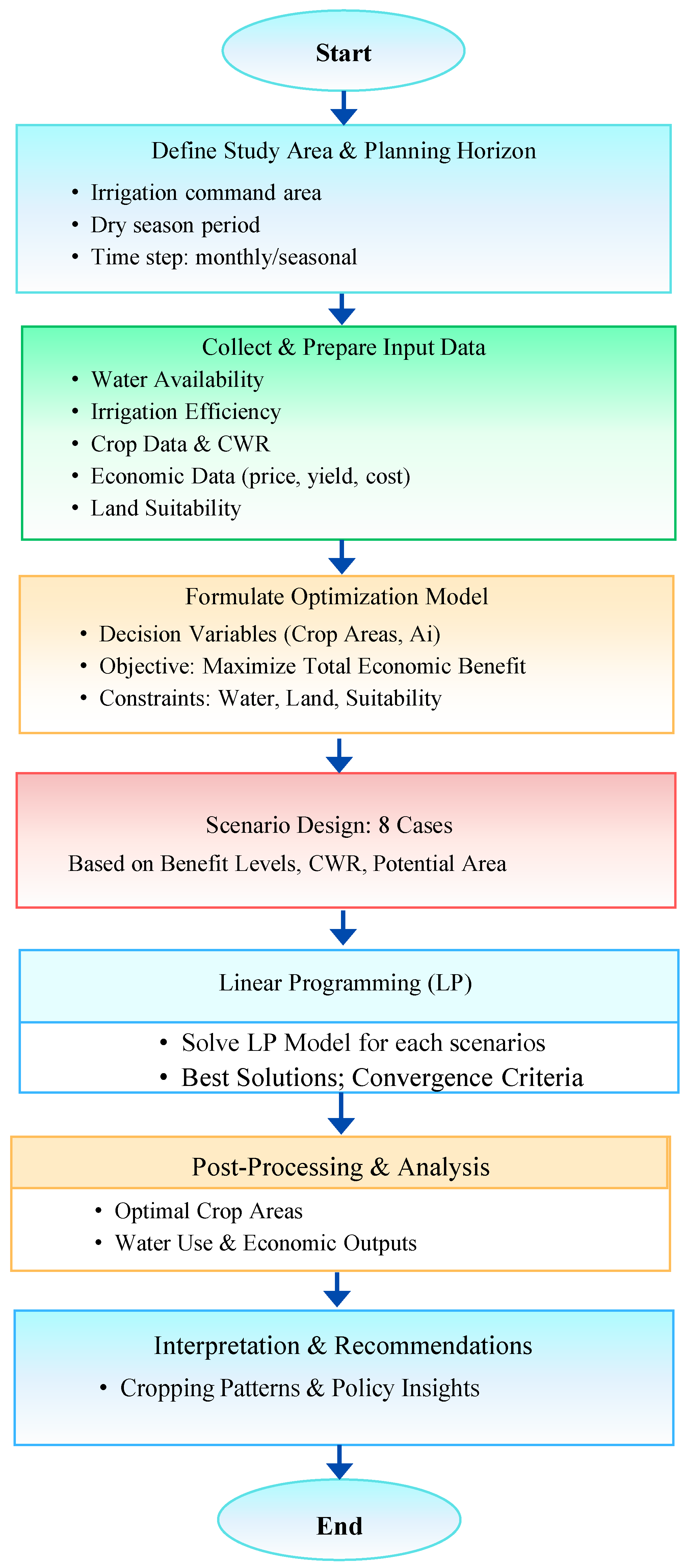
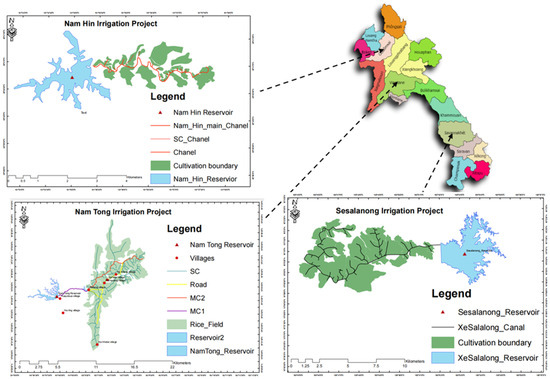
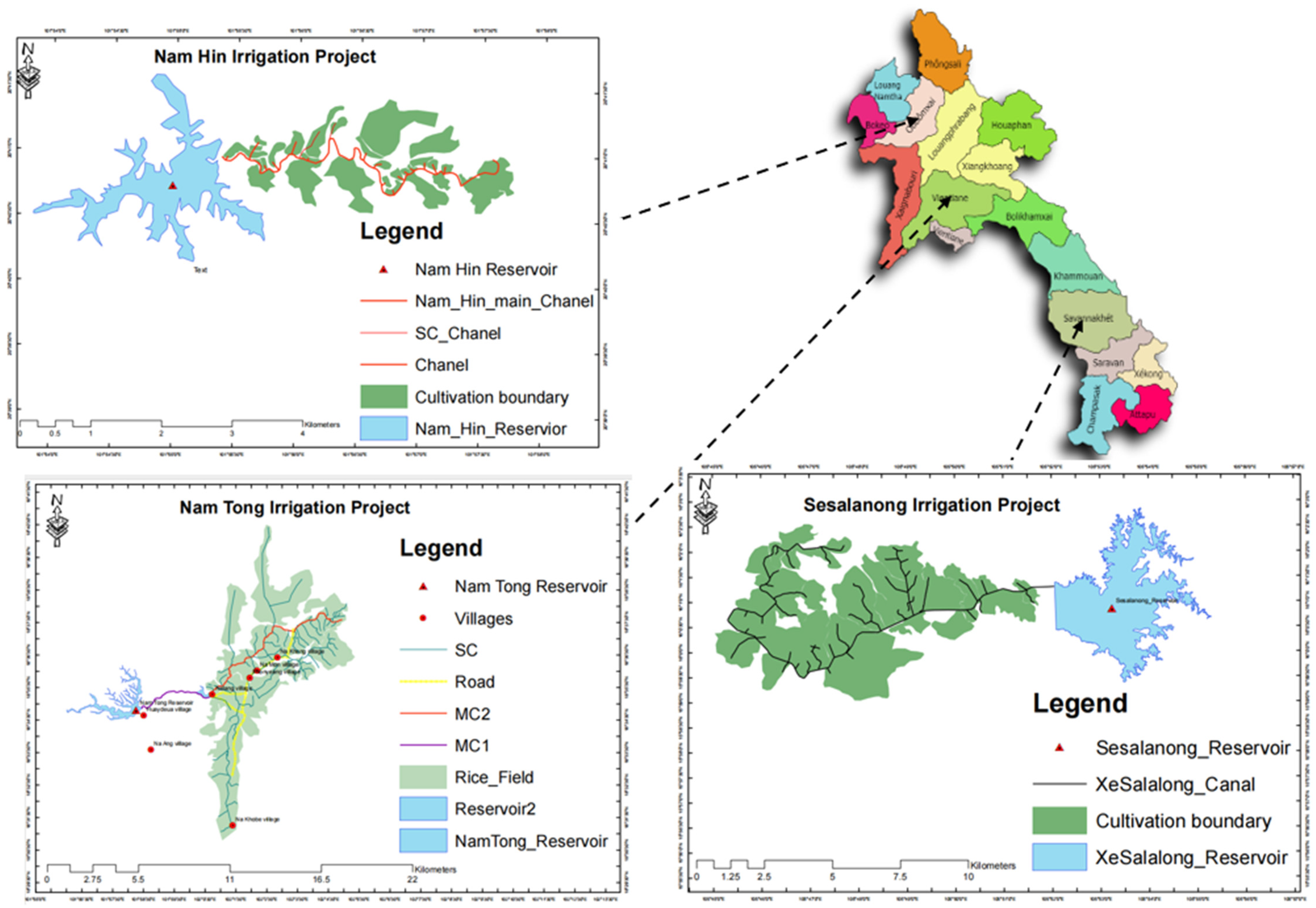
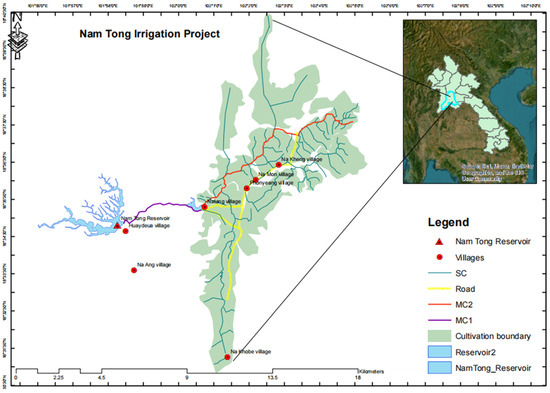
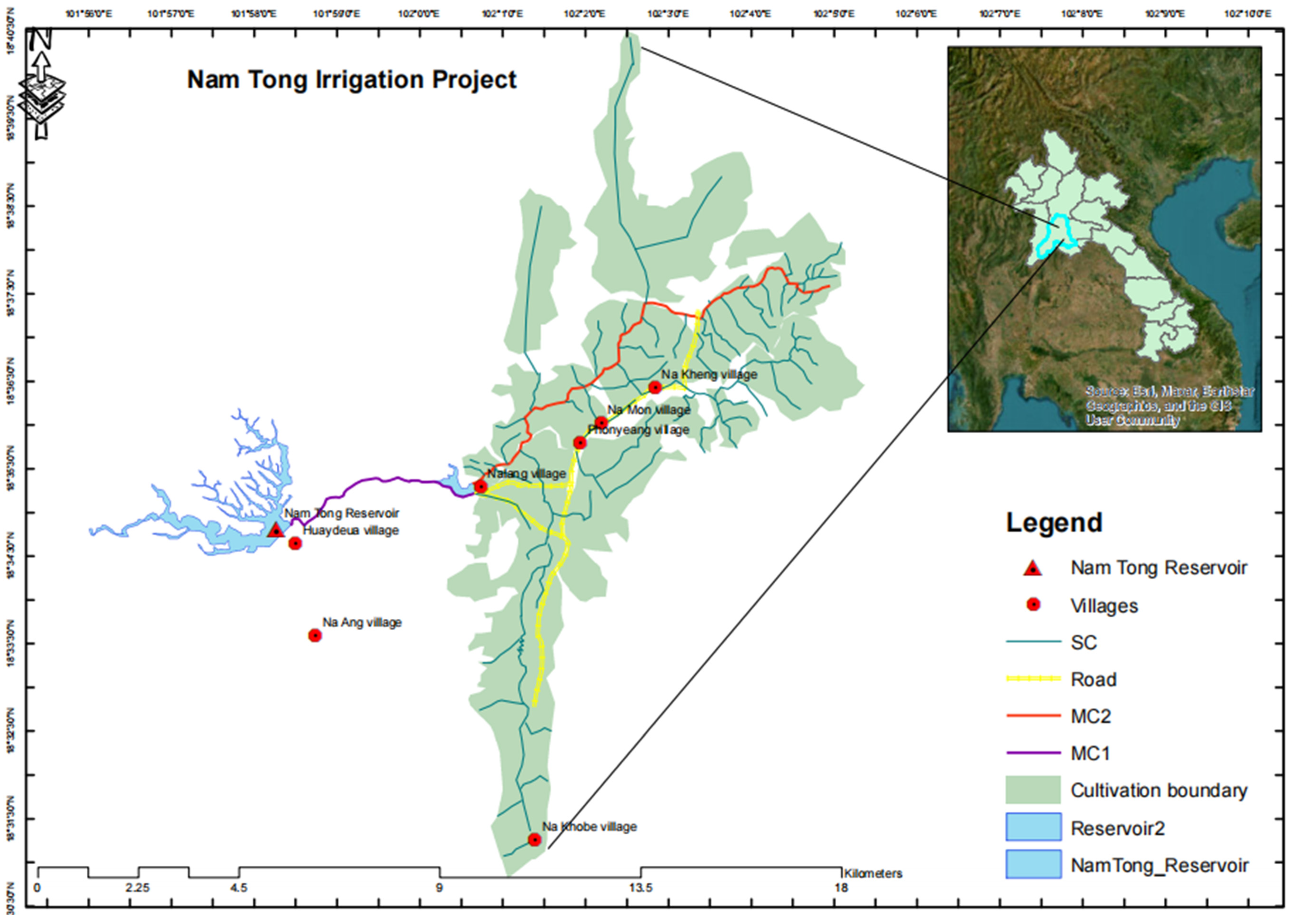
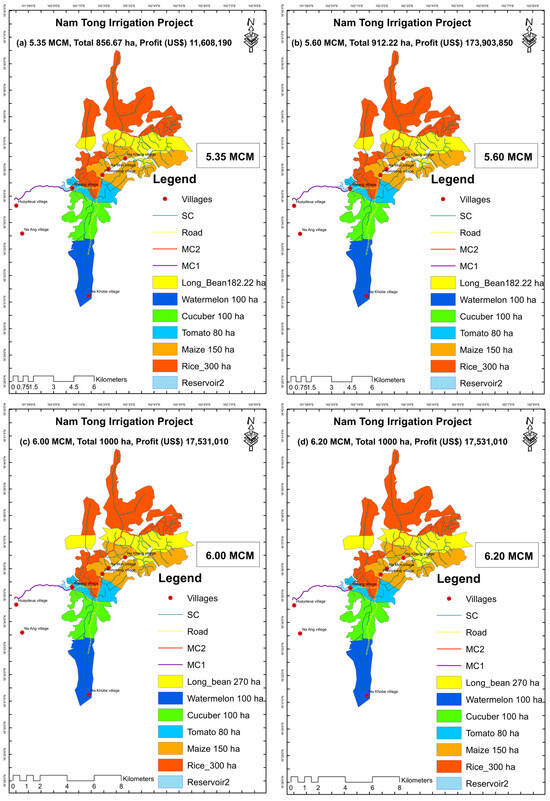
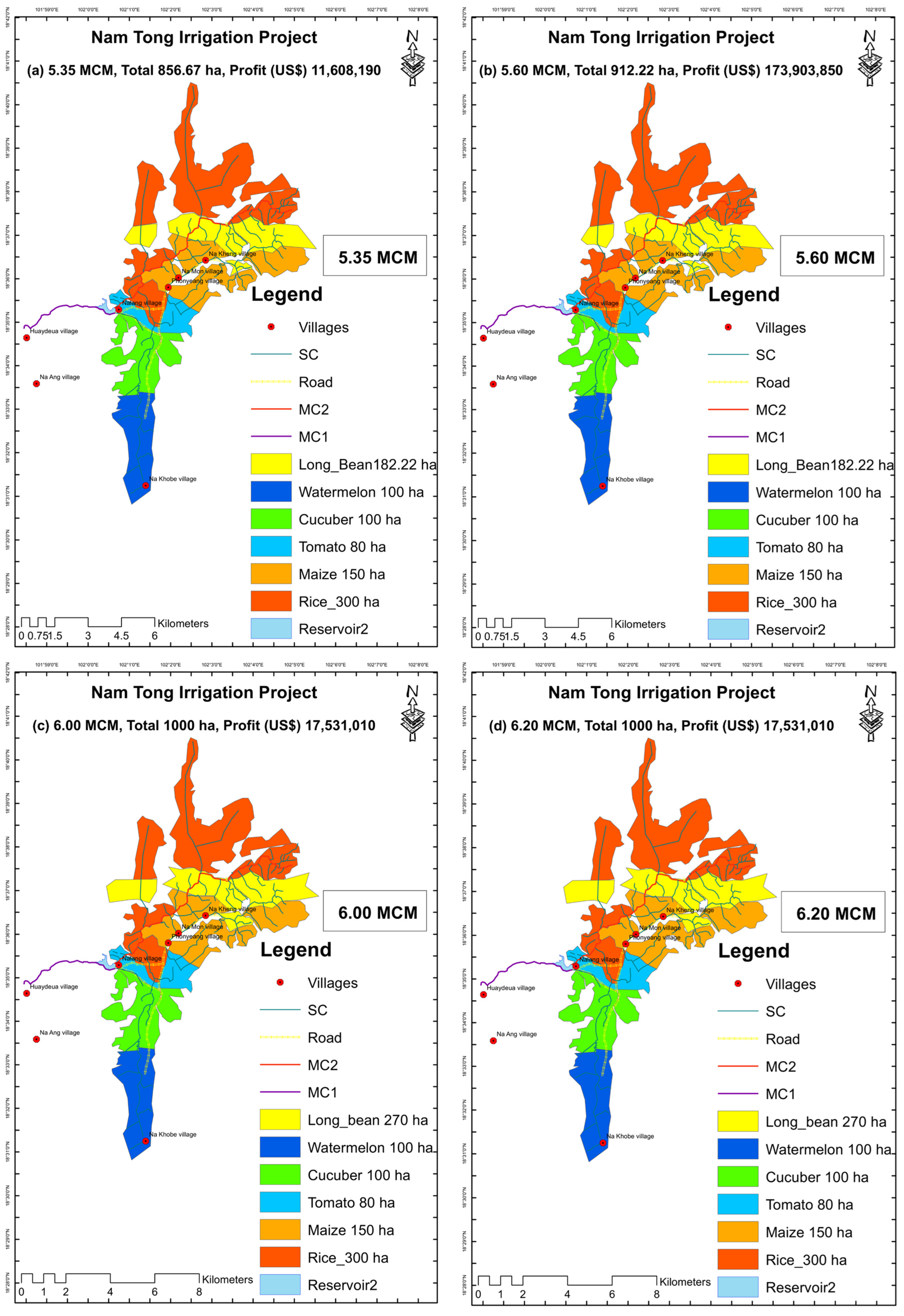
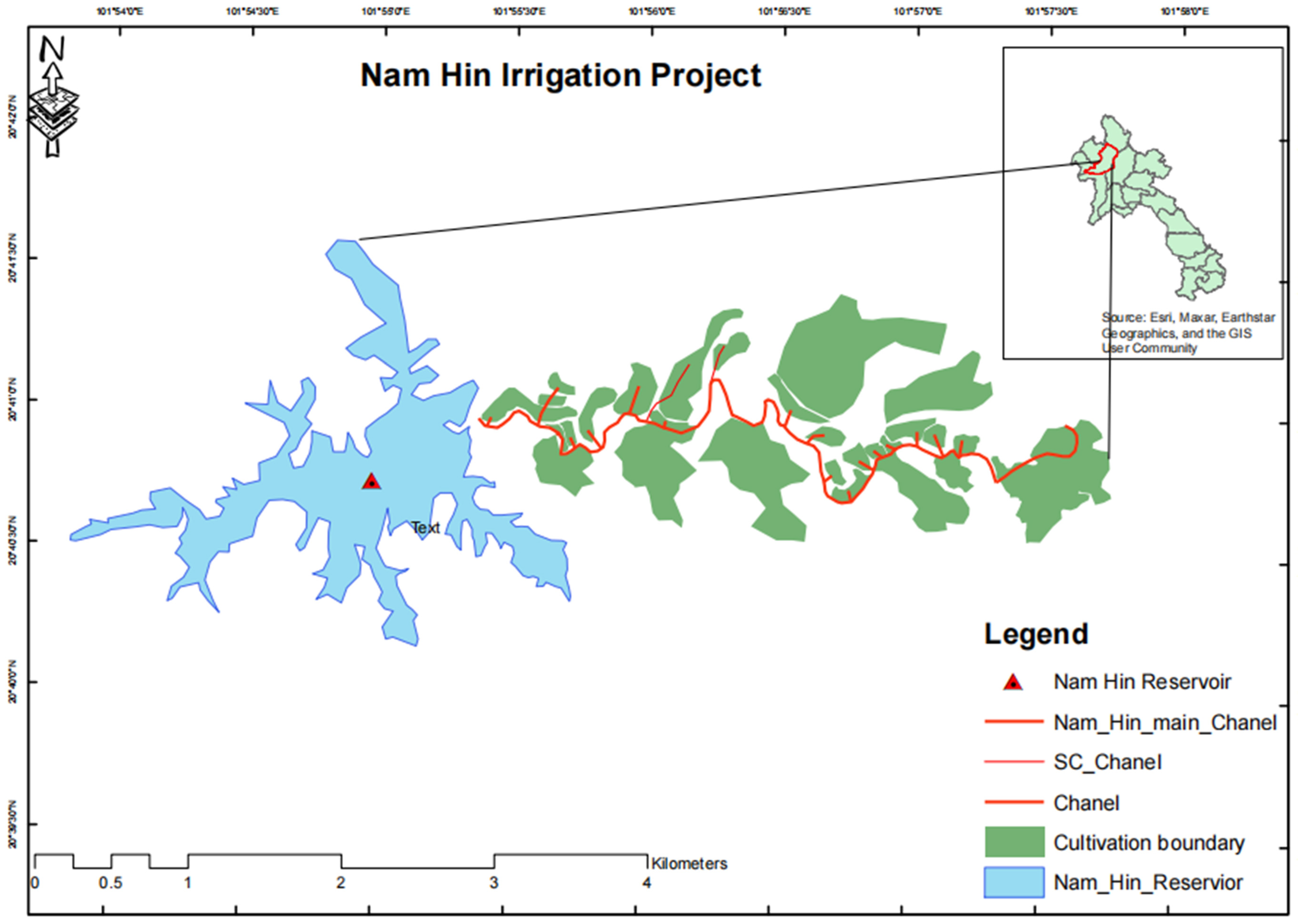
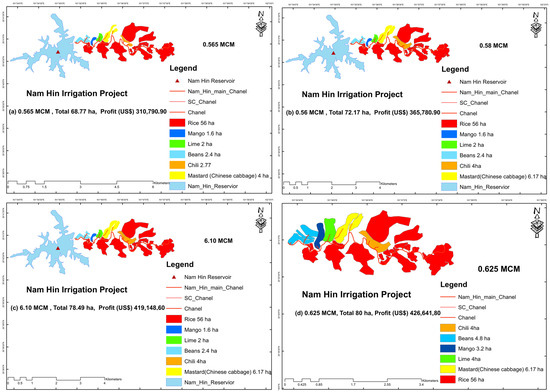
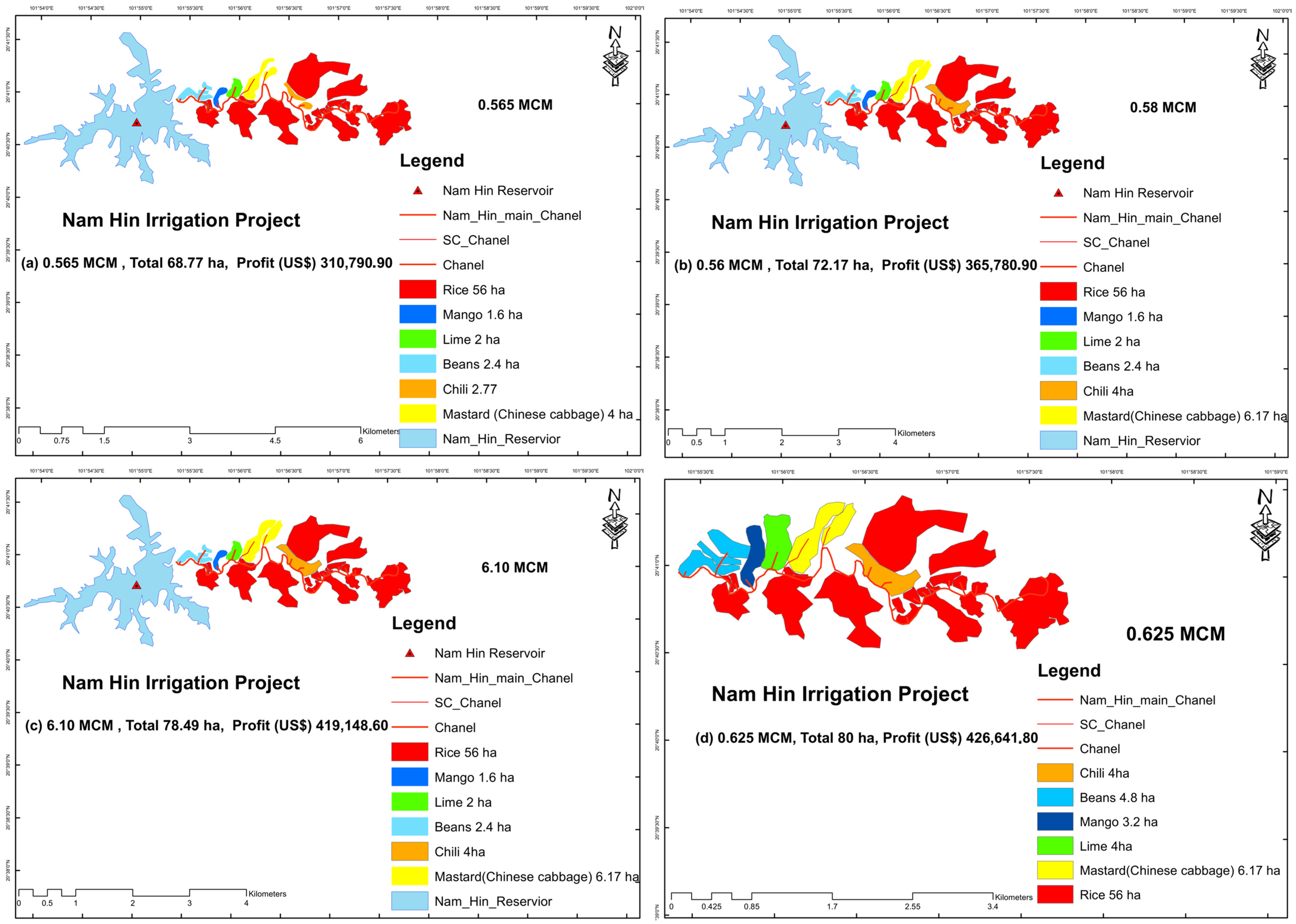
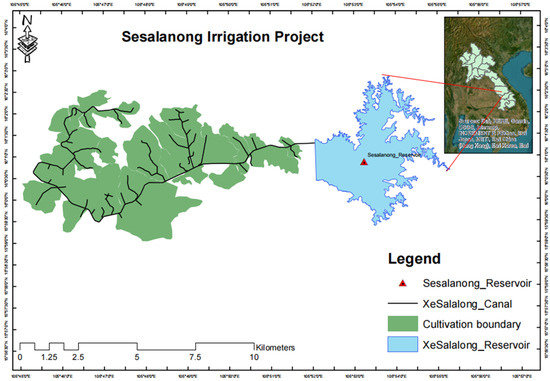
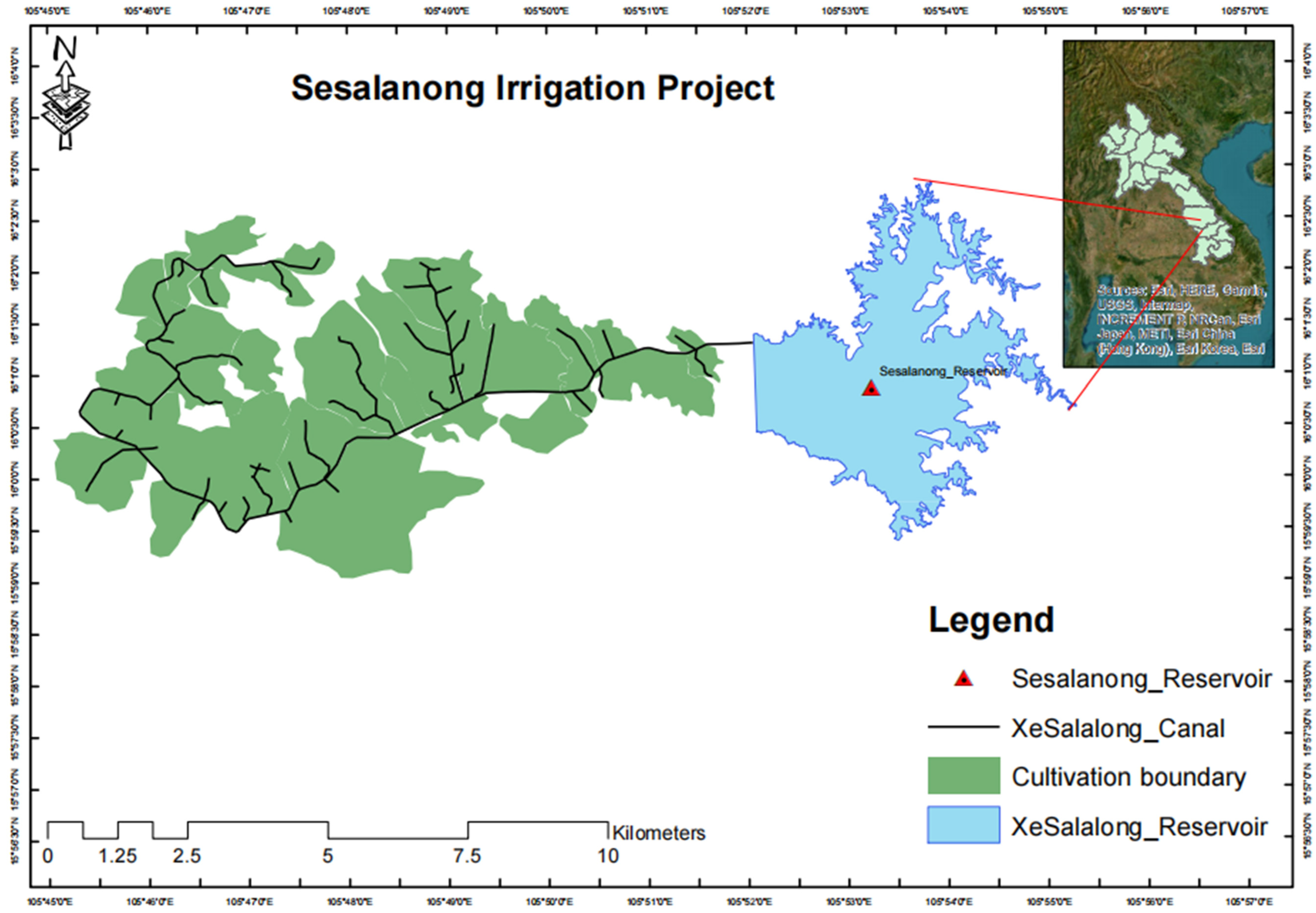
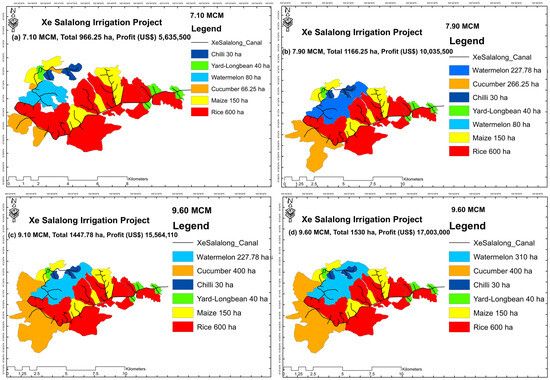
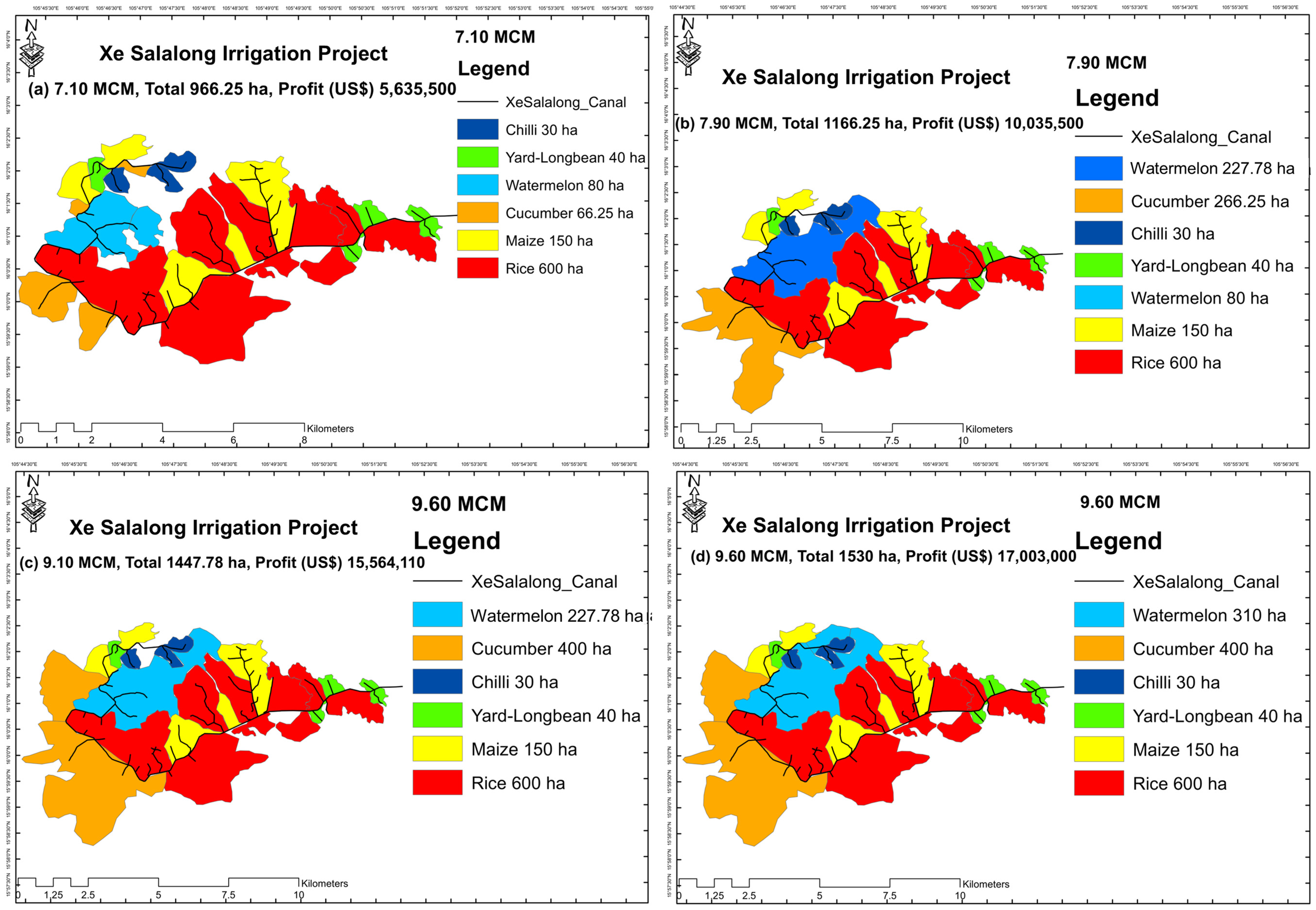
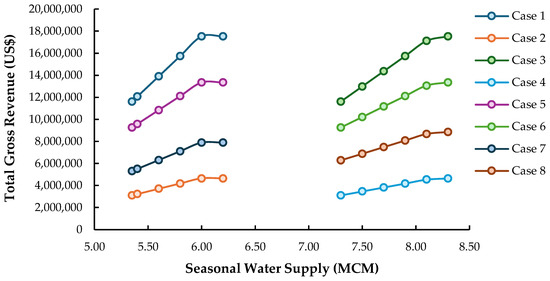
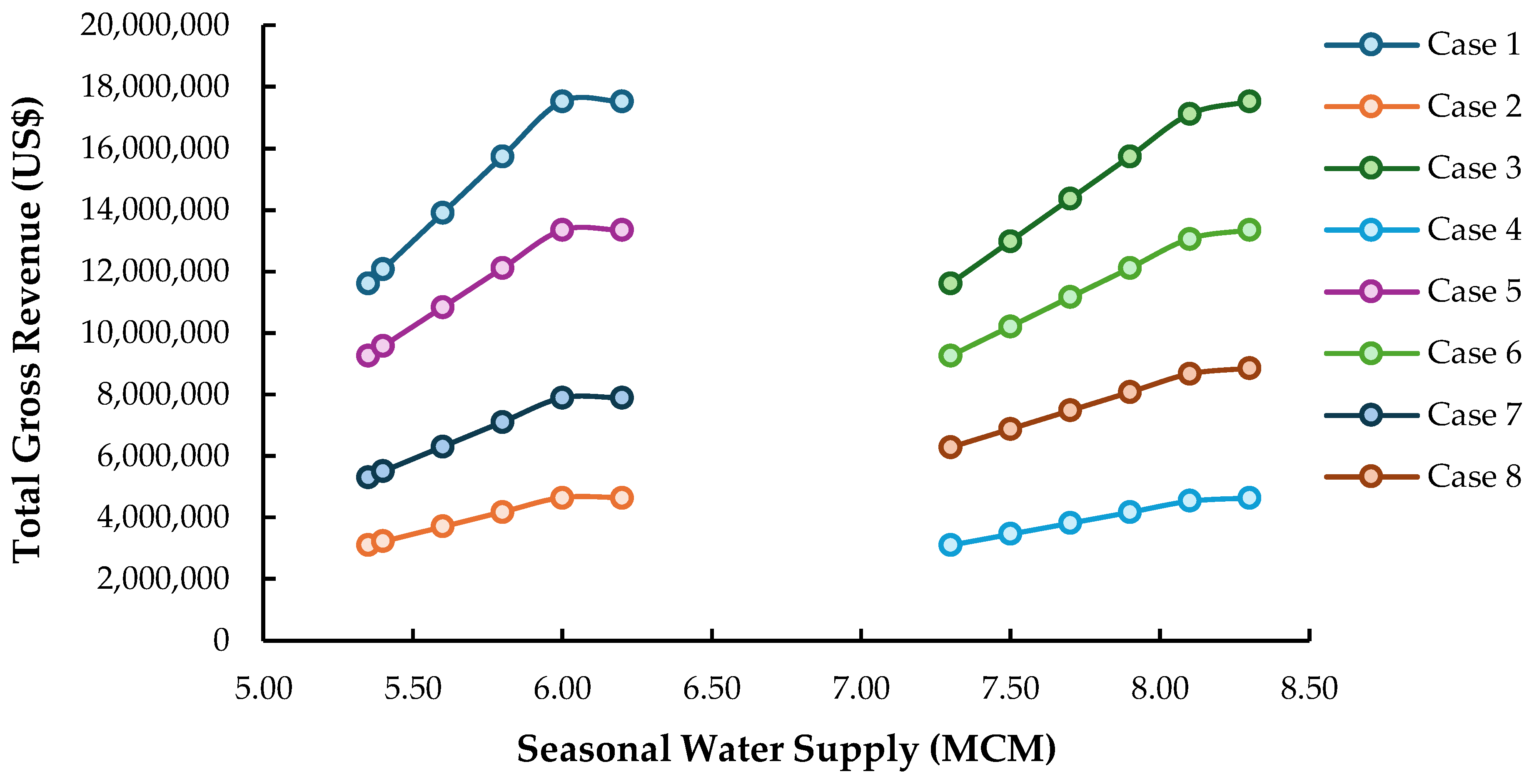
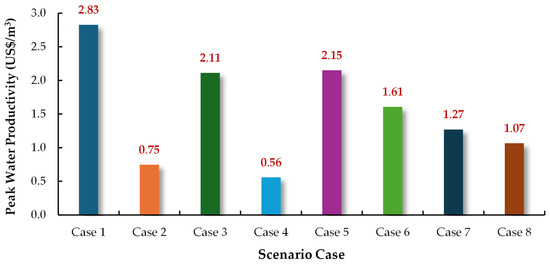
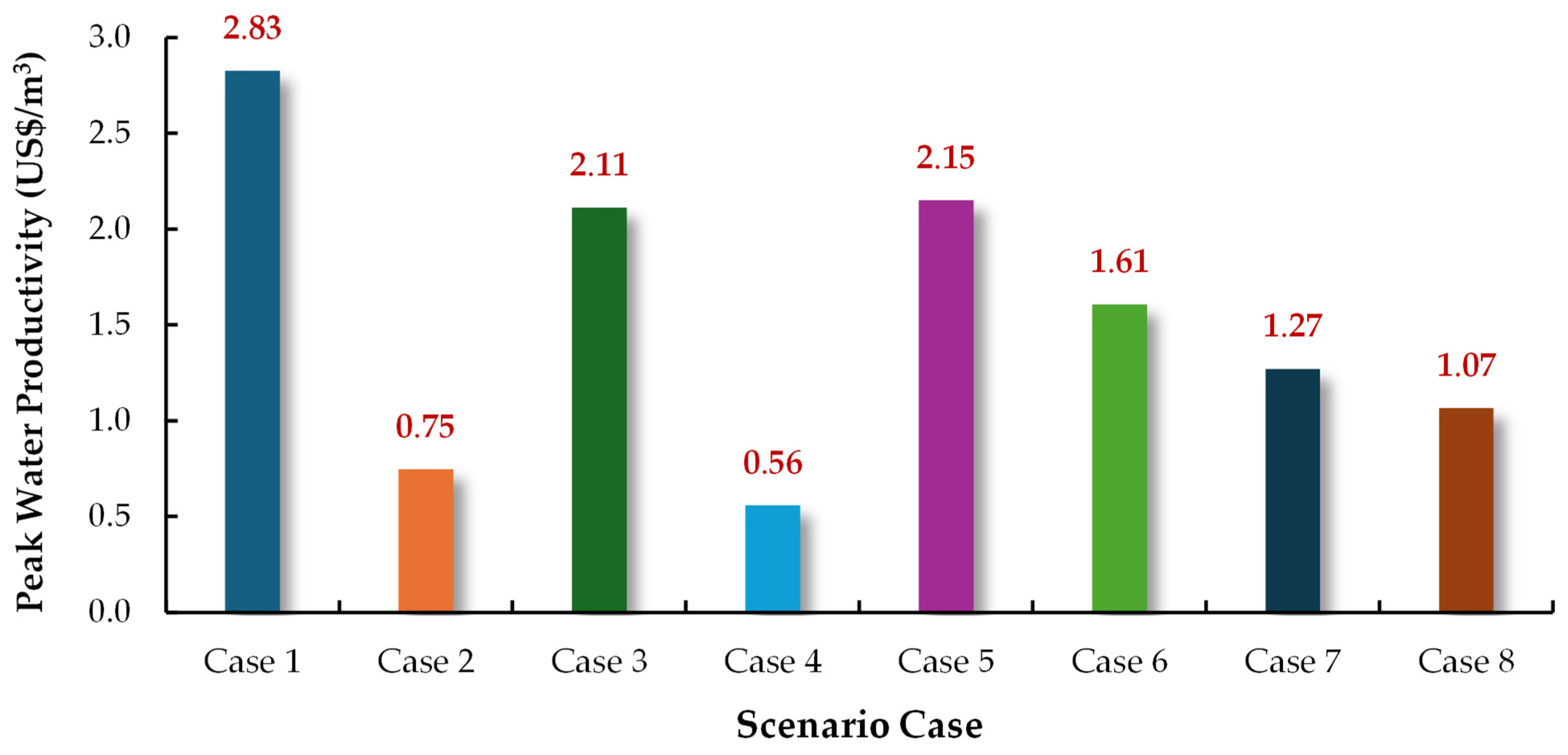
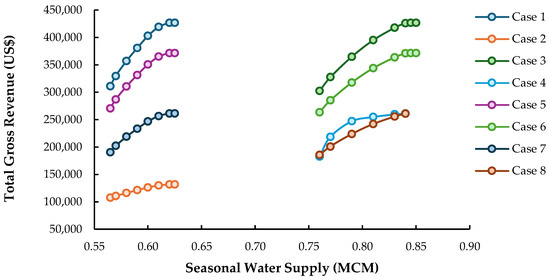
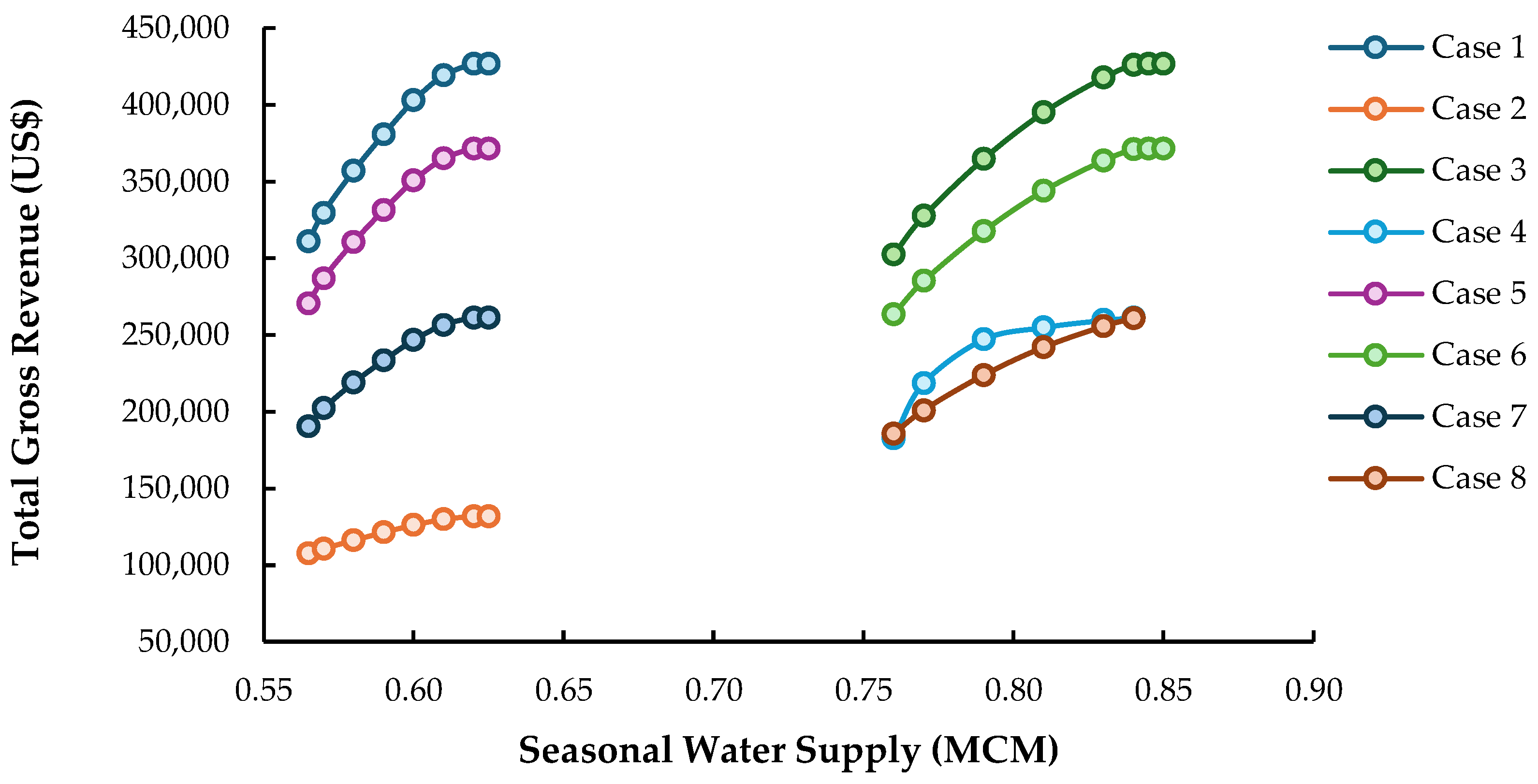
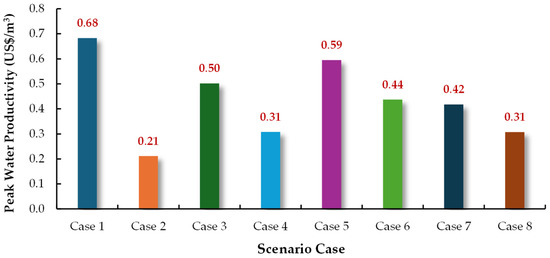
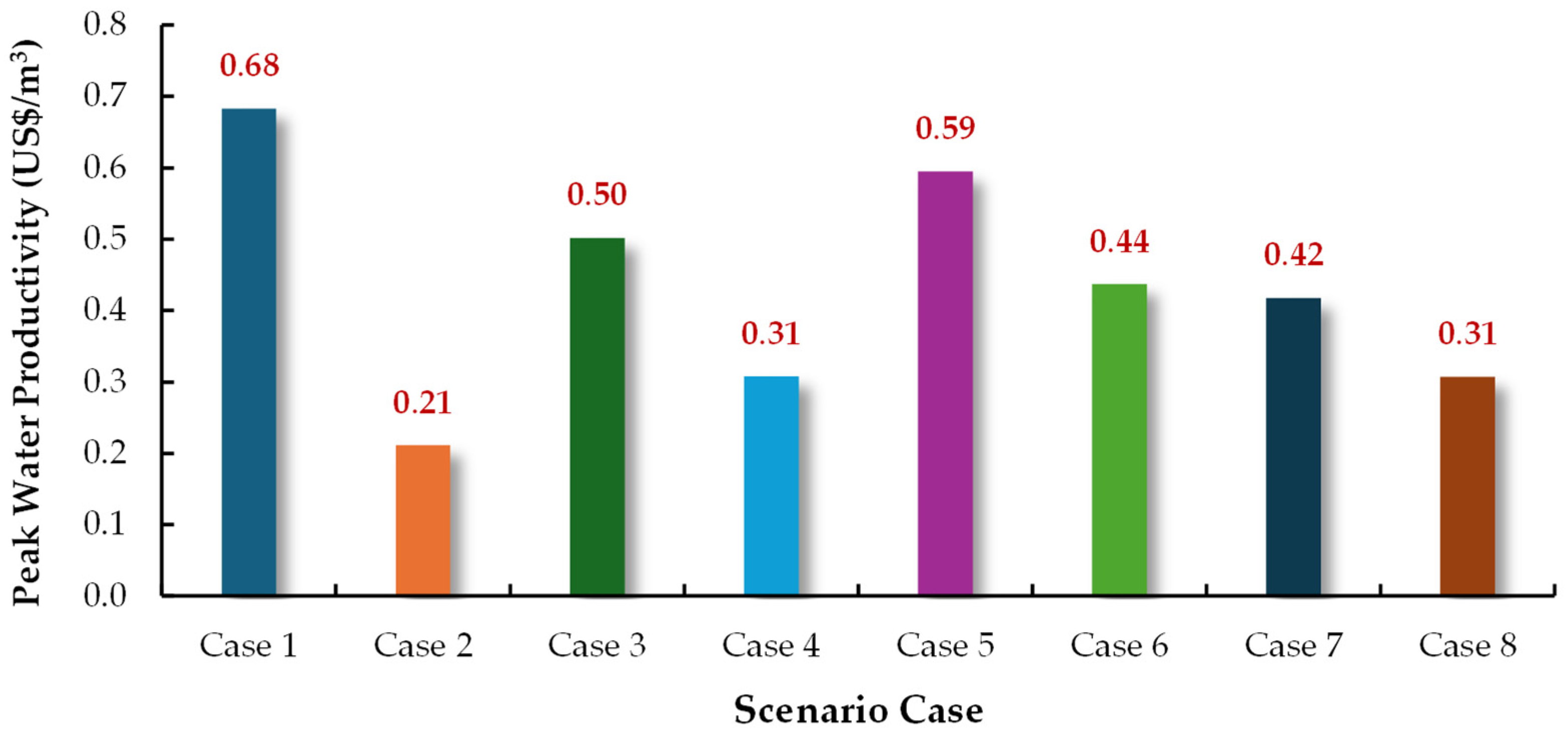
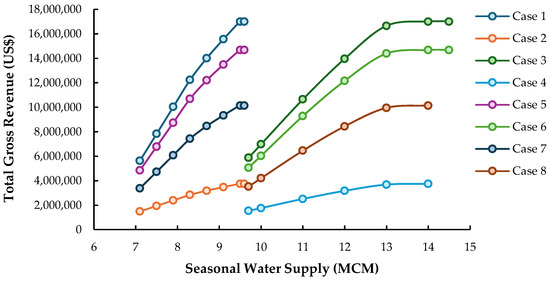
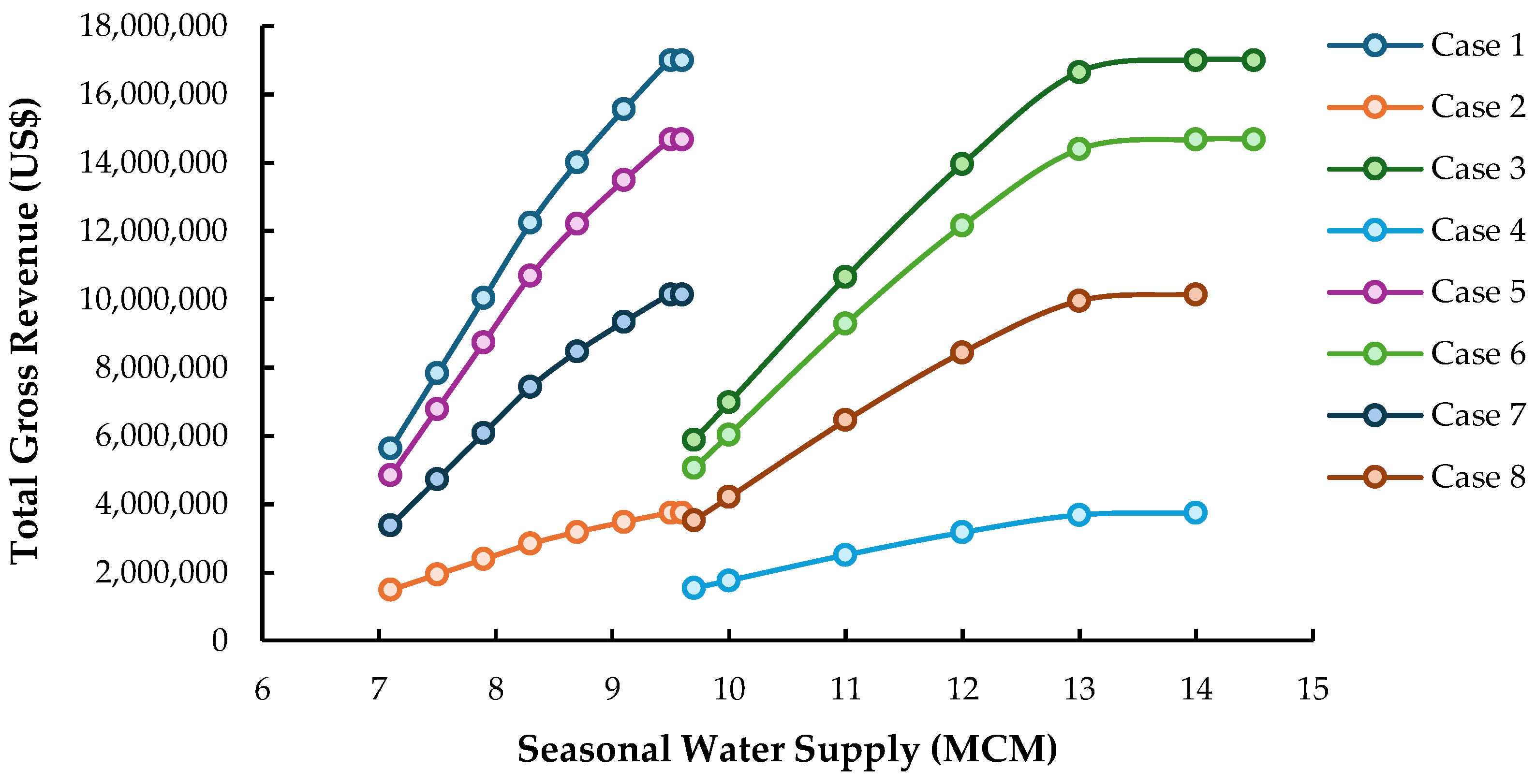
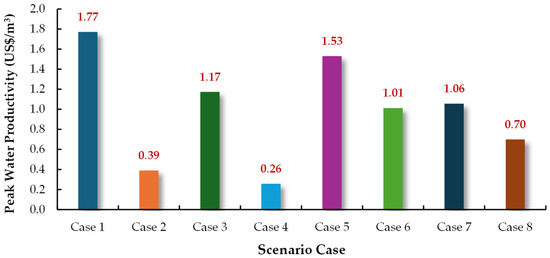
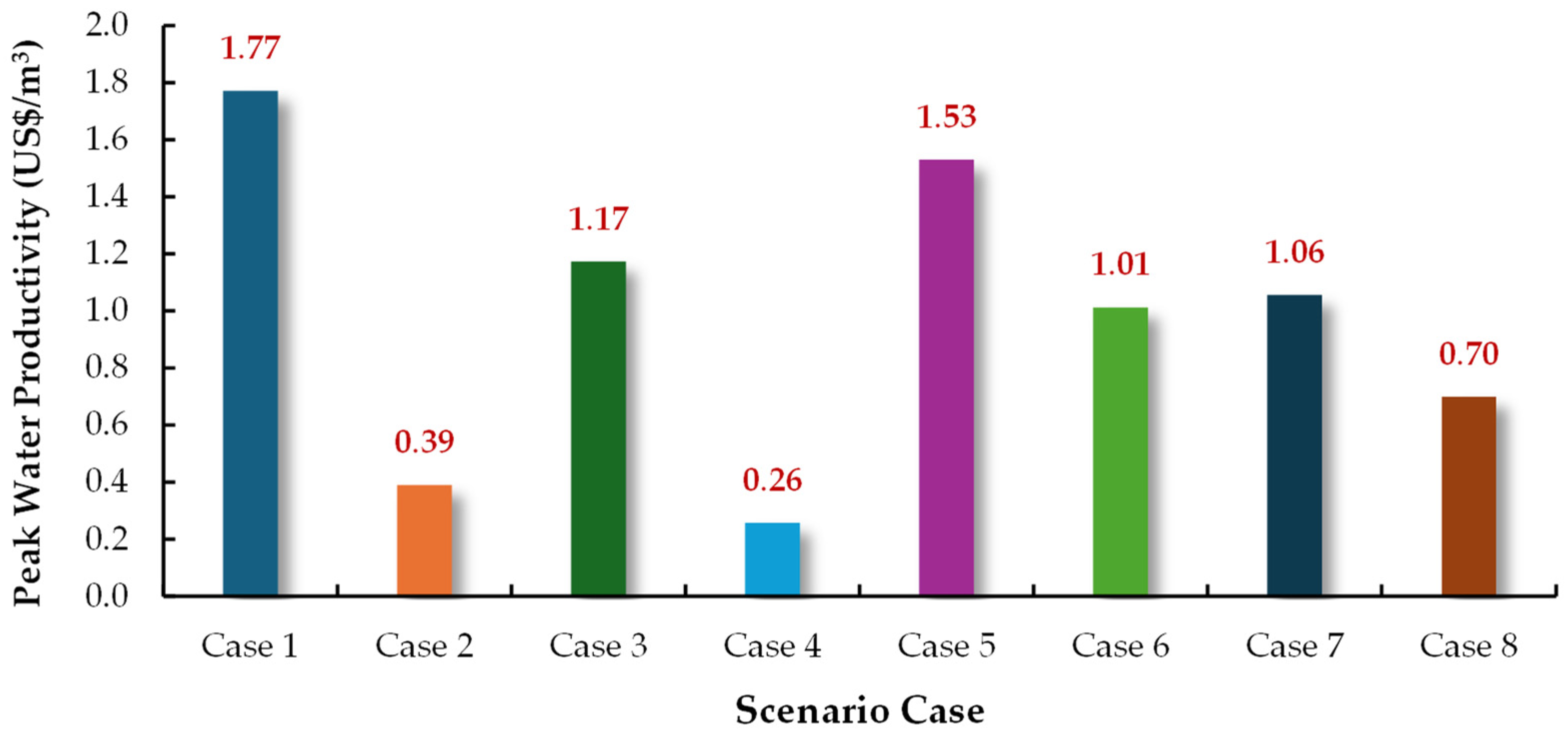

Disclaimer/Publisher’s Note: The statements, opinions and data contained in all publications are solely those of the individual author(s) and contributor(s) and not of MDPI and/or the editor(s). MDPI and/or the editor(s) disclaim responsibility for any injury to people or property resulting from any ideas, methods, instructions or products referred to in the content. |
© 2026 by the authors. Licensee MDPI, Basel, Switzerland. This article is an open access article distributed under the terms and conditions of the Creative Commons Attribution (CC BY) license.