Article

The “Contamination Lab” as a Viable Pathway for Agricultural Engineering to Enhance Its Academic Prominence and Centrality Within the Italian Academia


by
Marco Bietresato
1,*,
Adriano Biason
2,*,
Rino Gubiani
1 and
Angelo Montanari
3
1
Department of Agricultural, Food, Environmental and Animal Sciences (DI4A), University of Udine, I-33100 Udine, Italy
2
Department of Economics Sciences and Statistics (DIES), University of Udine, I-33100 Udine, Italy
3
Department of Mathematics, Computer Science, and Physics (DMIF), University of Udine, I-33100 Udine, Italy
*
Authors to whom correspondence should be addressed.
AgriEngineering 2026, 8(6), 239; https://doi.org/10.3390/agriengineering8060239
Submission received: 14 March 2026 / Revised: 28 May 2026 / Accepted: 4 June 2026 / Published: 12 June 2026
(This article belongs to the Section Sustainable Bioresource and Bioprocess Engineering)

Abstract

Italian “Agricultural Engineering”, while evolving toward the broader, interdisciplinary field of “Biosystems Engineering” (which also includes the study of biomasses/biomaterials, field and forest mechanization in difficult contexts and advanced post-harvest agri-food technologies), suffers from a structural critical issue due to its historical academic placement within the Agricultural rather than the Engineering departments. This positioning limits the depth of the technical subjects proposed to the students and does not facilitate the necessary collaboration with core engineering disciplines in research and didactics activities, thereby potentially slowing innovation in crucial fields like agro-bio-energies, precision agriculture and field robotics. To address this misalignment and foster inter-departmental synergy, this study proposes adopting the Contamination Lab (C-Lab) model as the archetype of a possible framework of academic and professional networking involving and centered on Agricultural Engineering. C-Labs (transdisciplinary platforms proposed by the Italian Ministry of University and Research) function as experiential laboratories, gathering students from Engineering, Agronomy, Computer Science, and Economics to collaboratively develop solutions to real-world challenges posed by industry stakeholders. The integration of a permanent, thematic C-Lab focused on agri-forestry and food machinery, supported by methodologies for enhancing creativity in technical fields, such as design thinking, represents an effective (and necessary) strategy to give Agricultural Engineering greater visibility in the Italian (and international) scenario and, prospectively, relocate it to the center of any research involving the technological and technical aspects of agriculture, forestry and food production. It is concluded that this initiative can serve as an institutional bridge for hybrid training, which is essential for aligning academic competencies with the growing demands for innovation and multidisciplinary professionalism in the national agri-food tech sector.

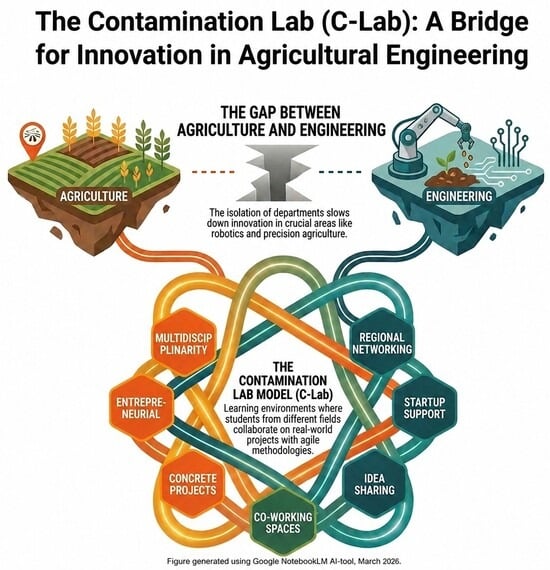
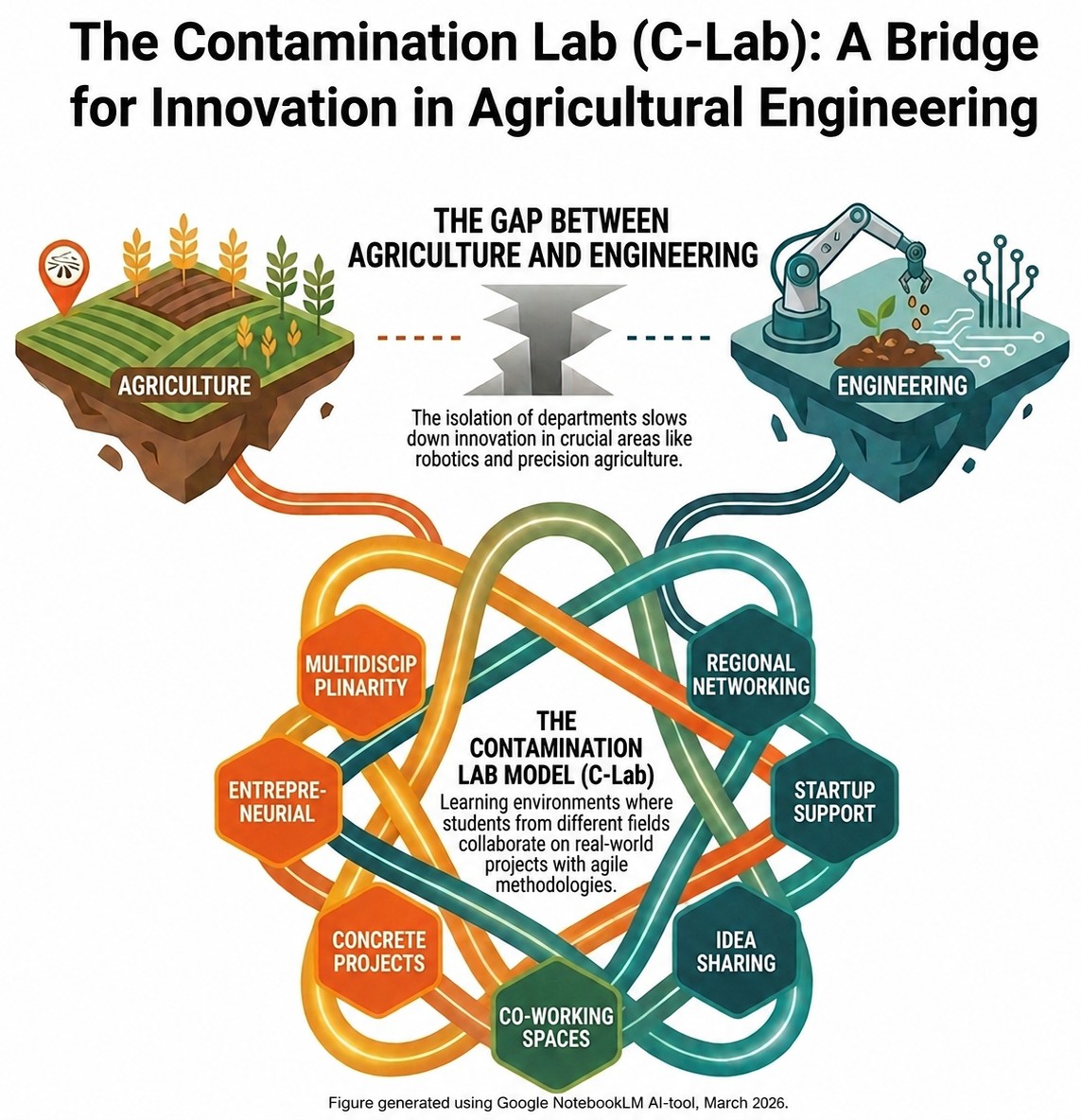
Graphical Abstract

1. Introduction

1.1. Agricultural Engineering: Ambit and Declination of This Subject in Italy

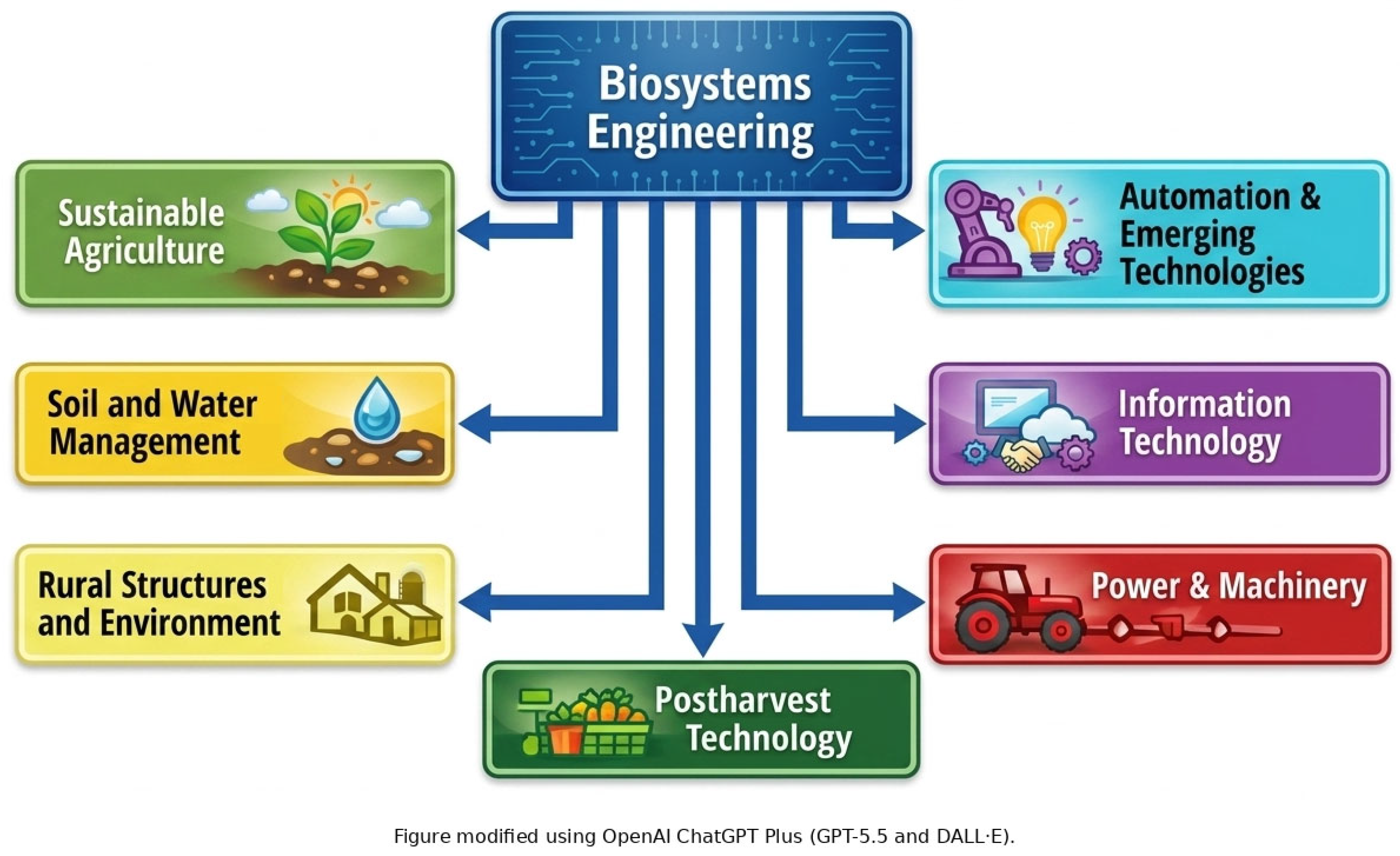
Agricultural Engineering is increasingly recognized as a specialized branch within the broader domain of Biosystems Engineering, an interdisciplinary field integrating engineering principles with biological and environmental sciences [1,2] (Figure 1). This domain encompasses applications ranging from agricultural production to food and biomass processing, environmental protection and energy systems [3,4,5]. Within this framework, Agricultural Engineering maintains its original focus on the optimization of mechanization while contributing to systemic goals such as climate-smart agriculture, circular bioeconomy, and bioprocessing efficiency [6]. The evolution from Agricultural to Biosystems Engineering reflects the shift from a sectoral problem-solving to a systems-oriented innovation [7,8,9,10,11,12], positioning this discipline as a foundational interface of Biosystems Engineering in the design, implementation, and dissemination of technological innovations for agri-food, forestry, and rural systems [2]. Agricultural Engineering, as an academic and professional discipline, encompasses the application of engineering principles to agricultural and forestry production systems, post-harvest (food) processing chains, and rural infrastructures, with the overarching aim of enhancing productivity, sustainability, and technological innovation across agri-food and bioresource sectors.
In the Italian context, the discipline has evolved in close connection with diverse agro-ecological regions, from Mediterranean to Alpine environments [15,16]. Historically identified as “Agricultural Mechanics”, the field incorporates mechanical power generation and delivery, conventional field mechanization alongside specialized forestry equipment and post-harvest and food processing technologies [6,16]. Forestry mechanization, in particular, focuses on low-impact operations in mountainous and fragile territories [17], while post-harvest and food industry engineering ensures energy efficiency and process traceability in circular economy frameworks [18,19].
The historical and academic framework of the discipline in Italy together with its formal classification within the national university regulatory system is detailed in Table 1.
Despite its technological relevance, the teaching of Agricultural Engineering in Italy faces significant structural challenges. Unlike in Germany, the USA, or the Netherlands, where the discipline is often embedded in Schools of Engineering (so that ASABE [9] is part of ABET, the Accrediting Board for Engineering and Technology [25]), in Italy it is historically placed within departments of Agricultural Sciences [26]. This historical legacy often results in Italy in the subject being taught almost exclusively to non-Engineering students, who may lack the foundational training in mechanics and physics required for an in-depth development of the subject [27]. At the same time, students of Italian Engineering degree programs are often unaware of the existence and potential of Agricultural Engineering. Consequently, Italy sees a disconnection between the students’ academic preparation and the multidisciplinary demands of the labor market, particularly in fields such as agricultural robotics and smart farming [28]. Paradoxically, private industry shows a growing demand for hybrid expertise, while in some countries where Agricultural Engineering degrees are placed within the faculty of Agriculture, a recognized identity crisis regarding agricultural engineers is occurring, as they are not recognized as a “real engineers” [29], so the problem involves many countries of the world. While other countries have addressed this by integrating “Biosystems Engineering” courses into Engineering faculties/departments [30], the Italian system maintains a rigid departmental separation. This institutional insulation is further evidenced by the exclusion of the AGRI-04/B sector from various Engineering programs and its peripheral role in newly established “Agritech” courses at major polytechnics [22,23] (Table 2).

1.2. Research Aim and Hypothesis

Consistent with the presented framework, the present study aims to explore the Contamination Lab model as a strategic tool to mitigate the disciplinary isolation of Agricultural Engineering. Specifically, this paper presents an exploratory case study conducted at the University of Udine, analyzing how collaboration between students from Engineering, Agriculture, and Computer Science can address real-world industrial challenges. The sustainability of bioresource and bioprocess engineering is strictly dependent on the academic health and interdisciplinary prominence of Agricultural Engineering. For this reason, this study primarily addresses the educational and organizational roots required to sustain such engineering advancements. While acknowledging the limitations of a pioneering pilot project, the study also seeks to specifically evaluate the model’s effectiveness in fostering a multidisciplinary approach, developing metacognitive and soft skills, and eventually bridging the gap between academic training and industrial needs in the agri-food sector under the guidance of Agricultural Engineering professors.

1.3. Need for Multidisciplinary Initiatives to Promote Agricultural Engineering

Given the institutional and didactic challenges outlined above—particularly the marginal placement of Agricultural Engineering within non-Engineering faculties and the resulting fragmentation of expertise—there is a pressing need to promote multidisciplinary initiatives capable of bridging these structural divides. As highlighted, Agricultural and Agroforestry Engineering in Italy are currently taught predominantly to students with agronomic or food science backgrounds, limiting both the technical depth of instruction and the discipline’s integration into broader engineering and technological ecosystems. This isolation stands in stark contrast to the inherently interdisciplinary nature of the field, which demands the convergence of mechanical design, control systems, environmental engineering, and biological sciences to address contemporary challenges such as precision agriculture, digital farming, and sustainable agro-industrial processing [28,31,32].
Internationally, countries such as the United States (Master of Engineering in “Digital Agriculture” and Master of Science in “Agricultural and Biological Engineering”, University of Illinois Urbana-Champaign, The Grainger College of Engineering; MSc in “Agricultural Engineering” and Ph.D. in “Biological and Agricultural Engineering”, University of Georgia, College of Engineering), France (Master of Science and Engineering in “Smart Farming and Sustainable Agriculture”, Junia Graduate School of Engineering), and the Netherlands (MSc in “Crop Biotechnology and Engineering”, Maastricht University, Faculty of Science and Engineering) have successfully institutionalized Agricultural Engineering within their Schools of Engineering, supported by cross-departmental centers and multidisciplinary degree programs in “Biosystems Engineering” or “Agro-industrial Engineering” [33]. Asian countries also provide relevant examples of structurally integrated models of Agricultural and Biosystems Engineering within Engineering faculties/departments. In Japan, for example, the Tokyo University of Agriculture and Technology (TUAT) has a Faculty of Engineering consisting of six departments, among which is the “Department of Biotechnology and Life Science” [34]. TUAT also hosts the Graduate School of Bio-Applications and Systems Engineering (BASE) [35], which explicitly promotes a “broad vision combining agriculture and engineering” and integrates mechanical engineering, robotics, and agricultural sciences within a unified academic framework. These cases confirm that embedding Agricultural Engineering within engineering-oriented academic ecosystems is a consolidated international trend that enhances the scientific visibility and industrial relevance of the field, extending well beyond Western contexts. Apart from these integration models, it is worth noting that there is another dominant model in Far-East regions, in which Agricultural Engineering has evolved beyond a sub-discipline, thus representing a real arrival-point at a global scale in the process of increasing the importance of this sector without requiring a migration towards Engineering faculties/departments. Indeed, in many Eastern countries, Agricultural Engineering has gained such strategic importance that it is typically housed within specialized independent colleges or robust technical departments within premier agricultural universities. For example, the China Agricultural University has a College of Engineering [36]; and the Seoul National University College of Agriculture and Life Sciences has an advanced Department of Biosystems Engineering that applies robotics, computer vision, GNSS/GIS, and control engineering to biological systems, with research activities spanning precision agriculture, biosensors, and bioprocess engineering [37].
In Italy, overcoming the historical confinement of the sector AGRI-04/B—“Meccanica Agraria” within Agricultural departments will require systemic reforms revising current curricula to include cross-disciplinary modules, and hence national strategic investment in joint BSc, MSc and PhD programs, shared research infrastructures, and coordinated efforts between the departments of Engineering and of Agricultural Sciences. Such efforts are essential to enhance the visibility, scientific quality, and societal impact of the discipline, and to align higher education with the innovation needs of Italy’s agri-food and forestry sectors, particularly in the framework of the National Recovery and Resilience Plan (PNRR), the Common Agricultural Policy (CAP), and Horizon Europe. Therefore, these multidisciplinary initiatives are essential not only to strengthen the academic identity of Agricultural Engineering, but also to meet the growing demand from private sectors for hybrid professionals capable of operating across technical, environmental, and biological domains. Ultimately, fostering such integration will enhance Italy’s capacity to contribute to the agro-ecological and digital transitions envisioned in national and European innovation agendas.

1.4. The Role of the Contamination Lab in Supporting Multidisciplinary Integration and Innovation in Agricultural Engineering

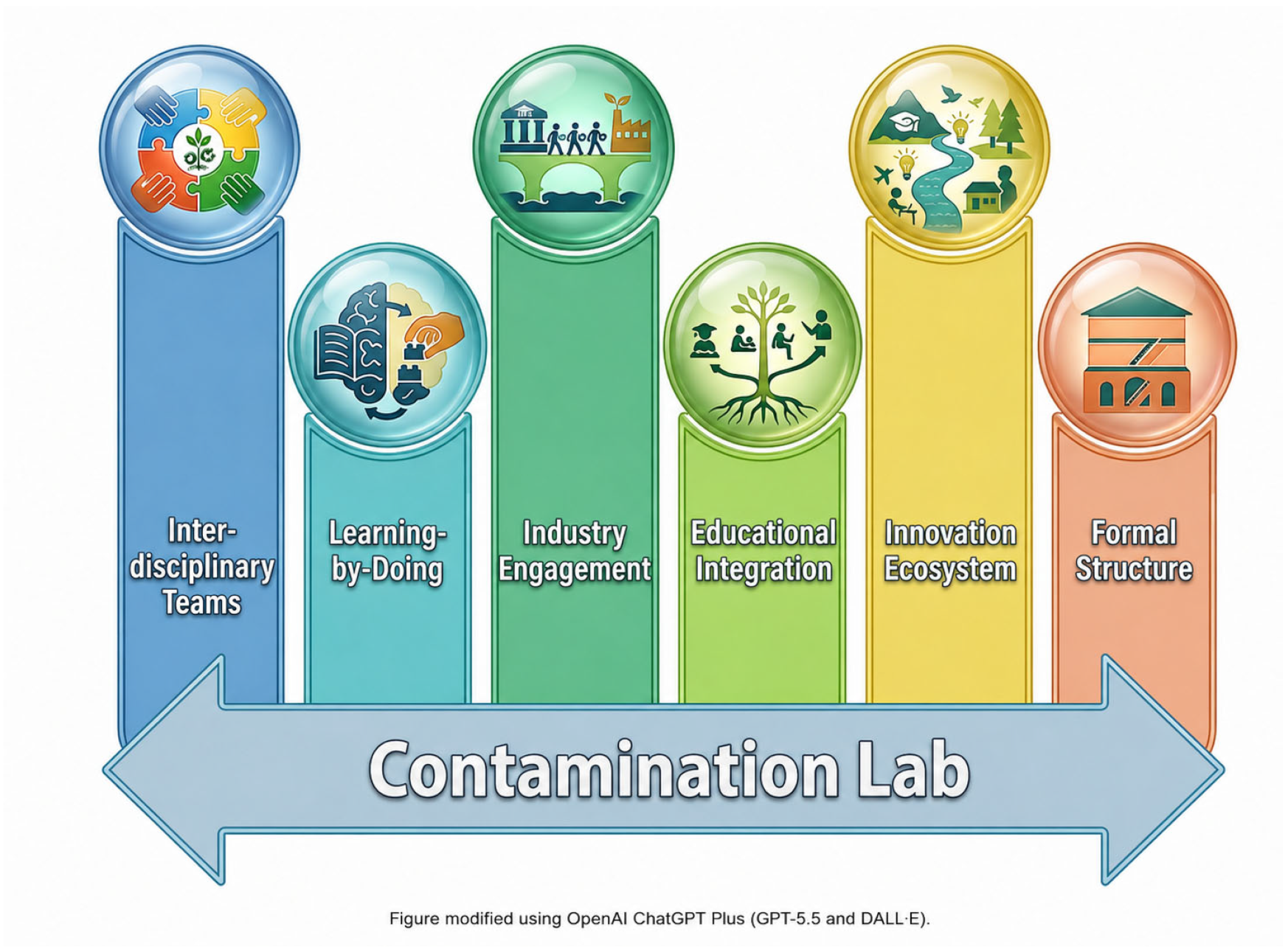
In light of the structural fragmentation and disciplinary isolation described above, the “Contamination Lab” (C-Lab) model can offer a promising, scalable solution to foster multidisciplinarity, didactic innovation, and university–industry collaboration in Agricultural and Agroforestry Engineering. A Contamination Lab is an educational and innovation-oriented platform that brings together students from different academic disciplines—e.g., Engineering, Agronomy, Economics, Design, and Computer Science—to collaboratively address real-world challenges posed by private companies, public administrations, and civil society organizations (Figure 2). These challenges are tackled through “project-based, team-oriented, and time-constrained activities” that simulate professional innovation environments, with a strong focus on prototyping, entrepreneurial thinking, and co-design processes [38,39,40,41,42]. Activities within a Contamination Lab typically include intensive innovation bootcamps, hackathons, design thinking sessions, and collaborative workshops focused on generating viable solutions—ranging from conceptual prototypes to pre-commercial demonstrators. These are often supported by mentors from both academia and industry and are structured around iterative design methodologies such as the Lean Start-up [43] or Agile Development [44] paradigms. Importantly, C-Labs emphasize “learning-by-doing”, but differ from traditional laboratory courses or internship programs by being explicitly interdisciplinary, problem-driven, and mission-oriented. Unlike FabLabs, which instead focus primarily on digital fabrication and technological prototyping, or Living Labs, which often involve co-creation with end-users in open environments, Contamination Labs serve as “transdisciplinary innovation ecosystems” embedded within academic institutions, directly tied to educational objectives and “third mission” (=knowledge transfer and interaction with society) outcomes [41,45].
The key characteristics of a Contamination Lab are:
  • Multidisciplinarity and “contamination”: the name “Contamination Lab” comes just from the idea of encouraging the “contamination” of ideas and skills among students/participants coming from different disciplines/having different backgrounds (engineering, economics, humanities, arts, etc.); the goal is to generate innovative solutions that arise from the meeting of diverse perspectives.
  • Entrepreneurial training and guidance: C-Labs offer experiential training programs, often extracurricular, aimed at developing entrepreneurial skills, problem-solving abilities, teamwork, and idea presentation skills; innovative teaching models like design thinking and business modeling are utilized.
  • Development of concrete projects: students, possibly organized into teams that are as multidisciplinary as possible, work on concrete project ideas with the support of expert tutors and mentors (entrepreneurs, managers, academics); the objective is to transform these ideas into feasible or real prototypes or viable, scalable, and sustainable business models.
  • Networking and connection with the surrounding area: C-Labs act as a bridge between the university and the external world, facilitating relationships with companies, start-ups, incubators, investors, and other local stakeholders; this allows students to expand their network and engage with market demands and local opportunities.
  • Physical and virtual spaces: C-Labs can be physical spaces dedicated to co-working, collaboration, and prototyping, as well as virtual platforms for sharing ideas and resources.
  • Start-up support: many C-Labs offer pre-incubation services and access to resources and tools to help teams transform their ideas into innovative start-ups.
In the context of Agricultural Engineering, the C-Lab format is particularly well-suited to bridge existing gaps between agronomic knowledge and technological innovation, as it enables students to address real problems in agri-food systems—such as sustainable mechanization, digital agriculture, post-harvest optimization, and forest biomass valorization—through exposure to diverse perspectives and industry practices [46]. A permanent C-Lab structure, embedded within or across Agricultural and Engineering departments, would not only facilitate institutional collaboration, but also serve as a platform for engaging local and national companies in co-innovation processes. This supports the university’s “third mission”, facilitating knowledge transfer and strengthening links with stakeholders from sectors including agritech, food processing, machinery manufacturing, and environmental management.
The key aspects of the current situation can be delineated as follows:
  • Widespread adoption: most large Italian universities, and many medium-sized ones, now have their own Contamination Lab or an equivalent initiative (often rebranded, such as the Innovators Community Lab in Trieste [47]), testifying to the model’s validity.
  • Specialization: while initially C-Labs had a more general scope, today there is a tendency to specialize in strategic sectors (e.g., agroforestry, digital, health, energy, tourism), often in line with local vocations and funding priorities (like the PNRR).
  • Ecosystem integration: C-Labs are increasingly seen as fundamental nodes of a broader innovation ecosystem, which includes incubators, accelerators, science and technology parks, and start-ups.
  • Academic recognition: many C-Labs still offer the students university ECTS credits [48], in Italy referred to as “CFU”, integrating the extracurricular training pathway with the traditional academic curriculum.

1.5. Other Examples of Contamination Labs in Italy/World; Characteristics and Differences with the Current Case

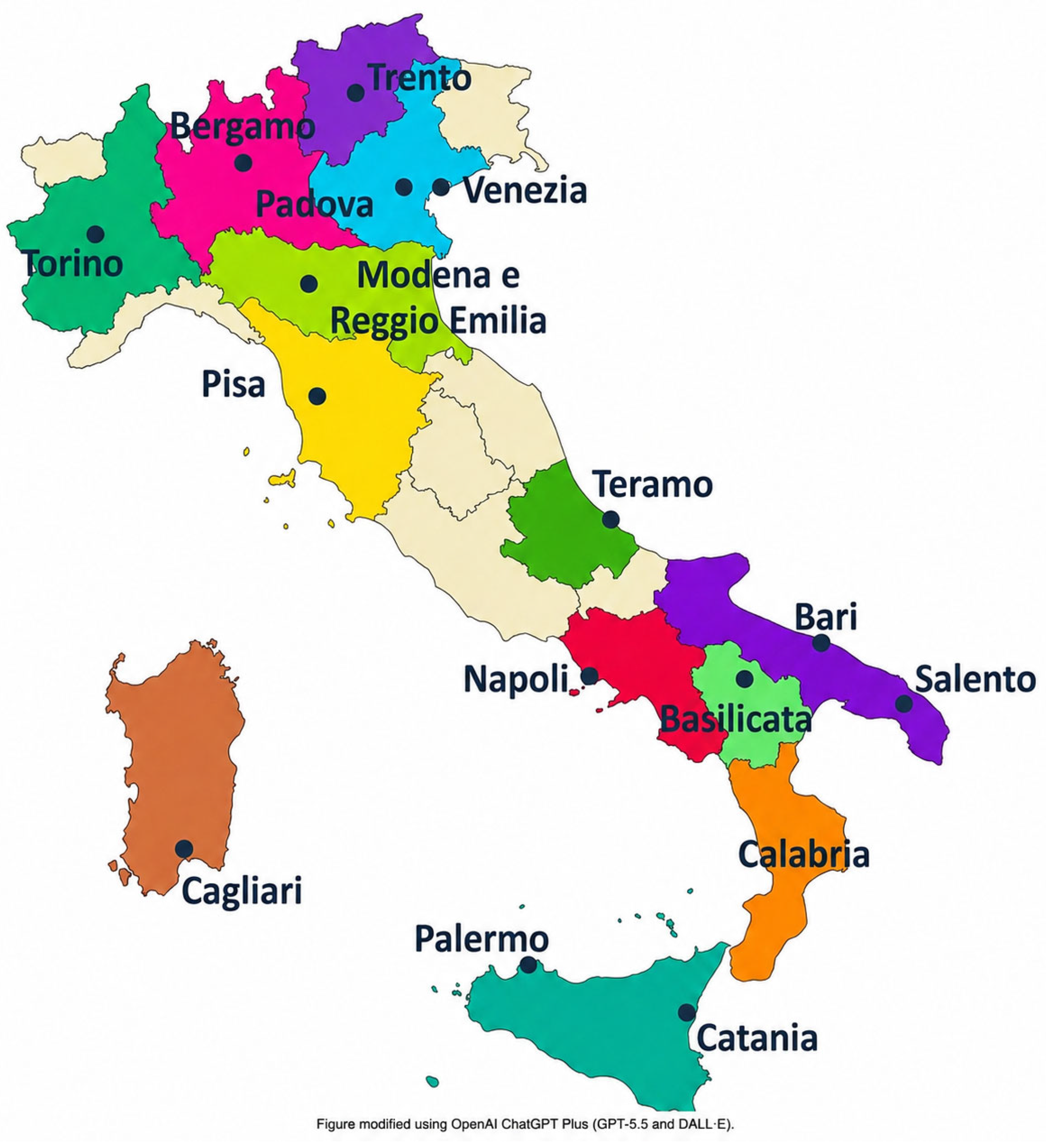
Several Italian and international universities have adopted and adapted the Contamination Lab (C-Lab) model, demonstrating its high flexibility across different local ecosystems. In Italy, the framework experienced rapid institutional diffusion, expanding to involve at least 16 major universities across 13 regions during its initial development phase (Figure 3). Within this national network, implementations range from generic ICT- and start-up-oriented hubs—such as those in Cagliari, Bologna, and Pisa [49,50,51]—to institutions strongly integrated with regional industrial ecosystems, like the inter-university C-Lab in Turin [52], the C-Lab in Trento [53], and the open-innovation platforms in Padua and Venice [54].
While most existing national and international experiences—including renowned reference models like the Stanford d.school [56] or the Aalto Design Factory [57] (Table 3)—predominantly lean toward general management or digital technologies; domain-specific applications remain rare. Notable exceptions with a partial agri-food focus include the C-Lab of Faenza [49] and specific tracks at the University of Naples “Federico II” [58].
In this scenario, a permanent C-Lab in Agricultural/Biosystems Engineering explicitly embedded within the dual framework of Engineering and Agronomy faculties/departments represents a strategic evolution. Rather than focusing on general entrepreneurship, the current case study leverages the C-Lab methodology to address specific technical challenges in agritech, smart mechanization, post-harvest processing, and forest systems, combining the structural lessons of the national network with a precise disciplinary purpose.

2. Methods

2.1. The University of Udine’s Contamination Lab: A Different Approach to Raising Awareness of Agricultural Engineering and Engaging Companies

The Agroforestry Engineering C-Lab of the University of Udine [60] has a strong focus on applied research and the resolution of specific problems proposed by companies, as with the sector to which it refers. This perspective, while not excluding entrepreneurship as a potential ultimate outcome (e.g., possible creation of start-ups after this experience), emphasizes co-creation of solutions and technology transfer more strongly. We can say that this C-Lab stands out for its strong emphasis on “Corporate Problem Solving and Collaborative Research” as the main driver of innovation, while still retaining elements that can lead to entrepreneurship. Furthermore, one of the crucial points in pursuing “third mission” activities (i.e., consultancy for companies, technology transfer and public engagement) by university professors is always to come in contact with potentially interested companies. Indeed, on the one hand, the professors do not have adequate resources to actively carry out real and effective scouting or advertising activities, as they are mainly (rightly) engaged in teaching and basic research (i.e., the so-called “first” and “second” missions of university). The companies, on the other hand, may not be aware of all the expertise and people they could find at the university, and usually end up contacting only those they already know. Although mainly aimed at students, a C-Lab focused on Agroforestry Engineering is also an excellent opportunity to bring these two subjects together. Indeed, it filters companies to only those that are genuinely interested in the sector (or that already define themselves as part of it), and shifts the burden of engagement onto them through an advertising campaign on institutional channels. In more detail, the Agroforestry Engineering C-Lab of the University of Udine unfolded through the following steps:
  • Securing participation of companies and request for a definition of challenges they face: Companies presented real problems, problematic points, or opportunities for improvement/innovation that required a research and development approach; this was at the heart of the “research collaboration”. Specifically, in the 2025 edition, solutions were requested for these themes (see following paragraphs for greater detail): (a) optimization of water resource management in agriculture, (b) development of smart sensors for crop monitoring, (c) solutions for phytoremediation, (d) market analysis of liquid food mixing products.
  • Formation of multidisciplinary teams: Participating students (mainly from Engineering, Computer Science, Agricultural Sciences) were organized into teams, trying to enhance multidisciplinarity, as it is crucial for tackling complex problems from various angles.
  • Problem analysis and understanding phase: The teams applied methodologies like design thinking, hence they dedicated time to: (a) thoroughly understanding the needs and perspectives of the company and the end-users of the problem (“empathization” phase), (b) clearly outlining the problem to be solved (“statement definition” phase), (c) generating a wide range of ideas for solutions (“ideation” phase).
  • Solution development and prototyping phase: The teams worked on developing concepts, prototypes (even only conceptual, virtual or low-fidelity), and/or feasibility studies for the proposed solutions; the focus was on the technical validity and innovation of the solution to the corporate problem rather than on the “business model”.
  • Specialized mentoring: Participants received support from: (a) university professors and researchers, specifically to validate the solutions from a scientific and technical perspective; (b) company experts, to ensure the applicability and relevance of the solutions in the industrial context; (c) innovation experts, to guide the problem-solving process.
  • Presentation and feedback: At the end of the C-Lab, the teams presented their solutions to the proposing companies and a jury of experts; feedback was crucial for refining ideas and evaluating their future applicability.
  • Analytical evaluation of proposals, ranking of groups and award ceremony.
What distinguishes this Contamination Lab and why it can be considered an effective reference model:
  • Strengthening the third mission: This approach maximally emphasizes the university’s “third mission”: technology transfer and territorial impact. It is not just about producing knowledge, but directly applying it to solve concrete problems for businesses.
  • Developing highly demanded skills: Students acquire not only entrepreneurial skills but also applied research, incremental/disruptive innovation for industry, collaborative problem-solving, and project management with external stakeholders. These are highly sought-after skills in the job market, both in established corporate settings and in start-ups.
  • Pipeline for corporate innovation: For companies, participation means gaining access to new ideas, fresh talent, and an innovative approach to solving problems that they might not be able to address internally with the same speed or perspective. It could lead to the adoption of new technologies or the beginning of joint internal R&D projects.
  • Indirect entrepreneurial potential: Even if the primary orientation is not an immediate start-up creation, the most promising solutions could still evolve into: broader joint research projects, hiring of participants by the companies, spin-offs or start-ups (if the solution has sufficient market potential to justify an independent entrepreneurial path; e.g., the developed solution can be a product/service saleable to other companies).
  • Role of PNRR and iNEST: Being part of the PNRR and iNEST context means that this C-Lab is part of a broader strategy for strengthening innovation and competitiveness in Northeast Italy, with a clear mandate to facilitate collaboration between research and industry.
Ultimately, the Udine C-Lab, with this specific focus, not only distinguishes itself by a more applied collaborative research approach but also represents a virtuous model of how the university can become a strategic partner for corporate innovation, generating mutual value and training professionals with highly specialized and in-demand skills.

2.2. Participating Companies and Proposed Challenges

The Contamination Lab, named “Agroforestry Engineering C-Lab”, took place from May 2 to May 16, 2025. Four different companies participated, proposing the students four distinct research topics, or “challenges”, collated in Table 4. As this was the first pilot edition of the C-Lab at the University of Udine, participation was not based on any statistical sampling or selective criteria. Both companies and students were invited to participate through an open call, and the final number of four companies and eighteen students simply reflects the voluntary responses received. No representativeness or stratification of the respective categories was intended at this stage; the objective was purely exploratory, aiming to test the potential and feasibility of the initiative, and observe the dynamics of multidisciplinary collaboration in a real-world setting. The only important limitation for companies concerned the general topic.
Each company provided a corporate tutor whose role was to present the participants the proposed research topic and explain to them the expected results from the company’s perspective. Eighteen students from 13 different degree programs participated in finding solutions to these research topics. They were instructed to split into four groups of 4–5 students, i.e., one group for each participating company, after the process described hereinafter.
The initial phase began with a team building session where the students, after listening to the presentations about each topic, were tasked with self-organizing and dividing themselves into groups; the goal was to create groups that were as balanced as possible in terms of skills, experience, and interest in the chosen topic, specifically considering the following parameters:
  • Degree program of origin.
  • Year and type of attended course.
  • Personal preferences for a research topic.
The students successfully formed their groups independently in about half an hour, however following the organizers’ suggestions. The primary goal of the academic tutors was to ensure the formation of multidisciplinary and balanced groups, paying particular attention to harmonizing the distribution of skills/academic paths and the year of enrolment at the university. Each group was then assigned a corporate tutor and an academic tutor, based on the chosen topic. The groups then began their research work, which they were to complete over two weeks, consulting with both their corporate and academic tutors.

2.3. Proposed Seminars

Within the C-Lab, some seminars were also held to provide students with additional tools/approaches to best develop their research topics. Specifically, the following seminars were offered:
  • “Foresight Lab to Explore Tomorrow”, Prof. C. Battistella & Dr. G. Attanasio, UniUD;
  • “Practical Creativity Workshop for Innovation”, Prof. C. Battistella & Dr. G. Attanasio, UniUD;
  • “From Wool, Flowers are Born”, Dr. C. Spigarelli, freelance;
  • “Effective Management of Complex Projects”, Prof. C. Battistella & Dr. G. Attanasio, UniUD;
  • “From Idea to Enterprise”, Dr. P.P. Ganis, Vitesy.
At the end of the two weeks, the groups prepared a summary document of their results, created a three-minute pitch to summarize their findings, and presented their research directly to a mixed jury equally composed of university professors and company professionals, who evaluated the work of the individual groups. The evaluation was conducted considering the following criteria (Table 5); each of them was awarded with a score spanning from 1 (“non-sufficient”) to 5 (“excellent”).
During and in the follow-up of the laboratory, questionnaires were administered to both participants and corporate tutors to evaluate the experience, which we report in the analysis section.

2.4. Participating Students

A total of 16 of the 17 participants were students from the University of Udine, while only one student came from another Italian institution. The students showed remarkable academic diversity, coming from 13 different Italian degree programs (Table 6). The breakdown by department of reference for their degree programs was as follows:
  • Eight students from the “Department of Agricultural, Food, Environmental and Animal Sciences” (DI4A) of UniUD (degree programs broadly related to Agriculture, Food, Environment);
  • Three students from the “Department of Mathematics, Computer Science and Physics” (DMIF) of UniUD (degrees broadly related to Computer Science and Informatics);
  • Three students from the “Polytechnic Department of Engineering and Architecture” (DPIA) of UniUD (degree programs broadly related to Engineering);
  • Three students from other departments of UniUD/other universities.
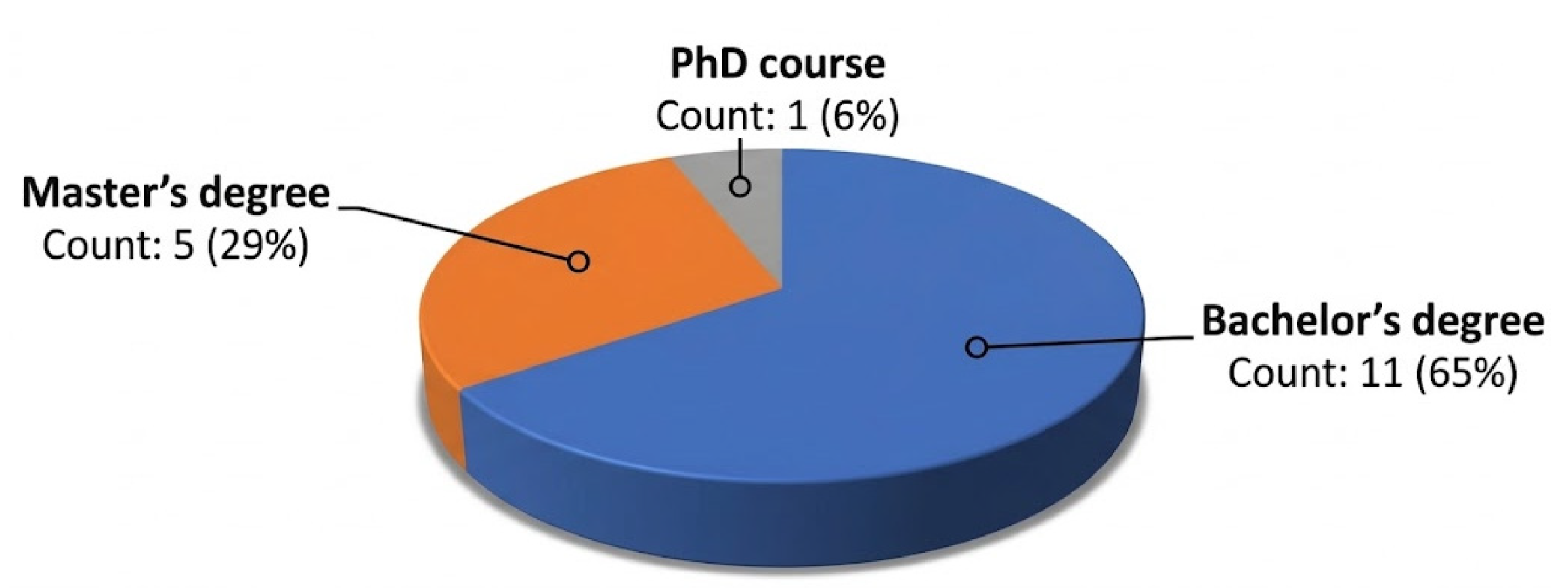
Regarding the level of study (Figure 4), the majority (11) came from Bachelor’s degree programs, but there were also students enrolled in Master’s degree programs (5), and one student pursuing a Ph.D. program.
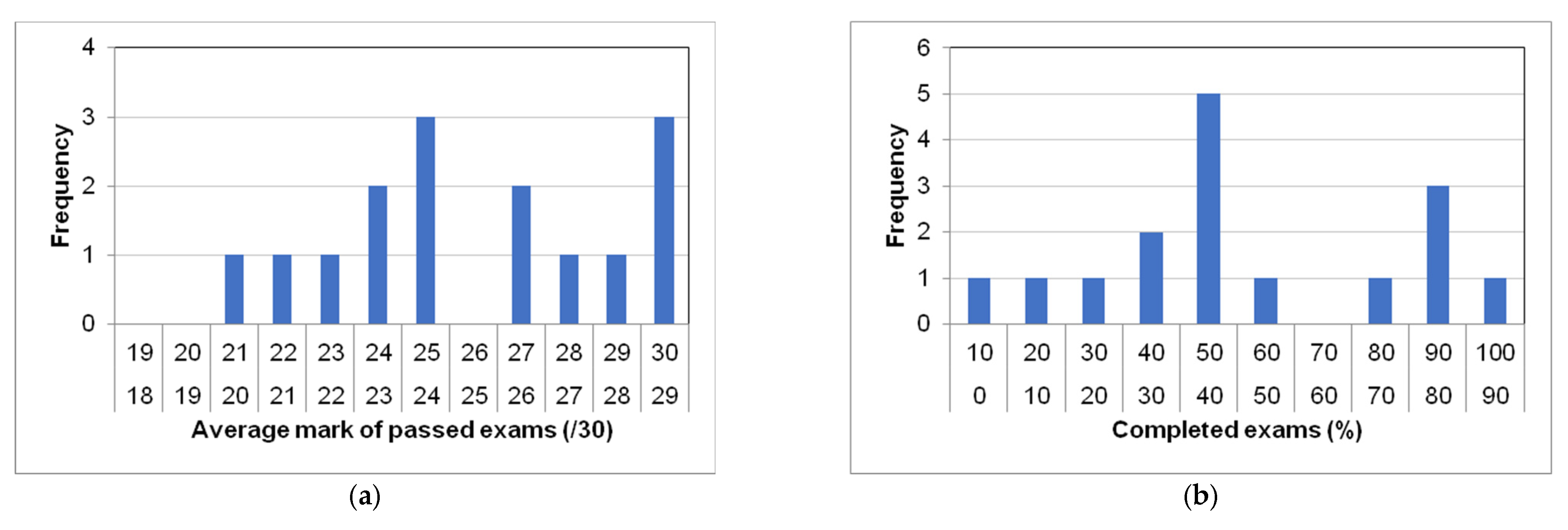
The distribution of average exam marks at the date of participation in the C-Lab (Figure 5a) suggests a high (spontaneous) selection standard for the Contamination Lab, evidenced by the dominant presence of students with high academic performance (peaks at 25 and 30 over 30) and the absence of marks below 21 over 30, indicating a sample composed of highly motivated participants with a solid theoretical foundation.
The distribution by percentage of completed exams (Figure 5b) reveals a heterogeneous sample composition, characterized by two distinct prevailing groups. There is indeed a large segment mid-course (50% of completed exams), which guarantees energy and updated knowledge, and another significant group of senior students (90% of completed exams), which contributes maturity and results orientation.
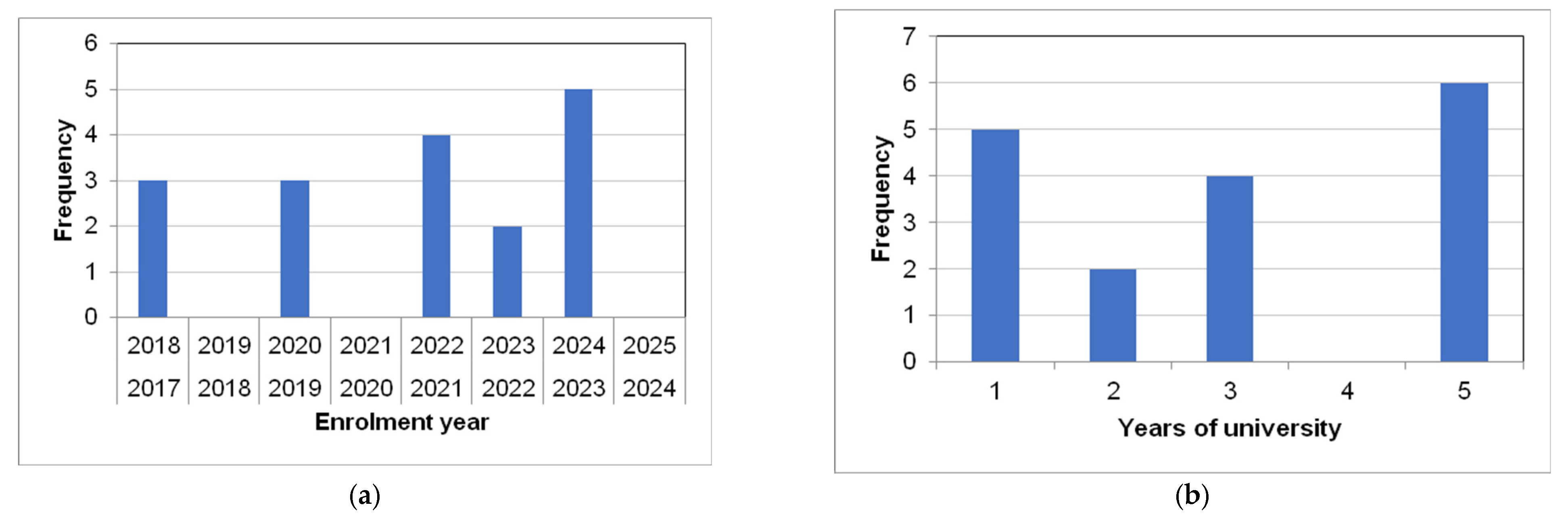
The distribution by enrolment year (Figure 6a) reveals a strong presence of recently enrolled students (2024, i.e., students with only one year of university study), ensuring fresh perspectives within the Contamination Lab, complemented by a balanced mix of students from various other academic cohorts (e.g., 2018, 2020, and 2022), which guarantees a crucial combination of academic experience and novelty.
The analysis by completed years of university (Figure 6b) reveals a strongly bimodal and polarized composition, with dominant groups at the 1st year and the 5th year, ensuring maximum intergenerational contamination between students with fresh perspectives and those with high academic maturity and deep theoretical knowledge.

2.5. Questionnaire and Interview Methodology: Approach, Metrics, and Respondents’ Homogeneity

To comprehensively evaluate the execution of this pilot project and its educational outcomes, a structured evaluation framework was established at the end of the Contamination Lab experience. Data collection was performed entirely through digital means, using anonymous online forms hosted on the professional survey platform “Typeform” [61].

Evaluation Design, Survey Metrics, and Instrument Structure

The assessment questionnaire framework was designed following established practices in social sciences applied to engineering education. It comprised 9 core standardized items targeted at the participating students, structured to assess specific educational, collaborative, and relational dimensions. Quantifiable metrics (i.e., items “Q01” to “Q08”) were captured using a standardized 5-point Likert scale (ranging from “1” = Highly Unsatisfactory/Strongly Disagree to “5” = Highly Satisfactory/Strongly Agree) [62], providing an objective numerical baseline to analyze satisfaction, operational friction, and pedagogical alignment. Item “Q09”, instead, utilized a binary choice (Yes/No) to evaluate the overall retention propensity of the participants.
In terms of research ethics and data protection, the administration of the survey strictly adhered to standard academic protocols. Participation was entirely on a voluntary basis, and all candidates were orally informed beforehand about the specific scope and nature of the study. To ensure the psychological safety of the respondents and eliminate any evaluation bias, the survey was completely anonymized. Furthermore, participants were explicitly informed about data processing policies, ensuring full compliance with institutional privacy standards and data protection regulations.
From all the participants in the pilot project, 15 complete questionnaires were successfully collected, yielding an excellent response rate of 88.2%, which guarantees a highly representative baseline for the subsequent analysis. The complete thematic structure of the 9 questionnaire items is detailed in Table 7:
In parallel, corporate tutors were subjected to an evaluation protocol mirroring these dimensions, specifically focusing on: (i) the technical and innovative validity of the engineering solutions proposed by the teams, (ii) the proactive attitude demonstrated by the students, and (iii) the institutional value of the company–university co-innovation network.

3. Results

3.1. Feedback from Companies on Students’ Outcomes

Company tutors were asked to provide specific feedback by completing a questionnaire on three main areas: (1) the research outcomes, (2) the relationship established with the student group, (3) the overall collaboration between the company and the university. The data collected yielded the following results:
  • Research outcomes: all company tutors agreed that the groups failed to present ideas that were truly innovative or immediately interesting for concrete application; despite this, three out of four tutors expressed an overall positive evaluation of the work carried out by their research group.
  • Relationship with the research group: the relationship between the company tutors and their respective research groups was reported to be generally good; however, in the majority of cases, a lack of initiative in interaction on the part of the groups was highlighted; one tutor was particularly critical of their group, while another expressed great satisfaction with the established relationship.
  • Company–university collaboration: all company tutors expressed a very positive evaluation regarding the collaboration with the university and indicated their willingness to repeat the experience.

3.2. Feedback from Participating Students

Students were asked to provide feedback by completing a questionnaire. The evaluation specifically covered: (1) the level of interest shown towards the assigned research topic, (2) the quality of the relationship between the group and the company tutor, (3) the internal dynamics and relationships among group members, (4) a general assessment of the overall experience within the C-Lab. The analysis of the questionnaires revealed the following results:
  • Interest in the topic: one group expressed a critical evaluation of the research topic, describing it as uninteresting because it focused on market research rather than the development of a product or service; all other participants stated they were satisfied with the assigned topic.
  • Relationship with company tutor: only one group gave an unsatisfactory rating regarding the relationship with their company tutor; all other participants evaluated this relationship positively.
  • Group dynamics: a critical issue regarding the ability to work as a team was found in two out of four groups; in one case, the problem was attributed to the individual conduct of one member, and in the other case to a lack of harmonious cooperation among participants.
  • Overall C-Lab assessment: almost all participants and all groups expressed a broadly positive opinion of the initiative promoted by the university and stated they would be willing to repeat the experience; only one participant expressed a critical view of the initiative, indicating they were not disposed to repeat it.

3.3. Feedback from Academic Tutor

The feedback received from academic tutors, the students, and company tutors were all in agreement, while providing further information. Specifically, the following critical points emerged:
  • In two groups, a lack of internal cohesion was observed, which negatively affected the final outcome of the research work. The divergences observed by the academic tutors were later confirmed by the student questionnaires, in which these two groups reported noticeably lower scores regarding their ability to work collaboratively and their overall group cohesion. In one group, the difficulties stemmed from the behavior of a participant who repeatedly made decisions autonomously and in contrast with the choices agreed upon by the rest of the team, thereby undermining the collaborative process. In the other group, one student—coming from a non-technical degree program—gradually became isolated, while two additional members worked independently without coordinating with the remaining teammates. These dynamics required more frequent intervention from the tutors and illustrate how differences in background, misaligned decision-making styles, and limited communication can negatively affect cohesion and the effectiveness of interdisciplinary teamwork within a C-Lab environment. At the same time, the two described cases also illustrate the need for some students to test and, if possible, develop their so-called soft skills, even in initiatives like the one proposed.
  • In all groups, communication with the company tutor was insufficient, preventing an optimal alignment between the group’s work and the company’s expectations. This attitude is symptomatic of contemporary students’ reluctance to discuss their problems and, more generally, to communicate with people who are not their peers or members of their own group. This phenomenon points to communication difficulties, likely insecurity about their own preparedness (to the extent that they wish to expose themselves as little as possible to the judgments of others), and a lack of metacognitive skills—all of which have been well documented among the current generation of students [63,64].
  • In one case only, the lack of a proactive attitude was also noted on the part of a participating company; the same company’s representative gave an evaluation of the C-Lab initiative and results that disagreed with the other companies’ evaluations and with the final judgment expressed by the jury.

4. Discussion

4.1. Academic Background and Performance Correlation of Participants

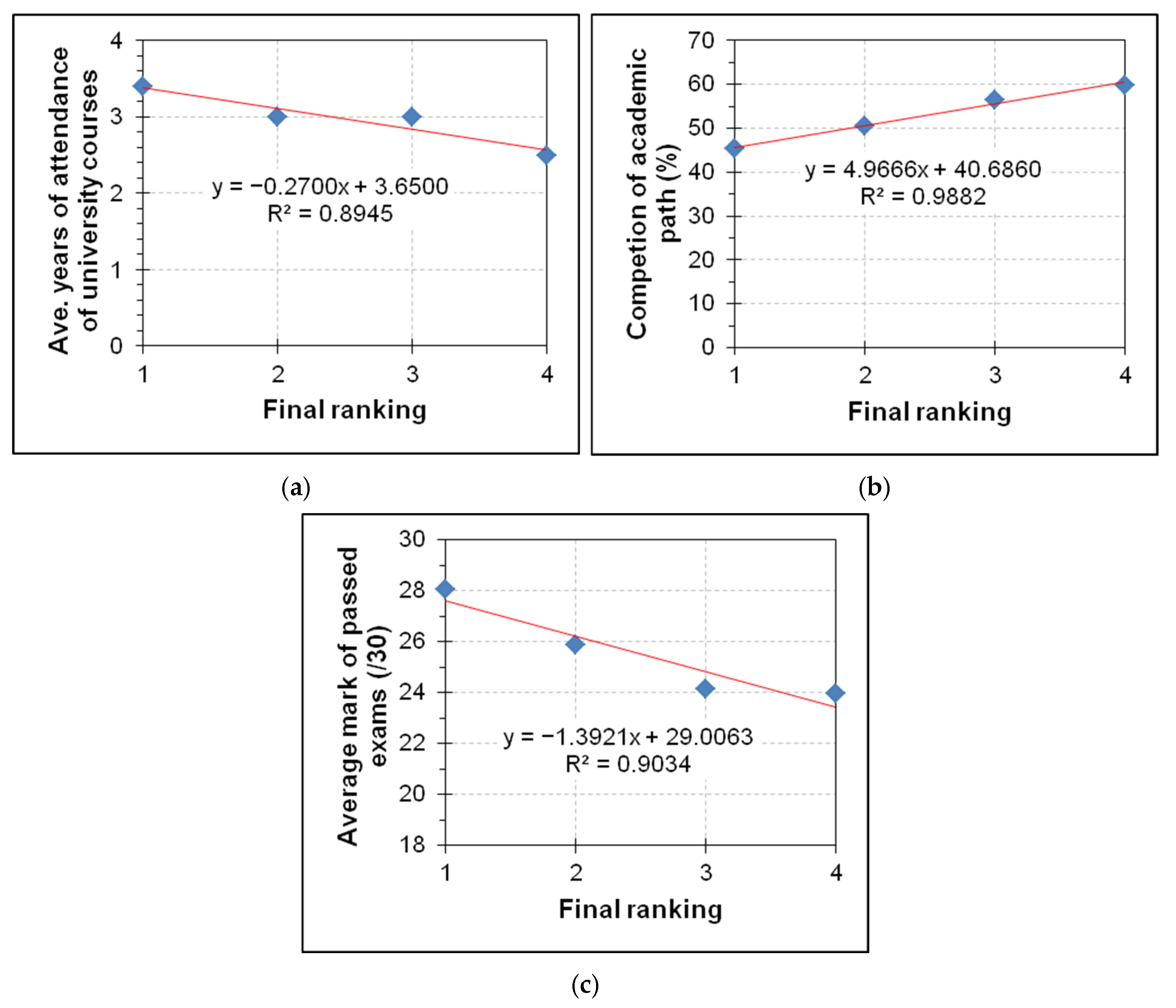
The analysis of the participants’ academic data revealed several interesting correlations with the project’s final ranking, evidenced by the determination coefficients of the regression lines plotted on the data.
The first graph presented here (Figure 7a) highlights a negative correlation between final ranking and years of attendance, demonstrating that the groups achieving the best final ranking are, on average, those composed of students with the highest number of years of university attendance (and, presumably, the broadest and most comprehensive competencies).
The graph in Figure 7b demonstrates a strong, positive, and apparently counter-intuitive correlation, indicating that the Contamination Lab groups with the highest percentage of academic path completion tended to achieve the worst final ranking. However, this piece of information should be related to the previous figure, considering that the higher the number of attended academic years, the higher the possibility for students not to have completed their academic grades.
The graph in Figure 7c reveals a strong negative correlation indicating that the Contamination Lab groups with the highest average mark in passed exams are the ones that unequivocally achieved the best final ranking.
Summarizing the data, the groups that achieve the best final ranking are, on average, those composed of students with the highest average mark in passed exams (strong negative correlation) and the highest number of years of university attendance (negative correlation). This suggests that fundamental cognitive capacity and academic maturity—developed through both successful study performance and long-term exposure to the university environment—are critical success factors in the C-Lab. These attributes translate into greater discipline, better problem-solving skills, and superior ability to synthesize complex though different information, which are essential for addressing the corporate challenges.
A strong, positive, and, at first sight, counter-intuitive correlation was also observed: the groups with the highest percentage of academic path completion tend to achieve the worst final ranking. This potential divergence between the skills valued in a conventional curriculum (focused on quick exam completion) and those required by the C-Lab (creative exploration, risk-taking, and open-ended innovation) warrants further investigation. However, it can be explained at first instance considering the higher possibility for students not to have completed their academic grades if their academic path is longer, as for students with more attended academic years. This is in accordance with the first result. Regarding the sample size and the subsequent correlation analysis, it should be clarified that this work was conceived as an exploratory pilot study rather than a large-scale inferential trial. Consequently, the observed correlations should be interpreted as emerging trends and “proof-of-concept” indicators rather than universal statistical laws. The decision to prioritize the depth of qualitative feedback over a broader quantitative dataset was functional to the research goal: understanding the complex professional and human interactions within the “Technological Triad”. Therefore, while the findings are presented with the necessary rigor appropriate for a pioneering case study, they serve as a logical and methodological foundation for future longitudinal research, rather than as a final statistical generalization.

4.2. Why Companies Should Participate in a Contamination Lab (C-Lab) Instead of Seeking Conventional Academic Consultancy

Engaging in a Contamination Lab offers companies a fundamentally different—and often more strategic—form of collaboration with the university compared to simply requesting technical advice or consultancy. While conventional university–industry interactions are typically “vertical”, i.e., involving a direct and expert response to a narrowly defined technical problem, the C-Lab model promotes “horizontal” co-creation, where innovation emerges from an open, multidisciplinary dialogue between students, researchers, and company representatives.
In a C-Lab, companies propose real-world challenges not to be solved through a predefined method, but, rather, to be explored creatively by interdisciplinary student teams using design thinking, rapid prototyping, and agile innovation methodologies. This approach allows firms to tap into cognitive diversity and uncover ideas that are not constrained by existing technical paradigms—often producing unexpected, unconventional yet applicable solutions. In this regard, a C-Lab in Agricultural Engineering provides an ideal environment for the application of advanced systemic methodologies for functional analysis, problem-solving and creativity guidance, such as the “Theory of Inventive Problem Solving” or “TRIZ” [65], developed by Genrich Altshuller and his colleagues since 1946 and formalized in 1984 [66].
Moreover, C-Labs serve as powerful platforms to promote corporate visibility and foster talent scouting. By participating, companies position themselves as dynamic and innovation-oriented actors within the academic ecosystem, and, at the same time, gain access to a pool of motivated students who may become future collaborators, interns, or employees whose competencies and attitudes are already tested in applied, team-based contexts. Unlike in traditional consultancy relationships, the C-Lab enables ongoing, informal interaction between companies and students throughout the challenge development process, creating deeper mutual understanding and long-term recruitment opportunities. The feedback from the companies, which indicated that the proposed solutions were not yet ready for immediate industrial application, should be interpreted in light of the C-Lab’s nature as a pre-incubator of ideas rather than a commercial R&D department. However, the contemporary general appreciation toward this initiative, independent from the adequateness of the proposed solutions, is the explicit acknowledgement of the high potential behind this initiative to bridge the gap between academic theory and professional complexity. The participating companies recognize, as the primary return on investment, the opportunity to evaluate problem-solving trajectories and ‘soft’ competencies of participants/possible future collaborators in a controlled yet authentic setting. Indeed, those abilities, typically outside of the university/formative path, are difficult to evaluate in a job interview. Paradoxically, the obtainment of solutions ready for application, although surely welcome, was recognized not to be the only outcome of a C-Lab.
Another key advantage lies in the risk–benefit profile of these initiatives: participation in a C-Lab is low-cost and low-risk for companies, but potentially high-reward, especially for SMEs and start-ups lacking internal R&D capabilities. Companies are actively involved in defining challenge briefs, mentoring, and evaluating project outcomes. Beyond immediate outputs, this engagement is not limited to a passive sponsorship: it also fosters alignment with the university’s “third mission” by contributing to knowledge transfer, entrepreneurship, and innovation ecosystems, enhancing the reputation of participating companies among emerging professionals and within the university networks. Hence, it is possible to state that a Contamination Lab is not merely a support service—it is a collaborative innovation environment where companies are active stakeholders in shaping both educational and technological outcomes [38,39].

4.3. Strategic Advantages for a University in Hosting a Recurring Contamination Lab on Agricultural Engineering

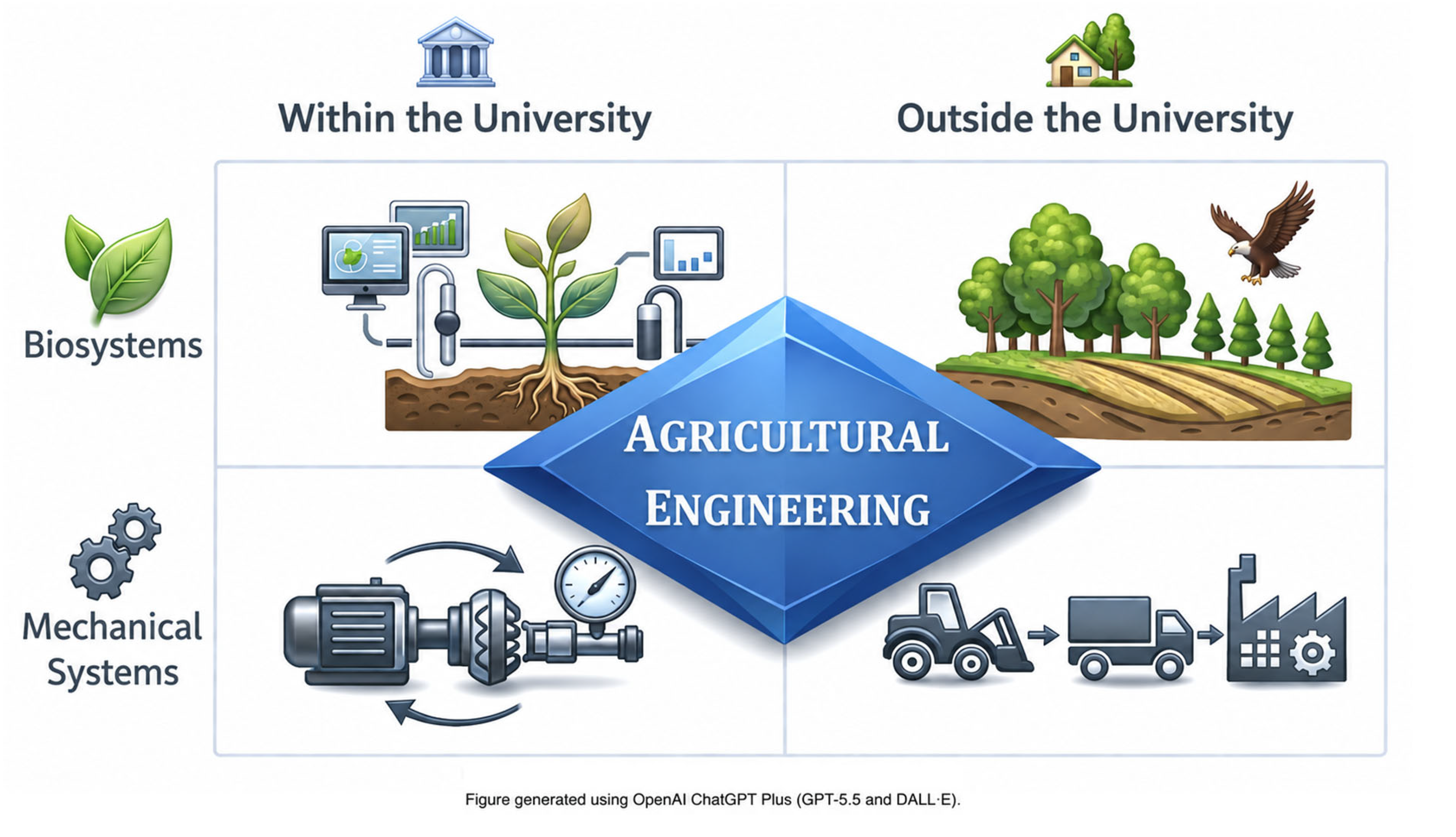
For universities that host both Engineering and Agricultural Sciences departments, establishing and continuously supporting a Contamination Lab (C-Lab) dedicated to Agricultural Engineering offers strategic, didactic, and institutional advantages that extend far beyond the timeframe of individual editions. Agricultural Engineering, by its very nature, operates at the intersection of technical and biological systems, addressing complex challenges in agri-food, forestry, and environmental domains through an inherently multidisciplinary and technical application-oriented approach (Figure 8). As such, a recurring C-Lab focused on this field can enhance the university’s capacity to act as an integrated innovation hub, making, at the same time, the Agricultural Engineering group (and subject) more visible both internally and externally. This visibility is particularly valuable in positioning the university as a reference point for companies developing machinery, automation or digital solutions for bio-based systems, offering them a clear gateway to a coherent and well-coordinated academic interlocutor.
Moreover, the Agricultural Engineering research group/subject, due to its hybrid nature and system-level vision, is uniquely suited to coordinate and synthesize contributions from research groups in both Engineering (e.g., control systems, materials, electronics) and Agricultural Sciences (e.g., agronomy, animal science, food technology). A C-Lab can become a catalyst for such interdisciplinary collaboration, reinforcing internal synergies and enabling the creation of truly transdisciplinary project teams. This bridging function—akin to the role played by Management Engineering between technical and economical disciplines—makes Agricultural Engineering a strategic driver of cross-sectoral innovation and policy-relevant research.
From a governance and investment perspective, supporting a C-Lab in Agricultural Engineering also ensures a high return on educational and institutional investment: the relevance of the field spans multiple sectors, including mechanization, food processing, forestry, water and soil management, and sustainability transitions. This breadth means that each iteration of the C-Lab contributes to multiple strategic priorities simultaneously—regional development, innovation ecosystems, green transition, and industrial partnerships. For these reasons, possible continued investment in such a format not only strengthens the role of Agricultural Engineering within the university, but can also maximize the institutional impact per unit of resource deployed, aligning perfectly with “third-mission” objectives and long-term research valorization in a “win-win” strategy. Although the C-Lab implemented at the University of Udine differs from most of the other, more conventional C-Lab initiatives—typically focused on innovative teaching methods, entrepreneurial training, and student-centered learning—some of the strategic advantages identified here (specifically the focus on the “learning-by-failing” and “learning-by-doing” processes) are consistent with experiences reported by others at Italian and European universities. Initiatives such as the previously cited Aalto Design Factory, the DTU Skylab, or the challenge-based labs at the Universities of Trento and Bologna, similarly highlight the value of multidisciplinary teamwork, structured collaboration with companies, and the creation of integrated innovation ecosystems. This suggests that, despite its specific research-oriented nature, the Udine C-Lab shares several systemic benefits with comparable models, supporting the broader relevance and apparent partial generalizability of the presented conclusions.
The strategic value of the initiative is also supported by several concrete outcomes observed after this first edition. Indeed, the positive results convinced the organizers to launch a second edition of the C-Lab, confirming its institutional relevance. All participating companies expressed their willingness to join future editions, indicating strong appreciation and a strengthened university–industry relationship. Moreover, it is also worth noticing that the winning student group continued its work by participating in the CIGR International Student Competition [67], demonstrating the potential of the C-Lab to stimulate high-level scientific engagement. Finally, this C-Lab has been adopted as a pilot experience within the “LabVillage.it” project [68], a regional network of joint university–industry laboratories, further highlighting its strategic role in shaping collaborative research ecosystems.

5. Conclusions

5.1. Synthesis of Results and Preliminary Model Assessment

The results emerging from this experience suggest that the Contamination Lab (C-Lab) represents a necessary and scalable “hybrid response” to the difficult positioning of Agricultural Engineering in Italy. The marginalization of this sector has historically created a communication gap with engineering and technological disciplines and a lack of visibility toward companies manufacturing agritech, food machinery, and forestry equipment; the C-Lab has indicated its ability to bridge this gap by acting as a platform for institutional mediation. The effectiveness of the model appears to be supported by three “fundamental pillars”:
  • Effectiveness of the so-called “Technological Triad” (Agriculture, Engineering, Computer Science): The platform facilitated a transdisciplinary collaboration that conventional departmental systems tend to inhibit. The success of the groups depended on the ability to integrate biological and agronomic sensitivity (Agriculture) with the rigor of mechanical design (Engineering) and the power of digital systems (Computer Science). This technical synergy suggests the C-Lab as the natural environment for the evolution towards Biosystems Engineering, allowing diverse knowledge to converge on real-world problems that none of the three disciplines could solve in isolation.
  • Relational value beyond the product: Despite some reservations expressed by company tutors regarding the immediate “innovation readiness” of the results (perceived as not yet mature enough for industrial application), all companies rated the quality of the process and the collaboration with the university extremely positively. This data indicates that the value of the C-Lab for the agritech industry lies in co-creation and talent scouting: companies seek direct contact with future designers and managers of agricultural technology.
  • Coordinating role of agricultural engineering: The students’ willingness to repeat the experience confirms that the model meets a latent demand for hybrid skills. In this context, Agricultural Engineering showed the potential to act as a strategic “glue” proving to be the only discipline capable of translating IT and engineering innovations within the constraints and needs of the agricultural world.

5.2. Determinants of Success and Group Dynamics

The analysis of performance and interactions within the teams revealed crucial evidence for the future design of challenge-based learning initiatives. The collected data suggests that the effectiveness of groups in solving complex industrial challenges is not accidental, but it is influenced by academic and attitudinal factors that deserve in-depth analysis:
  • The value of “academic maturity” as a prerequisite: The positive correlation between C-Lab performance and indicators, such as average grade and years of attendance, highlights that soft skills do not operate in a vacuum but are more effectively grafted onto solid disciplinary foundations. In this specific context, academic maturity appeared to provide the students with the resilience and synthesis skills necessary to manage the ambiguity typical of open-innovation projects. This suggests that, in team composition, the presence of “senior” figures acts as a stabilizer for group dynamics.
  • The paradox of study completion: The negative correlation that emerged between the exam completion rate of participants and their final project ranking is of extreme interest. This counter-intuitive data suggests a divergence between the success metrics of the conventional academic curriculum—often focused on mnemonic learning speed and conformity to predefined schemes—and the skills required by the C-Lab. In unstructured industrial contexts, risk propensity, cognitive flexibility, and divergent thinking are necessary; those are qualities that, paradoxically, risk being “eroded” by an excessively rigid study path focused solely on quantitative performance.
  • Conflict management and team coordination: Although multidisciplinarity is the lifeblood of innovation, the results show that it can generate communicative friction and coordination difficulties if not mediated. The tendency of teams to encounter obstacles in communication with company tutors highlights a linguistic gap between university and industry. This underlines the opportunity to systematically integrate specific training modules on teamwork management and creative problem-solving methodologies, especially within Agricultural Engineering curricula.

5.3. Implications for Agricultural Engineering and Academic Policy Recommendations

To reverse the marginalization of Agricultural Engineering and recover the necessary dialogue with Engineering and Computer Science departments, the Contamination Lab model should not be interpreted as an isolated or one-off event. On the contrary, it should evolve into a permanent and structured institutional tool. Based on the evidence collected, it is recommended that all universities hosting both Agricultural and Engineering–Technological departments formally adopt this model, thus focusing on three strategic directions:
  • Synchronization of languages and “disciplinary diplomacy”: The C-Lab serves as a training ground for future Biosystems Engineering graduates, allowing them to perform the necessary synthesis between the metrological and technical rigor typical of engineers, and the biological and environmental complexity inherent to agronomists. This “synchronization” is the only way to heal the historical Italian academic misalignment: the C-Lab forces different areas to converge on a common object (the machine, the sensor, the process), transforming the bureaucratic barriers of SSDs into permeable boundaries for intellectual exchange.
  • Evolution of the corporate role from client to co-creator: Critical feedback received from tutors highlights a fundamental policy lesson, i.e., the success of hybridization depends not only on the university, but also on the maturity of the industrial partner. It is necessary to train corporate mentors so that they move beyond the logic of “request for a supply/advice” and, instead, embrace that of “collaborative research”. Universities should promote the C-Lab as an open-innovation environment where a company does not limit itself to evaluating a result, but actively participates in the training of the hybrid profiles it claims to need.
  • Formalization in study paths: To maximize impact, it is suggested to integrate the C-Lab not as an extracurricular activity, but as an accredited optional module (i.e., with ECTS/CFU) or as a preparatory phase for the degree thesis (related to a compulsory qualification). This would give academic dignity to the “contamination” activities and encourage the brightest students to invest time in projects that, while risky and unstructured, represent the true frontier of employability in agritech 4.0.

5.4. Study Limitations and Possible Future Evolution

Despite the interesting evidence in the obtained results, this study has some methodological limits that pave the way for necessary future investigations and highlight some possible refinements to the proposed model.
Firstly, while the current analysis provides meaningful correlations between academic background and project outcomes, it remains primarily descriptive. This choice is rooted in the nature of the Contamination Lab, where success depends on soft skills and metacognitive abilities that are inherently difficult to quantify through standard academic metrics. A rigorous statistical validation of objective impacts (e.g., career progression or patent output) would require a longitudinal observation period that exceeds the scope of this initial case study lab (e.g., superimposing possible future job roles of the participants). Furthermore, the feedback from students and stakeholders, though subjective, represents the most direct and faithful evidence of the relational and professional growth triggered by this specific educational model. In any case, the use of qualitative feedback from a diverse pool of actors (triangulation of perspectives) is a recognized methodology in Social Sciences and Engineering Education allowing for a ‘thick description’ of the phenomenon and identifying the systemic gaps that quantitative metrics can fail to reveal.
Another limitation concerns the restricted sample size, which may have influenced the observed group dynamics, making certain behaviors appear more prominent than they would be in larger cohorts but, at the same time, reflecting the specific and pioneering nature of the project. This constraint may reduce the generalizability of certain findings, as some patterns may reflect context-specific interactions rather than stable trends that can be replicated across different editions or institutions. However, any artificial data augmentation or synthetic resampling techniques (e.g., SMOTE or oversampling) was voluntarily excluded to preserve the phenomenological integrity and the authenticity of the qualitative insights gathered. In this case, indeed, the use of generated data would have introduced artificial correlations, potentially masking the genuine dynamics, frictions, and spontaneous feedback provided by the students and company tutors, which constitute the core value of this experiential research. Regarding future developments, large-scale validation will require the systematic collection of quantitative indicators across multiple editions of the C-Lab—such as group performance metrics, collaboration scores, and company satisfaction indices—to enable comparisons and assess the robustness of the observed phenomena.
Moreover, the transition to a thematic model will be explored by implementing domain-specific C-Lab cycles, and evaluating their impact on research outputs, company engagement, and interdisciplinary integration. Although this new format is not free from potential problems (Table 8), pre-defining priority technological areas—such as the development of agricultural robots, the integration of new materials for agritech, or the application of AI and Big Data in crop monitoring—would allow for the attraction of industrial partners with more focused technical challenges. This evolution will then allow the format to be tested under more homogeneous technical conditions, providing clearer evidence of its effectiveness in supporting collaborative research between university and industry.

5.5. Final Remarks

The Udine experience provides a promising template for an organizational model capable of transforming a structural limit into a strategic advantage, with the potential to create an ecosystem where the hybridization of more than one subject (in this case: agricultural, engineering, and IT skills) produces a value greater than the sum of the individual disciplines involved. In comparison to conventional capstone courses or internships, C-Labs offer greater flexibility, transdisciplinarity, and autonomy for students, while also delivering tangible value to external stakeholders. From a pedagogical point of view, after this experience, it is also possible to formulate the following reflection: to prevent the progress of an academic career from reducing students’ mental flexibility, it is essential to introduce contamination experiences early on. A Contamination Lab is thus confirmed as an essential tool for “training” the ability to apply technical rigor to fluid problems, preparing future graduates for real challenges, in particular in the agritech sector. As such, C-Labs represent a powerful tool to revitalize the teaching and perception of Agricultural Engineering in Italy, helping to attract diverse student profiles, stimulate entrepreneurial initiatives in agritech, and align academic training with the innovation dynamics of real-world agri-food systems. Therefore, the C-Lab Udine offers Agricultural Engineering the opportunity to reclaim its centrality: no longer a “niche” sector between two distant areas, but the center of gravity around which technological innovation for sustainability and food security revolves. It can be seen as a concrete response to the need for a new paradigm for Agricultural Engineering, specifically in Italy. The evolution towards a more structured, thematic, and institutionalized format will allow this discipline to emerge from its academic “shadow zone” and assume a strategic coordinating role. By transforming the current difficult positioning into a competitive advantage, Agricultural Engineering can become the true catalyst for Italian agro-industrial innovation, capable of governing the complexity of the ecological and digital transition through the skillful synthesis of diverse knowledge.

Author Contributions

Conceptualization, M.B., A.B., R.G. and A.M.; methodology, M.B. and A.B.; formal analysis, M.B.; investigation, M.B. and A.B.; resources, M.B. and A.B.; data curation, M.B.; writing—original draft preparation, M.B. and A.B.; writing—review and editing, M.B. and A.B.; visualization, M.B.; supervision, R.G. and A.M.; project administration, R.G. and A.M.; funding acquisition, A.M. All authors have read and agreed to the published version of the manuscript.

Funding

This study was carried out within the Interconnected Nord-Est Innovation Ecosystem (iNEST) and received funding from the European Union Next-GenerationEU (Piano Nazionale di Ripresa e Resilienza—PNRR, MISSIONE 4 COMPONENTE 2, INVESTIMENTO 1.5, D.D. 1058 23 June 2022, ECS00000043, CUP UNIUD iNEST: G23C22001130006). This manuscript reflects only the authors’ views and opinions; neither the European Union nor the European Commission can be considered responsible for them.

Institutional Review Board Statement

Ethical review and approval were waived for this study by the Institutional Review Board of the Department of Mathematics, Computer Science, and Physics (IRB-DMIF) of the University of Udine. The research followed the principles of the Declaration of Helsinki and the internal regulations of the IRB-DMIF (established by resolution on 14 April 2021). According to these regulations, formal approval is not required for non-invasive educational studies conducted within standard academic activities using anonymized educational data and voluntary feedback. Therefore, no formal protocol identification code was issued for this study.

Informed Consent Statement

Informed consent was obtained from all subjects involved in the study.

Data Availability Statement

The data supporting the conclusions of this article are available on Zenodo, at the following URL: https://doi.org/10.5281/zenodo.17713851.

Acknowledgments

The authors wish to thank the technical and administrative offices of the Department of Mathematics, Computer Science, and Physics (DMIF) at the University of Udine for their invaluable support in the realization and organization of the C-Lab activities. During the preparation of this manuscript, the authors used: Google NotebookLM (version of March 2026) for the purposes of generating the figure constituting the graphical abstract, and ChatGPT Plus, specifically GPT-5.5 and DALL·E tools for the purposes of generating some figures of the article. The prompts used were: [graphical abstract] "Based on the uploaded article manuscript (ed. the whole manuscript), generate a summarizing picture to be used as graphical abstract, having a white background, focussing only on the seven pillars of a contamination lab and visualizing the characteristic of the Contamination Lab to be able to bridge the gap between Agriculture and Engineering"; [Figure 1] "Improve the appearance of this figure (ed. taken from a cited source, representing the UniMAP’s Biosystems Engineering Program) by adding different colours and icons for each of the element textually represented in that uploaded picture; all the elements should be connected to the main box (on the top-centre of the figure) reporting the label 'Biosystems Engineering'; use a white background and glossy-style icons"; [Figure 2] "Improve the appearance of this figure (ed. made by the authors using Microsoft PowerPoint), using a glossy style; do not change the labels; keep the white background"; [Figure 3] "Improve the appearance of this figure (ed. taken from a cited source, representing Italy and with some cities evidenced) by evidencing with different colours each region reporting a city, do not modify the position and the name of the cities; keep the white background"; [Figure 8] "Suggest a picture/icon/mini-illustration for each of the concept reported in the four quadrants of the matrix uploaded (ed. written by the authors in a Microsoft PowerPoint file and containing only text); sketch the icons as a coherent set specifically for this matrix; redraw the matrix as a publication-ready vector mock-up; use a white background". The authors have reviewed and edited the output and take full responsibility for the content of this publication.

Conflicts of Interest

The authors declare no conflicts of interest. The funders had no role in the design of the study; in the collection, analyses, or interpretation of data; in the writing of the manuscript; or in the decision to publish the results.

Abbreviations

The following abbreviations are used in this manuscript:
ABETAccrediting Board for Engineering and Technology
AIIAItalian Association of Agricultural Engineering (It. “Associazione Italiana di Ingegneria Agraria”)
ASABEAmerican Society of Agricultural and Biological Engineers
BASEGraduate School of Bio-Applications and Systems Engineering at the Tokyo University of Agriculture and Technology
BScBachelor of Science
CAPCommon Agricultural Policy
CFUUniversity learning credits (It. “Crediti Formativi Universitari”)
CIGRInternational Commission of Agricultural and Biosystems Engineering (Fr. “Commission Internationale du Génie Rural”)
C-LabContamination Lab
CUPUnivocal Project Code (It. “Codice unico di progetto”)
DI4ADepartment of Agriculture, Food, Environmental and Animal Sciences of UniUD
DMIFDepartment of Mathematics, Computer Science and Physics of UniUD
DPIAPolytechnic Department of Engineering and Architecture of UniUD
ECTSEuropean Credit Transfer System
EPFL(Swiss) Polytechnic Federal School of Lausanne (Fr. “École Polytechnique Fédérale de Lausanne”)
FabLabFabrication Laboratory
GISGeographic Information System
GNSSGlobal Navigation Satellite System
ICTInformation and Communication Technologies
iNESTinterconnected North East Ecosystem
ITInformation and Technology
LM-XXItalian codification for Master’s degree courses (XX is a number)
L-XXItalian codification for Bachelor’s degree courses (XX is a number)
MScMaster of Science
MUR(Italian) University and Research Ministry (It. “Ministero dell’Università e della Ricerca”)
PhDPhilosophiæ Doctor
PNRR(Italian) National Recovery and Resilience Plan (It. “Piano Nazionale di Ripresa e Resilienza”)
R&DResearch and Development
SC(Academic) Recruitment Field (It. “Settore Concorsuale”)
SMEsSmall and Medium Enterprises
SMOTESynthetic Minority Over-sampling Technique
SSDScientific-Disciplinary Sector
TRIZTheory of Inventive Problem Solving (Ru.“Teorija Rešenija Izobretatel’skich Zadač”)
TUATTokyo University of Agriculture and Technology
UniMAPUniversity of Malaysia, Perlis (Ms. “Universiti Malaysia Perlis”)
UniUDUniversity of Udine
URLUniform Resource Locator

References

  1. AgriSTUFF. Agricultural Engineering: Revolutionizing Modern Agriculture. Available online: https://agristuff.com/farming/agricultural-engineering-revolutionizing-modern-agriculture/ (accessed on 13 March 2026).
  2. ASABE. About the Profession (of Agricultural and Biological Engineer). Available online: https://asabe.org/about-us/about-the-profession (accessed on 13 March 2026).
  3. Jongebreur, A.A.; Speelman, L. Future trends in agricultural engineering. Neth. J. Agric. Sci. 1997, 45, 3–14. [Google Scholar] [CrossRef]
  4. AgriNext Conference Team. From Farm Machinery to Food Safety: Understanding the Different Types of Agricultural Engineering. Available online: https://agrinextcon.com/different-types-of-agricultural-engineering/ (accessed on 13 March 2026).
  5. Foppa-Pedretti, E.; Riva, G.; Toscano, G.; Duca, D. Considerations on Renewable Energy Sources and Their Related Perspectives of Agricultural Engineering. J. Agric. Eng. 2010, 41, 35. [Google Scholar]
  6. Bietresato, M.; Mazzetto, F. (Eds.) La Meccanica Agraria Oggi-un Confronto Aperto su Concetti Idee e Aspettative di Una Disciplina in Continua Evoluzione; CLEUP: Bolzano, Italy, 2018. [Google Scholar]
  7. Briassoulis, D.; Panagakis, P.; Nikopoulos, E.; Ayuga, F. The emerging evolution from Agricultural Engineering to Biosystems Engineering studies in Europe. In Proceedings of the International Technology, Education and Development Conference; INTED: Valencia, Spain, 2008; Volume 2008, pp. 1–5. [Google Scholar]
  8. Aguado, P.; Ayuga, F.; Briassoulis, D.; Panagakis, P.; Febo, P.; Comparetti, A.; Scarascia-Mugnozza, G.; O’Donnell, C.; Navickas, K.; Fehrmann, J. The transition from agricultural to Biosystems Engineering University Studies in Europe. In IMSCI 2011-5th International Multi-Conference on Society, Cybernetics and Informatics, Proceedings; International Institute of Informatics and Systemics, IIIS: Winter Garden, FL, USA, 2011; Volume 1, pp. 1–6. [Google Scholar]
  9. ASABE. About Us-Engineering a Sustainable Future. Available online: https://asabe.org/about-us (accessed on 13 March 2026).
  10. CIGR. International Commission of Agricultural and Biosystems Engineering CIGR History. Available online: https://www.cigr.org/node/80 (accessed on 13 March 2026).
  11. Dokmen, F.; Aslan, Z. New Technologies for Modelling in Agricultural Engineering Education. Int. J. Electron. Mech. Mechatron. Eng. 2016, 6, 1285–1292. [Google Scholar]
  12. Febo, P.; Comparetti, A. Biosystems Engineering Curricula in Europe. J. Agric. Sci. Technol. A 2013, 3, 1–9. [Google Scholar]
  13. School of Bioprocess Engineering, U.M.P. (UNIMAP). Biosystems Engineering Programme. Available online: https://biosystems-eng-unimap.blogspot.com/ (accessed on 13 March 2026).
  14. CIGR. International Commission of Agricultural and Biosystems Engineering Technical Sections. Available online: https://cigr.org/Technical_Sections_overview (accessed on 13 March 2026).
  15. Pellizzi, G. Sull’evoluzione della meccanizzazione agricola in italia nel XX secolo (On the evolution of agricultural mechanisation in Italy in the 20th century). Riv. Stor. Agric. 2000, 1, 53–86. [Google Scholar]
  16. Santini, A. The Early Development of Agricultural Engineering Disciplines in Italy. J. Agric. Eng. 2025, 56, 1909. [Google Scholar] [CrossRef]
  17. Magagnotti, N.; Spinelli, R. Financial and energy cost of low-impact wood extraction in environmentally sensitive areas. Ecol. Eng. 2011, 37, 601–606. [Google Scholar] [CrossRef]
  18. Bhooshan, N.; Raman, M.S.; Gupta, S.; Suyal, G.; Singh, A.; Sharma, A. Revolutionizing agriculture: Role of agricultural mechanization and global trends in farming technology. Curr. Sci. 2024, 126, 1209. [Google Scholar] [CrossRef]
  19. Zhang, Q.; Dhir, A.; Kaur, P. Circular economy and the food sector: A systematic literature review. Sustain. Prod. Consum. 2022, 32, 655–668. [Google Scholar] [CrossRef]
  20. MUR—Ministero dell’Univesità e della Ricerca. Decreto Ministeriale n. 639 del 02-05-2024. Available online: https://www.mur.gov.it/it/atti-e-normativa/decreto-ministeriale-n-639-del-02-05-2024 (accessed on 13 March 2026).
  21. Comparetti, A.; Febo, P.; Orlando, S.; Scarascia Mugnozza, G. Agricultural Engineering Programmes Meeting the FEANI and EurAgEng Criteria in Italy. In University Studies of Agricultural Engineering in Europe: A Thematic Network; Briassoulis, D., Panagakis, P., Eds.; Agricultural University of Athens: Athens, Greece, 2005; pp. 97–118. [Google Scholar]
  22. Ministero dell’Università e della Ricerca Scientifica. Decreto Ministeriale n. 1648 del 19-12-2023-M4C1 Riforma 1.5-Classi di Laurea (Milestone M4C1-10), Decreto Ministeriale Relativo Alle Classi di Laurea. Available online: https://www.mur.gov.it/it/atti-e-normativa/decreto-ministeriale-n-1648-del-19-12-2023 (accessed on 13 March 2026).
  23. Ministero dell’università e della Ricerca Scientifica. Decreto Ministeriale n. 1649 del 19-12-2023 M4C1 Riforma 1.5-Classi di Laurea (Milestone M4C1-10), Decreto Ministeriale Relativo alle Classi di Laurea Magistrale e Magistrale a Ciclo Unico. Available online: https://www.mur.gov.it/it/atti-e-normativa/decreto-ministeriale-n-1649-del-19-12-2023 (accessed on 13 March 2026).
  24. AIIA. AIIA—Associazione Italiana di Ingegneria Agraria. Available online: https://www.aiia.it/ (accessed on 13 March 2026).
  25. ABET. (ABET) At A Glance. Available online: https://www.abet.org/about-abet/at-a-glance/ (accessed on 13 March 2026).
  26. Vaquero Piñeiro, M. Public education and professionalisation of Italian Agriculture (1861–1914). Rural Hist. 2024, 35, 111–130. [Google Scholar] [CrossRef]
  27. Pastukhov, A.; Sharaya, O.; Vodolazskaya, N.; Berezhnaya, I. Improving training methods for agricultural engineers. In Engineering for Rural Development; Latvia University of Agriculture: Jelgava, Latvia, 2020; pp. 82–87. [Google Scholar]
  28. Fountas, S.; Carli, G.; Sørensen, C.G.; Tsiropoulos, Z.; Cavalaris, C.; Vatsanidou, A.; Liakos, B.; Canavari, M.; Wiebensohn, J.; Tisserye, B. Farm management information systems: Current situation and future perspectives. Comput. Electron. Agric. 2015, 115, 40–50. [Google Scholar] [CrossRef]
  29. Ajwang, P.O. Professional identity crisis: Agricultural engineering in a non-directional flux. In JKUAT Annual Scientific Conference; Jomo Kenyatta University of Agriculture and Technology: Nairobi, Kenya, 2017; pp. 159–164. [Google Scholar]
  30. EduRank. Best Universities for Agricultural Engineering in Europe. Available online: https://edurank.org/engineering/agricultural/eu/ (accessed on 13 March 2026).
  31. Opara, L.U. Outlook for Agricultural Engineering Education and Research and Prospects for Developing Countries. Outlook Agric. 2004, 33, 101–111. [Google Scholar] [CrossRef]
  32. Cathcart, T.; Bhushan, S.; Fernando, S. Agricultural Engineering Education in Developing Countries. In Proceedings of the 2005 ASEE Annual Conference, Portland, OR, USA, 12–15 June 2005; pp. 10.139.1–10.139.16. [Google Scholar] [CrossRef]
  33. Educations.com. Agricultural Engineering Degree Abroad. Available online: https://www.educations.com/agricultural-engineering (accessed on 13 March 2026).
  34. Tokyo University of Agriculture and Technology. Faculty of Engineering. Available online: https://www.tuat.ac.jp/en/department/engineering/ (accessed on 13 March 2026).
  35. Tokyo University of Agriculture and Technology. Graduate School of Bio-Applications and Systems Engineering. Available online: https://www.tuat.ac.jp/base/en/ (accessed on 13 March 2026).
  36. China Agricultural University Colleges. Available online: https://en.cau.edu.cn/col/col32365/index.html (accessed on 13 March 2026).
  37. Seoul National University Department of Biosystems Engineering. Available online: https://cals.snu.ac.kr/en/academics/graduate?deptidx=36 (accessed on 13 March 2026).
  38. Graham, R. The Global State of the Art in Engineering Education; Massachusetts Institute of Technology (MIT): Cambridge, MA, USA, 2018; ISBN 978-0-692-08920-0. [Google Scholar]
  39. Ministero dell’Istruzione dell’Università e della Ricerca (MIUR). Contamination Lab Linee Guida 2016; Ministero dell’Istruzione dell’Università e della Ricerca (MIUR): Rome, Italy, 2016.
  40. Ministero dell’Istruzione, dell’Università e della Ricerca (MIUR). Innovazione e Imprenditorialità: Stanziati 5 Milioni per Finanziare Contamination Lab Nelle Università Italiane. 2 December 2016. Available online: https://www.mim.gov.it/-/innovazione-e-imprenditorialita-stanziati-5-milioni-per-finanziare-contamination-lab-nelle-universita-italiane (accessed on 13 March 2026).
  41. Proença, S. How to Boost Entrepreneurship and Innovation in Higher Education Institutions. Eur. Conf. Innov. Entrep. 2025, 20, 575–583. [Google Scholar] [CrossRef]
  42. Secundo, G.; Mele, G.; Sansone, G.; Paolucci, E. Entrepreneurship Education Centres in universities: Evidence and insights from Italian “Contamination Lab” cases. Int. J. Entrep. Behav. Res. 2020, 26, 1311–1333. [Google Scholar] [CrossRef]
  43. Ries, E. The Lean Startup; Crown Business: New York, NY, USA, 2011. [Google Scholar]
  44. Agile Alliance. What Is Agile? Available online: https://agilealliance.org/agile101/ (accessed on 13 March 2026).
  45. Pallot, M.; Trousse, B.; Senach, B.; Scapin, D. Living Lab Research Landscape: From User Centred Design and User Experience towards User Cocreation. In First European Summer School “Living Labs”; Inria (ICT Usage Lab), Userlab, EsoceNet, Universcience: Sophia-Antipolis, France, 2010. [Google Scholar]
  46. Murphy, M.; Obenaus-Emler, R. Promoting sustainable practices through education: Insights from the SAFE living lab initiative. Procedia Comput. Sci. 2025, 253, 1575–1583. [Google Scholar] [CrossRef]
  47. Università degli Studi di Trieste Innovators Community Lab—ICL. Available online: https://portale.units.it/it/terza-missione/icl (accessed on 13 March 2026).
  48. European Commission. Directorate-General for Education, Youth, Sport and Culture. In ECTS Users’ Guide 2015; European Commission: Brussels, Belgium, 2015. [Google Scholar]
  49. EmiliaRomagnaStartup Contamination Lab. Available online: https://www.emiliaromagnastartup.it/it/innovative/soggetti/contamination-lab (accessed on 13 March 2026).
  50. Università degli Studi di Pisa Contamination Lab Polo le Benedettine. Available online: https://contaminationlab.unipi.it/ (accessed on 13 March 2026).
  51. Università degli Studi di Cagliari CLab UniCA Contamination Lab Cagliari. Available online: https://clabunica.it/ (accessed on 13 March 2026).
  52. Politecnico di Torino, Università di Torino C.Lab Torino. Available online: https://clabto.it/ (accessed on 13 March 2026).
  53. Università degli Studi di Trento Clab School of Innovation Trento. Laboratori Multidisciplinari e Percorsi Interattivi Pensati Per Aiutare Gli Studenti a Trasformare le Idee in Realtà. Available online: https://clabtrento.it/it (accessed on 13 March 2026).
  54. Università degli Studi di Padova Contamination Lab Padova (C_Lab Padova). Available online: https://www.unipd.it/clabpadova%0A%0A (accessed on 13 March 2026).
  55. CLab@Salento Il Laboratorio per Creare ed Innovare. Available online: https://www.clab-salento.it/ (accessed on 13 March 2026).
  56. Hasso Plattner Institute of Design at Stanford University Stanford d.School-Institute of Design at Stanford. Available online: https://dschool.stanford.edu (accessed on 13 March 2026).
  57. Jussila, J.; Torkkel, J.-M.; Gautam, M.; Partanen, A. Aalto Design Factory Product Development Project–Lessons Learned. Available online: https://unlimited.hamk.fi/ammatillinen-osaaminen-ja-opetus/lessons-learned-from-aalto-df-pdp/ (accessed on 13 March 2026).
  58. Università degli Studi di Napoli “Federico II” Aperte le Selezioni Per il Terzo Ciclo del Contamination Lab Napoli. Available online: https://www.old.unina.it/-/11657667-aperte-le-selezioni-per-il-terzo-ciclo-del-contamination-lab-napoli (accessed on 13 March 2026).
  59. Università degli Studi di Cagliari Italian CLab Network-Una Contaminazione di Saperi. Available online: https://crea.unica.it/progetti/italian-clab-network/ (accessed on 13 March 2026).
  60. Università degli Studi di Udine Laboratorio di Ingegneria Agroforestale-Contamination Lab. Available online: https://www.contaminationlab.it/ (accessed on 13 March 2026).
  61. Typeform. Your Favorite Forms. Now with AI Automation. Available online: https://www.typeform.com/ (accessed on 13 March 2026).
  62. Likert, R. A technique for the measurement of attitudes. Arch. Psychol. 1932, 140, 5–55. [Google Scholar]
  63. Erickson, B.; Dunbar, R.; Winchip, J.; Ayebo, A.; Englund, M. Reluctance to speak in college classrooms: Academic causes and consequences. Soc. Psychol. Educ. 2025, 28, 104. [Google Scholar] [CrossRef]
  64. Saracino, M. Aspetti Emotivi e Rendimento Scolastico: Un’Analisi su Studenti Universitari (Emotional Factors and Academic Performance: A Study on University Students). Master’s Thesis, Ca’ Foscari University of Venice, Venice, Italy, 2024. Available online: https://unitesi.unive.it/handle/20.500.14247/7986 (accessed on 13 March 2026).
  65. Wikipedia TRIZ. Available online: https://en.wikipedia.org/wiki/TRIZ (accessed on 23 March 2020).
  66. Altshuller, G.S. Creativity as an Exact Science: The Theory of the Solution of Inventive Problems; Gordon and Breach Science Publishers Inc.: Amsterdam, The Netherlands, 1984. [Google Scholar]
  67. CIGR. International Commission of Agricultural and Biosystems Engineering CIGR Engineering Student International Competition-Empowering Future Biosystems Innovators. Available online: https://www.cigrstudentcompetition.org/ (accessed on 13 March 2026).
  68. Lab Village Uniud Benvenuto nel Lab Village. La Piattaforma che Connette Ricercatori, Laboratori, Università e Imprese Per l’R&D Nel Nord-Est (Welcome to Lab Village—The Platform That Connects Researchers, Laboratories, Universities, and Companies for R&D in the Northeast). Available online: https://labvillage.it/#home (accessed on 13 March 2026).
Figure 1. Topics forming UniMAP’s Biosystems Engineering Program (this picture is an original composition by the authors, adapted from [13]). The topics are very close to the ones proposed by the International Commission of Agricultural and Biosystems Engineering—CIGR [14].
Agriengineering 08 00239 g001
Figure 2. The six “pillars” of a Contamination Lab.
Agriengineering 08 00239 g002
Figure 3. Universities (16) belonging to the Italian CLAB network and regions (13 out of 20) in which at least one C-Lab was present in 2017, i.e., the year of founding of the CLab@Salento (this picture is an original elaboration by the authors, based on [55]).
Agriengineering 08 00239 g003
Figure 4. Distribution of students by university level of enrolment.
Agriengineering 08 00239 g004
Figure 5. (a) Distribution of students based on the average mark of passed exams; (b) distribution of students based on the percentage of completed exams.
Agriengineering 08 00239 g005
Figure 6. (a) Distribution of students by university enrolment year; (b) distribution of students by completed years of university.
Agriengineering 08 00239 g006
Figure 7. (a) Average years of attendance of university courses vs. final ranking; (b) completion of academic path vs. final ranking; (c) average mark of passed exams vs. final ranking at the C−Lab.
Agriengineering 08 00239 g007
Figure 8. Possible role of Agricultural Engineering in relation to the domains of application/interest (bio- or mechanical/artificial systems) and the areas of influence (within or outside the university); in this matrix, “horizontal” relations (i.e., between cells in a horizontal direction in this matrix) are interlocutions, “vertical” relations are collaborations.
Agriengineering 08 00239 g008
Table 1. Historical, academic, and regulatory framework of Agricultural Engineering in Italy.
Classification Level/AspectDescriptionRegulatory Context/Ref.
Academic Area07—Agricultural and Veterinary Sciences: the institutional “home” in ItalyMinistry Decree on Degree Classes [20]
Recruitment Field (SC)07/AGRI-04—“Ingegneria Agraria, Forestale e dei Biosistemi” (Agricultural, Forest and Biosystems Engineering): broader academic groupingScientific National Professorship Habilitation [20]
Scientific-Disciplinary Sector (SSD)AGRI-04/B (formerly AGR/09)—“Meccanica Agraria” (Agricultural Mechanics): focus on machinery, automation, and agritechMUR Decrees [21,22,23]
Degree Classes (L-XX, LMXX)L-25, L-26, LM-69, LM-70, i.e., agri-food BSc and MSc degrees where AGRI-04/B is a “characterizing” subjectMinistry Decree on Degree Classes [22,23]
OriginsEstablished in 1870 (Milan) and 1875 (Portici, Naples)[16]
National CoordinationManaged by the “Associazione Italiana di Ingegneria Agraria” (AIIA)[24]
Table 2. Newly established Italian Engineering and Agritech degree courses with a title or a program or many topics that can be included in the Biosystems Engineering field, but in which the AGRI-04/B sector is not present or has a peripheral role. The degree classes are also indicated (L: Bachelor’s degree; LM: Master’s degree) [22,23].
UniversityDegree Program Title (English Denomination)Degree Class (Denomination)
Politecnico di TorinoAgritech EngineeringLM-26 (Safety Engineering)
Politecnico di MilanoAgricultural EngineeringLM-26 (Safety Engineering)
University of ParmaEngineering for the Food IndustryLM-33 (Mechanical Engineering)
University of SalernoFood EngineeringLM-22 (Chemical Engineering)
Politecnico di MilanoFood EngineeringLM-22 (Chemical Engineering)
University of PadovaFood Industry EngineeringLM-26 (Safety Engineering)
University of CalabriaFood EngineeringL-9 (Industrial Engineering)
University of Rome Tor VergataManagement Engineering—Study Curriculum in “Management of Food Production”LM-31 (Management Engineering)
Table 3. Examples of Contamination Labs in Italy and abroad [59].
LabLocationKey Features/FocusNotes
C-Lab CagliariUniversity of Cagliari, ItalyICT, entrepreneurship, start-up acceleration; follows projects beyond launchOne of the earliest Italian C-Labs
C-Lab PisaUniversity of Pisa, ItalyGraduate/PhD level; design thinking, business modelingOffers PhD+ and CyB+ programs with academic credits
C-Lab NaplesUniversity of Napoli, ItalySmart cities, sustainability, agri-food techCollaborates with local companies and public bodies
C-Lab FaenzaFaenza (Ravenna), ItalyOpen space + digital; idea-stage entrepreneurshipAgriculture and food sector focus
d.school StanfordStanford University, USADesign thinking, innovation, cross-faculty educationEmphasis on entrepreneurial mindset and systemic design
Design FactoryAalto University, Finland, & globalProduct development, multidisciplinary innovationPart of a global engineering-design innovation network
EPFL ChangemakersEPFL, SwitzerlandEntrepreneurial, social & tech innovationLiving Lab hybrid focused on sustainability
Table 4. Research topics proposed by the four involved companies.
TitleDescription
SoilMoisture MappingThis research sought methods and tools to map soil moisture in agricultural plots at various depths (from the surface down to 50–60 cm) with a spatial resolution of 2–5 m2. The aim was to spatialize predictive models for diseases or crop water status, which are typically based on soil moisture measurements from point sensors installed in the field, as well as other climatic or canopy data provided by a localized weather station. The request was to delve deeper into specific aspects of the proposed systems, such as: measurement reliability (depending on the physical mechanism involved), applicability limits, costs, ease of use for a farmer.
Phytoremediation and VermicompostingThis research involved designing a compact and modular system for managing agro-food industry waste sludge through vermicomposting of the solid part and phytoremediation of the liquid part.
Thermo-Chemical and Mechanical Performance within Tanks and Mixers for the Food IndustryThis research focused on the processes related to thermo-chemical and mechanical transformations occurring within tanks for liquid foodstuffs (wine, beer, tea, kombucha, fruit juices, oils and fats, vegetable pulps, beverages in general, distillates, liqueurs, concentrates, sugary solutions, brines, emulsions, etc.). The goal was to understand the dynamics of components and temperature homogenization, element dissolution, and optimal fluid agitation as container geometry and mixing system characteristics vary, and, ultimately, to identify the salient features and performance of agitation systems.
The Future of Irrigation for Agricultural CropsAgricultural crop irrigation faces significant challenges. Future trends indicate that more precise control, improved monitoring, and reduced water consumption will be fundamental. The objective of this project was to analyze current and future irrigation requirements and develop innovative solutions.
Table 5. Evaluation criteria.
CriterionEvaluation Description
1. Project PresentationClarity of exposition, logical structure of the presentation, effective use of visual or multimedia aids, ability to attract and maintain audience attention.
2. Communication SkillsLanguage proficiency, appropriate use of technical–scientific vocabulary, coherence and fluidity in presentation, ability to respond effectively to any questions or observations.
3. Understanding of Proposed Research TopicDemonstration of in-depth understanding of the assigned topic, contextualization of the problem, ability to synthesize sources and underlying needs.
4. Evaluation of Proposed SolutionOriginality and innovativeness of the idea, technical feasibility, sustainability (environmental, economic, social), consistency with the topic’s objectives.
5. Ability to Work in a GroupQuality of collaboration among team members, balanced distribution of tasks, integration of individual contributions into a unified project, ability to address and resolve conflicts or operational difficulties.
Table 6. Composition of teams: detail of degree programs attended by students (BD: Bachelor’s degree; MD: Master’s degree) and research topics.
Research Topic/Team TopicSt. IDOfficial Course DenominationDeg. Class
Thermo-Chemical and Mechanical Performance within Tanks and Mixers for the Food Industry1Cultural MediationBD
2Viticulture and OenologyBD
3Viticulture and OenologyBD
4BiotechnologyBD
Soil Moisture Mapping5Viticulture and OenologyPhD
6Internet of Things, Big Data, Machine LearningBD
7Computer Science/InformaticsBD
8Mechanical EngineeringMD
Phytoremediation and Vermicomposting9Industrial Engineering for Sustainable ManufacturingMD
10Food Science and TechnologyMD
11BiotechnologyBD
12BiotechnologyBD
13Artificial Intelligence and CybersecurityMD
The Future of Irrigation for Agricultural Crops14Electronic EngineeringBD
15Agricultural SciencesBD
16Public RelationsBD
17Territorial and Urban PlanningMD
Table 7. Structure of the evaluation questionnaire administered to participants via the Typeform platform.
Item IDThematic
Dimension
QuestionResponse Metric
Q01Individual EngagementHow satisfied were you with this experience?5-point Likert Scale
Q02Individual EngagementHow useful do you consider your participation in this laboratory for you?5-point Likert Scale
Q03Individual EngagementAre you satisfied with the work carried out?5-point Likert Scale
Q04Team DynamicsHow do you evaluate the collaborative relationship with the other members of your group?5-point Likert Scale
Q05Corporate InteractionHow do you evaluate the collaborative relationship between the company tutor and the working group?5-point Likert Scale
Q06Framework EvaluationHow useful do you consider the implementation of this joint university–industry laboratory?5-point Likert Scale
Q07Institutional AlignmentHow do you evaluate the collaboration between the group and the laboratory organizers?5-point Likert Scale
Q08Institutional AlignmentHow do you evaluate the overall organization of the laboratory?5-point Likert Scale
Q09Retention & PropensityWould you repeat this experience?Binary (Yes/No)
Table 8. Pros and cons of a thematic model for the future C-Lab.
AspectProsCons
StrategicThematic FramingCreates coherence across activities; aligns with long-term research themesReduces flexibility; may exclude emerging or interdisciplinary topics
Company EngagementFacilitates deeper, more strategic partnerships with companies in relevant sectorsLimits involvement of companies from outside the thematic area
Academic InvolvementEnables targeted involvement of experts; easier coordination across departmentsMay sideline researchers not directly aligned with the selected topic
Student OrientationHelps students understand expectations and relevance of their participationMay discourage students with unrelated backgrounds from applying
Employment MatchingImproves alignment between student skills and labor market opportunitiesRisk of narrowing exposure to only a segment of the agritech sector
Participation DiversityEnhances clarity of the lab’s objectives and attracts students with strong motivationPotential reduction in interdisciplinary richness and spontaneity
Disclaimer/Publisher’s Note: The statements, opinions and data contained in all publications are solely those of the individual author(s) and contributor(s) and not of MDPI and/or the editor(s). MDPI and/or the editor(s) disclaim responsibility for any injury to people or property resulting from any ideas, methods, instructions or products referred to in the content.