1. Introduction
Accurate yield monitoring of forage crops such as alfalfa and grasses is critical for characterizing spatial and temporal variability and supporting management decisions related to fertility, harvest timing, and crop rotation. While yield-monitoring systems are well established for forage harvesters and large-square and large-round balers [
1,
2,
3,
4,
5,
6], comparable technologies for the cutting phase of forage harvest (mowers, mower-conditioners, and windrowers) remain limited. This gap restricts the ability to quantify yield variability at the first pass of the forage harvest system.
Forage mowing equipment produces discrete swaths or windrows, with individual cutting platforms spanning approximately 3–6 m and combined widths up to 15 m. Because swaths or windrows are only slightly narrower than the cutting width, yield information initially retains high spatial fidelity. However, after wilting, multiple swaths or windrows are commonly merged prior to chopping or baling, substantially reducing spatial resolution. For instance, 30 m or more of grass or alfalfa is often combined into a single windrow before harvesting with a typical self-propelled forage harvester.
Standing forage typically has less than 25% DM at cutting. For silage, forage is wilted to 30–50% DM, while dry bale production requires greater than 80% DM. To accelerate moisture loss and reduce weather exposure, most forage mowing equipment uses conditioning systems that crack or abrade stems to facilitate moisture release [
7]. Grasses and legumes are commonly harvested with mower-conditioners or windrowers, which integrate cutting, conditioning, and windrow-forming functions [
7].
Mower-conditioners and windrowers use either roll or impeller conditioning systems [
7]. Roll conditioners employ intermeshing rubber or steel rolls to crush and crimp stems, enhancing drying while preserving leaves, and are therefore common in legumes such as alfalfa. Impeller conditioners use high-speed flails to bend or abrade stems and are typically used for fine-stemmed grasses [
8].
Intermeshing roll conditioners typically use a fixed bottom roll and a vertically pivoting top roll to accommodate different crops and yields. Roll clearance and applied spring force are adjustable to control conditioning intensity, but neither is adjusted dynamically during operation. Unlike forage harvester feed rolls, where the upper roll continuously adjusts its vertical position relative to the lower roll in proportion to crop mass flow (separating under higher mass flow and converging under lower mass flow), the pivoting roll on a mower-conditioner or windrower generally remains against its stop to maintain consistent conditioning intensity.
Mower-conditioners or windrowers use a two-part system to control swath or windrow formation. A vertically pivoting swath shield directs crop flow as it exits the conditioner: when angled downward, it deposits a wide swath directly on the ground, bypassing the windrow-forming shields. As the shield is raised, more material is directed to horizontally pivoting windrow-forming shields that shape and narrow the windrow, with the position of both shields determining final swath or windrow width.
Recent studies have explored mower mass flow estimation using impeller conditioner torque and crop momentum measured with a curved impact plate [
9]. Kumhála et al. found that torque-based measurements were sensitive to crop variety, maturity, and conditioning intensity, while impact-plate measurements were relatively robust. Force- or torque-based mass flow sensing may therefore require crop-specific calibration [
3].
Light Detection and Ranging (LiDAR) has been successfully used to quantify the geometry and volume of forage windrows [
10] and has been investigated as a method for estimating forage yield in breeding applications [
11]. However, LiDAR provides volume rather than mass. Application of this technology on mowing equipment for yield determination would therefore require knowledge of windrow bulk density, and LiDAR-derived volume alone cannot independently determine yield without accounting for density variability.
Mass flow sensing on mowing equipment can use strain-gauge-based force or torque measurements or simpler speed and displacement sensors. While strain gauges directly measure loading, their low signal-to-noise ratio and sensitivity to dynamic field forces limit robustness. Speed and displacement sensors provide stronger, more stable signals and are generally less affected by disturbances. Sensor design must also account for pitch, crop type, mower configuration, and integration without disrupting crop flow or windrow formation.
Preliminary aspects of this work were reported in earlier conference publications [
12,
13], which described initial sensor concepts and limited empirical relationships. The present manuscript substantially extends those studies through complete reanalysis of the original data using updated modeling approaches, improved statistical evaluation, and modern geospatial processing tools. These advances will provide more rigorous calibration, stronger predictive assessment, and enhanced spatial yield mapping analysis.
Because limited studies exist that have evaluated sensor systems for measuring alfalfa mass flow rate (MFR) on a windrower, the objectives of this study were to: (a) evaluate multiple sensing approaches for quantifying windrower MFR under typical field conditions; (b) develop empirical relationships between sensor outputs and measured MFR; (c) use these relationships to generate spatial alfalfa yield maps; and (d) compare windrower-based yield maps with those produced by a forage harvester operating in the same field. This novel comparison provides insight into the extent to which spatial yield information is lost when windrows are merged between mowing and final harvest.
2. Materials and Methods
2.1. Windrower Description
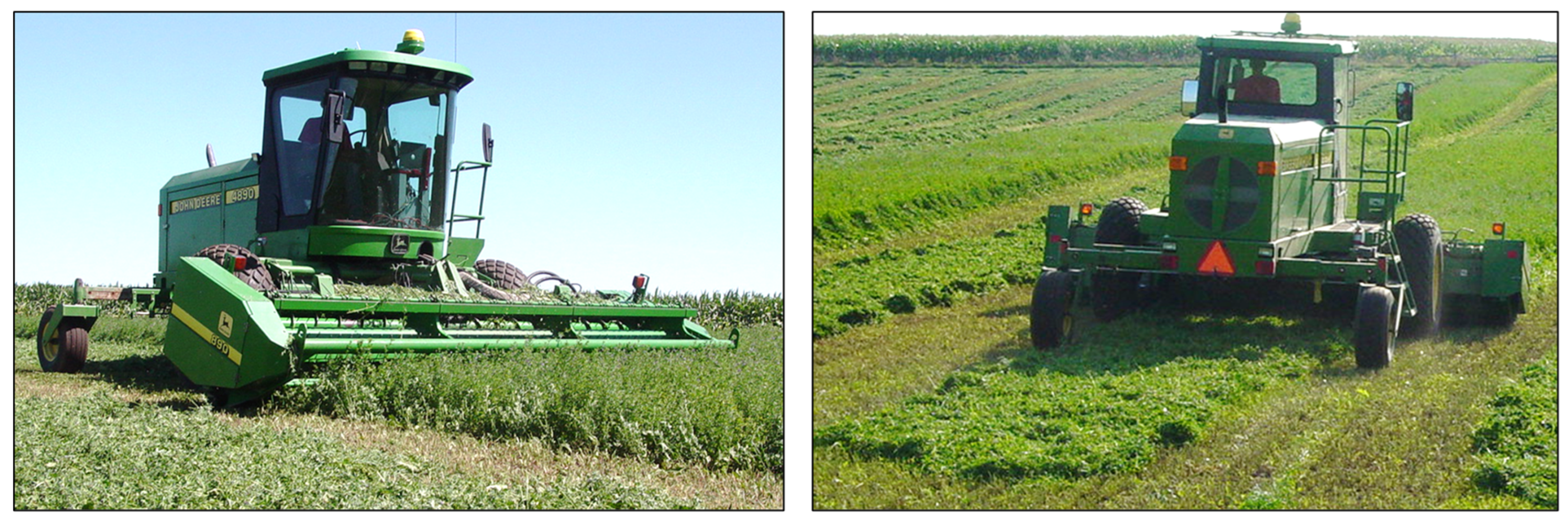
Experiments were conducted using a John Deere (Deere & Co., Moline, IL, USA) model 4890 self-propelled windrower equipped with a 4.9 m model 890 cutting platform (
Figure 1). The cutting platform was equipped with a sickle cutterbar and 2.54 m wide intermeshing urethane conditioning rolls operating at a rated speed of 650 rpm. The swath shield was fixed to produce an approximately 2.2 m swath. The cutting platform components were all driven from a single hydraulic motor.
2.2. Mass Flow Sensors
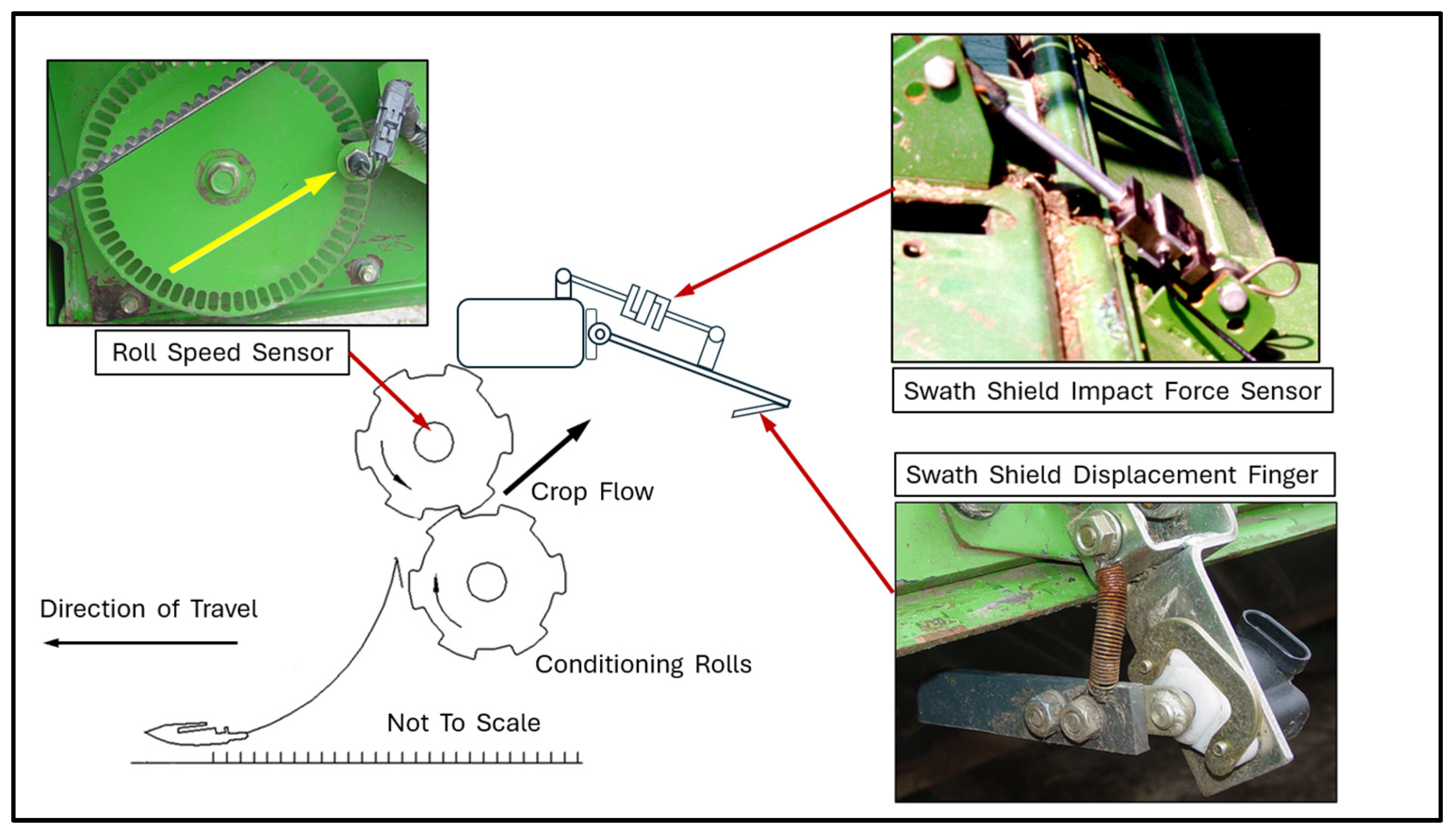
It was hypothesized that higher mass flow through the cutting platform would increase hydraulic inlet pressure. The elevated pressure was expected to increase internal motor leakage, thereby decreasing the net flow through the motor and reducing conditioner roll speed. Roll speed, measured with an inductive sensor and 60-hole disk, served as a surrogate for platform load (
Figure 2). To minimize confounding effects from cutting height, reel speed, and roll clearance, these machine settings were held constant.
Commercial grain harvesters quantify grain flow using an impact-plate sensor mounted at the top of the clean-grain elevator, where the momentum transfer of grain striking the load-cell-mounted plate produces a force proportional to MFR [
14]. The same physical principle was applied in this study: as crop exited the conditioning rolls, it was redirected by the swath shield, and the resulting reaction force was measured as an indicator of MFR.
To reduce swath shield pivot friction, the shield bushings were replaced with flange-mount ball bearings. A 220 N LC103B-50 strain-gauge load cell (Omega Engineering, Swedesboro, NJ, USA) was installed in series with the shield position linkage. The shield’s weight maintained constant downward tension in the load cell. Crop impacts generated an upward force on the shield that opposed its weight, reducing the tensile force in the load cell. Higher MFR increased this upward impact force, resulting in lower measured tension.
Swath shield forces can be affected by the platform’s orientation (pitch) relative to horizontal. A Seika (Seika Mikrosystemtechnik GmbH, Söllerweg, Wiggensbach, Germany) model 54321 inclinometer was used to measure pitch, which changed the crop’s impact angle on the shield and the resulting force range. Although the shield angle relative to the rolls was fixed, gravity altered the crop trajectory: forward pitch propelled the crop upward, while rearward pitch directed it downward.
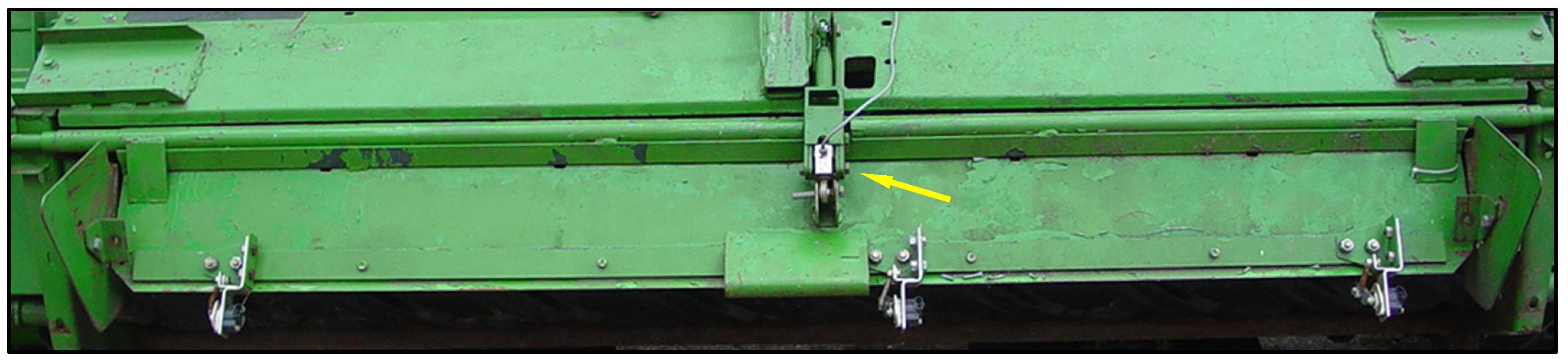
The final sensor system used three impact-displacement fingers, each fitted with a rotary potentiometer to measure deflection from neutral. The potentiometers were Duncan Electronics (Irvine, CA, USA) model 9810-661-3. The sensor had an active measurement range of 115° with a linearity of ±2.0%. The resolution was effectively continuous due to the analog output signal. The sensor was calibrated by cycling end-to-end and recording output at 16 intermediate angular positions measured with a digital protractor; a calibration relating signal to angle was then fit, yielding an R
2 of 0.999. The fingers were 100 mm long and mounted with a spring return. Three fingers were mounted on the swath shield—one at the center and one at each edge (
Figure 3). It was hypothesized that higher MFR would produce proportional finger displacement.
Windrower position was determined using a cab-mounted John Deere StarFire GPS receiver. Operating with proprietary SF1 satellite-based differential correction, the system provided approximately 30 cm pass-to-pass positional accuracy.
2.3. Data Acquisition
The yield-measurement system consisted of the GPS unit for tracking machine position and a data-acquisition subsystem for recording sensor outputs. The GPS receiver operated at 5 Hz, continuously recording coordinates with mapping software so positions could later be synchronized with sensor measurements. The data-acquisition subsystem was built using National Instruments (Austin, TX, USA) DAQCard-700 hardware and LabVIEW with NIDAQ drivers. Sensor data were recorded at 100 Hz and time-stamped, then averaged into 0.2 s intervals (5 Hz). Time alignment with the 5 Hz GPS data was achieved by matching timestamps, such that each averaged sensor value corresponded to the same time interval as the GPS measurement. Load-cell signals were conditioned via an isolated strain-gauge module (5B38), potentiometer outputs were recorded directly as DC voltages (module 5B31), and roll-speed signals were converted to voltage using frequency-input modules (5B45). All channels were low-pass filtered at 1 Hz (Butterworth) to prevent aliasing.
2.4. Experiments Conducted
Experiments were conducted at the University of Wisconsin Arlington Agricultural Research Station (Arlington, WI, USA, 43.3380°; −89.3804°). Alfalfa at various cuttings and maturity stages was harvested over multiple growing seasons. A total of 10 experiments were conducted over three growing seasons and multiple cuttings (
Table 1). Seven of these experiments were used to establish relationships between sensor output and MFR, and the remaining three were used to validate these relationships. Due to the sensor development timeline and sensor and instrumentation functional issues, not all sensor systems were available for evaluation at each experiment (
Table 1).
A randomized segment-based design was implemented to capture a broad range of MFR. Within each field, the area was divided into sequential segments, and forward speeds were randomly assigned to segments to avoid spatial clustering of treatments and to distribute field variability (e.g., yield differences) across all speed levels. Windrower speed was held constant within each segment but varied between segments to generate MFR variation. Field size and standing crop conditions dictated the number of segments and replications, with each target speed replicated a minimum of four times per experiment. Cutting speeds ranged from 3.2 to 9.6 km·h−1, typically in increments of 1.8 km·h−1. This approach enabled the development of models across a representative MFR range while mitigating confounding effects associated with spatial field variability.
The windrower was stopped at predetermined locations to define each test segment. A physical marker was placed at each stop to identify the segment for subsequent harvesting. After a period of field wilting, the wilted alfalfa within each segment was harvested using a John Deere model 6950 forage harvester. To reduce the chance of losses, the swaths were left undisturbed during wilting and were neither moved nor merged prior to harvest. The chopped material from each segment was discharged into a transport container equipped with load cells connected to a scale monitor with 2 kg readability. Each segment was weighed individually with the harvester stopped.
While the weighing system provided a direct measurement of harvested mass, potential sources of uncertainty include the resolution and calibration of the load-cell system, variability in forage moisture content between cutting and chopping, and possible losses of material during pickup and transfer by the forage harvester. The individual contributions of these potential error sources could not be independently quantified. Previous research on mower yield-monitoring systems used relatively short segments (8–10 m) and small masses per segment (16–120 kg) to estimate MFR [
9,
15]. The longer segments used in this study (average 75 m) produced substantially larger masses per segment (average 400 kg). This approach was intentionally adopted to reduce the relative impact of measurement uncertainty and field losses by averaging over a larger harvested mass. Field calibration of the container weighing system was not practical due to its large capacity, so measurements relied on the manufacturer’s calibration.
During the cutting experiments, random samples were collected directly from the swath and then size-reduced using a laboratory sample chopper. These samples were oven-dried in a forced-air convection oven at 103 °C for 24 h, following ASABE Standard S358.4 [
16]. After each segment was harvested with the forage harvester, material was randomly collected from the top of the load in the container. The sample was thoroughly manually mixed, and four sub-samples were taken from the composite sample. The moisture content of these sub-samples was then determined by oven drying as described above.
To determine wet basis MFR at cutting, it was necessary to first calculate the dry basis mass of material collected from each test segment:
where
Mdry is the dry basis mass from each test segment;
Mhwet is the wet basis mass of the test segment harvested with the forage harvester; and
MCh is the wet basis moisture content (decimal) of the material at chopping. The wet basis MFR at cutting was then calculated by:
where
MFR is the wet basis MFR at cutting;
MCc is the wet basis moisture content at cutting (decimal); and t is the duration of the test segment at cutting. All subsequent analyses for MFR estimates were conducted using a wet basis MFR.
2.5. Data Analysis
For each test segment, sensor outputs were averaged over the segment duration and paired with the corresponding MFR. To account for differences in initial swath shield tare load, load-cell measurements were normalized by dividing each value by the no-load reading, allowing comparison across trials. Sensor availability varied across the seven experiments (
Table 1): roll speed was recorded in all experiments (A–G), impact force in C, D, E, and G, and displacement in A–D. Consequently, models for each sensor were developed using only the experiments in which that sensor was measured, resulting in different datasets for each model. To maintain valid comparisons, models were only compared using the subset of experiments common to the sensors being evaluated.
The purpose of this analysis was to determine which windrower sensor systems might be most useful for predicting MFR and whether their relationships with MFR were linear or required more complex terms. Pairwise multivariate analyses in JMP (JMP Pro 17.2; SAS Institute Inc., Cary, NC, USA) were used to screen each predictor for linear association with MFR using Pearson and Spearman correlation coefficients. Scatterplots were visually inspected to identify potential nonlinear or interaction effects. Any quadratic or interaction terms suggested by these plots were considered later during model development and cross-validation.
Predictive performance was then assessed using leave-one-experiment-out (LOEO) cross-validation, in which each experiment was individually excluded while the remaining experiments were used for model fitting via the Fit Model platform in JMP. Initial modeling evaluated each sensor independently to determine individual predictive strength. Based on the multivariate analysis, combinations of two or all three sensor outputs were tested using multiple linear regression, including both linear and quadratic forms, to determine whether paired inputs improved prediction.
Multi-parameter model improvements were considered meaningful only if they noticeably reduced root mean squared error (RMSE) or increased cross-validated Q2. RMSE measured the average difference between predicted and observed values, while Q2 indicates how well the model predicts unseen data. Together, these metrics served as the global fit measures for evaluating model performance.
2.6. Yield Mapping
To generate estimated yield maps, wet basis yield estimates (
YE) were first computed directly from the predicted mass flow rate (
MFRS) from a variety of prediction models:
where
w is effective cut width, and
v is ground speed. These wet basis yield estimates were then converted to a dry basis by using the average field moisture content at the time of cutting. Maps were subsequently created using the estimated dry basis yield.
Sensor and GPS positional data were time-stamped using a common GMT clock, allowing this information to be merged to create estimated yield maps within a geographical information system (GIS). The combined database was imported into the ArcGIS Pro Version 3.5 (ERSI, Redlands, CA, USA). Within ArcGIS Pro, the Spatial Analyst extension was used to transform georeferenced point estimates of yield into continuous yield surfaces using kriging. Spatial autocorrelation in yield was quantified using an empirical semivariogram, and a fitted variogram model was applied to interpolate yield while accounting for spatial dependence among observations. Interpolated values were generated as raster grids at a specified cell resolution to produce continuous yield maps.
Estimated yield maps were generated for Field 214 (
Table 1) using four sensor prediction models: roll speed alone; roll speed combined with pitch; finger displacement alone; and finger displacement combined with roll speed. For Field 305 (
Table 1), the yield map was developed using the roll-speed model only. Following a period of field wilting, the cut swaths in Field 305 were merged using a belt-type windrow merger, combining five swaths into a single windrow. The merged material was then harvested with a John Deere 6950 forage harvester equipped with a commercial feed-roll displacement sensor to enable yield estimation during subsequent harvest. Data collection frequency and spatial positioning measurements were comparable between the two machines, as described previously. To assess the influence of increasing interpolation density, yield maps for Field 305 were generated using 12, 30, and 48 kriging points.
2.7. Variogram Analysis
Spatial analysis of the mapped fields was conducted in RStudio (Posit PBC, Boston, MA, USA; version 2025.09.2 Build 418) using the gstat package. Experimental variograms were computed to quantify spatial dependence in yield estimates and were fit using spherical models. Spherical models were selected because they best matched the observed variogram shapes and provided superior fits compared with exponential and Gaussian alternatives. Variograms were generated using the RStudio variogram function and fit using vgm and fit.variogram with default settings.
The variogram structure was defined by three key parameters: nugget, sill, and range. The nugget represents semivariance at very short separation distances and reflects the combined effects of measurement error and micro-scale variability not captured at the sampling resolution. The sill corresponds to the total variance, indicated by the point at which the semivariance stabilizes. The range represents the distance at which the semivariance reaches the sill, beyond which observations are no longer spatially correlated. The nugget-to-sill ratio was used to assess the relative contribution of spatially structured variance versus random variability, with lower ratios indicating stronger spatial dependence.
These parameters were used to interpret the strength and spatial extent of yield variability within each field. In several cases, spatial patterns identified in the yield maps were consistent with known field conditions, such as increased yield in low-lying or water-contributing areas and reduced yield near field entrances or higher elevation zones. In these instances, the presence of a well-defined range and relatively low nugget-to-sill ratio supported the existence of meaningful spatial structure. Conversely, fields exhibiting weak spatial dependence (e.g., high nugget-to-sill ratios and poorly defined ranges) suggested that observed patterns were more likely influenced by random variability or measurement noise rather than underlying field conditions. This analysis provided a basis for evaluating whether mapped yield patterns reflected true spatial variability or artifacts of the measurement and mapping process.
3. Results
3.1. Typical Sensor Variability
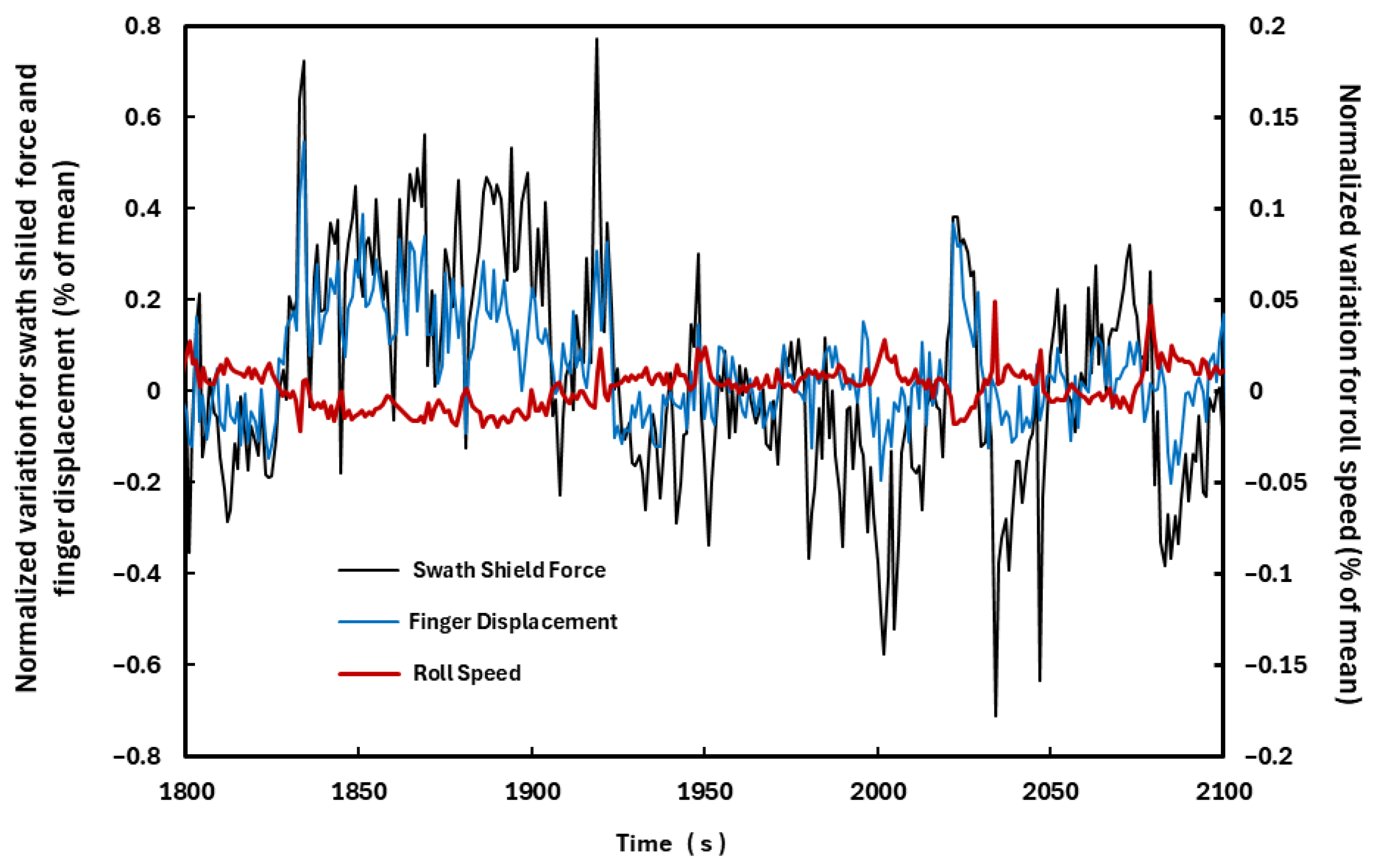
To visually compare signal stability across measurements with different magnitudes and units, data from a representative test interval were normalized by expressing each observation as a percentage deviation from its mean value. Roll speed, used as a surrogate for cutting platform load, exhibited the lowest variation, likely due to the high rotational inertia of the platform components (
Figure 4). In contrast, swath shield force showed the greatest variability, attributed to dynamic loading from irregular crop flow and field surface disturbances. The average of the three displacement fingers was slightly less variable than swath shield force but displayed similar dynamic fluctuations. Despite these differences in stability, all three signals followed a consistent pattern associated with potential changes in crop mass flow during this representative test period. Specifically, roll speed decreased when both swath shield force and finger displacement increased—indicating higher MFR—and increased when those signals declined, consistent with reduced MFR.
3.2. Multivariate Analysis
Multivariate analysis showed that roll speed was strongly correlated with MFR (Pearson r = −0.95; Spearman ρ = −0.92). Swath shield force was also strongly correlated with MFR (Pearson r = 0.84; Spearman ρ = 0.87), but its substantial correlation with roll speed (r = −0.77; ρ = −0.83) indicated that both variables were influenced by the same underlying process. Finger displacement exhibited a strong correlation with MFR (Pearson r = 0.88; Spearman ρ = 0.94) and a strong negative correlation with roll speed (r = −0.93; ρ = −0.98). The close agreement between Pearson and Spearman coefficients indicates that these relationships are consistent regardless of the correlation method used. The strong intercorrelations suggest that roll speed, swath shield force, and finger displacement were not independent predictors, but rather coupled mechanical responses to changes in crop load and material flow through the conditioning system. As MFR increased, increased crop resistance reduced roll speed while simultaneously increasing swath shield impact force and finger displacement.
Pitch was weakly correlated with roll speed, swath shield force, and finger displacement, indicating it contributed little independent information. In subsequent LOEO analyses, quadratic terms provided little benefit, with RMSE changes generally below 5%. All effective models—both single-parameter and multi-parameter—were linear or exponential in form, with multi-parameter models sometimes improving performance and sometimes offering little or no gain over single-parameter models, consistent with the observed redundancy among sensor signals.
3.3. Conditioning Roll Speed
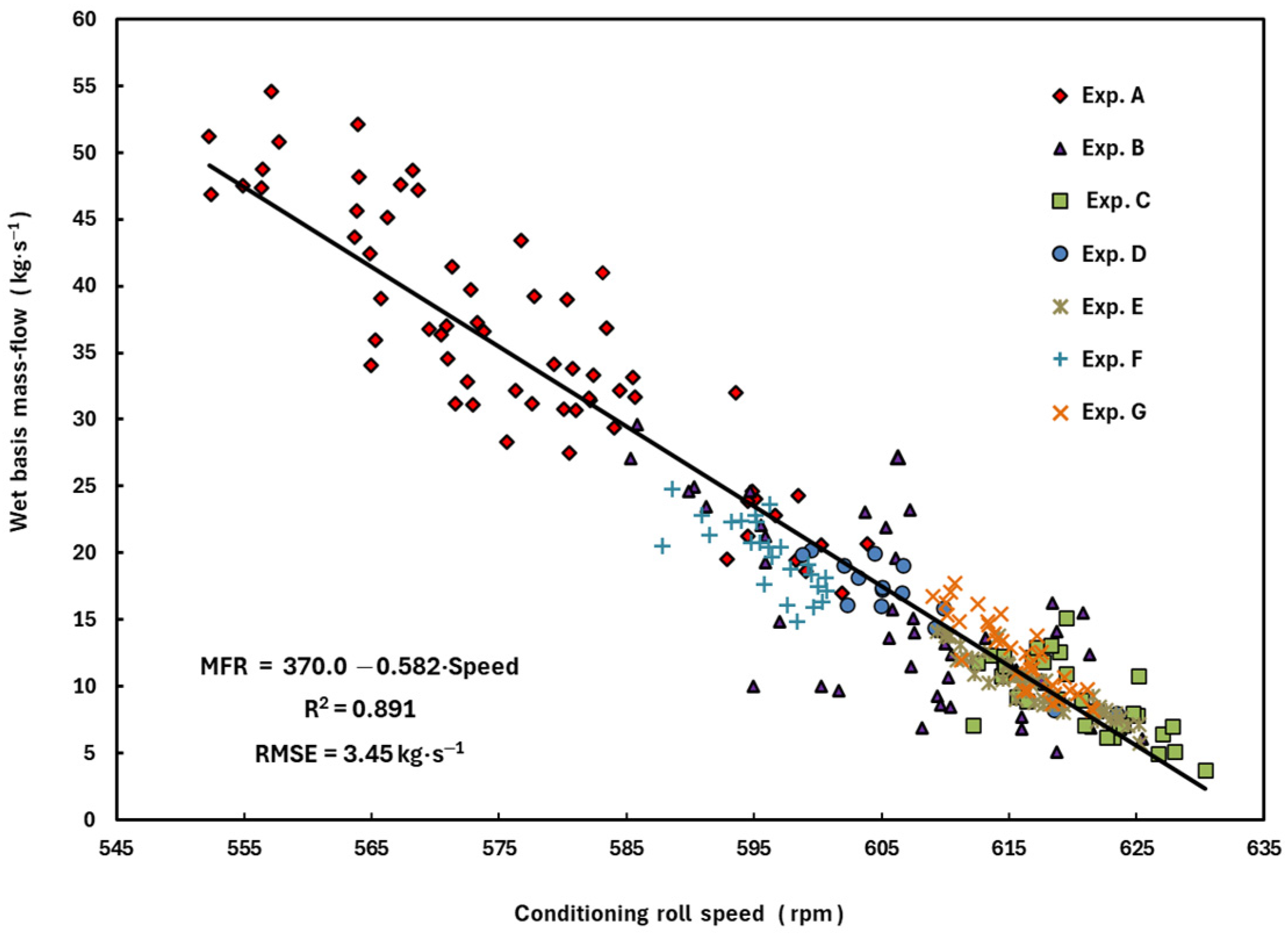
Conditioner roll speed alone was linearly related to MFR (
Figure 5). Adding pitch to the model produced only a marginal improvement in predictive performance, with RMSE and cross-validated Q
2 showing little difference between the roll-speed-only model and the model including pitch (
Table 2). As the addition of pitch yielded only marginal gains in RMSE and Q
2, conditioner roll speed alone was sufficient to accurately predict MFR.
Experiment A was the only one conducted in first-cutting alfalfa (
Table 1), which typically produces higher yields than later cuttings. As a result, at the ground speeds tested, the MFRs were substantially greater than those in the other experiments. Because it occupied the upper end of the mass flow range, Experiment A acted as a high-leverage observation in the regression and influenced the fitted coefficients more strongly than the other experiments. During the LOEO model development, excluding Experiment A restricted the training set to the lower-range data, producing marked changes in the intercept (291.1) and slope (–0.456) and yielding a reduced R
2 of 0.740.
3.4. Swath Shield Impact Force
Swath shield impact-force data were available for only four experiments (
Table 1) due to sensor and instrumentation issues in the remaining trials. Impact force alone was moderately related to MFR, yielding an R
2 of 0.699 and an RMSE of 1.87 kg·s
−1 in the LOEO analysis (
Table 2). Multi-parameter models incorporating force with platform pitch, force with roll speed, and force with both pitch and roll speed were evaluated. Model performance improved with each addition (R
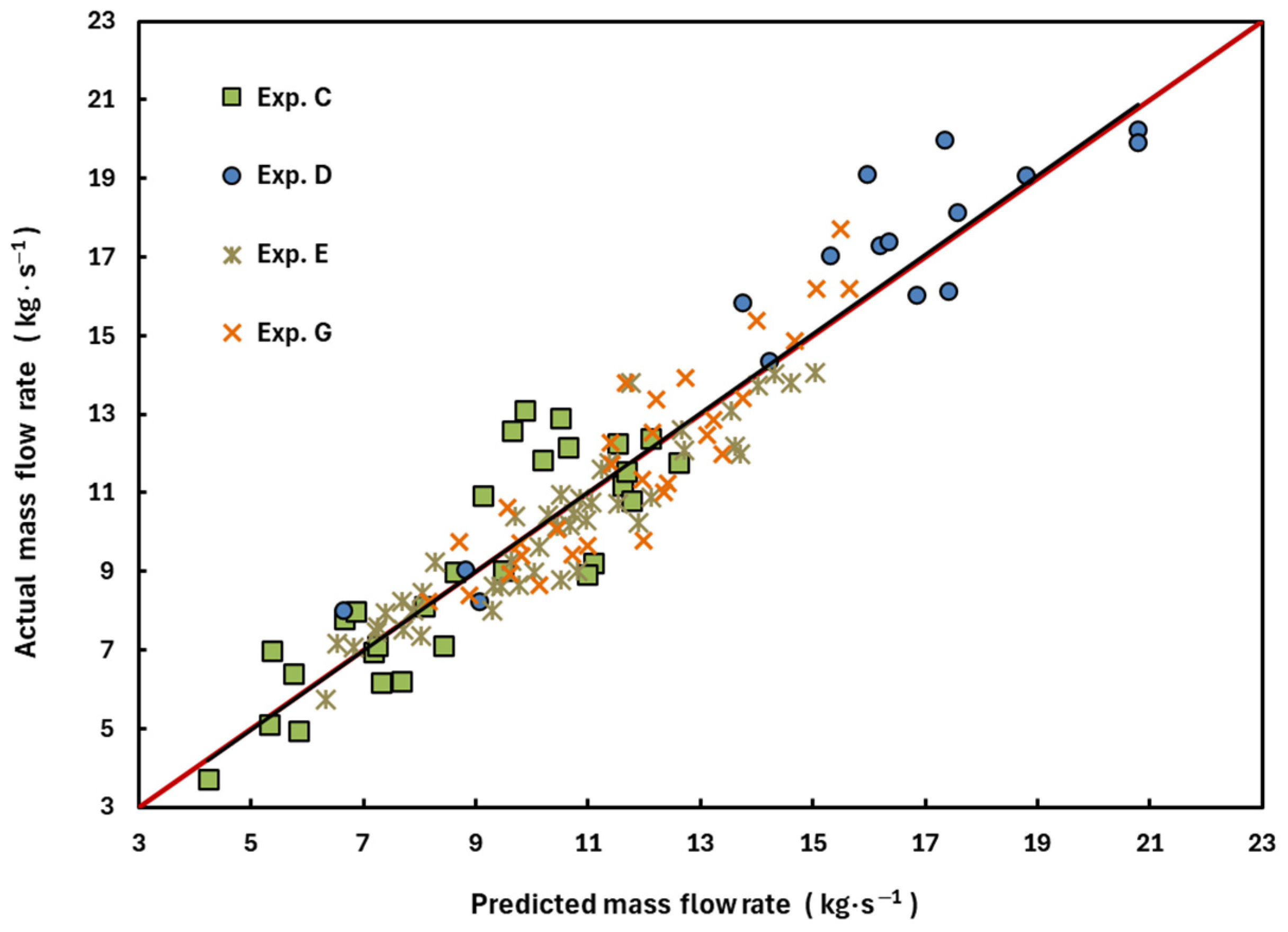
2 = 0.836, 0.882, and 0.888, respectively). However, platform pitch contributed little unique explanatory power, so it was removed from the final model to reduce complexity while maintaining predictive accuracy (
Figure 6).
3.5. Swath Shield Finger Displacement
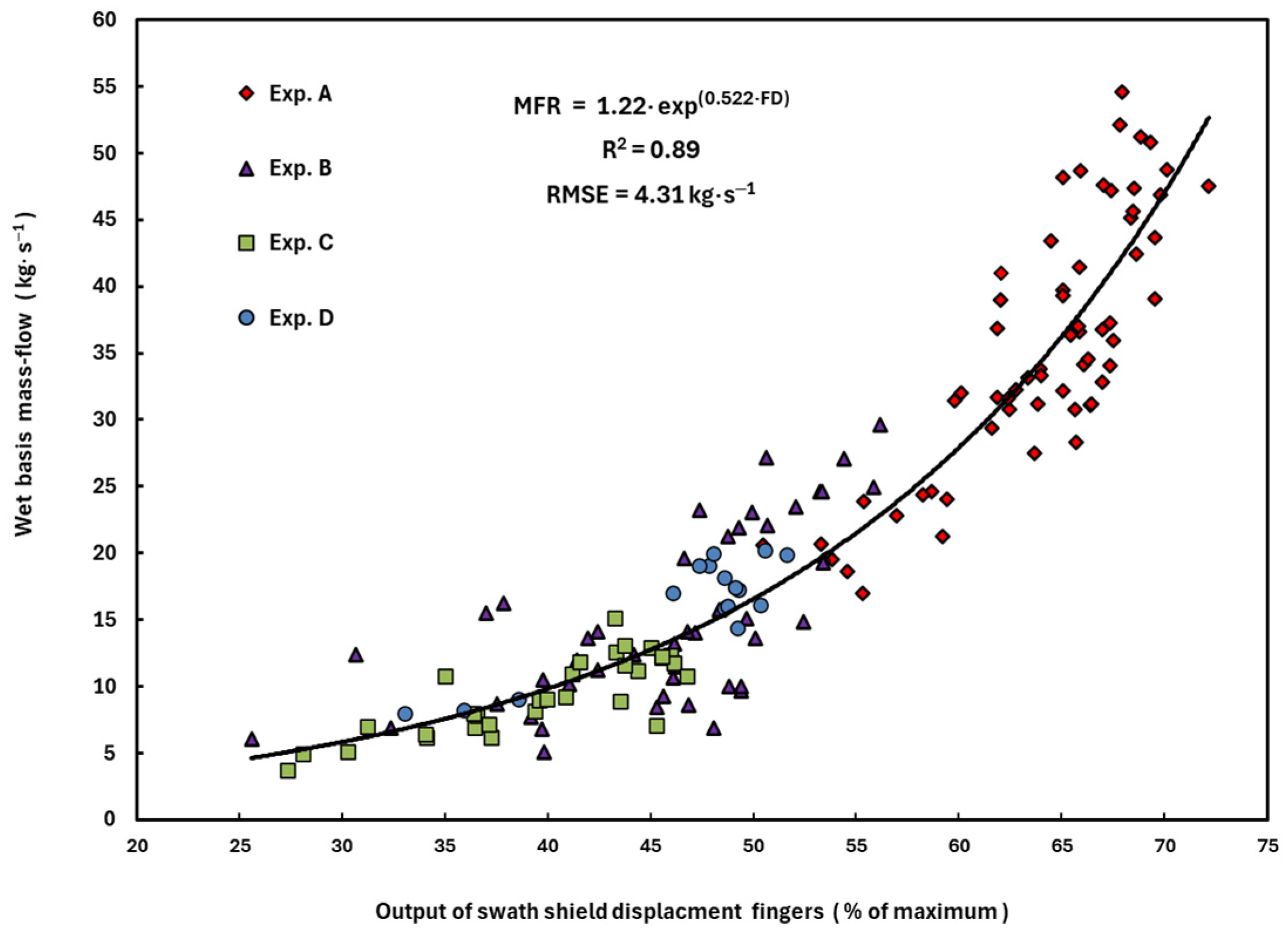
Data from the swath shield finger displacement were only available for Experiments A through D. The finger potentiometers measured angular displacement, so the sensor’s output changed exponentially with increasing MFR (
Figure 7). Adding roll speed to the finger displacement model did not appreciably improve predictive performance (
Table 2). A model incorporating both finger displacement and swath shield force could not be developed because force and displacement data were available only for Experiments C and D (
Table 2).
Experiment A, conducted during a high-yield first cutting, exhibited roll speed and finger displacement values greater than those observed in the other experiments. However, its influence on the models differed. For roll speed, the remaining data were tightly clustered, so Experiment A had substantial leverage and strongly affected the fitted slope. In contrast, for finger displacement, the other experiments provided sufficient range and curvature to constrain the model. Removing Experiment A changed the fitted parameters only slightly (constants < 5%, exponential coefficient < 2%), indicating that Experiment A did not exert unusual leverage on the finger displacement model.
3.6. Comparing Models
The roll-speed model had a moderately high RMSE but showed the best LOEO performance (R
2 = 0.891) and was trained on the largest dataset (
Table 2,
n = 264). Comparisons of the roll-speed model performance with the impact-force and finger displacement models were made using comparable training subsets. Although the force-based models produced the lowest RMSE, this likely reflected the higher quality of the underlying data (Experiments C, D, E, and G;
n = 120). Adding roll speed to the force model further reduced RMSE and substantially improved LOEO fit, suggesting that roll speed was the dominant predictor. Finger displacement alone produced the highest RMSE, and when trained on the same dataset (Experiments A–D;
n = 157), its performance was similar to the roll-speed model. Combining finger displacement with roll speed provided only modest gains in predictive accuracy.
3.7. Roll-Speed Model Validation
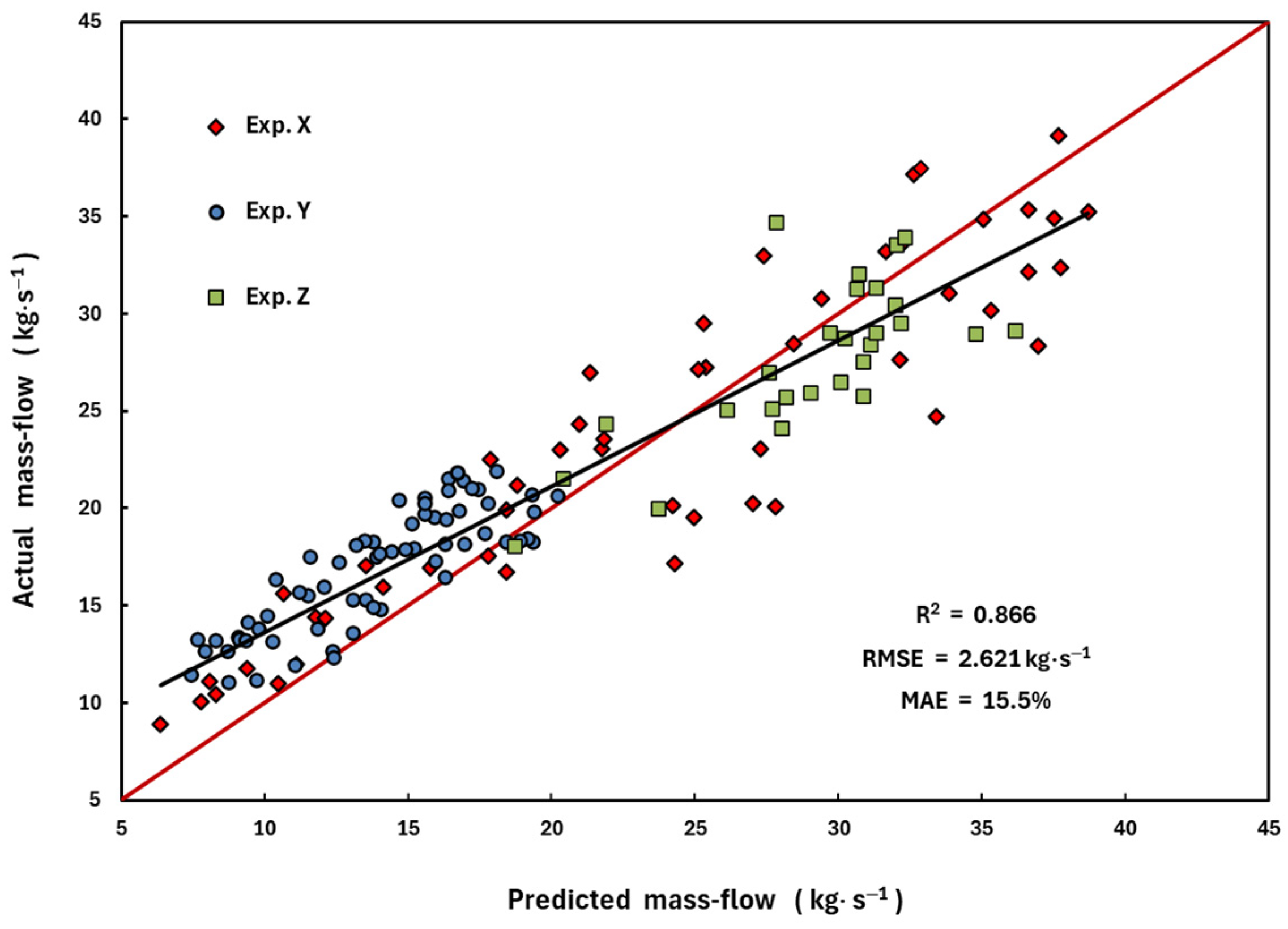
Validation with an independent dataset (
n = 145) showed strong agreement between predicted and measured mass flow rate (R
2 = 0.866). Error metrics included RMSE (2.62 kg·s
−1) and MAE (15.5%), the latter representing the average magnitude of prediction error expressed as a percentage. The mean signed prediction error was near zero, indicating minimal systematic bias. Predicted versus measured values revealed slight overestimation at low MFR and underestimation at high MFR (
Figure 8), consistent with a modest flattening of the response. Regression coefficients from the validation data differed moderately from those obtained during LOEO training (slope –0.475 vs. –0.582; intercept 305 vs. 370 kg·s
−1), suggesting a slightly weaker roll-speed response and baseline shift under validation conditions. Overall, the model generalized well across datasets, with differences attributable to normal variation in crop and machine operating conditions.
3.7.1. Variogram Analysis Field 214
For Field 214, experimental variograms were generated for yield estimates produced using four regression models: roll speed alone; roll speed with pitch; finger displacement alone; and finger displacement with roll speed (
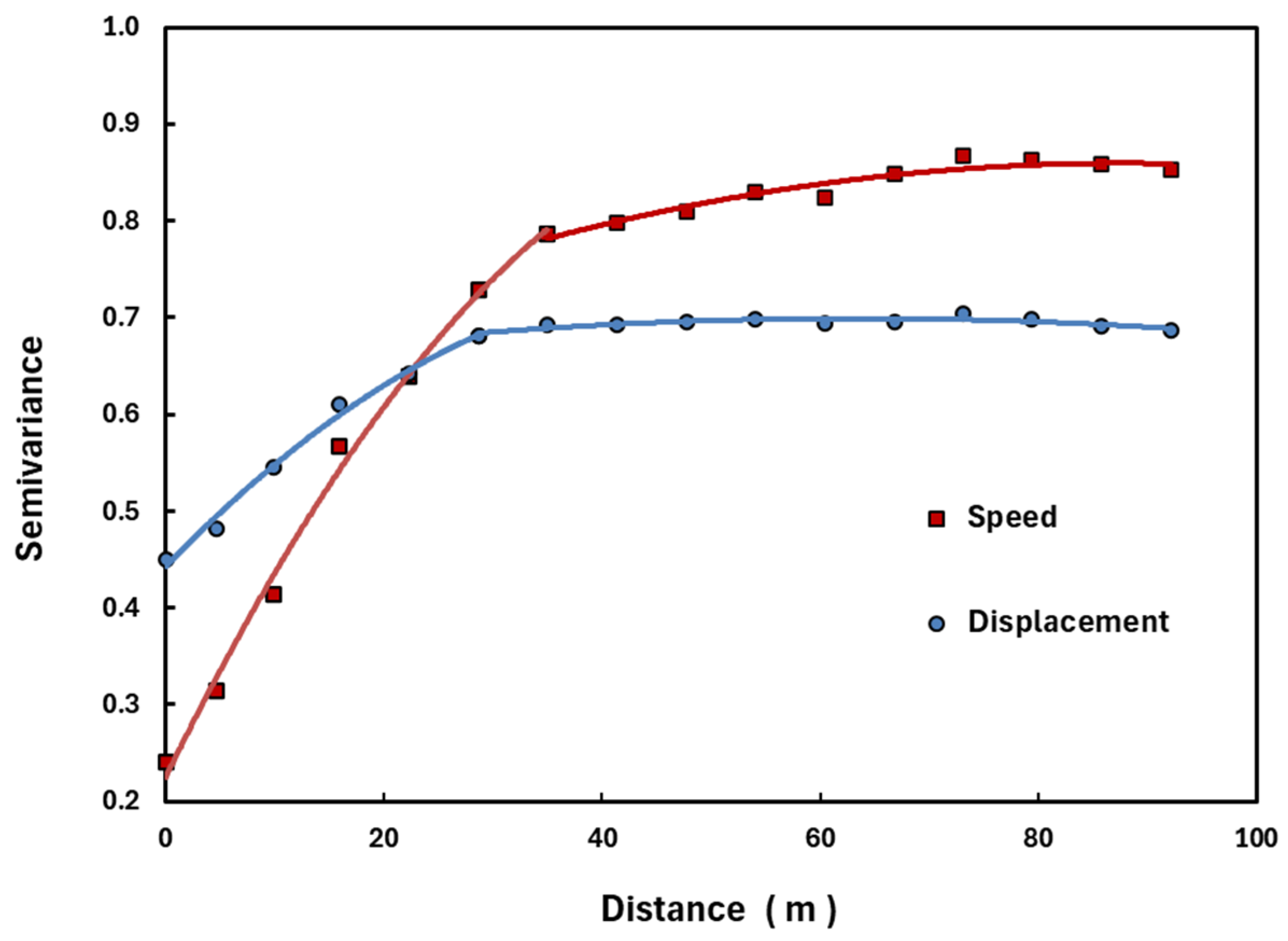
Table 2). Three of the four models exhibited similar variogram shapes, characterized by a rapid increase in semivariance at short lag distances followed by a well-defined sill at approximately 25 m (
Figure 9). These models had nugget-to-sill ratios near 0.25 and effective ranges of approximately 43 m, indicating that roughly 75% of the total yield variance was spatially structured (
Table 3).
The finger displacement-only model exhibited weaker spatial structure, with a higher nugget-to-sill ratio (0.621) and a shorter effective range (34 m), indicating that a larger proportion of variability was unstructured (
Figure 9,
Table 3). Inclusion of roll speed with finger displacement restored variogram characteristics consistent with the other models, indicating that roll speed was the dominant contributor to spatially coherent yield estimates in this field.
3.7.2. Variogram Analysis Field 305
Variograms were developed for windrower-based yield estimates at cutting using a roll-speed-only model and for forage harvester-based yield estimates collected after wilting and windrow merging. The windrower-based variogram exhibited clear spatial structure, with a range of 33 m, a sill of 0.53, a nugget of 0.26, and a nugget-to-sill ratio of 0.49, indicating greater small-scale variability than observed in Field 214 but still meaningful spatial dependence.
The forage harvester-based variogram exhibited weak spatial structure, with a poorly defined shape, a range of 482 m, a sill of 2.68, a nugget of 2.43, and a high nugget-to-sill ratio (0.91), indicating that most variability was unstructured at the sampled spatial scales. This reduced spatial coherence is consistent with the wider effective pass spacing resulting from windrow merging, which limits the resolution of short-range spatial dependence.
3.7.3. Yield Mapping Field 214
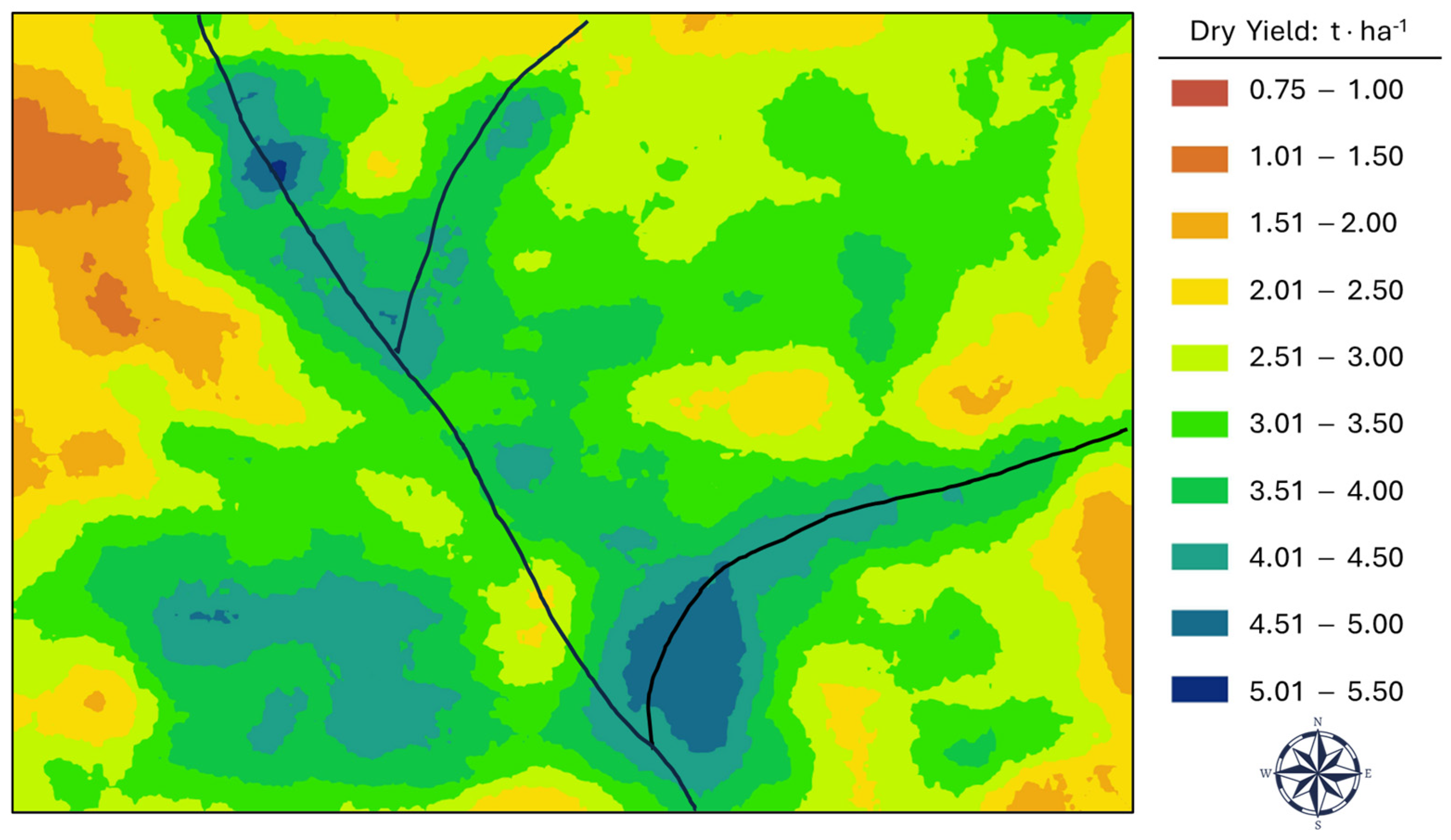
Field 214 contained three shallow waterways that did not require grass buffer strips; consequently, alfalfa was planted continuously across these areas (
Figure 10). Field elevation decreased from the northwest to the southeast by approximately 6 m, and the soil type was predominantly Plano silt loam. Estimated yield was consistently greater in and around the waterways, likely reflecting increased soil moisture in these areas. The northwest corner of the field exhibited the highest elevation and the lowest yields, suggesting downslope movement of water and nutrients toward the waterways. Field operations were conducted in an east–west direction, with turning headlands along the east and west boundaries where lower yields were generally observed. The field entrance, located just below the waterway along the east edge, experienced heavy traffic and showed noticeably reduced estimated yield. Overall, the yield map exhibited spatial patterns consistent with field topography and management practices.
The average estimated dry basis yield at cutting was 3.0 t·ha−1, which was greater than typically observed for fourth-cutting alfalfa on this farm. However, the interval between the third and fourth cuttings was 35 d, approximately 5 to 8 d longer than normal, which likely contributed to the greater-than-expected yield. After a period of wilting, the crop was harvested by chopping with a forage harvester. All subsequent loads were weighed and manually sampled for moisture content, resulting in an estimated field average dry basis yield of 2.7 t·ha−1.
Differences between the cutting- and chopping-based yield estimates can be attributed to a combination of prediction uncertainty at cutting, moisture content variability, and field losses between cutting and chopping. Moisture content was determined from manually collected samples at both stages. Because dry basis yield scales directly with moisture content, a modest difference of ± 2 to 3 percentage points in estimated moisture could change the calculated dry basis yield by approximately 0.1 to 0.2 t·ha−1. Such variability alone could therefore account for a substantial portion of the 0.3 t·ha−1 difference between the two estimates, either narrowing or widening the apparent discrepancy.
3.7.4. Yield Mapping Field 305
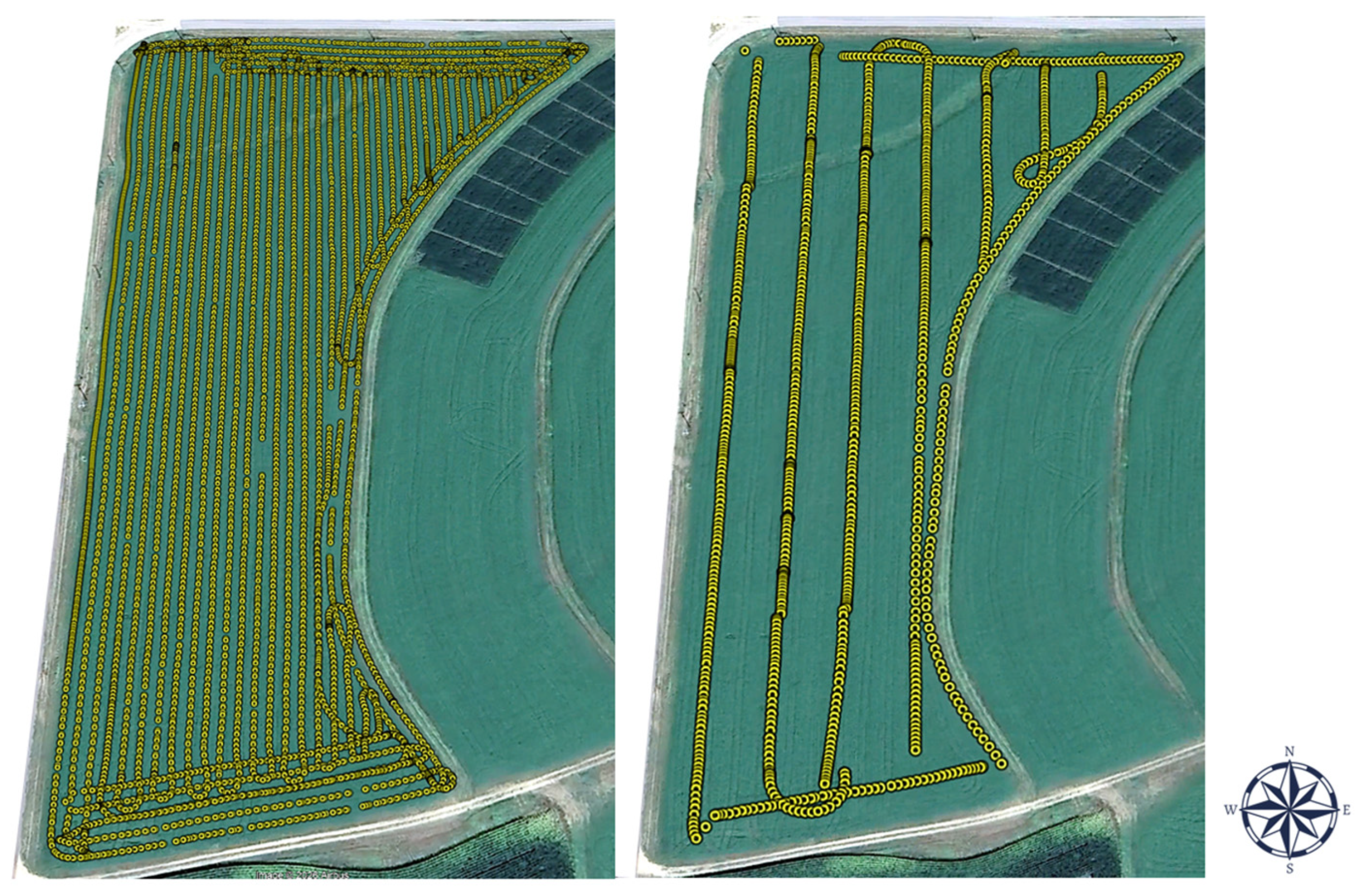
Merging five swaths into a single windrow reduced the number of passes during forage harvester operation (
Figure 11). While this practice is routinely used to match forage harvester capacity, it inherently aggregates material over a wide lateral distance, potentially reducing the spatial resolution of yield estimates.
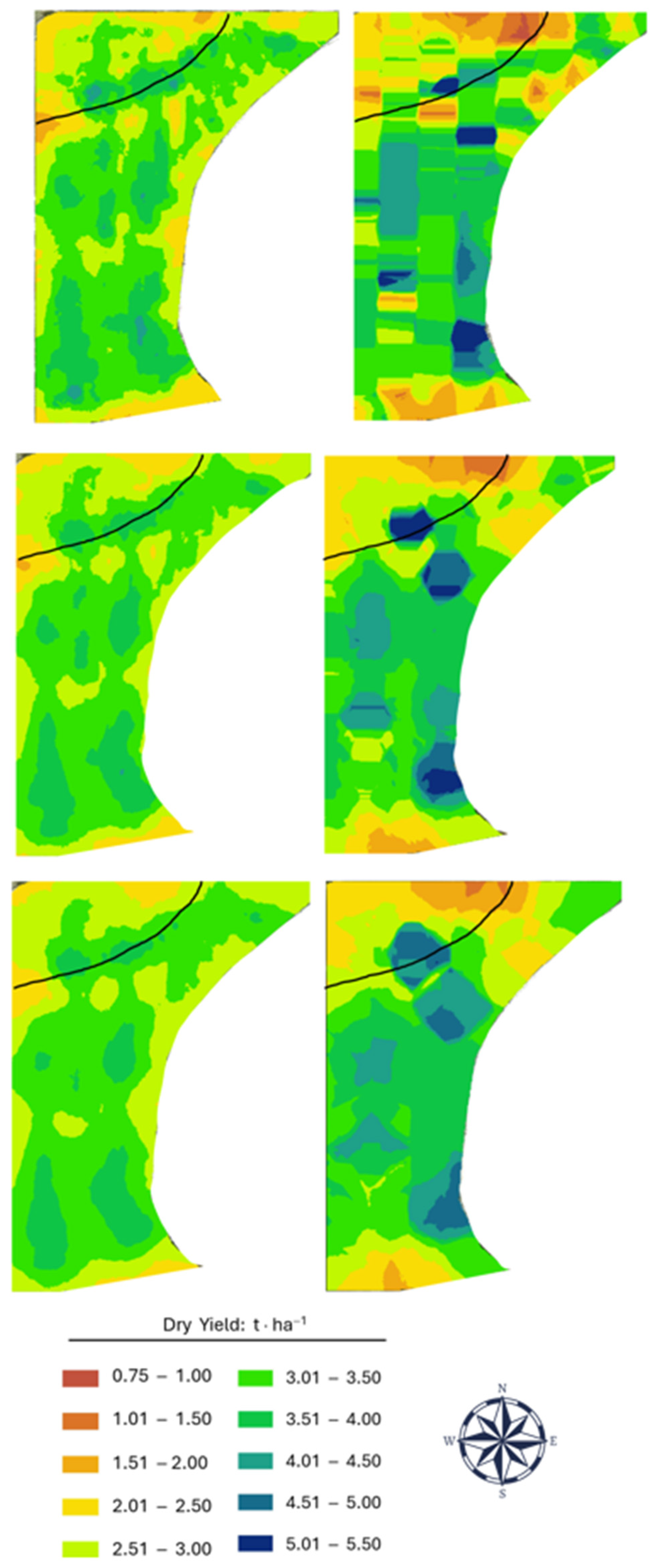
In Field 305, yield maps generated from windrower data collected at cutting showed a clear spatial pattern, with higher yields consistently observed near the waterway and lower yields in headland areas and near the field entrance (
Figure 12). These patterns were consistent with field slope, soil type, and traffic intensity, suggesting that the windrower-based estimates preserved spatial variability at agronomically relevant scales.
Yield maps generated from forage harvester data collected after wilting and windrow merging exhibited limited spatial coherence (
Figure 12). The merging of five swaths into a single windrow increased effective pass spacing and aggregated material across a wide lateral distance, reducing spatial resolution. As a result, kriged maps based on forage harvester data showed blocky or irregular features that did not correspond to known field characteristics, particularly as the number of kriging points increased.
The response of kriged maps to increasing interpolation density differed markedly between the two data sources. Windrower-based maps showed progressive smoothing with increasing numbers of kriging points, indicating averaging of local variability. In contrast, forage harvester-based maps exhibited unstable spatial patterns across all interpolation densities, reflecting the limited ability of kriging to resolve short-range spatial dependence from widely spaced observations.
Several localized high-yield regions observed in the forage harvester maps were consistent with non-uniform windrow merging. Intermittent forage accumulation or transient stalling on the belt-type windrow merger used here can produce short-duration increases in feed rate at chopping, which are recorded as localized yield spikes by the feed-roll-based mass flow sensing system. These artifacts further illustrate how yield estimation after merging can introduce spatial distortions that do not reflect true field productivity.
4. Discussion
This study shows that practical mass flow sensing and yield mapping on forage windrowers is feasible using simple speed sensors on conditioner rolls. Roll speed proved the most robust and widely applicable predictor of MFR, while swath shield force and finger displacement offered useful but more condition-sensitive information. These results address a long-standing gap in forage harvest technology, as traditional yield monitoring is limited to later harvest stages, where spatial resolution is reduced by windrow merging and material handling [
1,
3].
The strong linear relationship between roll speed and MFR reflects the mechanics of roll-driven conditioning systems: higher throughput increases hydraulic torque demand, increasing internal drive motor leakage, thereby reducing roll speed. Unlike force sensors, roll-speed measurements are highly stable and less affected by dynamic disturbances. Similarly, displacement-based sensing in forage harvesters has been shown to outperform load-based approaches in robustness and signal-to-noise ratio [
17].
Swath shield impact-force sensing is conceptually similar to the impact-plate sensors used in grain combines [
18,
19]. However, structural and operational differences limit its effectiveness on windrowers. The swath shield is mounted on a dynamically loaded cutting platform, transmitting transient forces directly to the sensor and producing a highly variable signal (
Figure 4) that requires normalization and filtering. Unlike the fixed, damped impact plate in a combine, the swath shield must be widely adjustable to produce different swath or windrow widths, with each position requiring separate calibration, complicating practical implementation.
Finger displacement sensors provided an alternative to direct force measurements, with an exponential response reflecting the nonlinear spring-loaded interaction with crop momentum. While this reduced some noise, predictive performance was inferior to roll speed alone. Similar challenges have been noted in other crop–machine interaction studies [
20]. Combining finger displacement with roll speed restored spatial coherence in yield maps, confirming that roll speed captures the dominant mass flow signal.
Yield mapping results illustrated the practical impact of sensor choice. Roll-speed-based estimates, alone or combined with other sensors, showed consistent spatial structure with correlation lengths of 25–40 m, capturing meaningful field variability. In contrast, finger displacement alone produced a high nugget-to-sill ratio, indicating that sensor noise obscured spatial patterns.
Differences between yield at cutting and subsequent chopping highlight a key challenge in forage yield monitoring: moisture variability. Small errors in moisture estimates can cause substantial differences in dry-matter yield. Previous studies have identified moisture measurement as a major source of error, suggesting that integrating on-machine moisture sensors is needed to improve the accuracy of yield estimates [
1,
2,
17].
Yield sensing at the time of cutting better preserves spatial detail because biomass is measured before swaths are laterally merged. Merging multiple swaths into a single windrow aggregates material from different field locations, increasing effective sampling width and reducing spatial resolution. This loss of fine-scale variability limits the usefulness of post-harvest yield maps for precision agriculture decisions such as site-specific nutrient management or stand assessment. Although field average yield may be preserved, spatial fidelity is irreversibly degraded once merging occurs, highlighting the advantage of yield measurement at mowing when high-resolution spatial information is required.
Roll-speed sensing is simple, robust, and well suited for commercial windrower yield monitoring. However, variation between experiments suggests that a single static calibration may not cover all crops and conditions. Adaptive strategies, such as periodic reference measurements or automated self-calibration, could address this limitation, as successfully used in forage harvesters [
3,
21].
Windrowers differ from other forage cutting machines in that cutting and conditioning systems are hydraulically driven. Increasing MFR increases torque demand, leading to greater internal leakage in the hydraulic motor and a corresponding decrease in roll speed. Mechanically driven mowers and mower-conditioners, by comparison, have roll speeds directly coupled with engine speed and load, which are further affected by factors such as traction and slope.
Kumhála et al. [
9] reported that torque-based sensing on mowing machines could be related to MFR, although this system was sensitive to crop properties and conditioning intensity. However, forage cutters often use two to five platforms, either tractor-mounted or trailed. Rotary torque sensors are costly due to precision, signal transmission, and rugged packaging requirements, making it impractical to equip each platform with torque sensors. Strategically placed alternative sensors, such as finger displacement sensors positioned downstream of the conditioner but upstream of the swath shield, where they are not attached to the movable shield, could offer a potential solution. A key design challenge with displacement fingers in this location will be minimizing interference with crop flow.
Sensor fusion that combines roll speed with complementary signals, such as enhanced finger displacement measurements, may improve robustness while limiting system complexity. Integrating these on-board sensors with unmanned aerial vehicle–based remote sensing, such as NDVI [
17] or forward-looking LiDAR [
18], could further enhance yield estimation for forage cutting equipment [
22,
23].




 ,
,