1. Introduction
Currently, population growth and climate change pose new challenges for agricultural production. Crop production, including maize, is of particular importance, as maize is one of the world’s most important and most widely grown crops. Over the last 20 years, the global maize area has increased by 48%, and maize is now grown on about 200 million hectares, while production increased by 180 million tons to 1.4 billion tons [
1]. In the European Union, total maize production reached 70.09 million tons with an average yield of 7.86 t ha
−1. The largest EU maize-producing countries are France (14.67 million tons), Poland (9.22 million tons), Romania (5.97 million tons), Hungary (5.30 million tons), Germany (5.01 million tons), Italy (4.94 million tons), and Spain (3.50 million tons) [
2]. Maize is a versatile forage crop, energy source and industrial raw material that can be used to produce nearly four thousand products [
3]. It is an important feed and seed crop and plays a prominent role in the production of bioethanol, sugar and alcohol [
4], as well as serving as biogas raw material, green manure and animal bedding [
5,
6,
7]. Globally, 13% of maize was utilized directly as food in 2020 [
8]. Owing to its broad adaptability to different climatic and agrotechnical conditions [
9,
10], maize is widely cultivated, yet yield fluctuations are strongly influenced by weather conditions. Climate change is increasing the frequency of extremely hot days, which adversely affect maize development and ultimately lead to yield losses [
11,
12]. Persistent hot temperatures can cause significant yield reductions even under average rainfall conditions [
13]. Recent evidence also shows that weather variability across maize growth periods, including the timing and distribution of precipitation, can substantially influence yield fluctuation, indicating that maize productivity is increasingly shaped not only by seasonal totals but also by intra-seasonal weather patterns [
14]. Among the meteorological factors determining maize yields, precipitation and temperature are the most important [
15], and it has been confirmed that irrigation can reduce yield losses [
16]. The right choice of hybrids also plays a crucial role, with a significant impact on yield and quality [
17,
18].
Relevant research findings show that yield loss might occur even in irrigated treatments, which can be caused by the crop year and the lack of optimal nutrient supply. Therefore, it is essential to coordinate nutrient and water supply [
19]. Determining the appropriate fertilizer rate and timing of application is of great importance [
20,
21,
22]. Nitrogen (N), one of the most important factors determining yield and quality, must be applied and distributed according to crop demand in order to avoid excessive yield variation and environmental pollution. This requires the site-specific use of precision tools that provide up-to-date information on crop condition and support more efficient nitrogen management, improved nitrogen use efficiency, and reduced environmental burdens under maize production [
23]. Several researchers [
24,
25,
26,
27] have pointed out that the MINOLTA SPAD 502 chlorophyll meter can be effectively used to assess crop N status and to support in-season nitrogen fertilizer recommendations. More recent studies further confirm that integrating SPAD-based information with other crop indicators can improve the estimation of maize nitrogen status and growth dynamics across the growing season [
28]. According to [
29], chlorophyll content is related to plant health and crop yield, thus allowing inference of the nitrogen status of the plant and its yield potential. Similar to the results of [
30,
31], it has been found that crop year has a large effect on fertilizer response and SPAD values, and this effect varies by genotype. Spring N basal fertilization and top dressing applied at optimum rates and timing have been shown to have a yield-enhancing effect [
32,
33,
34,
35].
The application of artificial intelligence (AI) and, more specifically, machine learning (ML) in precision agriculture has revolutionized crop yield estimation through advanced data analysis and predictive models. AI- and ML-based methods support decision-making systems in agriculture [
20]. They are capable of rapidly processing large amounts of data and recognizing patterns, thereby improving the accuracy of crop yield forecasting. Several studies [
36,
37,
38] have explored the potential of combining AI with precision agriculture, highlighting the advantages of machine learning algorithms in yield estimation. Other research [
39] examined the role of AI and ML in predicting data related to phenological changes in crops, enabling more accurate yield forecasts. The use of such models also facilitates the development of predictive frameworks that take into account the dynamics of plant growth, environmental factors and agricultural practices [
40]. Recent interpretable machine learning studies have also demonstrated that such approaches can help identify the relative contribution of weather, soil, and terrain variables to maize yield variation, thereby improving both predictive performance and the agronomic interpretability of yield models. However, only a few studies have combined SPAD-based diagnostics with multi-year nitrogen × irrigation experiments and machine learning models to predict maize yield under contrasting water supply conditions.
While traditional correlation and regression methods have provided valuable insights into the relationships between SPAD values, fertilization and maize yield, they may not fully capture the complexity and non-linearity of these interactions. The rise of AI and ML in precision agriculture offers an opportunity to address this gap. Machine learning models, particularly multilayer perceptron (MLP) artificial neural networks (ANNs), are well-suited for analyzing complex, non-linear relationships among multiple factors and can operate as universal approximators [
41]. Therefore, in addition to conventional statistical methods, this study explores the potential of an MLP-based ANN model to estimate maize yield based on SPAD values, fertilization rates, irrigation status and crop year as input variables. By comparing the results of traditional statistical methods with the outputs of the MLP model, the study aims to enhance understanding of the underlying factors driving maize yield and to improve the accuracy of predictive models. The combination of SPAD measurements and data-driven models can serve as a particularly powerful tool for estimating maize yields. Machine learning algorithms can process the direct plant information provided by SPAD and combine it with other variables, resulting in more accurate predictions. In a broader AI-based decision support context, different data sources—such as field images, weather models, soil moisture data and SPAD measurements—can be integrated to produce precise forecasts and management recommendations [
42].
Forecasting crop yields is one of the most challenging tasks in agriculture and plays a crucial role in decision-making regarding agronomic interventions. Since maize yield estimation is particularly complex and influenced by many interacting factors, it is important to identify and analyze the available data and knowledge in an integrated framework. In this context, site-specific SPAD values can provide an estimate of the nitrogen supply of maize hybrids and form the basis for planning optimal N application in terms of rate and timing. SPAD values measured between phenological stages V12 and R1 might be used to reliably estimate expected yield and to compare traditional and machine learning methods.
Therefore, this study aimed to (i) examine the effect of N fertilization and irrigation on SPAD values and maize yield under different water supply conditions, (ii) evaluate the potential of SPAD measurements at key phenological stages to estimate yield, and (iii) develop and test an MLP-based ANN model using SPAD values, fertilization rates, irrigation status and crop year as input variables in order to improve maize yield estimation and support more efficient, site-specific nitrogen and water management.
2. Materials and Methods
2.1. Conventional Measurement Method
The investigations were carried out at the Látókép Experimental Site of the University of Debrecen, Hungary (47°33′ N, 21°26′ E, altitude 111 m), on a loess-formed, lowland calcareous chernozem soil. Based on the soil test results, the soil of the trial area can be characterized by the following properties: its pH (KCl) value is 6.6, indicating a slightly acidic reaction, which can be considered optimal for plant nutrient uptake. In the upper 20 cm layer of the soil, Arany’s plasticity index is 48, and the total amount of water-soluble salts is 0.05%, which is regarded as a low salt content. The calcium carbonate content is around 0% in the upper 80 cm of the soil profile, while from 100 cm depth, it reaches 10%, based on which the soil can be classified as moderately calcareous. In the upper 20 cm layer, the organic matter content is 2.3%, while at a depth of 120 cm, it does not exceed 1.0%. The soil is well supplied with potassium, while its phosphorus supply can be considered moderate.
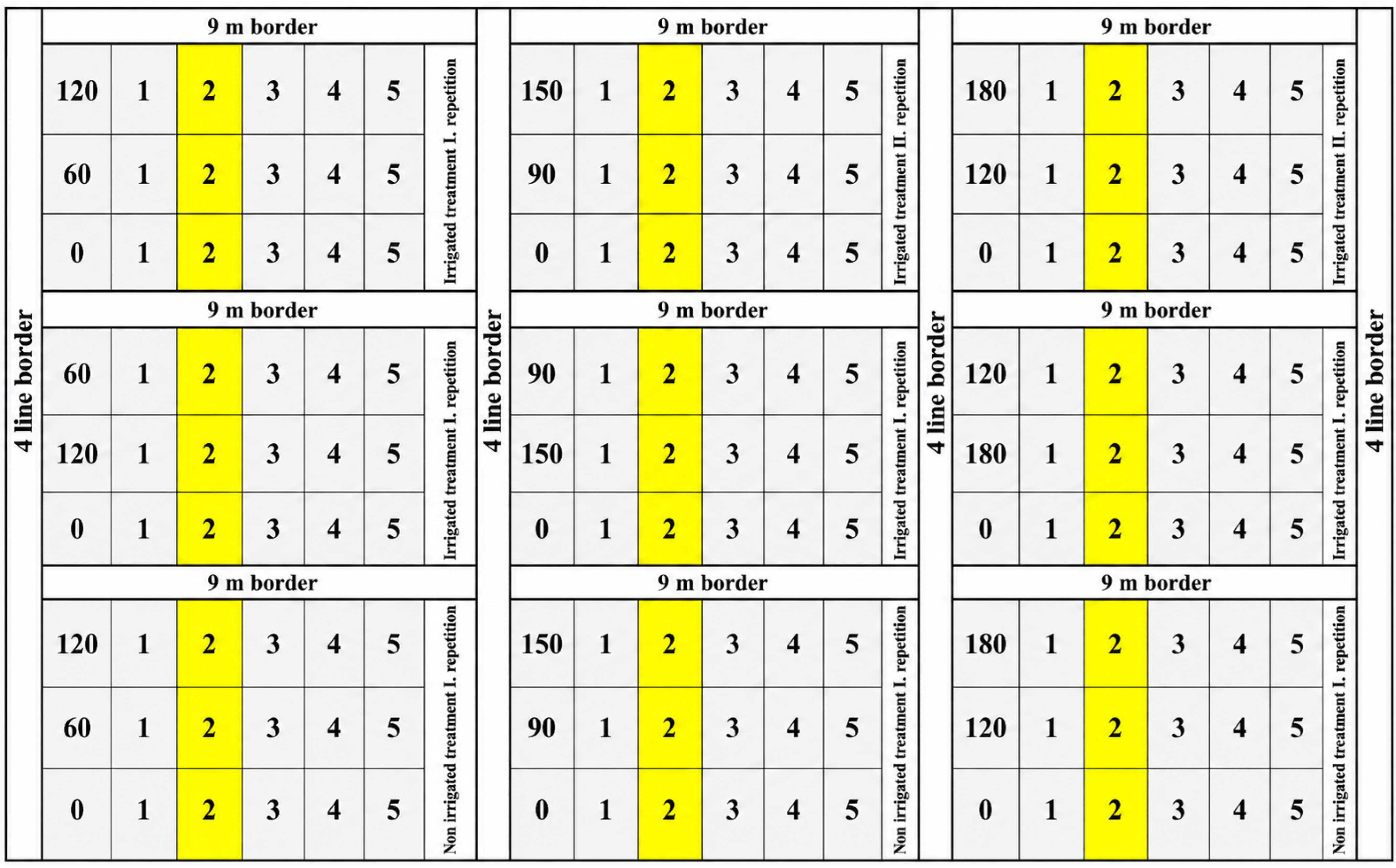
The experiment is a small-plot field trial with a strip-plot design (
Figure A2). In the present study, measurements were conducted in 2018, 2019 and 2020 using the maize hybrid Sushi (FAO 340) under natural rainfall conditions. The long-term trial is a two-replicate (total area 1.5 ha) split-split-plot field experiment. In the original design, hybrids are represented on the main plots, supplemental irrigation treatments (irrigated, rainfed) on the split-plots and fertilizer doses on the split-split-plots. The two-replicate design refers to two independent field replications (blocks). Each irrigation × fertilization treatment combination is represented by two distinct plots, hence a field replication. The trial includes 180 plots, each 1.5 m wide and 9 m long; however, this design includes a total of 5 hybrids, while the present study only deals with the Sushi hybrid, a total of 36 plots. In the field experiment, N fertilizer rates were applied in a split manner as basal fertilization and top dressing, in addition to the non-fertilized control (A
0). The fertilizer was applied in granular form as 4 HNO
3 + CaMg(CO
3)
2 containing 27% N, 7% CaO and 5% MgO. Spring application of 60 (A60) and 120 kg N ha
−1 (A120) as basal fertilizer was followed by two top-dressing fertilizations at the V6 (six-leaf) phenophase (A
60 + 30 kg N ha
−1 = V6
90; A
120 + 30 kg N ha
−1 = V6
150) and at the V12 phenophase (+30 and +30 kg N ha
−1, resulting in V6
90 + 30 kg N ha
−1 = V12
120 and V6
150 + 30 kg N ha
−1 = V12
180). The preceding crop was maize in all three years. Maize was sown on 23 April 2018, 10 April 2019 and 17 April 2020 at a plant density of 72,200 plants ha
−1, in 76 cm row spacing and 5 cm sowing depth. Irrigation water was applied by means of a Valley 8120 universal linear irrigation system. In 2018, 60 mm of irrigation water was applied, while 25 mm in 2019 and 30 mm in 2020. The main developmental phases considered were V6 (six-leaf stage), V12 (twelve-leaf stage) and R1 (silking period of maize). In the present study, the water treatment should be interpreted as supplemental irrigation rather than full irrigation. The applied irrigation amounts were relatively low and were used to supplement natural rainfall during the growing season, not to satisfy the full crop water requirement under strongly water-limited conditions. Therefore, the irrigated treatment in this experiment represents a moderate water supply correction under the climatic conditions of the study years, rather than a production system dependent on irrigation.
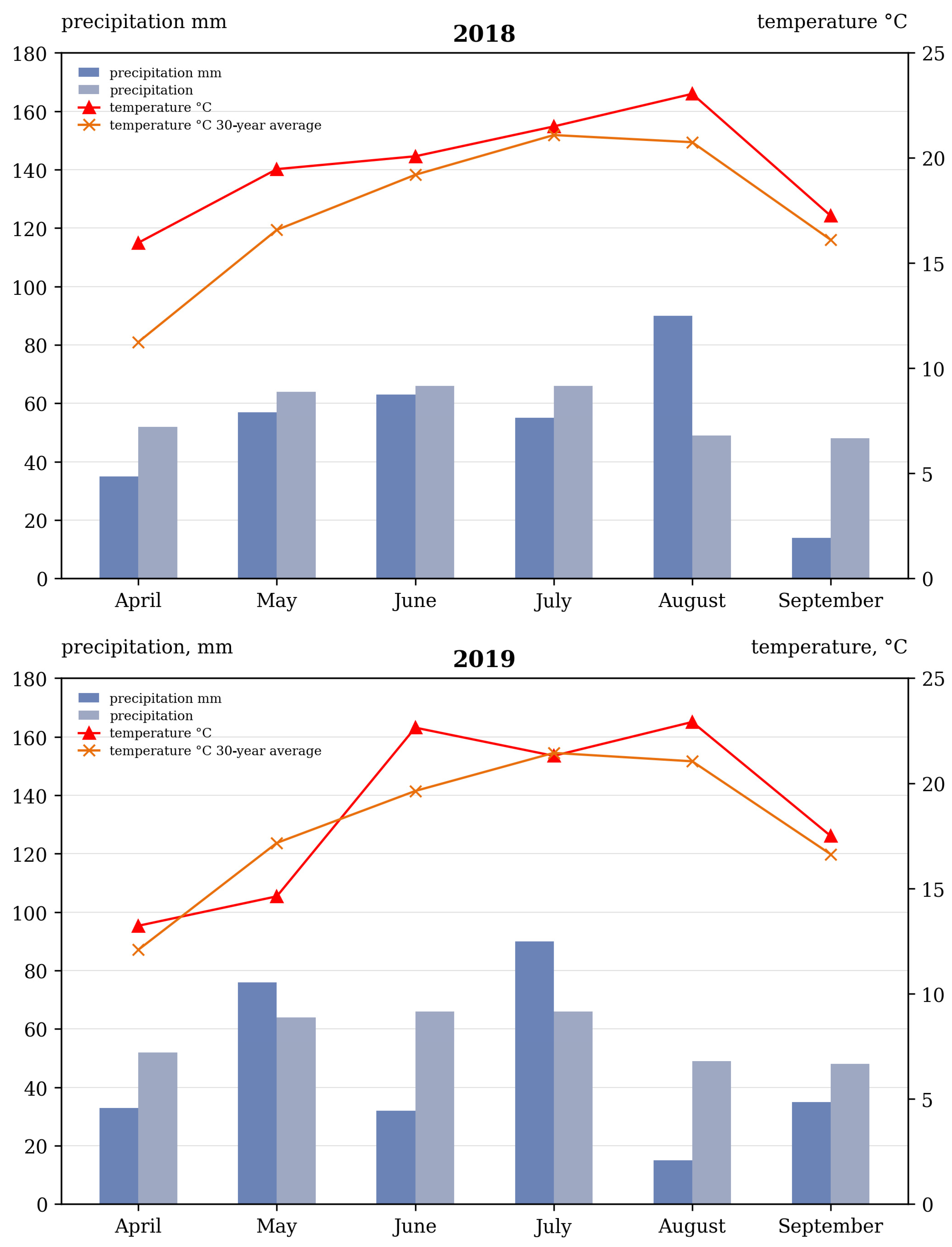
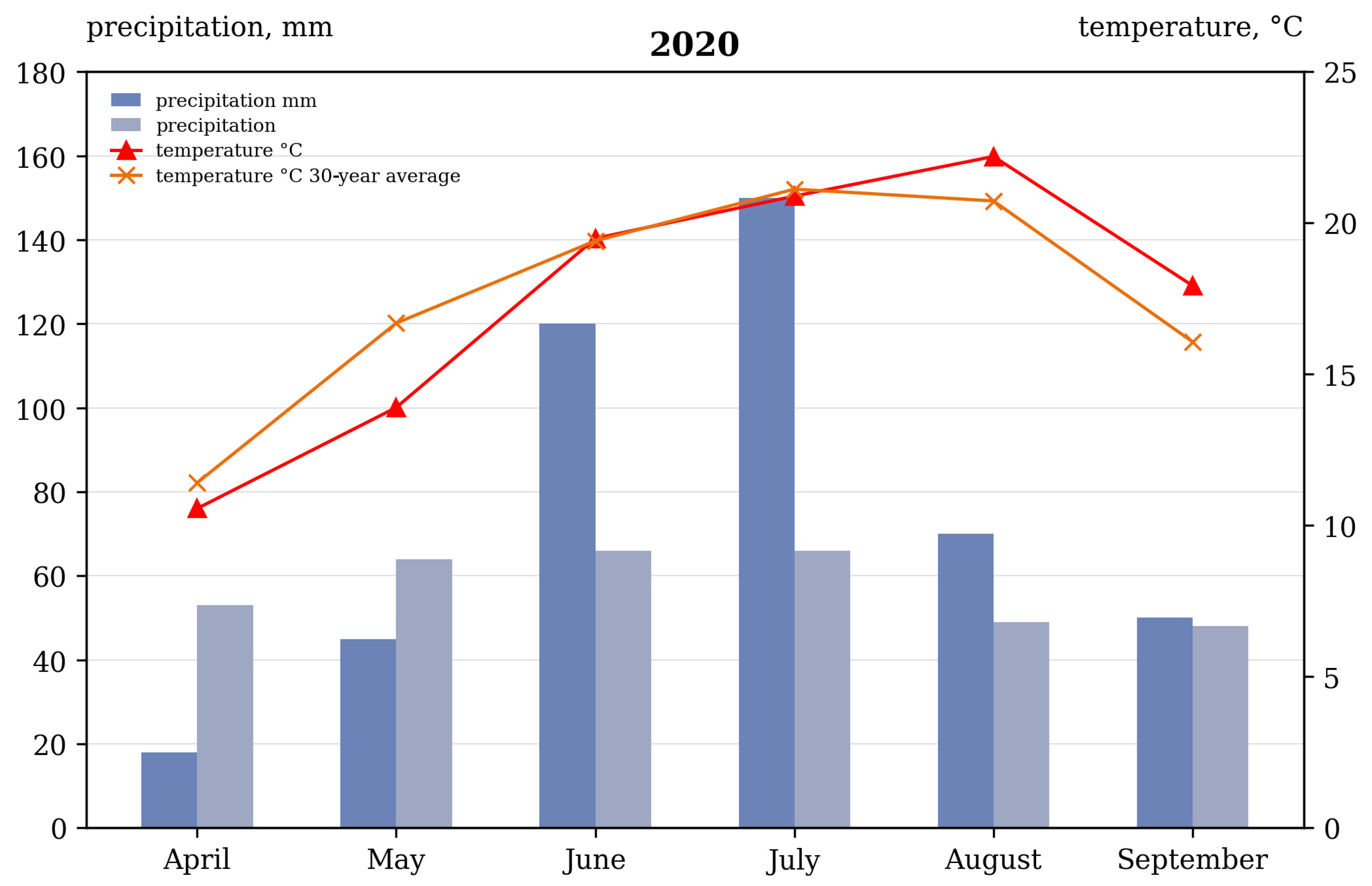
Climatic characterization of the crop years was based on data from an automatic weather station installed in the experimental area. Monthly temperature and precipitation values for the growing seasons were compared with the 30-year average (1988–2018). In 2018, 319 mm of precipitation fell during the growing season, which was 27 mm below the multi-year average (346 mm), while the mean temperature was 2.1 °C higher than the average (17.5 °C). In 2019, growing-season precipitation was only 290 mm, 56 mm below the long-term average, and the mean temperature was 0.9 °C higher. In 2020, growing-season precipitation reached 449 mm, 103 mm above the multi-year average, with temperatures only 0.2 °C higher than the reference value [
3]. These contrasting climatic conditions provided an opportunity to evaluate the effects of crop year, water supply and N fertilization on maize performance (
Figure 1).
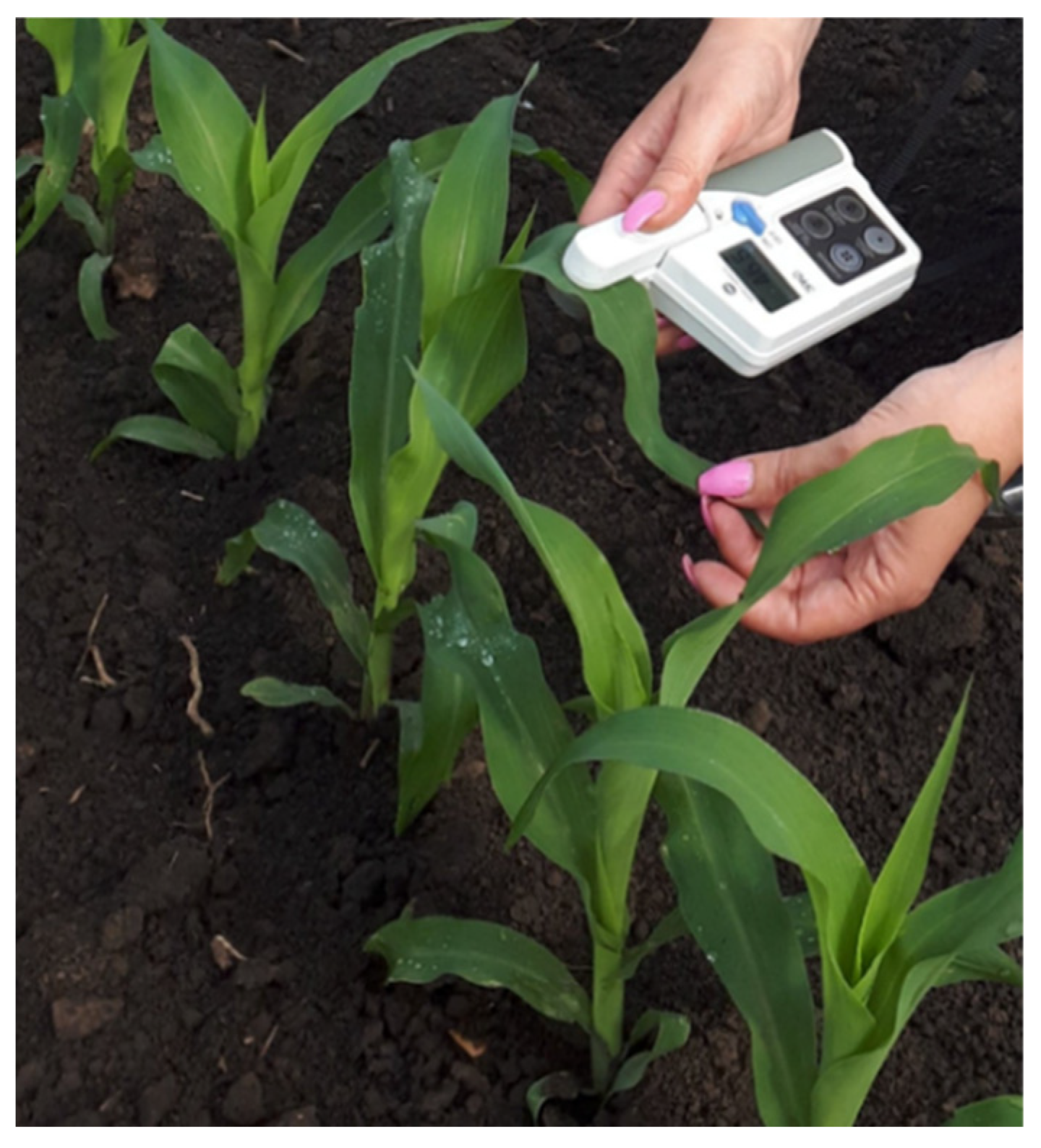
Measurement of relative chlorophyll content and grain yield followed standardized procedures. Relative chlorophyll content was determined using a MINOLTA SPAD-502 chlorophyll meter, following the methodology of earlier studies [
24,
43]. In each plot, three plants were measured. Measurements were conducted on the uppermost fully developed leaf at the V6 (six-leaf stage) [
44] and V12 (twelve-leaf stage) phenophases, and on the leaf opposite the ear at the R1 (silking) phenological stage [
45]. Measurements were conducted on the 6th, 7th and 8th plants of the second row from the left in each plot to ensure consistency. Harvesting was carried out with a Sampo 2010 plot combine equipped with a built-in scale to determine plot-level grain yield. Grain yield was expressed at 14% moisture content.
Conventional statistical evaluation of the relationships between the dependent variables (SPAD value, yield) and the experimental factors (fertilizer treatment, crop year, irrigation) was carried out using a general linear model (GLM). Comparisons of yield and SPAD means were performed using Duncan’s multiple range test, a method traditionally used in agronomic treatment comparisons in our research context. The null hypothesis stated that there is no difference between the investigated treatments and the control; where the overall F-test indicated significant effects, post hoc mean separation by Duncan’s test was applied for the relevant treatments or treatment combinations.
Correlation analyses were performed using linear regression in order to quantify the strength of the relationships between SPAD values and yield. In the regression analysis, the coefficient of determination (R2) was used to quantify the proportion of variance in the dependent variable explained by the independent variable, while the Pearson correlation coefficient (r) was used to describe the strength and direction of the linear relationship. Pearson’s r ranges between −1 and +1, where −1 indicates a strong negative linear correlation and +1 a strong positive linear correlation. In this research, Pearson’s r was calculated to explore the linear relationships between SPAD values and yield across the three study years (2018–2020), and to evaluate the direct impact of climate conditions on maize performance by calculating r separately for rainfed and irrigated treatments.
All conventional statistical analyses were performed using the SPSS for Windows 29.0 software package [
46].
2.2. Multilayer Perceptron (MLP) Artificial Neural Network Modeling
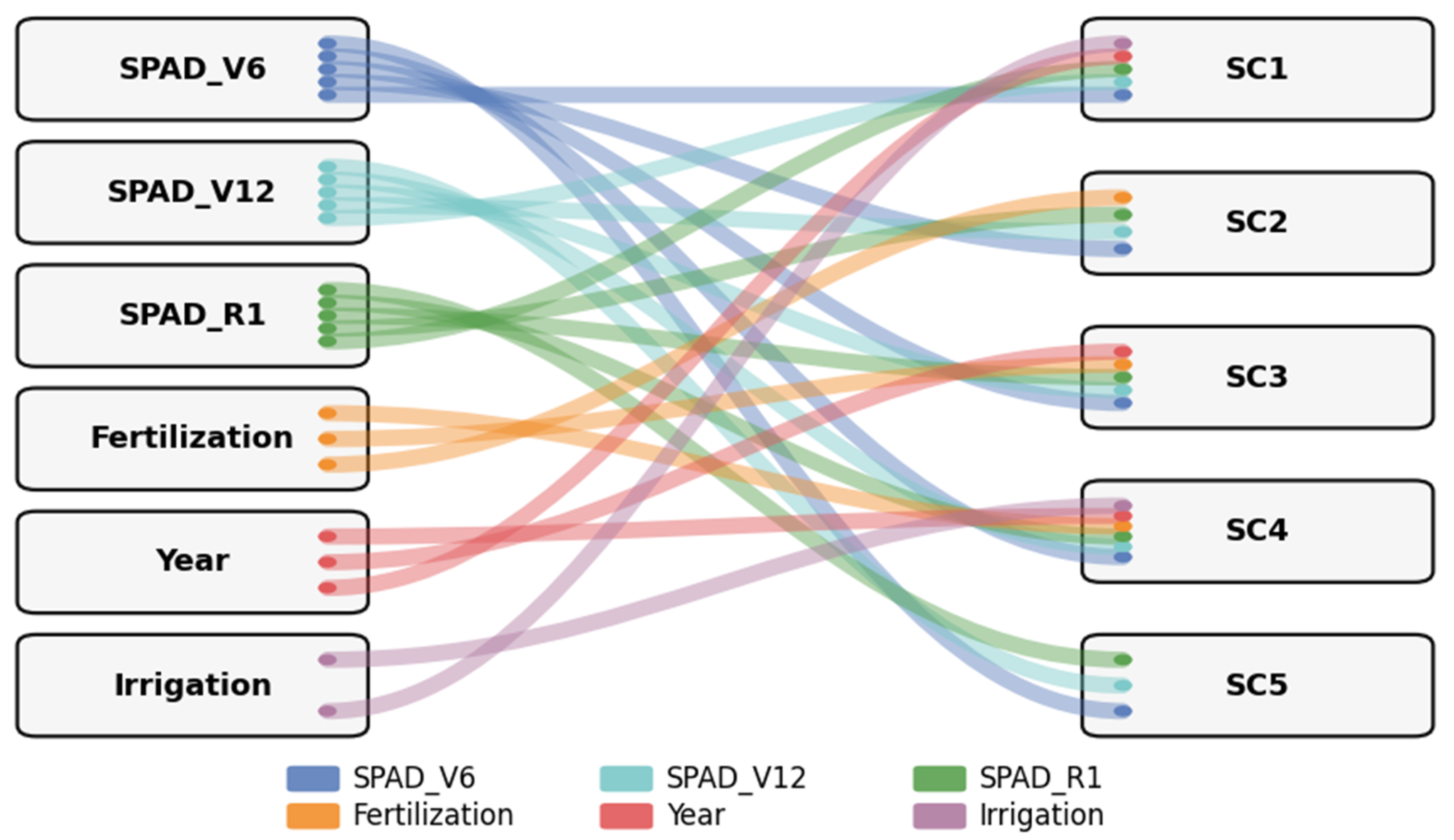
A machine learning-based analysis was conducted using a multilayer perceptron (MLP) artificial neural network (ANN) model to complement the conventional statistical analyses, capture complex non-linear relationships, and improve the predictive accuracy of maize grain yield estimations. The MLP approach was used to explore whether AI-based modeling could provide deeper insights and more accurate yield estimations than traditional correlation and regression methods. Five alternative input scenarios (SC1–SC5) were formulated, differing in the set of covariates included—SPAD values, fertilization rates, irrigation status, and crop year—as predictors of grain yield (t ha−1).
In all scenarios, the three SPAD measurements taken at the V6, V12 and R1 phenological stages were used as continuous covariates. Depending on the scenario, they were combined with categorical variables describing crop year (2018–2020), irrigation status (rainfed = 0, irrigated = 1) and fertilization level expressed as N rate (0, 60, 90, 120, 150, 180 kg N ha
−1; treated as an ordinal variable). The definitions, measurement scales, units, observed ranges, and coding of all input and target variables are summarized in
Table A1. SC1 included SPAD values together with year and irrigation to test how climatic and water supply effects modify SPAD–yield relationships. SC2 combined SPAD with fertilization level to examine N effects alongside SPAD. SC3 extended this with crop year, while SC4 incorporated all potential covariates (SPAD, N rate, year and irrigation). SC5 used only SPAD at V6, V12 and R1 as continuous inputs to assess the yield estimation capability of SPAD alone and to verify whether SPAD–yield relationships strengthen towards later stages.
Figure 2 provides an overview of the five MLP scenarios, illustrating which input variables (SPAD at V6, V12 and R1, fertilization rate, crop year and irrigation status) were included in each scenario configuration.
All ANN models were implemented using the integrated multilayer perceptron module of SPSS Statistics 29.0. Grain yield was specified as the dependent (target) variable, whereas SPAD stages were covariates, while fertilization, crop year and irrigation were entered as factors according to the scenario definitions. Continuous variables were entered as scale variables, while year, irrigation and N rate were entered as categorical/ordinal predictors using their numerical codes. For each scenario, the full dataset was randomly partitioned by the software into a training set and a testing set using a 70:30 split. Networks were specified as feed-forward MLPs with one hidden layer and a single output neuron producing continuous yield predictions. The number of neurons in the hidden layer and other optimization options followed the default settings of SPSS, ensuring comparable network structures across scenarios. Separate models were trained for each scenario (SC1–SC5), allowing the effect of different input combinations on prediction accuracy and robustness to be evaluated.
Initial assessment of model performance relied on the sum of squared error and relative error values provided by SPSS for both the training and testing subsets. To obtain a more comprehensive evaluation of predictive efficiency, additional performance metrics were subsequently calculated from the paired observed and predicted yield values for each scenario. These metrics included the Nash–Sutcliffe efficiency (NSE), Pearson correlation coefficient (r), coefficient of determination (r2), root mean square deviation (RMSD), mean absolute error (MAE), normalized root mean square error (NRMSE), Kling–Gupta efficiency (KGE), Kendall’s tau (KTAU) and the index of agreement (d). Together, these indicators describe the overall level of fit, linear association, error magnitude, bias and the ability of the models to preserve the ordering of observations. The efficiency metrics were summarized in a performance table and visualized using a radar chart to enable multi-criteria comparison of the five scenarios The aim of the analyses was to uncover the hidden correlations among different factors that affect maize yield and to identify the model that provides the best estimate for the traditionally examined values.
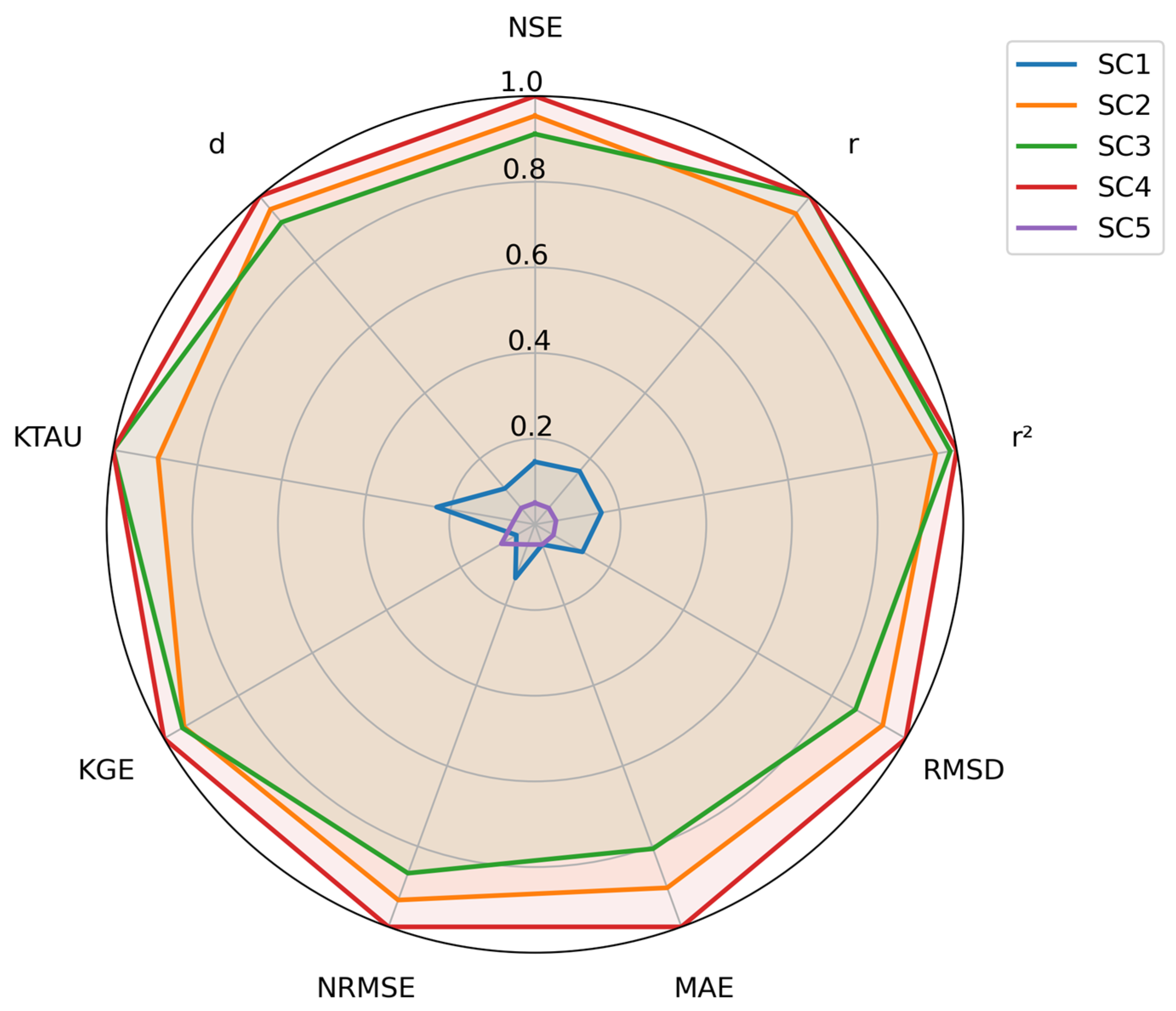
For indices where higher values indicate better performance (NSE, r, r2, KGE, KTAU and d), normalized scores were computed as s = (x − min)/(max − min), where x is the scenario-specific value and min and max are the minimum and maximum values of that metric across scenarios. For error-based metrics where lower values indicate better performance (RMSD, MAE and NRMSE), the direction was reversed after normalization so that higher scores correspond to smaller errors, using s = (max − x)/(max − min). This step ensured that, for every axis in the radar chart, larger values consistently represent better model performance.
The models were executed separately for each scenario. In the detailed scenarios, the included variables were treated as covariates, while the yield was treated as the dependent variable to be estimated by the model. The data series, covering three years, were organized by columns and scenarios within the software’s data management interface.
3. Results
3.1. Effects of Nitrogen Fertilization and Supplemental Irrigation on SPAD Values and Grain Yield
Based on our examinations, in 2018, even the 60 kg N/ha spring basal treatment resulted in a significant increase of 3.32 t ha−1 (60.3%) compared to the non-fertilized treatment (6.94 t ha−1). The treatment A120 (11.76 t ha−1) had a yield increase of 83.8%, and a further 14.5% increase was obtained with the application of +30 kg N/ha at the six-leaf stage (V6150; 13.47 t ha−1). In 2019 and 2020, the treatment A120 was also successful (13.50 and 12.21 t ha−1) according to the Duncan test. Top-dressing treatments did not result in reliable yield increases in 2019 and 2020. Overall, the yield response to top dressing was year-dependent, showing a clear benefit in 2018 (e.g., V6150) but inconsistent/non-reliable responses in 2019–2020 across treatments. Compared to 2018, yield increases were measured in 2019 in the non-fertilized and lower fertilizer dose treatments. The largest difference (2.10 t ha−1) was observed in treatment A0. In 2020, yields were lower. The largest decreases were observed in treatments V690 (1.52 t ha−1) and V12180 (1.00 t ha−1). The non-fertilized treatment of the examined hybrid of 7.11 t ha−1 was outperformed by the treatment A60 by 3.23 t ha−1 (45.4%) and by the treatment A120 by 5.17 t ha−1 (72.7%). Applying an additional 60 kg N ha−1 of kg N ha−1 to the basal treatment (A60) (V12120) provided a 28.9% increase. Increasing the basal treatment of 120 kg N ha−1 by an additional kg N ha−1 in the two phenological stages did not result in reliable yield increases. In 2018, the A0 treatment (6.94 t ha−1) was increased by 61.3% by the A60 treatment and by 76.3% by the A120 treatment. These were yield increases of 3.93 and 4.89 t ha−1, respectively. Among the top-dressing treatments, the V6150 treatment resulted in the most significant yield (13.17 t ha−1). In 2019, compared to the high non-fertilized treatment of 8.91 t ha−1, the two spring basal treatments increased yield (A60, 25.3%; A120, 51.9%), but to a much lesser extent than in 2018 and 2020. In 2020, although the spring basal treatment of 120 kg N ha−1 (12.17 t ha−1) achieved an 83% increase compared to the A0 treatment (6.65 t/ha−1), the A120 treatment further increased yields (13.11 t ha−1) at the V6 growth stage by applying 30 kg N ha−1. Compared to 2018, when looking at the modifying effect of the crop year on yield, a positive effect of the environmental factor was observed in the A0 and spring basal treatments, while a negative effect was observed in the top-dressing treatments, with a decrease in yield. The largest decrease in yield was in the V12180 treatment (2.84 t ha−1). For the year 2020, the difference was largest in the V690 treatment, with a decrease in yield of 2.39 t ha−1. The negative effect of the environmental factor was most pronounced in 2020, in the three examined years, in the non-fertilized and basal treatments.
3.2. Effects of Crop Year, N Fertilizer Applied at Different Times and Rates on Maize Yield in the Irrigated Treatment
In 2018, the basal spring treatment of 60 kg N ha−1 (10.18 t ha−1) resulted in a 36.1% increase compared to the non-fertilized treatment (7.48 t ha−1). The A120 treatment resulted in a 63.2% yield increase, reaching 12.21 t ha−1, and a further 12.8% yield increase with the application of +30 kg N ha−1 at the six-leaf stage (V6150; 13.77 t ha−1), the most effective treatment this year. Compared to the A0 treatment, the increase was more significant in 2020 (5.63 t ha−1 (84.9%)) of the two years. The top-dressing treatments did not produce reliable yield increases. In terms of crop year effect, yield increases were measured in 2019 compared to 2018, with the exception of treatments V6150 and V12180. The largest difference was 2.42 t ha−1 in treatment A60. In 2020, yields were lower. The largest decrease was observed in treatment V6150 (1.67 t ha−1).
3.3. Effect of Irrigation, N Fertilizer Applied at Different Times and Rates on Maize Yield
Irrigation increased yields, except in treatments V6150 and V12120, with the highest increase of 1.58 t/ha in treatment V690. The measured differences are not statistically confirmed. A reliable difference between the two variants was found in the V12120 treatment (p < 0.05), with a reduction of 1.13 t ha−1. The correlation between SPAD value and yield per growth phase was investigated in rainfed and irrigated variants.
Correlation between the maize hybrid and yield varied from year to year in both the rainfed and irrigated treatments (
Table 1). In the rainfed treatment, there was a close correlation between the two variables in all three years. The strongest correlation was observed in 2019 (0.893 ***) and fertilization affected the yield of the Sushi hybrid by 80% based on the coefficient of determination value. In the irrigated treatment, the correlation was close in all years, with the closest correlation in 2020 (r = 0.944 ***), with a coefficient of determination value of 89%.
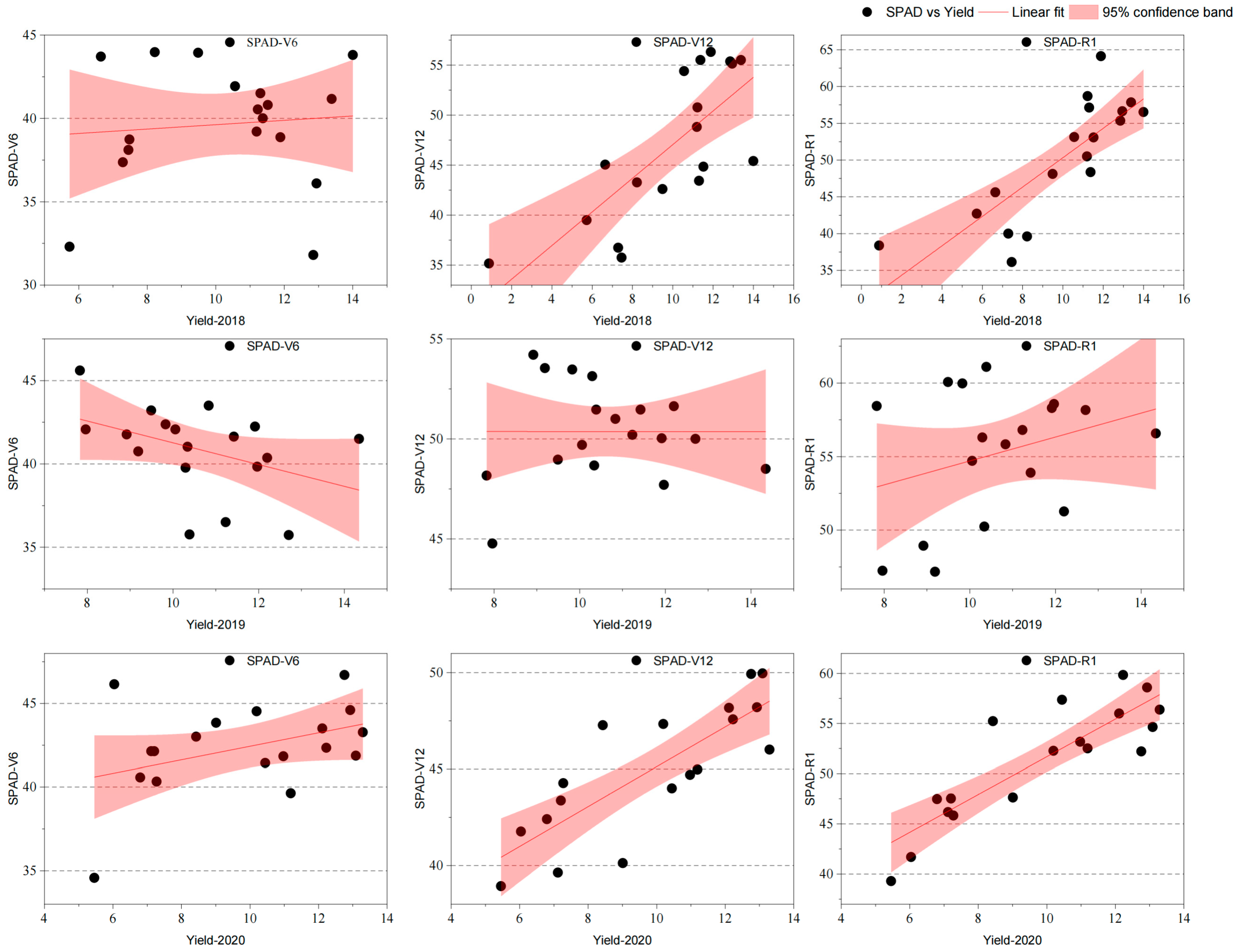
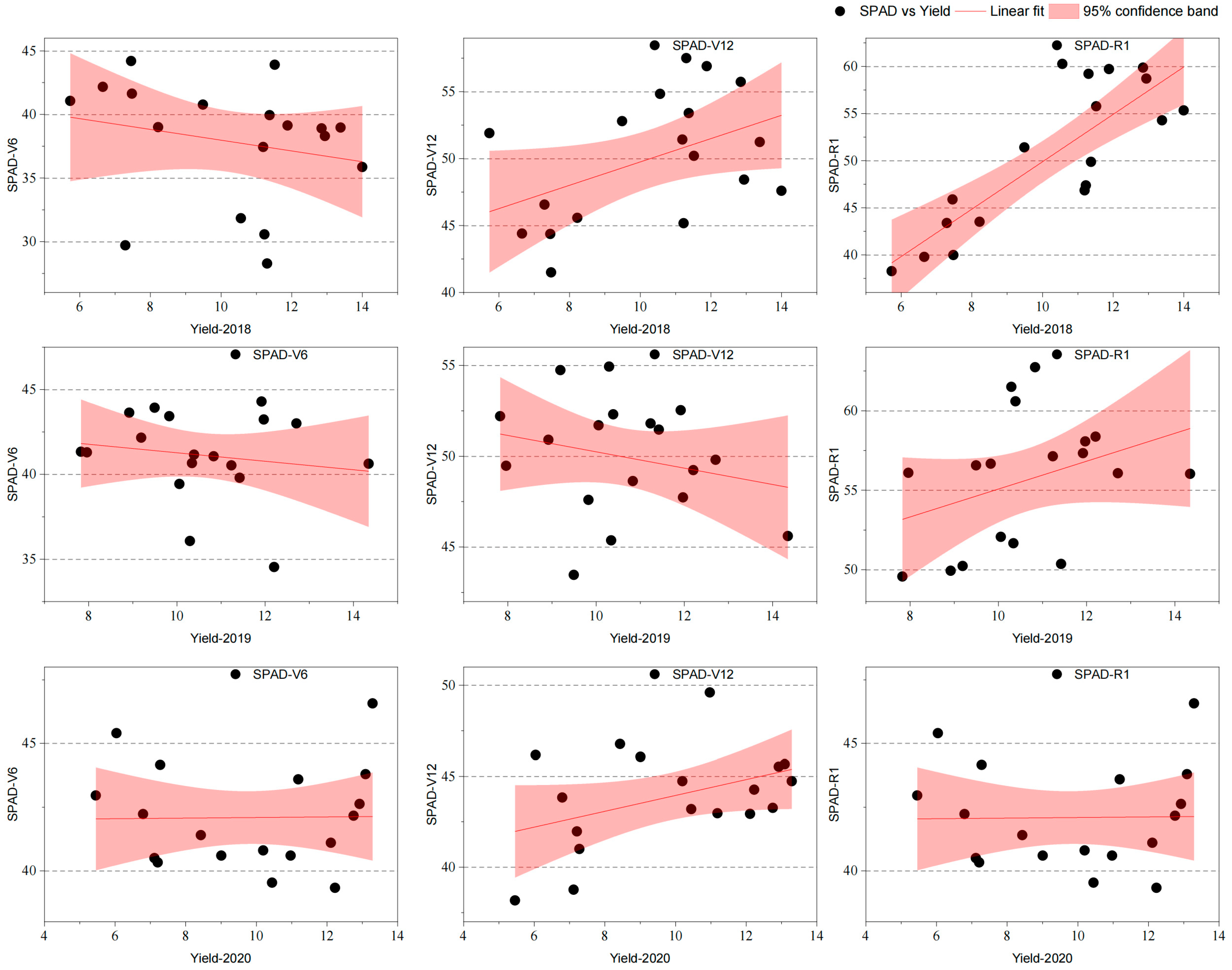
There was no significant relationship between SPAD value and yield in any of the years in the V6 phenophase and in 2019 in any of the phenophases (
Figure 3). In the V12 phenophase, the correlation was medium in 2018 (r = 0.774 ***) and close (r = 0.806 ***) in 2020. In the R1 growth stage, the correlation was close in 2018 (r = 0.818 ***) and 2020 (r = 0.863 ***), with the SPAD value influencing 67 and 74% of yield. In the irrigated version, in 2018, a medium correlation (r = 0.621 ***) was observed in the 12-leaf stage (r = 0.865 ***), while a strong correlation was observed in the silking stage (r = 0.865 ***) (
Figure 4). In 2019, the correlation was weak (r = 0.522 **) in the R1 phenophase and medium (r = 0.673 ***; 0.683 ***) in the V12 and R1 growth stage in 2020, where SPAD had an effect on yield in 45 and 46%, respectively.
3.4. Performance of the MLP Models Under Different Input Scenarios
One of the most important indicators of model accuracy is the error measure. While the traditional statistical analyses confirmed a strong correlation between SPAD values and maize yield, they could not fully explain the variability in yield across years and treatments. To address this limitation and improve yield estimation accuracy, an MLP-based ANN model was applied and tested under five alternative input scenarios (
Table 2). Among the basic error measures, the sum of squared errors indicates how much the model estimates deviate from the observed values, with lower values reflecting a better fit. The relative error compares the magnitude of the estimation error to the actual values, which facilitates comparison between scenarios with different error scales; the smaller the relative error, the more accurate the prediction.
The training and testing errors of the MLP models showed clear differences among the five input scenarios (
Table 2). Under training conditions, SC4 produced the lowest sum of squared error (3.340) and relative error (0.097), followed by SC2 (6.352; 0.161) and SC3 (6.080; 0.156). In contrast, SC1 and SC5 were characterized by considerably higher training errors (relative error 0.387 and 0.439, respectively), indicating a weaker fit to the calibration data. On the independent testing subset, the lowest relative error was obtained for SC2 (0.126), while SC3 showed a moderately higher value (0.189). SC4, despite its very low training error, exhibited a higher testing relative error (0.258), suggesting some degree of overfitting. SC1 and SC5 also performed poorly on the test data, with relative errors of 0.323 and 0.272, respectively. These results already indicate that the analysis of individual MLP scenarios provides important insight into which input configuration produces the most accurate yield estimates.
To complement the SSE- and relative error-based evaluation, a comprehensive set of additional performance indices were calculated from the full dataset (
Table 3). In terms of goodness-of-fit measures, SC4 consistently achieved the best values among all scenarios: NSE = 0.863,
r = 0.930 (
r2 = 0.864), RMSD = 0.882 t ha
−1, MAE = 0.669 t ha
−1 and NRMSE = 0.084. The Kling–Gupta efficiency was also highest for SC4 (KGE = 0.902), and the index of agreement reached 0.962, indicating an excellent overall match between observed and predicted yields. SC2 and SC3 formed a second, closely grouped tier of performance, with very similar NSE (0.851 and 0.840), KGE (0.890 and 0.891) and NRMSE (0.088 and 0.092) values, and high correlation coefficients (
r = 0.922 and 0.930, respectively). Ranking ability, as expressed by Kendall’s tau, was highest and identical for SC3 and SC4 (KTAU = 0.712), followed by SC2 (0.687). In contrast, SC1 and SC5 showed distinctly weaker performance across almost all metrics (e.g., NSE ≈ 0.62–0.64, NRMSE ≈ 0.136–0.141, KTAU < 0.53), indicating that SPAD alone (SC5) or SPAD combined only with year and irrigation (SC1) was insufficient to capture yield variability with high accuracy.
In order to support an integrated, multi-criteria comparison, a radar visualization (
Figure 5) was constructed from a transformed version of the metrics shown in
Table 3 to ensure that all axes are directly comparable and share the same directional interpretation. Firstly, each metric was scaled across scenarios to a 0–1 range using min–max normalization.
Since min–max normalization assigns exact zero to the worst-performing scenario for a given metric, a small floor value was applied to avoid zero scores and improve the readability of the radar chart. Specifically, the final plotted score was computed as s′ = ε + (1 − ε)·s, where ε is the floor constant (ε = 0.05 in this study), s is the normalized score, and s′ is the adjusted score used in the radar chart. This transformation preserves the relative ordering of scenarios within each metric while ensuring that all plotted values remain above zero; the best-performing scenario remains at s′ = 1.0, whereas the worst-performing scenario becomes s′ = ε rather than 0.
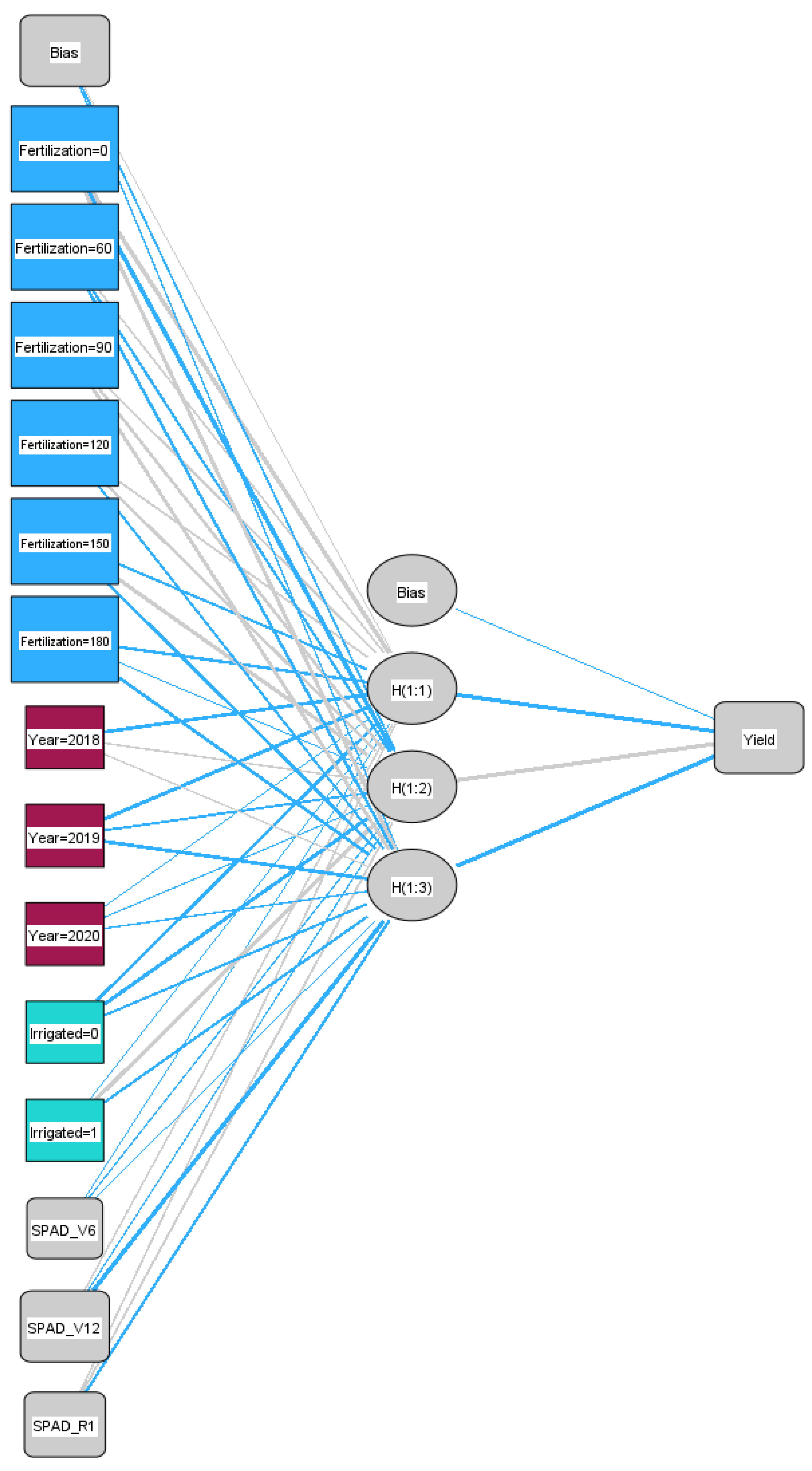
In order to further document the internal structure of the best overall fit model, the network configuration of the SC4 scenario is presented in
Figure A3 (
Appendix A). This architecture diagram illustrates how the full set of input variables (SPAD at V6, V12 and R1, fertilization rate, crop year and irrigation status) were combined within the MLP model to generate grain yield estimates. The figure is also suitable to provide a general overview of the structure of MLP, consisting of an input layer, a hidden layer and an output layer.
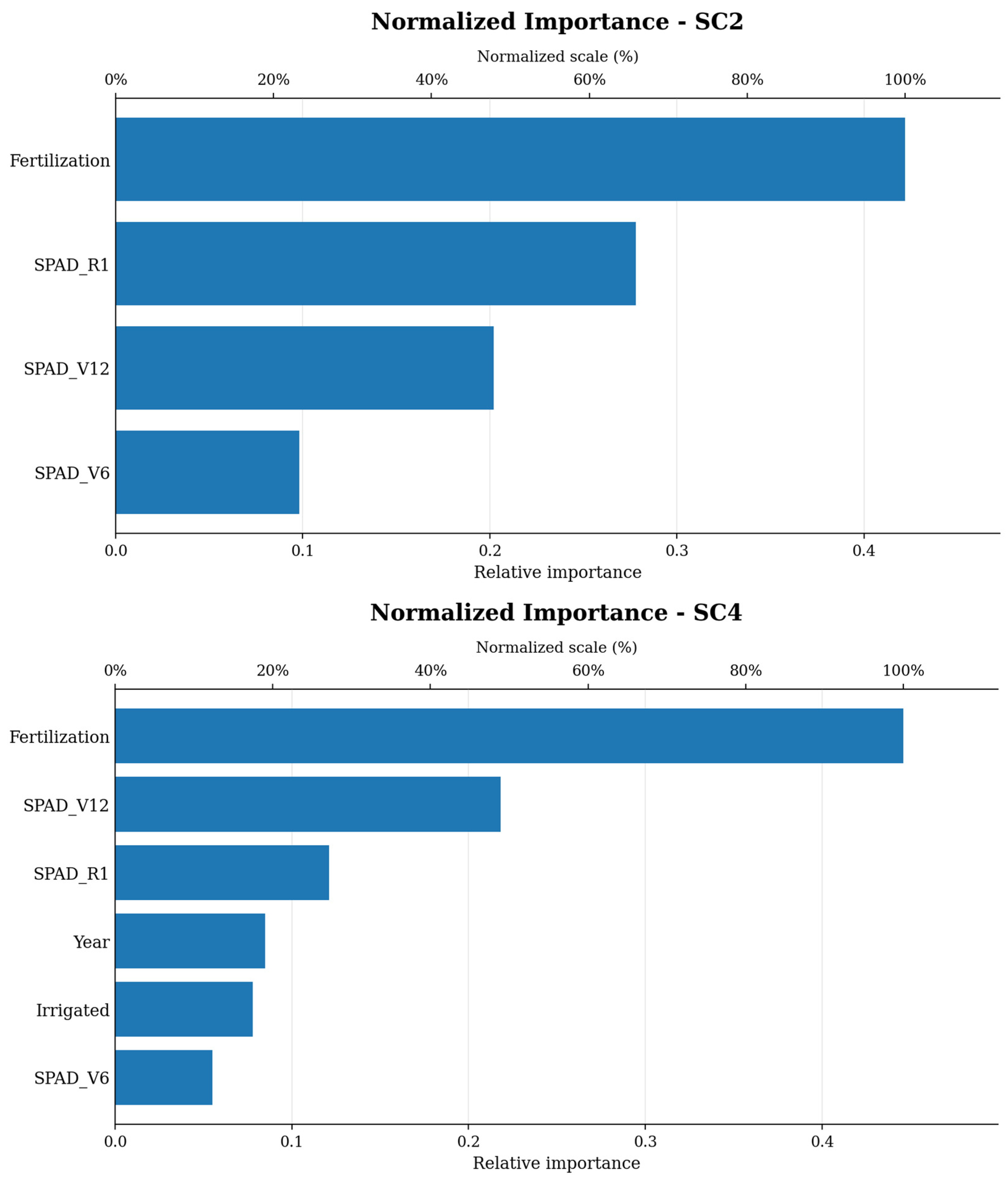
In addition to the global performance metrics, predictor contributions were also examined using the “normalized importance” output of SPSS. In this approach, the contribution of each predictor is expressed relative to the most influential variable within a given model (scaled to 100%), while all other predictors are reported as percentages of that maximum. Because these values are conditional on the set of inputs included, the ranking is scenario-specific and can shift when additional covariates are added. The normalized importance profiles for the best-performing SC2 and SC4 are shown in
Figure 6.
Normalized importance patterns also differed slightly between these scenarios. In SC2, where SPAD measurements were combined only with fertilization level, SPAD at silking (R1) emerged as the most influential physiological predictor after N rate. This is consistent with the strong simple correlations observed between R1 SPAD and yield, as this measurement integrates both nitrogen status and the cumulative effects of weather and water supply close to grain filling. In SC4, however, year and irrigation were explicitly included as additional inputs. These variables already capture a substantial part of the late-season environmental variability, so that the unique contribution of R1 SPAD is partly shared with them. Under these conditions, SPAD measured at V12 gained relatively higher importance, suggesting that mid-season chlorophyll status—reflecting plant nitrogen nutrition before flowering—provides more distinct information on yield differences once year and irrigation effects are accounted for.
4. Discussion
Examining the effect of crop year, N fertilizer and phenophase applied at different times and rates on the SPAD of maize, we found that, in agreement with the results of [
28], the % increase in basal fertilization and top-dressing treatments was lowest in the V6 phenophase and highest in the R1 phenophase compared to the A
0 treatment. Our findings confirmed those of [
30,
47], according to which crop year and fertilizer application strongly influenced the development of SPAD values [
44,
47]. Similarly, the present research also found a correlation between the amount of nitrogen and chlorophyll values. Furthermore, the findings of [
45,
48] have been confirmed, namely that SPAD was the lowest in the A
0 treatment and increased significantly with increasing fertilizer rates up to a certain level. From the V6 phenophase to the R1 growth stage, the largest increase was obtained with the V6
150 treatment (24.7). The difference between the two supplemental irrigation variants was found for the Sushi hybrid (0.4). The SPAD value decreased in 2020 as a result of irrigation. The results obtained confirm the findings of several researchers [
22,
33] that irrigation leads to a dilution of the nitrogen concentration due to a larger leaf area, thus decreasing the chlorophyll concentration.
The findings of the present study confirm those of [
34], namely that crop year and fertilization had a strong influence on the SPAD values. In the present study, it has been shown that the correlation between the SPAD value and yield became more and more pronounced as the crop approached maturity [
49]. This confirmed the findings of multiple researchers, namely that there is a strong correlation between the relative chlorophyll content of the plant and yields [
50,
51]. All of this was confirmed by our analysis using the MLP model based on machine learning. The study validated that the SPAD value measured during the R1 phenophase had the greatest impact on yield development. Additionally, the models also identified fertilization as a major factor influencing yield.
Overall, the spring basal treatment of 120 kg N ha
−1 (A
120) provided the highest statistically significant yield in 2019. The top dressings had significant yield-increasing effects in 2018 and 2020, which support the findings of [
21,
22,
23] that top dressing has a yield-enhancing effect. Because growing-season weather differed markedly among 2018–2020, soil moisture at the time of V6/V12 applications and the balance between N uptake and N losses likely varied between years, providing a plausible explanation for the observed year-to-year differences in top-dressing effectiveness. Examining the effect of crop year, the different time and amount of N fertilizer applied on the yield, it can be concluded that, in two years (2019, 2020), the treatment A
120 had a significant yield-increasing effect on the Sushi hybrid. Therefore, in contrast to the results of [
19], in our study, top dressing did not have a yield-increasing effect in all cases. In 2018, the hybrid Sushi responded with a yield increase to the V6
150 top-dressing treatment. In the study, a stronger correlation was confirmed between fertilizer application and yield in the irrigated version (r = 0.937 ***) than in the rainfed version (r = 0.893 ***). The executed model supports our traditional statistical results, which indicate that N fertilization significantly influences yield development. Furthermore, the highest fertilizer efficiency was recorded in the rainfed treatment in 2019 (79%,
p < 0.001) and in the irrigated treatment in 2018 (88%,
p < 0.001). Based on the above findings, it can be concluded that adequate water availability promotes the uptake and utilization of N fertilizer by the plants. Due to the above, drought deficit can be reduced [
20]. Approaching advanced developmental stages in both the rainfed and the irrigated versions, the correlation coefficient value increases. This indicates that the correlation between the two variables is becoming stronger.
The MLP analysis provided complementary insights beyond traditional correlation and regression by explicitly accounting for non-linear interactions among management, crop status and inter-annual variability. Across the evaluated scenarios, models that combined SPAD measurements with agronomic descriptors—particularly fertilization level—consistently achieved the highest predictive accuracy, confirming that chlorophyll-based plant status and nitrogen supply together explain a large share of yield variability under the studied conditions. However, the relative ranking of scenarios depended on whether model fit or generalization was emphasized. In terms of overall agreement across the full dataset, SC4 (SPAD + fertilization + year + irrigation) achieved the strongest performance across most indices (e.g., highest NSE and KGE and the lowest RMSD/MAE/NRMSE), indicating that explicitly representing both the environmental (year) and management (irrigation) context can improve the model’s ability to reproduce the observed yields. At the same time, the test set results identified SC2 as the most robust in independent prediction, as it produced the lowest testing relative error, whereas SC4 showed an increase in testing error despite its excellent calibration performance. This pattern suggests that, for this dataset and split, adding additional covariates may introduce some degree of overfitting or reduce stability on unseen data, even if it improves the overall fit when all observations are considered.
Variable importance outputs further clarified how the role of SPAD phenophases depends on the available covariate set. In SC2, where SPAD was combined primarily with fertilization, SPAD at R1 emerged as the most influential physiological predictor after N rate, consistent with the expectation that late-season chlorophyll status integrates cumulative effects of nitrogen nutrition and in-season stress close to grain formation. In SC4, after crop year and irrigation were included explicitly, SPAD at V12 gained relatively higher importance than SPAD at R1 (
Figure 6). This shift indicates that part of the late-season information previously captured implicitly by the R1 SPAD measurement in reduced-input models is shared with, or represented by, year and irrigation in the full model, thereby increasing the relative contribution of mid-season SPAD as a more distinct indicator of nitrogen status before flowering.
Overall, the consistency between measured yields and the MLP-based estimates (including the observed–predicted agreement patterns) supports the reliability of SPAD-assisted, data-driven yield estimation under different fertilization and irrigation regimes. By quantifying the joint influence of crop status (SPAD) and management/environmental context, the modeling framework helps to interpret the interconnected effects of key parameters such as fertilization, irrigation and inter-annual variability, and corroborates earlier findings that machine learning approaches can complement conventional agronomic analyses by capturing complex relationships that are difficult to describe with linear methods alone [
19,
52].
However, as a further important consideration, it is to be stated that the irrigation factor evaluated in this study should be interpreted as supplemental irrigation under the environmental conditions of eastern Hungary, rather than as full irrigation in a strongly water-limited production system. In two of the three study years, rainfall was close to adequate, so the contribution of supplemental irrigation to yield formation and model importance remained relatively modest. Under semi-arid conditions or in production systems with a stronger dependence on irrigation, water-related variables would likely play a substantially greater role in yield prediction. Likewise, the predictive importance of fertilization observed here may be lower in environments where limited rainfall restricts nutrient availability and plant uptake.
5. Conclusions
The site-specific SPAD values can be used to estimate the N supply of maize hybrids, which provides a basis for planning optimal N application rates and their timing, thus reducing yield losses caused by weather conditions. The closest correlation was found in the irrigated treatment variant at stage R1 (r = 0.865 ***). In both the rainfed and the irrigated variants, the correlation coefficient value increased as we approached the R1 stage. This indicates that the correlation between the two variables is becoming stronger.
SPAD values measured between phenological stages V12 and R1 provide a reliable estimate of expected yield. Last but not least, the determination of the SPAD value contributes to the implementation of N supply. The results of the research will help farmers to plan the application of N and to apply it in a specific quantity, timing and location to avoid reducing the environmental impact. The negative environmental effect was most pronounced in 2020. Under certain treatment combinations, appropriate N supply partially moderated yield reduction, but this effect was not consistent across all top-dressing treatments.
Beyond that, traditional measurement methods and their statistical evaluation are extremely important for estimating maize yield. However, novel solutions, such as the application of machine learning and MLP models, provide even more accurate insights into the effects of individual parameters.
The MLP model successfully captured complex interactions among SPAD values, nitrogen supply, supplemental irrigation, and environmental conditions, which were not fully evident through traditional correlation analysis. The strong predictive performance of the SC2 and SC4 scenarios reinforces the importance of balanced nitrogen and water supply in optimizing maize yield. These findings suggest that machine learning models can serve as valuable decision-making tools in precision agriculture, providing real-time, site-specific recommendations to maximize yield while minimizing environmental impact.
The alignment between the MLP-based predictions and the statistical results confirms that SPAD values measured during the V12 and R1 phenophases are particularly valuable for predicting yield outcomes.
Overall, the agreement between the MLP outputs and the conventional statistical results indicates that machine learning can effectively complement classical analyses and may serve as a useful component of precision agriculture decision support. Future work could strengthen these findings by applying more rigorous cross-validation strategies, expanding the predictor set with additional soil–weather descriptors, and benchmarking multiple algorithms to further improve stability, interpretability and operational applicability under variable field conditions.



 ,
,