Article

Effect of Field Drying and Storage Conditions on the Color and Quality of Desiccated Immature (Green and Semi-Green) Soybeans


1
Department of Agricultural and Biosystems Engineering, North Dakota State University, Fargo, ND 58102, USA
2
Carrington Research Extension Center, North Dakota State University, Carrington, ND 58421, USA
*
Author to whom correspondence should be addressed.
AgriEngineering 2026, 8(5), 175; https://doi.org/10.3390/agriengineering8050175
Submission received: 9 February 2026 / Revised: 5 April 2026 / Accepted: 15 April 2026 / Published: 2 May 2026
(This article belongs to the Section Pre and Post-Harvest Engineering in Agriculture)

Abstract

Early frost during the R6 and R7 maturity stages of soybean (Glycine max L.) usually causes immature (green or semi-green) crops to be harvested. These immature soybean seeds have a shrunken appearance, green tone, and high chlorophyll content in the oil, leading to heavy discounts for farmers at the elevator. Previous lab-scale storage studies have shown that seed color can change under light and warm temperatures; however, light cannot be added to a commercial storage bin. Therefore, this study examined the effect of field drying and storage conditions on immature soybean color and oil quality. Soybean planted in two plots were desiccated at the R6 and R7 maturity stages and then allowed to field dry. The field-dried desiccated soybeans were conditioned to moisture contents (MCs) of 12 and 17% and stored in airtight plastic bags at respective temperatures of 4 °C and 22.5 °C for 24 weeks. Seed color, mold, and oil quality were analyzed at intervals of 0, 4, 8, 16, and 24 weeks. The desiccated R6 seeds’ color “a” value significantly changed during field drying from (−9.75 to +0.19) and (−8.96 to +1.95) for Plot 1 and Plot 2, respectively. This means that the color changed from green to a golden yellow or light greenish-brown color after field drying. The chlorophyll content of the desiccated soybeans after field drying at the two maturity stages for both plots was less than 3 mg kg−1 of oil and was relatively stable throughout storage. During storage, at 17% moisture content and 22.5 °C, mold counts increased significantly for R6, R7, and R8 (frozen) control soybeans between weeks 0 and 4 to 4.36 CFU g−1, 5.93 CFU g−1 and 6.22 CFU g−1, respectively. Peroxide and free fatty acid values were within acceptable limits across all storage temperatures and moisture contents. This study suggests that favorable weather conditions for field drying after an early frost have the potential to improve the color of harvested and stored soybeans, similar to mature soybeans.

1. Introduction

The United States (US) soybean production accounts for an average share of approximately 34% of the global production, and it is the second most cultivated crop in the country after corn [1]. Most of the soybeans are grown in the midwestern states in the US, but in the past few decades soybean production has expanded to the northern cold states. For example, soybean area was approximately 2.6 million ha in 2025 as compared with 0.41 million ha in 1990 [2]. Soybeans are mostly grown for their high protein quality but contain up to 18–20% of the oil that is used in many applications. The oil is often extracted and then further refined for cooking or processed for biodiesel and resin production. The defatted meal after oil extraction is mostly used in the animal feed industry and in soy protein production. The soy protein is used to improve the functionality of foods in the food and pet industries.
Despite the many benefits of soybeans, unfavorable agro-climatic conditions during their growth and development can significantly impede its quality and that of its products, especially the oil. The conditions that affect the seed quality include unfavorable weather (rain, snow, ice, hail) during maturing periods, exposure to wet conditions at physiological maturity, and frost occurring while the seeds are in the late R6 and R7 maturity stages [3]. Early maturing varieties of soybean have been developed to avert the risk of frost occurring during the seed’s physiological maturity. The planting date is an additional important factor in addressing the effect of weather-related problems on soybean growth and development, yield, and quality [4,5]. More importantly, the harvested seeds’ outcome depends on the atmospheric conditions during dry-down. The period rate of dry-down and the quality of harvested seeds are governed by certain atmospheric conditions. These conditions are a function of temperature, solar radiation, precipitation, humidity, wind speed, and potential evapotranspiration [6].
Certain regions in the US have a short growing season and sometimes experience cool temperatures and short sunlight periods that affect the maturity of soybean seeds. This mostly occurs in the crop at later maturity stages—R6, when the soybean pods contain full green seeds, and R7, when 50% of pods are yellow and the seed is partially yellow. Besides the weather challenges during seed development and atmospheric conditions during dry-down, the soybean growth stage, variety planted, and frost intensity determine the impact on yield and the overall quality of the harvested seeds. For example, a frost occurring at R6 could affect the maturity of the seeds, while a frost that occurs after R7 is considered to have minimal effect on the physiological maturity (dry matter accumulation) of the seeds [7]. Unfortunately, during mild or severe frost conditions, the color quality of the harvested seeds may not meet the market grading standards for trade and export purposes set by the United States Federal Inspection Grain Service (FGIS). This is largely due to the presence of immature (green and semi-green) seeds in the harvest. Besides the green surface color of the seeds at the sales point, stricter attention is given to the sectioned (cut-open) portion of the seed. When the inner seed cotyledon is cut in half and is green in color, more of a discount is applied to the soybeans [8]. The characteristics of soybean that reduce its value are associated with the green color of the seed coat, which indicates the presence of chlorophyll pigments. Chlorophyll in the extracted oil promotes oxidation, shortens the shelf life, and makes the aesthetics of the oil less appealing [9]. Therefore, a significant amount of immature green seed directly increases the refining cost to remove the chlorophyll pigments [10,11]. Besides weather and field conditions, the initial grain conditions and storage also play a significant role in maintaining or altering the physico-chemical properties of stored soybeans. These conditions, such as moisture content, temperature, relative humidity, quality of harvested seeds, and level of microbial contamination of grains before storage, affect the quality of grains during storage [12,13,14].
Although there have been multiple studies on soybean storage and processing, there is a need to understand what happens to immature soybeans resulting from unfavorable environmental conditions such as frost. A 1998 study conducted in Wisconsin found that soybeans from frost-damaged plants exhibited faster maturity and earlier color changes compared with those from undamaged plants, across various freezing treatments [15]. Other studies have shown that ambient air-drying of harvested seeds does remove most of the green color retention in the seeds [16,17]. In Wilcke [18], immature green soybean seeds were reported to change slightly to a yellow color during storage, though there were no data provided to support this claim. Likewise, a study on the storage of frost-damaged soybeans also reported insignificant changes in the surface color of immature soybeans in storage. Other studies have reported that 2–6 weeks of aerated storage may reduce the green soybean color to a level at which farmers are not financially discounted [19,20].
Our previous study found that lab-scale drying contributed to a slight color fading of the freshly harvested green and semi-green R6 and R7 maturity-stage soybeans [21]. In addition, light had the most significant effect (~80%) on the color change observed during storage compared with other environmental conditions like temperature and relative humidity. Despite this result, it is important to note that adding light in commercial storage bins is likely not feasible; hence, the best option is to monitor the effect of field drying and exposure to sunlight on the desiccated R6 and R7 soybean plants (which mimics an early frost) and how it affects the seeds during storage. Therefore, the objective of this study was to evaluate the effect of induced frost (achieved by desiccating soybean plants with an herbicide at the R6 and R7 maturity stages) and field drying on the color of harvested soybeans. The harvested soybean was used to investigate the impact of different storage conditions on the color, chlorophyll content, oil quality, and microbial development of the desiccated and field-dried soybeans.

2. Materials and Methods

2.1. Cultivation and Harvest of Soybean

The soybean variety Proseed 80–20 and relative maturity group of 0.2 was planted at the Carrington Research and Extension Center, CREC (located 47°29′54″ N and 99°07′30″ W in Carrington, ND, USA). The planting of the soybean seeds was done on two different field plots adjacent to one another. The planting of seeds in the first plot took place on May 21, 2019, while the second plot was planted on June 6 2019. Two planting dates were used to reduce the risk of weather-related issues in the study. To mimic an early frost (fall freeze), the plants were killed with an herbicide (Reglone desiccant, Syngenta, Greensboro, NC, USA) at the R6 and R7 maturity stages of the soybean. The application was done at 0.92 kg/m2 of the active ingredient “Diquat dibromide (6,7-dihydrodipyrido (1,2-a:2′,1′-c) pyrazinediium dibromide)”. The active ingredient inhibits the photosynthetic process by releasing compounds that kill the plant cells. Soybean plants that were not desiccated in an adjacent plot were harvested at R8, mature soybeans, and the samples served as control.
After the application of the Reglone desiccant, the soybean plants were left in the field to dry before harvesting. Due to the rapid changes in soybean maturity caused by the weather in Plot 1, only soybeans at the R6 growth stage were desiccated and harvested as indicated in Table 1. During the field visit for R7 application, the soybean was beyond the R7 maturity stage. For Plot 2, all of the soybeans were desiccated at the R6 and R7 maturity stages. However, during the field dry-down, an early frost occurred which was accompanied by rain and snow conditions. This affected the dry-down process after desiccation. The desiccated plants at the R6 and R7 growth stages were harvested at the same time as the R8 mature (control), with a research plot harvester. Due to this condition, soybean (same variety) from an elevator was used as the fully mature, R8, group to compare with the R8 (frozen) (control) group. After field harvesting, the soybeans were immediately stored at 4 °C until further experimental setup.
Weather data during the desiccation and harvesting season were obtained from the North Dakota Agricultural Weather Network (NDAWN) for 2019. Data obtained included maximum and minimum air temperature, wind speed, solar radiation, rainfall, growing degree days (GDDs), and potential evapotranspiration (PET). These data were used to compare the weather conditions in Plot 1 and Plot 2.

2.2. Initial Moisture Content Determination, Drying, and Cleaning

The field-dried desiccated R6 and R7, and the R8 mature (frozen) control, soybean harvested from Plot 2 had initial wet-basis (w.b.) moisture contents of 19.2%, 25.6%, and 23.9%, respectively. The high moisture content was due to wet conditions (rain, snow, cool, and cloudy weather) around harvest time. Therefore, the samples were slowly dried in a cabinet dryer at 25 ± 2 °C for 40–48 h. The moisture contents of the seed samples were analyzed every 3–4 h using the GAC 2100 capacitance-based moisture analyzer (Dickey John, Auburn, IL, USA) until the seed’s moisture content was approximately 12% w.b. The fully mature R8 soybean seeds obtained from a commercial elevator were received at the harvest moisture of 11.9% and did not need to be dried in the cabinet. After drying, the seeds were cleaned using a gravity table to remove heavy materials present and then with an aspirator (KICE Metal Products Co. Inc., Park City, KS, USA) to remove dust and other light materials. The cleaned soybeans for each maturity stage were divided into two portions, each of which were conditioned to moisture contents of 12 and 17% according to the method used by [21].

2.3. Storage Set-Up

To prepare the samples for storage, 400 g of the R6, R7, and R8 mature (frozen) control soybeans were placed in transparent “plymor” heavy-duty plastic re-closeable (0.004 thick) LDPE polyethylene FDA-compliant zipper bags purchased from Amazon (Online). The plastic bags were kept in 19 L storage pails with sealed lids and stored at 4 °C and 23.5 °C. A total of 24 storage pails were used. Sampling was done at weeks 0, 4, 8, 16, and 24, where week 0 was the initial sample during storage set-up. To prevent contamination, the samples were first analyzed for fungal enumeration before any other quality analyses were undertaken. Data loggers (Hobo Pro v2 U23-001, Bourne, MA, USA) were inserted into each pail to monitor the temperature and relative humidity of the storage environment. Data were logged every 1 h throughout the experiment period.

2.4. Seed Color Analysis

Seed color analysis of harvested field-dried and stored seeds was undertaken using a Konica Minolta Colorimeter (Minolta CR-300 Chroma meter, Ramsey, NJ, USA) that records values in L a b. Before seed color analysis, the instrument was calibrated with white calibration tiles. Samples from the cold room were allowed to warm up for 30 min before analysis. About 30 g of soybean seeds from each sample were placed in polystyrene sterilized Petri dishes (60 × 15 mm) purchased from VWR, (Chicago, IL, USA). The filled Petri dishes were then placed on the colorimeter lens and the color readings were recorded in L a b value. The values of lightness L (100—White, 0—black), a (−green to +red), and b (−blue to +yellow) were determined according to the Hunter Lab color scale of 2° standard observer and D65 Illuminant. For reproducibility purposes, samples were run in triplicate for each analysis.

2.5. Oil Extraction and Quality Analysis

A KOMET oilseed screw press (IBG Monforts Oekotec GmbH & Co., Mönchengladbach, Germany) at 62 ± 1 °C was used to extract oil from the stored soybean seed samples. The extracted crude oil was then centrifuged in a Jouan CR 412 centrifuge (Randor, PA, USA) at 4500 rpm for 7 min. The clear supernatant after centrifugation was poured into a 50 mL black plastic vial and was used for oil quality analysis. The oil was analyzed for chlorophyll content, free fatty acid values, and peroxide values. Chlorophyll pigments in the crude soybean oil were determined according to AOCS recommended practice Cc13i-96. The AOCS official method Ca 5a-40 was used for free fatty acid determination. Meanwhile, peroxide tests were conducted according to the adapted AOCS Cd 8-53 official method for small sample sizes.

2.6. Enumeration of Fungi Population

Monitoring mold growth is a crucial factor in grain storage. To analyze this, samples were collected in duplicates in sterile stomacher bags plated onto Dichloran-Glycerol DG-18 Agar base (Oxiod Ltd., Basingstoke, Hampshire, UK). The DG-18 agar was prepared by suspending 15.75 g of the agar in 500 mL of distilled water. Amounts of 110 g of glycerol (analytical reagent grade) and 50 mg of chloramphenicol rehydrated in 2.5 mL of ethanol were then added to the agar solution. The solution was sterilized in an autoclave at 121 °C for 30 min and then cooled to 50 °C. This was later mixed and poured into sterile Petri dishes that were referred to as DG-18 agar plates. Soybean samples (30 g) were homogenized with 150 mL of 0.1% peptone water for 60 s using a stomacher at 230 rpm. Successive dilutions were made by mixing 9 mL of the 0.1% peptone water with 1 mL of the homogenized solution in a sterile centrifuge tube and the process was repeated until 10−5 dilutions were achieved. The diluted solution was spread in DG-18 agar plates, and the DG-18 agar plates were incubated at 25 °C in the dark for 7 days. Every colony on the DG-18 agar plate was counted. The fluffy, colorful and moldy colonies were counted as mold colonies while the bacteria-like colonies were counted as yeast colonies.

2.7. Statistical Analysis

The measured data on color, chlorophyll, fungi (mold and yeast) enumeration, peroxide, and free fatty acids were performed using the Minitab statistical software v21 (State College, PA, USA). A multi-factorial experiment design was developed in a 3 × 2 × 2 × 5 scheme: three maturity stages, two moisture contents, two storage temperatures, and five storage periods. All factor types were fixed. A value of p ≤ 0.05 was used to indicate significant differences among the main effects. Tukey’s method was used to compare the differences between the main effect means and interaction using the least square determination (LSD) method.

3. Results

3.1. Overview of the Weather Conditions During Desiccation and Field Dry-Down

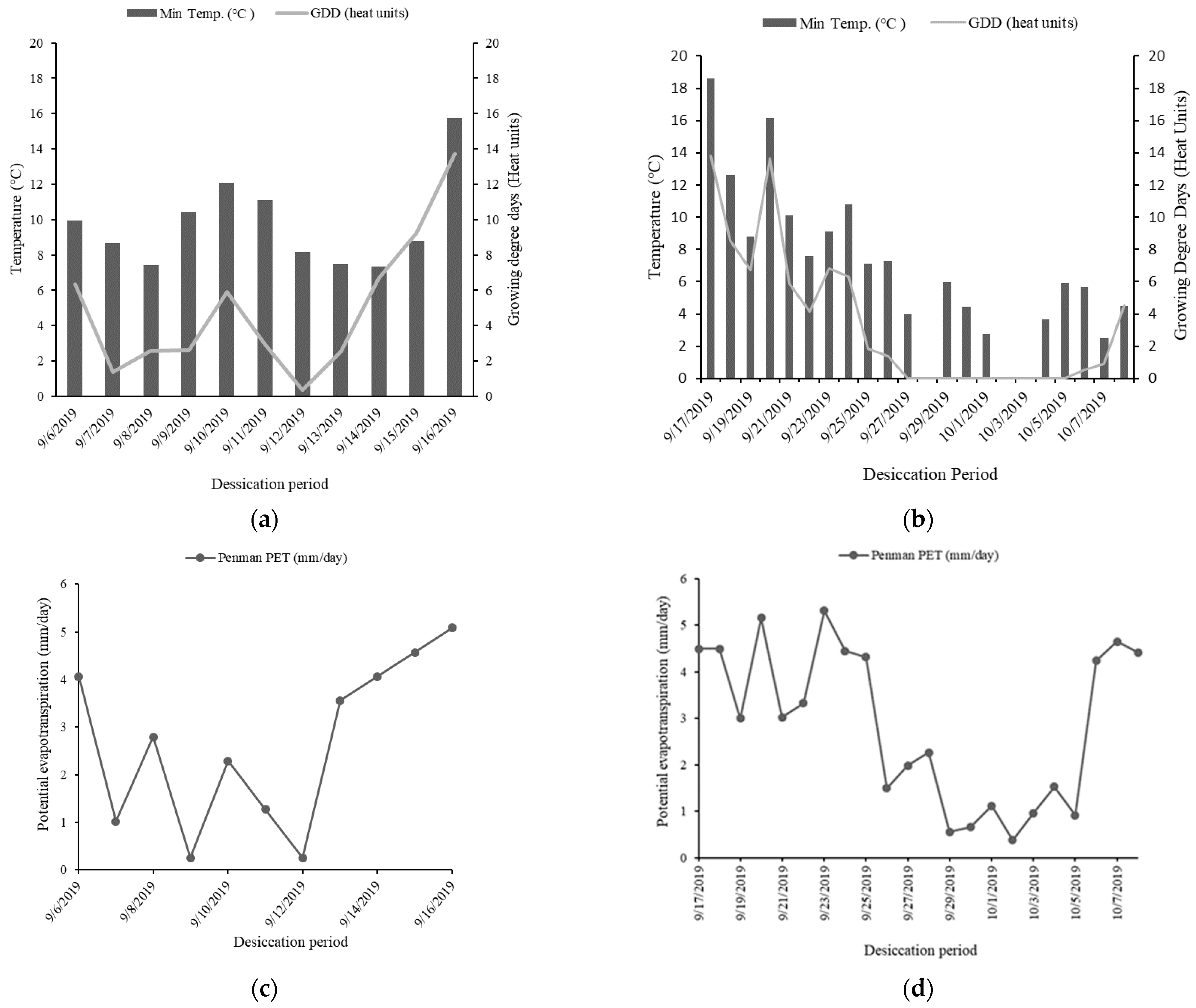
As the two plots had different planting and desiccation dates, it is important to look at the weather conditions after desiccation and throughout the drying period. Therefore, Figure 1 shows the air temperature patterns during the drying periods. Throughout the field desiccation and dry-down period, the lowest recorded temperature in Plot 1 was 7.3 °C, which is still above the freezing point of 0 °C when frost occurs. However, a temperature of 0 °C (depicting an early frost) occurred in Plot 2 first on September 28, and then on October 2 and 3. Weather variations can greatly influence the rate of reproductive development and harvest dry-down based on the planting date. Field-drying conditions of crops are largely driven by the principal weather conditions of solar radiation, air temperature, air humidity, and wind speed [22,23,24].
After the initial frost, temperatures were in the low range, between 3 and 6 °C, until the time of harvest. Due to the frost occurrence, the time to harvest maturity for Plot 1 was 10 days while Plot 2 took about 21 days (Figure 1a,b). This is likely due to the increase in cooler temperatures as the fall season progressed in Plot 2, thereby delaying harvest maturity and dry-down, in contrast with Plot 1 where the harvest was done before the frost. Growing degree days were also above 0 heat units (HUs) daily throughout dry-down in Plot 1 (Figure 1a). However, in Plot 2 heat units remained at 0 between the period of September 27 and October 5 (Figure 1a). At zero heat units, crop development and dry-down do not occur or progress as expected, thereby delaying physiological or harvest maturity. Potential evapotranspiration (PET) daily values in Plot 1 were mostly above 0.05 in (1.27 mm), except for a deviation recorded for a small number of days (Figure 1c). However, in Plot 2, PET values (<0.05 in (1.27 mm)) were recorded for a longer period between September 29 and October 5. (Figure 1d).
Low PET values during field drying can affect the rate of crop moisture loss, thereby affecting harvest moisture content and seed quality. Higher PET values all through the dry-down likely aided the moisture loss during field drying in Plot 1 (Figure 1c) which did not occur in Plot 2 (Figure 1d). PET is considered to be more dependable than GDD in the prediction of field-drying rate. This is because it accounts for the field drying that takes place even when GDD values are zero. In summary, weather patterns and data varied between the plots after desiccation and during dry-down. The variation in the weather pattern impacted the quality (color and chlorophyll content) of field-dried desiccated seeds from both Plot 1 and Plot 2. The quality was compared with the fully mature R8 sourced from the commercial elevator. The effects of weather on desiccated soybeans (R6 and R7) and on the R8 control in Plot 2 were also studied.

3.2. Effect of Field Drying on Moisture, Color, and Chlorophyll Contents

Weather conditions during the drying period following a killing frost can influence the color and quality of harvested seeds. Seed color during the soybean reproductive stages and dry-down were measured using the Hunter color L a b value system. Each of the color values can be used individually or in combination to determine the color change in the seeds. Comparisons of the moisture content, color, and chlorophyll content of field-dried soybeans desiccated at the R6 maturity stage between Plot 1 and Plot 2 in CREC are shown in Table 2. The initial moisture content of seeds before desiccation from Plot 1 and 2 was >60% w.b. After desiccation and field drying, the seed moisture content decreased by almost 70% in both plots. Additionally, a change in color values (L a b) was observed before and after desiccation and field drying at the R6 growth stage for both plots. High negative color “a” values of −9.7 and −8.9 were recorded at the R6 growth stage before desiccation in Plots 1 and 2, respectively. This color reading revealed the deep green tone color of the soybeans. After desiccation, the color “a” value increased considerably, which indicates the fading of the green color after field drying in both plots. The values were not negative which indicates that there was no green color on the harvested seeds. A higher negative Hunter color a value indicates a higher intensity of the green color, while a positive value illustrates the fading away of the green color. The color a value, due to its ease of measurement, is referred to as a suitable means for grading purposes in soybean seed classification [9].
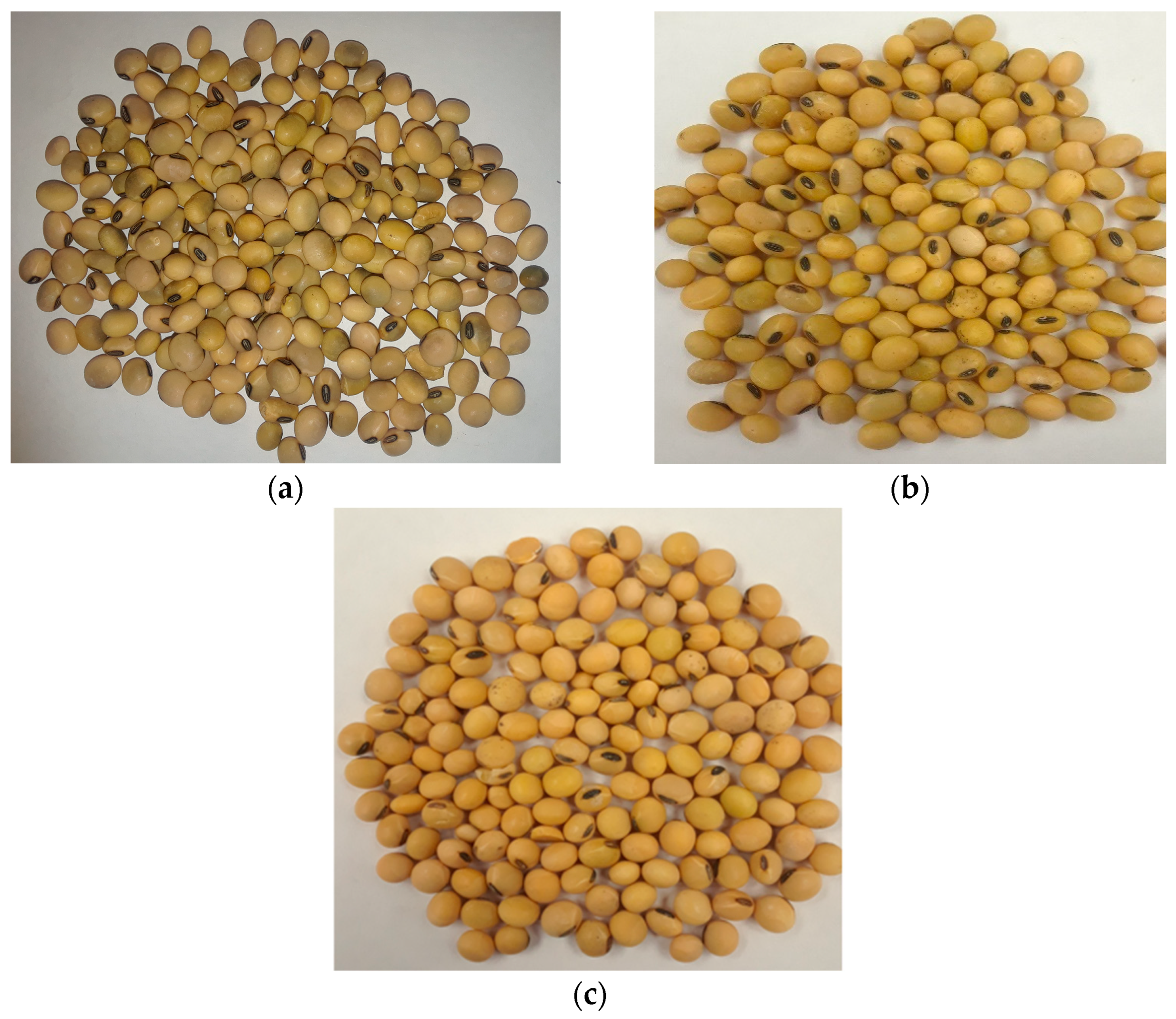
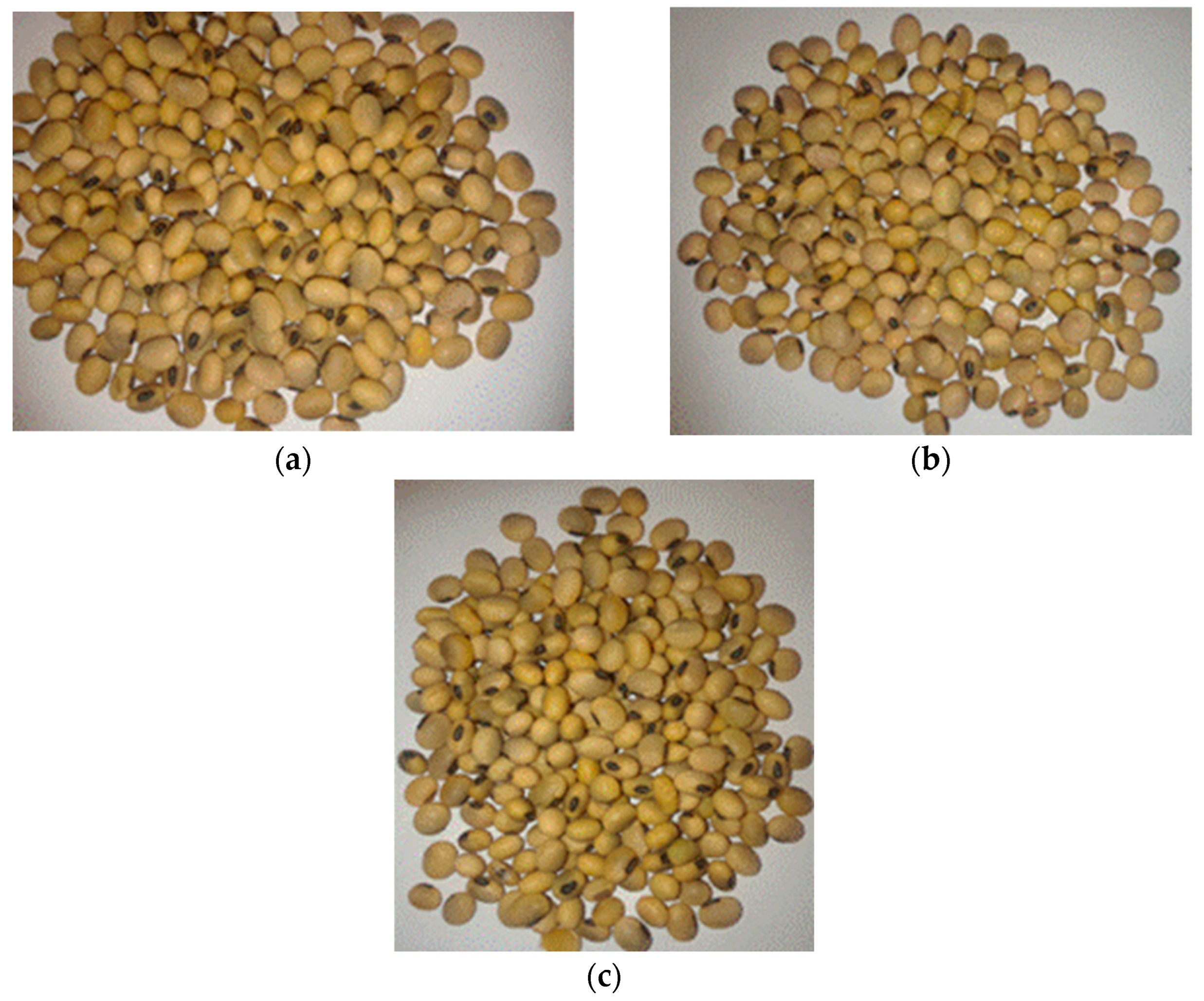
Color “b” values increased after desiccation from (+1.58 to 18.12) in Plot 1 and (−1.84 to 15.30) in Plot 2, indicating some possible yellowing to the seeds during dry-down. The color of the R6 desiccated seeds after field drying in Plot 1 was bright yellow and remarkably close to that of the R8 mature commercial elevator control. This closeness in the color observed was reflected in the close “b” values of 18.12 and 18.93 for Plot 1 and the commercial control, respectively (Figure 2a,c). On the contrary, the color of R6 desiccated seeds field-dried in Plot 2, despite the fading of the green color and also high “b” values of 15.30, still had a slight external brownish-green tone to the seed coat (Figure 2b), which was different when compared with the seeds from Plot 1 and the commercial soybeans (fully mature) (Figure 2a,c). This difference observed in the color of R6 desiccated soybeans between plots could be attributed to the difference in field-drying conditions after desiccation.
A favorable field drying condition after desiccation in Plot 1 helped in the maturity of the R6 seeds. This resulted in the bright yellow mature color observed during harvest. The higher heat crop units (GDDs) recorded in Plot 1 compared with Plot 2 after desiccation increased the rate of moisture loss in the seed. Additionally, there was no frost occurrence in Plot 1, which made the R6 mature faster in 10 days (Figure 1a,c). Generally, warmer air temperatures and clear and sunny skies contributed to the bright yellow mature color of the R6 desiccated seeds from Plot 1. Though relatively warmer temperatures were recorded during the first ten days after desiccation, the probable effect of the prolonged cold between September 28 to October 5 affected the seed coat color. The brownish seed coat color in Figure 2a may be due to frost damage.
It was important to measure the chlorophyll content as there was a slight green seed color observed in the seed from Plot 2. According to Pádua et al. [25], chlorophyll retention in harvested soybean seeds is likely due to unfavorable weather conditions during the final seed maturation process. The chlorophyll contents of R6 desiccated seeds from Plot 1 and Plot 2 were 2.6 mg kg−1 and 1.4 mg kg−1, respectively. Despite the slight green color of R6 desiccated seeds from Plot 2, the chlorophyll content was only 1.2 mg kg−1 higher than that from Plot 2. This confirms that there was very little chlorophyll retention inside the seeds after field drying. However, the process of degradation was not fully completed before the first frost occurrence after the 10th day of field drying. This caused the slight external green tone color observed on the seed coat, which was absent in the inner cotyledon.
A previous experiment has indicated that harvested soybeans meet the required quality when allowed to dry-down on the field after a fall freeze at the R6 growth stage [26]. This finding supports the results of the field-dried desiccated R6 soybeans in Plot 1, where there was no green tone (yellow color) as seen in Figure 2b. Other studies have also indicated that improvement in the grain quality of harvested soybeans was observed due to early planting around mid to late May [3,7,27]. Similarly, in our study, where plot 1 was planted early, a fall freeze (mimicked via desiccation) at the R6 reproductive stage will have a minimal negative impact on seed color and quality as long as the weather conditions are favorable during the dry-down.
Subsequently, a visual comparison was made on the effect of field drying on desiccated R6 and R7 soybean, and R8 (frozen) in Plot 2. The R8 soybean was not desiccated because it was intended to be the control for Plot 2. Similar color values existed for soybeans from Plot 2 on desiccated R6 and R7 seeds and the R8 (frozen) soybean after dry-down (Figure 3). Before desiccation, seed initial color “a” value at R6 and R7 in Table 2 was high at −8.9 and −2.5. R7 seeds before desiccation had a lower color “a” value, indicating less green color in comparison to R6. At harvest, after field drying, both R6 and R7 color “a” values had increased to +1.90 and +0.80, respectively, revealing some form of fading in the green color. Additionally, the color “b” values that show the level of yellowness to a sample had increased from −1.8 to 15.3 for R6, and from 21.6 to 16.1 for R7 after field drying.
The R8 (frozen) soybean from Plot 2 also had a high color “a” value of +1.2 and a “b” value of 15.7 after field drying. When R8 (fully mature), from a commercial elevator color with a “b” value of 18.9 and a bright yellow color (Figure 2c), was compared with the “b” values of the R6 desiccated (15.3), R7 desiccated (16.1) and R8 (frozen) (15.7) soybeans from Plot 2, lower “b” values were observed in Plot 2, indicating minimal yellowing. Instead, a light brownish-green tone existed in the seed coat at the three maturity stages, which likely was a result of the weather patterns after desiccation. Irrespective of the desiccation at the R6 and R7 maturity growth stage, the physical color of soybeans looked the same after field drying (Figure 3). Ref. [28] found that, when soybean death occurred in late seed filling (R5 through R7), the green color was confined to the outer seed coat and not the seed interior [28]. Initial weather conditions for the first 10 days of field drying were favorable with warm temperatures and solar radiation. However, conditions like very low temperatures, snow, and rainfall with poor solar radiation subsequently affected the final color of the field-dried seeds. Morrison et al. [29] reported greater pigmentation of “Maple Presto” soybean due to accumulated chilling degree days at less than 15 °C, affecting the seed coat color. Much of the green seed color may have faded inside the seed cotyledon during the early days of the field drying as higher GDD accumulation and PET was recorded. However, the final bleaching process in the seed maturation process may have been affected during the latter days of field drying, when there were unfavorable conditions with very low GDDs and very low PET rates (Figure 1c,d). According to Wiebold [30], GDD was one of the important factors related to crop growth and maturation as observed in our weather data.
Green seed color in soybeans is greatly associated with chlorophyll levels, therefore the chlorophyll contents of the seeds were measured after field drying. The chlorophyll levels were very low at 1.3, 1.2, and 0.9 mg kg−1 for the R6 desiccated, R7 desiccated, and R8 (frozen) respectively, despite the light green external seed coat to the seeds (Table 2). The low content signifies little to no chlorophyll in the field-dried seeds as they were within the internationally acceptable limits. Chlorophyll degradation in soybean seeds is dependent on partial sunlight bleaching and a natural metabolism process [28]. It may be that the final natural metabolism was stalled due to the inactivation of the chlorophyllase enzyme during the freezing temperatures, thereby retaining the light green color in the seed coat [31]. While certain studies report green tone and high chlorophyll content for freeze-damaged soybeans, the soybean maturity stage at the time of the freeze and weather conditions afterward greatly influence the seed color and quality outcome at harvest [32]. Much of the chlorophyll degradation could have occurred before the wet and freezing conditions. Under favorable weather conditions, leaving the soybeans longer in the field may have led to the complete fading away of the green color. However, temperature decreases as the fall season progresses, and leaving the seeds in the field longer might expose them to more unfavorable weather conditions that impact the overall quality. In summary, weather conditions after desiccation or frost influence the color of soybeans. In addition, if frost occurs during the R6 maturity stage followed by favorable weather conditions during dry-down, the harvested soybeans may still have some green tone to them, but their chlorophyll levels will be low.

3.3. Effect of Storage Conditions on Seed Color, Oil Quality, and Fungal Count

3.3.1. Color Analysis

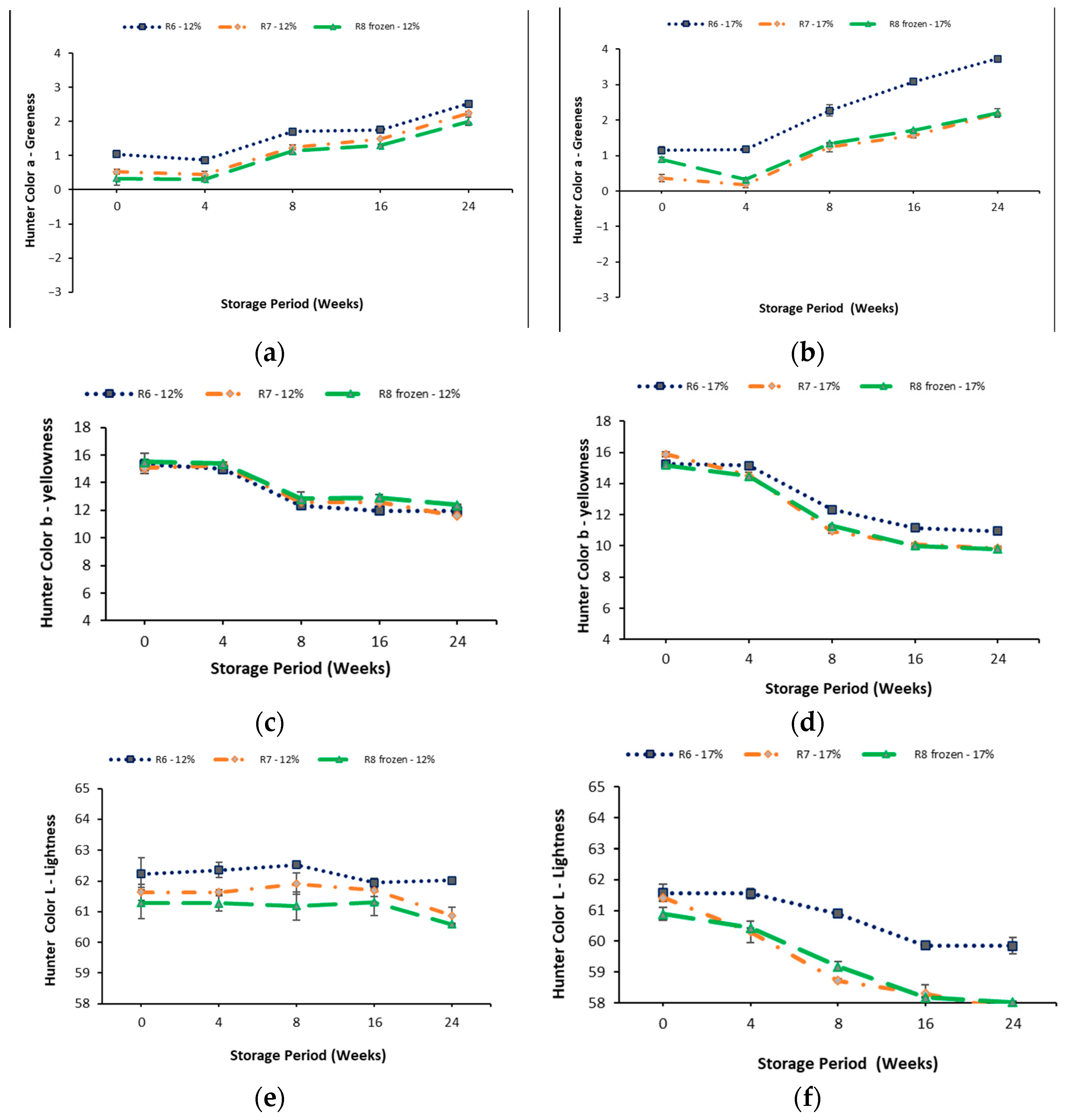
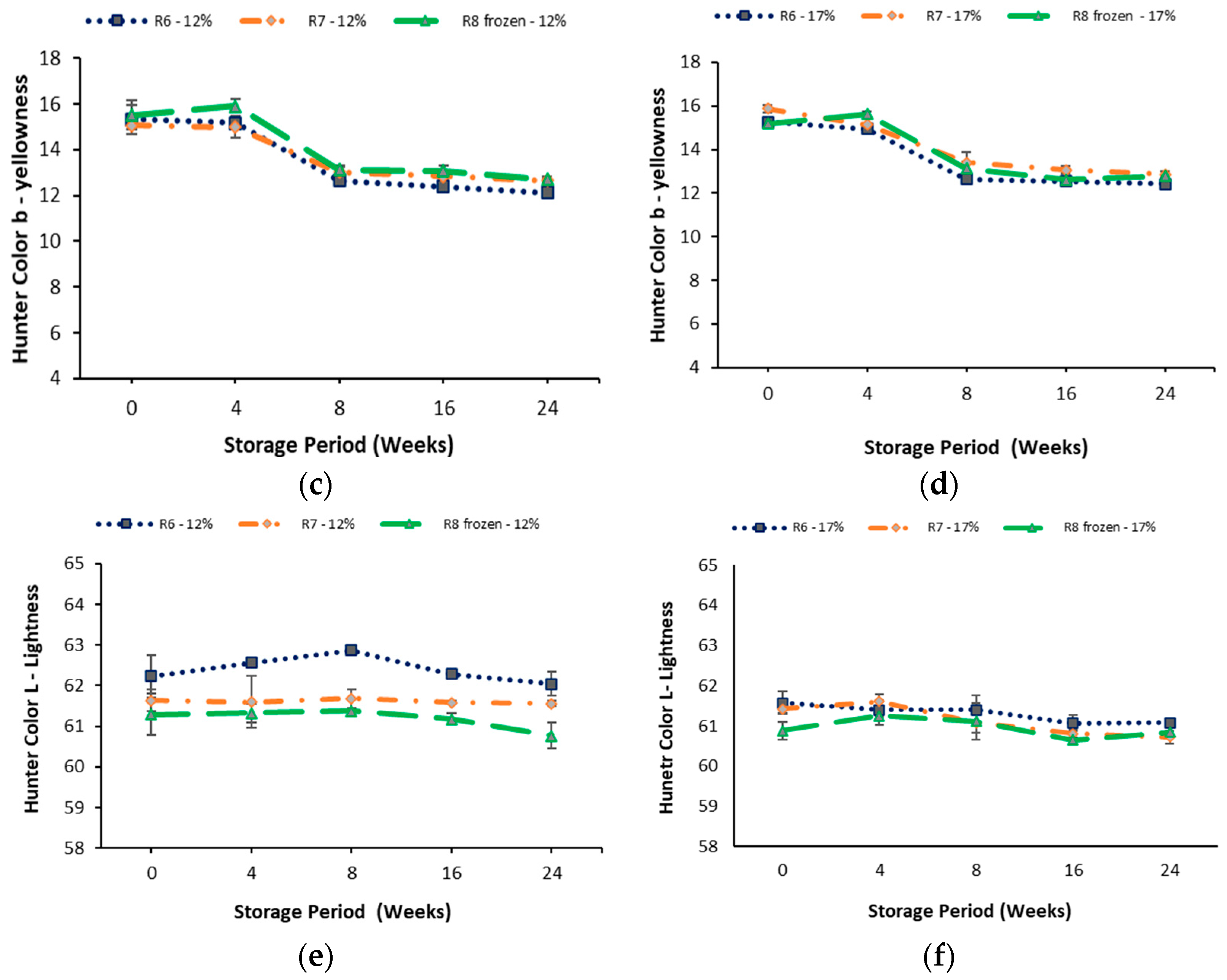
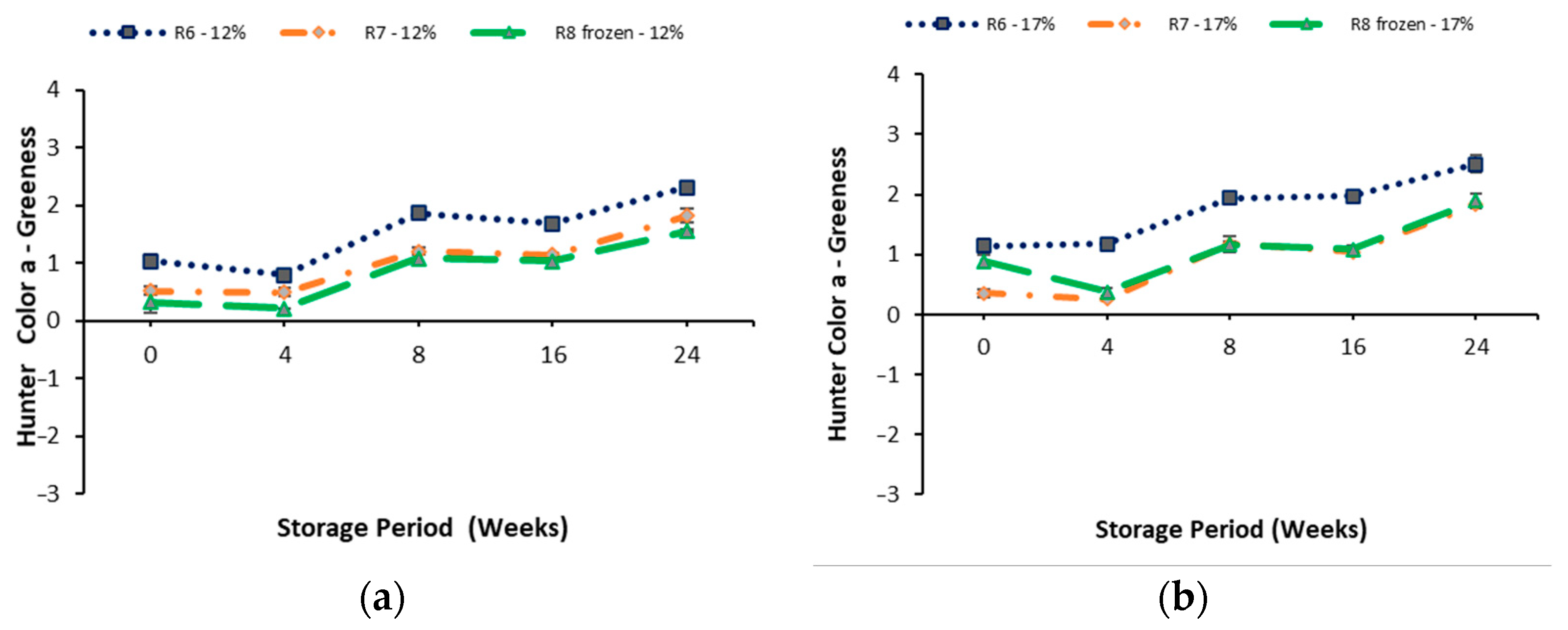
The seed coat color of mature soybeans is an important factor in evaluating their physical quality and market value. Ajayi-Banji et al. [21] explained that the storage of green (R6 maturity stage) and semi-green (R7 maturity stage) soybeans under favorable light conditions increased the color a value. This increase was seen by the fading away of the green color of the seed. There was some level of color change that was already observed during field drying, but the focus was on the effect of storage conditions on the seed color L a b values as shown in Figure 4 and Figure 5. Statistical analysis showed that all four independent variables (maturity stage, storage temperature, moisture content, and storage period) had a significant effect (p < 0.05) on the color L a b value of the stored soybeans.
The color “a” values, which indicate green (−) and red (+), were +1.95, +0.81, and +1.22 for the field-dried desiccated R6 and R7 and the R8 (frozen), respectively (Table 2). This indicates that there was considerable fading of the green color of the seeds during drying as the values change from negative (green) to positive (red). Though there was no physical observation of red from the positive values, a slight brownish seed coat was observed (Figure 3), which usually falls on the red side of the “a” scale. During storage, the color “a” values continued to increase from week 4 irrespective of the storage temperatures (4 and 22.5 °C) and moisture contents (12% and 17%) as shown in the respective Figure 4a,b and Figure 5a,b. For samples at 4 °C, the final “a” values in week 24 were +2.41, +1.83, and +1.73 for R6 desiccated, R7 desiccated, and R8 (frozen), respectively. Meanwhile, for samples at room temperature, the values were +3.13, +2.19, and +2.20 for R6 desiccated, R7 desiccated, and R8 (frozen), respectively. These “a” values were lower than those of the commercial fully mature R8 “a” values at +2.9 ± 0.16, except for field-dried R6 desiccated stored at room temperature, with +3.13. The increase in the color “a” value for sample seeds at 17% moisture during storage was likely due to the presence of molds on the seeds, which gives them a brownish tone. Although some color change in the “a” value was observed during storage, field-drying conditions after desiccation had a more pronounced effect on the seed color despite the weather conditions observed during dry-down on Plot 2. Using the color “a” value of an R8 fully mature soybean from the commercial elevator as a baseline for comparison, over 90% of the fading of the green color was because of field drying, while less than 10% was due to storage for the R6 desiccated seeds. For the R7 desiccated, approximately 65% of the fading was due to field drying, while 20% of the fading was as a result of storage. Finally, as the R8 (frozen) was not desiccated, 41% of the color “a” value was attributed to field drying when compared with the mature R8 (elevator). Only 25% of the color “a” value change was due to storage. In summary, field drying plays a major role in the fading away of the green color of soybeans after frost.
Color “b” values show a slight decrease across all the storage environments, as seen from Figure 4c,d and Figure 5c,d. However, the values (between 12 and 16) remained positive on the “b” scale, which indicates that the seeds were still yellow at the end of storage. This decrease in color “b” was likely due to the darkening of the seeds at the end of storage. Color “L” values remained relatively constant across all storage environments, except for a decrease from 61.7 to 58.0 observed in 17% moisture content samples stored at room temperature (Figure 5b). In summary, the fading of the light brownish-green color and the seed coat lightening were observed at the end of the storage period. Yellowing of seeds will likely not typically occur in storage because of the lack of solar radiation that facilitates the complete color change of mature yellow/tan soybeans [9]. Hence, the possible results to expect in storage will be an increase in the fading of the green soybeans, reflected in seed coat lightening that is seen in the “L” scale. For the field-dried desiccated soybeans stored at (4 °C) and (22.5 °C), at the end of the 24th week of storage, the seed coats were observed to lighten due to the fading for all of the reproductive stages, including the R8 (frozen), irrespective of moisture content levels. A significant color change was reported for green and semi-green soybean seeds in the sixth week of storage under a fluorescent light, and the values in the L a b scales were similar to a fully matured soybean seed [21]. However, in this particular study, the effect of field drying possibly accounts for most of the color change observed in the seeds before storage. Nevertheless, storage conditions had a significant effect (p < 0.05) on the color “L”, “a” and “b” values of the stored seeds as discussed above.

3.3.2. Chlorophyll Content of Stored Seeds

The level of chlorophyll in soybeans is an essential factor that determines their maturity level. The chlorophyll pigmentation in harvested soybean seeds is highly influenced by weather conditions during maturation and dry-down [9]. A close relationship has been reported with soybean seed color, chlorophyll content, and extracted oil color. Chlorophyll contents of field-dried desiccated R6 and R7 seeds and R8 (frozen) from Plot 2 were at 1.3 mg kg−1, 1.2 mg kg−1, and 0.9 mg kg−1 of oil, respectively. These values were very low and within the chlorophyll content of 0.5–1.3 mg kg−1 reported for mature top-grade soybeans in Western and Eastern Canada [33].
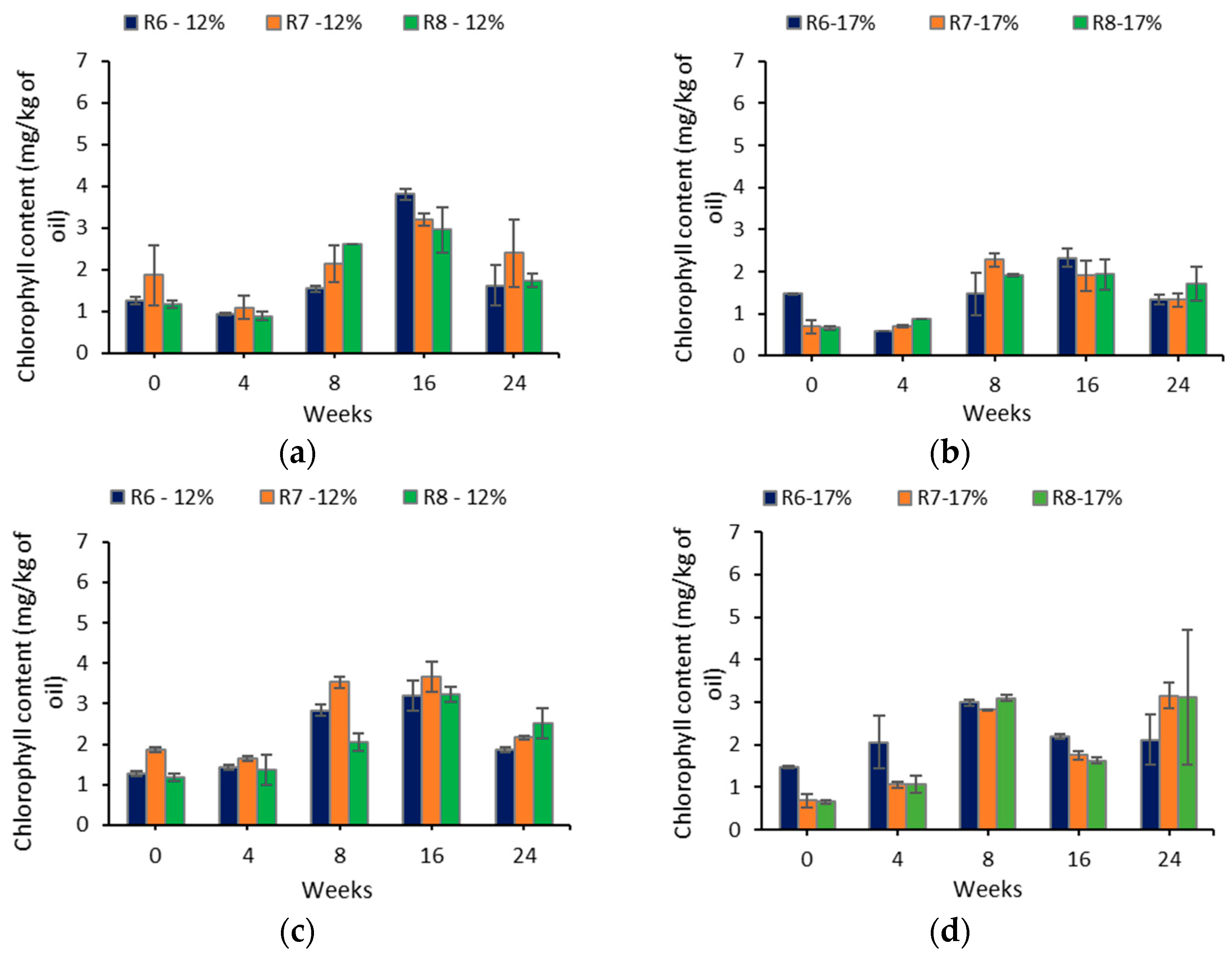
Some low-grade soybeans have a high chlorophyll content of about 8.8 mg kg−1 of oil. Though the seed coat of the seeds at the three maturity stages had a slight external brownish-green tone to it, it did not reflect in the chlorophyll content of the oil. This likely means that chlorophyll degradation in the seed was already near completion at the time of harvest. Despite the unfavorably low temperatures and the rain and snow during some periods of field drying, the chlorophyll content of the seeds was still low. During storage, irrespective of the conditions, the chlorophyll content levels remained relatively constant and were within the recommended limits for top-grade soybeans (Figure 6). The increase displayed on the chart for some of the bars was attributed more to measurement errors, which can be seen in the standard deviation. Green seeds containing some levels of chlorophyll content when extracted for oil usually have a green pigmentation or color to them.
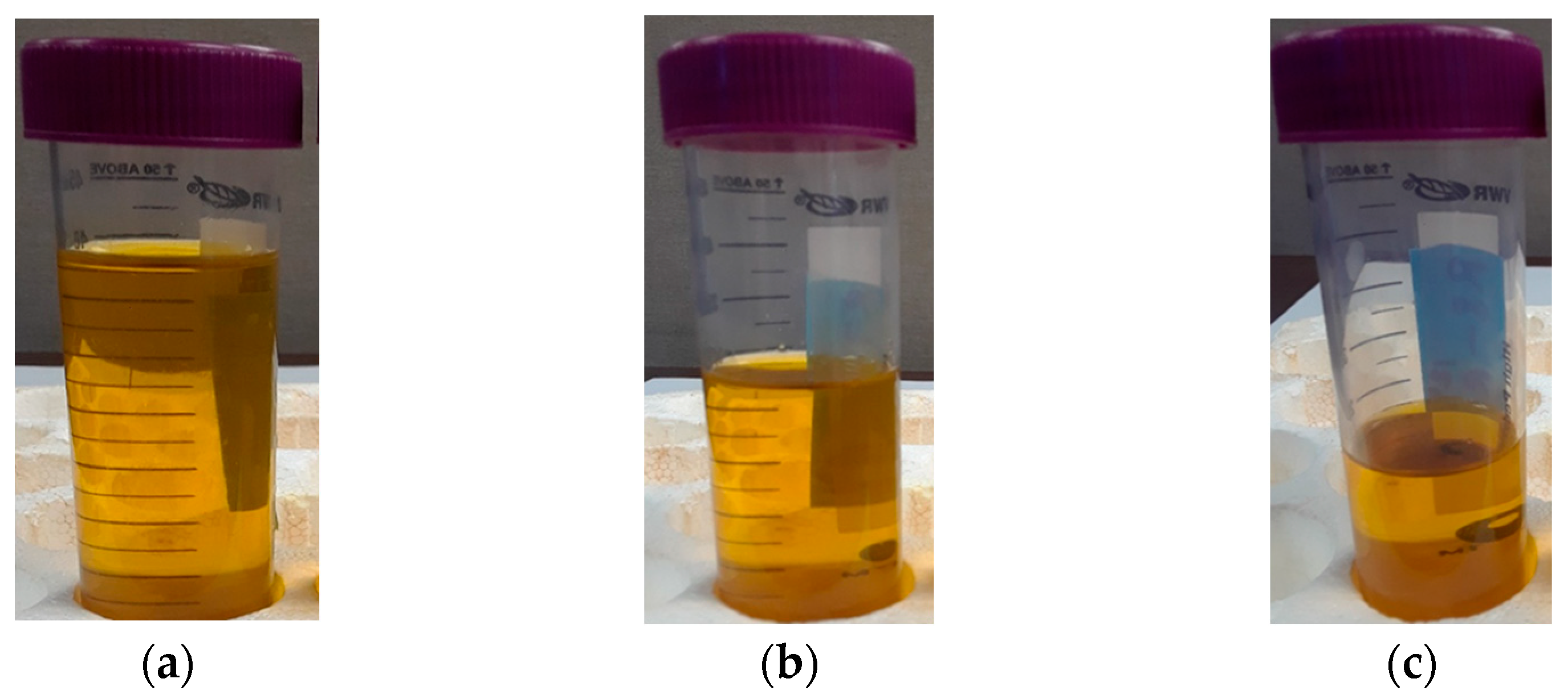
After field drying, extraction of oil was conducted before storage on the desiccated R6 and R7 seeds, as well as the R8 (frozen). Interestingly, the oil from the seeds had a golden yellow color like that of mature soybean with no green tone to it, further confirming the low chlorophyll levels recorded for the field-dried desiccated and frozen soybeans (Figure 7). This contradicts the finding by [32,34,35] that reported the presence of very green oil from killed soybeans at different maturity stages by paraquat and freeze damage. The absence of field dry-down in their study could be the reason for the deep green tone of the oil. The research of the previous year showed a similar condition of green oil for harvested soybeans at the R6 and R7 maturity stages. According to Daun [36], considerable amounts of chlorophyll are left in seed during maturation when harvested into a cool fall or winter season. However, from this study, it was observed that the variation in the weather conditions during dry-down after a killing frost will determine the color, amount of chlorophyll levels, and oil color of the seeds at harvest and in storage. The presence of green seeds greater than 10% could result in the lowest US sample grade, causing great financial losses. This price sanction is related to challenges and extra costs oil processors encounter in processing and refining oil with high chlorophyll content.

3.3.3. Oil Quality

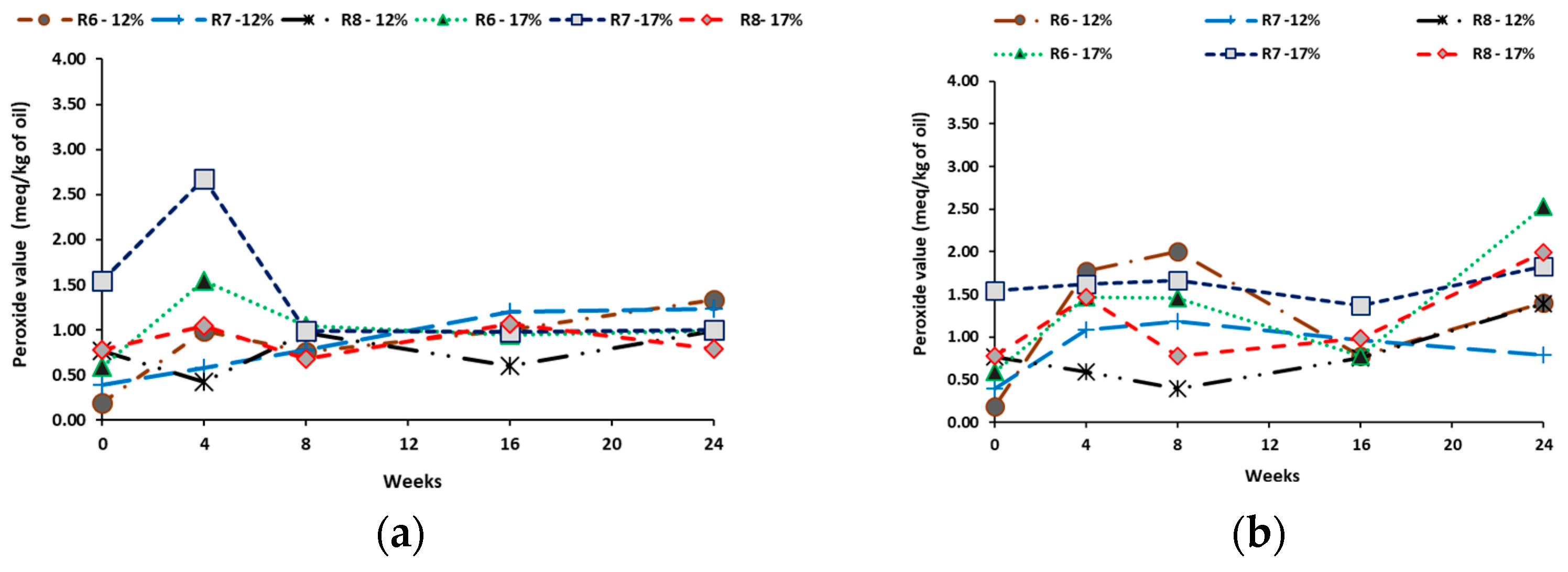
Peroxide value is one of the important indicators of oil quality. High peroxide values beyond recommended acceptable limits indicate oil deterioration due to oxidation; hence, the need to evaluate the quality of the oil from the stored seeds. The peroxide value of the field-dried and desiccated R6 and R7, and R8 (frozen) soybeans stored at 4 °C (cold room) was very low throughout the storage period (Figure 8a). R6 and R7 desiccated seeds at 17% moisture content showed a slight increase in peroxide value in the fourth week but remained within standard acceptable limits. For samples stored at room temperature (22.5 °C), peroxide value followed a similar trend to the cold room samples, even for 17% moisture content soybeans (Figure 8b). Considering little to no microbial contamination, low peroxide values of 12% soybeans at this temperature were expected.
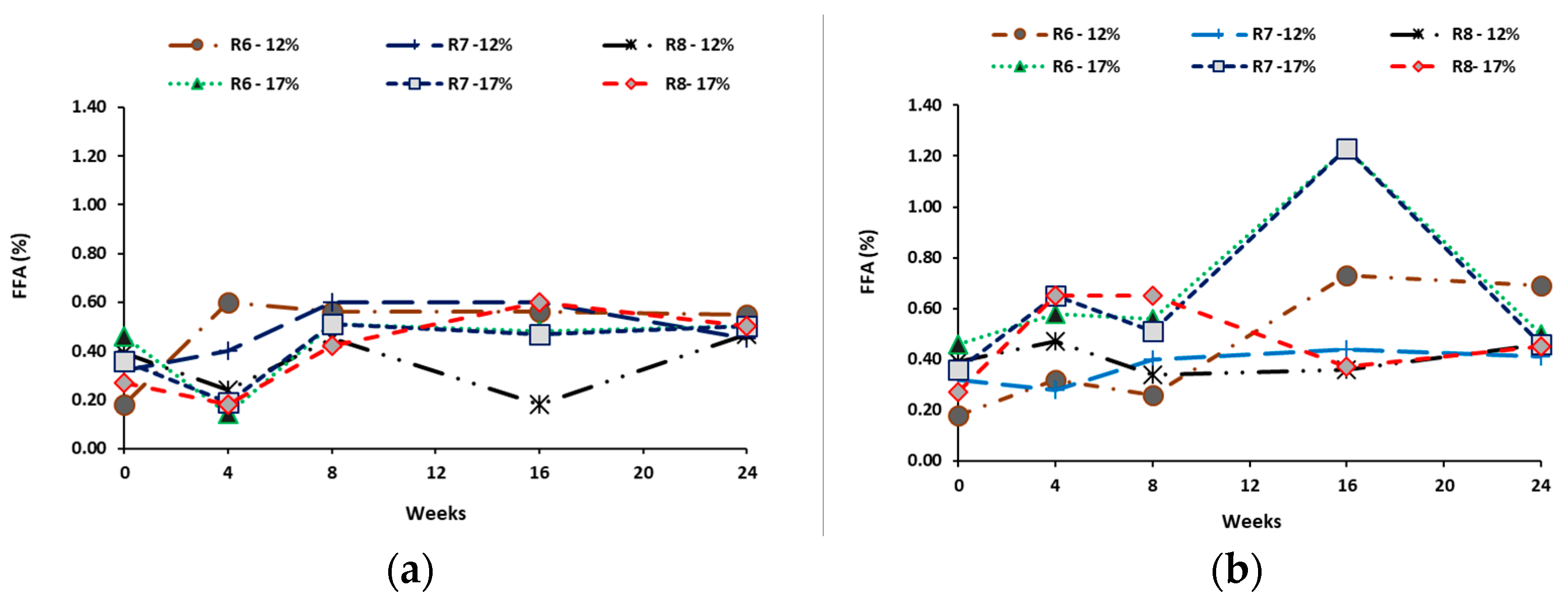
Free fatty acid content of oil from stored seeds at both storage temperatures was relatively low (Figure 9). However, only high-moisture-content (17%) R6 and R7 desiccated soybean samples at room temperature (22.5 °C) recorded higher FFA content at the 16th week of storage (Figure 9b). This could be due to the presence of microbial load on the seeds. At the end of the storage period, the values had dropped below the acceptable limit of 0.75%. Dorworth and Christensen [37] reported that, in the FFA analysis of high moisture content soybeans and wheat heavily infested by storage fungi, FFA values did not necessarily increase throughout storage. They stated that the increase in FFA values may possibly be dependent on the fungal species type. Urbanski et al. [32] also reported very low FFA values for sound soybeans after 14 months of storage.

3.3.4. Fungal Enumeration of Stored Seeds

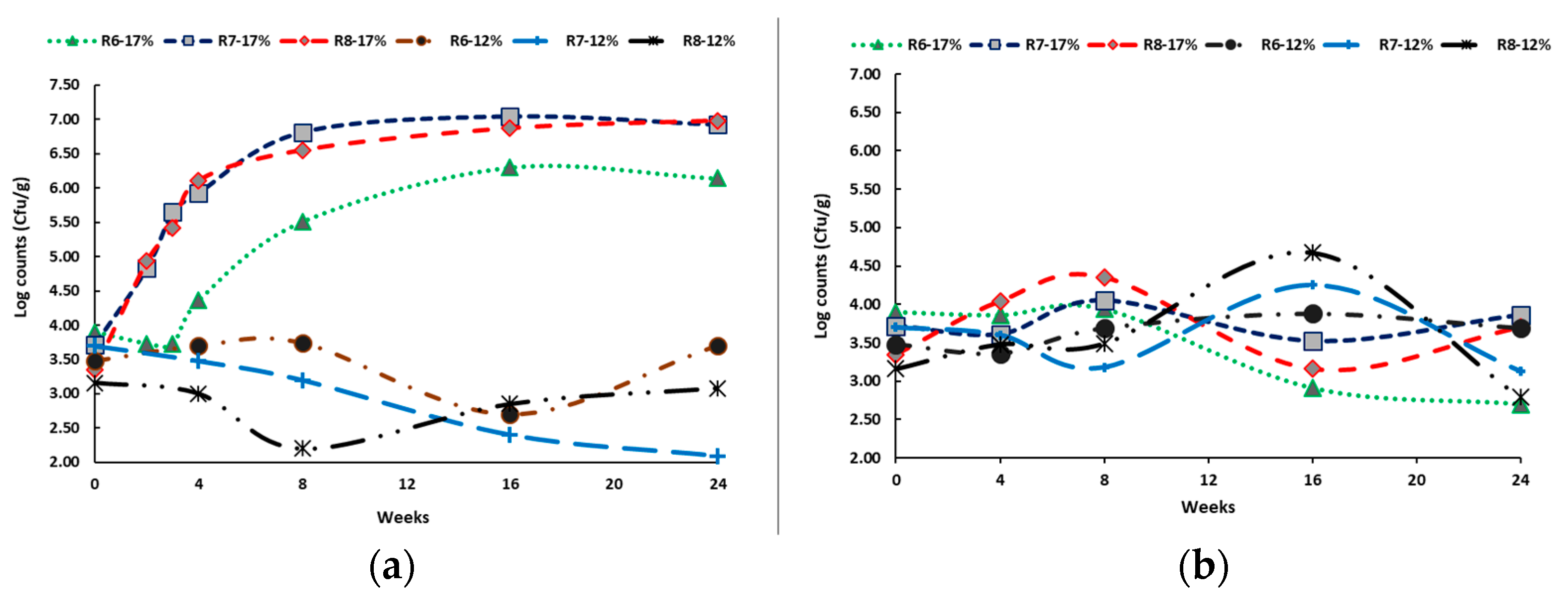
One of the major indicators of grain spoilage is the presence of mold. The moisture content of stored seeds, the temperature of storage, and the relative humidity of the storage environment determine the rate at which deterioration occurs. Mold development for 12% and 17% moisture soybean was minimal in seeds stored at 4 °C and in 12% seeds stored at 22.5 °C, while extensive mold growth occurred for the 17% moisture content samples at 22.5 °C (Figure 10). There was an increase in the mold growth of the high moisture content (17%) desiccated R6 and R7 and the R8 (frozen) soybeans stored at 22.5 °C (Figure 10b). Exponential growth was recorded between the first eight weeks of storage, reflecting significant mold invasion. For the 17% seeds at 22.5 °C, mold development was observed as early as the second week of storage on the stored soybeans. The total mold count was between 5.20 and 6.70 CFU/g during the first eight weeks of storage alone, showing an exponential increase in mold count. Maximum log counts of 6.14, 6.92, and 6.98 log CFU/g were recorded in the 16th week of storage. R6 desiccated soybeans, however, had lower log counts in comparison to R7 desiccated and the R8 (frozen). This variation could be due to the composition of the desiccated R6 seeds at the time it was killed, possibly suggesting a deficit in certain compositional characteristics before complete dry matter accumulation. Carbohydrates are the primary compound consumed during respiration in grass/plants, though proteins and fats are consumed when they are not readily available. Mold development was faster, leading to quicker deterioration of the stored seeds at room temperature on the high-moisture soybean.
The summarized ANOVA in Table 3 shows that moisture content and storage temperature were the main factors influencing mold growth, with both factors showing a strong p-value < 0.001. Importantly, the interaction between moisture and temperature also shows that the influence of moisture level on mold growth also depends on the storage temperature. There was no significant 3- or 4-way interactions, which shows that moisture and temperature do not cause changes in mold amount in combination with the other factors. This may be due to the level of the different factors. For the low moisture content soybean samples (12%), the mold count remained relatively stable over the 24 weeks of storage at room temperature (22.5 °C) for all of the maturity stages, including the control. This could be a result of the inactivity of the microorganisms under room temperature conditions due to low moisture. Shafiekhani et al. [38] have also reported that mold count was stable in stored rice for low moisture samples (<17%) over 16 weeks. Low mold counts were observed for soybean samples (12% and 17%) stored in the cold room at 4 °C over the twenty-four weeks of storage. While the values were low, a fluctuating pattern was observed with values in the range of 2.5–4.6 log CFU/g throughout the storage period (Figure 10a). During the seed sampling, little to no mold was observed on the stored seeds at this temperature irrespective of the maturity stage. The quality of the seeds stored under the cold room condition was relatively maintained till the end of the storage period. It is interesting to note that, at eight weeks, seeds at 17% moisture stored at cold room temperature showed minimal mold development, while at room temperature showed high mold development. In addition, 17% moisture seeds stored under cold temperature conditions also showed that the quality of seeds was better maintained after eight weeks. Therefore, it may be deduced that a lower moisture content of 12% is favorable for maintaining the quality of stored soybeans when stored either under cold or room temperature conditions over twenty-four weeks.

4. Conclusions

This study has shown that weather conditions after a frost play a significant role in the color change and quality of harvested soybeans. The color of green and semi-green soybeans will significantly change during field drying even during poor weather conditions (below freezing and cloudy days). The desiccated R6 and R7 seeds harvested from the field under these weather conditions had green color on the seed’s external coat, but the green color was not present in the inner seed cotyledon. This finding was supported by the low chlorophyll content where the oil was less than 4 mg/kg. Additionally, the “a” values after field drying were not negative, which indicates that there was no green color. During 24 week storage, minimal changes were observed in the color value of the seeds, as the change during field drying was likely sufficient. The oil quality during storage was stable irrespective of the storage temperature for samples at 12% moisture content. However, the FFA and PV slightly increased for samples at 17% moisture stored in room temperature. This observation was similar to fungal enumeration, where the fungal growth doubled after 8 weeks of storage at 17% moisture content at room temperature. Based on the results from this study, it is recommended to leave the soybean in the field after a frost to allow field drying to occur. In case the soybean needs to be harvested quickly, or the weather post-frost is not favorable, leaving the seeds in storage between 4–6 months will help with color change.
As the study is conducted in a single growing season, in one location, and using a single variety and maturity group, it is recommended to repeat this study with different varieties and maturity stages and locations. This study will provide a baseline on how to design the experiment. It is also important to research the biochemical and enzymatic mechanism occurring within the soybean during these changes. This will help explain the color or chlorophyll changes occurring from the seed coat to the inner cotyledon.

Author Contributions

I.A.-B.: Methodology, formal analysis, resources and material preparation, data curation, writing—original draft, writing—review and editing. K.H.: Conceptualization, methodology, funding acquisition, supervision, project administration, reviewing and discussion. E.M.: Conceptualization, methodology, project administration, supervision, writing—review and editing. J.T.: Methodology, resources, writing—review and editing. S.Y.: Methodology, resources. All authors have read and agreed to the published version of the manuscript.

Funding

This research was funded by the North Dakota Soybean Council, North Dakota Agricultural Experimental Station, USDA-NIFA Hatch Multi-State Project Number ND01489.

Institutional Review Board Statement

Not applicable.

Informed Consent Statement

Not applicable.

Data Availability Statement

The data used are contained within the article.

Acknowledgments

The authors would like to acknowledge the North Dakota Soybean Council for their funding support. Special thanks to our undergraduate research assistant, Christine Kailee, for helping during the lab analysis.

Conflicts of Interest

The authors declare no conflicts of interest.

References

  1. Foreign Agricultural Service USDA. U.S. Agricultural Export Yearbook. 2022. Available online: https://www.fas.usda.gov/sites/default/files/2023-05/2022-Yearbook_0.pdf (accessed on 2 May 2023).
  2. USDA-NASS. State Agriculture Review: North Dakota. USDA National Agricultural Statistics Service. 2025. Available online: https://www.nass.usda.gov/Quick_Stats/Ag_Overview/stateOverview.php?state=NORTH%20DAKOTA (accessed on 31 January 2026).
  3. Cianzio, S.R.d.; Schroder, E.C.; Ramirez, C.T. Response of soybeans of different maturity groups to sowing date in tropical locations in Puerto Rico. Trop. Agric. 1991, 68, 306–312. [Google Scholar]
  4. Rahman, M.M.; Hampton, J.G.; Hill, M.J. Soybean Seed Yield as Affected by Time of Sowing in a Cool Temperate Environment. J. New Seeds 2005, 7, 1–15. [Google Scholar] [CrossRef] [Scilit]
  5. Hu, M.; Wiatrak, P. Effect of Planting Date on Soybean Growth, Yield, and Grain Quality: Review. Agron. J. 2012, 104, 785–790. [Google Scholar] [CrossRef] [Scilit]
  6. Specht, J.; Rees, J.; Nygren, A. Understanding Ending Reproductive Stages in Soybean. Cropwatch 2021. Available online: https://cropwatch.unl.edu/2021/understanding-ending-reproductive-stages-soybean/ (accessed on 3 May 2023).
  7. MacMillan, K.P.; Gulden, R.H. Effect of seeding date, environment and cultivar on soybean seed yield, yield components, and seed quality in the Northern Great Plains. Agron. J. 2020, 112, 1666–1678. [Google Scholar] [CrossRef] [Scilit]
  8. Maier, D.E.; Parsons, S.D. Harvesting, Drying, and Storing Frost-Damaged Corn Andsoybeans; Purdue University Extension: West Lafayette, IN, USA, 1996. [Google Scholar]
  9. Sinnecker, P.; Gomes, M.S.O.; Arêas, J.A.G.; Lanfer-Marquez, U.M. Relationship between color (instrumental and visual) and chlorophyll contents in soybean seeds during ripening. J. Agric. Food Chem. 2002, 50, 3961–3966. [Google Scholar] [CrossRef] [Scilit]
  10. Dahlén, J.Å. Jaocs news feature: Chlorophyl content monitoring of swedish rapeseed and its significance in oil quality. J. Am. Oil Chem. Soc. 1973, 50, 312A. [Google Scholar] [CrossRef] [Scilit]
  11. Pritchard, J. Oilseed quality requirements for processing. J. Am. Oil Chem. Soc. 1983, 60, 322–332. [Google Scholar] [CrossRef] [Scilit]
  12. Muir, W.; Waterer, D.; Sinha, R. Carbon dioxide as an early indicator of stored cereal and oilseed spoilage. Trans. ASAE 1985, 28, 1673–1675. [Google Scholar] [CrossRef] [Scilit]
  13. Sorour, H.; Uchino, T. Effect of changing temperature on the deterioration of soya beans. Biosyst. Eng. 2004, 87, 453–462. [Google Scholar] [CrossRef] [Scilit]
  14. Wrigley, C.; Gras, P.; Bason, M. Maintenance of grain quality during storageprediction of the conditions and period of “safe” storage. In Proceedings of the Sixth International Working Conference on Stored-Product Protection, Canberra, Australia, 17–23 April 1994; pp. 17–23. [Google Scholar]
  15. Bennett, J.M.; Hick, D.R.; Naeve, S.L. The Minnesota Soybean Field: University of Minnesota Extension Service, 1st ed.; University of Minnesota Extension Service: St. Paul, MN, USA, 1999. [Google Scholar]
  16. Adams, C.A.; Fjerstad, M.C.; Rinne, R.W. Characteristics of Soybean Seed Maturation: Necessity for Slow Dehydration1. Crop. Sci. 1983, 23, 265–267. [Google Scholar] [CrossRef] [Scilit]
  17. Cenkowski, S.; Sokhansanj, S.; Sosulski, F. The effect of drying temperature on green color and chlorophyll content of canola seed. Can. Inst. Food Sci. Technol. J. 1989, 22, 383–386. [Google Scholar] [CrossRef] [Scilit]
  18. Wilcke, B. Use Caution When Drying Soybeans. No-Till Farmer2009. Available online: https://www.no-tillfarmer.com/articles/919-use-caution-when-drying-soybeans (accessed on 15 May 2023).
  19. Hurburgh, C.R. Soybean Quality Issues in 2009; IOWA State University Extension and Outreach: Ames, IA, USA, 2009. [Google Scholar]
  20. Hurburgh, C.V.; Vittetoe, R.; Anderson, M. Frost Damage to Soybeans; IOWA State University Extension and Outreach: Ames, IA, USA, 2019. [Google Scholar]
  21. Ajayi-Banji, I.; Monono, E.; Teboh, J.; Yuja, S.; Hellevang, K. Post-Harvest Management of Immature (Green and Semi-Green) Soybeans: Effect of Drying and Storage Conditions (Temperature, Light, and Aeration) on Color and Oil Quality. Agriengineering 2024, 6, 135–154. [Google Scholar] [CrossRef] [Scilit]
  22. Allen, R.G.; Pereira, L.S.; Raes, D.; Smith, M. Crop Evapotranspiration—Guidelines for Computing Crop Water Requirements—FAO Irrigation and Drainage Paper 56; FAO: Rome, Italy, 1998. [Google Scholar]
  23. Andresen, J.; Pollyea, A. What Is Evapotranspiration and Why It Matters; Michigan State University Extension: East Lansing, MI, USA, 2012. [Google Scholar]
  24. Sobko, O.; Stahl, A.; Hahn, V.; Zikeli, S.; Claupein, W.; Gruber, S. Environmental effects on soybean (Glycine max (L.) Merr) production in central and South Germany. Agronomy 2020, 10, 1847. [Google Scholar] [CrossRef] [Scilit]
  25. Pádua, G.P.d.; França-Neto, J.D.B.; Carvalho, M.L.M.d.; Costa, O.; Krzyzanowski, F.C.; Costa, N.P.D. Tolerance level of green seed in soybean seed lots after storage. Rev. Bras. De. Sementes 2007, 29, 128–138. [Google Scholar] [CrossRef] [Scilit]
  26. Halvorson, M.A.; Helms, T.; Enz, J. Evaluation of simulated fall freeze, planting date, and cultivar maturity in soybean. J. Prod. Agric. 1995, 8, 589–594. [Google Scholar] [CrossRef] [Scilit]
  27. Chen, G.; Wiatrak, P. Soybean Development and Yield Are Influenced by Planting Date and Environmental Conditions in the Southeastern Coastal Plain, United States. Agron. J. 2010, 102, 1731–1737. [Google Scholar] [CrossRef] [Scilit]
  28. Wiebold, W. Integrated Pest Management: University of Missouri. Soybean Plants Killed Before Maturity Posess Grain That Remains Green. 2009. Available online: https://ipm.missouri.edu/cropPest/2009/11/Soybean-Plants-Killed-before-Maturity-Possess-Grain-that-Remains-Green/ (accessed on 15 December 2025).
  29. Morrison, M.J.; Pietrzak, L.N.; Voldeng, H.D. Soybean Seed Coat Discoloration in Cool-Season Climates. Agron. J. 1998, 90, 471–474. [Google Scholar] [CrossRef] [Scilit]
  30. Brown, D. Soybean Ecology. I. Development-Temperature Relationships from Controlled Environment Studies 1. Agron. J. 1960, 52, 493–496. [Google Scholar] [CrossRef] [Scilit]
  31. Hymowitz, T.; Shurtleff, W.R. Debunking Soybean Myths and Legends in the Historical and Popular Literature. Crop Sci. 2005, 45, 473–476. [Google Scholar] [CrossRef] [Scilit]
  32. Urbanski, G.; Wei, L.; Nelson, A. Effect of freeze damage on soybean quality and storage stability. J. Food Sci. 1980, 45, 208–212. [Google Scholar] [CrossRef] [Scilit]
  33. Canadian Grain Commission. Quality of Canadian Soybean Oilseed-Type. 2021. Available online: https://grainscanada.gc.ca/en/grain-research/export-quality/oilseeds/soybean-oil/2021/01-introduction.html (accessed on 24 June 2023).
  34. Tanteeratarm, K.; Wei, L.; Steinberg, M. Effect of soybean maturity on storage stability and process quality. J. Food Sci. 1989, 54, 593–597. [Google Scholar] [CrossRef] [Scilit]
  35. Yao, J.; Wei, L.; Steinberg, M. Effect of Maturity on Chemical Composition and Storage Stability of Soyabeans; CABI: Wallingford, UK, 1983; Volume 60, pp. 1245–1249. [Google Scholar]
  36. Daun, J.K. Spectrophotometric analysis of chlorophyll pigments in canola and rapeseed oils. Lipid Technol. 2012, 24, 134–136. [Google Scholar] [CrossRef] [Scilit]
  37. Dorworth, C.; Christensen, C. Influence of moisture content, temperature, and storage time upon changes in fungus flora, germinability, and fat acidity values of Soybeans. Phytopathology 1968, 58, 1457–1459. [Google Scholar]
  38. Shafiekhani, S.; Wilson, S.A.; Atungulu, G.G. Impacts of storage temperature and rice moisture content on color characteristics of rice from fields with different disease management practices. J. Stored Prod. Res. 2018, 78, 89–97. [Google Scholar] [CrossRef] [Scilit]
Figure 1. Weather data for minimum temperature, growing degree day (GDD), and potential evaporation (PET) for Plot 1 (a,c) and Plot 2 (b,d) in Carrington Research Extension (CREC) during field dry-down (after desiccation). Source: North Dakota Agricultural Weather Network (NDAWN).
Agriengineering 08 00175 g001
Figure 2. Desiccated R6 soybeans after field drying from Carrington Research and Extension Center (a) Plot 2 and (b) Plot 1. (c) Non-desiccated commercial (elevator) soybeans—R8 fully mature.
Agriengineering 08 00175 g002
Figure 3. Soybean after field drying in CREC—Plot 2: (a) Desiccated R6, (b) desiccated R7, and (c) R8 (frozen).
Agriengineering 08 00175 g003
Figure 4. Effects of moisture content and maturity stage on Hunter color L a b values of soybeans stored at 4 °C for 24 weeks (a) a-values at 12%, (b) a-values at 17%, (c) b-values at 12%, (d) b-values at 17%, (e) L-values at 12%, and (f) L-values at 17%.
Agriengineering 08 00175 g004
Figure 5. Effects of moisture content and maturity stage on Hunter color L a b values of soybeans stored at 22.5 °C for 24 weeks (a) a-values at 12%, (b) a-values at 17%, (c) b-values at 12%, (d) b-values at 17%, (e) L-values at 12%, and (f) L-values at 17%.
Agriengineering 08 00175 g005aAgriengineering 08 00175 g005b
Figure 6. Effects of storage conditions on the chlorophyll contents of stored soybeans at three different maturity stages for (a) 12% moisture seeds at 4 °C, (b) 17% moisture seeds at 4 °C, (c) 12% moisture seeds at 22.5 °C, and (d) 17% moisture seeds at 22.5 °C.
Agriengineering 08 00175 g006
Figure 7. Oil color of field-dried soybeans harvested from Carrington Research and Extension Center before storage. (a) R6 desiccated (b) R7 desiccated and (c) R8 (frozen).
Agriengineering 08 00175 g007
Figure 8. Effects of storage conditions on the peroxide value of stored soybean oil at three different maturity stages and moisture contents (a) at 4 °C and (b) at 22.5 °C.
Agriengineering 08 00175 g008
Figure 9. Effects of storage conditions on the free fatty acid value of stored soybean oil at three different maturity stages and moisture contents in (a) cold room at 4 °C and (b) room temperature at 22.5 °C.
Agriengineering 08 00175 g009
Figure 10. Effects of storage conditions on the mold counts in log10 CFU/g of field-dried desiccated (R6 and R7) and (R8 (frozen)) soybeans stored (a) at 4 °C and (b) at 22.5 °C.
Agriengineering 08 00175 g010
Table 1. Planting, desiccation, and harvest dates of soybean plants from two different plots, at Carrington Research Extension Center (CREC) 2019.
Field Plot Maturity StagePlantedDesiccatedHarvestedDuration of Post Desiccation Period (Days)
CREC Plot 1—R6May 21September 6September 1610
CREC Plot 2—R6June 6September 17October 821
CREC Plot 2—R7June 6September 25October 813
CREC Plot 2—R8 mature (frozen) controlJune 6NA October 8Nil
Commercial elevator—R8 (fully mature)---NA ---Nil
NA—Not applicable as no desiccation was needed for the control. CREC—Carrington Research and Extension.
Table 2. Moisture content, color value (L a b) and chlorophyll content of soybeans before desiccation and after field drying (at harvest).
Field Plot Maturity StageMoisture Content (%)Hunter L Value (Whiteness)Hunter a Value (Greenness)Hunter b Value (Yellowness)Chlorophyll Content (mg/kg of Oil)
Before desiccationAt harvestBefore desiccationAfter desiccationBefore desiccationAfter desiccationBefore desiccationAfter desiccationAfter harvest and lab drying
CREC Plot 1—R661.820.078.7 ± 0.0261.4 ± 0.12−9.7 ± 0.080.1 ± 0.181.5 ± 0.0118.1 ± 0.062.6
CREC Plot 2—R664.619.278.8 ± 0.0061.0 ± 0.22−8.9 ± 0.041.9 ± 0.02−1.8 ± 0.0115.3 ± 0.261.3
CREC Plot 2—R757.725.665.9 ± 0.0760.7 ± 0.11−2.5 ± 0.010.8 ± 0.0521.6 ± 0.0416.1 ± 0.061.2
CREC Plot 2—R8 (frozen)**24.0**60.3 ± 0.42**1.2 ± 0.04**15.7 ± 0.840.9
Elevator—R8 (control)**11.9**64.2 ± 0.02**2.9 ± 0.16**18.9 ± 0.190.4
All results are presented as an average ± of triplicate measurements. **—represents not desiccated (ND) i.e., control. CREC—Carrington Research Extension Center. “Standard”—used as control in calculation of color difference for other maturity stages from the Carrington Plot. At harvest or after desiccation refers to “after field drying”.
Table 3. A reduced analysis of variance for the mold count of stored soybeans showing the main effects and two-way interactions that were significant.
FactorsDegree of FreedomSum of SquaresMean SquareF-Valuep-Value
Reproductive stage (RS)20.0690.0350.060.943
Moisture content (MC)128.9828.9848.91<0.001
Temperature (Temp)18.748.7414.75<0.001
Time44.161.041.750.155
RS × MC23.891.943.280.047
MC × Temp130.1130.1150.81<0.001
Error44
Disclaimer/Publisher’s Note: The statements, opinions and data contained in all publications are solely those of the individual author(s) and contributor(s) and not of MDPI and/or the editor(s). MDPI and/or the editor(s) disclaim responsibility for any injury to people or property resulting from any ideas, methods, instructions or products referred to in the content.