Review

Applications of Pure Waterjet and Abrasive Waterjet in Agriculture and Food Processing

1
Department of Mechanical Engineering, Politecnico di Milano, via La Masa, 1, 20156 Milan, Lombardy, Italy
2
MUSP, Macchine Utensili Sistemi di Produzione, via Callegari, 21/F, 29122 Piacenza, Emilia-Romagna, Italy
*
Author to whom correspondence should be addressed.
AgriEngineering 2026, 8(5), 174; https://doi.org/10.3390/agriengineering8050174
Submission received: 8 February 2026 / Revised: 26 March 2026 / Accepted: 17 April 2026 / Published: 2 May 2026

Abstract

The agriculture and food processing sectors are essential, meeting the fundamental needs of global populations. However, it is crucial to adopt sustainable practices that fulfill these needs while minimizing environmental impact. Climate change, once a theoretical concern, is now an urgent and tangible challenge, requiring immediate action to mitigate its effects. As such, all human activities, particularly those in resource-intensive sectors like agriculture, must be reevaluated. This study explores and reviews the potential of applying waterjet systems and their evolution in agricultural and food processes to improve efficiency and minimize resource consumption; while the use of pure waterjet technology for soft foods has emerged as an established practice, its extension to agricultural applications and the use of abrasive waterjet in this field are still in the research and experimentation phase. This work presents preliminary results, discussing the key waterjet components, their economical modeling, and food safety. Three main categories of applications—cutting of soft, plant-based products, cutting of animal products, and in-field agricultural applications—are reviewed, with detailed use cases on strawberry de-calyxing, meat–bone cutting and sugarcane harvesting, respectively. These applications are analyzed by highlighting waterjet main advantages in terms of cutting performance, as well as food quality and preservation. At the end, future directions are delineated, suggesting potential advancements that could allow us to replace traditional methods with more innovative and sustainable alternatives. A specific focus is given to abrasive ice waterjets.

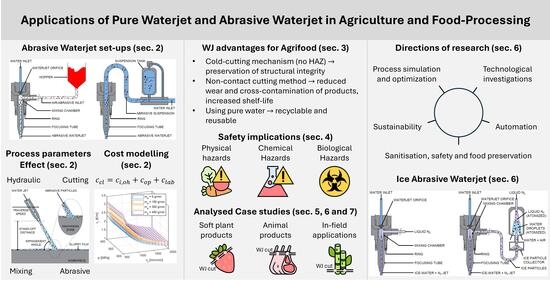
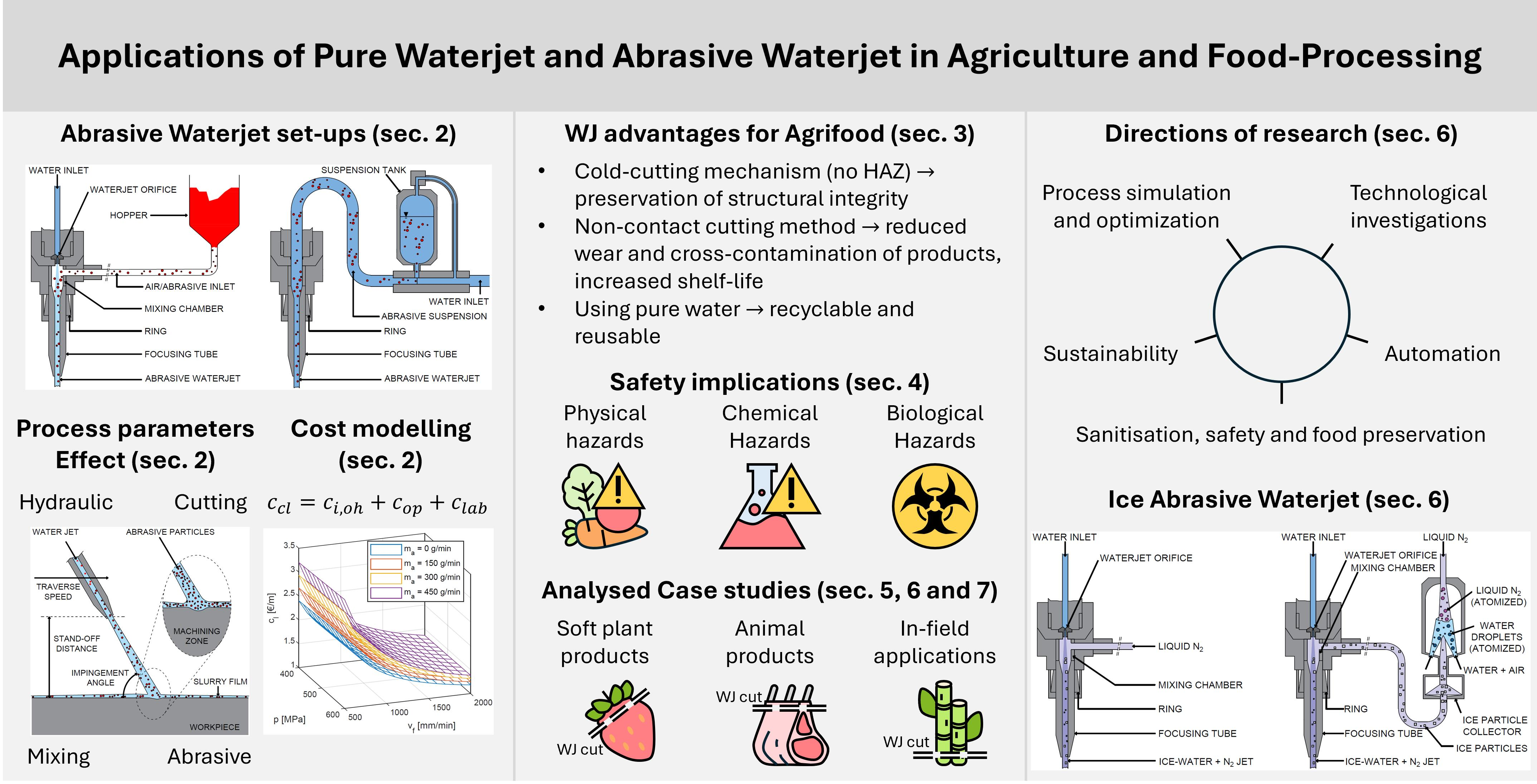
Graphical Abstract

1. Introduction

Early investigations into and applications of waterjet (WJ) technologies date back to the early 1960s [1], and interest in this technology remains high due to its extensive range of applications. WJ technology offers innovative solutions for numerous processes, often replacing traditional methods that may suffer from technical limitations affecting final outcomes, enabling the processing of a number of materials, including metals, non-metals, glass, marble and stones ceramics, and composites with varying thicknesses [2]. The success of WJ technology in these processes can be attributed to several intrinsic advantages, such as the absence of thermal distortion on workpieces, high dimensional accuracy, the ability to cut complex shapes, and surface cleaning capabilities. In recent years, WJ has gained attention as an alternative to traditional techniques in completely different fields, including food processing, agricultural field preparation [3], medicine, and the automotive and aerospace industries. Focusing on the food sector, while the use of pure WJ has emerged as a consolidated practice for cutting soft food products, the presence of hard-to-cut elements such as bones or spines motivates the exploration of abrasive-assisted solutions. Although abrasive WJ technology has reached a high level of maturity in conventional industrial applications, its extension to the food domain introduces non-trivial challenges. Indeed, the use of abrasives in the food and agriculture sectors is a domain of ongoing research.
In this paper, a structured literature review was conducted to ensure a comprehensive and representative overview of WJ technologies in agrifood applications. Relevant contributions were identified through major scientific databases (Scopus and Google Scholar) using combinations of keywords: waterjet, abrasive waterjet, food processing, agriculture, cutting, and harvesting. The analysis was primarily based on recent review papers (mainly from the last 5 years), which were used as anchor references to provide a consolidated background. These were complemented by targeted searches of experimental and application-oriented studies, selected to cover specific aspects not fully addressed in existing reviews, including process parameters, cutting performances, and extending emerging technologies such as abrasive ice WJ. The time span covered by the references in this literature review ranges from 1987 to 2025.
Before exploring the optimization of WJ design for agricultural and food processing applications, this paper provides a background of WJ working principles, analyzing key process parameters for machine settings (Section 2). In Section 2.3, a complete and innovative economical model for the process is proposed, in order to allow researchers and industries in the agrifood sector to evaluate the economic feasibility of adopting WJ in their case studies. Advantages of WJ for the reference sector are presented in Section 3, while potential food and human safety concerns arising from traditional methods are reported in Section 4. Three categories of applications are reviewed, each with a detailed reference case: processing of soft, plant-based products (Section 5), processing of animal products (Section 6), and cultivation, harvesting and field processing (Section 7). Conclusions and future research directions are drawn in Section 8, with a focus on abrasive ice WJ technology (Section 8).

2. Theoretical Background

2.1. Working Principle and Setups

The WJ process involves the removal of material from a workpiece, performed through an erosion mechanism that is generated by the high-energy impact of a fluid on the material. Depending on the material and application, two types of WJ machining are commonly employed:
  • Pure waterjet (PWJ): suitable for materials where water impact alone suffices for the removal action.
  • Abrasive waterjet (AWJ): used for harder materials, where the addition of abrasive particles significantly increases the material-removal rate [3].
In order to produce a concentrated water jet that strikes the material surface with sufficient energy, pressurized water, filtered and supplied by a pumping system, is accelerated through a small orifice. In the next paragraph, the key components that constitute a WJ machine are presented and described, making reference to Figure 1).
High-pressure hydraulic pumps: In WJ, reciprocating pumps are typically used. These pumps make use of a single or double effect intensifier. Reciprocating pumps are typically composed of two separated circuits, one filled with oil, one with water. An electrical motor drives the pump, which pressurizes the oil circuit at a low pressure in order to move a single or double effect intensifier. Consequently, the motion of the intensifier indirectly pressurizes the water at high pressure, due to ratio of surfaces over which oil and water act. These systems can generate pressures up to 400 MPa in common applications, while reaching 600 and up to 650 MPa in special applications [4].
Primary orifice and focusing nozzle: After water compression, pressure energy must be transformed in kinetic energy. With this goal, water is accelerated through a small orifice in the cutting head, by releasing all the pressure. Primary orifices are typically made from sapphire, ruby, or diamond for durability. The water then passes through a focusing nozzle (diameter 0.5–2 mm), often constructed from hard materials like tungsten carbide or boron carbide. This nozzle is necessary in order to create a coherent water jet. In case an abrasive is used, the focusing nozzle also has the objective of transferring momentum to the abrasive particles [5]. The durability of WJ components depends on material choice. Nozzles typically last around 100 h of machining, while orifices, especially diamond ones, offer extended lifespans (up to 1000 h) but are more expensive [6].
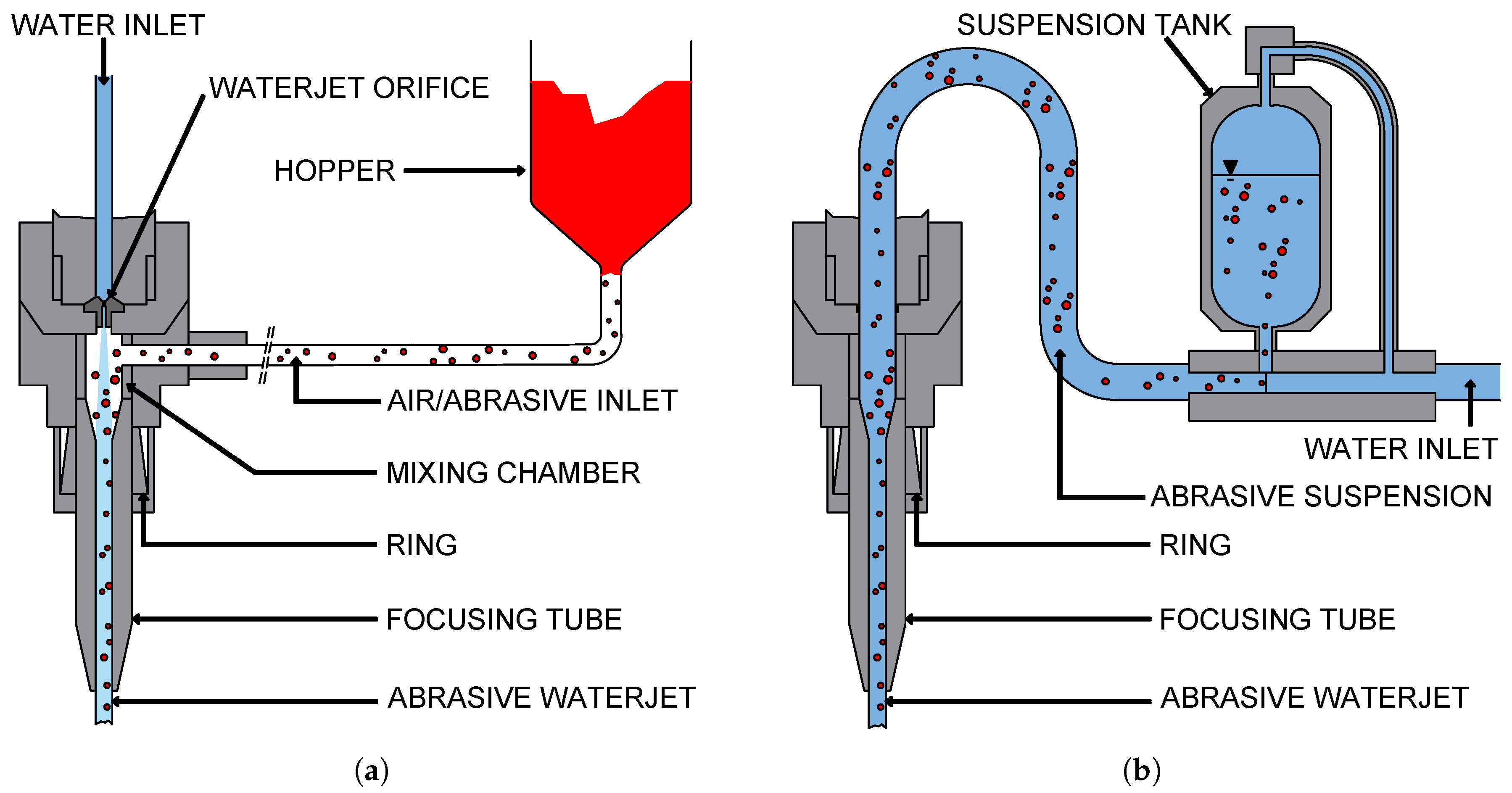
In cases where AWJ is the selected technology, different setups can be used to generate the mixed flow of water, abrasive material, and eventually air (Figure 2).
  • Abrasive Injection Jet (Figure 2a): Exploiting an injection-type mixing method, the water jet generated by this setup comprises three phases: water, air and abrasive. In order to generate the mix, abrasive particles are introduced at the end of the primary orifice by the use of a mixing chamber. Abrasive particles are pushed by the flow of air, generated by the Venturi effect in the primary orifice, into the high-speed water jet stream and inside the focusing nozzle [7]. In injected jets, the abrasive is mixed to the water stream from outside the jet, which makes the process relatively ineffective in taking the particles to the jet core, i.e., the fastest and more powerful part of the jet.
  • Abrasive suspension jet (Figure 2b): This mixing method aims at reducing the inefficiencies of the abrasive injection jet method. The water flow rate provided by the WJ pump is divided in two parts. The first flow enters in a vessel full of premixed water and abrasive. The second flow is mixed with the first one and directly pushed into the focusing nozzle. A better and more homogeneous distribution of abrasive particles on the jet cross-section is obtained and air is excluded from the system. Furthermore, due to absence of air, the expansion of the jet after leaving the nozzle is limited, generating higher specific power densities [7,8]. Despite these advantages, in the abrasive suspension jet, the nozzle wears out faster due to the presence of the abrasive material.

2.2. Key Process Parameters

When analyzing the factors influencing the characteristics and performance of WJ, it is useful to categorize them into hydraulic, mixing, cutting, and—in the case of AWJ—abrasive parameters.
Hydraulic parameters: These parameters are related to the transformation of water pressure into speed. WJ pressure directly affects the kinetic energy of the WJ through the Bernoulli’s principle. Indeed, higher pressures increase the jet penetration depth and material-removal rate [9]. Additionally, WJ pressure influences the distribution of both water and abrasive particles in the jet. Pressure is typically expressed in M P a , b a r , or P S I . WJ pressure affects also the cutting quality. For the machining of armed fiber-reinforced plastic composites, studies have reported that an increase in AWJ pressure reduces surface roughness due to the increased kinetic energy of the particles [10]. Research has also demonstrated that higher WJ pressure results in smoother surfaces, as it disintegrates brittle abrasives into smaller elements, thereby reducing abrasive size and improving surface finish [11]. WJ orifice diameter and alignment in the WJ head play a crucial role in the cutting performance. A well-aligned and coherent AWJ stream enhances cutting efficiency by optimizing orifice conditions, improving cutting power, and reducing kerf taper in the cut profile [12].
Mixing parameters: These parameters are associated with the mixing efficiency of abrasive and water in the WJ. Varying focusing nozzle diameter influences the AWJ process. Researchers identified that nozzle diameter and abrasive mass flow rate affect surface roughness [13]. A smaller diameter increases penetration depth, while larger diameters can impact surface roughness [14]. The focusing nozzle length, the nozzle diameter, the WJ pressure, the abrasive inlet angle, and the abrasive mass flow all affect nozzle wear. In fact, increasing the nozzle length and orifice diameter reduces wear development [15].
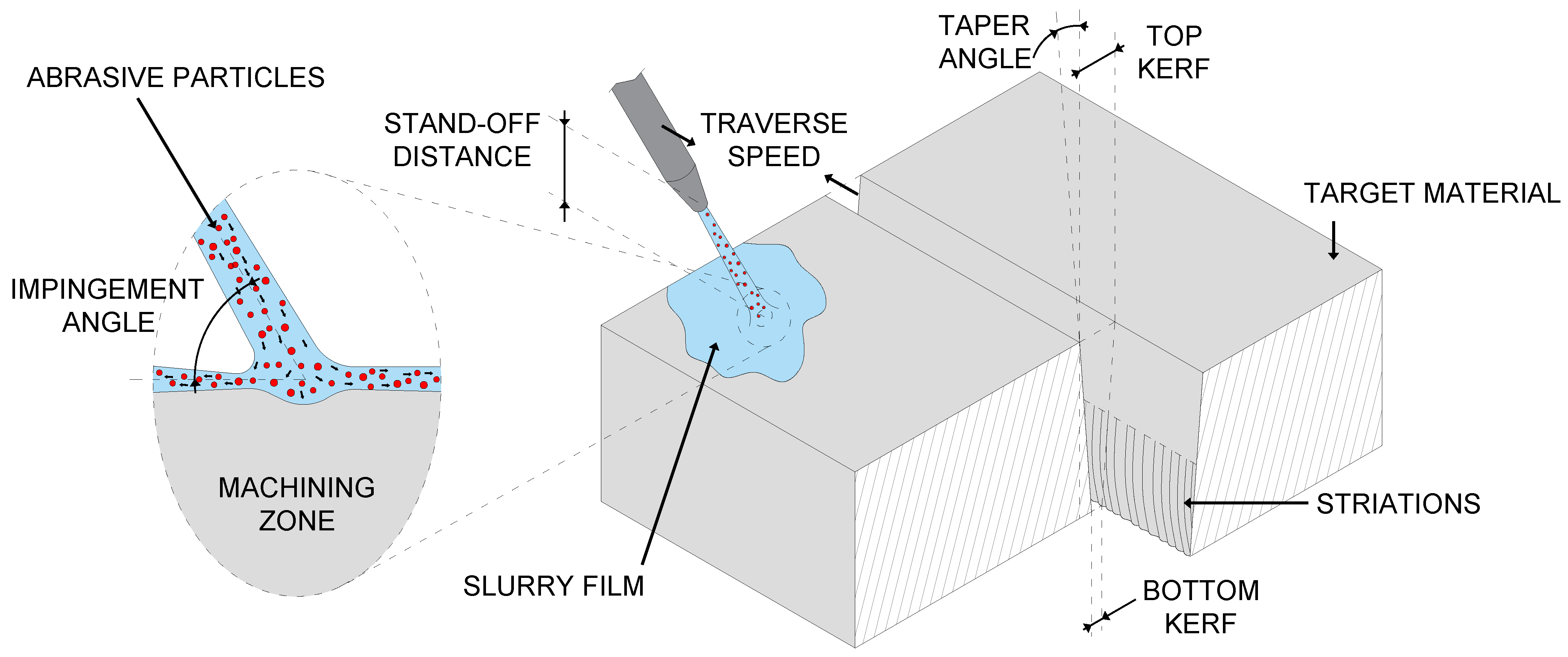
Cutting parameters (Figure 3): The traverse rate determines the exposure time of the workpiece, affecting the quality of the cut surface (higher quality is achieved with a lower traverse rate) and the production time for a part. It is usually measured in mm/min or m/s depending on the cut material. The stand-off distance is the space between the target material and the nozzle. The value, expressed in mm, must be optimally set to achieve the desired kerf profile. The jet impingement angle is the angle between the initial WJ direction and the target material surface affects. It affects the erosion mechanism. Forward and backward machining processes are defined based on the angle direction.
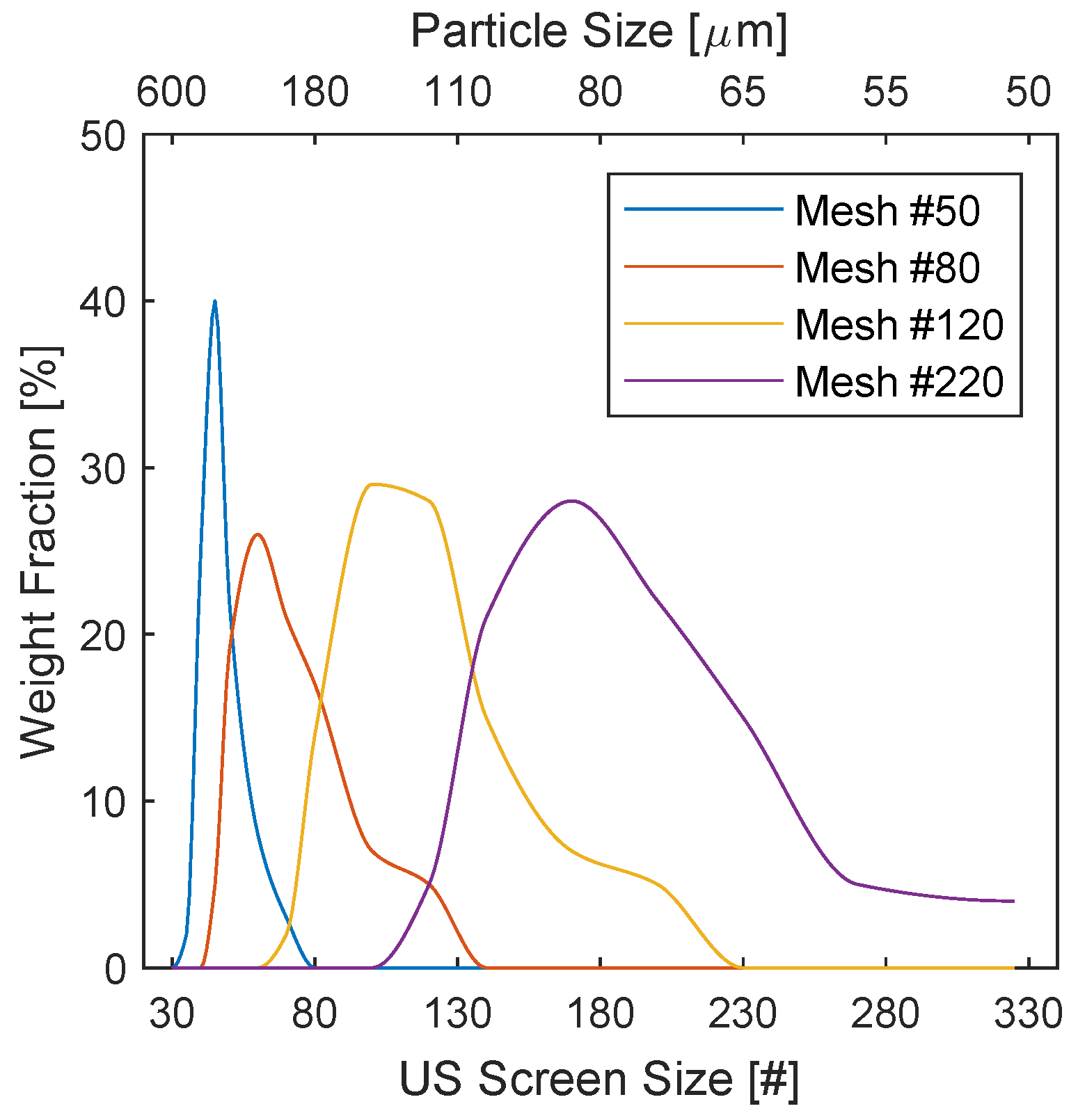
Abrasive parameters: In the case of AWJ, additional parameters must be considered. The abrasive type strongly influences the cutting performance. Both natural (e.g., garnet) and artificial (e.g., aluminum oxide, silicon carbide) abrasives can be used, with different abrasive sizes, shapes, and hardness. Food-grade abrasives can also be adopted, such as sugar, starch, salt and ice, despite their lower hardness and effectiveness [6]. Abrasive size impacts particle disintegration (higher for larger sizes), while increased hardness is required for harder work materials. Abrasive size is typically indicated by mesh #, and a relation between the two quantities was shown in Figure 4. Coarse abrasives enhance penetration depth and kerf width, while fine-grained abrasives increase wear zones and kerf width [16]. Nevertheless, abrasive hardness has a greater impact on surface roughness and material-removal rate than abrasive shape [17]. Abrasive mass flow rate, measured in g/min, affects the material-removal rate in conjunction with WJ pressure and is dependent on the focusing nozzle diameter. In fact, abrasive grains disintegrate during the acceleration process in the mixing chamber and nozzle, reducing kinetic energy available for erosion [18]. Higher abrasive mass flow rates decrease surface roughness, because of the higher number of impacts and cutting edges available per unit area [11].

2.3. Cost Modeling

With the aim of assisting interested researchers/industries in the agrifood sector to evaluate the economical feasibility of application of WJ, an extension to economic models from the literature is made. Based on consolidated methodologies, the model is intended as a basis that can be adopted, validated, and extended by subsequent research for sensitivity analyses and validation. When considering WJ and AWJ cost modeling, the final objective is to build a cost function, representing equivalent cost per unit cut length c c l , expressed in € / m [20,21]. Nevertheless, the literature either makes simplifying assumptions or does not model some sources of costs. Here, we aim to provide the most complete economic model, starting from the time to produce a part, t p :
t p m i n = t 0 m i n + t m m i n + t w m i n
where t 0 are fixed time losses (e.g., product setup), t m represents the actual WJ cutting time in min (i.e., t m = 1000 l / v f where l is the perimeter in m to be cut, v f is the traverse speed in mm/min), and t w is the time lost for substituting consumables. t w can be expressed as a function of the different consumables service lives t w l , i , the time for changing them t w c , i , and the machining time:
t w m i n = t m m i n i = 1 n w t w c , i m i n 60 t w l , i h
.
The consumables are the focusing nozzle, the primary orifice, and the mixing chamber. Indeed, the time to produce a part can be seen as t p = t m / η t , where:
η t = 1 1 + t 0 t m + i = 1 n w t w c , i 60 t w l , i
.
η t is a time-based efficiency, always less than 1. η t approaches 1 when fixed times and consumables change times are negligible or when consumable service lives are really high.
The model for production time lays the foundations for the economic model. In general, as for all the manufacturing processes, three main categories of costs can be set out: investment costs, operating costs, and labor costs [20,21,22]. These cost categories are firstly combined in the cost to produce a part c p . Investment costs are needed to purchase the WJ/AWJ equipment. The initial investment is indicated with letter i and is expressed in €. In order to find the portion of the initial investment that is of interest for a single produced part, the depreciation period d for the investment is considered in years y. Machine utilization t u is also needed and expresses the hours h per year for which the machine is used [20]. If overhead costs, c o h , per year are also considered, the portion of these costs to be added to a product is:
c i , o h [ ] = i [ ] d y + c o h y t p m i n 60 t u h y
.
Operating costs depend on the actual WJ/AWJ cutting time to produce a part t m . They include machine water consumption, energy consumption, eventually abrasive consumption, and the associated costs (Equation (5)).
c o p [ ] = c s w m 3 q ˙ w m 3 h + c s e k W h P e k W + 60 1000 c s a k g m ˙ a g m i n t m m i n 60
.
Water consumption costs are given by the specific cost of water per unit volume c s w and the water volumetric flow rate q ˙ w . The latter is a function of the orifice geometry/design and water pressure p:
q ˙ w m 3 h = 3600 1000 c d A n m m 2 2 p M P a ρ w k g m 3
where c d is the orifice overall efficiency of discharge, A n the orifice cross-section, and ρ is the water density. More details on how to derive Equation (6) are provided in [5,6,23]. Energy consumption costs are expressed as the product between the specific cost of energy c s e in / k W h and the electrical power consumption of the machine P e , expressed in kW. Electrical power consumption is found as [6]:
P e k W = c d A n m m 2 η 2 ρ w k g m 3 ( p M P a ) 3 2 .
In the above equations, stand-by machine power was neglected. Abrasive costs are expressed in terms of abrasive mass flow rate m ˙ a and the specific cost of abrasive per unit mass c s a .
c a h = 60 1000 c s , a k g m ˙ a g m i n .
At last, labor costs are constituted by the cost of the operator [20,21], which can be written as:
c l a b [ ] = c s l a b h t p m i n 60 .
Despite in [20,21], maintenance costs of consumables are considered as a black-box and introduced in labor costs; here, a more specific model is introduced, considering consumables service lives and costs of consumables c w , i :
c m [ ] = t m [ m i n ] i = 1 n w c w , i [ ] 60 t w l , i h .
The final cost per product is thus reported in Equation (11), by knowing that t p = t m / η t .
c p [ ] = t m [ m i n ] 60 i [ ] d y t u h y η t + c o h [ ] t u h y η t + c s w m 3 q ˙ w m 3 h + + c s e k W h · P e k W + 60 1000 c s a k g m ˙ a g m i n + c s l h η t + i = 1 n w c w , i [ ] t w l , i h .
Remembering that t m = 1000 l / v f , and dividing c p by the part cutting length l, the cost per unit length c c l is obtained:
c c l m = 1000 60 v f m m m i n i [ ] d y t u h y η t + c o h [ ] t u h y η t + c s w m 3 q ˙ w m 3 h + + c s e k W h P e k W + 60 1000 c s a k g · m ˙ a g m i n + c s l h η t + i = 1 n w c w , i [ ] t w l , i h .
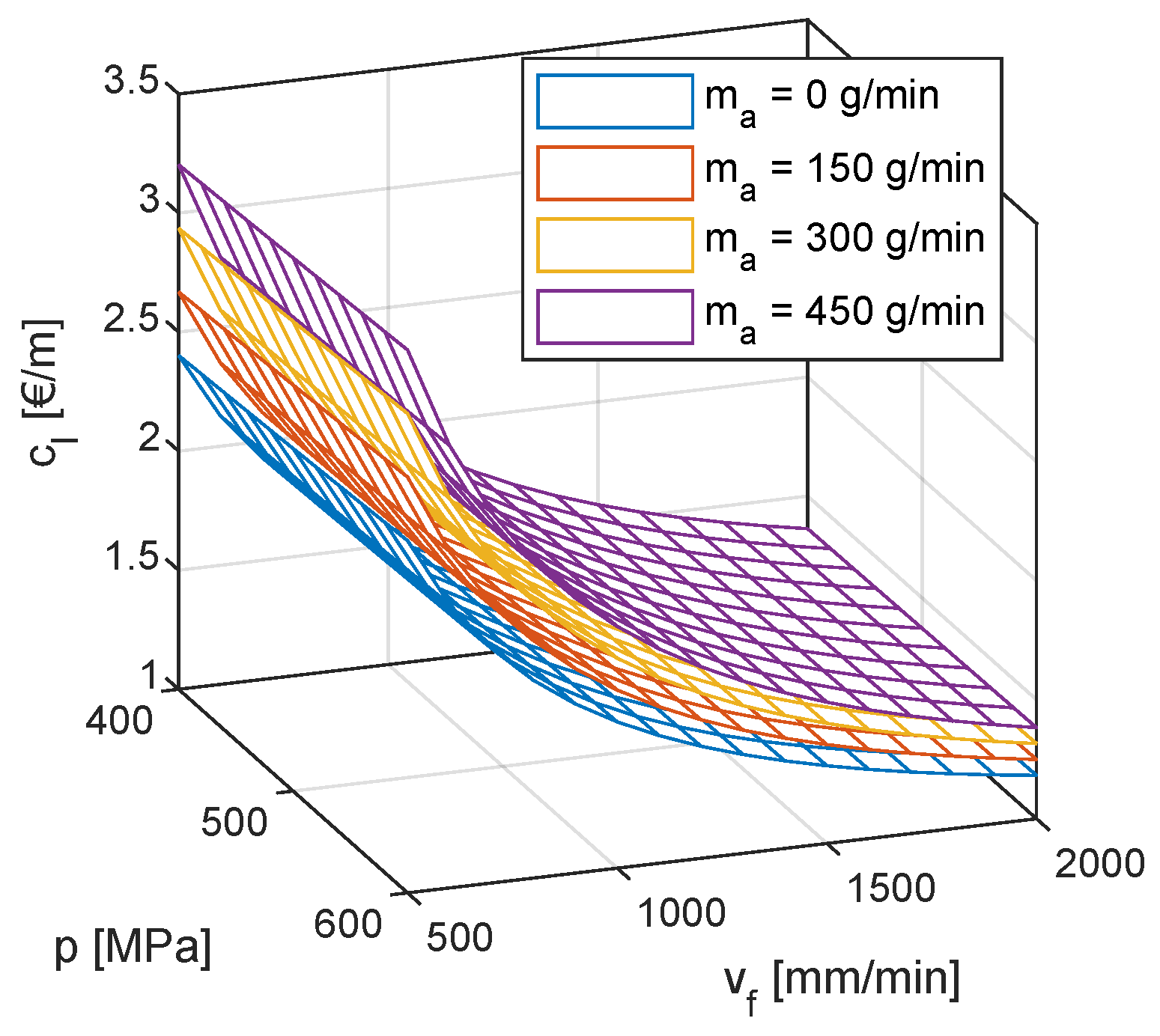
The effect of process parameters (p, v f and m ˙ a ) on c l is shown in Figure 5.

3. Agrifood Applications of Waterjet Technology

In the agrifood sector, cutting processes are integral to various stages of the production chain [29]. These processes range from soil preparation and residue removal to the cutting of stems, vegetables, fruits, and meat [3]. The cutting requirements vary significantly depending on the specific application, such as peeling, slicing, trimming, dicing, or harvesting. As a result, the selection and optimization of cutting technologies play a crucial role not only in process efficiency but also in determining the quality of agricultural products. Compared to other traditional and non-traditional cutting methods, such as wire electrical discharge machining, plasma arc cutting, laser cutting, and flame cutting, WJ technology offers several advantages [8,25].
One of the most significant benefits of WJ technology is its cold cutting mechanism, which eliminates heat-affected zones and thermal deformations. This no-heat, spark-free process is particularly advantageous for maintaining the structural and compositional integrity of agricultural products [3,25]. Additionally, WJ technology is a non-contact cutting method, which provides a unique solution to several challenges associated with traditional blade-based cutting systems. Unlike rotating blades, which require frequent replacement due to wear, WJ nozzles have longer service lives, reducing downtime and labor costs. In addition to this advantage that is merely economical, since WJ is a non-contact cutting method, the risk of microbial cross-contamination typically introduced by direct blade contact methods is minimized [30,31,32]. Microbial cross-contamination (as will be addressed in Section 4) represents a critical factor in ensuring the safety and quality of food products. Furthermore, avoiding to use contact methods reduces the amount of mechanical damage that is introduced on the plant tissues. Such damage can trigger physiological responses that accelerate aging, compromise food safety, and reduce the shelf life of fresh products [31]. By avoiding direct contact between the equipment and the work product, WJ technology mitigates these issues and preserves the structural and sensory qualities of agricultural products.
By making use of pure water as the primary cutting medium, WJ systems align with sustainable practices, as water is a renewable and recyclable resource [33], contributing to a significant reduction in the overall water consumption, especially when ice particles are used as abrasive [34]. Moreover, WJ systems can be adapted to incorporate working fluids with disinfectants, enabling simultaneous cutting and decontamination processes [3,35]. Given these advantages, WJ technology represents a promising alternative for agrifood applications, offering a safer, more efficient, and environmentally sustainable solution for modern production processes.

4. Safety Implications

Safety is a key component of quality that assesses the presence of physical, chemical, and biological hazards in the final product [31]. In the context of the food industry, unsafe food can lead to severe consequences, including consumer injuries, fatalities, business losses, and reputation damage [31]. In the next paragraphs, a brief summary on food-related hazards are reported from [31], where a detailed, exhaustive and accurate dissertation on the topic can be found. Three categories of hazards have been identified: physical, chemical and biological.
Physical hazards involve the presence of unwanted materials (e.g., dust, glass, metal, and stones) in the final product. These contaminants can be introduced unintentionally during pre-processing (e.g., harvesting) or during in-plant production [30]. Addressing physical hazards requires robust control measures throughout the production chain to ensure product integrity and consumer safety.
Chemical hazards consist of residual traces of substances that may originate at any stage of the production chain, such as phytosanitary products, growth regulators, and cleaning agents; while chemical hazards are generally less immediately dangerous than microorganisms, their potential long-term effects on human health are the subject of extensive research. Additionally, there is growing concern regarding their environmental impact [31].
Biological hazards include the potential contamination by pathogenic microorganisms capable of directly infecting humans or producing toxins and harmful chemical substances. These hazards are of paramount concern in the food industry [31] and represent the main challenge for food processing techniques and technologies. In fact, biological hazards encompass bacteria, viruses, and fungi that may already be present in the product either due to infection or introduced via contaminated soil, water, or poor worker hygiene [31]. These harmful microorganisms pose a significant challenge throughout the production chain, as their presence is not always detectable, and they can spread rapidly. Each microorganism exhibits distinct physiological traits, enabling resistance to various environmental conditions (e.g., temperature, pressure) and chemical sanitation agents [31]. Consequently, optimizing control measures for these parameters is essential. However, prevention remains the most effective approach to control contamination, primarily achieved through stringent hygiene practices for all elements in contact with the product. A non-exhaustive list of pathogenic microorganisms, causing human safety issues, is reported below (for completeness, see [31]):
  • Listeria monocytogenes: a psychrotrophic bacterium capable of growing at refrigeration temperatures. It causes listeriosis, which is particularly dangerous for pregnant people, newborns, and immunocompromised individuals. It is widespread in agricultural environments and can form biofilms on surfaces in food processing environments [31].
  • Clostridium botulinum: a spore-forming, anaerobic, psychrotrophic bacterium that is commonly found in agricultural soil and on fruit and vegetable surfaces. It produces neurotoxins that can cause severe illness or death. Its spores are notably heat-resistant and may survive standard cooking temperatures [31].
  • Salmonella spp.: a common cause of food-borne illness, often associated with water, sewage contamination, or infected workers. It can proliferate in a wide range of agricultural products and is effectively inhibited only by strict cold-chain management (storage temperatures below 7 °C [31].
On the other hand, an example list of microorganisms causing product deterioration is reported below:
  • Pseudomonads: Aerobic bacteria that produce lytic enzymes responsible for soft rot in vegetables, yellowing, and off-odors during storage. These bacteria are ubiquitous on plant surfaces and can proliferate in moist environments [31].
  • Yeast and molds: Fungi frequently found on fruits due to their tolerance for acidic environments. They decompose tissues through enzyme production, accelerating spoilage. Their growth is oxygen-dependent, and modified atmosphere packaging (MAP) with C O 2 has been shown to inhibit their development [31,36].
By addressing these hazards through rigorous monitoring, prevention strategies, and optimized control measures, the food industry can enhance safety and maintain product quality [3,31].

5. Case Study: Processing of Soft, Plant-Based Products

This section is dedicated to the collection of applications related to post-harvest cutting, trimming, and peeling of soft, plant-based products. These applications are therefore carried out in a factory environment rather than in the field. The main objectives of these processes concern the extension of product shelf-life, as well as the preservation of appearance, flavor, texture, and nutritional properties of the cut products [3]. Accordingly, it is important to highlight that these applications are predominantly performed using PWJ, since soft materials can be easily cut-through by high-speed coherent water jets, while the addition of abrasives would generally be unnecessary and may introduce issues related to product quality and contamination.
Among these applications, lettuce [3,6,37,38,39], radicchio [37], and endive [38] represent some of the most extensively studied cases. Although both PWJ and conventional cutting methods induced cell damage, PWJ has been shown to reduce browning due to the removal of cellular fluids [6]. Moreover, cross-contamination associated with blade contact is reduced, even though some studies reported similarly low microbial counts for both approaches [37,40]. The use of PWJ also eliminates the need for blade sharpening.
PWJ cutting of celery is now a consolidated industrial practice, leading to increased product shelf-life. This is mainly due to reduced tissue damage, lower microbial counts, and limited browning, all facilitated by the ease of cutting of this vegetable [6]. Carrots, potatoes, and onions represent more complex products to cut or trim due to their higher thickness and round shape. Nevertheless, several studies have reported successful applications, including carrot crowning and cutting [6,41,42], potato slicing [43], and onion cutting [6]. Due to their thickness, cut quality may vary along the section. In the case of potatoes, no significant differences in taste or texture were observed, although some color modifications were reported. For carrots, the formation of white surface tissue was observed, similarly to conventional knife cutting [42]. PWJ processing has also been shown to extend the shelf-life of onions and leeks, due to reduced cell disruption and browning at low pressures, and lower kerf width and waste at higher pressures [6].
Additional applications include green beans tipping, asparagus cutting, melon trimming, and strawberry de-calyxing (see Section 5). Peeling applications have also been reported in the literature for products such as onions and lemons [6]. Table 1 summarizes the typical PWJ parameter ranges, while Table 2 compares PWJ with conventional manual and mechanical cutting methods for soft products.
In addition, the stabilization of soft and highly deformable products during cutting represents an important operational aspect that is only partially addressed in the available literature. Existing studies generally describe support solutions, such as conveyor belts, trays, or steel mesh structures, which are used to position and transport the product during processing. Typically, these elements are combined with vision systems for geometrical tracking and correct portioning/cutting. In these configurations, stabilization is typically achieved passively, relying on friction under the WJ pressure or on small indentations on the trays, rather than on active clamping mechanisms. This approach is facilitated by the low mechanical forces involved in WJ cutting [6]. Moreover, attention should be paid to the interaction between the jet and the conveyor system, as potential damage to the support surfaces may occur and could lead to indirect contamination of the food product.

Strawberry Calyx Removal

Strawberries are widely used in the food industry. In 2023 alone, approximately 250,000 tons were harvested for processing in the United States [44]. Strawberries are commonly used as ingredients in consumer food products such as ice cream, yogurt, and fruit juices. Prior to consumption, the calyx (the green leafy cap attached to the stem) must be removed, and each fruit must be individually frozen to retain its flavor and quality [32]. Manual and mechanical harvesting are being used currently, each presenting challenges.
Manual harvesting is carried out before in-plant processing and presents two main challenges:
  • Tool hygiene is essential to limit the spread of pathogenic and spoilage microorganisms (see Section 4). Tool sanitation is needed to reduce this problem.
  • Loss of quality in freshly cut fruit: de-calyxed strawberries are more susceptible to mechanical damage and heat during transport to processing facilities.
This process requires increased labor time and exposure of the de-capped strawberries before in-plant processing, leading to labor inefficiency and decreased harvest yield [32].
Mechanical harvesting moves the calyx removal process from fields to processing plants, allowing to reduce field labor and improving the management, logistics and annual yield of strawberries production and harvesting. Generally, this is done by the implementation of machines equipped with rotary blades, reducing labor costs and improving logistics management by controlling production rates. Currently available machines require uniformly oriented strawberries, allowing for calyx removal by a stationary blade. Strawberries placement is obtained by using vibrational, rotational, mechanical pinch, suction-driven, or manual-loaded methods [32]. Using blades helps preserve fruit quality as whole strawberries are transported before decalyxing and freezing. However, this method can unintentionally introduce hazards, such as debris or harmful microorganisms (Section 4), and introduces some drawbacks, like low throughput, high maintenance, reliance on manual labor, and potential metal hazards if the cutting tool were to be chipped and lost within the food stream.
A pure WJ solution was implemented by Lin et al. [32] to address these concerns. WJ technology was introduced as a more efficient cutting method, when equipped with automation and computer vision. The authors proposed an automatic vision-guided intelligent de-calyxing (AVID) machine. The process begins with strawberries submerged in a water tank for sanitation and they float to the surface in a single layer. The AVID machine consists of three main components:
  • An elevating conveyor system catches strawberries and aligns them parallel to their axes, through rotating specifically designed rods.
  • The optical section, equipped with an industrial camera, captures images of the strawberries’ patterns. A machine vision system then identifies strawberry features and locates the calyx position.
  • Finally, a synchronized actuation system, consisting of conveyor shaft encoders, synchronizes the vision system with the multi-WJ knives, ensuring an accurate cut. The WJ cutting system was designed to work at 206.8 MPa jet pressure and with a 0.127 mm diameter diamond primary orifice. The results indicated that strawberries (25 to 38 mm diameter) were processed by WJ at the traverse speed of 0.3 m/s; calyx-free strawberries could be produced at a highest rate of 2270 kg/h.
The main output of the AVID machine is the calyx-free strawberries, ready for freezing, whereas the main scrap consists of the calyx and the white shoulder as separated residues. Nevertheless, some fruits were not completely processed and partial calyxes were found. Additionally, some strawberries were identified as unsuitable for cutting (e.g., malformed, discolored, or damaged), and were redirected and re-fed into the system for another attempt. The calyx-free fruit, calyx and white shoulder, residual, and return fruit weight percentages were 49.6 % , 18.2 % , 8.1 % , and 24.1 % , respectively, [32]. Practical implications of the WJ on high-moisture and delicate products like strawberries, such as excessive wetting and potential water splashing, are mitigated by the adoption of moderated operating conditions. Indeed, small nozzle diameters in the orders of ≈0.05–0.1 mm and limited pressures guarantee highly concentrated jets with limited water usage.

6. Case Study: Processing of Animal Products

This section is dedicated to the collection of applications related to soft and composite (soft/hard) animal products cutting. These applications are still carried out in a factory environment. As in the previous section, the main objectives of these processes concern the extension of product shelf-life, as well as minimal meat loss and improved cutting capability [3]. These applications are performed using PWJ for soft materials and using AWJ with edible abrasives for hard inclusions (bones or spines). The application of AWJ for these products is not yet fully established, and research is ongoing.
Starting with the use of PWJ on soft meat, poultry represents an established application, with boneless chicken breasts cutting and portioning [45]. Commercial applications are already employed by large fast-food chains for nuggets production [6]. Beef clip bone cleaning from objectionable components (i.e., bone, fat and gristle) has been performed using PWJ with acceptable results for soft tissue removal [46]. A patent was also deposited for squid cutting, skinning and viscera removal [6]. Fish portioning and pinbone removal remain key targets for PWJ applications. Cod and salmon fillets have been processed to separate tails, loins and belly flaps [30], whereas experiments on fresh trout demonstrated that PWJ selectively cuts soft tissues such as muscle, fat and peritoneal membranes, while leaving intermuscular fibers and bones intact [47].
The inability of PWJ to cut hard materials clearly emerged in [46], where bones were only slightly scored. Therefore, comparative studies between PWJ and AWJ have been developed in the field of meat–bone cutting. Bone meal and sugar abrasives improved the cutting quality of bovine femur bones compared to PWJ [48]. Ice particles increased the cutting depth in bones [35]. Salt and sugar represent edible alternative abrasives, successfully applied to beef and pork cutting [49]. Salt has been shown to increase cutting depth in boneless meat of beef, pork and lamb, enabling cutting at room temperature (thus reducing freezing/chilling costs), as well as improving cutting quality in meat with bone [25]. Finally, PEO solution mixed with water has been used to enhance the cutting capacity of frozen chicken fillet, beef, pork and hake fish [50]. Despite the improved cutting performance provided by salt and sugar abrasives, these (as well as starch crystals) were found to be insufficiently effective and impractical [6], and their use may also affect the taste of the final product [3].
Table 3 summarizes the typical PWJ and AWJ parameter ranges, while Table 4 compares PWJ and AWJ with conventional manual and mechanical cutting methods for animal products.

Meat–Bone Cutting

Meat consumption is the major product of animal agriculture, despite the recent climate, ethical, and health considerations facing the meat industry. Consumption of meat in the U.S. from 1999 to 2020 was reported in [51]. Over the entire period, meat consumption averaged 252 pounds per person, reaching a low of 235 pounds per person in 2014 and a high of 264 pounds per person in 2020 [51]. Indeed, meat cutting is an important activity for the meat processing, packaging and retail industry [25]. Meat cutting is either performed manually or mechanically.
Manual meat cutting is mainly adopted for reducing carcasses into smaller cuts, and trimming, in order to achieve cost-effective and attractive goods for consumers of the meat retail industry. In manual cutting, hand tools, i.e., knives, are used to separate meat from bones or to cut through meat and bones. The source of power and effort is given by workers, and these traditional techniques often require the use of both hands, one to hold the meat while the other operates the saw or knife. In addition to being heavy work, manual cutting may lead to a high rate of accidents and injuries to workers [25]. Furthermore, traditional cutting processes often result in wider cuts, and hence heavy meat losses, and severe damage to meat fibers.
In mechanical meat cutting, human workers are assisted by the use of machinery equipped with mechanical blades. Debris and born dust generated significantly affect the product quality. Some techniques involved the use of vibrating knives allowing the cutting forces generated by the process to be reduced [52,53,54]. Moreover, when automated cutting is adopted, the low stiffness of meat results in large dissipation of strain energy when the blade or knife is forced into meat [52]. Thus, chilling or freezing is often adopted to increase the meat stiffness [52,54], though this adds cost to meat processing [25].
Pure WJ and AWJ were tested for meat–bone cutting in the past. Experiments were conducted using both pure WJ and AWJ processes for different types of meat and bones combinations: pure meat, meat and bone, and pure bones. Nevertheless, pure WJ was abandoned due to the inability of cutting bones satisfactorily [25]. On the contrary, AWJ adoption led to relevant results, achieving superior cuts through materials such as 90 mm meat containing 70 mm of bone. A design of experiment was conducted in order to test the effect of different parameters on the cutting quality, i.e., water pressure, abrasive flow rate, traverse speed and meat temperature. The performances of jet cutting were evaluated based on the quality of cut, depth of cut together with traverse speed (proportional to the material-removal rate), and the kerf width (proportional to the meat loss). The setup consisted of a primary orifice with 0.254 mm in diameter, a nozzle with a diameter of 1.016 mm, a stand-off distance of 4 mm. Despite AWJ resulted in better performances, nontoxic, edible cooking salt particles (smaller than 0.4 mm) were tested as the abrasive [25], since traditional garnets must be avoided [3]. Optimal results could be obtained by adjusting the process parameters. Increased traverse speeds reduce the depth of cut, since reduced interaction time between AWJ and material is obtained. Rigid compositions such as spines require slower traverse speeds (since lower depths of cut are obtained) compared to ribs. Increasing water pressure enhanced kinetic energy, improving penetration capability. In this experiment, higher pressures (up to 400 MPa) resulted in a more than 55 % increase in depth of cut. Increasing the salt particles flow rate from 150 to 270 g/min, increased the depth of cut by 20–30%. Experiments with sugar and starch particles as abrasives showed that these biocompatible materials have lower cutting efficiency compared to traditional garnets and salt, primarily due to their lower density and reduced impact when mixed with water [6,35]. Finally, compared to mechanical cutting, where higher meat temperatures (up to 20 °C) reduce blade efficiency, AWJ effectively penetrated the meat at higher temperatures, avoiding meat freezing and enhancing process efficiency. Finally, one of the key advantages of AWJ cutting over traditional methods is the significantly reduced kerf width that minimizes meat loss [25].

7. Case Study: Cultivation, Harvesting and Field Processing Applications

This section collects applications of PWJ and AWJ for cultivation, harvesting and field processing. In this context, the focus is on in-field operations, where the reduction in energy and water consumption, together with the efficient use of soil and raw materials, represent key aspects to be considered [3]. Within this framework, PWJ/AWJ technologies find applications in soil preparation, crop management, and harvesting.
PWJ has been investigated for soil preparation in weeding applications. The long-term use of chemical herbicides may cause water pollution and environmental impact, while also being limited by the increasing resistance of weeds to herbicides. In this context, PWJ has been proposed as a mechanical alternative and has been tested on small oilseed rape, and on rice seedlings in place of weeds [3]. Similar but more demanding applications have been explored to prevent blockage of machine openers during sowing in stalk-mulched fields. In these cases, stems and stalks are cut using PWJ. Successful cutting has been reported for wheat straw internode stems [55], wheat stems [56] and corn stems [57]. Despite the good cutting capability of PWJ, the main limitations are related to the design of mobile systems, which require water tanks and pressurization units, leading to increased weight and potential soil compaction. However, integrated systems combining WJ nozzles and furrow openers may reduce the number of machines operating in the field [3].
Following soil preparation, jet fertilization can be performed. Traditional surface spreading techniques are progressively being replaced by injection-based approaches, in which a WJ is used to directly deliver fertilizers near plant roots [3]. This technique has been shown to increase crop yield compared to conventional spreading, for example for winter wheat [58]. Moreover, the jet can be employed to open furrows in the soil for seed sowing, eliminating the need for high-power mechanical operations while limiting the cut depth to only a few centimeters.
PWJ has also been investigated for harvesting applications of plant-based products, such as sugar beet harvesting, and lettuce harvesting, although limitations related to cut cleanliness due to soil contamination have been reported [3]. Nevertheless, commercial implementations are emerging [6]. PWJ has also been studied for harvesting harder fibrous crops, such as sugarcanes [59]. In this case, AWJ has been proposed as a potential alternative to improve cutting performance [24]. Table 5 summarizes the typical PWJ and AWJ parameter ranges, while Table 6 compares PWJ and AWJ with conventional manual and mechanical cutting methods for these applications.

Sugarcane Harvesting

Sugarcane represents a crucial food source in tropical countries, with Brazil, India, China, and Thailand being the main producers [61]; it is also the most significant contributor to Thailand’s agriculture economy [62]. Moreover, it serves as a feedstock for a wide range of value-added products, including ethanol—a fuel that reduces greenhouse gas emissions by up to 70% [61]—bioelectricity and future applications like bioplastics, biohydrocarbons, and biochemicals. Currently, sugarcane harvesting is performed manually or mechanically. In both cases, the cutting occurs at the internode of the base stalk, the softer part compared to the nodes [29].
Manual harvesting, performed using hand tools, is labor-intensive and predominantly practiced where mechanization is inaccessible or not economically viable. This method carries significant social, economic, and environmental drawbacks. To mitigate labor costs and expedite the cutting process, a common practice involves burning the green cane before harvesting; while this practice reduces harvesting time, it compromises the quality and value of the final product and exposes workers to numerous health risks. Studies have identified a strong correlation between sugarcane burning and increased incidences of acute renal dysfunction, dehydration, systemic inflammation [63], oxidative stress, muscle lesions, altered blood coagulation, heart rate variability, and hypertension [64]. From an environmental perspective, this practice worsen greenhouse gases emission, exacerbating global climate change and degrading air quality. Additionally, it depletes soil organic matter, micronutrients, and beneficial microflora, further harming agricultural sustainability [65].
Mechanical harvesting is predominant in wealthier countries. Despite mitigating the above drawbacks, by employing rotary blades, mechanical harvesting presents its own challenges. Research has explored the impact of process parameters, such as cutting bevel angle, machine forward speed, and rotational speed on cutting force and cutting surface quality and stalk integrity [66]. In fact, stalk damage caused by rotating disc blades leads to sugar loss and reduced juice quality. Additionally, clogging due to leaves or cane debris around the blades, combined with contact with soil and rocks, accelerates blade wear and diminishes process efficiency.
WJ and AWJ have been explored for sugarcane harvesting to address the limitations of the above methods. This section discusses the design considerations proposed in [24]. A comparative analysis of the two technologies was carried out, on the basis of the following key performance indicators: water flow rate, energy requirement, cutting depth, and traverse speed. Under optimal conditions (water pressure at 360 MPa, 0.1 m/s traverse speed and 3 to 150 mm stand-off distance), WJ achieved full cuts on sugarcane stalks with diameters up to 29 mm. However, stand-off distances above 180 mm caused incomplete cuts. These results highlight that WJ can be effective but is sensitive to stand-off variations. AWJ tests used river sand with # 80 mesh and a 0.25 mm orifice, with parameters simulated through MATLAB to optimize nozzle design. Cutting efficiency (typically between 0.4 and 0.6 ) was influenced by traverse speed, abrasive size, and load ratio. AWJ completed cuts where WJ failed, including full stalk penetration using 328 g/min abrasive flow. AWJ also maintained cutting ability at stand-off distances up to 250 mm. It nearly achieved complete cuts at traverse speeds between 0.058 and 0.067 m/s, while full penetration was reached at 0.05 m/s.
Compared to WJ, AWJ offered significant benefits: 50% lower water usage, 58.8% lower power input, and better adaptability to variable cutting conditions. At a specific cutting energy of 8.7 × 10 3 J/mm3, cutting efficiency reached 0.35. These findings confirm AWJ as a more robust and scalable option for mechanized sugarcane harvesting. Although a dedicated experimental assessment is not yet available, preliminary considerations suggest that WJ cutting may not substantially increase sugar leaching. The short interaction time and the relatively limited volume of water involved, typically on the order of a few centiliters per cut under practical operating conditions, indicate that this effect is likely to remain limited, although further experimental validation is required.

8. Conclusions and Future Directions

While some applications of waterjet and abrasive waterjet in the agrifood sector have recently been proposed in the literature, research is still in its infancy. Waterjet and abrasive waterjet demonstrate superior features for food cutting, mainly due to the absence of contact with machinery, and the ability concentrate power using a small jet, allowing for the precise processing of delicate food products without deformation, crushing, or structural damage [6]. Successful case studies were analyzed, focusing on sugarcane harvesting, de-calyxing strawberries, and meat and bone cutting. Nevertheless, high costs and investments are still required for these technologies, and several aspects should be enhanced in order to make them commercially available for this sector. The main directions of research can be grouped in different macro-areas, ranging from parameter optimization, sustainability, automation, sanitation, and technological advancements.
Regarding process simulation and optimization, the literature agrees on the need to analyze jet generation, jet cutting phenomenology and food damages under the use of different process parameters. Moreover, applications should involve the use of so-called ultra-high-pressure waterjets, a promising technology that is yet unexplored [6]. Moreover, to make waterjet more adapt to processing on the fields, adequate, mobile systems must be developed, starting from compact and mobile catchers. These would be essential for agricultural applications [67].
To enhance sustainability in agricultural waterjet applications, efforts should focus on reducing water consumption and optimizing jet pressure through more efficient machinery designs. Techniques such as recycling water from horizontal jet harvesters, adopting closed-loop water systems and low-flow nozzle technologies, or adopting and developing more responsive ultra-high-pressure valves would reduce water requirements, even under high-throughput agrifood applications [3,6].
Automation will also drive waterjet food processing applications by improving operational efficiency and reducing labor demands. Machine vision, image processing, robotics, and sensorization must be combined to enable process real-time monitoring, adaptive cutting and portioning, particularly in complex applications like fish, poultry, and meat. Emerging integration with advanced AI-driven vision systems further enhances automation capabilities of waterjet and abrasive waterjet [3,6]. Product stabilization in waterjet-based food processing is typically achieved through support systems such as conveyor belts, trays, and steel meshes. However, detailed descriptions of dedicated and innovative stabilization or clamping solutions are rarely reported in the literature, highlighting a gap for future research and industrial development.
Sanitation, safety and food preservation are of fundamental importance. WJ and AWJ, with their non-contact nature eliminate the risk of cross-contamination. Furthermore, cuts can be clean, conducted with a renewable cutting medium. Moreover, harmless disinfectants can be introduced in the cutting medium to prevent and avoid the presence of pathogenic microorganisms and infections [3,6].
The scientific literature has also suggested valid technological investigations for these processes. Some of them are related to the advancement and exploration of alternative jet modalities that may be suitable for specific applications, like air–liquid jets (for fibrous or layered products), fan-type jets (particularly useful for surface treatments, due to their extended coverage and controlled cutting force) and the utilization of food-grade abrasives. This last topic is really relevant, and some papers presented their applications using cooking salt, sugar or starch [6]. Alternative abrasives may be utilized, such as polyethylene oxide (PEO). PEO is a non-ionic, high-molecular-weight polymer commonly used as a thickener and flocculant in the food industry. Its incorporation into waterjets can enhance cutting depth in frozen food products. Studies suggest optimal concentrations between 0.0015 % and 0.020 % depending on molecular weight [50]. PEO requires significantly lower pressures than other abrasives, making it a safer and more efficient alternative. At last, an innovative technology under development in recent years is found in abrasive ice waterjet, using ice particles as a food-grade abrasive.

Abrasive Ice Waterjet

Ice is a potential alternative to all other biocompatible abrasive particles such as salt, sugar and starch crystals because these are all less effective in cutting. In fact, other abrasives either contaminate the product or need to be separated from the water after cutting [33,35]. Compared to its liquid form, ice is less dense in its solid state. Liquid water has a density of 1000 kg/m3, whereas ice has a density of 931 kg/m3 [35]. Ice is generally obtained from tap water and typically follows two processing steps: deionization and reverse osmosis. These steps allow water to be recycled while ensuring its quality. These processes allow us to bring the total dissolved solid content from about 637 mg/l down to 1 mg/L, without introducing harmful bacteria in the water jet [35]. Furthermore, at a minimum temperature of −80 °C, the hardness of ice particles is approximately 6 Mohs [33] (the Mohs scale is a qualitative scale of hardness, ranging from 1 (softer) to 10 (harder) minerals and characterizes scratch resistance through the ability of harder materials to scratch softer material [68]). This Mohs scale is comparable to those of the softest mineral abrasives, such as olivine, whereas traditional garnet for mechanical applications reaches between 7.5 and 8.5 Mohs [69]. The data on this are limited; hardness is expected to increase at lower temperatures.
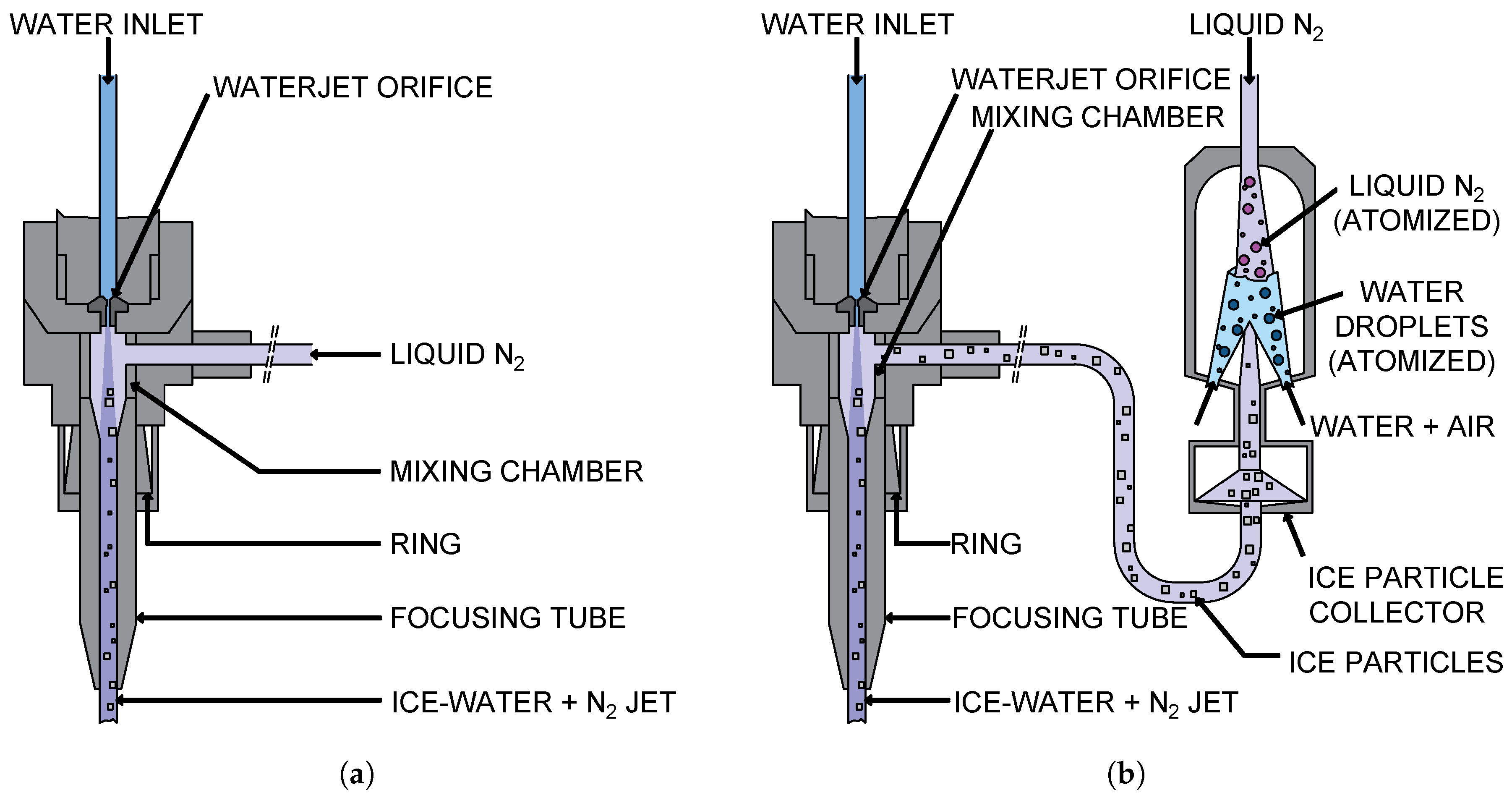
Nowadays, there are two methods that allow us to generate an abrasive ice waterjet: in situ or ex situ methods [34].
  • In situ generation of the ice particles (Figure 6a) is performed by either adiabatic pressure drops across the nozzle or the injection of the cooling media within the jet. The formation of ice particles takes place inside the cutting head, through incorporation into the mixing chamber of a cryogenic fluid, e.g., liquid nitrogen. The liquid nitrogen comes in contact with the water jet helps the transformation of water into ice particles. The three-phase water jet is pushed out of the nozzle comprising of gaseous nitrogen, solid ice and liquid water. With this technology, ice particles with a mean diameter of 91.8 μm can be obtained [34].
  • The ex situ generation of ice particles (Figure 6b) is obtained by freezing atomized water droplets under a cryogenic fluid source. For instance, liquid nitrogen can be used during this process. Water droplets are created in the first stage by spraying a solution of compressed air and water over the nozzles in the lowest section of an external chamber. Throughout the ice-generation process, the liquid nitrogen’s temperature is kept at −196 °C. When liquid nitrogen, which is also atomized, comes into contact with atomized water, the water is transformed into ice particles. Following this procedure, the ice particles produced are gathered into a storage cistern and further chilled. In order to guarantee the adequate production of water droplets and prevent the development of ice blocks surrounding the nozzles, a heating system is activated when the nozzle temperature reaches lower than 30 °C. Finally, a three-phase jet is achieved with a cutting head: this is a mixture of water in solid form, water in liquid form and nitrogen in gaseous form [34].
Table 7 presents a comparison between process parameters and cutting depth reached by ice and other edible abrasives, leveraging the available literature data. There are some disadvantages to abrasive ice waterjet technologies, such as required initial capital investments, the high power required for the intensifier pump, complex operational calibration, lower hardness compared to mineral abrasives at higher temperatures and high energy requirements for cooling. Moreover, future research should also focus on the effect of liquid nitrogen on food products contamination. Nevertheless, the several advantages of this approach warrant researcher and industry attention. In fact, the complete evaporation of the abrasive material is obtained at the end of the cut, leading to no contamination of the processed material and no need for water filtration. Moreover, a significant reduction in the required cutting pressure is needed compared to pure waterjet. When needed, other biocompatible abrasives can be sourced locally on the product.

Author Contributions

Conceptualization, L.B. and M.M.; Data curation, L.B.; Formal analysis, L.B.; Investigation, L.B. and M.M.; Methodology, L.B. and M.M.; Software, L.B.; Supervision, M.M.; Validation, L.B.; Visualization, L.B.; Writing—original draft, L.B. and M.M.; Writing—review and editing, L.B. and M.M.; Resources, M.M.; Project administration, M.M. All authors have read and agreed to the published version of the manuscript.

Funding

This research received no external funding.

Institutional Review Board Statement

Not applicable.

Informed Consent Statement

Not applicable.

Data Availability Statement

Data in Figure 5 are fully reproducible from the paper body. No additional data was generated.

Acknowledgments

During the preparation of this manuscript, the authors used ChatGPT 5.3 Instant for the purposes of grammar revision. The authors have reviewed and edited the output and take full responsibility for the content of this publication.

Conflicts of Interest

The authors declare no conflicts of interest.

References

  1. Liu, X.; Liang, Z.; Wen, G.; Yuan, X. Waterjet machining and research developments: A review. Int. J. Adv. Manuf. Technol. 2019, 102, 1257–1335. [Google Scholar] [CrossRef]
  2. Annoni, M. A Review of Waterjet Cutting Research towards microAWJ and the Definition of the Waterjet Digital Twin. Materials 2024, 17, 1328. [Google Scholar] [CrossRef]
  3. Cui, D.; Li, H.; He, J.; Wang, Q.; Lu, C.; Hu, H.; Cheng, X.; Wang, C. Applications of Water Jet Cutting Technology in Agricultural Engineering: A Review. Appl. Sci. 2022, 12, 8988. [Google Scholar] [CrossRef]
  4. Flow Waterjet. The Basics of a Waterjet Pump, 2025. Available online: https://www.flowwaterjet.com/explore/basics-of-a-waterjet-pump (accessed on 26 March 2026).
  5. Perotti, F.; Monno, M.; Annoni, M. Investigation of the influence of the AWJ-specific energy on the cutting kerf profile on aluminium 6082. Int. J. Adv. Manuf. Technol. 2024, 130, 2799–2809. [Google Scholar] [CrossRef]
  6. Hashish, M. Food Processing with UHP Waterjets. Appl. Sci. 2025, 15, 6246. [Google Scholar] [CrossRef]
  7. Putz, M.; Dix, M.; Morczinek, F.; Dittrich, M. Suspension Technology for Abrasive Waterjet (AWJ) Cutting of Ceramics. Procedia CIRP 2018, 77, 367–370. [Google Scholar] [CrossRef]
  8. Natarajan, Y.; Murugesan, P.K.; Mohan, M.; Liyakath Ali Khan, S.A. Abrasive Water Jet Machining process: A state of art of review. J. Manuf. Processes 2020, 49, 271–322. [Google Scholar] [CrossRef]
  9. Pal, V.K.; Choudhury, S.K. Surface Characterization and Machining of Blind Pockets on Ti6Al4V by Abrasive Water Jet Machining. Procedia Mater. Sci. 2014, 5, 1584–1592. [Google Scholar] [CrossRef]
  10. Azmir, M.A.; Ahsan, A.K.; Rahmah, A.; Noor, M.; Aziz, A.A. Optimization of Abrasive Waterjet Machining Process Parameters Using Orthoganalarray with Grey Relational Analysis. In Proceedings of the Regional Conference on Engineering Mathematics, Mechanics, Manufacturing & Architecture (EM3ARC) 2007, Kuala Lumpur, Malaysia, 27–28 November 2007; pp. 21–30. [Google Scholar]
  11. Chithirai Pon Selvan, M.; Mohana Sundara Raju, N.; Sachidananda, H.K. Effects of process parameters on surface roughness in abrasive waterjet cutting of aluminium. Front. Mech. Eng. 2012, 7, 439–444. [Google Scholar] [CrossRef]
  12. Powell, M. Optimization of UHP Waterjet Cutting Head, the Orifice. In Proceedings of the 2007 American WJTA Conference and Expo, Houston, TX, USA, 19–21 August 2007. [Google Scholar]
  13. Hreha, P.; Radvanská, A.; Cárach, J.; Lehocká, D.; Monková, K.; Krolczyk, G.; Ruggiero, A.; Samardzić, I.; Kozak, D.; Hloch, S. Monitoring of focusing tube wear during abrasive waterjet (AWJ) cutting of AISI 309. Metalurgija 2014, 53, 533–536. [Google Scholar]
  14. Jegaraj, J.J.R.; Babu, N.R. A strategy for efficient and quality cutting of materials with abrasive waterjets considering the variation in orifice and focusing nozzle diameter. Int. J. Mach. Tools Manuf. 2005, 45, 1443–1450. [Google Scholar] [CrossRef]
  15. Nanduri, M.; Taggart, D.G.; Kim, T.J. The effects of system and geometric parameters on abrasive water jet nozzle wear. Int. J. Mach. Tools Manuf. 2002, 42, 615–623. [Google Scholar] [CrossRef]
  16. Karakurt, I.; Aydin, G.; Aydiner, K. Analysis of the kerf angle of the granite machined by abrasive waterjet (AWJ). Indian J. Eng. Mater. Sci. 2011, 18, 435–442. [Google Scholar]
  17. Fowler, G.; Pashby, I.; Shipway, P. The effect of particle hardness and shape when abrasive water jet milling titanium alloy Ti6Al4V. Wear 2009, 266, 613–620. [Google Scholar] [CrossRef]
  18. Junkar, M.; Jurisevic, B.; Fajdiga, M.; Grah, M. Finite element analysis of single-particle impact in abrasive water jet machining. Int. J. Impact Eng. 2006, 32, 1095–1112. [Google Scholar] [CrossRef]
  19. Barton, I. Typical Particle Size Distribution HPX® ADIRONDACK® Garnet Abrasives; Technical Report; Barton International: Gleen Falls, NY, USA, 2018. [Google Scholar]
  20. Radovanović, M. Cost optimization of abrasive water jet cutting using GA. In Proceedings of the Tribological Journal BULTRIB 2013, Sofia, Bulgaria, 18–20 October 2012; Volume III. [Google Scholar]
  21. Radovanovic, M. Multi-Objective Optimization of Abrasive Water Jet Cutting Using MOGA. Procedia Manuf. 2020, 47, 781–787. [Google Scholar] [CrossRef]
  22. Zheng, H.Y.; Han, Z.Z.; Chen, Z.D.; Chen, W.L.; Yeo, S. Quality and cost comparisons between laser and waterjet cutting. J. Mater. Process. Technol. 1996, 62, 294–298. [Google Scholar] [CrossRef]
  23. Hashish, M. Pressure Effects in Abrasive-Waterjet (AWJ) Machining. J. Eng. Mater. Technol. 1989, 111, 221–228. [Google Scholar] [CrossRef]
  24. Thanomputra, S.; Kiatiwat, T. Simulation study of cutting sugarcane using fine sand abrasive waterjet. Agric. Nat. Resour. 2016, 50, 146–153. [Google Scholar] [CrossRef]
  25. Wang, J.; Shanmugam, D. Cutting meat with bone using an ultrahigh pressure abrasive waterjet. Meat Sci. 2009, 81, 671–677. [Google Scholar] [CrossRef] [PubMed]
  26. Water News, E. Water Prices Compared in 36 EU-Cities, 2021. Available online: https://www.waternewseurope.com/water-prices-compared-in-36-eu-cities/ (accessed on 26 March 2026).
  27. Eurostat. Electricity Price Statistics; Eurostat: Luxembourg, 2025; Available online: https://ec.europa.eu/eurostat/statistics-explained/index.php?title=Electricity_price_statistics (accessed on 26 March 2026).
  28. GlobalProductPrices. Salt-Prices by Country, Around the World. GlobalProductPrices. 2025. Available online: https://www.globalproductprices.com/rankings/salt_prices/ (accessed on 26 March 2026).
  29. Persson, S. Mechanics of Cutting Plant Material; American Society of Agricultural and Biological Engineers: St. Joseph, MI, USA, 1987. [Google Scholar]
  30. Franklínsdóttir, H. Application of Water Jet Cutting in Processing of Cod and Salmon Fillets. Master’s Thesis, University of Iceland, Reykjavik, Iceland, 2014. [Google Scholar]
  31. James, J.B.; Ngarmsak, T. Processing of Fresh-Cut Tropical Fruits and Vegetables: A Technical Guide; Food and Agriculture Organization of the United Nations Regional Office for Asia and the Pacific: Bangkok, Thailand, 2016. [Google Scholar]
  32. Lin, J.; Holmes, M.; Vinson, R.; Ge, C.; Pogoda, F.C.; Mahon, L.; Gentry, R.; Seibel, G.E.; Chen, X.; Tao, Y. Design and testing of an automated high-throughput computer vision guided waterjet knife strawberry calyx removal machine. J. Food Eng. 2017, 211, 30–38. [Google Scholar] [CrossRef]
  33. Gupta, K.; Avvari, M.; Mashamba, A.; Mallaiah, M. Ice Jet Machining: A Sustainable Variant of Abrasive Water Jet Machining. In Sustainable Machining; Davim, J.P., Ed.; Springer International Publishing: Cham, Switzerland, 2017; pp. 67–78. [Google Scholar] [CrossRef]
  34. Deo, A.; Bagal, D.K.; Pattanaik, A.K.; Panda, S.N.; Barua, A.; Barkey, R.K.; Jeet, S. Recent advancements in ice jet machining process as an alternative of AWJM. Mater. Today Proc. 2022, 50, 981–985. [Google Scholar] [CrossRef]
  35. McGeough, J.A. Cutting of Food Products by Ice-particles in a Water-jet. Procedia CIRP 2016, 42, 863–865. [Google Scholar] [CrossRef]
  36. United States Department of Agriculture. Frozen Strawberries Grading Manual; Technical Report; United States Department of Agriculture: Washington, DC, USA, 1992.
  37. Wulfkuehler, S.; Dietz, J.; Schmidt, H.; Weiss, A.; Carle, R. Quality of fresh-cut radicchio cv. Rosso di Chioggia (Cichorium intybus L. var. foliosum Hegi) as affected by water jet cutting and different washing procedures. Eur. Food Res. Technol. 2015, 240, 159–172. [Google Scholar] [CrossRef]
  38. Hägele, F.; Nübling, S.; Schweiggert, R.M.; Nolte, L.; Weiss, A.; Schmidt, H.; Carle, R. Comparison of ultra-high-pressure water jet and conventional rotating blade cutting for the production of fresh-cut iceberg (Lactuca sativa L.) and endive (Cichorium endivia L.). Eur. Food Res. Technol. 2016, 242, 2071–2081. [Google Scholar] [CrossRef]
  39. Cantwell, M.; Melo, A.; Hong, G.; Klose, S. Quality of waterjet- and blade-cut romaine salad. Acta Hortic. 2016, 153–158. [Google Scholar] [CrossRef]
  40. Wulfkuehler, S.; Stark, S.; Dietz, J.; Schmidt, H.; Weiss, A.; Carle, R. Effect of Water Jet Cutting and Moderate Heat Treatment on Quality of Fresh-Cut Red Oak Leaf Lettuce (Lactuca sativa L. var. crispa). Food Bioprocess Technol. 2014, 7, 3478–3492. [Google Scholar] [CrossRef]
  41. Tatsumi, Y.; Watada, A.E.; Ling, P.P. Water JET Technology and Salt Treatment Used for Carrot Sticks. HortScience 1992, 27, 651f–651. [Google Scholar] [CrossRef]
  42. Tatsumi, Y.; Watada, A.E.; Ling, P.P. Sodium Chloride Treatment or Waterjet Slicing Effects on White Tissue Development of Carrot Sticks. J. Food Sci. 1993, 58, 1390–1392. [Google Scholar] [CrossRef]
  43. Becker, R.; Gray, G.M. Evaluation of a Water Jet Cutting System for Slicing Potatoes. J. Food Sci. 1992, 57, 132–137. [Google Scholar] [CrossRef]
  44. United States Department of Agriculture. Noncitrus Fruits and Nuts 2023 Summary 7 May 2024; Technical Report; United States Department of Agriculture: Washington, DC, USA, 2023.
  45. Bansal, R.; Walker, J.T. A Study of High Pressure Water Jets for Cutting Chicken Breast Meat. J. Food Process Eng. 1999, 22, 307–318. [Google Scholar] [CrossRef]
  46. Heiland, W.; Konstance, R.; Craig, J. Robotic High Pressure Water Jet Cutting of Chuck Slices1. J. Food Process Eng. 1990, 12, 131–136. [Google Scholar] [CrossRef]
  47. Kasperowicz, M.B.; Chomka, G.P.; Bil, T. Determination of Supply Pressure during Cutting Fish Using High-Pressure Water Stream Taking into Account the Cutting Place and Diameter of the Water Nozzle. Int. J. Food Eng. 2020, 16, 20180395. [Google Scholar] [CrossRef]
  48. Shakouri, E.; Abbasi, M. Investigation of cutting quality and surface roughness in abrasive water jet machining of bone. Proc. Inst. Mech. Eng. Part H J. Eng. Med. 2018, 232, 850–861. [Google Scholar] [CrossRef] [PubMed]
  49. Alitavoli, M.; McGeough, J. An expert process planning system for meat cutting by high pressure water-jet. J. Mater. Process. Technol. 1998, 84, 130–135. [Google Scholar] [CrossRef]
  50. Pogrebnyak, A.; Pogrebnyak, V.; Perkun, I.; Vasyliv, N. Influence of geometric and dynamic parameters of a water-polymer jet on characteristics of food products hydro-cutting process. Ukr. Food J. 2020, 9, 197–208. [Google Scholar] [CrossRef]
  51. Kuck, G.; Schnitkey, G. An Overview of Meat Consumption in the United States. Farmdoc Dly. 2021, 11. Available online: https://farmdocdaily.illinois.edu/2021/05/an-overview-of-meat-consumption-in-the-united-states.html (accessed on 21 April 2025).
  52. King, M.J. Fracture energy during slicing of frozen meat by a vibrating knife. Meat Sci. 1997, 46, 387–399. [Google Scholar] [CrossRef] [PubMed]
  53. King, M.J. Knife and impact cutting of lamb bone. Meat Sci. 1999, 52, 29–38. [Google Scholar] [CrossRef]
  54. King, M.J. Slicing frozen meat with an oscillating knife. Meat Sci. 1999, 51, 261–269. [Google Scholar] [CrossRef] [PubMed]
  55. Desbiolles, J.; Taki, O.; Butler, G. A laboratory evaluation of waterjet cutting of crop residue using the Aqua-Till® liquid coulter. Soil. Tillage Res. 2020, 198, 104537. [Google Scholar] [CrossRef]
  56. Perotti, F.; Annoni, M.; Calcante, A.; Monno, M.; Mussi, V.; Oberti, R. Experimental Study of Abrasive Waterjet Cutting for Managing Residues in No-Tillage Techniques. Agriculture 2021, 11, 392. [Google Scholar] [CrossRef]
  57. Hu, H.; Li, H.; Wang, Q.; He, J.; Lu, C.; Wang, Y.; Wang, C. Performance of waterjet on cutting maize stalks: A preliminary investigation. Int. J. Agric. Biol. Eng. 2019, 12, 64–70. [Google Scholar] [CrossRef]
  58. Nyord, T.; Søgaard, H.; Hansen, M.; Jensen, L. Injection methods to reduce ammonia emission from volatile liquid fertilisers applied to growing crops. Biosyst. Eng. 2008, 100, 235–244. [Google Scholar] [CrossRef]
  59. Valco, T.D.; Coble, C.G.; Ruff, J.H. Water Jet Cutting of Sugarcane. Trans. ASAE 1989, 32, 0373–0378. [Google Scholar] [CrossRef]
  60. Zheng, W.; Jiang, Y.; Ma, X.; Qi, L. Development of a liquid-jet nozzle for fertilizer injection in paddy fields using CFD. Comput. Electron. Agric. 2019, 167, 105061. [Google Scholar] [CrossRef]
  61. Santoro, E.; Soler, E.M.; Cherri, A.C. Route optimization in mechanized sugarcane harvesting. Comput. Electron. Agric. 2017, 141, 140–146. [Google Scholar] [CrossRef]
  62. Pongpat, P.; Gheewala, S.H.; Silalertruksa, T. An assessment of harvesting practices of sugarcane in the central region of Thailand. J. Clean. Prod. 2017, 142, 1138–1147. [Google Scholar] [CrossRef]
  63. Paula Santos, U.; Zanetta, D.M.T.; Terra-Filho, M.; Burdmann, E.A. Burnt sugarcane harvesting is associated with acute renal dysfunction. Kidney Int. 2015, 87, 792–799. [Google Scholar] [CrossRef]
  64. Barbosa, C.M.G.; Terra-Filho, M.; Albuquerque, A.L.P.d.; Giorgi, D.D.; Grupi, C.; Negrão, C.E.; Rondon, M.U.P.B.; Martinez, D.G.; Marcourakis, T.; Santos, F.A.d.; et al. Burnt Sugarcane Harvesting – Cardiovascular Effects on a Group of Healthy Workers, Brazil. PLoS ONE 2012, 7, e46142. [Google Scholar] [CrossRef]
  65. Mugica-Álvarez, V.; Hernández-Rosas, F.; Magaña-Reyes, M.; Herrera-Murillo, J.; Santiago-De La Rosa, N.; Gutiérrez-Arzaluz, M.; De Jesús Figueroa-Lara, J.; González-Cardoso, G. Sugarcane burning emissions: Characterization and emission factors. Atmos. Environ. 2018, 193, 262–272. [Google Scholar] [CrossRef]
  66. Qiu, M.; Meng, Y.; Li, Y.; Shen, X. Sugarcane stem cut quality investigated by finite element simulation and experiment. Biosyst. Eng. 2021, 206, 135–149. [Google Scholar] [CrossRef]
  67. Juenemann, D.; Harms, H.H. Development of a Water Catcher for High Pressure Water Jet Cutting of Agricultural Goods. In Proceedings of the XVIIth World Congress of the International Commission of Agricultural and Biosystems Engineering (CIGR), Québec City, QC, Canada, 13–17 June 2010. [Google Scholar]
  68. Mukherjee, S. Applied Mineralogy: Applications in Industry and Environment; Springer: Dordrecht, The Netherlands, 2011. [Google Scholar]
  69. Barton. Waterjet Abrasive Guide; Barton: Palawan, Philippines, 2020. Available online: https://www.barton.com/waterjet-abrasive-guide/ (accessed on 26 March 2026).
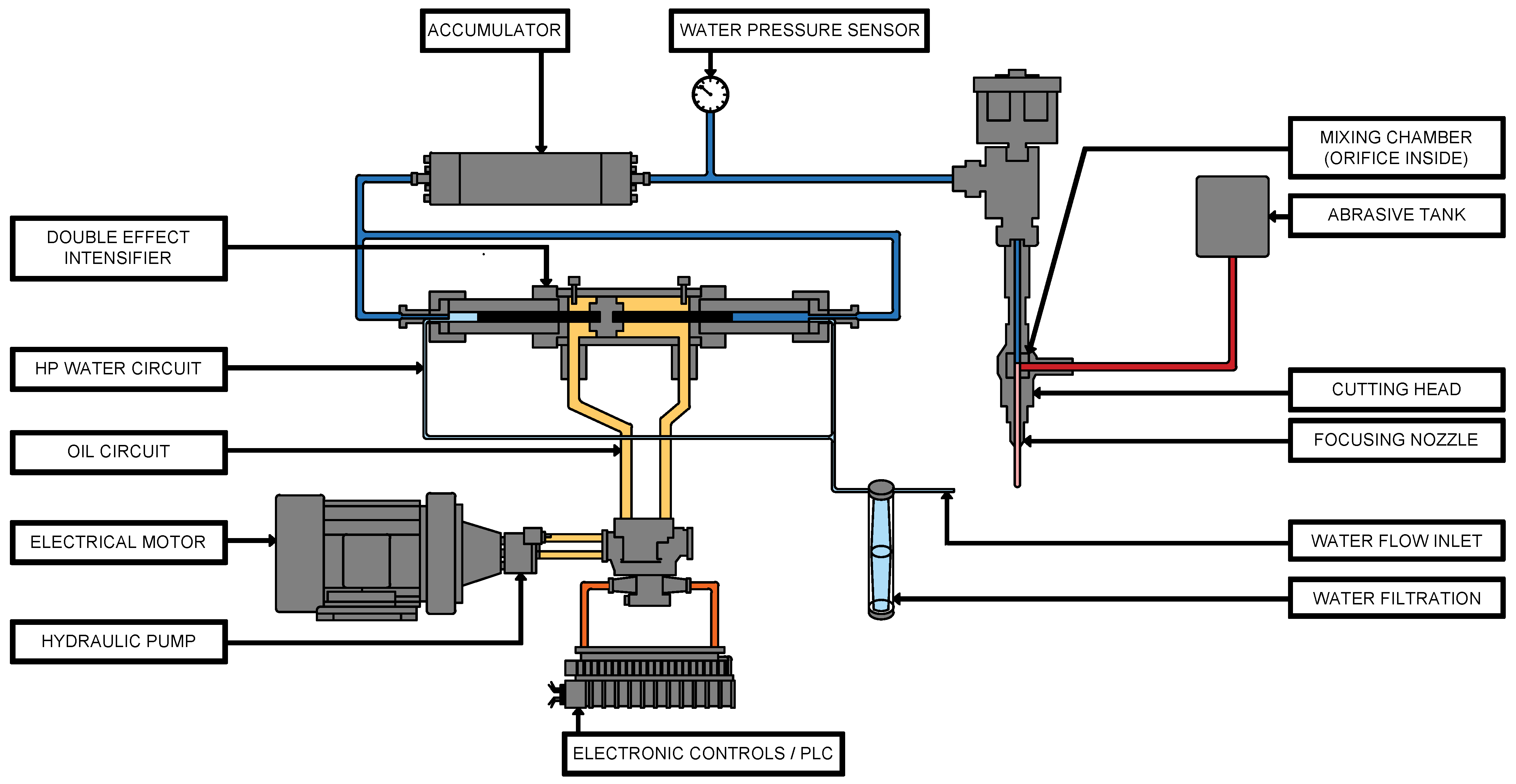
Figure 1. Abrasive waterjet machine key components.
Agriengineering 08 00174 g001
Figure 2. Abrasive waterjet mixing methods: (a) abrasive injection jet; (b) abrasive suspension jet.
Agriengineering 08 00174 g002
Figure 3. Cutting process parameters in abrasive waterjet.
Agriengineering 08 00174 g003
Figure 4. Abrasive particles size and mesh number. Data from garnet abrasives [19].
Agriengineering 08 00174 g004
Figure 5. Effect of process parameters (pressure p, traverse speed v f , and abrasive mass flow rate m ˙ a ) on AWJ costs per unit length c l . The chart is obtained for the following assumptions: l = 0.1 m, ρ = 1000 kg/m3, c d = 0.7 [23], A n = 0.05 mm2 [24,25], η = 0.9 , t 0 = 0.1 min, t w l , o r i f i c e = 100 h (sapphire), t w l , n o z z l e = 100 h, t w l , m i x = 300 h, t w c , o r i f i c e = 3 min, t w c , n o z z l e = 2 min, t w c , m i x = 10 min, i = 200 , 000 € [22], d = 10 y, t u = 2000 h/y, c o h = 10 , 000 €/y, c s w = 3 €/m3 [26], c s e = 0.19 €/kWh [27], c s a = 0.89 €/kg (salt) [28], c s l a b = 30 / h , c w , o r i f i c e = 14 €(sapphire), c w , n o z z l e = 80 €, c w , m i x = 160 €.
Agriengineering 08 00174 g005
Figure 6. Abrasive ice waterjet (AWJ) technologies: (a) in situ ice AWJ; (b) ex situ ice AWJ.
Agriengineering 08 00174 g006
Table 1. Typical pure waterjet parameters for different soft, plant-based products reported in the literature. UHP stands for ultra-high-pressure waterjets. N.a. stands for not available.
Refs.ApplicationPressureOrifice DiameterTraverse SpeedStand-Off DistanceCutting Depth
--[MPa] [mm] [m/s] [mm] [mm]
[3,37,40]Lettuce, radicchio, endive2500.10n.a.n.a.Full cut
[6]Celery2070.18n.a.n.a.Full cut
[6]Carrots207–2760.18n.a.n.a.90
[6,43]Potatoes207; UHP: 6000.076–0.152; UHP: 0.13<0.15; UHP: 0.643UHP: 75
[6]OnionsUHP: 600 (even lower)n.a.n.a.n.a.Full cut
[6]Lemon peeling245n.a. (fan-type jet)0.575–100n.a.
Table 2. Qualitative comparison between conventional cutting methods (manual/mechanical) and pure waterjet (PWJ) for soft, plant-based products.
AspectManual/Mechanical CuttingPWJ Cutting
Cutting mechanismDirect blade contactNon-contact waterjet
Tool wearHigh (frequent sharpening/change required)Consumables (nozzles, orifices and mixing chambers)
Cross-contamination riskPossible (blade contact)Reduced
Microbial loadLow–moderateLow (comparable or slightly reduced)
Tissue damageModerate (compression and tearing)Reduced (minimal mechanical stress)
BrowningMore pronouncedReduced
Shelf-lifeStandardExtended
Shape flexibilityLimited (mainly straight cuts)High (complex shapes possible)
Cleaning requirementsFrequent sanitation neededReduced sanitation needed
Process robustnessHigh (simple systems)Sensitive to parameter selection
Equipment costLowHigh
Table 3. Pure waterjet (PWJ) and abrasive waterjet (AWJ) parameters for animal products reported in the literature. N.a. stands for not available.
Refs.ApplicationJet TypePressureOrifice DiameterTraverse SpeedCutting DepthKerf WidthSurface Roughness
---[MPa][mm][m/s][mm][mm][μm]
[6,45]PoultryPWJ179–3800.076–0.127<0.1Full cutn.a.n.a.
[30]FishPWJ200–3500.12–0.150.3–0.9Selective cuttingn.a.n.a.
[50]Fish (frozen)AWJ (PEO)50–1500.35–0.600.015–0.1<180n.a.n.a.
[46]Meat (no bone)PWJ3800.150.1819n.a.n.a.
[25]Meat (bone)AWJ (salt)4000.2540.0544<1n.a.
[48]Meat (bone)AWJ (sugar, bone meal)3500.358.3 × 10 4 n.a.n.a.Ra: 3.87–7.36; Rz: 19.72–54.76
[50]Meat (no bone, frozen)AWJ (PEO)50–1500.35–0.600.015–0.1<85n.a.n.a.
Table 4. Qualitative comparison between conventional cutting methods, pure waterjet (PWJ) and abrasive waterjet (AWJ) for animal products.
AspectManual/MechanicalPWJAWJ (Edible Abrasives)
Cutting mechanismBlade/saw contactPure water jetWater jet and abrasive particles
Cutting capability (soft tissue)GoodExcellentExcellent
Cutting capability (bone)Good (saws)Limited (surface scoring)Good (improved penetration)
Need for pre-coolingRequiredRequiredNot required
Kerf width/meat lossModerateLowLow
Surface qualityGood (depends on blade sharpness)Good (clean cuts)Improved (especially on bone)
Tissue damageModerate/HighReducedReduced
Cross-contamination riskPossible (tool contact)ReducedReduced (possible influence of abrasive)
Tool wearHigh (blade wear)Consumables (nozzles and orifices)Consumables (nozzles, orifices and mixing chambers)
Process complexityLowModerateHigh (abrasive handling)
Industrial maturityEstablishedEstablished (soft tissue)Emerging
Table 5. Pure waterjet (PWJ) and abrasive waterjet (AWJ) parameters for field applications (weeding, anti-blocking, soil and harvesting) reported in the literature. N.a. stands for not available.
Refs.ApplicationJet TypePressureOrifice DiameterTraverse SpeedStand-Off DistanceCutting Depth
--- [MPa] [mm] [m/s] [mm] [mm]
[3]Jet WeedingPWJ30–300Nozzle: 0.4–1.51–5100Full cut
[55,57]Anti-blockingPWJ280–380Nozzle: 0.15–0.301.66–3.33<10Full-cut
[56]Anti-blockingAWJ: garnet2250.301.1–2.250–15015–25 (Full-cut)
[58,60]Jet fertilizationPWJ2–12Nozzle: 0.8–10.6–0.810–3019–70
[59]Sugarcane harvestingPWJ400Nozzle: 0.36n.a.n.a.Full cut
[3,24]Sugarcane harvestingAWJ360Orifice: 0.25, Nozzle: 0.760.31–1.22<21030–120 (Full-cut)
Table 6. Qualitative comparison between conventional agricultural methods and pure waterjet (PWJ)/abrasive waterjet (AWJ) for field applications.
ApplicationAspectConventional MethodsPWJ/Liquid JetAWJ
Weeding and anti-blockingCutting mechanismBlade/mechanical contactPure water jetWater jet with abrasives
Tool wearHigh (stem contact)Consumables (nozzles and orifices)Consumables (nozzles, orifices and mixing chambers)
Openers blockingPossibleReducedReduced
Environmental impactHigh (chemicals)LowLow
Cutting capability (fibrous plants)GoodLimitedImproved
FertilizationWorking principleSpokes/furrow openersJet injection (liquid jet)Not applicable
Fertilizer deliverySurface spreadingDirect injection near rootsNot applicable
Holes blockagePossibleReducedNot applicable
HarvestingCutting mechanismBlade/mechanical systemsPure water jetWater jet with abrasives
Cutting capability (soft crops)GoodGoodGood
Cutting capability (fibrous crops)GoodLimitedImproved
System integrationEstablishedChallenging (water tanks, pressure systems)Challenging (water tanks, pressure systems, abrasive)
Industrial maturityHighEmergingEmerging
Table 7. Comparison of food-grade abrasives (salt, sugar, ice) in abrasive waterjet applications based on the available literature data. N.a. stands for not available.
Ref.Jet TypePressureOrifice DiameterTraverse SpeedStand-Off DistanceCutting Depth
-- [MPa] [mm] [m/s] [mm] [mm]
[25]Salt AWJ4000.2540.05n.a.44 (meat with bone)
[48]Sugar AWJ3500.358.3 × 10 4 n.a.n.a. (Ra: 3.87–7.36; Rz: 19.72–54.76)
[35]Ice AWJ4460.350.0009–0.00170.35–3<18 (wood, +50% vs. PWJ); +40% vs. PWJ (bones); garnet (cut-through)
Disclaimer/Publisher’s Note: The statements, opinions and data contained in all publications are solely those of the individual author(s) and contributor(s) and not of MDPI and/or the editor(s). MDPI and/or the editor(s) disclaim responsibility for any injury to people or property resulting from any ideas, methods, instructions or products referred to in the content.