Article

Microbial Bio-Inoculation Effects on the Seed Germination Dynamics and Field Performance of Pea (Pisum sativum L.) Under Osmotic Stress and Fertilization in the Amazonas Region of Peru


by
Francisco Guevara-Fernández
1,*,
Sebastian Casas-Niño
2,
Milagros Ninoska Munoz-Salas
3,
Wagner Meza-Maicelo
1,4,5,
Manuel Oliva-Cruz
1,4 and
Flavio Lozano-Isla
1,4,5,*
1
Instituto de Investigación para el Desarrollo Sustentable de Ceja de Selva (INDES-CES), Universidad Nacional Toribio Rodríguez de Mendoza de Amazonas (UNTRM), Chachapoyas 01001, Amazonas, Peru
2
Dirección de Servicios Estratégicos Agrarios—Estación Experimental Agraria El Chira, Instituto Nacional de Innovación Agraria (INIA), Piura 20120, Piura, Peru
3
Department of Earth and Environment, Institute of Environment, Florida International University, Miami, FL 33199, USA
4
Facultad de Ingeniería y Ciencias Agrarias, Universidad Nacional Toribio Rodríguez de Mendoza de Amazonas (UNTRM), Chachapoyas 01001, Amazonas, Peru
5
Centro de Investigación e Innovación en Granos y Semillas, Universidad Nacional Toribio Rodríguez de Mendoza de Amazonas (UNTRM), Chachapoyas 01001, Amazonas, Peru
*
Authors to whom correspondence should be addressed.
AgriEngineering 2026, 8(4), 155; https://doi.org/10.3390/agriengineering8040155

Submission received: 10 February 2026 / Revised: 1 April 2026 / Accepted: 8 April 2026 / Published: 10 April 2026
(This article belongs to the Section Sustainable Bioresource and Bioprocess Engineering)

Abstract

Microbial bio-inoculants have been proposed as management tools to enhance crop performance under variable environmental conditions; however, their effectiveness is often influenced by site-specific factors. This study evaluated the effects of bio-inoculation on seed germination and seedling vigor of pea under osmotic stress induced by polyethylene glycol (PEG 6000), and its interaction with two fertilization levels (75% and 100% of the recommended dose) under field conditions in the Amazonas region of Peru. Under laboratory conditions, germination percentage remained high across all treatments (93.3–100%) and was not affected by bio-inoculation or osmotic potential; however, osmotic stress altered germination dynamics, increasing mean germination time from 1.85–2.09 days at 0 MPa to 2.26–2.43 days at −0.8 MPa, while germination synchrony and seedling vigor decreased as stress increased. The seedling vigor index reached maximum values at −0.2 MPa (4.47–5.29) and declined at −0.8 MPa (1.50–2.00), and multivariate analyses showed that variation in germination responses was mainly associated with germination timing and vigor rather than seed viability. Under field conditions, no significant effects of fertilization level, microbial bio-inoculation, or their interaction were detected on agronomic traits or yield, although variability between locations was observed; plant height ranged from 38.5–46.3 cm in Lamud and from 100.6–108.3 cm in Molinopampa, while grain yield varied from 698–1846 kg/ha and 8771–9919 kg/ha, respectively. Overall, environmental conditions exerted a stronger influence than microbial bio-inoculation on germination dynamics and field productivity, while the findings provide practical guidance for improving pea production with bio-inoculants and optimized fertilization.

1. Introduction

Pea (Pisum sativum L.) is a widely cultivated cool-season legume, valued for its high protein content, its contribution to human nutrition, and its ability to enhance soil fertility through biological nitrogen fixation [1,2]. Furthermore, it is a key component of sustainable cropping systems due to its low input requirements and its compatibility with cereal-based rotations [3]. In developing regions, such as the Andean and Amazonian areas of South America, its production is vital for food security, although yields remain vulnerable to environmental factors and suboptimal nutritional management [4]. In this context, in the Amazonas region, peas are consistently cultivated and consumed, featuring diverse ecotypes with varying agronomic characteristics [5]. In previous studies, it has been reported that the use of bioinoculants improves growth, photosynthetic efficiency, and crop yield; furthermore, their application alongside mineral fertilization allows for a reduction in fertilizer use without affecting yield [6,7]. However, in the Amazonas region, there is still limited evidence regarding their application in local production systems, highlighting the need to generate specific information for these conditions.
Among abiotic constraints, water limitation is one of the most critical factors affecting legume establishment, early seedling growth, and final yield [8,9,10,11]. Climate change projections indicate an increasing frequency and intensity of drought events, particularly in rainfed agricultural systems, thereby exacerbating climatic risk during sensitive phenological stages such as germination and early vegetative development [12,13]. In peas and other legumes, drought stress impairs germination kinetics and delays seedling emergence, reduces biomass accumulation, and ultimately limits yield formation through constraints on water uptake and early growth processes, while concurrently restricting enzymatic activity, carbon assimilation, and overall photosynthetic efficiency [2,14]. Controlled osmotic stress induced by polyethylene glycol (PEG) has therefore been widely adopted as a reliable experimental approach to simulate drought conditions during germination, allowing precise assessment of seed physiological responses under reduced water potential [15,16].
In parallel with water availability, nutrient management—particularly nitrogen fertilization—remains a major determinant of pea productivity. Although peas possess symbiotic nitrogen-fixing capacity, mineral nitrogen inputs are often required to support early growth and maximize yield, especially under stress conditions or in soils with limited biological activity [17]. However, excessive fertilization increases production costs and environmental impacts, while drought conditions can further reduce nutrient use efficiency by limiting root activity and nutrient uptake [18,19,20]. Consequently, strategies that improve plant resilience while reducing dependence on full fertilizer doses are increasingly prioritized in sustainable legume production systems.
Another major limitation in pea-based systems is the continued reliance on synthetic fertilizers. Although mineral nitrogen (N) and phosphorus (P) inputs can enhance productivity, excessive fertilizer use contributes to soil acidification, nutrient imbalances, and negative environmental externalities, including eutrophication and greenhouse gas emissions [21,22]. Sustainable intensification therefore requires management practices that improve nutrient-use efficiency while enabling partial substitution of chemical fertilizers without yield penalties. In this context, bio-inoculation with plant growth-promoting microorganisms (PGPM), including Bacillus, Azospirillum, and Trichoderma spp. has emerged as a promising strategy [23,24,25]. These microorganisms promote crop growth through multiple mechanisms, such as phytohormone production, biological nitrogen fixation, nutrient solubilization, and stress mitigation mediated by 1-aminocyclopropane-1-carboxylate (ACC) deaminase activity and improved osmotic adjustment [26,27].
Bioinoculation in legumes contributes to productive sustainability and the stability of the soil–plant system [28,29,30]. In pea, inoculation with Bacillus, Azospirillum, and Trichoderma spp. has been associated with improvements in germination, nodulation, nutrient uptake, and stress tolerance through modulation of root architecture and enhanced rhizosphere interaction [31,32]. Beyond direct plant growth promotion, microbial inoculants contribute to soil ecological stability by stimulating beneficial microbial consortia and increasing enzyme activities linked to nitrogen and phosphorus cycling [33,34]. In particular, Bacillus spp. have been shown to alleviate drought stress through ACC deaminase activity, proline accumulation, and osmolyte production, thereby improving seedling establishment under water-limited conditions [35,36]. Likewise, the co-application of microbial inoculants with reduced fertilizer rates (or without fertilization) allows maintaining or increasing yield while improving soil functionality under environmental stress conditions [37,38,39].
Despite growing evidence of microbial benefits under controlled conditions, results from field studies remain inconsistent, particularly when bio-inoculation is combined with varying fertilization regimes [40,41,42]. While some studies report improved emergence, growth, and yield under reduced fertilizer inputs, others suggest that favorable environmental conditions may mask microbial effects, especially during germination when water availability is tightly regulated [12,43]. Moreover, most studies focus either on laboratory-based germination assays or on field performance, with limited integration of both scales within a single experimental framework. This gap constrains the translation of early physiological responses into agronomically meaningful outcomes.
In the Amazonian region of Peru, where climatic variability, episodic water stress, and heterogeneous soil fertility frequently constrain legume production, integrated evaluations of bio-inoculation under both controlled and field conditions are particularly relevant. Assessing whether microbial inoculants can enhance drought resilience during early development and support yield formation under reduced fertilization offers a promising pathway toward more resilient and resource-efficient pea-based production systems.
Therefore, the objectives of this study were (i) to evaluate the effects of bio-inoculation on pea seed germination and seedling biomass under simulated drought stress induced by PEG 6000 under controlled conditions, and (ii) to assess the interaction between bio-inoculation and two fertilization levels (75% and 100% of the recommended dose) on emergence, growth, and yield of pea under field conditions in the Amazonas region of Peru. By integrating laboratory and field experiments, this study aims to provide both mechanistic and agronomic insights into the potential of microbial inoculants to enhance stress resilience while reducing fertilizer requirements in pea production systems.

2. Materials and Methods

2.1. Study Area

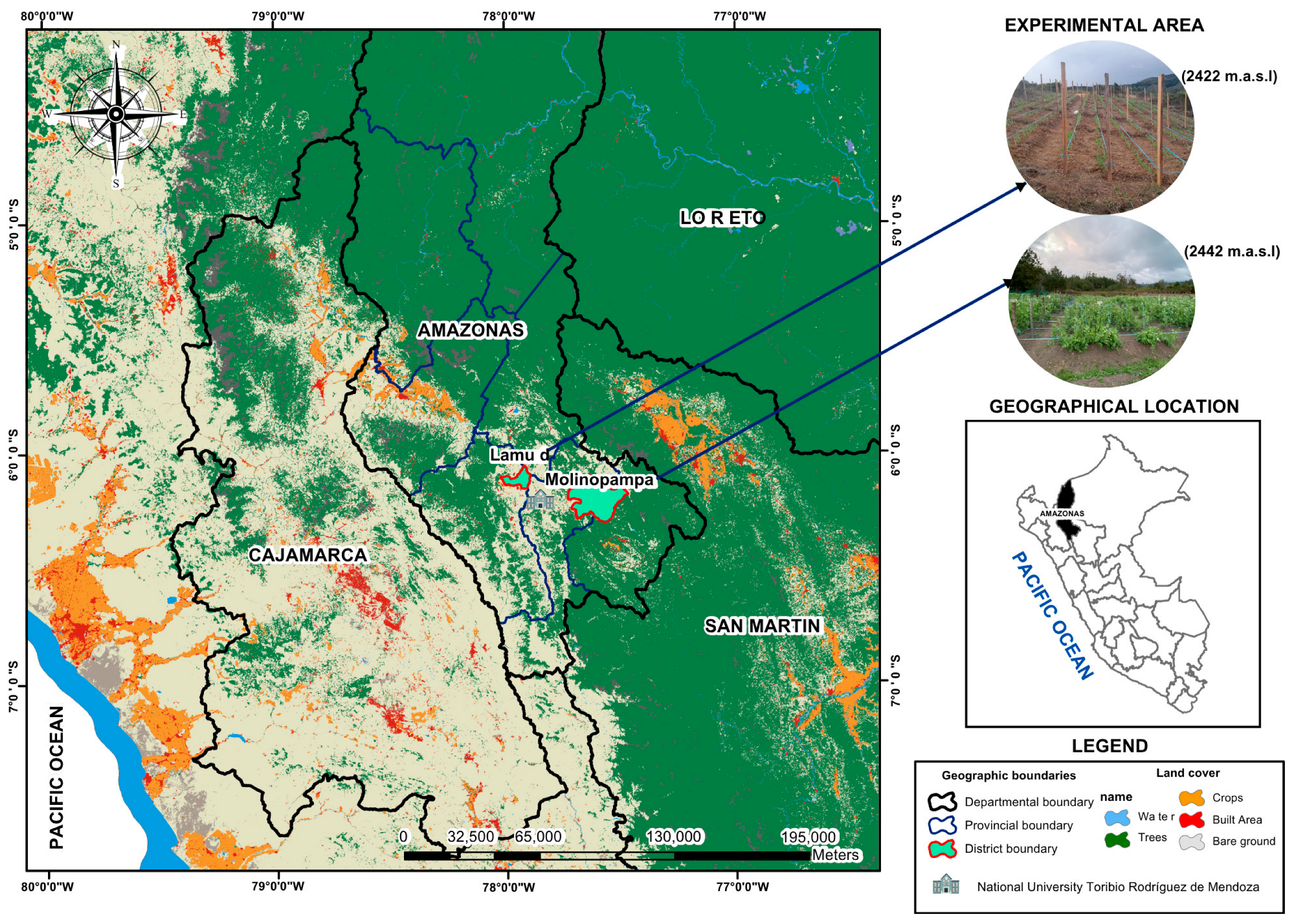
The study was conducted in two phases: laboratory assays for germination analysis and field trials. Laboratory experiments were carried out at the Laboratorio de Suelos y Aguas (LABISAG), Universidad Nacional Toribio Rodríguez de Mendoza de Amazonas (UNTRM), Chachapoyas, Peru. Field trials were established in two contrasting sites of the Amazonas region: Lamud (−6.1444° S, −77.9326° W; 2422 m.a.s.l., Luya Province) and Molinopampa (−6.2084° S, −77.6737° W; 2442 m.a.s.l., Chachapoyas Province) (Figure 1).

2.2. Plant Material

Seeds of pea cultivar ‘INIA-102 Usui’ (99% varietal purity, 98% germination, 13% seed moisture) were used. This cultivar is widely cultivated in the Peruvian highlands for its yield potential, adaptability to variable environments, and disease tolerance [44].

2.3. Germination Experiment Design

The germination experiment was established using a Randomized Complete Block Design (RCBD) with a two-factor arrangement and three replicates. The first factor consisted of three bioinoculants (Table 1), and the second factor comprised five osmotic potential levels (0, −0.2, −0.4, −0.6, and −0.8 MPa). These levels were generated using polyethylene glycol 6000 (PEG 6000) and calculated according to the Michel and Kaufmann equation [45,46].
Thirty seeds per treatment were placed in sterile plastic germination boxes (20 × 12 × 5 cm) lined with two layers of filter paper. This seed quantity is justified by similar numbers reported in germination tests [47], ensuring a reliable evaluation of germination parameters. Each box was initially moistened with 20 mL of PEG solution, and an additional 15 mL was replenished on day 3. Boxes were incubated at 28 °C under a 12/12 h light/dark photoperiod. Daily observations were made to monitor radicle emergence following the International Rules for Seed Testing [48]. To quantify germination performance and seed vigor, the following indices were calculated: germination percentage (%, GP), mean germination Time (days, MGT) and germination synchrony (SYN). These metrics were derived via the equations described and implemented in the GerminaR R package [49].
Seedling morphometric measurements were collected at the end of the germination experiment at 7 days after sowing to assess early-stage biomass accumulation and physiological performance. The seedling vigor index (SVI) was used to assess early plant development under stress conditions by combining seed germination capacity and seedling growth performance [50]. The SVI was calculated using the formula:
SVI = W r ¯ × G P ¯
where W r ¯ is the mean root weight, expressed in grams (g), and G P ¯ represents the average germination percentage of the seeds, expressed as a percentage (%).

2.4. Field Trials and Management

Field trials were carried out in Lámud from March to June of 2024, and in Molinopampa from June to September of 2024.A RCBD was used with three replicates per treatment. Each plot measured 8.1 m2 with row spacing of 0.70 m and intra-row spacing of 0.10 m (0.05 m sowing depth). Planting density was 142,857 plants/ha. The crop was grown using a trellis system for support [44].
Soils differed markedly between sites, with Lámud characterized by alkaline pH and low phosphorus, and Molinopampa by acidic pH with higher phosphorus and potassium availability (Table 2). Lámud soils were alkaline (pH 8.38), with low phosphorus availability (3.04 mg/kg), moderate potassium (338.9 mg/kg), and relatively lower organic matter (3.99%). In contrast, Molinopampa soils were acidic (pH 5.45), with higher phosphorus (16.61 mg/kg), elevated potassium (461.2 mg/kg), and higher organic matter content (4.83%). Electrical conductivity was also greater in Molinopampa (0.34 dS/m) compared to Lámud (0.16 dS/m). Such soil variability reflects the edaphic heterogeneity typical of the Peruvian inter-Andean valleys, where fertility constraints and pH extremes can significantly influence pea productivity.
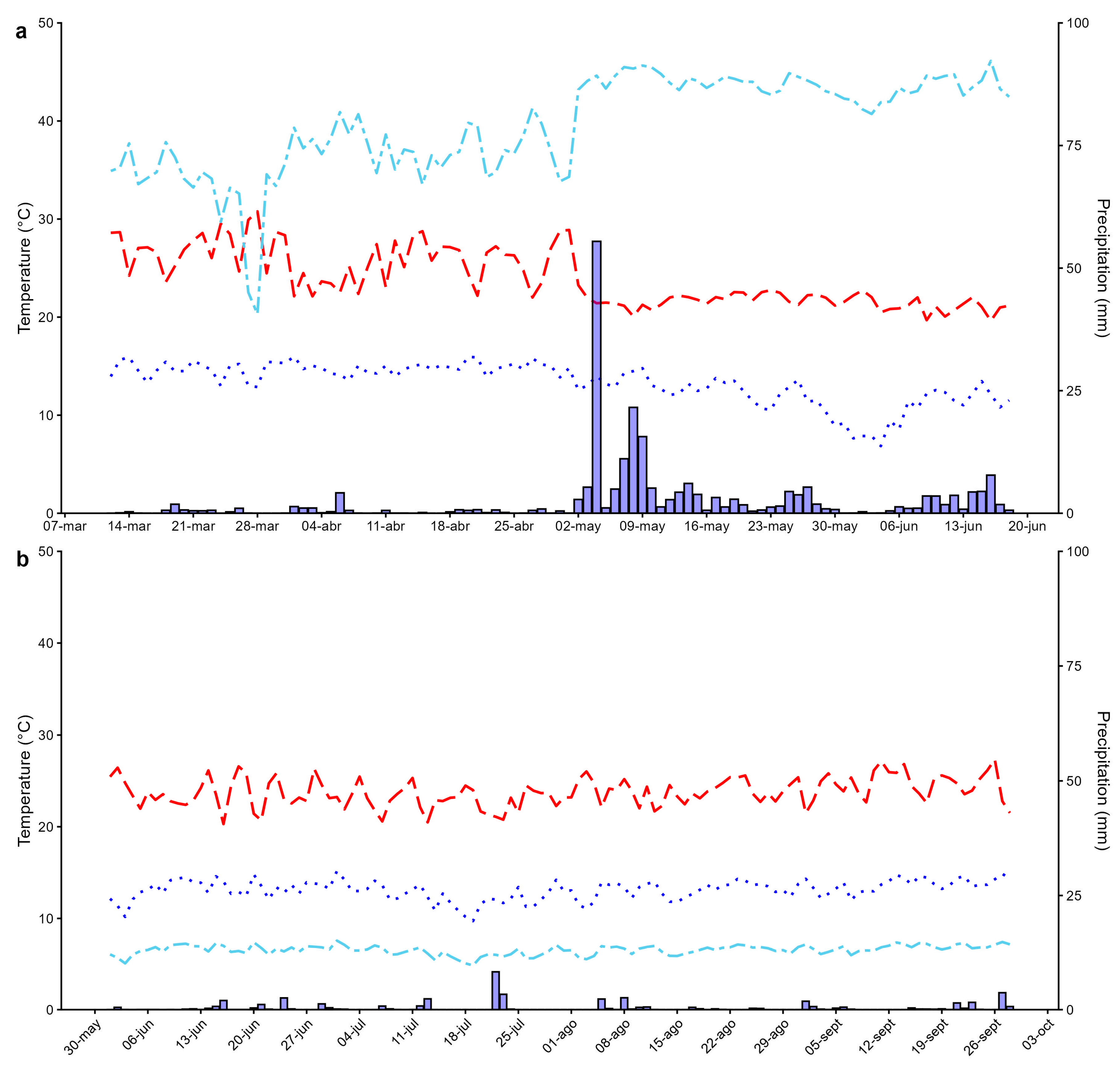
Climatic conditions during the experimental period were monitored at both sites [51]. The average maximum temperature was slightly higher in Lamud (23.9 °C) compared to Molinopampa (23.7 °C). Similarly, Lamud had a slightly higher average minimum temperature (13.3 °C) than Molinopampa (13.1 °C). Relative humidity also showed a wider range in Lamud, from 40.6% to 92.3%, while in Molinopampa it ranged from 58.4% to 84.9%. Lamud received significantly more precipitation during the crop cycle (229.4 mm) than Molinopampa (46.5 mm) (Figure 2).
Pest control consisted of a single application of cypermethrin (Aphis spp. in Lámud; crickets in Molinopampa), while fungicides were avoided to prevent interference with inoculant activity. Fertilization treatments included 100% and 75% of the recommended dose (150 kg N/ha, 45.8 kg P2O5/ha, 120 kg K2O/ha). The 100% fertilization level was used as the control treatment because it represents conventional farmer practice, where high fertilizer rates are applied, generating economic losses and environmental pollution [52]. Fertilization was applied 20 days after planting (DAP), using urea and diammonium phosphate in localized holes 5–10 cm from the plants to optimize nutrient uptake and minimize losses. Crop management practices included manual weeding at 30 and 45 DAP and hilling at 45 DAP.
Evaluated variables in the first stage included germination percentage (GRP, %), mean germination time (MGT), synchronization index (SYN), and seedling vigor index (SVI); whereas in the field stage, evaluated variables encompassed days to 50% flowering (NDF), plant height at flowering (PLH, cm), number of pods per plant (PTN), average pod weight (PTW, g), and total green pod yield (YLD, kg/ha).

2.5. Statistical Analysis

All statistical analyses and graphical outputs were performed using R software, version 4.5.2 [53]. Germination indices were calculated using the GerminaR 2.1.6 package [49]. A linear mixed-effects model was fitted to evaluate treatment effects, providing greater robustness to potential deviations from normality and homoscedasticity [54].
For germination variables, the following model was used:
Y i j k = μ + B k + I i + P j + I × P i j + ε i j k
where Y i j k represents the observed value of the germination variable, μ the overall mean, B k the random effect of block, I i the fixed effect of inoculant type, P j the fixed effect of PEG level, I × P i j the interaction effect between inoculant and PEG and ε i j k the residual error.
For field variables, the model was defined as:
Y i j k l = μ + B l + I i + F j + S k + I × F i j + ε i j k l
where Y i j k l represents the observed value of the agronomic variable, μ the overall mean, B l the random effect of block, I i the fixed effect of inoculant type, F j the fixed effect of fertilization level, S k the fixed effect of site, I × F i j the interaction effect between inoculant and fertilization and ε i j k l the residual error.
Analysis of variance (ANOVA) was applied to the fitted models, and post hoc comparisons were conducted using Tukey’s Honest Significant Difference (HSD) test at a significance level of α < 0.05, using the emmeans 2.0.0 package [55].
Principal component analysis (PCA) was employed to explore multivariate relationships among germination variables across different levels of PEG-induced osmotic stress, as well as among agronomic variables evaluated under different inoculant types and doses. PCA was performed using the FactoMineR 2.12 R package [56]. Detailed information about the statistical analysis is provided in the Supplementary File S1.

3. Results

3.1. Germination Analysis

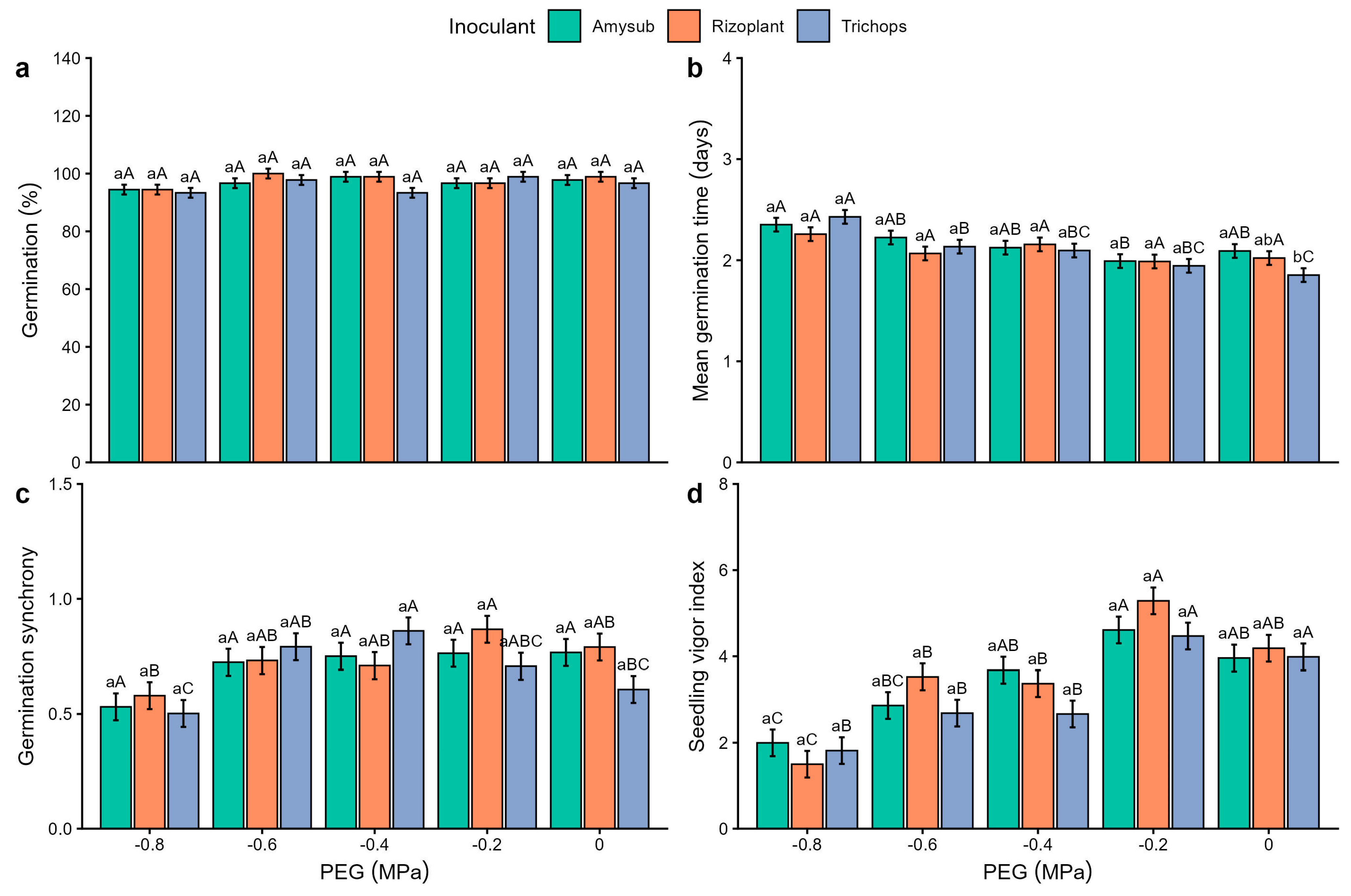
Early germination responses under osmotic stress provide a sensitive indicator of seed physiological performance and potential field establishment under water-limited conditions. Germination responses of pea seeds subjected to PEG-induced osmotic stress are presented in Figure 3.
Germination percentage remained consistently high across all osmotic potentials and microbial inoculant treatments (Figure 3a). Mean germination values ranged from 93.3% to 100%, and neither osmotic potential nor inoculant type exerted a statistically significant effect on final germination percentage (p > 0.05). Mean germination time (MGT) was significantly influenced by osmotic potential (p < 0.05; Figure 3b). At the most negative water potential (−0.8 MPa), MGT ranged from 2.26 to 2.43 days, whereas progressively shorter germination times were observed as osmotic stress decreased, reaching 1.85–2.09 days at 0 MPa. Inoculant effects were not detected at −0.8 MPa; however, significant differences among microbial treatments were observed at −0.6, −0.4, −0.2, and 0 MPa. At 0 MPa, seeds treated with Trichops exhibited the shortest mean germination time (1.85 days).
The germination synchrony (SYN) increased significantly with decreasing osmotic stress (p < 0.05; Figure 3c). Values ranged from 0.50–0.58 at −0.8 MPa and increased to 0.61–0.79 at 0 MPa. Significant differences among inoculant treatments were detected at all osmotic potentials, with Trichops generally showing lower synchronization values compared with Amysub and Rizoplant. Seedling vigor index (SVI) was strongly affected by osmotic potential (p < 0.05; Figure 3d). At −0.8 MPa, SVI values ranged from 1.50 to 2.00, increasing markedly at less negative potentials and peaking at −0.2 MPa (4.47–5.29). High vigor values were maintained at 0 MPa (3.96–4.19). No statistically significant differences among inoculant treatments were detected within individual PEG levels.

3.2. Multivariate Analysis of Germination Under Drought Simulated Stress

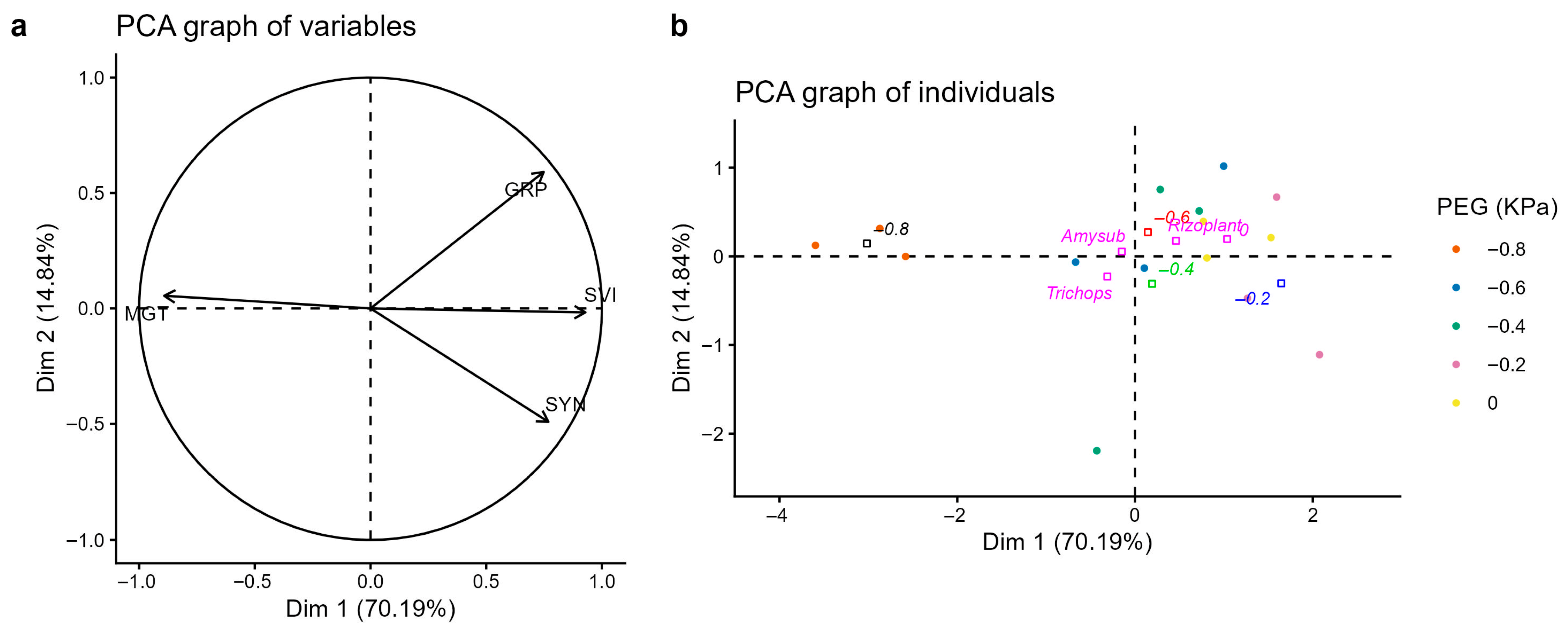
To capture the joint variation among germination traits under osmotic stress, a multivariate analysis was applied. Principal component analysis (PCA, Figure 4) was conducted using germination percentage (GRP, %), mean germination time (MGT, days), synchronization index (SYN, dimensionless), and seedling vigor index (SVI, dimensionless).
The first two principal components accounted for 85.03% of the total variance in the dataset (Figure 4a). Principal component 1 (PC1) explained 70.19% of the total variance and was primarily associated with mean germination time (MGT), which exhibited a strong negative loading on this axis. Germination percentage (GRP) and seedling vigor index (SVI) contributed positively along PC1, whereas their associations with PC2 were comparatively weaker. Principal component 2 (PC2), explaining 14.84% of the variance, was mainly driven by the germination synchrony (SYN), which showed a strong positive loading on this axis.
The PCA for the variables revealed a separation of treatments according to osmotic potential (Figure 4a). Observations corresponding to −0.8 MPa were predominantly distributed on the positive side of PC1, reflecting their association with longer germination times. In contrast, treatments at −0.2 MPa and 0 MPa clustered toward the negative region of PC1 and the positive region of PC2, consistent with higher seedling vigor and synchronization values.
The PCA of individuals (Figure 4b) indicated that osmotic stress level was the primary factor structuring germination responses. Treatments at −0.8 MPa were associated with higher mean germination time, reflecting delayed germination under severe stress, whereas the highest synchronization and vigor index was observed at −0.2 MPa, indicating more coordinated germination at moderate osmotic potential. Although no clear separation among bio-inoculant treatments was detected, seeds inoculated with Rizoplant tended to be positioned closer to regions associated with higher seedling vigor, suggesting comparatively improved germination development without forming distinct clusters.
The orientation of the vectors further revealed an inverse relationship between mean germination time and seedling vigor index, with shorter germination times corresponding to higher vigor, confirming that osmotic potential exerted a greater influence on germination behavior than bio-inoculation.

3.3. Field Trial Bio-Inoculation–Fertilization Interaction

Field evaluation is necessary to determine whether responses observed under controlled conditions are maintained under agronomic environments where multiple factors act simultaneously. Agronomic responses were therefore evaluated across two contrasting field locations to assess potential bio-inoculation–fertilization interactions. Estimated marginal means for all agronomic variables are presented in Table 3.
Plant height exhibited strong site-dependent variation. In Lamud, plant height ranged from 38.52 cm (Rizoplant, unfertilized) to 46.29 cm (Trichops, 75% dose), with no significant differences detected among inoculant treatments within fertilization levels. In contrast, plants grown in Molinopampa were substantially taller, with heights ranging from 100.57 cm (Rizoplant, unfertilized) to 108.34 cm (Trichops, 75% dose), regardless of inoculation or fertilization regime. Flowering time was also primarily influenced by site. In Lamud, flowering occurred between 56.12 and 57.37 days after sowing, whereas in Molinopampa flowering was delayed, occurring between 66.71 and 67.96 days. No significant effects of inoculant type or fertilization level were detected within either site.
Pod weight displayed environmental effects. In Lamud, pod weights ranged from 4.89 to 12.92 g across treatments, while substantially higher pod weights were observed in Molinopampa, ranging from 61.40 to 69.43 g. Similarly, the number of pods per plant was markedly lower in Lamud (2.08–2.51 pods per plant) compared with Molinopampa (12.42–12.86 pods per plant), with no detectable treatment effects within sites. Green pod yield showed the strongest site-driven contrast. In Lamud, yield ranged from 697.98 to 1846.05 kg/ha across treatments, whereas Molinopampa yields were consistently higher, ranging from 8770.64 to 9918.70 kg/ha. Within each site, neither inoculant type nor fertilization level produced statistically significant differences in yield.
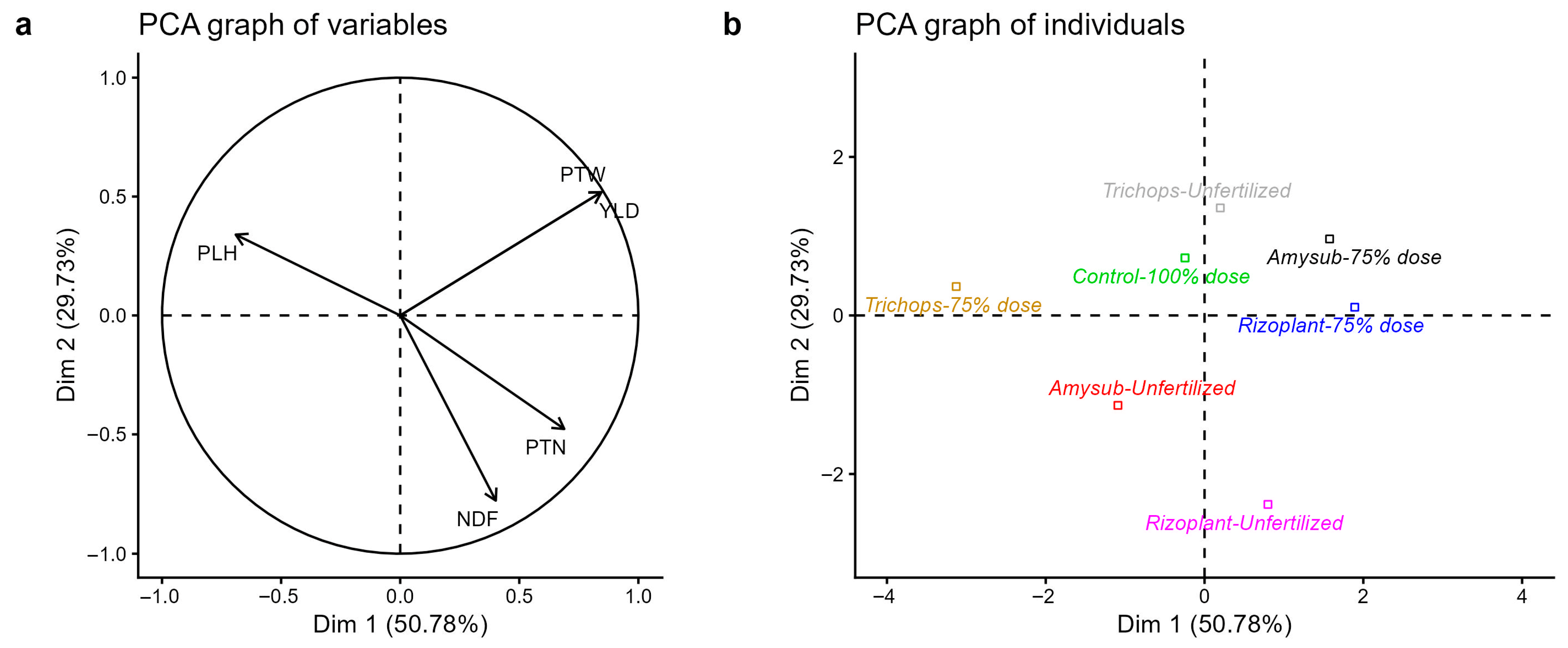
To ensure proper data interpretation and to describe the greatest proportion of variation in agronomic traits with minimal information loss, a principal component analysis (PCA) was performed to characterize the response of the treatments (Figure 5).
The first two components explained 80.51% of the total variance. In PC1, which accounted for 50.78% of the total variance, the variables with the highest contribution were yield (28.09%), pod weight per plant (28.09%), plant height (18.78%), and number of pods per plant (18.69%), indicating that this component represents a productivity and growth gradient. In PC2, which explained 29.73% of the total variance, the variable with the highest contribution was the number of days to flowering (40.74%), indicating that this component describes a phenological gradient.
The PCA of individuals showed a separation mainly along PC1, where treatments with 75% fertilization inoculated with Amysub and Rizoplant clustered toward positive values, indicating higher expression of productivity and growth variables. In contrast, Trichops at 75% and several treatments without fertilization were located toward negative or more dispersed values, reflecting a lower and more variable response. The control with 100% fertilization was positioned near the origin, indicating an intermediate performance.

4. Discussion

Understanding how microbial bio-inoculation interacts with environmental conditions to influence seed performance and crop productivity is essential for optimizing pea production. In the present study, the effects of bio-inoculation were examined using a sequential laboratory–field framework that allowed the evaluation of early physiological responses alongside agronomic outcomes. Laboratory assays under PEG-induced osmotic stress were used to characterize germination dynamics and early seedling vigor, while subsequent field trials assessed the interaction between bio-inoculation and fertilization level on plant growth and yield under two contrasting environments in the Amazon region of Peru. The combined results demonstrate that environmental conditions regulate germination behavior and field performance, often overriding direct bio-inoculation effects. These experiments highlight the context-dependent nature of microbial bio-inoculant responses and provide a framework for interpreting their functional role across controlled and field conditions.

4.1. Bio-Inoculation on Germination Under Simulated Drought Stress

Under PEG-induced osmotic stress, pea seeds maintained high final germination percentages across all treatments, indicating an intrinsic germination capacity even under reduced water availability (Figure 3a). This result may be explained by the fact that germination, defined as radicle protrusion, requires the seed to reach a minimum imbibition threshold that enables the reactivation of embryo metabolism, which can occur even under restricted water potentials when stress is not extreme [57].
However, at an osmotic potential of −0.8 MPa, mean germination time (MGT) increased compared with less restrictive water potentials, reflecting a delay in germination under severe osmotic stress (Figure 3b). This delay in germination may be explained by the fact that water uptake by seeds is governed by differences in water potential between the seed and the germination medium; thus, under severe osmotic stress conditions, imbibition becomes slower and the rehydration required for the embryo to resume active metabolism is delayed, prolonging the time to radicle emergence [58,59].
Seedling vigor index (SVI) decreased markedly at −0.8 MPa, while higher vigor responses were observed at osmotic potentials between −0.2 MPa and 0 MPa (Figure 3d). This reduction in vigor reflects not only a delay in germination but also a limitation in post-germinative growth. From a physiological perspective, severe water stress reduces the cellular turgor required for root elongation and increases the accumulation of reactive oxygen species (ROS), which can damage lipid membranes and affect cell division in the meristematic tissues of the developing seedling [60,61].
Multivariate analysis further supported these patterns, showing a clear tendency toward improved SVI and reduced MGT at −0.2 MPa. Although no statistically significant differences were detected among bio-inoculant treatments, a consistent trend toward enhanced germination performance and seedling vigor was observed in seeds treated with Rizoplant, particularly under moderate osmotic stress conditions (Figure 4b).
Under controlled PEG-induced stress, bio-inoculation did not alter final germination percentage, but multivariate analyses revealed subtle shifts in germination timing and seedling vigor, particularly under moderate osmotic stress [62,63]. This differential response can be explained by the fact that the final germination percentage is primarily determined by the intrinsic viability of the seed and by reaching a critical imbibition threshold, whereas vigor parameters reflect more sensitive physiological processes, such as the rate of metabolic activation and the efficiency of reserve mobilization [64]. Plant growth-promoting microorganisms such as Rizoplant may influence these early processes through the production of phytohormones such as gibberellins and auxins, which accelerate cell elongation and amylolytic activity, as well as through the synthesis of osmolytes and antioxidant enzymes that mitigate oxidative damage induced by water stress [65,66]. These results are consistent with previous studies reporting that microbial effects during germination are often expressed through changes in germination kinetics and early growth rather than in seed viability [12,67].
PEG-induced osmotic stress is widely employed to simulate drought conditions because it lowers water potential without entering seed tissues, enabling a controlled assessment of germination responses to water limitation [63,68]. In the present study, most germination indices were not significantly affected by osmotic potential or bio-inoculation, with the exception of the seedling vigor index (SVI), which showed sensitivity to both water availability and treatment interactions. This limited response may be explained by relatively uniform seed imbibition under controlled hydration conditions, which can mask subtle bio-inoculation effects on final germination percentage by promoting synchronous water uptake across treatments. This limited response in germination percentage can be explained by the fact that under PEG-controlled hydration conditions, all seeds reach a sufficient level of imbibition to trigger radicle protrusion, regardless of treatment, since PEG does not penetrate the seed coat and the available water, although limited at more negative potentials, still allows completion of the germination process [69,70]. In this context, the effects of bioinoculants are not expressed in final viability but in finer metabolic processes, such as the rate of enzymatic activation and the efficiency of reserve utilization, which are captured by vigor indices such as SVI and MGT.
This pattern partially contrasts with observations synthesized by [12], who highlighted that drought stress in legumes more frequently affects early physiological and metabolic processes than final germination outcomes. Similar responses have been reported in other legume species, where drought primarily delays metabolic activation, reserve mobilization, and early seedling growth processes, while overall germination capacity is largely maintained [67]. In agreement with these findings, germination dynamics in the present study were markedly influenced by the intensity of osmotic stress, reinforcing the sensitivity of early developmental processes to water availability in pea, given that cell elongation and mitotic division in meristems are highly dependent on turgor and adequate energy supply derived from reserve mobilization [71], and supporting the use of vigor-based indices as indicators of drought response during germination [63].

4.2. Bio-Inoculation and Fertilization Effects on Pea Yield Components Under Field Conditions

Field evaluations revealed that agronomic performance was primarily determined by site-specific environmental conditions, with minimal influence from bio-inoculation or fertilization level within each location (Table 3). In Lámud and Molinopampa, marked differences were observed in plant height, time to flowering, pod weight, number of pods per plant, and yield, whereas no significant differences were detected at the treatment level within each site. Consequently, an exploratory data analysis was conducted following the protocol of [72], employing principal component analysis (PCA) and cluster analysis to identify patterns of variation and potential groupings in the response of field variables to the treatments. In the PCA, yield, pod weight per plant, plant height, and number of pods per plant clustered within the same component, indicating that treatments that increased one of these variables tended to simultaneously enhance the others. This demonstrates that plant responses to the evaluated treatments were integrated, jointly affecting growth and productivity, as reported by [73], who found that yield components in pea exhibit genetic correlations influenced by both direct and indirect effects.
The number of days to flowering segregated into a component distinct from the productive variables in the principal component analysis, indicating that flowering earliness was not associated with yield or growth components in this study. This phenological independence suggests that treatments that enhanced productivity did so without altering the duration to flowering, which is advantageous from an agronomic perspective. Studies in common bean have shown that, in principal component analyses, dimensions grouping phenology can be differentiated from those associated with productive traits, supporting the existence of a phenological dimension independent of productivity [74].
Treatments combining reduced fertilization with inoculation of Amysub and Rizoplant showed a greater simultaneous expression of productive variables, clustering in the positive region of the first component. In contrast, the control with full fertilization was positioned at an intermediate point, while treatments without fertilization exhibited a more dispersed and lower-magnitude response. This distribution suggests that the combination of reduced fertilization with these bio-inoculants was more effective in enhancing growth and yield in an integrated manner, even surpassing management with full fertilization without inoculation. These results are consistent with those reported by [39], who observed that microbial inoculation under reduced fertilization conditions improves nutrient availability and rhizosphere microbiome functionality, thereby enhancing productive performance. The greater dispersion of treatments without fertilization reflects a less consistent response in the absence of inputs, emphasizing the relevance of the interaction between fertilization and bio-inoculation in modulating phenotypic variability in crops.
The pronounced differences in vegetative growth between sites are consistent with previous reports documenting strong environmental modulation of plant height in field pea [75]. Multi-environment trials have shown that plant height can vary widely, from less than 40 cm to nearly 150 cm, depending on temperature, soil characteristics, nutrient availability, and water status [76]. Similarly, flowering time was strongly site-dependent, with earlier flowering observed in Lamud, in agreement with studies demonstrating accelerated phenology under warmer or drier conditions [75]. Such shifts in phenology reflect adaptive responses to local climatic constraints and can have downstream effects on biomass accumulation and yield formation. Yield components were likewise driven predominantly by environmental conditions. The higher pod weight and greater number of pods per plant observed in Molinopampa align with previous findings identifying these traits as the most responsive determinants of yield in Pisum sativum [77]. Comparable environment-driven responses in pea productivity have been reported under variable hydrothermal conditions, where nutrient uptake efficiency and foliar fertilization interacted with climatic variability to influence plant performance and yield stability [78]. Similar results were found by [73], who emphasized pod weight as a key contributor to yield formation in pea. In this context, the high yields recorded in Molinopampa, exceeding 10 t/ha, are comparable to values reported under optimized agronomic management and biostimulant application in field conditions [44].
Although bio-inoculation did not result in statistically significant differences in germination parameters or yield components when analyzed individually, several consistent patterns across laboratory and field evaluations indicate that bio-inoculants exerted context-dependent and indirect effects rather than uniform responses [42]. In field conditions, the influence of bio-inoculants was strongly modulated by environmental and edaphic factors [79]. The absence of clear treatment separation in the PCA and the lack of significant inoculant × fertilization interactions indicate that nutrient availability and site-specific conditions were the dominant drivers of crop performance [20,73]. However, the consistent tendency for treatments inoculated with Rizoplant and Amysub to associate with improved yield-related traits under reduced fertilization suggests that bio-inoculants may partially compensate for suboptimal nutrient inputs rather than enhance productivity under optimal conditions [42,80]. This aligns with reports showing that plant growth–promoting microorganisms frequently confer benefits under moderate stress or nutrient limitation, where microbial-mediated improvements in nutrient acquisition, root development, or stress mitigation become functionally relevant.
The limited response to bio-inoculation observed in this study may be linked to constraints on microbial establishment and persistence [41]. Extreme soil pH conditions at both sites, combined with low soil moisture during early crop establishment, likely restricted rhizosphere colonization and microbial activity, as suggested by the absence or scarcity of nodulation [37,79]. This interpretation is supported by previous studies demonstrating that extreme pH negatively affects the persistence of rhizobacteria in soil [81] and that low water availability reduces the viability of inoculated microbial populations [82]. Under such conditions, introduced microorganisms may fail to reach population thresholds necessary to exert measurable effects on plant growth, reinforcing the notion that successful bio-inoculation depends on compatibility between microbial traits, soil chemical properties, and environmental conditions [41]. Together, these findings support the interpretation that bio-inoculants function as conditional modifiers of plant performance, whose effects emerge primarily when environmental constraints allow effective plant–microbe interactions.

4.3. Limitations and Future Perspectives

Despite the integrated laboratory–field approach adopted in this study, several limitations should be acknowledged. At the laboratory level, the pre-imbibition of seeds prior to PEG application may have reduced variability in water uptake, masking subtle bio-inoculation effects on germination indices by promoting more uniform germination across treatments. In addition, applying osmotic stress after pre-imbibition, rather than directly imposing it on dry seeds, may have reduced the sensitivity of the experimental design. In future studies, it is recommended to apply osmotic stress treatments directly, without prior imbibition, and to explore a wider range of stress intensities to improve the detection of inoculant-dependent responses during germination.
Under field conditions, the evaluation was limited by low and irregular precipitation at both sites, with particularly dry soil conditions during the early establishment of the crop in Lamud. Although this represents a realistic stress scenario, such conditions may have limited microbial survival, rhizosphere colonization, and metabolic activity, reducing the likelihood of detecting consistent bio-inoculation effects. Likewise, soil moisture was not directly monitored using sensors; instead, environmental conditions were inferred from meteorological models, which may reduce the precision in assessing plant responses to water availability and water stress. These results highlight the strong influence of environmental context on inoculant performance and underscore the importance of site-specific evaluations.
Another limitation of the field experiments is the lack of direct comparability between the laboratory and field phases, as different treatments were evaluated in each, preventing the establishment of correlations between germination indicators and agronomic variables and limiting cross-scale inference. Additionally, the absence of a no-fertilization treatment prevented the evaluation of the potential compensatory effect of bio-inoculation under reduced fertilization conditions. Likewise, the selection of Lamud and Molinopampa, characterized by extreme and contrasting soil conditions, may have restricted microbial colonization and the expression of bio-inoculation effects, limiting the assessment of their impact on germination and crop agronomic performance. For future studies, it is recommended to select sites with more favorable and representative soil conditions to more accurately evaluate inoculant effects and their potential compensatory benefits.
Furthermore, the absence of a non-inoculated, non-fertilized control (T0), together with the lack of direct measurements of microbial persistence and root colonization, limited the ability to mechanistically link inoculant application to the observed plant responses. Future research should incorporate microbial tracking techniques such as PCR or plate counting, as well as soil moisture monitoring and the inclusion of physiological indicators of plant stress, to better understand plant–microorganism–environment interactions. Although the multivariate analysis did not show significant differences at the treatment level, an exploratory data analysis was conducted to examine underlying patterns. Finally, although a formal economic analysis was not conducted due to the absence of significant yield differences, future multi-season trials incorporating cost–benefit evaluations would be valuable to determine the practical viability of bio-inoculation strategies under different environmental and fertilization conditions.

5. Conclusions

Pea performance from germination to field production was primarily regulated by water availability and site-specific environmental conditions, while the effects of microbial bio-inoculation were context dependent. Under PEG-induced osmotic stress, germination percentages remained high across inoculant treatments, with drought effects expressed mainly through delayed germination dynamics and reduced seedling vigor rather than reduced viability. Field evaluations showed that growth, phenology, yield components, and final yield were predominantly controlled by environmental conditions, with pod weight and number of pods per plant as the main contributors to productivity. Although bio-inoculation did not present statistically significant effects across fertilization regimes, the application of Rizoplant under reduced fertilization (75% of the recommended dose) was associated with improved yield-related traits, indicating a compensatory effect under suboptimal nutrient inputs. These results support the role of selected bio-inoculants as complementary tools in pea production systems when applied under site-adapted and resource-efficient management strategies.

Supplementary Materials

The following supporting information can be downloaded at: https://www.mdpi.com/article/10.3390/agriengineering8040155/s1, which contains the full R code, data processing workflow, ANOVA tables, and supplementary figures for the germination and field performance analysis. Some figures presented in the main text are also generated within this document for reproducibility purposes [54,73,83,84,85,86].

Author Contributions

The conception and design of the study were undertaken by F.G.-F. and F.L.-I. Data acquisition, curation, formal analysis, and software implementation were performed by S.C.-N., M.N.M.-S. and F.L.-I. Field and laboratory investigation, as well as validation of experimental procedures, were conducted by F.G.-F. and W.M.-M., who also contributed to the critical revision of the manuscript. Methodology development was carried out by F.G.-F. and F.L.-I., while project supervision and administration were the responsibility of F.L.-I. Funding acquisition and the provision of essential resources were ensured by M.O.-C. Data visualization was produced by S.C.-N., M.N.M.-S. and F.L.-I. The first draft of the manuscript was written by F.G.-F., M.N.M.-S. and F.L.-I., and all authors contributed to the critical review and editing of subsequent versions. All authors have read and agreed to the published version of the manuscript.

Funding

The APC was funded by the Vice-Rectorate for Research at the Universidad Nacional Toribio Rodríguez de Mendoza de Amazonas. The authors gratefully acknowledge the technical and financial support of the CUI Project No. 2590588 “Improvement of the Science, Technology, and Innovation Promotion Service for the Research Center in Grains and Seeds at UNTRM”—CEIGRAS.

Data Availability Statement

All original contributions generated and analyzed in this study are included in the article and its Supplementary Materials. The reproducible datasets and analytical workflows are provided in Supplementary File S1 and are accessible through the GitHub repository at: https://github.com/Flavjack/pisum_bioinoculation (accessed on 30 March 2025).

Acknowledgments

The authors gratefully acknowledge the Laboratorio de Suelos y Aguas (LABISAG—UNTRM) for allowing us to perform the germination experiments.

Conflicts of Interest

The authors declare that they have no conflicts of interest.

References

  1. Pandey, A.K.; Rubiales, D.; Wang, Y.; Fang, P.; Sun, T.; Liu, N.; Xu, P. Omics Resources and Omics-Enabled Approaches for Achieving High Productivity and Improved Quality in Pea (Pisum sativum L.). Theor. Appl. Genet. 2021, 134, 755–776. [Google Scholar] [CrossRef]
  2. Sarkar, S.; Khatun, M.; Era, F.M.; Islam, A.K.M.M.; Anwar, M.P.; Danish, S.; Datta, R.; Islam, A.K.M.A. Abiotic Stresses: Alteration of Composition and Grain Quality in Food Legumes. Agronomy 2021, 11, 2238. [Google Scholar] [CrossRef]
  3. Tulbek, M.C.; Wang, Y.; Hounjet, M. Pea—A Sustainable Vegetable Protein Crop. In Sustainable Protein Sources; Elsevier: Amsterdam, The Netherlands, 2024; pp. 143–162. ISBN 978-0-323-91652-3. [Google Scholar]
  4. Gavilan-Figari, I.M.; Inga, M.; Betalleluz-Pallardel, I.; Espinoza de Arenas, L.M.; Comettant-Rabanal, R. Andean Lima Bean Ecology and Its Potential Contribution to Food Security. Legume Sci. 2024, 6, e225. [Google Scholar] [CrossRef]
  5. Peña, A.R.; López, R.S.; Mestanza, C.V.; Leiva-Espinoza, S.T. Caracterización agronómica de dos ecotipos de arveja (Pisum sativum) de la región Amazonas en la Estación Experimental Quipachacha-Levanto (provincia de Chachapoyas). Rev. Investig. Agroproducción Sustentable 2017, 1, 47–54. [Google Scholar] [CrossRef]
  6. Ejaz, S.; Batool, S.; Anjum, M.A.; Naz, S.; Qayyum, M.F.; Naqqash, T.; Shah, K.H.; Ali, S. Efectos de La Inoculación de Cepas de Azospirillum y Agrobacterium Asociadas a Las Raíces Sobre El Crecimiento, El Rendimiento y La Calidad Del Guisante (Pisum sativum L.) Cultivado Bajo Diferentes Regímenes de Nitrógeno y Fósforo. Sci. Hortic. 2020, 270, 109401. [Google Scholar] [CrossRef]
  7. Youne, M.A.; Youne, O.A.; Bouskout, M.; Khan, Y.; Khassali, H.; Shah, S.; Sujat, A.; Alahoui, H.; Alfeddy, M.N.; Mnasri, B.; et al. Synergistic Interaction Between Endophytic Bacillus Pumilus and Indigenous Arbuscular Mycorrhizal Fungi Complex Improves Photosynthetic Activity, Growth, and Yield of Pisum sativum. Plants 2025, 14, 1991. [Google Scholar] [CrossRef]
  8. Bagheri, M.; Santos, C.S.; Rubiales, D.; Vasconcelos, M.W. Challenges in Pea Breeding for Tolerance to Drought: Status and Prospects. Ann. Appl. Biol. 2023, 183, 108–120. [Google Scholar] [CrossRef]
  9. Jacques, C.; Girodet, S.; Leroy, F.; Pluchon, S.; Salon, C.; Prudent, M. Memory or Acclimation of Water Stress in Pea Rely on Root System’s Plasticity and Plant’s Ionome Modulation. Front. Plant Sci. 2023, 13, 1089720. [Google Scholar] [CrossRef]
  10. Tamindžić, G.; Azizbekian, S.; Miljaković, D.; Ignjatov, M.; Nikolić, Z.; Budakov, D.; Vasiljević, S.; Grahovac, M. Assessment of Various Nanoprimings for Boosting Pea Germination and Early Growth in Both Optimal and Drought-Stressed Environments. Plants 2024, 13, 1547. [Google Scholar] [CrossRef] [PubMed]
  11. Zeleke, K.; Nendel, C. Growth and Yield Response of Faba Bean to Soil Moisture Regimes and Sowing Dates: Field Experiment and Modelling Study. Agric. Water Manag. 2019, 213, 1063–1077. [Google Scholar] [CrossRef]
  12. Dave, K.; Kumar, A.; Dave, N.; Jain, M.; Dhanda, P.S.; Yadav, A.; Kaushik, P. Climate Change Impacts on Legume Physiology and Ecosystem Dynamics: A Multifaceted Perspective. Sustainability 2024, 16, 6026. [Google Scholar] [CrossRef]
  13. Rascón, J.; Gosgot Angeles, W.; Quiñones Huatangari, L.; Oliva, M.; Barrena Gurbillón, M.Á. Dry and Wet Events in Andean Populations of Northern Peru: A Case Study of Chachapoyas, Peru. Front. Environ. Sci. 2021, 9, 614438. [Google Scholar] [CrossRef]
  14. Iqbal, H.; Yaning, C.; Raza, S.T.; Karim, S.; Shareef, M.; Waqas, M. From Lab to Field: Harnessing H2 O2 -Mediated Upregulation of Plant Capacities Under Abiotic Stresses. Physiol. Plant. 2025, 177, e70488. [Google Scholar] [CrossRef]
  15. Mwadzingeni, L.; Shimelis, H.; Dube, E.; Laing, M.D.; Tsilo, T.J. Breeding Wheat for Drought Tolerance: Progress and Technologies. J. Integr. Agric. 2016, 15, 935–943. [Google Scholar] [CrossRef]
  16. Verslues, P.E.; Agarwal, M.; Katiyar-Agarwal, S.; Zhu, J.; Zhu, J. Methods and Concepts in Quantifying Resistance to Drought, Salt and Freezing, Abiotic Stresses That Affect Plant Water Status. Plant J. 2006, 45, 523–539. [Google Scholar] [CrossRef]
  17. Peoples, M.B.; Brockwell, J.; Herridge, D.F.; Rochester, I.J.; Alves, B.J.R.; Urquiaga, S.; Boddey, R.M.; Dakora, F.D.; Bhattarai, S.; Maskey, S.L.; et al. The Contributions of Nitrogen-Fixing Crop Legumes to the Productivity of Agricultural Systems. Symbiosis 2009, 48, 1–17. [Google Scholar] [CrossRef]
  18. Cramer, M.D.; Hawkins, H.-J.; Verboom, G.A. The Importance of Nutritional Regulation of Plant Water Flux. Oecologia 2009, 161, 15–24. [Google Scholar] [CrossRef]
  19. Raza, A.; Razzaq, A.; Mehmood, S.S.; Zou, X.; Zhang, X.; Lv, Y.; Xu, J. Impact of Climate Change on Crops Adaptation and Strategies to Tackle Its Outcome: A Review. Plants 2019, 8, 34. [Google Scholar] [CrossRef] [PubMed]
  20. Tilman, D.; Cassman, K.G.; Matson, P.A.; Naylor, R.; Polasky, S. Agricultural Sustainability and Intensive Production Practices. Nature 2002, 418, 671–677. [Google Scholar] [CrossRef]
  21. Abay, K.A.; Chamberlin, J.; Chivenge, P.; Spielman, D.J. Fertilizer, Soil Health, and Economic Shocks: A Synthesis of Recent Evidence. Food Policy 2025, 133, 102892. [Google Scholar] [CrossRef]
  22. Gao, Y.; Cabrera Serrenho, A. Greenhouse Gas Emissions from Nitrogen Fertilizers Could Be Reduced by up to One-Fifth of Current Levels by 2050 with Combined Interventions. Nat. Food 2023, 4, 170–178. [Google Scholar] [CrossRef]
  23. Dhawi, F. The Role of Plant Growth-Promoting Microorganisms (PGPMs) and Their Feasibility in Hydroponics and Vertical Farming. Metabolites 2023, 13, 247. [Google Scholar] [CrossRef]
  24. El-Saadony, M.T.; Saad, A.M.; Mohammed, D.M.; Fahmy, M.A.; Elesawi, I.E.; Ahmed, A.E.; Algopishi, U.B.; Elrys, A.S.; Desoky, E.-S.M.; Mosa, W.F.A.; et al. Drought-Tolerant Plant Growth-Promoting Rhizobacteria Alleviate Drought Stress and Enhance Soil Health for Sustainable Agriculture: A Comprehensive Review. Plant Stress 2024, 14, 100632. [Google Scholar] [CrossRef]
  25. Figiel, S.; Rusek, P.; Ryszko, U.; Brodowska, M.S. Microbially Enhanced Biofertilizers: Technologies, Mechanisms of Action, and Agricultural Applications. Agronomy 2025, 15, 1191. [Google Scholar] [CrossRef]
  26. Chieb, M.; Gachomo, E.W. The Role of Plant Growth Promoting Rhizobacteria in Plant Drought Stress Responses. BMC Plant Biol. 2023, 23, 407. [Google Scholar] [CrossRef]
  27. Ferreira, J.P.; Vidal, M.S.; Baldani, J.I. Exploring ACC Deaminase-Producing Bacteria for Drought Stress Mitigation in Brachiaria. Front. Plant Sci. 2025, 16, 1607697. [Google Scholar] [CrossRef] [PubMed]
  28. Silva, L.R.; Bento, C.; Gonçalves, A.C.; Flores-Félix, J.D.; Ramírez-Bahena, M.H.; Peix, A.; Velázquez, E.; Silva, L.R.; Bento, C.; Gonçalves, A.C.; et al. Legume Bioactive Compounds: Influence of Rhizobial Inoculation. Aimsmicro 2017, 3, 267–278. [Google Scholar] [CrossRef]
  29. Quides, K.W.; Atamian, H.S. A Microbiome Engineering Framework to Evaluate Rhizobial Symbionts of Legumes. Plant Soil. 2021, 463, 631–642. [Google Scholar] [CrossRef]
  30. Bonilha Da Silva, F.; Barbosa, J.Z.; Tiecher, T.; Borin, J.B.M.; Treichel, B.; Saccol De Sá, E.L. Species-Dependent Effect of Rhizobacteria Co-Inoculation in Legume Plants: A Global Meta-Analysis. Rhizosphere 2024, 30, 100869. [Google Scholar] [CrossRef]
  31. Pérez-Leal, R.; Rodríguez-Roque, M.J.; Acevedo-Barrera, A.A.; Villa-Martínez, A.; Guerrero, B.I.; Gutiérrez-Chávez, A.; Hernández-Huerta, J. Bacillus Thuringiensis and Trichoderma Asperellum as Biostimulants in Hydroponic Tendril Pea (Pisum sativum) Microgreens. Horticulturae 2025, 11, 39. [Google Scholar] [CrossRef]
  32. Poveda, J.; Eugui, D. Combined Use of Trichoderma and Beneficial Bacteria (Mainly Bacillus and Pseudomonas): Development of Microbial Synergistic Bio-Inoculants in Sustainable Agriculture. Biol. Control 2022, 176, 105100. [Google Scholar] [CrossRef]
  33. Krishna, R.; Ansari, W.A.; Altaf, M.; Jaiswal, D.K.; Pandey, S.; Singh, A.K.; Kumar, S.; Verma, J.P. Impact of Plant Growth-Promoting Microorganism (PGPM) Consortium on Biochemical Properties and Yields of Tomato Under Drought Stress. Life 2024, 14, 1333. [Google Scholar] [CrossRef]
  34. Laishram, B.; Devi, O.R.; Dutta, R.; Senthilkumar, T.; Goyal, G.; Paliwal, D.K.; Panotra, N.; Rasool, A. Plant-Microbe Interactions: PGPM as Microbial Inoculants/Biofertilizers for Sustaining Crop Productivity and Soil Fertility. Curr. Res. Microb. Sci. 2025, 8, 100333. [Google Scholar] [CrossRef]
  35. Eswaran, S.U.D.; Sundaram, L.; Perveen, K.; Bukhari, N.A.; Sayyed, R.Z. Osmolyte-Producing Microbial Biostimulants Regulate the Growth of Arachis hypogaea L. under Drought Stress. BMC Microbiol. 2024, 24, 165. [Google Scholar] [CrossRef]
  36. Mendoza-Alatorre, M.; Infante-Ramírez, R.; González-Rangel, M.O.; Nevárez-Moorillón, G.V.; González-Horta, M.D.C.; Hernández-Huerta, J.; Delgado-Gardea, M.C.E. Enhancing Drought Stress Tolerance and Growth Promotion in Chiltepin Pepper (Capsicum Annuum Var. Glabriusculum) through Native bacillus Spp. Sci. Rep. 2024, 14, 15383. [Google Scholar] [CrossRef]
  37. Díaz-Rodríguez, A.M.; Cota, F.I.P.; Chávez, L.A.C.; Ortega, L.F.G.; Alvarado, M.I.E.; Santoyo, G.; Santos-Villalobos, S.d.L. Microbial Inoculants in Sustainable Agriculture: Advancements, Challenges, and Future Directions. Plants 2025, 14, 191. [Google Scholar] [CrossRef]
  38. He, S.; Zhang, Y.; Yang, X.; Li, Q.; Li, C.; Yao, T. Effects of Microbial Inoculants Combined with Chemical Fertilizer on Growth and Soil Nutrient Dynamics of Timothy (Phleum pratense L.). Agronomy 2024, 14, 1016. [Google Scholar] [CrossRef]
  39. Ollio, I.; Zornoza, R.; Gallego, J.C.; Egea-Gilabert, C.; Fernández, J.A.; Lloret, E. Combined Microbial Inoculation and Reduced Inorganic Fertilization Enhances Diversity and Functionality in Potato Rhizosphere Microbiome at Field Scale. Chem. Biol. Technol. Agric. 2025, 12, 113. [Google Scholar] [CrossRef]
  40. Bashan, Y.; de-Bashan, L.E.; Prabhu, S.R.; Hernandez, J.-P. Advances in Plant Growth-Promoting Bacterial Inoculant Technology: Formulations and Practical Perspectives (1998–2013). Plant Soil 2014, 378, 1–33. [Google Scholar] [CrossRef]
  41. Hart, M.M.; Antunes, P.M.; Chaudhary, V.B.; Abbott, L.K. Fungal Inoculants in the Field: Is the Reward Greater than the Risk? Funct. Ecol. 2018, 32, 126–135. [Google Scholar] [CrossRef]
  42. Schütz, L.; Gattinger, A.; Meier, M.; Müller, A.; Boller, T.; Mäder, P.; Mathimaran, N. Improving Crop Yield and Nutrient Use Efficiency via Biofertilization—A Global Meta-Analysis. Front. Plant Sci. 2018, 8, 2204. [Google Scholar] [CrossRef] [PubMed]
  43. Kashyap, B.K.; Solanki, M.K.; Pandey, A.K.; Prabha, S.; Kumar, P.; Kumari, B. Bacillus as Plant Growth Promoting Rhizobacteria (PGPR): A Promising Green Agriculture Technology. In Plant Health Under Biotic Stress: Volume 2: Microbial Interactions; Ansari, R.A., Mahmood, I., Eds.; Springer: Singapore, 2019; pp. 219–236. ISBN 978-981-13-6040-4. [Google Scholar]
  44. Jara-Garcia, A.S.; Nicho-Salas, P. Efecto de productos hormonales en el rendimiento de arveja (Pisum sativum) cv. Usui en Huaral, Perú. Peruv. Agric. Res. 2023, 5, 37–42. Available online: https://revistas.unjfsc.edu.pe/index.php/PeruvianAgriculturalResearch/article/view/814 (accessed on 9 December 2025).
  45. Raveneau, M.P.; Coste, F.; Moreau-Valancogne, P.; Lejeune-Hénaut, I.; Durr, C. Pea and Bean Germination and Seedling Responses to Temperature and Water Potential. Seed Sci. Res. 2011, 21, 205–213. [Google Scholar] [CrossRef]
  46. Tyśkiewicz, R.; Nowak, A.; Ozimek, E.; Jaroszuk-Ściseł, J. Trichoderma: The Current Status of Its Application in Agriculture for the Biocontrol of Fungal Phytopathogens and Stimulation of Plant Growth. Int. J. Mol. Sci. 2022, 23, 2329. [Google Scholar] [CrossRef]
  47. Tian, Y.; Guan, B.; Zhou, D.; Yu, J.; Li, G.; Lou, Y. Responses of Seed Germination, Seedling Growth, and Seed Yield Traits to Seed Pretreatment in Maize (Zea mays L.). Sci. World J. 2014, 2014, 834630. [Google Scholar] [CrossRef]
  48. International Seed Testing Association. International Rules Seed Testing|Official ISTA Guidelines. Available online: https://www.seedtest.org/en/publications/international-rules-seed-testing.html (accessed on 30 March 2026).
  49. Lozano-Isla, F.; Benites-Alfaro, O.E.; Pompelli, M.F. GerminaR: An R Package for Germination Analysis with the Interactive Web Application “GerminaQuant for R”. Ecol. Res. 2019, 34, 339–346. [Google Scholar] [CrossRef]
  50. Zhao, X.; Joo, J.C.; Kim, J.Y. Evaluation of Heavy Metal Phytotoxicity to Helianthus annuus L. Using Seedling Vigor Index-Soil Model. Chemosphere 2021, 275, 130026. [Google Scholar] [CrossRef] [PubMed]
  51. NASA POWER Project. Prediction of Worldwide Energy Resources (POWER) Project. 2024. Available online: https://power.larc.nasa.gov/ (accessed on 30 September 2025).
  52. Ren, C.; Jin, S.; Wu, Y.; Zhang, B.; Kanter, D.; Wu, B.; Xi, X.; Zhang, X.; Chen, D.; Xu, J.; et al. Fertilizer Overuse in Chinese Smallholders Due to Lack of Fixed Inputs. J. Environ. Manag. 2021, 293, 112913. [Google Scholar] [CrossRef]
  53. R Core Team R. A Language and Environment for Statistical Computing; R Foundation for Statistical Computing: Vienna, Austria, 2025; Available online: https://www.R-project.org/ (accessed on 30 March 2026).
  54. Schielzeth, H.; Dingemanse, N.J.; Nakagawa, S.; Westneat, D.F.; Allegue, H.; Teplitsky, C.; Réale, D.; Dochtermann, N.A.; Garamszegi, L.Z.; Araya-Ajoy, Y.G. Robustness of Linear Mixed-effects Models to Violations of Distributional Assumptions. Methods Ecol. Evol. 2020, 11, 1141–1152. [Google Scholar] [CrossRef]
  55. Lenth, R.V.; Piaskowski, J. Emmeans: Estimated Marginal Means, Aka Least-Squares Means. 2017. Available online: https://CRAN.R-project.org/package=emmeans (accessed on 30 March 2026).
  56. Husson, F.; Josse, J.; Le, S.; Mazet, J. FactoMineR: Multivariate Exploratory Data Analysis and Data Mining. 2006. Available online: https://CRAN.R-project.org/package=FactoMineR (accessed on 30 March 2026).
  57. Upretee, P.; Bandara, M.S.; Tanino, K.K. The Role of Seed Characteristics on Water Uptake Preceding Germination. Seeds 2024, 3, 559–574. [Google Scholar] [CrossRef]
  58. Bradford, K.J. A Water Relations Analysis of Seed Germination Rates. Plant Physiol. 1990, 94, 840–849. [Google Scholar] [CrossRef]
  59. Pompelli, M.F.; Jarma-Orozco, A.; Rodriguez-Páez, L.A. Imbibition and Germination of Seeds with Economic and Ecological Interest: Physical and Biochemical Factors Involved. Sustainability 2023, 15, 5394. [Google Scholar] [CrossRef]
  60. Kranner, I.; Roach, T.; Beckett, R.P.; Whitaker, C.; Minibayeva, F.V. Extracellular Production of Reactive Oxygen Species during Seed Germination and Early Seedling Growth in Pisum sativum. J. Plant Physiol. 2010, 167, 805–811. [Google Scholar] [CrossRef]
  61. Bailly, C. Active Oxygen Species and Antioxidants in Seed Biology. Seed Sci. Res. 2004, 14, 93–107. [Google Scholar] [CrossRef]
  62. Apaza-Calcina, J.D.; Munoz-Salas, M.N.; Lozano-Isla, F.; Rezende, R.P.; Santana Silva, R.J. Azospirillum brasilense as a Bioinoculant to Alleviate the Effects of Salinity on Quinoa Seed Germination. Plants 2025, 14, 3829. [Google Scholar] [CrossRef] [PubMed]
  63. Davidson-Willis, M.; Wen, G.; Samanfar, B.; Khanal, R. Barley Seed Germination and Seedling Growth Responses to Polyethylene Glycol (PEG)-Induced Drought Stress. Int. J. Plant Biol. 2024, 15, 1353–1359. [Google Scholar] [CrossRef]
  64. Finch-Savage, W.E.; Bassel, G.W. Seed Vigour and Crop Establishment: Extending Performance beyond Adaptation. J. Exp. Bot. 2016, 67, 567–591. [Google Scholar] [CrossRef]
  65. Egamberdieva, D.; Wirth, S.; Jabborova, D.; Räsänen, L.A.; Liao, H. Coordination between Bradyrhizobium and Pseudomonas Alleviates Salt Stress in Soybean through Altering Root System Architecture. J. Plant Interact. 2017, 12, 100–107. [Google Scholar] [CrossRef]
  66. Vessey, J.K. Plant Growth Promoting Rhizobacteria as Biofertilizers. Plant Soil 2003, 255, 571–586. [Google Scholar] [CrossRef]
  67. Samarah, N.H.; Mullen, R.E.; Cianzio, S.R.; Scott, P. Dehydrin-Like Proteins in Soybean Seeds in Response to Drought Stress during Seed Filling. Crop. Sci. 2006, 46, 2141–2150. [Google Scholar] [CrossRef]
  68. Beyaz, R.; Uslu, V.V. The Impact of PEG-Induced Drought Stress on Seed Germination and Initial Seedling Growth of Lupinus albus L. Turk. JAF Sci. Technol. 2025, 13, 635–641. [Google Scholar] [CrossRef]
  69. Hardegree, S.P.; Emmerich, W.E. Partitioning Water Potential and Specific Salt Effects on Seed Germination of Four Grasses. Ann. Bot. 1990, 66, 587–595. [Google Scholar] [CrossRef]
  70. Michel, B.E.; Kaufmann, M.R. The Osmotic Potential of Polyethylene Glycol 6000. Plant Physiol. 1973, 51, 914–916. [Google Scholar] [CrossRef]
  71. Bewley, J.D.; Bradford, K.J.; Hilhorst, H.W.M.; Nonogaki, H. Seeds: Physiology of Development, Germination and Dormancy, 3rd ed.; Springer: New York, NY, USA, 2013; ISBN 978-1-4614-4692-7. [Google Scholar]
  72. Zuur, A.F.; Ieno, E.N.; Elphick, C.S. A Protocol for Data Exploration to Avoid Common Statistical Problems. Methods Ecol. Evol. 2010, 1, 3–14. [Google Scholar] [CrossRef]
  73. Riascos-Delgado, M.E.; Checa-Coral, O.E.; Riascos-Delgado, M.E.; Checa-Coral, O.E. Correlaciones genéticas en arveja (Pisum sativum L.) Tipo afila. Agron. Costarric. 2020, 44, 51–61. [Google Scholar] [CrossRef]
  74. Aybar-Peve, L.; Cervantes-Zamudio, R.; Camargo-Cobeñas, M.; Chihuan-Palomino, E.; Rojas-Meza, M.; Terán-Rojas, J. Fenología, Crecimiento y Rendimiento de Nueve Líneas de Frijol Común (Phaseolus vulgaris L.) En Condiciones Agroclimáticas de Chincha, Perú. Bioagro 2025, 37, 277–288. [Google Scholar] [CrossRef]
  75. Pacheco, J.R.G.; Porras, J.C. Fenología Del Cultivo de Arveja (Pisum sativum L. Var. Santa Isabel) En La Sabana de Bogotá En Campo Abierto y Bajo Cubierta Plástica. Cienc. Tecnol. Agropecu. 2009, 10, 5–15. [Google Scholar] [CrossRef]
  76. Hu, C.; Cun, J.; Soliman, A.A.; Yang, F.; Ghareeb, Z.E.; Yuan, X.; Yang, T.; Wang, X.; Zhang, J.; Xiang, C.; et al. Agronomic Performance and Yield Stability of Field Pea (Pisum sativum L.) Genotypes in Multi-Environment Trials. BMC Plant Biol. 2025, 25, 1670. [Google Scholar] [CrossRef]
  77. French, R.J. The Contribution of Pod Numbers to Field Pea (Pisum sativum L.) Yields in a Short Growing-Season Environment. Aust. J. Agric. Res. 1990, 41, 853–862. [Google Scholar] [CrossRef]
  78. Szpunar-Krok, E.; Kuźniar, P.; Pawlak, R.; Migut, D. The Effect of Foliar Fertilization on the Resistance of Pea (Pisum sativum L.) Seeds to Mechanical Damage. Agronomy 2021, 11, 189. [Google Scholar] [CrossRef]
  79. Kyei-Boahen, S.; Savala, C.E.N.; Chikoye, D.; Abaidoo, R. Growth and Yield Responses of Cowpea to Inoculation and Phosphorus Fertilization in Different Environments. Front. Plant Sci. 2017, 8, 646. [Google Scholar] [CrossRef] [PubMed]
  80. Hungria, M.; Campo, R.J.; Souza, E.M.; Pedrosa, F.O. Inoculation with Selected Strains of Azospirillum brasilense and A. lipoferum Improves Yields of Maize and Wheat in Brazil. Plant Soil 2010, 331, 413–425. [Google Scholar] [CrossRef]
  81. Muneer, M.A.; Hou, W.; Li, J.; Huang, X.; Ur Rehman Kayani, M.; Cai, Y.; Yang, W.; Wu, L.; Ji, B.; Zheng, C. Soil pH: A Key Edaphic Factor Regulating Distribution and Functions of Bacterial Community along Vertical Soil Profiles in Red Soil of Pomelo Orchard. BMC Microbiol. 2022, 22, 38. [Google Scholar] [CrossRef] [PubMed]
  82. De Silva, S.; Kariyawasam Hetti Gamage, L.; Thapa, V.R. Impact of Drought on Soil Microbial Communities. Microorganisms 2025, 13, 1625. [Google Scholar] [CrossRef] [PubMed]
  83. Broman, K.W.; Woo, K.H. Data organization in spreadsheets. Am. Stat. 2017, 72, 2–10. [Google Scholar] [CrossRef]
  84. Husson, F. PCA Course Using FactoMineR. R-bloggers. 2017. Available online: https://www.r-bloggers.com/2017/07/pca-course-using-factominer/ (accessed on 9 October 2025).
  85. Kozak, M.; Piepho, H.P. What’s normal anyway? Residual plots are more telling than significance tests when checking ANOVA assumptions. J. Agron. Crop Sci. 2018, 204, 86–98. [Google Scholar] [CrossRef]
  86. Tanaka, E.; Hui, F.K.C. Symbolic Formulae for Linear Mixed Models. In Communications in Computer and Information Science; Springer: Singapore, 2019; pp. 3–21. [Google Scholar] [CrossRef]
Figure 1. Geographical location of the laboratory facilities and field experiment sites included in the study, showing the spatial distribution of both germination analyses and field evaluations located in the Amazonas region, Peru.
Agriengineering 08 00155 g001
Figure 2. Meteorological conditions of the field experimental sites during the 2024 growing season. (a) Climatic conditions for the Lamud site and (b) climatic conditions for the Molinopampa site. Data obtained from the Nasa Power Project (Prediction of Worldwide Energy Resources) based on satellite observations and atmospheric models. Red long-dashed lines represent Maximum Temperature (Tmax, °C); blue dotted lines represent Minimum Temperature (Tmin, °C); and sky-blue two-dashed lines represent Relative Humidity (HR, %). Blue bars with 40% transparency indicate daily Precipitation (pp, mm) using the secondary Y-axis. blue bars.
Agriengineering 08 00155 g002
Figure 3. Germination indices of pea seeds bio-inoculated with different microbial treatments and subjected to PEG-induced osmotic stress (MPa). Each panel represents a germination parameter evaluated using 30 seeds per treatment: (a) germination percentage (GRP, %), (b) mean germination time (MGT, days), (c) germination synchrony (SYN), and (d) seedling vigor index (SVI). Data are presented as mean ± standard error. Uppercase letters indicate statistically significant differences among osmotic potential levels, while lowercase letters denote differences among bio-inoculant treatments. Mean separations were performed using Tukey’s test (p < 0.05; total observations, n = 45).
Agriengineering 08 00155 g003
Figure 4. Principal component analysis (PCA) of germination indices in bio-inoculated pea seeds subjected to PEG-induced osmotic stress. (a) PCA of germination indices variables: germination percentage (GRP, %), mean germination time (MGT, days), germination synchrony (SYN, dimensionless), and seedling vigor index (SVI, dimensionless). (b) PCA biplot of individuals. Circles represent the mean of individual treatment combinations (Inoculant × PEG), while squares indicate the centroids for each PEG osmotic potential level and inoculant type. Colors represent the different PEG levels from 0 to −0.8 MPa. The proximity between inoculant labels (Rizoplant, Amysub, Trichops) and germination variables indicates the specific influence of each bio-inoculant on seed performance under stress.
Agriengineering 08 00155 g004
Figure 5. Principal component analysis (PCA) of agronomic characteristics of pea plants grown from bio-inoculated seeds under different inoculant types and fertilization doses during the 2024 field season. (a) PCA of agronomic variables: plant height (PLH, cm), number of days to flowering (NDF, days), pod weight (PTW, g), pods per plant (PTN), and green pod yield (YLD, kg/ha). (b) PCA of individuals represented by treatment combinations of inoculant type (e.g., Amysub, Rizoplant, Trichops, and control) with different fertilization levels (100% dose, 75% dose, and unfertilized).
Agriengineering 08 00155 g005
Table 1. Commercial bio-inoculants used in the study and their active microorganisms with corresponding concentrations.
Bio-InoculantActive MicroorganismConcentrationUnits
AmysubBacillus subtilis, B. amyloliquefaciens≥1 × 10⁹CFU/g
RizoplantLactobacillus spp.1.1 × 105CFU/mL
Saccharomyces spp.2.2 × 104CFU/mL
Rhodopseudomonas spp.2.3 × 107CFU/mL
Streptomyces spp.2.3 × 105CFU/mL
Azotobacter spp.3.0 × 108CFU/mL
Azospirillum brasilense6.5 × 109CFU/mL
Bacillus spp.6.0 × 107CFU/mL
Trichoderma spp.2.5 × 107CFU/mL
TrichopsTrichoderma harzianum, T. viride, T. asperellum>1.5 × 10¹⁰conidia/g
Table 2. Soil parameters at the two experimental sites according to soil test reports.
ParameterLamudMolinopampa
pH8.385.45
Electrical conductivity (dS/m)0.16 0.34
Phosphorus (mg/kg)3.04 16.61
Potassium (mg/kg)338.89 461.16
Carbon content (%)2.322.80
Organic matter (%)3.994.83
Nitrogen (%)0.200.24
Table 3. Estimated marginal means (±SE) of plant height, flowering time, pod weight, number of pods per plant, and yield of pea as affected by inoculant type and fertilization level across study sites.
SiteInoculantFertilizationPlant Height (cm)Flowering (days)Pod Weight (g)Pods Per PlantYield (kg ha−1)
LamudControl100% dose43.04 ± 2.89 bB56.12 ± 0.56 bB9.32 ± 2.31 bB2.33 ± 0.51 bB1331.26 ± 329.43 bB
Amysub75% dose41.93 ± 2.89 bB56.70 ± 0.56 bB12.92 ± 2.31 bB2.33 ± 0.51 bB1846.05 ± 329.43 bB
Rizoplant75% dose42.04 ± 2.89 bB57.12 ± 0.56 bB12.53 ± 2.31 bB2.43 ± 0.51 bB1790.39 ± 329.43 bB
Trichops75% dose46.29 ± 2.89 bB56.12 ± 0.56 bB4.89 ± 2.31 bB2.10 ± 0.51 bB697.98 ± 329.43 bB
AmysubUnfertilized42.75 ± 2.89 bB57.37 ± 0.56 bB6.68 ± 2.31 bB2.14 ± 0.51 bB953.76 ± 329.43 bB
RizoplantUnfertilized38.52 ± 2.89 bB57.29 ± 0.56 bB6.98 ± 2.31 bB2.51 ± 0.51 bB996.61 ± 329.43 bB
TrichopsUnfertilized39.77 ± 2.89 bB56.12 ± 0.56 bB10.70 ± 2.31 bB2.08 ± 0.51 bB1527.92 ± 329.43 bB
MolinopampaControl100% dose105.09 ± 2.89 aA66.71 ± 0.56 aA65.83 ± 2.31 aA12.67 ± 0.51 aA9403.91 ± 329.43 aA
Amysub75% dose103.98 ± 2.89 aA67.30 ± 0.56 aA69.43 ± 2.31 aA12.67 ± 0.51 aA9918.70 ± 329.43 aA
Rizoplant75% dose104.09 ± 2.89 aA67.71 ± 0.56 aA69.04 ± 2.31 aA12.78 ± 0.51 aA9863.05 ± 329.43 aA
Trichops75% dose108.34 ± 2.89 aA66.71 ± 0.56 aA61.40 ± 2.31 aA12.44 ± 0.51 aA8770.64 ± 329.43 aA
AmysubUnfertilized104.79 ± 2.89 aA67.96 ± 0.56 aA63.19 ± 2.31 aA12.49 ± 0.51 aA9026.41 ± 329.43 aA
RizoplantUnfertilized100.57 ± 2.89 aA67.88 ± 0.56 aA63.49 ± 2.31 aA12.86 ± 0.51 aA9069.27 ± 329.43 aA
TrichopsUnfertilized101.82 ± 2.89 aA66.71 ± 0.56 aA67.20 ± 2.31 aA12.42 ± 0.51 aA9600.58 ± 329.43 aA
Note: Values are presented as mean ± standard deviation (n = 3). Different lowercase letters in the same column indicate significant differences between treatments (inoculants and fertilization levels) within each site according to Tukey’s HSD test (p < 0.05). Different uppercase letters indicate significant differences between the different study sites for the same treatment (p < 0.05).
Disclaimer/Publisher’s Note: The statements, opinions and data contained in all publications are solely those of the individual author(s) and contributor(s) and not of MDPI and/or the editor(s). MDPI and/or the editor(s) disclaim responsibility for any injury to people or property resulting from any ideas, methods, instructions or products referred to in the content.