Article

Evaluation of Sentinel-2 Vegetation Indices for Estimating Leaf Area Index in Cassava Plots

by
Kanokporn Promnikorn
1,
Thanpitcha Jenkit
1,
Piya Kittipadakul
2 and
Ekaphan Kraichak
1,*
1
Department of Botany, Faculty of Science, Kasetsart University, Bangkok 10900, Thailand
2
Department of Agronomy, Faculty of Agriculture, Kasetsart University, Bangkok 10900, Thailand
*
Author to whom correspondence should be addressed.
AgriEngineering 2026, 8(4), 134; https://doi.org/10.3390/agriengineering8040134

Submission received: 9 December 2025 / Revised: 18 March 2026 / Accepted: 28 March 2026 / Published: 1 April 2026
(This article belongs to the Section Remote Sensing in Agriculture)

Abstract

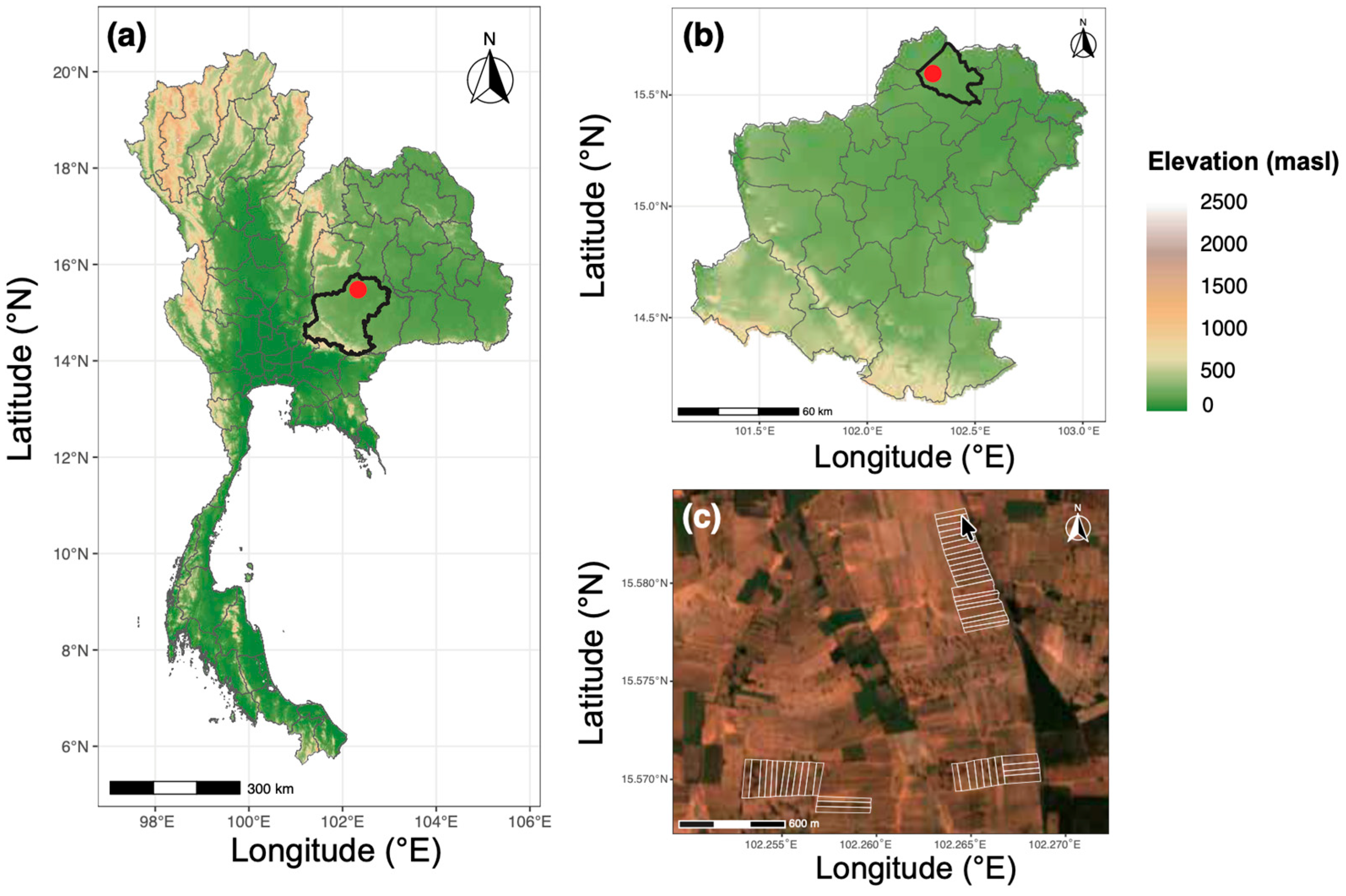
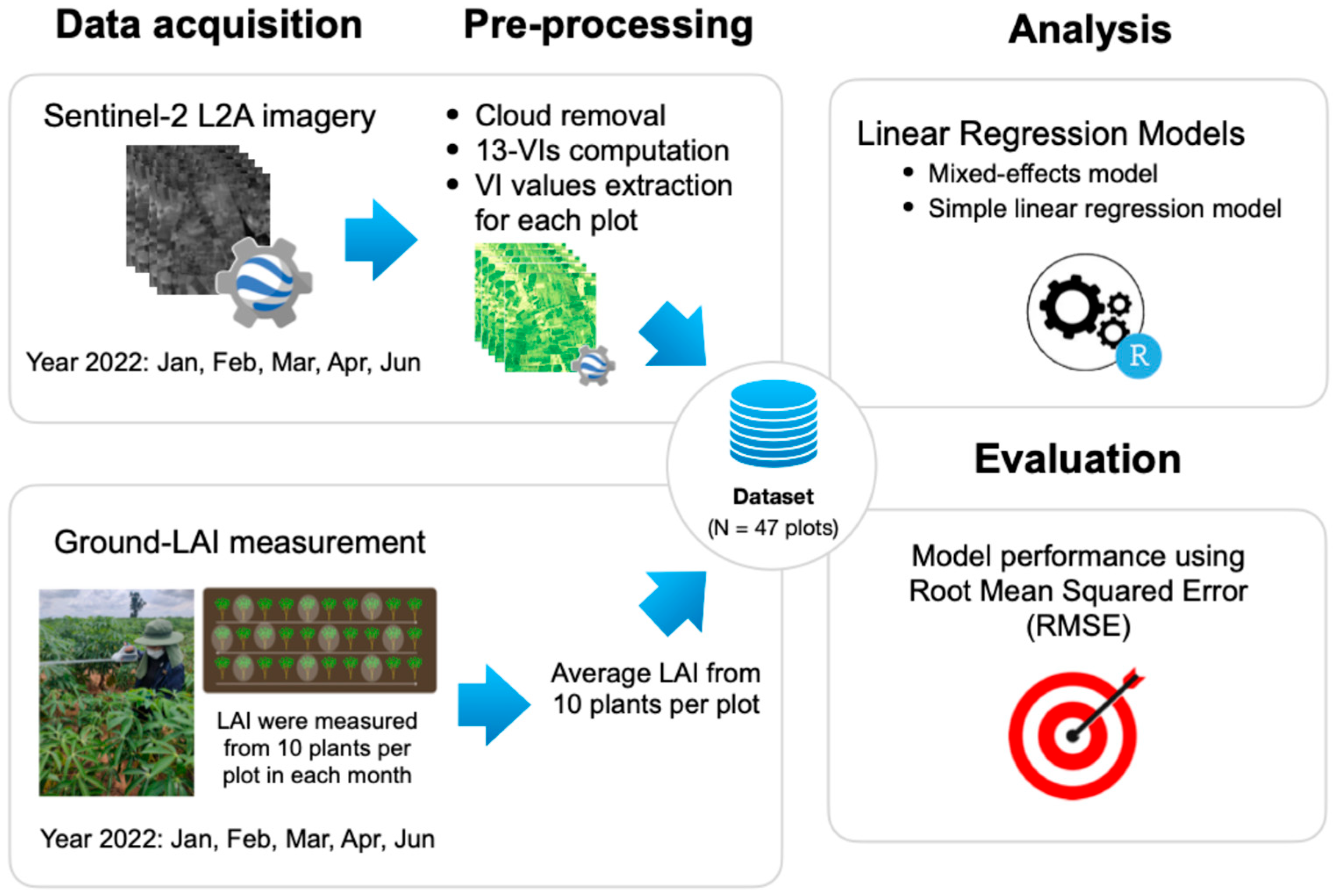
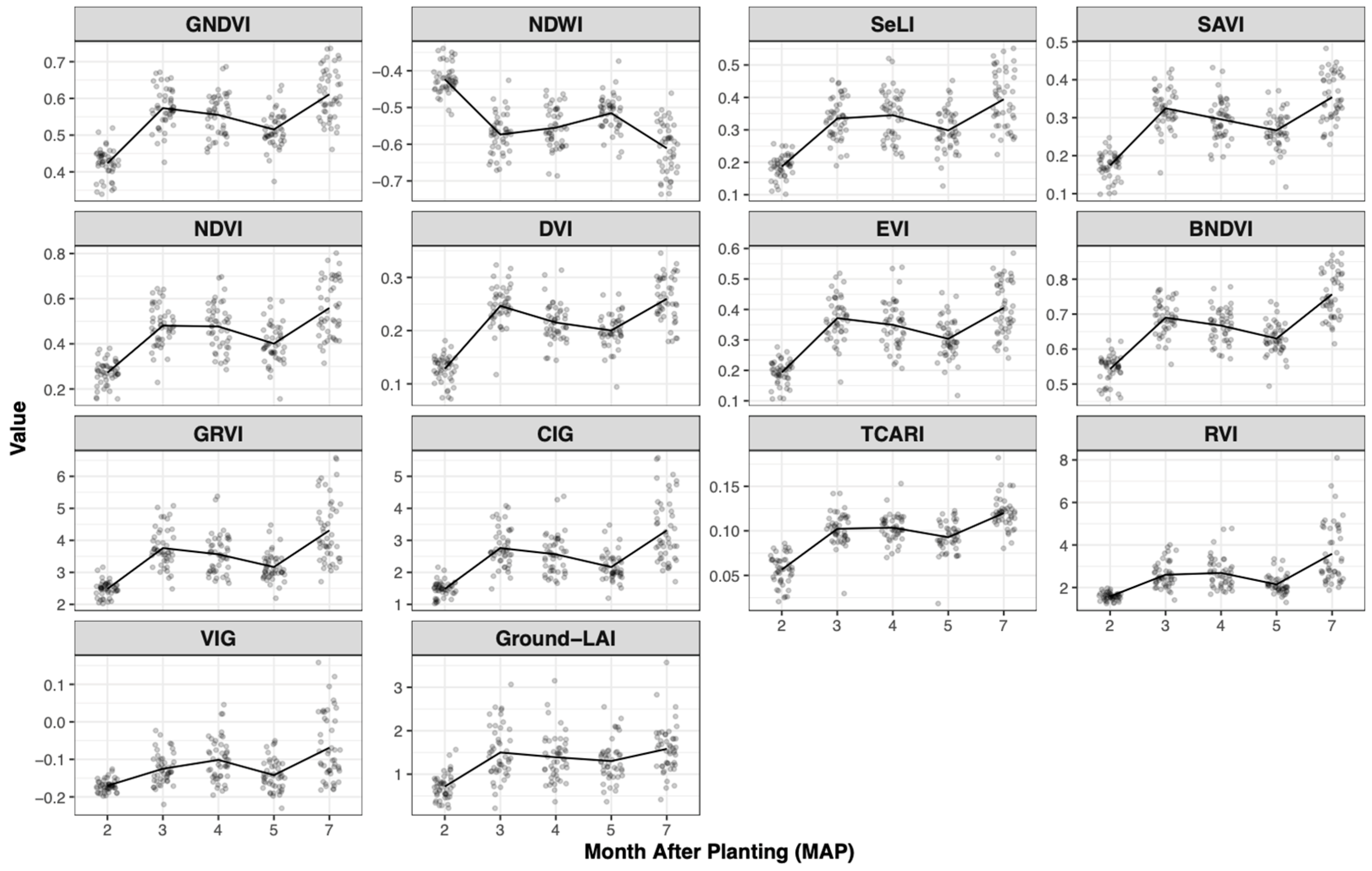
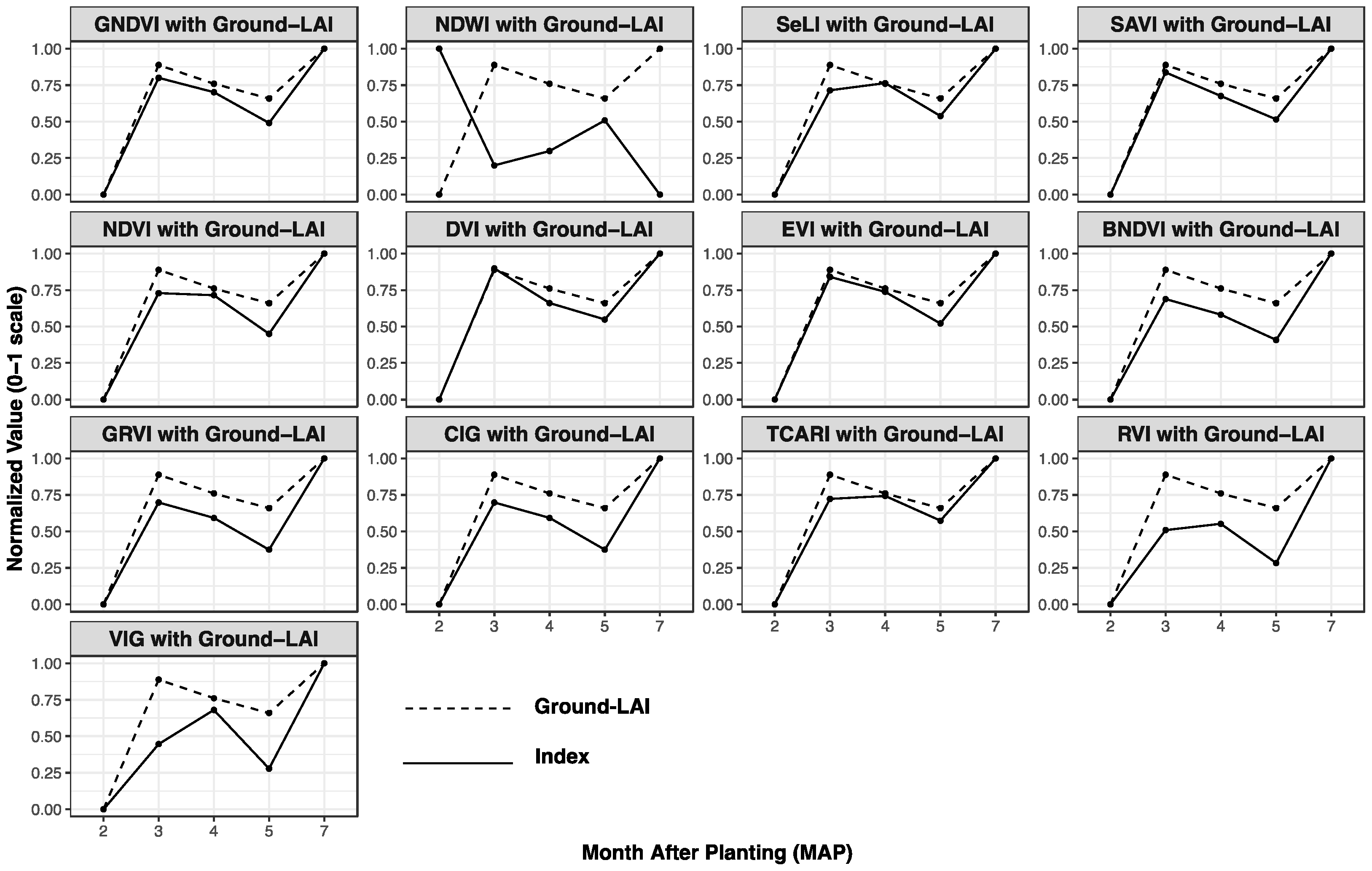
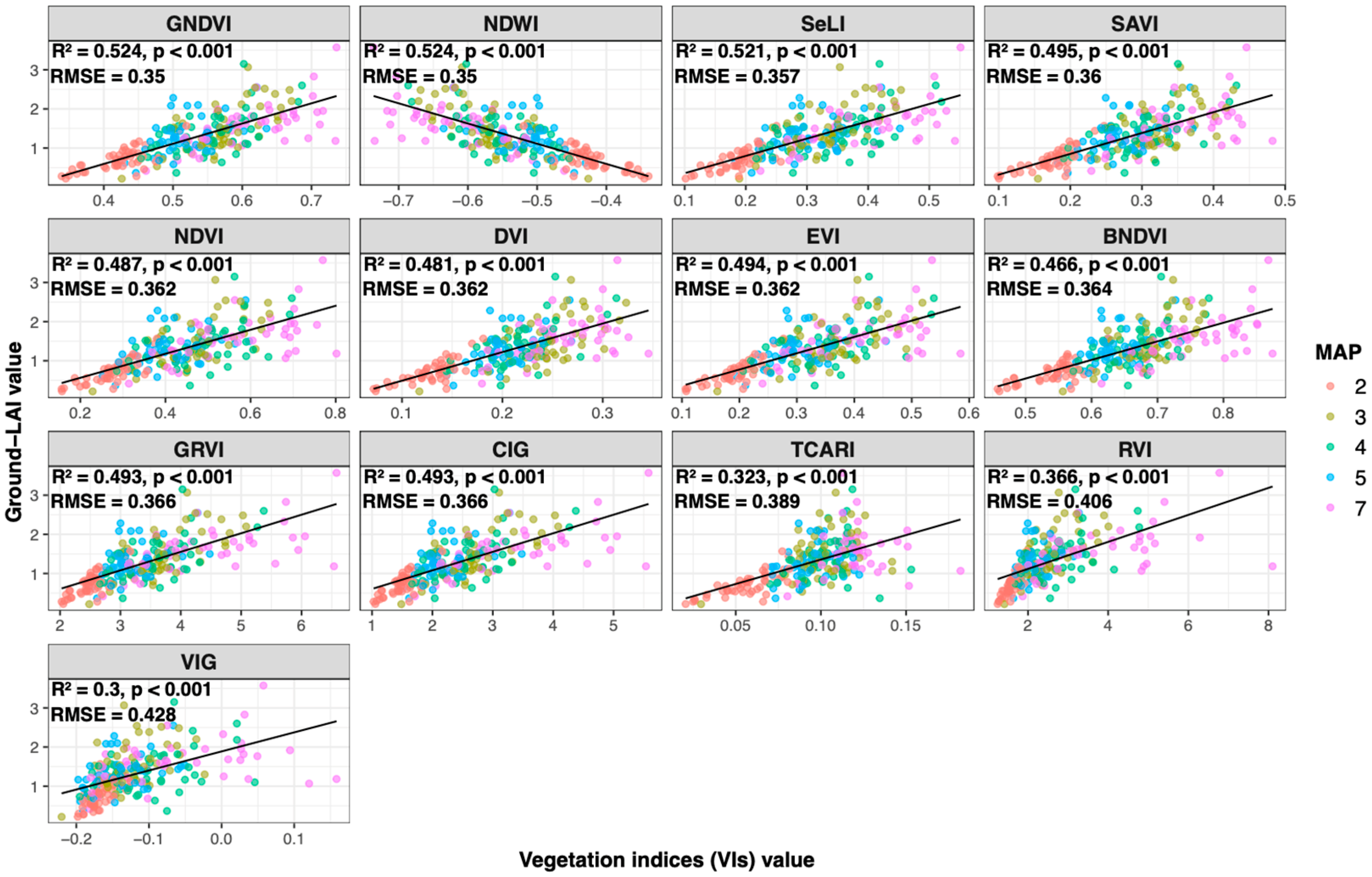
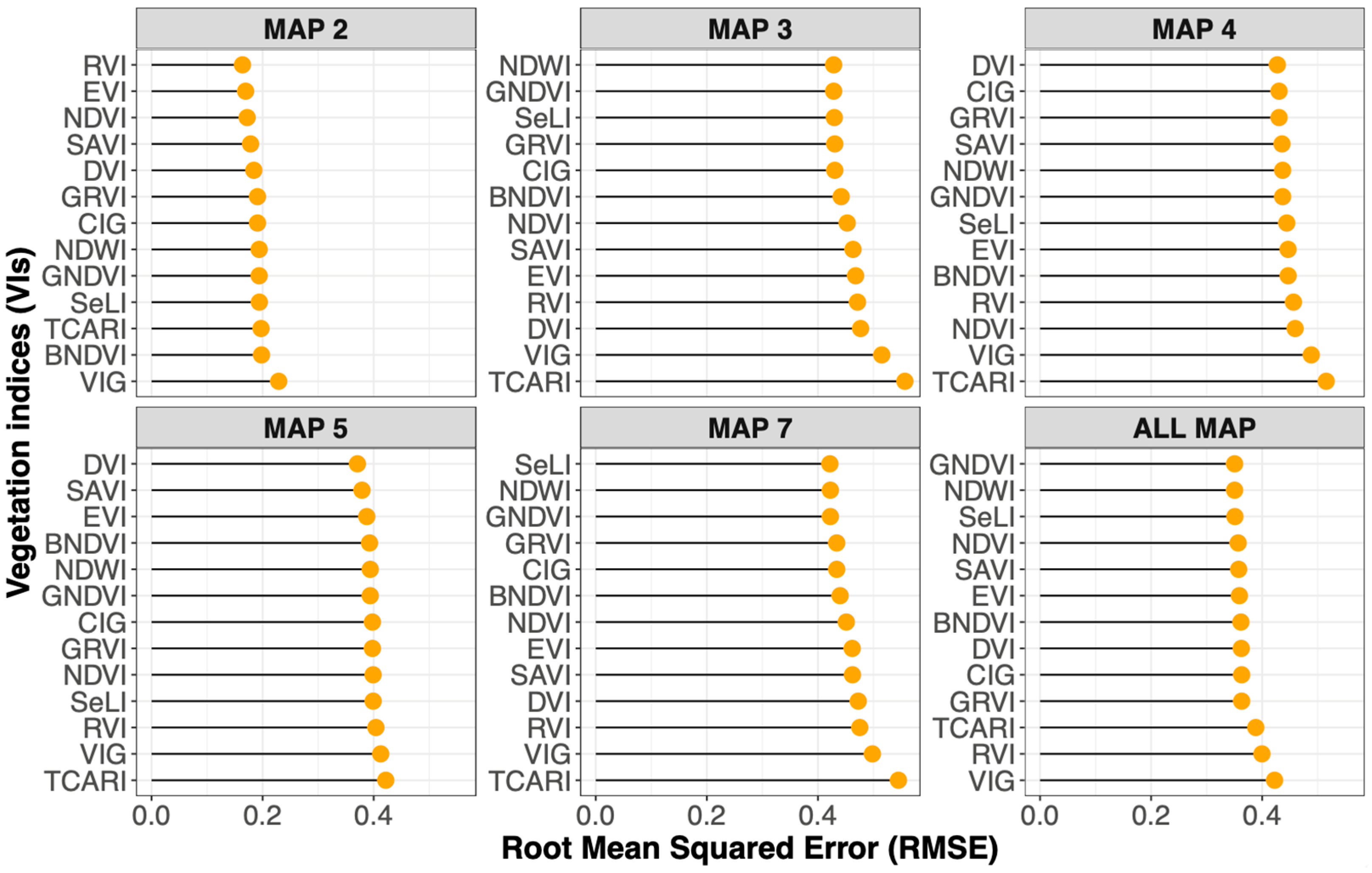
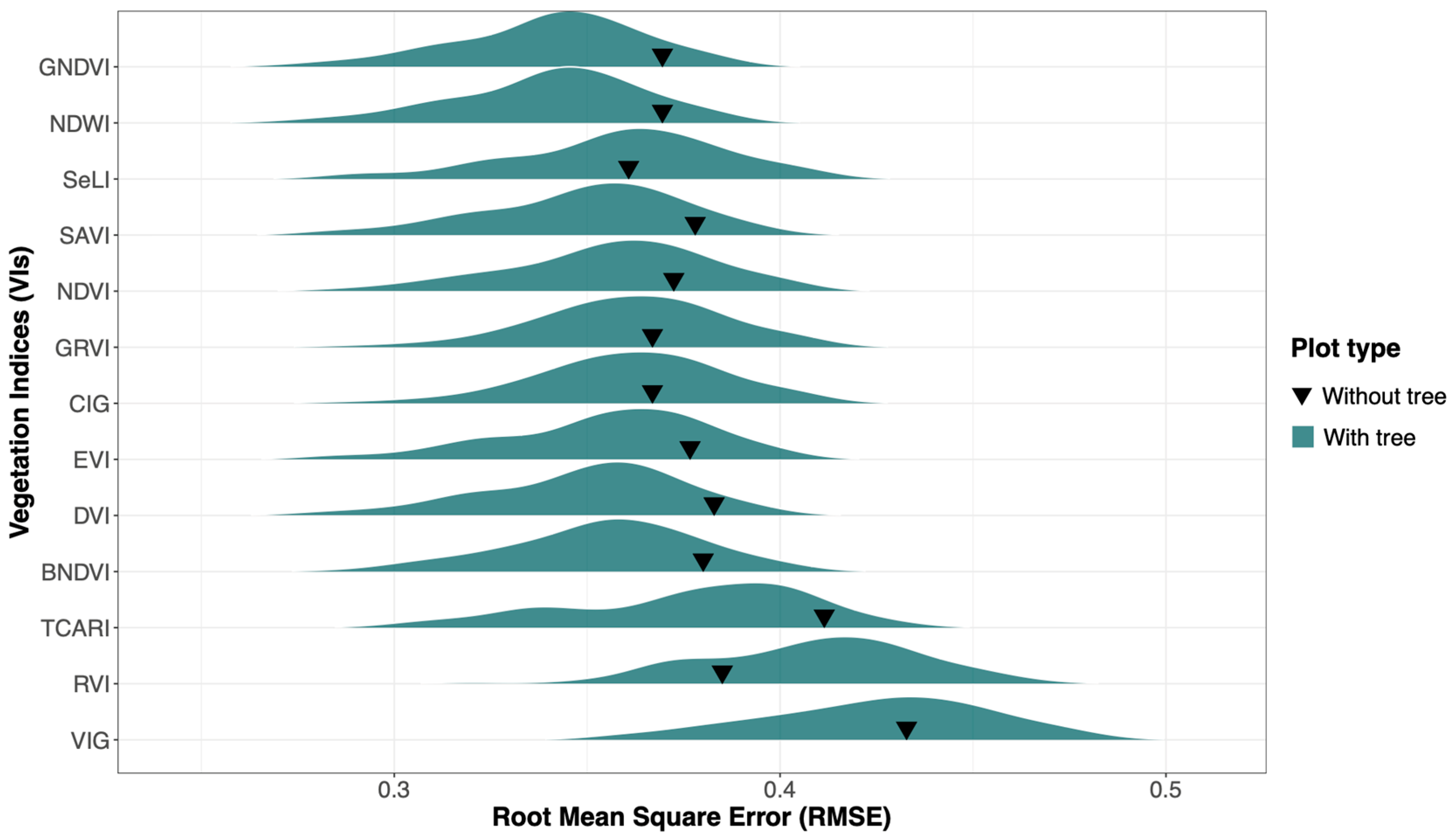
Leaf Area Index (LAI) is critical for monitoring cassava growth and yield prediction, yet ground measurements are time-consuming and labor-intensive for large-scale applications. While satellite-based vegetation indices (VIs) offer a scalable alternative, their performance for cassava LAI estimation remains poorly documented, and optimal index selection for different growth stages is unclear. This study evaluated the predictive performance of 13 Sentinel-2-derived VIs for estimating ground-measured LAI across cassava growth stages. Ground-LAI was measured monthly using a SunScan Canopy Analyzer from January to June 2022 (2–7 months after planting; MAP) in 47 cassava plots in Nakhon Ratchasima Province, Thailand. Linear mixed-effects models and stage-specific regressions assessed VI predictive performance using Coefficient of determination (R2) and Root Mean Squared Error (RMSE). The Green Normalized Difference Vegetation Index (GNDVI) and Normalized Difference Water Index (NDWI) demonstrated superior performance across all growth stages (R2 = 0.524; RMSE = 0.350), followed by Sentinel-2 LAI Green Index (SeLI R2 = 0.521, RMSE = 0.357). Stage-specific analysis revealed that Ratio Vegetation Index performed best during early growth (2 MAP, R2 = 0.671; RMSE = 0.164) while GNDVI and NDWI excelled during mid-growth (3–5 MAP) and SeLI at late growth (7 MAP, R2 = 0.393; RMSE = 0.422). While the presence of large trees altered the ranking of VI predictive performance, it did not substantially affect estimation errors, suggesting a relatively small impact of spatial heterogeneity on LAI estimation accuracy. These findings identify GNDVI and NDWI as the most operationally suitable Sentinel-2 indices for cassava LAI estimation and demonstrate that stage-specific index selection can improve monitoring accuracy, providing validated tools for regional-scale cassava crop monitoring using freely available satellite data.
Keywords: cassava; leaf area index; spatial heterogeneity; Sentinel-2; vegetation index cassava; leaf area index; spatial heterogeneity; Sentinel-2; vegetation index