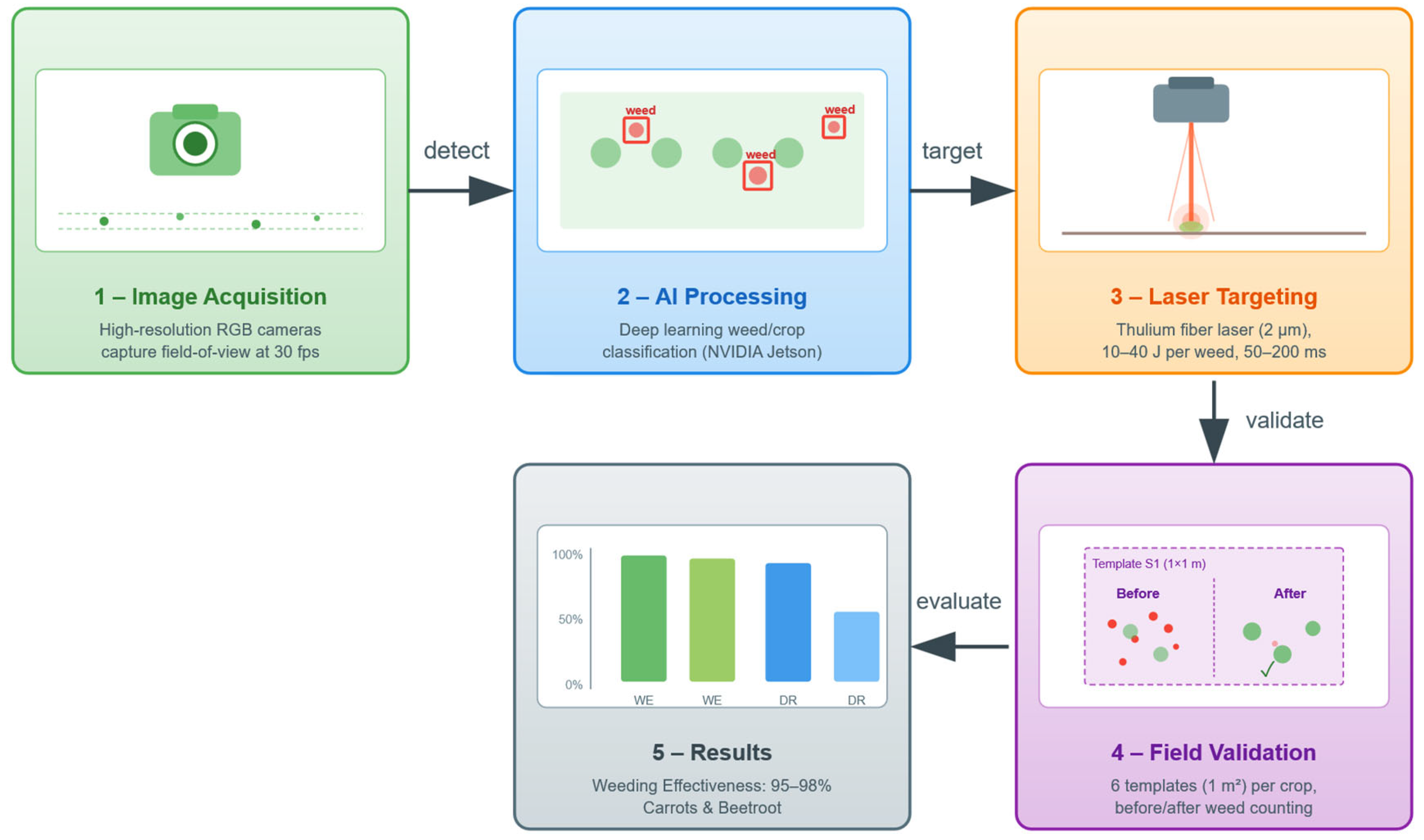

Field Validation of a Laser-Based Robotic System for Autonomous Weed Control in Organic Farming



Abstract
1. Introduction
1.1. The Challenge of Sustainable Weed Management in Modern Agriculture
1.2. The Specific Agronomic Context in Organic Farming
1.3. Laser-Based Weeding: A Precision Technology in Context
1.4. Research Gap and Objectives of the Study
- To quantify the season-long weed control efficacy and crop selectivity of the novel laser weeding system in commercial organic farming cultivation.
- To analyze the operational performance of the system.
- To establish a framework for evaluating laser weeding systems.
2. Materials and Methods
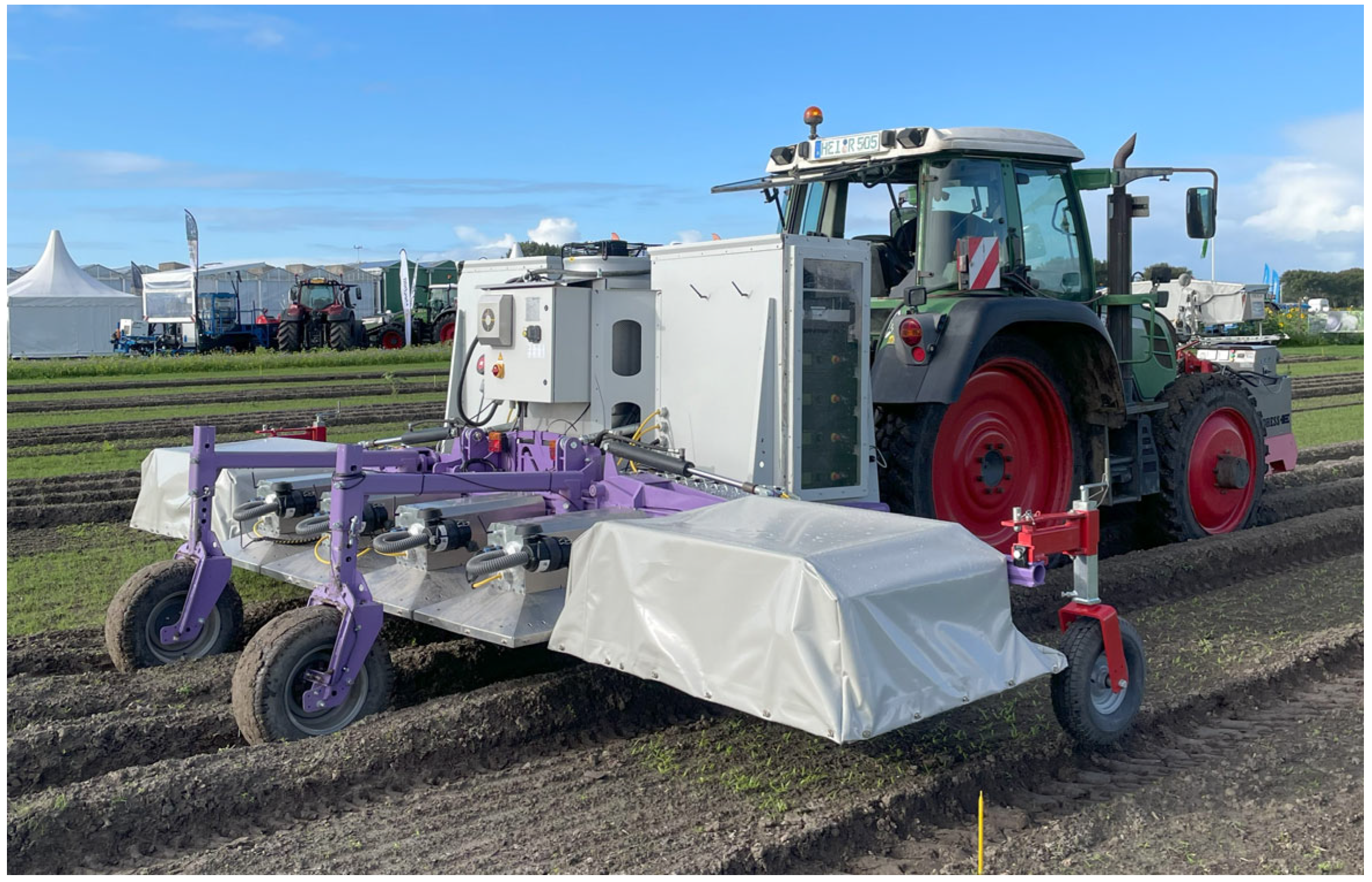
2.1. Laser Weeding System and Robotic Platform
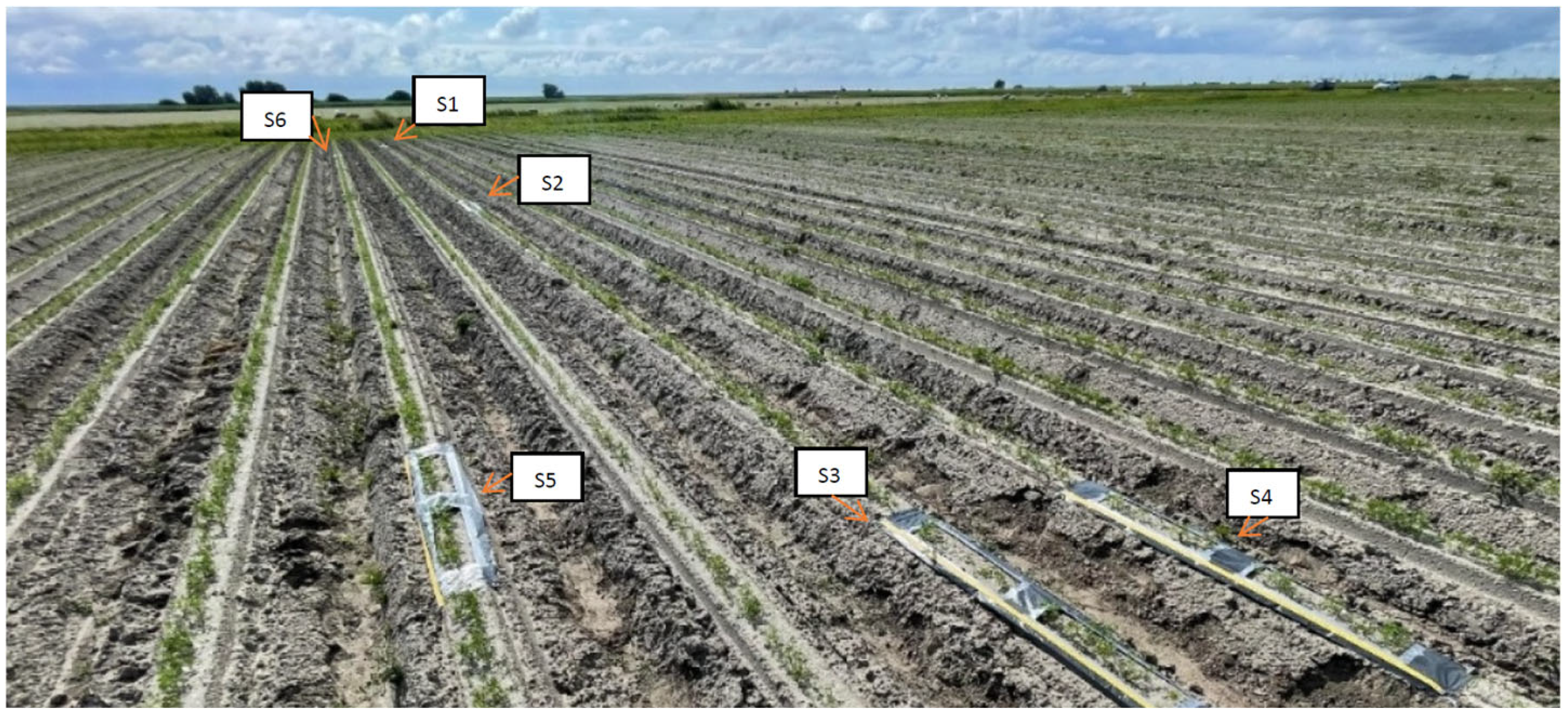
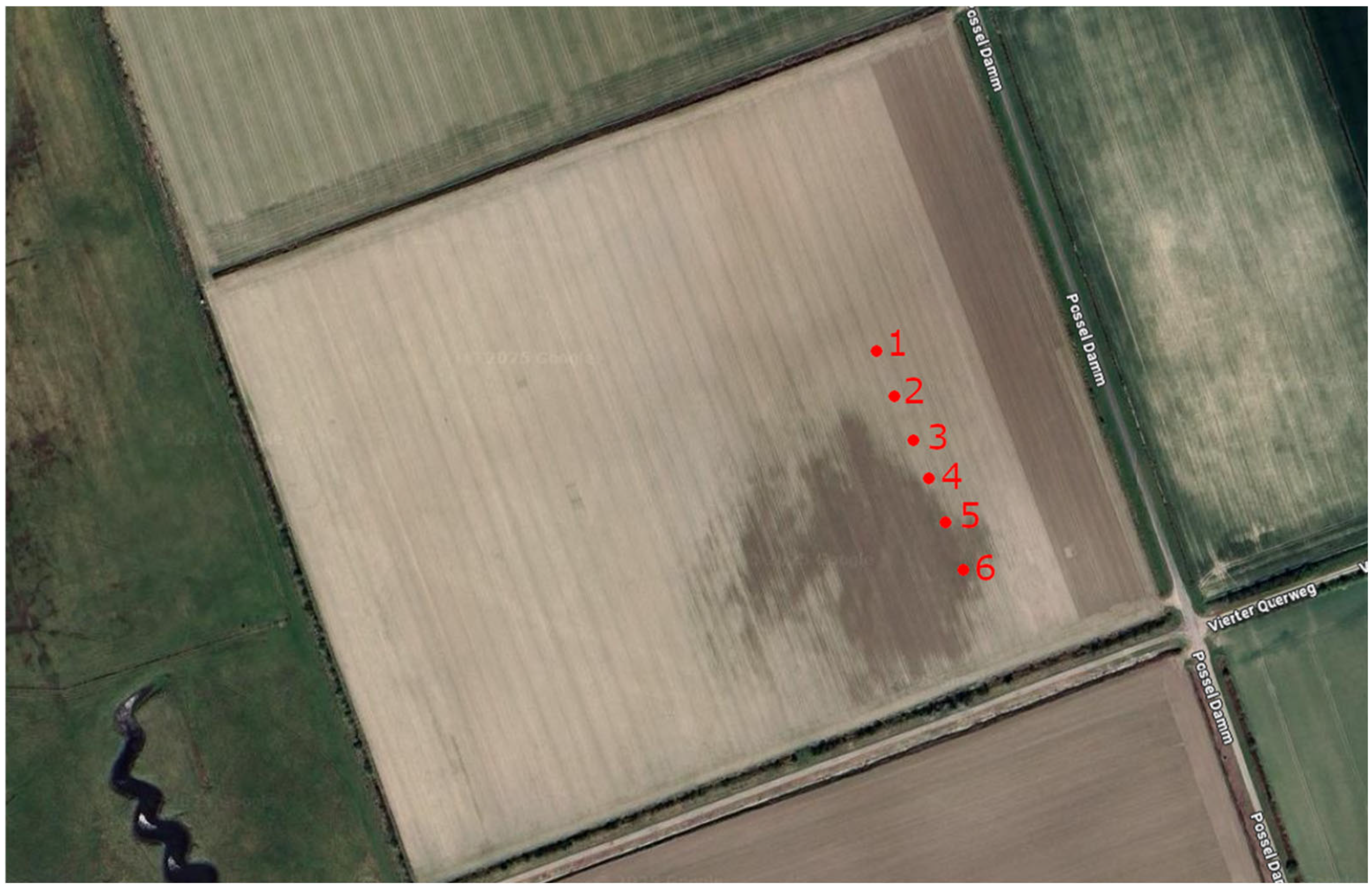
2.2. Experimental Setup
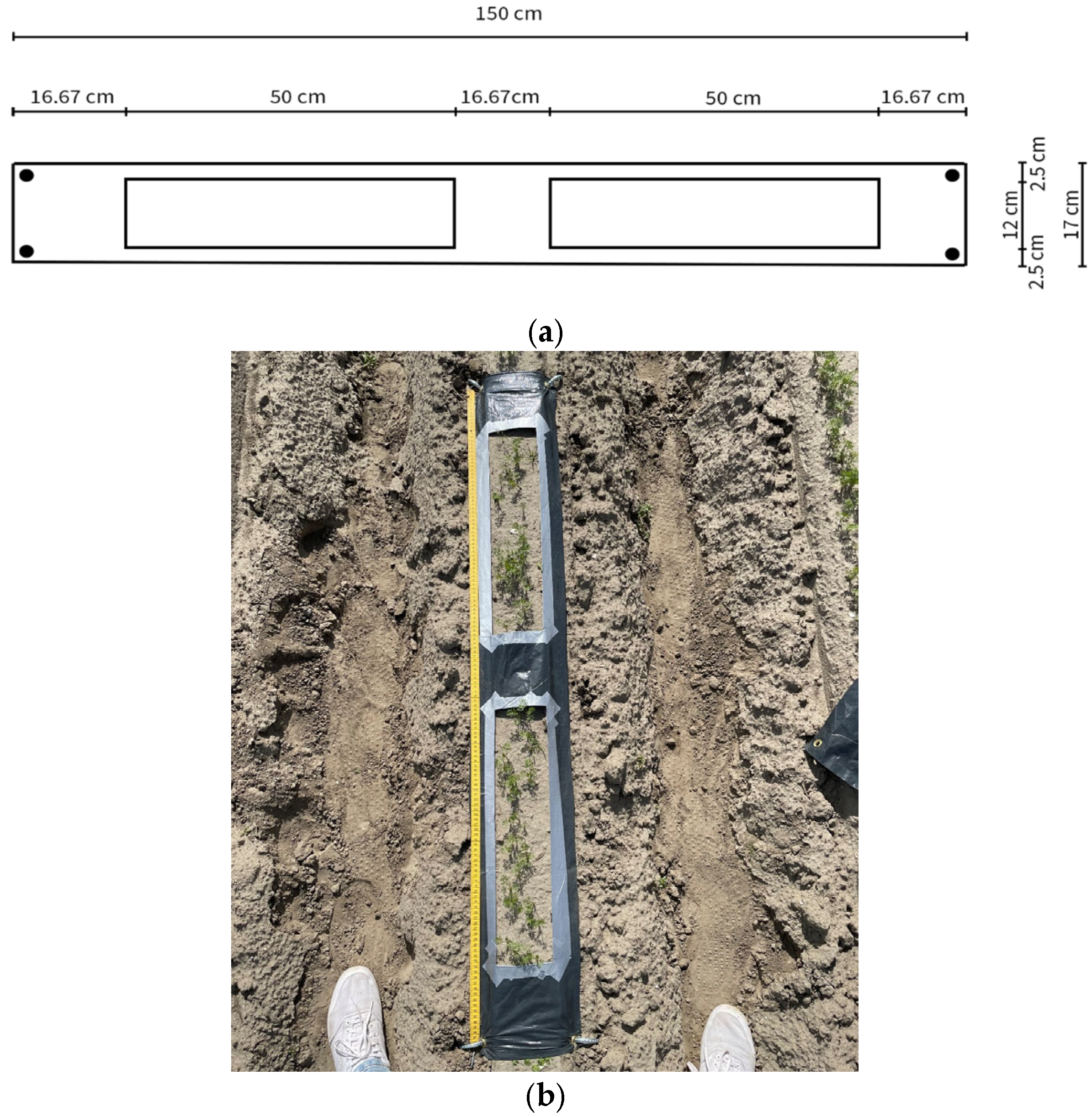
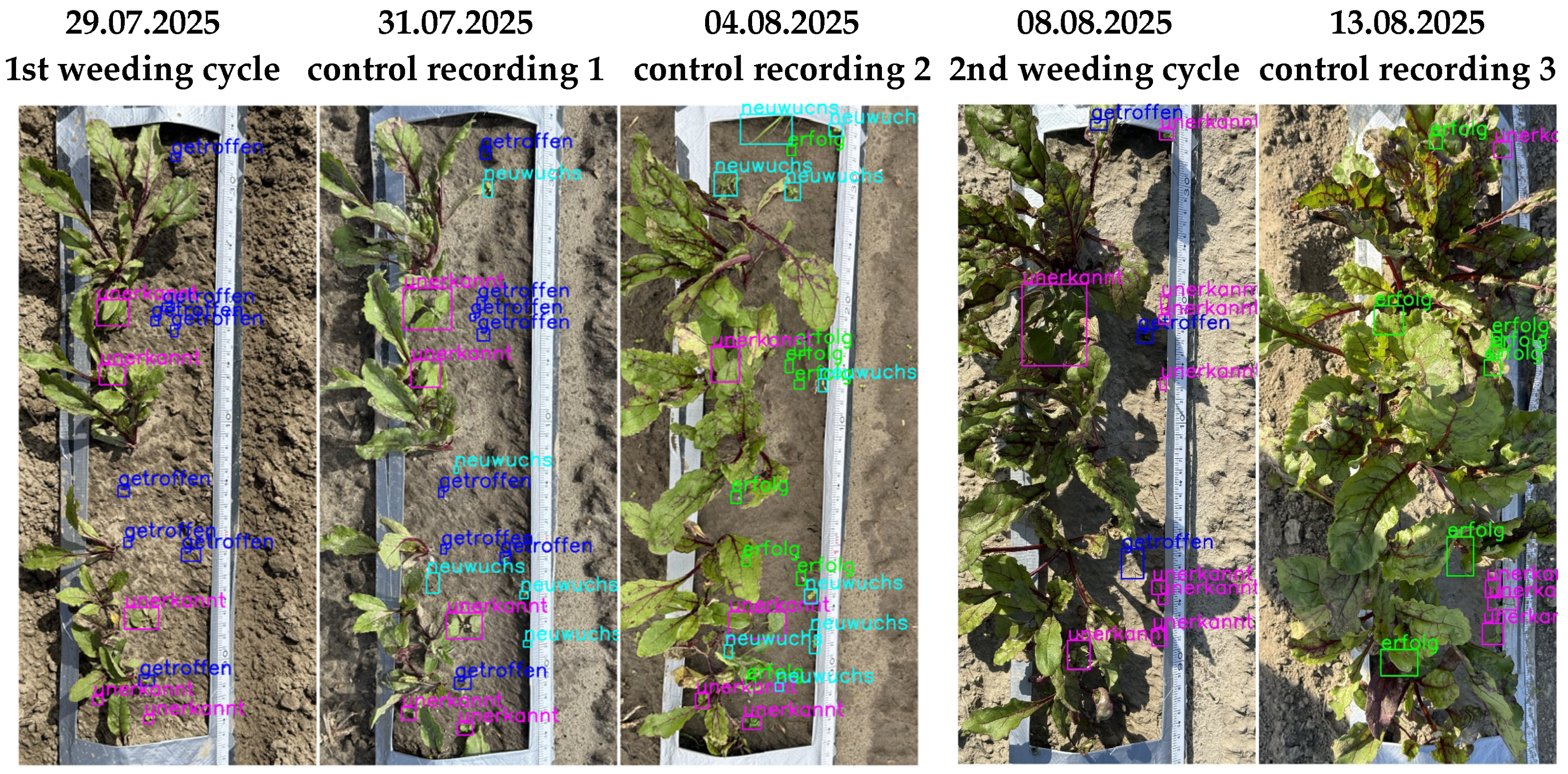
2.3. Measurement Methods and Data Normalisation
- Template Dimensions: Each evaluation window covered a length of 1.5 m and a width of 0.12 m, representing the relevant intra-row area.
- Initial Weed Density: Based on the raw counts, the initial weed pressure was approximately 25 weeds m−1 for carrots and 60 weeds m−1 for beetroot.
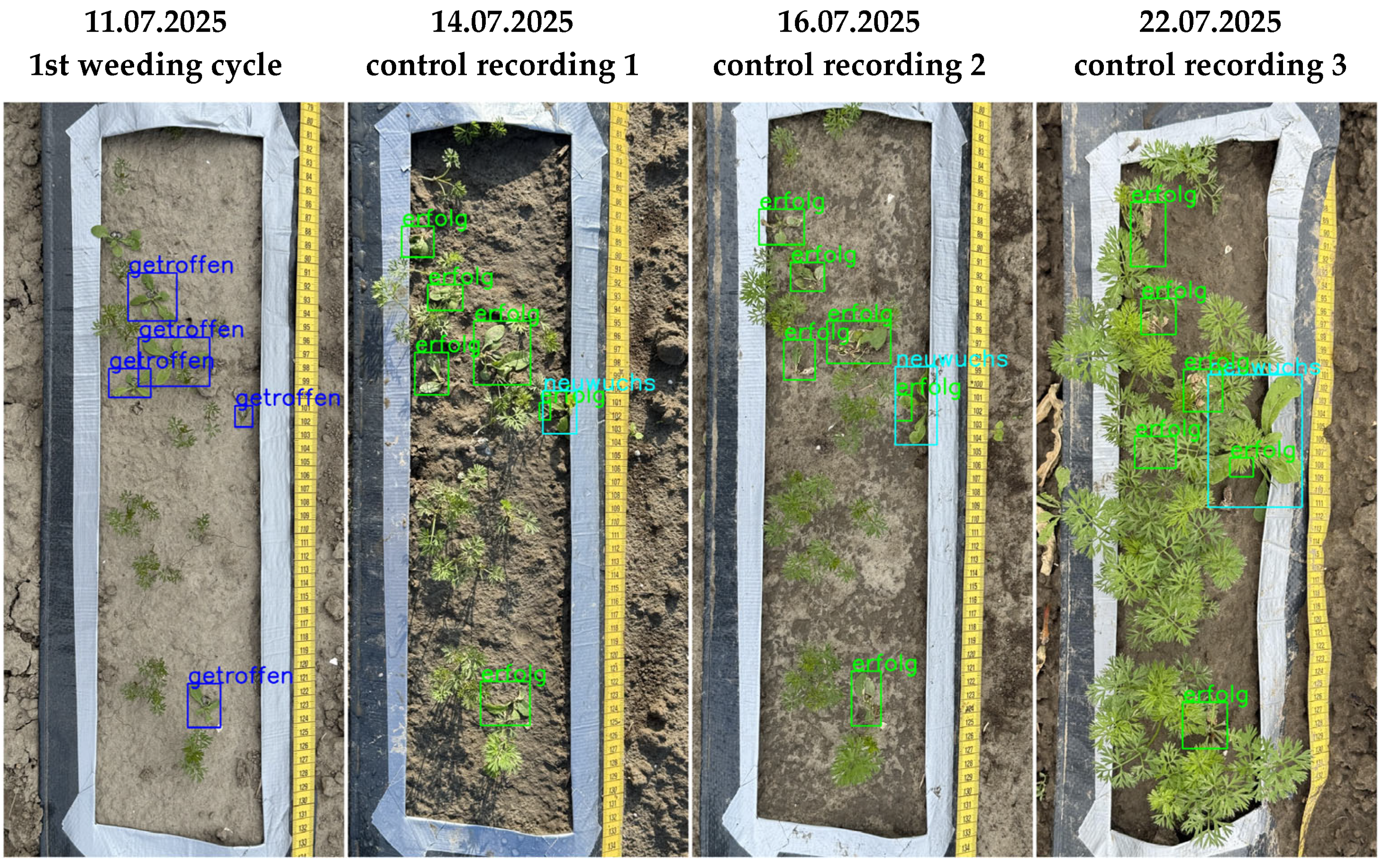
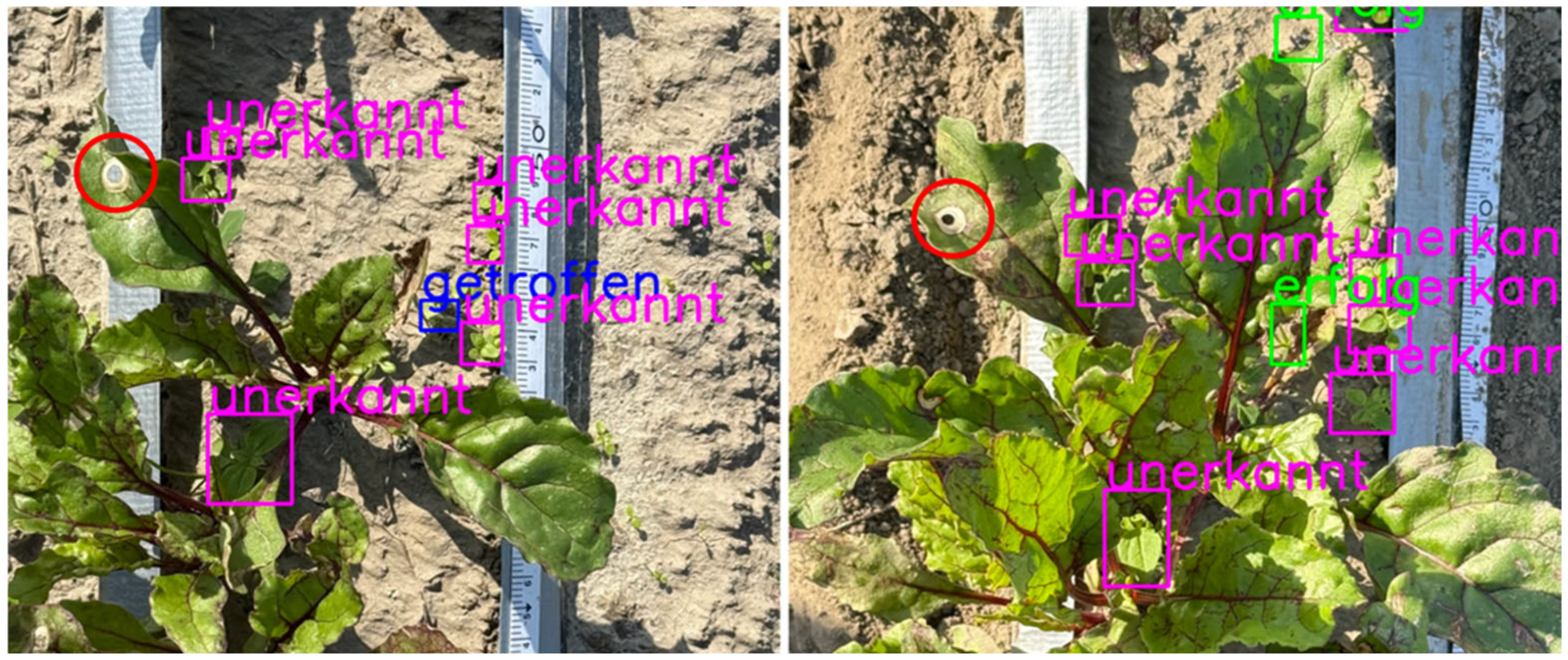
- Success WC1 (SWC1): Weeds have been completely destroyed.
- Damage WC1 (DWC1): Weeds have been damaged but not completely destroyed.
- Failure WC1 (FWC1): Weeds have recovered despite laser treatment.
- Undetected WC1 (UWC1): Weeds were not detected by the AI and therefore not hit by the laser.
- New Emergence WC1 (RWC1): Weeds have sprouted again after being weeded by the weeding robot.
- Hit WC1 (HWC1): Weeds were hit by the laser.
- The calculation of the Weeding Success (WS) of the weeding robot for the First Weeding Cycle (WC1) can now be calculated as follows:
- Undetected weeds (UWC): These represent a computer vision failure, not a laser hardware failure. Including them would conflate AI performance with laser efficacy.
- New Emergence: Weeds that germinate after the treatment pass are environmental factors independent of the laser’s performance during the pass.
- Success WC2 (SWC2): New weeds that emerged after the evaluation of the first weeding cycle was completed were completely destroyed in the second weeding cycle. These are not weeds from the new growth class from the observation period of the first weeding cycle.
- Damage WC2 (DWC2): New weeds that emerged after the evaluation of the first weeding cycle was completed were damaged in the second weeding cycle, but not completely destroyed. These are not weeds from the new growth class from the observation period of the first weeding cycle.
- Failure WC2 (FWC2): New weeds that emerged after the evaluation of the first weeding cycle was completed recovered in the second weeding cycle despite the laser treatment. These are not weeds from the new growth class from the observation period of the first weeding cycle.
- Undetected WC2 (UWC2): New weeds that emerged after the evaluation of the first weeding cycle was completed were not detected by the AI in the second weeding cycle and were therefore not hit by the laser. These are not weeds from the new growth class from the observation period of the first weeding cycle.
- New Emergence WC2 (RWC2): New weeds have sprouted after the second weeding process by the weeding robot.
- Failure WC1 destroyed (FWC1D): The weeds from the Failure class from the first weeding cycle were destroyed during the second weeding cycle.
- Undetected WC1 destroyed (UWC1D): The weeds from the Undetected class from the first weeding cycle were destroyed during the second weeding cycle.
- New Emergence WC1 destroyed (RWC1D): The weeds from the New Emegernce class from the first weeding cycle were destroyed during the second weeding cycle.
3. Experimental Results and Performance Evaluation
3.1. Experimental Results of the Overall Weeding System for One Weeding Cycle
3.2. Experimental Results of the Overall Weeding System for Two Weeding Cycles
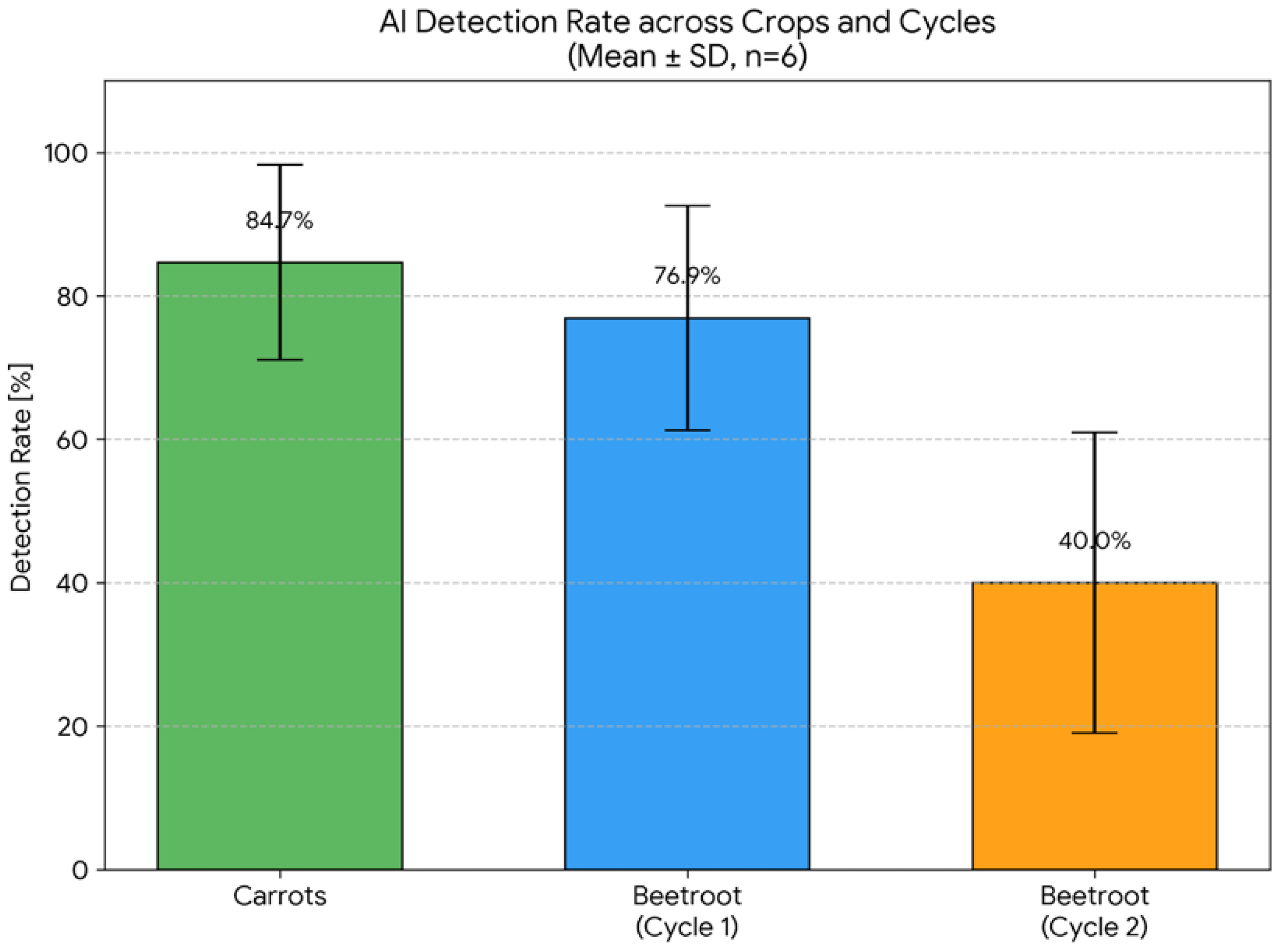
3.3. Detection Rate
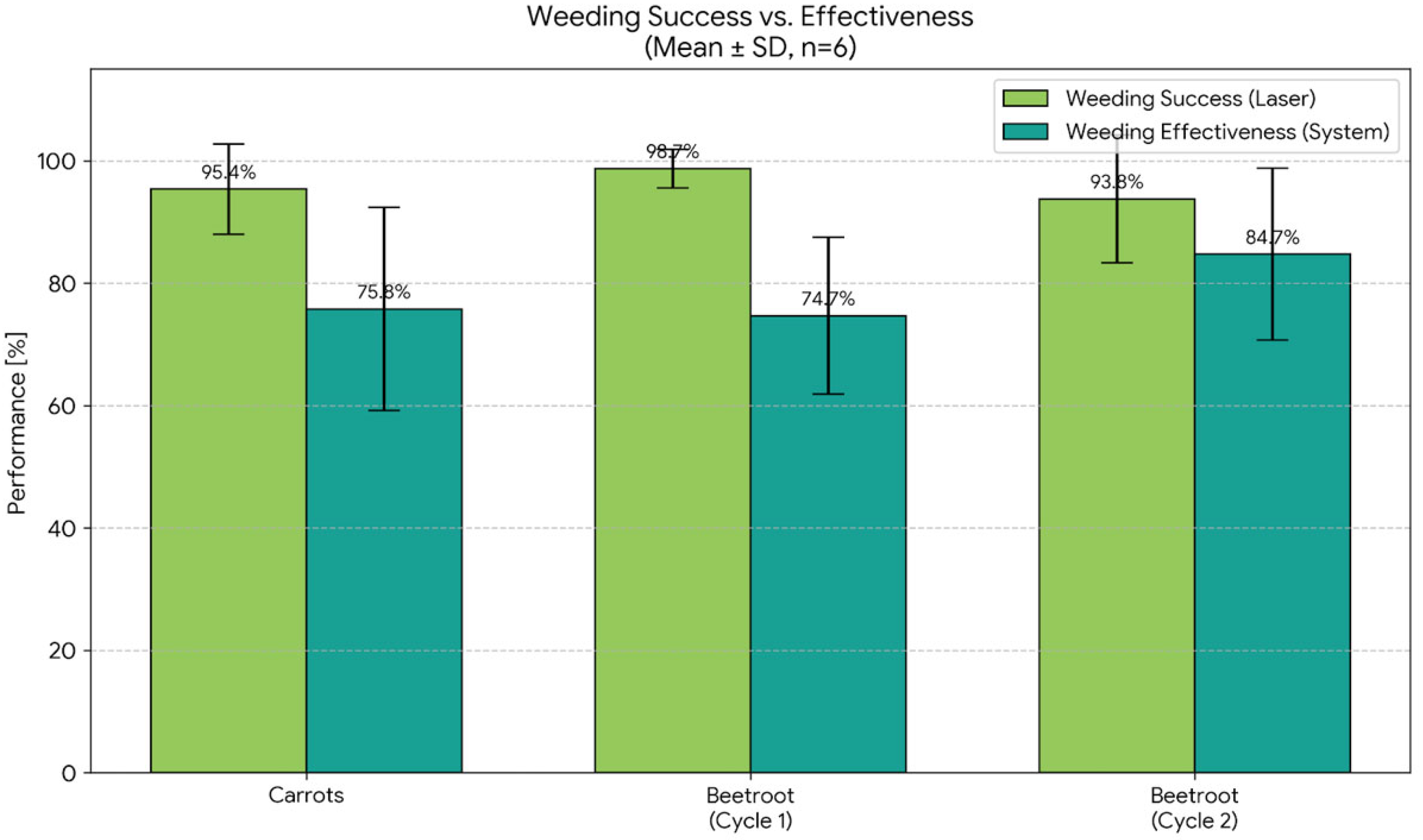
3.4. Weeding Performance
4. Discussion and Future Work
4.1. Comparison with State-of-the-Art Systems
4.2. Cost-Effectiveness Analysis
5. Conclusions
Author Contributions
Funding
Institutional Review Board Statement
Informed Consent Statement
Data Availability Statement
Acknowledgments
Conflicts of Interest
References
- Cloutier, D.C.; Leblanc, M.L. Mechanical Weed Control in Agriculture. In Physical Control Methods in Plant Protection; Vincent, C., Panneton, B., Fleurat-Lessard, F., Eds.; Springer: Berlin/Heidelberg, Germany, 2001; pp. 191–204. ISBN 978-3-662-04584-8. [Google Scholar] [CrossRef] [Scilit]
- Yaseen, M.U.; Long, J.M. Laser Weeding Technology in Cropping Systems: A Comprehensive Review. Agronomy 2024, 14, 2253. [Google Scholar] [CrossRef] [Scilit]
- Schneider, K.; Barreiro-Hurle, J.; Rodriguez-Cerezo, E. Pesticide Reduction Amidst Food and Feed Security Concerns in Europe. Nat. Food 2023, 4, 746–750. [Google Scholar] [CrossRef] [Scilit] [PubMed]
- Gerhards, R.; Belz, R.; Bohnen, C.; Dingebauer, F.; Ellenberger, J.; Inhestern, N.; Tschumi, M. Weed Management in Agroecosystems—A Review. Agronomy 2022, 12, 2195. [Google Scholar] [CrossRef] [Scilit]
- Jabran, K.; Chauhan, B.S. Overview and Significance of Non-Chemical Weed Control. In Non-Chemical Weed Control, 1st ed.; Jabran, K., Chauhan, B.S., Eds.; Elsevier: Amsterdam, The Netherlands, 2018; pp. 1–8. [Google Scholar] [CrossRef] [Scilit]
- Zingsheim, M.L.; Döring, T.F. What Weeding Robots Need to Know about Ecology. Agric. Ecosyst. Environ. 2024, 364, 108861. [Google Scholar] [CrossRef] [Scilit]
- Mathiassen, S.K.; Bak, T.; Christensen, S.; Kudsk, P. The effect of laser treatment as a weed control method. Biosyst. Eng. 2006, 95, 497–505. [Google Scholar] [CrossRef] [Scilit]
- Heisel, T.; Schou, J.; Christensen, S.; Andreasen, C. Cutting Weeds with a CO2 Laser. Weed Res. 2008, 41, 19–29. [Google Scholar] [CrossRef] [Scilit]
- Marx, C.; Barcikowski, S.; Hustedt, M.; Haferkamp, H.; Rath, T. Design and application of a weed damage model for laser-based weed control. Biosyst. Eng. 2012, 113, 148–157. [Google Scholar] [CrossRef] [Scilit]
- Sirikunkitti, S.; Chongcharoen, K.; Yoongsuntia, P.; Ratanavis, A. Progress in a Development of a Laser-Based Weed Control System. In Proceedings of the 2019 Research, Invention, and Innovation Congress (RI2C), Bangkok, Thailand, 11–13 December 2019; pp. 1–4. [Google Scholar] [CrossRef] [Scilit]
- Mwitta, C.; Rains, G.C.; Prostko, E. Evaluation of Diode Laser Treatments to Manage Weeds in Row Crops. Agronomy 2022, 12, 2681. [Google Scholar] [CrossRef] [Scilit]
- Xiong, Y.; Ge, Y.; Liang, Y.; Blackmore, S. Development of a prototype robot and fast path-planning algorithm for static laser weeding. Comput. Electron. Agric. 2017, 142, 494–503. [Google Scholar] [CrossRef] [Scilit]
- Kaierle, S.; Marx, C.; Rath, T.; Hustedt, M. Find and Irradiate—Lasers Used for Weed Control. Laser Tech. J. 2013, 10, 44–47. [Google Scholar] [CrossRef] [Scilit]
- Andreasen, C.; Vlassi, E.; Salehan, N. Laser weeding of common weed species. Front. Plant Sci. 2024, 15, 1375164. [Google Scholar] [CrossRef] [Scilit] [PubMed]
- Carbon Robotics. Available online: https://carbonrobotics.com (accessed on 5 December 2025).
- Weedbot. Available online: https://weedbot.eu/ (accessed on 5 December 2025).
- Zhu, H.; Zhang, Y.; Mu, D.; Bai, L.; Zhuang, H.; Li, H. YOLOX-Based Blue Laser Weeding Robot in Corn Field. Front. Plant Sci. 2022, 13, 1017803. [Google Scholar] [CrossRef] [Scilit] [PubMed]
- Futonics Laser GmbH. Available online: https://www.futonics.de (accessed on 5 December 2025).
- Emmi, L.; Fernández, R.; Gonzalez-de-Santos, P.; Francia, M.; Golfarelli, M.; Vitali, G.; Sandmann, H.; Hustedt, M.; Wollweber, M. Exploiting the Internet Resources for Autonomous Robots in Agriculture. Agriculture 2023, 13, 1005. [Google Scholar] [CrossRef] [Scilit]
- Andreasen, C.; Scholle, K.; Saberi, M. Laser Weeding With Small Autonomous Vehicles: Friends or Foes? Front. Agron. 2022, 4, 841086. [Google Scholar] [CrossRef] [Scilit]
- Escarda Technologies GmbH. Available online: https://www.escarda.tech (accessed on 16 December 2025).
- Andreasen, C.; Vlassi, E.; Salehan, N.; Johannsen, K.S.; Jensen, S.M. Laser weed seed control: Challenges and opportunities. Front. Agron. 2024, 6, 1342372. [Google Scholar] [CrossRef] [Scilit]
- Bejo Open Days 2025. Available online: https://www.brimapack.com/en/news/bejo-2025/ (accessed on 5 December 2025).
- Knoll, F.J.; Czymmek, V.; Harders, L.O.; Hussmann, S. Real-time classification of weeds in organic carrot production using deep learning algorithms. Comput. Electron. Agric. 2019, 167, 105097. [Google Scholar] [CrossRef] [Scilit]
- Fatima, H.S.; ul Hassan, I.; Hasan, S.; Khurram, M.; Stricker, D.; Afzal, M.Z. Formation of a Lightweight, Deep Learning-Based Weed Detection System for a Commercial Autonomous Laser Weeding Robot. Appl. Sci. 2023, 13, 3997. [Google Scholar] [CrossRef] [Scilit]
- Czymmek, V.; Völckner, J.; Hussmann, S. Development and Evaluation of a Laser System for Autonomous Weeding Robots. AgriEngineering 2024, 6, 4425–4441. [Google Scholar] [CrossRef] [Scilit]
- Slaughter, D.C.; Giles, D.K.; Downey, D. Autonomous robotic weed control systems: A review. Comput. Electron. Agric. 2008, 61, 63–78. [Google Scholar] [CrossRef] [Scilit]
- Czymmek, V.; Harders, L.O.; Knoll, F.J.; Hussmann, S. Vision-Based Deep Learning Approach for Real-Time Detection of Weeds in Organic Farming. In Proceedings of the 2019 IEEE International Instrumentation and Measurement Technology Conference (I2MTC), Auckland, New Zealand, 20–23 May 2019; pp. 1–5. [Google Scholar] [CrossRef] [Scilit]
- Zhang, H.; Cao, D.; Zhou, W.; Currie, K. Laser and Optical Radiation Weed Control: A Critical Review. Precis. Agric. 2024, 25, 2033–2057. [Google Scholar] [CrossRef] [Scilit]
- Sosnoskie, L.M.; Besançon, T.E.; Kikkert, J.R.; Swantek, J.M. Deep learning-based laser weed control compared to conventional herbicide application across three vegetable production systems. Pest Manag. Sci. 2025, 81, 4922–4936. [Google Scholar] [CrossRef] [Scilit]
- Krupanek, J.; Gonzalez-de-Santos, P.; Emmi, L.; Wollweber, M.; Sandmann, H.; Scholle, K.; Tran, D.D.M.; Schouteten, J.J.; Andreasen, C. Environmental performance of an autonomous laser weeding robot—A case study. Int. J. Life Cycle Assess. 2024, 29, 1021–1052. [Google Scholar] [CrossRef] [Scilit]
- Vahdanjoo, M.; Gislum, R.; Sørensen, C.A.G. Operational, Economic, and Environmental Assessment of an Agricultural Robot in Seeding and Weeding Operations. AgriEngineering 2023, 5, 299–324. [Google Scholar] [CrossRef] [Scilit]
- Fishkis, O.; Weller, J.; Lehmhus, J.; Pollinger, F.; Strassemeyer, J.; Koch, H.-J. Ecological and economic evaluation of conventional and new weed control techniques in row crops. Agric. Ecosyst. Environ. 2024, 360, 108786. [Google Scholar] [CrossRef] [Scilit]
- Tran, D.; Schouteten, J.J.; Degieter, M.; Krupanek, J.; Jarosz, W.; Areta, A.; Emmi, L.; De Steur, H.; Gellynck, X. European Stakeholders’ Perspectives on Implementation Potential of Precision Weed Control: The Case of Autonomous Vehicles with Laser Treatment. Precis. Agric. 2023, 24, 2200–2222. [Google Scholar] [CrossRef] [Scilit]
- Shang, L.; Pahmeyer, C.; Britz, W. How much can farmers pay for weeding robots? A Monte Carlo simulation study. Precis. Agric. 2023, 24, 1712–1737. [Google Scholar] [CrossRef] [Scilit]





| Date: 08.08.2025 | T1_above | T1_below | T2_above | T2_below | T3_above | T3_below | T4_above | T4_below | T5_above | T5_below | T6_above | T6_below | Total |
|---|---|---|---|---|---|---|---|---|---|---|---|---|---|
| Hit | 3 | 2 | 1 | 3 | 2 | 5 | 3 | 2 | 0 | 2 | 2 | 1 | 26 |
| Undetected_original | 9 | 7 | 0 | 1 | 4 | 2 | 2 | 0 | 2 | 1 | 1 | 3 | 32 |
| Undetected_align | 7 | 4 | 0 | 0 | 0 | 0 | 1 | 0 | 0 | 0 | 0 | 1 | 13 |
| Undetected_covered | 2 | 2 | 0 | 1 | 2 | 2 | 0 | 0 | 1 | 1 | 1 | 2 | 14 |
| Org-align-covered | 0 | 1 | 0 | 0 | 2 | 0 | 1 | 0 | 1 | 0 | 0 | 0 | 5 |
| 84% |
| Feature | Thulium Fiber Laser (Our System) | CO2 Laser (e.g., Carbon Robotics [15]) | Blue Diode Laser (e.g., WeedBot [16]) |
|---|---|---|---|
| Wavelength | 2.0 µm | 10.6 µm | ~450 nm |
| Target Mechanism | Water absorption (structural damage) | Water absorption (thermal burn) | Chlorophyll absorption |
| Moisture Tolerance | High | Low (beam blocked by surface water) | High |
| Wall-plug Efficiency | High (~30%) | Low (~10%) | High (~40%) |
| Mobility/Form Factor | Compact, modular integration | Large, heavy autonomous platforms | Compact |
| Safety | Eye-safe (with shielding) | Eye-safe (with shielding) | Risk of scattered light (visible spectrum) |
Disclaimer/Publisher’s Note: The statements, opinions and data contained in all publications are solely those of the individual author(s) and contributor(s) and not of MDPI and/or the editor(s). MDPI and/or the editor(s) disclaim responsibility for any injury to people or property resulting from any ideas, methods, instructions or products referred to in the content. |
© 2026 by the authors. Licensee MDPI, Basel, Switzerland. This article is an open access article distributed under the terms and conditions of the Creative Commons Attribution (CC BY) license.
Share and Cite
Czymmek, V.; Völckner, J.; Zilske, F.; Hussmann, S. Field Validation of a Laser-Based Robotic System for Autonomous Weed Control in Organic Farming. AgriEngineering 2026, 8, 133. https://doi.org/10.3390/agriengineering8040133
Czymmek V, Völckner J, Zilske F, Hussmann S. Field Validation of a Laser-Based Robotic System for Autonomous Weed Control in Organic Farming. AgriEngineering. 2026; 8(4):133. https://doi.org/10.3390/agriengineering8040133
Chicago/Turabian StyleCzymmek, Vitali, Jost Völckner, Felix Zilske, and Stephan Hussmann. 2026. "Field Validation of a Laser-Based Robotic System for Autonomous Weed Control in Organic Farming" AgriEngineering 8, no. 4: 133. https://doi.org/10.3390/agriengineering8040133
APA StyleCzymmek, V., Völckner, J., Zilske, F., & Hussmann, S. (2026). Field Validation of a Laser-Based Robotic System for Autonomous Weed Control in Organic Farming. AgriEngineering, 8(4), 133. https://doi.org/10.3390/agriengineering8040133