
Expanding Innovation in Agriculture: Case Study on Adoptable Technologies Using GenAI Based on Traditional Knowledge Management
 , , and
Abstract
1. Introduction
2. Literature Review
3. Materials and Methods
- In the sowing–harvesting–first disposal practice of pipiana pumpkin, what are your current problems or expectations?
- What strategies could be developed to improve the sowing –harvesting–first disposal practice of the pipiana pumpkin?
- In the production of pipiana pumpkin, what are the activities of the planting–harvest–first sale circuit?
- In the production of pipiana pumpkin, what are the social and productive elements of small-scale producers?
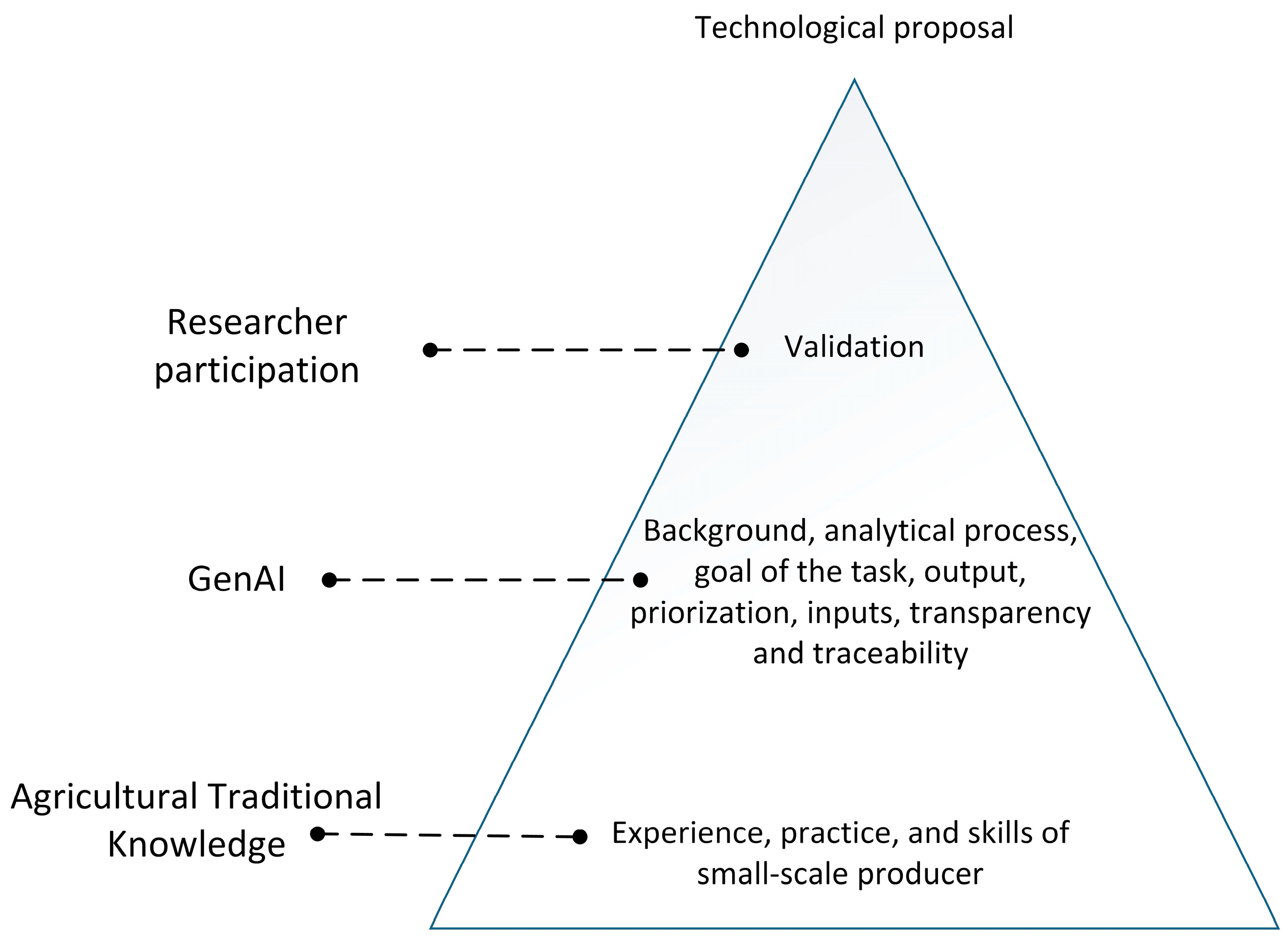
- Considering the social and productive information (background) and using the TK elements (analytical process), it was analyzed and developed a proposal for adoptable technologies to improve the sowing, harvesting, and first disposal circuit of pipiana pumpkin (goal of the task and output). Please, prioritize TK elements (prioritization).
Information Analysis and Validity
4. Results
4.1. Traditional Knowledge of the Pipiana Pumpkin
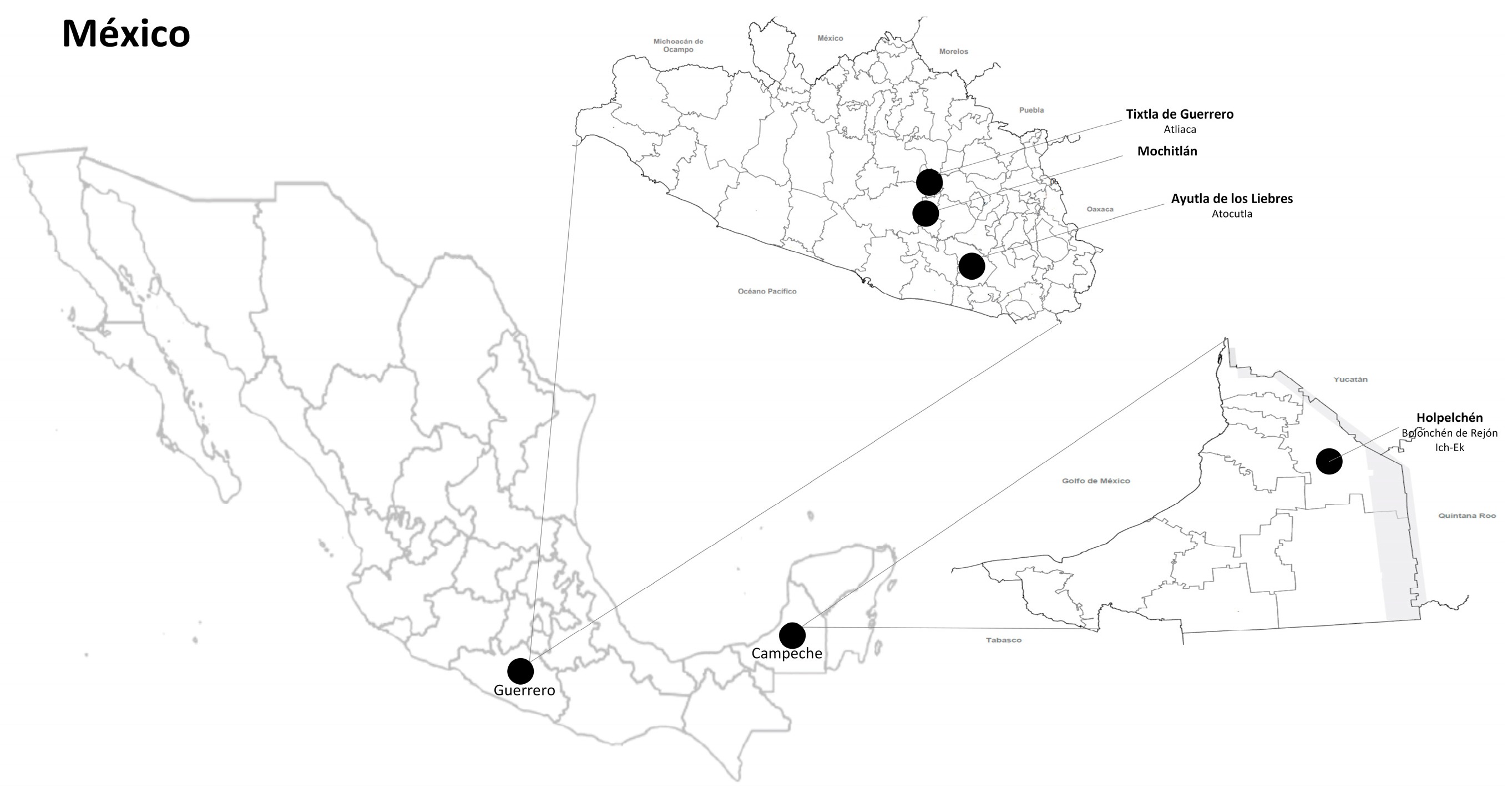
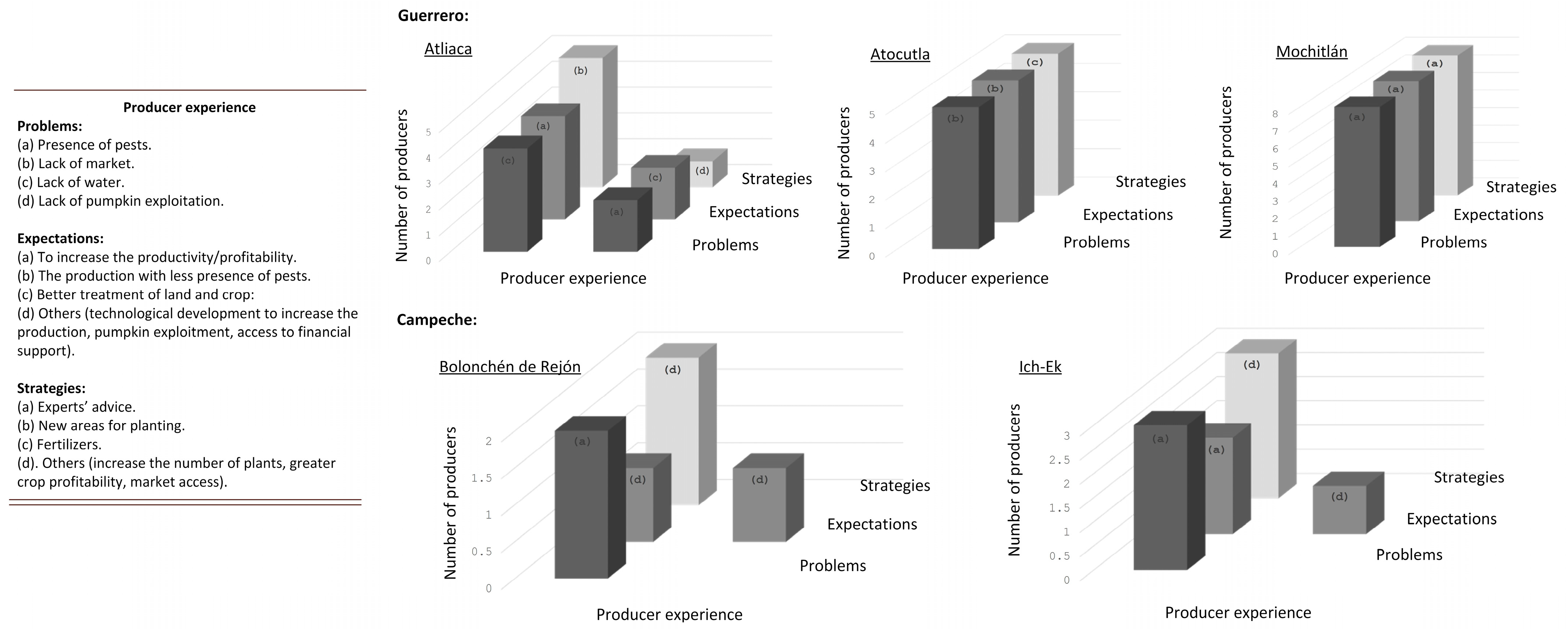
- The Atliaca community in Tixtla de Guerrero focuses on addressing the problems of water scarcity and pest infestations. The expectations are to increase productivity and profitability, as well as to improve land and crop management. The strategies include exploring new areas for planting and expanding market access.
- Atocutla, the community of Tixtla de Guerrero, faces a lack of market and the underutilization of pumpkin resources as problems. The expectation is for production with reduced pest presence. The strategy is fertilizers.
- Mochitlán, as the municipal capital, faces problems with pest infestations and limited market access. The expectation is to increase production by increasing the number and volume of plants, while the strategy is expert advice.
- In the Bolonchén de Rejón community of Holpelchén, the problem is the presence of pests. The expectations are that technological development will increase crop production and expand access to government support, while the strategy focuses on greater crop profitability.
- In Atliaca, producers have not completed elementary school, are 51 years old, have eight family members, with a proportion of 34% male and 66% female, have a crop area of 5 hectares. Additionally cultivate beans and corn, sell the seed for food and fertilizer for USD 0.80, and have pumpkin atole and nixtamal to make tortilla, besides water and mole as consumption methods.
- In Atocutla, producers have completed elementary school with 67 years of experience, have eight family members, with 50% male and 50% female representation, cultivate a 1.5-hectare crop area, with corn as an additional crop. They sell the seed for USD 1.45 and consume it fried, with milk, or in atole.
- In Mochitlán, producers also have an elementary school educational level, are 40 years old, have seven members in their families, a proportion of 10% male and 90% female, cultivate 2 hectares, have corn as an additional crop, sell the seed for USD 2.68, and the consumption is made as a pumpkin and seed candy.
- Bolonchén de Rejón producers have an elementary school education, are 44.5 years old, have six members in their families, cultivate 12.5 hectares of crop area, and engage in corn and honey production as additional activities. They sell the seed at USD 1.87, and the seed can be consumed fried, in soup, or as a snack.
- In Ich-Ek, producers have an elementary school education, are 60 years old, have six family members, and cultivate 6 hectares of crops. They also engage in additional activities, such as corn and tomato farming, selling seeds, and consuming them in soup or as snacks (see Table 2).
4.2. Technologies Proposal Using GenAI
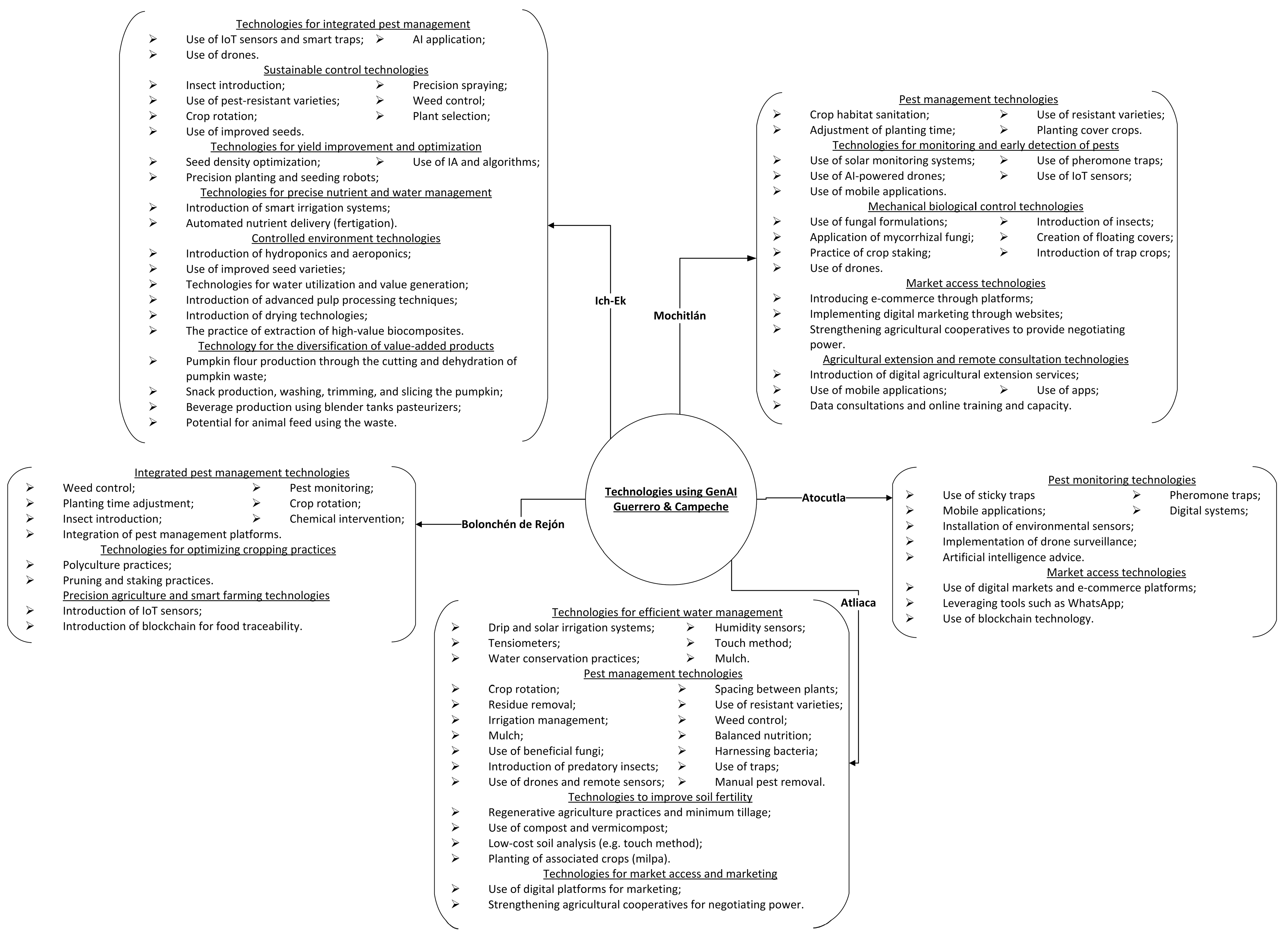
- In Atliaca, the technologies are: (1) Technologies for efficient water management such as drip irrigation, solar irrigation systems, humidity sensors, tensiometers, touch method, water conservation practices, and mulch. (2) Pest management technologies such as crop rotation, spacing between plants, residue removal, use of resistant varieties, irrigation management, weed control, mulch, balanced nutrition, use of beneficial fungi, harnessing bacteria, introduction of predatory insects, use of drones and remote sensors, use of traps, and manual pest removal. (3) Technologies to improve soil fertility, such as regenerative agriculture practices and minimum tillage, use of compost and vermicompost, low-cost soil analysis (e.g., touch method), and planting of associated crops (milpa). (4) Technologies for market access and marketing, such as the use of digital platforms for marketing and strengthening agricultural cooperatives for negotiating power.These technologies are linked to producers who did not complete elementary school, are 51 years old, have eight family members, mostly women, and have an area of 5 ha.
- In Atocutla, the technologies are: (1) Pest monitoring technologies such as the use of sticky traps, pheromone traps, mobile applications for pest detection through photography, digital systems for sending pest alerts, installation of environmental sensors, implementation of drone surveillance to detect changes in temperature, vegetation, etc., and artificial intelligence advice through data for the creation of strategies. (2) Market access technologies, such as the use of digital markets and e-commerce platforms for direct sales, leveraging tools such as WhatsApp, and the use of blockchain technology to connect other actors in the chain.The technologies are linked to producers who completed primary school, are aged 67, have eight family members, have an equal proportion of men and women, and have an area of 1.5 ha.
- In Mochitlán, the technologies are: (1) Pest management technologies such as crop habitat sanitation, the use of resistant varieties, the adjustment of planting time, and planting of cover crops. (2) Technologies for the monitoring and early detection of pests, such as the use of solar monitoring systems for insect tracking, the use of pheromone traps, the use of AI-powered drones for identifying pest outbreaks, the use of IoT sensors for real-time environmental data collection, and the use of mobile applications for pest monitoring and alerts. (3) Mechanical biological control technologies such as the use of fungal formulations for pest control, the introduction of insects for pest control, the application of mycorrhizal fungi for nutrient absorption, the creation of floating covers for insect exclusion, the practice of crop staking for soil elevation, the introduction of trap crops for pest attraction, and the use of drones for pesticide application. (4) Market access technologies, such as introducing e-commerce through platforms, implementing digital marketing through websites, and strengthening agricultural cooperatives to provide negotiating power. (5) Agricultural extension and remote consultation technologies, such as the introduction of digital agricultural extension services for real-time consultation, the use of mobile applications for pest and price monitoring, the use of apps for video and data consultations, online training, and capacity building on finance, plant, and management, etc.These types of technologies are linked to producers who completed primary school, are 40 years old, have eight family members, mostly women, and have an area of 2 ha.
- In Bolonchén de Rejón, the technologies are: (1) Integrated pest management technologies such as weed control, pest monitoring, planting time adjustment, crop rotation, insect introduction for pest control, chemical intervention for pest control, and the integration of pest management platforms. (2) Technologies for optimizing cropping practices, such as polyculture practices, increasing foliar fertilization, and pruning and staking practices. (3) Precision agriculture and smart farming technologies, such as the introduction of IoT sensors to understand soil conditions, climate, and crop health, and the introduction of blockchain for food traceability.The technologies are linked to producers who completed primary school, are aged 44.5 years, have six family members, and have an area of 12.5 ha.
- In Ich-Ek, the technologies are: (1) Technologies for integrated pest management, such as the use of IoT sensors and smart traps for pest detection and capture, an AI application for diagnosis and treatment, and the use of drones for early pest detection. (2) Sustainable control technologies such as insect introduction for pest control, precision spraying for region-specific chemical application, the use of pest-resistant varieties, weed control, crop rotation, plant selection, and the use of improved seeds. (3) Technologies for yielding improvement and optimization, such as seed density optimization, precision planting, seed robots to ensure optimal seed placement and density, and the use of IA and algorithms for optimized spacing to optimize water, nutrients, and crop rotation. (4) Technologies for precise nutrient and water management, such as the introduction of smart irrigation systems and soil moisture sensors, and automated nutrient delivery (fertigation) to precisely inject or transport water-soluble nutrients before they reach plants. (5) Controlled environment technologies, such as the introduction of hydroponics and aeroponics, the use of improved seed varieties, technologies for water utilization and value generation, such as the introduction of advanced pulp processing techniques to create a wide range of industrial applications, such as confectionery, beer, and various beverages, the introduction of drying technologies for preservation to extend the shelf life of pumpkin pulp and reduce volume and weight, and the practice of extraction of high-value biocomposites. (6) Technology for the diversification of value-added products, such as pumpkin flour production through the cutting and dehydration of pumpkin waste, snack production, washing, trimming, and slicing the pumpkin, beverage production using blender tanks, pasteurizers, and potential for animal feed using the waste (see Figure 5).These types of technologies are linked to producers who completed primary school, are 60 years old, have six family members, and own a 6-hectare property.
4.3. Technology’s Introduction
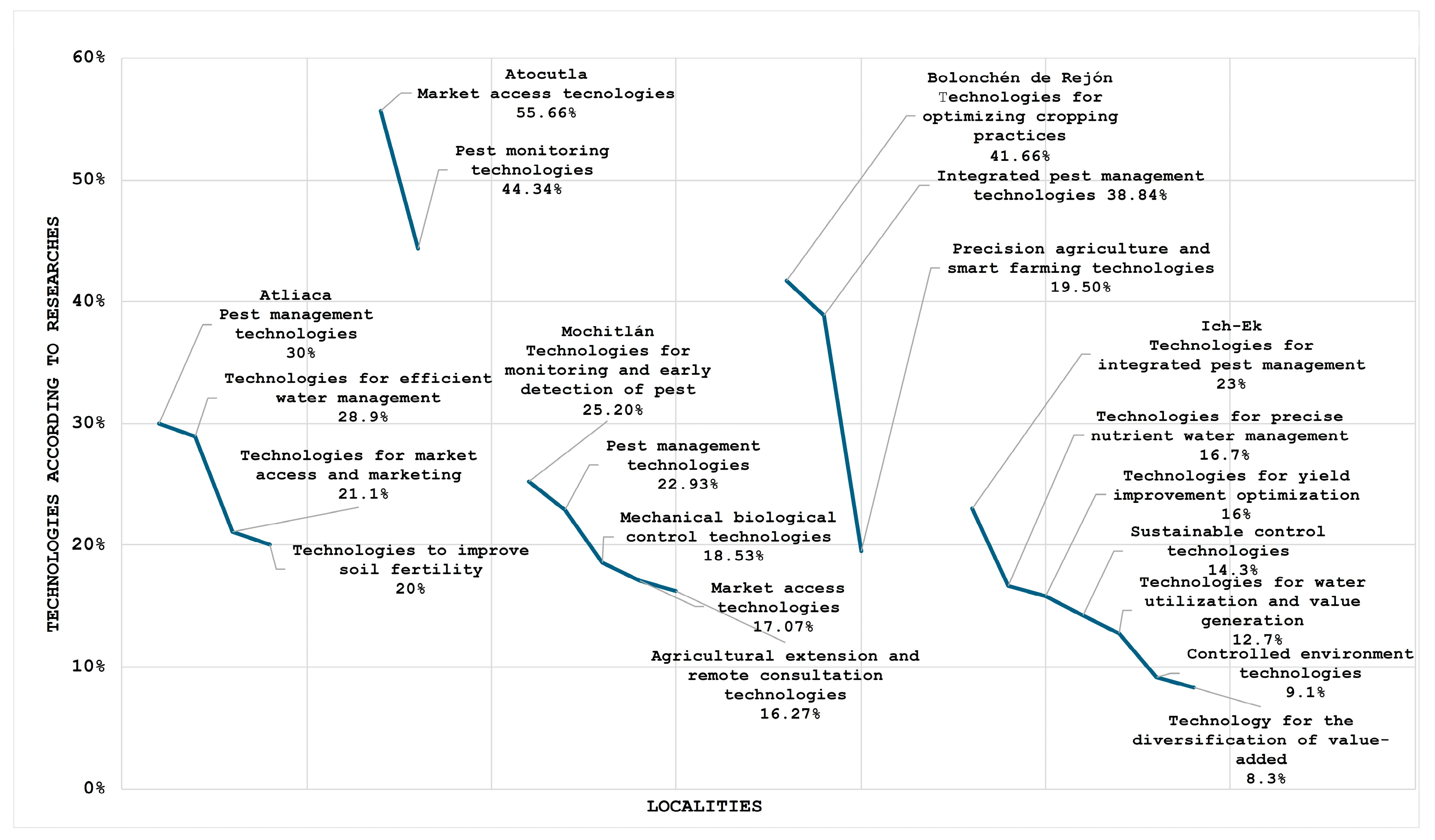
- In Atliaca, the introduction would begin with pest management technologies, followed by technologies for efficient water management, technologies for market access and marketing, and technologies to improve soil fertility.
- For Atocutla, it begins with market access technologies, followed by pest monitoring technologies.
- In Mochitlán, the approach starts with technologies for the monitoring and early detection of pests, followed by pest management technologies, mechanical and biological control technologies, market access technologies, and agricultural extension and remote consultation technologies.
- In Bolochén de Rejón, the introduction should begin with technologies for optimizing cropping practices, followed by the integration of pest management technologies, and precision agriculture and smart farming technologies.
- In Ich-Ek, the approach begins with integrated pest management technologies, followed by precise nutrient and water management technologies, yield improvement and optimization technologies, sustainable control technologies, technologies for water utilization and value generation, controlled environment technologies, and technologies for diversifying value-added products (see Figure 6).
5. Discussion
Policy/Practice Implications
- Consider TK’s situation, expectations, and strategies, as well as the skills and processes of the small-scale producer.
- Pilot implementation of the top technologies by the different communities according to the sowing–harvest circuit and initial crop disposal practice.
- Based on the above, bring expert support closer to facilitate technology adoption.
6. Conclusions
Author Contributions
Funding
Institutional Review Board Statement
Informed Consent Statement
Data Availability Statement
Acknowledgments
Conflicts of Interest
References
- Hamad, A.; Tayel, A. Food 2050 Concept: Trends That Shape the Future of Food. J. Future Foods, 2025; in press. [Google Scholar] [CrossRef]
- Aijaz, N.; Lan, H.; Raza, T.; Yaqub, M.; Iqbal, R.; Pathan, M.S. Artificial Intelligence in Agriculture: Advancing Crop Productivity and Sustainability. J. Agric. Food Res. 2025, 20, 101762. [Google Scholar] [CrossRef]
- Adams, A.; Jumpah, E.T. Agricultural Technologies Adoption and Smallholder Farmers’ Welfare: Evidence from Northern Ghana. Cogent Econ. Financ. 2021, 9, 2006905. [Google Scholar] [CrossRef]
- Ricciardi, V.; Ramankutty, N.; Mehrabi, Z.; Jarvis, L.; Chookolingo, B. How Much of the World’s Food Do Smallholders Produce? Glob. Food Sec. 2018, 17, 64–72. [Google Scholar] [CrossRef]
- FAO How to Feed the World in 2050. Available online: https://www.fao.org/fileadmin/templates/wsfs/docs/expert_paper/How_to_Feed_the_World_in_2050.pdf (accessed on 21 January 2024).
- Jakes, V. The Role of Traditional Knowledge in Sustainable Development. Int. J. Humanit. Soc. Sci. 2024, 3, 40–55. [Google Scholar] [CrossRef]
- Singh, K.; Chatterjee, S.; Mariani, M. Applications of Generative AI and Future Organizational Performance: The Mediating Role of Explorative and Exploitative Innovation and the Moderating Role of Ethical Dilemmas and Environmental Dynamism. Technovation 2024, 133, 103021. [Google Scholar] [CrossRef]
- Li, L.; Zhu, W.; Chen, L.; Liu, Y. Generative AI Usage and Sustainable Supply Chain Performance: A Practice-Based View. Transp. Res. E Logist. Transp. Rev. 2024, 192, 103761. [Google Scholar] [CrossRef]
- WEF Top 10 Emerging of 2023. Available online: https://www.weforum.org/publications/top-10-emerging-technologies-of-2023/ (accessed on 20 November 2024).
- Gupta, P.; Ding, B.; Guan, C.; Ding, D. Generative AI: A Systematic Review Using Topic Modelling Techniques. Data Inf. Manag. 2024, 8, 100066. [Google Scholar] [CrossRef]
- Kshetri, N.; Dwivedi, Y.K.; Davenport, T.H.; Panteli, N. Generative Artificial Intelligence in Marketing: Applications, Opportunities, Challenges, and Research Agenda. Int. J. Inf. Manag. 2024, 75, 102716. [Google Scholar] [CrossRef]
- Jin, Y.; Yan, L.; Echeverria, V.; Gašević, D.; Martinez-Maldonado, R. Generative AI in Higher Education: A Global Perspective of Institutional Adoption Policies and Guidelines. Comput. Educ. Artif. Intell. 2025, 8, 100348. [Google Scholar] [CrossRef]
- Zhang, P.; Kamel Boulos, M.N. Generative AI in Medicine and Healthcare: Promises, Opportunities and Challenges. Future Internet 2023, 15, 286. [Google Scholar] [CrossRef]
- Ooi, K.-B.; Tan, G.W.-H.; Al-Emran, M.; Al-Sharafi, M.A.; Capatina, A.; Chakraborty, A.; Dwivedi, Y.K.; Huang, T.-L.; Kar, A.K.; Lee, V.-H.; et al. The Potential of Generative Artificial Intelligence Across Disciplines: Perspectives and Future Directions. J. Comput. Inf. Syst. 2025, 65, 76–107. [Google Scholar] [CrossRef]
- FAO. AI Can Be a Game-Changing Solution for Farmers: FAO Innovation Chief. Available online: https://www.fao.org/newsroom/detail/ai-can-be-a-game-changing-solution-for-farmers--fao-innovation-chief/en (accessed on 9 May 2025).
- WIPO. Technology Based on Traditional Knowledge and Genetic Resources: Sharing the Benefits. Available online: https://www.wipo.int/web/wipo-magazine/articles/technology-based-on-traditional-knowledge-and-genetic-resources-sharing-the-benefits-35656 (accessed on 21 April 2024).
- Bawack, R.; Roderick, S.; Badhrus, A.; Dennehy, D.; Corbett, J. Indigenous Knowledge and Information Technology for Sustainable Development. Inf. Technol. Dev. 2025, 31, 233–250. [Google Scholar] [CrossRef]
- Chung, A.; Shedlock, K.; Corbett, J. Decolonizing Information Technology Design: A Framework for Integrating Indigenous Knowledge in Design Science Research. In Proceedings of the Hawaii International Conference on System Sciences 2024 (HICSS-57), Honolulu, HI, USA, 3–6 January 2024. [Google Scholar]
- Thomson, A.J. Elicitation and Representation of Traditional Ecological Knowledge, for Use in Forest Management. Comput. Electron. Agric. 2000, 27, 155–165. [Google Scholar] [CrossRef]
- Shahriar, S.; Corradini, M.G.; Sharif, S.; Moussa, M.; Dara, R. The Role of Generative Artificial Intelligence in Digital Agrifood. J. Agric. Food Res. 2025, 20, 101787. [Google Scholar] [CrossRef]
- Ruzzante, S.; Labarta, R.; Bilton, A. Adoption of Agricultural Technology in the Developing World: A Meta-Analysis of the Empirical Literature. World Dev. 2021, 146, 105599. [Google Scholar] [CrossRef]
- Mallinger, K.; Corpaci, L.; Neubauer, T.; Tikász, I.E.; Goldenits, G.; Banhazi, T. Breaking the Barriers of Technology Adoption: Explainable AI for Requirement Analysis and Technology Design in Smart Farming. Smart Agric. Technol. 2024, 9, 100658. [Google Scholar] [CrossRef]
- Fujisaka, S. Learning from Six Reasons Why Farmers Do Not Adopt Innovations Intended to Improve Sustainability of Upland Agriculture. Agric. Syst. 1994, 46, 409–425. [Google Scholar] [CrossRef]
- Douthwaite, B.; Keatinge, J.D.H.; Park, J.R. Why Promising Technologies Fail: The Neglected Role of User Innovation during Adoption. Res. Policy 2001, 30, 819–836. [Google Scholar] [CrossRef]
- Curry, G.N.; Nake, S.; Koczberski, G.; Oswald, M.; Rafflegeau, S.; Lummani, J.; Peter, E.; Nailina, R. Disruptive Innovation in Agriculture: Socio-Cultural Factors in Technology Adoption in the Developing World. J. Rural. Stud. 2021, 88, 422–431. [Google Scholar] [CrossRef]
- Yigezu, Y.A.; Mugera, A.; El-Shater, T.; Aw-Hassan, A.; Piggin, C.; Haddad, A.; Khalil, Y.; Loss, S. Enhancing Adoption of Agricultural Technologies Requiring High Initial Investment among Smallholders. Technol. Forecast. Soc. Change 2018, 134, 199–206. [Google Scholar] [CrossRef]
- FAO. Digital Agriculture in Action; FAO: Rome, Italy; ITU: Geneva, Switzerland, 2021; ISBN 978-92-5-135102-4. [Google Scholar]
- Timpanaro, G.; Foti, V.T.; Cascone, G.; Trovato, M.; Grasso, A.; Vindigni, G. Living Lab for the Diffusion of Enabling Technologies in Agriculture: The Case of Sicily in the Mediterranean Context. Agriculture 2024, 14, 2347. [Google Scholar] [CrossRef]
- Jha, S.K.; Singh, M.K.; van Nieuwkoop, M. UP PRAGATI Accelerator: A Model for Inclusive Innovation in the Intelligent Age. The Water Blog. 2025. Available online: https://blogs.worldbank.org/en/water/up-pragati-accelerator--a-model-for-inclusive-innovation-in-the- (accessed on 15 November 2024).
- FAO. FAO’s Elevate Programme. Available online: https://openknowledge.fao.org/server/api/core/bitstreams/3496c9ea-ed9b-4f4d-a13e-5828932ee6aa/content (accessed on 21 November 2024).
- He, D.; Burdon, J.J.; Xie, L.; Zhan, J. Triple Bottom-Line Consideration of Sustainable Plant Disease Management: From Economic, Sociological and Ecological Perspectives. J. Integr. Agric. 2021, 20, 2581–2591. [Google Scholar] [CrossRef]
- Kabbera, S.; Tibaingana, A.; Kiwala, Y.; Mugarura, J.T. Triple Bottom Line Practices and the Growth Agro-Processing Enterprises in Uganda. Clean. Circ. Bioeconomy 2024, 8, 100081. [Google Scholar] [CrossRef]
- Luzzani, G.; Grandis, E.; Frey, M.; Capri, E. Blockchain Technology in Wine Chain for Collecting and Addressing Sustainable Performance: An Exploratory Study. Sustainability 2021, 13, 12898. [Google Scholar] [CrossRef]
- Contreras-Medina, D.I.; Contreras-Medina, L.M.; Cerroblanco-Vázquez, V.; Gallardo-Aguilar, M.d.C.; González-Farías, J.P.; Medina-Cuellar, S.E.; Acosta-Montenegro, A.; Lemus-Martínez, L.Y.; Moreno-Ojeda, B.; Negrete-López, A.D. Reorienting Innovations for Sustainable Agriculture: A Study Based on Bean’s Traditional Knowledge Management. Agriculture 2025, 15, 560. [Google Scholar] [CrossRef]
- Mariani, M.; Dwivedi, Y.K. Generative Artificial Intelligence in Innovation Management: A Preview of Future Research Developments. J. Bus. Res. 2024, 175, 114542. [Google Scholar] [CrossRef]
- Dwivedi, Y.K.; Kshetri, N.; Hughes, L.; Slade, E.L.; Jeyaraj, A.; Kar, A.K.; Baabdullah, A.M.; Koohang, A.; Raghavan, V.; Ahuja, M.; et al. Opinion Paper: “So What If ChatGPT Wrote It?” Multidisciplinary Perspectives on Opportunities, Challenges and Implications of Generative Conversational AI for Research, Practice and Policy. Int. J. Inf. Manag. 2023, 71, 102642. [Google Scholar] [CrossRef]
- Google Modelos Grandes de Lenguaje Con La Tecnología de IA de Primer Nivel de Google. Available online: https://cloud.google.com/ai/llms?hl=es-419 (accessed on 20 May 2025).
- Taneja, A.; Nair, G.; Joshi, M.; Sharma, S.; Sharma, S.; Jambrak, A.R.; Roselló-Soto, E.; Barba, F.J.; Castagnini, J.M.; Leksawasdi, N.; et al. Artificial Intelligence: Implications for the Agrifood Sector. Agronomy 2023, 13, 1397. [Google Scholar] [CrossRef]
- Suganthi, S.U.; Prinslin, L.; Selvi, R.; Prabha, R. Generative AI in Agri: Sustainability in Smart Precision Farming Yield Prediction Mapping System Based on GIS Using Deep Learning and GPS. Procedia Comput. Sci. 2025, 252, 365–380. [Google Scholar] [CrossRef]
- Ogar, E.; Pecl, G.; Mustonen, T. Science Must Embrace Traditional and Indigenous Knowledge to Solve Our Biodiversity Crisis. One Earth 2020, 3, 162–165. [Google Scholar] [CrossRef]
- World Bank Group. A Year in the Lives of Smallholder Farmers. Available online: https://www.worldbank.org/en/news/feature/2016/02/25/a-year-in-the-lives-of-smallholder-farming-families (accessed on 14 April 2024).
- Melash, A.A.; Bogale, A.A.; Migbaru, A.T.; Chakilu, G.G.; Percze, A.; Ábrahám, É.B.; Mengistu, D.K. Indigenous Agricultural Knowledge: A Neglected Human Based Resource for Sustainable Crop Protection and Production. Heliyon 2023, 9, e12978. [Google Scholar] [CrossRef] [PubMed]
- Kutyauripo, I.; Rushambwa, M.; Chiwazi, L. Artificial Intelligence Applications in the Agrifood Sectors. J. Agric. Food Res. 2023, 11, 100502. [Google Scholar] [CrossRef]
- Mekonnen, Z.; Kidemu, M.; Abebe, H.; Semere, M.; Gebreyesus, M.; Worku, A.; Tesfaye, M.; Chernet, A. Traditional Knowledge and Institutions for Sustainable Climate Change Adaptation in Ethiopia. Curr. Res. Environ. Sustain. 2021, 3, 100080. [Google Scholar] [CrossRef]
- Contreras-Medina, D.I.; Contreras-Medina, L.M.; Cerroblanco-Vázquez, V. Sustainable Agriculture Management: Environmental, Economic and Social Conjunctures for Coffee Sector in Guerrero, via Traditional Knowledge Management. Sustainability 2024, 16, 6864. [Google Scholar] [CrossRef]
- Caldeira, M.; Sekinairai, A.T.; Vierros, M. Weaving Science and Traditional Knowledge: Toward Sustainable Solutions for Ocean Management. Mar. Policy 2025, 174, 106591. [Google Scholar] [CrossRef]
- Ramírez-Terrazo, A.; Montoya, A.; Kong, A. Conocimiento Micológico Tradicional En Dos Comunidades Aledañas al Parque Nacional Lagunas de Montebello, Chiapas, México. Sci. Fungorum 2021, 51, e1321. [Google Scholar] [CrossRef]
- Mejía-Trejo, J. Protection of Traditional Knowledge and Its Resulting Innovation. Sci. PRAXIS 2022, 1, 1–8. [Google Scholar] [CrossRef]
- Campos Saldaña, R.A.; Prado Lopez, M.; Martinez Camilo, R.; Salas Marina, M.A.; Rodriguez Larramendi, L.A. Use and Traditional Knowledge of Medicinal Plants in Communities of Villa Corzo, Chiapas, Mexico. Bol. Latinoam. Caribe Plantas Med. Aromat. 2024, 23, 257–272. [Google Scholar] [CrossRef]
- García Flores, J.C.; Calvet-Mir, L.; Domínguez, P. Investigación Participativa Sobre El Conocimiento Ecológico Tradicional Asociado al Huerto Familiar En El Estado de México. Acta Univ. 2024, 34, 1–20. [Google Scholar] [CrossRef]
- Reza-Solis, I.J.; Romero-Rosales, T.; Hernández Galeno, C.dÁ.; Valenzuela Lagarda, J.L.; Jiménez Lobato, V. Saberes Tradicionales En El Cultivo de Maíces Nativos. Rev. Biológico Agropecu. Tuxpan 2024, 12, 167–178. [Google Scholar] [CrossRef]
- International Council for Science. Science-Traditional-Knowledge; International Council for Science: Paris, France, 2022. [Google Scholar]
- INEGI. Diseño de La Muestra Proyectos de Encuesta; INEGI: Aguascalientes, Mexico, 2011. [Google Scholar]
- Contreras-Medina, D.I.; Contreras-Medina, L.M.; Pardo-Nuñez, J.; Olvera-Vargas, L.A.; Rodriguez-Peralta, C.M. Roadmapping as a Driver for Knowledge Creation: A Proposal for Improving Sustainable Practices in the Coffee Supply Chain from Chiapas, Mexico, Using Emerging Technologies. Sustainability 2020, 12, 5817. [Google Scholar] [CrossRef]
- INEGI Descarga Masiva. Available online: https://www.inegi.org.mx/app/descarga/?t=2 (accessed on 8 October 2023).
- Mao, H.; Liu, S.; Zhang, J.; Deng, Z. Information Technology Resource, Knowledge Management Capability, and Competitive Advantage: The Moderating Role of Resource Commitment. Int. J. Inf. Manag. 2016, 36, 1062–1074. [Google Scholar] [CrossRef]
- FAO. Bulding on Gender, Agrobiodiversity and Local Knowledge. Available online: https://openknowledge.fao.org/server/api/core/bitstreams/310c00b4-e3a4-46fd-89e8-bf40dc91ef1d/content (accessed on 17 March 2024).
- Phaal, R.; Muller, G. An Architectural Framework for Roadmapping: Towards Visual Strategy. Technol. Forecast. Soc. Change 2009, 76, 39–49. [Google Scholar] [CrossRef]
- Ma, T.; Liu, S.; Nakamori, Y. Roadmapping as a Way of Knowledge Management for Supporting Scientific Research in Academia. Syst. Res. Behav. Sci. 2006, 23, 743–755. [Google Scholar] [CrossRef]
- Mentzer, J.T.; DeWitt, W.; Keebler, J.S.; Min, S.; Nix, N.W.; Smith, C.D.; Zacharia, Z.G. Defining Supply Chain Management. J. Bus. Logist. 2001, 22, 1–25. [Google Scholar] [CrossRef]
- FAO Science, Technology and Innovation. Available online: https://www.fao.org/science-technology-and-innovation/technology/en (accessed on 6 March 2025).
- Toma, I.; Redman, M.; Czekaj, M.; Tyran, E.; Grivins, M.; Sumane, S. Small-Scale Farming and Food Security—Policy Perspectives from Central and Eastern Europe. Glob. Food Sec 2021, 29, 100504. [Google Scholar] [CrossRef]
- Zhang, H.; Wu, C.; Xie, J.; Lyu, Y.; Cai, J.; Carroll, J.M. Harnessing the Power of AI in Qualitative Research: Exploring, Using and Redesigning ChatGPT. Comput. Human. Behav. Artif. Hum. 2025, 4, 100144. [Google Scholar] [CrossRef]
- OECD. The Measurement of Scientific, Technological and Innovation Activities. In Oslo Manual 2018; OECD: Paris, France, 2018; ISBN 9789264304550. [Google Scholar]
- Contreras-Medina, D.I.; Sánchez Osorio, E.; Olvera Vargas, L.A.; Romero Romero, Y. Technology Roadmapping Architecture Based on Knowledge Management: Case Study for Improved Indigenous Coffee Production from Guerrero, Mexico. J. Sens. 2019, 2019, 1–17. [Google Scholar] [CrossRef]
- Wang, T.; Wang, Z.; Guo, L.; Zhang, J.; Li, W.; He, H.; Zong, R.; Wang, D.; Jia, Z.; Wen, Y. Experiences and Challenges of Agricultural Development in an Artificial Oasis: A Review. Agric. Syst. 2021, 193, 103220. [Google Scholar] [CrossRef]
- FAO. Tecnologías Digitales en la Agricultura y las Zonas Rurales; FAO: Roma, Italy, 2019. [Google Scholar]
- Martinez, L.; Soti, P.; Kaur, J.; Racelis, A.; Kariyat, R.R. Impact of Cover Crops on Insect Community Dynamics in Organic Farming. Agriculture 2020, 10, 209. [Google Scholar] [CrossRef]
- Choruma, D.J.; Dirwai, T.L.; Mutenje, M.J.; Mustafa, M.; Chimonyo, V.G.P.; Jacobs-Mata, I.; Mabhaudhi, T. Digitalisation in Agriculture: A Scoping Review of Technologies in Practice, Challenges, and Opportunities for Smallholder Farmers in Sub-Saharan Africa. J. Agric. Food Res. 2024, 18, 101286. [Google Scholar] [CrossRef]
- Kamara, A.Y.; Kamsang, L.S.; Mustapha, A.; Kamara, A.Y.; Kolapo, A.; Kamai, N. Gender Disparities in the Adoption of Improved Management Practices for Soybean Cultivation in North East Nigeria. J. Agric. Food Res. 2025, 22, 102032. [Google Scholar] [CrossRef] [PubMed]
- Hruska, A. Agricultura Familiar y Acceso a los Mercados. Memoria del Seminario-Taller Realizado por la Oficina Sub-Regional de FAO Para Mesoamérica Coordinación de La Publicación; FAO: Rome, Italy, 2013; ISBN 9789253079469. [Google Scholar]
- Ocama, O.V.; Medagbe, Y.-C.N.; Akello, S.; Kambale, W.V.; Tashev, T.; Kyamakya, K.; Kasereka, S.K. A Review on Advancing Technologies in Precision Agriculture: Applications, Challenges, and the Way Forward. Procedia Comput. Sci. 2025, 265, 572–577. [Google Scholar] [CrossRef]
- Padhiary, M.; Saha, D.; Kumar, R.; Sethi, L.N.; Kumar, A. Enhancing Precision Agriculture: A Comprehensive Review of Machine Learning and AI Vision Applications in All-Terrain Vehicle for Farm Automation. Smart Agric. Technol. 2024, 8, 100483. [Google Scholar] [CrossRef]
- Kumar, V.; Sharma, K.V.; Kedam, N.; Patel, A.; Kate, T.R.; Rathnayake, U. A Comprehensive Review on Smart and Sustainable Agriculture Using IoT Technologies. Smart Agric. Technol. 2024, 8, 100487. [Google Scholar] [CrossRef]
- Andersen, J.P.; Degn, L.; Fishberg, R.; Graversen, E.K.; Horbach, S.P.J.M.; Schmidt, E.K.; Schneider, J.W.; Sørensen, M.P. Generative Artificial Intelligence (GenAI) in the Research Process—A Survey of Researchers’ Practices and Perceptions. Technol. Soc. 2025, 81, 102813. [Google Scholar] [CrossRef]
- FAO. Estructura y Financiación. Available online: https://www.fao.org/about/who-we-are/es#:~:text=La%20red%20descentralizada%20de%20la,cubiertos%20a%20trav%C3%A9s%20de%20la (accessed on 12 November 2025).



| Author | Traditional Knowledge | Place |
|---|---|---|
| [47] | Investigates the origin, concept, and factors for the development of fungi. | Chiapas |
| [48] | Highlights the importance of protection, its necessity, and its potential as an enabler of innovation. | Mexico |
| [49] | Explores it in native medicinal plants for the treatment of various diseases. | Chiapas |
| [50] | Analyzes it in relation to family gardens and their relationship with the environment, socioeconomic context, and culture. | State of Mexico |
| [51] | Studies it as a fundamental element for the preservation of corn, and the way in which farmers have adapted their food needs based on this crop. | Mexico |
| Guerrero and Campeche | Atliaca | Atocutla | Mochitlán | Bolonchén de Rejón | Ich-Ek |
|---|---|---|---|---|---|
| Skills | |||||
| Educational level | Did not complete elementary school | Elementary school | Elementary school | Elementary school | Elementary school |
| Age | 51 years old | 67 years old | 40 years old | 44.5 years old | 60 years old |
| Family members | 8 | 8 | 7 | 6 | 6 |
| Male–Female ratio | 34%-M/66%-F | 50%-M/50%-F | 10%-M/90%-F | No data | No data |
| Crop area | 5 hectares | 1.5 hectares | 2 hectares | 12.5 hectares | 6 hectares |
| Additional crops | Beans and corn | Corn | Corn | Corn and honey | Corn and tomato |
| Food use | Sale of ground seed for food and fertilizer | Sale of seed | Sale of seed | Sale of seed | Sale of seed |
| Sale price (kg) | USD 0.80 | USD 1.45 | USD 2.68 | USD 1.87 | No data |
| Consumption methods | Pumpkin atole, nixtamal, water, and mole | Fried, with milk or atole | As pumpkin and seed candy | Fried, in soups or as a snack | In soup or as a snack |
| Traditional Knowledge | |
| Experience | Problems: presence of pests, lack of market, lack of water, and lack of pumpkin exploitation. |
| Expectations: increasing productivity and profitability, production with less presence of pests, better treatment of land and crops, technological development, pumpkin exploitation, and access to financial support. | |
| Strategies: experts’ advice, new areas for planting, fertilizers, increasing the number of plants, greater crop profitability, and market access. | |
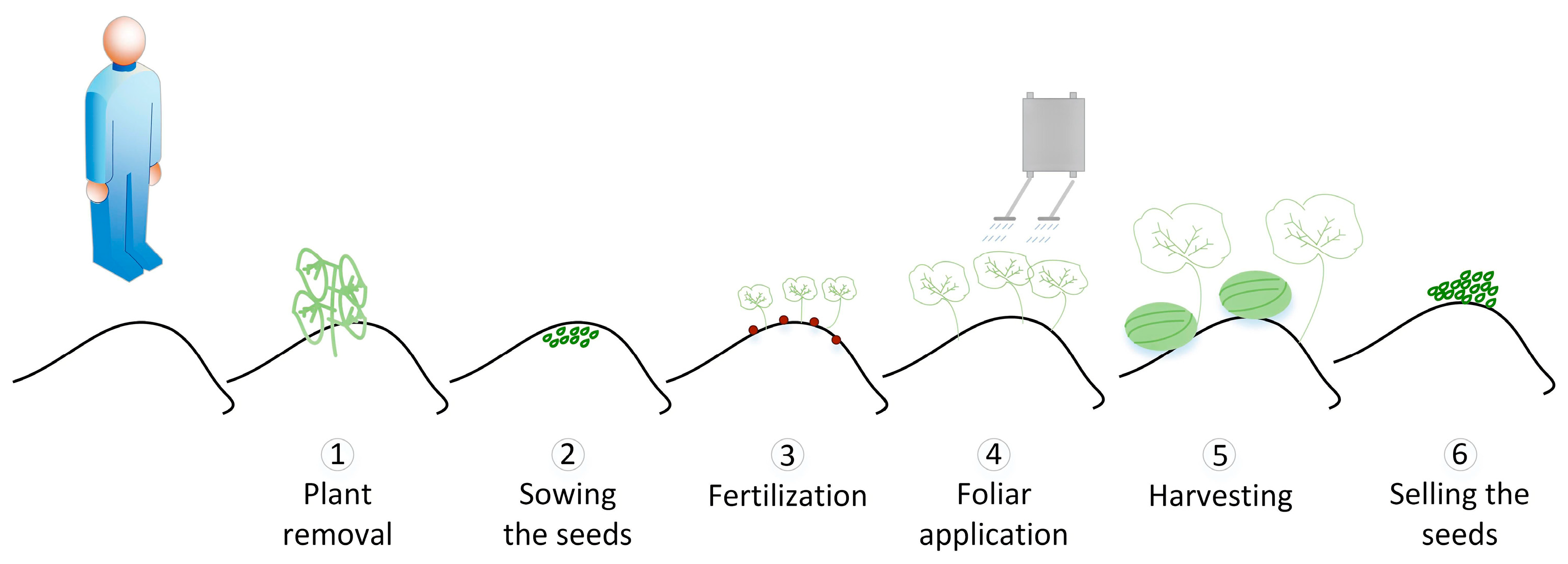
| Practice | (1) Removal of other plants; (2) sowing the seeds; (3) fertilization; (4) foliar application; (5) harvesting of the pumpkin; and (6) selling of the seeds. |
| Skills | Elementary school, 52.5 years old, seven family members, a proportion of 31% male against 69% female, with 5.4 hectares, planting corn, beans, honey, and tomato as additional activities, the sale of seed at USD 1.7, but also consuming fried food, in soups, as a snack, in atole, for nixtamal to make tortilla, water, mole, and seed candy. |
| Adoptable technologies | |
| GenAI | Pest management technologies are the priority, followed by biological control, precision agriculture to improve soil yield and fertility, and, finally, sustainable control, water management, and market access. These technologies include the use of resistant varieties, improved seeds, the introduction of predatory insects, the use of traps (sticky and pheromone), the installation of environmental sensors for data collection (capture, soil conditions, climate, crop health, and smart irrigation), crop rotation, and the use of drones to monitor environmental changes and detect pests. In addition, it establishes the planting of associated, cover, and trap crops, mobile applications, and a platform for pest detection, weed control, mulch, the use of beneficial fungi (mycorrhizal), adjusting planting time, chemical intervention, and the use of IA to optimize water, nutrients, and pest detection. Regarding market access technologies, it specifies the use of digital platforms and blockchain, as well as the strengthening of agricultural cooperatives to enhance negotiating power. |
| Technology’s introduction | |
| Researchers | Pest management technologies, market access technologies, technologies for monitoring and early detection of pests, technologies for optimizing cropping practices, and technologies for integrated pest management. |
| Pipiana Pumpkin Practice | Technologies |
|---|---|
| Removal of other plants | None. |
| Sowing the seeds | Pest management involves resistant varieties and improving the seed. |
| Fertilization/Foliar application | Biological control, precision agriculture, sustainable control, and water management as the introduction of predatory insects, use of traps, installation of environmental sensors for data collection, crop rotation, use of drones, planting associated crops, cover and trap crops, mobile application for pest detection, weed control, beneficial fungi, adjusting planting time, chemical intervention, and the use of AI. |
| Harvesting | None. |
| Selling the seeds | Market access through digital platforms, blockchain, and strengthening agricultural cooperatives for negotiating power. |
Disclaimer/Publisher’s Note: The statements, opinions and data contained in all publications are solely those of the individual author(s) and contributor(s) and not of MDPI and/or the editor(s). MDPI and/or the editor(s) disclaim responsibility for any injury to people or property resulting from any ideas, methods, instructions or products referred to in the content. |
© 2025 by the authors. Licensee MDPI, Basel, Switzerland. This article is an open access article distributed under the terms and conditions of the Creative Commons Attribution (CC BY) license (https://creativecommons.org/licenses/by/4.0/).
Share and Cite
Contreras-Medina, D.I.; de la Garza Carranza, M.T.; Sánchez-Gómez, J.; Cuevas-Reyes, V. Expanding Innovation in Agriculture: Case Study on Adoptable Technologies Using GenAI Based on Traditional Knowledge Management. AgriEngineering 2025, 7, 426. https://doi.org/10.3390/agriengineering7120426
Contreras-Medina DI, de la Garza Carranza MT, Sánchez-Gómez J, Cuevas-Reyes V. Expanding Innovation in Agriculture: Case Study on Adoptable Technologies Using GenAI Based on Traditional Knowledge Management. AgriEngineering. 2025; 7(12):426. https://doi.org/10.3390/agriengineering7120426
Chicago/Turabian StyleContreras-Medina, David Israel, María Teresa de la Garza Carranza, Julia Sánchez-Gómez, and Venancio Cuevas-Reyes. 2025. "Expanding Innovation in Agriculture: Case Study on Adoptable Technologies Using GenAI Based on Traditional Knowledge Management" AgriEngineering 7, no. 12: 426. https://doi.org/10.3390/agriengineering7120426
APA StyleContreras-Medina, D. I., de la Garza Carranza, M. T., Sánchez-Gómez, J., & Cuevas-Reyes, V. (2025). Expanding Innovation in Agriculture: Case Study on Adoptable Technologies Using GenAI Based on Traditional Knowledge Management. AgriEngineering, 7(12), 426. https://doi.org/10.3390/agriengineering7120426