
Integrating Artificial Intelligence and Machine Learning for Sustainable Development in Agriculture and Allied Sectors of the Temperate Himalayas



Abstract
1. Introduction
2. Materials and Methods
2.1. Literature Search and Selection Strategy
2.2. Problem Area Identification and Scope Definition
2.3. Economic Estimation Methods and Assumptions
3. Results
3.1. Agriculture
3.1.1. Pest and Disease Management
3.1.2. Precision Nutrient Management
3.1.3. Market and Supply Chain Integration
3.2. Agricultural Engineering
3.2.1. Precision Agriculture Adoption
3.2.2. Inefficient Farm Mechanization
3.2.3. Data Integration and Decision Support
3.3. Fisheries
3.3.1. Aquatic Disease Management
3.3.2. Ecosystem Health Monitoring
3.3.3. Traceability and Supply Chain Management
3.4. Forestry
3.4.1. Forest Degradation and Deforestation
3.4.2. Wildfire Management
3.4.3. Biodiversity Loss and Wildlife Monitoring
3.5. Horticulture
3.5.1. Pest and Disease Management
3.5.2. Post-Harvest Losses
3.5.3. Resource Management
3.6. Sericulture
3.6.1. Silkworm Disease Management
3.6.2. Mulberry Cultivation Monitoring
3.6.3. Silk Traceability and Supply Chain
3.7. Animal Health and Husbandry
3.7.1. Livestock Disease Surveillance
3.7.2. Animal Welfare Monitoring
3.7.3. Record-Keeping and Traceability
4. Discussion
4.1. Agriculture
4.1.1. Unsolved Problems
4.1.2. Gaps and Future Directions
4.1.3. Feasible Solutions and Implementation Pathways
4.2. Agricultural Engineering
4.2.1. Unsolved Problems
4.2.2. Gaps and Future Directions
4.2.3. Feasible Solutions and Implementation Pathways
4.3. Fisheries
4.3.1. Unsolved Problems
4.3.2. Gaps and Future Directions
4.3.3. Feasible Solutions and Implementation Pathways
4.4. Forestry
4.4.1. Unsolved Problems
4.4.2. Gaps and Future Directions
4.4.3. Feasible Solutions and Implementation Pathways
4.5. Horticulture
4.5.1. Unsolved Problems
4.5.2. Gaps and Future Directions
4.5.3. Feasible Solutions and Implementation Pathways
4.6. Sericulture
4.6.1. Unsolved Problems
4.6.2. Gaps and Future Directions
4.6.3. Feasible Solutions and Implementation Pathways
4.7. Animal Health and Husbandry
4.7.1. Unsolved Problems
4.7.2. Gaps and Future Directions
4.7.3. Feasible Solutions and Implementation Pathways
4.8. Cross-Sectoral Challenges and Integrated Technological Pathways
4.9. Alignment with Sustainable Development Goals (SDGs)
5. Conclusions
5.1. Research Gaps and Limitations
5.2. Technology Adoption Recommendations
5.3. Future Directions
Author Contributions
Funding
Institutional Review Board Statement
Informed Consent Statement
Data Availability Statement
Acknowledgments
Conflicts of Interest
Abbreviations
| AI | Artificial Intelligence |
| CNN | Convolutional Neural Network |
| GIS | Geographic Information System |
| INR | Indian Rupee |
| IoT | Internet of Things |
| LiDAR | Light Detection and Ranging |
| MCDM | Multicriteria Decision-Making |
| ML | Machine Learning |
| NADRES | National Animal Disease Referral Expert System |
| NIVEDI | National Institute of Veterinary Epidemiology and Disease Informatics |
| NMSA | National Mission for Sustainable Agriculture |
| PMFBY | Pradhan Mantri Fasal Bima Yojana |
| RFID | Radio-Frequency Identification |
| SDG | Sustainable Development Goal |
| UAV | Unmanned Aerial Vehicle |
References
- Liakos, K.G.; Busato, P.; Moshou, D.; Pearson, S.; Bochtis, D. Machine Learning in Agriculture: A Review. Sensors 2018, 18, 2674. [Google Scholar] [CrossRef] [PubMed]
- Nautiyal, M.; Joshi, S.; Hussain, I.; Rawat, H.; Joshi, A.; Saini, A.; Kapoor, R.; Verma, H.; Nautiyal, A.; Chikara, A.; et al. Revolutionizing Agriculture: A Comprehensive Review on Artificial Intelligence Applications in Enhancing Properties of Agricultural Produce. Food Chem. X 2025, 29, 102748. [Google Scholar] [CrossRef]
- Sharma, R.; Singh, A.; Kumar, S. Machine Learning in Sustainable Agriculture: Systematic Review and Research Perspectives. Agriculture 2025, 15, 377. [Google Scholar] [CrossRef]
- Liakos, K.G.; Tziotziou, I.; Moshou, D. Machine Learning in Agriculture: A Comprehensive Updated Review. Sensors 2021, 21, 3758. [Google Scholar] [CrossRef]
- Abu-Jabed, M.; Azmi Murad, M.A. Crop Yield Prediction in Agriculture: A Comprehensive Review of Machine Learning and Deep Learning Approaches, with Insights for Future Research and Sustainability. Heliyon 2024, 10, e40836. [Google Scholar] [CrossRef] [PubMed]
- Akyol, K.; Muhammad, A.; Lee, N.; Waqar, M.; Lee, S.W. Artificial Intelligence for Sustainable Agriculture: A Comprehensive Review of AI-Driven Technologies in Crop Production. Sustainability 2025, 17, 2281. [Google Scholar] [CrossRef]
- Javaid, M.; Haleem, A.; Khan, I.H.; Suman, R. Understanding the Potential Applications of Artificial Intelligence in Agricul-ture Sector. Adv. Agrochem. 2023, 2, 15–30. [Google Scholar] [CrossRef]
- Aijaz, N.; Lan, H.; Raza, T.; Yaqub, M.; Iqbal, R.; Pathan, M.S. Artificial Intelligence in Agriculture: Advancing Crop Productivity and Sustainability. J. Agric. Food Res. 2025, 20, 101762. Available online: https://www.researchgate.net/publication/389268118_Artificial_Intelligence_in_Agriculture_Advancing_Crop_Productivity_and_Sustainability (accessed on 19 October 2025). [CrossRef]
- Kshetri, N. Artificial Intelligence in Developing Countries. IT Prof. 2020, 22, 63–68. [Google Scholar] [CrossRef]
- Saqib, S. Integrative Decision Support Model for Smart Agriculture Based on Internet of Things and Machine Learning. Comput. Electron. Agric. 2021, 181, 105987. [Google Scholar] [CrossRef]
- Wang, H.; Pan, X.; Zhu, Y.; Li, S.; Zhu, R. Maize leaf disease recognition based on TC-MRSN model in sustainable agriculture. Comput. Electron. Agric. 2024, 221, 108915. [Google Scholar] [CrossRef]
- Guo, W.; Huang, Y.; Huang, Y.; Li, Y.; Song, X.; Shen, J.; Qi, X.; Zhang, B.; Zhu, Z.; Peng, S.; et al. Develop agricultural planting structure prediction model based on machine learning: The aging of the population has prompted a shift in the planting structure toward food crops. Comput. Electron. Agric. 2024, 221, 108941. [Google Scholar] [CrossRef]
- IPCC. Climate Change and Land: An IPCC Special Report on Climate Change, Desertification, Land Degradation, Sustainable Land Management, Food Security, and Greenhouse Gas Fluxes in Terrestrial Ecosystems; IPCC: Geneva, Switzerland, 2019; Available online: https://www.ipcc.ch/srccl/ (accessed on 19 October 2025).
- Steffen, A.D. AI Doctors Are as Skilled as Human Experts in Medical Diagnoses. Intelligent Living October. 2019. Available online: https://www.intelligentliving.co/ai-doctors-skilled-as-human-experts-medical-diagnoses/ (accessed on 19 October 2025).
- Ashfaq, M.; Khan, I.; Afzal, R.F.; Shah, D.; Ali, S.; Tahir, M. Enhanced Wheat Yield Prediction through Integrated Climate and Satellite Data Using Advanced AI Techniques. Sci. Rep. 2025, 15, 18093. [Google Scholar] [CrossRef] [PubMed]
- Agriculture Institute. How to Test and Grade Raw Silk for Quality Assurance. Introduction to Sericulture December. 2023. Available online: https://agriculture.institute/introduction-to-sericulture/test-grade-raw-silk-quality-assurance/ (accessed on 19 October 2025).
- Leiva, F.; Gabioud Rebeaud, S.; Christen, D. Real-Time Identification and Quantification of Apple Scab on Fruit in Preharvest and Postharvest Conditions Using YOLOv11: A Deep Learning Approach. Research Square 2025. [Google Scholar] [CrossRef]
- Yangskit, T.; Gul, S.; Sherwani, A.; Shah, I.; Chosdon, S.; Laskit, J. Impact of Seasonal Weather Patterns on the Incidence of Key Insect Pests Affecting Nectarine Orchards in Kashmir. SKUAST J. Res. 2025, 27, 34–45. [Google Scholar] [CrossRef]
- Kamilaris, A.; Prenafeta-Boldú, F. Deep Learning in Agriculture: A Survey. Comput. Electron. Agric. 2018, 147, 70–90. [Google Scholar] [CrossRef]
- Aziz, D.; Rafiq, S.; Saini, P. Remote Sensing and Artificial Intelligence: Revolutionizing Pest Management in Agriculture. Front. Sustain. Food Syst. 2025, 9, 1551460. [Google Scholar] [CrossRef]
- Vahdanjoo, M.; Gislum, R.; Sørensen, C.A.G. Three-dimensional area coverage planning model for robotic application. Comput. Electron. Agric. 2025, 219, 108789. [Google Scholar] [CrossRef]
- Warrier, S.G. Farming with AI and Drones to Increase Yields, Manage Resources and Reduce Pests. Mongabay India. 2024. Available online: https://india.mongabay.com/2024/04/farming-with-ai-and-drones-to-increase-yields-manage-resources-and-reduce-pests/ (accessed on 19 October 2025).
- India AI. AI in Agriculture in 2025: Transforming Indian Farms for a Sustainable Future. India AI. 2025. Available online: https://indiaai.gov.in/article/ai-in-agriculture-in-2025-transforming-indian-farms-for-a-sustainable-future (accessed on 19 October 2025).
- KPMG India. Embedding Intelligence in Agriculture: AI’s Role in Smarter Pest Management. KPMG. 2025. Available online: https://kpmg.com/in/en/blogs/2025/07/embedding-intelligence-in-agriculture-ais-role-in-smarter-pest-management.html (accessed on 19 October 2025).
- India AI. How AI-Powered Drones Are Changing the Agritech Landscape in India. India AI. 2025. Available online: https://indiaai.gov.in/article/how-ai-powered-drones-are-changing-the-agritech-landscape-in-india (accessed on 19 October 2025).
- Ehsani, R.; Douridas, N. Drones for Spraying Pesticides—Opportunities and Challenges. Ohio Line. 2020. Available online: https://ohioline.osu.edu/factsheet/fabe-540 (accessed on 19 October 2025).
- IHFC. Autonomous AI Agriculture Drone. IHFC 2025. Available online: https://www.ihfc.co.in/research-development/autonomous-ai-agriculture-drone/ (accessed on 19 October 2025).
- Agribusiness Global. AI and Pest Management: Protecting Yields with Smart Technology. Agribusiness Global. 2024. Available online: https://www.agribusinessglobal.com/agtech/ai-and-pest-management-protecting-yields-with-smart-technology/ (accessed on 19 October 2025).
- Banerjee, S.; Patil, S. Optimizing Fertilizer Usage in Agriculture with AI-Driven Models. J. Agric. Technol. 2024, 21, 630–631. [Google Scholar]
- Sadhukhan, R.; Kumar, D.; Sepat, S.; Ghosh, A.; Banerjee, K.; Shivay, Y.S.; Gawdiya, S.; Harish, M.N.; Bhatia, A.; Kumawat, A.; et al. Precision nutrient management influences the productivity, nutrient use efficiency, N2O fluxes and soil enzymatic activity in zero-till wheat (Tritium aestivum L.). Field Crops Res. 2024, 317, 109526. [Google Scholar] [CrossRef]
- Joshi, R.; Singh, V.; Ram, S.; Srivastava, A. Effect of Soil Compaction and Fertilizer Placement Depth on Growth, Yield, Nutrient Uptake of Maize (Zea mays L.) and Soil Properties in Tarai Soils of Uttarakhand. Int. J. Agric. Environ. Biotechnol. 2016, 9, 807–813. [Google Scholar] [CrossRef]
- Hithaishi, U.; Karthik, K.; Goutham Krishna, U.; Uday, P.; Pramod, D. Crop Price Prediction Using Historical Data and ML. Int. J. Progress. Res. Eng. Manag. Sci. 2024, 4, 247–253. [Google Scholar]
- Farmonaut. Indian Agriculture Challenges 2025: Top Issues & Solutions. Farmonaut. 2025. Available online: https://farmonaut.com/asia/indian-agriculture-challenges-2025-top-issues-solutions (accessed on 19 October 2025).
- Kumar, S.; Hasanain, M.; Singh, R.K.; Rathore, S.S. Precision Nutrient Management: Innovative Technology for Enhancing Income in Farming System. Indian Farming 2025, 75, 54–58. [Google Scholar]
- Farmonaut. Current Scenario of Indian Agriculture 2025: Issues & Trends. Farmonaut. 2025. Available online: https://farmonaut.com/asia/current-scenario-of-indian-agriculture-2025-issues-trends (accessed on 19 October 2025).
- Mulla, S. Twenty Five Years of Remote Sensing in Precision Agriculture: Key Advances and Remaining Knowledge Gaps. Biosyst. Eng. 2013, 114, 358–371. [Google Scholar] [CrossRef]
- Gupta, D.N.; Panchal, V.K.; Kumari, A.; Singh, S.; Gupta, A. IoT-Dependent Intelligent Irrigation System with ML-Dependent Soil Moisture Prediction. In 2023 3rd International Conference on Technological Advancements in Computational Sciences (ICTACS); IEEE: Piscataway, NJ, USA, 2023. [Google Scholar] [CrossRef]
- Farmonaut. Revolutionizing Water Management: Smart Irrigation Systems for Sustainable Agriculture. Farmonaut Precision Farming. 2025. Available online: https://farmonaut.com/precision-farming/smart-irrigation-systems-boost-sustainable-water-management (accessed on 19 October 2025).
- Minhas, P.S.; Ramos, T.B.; Ben-Gal, A.; Pereira, L.S. Coping with salinity in irrigated agriculture: Crop evapotranspiration and water management issues. Agric. Water Manag. 2020, 227, 105832. [Google Scholar] [CrossRef]
- Farmonaut. Revolutionizing United States Farming: How Autonomous Tractors and Smart Irrigation Systems Boost Productivity. Farmonaut USA. 2025. Available online: https://farmonaut.com/usa/revolutionizing-united-states-farming-how-autonomous-tractors-and-smart-irrigation-systems-boost-productivity (accessed on 19 October 2025).
- Conde, G.; Guzmán, S.M.; Athelly, A. Adaptive and predictive decision support system for irrigation scheduling: An approach integrating humans in the control loop. Comput. Electron. Agric. 2024, 217, 108640. [Google Scholar] [CrossRef]
- Ramya, B. Importance of Decision Support System in Agriculture. Agric. Food E-Newslett. 2025, 7, 386–389. [Google Scholar] [CrossRef]
- Global Himalayan Expedition. Remote Himalayan Communities Creating Smart and Sustainable Villages, Ladakh. Energy November. 2022. Available online: https://www.ghe.org/ (accessed on 19 October 2025).
- Singh, S. Farm Mechanisation in India: Unveiling the Drivers and Outlook. Sathguru Blog. 2024. Available online: https://blog.sathguru.com/agribusiness/farm-mechanisation-in-india-unveiling-the-drivers-and-outlook/ (accessed on 19 October 2025).
- Armstrong, L. (Ed.) Improving Data Management and Decision Support Systems in Agriculture; Burleigh Dodds Science Publishing: Cambridge, UK, 2020; Volume 85. [Google Scholar] [CrossRef]
- Aung, T.; Abdul Razak, R.; Rahiman Bin Md Nor, A. Artificial Intelligence Methods Used in Various Aquaculture Applications: A Systematic Literature Review. J. World Aquac. Soc. 2025, 56, e13107. [Google Scholar] [CrossRef]
- Patil, P.K.; Geetha, R.; Mishra, S.S. Unveiling the Economic Burden of Diseases in Aquatic Animal Food Production in India. Front. Sustain. Food Syst. 2025, 9, 1480094. [Google Scholar] [CrossRef]
- Bolser, D.G.; Berger, A.M.; Chu, D.; de Blois, S.; Pohl, J.; Thomas, R.E.; Wallace, J.; Hastie, J.; Clemons, J.; Ciannelli, L.; et al. Using Age Compositions Derived from Spatio-Temporal Models and Acoustic Data Collected by Uncrewed Surface Vessels to Estimate Pacific Hake (Merluccius productus) Biomass-at-Age. Front. Mar. Sci. 2023, 10, 1214798. [Google Scholar] [CrossRef]
- Roy, S.M.; Beg, M.M.; Bhagat, S.K.; Charan, D.; Pareek, C.M.; Moulick, S.; Kim, T. Application of Artificial Intelligence in Aquaculture—Recent Developments and Prospects. Aquac. Eng. 2025, 111, 102570. [Google Scholar] [CrossRef]
- Kumar, S.; Saxena, V.; Wattal, S. The Role of IoT in Transforming the Shrimp Industry in Andhra Pradesh. Educ. Adm. Theory Pract. 2024, 30, 13764–13767. [Google Scholar] [CrossRef]
- Ubina, N.A.; Cheng, S.-C.; Chen, H.-Y.; Chang, C.-C.; Lan, H.-Y. A Visual Aquaculture System Using a Cloud-Based Autonomous Drones. Drones 2021, 5, 109. [Google Scholar] [CrossRef]
- Deng, J.; Bai, Y.; Chen, Z.; Shen, T.; Li, C.; Yang, X. A Convolutional Neural Network for Coastal Aquaculture Extraction from High-Resolution Remote Sensing Imagery. Sustainability 2023, 15, 5332. [Google Scholar] [CrossRef]
- Soltanzadeh, R.; Hardy, B.; McLeod, R.D.; Friesen, M.R. A Prototype System for Real-Time Monitoring of Arctic Char in Indoor Aquaculture Operations: Possibilities & Challenges. IEEE Access 2020, 8, 180815–180824. [Google Scholar] [CrossRef]
- Ouyang, H.; Deng, N.; Xu, J.; Huang, J.; Han, C.; Liu, D.; Liu, S.; Yan, B.; Han, L.; Li, S.; et al. Effects of hyperosmotic stress on the intestinal microbiota, transcriptome, and immune function of mandarin fish (Siniperca chuatsi). Aquaculture 2023, 563, 738901. [Google Scholar] [CrossRef]
- Ou, L.; Wang, Y. Application of Artificial Intelligence in Fish Information Identification: A Scientometric Perspective. Front. Mar. Sci. 2025, 12, 1575523. [Google Scholar] [CrossRef]
- Nair, R.K.; Shibu, A.V. Assessment of Fish Loss in Domestic Fish Markets in Central Kerala. J. Mar. Biol. Assoc. India 2023, 65, 49–55. [Google Scholar] [CrossRef]
- PRS Legislative Research. Employment Generation and Revenue Earning Potential of Fisheries Sector—Standing Committee Report Summary. PRS India. 2025. Available online: https://prsindia.org/policy/report-summaries/employment-generation-and-revenue-earning-potential-of-fisheries-sector (accessed on 19 October 2025).
- Bhuyan, J.M.; Das, P. Harnessing Time-Series Satellite Data and Deep Learning to Monitor Historical Patterns of Deforestation in Eastern Himalayan Foothills of India. J. Indian Soc. Remote Sens. 2025, 53, 993–1008. [Google Scholar] [CrossRef]
- Gupta, L.; Dixit, J.; Pandey, P.C. Assessment of Forest Cover Dynamics for the Detection of Deforestation in the Hindu Kush Himalayan Region Using Geospatial and Machine Learning Approaches. Earth Sci. Inform. 2025, 18, 160. [Google Scholar] [CrossRef]
- Khan, R.W.A.; Shaheen, H.; Dar, M.E.U.I.; Habib, T.; Manzoor, M.; Gillani, S.W.; Al-Andal, A.; Ayoola, J.O.; Waheed, M. A data-driven approach to forest health assessment through multivariate analysis and machine learning techniques. BMC Plant Biol. 2025, 25, 915. [Google Scholar] [CrossRef]
- OpenForest Team. OpenForest: A Data Catalog for Machine Learning in Forest Monitoring. Environ. Data Sci. 2025, 4, e47. [Google Scholar] [CrossRef]
- Wang, T.; Li, X. Harnessing Artificial Intelligence, Machine Learning and Deep Learning for Sustainable Forestry Management and Conservation: Transformative Potential and Future Perspectives. Plants 2025, 14, 998. [Google Scholar] [CrossRef] [PubMed]
- Jain, R.; Shukla, A. Monitoring of Forest Cover Change in India. Int. J. Res. Publ. Rev. 2025, 6, 15882–15888. [Google Scholar]
- Guria, R.; Santos, C.; Mishra, M.; Baraj, B.; Silva, R.; Goswami, S.; Bhutia, K. Examining the Drivers of Forest Cover Change and Deforestation Susceptibility in Northeast India Using Multicriteria Decision-Making Models. Environ. Monit. Assess. 2024, 196, 1098. [Google Scholar] [CrossRef]
- Mehmood, K.; Anees, S.A.; Muhammad, S.; Shahzad, F.; Liu, Q.; Khan, W.R.; Shrahili, M.; Ansari, M.J.; Dube, T. Machine Learning and Spatio Temporal Analysis for Assessing Ecological Impacts of the Billion Tree Afforestation Project. Ecol. Evol. 2025, 15, e70736. [Google Scholar] [CrossRef]
- Thapa, S.; Maraseni, T.; Dhonju, H.K.; Shakya, K.; Shakya, B.; Apan, A.; Banerjee, B. Predictive assessment of forest fire risk in the Hindu Kush Himalaya (HKH) region using HIWAT data integration. Remote Sens. 2025, 17, 2255. [Google Scholar] [CrossRef]
- Azad, S. App Developed by Uttarakhand Forest Department & IIRS for Early Detection, Swift Dousing of Wildfires. Times of India March. 2022. Available online: https://timesofindia.indiatimes.com/city/dehradun/app-developed-by-uttarakhand-forest-department-iirs-for-early-detection-swift-dousing-of-wildfires/articleshow/90483866.cms (accessed on 19 October 2025).
- Sharma, A.; Gupta, V. Potential for Artificial Intelligence (AI) and Machine Learning (ML) Applications in Biodiversity Conservation, Managing Forests, and Related Services in India. Sustainability 2022, 14, 7154. [Google Scholar] [CrossRef]
- Ali, J.; Khan, M. Remote Sensing and Integration of Machine Learning Algorithms for Above-Ground Biomass Estimation in Larix Principis-Rupprechtii Mayr Plantations: A Case Study Using Sentinel-2 and Landsat-9 Data in Northern China. Front. Environ. Sci. 2025, 13, 1577298. [Google Scholar] [CrossRef]
- Azad, S. AI to Help Mitigate Human–Wildlife Conflict in Uttarakhand; Pilot Project Starts at Corbett. Times of India August. 2024. Available online: https://timesofindia.indiatimes.com/city/dehradun/ai-pilot-project-to-mitigate-human-wildlife-conflict-in-uttarakhand/articleshow/112695257.cms (accessed on 19 October 2025).
- Vaidyanathan, S. Satellite Data and AI Identify Deforestation Drivers: Beyond Protected Areas. Mongabay India 7 August 2025. Available online: https://india.mongabay.com/2025/08/satellite-data-and-ai-identify-deforestation-drivers/ (accessed on 19 October 2025).
- Goldman, E.; Carter, S.; Sims, M. Fires Drove Record-Breaking Tropical Forest Loss in 2024. Global Forest Review. 2025. Available online: https://gfr.wri.org/latest-analysis-deforestation-trends (accessed on 19 October 2025).
- Madhok, R. Can Inclusive Institutions Balance the Development-Biodiversity Trade-Off? VoxDev March. 2025. Available online: https://voxdev.org/topic/energy-environment/can-inclusive-institutions-balance-development-biodiversity-trade (accessed on 19 October 2025).
- Kodors, S.; Lacis, G.; Sokolova, O.; Zhukovs, V.; Bartulsons, T. Apple Scab Detection Using CNN and Transfer Learning. Agron. Res. 2021, 19, 507–519. [Google Scholar] [CrossRef]
- Čirjak, D.; Aleksi, I.; Lemic, D.; Pajač Živković, I. EfficientDet-4 Deep Neural Network-Based Remote Monitoring of Codling Moth Population for Early Damage Detection in Apple Orchard. Agriculture 2023, 13, 961. [Google Scholar] [CrossRef]
- Lima, M.; Leandro, M.; Valero, C.; Coronel, L.; Bazzo, C. Automatic Detection and Monitoring of Insect Pests—A Review. Agriculture 2020, 10, 161. [Google Scholar] [CrossRef]
- Wimmer, G.; Schraml, R.; Petutschnigg, A.; Uhl, A. Log cross section quality metrics: Assessing the usability of roundwood image data for roundwood tracking. Comput. Electron. Agric. 2024, 221, 108945. [Google Scholar] [CrossRef]
- Venkateswara, S.; Padmanabhan, J. Deep Learning Based Agricultural Pest Monitoring and Classification. Sci. Rep. 2025, 15, 8684. [Google Scholar] [CrossRef]
- Wen, C.; Wen, J.; Li, J.; Luo, Y.; Chen, M.; Xiao, Z.; Xu, Q.; Liang, X.; An, H. Lightweight silkworm recognition based on Multi-scale feature fusion. Comput. Electron. Agric. 2022, 200, 107234. [Google Scholar] [CrossRef]
- Tang, L.; Shao, J.; Miller Naranjo, B.; Zhu, Y.; Lieleg, O.; Song, J. Sugar or milk: Tribological study on the sensation of coffee beverages. J. Food Eng. 2024, 367, 111876. [Google Scholar] [CrossRef]
- Pathmanaban, P.; Gnanavel, B.; Anandan, S.; Sathiyamurthy, S. Advancing Post-Harvest Fruit Handling through AI-Based Thermal Imaging: Applications, Challenges, and Future Trends. Discov. Food 2023, 3, 25. [Google Scholar] [CrossRef]
- Heinzle, J.; Kitzler, B.; Zechmeister-Boltenstern, S.; Tian, Y.; Kengdo, S.K.; Wanek, W.; Borken, W.; Schindlbacher, A. Soil CH4 and N2O response diminishes during decadal soil warming in a temperate mountain forest. Agric. For. Meteorol. 2023, 329, 109287. [Google Scholar] [CrossRef]
- Gupta, N.; Pradhan, S.; Jain, A.; Patel, N. Sustainable Agriculture in India 2021: What We Know and How to Scale Up; Council on Energy, Environment and Water: New Delhi, India, 2021. Available online: https://www.ceew.in/publications/sustainable-agriculture-india (accessed on 19 October 2025).
- Press Information Bureau. NABCONS Study Assesses Post-Harvest Losses Across 54 Crops During 2020–22. PIB. 2025. Available online: https://www.pib.gov.in/PressReleasePage.aspx?PRID=2151371 (accessed on 19 October 2025).
- Thakur, A.; Bodh, S.; Verma, P.; Verma, P. Sustainable Strategies for Post-Harvest Management and Utilization of Horticultural Surplus in India. Agric. Assoc. Text. Chem. Crit. Rev. J. 2025, 13, 327–339. [Google Scholar] [CrossRef]
- Binson, V.A.; Manju, G. Automated Disease Detection in Silkworms Using Machine Learning Techniques. Adv. Sustainable Sci., Eng. Technol. 2024, 6, 965. [Google Scholar] [CrossRef]
- Zhen, Y.; Wang, L. Attention-Concatenation Dense Convolutional Neural Network for Silkworm Disease Recognition. In Proceedings of the 2020 5th International Conference on Smart Grid and Electrical Automation (ICSGEA), Zhangjiajie, China, 13–14 June 2020; pp. 254–259. [Google Scholar] [CrossRef]
- Deepika, S.; Kumar, V. Molecular Diagnostics in Sericulture: A Paradigm Shift Towards Disease Diagnosis in Silkworms. Entomol. Exp. Et Appl. 2024, 172, 289–302. [Google Scholar] [CrossRef]
- Xu, Y.; Zhang, Q. Intelligent Detection Method of Microparticle Virus in Silkworm Based on YOLOv8 Improved Algorithm. J. Supercomput. 2024, 80, 23145–23167. [Google Scholar] [CrossRef]
- Kiruthika, C.; Susikaran, S.; Karthick Mani Bharathi, B. Common Diseases of Silkworm and Their Management—A Comprehensive Overview. Int. J. Insects 2025, 2, 22–28. [Google Scholar]
- C, H.R.; Bhat, M.Y.; N, S.; Naik, B.R.; Gowda, N.M.P.K. A Review on Blockchain for Traceability and Transparency in Sericulture Supply Chains. Arch. Curr. Res. Int. 2025, 25, 452–468. [Google Scholar] [CrossRef]
- MarketDataForecast. Silk Market Size, Share, Trends, & Growth Forecast Report Segmented by Type (Mulberry Silk, Tussar Silk, Eri Silk, Muga Silk, and Others), Application, Region, and Industry Analysis (2025 to 2033). MarketDataForecast. 2025. Available online: https://www.marketdataforecast.com/market-reports/silk-market (accessed on 19 October 2025).
- De Oliveira, G.M.; Silva, J. Guiding Principles of AI: Application in Animal Husbandry and Other Considerations. Anim. Front. 2023, 13, 3–10. [Google Scholar] [CrossRef]
- Kumari, M.; Dhawal, K. Application of Artificial Intelligence (AI) in Animal Husbandry. Vigyan Varta 2021, 2, 27–29. [Google Scholar]
- Baldin, M.; Dresch, A. Integrated Decision Support Systems for Dairy Farming. Animals 2021, 11, 2025. [Google Scholar] [CrossRef]
- Neethirajan, S. The Role of Sensors, Big Data and Machine Learning in Modern Animal Farming. Sens. Bio-Sens. Res. 2025, 29, 100367. [Google Scholar] [CrossRef]
- Beckley, C.; Shaban, S.; Palmer, G.; Hudak, A.; Noh, S.; Futse, J. Disaggregating Tropical Disease Prevalence by Climatic and Vegetative Zones within Tropical West Africa. PLoS ONE 2016, 11, e0152560. [Google Scholar] [CrossRef] [PubMed]
- Claassen, D.; Odendaal, L.; Sabeta, C.; Fosgate, G.; Mohale, D.; Williams, J.; Clift, S. Diagnostic Sensitivity and Specificity of Immunohistochemistry for the Detection of Rabies Virus in Domestic and Wild Animals in South Africa. J. Vet. Diagn. Investig. 2023, 35, 236–245. [Google Scholar] [CrossRef]
- Kang, X.; Zhang, X.; Liu, G. A Review: Development of Computer Vision-Based Lameness Detection for Dairy Cows and Discussion of the Practical Applications. Sensors 2021, 21, 753. [Google Scholar] [CrossRef] [PubMed]
- Viejo, C.G.; Fuentes, S. The Livestock Farming Digital Transformation: Implementation of New and Emerging Technologies Using Artificial Intelligence. Anim. Health Res. Rev. 2023, 23, 59–71. [Google Scholar] [CrossRef]
- Rohini, H.; Prabhavathi, S. Automated Poultry Health Monitoring Through Acoustic Analysis Using Convolutional Neural Networks. Eng. Technol. Appl. Sci. Res. 2025, 15, 26339–26343. [Google Scholar] [CrossRef]
- Qiao, Y.; Su, D.; Kong, H.; Sukkarieh, S.; Lomax, S.; Clark, C. Individual Cattle Identification Using a Deep Learning Based Framework. IFAC Pap. 2019, 52, 318–323. [Google Scholar] [CrossRef]
- AgriNext Conference. RFID Tags on Livestock Management: Improving Efficiency and Traceability. AgriNext Conference August. 2024. Available online: https://agrinextcon.com/rfid-tags-on-livestock-management/ (accessed on 19 October 2025).
- Dac, H.; Gonzalez Viejo, C.; Lipovetzky, N.; Tongson, E.; Dunshea, F.; Fuentes, S. Livestock Identification Using Deep Learning for Traceability. Sensors 2022, 22, 8256. [Google Scholar] [CrossRef]
- ICAR-NIVEDI. NADRES v2: National Animal Disease Referral Expert System. ICAR-NIVEDI. 2025. Available online: https://www.nivedi.res.in/Nadres_v2/ (accessed on 19 October 2025).
- Govindaraj, G.; Ganesh Kumar, B.; Krishnamohan, A.; Raveendra Hegde, D.; Nanda Kumar, E.; Kokila Prabhakaran, F.; Vinay Mohan Wadhwan, G.; Naresh Kakker, H.; Lokhande, T.; Krishna Sharma, J.; et al. Foot and Mouth Disease (FMD) Incidence in Cattle and Buffaloes and Its Associated Farm-Level Economic Costs in Endemic India. Prev. Vet. Med. 2021, 190, 105318. [Google Scholar] [CrossRef]
- Bhogal, S. Livestock and Products Annual; USDA Foreign Agricultural Service: Washington, DC, USA, 2025. [Google Scholar]
- Escobar-Tello, M. Perceptions and Practices of Farm Record Keeping and Their Implications for Animal Welfare and Regulation; Department for Environment, Food and Rural Affairs: London, UK, 2015. Available online: http://randd.defra.gov.uk/Default.aspx?Menu=Menu&Module=More&Location=None&Completed=0&ProjectID=18442 (accessed on 19 October 2025).



| Major Contributions | Core Objectives | Uniqueness | Key Challenges Addressed |
|---|---|---|---|
| Cross sector synthesis of AI and ML use | Summarize methods across domains | First review for temperate Himalayas | Connectivity gaps, fragmented policies |
| Framework for revenue assessment | Estimate economic losses across sectors | Region focused compilation | Data scarcity, high costs |
| Domain specific gap analysis and future directions | Highlight limitations and propose solutions | Actionable with national and state schemes | Low digital literacy, policy misalignment |
| Focus on scalability and sustainability | Suggest lightweight AI and capacity building | Multisectoral recommendations | Infrastructure gaps, affordability issues |
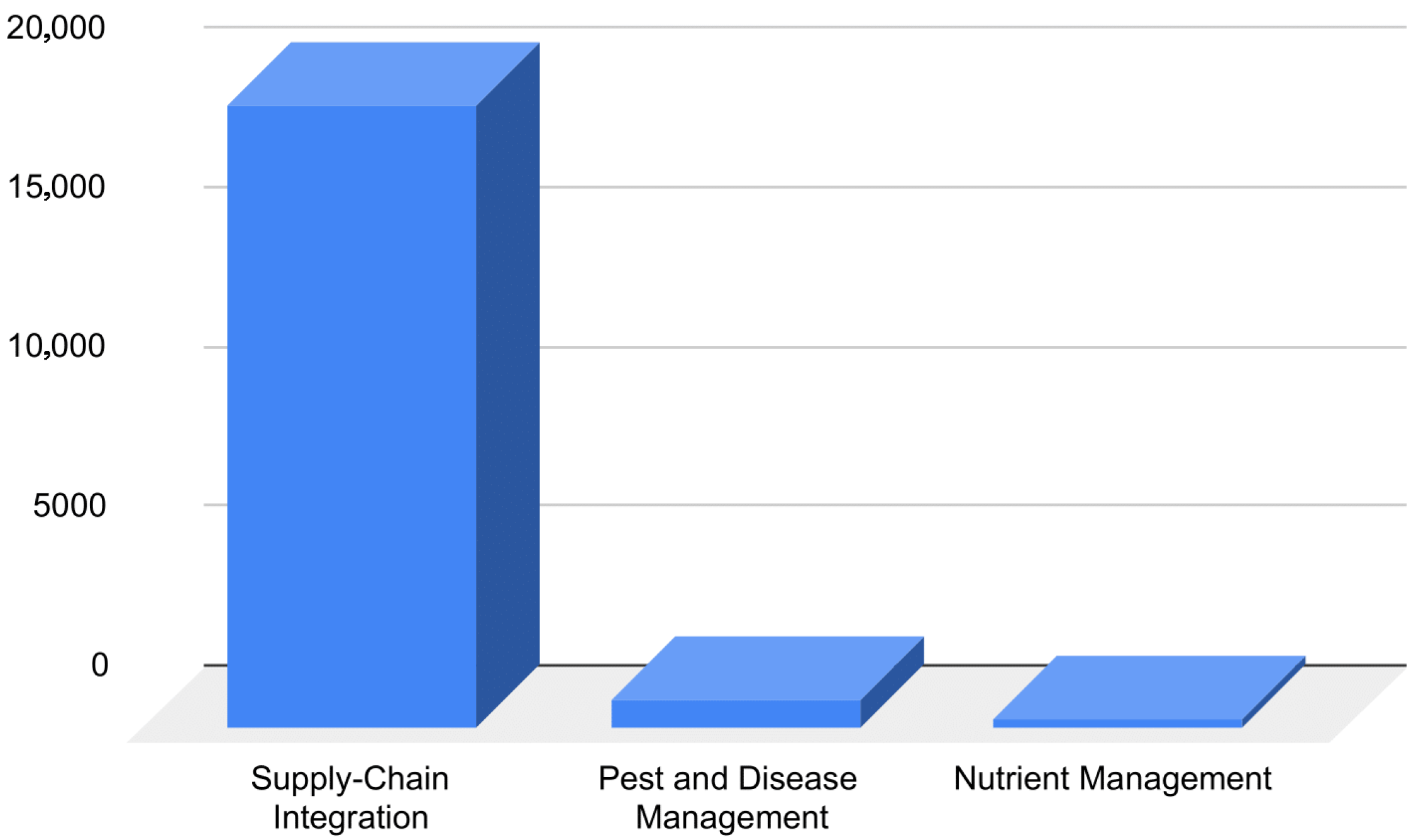
| Problem Area | Annual Revenue Loss (INR Crore) |
|---|---|
| Pest and Disease Management | 800–1000 [33] |
| Nutrient Management | 250–400 [34] |
| Supply-Chain Integration | 18,000–21,000 [35] |
| Total | 19,050–22,400 [33,34,35] |
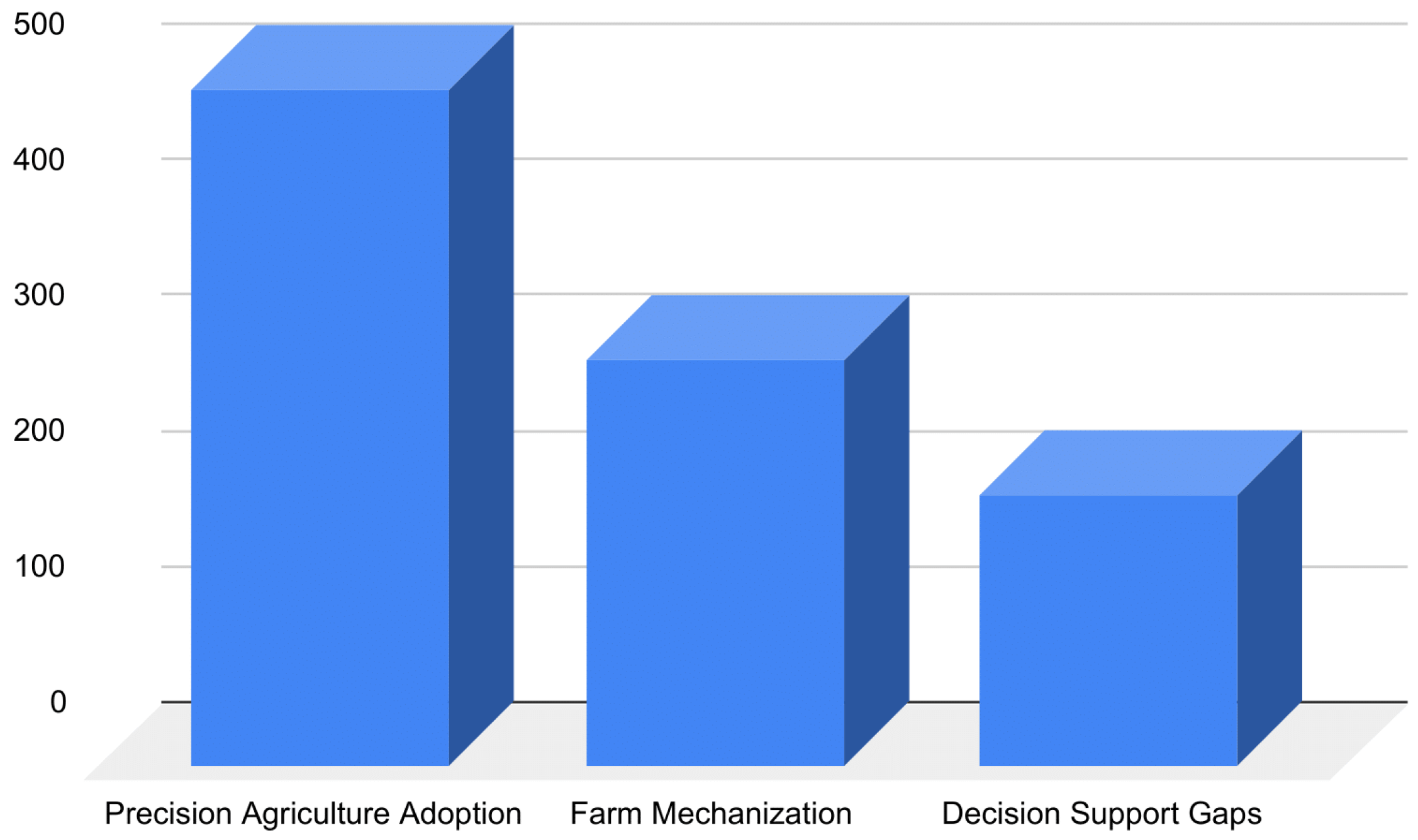
| Problem Area | Annual Revenue Loss (INR Crore) |
|---|---|
| Precision Agriculture Adoption | 400–600 [33] |
| Farm Mechanization | 250–350 [44] |
| Decision Support Gaps | 150–250 [45] |
| Total | 800–1200 [33,44,45] |
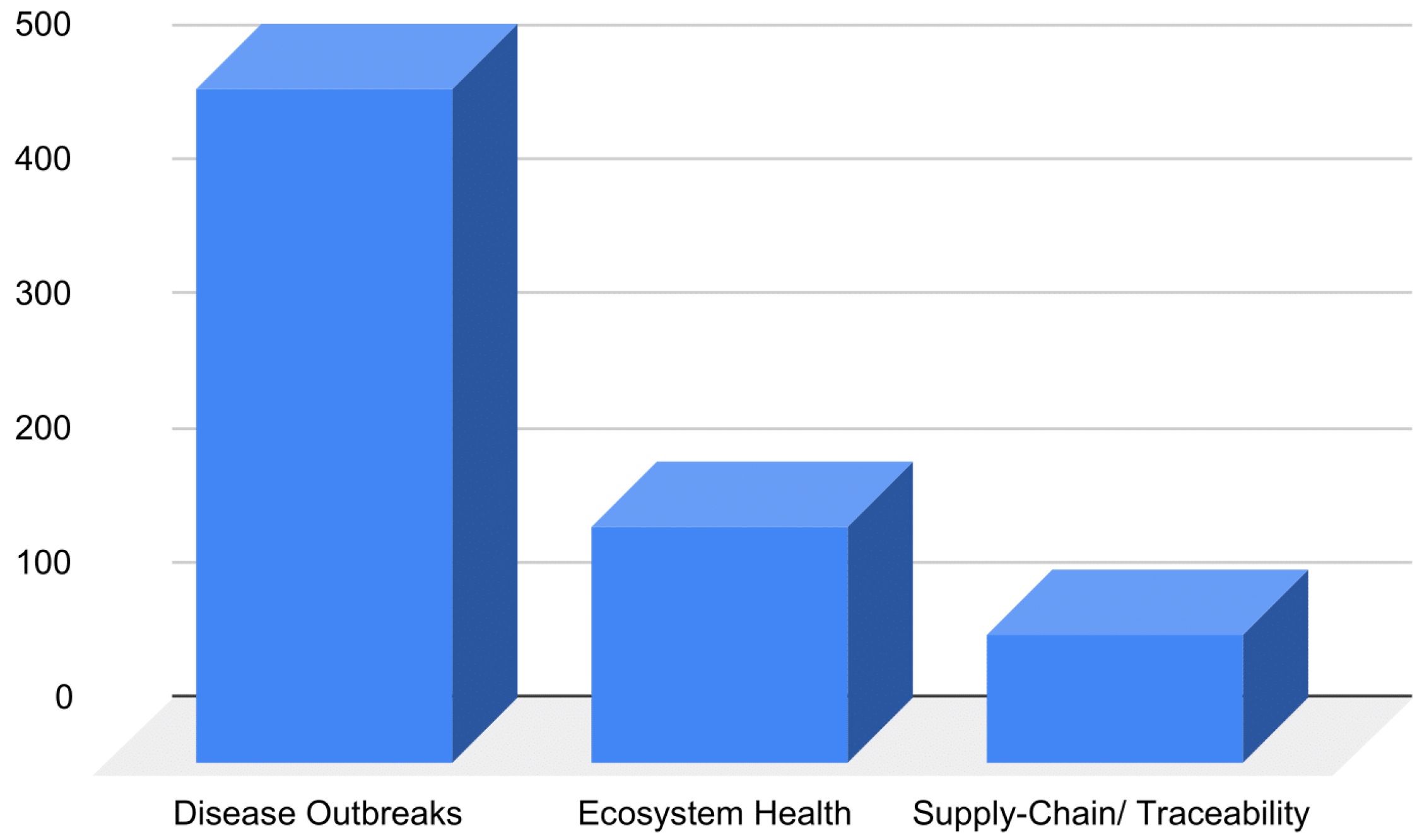
| Problem Area | Annual Revenue Loss (INR Crore) |
|---|---|
| Disease Outbreaks | 400–600 [47] |
| Ecosystem Health | 150–200 [57] |
| Supply-Chain/Traceability | 70–120 [56] |
| Total | 620–920 [47,56,57] |
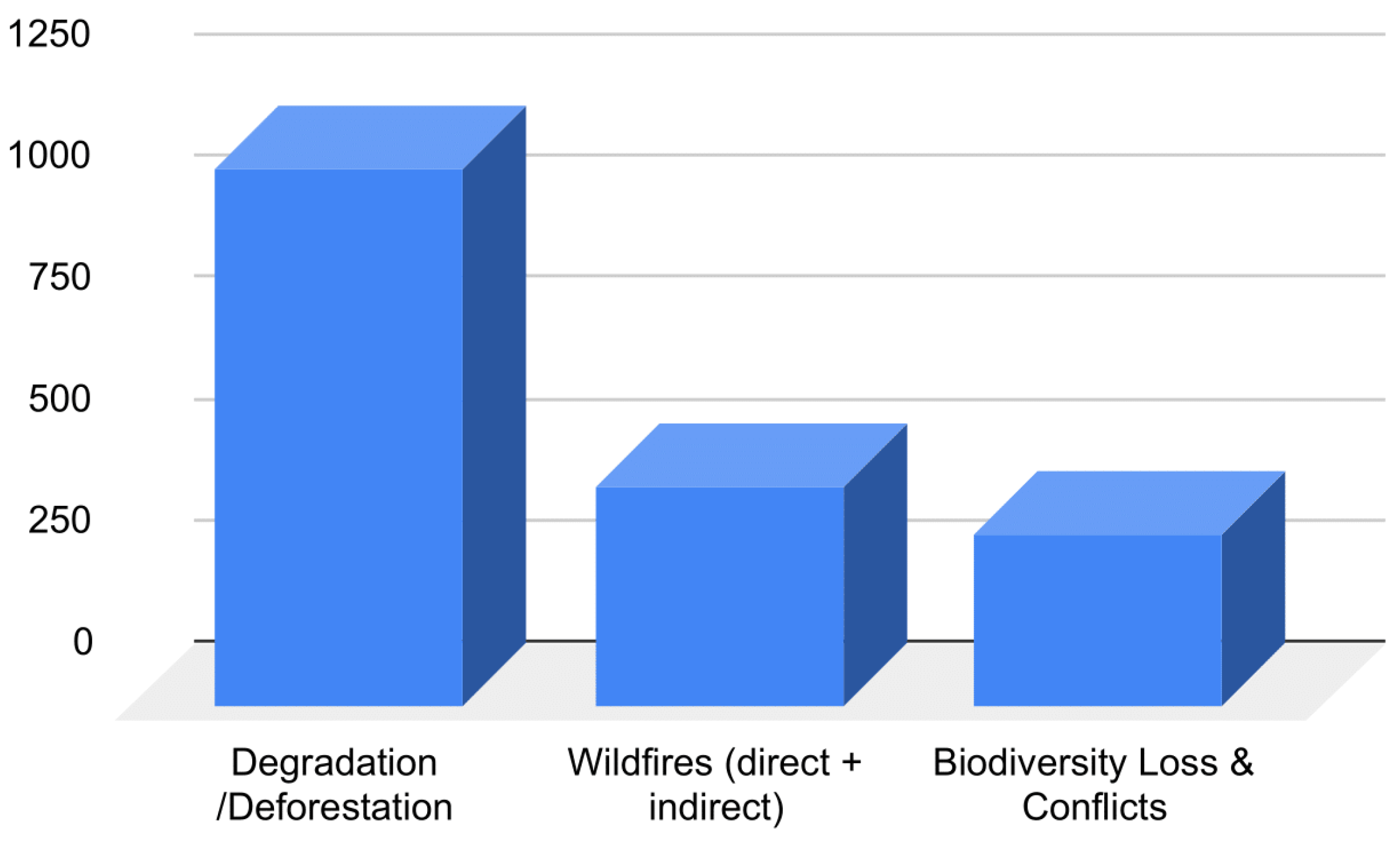
| Problem Area | Annual Revenue Loss (INR Crore) |
|---|---|
| Degradation/Deforestation | 1000–1200 [71] |
| Wildfires (direct + indirect) | 400–500 [72] |
| Biodiversity Loss & Conflicts | 300–400 [73] |
| Total | 1700–2100 [71,72,73] |
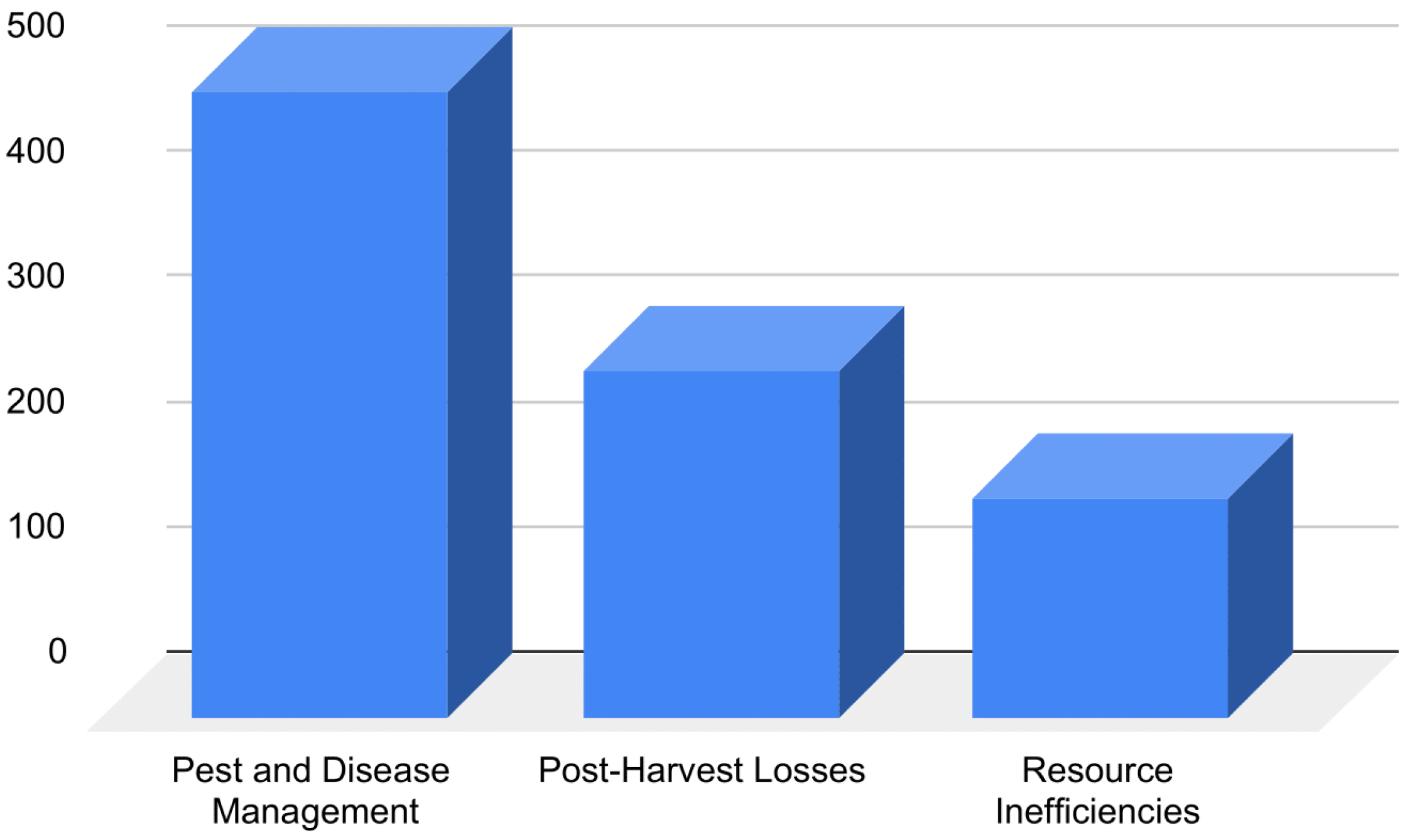
| Problem Area | Annual Revenue Loss (INR Crore) |
|---|---|
| Pest and Disease Management | 400–600 [83] |
| Post-Harvest Losses | 250–350 [84] |
| Resource Inefficiencies | 150–250 [85] |
| Total | 800–1200 [83,84,85] |
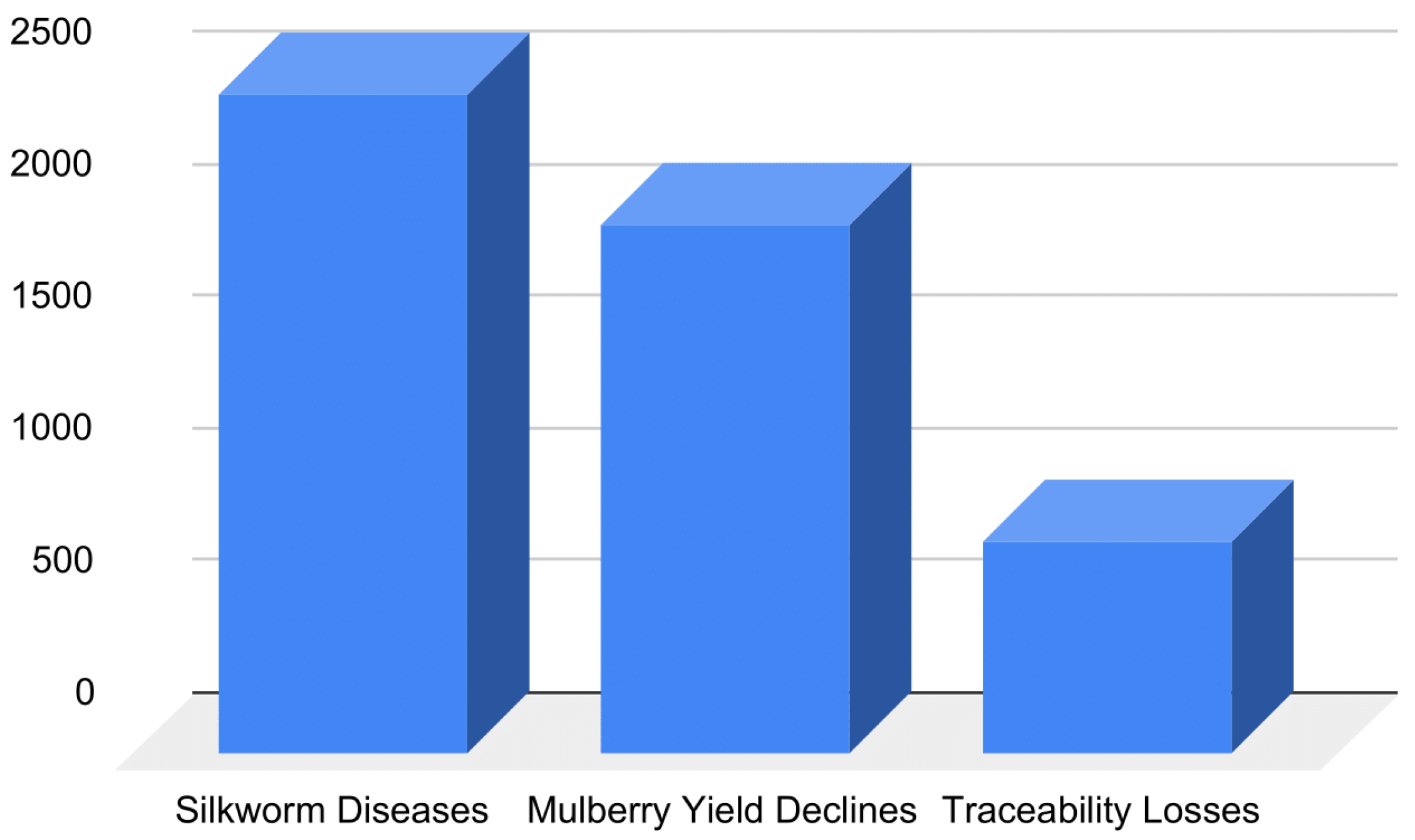
| Problem Area | Annual Revenue Loss (INR Crore) |
|---|---|
| Silkworm Diseases | 2000–3000 [91] |
| Mulberry Yield Declines | ∼2000 [92] |
| Traceability Losses | ∼800 [92] |
| Total | 4800–5800 [91,92] |
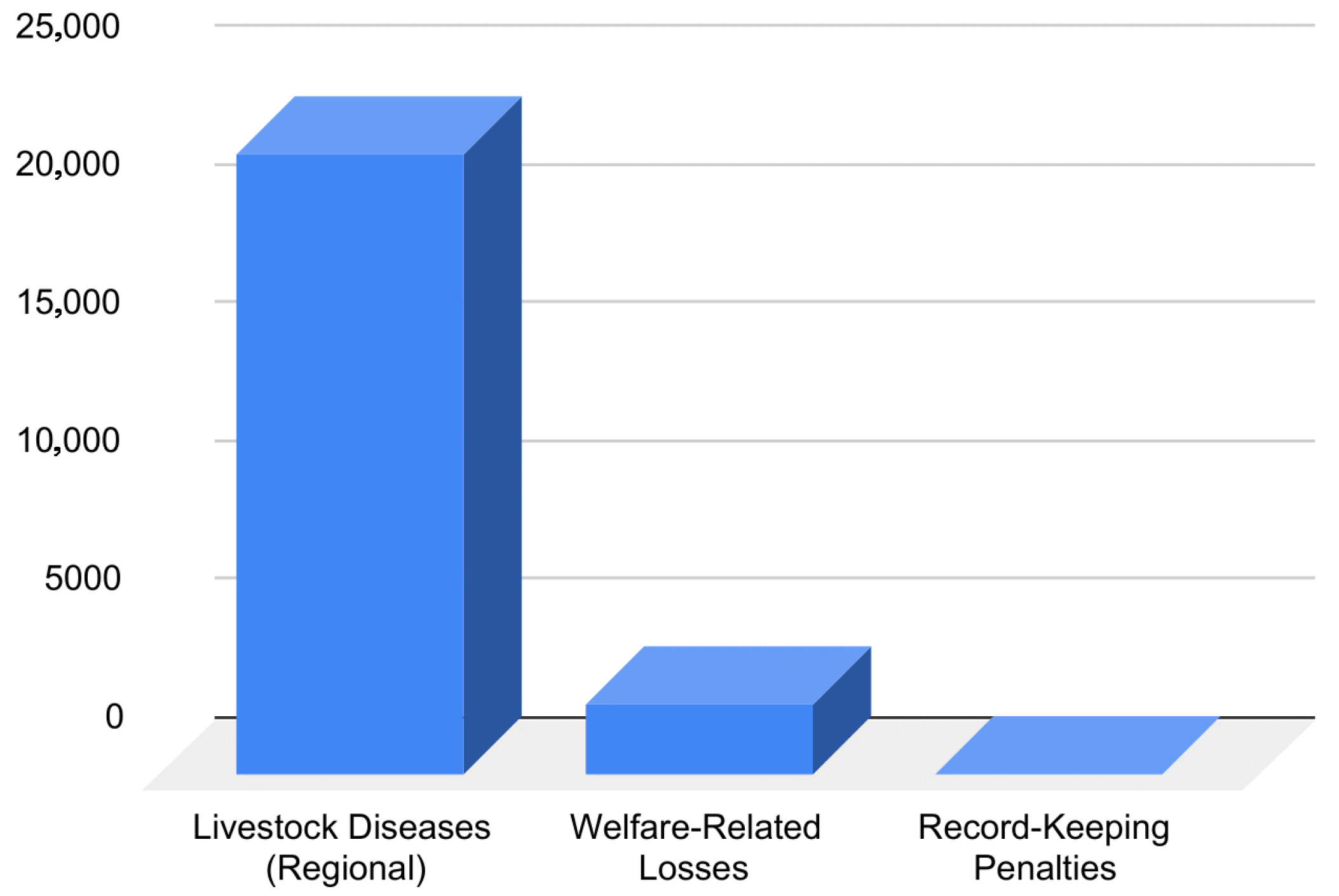
| Problem Area | Annual Revenue Loss (INR Crore) |
|---|---|
| Livestock Diseases | 20,000–25,000 [106] |
| Welfare-Related Losses | 2000–3000 [107] |
| Record-Keeping Penalties | <10 [108] |
| Total | 22,010–28,010 [106,107,108] |
| Application Area | Representative AI/ML Techniques | Deployment Maturity | Key Limitations | Priority Research Gaps |
|---|---|---|---|---|
| Pest and disease detection (agriculture & horticulture) | CNN-based image classification, smartphone and UAV imagery | Pilot to early deployment | Limited Himalayan-specific datasets; reliance on cloud inference; variable field conditions | Lightweight edge-AI models; region-specific labeled datasets; robustness under low-light and occlusion |
| Precision nutrient and irrigation management | Sensor-driven ML models, weather-integrated decision systems | Pilot stage | High sensor costs; terrain-related deployment challenges; intermittent connectivity | Low-cost sensor networks; terrain-adaptive algorithms; offline-capable advisory systems |
| Farm mechanization and robotics | Autonomous compact tractors, robotic harvesting systems | Experimental to pilot | Limited adaptability to terraced fields; high capital costs; navigation complexity | Terrain-aware navigation; modular retrofitting of existing machinery; cost reduction strategies |
| Fisheries disease and ecosystem monitoring | ML-based water quality prediction; satellite–sensor data fusion | Pilot stage | Sparse cold-water datasets; limited sensor coverage in remote areas | Species-specific models; integrated ground–satellite fusion frameworks; low-power edge sensors |
| Forestry monitoring and wildfire detection | Satellite analytics, UAV imagery, camera trap deep learning | Operational in parts | Cloud cover; false positives; limited endemic species libraries | Multi-source data fusion; improved wildfire discrimination models; expanded reference datasets |
| Sericulture quality assessment and traceability | Image-based cocoon grading; blockchain traceability systems | Pilot stage | Connectivity limitations; trust and adoption barriers | Offline-first traceability; cooperative-level deployment; user-friendly interfaces |
| Livestock health and traceability | Wearable sensors; computer vision; RFID and blockchain systems | Pilot to early deployment | Breed-specific data gaps; integration with legacy systems | Breed-adapted models; offline data synchronization; integration with national veterinary platforms |
Disclaimer/Publisher’s Note: The statements, opinions and data contained in all publications are solely those of the individual author(s) and contributor(s) and not of MDPI and/or the editor(s). MDPI and/or the editor(s) disclaim responsibility for any injury to people or property resulting from any ideas, methods, instructions or products referred to in the content. |
© 2026 by the authors. Licensee MDPI, Basel, Switzerland. This article is an open access article distributed under the terms and conditions of the Creative Commons Attribution (CC BY) license.
Share and Cite
Saxena, A.; Faiq, M.; Ghatrehsamani, S.; Zahra, S.R. Integrating Artificial Intelligence and Machine Learning for Sustainable Development in Agriculture and Allied Sectors of the Temperate Himalayas. AgriEngineering 2026, 8, 35. https://doi.org/10.3390/agriengineering8010035
Saxena A, Faiq M, Ghatrehsamani S, Zahra SR. Integrating Artificial Intelligence and Machine Learning for Sustainable Development in Agriculture and Allied Sectors of the Temperate Himalayas. AgriEngineering. 2026; 8(1):35. https://doi.org/10.3390/agriengineering8010035
Chicago/Turabian StyleSaxena, Arnav, Mir Faiq, Shirin Ghatrehsamani, and Syed Rameem Zahra. 2026. "Integrating Artificial Intelligence and Machine Learning for Sustainable Development in Agriculture and Allied Sectors of the Temperate Himalayas" AgriEngineering 8, no. 1: 35. https://doi.org/10.3390/agriengineering8010035
APA StyleSaxena, A., Faiq, M., Ghatrehsamani, S., & Zahra, S. R. (2026). Integrating Artificial Intelligence and Machine Learning for Sustainable Development in Agriculture and Allied Sectors of the Temperate Himalayas. AgriEngineering, 8(1), 35. https://doi.org/10.3390/agriengineering8010035