
Systematic Review

Advancing Smart Cities in Africa: Barriers, Potentials, and Strategic Pathways for Sustainable Urban Transformation

by
Dillip Kumar Das
1,*,
Ayodeji Olatunji Aiyetan
2 and
Mohamed Mostafa Hassan Mostafa
1
1
Sustainable Transportation Research Group (STRg), Discipline of Civil Engineering, University of KwaZulu-Natal, Durban 4041, South Africa
2
Department of Construction Management and Quantity Surveying, Durban University of Technology, Durban 4000, South Africa
*
Author to whom correspondence should be addressed.
Smart Cities 2026, 9(2), 38; https://doi.org/10.3390/smartcities9020038
Submission received: 12 December 2025 / Revised: 4 February 2026 / Accepted: 9 February 2026 / Published: 19 February 2026

Highlights

What are the main findings?
  • African cities face major obstacles to smart city development, including infrastructure gaps, limited funding, weak policies, and socio-economic inequalities.
  • Growing mobile technology use, innovation hubs, and stronger policy interest create emerging opportunities, especially through Information and Communication Technology (ICT) and Artificial Intelligence (AI).
What are the implications of the main findings?
  • Closing structural gaps through targeted investment, policy reform, and capacity building is critical for advancing smart city initiatives.
  • Harnessing technology while ensuring inclusivity can improve public services, support Small and Medium-Sized Enterprises (SMEs), and strengthen urban resilience.

Abstract

Smart cities utilise advanced technology to enhance the quality of life, economic efficiency, and environmental sustainability of citizens. This transformation is both vital and complex in Africa due to rapid urbanisation and socio-economic challenges. This paper examines the prospects, challenges, and pathways toward smart city development in African cities. The study was conducted through a systematic literature review and case study analyses of initiatives for smart city development in Africa. The findings indicate that infrastructure deficits, financial constraints, weak policy frameworks, limited expertise, and socio-economic inequalities are the key challenges. The high use of mobile technologies, innovation hubs, and increasing policy support have created opportunities. Strategic actions for transforming African cities include strengthening infrastructure through public–private partnerships, developing financial mechanisms, creating coherent policies, promoting inclusivity, and building technical capacity. Technologies such as Information and Communication Technology (ICT) and Artificial Intelligence (AI) are among the key enablers, supporting the growth of Small and Medium-Sized Enterprises (SMEs), improving infrastructure, fostering inclusive governance, managing resources sustainably, and enhancing public services such as healthcare and education. The study also proposes a conceptual framework for smart cities in Africa and outlines a pathway to unlock the continent’s potential for smart cities. It is argued that African cities need to address systemic challenges, leverage unique opportunities, and ensure inclusivity at the urban level. An integrated approach that utilises advanced technologies and prioritises sustainability and resilience is essential for developing smart and inclusive cities.

1. Introduction

According to the OECD/UN ECA/AfDB (2022) [1], urbanisation in Africa is increasing rapidly, and the number of cities has more than doubled since the 1990s. In contrast to 2020, the African population is expected to double by 2050, reaching 2.4 billion, with approximately two-thirds of the total population likely to reside in urban areas. This rapid urbanisation presents opportunities and challenges simultaneously. The population increase will be accompanied by the expansion of urban centres driven by rural-urban migration and economic development. Consequently, the cities are likely to suffer from poor infrastructure, inadequate service provision, and environmental degradation. In response, various cities on the continent are pursuing sustainable development, with some transitioning into smart cities in the process. The concept of smart cities has recently gained traction as a potential solution to the challenges facing African cities.
Through the use of digital technologies, smart cities seek to enhance urban services, infrastructure, quality of life, sustainability, and economic growth [2,3,4,5]. Digital technologies, including Artificial Intelligence (AI) (a subset of digital technology), are critical to that change, as witnessed during the COVID-19 Pandemic, when they enhanced not only infrastructure efficiency but also crisis responses through remote work, digital education, and telemedicine. In Africa, smart cities utilise technologies to address rapid urbanisation, infrastructure deficits, and socio-economic inequalities [6,7]. These cities aim to bridge the gap in basic infrastructure, improve service delivery, and ensure good governance, focusing on inclusivity and sustainability [8,9].
While smart city initiatives are primarily driven by developed nations, several other countries, such as India and China, are also making strides in the movement. In Africa, countries such as Kenya, Rwanda, and South Africa have initiated projects aimed at transforming their cities into smart cities. For instance, Kigali, Rwanda, has implemented multiple smart city projects, including smart street lighting, a cashless public transportation system, and initiatives to build a digital economy through enhanced internet access and e-governance services. The “Smart City Framework” implemented in Cape Town, South Africa, aimed at increasing the use of data toward better governance, reducing energy inefficiency, and integrating smart mobility solutions such as intelligent transport systems.
Most cities in the Global South, especially in Africa, face a myriad of challenges stemming from insufficient public services, poor infrastructure, and rapid urbanisation. Smart city initiatives enhance governance, optimise resource utilisation, and ensure that public services are delivered more efficiently, thereby contributing to sustainable development [10]. Economic growth is facilitated by smart city initiatives through digital economies, job creation, and innovation. Digital technologies can reduce pollution and thus contribute to addressing climate change [11]. For instance, in Africa, mobile technology and AI facilitate e-payments, coronavirus contact tracing, and other public health services. These innovations enhance access to education, healthcare, and mobility; however, significant gaps in digital infrastructure remain [12,13].
Evidence from the literature suggests that the concept of smart cities has been widely investigated internationally. Influential studies have conceptualised smart cities as urban entities that leverage innovation and data-driven approaches to improve economic competitiveness, sustainability, and quality of life [3,4,5,14]. In the literature, smart cities have been widely conceptualised through a series of key dimensions, including smart economy, smart governance, smart mobility, smart environment, smart people, and smart living [3].
The literature also suggests an increasing awareness of the need to modify these conceptualisations when they are applied to cities in the Global South. According to Watson (2014) [15] and Odendaal (2016) [16], the total adoption of Global North smart city models without critical consideration may overlook structural constraints such as informality, infrastructure, and institutional capacity. Similarly, Praharaj and Han (2019) [17] suggested that smart city projects in developing countries should focus on basic service delivery, inclusivity, and urban resilience. Synthesised from a series of studies, these views suggest a move away from purely techno-centric models towards more people-centric and context-specific models.
Within the African context, existing literature appears to be mostly sectoral or city-specific. For instance, Das and Emuze (2014) [18] and Das (2019, 2020) [2,19] investigated aspects related to dimensions of smart cities, including Information Communication Technology (ICT) industries in South African cities. In another study, Mwaniki (2017) [20] investigated infrastructure pathways for smart city development in Nairobi. Mhangara et al. (2017) [21] investigated aspects related to Cape Town’s transformation towards an inclusive smart city. In addition, reports from the World Bank (2024) [22] and UN-Habitat (2022) [23] highlight the potential of smart city development to improve service delivery and economic growth in African cities.
Despite these findings from existing literature, significant knowledge gaps persist. First, the literature indicates a lack of integration among the socio-economic, governance, education, sustainability, and infrastructure dimensions. Second, despite governance issues, socio-economic inequality, digital literacy, and urban informality being some of the significant problems facing African cities, and these problems are not analysed using a unified analytical framework [6,9,24,25,26]. In addition, existing frameworks and literature appear to be mostly context-specific and sectoral. Existing frameworks typically follow one of two paths: either high-tech models exported from the Global North that assume a robust infrastructure baseline, or sector-specific models—such as Cape Town’s mobility-centric approach or Kigali’s e-governance initiatives—that focus on isolated urban functions.
Consequently, the existing literature suggests a need to improve the conceptualisation and integration of the smart city concept in Africa. The existing literature appears to be largely premised on Global North contexts, where institutions, infrastructure, and financing mechanisms for urban development are relatively well-structured and supportive. In applying such contexts to Africa, there appears to be an insufficiency in adequately addressing issues like rapid urbanisation, infrastructure, informality, governance, socio-economic inequality, and human capital.
The fragmentation presents a problem that needs to be addressed. There appears to be a need to develop a comprehensive synthesis of existing literature that identifies key issues and opportunities for smart city development in Africa, and to advance a holistic and sensitive conceptual framework. The need to address this problem is essential to support policy formulation and strategic interventions for smart city development that are inclusive, sustainable, and responsive to the diversity of contexts in Africa.
Accordingly, this study seeks to fill this gap by conceptualising smart city development within the unique conditions of African cities and by proposing an integrated framework that addresses systemic challenges while prioritising inclusivity and sustainability. The key research questions (RQs) concerning governance, infrastructure, and digital transformation explored in the study are:
  • RQ1: What is the smart city concept in the African context, and what are its components?
  • RQ2: What are the potentials and barriers to smart cities in Africa, such as infrastructural, financial, regulatory, socio-economic, and technological challenges?
  • RQ3: What conceptual framework would enable plausible policy and strategic interventions for smart city development in Africa?
To answer these research questions, the study’s objectives are framed to:
  • Define the concept of smart cities in the African context.
  • Identify the components of smart cities in Africa.
  • Explore the potential and barriers to smart cities in Africa, such as infrastructural, financial, regulatory, socio-economic, and technological challenges.
  • Analyse case studies from different African cities that have implemented smart city initiatives, highlighting successes and challenges and unravelling lessons learned.
  • Formulate a conceptual framework for plausible policy and strategic interventions for smart city development in Africa.
This paper aims to contribute to the knowledge of smart cities in Africa by determining potential barriers and developing a conceptual framework for policy and strategy. It underlines ways in which digital technologies and AI can become drivers of sustainable urban transformation, adding resilience and inclusivity to meet rapid urbanisation challenges within resource constraints to create liveable, future-ready African cities.
Furthermore, unlike existing frameworks, the conceptual framework developed in this study distinguishes itself by adopting a systemic, multi-layered approach. It transcends the “technology-first” approach to a “context-first” framework that considers systemic issues like informal settlements and infrastructure gaps not as barriers but as fundamental variables that shape the “smart” intervention itself. Through the direct integration of these issues into the five attributes of context, drivers, catalysts, indicators, and smart outcomes, the framework offers a blueprint for urban transformation that places social inclusivity as a fundamental prerequisite rather than an afterthought.
The paper is structured as follows. Section 2 presents the research methods, followed by an overview of the context of African cities in Section 3. Section 4 discusses the concept of smart cities, while Section 5 examines the potential and barriers to smart city development in Africa. Section 6 analyses selected case studies, followed by the discussion in Section 7. Section 8 presents a conceptual framework for smart cities in Africa and outlines the way forward. Finally, Section 9 provides the conclusions.

2. Research Methodology: Systematic Literature Review, Case Study Analysis, and Risk of Bias Assessment

This study employed a qualitative research methodology, utilising a literature review and case studies to explore smart cities in Africa. The literature review was conducted using the PICOSO (Population, Intervention, Comparator, Outcomes, Study Characteristics, and Others) methodology. The Preferred Reporting Items for Systematic Reviews and Meta-Analyses (PRISMA) method was then employed in reporting, ensuring transparency, rigour, and objectivity, thereby reducing bias and enhancing the quality of the review’s reporting [27,28,29]. Table 1 presents the detailed research protocol developed for the review and case study analysis.
The literature review on smart cities was conducted at the global level, with a focus on the experiences of Africa and the Global South. The review critically examined definitions, components, challenges, potentials, barriers, and policy interventions. The PRISMA process-identification, screening, eligibility, and inclusion-guided the literature search. Case studies were drawn from publicly available sources. Accordingly, the PRISMA checklist items used in this study to ensure quality covered the title, abstract, methods, findings, limitations, and future research. Conducted between January 2022 and June 2025, the project involved literature searches, data collection, analysis, and writing, providing insights into smart city development in resource-constrained urban environments. The PRISMA checklist is presented in Supplementary File S1.

2.1. The Search Strategy

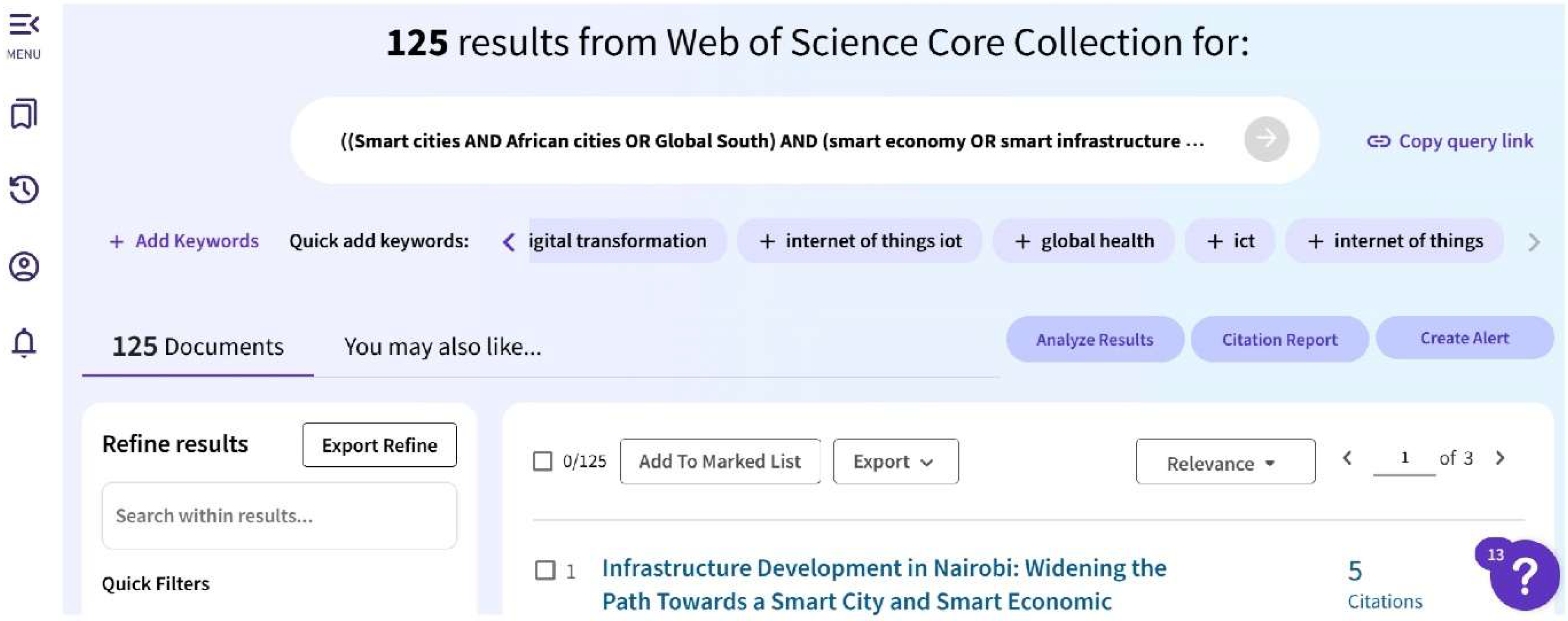
A review was conducted of a wide array of reliable sources, including peer-reviewed journals, books, conference proceedings, reports, and online articles. Literature for the purposes of this study was systematically gathered, categorised, and critically evaluated through the use of Scopus, Web of Science, and Google Scholar. The key search terms involved “smart cities,” “sustainable cities,” “digital technology,” “ICT,” “IoT,” “smart transportation,” “smart mobility,” “service delivery,” “urban economics,” “governance,” “resilience,” and “policy strategies.” Search strings were developed and adapted to accommodate the syntax and format specifications of each targeted database. Figure 1 illustrates a snapshot of the search process for the Web of Science and Scopus databases, which exemplifies the systematic approach employed to identify and categorise relevant research for informing this study.
The search strings used are presented in Table 2.

2.2. Screening

The searched articles were screened using specific inclusion and exclusion criteria, as outlined in Table 1. The inclusion criteria were based on the Covidence framework—Population, Intervention, Comparator, Outcomes, Study Characteristics, and Others (PICOSO). This approach ensured a broad yet relevant literature base, focusing on smart and sustainable cities in Africa. Keywords and inclusion criteria were aligned accordingly.
Exclusion criteria refined the search by removing non-peer-reviewed articles, patents, legal documents, and non-English publications. Studies unrelated to Africa or the Global South were also excluded. Only studies published up to August 2025 were considered.
Two research assistants conducted an initial screening, reviewing titles and abstracts for relevance. A full-text review followed, ensuring methodological rigour and contextual relevance. To maintain accuracy, investigators cross-checked a subset of articles and held regular discussions to resolve discrepancies, ensuring the final selection met the study’s inclusion criteria with consistency and reliability.
In addition to the peer-reviewed literature, web-based reports and news articles were also searched. The inclusion of web-based reports and reputable news articles (accounting for about 18% of the total sources) was a strategic approach to ensure the inclusion of the most current information available on the African smart city context. Given the rapid pace of technological implementation and policy changes in the urban context on the continent, peer-reviewed literature often lags behind real-time implementation. These ‘grey literature’ sources, including reports from international organisations (such as UN-Habitat and World Bank) and government reports, are essential sources of primary information on project implementation and policy developments that are not yet reflected in academic databases. In order to ensure scientific integrity, each of these sources was screened for institutional credibility and validated against academic themes during the synthesis step, to ensure that these sources complement rather than replace the peer-reviewed literature.

2.3. Data Extraction, Quality Appraisal, Eligibility, and Inclusion

Data were extracted using a standard data extraction form that captured the following key parameters: authors, date of publication, objectives, methodology, findings, contributions, future research directions, and limitations. The lead author and one of the co-authors ensured consistency in collecting and interpreting the data, while the extracted data were collated in an Excel sheet.
Following this screening, a quality check was carried out using the Mixed Methods Appraisal Tool (MMAT) (version 2018) [30] and the Cochrane Risk of Bias (RoB 2) (RoB2 IRPG Beta v9 version) tool for randomised trials. Two investigators independently assessed studies, one verifying the assessment of the other investigator. Disagreements were resolved through discussion, with an arbitrator serving as a reviewer if necessary. When disagreements could not be resolved, a senior peer was consulted.
Further, the level of agreement between the assessors and the Risk of Bias was checked using Cohen’s Kappa. While this study is predominantly qualitative, the application of MMAT, RoB2 and Cohen’s Kappa was essential to establish a ‘reliability baseline.’ In qualitative systematic reviews, researcher bias in study selection can significantly skew the final thematic synthesis. By quantifying the level of agreement between investigators and screening for bias, the study ensures that the evidence base used to derive the conceptual framework is both robust and consistent, moving beyond anecdotal selection to a verified corpus of literature. Detailed study characteristics and bias assessments are presented in Supplementary Files S2–S4. The risk of bias was assessed using the Kappa statistic, and the distribution of the reviewed articles was analysed using SPSS software (version 29).
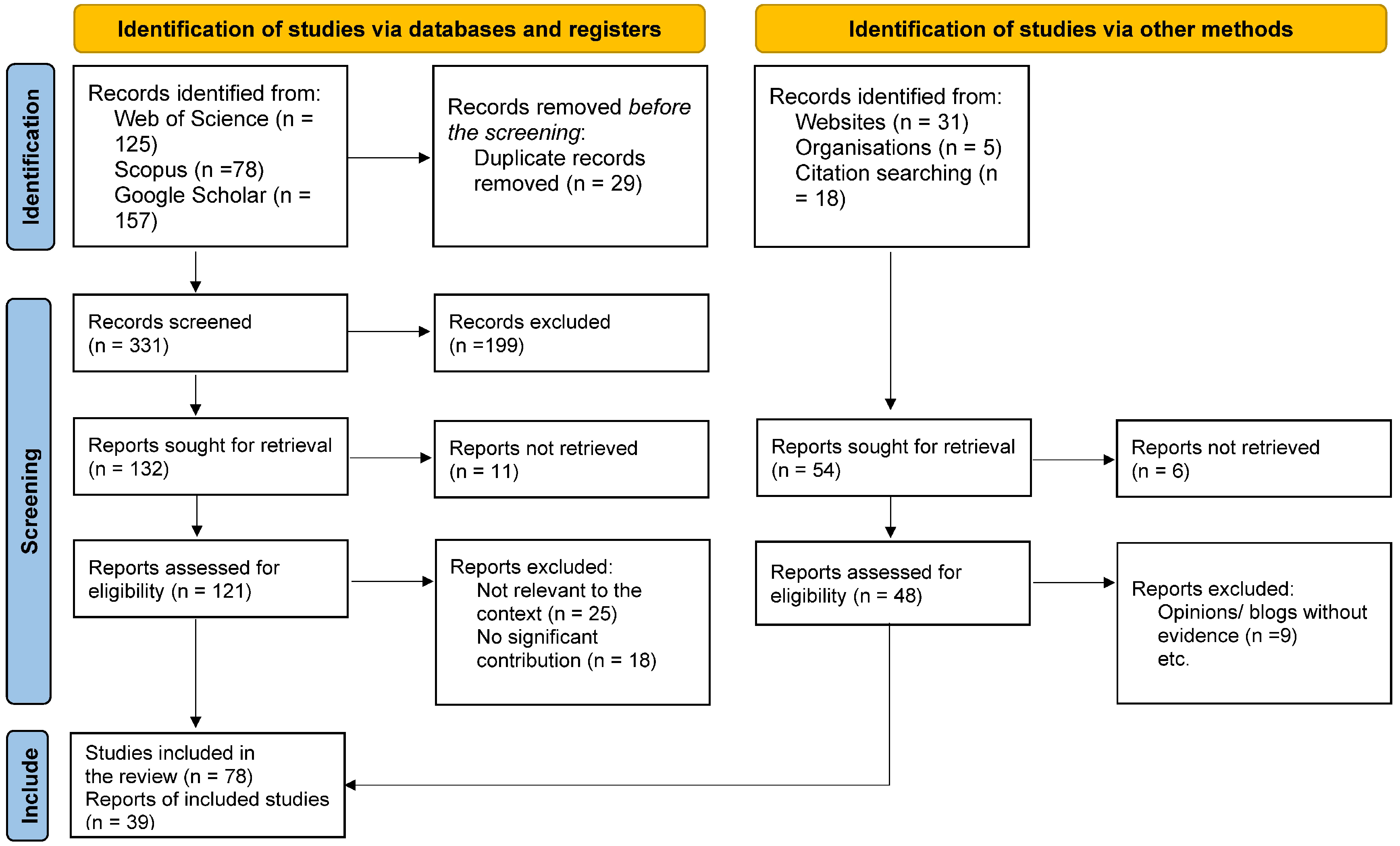
A total of 117 relevant records were included: 78 articles and 39 reports. Sources comprised 52.14% peer-reviewed journal articles, 1.71% conference proceedings, 0.85% preprints, 5.13% books, 6.84% book chapters, 15.38% reports, and 17.95% web and newspaper articles (Table 3). Table 4 presents the Cohen’s Kappa Value, indicating the level of agreement. A Kappa Value of 0.880 with statistical significance (p-value < 0.001) indicates a good level of agreement and minimal risk of bias.
Validation of web and newspaper sources was obtained by selecting reputable outlets, cross-referencing information, ensuring recency, and prioritising articles that cite credible sources or supporting evidence to enhance reliability.
All the articles were then categorised to develop specific themes and sub-themes. The detailed search process, as used and reported according to the PRISMA method, is presented in Figure 2.

2.4. Case Study Selection

To reinforce the literature findings, case study analyses were conducted on several African cities, including Nairobi (Tatu City and Konza Techno City), Kigali, Cape Town, Hope City, Nova Cidade de Kilamba, Kigamboni City, Cité le Fleuve, and Eko Atlantic [15,24]. While Nairobi, Kigali, and Cape Town are leading in smart city development, other cities have faced delays or limited progress [31,32,33].
Nairobi, Kigali, and Cape Town were selected due to their distinct smart city initiatives and regional diversity. Nairobi leads in fintech and smart transport. Kigali excels in e-governance and green urban planning, and Cape Town integrates data-driven governance and smart energy. These cities represent diverse economic and technological contexts across the East, Central, and Southern Africa.
Other cities, such as Hope City and Eko Atlantic, were excluded due to early-stage development and challenges in investment, infrastructure, and political hurdles. Data sources for the case studies included research articles, reports, and public-domain documents from initiatives such as the Smart City Kigali Master Plan, SmartCape and Nairobi County Benchmarks for Smart City Development at Konza Technopolis.

2.5. Analyses and Synthesis

The thematic analysis and conceptual framework were directly informed by the rigorous screening and quality assessment process used in the previous steps. In this regard, the application of the PRISMA/Risk of Bias tool bridged the literature search and qualitative synthesis. This ensured that only high-quality studies informed the themes. Therefore, the strategic pathways and attributes identified in Section 8 are not thematic observations but are informed by a vetted evidence base that has been systematically filtered for relevance, quality, and inter-rater reliability.
The collected literature and reports were analysed and synthesised using relevant themes and sub-themes deductively through a thematic analysis approach. The process began with familiarisation with data and a thorough review of the literature. Initial coding involved systematically labelling important concepts and patterns related to smart city development in Africa. These codes were grouped into broader themes reflecting recurring ideas and significant trends.
The themes were refined to ensure accuracy, coherence, and alignment with the research questions. Sub-themes were developed to capture specific insights within each theme, offering a deeper understanding of smart city barriers, potentials, and strategic pathways. Each theme and sub-theme was clearly defined to align with the study’s objectives.
Key themes identified include the challenges faced by African cities, defining and understanding smart cities, the components of smart cities, the potentials and barriers to development, and perspectives for conceptualising smart cities, as well as strategic measures for their development. The thematic analysis was further enriched with evidence from selected city case studies, strengthening the study’s conclusions.
The authors declare that AI-assisted writing tools, specifically ChatGPT versions 4 and 5, were utilised to refine the language and enhance readability. Also, Scispace was used to access literature. All substantive content, including data interpretation, conclusions, and manuscript structure, was generated and validated by the authors.

3. The Context: African Cities

3.1. Systemic Characteristics of African Cities

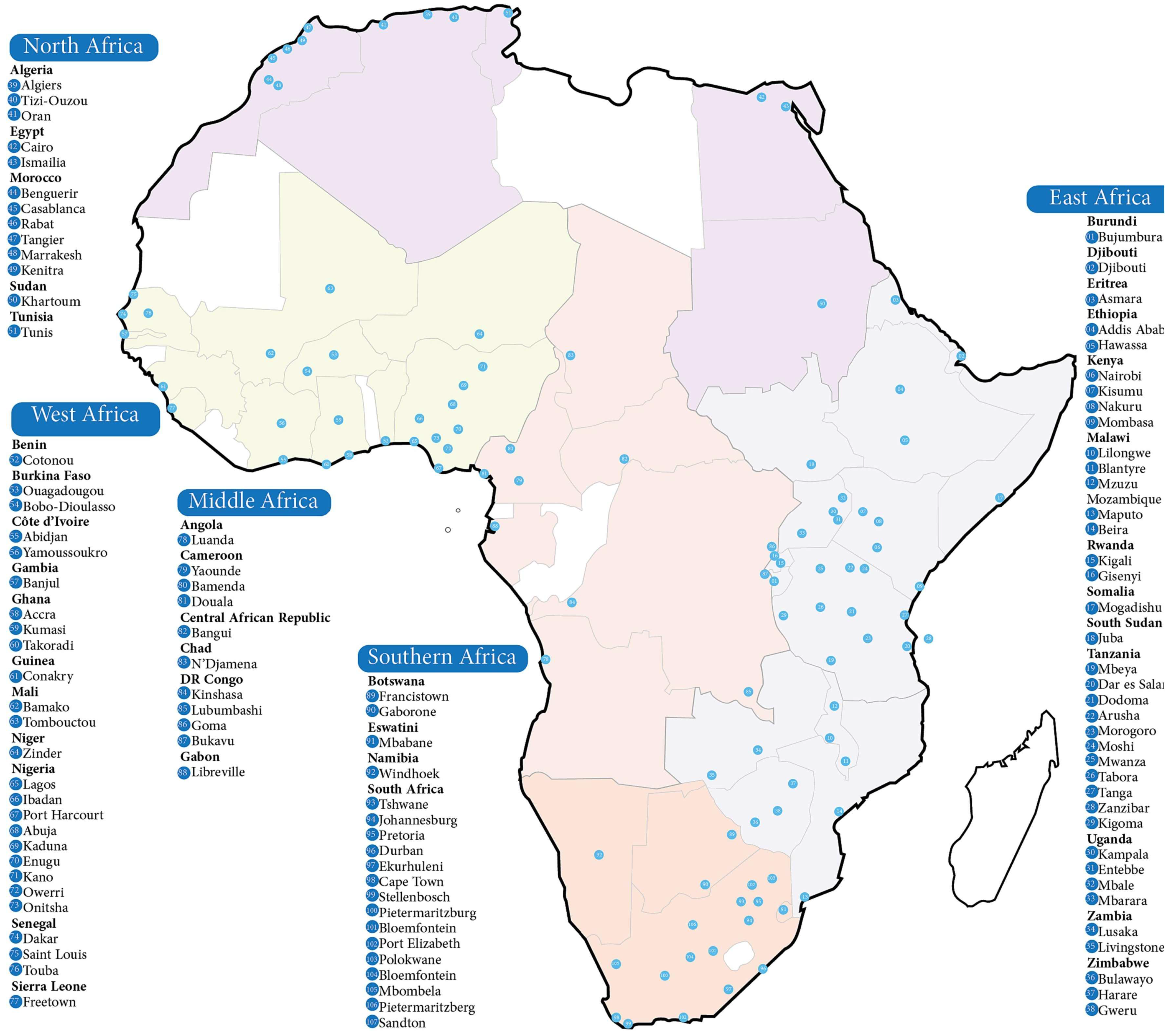
Figure 3 presents a map of major cities in Africa. Africa’s urban population has increased almost fourfold over the past two decades, from 2000 to 2020, reaching an estimated 570 million, with 45% of the population now urbanised [23]. The rapid growth of cities is accompanied by an expansion of urban areas, deforestation, deterioration of conditions in the informal sector, high unemployment, and poverty [22,34]. Economically, African cities are characterised by low GDP and very limited industrialisation [35].
Infrastructure is often incomplete, and there is a lack of key services, such as traffic congestion, poor public transportation, poor sanitation, and constant water and power shortages [35,36]. People migrating to cities have created a housing shortage and contributed to the growth of informal settlements [37].
African cities are plagued by numerous significant environmental challenges. including climate change risks, pollution, and high industrial emissions [35]. Most African cities, such as Cape Town and Cairo, have raised their brand statuses to an international level, while others, such as Rabat and Kigali, strive to be described as sustainable, smart, and resilient [38,39].

3.2. Systemic Challenges of Cities in Africa

Exploring the systemic challenges faced by African cities reveals a complex web of issues that impede the sustainable development and modernisation of urban areas. The challenges present varying natures, from the issues of rapid urbanisation and poor infrastructure, governance, to socio-economic disparities. Some of the important ones are discussed in the following subsections.

3.2.1. Rapid Urbanisation and Informal Settlements

Rapid urbanisation creates a daunting task for African cities, which are characterised by the proliferation of informal settlements lacking basic service provision. By 2050, the urban population is expected to double, putting pressure on African cities to ensure the availability of adequate housing, water, sanitation facilities and other basic services [24]. In most instances, informal settlements arise from the failure of formal markets to meet the demands of an increasing urban population, as millions of residents are left living in deplorable conditions [40]. Without official recognition or essential amenities, informal settlements place residents in precarious situations, exposing them to health risks and other environmental dangers, thereby weakening the concept of smart cities [41].

3.2.2. Inadequate Infrastructure

Furthermore, African cities continue to be plagued by infrastructure deficiencies that threaten economic development and the quality of life for their citizens. Problems with electricity supply, underdeveloped transportation systems, or incomplete water and sanitation infrastructures cause significant disorder in daily life and economic activities [42,43]. Increased traffic congestion, pollution, and limited access to potable water all increase health risks [44,45]. These issues pose significant challenges to the transformation into smart cities.

3.2.3. Governance and Institutional Challenges

The major impediments to the effective management and development of cities in Africa are governance and institutional challenges. Many urban areas suffer from weak governance structures, inadequate policy frameworks, and limited institutional capacity to plan and manage urban growth [46]. Corruption and a lack of transparency further increase inefficiency in service delivery and resource allocation [47]. Decentralisation is hindered by the limited capacity of local governments and insufficient financial resources [48]. These challenges threaten smart city development, since it requires robust governance, policies and institutional capacity.

3.2.4. Economic Inequality and Unemployment

Economic inequality and high unemployment rates are prevalent in African cities, contributing to social instability and hindering inclusive urban development. Most urban centres report high-income disparities, with the majority of workers being employed in the informal sector, which does not pay decent wages and does not assure job security. Indeed, according to the AfDB (2020) [26] and Chen (2012) [49], the informal sector often lacks social protection and presents limited opportunities for social mobility, thereby trapping people in poverty and perpetuating inequality. According to Tacoli (2012) [50], such circumstances pose a hurdle to developing a smart economy, for which equal opportunities for decent jobs, skills, and openness to innovation are crucial.

3.2.5. Environmental Challenges and Climate Change

Climate change and other environmental challenges pose serious threats to the sustainable development of African cities. Many urban centres are prone to flooding, drought, and extreme weather events, which further exacerbate socio-economic problems, including loss of life and property [51]. Rapid urbanisation brings degradation of natural resources, loss of biodiversity and increased pollution, further complicating attempts toward sustainable urban development [52]. The capacity to adapt is limited, which undermines resilience and increases vulnerability to future shocks [53]. These challenges are closely related to the smart environment aspect of smart cities, emphasising sustainability and resilience. For a city to be considered “smart,” it must effectively manage its environmental resources, mitigate climate risks, and promote sustainable practices.

3.2.6. Public Health Challenges

Public health challenges are high amidst inadequate infrastructure in African cities. The rapid growth of informal settlements often results in overcrowding conditions that foster the spread of infectious diseases like tuberculosis and cholera [54]. In addition, many residents in urban areas, especially in informal settlements, still do not have access to health care, which contributes to the burden of disease and mortality [55]. Generally, waste management and sanitation services are insufficient, increasing health risks among the population [44,56]. All these challenges directly factor into the dimensions of smart living and smart people, as advocated in smart cities, with the aim of improving public health and well-being.

3.2.7. Security and Safety Concerns

Security and safety hazards are common in most African cities, which are characterised by high rates of crime and violence that threaten social stability and economic development. Urban areas face challenges such as high crime rates, including theft, assault, and homicide, which are fuelled by poverty, inequality, and unemployment [57]. Political instability and conflict further exacerbate insecurity [58]. Ensuring safety can help create an enabling environment towards economic growth and social cohesion, a key factor for smart cities [59].
These systemic challenges hinder the sustainable development and success of smart city initiatives. Understanding and effectively addressing these challenges is crucial for unlocking the potential of these cities to transform into smart cities.

4. Understanding Smart Cities

4.1. Smart City: General Definition

Although there is no consensus on a definition, a smart city can be considered an urban area where advanced ICT technologies are used in a way that enhances the quality, performance, and interactivity of services provided in the area with the aim of improving the efficiency of management, costs, and the quality of life in the city [2,4,5,17]. Smart cities integrate infrastructure, governance, economy, environmental sustainability, living conditions, and citizens’ engagement through systems that can be managed in real time [3,60]. The overarching aim is to create smart environments that are data-driven and technology-enabled for sustainability, efficient service delivery, and economic growth [18].

4.2. Smart City in the Context of the Global South

In the context of the Global South, smart cities have been perceived as urban centres that use technology to address issues of urbanisation, inequality, and lack of adequate infrastructure [9,18]. According to Praharaj and Han (2019) [17] and Das (2017) [61], smart cities in these regions have been found to have different characteristics compared to those in more developed regions in terms of their focus on addressing basic needs such as access to clean water, adequate sanitation, energy, and shelter. Resilience in smart cities in these regions has also been understood to include developing infrastructure that can withstand climate change and environmental challenges, while promoting inclusive urban development. In addition, the use of technology and addressing the informal sector through supportive policies have also been found to be critical in promoting urban development in smart cities in these regions [62,63].

4.3. Smart City in the African Context

In Africa, for instance, smart cities seek to leverage technology and innovation to address some of the challenges facing the continent, such as rapid urbanisation, infrastructure gaps, and socio-economic inequality [6,7,9]. Two major strategies have thus far characterised the development and creation of smart cities in Africa: technology-oriented and people-oriented strategies [10]. One of the key areas of focus for smart city developers and planners in Africa is infrastructure upgrade, such as ensuring adequate and efficient power supply, clean and potable water, and proper waste management. In this respect, for instance, there are plans to establish smart power and water management systems to improve efficiency and curb losses caused by leakage. Another key area is improving service delivery through ICT-based solutions, such as telemedicine, e-learning, and smart waste management [8,9,22].
In addition to infrastructure and service delivery, technology can be used to spur economic growth through new opportunities and foreign investments [63,64,65]. In this regard, there is also a growing trend towards social inclusiveness in Africa’s smart cities, with plans to ensure that all residents, even those living in informal settlements, have access to technology and to improve digital literacy [15]. E-governance platforms further contribute to improved governance by enhancing transparency, accountability, and citizen participation, thereby supporting more informed decision-making processes [2].
Sustainability and resilience to climate-related and environmental challenges are also integral to African smart city development [23]. According to the African Development Bank (AfDB, 2020) [26], environmental sustainability in this context includes the promotion of renewable energy and urban agriculture. While smart city initiatives have been criticised for privileging foreign investment and potentially exacerbating inequality [6,24], they also offer opportunities to strengthen the relationship between urban development, technology, and social inclusion [16]. Addressing persistent challenges related to infrastructure and financing, governance, and human capital remains critical for the successful implementation of smart cities in Africa [8].

4.4. Components of a Smart City in the African Context

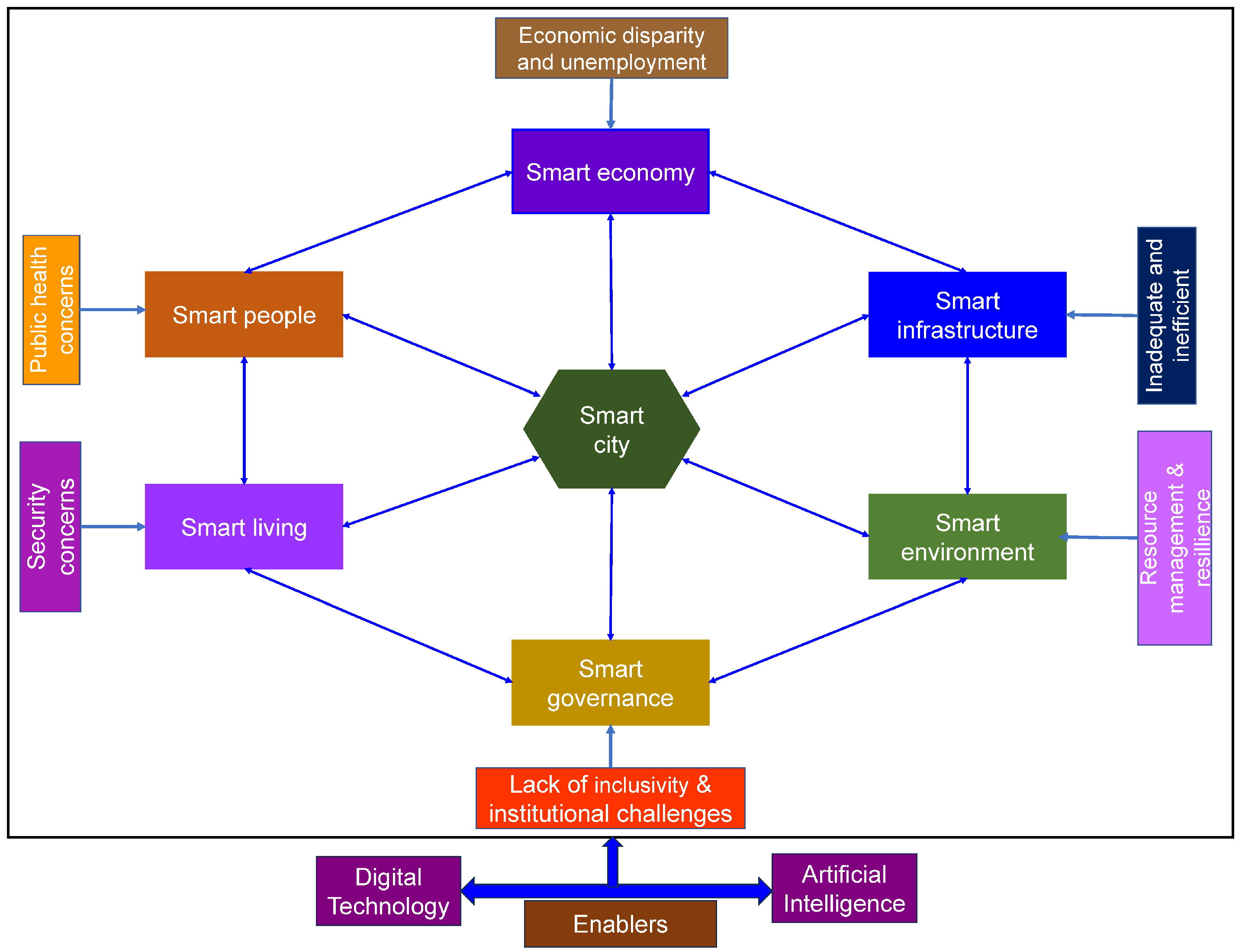
A smart city integrates technology, social, and infrastructural components that enhance urban services and improve the quality of life. In Africa, these elements must address systemic urban challenges. Worldwide, six core components characterise smart cities: smart economy, smart infrastructure (including mobility), smart governance, smart environment, smart living, and smart people [3]. Utilising these core elements, Figure 4 illustrates the key components of a smart city in Africa.
The smart economy fosters innovation through digital platforms and innovation hubs while addressing issues of unemployment and inequality [14,66,67]. Smart infrastructure involves the use of advanced technologies in the operation of transportation, energy, water, and waste management. For example, smart transportation optimises mobility using real-time data, whereas smart grids enhance energy distribution [68,69]. Smart water systems and IoT-enabled waste management reduce costs and environmental impacts [10,70].
Smart governance uses digital technologies to enhance decision-making. Transparency and participatory citizenship through the means of e-government and open data [47,71]. It must address inclusivity and institutional challenges specific to Africa.
Resource management and pollution control, including renewable energy, air quality monitoring, and green building practices, have been identified as key factors in promoting environmental sustainability [10,70]. Smart living improves the quality of life through telemedicine, e-learning, and public safety technologies [68]. Digital literacy programmes ensure that citizens are informed [70].
Furthermore, digital technologies like ICT, IoT, and AI enable the development of smart cities [72]. Digital technologies constitute a broader category that includes ICT, IoT, Big Data, cloud computing, and digital platforms. Artificial Intelligence (AI) is a subset of digital technologies, distinguished by its capacity for learning, prediction, automation, and decision support (e.g., machine learning, computer vision, natural language processing). Therefore, digital technologies like IoT, Big Data, Data Analytics, and Smart Mobility Solutions are increasingly transforming urban areas/living spaces today [10,73]. However, AI technologies are becoming more accessible to local and national governments, including Machine Learning, Deep Learning, Natural Language Processing, Computer Vision, Reinforcement Learning, and Robotic Process Automation, which could potentially accelerate the transformation of urban areas/living spaces [74,75,76].
The six components of smart cities, enabled by digital technology and AI, can thus be adopted in various combinations, considering the context and potential of a city to address systemic challenges and facilitate its transformation towards becoming a smart city in Africa.
Figure 4. Components of a smart city in Africa (premised upon: [3,4,14,18,68,70,77,78]).
Smartcities 09 00038 g004

5. Potential and Barriers for the Development of Smart Cities in Africa

African cities have the potential to become smart cities driven by several factors that align with the continent’s urbanisation trends, technological advancements, and developmental needs.

5.1. Potential for the Development of Smart Cities in Africa

5.1.1. Rapid Urbanisation and Growth Opportunities

As stated earlier, it has also been observed that Africa will face rapid urbanisation by the year 2050. It will have an urban population of 2.4 billion people [23]. Additionally, Africa has one of the youngest populations in the world, which is expected to increase further. This demographic trend presents significant opportunities for economic development, education, and employment in the region. Consequently, it offers an opportunity to implement smart city solutions with regard to infrastructure, services, economy and governance that can efficiently accommodate and support the growing urban population [25].

5.1.2. Mobile Technology Penetration

Africa is adopting cell phone technology at a significant rate, with mobile penetration in many countries already exceeding 80% [79]. The widespread adoption of mobile devices provides a solid foundation for smart city development, as the device base can be leveraged to deploy smart technologies and efficiently implement various city functions. For instance, services based on mobile technologies enhance governance, transportation, financial transactions, education and healthcare, thereby ensuring more efficient and accessible urban solutions that meet the demands of a growing population.

5.1.3. Innovation and Entrepreneurship Hubs

Cities such as Nairobi, Lagos, Kigali, and Cape Town have become hubs of innovation and entrepreneurship in Africa, creating a favourable environment for the growth of technology and digital innovation. Such vibrant ecosystems nurture start-ups and tech firms, which serve as the primary drivers of a smart economy’s development. These businesses help reinforce economic growth, job creation, and access to quality services through the application of innovative solutions and services. This level of entrepreneurial drive is necessary for the development of a robust and inclusive smart economy and, therefore, essential for the implementation of various smart city initiatives across [80,81].

5.1.4. Policy Support and International Initiatives

There is growing recognition among African governments and international organisations of the potential benefits of smart city initiatives. Policy frameworks and international partnerships promote and encourage the implementation of smart city projects, fostering collaboration and investment in urban development initiatives. Moumen et al. (2024) [9] and Söderström et al. (2021) [82] have noted that aligning these national strategies with international best practices will provide African countries with the opportunity to secure funding and technical expertise, significantly accelerating the transition toward becoming smart cities. Concerted efforts to enhance the capacity for sustainable urban management and drive innovation contribute to the development of smart cities in the region.

5.1.5. Community Engagement and Digital Inclusion

Smart city development in Africa emphasises community engagement and digital inclusion, ensuring that all urban residents benefit from technological advancements [2,7]. In addition, prioritising initiatives such as digital literacy programmes and participatory urban planning empowers citizens to be active shapers of their cities’ future. This will thus ensure social cohesion and effective collaboration, leading to good urban governance. Further, it enhances citizens’ participation and responsiveness in governance. As communities become more digitally active and literate, they become important contributors to the development process, which shapes the sustainable growth of a smart city in Africa [83].
With rapid urbanisation, the widespread diffusion of mobile technologies, thriving innovation ecosystems, pressing resource management challenges, enabling policy environments, and a focus on community engagement, African cities have the potential to become smart cities. In this regard, African cities can address urban challenges and improve the quality of life while paving the way for their transformation into smart cities by capitalising on these factors and implementing bespoke smart city solutions.

5.1.6. Urban Planning and Management

The integration of digital technologies for urban planning and management has been a mainstream phenomenon for quite some time. However, the introduction of AI has really opened up new avenues for increasing the efficiency and accuracy of these tasks. AI-driven tools could enable the urban planning mechanism to analyse volumes of data and create predictive models on population growth, traffic flow, energy consumption, environmental sustainability, water supply, and solid waste management. These advanced capabilities enable city planners to develop strategies that offer sustainable development while optimising land use, resource allocation, and infrastructure planning [4,84].

5.2. Barriers to Smart City Development in Africa

The process and development of smart cities in Africa face a number of barriers to progress and implementation. These barriers are attributed to socio-economic, technological, and infrastructural challenges that most areas in Africa face. The systemic challenges discussed in Section 3.2 present major barriers to the implementation of smart city projects. Rather than being mere urban challenges, they function as implementation barriers in the following manner:
  • Infrastructure as a Structural Barrier: Apart from the general infrastructure problems discussed in Section 3.2.2, urban flooding [85], the absence of stable electricity and high-speed broadband connectivity presents a major barrier to the implementation of real-time IoT sensors and AI-based smart grid management systems [18,42,44,45].
  • Institutional and Regulatory Hurdles: In addition to the institutional and regulatory problems discussed in Section 3.2.3, the major barrier here is the absence of legislation for ‘smart city’ projects and data privacy laws, which discourages private sector participation [46,47,48,86,87].
  • Lack of Technological Readiness and digital divide: A key barrier to the effective development and sustainability of smart city infrastructure in Africa is the lack of technological expertise in key technological domains such as ICT, IoT, and urban planning [79]. Although mobile technology adoption has increased significantly in Africa, significant barriers remain regarding digital access, affordability, and literacy. For example, many rural and peri-urban communities are not connected to internet services, creating barriers for the effective integration of smart city technologies [79]. In addition, low-income communities may not possess the devices or internet connection to participate in or benefit from smart city development. Apart from physical infrastructure, digital literacy is a key barrier to smart city development in Africa. Although the adoption of mobile technology is high in Africa, many people lack the information and media literacy or the capacity to navigate complex digital governance platforms safely and effectively. In the absence of digital literacy programmes, the chances are high that smart city projects will further marginalise vulnerable social groups like the elderly and the poor, thereby widening the gap between the rich and the poor. In other words, the digital divide further exacerbates existing inequalities because it is not an integral part of smart city initiatives. For instance, social inequalities may limit community participation and decision-making, thereby failing to guarantee inclusive development [88,89]. It has also been noted that, due to the high level of technological sophistication in smart city projects, the city will require skilled professionals to develop and maintain the technologies, which is considered a major challenge [79]. Thus, the digital divide and the need for local expertise are critical challenges for the realisation of the benefits of economic growth and governance in African smart cities.
  • Data Management and Privacy Issues: The successful execution of smart city initiatives depends on effective data management, as these initiatives rely on the collection and analysis of large volumes of data from diverse sources. However, data security issues are linked to the risks of breaches and cyberattacks, which can negatively affect public engagement with smart initiatives. Ethical issues related to data collection and use are linked to questions about the privacy of individuals. These issues add complexity to public engagement. This is further exacerbated by the absence of standardised protocols for data sharing and interoperability, leading to the fragmentation of stakeholders. In Africa, the issue is further complicated by different regulatory frameworks and technological capacities, which are significant barriers to the development of smart cities [90,91].
Overcoming these barriers requires serious collaboration and concerted efforts by governments, the private sector, and international organisations. There is a need to address infrastructural deficits, mobilise adequate financing, enhance technological preparedness, improve relevant regulatory and institutional frameworks, enhance data management, and tackle governance challenges. In other words, addressing these barriers systematically requires concerted efforts, and policies and strategies must be developed to enable African cities to unlock the potential of smart city development and achieve sustainable urban transformation.

6. Case Studies Analysis

6.1. Kigali: Rwanda

Kigali, Rwanda, stands as a model of smart city development in Africa. Kigali embarked on its modernisation through ICT when the Ministry of Youth and ICT launched the Smart Kigali Initiative in 2013 [92]. In 2017, the Rwandan government introduced the Smart Cities Blueprint as part of a broader strategy to integrate technology into urban area management, thereby enhancing public and private sector services [93]. Kigali Innovation City (KIC) is one of the key developments under this strategy, with a hub for technology companies, research institutions, and start-ups for innovation and digital transformation [94].
Initiatives such as the “Tap&Go” smart card for public transportation have enhanced urban mobility, while the city’s Smart City Master Plan utilises digital platforms for greater transparency and improved service delivery [95,96]. Sustainable urban planning, which incorporates green infrastructure and eco-friendly transportation, also addresses environmental impact and enhances the quality of life [95]. Partnerships with organisations such as the World Bank and UN-Habitat, along with engagement from the private sector, have been crucial in leveraging investment and technological innovation [97]. The approach that Kigali has taken toward sustainable urban development and enhancing citizens’ quality of life provides a useful model for other African cities intent on pursuing the same goals.

6.2. Cape Town: South Africa

The South African Smart City Framework gives strategic guidance on leveraging technology and innovation to address urban challenges, stimulate economic growth and enhance living conditions throughout the country. It promotes data-driven governance for improved decision-making and the management of cities through collaboration among the government, the private sector, civil society, and citizens. Infrastructure improvements, digital connectivity, public services and climate resilience are prioritised in the framework [98].
Cape Town incorporates smart city initiatives in line with its vision of opportunity, efficiency, safety, inclusivity and care. Other key initiatives include the Universal Broadband Access Programme, the Smart Cape initiative for local government services and free public Wi-Fi through the WiFi Public Access Point Programme. The city also features an Open Data Portal for transparency, a Mobile eServices App, and the SAP C3 Notification System to enhance communication with residents [99].
The City of Cape Town applies smart grid technologies, which help optimise energy distribution and reduce carbon emissions [100]. Digital waste management platforms and online payment systems enhance their operational efficiency [101]. Public safety is enhanced by smart surveillance systems and integrated emergency communication networks. It leads in green building practices, smart waste management, and integrated transport systems, such as MyCiti bus and metro rail services [102,103,104]. This is supported by collaborations with the government, the private sector and academic institutions in promoting sustainable urban growth and enhancing the quality of life for residents.

6.3. Nairobi: Kenya

Nairobi, Kenya’s capital, is pursuing smart city projects that can transform urban infrastructure and spur innovation. Although it lacks a specifically defined framework for a smart city, it actively pursues projects such as the Nairobi 2030 Metro Strategy, which aims to make Nairobi a world-class African metropolis by developing 15 satellite cities to reduce congestion and support regional growth [15,105,106].
Key projects include Bus Rapid Transit (BRT) and intelligent traffic management, aimed at ensuring mobility with minimal congestion [107]. This also involves engagement in developing and increasing access to broadband connectivity and digital platforms for e-governance, which improves efficiency and increases citizen engagement [108,109]. The city serves as the technological hub for East Africa, fostering innovation through technology incubators and coworking spaces that have contributed significantly to the nation’s economic growth [110].
These efforts are supported by public–private partnerships and international organisations that provide expertise, funding, and technology for successful implementation [111]. With such initiatives, Nairobi solidifies its status as an innovative city, fostering sustainable urban development and regional economic growth.

6.4. Comparative Synthesis of Case Study Initiatives

While the case studies of Kigali, Cape Town, and Nairobi reveal a common commitment to leveraging technology to transform the cities, their strategic approaches are remarkably different. As shown in Table 5, Kigali’s strategic approach is a top-down state-centric model that emphasises the development of e-governance and the innovation ecosystem. On the contrary, Cape Town’s strategic approach is institutional and data-centric, with an emphasis on internal municipal efficiency, open data transparency, and smart energy grids. Nairobi’s strategic approach is more entrepreneurial and market-centric, with private sector innovations in fintech and mobile-based mobility solutions outpacing the development of physical infrastructure.
Despite their differences in strategic approaches, all three cities face a common systemic hurdle: lingering socio-economic inequality and a digital divide in their populations. The comparison of the strategic approaches of these cities implies that, although technology can optimise the performance of their systems, the success of their approaches is largely dependent on how well they can integrate with their local governance systems and serve the interests of their populations, including those in informal settlements.

7. Discussion

Africa’s rapid urbanisation presents both challenges and opportunities for smart city development. To meet the challenges posed by the continent’s expected large population growth by 2050, there is a pressing need for improved infrastructure and services [23]. Despite some criticisms, smart cities, which utilise digital technologies to enhance resource efficiency, quality of life, and sustainability, are considered a potential solution [2,8,9,22]. Africa’s high mobile-technology penetration—exceeding 80% in many countries—provides a strong foundation for implementing smart-city solutions, particularly in governance, transportation, financial transactions, education, and healthcare [79].
In Africa, cities such as Nairobi, Kigali and Cape Town have emerged as tech hubs driving economic growth and digital transformation. Governments and international organisations increasingly support smart city initiatives, contributing to policy development and international collaboration [9,80].
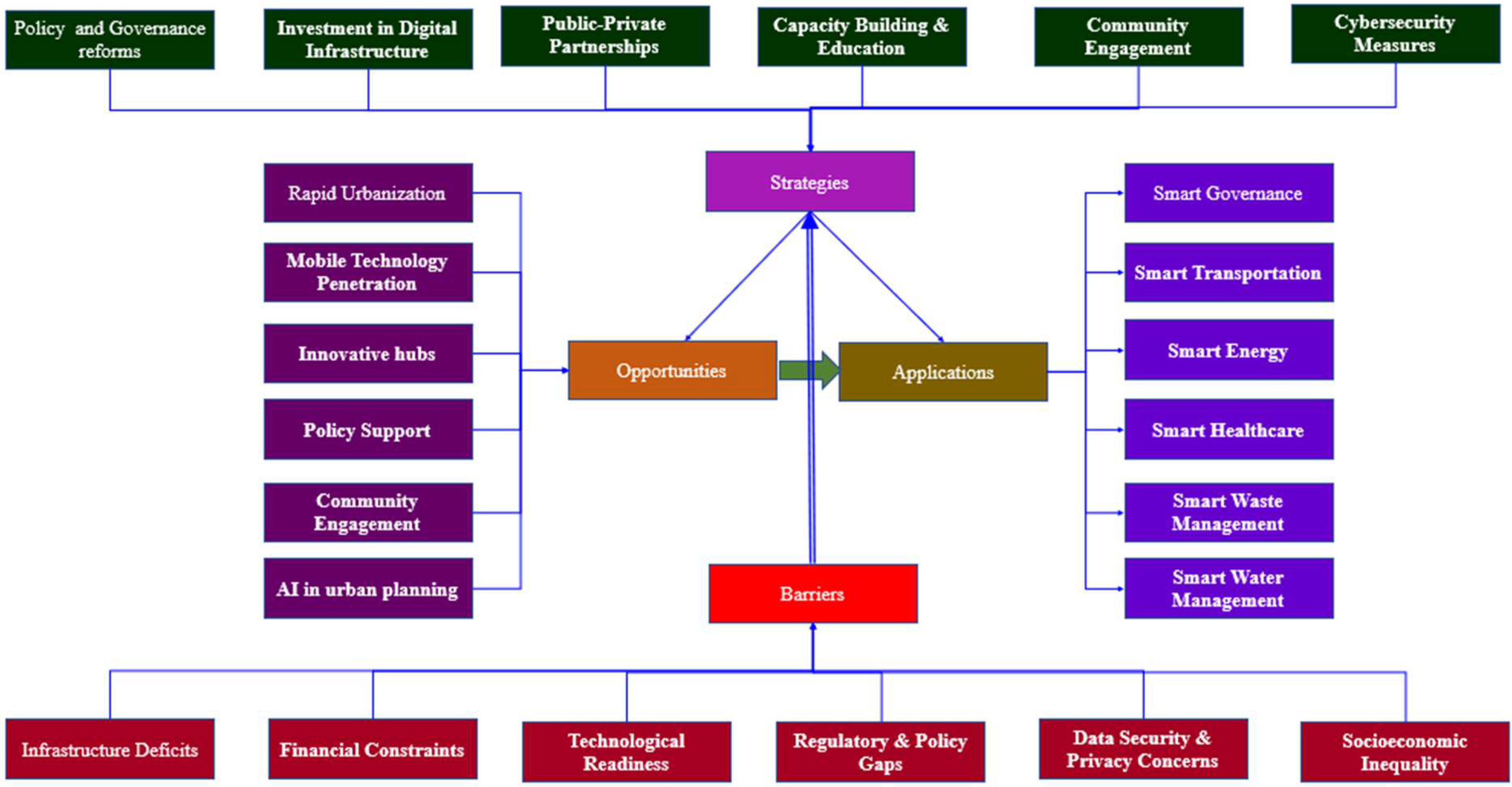
Figure 5 presents the opportunities, barriers, strategies and application areas for smart cities in Africa. Infrastructure deficits, financial constraints, and ICT skills gaps have often hindered the full deployment of certain smart technologies, particularly IoT and smart grids [51,85]. Coupled with this, governance issues related to weak policies and institutional capacity challenge the scalability of urban management [48]. Effective governance, coherent policies, and stakeholder engagement will be crucial in ensuring inclusivity and equitable access to benefits in smart cities [7,112].
Environmental sustainability is another crucial area where smart technologies, such as IoT-enabled water management and renewable energy, play a significant role in addressing climate change and resource depletion. For example, Cape Town uses IoT to optimise water distribution, mitigating resource scarcity [113].
Such barriers can be overcome through strategic measures, including infrastructure strengthening, expansion of digital access, and support for innovation through policies and partnerships [9]. The approach must therefore be tailored to achieve successful smart city development in Africa.

8. A Conceptual Framework for Smart Cities in Africa and a Way Forward

8.1. A Conceptual Framework

The smart city concept in Africa needs to be contextualised within the different socio-economic, environmental and governance contexts of the continent. In this regard, designing smart cities should address systemic urban challenges while leveraging innovative technologies to develop sustainable, inclusive, and resilient urban environments. This approach integrates key components of smart cities, adapting them to the specific demands and opportunities present in African cities.
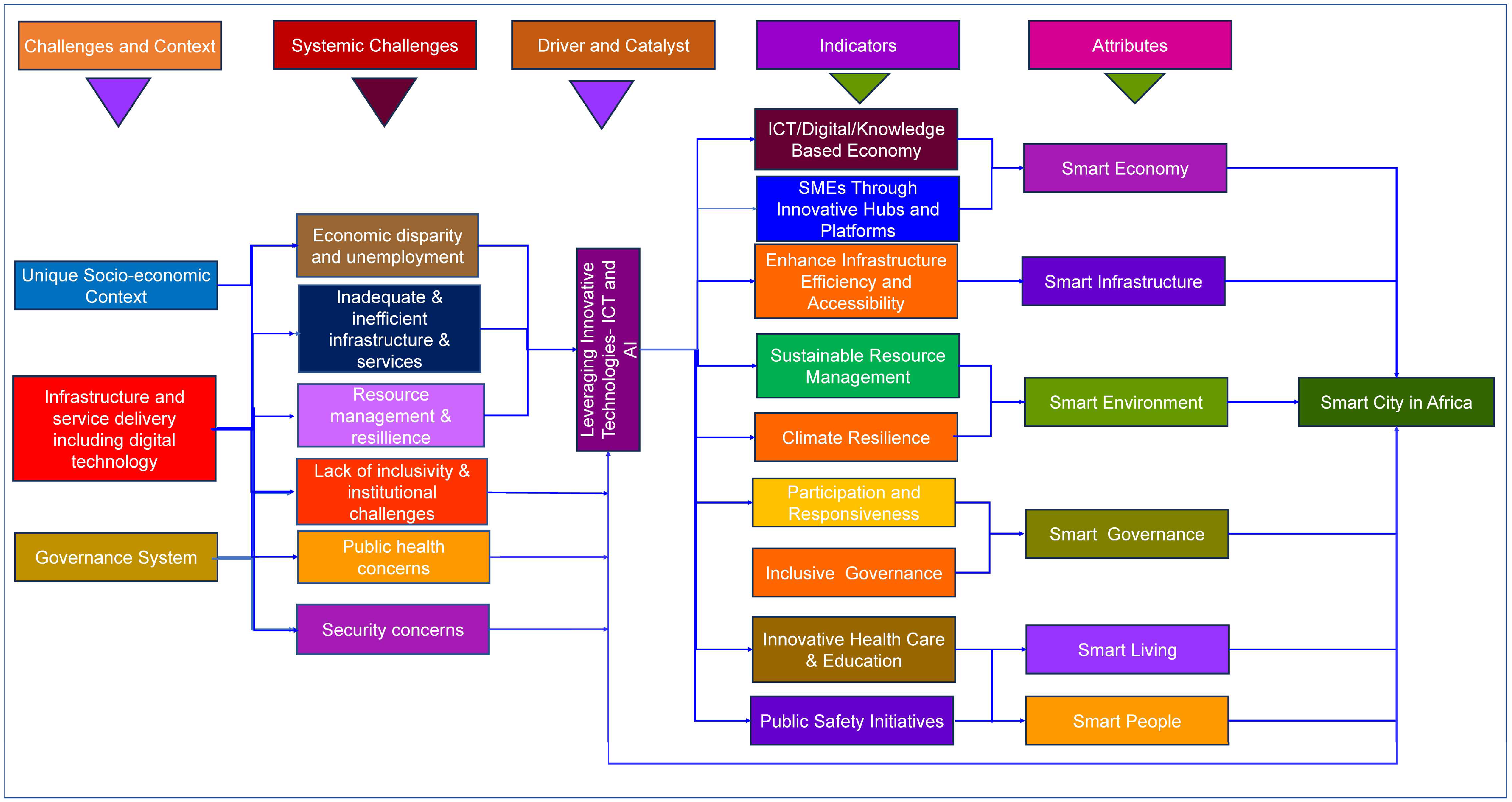
The conceptual framework proposed for smart cities in Africa (Figure 6) is grounded on five attributes: context, systemic challenges, drivers and catalysts, indicators, and attributes of smart cities. The context includes the socio-economic environment, infrastructure, service delivery, digital technologies, and governance structures. The systemic challenges, as mentioned in the preceding sections, resonate with this context (cf: Section 3). Innovative digital technologies (such as ICT and IoT) and their subset AI remain among the primary drivers of these smart cities [69,114,115].
For African cities, nine key indicators considered important include the digital economy or ICT/knowledge-based economy, SMEs, infrastructure efficiency and accessibility, sustainable resource management, climate resilience, participation and responsiveness, inclusive governance, innovative healthcare and education, and public safety initiatives [2,3,10,116]. These indicators serve to address the attributes of smart cities.
The digital economy and SMEs, through innovative hubs and platforms, can create a smart economy. In this context, innovation hubs, digital platforms, and ICT/knowledge-based industries [2,19] would play a critical role. Moreover, they would foster innovation and support SMEs. For example, the Yaba Tech Hub in Lagos exemplifies how tech-driven ecosystems can drive economic growth. Digital platforms like Jumia and M-Pesa expand market access and promote economic inclusion.
Efficiency and accessibility are the hallmarks that make a city’s infrastructure smart. Advanced technologies integrated into various urban services further enhance the management of mobility, energy, and resources. These include smart traffic systems and GPS-enabled public transportation, as seen in the case of Nairobi [43,117], solar mini-grids and smart energy management systems in Nigeria [51,118], and IoT-enabled water management systems in Cape Town [45,113].
In addition, there is a need for effective governance that ensures stakeholder participation, inclusivity and openness. The provision of platforms for civic engagement by services like Huduma Centres in Kenya and Kigali’s mobile apps is critical [95,119]. Sustainable resource management and climate resilience are important in the creation of a smart environment. For example, in South Africa, including Cape Town, waste handlers have deployed smart waste management systems [103]. At the same time, Kenya has embarked on building infrastructure that is resilient to climate change, made possible by information provided through technology [51].
Also, innovative healthcare, education, and enhanced public safety contribute to smart living and smart people. To ensure long-term sustainability, inclusive education and skills are the foundational pillars. Through the promotion of a culture of innovation with community-based digital hubs and e-learning platforms, African cities can empower their growing youth population to drive the digital revolution. This strategic approach guarantees that the “smart” transition is not just an externally driven process but a locally driven process that can strengthen the resilience and efficiency of the city through the development of strong human capital. Educational infrastructure, such as Open Learning Hubs for E-Learning, can improve access to education [120]. AI-enabled systems enhance healthcare and public safety as part of the smart surveillance systems, as seen in Johannesburg [121].
The collection of these smart attributes has the potential to turn African cities into smart cities. However, these indicators might differ according to the challenges each city faces and its priorities.
The proposed framework is also characterised by an integrated architecture that breaks away from traditional area-based and digital efficiency models in three important respects. First, it addresses the interdependence of systemic barriers by explicitly linking digital transformation with the mitigation of infrastructure deficits. Second, while broader international frameworks (such as India’s Smart City Mission) place strong emphasis on digital infrastructure and area-based development, the proposed framework centres on human capital and inclusiveness as the drivers of resilience. Third, it has been supplemented by a dynamic and context-sensitive mechanism. The proposed framework breaks away from the traditional, more common ‘one-size-fits-all’ approach to technological modernisation by allowing for the prioritisation of indicators ranging from the digital economy to climate resilience, in accordance with the specific resource and capacity limitations of individual cities in Africa. This systemic approach ensures that the smart city transition is locally relevant, sustainable, and capable of addressing the continent’s rapid urbanisation challenges. Thus, a flexible, context-sensitive approach is required to make smart city development successful and sustainable across Africa.

8.2. Recommendations—A Way Forward

Based on the systemic challenges faced in African cities, the potentials and barriers revealed from this study, and the conceptual framework elicited, the following aspects may be considered a way forward for developing smart cities in Africa.
  • Addressing Systemic Challenges: The systemic challenges should be actively addressed while leveraging Africa’s unique opportunities to unlock the full potential of smart cities.
  • Formulating coherent policies: Coherent policies and strategic frameworks tailored to develop smart cities in specific contexts should be formulated.
  • Integration of Advanced Technologies: Incorporating advanced technologies into urban planning should be prioritised. Also, accessibility of these innovations should be ensured for the benefit of all citizens.
  • Building capacity: The capacity of the development agencies and municipalities to adopt and use advanced technology needs to be enhanced.
  • Promotion of Inclusivity: Inclusivity in smart city initiatives should be promoted to guarantee that diverse populations can participate, engage, and benefit from technological advancements.
  • To facilitate smart city development in Africa, innovative financial mechanisms such as Public–Private Partnerships (PPPs), international grants, and impact investments should be leveraged. PPPs can support infrastructure projects in low-income areas, while green bonds and microfinance can enhance capital access for local governments and SMEs. However, challenges include ensuring equitable access and balancing profit-driven motives with community needs. Additionally, tailored financial instruments, such as green bonds and microfinance, can enhance access to capital for local governments and small enterprises, promoting inclusive and sustainable urban initiatives. Effective design is crucial to ensure economic sustainability and social inclusivity, mitigate investment risks, and foster growth while meeting the needs of vulnerable populations.
  • Integrating ICT/digital/knowledge economy: One of the prerequisites to attain a smart economy is to shift from the traditional economy to an economy driven by digital technology and knowledge. This shift also supports the industrial sector, specifically SMEs, in improving productivity and performance. Therefore, a shift in this direction is warranted.
  • Ensuring Sustainability and Resilience: Sustainability and resilience should be prioritised in urban development to effectively meet the demands of growing populations and improve infrastructure and service delivery using advanced technology.
  • Adoption of a Tailored Approach: There is a need to recognise that achieving all smart city attributes may be unrealistic; instead, a tailored approach that combines relevant attributes based on each city’s unique context needs to be adopted.
  • Implementation of Context-Specific Interventions: The development and implementation of context-specific strategic interventions should be made to allow cities to address their distinct challenges and opportunities effectively.
  • Technical and Financial Support by International Organisations: International organisations can provide technical expertise and financial support to help create regulatory frameworks for smart cities and implement policies to expand mobile networks across Africa.
  • Incentives to the Private Sector: Private sector stakeholders should be incentivised to develop mobile-based smart city solutions in governance, healthcare, education, and transportation, making services more accessible and affordable for urban residents.
  • Policy Frameworks of Governments of African Countries: African governments should adopt comprehensive policy frameworks addressing data privacy, cybersecurity, and digital governance. Transparent data management and sharing regulations are crucial to support data-driven solutions while protecting citizens’ rights.

9. Conclusions, Limitations and Future Research

9.1. Conclusions

Africa has the potential for the development of smart cities. However, a host of systemic challenges may ultimately hinder their realisation. Although the concept of smart cities presents opportunities for city transformation, it is nonetheless an undertaking fraught with barriers along the path to achieving this goal.
The potential of smart cities in Africa is driven by high mobile technology penetration, growing innovation hubs, and broadening policy support. Cities such as Kigali, Cape Town, and Nairobi are examples of how targeted smart city initiatives can address infrastructure deficits while improving service delivery, thereby enhancing the capacity for economic growth. In general, leveraging advanced technologies such as ICT, IoT, AI, Blockchain, and smart grids will help African smart cities improve their basic services, including energy, water, transport, and sanitation systems, to create efficient, resilient, and inclusive urban environments.
Rapid urbanisation, inadequate infrastructure, poor governance, and socio-economic disparities are challenges to the path of smart city development in Africa. The imperatives of strengthening efficiency in informal settlements, addressing insufficient utilities, and alleviating strained public services underscore the need for creative solutions to address immediate urban realities. In addition, some of the inhibiting factors include infrastructural deficits, financial constraints, and weak policy frameworks. The limited availability of technical expertise, data management concerns, the digital divide, and socio-economic inequalities further complicate progress, rendering the achievement of smart city development a far-off reality.
It would require coordinated efforts among governments, the private sector, and international partners to overcome all these barriers. For instance, the framing of policies, regulations, and financial incentives can stimulate innovation and collaboration. Additionally, the creation of collaborative platforms will facilitate the sharing of resources, expertise, and best practices. Joint task forces or advisory bodies will also contribute to resolving implementation issues and ensuring alignment across sectors. This calls for investment in education and training that develops local expertise, with strengthening public–private partnerships to ensure sustainability.
The key strategic interventions will include the entrenchment and adoption of advanced digital technologies, infrastructure development through public–private partnerships, the integration of ICT/digital/knowledge economies, improved financial mechanisms, policy clarity, inclusiveness, and technical capacity-building. Additionally, the transition towards a smart city will not only be an economic and technological transition but also a social and educational transition. Thus, if African cities are to undergo a transformation, investment in human capital will have to match investment in physical infrastructure. Improving digital literacy and skills will be a way to ensure the solutions are locally owned and beneficial to all.

9.2. Limitations, Future Research and Contributions

There are several limitations to this study. First and foremost, it is important to note that the study is based on a literature review and a small number of case studies. The lack of quantitative data can also be considered a limitation of the study. Some of the studies used are qualitative, which may lack sufficient empirical evidence and may also introduce bias. In addition, it is important to note that the proposed framework is unvalidated and may be subject to publication and regional biases.
Future research should be directed towards conducting empirical research to explore inclusive smart cities in Africa by considering resource limitations and access to advanced technology. It is also important to validate and generalise the conceptual framework for its effectiveness and applicability. It is also important to consider critical socio-political and regulatory factors affecting smart cities in Africa, including data governance, privacy, and public participation. Context-specific studies will be necessary to address the unique challenges of African cities. In this regard, comparative research on smart city initiatives in the Global South, with a specific focus on, but not limited to, Asia, Latin America, and Africa, will be useful for identifying success factors, limitations, and effective policy frameworks. These studies will be useful in identifying what works and what does not work in different regions.
The contribution of this study lies in elucidating both the potential and challenges of smart city development in Africa, offering critical insights into the complexities involved. The study presents a nuanced perspective on the role that smart cities can play in driving sustainable urban transformation in Africa, while considering the need to overcome significant barriers to their successful implementation. It will also contribute to informing policy-making through the development of a conceptual framework and strategic planning. Moreover, it offers valuable insights into fostering inclusive, sustainable smart cities by providing a framework for addressing these issues.
These findings add to the literature on smart cities, emphasising the need for inclusivity and sustainability. While smart cities may hasten or promote urban transition, addressing real and systemic challenges, such as socioeconomic inequality, governance gaps, and infrastructure deficits, will ultimately determine their success. This study advocates for policies that prioritise inclusive development to ensure all population groups benefit from innovations in smart cities. This becomes all the more critical in regions where rapid urbanisation presses the need for sustainable and inclusive urban solutions.

Supplementary Materials

The following supporting information can be downloaded at: https://www.mdpi.com/article/10.3390/smartcities9020038/s1, Supplementary File S1: PRISMA Checklist; Supplementary File S2: Study Characteristics; Supplementary File S3: Risk of Bias Summary; Supplementary File S4: Risk of Bias Results.

Author Contributions

Conceptualisation, D.K.D. and A.O.A.; methodology, D.K.D.; software, D.K.D.; validation, D.K.D. and M.M.H.M.; formal analysis, D.K.D., A.O.A. and M.M.H.M.; investigation, D.K.D., A.O.A. and M.M.H.M.; writing—original draft preparation, D.K.D. and A.O.A.; writing—review and editing, D.K.D., A.O.A. and M.M.H.M.; visualisation, D.K.D. All authors have read and agreed to the published version of the manuscript.

Funding

This research received no external funding.

Data Availability Statement

No new data were created or analyzed in this study. Data sharing is not applicable to this article.

Acknowledgments

The authors acknowledge the assistance of research assistants and colleagues who assisted in the study. During the preparation of this manuscript/study, the author(s) used AI-assisted writing tools, specifically ChatGPT versions 4 and 5, to refine the language and enhance readability. Also, Scispace was used to access the literature. The authors have reviewed and edited the output and take full responsibility for the content of this publication.

Conflicts of Interest

The authors declare no conflicts of interest.

References

  1. OECD; United Nations Economic Commission for Africa; African Development Bank. Africa’s Urbanisation Dynamics 2022: The Economic Power of Africa’s Cities; OECD: Paris, France, 2022. [Google Scholar]
  2. Das, D.K. Perspectives of smart cities in South Africa through applied systems analysis approach: A case of Bloemfontein. Constr. Econ. Build. 2020, 20, 65–88. [Google Scholar] [CrossRef] [Scilit]
  3. Giffinger, R.; Fertner, C.; Kramar, H.; Kalasek, R.; Pichler-Milanovic, N.; Meijers, E. Smart Cities: Ranking of European Medium-Sized Cities; Centre of Regional Science, Vienna University of Technology: Vienna, Austria, 2007. [Google Scholar]
  4. Kitchin, R. The real-time city? Big data and smart urbanism. GeoJournal 2014, 79, 1–14. [Google Scholar] [CrossRef] [Scilit]
  5. Townsend, A.M. Smart Cities: Big data, Civic Hackers, and the Quest for a New Utopia, 1st ed.; W.W. Norton & Company: New York, NY, USA, 2013. [Google Scholar]
  6. Balkaren, S. Smart Cities as Misplaced Priorities in South Africa: A Complex Balance of Conflicting Societal Needs. J. Manag. Adm. 2019, 2, 1–30. [Google Scholar]
  7. Das, D. Exploring the Symbiotic Relationship between Digital Transformation, Infrastructure, Service Delivery, and Governance for Smart Sustainable Cities. Smart Cities 2024, 7, 806–835. [Google Scholar] [CrossRef] [Scilit]
  8. Achieng, M.; Ogundaini, O.; Makola, D.; Iyamu, T. The African Perspective of a Smart City: Conceptualisation of Context and Relevance. In IST-Africa 2021 Conference Proceedings; Cunningham, M., Cunningham, P., Eds.; IST-Africa Institute and IIMC: Dublin, Ireland, 2021; pp. 1–9. [Google Scholar]
  9. Moumen, N.; Radoine, H.; Nahiduzzaman, K.M.; Jarar Oulidi, H. Contextualising the Smart City in Africa: Balancing Human-Centred and Techno-Centric Perspectives for Smart Urban Performance. Smart Cities 2024, 7, 712–734. [Google Scholar] [CrossRef] [Scilit]
  10. Ahvenniemi, H.; Huovila, A.; Pinto-Seppä, I.; Airaksinen, M. What are the differences between sustainable and smart cities? Cities 2017, 60, 234–245. [Google Scholar] [CrossRef] [Scilit]
  11. Shahrokni, H.; Lazarevic, D.; Brandt, N. Smart Urban Metabolism: Towards a Real-Time Understanding of the Energy and Material Flows of a City and its Citizens. J. Urban Technol. 2015, 22, 65–86. [Google Scholar] [CrossRef] [Scilit]
  12. Ataguba, J.E. COVID-19 Pandemic, a War to be Won: Understanding its Economic Implications for Africa. Appl. Health Econ. Health Policy 2020, 18, 325–328. [Google Scholar] [CrossRef] [Scilit]
  13. Mhlanga, D.; Moloi, T. COVID-19 and the Digital Transformation of Education: What Are We Learning on 4IR in South Africa? Educ. Sci. 2020, 10, 180. [Google Scholar] [CrossRef] [Scilit]
  14. Caragliu, A.; Del Bo, C.; Nijkamp, P. Smart Cities in Europe. J. Urban Technol. 2011, 18, 65–82. [Google Scholar] [CrossRef] [Scilit]
  15. Watson, V. African urban fantasies: Dreams or nightmares? Environ. Urban. 2014, 26, 215–231. [Google Scholar] [CrossRef] [Scilit]
  16. Odendaal, N. Smart City: Neoliberal Discourse or Urban Development Tool? In The Palgrave Handbook of International Development; Grugel, J., Hammett, D., Eds.; Palgrave Macmillan: London, UK, 2016. [Google Scholar]
  17. Praharaj, S.; Han, H. Cutting through the clutter of smart city definitions: A reading into the smart city perceptions in India. City Cult. Soc. 2019, 18, 100289. [Google Scholar] [CrossRef] [Scilit]
  18. Das, D.; Emuze, F. Smart City Perspectives of Bloemfontein, South Africa. J. Constr. Proj. Manag. Innov. 2014, 4, 930–949. [Google Scholar]
  19. Das, D. Exploring Perspectives of the Information Technology Industry in a South African City. Sustainability 2019, 11, 6520. [Google Scholar] [CrossRef] [Scilit]
  20. Mwaniki, D. Infrastructure Development in Nairobi: Widening the Path Towards a Smart City and Smart Economic Development. In Smart Economy in Smart Cities; Vinod Kumar, T., Ed.; Springer: Singapore, 2017; pp. 687–711. [Google Scholar]
  21. Mhangara, P.; Mudau, N.; Mboup, G.; Mwaniki, D. Transforming the City of Cape Town from an Apartheid City to an Inclusive Smart City. In Smart Economy in Smart Cities; Kumar, T.M.V., Ed.; Springer: Singapore, 2017; pp. 951–983. [Google Scholar]
  22. World Bank. Smart Cities & Urban Development, Global Smart City Solutions Catalogue 2024. 2024. Available online: https://www.worldbank.org/en/programs/global-smart-city-partnership-program (accessed on 16 September 2024).
  23. UN-Habitat. World Cities Report. In Envisaging the Future of Cities; UN-Habitat: Nairobi, Kenya, 2022. [Google Scholar]
  24. Watson, V. The allure of ‘smart city’ rhetoric: India and Africa. Dialogues Hum. Geogr. 2015, 5, 36–39. [Google Scholar] [CrossRef] [Scilit]
  25. United Nations. World Urbanisation Prospects: The 2018 Revision; United Nations: New York, NY, USA, 2019. [Google Scholar]
  26. AfDB. Developing Africa’s Workforce for the Future; African Development Bank Group: Abidjan, Côte d’Ivoire, 2020. [Google Scholar]
  27. Kronlid, C.; Brantnell, A.; Elf, M.; Borg, J.; Palm, K. Sociotechnical analysis of factors influencing IoT adoption in healthcare: A systematic review. Technol. Soc. 2024, 78, 102675. [Google Scholar] [CrossRef] [Scilit]
  28. Moher, D.; Liberati, A.; Tetzlaff, J.; Altman, D.G. Preferred reporting items for systematic reviews and meta-analyses: The PRISMA statement. PLoS Med. 2009, 6, e1000097. [Google Scholar] [CrossRef] [Scilit]
  29. Page, M.J.; McKenzie, J.E.; Bossuyt, P.M.; Boutron, I.; Hoffmann, T.C.; Mulrow, C.D.; Shamseer, L.; Tetzlaff, J.M.; Akl, E.A.; Brennan, S.E.; et al. The PRISMA 2020 statement: An updated guideline for reporting systematic reviews. BMJ 2021, 372, n71. [Google Scholar] [CrossRef] [Scilit]
  30. Hong, Q.N.; Fàbregues, S.; Bartlett, G.; Boardman, F.; Cargo, M.; Dagenais, P.; Gagnon, M.-P.; Griffiths, F.; Nicolau, B.; O’cAthain, A.; et al. The Mixed Methods Appraisal Tool (MMAT) Version 2018 for Information Professionals and Researchers. J. Clin. Epidemiol. 2018, 1, 285–291. [Google Scholar] [CrossRef] [Scilit]
  31. Batinfo. La Cité du Fleuve, the Real Estate Dream of an Elite Taking Water in Kinshasa, in the Democratic Republic of the Congo. Available online: https://batinfo.com/en/actuality/the-city-of-the-river-the-real-estate-dream-of-an-elite-taking-water-in-kinshasa-in-the-democratic-republic-of-the-congo_18037 (accessed on 19 April 2021).
  32. Eko Atlantic. Project Update. Available online: https://www.ekoatlantic.com/category/project-updates (accessed on 7 December 2025).
  33. Kironde, J.M.L. Why Tanzania Should Consider Reviving Kigamboni New City Project. The Citizen, 29 September 2023.
  34. Xu, G.; Dong, T.; Cobbinah, P.B.; Jiao, L.; Sumari, N.S.; Chai, B.; Liu, Y. Urban expansion and form changes across African cities with a global outlook: Spatiotemporal analysis of urban land densities. J. Clean. Prod. 2019, 224, 802–810. [Google Scholar] [CrossRef] [Scilit]
  35. Kamana, A.A.; Radoine, H.; Nyasulu, C. Urban challenges and strategies in African cities—A systematic literature review. City Environ. Interact. 2024, 21, 100132. [Google Scholar] [CrossRef] [Scilit]
  36. Kamete, A.Y. On handling urban informality in southern Africa. Geogr. Ann. Ser. B Hum. Geogr. 2013, 95, 17–31. [Google Scholar] [CrossRef] [Scilit]
  37. Gehl, J. Cities for People; Island Press: Washington, DC, USA, 2010. [Google Scholar]
  38. Baffoe, G.; Ahmad, S.; Bhandari, R. The road to sustainable Kigali: A contextualised analysis of the challenges. Cities 2020, 105, 102838. [Google Scholar] [CrossRef] [Scilit]
  39. el-Khishin, K. Bidding for ‘global city’ status: A prescription for sustaining Cairo’s financial health. Cities 2003, 20, 129–134. [Google Scholar] [CrossRef] [Scilit]
  40. Parnell, S.; Pieterse, E.A.; African Centre for Cities (Eds.) Africa’s Urban Revolution; Zed Books: London, UK, 2014. [Google Scholar]
  41. Satterthwaite, D.; Archer, D.; Colenbrander, S.; Dodman, D.; Hardoy, J.; Mitlin, D.; Patel, S. Building Resilience to Climate Change in Informal Settlements. One Earth 2020, 2, 143–156. [Google Scholar] [CrossRef] [Scilit]
  42. AfDB. Africa’s Infrastructure: Great Potential but Little Impact on Inclusive Growth; African Development Bank: Abidjan, Côte d’Ivoire, 2019. [Google Scholar]
  43. Cervero, R.B. Linking urban transport and land use in developing countries. J. Transp. Land Use 2013, 6, 7–24. [Google Scholar] [CrossRef] [Scilit]
  44. Sow, I. Waste Management in African Cities. In Smart Economy in Smart African Cities; Mboup, G., Oyelaran-Oyeyinka, B., Eds.; Springer: Singapore, 2019; pp. 201–218. [Google Scholar]
  45. WHO; UNICEF. Progress on Household Drinking Water, Sanitation and Hygiene 2000–2017; WHO and UNICEF: Geneva, Switzerland, 2019. [Google Scholar]
  46. Curtis, S. Cities and Global Governance: State Failure or a New Global Order? Millennium 2016, 44, 455–477. [Google Scholar] [CrossRef] [Scilit]
  47. Harrison, C.; Eckman, B.; Hamilton, R.; Hartswick, P.; Kalagnanam, J.; Paraszczak, J.; Williams, P. Foundations for Smarter Cities. IBM J. Res. Dev. 2010, 54, 1–16. [Google Scholar] [CrossRef] [Scilit]
  48. Olowu, D.; Wunsch, J.S. Local Governance in Africa: The Challenges of Democratic Decentralisation; Lynne Rienner Publ.: Boulder, CO, USA, 2004. [Google Scholar]
  49. Chen, M.A. The Informal Economy: Definitions, Theories and Policies Women in Informal Employment: Globalizing and Organizing (WIEGO); WIEGO: Cambridge, MA, USA, 2012. [Google Scholar]
  50. Tacoli, C. Urbanisation, Gender and Urban Poverty: Paid Work and Unpaid Carework in the City; Human Settlements Group, International Institute for Environment and Development: London, UK, 2012. [Google Scholar]
  51. UN-Habitat. The State of African Cities-Imagining Sustainable Urban Transitions; United Nations Publications: New York, NY, USA, 2014. [Google Scholar]
  52. Satterthwaite, D. The political underpinnings of cities’ accumulated resilience to climate change. Environ. Urban. 2013, 25, 381–391. [Google Scholar] [CrossRef] [Scilit]
  53. Dodman, D.; Archer, D.; Satterthwaite, D. Editorial: Responding to climate change in contexts of urban poverty and informality. Environ. Urban. 2019, 31, 3–12. [Google Scholar] [CrossRef] [Scilit]
  54. WHO. World Health Statistics 2016, Monitoring Health for the SDGs Sustainable Development Goal; World Health Organisation: Geneva, Switzerland, 2016. [Google Scholar]
  55. Azevedo, M.J. The State of Health System(s) in Africa: Challenges and Opportunities. In Historical Perspectives on the State of Health and Health Systems in Africa; Springer: Berlin/Heidelberg, Germany, 2017; Volume 2, pp. 1–73. [Google Scholar]
  56. Prüss-Üstün, A.; Wolf, J.; Bartram, J.; Clasen, T.; Cumming, O.; Freeman, M.C.; Gordon, B.; Hunter, P.R.; Medlicott, K.; Johnston, R. Burden of disease from inadequate water, sanitation and hygiene for selected adverse health outcomes: An updated analysis with a focus on low- and middle-income countries. Int. J. Hyg. Environ. Health 2019, 222, 765–777. [Google Scholar] [CrossRef] [Scilit]
  57. Adelaja, A.; George, J. Grievances, Latent Anger and Unrest in Africa. Afr. Secur. 2019, 12, 111–140. [Google Scholar] [CrossRef] [Scilit]
  58. Collord, M.; Goodfellow, T.; Asante, L.A. Uneven Development, Politics and Governance in Urban Africa: An Analytical Literature Review; ACRC Working Paper 202102; The University of Manchester: Manchester, UK, 2021. [Google Scholar]
  59. UNODC. Global Study on Homicide 2013: Trends, Contexts, Data; UNODC: Vienna, Austria, 2014. [Google Scholar]
  60. Kumar, V.T.M.; Dahiya, B. Smart Economy in Smart Cities: International Collaborative Research: Ottawa, St.Louis, Stuttgart, Bologna, Cape Town, Nairobi, Dakar, Lagos, New Delhi, Varanasi, Vijayawada, Kozhikode, Hong Kong; Springer: Berlin/Heidelberg, Germany, 2017; pp. 3–76. [Google Scholar]
  61. Das, D. Exploring the Politico-Cultural Dimensions for Development of Smart Cities in India. Int. Rev. Spat. Plan. Sustain. Dev. 2017, 5, 79–99. [Google Scholar] [CrossRef] [Scilit]
  62. McFarlane, C.; Rutherford, J. Political Infrastructures: Governing and Experiencing the Fabric of the City. Int. J. Urban Reg. Res. 2008, 32, 363–374. [Google Scholar] [CrossRef] [Scilit]
  63. Robinson, J.; Roy, A. Debate on Global Urbanisms and the Nature of Urban Theory. Int. J. Urban Reg. Res. 2016, 40, 181–186. [Google Scholar] [CrossRef] [Scilit]
  64. Deloitte. Smart Cities in Africa: Smart Cities & Urban Transformation Moving from Urban Living to Human Living. Available online: https://www.deloitte.com/za/en/Industries/government-public/collections/smart-cities-and-urban-transformation.html (accessed on 24 September 2024).
  65. Deloitte. Urban Future with a Purpose: 12 Trends Shaping the Future of Cities. Available online: https://www.deloitte.com/global/en/Industries/government-public/perspectives/urban-future-with-a-purpose.html (accessed on 24 September 2024).
  66. Cohen, B.; Almirall, E.; Chesbrough, H. The City as a Lab: Open Innovation Meets the Collaborative Economy. Calif. Manag. Rev. 2016, 59, 5–13. [Google Scholar] [CrossRef] [Scilit]
  67. Gretzel, U.; Sigala, M.; Xiang, Z.; Koo, C. Smart tourism: Foundations and developments. Electron. Mark. 2015, 25, 179–188. [Google Scholar] [CrossRef] [Scilit]
  68. Alawadhi, S.; Aldama-Nalda, A.; Chourabi, H.; Gil-Garcia, J.R.; Leung, S.; Mellouli, S.; Nam, T.; Pardo, T.A.; Scholl, H.J.; Walker, S. Building Understanding of Smart City Initiatives. In Electronic Government; Scholl, H.J., Janssen, M., Wimmer, M.A., Moe, C.E., Flak, L.S., Eds.; Springer: Berlin/Heidelberg, Germany, 2012; pp. 40–53. [Google Scholar]
  69. Chong, Y.-W.; Villanueva-Libunao, K.; Chee, S.-Y.; Alvarez, M.J.; Yau, K.-L.A.; Keoh, S.L. Artificial Intelligence Policies to Enhance Urban Mobility in Southeast Asia. Front. Sustain. Cities 2022, 4, 824391. [Google Scholar] [CrossRef] [Scilit]
  70. Bibri, S.E.; Krogstie, J. On the social shaping dimensions of smart, sustainable cities: A study in science, technology, and society. Sustain. Cities Soc. 2017, 29, 219–246. [Google Scholar] [CrossRef] [Scilit]
  71. Choi, Y.J.; Kenney, L. A conceptual framework to explore considerations of the social implications in Internet of Things and smart city governance and policy: The case of Thailand. Policy Internet 2024, 16, 242–271. [Google Scholar] [CrossRef] [Scilit]
  72. European Commission Joint Research Centre. AI Watch, AI Uptake in Smart Mobility; Publications Office: Luxembourg, 2021. [Google Scholar]
  73. Atzori, L.; Iera, A.; Morabito, G. The Internet of Things: A survey. Comput. Netw. 2010, 54, 2787–2805. [Google Scholar] [CrossRef] [Scilit]
  74. Arana-Catania, M.; Lier, F.-A.V.; Procter, R.; Tkachenko, N.; He, Y.; Zubiaga, A.; Liakata, M. Citizen Participation and Machine Learning for a Better Democracy. Digit. Gov. Res. Pract. 2021, 2, 1–22. [Google Scholar] [CrossRef] [Scilit]
  75. Hossain, M.Z.; Sohel, F.; Shiratuddin, M.F.; Laga, H. A Comprehensive Survey of Deep Learning for Image Captioning. ACM Comput. Surv. 2019, 51, 1–36. [Google Scholar] [CrossRef] [Scilit]
  76. Kowalski, R.; Esteve, M.; Jankin Mikhaylov, S. Improving public services by mining citizen feedback: An application of natural language processing. Public Adm. 2020, 98, 1011–1026. [Google Scholar] [CrossRef] [Scilit]
  77. Meijer, A.; Bolívar, M.P.R. Governing the smart city: A review of the literature on smart urban governance. Int. Rev. Adm. Sci. 2016, 82, 392–408. [Google Scholar] [CrossRef] [Scilit]
  78. Nam, T.; Pardo, T.A. Conceptualising a smart city with dimensions of technology, people, and institutions. In Proceedings of the 12th Annual International Digital Government Research Conference: Digital Government Innovation in Challenging Times, College Park, MD, USA, 12–15 June 2011; pp. 282–291. [Google Scholar]
  79. GSMA. The Mobile Economy Sub-Saharan Africa 2020; GSM Association: London, UK, 2020. [Google Scholar]
  80. African Union Commission. Agenda 2063: The Africa We Want; African Union: Addis Ababa, Ethiopia, 2017. [Google Scholar]
  81. Atiase, V.Y.; Kolade, O.; Liedong, T.A. The Emergence and Strategy of Tech Hubs in Africa: Implications for Knowledge Production and Value Creation. Technol. Forecast. Soc. Change 2020, 161, 120307. [Google Scholar] [CrossRef] [Scilit]
  82. Söderström, O.; Blake, E.; Odendaal, N. More-than-local, more-than-mobile: The smart city effect in South Africa. Geoforum 2021, 122, 103–117. [Google Scholar] [CrossRef] [Scilit]
  83. Jieutsa, L.; Gbaguidi, I.; Nadifi, W.; Koseki, S. Deployment of digital technologies in African cities: Emerging issues and policy recommendations for local governments. Data Policy 2024, 6, e21. [Google Scholar] [CrossRef] [Scilit]
  84. Freeman, G. The Origin and Implementation of the Smart-Sustainable City Concept: The Case of Malmö—Sweden. Master’s Thesis, Lund University, Lund, Sweden, University of Manchester, Manchester, UK, University of the Aegean, Rhodes, Greece, 2017. [Google Scholar]
  85. Adelekan, I.O. Vulnerability of poor urban coastal communities to flooding in Lagos, Nigeria. Environ. Urban. 2010, 22, 433–450. [Google Scholar] [CrossRef] [Scilit]
  86. Bissiri, M.; Pereira Da Silva, P.; Moura, P.; Figueiredo, N.C. Are West Africa’s policy, planning, and regulatory frameworks missing the harmonisation piece of the power pooling-renewable energy puzzle? Energy Policy 2024, 190, 114161. [Google Scholar] [CrossRef] [Scilit]
  87. Makoza, F. National ICT policy challenges for developing countries: A grounded theory informed literature review. Int. J. Technol. Policy Law 2019, 3, 107–130. [Google Scholar] [CrossRef] [Scilit]
  88. Francis, D.; Webster, E. Poverty and inequality in South Africa: Critical reflections. Dev. S. Afr. 2019, 36, 788–802. [Google Scholar] [CrossRef] [Scilit]
  89. UNDP. The Impact of Social and Economic Inequality on Economic Development in South Africa; United Nations Development Programme (UNDP): New York, NY, USA, 2020. [Google Scholar]
  90. Da Veiga, A. A study on information privacy concerns and expectations of demographic groups in South Africa. Comput. Law Secur. Rev. 2022, 47, 105769. [Google Scholar] [CrossRef] [Scilit]
  91. Prinsloo, P.; Kaliisa, R. Data privacy on the African continent: Opportunities, challenges and implications for learning analytics. Br. J. Educ. Technol. 2022, 53, 894–913. [Google Scholar] [CrossRef] [Scilit]
  92. Mena Report. Rwanda: Smart Kigali to Advance ICT for Better Service Delivery. (2013, September 21). Mena Report. Available online: https://link.gale.com/apps/doc/A343540366/EAIM?u=anon~2cfec9fe&sid=sitemap&xid=bc23d01e (accessed on 20 September 2024).
  93. MINIICT. Rwanda Unveils Smart Cities Blueprint as Transform Africa Summit Gets Underway. Available online: https://www.minict.gov.rw/news-detail/rwanda-unveils-smart-cities-blueprint-as-transform-africa-summit-gets-underway (accessed on 20 September 2024).
  94. Africa50. Kigali Innovation City. Available online: https://www.africa50.com/our-funds/projects/kigali-innovation-city (accessed on 20 September 2024).
  95. Burns, H. A Smart City Masterplan, Kigali. In Urban Planning for Transitions, 1st ed.; Douay, N., Minja, M., Eds.; Wiley Online Library: New York, NY, USA, 2021; pp. 153–169. [Google Scholar]
  96. The New Times Rwanda. Digital Transformation and Productivity; The New Times Rwanda: Kigali, Rwanda, 2021. [Google Scholar]
  97. World Bank. Rwanda—Urban Development Project; World Bank: Washington, DC, USA, 2021. [Google Scholar]
  98. DCoG. A South African Smart Cities Framework, A Decision-Making Framework to Guide the Development of Smart Cities in South Africa; Department of Cooperative Governance (DCoG): Pretoria, South Africa, 2021. [Google Scholar]
  99. City of Cape Town. Smart Cape. Available online: https://www.capetown.gov.za/general/what-is-smartcape/What%20is%20SmartCape (accessed on 24 September 2024).
  100. Acceleratecapetown. Digital Cape Town: Creating a Smart City. Available online: https://acceleratecapetown.co.za/digital-cape-town/ (accessed on 24 September 2024).
  101. City of Cape Town. Our Shared Energy Future: The 2050 Energy Strategy for The City of Cape Town. 2023. Available online: http://www.capetown.gov.za (accessed on 24 September 2024).
  102. SmartCitiesWorld News Team. Cape Town Deploys Smart City Tech to Address Traffic Challenges, Published on 2 March 2022. 2022. Available online: https://www.smartcitiesworld.net/analytics/cape-town-deploys-smart-city-tech-to-address-traffic-challenges (accessed on 24 September 2024).
  103. Smart Waste. Environment-Friendly Business Solutions. Available online: www.smartwaste.co.za (accessed on 24 September 2024).
  104. van Embden, J. Cape Town’s Smart City Revolution: Building for the Future. Cape Business News, 23 April 2024. Available online: https://www.cbn.co.za/industry-news/digital-transformation-information-technology/cape-towns-smart-city-revolution-building-for-the-future/ (accessed on 24 September 2024).
  105. Millicent, A. How Konza Smart City Will Be Different from Nairobi. The Star, 12 March 2024.
  106. Tau City. Mixed-Use Development in Kenya’s Special Economic Zone. Available online: https://www.tatucity.com/project-details/ (accessed on 1 July 2023).
  107. UNFCCC. Bus Rapid Transit (BRT) Plus System for the Nairobi Metropolitan Region. Available online: https://unfccc.int (accessed on 24 September 2024).
  108. Kenya Vision 2030. Upgrading National ICT Infrastructure. Available online: https://vision2030.go.ke/project/establishment-of-konza-technology-city (accessed on 24 September 2024).
  109. Ndemo, B.; Weiss, T. Digital Kenya: An Entrepreneurial Revolution in the Making; Springer Nature: Berlin/Heidelberg, Germany, 2016. [Google Scholar]
  110. iHub. About iHub. Available online: https://ihub.co.ke/about (accessed on 24 September 2024).
  111. World Bank. Kenya—Digital Economy; World Bank: Washington, DC, USA, 2021. [Google Scholar]
  112. Aurigi, A.; Odendaal, N. From “Smart in the Box” to “Smart in the City”: Rethinking the Socially Sustainable Smart City in Context. J. Urban Technol. 2020, 28, 55–70. [Google Scholar] [CrossRef] [Scilit]
  113. Muller, M. Understanding Cape Town’s Water Crisis. Civ. Eng. 2017, 25, 11–16. [Google Scholar]
  114. Golubchikov, O.; Thornbush, M. Artificial Intelligence and Robotics in Smart City Strategies and Planned Smart Development. Smart Cities 2020, 3, 1133–1144. [Google Scholar] [CrossRef] [Scilit]
  115. Sokolov, A.; Veselitskaya, N.; Carabias, V.; Yildirim, O. Scenario-based identification of key factors for smart cities development policies. Technol. Forecast. Soc. Change 2019, 148, 119729. [Google Scholar] [CrossRef] [Scilit]
  116. Sene, A.M. Is smart city a vector of sustainable city? Case of African cities. Environ. Water Sci. Public Health Territ. Intell. 2018, 2, 1–10. [Google Scholar]
  117. Techceos. Smart Traffic Management: How Technology Is Easing Urban Congestion in African Cities. Available online: https://tech-ceos.com/smart-traffic-management-how-technology-is-easing-urban-congestion-in-african-cities/ (accessed on 7 December 2025).
  118. Ojo, G.G.; Lottu, O.A.; Ndiwe, T.C.; Izuka, U.; Ehiobu, N.N. Solar Energy Adaptation and Efficiency Across Diverse Nigerian and Global Climates: A Review of Technological Advancement. Eng. Herit. J. 2023, 7, 99–107. [Google Scholar]
  119. Huduma Kenya. Huduma Kenya Digitalisation Plan. Available online: https://www.hudumakenya.go.ke (accessed on 7 September 2024).
  120. Muliarevych, O.; Saienko, V.; Hurbanska, A.; Nowak, B.; Marushchak, O. Digital Learning Hubs as a Component of the Information and Digital Learning Environment. J. Curric. Teach. 2023, 12, 24–35. [Google Scholar] [CrossRef] [Scilit]
  121. SAIIA. The City Surveillance State: Inside Johannesburg’s Safe City Initiative. Available online: https://saiia.org.za/research/the-city-surveillance-state-inside-johannesburgs-safe-city-initiative/ (accessed on 20 December 2024).
Figure 1. Snapshot of the search process.
Smartcities 09 00038 g001
Figure 2. PRISMA Flow Chart for Literature Search.
Smartcities 09 00038 g002
Figure 3. Map Showing the Major Cities of Africa (Source: Kamana et al. 2024 [35]).
Smartcities 09 00038 g003
Figure 5. Opportunities. Barriers. Strategies and Application Areas for Smart Cities in Africa.
Smartcities 09 00038 g005
Figure 6. A conceptual framework for smart cities in Africa.
Smartcities 09 00038 g006
Table 1. Research Protocol.
ItemDetails
Research Questions
  • RQ1: What is the smart city concept in the African context, and what are its components?
  • RQ2: What are the potentials and barriers to smart cities in Africa, such as infrastructural, financial, regulatory, socio-economic, and technological challenges?
  • RQ3: What conceptual framework would enable plausible policy and strategic interventions for smart city development in Africa?
Database usedScopus, Web of Science, and Google Scholar
Publication period2001–2025
Keywords“smart cities,” “sustainable cities,” “digital technology,” “ICT,” “IoT,” “smart transportation,” “smart mobility,” “service delivery,” “urban economics,” “governance,” “resilience,” and “policy strategies.”
Timeframe for literature searchMay 2023-August 2025
Inclusion criteriaPopulation: Peer-reviewed Journals, Books, Book Chapters, Theses, Conference Proceedings
Interventions: ICT, Digital technology, AI, Policies, Strategies
Context (Comparison): Africa, Global South, Developing countries
Outcomes: Smart Cities, Smart Infrastructure, Smart Economy, Smart Governance, Smart Mobility, Smart Environment, Smart People, Smart Living
Study Characteristics: Smart Cities, Leveraging Technology, Efficiency, Accessibility,
Others (Time lime): Until June 2025
Exclusion criteriaNon-peer-reviewed articles, Patents, Laws, Treaties, Other than English language
Specific contexts and case studies of the Global North: Developed countries
Not aligned to smart and sustainable cities, selective reporting, or
Specific contextual studies, Qualitative observational studies,
Blogs/Opinions without evidence
Data extractionUsed a standardised form (spreadsheet) to capture all relevant data
Quality assessmentUsed the 27 PRISMA checklist to assess methodological quality, Risk of Bias (ROB2) and MMAT analysis, and Cohen’s Kappa analysis
Case studiesThree: Nairobi (Tatu City and Konza Techno City), Kigali and Cape Town
Analytical approachUsed narrative and thematic analysis and synthesis of the data.
Table 2. Search Strings Used for Literature Search.
Web of ScienceScopus
ALL = ((Smart cities AND African cities OR Global South) AND (smart economy OR smart infrastructure OR smart governance OR smart environment OR smart people or smart living OR smart mobility OR service delivery) AND (Information Communication Technology OR Internet of Things OR Artificial Intelligence) AND (potential for smart cities or barriers to smart cities OR strategies OR policies for smart cities))TITLE-ABS-KEY ((smart AND cities AND African AND cities) OR (global AND south) AND (smart AND economy OR smart AND infrastructure OR smart AND governance OR smart AND environment OR smart AND people OR smart AND living OR smart AND mobility OR service AND delivery) OR (ict OR iot OR ai) AND (potential OR barriers) AND (strategies OR policies)) AND PUBYEAR > 1999 AND PUBYEAR < 2025
Table 3. Summary of literature sources.
Literature SourcesNumbersShare (%)
Journal articles6152.14
Working papers/Preprints10.85
Conference Proceedings articles21.71
Books65.13
Book chapters86.84
Reports1815.38
Web/Newspaper/articles2117.95
Total117100.00
(Source: Author 2025).
Table 4. Level of Agreement (between assessors).
Measurement of AgreementValueAsymptotic Standard ErrorApproximate TApproximate Significance
Kappa0.8800.1186.982<0.001
N62
Table 5. Comparative analyses of case studies.
FeatureKigaliCape TownNairobi
Primary Strategic FocusE-Governance & Innovation HubsData-Driven Governance & Energy EfficiencyFintech & Smart Mobility
Governance ModelCentralised/State-LedMunicipal-Led/Policy-DrivenMarket-Driven/Private Sector-Led
Key Technological CatalystSmart City Master Plan & KIC HubOpen Data Portal & Smart GridsMobile Payment Platforms (M-Pesa) & ITS
Primary Implementation BarrierHigh infrastructure costs & tech literacyHistorical socio-economic disparitiesFragmented infrastructure & traffic congestion
Disclaimer/Publisher’s Note: The statements, opinions and data contained in all publications are solely those of the individual author(s) and contributor(s) and not of MDPI and/or the editor(s). MDPI and/or the editor(s) disclaim responsibility for any injury to people or property resulting from any ideas, methods, instructions or products referred to in the content.