

Co-Creating Climate-Resilient Streets: Digital Twin-Based Simulations for Outdoor Thermal Comfort
 , ,
, ,
Highlights
- A streamlined digital twin workflow enables rapid simulation of nature-based solutions and surface materials for outdoor thermal comfort in public spaces.
- Participatory, temporary interventions can significantly improve thermal comfort during extreme heat, with effects varying by season and location.
- The integrated approach supports evidence-based, participatory planning for climate adaptation in cities, making technical results accessible to planners and citizens.
- High-resolution, scenario-based analysis is essential for designing effective, context-sensitive urban interventions that enhance resilience and well-being.
Abstract
1. Introduction
2. Materials and Methods
2.1. Integration of Outdoor Thermal Comfort Calculation into the Engine
2.2. The Outdoor Thermal Comfort Simulation Process
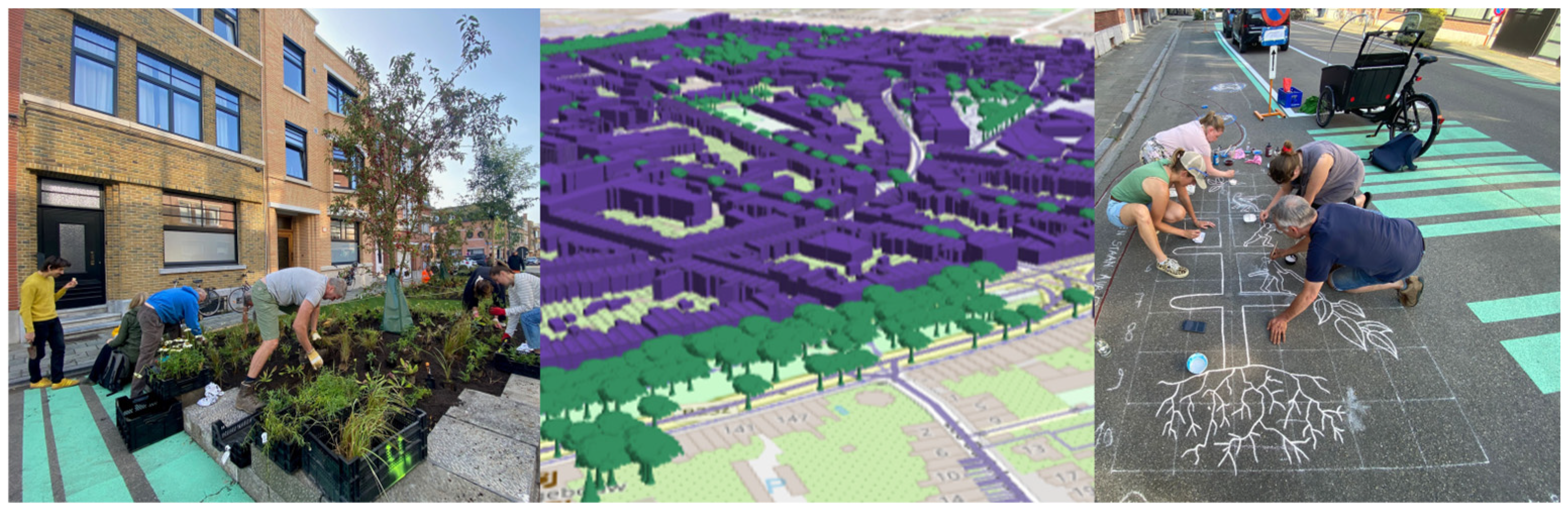
- Modeling in iCD (version 2025.2): The model is developed by combining the automatic urban geometry import from OpenStreetMap with NBS and public-space planning details obtained from Leuven municipality.
- UTCI simulation: After finalizing the model, the simulation is launched via a dedicated dialog where users select a date/time and optionally restrict the analysis to a sub-area. Progress can be monitored and canceled if needed. Once complete, the results are automatically displayed on the 3D model for immediate interpretation. By iterating between modeling and simulation, the tool allows users to explore the influence of trees, landscaping, and building orientation on thermal comfort and identify optimal design solutions.
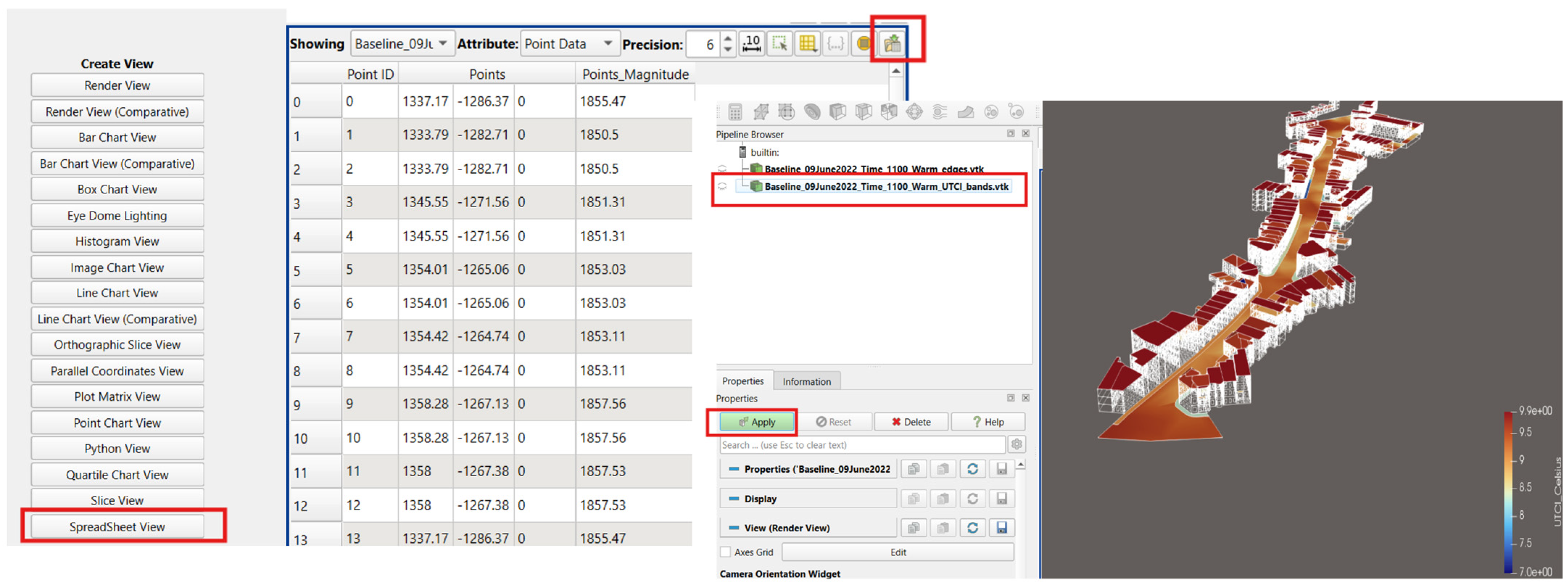
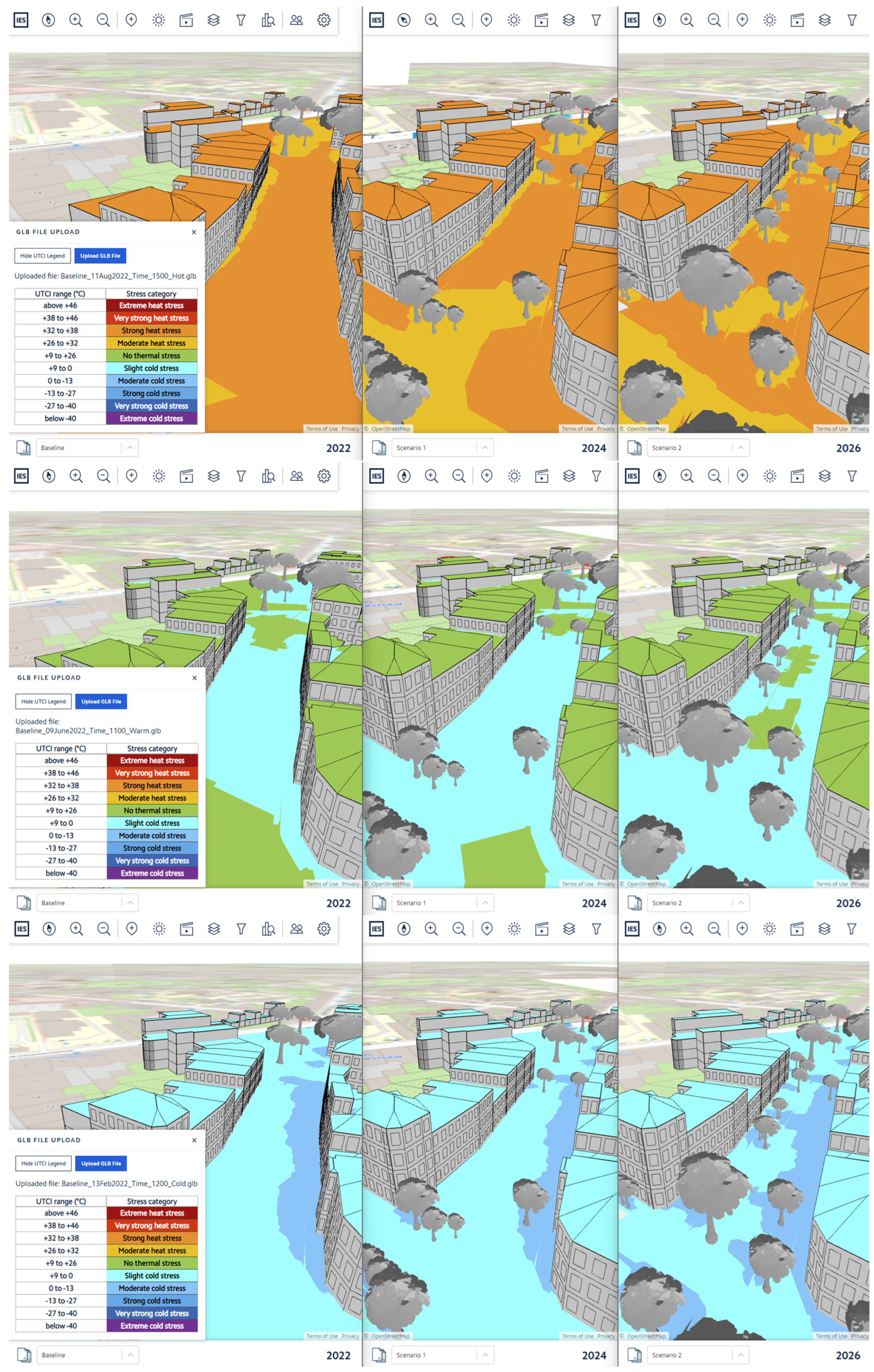
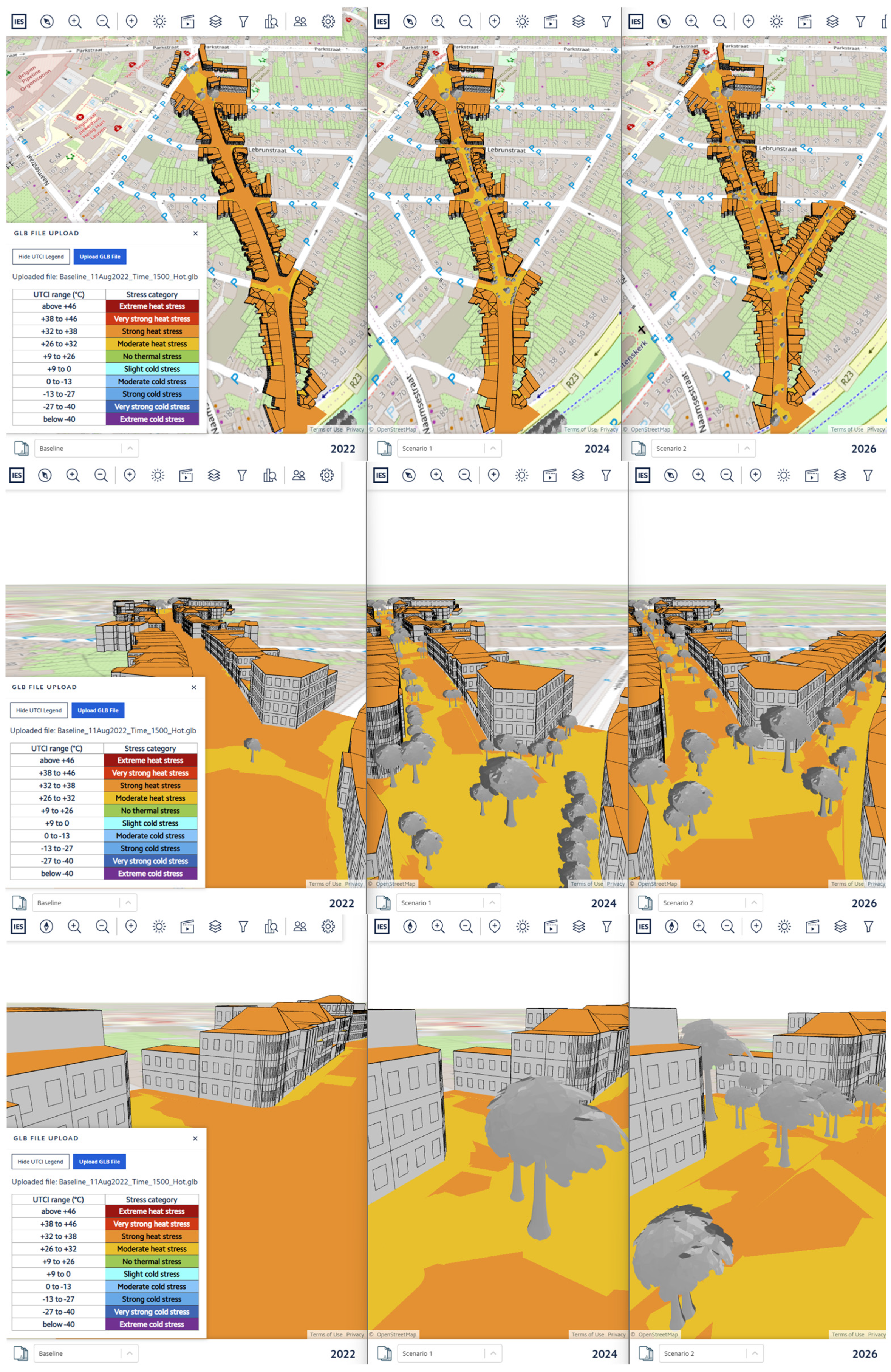
- Results visualization: The tool supports exporting results for advanced visualization and online access. For instance, simulation outputs can be saved as a .glb file and imported into the iCIM platform (via Analysis > UTCI Visualization) to enable comparative analysis across scenarios in a web-based 3D viewer. For detailed quantitative evaluation, the retained simulation data can be opened in external software like ParaView [22] (version 6.0.1, see Figure 1), which allows inspection of spatial variations and side-by-side comparison of planning alternatives (i.e., winter vs. summer conditions).
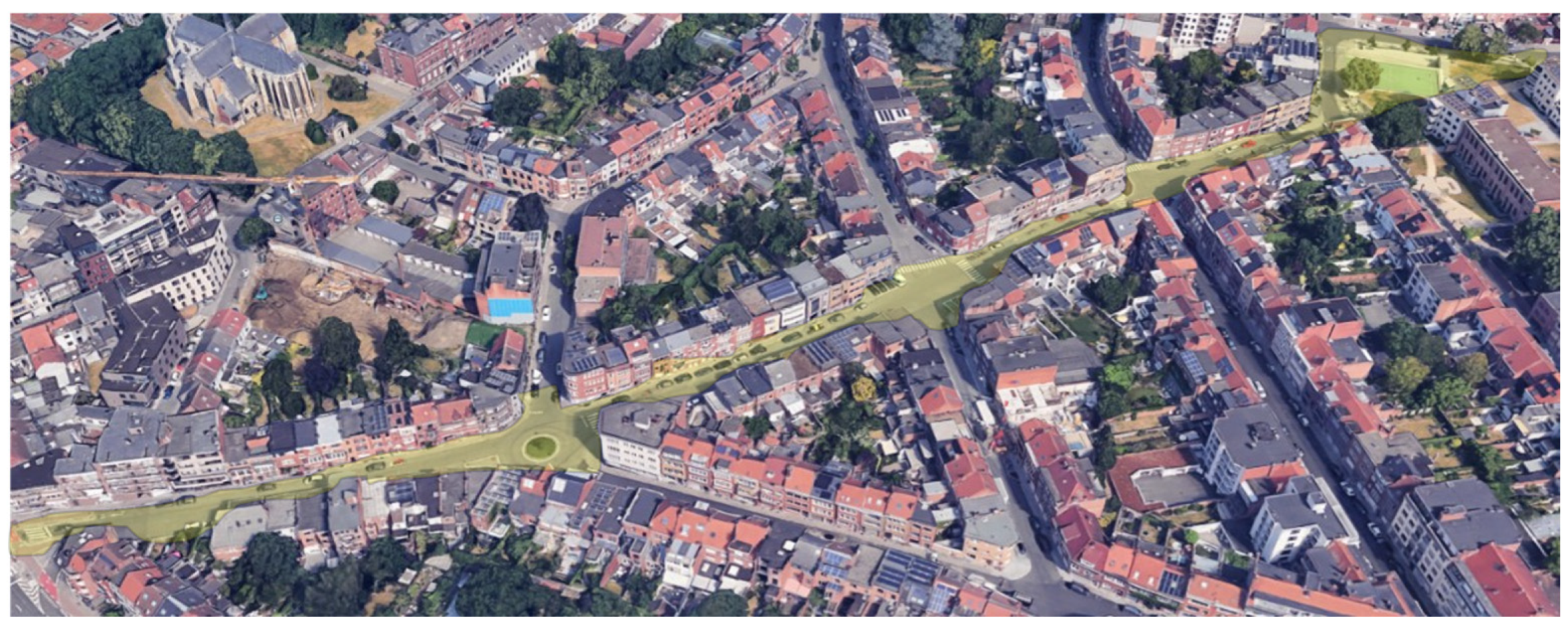
2.3. Case Study: Meunierstraat, Leuven
- Baseline (pre-2023): The original street configuration, characterized by asphalt surfaces and minimal NBSs (little to no greenery).
- Planning alternative 1 (A1, 2024–2025): A quick participatory temporary intervention, introducing new NBSs, reducing car-parking areas, reusing construction materials, and implementing environmental monitoring. In quantitative terms, A1 added several street trees in large planters (approximately 58 trees and bushes), removed approximately half of the on-street parking spaces to create space for green features, and installed inexpensive sensors for ongoing microclimate monitoring.
- Planning alternative 2 (A2, planned for 2026): A comprehensive permanent redesign informed by the A1 pilot, continuing the participatory approach for a finalized street layout [23]. A2 includes permanent planting of additional trees (approximately 79 trees and bushes), replacement of most asphalt with high-albedo or permeable materials, and embedded infrastructure for long-term environmental monitoring.
3. Results
3.1. UTCI Values Under Different Scenarios
3.2. Distance to Comfort Band
3.3. Changes in UTCI Stress Categories
3.4. Extreme Values and Variability
3.5. Share of Points Improved vs. Worsened
3.6. Seasonal Context and Statistical Significance
3.7. Summary of Key Differences
4. Discussion
4.1. Balancing Technical Performance and Community Preferences
4.2. Enhanced Communication Through Visualization
4.3. Simplified Workflow and Accessibility
5. Conclusions
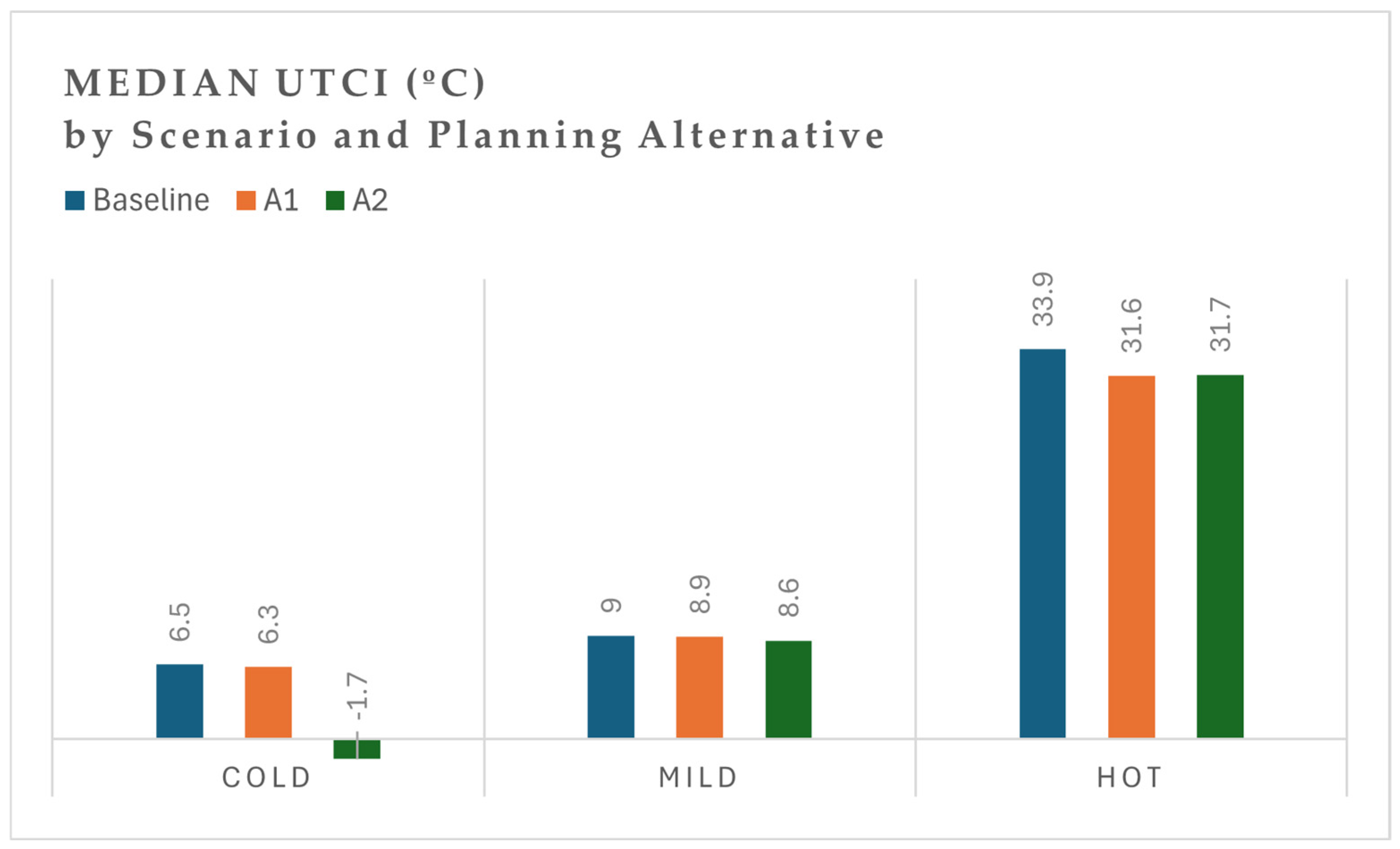
- Effectiveness of participatory NBS: Quick, low-cost interventions developed through a participatory process (such as adding greenery and reflective surfaces) can significantly reduce heat stress on urban streets during extreme heat events. In this case, the temporary intervention (A1) reduced the median UTCI by about 2.3 °C on a hot summer day and improved thermal comfort at nearly 90% of the locations in the study area. These improvements, while technical in nature, were achieved in tandem with community engagement, underscoring the value of participatory design for climate adaptation.
- Seasonal trade-offs: Not all interventions are beneficial year-round. We found that the permanent design (A2), which maximized cooling features, provided heat relief similar to A1 in summer but caused a notable decrease in winter thermal comfort (a median UTCI ~8 °C lower than baseline on a cold day due to shading). This reveals a trade-off: measures that improve summer conditions can exacerbate winter cold. Future resilient design should strive for solutions that balance seasonal needs—such as using deciduous plants or adjustable shade structures to mitigate extreme heat while minimizing winter discomfort.
- Spatial heterogeneity: The impact of the interventions varied spatially. Even with uniform meteorological inputs, the model showed micro-scale differences (some spots warming slightly while most cooled). This highlights that high-resolution analysis is essential; averages alone could obscure hot spots or cool spots. Urban comfort assessments should include detailed spatial results and visualization so planners can identify where exactly an intervention works or if any unintended adverse zones appear.
- Modeling limitations and validation: Our approach involved certain simplifications (i.e., uniform air temperature and wind, treating all surfaces as black bodies, no explicit evapotranspiration modeling). While these assumptions enabled a faster workflow, they also limit physical accuracy. Through added validation with field measurements, the study gained confidence that the model’s baseline predictions were reasonable (within 1–2 °C of measured UTCI). However, future work should incorporate microclimate variations and conduct sensitivity analyses to ensure conclusions hold under different conditions. Additionally, acknowledging statistical limitations (spatial autocorrelation affecting significance tests) is important for rigorous interpretation of results.
- Implications for urban planning practice: The integrated digital workflow proved to be a useful decision-support tool for the municipality of Leuven, bridging technical analysis and stakeholder communication. By automating data input and providing interactive 3D outputs, it lowered the barrier for scenario exploration. The combination of quantitative evidence and community co-design helped justify specific interventions in the eyes of both experts and residents. This approach can be generalized to other urban projects where climate adaptation measures need to be evaluated quickly and communicated clearly. The authors recommend that urban planners consider such tools to test interventions (virtually) before implementation, and to use visualizations to build public support for climate resilience measures.
Supplementary Materials
Author Contributions
Funding
Data Availability Statement
Acknowledgments
Conflicts of Interest
Abbreviations
| NBSs | Nature-Based Solutions |
| UTCI | Universal Thermal Climate Index |
| CFD | Computational Fluid Dynamics |
| JTBDs | Jobs-To-Be-Done |
| MRT | Mean Radiant Temperature |
| ERF | Effective Radiant Field |
| ASHRAE | American Society of Heating, Refrigerating and Air-Conditioning Engineers |
| .epw | EnergyPlus Weather File Format |
| IPCC | Intergovernmental Panel on Climate Change |
| PET | Physiological Equivalent Temperature |
References
- Intergovernmental Panel on Climate Change (IPCC). Cities, Settlements and Key Infrastructure. In Climate Change 2022—Impacts, Adaptation and Vulnerability; Cambridge University Press: Cambridge, UK, 2023; pp. 907–1040. [Google Scholar] [CrossRef]
- Angel, S.; Parent, J.; Civco, D.; Blei, A.; Potere, D.T. A Planet of Cities: Urban Land Cover Estimates and Projections for All Countries, 2000–2050; Lincoln Institute of Land Policy: Cambridge MA, USA, 2010. [Google Scholar]
- Knowlton, K.; Lynn, B.; Goldberg, R.A.; Rosenzweig, C.; Hogrefe, C.; Rosenthal, J.K.; Kinney, P.L. Projecting Heat-Related Mortality Impacts Under a Changing Climate in the New York City Region. Am. J. Public Health 2007, 97, 2028. [Google Scholar] [CrossRef] [PubMed]
- Voorhees, A.S.; Fann, N.; Fulcher, C.; Dolwick, P.; Hubbell, B.; Bierwagen, B.; Morefield, P. Climate change-related temperature impacts on warm season heat mortality: A proof-of-concept methodology using BenMAP. Environ. Sci. Technol. 2011, 45, 1450–1457. [Google Scholar] [CrossRef] [PubMed]
- Sailor, D.; Shepherd, M.; Sheridan, S.; Stone, B.; Kalkstein, L.; Russell, A.; Vargo, J.; Andersen, T. Improving heat-related health outcomes in an urban environment with science-based policy. Sustainability 2016, 8, 1015. [Google Scholar] [CrossRef]
- de Carvalho, G.B.M.; da Silva, L.B. The microclimate implications of urban form applying computer simulation: Systematic literature review. Environ. Dev. Sustain. 2023, 26, 24687–24726. [Google Scholar] [CrossRef]
- Huang, J.-M.; Chen, L.-C. A Numerical Study on Mitigation Strategies of Urban Heat Islands in a Tropical Megacity: A Case Study in Kaohsiung City, Taiwan. Sustainability 2020, 12, 3952. [Google Scholar] [CrossRef]
- Shinzato, P.; Helena, D.; Duarte, S. Impacto da vegetação nos microclimas urbanos e no conforto térmico em espaços abertos em função das interações solo-vegetação-atmosfera. Ambiente Construído 2018, 18, 197–215. [Google Scholar] [CrossRef]
- Naboni, E.; Meloni, M.; MacKey, C.; Kaempf, J. The Simulation of Mean Radiant Temperature in Outdoor Conditions: A review of Software Tools Capabilities. Build. Simul. Conf. Proc. 2019, 16, 3234–3241. [Google Scholar] [CrossRef]
- Ribeiro, K.F.A.; Justi, A.C.A.; Novais, J.W.Z.; Santos, F.M.d.M.; Nogueira, M.C.d.J.A.; Miranda, S.A.; Marques, J.B. Calibration of the Physiological Equivalent Temperature (PET) index range for outside spaces in a tropical climate city. Urban Clim. 2022, 44, 101196. [Google Scholar] [CrossRef]
- Azar, S. TownScope. Available online: https://www.townscope.com/ (accessed on 28 November 2025).
- Jeswani, D.; Deepak, D.C.; Dewan, J. SOLWEIG—A Climate Design Tool. 2010. Available online: https://gupea.ub.gu.se/handle/2077/22086 (accessed on 28 November 2025).
- ENVI-met GmbH. ENVI-met High-Resolution 3D Modeling for Climate Adaption. Available online: https://envi-met.com/ (accessed on 28 November 2025).
- Urrutia-Azcona, K.; Schiera, D.S.; Mizanur, M.; Barbano, G.; Byrne, N.; Zanasi, A.; Buckley, N.; Barchi, B. Digital Twins for Positive Energy Districts: A 10-Step Method for Integrated Design and Optimized Operation. Open Res. Eur. 2025, 5, 294. [Google Scholar] [CrossRef] [PubMed]
- Barbano, G.; Maguire, A.; Singh, H.; Batayneh, Z.; De Donatis, L.; Byrne, N.; Heyvaert, E.; Baeten, R.; Vandenhouten, C. A physics-based digital twin baseline to decarbonize the built environment of airports: The Brussels Airport case. Front. Built. Environ. 2024, 10, 1393682. [Google Scholar] [CrossRef]
- Buckley, N.; Bo, C.; Delkhah, F.; Byrne, N.; Shearcaigh, A.N.; Brennan, S.; Correa, D.P. Evaluation of a Peer-to-Peer Smart Grid Using Digital Twins: A Case Study of a Remote European Island. Energies 2024, 17, 5541. [Google Scholar] [CrossRef]
- Byrne, N.; Pierce, S.; De Donatis, L.; Kerrigan, R.; Buckley, N. Validating decarbonisation strategies of climate action plans via digital twins: A Limerick case study. Front. Sustain. Cities 2024, 6, 1393798. [Google Scholar] [CrossRef]
- IES. Intelligent Communities Lifecycle. Available online: https://www.iesve.com/products (accessed on 28 November 2025).
- ISB Commission 6 & COST Action 730. International Society of Biometeorology (ISB). UTCI Universal Thermal Climate Index. Available online: https://www.utci.org/ (accessed on 28 November 2025).
- IES. Apache Simulation Calculation Methods. Available online: https://help.iesve.com/ve2021/apachesim_calculation_methods.htm (accessed on 28 November 2025).
- ANSI/ASHRAE. Standard 55—Thermal Environmental Conditions for Human Occupancy. Available online: https://www.ashrae.org/technical-resources/bookstore/standard-55-thermal-environmental-conditions-for-human-occupancy (accessed on 28 November 2025).
- Kitware. ParaView—Open-Source, Multi-Platform Data Analysis and Visualization Application. Available online: https://www.paraview.org/ (accessed on 28 November 2025).
- Leuven. District Heating and Urban Greening in the C. Meunier Street. 2030. Available online: https://en.leuven2030.be/doorbraakproject/renewable-heat-and-urban-greening-in-the-c-meunier-street (accessed on 22 December 2025).
- City of Leuven. Leuven. Cool Sensor Data Platform. Available online: https://leuven.cool/ (accessed on 28 November 2025).
- Rey, D.; Neuhäuser, M. Wilcoxon-Signed-Rank Test. In International Encyclopedia of Statistical Science; Springer: Berlin/Heidelberg, Germany, 2011; pp. 1658–1659. [Google Scholar] [CrossRef]


Disclaimer/Publisher’s Note: The statements, opinions and data contained in all publications are solely those of the individual author(s) and contributor(s) and not of MDPI and/or the editor(s). MDPI and/or the editor(s) disclaim responsibility for any injury to people or property resulting from any ideas, methods, instructions or products referred to in the content. |
© 2026 by the authors. Licensee MDPI, Basel, Switzerland. This article is an open access article distributed under the terms and conditions of the Creative Commons Attribution (CC BY) license.
Share and Cite
Urrutia-Azcona, K.; Bonetti, V.; Mizanur, M.; Janssen, N.; Buckley, N.; De Wit, M.; Murray, K.; Byrne, N. Co-Creating Climate-Resilient Streets: Digital Twin-Based Simulations for Outdoor Thermal Comfort. Smart Cities 2026, 9, 39. https://doi.org/10.3390/smartcities9020039
Urrutia-Azcona K, Bonetti V, Mizanur M, Janssen N, Buckley N, De Wit M, Murray K, Byrne N. Co-Creating Climate-Resilient Streets: Digital Twin-Based Simulations for Outdoor Thermal Comfort. Smart Cities. 2026; 9(2):39. https://doi.org/10.3390/smartcities9020039
Chicago/Turabian StyleUrrutia-Azcona, Koldo, Valentina Bonetti, Mohammad Mizanur, Nele Janssen, Niall Buckley, Mark De Wit, Kieran Murray, and Niall Byrne. 2026. "Co-Creating Climate-Resilient Streets: Digital Twin-Based Simulations for Outdoor Thermal Comfort" Smart Cities 9, no. 2: 39. https://doi.org/10.3390/smartcities9020039
APA StyleUrrutia-Azcona, K., Bonetti, V., Mizanur, M., Janssen, N., Buckley, N., De Wit, M., Murray, K., & Byrne, N. (2026). Co-Creating Climate-Resilient Streets: Digital Twin-Based Simulations for Outdoor Thermal Comfort. Smart Cities, 9(2), 39. https://doi.org/10.3390/smartcities9020039