
Article

Convergence Time Measurement Method of Active Noise Cancelling Headphones

by
Agata Zatorska
1,*,
Michał Łuczyński
1,* and
Wojciech Bartnik
2
1
Department of Acoustics, Multimedia and Signal Processing, Faculty of Electronic, Photonics and Microsystems, Wrocław University of Science and Technology, Wybrzeże Wyspiańskiego 27, 50-370 Wrocław, Poland
2
KFB Acoustics sp. z o.o. Olawska 8, Acoustic Research and Innovation Center, 55-040 Domaslaw, Poland
*
Authors to whom correspondence should be addressed.
Acoustics 2024, 6(4), 1100-1114; https://doi.org/10.3390/acoustics6040060

Submission received: 3 September 2024 / Revised: 21 October 2024 / Accepted: 25 November 2024 / Published: 30 November 2024
(This article belongs to the Special Issue Active Control of Sound and Vibration)

Abstract

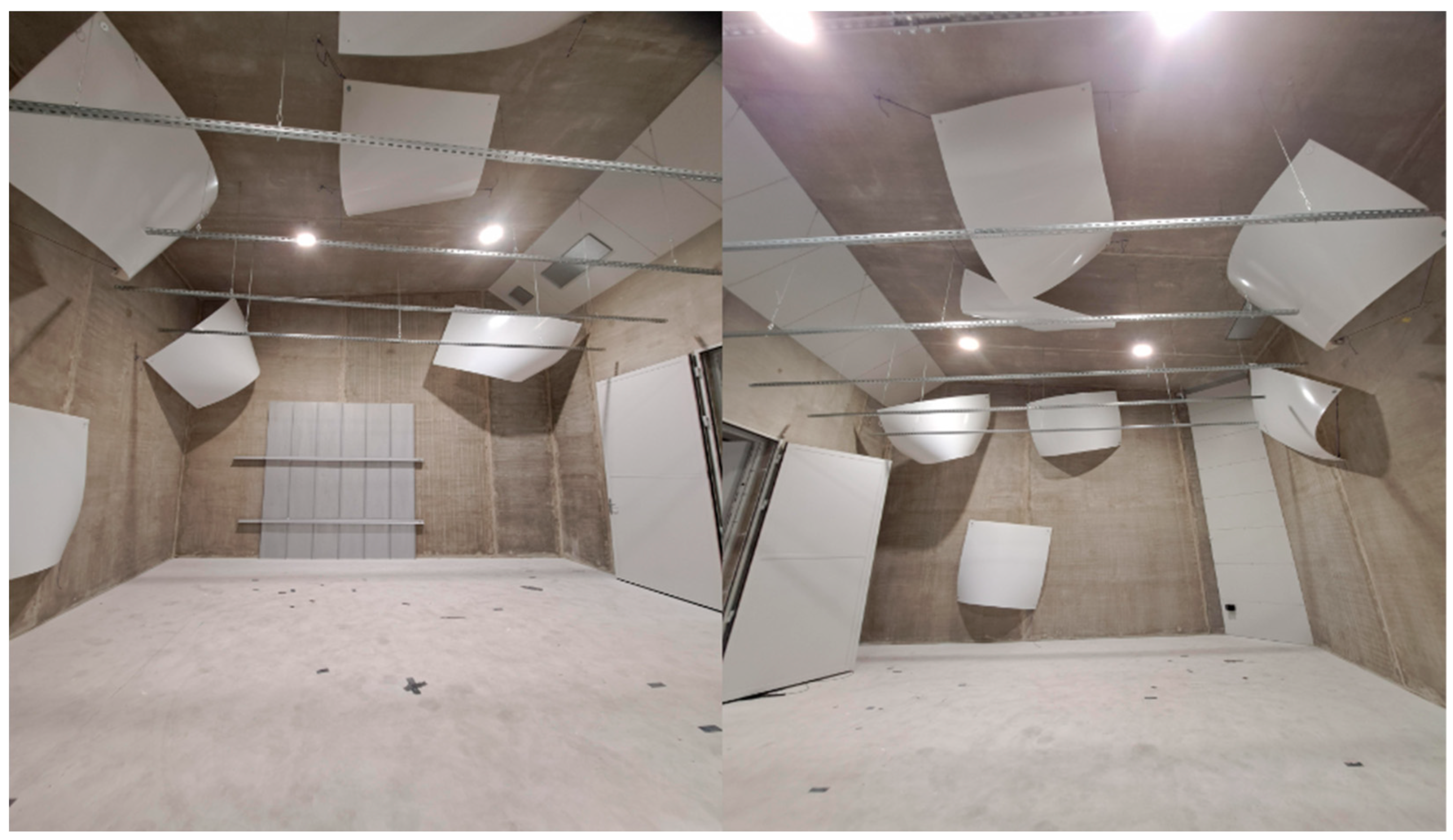
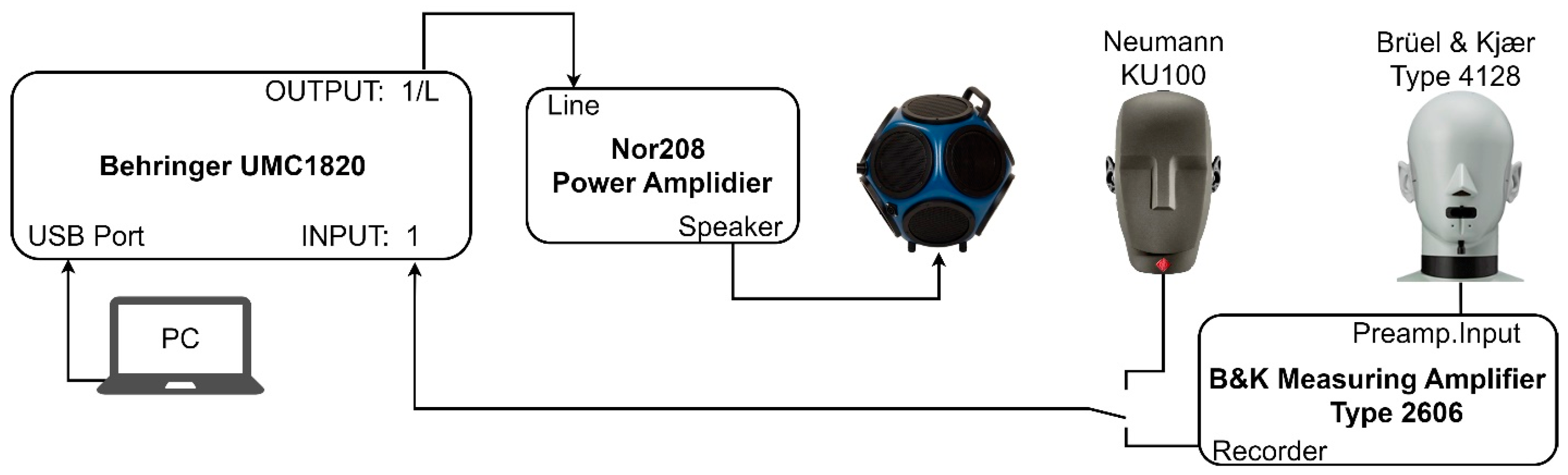
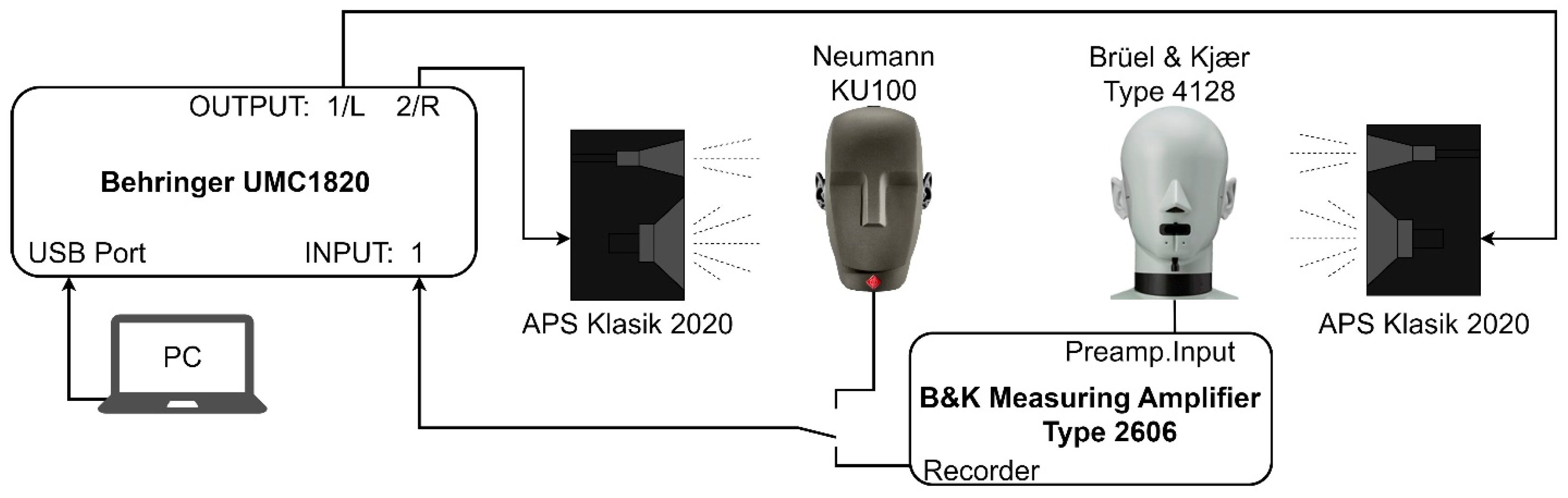
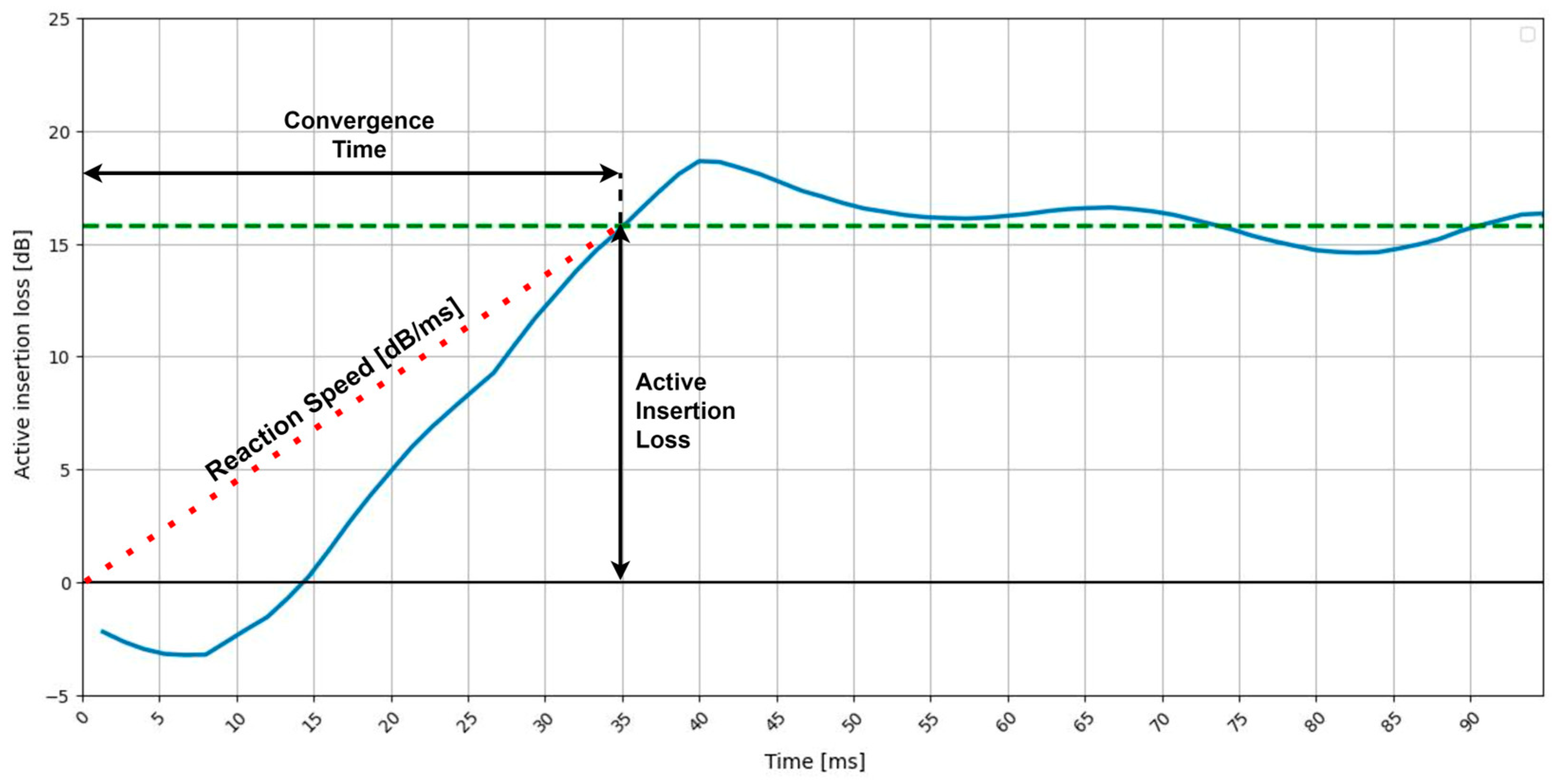
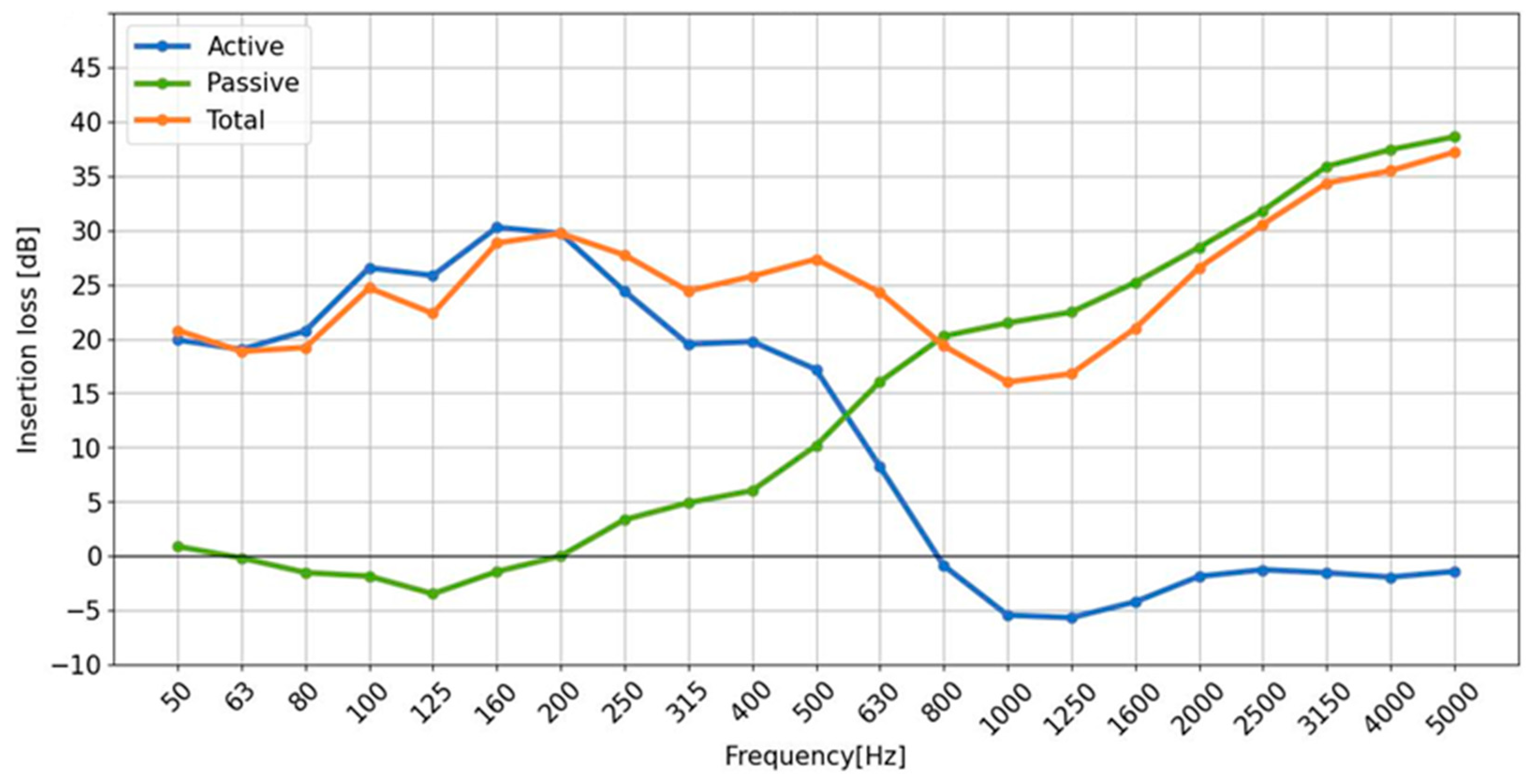
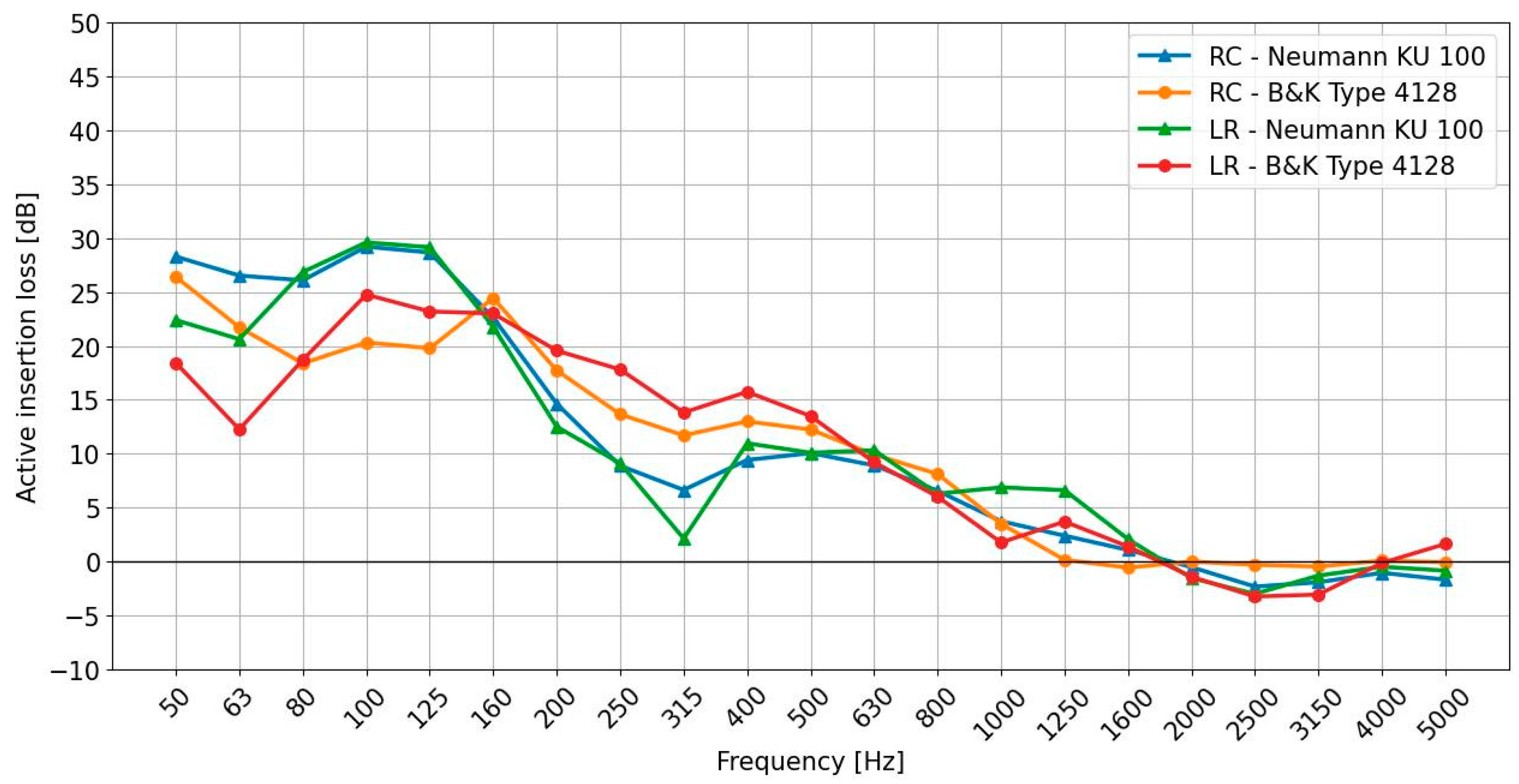
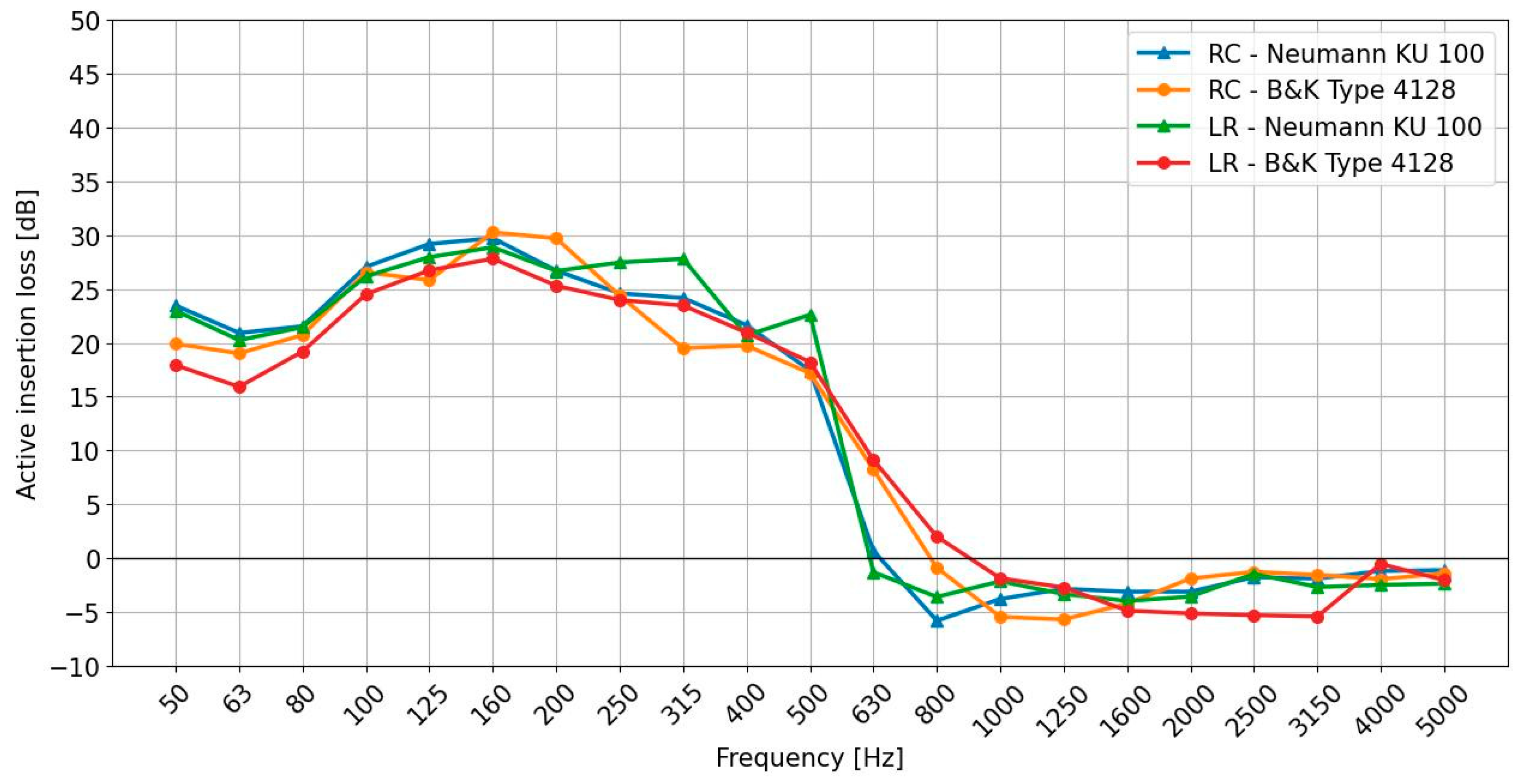
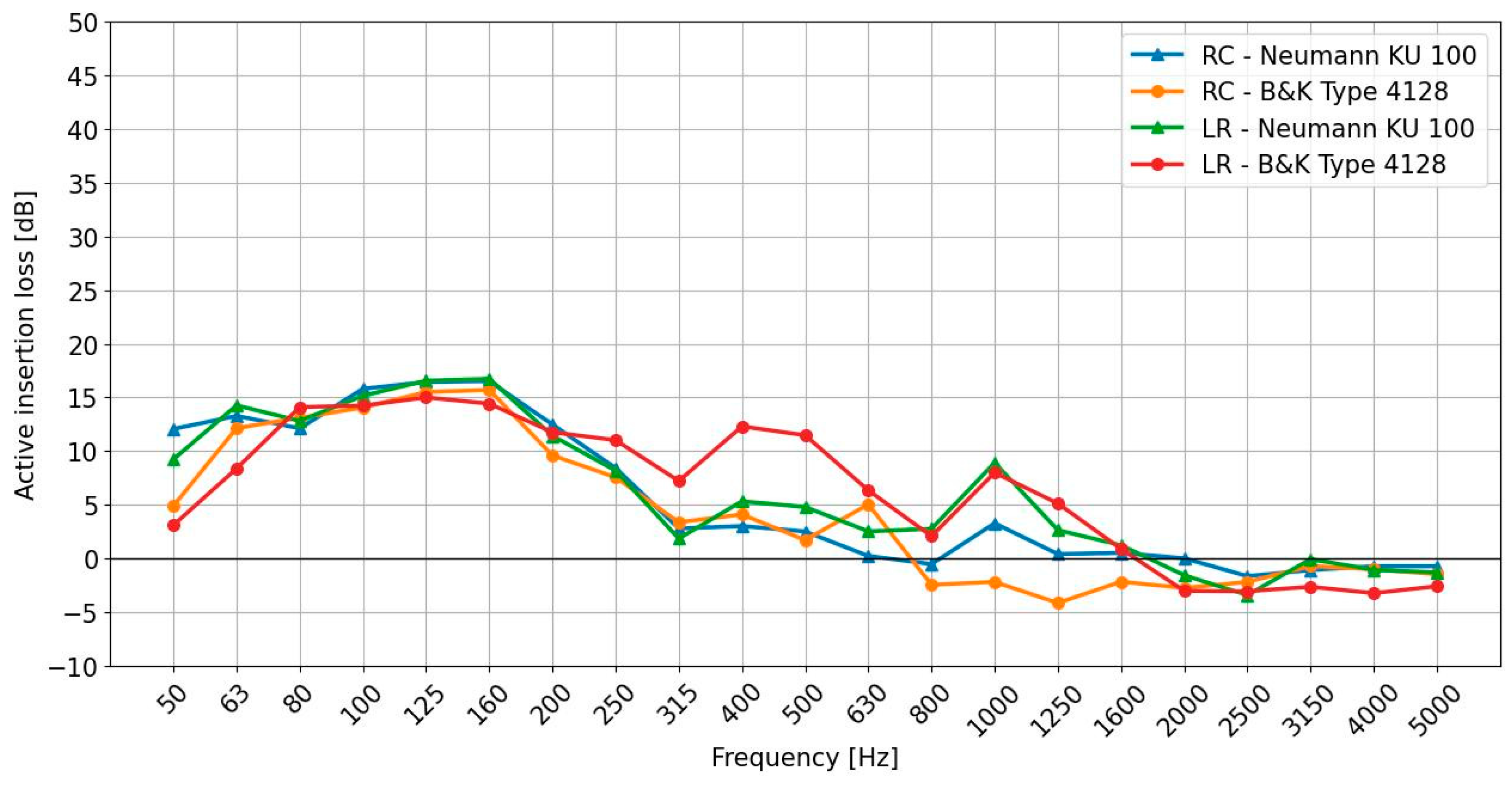
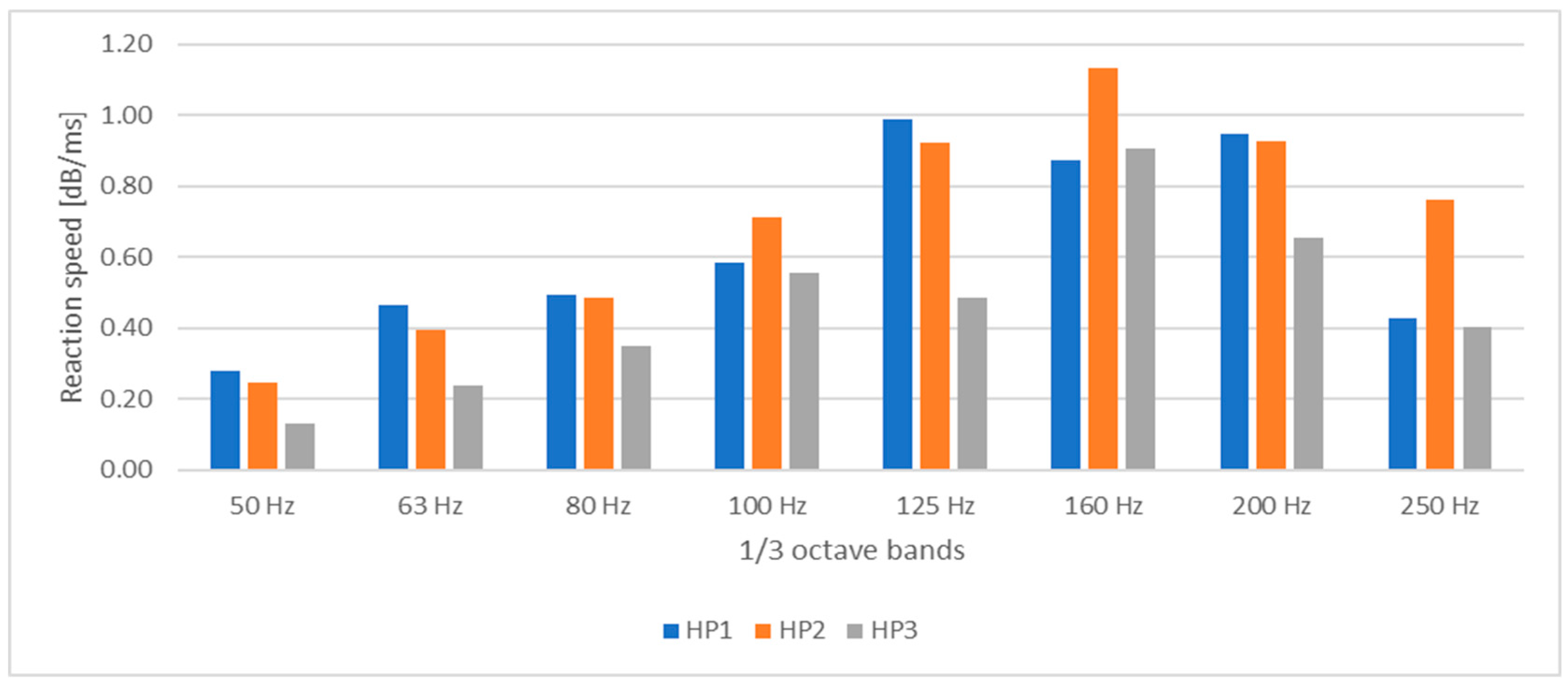
The aim of this paper is to develop and describe an objective method for measuring the performance of headphones with active noise cancellation (ANC). The focus was on measuring both passive and active sound attenuation and determining the convergence time of the ANC system. A new parameter was introduced—the reaction speed, expressed in dB/ms, allowing an accurate correlation of the active attenuation values with the time needed to achieve them. A series of tests were conducted using three active noise cancelling headphone models of different prices and specifications. The response times were recorded and analyzed. Measurements were performed on two different dummy head models and under two different measurement conditions (reverberation chamber and acoustically adapted room). The results revealed differences between the models, with some headphones consistently providing a better reaction speed. Remarkably, the headphone associated with the lower reaction speed were also the cheapest. This justifies the need for the reaction speed to be a parameter provided by the manufacturer in the datasheet.
Keywords: active noise cancelling headphones; convergence time; active attenuation measurement active noise cancelling headphones; convergence time; active attenuation measurement