Article

Long-Term Atmospheric Corrosion of Magnesium Alloys: Influence of Aluminium Content

1
Corrosion Department, Division of Materials and Production, Research Institutes of Sweden (RISE), Isafjordsgatan 28A, 114 28 Stockholm, Sweden
2
French Corrosion Institute, 220 Rue Pierre Rivoalon, 29200 Brest, France
*
Author to whom correspondence should be addressed.
Corros. Mater. Degrad. 2026, 7(1), 6; https://doi.org/10.3390/cmd7010006
Submission received: 21 December 2025 / Revised: 22 January 2026 / Accepted: 23 January 2026 / Published: 25 January 2026

Abstract

This paper is dedicated to long-term atmospheric corrosion behaviour of magnesium alloys. Five different magnesium alloys, namely, AZ31, AM60, AZ61, AZ80, and AZ91, were exposed for 4 years under harsh conditions at the marine corrosion site of Brest (France). From the results, the corrosion performance increased in the following order: AZ31 < AM60 < AZ91 < AZ61 < AZ80. The corrosion was highly localised during the first year of exposure, but more general corrosion prevailed after long-term exposure. All materials followed a power law with rather similar kinetics of corrosion. The observed difference in the corrosion performance of the alloys was explained by the amount of secondary phases as well as that of the Al-content in the α-Mg phase.

1. Introduction

Magnesium (Mg) alloys have received increasing interest due to their low density and good mechanical properties. They are used for a variety of applications in both the aerospace and automotive sectors, as well as for biodegradable implants. The corrosion of Mg alloys in aqueous media, particularly in chloride-containing solutions, has been the subject of several studies throughout the last few decades. Recent reviews provide a summary of the extensive research on the effects of chemical compositions, microstructures, surface conditions, and solution compositions [1,2,3,4,5]. However, relatively few investigations have been carried out into the atmospheric corrosion of Mg alloys despite the application of these materials in the automotive and aerospace industry. Under atmospheric conditions, a thin electrolyte film is formed, in which its thickness does not exceed a few hundred micrometres. It can be assumed that such a film is always saturated with oxygen, and that diffusion is not hindered. Although the mechanisms of the corrosion of Mg alloys could be rather similar under immersion and atmospheric conditions, the contribution of oxygen reduction is much more important for the latter. In addition, other gases such as CO2 and SO2 (in polluted areas) may play an important role in the kinetics of atmospheric corrosion and the nature of the corrosion products that are built. Other environmental parameters such as temperature, relative humidity (RH), and chloride deposition generally govern the atmospheric corrosion rate of Mg alloys. Based on laboratory exposures, Le Bozec et al. found that the corrosion rates of AZ91D and AM50 increased with RH [6]. This was explained by the formation of a thicker electrolyte layer at a higher RH, leading to the formation of less protective corrosion product layers. The influence of chloride deposition on the corrosion of Mg alloys (mostly on AZ31 and AZ 91) has been highlighted on several occasions based on both laboratory and field exposures. Based on laboratory exposures, Le Bozec et al. [6] show a linear increase in the corrosion rate of AZ91 and AM50 with chloride deposition. This was supported by results obtained under atmospheric exposures performed under trailers operating in different countries [7].
Several studies have shown that the corrosion rate of Mg alloys decreased with an increasing content of aluminium. Pardo et al. have shown that the mass loss of AZ31 was more than 50 times higher than AM80 and AZ91 after 10 days of immersion in 3.5 wt% NaCl [8]. The better corrosion behaviour of AM80 was explained by the formation of a semi-protective Al-rich oxide layer, whereas in the case of AZ91, it was attributed to the presence of a network of eutectic aggregates with higher Al content [8]. More recently, Esmaily et al. compared the atmospheric corrosion rate of four different magnesium alloys containing anywhere from 2 to 9 wt% of Al. Mass loss and mass gain were obtained from samples with 70 µg/cm2 of NaCl deposited on the surface and exposed for 504 h at temperatures ranging from −4 to 22 °C [9,10]. A decrease in the corrosion rate was observed with the aluminium content, and this effect was temperature dependent, and the highest difference in the corrosion rate was observed at the lower temperature of −4 °C. The data were explained by the formation an Al3+-enriched layer, which was formed on the surface [9,10]. Similar results were obtained by Feliu et al. for AZ31 and AM60 under continuous condensation conditions [11], by Jönson et al. under indoor atmospheric conditions [12], and by Merino et al. under salt spray conditions [13]. However, there is a lack of systematic investigations on the influence of Al in Mg alloys. In comparison to immersion studies, relatively few investigations have been performed under atmospheric conditions and, in particular, long-term exposure conditions outdoors. Since atmospheric corrosion is strongly affected by environmental climatic parameters, field tests are of utmost importance for the evaluation of the atmospheric corrosion resistance of magnesium alloys. Most of the data published in the literature have been obtained in China under different environmental conditions (industrial, marine, and marine tropical) [14,15,16,17,18,19,20,21,22,23,24,25]. Most of these works were performed on AZ31 and AZ91 under tropical marine conditions in China. It is highlighted that chloride (in marine environments) and atmospheric pollutants (such as SO2, CO2, and NO2) and dust (in industrial environments) are important factors for the atmospheric corrosion rate of Mg alloys. These data have been discussed in a recent review by Wang et al. [24]. In comparison, relatively few studies have been performed at field sites outside China [18,26,27]. The main body of the published data in China and outside China concern AZ91 and AZ31. As summarised by Liu, the corrosion rate of AZ91 after 12 months of exposure under different climatic conditions varied from about 1 to 15 µm (at static exposure sites) and about 32 µm at a dynamic exposure site [16]. As shown in a recent review by Wang and co-authors on the corrosion rate of field-exposed magnesium alloys, the corrosion rate of AZ31 is generally higher than that of AZ91 under various exposures conditions [20]. The corrosion rate of AM60 was in the same range as that of AZ91 upon exposure to a marine atmosphere in China [25]. However, the exposure duration is rather short (often below 2 years) in most of these works, and generally, one or two magnesium alloys were exposed. In addition, information on the corrosivity category according to ISO 9226 is often not provided during the time of exposure when the work was performed. Hence, it is difficult to obtain a direct comparison between different magnesium alloys with respect to the impact of the microstructure or Al content on the long-term corrosion behaviour of Mg alloys.
The aim of this work was to study the influence of Al in Mg alloys under field exposure conditions. For this purpose, five different commercial alloys were exposed for 4 years in a marine atmospheric site. The microstructure of the alloys was studied using FEG-SEM (Zeiss, Oberkochen, Germany). The corrosion rate was systematically measured after 3, 12, 24, and 48 months of exposure. Corrosion products were also analysed using infrared spectroscopy.

2. Methodology

2.1. Materials and Microstructure Analyses

The materials studied were five commercial alloys with different aluminium content, namely, AZ31, AM60, AZ61, AZ80, and AZ91, with nominal compositions given in Table 1. AZ31 was a cast and hot rolled plate. AZ60 and AZ91 were cast and machined plates. AZ61 and AZ80 were extruded bars.
All materials were ground to 4000 SiC paper in ethanol and diamond polished to 0.25 µm (for microstructural investigations). A final polishing with BIB (broad ion beam) was performed to avoid alumina and silica suspensions. Scanning Electron Microscopy (SEM) using Zeiss 300 FEG SEM equipment (Orpington, Germany) was used to study the microstructure of the different Mg alloys. The microscope was equipped with an Energy-Dispersive X-Ray Spectroscopy (EDS) instrument (Oxford, UK). The number of secondary phases in the alloys was studied using Electron Backscatter Diffraction (EBSD) (Oxford, UK). The software for image analyses was image J version 1.54p. Because EDS beams penetrate the material to a certain extent, the quantitative measurements are not highly accurate, as the interaction volume may contain a matrix or another underlying phase different from the one being probed. Due to this, a large number of EDS analyses were conducted, and only statistically confirmed data are reported in this work.
Samples were cut to dimensions of 100 mm × 100 mm (for plates) and to the diameter of the bars, ground to 1200 SiC paper (in ethanol), and degreased in acetone and ethanol prior to the exposure at the marine site of Brest.

2.2. Atmospheric Exposure

Samples were exposed to the marine corrosion site of Brest (France) for 3 months, 1, 2, and 4 years, respectively. The sample orientation was 45° facing south (in front of the dominating wind and the seashore, according to ISO 8565). The samples were exposed under unsheltered conditions. The mean environmental parameters measured at the site of Brest during the 48 months of exposure are provided in Table 2. The site is classified as C5 for the corrosivity of steel and C3 for the corrosivity of zinc, according to ISO 9223. It should be noted that ISO 9223 does not cover the corrosivity of Mg alloys. Hence, the corrosivity of steel and zinc are provided as an indication of the aggressiveness of the field station rather than a direct indication of the corrosivity of Mg alloys.
Three replicates of each material have been removed after 3 months,1, 2, and 4 years of exposure. The samples were brushed to remove non-adherent corrosion products, rinsed in flowing water, and the corrosion products were removed by chemical pickling, according to ISO 8407. The samples were pickled several times at ambient temperature in a solution of 200 g/L. CrO3, then rinsed with water and ethanol prior to weight loss determination until complete elimination of the corrosion products. The thickness loss was then calculated using the mass loss and the density of the material. Pitting corrosion was also evaluated after pickling using an optical microscope equipped with a micrometre gauge (Oxford, UK). The mean values of the 10 deepest attacks are reported in this work.

2.3. Analyses of Corrosion Products

FTIR-spectroscopy was performed using a Bruker Vertex 70 spectrometer (Bruker Optics, Ettlingen, Germany) equipped with a wide band (FM) beamsplitter (Bruker Optics, Ettlingen, Germany) and a DLATGS detector (Laser Components, Meudon, France). The spectra were measured using a single-bouncy attenuated total reflectance (ATR) with a diamond internal reflection element (Quest, Specac, UK). The spectra were recorded by adding 256 scans with 8 cm−1 spectra resolution in the spectral region 280–4000 cm−1. Measurements were performed using ATR FTIR, and the samples were pressed on the ATR crystal without further preparation. Measurements were realised on duplicates at different parts of the surface to ensure reproducibility of the data.
Samples exposed for 2 years were analysed with X-ray diffraction with a Bruker AXS D8 Discover (Bruker Optics, Ettlingen, Germany), with a Cu-anode and a SolX detector (Bruker Optics, Ettlingen, Germany), and with an energy window for Cu Kα (Bruker Optics, Ettlingen, Germany). A Göbel mirror was used on the detector side. Measurements were performed at 5° angle of incidence.

3. Results

3.1. Microstructures of the Mg Alloys

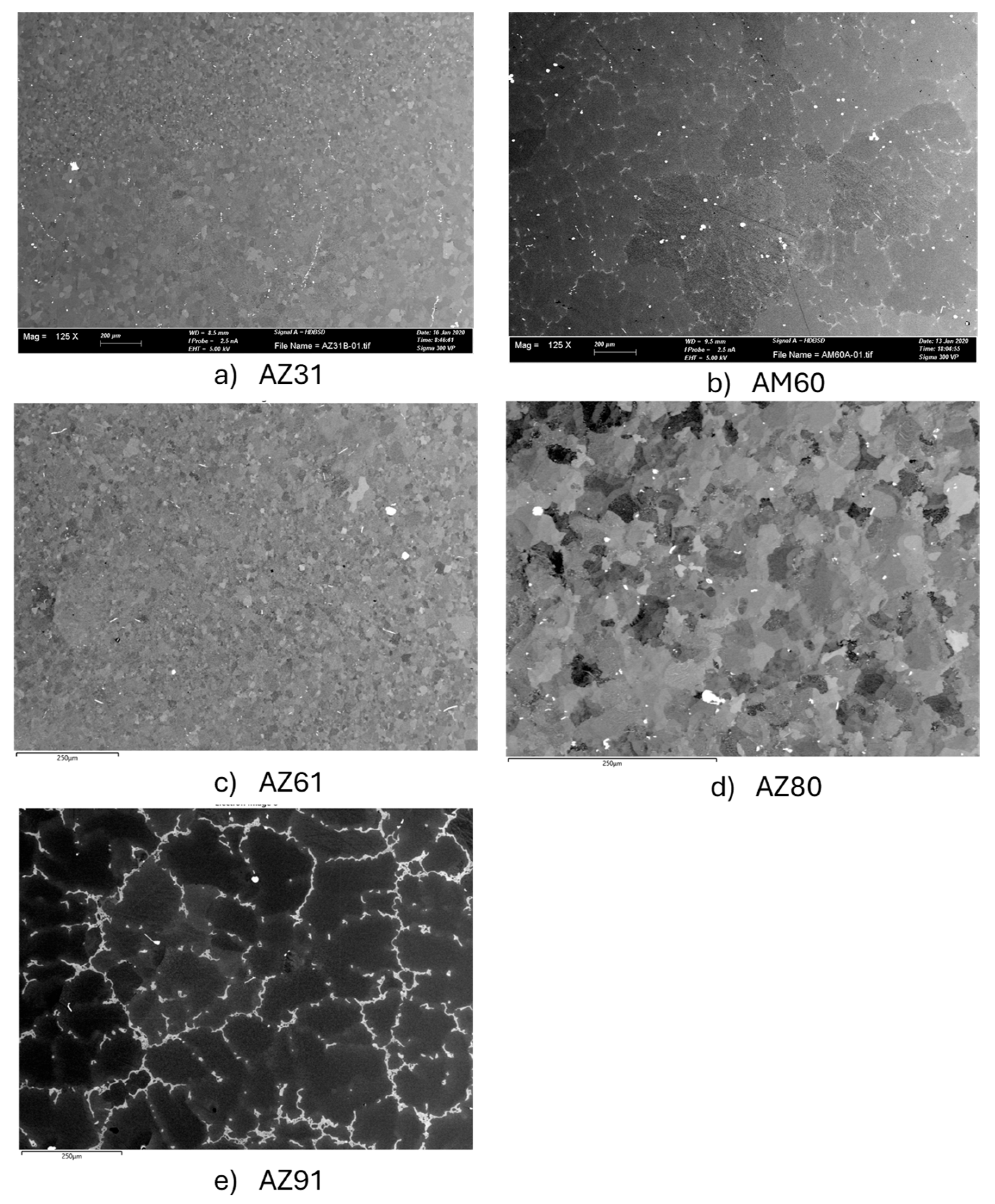
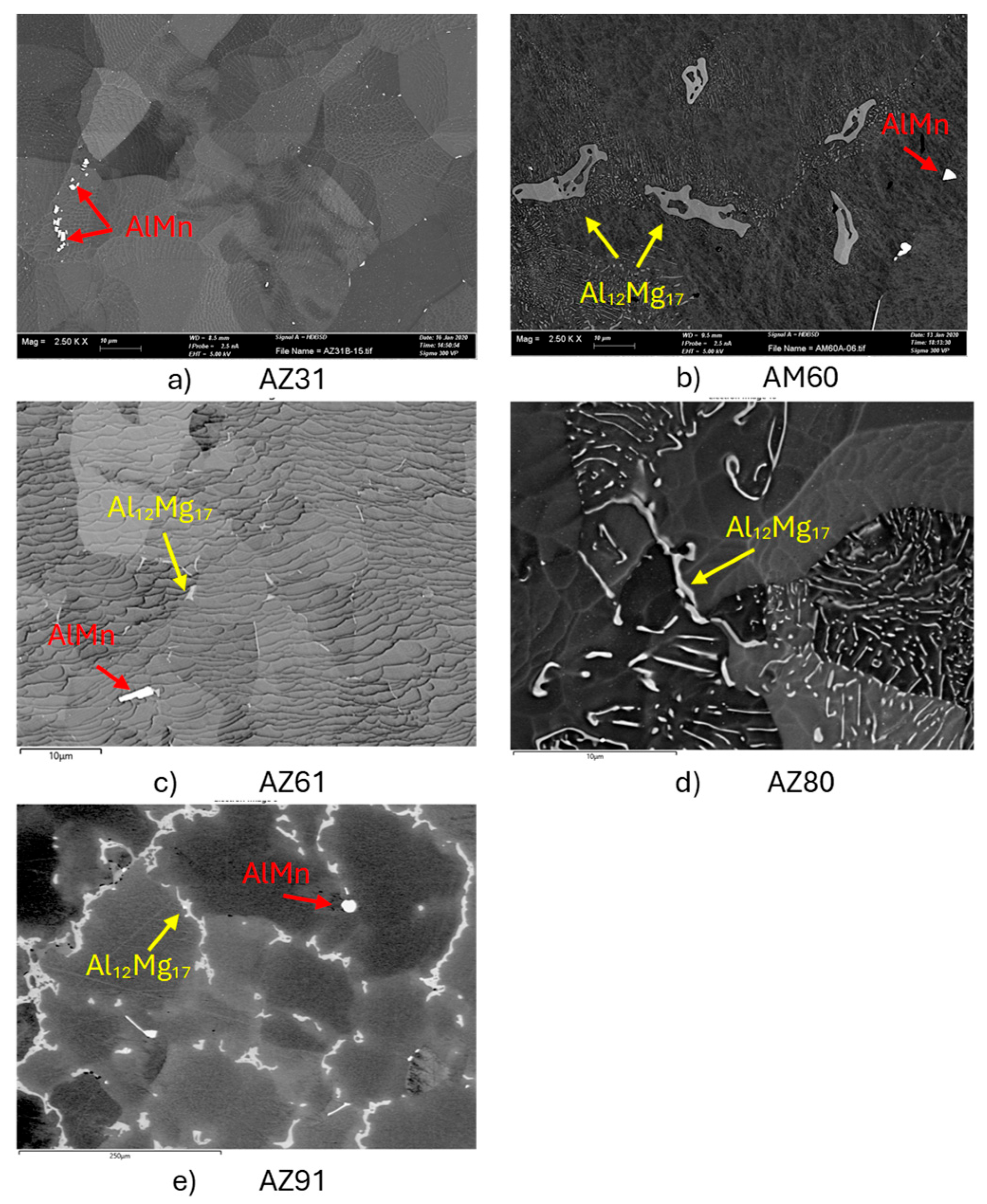
The microstructures of the materials studied here are shown in Figure 1 and Figure 2. AZ31 has a heterogeneous grain structure, with greater variability in grain size, from small equiaxed grains of an average diameter <20 µm to larger grains >50 µm. Bright phases of AlMn intermetallic particles and some particles containing Zn (and Al) can mainly be found at grain boundaries (see Figure 2). The Al12Mg17 and eutectic phases were not seen in this material. The amount of secondary phase was analysed by EDS data to about 1.5%.
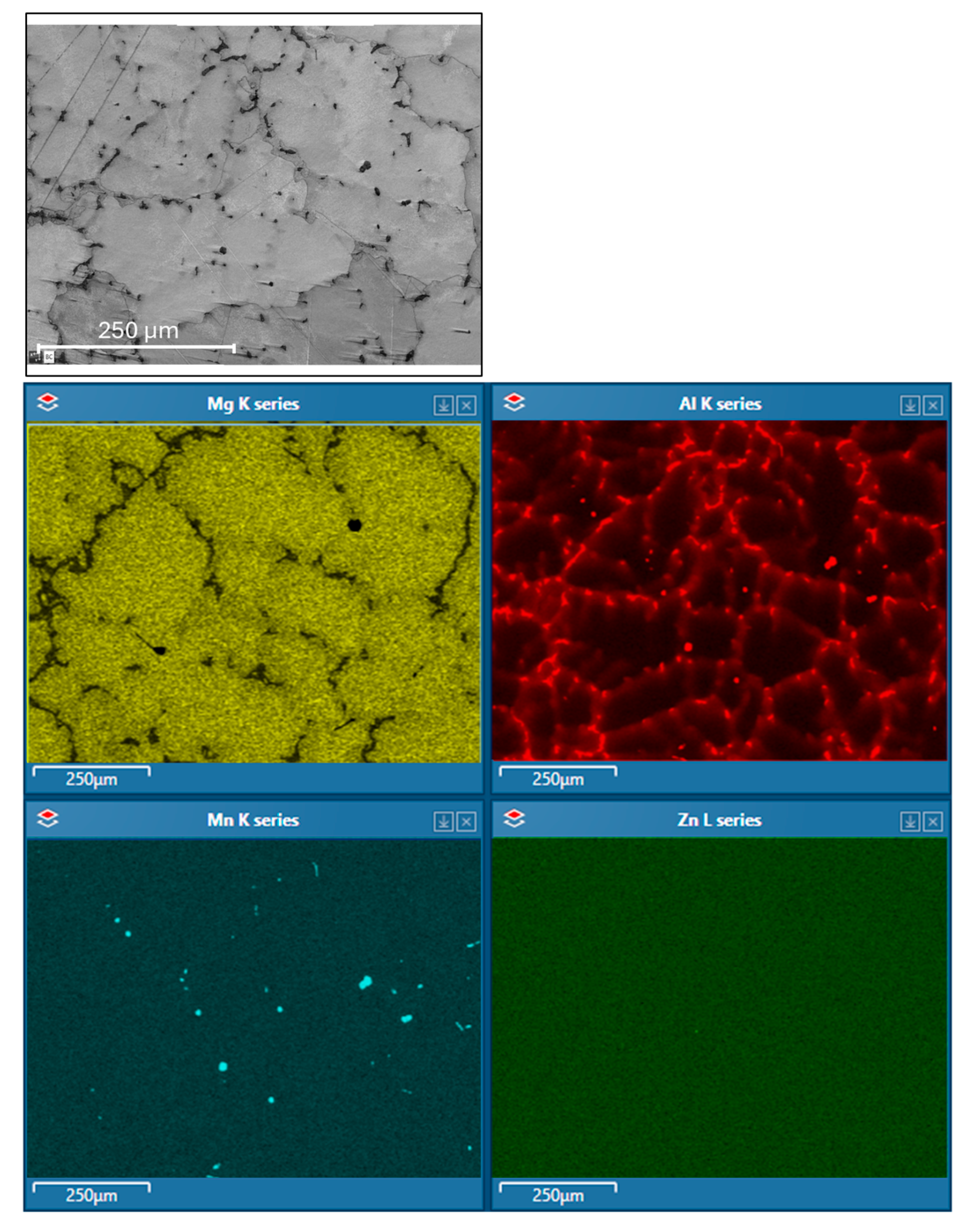
The microstructure of AM60 revealed very large grain sizes of several hundred micrometres in diameter. Aluminium was highly segregated in this alloy. Dendrite arms are seen with secondary phase surrounding them. This phase is rich in aluminium and is identified as Al12Mg17 (see Figure 3). The very bright second phase contains Mn and Fe. Eutectic is also visible in the material, often in the vicinity of the large Al12Mg17 phase. According to the EBSD analysis, the Al12Mg17 was about 2%. The total fraction of secondary phase was about 3%.
The microstructure of AZ61 indicates the presence of Al12Mg17 and AlMn particles (see Figure 1 and Figure 2). EBSD analysis shows a relatively fine grain structure with equiaxed grains (not a dendritic solidification microstructure). The amount of secondary phase was analysed by EDS to 2%.
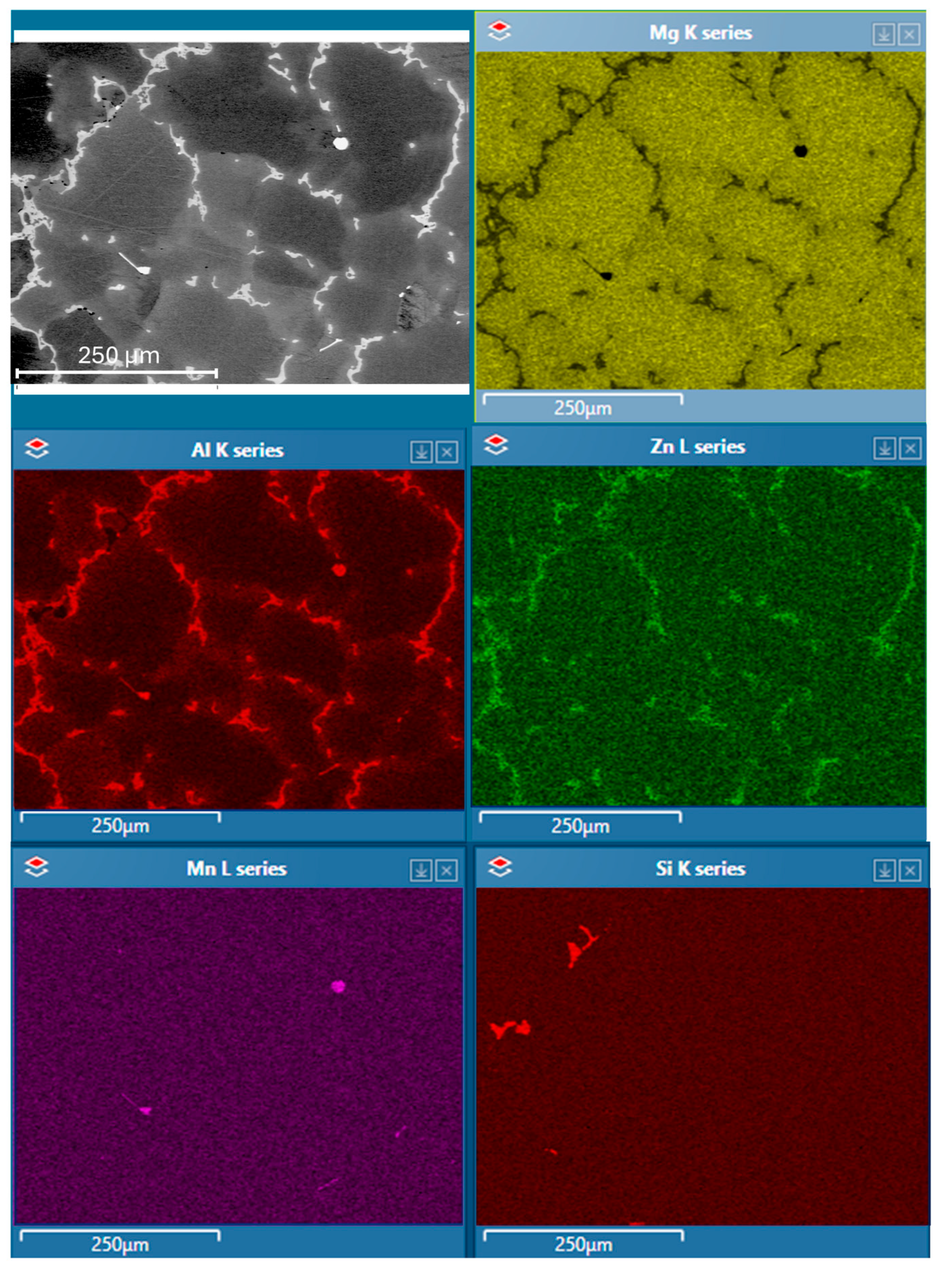
Small equiaxed grains of an average diameter >25 µm were seen in AZ80, as well as large circular bright phases with Mn (see Figure 4, Mn map), smaller elongated phases, and perlite-type lamellas (see Figure 1 and Figure 2). The lamellas in the eutectic have been identified as the Al12Mg17 phase by EBSD. The total fraction of secondary phase was about 2–3%.
EBSD analysis of AZ91 shows that this material has a dendritic solidification microstructure, with very clear dendrites and secondary phases in the inter-dendritic spacings. The grains are very large. EDS mapping shows the strong segregation of Al and Zn. The main secondary phase is the Al12Mg17 phase, but there is also AlMn phase and a Mg2Si phase present (see Figure 4). Analysis of EDS data gave 12–15% of the secondary phase.
The important parameters in the microstructures shown in Figure 1, Figure 2, Figure 3 and Figure 4 are summarised in Table 3.

3.2. Atmospheric Corrosion Rate of the Mg Alloys

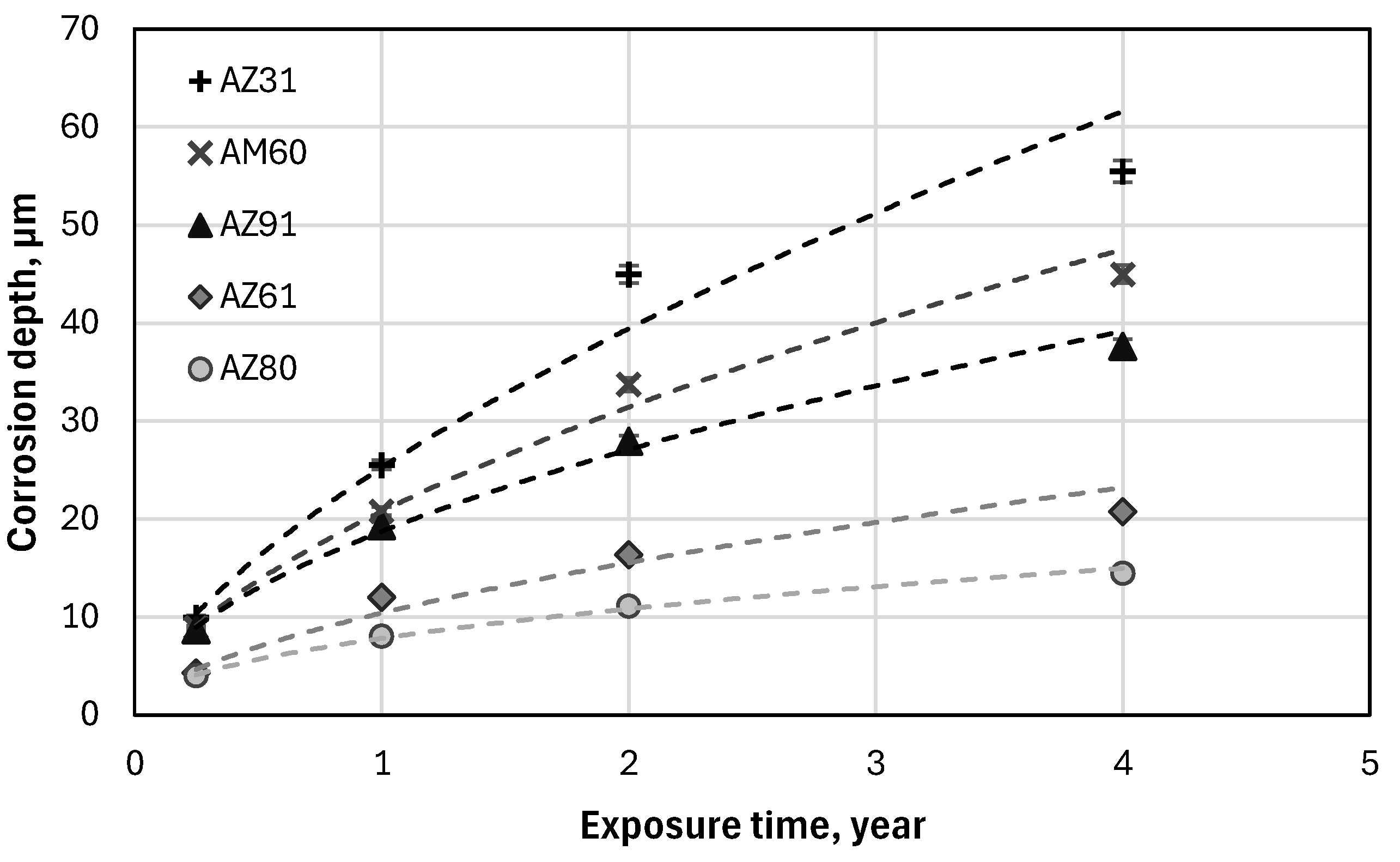
The thickness loss obtained by mass loss of the different Mg alloys is shown in Figure 5 after 3 months, 1, 2, and 4 years of exposure at the marine station of Brest (France). As shown in Figure 5, the corrosion depth over 4 years could be fitted using a power law. This is in line with several studies on the long-term atmospheric corrosion of different metals and alloys, showing that long-term atmospheric corrosion data for outdoor exposure can be expressed as follows [28,29,30]:
C = Atn
where C is the metal loss in µm, t is the exposure time in years, and A and n are constants. A represents the corrosion of the first year, and n depends on the protectiveness of the corrosion products. However, it should be noted that n can also vary depending on many other factors such as rainfall, cracking, and the compactness of corrosion products. Fits are given in Figure 5 for all Mg alloys. With n values ranging from 0.46 to 0.64, the lower values were found for AZ80 and the highest for AZ31 and AM60. This may be related to the lower protection of corrosion products for AZ31 and AM60 compared to AZ80 after long-term exposure in a marine environment. Rather similar corrosion values have been reported after one year of exposure for AZ31 [18], AZ61 [21], and AZ91 [16] in China and the deck of the marine scientific research vessel. However, other studies showed a lower corrosion rate for AZ91 after one year of exposure in Japan and Sweden [18,26]. In this case, the environmental data, and particularly the chloride deposition, were less aggressive than the one in this study. Similarly, the corrosion rate for AZ80 reported in Shenyang (industrial environment, China) by Song et al. was about four times less than the one reported in Figure 5 [22]. Again, values at different field stations are difficult to compare as the environmental characteristics, as well as the microstructures and production routes of the alloys, could be rather different.

3.3. Corrosion Product Analysis

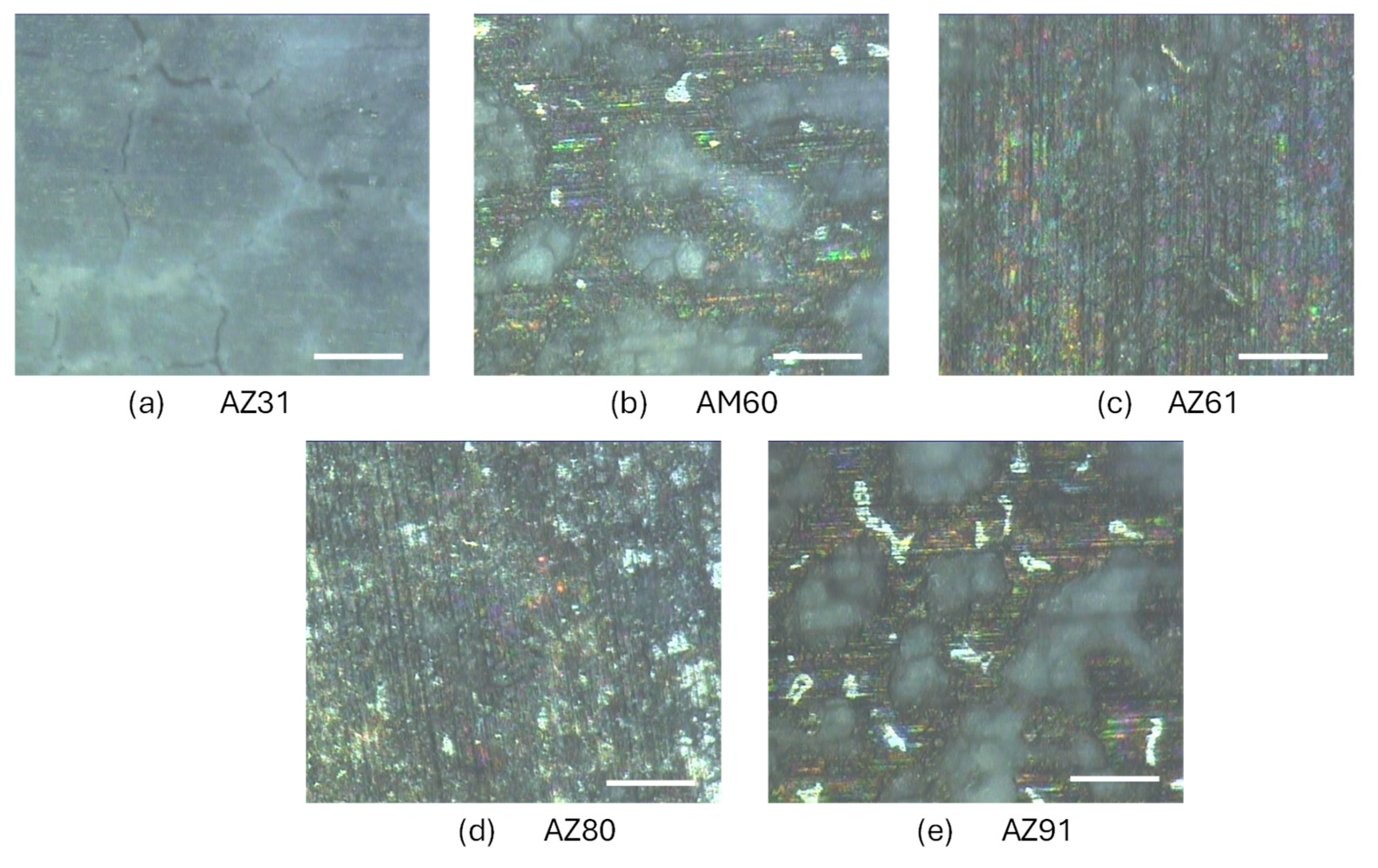
The morphology and distribution of corrosion products on the surface are different for magnesium alloys after 2 years of exposure, see Figure 6. For AZ31, a thick and uniform corrosion product layer is covering the surface. The corrosion products are also relatively uniform on AZ61 and AZ80 but considerably thinner compared to AZ31, which is consistent with the differences in corrosion loss for these alloys. On the other hand, the corrosion product distribution is more inhomogeneous for the AM60 and AZ91 materials, which is probably related to the large grain structure and high Al segregation for these alloys.
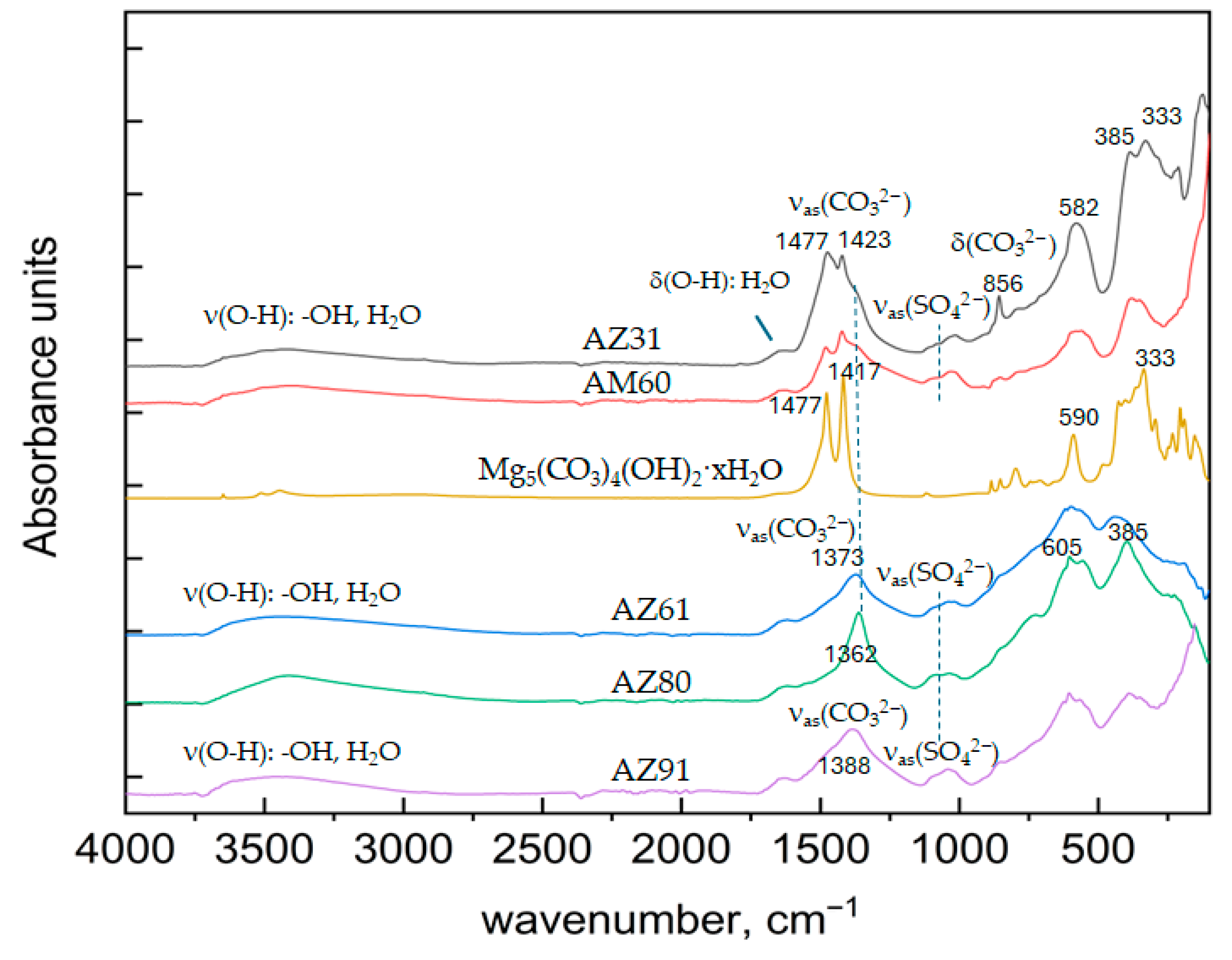
FTIR-ATR spectra of the different materials after 2 years of exposure are shown in Figure 7. The spectra for AZ31 and AM60 are similar, with bands due to magnesium hydroxy carbonate, Mg5(CO3)4(OH)2·xH2O. There are probably also some weak bands due to sulphate, SO42−, in the spectra. Sulphate was detected on the corrosion products in previous studies of field-exposed magnesium alloys [12]. For AZ61, AZ80, and AZ91, a characteristic band at 1360–1380 cm−1 due to carbonate is seen. A symmetric carbonate asymmetric stretching band in this region is typical for carbonate containing layered double hydroxide (LDH), for which the carbonate ions are intercalated in the layered brucite structure. The spectra for AZ61, AZ80, and AZ91 are similar to those reported for hydrotalcite, Mg6Al2CO3(OH)16·4H2O, or a similar Mg/Al LDH in the literature [31,32]. The corrosion products of these materials also have contributions from the sulphate compounds of magnesium and/or aluminium. Hydrotalcite is also probably present in the spectra for AZ31 and AM60, as seen from a shoulder at 1360–1380 cm−1, but these spectra have stronger contributions from magnesium hydroxy carbonate due to the higher corrosion rates for these materials. For AZ91, hydrotalcite formation is probably promoted by high-Al content and a higher amount of secondary phase. X-ray diffraction (XRD) measurements confirmed the FTIR-ATR analysis that Mg/Al-layered double hydroxide was detected on all alloys and hydromagnesite (Mg5(CO3)4(OH)2·4H2O) was detected on AZ31 and AM60. The suggested corrosion products formed on the alloys after 2 years of exposure are summarised in Table 4.

4. Discussion

4.1. Corrosion Rate of Mg Alloys

From the data obtained in Figure 5, it is possible to rank the magnesium alloys as a function of their corrosion properties in a marine atmosphere in temperate harsh environmental conditions in Europe. The following ranking of increasing corrosion protection was obtained: AZ31 > AM60 > AZ91 > AZ61 > AZ80.
It should be pointed out that the same ranking was observed independently on the exposure time (from 3 to 48 months). In addition, the kinetics of the corrosion rate show rather similar behaviour during the whole of the exposure time, with somewhat slower kinetics for AZ80 and AZ61 compared to the other magnesium alloys. The corrosion data are, in general, in good agreement with those reported in the literature. However, a direct comparison is difficult, as only few studies precisely indicate the environmental parameters such as, for instance, chloride and SO2 deposition. A direct comparison to laboratory exposures is also difficult, as it is well known that this type of exposure often fails to mimic the climatic conditions occurring under real outdoor conditions. Nevertheless, the corrosion rates of AZ91 and AZ31 obtained in this work after one year of exposure were close to that reported by Liu et al. and Zhang et al. in harsh marine environments [16,23]. It should be noted that the mean RH and average rainfall were in the same range for the field station of Brest and that of Nansha (China). However, the temperature was much higher in Nansha (28 °C compared to 13 °C). On the other hand, the chloride deposition was about two times higher in the marine site of Brest compared to Nansha (e.g., 1000 mg m−2 day−1 and 400 mg m−2 day−1). Hence, it is likely that the high corrosion rates observed for AZ91 and AZ31 in this work are due to the very high chloride deposition and that this environmental factor is highly dominant in the corrosion of magnesium alloys, which is in good agreement with the work reported in [6,7,14,16]. This also highlights that more systematic studies under well-defined exposure programmes worldwide are needed to systematically identify the impact of different environmental factors on the corrosion rate of magnesium alloys.
As shown in Table 5, the corrosion was highly localised for all alloys, but the kinetics of localised corrosion decreased with time with the formation of corrosion products after one year of exposure. This is in good agreement with the data provided by Liu et al. on AZ91 exposed to harsh marine environments in South China [16]. Indeed, the corrosion starts as pitting corrosion due to the electrochemical potential difference between the Al–Mn phases and β-Mg17Al12 phases distributed along the grain boundaries. Similar results have been obtained by Jonsson et al., indicating that the corrosion attack starts in the α-Mg phase in larger grains at the boundary between the α-Mg phase and the eutectic α-/β-phase. As all studied magnesium alloys present rather similar kinetics for pitting corrosion (only the level of attack is different), it is likely that the mechanism of localised corrosion is also rather similar with the attacks in the α grains due to the presence of secondary phases in the alloys (Al–Mn phases, eutectic α, and β-Mg17Al12). With time, as shown in Figure 5 and Table 5, the corrosion rate decreased, probably due to the formation of a dense layer of corrosion products hindering the diffusion of oxygen to the metal surface.

4.2. Influence of Microstructures

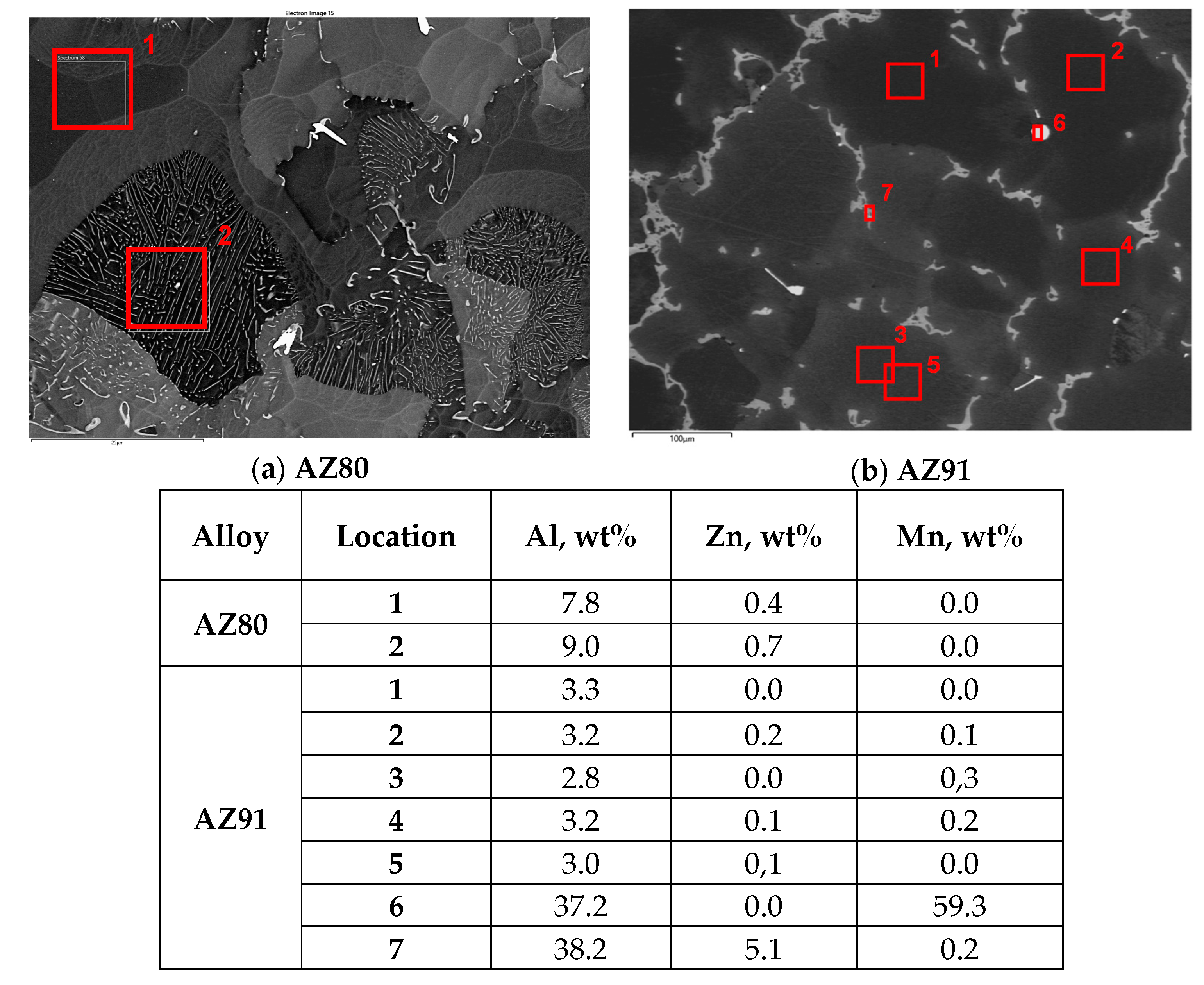
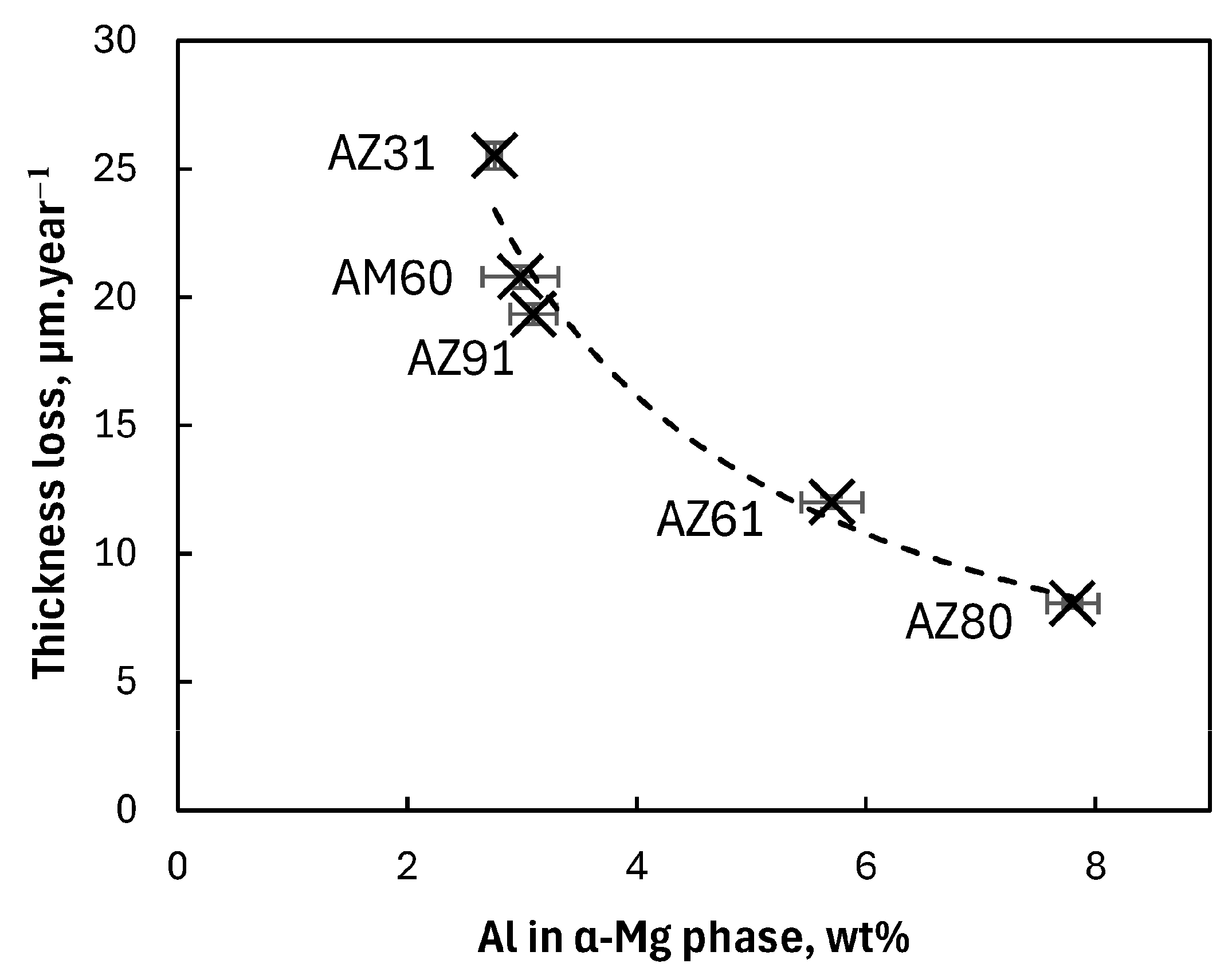
As shown in Figure 1, Figure 2, Figure 3 and Figure 4 and in Table 3, the magnesium alloys investigated in the present study have different microstructures with reference to grain size and number and the nature of secondary phases. Several papers have shown that the corrosion attack starts in the middle of the α-Mg phase. Persson et al. reported that the Volta potential difference between the β-phase and the central regions of the α-Mg grains was in a range from 100 to 150 mV, whereas that between the AlMn and the central regions of the α-Mg grains was slightly higher [33]. Similar data have also been reported by Arrabal et al. [34]. Hence, from these works, it was shown that the initial corrosion of AZ91 was localised, primarily occurring in the central regions of the α-Mg phase for AZ91 and AZ80. In addition, it was shown that the initiation of corrosion was localised around the Al–Mn inclusions in the AZ31 alloy [33,34]. As shown in Figure 5, the corrosion rate of the magnesium alloys decreased with the aluminium content in the alloy, except for AZ91, which showed higher corrosion rates compared to AZ61 and AZ80. It should be noted that, according to Table 3, the number of secondary phases was much higher for AZ91 compared to the other alloys. As secondary phases act as cathodic sites, this may explain the behaviour of AZ91 observed in this work. Another explanation may be related to the amount of Al in the α-Mg phase, as a lower amount of Al in this phase will result in less proactive behaviour. EDS analyses at different points of the microstructures of AZ80 and AZ91 are displayed in Figure 8. The content of Al in the α-Mg phase is high in the range of 8 wt%, whereas that of AZ91 is low in the range of 3 wt%. The low Al content in the α-Mg phase is due to the high segregation of Al and Zn in this alloy. This may explain the lower corrosion performance of AZ91 compared to AZ80. Similar measurements have been made for the other alloys. Figure 9 shows the thickness loss measured after one year of exposure as a function of the Al content in the α-Mg phase. A clear correlation is observed, indicating better corrosion properties as the Al content in the α-Mg phase increases. It is generally agreed that the presence of aluminium is beneficial for improving the corrosion behaviour of magnesium. It has been shown by Lunder et al. [35] that 8% of Al is necessary to achieve corrosion protection, whereas Warner et al., using TEM studies on Mg-9%Al, found that more than 5% is needed [36]. As the corrosion rate of AZ61 with 5.7% Al in the α-Mg phase showed only a slightly lower performance compared to AZ80, the data presented in the work support the conclusions of Warner et al. [36]. Higher Al content in the α-Mg phase seems to promote the formation of hydrotalcite and may reduce the formation of pure Mg-based corrosion products. This can contribute to the lower corrosion of alloys with higher Al content in the α-phase due the protective properties of the hydrotalcite layer [37]. AZ91 is an exception, with a relatively lower amount of pure Mg products, probably much more due to the secondary phases, which affect the relative contributions of different products on the surface and negatively impact the corrosion rate.

5. Conclusions

From this work, the following main conclusions may be drawn:
  • Based on weight loss measurements, the corrosion performance of the magnesium alloys under harsh marine conditions studied in this work increased in the following order: AZ31 < AM60 < AZ91 < AZ61 < AZ80. The ranking was similar for all exposure times, ranging from 3 months to 4 years.
  • Corrosion was localised during the first months of exposure and then became more generalised upon longer exposure times.
  • The kinetics of corrosion were rather similar for all magnesium alloys, and the corrosion loss followed a power law from which long-term corrosion data could be extracted.
  • Corrosion products for AZ61, AZ80, and AZ91 contained larger fractions of hydrotalcites, whereas AZ31 and AM60 showed more formation of magnesium hydroxy carbonate.
  • A clear correlation between the Al content in the α-Mg phase and the corrosion loss was observed, indicating that this parameter is strongly governing the corrosion rate of magnesium alloys under atmospheric corrosion conditions.

Author Contributions

Conceptualisation, D.T. and D.P.; Methodology, D.T., D.P. and N.L.; Validation, D.T., D.P. and N.L.; Formal analysis, D.T., D.P. and N.L.; Investigation, D.T., D.P. and N.L.; Resources, D.T. and D.P.; Writing—original draft, D.T.; Writing—review and editing, D.T., D.P. and N.L.; Visualisation, D.T., D.P. and N.L.; Supervision, D.T. and N.L.; Project administration, D.T. and N.L.; Funding acquisition, D.T. and N.L. All authors have read and agreed to the published version of the manuscript.

Funding

This research received no external funding.

Data Availability Statement

The data presented in this study are available on request from the corresponding author.

Acknowledgments

Joacim Hagström from SWERIM (Sweden) is thanked for performing the FEG-SEM measurements, Anne LeGac from French Corrosion Institute (France) for part of weight loss measurements, and Alexander Wårnheim for XRD measurements.

Conflicts of Interest

The authors declare no conflict of interest.

References

  1. Song, G.-L. Corrosion electrochemistry of magnesium (Mg) and its alloys. In Corrosion of Magnesium Alloys; Song, G.L., Ed.; Woodhead: Cambridge, UK, 2011; pp. 3–65. [Google Scholar]
  2. Ghali, E. Activity and passivity of magnesium (Mg) and its alloys. In Corrosion of Magnesium Alloys; Song, G.L., Ed.; Woodhead: Cambridge, UK, 2011; pp. 66–109. [Google Scholar]
  3. Atrens, A.; Liu, M.; Zainal Abidin, N.I.; Song, G.-L. Corrosion of magnesium alloys and metallurgical influence alloys. In Corrosion of Magnesium Alloys; Song, G.L., Ed.; Woodhead: Cambridge, UK, 2011; pp. 117–161. [Google Scholar]
  4. Huang, J.; Song, G.-L.; Atrens, A.; Dargusch, M. What activates the Mg surface—A comparison of Mg dissolution mechanisms. J. Mater. Sci. Technol. 2020, 57, 204–220. [Google Scholar] [CrossRef]
  5. Song, G.-L.; Atrens, A. Recently deepened insights regarding Mg corrosion and advanced engineering applications of Mg alloys. J. Magnes. Alloys 2023, 11, 3948–3991. [Google Scholar] [CrossRef]
  6. LeBozec, N.; Jönsson, M.; Thierry, D. Atmospheric corrosion of magnesium alloys: Influence of temperature, relative humidity, and chloride deposition. Corrosion 2004, 60, 356–361. [Google Scholar] [CrossRef]
  7. Rendahl, B.; LeBozec, N. Assessment of corrosivity of global vehicle environment. In Research Report Swerea KIMAB Stockholm; Swerea KIMAB: Stockholm, Sweden, 2009. [Google Scholar]
  8. Pardo, M.C.; Merino, A.E.; Coy, R.; Arrabal, F.; Viejo, E. Matykina, Corrosion behavior of magnesium/aluminum alloys in 3.5 wt% NaCl. Corros. Sci. 2008, 50, 823–834. [Google Scholar] [CrossRef]
  9. Esmaily, M.; Svensson, J.E.; Fajardo, S.; Birbilis, N.; Frankel, G.S.; Virtanen, S.; Arrabal, R.; Thomas, S.; Johansson, L.G. Fundamentals and advances in magnesium alloy corrosion. Prog. Mater. Sci. 2017, 89, 92–193. [Google Scholar] [CrossRef]
  10. Esmaily, M.; Blucher, D.B.; Svensson, J.E.; Halvarsson, M.; Johansson, L.G. New insight in the corrosion of magnesium alloy—The role of aluminum. Scr. Mater. 2016, 115, 91–95. [Google Scholar] [CrossRef]
  11. Feliu, S., Jr.; Maffiotte, C.; Galván, J.C.; Barranco, V. Atmospheric corrosion of magnesium alloys AZ31 and AZ61 under continuous condensation conditions. Corros. Sci. 2011, 53, 1865–1872. [Google Scholar] [CrossRef]
  12. Jönsson, M.; Persson, D. The influence of the microstructure on the atmospheric corrosion behaviour of magnesium alloys AZ91D and AM50. Corros. Sci. 2010, 52, 1077–1085. [Google Scholar] [CrossRef]
  13. Merino, M.C.; Pardo, A.; Arrabal, S.; Merino, S.; Casajús, P.; Mohedano, M. Influence of chloride ion concentration and temperature on the corrosion of Mg–Al alloys in salt fog. Corros. Sci. 2010, 52, 1696–1704. [Google Scholar] [CrossRef]
  14. Zhou, W.-q.; Shan, D.-y.; Han, E.-h.; Ke, W. Influence of NaCl deposition on atmospheric corrosion behavior of AZ91 magnesium alloy. Trans. Nonferrous Met. Soc. China 2010, 20, 670–673. [Google Scholar] [CrossRef]
  15. Jiang, Q.; Lu, D.; Wang, N.; Wang, X.; Zang, J.; Duan, J.; Hou, B. The corrosion behaviour of Mg-Nd alloys in the harsch marine environment. J. Magnes. Alloys 2021, 9, 292–304. [Google Scholar] [CrossRef]
  16. Liu, H.; Yang, L.; Wang, M.; Sun, C.; Wang, X.; Li, J.; Li, J. Corrosion behavior of AZ91 magnesium alloys in harsh marine atmospheric environment in South China Sea. J. Mater. Res. Technol. 2025, 35, 2477–2486. [Google Scholar] [CrossRef]
  17. Jiang, Q.; Yuan, J.; Li, W.; Li, Y.; Ma, M.; Shi, G.; Yuan, J. Atmospheric corrosion of Mg-rare earth alloys in typical inland and marine environments. Corros. Eng. Sci. Technol. 2014, 49, 651–655. [Google Scholar] [CrossRef]
  18. Liao, J.S.; Hotta, M. Atmospheric corrosion behavior of field-exposed magnesium alloys: Influences of chemical composition and microstructure. Corros. Sci. 2015, 100, 353–364. [Google Scholar] [CrossRef]
  19. Cui, Z.; Li, X.; Xiao, K.; Dong, C. Atmospheric corrosion of field-exposed AZ31 magnesium in a tropical marine environment. Corros. Sci. 2013, 76, 243–256. [Google Scholar] [CrossRef]
  20. Wang, Y.; Xu, W.; Wang, X.; Jiang, Q.; Li, Y.; Huang, Y.; Yang, L. Research on Dynamic Marine Atmospheric Corrosion Behavior of AZ31 Magnesium Alloy. Metals 2022, 12, 1886. [Google Scholar] [CrossRef]
  21. Gong, P.; Cao, X.J.; Ning, S.Q.; Zhu, L.P. Influence of Different Environments on Atmospheric Corrosion of AZ61 Magnesium Alloy. China Surf. Eng. 2015, 28, 123–128. [Google Scholar]
  22. Song, Y.W.; Dai, J.M.; Sun, S. A comparative study on the corrosion behaviour of AZ80 and EW75 Mg alloys in industrial atmospheric environment. Mater. Today Commun. 2024, 38, 108263. [Google Scholar] [CrossRef]
  23. Zhang, T.; Wu, S.; Liu, H.; Yang, L.; Chen, T.; Wang, X.; Li, Y. Research on Comparative Marine Atmospheric Corrosion Behavior of AZ31 Magnesium Alloy in South China Sea. Materials 2025, 18, 3585. [Google Scholar] [CrossRef] [PubMed]
  24. Wang, M.; Yang, L.; Liu, H.; Wang, X.; Li, Y.; Huang, Y. Recent Progress on Atmospheric Corrosion of Field-Exposed Magnesium Alloys. Metals 2024, 14, 1000. [Google Scholar] [CrossRef]
  25. Yu, R.H.; Cao, F.Y.; Zhao, C.; Yao, J.H.; Wang, J.J.; Wang, Z.M.; Zou, Z.W.; Zheng, D.J.; Cai, J.L.; Song, G.L. The marine atmospheric corrosion of pure Mg and Mg alloys in field exposure and lab simulation. Corros. Eng. Sci. Technol. 2020, 55, 609–621. [Google Scholar] [CrossRef]
  26. Jönsson, M.; Persson, D.; Leygraf, C. Atmospheric corrosion of field-exposed magnesium alloys AZ91D. Corros. Sci. 2008, 50, 1406–1413. [Google Scholar] [CrossRef]
  27. Southwell, C.R.; Alexander, A.L.; Hummer, C.W. Corrosion of metals in tropical environments-aluminium and magnesium. Mater. Perform. 1965, 4, 30–35. [Google Scholar]
  28. Corvo, F.; Perez, T.; Dzib, L.R.; Martin, Y.; Castaneda, A.; Gonzalez, E.; Perez, J. Outdoor–indoor corrosion of metals in tropical coastal atmospheres. Corros. Sci. 2008, 50, 220–230. [Google Scholar] [CrossRef]
  29. De la Fuente, D.; Otero-Huerta, E.; Morcillo, M. Studies of long-term weathering of aluminium in the atmosphere. Corros. Sci. 2007, 49, 3134–3148. [Google Scholar] [CrossRef]
  30. Natesan, M.; Venkatachari, G.; Palaniswamy, N. Kinetics of atmospheric corrosion of mild steel, zinc, galvanized iron and aluminium at 10 exposure stations in India. Corros. Sci. 2006, 48, 3584–3608. [Google Scholar] [CrossRef]
  31. Lafuente, B.; Downs, R.T.; Yang, H.; Stone, N. The Power of Databases: The RRUFF project. In Highlights in Mineralogical Crystallography; Armbruster, T., Danisi, R.M., Eds.; W. De Gruyter: Berlin, Germany, 2015; pp. 1–30. [Google Scholar]
  32. Frost, R.L.; Spratt, H.J.; Palmer, S.J. Infrared and near-infrared spectroscopic study of synthetic hydrotalcites with variable divalent/trivalent cationic ratios. Spectrochim. Acta A 2009, 72, 984–988. [Google Scholar] [CrossRef] [PubMed]
  33. Persson, D.; Wärnheim, A.; Le Bozec, N.; Thierry, D. Studies of Initial Atmospheric Corrosion of Magnesium Alloys AZ91 and AZ31 with Infrared Spectroscopy Techniques. Corros. Mater. Degrad. 2025, 6, 59. [Google Scholar] [CrossRef]
  34. Arrabal, R.; Pardo, A.; Merino, M.C.; Merino, S.; Mohedano, M.; Casajús, P. Corrosion behaviour of Mg/Al alloys in high humidity atmospheres. Mater. Corros. 2011, 62, 326–334. [Google Scholar] [CrossRef]
  35. Lunder, O.; Lein, J.E.; Aune, T.K.; Nisancioglu, K. The rôle of Mg1>Al12 phase in the corrosion of magnesium alloy AZ91. Corrosion 1989, 45, 741. [Google Scholar] [CrossRef]
  36. Warner, T.J.; Thorne, N.A.; Nussbaum, G.; Stobbs, W.M. A cross-sectional TEM study in corrosion initiation in rapidly solidified Mg-based ribbons. Surf. Interf. Anal. 1992, 19, 386. [Google Scholar] [CrossRef]
  37. Lin, J.K.; Uan, J.Y. Formation of Mg,Al-hydrotalcite conversion coating on Mg alloy in aqueous HCO3/CO32− and corresponding protection against corrosion by the coating. Corros. Sci. 2009, 51, 1181–1188. [Google Scholar] [CrossRef]
Figure 1. Microstructure of magnesium alloys.
Cmd 07 00006 g001
Figure 2. Microstructure of magnesium alloys showing secondary phases.
Cmd 07 00006 g002
Figure 3. SEM image (top) and SEM-EDS mapping of AM60 (centre, bottom), revealing Al12Mg17 phase.
Cmd 07 00006 g003
Figure 4. SEM-EDS mapping of AZ91.
Cmd 07 00006 g004
Figure 5. Corrosion depth of magnesium alloys as a function of exposure time at the marine station of Brest.
Cmd 07 00006 g005
Figure 6. Optical images of magnesium alloys after 2 years of exposure. Scale bar = 50 µm.
Cmd 07 00006 g006
Figure 7. FTIR-ATR spectra of magnesium alloys after 2 years of exposure, and a reference spectrum of Mg5(CO3)4(OH)2·xH2O.
Cmd 07 00006 g007
Figure 8. Al, Zn, and Mn content measured by EDS in α-phase and secondary phase in AZ80 and AZ91.
Cmd 07 00006 g008
Figure 9. First year thickness loss as a function of aluminium content in α-Mg phase.
Cmd 07 00006 g009
Table 1. Nominal compositions of tested materials.
Element in wt%
MaterialAlZnMnSiCuFeNi
AZ313.280.980.290.00890.00850.00240.00067
AM606.080.0410.3620.01230.00030.00050.0006
AZ616.850.980.330.0230.00230.00250.00076
AZ808.60.510.220.01<0.00050.0050.0005
AZ918.970.820.00870.0080.00790.00580.00067
Table 2. Environmental parameters measured at the site of Brest 2017–2020.
Environmental ParameterUnitValue
Temperature°C13
Relative humidity %84
Chloride depositionmg. m−2 day−11000
SO2µg. m−3<1
Precipitation, yearlymm1000
Distance from the seam10
Time of wetnessh. year−1500
Table 3. Microstructural parameters of Mg alloys.
AlloyGrain Size, µmSecondary Phase, %Main Secondary Phases
AZ31<20 and <50 1.5 MnAl
AM60>1002Al12Mg17 and AlMn
AZ61<202Al12Mg17 and AlMn
AZ80>252–3Al12Mg17 and AlMn
AZ91>20012–15Al12Mg17, AlMn and Mg2Si
Table 4. Suggested corrosion products after 2 years pf exposure based on FTIR-ATR and XRD analysis.
AlloyCorrosion Products
AZ31Mg5(CO3)4(OH)2·4H2O, Mg6Al2CO3(OH)16·4H2O, Mg/Al-SO42−
AM60Mg5(CO3)4(OH)2·4H2O, Mg6Al2CO3(OH)16·4H2O, Mg/Al-SO42−
AZ61Mg6Al2CO3(OH)16·4H2O, Mg/Al-SO42−
AZ80Mg6Al2CO3(OH)16·4H2O, Mg/Al-SO42−
AZ91Mg6Al2CO3(OH)16·4H2O, Mg/Al-SO42− (Mg5(CO3)4(OH)2·xH2O)
Table 5. Maximum pit depth in µm on magnesium alloys as a function of exposure time at the marine station of Brest.
Alloy3 Months1 Year2 Years4 Years
AZ3150120150180
AM6040100120150
AZ6115354555
AZ8010303545
AZ913090100120
Disclaimer/Publisher’s Note: The statements, opinions and data contained in all publications are solely those of the individual author(s) and contributor(s) and not of MDPI and/or the editor(s). MDPI and/or the editor(s) disclaim responsibility for any injury to people or property resulting from any ideas, methods, instructions or products referred to in the content.