Review

Review of Contact Angle: From Advanced Surface Characterization to Liquid Assays

Center for Sustainable Energy, Fondazione Bruno Kessler, Via Sommarive 18, 38123 Trento, Italy
*
Author to whom correspondence should be addressed.
Surfaces 2026, 9(3), 79; https://doi.org/10.3390/surfaces9030079
Submission received: 20 July 2026 / Revised: 7 August 2026 / Accepted: 13 August 2026 / Published: 20 August 2026

Abstract

The contact angle of a liquid drop on a solid surface is a simple yet powerful experimental technique for characterizing the surface properties of materials. This method uses a liquid drop as a probe to investigate the chemical and physical properties of a solid surface, but it can also be used in reverse—a well-characterized surface can be employed to study the properties of a liquid. The versatility of the technique can also be extended to submerged systems, where a gas bubble serves as the probe. The contact angle is the angle measured at the solid–liquid and liquid–gas interfaces at the triple-phase point where a solid, liquid, and gas meet. This angle reflects the balance of forces at the three interfaces, and because this balance is highly sensitive to surface properties, contact angle is one of the most surface-sensitive techniques available. The interface can be analyzed from multiple perspectives: empirically through the measured angle (hydrophobic/hydrophilic), thermodynamically using principles such as the Young–Dupré equation, from a physical point of view (the Cassie–Baxter and Wenzel models) and from a chemical standpoint by considering intermolecular forces and the specific chemical nature of the substances involved. Despite its experimental simplicity, contact angle analysis can provide deep insights, ranging from a surface’s wettability (hydrophilicity or oleophobicity) to estimation of van der Waals interaction on a surface. Thanks to its ease of use, its flexibility, and a century of established physical and chemical theory, contact angle measurement has a wide range of applications. These include determining the surface tension of materials, determining the presence of a hierarchical nanostructure at the surface (superhydrophobicity), measuring the percentage of alcohol in a hydroalcoholic solution, assessing surface stability, and many other applications. This article presents a comprehensive review of the diverse applications of contact angle measurements, aiming to provide researchers with a detailed overview of its potential uses and the valuable information that can be obtained.

Graphical Abstract

1. Introduction

Wettability is the tendency of a fluid to spread across a solid surface [1]. This surface property is widely studied across diverse disciplines, ranging from surface science and physical chemistry to mathematics [2,3,4]. The production of a massive number of scientific papers, often characterized by significant interdisciplinarity, reflects the crucial role of wettability in many processes, both in life sciences and industrial applications. Therefore, understanding how to evaluate and modify surface wettability is essential for optimizing the performance of many systems [5,6]. The adhesion of varnish, the adhesion of lubricants, deposition, welding, and condensation are just a few examples of processes where wettability has a significant weight [7,8,9,10]. Depending on the application, different wettability requirements may be needed: printing technologies require excellent surface wetting, whereas other systems demand low wettability. In welding, for example, high wettability between molten filler metal and the junction is essential for a stable, high-quality bond [11,12]. Conversely, water-repellent textiles demand low wettability (hydrophobic surfaces). A classic natural example is the lotus leaf, where hydrophobicity plays a vital role in its self-cleaning mechanism [13,14]. The self-cleaning mechanism enables the removal of contaminants from plant surfaces through water droplets that roll and do not stick to the surface [15]. In many of these applications, nano- and micro-scale roughness plays a crucial role in macroscopic wetting through the Cassie–Baxter state (air trapped beneath the droplet, which induces water repellency) and the Wenzel state (enhanced wetting due to increased surface area).
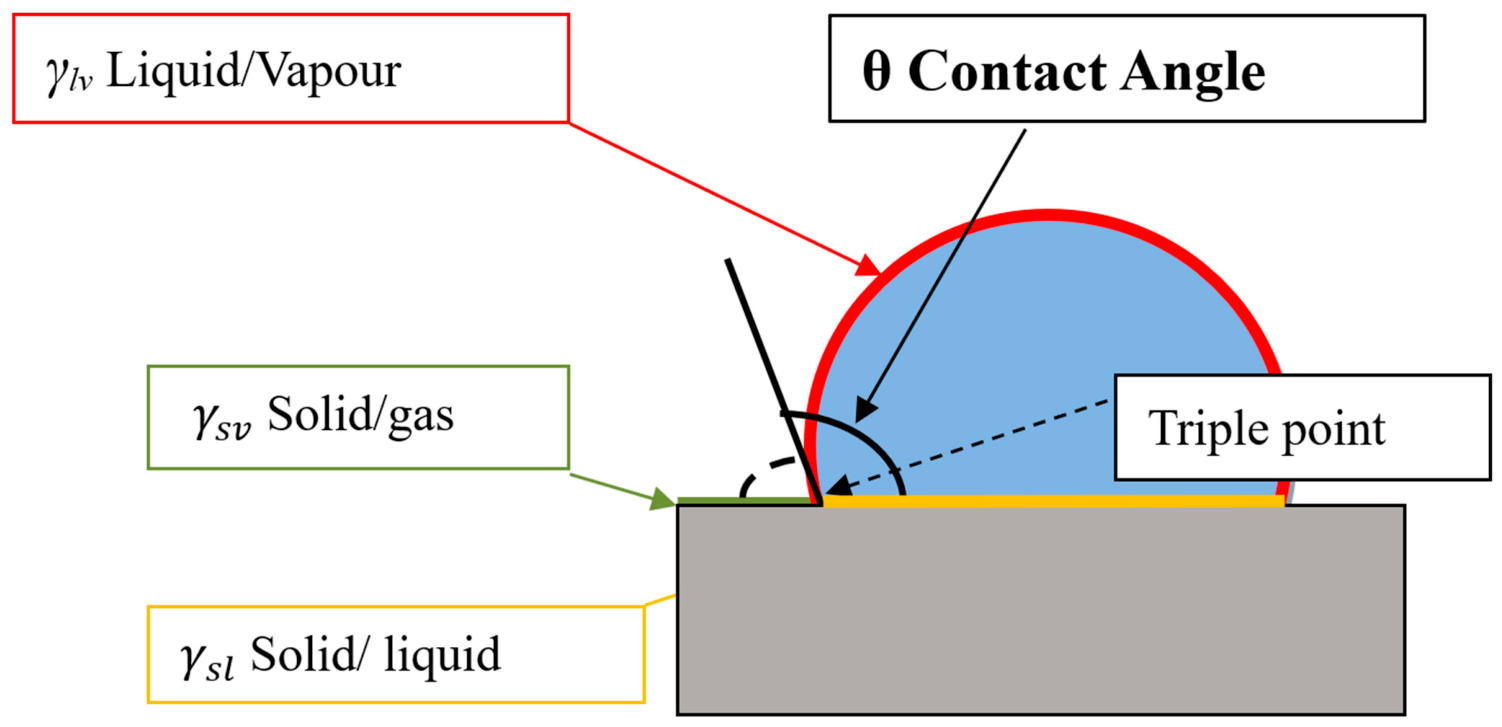
Several techniques have been developed to evaluate wettability, including the Wilhelmy plate method and capillary rise measurements [16,17]. Among these, contact angle measurement via the sessile drop method is one of the most widely used [18,19]. Technically, the contact angle is the angle between the solid–liquid (yellow line) and liquid–vapor (red line) interfaces at the three-phase contact point of a sessile drop on a solid surface (Figure 1).
Contact angles depend significantly on the underlying substrate; for instance, while water spreads almost completely on hydrophilic glass or acrylic (thanks to the polar groups), it fails on wet hydrophobic materials like Teflon [21,22,23,24]. The boundary between wetting and non-wetting behavior occurs at a contact angle of 90°. Contact angles below 90° denote a wettable (hydrophilic) surface, while contact angles greater than 90° indicate a non-wettable (hydrophobic) surface [25,26]. For instance, a drop of water shows a contact angle of less than 25° on glass and higher than 100° on Teflon. While wettability is influenced by numerous parameters, Table 1 summarizes the standard classifications of wetting states as a function of the water contact angle on the surface [27].
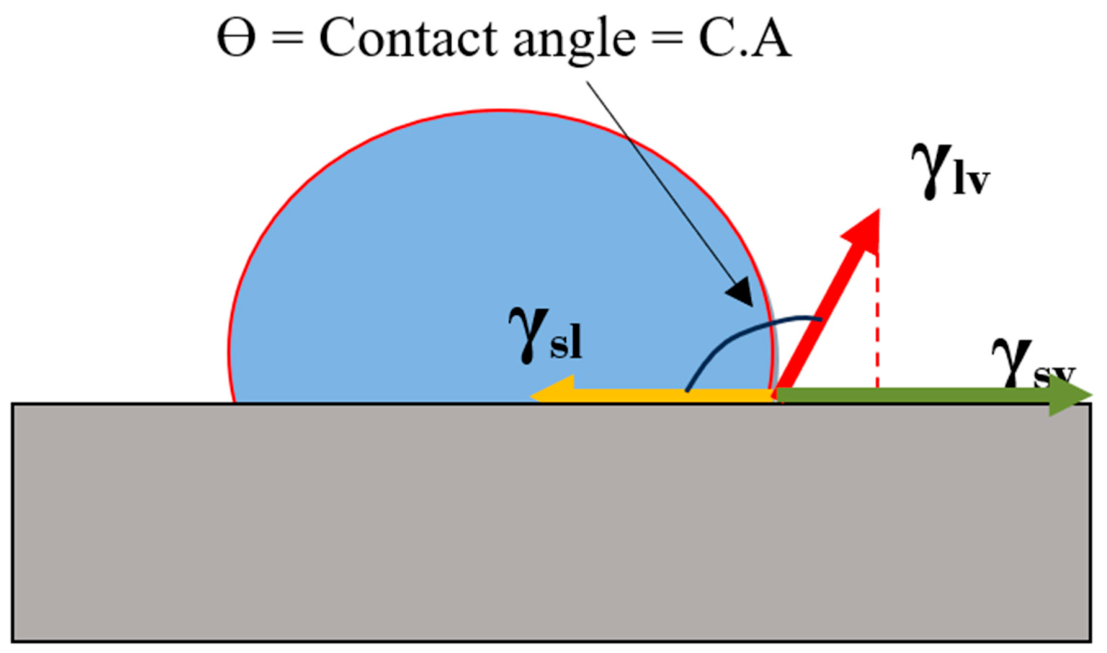
Wetting phenomena have been studied scientifically for over two hundred years, dating back to 1805 when Thomas Young introduced his fundamental equation for estimating the surface tension of solids [28]. The contact angle of a drop of liquid on a solid surface is determined by the balance of mechanical reduction under the action of the three interfacial tensions, as seen in Figure 2:
  • Solid–vapor interfacial tension, γsv;
  • Solid–liquid interfacial tension, γsl;
  • Liquid–vapor interfacial tension, γlv.
The equilibrium equation is known as the Young equation:
γ l v   c o s θ = γ s v − γ s l
where θ is the contact angle:
Dupré made another key step in the description of the liquid–solid interaction. Dupré defined the work of adhesion as the work to be done to separate the liquid phase from the solid interface, as described in detail as follows:
W S L = γ s v + γ l v + γ s l
where WSL, the work of adhesion, gives an estimation of the adhesion of a liquid to a solid. Combining the Dupré equation with the Young equation gives:
W S L = γ l v ( 1 + c o s θ )
From the Young–Dupré equation, it is easy to observe that given a liquid with a specific γ l v , when the contact angle increases, liquid–solid adhesion decreases, and the theoretical limit occurs at a contact angle of 180°, where the adhesion is zero. However, both the Young and Young–Dupré equations assume a non-reactive solid–liquid interaction with an ideal flat surface. The most interesting aspect of the Young–Dupré equation is its connection between the contact angle and a fundamental thermodynamic property: the work of adhesion. The relationship between these two factors is not linear; instead, it is defined by a cosine function. This means that from a thermodynamic perspective, the work of adhesion for a contact angle of 5° is almost identical to the work of adhesion at a contact angle of 0°, as shown in Table 1. A similar effect can be observed around 180°, while a rapid change is expected around 90 °C (Table 1). This accurately reflects what happens with real materials. When a material’s observed angle is smaller than 90°, the surface is hydrophilic (water-loving) because it attracts water. This is typical of materials with polar bonds on their surface [29]. For example, glass or oxidized metals have polar bonds that can form strong adhesive interactions with water molecules, causing the water droplet to spread out [30]. Conversely, surfaces with a contact angle greater than 90° are hydrophobic (water-repelling) [31]. These materials, such as Teflon, generally lack polar bonds [32].

2. Contact Angle of Material: An Overview

As previously noted, different materials exhibit distinct water contact angles. For instance, SiO2 on a silicon wafer typically shows a contact angle of 20°, while graphite generally ranges between 70° and 90° and 316 stainless steel exhibits a contact angle of around 66°. Most common materials fall within the 20° to 90° range. In Table 2, we report contact angles of common materials.
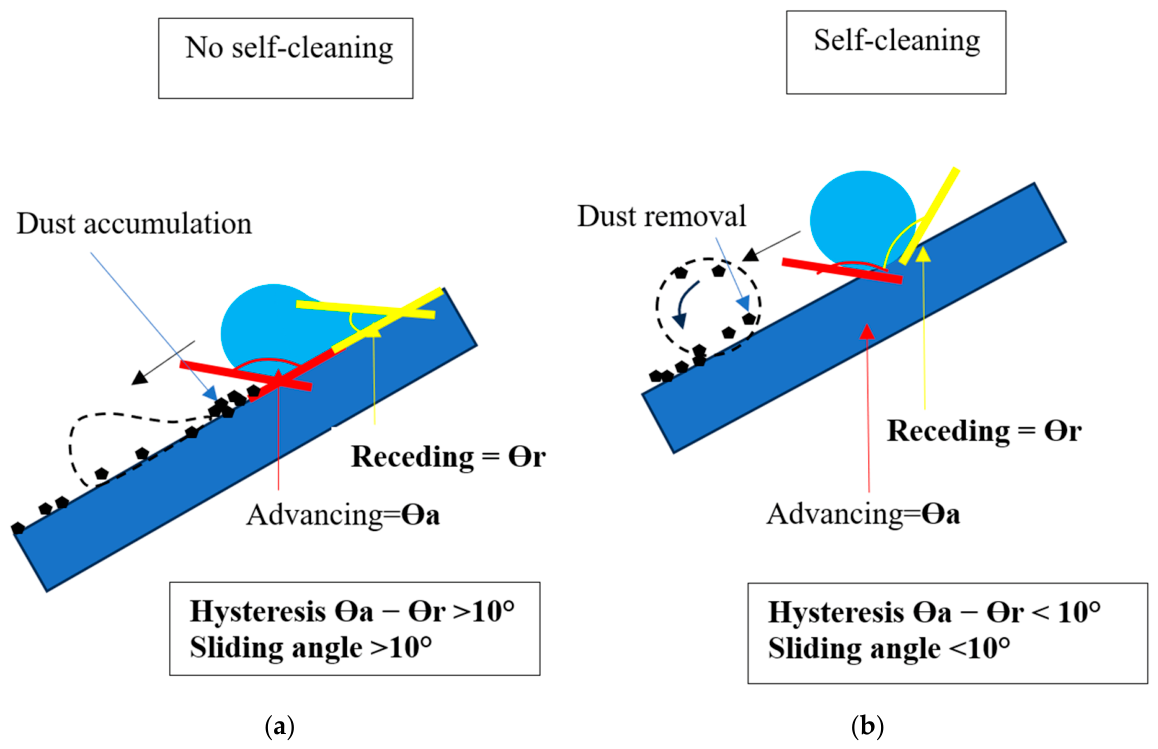
However, when the angle is below 20° or above 150°, the material’s surface begins to exhibit specialized properties such as high hydrophilicity or high hydrophobicity that can be used for specific applications. A classic example is the lotus leaf, which displays a contact angle exceeding 150°; the surface starts to show “self-cleaning” properties [13]. Superhydrophobicity can enable a “self-cleaning” mechanism: the contact angle is so high that water droplets roll across the surface instead of sliding, effectively sequestering contaminants [58]. Drawing a parallel to classical mechanics and the invention of the wheel, the rolling friction coefficient is significantly lower than the sliding friction coefficient. Consequently, water is shed effortlessly from the surface. During this rotation, the droplet picks up particles and debris, effectively cleaning the material surface as it moves, Figure 3. In a self-cleaning surface, in addition to the static contact angle, contact angle hysteresis is a critical parameter [44]. When a surface is placed on an inclined plane, the droplet shape deforms due to the force of gravity. The contact angle at the downhill edge (the advancing angle ϴa increases as the liquid is pushed forward by its own weight. Conversely, the angle at the uphill edge (the receding angle ϴr) decreases as the liquid is pulled downward.
The difference between these two angles defines hysteresis, which determines how easily a droplet can slide or roll off a surface. To obtain a rolling effect, the hysteresis usually needs to be less than 10–5° [59].
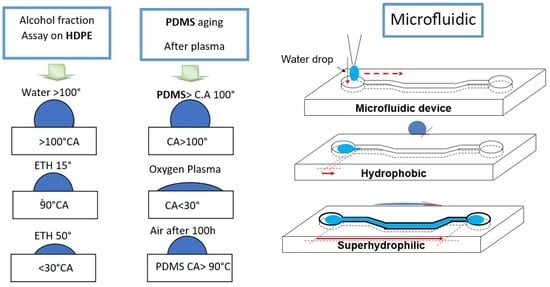
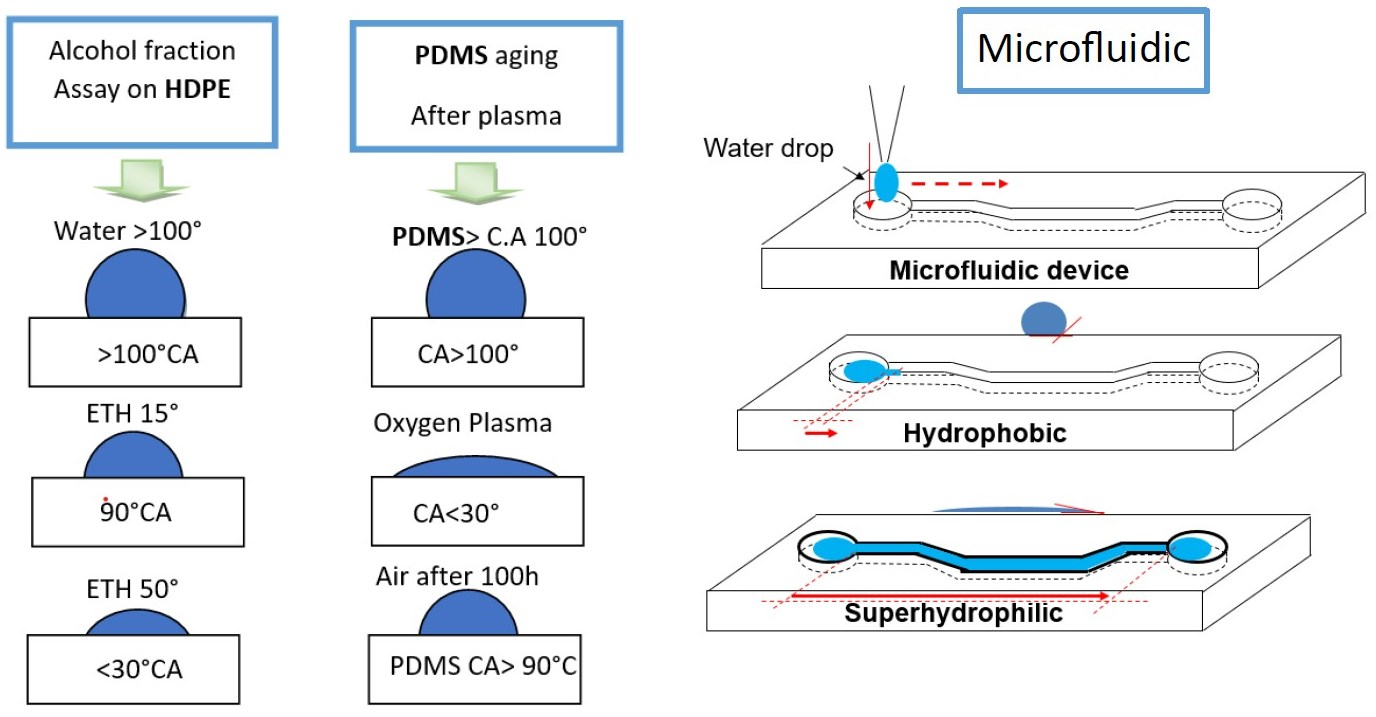
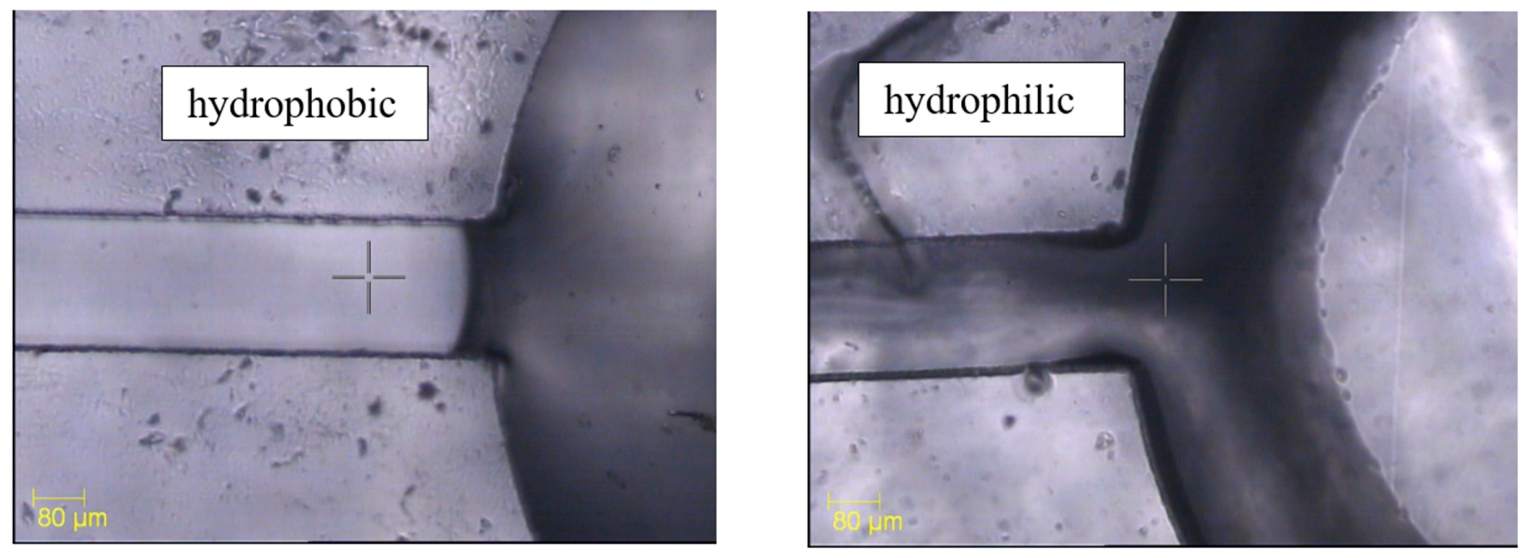
The surging interest in self-cleaning surfaces has pushed the boundaries of biomimetic science, shifting surface design toward hierarchical structures. By mimicking nature’s combination of micro- and nanoscale features, these surfaces achieve superior liquid repellence [60]. Specifically, this multi-scale roughness governs macroscopic wetting behavior by promoting the Cassie–Baxter state, where trapped air pockets induce extreme liquid repellence. As reported by Peta et al. [61], by properly balancing features across different scales (microroughness and surface waviness), these hierarchical surfaces effectively minimize contact angle hysteresis and prevent unwanted droplet pinning. Similarly, Dai et al. [62] applied advanced femtosecond pulsed laser processing followed by in situ growth of Mg-Al layered double hydroxides to create a multi-level biomimetic coating on a magnesium alloy. The resulting coating endows the alloy with superhydrophobicity that promotes anti-corrosion, anti-icing, and anti-fouling properties. The surface modification required to induce a superhydrophobic surface can also be performed using chemical methods. Hosseini et al. [63] reported the fabrication of a multifunctional cotton fabric engineered with a dual copper coating—copper-doped mesoporous silica nanoparticles (CuMSNs) and in situ grown copper stearate (Cusa)—to provide both superhydrophobicity and enhanced antibacterial activity. The resulting fabric demonstrated outstanding water repellency, a 99.99% bacterial reduction against both Gram-positive and Gram-negative bacteria, and strong durability over repeated washing and abrasion cycles while maintaining its intrinsic breathability. Conversely, superhydrophilic surfaces exhibit unique properties, such as high capillary forces, which are equally vital for specialized applications like microfluidics [64]. Figure 4 depicts a PDMS microchannel with a hydrophobic surface, where capillary action is absent. Conversely, on the left, the same material is shown with a hydrophilic surface, allowing water to flow through the microchannel via capillarity [65].
Based on the Young–Dupré equation and empirical observations, one might assume that measuring the contact angle of a liquid droplet is a straightforward process. However, this measurement is influenced by several factors. These include the intrinsic surface tension of the liquid itself (e.g., water’s surface tension of ~72 mJ/m2 is significantly higher than that of paraffin oil at ~22 mJ/m2 [67]), the surface chemistry of the solid, and the chemical heterogeneity of the surface in contact with the liquid [68]. Furthermore, surface roughness is a critical parameter that can significantly alter the measured contact angle. In practical contact angle (θ) measurements, it is fundamental to consider five key factors that affect the contact angle. These are divided into four intrinsic factors, which characterize the liquid–solid system, and one external factor related to measurement. The intrinsic factors include two chemical influences: the properties of the liquid probe (e.g., surface tension) and surface chemistry (e.g., surface energy). They also include two physical characteristics: surface roughness (governing microscopic contact area) and surface homogeneity (ensuring consistency). The fifth external factor that affects contact angle is drop weight or volume, which affects the final measured angle via gravitational deformation. Collectively, these five elements influence the contact angle measurements.

2.1. Intrinsic Factors That Affect Contact Angle (Liquid–Solid System)

The interaction between a liquid and a surface is governed by two primary categories of intrinsic factors: chemical and physical. As summarized in Table 3, the chemical influence is defined by the surface tension of the liquid—notably high for water at 72 mJ/m2 and significantly lower for ethanol at 22 mJ/m2—as well as the chemical composition of the substrate itself. For instance, glass typically exhibits a much lower water contact angle compared to transparent polymers like PMMA. Complementing these chemical drivers are the main physical parameters, namely surface roughness and homogeneity, which further dictate the observed wetting behavior. Detailed examples illustrating these interactions are provided in the following section.

2.2. External Factor That Affects Contact Angle (Experimental Control)

In addition to the intrinsic chemical and physical properties of the materials and the probe liquid, several external factors can influence the contact angle, such as:
  • Drop Weight/Volume: An external factor that influences the drop’s geometry due to gravity, thus affecting the measurement.
  • Evaporation: Liquid evaporation influences the contact angle over time.
  • Reactivity: Reaction of a probe liquid with the surface (e.g., HF acid with a liquid).
In laboratory practice, factors 1 and 5, 6, and 7 are typically kept under control in order to isolate, as much as possible, the intermolecular interactions between liquid and solid surface:
  • Liquid Control (Point 1): Researchers use a standardized liquid probe, such as deionized or MilliQ water, which has known chemical and physical properties. The magnitude of the static contact angle ( θ ) is inherently governed by the surface tension of the probing liquid ( γ L V ) in accordance with Young’s equation. While water exhibits a relatively high surface tension ( ≈ 72.8   mN / m at 20 °C), organic liquids such as oils (e.g., hexadecane ≈ 27.5   mN / m , vegetable oils ≈ 32 − 35   mN / m ) and common organic solvents (e.g., ethanol ≈ 22.3   mN / m , acetone ≈ 25.2   mN / m , and toluene ≈ 28.5   mN / m ) possess significantly lower surface tensions. Consequently, low surface tension fluids tend to readily wet most conventional hydrophobic surfaces ( θ < 90 ∘ ). Achieving high contact angles ( θ > 150 ∘ ) for oils (superoleophobicity) or arbitrary organic solvents (superomniphobicity) requires not only ultra-low surface energy chemistry (e.g., fluorinated functional groups) but often specialized surface topographies, such as re-entrant or overhang micro/nanostructures, to prevent capillary penetration and stabilize the composite solid–liquid–air interface.
  • Volume Control (Point 5): The drop volume is kept small and constant using, for instance, a micropipette, often in the range of 10–1 μL, to minimize the effect in the measured angle caused by gravitational forces. Below approximately 1–2 μL, evaporation effects become important even for water.
  • Evaporation Control (Point 6): Evaporation influences the contact angle and varies due to several environmental and system parameters, including spreading, laboratory temperature, relative humidity, and ventilation. Despite these variables, it is generally possible to acquire reliable contact angle measurements using a drop volume between 1 and 2 μL. Under these conditions, the effect of evaporation can be considered negligible if measurements are acquired within 30 s of drop deposition.
  • Reactivity (Point 7): Typically, contact angle measurements are used to study inert surfaces and to investigate intermolecular interactions. Acid–base reactions, corrosion, or reactions between the probe liquid and the substrate must be avoided, requiring careful selection of the liquid probe/substrate pairing. It is important to note, however, that in some specialized studies, the time-dependent trend (or evolution) of the contact angle is intentionally used to study chemical reactivity (e.g., dynamic wetting or adsorption processes).

2.3. Effect of Surface Roughness on the Contact Angle

As shown in Table 1, surface roughness significantly influences wetting behavior; consequently, the same material can exhibit different wetting properties depending on its topographical structure. Wenzel studied the impact of roughness on the equilibrium contact angle and proposed an equation that correlates the Young (ideal) contact angle with the macroscopic contact angle [69]:
c o s θ w = r   c o s θ
where θ is the intrinsic contact angle, θ w is the apparent contact angle, and r is the ratio between the area of the rough surface and the area of the original surface. The factor r is equal to 1 when the surface is perfectly smooth. This law indicates that, for a surface with a contact angle of 90°, the apparent contact angle tends to decrease with increasing roughness. In the Wenzel model, roughness acts as an amplifier of the intrinsic wettability of a surface.

2.4. Effect of Heterogeneity of the Surface on Contact Angle

Instead of homogeneous systems, Cassie–Baxter studied the effect of surface heterogeneity and described it with the following equation:
c o s θ c = f 1 c o s θ 1 + f 2 c o s θ 2
where f 1 and f 2 represent the fractions of the surface occupied by two different types of surfaces: surface type 1 and surface type 2, having contact angles θ 1 and θ 2 , respectively. An interesting notable case of heterogeneous surfaces occurs when one of the two phases is air. Since the water droplet has a contact angle of 180° with air, the formula can be reduced as follows [68]:
c o s θ c = f 1 c o s θ 1 − f 2
An interesting phenomenon to note is that a material can exhibit hydrophobic behavior even if it is inherently hydrophilic, provided that air remains entrapped beneath the liquid. When a droplet rests on a corrugated surface, air pockets can become trapped between the droplet and the solid surface. This air-liquid interface increases the apparent contact angle, causing a hydrophilic surface to appear hydrophobic.
For instance, a flat aluminum surface typically shows a contact angle of 80°, indicating hydrophilic character. However, if the surface is etched to create micro- or nano-porosity, air bubbles can remain trapped under the droplet. If the droplet interface is 70% in contact with aluminum and 30% with air, the resulting contact angle can exceed 100°, effectively demonstrating hydrophobic behavior [68].
While the classical Wenzel and Cassie–Baxter models have long served as foundational benchmarks for describing roughness-induced wettability, recent research highlights their limitations in predicting the behavior of complex, real-world surfaces. Classical Wenzel theory assumes that roughness acts merely as a homogeneous multiplier of intrinsic wettability; however, modern findings demonstrate that this relationship is far more nuanced, governed by observation scale, structural anisotropy, and localized energy barriers.
Recent literature has increasingly shifted its focus toward hierarchical biomimetic structures that combine micro- and nanoscale features to achieve precise control over liquid repellency and directional transport [70,71]. A primary challenge remaining in the field is ensuring the thermodynamic and mechanical stability of the trapped micro-/nano-air cavity (plastron) in the Cassie–Baxter state to achieve long-term surface durability. While transitioning from flat to corrugated morphologies (e.g., in nano-graphite coatings) enhances initial static contact angles, maintaining plastron integrity under dynamic shear stress, high-pressure impacts, or combined mechanical and chemical aging remains a major hurdle for industrial adoption.
Furthermore, recent advances emphasize that wetting state dynamics cannot be decoupled from surface chemical dynamics. Topography and chemistry interact synergistically; for instance, in flexible polymers such as PDMS and PET, the dynamic reorientation of macromolecular chains (hydrophobic recovery) over time can negate the benefits of initial surface functionalization. Consequently, modern research prioritizes the engineering of “locked” or dynamic, controllable surface chemistries alongside re-entrant or anisotropic geometries to preserve robust wettability in harsh environments.
Finally, the behavior of submerged micro-/nanostructured surfaces in contact with nanobubbles remains a critical yet under-explored domain. As highlighted by recent studies [72], the complex stability mechanisms of nanobubbles on textured interfaces carry profound implications for emerging energy technologies—particularly for optimizing bubble departure dynamics during water electrolysis operation, managing hydrogen evolution, and governing fluid transport across porous membranes.

2.5. Effect of Chemical Properties of Surface: Fowkes Theory and Estimation of Surface Energy by Owens–Wendt

In addition to surface morphology, chemical interactions influence the contact angle through two primary mechanisms: (a) intermolecular forces between the liquid and the surface, and (b) chemical reactions between the liquid and the solid (reactivity). For chemically inert surfaces, understanding intermolecular interactions is fundamental to determining thermodynamic surface properties. Fowkes recognized the importance of isolating these interactions, specifically focusing on dispersive forces. Later, this approach was expanded to include acid–base interactions (including hydrogen bonding), leading to a modified expression for the work of adhesion as follows [73]:
W a = W a d + W a A B
where W a A B is the acid-based component of the work of adhesion and W a d is the component due to dispersive interactions. In the same manner, Fowkes assumed that the surface tension components were also split into different terms:
γ = γ d + γ p + γ i n d + γ H + …
where:
  • γ = total surface energy;
  • γ d = London or dispersive interaction;
  • γ p = Keesom (dipole–dipole) interaction;
  • γ i n d = Debye dipole interaction;
  • γ H = hydrogen bond interaction.
Fowkes considered a simplification in which the surface tension is due to two dominant terms, one due to non-bonding interactions (e.g., London forces), and one due to non-London forces:
γ = γ d + γ A B
where
γ A B = γ p + γ i n d + γ H + …
A geometric mean relationship was postulated both for solid–liquid and liquid–liquid interfacial tensions:
γ l s =   γ l + γ s − 2 γ l γ l s  
Combining this equation with the Young equation, for dispersive interactions the following equation is obtained:
γ l c o s θ = −   γ l − 2 γ s d γ l d
Using two dispersive liquids as probes, the surface tension can be estimated. The Owens–Wendt–Kaelble approach extended the Fowkes’ concept to cases where both dispersion and hydrogen bonding forces may operate:
γ = γ d + γ H
They regarded the surface tension as composed of two components,   γ H and γ d , which are the components of surface tension due to hydrogen bonding and dipole–dipole interactions, respectively. They postulate that:
γ s l = γ s + γ l − 2 γ s d γ l d − 2 γ s H γ l H
Combining this equation with Young’s equation:
γ l 1 + c o s θ = 2 γ s d γ l d + 2 γ s H γ l H
Because Equation (5) includes two unknown parameters, γ s d and γ s H , of the solid, it is required to use contact angle measurements of at least two known liquid probes on the same solid surface, by solving two simultaneous equations. The use of one purely dispersive liquid and another with polar components is required. The classic dispersive liquids used to estimate the surface energy by the Owens–Wendt method are diiodomethane, bromonaphthalene, and paraffin oil [20,46,74]. The usual polar liquids are water, ethylene glycol, and formamide. This method provides more complete results than the Fowkes method and provides more information about the surface, such as dispersive and polar components of the surface tension. However, with this approach, variations due to the choice of probe liquids, purity of the liquids, and roughness are possible. The use of liquids with high surface tension is suggested to avoid underestimation of the surface tension.
The Lifshitz–van der Waals/acid–base (van Oss [75]) method was proposed as a generalization of the Fowkes approach, by considering acid–base interactions at the interface [1,20,76]. A hydrogen bond is fundamentally a proton-sharing interaction between an electron-donor group (e.g., a carbonyl oxygen) and an electron-acceptor group containing a hydrogen atom covalently bound to an electronegative atom (e.g., a hydroxyl group). Consequently, hydrogen bonding represents a specific class of Lewis acid–base (acceptor–donor) interactions. Recognizing this, van Oss and co-workers proposed incorporating the Lewis acid–base concept into surface energy calculations to explicitly account for electron-acceptor ( γ + ) and electron-donor ( γ − ) contributions.
For solid–liquid systems, combining Equation (16) with Young’s equation yields:
γ l 1 + c o s θ = 2 γ s L W γ l L W + 2 γ l + γ s − − 2 γ s − γ l +
This equation is often used to determine the solid surface tension components using drop contact angle measurements for three different liquids [77]. The acid-base approach is more informative than the Owens–Wendt approach because it allows determination of the Lifshitz–van der Waals components, the electron-acceptor component, and the electron-donor component of a surface [78].

3. Bubble Contact Angle

Three-phase interfacial behavior can also be evaluated using the captive bubble technique, in which a bubble contacts a substrate submerged in a liquid phase. This configuration offers a complementary alternative to sessile drop measurements, particularly for hydrogels, biological tissues, or fully hydrated surfaces where air exposure would alter interfacial properties [20,74,79].
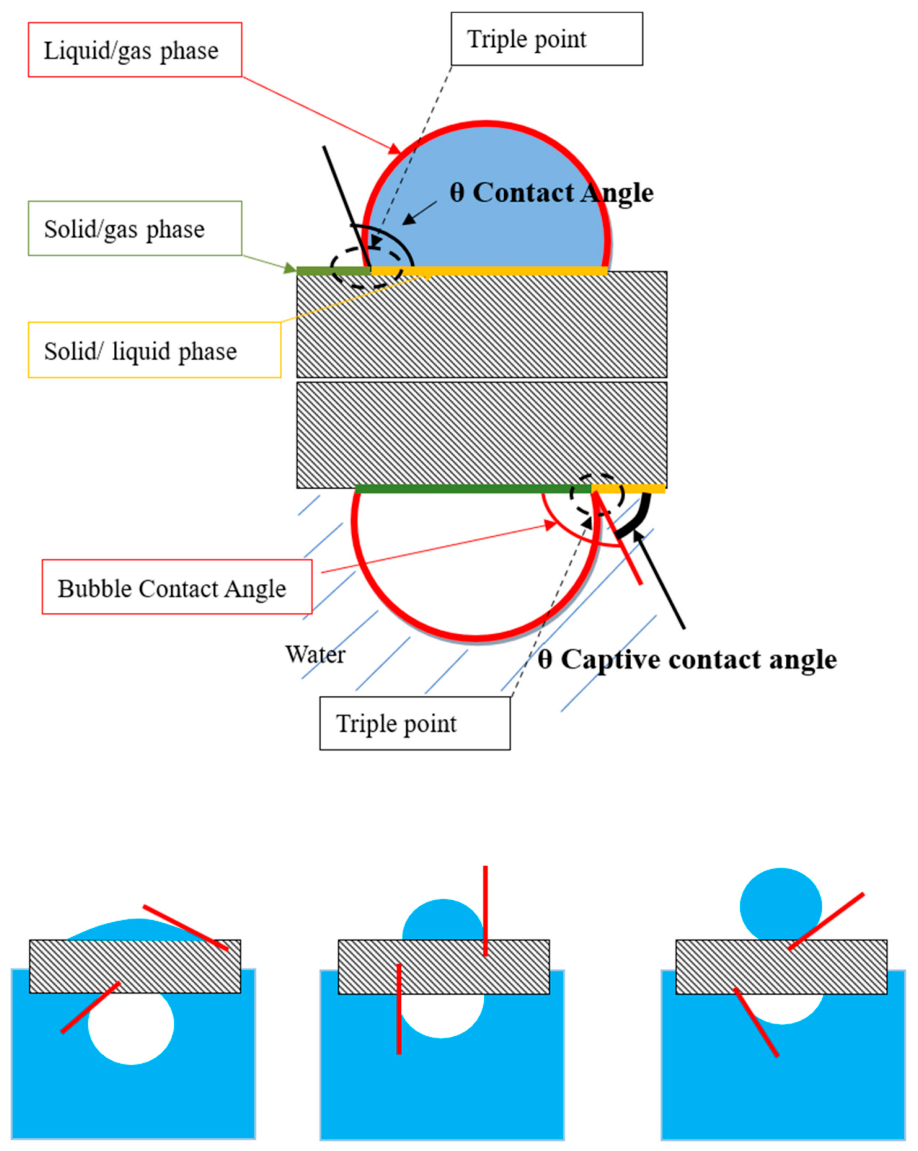
In the captive bubble contact angle configuration, an equilibrium exists among the solid–liquid, liquid–vapor, and vapor–solid interfacial tensions. In this setup, the reported contact angle is typically the complementary angle of the bubble profile. This convention ensures consistency with the sessile drop method, where the angle is measured between the solid–liquid interface and the liquid–gas interface (Figure 5). This correspondence is particularly useful when comparing sessile drop and captive bubble measurements. Bubble contact angle measurements are also employed when investigating gas–surface interactions or when studying micro- and nanobubbles. Beyond the definition of the angle itself, this configuration—where a gas bubble contacts a solid surface immersed in a liquid—is useful for characterizing the wettability of materials with high surface tension, for contact lens studies, or in situations where sessile drop measurements are difficult to obtain. Changes in the bubble contact angle can provide insights into the time-dependent stability of a surface. From a practical perspective, a hydrophilic surface typically exhibits bubble-phobic behavior—i.e., gas bubbles tend to detach rapidly. The thermodynamic theory describing the bubble contact angle is less developed than that available for sessile drop methods. Much of the research uses bubble contact angle measurements in a qualitative sense [80]. A robust and widely accepted theoretical framework for bubble contact angles is still lacking. It is also important to note that the rapid removal of bubbles from surfaces is crucial in applications such as electrolyzers, where bubble accumulation significantly affects performance [20,79].

4. Practical Examples

4.1. Example 1: Effect of Liquid Properties on Contact Angle: Measurement of Alcoholic Degree of a Solution

The contact angle of a liquid is fundamentally governed by the surface tension of the probe liquid employed. As noted by Gindl [46], water exhibits a surface tension of 72.8 mN/m, whereas ethanol possesses a significantly lower value of 21.9 mN/m—approximately 3.3 times lower than that of water. Despite the polar nature of both liquids, they exhibit striking differences in wetting behavior when deposited on an inert, non-polar surface such as high-density polyethylene (HDPE). While water maintains a contact angle greater than 100° on such surfaces, mixtures with high ethanol concentrations demonstrate contact angles below 20°. Characterizing pure ethanol remains particularly challenging due to its high volatility and rapid evaporation at ambient temperature.
Experimental data for various water–ethanol mixtures indicate that an increase in ethanol content induces a consistent reduction in the contact angle due to the difference in surface tension. This clearly demonstrates that the wetting behavior is highly sensitive to the surface tension of the liquid itself. From a practical standpoint, this implies that achieving “phobicity” (liquid repellency) is significantly more difficult for liquids with low surface tension, such as oil-based substances. Conversely, this relationship suggests that, with a controlled experimental setup and precise calibration, the contact angle can be used—mutatis mutandis—as an effective analytical tool for determining the alcohol concentration of a solution or characterizing other types of chemical mixtures.
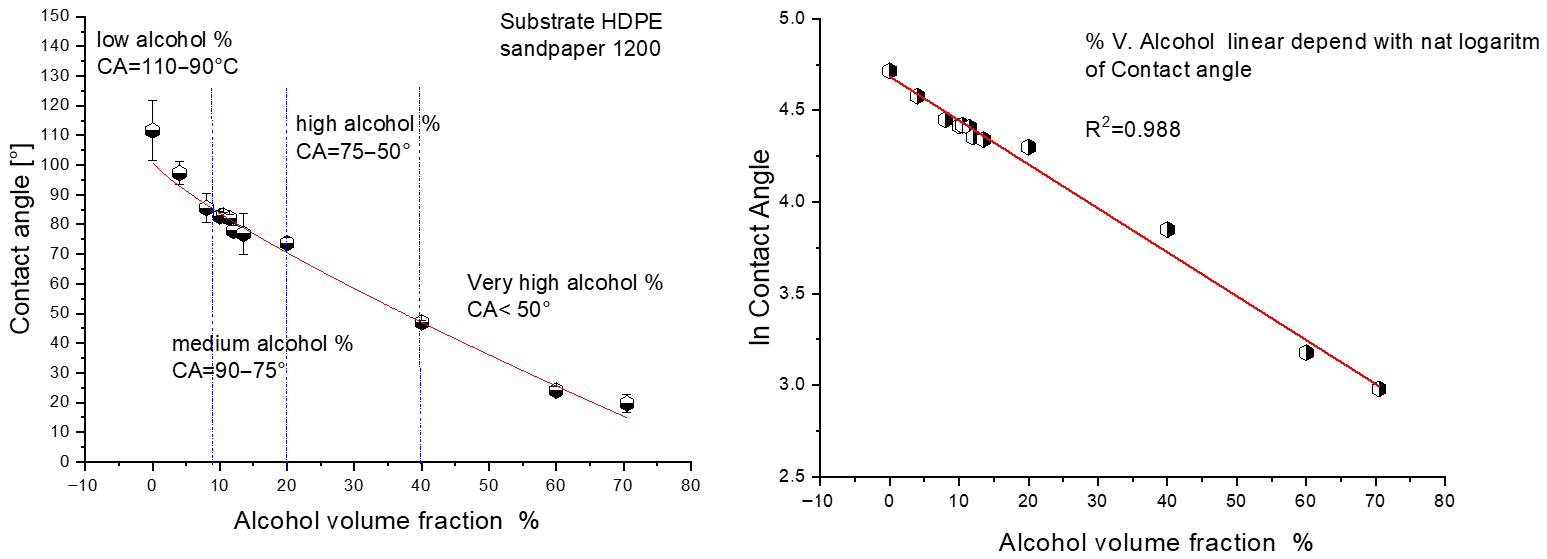
For instance, in water–ethanol mixtures, it was observed that the contact angle provides a clear indication of ethanol concentration. A contact angle of approximately 90° typically corresponds to a low ethanol content in the range of 5–15 vol%. In contrast, contact angles below 30° are associated with high ethanol concentrations, generally above 50 vol%. In this system, a logarithmic trend between ethanol volume fraction and contact angle was observed, as shown in the graph reported in Figure 6.
The relationship between the alcohol degree (expressed as volume percentage) and the water contact angle (WCA) was evaluated and is described by Equation (14). For this study, contact angle measurements were performed on high-density polyethylene (HDPE) surfaces, which were standardized by grinding with 1200-grit sandpaper, followed by an ultrasonic cleaning cycle in isopropanol for 10 min, and finally drying under a 99.999% pure nitrogen stream.
A l c o l i c   d e g r e e   % = 4.685 − ln ( W C A ) 0.024
It should be noted that variations in the substrate material or in the specific surface preparation methods are expected to influence both the absolute contact angle values and the observed wetting trends.

4.2. Example 2: Effect of Surface Roughness on Contact Angle: Graphite-Graphene

In this example, we aimed to reduce the water/graphite interaction and increase the gas-graphite interaction by increasing surface roughness and inducing the Cassie–Baxter effect. The method used was based on physical modification of morphology by introducing microcavities on the surface to promote gas trapping between the water droplet and graphite (Cassie–Baxter effect). The creation of microcavity-induced Cassie–Baxter states on a surface is still a topic of great interest in the scientific community. Many techniques can be used, such as focused ion beam, micro/nanofabrication, mechanical modification, and plasma etching.
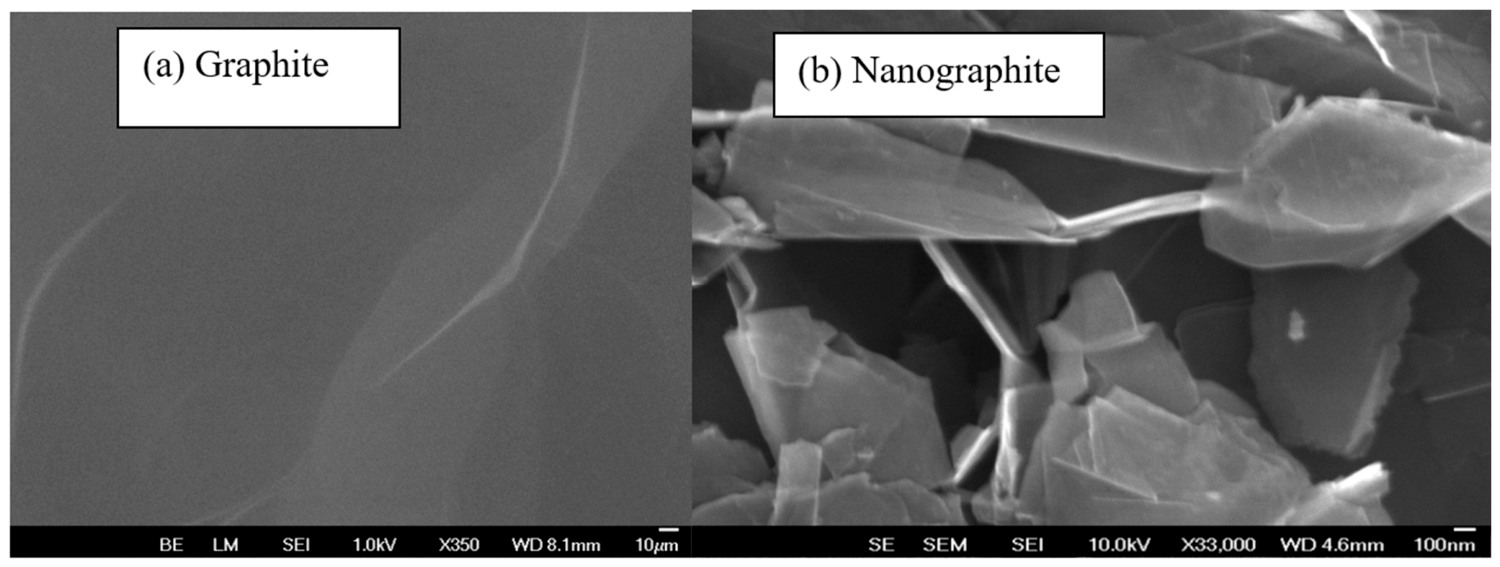
In this case, we studied the surface chemistry of exfoliated graphite and attempted to create a surface with numerous cavities using nano-graphite with similar surface properties, deposited through a dry dip-coating process. In the dry dip-coating procedure, we used nano-graphite powder with a chemical composition comparable to bulk graphite but consisting of flake-like structures with a diameter of approximately 1 µm and a thickness of about 60 nm. In order to deposit a nano-graphite coating on the surface, we used a dip coater. On the dip coater, a graphite-coated Scotch tape was attached, and the tape was gently immersed in a beaker containing nano-graphite flakes. After 10 s, the tape was removed. The graphite surface sample coated with nano-graphite flakes showed a wide range of micro- and nanocavities on the surface. Figure 7 reports the SEM images of exfoliated graphite and the surface obtained using graphite nanoplates and dry dip coating. The pristine graphite appears flat, with some steps due to exfoliation along basal planes. The nano-graphite-based surface shows a corrugated morphology; many flakes are vertically oriented (thickness 60–100 nm). Between the flakes, multiple cavities are present, and nanoscale steps associated with graphite basal planes are also observed.
The surface, therefore, shows a structure with nano-, micro-, and macro-defects. By means of XPS, we estimated the chemical composition of both surfaces. The chemical atomic composition of the samples is reported in Table 4. Only carbon and oxygen were detected. On graphite, we detected 98.2% carbon and a small percentage of oxygen (1.8%). The nano-graphite surface shows a similar composition, although the oxygen content is slightly higher (2.4%). This is expected due to the different production methods of the two materials and is likely related to the higher number of graphite edge sites, which are more prone to oxidation.
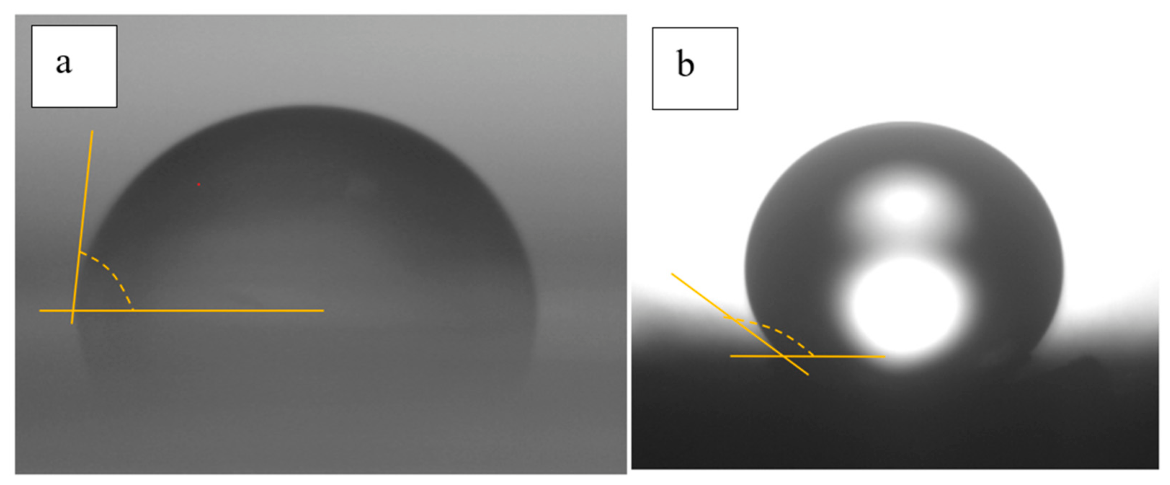
Figure 8 shows the wetting behavior of exfoliated graphite (aged 1 day) and porous nanoscale graphite (also aged 1 day). The contact angle on graphite, in agreement with previous results, is 89°. On the nanoporous graphite surface obtained by coating with nano-graphite flakes, the contact angle was 133°. The nano-graphite surface, even if more oxidized than the original graphite surface, showed a higher contact angle. This is attributed to the Cassie–Baxter effect. In the Cassie–Baxter wetting mode, air becomes trapped beneath the water droplet. Therefore, the surface becomes heterogeneous, with one region where water is in contact with carbon and another region in contact with air, which is virtually fully hydrophobic. Due to this air entrapment, a significant increase in contact angle is observed, and the surface becomes strongly hydrophobic.

4.3. Example 3: Effect of Surface Chemistry: Graphite and Oxidized Graphite

In this example, the surface of exfoliated HOPG was treated by modifying only its surface chemistry using radio-frequency (RF) oxygen plasma (instrument: Colibrì, Gambetti, (Milano, Italy). The treatment was carried out at a pressure of 0.4 bar and an electrical power of 15 W, while the plasma exposure time was varied from 10 s to 240 s.
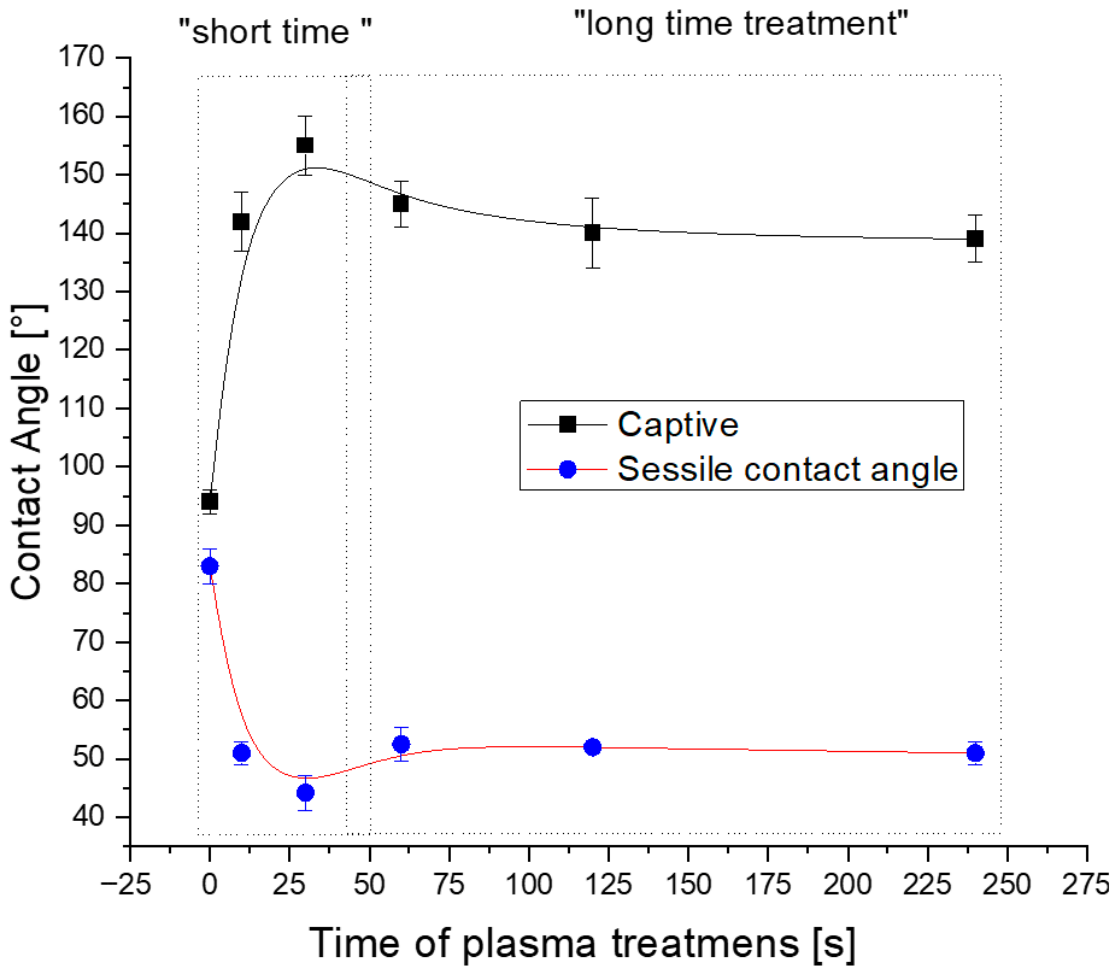
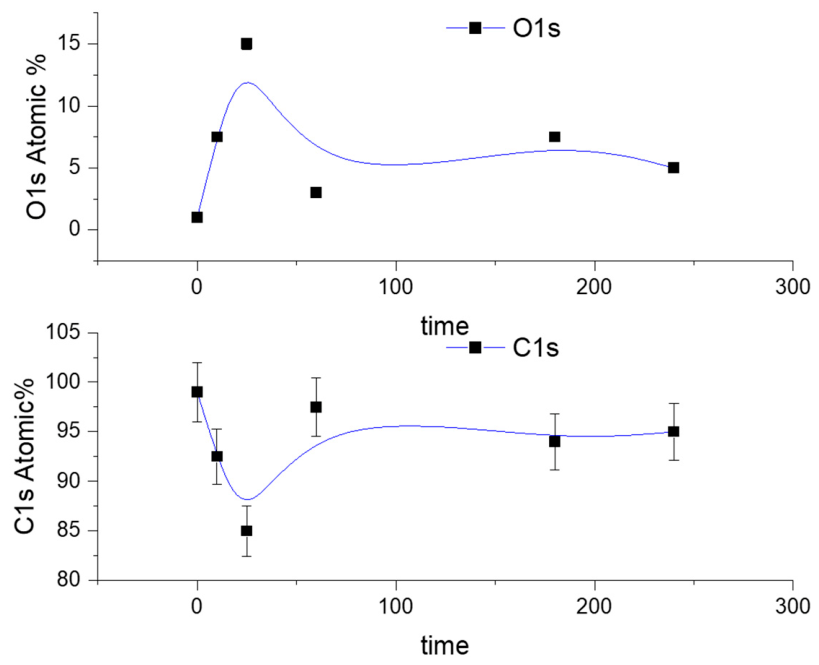
Figure 9 presents the variation in both the sessile drop contact angle and the bubble contact angle after plasma exposure. As expected, the trends of the two angles are complementary: a decrease in the sessile contact angle corresponds to an increase in the bubble contact angle, and vice versa. Both trends correlate with the oxygen content on the carbon surface, as demonstrated by the XPS analysis of the graphite samples, which shows the evolution of the oxygen and carbon signals with increasing plasma treatment (Figure 10) [20].
We observed that short plasma treatments significantly increase wettability, with the water contact angle dropping below 60°. The minimum value (≈45°) is reached after 30 s of treatment (15% oxygen). For longer exposure times (“long-time treatment”), the sessile contact angle increases slightly, indicating a partial reduction in hydrophilicity. A similar but inverted trend is found for the air bubble contact angle: during the “short-time treatment” regime, the bubble contact angle increases from 94° to 145° at 30 s and reaches up to 155° at 60 s. This increase reflects the enhanced interaction between water and the plasma-treated graphite surface, which promotes bubble repulsion. After 60 s of treatment, however, the bubble contact angle decreases, consistent with the complementary behavior of the sessile drop angle. This complementarity is expected, since the sessile and bubble contact angles represent geometrically complementary measurements.

4.4. Example 4: Temporal Stability: Hydrophilic Changes on Polymer Surfaces (Pet, Pdms)

Unlike the rigid lattices of metallic substrates, the surface morphology of polymers is inherently stochastic and dynamic. The ability of macromolecular chains to rotate and reorient—driven by the minimization of interfacial free energy—significantly dictates surface wettability. This phenomenon is particularly critical in materials such as polydimethylsiloxane (PDMS) and polyethylene terephthalate (PET), where surface stability is a prerequisite for microfluidic and bio-MEMS applications [66]. For instance, PDMS is favored for bio-MEMS thanks to its optical transparency, ease of fabrication, flexibility, and biocompatibility, but its native hydrophobicity (contact angle 107°) necessitates surface modification to enhance device performance. A clear example is shown in Figure 4, where untreated PDMS microchannels do not show spontaneous water flow, while treated PDMS shows natural capillary flow.
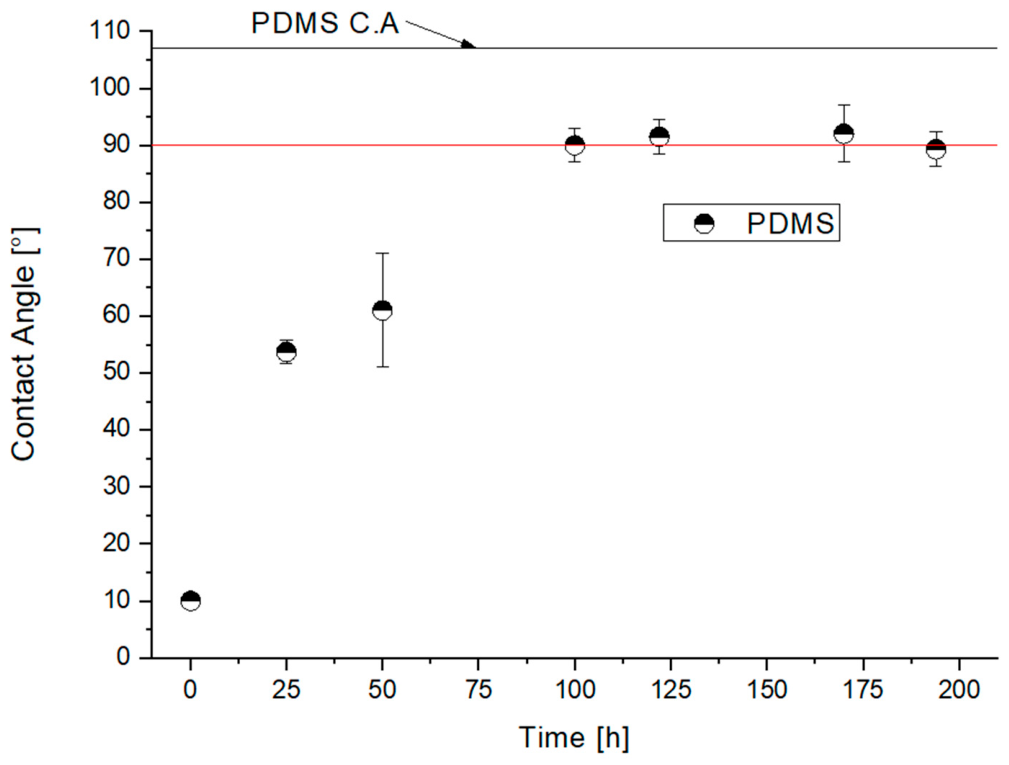
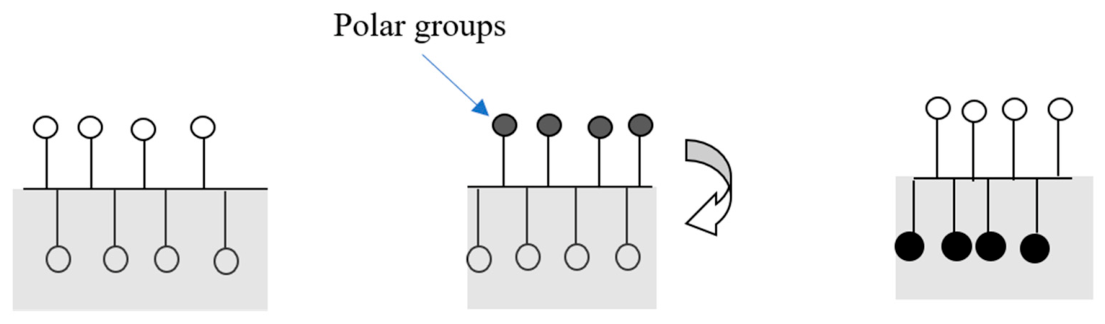
Low-pressure radio-frequency (RF) oxygen plasma has emerged as a benchmark technique for increasing polymer hydrophilicity. A more significant challenge is hydrophobic recovery: the temporal loss of wettability as polar functional groups migrate into the bulk or non-polar chains rotate back to the surface [81]. Experimental monitoring of PDMS treated with optimized oxygen plasma (0.4 mbar, 15 W, 90 s) revealed a rapid decay in wettability when samples were stored in air. As shown in Figure 11, within 150 h, the contact angle reverted to approximately 100°, representing a negligible 7% improvement over the untreated state. The recovery of initial wettability is likely driven by the rearrangement of mobile polymer chains. During this process, the polymer reorients its non-polar segments toward the interface to minimize surface energy, resulting in a subsequent increase in the contact angle [20,66]. This phenomenon, schematically represented in Figure 12 at both the single-chain and matrix levels, is widely recognized in materials science as “hydrophobic recovery” or “aging” [82]. Essentially, since the surrounding air is non-polar, the polymer thermodynamically favors burying the plasma-induced polar groups within the bulk and flipping non-polar segments back to the surface.
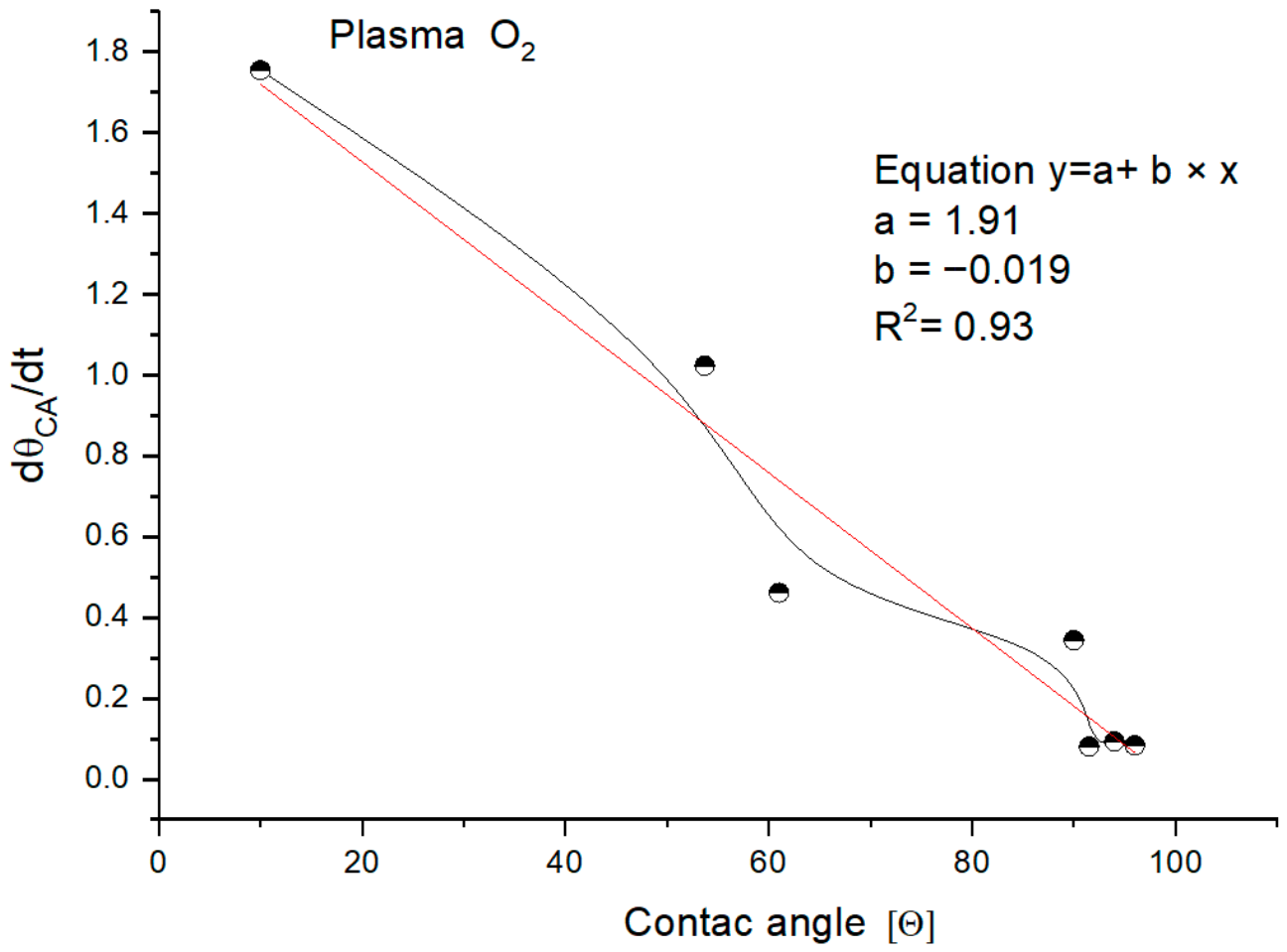
To further understand the temporal dynamics, the rate of change of the contact angle dθ/dt was studied as a function of the contact angle itself, θ (Figure 13).
The graph reveals a linear correlation between the rate of change (dϴ/dt) and the contact angle ϴ:
∂ θ ∂ t = a − b θ
By solving the differential equation, we obtain:
θ = a b + θ i − a b e − b ( t − t i )
where:
a b = k
and:
θ i − a b = c
Therefore:
θ = k + c e − b ( t − t i )
where:
  • k : represents the asymptote approached by the contact angle as time tends toward infinity;
  • c : the system constant;
  • b : the time constant 1 τ ;
  • t : time;
  • t i : the initial value;
  • τ: time constant.
The variation in the contact angle as a function of time follows an exponential law, bounded above by the constant k, with a characteristic system time τ given by 1/b. For oxygen plasma, a limiting contact angle (asymptote) of 100° is obtained, with a time constant τ of 52 h. This indicates that after 52 h, the material has already recovered a large fraction of its initial hydrophobicity (63.2%). Such a rapid recovery suggests that the steady-state reduction in the contact angle is insufficient for most bio-MEMS and microfluidic applications. In this context, analyzing the trend of contact angle measurements allows for a precise description and evaluation of surface behavior. Furthermore, monitoring the contact angle serves as a key tool to assess whether specific surface modification strategies can produce a substantial improvement in wettability, a factor that remains critical for the functional performance of bio-MEMS devices.
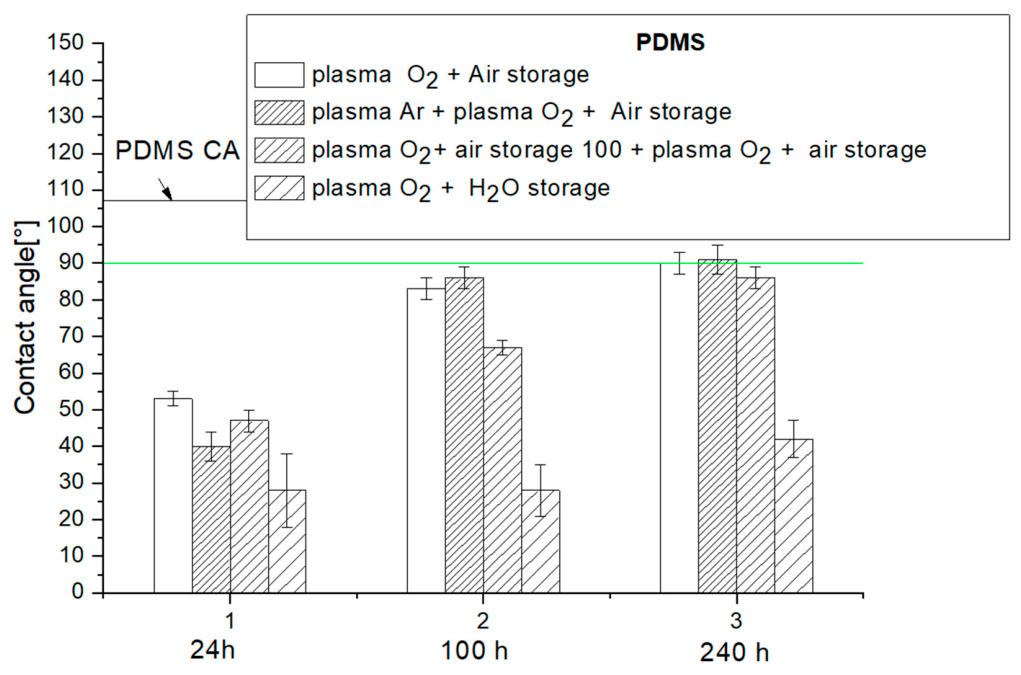
The complex surface structure of PDMS is still studied [81,82,83,84], and to mitigate the rapid hydrophobic recovery observed in plasma-treated polymers, three distinct stabilization strategies were evaluated: argon plasma pre-treatment, sequential (double) oxygen plasma treatment, and aqueous storage. The argon pre-treatment was designed to induce surface cross-linking, thereby restricting macromolecular chain mobility and hindering the subsequent reorientation of polar groups into the bulk material [21,66]. In the sequential oxygen plasma approach, an initial functionalization was followed by a 100 h recovery period to allow partial chain reorientation; a second plasma treatment was then applied to functionalize the newly exposed surface layer. This method aims to achieve a more symmetric distribution of polar bonds, increasing the probability of sustained water–surface affinity. Alternatively, post-treatment storage in water—a polar solvent—was employed to leverage favorable dipole–dipole interactions, effectively “locking” the oxygen functional groups at the interface and inhibiting their migration.
Unfortunately, not all treatments or strategies show an exponential trend with a clear threshold (e.g., treatment on PDMS or storage of polymers in water), because the nature of the polymer and the strategy involved introduce different physical and chemical phenomena. Therefore, to assess the practical viability of these methods within typical laboratory operational timelines, the water contact angle was monitored at fixed times: 24, 100, and 240 h. As illustrated in Figure 14, all protocols yielded high initial hydrophilicity within the first 24 h. However, performance diverged significantly over extended durations. Within 100 h, PDMS stored in water exhibited a remarkably low contact angle of approximately 28°, while the sequential treatment maintained a favorable angle of 67°. In contrast, both the argon pre-treatment and standard oxygen plasma yielded higher values of 85°, approaching the hydrophobic threshold. At the 240 h (10-day) mark, aqueous storage remained the most effective stabilization technique, maintaining a contact angle of 42°. The sequential treatment remained below the critical threshold at 85°, whereas both the standard oxygen plasma and argon pre-treated samples reached 90°. These results indicate that, for PDMS-based microfluidic applications requiring long-term wettability, environmental control through aqueous storage provides superior stability compared to purely process-based modifications.
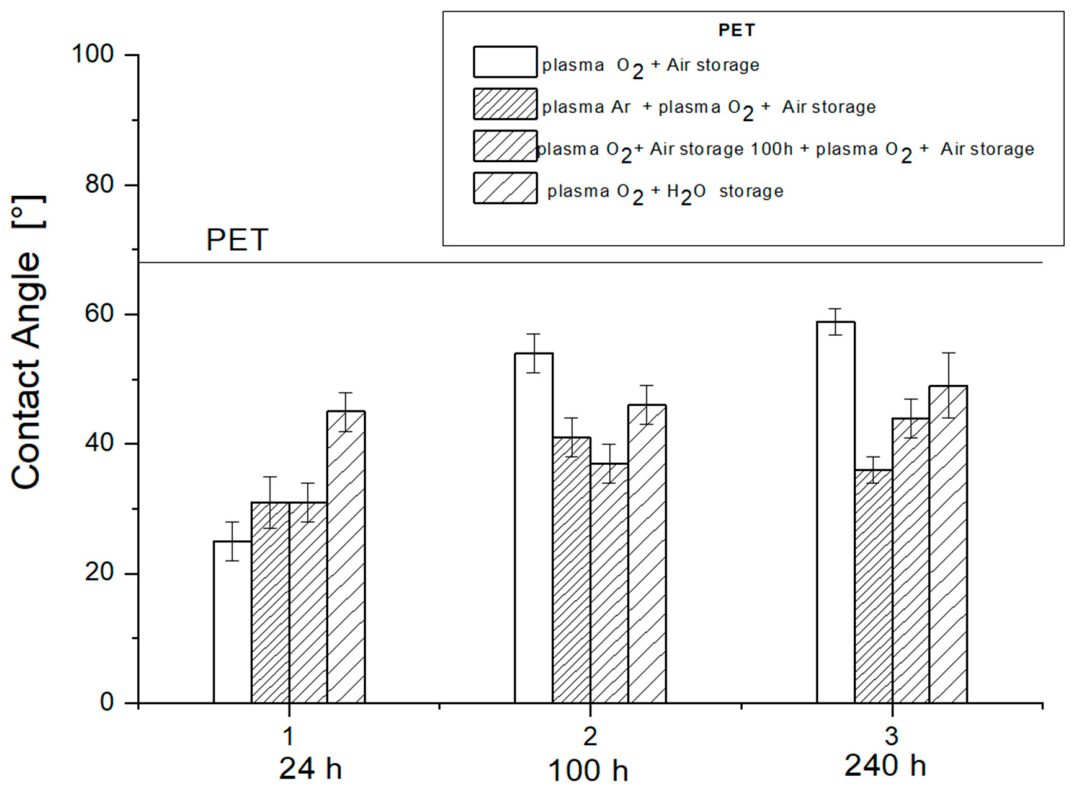
The stabilization protocols—argon pre-treatment, sequential oxygen plasma, and aqueous storage—were subsequently applied to polyethylene terephthalate (PET) to evaluate substrate-dependent aging characteristics. As illustrated in Figure 15, PET exhibits distinct recovery kinetics compared to PDMS. Following a standard oxygen plasma treatment, the contact angle initially reaches 25° after 24 h but increases to a significantly higher value of approximately 57° between 100 and 240 h. In contrast, both the argon pre-treatment and the sequential (multi-step) oxygen plasma protocols yielded superior long-term hydrophilicity. While these methods started with slightly higher contact angles (30° at 24 h), they demonstrated remarkable temporal stability, with values remaining within the 35° to 45° range after 240 h of aging. This suggests that, for PET, supplementary plasma processing exerts a non-negligible structural influence—likely through enhanced surface cross-linking or higher-density functionalization—that effectively stabilizes the hydrophilic state. Interestingly, aqueous storage produced a unique stabilizing effect on PET; the contact angle remained nearly constant at approximately 47° across all measured time intervals (24, 100, and 240 h). This behavior indicates that immersion in a polar environment effectively “locks” the polymer surface at a quasi-equilibrium state, preventing the typical structural relaxation observed in air. Consequently, while aqueous storage offers the highest degree of temporal consistency, argon pre-treatment emerges as the most effective strategy for achieving the maximum long-term reduction in the PET contact angle, providing a 47% improvement over the untreated state after 10 days.
To synthesize the findings and identify the most effective stabilization strategies, the performance of each treatment was quantified as the percentage reduction in contact angle relative to the untreated polymer substrates. For PDMS, aqueous storage emerged as the superior strategy, maintaining a contact angle of approximately 42° even after 240 h of aging; this corresponds to a 60% sustained increase in wettability compared to the native hydrophobic state. Conversely, for PET, the maximum long-term hydrophilicity was achieved through argon plasma pre-treatment. In this case, the surface modification remained highly stable over the 10-day observation period, yielding a 47% reduction in contact angle relative to untreated PET [66]. These results suggest that while environmental control is critical for the highly mobile chains of PDMS, structural modification via cross-linking is more effective for stabilizing the surface energy of PET. The methodology, based on comparison of contact angles at specific time intervals, shows that the optimal strategy for mitigating hydrophobic recovery is substrate-dependent. Furthermore, this approach enables a quantitative estimation of treatment benefits, providing a numerical basis for evaluating surface stability over time.

5. Recent Applications and Trends

While classical superhydrophobicity and static repellency have been thoroughly documented over the past two decades, recent literature (2021–2026) highlights a critical shift toward addressing fundamental gaps in dynamic stability and functional versatility. A central challenge remains the long-term stabilization of metastable wetting states under extreme environmental or hydrodynamic conditions. Simultaneously, the field is expanding into novel application paradigms beyond passive repellency. For instance, the characterization of underwater gas bubble contact angles and bubble–surface interaction dynamics has become pivotal for energy conversion systems, such as managing gas evolution in water electrolysis and membrane separation processes. Furthermore, micro-/nanotextured surfaces with tailorable wettability are increasingly being harnessed as active platforms for liquid assays, microfluidic diagnostics, and real-time chemical and biological sensing. By bridging fundamental surface force mechanics with these emerging functional applications, recent advances point toward smart, multi-responsive interfaces capable of both dynamic fluid manipulation and environmental sensing. Furthermore, other emerging paradigms are rapidly expanding the scope of contact angle research. Key among these are the development of icephobic materials and the implementation of innovative computational tools—such as machine learning (ML) and artificial intelligence (AI)—to predict wetting behavior and design surfaces with controlled wettability.

5.1. Bubble Contact Angle and Wettability in Water Electrolysis

In water electrolysis, hydrogen and oxygen bubbles continuously nucleate, grow, coalesce, and detach from the electrode surface at the solid–electrolyte–gas three-phase contact line (TPCL), whose wettability critically governs gas evolution dynamics and, consequently, the overall energy efficiency of the process [85]. In this context, the relevant descriptor is the underwater bubble contact angle θ B : a large θ B indicates that the bubble contacts the surface over a minimal area, resulting in weak adhesion and facilitated detachment. Surfaces with θ B > 150° are classified as super-aerophobic and, when coupled with low contact angle hysteresis (CAH), promote rapid bubble release. Conversely, strong bubble adhesion blocks catalytic active sites, hinders electrolyte transport, and increases the cell overpotential [86,87]. On textured electrodes, θ B deviates from the ideal Young prediction, analogously to liquid droplets, owing to roughness-induced wetting transitions described by the Wenzel and Cassie–Baxter models. In practice, highly rough, low-surface-energy electrodes typically exhibit an intermediate Cassie-impregnating state, in which the electrolyte partially penetrates the surface texture while gas pockets remain trapped within the asperities [88]. Because bubble adhesion scales with the TPCL length and continuity, nanostructured surfaces that fragment the contact line reduce both the adhesion force and the bubble detachment diameter. As a result, bubble detachment exhibits a volcano-type dependence on surface architecture, reflecting the trade-off between minimizing the contact area and preserving sufficient capillary support for stable bubble nucleation [88,89].
Quantifying θ B requires the captive bubble technique rather than the conventional sessile drop method. In this configuration, the electrode is immersed in the electrolyte while a gas bubble is generated from an inverted needle beneath the surface, thereby reproducing the solid–electrolyte–gas interface encountered during electrolysis [87]. This approach offers two key advantages: hydrophilic materials are characterized in their fully hydrated state, and the absence of liquid evaporation ensures stable measurements over time, as the gas bubble does not shrink as a sessile droplet would. Nevertheless, the method also has important limitations. On rough substrates, the captive bubble geometry generally overestimates the intrinsic contact angle, in contrast to the bias observed for sessile drop measurements. Moreover, the measured angle depends on bubble size because of line-tension effects, making strict control of bubble volume (typically a few to tens of microlitres) and averaging over multiple surface locations essential for reliable characterization [88].
Because bubble detachment is governed primarily by contact angle hysteresis (CAH) rather than by the equilibrium contact angle alone, dynamic measurements of advancing and receding bubble angles are increasingly employed. These are obtained by controlled inflation and deflation of the captive bubble, by modified captive bubble configurations suitable for contact angles below approximately 130° [90], or, for strongly aerophobic surfaces, by constant-volume pushing–pulling protocols with ultrasonic degassing [91]. Complementary information on bubble–surface interactions can be obtained by directly measuring adhesion forces at the micronewton scale using microbalance force–distance measurements or bubble-probe force spectroscopy [92,93]. More recently, while operando high-speed imaging combined with deep learning image analysis now provides quantitative information on bubble nucleation, growth, coverage, generation frequency, detachment diameter, and release dynamics under electrochemical operating conditions [94,95,96,97,98].
These advances have directly informed the rational design of gas-releasing electrodes. For example, depth-tuned NiCo2O4 nanoarrays reach θ B ≈ 150° with a minimum adhesion force of ~9.5 μN at an optimal depth of ~2.7 μm [88]. Similarly, Co–Ni phosphide/spinel oxide electrodes attain θ B ≈ 180° while wetting within ≈300 ms, sustaining alkaline electrolysis near 3.5 A cm−2 [95]. Likewise, ordered 3D honeycomb electrodes with a discontinuous TPCL reduce the bubble detachment diameter from ≈150 to ≈100 μm [99].
Despite these advances, important challenges remain. Standardized protocols for measuring underwater bubble wettability under true operando conditions—namely on polarized, gas-evolving electrodes—are still lacking, limiting direct comparison between studies. Furthermore, the long-term stability of the underwater aerophobic state under continuous bubble evolution, electrolyte flow, high-temperature alkaline operation, and mechanical shear remains largely unexplored. This durability issue closely parallels the plastron-collapse phenomena discussed previously and represents a critical knowledge gap. Establishing robust operando characterization protocols while elucidating the degradation mechanisms of underwater aerophobicity will be essential for translating three-phase contact-line engineering into durable, high-performance water electrolyzers.

5.2. Ice Formation

Furthermore, we emphasize that other emerging paradigms are rapidly expanding the scope of contact angle research. Key among these are the development of icephobic materials and the implementation of innovative computational tools—such as machine learning (ML) and artificial intelligence (AI)—to predict wetting behavior and design surfaces with controlled wettability. The relationship between wetting properties and ice adhesion represents a frontier in surface science where static contact angles ( θ ) alone often provide an incomplete picture. While superhydrophobic surfaces ( θ ≳ 150 ∘ ) are engineered to repel supercooled droplets before freezing occurs, their efficacy relies on maintaining a stable Cassie–Baxter state. Literature reports [100,101,102] indicate that the transition from a “Cassie ice” to a “Wenzel ice” state—frequently triggered by droplet impact, high ambient humidity, or microstructural condensation—can increase shear ice adhesion strength by over 30%. Recent studies highlight that low contact angle hysteresis (CAH) serves as a more reliable predictor of icephobicity than static contact angle, as CAH governs droplet mobility prior to ice nucleation. Specifically, decomposing surface features from fine-scale microroughness to larger-scale waviness enables the engineering of interfaces that minimize the “apparent toughness” at the ice–substrate boundary.

5.3. Machine Learning and Artificial Neural Networks in Wettability Prediction

An interesting new domain in wetting and contact phenomena is the integration of machine learning (ML), artificial neural networks (ANNs), and broader artificial intelligence (AI) tools. This new topic, based on innovative computational frameworks, represents a frontier for the active characterization, surface properties prediction, and tuning of physicochemical modifications of surface wettability for specific applications. Recent advances in computer vision and data science have driven a surge in the ML and ANN technologies for evaluating surface wettability and forecasting contact angles across diverse engineering applications (Table 5). Recent applications in subsurface engineering highlight this potential: deep learning workflows utilizing CNNs, random forests, and MLPs have been deployed to predict wettability alteration in carbonate rocks during smart water-assisted foam (SWAF) processes. By utilizing input features such as ion concentrations (e.g., NaHCO 3 , NaCl , CaCl 2 ), pressure, temperature, and contact time, models such as Convolutional Neural Network (CNN), random forest (RF), and Multilayer Perceptron (MLP) can accurately predict wettability alteration [103]. To overcome limited experimental datasets, these approaches often employ advanced data augmentation techniques, such as physically constrained generative adversarial networks (GANs), expanding sample sizes while bolstering model robustness [94,103,104,105].
The main draw of ML in wettability research is its ability to handle complex, non-linear dependencies—like the subtle thermal effects behind contact angle hysteresis—that traditional fitting methods struggle to capture. In goniometry, image-based vision models also remove the operator bias inherent in manual baseline selection. Still, these models come with trade-offs. Most reservoir-focused tools are trained on lab-scale measurements and omit critical fluid properties, such as detailed crude oil chemistry. Bridging these algorithms with dynamic, field-scale data remains a key challenge, but doing so will be essential for optimizing multiphase flows in enhanced oil recovery (EOR) and designing tailored functional coatings [105].

6. Summary

Contact angle analysis remains one of the most versatile methods for evaluating solid surfaces and liquid interfaces, and it is also one of the most surface-sensitive techniques. Over time, it has evolved well beyond a basic binary test for hydrophobicity, proving to be a remarkably sensitive way to probe interfacial phenomena down to the micro- and nanoscale. Standard theoretical frameworks—including the Wenzel, Cassie–Baxter, Owens–Wendt, and van Oss models—allow researchers to separate surface free energy into polar and dispersive contributions while accounting for topographical effects. Recent findings also emphasize that extreme wetting conditions (θ ≲ 20° or θ ≳ 150°) are strongly dictated not only by surface geometry but also by surface chemistry. Hierarchical roughness is strategic for achieving these extreme states, particularly for obtaining superhydrophobic surfaces, and tends to persist across different material classes.
Beyond routine surface characterization, new experimental strategies have broadened the scope of contact angle goniometry. A clear example is the “reverse probe” concept: by standardizing a low-energy substrate like Teflon or high-density polyethylene, the contact angle can be used as a direct analytical tool to determine liquid properties, such as measuring ethanol concentrations in water. Similarly, long-term studies on plasma-treated polymers show that the surfaces of many materials are dynamic rather than static. Managing hydrophobic recovery requires tailored approaches, such as storing treated polydimethylsiloxane in water or using argon plasma for polyethylene terephthalate, both of which offer practical guidelines for designing microfluidic devices and medical implants. Submerged captive bubble measurements extend these principles to gas-evolving systems in immersed environments, where bubble interaction with surfaces can represent an interesting characteristic to study, as bubble detachment can impact the efficiency of electrolyzers, fuel cells, and specialized optical lenses. Despite how established the technique is, several clear challenges persist. Maintaining the mechanical and thermodynamic stability of the trapped air layer—the plastron—in Cassie–Baxter states under fluid flow or high-pressure impacts remains a major barrier for superhydrophobic coatings. In submerged systems, a comprehensive theoretical model for bubble–surface adhesion, nanobubble nucleation, and contact line dynamics is still lacking. At the nanoscale, directly observing the structure and line tension of the three-phase boundary remains difficult due to current instrument limitations and the extremely small number of molecules involved in these narrow interfacial regions. Addressing these limitations will likely rely on combining modern experimental methods with emerging data-driven tools. Machine learning models—including convolutional neural networks, random forests, and generative adversarial networks—are proving useful for predicting wetting behavior in complex, multivariable industrial processes such as smart water-assisted foam injection, geological carbon dioxide sequestration, and enhanced oil recovery. Future work should also shift focus from passive repellent coatings toward stimuli-responsive surfaces capable of actively manipulating fluids under electric, magnetic, or thermal fields. Finally, developing practical ways to regenerate the air plastron on demand—whether through localized electrochemical gas generation or micro-injection—will be essential for taking superhydrophobic surfaces out of the laboratory and into real-world applications.
While taking a contact angle measurement is conceptually simple, the underlying physical and chemical interactions provide rich diagnostic value, and many phenomena remain unexplored (e.g., nanobubbles). Combining traditional surface thermodynamics with data science and smart material design will ensure that contact angle analysis remains central to interfacial science and functional materials engineering.

Author Contributions

Conceptualization, R.B. and V.G.; methodology, R.B.; validation, R.B. and G.D.G.; formal analysis, R.B. and V.G.; investigation, R.B. and V.G.; resources, R.B.; data curation, R.B.; writing—original draft preparation, R.B.; writing—review and editing, R.B., V.G. and G.D.G.; visualization, R.B.; supervision, R.B.; project administration, R.B. All authors have read and agreed to the published version of the manuscript.

Funding

This research received no external funding.

Data Availability Statement

No new data were created or analyzed in this study. Data sharing is not applicable to this article.

Acknowledgments

During the preparation of this manuscript, the authors utilized Google Gemini 3.6 to assist with the finalization of language, language refinement and grammar correction. The authors have reviewed and edited the output and take full responsibility for the content of this publication. Additionally, portions of this work are adapted from the Ph.D. dissertation of Bartali R. (Fondazione Bruno Kessler).

Conflicts of Interest

The authors declare no conflicts of interest.

References

  1. Mittal, K. (Ed.) Contact Angle, Wettability and Adhesion; VSP: Utrecht, The Netherlands, 2003; Volume 3. [Google Scholar]
  2. Blake, T.D. The physics of moving wetting lines. J. Colloid Interface Sci. 2006, 299, 1–13. [Google Scholar] [CrossRef] [Scilit] [PubMed]
  3. Mu, M.; Liu, S.; DeFlorio, W.; Hao, L.; Wang, X.; Salazar, K.S.; Taylor, M.; Castillo, A.; Cisneros-Zevallos, L.; Oh, J.K.; et al. Influence of surface roughness, nanostructure, and wetting on bacterial adhesion. Langmuir 2023, 39, 5426–5439. [Google Scholar] [CrossRef] [Scilit] [PubMed]
  4. Xia, D.; Johnson, L.M.; López, G.P. Anisotropic wetting surfaces with one-dimensional and directional structures: Fabrication approaches, wetting properties and potential applications. Adv. Mater. 2012, 24, 1287–1302. [Google Scholar] [CrossRef] [Scilit] [PubMed]
  5. Darmawan, W.; Ginting, M.B.; Gayatri, A.; Putri, R.L.; Lumongga, D.; Hasanusi, A. Influence of surface roughness of ten tropical wood species on their surface free energy, varnish wettability and bonding quality. Pigment. Resin Technol. 2020, 49, 441–447. [Google Scholar] [CrossRef] [Scilit]
  6. Grüßer, M.; Waugh, D.G.; Lawrence, J.; Langer, N.; Scholz, D. On the droplet size and application of wettability analysis for the development of ink and printing substrates. Langmuir 2019, 35, 12356–12365. [Google Scholar] [CrossRef] [Scilit] [PubMed]
  7. Schertzer, M.J.; Iglesias, P. Meta-analysis comparing wettability parameters and the effect of wettability on friction coefficient in lubrication. Lubricants 2018, 6, 70. [Google Scholar] [CrossRef] [Scilit]
  8. Sun, J.; Huang, J.; Lu, F.; Zhu, Y.; Li, Z. Mechanism of Zn coating on the wettability, spreadability, and microstructure of Al/steel with the laser welding-brazing method. Metall. Mater. Trans. A 2020, 51, 1677–1688. [Google Scholar] [CrossRef] [Scilit]
  9. Snustad, I.; Røe, I.T.; Brunsvold, A.; Ervik, Å.; He, J.; Zhang, Z. A review on wetting and water condensation—Perspectives for CO2 condensation. Adv. Colloid Interface Sci. 2018, 256, 291–304. [Google Scholar] [PubMed]
  10. Wei, L.; Wang, P.; Chen, X.; Chen, Z. Water vapor condensation behavior on different wetting surfaces via molecular dynamics simulation. Surf. Interfaces 2024, 52, 104981. [Google Scholar] [CrossRef] [Scilit]
  11. Zeng, H.; Wang, Z.; Chen, D.; Ding, H.; Yang, W.; Ma, L.; Lu, Y. Effect of Sc on the wettability of ER5356 welding wires and the porosity of deposited metal. ACS Omega 2024, 9, 14255–14261. [Google Scholar] [CrossRef] [Scilit] [PubMed]
  12. Guo, W.; Zhuo, Y.; Zhao, Y.; Li, H.; Han, B. Wetting behaviors of Al-Si-Cu-Mg-Zn brazing materials on 5083 aluminum alloy. Metals 2024, 14, 1183. [Google Scholar] [CrossRef] [Scilit]
  13. Zhang, M.; Feng, S.; Wang, L.; Zheng, Y. Lotus effect in wetting and self-cleaning. Biotribology 2016, 5, 31–43. [Google Scholar] [CrossRef] [Scilit]
  14. Yamamoto, M.; Nishikawa, N.; Mayama, H.; Nonomura, Y.; Yokojima, S.; Nakamura, S.; Uchida, K. Theoretical explanation of the lotus effect: Superhydrophobic property changes by removal of nanostructures from the surface of a lotus leaf. Langmuir 2015, 31, 7355–7363. [Google Scholar] [CrossRef] [Scilit] [PubMed]
  15. Barthlott, W.; Neinhuis, C. Purity of the sacred lotus, or escape from contamination in biological surfaces. Planta 1997, 202, 1–8. [Google Scholar] [CrossRef] [Scilit]
  16. Park, J.; Pasaogullari, U.; Bonville, L. Wettability measurements of irregular shapes with Wilhelmy plate method. Appl. Surf. Sci. 2018, 427, 273–280. [Google Scholar] [CrossRef] [Scilit]
  17. Esmaeilzadeh, S.; Qin, Z.; Riaz, A.; Tchelepi, H.A. Wettability and capillary effects: Dynamics of pinch-off in unconstricted straight capillary tubes. Phys. Rev. E 2020, 102, 023109. [Google Scholar] [CrossRef] [Scilit] [PubMed]
  18. Razavifar, M.; Abdi, A.; Nikooee, E.; Aghili, O.; Riazi, M. Quantifying the impact of surface roughness on contact angle dynamics under varying conditions. Sci. Rep. 2025, 15, 16611. [Google Scholar] [CrossRef] [Scilit] [PubMed]
  19. Liu, C.; Sun, C.; Dai, L.; Wang, G.; Shao, H.; Li, W.; Long, W. Integrating laboratory-measured contact angles into time-dependent wettability-adjusted LBM simulations for oil-water relative permeability. Energies 2025, 18, 2404. [Google Scholar] [CrossRef] [Scilit]
  20. Bartali, R. Wettability of Graphitic Materials and Development of Graphene Layer as Barriers to Prevent the Surface Degradation Induced by Water. Ph.D. Thesis, University of Trento, Trento, Italy, 2018. Available online: https://tesidottorato.depositolegale.it/static/PDF/web/viewer.jsp (accessed on 12 August 2026).
  21. Schrader, M.E. Work of adhesion of a sessile drop to a clean surface. J. Colloid Interface Sci. 1999, 213, 602–605. [Google Scholar] [CrossRef] [Scilit] [PubMed]
  22. Lim, H.; Lee, Y.; Han, S.; Cho, J.; Kim, K.J. Surface treatment and characterization of PMMA, PHEMA, and PHPMA. J. Vac. Sci. Technol. A 2001, 19, 1490–1496. [Google Scholar] [CrossRef] [Scilit]
  23. Liechti, K.M.; Schnapp, S.T.; Swadener, J.G. Contact angle and contact mechanics of a glass/epoxy interface. Int. J. Fract. 1997, 86, 361–374. [Google Scholar] [CrossRef] [Scilit]
  24. Xiang, Y.; Fulmek, P.; Platz, D.; Schmid, U. Temperature dependence of water contact angle on Teflon AF1600. Langmuir 2022, 38, 1631–1637. [Google Scholar] [CrossRef] [Scilit] [PubMed]
  25. Israelachvili, J.N. Intermolecular and Surface Forces, 3rd ed.; Academic Press: Cambridge, MA, USA, 2011. [Google Scholar]
  26. Law, K.Y. Definitions for hydrophilicity, hydrophobicity, and superhydrophobicity: Getting the basics right. J. Phys. Chem. Lett. 2014, 5, 686–688. [Google Scholar] [CrossRef] [Scilit] [PubMed]
  27. Drelich, J.; Chibowski, E. Superhydrophilic and superwetting surfaces: Definition and mechanisms of control. Langmuir 2010, 26, 18621–18623. [Google Scholar] [CrossRef] [Scilit] [PubMed]
  28. Young, T. An essay on the cohesion of fluids. In Abstracts of the Papers Printed in the Philosophical Transactions of the Royal Society of London; The Royal Society: London, UK, 1832; pp. 171–172. [Google Scholar]
  29. Bharti, B.; Kumar, S.; Kumar, R. Superhydrophilic TiO2 thin film by nanometer scale surface roughness and dangling bonds. Appl. Surf. Sci. 2016, 364, 51–60. [Google Scholar] [CrossRef] [Scilit]
  30. Hench, L.; Clark, D. Physical Chemistry of glass surfaces. J. Non-Cryst. Solids 1978, 28, 83–105. [Google Scholar] [CrossRef] [Scilit]
  31. Onda, T.; Shibuichi, S.; Satoh, N.; Tsujii, K. Super-Water-Repellent Fractal Surfaces. Langmuir 1996, 12, 2125–2127. [Google Scholar] [CrossRef] [Scilit]
  32. Krasowska, M.; Terpilowski, K.; Chibowski, E.; Malysa, K. Apparent contact angles and time of the three-phase contact formation by the bubble colliding with Teflon surfaces of different roughness. Physicochem. Probl. Miner. Process. 2006, 40, 293–306. [Google Scholar]
  33. Berdichevsky, Y.; Khandurina, J.; Guttman, A.; Lo, Y.H. UV/ozone modification of poly(dimethylsiloxane) microfluidic channels. Sens. Actuators B Chem. 2004, 97, 402–408. [Google Scholar] [CrossRef] [Scilit]
  34. Hao, Z.; Chen, H.; Zhu, X.; Li, J.; Liu, C. Modification of amorphous poly(ethylene terephthalate) surface by UV light and plasma for fabrication of an electrophoresis chip with an integrated gold microelectrod. J. Chromatogr. A 2008, 1209, 246–252. [Google Scholar] [CrossRef] [Scilit] [PubMed]
  35. Lee, S.J.; Khang, G.; Lee, Y.M.; Lee, H.B. The effect of surface wettability on induction and growth of neurites from the PC-12 cell on a polymer surface. J. Colloid Interface Sci. 2003, 259, 228–235. [Google Scholar] [CrossRef] [Scilit] [PubMed]
  36. Tsuji, H.; Satoh, H.; Ikeda, S.; Gotoh, Y.; Ishikawa, J. Contact angle lowering of polystyrene surface by silver-negative-ion implantation for improving biocompatibility and introduced atomic bond evaluation by XPS. Nucl. Instrum. Methods Phys. Res. Sect. B 1998, 141, 197–201. [Google Scholar] [CrossRef] [Scilit]
  37. Abenojar, J.; Torregrosa-Coque, R.; Martínez, M.A.; Martín-Martínez, J.M. Surface modifications of polycarbonate (PC) and acrylonitrile butadiene styrene (ABS) copolymer by treatment with atmospheric plasma. Surf. Coat. Technol. 2009, 203, 2173–2180. [Google Scholar] [CrossRef] [Scilit]
  38. Pandiyaraj, K.N.; Selvarajan, V.; Deshmukh, R.; Gao, C. Adhesive properties of polypropylene (PP) and polyethylene terephthalate (PET) film surfaces treated by DC glow discharge plasma. Vacuum 2008, 83, 332–339. [Google Scholar] [CrossRef] [Scilit]
  39. Li, Z.; Wang, Y.; Kozbial, A.; Shenoy, G.; Zhou, F.; McGinley, R.; Ireland, P.; Morganstein, B.; Kunkel, A.; Surwade, S.P.; et al. Effect of airborne contaminants on the wettability of supported graphene and graphite. Nat. Mater. 2013, 12, 925–931. [Google Scholar] [CrossRef] [Scilit] [PubMed]
  40. Kozbial, A.; Li, Z.; Conaway, C.; McGinley, R.; Dhingra, S.; Vahdat, V.; Zhou, F.; D’uRso, B.; Liu, H.; Li, L. Study on the surface energy of graphene by contact angle measurements. Langmuir 2014, 30, 8598–8606. [Google Scholar] [CrossRef] [Scilit] [PubMed]
  41. Cicala, G.; Magaletti, V.; Senesi, G.; Carbone, G.; Altamura, D.; Giannini, C.; Bartali, R. Superior hardness and Young’s modulus of low temperature nanocrystalline diamond coatings. Mater. Chem. Phys. 2014, 144, 505–511. [Google Scholar] [CrossRef] [Scilit]
  42. Dai, Z.; Zhang, B.; Shi, F.; Li, M.; Zhang, Z.; Gu, Y. Effect of heat treatment on carbon fiber surface properties and fiber/epoxy interfacial adhesion. Appl. Surf. Sci. 2011, 257, 8457–8461. [Google Scholar] [CrossRef] [Scilit]
  43. Ouchene, A.; Mollon, G.; Ollivier, M.; Sedao, X.; Pascale-Hamri, A.; Dumazer, G.; Serris, E. Roughness and wettability control of soda-lime silica glass surfaces by femtosecond laser texturing and curing environments. Appl. Surf. Sci. 2023, 630, 157490. [Google Scholar] [CrossRef] [Scilit]
  44. Liu, Y.; Choi, C.H. Condensation-induced wetting state and contact angle hysteresis on superhydrophobic lotus leaves. Colloid Polym. Sci. 2013, 291, 437–445. [Google Scholar] [CrossRef] [Scilit]
  45. Papierowska, E.; Szporak-Wasilewska, S.; Szewińska, J.; Szatyłowicz, J.; Debaene, G.; Utratna, M. Contact angle measurements and water drop behavior on leaf surfaces for several deciduous shrub and tree species from a temperate zone. Trees 2018, 32, 1253–1266. [Google Scholar] [CrossRef] [Scilit]
  46. Gindl, M.; Sinn, G.; Gindl, W.; Reiterer, A.; Tschegg, S. A comparison of different methods to calculate the surface free energy of wood using contact angle measurements. Colloids Surf. Physicochem. Eng. Asp. 2001, 181, 279–287. [Google Scholar] [CrossRef] [Scilit]
  47. Webb, H.K.; Crawford, R.J.; Ivanova, E.P. Wettability of natural superhydrophobic surfaces. Adv. Colloid Interface Sci. 2014, 210, 58–64. [Google Scholar] [CrossRef] [Scilit] [PubMed]
  48. Eick, J.D.; Good, R.J.; Neumann, A.W. Thermodynamics of contact angles. II. Rough solid surfaces. J. Colloid Interface Sci. 1975, 53, 235–248. [Google Scholar] [CrossRef] [Scilit]
  49. Bico, J.; Thiele, U.; Quéré, D. Wetting of textured surfaces. Colloids Surf. Physicochem. Eng. Asp. 2002, 206, 41–46. [Google Scholar] [CrossRef] [Scilit]
  50. Murdan, S.; Poojary, C.; Patel, D.R.; Fernandes, J.; Haman, A.; Saundh, P.S.; Sheikh, Z. In vivo measurement of the surface energy of human fingernail plates. Int. J. Cosmet. Sci. 2012, 34, 257–262. [Google Scholar] [CrossRef] [Scilit] [PubMed]
  51. Schuster, J.M.; Schvezov, C.E.; Rosenberger, M.R. Influence of experimental variables on the measure of contact angle in metals using the sessile drop method. Procedia Mater. Sci. 2015, 8, 742–751. [Google Scholar] [CrossRef] [Scilit]
  52. Rahimi, M.; Fojan, P.; Gurevich, L.; Afshari, A. Aluminium alloy 8011: Surface characteristics. Appl. Mech. Mater. 2015, 719, 29–37. [Google Scholar] [CrossRef] [Scilit]
  53. Pang, X.; Zhang, L.; Yang, H.; Gao, K.; Volinsky, A.A. Residual stress and surface energy of sputtered TiN films. J. Mater. Eng. Perform. 2015, 24, 1185–1191. [Google Scholar] [CrossRef] [Scilit]
  54. Bryk, P.; Korczeniewski, E.; Szymański, G.S.; Kowalczyk, P.; Terpiłowski, K.; Terzyk, A.P. What is the value of water contact angle on silicon? Materials 2020, 13, 1554. [Google Scholar] [CrossRef] [Scilit] [PubMed]
  55. Zgura, I.; Moldovan, R.; Negrila, C.C.; Frunza, S.; Cotorobai, V.F.; Frunza, L. Surface free energy of smooth and dehydroxylated fused quartz from contact angle measurements using some particular organics as probe liquids. J. Optoelectron. Adv. Mater. 2013, 15, 627–634. [Google Scholar]
  56. Borrás, A.; López, C.; Rico, V.; Gracia, F.; González-Elipe, A.R.; Richter, E.; Battiston, G.; Gerbasi, R.; McSporran, N.; Sauthier, G.; et al. Effect of visible and UV illumination on the water contact angle of TiO2 thin films with incorporated nitrogen. J. Phys. Chem. C 2007, 111, 1801–1808. [Google Scholar] [CrossRef] [Scilit]
  57. Ditscherlein, L.; Schmidt, A.; Storti, E.; Aneziris, C.G.; Peuker, U.A. Impact of the roughness of alumina and Al2O3-C substrates on the adhesion mechanisms in a model system. Adv. Eng. Mater. 2017, 19, 1700088. [Google Scholar] [CrossRef] [Scilit]
  58. Tan, C.L.C.; Sapiha, K.; Leong, Y.F.H.; Choi, S.; Anariba, F.; Thio, B.J.R. Lotus-like effect for metal filings recovery and particle removal on heated metal surfaces using Leidenfrost water droplets. Soft Matter 2015, 11, 5400–5407. [Google Scholar] [CrossRef] [Scilit] [PubMed]
  59. Xiu, Y.; Zhu, L.; Hess, D.W.; Wong, C.P. Relationship between work of adhesion and contact angle hysteresis on superhydrophobic surfaces. J. Phys. Chem. C 2008, 112, 11403–11407. [Google Scholar] [CrossRef] [Scilit]
  60. Ghio, S.; Paternoster, G.; Bartali, R.; Belluti, P.; Boscardin, M.; Pugno, N.M. Fast and large area fabrication of hierarchical bioinspired superhydrophobic silicon surfaces. J. Eur. Ceram. Soc. 2016, 36, 2363–2369. [Google Scholar] [CrossRef] [Scilit]
  61. Peta, K.; Kubiak, K.J.; Brown, C.A. Multiscale geometric analysis of dynamic wettability on complex, fractal-like, anisotropic surfaces. Measurement 2026, 264, 120328. [Google Scholar] [CrossRef] [Scilit]
  62. Dai, L.; Cui, H.; Chen, X.; Xu, R.; Zhang, Y.; Li, L. A multi-level biomimetic LDH coatings with super hydrophobicity, corrosion resistance, anti-icing and anti-fouling properties on magnesium alloy. J. Magnes. Alloys 2025, 13, 3689–3701. [Google Scholar] [CrossRef] [Scilit]
  63. Hosseini, M.; Jafari, R. Hierarchical cotton surface engineering via mesoporous silica integration and in situ copper stearate growth for durable superhydrophobicity and enhanced antibacterial activity. Chem. Eng. J. 2026, 539, 177042. [Google Scholar] [CrossRef] [Scilit]
  64. Bartali, R.; Morganti, E.; Lorenzelli, L.; Micheli, V.; Gottardi, G.; Scarpa, M.; Safeen, M.K.; Rajesh, P.; Laidani, N. Oxygen plasma treatments of polydimethylsiloxane surfaces: Effect of the atomic oxygen on capillary flow in the microchannels. Micro Nano Lett. 2017, 12, 754–757. [Google Scholar] [CrossRef] [Scilit]
  65. Morcos, I. Surface tension of stress aneealed pyrolytic graphite. J. Chem. Phys. 1972, 57, 1801–1802. [Google Scholar] [CrossRef] [Scilit]
  66. Bartali, R. Microfluidica: Studio Della Modifica Superficiale del Polidimetilsilossano e del Polietilentereftalato Tramite Tecniche al Plasma ed Effetti sui Micro-Canali. Master’s Thesis, University of Trento, Trento, Italy, 2009. Available online: https://webapps.unitn.it/Biblioteca/en/Web/TesiDocente/190297 (accessed on 12 August 2026).
  67. Jańczuk, B.; Białopiotrowicz, T. Surface free-energy components of liquids and low energy solids and contact angles. J. Colloid Interface Sci. 1989, 127, 189–204. [Google Scholar] [CrossRef] [Scilit]
  68. Palazzi, F.; Morra, M.; Mohammadi, Z.; Grandini, S.; Giardino, L. Comparison of the surface tension of 5.25% sodium hypochlorite solution with three new sodium hypochlorite-based endodontic irrigants. Int. Endod. J. 2012, 45, 129–135. [Google Scholar] [CrossRef] [Scilit] [PubMed]
  69. Wenzel, R.N. Surface roughness and contact angle. J. Phys. Chem. 1949, 53, 1466–1467. [Google Scholar] [CrossRef] [Scilit]
  70. Boscher, N.D.; Vaché, V.; Carminati, P.; Grysan, P.; Choquet, P. A simple and scalable approach towards the preparation of superhydrophobic surfaces—Importance of the surface roughness skewness. J. Mater. Chem. A 2014, 2, 5744–5750. [Google Scholar] [CrossRef] [Scilit]
  71. Sun, S.; Wang, L.; Zhang, Y. Structure-enabled liquid manipulation: Bioinspired control across all dimensions. Lab. Chip 2026, 26, 1547–1565. [Google Scholar] [CrossRef] [Scilit] [PubMed]
  72. Huang, L.; Dong, J.; Chen, M.; Li, L.; Zhang, R. Long-Term Stability of Nanobubbles Generated via Pressure Oscillation-Hydrodynamic Cavitation: A Rapid Assessment by UV–Vis Spectrophotometry. Nanomaterials 2025, 15, 1613. [Google Scholar] [CrossRef] [Scilit] [PubMed]
  73. Fowkes, F.M.; Harkins, W.D. The state of monolayers adsorbed at the interface solid—Aqueous solution. J. Am. Chem. Soc. 1940, 62, 3377–3386. [Google Scholar] [CrossRef] [Scilit]
  74. Oosterlaken, B.M.; van den Bruinhorst, A.; de With, G. On the use of probe liquids for surface energy measurements. Langmuir 2023, 39, 16701–16711. [Google Scholar] [CrossRef] [Scilit] [PubMed]
  75. Van Oss, C.J.; Chaudhury, M.K.; Good, R.J. Interfacial Lifshitz-van der Waals and polar interactions in macroscopic systems. Chem. Rev. 1988, 88, 927–941. [Google Scholar] [CrossRef] [Scilit]
  76. Rudawska, A.; Jacniacka, E. Evaluating uncertainty of surface free energy measurement by the van Oss-Chaudhury-Good method. Int. J. Adhes. Adhes. 2018, 82, 139–145. [Google Scholar] [CrossRef] [Scilit]
  77. Volpe, C.; Siboni, S. Some reflections on acid-base solid surface free energy theories. J. Colloid Interface Sci. 1997, 195, 121–136. [Google Scholar] [CrossRef] [Scilit] [PubMed]
  78. Shen, Q. On the choice of the acid/base ratio of water for application to the van Oss-Chaudhury-Good combining rules. Langmuir 2000, 16, 4394–4397. [Google Scholar] [CrossRef] [Scilit]
  79. Xie, L.; Shi, C.; Cui, X.; Zeng, H. Surface forces and interaction mechanisms of emulsion drops and gas bubbles in complex fluids. Langmuir 2017, 33, 3911–3925. [Google Scholar] [CrossRef] [Scilit] [PubMed]
  80. Bartali, R.; Micheli, V.; Gottardi, G.; Vaccari, A.; Laidani, N. Graphene as barrier to prevent volume increment of air bubbles over silicone polymer in aqueous environment. Langmuir 2017, 33, 12865–12872. [Google Scholar] [CrossRef] [Scilit] [PubMed]
  81. Bhattacharya, S.; Datta, A.; Berg, J.; Gangopadhyay, S. Studies on surface wettability of poly(dimethylsiloxane) (PDMS) and glass under oxygen-plasma treatment and correlation with bond strength. J. Microelectromechanical Syst. 2005, 14, 590–597. [Google Scholar] [CrossRef] [Scilit]
  82. Hillborg, H.; Ankner, J.; Gedde, U.; Smith, G.; Yasuda, H.; Wikström, K. Crosslinked polydimethylsiloxane exposed to oxygen plasma studied by neutron reflectometry and other surface specific techniques. Polymer 2000, 41, 6851–6863. [Google Scholar] [CrossRef] [Scilit]
  83. Hillborg, H.; Gedde, U.W. Hydrophobicity changes in silicone rubbers. IEEE Trans. Dielectr. Electr. Insul. 1999, 6, 703–717. [Google Scholar] [CrossRef] [Scilit]
  84. Hillborg, H.; Tomczak, N.; Olàh, A.; Schönherr, H.; Vancso, G.J. Nanoscale hydrophobic recovery: A chemical force microscopy study of UV/ozone-treated cross-linked poly(dimethylsiloxane). Langmuir 2004, 20, 785–794. [Google Scholar] [CrossRef] [Scilit] [PubMed]
  85. Angulo, A.; Van Der Linde, P.; Gardeniers, H.; Modestino, M.; Fernández Rivas, D. Influence of Bubbles on the Energy Conversion Efficiency of Electrochemical Reactors. Joule 2020, 4, 555–579. [Google Scholar] [CrossRef] [Scilit]
  86. Li, M.; Xie, P.; Yu, L.; Luo, L.; Sun, X. Bubble Engineering on Micro-/Nanostructured Electrodes for Water Splitting. ACS Nano 2023, 17, 23299–23316. [Google Scholar] [CrossRef] [Scilit] [PubMed]
  87. Wong, X.Y.; Zhuo, Y.; Ren, X.; Joshi, R.; Shen, Y. Systematic mapping of hydrogen and oxygen bubble contact angles under alkaline water electrolysis conditions: Effects of temperature, KOH concentration, and immersion time. Powder Technol. 2025, 465, 121346. [Google Scholar] [CrossRef] [Scilit]
  88. Wang, Z.; Wang, H.; Jiang, R.; Wang, H.; Ren, J.; Wang, X.; Liu, J. Cassie-impregnated interface design enables efficient O2 bubble mass transfer in NiCo2 O4 array electrodes. Nano Res. 2026. [Google Scholar] [CrossRef] [Scilit]
  89. Lu, Z.; Zhu, W.; Yu, X.; Zhang, H.; Li, Y.; Sun, X.; Wang, X.; Wang, H.; Wang, J.; Luo, J.; et al. Ultrahigh Hydrogen Evolution Performance of Under-Water “Superaerophobic” MoS2 Nanostructured Electrodes. Adv. Mater. 2014, 26, 2683–2687. [Google Scholar] [CrossRef] [Scilit] [PubMed]
  90. Xue, J.; Shi, P.; Zhu, L.; Ding, J.; Chen, Q.; Wang, Q. A modified captive bubble method for determining advancing and receding contact angles. Appl. Surf. Sci. 2014, 296, 133–139. [Google Scholar] [CrossRef] [Scilit]
  91. Iwasaki, K.; Ebata, H.; Katsuragi, H. A pushing-pulling captive bubble method for precise measurement of dynamic contact angles underwater. arXiv 2026. [Google Scholar] [CrossRef] [Scilit]
  92. Ohashi, R.; Naganuma, T.; Hida, I.; Cheng, Y.C.; Ishimori, Y.; Ueda, M.; Matsushima, H. Dynamic behavior of hydrogen nanobubbles during alkaline water electrolysis using high-speed atomic force microscopy. Electrochim. Acta 2026, 559, 148591. [Google Scholar] [CrossRef] [Scilit]
  93. Shi, C.; Cui, X.; Zhang, X.; Tchoukov, P.; Liu, Q.; Encinas, N.; Paven, M.; Geyer, F.; Vollmer, D.; Xu, Z.; et al. Interaction between Air Bubbles and Superhydrophobic Surfaces in Aqueous Solutions. Langmuir 2015, 31, 7317–7327. [Google Scholar] [CrossRef] [Scilit] [PubMed]
  94. Kabir, H.; Garg, N. Machine learning enabled orthogonal camera goniometry for accurate and robust contact angle measurements. Sci. Rep. 2023, 13, 1497. [Google Scholar] [CrossRef] [Scilit] [PubMed]
  95. Liu, J.; Zeng, J.; An, Y.; Duan, Y.; Song, Q. Investigation of Gas Evolution on Nickel Wire Electrodes During Alkaline Water Electrolysis. Energies 2025, 18, 5888. [Google Scholar] [CrossRef] [Scilit]
  96. Li, Z.; Wang, H.; Ji, S.; Fan, M.; Jiang, R.; Liu, J.; Wang, X.; Wang, H.; Wang, R. Insights of O2 bubble dynamics and its induced mass transfer over commercial Ni anode electrodes. Chem. Eng. Sci. 2026, 320, 122472. [Google Scholar] [CrossRef] [Scilit]
  97. Pandey, S.; Özdemir, A.K.; Sinapova, N.G.; Niyati, A.; De Groot, M. Oxygen sticks, hydrogen glides—But current density decides! Bubble dynamics in alkaline water electrolysers. J. Power Sources 2026, 691, 240883. [Google Scholar] [CrossRef] [Scilit]
  98. Wang, B.; Lv, H.; Wang, X.; Hao, M.; Kirk, D.; Guay, D.; Thorpe, S.; Ruan, Z. Quantifying bubble-induced diffusion resistance through real-time SAM-assisted YOLO high density bubble detection algorithm. Chem. Eng. J. 2025, 512, 162422. [Google Scholar] [CrossRef] [Scilit]
  99. Nie, Y.; Chen, T.; Tian, M.; Zhang, Y.; Ruan, X.; Baibars, I.O.; Wei, D.; Zhao, C.; Zhang, G. A Superaerophobic 3D Array Electrode Promotes Gas Bubble Management in Alkaline Water Splitting. ACS Appl. Mater. Interfaces 2025, 17, 53460–53469. [Google Scholar] [CrossRef] [Scilit] [PubMed]
  100. Rønneberg, S.; Xiao, S.; He, J.; Zhang, Z. Nanoscale Correlations of Ice Adhesion Strength and Water Contact Angle. Coatings 2020, 10, 379. [Google Scholar] [CrossRef] [Scilit]
  101. He, Z.; Vågenes, E.T.; Delabahan, C.; He, J.; Zhang, Z. Room Temperature Characteristics of Polymer-Based Low Ice Adhesion Surfaces. Sci. Rep. 2017, 7, 42181. [Google Scholar] [CrossRef] [Scilit] [PubMed]
  102. Meuler, A.J.; Smith, J.D.; Varanasi, K.K.; Mabry, J.M.; McKinley, G.H.; Cohen, R.E. Relationships between Water Wettability and Ice Adhesion. ACS Appl. Mater. Interfaces 2010, 2, 3100–3110. [Google Scholar] [CrossRef] [Scilit] [PubMed]
  103. Partonia, S.; Tabatabaei-Nezhad, S.A. A deep learning model for contact angle prediction in carbonate reservoirs under smart water assisted foam injection (SWAF). Sci. Rep. 2025, 15, 42264. [Google Scholar] [CrossRef] [Scilit] [PubMed]
  104. Sanandaji, M.M.; Ebrahimzadeh, D.; Haider, M.I.; Banad, Y.M.; Poleksic, A.; Ding, H. Machine learning model for predicting surface wettability in laser-textured metal alloys. J. Laser Appl. 2026, 38, 032004. [Google Scholar] [CrossRef] [Scilit]
  105. Yu, J.; Du, M.; Zhang, Y.; Chen, X.; Yang, Z. Research Progress on Micro/Nanopore Flow Behavior. Molecules 2025, 30, 1807. [Google Scholar] [CrossRef] [Scilit] [PubMed]
Figure 1. The angle of the three phases present in a system composed of a drop put on the material (readapted from [20]).
Surfaces 09 00079 g001
Figure 2. Drop contact angle at equilibrium [20].
Surfaces 09 00079 g002
Figure 3. Droplets on a surface illustrating advancing and receding contact angles and contact angle hysteresis: (a) High hysteresis and high sliding angle showing no self-cleaning effect; (b) Rotational droplet with low hysteresis and low sliding angle demonstrating the self-cleaning effect [20].
Surfaces 09 00079 g003
Figure 4. Microchannel with hydrophobic properties, and microchannel with strong hydrophilic surface [66].
Surfaces 09 00079 g004
Figure 5. Typical setup of captive bubble contact angle, captive contact angle and bubble contact angle, indicated by arrows. Red lines indicate contact angle [20].
Surfaces 09 00079 g005
Figure 6. Contact angle versus alcohol degree, natural logarithmic of contact angle versus alcohol degree.
Surfaces 09 00079 g006
Figure 7. Surface morphology of exfoliated graphite (a) and graphite nanoplates deposited by dry dip coating on the exfoliated graphite (b) [20].
Surfaces 09 00079 g007
Figure 8. Water contact angle on exfoliated graphite (a) and on nano-graphite (b) [20].
Surfaces 09 00079 g008
Figure 9. Sessile contact angle on graphite and captive contact angle on treated graphite [20].
Surfaces 09 00079 g009
Figure 10. Carbon–oxygen percentage and oxygen atomic percentage measured by XPS on graphitic samples [20].
Surfaces 09 00079 g010
Figure 11. Variation of the contact angle as a function of time, red line indicates the transition from hydrophilic to hydrophobic [66].
Surfaces 09 00079 g011
Figure 12. A simplified sketch of the polymer chain restructuring mechanism in PDMS after plasma treatment, the arrow indicates the rotation of polymer chains [66].
Surfaces 09 00079 g012
Figure 13. Rate of change of the contact angle as a function of the contact angle, red line linear fit [66].
Surfaces 09 00079 g013
Figure 14. Contact angle at different time intervals: comparison between various PDMS treatments, black line C.A of pristine PDMS, green line indicate 90° transition form hydrophilic to hydrophobic [66].
Surfaces 09 00079 g014
Figure 15. Contact angle at different time steps, comparison between the different PET treatments [66].
Surfaces 09 00079 g015
Table 1. Contact angle, wettability, and the cosine of contact angle.
Contact AngleWettabilitycos θ
0–5°Superhydrophilic/fully wettable1–0.99
10–90°Hydrophilic0.99–0
90–150°Hydrophobic0–0.86
150–180°Superhydrophobic−1
Table 2. List of contact angles on several surface materials, surface plants and tools.
MaterialWCAReference
PDMS100–112[33]
PET94[34]
PE89[35]
PS88 ± 3[36]
PC68–90[37]
PP97 ± 5[38]
Fresh graphite64.5[39]
Aged graphite91[39]
Fresh graphene50.8[40]
Aged graphene77.6[40]
Diamond film60–80[41]
Carbon fiber42.5[42]
Glass55–60 °C[43]
Lotus Leaf152°[44]
Betulla pendula leaf80–88[45]
Salix cinerea129 (abaxial)[45]
Norway spruce72[46]
Psaltoda claripennis wings159[47]
Lepidoptera>150[47]
Skin finger>100[48]
Dentine60–70[49]
Nails70–80[50]
31666–68[51]
TiAlV56–62[51]
Al 801178[52]
TiN100–120[53]
Si (SiO2 on surface)20[54]
Fused Silica5.3–33[55]
TiO20–100 °C
(photoactive)
[56]
Al2O340–117 (texturing)[57]
Table 3. Table of intrinsic factors affecting C.A.
CategoryFactorRole/Example
Chemical1. Liquid Probe Chemical PropertiesSurface tension and polarity of the liquid (e.g., deionized/MilliQ water).
Chemical2. Surface Chemical Prop.Surface energy and functional groups of the substrate.
Physical3. Surface RoughnessDictates the actual microscopic contact area (Wenzel/Cassie–Baxter models).
Physical4. Surface HomogeneityEnsures consistency of chemical and physical properties beneath the drop.
Table 4. Surface chemistry of HOPG and graphite nanoplates estimated by XPS [20].
Atomic Percentage by XPSCarbonOxygen
HOPG98.21.8
Graphite nanoplates97.62.4
Table 5. Summary of recent machine learning approaches, applications, and key findings in surface wettability characterization and prediction.
Machine Learning ApproachApplicationMain ResultReference
Deep Learning (CNN, XGBoost, RF, GANs)Smart Water-Assisted Foam (SWAF) Injection & Carbonate Reservoirs (EOR)Predicted contact angles, based on brine chemistry, temperature, and pressure; expanded dataset from 1615 to 13,032 samples using GANs.[103]
Convolutional Neural Network (CNN)High-Throughput Goniometry & Automated Image ProcessingBypassed human baseline definition and eliminated contact edge artifacts, reducing contact angle measurement standard deviation to 6.7°.[94]
Ensemble Neural Networks & RFLaser-Textured Metal Alloys & Functional Surface EngineeringNon-linear modeled surface roughness parameters and chemical composition changes to predict wettability transitions with high precision.[104]
Multilayer Perceptron (MLP)Microfluidic Pore-Scale Dynamic DisplacementPredicted dynamic contact angles in multiphase micro-channels using capillary number, fluid velocity, and interfacial tension inputs.[105]
New demands in emerging fields—such as hydrogen infrastructure and icephobic coatings—make it clear that surface wetting is far from a solved problem. Even though contact angle goniometry is a mature technique, plenty of unexplored territory remains. Bringing tools like neural networks and AI into the fold will accelerate these insights, unlocking a whole new generation of practical applications.
Disclaimer/Publisher’s Note: The statements, opinions and data contained in all publications are solely those of the individual author(s) and contributor(s) and not of MDPI and/or the editor(s). MDPI and/or the editor(s) disclaim responsibility for any injury to people or property resulting from any ideas, methods, instructions or products referred to in the content.