Article

Tribological and Corrosion Performance of Electroless Ni-P-Al2O3 Composite Coatings on Ti-6Al-4V Alloy

1
Faculty of Materials and Chemical Engineering, Ghulam Ishaq Khan Institute of Engineering Sciences and Technology, Topi 23640, Pakistan
2
Department of Materials Science and Engineering, Institute of Space Technology, Islamabad 44000, Pakistan
3
Department of Engineering, Manchester Metropolitan University, Chester Street, Manchester M1 5GD, UK
*
Authors to whom correspondence should be addressed.
Surfaces 2026, 9(3), 66; https://doi.org/10.3390/surfaces9030066
Submission received: 3 May 2026 / Revised: 15 July 2026 / Accepted: 16 July 2026 / Published: 21 July 2026
(This article belongs to the Topic Engineered Surfaces and Tribological Performance)

Abstract

Electroless coatings mark a significant improvement in surface engineering by providing superior uniformity, precision, and functional properties compared with traditional plating processes. Electroless Ni-P-Al2O3 composite coatings were successfully deposited on Ti-6Al-4V, forming a Ni-Ti intermediate (~14–16 µm) that ensured strong interfacial bonding. Al2O3 concentration (0.2–1.4 g/L) strongly influenced microstructure and performance, with 0.4 g/L yielding the most refined coating. AFM revealed a dense, uniform surface with the lowest roughness (~23.4 nm). This composition achieved the highest hardness (464.6 HV0.1), ~157% higher than the substrate and ~53% higher than Ni-P. It also showed superior tribological behavior, reducing wear volume to ~4.46 × 10⁻⁷ mm3 and friction coefficient to ~0.32 (~85% and ~50% reductions vs. substrate). Corrosion resistance was maximized at 0.4 g/L, with the lowest corrosion current (2.45 × 10⁻⁶ A/cm2) and rate (0.0053 mpy), outperforming both Ni-P and uncoated Ti-6Al-4V due to the compact composite matrix and stable passive film.

1. Introduction

Titanium alloys possess an exceptional balance of physical, mechanical, and chemical properties, with Ti-6Al-4V being the most widely used alloy across aerospace, biomedical, automotive, marine, and energy sectors. Its low density, high specific strength, excellent corrosion resistance, biocompatibility, and thermal stability make it ideal for demanding components such as airframes, engine blades, orthopedic implants, marine propellers, and heat exchangers, where weight reduction, fatigue resistance, and long-term reliability are critical [1,2,3,4,5].
Despite its strong performance in aggressive environments, Ti-6Al-4V exhibits poor wear resistance, particularly under sliding, abrasive, and contact fatigue conditions, leading to high friction and surface degradation and hence compromising operational reliability [6]. This is owing to its low hardness and lack of self-lubrication or wear-resistant oxides, making surface modification essential to improve tribological performance without compromising mechanical or corrosion properties [7].
To address this limitation, a wide array of surface engineering methods has been employed to improve the wear performance of Ti-6Al-4V alloy. Each technique alters surface features, such as hard phases, gradient layers, or protective oxides, to improve wear resistance through distinct mechanisms. For example, Huang et al. [8] reduced wear rate by a factor of 60 when they applied a Ti5Si3/Ti3Al composite coating via laser cladding on TA2 titanium alloy. Hatakeyama et al. [9] showed that anodic oxidation outperformed plasma nitriding and TiN sputtering on TiNbSn alloy by yielding the least friction and debris. Cheng et al. [10] reported significant wear reduction on Ti-6Al-4V using an Inconel 625-SiC MMC coating produced by laser surface alloying.
Du et al. [11] showed that among WC-10Ni, NiCr, and Ni45 HVOF coatings on Ti-6Al-4V, Ni45 most effectively minimized adhesive wear without compromising the substrate integrity. Khosravi et al. [12] enhanced the wear resistance of pure titanium by forming a NiTi intermetallic layer via electroplating and heat treatment, benefiting from martensitic transformations. Chen et al. [13] improved the wear resistance of Ti-6Al-4V alloy by synthesizing TiN-TiB-Al3Ti-Ti5Si3 composite coatings using a YAG laser.
Recent studies have increasingly focused on advanced surface modification techniques to overcome the wear limitations of titanium alloys. Electrospark deposition and plasma electrolytic oxidation (PEO) have been used to form ceramic-reinforced (HfC) or amorphous coatings with enhanced hardness and low friction [14,15]. Peng et al. [16] reported improved high-load sliding performance of silicate-phosphate oxide coatings produced by PEO, attributed to the formation of lubricating oxides. Additionally, Ti/Cu/N composite films deposited on Ti-6Al-4V by DC magnetron sputtering showed good adhesion and wear resistance, with films produced from 3 mm copper inlays exhibiting superior friction and wear behavior [17].
Despite their effectiveness, many surface modification techniques such as laser cladding, laser alloying, plasma transferred arc processing, magnetron sputtering, high-velocity oxy-fuel (HVOF) spraying, and plasma nitriding involve high costs, complex equipment, elevated processing temperatures, and geometric limitations. In contrast, the electroless plating process offers a cost-effective, versatile alternative deposition solution with coatings of low internal stress and high electrical conductivity for enhancing surface functional performance [18,19,20].
Electroless Ni-P and Ni-B coatings, formed by autocatalytic chemical reduction without external current, provide uniform, conformal coverage on complex or non-conductive surfaces [21,22]. The Ni-P matrix offers wear and corrosion resistance, hardness, and lubricity, which can be modified via phosphorus content and heat treatment. Studies have shown that Ni-P/Ni-B coatings are effective for titanium alloys [23,24,25].
A key advancement is electroless Ni-P composite coatings, where second-phase particles are co-deposited with the Ni-P matrix. These are classified as soft-particle coatings (PTFE, h-BN, and graphite) for improved lubricity and hard-particle coatings (Al2O3, SiC, WC, and TiO2) for enhanced hardness and wear resistance [26].
The incorporation of Al2O3 particles into the Ni-P matrix is particularly attractive. Chemically inert, thermally stable, and mechanically strong, Al2O3 hardens the coating, reduces metal-to-metal contact, limits plastic deformation, and improves micro-abrasion resistance [27]. Moreover, such a composite coating preserves the corrosion protection performance of the Ni-P coating and results in a smooth surface finish [28].
Al2O3 particles were successfully co-deposited with Ni-P on various substrates. Gadhari et al. [26] reported that surface roughness of Ni-P-Al2O3 coatings on AISI 1040 steel increased with higher alumina content. Alirezaei et al. [29] reported abrasive wear as the main mechanism for 5–15 µm Al2O3 particles on 1045 steel. Heakal et al. [30] reported that Ni-P/Al2O3 coatings on AZ91D magnesium alloy improved corrosion resistance, though post-deposition heat treatment slightly increased the corrosion rate. Hard Ni-P-Al2O3 coatings on cast Al-Si alloys [31] resulted in better adhesion due to the presence of silicon in the substrate, as well as decreased abrasion by ~20×, and a 1 h heat-treatment at 400 °C further enhanced the abrasion resistance.
Despite the comprehensive efforts to modify the surface of Ti-6Al-4V, several key challenges, including weak adhesion, coating porosity, non-uniform distribution of reinforcing particles, and hardness–corrosion trade-off, are still unresolved. The novelty of this study lies in the development and optimization of electroless Ni-P-Al2O3 composite coatings on Ti-6Al-4V alloy and the systematic evaluation of the effects of the Al2O3 particle concentration on the coating microstructure, coating–substrate bonding on this difficult-to-coat alloy, wear resistance, and corrosion performance. By combining fundamental characterization with tribological and corrosion testing, clear structure–property–performance links for the proposed coating can be established to exploit its potential applications for aerospace components prone to wear, such as landing gear bushings, actuators, and hinges.

2. Materials and Methods

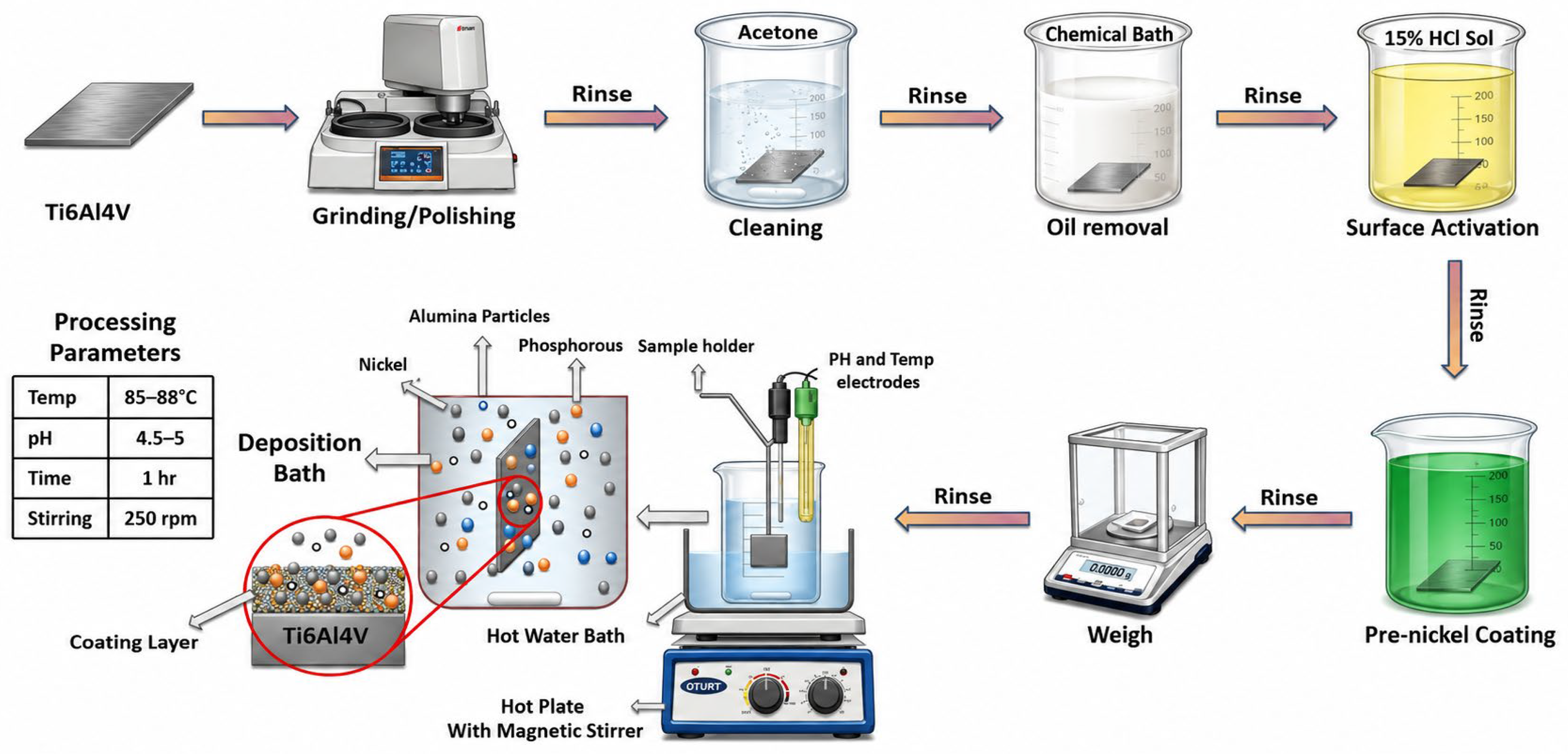
Commercial-grade Ti-6Al-4V was used as the substrate after preparing square coupons with dimensions of 25.4 mm × 25.4 mm × 1 mm. The samples were ground with SiC papers (240–2400 grit) for a smooth finish, ultrasonically cleaned in distilled water and acetone, and then degreased in an alkaline solution (40 g/L NaOH, 60 g/L Na2CO3, 15 g/L Na3PO4.12H2O, and 6 g/L Na2SiO3) at 80–90 °C for 10 min. The substrates were rinsed and activated in 15 wt.% HCl for 2 min to remove oxides and enhance surface reactivity. Below the activation time, the surface remains inactive, and above this time, the substrate could be over-etched, which also affects the coating deposition. A thin nickel layer (280 g/L NiSO4•7H2O, 190 g/L HCl) was chemically pre-plated at room temperature for 3–4 min to improve adhesion, which was kept constant for all samples, resulting in the formation of a uniform Ni-Ti intermediate layer with a thickness of approximately 14–16 μm. The superior performance of the composite coating at this thickness is attributed to the formation of a continuous and well-bonded Ni-Ti transition zone that provides efficient load transfer and minimizes interfacial stresses between the coating and substrate. After each step, the samples were rinsed with distilled water.
Electroless composite coatings were deposited from a nickel-phosphorus bath (Table 1) containing dispersed Al2O3 particles (75–200 nm). The particles were dispersed in 50 mL of distilled water with polyethylene glycol (0.2 g/L) as a surfactant and thiourea (0.001 g/L) as a stabilizer, followed by ultrasonic agitation for 30 min to ensure uniform dispersion. After stabilizing the plating bath at 87 ± 2 °C, the Al2O3 suspension was gradually added by continuous magnetic stirring at 250 rpm. The pH of the coating bath was maintained between 4.0 and 5.0, and the coatings were deposited on polished Ti-6Al-4V substrates for 40 min. The plating parameters were optimized to ensure stable deposition and effective Al2O3 incorporation. The mentioned pH and temperature promoted uniform coating growth and controlled nickel reduction, whereas deviations from these conditions could reduce deposition efficiency or destabilize the bath. Al2O3 concentrations of 0.2, 0.4, 0.6, 0.8, 1.0, 1.2, and 1.4g/L were used to study the effect of particle loadings on the coating performance. To ensure the repeatability and reproducibility of the coatings, the electroless deposition parameters (bath composition, pH, temperature, agitation, and deposition time) were first optimized through a preliminary experiment and then kept constant throughout the study. For each coating composition, three independent samples were prepared under identical conditions, and the reported values represent the average of the results obtained. The consistent trends observed among the replicated samples confirmed the good reproducibility of the coating process and the reliability of the reported properties. The Al2O3 concentration range of 0.2–1.4 g/L was adopted based on previous studies [32,33,34] to investigate both insufficient particle incorporation at low concentrations, causing a limited strengthening effect, and particle agglomeration, poor dispersion of reinforcing particles, or induced porosity, which compromised the integrity of the coating at high concentrations. Hence, a wide range of concentrations was selected to study both under-reinforcement and over-reinforcement for identifying the optimum concentration. Figure 1 presents a complete workflow for the coating deposition.
Surface morphology and cross-sections were analyzed by SEM (EVO 15, Carl Zeiss, Cambridge, UK) with EDS to assess Al2O3 dispersion and interfacial bonding in the Ni-P matrix. Phase analysis was performed by XRD (AXRD LPD, Proto, LaSalle, ON, Canada) using Cu-Kα radiation over 10–90° at 2°/min. Surface topography and roughness were examined by AFM (Nanosurf C3000, Buehler, Basel-Landschaft, Switzerland). Microhardness was measured using a Vickers tester (Tukon 300, Lake Bluff, IL, USA) at 100 gf and 15 s dwell time. Corrosion behavior was evaluated in 3.5 wt.% NaCl using a Gamry potentiostat, with Tafel polarization to determine I_corr and E_corr in a three-electrode setup.
Wear resistance was evaluated using a pin-on-disc tribometer (Microtest MT/60/NI, Madrid, Spain) under dry sliding with a hardened steel counterbody at a constant load and sliding speed, recording volume loss and friction coefficient (Vi = kiFs, where Vi is the wear volume, ki is the wear coefficient, F is the load, and S is the sliding distance). Adhesion strength was assessed by Rockwell indentation as per ASTM C1624, examining cracking, delamination, and spallation. Indents were performed around 6 different places for each sample to minimize the influence of local microstructural heterogeneity, particle clustering, and surface defects and to maximize representativeness.

3. Results and Discussion

3.1. Microstructural Analysis

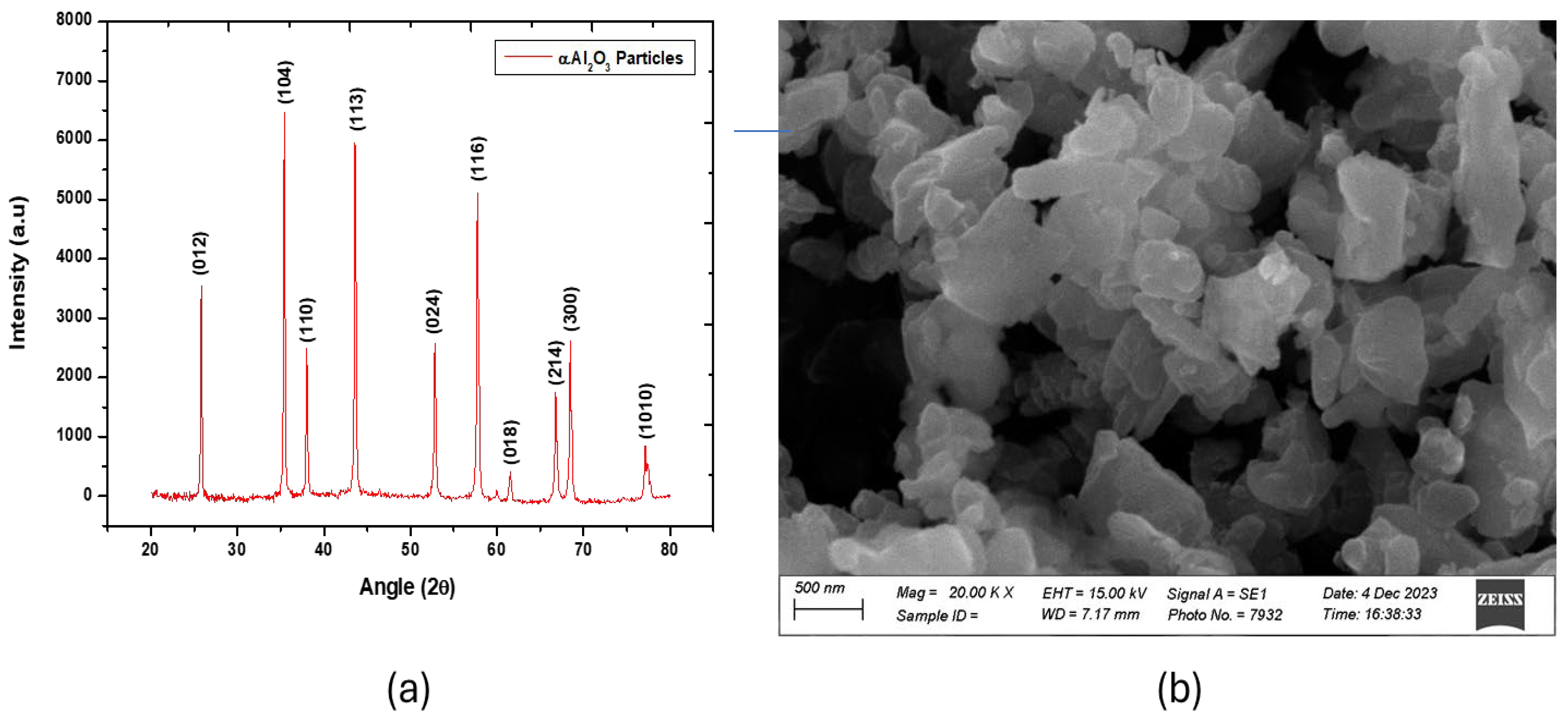
XRD spectra of α-Al2O3 particles (Figure 2a) show sharp peaks at (012), (104), (110), (113), (024), (116), (018), (214), (030), and (10 10), confirming highly crystalline corundum-phase alumina [35] and matching ICDD card 00-010-0173 for α-Al2O3. The Al2O3 powder XRD pattern was added to verify the phase composition of the reinforcement material before the deposition and provide a reference for identifying Al2O3-related peaks in the final coatings. SEM images (Figure 2b) reveal irregular, angular particles with some agglomeration due to their clustering tendency. The average particle size determined by using ImageJ software (version 1.54t) was ~173 nm.
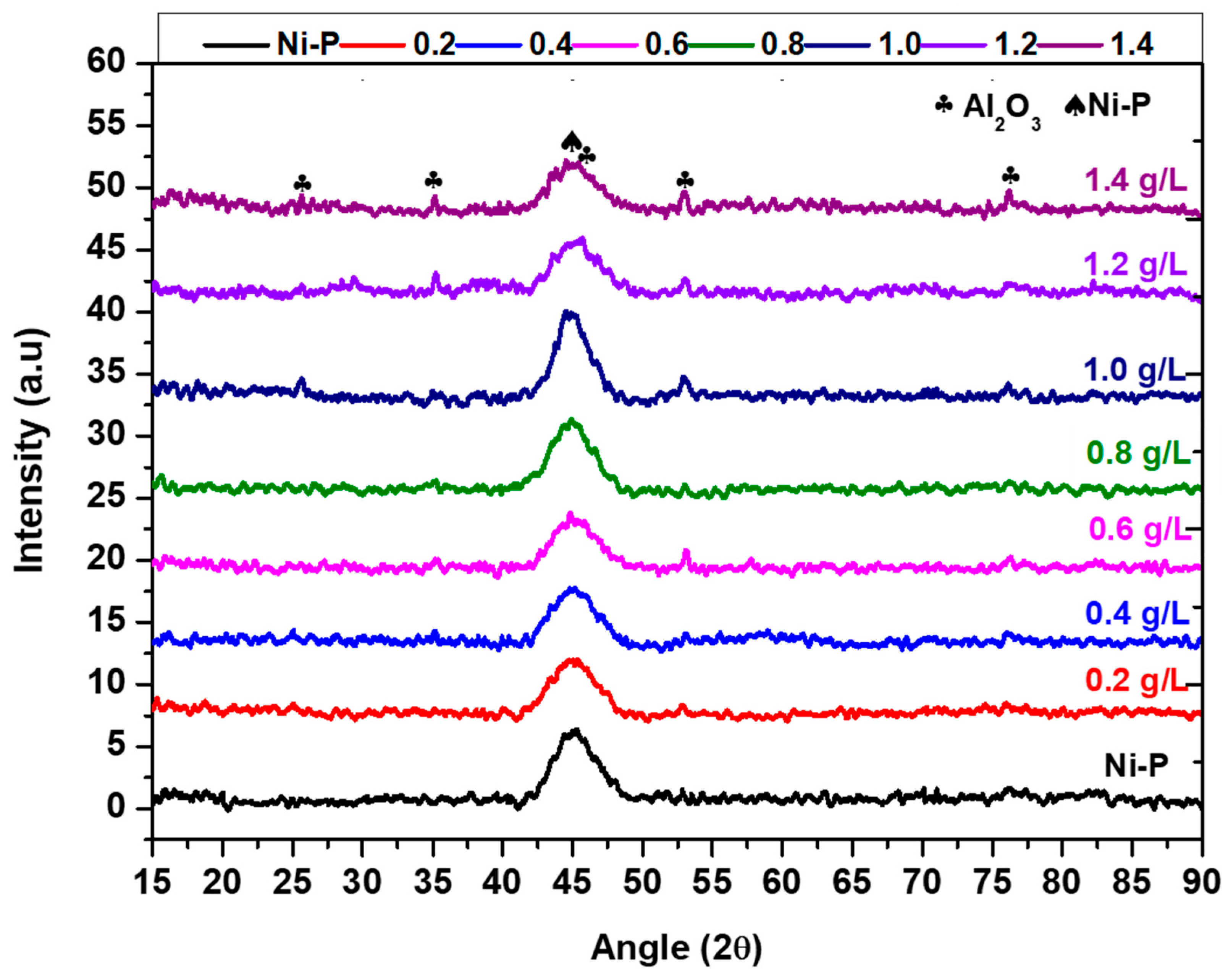
Figure 3 shows XRD patterns of electroless Ni-P and Ni-P-Al2O3 coatings on Ti-6Al-4V with Al2O3 contents of 0.2–1.4 g/L. An increasing Al2O3 concentration caused peak sharpening and intensity enhancement, indicating a transition from an amorphous to a nanocrystalline structure. The plain Ni-P coating exhibited a broad peak at ~45° corresponding to Ni (111), characteristic of an amorphous matrix due to high phosphorus content [36]. At low Al2O3 concentrations (0.2–0.4 g/L), the coatings remained largely amorphous with slight Ni (111) sharpening, attributed to heterogeneous nucleation by Al2O3 particles [37]. At higher concentrations (0.6–1.0 g/L), pronounced crystallization occurred, with sharper Ni (111) peaks and additional reflections at ~38°, 44°, and 65° corresponding to Ni (111), (200), and (220) planes, respectively (JCPDS 04-0850).
At higher Al2O3 contents (1.2–1.4 g/L), XRD patterns showed sharper Ni (111) peaks and stronger Al2O3 reflections, indicating enhanced nanocrystallinity [38]. Al2O3 nanoparticles promote structural ordering and limited grain growth, reducing internal strain. The resulting hybrid microstructure was composed of a nanocrystalline Ni-P matrix reinforced with dispersed Al2O3, which is consistent with previous reports [39,40], indicating nucleation and suppression of grain coarsening.
Simultaneously, small but distinct peaks marked with filled circles emerged, which corresponded to α-Al2O3 crystalline reflections typically located near 2θ ≈ 25°, 37°, 46°, 52°, and 67° (JCPDS 10-0425). This confirmed the successful incorporation and co-deposition of Al2O3 particles within the Ni-P matrix, promoting enhanced nucleation and grain refinement during the plating process.
The overall trend indicated that increasing the Al2O3 concentration transforms the coating from an amorphous Ni-P phase at lower concentrations to a more crystalline and refined Ni-P-Al2O3 composite structure at higher concentrations, which significantly impacts the coating properties. The fine-grained, nanocrystalline structure enhances the hardness, wear resistance, and thermal stability through increased grain boundaries and dispersion strengthening. The embedded Al2O3 particles act as nucleation sites and pinning centers, accelerating crystallization and improving coating integrity and adhesion to Ti-6Al-4V. Low Al2O3 concentrations (≤0.2 g/L) result in limited incorporation and low crystallinity, while 0.4–0.8 g/L provides optimal refinement without agglomeration. At higher concentrations (≥1.0 g/L), increased crystallinity may induce localized stress from particle clustering, reflected by slight broadening of the Ni peak.

3.2. Coating Morphology Analysis

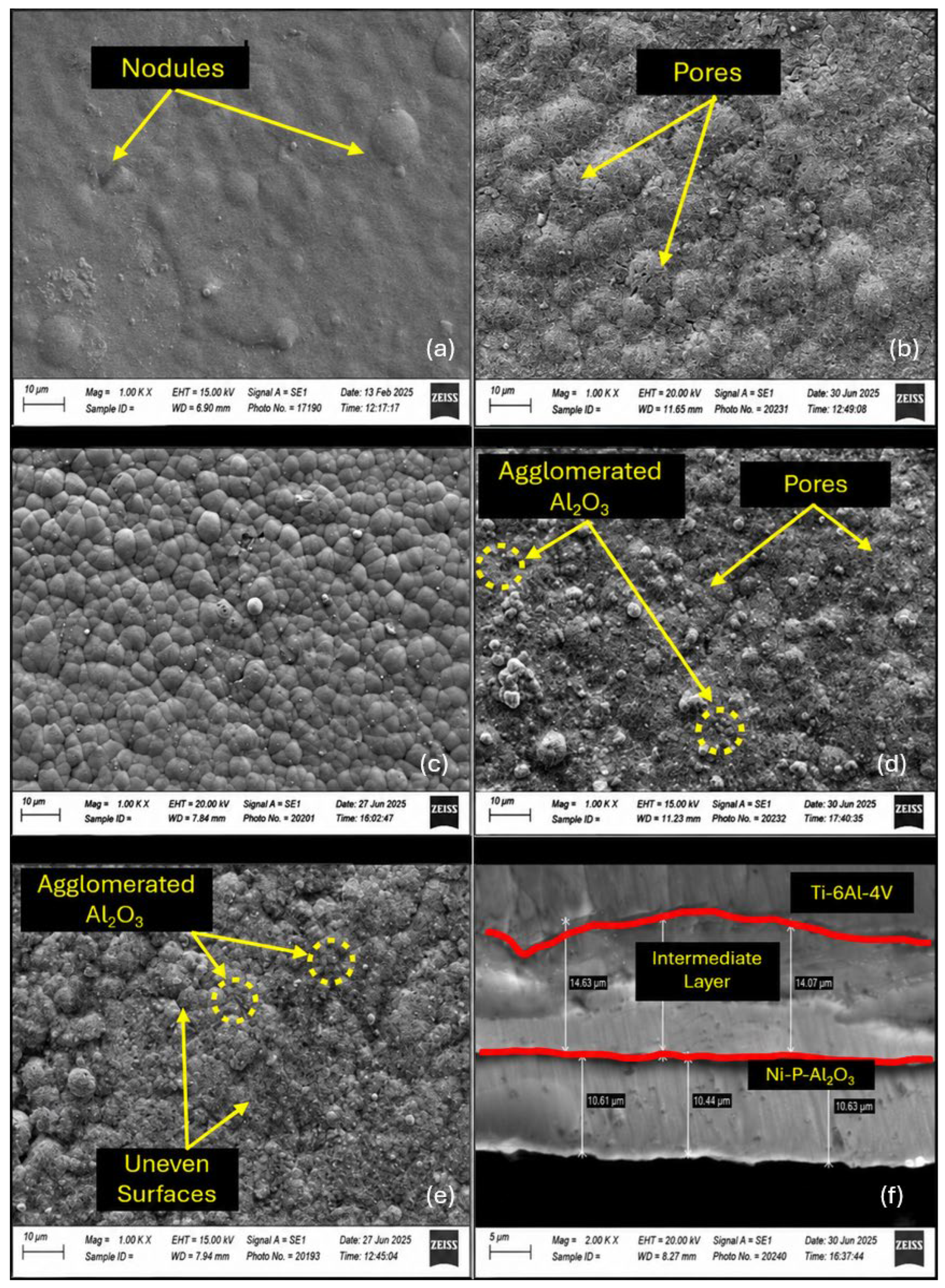
Figure 4a shows the as-deposited Ni-P coating with a characteristic nodular, cauliflower-like morphology typical of electroless deposits, arising from local nucleation and lateral coalescence that formed rounded nodules and shallow valleys. This morphology results from island growth and limited surface diffusion of Ni atoms during deposition, as widely reported for electroless Ni-P coatings [40,41]. The nodules are relatively continuous but exhibit rough surfaces and a largely amorphous structure at typical bath temperatures.
The addition of Al2O3 particles to the bath changed the topography of the coated surfaces progressively with increasing particle concentration. At low loading (0.2 g/L), the specimen (Figure 4b) contained particles that were partially embedded in the Ni-P matrix, and a modest increase in surface roughness was observed with small pores, indicating good dispersion and incorporation, where the particles acted as additional nucleation centers and became trapped in the growing Ni-P film. As the Al2O3 concentration increased from 0.4 → 0.8 → 1.0 g/L, as shown in Figure 4c–e, the coated surface appeared increasingly populated by discrete particulate nodules, more agglomeration, and more pronounced inter-nodule porosities/voids. Mechanistically, this occurred owing to the higher particle flux to the interface favoring particle-to-particle collisions and agglomeration in the boundary layer [42].
Moreover, the incorporation efficiency reached a limit, causing excess particles to accumulate loosely on the surface. The smooth morphology, and compact nodules at low particle concentrations versus rough, porous, and agglomerate-rich surfaces at higher concentrations are consistent with previous Ni-P-Al2O3 coating studies [43]. Therefore, the images revealed that the particles were incorporated into the coating structure and did not appear as loosely adhered surface deposits.
The cross-sectional SEM image in Figure 4f reveals three distinct regions: the Ti-6Al-4V substrate, an intermediate reaction layer, and the Ni-P-Al2O3 coating. The coating thickness is ~10–11 µm, whereas the intermediate layer measures ~14–16 µm. It should be noted that incorporation of Al2O3 particles into the Ni-P coating occurs primarily through a mechanical co-deposition mechanism. With respect to the interfacial region, no significant Ni-Ti intermetallic reaction layer is expected under the electroless deposition conditions (~87 °C) employed in this study. The observed transition zone could be attributed mainly to the surface activation and pretreatment steps (pre-nickel coating) applied to the titanium substrate prior to deposition, which promoted nucleation, a compact coating microstructure with minimal interfacial voids, and strong coating adhesion to the substrate [44,45]. Although quantitative relative density measurements were not performed, the cross-sectional morphology further indicated that the optimum coating (0.4 g/L Al2O3) possessed a dense and compact microstructure with minimal observable pores or interfacial gaps, suggesting a high relative coating density.

3.3. Line Scan and Elemental Mapping

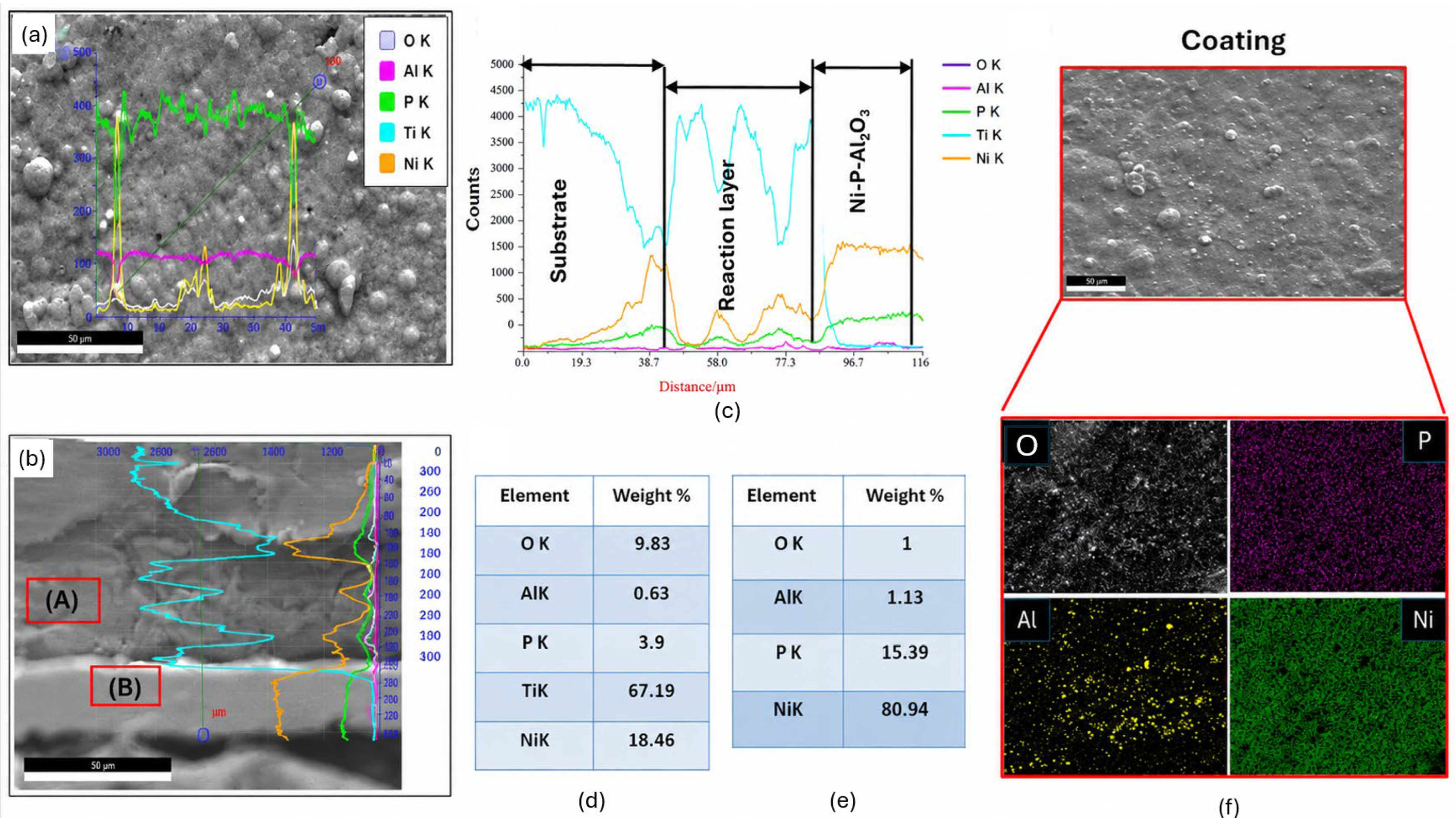
The top-surface EDS line scan in Figure 5a confirmed successful Al2O3 incorporation, as shown by the Al and O peaks across the scanned region. Their uniform distribution indicated homogeneous co-deposition during electroless plating, which is consistent with the expected particle entrapment mechanism in Ni-P-Al2O3 coatings.
Elemental line scans across the coating cross-section (Figure 5b,c) revealed a compositional gradient from the Ti-rich substrate to the Ni-rich coating. In the intermediate region, overlapping Ni and Ti signals confirm the interdiffusion and formation of a Ni-Ti intermediate layer. The interfacial layer forms due to initial Ni deposition, which induces a solid-state reaction and local Ni-Ti alloying, creating a Ni-rich transition zone at the interface. This layer enhances interfacial adhesion and is commonly reported for Ni coatings on Ti alloys [45,46]. Beyond this zone, the Ni intensity increases sharply, with P, Al, and O peaks corresponding to the Ni-P-Al2O3 composite layer. EDS point analyses at location (A) in Figure 5b revealed high Ti and moderate Ni contents (Figure 5d), whereas the composite layer was rich in Ni (~80 wt.%) with noticeable amounts of P, Al, and O at location (B) in Figure 5e. These findings indicated strong interfacial bonding between the substrate and the coating through the Ni-Ti intermediate layer and uniform incorporation of Al2O3 particles in the composite layer, which is consistent with reports for electroless Ni-P/ceramic composite coatings [47].
Figure 5f shows elemental mapping of the Ni-P-Al2O3 coating surface on Ti-6Al-4V, revealing a uniform distribution of Ni, P, Al, and O. The homogeneous Al and O signals confirm successful incorporation and even dispersion of Al2O3 particles within the Ni-P matrix during electroless deposition.

3.4. Adhesion Test

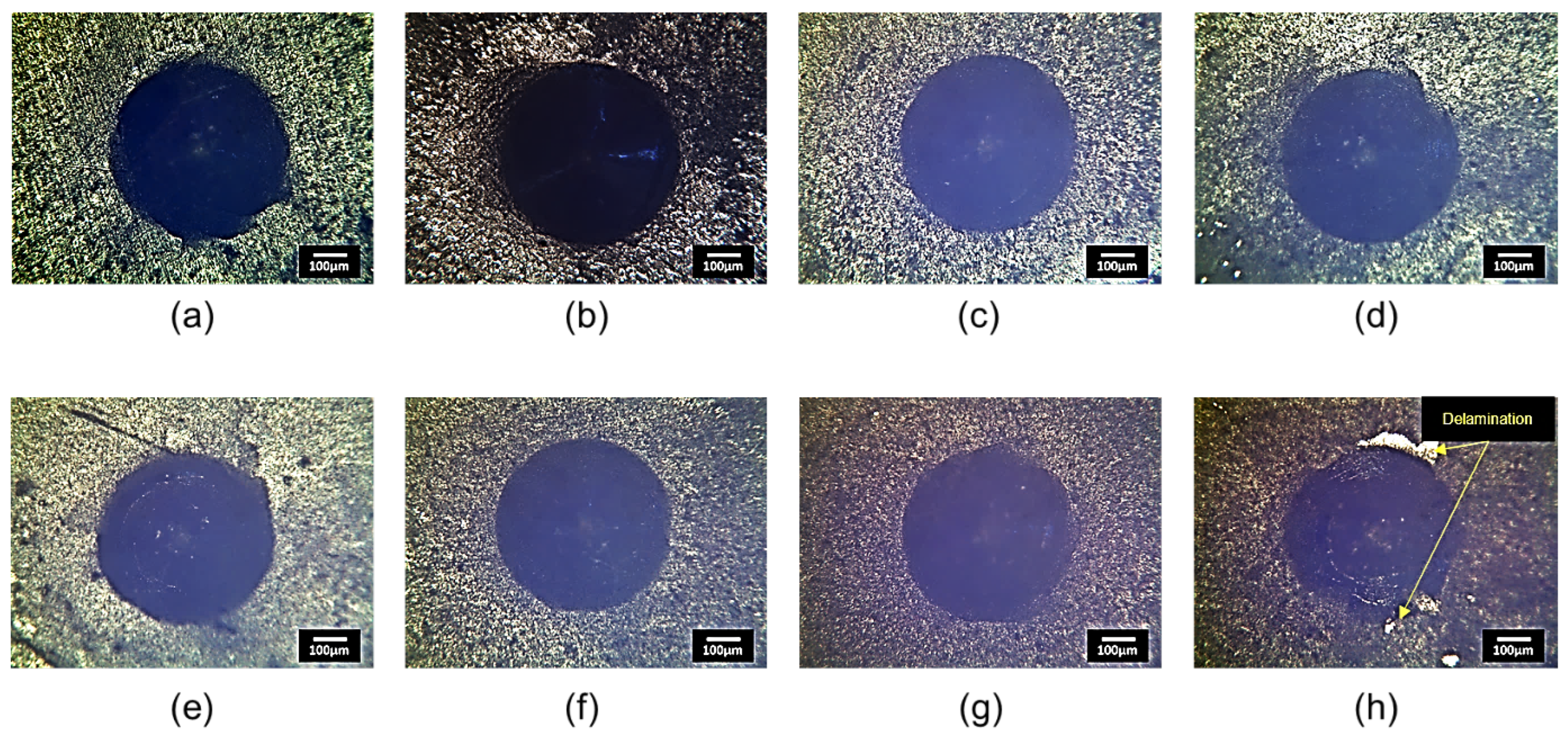
Figure 6 shows the Rockwell indentation images of Ni-P-Al2O3 coatings on Ti-6Al-4V with varying Al2O3 concentrations.
Most of the coated samples showed good adhesion with minimal cracking or delamination, except for the 1.4 g/L Al2O3 sample (Figure 6h). The 0.4 g/L Al2O3 coating (Figure 6c) exhibited the best adhesion, with smooth indentation and negligible damage, due to optimal particle dispersion that increased density, reduced stress, and strengthened bonding. Higher Al2O3 levels (>0.6 g/L) caused agglomeration, leading to localized stress and slightly lower adhesion. Although quantitative bond strength was not measured, the cross-sectional SEM observations clearly demonstrated excellent coating continuity and intimate contact with the substrate, which are good indicators of strong bonding between the coating and the substrate. In addition, the Rockwell indentation results confirmed strong interfacial bonding, as the optimum coating exhibited negligible cracking or delamination around the indentation, indicating efficient load transfer across the coating/substrate interface.

3.5. Microhardness

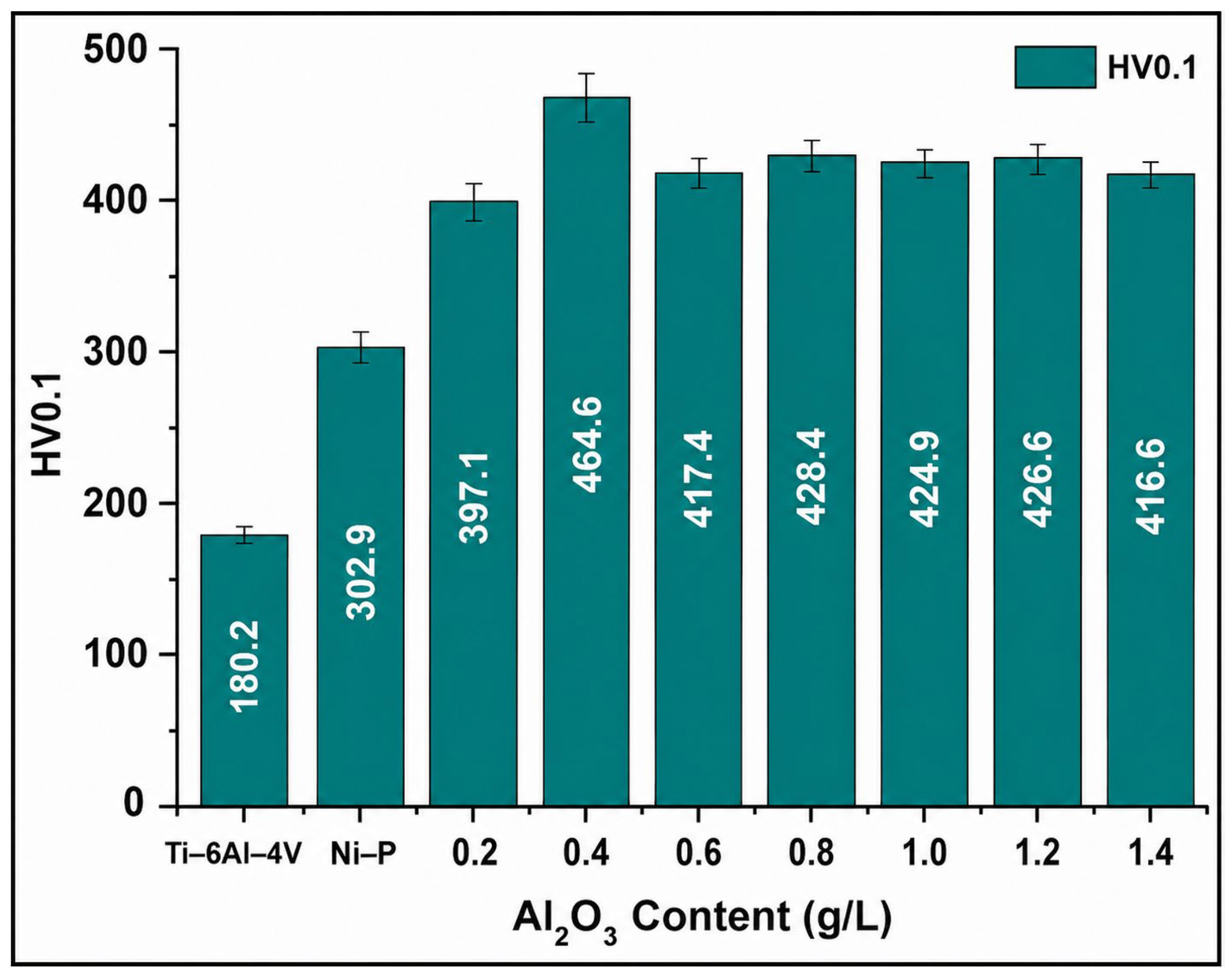
The microhardness results presented in Figure 7 show significant strengthening with the incorporation of Al2O3 into the electroless Ni-P matrix. The Ti-6Al-4V substrate hardness (~180.2 HV0.1) increased to 302.9 HV0.1 for Ni-P, a 68% improvement due to its amorphous structure restricting dislocation motion. With the addition of Al2O3, the hardness reached a maximum of 464.6 HV0.1 at 0.4 g/L, representing a 157% increase over the substrate and a 53% increase over Ni-P coating. This enhancement arises from uniformly dispersed Al2O3 particles acting as load-bearing reinforcements and hindering dislocations via the Orowan mechanism [48,49]. At higher Al2O3 concentration (0.6–1.4 g/L), the hardness slightly decreased (~417–429 HV0.1), most likely due to particle agglomeration and reduced matrix cohesion causing local stress concentrations. The consistent and significant increase in the hardness in all the reinforced coatings indicated that the reinforcing particles were effectively embedded within the Ni-P matrix and contributed to an effective load transfer between the reinforcing particles and the matrix, leading to a strengthening effect for resistance to indentation.

3.6. Surface Topography Analysis and Roughness Quantification

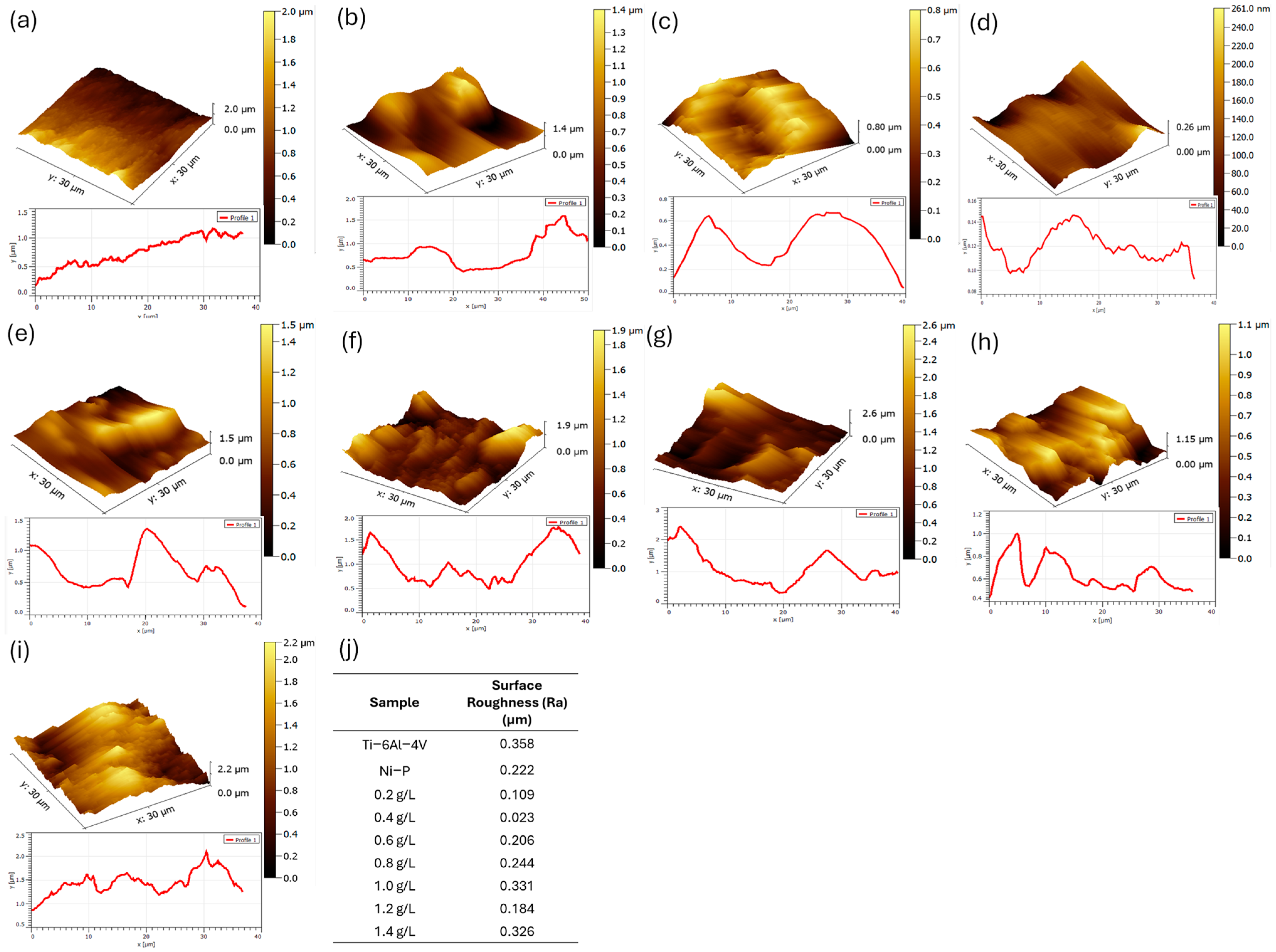
AFM 3D topographies (Figure 8) show a strong dependence of surface morphology on Al2O3 concentration. The uncoated Ti-6Al-4V substrate (Figure 8a) exhibited high roughness due to machining effects, whereas roughness of the Ni-P coating (Figure 8b) decreased due to its amorphous, uniform structure. Adding Al2O3 up to 0.4 g/L further refined the surface, producing a dense, homogeneous morphology with minimal height variation (Figure 8d). At this concentration, average roughness decreased by ~35–45% versus that of the substrate and ~20–25% compared to that of the Ni-P coating (Figure 8j). Higher Al2O3 concentrations (>0.6 g/L) caused particle agglomeration (Figure 8e), forming larger protrusions and increasing the roughness by ~30–50% at ≥0.8 g/L (Figure 8f–i). These results indicated that 0.4 g/L was the optimal Al2O3 concentration for surface refinement.
Quantitative AFM analysis revealed that the surface roughness varied significantly with Al2O3 concentration, increasing from 0.109 µm at 0.2 g/L to 0.206 µm, 0.244 µm, 0.331 µm, and 0.326 µm at 0.6, 0.8, 1.0, and 1.4 g/L Al2O3, respectively, indicating the development of larger nodular features and a progressively rougher surface. Although small discrepancies in roughness were observed at concentrations of 0.4 g/L and 1.2 g/L, the overall trend demonstrated increased surface irregularity with higher particle loading. Furthermore, SEM micrographs indicated that the fraction of agglomerated surface regions increased from approximately 5–8% at 0.2 g/L to 12–15% at 0.6–0.8 g/L and reached nearly 20–25% at 1.0–1.4 g/L Al2O3. The average agglomerate size also increased from approximately 0.5–1.0 µm at lower concentrations to 2–4 µm at higher concentrations. These quantitative observations confirmed that increasing the Al2O3 concentration promoted particle clustering and localized pore formation, which disrupted the uniform growth of the Ni-P matrix and resulted in higher surface roughness and porosity. Therefore, the AFM roughness data together with the estimated agglomeration characteristics provided quantitative support for the morphological trends observed in the SEM micrographs and clearly demonstrated the influence of the Al2O3 concentration on the coating surface morphology.

3.7. Tribological Performance Analysis

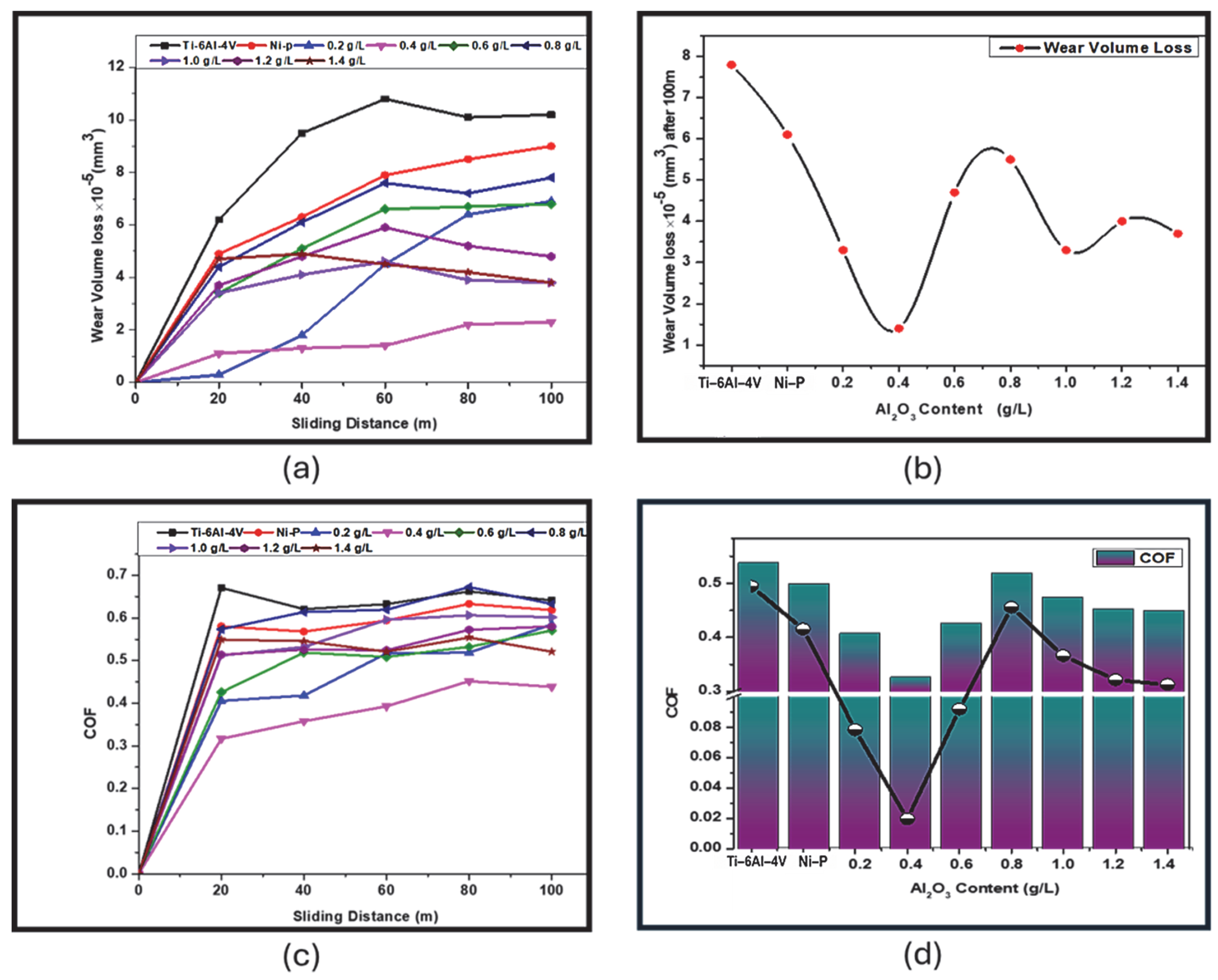
The wear performance of the Ni-P-Al2O3 coatings on the Ti-6Al-4V substrate, as shown in Figure 9, demonstrated a substantial improvement in the tribological characteristics with the incorporation of Al2O3 particles. The wear volume versus sliding distance curves indicated that the uncoated Ti-6Al-4V exhibited the maximum wear volume (~12 × 10−6 mm3 after 100 m), whereas the Ni-P coating reduced the degree of wear by ~70–75%, which can be attributed to the higher hardness and amorphous nature of the Ni-P matrix. The inclusion of Al2O3 particles further enhanced the wear resistance; notably, the 0.4 g/L Al2O3 composite coating exhibited the lowest wear volume (~2 × 10⁻⁶ mm3), representing an ~85% reduction compared with that of the substrate and a ~50% improvement over the plain Ni-P coatings. This improvement is directly associated with the superior microhardness (~465 HV0.1) and excellent adhesion characteristics of this composition, both of which suppressed plastic deformation and microcracking during sliding.
The trend in total wear volume loss after 100 m, as shown in Figure 9b, followed a parabolic pattern, indicating that wear loss decreased sharply up to 0.4 g/L Al2O3 and then increased slightly at higher concentrations. The increase in wear volume beyond 0.6 g/L (by ~15–25%) could be attributed to particle agglomeration and weak bonding sites within the matrix, which initiated localized delamination under loading. This agreed with SEM observations that higher Al2O3 loadings produce microstructural inhomogeneity and porosity, adversely affecting cohesion [50].
The coefficient of friction (COF) data in Figure 9c,d also showed a consistent trend with respect to the wear volume. The uncoated Ti-6Al-4V exhibited the maximum steady-state COF (~0.65), while the Ni-P coating decreased it to ~0.52. The 0.4 g/L Al2O3 composite coating further reduced the COF to ~0.32, a ~50% reduction relative to that of the substrate and ~38% less than that of the Ni-P coating, indicating smoother sliding and reduced interfacial shear. This reduction in the COF could be attributed to the formation of a dense, continuous tribolayer and the optimal load-bearing contribution of uniformly dispersed Al2O3 particles. However, at higher concentrations (>0.8 g/L), the COF slightly increased ~0.45–0.5 owing to the particle pull-out and micro-abrasion caused by agglomerated Al2O3.
Overall, the Ni-P-Al2O3 coating with 0.4 g/L Al2O3 showed the best performance, with the lowest wear rate, minimal friction coefficient, highest corrosion resistance, and strong adhesion to the Ti-6Al-4V substrate. This behavior is owing to its uniform, defect-free microstructure, homogeneous particle dispersion, and balanced hardness-toughness. Well-dispersed Al2O3 particles improved load bearing, reduced the contact area, and stabilized the tribolayer, limiting microcracking, abrasion, and delamination. A lower Al2O3 concentration (0.2 g/L) provided insufficient reinforcement, whereas higher concentrations (>0.6 g/L) caused agglomeration and brittleness, degrading the performance. These trends agree with the prior reports on optimal ceramic loading in the electroless Ni-P-Al2O3 coatings [51,52].
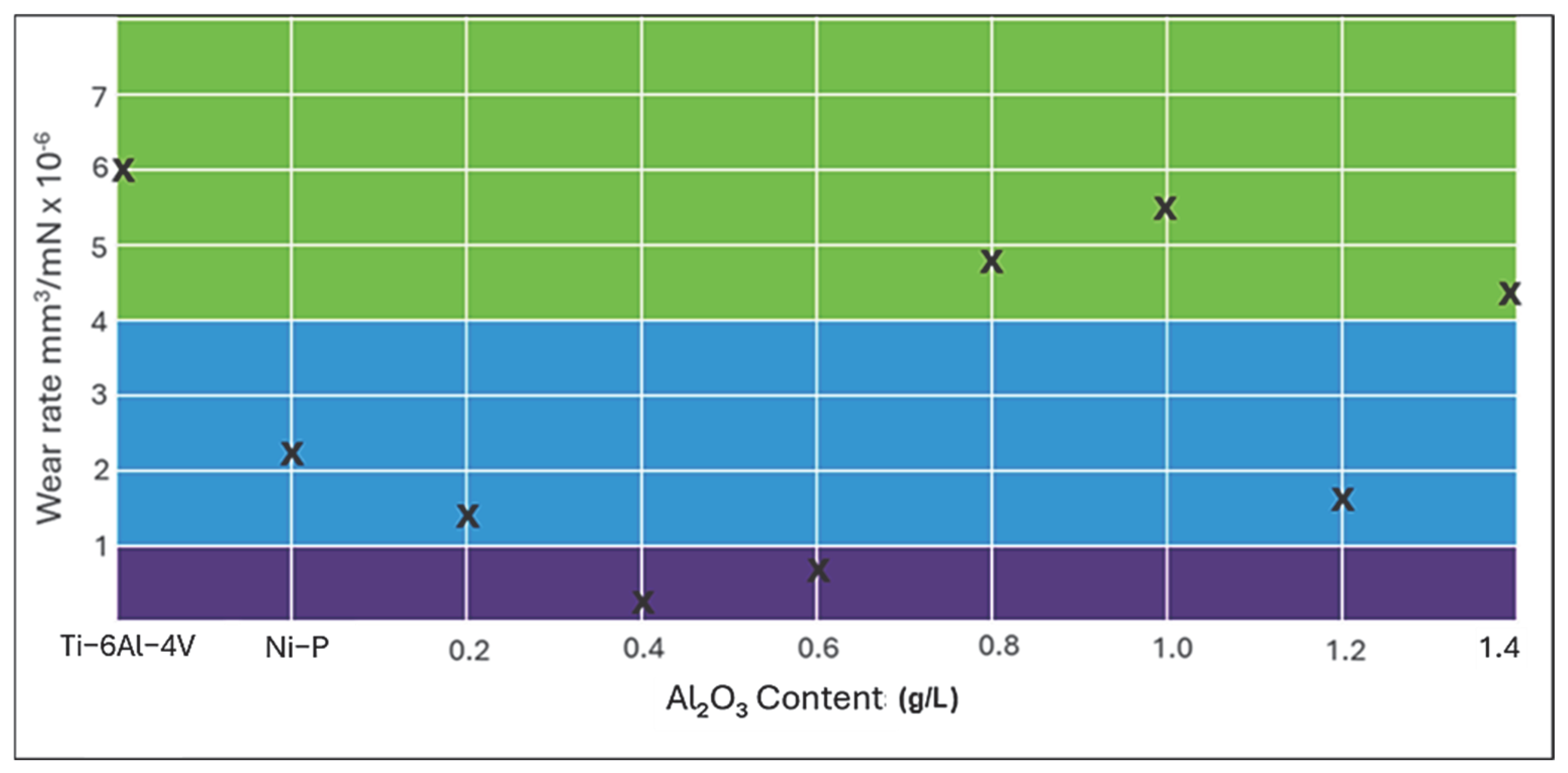
The wear behavior in terms of the wear rate of Ti-6Al-4V and its Ni-P-based coatings influenced by the incorporation of Al2O3 nanoparticles is shown in Figure 10. The Ti-6Al-4V alloy exhibited the maximum wear rate of 7.73 × 10⁻⁶ mm3/Nm, indicating its relatively poor tribological performance. Coating with Ni-P significantly reduced the wear rate to 2.19 × 10⁻⁶ mm3/Nm, corresponding to a ~72% improvement compared with that of the substrate, owing to the protective effect of the Ni-P layer due to its higher hardness and better surface integrity. The incorporation of Al2O3 particles initially improved the wear resistance, as can be seen: the 0.2 g/L Al2O3-reinforced coating reduced the wear rate to 1.57 × 10⁻⁶ mm3/Nm (~28% lower than that of Ni-P alone), and the 0.4 g/L Al2O3 sample achieved the lowest wear rate of 4.46 × 10⁻⁷ mm3/Nm, representing an exceptional ~80% improvement over that of the Ni-P coating. This trend can be attributed to the uniform dispersion of hard Al2O3 particles in the Ni-P matrix, which increased the load-bearing capacity and reduced direct metal-to-counterface contact. However, at higher concentrations (0.6–1.4 g/L), the wear rate increased again, reaching 5.56 × 10⁻⁶ mm3/Nm at 1.0 g/L, owing to particle agglomeration, porosity, or cracking of the coating’s continuity, which weakened adhesion and reduced localized hardness. However, the 1.2 g/L sample showed a temporary reduction in the wear rate to 1.57 × 10⁻⁶ mm3/Nm, possibly due to an improved balance between particle dispersion and matrix bonding during the coating process.
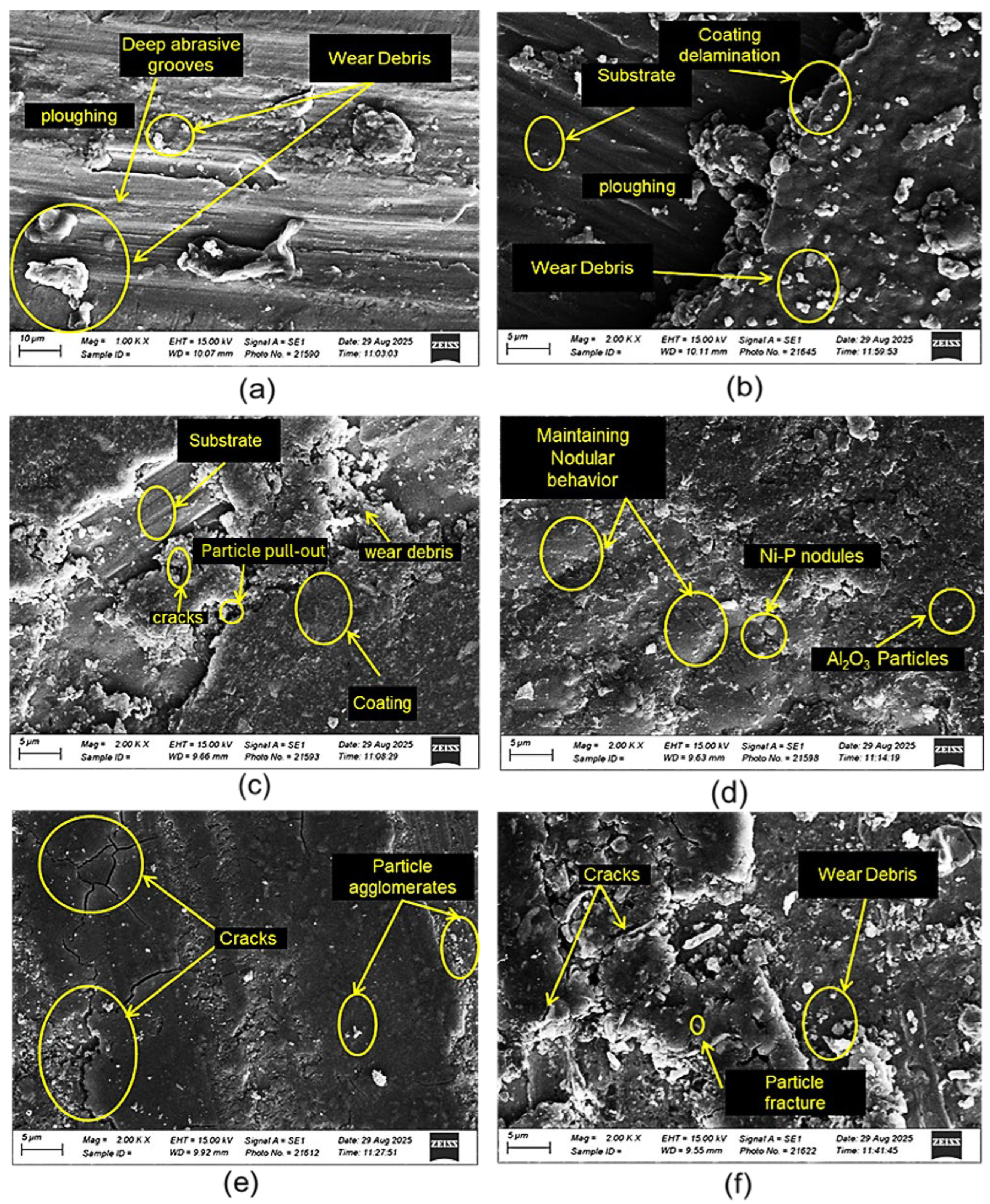
The SEM micrographs in Figure 11 illustrate the evolution of the wear mechanisms for the Ti-6Al-4V, electroless Ni-P, and Ni-P-Al2O3 coatings with varying alumina concentrations, which are closely correlated with the measured wear volume and wear rate. The Ti-6Al-4V substrate, as shown in Figure 11a, exhibited severe plowing, deep abrasive grooves, and a significant accumulation of wear debris, which are indicative of dominant abrasive wear. This morphology can be associated with the relatively low hardness of the alloy, resulting in the maximum wear volume and wear rate among all the samples, with thick, continuous debris suggesting unstable material removal typical of adhesive/abrasive interactions in uncoated titanium alloys [53,54]. The Ni-P coating in Figure 11b demonstrated less debris than did the uncoated substrate. However, microploughing, coating delamination, and localized substrate exposure are still evident. These features are due to the brittle nature of the high-phosphorus Ni-P coating under sliding conditions. Although the coating improved hardness and reduced wear relative to Ti-6Al-4V, the presence of cracks indicated limited wear resistance, with a wear volume and wear rate lower than those of the substrate but significantly higher than those of the composite coatings. The incorporation of 0.2 g/L Al2O3 into Ni-P, as shown in Figure 11c, produced partial reinforcement, with particle pull-out, microcracks, and mixed adhesive/abrasive wear, indicating less improvement in tribological performance. In contrast, the Ni-P-Al2O3 coating with 0.4 g/L particles in Figure 11d exhibited smooth wear tracks, minimal debris, and Ni-P nodules uniformly embedded with alumina particles. No coating fracture or delamination was observed, indicating that the well-dispersed Al2O3 effectively supported load bearing, reduced metal–metal contact, and stabilized the tribolayer, resulting in the lowest wear volume and wear rate and confirming this as the optimum reinforcement concentration.
Increasing the Al2O3 concentration to 0.8 g/L, as shown in Figure 11e, led to particle agglomeration and microcrack formation due to poorly bonded, particle-rich regions, causing brittle fracture and a greater wear volume and wear rate than those of the 0.4 g/L coating. At 1.2 g/L, as shown in Figure 11f, excessive particle concentration induced particle fracture, crack propagation, and extensive debris generation. The internal stresses weakened the Ni-P matrix, and the fractured Al2O3 particles acted as third-body abrasives, accelerating material removal and resulting in a wear performance reaching that of the 0.2 g/L composite coating. Overall, these results demonstrate that the tribological performance is strongly governed by the microstructural effects of Al2O3 reinforcement, with 0.4 g/L resulting in an optimal balance between particle dispersion and matrix integrity.
In the present study, the identification of Al2O3 particles was based on a combination of SEM morphology (Figure 4), EDS elemental analysis (Figure 5), and the systematic evolution of mechanical and tribological properties with increasing particle concentration. The EDS results confirmed the presence of aluminum and oxygen within the composite coatings, whereas the corresponding increases in hardness and wear resistance provided indirect evidence of effective particle embedding within the Ni-P matrix and active contribution to particle reinforcement. However, high-resolution TEM characterization could be carried out to further verify the elemental composition and distribution of the particles, as well as their bonding status at the interface with the substrate or coating.

3.8. Potentiodynamic Polarization Behavior of the Composite Coatings

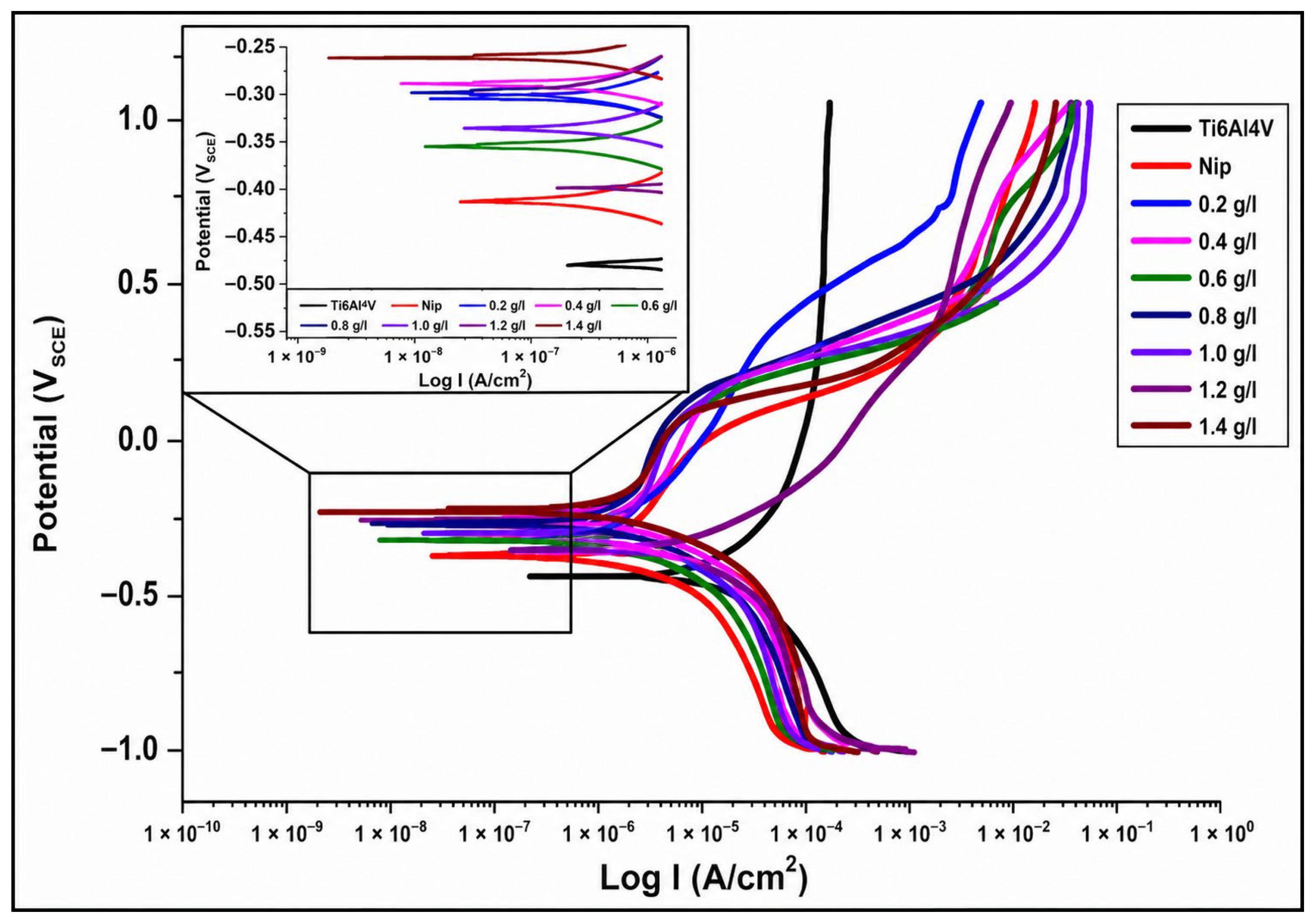
The Tafel polarization curves of the Ni-P-Al2O3 coatings used for the corrosion analysis, as shown in Figure 12, revealed a strong dependence of the corrosion behavior on the concentration of the Al2O3 particles incorporated into the coatings. At low concentrations (0.2–0.4 g/L), a systematic noble shift in corrosion potential (E_corr) and a reduction in corrosion current density (I_corr) are observed relative to those of bare Ti-6Al-4V and plain Ni-P, indicating the beneficial barrier effect of well-dispersed ceramic particles. Notably, the coating produced with 0.4 g/L Al2O3 exhibited an optimum balance, presenting a comparatively lower I_corr (on the order of ~10−7 A/cm2) and a stable anodic branch with a limited current rise, reflecting the formation of a compact, uniformly co-deposited Ni-P-Al2O3 coating. This behavior could be correlated with minimal particle agglomeration, effective blockage of ionic pathways, enhanced passive film stability, and improved mechanical reinforcement, consistent with its superior hardness and wear resistance [55]. The passive region observed in the polarization curve confirmed the excellent inherent corrosion resistance of the substrate due to the formation of a stable and protective TiO2 film, which is a typical characteristic of the titanium alloys. The purpose of applying the Ni-P-Al2O3 coating was not only to maintain the corrosion resistance of the substrate but also to enhance the surface hardness and wear resistance. Therefore, Tafel polarization analysis confirmed that the deposited coatings not only preserved the corrosion performance of the Ti-6Al-4V substrate but also further improved its performance.
A rapid increase in the anodic current was observed at potentials slightly above 0 V for some coatings. This behavior may be associated with the partial breakdown of the protective/passive behavior of the coating and the onset of localized corrosion processes through coating defects, pores, or particle–matrix interfaces. However, polarization data alone are insufficient to conclusively identify the underlying mechanism as pitting corrosion. Since post-polarization surface characterization and complementary electrochemical analyses were not performed in the present study, the exact nature of this current increase remains uncertain and requires further investigation through detailed surface morphology and advanced electrochemical studies.
The corrosion data in Table 2 supported the Tafel results, showing that Al2O3 incorporation improved Ni-P corrosion resistance when the particle dispersion was optimal. The Ni-P coating had an I_corr of 8.11 × 10⁻⁶ A/cm2, which decreased to 2.98 × 10⁻⁶ and 2.45 × 10⁻⁶ A/cm2 with 0.2 and 0.4 g/L Al2O3, respectively, reducing the corrosion rate by ~70%. At 0.4 g/L, uniform particle dispersion produced a dense layer with enhanced hardness, wear, and corrosion resistance. Performance declined at 0.6 g/L due to agglomeration and defects, but I_corr decreased again to higher contents (0.8–1.4 g/L), with 1.4 g/L showing one of the lowest corrosion rates (0.0046 mpy). This trend reflects strong barrier and passivation effects at high ceramic loadings, though with reduced mechanical uniformity.
Although electrochemical impedance spectroscopy (EIS), corrosion morphology analysis, and equivalent circuit modeling can provide deeper insight into corrosion mechanisms, these investigations could not be performed due to technical limitations of the available experimental setup. Nevertheless, potentiodynamic polarization is a widely accepted and extensively reported technique for corrosion evaluation, and the corrosion potential (E_corr) and corrosion current density (I_corr) obtained from Tafel polarization curves provide reliable indicators of the corrosion resistance of electroless Ni-P-based coatings. These advanced analyses will be considered in future studies for a more comprehensive understanding of corrosion behavior.

3.9. Comparative Analysis

Table 3 compares the performance of the present electroless Ni-P-Al2O3 coating with that of the previously reported coatings deposited on different substrates. Previous studies were focused primarily on mild steel, AISI 1045 steel, and Al-Mg alloys, where heat treatment was generally applied to the coatings to achieve superior mechanical and tribological properties. For example, the Ni-P-Al2O3 coating deposited on mild steel exhibited a maximum hardness of 1126 VHN and a wear rate of 0.21 × 10⁻⁶ mm3/N·m after heat treatment at 400 °C, while the corrosion rate was to 0.57 mpy. Similarly, the coating on AISI 1045 steel attained a hardness of 1083 HV and a wear rate of 2.17 × 10⁻⁵ mm3/N·m after heat treatment. Another study on Ni-P-Al2O3 coatings on AISI 1045 steel also reported similar hardness in the as-plated condition, but the wear rate could not be compared because only the weight loss values were reported [29]. In contrast, the electroless Ni-P-Al2O3 coating developed on the 90Al-10 wt.% Mg alloy achieved a hardness of 598 HV, a wear rate of 6.77 × 10⁻³ mm3/N·m, and a corrosion rate of 0.057 mpy without post-deposition heat treatment. Another study on Ni-P-Al2O3-coated Mg alloy also reported lower hardness and higher corrosion with high concentrations of Al2O3 nanoparticles (5–20 g/L) [30].
Composite coatings have attracted considerable attention for improving the tribo-corrosion performance of other lightweight materials such as Mg alloys, which are inherently more susceptible to degradation because of their high electrochemical activity. Recent work on selective laser-melted WE43 Mg alloy demonstrated that microstructural defects, including pores, secondary phases, and high dislocation density, accelerated localized corrosion by facilitating chloride-ion penetration and passive film breakdown, leading to rapid material degradation [56]. In contrast, Ti-6Al-4V possesses a stable TiO2 passive film that provides superior intrinsic corrosion resistance; however, its relatively low surface hardness results in poor wear resistance under sliding conditions. The present Ni-P-Al2O3 composite coating addresses this limitation by increasing surface hardness, reducing friction and wear, and providing an additional protective barrier against corrosive media. Therefore, although the degradation mechanisms differ between Mg and Ti alloys, the comparison demonstrated that ceramic-reinforced electroless composite coatings represent an effective surface engineering strategy for enhancing the tribo-corrosion performance and service life of lightweight structural materials.
In the present study, the electroless Ni-P-Al2O3 coating deposited on Ti-6Al-4V achieved a hardness of 464.6 HV, a remarkably low wear rate of 4.46 × 10⁻⁷ mm3/N·m, and an excellent corrosion rate of 0.0053 mpy in the as-deposited condition. Although the hardness was lower than that of heat-treated coatings reported on mild steel and Mg alloy substrates, the present coating demonstrated lower corrosion and wear rates among the compared studies even with the larger particle size. This could be due to the optimized concentration of 0.4 g/L Al2O3 producing a dense and homogeneous Ni-P matrix with uniformly dispersed nanoparticles, minimizing agglomeration and porosity while promoting strong interfacial bonding through the Ni-Ti intermediate layer. These results further highlighted the effectiveness of Al2O3 reinforcement in the Ni-P coating to enhance the tribological and corrosion performance of Ti-6Al-4V without the need for post-deposition heat treatment.
Table 3. Comparative analysis of applied Ni-P-Al2O3 coating on Ti-6Al-4V with other reported studies.
SubstrateElectroless CoatingParticle Size and ConcentrationHardness (HV)Wear Rate (mm3/Nm)Corrosion Rate (mpy)
Mild steel [57]Ni-P-Al2O3Al2O3 (~15 nm)
4 g/L
~11260.01 VHN, (after heat treatment)0.21 × 10⁻⁶ (after heat treatment)0.57
AISI 1045 steel [58]Ni-P-Al2O3Al2O3 (~30–50 nm)
1 g/L
~4600.1 HV, (as deposited)
~10830.1 HV (after heat treatment)
2.70 × 10⁻⁵, (as deposited)
2.17 × 10⁻⁵ (after heat treatment); estimated
Not available
90Al-10 wt.% Mg alloy [59] Ni-P-Al2O3Al2O3 (~50 nm)
10 g/L
~598 HV0.1 (as deposited)6.77 × 10⁻³ (estimated)0.057 (estimated)
AZ91D magnesium alloy [30]Ni-P-Al2O3Al2O3 (~100 nm)
15 g/L
~550 HV0.1 (estimated from the results)Reported as weight loss; not comparable1.43 (estimated from I_corr values)
Ti-6Al-4V (this study)Ni-P-Al2O3Al2O3 (~173 nm) 0.4 g/L464.6 HV0.14.46 × 10−70.0053

4. Conclusions

Electroless Ni-P-Al2O3 composite coatings with good adhesion and uniformity were successfully deposited on Ti-6Al-4V substrates, and the following conclusions were drawn:
  • A Ni-Ti intermediate layer (~14–16 µm) formed at the interface, providing strong interfacial bonding and excellent adhesion in all Ni-P-Al2O3 coatings, particularly at 0.4 g/L Al2O3, where no delamination was observed possibly due to the interdiffusion of Ni and Ti.
  • Incorporation of 0.4 g/L Al2O3 yielded a uniform, dense Ni-P matrix with nanoscale height fluctuations (~49 nm) and partial nanocrystallization, minimizing agglomeration, and surface porosity can be attributed to enhanced heterogeneous nucleation without causing particle clustering.
  • The 0.4 g/L composite exhibited a peak microhardness of 464.6 HV0.1, which was ~157% greater than that of the Ti-6Al-4V substrate (180.2 HV0.1) and ~53% greater than that of the Ni-P coating (302.9 HV0.1) due to dispersion strengthening by hard Al2O3 nanoparticles and grain refinement within the Ni-P matrix.
  • The wear volume decreased to ~4.46 × 10⁻⁷ mm3 after 100 m of sliding, and the coefficient of friction decreased to ~0.32 at 0.4 g/L, representing ~85% wear reduction and 50% lower friction than those of the substrate.
  • Tafel analysis revealed that the 0.4 g/L composite had a low corrosion current density of 2.45 × 10⁻⁶ A/cm2, corresponding to a corrosion rate of 0.0053 mpy, which was ~70% lower than that of Ni-P (0.022 mpy) and substantially better than that of the uncoated Ti-6Al-4V (0.045 mpy).

Author Contributions

Conceptualization, M.U., T.S., F.N.K. and M.Y.; methodology, M.U., T.S., F.N.K. and M.Y.; formal analysis, F.N.K., M.Y. and J.H.; investigation, M.U., T.S., F.N.K. and M.Y.; data curation, M.U. and T.S.; writing—original draft preparation, M.U. and T.S.; writing—review and editing, F.N.K., M.Y. and J.H.; visualization, M.U., T.S. and J.H.; supervision, F.N.K., M.Y. and J.H. All authors have read and agreed to the published version of the manuscript.

Funding

This research received no external funding.

Institutional Review Board Statement

Not applicable.

Informed Consent Statement

Not applicable.

Data Availability Statement

The raw data supporting the conclusions of this article will be made available by the authors on request.

Acknowledgments

The authors sincerely acknowledge the support from GIKI, Pakistan.

Conflicts of Interest

The authors declare no conflicts of interest.

References

  1. Gao, M.; Pei, Z.; Song, G.; Liu, Z.; Gong, J. The improved wear and corrosion resistance of brush plating Ni coatings by adding diamond and Al2O3 particles. Mater. Today Commun. 2025, 49, 113791. [Google Scholar] [CrossRef] [Scilit]
  2. Farhan, M.; Fayyaz, O.; Qamar, M.G.; Shakoor, R.; Bhadra, J.; Al-Thani, N.J. Mechanical and corrosion characteristics of TiC reinforced Ni-P based nanocomposite coatings. Mater. Today Commun. 2023, 36, 106901. [Google Scholar] [CrossRef] [Scilit]
  3. Roy, S.; Mishra, B.M.; Bose, G.K. Characterization of Ni-P based poly-alloy and composite coatings involving nanoindentation and nanoscratch tests. Mater. Today Commun. 2021, 29, 102991. [Google Scholar] [CrossRef] [Scilit]
  4. He, Y.; Liu, G.; Duan, X.; Wu, T.; Dong, M.; Zhu, Y. Effects of nanocrystals on hydrogen permeation and diffusion in amorphous electroless Ni-P coatings. Mater. Today Commun. 2024, 40, 109499. [Google Scholar] [CrossRef] [Scilit]
  5. Kang, L.; Yang, C. A Review on High-Strength Titanium Alloys: Microstructure, Strengthening, and Properties. Adv. Eng. Mater. 2019, 21, 1801359. [Google Scholar] [CrossRef] [Scilit]
  6. Zhang, L.-C.; Chen, L.-Y.; Wang, L. Surface Modification of Titanium and Titanium Alloys: Technologies, Developments, and Future Interests. Adv. Eng. Mater. 2020, 22, 1901258. [Google Scholar] [CrossRef] [Scilit]
  7. Jacobson, S.; Hogmark, S. Surface modifications in tribological contacts. Wear 2009, 266, 370–378. [Google Scholar] [CrossRef] [Scilit]
  8. Huang, K.; Huang, W. Microstructure and Wear Resistance of Ti5Si3/Ti3Al Composite Coatings Prepared by Laser Cladding on TA2 Titanium Alloy. Lubricants 2023, 11, 213. [Google Scholar] [CrossRef] [Scilit]
  9. Hatakeyama, M.; Masahashi, N.; Michiyama, Y.; Inoue, H.; Hanada, S. Wear resistance of surface-modified TiNbSn alloy. J. Mater. Sci. 2021, 56, 14333–14347. [Google Scholar] [CrossRef] [Scilit]
  10. Cheng, H.-R.; Shin, K.-H.; Kim, H.S. Enhancement of mechanical and tribological performance of Ti–6Al–4V alloy by laser surface alloying with Inconel 625 and SiC precursor materials. Friction 2024, 12, 2089–2107. [Google Scholar] [CrossRef] [Scilit]
  11. Du, P.; Liu, C.; Hu, H.; Zhang, C.; Fan, M.; Gao, M.; Chen, T. Study of the Tribological Properties of HVOF-Sprayed Ni-Based Coatings on Ti6Al4V Titanium Alloys. Coatings 2022, 12, 1977. [Google Scholar] [CrossRef] [Scilit]
  12. Khosravi, G.; Sohi, M.H.; Ghasemi, H.; Karazmoudeh, N.J. Study of the Tribological Properties of Diffusion Coated NiTi Intermetallic on Cp Titanium. Tribol. Ind. 2022, 44, 632–640. [Google Scholar] [CrossRef] [Scilit]
  13. Chen, Q.; Zhang, J.; Huang, A.; Wei, P. Study on wear resistance of Ti-6Al-4V alloy composite coating prepared by laser alloying. Appl. Sci. 2021, 11, 446. [Google Scholar] [CrossRef] [Scilit]
  14. Shao, M.; Wang, W.; Yang, H.; Zhang, X.; He, X. Preparation of wear-resistant coating on ti6al4v alloy by cold spraying and plasma electrolytic oxidation. Coatings 2021, 11, 1288. [Google Scholar] [CrossRef] [Scilit]
  15. Burkov, A.A. Improvement of Ti6Al4V-Alloy Wear Resistance by Electric-Spark Hafnium Carbide Coatings. J. Frict. Wear 2020, 41, 543–548. [Google Scholar] [CrossRef] [Scilit]
  16. Peng, B.Y.; Nie, X.; Chen, Y. Effects of surface coating preparation and sliding modes on titanium oxide coated titanium alloy for aerospace applications. Int. J. Aerosp. Eng. 2014, 2014, 640364. [Google Scholar] [CrossRef] [Scilit]
  17. Li, J.; Zhang, H.; Fan, A.; Tang, B. Tribological properties characterization of Ti/Cu/N Thin films prepared by DC magnetron sputtering on titanium alloy. Surf. Coat. Technol. 2016, 294, 30–35. [Google Scholar] [CrossRef] [Scilit]
  18. Nazari, H.; Darband, G.B.; Arefinia, R. A review on electroless Ni–P nanocomposite coatings: Effect of hard, soft, and synergistic nanoparticles. J. Mater. Sci. 2023, 58, 4292–4358. [Google Scholar] [CrossRef] [Scilit]
  19. Fayyad, E.M.; Abdullah, A.M.; Hassan, M.K.; Mohamed, A.M.; Jarjoura, G.; Farhat, Z. Recent advances in electroless-plated Ni-P and its composites for erosion and corrosion applications: A review. Emergent Mater. 2018, 1, 3–24. [Google Scholar] [CrossRef] [Scilit]
  20. Karthikeyan, S.; Vijayaraghavan, L. Investigation of the surface properties of heat treated electroless Ni–P coating. Trans. IMF 2016, 94, 265–273. [Google Scholar] [CrossRef] [Scilit]
  21. Qian, W.; Wei, H.; Chen, H.; Zhu, L.; Sun, Y.; Han, S.; Lin, H.; Jiang, J. The effect of heat treatment on Ni–B–Ce electroless coatings. Surf. Eng. 2019, 35, 144–152. [Google Scholar] [CrossRef] [Scilit]
  22. Hadipour, A.; Monirvaghefi, S.M.; Bahrololoom, M.E. Electroless deposition of graded Ni–P coatings. Surf. Eng. 2015, 31, 399–405. [Google Scholar] [CrossRef] [Scilit]
  23. Cao, J.; Wang, X.; Zhao, W.; Zhao, Y.; Wang, J.; Jiang, W.; Song, G. Effect of pH on Microstructure and Properties of Ultrasonic-Assisted Electroless Ni–P Coatings on Titanium Alloy. Integr. Ferroelectr. 2022, 225, 255–265. [Google Scholar] [CrossRef] [Scilit]
  24. Çelik, I.; Karakan, M.; Bülbül, F. Investigation of structural and tribological properties of electroless Ni–B coated pure titanium. Proc. Inst. Mech. Eng. Part J J. Eng. Tribol. 2016, 230, 57–63. [Google Scholar] [CrossRef] [Scilit]
  25. Rani, R.U.; Sharma, A.K.; Minu, C.; Poornima, G.; Tejaswi, S. Studies on black electroless nickel coatings on titanium alloys for spacecraft thermal control applications. J. Appl. Electrochem. 2010, 40, 333–339. [Google Scholar] [CrossRef] [Scilit]
  26. Gadhari, P.; Sahoo, P. Optimization of Electroless Ni–P–Al2O3 Composite Coatings based on Multiple Surface Roughness Characteristics. Procedia Mater. Sci. 2014, 5, 21–30. [Google Scholar] [CrossRef] [Scilit]
  27. Ram, G.P.; Karthikeyan, S.; Nicholas, P.E.; Sofia, A.S. Dry sliding wear behavior of electroless NIP and NIP-Al2O3 composite coatings. Mater. Today Proc. 2020, 37, 2001–2009. [Google Scholar] [CrossRef] [Scilit]
  28. Rahimi, A.R.; Modarress, H.; Iranagh, S.A. Effect of alumina nanoparticles as nanocomposites on morphology and corrosion resistance of electroless Ni–P coatings. Surf. Eng. 2011, 27, 26–31. [Google Scholar] [CrossRef] [Scilit]
  29. Alirezaei, S.; Monirvaghefi, S.M.; Salehi, M.; Saatchi, A. Wear behavior of Ni–P and Ni–P–Al2O3 electroless coatings. Wear 2007, 262, 978–985. [Google Scholar] [CrossRef] [Scilit]
  30. Heakal, F.E.-T.; Maanoum, M.A. Role of some plating parameters in the properties of Ni-P/Al2O3 nanocomposite coatings on Mg alloy. Int. J. Electrochem. Sci. 2016, 11, 7198–7215. [Google Scholar] [CrossRef] [Scilit]
  31. Vojtěch, D. Properties of hard Ni-P-Al2O3 and Ni-P-SiC coatings on al-aased casting alloys. Mater. Manuf. Process. 2009, 24, 754–757. [Google Scholar] [CrossRef] [Scilit]
  32. Alirezaei, S.; Monirvaghefi, S.; Salehi, M.; Saatchi, A. Effect of alumina content on surface morphology and hardness of Ni-P-Al2O3(α) electroless composite coatings. Surf. Coat. Technol. 2004, 184, 170–175. [Google Scholar] [CrossRef] [Scilit]
  33. Afroukhteh, S.; Dehghanian, C.; Emamy, M. Preparation of electroless Ni–P composite coatings containing nano-scattered alumina in presence of polymeric surfactant. Prog. Nat. Sci. 2012, 22, 318–325. [Google Scholar] [CrossRef] [Scilit]
  34. Alirezaei, S.; Monirvaghefi, S.; Salehi, M.; Saatchi, A.; Kargosha, M. Effect of alumina content on wear behaviour of Ni−P−Al2O3(α) electroless composite coatings. Surf. Eng. 2005, 21, 60–66. [Google Scholar] [CrossRef] [Scilit]
  35. Mohammed, A.A.; Khodair, Z.T.; Khadom, A.A. Preparation and investigation of the structural properties of α-Al2O3 nanoparticles using the sol-gel method. Chem. Data Collect. 2020, 29, 100531. [Google Scholar] [CrossRef] [Scilit]
  36. Padmaganesan, H.T.; Banthia, S.; Dihari, V.; Chhangani, S.; Prasad, M. The defining role of phosphorous on microstructure, nanohardness and thermal stability of pulsed electrodeposited nanocrystalline nickel-phosphorous alloys. Mater. Sci. Eng. A 2021, 804, 140735. [Google Scholar] [CrossRef] [Scilit]
  37. Zhi, H.; Tianle, L.; Jian, Y.; Zhihao, Z.; Chunling, L.; Man, L.; Yinjuan, S.; Zhicui, S. Corrosion Resistance and Hydrogen Barrier Resistance of Nano-Al2O3 Doped Amorphous Ni–P Coating. Prot. Met. Phys. Chem. Surf. 2025, 61, 381–389. [Google Scholar] [CrossRef] [Scilit]
  38. Gadhari, P.; Sahoo, P. Effect of Annealing Temperature and Alumina Particles on Mechanical and Tribological Properties of Ni-P-Al2O3 Composite Coatings. Silicon 2017, 9, 761–774. [Google Scholar] [CrossRef] [Scilit]
  39. Tey, E.; Hashim, M.; Ismail, I. Characterization of Cu-Al2O3 and Ni-Al2O3 nanocomposites electrodeposited on copper substrate. Mater. Sci. Forum 2016, 846, 471–478. [Google Scholar] [CrossRef] [Scilit]
  40. Qin, W. Microstructure and corrosion behavior of electroless Ni–P coatings on 6061 aluminum alloys. J. Coat. Technol. Res. 2011, 8, 135–139. [Google Scholar] [CrossRef] [Scilit]
  41. Biswas, A.; Das, S.K.; Sahoo, P. A comparative study in microstructural and tribological aspects of phosphorus enriched electroless Ni-P and Ni-P-Cu coating. Mater. Today Proc. 2019, 19, 403–408. [Google Scholar] [CrossRef] [Scilit]
  42. Balaraju, J.; Kalavati; Rajam, K. Influence of particle size on the microstructure, hardness and corrosion resistance of electroless Ni–P–Al2O3 composite coatings. Surf. Coat. Technol. 2006, 200, 3933–3941. [Google Scholar] [CrossRef] [Scilit]
  43. Gao, C.; Dai, L.; Meng, W.; He, Z.; Wang, L. Electrochemically promoted electroless nickel-phosphorous plating on titanium substrate. Appl. Surf. Sci. 2017, 392, 912–919. [Google Scholar] [CrossRef] [Scilit]
  44. Hao, L.; Wei, J.; Gan, F.X. Electroless Ni–P coating on W–Cu composite via three different activation processes. Surf. Eng. 2009, 25, 372–375. [Google Scholar] [CrossRef] [Scilit]
  45. Abdoos, M.; Amadeh, A.A.; Adabi, M. Formation and wear mechanism of nickel titanium intermetallics during heat treatment of nickel coating on Ti-6Al-4V substrate. Trans. IMF 2019, 97, 146–154. [Google Scholar] [CrossRef] [Scilit]
  46. Mokgalaka, M.N.; Pityana, S.L.; Popoola, P.A.I.; Mathebula, T. NiTi intermetallic surface coatings by laser metal deposition for improving wear properties of Ti-6Al-4V substrates. Adv. Mater. Sci. Eng. 2014, 2014, 363917. [Google Scholar] [CrossRef] [Scilit]
  47. Hu, R.; Su, Y.; Liu, Y.; Liu, H.; Chen, Y.; Cao, C.; Ni, H. Deposition Process and Properties of Electroless Ni-P-Al2O3 Composite Coatings on Magnesium Alloy. Nanoscale Res. Lett. 2018, 13, 198. [Google Scholar] [CrossRef] [Scilit] [PubMed]
  48. Zhang, Z.; Chen, D.L. Contribution of Orowan strengthening effect in particulate-reinforced metal matrix nanocomposites. Mater. Sci. Eng. A 2008, 483, 148–152. [Google Scholar] [CrossRef] [Scilit]
  49. Yuan, X.T.; Hua, Z.Q.; Wang, L.; Sun, D.B.; Chen, S.L. Effect of nano-Al2O3 particles on the NiP/nano-Al2O3 coatings’ properties. Appl. Mech. Mater. 2011, 66–68, 1668–1675. [Google Scholar] [CrossRef] [Scilit]
  50. Li, C.; Wang, Y.; Pan, Z. Wear resistance enhancement of electroless nanocomposite coatings via incorporation of alumina nanoparticles prepared by milling. Mater. Des. 2013, 47, 443–448. [Google Scholar] [CrossRef] [Scilit]
  51. Sharma, A.; Singh, A.K. Electroless Ni-P and Ni-P-Al2O3 nanocomposite coatings and their corrosion and wear resistance. J. Mater. Eng. Perform. 2013, 22, 176–183. [Google Scholar] [CrossRef] [Scilit]
  52. Atar, E.; Kayali, E.S.; Cimenoglu, H. Characteristics and wear performance of borided Ti6Al4V alloy. Surf. Coat. Technol. 2008, 202, 4583–4590. [Google Scholar] [CrossRef] [Scilit]
  53. Cui, X.H.; Mao, Y.S.; Wei, M.X.; Wang, S.Q. Wear Characteristics of Ti-6Al-4V Alloy at 20–400 °C. Tribol. Trans. 2012, 55, 185–190. [Google Scholar] [CrossRef] [Scilit]
  54. Calderón, J.; Jiménez, J.; Zuleta, A. Improvement of the erosion-corrosion resistance of magnesium by electroless Ni-P/Ni(OH)2-ceramic nanoparticle composite coatings. Surf. Coat. Technol. 2016, 304, 167–178. [Google Scholar] [CrossRef] [Scilit]
  55. Chen, J.; Zou, Y.; Matsuda, K.; Zhao, G. Effect of passivation potential on passive behavior and corrosion resistance of Ni-Cu-P amorphous coating in alkaline solution. Int. J. Electrochem. Sci. 2017, 12, 1348–1361. [Google Scholar] [CrossRef] [Scilit] [PubMed]
  56. Yao, G.; Chang, C.; Cox, S.C.; Zhang, X.; Yang, C.; Li, X.; Liu, M.; Song, B.; Cui, Z.; Yin, S.; et al. Establishing the intrinsic connection between microstructure, 3D defects, and the corrosion behavior of selective laser melted WE43 alloys. Rare Met. 2025, 44, 9217–9234. [Google Scholar] [CrossRef] [Scilit]
  57. Makkar, P.; Agarwala, R.C.; Agarwala, V. Wear and corrosion characteristics of alumina dispersed Ni–P nanocomposite coating developed by electroless technique. J. Mater. Sci. 2015, 50, 2813–2823. [Google Scholar] [CrossRef] [Scilit]
  58. Karthikeyan, S.; Ramamoorthy, B. Effect of reducing agent and nano Al2O3 particles on the properties of electroless Ni–P coating. Appl. Surf. Sci. 2014, 307, 654–660. [Google Scholar] [CrossRef] [Scilit]
  59. Daniel, S.; Banerjee, N.; Majumder, M.; Vishweshwara, S.C. Effect of Mg on Al-Mg Alloy and Electroless Ni-P Codeposition of nano-Al2O3: Mechanical, Wear, and Corrosion Resistance Properties. Trends Sci. 2023, 20, 6793. [Google Scholar] [CrossRef] [Scilit]
Figure 1. Process flow diagram for the electroless deposition of Ni-P and Ni-P-Al2O3 composite coatings on Ti-6Al-4V substrate.
Surfaces 09 00066 g001
Figure 2. (a) XRD spectra of Al2O3 particles and (b) SEM image showing the particle morphology.
Surfaces 09 00066 g002
Figure 3. XRD spectra of coated Ti-6Al-4V samples with 0.0 g/L Ni-P and 0.2 g/L to 1.4 g/L Al2O3.
Surfaces 09 00066 g003
Figure 4. SEM images of the top surfaces of Ni-P-Al2O3-coated Ti-6Al-4V substrate: (a) 0.0 g/L (Ni-P), (b) 0.2 g/L, (c) 0.4 g/L, (d) 0.8 g/L, (e) 1.0 g/L, and (f) 0.4 g/L cross-section.
Surfaces 09 00066 g004
Figure 5. (a,d) Line scan details of the coating top surface, (b,c) Line scan of coating cross-section and (e,f) Elemental mapping of the top surface of 0.4 g/L Al2O3 coating.
Surfaces 09 00066 g005
Figure 6. Representative optical images of the top surfaces of Ni-P-Al2O3-coated Ti-6Al-4V substrate with indent for adhesion test: (a) 0.0 g/L (Ni-P), (b) 0.2 g/L, (c) 0.4 g/L, (d) 0.6 g/L, (e) 0.8 g/L, (f) 1.0 g/L, (g) 1.2 g/L, and (h) 1.4 g/L Al2O3.
Surfaces 09 00066 g006
Figure 7. Microhardness of Ni-P- and Ni-P-Al2O3-coated specimens with various Al2O3 particle loadings.
Surfaces 09 00066 g007
Figure 8. Surface morphologies of (a) Ti-6Al-4V substrate and coatings with different Al2O3 concentrations ((b) 0.0 g/L (Ni-P) (c) 0.2 g/L, (d) 0.4 g/L (e) 0.6 g/L (f) 0.8 g/L, (g) 1.0 g/L (h) 1.2 g/L, and (i) 1.4 g/L); (j) surface roughness values at all concentrations.
Surfaces 09 00066 g008
Figure 9. Wear behavior of Ni-P-Al2O3 coatings on Ti-6Al-4V substrate with varying Al2O3 concentrations: (a) variation in wear volume with sliding distance, (b) total wear volume loss after 100 m, (c) coefficient of friction (COF) as a function of sliding distance, and (d) average COF versus Al2O3 content.
Surfaces 09 00066 g009
Figure 10. Wear rates of the Ti-6Al-4V substrate and Ni-P coatings with various Al2O3 concentrations.
Surfaces 09 00066 g010
Figure 11. SEM images of the wear tracks of (a) Ti-6Al-4V, (b) 0.0 g/L Ni-P, (c) 0.2 g/L, (d) 0.4 g/L, (e) 0.8 g/L, and (f) 1.2 g/L.
Surfaces 09 00066 g011
Figure 12. Tafel polarization curves of Ni-P-Al2O3 coatings with different Al2O3 concentrations (0.2–1.4 g/L), showing the effects of particle loading on the corrosion potential and current density.
Surfaces 09 00066 g012
Table 1. Chemical composition of coating bath.
Coating Bath CompositionConcentration (g/L)
NiSO4.6H2O (Ni ion source)13
NaH2PO2.H2O (reducing agent)20
CH3COONa.3H2O (buffer)10
H3BO3 (stabilizer)2
Table 2. Comparison of I_corr and corrosion rate for Ni-P-Al2O3 composites as a function of Al2O3 concentration.
Al2O3 Concentration In SampleI_Corr (A/cm2)Corrosion Rate (Mils per Year)
Ti-6Al-4V3.756 × 10−50.045
0.0 g/L (Ni-P)8.112 × 10−60.022
0.2 g/L2.984 × 10−60.0062
0.4 g/L2.450 × 10−60.0053
0.6 g/L8.794 × 10−60.020
0.8 g/L1.856 × 10−60.0042
1.0 g/L2.495 × 10−60.0077
1.2 g/L1.033 × 10−50.028
1.4 g/L1.871 × 10−60.0046
Disclaimer/Publisher’s Note: The statements, opinions and data contained in all publications are solely those of the individual author(s) and contributor(s) and not of MDPI and/or the editor(s). MDPI and/or the editor(s) disclaim responsibility for any injury to people or property resulting from any ideas, methods, instructions or products referred to in the content.