Article

The Black Lines in Piet Mondrian’s Paintings (1921–1938)

1
Cultural Heritage Agency of the Netherlands, Hobbemastraat 22, 1071 ZC Amsterdam, The Netherlands
2
RKD—Netherlands Institute for Art History, Prins Willem-Alexanderhof 5, 2595 BE The Hague, The Netherlands
3
Fondation Beyeler, Baselstrasse 101, Riehen, 4125 Basel, Switzerland
4
Faculty of Humanities, University of Amsterdam, Johannes Vermeerplein 1, 1090 GN Amsterdam, The Netherlands
5
Museum Boijmans van Beuningen, Museumpark 24, 3015 CX Rotterdam, The Netherlands
*
Author to whom correspondence should be addressed.
Heritage 2026, 9(6), 245; https://doi.org/10.3390/heritage9060245 (registering DOI)
Submission received: 12 April 2026 / Revised: 4 June 2026 / Accepted: 15 June 2026 / Published: 22 June 2026

Abstract

This research provides new insights into the materials, methods of application and modification of the black lines used by Piet Mondrian (1872–1944) in his Neoplastic works. Interesting information was gained from letters and studio photographs, the making of mock-ups and reconstructions, and the in-depth study of four paintings, dated between 1921 and 1938, in the collection of Fondation Beyeler (Riehen/Basel, Switzerland)—Tableau I (1921–1925), Composition with yellow and blue (1932), Composition with double line and blue (1935) and Picture no. III (1938)—as well as the examination of an unfinished painting, Composition with red (1934, private collection). The four paintings were investigated with high-magnification stereomicroscopy, technical photography in transmitted light and raking light, X-rays and infrared reflectography. Detailed information about the buildup and composition of the layers was gathered with the study of cross sections and microsamples, using optical microscopy and chemical analyses. It was shown that Mondrian frequently moved the lines and changed their width up to the very last working phase and, probably, did not use a ruler in the traditional sense to achieve straight lines. In one of the works, Mondrian even employed a pencil, tracing a groove in the wet paint to accentuate straight edges. The black lines consist of multiple paint layers of diluted bone black oil paint, added with small amounts of coloured paint, alternated with thin oil-resin layers, sometimes containing lead white particles. Finally, a thin (pigmented) oil-resin finish was applied on top of the black line.

1. Introduction

1.1. The Role of the Black Lines in Mondrian’s Neoplastic Paintings

The Dutch painter Piet Mondrian (1872–1944) is most famous for his Neoplastic paintings in which black lines play a vital role. “Mondrian had found that the firm line in his paintings—the volstrekte line as he called it, perhaps best translated as ‘fully fledged’—reflected the ‘universal’ better than anything” [1] (p. 22).
Mondrian himself wrote: “It is a great mistake to believe that neoplasticism builds rectangular surfaces next to each other—like stones. Rather, the rectangular surface should be understood as the result of the multitude of straight lines that oppose it. In painting, the straight line is undoubtedly the most precise and accurate means of expressing free rhythm” [2].
Around the time the journal De Stijl was launched (November 1917), Mondrian was exploring new compositional elements. In 1917, he made a series of works consisting of coloured rectangles against a white fond, such as Composition with colour planes No. 2 (Museum Boijmans van Beuningen, Rotterdam, The Netherlands). This inevitably led to an unwanted illusion of the coloured rectangles appearing to hover over a white background. Initially, Mondrian tried to solve this by breaking up the white fond into rectangles, the same size as the coloured rectangles, with different hues of white, as can be seen in Composition No. 5 (Museum of Modern Art (MoMA), New York, NY, USA) from 1917. This did, however, not prove to be a satisfactory solution for Mondrian, as can be determined by his next paintings, in which he added grey lines to tie down the ‘floating’ rectangles, thereby merging foreground and background together. This breakthrough in compositional elements first appeared in the painting Composition with colour planes and grey lines 1 (1918, private collection). From this painting onwards, Mondrian would use a grid of lines to define the composition. In the first years, those lines remained grey, varying in shade from very light to very dark. In 1918 and 1919, Mondrian painted only a handful of works. All show a regular grid of grey lines, although some lines were accentuated and others were painted over to take away the emphasis on the regular grid and create a more lively composition. Yet, Mondrian continued to apply a grid of grey lines even after he had returned to Paris at the end of June 1919. Here, he made his first truly classic Neoplastic paintings, such as Composition C, from 1920 (MoMA, New York). This is one of the first paintings in which Mondrian made use of (more or less) primary colours, without diluting them with white or black paint, marking the next important step in his Neoplastic style. The lines, however, are still painted with hues of grey; it was only in 1921 that Mondrian determined that black was the right colour for the lines.
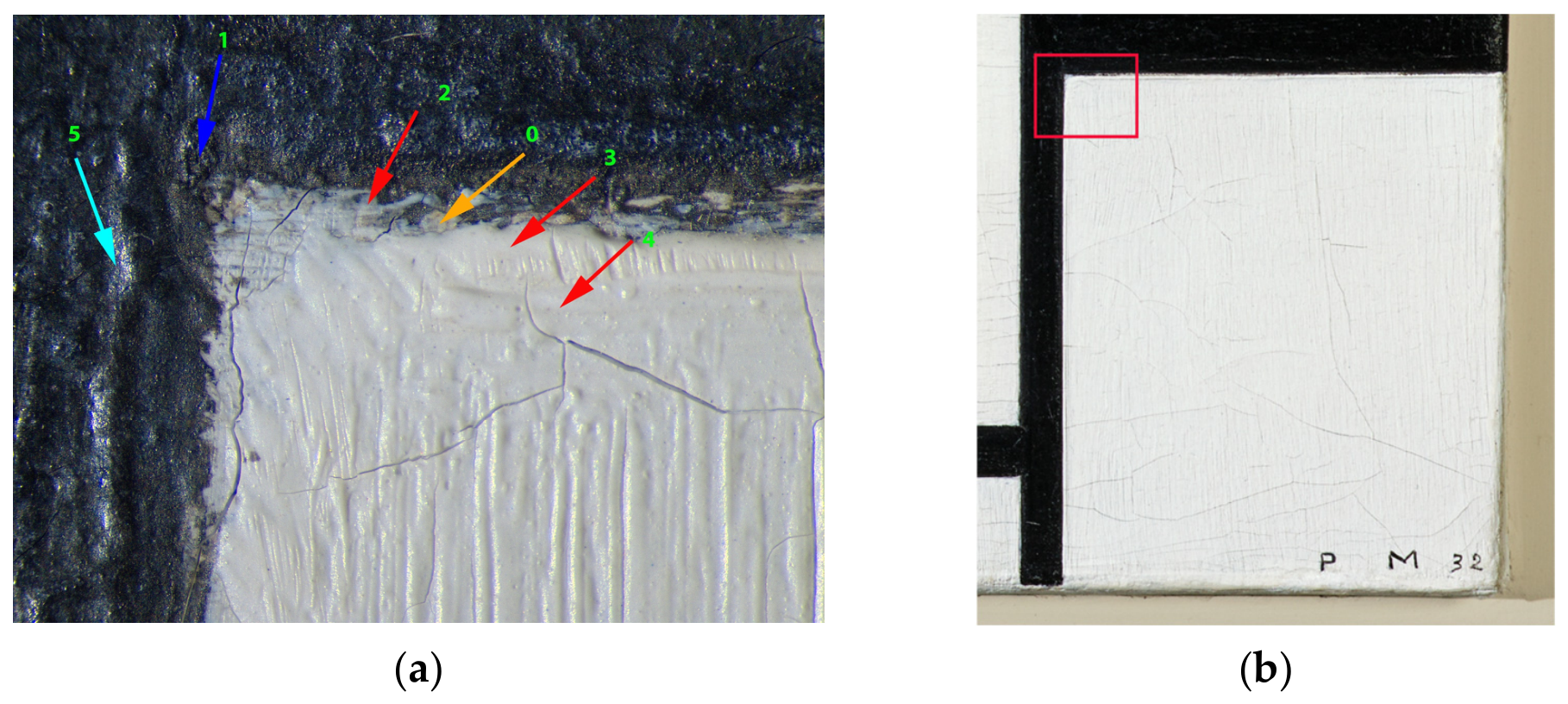
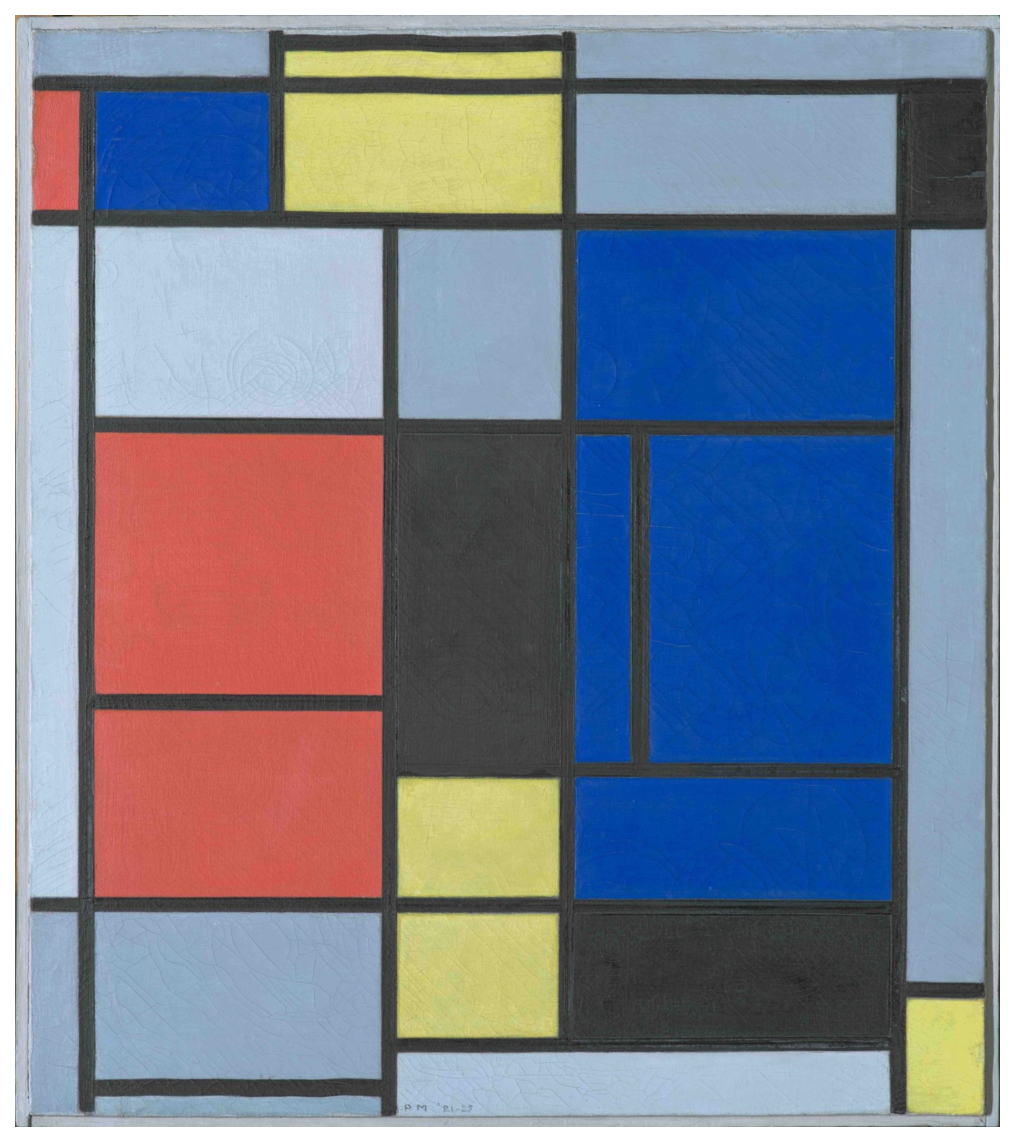
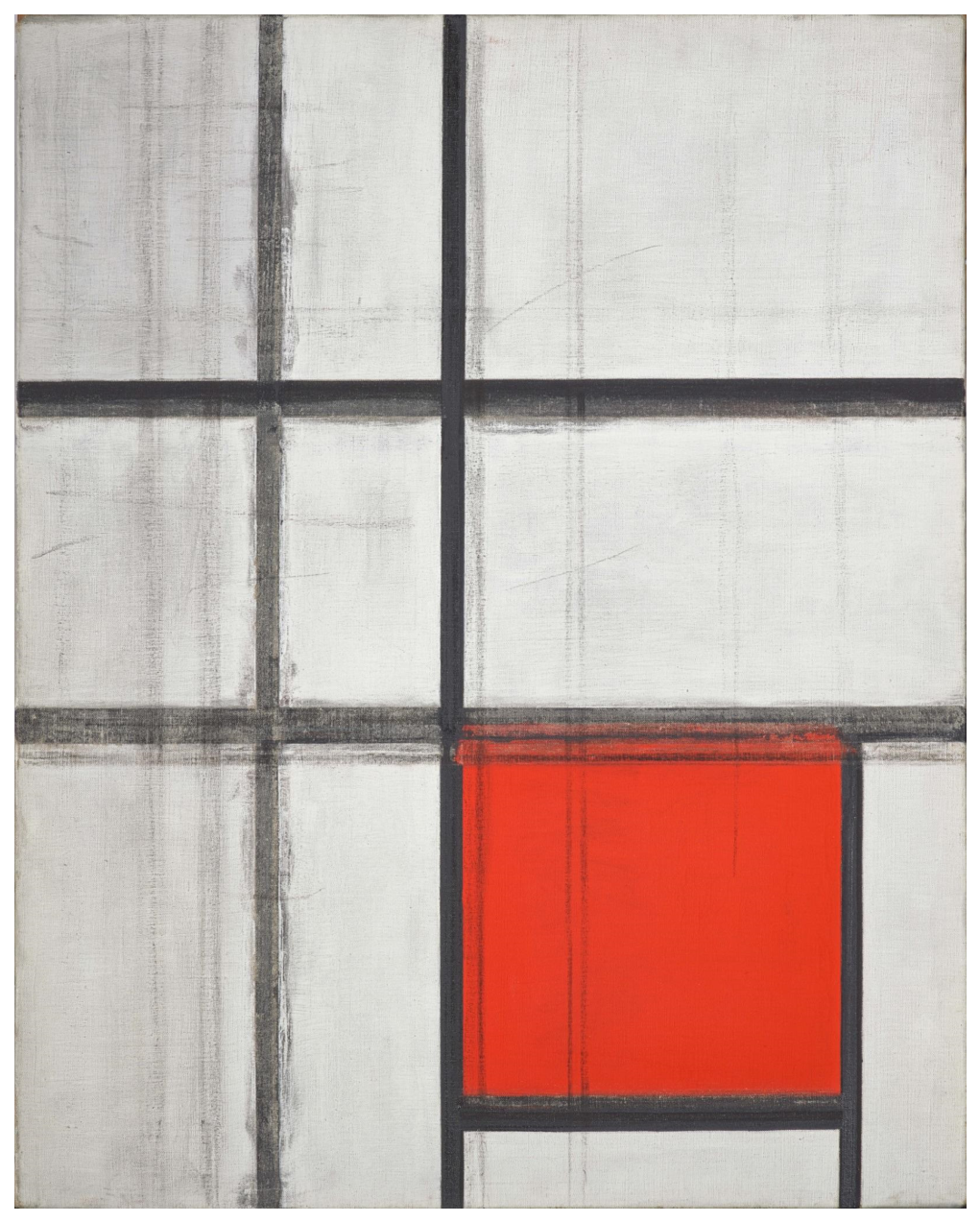
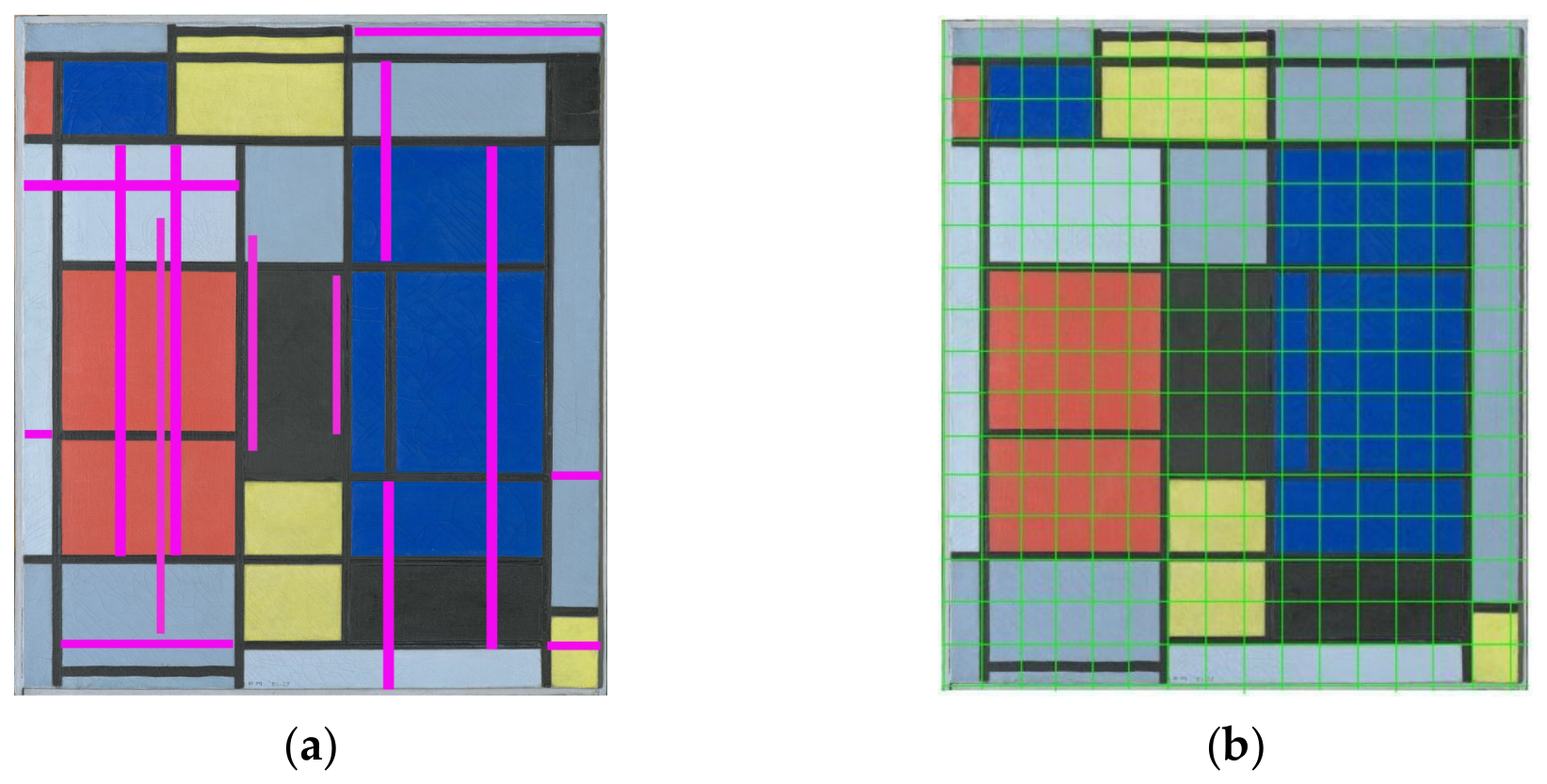
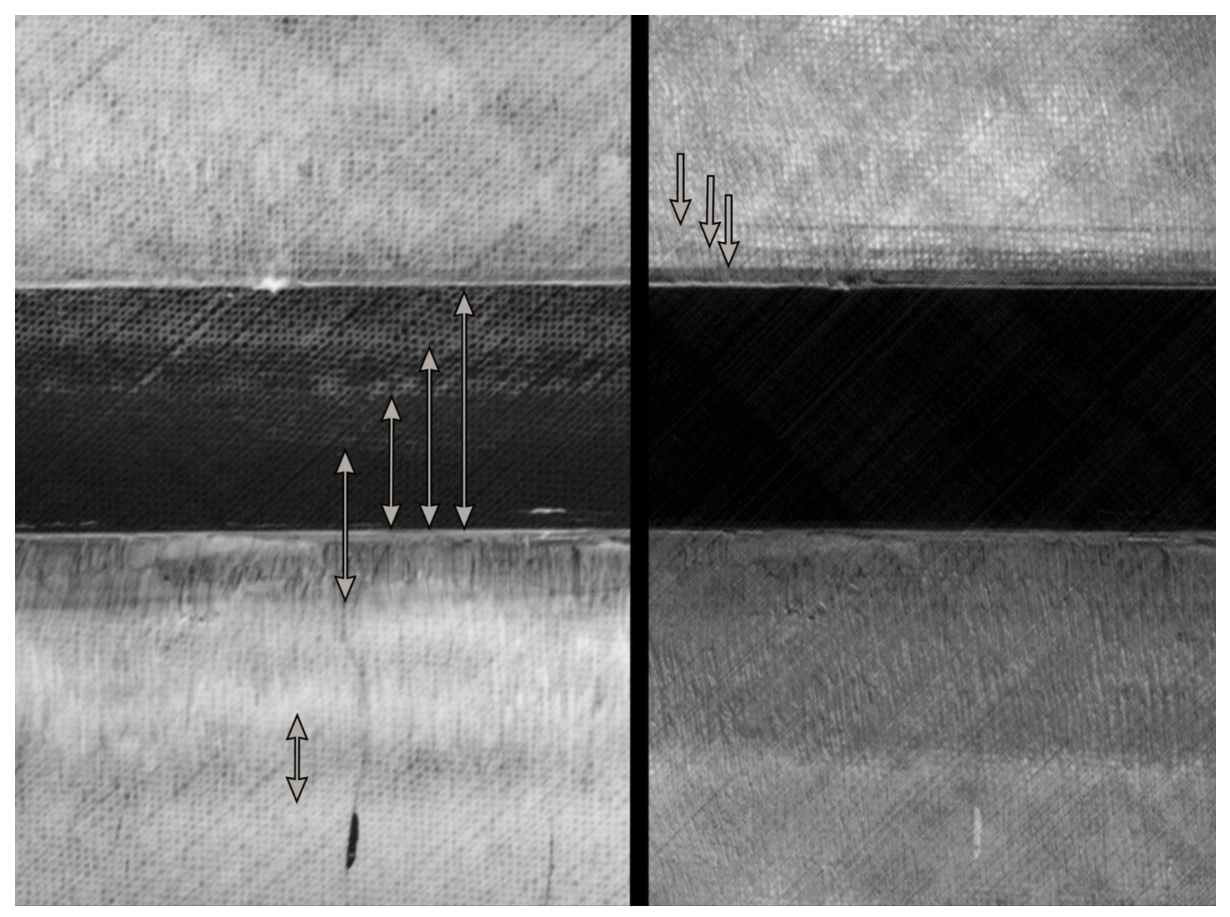
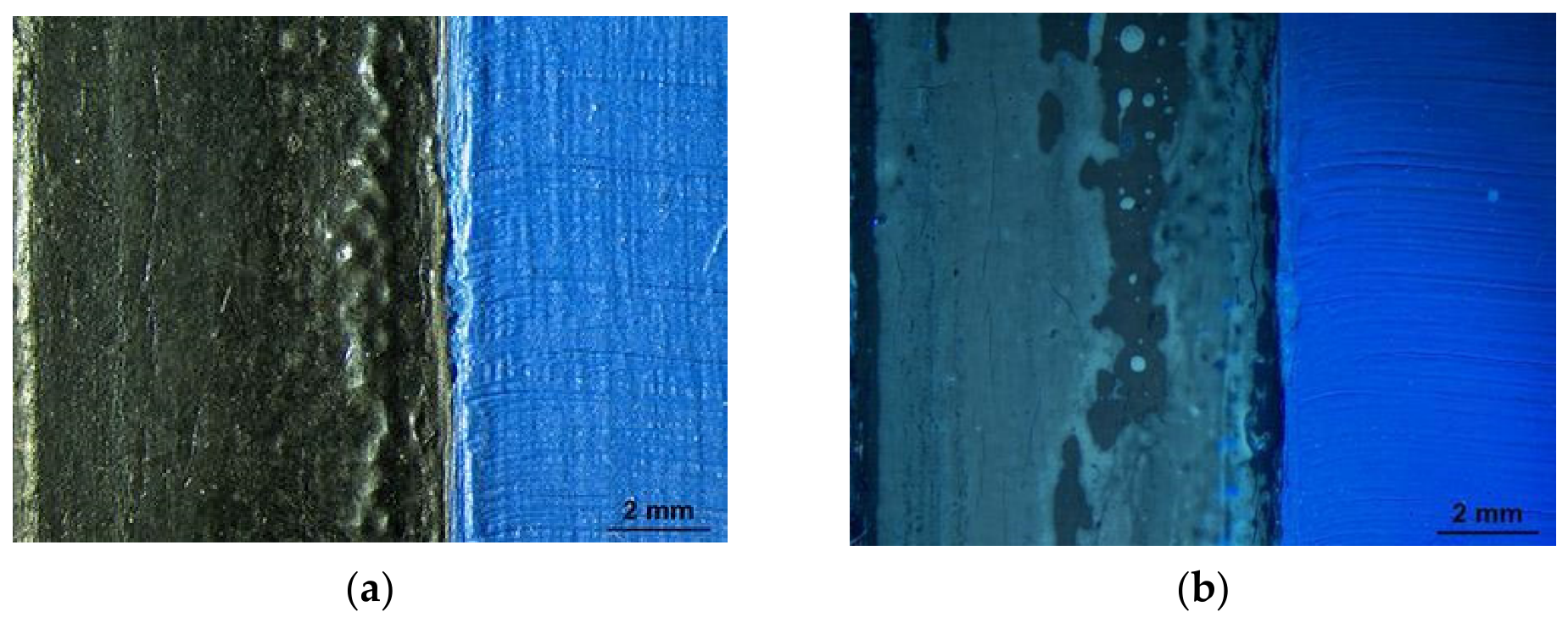
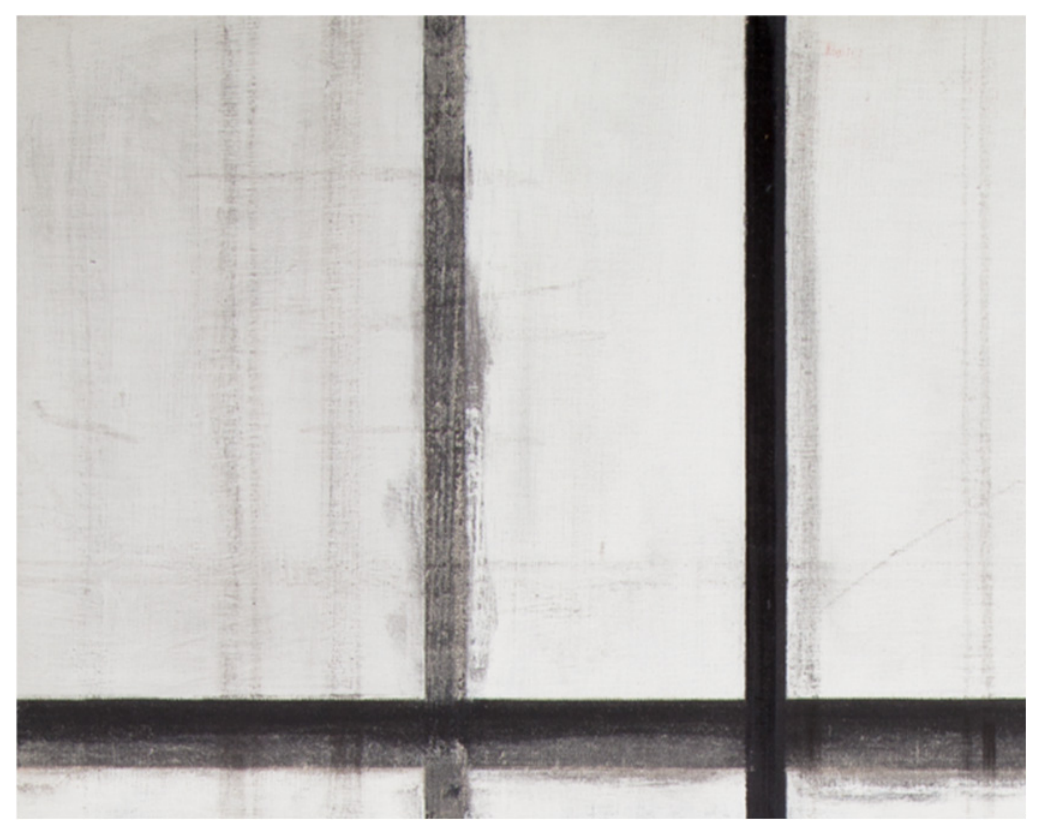
In research conducted by Fondation Beyeler (FB) on Tableau I, from 1921–1925, it was found that Mondrian painted over the grey lines with black paint (Figure 1). It seems likely that the lower grey lines stem from the first state of the work, which was finished in 1921 (see Section 2.1). The reason for Mondrian to start using black paint for the lines probably had to do with the continuous development of the Neoplastic theory. The lines cease to be ‘painterly’ lines in different shades of grey, ending by becoming smaller towards the edge of the canvas. Instead, Mondrian starts to use pure black paint and, at the same time, he ends the lines by making it seem as though they are abruptly cut off towards the edge of the canvas. This marks the final step towards the mature Neoplastic style: a combination of pure, glossy black lines and matte rectangles in the colours yellow, red, blue and the non-colours white, black and grey.
In the 1930s, the lines became very prominent [1]. They had lost their supporting role, being fleeting, active elements in the composition and transformed the planes—particularly the white ones—into ‘nothing’, as Mondrian liked to put it [1] (p. 330). In other words, the black lines had become the principal means for expressing dynamic and rhythm in his Neoplastic paintings.
Mondrian also wanted the black lines to have a certain shine. As early as 1920, he reported to Theo van Doesburg that his main patron, Salomon Slijper, had complained: “that the black had been treated in a different way than the colours.” Mondrian added: “You know I make it glossy, otherwise it is a coffin.”1 This would remain the visual language that Mondrian applied—with only a handful of exceptions—until he arrived in New York in late 1940. There, in his last works, he discovered how to get rid of what he called ‘the old’, i.e., the use of black lines.

1.2. Material-Technical Studies of Mondrian’s Painting Materials

The examination of the materials and techniques Mondrian used in his paintings started only in the late 1970s [3,4,5,6,7,8,9,10,11,12,13], and continued most notably in the extensive study of Victory Boogie Woogie (1942–1944, Kunstmuseum Den Haag, The Hague, The Netherlands) by an international team in 2006–2012 [14] and research of his other New York masterpiece Broadway Boogie Woogie (1942–1943, MoMA) [15]. Other studies focused on the use of specific zinc white paint in Mondrian’s Neoplastic works [16] and on degradation phenomena related to his cadmium yellow paints [17] and zinc soap formation [18,19].
Research by Van Asperen de Boer in the late 1990s on microsamples from black lines was done with light microscopy, but did not include chemical analysis of the pigments and varnishes [5]. The most extensive study on the positioning, build-up and materials of the lines can be found in the catalogue of the exhibition “Mondrian: The Transatlantic Paintings” held in 2001 at Harvard University Art Museums and the Dallas Museum of Art (Cambridge, MA, USA), focused on seventeen works created in Europe and reworked in America. On this occasion, in-depth technical research—specifically on five of the exhibited paintings—was carried out [9]. The black lines of some other Neoplastic paintings have been examined as well, but the results are rather scattered in a few publications and reports, and systematic research by comparing different paintings has not yet been carried out; moreover, only a limited number of cross sections have been examined [3] (p. 79) [5,6,9,20].
In the past years, all Piet Mondrian paintings in the collection of Fondation Beyeler (Riehen/Basel, Switzerland) were thoroughly studied during the ‘Piet Mondrian Conservation Project’ (2019–2021),2 a close collaboration between the museum and the Cultural Heritage Agency of the Netherlands (RCE) [13,16,21,22,23,24,25,26]. One of the focal points of this project was the black lines.

1.3. Aim and Approach

The aim of this study is to gain more insight into the techniques and materials used by Mondrian to paint the black lines in his Neoplastic works.
Four paintings in the collection of Fondation Beyeler—representing the different phases of Mondrian’s Neoplastic period—were extensively examined: Tableau I (1921–1925), Composition with yellow and blue (1932), Composition with double line and blue (1935), and Picture no. III (Lozenge composition with eight lines and red) (1938). Research on provenance and conservation treatments was carried out. Historical sources were examined and combined with the detailed study of each painting with a stereomicroscope and technical imaging. Analyses of pigments and binders were performed with portable non-invasive X-ray fluorescence (XRF) spectroscopy, as well as analysis of cross sections and loose material using optical microscopy, Fourier Transform Infrared (FTIR) spectroscopy, scanning electron microscopy—energy dispersive X-ray fluorescence spectroscopy (SEM-EDX) and pyrolysis gas chromatography mass spectrometry (Py-GC/MS).
Moreover, the unfinished painting Composition with red (1934, private collection) was examined with different light sources and stereomicroscopy. This painting was included because it could possibly shed some light on the preliminary working stages of the black lines.
Photographs taken in Mondrian’s studios and information from letters written by the artist or his contemporaries also proved an important primary source for questions concerning the black lines.
The preparation of mockups—including the making of a reconstruction of Composition with yellow and blue—gave further insights into Mondrian’s techniques and choices of materials. The objective was to compare similarities between mock-ups and original paintings under magnification to aid in drawing conclusions on techniques and tools employed. The results of the study of the mock-ups supporting or debunking assumptions about Mondrian’s techniques are incorporated throughout Section 3.2.

2. Materials and Methods

2.1. Corpus of Paintings

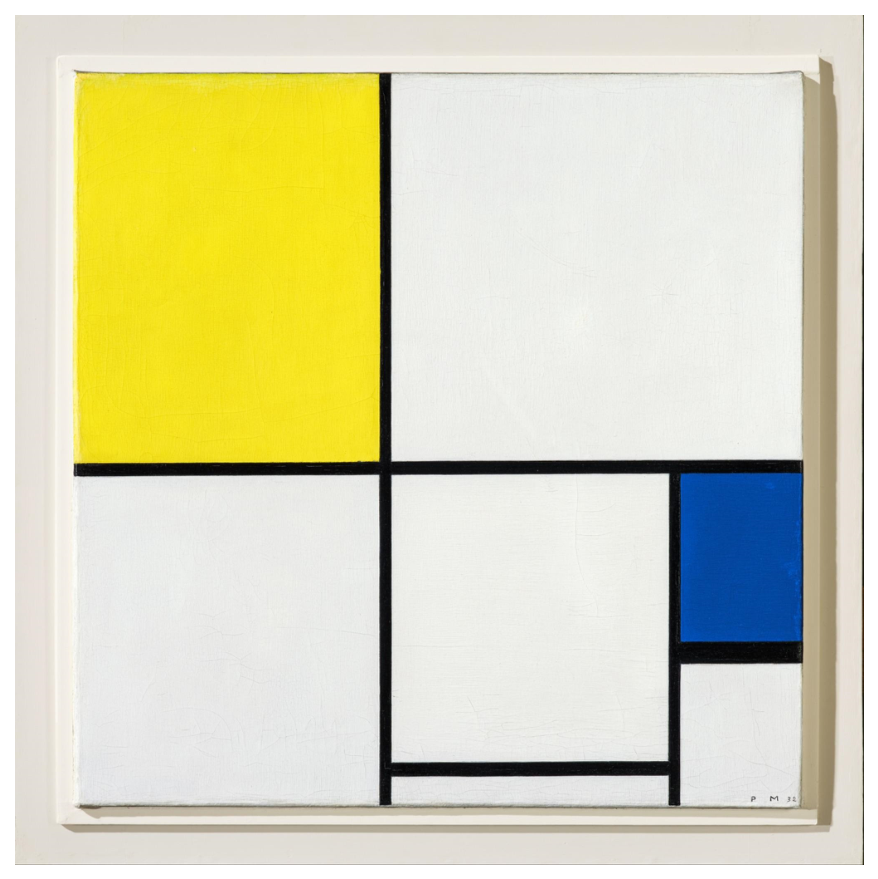
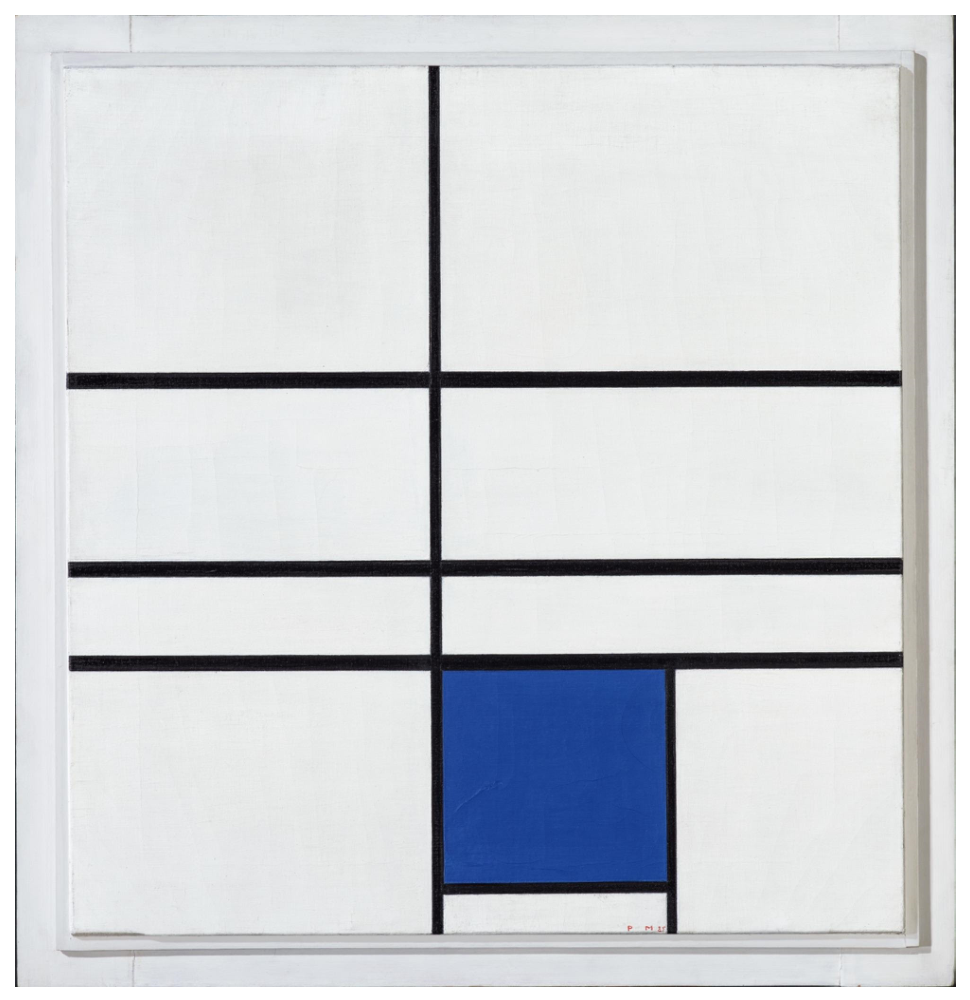
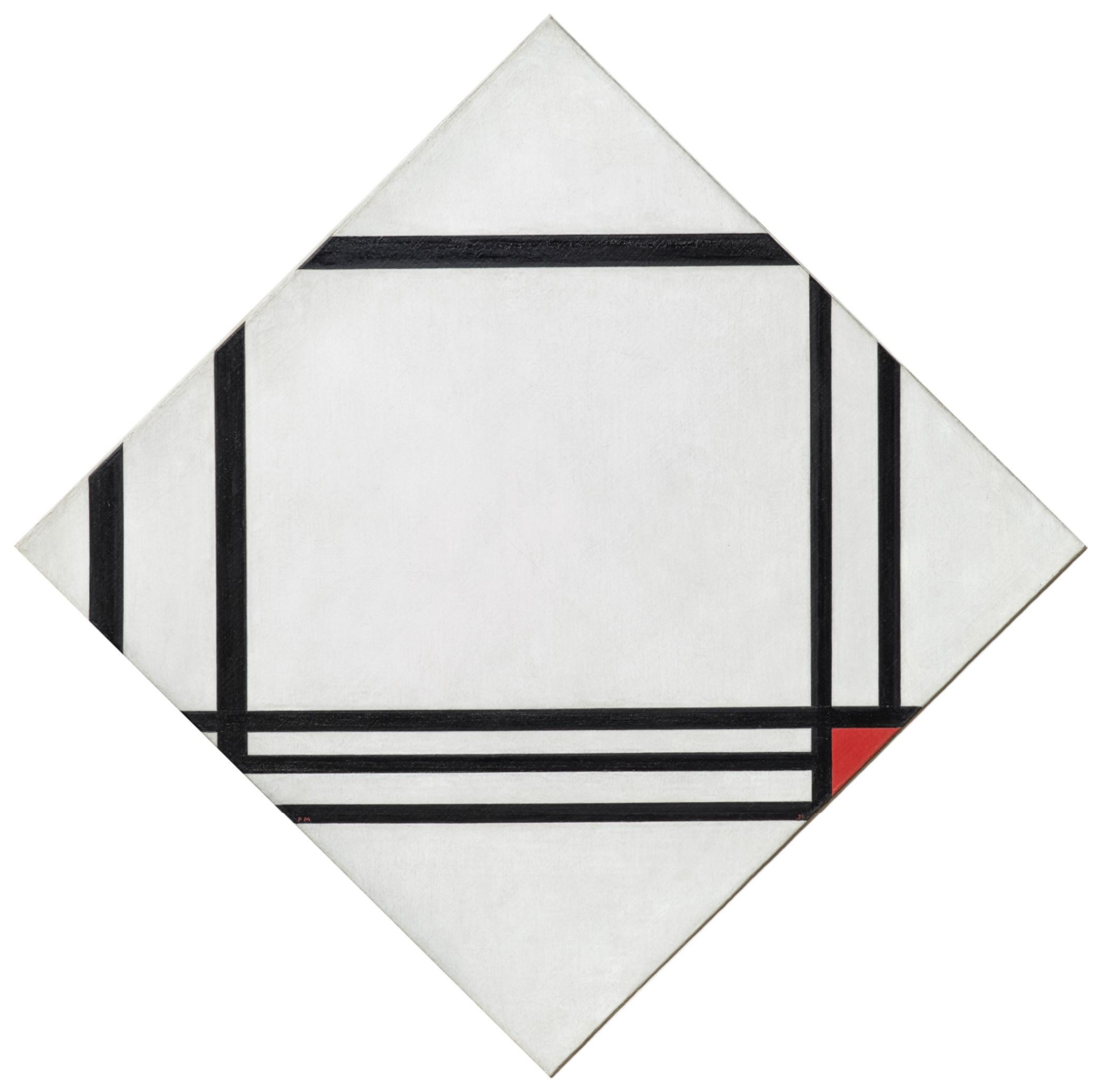
Four paintings in the collection of Fondation Beyeler (Figure 2, Figure 3, Figure 4 and Figure 5)—all painted or commenced in Paris—were the main focus of this study: Tableau I, Composition with yellow and blue, Composition with double line and blue, and Picture no. III.
The unfinished painting Composition with red (1934, private collection), which is in an exceptionally authentic condition (Figure 6), was also examined.
The present-day appearance of Tableau I (1921–1925, Fondation Beyeler) is the result of a reworking of the painting by Mondrian in 1925. It bears the double date of 1921 and 1925.3 A recent investigation with infrared reflectography evidenced that the painting had actually been dated before, covered by Mondrian with new paint [16]. This first date could be even earlier, 1920. The lettering “PM ‘2” could be clearly made out, but, unfortunately, it was not possible to reveal the important second digit after the ‘2. Mondrian added the date of 1925 to Tableau I after he had reworked it for the exhibition ‘Mondrian—Man Ray’, held in September 1925 at Kunsthandlung Kühl und Kühn in Dresden (Germany) [27]. The painting has never been restretched, and the original frame (recessed strip frame and subframe) has never been removed.4
Composition with yellow and blue (1932, Fondation Beyeler) was owned by G. Wallbrink-Oud (Haarlem, The Netherlands) and was acquired by Ernst and Hildy Beyeler in 1978. The painting was treated and wax-lined; the original frame and subframe construction were overpainted in this process. The lining was likely performed using the vacuum method.
Composition with double line and blue (1935, Fondation Beyeler) was directly sold to George Lovett Kingsland Morris, but changed several owners before it was bought by Ernst and Hildy Beyeler in 1990. Except for a later very thin coating, mainly composed of beeswax, the painting is in a rather authentic condition. The original mounting has not been removed since its completion, and it still shows the originally applied sub and strip frame.
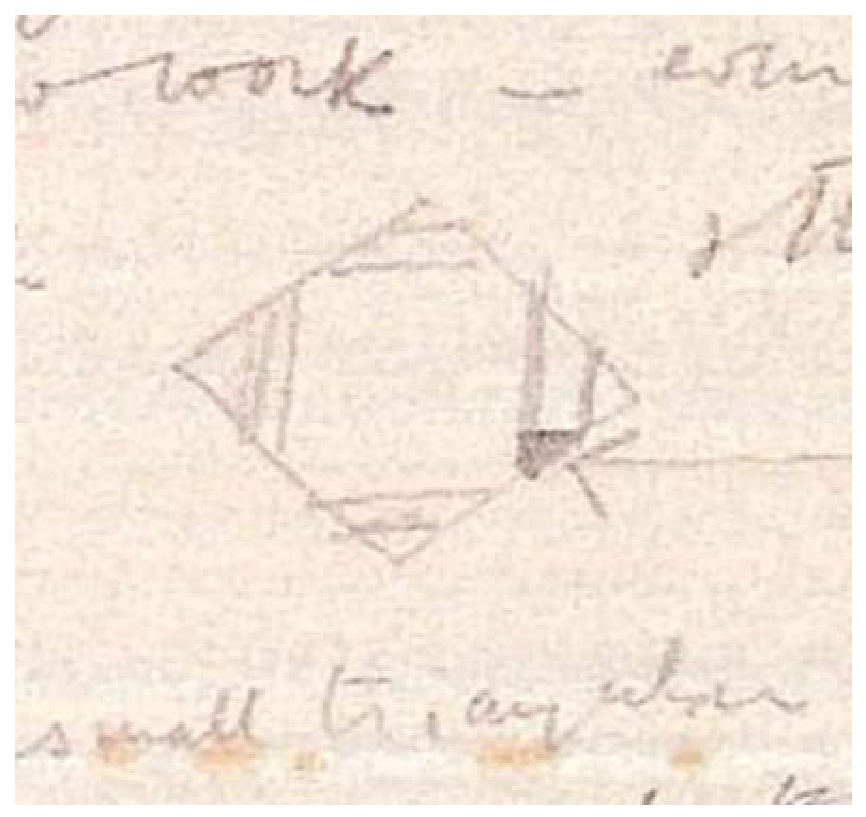
Lozenge composition with eight lines and red (1938, Fondation Beyeler), better known as Picture no. III has a complex history: according to Hans Janssen, it is Mondrian’s only painting worked on in Paris, London and New York [1] (pp. 389–390). He most likely started the work in 1935, when his friend, the artist Ben Nicholson, saw the work and described it in a letter, including a small sketch (Figure 7).5 In the beginning of 1936, James Johnson Sweeney6 describes the work as “…only in charcoal lines with a piece of red paper stuck to it on one side.” [28]. In August 1938, after his move to London, Mondrian wrote to Nicholson that he had finished the painting [28] (p. 277). At that time, he might have signed and dated the work “1938”. Subsequently, the painting was sent to New York, as testified by a label of a fine art shipper. Here, in 1941, Mondrian’s friend, Charmion von Wiegand, witnessed that he was still working on it. In 1943, Mondrian gave the painting to Sweeney. In a 1980 documentary, he describes that Mondrian insisted on installing and determining the position of the painting himself in the Sweeney apartment.7 The painting has been heavily lined and restored sometime between 1979 and 1986,8 before it was acquired by Ernst Beyeler.

2.2. Samples

Samples were taken from all four of the Beyeler paintings, excluding Composition with Red (private collection). Most samples were prepared as cross sections. These were embedded in Polypol PS 230 polyester resin (Poly-Service BV, Amsterdam, The Netherlands) and polished with SiC paper (Struers, Maassluis, The Netherlands; Micro Mesh). The cross sections were studied with OM and SEM-EDX, and some also with ATR-FTIR imaging. Micro-samples taken from the black lines of Tableau I, Composition with yellow and blue, and Picture no. III were analysed with FTIR spectroscopy and Py-GC/MS (see Table 1).
Sample analyses were focused on the paint and finish layers; canvas and primers were not specifically investigated in this study.

2.3. Analytical Techniques

2.3.1. Visible Light and UV Imaging

A converted Canon EOS 5D Mark II camera (Canon Inc., Tokyo, Japan) was employed with an IR-cut neutralisation filter NG 77D in combination with Broncolor minicom 80 flash lamps (Broncolor, Allschwil, Switzerland) for visible light imaging and a Profilux LED 1000 lamp (Hedler Systemlicht, Runkel, Germany) for raking, transmitted and specular light imaging. For ultraviolet fluorescence (UVF) and ultraviolet reflectance (UVR) imaging, the same camera and IR-neutralisation filter were used with a UVAHAND 250 GS lamp (Hoenle AG, Gilching, Germany), inserting an LP460 filter for UVF and an SP2 400 NG filter for UVR.

2.3.2. Infrared Reflectography, Standard and Transmitted

For the infrared imaging, an Osiris camera (Opus Instruments Ltd., Norwich, UK) was used with lamps containing Osram Halogen Superstar 64702 SST 8750 lm bulbs (Ledvance GmbH, Garching, Germany). The spectral range of the camera is 900–1700 nm.

2.3.3. X-Radiography

Digital X-radiography was carried out with a Bosello High Technology Industrial X-Ray apparatus (Carl Zeiss X-ray Technologies Srl, Oberkochen, Germany). The following settings were used for the four paintings: Tableau I XR 35 kV, 24 mA, 25 ms; Composition with yellow and blue XR 100 kV, 10 mA, 18 ms; Composition with double line and blue XR 50 kV, 19 mA, 30 ms; Picture No. III 70 kV, 13.6 mA, 20 ms.

2.3.4. Stereo- and Digital Microscopy

A Leica M80 stereo microscope (Leica Microsystems, Wetzlar, Germany) and a Keyence VHX-7000 digital microscope (Keyence Corporation, Osaka, Japan) with visible and raking light were used to examine the paintings.

2.3.5. Portable X-Ray Fluorescence (pXRF) Spectroscopy

Analyses were performed with a portable Tracer 5i X-Ray fluorescence spectrometer (Bruker, Bremen, Germany) equipped with a low-power Rhodium X-ray tube and a Silicon-Drift energy dispersive X-ray detector. The measurements were carried out using a 3 mm collimator, a tube voltage of 15 kV or 40 kV (to bring out better light and heavy elements, respectively) and a current of 200 or 6 µA. The acquisition time was 200 and 60 s.

2.3.6. Optical Microscopy (OM)

All cross sections were examined using a Zeiss AxioImager A2m optical microscope (Carl Zeiss Microscopy GmbH, Jena, Germany) with incident polarised light from a VIS-LED lamp for bright-field and dark-field illumination, and incident UV light from the Solid-State Light Source Colibri 7, type RGB-UV, LED ‘UV’ (385 nm) for UV-induced fluorescence. The filter set used for UV fluorescence consists of these filters: excitation G 365, beam splitter FT 395, and emission LP 420 (filter set 02).

2.3.7. Scanning Electron Microscopy with Energy Dispersive X-Ray Analysis (SEM-EDX)

SEM-EDX analysis of the cross sections was performed using a Jeol JSM 5910 LV SEM (JEOL Ltd., Tokyo, Japan) with a Thermo Scientific SDD EDX detector (Thermo Fisher Scientific, Waltham, MA, USA). The primary electron beam energy used was 20 kV. The cross sections were examined in the low vacuum mode (29 Pa) at a working distance of ca. 10 mm.

2.3.8. FTIR Spectroscopy

A PerkinElmer Spectrum 100 FTIR coupled with a Spectrum Spotlight 400 FTIR microscope (PerkinElmer, Shelton, CT, USA) was used for all FTIR measurements. The attenuated total reflection Fourier transform infrared (ATR-FTIR) imaging measurements were carried out with a PerkinElmer ATR imaging accessory (PerkinElmer, Shelton, CT, USA), equipped with a flat germanium crystal; spectral range: 4000–688 cm−1, spectral resolution: 16 cm−1, 2 spectra per pixel, spatial pixel size: 1.56 µm × 1.56 µm. The FTIR transmission spectra were acquired with a Miniature Diamond Anvil Cell, spectral range: 4000–700 cm−1, 16 scans, spectral resolution: 4 cm−1.

2.3.9. Py-GC/MS

Thermally assisted hydrolysis and methylation pyrolysis-gas chromatography mass spectrometry (THM-Py-GC/MS) was applied to the samples of the black lines. The sample, with a few drops of a solution of tetra-methyl ammonium hydroxide in methanol (5%), was transferred to a metal pyrolysis cup, which was then introduced into a Frontier Lab 3030D pyrolyzer (Frontier Laboratories, Fukushima, Japan). This was used in combination with a Thermo Scientific Trace 1610 gas chromatograph and a Thermo Scientific ISQ7600 mass spectrometer (Thermo Fisher Scientific, Waltham, MA, USA). Pyrolysis was conducted by rapidly raising the temperature from 350 °C to 700 °C; the temperature of the pyrolysis interface was 290 °C. The pyrolysis unit is directly linked by a split connector to an SLB5 ms Supelco column (Sigma-Aldrich, Steinheim, Germany) with a length of 20 m, an internal diameter of 0.18 mm and a film thickness of 0.18 μm. Helium with a programmed flow (0.5 to 1.2 mL/min) was used as carrier gas in combination with a temperature program of 35 °C (1 min)–60 °C/min–110 –14 °C/min–240 °C–5 °C/min–315 °C (2 min). The column is directly coupled to the ion source of the mass spectrometer. The temperature of the interface was 270 °C; the temperature of the ion source was 220 °C. Mass spectra were recorded from 29 to 600 AMU at a speed of 7 scans per second.

2.4. Mock-Ups and Reconstruction

Three types of mock-ups were prepared with the aim of understanding the practical aspects of painting black lines. Choices in materials and buildup were inspired by observations and the analysis of paint materials; the processes were experimental and of an empirical nature. Materials and tools (metal ruler, wood ruler, cardboard, tape, mahlstick) used for the mock-ups are summarised in Table S1 (Supplementary Information) and were picked to be close to standard artist materials and tools Mondrian might have used. All mock-ups and the reconstruction were carried out flat on a table, as it is well established that Mondrian painted with the canvas face-up on a table (see Section 3.2.2).
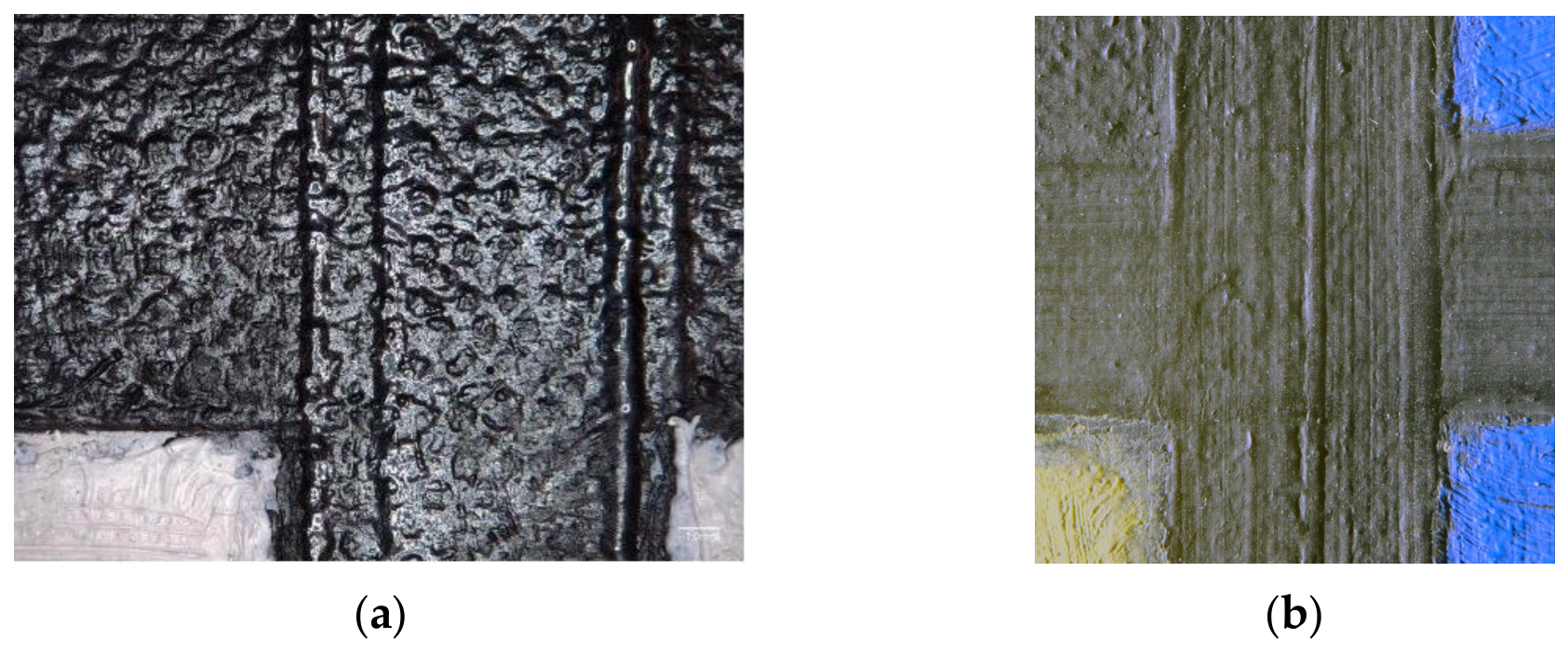
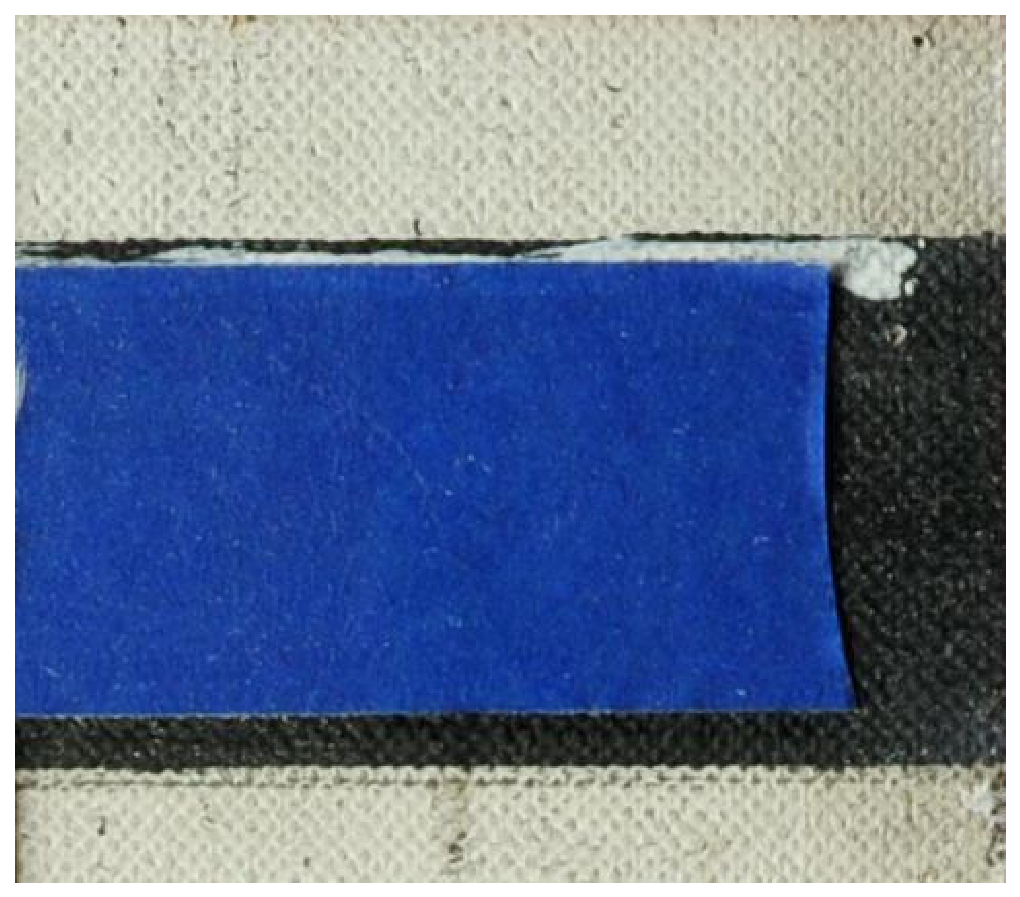
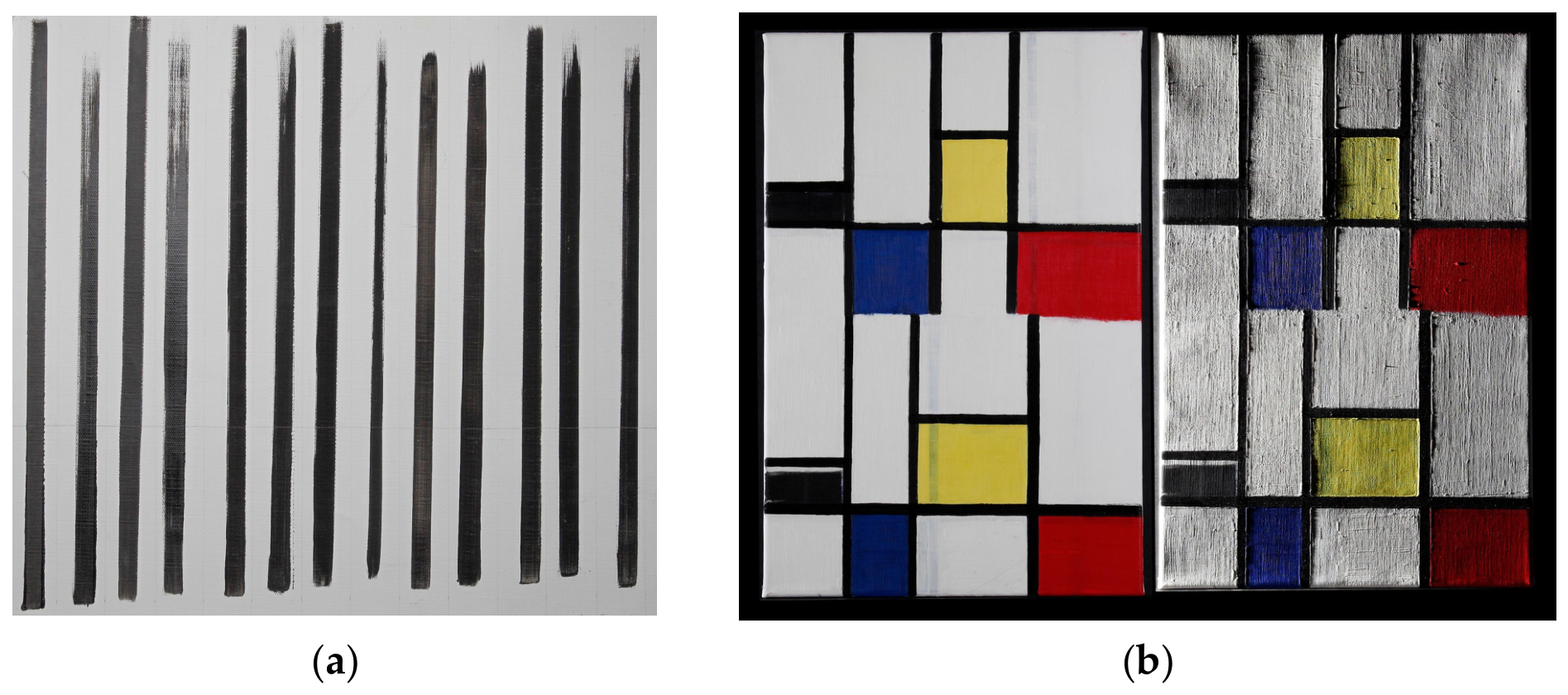
The first mock-up (Mock-up 1) consisted of a series of simple black lines, painted out on pre-primed canvas (Figure 8a). Various paint viscosities were experimented with (different ratios of paint, linseed oil and turpentine), as well as flat brushes of varying firmness. Also, a variety of tools was used to help create straight lines. In a second mock-up (Mock-up 2), a more realistic build-up was recreated, taking into account factors in the original paintings such as changes in composition and adjoining colour fields (Figure 8b). Here, the processive build-up of paint, as it naturally occurs during painting, showed a complex system of overlapping paint. Based on analytical findings of cross-sections taken from original black lines (see Section 3.1.2), a third mock-up (Mock-up 3) was made to understand the correlation between paint build-up and gloss (Figure 9). Lastly, a one-to-one reconstruction of Composition with yellow and blue (1932) was created to take into account the entire painting process, while also implementing the analyses and microscopic observations of the original painting (see Section 3.1).
All mock-ups and the reconstruction were examined with stereo and digital microscopy.

3. Results

3.1. Paintings

3.1.1. Technical Examination

For the earliest painting in this study, Tableau I (1921–1925, FB), a mapping of the modifications of the black lines was made (Figure 10a), based on X-ray and IRR examination. However, it was not possible to assign these changes to the three moments of dating (1920, 1921, 1925).
Most likely, the first version (1920) showed thin, greyish lines (still partially visible, see Figure 1), similar to Composition No. II (Tate Gallery, London, UK) and Composition C (MoMA, New York), both dated 1920. With IRR, a regular grid was found under the red planes, probably traced with a pencil and ruler. When superimposing this grid onto the painting, it can be seen that all lines and planes fall within these proportions (Figure 10b). Mondrian used a regular grid for his paintings from 1918 to 1921 (see Section 1.1).
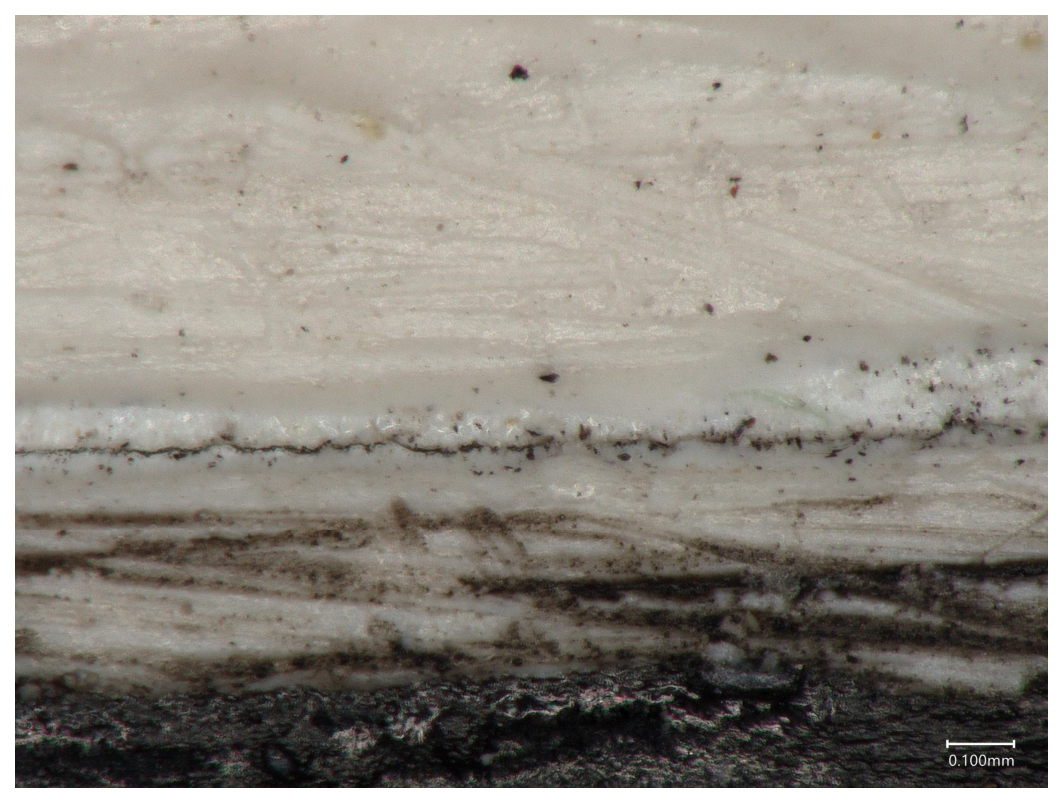
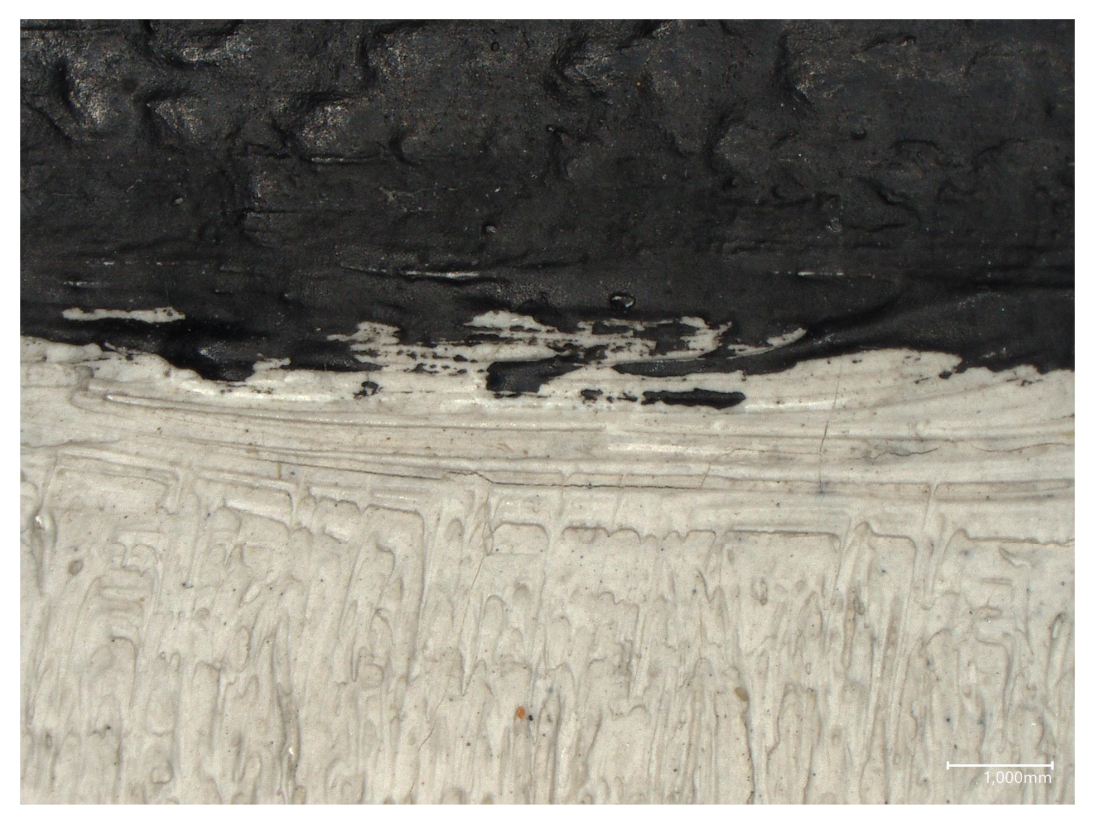
In Composition with yellow and blue (1932, FB), it is interesting to observe the transition between the white fields and the black lines. Under high magnification, the individual paint layers can in part be clearly distinguished in their sequence, although in normal viewing they visually merge into a precise image, creating the effect of a unified and sharply defined composition (Figure 11).
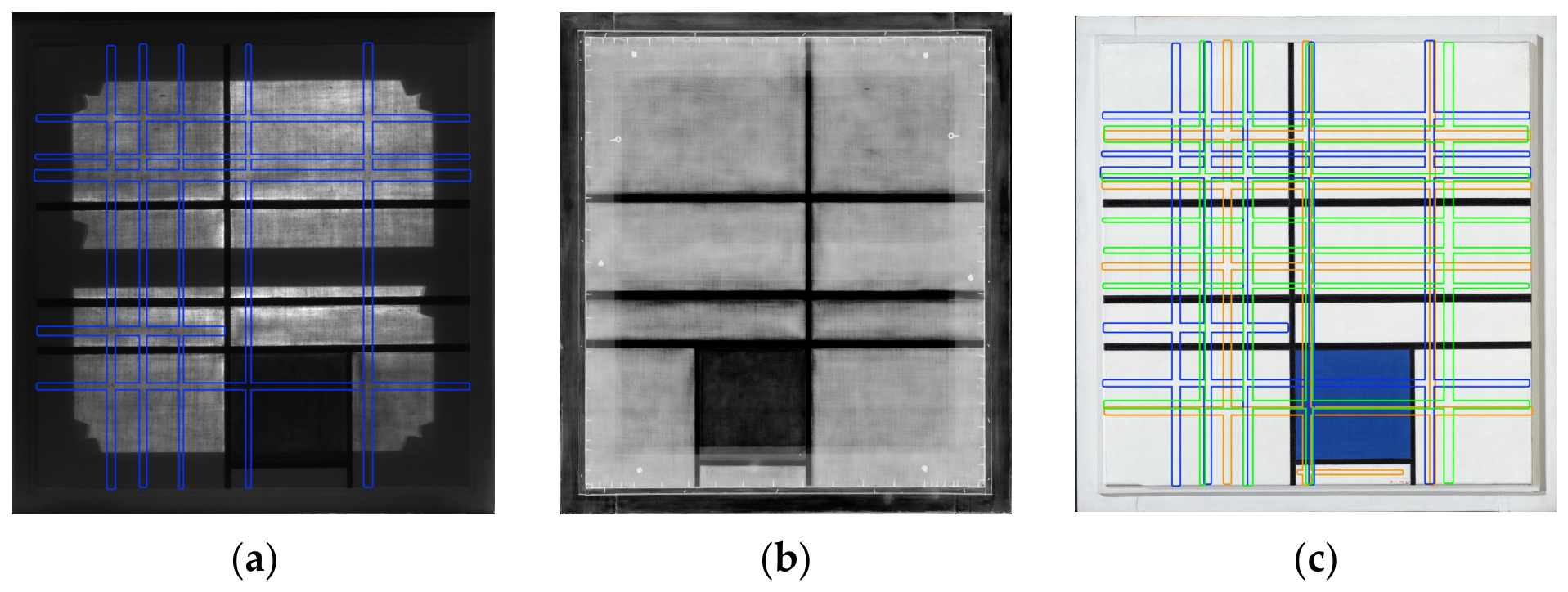
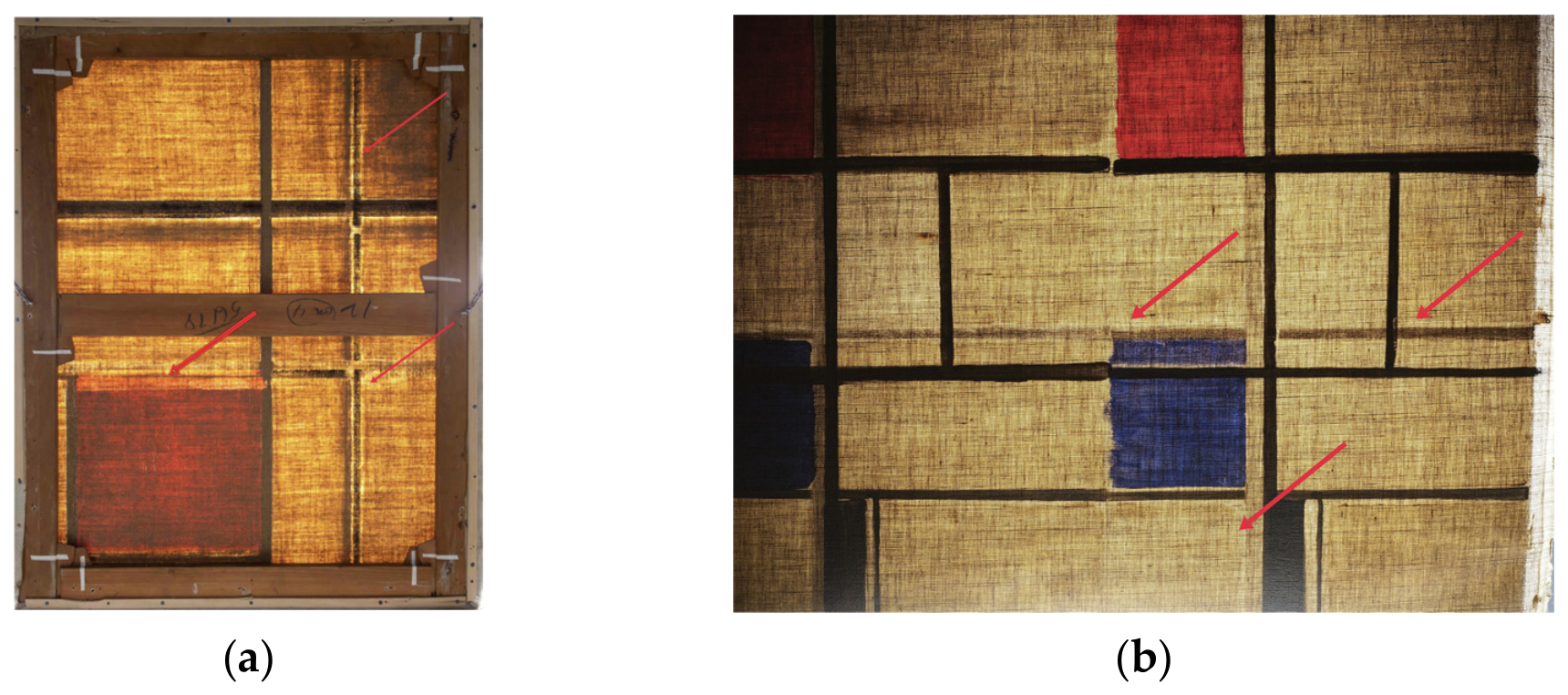
Infrared reflectography of Composition with double line and blue (1935, FB) evidences the occurrence of various lines, some only faintly visible, because they were either laid in with fleeting charcoal partially, or removed by Mondrian and then covered by various layers of lead white paint (Figure 12a). X-radiography also shows that the black lines have been displaced and adjusted (Figure 12b); dark edges and less dense material appear where paint has probably been scraped off. Dark shadows are visible, pointing to broader lines or movement of the lines.
These findings show that Mondrian continued his compositional searching, even after he applied the upper paint layer, finally discarding the last modifications of the lines. Assembling all the possible positions and changes in the lines suggests that, around 1935, Mondrian already explored the type of compositions that he made at the end of the 1930s-beginning 1940s, when more lines were used in his compositions (Figure 12c).
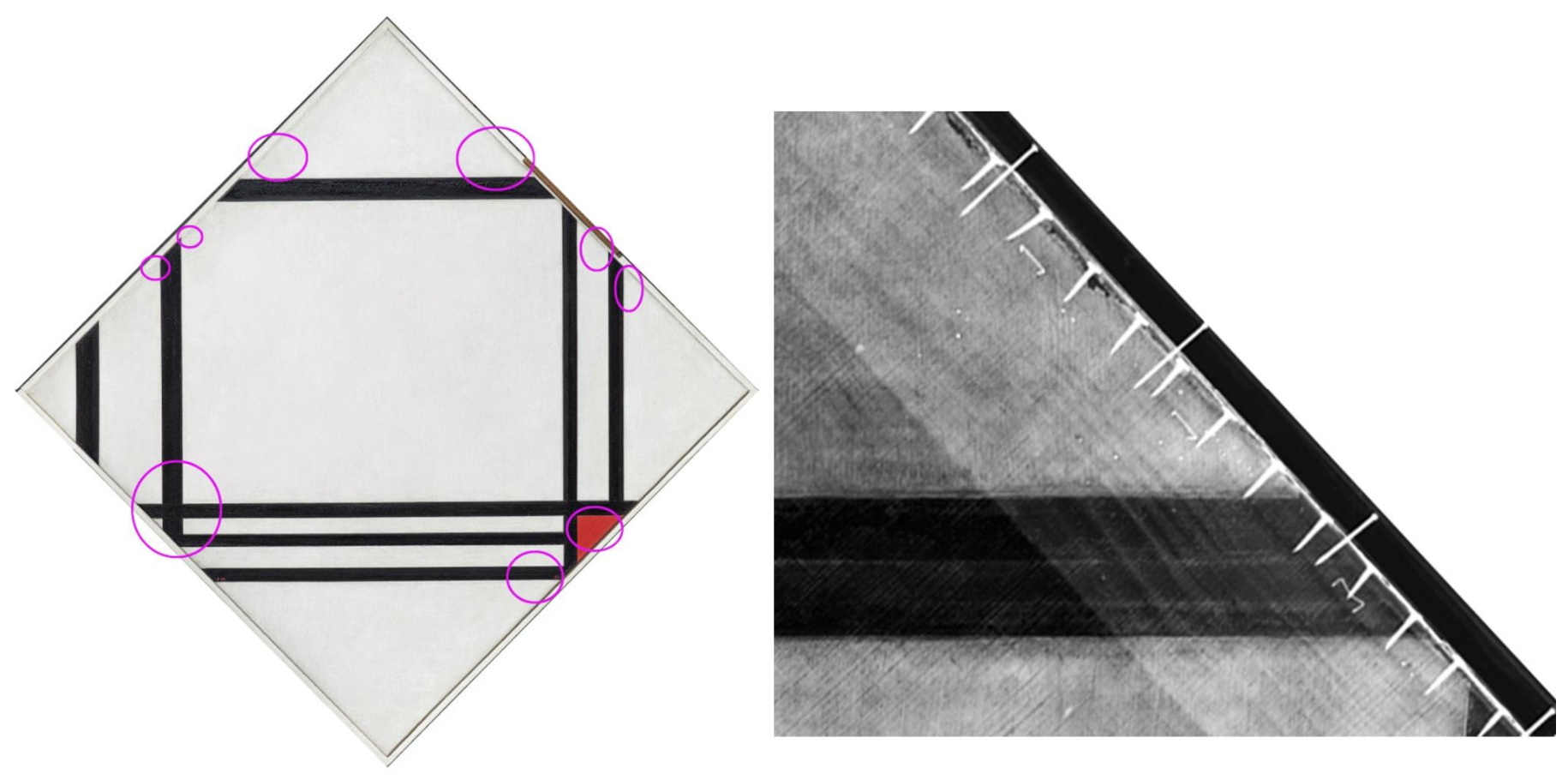
The latest painting in the collection of Fondation Beyeler is Picture no. III (1938). Its making was a long and complex process, starting in 1935 and ending in 1943, as has been described in Section 2.1 Corpus of paintings. Small pinholes in the canvas—visible in the X-ray image—testify to Mondrian’s use of paper templates and his search for the positioning of the black lines and the red triangle (Figure 13). There are several contemporaries who observed Mondrian using paper strips for finding compositions [3] (p. 38) [9] (p. 36) [29].
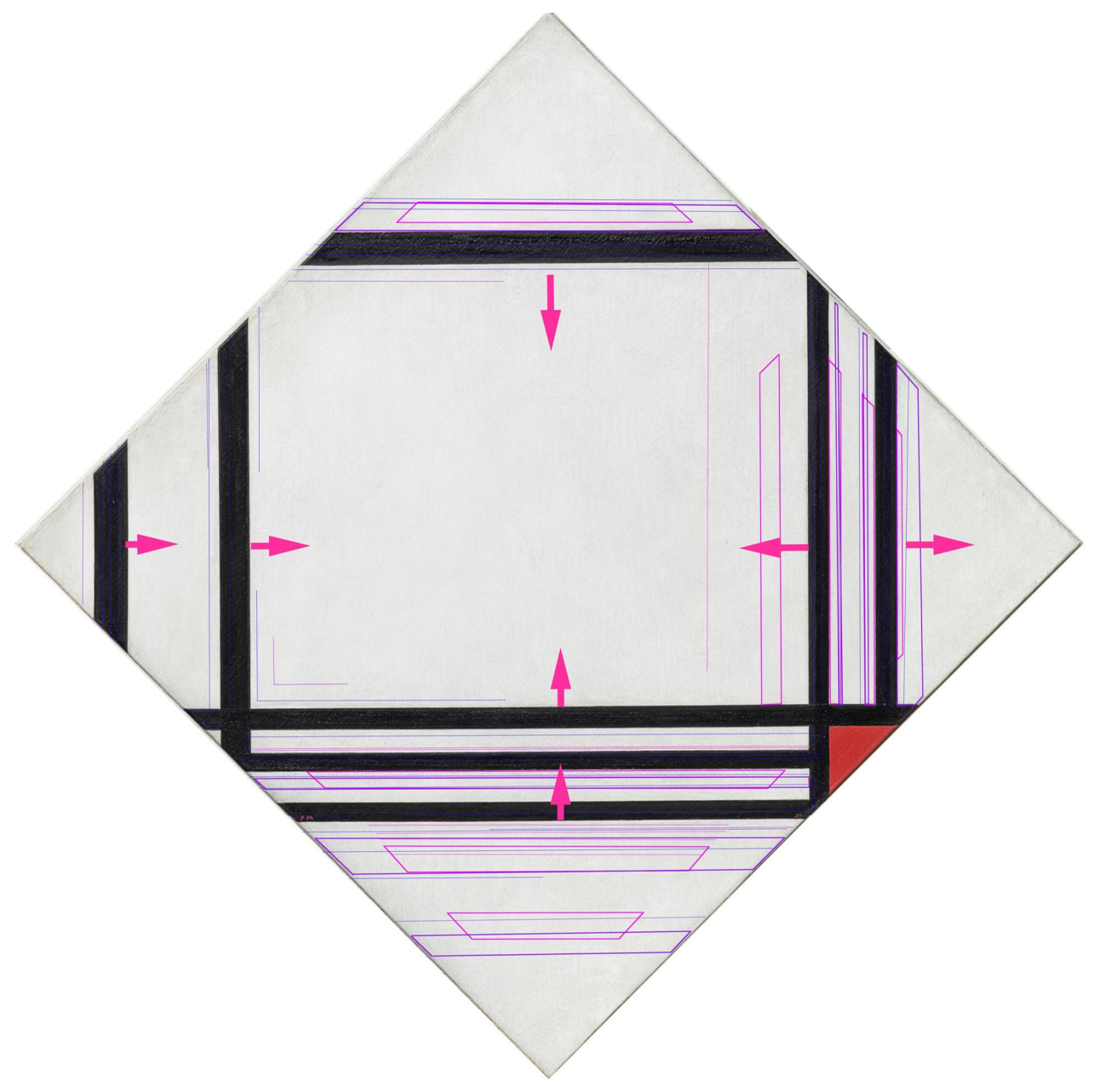
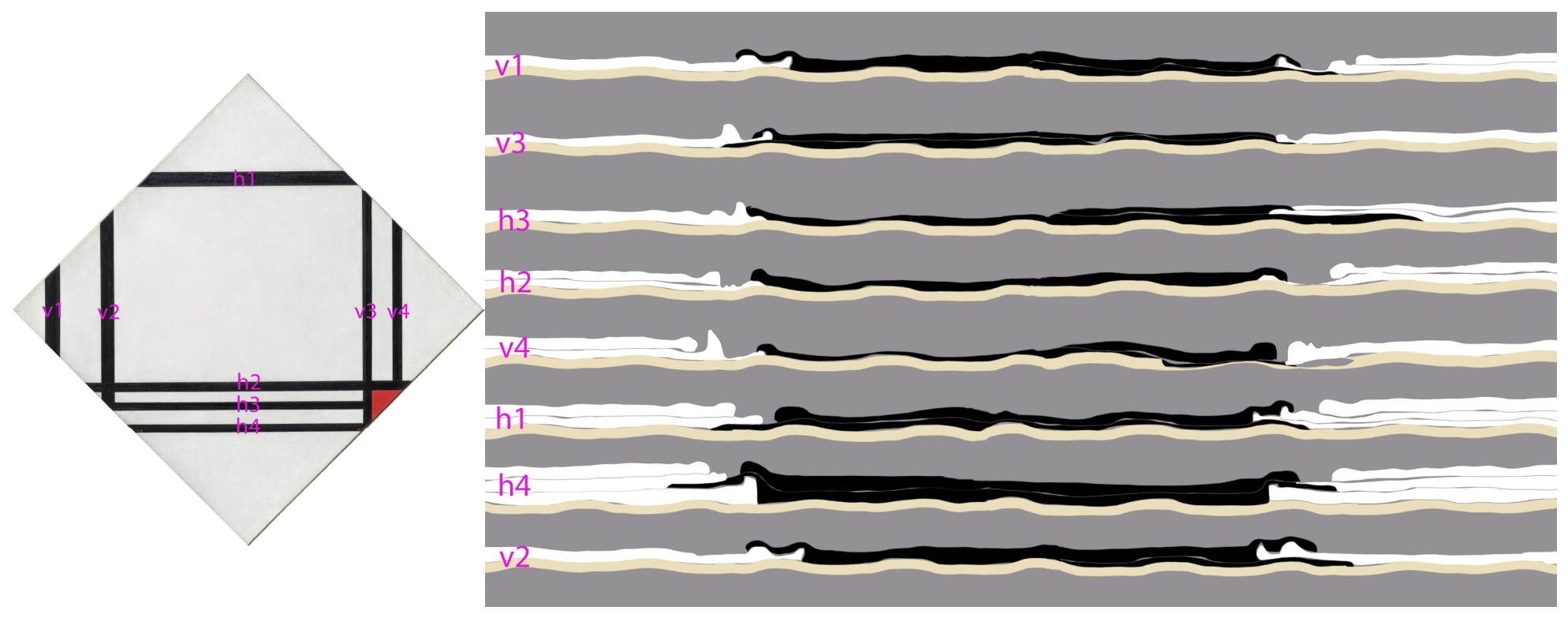
The most extensive modifications of the black lines can be seen in transmitted IR light, but further compositional changes were observed in the X-ray, UV and raking light images. These are schematically summarised in Figure 14. Mondrian seems to have been searching mainly in the lower and right part of the work.
Interpretation of the X-ray image evidences, for example, that the middle horizontal line in the lower part of the painting was moved three times upwards and then broadened twice, thus five separate modifications. IR transmitted light reveals that Mondrian made up to three additional millimetric adjustments (Figure 15).
A schematic drawing of the probable paint build-up at the edges of the lines makes the resulting complexity of the paint structure at the interfaces of the black lines and adjoining white fields clear, with numerous back and forth of layering black over white and vice versa (Figure 16).
Considering the laborious effort involved in moving these long lines by scraping and waiting for paint to dry again, the often years-on-end production of Mondrian’s paintings seems justified.
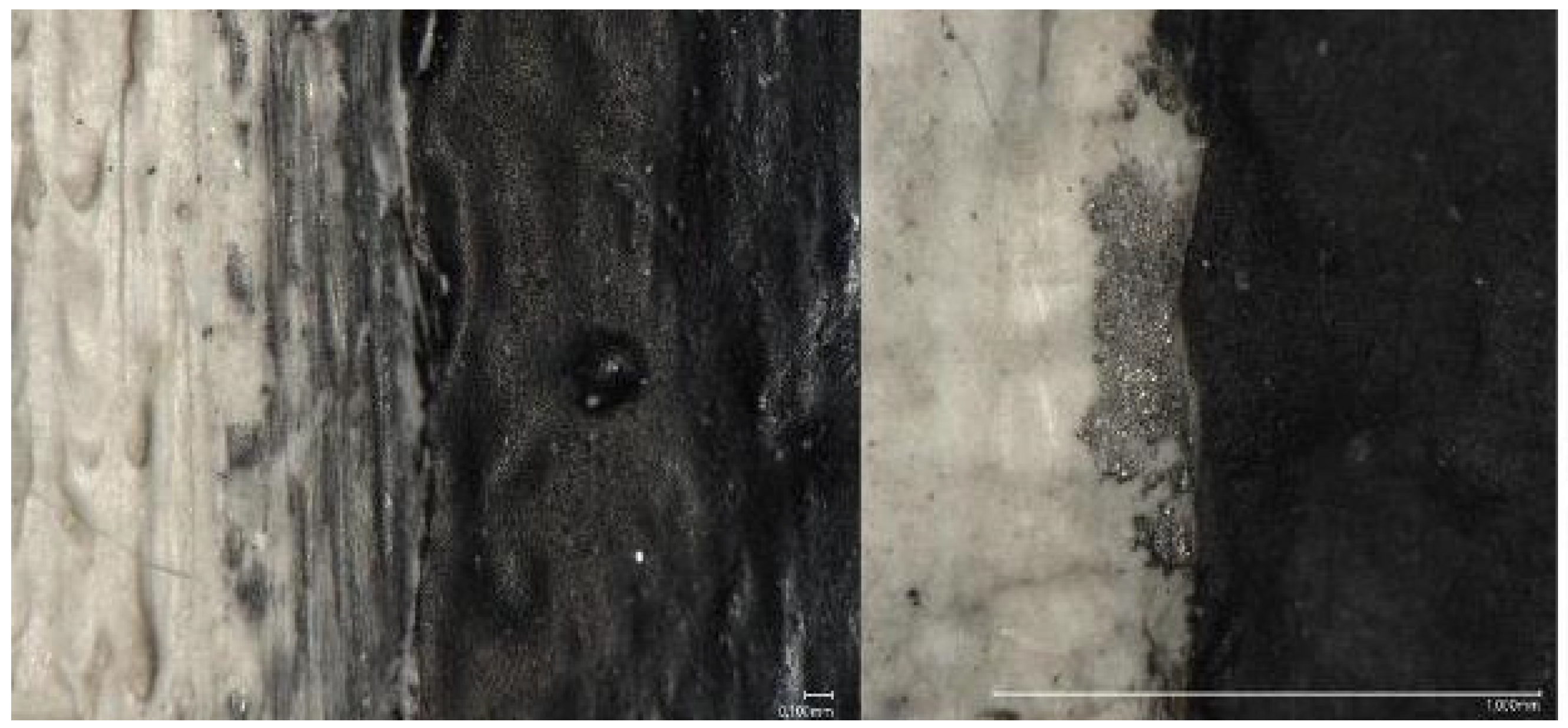
A further interesting find is the use of a pencil during an advanced phase of the painting process. Along many transitions of the white planes and the black lines, greyish veils and parallel grooves in the wet paint were observed. In certain illumination, the grey material is iridescent (Figure 17), clearly being a trace of pencil graphite.

3.1.2. Analysis of Paint Materials

Pigments and Layering
The four paintings in the collection of Fondation Beyeler were further analysed to gather information on the layering of the black lines and the composition of the painting materials. In order to get a first insight into the pigments, several XRF measurements were carried out on or close to the black lines.
In Tableau I (1921–1925, FB), lead (Pb) and zinc (Zn), and small amounts of calcium (Ca), iron (Fe), barium (Ba), manganese (Mn), phosphorus (P), and aluminium (Al) were found. Calcium and phosphorus can be ascribed to bone black, whereas lead, zinc and barium are most likely related to the use of lead white, zinc white and barium sulphate or lithopone, respectively. Iron and manganese might be present in the black paint as iron and manganese oxides.
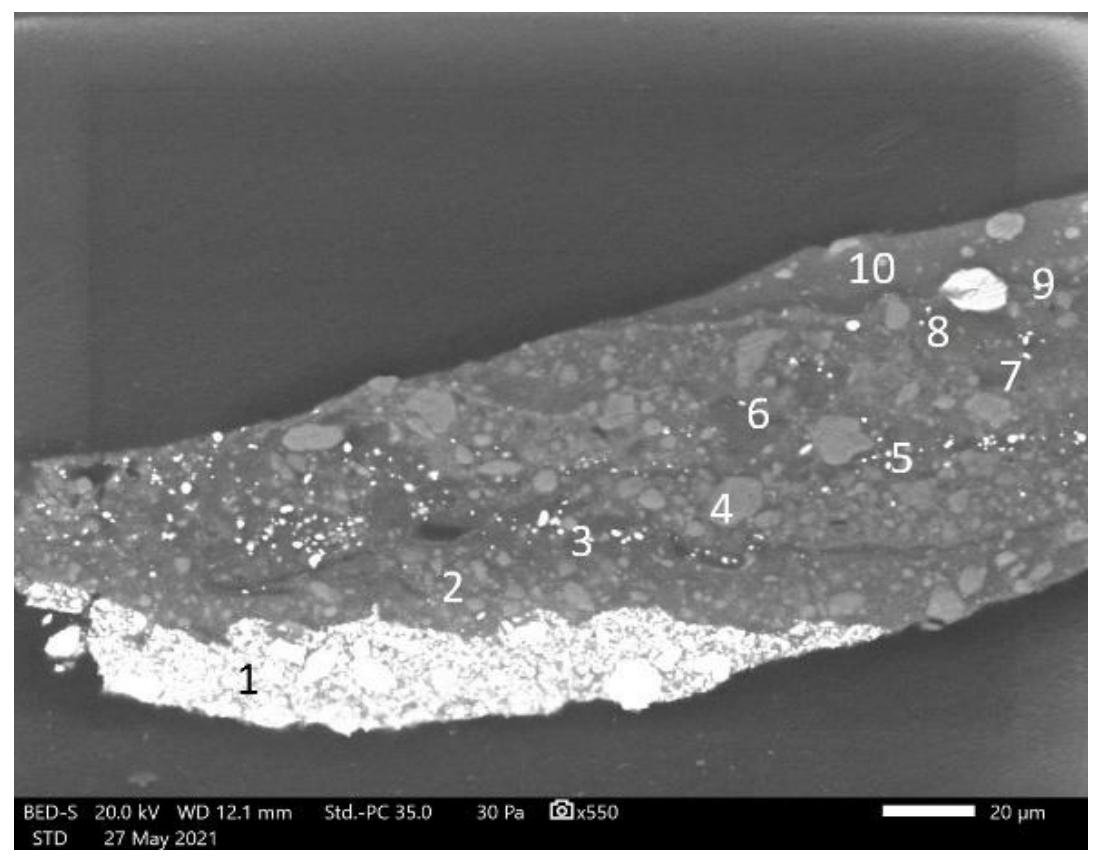
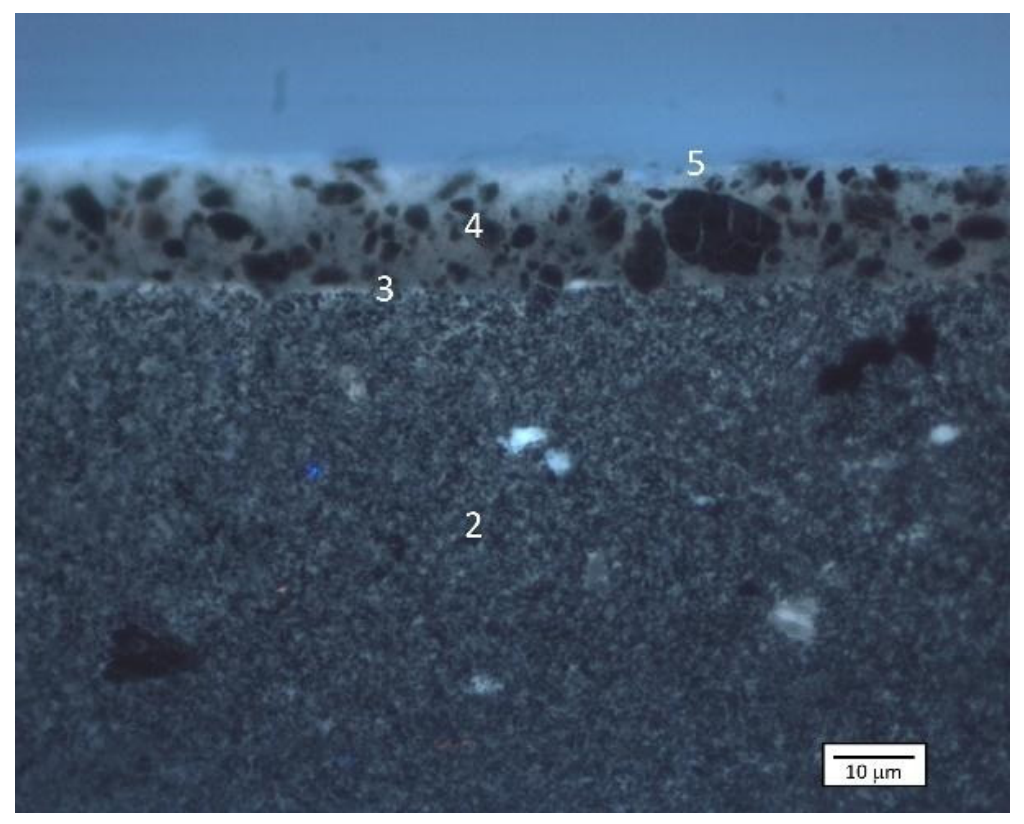
A paint sample taken from a black line (sample 94.3-X3) shows, on top of a lead white—zinc white paint with some gypsum (layer 1), a rather thick (ca. 500 μm) dark paint (layer 2) (Figure 18). This layer mainly contains very fine carbon black (lamp black) with quite some aluminium and phosphorus, in similar quantities, and a very low amount of zinc. Their relative abundance does not suggest the use of a zinc white-Al/P paint, a characteristic marker paint that was found in various paintings by Mondrian dating from 1921 to 1935, including Tableau I [16]. Some small particles containing higher amounts of aluminium and phosphorus also show manganese.
On top of this thick dark paint, a thin fluorescent layer (layer 3)—likely a local finish—is observed in UV light. This is followed by the upper black paint layer (layer 4), which contains bone black, as testified by the presence of Ca, P and magnesium (Mg), mixed with very small amounts of zinc white. This layer is medium rich, and the bone black particles appear rather small and more angular as compared with the particles in Composition with yellow and blue and Composition with double line and blue (see below).
As mentioned in Section 2.1, the first version of Tableau I was made in 1921, or possibly as early as 1920. The first thick dark paint layer could probably be dated at that time, whereas the bone black layer might have been applied when the artist ‘reworked’ the painting in 1925. On top of the black paint, a finish layer is present. Since this layer is rather broken up and very thin, it is difficult to ascertain the presence of any pigment.
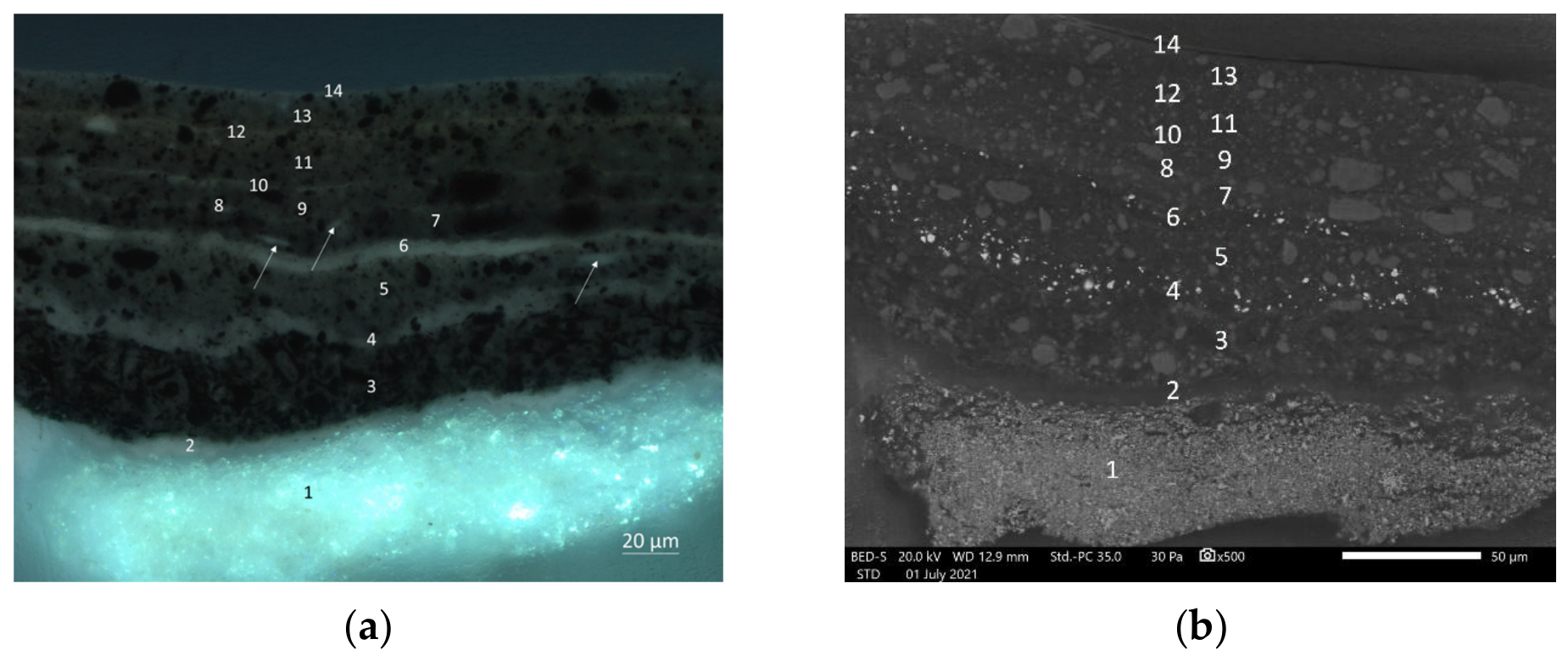
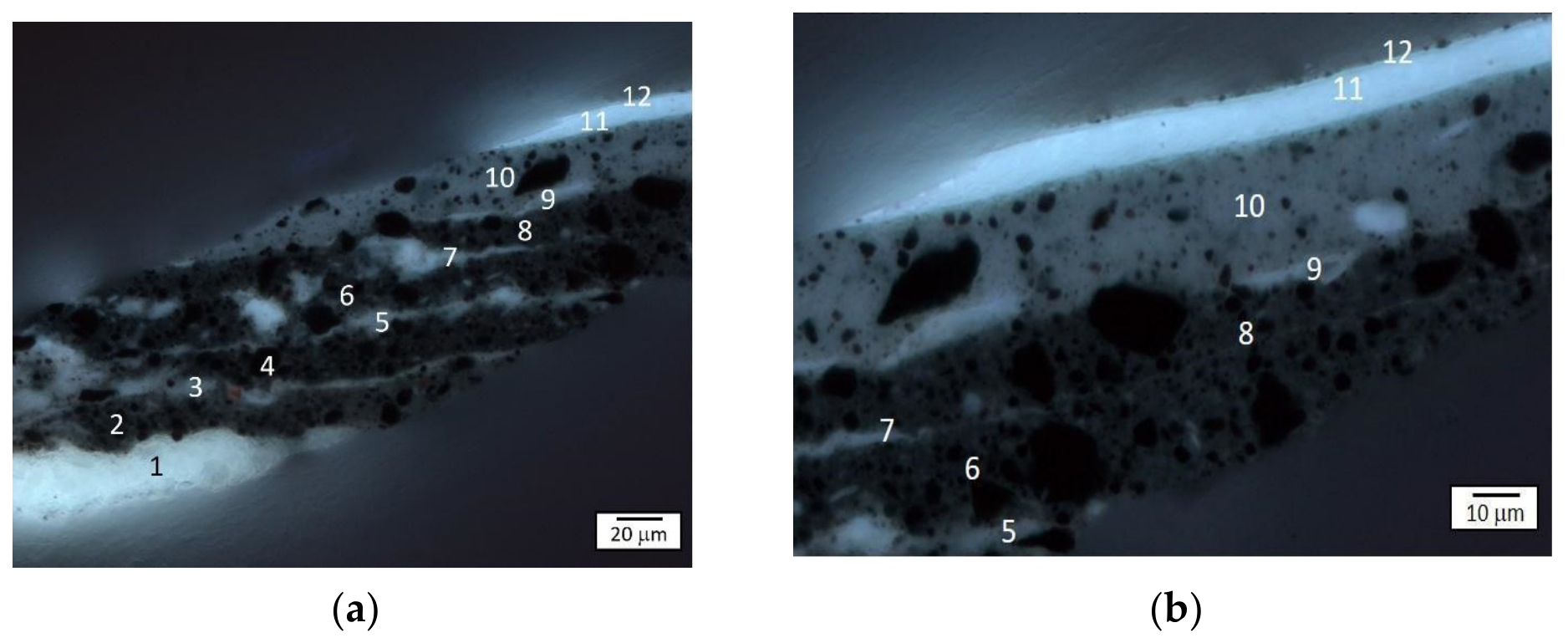
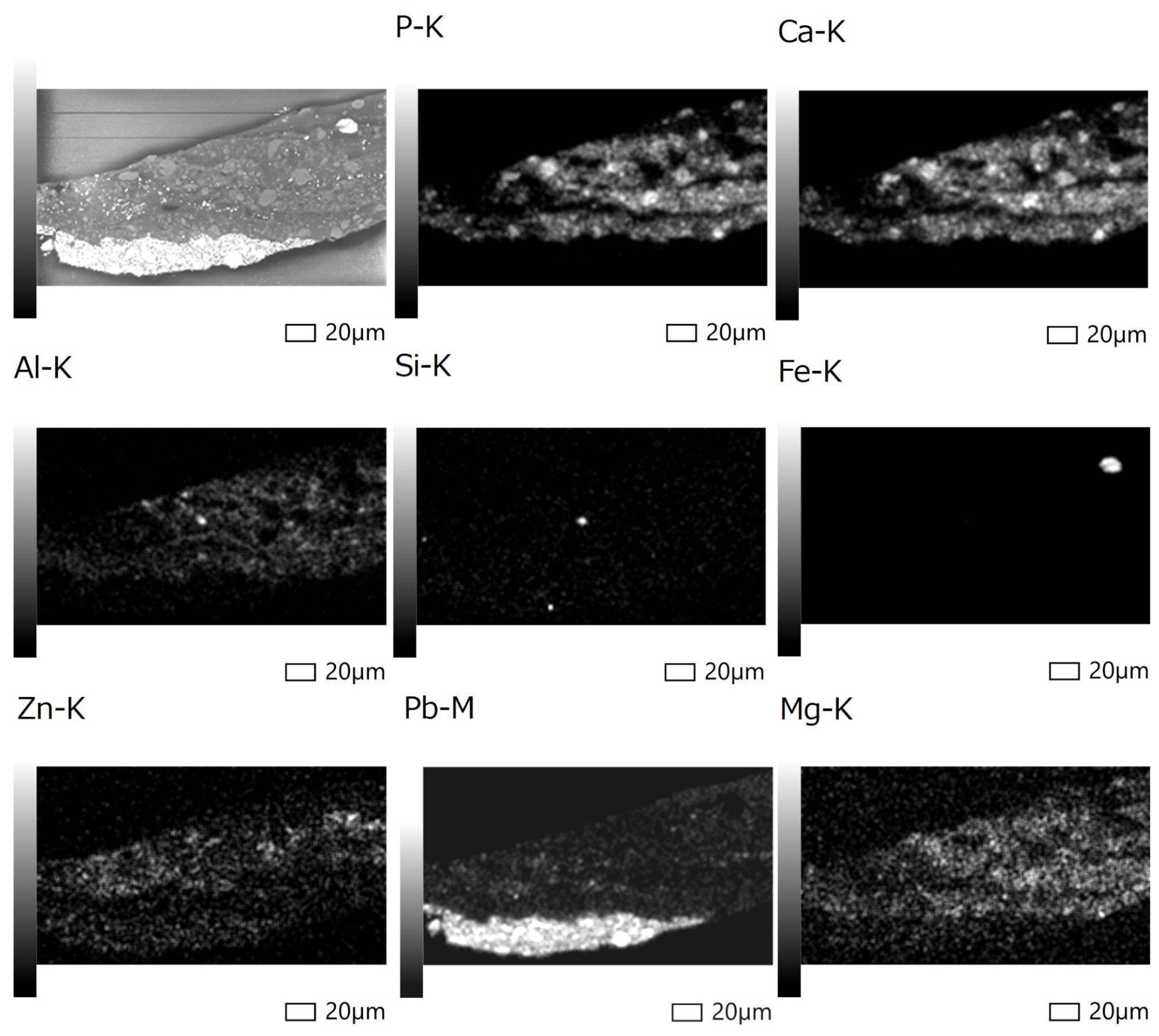
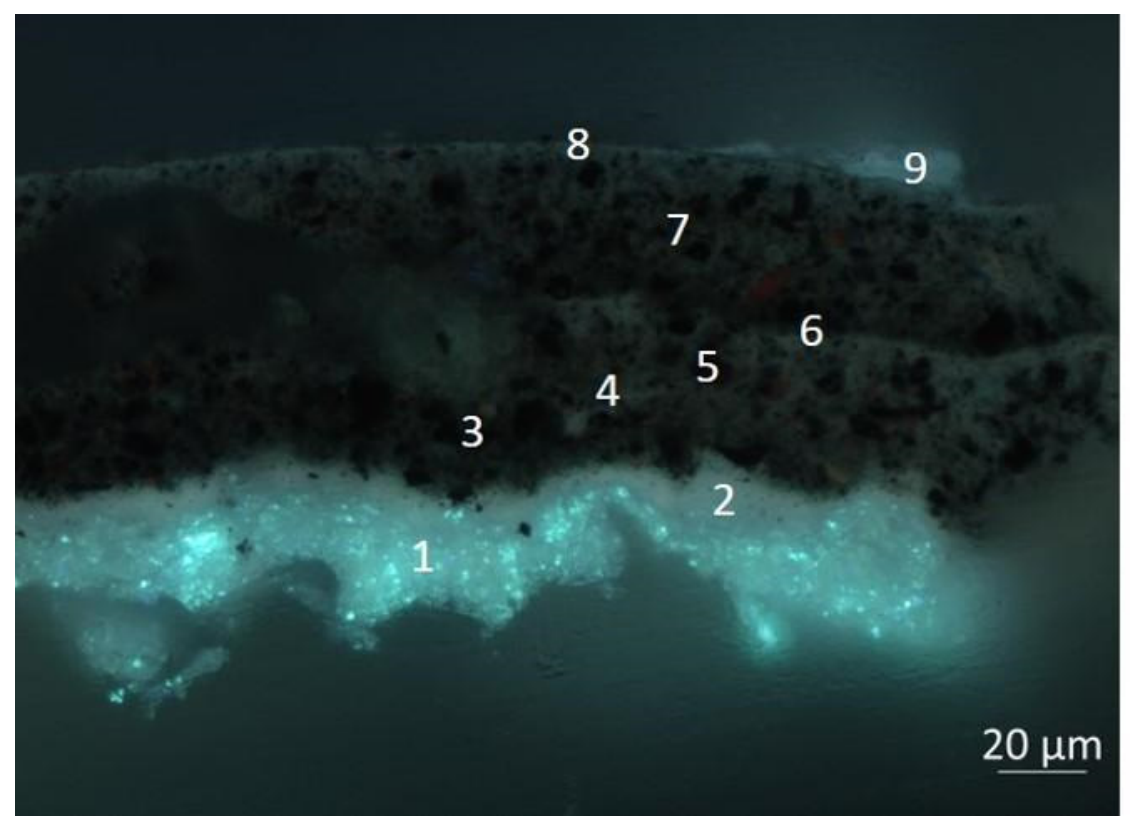
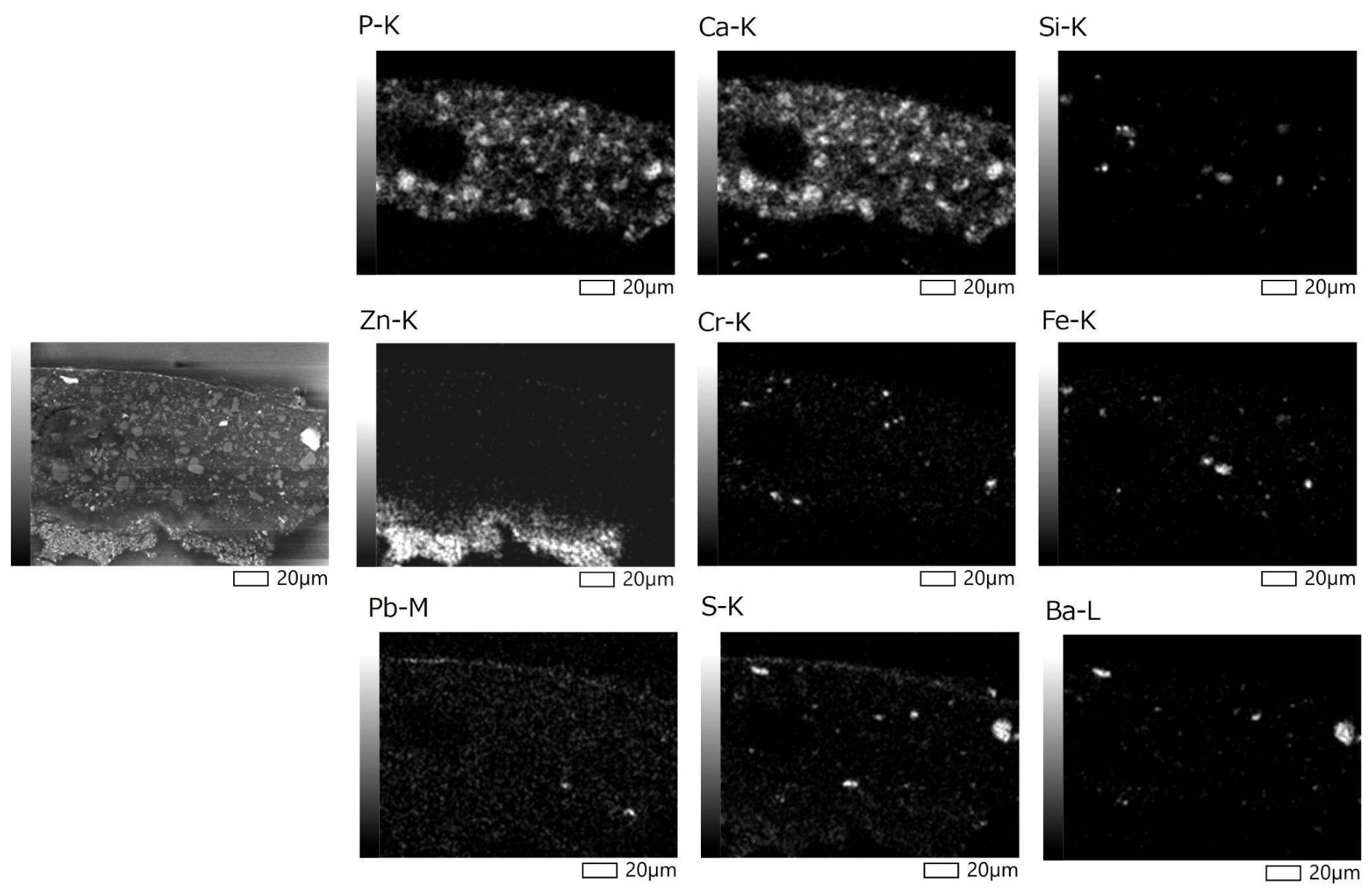
In Composition with yellow and blue (1932, FB), the finish that was applied on top of the black lines is clearly visible when observing its surface in UV light (Figure 19). The cross section shows 13 layers, which are very distinct in UV fluorescence (Figure 20 and Figure 21). On top of a lead white layer (layer 1), an alternating sequence of black pigmented layers (layers 2, 4, 6, 8, and 10) and whitish fluorescent layers (layers 3, 5, 7, and 9) can be found. They appear all very rich in binding medium. The black pigment is bone black with different particle sizes (up to ca. 15 μm). In the black paint, Al, Zn and Pb are also found, suggesting that zinc white, lead white and possibly aluminium hydroxide/oxide—likely a filler—are present. The latter seems rather abundant when examining the SEM Al-K mapping (Figure 22). The uppermost black paint layer contains more zinc white and binding medium. In one of the black layers (layer 8), a large iron-based particle was found (see also the SEM Fe-K mapping in Figure 22), confirming the XRF results, showing iron and manganese in the black line.
The lowest whitish fluorescing layers contain small lead white particles, showing bright white in the SEM-BSE image (Figure 21); they are also clearly visible in the SEM Pb-M mapping (Figure 22). On top of the layering, two finish layers (layer 11 and 12) are found: a thin (ca. 10 μm) unpigmented layer and a very thin (ca. 2 μm) layer containing some bone black.
Interestingly, in a cross-section of the yellow area near the lower horizontal black line (sample 78.3-X9), a thin layer of charcoal was detected between the first three and second three yellow paint layers. This indicates that Mondrian sometimes would continue to add tentative black lines with charcoal on top of the coloured planes.
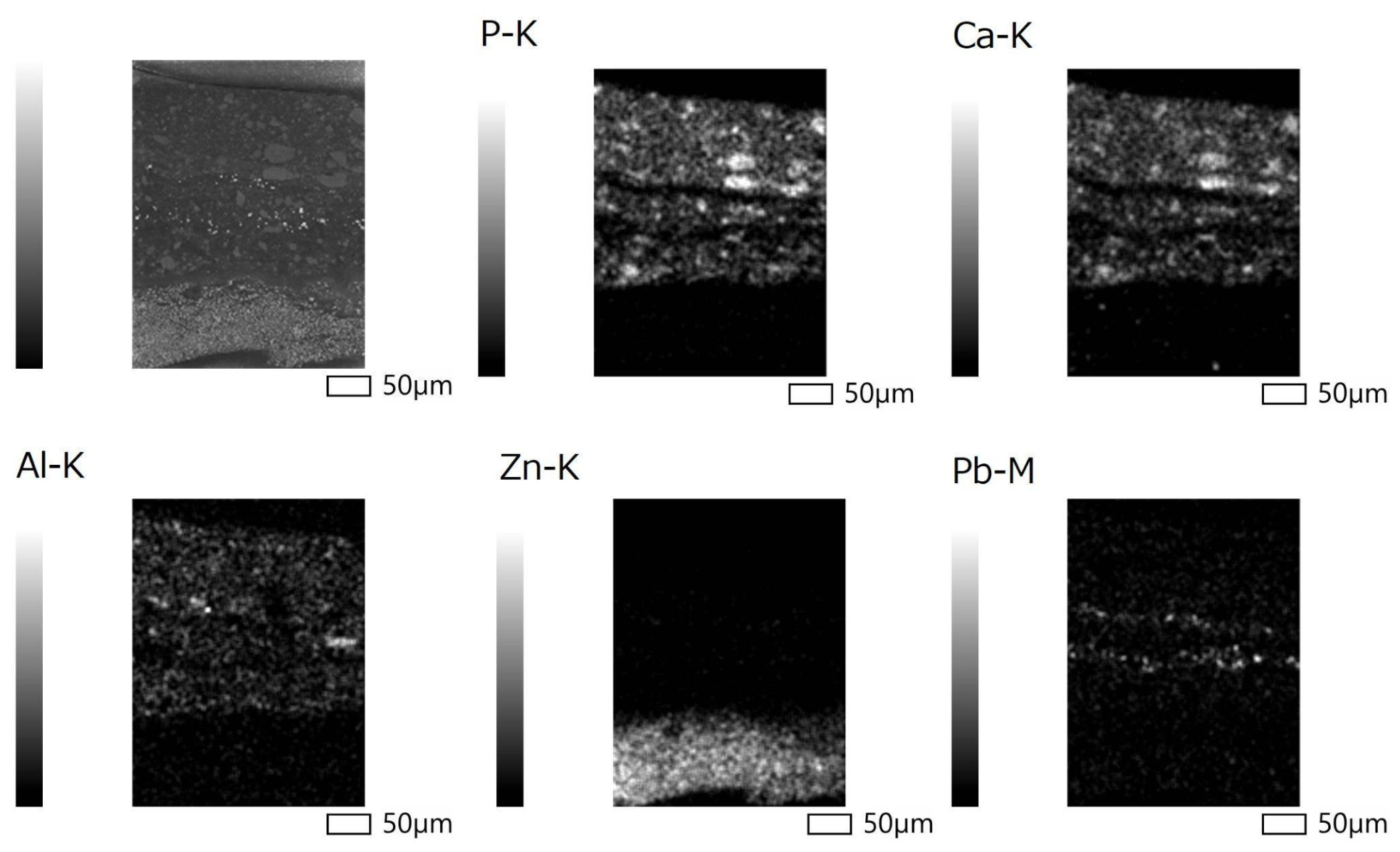
XRF spectra of the black lines in Composition with double line and blue (1935, FB) attest the occurrence of iron and manganese, together with zinc, calcium, phosphorus, lead and aluminium. The relative amount of Fe and Mn is rather constant throughout several measurements, suggesting the addition of the same pigments, likely umber and iron oxides. The cross section, taken from the lowest horizontal black line above the blue plane, shows a white ground layer based on zinc white with some calcium and sulphur (layer 1). This is followed by an organic fluorescing layer and a layer containing charcoal (layers 2 and 3) (Figure 23). The charcoal particles are partially mixed with the bone black paint from the layer above. The following black paint layers, alternated with whitish fluorescent layers, are all based on bone black, showing different particle shapes and sizes (up to ca. 20 μm); some Al, Zn and Pb are also present, as can be observed in the SEM elemental mappings (Figure 24). In two of these layers, rather large whitish fluorescing inclusions were found, showing Al and S. These may contain aluminium sulphate, as found in the zinc white paint used for the white planes of this painting [16]. This would mean that Mondrian mixed some of his zinc white paint with the black paint to paint the line. The two lowest whitish fluorescing interlayers show small lead white particles (Figure 23 and Figure 24), just like the composition with yellow and blue. On top of all paint layers, one thin pigmented (bone black) finish layer is present.
The interpretation of the XRF spectra of the black lines in Picture No. III is quite complex: varying amounts of chromium (Cr), mercury (Hg) and iron (Fe) were found, in addition to Ca, P, Zn, and Pb, elements which can be directly related to bone black, zinc white and lead white, respectively. Chromium can possibly be attributed to chromium oxide or viridian, and mercury to vermilion. The matte part of the left vertical line on the right side shows much more Cr than Hg as compared to the glossy part, whereas in the lower horizontal line, almost no Cr is present. Interestingly, both Cr and Hg seem to be correlated to Fe, although Cr and Hg do not show a correlation. It thus seems that Mondrian used at least two types of black paint (Cr/Fe-containing paint and Hg/Fe-containing paint) for the black lines of Picture no. III, possibly related to the different working phases in Paris, London and New York.
The cross section of sample 86.3-X4, taken from the vertical black line most to the left, shows nine layers (Figure 25). The first layer is a ground layer, containing zinc white with some lead white and chalk. Both amorphous and crystalline zinc carboxylates were identified here with ATR-FTIR imaging. These are also present in the subsequent fluorescing layer (layer 2), which seems unpigmented but contains Zn. Then a series of similar black paint layers follows, with some slightly fluorescing layers in between. The black paint mainly contains bone black and some zinc white. Barium sulphate and particles containing chromium or iron were found as well (see Figure 26 with the SEM elemental mapping). For this black line, Mondrian likely employed the Cr/Fe black paint and not the one containing Hg and Fe. Barium sulphate—often used as a filler—was mainly found in the upper black paint (layer 7). Surprisingly, with ATR-FTIR imaging, some Prussian blue was identified in the lowest black paint layer. This blue pigment has also been found in a Transatlantic painting [9] (p. 105).
Again, the composition of the thin interlayers is not clear. On top of the black paint layering, a thin fluorescent layer containing some lead is present (layer 8). A partial finish layer that does not seem to contain black pigment (layer 9) was also observed.
Surface Finish
Up to now, previous studies [5] as well as the analysis of cross sections in this research revealed the occurrence of small particles of bone black in the finish layer on top of the black lines. However, there is a lack of knowledge concerning the binder of the finish layers. Based on UV-fluorescence, it has been assumed that Mondrian used a natural resin varnish in Europe, whereas in New York, he might have applied a synthetic resin [9] (p. 99), but analytical data have never been reported.
The black line finish of three of the paintings—Tableau I (1921–1925), Composition with yellow and blue (1932) and Picture no. III (1938)—was studied with FTIR spectroscopy and/or Py-GCMS in fragments or scrapings taken from or next to the black lines, and with ATR-FTIR imaging of cross sections.
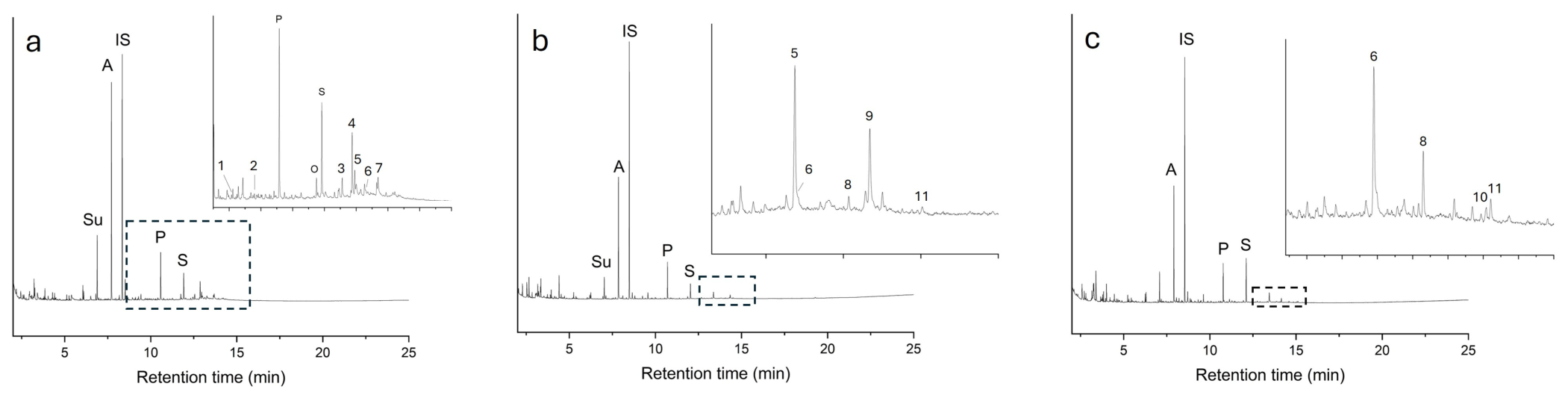
Specifically, the FTIR spectrum of sample 94.3-P3 (Tableau I) shows natural resin and oil. This could be further detailed with PyGC/MS: methyl esters of dehydroabietic acid (DHA), 7-methoxy-tetradehydroabietic acid, and 7-oxo-DHA were identified (Figure 27a). This suggests the use of pine (Pinaceae) resin. Pyrolysis products of the polymer fraction of Manilla copal or sandarac—bicyclic acids generated by loss of the unsaturated side chain of communic acid—were found as well, but confirmation of these resins was not possible due to the lack of characteristic diterpenoids [30]. The most intense peaks in the chromatograms, however, are related to various components of oxidised oil. In particular, high azelaic acid/palmitic acid (A/P) and suberic acid/azelaic acid (Su/A) ratios are often observed for an oil-resin varnish. These were typically used in the first half of the 20th century [31].
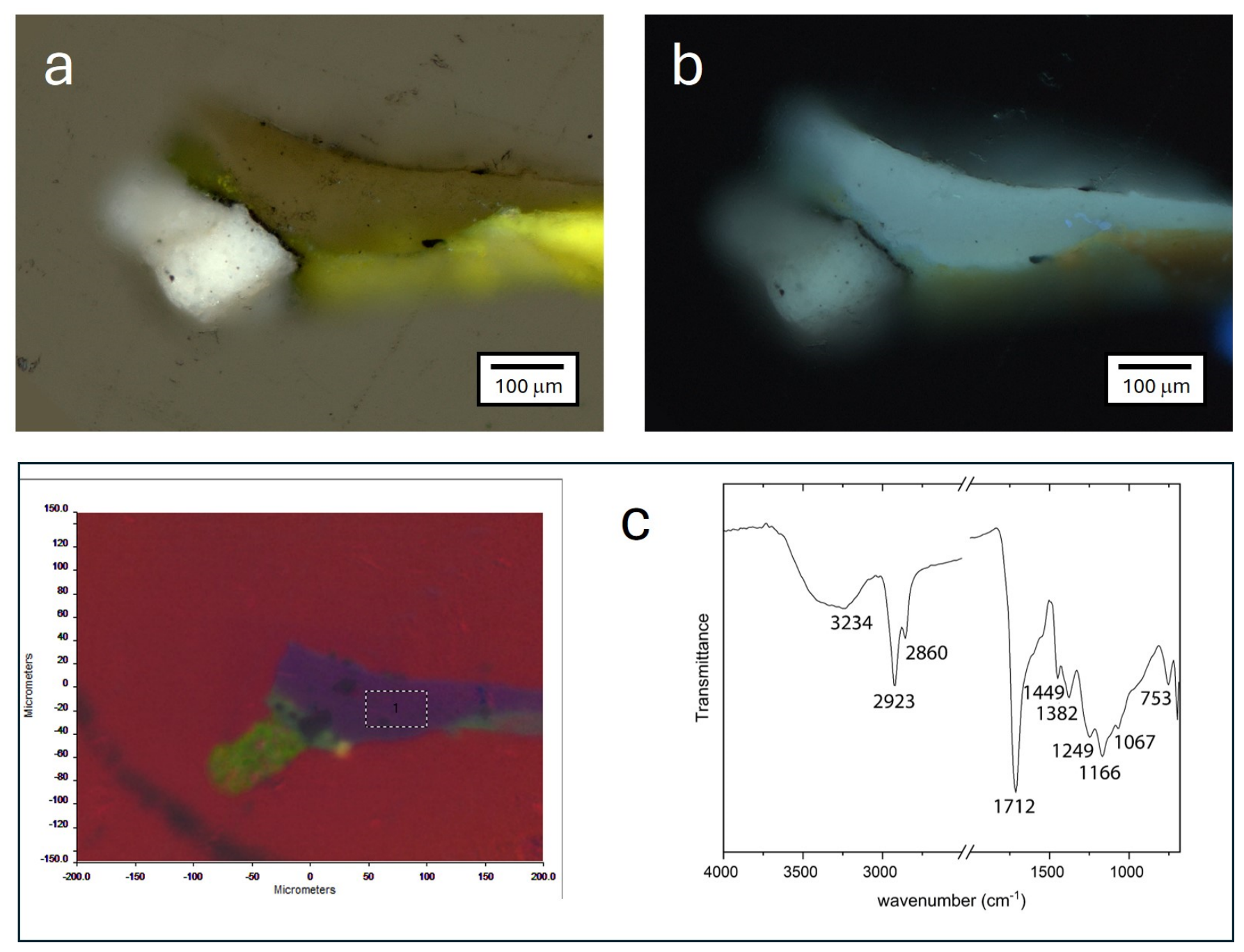
FTIR spectroscopy of samples 78.3-X7.2 (Figure 28) and 78.3-P5, taken at the transition between a black line and a yellow plane where a thick, strongly fluorescing original finish layer is observed, also indicates that natural resin and drying oil are present. Due to overlapping bands, the identification of the type of resin is difficult, although a diterpene resin is most likely [32]. Py-GC/MS of sample 78.3-X4 confirmed these results: methylated products of DHA, 7-hydroxy-tetradehydroabietic acid, and 7,15-dihydroxy-DHA were found (Figure 27b).
In sample 86.3-P8 (Picture no. III), taken from the top of a shiny black line, again, oil and various oxidised diterpenoids were detected, suggesting the occurrence of a pine (Pinaceae) resin (Figure 27c).
As mentioned, in all samples, highly oxidised oil is predominant. This might be due to the fact that the varnish layers are very thin (a few micrometres) and some underlying black paint was taken during sampling. However, it seems more likely, considering the high relative amount of oil compounds, that an oil-resin mixture was used as a finish; possibly some oil has also migrated into the finish layer(s) from still partially fresh oil paint, or was partially solubilised by a resin solvent. Interestingly, in sample 78.3-X4 (black line fragment), erucic acid was identified as well. This compound points to the occurrence of some Brassica oil, which is confirmed by the ratio of dodecandioic acid and tridecandioic acid [33].
The interlayers are also assumed to contain natural resin and oil, like the finish layers, but, unfortunately, they are too thin to be separately sampled and cannot be clearly distinguished and analysed with ATR-FTIR imaging.
The presence of methylphosphates in the Py-GC/MS analyses can be ascribed to the bone black in the upper paint layer, but possibly also to the bone black within the finish layers.

3.2. Painterly Process

In this section we will address various aspects of the process and working methods Mondrian used to paint the black lines, combining the results of the technical examination and analysis of paint materials of the four paintings (Section 3.1.1 and Section 3.1.2) with the information from photographs, letters, testimonies of contemporaries, the making of the mock-ups and reconstruction, and the observations of the unfinished painting Composition with red.
Surprisingly, in the dozens of photographs taken in Mondrian’s studio, images that show clues of his working practice are rare. This is due to two main reasons. The first is that Mondrian is known to always keep his studio environment in pristine condition, especially when he expected guests or a photographer. He certainly did not appreciate unannounced visitors, and he would have made sure that all of the materials he used for his work were stored away [34] (p. 1219).
He considered his technical skills to be the artist’s trick of the trade. A Dutch friend of Mondrian recalled being in Mondrian’s studio when the artist expected his Hungarian colleague Laszlo Moholy-Nagy for a visit. Around the time Moholy-Nagy was to arrive, Mondrian began frantically turning the unfinished compositions he was working on to face the wall, so that Moholy wouldn’t be able to see his latest creations. According to the friend, Mondrian was afraid he might steal his ideas.9

3.2.1. Charcoal Drawing

A series of photographs taken by Eugene Lux between March and May 1934 provides some insight into Mondrian’s studio practice regarding the black lines. During one or more visits, Lux photographed at least eight paintings, some of which were not finished at that time. From these photographs, two things can be concluded: Mondrian kept on changing the position of the black lines until the very last moment, and the black lines seem to be varnished already very early on in the process (see Section 3.2.3).
Looking at the photograph of Composition (No. IV) (B252, first state), from 1935, tells us that especially the second horizontal line from above seems to have had multiple charcoal predecessors. The same seems to be true for the double horizontal lines in the middle of the composition. In the final version (of the first state) of the work, there is significantly more space between both sets of horizontal double lines than is the case in this photo.
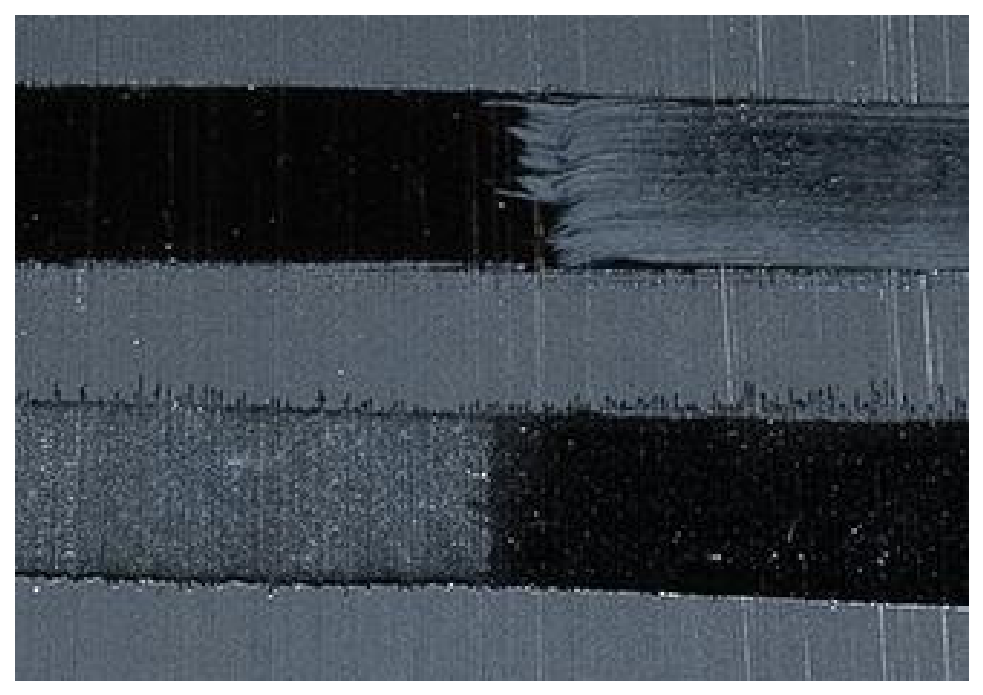
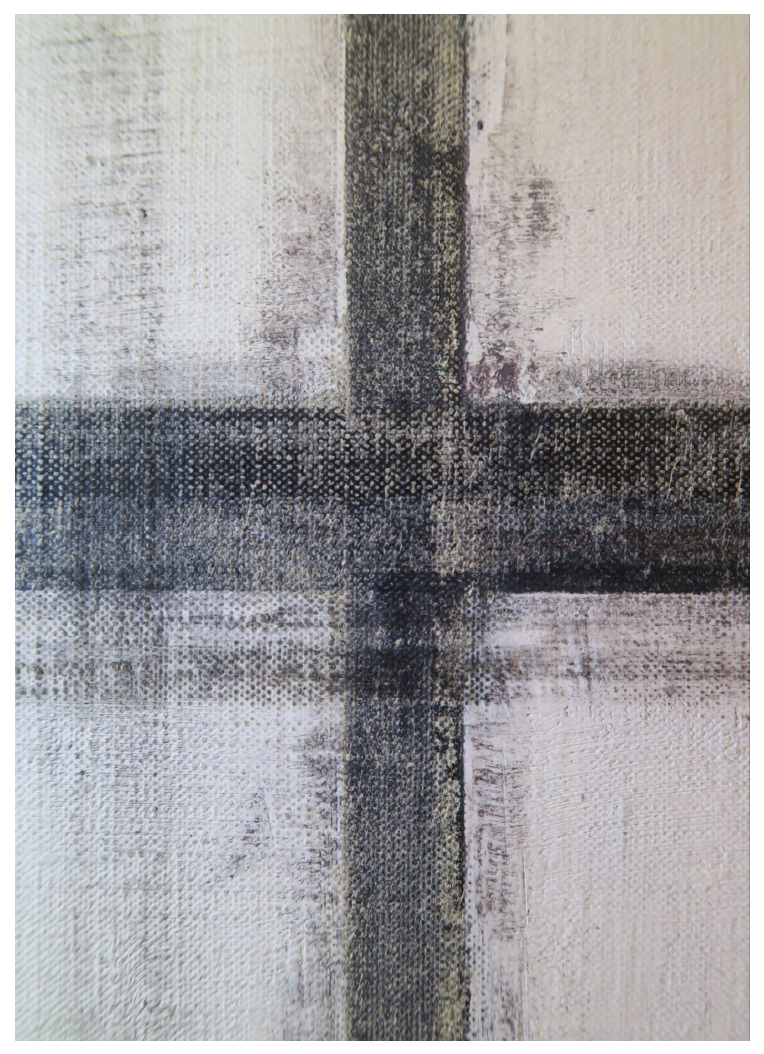
That Mondrian’s first step in laying out black lines was usually with charcoal can be nicely seen in the unfinished painting Composition with red of 1934. On the white ground, fine black charcoal lines of varying width, precision, and density are visible (Figure 29). Some appear to function as preliminary construction lines, tentatively establishing the compositional framework, while others articulate a more defined application of black contour lines. Charcoal lines were suspected during the examination of the paintings, but they could only be confirmed in isolated cases. Under high magnification, residual charcoal of these early lines can still be discovered, as in Composition with double line and blue (1935) (Figure 30); in a cross-section of this painting, it could be observed that charcoal particles are incorporated in the lowest black paint layer (Figure 23).
Robert P. Welsh attests to this first charcoal step in Mondrian’s abstract works:
“…there is no reason to doubt that Mondrian during these years of producing one abstract painting after another began each composition with the most traditional of all technical processes, a charcoal sketch on the primed canvas. The great majority of such preliminary drawings remain by definition embedded in the many layers of oil-pigment mixture needed to produce a surface appearance of “immaculate conception”, which is so rightly identified with the mysterious artistry of Mondrian. The role played by such “charcoal sinopia” during this “classic” period remains poorly understood, chiefly due…to the lack of canvases in a relatively unfinished state….”
[36] (pp. 52–53)
As in the case of the original paintings, the identification of multiple charcoal underdrawings in the mock-ups proved exceedingly difficult, as they were largely concealed beneath subsequent paint layers applied to both linear elements and broader colour fields. The mock-ups (Mock-up 2) also suggest that early charcoal underdrawings can stay slightly discernible as cloudy irregularities, even under several coats of white paint. In close study, they can sometimes be made out in transmitted light or IRR, which was, in fact, observed in Composition with double line and blue (1935, FB) (see Section 3.1.1).

3.2.2. Ruler and Mahlstick

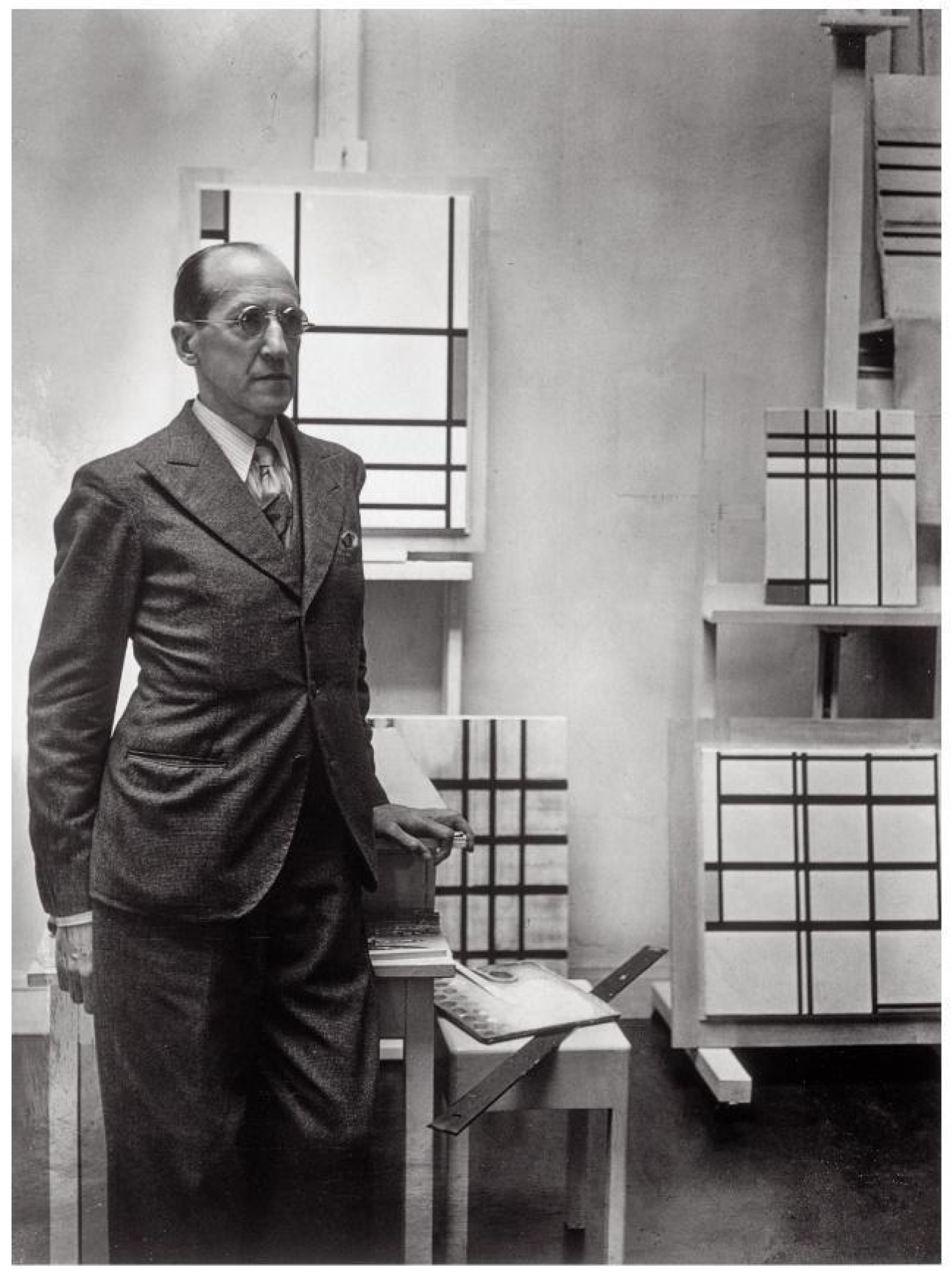
In the foreground of a (staged) photograph taken by Rogí André from around 1937 (Figure 31), we can see a ruler. It is awkwardly placed diagonally underneath his palette, contradicting the horizontal and vertical lines of the canvases that are also visible in this image. It is one of a handful of instances dating from his Paris period where we see an actual tool in plain sight.
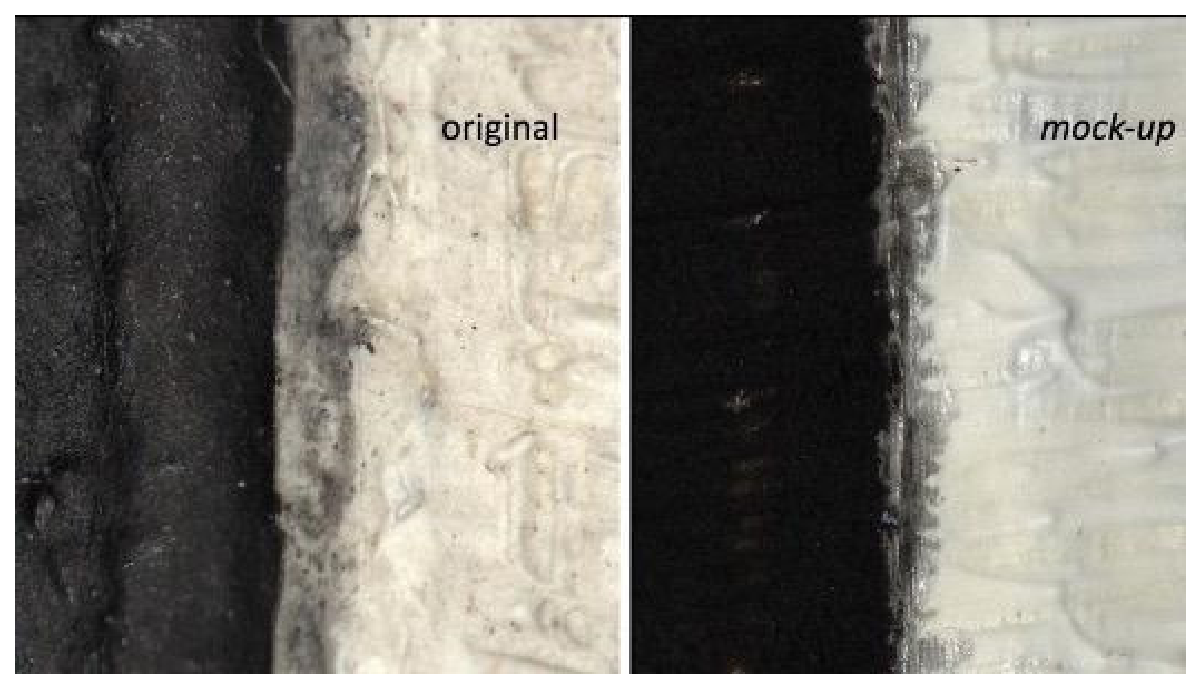
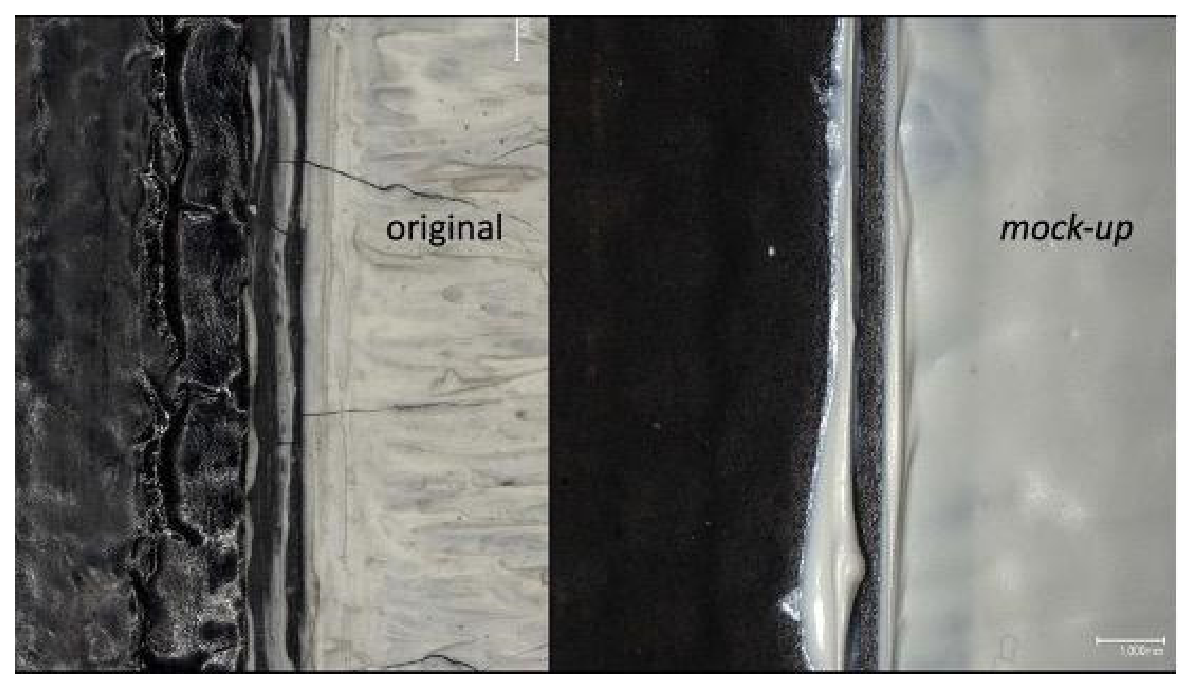
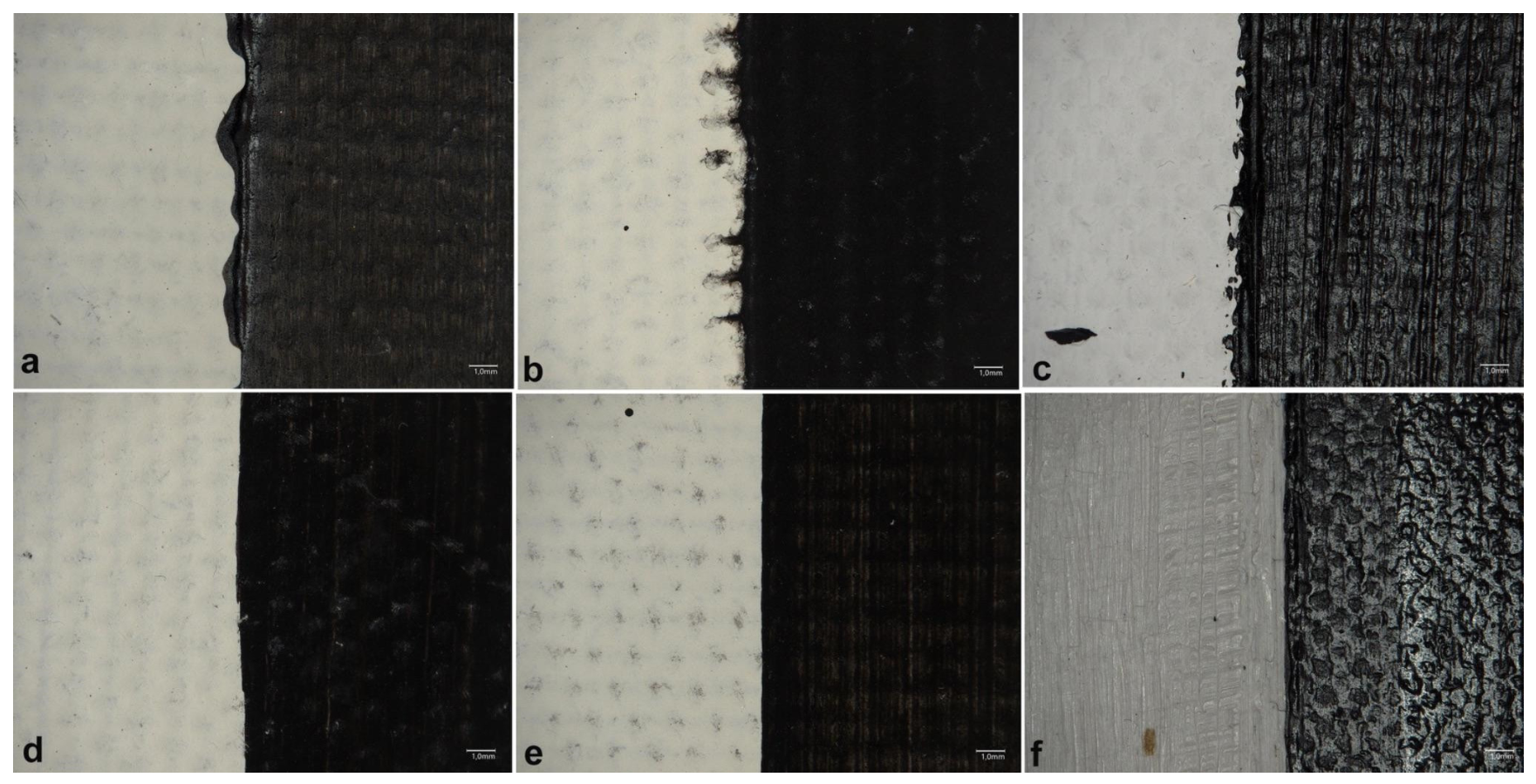
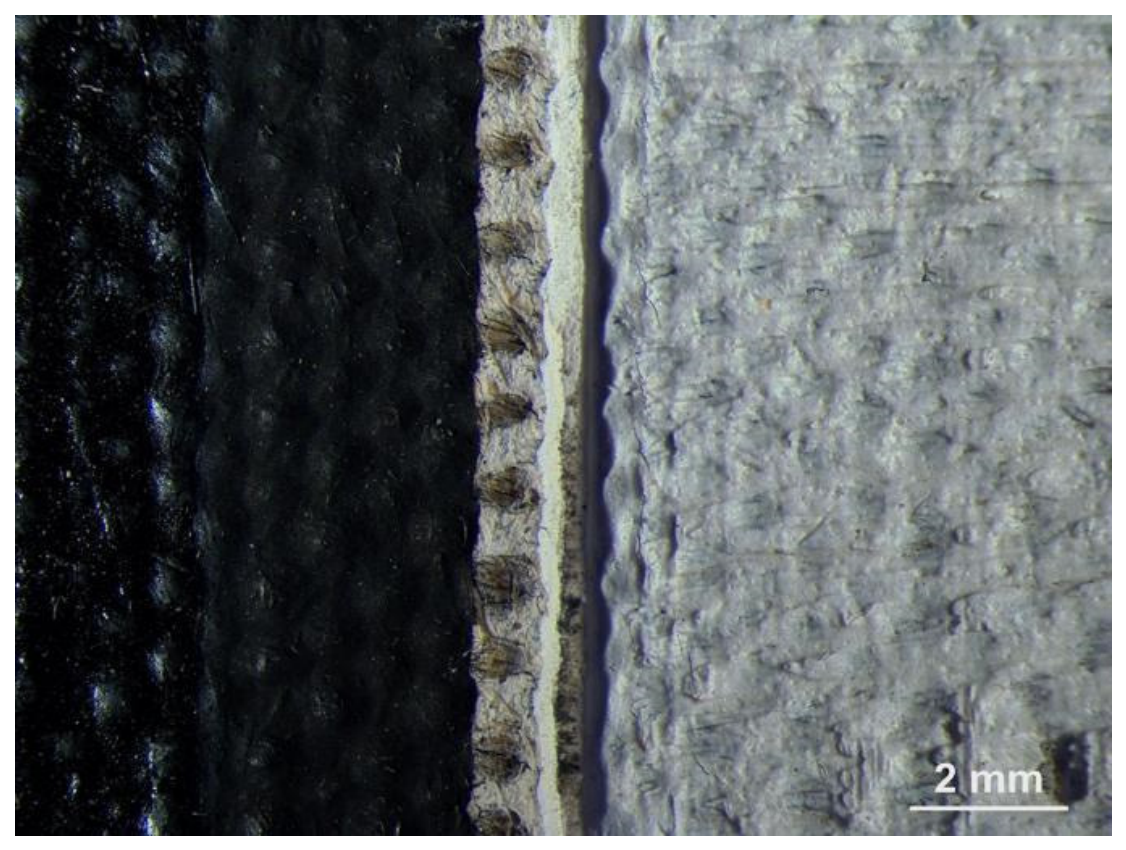
Using a ruler to produce straight painted lines seems like an obvious choice at first, and the presence of a ruler in the studio has again and again led to this common assumption [9] (pp. 49–50). However, mock-ups clearly debunk this presumption. Close examination of the edges of painted black lines in the mock-ups (Mock-up 1) clearly showed that when physically passing paint-loaded bristles directly against a ruler, all resulting paint edges are uneven or smudged. The wet paint not only locally seeps under the rigid ruler at the recessed canvas weave interstices (Figure 32a,b), but also sticks to this tool when removed, causing further unevenness (Figure 32c). The outcome was the same, regardless of the type of rigid object tested (wooden, metal, thin, thick, angled) or of carefulness in execution.
In sum, working with wet paint and a ruler is inherently messy and not at all practicable for precision work. Furthermore, using a ruler in the traditional sense would have also meant laying the ruler on the painting’s surface, which is only possible if the entire paint surface is dry. This was surely hardly ever the case while Mondrian was working on a painting.
Though, most importantly, none of the edges of black lines in the examined paintings of the mature Neoplastic style show the characteristic uneven paint edge resulting when passing paint directly in contact against a ruler. Instead, they are quite straight and clean as a detail of the edge of a black line in Composition with double line and blue shows (Figure 32f).
How did Mondrian then achieve straight black painted lines? While mock-ups working free-hand resulted in cleaner paint edges, overall, the lines were not straight in length (Figure 32d). Indeed, it is extremely difficult to paint a straight line freehand in one go. Even an experienced artist such as Mondrian would have had difficulties painting parallel straight lines up to almost one metre in length, as for example in Picture no. III, without some form of aid.
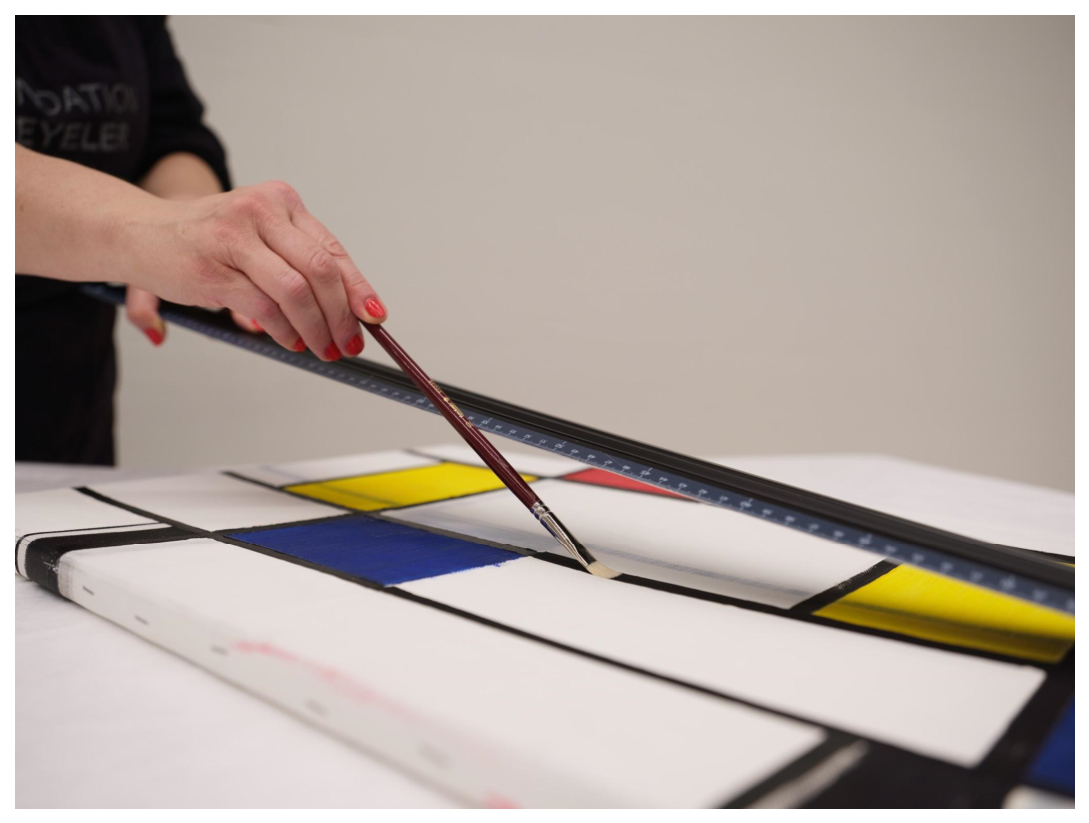
Our conclusion is that Mondrian most likely implemented the ruler as a type of mahlstick, a bridge across the canvas to steady his hand without touching the canvas. Keeping in mind that the artist always worked flat (see below), he would tilt the ruler about 45° over the painting with one hand and steady his painting-hand by passing the handle or ferrule of the brush along the lifted ruler (Figure 33). This way, the brush is guided straight without the wet paint touching the ruler itself. This technique of “brush ruling” is a common practice for painters, even today. Mock-ups painted this way resulted in controlled straight long lines and clean paint edges as long as the paint was fluid enough (Figure 32e).
Interestingly, working this way, only one painted edge of the black line can be “perfected” in accuracy, as one cannot concentrate on the fine adjustments of pressure and brush orientation necessary for both sides of the brush simultaneously. Thus, the “mahlstick method” has to be repeated for both edges of a black line, basically painting the black line twice, but from opposite sides. This method results in overlapping, thicker paint in the middle of the lines. This can actually be observed in many of the black lines in Mondrian’s paintings (Figure 34), thus attesting to the theory of the “brush-ruling” or “mahlstick method”.
The use of a ruler as a mahlstick is further supported by a comment from his friend and artist Charmion von Wiegand when she watched Mondrian work:
“…He would be hard at work, bending over his drawing board-which he used flat like a table-operating like a surgeon on one of his white canvases. He used a slender steel bar to steady himself in making the lines, and the brush, in his long, supple hands, moved with delicate precision and rhythmic energy”.
[38] (p. 61)
Or by the painter Suzy Frelinghuysen (1911–1988), when visiting Mondrian in New York, noticing “a long flat bar with no markings on it, which Mondrian used not for measurement, but to make a straight edge.” [39].
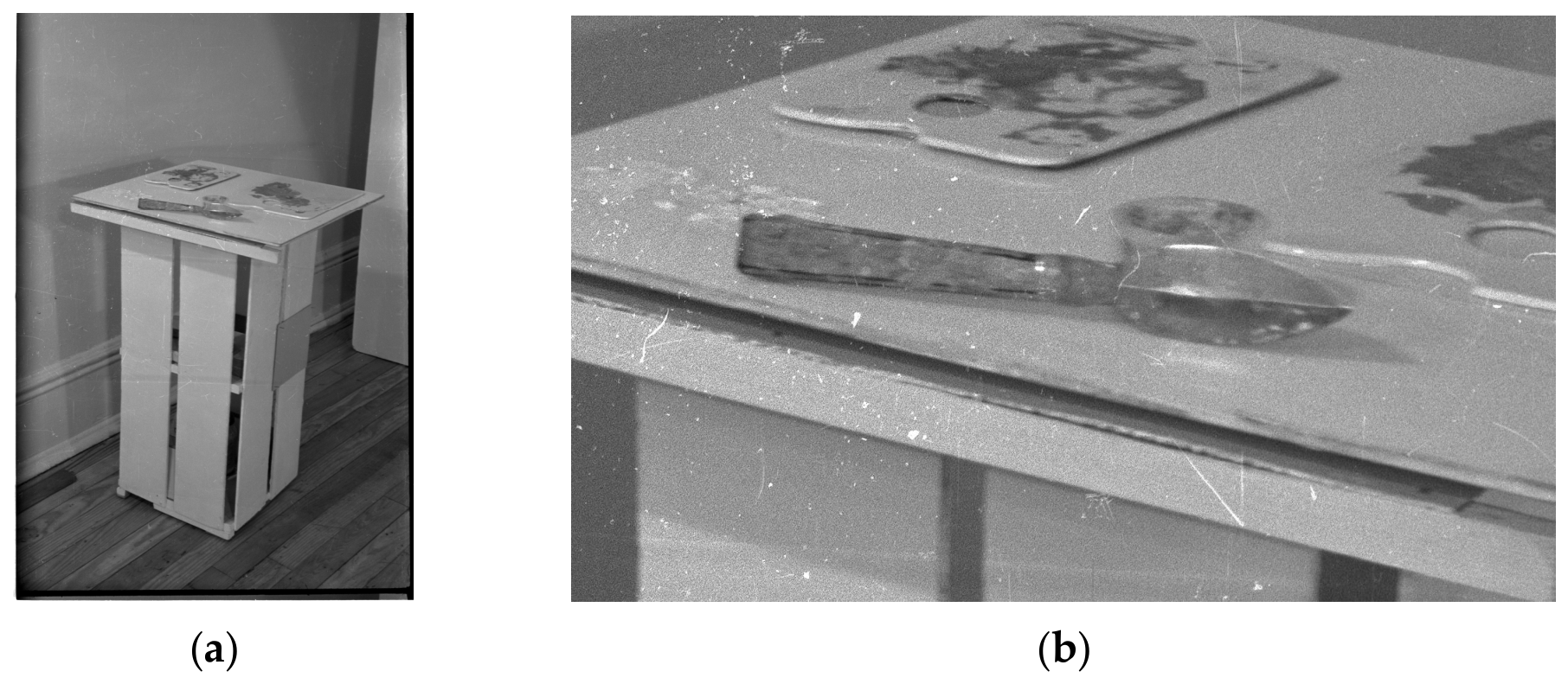
It is likely that Mondrian also used a traditional mahlstick for brush ruling, as such a tool can be seen in his Paris studio in 1926 (Figure 35). This tool is traditionally used to steady the hand of a painter working upright on an easel by leaning the soft end (usually containing a soft leather cloth to avoid damaging the painted surface) on the canvas and resting the wrist of the painting hand on the stick. We know, however, that Mondrian painted with the canvas flat down on the table. He only used the easel to present his work to visitors and for himself to assess a composition he was working on from a distance. The memories of Michel Seuphor, who witnessed Mondrian at work numerous times, testify:
“The actual work was done on the table. It stood in front of the large window facing the Rue du Départ, and was covered with a canvas waxed white and nailed to the underside of the boards. I often surprised Mondrian there, armed with a ruler and ribbons of transparent paper, which he used for measuring. I never saw him with any other working tool.”
[40] (p. 158)
This account is supported by further numerous mentions in the literature [3] (pp. 37–38) [9] (p. 47) [29] (p. 53), as well as the artist himself: when he had to move from Paris to London without an easel he wrote to his brother unperturbed “…It doesn’t matter, because I work on that table and for viewing I place the work on a stool against the wall.”10
So, never painting upright, the mahlstick would not have been a necessary tool in his studio, unless he implemented it for the brush ruling technique described above, when painting straight black lines flat on the table.

3.2.3. Gloss and Layering

As mentioned, the second conclusion that can be drawn from the Lux photographs is that the black lines were already varnished during the early phases of the painting process. This can be seen in the photograph showing Composition A (No. I), with Red (B260). Although the work is seen in an unfinished state with the central, vertical black line being in a transitional phase, the black lines do already reflect a lot of light thanks to their glossy varnish. The white and coloured rectangles reflect much less light due to the fact that they were not varnished. It makes for a lively interplay of matt and gloss of the highly tactile paint surfaces of Mondrian’s works, for which too little attention has been paid so far in the literature about his work.
The effect in the finish between lines and rectangles is also visible in some of the photographs taken by the Dutch photographer Cas Oorthuys in 1937. These show Mondrian’s new studio at 278 boulevard Raspail, to which he moved in 1936 because the studio complex at the Rue du Départ was to be demolished. There are only a handful of photographs on which parts of the new studio can be seen (Figure 36). Mondrian seems to have had a lot of paintings, also unfinished ones, in plain sight. We can see Composition de lignes et couleur: III (B277) on the easel and, behind that painting, to the left, part of II: […] blanc et rouge (B274310; first state, 1937). The black lines reflect the light to a large extent, much more than the white areas. It is a sublime example of the way Mondrian used the different technical execution of lines and rectangles to add to the dynamic appearance of the surface of the works.
Also, the unfinished painting Composition with red, 1934, clearly attests to the variable gloss right from the beginning of the painting process (Figure 37).
Explained in detail in Section 3.1.2, Mondrian’s black lines consist of numerous layers of not only black oil paint but also other materials, such as linseed oil, natural resin and small amounts of white and coloured pigments.
Mock-ups, based on the results of the examination of the cross-sections, were prepared to understand the optical effects of the various layerings. Hands-on assessment during the painting-out of black lines (Mock-up 1) clearly showed that the paint had to be quite fluid to produce smooth, continuous straight lines; a 1:1 dilution of tube paint and turpentine gave the best results, whereas adding more linseed oil to the paint gave a creamy consistency, less suitable for painting lines and creating thicker ridges along the line edges. Such thinned paint is, however, also less opaque in covering power, perhaps being a reason for the numerous paint layers Mondrian applied.
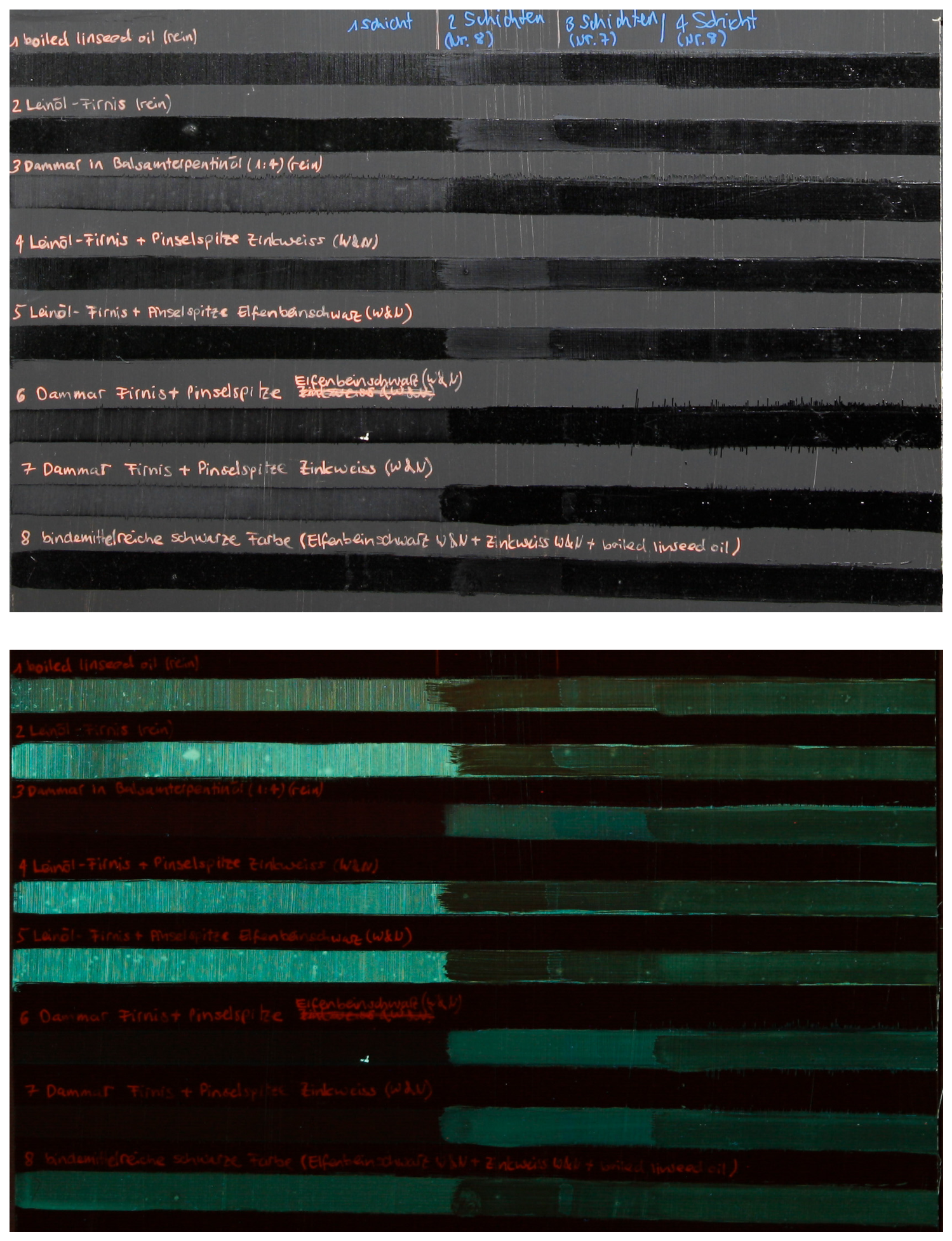
More liquid paint, with less binding medium, also gives the black a more matte appearance. Instead, as already mentioned, Mondrian was looking for a certain gloss of his black lines. He did not leave this to coincidence. It was found that Mondrian applied several interlayers of medium-rich materials such as oil and natural resin. Could this be to increase the gloss of diluted matt black paint?
Mock-ups trying to re-create this layering (Mock-up 3) showed various interesting effects and differential gloss interplay according to which materials were applied and in which order (see Figure 9). These mock-ups suggest that simply layering black paint over black paint when building up the lines results in an even matte appearance (Figure 38). The same is true when layering black oil paint over unpigmented boiled linseed oil (Figure 39). However, intermediate layers of unpigmented dammar resin underneath will add glossiness to the black paint. Adding a hint of white pigment to the interlayer dammar cuts the gloss down slightly, creating a minor veil. The mock-ups suggest that Mondrian deliberately tried to achieve a certain level of glossiness by employing these materials and arranging the order of the layering.

3.2.4. Pencil

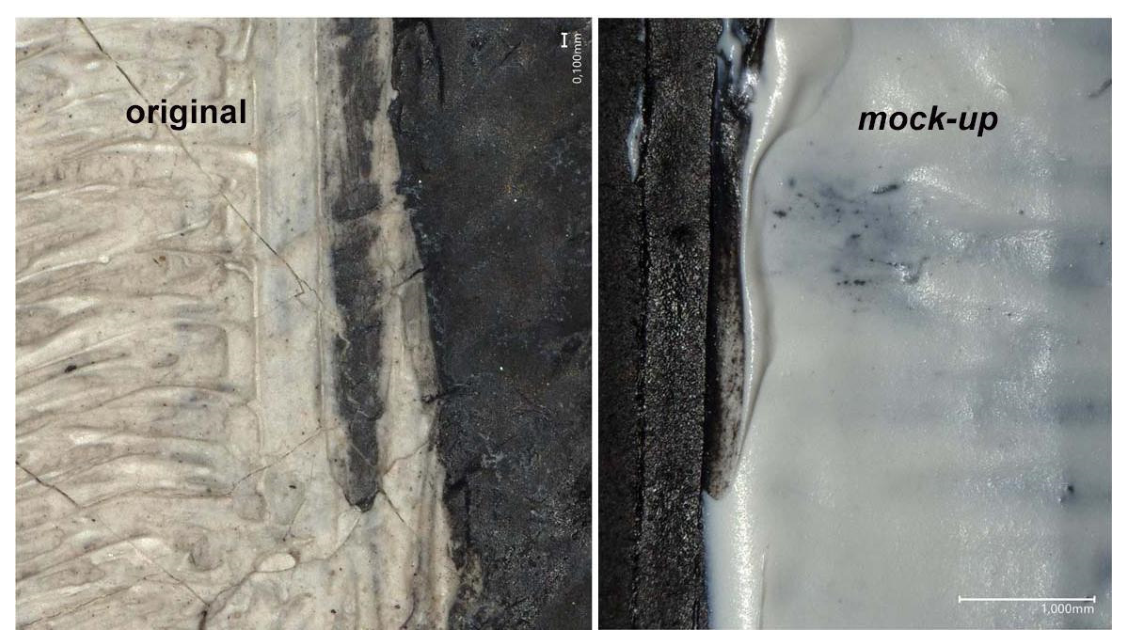
In Picture no. III Mondrian used a pencil in two different ways, both as a tool for creating straight black lines. Firstly, drawing a straight line with a pencil and, probably, a ruler to act as a visual guide to then paint the black line free-hand or brush-ruling. This method served for shifting or broadening an existing black line and resulted in the graphite “peeping” out along the edge of the paint in places where it was not completely covered. Mock-ups recreating this technique appear similar to such areas in the original painting (Figure 40).
The second method is more refined. Here, the pencil is drawn along the transition between black and white, or red, and is scratched into the still soft paint, creating a recessed groove and two raised paint ridges, sometimes mixing the wet paint in the process (Figure 41).
Mondrian probably intended to accentuate the transitions between the plane and the line and make them more precise. At the same time, these grooves automatically corrected small irregularities in the painted line, making the transition edges exact.
Generally, Mondrian leaves some “safety” margin between planes and lines in order to avoid physical and optical mixing, which can be nicely observed in unfinished paintings such as Composition in red (1934, private collection) (Figure 42). However, due to the many changes in line positions in Picture No. III, these margins were physically no longer present, which may have been the trigger to use the pencil for scoring. Again, the mock-ups copying this technique confirm the same visual result under magnification, down to the end of a pencil stroke (Figure 43).
Pencil traces applied in an early working phase have also been observed in two unfinished paintings dated 1934 (B248 and B249 in [41]), an unfinished Transatlantic painting [9], New York City I (1941, Kunstsammlung, Dusseldorf, Germany) (Figure 44), Broadway Boogie Woogie (1942–1943, MoMA) [15] and Victory Boogie Woogie. In the latter two paintings, Mondrian also made use of this tool in later stages of working [15].11

3.2.5. Palette, Brushes and Scraper

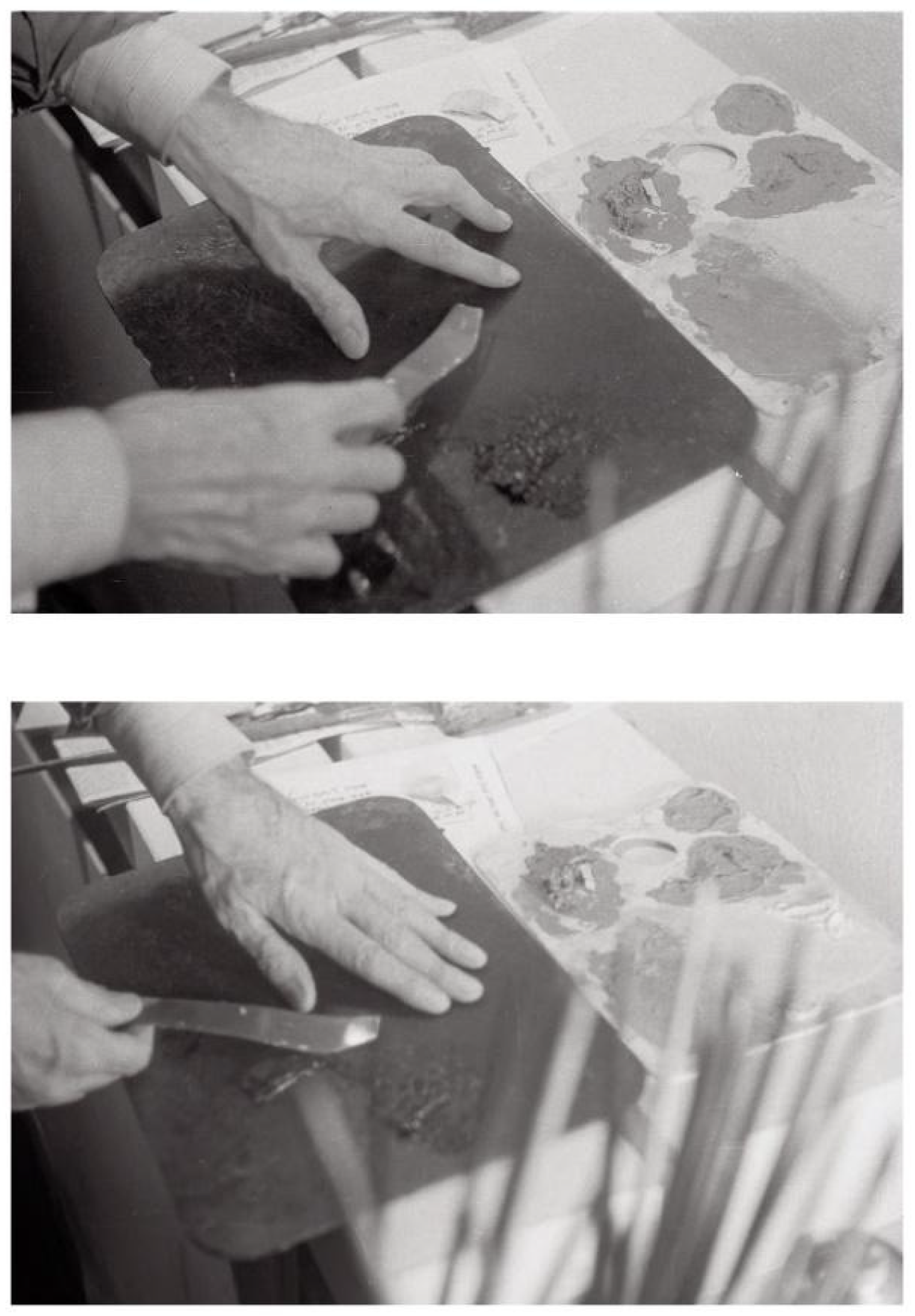
Another series of photographs we want to touch upon with regard to Mondrian’s studio practices is a series taken by Fritz Glarner in New York sometime between late 1942 and early 1943. Either staged or not, we see Mondrian seemingly preparing some paint on his store-bought painter’s palettes (Figure 45). There is a dark one and a light one, with the dark coloured palette seemingly containing darker paint than the other. Two palettes from this period were donated by Mondrian’s heir, Harry Holtzman, to Kunstmuseum Den Haag in 1957. Of these palettes, one was used solely for black paint (of varying glossiness), attesting to the importance of the black (possibly also seen in a couple of Glarner’s photographs).
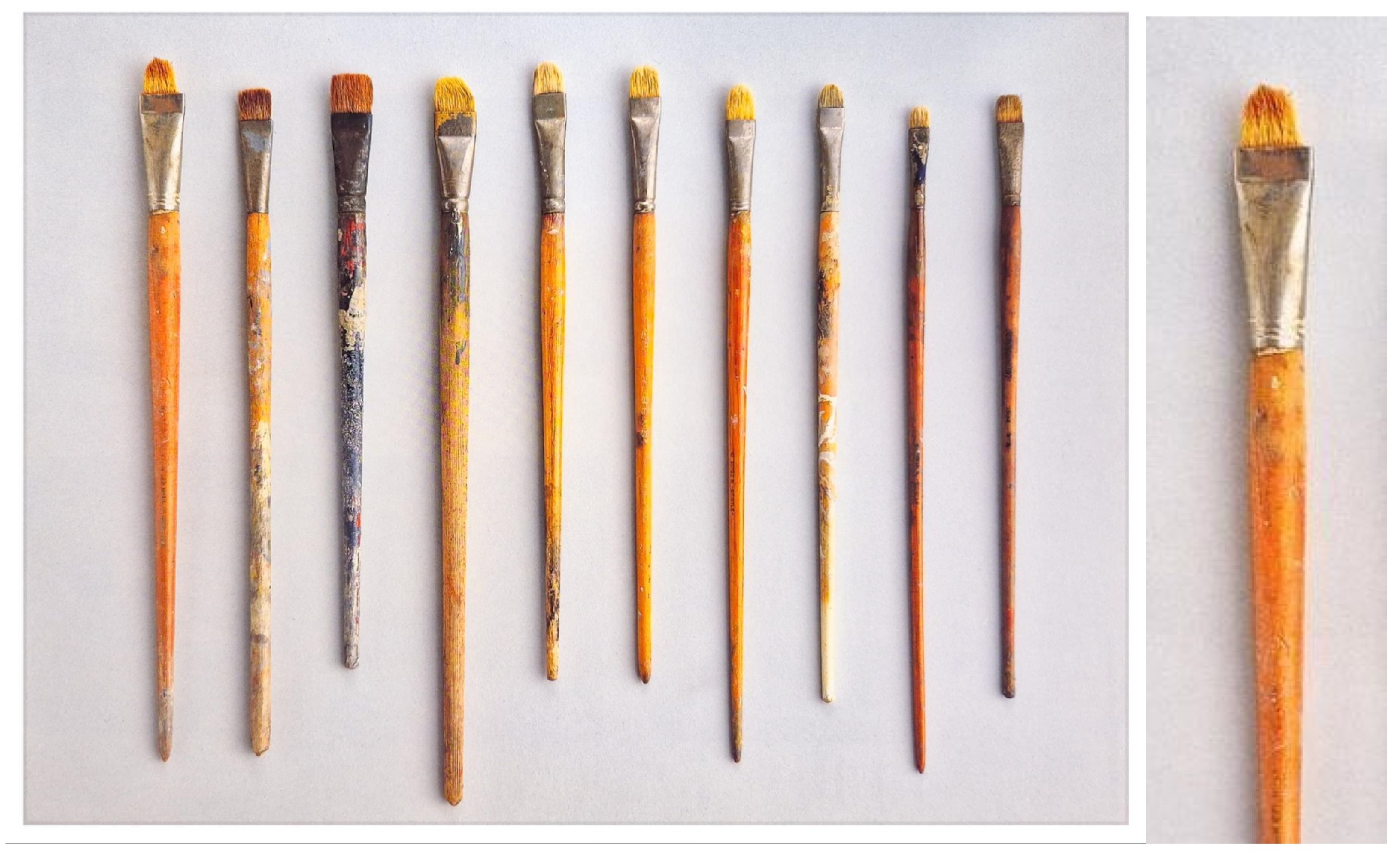
Images taken in his studio directly after Mondrian’s death in 1942 (Figure 46) suggest that the artist trimmed off frayed hairs along the outer edges of the ferrule, avoiding stray hairs which, especially when painting black lines, would otherwise blur the clean, straight edge. Examples of unchecked stray brush hairs can be found here and there in his paintings, such as the example in Picture No. III (Figure 47). This careful preparation of his tools is an attestation to Mondrian’s perfectionism in the execution of the black lines. The making of the mock-ups also showed that softer bristle brushes worked better than hard brushes to paint the black lines.
Images from Mondrian’s NY studio at 15 East 59th Street show an odd-looking tool (Figure 48). We suggest this to be a steel canvas scraper,12 employed to accurately scratch away paint for compositional changes, without damaging the painting. Evidence of scratching and scraping has been found in numerous paintings by Mondrian and was an integral part of his painting process. It has also been mentioned by contemporaries familiar with his technique, such as Harry Holtzman, “When he decided to make a change in the paint, it was necessary to strip it down to the canvas and rebuild the surface completely” [42] (p. 3), and Charmion von Wiegand, who mentions that Mondrian called such work “technical work” [9] (p. 51).
An evident example of this scraping is visible in the unfinished work Composition with red, 1934 (Figure 49).
Some of the scraped and smudged areas of paint are visible in the XR of some paintings (see Section 3.1.1) and, depending on the composition of the painting, can also be seen in transmitted light. Here, too, the scraped paint and line areas on Mock-up 2 were helpful in the interpretation and comparison of the images, as similarities in transmitted light intensity can be observed (Figure 50). However, a clear attribution was not possible, as the structural differences between the paintings and the mock-up were too significant to permit a reliable comparison.
It should also be pointed out that changing the positions of black lines was not satisfactorily possible without physically removing the paint, which in turn had to be quite dry in order to achieve neat results.

4. Discussion

Based on the findings of our study, we have gained new insights into Mondrian’s working process for the black lines.
Mondrian might have started working out the positions of the lines with paper strips, tacked to the canvas on a table, continuing with a charcoal or pencil drawing, always checking the effect on the easel. Only then would he paint the first lines with thin black paint, possibly with the “brush ruling” technique. For changes in later stages, he worked again with charcoal lines and also with pencil. Subsequent widening, thinning or moving of painted black lines was mostly achieved by scraping or wiping off paint layers. This process could involve many interventions and was very time-consuming. This often preserves only minimal traces of the underlying lines, which makes it challenging to reconstruct and fully comprehend the sequence of the painting process with all its modifications.
The complexity of Mondrian’s working process at the initial stage of a composition is particularly evident in unfinished paintings like Composition with red (1934), which was examined as part of this study. This largely unpainted canvas reveals an extensive body of preliminary working stages: numerous charcoal and auxiliary lines, some partially erased; black lines of varying widths, applied with differing degrees of dryness and fluidity; areas of primer scraped away beneath the lines; and early compositional revisions.
Once the linear composition had been established, Mondrian appears to have “perfected” the lines in the course of painting the adjacent fields. He corrected minor irregularities by minimal overpainting, refining and trimming the contours through the application of white or coloured paint. In this way, the boundaries of the black lines were sharpened and optically adjusted. As evidenced by the pencil traces in the fresh paint of the upper layers in Picture No. III, Mondrian kept changing and adding black lines until the end of his working process.
Another insight was the challenge of the long drying time of oil paint in compositions with straight lines and flat edges, especially when working on a table, giving more sense to the rather long working times Mondrian had for his paintings.
Our results clearly showed that many black lines, especially in the paintings made in the 1930s, are built up of numerous black paint layers. The complex layering is certainly related to the frequent adjustments in position and width, which is evidenced by numerous observations by contemporaries, but this is not the only explanation. Herbert Read, who watched Mondrian working in London, reports: “I once noticed during a period of 2–3 visits that he was always engaged in painting the black lines in the same picture, and I asked him whether it was a question of the exact width of the line. He answered No: it was a question of its intensity, which could only be achieved by repeated applications of the paint” [43] (p. 289). The black paint is generally alternated with thin, medium-rich interlayers, often containing tiny lead white particles. The nature of these layers is not completely clear. In some cases, it seems that the upper part of the black paint layer is just more medium-rich; in others, distinct layers seem to have been applied. It is also likely that part of the material has penetrated into the underlying black paint. However, mock-ups of the black lines clearly proved that Mondrian applied a layer containing natural resin on every black layer in order to obtain gloss and a deep black paint.
Another interesting finding is the presence of coloured pigments in the bone black paints. It seems likely that Mondrian adjusted the black paint through the addition of some coloured paint; the type of this paint changed in the course of his career. For example, in Tableau I, Composition with yellow and blue and Composition with double line and blue, a good indication was found for the presence of umber and iron oxides, while in the black lines of Picture no. III, our data point to chromium oxide or viridian, Prussian blue and vermilion. These coloured pigments may have been included by the paint manufacturer, but Mondrian could also have added paint with these colours to the bone black paint. It is well known [5] that Mondrian used to mix tiny bits of paint with the main colour to modify its hue. This practice is also suggested by one of his palettes (Kunstmuseum The Hague, The Netherlands), dedicated to white paint, where dots of black, red, yellow and blue paint are present in the wells on the side, clearly meant to be mixed with the white paint. We also showed that Mondrian added some zinc white paint that he had used for the white planes to the black in Composition with double line and blue.
For the four Fondation Beyeler paintings under study, the composition of the final finish could be determined as drying oil in combination with a pine (Pinaceae) resin. Bone black particles were detected in the top varnish of Composition with yellow and blue and in Composition with double line and blue, maybe in Tableau I, but not in Picture no. III. Could this mean that Mondrian stopped using a pigmented varnish at a certain point, for example, after 1940? Indeed, according to the Transatlantic paintings catalogue, Mondrian used a black-pigmented varnish in his earlier abstract paintings, whereas such a finish was not found in the Transatlantic paintings. In addition, it is mentioned that in Europe Mondrian probably used a natural resin varnish, explaining the strong fluorescence under UV light, whereas he might have used a different varnish in New York, causing a lower level of fluorescence in the newly applied lines [9].

5. Conclusions

“The layperson does not understand that Mondrian works for months at a time on a single canvas, adjusting each line by tenths of a millimetre before his eye is completely satisfied. That is to say, Neoplasticism is not a mathematical joke or party game but a living, rhythmical game of relationships in which intuition plays a major role”.13
Since viewers primarily perceive only the uppermost paint layers—straight black lines and flat fields of colour—Mondrian’s Neoplasticism paintings might be interpreted as relatively simple compositions. This study, however, shows the opposite, confirming that the finished artwork derives from a complex, multi-layered painting process. In particular, when we consider that for any minimal adjustment the whole line had to be scraped off and removed, and covered each time uniformly with new paint and finish layers, it becomes clear why also the smallest compositional modification required so much time and effort, and how important even the slightest changes were for Mondrian.
How did Mondrian achieve the even, straight edges of the black lines, and what materials did he use for these main elements of his Neoplastic compositions?
A simple statement regarding the materials and technique of Mondrian’s black lines is difficult, as the resulting edges and build-up of the black lines are dependent on three interplaying factors: change in width of the line, change in position of the line, and change in surface gloss of the line. However, this process was revealed to a large extent through combined advanced examination methods, experimental reconstructions, as well as historical sources, such as photographs, letters and other testimonies of Mondrian and contemporaries.

Supplementary Materials

The following supporting information can be downloaded at: https://www.mdpi.com/article/10.3390/heritage9060245/s1, Table S1: Materials used for the mock-ups and reconstruction.

Author Contributions

Conceptualization, I.D.v.d.W., W.C., M.G. and F.S.; methodology, I.D.v.d.W., W.C., M.G. and F.S.; investigation, I.D.v.d.W., S.d.G., M.G., C.H., R.P., S.S. and F.S.; writing—original draft preparation, I.D.v.d.W., W.C., M.G. and F.S.; writing—review and editing, I.D.v.d.W., K.J.v.d.B., W.C., M.G., R.P. and F.S. All authors have read and agreed to the published version of the manuscript.

Funding

This research received no external funding.

Data Availability Statement

The raw data supporting the conclusions of this article will be made available on request by the authors.

Acknowledgments

We would like to thank Oliver Wick and the Grether Family Collection for the opportunity to examine and use information pertaining to Composition with red (unfinished), 1934.

Conflicts of Interest

The authors declare no conflicts of interest.

Abbreviations

The following abbreviations are used in this manuscript:
ATRAttenuated total reflectance
FBFondation Beyeler
FTIRFourier transform infrared
MoMAMuseum of Modern Art
Py-GC/MSPyrolysis gas chromatography mass spectrometry
RCECultural Heritage Agency of the Netherlands
SEM-EDXScanning electron microscopy—energy-dispersive X-ray fluorescence spectroscopy
XRX-ray
XRFX-ray fluorescence

Notes

1
In a letter to Theo van Doesburg, dated 10 July 1920, Mondrian writes: ‘[…] zoo die Slijper b.v.: nog niets van hem gehoord alleen door juffr. Steyling zijn peuterige aanmerkingen dat ’t zwart anders behandeld was als de andere kleuren (je weet dat liet ik glimmen, anders is ’t een doodkist).’
2
3
It is not uncommon for Mondrian to double date re-worked paintings; it does not represent a span of time working, but an interval between re-working [9] (p. 29).
4
Framing, for Mondrian, was an important element of his paintings and played a relevant part in his theory of art. This led to the creation of the unmistakable strip frames and subframes on his best-known works. Especially in his later work, the framing elements became an integral part of the picture, making them even physically inseparable from the painting [10].
5
Letter by Ben Nicholson to Barbara Hepworth, 29 December 1935: ‘Mondrian was in v. good form, looked very well & lots of new work—even one quite large for him & this way up […] very good scale—a v. good project—also some new ones where the black lines traverse the colours. I was surprised that technically some of his work looks positively hand-done compared to my last lot—he has made a progress—some extra purpose & tension—also my work seemed v. like his pt of view when I was in London but really it is very different—almost closer to Jean’s than mine, particularly in colour.’ The letter is published in [28] (p. 26).
6
First owner of the painting and Director of the Solomon R. Guggenheim Museum from 1952 to 1960.
7
“Mondriaan in New York” by Piet Hoenderdos. Seen on Youtube: Nederlands Instituut voor Beeld & Geluid.
8
In 1979, the work was apparently in such a bad condition that Sweeney could not send it to the diamonds exhibition in the National Gallery of Art in Washington [Letter to Sweeney, Archive National Gallery of Art, Washington].
9
This memory of Maud van Loon is published in [35] (p. 53). (‘Als er bepaalde bezoekers kwamen, andere schilders vooral, verstopte hij ze [=zijn schilderijen, WCS]: “Moholy komt! Alles even omdraaien.” Hij was bang dat ze zijn ideeën zouden pikken.’)
10
Letter from Piet Mondrian to his brother Carel (October 28th 1938). Beinecke Rare Book and Manuscript Library, Yale University, New Haven (CT), Carel Mondriaan papers.
11
Recent research by Laura Kolkena (Kunstmuseum Den Haag, The Netherlands) evidenced the use of pencil, not only under the paint, but also on the (partially) wet paint in a later phase.
12
Still used today, this tool is explicitly made for scratching off paint, without affecting adjoining areas and without damaging the ground layer or canvas. The double-edged sharp blade can also be used to shave off paint, with less dust than sanding.
13
W.F.A Röell, “At Piet Mondrian’s: His New Philosophy of Life”, in Het Vaterland, 12 March 1932, taken from [44].

References

  1. Janssen, H. Piet Mondrian: A Life; Ridinghouse/Kunstmuseum Den Haag: The Hague, The Netherlands, 2022. [Google Scholar]
  2. Mondrian, P. L’art Réaliste et L’art Superréaliste. Cercle et Carré. 1930. [Google Scholar]
  3. Carmean, E.A., Jr. Mondrian, The Diamond Compositions; National Gallery of Art: Washington, DC, USA, 1979.
  4. Ordonez, E. MoMA conservation department records. 1990–1993.
  5. Van Asperen de Boer, J.R.J. On the scientific examination of some Mondriaan paintings. Kunst Mater. 1994, 12, 26–30. [Google Scholar]
  6. Ordonez, E. MoMA conservation department records. 1995.
  7. Ordonez, E. MoMA conservation department records. 1996.
  8. Ordonez, E. MoMA conservation department records. 1997.
  9. Cooper, H.; Spronk, R. Mondrian: The Transatlantic Paintings; Harvard Art Museums: Cambridge, UK, 2001. [Google Scholar]
  10. Blok, V.; Bracht, E.; Wijnberg, L. Mondrian in the Stedelijk Museum Amsterdam: Research and conservation of five early abstract paintings. Z. Kunsttechnol. Konserv. 2011, 25, 187–222. [Google Scholar]
  11. Spronk, R. Technical studies of paintings by Piet Mondrian. In Inside Out Victory Boogie Woogie; Van Bommel, M., Janssen, H., Spronk, R., Eds.; A Material History of Mondrian’s Masterpiece; Amsterdam University Press: Amsterdam, The Netherlands, 2012; pp. 101–117. [Google Scholar]
  12. Albertson, C.; Martins, A. Piet Mondrian in the Collection of the Museum of Modern Art. AIC Paint. Spec. Group Postprints 2014, 27, 87–101. [Google Scholar]
  13. Van der Werf, I.D.; de Groot, S.; Gross, M.; Hürlimann Smulders, S.; Steckling, F.; Van den Berg, K.J. Early Mondrian (1912–1914) painting technique and materials. Int. J. Conserv. Sci. 2022, 13, 1509–1520. [Google Scholar]
  14. Van Bommel, M.; Janssen, H.; Spronk, R. (Eds.) Inside Out Victory Boogie Woogie; A Material History of Mondrian’s Masterpiece; Amsterdam University Press: Amsterdam, The Netherlands, 2012. [Google Scholar]
  15. Martins, A.; Albertson, C.; McGlinchey, C.; Dik, J. Piet Mondrian’s Broadway Boogie Woogie: Non invasive analysis using macro X-ray fluorescence mapping (MA-XRF) and multivariate curve resolution-alternating least square (MCR-ALS). Herit. Sci. 2016, 4, 22. [Google Scholar]
  16. Van der Werf, I.D.; van den Berg, K.J.; Geldof, M.; de Groot, S.; Gross, M.; Hoppe, R.; Hürlimann, C.; Kolkena, L.; Steckling, F. Zinc white marker paint in Mondrian’s neoplastic paintings. Herit. Sci. 2024, 12, 22. [Google Scholar] [CrossRef]
  17. Kolkena, L.; Blok, V.; Megens, L.; Keune, K.; van Loon, A.; Hoppe, R.; Leeuwestein, M.; van der Werf, I.D.; van den Berg, K.J. A phenomenological atlas of degraded cadmium yellow oil paint in paintings by Piet Mondrian (1872–1944) and some of his contemporaries. Z. Kunsttechnol. Konserv. 2024, 37, 173. [Google Scholar]
  18. Raven, L.E.; Bisschoff, M.; Leeuwestein, M.; Geldof, M.; Hermans, J.J.; Stols-Witlox, M.; Keune, K. Delamination due to zinc soap formation in an oil painting by Piet Mondrian (1872–1944). In Metal Soaps in Art; Casadio, F., Keune, K., Noble, P., Van Loon, A., Hendriks, E., Centeno, S.A., Osmond, G., Eds.; Cultural Heritage Science; Springer: Berlin/Heidelberg, Germany, 2014; pp. 343–358. [Google Scholar]
  19. Van Loon, A.; Hoppe, R.; Keune, K.; Hermans, J.J.; Diependaal, H.; Bisschoff, M.; Thoury, M.; Van der Snickt, G. Paint Delamination as a Result of Zinc Soap Formation in an Early Mondrian Painting. In Metal Soaps in Art; Casadio, F., Keune, K., Noble, P., Van Loon, A., Hendriks, E., Centeno, S.A., Osmond, G., Eds.; Cultural Heritage Science; Springer: Berlin/Heidelberg, Germany, 2014; pp. 359–373. [Google Scholar]
  20. Janssen, H. (Ed.) Mondrian and Cubism: Paris 1912–1914; Ridinghouse: The Hague, The Netherlands, 2016. [Google Scholar]
  21. Van den Berg, K.J.; de Groot, S.; Smulders, S.; Van der Werf, I.D. Mondrian Research—Part 1: Materials and Techniques of P. Mondrian; RCE Research Report No. 2019-132. 2019; Ministry of OCW, Cultural Heritage Agency of the Netherlands, Cultural Heritage Laboratory: Amsterdam, The Netherlands, 2023. [Google Scholar]
  22. Van der Werf, I.D.; Van den Berg, K.J.; de Groot, S.; Smulders, S. Mondrian Research—Part 2.1 Materials and Techniques of P. Mondrian (1921–1938), Tableau No. I (1921–1925); RCE Research Report No. 2020-157; Cultural Heritage Agency of the Netherlands, Cultural Heritage Laboratory: Amsterdam, The Netherlands, 2023. [Google Scholar]
  23. Van der Werf, I.D.; Van den Berg, K.J.; de Groot, S.; Pause, R.; Van Rietschoten, E.; Smulders, S. Mondrian Research—Part 2.2 Materials and Techniques of P. Mondrian (1921–1938), Composition with Yellow and Blue (1932); RCE Research Report No. 2020-157; Cultural Heritage Agency of the Netherlands, Cultural Heritage Laboratory: Amsterdam, The Netherlands, 2023. [Google Scholar]
  24. Van der Werf, I.D.; Van den Berg, K.J.; de Groot, S.; Pause, R.; Van Rietschoten, E.; Smulders, S. Mondrian Research—Part 2.3 Materials and Techniques of P. Mondrian (1921–1938), Composition with Double Line and Blue (1935); RCE Research Report No. 2020-157; Cultural Heritage Agency of the Netherlands, Cultural Heritage Laboratory: Amsterdam, The Netherlands, 2023. [Google Scholar]
  25. Van der Werf, I.D.; Van den Berg, K.J.; de Groot, S.; Pause, R.; Proaño Gaibor, A.; Van Rietschoten, E.; Smulders, S. Mondrian Research—Part 2.4 Materials and Techniques of P. Mondrian (1921–1938), Lozenge Composition with Eight Lines and Red (1938); RCE Research Report No. 2020-157; Cultural Heritage Agency of the Netherlands, Cultural Heritage Laboratory: Amsterdam, The Netherlands, 2023. [Google Scholar]
  26. Baier, U. Das Piet Mondrian Conservation Project. Restauro 2021, 6. [Google Scholar]
  27. De Visser, E.; Coppes, W.; Geerts, T. Piet Mondrian: Catalogue Raisonné. RKD. Available online: https://rkd.nl/nl/explore/library/335135 (accessed on 15 March 2026).
  28. Green, C.; Wright, B. (Eds.) Mondrian Nicolson in Parallel; Courtauld Gallery & Paul Holberton Publishing: London, UK, 2012. [Google Scholar]
  29. Brauen, M. The Sameness Between Us: The Friendship of Charmion von Wiegand and Piet Mondrian in Letters and Memoirs; Arnoldsche Art Publishers: Stuttgart, Germany, 2020. [Google Scholar]
  30. Scalarone, D.; Lazzari, M.; Chiantore, O. Ageing behaviour and analytical pyrolysis characterisation of diterpenic resins used as art materials: Manila copal and sandarac. J. Anal. Appl. Pyrolysis 2003, 68–69, 115–136. [Google Scholar] [CrossRef]
  31. Standeven, H.A.L. House Paints, 1900–1960. History and Use; Chapter 2; Getty Publications: Los Angeles, CA, USA, 2011. [Google Scholar]
  32. Azémard, C.; Vieillescazes, C.; Ménager, M. Effect of photodegradation on the identification of natural varnishes by FT-IR spectroscopy. Microchem. J. 2014, 112, 137. [Google Scholar] [CrossRef]
  33. Izzo, F. 20th Century Artists’ Oil Paints: A Chemical-Physical Survey. Ph.D. Thesis, University Ca’ Foscari, Venice, Italy, 2011. [Google Scholar]
  34. Janssen, H. Working at a table. In Mondrian and His Studios Colour in Space; Manacorda, F., White, M., Eds.; Tate Publishing: London, UK, 2014. [Google Scholar]
  35. Postma, F.; Boekraad, C. 26, Rue du Départ. Mondriaans Atelier Parijs 1921–1936; VCH Publishing: Berlin, Germany, 1995. [Google Scholar]
  36. Welsh, R.P. Mondrian as draftsman. In Exhibition Catalogue, Mondrian: Zeichnungen, Aquarelle, New Yorker Bilder; Stuttgart Staatsgalerie: Stuttgart, Germany, 1980. [Google Scholar]
  37. Coppes, W.; Jansen, L. (Eds.) Mondrian and Photography, Picturing the Artist and His Work; Hatje Cantz Verlag GmbH & Co KG: Berlin, Germany, 2023. [Google Scholar]
  38. Von Wiegand, C. Mondrian: A memoir of his New York period. Arts Yearb. 1961, 4, 57–66. [Google Scholar]
  39. Jackson, W. Mondrian and The American Abstract Artists, Chronology. In Reflections on Mondrian, Special Issue; American Abstract Artists Journal: New York, NY, USA, 1997; p. 2. [Google Scholar]
  40. Seuphor, M. Piet Mondriaan: Life and Work; Abrams: New York, NY, USA, 1955. [Google Scholar]
  41. Joosten, J.M. (Ed.) Piet Mondriaan, Catalogue Raisonné: The Works of 1911–1944; V+K Publishing: Blaricum, The Netherlands, 1998; Volume II. [Google Scholar]
  42. Holtzman, H. Some Notes on Mondrian’s Method: The Late Drawings. In Mondrian: The Process Works, Exhibition Catalogue; Pace Gallery: New York, NY, USA; Los Angeles County Museum of Art: Los Angeles, CA, USA; The Art Institute of Chicago: Chicago, IL, USA, 1970. [Google Scholar]
  43. Harrison, C. Mondrian in London. Reminiscenses of Mondrian. Stud. Int. 1966, 172, 285–292. [Google Scholar]
  44. Wieczorek, M. Mondrian and His Studios: Color in Space; Tate Publishing: London, UK, 2014. [Google Scholar]
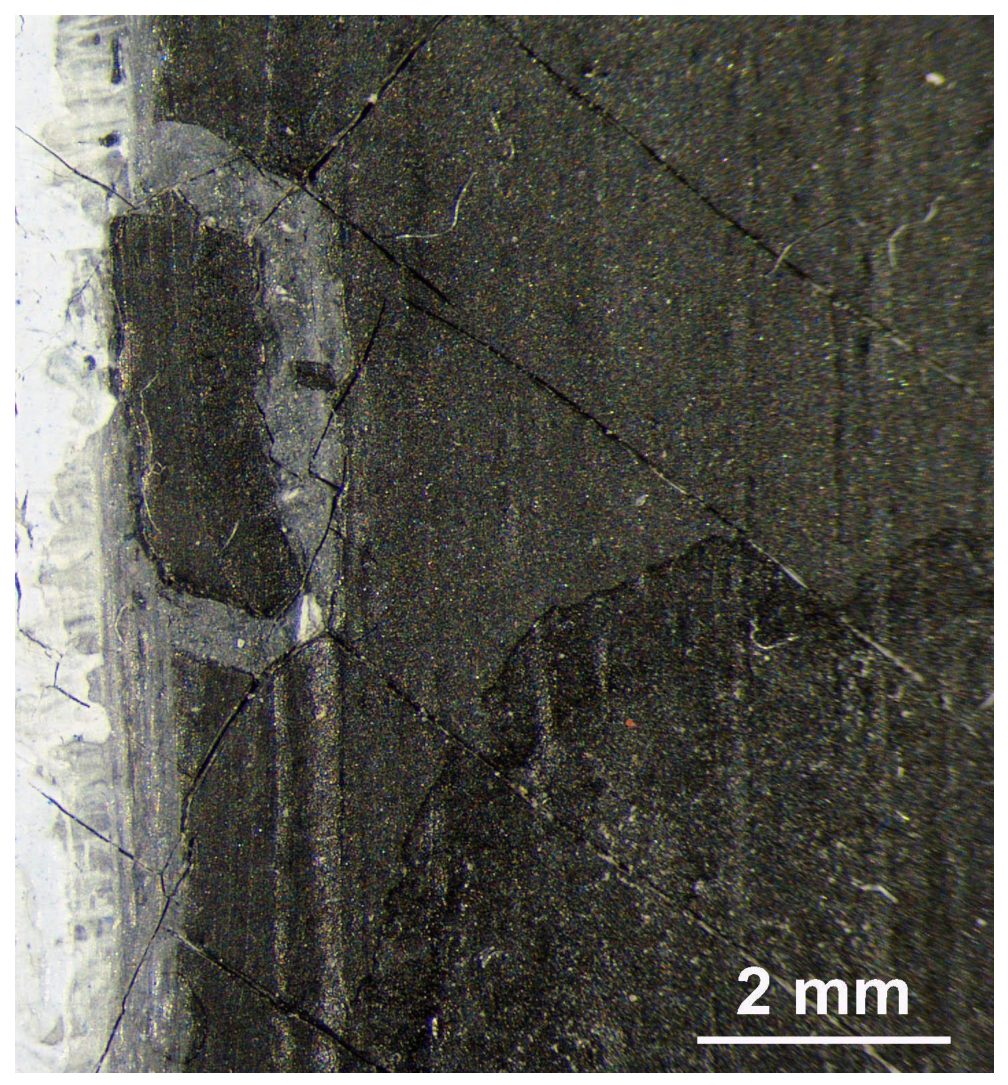
Figure 1. Detail of Tableau I (1921–1925, FB): a drying crack exposes an earlier grey line under the black line.
Heritage 09 00245 g001
Figure 2. Tableau I, 1921–1925, oil on canvas, 75.5 cm × 65.5 cm (Inv. Nr. 94.3, Fondation Beyeler, Riehen/Basel, Beyeler Collection).
Heritage 09 00245 g002
Figure 3. Composition with yellow and blue, 1932, oil on canvas, 55.5 cm × 55.5 cm (Inv. Nr. 78.3, Fondation Beyeler, Riehen/Basel, Beyeler Collection), purchased with generous support by Hartmann P. and Cécile Koechlin-Tanner, Riehen.
Heritage 09 00245 g003
Figure 4. Composition with double line and blue, 1935, oil on canvas, 72.5 cm × 70.0 cm (Inv. Nr. 90.12 Fondation Beyeler, Riehen/Basel, Beyeler Collection).
Heritage 09 00245 g004
Figure 5. Picture no. III, 1938, oil on canvas, 110.5 cm × 100.5 cm (Inv. Nr. 86.3 Fondation Beyeler, Riehen/Basel, Beyeler Collection).
Heritage 09 00245 g005
Figure 6. Composition with Red, 1934, charcoal and oil on canvas, 80.9 cm × 63 cm (unfinished, private collection) Esther Grether Familiensammlung, Basel.
Heritage 09 00245 g006
Figure 7. Detail from a Ben Nicholson letter, describing and sketching the early state of Picture No. III in 1935.
Heritage 09 00245 g007
Figure 8. (a) Mock-up 1 of simple black lines; (b) Mock-up 2 of black lines with adjoining fields and changes in composition. Left: in normal light. Right: in raking light.
Heritage 09 00245 g008
Figure 9. Mock-up 3 of layering and gloss of the black lines in visible light (top) and ultraviolet light (bottom). Black oil paint and unpigmented dammar and linseed oil were layered in various orders, resulting in different levels of surface gloss.
Heritage 09 00245 g009
Figure 10. Tableau I (1921–1925, FB). (a) Mapping of the modifications of the black lines, based on X-ray and IRR examination; (b) virtual grid superposed on the painting, based on the grid found with IRR under the red planes.
Heritage 09 00245 g010
Figure 11. Composition with yellow and blue (1932, FB). (a) Detail of a white field adjacent to black lines, showing most likely two layers of black (1), three layers of white oil paint (2, 3, 4); (0) visible ground, (5) finish layer; (b) depicted area.
Heritage 09 00245 g011
Figure 12. Composition with double line and blue (1935, FB). (a) Infrared reflectography; (b) X-radiography; (c) schematic assembling of all possible positions and changes in the lines.
Heritage 09 00245 g012
Figure 13. Picture No. III (1938, FB). (left) Schematic rendering where pinholes are present in the canvas and attest to working with paper templates; (right) X-ray with detail of pinholes.
Heritage 09 00245 g013
Figure 14. Picture No. III (1938, FB). Schematic of all changes in the lines.
Heritage 09 00245 g014
Figure 15. Detail of Picture No. III in X-ray (left) and under transmitted IRR (right), showing the various movements of just one line.
Heritage 09 00245 g015
Figure 16. Schematic drawing of paint build-up at the edges of all eight lines in Picture No. III, 1938.
Heritage 09 00245 g016
Figure 17. Picture no. III (1938, FB). Details with evidence of pencil traces.
Heritage 09 00245 g017
Figure 18. Cross-section of sample 94.3-X3 from a black line of Tableau I (1921–1925, FB) in UV light (description of layers 2–5 see text).
Heritage 09 00245 g018
Figure 19. Detail of a black line of Composition with yellow and blue (1932, FB). (a) in visible light; (b) in UV light, showing the greenish fluorescence of the varnish layer.
Heritage 09 00245 g019
Figure 20. (a) Cross-section of sample 78.3-X4 from a black line of Composition with yellow and blue (1932, FB) in UV light (description of layers 1–12 see text); (b) detail of upper layers.
Heritage 09 00245 g020
Figure 21. SEM-BSE image of the cross-section of sample 78.3-X4 from a black line of Composition with yellow and blue (1932, FB) (description of layers 1–10 see text).
Heritage 09 00245 g021
Figure 22. SEM elemental mapping of cross section of sample 78.3-X4 from Composition with yellow and blue (1932, FB).
Heritage 09 00245 g022
Figure 23. Cross-section of sample 90.12-X7 from a black line of Composition with double line and blue (1935, FB). (a) In UV light (description of layers 1–14 see text). The fluorescing inclusions containing Al and S are indicated with arrows. (b) SEM-BSE image.
Heritage 09 00245 g023
Figure 24. SEM elemental mapping of cross section of sample 90.12-X7 from Composition with double line and blue (1935, FB).
Heritage 09 00245 g024
Figure 25. Cross-section of sample 86.3-X4 from a black line of Picture no. III (1938, FB) in UV light (description of layers 1–9 see text).
Heritage 09 00245 g025
Figure 26. SEM elemental mapping of cross section of sample 86.3-X4 from Picture no. III (1938, FB).
Heritage 09 00245 g026
Figure 27. Py-GCMS chromatograms with insets (dashed boxes) of (a) varnish scraping from a black line in Tableau I (sample 94.3-P3); (b) paint fragment of a black line from Composition with yellow and blue (sample 78.3-X4); (c) varnish scraping from a black line in Picture no. III (sample 86.3-P8), showing oxidised oil and various highly oxidised products of DHA (see inset). Legend: Su = suberic acid, dimethyl ester; A = azelaic acid, dimethyl ester; IS = internal standard, tridecanoic acid, methyl ester; O = oleic acid, methyl ester; S = stearic acid, methyl ester; 1 = pyrolysis fragment of polycommunic acid; 2 = pyrolysis fragment of polycommunic acid; 3 = 6-methoxy-octadec-4-enoic acid, methyl ester; 4 = 9,10-epoxy-octadecanoic acid, methyl ester; 5 = isomer of compound 4; 6 = dehydroabietic acid, methyl ester; 7 = 9,10-dimethoxy-octadecanoic acid, methyl ester; 8 = 7-methoxytetradehydroabietic acid, methyl ester; 9 = erucic acid, methyl ester; 10 = 7-oxodehydroabietic acid, methyl ester; 11 = 7,15-dimethoxytetrahydroabietic acid, methyl ester.
Heritage 09 00245 g027
Figure 28. Cross-section of sample 78.3-X7.2 from a black line at the transition of a yellow plane of Composition with yellow and blue (FB, 1932). (a) in visible light; (b) in UV light; (c) ATR-FTIR analysed area (left) and spectrum (right).
Heritage 09 00245 g028
Figure 29. Detail of Composition with red, 1934 (unfinished) (Credit Line: Esther Grether Familiensammlung, Basel).
Heritage 09 00245 g029
Figure 30. Detail of a residual charcoal line between two white paint layers of Composition with double line and blue (1935, FB).
Heritage 09 00245 g030
Figure 31. Piet Mondrian in his studio, ca. June–July 1937, photo by Rogi André (Rosza Klein) [37] (p. 204).
Heritage 09 00245 g031
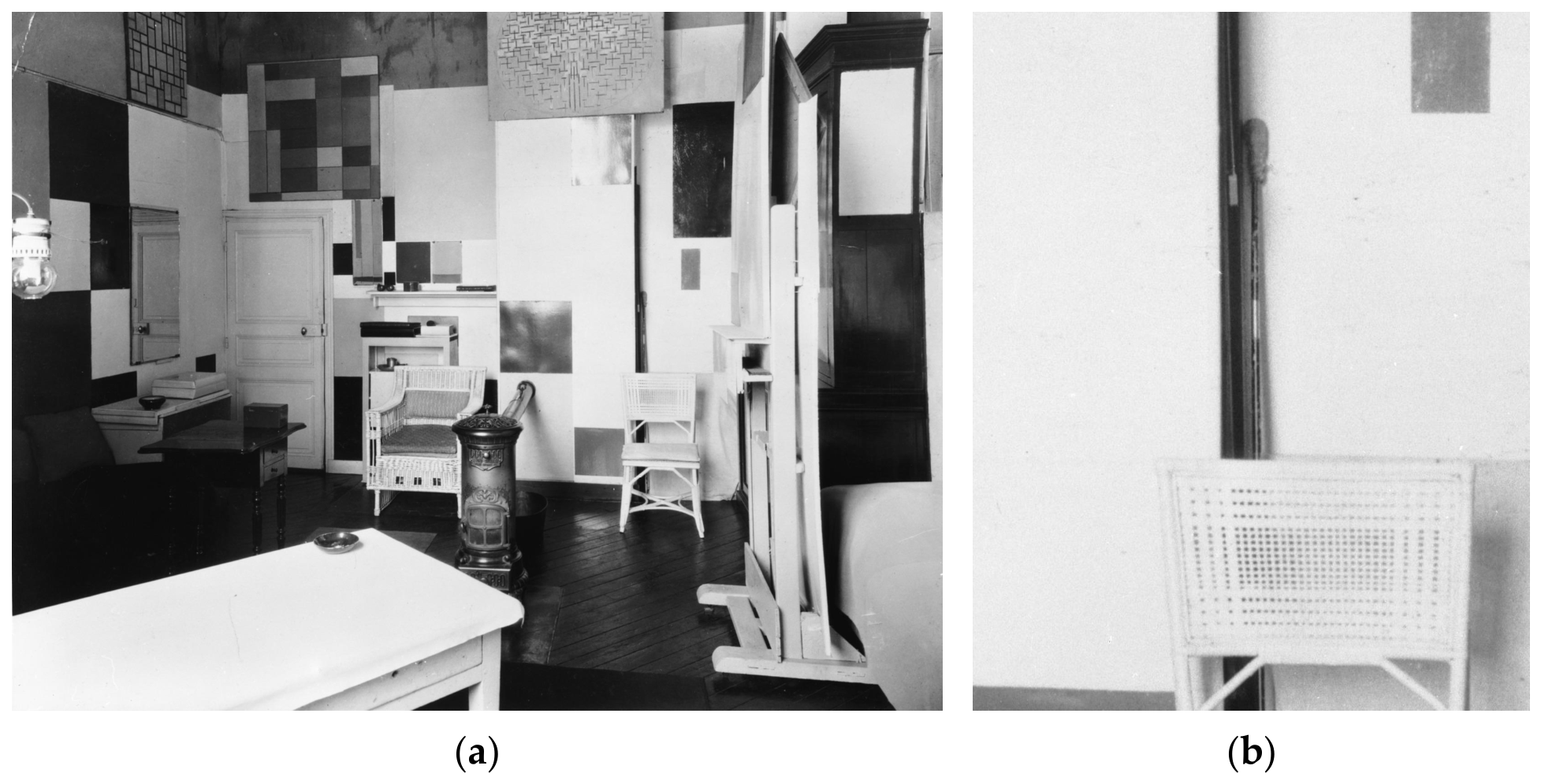
Figure 32. (a) Mock-up, metal ruler, soft brush; (b) mock-up, metal ruler, thin paint; (c) mock-up, metal ruler, thick paint; (d) mock-up, free hand; (e) mock-up, mahlstick; (f) edge of black line in Composition with double line and blue (1935).
Heritage 09 00245 g032
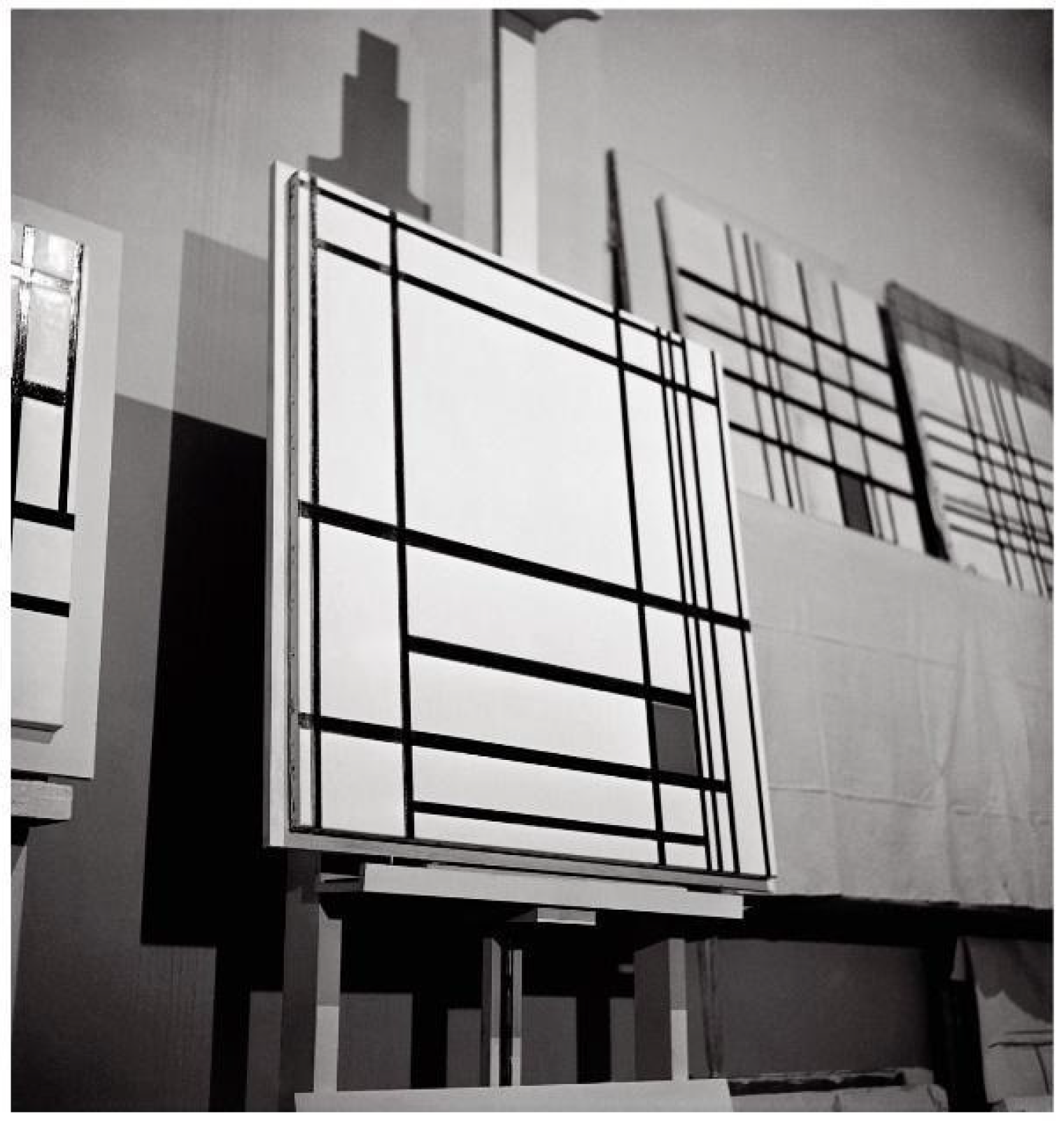
Figure 33. Example of brush-ruling while working on mock-ups.
Heritage 09 00245 g033
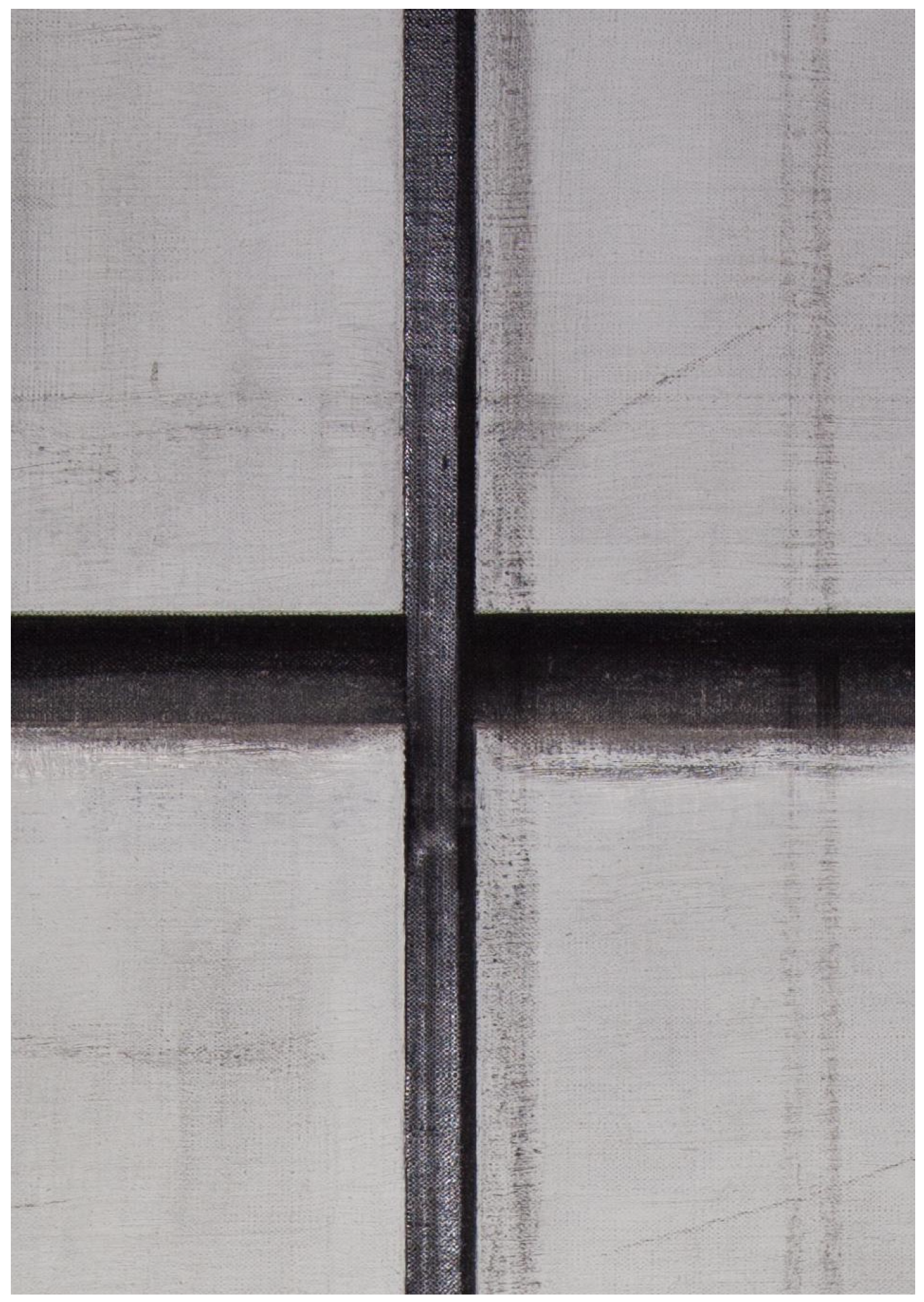
Figure 34. Examples of overlapping brushstrokes painted for a black line. (a) Composition with double line and blue (1935); (b) Tableau I (1921–1925).
Heritage 09 00245 g034
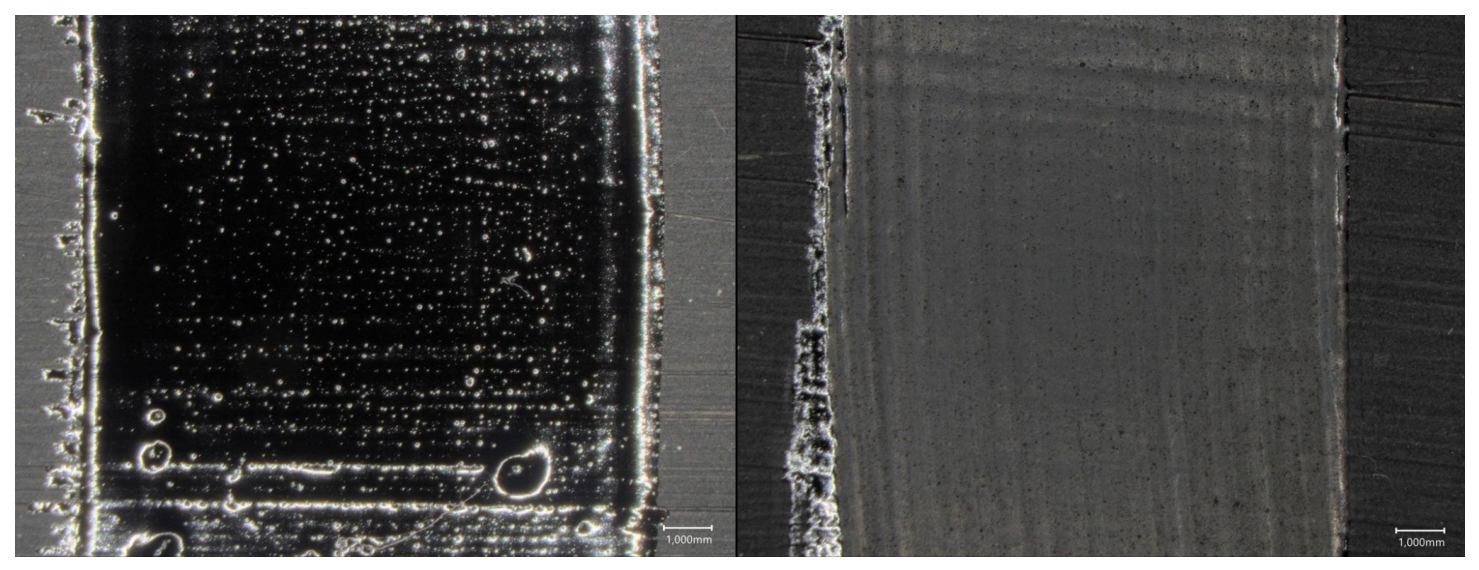
Figure 35. (a) Studio of Piet Mondrian in Paris, ca. end of November 1925—March 1926, photo by Pierre Delbo; (b) Detail showing a mahlstick leaning against the back wall [37] (p. 124).
Heritage 09 00245 g035
Figure 36. Studio of Piet Mondrian in Paris; on the easel Composition of Lines with Red (Unfinished) (B278), August (?) 1937, photo by Cas Oorthuys [37] (p. 207).
Heritage 09 00245 g036
Figure 37. Detail of Composition with Red, 1934 (unfinished), (Credit Line: Esther Grether Familiensammlung, Basel) showing gloss differences in the black lines at very early stages of the painting process.
Heritage 09 00245 g037
Figure 38. Details of Mock-up 3. (Left): black oil paint over dammar; (Right): black oil paint over black oil paint.
Heritage 09 00245 g038
Figure 39. Detail of Mock-up 3: Different gloss results according to layering: top: black oil paint (right) over linseed oil, bottom: black oil paint (right) over dammar.
Heritage 09 00245 g039
Figure 40. Direct comparison of a pencil under a black line in Picture No. III, 1938 (left), and in a mock-up (Mock-up 2) (right).
Heritage 09 00245 g040
Figure 41. Comparison of a pencil over a black line in Picture No.III, 1938 (left), and in a mock-up (Mock-up 2) (right).
Heritage 09 00245 g041
Figure 42. Composition with red (unfinished), 1934/1938–1944, initial gap between black line and adjacent colour fields.
Heritage 09 00245 g042
Figure 43. Comparison of the end of a pencil line in Picture No. III, 1938 (left), and in a mock-up (Mock-up 2) (right).
Heritage 09 00245 g043
Figure 44. New York City I (1941, Kunstsammlung Nordrein Westfalen, Dusseldorf, Germany): detail of a pencil line as a guide for black lines (Foto Anne Skaliks).
Heritage 09 00245 g044
Figure 45. Hands of Piet Mondrian and palettes, studio in New York, ca. end of 1942—half of March 1943, photo by Fritz Glarner [37] (p. 261).
Heritage 09 00245 g045
Figure 46. Brushes used by Mondrian show trimming of bristles along outer edges. Photo taken by Harry Holtzman in the New York Studio (15 East 59th Street) directly after Mondrian’s death.
Heritage 09 00245 g046
Figure 47. Example of stray brush hairs resulting in uneven edges of black lines in Picture No. III (1938).
Heritage 09 00245 g047
Figure 48. (a) Palette-table with palettes and a canvas scraper; (b) detail; image taken in Mondrian’s studio at 15 East 59th Street in New York by Fritz Glarner between the 2nd of February and 21st of March 1944 [37] (p. 277).
Heritage 09 00245 g048
Figure 49. Detail of Composition with Red, 1934 (unfinished) showing scraped-away black lines (Credit Line: Esther Grether Familiensammlung, Basel).
Heritage 09 00245 g049
Figure 50. Images in transmitted light (from the back) of (a) Composition with red, 1934 (unfinished) and (b) Mock-up 2; scraped and smudged areas are indicated with arrows.
Heritage 09 00245 g050
Table 1. Samples from the four paintings in the collection of Fondation Beyeler.
Sample No.PaintingType of SampleAnalytical Techniques
94.3-X3Tableau I (1921–1925, FB)Cross sectionOM, SEM-EDX
94.3-P3Tableau I (1921–1925, FB)Finish scrapingFTIR, Py-GC/MS
78.3-X4Composition with yellow and blue (1932, FB)Cross sectionOM, SEM-EDX, ATR-FTIR, Py-GC/MS
78.3-X7.2Composition with yellow and blue (1932, FB)Cross sectionOM, SEM-EDX, ATR-FTIR
78.3-X9Composition with yellow and blue (1932, FB)Cross sectionOM, SEM-EDX, ATR-FTIR
78.3-P5Composition with yellow and blue (1932, FB)Finish scrapingFTIR
90.12-X7Composition with double line and blue (1935, FB)Cross sectionOM, SEM-EDX, ATR-FTIR
86.3-X4Picture no. III (1938, FB)Cross sectionOM, SEM-EDX
86.3-P8Picture no. III (1938, FB)Finish scrapingFTIR, Py-GC/MS
Disclaimer/Publisher’s Note: The statements, opinions and data contained in all publications are solely those of the individual author(s) and contributor(s) and not of MDPI and/or the editor(s). MDPI and/or the editor(s) disclaim responsibility for any injury to people or property resulting from any ideas, methods, instructions or products referred to in the content.