1. Introduction
Partridge hunting with a decoy, in which a caged male bird is used as a lure to attract others through its call, is a hunting practice with deep historical roots in Extremadura (southwestern Iberian Peninsula). This practice remains remarkably vibrant today thanks to the continued engagement of a socially representative and significant group that carries it out across much of the region. It is a traditional form of hunting that incorporates knowledge and experience belonging to an inherited cultural legacy, while having been progressively enriched through adaptations to contemporary realities.
In this sense, it can be understood as a living expression of the past adapted to the present, with the capacity to forge enduring links between people, animals, and the land. Furthermore, it conveys its own bodies of knowledge, rituals, crafts, and specialised vocabulary, making it an activity of considerable ethnological and heritage significance.
In recent decades, the meanings and functions of this form of hunting have transformed, no longer limited, in the current context, to being a means of obtaining food. It also incorporates other values, such as a way of relating to the natural environment and family memory, the social fabric of villages and the rhythms of the landscape that contribute to creating a symbolic community [
1].
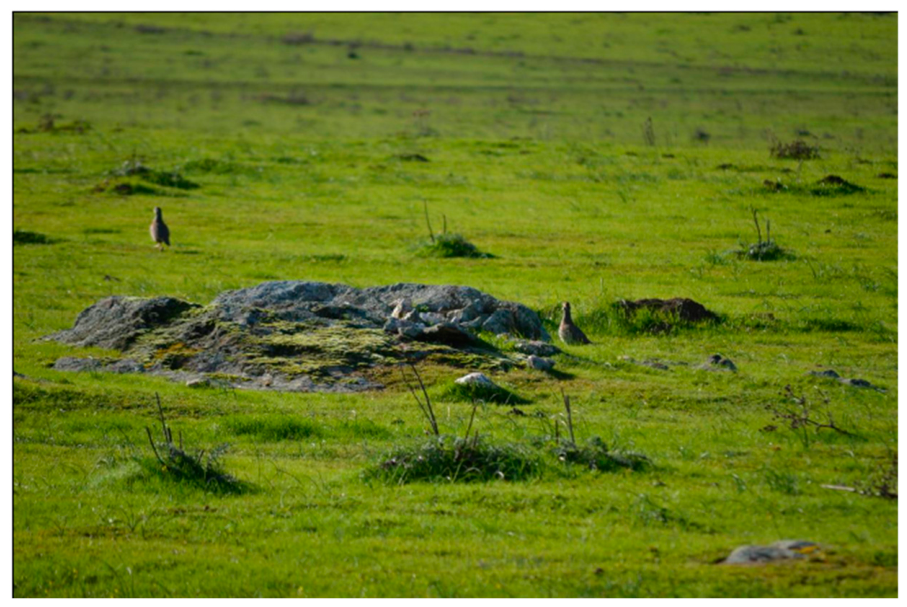
This form of hunting takes place during the period when, within the framework of the biological and reproductive cycle of the wild red-legged partridge (Alectoris rufa), the birds become sexually active and are subject to the spatial and temporal restrictions imposed by regulation. During this time, the partridges form pairs, prior to the start of a reproductive phase that takes place every year and in which these birds compete to win a mate and a specific territory. The caged bird, which has been carefully tamed, plays a central role in this practice. Hunters maintain a daily and long-term relationship with it, providing attentive and specialised care so that, once in the field, a vocal contest is established between wild partridges and the bird acting as a decoy. In sum, this hunting practice requires inherited knowledge of the red-legged partridge (Alectoris rufa), including its behaviour, reproduction, habitats, and the regulatory framework governing its capture. This knowledge is complemented by other dimensions of the practice, such as artisanal traditions and gastronomy.
As this activity involves the harvesting of a renewable resource, it is subject to a strict and complex regulatory framework that seeks to balance biodiversity conservation with the recognition of a centuries-old tradition. The legislative record reveals recurrent prohibitions throughout history (e.g., the Royal Pragmatic Decree of 1552; the Hunting Laws of 1879 and 1902), alongside more recent regulations that authorise the use of decoys in regions where the practice is considered traditional, subject to specific restrictions designed to ensure conservation. In this regard, the European Union’s Birds Directive prohibits hunting during the breeding season, establishing a reference period that takes into account the onset of egg-laying (counting back approximately 40 days), followed by 20 days of incubation and hatching (≈87–89 days). Under these conditions, the hunting season is restricted to a short time span of slightly one month, typically ranging from mid- to late January to late February or early March, depending on weather conditions and geographical gradients.
Against the general background outlined above, this article aims to comprehensively document, analyse and assess the practice of partridge hunting with decoys in Extremadura from a multidisciplinary perspective (anthropological, sociological, geographical and historical), and evaluates whether traditional partridge hunting with decoys in Extremadura meets the criteria established for Intangible Cultural Heritage, taking into account empirical evidence, statistical analysis and the territorial context. Additionally, the article examines aspects such as intergenerational transmission, social practices, ecological knowledge, artisanal production, lexicon, symbolic meanings and community recognition, with the aim of determining the heritage potential of this activity. More specifically, the article seeks to determine to what extent this tradition can be considered a form of living cultural heritage and whether it may be subject to formal recognition and protection, taking into account existing initiatives at the regional level. Currently, partridge hunting with decoys is explicitly recognised as Intangible Cultural Heritage in Andalusia (Spain), where it is identified as a traditional hunting practice that shares many characteristics with other practices recognised as intangible cultural heritage in different contexts.
In summary, the article does not presuppose prior recognition of this practice from a heritage standpoint, but rather adopts a rigorous analytical approach aimed at assessing its heritage potential (cultural, social and symbolic dimensions) through empirical evidence and existing regulatory frameworks.
2. Materials and Methods
The study is based on extensive ethnographic and participatory fieldwork—including participant observation and qualitative interviews—supplemented by statistical analyses and cartographic representations. This combination allows the practices and discourses of the community engaged in this form of hunting to be examined in relation to ecological, demographic, and regulatory data. Such an approach is widely regarded as one of the most appropriate methodological tools for generating an in-depth understanding of the subject under study [
2]. It enables a nuanced, multifaceted, and diachronic interpretation of the practice, avoiding simplifications and stereotypes, and situating its assessment beyond current controversies within the framework of participatory heritage management promoted by contemporary legislation.
The study adopts a mixed-methods design, integrating qualitative and quantitative techniques. On the one hand, participant observation was conducted in situ over a six-month period (February–July 2024), taking advantage of events such as hunting days, championships, exhibitions, and hunting fairs, as well as visits to private homes where decoys are kept. On the other hand, semi-structured individual interviews and informal focus groups were carried out in different areas, with the aim of ensuring diversity in age, gender, place of residence (rural/urban), and occupation, as well as representation across the various landscape units and hunting districts discussed in subsequent sections. The focus groups took place after hunting activities in social venues and local hunting association premises. Participants consisted of small groups of hunters who had taken part in the practice, typically ranging from a limited number of regular practitioners (between 3 and 6, depending on the occasion) rather than a formally defined sample. Accordingly, these interactions are better understood as informal group discussions complementing the interview data, rather than as structured focus groups in a strict methodological sense, as they take place in relaxed settings, free from scripted questions and the formal structure of formal focus groups, where—in our experience in these hunting contexts—natural speech and spontaneous expressions do not flow freely due to the constraints imposed by formal questioning.
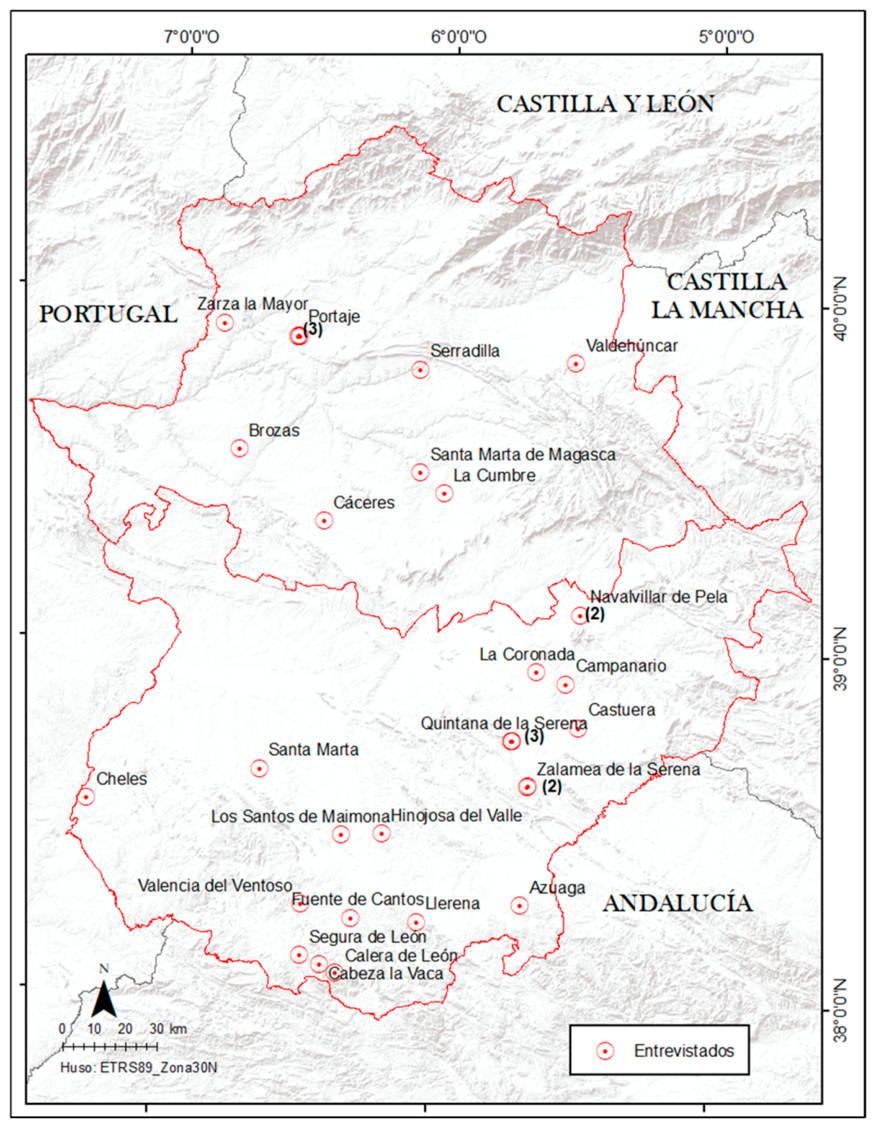
A total of 31 interviews were conducted, lasting between 60 and 90 min, and were conducted with the informants’ consent. The semi-structured interviews were conducted with practitioners of partridge hunting with decoys in Extremadura, including experienced hunters, local stakeholders, and individuals involved in the transmission and regulation of the practice. The interview protocol was designed to explore key analytical dimensions, such as intergenerational transmission, traditional ecological knowledge, social organisation, and perceptions of heritage value. All interviews were audio-recorded, transcribed verbatim, and analysed through an inductive thematic coding approach, combining open and axial coding to identify recurrent patterns, categories, and emic interpretations. Analytical rigour was ensured through iterative coding, constant comparison, and the triangulation of interview data with documentary and regulatory sources. The empirical findings presented in this article draw directly on this material, informing the interpretation of the practice as a socially embedded activity, the articulation of ecological knowledge systems, and the processes of cultural transmission identified among participants. The places of residence of the informants are shown in
Figure 1.
Participant observation was complemented by detailed field notes and audiovisual recordings, in accordance with the confidentiality frameworks and ethical guidelines of anthropological fieldwork. Audiovisual materials voluntarily provided by informants via social media were also incorporated and interpreted as a deliberate form of selection expressing worldviews related to the practice. This empirical corpus was triangulated with documentary, bibliographic, and legislative sources, as well as with statistical and geospatial analyses, to produce maps and comparative series.
The interviews and observations were thematically coded (ethology of the red-legged partridge, timing of the rutting season, types of hiding places, social behaviour during calling, craftsmanship, feeding and management of the decoy, lexicon, and rituality). Triangulation with statistical data (land use, altitudinal distribution, densities, licences, types of hunting grounds, and game farms) made it possible to infer spatial patterns and temporal dynamics of the practice, as well as its impacts and threats. The accounts were analysed critically, acknowledging the potential discrepancy between discourse and practice—a common feature in hunting contexts due to the secrecy surrounding hunting grounds [
3]—and were cross-checked against technical literature and regulatory frameworks to strengthen the conclusions.
Finally, a survey was designed and distributed to 422 federated hunting clubs across the two provinces of Extremadura (189 in Badajoz and 233 in Cáceres). Responses were received from 201 clubs, representing 15,416 members, of which 75 reported having a specific section devoted to partridge decoy hunting (999 decoy hunters: 626 in Badajoz and 373 in Cáceres). The purpose of this brief questionnaire was to assess the territorial presence, organisational relevance, and social penetration of the practice, as well as to characterise its impact on local game management. A selection of representative results from the questionnaire is presented in tables and maps included in the main body of the study, while the findings are interpreted in conjunction with field accounts and observed practices.
The design of the analytical framework was informed by a review of recent interdisciplinary scholarship on intangible cultural heritage and traditional practices, with particular attention to their role in shaping community cohesion, cultural identity, and territorial dynamics. This body of literature—which we draw upon throughout this article—emphasises that such practices are not merely residual traditions, but socially embedded forms of knowledge and action that contribute to social resilience, environmental management, and the reproduction of collective identities across generations. In this context, special attention was given to international contributions within anthropology and heritage studies that analyse the relationship between local practices, community structures, and biocultural landscapes, as well as the growing emphasis on traditional ecological knowledge as a key component of both cultural heritage and sustainability frameworks.
3. Results
The information contained in primary and secondary sources indicates that the red-legged partridge (
Alectoris rufa) has a wide spatial distribution in Extremadura, linked to its high adaptability to open habitats [
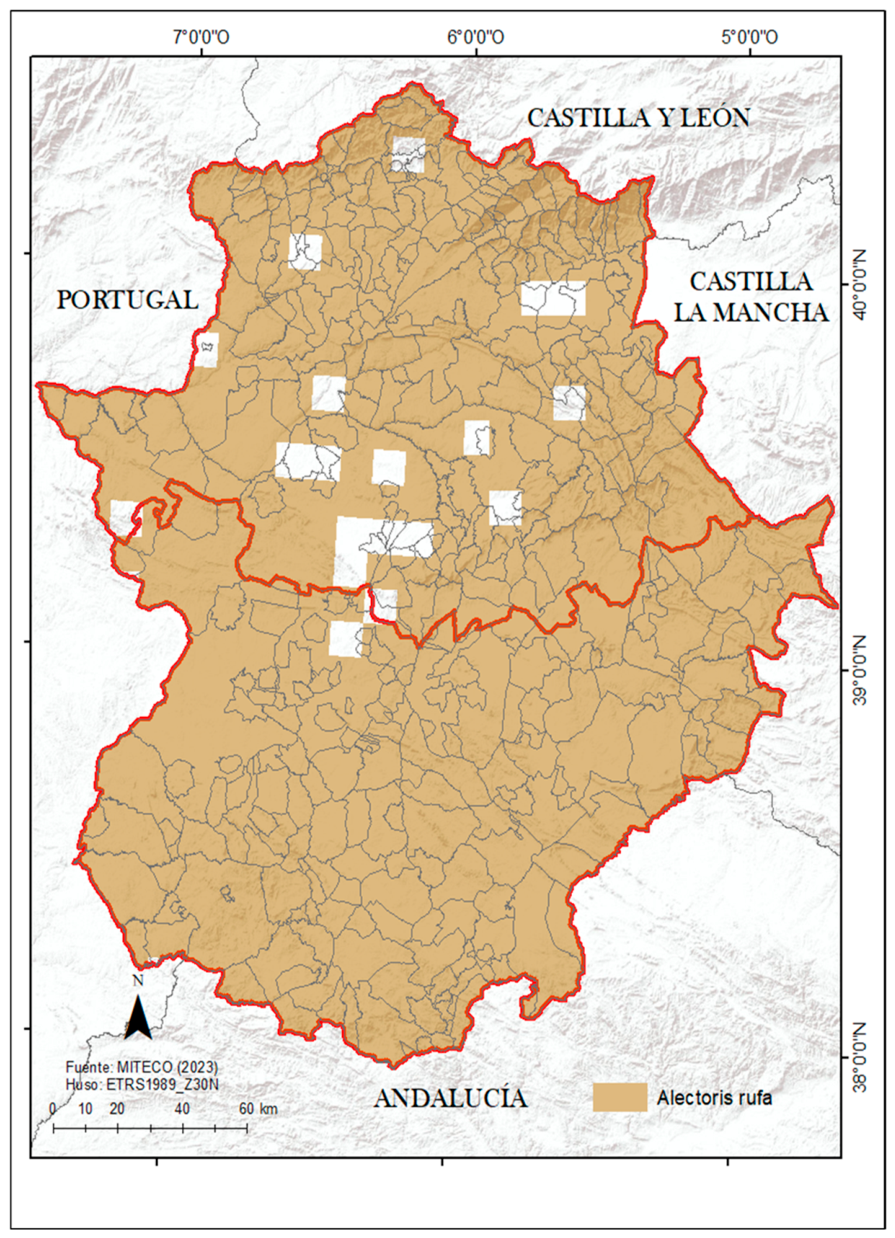
4], pseudo-steppe areas and agricultural mosaics; it can therefore be stated that the species is present in all six major regional landscape domains (
Figure 2). In this regard, the red-legged partridge may be considered a ‘synanthropic’ species [
5], as both its adaptation to the environment and its co-evolution with the environmental conditions resulting from human activity on the landscapes of Extremadura enable it to feed, reproduce and shelter its natural predators. One aspect worth highlighting is the fact that there is no uniform correlation between the red-legged partridge’s wide geographical distribution and its abundance, against a general backdrop of declining populations in recent decades. The species reaches maximum densities in areas where scrubland is combined, preferably, with low scrub, open woodland with areas of non-intensive cultivation, with a relationship existing between the productivity of partridge populations and habitat quality [
6]. Higher densities of this gallinaceous bird are found in open pseudo-steppe habitats, where extensive and non-intensive agricultural practices are common [
7,
8,
9], but also in areas with medium shrub cover [
6,
10]. More recent studies confirm its preference for natural habitats dominated by scrub, holm oak/cork oak woodlands, rainfed crops, tree crops and agricultural mosaics [
11,
12]. The findings of these scientific studies coincide with the accounts of the informants interviewed, who state, based on their knowledge, that the partridge adapts to any terrain in Extremadura, particularly if its characteristics include open woodland, vegetation comprising broom, thyme and gorse, as well as somewhat rugged terrain with nearby areas where food and water are readily available. Consequently, conservation and measures to improve habitat quality in various ways—such as managing traditional agricultural activity in a manner compatible with biodiversity conservation—are appropriate for increasing red-legged partridge populations [
13].
The presence of red-legged partridges across most of Extremadura can be traced back through history, as evidenced by various historical sources. These include local ordinances from the late Middle Ages and early Modern Age, which can be used to map the distribution of small game species [
14]. To these can be added, from later periods, the Topographical Reports of Philip II from the 16th century, in which the presence of the red-legged partridge is frequently mentioned [
15]. Meanwhile, in the 17th century, His Majesty’s geographer, Tomás López, conducted a survey with the aim of compiling a Geographical Dictionary of Spain, which also cites the existence of diverse fauna, notably mentioning the red-legged partridge [
16]. Finally, the prolific Inquiry of the Royal Court of Extremadura of 1792 is an important source of data for understanding the historical reality of that period, including the presence of wildlife and the red-legged partridge [
17]. The presence of the red-legged partridge in the landscapes of Extremadura is also reflected in the place names recorded on the 1:50,000-scale topographic maps of the Army Geographical Service and the Geographical and Cadastral Institute of the two Extremadura provinces, according to the study by Gragera [
18]. This author, who studied Extremadura ‘zoonomy’, identified some twenty references to the partridge. Among these is, for example, the Sierra de las Perdices, situated in the municipality of Cáceres.
Currently, the red-legged partridge occupies extensive habitats in Extremadura, as shown in
Figure 3, which highlights that the cultural relationships of hunters practicing this form of hunting, in relation to this bird, are closely linked to the socio-ecosystems it occupies and the historical habitats and territories the species inhabits across the vast and diverse geography of Extremadura.
Social Roots and Intangible Cultural Heritage
Until 2019 (before the single hunting licence model was introduced), there was a specific licence for this type of hunting. As a result, it is possible to determine that the number of practitioners in that year stood at 6470, showing a decline since 2010, when the figure reached 10,423. These figures demonstrate a level of social support that is evident not only in the number of licences, but also in the social profile of the participants, as evidenced by the backgrounds and occupations of our informants (bakers, farmers, livestock breeders, teachers, civil servants, bricklayers, engineers, pensioners, etc.) and in their geographical distribution, according to data obtained from a survey conducted among local hunting societies in Extremadura. The survey results showed that 37.3% of the 201 societies that responded to the questionnaire, out of a total of 422, had a specific section for decoy hunters (
Table 1). Furthermore, the social nature of the activity is also reflected in the ongoing holding of championships, fairs and numerous gatherings, as well as in the exchange of views, and even of birds, amongst members of the same society.
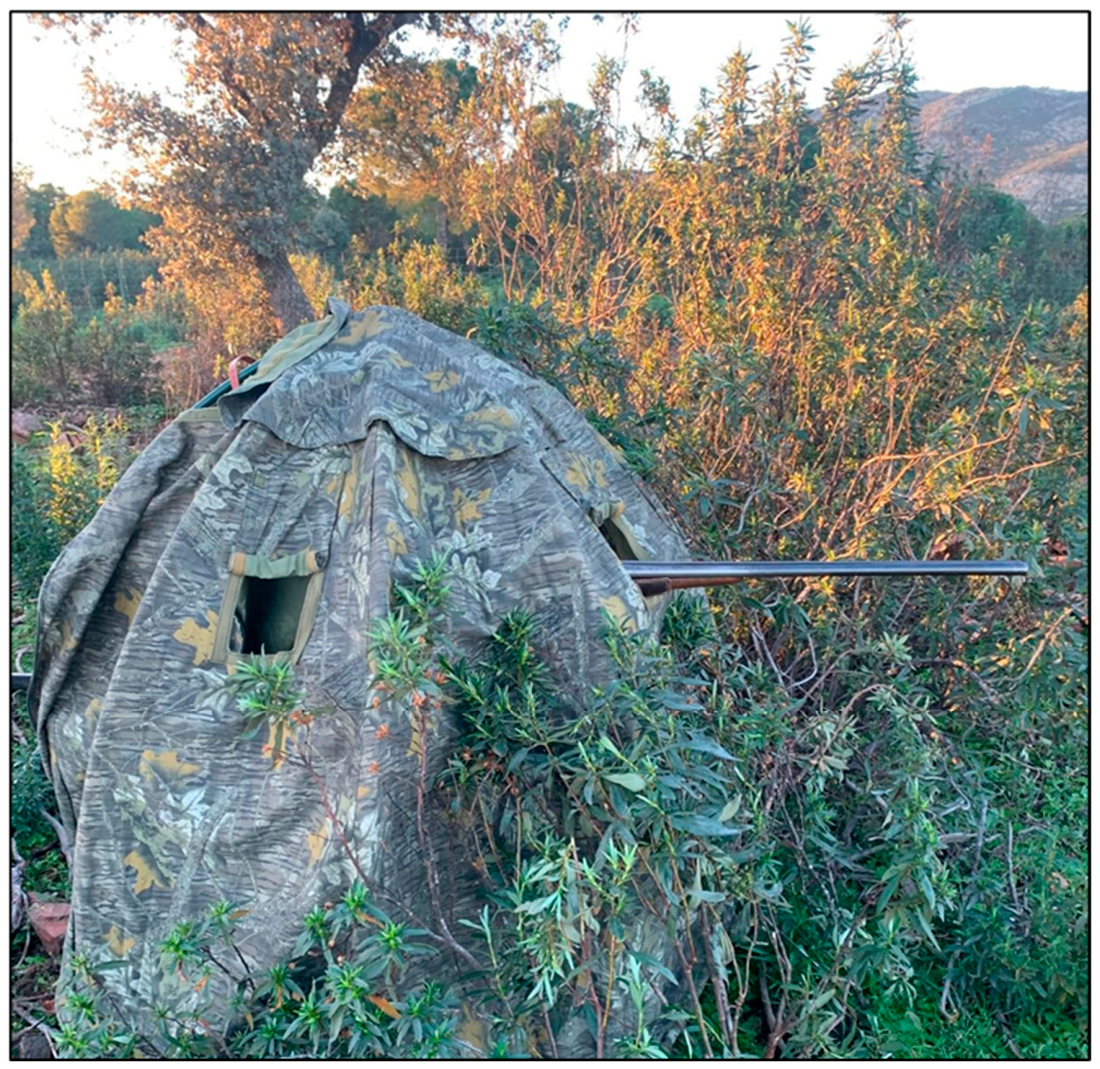
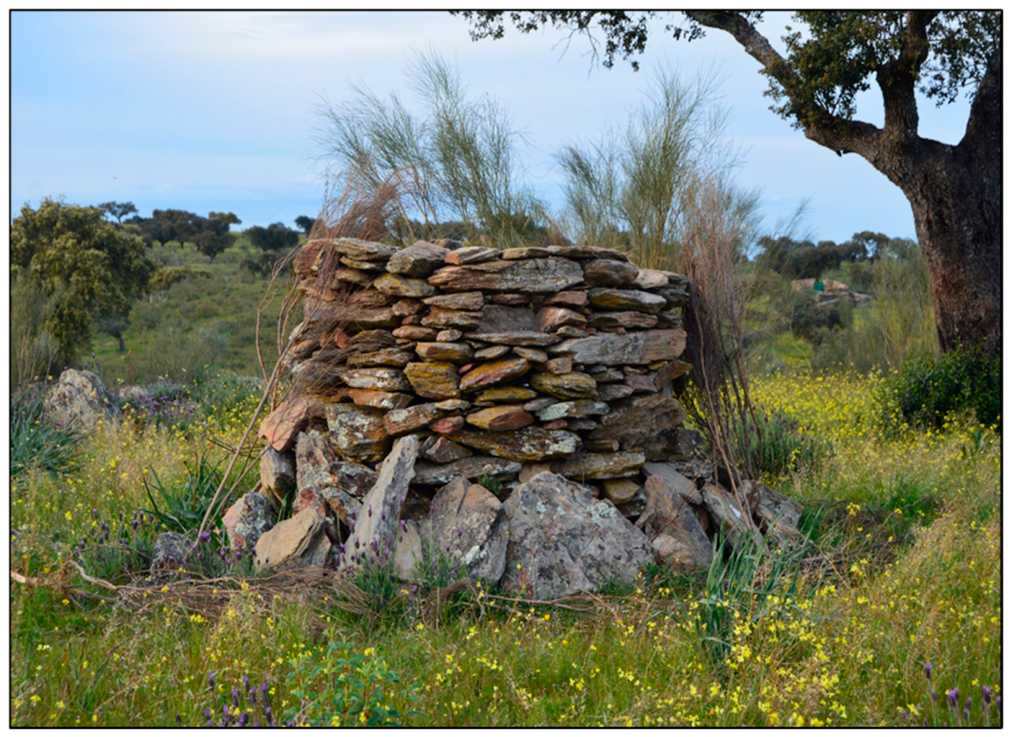
In all cases, this hunting practice is characterised by its significant heritage value, defined by the connection between hunter, decoy and wild partridges during the partridge’s annual mating season. The procedure for this hunt is organised into three time periods that follow one another throughout the day: dawn post, sunrise/morning post and afternoon/dusk post. The choice of location is based on knowledge of the birds’ habits and the terrain, with empirical rules regarding distance, orientation and the clarity of the ground. This is confirmed by all those interviewed who have inherited this knowledge from their ancestors. As a result of technical developments, portable canvas hides (
Figure 4) and adjustable metal structures have been introduced, coexisting with traditional dry-stone or local vegetation hides (
Figure 5), built in times gone by and sometimes given names, which constitute heritage ethno-architectures threatened by disuse and lack of maintenance.
A hunter’s training is based on the knowledge passed down by older generations, who teach the younger ones the many aspects involved in this practice: the different calls of the partridge (“adult call”, “whisper”, “receiving call”, “burial call”), ethical conduct when firing, behaviour to adopt whilst in hiding, allowing the decoy to witness the kill, or making noise when closing the hunt so as not to frustrate unnoticed disputes. Enculturation usually begins in childhood or adolescence within the family sphere (parents and grandparents), through observation, storytelling, and shared practice. This learning process combines practical skills—such as techniques for caring for and handling decoys, interpreting calls, and selecting hiding places—with an ethical and emotional dimension. There is also a rich body of literature addressing the subject in an educational manner. These include books from the 16th century [
20], the 17th century [
21] and, to a greater extent, the 19th century [
22,
23,
24,
25].
The cultural and heritage value of this hunting practice is also evident in other aspects:
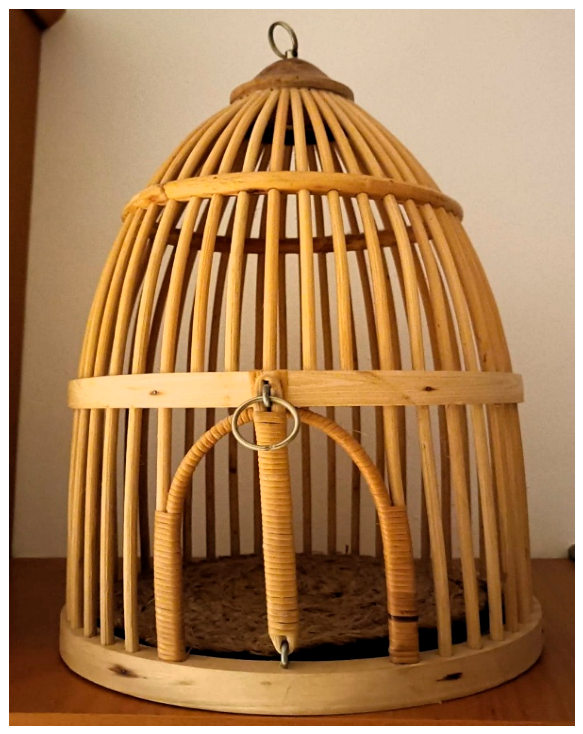
Craftsmanship: A form of craftsmanship is associated with this type of hunting, particularly in the manufacture of cages (
Figure 6) and other tools distinguished by their utilitarian character, durability, and aesthetic value. The craftsmen are, for the most part, self-taught enthusiasts who work in small, home-based workshops and operate on a limited scale, with strong local ties and low levels of profitability. As highlighted by the interviewees, exchanges and gifts of these handcrafted items are common among practitioners.
Gastronomy: The red-legged partridge underpins a domestic food system of considerable cultural value, in which women within hunters’ families play a central role. Partridge meat is consumed fresh during the hunting season and promotes practices of social reciprocity through the sharing of game with family members and friends. As a result, a wide range of traditional recipes has developed (
Figure 7), encompassing numerous methods of preparing partridge that align with values already recognised as intangible cultural heritage (e.g., the Mediterranean diet). Informants demonstrate familiarity with partridge recipes that differ markedly from one another.
Distinctive vocabulary: This practice has developed a rich and distinctive vocabulary that functions as a code of identity through which the behaviours associated with the call are interpreted. This lexicon has been recorded in various dictionaries and constitutes an intangible cultural asset that brings together ethological knowledge, hunting techniques, and forms of social interaction. Conversations with practitioners of this discipline have confirmed this characteristic, revealing the existence of local terms used to describe the same action, which have on occasion been incorporated into different dictionaries [
26,
27].
Finally, it should be noted that the core of this practice revolves around the decoy partridge, a renewable resource whose year-round management requires highly specific care. The aim is to ensure that the decoy is maintained in good health and that its rutting behaviour—artificially induced by the hunter—closely aligns with the natural mating behaviour of wild partridges. Caring for the caged partridge therefore requires specialised knowledge passed down through older generations, as confirmed by our network of informants, who acquired this knowledge within their family environment or from their closest circle of friends.
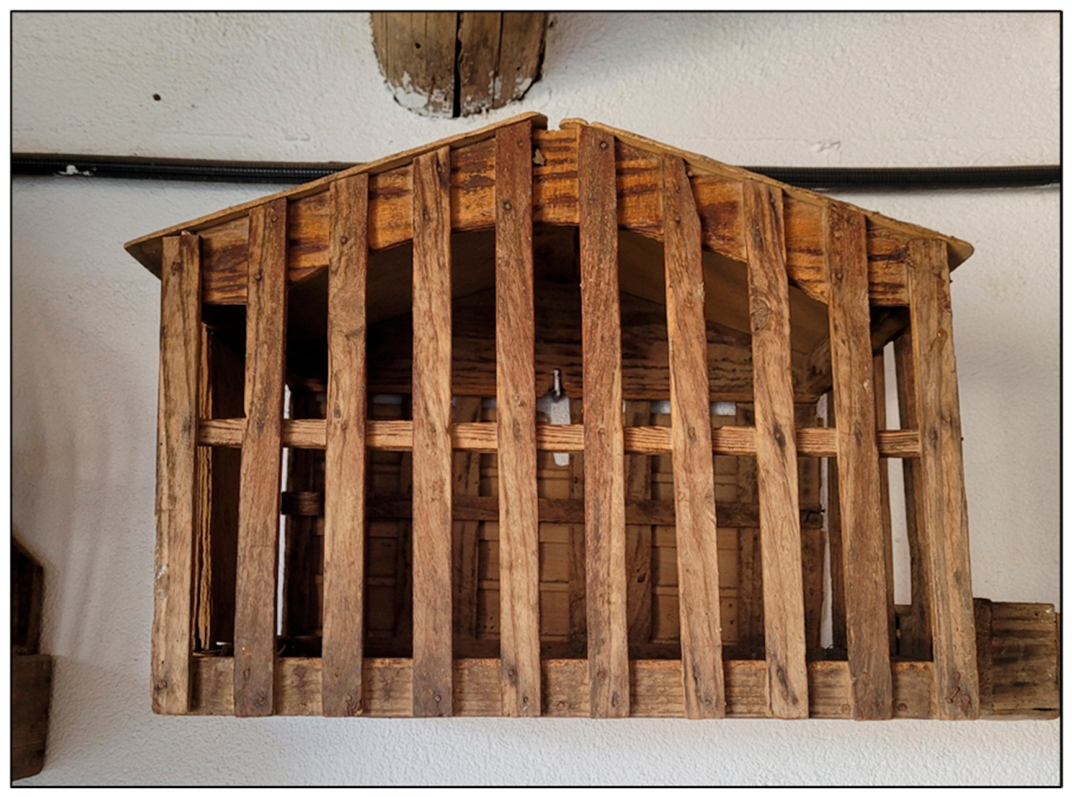
Once the hunting season has ended, the decoy is transferred from the hunting cage (oval-shaped and with limited space) to a larger type of cage (
Figure 8), known as
terreros (March–April). This allows the partridge to be dewormed and facilitates the moulting process (June–July). After the summer period, the decoy is returned to the hunting cage (November–December), where its mating instinct is enhanced through exposure to sunlight and a specific diet (hemp, acorns, cereals, or green herbs) which, under captive conditions, imitates the biological and natural processes observed in wild partridges. Throughout the year, health care is essential and combines disinfection and antibacterial treatments with traditional remedies transmitted from generation to generation.
4. Discussion
The results enable us to assess whether partridge hunting with decoys in Extremadura meets the defining criteria for Intangible Cultural Heritage. In this respect, it meets such criteria as set out in the UNESCO Convention and Law 10/2015 on the Safeguarding of Spain’s Intangible Cultural Heritage. This assertion is based on the frameworks applicable to it at various levels:
International level: The Convention for the Safeguarding of the Intangible Cultural Heritage, adopted by UNESCO at its meeting in Paris in 2003 (ratified by Spain in 2006).
National level: Law 10/2015 of 26 May on the Safeguarding of Intangible Cultural Heritage.
Regional level: Law 2/1999 of 29 March on the Historical and Cultural Heritage of Extremadura (amended by Law 3/2011 of 17 February).
Likewise, historical hunting regulations (Royal Decrees and Pragmatics prior to 1800) and more recent ones (Royal Decrees and the first hunting laws enacted after 1800, such as the Hunting Laws of 1879, 1902, and 1970) have been reviewed. Finally, the most recent regional legislation (Law 8/1990, Law 19/2001, and Law 4/2010 of Extremadura) and national legislation (Law 4/1989 and Law 42/2007) have been consulted. In addition, the hunting regulations of Extremadura (Decree 34/2016), general closed-season orders, and the European Birds Directive 2009/147/EC have been examined. Article 7 of the latter highlights the need to refrain from hunting during the breeding season, although certain exceptions are provided.
This review of the regulations is essential for analysing how these provisions affect the consideration of decoy partridge hunting as a cultural and heritage practice. From this perspective, and as has been repeatedly highlighted in the Spanish literature on heritage [
28,
29,
30,
31,
32,
33,
34,
35], heritage protection must be understood holistically, including the significance it holds for the population that participates in it and sees itself represented and identified within it, recognising that cultural practices and activities, such as partridge decoy hunting, do not possess value in and of themselves, but are relevant precisely because they form part of the way of life of these communities. Consequently, this form of traditional hunting meets the key criteria for Intangible Cultural Heritage, such as the inclusion of oral traditions, specific vocabulary established over the course of history, social customs, rituals, knowledge, and practices related to nature, the use of traditional craft techniques, and specific gastronomy with a multitude of recipes and forms of social interaction. Its status as a ‘living tradition’ is evident in its intergenerational continuity and its adaptation, in part, to the technological changes that have taken place over the centuries. As Prott [
36] has rightly pointed out, the extraordinary ubiquity of behaviours, rituals and representations related to hunting (in our case, a millennia-old hunting activity) gives rise to a field of study in intangible heritage of enormous scope.
In that sense, while the present study draws on historical and legal sources, it engages with recent scholarship on hunting as a form of intangible cultural heritage. A growing body of research has examined hunting practices within the framework of the UNESCO 2003 Convention, emphasising their roles in the transmission of ecological knowledge, cultural identity, and social organisation [
37,
38]. Interdisciplinary studies further highlight the cultural embeddedness of hunting as a socially regulated practice shaped by local meanings, institutions, and environmental management systems. Incorporating comparative perspectives would also strengthen the analysis, particularly in relation to Mediterranean contexts such as Malta, where bird hunting and trapping have been widely studied as culturally significant yet contested practices situated at the intersection of heritage, identity, and conservation [
39,
40]. Such engagement would allow the case of Extremadura to be more clearly positioned within broader European debates on the relationship between cultural heritage and ecological governance.
Furthermore, this is a practice in which the use of decoys is compatible with conservation, as its impact on catch numbers is minimal and is subject to strict hunting seasons set before the start of the breeding season. The greatest challenge to the conservation of the species, as a renewable resource, does not lie in the practice itself, but in the environmental, social and productive context: agricultural intensification, loss of mosaic landscapes and field margins, the use of treated seeds, water shortages, pressure from predators and hybridisation with specimens from farms that do not guarantee genetic purity. These considerations emerged consistently from the analysis of interview, focus group, and survey data, all of which were based on identical questions addressing the main challenges affecting the practice and, consequently, its implications for the species concerned. Thus, experienced hunters, local stakeholders, and those involved in its transmission and regulation consistently identified these aspects as the most significant.
In this regard, both the scientific studies already cited and, crucially, the evidence derived from face-to-face interviews and the consistent accounts provided by hunters in the focus groups indicate that the key factor is habitat improvement, alongside management based on robust population monitoring and policies adapted to territorial variations. For this reason, and in line with international research, the integration of cultural practices within their natural environments as part of cultural heritage underscores not only the importance of traditional ecological knowledge but also its relevance in supporting environmental justice and contributing to addressing global environmental challenges [
41,
42,
43]. Simultaneously, it should be acknowledged that hunting practices are the subject of public debate and criticism from environmental and animal welfare organisations, as reflected in the questionnaire data. These perspectives raise legitimate concerns about biodiversity conservation, animal welfare, and the ethical implications of hunting in contemporary societies. However, reducing the debate to a dichotomy between cultural tradition and environmental protection risks oversimplifying what is in fact a far more complex reality. As this study suggests, the practice analysed here is highly regulated, temporally restricted, and linked to the biological cycles of the species, and takes place outside the breeding season, within strict legal frameworks. In this context, it is important to distinguish between general criticism of hunting and the specific characteristics of traditional practices such as partridge hunting with decoys. In this regard, experienced hunters, alongside local stakeholders and those involved in its transmission and regulation, consistently emphasised that such debates are overly simplistic.
In this context, the potential recognition of this practice as Intangible Cultural Heritage should not be regarded as incompatible with environmental protection. Rather, it may provide an opportunity to promote forms of cultural heritage linked to sustainability, traditional ecological knowledge, and the responsible use of resources. The integration of heritage recognition with conservation policies and management strategies can help reconcile cultural values with contemporary environmental concerns.
Finally, it is important to highlight aspects related to social interaction. Although the group of people who practise this activity has historically been predominantly male, current trends—clearly observable at fairs and championships—indicate a gradual increase in female participation. Moreover, this practice generates numerous social gatherings that foster cultural transmission and facilitate the integration of new members, thereby contributing to its continuity, although a series of safeguarding measures remains necessary.
Among these measures—on which all participants in the study agree—it is proposed to carry out multidisciplinary studies; organise gastronomic events and social gatherings that encourage the inclusion of women; cooperate in the recovery of small game; safeguard the genetic purity of the red-legged partridge; promote traditional crafts; explore non-lethal hunting methods; and establish dedicated interpretation centres in areas where the practice is most deeply rooted.
5. Conclusions
This study set out to assess whether traditional partridge hunting with decoys in Extremadura meets the criteria established for its consideration as Intangible Cultural Heritage. The results obtained allow us to conclude that this practice largely fulfils the defining characteristics of this category of heritage.
From an analytical perspective, the empirical evidence shows that the practice is grounded in robust processes of intergenerational transmission, sustained through family and community networks. It also constitutes a well-defined social practice, embedded in local forms of sociability, collective identity, and shared memory. Furthermore, it involves a complex body of traditional ecological knowledge, including a detailed understanding of the species’ behaviour, seasonal cycles, and habitat conditions. These elements are complemented by associated artisanal practices, a specific vocabulary, and symbolic meanings that reinforce its heritage value.
At the same time, the findings should be interpreted within a broader contemporary context marked by increasing environmental awareness and ethical debates surrounding animal welfare. As previously noted, hunting practices are often the subject of public controversy. However, the form of hunting analysed in this study is highly regulated and adapted to the biological cycles of the species, operating outside the reproductive period and with limited direct impact on populations. This suggests that the tension between cultural heritage and environmental protection should not be framed as an irreconcilable opposition, but rather as a domain requiring dialogue, contextualisation, and adaptive management.
In this respect, the potential recognition of partridge hunting with decoys as Intangible Cultural Heritage in Extremadura should be accompanied by sustainability criteria, conservation-oriented policies, and participatory mechanisms. Such an approach would enable the integration of cultural values with contemporary environmental concerns, thereby reinforcing both heritage preservation and biodiversity protection.
Ultimately, the patrimonialisation of this practice should not be understood as a static or purely symbolic process, but rather as a dynamic framework that recognises its cultural significance while ensuring its compatibility with present and future ecological challenges.
It is nevertheless necessary to acknowledge certain limitations of this study. The empirical component is based on qualitative data derived from a limited number of interviews, which, while allowing for an in-depth understanding of the practice, does not support statistically generalisable conclusions. In addition, the focus on a specific regional case restricts the direct transferability of the findings to other socio-cultural contexts. Despite these limitations, the study contributes to current debates by reinforcing the interpretation of traditional hunting practices as forms of living cultural heritage embedded in social, ecological, and territorial systems. It further underscores the relevance of integrating heritage recognition with sustainability-oriented policies and participatory governance frameworks. Future research could develop this line of inquiry through comparative analyses across different regions and cultural settings, as well as through methodological approaches combining qualitative and quantitative data in order to assess more systematically the social and environmental implications of such practices.