1. Introduction
In the context of the preservation and conservation of cultural heritage—with particular reference to historic buildings used as exhibition venues and the artworks preserved therein—digital technologies allow the application of increasingly efficient non-invasive survey and diagnostic techniques and methodologies, achieving high level documentations [
1]. Today, it is possible to generate high-quality 3D models from basic laser scanner sensors or from images acquired with standard digital cameras in a remarkably accessible and efficient manner [
2,
3,
4]. These models allow for the production of high-resolution reconstructions of objects, enabling the acquisition of detailed information essential for enhancing understanding, interpretation, and assessing the state of conservation and possible ongoing deterioration processes, through no-contact methodologies and therefore without involving any interaction with the physical state of the artwork under investigation [
5,
6,
7]. Digital tools can indeed provide support to identify and map a wide range of conservation issues and the processes of degradation, increasing the understanding of possible causes, due to natural or artificial agents.
Nevertheless, the field of conservation is often constrained by limited budgets, partly due to a lack of full awareness regarding the importance of an accurate digitisation as an essential basis for any heritage assessment or intervention [
8]. As a result, the initial phases of analysis in conservation projects frequently need to be carried out with a low-cost approach. Furthermore, it is essential for conservation professionals to have access to user-friendly tools that enable to manage the different steps of digital documentation.
The challenges related to the conservation of contemporary artworks are varied and involve different levels of complexity, ranging from curatorial and exhibition-related issues, to the management of digitised content for sharing (virtual distribution) [
9,
10] and intellectual property rights (IPR) and ethical issues, from digital archiving, up to the preservation of unconventional materials [
11]. The goal of this study focuses specifically on the latter, testing a digital documentation workflow aimed at conservation analysis in a complex case study, investigating the challenges related to the preservation of contemporary cultural heritage through the use of different digital sensors.
The following requirements were taken into particular consideration:
To capture complex shapes, which involves moving around objects to be fully documented;
To achieve a high level of metric and morphological accuracy, in order to describe even the most irregular shapes and finest details of the artworks;
To digitally document the multispectral response of the various materials of which the contemporary art objects are made;
To adopt a multi-scale survey to document the relationship between the object and its exhibition context;
To document surface features, and in particular the extent of deterioration and complex degradation issues, which are often difficult to identify and represent accurately.
The research presents the outcomes obtained through the application of different digital tools and includes a comparative analysis aimed at assessing the relative effectiveness of each tool within the specific context of use. The assessment focused on the metric-morphological accuracy of these tools, as the basis for any application of the digital models for conservation purposes. In particular, the comparative analysis involved matching the results of surveys carried out using low-cost, user-friendly, and fast instruments, with digital data obtained by an integrated survey performed through two terrestrial laser scanners, which offer greater reliability and allow for the control of systematic error during the recording of the single scans into an overall 3D model. This point cloud was assumed as reference dataset.
The paper is organised as follows: After having briefly addressed the main issues in digitisation of cultural heritage and contemporary art and framed the scope of the paper,
Section 2 highlights the importance of the interdisciplinary approach in the survey and documentation of cultural heritage, an aspect that strongly characterises this study.
Section 3 discusses the state of the art in digital methods and documentation systems applied to cultural heritage.
Section 4 describes the integrated workflows applied to a specific and original case study and provides an evaluation of the tools used, outlining a quantitative and qualitative comparison to understand dataset errors and sensor limitations.
Section 5 discusses the result and the conservator’s perspective. Finally,
Section 6 concludes the paper.
2. The Essential Interdisciplinary Approach
In recent years, the importance of interdisciplinary research has been recognised by the scientific community and research policy makers [
12]. In Europe, initiatives and programmes such as the European Commission’s Quest for Interdisciplinary policy brief have supported approaches that integrate knowledge and methodologies from different fields [
13].
The “interdisciplinary method” is a practice that ranges from the simple exchange of tools and methods to the creation of new research areas. As Klein (2021) [
14] underlines, interdisciplinarity is based on the integration of data, methods, tools, concepts, theories and perspectives from multiple disciplines, with the aim of addressing problems or issues that are too broad and complex to be solved by a single field of study.
In the present research, an interdisciplinary approach is adopted within the field of contemporary art conservation, with particular attention to the challenges related to representing the state of conservation through digital tools. This type of integration is crucial for the development of new methodologies aimed at supporting preservation processes and for updating the role of the conservator-restorer. Although the profession remains strongly rooted in analogue practices and manual expertise, the adoption of digital technologies for documentation, research, conservation, and dissemination has the potential to enhance outcomes and introduce innovative opportunities for the field [
15].
In this case, the innovation consists in rethinking the conventional workflow related to the use of digital technologies in conservation. Rather than being guided by technological potential, the process originated from the specific and practical needs arising in the preservation of contemporary artworks. The first research phase was developed by conservator-restorers, who performed an in-depth analysis of the artwork’s state of conservation. Only at a later stage interdisciplinary collaboration was introduced, involving experts from technological and scientific fields to identify the most suitable digital strategies and tools. This need-driven methodology represents a significant shift from traditional approaches. Even if the methodologies used in other research sectors offer possibilities in the field of museum conservation, proposing pipelines for digitisation [
3,
16], it is crucial to set the specific requirements of the artworks at the heart of the decision-making process.
The research, currently underway, is therefore characterised by a strongly interdisciplinary approach, integrating skills from the field of conservation and the scientific areas of architectural survey and representation, particularly knowledge related to digital data acquisition and aggregation, and management methodologies.
The collaboration between these fields allowed to combine the potential of current digital technologies with conservation needs, bringing together diagnostics, descriptions of the state of conservation, and historical–critical and curatorial information. This synergy not only enriches the research process, but also allows complex issues to be addressed from complementary perspectives, optimising the effectiveness of the workflow, which aims to provide tools for the practical use of digital data for conservation and facilitating communication between the various sources of information and between the different actors involved in the conservation and restoration process, providing the user a broad knowledge base.
As Orzechowski et al. (2025) argue, various parameters can influence digital processes and lead to different outcomes [
17]. Among these, the personnel and specialists involved in the digitisation process play a crucial role. Implementing an interdisciplinary workflow—integrated at each step with specific requirements focused exclusively on conservation and preservation—guides the development of technologies toward real needs and functional applications.
3. State of the Art in Digitisation for Conservation
Surveying applied to conservation and restoration purposes is rooted in the long Italian cultural tradition [
18,
19], strongly oriented towards heritage preservation and transmission to future generations. Heritage documentation is at the centre of theoretical approaches towards historical–critical instances, and critical–conservation orientations. As a matter of fact, heritage surfaces and tangible features encompass not only physical dimensions, but also cultural, conceptual, immaterial, and interpretative features, recognising cultural values and significances. In this framework, heritage survey has the task of guiding all other investigations, through an aware “reading” of all relevant aspects (geometric, figurative, cultural, historical, material, and conservation).
As mentioned in the previous sections, digital tools for data capturing and processing are more and more applied in the field of cultural heritage, but the way in which heritage is documented, represented, and analysed is changing. The need for pointing out critical issues and for developing guidelines for 3D data capturing and modelling can be traced back to some years ago [
20]. In recent decades, the process has undergone a deep change in terms of both instrumental and conceptual operations. Traditionally analogue actions and analyses are more and more replaced by procedures depending on survey tools [
21]. Vast amounts of data can be rapidly acquired, but the quantity may not correspond to the quality of the information [
22].
Current research avenues are exploring the application of new sensors and tools, considering the rapid technological innovation oriented to the setting up of devices more and more “automatised”, fast, and able to capture a huge amount of geometrical coordinates. The State of the Art in digital survey technologies demonstrates an increasing development and innovation of tools able to capture not only metric data, geometries, and shapes, but also surface features. In the field of survey for heritage conservation, these research avenues are more and more relevant, opening up the opportunity to connect new information and knowledge to the 3D metric–morphological model, combining 3D databases with diagnostic assessment in an integrated way [
23].
Nowadays, accurate models can be produced (according to the scope of the survey) through Terrestrial Laser Scanning (TLS), SLAM technologies (Simultaneous Localization and Mapping), or aerial or terrestrial photogrammetric survey (or Structure from Motion photomodelling). The latter procedure is rapidly evolving and spreading, opening up new analytical scenarios related to this methodology’s ability to survey surface features in their “visual appearance”, while SLAM systems, which enable dynamic data collection by mapping environments by simultaneously localising the sensor, are gradually becoming more reliable in terms of precision, but still require careful consideration when applied in contexts requiring high levels of accuracy [
24,
25]. Moreover, what is changing is the increasingly ability of digital models to support for a comprehensive set of analysis [
26], up to conservation and restoration purposes, by exploiting Artificial Intelligence algorithms and processes aimed at data segmentation [
27,
28,
29] in order to support data hierarchisation through semantic classifications [
30,
31].
In the field of museology, the current State of the Art in digital documentation is closely intertwined with the specific features of the objects and exhibition contexts, as well as with the different specific documentary objectives. The survey of art objects and museum artifacts can be particularly challenging, considering the various conditions that may characterise these objects, including their relationship with the exhibition context, immovable objects, diversity in type, materials, and shapes, lighting conditions, the presence of unconventional materials and forms, their response to microclimatic factors, the level of accuracy required, etc. [
32], and the already mentioned time and budget limits.
Moreover, when the documentation is for conservation purposes, a range of critical issues concerning the tools and methodologies to be applied arise. In addition to the need to identify appropriate survey tools to obtain meaningful data that can be assessed and aggregated for diagnostic and curatorial purposes, it is essential to take into account the economic constraints that very often affect this sector as well as the level of technical expertise of conservators. For this reason, there is a clear need to experiment with and adopt systems that are not only effective but also economically accessible to professional conservators, balancing metric reliability, technical barriers, and operational efficiency.
Within this framework, the proposed research is aimed at exploring the application of different cost-effective survey tools for rapid and flexible data acquisition on contemporary art objects and on spaces in which they are conserved, highlighting the need to re-discuss critical–interpretive understanding that digitisation offers. Since conservation-oriented surveys require a high degree of data and source integration, this research primarily aims to define new approaches for the acquisition of metric data for analysis and documentation. The goal is to outline a methodology for generating a digital 3D model able to represent the contemporary museum in all its spatial and functional aspects, as a knowledge basis to include and aggregate thematic data and information.
The workflow tested the photogrammetric approach and three different sensors, the results of which were compared with the digital database obtained from an integrated terrestrial laser scanner survey, which serves as a benchmark in terms of accuracy and to assessing the tested sensors actual performance in relation to the different objectives and purposes of the survey. The benchmark database was collected through an integrated survey applying a Leica ScanStation HDR P50 and a Leica BLK360 G1 (Heerbrugg, Switzerland). The main point cloud was generated using the P50, through 27 scans and 2,500,000,000 coordinates. The urban-scale survey provided a solid foundation thanks to optimal scan positioning, resulting in an error within the instrumental tolerance of 2 mm + 2 ppm. This was integrated with the BLK survey, which was used to capture the interior spaces with 41 stations and 1,500,000,000 coordinates; this aligned with the robust structure of the network and remains within the instrumental error.
4. Material and Methods
This section presents the case study selected to apply the sensors for developing a multi-scale dataset, a brief description of the operational fieldwork and selected sensors, and the critical assessment analysing different outcomes obtained.
The case study may be assumed as unconventional, combining two distinctive features: a historic building serving as an exhibition venue and site-specific contemporary artworks. The resulting 3D models were used as a base on which grounding the methodological approach tailored to face main issues in data capturing and data management of contemporary artworks collections.
4.1. A Significant Contemporary Museum: The Case of Sculpture Center in Cagli
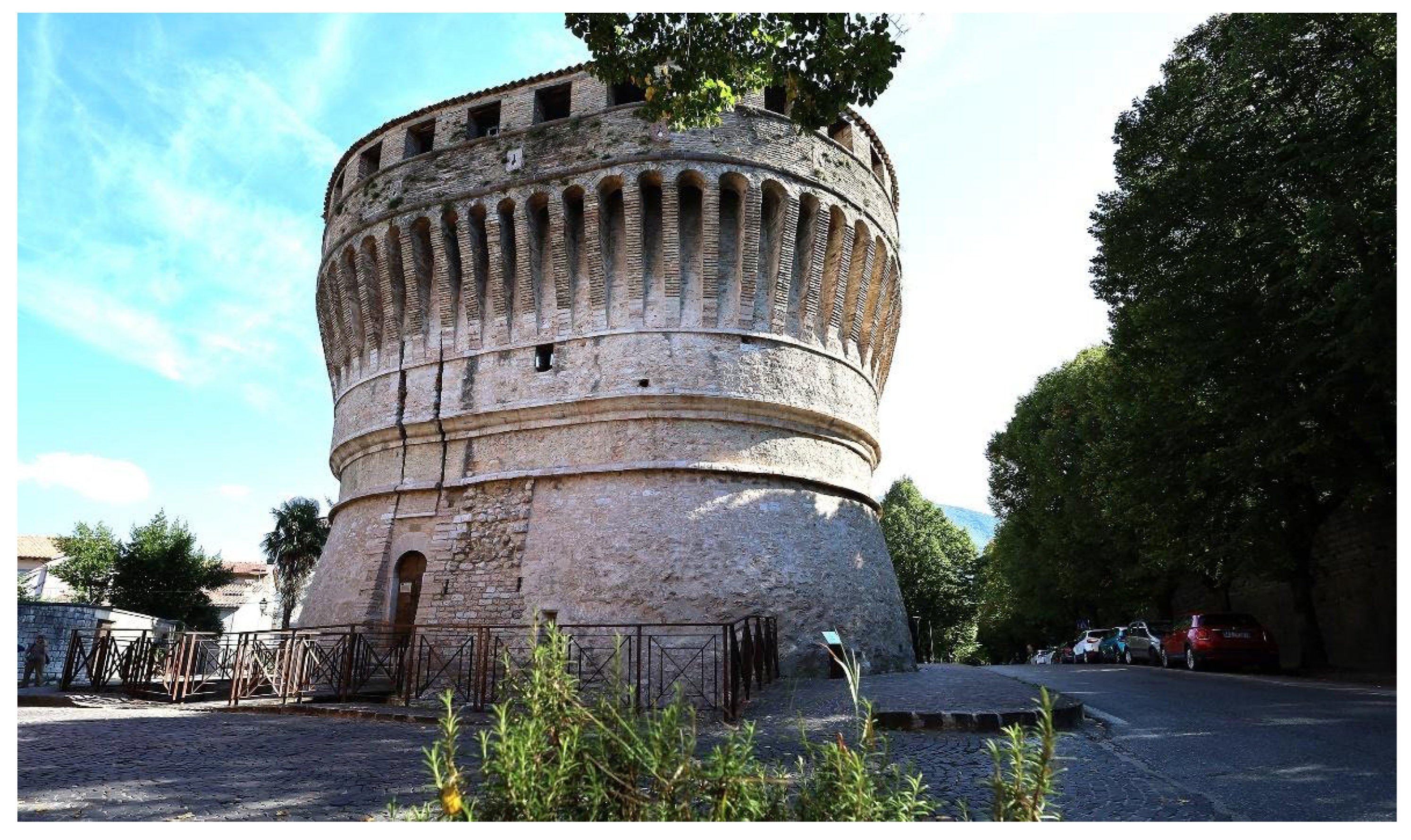
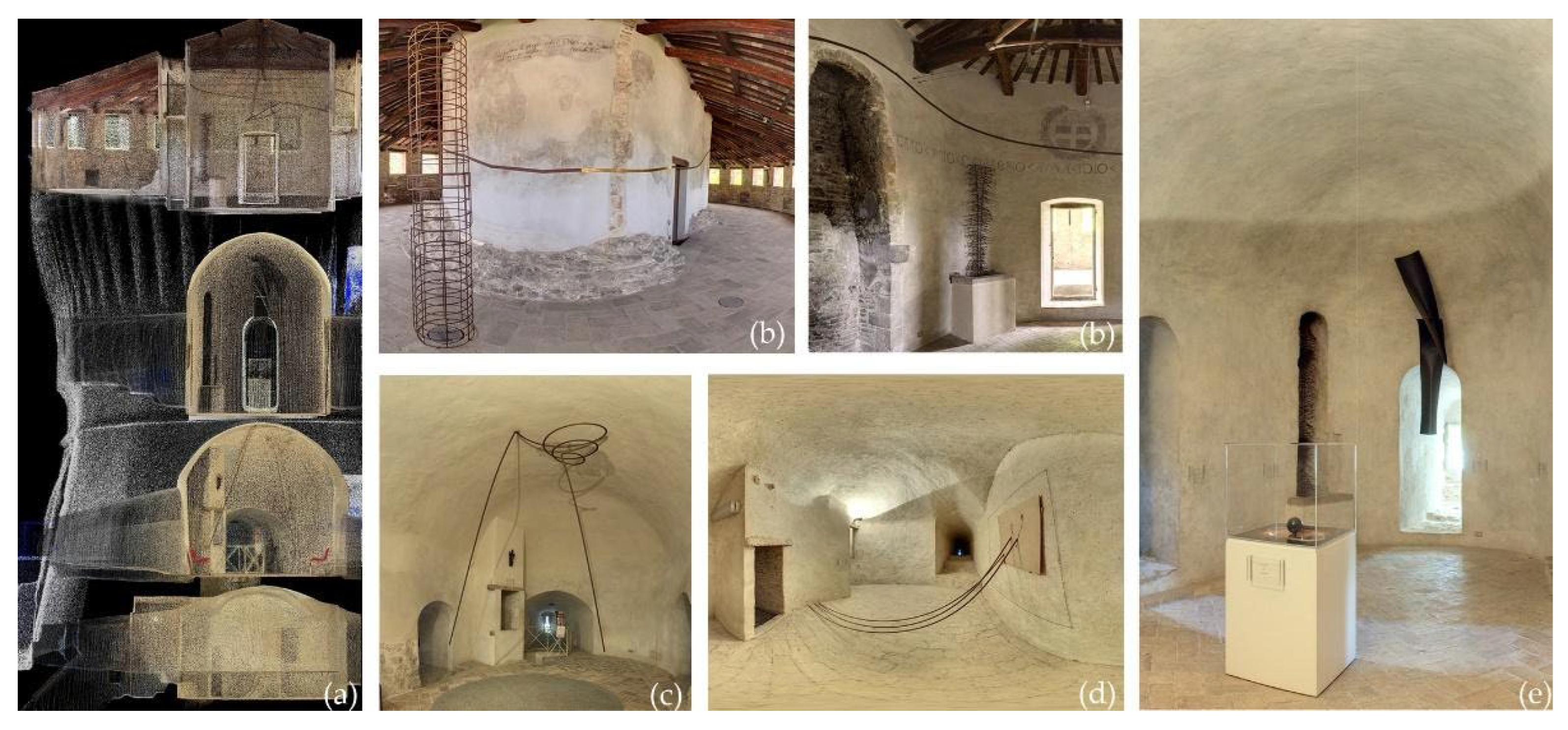
The Contemporary Sculpture Center in Cagli (
Centro per la Scultura Contemporanea), in the province of Pesaro-Urbino, Italy, is a noteworthy example of the integration between historical architecture and contemporary artistic practice (
Figure 1).
The centre, thought to be made into a military 15th century building, accommodates a number of contemporary art installations that interact spatially and conceptually with the architectural features of the building.
The tower is part of a defensive complex, designed in 1476 by the architect and military engineer Francesco di Giorgio Martini, as documented in both historical sources and recent scholarly analyses [
33,
34]. The structure is organised across four floors (basement, ground floor, first floor, and second floor) that are connected by a semi-circular staircase that facilitates vertical circulation throughout the building.
The basement level is composed of two semi-circular rooms, separated by a central wall. From this subterranean space, it is possible to access to the soccorso coperto (covered postern), a concealed passageway that leads directly to the adjacent fortress.
The building became a contemporary museum in 1997 thanks to a process of valorisation that began in the late 1980s. The first exhibition,
Pensieri Spaziali, 1989 [
35], was organised as part of an initiative led by the artist Eliseo Mattiacci and curated by Fabrizio D’Amico and Flaminio Gualdoni. The exhibition featured site-specific installations by seven contemporary artists, whose works became an integral component of the architectural space (
Figure 2).
The symbiotic relationship between the artworks and their historical setting has significantly influenced approaches to their documentation. In particular, the diversity of materials, combined with the particular geometry of the artworks, prompted a study and the implementation of an integrated survey addressing both the contemporary installations and the historical architecture.
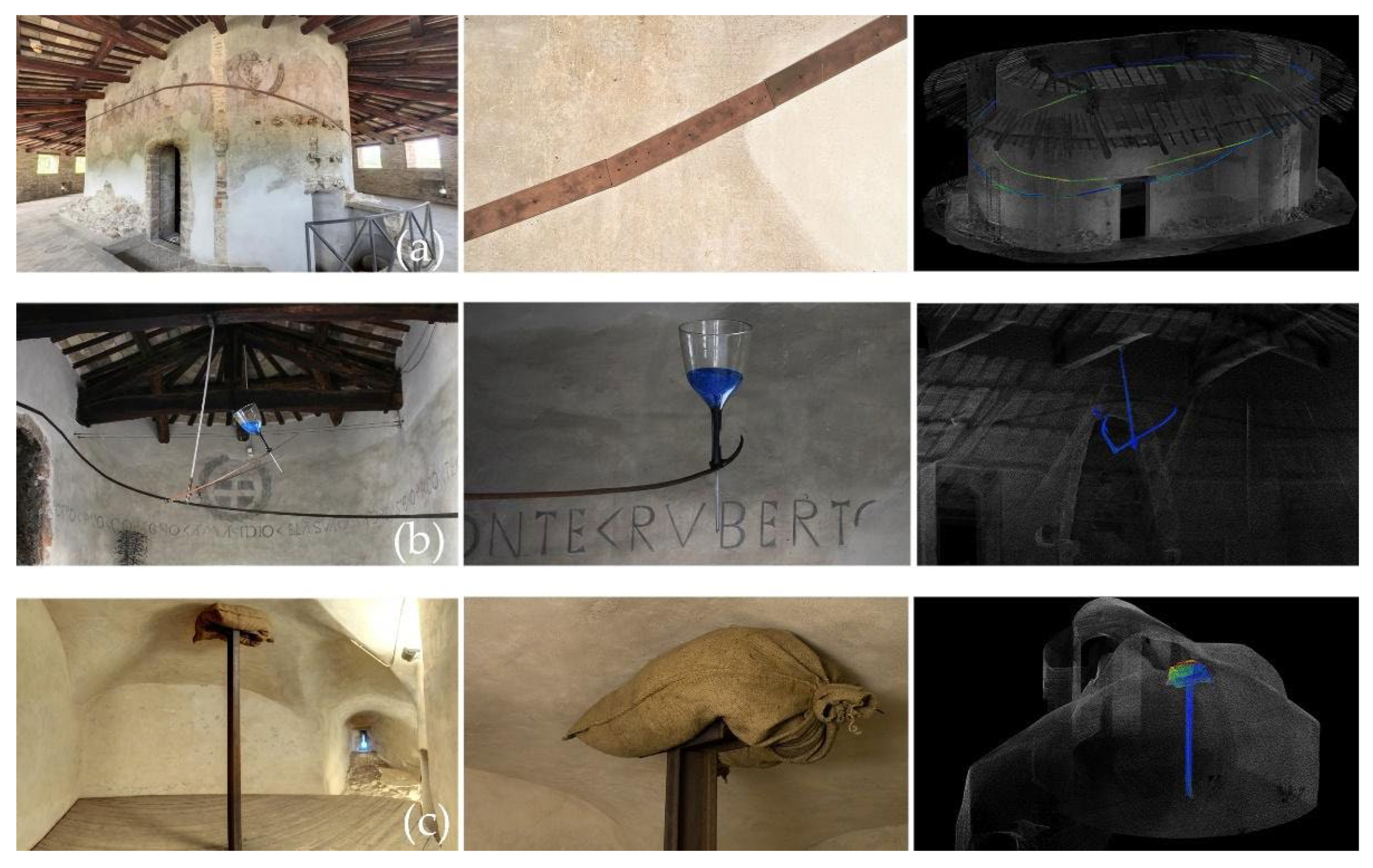
Among the museum artworks, three artworks (
Figure 3) were selected as representative case studies for testing this method, chosen for their type, material, installation technique, and conservation issues:
Senza Titolo by Jannis Kounellis (1997), a multi-material installation consisting of a T-shaped iron element and a jute sack filled with coal, located in a room in the basement, near the entrance to the underground walkway.
Agnello Mistico by Hidetoshi Nagasawa (1987), a single-material installation consisting of 33 metal plates arranged in sequence along the central wall surface of the top floor.
Senza Titolo by Gilberto Zorio (1997), an multi-material installation suspended in the centre of the upper room, composed of a metal bar, a compass, a glass ampoule containing blue liquid, and a clamp connecting the artwork to the wooden roof beam.
The complexity found in the Cagli case study makes it a significant testing ground, from a methodological perspective, for the multi-scale management of surveying and documentation processes.
4.2. The Operational Framework
Before discussing the survey technology, it is essential to make a consideration of the needs and the issues involved in acquiring the museum spaces and artworks in order to match the research aims, focused on documentation and conservation.
The first practical challenge regarded the specific scenario. The case study is an unconventional museum in which the interaction between the artworks and the building opens up several questions concerning what needs to be documented in order to best describe and assess morphologies, and the state of conservation of the artworks.
In this case, conservation requirements do not only relate to the material characteristics and surface deterioration of the artworks (which involve heterogeneous data ranging from photographic documentation to diagnostic laboratory analyses), but also include environmental and interpretative data derived from the critical assessment carried out by conservation professionals. Furthermore, the artworks’ structural integration to the historical architecture (e.g., Zorio, Nagasawa), and the microclimate-uncontrolled exhibition spaces, which present significant environmental variations between covered and semi-open spaces, represents a further source of complexity. This condition requires considering the building and the exhibition rooms as integral components of the conservation system.
In such situations, monitoring the architectural environment becomes crucial, as it directly influences conservation conditions, potential deformations, and the long-term stability of the artworks. Therefore, documentation and digital surveying must necessarily include the spaces in which the artworks are displayed. This layered structure of information, comparable to a “nested” system, required significant methodological considerations both during the surveying phase and in the following processing, management, and integration of the collected data.
The need to perform a survey on multiple scales—from the architectural to the detailed level of the artwork—is indeed the essential prerequisite to integrated knowledge data [
36,
37]. Furthermore, the complexity of geometry, materials and surfaces of the artworks, the lighting conditions, the size of the exhibition spaces in which to carry out the acquisition procedures, and finally the expertise of the operators, were issues to be carefully considered [
38].
In particular, the research addressed three levels of data acquisition, corresponding to three different datasets required for the generation of the final digital model. Specifically, the documentation of a museum context necessitates consideration of the overall architectural structure, the individual rooms, and, finally, the single artworks. Each of these components therefore constitutes a consequential-yet distinct-dataset, characterised by specific requirements in terms of scale and resolution.
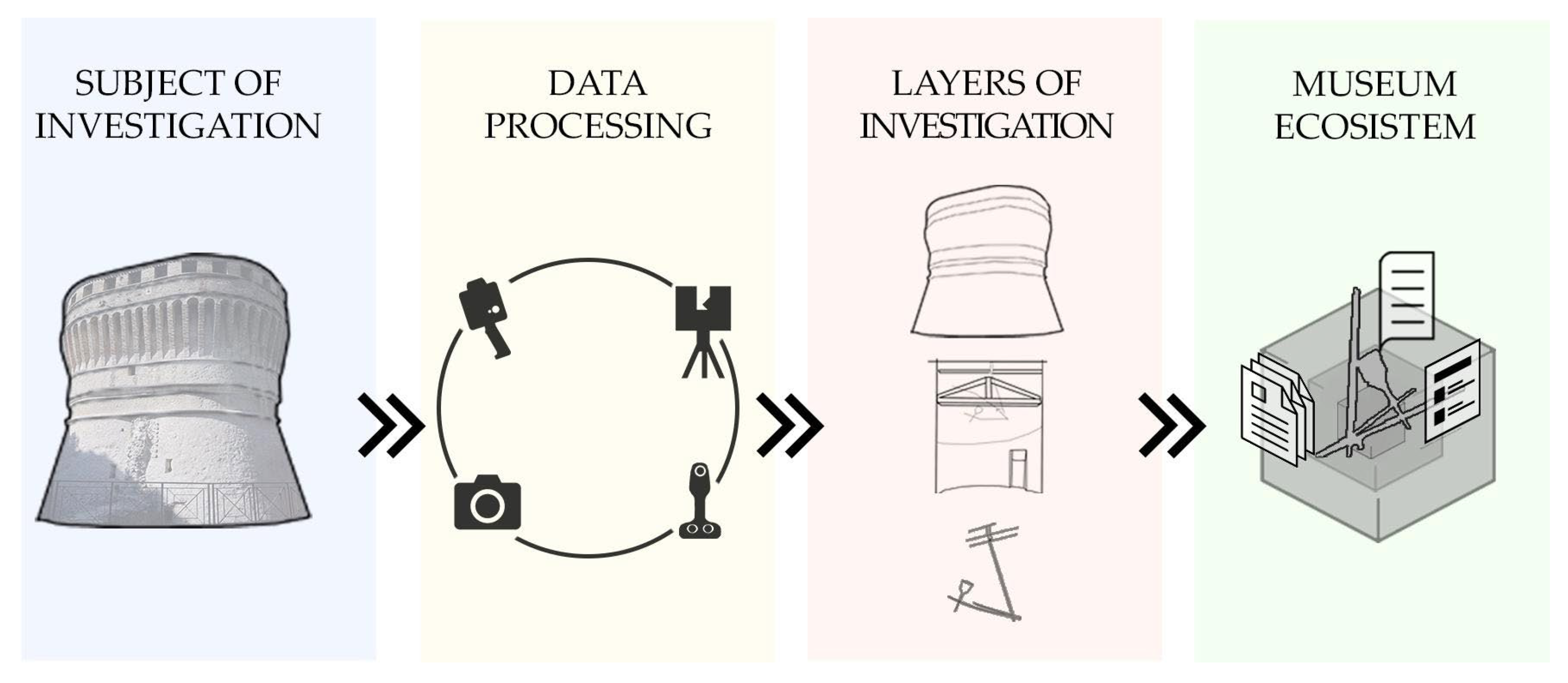
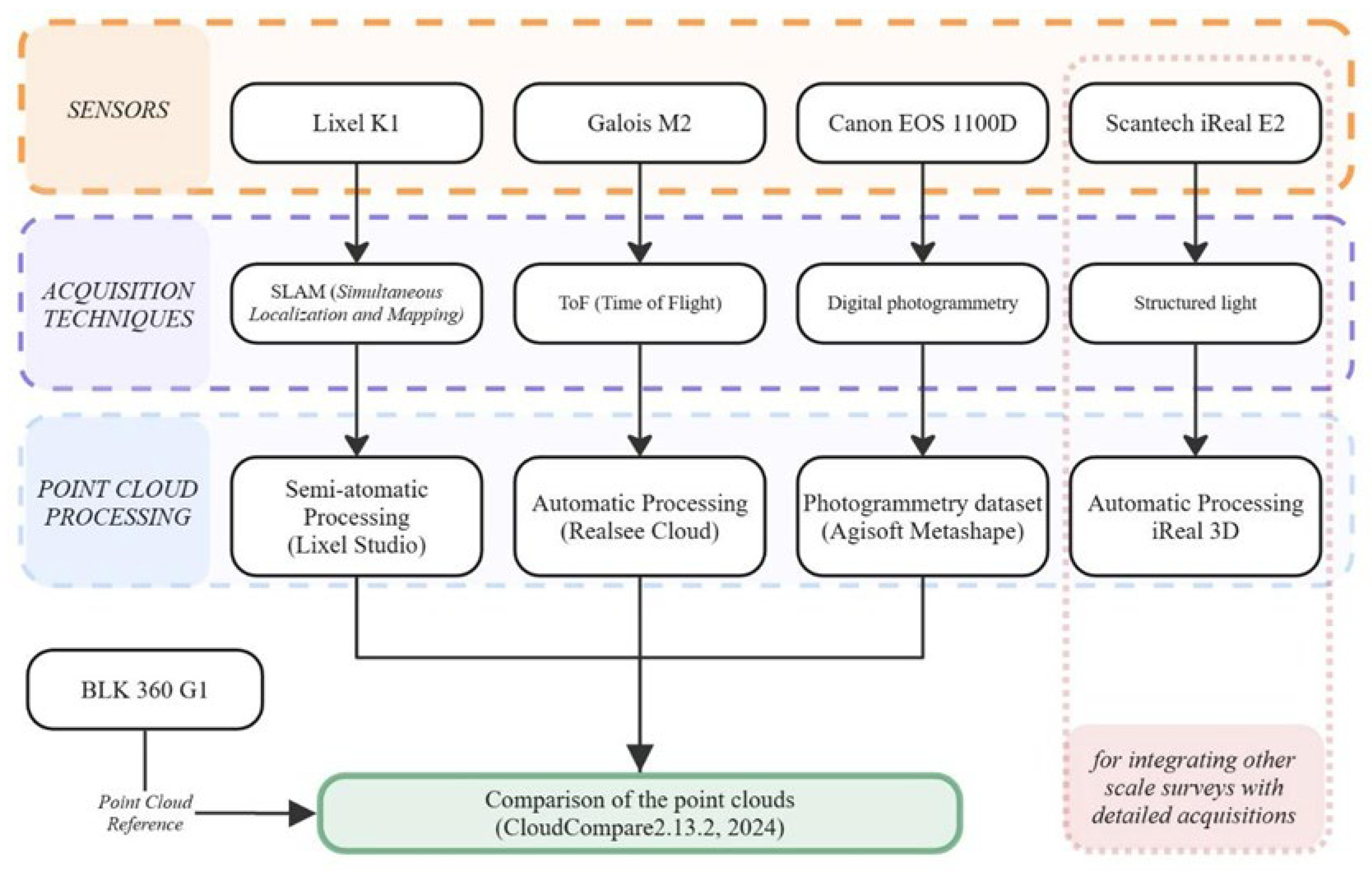
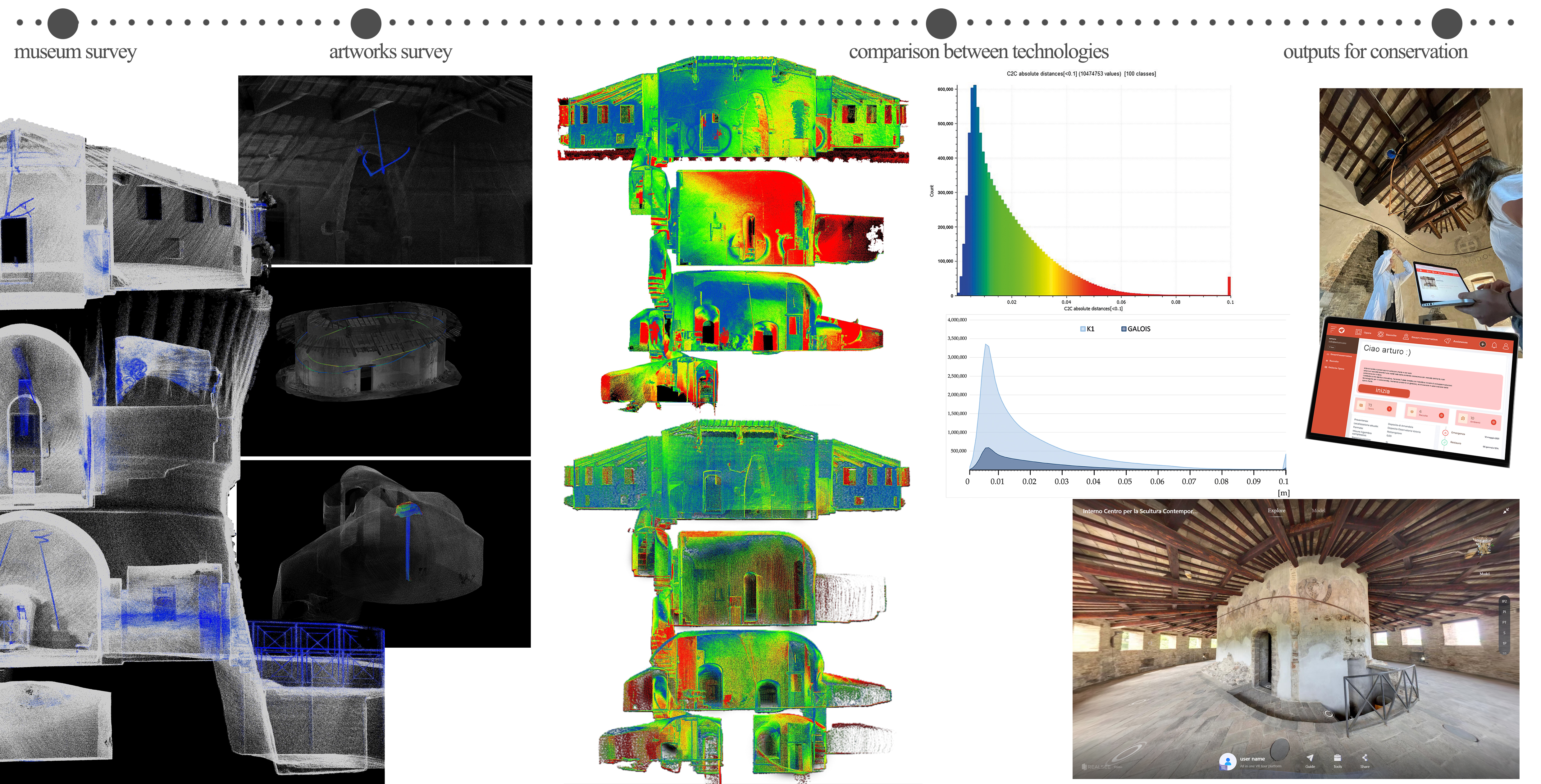
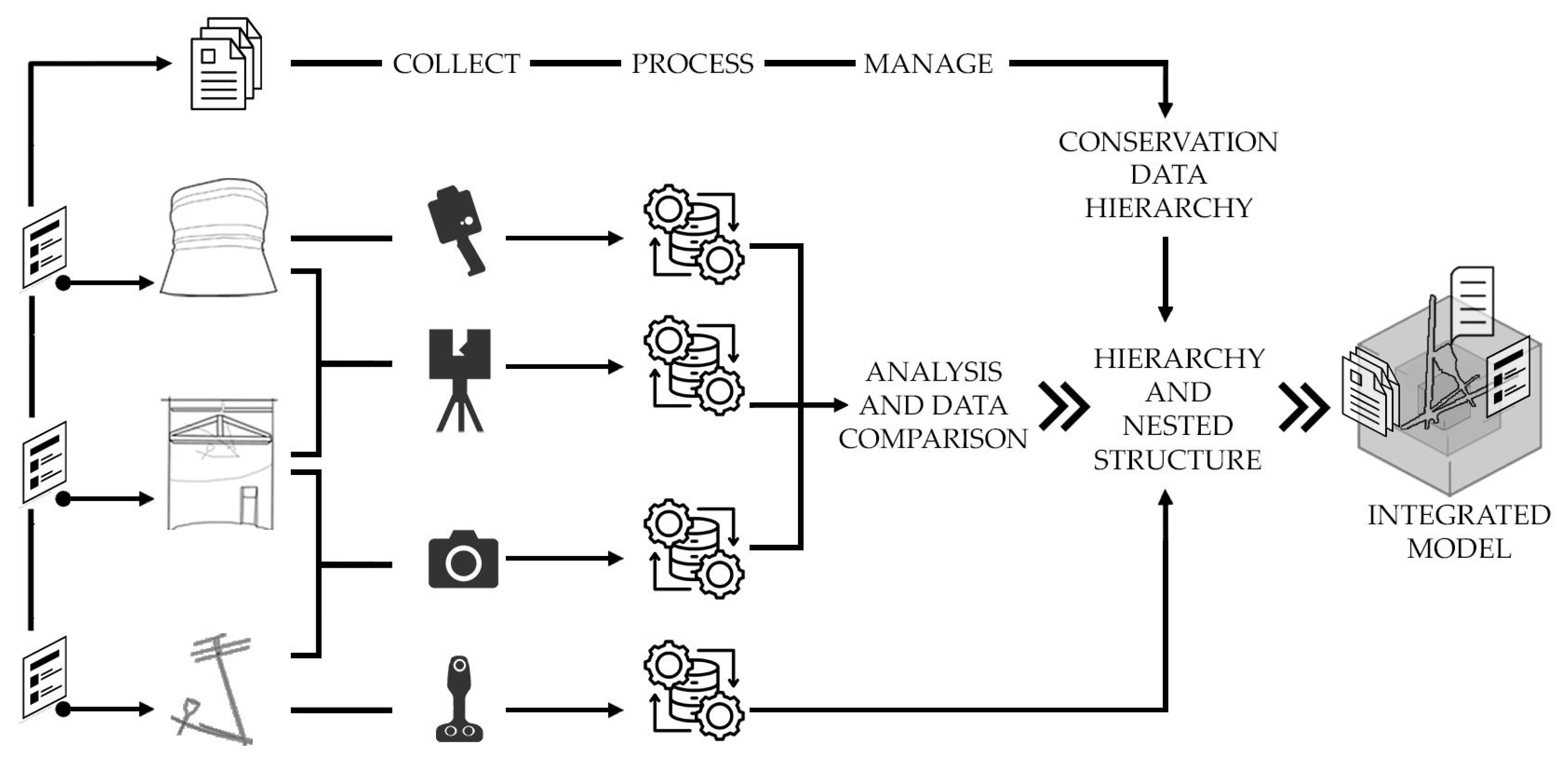
In order to meet these specifications, different tools with different characteristics were used, i.e., user-friendly sensors, favouring lightweight and low-cost solutions to facilitate on-site activities and to meet the need to fit into a limited budget. A multi-sensor methodological framework (
Figure 4) was developed, designed to ensure flexibility and scalability in the three-dimensional documentation of contemporary artworks.
4.3. Selected Sensors
The sensors were selected based on the specific digital documentation requirements, which were central to the decision-making process and guided the choice of acquisition techniques and procedures.
The first phase involved an in-depth analysis of the current state of the art regarding the technological and market landscape, which offers increasingly faster and more automated tools (as described in
Section 3). This analysis was integrated by the requirements and criteria already mentioned, such as cost-effectiveness (to address the frequent lack of funds allocated to the surveying process in the field of art conservation and restoration), high usability, and a preference for portable and lightweight solutions that are easy to manage during on-site activities.
Additionally, the tools were selected to cover different levels of detail (from rapid mapping of exhibition spaces to high-accurate representation of object surfaces), for their different modes of use (from the most intuitive to the most complex), as well as for their level of automation and usability, with a view to experimenting with rapid processing workflows (
Table 1).
A mobile SLAM system (LixelKity K1, XGRIDS, Hong Kong, China) was used for the metric–morphologic mapping of the museum’s spatial and geometric features. Recent studies document the application of this technology to historic buildings and in museum contexts [
39] for the creation of a metric reference model. In particular, the K1 instrument has been used for integrated surveying for contemporary architectural conservation [
40] and in the field of cultural heritage restoration.
A static scanner (GALOIS M2, Realsee, Hong Kong, China) was used to capture the interior spaces in greater detail and including colour features. The instrument is being tested for its very fast acquisition and processing times in the field of cultural heritage documentation, particularly with regard to monuments and complex architectural environments [
41].
A digital camera (EOS 1100D, Canon Inc., Tokyo, Japan) was applied to photograph the textures of the three case study artworks and their exhibition context in detail. The image-based procedure, widely discussed, studied, and tested, is becoming essential for integrated surveys [
42,
43,
44,
45]. For many years, functional workflows have been researched and tested, and applied to different contexts (archaeological, architectural, museum, etc.) [
46,
47,
48].
Finally, a portable structured light scanner (iReal 2E, Scantech Co., Ltd., Hangzhou, China) was tested to obtain three-dimensional digital data at a detailed scale and in high definition. In fact, its intuitive interface and integrated processing functions make it an easy-to-use tool. Furthermore, the combination of high geometric resolution and texture acquisition allows for accurate surface documentation, which is essential for analysing materials, surface coatings and degradation processes. Due to these characteristics, structured light scanners are often used for the digital documentation of small artefacts [
49,
50] to obtain reliable three-dimensional data for preventive conservation, including in the field of artworks [
51].
The integration of the four acquisition methodologies is the basis of a multi-scale, multi-sensor surveying system, which provides complementary data for the digital documentation of contemporary artworks (
Figure 5).
Each device contributes to a specific level of information and may be relevant at different stages of the conservation process. Beyond the comparison aimed at defining the evaluation criteria, the research investigates whether a single sensor could adequately document a specific level of detail, and whether the resulting dataset could provide a reliable basis for particular conservation procedures. From a methodological point of view, it should be emphasised that the integration of different tools makes it possible to address specific research questions and to obtain complementary information that allows for different levels of analysis. Tested mobile and static sensors provide overall metric and spatial references, while photogrammetric and structured light acquisitions complete the picture with high-resolution data.
Although these sensors rely on proprietary software for captured-data processing, they enable automated workflows and the export of outputs compatible with open source platforms. The choice was to experiment with these specific tools since they respond to the above-listed requirements and because one of the aims of the research was to test the functionality of the latest and fastest acquisition technologies in this specific field.
4.4. A Critical Assessment: Different Sensors for Different Surveys Workflows
The survey was planned using four different acquisition workflows (
Figure 6), aimed at testing the potential and limitations of different technologies applied across multiple scales of investigation (from architectural to object scale). Based on the data obtained through these four acquisition paths, a preliminary comparison was carried out to highlight the differences in terms of acquisition and processing modes, duration, and usability. This type of analysis supports research by establishing a replicable methodology for the representation of an integrated 3D model, combining digital models obtained from different sensors, and assessing the accuracy and level of detail of each acquisition.
A qualitative analysis of the acquired data is addressed in the following section (
Section 4.5).
The first tested workflow was carried out by the SLAM XGRIDS Lixel K1, a dynamic tool that uses a loop-close trajectory and involves completing the acquisition at the same point where it started while maintaining a steady walking pace. In particular, a closed trajectory was performed within each exhibition room before proceeding through the staircases connecting the different levels of the museum. These provisions allow to reduce accumulation errors (often referred to as drift), since, when a point already surveyed is captured again, the sensor’s algorithm recognises its position and corrects the trajectory. The acquiring operation to survey the external shape of the Torrione and the overall interiors lasted approximately 20 min, generating a point cloud of 115,684,822 points, later processed through the proprietary software Lixel Studio 2.5.1.0 on a local workstation. The processing software enabled management operations on the point cloud and its export in formats compatible with open-source applications. The workflow is largely automated, allowing the operator limited processing functions; so, the point cloud was cropped to remove some of the surrounding areas, and only the denoising filter was applied.
The sensor allowed the fast acquisition of nearly all external areas (excluding the upper parts and roof) and the full interior of the museum. Although its precision is lower and noise appears to be greater than static scanning methods, the main advantages of the SLAM system are its rapid data collection and the ability to cover extensive areas in a short space of time.
The instrument requires basic knowledge of both fieldwork and post-processing, but it is important to consider the common noise factor in SLAM sensors.
The second tool was the Realsee Galois M2, applied to the interior spaces of the Torrione, for a total of 85 scans completed over approximately 3 h and 30 min.
The survey project involved taking scans at close-up spatial shots in order to make full use of the instrument’s capabilities. Data was transferred to the proprietary cloud platform for automated processing (alignment of single scans), generating a point cloud of 16,592,540 points (E57 format), 85 high-resolution panoramic images, and a web-based virtual tour. The cloud web application does not allow for direct point cloud management; it provides the processed dataset as an output for further elaboration in open-source software.
The tool generated a chromatically characterised point cloud, particularly useful for the conservation-oriented objectives of this research. The point density achieved was lower compared with outcomes from other static instruments, such as the benchmark point cloud obtained by integrating P50 and BLK360. This required an increase in the number of scans to obtain a sufficiently dense and detailed point cloud. A significant drawback, however, is the dependence on cloud-based processing, which limits data optimisation and the ability to control processing parameters.
The photographic survey was developed without controlled or diffused lighting. The campaign focused on the three site-specific artworks and their respective exhibition spaces, aiming to document the state of conservation with a more detailed scale, capturing surfaces and materials conditions. Images were captured in series from multiple angles, by keeping a uniform step to ensure over 60% overlap.
Two datasets were acquired, corresponding to the artworks’ exhibition environments:
- -
A total of 865 images for Senza titolo by Jannis Kounellis, generating a point cloud of 92,063,915 points and a 3D model of 14,107,770 faces.
- -
A total of 1,050 images for Agnello Mistico by Hidetoshi Nagasawa and Senza titolo by Gilberto Zorio, generating a point cloud of 355,469,169 points and a 3D model of 10,000 faces.
The datasets were processed using Agisoft Metashape 2.0.1, following the standard workflow: image alignment, dense cloud generation, mesh creation, and texture mapping in high-quality mode.
After initial alignment, geometric coordinates derived from benchmark laser scanning were integrated to enhance metric accuracy and align the models within the same reference system.
Photogrammetry demonstrated high flexibility in documenting complex geometries and surfaces; however, its performance strongly depends on external conditions such as lighting. The need for uniform illumination and controlled acquisition setups directly impacts texture quality. In a museum context such as the Torrione in Cagli, where artworks cannot be relocated, acquiring optimal lighting conditions is particularly challenging. Consequently, the main limitations were the lack of controlled lighting and long processing times.
The iReal 2E scanner was applied for high-detail acquisition tests on selected artworks. The first test, performed on Senza titolo by Kounellis, produced unsatisfactory results due to the complex geometry of the artefact (iron profile), which would have required the use of a vast number of targets positioned on the surface of the artwork, thus covering a large part of the object to be documented. A second test, carried out on Agnello Mistico by Nagasawa, provided positive results, although only a portion of the artwork was acquired due to its size and the need for scaffolding to access the top sections.
The structured light scanner survey was set up on an experimental basis, with the aim of assessing under which conditions accurate acquisition may effectively support conservation documentation. Unlike the other systems tested, the structured light scanner is appropriate specifically for high-detail documentation tasks and plays a complementary role within the workflow. The instrument confirmed its high accuracy and resolution but presented several operational challenges, such as the need for continuous power supply, computer connection, and movement constraints that limit its movability in complex environments like the Torrione. However, due to its user-friendliness and the possible level of detail, the sensor can be considered to acquire additional data for diagnostic purposes, integrating primary metric–morphological survey datasets.
In summary, the main struggles in the four workflow concerned acquisition times, massive data management, and the operational conditions of the case study, which required continuous on-site adaptation.
The mobile laser scanner XGRIDS Lixel K1 demonstrated the fastest acquisition and processing times but produced RGB data of insufficient quality for the research objectives. Conversely, the static laser scanner Galois M2 provided chromatically characterised point clouds, though at the cost of longer acquisition times and limitation to interior spaces. Finally, the photogrammetric method proved the most time-consuming but offered an optimal balance between detail and usability (
Table 2).
4.5. The Qualitative Comparison: Different Data for Different Scale of Surveys
In order to assess the effectiveness of each survey campaign, without necessarily integrating the results into a multi-scale investigation, to each device was assigned a specific operational role according to the scale of investigation and the expected level of information. The mobile SLAM system was applied for a speed survey of architectural-scale documentation (first layer of investigation), albeit with a lower level of detail. The static laser scanner was used for the documentation of interior spaces (second layer of investigation), where higher chromatic accuracy is required. Photogrammetry was instead conducted to survey the artworks and to reach detailed scale, completing the documentation framework with geometric and surface characteristics data. The structured light tool, due to its accuracy and level of detail, was used to sample specific artworks’ areas and to support the overall data capturing, mainly concerning diagnostic assessment.
In addition to a critical assessment of the acquisition methodologies, a second comparison focusing on the data obtained from the different sensors was carried out to better understand the functioning of each instrument in the specific application and to assess possible dataset errors.
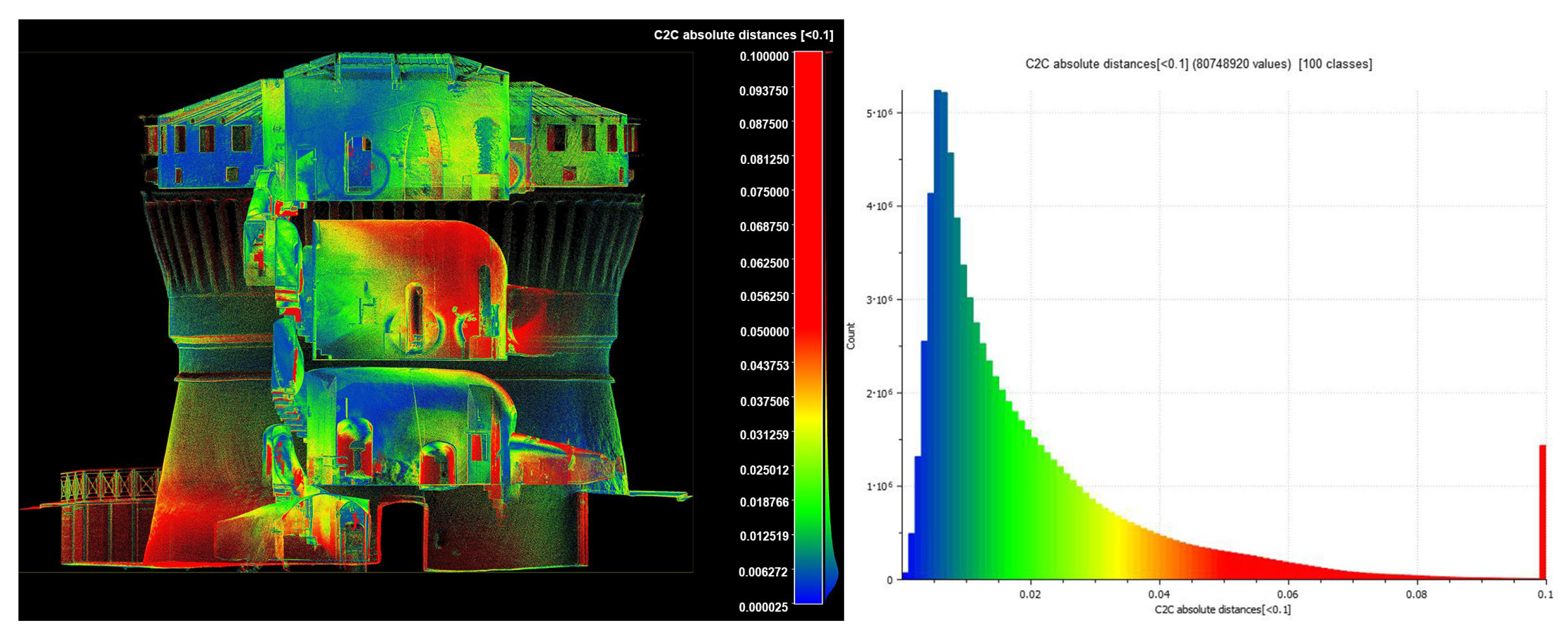
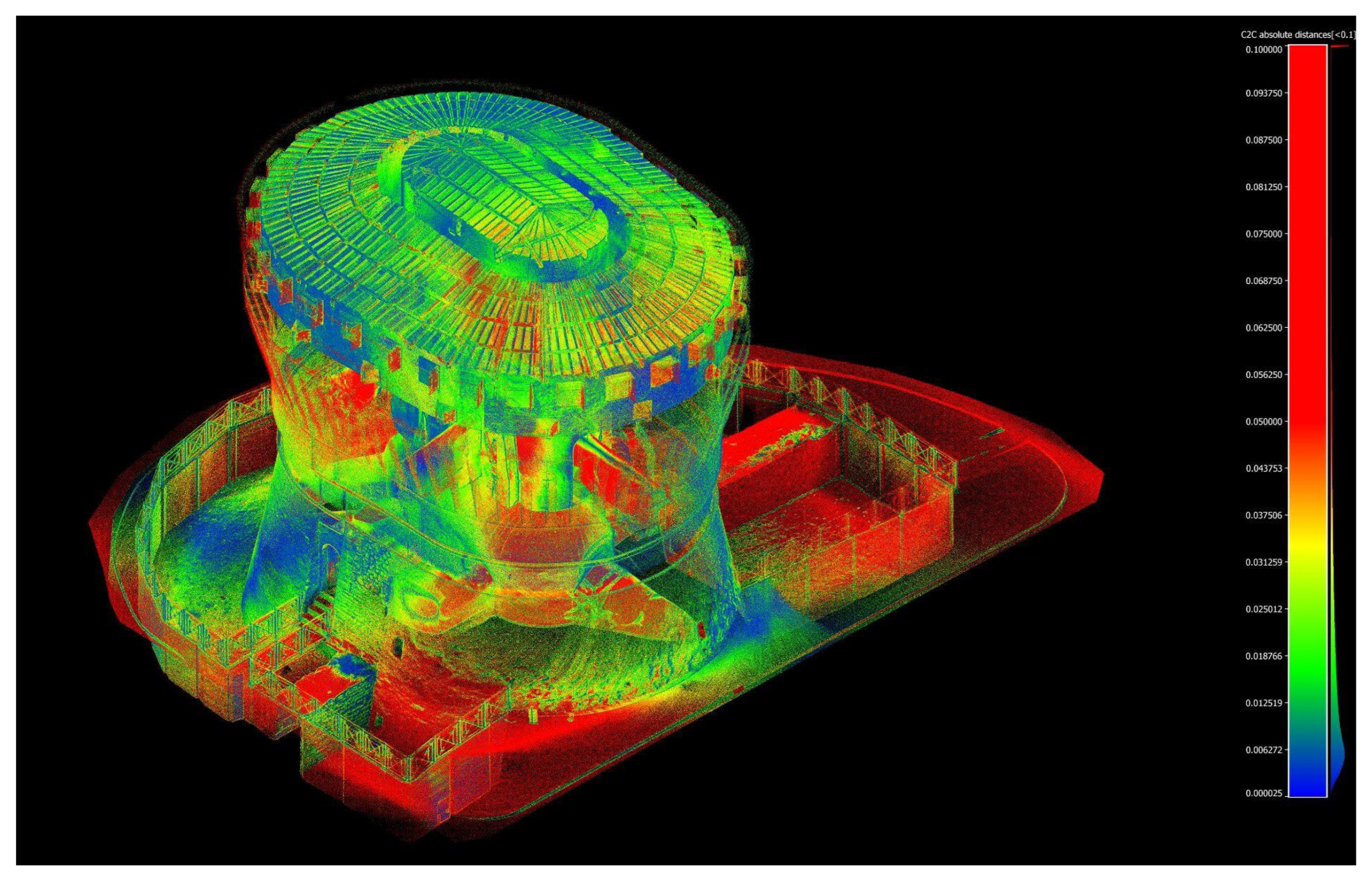
For each comparison procedure, a single reference point cloud was selected as benchmark against which the other datasets were evaluated through the tool cloud-to-cloud distance of the CloudCompare software (v2.13.2, 2024), which is widely used for rapid management and free algorithmic analysis. This tool compares the distance between points (assumed as deviation) among two point clouds within a range from 0 to a selected maximum distance value. The process generates a scalar field that colours the points according to their distance from the reference point cloud within the selected range, using colours ranging from blue (values closer to 0) to red (maximum distance values). To use this tool, all point clouds were aligned to the same local reference system and, to ensure a consistent comparison, areas not shared by the datasets were removed.
To carry out this comparative phase, the reference point cloud was analysed. The TLS benchmark database indeed enabled the management and monitoring of registration errors during the scan alignment phase, allowing the minimisation of systematic errors, resulting within the instrumental tolerance.
The data obtained from tested sensors was compared, with the exception of the structured light sensor, which, due to its level of detail, was exploited used to support the overall data capturing, mainly concerning diagnostic assessment.
The first comparison procedures involved the analysis of K1 SLAM sensor and the benchmark database, acquired before the research methodology application test, and included the survey of the tower and of nearly all external areas (excluding the upper parts and roof) and the full interior of the museum. In this case, the datasets were compared setting a maximum distance threshold value of 10 cm. The K1 dataset shows areas of deviation, likely due to spatial and geometric complexity of the historical building (
Figure 7).
Following the cloud-to-cloud (C2C) comparison, and in order to further investigate the error distribution, a longitudinal section was extracted. This section highlights the maximum deviation within the first-floor exhibition space (
Figure 8). The observed deviation pattern shows a rotation, likely amplified by the vertical development of the tower.
Staircase axis behaves geometrically like a hinge on which the other environments rotate, as highlighted by the maximum deviation in the C2C comparison.
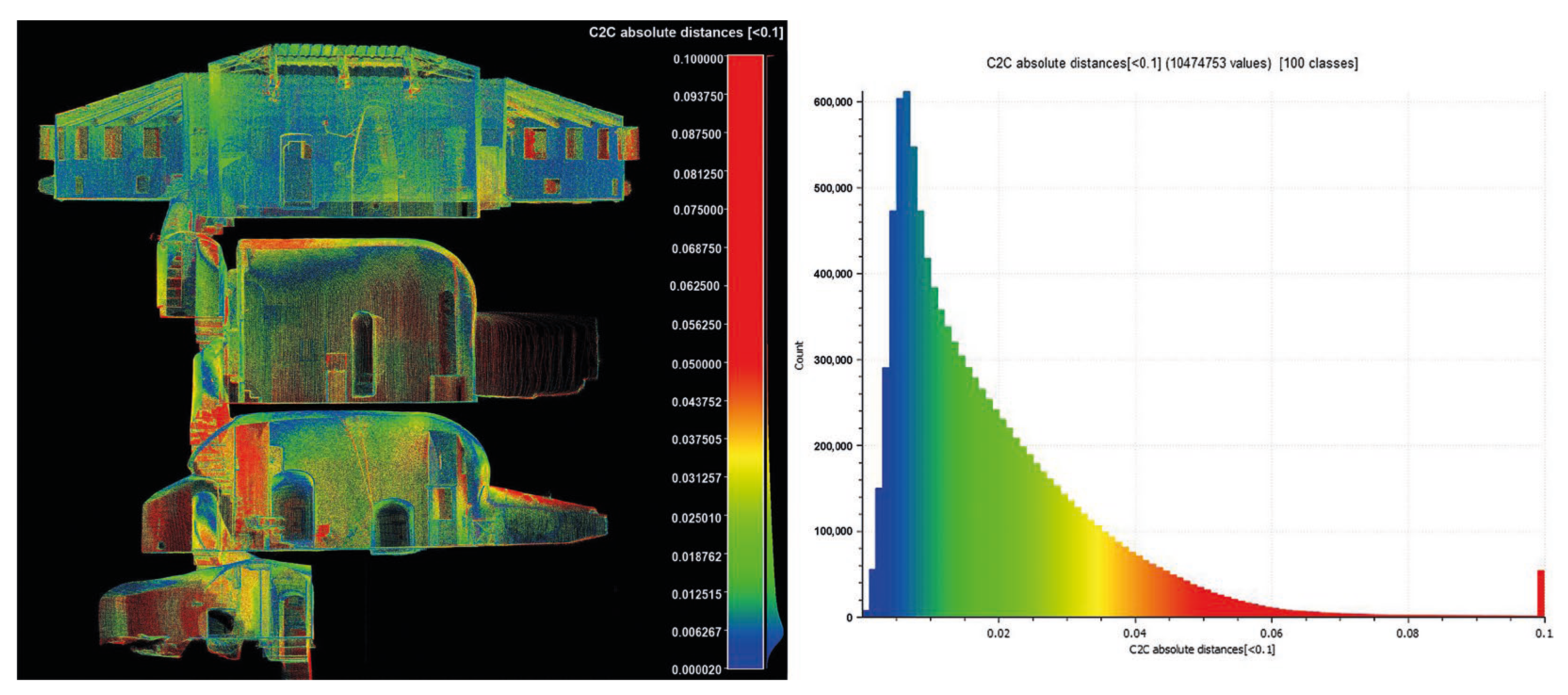
The comparison procedure involved the analysis of the point cloud derived from Galois with the reference cloud. The clouds were positioned in the same reference system by superimposing homologous points and made homogeneous in terms of comparison by removing the outer envelope (not present in Galois database). Then, using cloud-to-cloud distances, the clouds were compared with a maximum distance threshold value of 10 cm to obtain an analysis of the deviation between the minimum values (in blue) and the maximum values (in red). The analysis shows a general range from 0 mm (blue points) to a maximum value of 5 cm (red points).
In the dataset derived from Galois M2 equipment (
Figure 9), the maximum deviation occurs near certain installations (especially tubular metal ones), in the stairwell and in the basement windows.
Furthermore, it can be noted that the scalar field of the point cloud obtained from the C2C comparison shows deviations distributed evenly across all surfaces.
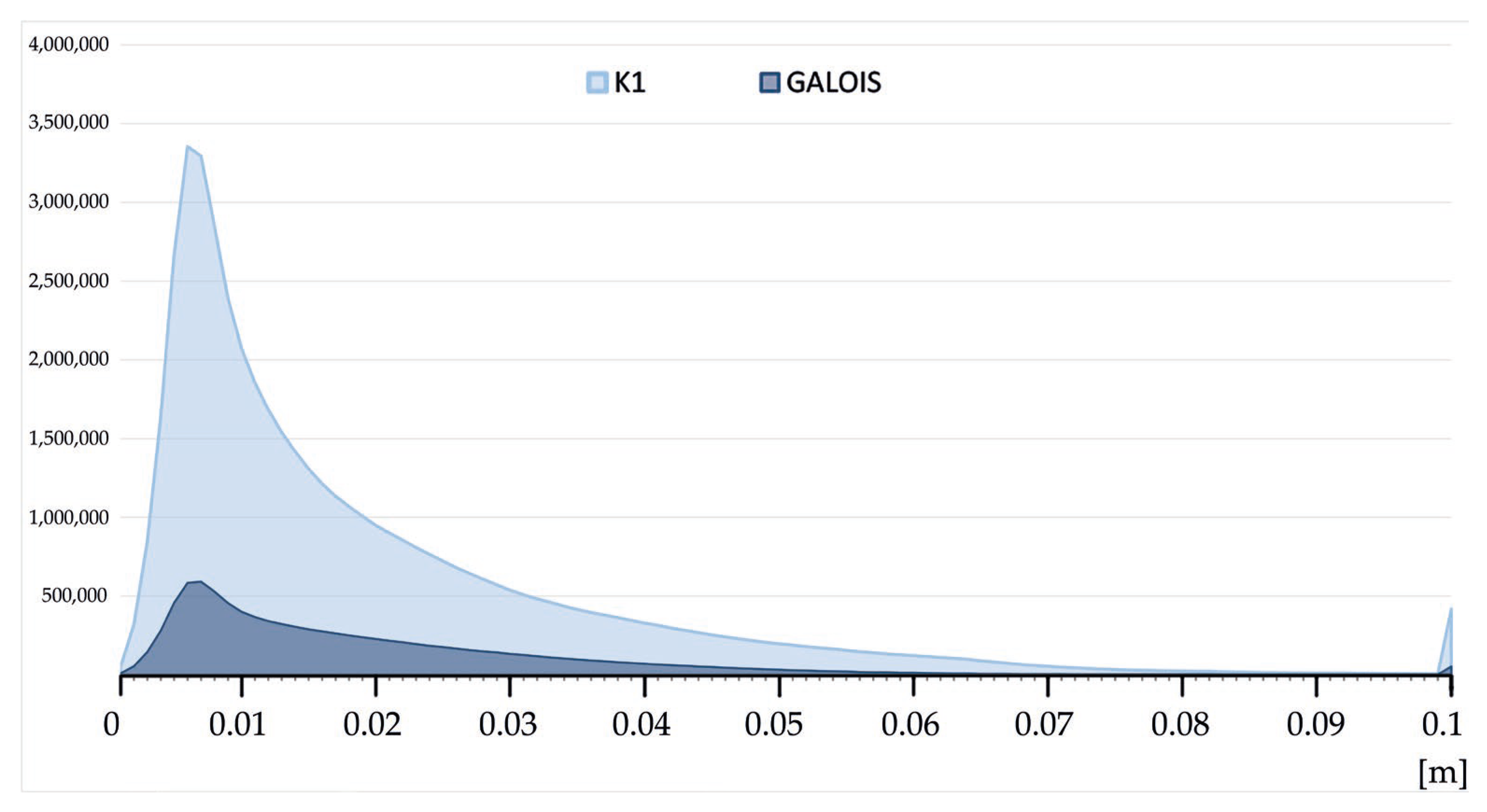
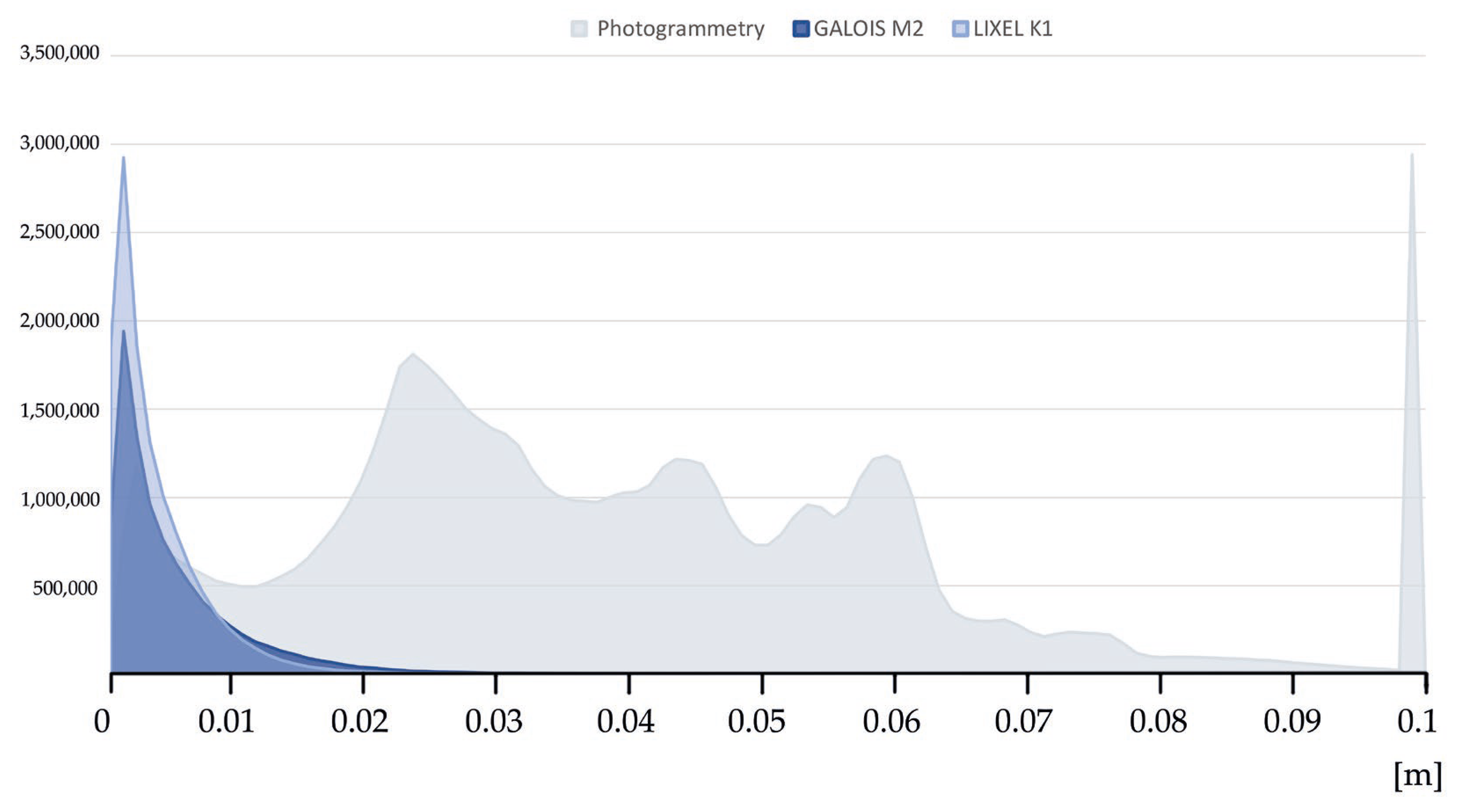
After analysing the two point clouds and the dataset errors with respect to the reference point cloud, the relationship between the Galois point cloud and the K1 dataset was investigated by comparing the error distributions through the distance histograms (
Figure 10).
The C2C comparison highlights a broader error distribution for K1, characterised by a long tail and higher dispersion, whereas Galois exhibits a more concentrated distribution with predominantly low deviations, indicating greater stability.
Analysing the values shown in the graph of
Figure 10, it emerges that approximately 60–65% of the points fall below the 2 cm threshold, which was considered an appropriate and consistent tolerance value given the pursued objective (to obtain a representation of the architectural context in which the works are located) and the error range itemised in the technical specifications of the instruments. Therefore, these methodologies can be considered effective for this kind of application. However, it should also be emphasised that the number of points included in the datasets differs significantly, and that this average distribution may conceal highly critical local errors, as observed in the case of the K1 dataset (
Table 3).
To reduce instrumental systematic error—the error produced during measurements and distributed across all scans—it is possible to consider a portion of the point cloud and refine the alignment with the reference cloud, so as to reduce the deviation and thus the local error of that specific portion of the point cloud. Therefore, it was decided to work on a second hierarchy of datasets: breaking down the main model, which covers the entire museum (hierarchy 1), into the exhibition space alone (hierarchy 2), elaborating horizontal sections to assess each floor, and performing a second-level alignment to make the geometric model more reliable locally. Using the finely registers tool, the software recalculates the positioning of a point cloud in relation to a reference cloud. This process involves rotating and translating the point cloud to be moved, generating a matrix containing the transformation coordinates that, in this case, is called second transformation matrix. This is a reversible step by keeping track of the initial and post-processed matrices.
The results of the experiments carried out on Senza titolo (1997) by Jannis Kounellis, kept in the basement of the Torre Martiniana, are discussed. The work was identified in collaboration with the team of restorers since it represents a paradigmatic and critical case for research. Made of metal and jute, materials that react differently to degradation, the installation presents significant conservation issues related to its location in a damp, cold, non-air-conditioned exhibition area, where it is not possible to directly set the environmental conditions. The installation, anchored to the floor and vaulted ceiling, requires the definition of digital documentation strategies capable of supporting the conservation and monitoring of the work in its context.
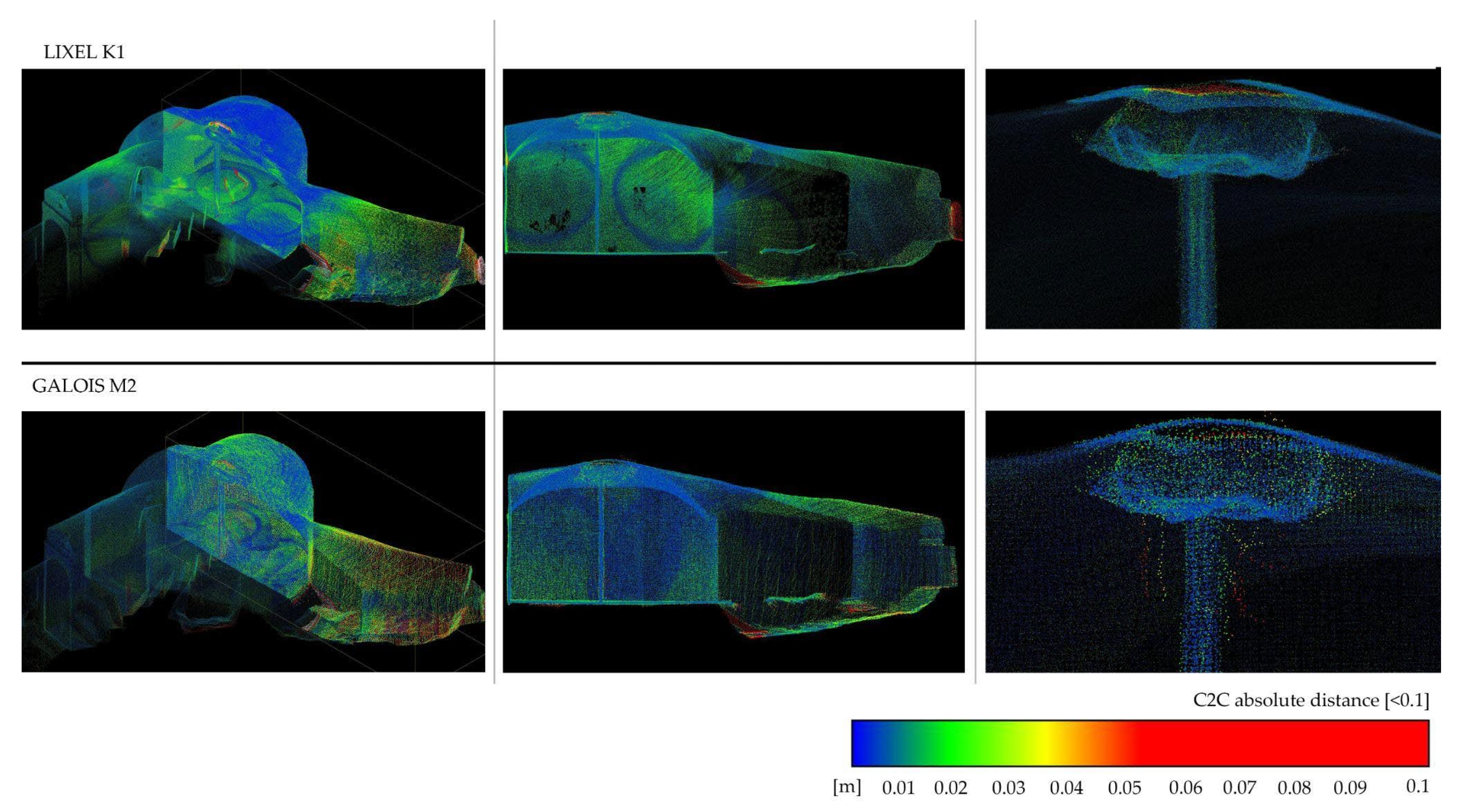
The second hierarchy data analysis focused on a comparison between K1, Galois M2, and photogrammetry with the reference cloud to understand how the second transformation matrix reduces systematics errors of sensors.
To assess the reduction in systematic error, a section of the point cloud from sensor K1 was visually compared with a section of the point cloud acquired using Galois.
The cloud-to-cloud comparison uses the same calculation parameters. The general overview of the error in the exhibition environment is more accurate in the clouds acquired with Lixel k1 and Galois M2 resulting from the second alignment (
Figure 11).
The maximum deviations are concentrated in the basement windows and other architectural elements. Near the vault, the maximum error is due to missing data points. As for the artwork, both the static and dynamic scanners show an error of between 1 and 3 cm along the profile of the IPE beam and the burlap bag.
Working on horizontal planes allowed the systematic error of the two instruments to be significantly reduced; however, performing this operation on the dataset acquired by SLAM technology is not consistent with the purpose of the survey for which this instrument was selected, namely to obtain a general model of the architecture.
Understanding this behaviour is useful for investigating the functioning of the instrument; however, in the specific case, a second-level rotation may be useful for the point cloud acquired with Galois, which focuses on the investigation scale of the exhibition room. This is because the Torrione houses one exhibition hall for each floor; so, it is possible to segment the point cloud by levels and calculate an alignment for each one, as the second-level matrix only works for portions of the point cloud and would not yield the same result on another section.
When investigating the survey scale of the exhibition room and of the artwork, particular attention has therefore been paid to the performance of the Galois system and to the analysis of the dataset obtained through photogrammetry.
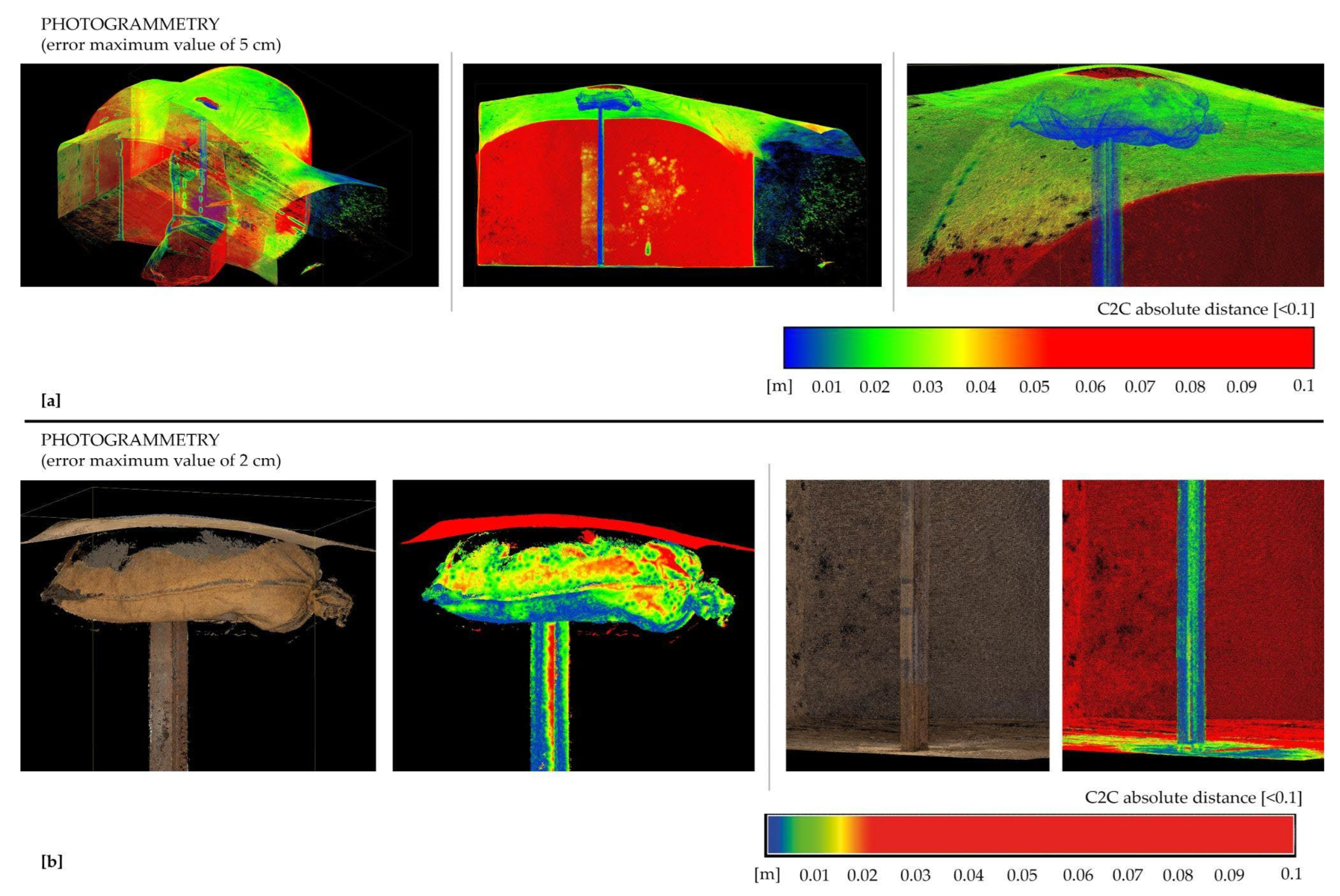
The photogrammetry model deviation showed significant limitations in the restitution of the exhibition environment with a diffuse error (
Figure 12a), whereas the artwork object presents a well-defined acquisition with errors not over 2 cm, which are limited to the beam and the burlap bag, with a data gap in the area of the vault (
Figure 12b).
As previously discussed, in view of the relationship that the dataset acquired by Galois must have with the point cloud derived from photogrammetry, the two datasets are compared through the processing of the histograms resulting from the cloud-to-cloud comparison.
The error histograms show that the photogrammetric dataset presents a wider distribution of errors across the deviation range, whereas the Galois sensor highlights a more concentrated peak within the numerical range corresponding to a deviation of approximately one centimetre (
Table 4).
If the values in the graph of
Figure 13 are analysed as before, the findings may appear to contradict what has been said about photogrammetry. Considering only the percentage of points falling below the photogrammetry tolerance threshold, this is remarkably low; however, as the previous images show, the quality of the full-scale acquisition of the artwork is better than that of the other datasets assessed. Therefore, the analyses cannot be applied automatically when moving from one level of detail to another, but require critical interpretation.
Considering the methodological objective of obtaining a geometric survey from the laser scanner and a detailed survey from photogrammetry, the results remain consistent with the intended aims.
5. Discussion and Results
The paper deals with two different and consequential issues, strictly concerned with the conservation sector. First, the research tried to find out a digital solution to document and investigate the three different levels of the museum: the building, the interior exhibition environments, and finally the artworks. Then, starting from this analysis, digital data processing and integrated 3D models were assessed. The specific purpose was to perform and assess rapid surveys to evaluate qualitative and quantitative aspects in terms of processing workflow, user-friendliness, adaptability to unconventional shapes, time efficiency, and costs.
Differences between sensors are not only merely instrumental, but also closely related to the scale and purpose of investigation. The comparative analysis enabled a better understanding of the possible workflows to be performed, dataset errors, and procedures to reduce systematic instrumental errors through the launch of a second alignment hierarchy based on horizontal planes.
The main outcomes can be summarised as follows:
From the point of view of metric accuracy (and therefore the ability to accurately describe the morphology of heritage objects in a digital environment), low-cost, portable, and dynamic sensors must be assessed by comparing them with terrestrial laser scanners, which are more expensive, more complex to use, and require scan planning and geomatics skills in terms of aligning scans into a single model, whilst controlling the error. Moreover, scanning via TLS can require few days instead of few hours;
Time, budget, and expertise are parameters to be carefully included within the overall planned workflow;
The K1 SLAM tool led to deviations mainly due to spatial and geometric complexity, and errors such as the floor rotation effect;
Galois deviations are mainly due to material features (metal), windows, or missing points;
Compared to Galois, K1 SLAM produced a broader error, while model splitting and re-alignment can be a further processing step to minimise deviations;
In general, the tested sensors proved suitable for generating an overall 3D model useful for defining the exhibition spaces and the relations between objects and architecture, having set a certain accuracy requirement, time, and costs;
The results from photogrammetry highlight limitations in the restitution of the exhibition environment, while the artwork object presents errors limited to complex geometries (beam, burlap bag, and vault). For a more consistent discussion of photogrammetry outcomes, in addition to the lighting conditions already mentioned as contextual challenges, careful consideration should also be paid to the applied procedure for taking photographs.
These presented results also help to better clarify the practical implications of the pro-posed methodology for conservation procedures. Indeed, depending on the scale of investigation, it is possible to adopt and compare different approaches to conservation studies requiring different levels of detail.
Starting from the museum environment and its spatial documentation, terrestrial laser scanning can be employed to acquire a highly accurate baseline dataset. Since this acquisition is generally performed only once, subsequent modifications or updates can be integrated over time without the need to repeat the entire survey process from the beginning.
This approach is substantially different when focusing on a specific artwork and investigating its material characteristics or localised alterations. In such cases, it is essential to employ a flexible, rapid, and user-friendly survey technique, as repeated acquisitions may be required over time for monitoring purposes. Under properly controlled lighting conditions, photogrammetry represents an effective solution. Although it does not provide the same level of accuracy for the overall spatial representation of the environment as terrestrial laser scanning, it enables highly detailed documentation of the object itself, allowing the analysis to concentrate specifically on the artwork and its surface features.
The methodological framework proposed in this paper for comparing and interpreting different datasets may provide conservators and interdisciplinary collaborators with a practical approach applicable to a wide range of case studies. Beyond the evaluation of geometric and metric results, a key aspect for conservation purposes is the definition of an appropriate acquisition strategy and the effective integration of different survey technologies.
In this context, the study highlights the importance of selecting tools and procedures according to the specific conservation objectives, balancing accuracy, repeatability, operational flexibility, and the possibility of combining complementary datasets within a coherent documentation workflow.
One significant fallout from these experiments concerns the initial development of an optimised and replicable procedure for documenting complex exhibition contemporary context. Before delving into the results for individual digital models, it is essential to plan the documentation and data capturing by taking into account the objectives, the requirements in terms of quality and accuracy, the priorities set by the context, and an analysis of the exhibition space and surrounding conditions, whilst gathering as much information as possible from the curators. Before analysing the performance of each sensor, it is necessary to consider which quantitative and qualitative parameters should be considered in the pipeline.
The assessment of the tools applied in the Torrione in Cagli showed that sensors have different characteristics regarding use, scale, applicability, and quality of the final result, supporting the vision of a hybrid or integrated methodology.
This study highlights the importance of addressing complex contexts through a multidisciplinary approach, dealing with different research topics and operational challenges. However, some limitations in the experimental framework must be acknowledged. In the case of the Cagli Museum, the presence of objects at multiple scales—each associated with different issues—confirms the need to organise the information through hierarchical datasets. However, data acquisition was developed under specific and partly constrained conditions, particularly within the museum environment, where lighting control, accessibility, and the impossibility of relocating artworks, directly affected the quality of the datasets. Furthermore, the dependence on proprietary or cloud-based software introduces both advantages and limitations: while facilitating data handling and reducing the need for advanced technical expertise, they also limit the operator’s control and may reduce transparency over processing parameters.
Finally, the comparative analysis was performed using only one specific software, and the management of large datasets represents a critical issue, requiring adequate computational infrastructures and platforms. This aspects has a direct impact on the proposed workflows, especially in contexts with limited resources.
This approach opens the possibility of working within a single database while managing different models or data integrations according to the specific purpose and scale of investigation. The tested workflows represent a first step to define methodological guidelines for the digital documentation of contemporary art in non-conventional museum contexts. From the conservator’s perspective, it is also essential to emphasise that the ability to represent conservation-related information is the key factor when referring to a digital model and its level of detail. What ultimately matters for conservation practice is the system’s capacity to support conservation documentation. In this regard, the possibility of using a single model that can be read, analysed, and enriched with different levels of detail represents the most effective solution.
6. Conclusions and Future Developments
The research is grounded on the state of the art and background studies and research that have already addressed, namely issues concerning optimisation of digital data management, digital models enrichment, and conservation and curatorial requirements. The outlined workflows and assessment combine the potential of currently available digital technologies with conservation needs, applying an integrated approach that aims to provide tools for the practical and effective use of digital data as a knowledge base for conservation and restoration, looking ahead to future developments aimed at facilitating communication between the different actors and stakeholders involved in the process.
The study considers the specific framework of contemporary art within museum contexts. The integration of input data with different information sources is particularly emphasised, as well as the relationship between artefacts and their architectural “container”.
The approach, which combines the conservator’s need for integrated investigations using accurate and tailored source data, explores the practical applications of digital surveying tools as a knowledge basis to support curatorial and conservation practices.
To start addressing current open issues in data aggregation for the specific field, a comparative analysis of different survey tools and methods was conducted, highlighting how each tool performs in terms of accuracy, usability, and efficiency under non-conventional museum conditions.
The material and morphological complexities of the selected case studies, indeed, required at first the assessment of input data opportunities to capture geometries and surface specifications in a consistent way according to the main research purposes. The compared analyses included geometrical accuracy, local errors and deviations, material responses to the different sensors, and times and costs of different documentation methodologies.
Future steps will focus in particular on the digital archiving of contemporary artworks, foreshadowing a scenario in which the survey model allows for the integration of the different data collected and structured (archival, conservation, curatorial, etc.), ensuring that users have access to extensive knowledge, overcoming the fragmentation of expertise and skills among the involved professionals, thereby improving collaboration and information sharing.
The research highlights some key issues in the context of the digitisation of cultural heritage, outlining a possible workflow as an advancement of the state of the art in a little-explored field, namely the application of digital tools to contemporary artworks from a conservation perspective.
A number of key questions are guiding the subsequent steps of this ongoing research:
To what extent and under which conditions are digital surveying tools and methodologies useful for the conservation of contemporary artworks?
How many and which diagnostic and informative investigations can be integrated into digital models? Which source model (morphological, parametric, vector, etc.) is most suitable for supporting data and information, considering the need for two-dimensional, three-dimensional, and numerical representations?
What parameters should be included in order to obtain a digital model effectively supporting all conservation issues?
Is it possible to integrate the traditional analogue (curatorial/restoration) file with the metric–morphological digital model, or with an information system configured as an advanced database?
Next steps will involve the development of a procedural model for aggregating conservation scheduling standards to 3D databases. This purpose is in line with some current research directions at national and international levels, pushing for an effective improvement of the understanding of cultural heritage artefacts through digital media. The integration among cataloguing and digitisation remains challenging, particularly regarding information management within digital archives, mainly due to the complex and heterogeneous data to be collected and aggregated according to critical, conservation, and interpretation issues, combining digital and traditional sources.