


Abstract
This paper addresses corrosion risk management for pewter objects from the Belinho I shipwreck (Esposende, Portugal). A collaborative framework was established, involving community stakeholders during the critical post-recovery phase, leading to the development of both field community and laboratory preventive conservation protocols. During the second phase of the laboratory protocol, a crowned-hammer hallmark was identified, consistent with others in the assemblage. The third phase of the laboratory protocol implemented a progressive sequence of passivation baths guided by Pourbaix diagrams and systematic monitoring of physicochemical parameters (Eh, pH, conductivity, and temperature). Characterization of primary corrosion products and precipitates from the baths, using 3D digital microscopy, SEM/EDS, µ-Raman, and XRD, identified basic tin chlorides with abhurite and hydroromarchite structures. Collectively, results demonstrate that immediate preventive conservation is an effective strategy for controlling corrosion risk, underscoring the necessity of collaborative frameworks for the long-term safeguarding of underwater pewter heritage.
1. Introduction
Risk management is an essential tool for cultural heritage conservation, providing a structured framework to identify, assess, and mitigate potential threats [1,2,3]. Originally developed in indoor museum environments, this approach has increasingly been applied in other contexts. In the case of Underwater Cultural Heritage (UCH), following the 2001 UNESCO Convention on its protection [4], in situ interventions are regarded as the primary measures for risk management and safeguarding [5,6,7]. However, several authors highlight the challenges associated with in situ preservation methods and question their long-term effectiveness [8,9]. Others argue that in situ conservation should serve as a temporary management strategy before final recovery [10]. Concerns also include limited resources for site monitoring [11,12], and the vulnerability of underwater sites, where storms can disturb the seabed, and climate-driven changes affect temperature and pH [13]. In the early stages of safeguarding cultural heritage, the availability of portable, non-destructive analytical techniques represents a significant advantage for rapid on-site assessment. On the surface, portable Raman spectroscopy has proven effective for in situ identification of corrosion compounds and for evaluation of conservation status without compromising the integrity of the artefact [14]. Additionally, smart portable sensor devices allow real-time monitoring of physicochemical parameters such as temperature, relative humidity, and pH, which are critical for assessing conservation risk [15]. In the specific case of underwater cultural heritage, remote laser-induced breakdown spectroscopy (LIBS) systems have demonstrated the capacity to perform in situ elemental characterization of submerged metallic objects directly at the archaeological site [16].
When dealing with extracted underwater archaeological metal heritage, risk management for long-term conservation becomes particularly relevant due to the extrinsic deterioration factors inherent to the marine environment [17,18]. The absence of standardized protocols or adequate infrastructure at the recovery site represents a critical point in the conservation chain, where rapid, well-founded decision-making can prevent significant damage [19,20]. Without proper and immediate conservation measures after recovery, these objects undergo chemical and structural changes that quickly lead to their degradation and loss [21,22,23]. Despite this, the lack of preventive conservation methodologies at recovery sites remains evident in accidental finds during civil construction works [24], after climatic events [25], or in large-scale discoveries involving massive objects [26]. In this context, preventive conservation at the recovery site or in temporary storage until direct intervention treatments can begin constitutes a key tool for risk control. The management of environmental factors, the use of specialized packaging, and the anticipation of potential deterioration scenarios can mitigate threats without invasive interventions [2,3,27]. Archaeological pewter objects from underwater contexts, despite their fragility [28,29], remain largely overlooked, with limited scientific literature focused on their conservation. In Europe, underwater pewter finds are relatively rare [30], which hinders the development of specific conservation methodologies.
Within this framework, the pewter plates recovered from the Belinho I shipwreck [25] stand out for their quantity, state of conservation, and the abundance of hallmarks [31]. This case is unprecedented in Portuguese underwater archaeology, with few parallels in Europe and America [32]. Its significance is further reinforced by the fact that the sea annually brings new specimens ashore, which local citizens collect and deliver to the authorities. This fact introduces new actors into the conservation chain, highlighting both the challenges of conserving underwater pewter and the opportunities that this exceptional find offers within the European heritage context [33]. For all these reasons, it embodies a unique opportunity to define conservation protocols for both the short- and long-term. In this sense, and beyond the purely technical dimension, the Belinho I case also highlights the need for collaborative frameworks that integrate community stakeholders as active participants in the conservation chain. Although examples of social science applied to UCH do exist, particularly in the areas of citizen science monitoring, heritage-based tourism, and marine spatial planning [34,35,36]. These initiatives are predominantly focused on the underwater environment itself, leaving a significant gap in land-based collaborative conservation practices during the recovery stage. The identification, inclusion, and valorization of community stakeholders as key actors in the conservation chain represent both scientific and social challenges that have received limited attention in the literature. The Belinho I case offers a unique opportunity to address this gap by proposing a risk-control strategy for corrosion management grounded in collaborative work and community engagement. In support of this approach, preliminary p-XRF analyses of selected objects from the collection confirmed a tin-dominant alloy with minor Cu, Fe, Pb, and Bi, and no detectable Sb [37], providing the material basis upon which targeted conservation protocols could be developed.
This work presents a conservation strategy for the Belinho I pewter assemblage, encompassing both field and laboratory protocols framed within risk management and technical conservation science. A community conservation protocol is introduced as a methodological framework for risk mitigation rather than as a social science standpoint.
The study aims to contribute to the development of preventive protocols for risk control during the early stages following the recovery of underwater pewter objects. Based on field experience with materials from the Belinho I shipwreck, we propose a methodological approach to control corrosion risk through an accessible community protocol and a professional laboratory protocol for the passivation of pewter objects. The latter, supported by Pourbaix diagrams until the implementation of the stabilization treatment. Furthermore, material characterization was conducted to identify degradation products on the pewter plates after their extraction from the marine environment. Therefore, a multi-analytical approach, including 3D digital microscopy (DM), scanning electron microscopy with energy-dispersive spectroscopy (SEM/EDS), µ-Raman spectroscopy, and X-ray diffraction (XRD), was implemented for the study of corrosion products.
2. Contextualization
In December 2014, during the Hercules storm, fragments of wood and metal objects were washed ashore on Belinho beach in Esposende (North of Portugal) (Figure S1), leading to an unexpected archaeological discovery [25]. Since then, the site has attracted growing interest from scientific institutions and local authorities. The study of shipwreck timber elements supported the hypothesis that the find corresponds to an Iberian vessel, presumably from the mid-16th century [38]. The large number of pewter objects, more than 400, many of them plates with legible yet unattributed hallmarks, together with the formal homogeneity of the assemblage, suggests that they were part of the ship’s cargo [31]. The systematic identification of these hallmarks could provide a solid basis for investigating the dynamics of pewter production and consumption in 16th-century Atlantic Europe. This, in turn, would enable the study of trade routes and commercial networks linking major production centers in northern Europe and the Iberian Peninsula [39], thereby establishing Belinho I as a unique case study in both the Iberian and broader European context. In terms of risk management, the singularity of this site lies in its inherent dynamism: annually, the sea brings new objects from the shipwreck ashore, expanding the collection’s material corpus. This peculiarity poses constant logistical and technical challenges for the management and conservation of the Belinho I assemblage, requiring responsive and sustained technical solutions over time. Belinho I, therefore, represents an unprecedented opportunity for applied research, particularly in the development and validation of preventive conservation strategies for archaeological metals recovered from underwater contexts. In May 2025, we assisted in the recovery of a stack of adhered-together pewter plates, with a porringer positioned on top belonging to Belinho I. At that time, community members who discovered the items that had washed ashore expressed their interest in learning basic preventive conservation methods. In this scenario, it is important to highlight that the effective protection of the Belinho I assemblage is strengthened by three interrelated factors: public awareness of the cultural significance of those objects, the real commitment of local authorities, and collaboration between citizens and cultural heritage professionals, constituting essential pillars of its safeguarding, documentation, and long-term conservation.
3. Materials and Methods
The methodology chosen to manage corrosion risk within the pewter plate assemblage of the Belinho I, immediately following recovery, consisted of a two-step preventive conservation phase: the first stage in the field and the second in the laboratory. Within the latter, analytical characterization of corrosion products was performed to elucidate their composition and the chemical processes occurring during the passivation step. The logical next step for the long-term preservation of the assemblage (a curative conservation phase to stabilize the objects) lies beyond the scope of the present paper.
3.1. Risk Control Strategy
The strategy for controlling corrosion risk was based on the design of differentiated preventive conservation protocols:
- A Field-based Community Preventive Conservation Protocol for members of the local community who regularly collaborate with the Archaeology Service of the Municipality of Esposende.
- A Laboratory Preventive Conservation Protocol to be implemented by professional conservators, aiming to maintain the pewter objects in a passivated state until an appropriate long-term stabilization treatment can be defined.
While the Field-based Community Preventive Conservation Protocol served as a directive for community members to take informed action, the Laboratory Preventive Conservation Protocol outlined a series of hands-on procedures for professional conservators to carry out in the laboratory while long-term curative conservation actions are still under consideration.
Laboratory Preventive Conservation Protocol
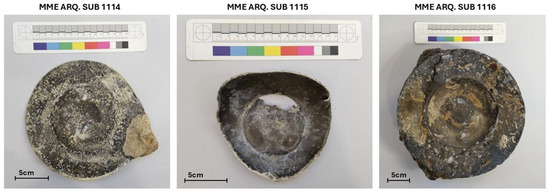
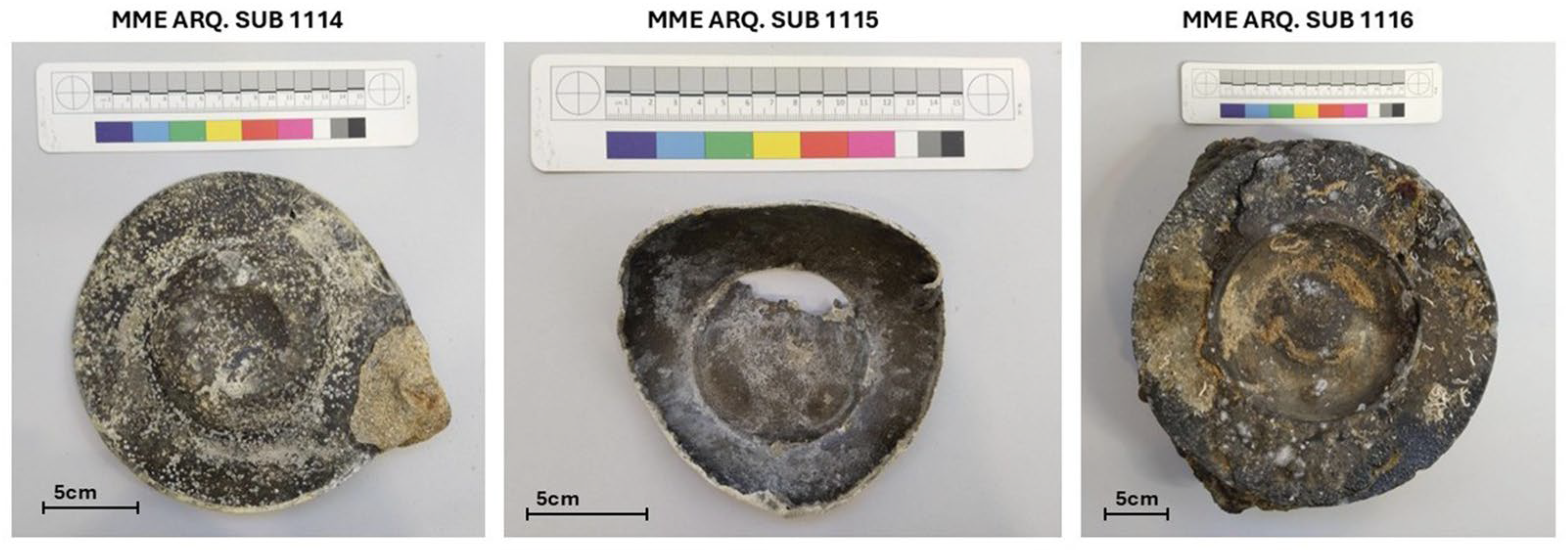
The Laboratory Preventive Conservation Protocol consists of four steps: reception, mechanical cleaning, passivation baths, and final maintenance. It was applied to three pewter objects recovered during the last quarter of 2025: plates ME.ARQ.SUB.1114 and ME.ARQ.SUB.1115, and the plates stack adhered to each other with a porringer positioned on top ME.ARQ.SUB.1116 (Figure 1). The first phase involved documenting, inventorying, and sampling superficial corrosion products for future analyses.
Figure 1.
Three pewter objects selected as case studies for the implementation of the Laboratory Preventive Conservation Protocol.
- Mechanical cleaning
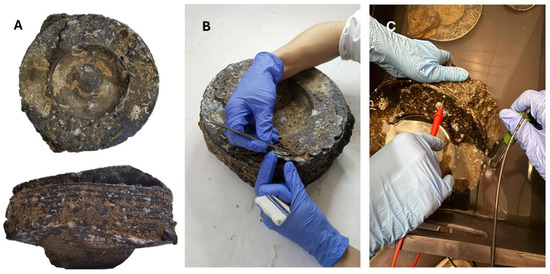
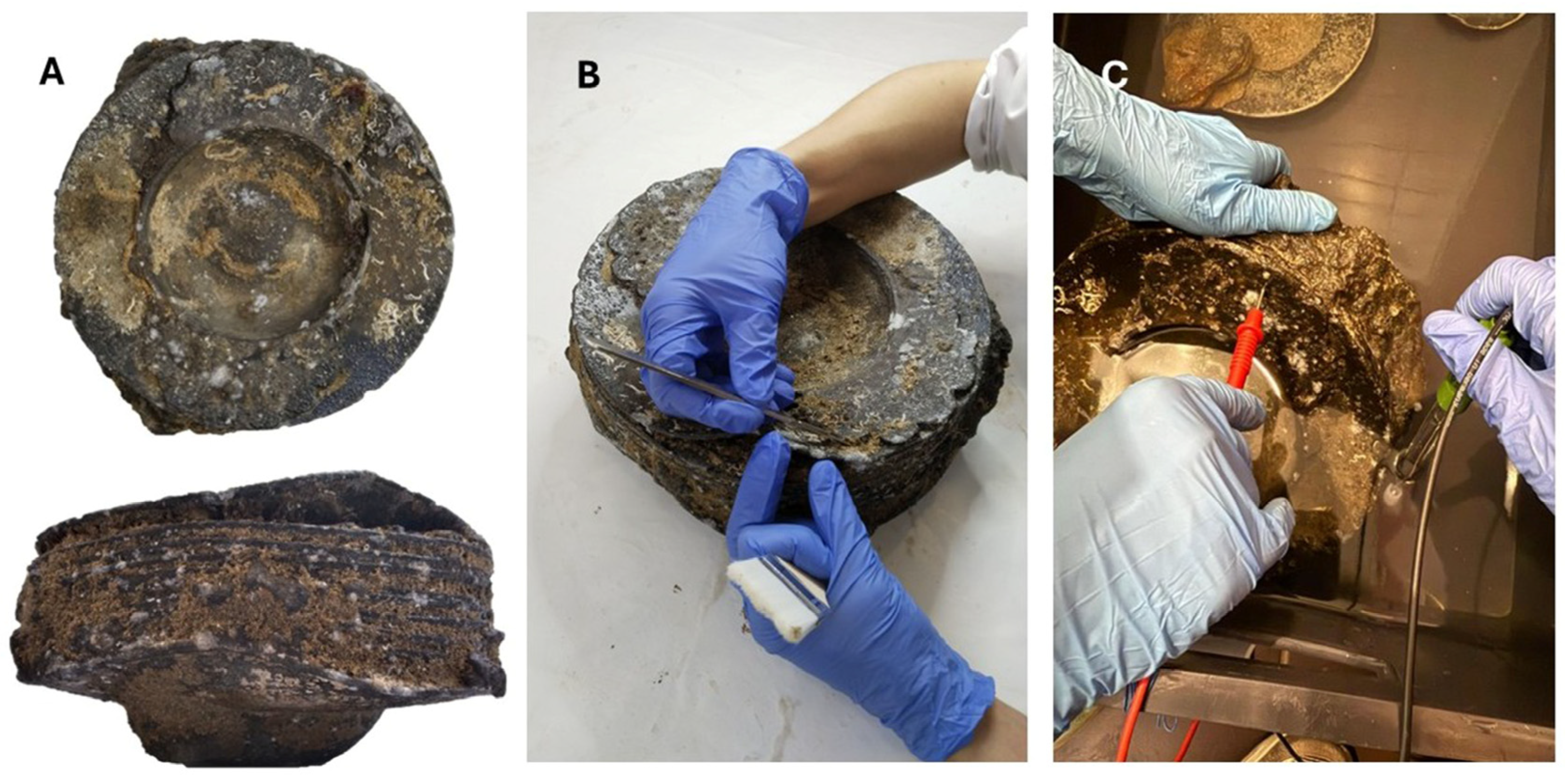
The superficial mechanical cleaning was performed using deionized water from Anatron Instruments DS500D deionizer, soft-bristle brushes, wooden tools, and a scalpel. This cleaning phase aimed to remove sand, vegetation, and sessile fauna without disturbing calcareous concretions or associated corrosion products on the objects’ surfaces (Figure 2B).
Figure 2.
Preventive conservation process applied to pewter plates from the Belinho I shipwreck: (A) pewter plate stack adhered to each other with a porringer positioned on the top (ME.ARQ.SUB.1116); (B) superficial mechanical cleaning in the laboratory; (C) Monitoring of Eh parameter during passivation baths.
- Bath preparation, monitoring, and stabilization
The third phase focused on maintaining the objects within the pewter passivation domain by immersing them in gradually altered solution baths over a four-week initial period. To define the passivation domain of the pewter objects, the theoretical thermodynamic behavior of tin was analyzed using Pourbaix diagrams for the Sn–H2O system at 25 °C (Pourbaix, 1974) [40] and the adaptation for chloride media proposed by House and Kelsall (1984) [41] (Figure S2). This assessment was carried out in accordance with previous studies by MacLeod and Wozniak (1995) [28] and Zohdy et al. (2021) [42]. Bath 1 consisted of a saline solution formulated to replicate the chloride concentration of seawater. Commercial-grade sodium chloride (purity ≥ 98%) was used to simulate real field conditions where analytical reagents may be unavailable. A 35 g L−1 (0.60 mol dm−3) solution of NaCl in deionized water was prepared. The subsequent baths consisted of a 17.5 g L−1 NaCl solution (prepared as a 1:1 dilution of the initial saline solution in deionized water), followed by an 8.75 g L−1 NaCl solution (equivalent to 25% dilution of the initial saline solution) and, finally, a 0 g L−1 NaCl solution, corresponding to 100% deionized water. This gradual reduction in salinity was intended to minimize physical stress on the weakened surfaces of the pewter objects while allowing the controlled release of soluble salts.
Physicochemical parameters, including conductivity (mS⋅cm−1), temperature (°C), and pH, were monitored directly in the bath solutions using an Aqualytic® SD 300 pH meter and an Aqualytic® SD 320 conductivity meter. To track the electrochemical state of the objects during passivation baths, the open-circuit potential was measured with a Hanna Instruments HI5312 Ag/AgCl reference electrode (Figure 2C). All potential values were subsequently converted to the Standard Hydrogen Electrode (SHE) scale. During the second bath, pH instability was addressed by adding 4 g L−1 (0.01 mol dm−3) sodium tetraborate decahydrate (borax). This commercial-grade reagent served as a buffer to stabilize the solution within the passivation zone defined by Pourbaix diagrams for tin cited above. In the final phase, objects were immersed in deionized water produced by an Anatron Instruments DS500D deionizer. Eh, pH, conductivity, and temperature were monitored weekly to ensure stability. A complete list of instruments and suppliers used in the monitoring of physicochemical parameters is provided in Appendix A.
- Characterization of corrosion products
Corrosion products from the plate stack (ME.ARQ.SUB.1116) before and during the procedures were sampled for chemical and morphological characterization (Table 1).
Table 1.
Sample identification (ID), item, and respective descriptions.
The samples were characterized using a 3D Hirox RH-2000 (Hirox Europe, Ltd., France) digital microscope with an MXB-5040RZ revolver zoom lens in the 50–400× magnification range, with top-light illumination and Hirox software (VS2013). SEM/EDS analyses were conducted on a variable-pressure Hitachi S-3700N SEM (Hitachi Hight-technologies Corporation, Tokyo, Japan) with a Bruker XFlash 5010 SDD (Bruker©, Billerica, MA, USA) EDS spectrometer. The EDS detector resolution is 123 eV at the Mn Kα energy line. The samples were placed on a thin conductive carbon tape and analyzed under a pressure of 40 Pa. An accelerating voltage of 20 kV was used for chemical analyses and BSE imaging. Semiquantitative data on elemental composition were obtained using Esprit1.9® software (Bruker©, Billerica, MA, USA). µ-Raman spectroscopy was also employed to analyze sample 1116D_2. An HORIBA XPlora spectrometer (HORIBA, Ltd., Kyoto, Japan) coupled with an Olympus microscope (Evident©, German) was used with a 50× objective (NA 0.75) to focus the 785 nm diode laser (125 mW, 1200 1/mm grating) onto the sample surface with the laser power at 1.1 mW. Spectra were recorded at 1 cm−1 in the 150–3000 cm−1 region with 10–25 accumulated scans and an exposure time of 5–25 s. Instrument calibration prior to analysis was carried out with a Si standard (520.6 ± 0.1 cm−1). The spectra were obtained at room temperature and processed using LabSpec software 6 (HORIBA, Ltd., Kyoto, Japan). X-ray diffraction (XRD) in micro mode (µ-XRD) was used to examine sample 1116D. Analyses were conducted using a Bruker D8 Discover (Bruker©, Billerica, MA, USA) X-ray diffractometer equipped with a Cu Kα source and a LYNXEYE linear detector (Bruker©, Billerica, MA, USA). All measurements were performed over 10° to 70° 2θ, with an increment of 0.05° 2θ and a scan speed of 2 s/step. For the µ-XRD analysis, a zero-background sample holder was used. The diffraction patterns were interpreted using the ICDD database (©International Centre for Diffraction Data, USA) and relevant literature. All stages of the process were thoroughly documented to ensure traceability and reproducibility for future interventions.
4. Results
The results reflect the two-step preventive conservation approach applied to the Belinho I pewter plate assemblage, encompassing both field and laboratory protocols, as well as analytical characterization carried out. Data integrated within a social science perspective regarding the longitudinal implementation of the Field-based Community Preventive Conservation Protocol falls outside the current technical scope.
4.1. Field-Based Community Preventive Conservation Protocol
In response to the community members’ request, a preventive conservation protocol was designed for application in field contexts by individuals without a background in cultural heritage conservation. This protocol represents the first link of the risk management chain for the long-term preservation of the pewter objects from the Belinho I shipwreck. To ensure this protocol can be effectively implemented in real-world contexts by non-experts, it was designed to be both technically simple and economically accessible. The procedure relies on affordable, everyday materials, structured into four clear stages, which can be strategically summarized in three main guidelines:
- Maintenance of constant humidity, pH, and salinity: to prevent irreversible damage caused by drying and salts, the object must remain permanently wet from the moment of recovery. To prevent osmotic shock, the object must be maintained in either natural seawater or a cost-effective do-it-yourself (DIY) solution of 35 g L−1 common salt in tap water. The protocol also recommends maintaining a stable, slightly alkaline pH by adding 1 g L−1 of baking soda or borax. Both are inexpensive chemicals that are readily available to the general public. A “sand bed” inside the container provides physical stabilization during movement.
- Temporary conservation: maintenance consists only of weekly renewal of the storage solution in the baths to ensure a stable chemical environment.
- Graphic documentation: finally, the protocol encourages the community to collect as many images as possible using common objects as scale references, such as including a coin in the photographs.
- The protocol also recommends the use of gloves to prevent the cross-contamination of the samples with skin lipids from the hands, which could compromise subsequent chemical characterization of the metal surface.
By utilizing low-cost supplies such as common salt, baking soda, and plastic containers, this protocol removes economic barriers, allowing any individual to act as a first responder in preserving maritime heritage without specialized laboratory equipment. A schematic overview of this protocol is presented in Figure S3.
4.2. Implementation of the Laboratory Preventive Conservation Protocol
The laboratory protocol was implemented, providing results on surface cleaning, passivation behavior, physicochemical monitoring, and sample characterization. Mechanical cleaning represents the first hands-on step of this laboratory phase.
- Mechanical cleaning
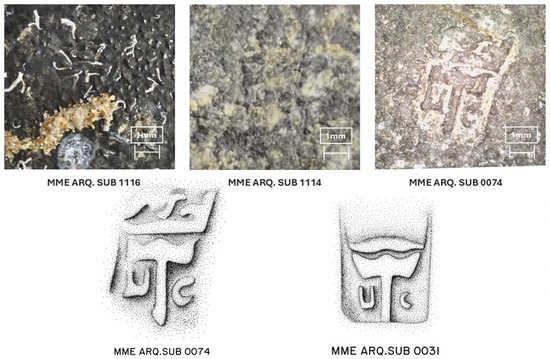
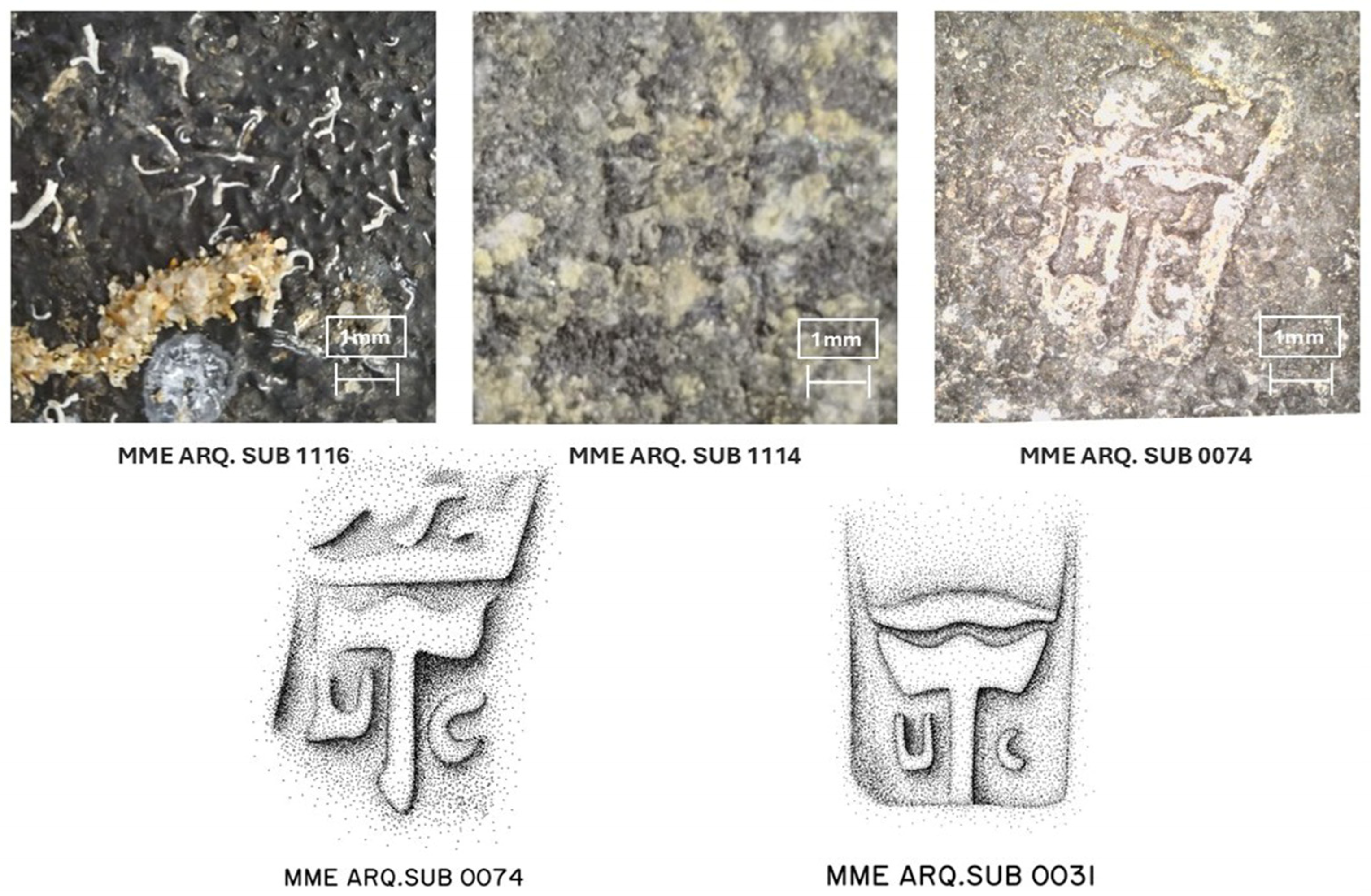
Surface cleaning effectively removed sediment, concretions, and encrusted fauna without compromising the object’s superficial layer. This procedure facilitated the identification of the crowned-hammer hallmark on the porringer positioned at the top of the plate stack ME.ARQ.SUB. 1116 and at the ME.ARQ.SUB.1114. On the sides of the hammer’s handle, two letters were identified: a shape resembling “µ” on the left and a “C” on the right. Similar marks to those documented during our protocol have been identified since 2014 in up to 46 pewter objects within the broader Belinho I collection; these are illustrated in Figure 3 to provide archaeological context for our case studies.
Figure 3.
Representative image of the crowned-hammer hallmark, identified in up to 46 pewter objects within the broader Belinho I pewter assemblage, with a symbol resembling “µ” on the left and a “C” on the right. Drawings by Annaliese Dempsey, based on field work by Christopher Dostal.
- Passivation domains of pewter
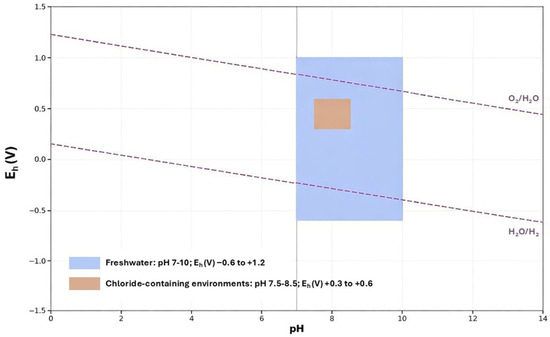
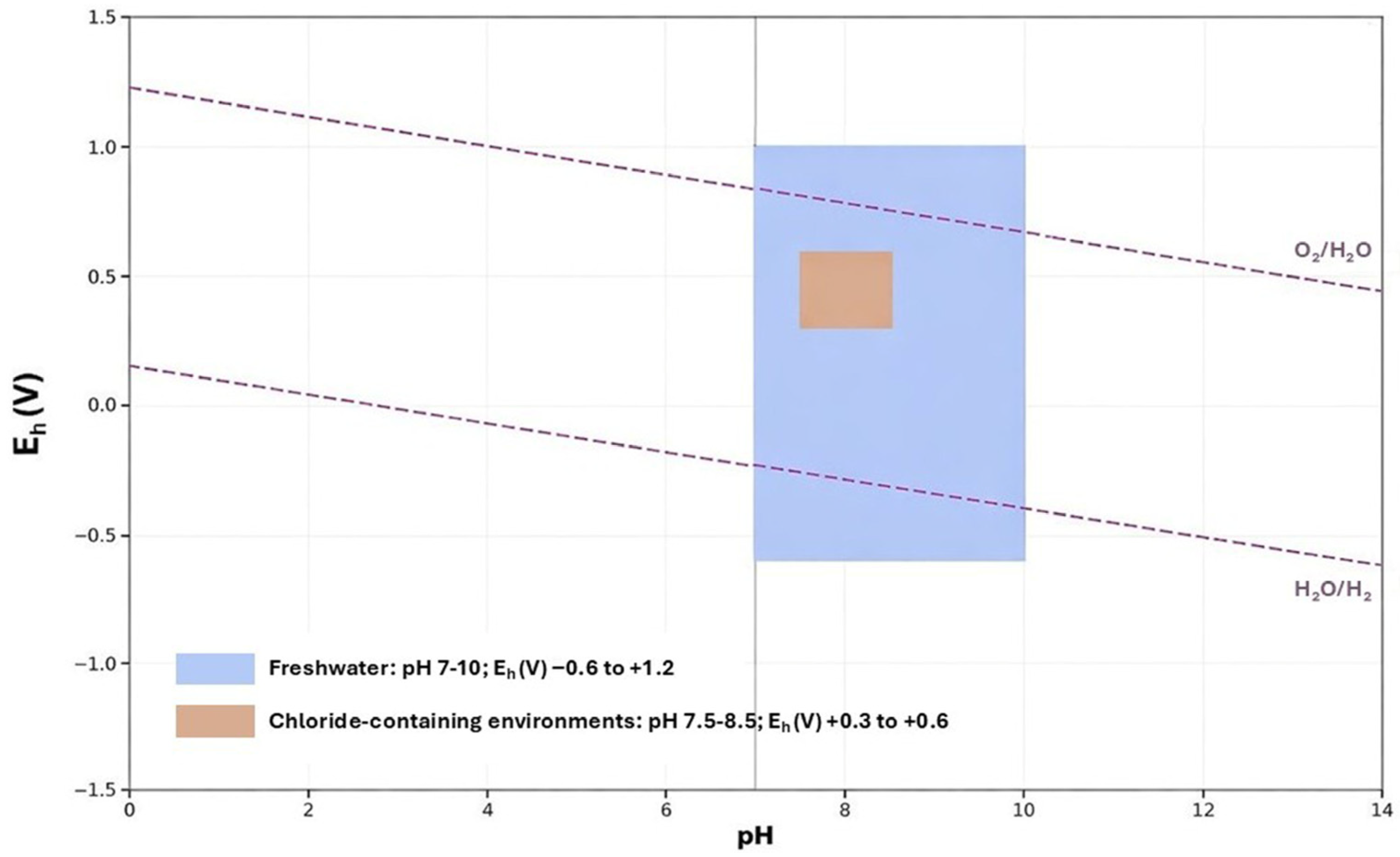
Based on the study of the thermodynamic behavior of tin through the analysis of Pourbaix diagrams, an Eh–pH diagram was constructed to define the passivation domain of pewter objects under the conditions considered in this study (Figure 4). The stability areas summarized in Table 2 indicate the electrochemical conditions under which the formation of a stable passive layer is theoretically favored.
Figure 4.
Schematic Eh–pH diagram for the Sn–H2O system and Sn in chloride medium (25 °C), showing the stability domain of water (bounded by the O2/H2O and H2O/H2 equilibria) and the pH–Eh ranges relevant to the passivation conditions applied to the pewter objects. Source: graphic generated with the assistance of generative artificial intelligence (Claude AI. Sonnet 4.5).
Table 2.
Passivation conditions of tin according to Pourbaix (Eh–pH) diagrams for the Sn–H2O system at 25 °C, in both freshwater and chloride-containing environments (Pourbaix, 1974; House & Kelsall, 1984) [40,41]. The temperature range reflects both the in situ burial conditions at the Belinho I site (Esposende, Portugal), where the mean annual seawater temperature is approximately 15.9 °C with recorded values ranging from 12.8 °C (February) to 19.3 °C (August), and the laboratory conservation conditions under which the passivation protocol was applied (20–25 °C). Pourbaix diagrams used as theoretical references were calculated at 25 °C [28,42]. Minor deviations within the stated range do not significantly alter the thermodynamic stability boundaries.
- Physicochemical parameters
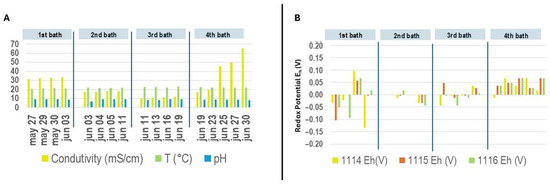
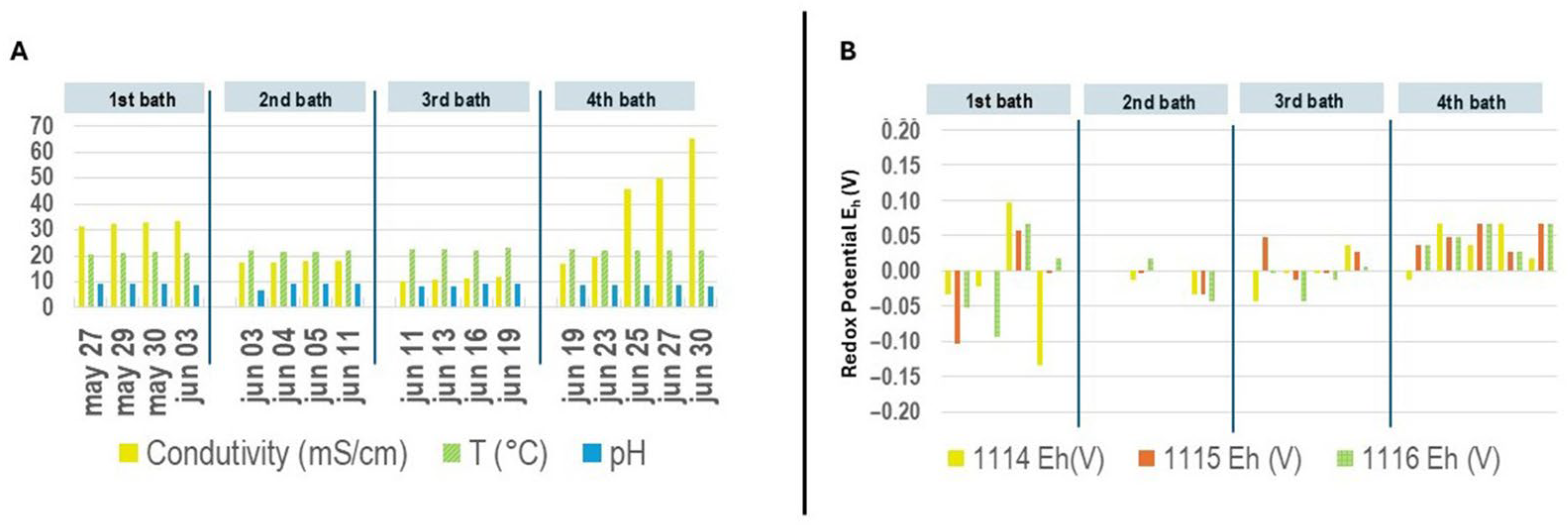
The objects’ redox potential (Eh, V) monitored throughout the protocol, and the temperature T (°C), conductivity, and pH values monitored during the passivation baths are presented in Tables S1 and S2, and Figure 5A. Slightly higher pH instability was observed during the first two baths, coinciding with the formation of whitish precipitates: powder in the first bath and a helictite horizontal efflorescence in the second. In the second bath, the initial pH decrease reflects transient instability following solution renewal, before buffering adjustment. The addition of borax raised the pH and introduced a borate inhibition layer on the pewter surfaces. Conductivity decreased progressively with dilution of the saline solutions and increased again in the final deionized water bath, reflecting the continued release of soluble salts from the objects. The electrochemical potential (Eh) of the objects monitored throughout the protocol (Figure 5B) remained stable at 0.020 ± 0.003 V (Table S2). These values fall within the passivation domain, confirming the protocol’s effectiveness in maintaining favorable conditions for pewter stabilization and highlighting the strong influence of both chloride concentration and buffering chemistry on the behavior of tin-rich alloys during early conservation stages. At present, the objects remain stable in baths within the passivation ranges defined by the protocol.
Figure 5.
(A) Evolution of physicochemical parameters. Conductivity (mS/cm), temperature (°C), and pH in the passivation bath solutions. (B) Redox potential (Eh) of the metal specimens monitored in the passivation baths. Data in (B) correspond to the same measurement dates shown in (A).
4.3. Sample Characterization
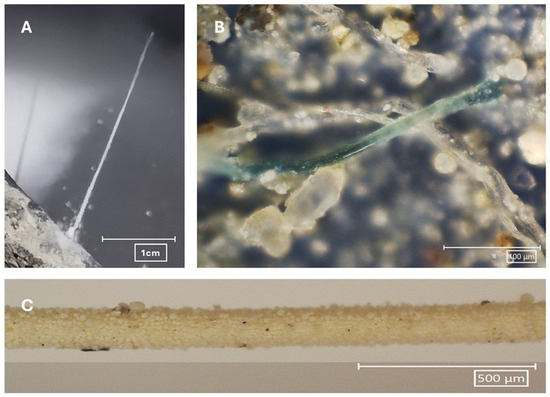
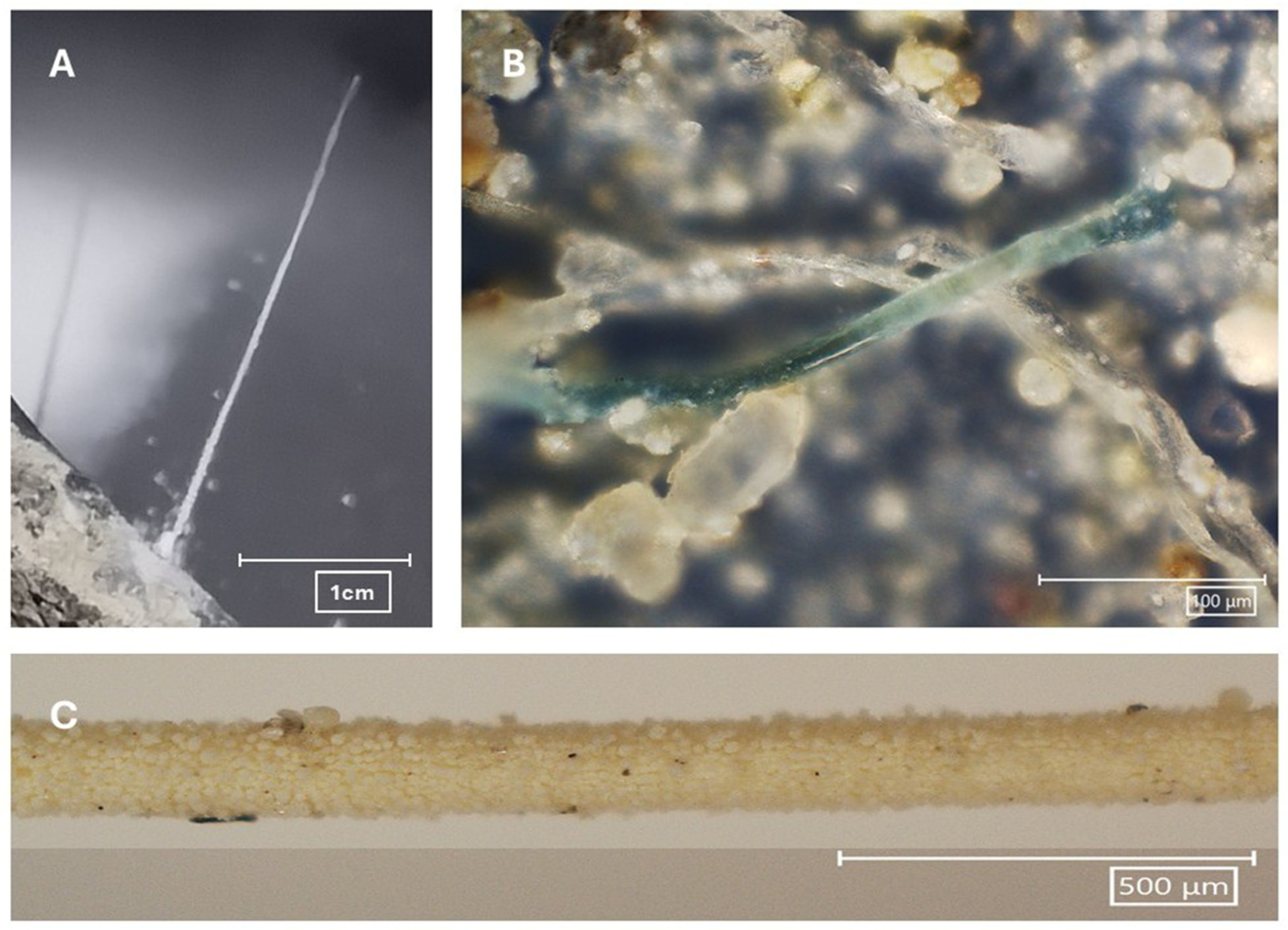
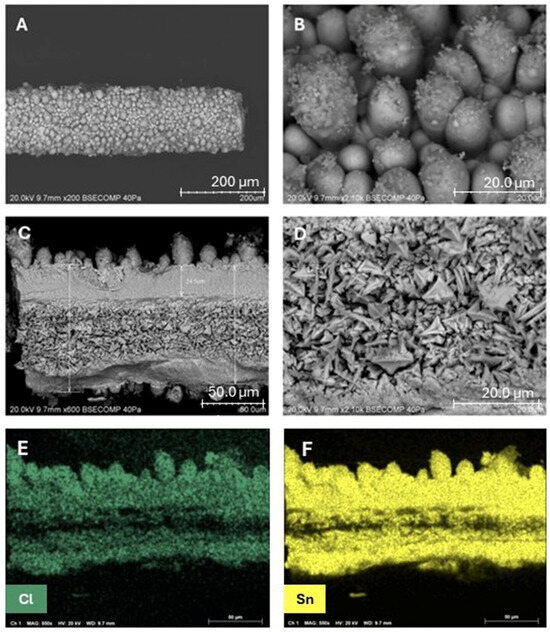
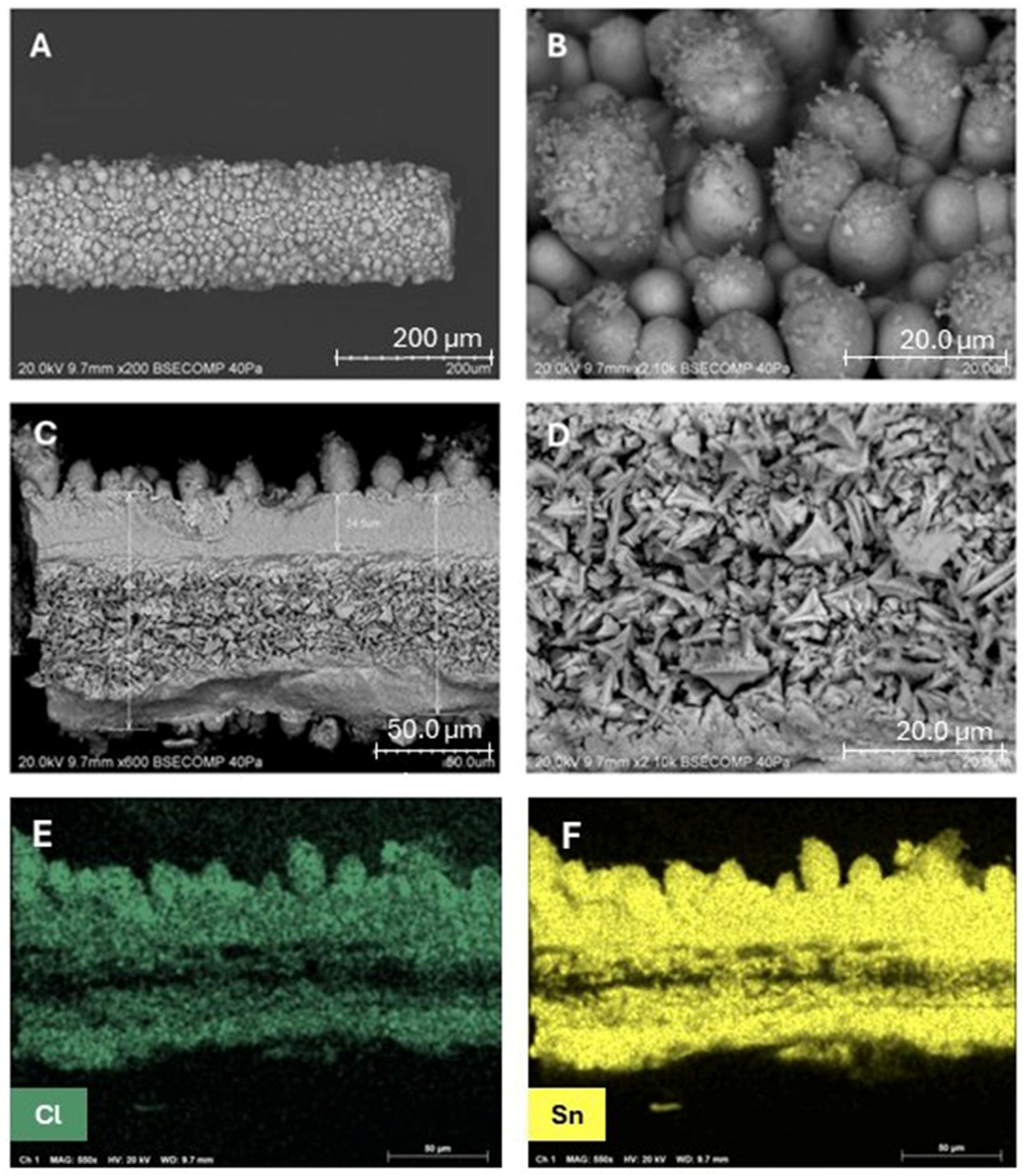
During the third phase of the protocol (first passivation bath, 100% artificial seawater), a whitish powdery precipitate was observed both on the object surfaces and at the bottom of the treatment tank after 48 h. The morphology of this precipitate was analyzed via 3D digital microscopy at 700× magnification (Figure 6B, sample 1116D_1), revealing irregularly shaped particles with a heterogeneous size distribution. Notably, elongated bluish structures, some featuring acicular (sharp) ends, were observed, contrasting with particles of rounded or laminar morphology. In the second bath (17.5 g·L−1 NaCl solution), following a pH adjustment from 6.6 to 9.1 via the addition of borax (4 g·L−1), helictite horizontal efflorescence were observed emerging perpendicularly from the surface of two submerged specimens (ME.ARQ.SUB.1114 and ME.ARQ.SUB.1116) (Figure 6A). Both DM (Figure 6C, sample 1116D_2) and SEM imaging (Figure 7A–D, sample 1116D_2) confirmed a distribution of heterogeneous particle sizes, characterized by a combination of globular and filamentous morphologies.
Figure 6.
Evidence of chemical reactions observed during the first and second baths: (A) Macrophotograph showing horizontal helictite efflorescence emerging perpendicularly from the pewter surface during the second passivation bath. The morphology is consistent with a pitting corrosion mechanism, in which a plume of Sn(II) corrosion products diffuses outwards from localised corrosion sites and is subsequently hydrolysed upon contact with the bath solution; (B) 3D digital microscopy image of the powders formed in the first bath (sample 1116D_1); (C) 3D digital microscopy image of the helictite horizontal efflorescence (sample 1116D_2).
Figure 7.
SEM micrographs of sample 1116D_2 (helictite efflorescence): (A,B) outer layer; (C,D) inner layer; (E,F) Cl and Sn elemental distribution in the area illustrated in (C).
The EDS analyses conducted on the helictite horizontal efflorescence (Figure 7E,F, Sample 1116D_2) revealed a Sn-rich matrix and the presence of Cl. Beyond providing detailed insights into precipitation mechanisms under the thermodynamic conditions established for pewter passivation, these findings offer critical data to guide and refine subsequent stabilization protocols for underwater archaeological pewter.
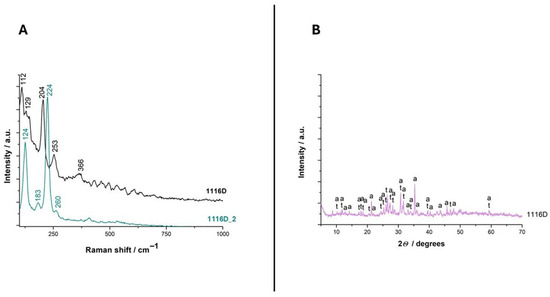
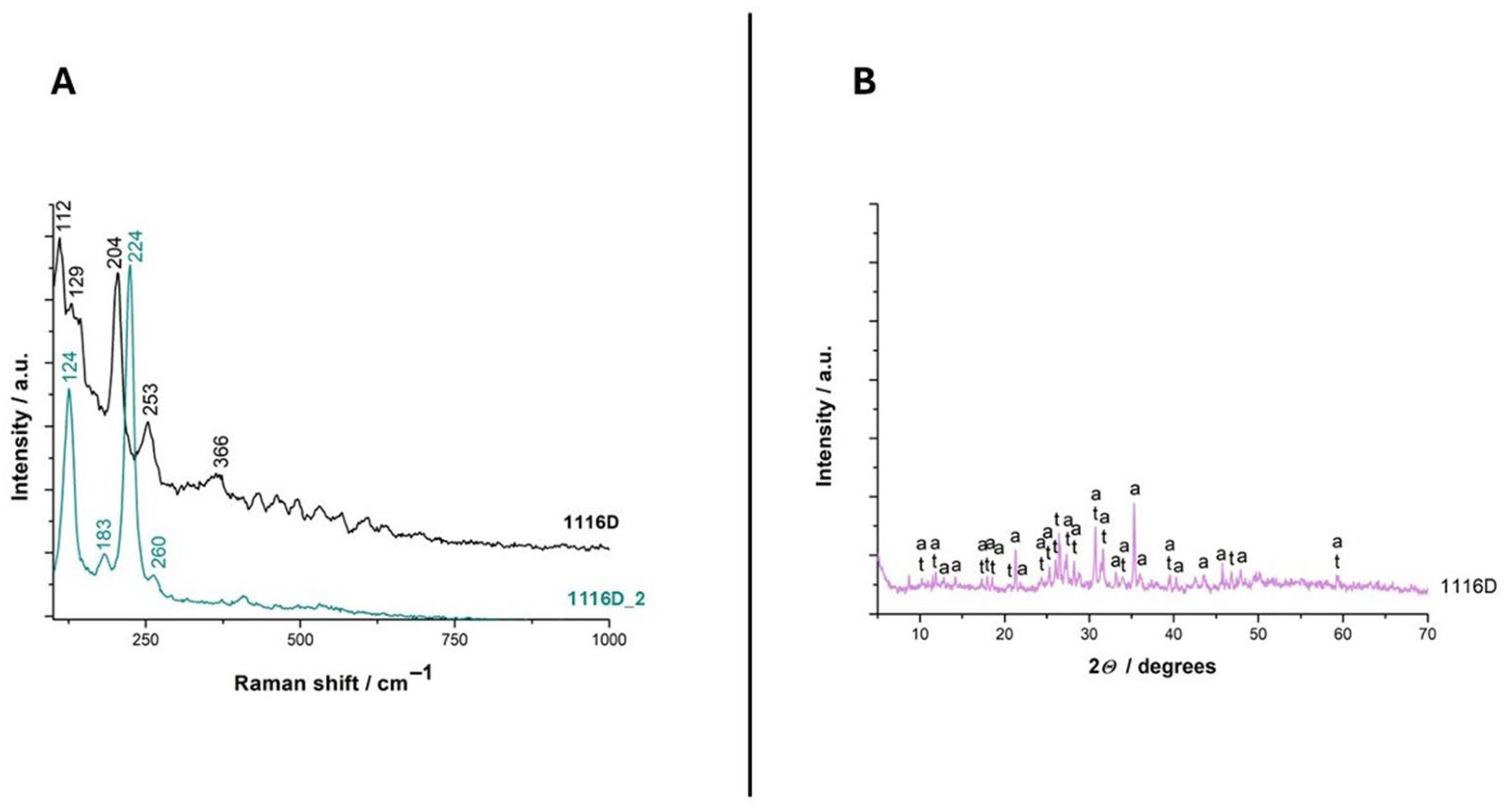
The µ-Raman spectra (Figure 8A, samples 1116D and 1116D_2) revealed characteristic signals of tin hydroxide species, particularly hydroromarchite (Sn3O2(OH)2) and suggested the presence of other species such as abhurite (Sn3O(OH)2Cl2). Complementing the µ-Raman data, the XRD analysis performed on the corrosion products (Figure 8B, sample 1116D) confirmed the presence of abhurite (PDF 00-039-0314) and indicated the presence of additional tin chloride hydroxide phases (PDF 00-015-0676), highlighting the complexity of corrosion products formed on the pewter surface. For accurate phase identification, reference spectra of hydroromarchite (Sn3O2(OH)2) and abhurite (Sn3O(OH)2Cl2) from the literature were compared with the obtained data, which are presented in the Supplementary Material (Figure S4).
Figure 8.
(A) µ-Raman spectra of the samples 1116D and 1116D_2 (helictite efflorescence). The spectra are vertically offset for clarity; (B) X-ray diffraction pattern recorded for the sample 1116D: a—abhurite; t—tin chloride hydroxide.
5. Discussion
The management of Underwater Cultural Heritage (UCH) has progressively evolved toward more inclusive and participatory models. Manders (2012) [43] noted that if only archaeologists perceive UCH as valuable, the struggle for its preservation is effectively lost. This author advocates a collaborative management model that allows various stakeholders to maintain their own interests and identities. Along these same lines, Argyropoulos and Stratigea (2019) [44] critique traditional UCH management, where archaeologists and other heritage professionals often operate in isolation, thereby failing to harness the potential of social and community involvement. In this line, through the GIRT program, Viduka (2020) [34] demonstrated that active citizen participation not only expands monitoring capacity and addresses the limited availability of institutional resources, but also fosters a community commitment to safeguarding maritime heritage. Regarding conservation, although the 2001 UNESCO Convention recommendations prioritize in situ preservation, several authors highlight the need to reconsider this premise in specific contexts. Perasso (2022) [45], in a study on the bioerosion of submerged archaeological artifacts in the Mediterranean, emphasizes that prolonged exposure to marine agents causes irreversible deterioration, a concern widely shared by biologists, conservators, and archaeologists alike. Likewise, Gregory et al. (2022) [13] warn of the threats posed by climate change, including seabed erosion and ocean acidification, and stress the need for intervention protocols adapted to each context. Furthermore, they underscore the importance of strengthening interdisciplinary collaboration and highlight the growing role of citizen science in mitigating the scarcity of resources for site monitoring.
The long-term conservation of the Belinho I shipwreck precisely illustrates these arguments: subjected to frequent, high-energy marine storms and the progressive dispersal of its remains, the long-term in situ preservation of the Belinho I assemblage does not appear to be a viable option. As the sea continues to expose and wash ashore new finds with each storm, the recovery and long-term preservation of these objects depends largely on citizen collaboration. It is, therefore, a chain of custody that frequently begins not in the laboratory, but in the hands of individuals without formal conservation training. Consequently, the participatory dimension acquires a particular urgency; it is fundamental not only to raise community awareness regarding the heritage value of these objects, but also to provide them with the necessary protocols to ensure that the conservation chain of custody remains unbroken. In this context, involving professional conservators from the earliest stages of the decision-making process is essential; their know-how not only safeguards the material integrity of the objects but also ensures the sustainable, long-term management of the shipwreck assemblage.
The surface-cleaning process performed on the objects ME.ARQ.SUB. 1116 and ME.ARQ.SUB. 1114 facilitated the identification of morphological details, and the hallmark of the crowned-hammer as identified by the letters “µ” and “C”. This mark is consistent with those documented on 46 other pewter plates in the Belinho I shipwreck collection (Figure 3); although no identical example has been identified in the literature to date. Even though the hallmarks from the Belinho I shipwreck have not been attributed to a specific workshop or location, the crowned-hammer mark is well known by authors such as Hatcher & Barker (1974) and Homer (2002) [46,47]. Despite documented use by some London pewterers, this mark is primarily associated with high-quality Dutch tableware, including items intended for export, produced between the late 15th and early 17th centuries [48,49]. On the other hand, studies on the use of complex hallmarks featuring heraldic motifs and ornamental letters [50] are consistent with the typography observed in the marks on Belinho I plates. In this context, it is worth hypothesizing that the apparent “µ” may in fact represent an “N”, “M”, “W”, “U”, or even an “H” rendered in a stylized Gothic or uncial typeface, common in Continental epigraphy of the period. From a stylistic perspective, visual analysis of the morphology of the crowns and hammers in our marks suggests a closer resemblance to Dutch examples than to English ones. Additionally, studies on the role of pewter guilds in Nuremberg and Augsburg played in the export of objects [50], as well as archaeological evidence, further support the circulation of pewter within broader European trade networks. The shipwreck associated with the Spanish Navy, La Trinidad Valencera (1588) [51], and the wreck of O Xove [52] provide evidence of the circulation and use of pewter, rather than unequivocal examples of export cargo; some of these objects have been tentatively attributed to Flemish or German workshops. These two shipwrecks, together with the Punta Cana shipwreck, offer numerous parallels with the Belinho I shipwreck. Furthermore, Hatcher (1973) [48] documented the existence of export networks linking the southern Netherlands with southern Europe, with Antwerp playing a key role in redistribution towards the Iberian Peninsula. Thus, in the absence of conclusive metallographic analyses or direct written sources, the possibility of an English origin cannot be excluded; nevertheless, the hypothesis of a Dutch origin is also reinforced, given the Central European export network through Flanders, which acted as a primary entrepôt that largely supplied the Spanish market.
The series of four passivation baths, reformulated weekly, allowed for the gradual release and precipitation of water-soluble salts, while keeping the objects within the tin passivation zone. Pearson (1987) and Hamilton (1999) [53,54] describe desalination of underwater archaeological objects as a key step in their conservation. To prevent physical stress on the weakened surfaces of archaeological objects, gradual desalination baths are commonly used [23]. The formation of oxide and hydroxide helictites horizontal efflorescence during the early stages of desalination has been previously documented [24]. In our study, these phenomena can be linked to the transition from a neutral NaCl solution lacking natural alkalinity to a buffered alkaline environment. In the first bath of our protocol, the absence of a carbonate–bicarbonate buffer led to pH fluctuations that promoted the release and precipitation of corrosion products. The measured potentials exhibited clear temporal variability, particularly in the early baths, reflecting dynamic electrochemical conditions associated with ongoing salt release and surface reactions at the metal–solution interface. In the case of underwater-origin pewter, MacLeod and Wozniak (1995) [28] noted that porosity and micro-cracks in the corrosion layer facilitate the accumulation of salts formed from the alloy itself. In the first bath (100% artificial seawater), a whitish precipitate appeared within 48 h, then gradually disappeared in subsequent baths, coinciding with a drop in conductivity. This indicates a progressive release of soluble salts from the objects’ pores into the solution. This behavior reflects the transition from a highly ionic, chlorinated environment to increasingly diluted solutions, which reduces the concentration gradient and favors leaching. Precipitate formation, caused by diffusion, osmosis, and chloride hydrolysis, could serve as a visual indicator of the onset of passivation. If correct, this could be used to monitor internal leaching during protocols. Moreover, studies by MacLeod and Wozniak (1995) [28] and Zohdy et al. (2021) [42] show that stable passive layers of Sn(OH)4 and SnO2 form in neutral and slightly alkaline media. The thermodynamic conditions established in our preventive conservation protocol, namely, the pH values (7.0–10.0 in freshwater and 7.5–8.5 in chloride medium) as well as the objects’ redox potential (Eh), are directly derived from these studies which define the stability domains of Sn(OH)4 and SnO2 as protective phases; and are based on Pourbaix diagrams for tin, both with and without chlorides (Sn–H2O system at 25 °C and Pourbaix, 1974; House & Kelsall, 1984) [40,41]. A progressive decrease in variability was observed in the fourth bath, showing the most stable values. This stabilization of thermodynamic parameters in the final stages suggests a reduction in reactive processes and the achievement of conditions favorable for the temporary passivation of the pewter objects. While this approach ensured the presence of chlorides needed to simulate the ionic strength of the marine environment, it lacked the alkalinity characteristic of true seawater, which is largely driven by its natural carbonate–bicarbonate buffering system. Although borate effectively buffered the solution and raised the pH into the desired range, it is important to note that borate ions can temporarily inhibit tin surfaces, forming a borate-rich layer that mimics passivation, but is not representative of the carbonate-based stabilization occurring in natural seawater. This temporary inhibitory film can suppress active corrosion while present in solution, but dissipates once the objects are removed, requiring a new passive layer to form under subsequent storage conditions. The buffering effect of borate ions should therefore be interpreted as a temporary inhibition mechanism rather than true passivation, as it does not replicate the carbonate-driven equilibrium of natural seawater systems. A carbonate buffering system would therefore be more appropriate for future applications, as it better replicates the chemical environment of seawater and supports the formation of stable Sn(OH)4/SnO2 passive layers. However, further studies will be required to define the long-term efficacy and reliability of the proposed passivation protocol.
Finally, SEM/EDS analysis of samples 1116D and 1116D_2 revealed a Sn-rich matrix, suggesting the presence of tin oxides and hydroxides associated with Cl-induced corrosion. The presence of hydroromarchite (Sn3O2(OH)2) and abhurite (Sn3O(OH)2Cl2) was suggested by µ-Raman and XRD analysis (Figure 8). It is consistent with chloride substitution and long-term corrosion of Sn-rich pewter. In 2003, Dunkle [55] analyzed six resin-mounted pewter samples from the Queen Anne’s Revenge shipwreck on the North Carolina coast. Romarchite (SnO), hydroromarchite, and abhurite were identified by using OM, SEM, EMPA (Electron Microprobe Analysis), and XRF. Authors such as North and MacLeod (1987) and MacLeod and Wozniak (1995) [21,28], in their studies on corrosion of Sn-rich alloys, mainly focused on underwater pewter, demonstrated the formation of abhurite (Sn3O(OH)2Cl2) and hydroromarchite (Sn3O2(OH)2). These findings are also consistent with the Sn-dominant composition and lower amounts of Cl determined (sample 1116D_2) in our case study (Figure 7E,F). These findings not only confirm the presence of hydroromarchite and abhurite in our samples but also align with well-established corrosion models for Sn-rich alloys reported in the literature. Studies of pewter artefacts recovered from historical shipwrecks describe a stratified development of corrosion phases dominated by abhurite and tin oxy-hydroxides, highlighting the role of chlorides and other active salts in driving persistent degradation processes. In this context, our discussion aims to clarify the implications of these mechanisms for long-term conservation, emphasizing that the persistence of active salts and ongoing post-recovery reactions reinforces the need for effective de-chlorination treatments in future interventions to ensure the long-term conservation of underwater pewter collections.
The protocol presented here was developed under real field conditions, responding to the urgent need to stabilize underwater pewter objects recovered unexpectedly by non-specialists. Although the proposal successfully reduced the corrosive activity of the objects during the initial post-recovery phase, it presents important methodological aspects that merit consideration. The use of a 35 g·L−1 (0.60 mol dm−3) NaCl solution in the first bath effectively reproduced the salinity of seawater but did not replicate its natural carbonate–bicarbonate buffering system, which is responsible for maintaining the slightly alkaline pH of marine environments. This limitation may have contributed to the pH instability and early precipitation phenomena observed in the first stages of treatment. Likewise, the use of borax to raise and stabilize the pH, while effective in achieving values consistent with the passivation domain of tin, may have introduced a temporary borate inhibition effect on the metal surface, which would dissipate once the objects are removed from the solution. These factors do not compromise the short-term stabilization achieved but indicate opportunities to refine future applications, particularly through the incorporation of carbonate-based buffering systems that more closely reproduce the geochemical behavior of seawater and support the formation of naturally stable Sn(OH)4/SnO2 passive layers. It should be emphasized that the methodological decisions made during the early stages of the protocol were informed by real field conditions and by the urgent need to stabilize highly vulnerable pewter surfaces using the materials immediately available. Nevertheless, these limitations provide valuable guidance for improving future preventive conservation strategies for underwater pewter.
6. Conclusions
The early implementation of preventive conservation protocols following recovery, together with the active involvement of community stakeholders and collaboration with professional conservators, as well as heritage managers, is an effective strategy for supporting the long-term conservation of UCH.
The long-term conservation of the Belinho I shipwreck poses a challenge that can hardly be resolved through in situ preservation strategies. The aggressiveness of the marine environment, the progressive dispersal of the remains, and the dependence on citizen collaboration for their recovery suggest that, in line with the observations of Perasso et al. (2022) [45] and Gregory et al. (2022) [13], the controlled extraction of the objects may represent the only viable means of ensuring their long-term preservation. This decision, however, should not be understood as a departure from the in situ conservation principles advocated by the UNESCO Convention, but rather as a pragmatic and evidence-based response to a reality that renders such an option unfeasible.
The identification of the crowned-hammer hallmark on the pewter assemblage of the Belinho I shipwreck not only contributes to characterizing the material repertoire of the shipwreck but also raises fundamental questions regarding its provenance, commercial context, and chronology. The absence of a definitive attribution to a specific workshop or location highlights the limitations of visual analysis alone and underscores the need to complement it with more exhaustive metallographic and documentary studies. The convergence of typological parallels with other contemporary shipwrecks, such as La Trinidad Valencera and the O Xove wreck, reinforces the hypothesis that the Belinho I formed part of the Atlantic export routes for high-quality pewter tableware between the late fifteenth and early seventeenth centuries.
The preventive conservation protocol developed for the pewter objects from the Belinho I shipwreck, although conceived under field conditions and with limited resources, has proven effective in the initial temporary passivation of the objects during the critical post-recovery phase. SEM/EDS, µ-Raman, and XRD analyses confirmed the presence of corrosion products characteristic of underwater pewter, hydroromarchite, and abhurite, consistent with the corrosion models documented in the literature for tin-rich alloys. However, the limitations identified, particularly regarding the buffering system and the replication of the geochemical environment of seawater, highlight the need to refine the protocol for future interventions, especially through the incorporation of carbonate-based buffering systems. Taken together, these findings lay the groundwork for the development of more robust preventive conservation strategies tailored to the specific conditions of underwater archaeological pewter.
It must be emphasized that this preventive conservation protocol represents a temporary passivation strategy during the critical initial post-recovery phase, and should not be interpreted as a definitive long-term stabilization treatment. The protocol is designed to arrest active corrosion and maintain the objects in a passivated state until appropriate long-term conservation methods (curative treatments) can be developed and implemented. Future interventions should focus on robust de-chlorination protocols and the establishment of stable storage conditions that guarantee the preservation of the Belinho I pewter assemblage for future generations.
Supplementary Materials
The following supporting information can be downloaded at: https://www.mdpi.com/article/10.3390/heritage9050193/s1, Figure S1: Location of the Belinho I shipwreck on Belinho beach (Esposende), Northern Coast of Portugal; Figure S2: (A) Pourbaix diagram (Eh–pH) for the Sn–H2O system at 25 °C [27]; (B) Pourbaix diagram for tin in a chloride medium [41], adapted from House & Kelsall (1984). Highlighted areas (red-hatched and green) are overlaid by the authors of the present work to represent the Eh–pH ranges of passive behavior as reported by MacLeod & Wozniak (1995) [28] and Zohdy et al. (2021) [42]; Figure S3: Schematic overview of the Field-Based Community Preventive Conservation Protocol. The illustrations in the figure were generated with generative artificial intelligence; Figure S4: Raman reference spectra of Abhurite (rruff ID: R060227) and hydroromarchite (rruff ID: R090060) in violet and blue, respectively. The spectra are vertically offset for clarity; Table S1: Conductivity (mS/cm), Temperature (°C), and pH values measured over the full monitoring period of each passivation bath; Table S2: Redox potential (Eh, V) values measured over the full monitoring period for each pewter (ME.ARQ.SUB.1114, 1115, and 1116), and the corresponding mean () and standard deviation (σ).
Author Contributions
Conceptualization, I.S.P.; methodology, I.S.P.; validation, E.V., J.A.R. and T.F.; formal analysis, I.S.P., M.N. and T.F.; investigation, I.S.P. and E.T.; resources, I.S.P., M.N., A.P.A., E.T., C.D. and T.F.; data curation, I.S.P. and M.N.; writing—original draft preparation, I.S.P.; writing—review and editing, I.S.P., J.A.R., T.F., E.V., E.T., M.N., A.P.A. and C.D.; visualization, I.S.P. and M.N.; supervision, E.V. and T.F.; project administration, E.V. and A.P.A.; funding acquisition, I.S.P. and M.N. All authors have read and agreed to the published version of the manuscript.
Funding
Inmaculada Sánchez Pedreño gratefully acknowledges FCT for the doctoral scholarship granted under the “Ciência no Património Cultural” program, Ref. PRT/BD/155002/2023 and Centro de Investigação em Ciência e Tecnologia das Artes (CITAR), Porto, Portugal. M. Nunes acknowledges the JDC2024-053901-I grant funded by MICIU/AEI/10.13039/501100011033 and by the ESF+. The analytical work was carried out with the support of the HERCULES Laboratory, University of Évora (Portugal) (UID/04449/2025), and the Associated Laboratory for Research and Innovation in Heritage, Arts, Sustainability and Territory (LA/P/0132/2020), both funded by national funds through FCT—Fundação para a Ciência e a Tecnologia.
Data Availability Statement
The original contributions presented in this study are included in the article/Supplementary Materials. Further inquiries can be directed to the corresponding authors.
Conflicts of Interest
The authors declare no conflicts of interest.
Abbreviations
The following abbreviations are used in this manuscript:
| XRD | X-ray Diffraction |
| DM | 3D digital Microscopy |
| SEM/EDS | Scanning Electron Microscopy with Energy-Dispersive Spectroscopy |
| UCH | Underwater Cultural Heritage |
| EMPA | Electron Microprobe Analysis |
Appendix A
Materials and Suppliers
- pH meter Aqualytic® SD 300 (Slategrey, Leça do Balio, Portugal)
- Conductivity meter Aqualytic® SD 320 (Slategrey, Leça do Balio, Portugal)
- Water Deionizer Anatron Instruments DS500D (Slategrey, Leça do Balio, Portugal)
- Ag/AgCl Reference Electrode HI5312 (Hanna Instruments S.L., Eibar, Spain)
References
- Waller, R. Cultural Property Risk Analysis Model: Development and Application to Preventive Conservation at the Canadian Museum of Nature; Acta Universitatis Gothoburgensis; University of Gothenburg: Gothenburg, Sweden, 2003; Volume 13. [Google Scholar]
- Ashley-Smith, J. Risk Assessment for Object Conservation; Butterworth-Heinemann: Oxford, UK, 1999. [Google Scholar]
- Michalski, S. The ABC Method: A Risk Management Approach to the Preservation of Cultural Heritage; Canadian Conservation Institute: Ottawa, ON, Canada, 2016.
- UNESCO. Convention on the Protection of the Underwater Cultural Heritage. Available online: https://www.unesco.org/es/underwater-heritage/2001-convention (accessed on 14 January 2026).
- Fernández Montblanc, T.; Bethencourt, M.; Izquierdo, A. Underwater cultural heritage risk assessment methodology for wave induced hazards: The showcase of the Bay of Cádiz. Front. Mar. Sci. 2022, 9, 1005514. [Google Scholar] [CrossRef] [Scilit]
- Steyne, H.; MacLeod, I.D. In-situ conservation management of historic iron shipwrecks in Port Phillip Bay: A study of J7 (1924), HMVS Cerberus (1926) and the City of Launceston (1865). Bull. Australas. Inst. Marit. Archaeol. 2011, 35, 67–80. [Google Scholar]
- Dizon, E.; Egger, B.; Elkin, D.; Luna Erreguerena, P.; Grenier, R.; Gribble, J.; Guérin, U.; Khalil, E.; Manders, M.; Maarleveld, T.; et al. Manual for Activities Directed at Underwater Cultural Heritage: Guidelines to the Annex of the UNESCO 2001 Convention; Maarleveld, T.J., Guérin, U., Egger, B., Eds.; UNESCO: Paris, France, 2013; ISBN 978-92-3-001122-2. Available online: https://unesdoc.unesco.org/ark:/48223/pf0000220708 (accessed on 14 January 2026).
- Puoti, F.; Davidde, B.; Ciabattoni, M.; Di Franco, C. In situ conservation of cannons in marine environment: Cathodic protection, cleaning treatment and coverage with geotextiles. In Proceedings of the International Conference on Management of Accessible Underwater, Cultural and Natural Heritage Sites “Dive in Blue Growth”, Athens, Greece, 16–18 October 2019. [Google Scholar]
- Khakzad, S.; Van Balen, K. Complications and effectiveness of in situ preservation methods for underwater cultural heritage sites. Conserv. Manag. Archaeol. Sites 2012, 14, 469–478. [Google Scholar] [CrossRef] [Scilit]
- Richards, V. In situ preservation—Application of a process-based approach to the management of underwater cultural heritage. In Proceedings of the Asia-Pacific Regional Conference on Underwater Cultural Heritage, Manila, Philippines, 8–12 November 2011; Available online: http://www.themua.org/collections/files/original/8de7b2c59bbd77eab07b3961b1c15b02.pdf (accessed on 14 January 2026).
- MacLeod, I.D.; Steyne, H. Managing a monitor—The case of HMVS Cerberus in Port Phillip Bay: Integration of corrosion measurements with site management strategies. Conserv. Manag. Archaeol. Sites 2011, 13, 334–361. [Google Scholar] [CrossRef] [Scilit]
- Lu, B.; Zhou, S. China’s state-led working model on protection of underwater cultural heritage: Practice, challenges, and possible solution. Mar. Policy 2016, 65, 39–47. [Google Scholar] [CrossRef] [Scilit]
- Gregory, D.; Dawson, T.; Elkin, D.; Tilburg, H.V.; Underwood, C.; Richards, V.; Hollesen, J. Of time and tide: The complex impacts of climate change on coastal and underwater cultural heritage. Antiquity 2022, 96, 1396–1411. [Google Scholar] [CrossRef] [Scilit]
- Rousaki, A.; Vandenabeele, P. In Situ Raman Spectroscopy for Cultural Heritage Studies. J. Raman Spectrosc. 2021, 52, 2178–2189. [Google Scholar] [CrossRef] [Scilit]
- Valentini, F.; Calcaterra, A.; Antonaroli, S.; Talamo, M. Smart Portable Devices Suitable for Cultural Heritage: A Review. Sensors 2018, 18, 2434. [Google Scholar] [CrossRef] [Scilit]
- Fortes, F.J.; Guirado, S.; Metzinger, A.; Laserna, J.J. Elemental Analysis of Materials in an Underwater Archaeological Shipwreck Using a Novel Remote Laser-Induced Breakdown Spectroscopy System. Spectrochim. Acta Part B 2015, 106, 182–188. [Google Scholar] [CrossRef] [Scilit]
- Bethencourt, M.; Fernández-Montblanc, T.; Izquierdo, A.; González-Duarte, M.M.; Muñoz-Mas, C. Study of the Influence of Physical, Chemical and Biological Conditions that Influence the Deterioration and Protection of Underwater Cultural Heritage. Sci. Total Environ. 2018, 613–614, 98–114. [Google Scholar] [CrossRef] [Scilit]
- Cheng, X.; Li, Z.; Dong, J.; Liang, R.; Chen, Y. Extraction of Underwater Fragile Artifacts: Research Status and Prospect. npj Herit. Sci. 2022, 10, 9. [Google Scholar] [CrossRef] [Scilit]
- Barclay, R.L.; Dignard, C.; Selwyn, L. Caring for Metal Objects—Preventive Conservation Guidelines; Canadian Conservation Institute: Ottawa, ON, Canada, 2024. Available online: https://www.canada.ca/en/conservation-institute/services/preventive-conservation/guidelines-collections/metal-objects.html (accessed on 14 January 2026).
- Li, D.; Zhou, H.; Xu, F.; Yan, Y.; Wu, L.; Cai, L. A health risk assessment method for the preventive protection of metal cultural relics using improved rank correlation analysis and AHP fuzzy synthetic evaluation. Herit. Sci. 2023, 11, 118. [Google Scholar] [CrossRef] [Scilit]
- MacLeod, I.D.; North, N.A. Corrosion of metals. In Conservation of Marine Archaeological Objects; Pearson, C., Ed.; Butterworths: London, UK, 1987; pp. 68–98. [Google Scholar]
- Watkinson, D.; Lewis, M. Desiccated storage of chloride-contaminated archaeological iron objects. Stud. Conserv. 2005, 50, 241–252. [Google Scholar] [CrossRef] [Scilit]
- Bethencourt, M.; Ciarlo, N.C. Arqueología subacuática: Casos de estudio|Underwater archaeology: Case studies. In Proceedings of the XLI Reunión Científica de la Sociedad Española de Mineralogía (SEM) and XXVII Reunión Científica de la Sociedad Española de Arcillas (SEA), Sevilla, Spain, 15–18 January 2025. [Google Scholar]
- Sánchez Pedreño, I.; Salas, I.; García Amado, J.F.; García Trigo, S.; Bethencourt, M. Tratamiento de conservación a gran escala de piezas de artillería pesada de hierro fundido y procedencia subacuática: Procedimientos metodológicos. Ge-Conserv. 2022, 21, 16–28. [Google Scholar] [CrossRef] [Scilit]
- Almeida, A.; Castro, F.; Monteiro, A.; Magalhães, I. O naufrágio quinhentista de Belinho, Esposende: Resultados preliminares. Al-Madan 2017, 21, 80–88. [Google Scholar]
- Alves, F.J.S. O Navio Português do Século XVI de Oranjemund, Namíbia: Relatório das Missões de 2008 e 2009. 2009. Available online: https://www.patrimoniocultural.gov.pt/publicacao/o-navio-portugues-do-seculo-xvi-de-oranjemund-namibia-relatorio-das-missoes-realizadas-pela-equipa-portuguesa-em-2008-e-2009/ (accessed on 14 January 2026).
- Perles, A.; Fuster-López, L.; Bosco, E. Preventive conservation, predictive analysis and environmental monitoring. Herit. Sci. 2024, 12, 11. [Google Scholar] [CrossRef] [Scilit]
- MacLeod, I.D.; Wozniak, R. Corrosion and conservation of tin and pewter. In Proceedings of the Metal 95—ICOM-CC Metals Working Group Conference, Semur-en-Auxois, France, 25–28 September 1995. [Google Scholar]
- MacLeod, I.D.; Flecker, M. Corrosion of tin and its alloys recovered from a 10th century wreck in the Java Sea. In Proceedings of the Metal 2001—International Conference on Metals Conservation, Santiago, Chile, 2–5 April 2001. [Google Scholar]
- Grueso Jiménez, M.J.; Zambrano Valdivia, L.C. Estudio, caracterización y diagnóstico de una fuente de peltre de procedencia subacuática depositada en el Museo de Cádiz. In Cuadernos de Prehistoria y Arqueología de la Universidad Autónoma de Madrid, ANEJOS, 6, MetalEspaña 2020/2021. III Congreso de Conservación y Restauración del Patrimonio Metálico; Barrio Martín, J., Buendía Ortuño, M., Eds.; UAM: Madrid, Spain, 2022; pp. 417–425. [Google Scholar]
- Casimiro, T.; Castro, F.; Almeida, A.; Teixeira, E.; Frias-Bulhosa, E.; Dostal, C. Metal objects were much desired: A 16th-century shipwreck cargo off the coast of Esposende (Portugal) and the importance of studying ship cargos. J. Marit. Archaeol. 2024, 19, 23–40. [Google Scholar] [CrossRef] [Scilit]
- Frias-Bulhosa, E. ¿Qué hacer cuando el mar cuida nuestro estaño y latón? Lab. Arte 2024, 36, 141–165. [Google Scholar] [CrossRef] [Scilit]
- Almeida, A.P. ¿Por qué debemos permitir el acceso a los sitios arqueológicos subacuáticos? ¡Un ciudadano ilustrado es un ciudadano activo! Rev. PH Inst. Andal. Patrim. Histórico 2025, 115, 411–412. [Google Scholar] [CrossRef] [Scilit]
- Viduka, A. Going for the win-win: Including the public in underwater cultural heritage management through citizen science in Australia and New Zealand. Int. J. Naut. Archaeol. 2020, 49, 87–106. [Google Scholar] [CrossRef] [Scilit]
- Pérez-Reverte Mañas, C.; Cerezo Andreo, F.; López Osorio, P.; González Gallero, R.; Mariscal Rico, L.; Arévalo González, A. Underwater Cultural Heritage as an Engine for Social, Economic and Cultural Development. State of Research at the University of Cadiz (Andalusia, Spain). Heritage 2021, 4, 2676–2690. [Google Scholar] [CrossRef] [Scilit]
- Ferrari, B.; Firth, A.; Gregory, D.; Sanger, L. Underwater cultural heritage and fishing communities: Safeguarding heritage and safeguarding fishers. In Threats to Our Ocean Heritage: Bottom Trawling; Jarvis, C., Ed.; Springer: Cham, Switzerland, 2024; pp. 83–96. [Google Scholar] [CrossRef] [Scilit]
- Sánchez Pedreño, I.; Nunes, M.; Ferreira, T.; Bottaini, C.; Almeida, A.P.; Teixeira, E.; Vieira, E. El conjunto de platos de peltre del naufragio Belinho I (Esposende, Portugal): Problemáticas y oportunidades. In Proceedings of the MetalEspaña2025—International Conference on Metals Conservation, Cádiz, Spain, 23–25 October.
- Martins, A.; Castro, F.; Nayling, N. Belinho I: Registo e análise provisória às madeiras do navio. In Árvores, Barcos e Homens na Península Ibérica (Séculos XVI–XVII); Gomes, R.V., Trápaga Monchet, K., Eds.; Instituto de Arqueologia e Paleociências: Navarra, Spain, 2017; pp. 181–192. [Google Scholar]
- Roberts, M. Marks and makers: European pewter in the early modern period. Pewter Soc. J. 2013, 45–62. [Google Scholar]
- Pourbaix, M. Atlas of Electrochemical Equilibria in Aqueous Solutions; NACE International: Houston, TX, USA, 1974. [Google Scholar]
- House, C.I.; Kelsall, G.H. Potential-pH diagrams for the Sn/H2O-Cl system. Electrochim. Acta 1984, 10, 1459–1464. [Google Scholar] [CrossRef] [Scilit]
- Zohdy, K.M.; El-Sherif, R.M.; El-Shamy, A.M. Corrosion and passivation behaviors of tin in aqueous solutions of different pH. J. Bio-Tribo-Corros. 2021, 7, 74. [Google Scholar] [CrossRef] [Scilit]
- Manders, M.R. Unit 3: Management of Underwater Cultural Heritage. In Training Manual for the UNESCO Foundation Course on the Protection and Management of Underwater Cultural Heritage in Asia and the Pacific; UNESCO Bangkok Office: Bangkok, Thailand, 2012; pp. 1–20. Available online: https://unesdoc.unesco.org/ark:/48223/pf0000215102 (accessed on 10 May 2026).
- Argyropoulos, V.; Stratigea, A. Sustainable Management of Underwater Cultural Heritage: The Route from Discovery to Engagement—Open Issues in the Mediterranean. Heritage 2019, 2, 1588–1613. [Google Scholar] [CrossRef] [Scilit]
- Perasso, S.; Antonelli, F.; Calcinai, B.; Casoli, E.; Gravina, M.F.; Ricci, S. The bioerosion of submerged archaeological artifacts in the Mediterranean Sea: An overview. Front. Mar. Sci. 2022, 9, 888731. [Google Scholar] [CrossRef] [Scilit]
- Hatcher, J.; Barker, T.C. A History of British Pewter; Longman: London, UK, 1974. [Google Scholar]
- Homer, R.F. Pewter flatware from English wreck sites. J. Pewter Soc. 2002, 17, 50–66. [Google Scholar]
- Hatcher, J. The export trade. In The English Pewter Industry 1400–1700; Clarendon Press: Oxford, UK, 1973; pp. 146–150. [Google Scholar]
- Seling, H. Die Kunst des Zinns: Pewter in Europe from the Middle Ages to the Present; C.H. Beck: Munich, Germany, 1980. [Google Scholar]
- Beekhuizen, J.F.H.H. Merken op Nederlands tin: Meester-, Stads- en kwaliteitsmerken. Available online: https://www.nederlandsetinvereniging.nl/wp-content/uploads/1600/1674_AYX.pdf (accessed on 14 January 2026).
- Weinstein, R. The Archaeology of Pewter Vessels in England 1200–1700: A Study of Form and Usage. Ph.D. Thesis, Durham University, Durham, UK, 2011. Available online: http://etheses.dur.ac.uk/3312/ (accessed on 14 January 2026).
- Roberts, M.; Benavides Garcia, R.; Gadd, J. Pewter from a 1544 shipwreck off Xove, Galicia. J. Pewter Soc. 2014, 18–22. [Google Scholar]
- Pearson, C. Deterioration of ceramics, glass and stone. In Conservation of Marine Archaeological Objects; Pearson, C., Ed.; Butterworths: London, UK, 1987; pp. 99–104. [Google Scholar]
- Hamilton, D.L. Basic Methods of Conserving Underwater Archaeological Material Culture. Ph.D. Thesis, Texas A&M University, College Station, TX, USA, 1999. Available online: https://nautarch.tamu.edu/wp-content/uploads/2025/04/ConservationManual.pdf (accessed on 14 January 2026).
- Dunkle, S.E.; Craig, J.R.; Rimstidt, J.D.; Lusardi, W. Romarchite, hydroromarchite and abhurite formed during the corrosion of pewter artifacts from the Queen Anne’s Revenge (1718). Can. Mineral. 2003, 41, 659–669. [Google Scholar] [CrossRef] [Scilit]

Disclaimer/Publisher’s Note: The statements, opinions and data contained in all publications are solely those of the individual author(s) and contributor(s) and not of MDPI and/or the editor(s). MDPI and/or the editor(s) disclaim responsibility for any injury to people or property resulting from any ideas, methods, instructions or products referred to in the content. |
© 2026 by the authors. Licensee MDPI, Basel, Switzerland. This article is an open access article distributed under the terms and conditions of the Creative Commons Attribution (CC BY) license.