1. Introduction and Object Biographies
The Victoria and Albert Museum (V&A), London, has an extensive collection of archaeological textiles from ancient Egypt, the earliest being from the 4th millennium BCE. Two painted textiles, stylistically attributed to between the 1st century BCE and the early 2nd century CE, were selected for display in the 2025 exhibition
Making Egypt, at Young V&A in east London. They represent a type of object known as funerary shrouds or, historically, ‘mummy shrouds’, full-length depictions of an individual which were placed atop their mummified bodies as part of the burial rites [
1] (pp. 152–192), [
2,
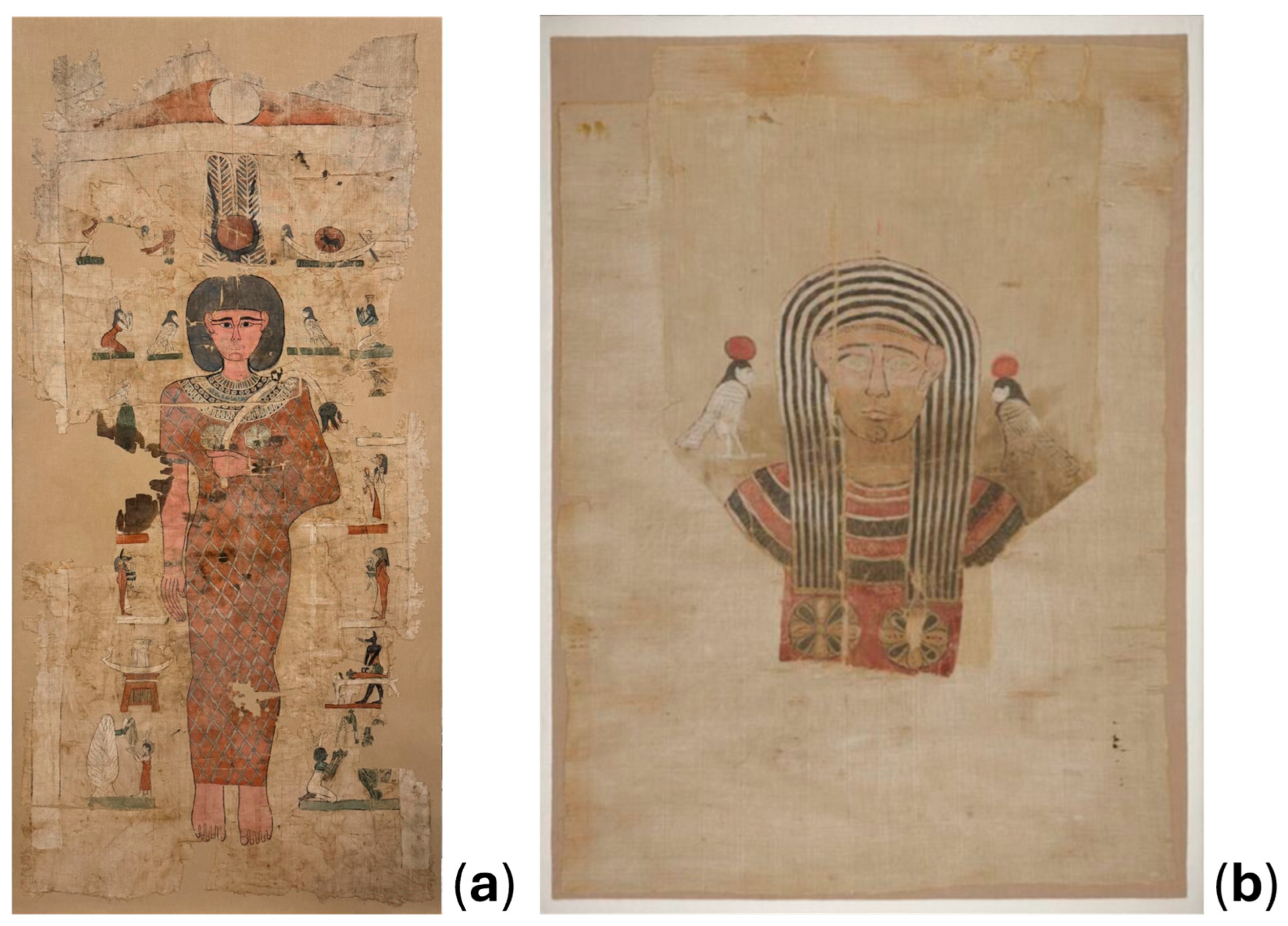
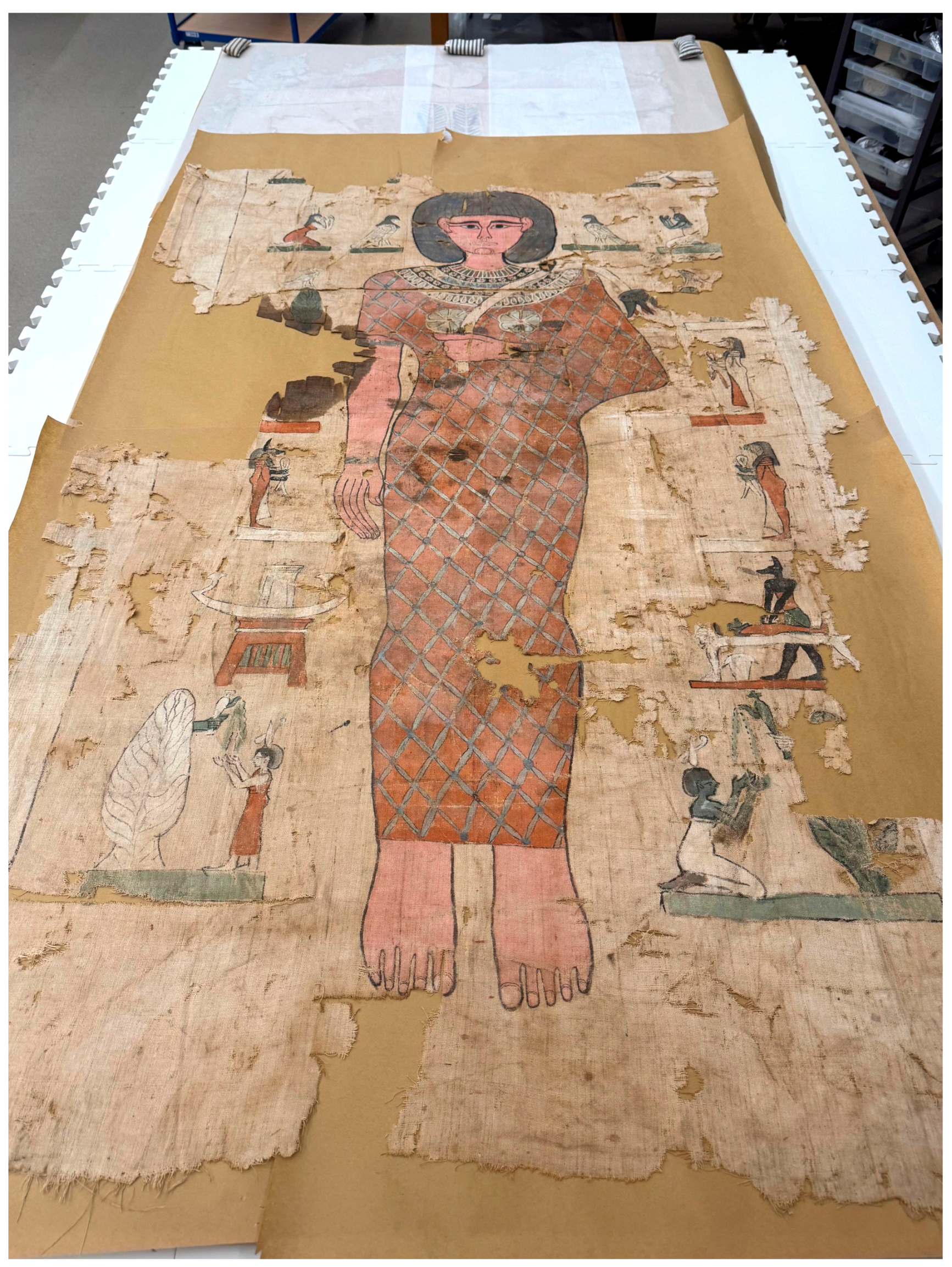
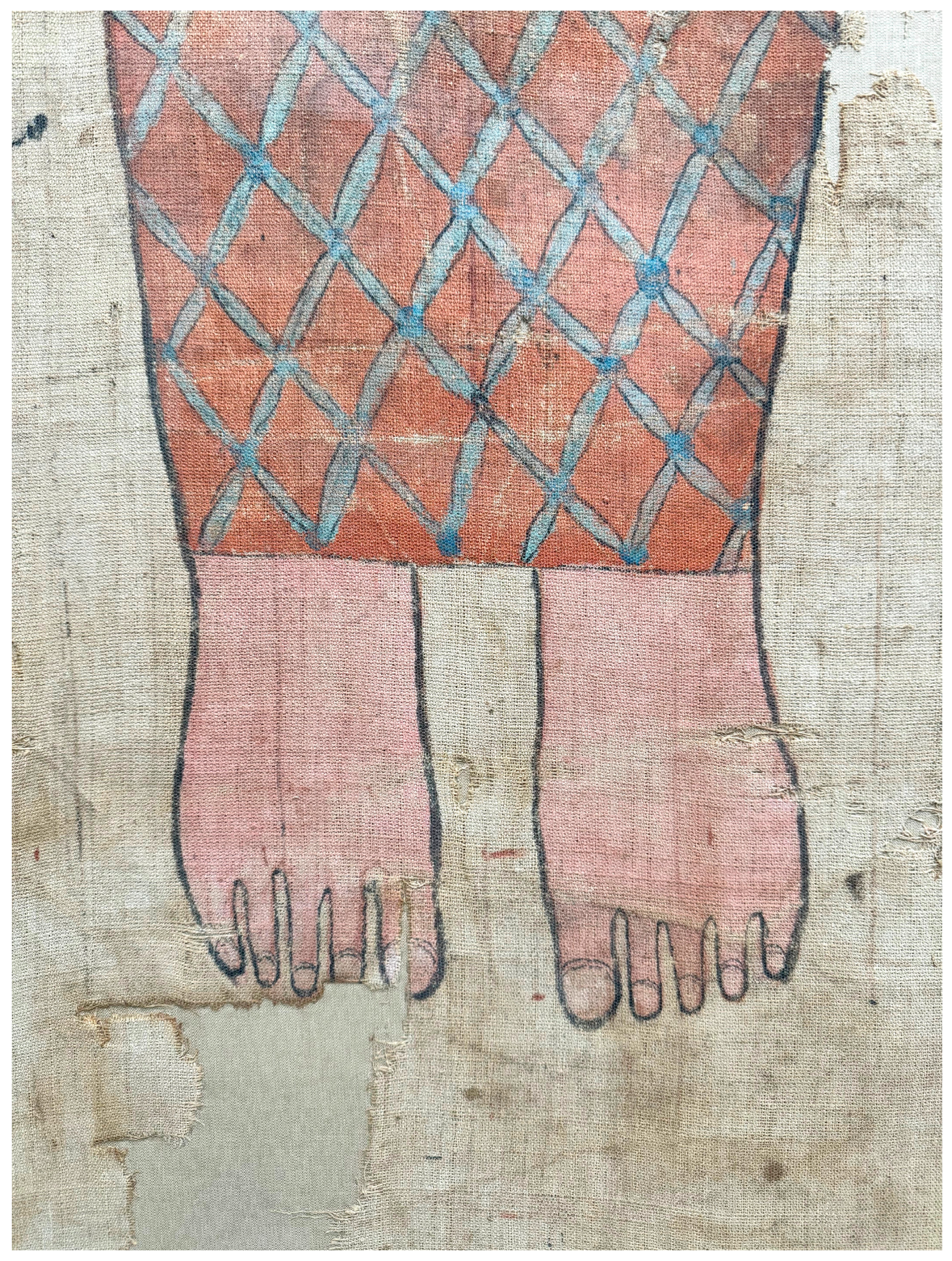
3]. In both objects, the deceased is shown with iconography representing them as a particular deity associated with death and rebirth, reflecting hopes that they would likewise be transfigured into a divine being and live forever in the afterlife. A nearly complete shroud, accession number 2177-1900, depicts a woman in the form of the goddess Hathor (
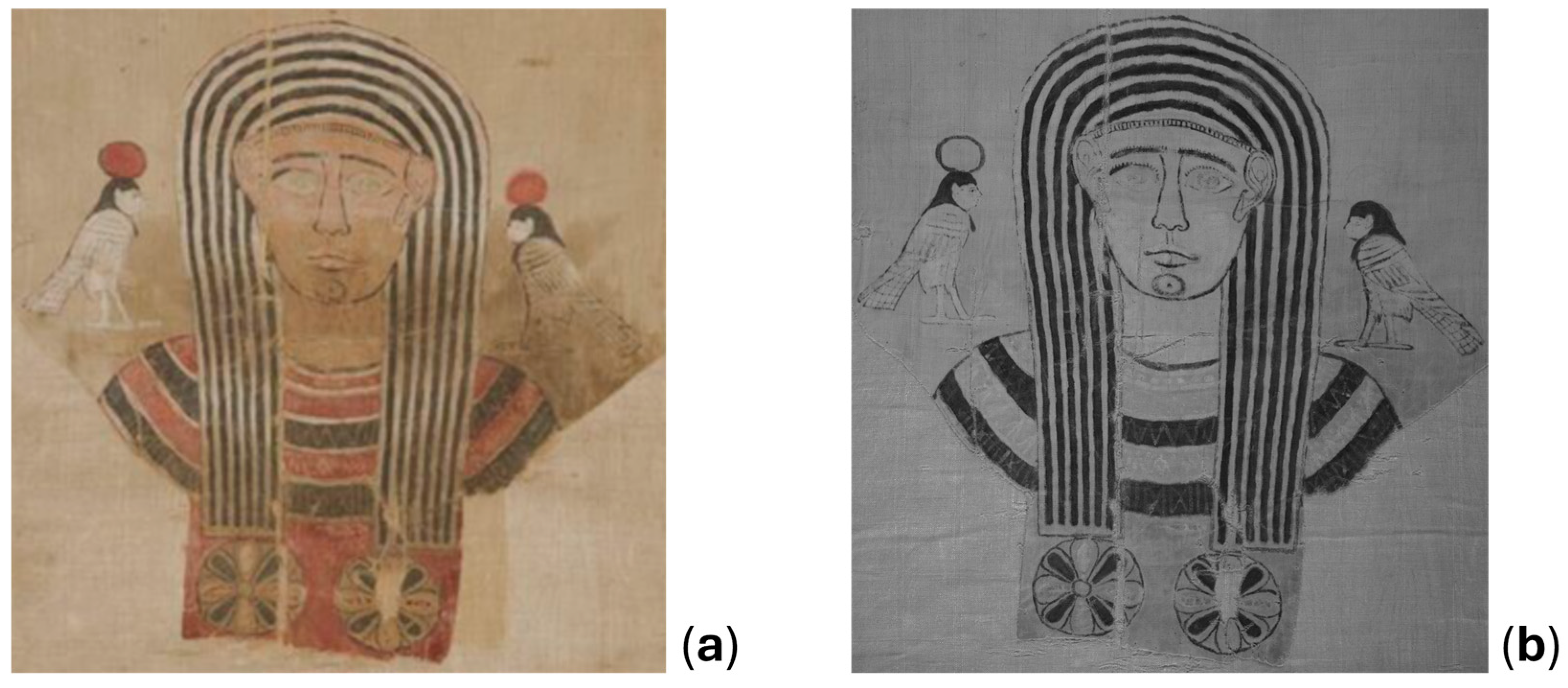
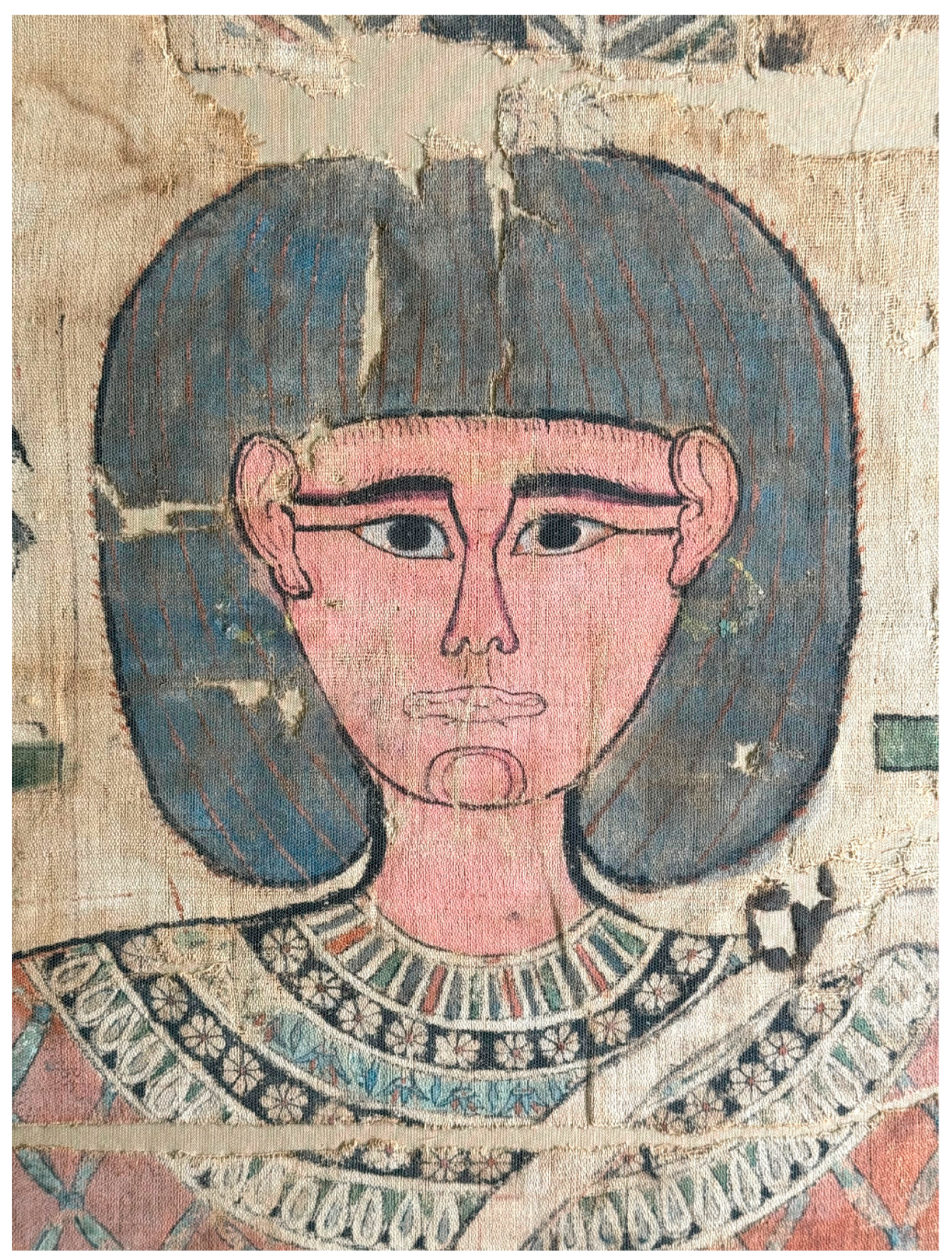
Figure 1a). A much smaller fragment, accession number 2131-1900, preserves the head of a man as the god Osiris (
Figure 1b). Such shrouds at once protected the body, facilitated in their transfiguration, and acted as an interface through which the living could continue to interact with the dead [
3] (p. 4).
These two shrouds are attributed to a period when Egypt was no longer an independent power but part of two successive empires, the Ptolemaic one and then the Roman. However, both the representations of the deceased, and the surrounding vignettes, reflect the continuity of Pharaonic Egyptian beliefs and funeral practices, and a new syncretism of Egyptian and Hellenistic iconography. Indeed, the very placing of shrouds over the body represents the continuation of a tradition which can be traced back at least to the Third Intermediate Period (c.1077-c.943 BCE), where the deceased’s wrappings occasionally incorporated a shroud depicting either the god Osiris or, more rarely, other divine figures, with whom they were identified [
4] (pp. 381–382). Such ‘Osiris cloths’ are mostly associated with tombs from the area of Thebes [
5,
6,
7] (p. 25, Figure 33 therein), [
8]. However, unprovenanced examples suggest that the tradition may have been practiced more widely [
8] (p. 163).
On these early shrouds, regardless of actual gender, the deceased is predominantly associated with Osiris, god of the afterlife and the mythological prototype for the practice of mummification. However, already by the Late Period (664-332 BCE) deceased female individuals were occasionally identified as Hathor in funerary texts [
9] (pp. 193–196). By the Ptolemaic period, a female association with Hathor became increasingly common, as exemplified by V&A 2177-1900. Although Hathor is most well-known as a goddess of love and music, she also played a role in afterlife rituals, where she helped to guide the deceased on their journey as “mistress of the West”, paralleling Osiris’ epithet of “Foremost-of-Westerners”. Similarly, she protected and assisted the dead as “Lady of the Southern Sycamore”. In this way, Hathor became increasingly realised as a female counterpart to Osiris in funerary contexts [
3] (pp. 115–116). This suggests an increasing concern with encapsulating the deceased’s individuality in funerary depictions, providing women and men equal means of becoming transfigured into the afterlife whilst visually communicating their unique gendered social identities [
2] (p. 41).
Very little remains of 2131-1900, only the head and shoulders of an originally full-length figure, now mounted on top of a plain unpainted ancient cloth (
Figure 1). Given the neat cutting of the surviving portion, this was clearly done deliberately and post-discovery. One potential explanation is that, because these cloths were placed directly over a wrapped body, gradual decomposition typically led to significant staining and degradation of burial textiles. With desirability to potential buyers in mind, the dealer may have removed any areas which were especially damaged. What does remain of 2131-1900 shows the deceased with a striped
nemes headdress, a traditional symbol of divine kingship in ancient Egypt and reflecting Osiris’ role as lord of the underworld. Below that, they wear a
wesekh or ‘broad collar’, an adornment conventionally associated with protection of the deceased, represented in alternating red and black rows with patterning in yellow emulating coloured strung beads.
Given the incomplete nature of this shroud, it is difficult to establish what else the full body would have looked like. Parallel examples indicate that the figure would typically have had arms crossed and hands holding the crook and flail, emblems of royal authority and attributes of Osiris, although this is not always the case [
3] (p. 33). More likely, the figure would have been adorned in a beaded net (discussed further below). On either side of this figure’s head are two human headed
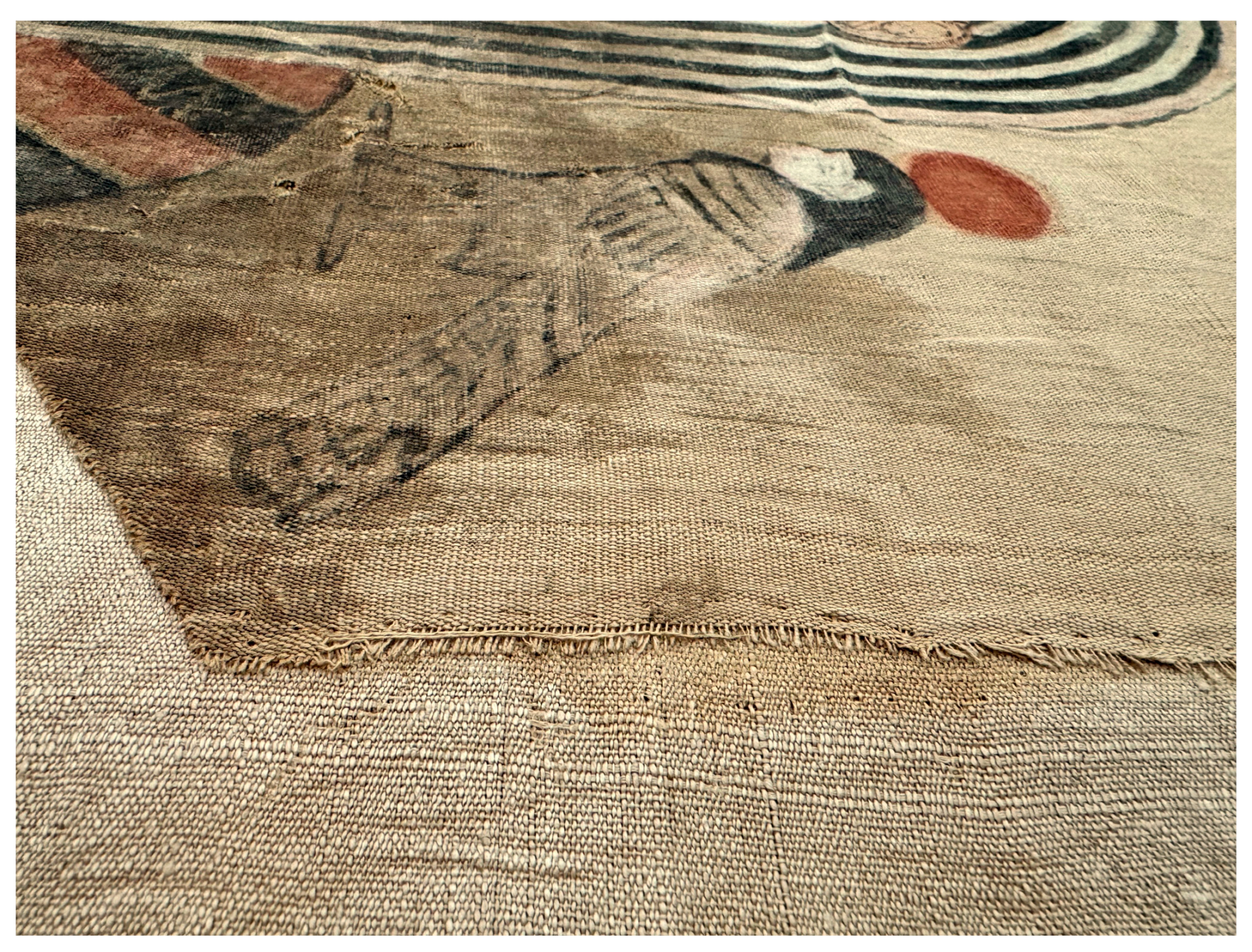
ba-birds with Sun-disks. The
ba, often translated as ‘personality’, represented the part of the deceased’s soul that left the body at death and could pass between the worlds of the living and dead. These were likely just the first of two complete vertical registers of vignettes running the length of the shroud, either side of the figure, as with 2177-1900.
On 2177-1900, the individual is framed within an architectural setting with columns. She is shown with kohl-lined eyes and long black hair topped with a Hathoric crown, consisting of a Sun disk, ram’s horns and dual feathers. Long flowing hair was an erotic symbol, reflecting female sexuality and fertility as well as associating them with the divine [
10] (p. 63), [
2] (pp. 101–102). Similarly, the figure’s tight-fitting dress and emphasised breast caps in the form of stylised flowers were also intended to emphasise femininity and sexuality. Additionally, as a form of dress widely associated with goddesses in ancient Egypt, it again reinforced more generally the deceased’s own rebirth as a deity [
2] (p. 129).
The figure on 2177-1900 has one arm by her side and the other bent, holding a lily-sceptre to the chest. The motif of the lily-sceptre likely originated in curved fly-whisks, called
ḫwi in Egyptian, deriving from a root
ḫwi ‘to protect’. Their depiction on shrouds could therefore be read almost as a visual pun [
11] (p. 295). This pose and accoutrement originated with Theban representations of Egyptian queens and priestesses (known as God’s Wives of Amun) from the New Kingdom, and which had a resurgence in elite and royal statuary during the Ptolemaic period [
11] (pp. 298–300). In this way, dress, pose and hair served multiple purposes: emphasising the individual’s gender identity; linking them with Hathor as goddess of the underworld, and particularly her aspects of sexuality and fertility; and emphasising the regenerative potential, social and religious roles of women in life and death. Such shrouds show how their owners could flexibly draw upon a wide range of visual language to make statements of identity and representation [
3] (pp. 116–123).
Across the figure’s body is a lattice pattern, intended to represent a blue beaded net. This again reflects continuity of a religious tradition dating back to the Third Intermediate Period, where nets made of faience beads were placed over the body [
4] (pp. 290–293). These bead nets had an amuletic function. Their complex symbolism associated them at once with protection, allowing the deceased to entrap dangers on their journey to the afterlife; the daily journey of the Sun, and the goddess Nut who swallowed and rebirthed the Sun each day, therefore the cycle of life and regeneration; and with Osiris, potentially in particular a form of Osiris known as ‘Osiris-the-Wrapped’ [
12] (pp. 81–83), [
13] (pp. 403–406), [
14] (p. 307). It has also been noted that beadwork dresses were frequently associated with coronations and jubilees which were festivals of regeneration, where they were worn by Hathor [
15] (p. 79).
Either side of the figure run two vertical registers of funerary motifs. They draw from a standard repertoire which were usually shown in in pairs either mirrored exactly or with minor changes, and represent divine figures performing rituals to aid the deceased on their journey. From top to bottom, the vignettes on this shroud are:
The mandjet (dawn-barque) left of the figure. Although this area is damaged, the boat would have carried the scarab-headed god Khepri, who represented the morning Sun. This boat carried the Sun across the sky during the day.
The mesektet (dusk-barque) right of the figure, carrying a Sun-disk containing a ram representing Atum, god of the evening Sun. This barque carried the Sun through the underworld at night.
Human-headed ba birds either side of the figure. Behind the left-hand ba is the goddess Isis, kneeling and mourning, and behind the right ba-bird her sister Nephthys, in the same pose.
Two willow trees either side of the figure’s shoulders, topped by bennu birds. The willow was closely associated with Osiris as it was believed to be the tree that grew around his coffin in Byblos, in the myth of his death and resurrection.
Standing representations of the four sons of Horus, who protected the deceased in the afterlife. To the left of the figure are the human-headed Imsety and jackal-headed Duamutef, and to the right are the baboon-headed Hapi and falcon-headed Qebehsenuef. All four are holding a tyet-knot, a symbol of protection associated particularly with Isis.
A papyrus
neshmet-barque atop a shrine. This boat was connected with Osiris’ voyage in the underworld, and in yearly festivals the journey to his believed tomb at Abydos was re-enacted on the Nile. This boat therefore represented the vehicle that would similarly carry the deceased into the underworld, allowing them to symbolically re-enact Osiris’ mythological journey [
3] (p. 147).
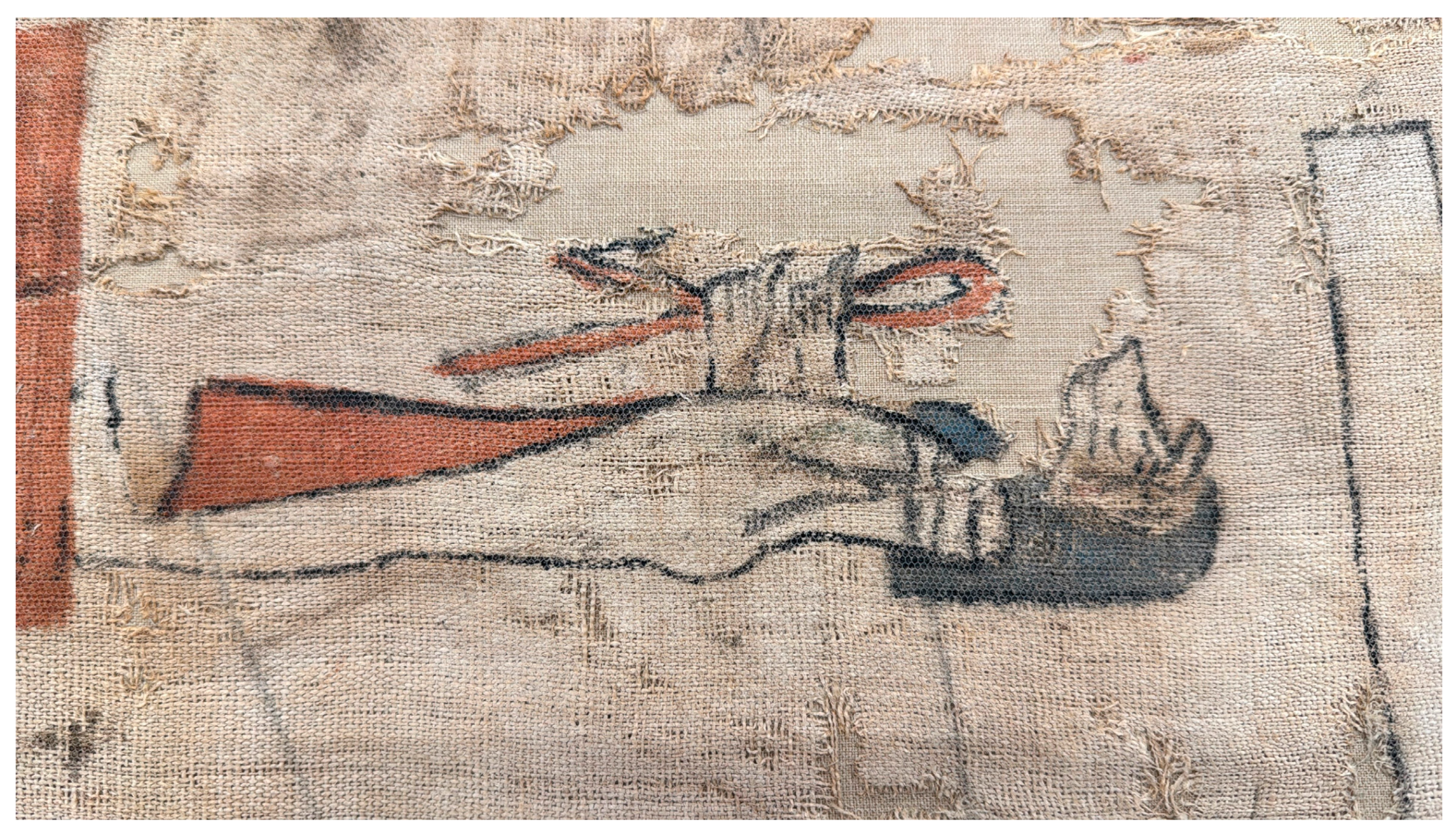
Anubis, god of embalming, preparing the deceased’s body upon a bier.
By the feet, two representations of tree goddesses offering cool water—primarily referencing Hathor’s protective role as “Lady of the Sycamore”, although manifestations of the sycamore goddess were also associated with the goddesses Mut and Isis.
As these shrouds were not found through controlled excavation, their original burial contexts—and the circumstances of their discovery—are unknown. However, they do match forms of such shrouds well-attested and associated with Thebes, further strengthened by the lily-sceptre iconography on 2177-1900 which also originated there. It is therefore plausible that these pieces likewise come from burials in the Theban area, quite possibly the site of Sheikh Abd el-Qurna on the West Bank. Luxor was second only to Cairo as a locus for antiquities dealers and traders, and Sheikh Abd el-Qurna was particularly notorious as a place for looting because a contemporary village lay amongst the tombs and its inhabitants were involved in the illicit excavation and sale of tomb goods on an almost industrial scale [
16] (pp. 114–115). Otherwise, it is entirely possible that the shrouds, whilst originating from Thebes, were actually bought in Cairo, as this was the primary centre of the antiquities trade [
16] (pp. 76–92). Dealers frequently brought objects here from across Egypt as almost all tourists including Egyptologists (and therefore potential customers), passed through the city.
Although little is known of the shrouds’ discovery, the circumstances of their acquisition by the V&A are easier to reconstruct. The shrouds were two of 347 textiles once in the collection of Major William Joseph Myers (1858–1899). Myers was a distinguished military officer, serving in South Africa, Sudan and India and, between 1882 and 1887, Egypt. Myers was a keen collector, and during the years he was stationed there—as well as on subsequent visits to Egypt between 1894 and 1897—he acquired some 1300 Egyptian objects, primarily from dealers in Cairo [
17] (pp. 1–6). Whilst his diaries (now held by Eton College) are patchy in their detail about when and from whom he acquired, details occasionally emerge. Well-known dealers like Kyticas, Damianos, Todros and Michel Casira are mentioned in passing; Casira was one of the foremost dealers in Cairo, based right around the corner from Shepheard’s hotel, and so was frequented by most of the collectors active in the late nineteenth century [
16] (p. 206).
Myers’ diaries reveal that he visited Luxor in 1884–1885 and 1886–1887, and one last time in 1896. It is clear that he purchased whilst there, but no objects such as these shrouds are mentioned individually:
“Monday, 16 February: After having a wash went off to some vendors of antiques/& brought some from The German vice consul who has collected a quantity of things. Mr Moore also got some nice things. We were pestered the whole day over the other side by vendors of some antiques, some genuine & some not”.
(Diary 5, entry for Monday February 16)
“I employed the rest of our time ashore in visiting the anticha dealers, bought a few/things from Moustapha & Mohammed but they hadn’t got much. ?Todros who has the most things is in Cairo”.
(Diary 8, entry for Monday 11 October)
“Spent morning & afternoon in antiquity shops but there is very little worth having & the prices asked are very high especially by Todros the German Consul who has the largest stock”.
(Diary 31 (entry for Saturday 20 February 1896))
During Myers’ lifetime, a significant portion of his collection was placed on loan to the V&A, and following his death it was distributed. Most pharaonic and some later objects were given to Eton College, where he had been a student, and where they today form the core of the Museum of Antiquities there. However, the vast majority of the textile material, including these two shrouds, was eventually given to the V&A permanently through the executor of his will Robert Taylor and his brother Dudley B. Myers [
18] (pp. 6–7).
Reason for Analysis and Conservation Treatment
In preparation for display, the shrouds underwent documentation, analysis, conservation, and mounting. Both had been conserved using adhesive treatments in the 1970s and required further attention. Space constraints within the exhibition necessitated the textiles to be displayed upright in a two-dimensional, canvas-like manner.
The well-preserved paint layers on the face of the woman contrasted to the degraded paint layers elsewhere on the shroud and raised the possibility that the shroud may have been restored following excavation in the late 19th century. Scientific analysis and technical examination of the objects was planned to determine the composition of the pigments and attempt to distinguish original materials from potential modern interventions, understand the processes of paint application, and check for the presence of pesticides and other hazardous materials. Attention was paid to published accounts of analysis of similar objects in the literature [
19] (pp. 107–121), [
20,
21] (pp. 145–155), [
22] (pp. 845–860).
The failure of the previous conservation adhesive support on the full shroud necessitated its reversal and the adoption of an alternative conservation approach to mounting for display. A new mounting system would take a less interventive, and more easily reversible approach, following current best practise. The smaller fragment required supplementary stitching to consolidate the previous adhesive support, before re-mounting onto a new board.
For the first time, we were able to examine the objects without the constraints of 20th-century display alterations. This new access enabled fresh scientific analyses and allowed us to explore questions about the pigments used on the shrouds and their post excavation history. This multidisciplinary study makes several contributions. Analysis of the shrouds and the materials used in their decoration has added to our knowledge of the pigments available to artists in the Ptolemaic and Roman periods, and offered valuable insight into aspects of artistic practice and production. It also highlights current approaches to the conservation and display of these ancient objects. More broadly, this study presents two further examples of these types of shrouds, making them accessible for academic research and discussion.
2. Materials and Methods
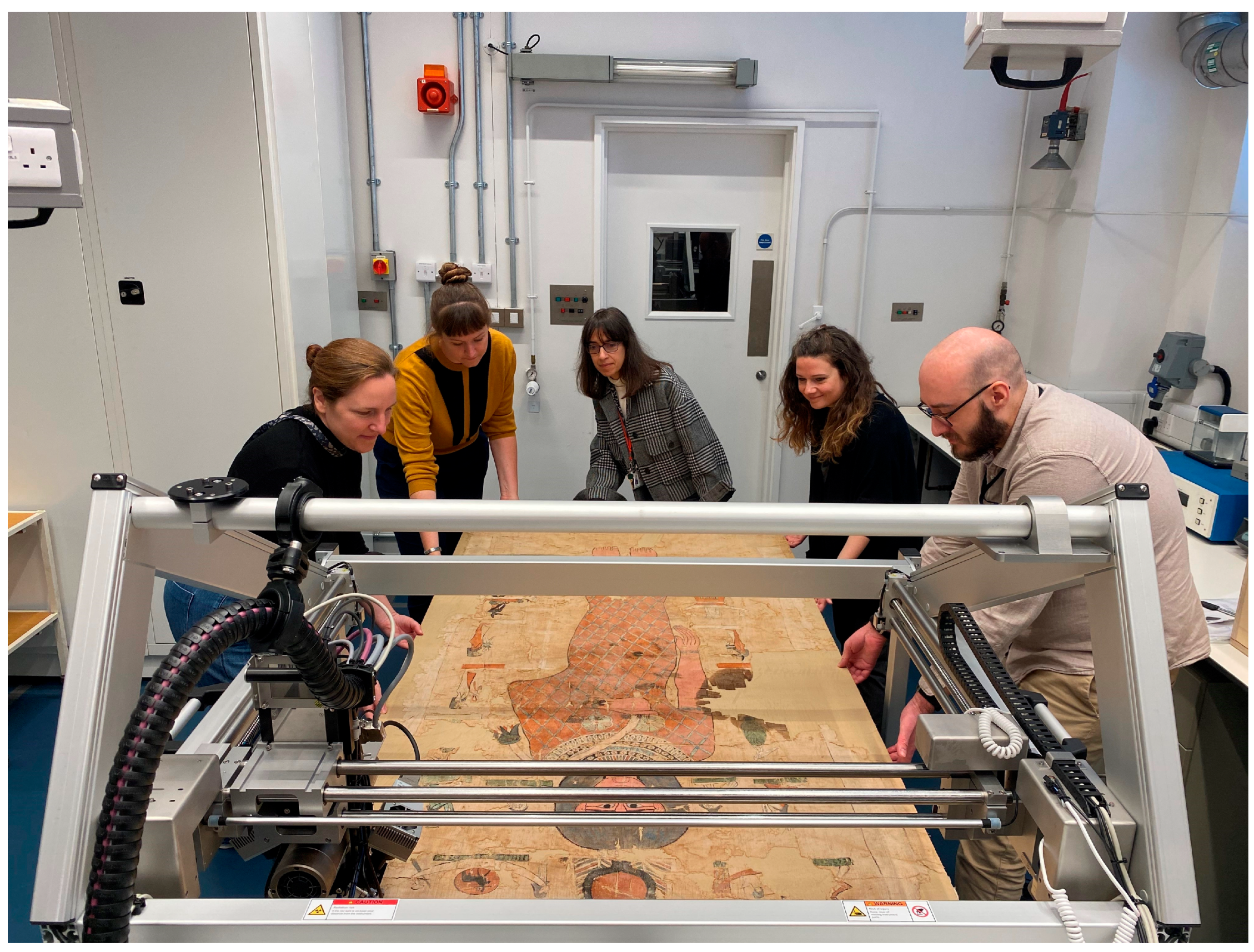
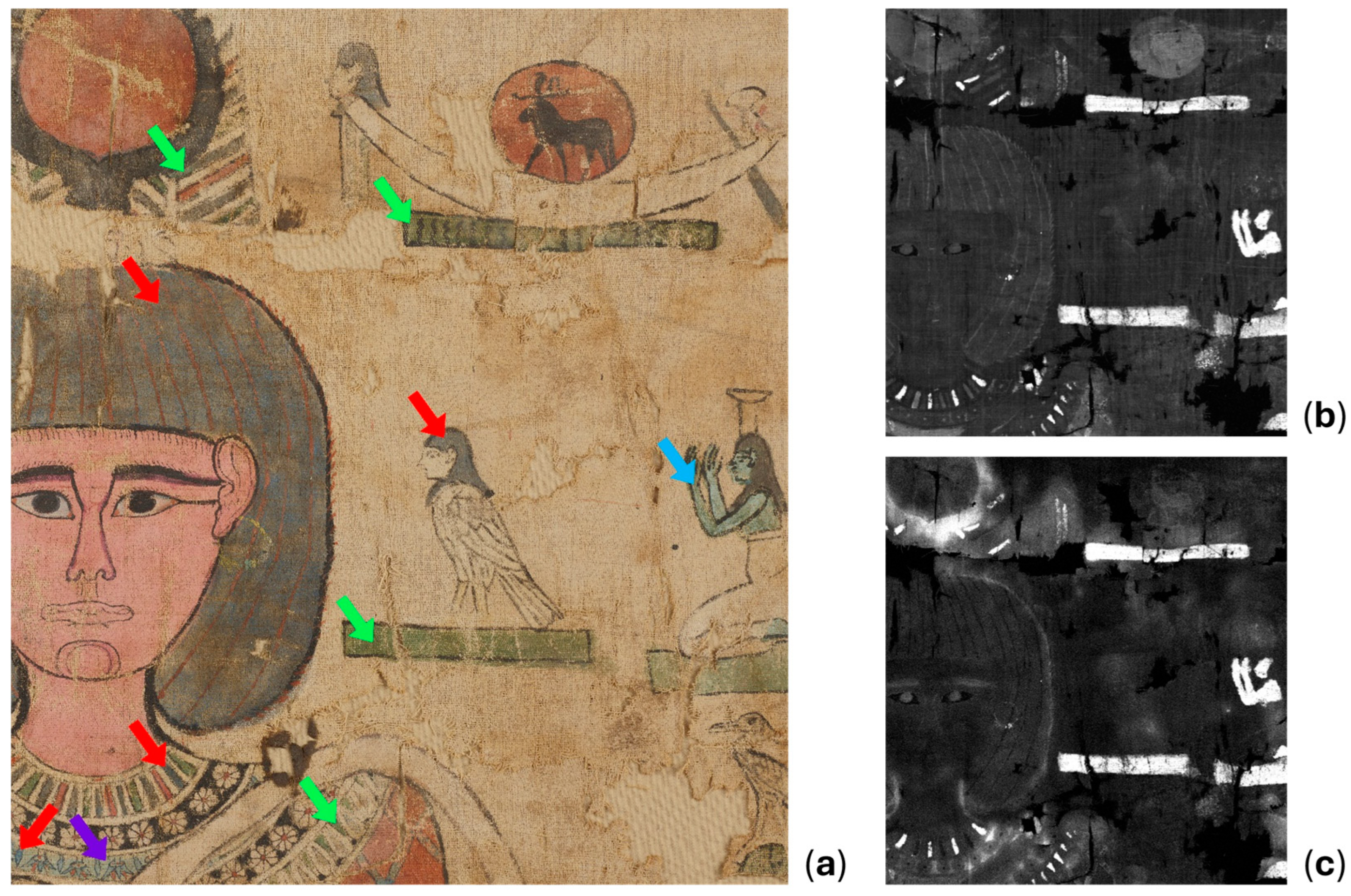
Documentation and analysis of the textiles included visible and ultraviolet photography (UV), infrared reflectography (IRR), digital microscopy, scanning X-ray fluorescence imaging (XRF) (
Figure 2) and Raman microscopy. Analysis of both shrouds was completed prior to their conservation treatment.
Scanning X-ray fluorescence (XRF)—Scanning X-ray fluorescence (XRF) was carried out using a Bruker M6 Jetstream spectrometer (Bruker Nano GmbH, Berlin, Germany) equipped with a Rh-target microfocus X-ray tube, and two 60 mm2 XFlash silicon drift detectors (SDD). The X-ray tube was operated at 50 kV and 400 μA. The elemental distribution maps of the table areas were collected with a 360 μm spot size, a 490 μm pixel size and a dwell time of 60 ms/pixel. The X-ray fluorescence spectra were calibrated, fitted and processed using the Bruker M6 Jetstream software. A portion of the full shroud (2177-1900) and the entire shroud fragment (2131-1900) were analysed with this technique.
UV photography—UV images were captured with the object positioned horizontally on an easel in a small, darkened room. Two vertical luminaires, each fitted with four UV/BLB tubes (240 V, 50 Hz), were positioned at a 45-degree angle to the object; the lamps emit both UV and blue light, so the images reflect the combined response rather than strictly UV-induced fluorescence. The images were captured with a Nikon D3400 cSamera (Nikon Corporation, Tokyo, Japan) using an 18–55 mm f/3.5–5.6 G lens as part of conservation documentation. Due to spatial constraints, a tripod could not be placed, and the camera was handheld in auto/near-auto mode. A fast shutter speed was therefore necessary to prevent motion blur, and the camera automatically increased the ISO sensitivity (up to ISO 12800). Although this increases noise, the resulting images were sufficiently sharp for recording material and surface features for analysis.
Digital microscopy—Digital microscopy images were obtained using a Hirox HRX-01 (Hirox Japan Co., Ltd., Tokyo, Japan) with a portable flexible arm and an HR-2016 lens. Magnifications ranged from ×20 to ×130, as recorded on each image. The integrated LED lighting of the microscope was used, with intensity and angle adjusted to optimise image clarity. The objects were positioned flat on a stable surface during imaging, and the microscope was aligned perpendicular to the object’s surface to ensure an even focus. Images were captured using Hirox control software, Ver2.32, with no post-processing applied other than image rotation or cropping.
Infrared reflectography—Infrared reflectography (IRR) images were produced using an Opus Apollo photographic system (Opus Instruments Ltd., Cambridge, UK), capable of capturing images in the infrared region (900–1700 nm). The exposure settings ranged between 10 and 15 ms. The imaging session took place in a photographic studio under halogen light illumination. The shrouds were supported horizontally on an easel, with the imaged surface facing the camera. The camera was positioned 216 cm away from the surface for the overall images of 2177-1900. For detail images corresponding to the area scanned with XRF and the overall image of 2131-1900, the camera was placed at a distance of 142 cm. The black and white levels of the images were adjusted in Adobe Photoshop 2025 using the Levels adjustment tool to optimise contrast and clarity.
Raman microscopy—A Horiba XploRA spectrometer (Horiba, Kyoto, Japan) equipped with three diode lasers (532, 638 and 785 nm) and an Olympus microscope was used for all Raman experiments carried out on the fragments. Only the ×50 objective was used, providing an overall magnification of 500. The power at the sample was always kept below 2 mW. Most measurements were performed with the 785 nm laser, although on a few occasions the 638 nm laser was also used. Total accumulation times varied between 3 s and 3 min and no spectral manipulations were used, apart from the use of the LabSpec v.6 software proprietary ICS process when needed.
Conservation materials—Linen fabric (Ulster Weavers, Lisburn, Northern Ireland), Avitera dyes (Archroma, Pratteln, Switzerland) Lanaset dyes (Huntsman, Duxford, UK), monofilament nylon net (Dukeries Textiles, Nottingham, UK), polyester Mara 220 sewing threads (Gutermann, Gutach-Breisgau, Germany), Stabiltex plainweave monofilament polyester fabric (Sefar, Heiden Switzerland).
Mounting materials—Tycore archival honeycomb board (Conservation by Design, Upper Heyford, United Kingdom), cotton display fabric (Baumann Creation, Langenthal, Switzerland), Optium acrylic glazing (Tru Vue, IL, USA), cotton domette (Whaleys, Bradford, UK).
3. Technical Examination and Scientific Analysis
The two shrouds were analysed to understand their creation process, identify the pigments used, and investigate whether there is evidence of modern interventions such as retouching.
Both shrouds are in an exceptionally good state of preservation, particularly considering their age. Elemental analysis identified bromine in shroud 2131-1900, consistent with the historical use of methyl bromide—a fumigant widely employed between 1938 and its ban in 2006. This suggests that the shroud may have undergone chemical treatment for pest control. In contrast, bromine was not detected in shroud 2177-1900. However, the absence of bromine does not exclude the possibility that other pesticides or fumigants were used, nor does it confirm that the shroud was entirely untreated.
3.1. Full Shroud, 2177-1900
The full shroud is a single piece of cloth, measuring 1284 mm in width and 2338 mm in length. The textile is presumed to be linen and composed of S-spun threads. The coarse, plain weave has 15/8 threads per cm. There are no woven features.
The textile was prepared with a white ground layer, followed by a red grid system to sketch out where the individual vignettes would be placed, and to provide a framing device. Preliminary drawings were painted in flat colours, with black painted outlines defining the various elements. The colour palette includes white, black, red, pink, light and dark blue, green, and yellow, generally applied in single layers, with some colour overlapping, mainly in the face and eyes, to add detail. The binding medium was not analysed, as this was beyond the scope of the examination.
Calcium, phosphorus and strontium are present throughout the linen, suggesting that these elements are part of the ground or priming layer, applied before the decoration. Notably, the white material used for the eyes has a slightly blue-grey hue, distinct from the white pigment seen elsewhere. XRF analysis confirmed the use of a lead-based white pigment for the eyes (
Figure 3).
Red paint was used to create a grid for mapping out the composition and ensuring symmetry over the white ground. It is also visible thinly applied for the preliminary underdrawings, and more heavily applied in the vibrant decoration of the clothing. Analysis revealed that all these areas contain lead, suggesting the presence of red lead, Pb
3O
4 (
Figure 3).
Three distinct blue and green tones can be observed on the painted surface: a dark blue pigment containing mainly copper and silicon, along with some iron; and two lighter pigments—light green and light blue—containing iron, potassium, and silicon (
Figure 4). These results suggest the presence of Egyptian blue and green earth. The dark blue pigment was used for the upper part of the wig, the collar decorations, the round beads on the net dress, and the petals of the lily.
The central portion of the five bands of the beaded collar has a prominent light blue colour, which is conspicuous in its difference. Its outlines appear washed out, or less defined, than the surrounding sections (
Figure 5). It was closely examined for any signs of later additions or retouching. The light blue base in this area appears to contain lead (
Figure 3), and the darker or black lines applied over it appear visually lighter or less saturated, likely due to the underlying light blue layer showing through or the darker pigment not fully covering it. A similar effect is visible with the dark outlines of the blue beads on the net dress. No evidence was found of this being a modern intervention, and the pigments and layering used are consistent with those found elsewhere on the painted surface.
Bright yellow pigments appear only on the woman’s gold hooped earrings and her bracelet. XRF analysis of the former detected lead and arsenic.
XRF mapping revealed the presence of strontium, chromium, manganese, titanium, and zinc in areas where the modern backing textile is exposed, helping to distinguish it from the original textile.
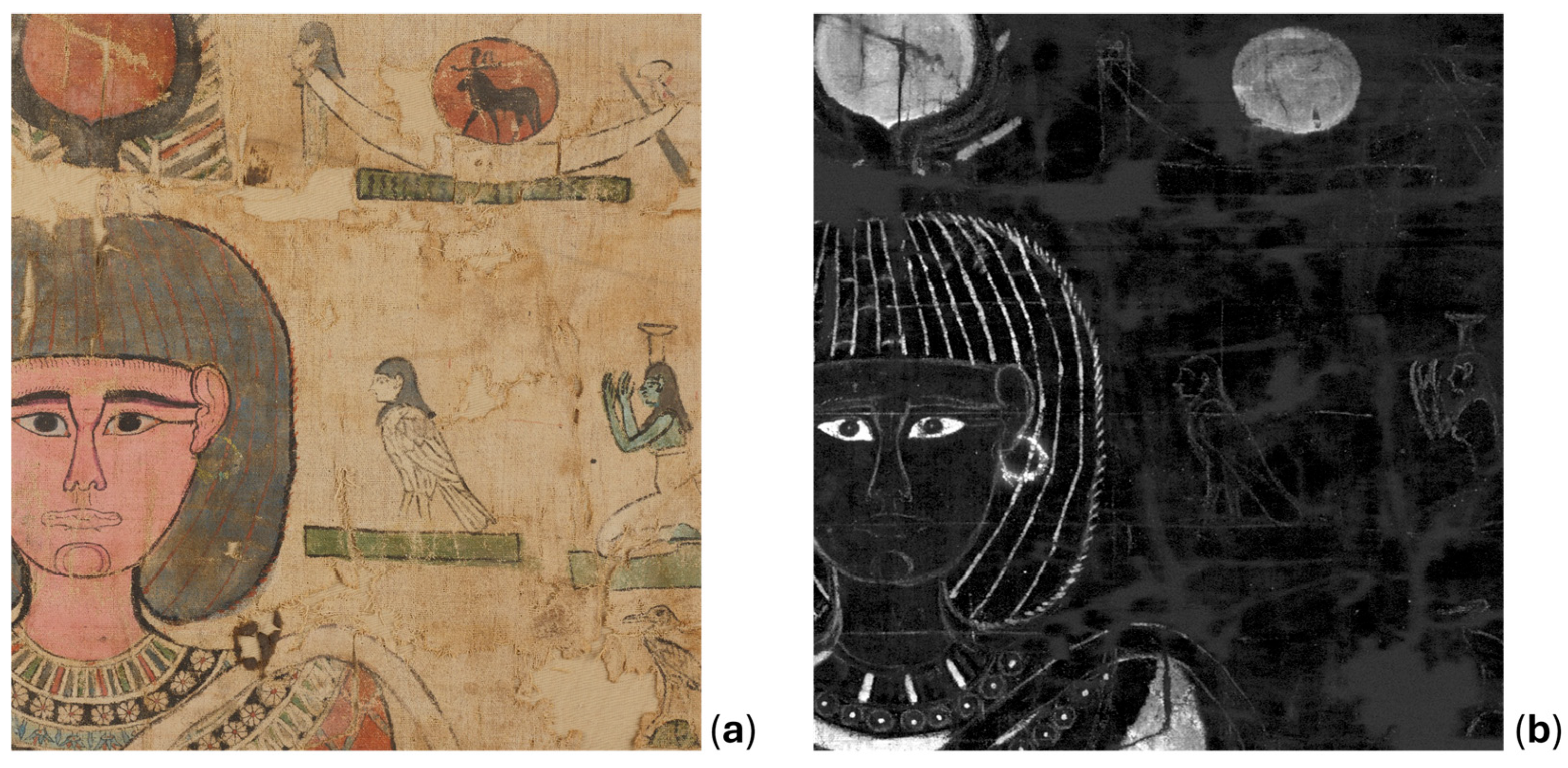
IRR and UV imaging were carried out to assess the absorption and reflection properties of the different materials, with the aim of investigating whether any later additions to the paint layers could be identified. No obvious additions or alterations were observed, apart from the presence of the modern backing textile which is clearly distinguishable from the original substrate.
3.2. Shroud Fragment, 2131-1900
The shroud fragment is comprised of two distinct textiles, a painted fragment applied to an unpainted textile, historically pinned, and now adhered together. The larger, unpainted cloth is a single piece, measuring 775 mm in width and 1065 mm in length. The textile is presumed linen and composed of S-spun threads. The medium-weight, plain weave fabric has 27/10 threads per cm. The fabric has a subtle striped effect created from self bands. The self bands each contain three threads and are woven in close pairs, spaced four threads apart. The pairs of bands are evenly spaced 46 threads apart. There are no other woven features.
The painted cloth fragment adhered on top is a single piece, measuring a maximum of 550 mm in width and 715 mm in length. The textile is presumed linen and comprises S-spun threads. The medium-weight, warp-faced, plain weave fabric has 30/11 threads per cm. It has no woven features.
The paint layers are notably thinner than those observed on the full shroud. If a ground layer is present, it is almost imperceptible to the naked eye and may consist of a very diluted priming layer. The binding media were not analysed. The palette includes white, black, red, pink, blue, yellow and gold-like pigments. On top of the priming layer, red paint was used to create a grid pattern of equally spaced horizontal and vertical lines, in addition to short markers. The red paint was also applied in a dilute manner for the underdrawings, and more substantially for inpainting the tunic and collar. XRF distribution maps show that iron is present in all of these areas. This suggests that the same red pigment, likely hematite (iron oxide Fe
2O
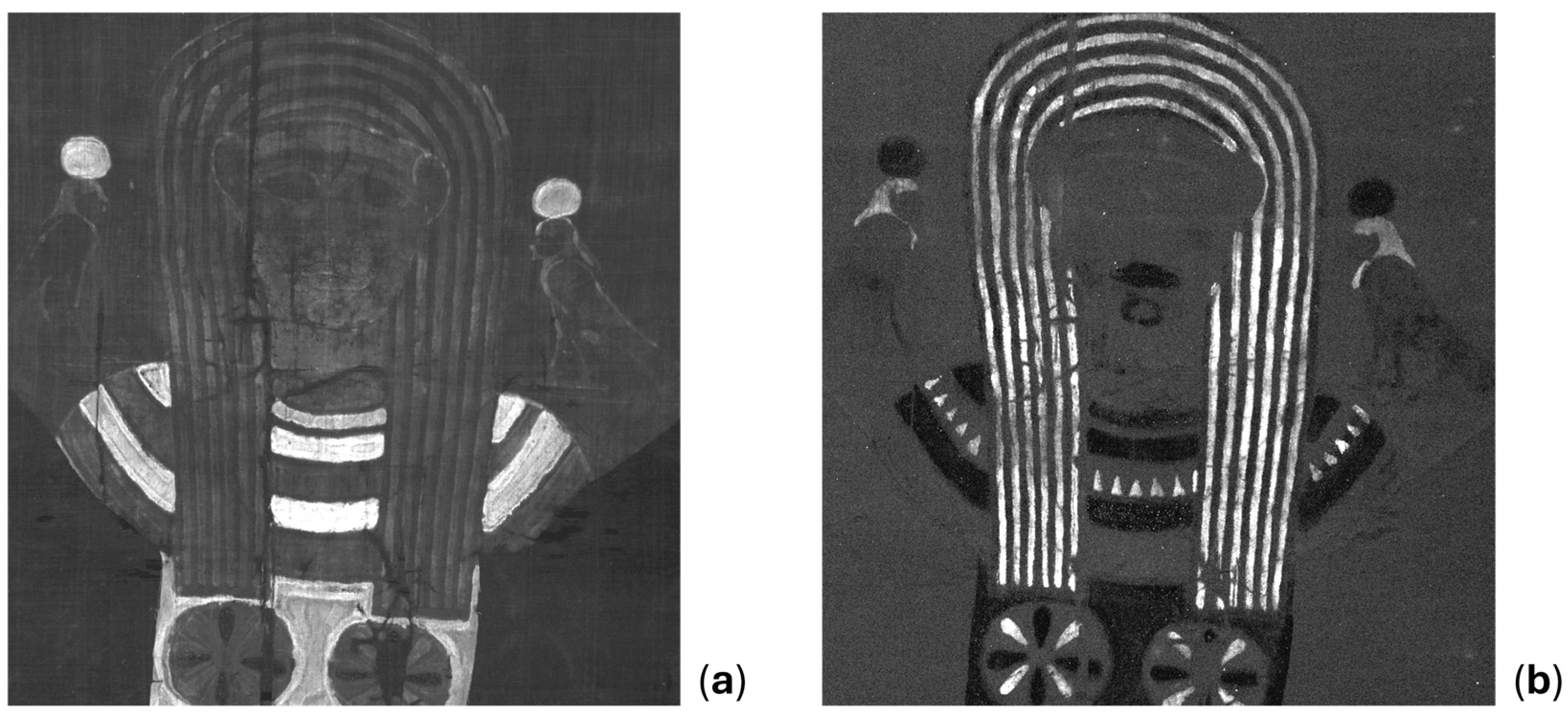
3), was used in varying concentrations for preparation and execution. Whether used in a diluted form for the preparatory drawing or more densely for the Sun-disk above the ba, the iron-containing red pigment is not visible in the IRR images (
Figure 6).
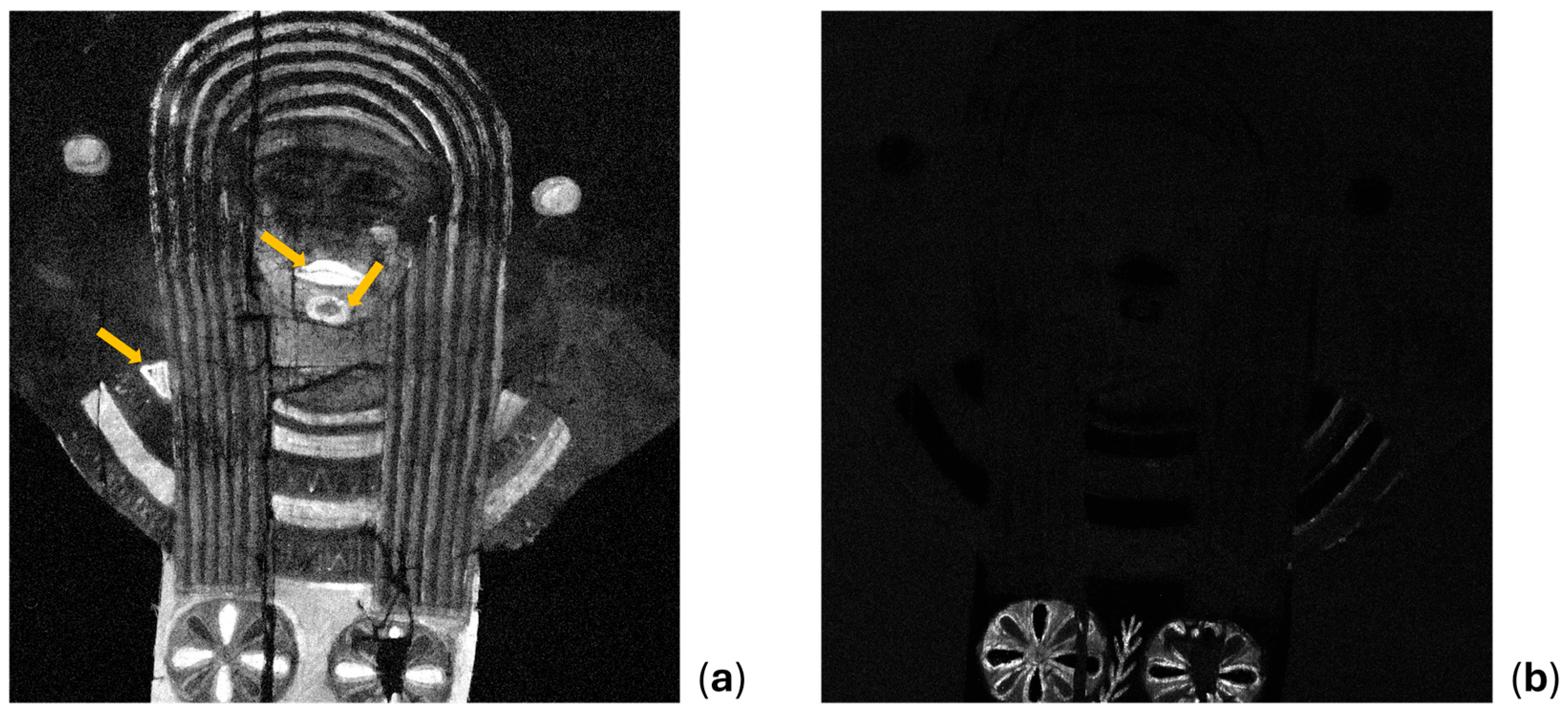
Black paint was used for the outlines and other decorative elements. The black paint detailing is clearly visible in IRR and provides greater definition to facial features, such as a curved central line on the lower lip and a strongly delineated chin. These lines were applied prior to the coloured paint layer we see under normal light in these areas. Sharp black drawing is also visible in IRR in otherwise stained and obscured areas such as the
ba figure on the right-hand side (
Figure 6). The XRF mapping identified a copper-containing pigment in some of these darker areas (
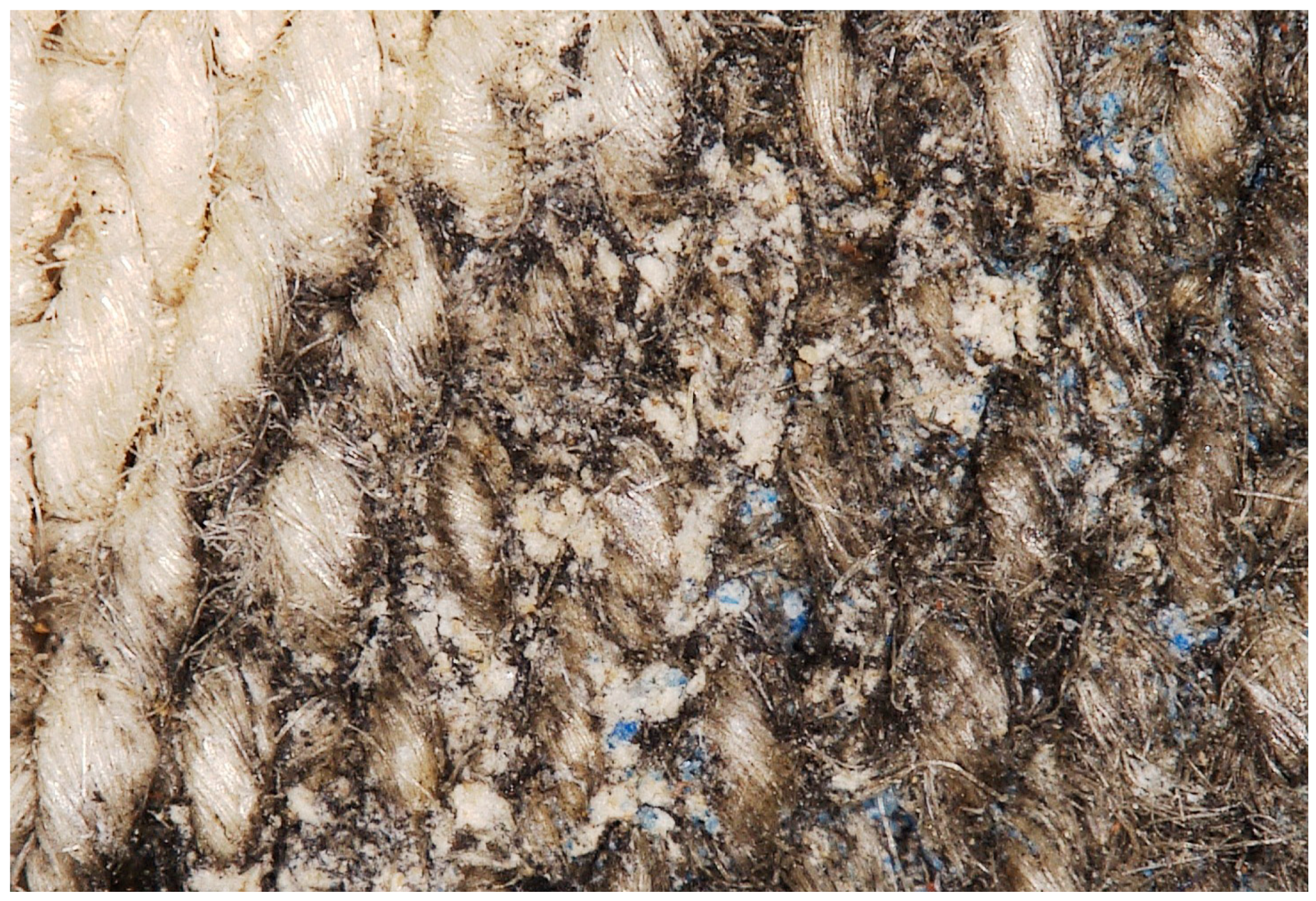
Figure 7b). Under magnification, blue particles were visible, suggesting that a small amount of Egyptian blue is present (
Figure 8). This copper-containing material can be observed in the dark lines of the wig and the triangular shapes in the central band of the collar, which at present are not discernibly different to the naked eye from the black painted areas.
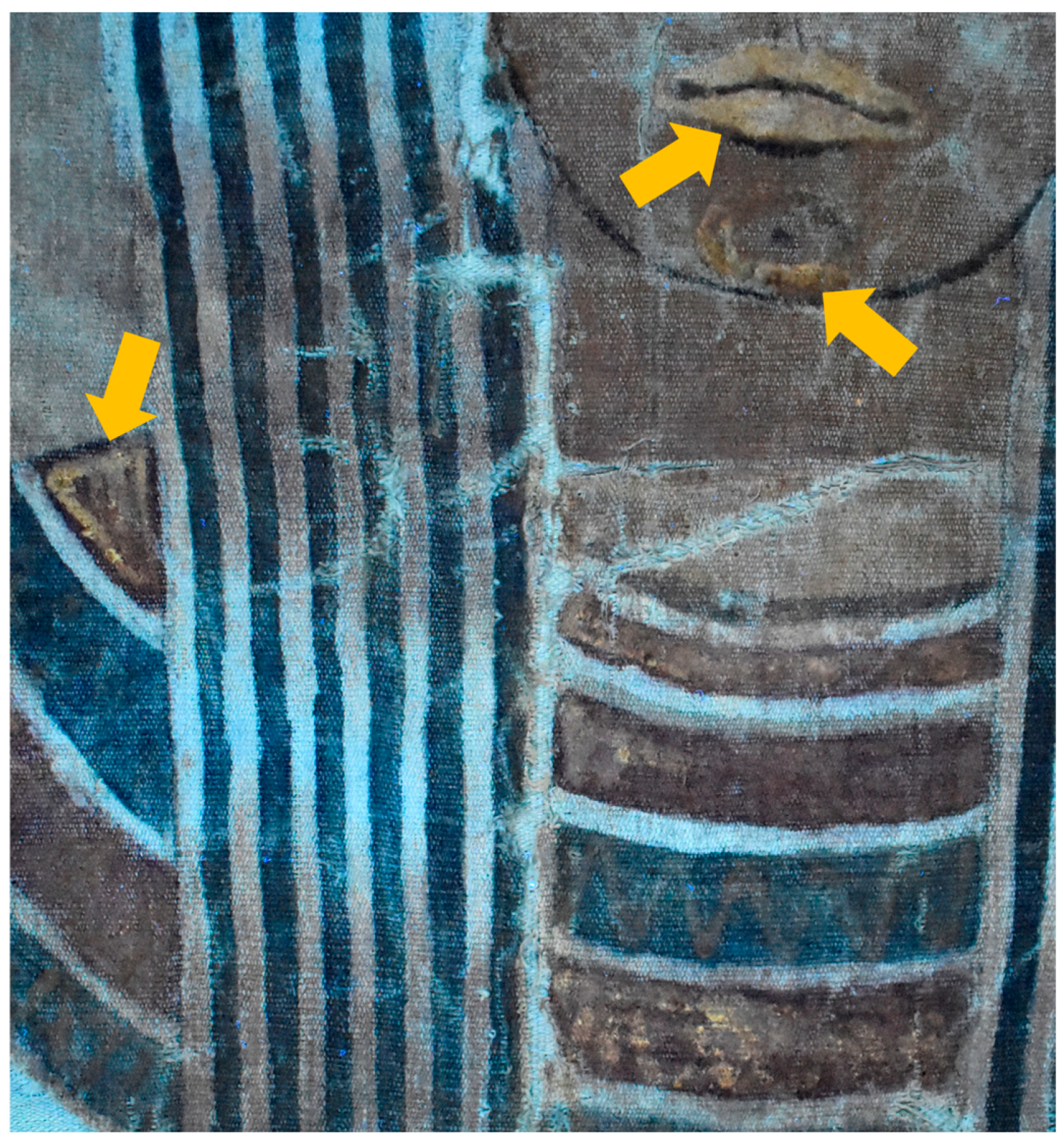
In the headdress, remnants of an orange-pink paint layer were noted along the lighter bands. This mostly lost layer appears semi-translucent under digital microscopy and fluoresces orange under UV light, suggesting the possible presence of the organic dye madder, now mostly faded (
Figure 9). XRF shows a strong sulfur signal in this area, alongside lead—both elements also present in the lips and chin (
Figure 10)—further suggesting that madder may be present in lake form. The flesh tones appear to be slightly different visually and do not contain lead. Elemental mapping shows sulfur, iron, calcium and potassium, with calcium and potassium found more broadly across the shroud.
The yellow paint used for decorative elements in the collar contains sulfur and lead, with sulfur particularly prominent in elemental maps (
Figure 10a). Under UV light, these yellow-painted details fluoresce strongly. The elemental map for arsenic revealed this element is present in the rosettes on the chest and in a sprig of myrtle leaves between them which is barely visible to the naked eye (
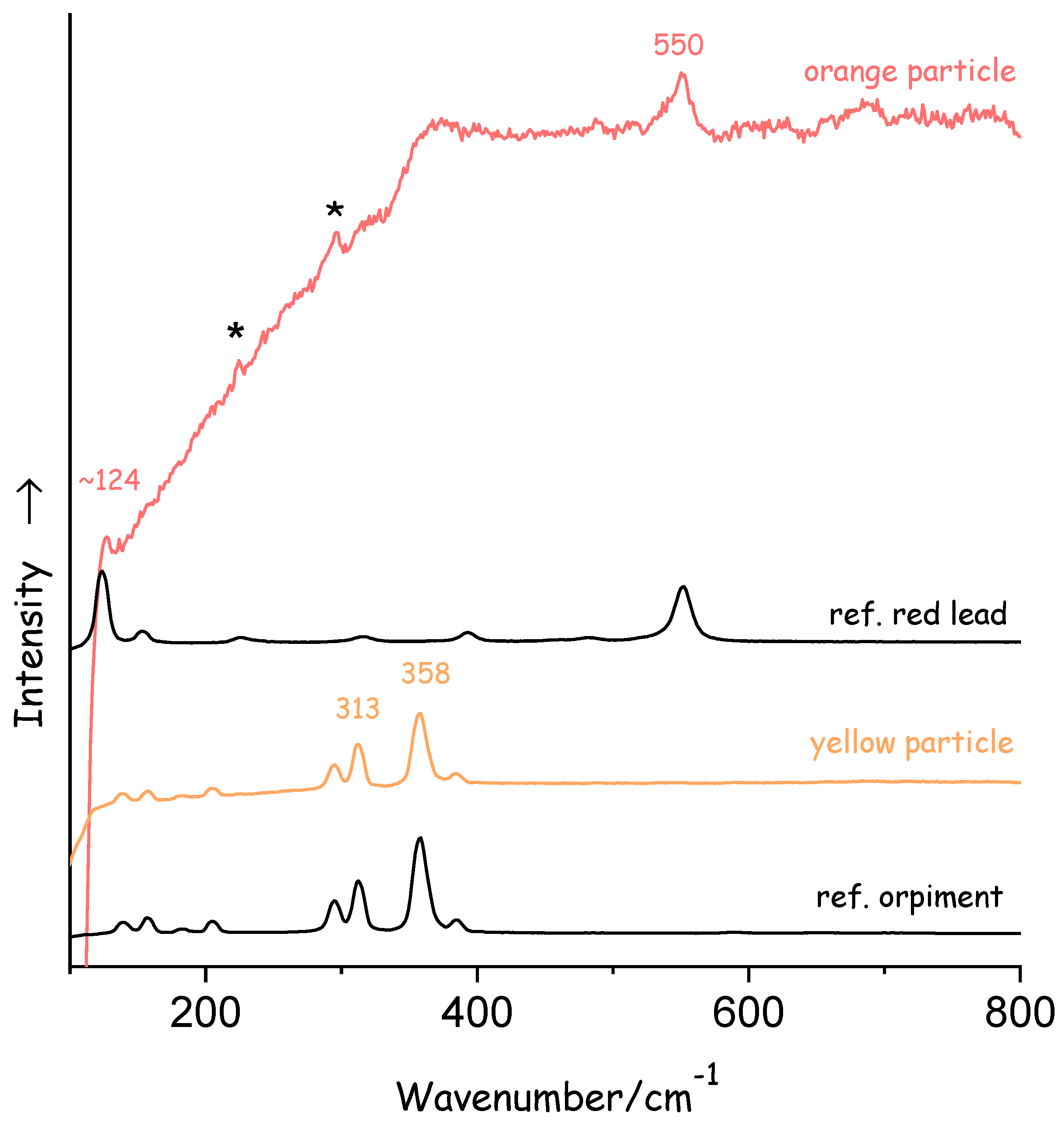
Figure 10b). While this feature is difficult to observe in normal light, it is clearly visible in the XRF map. To clarify the identity of the arsenic-containing pigment, a loose thread taken from an area of loss in one of the rosettes was analysed using Raman spectroscopy. Only a few traces of the arsenic-containing pigment were left on the thread. The analysis of this pigment, which has a golden sheen under magnification, confirmed it to be orpiment, a common yellow pigment in ancient Egyptian art, often used to imitate gold (
Figure 11). A single particle of red lead (with possible traces of hematite) was also seen on the same thread, suggesting that this pigment may also have been used either in admixture with orpiment or elsewhere on the shroud. With health and safety considerations in mind, the orpiment paint is well bound, the shroud is glazed and kept under safe temperature and relative humidity conditions to ensure pigment stability. However, the identification of orpiment dictates that the object should be handled with care to mitigate disruption to the pigment if the shroud is unframed in the future.
Myrtle branches are attested on many shrouds—predominantly of men but also occasionally women—spanning the complete range of time periods shrouds were in use and covering a wide geographical range. For example, Brooklyn Museum 37.1811E (dated 50 BCE—50 CE, of unknown provenance); Berlin Ägyptisches Museum 13277 (dated 117–160 CE, possibly from Saqqara); Metropolitan Museum 08.202.8a (dated 120–150 CE, of unknown provenance); Rijksmuseum van Oudheden, Leiden F 1968/2.1 (dated late 2nd—early 3rd Century CE, from Deir el-Medina); Cairo Museum CG 33282 (dated first half of the third figure CE, of unknown provenance); Louvre AF 6489 (dated second quarter 3nd century CE, from Antinoe). For images of all, see [
3]. They were therefore a standard element of the repertoire of motifs from which artists could choose. As a Classical symbol of victory and rebirth, by holding it the deceased was furnishing themself with an object that reflected their triumph over death and transfiguration into the afterlife [
3] (pp. 193, 195). This detail provides an illustration of how shrouds such as these fluidly drew on the power of iconography from both pharaonic Egyptian and Hellenistic traditions for the benefit of the person depicted.
Analysis of the XRF maps indicates that traces of chromium, nickel and zinc are evenly distributed across the examined area and closely follow the distribution of bromine (as noted at the beginning of
Section 3). This pattern suggests that these elements may originate from trace components within a pesticide, from other treatment materials applied to the object, or from environmental contamination.
A summary of the materials identified in this study is shown in
Table 1 and
Table 2.
4. Condition and Previous Conservation
4.1. Full Shroud, 2177-1900
When the shroud was delivered from offsite storage to the textile conservation studio at the V&A, it was still mounted onto an historic wooden board. There was institutional memory of the shroud being glazed and framed, but the frame had by this point been removed.
No record of past conservation or display could be found in the archive. Prior to the introduction of digital record keeping, the conservation treatment may have been recorded in the conservator’s personal daybook, or on an index card, as is the case for the small shroud fragment. Daybooks were not systematically archived in the textile conservation studio. If an index card did exist, it has been misplaced. Inconsistent record keeping regarding historic conservation treatments is common to many collections. The working assumption was that the shroud had been pressure mounted behind glass around the time of its acquisition in 1900. The apparent age of the wooden board lends itself to this theory. Pressure mounting would have been the simplest approach to display the shroud. The painted design was centred in the frame, with one edge being folded to the back to reduce the overall width.
The adhesive lining treatment likely dates to the 1970s, and is typical of the work being carried out in the textile conservation studio at that time [
23]. A double-sided adhesive net was sandwiched between the shroud and a modern lining and would have been heat-reactivated to set it in place. Areas of adhesive exposed through losses in the shroud have since accumulated dust and discoloured. This indicates that the glazing did not provide adequate protection or that the shroud remained unglazed for a significant period of time. The shroud appears to have been re-mounted onto the old board and replaced in the frame, with the excess fabric again turned to the back.
A condition check and conservation assessment in 2024 indicated that the conservation net was well adhered to the modern lining fabric beneath, but lightly adhered to the shroud above. This implied that the degraded fibres had not provided a good surface for adhesion. There were several small areas of laid thread couching, and a few rogue pins, indicating localized adhesion failure. A tear had been overlapped and pasted down. It is not clear whether these supplementary repairs were carried out at the time of the lining, or in the intervening years when the shroud was likely housed vertically in the store. By 2024, the adhesive was visibly failing in some areas, with dimensional change in the textile where it was loose and unconstrained, presumably caused by fluctuations in relative humidity. There was a tideline of water damage on the lower edge of the board, implying it has at some point been rested directly on the ground, perhaps unframed, and suffered an ingress of water.
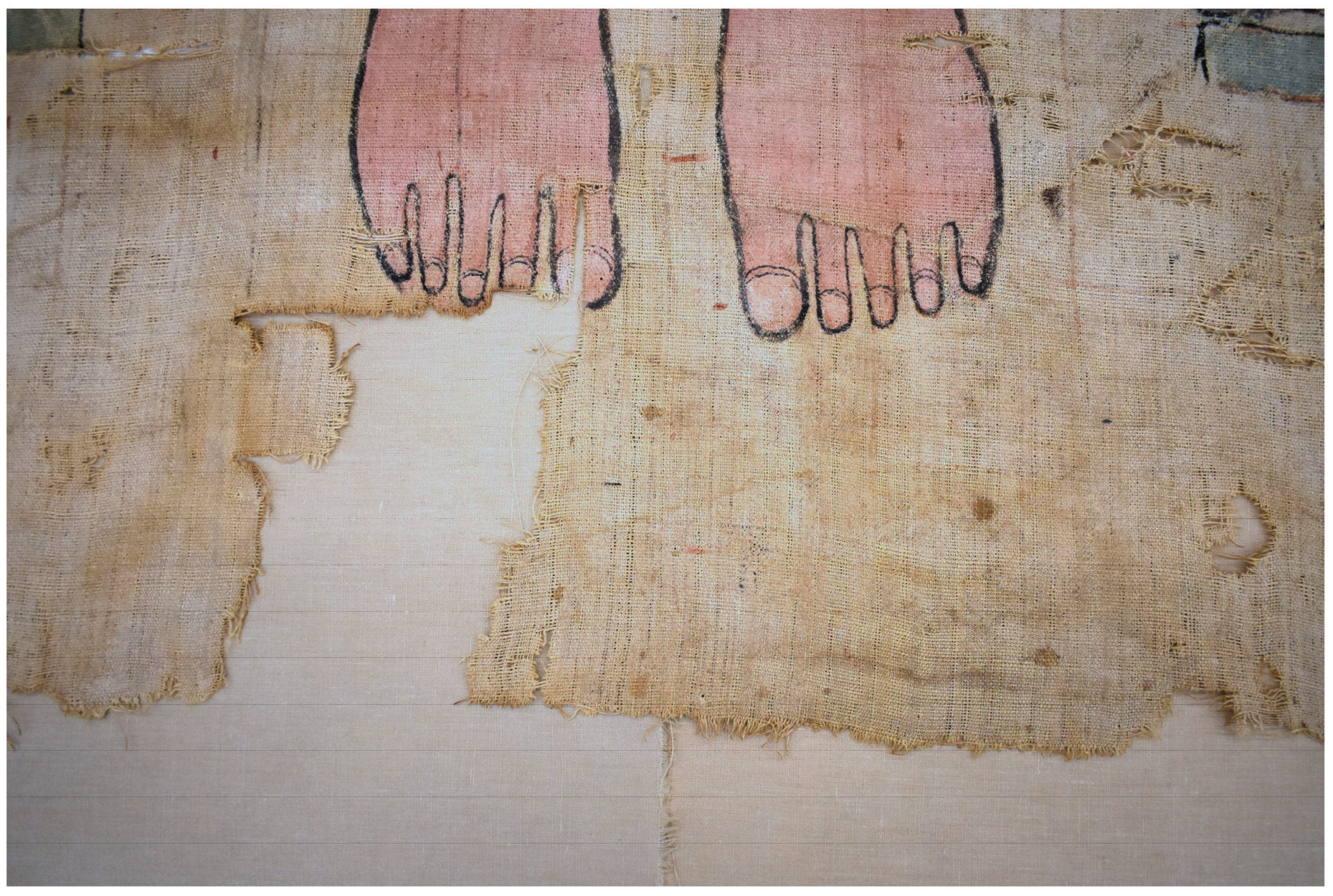
The linen was generally weak and degraded, expected given its age, but retained flexibility, particularly in the non-painted areas. The shroud had suffered damage, with areas of loss, largely to the edges. This could have occurred during and post excavation as it was removed from the mummified deceased. The original edges of the shroud would have tucked around and under the deceased, resting on the ground below. The textile is generally yellowed and discoloured with cellulose degradation. There is extensive staining, which could be caused by the decomposition of the body it once adorned. A large, dark stain has saturated the fibres, causing brittleness and resulting in a substantial area of loss. This material is unidentified but may be a resinous substance poured over the mummy at the time of its creation or entombment.
The paint layers are remarkably well preserved, with good adhesion. Although paint loss and abrasion are visible across the surface, most pigments remain present and largely retain their vibrant colour. The copper-based blue pigment used for the wig, petals and details on the collar appears somewhat degraded and darkened.
4.2. Shroud Fragment, 2131-1900
No archival evidence of past display can be found. The shroud fragment was stored unmounted, crease lines on the modern backing indicating that it had also once been stitched to a board, and presumably framed.
A 1971 conservation record index card documents the approach as ‘
unpin and repair’ [
24]. Large pin holes remain visible in both textiles. The treatment is recorded as ‘
object put onto a PVA DMC2 treated net, then put onto a linen backing on hot table’. Mowilith DMC2 poly(vinyl) acetate thermoplastic adhesive was used at the V&A until the mid-1990s [
25], when its production ceased, and alternatives were sought. The textile conservation studio at the V&A has continued to evolve adhesive practice, and heat-reactivated net treatments are still used for fragile and friable textiles [
26], albeit single- rather than double-sided. Full adhesive supports for archaeological textiles have fallen out of favour in the UK over the past few decades, as their application cannot guarantee full reversibility, and less interventive methods can be used effectively.
In general, the adhesive bonds remained strong. There were areas of separation around the edges, possibly caused by flexing of the textiles when not restrained on a mount. The painted fragment was well adhered, the paint-saturated textile providing a smooth surface for adhesion to the net. Stray warp and weft threads at the edges had been pasted down to the lining and were again coming loose.
The two textiles which make up the shroud fragment are preserved in good condition, considering their age. The plain cloth at the rear is lightly stained. The painted fragment on top has been darkened by a stain; this could be caused by embalming materials or decomposition of the body. The fibres in these areas, where not already saturated with paint, are brittle. All the edges have been intentionally cut, and there is a vertical cut into the face the reason for which is unknown.
The paint layers are stable and well adhered, although less well preserved than on the full shroud. The eyes appear to have lost much of their paint, and only black outlines remain. The pigments have degraded unevenly, resulting in visible colour change over time. For example, the black lines in the wig and collar likely include a copper-containing pigment used to enrich the depth of the colour. Traces of dark pink or orange pigment are visible over the white lines of the wig, suggesting the presence of an upper layer that has mostly been lost. The ochre pigments appear faint and abraded. A darkened, resinous layer is visible in some areas, possibly added to enhance gloss or visual depth. The golden pigment used to depict the strig is abraded, reducing its intended visual impact. These observations suggest that the shroud would have originally been significantly more vibrant.
5. Conservation, Mounting and Framing
5.1. Full Shroud, 2177-1900
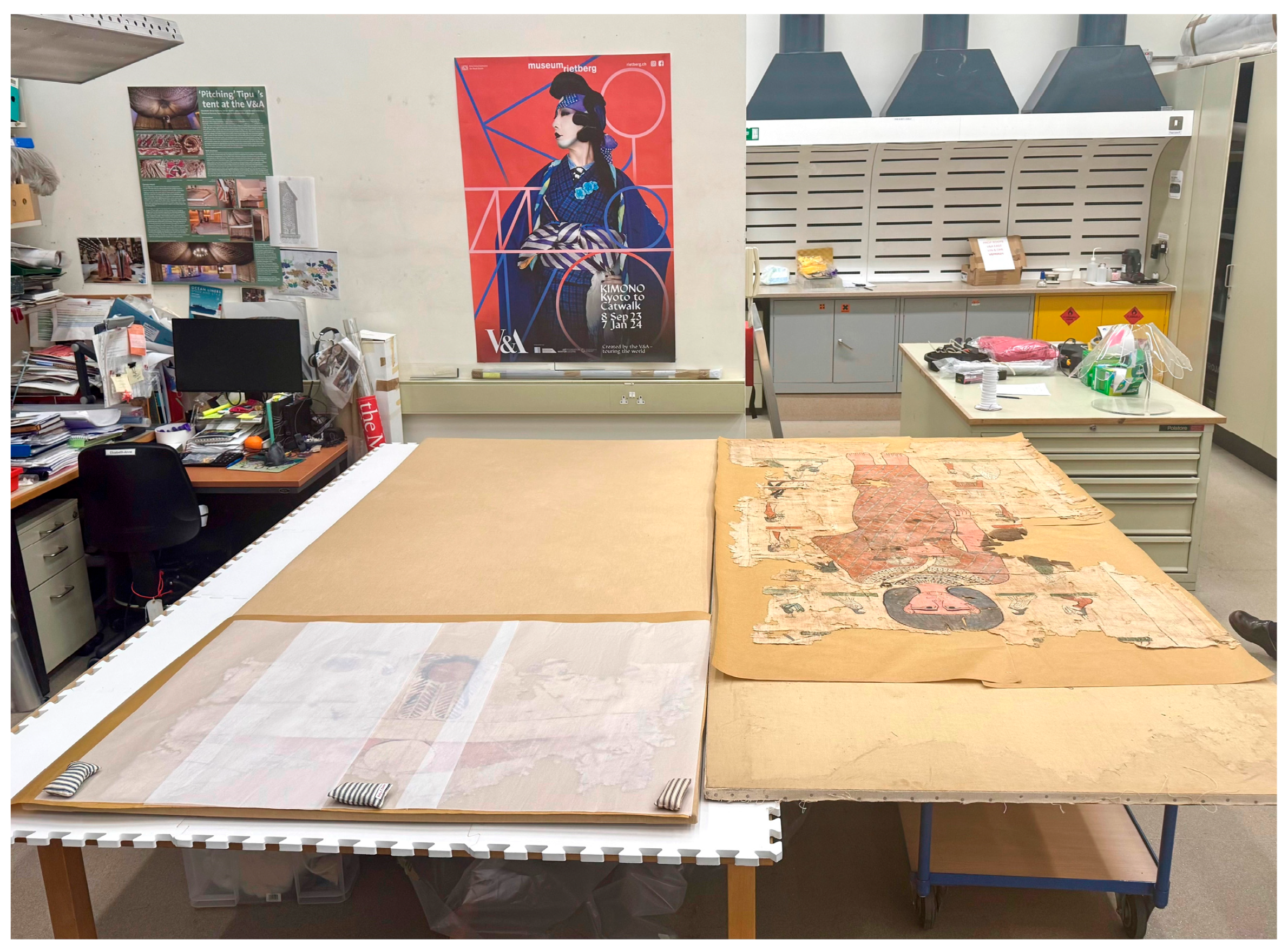
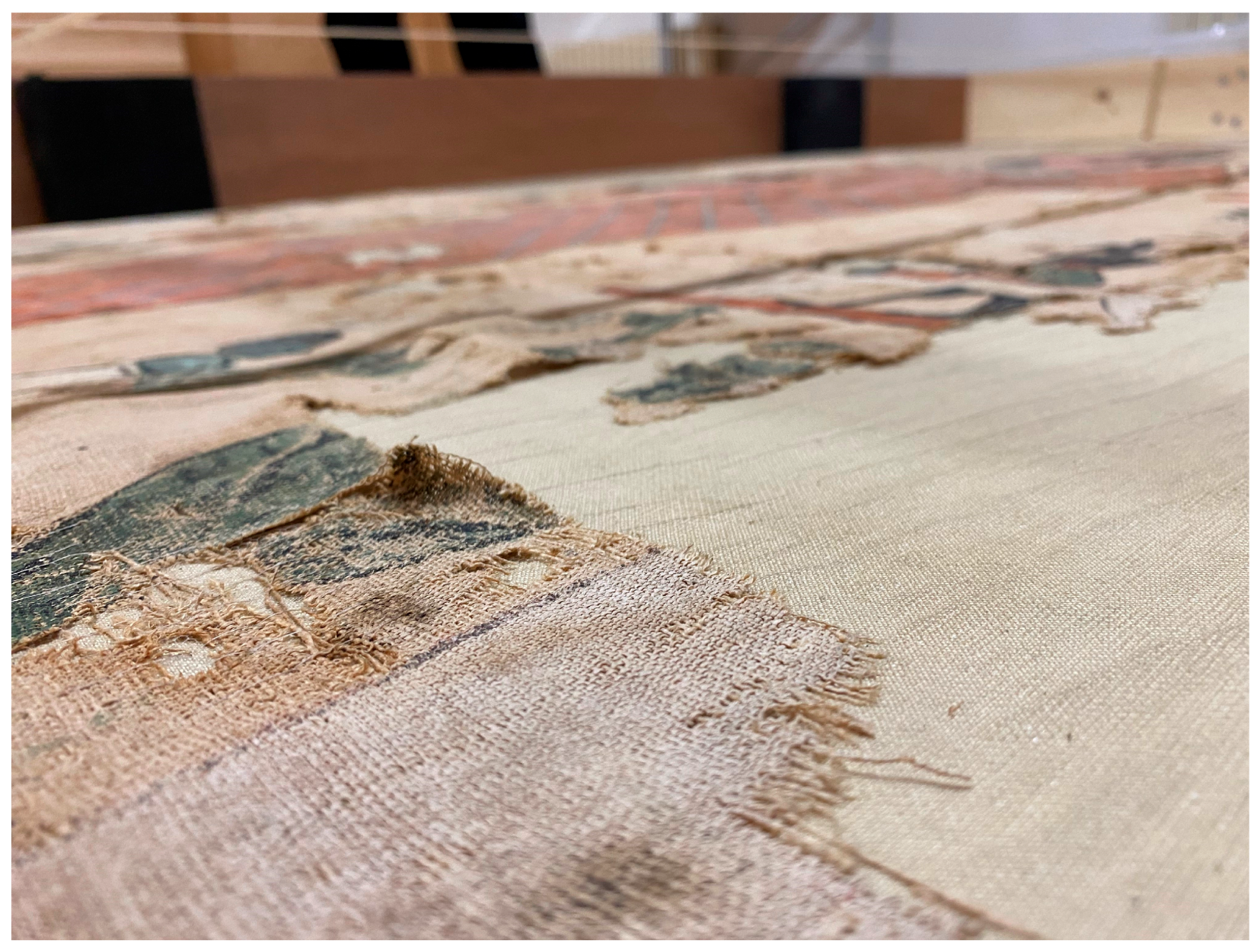
The full shroud was moved from storage at Blythe House to the textile conservation studio in the museum at South Kensington for assessment, analysis and discussion. The studio is not climate controlled, and humidity can fluctuate. Over the course of several weeks, the shroud was observed to be detaching itself from the net beneath, the loose areas further experiencing dimensional change (
Figure 12). This sped up the decision towards full reversal and re-treatment. The wooden board needed replacement; the modern lining was patchy and stained, and the areas of exposed adhesive net were discoloured.
Discussion on treatment and mounting options with textile conservators at the Abegg Stiftung in Riggisberg and the British Museum in London were invaluable, as was the review of published treatments [
27,
28,
29,
30,
31,
32,
33]. Typically for archaeological textiles, an ethos of minimal intervention was followed. An early suggestion to pressure-mount the shroud was ruled out, as the painted surface was deemed susceptible to sticking to the glazing. The typical approach to flat textiles that are too fragile to hang is to stitch them onto boards, with the stitching placed around the edges and within the centre ground to distribute the contact. The painted surface made this approach impossible without piercing the paint layer. The shroud would also be vulnerable to damage if the stitching, which at the V&A would typically be carried out with a polyester thread, was executed too tightly. A re-application of full adhesive support was also ruled out, being deemed too interventive and further contaminating the textile with modern adhesive. A high concentration of adhesive would be required, and a strong bond may be impossible given the friable nature of the 2000-year-old linen fibres. In addition, adhesive residue is difficult to remove effectively from exposed areas in holes and losses. Exposed adhesive would be visually shiny and would continue to attract dust and fibres if left exposed.
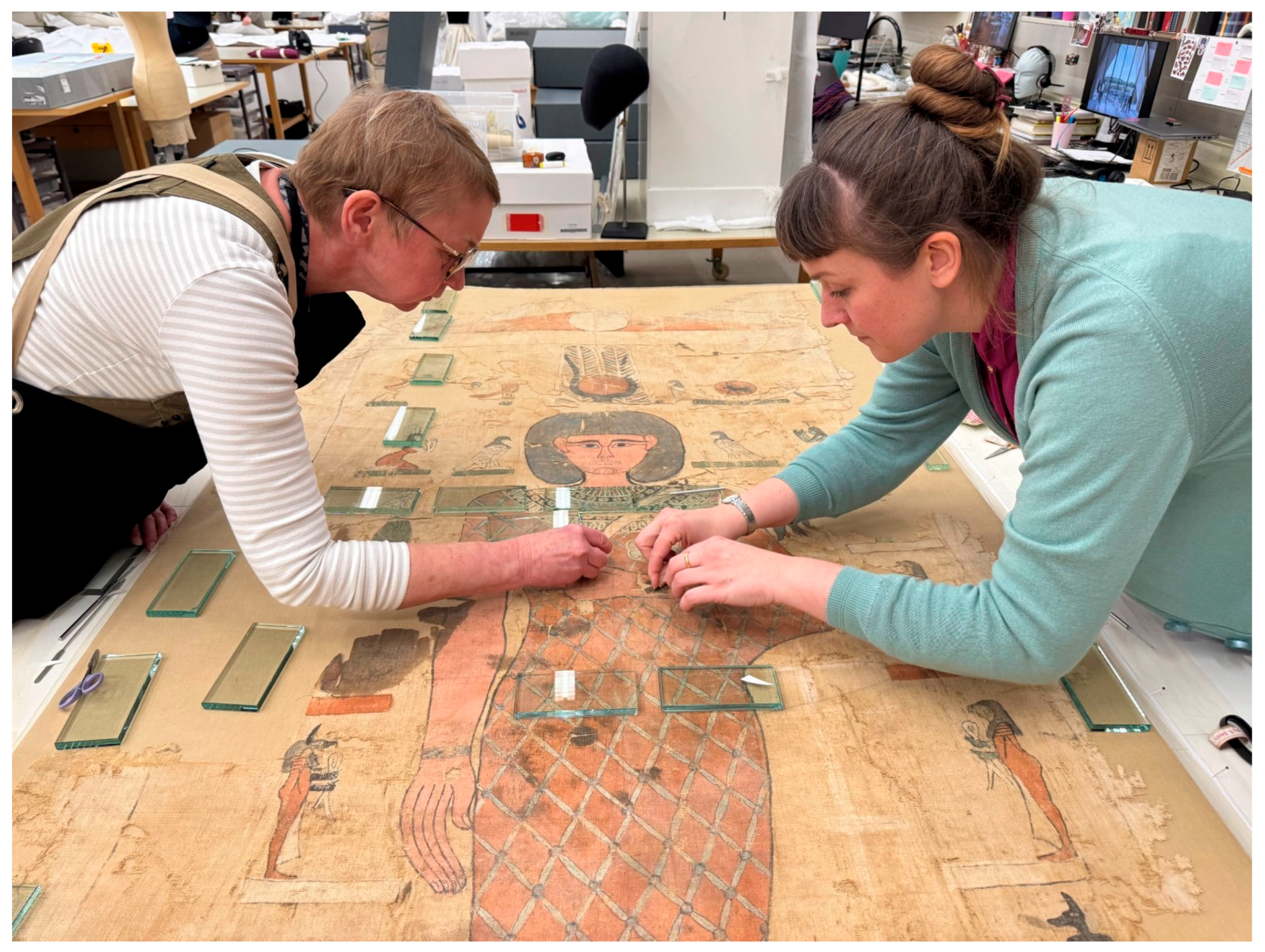
Pins and couching were carefully removed. The overlapped and adhered edges were left in place, there being no good reason to remove the adhesive only to maintain the overlap in the textile edges. The shroud was separated from the net lining mechanically, using a flat metal spatula slipped between the layers with little to no resistance. A small amount of fibre was left adhered to the net; this was deemed to be an acceptable and unavoidable loss. Silicone release paper was slipped beneath the shroud, and above the net lining as it was detached. With the shroud no longer constrained, historic crease lines became evident, the painted linen holding a memory for the shape it had taken for more than two millennia. Lines of discolouration and soiling, always visible, made more sense. The effect was subtle, but incontrovertible. No humidification for crease reduction or removal nor surface cleaning to remove soiling prior to the next stage of the re-treatment were deemed necessary.
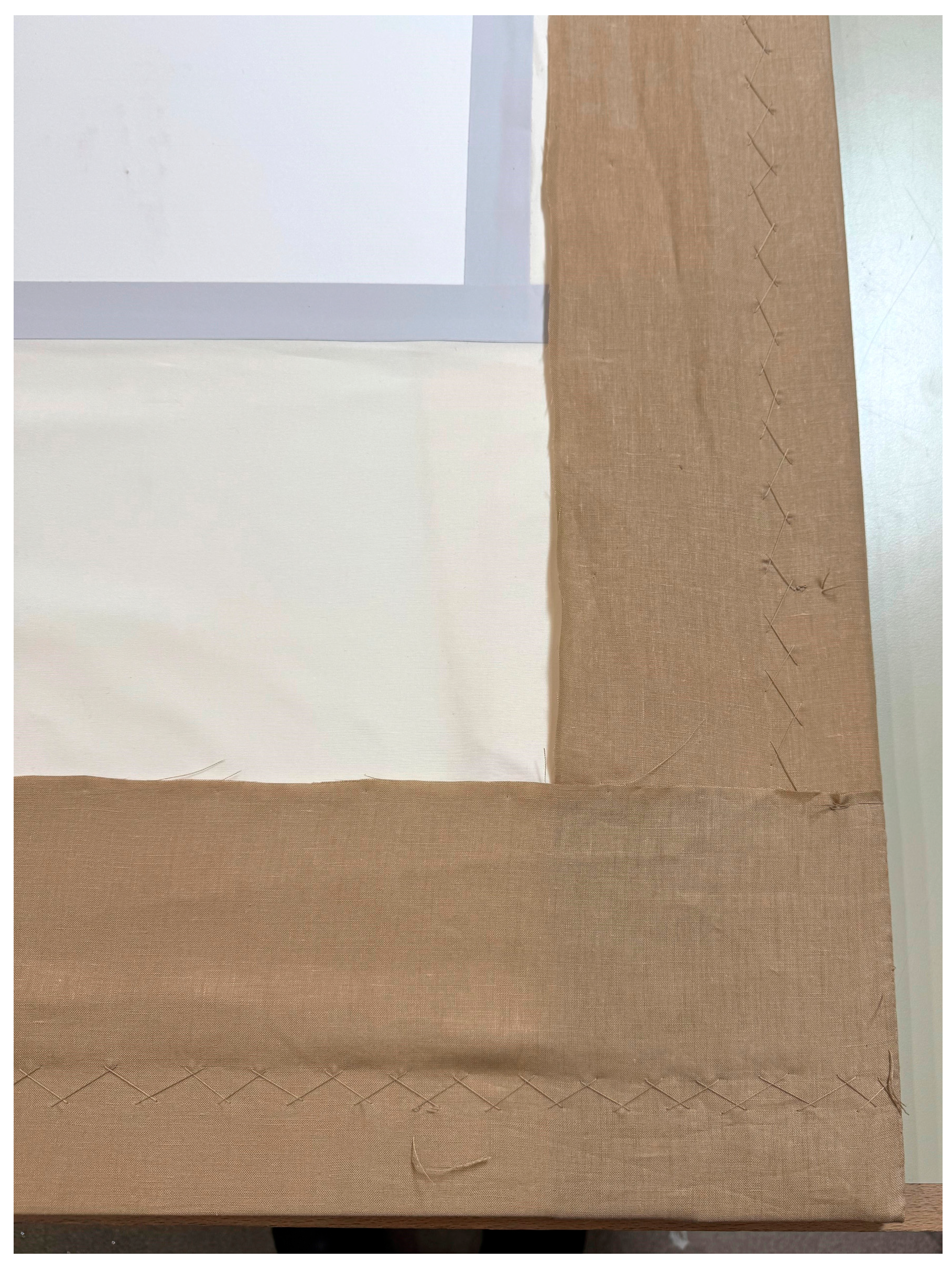
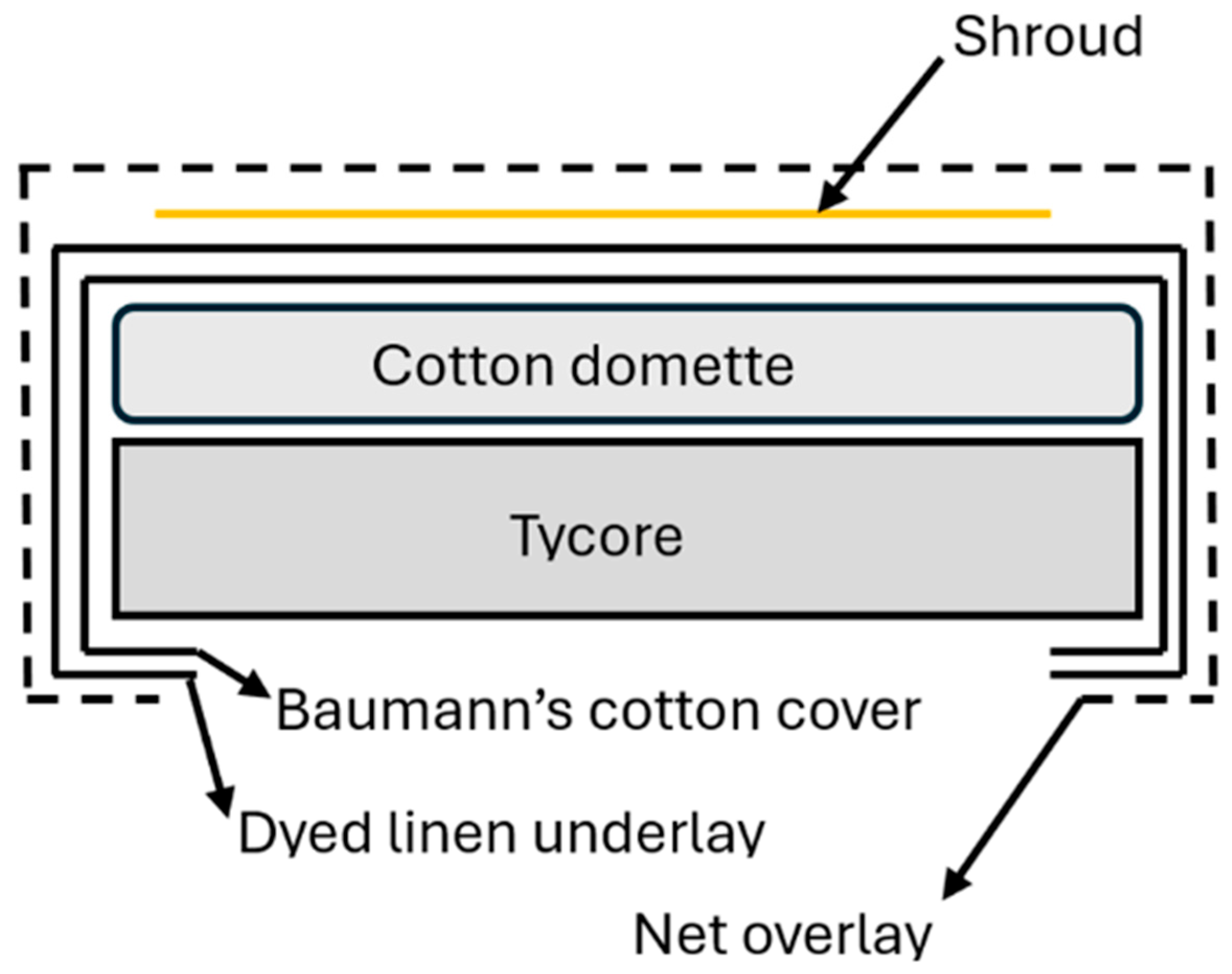
The V&A has a dedicated Technical Services department, skilled in sourcing materials and innovating techniques, and with extensive experience in preparing mounts for textiles. A board of Tycore (archival honeycomb board) was cut to the dimensions of the shroud, leaving a small framing border. A single layer of cotton domette was applied to the front surface as a softening layer, adhered with pH-neutral PVA adhesive. A cover of tightly woven, white cotton, supplied by Creation Baumann—having been tested and approved for long-term use—was stretched over the board and stapled on the reverse, and the edges were secured with tape (
Figure 13). This provided a smooth, even surface onto which to mount the shroud.
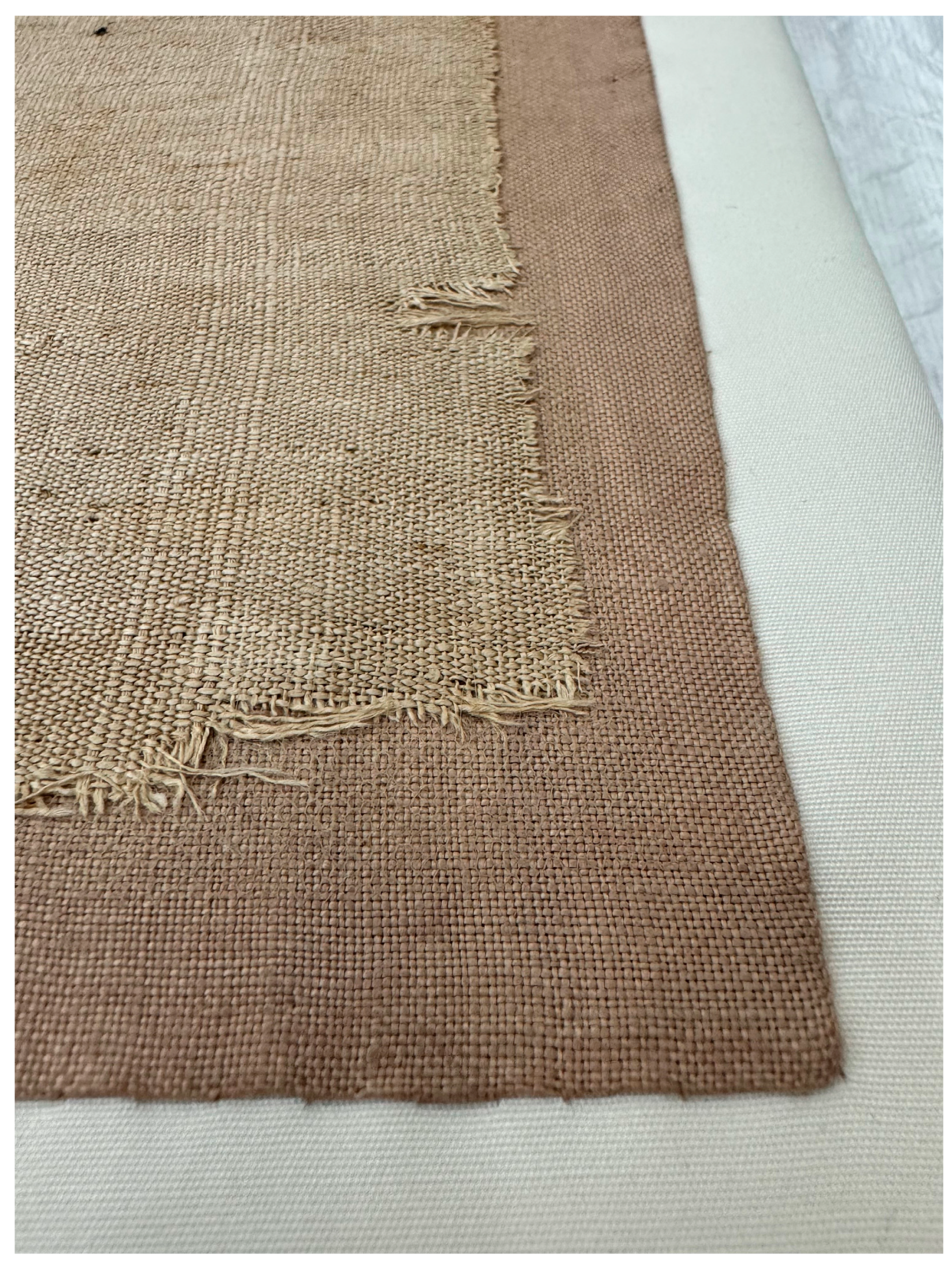
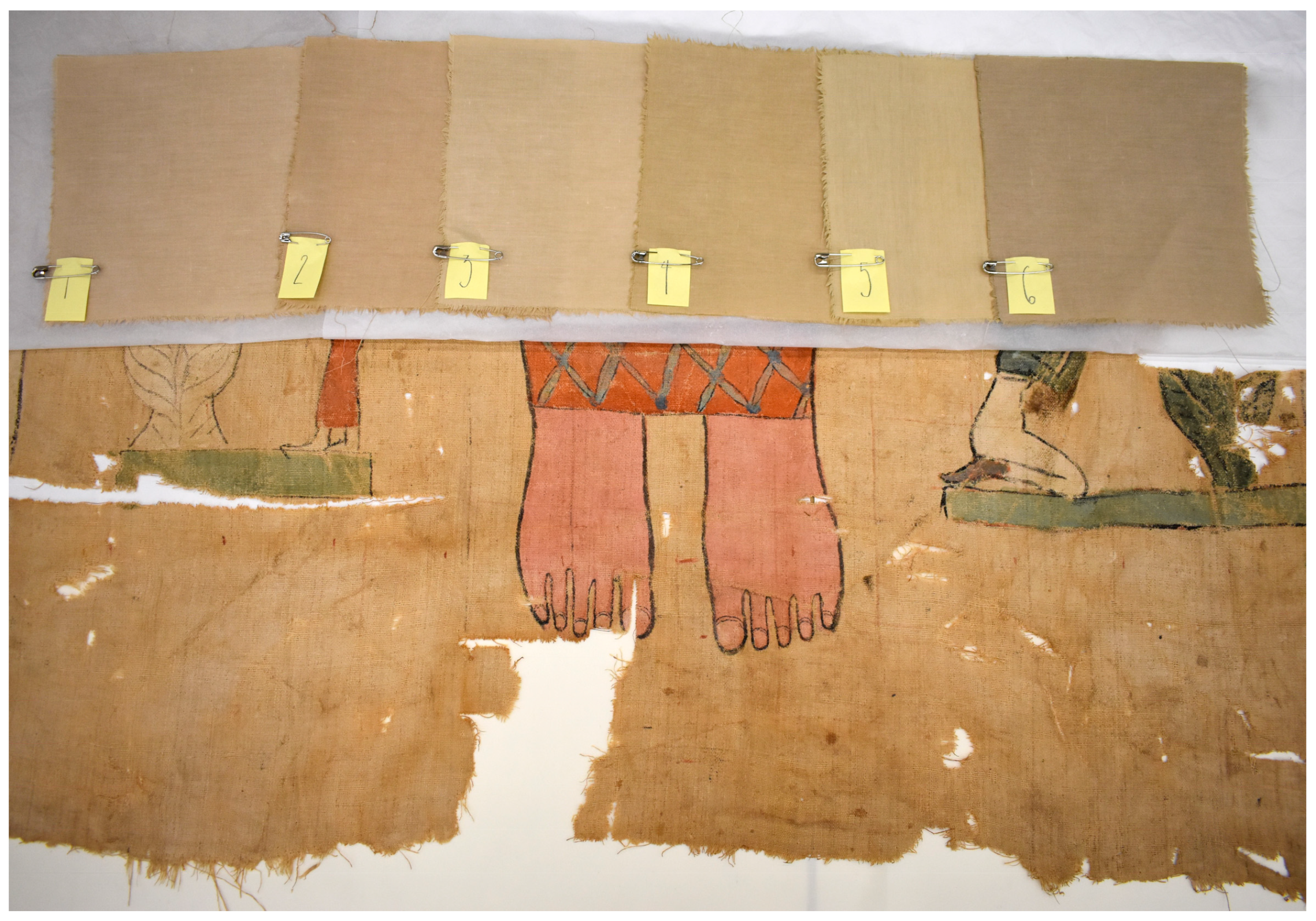
In the textile conservation studio, a large piece of plain weave linen was purchased and dyed using Avitera SE reactive dye to create an underlayer for the shroud. The choice of linen matched the materiality of the shroud and offered visual coherence. Samples were dyed to find a good overall colour match (
Figure 14), aiming for a suitability of tone rather than matching a specific colour in any one area of the shroud. The linen fabric was bulk dyed to the custom recipe, which could be easily scaled up. The still-wet linen was laid out on tabletops, with care taken to realign the grain before it was left to dry. It was then stretched over the board and stitched onto the reverse using a herringbone stitch, with the grain of the fabric being aligned as straight as possible.
A tracing of the shroud was made on a Melinex polyester sheet, which allowed the ideal placement of the shroud on the new board to be mapped in advance. The silicone release paper beneath the shroud was used to transfer it across from the old board to the new with minimal direct handling.
A large piece of fine monofilament nylon net was dyed using Lanaset dye, a 1:2 metal complex, acid, and reactive dye. Samples had been dyed to find a good overall colour match, one that would visually disappear when laid over the shroud. The net was pinned around all sides of the board under very slight tension. Care was taken not to shift the net over the painted surface, as this could cause abrasion.
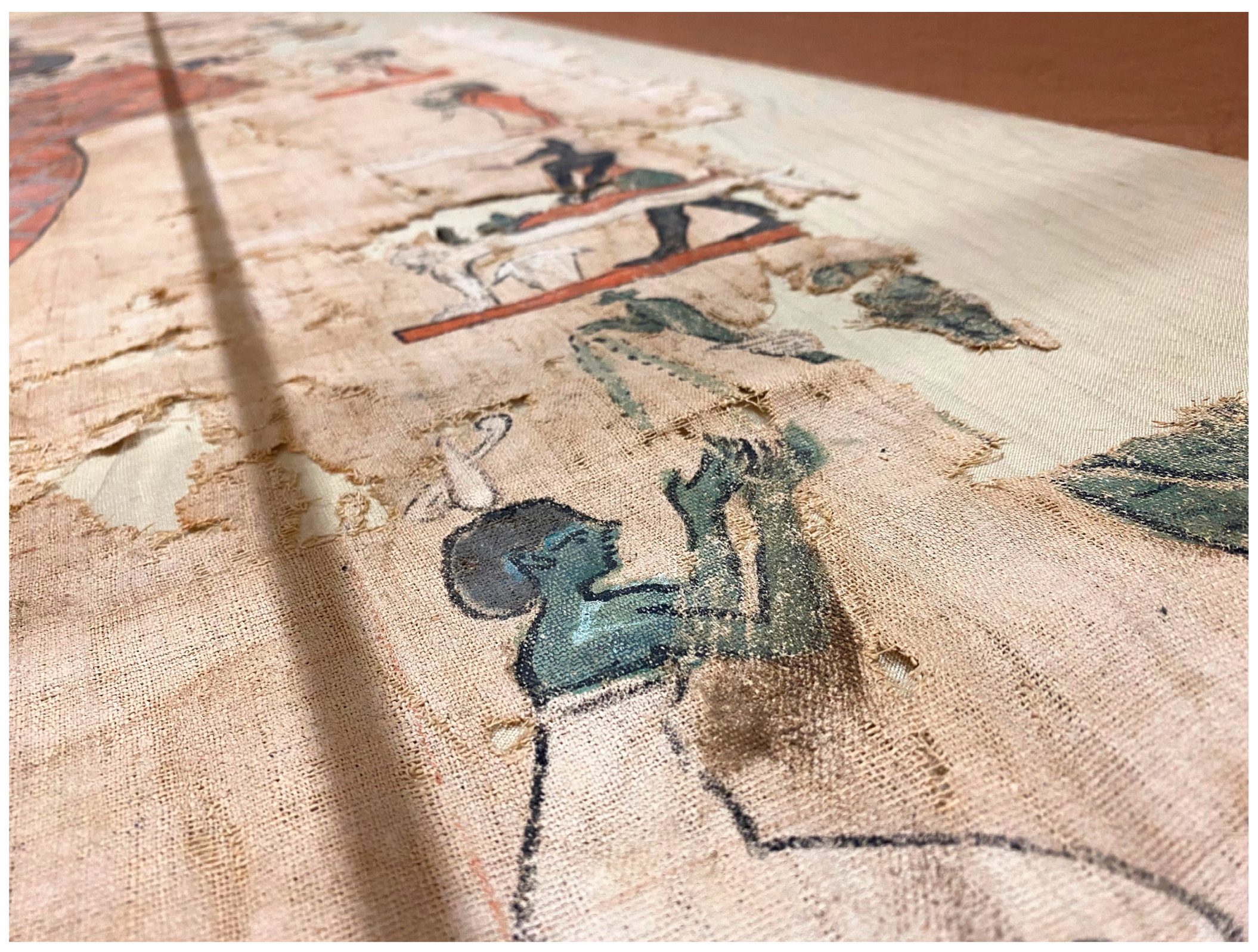
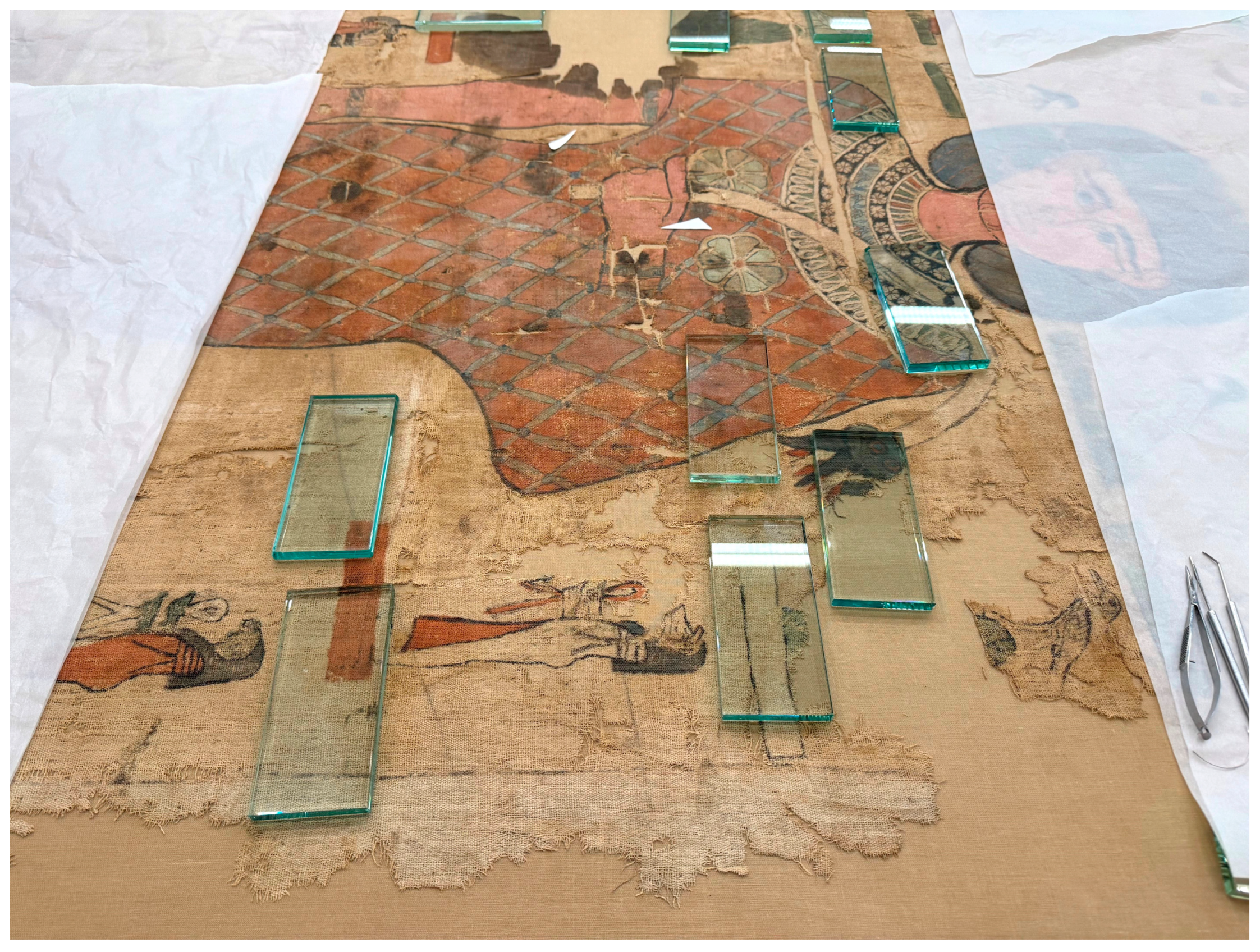
Beginning in the centre and working out towards the edges, the three layers—net overlay, shroud and linen underlay—were stitched together. The stitching sandwiched the shroud around every edge, tear and split, but did not pierce the archaeological textile (
Figure 15). Care was taken to avoid piercing the Baumann’s fabric beneath, so that if the shroud needed to be removed from the board in future, the linen could be released at the edges, without requiring the removal of all the stitching holding the net in position.
All stitching was carried out using fine surgical curved needles and Gutermann Mara 220 polyester thread. A running stitch was utilised, with small stitches on the surface and longer stitches underneath. Working systematically outwards from the centre, small tools including a metal spatula and blunt curved tweezers were used to reposition the shroud and its numerous small fragments as necessary, aligning any loose and floating threads with the weave. As the stitching gently brought the three layers together in close contact, the net visually disappeared.
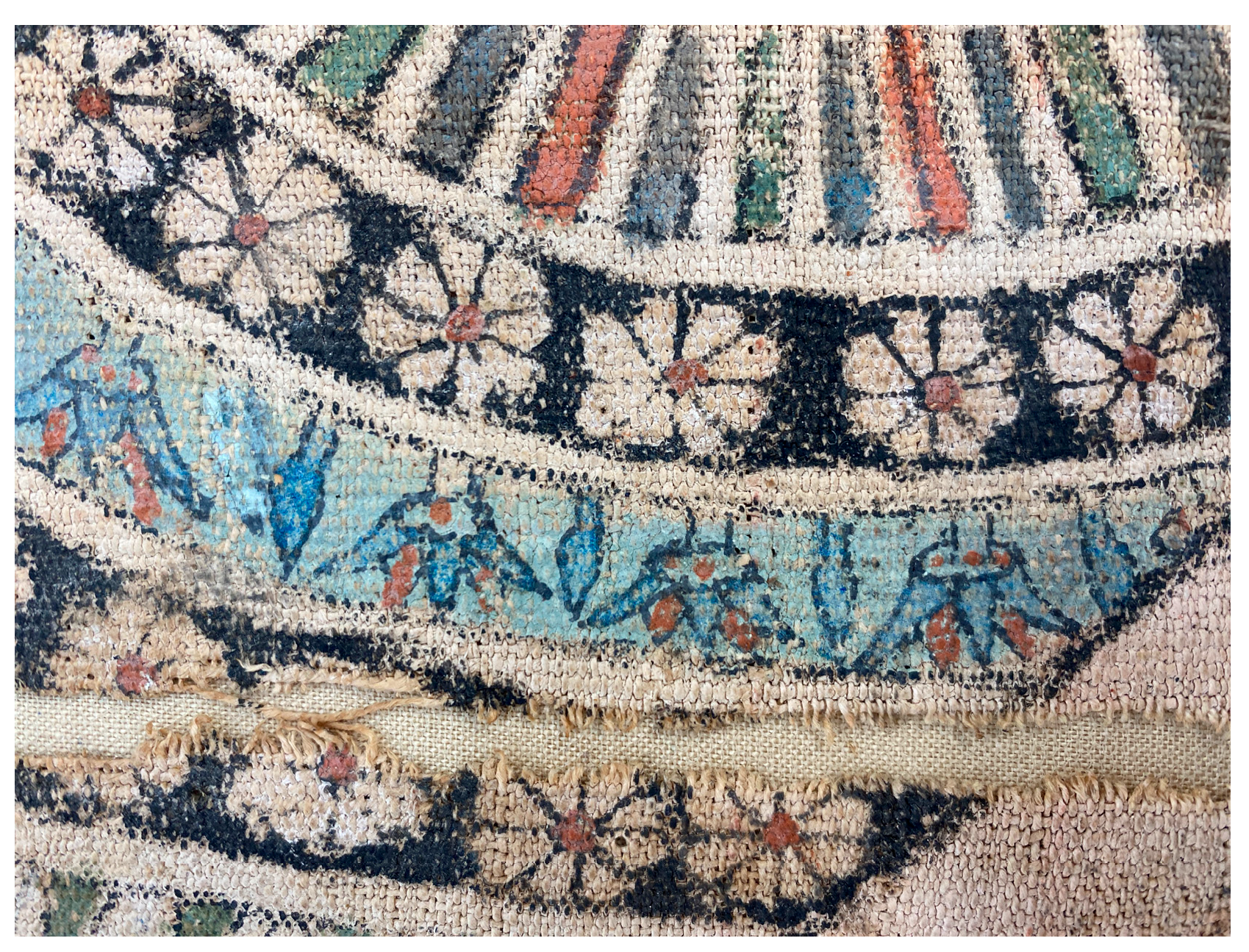
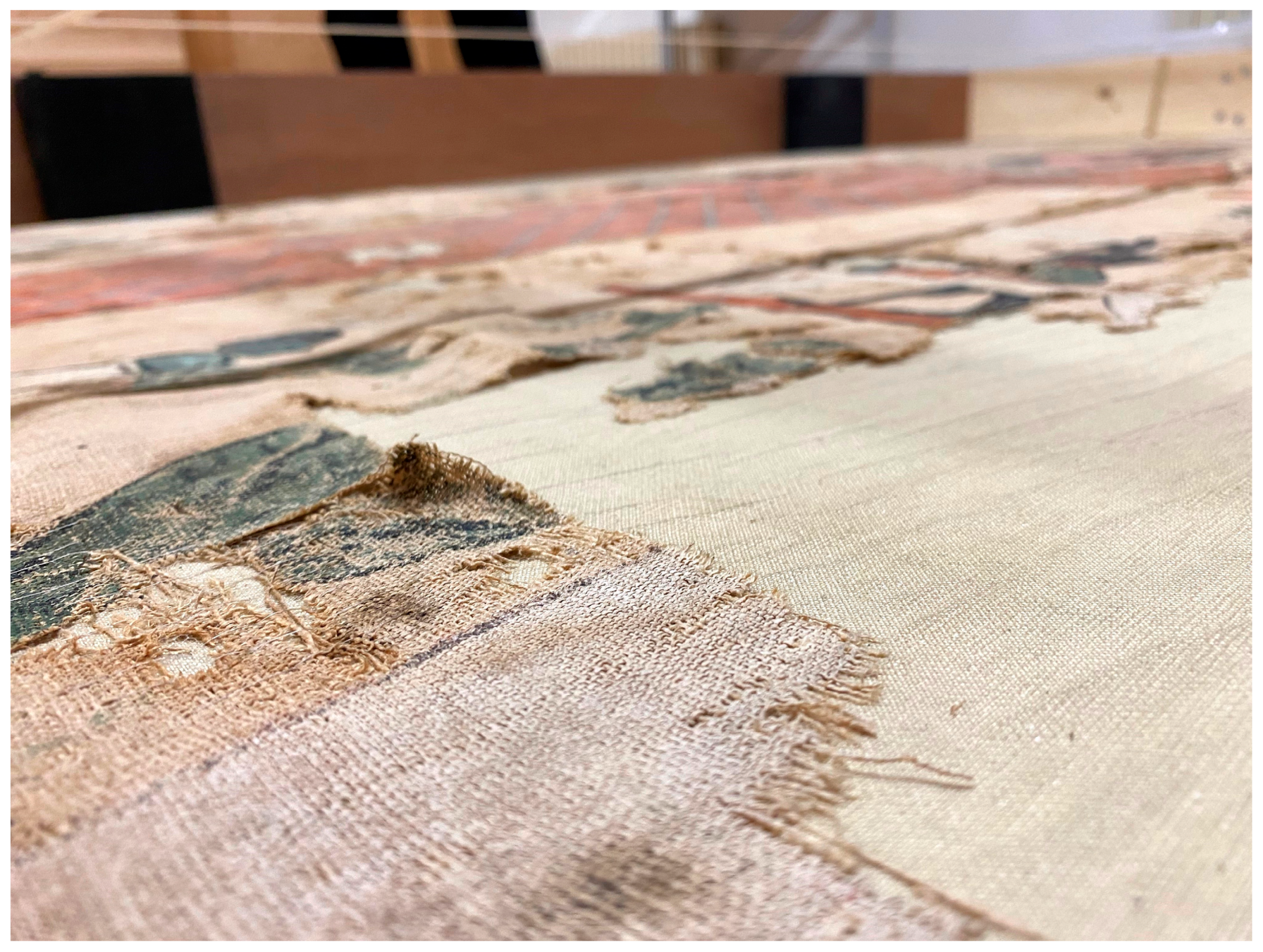
The edges of the net were brought around to the back of the board and secured with herringbone stitching to the underside (
Figure 16). In order to carry this out, the edge of the board was extended over the edge of the work surface, to allow access to stitches from below.
5.2. Shroud Fragment, 2131-1900
A full reversal of the 1970s treatment was briefly considered, due to the modern lining fabric being patchy in colour and the weave tight and smooth in appearance. Despite some separation around the edges, the textiles remained well adhered to one another, with the previous conservation treatment continuing to perform its function. The removal of the modern net linings between both archaeological textiles and the lower textile and modern lining would inevitably cause disruption. Had the two historic cloths been separated, it would not have been possible to stitch them together due to the dense application of paint. The only method for securing them would have been to overlay net onto the painted surface.
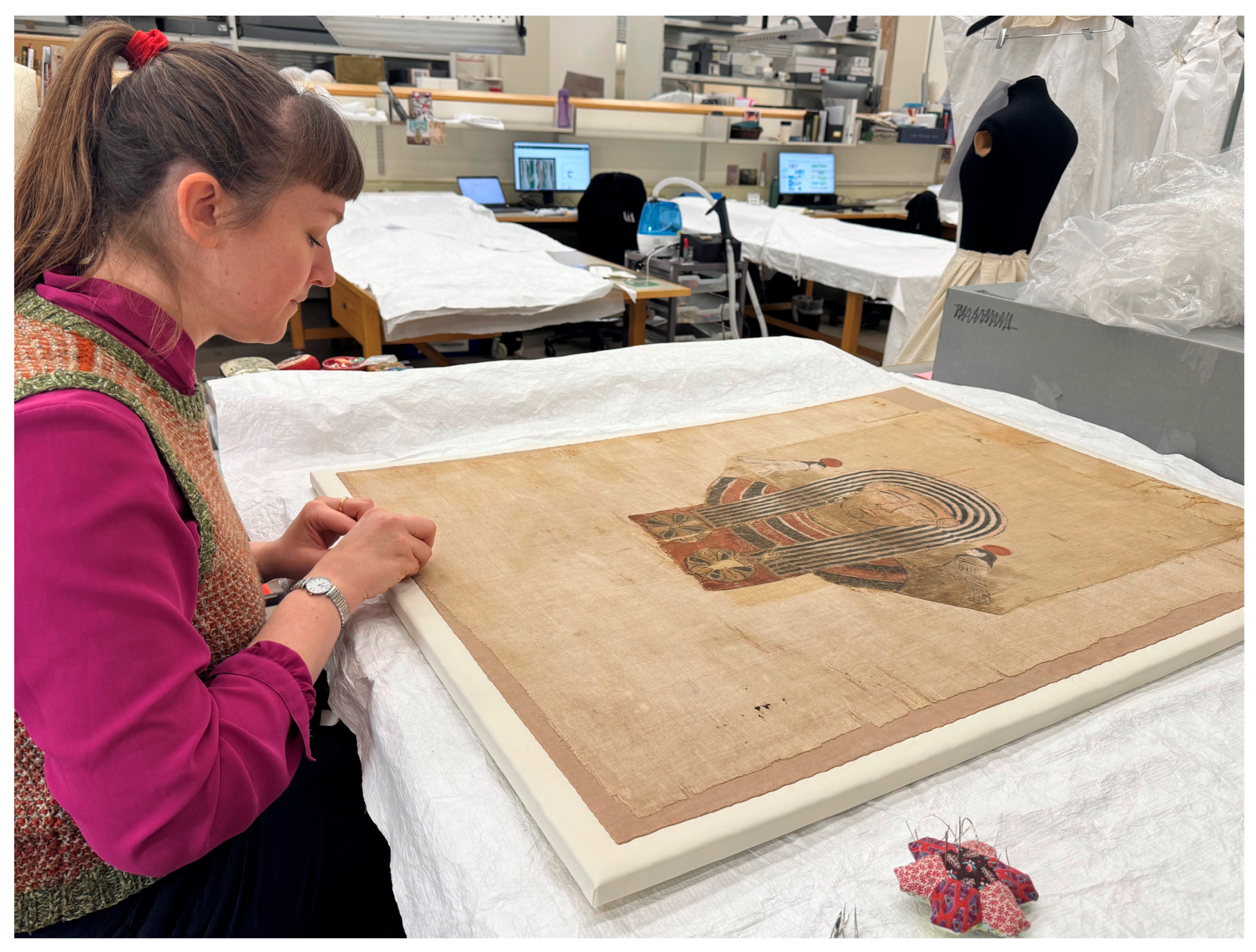
The decision was made not to reverse the historic treatment, which continued to hold the two textiles and the modern lining together successfully.
Supplementary stitching was carried out around all edges of the archaeological textiles. Care was taken to pass between the warp and wefts and not to pierce them. All stitching was undertaken using a fine surgical curved needle, and threads pulled from Stabiltex plain-woven polyester fabric. Heavily painted areas were left unstitched. A new Tycore board was prepared as described above. The modern lining fabric was humidified locally to remove creases from the previous mount and re-creased, reducing its size as much as possible. The folded edge was slip-stitched to the new board using Gutermann Mara 220 thread.
5.3. Framing
Both shrouds had been preserved in the museum as flat canvases, ignoring the original contouring and 3D-shaped form. The large shroud had been mounted onto a wooden board, and creases on the shroud fragment indicated it too had been framed and glazed previously. Their presentation as flat, artistic works is not uncommon within the museum context.
For presentation in the 2025 exhibition, and ease of subsequent long-term storage, the decision was made to retain both textiles in this form. Space constraints within the exhibition design necessitated the display of the shroud fragment vertically on a wall, for which framing and glazing would offer physical protection and allow museum visitors to get up close to the textile. They were hung at eye level, allowing visitors to meet the gaze directly. The option of displaying the full shroud horizontally, in the orientation originally intended, was explored, but financial constraints necessitated it to be displayed near vertically, and the decision was taken to re-mount, frame and glaze it for long-term storage. The recommendation was that both shrouds should be oriented horizontally for transit, and ideally for subsequent long-term storage. This will avoid any strain on the stitching (full shroud) and stitching combined with adhesive (shroud fragment) which holds the archaeological textiles to their lining supports.
New wooden frames were made for each shroud, with a black satin finish, and white 12 mm rebate. Optium acrylic museum glazing, UV-filtered and low-reflective, was used. Both frames were packed horizontally for transit. The small shroud was then displayed vertically, and the large shroud installed at an angle of 70 degrees from vertical.
Additional photographs and information about the conservation, mounting and framing of the objects are in
Appendix A.
6. Conclusions
The two shrouds were examined, analysed and conserved in preparation for the Making Egypt exhibition which opened at Young V&A in East London in January 2025. This study addresses questions regarding the objects’ post excavation history, their past interventions and the raw materials present in them. Scientific analysis and technical examination added to our knowledge of the artistic process and shed light on the composition of the pigments used to decorate them and which were available to artists in the Ptolemaic and Roman periods.
Except for a few areas in the backing of shroud 2177-1900, and traces of chromium, nickel and zinc evenly distributed in shroud 2131-1900 (possibly originating from trace components within a pesticide, from other treatment materials applied to the object, or from environmental contamination), no obvious indication of modern materials was found. The materials identified, containing lead, calcium, copper, iron and arsenic, are compatible with a 1st- and 2nd-century Egyptian colour palette. Red lead and orpiment were identified by Raman microscopy, and the presence of Egyptian blue, green earth, calcium-containing and lead-containing whites, madder lake ochre and umber pigments could be inferred from both the elemental analysis and the visual examination of the painted surfaces using digital microscopy, UV illumination and infrared reflectography.
Bromine was detected in shroud 2131-1900, suggesting that the shroud was treated with a fumigant such as methyl bromide, which was in use between 1938 and 2006 when it was banned. No bromine was detected in shroud 2177-1900, the glazed frame presumably being deemed to be protection enough against insect activity.
Scientific analysis has enhanced our understanding of the artisans’ process for painting such shrouds. It allowed us to determine the sequence of their work, the preparation for a finished composition, the materials they had available, and the skilled ways they could subtly manipulate the palette. It also gave us a greater understanding of the religious purposes of such shrouds, by revealing details, now largely lost to the naked eye, which are linked to their purpose as transformative, protective objects.
The early adhesive treatments carried out on these two shrouds, probably in the 1970s, are examples of the application of then-modern materials and techniques. Innovative work on adhesive use in textile conservation enabled these fragile archaeological painted shrouds to be conserved, mounted and displayed without the need to stitch them into the painted surfaces, and without reliance on glass pressure mounts to hold them vertically for display.
Conservation treatments are anticipated to last for a generation. The selection of these two shrouds for display in 2024 allowed an examination and re-assessment of their previous treatments. This work showcases modern approaches to the conservation and display of this type of objects.
The adhesive lining on the full shroud was found to be no longer holding the textile in place, and there was risk of further detachment from the support lining. This necessitated a full reversal and re-treatment using current best practice. The net overlay and linen underlay are well documented, and fully reversible, with no adverse effect to the shroud. The adhesive lining on the shroud fragment was still functioning as intended, and only supplementary conservation treatment was required to fully stabilise it for display.
This project highlights the best of collaborative practice within the V&A. An in-depth study of the shrouds, accompanied by scientific analysis of their materials fed into the conservation process. Both shrouds are now well documented, including with new photography. This joined-up work gives a full and nuanced understanding of two examples of these ancient objects, contributing to wider academic knowledge and awareness and allowing them to be cared for now and into the future.