2. Materials and Methods
2.1. Operational Workflow
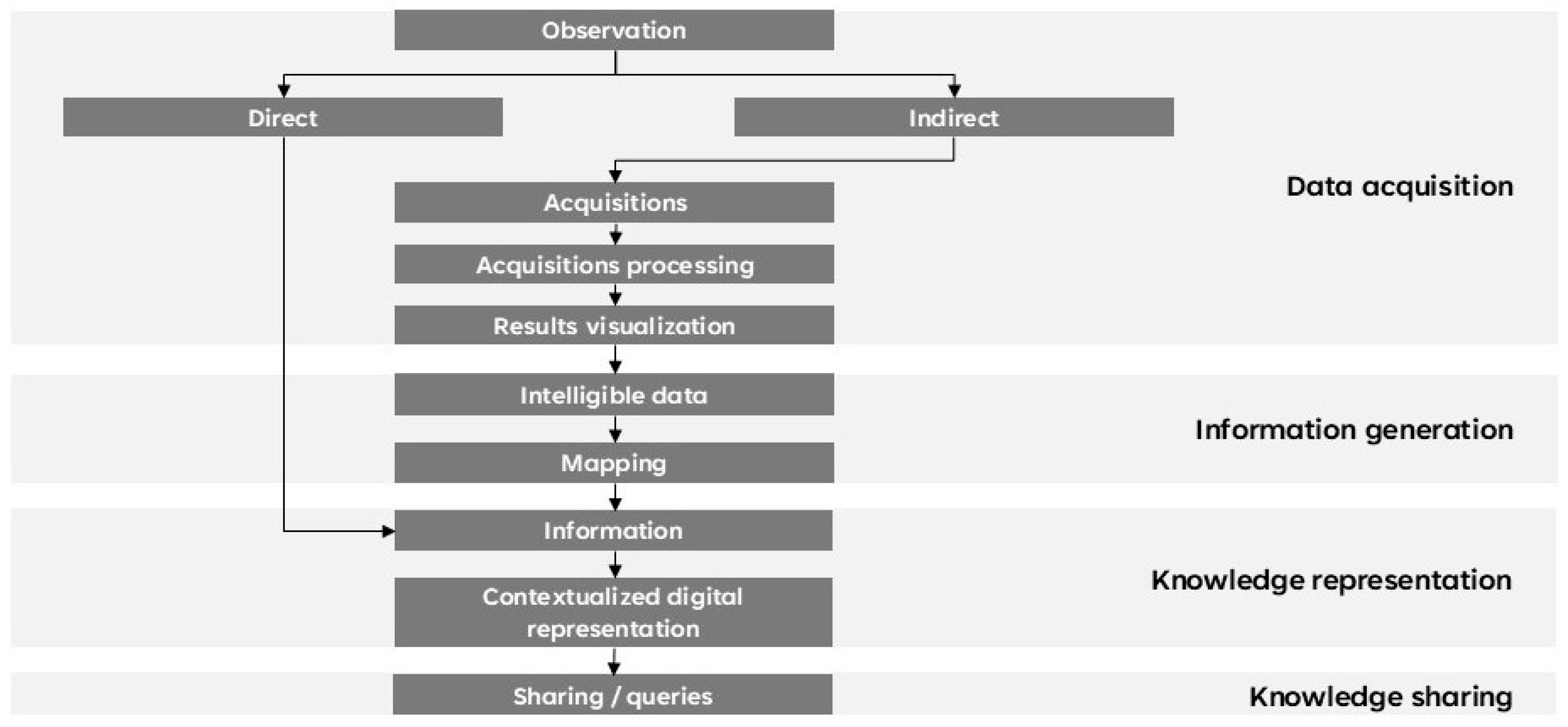
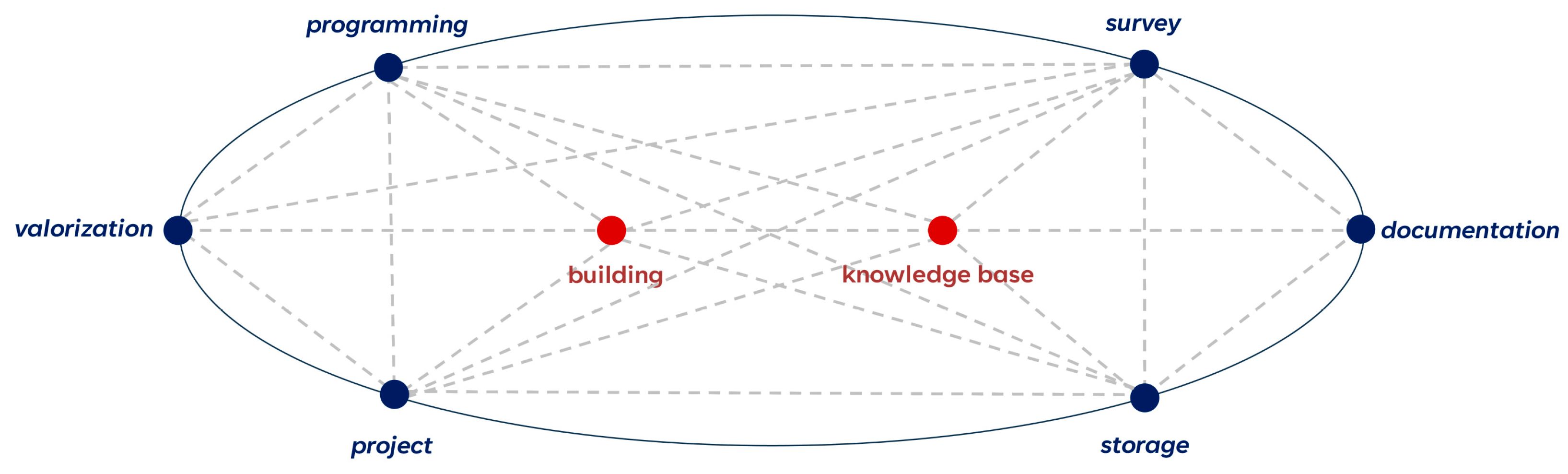
In line with conservation process requirements, the operational workflow shown in
Figure 2 was developed to:
record the evolutionary trend and condition changes of technical components through a multidimensional representation integrating spatial, temporal and semantic dimensions;
support intelligent discovery, design, and continuous monitoring to semi-automate knowledge base updates;
provide querying and visualization tools for qualitative knowledge-based analysis.
The operational workflow combines conceptual formalization with geometric georeferencing of instances.
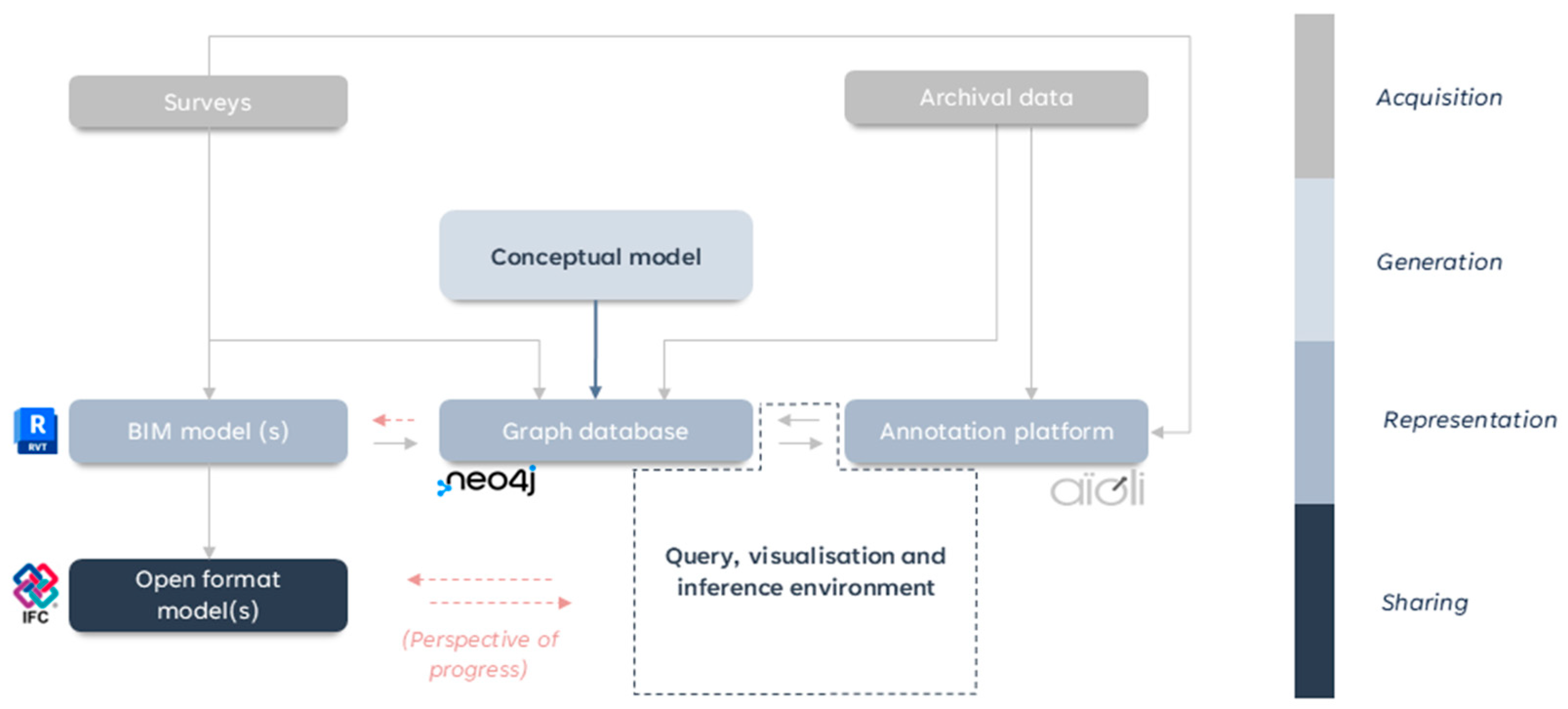
Starting from reality-based surveys, annotations, Building Information Modeling (BIM) reconstructions and documentary sources, data are mapped to a conceptual model with explicit handling of time, location and provenance (who, when, how). In this way, the instances are georeferenced and organized in a graph knowledge base. The system supports parameterized queries that return tables for comparative analysis and 2D/3D views.
Conceptual modeling is key to making the semantic and technical relationships and the logical structure of the domain concepts of acquired and acquirable data explicit. The knowledge base can be updated by further survey campaigns or new documentary sources. In this way, the system evolves with the building and traces its transformations.
The idea is that, regardless of the input source, updates are propagated via a history-aware integration layer and centralized synchronization across systems, minimizing misaligned updates.
2.2. Scenarios and Case Study
Calabria is an interesting and challenging field of experimentation. A predominantly hilly and mountainous territory, with geology characterized by widespread instability [
6]. Its settlement history has been profoundly affected by earthquakes (1638, 1659, 1783, 1908) and other catastrophic events such as floods.
On the technical-constructive level, a relative homogeneity emerges, due to the influences of former foreign dominations. Historic buildings are mostly of load-bearing masonry, stone, brick or mixed structures. Openings are made with arches, architraves or lintel and roofs are generally one or two pitched, more rarely hipped [
7]. As observed in [
6] (p. 13), regional heritage is often made up of surviving traces. Sometimes exceptional artifacts (e.g., Cattolica di Stilo) act as identity markers of the settlement nucleus [
8] (p. 71); more often it condenses recognizability and collective memory. This heritage is continually subjected to intrinsic forces, degradation, use practices, in-coherent stratifications, and extrinsic ones, including natural events and anthropogenic interventions. The lability of its codes complicates diachronic reconstruction, understood as an extended interpretation that emerges from the correlation of multiple synchronic records, each indexed to a specific moment in time.
In this context, an effective conservation and enhancement strategy consists of building a structured representation capable of transferring memory and generating operational knowledge. On the one hand, vernacular heritage is difficult to preserve, since minimal substitutions compromise its essence. Adopting techno-constructive similarity metrics and analysing variations induced by morphology and landscape allow to bring out settlement rules, patterns and explanations that would otherwise be invisible, useful for the definition of guidelines and intervention protocols. On the other hand, exceptional artifacts cannot be evaluated only for how they are made; it is important to define the contextual logics that condition their transformation.
The main critical issues motivating the experimentation concern the limited documentary continuity between past and present, the multifaceted and poorly described nature of the heritage, the widespread fragility and vulnerability to be monitored and the strong transformative pressures.
The operational proposal aims to:
build a knowledge base to collect and normalize dispersed and future data within a coherent framework;
adopt a conceptual model with general categories (technical components, pathologies, interventions, actors, etc.) applicable to heterogeneous objects and capable of multidimensional representation along temporal, spatial and semantic axes;
run queries capable of identifying recognizable patterns, forms of variability and relational logics from heterogeneous parameters, jointly generating knowledge and compatible project choices;
design inferences oriented towards the identification of vulnerabilities in a logic of continuous monitoring rather than emergency;
provide tools for operational use and consultation.
The Calabrian heritage has been limited to 4 possible cases of application:
Single building, elementary information scenario from which the subsequent ones develop;
Systems composed of monumental landmarks;
Urban fabrics or compartments. In smaller towns, where buildings are constructively similar, there is a need to account for contextual, environmental, and exposure variables;
Similar buildings. This scenario, useful for analyzing type evolution or the recurrence of features across multiple buildings, has didactic and analytical value.
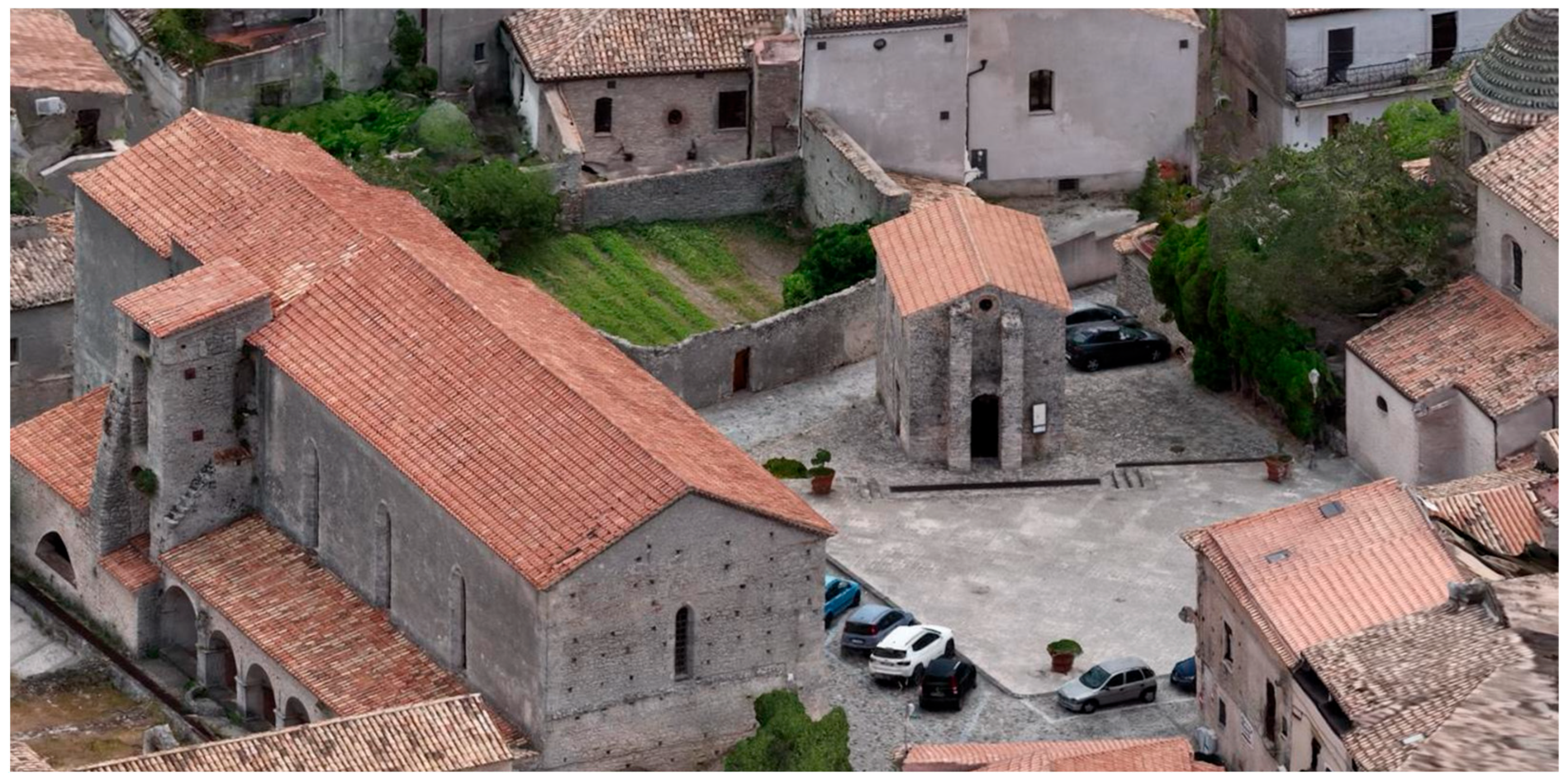
The case study selected for the experimentation is the church of San Giovanni Crisostomo (San Giovannello) located in the urban area of the Piazza delle Tre Chiese in Gerace (RC) (
Figure 3) together with the church of San Francesco and that of Sacro Cuore. It is the epigone of monumental Basilian buildings [
9] (p. 303) and a typological prototype of small churches with a single nave, spread throughout the region, which makes it a representative and transferable case. The choice is also motivated by the fact that Gerace retains many persistent characteristics, owing to urban development that has largely occurred outside the historic perimeter.
The building shows signs of high typological and morphological recognizability, in which the transformations have left legible material and stratigraphic traces. In addition, the availability of reliable and heterogeneous sources (surveys, historical documents, reports on technical-performance characteristics, photographs, etc.) allows a robust periodization of the evolutionary phases.
Accordingly, the application to this specific case study becomes the first step towards experimentation on other scenarios and opportunities for the discovery of new trajectories.
The building has a single hall with a gabled roof and wooden trusses, an extradosed apse oriented to the east, prothesis and diaconicon typical of the Orthodox liturgy. Natural lighting is provided by single-lancet windows and a western oculus, framed together with one of the two portals, by a pair of protruding masonry pilasters.
Documented transformations included the 1961 restoration funded by the Cassa per il Mezzogiorno, the 1997 project by the Orthodox Archdiocese of Italy and the 2011–2013 territorial seismic-risk assessment and works by the Superintendence. Overall, the project actions comprised structural consolidation (including the stone arch), architectural renewal (roof, original entrances, walled passage), damp mitigation and systems upgrades.
The related documents, reports, plans, sections, elevations and pre/post intervention details, cost estimates and administrative documents, as well as historical photographs, were stored in the Archive of the Superintendence of Archaeology, Fine Arts and Landscape for the metropolitan city of Reggio Calabria and the province of Vibo Valentia and in the Central State Archive of Rome—Fondo Cassa per il Mezzogiorno.
The survey data came from laser scanner (2023) and photogrammetry technologies (2024). They were collected as part of the project GEstioNE del rischio SISmico per la valorizzazione turistica dei centri storici del Mezzogiorno (GENESIS).
The combination of typological recognizability, stratigraphic traces, breadth and quality of sources and diffusion of the building type makes San Giovannello a matrix case for the training and validation of mapping rules and for extension to further regional scenarios.
2.3. Conceptual Model
The preliminary phase for the construction of the actual conceptual model was the definition of the semantic domains within which to carry out the mapping of the data, to then determine the connections and relationships between them within a precise information perimeter, functional to the objectives of the research. The guidelines are based on existing standards for the characterization of descriptors and for the assessment of the state of conservation: the Manuale Tecnico of the Piano di Conservazione [
11] and the Piano Programma di Conoscenza [
12].
Although they were developed for different purposes, the two tools share a common goal: to build information systems that codify and organize knowledge relating to the object. An attempt is made to bring out the transformative processes and underlying logics, which are essential for critical analysis and conscious planning, by following their physical and documentary traces.
To do this, both interpret the technical element as an elementary information unit, an integral and active part of an articulated, interconnected building system, in which each transformation on a portion produces effects on the whole organism. Building components co-evolve, reacting not only to mechanical or environmental stresses, but also to human actions, changes in use, climate and the chemical and physical degradation processes of materials. In this vision, the goal is also to capture the network of relationships that bind the parts to each other and to the whole.
The Piano Programma di Conoscenza privileges the contextual and environmental components and their impact on the building. The Manuale Tecnico, with its coding system, offers a stable basis for sharing and interoperability of technical knowledge, facilitating semantic normalization of data.
Based on these references, the model information content has been organized on three distinct but interconnected levels: Urban, Building, Technical Element.
The first one includes the registry and location of the urban center, its climatic characterization, exposure and seismic risk. The urban level also extends to the building neighborhood, street or square.
The building level contains registry, location, administrative, general historical information, typological-functional characterization, the number of floors and a description of the technological composition.
For each technological element, the information level assembles a personal data sheet, a material–construction profile, and historical notes (including prior interventions). It documents conservation status, ongoing anomalies with causes and risk areas, and assesses problems. It also maps spatial, structural, and interaction links with other components, with particular attention to pathways of degradation.
By knowledge of architectural heritage, we mean the creation of an interpretative model of reality enabling interpretation and dissemination of the asset under study [
13] (p. 265), through perspectives that may be commonly shared and plural [
14]. In this way, tacit knowledge becomes explicit: concepts acquire concrete form and are expressed in formal language.
Graph databases allow coexistence and semantic interoperability between, concurrent or complementary, ontologies within the same infrastructure. The disciplinary specificity of each interpretative approach is maintained, while logical and semantic structures are harmonized within a common framework.
This does not obviate a preliminary design. On the contrary, it proved fundamental in orienting the graph structure and in defining key entities, relevant semantic relationships and properties significant to the analytical objectives. In addition, the initial conceptual definition is necessary to facilitate interoperability, semantic traceability and integration with any existing ontologies or thesauruses.
For each element of the information structure, it was evaluated whether the modeling should take place in the form of a node, relationship or property.
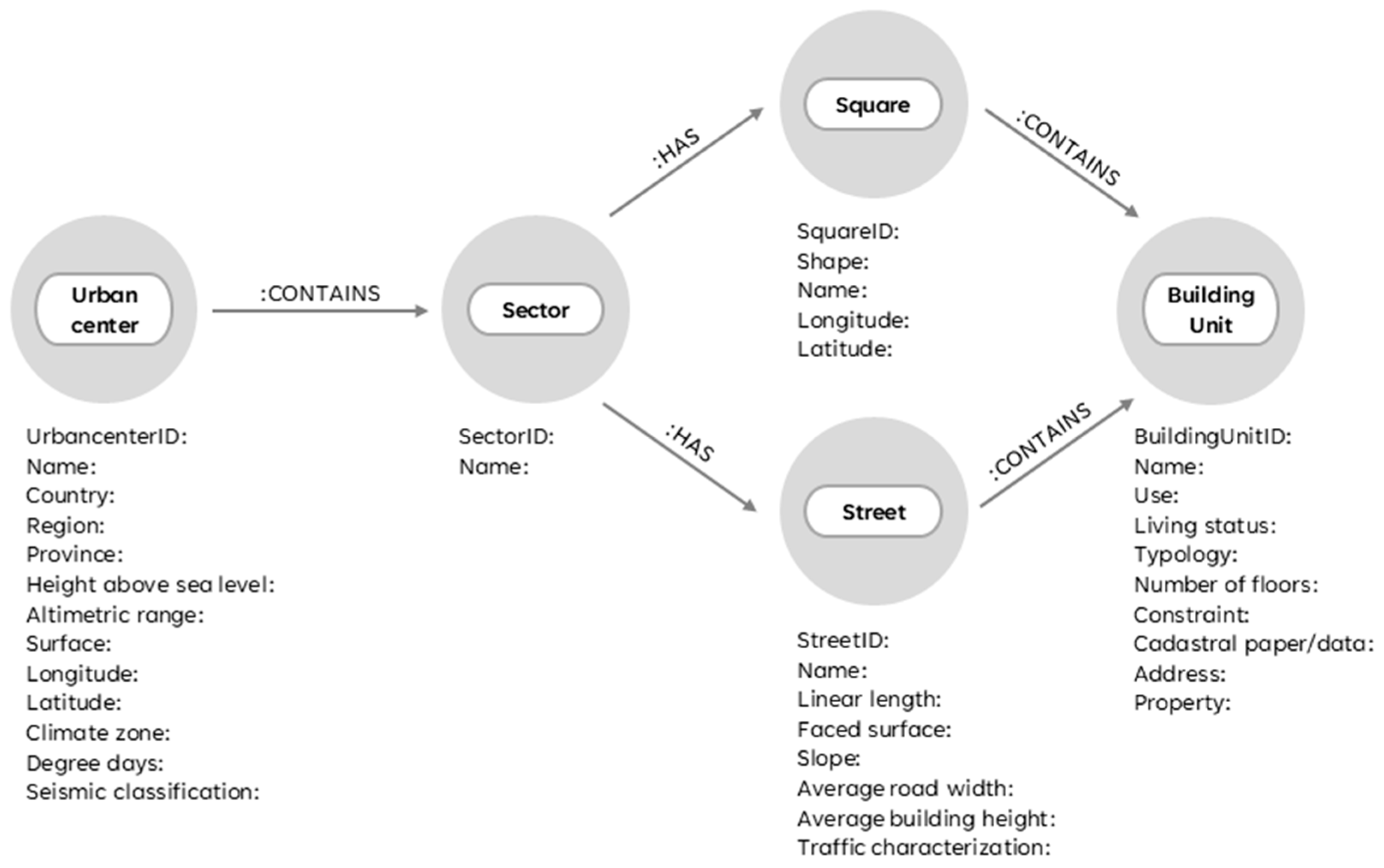
For example, the description of the urban center (
Figure 4) was represented through the set of properties associated with the homonymous node. This was sufficient to express the different characterizations, through single or sets of parameters. With large datasets, it is possible to make comparisons, create clusters on an environmental, seismic and administrative basis and formulate hypotheses and proposals for intervention.
Urban subcomponents (sector, square and street) are autonomous nodes that progressively refine the building’s framing. The urban information level provides, on the one hand, the geographical and environmental framework and, on the other, a workable basis for explaining relationships between building and context.
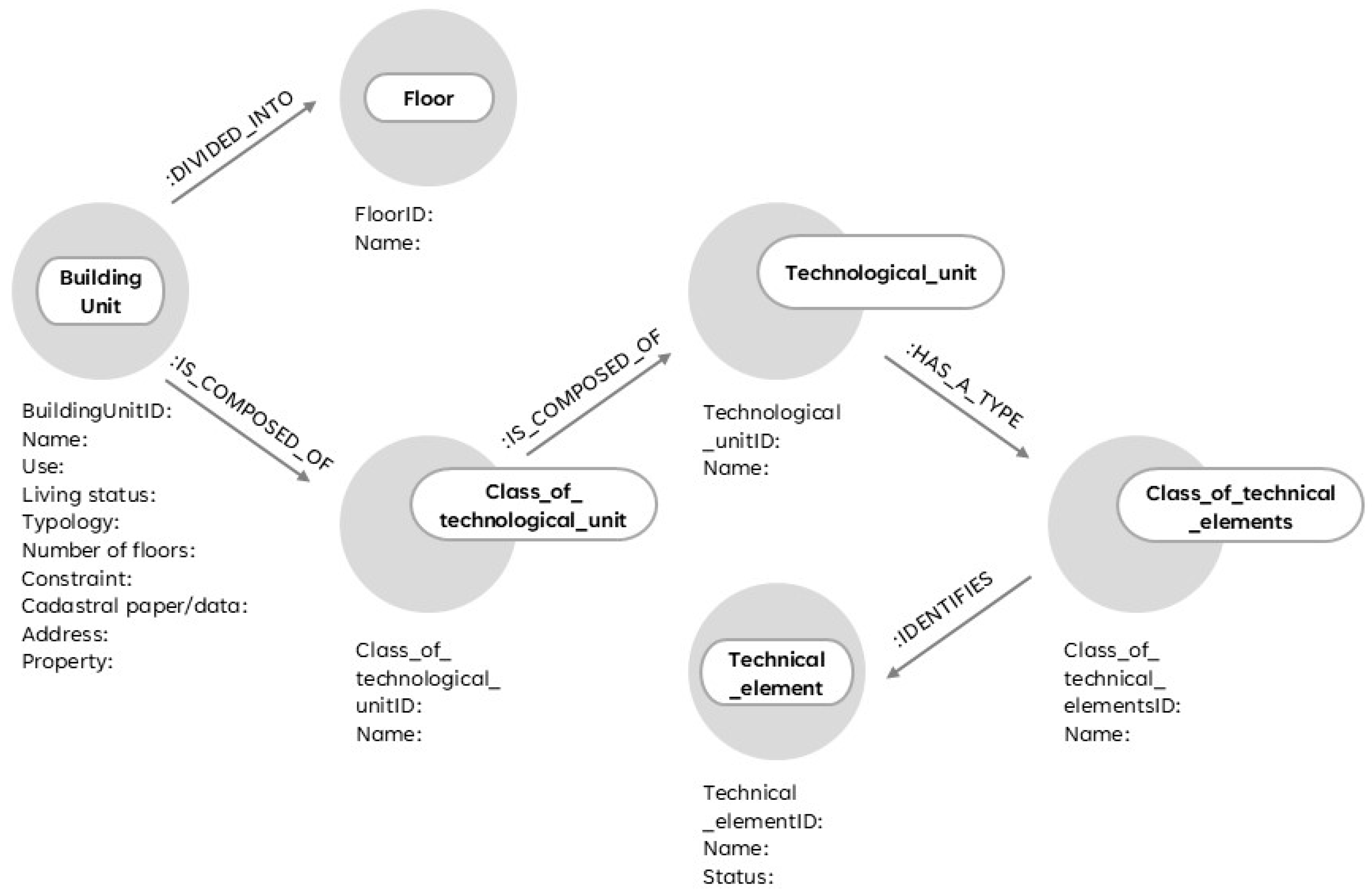
The polarizing elements in the graph are the Building Unit and the Technical Element. Nodes and their respective properties in the urban-environmental characterization domain are related to the former, then continue along a taxonomic path of decomposition, based on the UNI 8290-1:1981 [
15], that reaches the technical element (
Figure 5).
The latter is described through a network of semantic relationships that explain its composition, interactions with other elements, state of conservation and associated interventions.
Each node of the graph has a unique ID, making it perfectly recognizable. The structure of the knowledge base therefore incorporates a structured coding system. In the case of technical elements, the coding methodology from the Manuale Tecnico has been inherited.
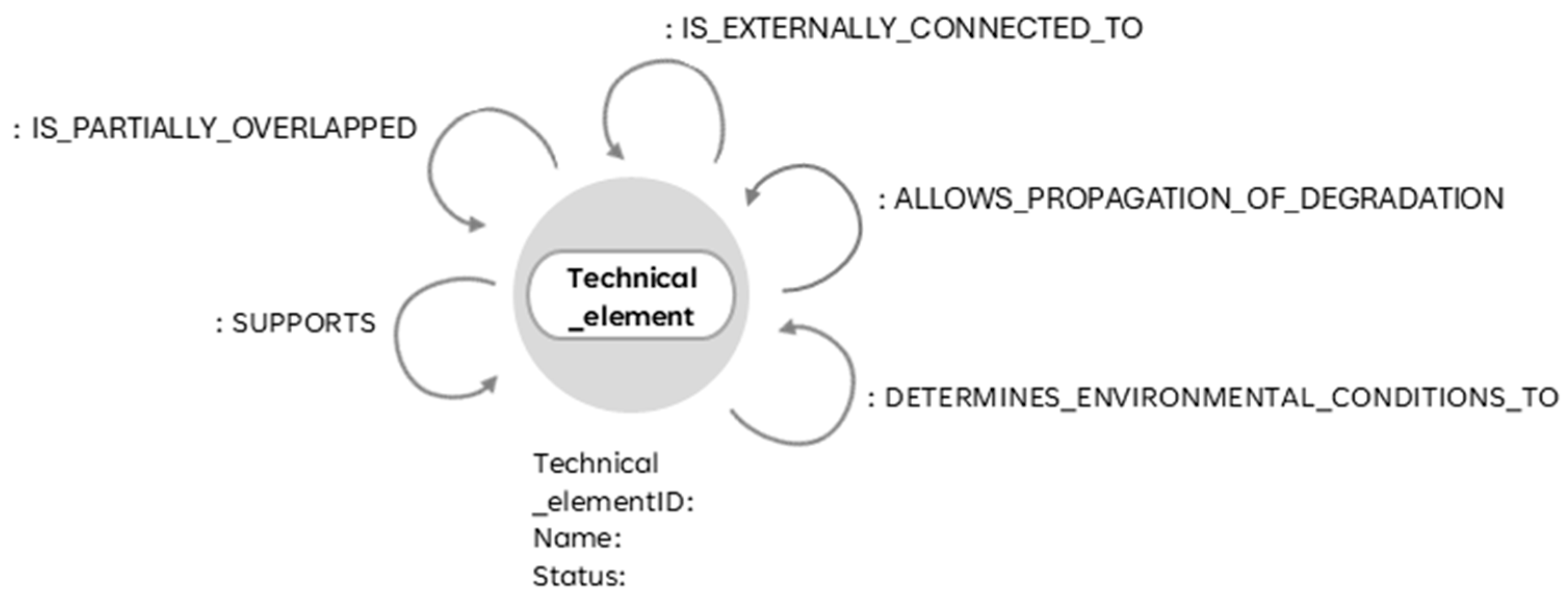
Alongside technological decomposition, to highlight the co-evolutionary dimension of architecture, the modes of interaction between the parts are recorded (
Figure 6). The explicit links constitute an initial schematization.
Subsequently, with periodic updates, new transformative events and reciprocal adaptations, corrective measures will be applied to the relational framework as required.
The SUPPORTS relationship indicates that one element provides structural support to another. Changes in the supporting element (aging, physicochemical variations, degradation processes, interventions, changes in load) directly affects the stability of the supported element, with possible reciprocal adaptations. Mereotopological links attest to the existence of physical connections, while simultaneously enabling reasoning about degradation models.
The relation IS_EXTERNALLY_CONNECTED_TO denotes that two elements are contiguous along a surface but do not overlap. Construction discontinuities are often points of vulnerability (thermal bridges, infiltrations, capillary rise).
IS_PARTIALLY_OVERLAPPED concerns elements with partial volumetric interpenetration. Contact areas can trigger degradation/instability and, during transformation, removal of one element can damage the other.
ALLOWS_PROPAGATION_OF_DEGRADATION describes the consequences of degradation for the whole and the associated risks.
When one element influences the microclimatic conditions of another, the relationship called DETERMINES_ENVIRONMENTAL_CONDITIONS_TO is used. It provides a means for understanding the genesis of degradation phenomena, that manifest in one place but may originate elsewhere. The goal is to understand and respect existing equilibria.
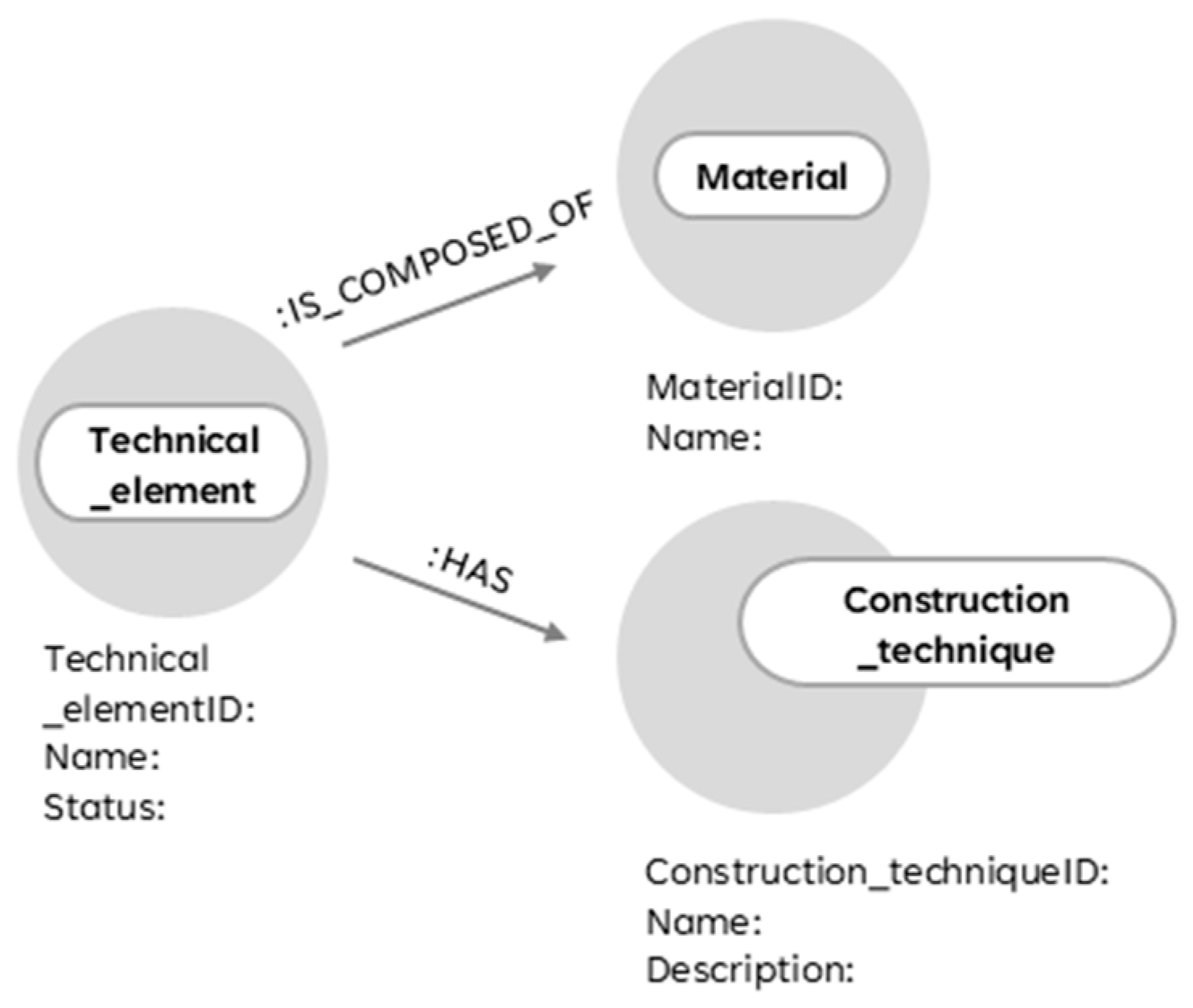
Each technical element is characterized from a material and construction viewpoint and the material and construction technique are treated as autonomous nodes (
Figure 7).
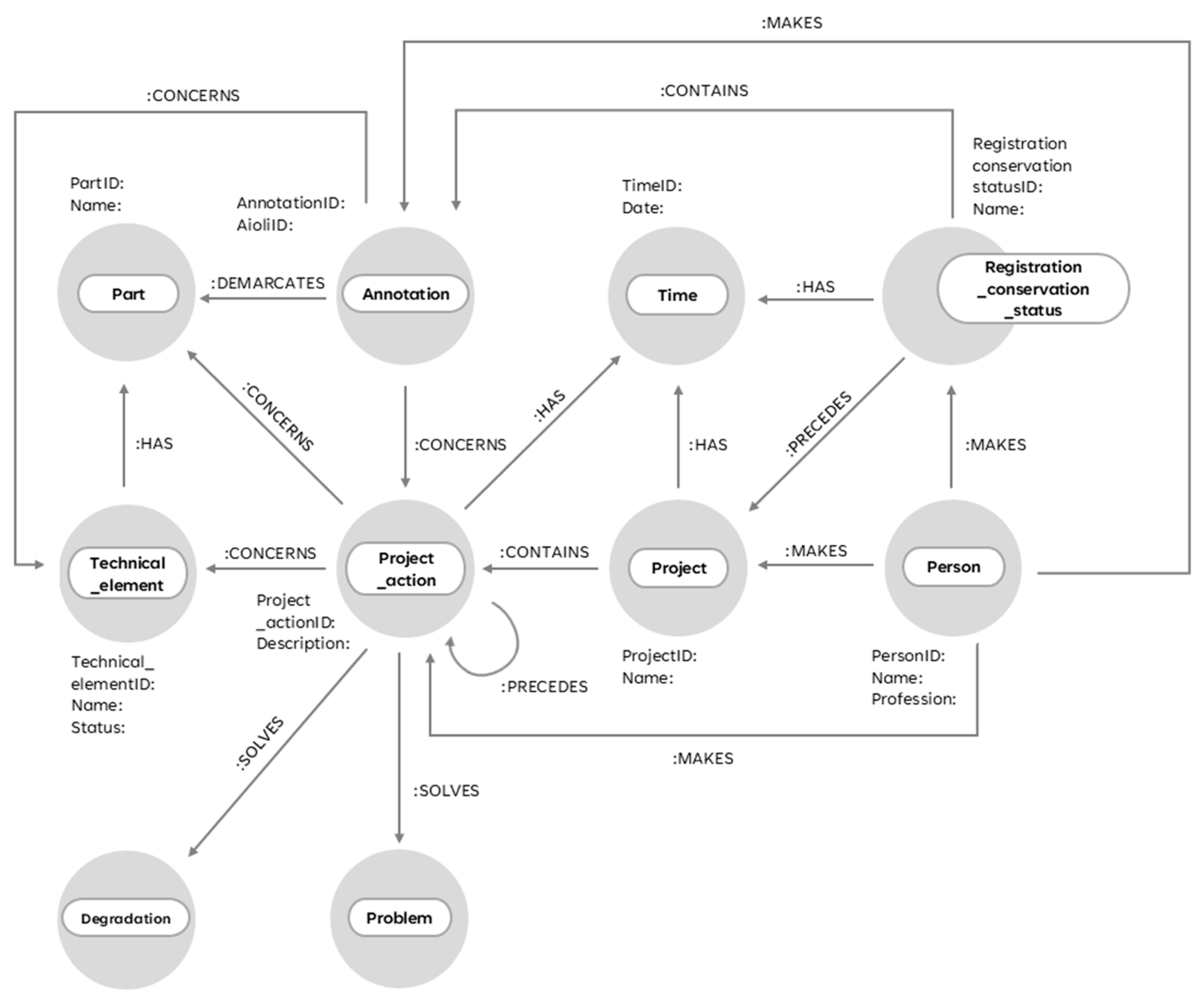
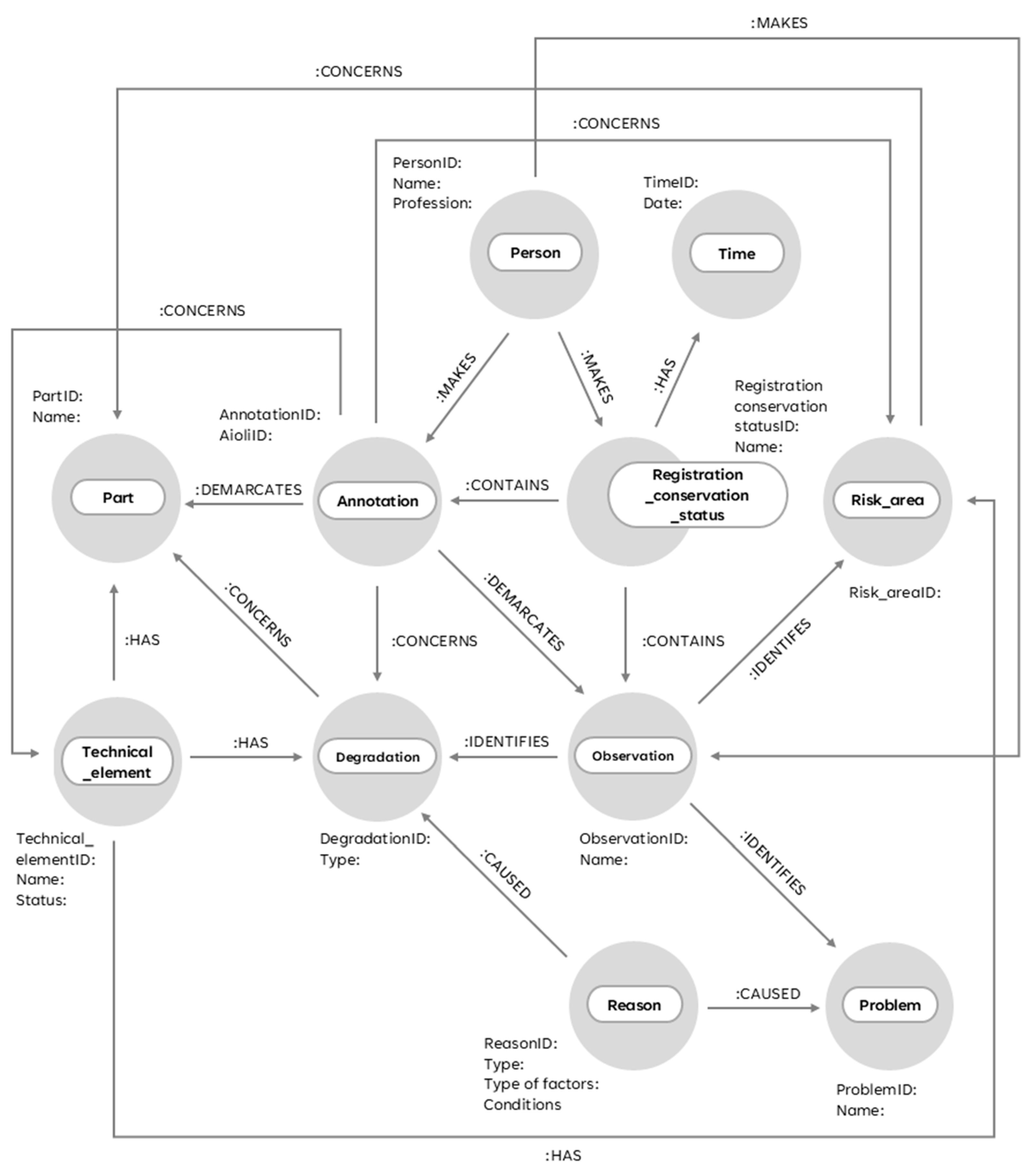
The state of conservation of a building or its components can be recorded at different times, thanks to the node called Time, and by different people (Person node) (
Figure 8). The latter may record specific observations on current anomalies (element pathologies or failures involving entire technological units) or on potential ones. The act of observing, and the consequent formulation of related considerations, implies the existence of a physical, spatial component.
Within the model, mediation between geometric and the qualitative content is provided by the node Part, a measurable unit of localization designed to support the georeferencing of phenomena. Its physical boundaries are defined by the Annotation node.
The adoption of Part as an autonomous, relatable entity meets the need to model phenomena not as abstract events but as localized movements of matter, with an explicit geometric component and an implicit relational one. These are physical parts of the technical elements. Each records transformative action, linked to an observing or design agent, as will be described later, and to a defined time.
Semantically, this node can be linked to one or more degradation phenomena, each related to one or more causes (Reason), to potential predictive hypotheses, and to areas considered at risk.
By linking the pathology to a specific area, it is possible to obtain a series of information about its spread, simply by relating it to the entire surface of the element.
As part of recording of ongoing anomalies, observations may also concern problems involving entire technical units.
Finally, the Risk Area corresponds to the region where, according to the hypotheses advanced, potential anomalies could occur.
Transformative actions (Project_action) are parts of a larger project, the product of the conceptual work of a Person in a given time (
Figure 9). The analytical and survey phase (Registration_conservation_status), carried out by the same person or by others, results in the identification of ongoing anomalies, called Degradation or Problem, and in the planning of corrective actions. Interventions occur along a timeline and may partially or entirely affect the technical element. Mediation through the Part node (
Figure 10) gives the opportunity to trace transformations over time and the exchange, loss or addition of matter. While maintaining a technological decomposition approach, the model provides the tools to construct a stratigraphic analysis. In this way, the Part node functions not only as a spatial container but also as a logical device mediating between material states, technical elements, and interventions, capable of restoring the building’s transformative depth in a computable, queryable, and historically traceable form.
2.4. Graph Database Implementation
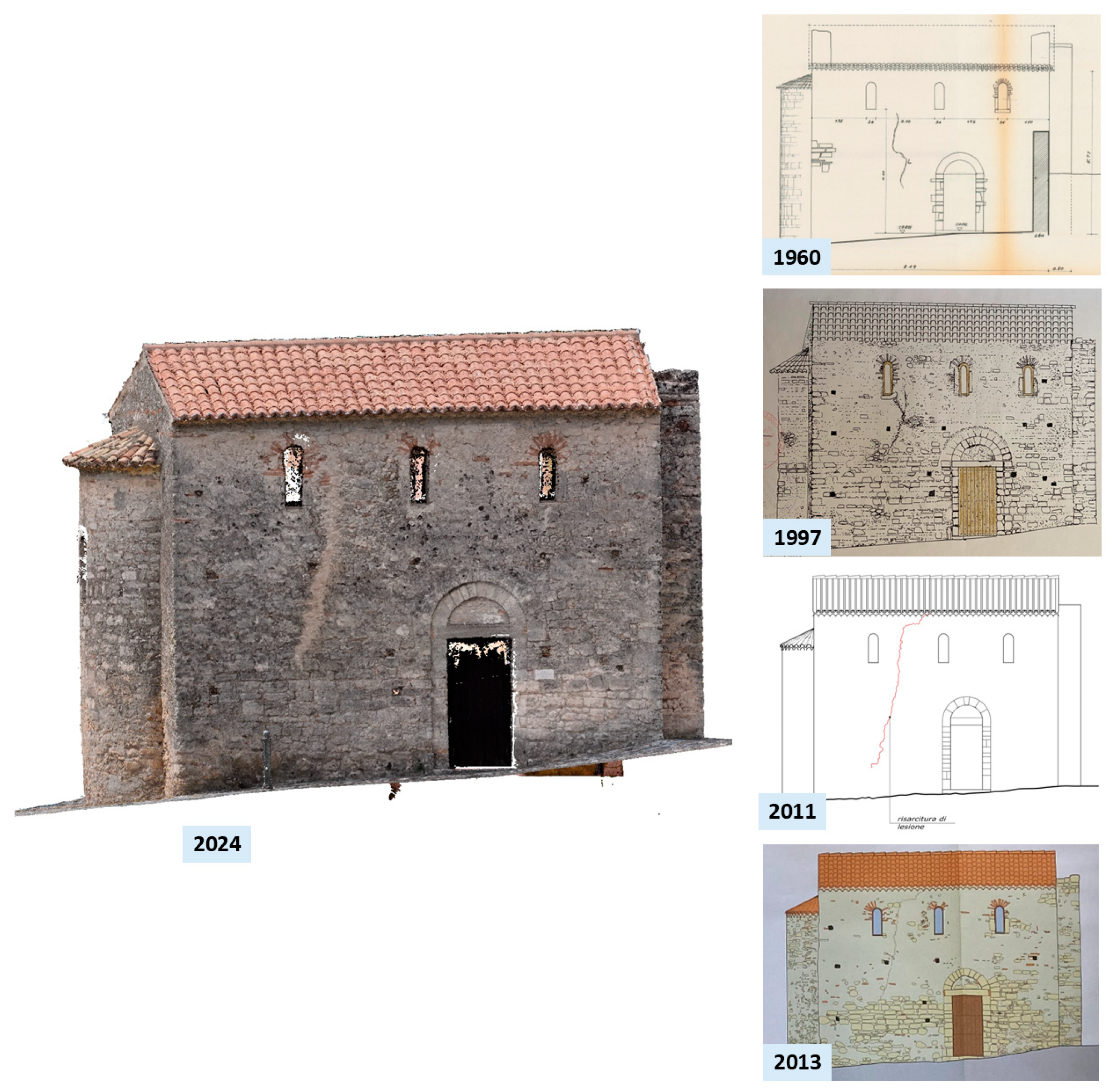
The San Giovannello data, used to populate the database derive from the documentary sources described in the previous section, enabling the reconstruction of the building’s evolution over the past fifty years. The analyzed corpus included a variety of heterogeneous documents, technical reports, diagnostic sheets, bills of quantities, graphic drawings and project tables, produced in different time phases, by various actors and following non-uniform methodological approaches. A significant contribution came from the drawings, example in
Figure 11, which contained indications of degradation forms and intervention locations. These served as a reference for georeferencing on the 3D model in the CNRS (MAP) Aïoli platform, as explained later.
The outcomes necessarily stemmed from a harmonization process; however, the heterogeneity described posed several critical issues, summarized in
Table 1.
This phase was characterized by conceptual disambiguation and semantic alignment, based on cross-comparison among sources, mapping of recurring terms, and the construction of categorical equivalences. It is important to emphasize that, although the highest possible degree of consistency, reliability, and traceability was pursued, the resulting reconstruction remains hypothetical. Linguistic inconsistencies, methodological divergences, and metadata gaps require a critical reading of the harmonized data. The value of this phase lies not in achieving absolute truth, but in its capacity to enrich the knowledge base.
With reference to the components of the data model explained in [
16,
17] it is highlighted that a graph database model has data structures composed of nodes and edges, and supports operations based on a graph query language and provides integrity constraints for data consistency. In particular, a property graph model [
18] defines nodes and relationships as labeled entities, each carrying an arbitrary number of key-value properties. Relationships are directed, but may be traversed bidirectionally in queries, and multiple relationships may exist between the same pair of nodes [
19] (pp. 58–59). In addition to the query engine, which performs Create, Read, Update, Delete (CRUD) operations, graph databases include a content storage component.
In a native graph database such as Neo4j, used for this experimentation, relationships are stored natively alongside nodes, emphasizing their role. The ability to navigate between connections is optimized through index-free adjacency.
Each node maintains direct references to adjacent elements, acting itself as an index, allowing non-linear and multi-hop query paths, operations on patterns and measures of similarity between entities, even according to multidimensional criteria.
The graph database is a powerful tool for knowledge modeling but also serves as an analytical environment.
Neo4j, an ACID (Atomicity, Consistency, Isolation, and Durability)-compliant transactional system, associates its query capabilities with a native query language called Cypher, also adopted by other systems via openCypher, with official drivers for Java, JavaScript, .NET and Python. Choosing a graph-based solution is often advantageous when results require complex inferential processes, nonlinear trajectories, evolving schemas, and heterogeneous sources. The graph becomes an active investigation context, in which knowledge can be explored, enriched and continuously reinterpreted according to the questions posed and the relationships observed.
The collection, filtering and harmonization of data constituted the preliminary phases required to define the instances to be uploaded. The user interface of Neo4J Data Importer is intuitive and allows data to be imported from flat files without coding or direct access to the Database Management System (DBMS) file system. Flat files contain data in tabular form, typically as .csv files, in which values are separated by commas. In addition, users can query and visually explore the data once imported.
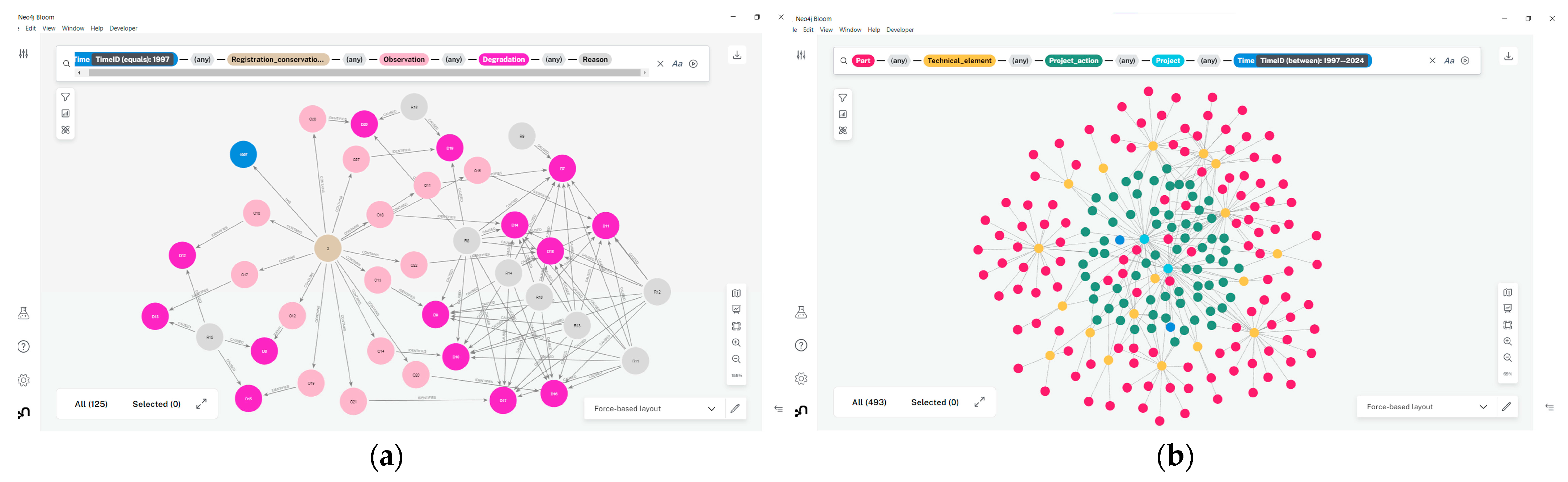
The next step is to associate the uploaded files with their corresponding nodes and relationships, mapping properties through the drop-down menu according to the tabular content, i.e., selecting the data to be used. After completing the population of the graph with the instances, the queryability of the knowledge system and the correspondence to the expected analytical objectives were verified. This step employed Neo4j Bloom (Version 2.11.0), which enables dynamic graph visualization and semantic query execution through assisted natural language and Cypher.
The graph model allows searches initiated from any node within the information domain. Queryability is therefore unconstrained by predefined configurations, allowing inferential paths to be activated from any point in the network.
The system can reconstruct a coherent evolutionary sequence, articulated along spatial, temporal, technical, and conservation dimensions by formulating queries, which emerge naturally from the reticular structure of the data. Examples of space-time queries are shown in
Figure 12.
Through the connection between synchronic entities, it has been possible to derive diachronic reconstructions, such as the sequence of interventions on a given architectural element, or the evolution of diagnoses over time.
This step enabled the testing of the model’s validity, ensured consistency among instances, relationships, and properties and demonstrated the diagnostic capability of the system.
Different families of inferences can also be potentially activated on the structure of the knowledge base. Plausible trajectories are the joint evaluation of the intrinsic and extrinsic factors that influence the building’s health, the identification of risk areas, the analysis of propagation with respect to coevolutionary variables between contiguous elements across time and space and the comparison of degradation with other parameter categories.
2.5. Georeferencing of Data
For the purposes of the present study, data georeferencing was performed on the collaborative, reality-based web platform Aїoli, developed by Modèles et simulations pour l’Architecture et le Patrimoine (MAP) laboratory with the support of the Centre National de la Recherche Scientifique (CNRS) and the French Ministry of Culture, and dedicated to the semantic annotation of cultural heritage objects at multiple scales. A cloud computing infrastructure makes it possible to manage three-dimensional semantic data, from collection to use, also supporting in situ or remote detection [
20]. Within a single 3D scene, the platform accommodates and spatializes different resources, while a hybrid 2D/3D framework allows 3D annotations to be obtained from photogrammetric datasets.
Using the platform’s internal tools, selecting pixels in an image to highlight an area of interest triggers automatic propagation across all 2D and 3D resources that visually contain the corresponding spatial region. A set of 3D indices is extracted from the annotated 2D image, mapped to the principal matrix of the point cloud, and matched to indices from the other images. In short, propagation links image coordinates to the corresponding 3D reference space through a hybrid (2D/3D) indexing process.
The methodology [
21] represents the spatial region as a segmented, point-based entity in 3D and as a vector-based entity in images. This is possible because, once images are processed into a point cloud, the cloud is indexed and re-projected onto the original images [
20]. The data model comprises a spatio-temporal layer (image location and acquisition time) and metric references, computable against a defined unit or relative to the full point cloud.
A morphological layer is added: annotations include geovisual descriptors computed on the segmented 3D region, color, normals, warp, ambient occlusion, statistical measures, and maps.
Finally, a semantic layer is included [
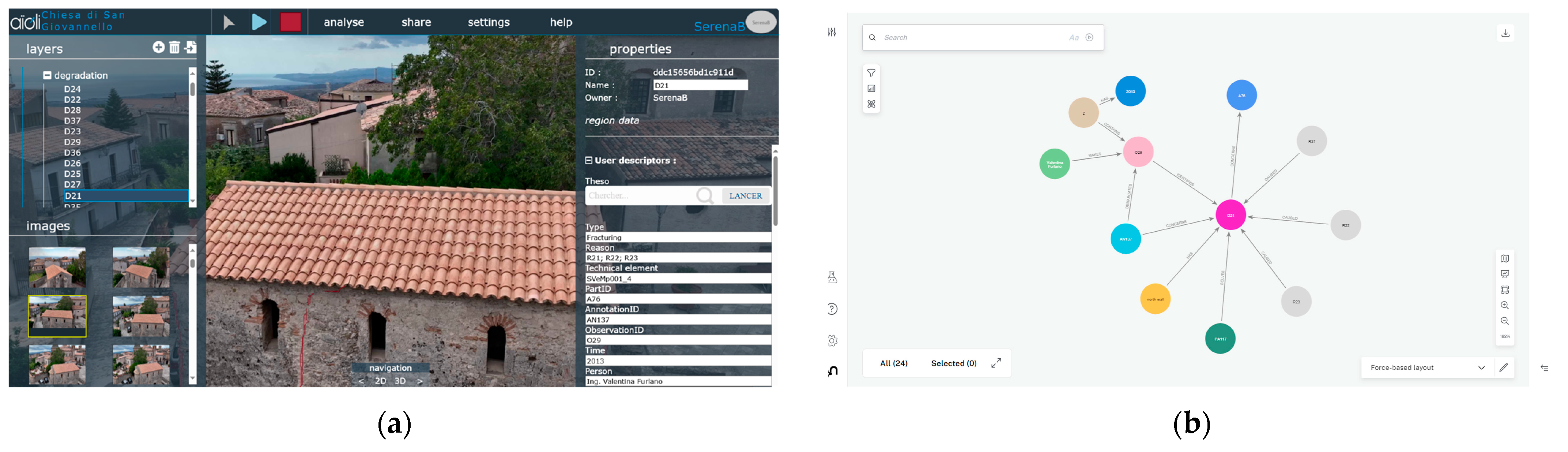
20]. From an information organization perspective, the platform supports an annotation hierarchy of Groups and Layers. For each, parameter types can be defined descriptive fields and controlled vocabularies. Each annotation inherits semantic fields from its layer and is further defined by automatically computed geometric descriptors. Users may also attach documents, images, videos, or audio to the annotated region. In the graph, the Annotation node represents the real location of the Part node, connected with a Project_action or a Degradation (
Figure 13).
The first operation was to upload the photogrammetric survey of San Giovannello. In this case, project groups corresponded to records of the ante operam surveys and to the intervention projects. In the former, layers were dedicated to observations of degradation and risk areas, in the latter, to interventions. Each annotation is characterized by parameters and relationships inherited from the reference node in the graph.
Drawn regions automatically receive a unique ID, a property of the Annotation node, which serves as a key for traceability and semantic alignment.
The implementation presented some challenges. First, annotation phase is manual, introducing positional uncertainty in region identification. In addition, part identification relies on interpretations of preliminary data that may contain geometric deficiencies or inter-source inconsistencies. Consequently, each annotation retains a hypothetical component. Despite this, the geolocation of data allows the identification of recurring geometric patterns and the evolutionary reconstruction of portions of the building through the semantic and graphic accumulation of annotations.
2.6. BIM Pipeline
The proposal aims to introduce BIM into the process that progresses from observation to evaluation and ultimately to direct intervention. One recurrent critical issue is the fragmentation between documentation derived from the survey and the model-based representation. The operational workflow addresses this discontinuity by using the graph as a mediator.
The semantic enrichment of parametric heritage models remains an active area of investigation. Current trends move beyond forcing large volumes of data into 3D virtualization and instead prioritize rationalizing and contextualizing model information according to use cases and required levels of granularity.
At the same time, because models produce new information, the limitation of interoperability emerges. In fact, exchange ontologies (i.e., Industry Foundation Class, whose acronym is IFC) are not yet fully suited to heritage data and software houses apply heterogeneous approaches to native file management.
The broader question of limiting semantic loss is articulated in three objectives:
ensure consistency and documentary homogeneity across multiple models and families;
enable data exchange between model and knowledge base;
support transfer from the model to open formats.
In this study, a (top-down) ontological approach [
22] was adopted through the connection to an external resource such as the graph database. This enables the definition of information requirements, calibrated to purpose, stakeholder needs and project characteristics. In particular, object specific choices can be made. Semantic enrichment occurs within the BIM authoring pipeline; by rationalizing knowledge within the models, the export to .ifc is facilitated.
The BIM model of San Giovannello was created using a hybrid Historic Building Information Modeling (HBIM)/Scan to BIM methodology in Autodesk Revit 2024.
To ensure documentary consistency between current and future parametric models of the building, the approach proposed shared parameter sets. These are stored in an external file usable across multiple families and projects. The parameters map to nodes and properties in the graph’s information layer for the technical element. Parameters are associated with the corresponding families. In [
23], the possibility and value of integrating, through a specific framework, BIM models with Neo4j has already been demonstrated.
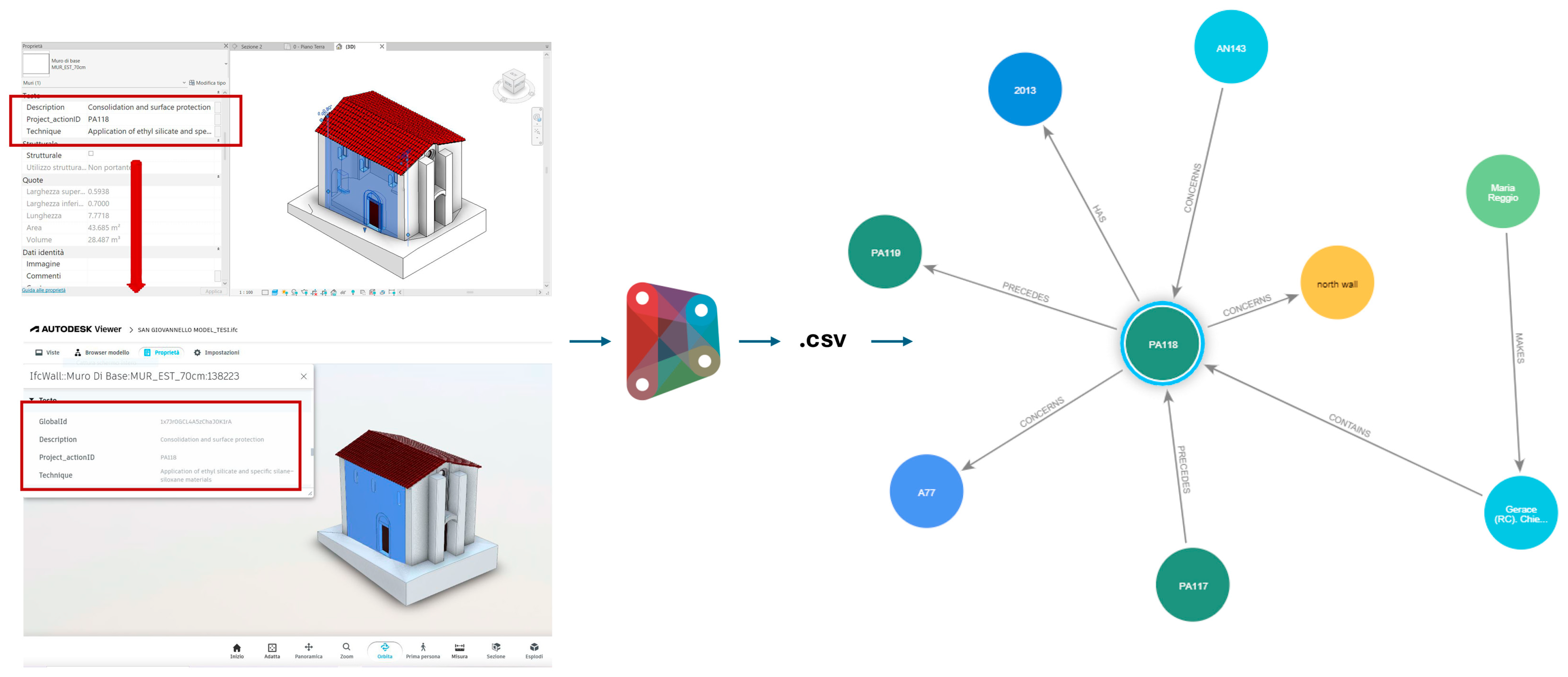
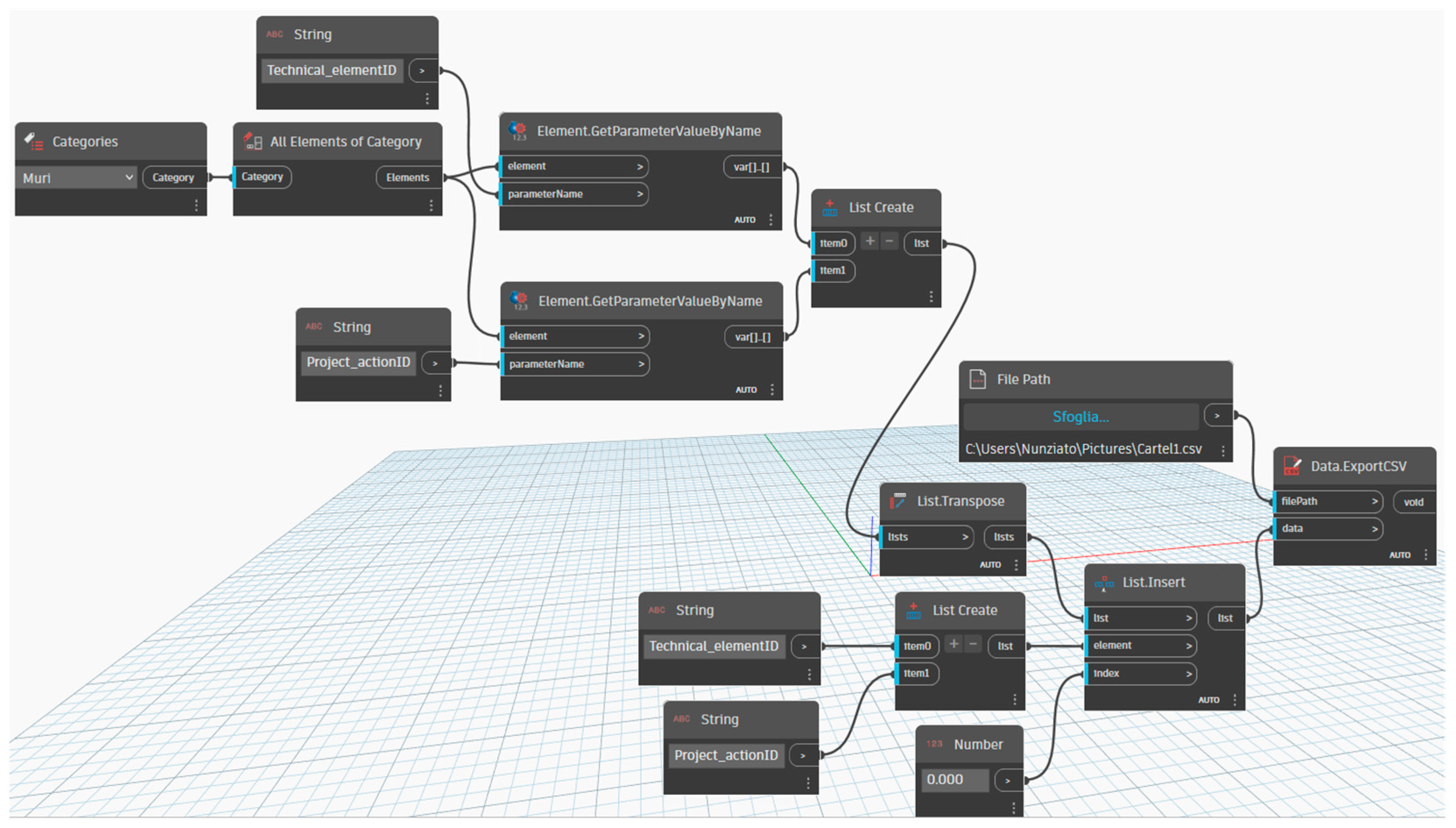
In the present study, an algorithm was developed, implemented as a visual programming script in Autodesk Dynamo, to exchange data between Autodesk Revit 2024 and the knowledge base (
Figure 14 and
Figure 15).
It is a reusable scheme for data extraction from models, which groups elements by category, reads user selected parameters, organises them into tables, and serializes them as .csv files for exchange with Neo4j.
The same structure applies across categories and parameter sets by changing only the inputs, validating a generic approach. Finally, the model is exported to the open IFC format. With the parameter configuration, parameter sets can be transferred by customizing the exporter within Autodesk Revit 2024, avoiding misuse of the IFC standard for unsupported purposes. The IFC model can then be shared via open source platforms or used during coordination phases.
In this study, BIM is conceived as a design and operational tool that provides and integrates information on interventions. Project action description is anchored to the technical element object and can be transferred via the pipeline as instances in the knowledge base. As the resources came from previous projects, a demonstration was carried out on test data.
2.7. Query, Visualization, and Inference Environment
In the previous sections, methods for recording semantic, temporal, and spatial components have been implemented. To integrate these and make the knowledge base usable, an external-facing prototype environment for querying, visualization, and inference was designed. The developed system connects an HyperText Markup Language (HTML)/JavaScript web interface to Neo4j graph database via Neo4j JavaScript driver for Application Programming Interface (API) communication, in direct communication with the CNRS (MAP) Aїoli platform. This enabled:
instant connection between knowledge base and geometric virtualization;
simultaneous querying across the different representation dimensions;
multidimensional visualization;
user friendly interface.
The home screen presents semantic-query controls on the left and geometric display options on the right. In addition, users can perform dynamic zooming, distance and area measurement, and coordinate calculation, on both 2D and 3D assets.
By querying across synchronic records in the knowledge base, more complex answers can be obtained that diachronically reconstruct the evolution of the architectural asset. Outputs comprise a detailed results table (downloadable as .csv) and dynamic visualization of the corresponding geolocated annotations within both the 3D model and associated images, enriched by semantic inheritance.
The first section allows assessment of the state of conservation of a technical element within a defined time range. This query isolates and correlates degenerative phenomena observed over time. The query variables are: Name of the Technical Element; Type of Degradation, in case of limiting analysis to a specific phenomenon, Reason and Time interval. Combining these inputs enables answers to the following questions:
What forms of degradation were observed between time T1 to Tn, and where?
Did reason Rn generate degradation on the technical element between time T1 to Tn, and where?
Did degradation type Dn affect the technical element between T1 to Tn, and where?
Did degradation type Dn, attributable to cause Rn, affect the technical element between T1 to Tn, and where?
The second section addresses the sequence of conservation interventions on a technical element within a specified time interval. It provides a tool to trace the component’s evolutionary process through its changes.
Queryable variables include Name of the Technical Element, Time interval; Degradation identifier, to correlate the action to a phenomenon and the identification data of the Project. In this case, inputs are structured to answer:
What interventions have characterized the technical element between T1 to Tn, and where were they located?
What interventions, relating to the project called Pn, have been carried out on the technical element, and where were they located?
For degradation type Dn, was an intervention carried out on the technical element between T1 to Tn?
3. Results
The body of knowledge and description of the church of San Giovannello that emerged during the present study comprise: 5 surveys on the state of conservation and 46 observations; 38 recognized pathologies; 3 projects and a total of 148 interventions.
Each piece of evidence is contextualized with respect to who produced it (source/actor), what it describes (anomaly, cause, intervention), where it applies (Technical Element ID, Pert and 2D/3D geometry), when it occurred (Time) and with what meaning (controlled terms and causal relationships). This structure enables reconstruction and querying of the document, anomaly and transformation sequence along the axes of space, time, and material.
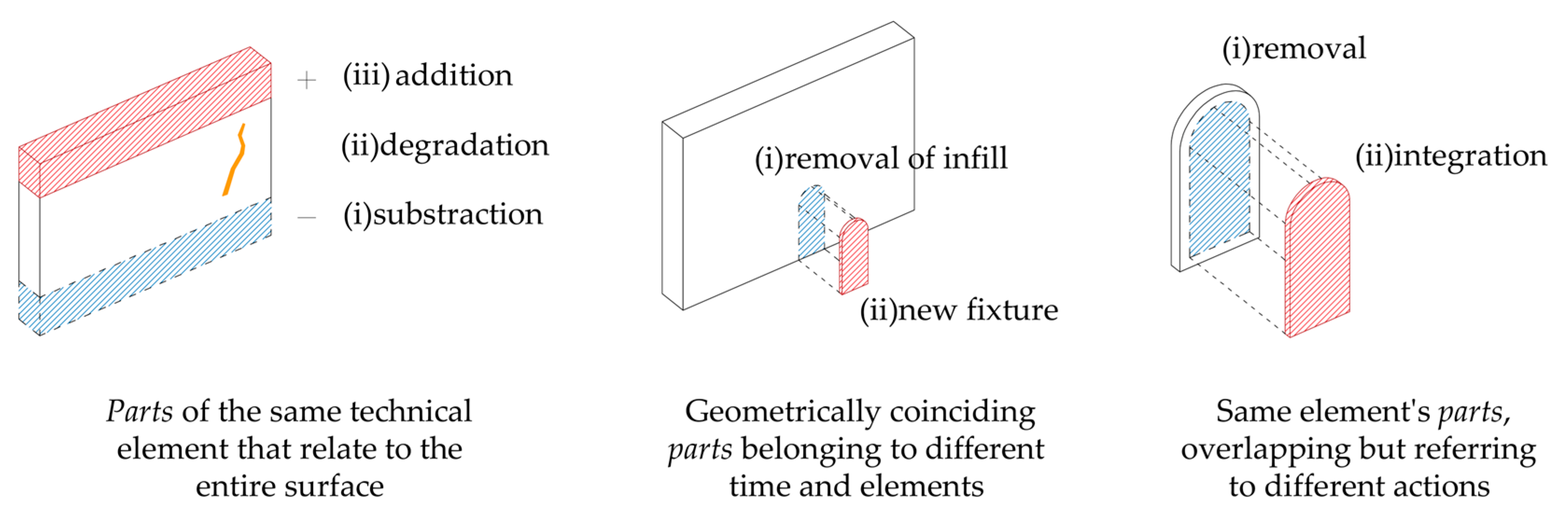
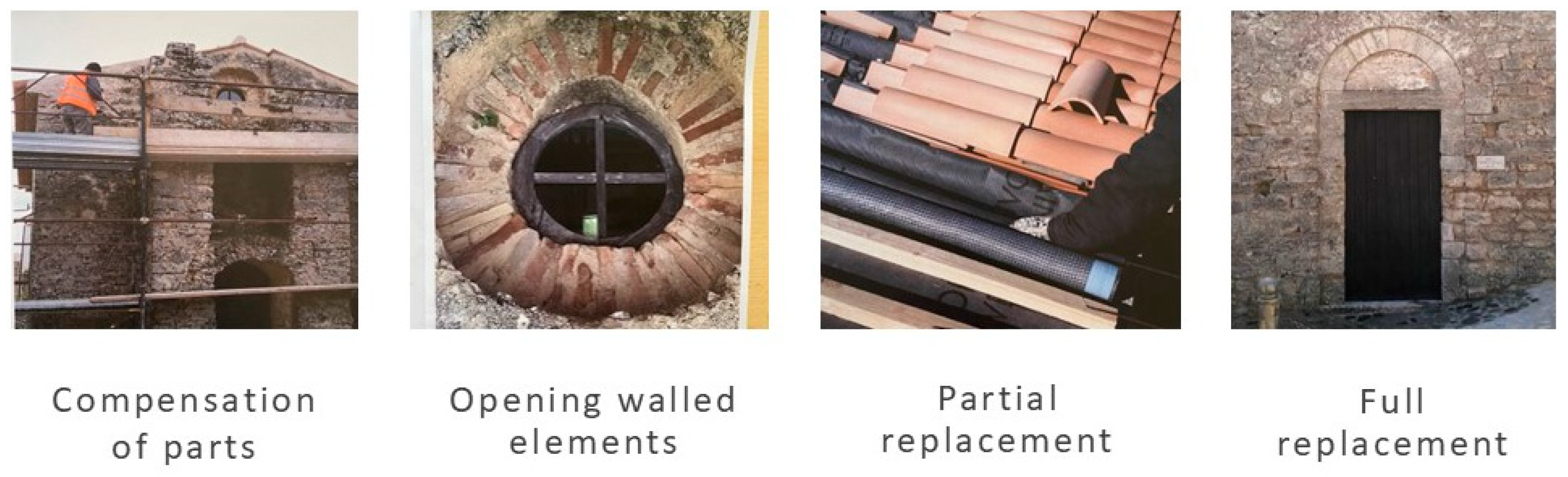
The conservative transformations related to the case study were classified into four macro types (
Figure 16):
- (i)
Compensation of parts: this includes interventions involving integration or addition of entire portions of the technical element or smaller areas. In such cases, the Part refers to the same Technical Element, and is evaluated in geometric and qualitative temporal terms with respect to the entire component and to pre-existing or future additions. E.g.: Stitching cracks, raising a wall head.
- (ii)
Opening walled elements: this involves removal of pre-existing material and addition of new elements, not necessarily in a strict sequence. Two operations are recorded, which may refer to different technical elements. The areas, although considered as autonomous instances, may coincide geometrically and spatially. E.g.: opening door and window compartments.
- (iii)
Partial replacement: this category is logically associated with the first, but refers to replacement of clearly distinguishable functional parts of the Technical Element. The same logic applies to the removal and integration of window glazing. E.g. replacing selected roof tiles or window panes.
- (iv)
Integral replacement: the entire Technical Element is removed and replaced. E.g. installation of new fixtures.
For the last two groups, two operations (removal and integration) are recorded and consequently two parts, coinciding with the whole and with a technologically recognizable portion of the element.
An emblematic example concerns single-lancet windows that were infilled at an earlier stage, reopened around 1960, and fitted with a frame in a subsequent intervention. In this context, the transformation consists of two distinct but logically related actions, each associated with its own Part.
The first describes removal of the infill, formalized as the subtraction of material related to the masonry, the second represents addition of the frame, a material insertion relating to the window. Although they coincide in physical space, the two regions are semantically distinct and temporally successive, and their coexistence in the graph allows the sequence of operations to be represented, with spatial and temporal recognizability.
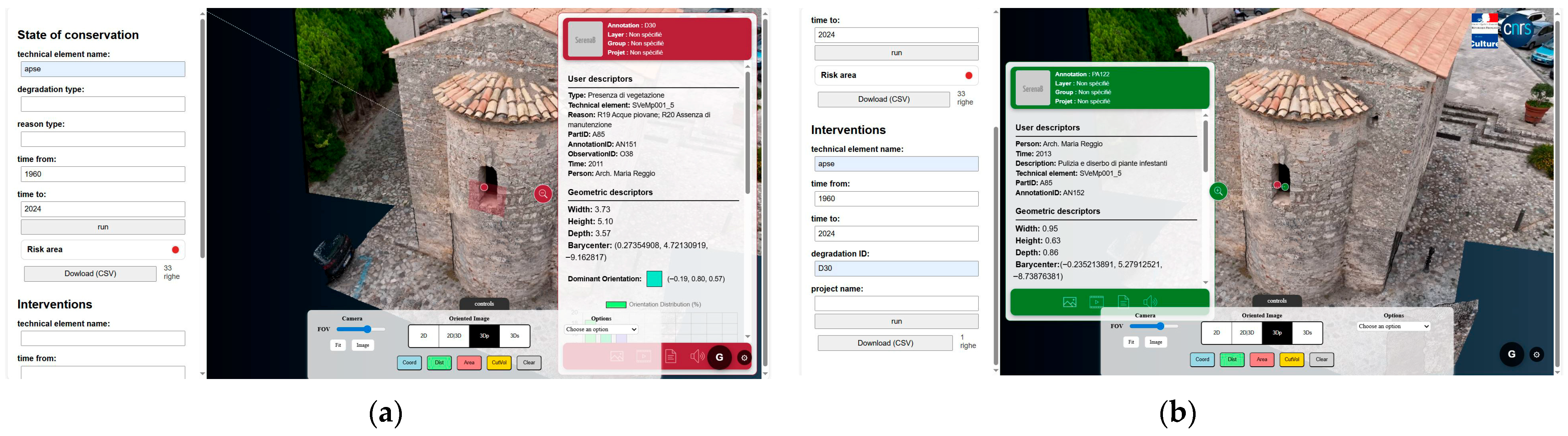
By way of example, a flow is reported in the case of double interrogation of the sections of the prototype environment (
Figure 17). First, a query is run on the state of conservation of the apse:
One of the results recognises a form of degradation, with code D30, corresponding to the Presence of Vegetation, which occurred in 2011. The next query asks whether a direct intervention was carried out to remedy this condition.
The results confirm that, in 2013, cleaning and weeding were carried out.
The system supports selective loading of annotated areas to ensure smooth navigation. These queries, although formally explicit, retain logical flexibility and can activate inferential components to reveal correlations and qualitative assessments.
From the inferences point of view, during the experimentation, different logics were explored. The current proposal focuses on two potential uses: identification of risk areas and recommended action. These features are at the prototype stage. In fact, semantic consistency checks and expert validation are underway and, for this reason, they are not included in the explicit results.
4. Discussion
This paper proposes a methodological and operational approach for managing continuity in the flow from data acquisition to the representation and sharing of knowledge in the digitalization process.
The experimentation achieved its objectives by reducing bottlenecks in the transition from raw data to structured information and by developing an inferential environment capable of producing analytical content.
Consequently, it is possible to correlate historical data, geometric surveys, observations, and events, reconstructing the evolutionary path of technical elements according to an explicit spatio-temporal logic. The representation of the artefact is no longer limited to a synchronic snapshot but is articulated as a diachronic narrative that can be computed, queried, and updated over time.
The operational workflow constitutes a genuine knowledge management cycle; its strength lies in the ability to integrate functionally heterogeneous, preexisting tools into a replicable process.
The research outlined a theoretical practical analysis culminating in a semantic knowledge base organized around an explicit conceptual model. The domain concerns the diachronic analysis of evolutionary processes and variations in the state of conservation of technical components of the historic building. A conceptual framework was defined that anticipates semantic and spatial contextualization at the survey phase, through geolocated and typed annotations. The acquisition phase can occur in situ or ex situ, draw on multiple sources, and accommodate heterogeneous data. Semantic enrichment occurs upstream, as formal models capture the implicit semantics of the data, reducing the effort required to move from raw to intelligible material. By providing an actionable knowledge base, mapping is simplified, enabling semi automated processing of information from the data.
The approach demonstrated a strong ability to integrate quantitative and qualitative components, producing semantically enriched, coherent and accessible models and documents and preserving the documentary continuity between reality-based and model-based representations.
The result is simplified access to technical data and multiplatform sharing, spatiotemporal contextualization of pathologies and interventions, support for collaborative work among stakeholders (e.g., conservation architects) and development of queries useful for monitoring and strategic planning of conservation actions.
As demonstrated, the system enables the identification of evolutionary patterns, causal relationships, and complex conservation trajectories, thus supporting analytical evaluations and predictive scenarios.
Although the experimentation focused on a single building, it systematized a replicable approach that produces a representation of the historical artifact that is not only documentary but also computational, relational and proactive.
The architecture separates the conceptual layer from the acquisition connectors and from the query layer. This allows the same logic to be reused across different information contexts, varying mappings and sources (
Table 2). By way of example, starting from the same question on forms of degradation occurring between T
1 to T
n, the system yields:
Single building: reporting of the elements involved, evidence and associated interventions with relative status;
Systems composed of monumental landmarks: comparison across buildings and the emergence of patterns in the actions adopted and in material responses;
Urban fabrics or compartments: by introducing contextual variables (exposure, position, etc.), recurrence clusters and risk gradients are derived, useful for prioritizing interventions. The output is a map of the portions of the fabric most likely to recur.
Similar buildings: typological analysis of recurrences by homologous components, intervention choices and outcomes. Type behavior, e.g., which parts are most vulnerable, is evaluated, providing a benchmark for intervention effectiveness.
In summary, the semantic basis guarantees consistency and comparability across scenarios.
Finally, the contribution fostered awareness and critical understanding of the available enabling processes and technologies, setting guidelines for future methodological and instrumental implementations aligned with the needs of the conservation process.
The implementation highlighted limitations arising from the manual nature of annotation, including inevitable geometric uncertainty in region delimitation and interpretive dependence on sources that are sometimes deficient or incongruent. Each annotation therefore retains a hypothetical component.
Looking ahead, we envisage a direct pipeline in which each region traced in CNRS (MAP) Aïoli, geolocated and typed according to the conceptual model, is automatically converted into a graph instance with identifiers, provenances, and spatiotemporal references. This step will reduce acquisition latency and transcription errors, enabling expeditious surveying oriented towards semi-automated database updating and continuous monitoring.
Manual semantic coding of sources requires significant investment in time and resources, especially at scale, and the pipeline still has intermediate steps and format conversions. Artificial Intelligence (AI) represents a potential game-changer. First, segmentation algorithms can support annotation on photos, videos, and orthoimages, provided adequate training datasets and expert validation.
From a semantic point of view, natural language processing tools can recognize entities and terms, map synonyms and accelerate alignment between multidisciplinary lexicons and historical phases.
In addition, implementing prototype inferential logic required iterative rewrites in Cypher. At present, this component should be regarded as demonstrative rather than decisive for the quantitative results. Integrating large language models (LLMs) with Cypher can lower the technical threshold of queries, especially when combined with voice input.
Building on the knowledge base and prototype inferential logic developed during the study, AI could assist with automatic rule mining. Introducing probabilistic reasoning would be useful in cases of incomplete or ambiguous data.
Based on the accumulated experience and recorded cause–effect correlations, specialized algorithms could run predictive simulations; for example, estimating the probability of a phenomenon reappearing within a spatial and temporal interval. These uses augment but do not replace expert judgment and require validation protocols prior to operational deployment.
The heterogeneity of BIM authoring environments limits practical interoperability: in the absence of truly equivalent open formats or homogeneous internal logics between software, the flow risks remaining constrained to specific ecosystems. The prospect of direct communication between the IFC format and the query environment is central to reducing latency and duplication, as well as extending the workflow beyond Autodesk Revit.
Overlaying annotated point clouds (survey phase) with parametric models offers objective verification of intervention locations with respect to georeferenced observations.
A concrete goal is annotation within a BIM environment with bidirectional synchronization. The principle is that annotations, wherever created, can automatically update the knowledge base, enabling seamless knowledge flow.
These actions will reduce reliance on manual procedures, improve scalability and generalizability, and consolidate system use in multisite design and conservation settings.