Systematic Review

Stakeholder Roles in the Participatory Management of Diasporic Built Heritage: A Systematic Literature Review


Department of Architectural Engineering and Technology, Faculty of Architecture and the Built Environment, Delft University of Technology, Julianalaan 134, 2628 BL Delft, The Netherlands
*
Author to whom correspondence should be addressed.
Heritage 2026, 9(2), 74; https://doi.org/10.3390/heritage9020074
Submission received: 5 December 2025 / Revised: 20 January 2026 / Accepted: 28 January 2026 / Published: 13 February 2026
(This article belongs to the Special Issue A 360° View of Heritage Management)

Abstract

Community participation is widely recognised as essential for sustainable heritage management. While international doctrines increasingly advocate participatory approaches, heritage management practices remain largely place-based and continue to prioritise territorially defined local communities. In the context of international migration and diaspora, such approaches inadequately address diasporic built heritage, whose cultural significance is conveyed by transnational diasporic communities across countries of origin and destination. Limited research has examined how diasporic communities negotiate their roles with other stakeholders in the participatory management of diasporic built heritage. This study presents a systematic literature review of 106 English-language publications, following the PRISMA guidelines, to examine how diasporic communities and other stakeholders participate in the management of diasporic built heritage. The analysis focuses on (1) mapping the geographic, institutional, and thematic patterns of current research, and (2) analysing stakeholder categories and cross-sector roles across origins and destinations. The results reveal a diverse, but uneven, geographic distribution of the case studies and institutions retrieved from English-language publications. A stakeholder framework is developed to bridge minority and mainstream (cross-sector) roles across origins and destinations, offering insights into the comprehensive understanding and identification of stakeholder roles for fostering further novel research on diasporic built heritage.

1. Introduction

Community participation is essential for sustainable heritage management. Participatory management encourages a wide range of stakeholders to be involved in the identification of heritage values, the development of conservation strategies, the execution of management actions, monitoring, evaluation, and feedback [1,2,3]. Various international doctrinal documents have advocated broad community participation in heritage management to reach consensus in heritage planning and policy-making [4,5,6,7,8]. Beyond a procedural element, participation is also a cultural process in which multiple stakeholders negotiate identities, and, under certain conditions, as a transformative practice that challenges the Authorised Heritage Discourse (AHD) [9,10].
Despite the continuing presence of international migration and diaspora [11,12], participatory heritage management in practice remains largely place-based and prioritises territorially defined local communities [13,14]. Transnational participatory management and governance engaging diasporic communities is less discussed. “Diasporic communities”, characterised by cross-border dispersion, homeland orientation, and community boundary maintenance, refer to the communities that share the same stance and struggles as “diaspora” [15]. They are frequently marginalised as “ex-territorial minorities”, a status that renders them more invisible than local minority groups within the mainstream AHD [9,16,17].
Theories of minority rights and transnational governance have provided a conceptual foundation for understanding participatory management of diasporic heritage. International multicultural frameworks have emphasised diasporic communities’ rights to maintain their cultural expressions [7,8]. Diasporic heritage can be included in a country’s “multicultural” narratives and become part of the “multicultural heritage” [16,18]. Transnational governance suggests engaging stakeholders and agencies across borders, since diasporic heritage is created by diasporic communities in their diasporic poles, i.e., countries of origin and destination [19]. This perspective further distinguishes “diasporic heritage” from “migrant heritage” and “multicultural heritage”. The latter are more unidirectional and destination-focused [16,18,20]. However, these theories do not systematically distinguish and compare the different stakeholders and their roles behind the concept of “diasporic heritage”, nor on how diasporic communities negotiate their roles with other stakeholders across diasporic poles in real practices [20,21].
Unlike intangible heritage or movable heritage, which can be readily performed or transported, the management of diasporic built heritage faces extra challenges, such as geographic distances in origins and assimilation in destinations [16]. Traditionally, built heritage refers to the tangible aspects of the man-made environment that convey cultural significance, such as archaeological heritage, historic buildings and monuments, architectural decorations and artefacts, historic towns and villages, cultural landscapes, building materials and techniques [22,23]. Recent heritage professionals have argued that the intangible community knowledge and value systems related to the man-made environment should also be included [24,25]. This study adopts this broad definition to conceptualise the built heritage practised by and belonging to diasporic communities as “diasporic built heritage”.
To bridge the gap in understanding the stakeholder and the dynamics of their roles in the participatory management of diasporic built heritage, this study is an English-language-literature-based systematic literature review, aiming to address the following research questions: (1) What are the geographic, institutional, and thematic focuses of current research? (2) What kinds of stakeholder roles, benefits, and challenges are discussed across diasporic poles and geographic contexts? This study reveals the current research trends and provides insights for future research directions and tools for analysing stakeholder roles in participatory management of diasporic built heritage.

2. Methodology

2.1. Publication Selection

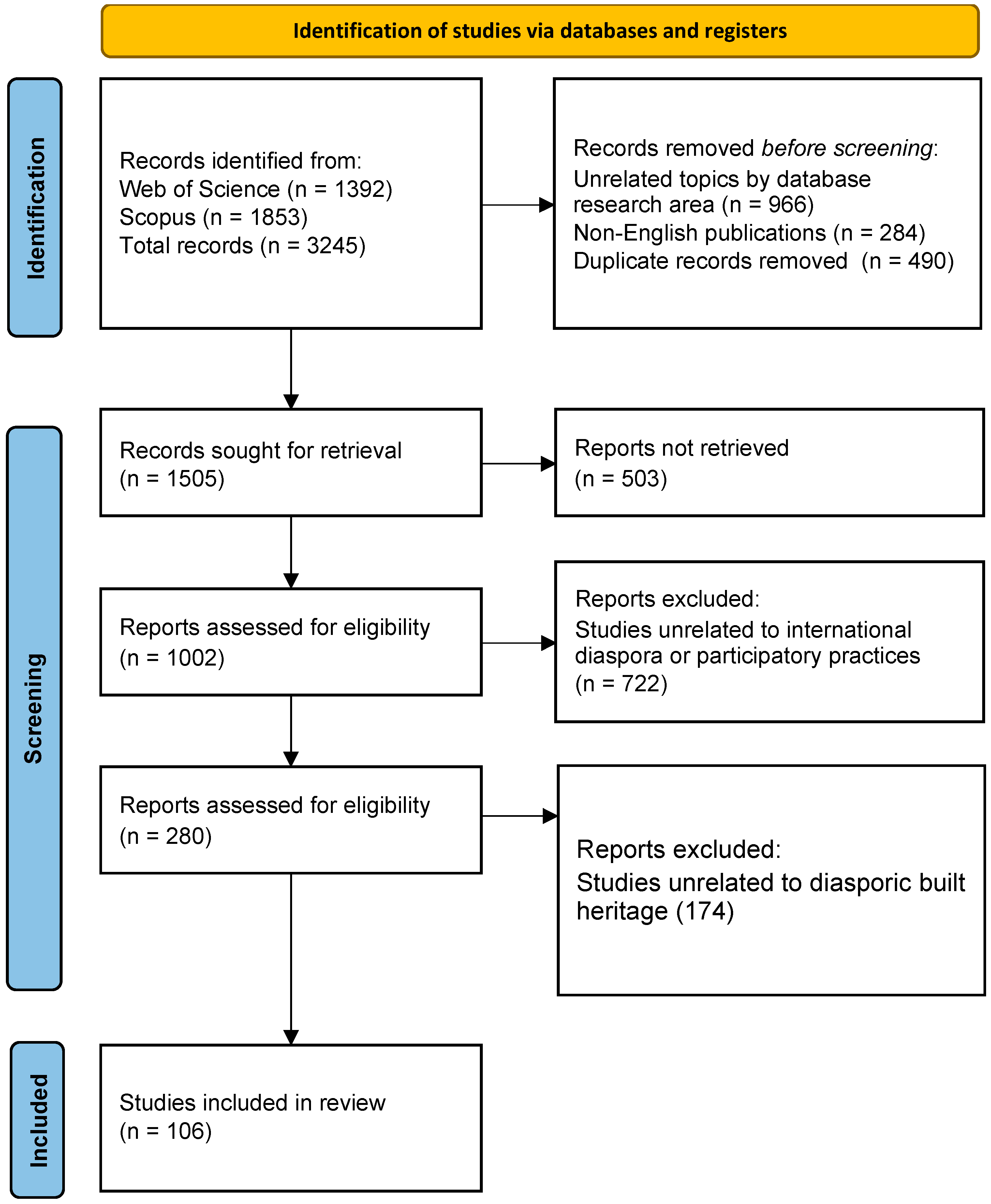
This study follows the steps of a systematic literature review, according to the PRISMA guideline [26,27] (search date 15 November 2023, Figure 1). Two databases, Web of Science (WoS) and Scopus, were used as sources of publications. The literature search was based on three concept groups: diasporic communities, heritage, and participatory management, using the searchstring “(diaspor* OR oversea* OR migra*) AND heritage AND (conserv* OR manag* OR planning OR participat* OR engag* OR involv* OR project* OR practi*)”. The identified publications (WoS = 1392 and Scopus = 1853), mainly journal articles and book chapters, were filtered through an inclusion/exclusion process. While 280 screened publications focused on diasporic communities, heritage, and participatory management, only 106 publications were finally kept because they mentioned built heritage.

2.2. Process of Analysis

The selected publications were pre-coded and post-coded from several criteria to examine global research trends.
Pre-coding: (1) Diasporic poles: these codes refer to the mentioned locations of origins, destinations, or both in the cases, inspired by [19] (Supplementary File S1, Table S1). (2) Locations of diasporic built heritage: these codes refer to the locations of sites at both regional (Europe, the Americas, Africa, Asia, and Oceania) and country levels, following the classification of the United Nations (UN) [28]. (3) Stakeholder roles involved were categorised into different sectors, respectively for origin and destinations. Current studies in heritage management [3,29,30], participatory planning [31], decision-making [32], collaborative governance [33], transition management [34], and tourism management [35] share common categories such as “public/governmental” and “private/nongovernmental”, and further subdivide private stakeholders into different categories based on research subjects, such as professional and NGOs. This study adapted the framework developed and tested by [3] (Supplementary File S1, Table S2), and listed diasporic communities as an independent stakeholder category to facilitate observation of their relationships with other stakeholders. (4) Individual and collective forms of agency were also distinguished based on the theory of community psychology [36]. (5) This study also defined two perspectives of stakeholder roles: “minority” and “mainstream”. From the “minority” perspective, diasporic communities are minorities within the society. Other external stakeholders from broader society were discussed with their own roles regarding diasporic built heritage management. From the “mainstream” perspective, diasporic communities’ roles can be extended through their cross-sector roles, which allow diasporic individuals to perform the roles as mainstream stakeholders (Table 1).
Post-coding: (6) Research institutions were identified based on the first authors’ affiliations, as the first author typically represents the primary institutional context and research leadership. (7) Top-occurring keywords were extracted, respectively, from publications of different diasporic poles using Atlas.ti. Stop words like linking verbs, pronouns, and prepositions were removed. Within the resulting keywords, those that appeared in more than 50% of the publications were excluded, thereby retaining research themes with greater distinctiveness. (8) Benefits/challenges of stakeholder roles were summarised from all stakeholder roles’ actions or conditions that had positive or negative impacts on participatory management of diasporic built heritage.
The analysis was conducted in two dimensions. (1) Diasporic poles and lines connecting origins and destinations were mapped to show diasporic flows. The locations of diasporic built heritage, the research institutions, and the top-occurring keywords were mapped to visualise global research patterns. (2) Stakeholders involved were analysed according to diasporic poles, “minority” and “mainstream” perspectives, and forms of agency. Frequencies of roles mentioned in the cases and the proportions of different roles’ occurrences among all cases were discussed. Geographic patterns of stakeholder roles were also investigated to further reveal regional context differences.

3. Results

3.1. Global Case Patterns

3.1.1. Diasporic Poles and Flows

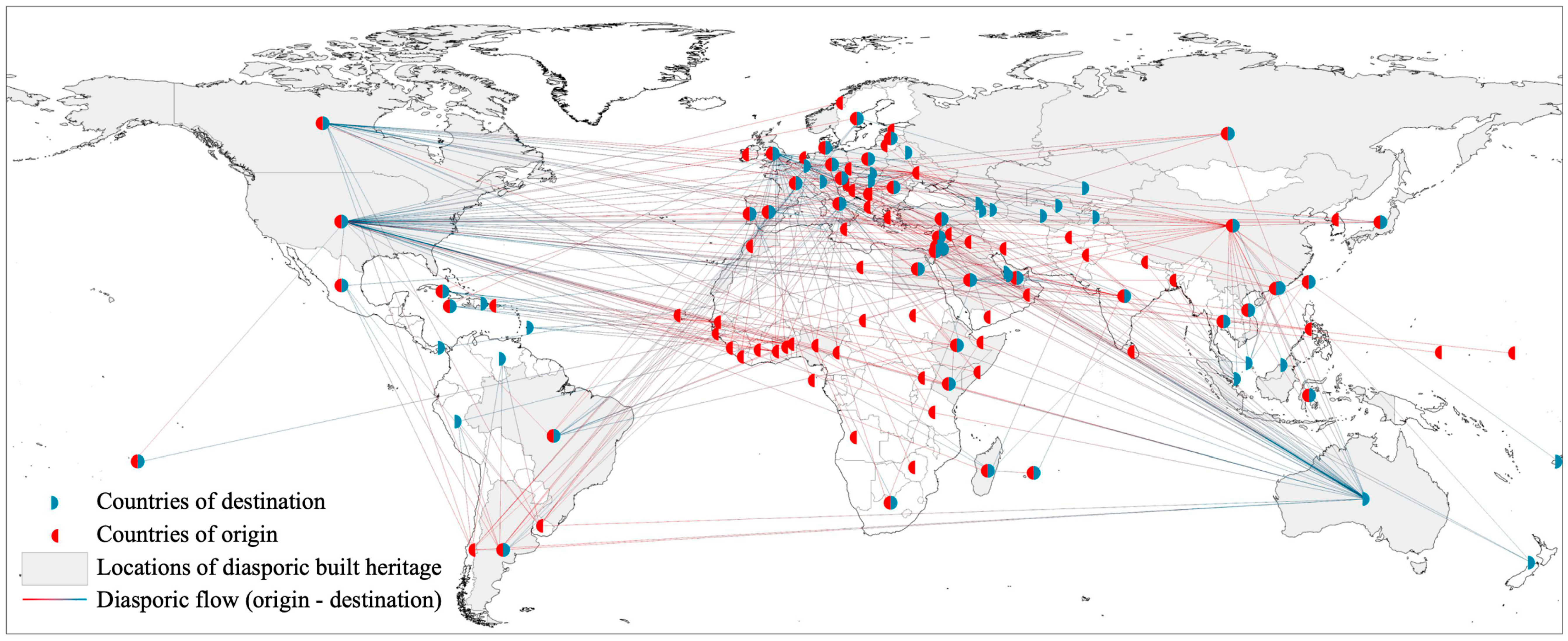
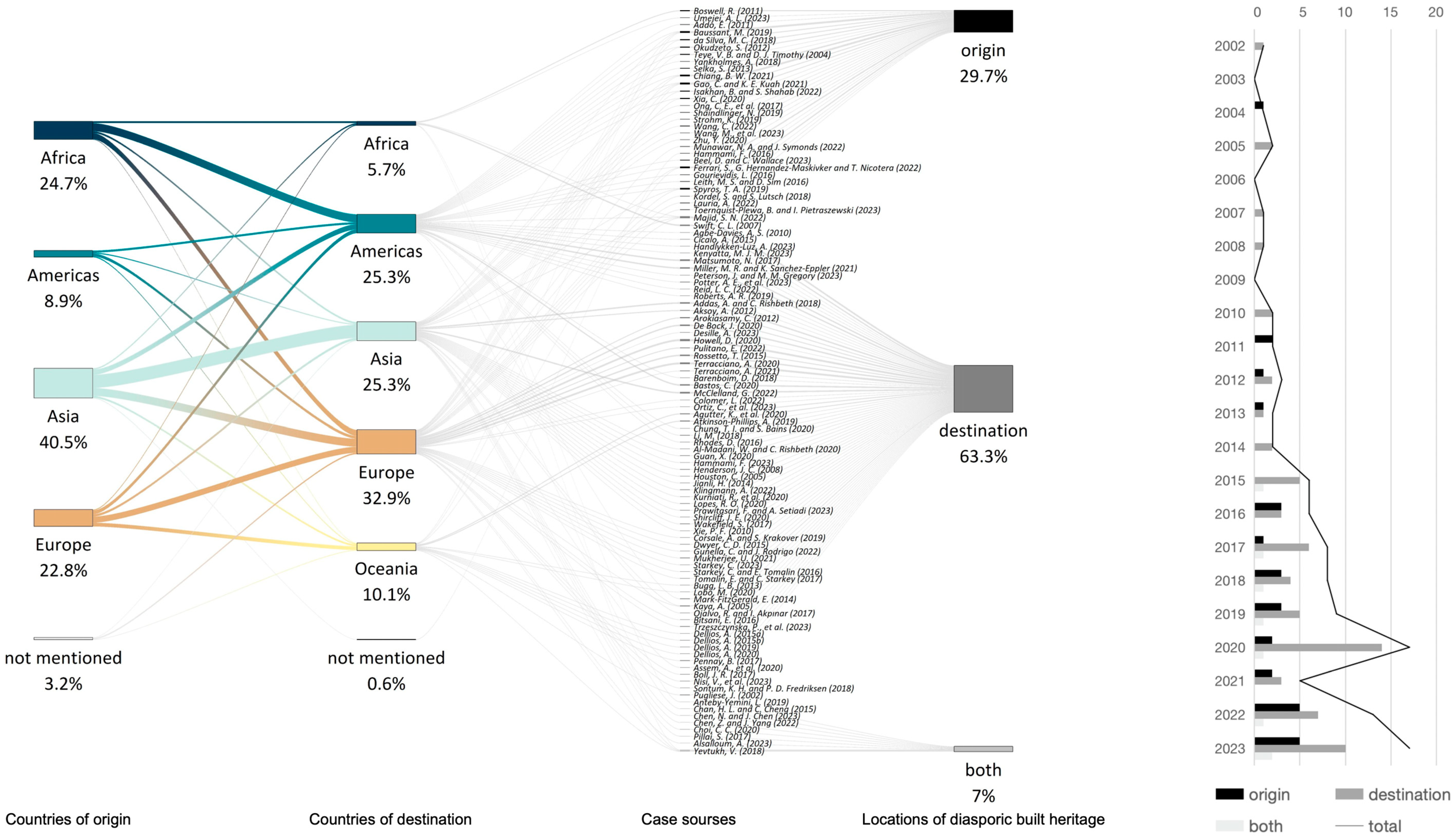
The number of relevant publications rapidly increased in recent years. The highest number of publications occurred in 2021 and 2023. The retrieved publications reveal a diverse sample of diasporic poles and flows being researched in the English language. Participatory management is found on all five continents. Most of the referenced cases have origins in Asia (40.7%), followed by Africa (24.7%), Europe (22.2%), and the Americas (9.3%). Europe (34%) has the most destination countries mentioned, with diasporic communities from all five continents, followed by Asia (24.7%), the Americas (24.7), Oceania (10.5%), and Africa (5.6%) (Figure 2). Detailed mapping shows that Europe, Southeast and West Asia, and the Americas have relatively even numbers of origin and destination cases. Countries in Middle Asia and Oceania have more cases as destinations, while countries in Western and Central Africa have mainly origin cases. Notably, despite many diasporic poles being mentioned worldwide, only a few of them were actually researched as locations of diasporic built heritage, especially lacking research on sites in Middle America, Africa, and South Asia (Figure 3).
Most research focuses on single-pole case studies, with far more on destinations (n = 69) than origins (n = 29) and few publications covering both (n = 8) (Figure 2). Over half of the destinations (40/69) involve two or more diasporic communities originating from different countries. For example, the case of Hawaii’s Plantation Village involved 17 diasporic communities, although the scale of the site is comparably small [37]. Instead of conflicts, most studies of destination emphasised the narratives of collective memories or shared interests among different diasporic communities [37,38].
Although the single-pole attention was most common in past research, more recent research was found comparing the two poles, especially after 2022. Dilemmas in managing both origin and destination diasporic built heritage were discussed. Examples of these studies are those focused on the Chinese Deng clan community’s conservation of memorial sites crossing China mainland, Hong Kong, and Canada [39], and the heritage practice of the Guangze Zunwang cult in China and Southeast Asia [40].
The definition of diasporic poles is also influenced by the narratives of different diasporic communities, where diasporic built heritage practice becomes a way of cultivating and expressing community identities and belonging: (1) An ancestral homeland can become a destination. For example, Chinese Indonesians in China identify China as their destination where they desire to portray Indonesian culture in village tourism development [131]. (2) A transit country can be identified as an origin. This can be seen in the case that Brazil is a transit place of African-derived religions, and is regarded as a homeland by some African Americans, so they joined townscape festivals [132]. (3) Over generations, some diasporic communities might lose attachment to their homeland, instead taking the places of transit as their origins, exemplified by the Chinese in Indonesia [129].
Typical in origin cases, these bi-directional or multi-layered spatial narratives are often embedded within larger social stratification and power structures, and the building of these narratives could be at expenses of other groups, resulting in conflicts. For example, Ethiopian Jews who “returned” to Israel still faced social marginalisation by recreating “Little Ethiopia” within their neighbourhoods [110]. Another example is that the American tourists’ narrative of “black homeland heritage” creates discursive tensions with both local Candomblé women and antagonistic evangelicals [132].

3.1.2. Institutional Research Interests

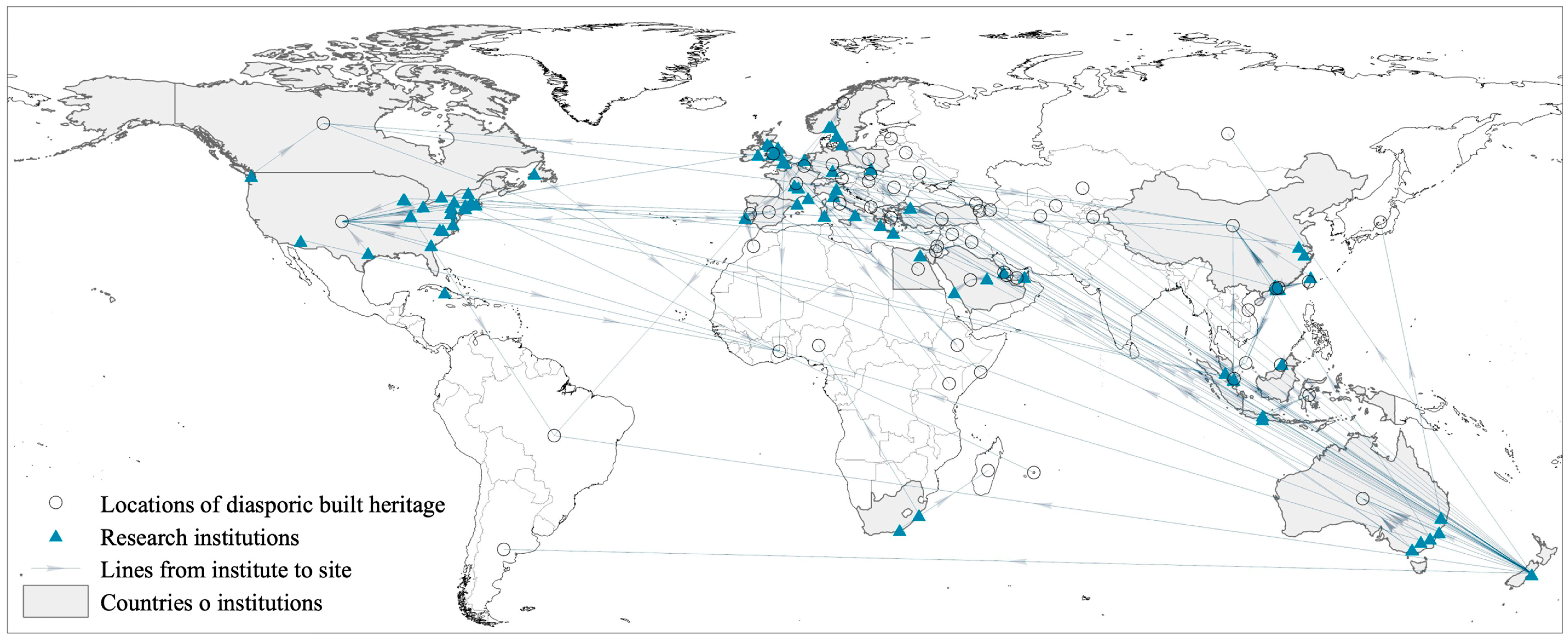
Within the global research of participatory management of diasporic built heritage, knowledge production is unevenly distributed across research institutions, with many regions lacking locally based research outputs. Compared to the locations of diasporic built heritage, the research institutions focusing on this topic cover a narrower range, mainly from Europe (n = 44), the Americas (n = 21, mostly North America), Asia (n = 20, particularly in West and East Asia), and Oceania (n = 13) (Figure 4). While local research is the mainstream for European institutions, they also have the widest reach in the world. North American institutions have more attention in African locations, and there are bi-directional research interests between institutions in China and Southeast Asia. These distinctions may stem from not only the historical geographic connections of diasporic contexts, but also reflect contemporary academic migration and clustering of research teams.
Compared to the average geographic distribution of heritage participation cases reported by [2], the locations of diasporic built heritage examined in this review show a stronger concentration in Europe and North America. There is a notable lack of research in Africa, South America, and South Asia, which have been widely identified as the origins of many diasporic communities. There is also a lack of research by local institutions. The same lack applies to Central and West Asia as destinations, as well as South America as both origins and destinations (Figure 3 and Figure 4). These knowledge gaps may shape our understanding in potential quantity and quality of diasporic built heritage worldwide, while also reflecting the potential underrepresentation of case studies and research institutions in such regions compared to real-world practices.

3.1.3. Geographic Differences of Research Keywords

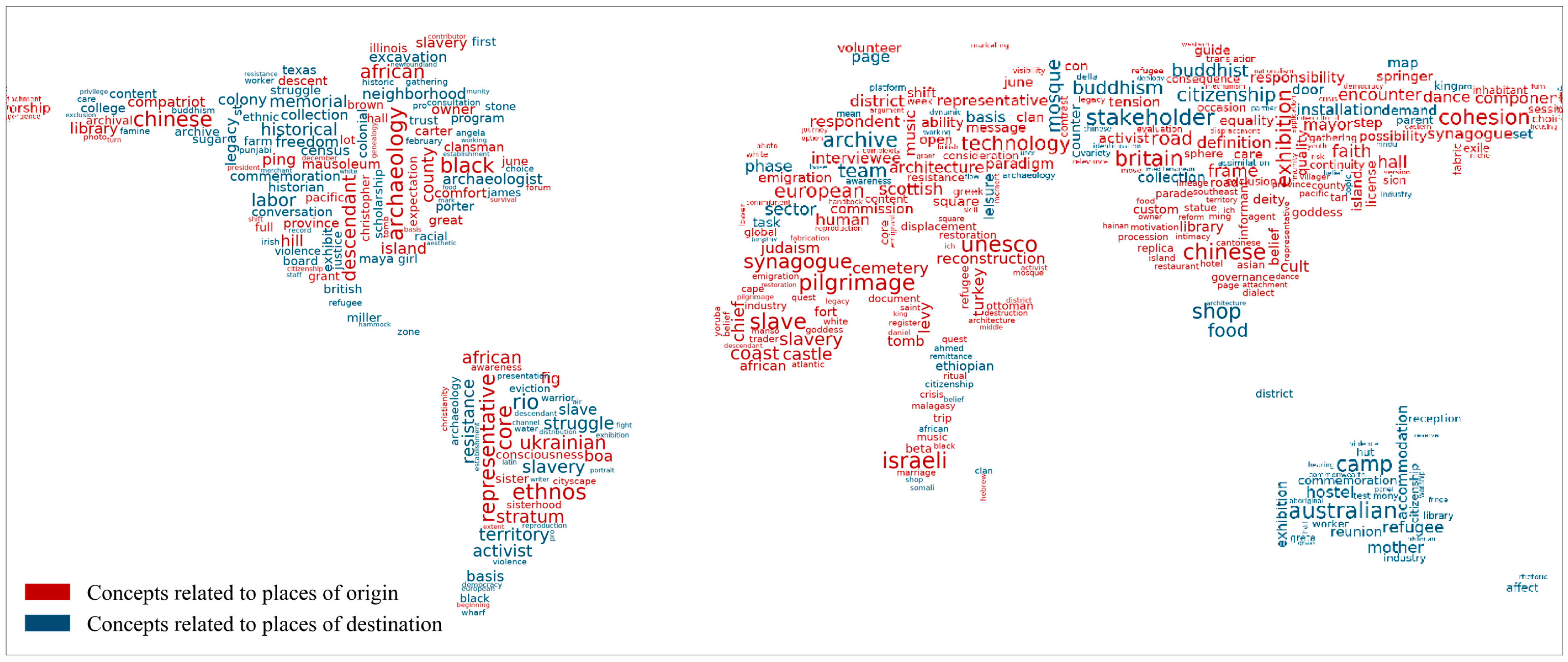
Geographic analysis of top-occurring keywords illustrates the influence of local contexts on research foci (Figure 5). Regional attentions are highlighted across diaspora types and participatory strategies.
For diaspora types, religious diaspora, represented by keywords “pilgrimage”, “Buddhism”, “synagogue”, are found commonly in Africa and Europe [96,108,110,134]. Slavery diaspora researched in African origins [108] also links to the “archaeological” heritage of the “black” and “labour” diaspora broadly studied in the Americas (e.g., [38,80,101,111,115]). In West Asia and North Africa, forced migration due to conflicts and wars is one of the major research themes, with more keywords related to “displacement” and “refugee” [41,72,92,95,98,137]. In the Oceanian context, more keywords are about migrant “mother” and “worker” [105,117].
Regarding participatory strategies, keywords such as “citizenship”, “stakeholders”, and “cohesion” are more commonly seen in European research contexts, which pay attention to democratic governance and social rights [75,107,118]. South America shows complexity in managing conflicts with keywords like “struggle”, “resistance”, “representative”, and “activist” [76,101,132]. African cases triggered discussions on “crisis” and “trip” related to black Americans’ ancestral tourism [108], while in the Americas, more attention is paid to the engagement of “neighbourhood”, “descendant(s)” in black “memorial” practices (e.g., [38,80,101,111,115]). Heritage keywords like “restoration” and “reconstruction” stand out in West Asian and North African cases, which often mention the intervention from “UNESCO” [41,72,92,95,98,137]. A greater focus on participatory management of intangible attributes in the built environment is mentioned by East Asian cases, such as “food”, “custom”, “deity”, and “cult” [40,59,127,129].
Moreover, practices of some diasporic groups are more popular in research, such as the Chinese emigrants to Asian countries such as Singapore, Malaysia, Indonesia, and Vietnam [58,84,113,125,127,133], the African Americans from Ghana [96,100,108,134], and the European refugees migrating to Australia [70,93,105,106]. These communities are associated with the origin sites, such as Kaiping Diaolou and villages in China [39,83] and slavery trade sites in Africa [96,134]. Destination sites are also mentioned, such as Chinatowns worldwide [143], and migrant camps and hostels in Australia [70,93,105,106].

3.2. Stakeholder Agency and Cross-Sector Roles

This section further analyses different categories of stakeholder roles, as well as the benefits and challenges. Starting from the “minority” perspective, stakeholders from diasporic communities to other public and private sectors are analysed individually to reveal each sector’s participation within the existing management structures. Then, diasporic communities’ “mainstream” (cross-sector) roles are found being commonly adopted in practice while often overlooked in research. These roles have enhanced diasporic communities’ agencies by undertaking responsibilities beyond their own sectors.

3.2.1. Diasporic Community as “Minority”

Stakeholders around diasporic built heritage are broken down into 13 sub-categories (Table 1). They come from supranational (international organisations), state/public (politicians, policy makers, officers), and private (professional/experts, diasporic community, broader society) backgrounds. Three types of diasporic communities include (1) diasporic individuals in destinations (e.g., [56,68,106]), (2) returned diasporic individuals in origins (e.g., [116,137,139]), and diasporic associations. The sub-categories of broader society include home society/previous settlers, host society, NGOs/CSOs, museums, businesses, and tourists.
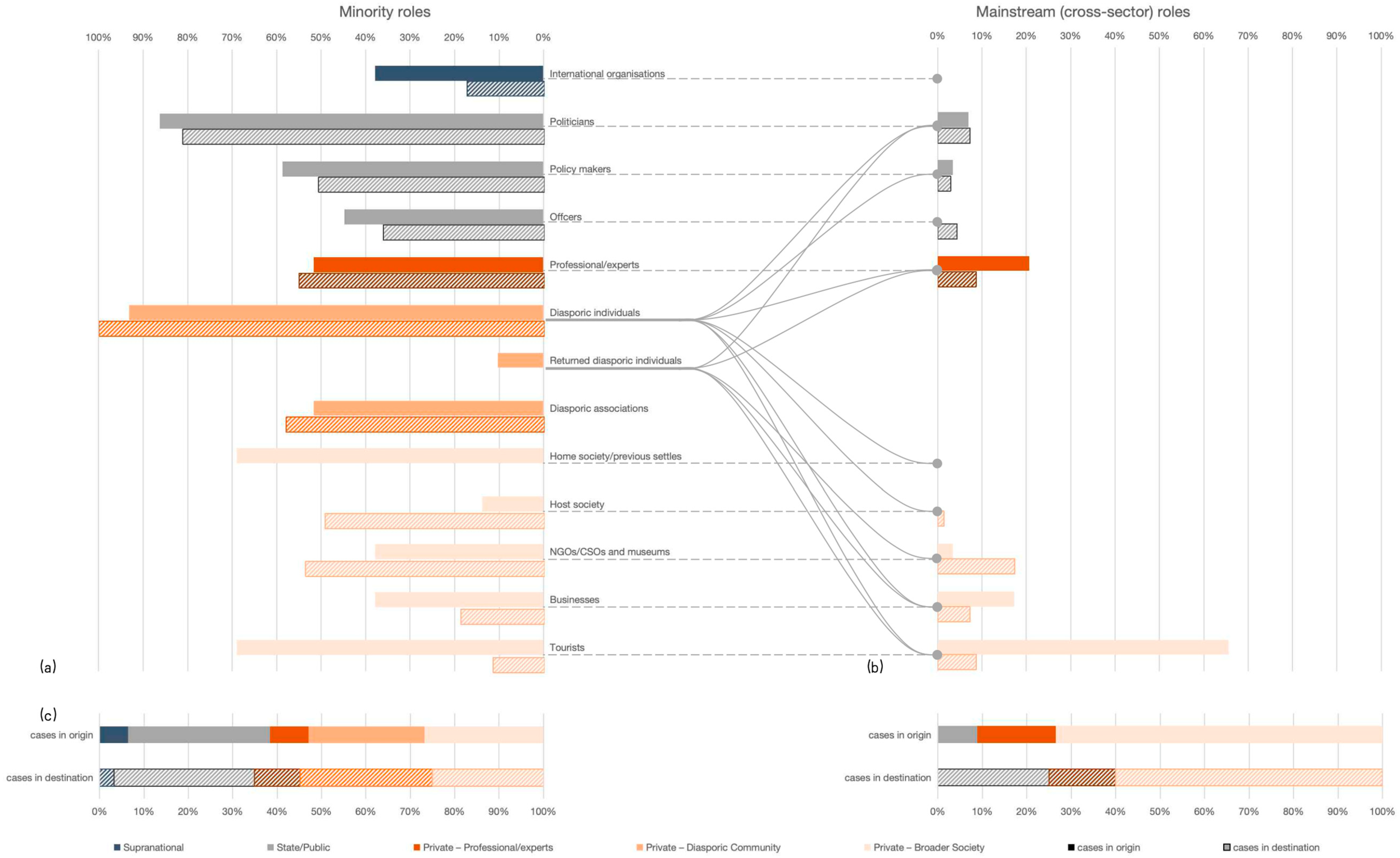
The retrieved publications show that professional/experts’ participation in diasporic built heritage management is lower than the average of general cases [2] (Figure 6a,c). However, participation from professional/experts and diasporic communities has gradually received greater attention in the past ten years, while the role of the state/public sector is diminishing. Meanwhile, the growing prevalence of bottom-up practices has also expanded from mainly physical conservation of built heritage to include diverse aspects such as spatial uses and heritage interpretation engaging diasporic communities, which reflects a diachronic trend integrating heritage conservation with sustainable development, putting diasporic communities at the centre.
  • Participation in Origins
International organisations like UNESCO [47,83,95] and state/public stakeholders (e.g., [48,84,126]) are involved more frequently in origins than in destinations. Home society, who have similar cultural backgrounds as diasporic communities (e.g., [54,64,116]), contribute to the local conservation and usage of diasporic built heritage through collaboration with diasporic communities (e.g., [116,124,126]). Host society (mainly in collective form) is found participating transnationally to construct heritage narratives of origin sites, particularly in sites with slavery or religious backgrounds [52,108,126,134]. NGOs/CSOs and museums are collective local stakeholders, which also include transnational participation, such as international religious institutions [52,126]. Businesses (e.g., [87,124,136]) and tourists (e.g., [47,48,110]) are economic contributors to the origin’s heritage management.
Origin cases often involve remote participation from off-site diasporic individuals [48], as well as on-site participation from returned diasporic individuals [116,137]. Diasporic associations are the collective agency of diasporic communities, functioning as collaborative and representative structures to strengthen communication between the on-site and off-site diasporic individuals [139]. Diasporic associations also serve as community development organisers who hold conservation initiatives and join local planning initiatives (e.g., [52,116,124]). These associations can also be off-site, but the main duty is to manage homeland affairs like fundraising and ancestral tour organisation [40,87].
ii.
Participation in Destinations
Participation from the professional/experts and NGOs/CSOs and museums in destinations is slightly higher than that in origins, showing interests from broader societies (e.g., [60,89,97]).
Diasporic associations are comparatively more active in the destination (e.g., [49,70,107]). They build connections with public and private sectors (e.g., [55,99,123]). They collaborate with government, official heritage committees, and professionals (e.g., [38,68,97]), while negotiating conflicts as coordinators between official and private sectors in conservation and development planning [74,76]. They interpret heritage based on interests and provide platforms for participation, promotion, and education (e.g., [60,118,120]). For example, the naming, commemoration, and renovation of the Salvador Allende square in Barcelona, Spain, initiated by the Chilean Centro Cultural Salvador Allende, transformed the heritage into a national commemoration site with several layers of societal values [46].
However, the other stakeholder categories participate in fewer cases. Meanwhile, there are stronger regional variations shown in destinations, indicating that participatory management of diasporic built heritage in destinations can be easily influenced by geographic contexts, governance models, and social systems. For example, Oceania and Asia are characterised by higher proportions of state/public participation, while Europe and the Americas involve more professional/experts stakeholders. Asia has less participation from diasporic associations.

3.2.2. Cross-Sector Roles Enable Diasporic Individuals to Participate as “Mainstream”

Diasporic individuals are found undertaking 8 cross-sector roles out of the 13 stakeholder sub-categories (Table 1). Overall, more private individual cross-sector roles are found, instead of state/public collective channels (Figure 6b,c).
  • Cross-Sector Roles in Origins
A small number of cases show positive impacts when there are regulations supporting diasporic individuals’ political participation, becoming politicians and policy makers (e.g., [58,96,129]). Such roles help diasporic individuals maintain coalitions and cooperation with other public and professional stakeholders [137].
Diasporic individuals are more frequently undertaking roles as expert individuals, namely independent local historians or heritage experts [112,126]. With good command of heritage knowledge and community connections, they can promote heritage conservation by implementing new methods [64,137] and facilitating heritage education and cooperation [64,138]. For example, diasporic youth professionals were invited to conserve hometown villages in Albania, where they transferred their knowledge and strengthened the transnational social networks [64].
Diasporic businesses create collective finance networks contributing to investments through associations [39,129] or enterprises [86,87], where diasporic remittance or donation is a form of off-site participation.
Diasporic tourists rank significantly high in origin’s cross-sector roles (e.g., [110,129]). This belongs to an important research field, “roots/genealogy/ancestral tourism”. The reviewed cases of this study particularly focus on diasporic tourists’ contribution to built heritage conservation, thus they are not only consumers or donors [73,108], but also potential site managers (e.g., [40,47,85]). Tourism strengthens the sense of identity and social connections with the local people, so that it raises the willingness to participate (e.g., [45,112,136]). For example, the German Romanians’ nostalgia drew them back for temporary stays, and the community helped protect the built heritage. The repeated tours gradually led them to re-migrate and settle back in their origins. The old buildings, therefore, were better taken care of in the long term [139].
ii.
Cross-Sector Roles in Destinations
Diasporic individuals are sometimes elected as politicians, such as municipal party members, mayors, councillors, and official migrant committees (e.g., [46,93,114]). Through their cultural awareness and political positions, the listing and promotion of diasporic heritage gain higher efficiency [114]. Heritage initiatives can be regulated and institutionalised [46]. Take the Enterprise Migrant Hostel in Melbourne, Australia, as an example: the roles of those who have or have had governmental responsibilities were not limited to raising bottom-up heritage initiatives, but also communicating between local government and the civil society [93].
Diasporic individuals can serve as policy makers, such as policy advisers and commissioners, who are empowered to research and give recommendations to policy making. For example, black campaigners in London, UK’s African and Asian heritage preservation seminars strived for racial equality and cultural diversity through high empowerment [68].
Diasporic individuals can also serve as officers, such as governmental organisation workers, consultants, administration, or implementation officers [68,89,101]. These roles provide them opportunities to advocate heritage listing, fundraising, public awareness building, and close dialogue with governments [101,114]. For example, the Historic Jamestowne project committee in Virginia, US, involved diasporic individuals in developing local guidelines [89]. The conservation and listing of diasporic heritage can even be used as a political tool to challenge the existing racial inequalities, exemplified by the heritage promotions from black activists in Rio de Janeiro, Brazil [101].
Diasporic individuals who become professional/experts draw convenience in heritage management. Sometimes, the participants only accept researchers who have the same cultural background. Diasporic professionals, therefore, offer psychologically safer research [89].
Similarly, diasporic individuals in many cases serve as NGOs/CSOs and museum consultants or researchers, contributing to collective cultural or social goals (e.g., [46,76,93]). These organisational platforms involve diasporic individuals in institutional knowledge groups. They bridge communication and cooperation between public and private sectors (e.g., [89,107,125]). Conservation and education initiatives can be held with creativity (e.g., [107,109,125]). With the privileges and constraints from both scholarly and ethnic aspects, the access to different resources can be expanded [79] while maintaining neutral perspectives [55].
Importantly, a collective form of diasporic-initiated cultural organisations includes organisations such as diasporic museums or language schools. The co-founders of these organisations are mainly members of diasporic communities. They serve as active cultural networks for education, project initiatives, and participant recruitment, being able to decide and exhibit community-centred narratives and, at the same time, negotiate with the frameworks of AHD [41,70,111]. Diasporic museums continue to play important roles in reusing and telling stories of diasporic built heritage. For example, through bottom-up museumisation, the Colored Girls Museum in the US successfully made an everyday diasporic building into the heritage of the Black community. The museum solicited household artefacts and curated family stories, ensuring the diasporic individuals’ right both to conserve and to reinterpret their heritage [111].
As diasporic individuals can be assimilated into the host society over time, with recognition and constant collaboration with the authorities, diasporic newcomers can adapt more easily and be invited to current heritage initiatives through the introduction by the oldcomers. For example, Polish-born Ukrainian communities assisted the integration of new immigrants while encouraging them to participate in activities for heritage management [140].
Diasporic businesses are keepers and maintainers of heritage properties and festivities, both individually and collectively. Diaspora-owned businesses can enhance the social safety and sense of belonging of ethnic districts [115]. If the properties are well operated, the commercial gains and the economic values of heritage could also be maintained [59,71].
Diasporic individuals as tourists in destinations can be those who have expanded their living circles beyond the original ethnic enclaves. As tourists, they keep their routine needs and interests within the enclave centres [71]. Their consistent visiting puts pressure on local conservation and planning [62,71].

3.2.3. Challenges of Cross-Sector Participation

While not all cross-sector roles guarantee high empowerment in participation, cross-sector participation can be easily affected by conflicting agendas and weak capacities, which are discussed below.
  • Challenges in Origins
Cross-sector participation can lead to conflicts among stakeholders, preventing long-term engagement of all stakeholders. Some state/public cross-sector roles, such as diasporic political elites, might take control even over the home society, thus conservation fails to engage the opinions of the indigenous people [129,137]. For example, in the renovation of a mosque with Byzantine cathedral elements in Nablus, Palestine, the returned Palestinian elites argued to preserve the historical Christian elements for authenticity. However, this approach stirred up strong opposition from the local home community [137]. The same challenge applies to diasporic businesses and tourists who exclude local communities and gentrify the area. For example, Singkawang’s Chinese Indonesian businesses turned festivals into political shows and money-making events, causing issues like spatial occupation and high prices, which restricted the participation of local people [129].
Lack of community benefit affects the effectiveness of cross-sector participation. Diasporic businesses can be unsustainable if made use of by governments, but they gain nothing in return [37,126]. This becomes particularly typical since overseas investment is not mandatory [39].
ii.
Challenges in Destinations
Lack of capacity building for cross-sector roles is one of the main challenges in destinations [68,101,114]. For example, in the management of London’s heritage properties, diasporic individuals who are officers still undertook lower-grade jobs and had limited influence in decision-making processes, even though legislation had already required public bodies and authorities to fulfil the principle of racial equality [68].
Conflicting interest is the same challenge as origins to be solved. Diasporic individuals who have become part of the host society sometimes face conflicts with the newcomers. For example, early Ukrainian immigrants in Poland keep their traditional lifestyles and social identity, while the new Ukrainians prefer integration rather than claiming themselves as diaspora [140]. Profit-oriented diasporic businesses may overlook the conservation of the built environment advocated by planners and heritage professionals [59]. Competitions over individual diasporic enterprises raise the threat of branding monopoly, causing a loss of diversity and gentrification of the neighbourhoods (e.g., [39,71,115]). There are also conflicts between diasporic tourists and the host society about the use of heritage resources [71].
The recruitment of cross-sector diasporic members also depends on resources and mutual benefit for long-term management. If diasporic individuals cannot benefit while taking public roles, they may lower their willingness to participate [68].

4. Discussion and Conclusions

This study reviews existing English-language publications of participatory diasporic built heritage management and provides an overview of current research interests and the relevant stakeholder roles noticed by scholars. This study has three points of reflection.

4.1. Diverse and Uneven Research Focuses

The systematic collecting and screening of publications, and the mapping of geographic, institutional, and thematic patterns of current research, reveal a diverse but uneven distribution of knowledge production in current research about participatory management of diasporic built heritage. Heritage narratives formulated by cases and institutions in the Global North and destinations may fail to fully represent the diverse experiences of diasporic communities. Future research should incorporate more cases from underrepresented regions, cases of origins, and comparisons between diasporic poles.
The potential biases within the mainstream international scholarly publishing should also be acknowledged, which can be shaped by methodological choices of this study, including the selection of academic databases, search terms, and the exclusion of non-English publications. Future research would benefit from incorporating discussions across different languages and publication categories, as well as from experimenting with new data sources and tools to capture more “unseen” participation in diasporic built heritage management, such as social media and other informal data sources.
In addition to spatial patterns, participatory management is inevitably influenced by the paradigm shifts of heritage concepts in different historical periods. Therefore, the temporal patterns of diasporic built heritage management are also worth further investigation.

4.2. The Stakeholder Roles and Challenges in Participatory Diasporic Built Heritage Management

This study uses a dynamic stakeholder framework to analyse stakeholder roles. This framework aims to innovatively integrate transnational stakeholder networks that are relevant to diasporic built heritage in both origins and destinations, and challenge the place-based participation theories. The framework also allows identifying the minority and the mainstream (cross-sector) roles centring diasporic communities. The cross-sector roles serve as an essential political and institutional bridge for diasporic individuals to obtain rights through cross-sector networks, facilitating greater agency. This finding pushes stakeholder identification beyond simple ethnic or dichotomised definitions of diaspora as the “others” [7,55,114,119] and allows for the recognition of the “in-between” identities and responsibilities [141]. Additionally, this study discusses common challenges such as conflicts, capacity limitations, and resource dependence regarding cross-sector roles.
Since this systematic literature review only presents a small number of cases using the PRISMA guidelines compared to the overall global practices, the provided framework requires further testing and reflection by applying on other case studies related to diasporic heritage management. Meanwhile, the cultural and political differences among diasporic groups give rise to diverse governance models. Recognising these differences and comparing across cultural and political settings are therefore crucial to avoiding normative assumptions about participation and to understanding different diasporic contexts.
This study adapted existing stakeholder frameworks mainly for analytical purposes rather than theoretical synthesis. Future research requires greater engagement with multidisciplinary perspectives towards stakeholder role analysis.

4.3. Reflections on Stakeholder Agencies

By adopting the stakeholder framework, this study finds that collective agencies, such as diasporic associations, state/public sectors, NGOs/CSOs, and museums, allow more transnational actions, but they place greater emphasis on political and religious institutions, and frequently operate in one-directional rather than reciprocal ways [52,134]. Yet the collective cross-sector roles, such as diasporic museums, have been more successful in sustaining participatory management of diasporic built heritage [70,111]. It is necessary to explore more comprehensive multi-level governance models that collaborate and benefit across diasporic poles.
Diasporic individuals’ agencies embedded in the cross-sector roles are common and helpful, but these agencies are often limited to local and single-pole participation rather than transnational. Therefore, the level of transnational governance of each stakeholder sector highly influences an individual’s transnational impact. It is necessary to explore more open and proactive conditions to enhance diasporic individuals’ agency within the community as well as in the institutional roles for transnational governance.
The findings also point to a broader paradox of participatory heritage management. Although participation is often promoted as an inclusive and empowering approach, participatory heritage management can remain inherently selective, exclusionary, and difficult to have equal dialogue [144]. For example, diasporic associations, as collective agencies, might constitute a form of representative instead of inclusive [120,137]. Elite diasporic clan leaders might resist voices from individuals in the communities; thus, a diasporic community could suffer from a biased heritage discourse from the association, or excessively follow the discourse of its leaders (e.g., [69,104,140]). This study also finds that regardless of origins or destinations, and whether diasporic communities are marginalised or formally recognised, diasporic communities participating in transnational management often face tensions with the place-based local communities, which can be further intensified by the cross-sector roles, as well as legalisation [113,118,132,137]. In addition to limited successful cases [124], many cases tend to either legitimise or ignore diasporic built heritage in order to align with objectives such as city branding and tourism development. In doing so, cross-sector advantages and resource allocation may deepen power imbalances between diasporic and local communities, while simultaneously solidifying heritage narratives that are, by nature, plural and dynamic. Future research can continue to critically reflect on issues such as power relations, legitimacy, and the negotiation of heritage values within and between diasporic communities and other stakeholders.
In conclusion, this study approaches the participatory management of diasporic built heritage from the perspective of stakeholder roles, providing a knowledge basis of existing studies and an analytical framework for future research and practice. More broadly, this study also invites reflection on the politicisation of what is considered “local” or “national”, and the resulting forms of exclusion, reminding us that heritage management must be understood against longer histories of migration, cultural mixture, and politics.

Supplementary Materials

The following supporting information can be downloaded at: https://www.mdpi.com/article/10.3390/heritage9020074/s1, Frameworks used/adapted by this study—Supplementary File S1. Articles used for this systematic literature review—Supplementary File S2.

Author Contributions

Y.Z.: Conceptualization, Data curation, Formal analysis, Funding acquisition, Investigation, Methodology, Visualization, Writing—original draft. L.S.: Supervision, Writing—review and editing. A.P.R.: Supervision, Writing—review and editing. All authors have read and agreed to the published version of the manuscript.

Funding

This work was supported by the China Scholarship Council [grant number 202306210072].

Data Availability Statement

The data is available in the Supplementary Materials.

Acknowledgments

The authors sincerely thank the three anonymous reviewers for their constructive comments on this manuscript.

Conflicts of Interest

The authors declare no conflicts of interest.

References

  1. Landorf, C. A Framework for Sustainable Heritage Management: A Study of UK Industrial Heritage Sites. Int. J. Herit. Stud. 2009, 15, 494–510. [Google Scholar] [CrossRef]
  2. Veldpaus, L. Historic Urban Landscapes: Framing the Integration of Urban and Heritage Planning in Multilevel Governance. Ph.D. Thesis, Technische Universiteit, Eindhoven, The Netherlands, 2015. [Google Scholar]
  3. Li, J.; Krishnamurthy, S.; Pereira Roders, A.; van Wesemael, P. Community participation in cultural heritage management: A systematic literature review comparing Chinese and international practices. Cities 2020, 96, 102476. [Google Scholar] [CrossRef]
  4. COE. Convention on the Value of Cultural Heritage for Society (Faro Convention, 2005); Council of Europe: Faro, Portugal, 2005. [Google Scholar]
  5. UNESCO. The 2005 Convention on the Protection and Promotion of the Diversity of Cultural Expressions; UNESCO: Paris, France, 2005. [Google Scholar]
  6. UNESCO. Recommendation on the Historic Urban Landscape; UNESCO: Paris, France, 2011. [Google Scholar]
  7. UN-Habitat. Urbanization and Development: Emerging Futures (World Cities Report 2016); United Nations Human Settlements Programme: Nairobi, Kenya, 2016. [Google Scholar]
  8. UNESCO. Operational Guidelines for the Implementation of the World Heritage Convention; UNESCO: Paris, France, 2021. [Google Scholar]
  9. Smith, L. The Uses Of Heritage; Routledge: New York, NY, USA, 2006. [Google Scholar]
  10. Harrison, R. Heritage: Critical Approaches; Routledge: New York, NY, USA, 2013. [Google Scholar]
  11. Castles, S. Twenty-First-Century Migration as a Challenge to Sociology. J. Ethn. Migr. Stud. 2007, 33, 351–371. [Google Scholar] [CrossRef]
  12. Lucassen, J.; Lucassen, L. The mobility transition revisited, 1500–1900: What the case of Europe can offer to global history. J. Glob. Hist. 2009, 4, 347–377. [Google Scholar] [CrossRef]
  13. Colomer, L. Heritage on the move. Cross-cultural heritage as a response to globalisation, mobilities and multiple migrations. Int. J. Herit. Stud. 2017, 23, 913–927. [Google Scholar] [CrossRef]
  14. Chen, Y.; Wang, Y.-W. Approaches to sustaining people–place bonds in conservation planning: From value-based, living heritage, to the glocal community. Built Herit. 2024, 8, 10. [Google Scholar] [CrossRef]
  15. Brubaker, R. The ‘diaspora’ diaspora. Ethn. Racial Stud. 2005, 28, 1–19. [Google Scholar] [CrossRef]
  16. Dellios, A.; Henrich, E. Migratory pasts and heritage-making presents: Theory and practice. In Migrant, Multicultural and Diasporic Heritage: Beyond and Between Borders; Dellios, A., Henrich, E., Eds.; Routledge: New York, NY, USA, 2020; pp. 1–17. [Google Scholar]
  17. Hasić, J.; Telalović, A. Diaspora, deliberation and democracy: Examining externally-sponsored initiatives for the development of local fora in Bosnia and Herzegovina. Innov. Eur. J. Soc. Sci. Res. 2021, 34, 766–781. [Google Scholar] [CrossRef]
  18. Ang, I. Unsettling the national: Heritage and diaspora. In Heritage, Memory & Identity; Anheier, H., Isar, Y.R., Eds.; Sage Publications: London, UK, 2011; pp. 82–94. [Google Scholar]
  19. IOM. Glossary on Migration; International Organization for Migration: Geneva, Switzerland, 2019. [Google Scholar]
  20. Reed, A. Of Routes and Roots: Paths for Understanding Diasporic Heritage. In The Palgrave Handbook of Contemporary Heritage Research; Waterton, E., Watson, S., Eds.; Palgrave Macmillan: Houndmills, UK, 2015; pp. 382–396. [Google Scholar]
  21. Giglitto, D.; Ciolfi, L.; Bosswick, W. Building a bridge: Opportunities and challenges for intangible cultural heritage at the intersection of institutions, civic society, and migrant communities. Int. J. Herit. Stud. 2022, 28, 74–91. [Google Scholar] [CrossRef]
  22. ICCROM. Charter of Cracow; ICCROM: Cracow, Poland, 2000. [Google Scholar]
  23. Pendlebury, J.; Townshend, T.; Gilroy, R. The Conservation of English Cultural Built Heritage: A Force for Social Inclusion? Int. J. Herit. Stud. 2004, 10, 11–31. [Google Scholar] [CrossRef]
  24. Djabarouti, J. Stories of feelings and things: Intangible heritage from within the built heritage paradigm in the UK. Int. J. Herit. Stud. 2020, 27, 391–406. [Google Scholar] [CrossRef]
  25. Sektani, H.H.J.; Khayat, M.; Mohammadi, M.; Roders, A.P. Factors Linking Perceptions of Built Heritage Conservation and Subjective Wellbeing. Herit. Soc. 2023, 16, 52–67. [Google Scholar] [CrossRef]
  26. Boland, A.; Cherry, M.G.; Dickson, R. Doing a Systematic Review: A Student’s Guide; SAGE: Los Angeles, CA, USA, 2017. [Google Scholar]
  27. Page, M.J.; McKenzie, J.E.; Bossuyt, P.M.; Boutron, I.; Hoffmann, T.C.; Mulrow, C.D.; Shamseer, L.; Tetzlaff, J.M.; Akl, E.A.; Brennan, S.E.; et al. The PRISMA 2020 statement: An updated guideline for reporting systematic reviews. BMJ 2021, 372, n71. [Google Scholar] [CrossRef] [PubMed]
  28. Standard Country, Area, and Geographic Regions Codes for Statistical Use (Series M, No. 49). Statistics Division of the United Nations Secretariat. Available online: https://unstats.un.org/unsd/methodology/m49/ (accessed on 27 May 2025).
  29. Pereira Roders, A. The Historic Urban Landscape approach in action: Eight years later. In Reshaping Urban Conservation: The Historic Urban Landscape Approach in Action; Springer: Singapore, 2019; pp. 21–54. [Google Scholar]
  30. Liu, Y.; Dupre, K.; Jin, X. A systematic review of literature on contested heritage. Curr. Issues Tour. 2020, 24, 442–465. [Google Scholar] [CrossRef]
  31. Quesada-Silva, M.; Iglesias-Campos, A.; Turra, A.; Suárez-de Vivero, J.L. Stakeholder Participation Assessment Framework (SPAF): A theory-based strategy to plan and evaluate marine spatial planning participatory processes. Mar. Policy 2019, 108, 103619. [Google Scholar] [CrossRef]
  32. Pluchinotta, I.; Salvia, G.; Zimmermann, N. The importance of eliciting stakeholders’ system boundary perceptions for problem structuring and decision-making. Eur. J. Oper. Res. 2022, 302, 280–293. [Google Scholar] [CrossRef]
  33. Hui, I.; Smith, G. Private citizens, stakeholder groups, or governments? Perceived legitimacy and participation in water collaborative governance. Policy Stud. J. 2021, 50, 241–265. [Google Scholar] [CrossRef]
  34. Ortiz-Avram, D.; Ovcharova, N.; Engelmann, A. Dynamic capabilities for sustainability: Toward a typology based on dimensions of sustainability-oriented innovation and stakeholder integration. Bus. Strategy Environ. 2023, 33, 2969–3004. [Google Scholar] [CrossRef]
  35. Mandić, A.; Séraphin, H.; Vuković, M. Engaging stakeholders in cultural tourism Living Labs: A pathway to innovation, sustainability, and resilience. Technol. Soc. 2024, 79, 102742. [Google Scholar] [CrossRef]
  36. Bandura, A. Toward a Psychology of Human Agency. Perspect. Psychol. Sci. 2006, 1, 164–180. [Google Scholar] [CrossRef]
  37. Bastos, C. Plantation Memories, Labor Identities, and the Celebration of Heritage The Case of Hawaii’s Plantation Village. Mus. Worlds 2020, 8, 25–45. [Google Scholar] [CrossRef]
  38. Agbe-Davies, A.S. Concepts of community in the pursuit of an inclusive archaeology. Int. J. Herit. Stud. 2010, 16, 373–389. [Google Scholar] [CrossRef]
  39. Chan, H.L.; Cheng, C. Building homeland heritage: Multiple homes among the Chinese diaspora and the politics on heritage management in China. Int. J. Herit. Stud. 2015, 22, 1–13. [Google Scholar] [CrossRef]
  40. Chen, N.; Chen, J. Diaspora governance and religion: The (re)production of the Guangze Zunwang cult in the Chinese diaspora. Glob. Netw. 2023, 23, 583–598. [Google Scholar] [CrossRef]
  41. Alsalloum, A. Preserving and Celebrating Syrian Intangible Cultural Heritage in the UK: Strategies, Insights, and Untold Narratives. Heritage 2023, 6, 6718–6744. [Google Scholar] [CrossRef]
  42. Aksoy, A. Riding the storm: ‘New Istanbul’. City 2012, 16, 93–111. [Google Scholar] [CrossRef]
  43. Lopes, R.O. The safeguarding of intangible cultural heritage in Brunei Darussalam: A case study. Int. J. Intang. Herit. 2020, 15, 151–163. [Google Scholar] [CrossRef]
  44. Terracciano, A. Installation Art and the Issue of Gentrification: Exploring the Expanded Scenography of Zelige Door on Golborne Road. Konsthistorisk Tidskr. 2021, 90, 88–100. [Google Scholar] [CrossRef]
  45. Umejei, A.L. Diaspora reconnection with homeland religion, cultural and heritage festival celebration. Pharos J. Theol. 2023, 104, 1–15. [Google Scholar] [CrossRef]
  46. Colomer, L. Memorializing forced migration and beyond. Commemorating Salvador Allende in Barcelona as memory-work in the context of civic memory and the politics of belonging. Int. J. Herit. Stud. 2022, 28, 92–108. [Google Scholar] [CrossRef]
  47. da Silva, M.C. Moroccan Jewish first-places: Contraction, fabrication, dissipation. Int. J. Herit. Stud. 2018, 24, 167–180. [Google Scholar] [CrossRef]
  48. Gourievidis, L. Heritage, transnational memory and the re-diasporisation of Scotland. Int. J. Herit. Stud. 2016, 22, 277–290. [Google Scholar] [CrossRef]
  49. Matsumoto, N. The past of others: Korean memorials in New York’s Suburbia. Ethn. Racial Stud. 2017, 40, 2691–2709. [Google Scholar] [CrossRef]
  50. Mukherjee, U. “Only so that my daughter gets exposure to the culture”: Ethnic leisure practices and intangible cultural heritage in British Indian diasporic families. Loisir Soc.-Soc. Leis. 2021, 44, 399–414. [Google Scholar] [CrossRef]
  51. Barenboim, D. Reclaiming Tangible Heritage: Cultural Aesthetics, Materiality, and Ethnic Belonging in the Maya Diaspora. J. Lat. Am. Caribb. Anthropol. 2018, 23, 113–130. [Google Scholar] [CrossRef]
  52. Baussant, M. “Who gave you the right to abandon your prophets?” Jewish Sites of Ruins and Memory in Egypt. Quest Issues Contemp. Jew. Hist. 2019, 16, 45–71. [Google Scholar]
  53. Yevtukh, V. Ukrainian Ethnos as a Complex Socio-Cultural Phenomenon: Formation, Dynamics, Prospects. Interdiscip. Stud. Complex Syst. 2018, 13, 41–56. [Google Scholar] [CrossRef]
  54. Beel, D.; Wallace, C. The role of civil society in cultural heritage, digitalisation and the quality of rural life. In Rural Quality of Life; Johansen, P., Tietjen, A., Iversen, E., Lolle, H., Fisker, J., Eds.; Manchester University Press: Manchester, UK, 2023; pp. 274–297. [Google Scholar]
  55. Chung, T.I.; Bains, S. The Punjabi Canadian legacy project: Possibilities and limitations of institutional heritagisation from below. Int. J. Herit. Stud. 2020, 26, 221–236. [Google Scholar] [CrossRef]
  56. Nisi, V.; Bala, P.; Cesário, V.; James, S.; Del Bue, A.; Nunes, N.J. “Connected to the people”: Social Inclusion & Cohesion in Action through a Cultural Heritage Digital Tool. Proc. ACM Hum. Comput. Interact. 2023, 7, 319. [Google Scholar] [CrossRef]
  57. Rhodes, D. The Dual Role a Buddhist Monk Played in the American South: The Balance between Heritage and Citizenship in the Refugee Community. Religions 2016, 7, 50. [Google Scholar] [CrossRef]
  58. Wang, C. Diaspora Museum: Re-conceptualizing Tan Kah Kee’s museum endeavors in 1950s China. J. Chin. Overseas 2022, 18, 62–89. [Google Scholar] [CrossRef]
  59. Kurniati, R.; Sophianingrum, M.; Khadiyanto, P.; Nugraha, M.F. A Model of Community Events as a Cultural Heritage Conservation Effort in Semarang Chinatown. IOP Conf. Ser. Earth Environ. Sci. 2020, 409, 012019. [Google Scholar] [CrossRef]
  60. Ortiz, C.; Villamizar Duarte, N.; García Fernández, L.; Talocci, G. Framing a counter-city: The story of Sheffield Otherwise. Cities 2023, 142, 104533. [Google Scholar] [CrossRef]
  61. Addas, A.; Rishbeth, C. The transnational Gulf City: Saudi and migrant values of public open spaces in Jeddah. Landsc. Res. 2018, 43, 939–951. [Google Scholar] [CrossRef]
  62. Dellios, A. Commemorating migrant camps: Vernacular memories in official spaces. J. Aust. Stud. 2015, 39, 252–271. [Google Scholar] [CrossRef]
  63. Guan, X. A megastructure in singapore the “Asian city of tomorrow?”. Focaal 2020, 2020, 53–68. [Google Scholar] [CrossRef]
  64. Lauria, A. Regenerating villages in the inner areas through cultural and experiential tourism. Valori Valutazioni 2022, 30, 101–118. [Google Scholar] [CrossRef]
  65. McClelland, G. From Pure Land to Hell: Introducing four culturally hybrid UNESCO World Heritage sites in the Gotō Archipelago. Shima 2022, 16, 265–284. [Google Scholar] [CrossRef]
  66. Starkey, C.; Tomalin, E. Building Buddhism in England: The Flourishing of a Minority Faith Heritage. Contemp. Buddhism 2016, 17, 326–356. [Google Scholar] [CrossRef]
  67. Tomalin, E.; Starkey, C. Buddhist buildings in England: The construction of ‘under-represented’ faith heritage in a multicultural and post-Christian setting. Int. J. Herit. Stud. 2017, 23, 156–172. [Google Scholar] [CrossRef]
  68. Arokiasamy, C. Embedding shared heritage: The cultural heritage rights of London’s African and Asian diaspora communities. Int. J. Herit. Stud. 2012, 18, 339–345. [Google Scholar] [CrossRef]
  69. Corsale, A.; Krakover, S. Cultural tourism between local and transnational identities: Jewish heritage in Syracuse, Italy. Tour. Geogr. 2019, 21, 460–481. [Google Scholar] [CrossRef]
  70. Dellios, A. Marginal or mainstream? Migrant centres as grassroots and official heritage. Int. J. Herit. Stud. 2015, 21, 1068–1083. [Google Scholar] [CrossRef]
  71. Henderson, J.C. Managing Urban Ethnic Heritage: Little India in Singapore. Int. J. Herit. Stud. 2008, 14, 332–346. [Google Scholar] [CrossRef]
  72. Munawar, N.A.; Symonds, J. Post-Conflict reconstruction, forced migration & community engagement: The case of Aleppo, Syria. Int. J. Herit. Stud. 2022, 28, 1017–1035. [Google Scholar] [CrossRef]
  73. Xia, C. Fluctuation between AHD and cultural intimacy: Heritagisation of a historic private house in Qingtian, China. Int. J. Herit. Stud. 2020, 26, 1047–1060. [Google Scholar] [CrossRef]
  74. Bugg, L.B. Citizenship and Belonging in the Rural Fringe: A Case Study of a Hindu Temple in Sydney, Australia. Antipode 2013, 45, 1148–1166. [Google Scholar] [CrossRef]
  75. Gunella, C.; Rodrigo, J. Migration Studies: How Should We Approach Them? Learning Through Participatory Practices. The So-Close Case Study. Int. J. Qual. Methods 2022, 21, 16094069221144504. [Google Scholar] [CrossRef]
  76. Handlykken-Luz, A. Favela Heritage Practices: Women Warriors’ Struggles for Political Memory and Social Justice in Rio de Janeiro. J. Intercult. Stud. 2024, 45, 52–73. [Google Scholar] [CrossRef]
  77. Kaya, A. Cultural reification in Circassian diaspora: Stereotypes, prejudices and ethnic relations. J. Ethn. Migr. Stud. 2005, 31, 129–149. [Google Scholar] [CrossRef]
  78. Klingmann, A. Re-scripting Riyadh’s historical downtown as a global destination: A sustainable model? J. Place Manag. Dev. 2022, 15, 93–111. [Google Scholar] [CrossRef]
  79. Majid, S.N. Transborder Citizenship and Activism: Political Engagement and Resistance in the Somali Environment. J. Civ. Soc. 2022, 18, 201–218. [Google Scholar] [CrossRef]
  80. Roberts, A.R. “Until the Lord Come Get Me, It Burn Down, Or the Next Storm Blow It Away” The Aesthetics of Freedom in African American Vernacular Homestead Preservation. Build. Landsc. J. Vernac. Archit. Forum 2019, 26, 73–97. [Google Scholar] [CrossRef]
  81. Bitsani, E. Migration memory, cultural heritage: A vehicle of the intercultural identity of a city. The case study of the Eastern Greek Community and the Greek museums of Trieste Italy. Cogent Arts Humanit. 2016, 3, 1182716. [Google Scholar] [CrossRef]
  82. Boll, J.R. Irony made manifest: Cultural contention and Córdoba’s Mosque-Cathedral. J. Cult. Geogr. 2017, 34, 275–302. [Google Scholar] [CrossRef]
  83. Chiang, B.W. Landscapes of memories: A study of representation for translocal Chinese cultural heritage in Kaiping, Guangdong, China. Translocal Chin. East Asian Perspect. 2021, 15, 5–37. [Google Scholar] [CrossRef]
  84. Choi, C.C. Beyond hegemony and sisterhood: Transnational Tianhou-Mazu cult in East Asia. Asian Educ. Dev. Stud. 2020, 9, 26–36. [Google Scholar] [CrossRef]
  85. Ferrari, S.; Hernandez-Maskivker, G.; Nicotera, T. Social-cultural sustainability of roots tourism in Calabria, Italy: A tourist perspective. J. Vacat. Mark. 2022, 28, 117–132. [Google Scholar] [CrossRef]
  86. Gao, C.; Kuah, K.E. Navigating the landscape of Guangzhou’s time-honoured business: From the 19th-century flowscape to the Belt and Road Initiative. Asian J. Soc. Sci. 2021, 49, 198–206. [Google Scholar] [CrossRef]
  87. Leith, M.S.; Sim, D. Scotland’s diaspora strategy: The view from the current American diaspora. Scott. Aff. 2016, 25, 186–208. [Google Scholar] [CrossRef]
  88. Miller, M.R.; Sanchez-Eppler, K. Joining reinterpretation to reparations. Mus. Soc. Issues-J. Reflective Discourse 2021, 15, 72–82. [Google Scholar] [CrossRef]
  89. Reid, L.C. “It’s Not About Us”: Exploring White-Public Heritage Space, Community, and Commemoration on Jamestown Island, Virginia. Int. J. Hist. Archaeol. 2022, 26, 22–52. [Google Scholar] [CrossRef]
  90. Wakefield, S. Contemporary Art and Migrant Identity “Construction” in the UAE and Qatar. J. Arab. Stud. 2017, 7, 99–111. [Google Scholar] [CrossRef]
  91. Al-Madani, W.; Rishbeth, C. Public Open Spaces in Bahrain: Connecting Migrants and Urban Heritage in a Transcultural City. In Urban Heritage Along the Silk Roads; Urban Book Series; Springer: Cham, Switzerland, 2020; pp. 9–20. [Google Scholar]
  92. Assem, A.; Abdelmohsen, S.; Ezzeldin, M. Smart management of the reconstruction process of post-conflict cities. Int. J. Archit. Res. Archnet-IJAR 2020, 14, 325–343. [Google Scholar] [CrossRef]
  93. Atkinson-Phillips, A. Settled and Unsettled: The Spirit of Enterprise Project as (Post)Settler-Colonial Memory Activism. In Remembering Migration: Oral Histories and Heritage in Australia; Darian-Smith, K., Hamilton, P., Eds.; Palgrave Macmillan: Melbourne, Australia, 2019; pp. 271–283. [Google Scholar]
  94. Hammami, F. Rupture in heritage: Strategies of dispossession, elimination and co-resistance. Settl. Colon. Stud. 2023, 13, 3–29. [Google Scholar] [CrossRef]
  95. Isakhan, B.; Shahab, S. The Islamic State’s Targeting of Christians and their Heritage: Genocide, Displacement and Reconciliation. Int. J. Herit. Stud. 2022, 28, 820–835. [Google Scholar] [CrossRef]
  96. Okudzeto, S. Emotive histories: The politics of remembering slavery in contemporary Ghana. Atl. Stud. Lit. Cult. Hist. Perspect. 2012, 9, 337–361. [Google Scholar] [CrossRef]
  97. Peterson, J.; Gregory, M.M. Preserving Chicago’s Great Migration Legacy through Archaeology and Public Engagement. J. Afr. Diaspora Archaeol. Herit. 2023, 13, 109–133. [Google Scholar] [CrossRef]
  98. Shaindlinger, N. Wishful landscapes: Protest and spatial reclamation in Jaffa. Comp. Stud. South Asia Afr. Middle East 2019, 39, 313–327. [Google Scholar] [CrossRef]
  99. Starkey, C. Opening the Door to Heaven: Localization and London’s Fo Guang Shan Temple. Archit. Cult. 2022, 10, 643–670. [Google Scholar] [CrossRef]
  100. Addo, E. European heritage and cultural diversity: The bricks and mortar of Ghana’s tourism industry. J. Contemp. Afr. Stud. 2011, 29, 405–425. [Google Scholar] [CrossRef]
  101. Cicalo, A. ‘Those Stones Speak:’ Black-Activist Engagement with Slavery Archaeology in Rio de Janeiro. Lat. Am. Caribb. Ethn. Stud. 2015, 10, 251–270. [Google Scholar] [CrossRef]
  102. Houston, C. Provocations of the built environment: Animating cities in Turkey as Kemalist. Political Geogr. 2005, 24, 101–119. [Google Scholar] [CrossRef]
  103. Mark-FitzGerald, E. Famine memory and the gathering of stones: Genealogies of belonging. Atl. Stud.-Glob. Curr. 2014, 11, 419–435. [Google Scholar] [CrossRef]
  104. Ojalvo, R.; Akpınar, I. A monument for Turkish hospitality: The staging of Ahrida synagogue. J. Archit. 2017, 22, 252–272. [Google Scholar] [CrossRef]
  105. Pennay, B. Remembering Benalla migrant camp. Hist. Fam. 2017, 22, 575–596. [Google Scholar] [CrossRef]
  106. Pugliese, J. Migrant heritage in an indigenous context: For a decolonising migrant historiography. J. Intercult. Stud. 2002, 23, 5–18. [Google Scholar] [CrossRef]
  107. Rossetto, T. Performing the nation between us: Urban photographic sets with young migrants. Fennia 2015, 193, 165–184. [Google Scholar] [CrossRef]
  108. Teye, V.B.; Timothy, D.J. The varied colors of slave heritage in West Africa: White American stakeholders. Space Cult. 2004, 7, 145–155. [Google Scholar] [CrossRef]
  109. Pulitano, E. Heritage Spaces and Digital Archives: ARTivist Acts of Resistance. In Mediterranean ARTivism: Art, Activism, and Migration in Europe; Springer: Cham, Switzerland, 2022; pp. 163–200. [Google Scholar]
  110. Anteby-Yemini, L. From a Returning Jewish Diaspora to Returns to Diaspora Spaces: Israeli-Ethiopians Today. Quest Issues Contemp. Jew. Hist. 2019, 16, 19–44. [Google Scholar] [CrossRef]
  111. Potter, A.E.; Cook, M.R.; Eaves, L.E.; Carter, P.; Bright, C.F. Placing African American museums in the American tourism landscape. Tour. Geogr. 2023, 26, 97–119. [Google Scholar] [CrossRef]
  112. Zhu, Y. Memory, homecoming and the politics of diaspora tourism in China. Tour. Geogr. 2020, 25, 95–112. [Google Scholar] [CrossRef]
  113. Shircliff, J.E. Is Chinatown a place or space? A case study of Chinatown Singapore. Geoforum 2020, 117, 225–233. [Google Scholar] [CrossRef]
  114. Swift, C.L. Privileging the diaspora in Mauritius: Making world heritage for a multicultural nation. Diaspora 2007, 16, 287–322. [Google Scholar] [CrossRef]
  115. Kenyatta, M.J.M. “Blacklighting” the shaping of place: Theories, strategies, and spatial imaginaries from the ‘Shaw. Urban Geogr. 2023, 1–22. [Google Scholar] [CrossRef]
  116. Wang, M.; Luo, Z.; Jiang, R.; Zhao, M. Heritage space, multiple temporalities, and the reproduction of Guangzhou Overseas Chinese Village. Emot. Space Soc. 2023, 48, 100958. [Google Scholar] [CrossRef]
  117. Dellios, A. ‘It was just you and your child’: Single migrant mothers, generational storytelling and Australia’s migrant heritage. Mem. Stud. 2020, 13, 586–600. [Google Scholar] [CrossRef]
  118. Desille, A. City Branding and Intercultural Heritage in Amadora, Portugal Special issue: Inter cultural heritage and migrants’ inclusion—Bridging the gap. J. Intercult. Stud. 2023, 45, 31–51. [Google Scholar] [CrossRef]
  119. De Bock, J. Definition, participation, and exceptionalism: An empirically based discussion of three key issues in migrant heritage practices. In Migrant, Multicultural and Diasporic Heritage: Beyond and Between Borders; Dellios, A., Henrich, E., Eds.; Routledge: New York, NY, USA, 2020; pp. 198–214. [Google Scholar]
  120. Howell, D. Expanding heritage horizons through the Cheltenham: A diaspora project. Present Pasts 2020, 10, 1–12. [Google Scholar] [CrossRef]
  121. Li, M. From the Ethnic to the Public: The Emergence of Chinese New Year Celebrations in Newfoundland as Vernacular Cultural Heritage. West. Folk. 2018, 77, 277–312. [Google Scholar]
  122. Terracciano, A. Intangible heritage and the built environment: Using multisensory digital interfaces to map migrant memories. In Migrant, Multicultural and Diasporic Heritage: Beyond and Between Borders; Dellios, A., Henrich, E., Eds.; Routledge: New York, NY, USA, 2020; pp. 87–101. [Google Scholar]
  123. Agutter, K.; Ankeny, R.A.; Lacey, L. Place-making and the finsbury/pennington migrant hostel: Capturing 45 years of refugee and migrant heritage. In Migrant, Multicultural and Diasporic Heritage: Beyond and Between Borders; Dellios, A., Henrich, E., Eds.; Routledge: New York, NY, USA, 2020; pp. 102–118. [Google Scholar]
  124. Törnquist-Plewa, B.; Pietraszewski, I. Creating Cultural Heritage for a Better Future. The case of the “District of Mutual Respect” in the Polish city of Wroclaw. Int. J. Herit. Stud. 2023, 29, 908–923. [Google Scholar] [CrossRef]
  125. Huang, J. Resurgent spirits of civil society activism: Rediscovering the bukit brown cemetery in Singapore. J. Malays. Branch R. Asiat. Soc. 2014, 87, 21–45. [Google Scholar] [CrossRef]
  126. Spyros, T.A. From Local Community to Glocal Network: Place, Memory, and Identity Politics among the “Jews of Trikala” and Their Diaspora (Greece). Colloq. Humanist. 2019, 8, 247–280. [Google Scholar] [CrossRef]
  127. Chen, Z.; Yang, J. Different social representations of the same belief in urban tourism cities in Southeast Asia and China. Int. J. Tour. Cities 2022, 8, 70–87. [Google Scholar] [CrossRef]
  128. Lobo, M. Recomposing Aesthetic Anxiety and Perforating Suburban Infrastructures: Informal Religious Meeting Places in Melbourne. Fabr.-J. Soc. Archit. Hist. Aust. N. Z. 2020, 30, 202–216. [Google Scholar] [CrossRef]
  129. Ong, C.E.; Ormond, M.; Sulianti, D. Performing ‘Chinese-ness’ in Singkawang: Diasporic moorings, festivals and tourism. Asia Pac. Viewp. 2017, 58, 41–56. [Google Scholar] [CrossRef]
  130. Pillai, S. Modern Asian ecclesiastical interconnections: Catholic Tamil Nadu and its diaspora in Malaysia. Aust. J. Anthropol. 2017, 28, 165–179. [Google Scholar] [CrossRef]
  131. Xie, P.F. Developing ethnic tourism in a diaspora community: The indonesian village on Hainan Island, China. Asia Pac. J. Tour. Res. 2010, 15, 367–382. [Google Scholar] [CrossRef]
  132. Selka, S. Cityscapes and contact zones: Christianity, Candomblé, and African heritage tourism in Brazil. Religion 2013, 43, 403–420. [Google Scholar] [CrossRef]
  133. Prawitasari, F.; Setiadi, A. Issues of Authenticity: Conservation of Chinatown Architecture in Ketandan Village, Yogyakarta, Indonesia. J. Int. Soc. Study Vernac. Settl. 2023, 10, 207–224. [Google Scholar]
  134. Yankholmes, A. Tourism as an exercise in three-dimensional power: Evidence from Ghana. Tour. Manag. Perspect. 2018, 25, 1–12. [Google Scholar] [CrossRef]
  135. Dellios, A. Personal, Public Pasts: Negotiating Migrant Heritage—Heritage Practice and Migration History in Australia. In Palgrave Macmillan Memory Studies; Darian-Smith, K., Hamilton, P., Eds.; Palgrave Macmillan: Cham, Switzerland, 2019; pp. 219–236. [Google Scholar]
  136. Boswell, R. Managing heritage in Antananarivo, Madagascar. J. Contemp. Afr. Stud. 2011, 29, 455–472. [Google Scholar] [CrossRef]
  137. Hammami, F. Issues of mutuality and sharing in the transnational spaces of heritage—Contesting diaspora and homeland experiences in Palestine. Int. J. Herit. Stud. 2016, 22, 446–465. [Google Scholar] [CrossRef]
  138. Strohm, K. The Sensible Life of Return: Collaborative Experiments in Art and Anthropology in Palestine/Israel. Am. Anthropol. 2019, 121, 243–255. [Google Scholar] [CrossRef]
  139. Kordel, S.; Lutsch, S. Status Quo and Potential of Remigration Among Transylvanian Saxons to Rural Romania. Eur. Countrys. 2018, 10, 614–633. [Google Scholar] [CrossRef]
  140. Trzeszczynska, P.; Demel, G.; Blaszczak-Rozenbaum, B. Heritage in Diaspora-Forming Processes: Encounters of Local Ukrainians and Migrants from Ukraine in Poland. J. Int. Migr. Integr. 2024, 25, 171–190. [Google Scholar] [CrossRef]
  141. Sontum, K.H.; Fredriksen, P.D. When The Past is slipping. Value tensions and responses by heritage management to demographic changes: A case study from Oslo, Norway. Int. J. Herit. Stud. 2018, 24, 406–420. [Google Scholar] [CrossRef]
  142. Dwyer, C.D. Reinventing Muslim Space in Suburbia: The Salaam Centre in Harrow, North London. In The Changing World Religion Map: Sacred Places, Identities, Practices and Politics; Brunn, S.D., Ed.; Springer: Dordrecht, The Netherlands, 2015; pp. 2399–2414. [Google Scholar]
  143. Wong, B.P.; Chee-Beng, T. Chinatowns Around the World: Gilded Ghetto, Ethnopolis, and Cultural Diaspora; Brill: Leiden, The Neherlands, 2013. [Google Scholar]
  144. Zheng, N. The paradoxes of heritage participation. Int. J. Herit. Stud. 2025, 31, 796–813. [Google Scholar] [CrossRef]
Figure 1. PRISMA diagram detailing the number of eligible records in each step and exclusion criteria.
Heritage 09 00074 g001
Figure 2. Sanky diagram of diasporic flow, and on which pole the diasporic built heritage is located among all reviewed cases [37,38,39,40,41,42,43,44,45,46,47,48,49,50,51,52,53,54,55,56,57,58,59,60,61,62,63,64,65,66,67,68,69,70,71,72,73,74,75,76,77,78,79,80,81,82,83,84,85,86,87,88,89,90,91,92,93,94,95,96,97,98,99,100,101,102,103,104,105,106,107,108,109,110,111,112,113,114,115,116,117,118,119,120,121,122,123,124,125,126,127,128,129,130,131,132,133,134,135,136,137,138,139,140,141,142].
Heritage 09 00074 g002
Figure 3. The mapping of countries of origin, destination, diasporic flow, and the locations of diasporic built heritage.
Heritage 09 00074 g003
Figure 4. The mapping of locations of research institutions of the first author of each retrieved article and the locations of diasporic built heritage.
Heritage 09 00074 g004
Figure 5. The polarity-based word cloud mapping of distilled highest-frequency terms in their corresponding regions, with precision to geographic regions [28].
Heritage 09 00074 g005
Figure 6. Frequencies of stakeholder sectors mentioned in the cases, along with the proportions of different stakeholders’ occurrences among all cases, comparing origins and destinations. (a) diasporic community as a minority; (b) diasporic individual’s mainstream (cross-sector) roles; (c) participation from each sector in origin and destination cases.
Heritage 09 00074 g006
Table 1. Stakeholder roles in diasporic heritage management, adapted from [3].
Stakeholder Roles in Diasporic HeritageForm of AgencyOriginDestination
As MinorityAs Mainstream (Cross-Sector)As MinorityAs Mainstream (Cross-Sector)
SupranationalInternational organisations (e.g., UNESCO)Collective
State/PublicPoliticians (e.g., elected political authorities)Collective
Policy makers (e.g., ministries, policy-making bodies)Collective
Officers (e.g., administrative, consultancy, or implementing agencies)Collective
Private—
Professional
Professional/experts (e.g., academia/practice)Individual/
collective
Private—
Diasporic Community
Diasporic individuals (in destination)Individual--
Returned diasporic individuals (in origin)Individual- -
Diasporic associations (e.g., clan/diasporic neighbourhood associations)Collective--
Private—
Broader Society
Home society/previous settlers (rare)Individual/
collective
-
Host societyIndividual/
collective
-
NGOs/CSOs and museums (e.g., social/religious/cultural organisations)Collective
BusinessesIndividual/
collective
Tourists (occasional users)Individual
● roles diasporic individuals can play; ○ roles not overlapping with diasporic individuals; Supranational (International organisations); State/Public (Politicians, Policy makers, Officers); Private—Professional/experts; Private—Diasporic Community (Diasporic individuals, Returned diasporic individuals, Diasporic associations); Private—Broader Society (Home society/previous settlers, Host society, NGOs/CSOs and museums, Businesses, Tourists).
Disclaimer/Publisher’s Note: The statements, opinions and data contained in all publications are solely those of the individual author(s) and contributor(s) and not of MDPI and/or the editor(s). MDPI and/or the editor(s) disclaim responsibility for any injury to people or property resulting from any ideas, methods, instructions or products referred to in the content.