3.1. Drill Press Components Modeling
The three-dimensional modeling of historical machine tools using parametric CAD software such as SolidWorks presents a series of technical and methodological challenges that must be clearly explained in order to properly understand the scope and limitations of this type of digital reconstruction. Unlike contemporary industrial design, where standardized drawings, defined tolerances, and original CAD models exist, historical machines often exhibit a partial or total lack of technical documentation, modifications accumulated over decades of use, non-standardized repairs, and deformations resulting from wear or from casting and machining processes typical of their era. This situation compels researchers to adopt interpretive modeling strategies based on direct measurements, functional observation, and comparison with similar typologies, acknowledging that absolute geometric fidelity is not always achievable or necessarily desirable from an educational or heritage perspective.
Furthermore, parametric CAD environments impose their own limitations: certain complex geometries, irregular surfaces, or non-standard assemblies are difficult to reproduce without resorting to controlled simplifications that guarantee model stability, assembly consistency, and reusability for educational purposes. In the case of machine tools, the need also arises to decide which components should be modeled with a high level of detail (due to their heritage, functional, or pedagogical relevance) and which can be represented schematically without compromising the overall understanding of the system. As various studies in digital industrial heritage point out, these decisions do not constitute a methodological weakness, but rather an essential part of the virtual reconstruction process, where the objective is not the exact replica of the physical object, but the generation of a comprehensible, documented, and functional model that allows for the analysis, teaching, and preservation of the technical knowledge associated with the original machine [
21,
26]
To accomplish this design, a structured set of specific objectives has been defined. The process begins with the modeling of the individual components of the drill press using the advanced three-dimensional design and simulation tools available in the SolidWorks software suite. This includes both external elements and internal mechanisms, such as housings and transmission systems. Common features in SolidWorks used for this purpose include extruded boss base, revolved boss base, extruded cut, and the hole-wizard tool.
Once all components are modeled, the next phase involves creating the full assembly in SolidWorks. This step consists of integrating the individual parts by defining appropriate positional relationships, based on the type of joint required for each connection. SolidWorks, developed by Dassault Systèmes, stands out as a comprehensive and versatile 3D CAD (Computer-Aided Design) platform that supports the entire product development cycle. It enables the creation of detailed 3D parts, assemblies, and 2D drawings, while also incorporating powerful features such as finite element analysis, simulation, technical documentation, and product data management. Its wide range of functions makes SolidWorks one of the most widely used applications across various engineering fields, including aerospace, mechanical, electronic, and biomedical engineering. Its advanced capabilities for modeling complex geometries, seamless integration with other design and analysis systems, and user-friendly interface have made it the preferred choice for many professionals. As a result, SolidWorks contributes significantly to improving the quality and efficiency of engineering design processes by saving time and reducing costs.
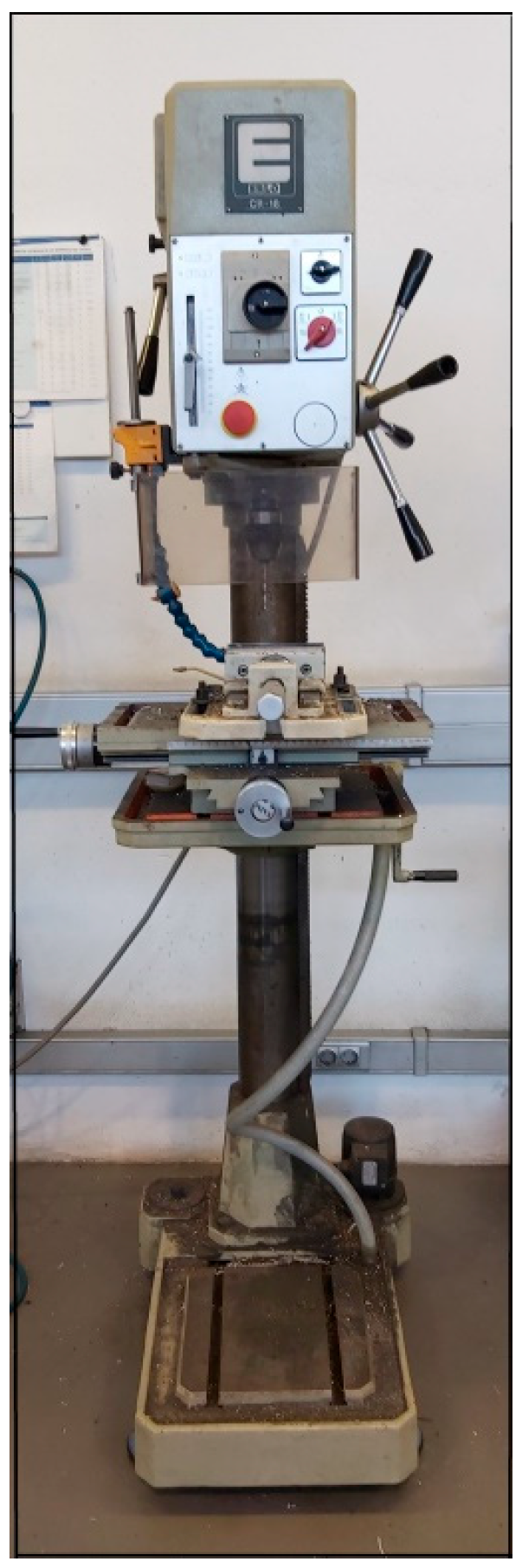
It should be noted that the physical pillar drill used as a reference for this study is a machine manufactured in the 1990s, while the digital reconstruction presented here was created by the authors using contemporary CAD tools. Original digital design documentation from the manufacturer was unavailable, and the model does not correspond to any historical CAD file.
Acquiring measurements is one of the most critical stages in any digital reconstruction process of historical machinery, as the geometric, functional, and didactic coherence of the final model depends on it. In this work, the measurement strategy was designed considering the need to obtain sufficiently precise data for a reliable three-dimensional recreation. First, an on-site inspection of the column drill was carried out, followed by the partial disassembly of those assemblies that could be separated without compromising the integrity of the machine or altering its original configuration. This decision allowed access to key components (shafts, pulleys, sleeves, clamping systems, and guiding elements) while maintaining a conservative approach in accordance with best practices in industrial heritage. Dimensional measurements were carried out using precision handheld instruments widely employed in industrial metrology: a caliper for general dimensions, a two-contact external micrometer with a resolution of 0.01 mm for critical diameters and thicknesses, and a mechanical goniometer with a minimum division of 5′ for determining functional angles. To minimize systematic and random errors, each measurement was repeated three times under similar conditions, and the average value was recorded as a reference for CAD modeling. This repetition and averaging procedure is standard practice in geometric surveying processes when three-dimensional scanning or original documentation is unavailable [
27].
Dimensional consistency between assembled parts was verified by checking geometric fits, coaxialities, and functional relationships during virtual assembly in SolidWorks. This process made it possible to detect and correct specific discrepancies before generating the final model, reinforcing the reliability of the reconstructed assembly and guaranteeing its suitability for industrial heritage and educational uses, as well as for technical documentation. The modeling strategy adopted in this work prioritizes the preservation of historical heritage, dimensional consistency, functional clarity, and pedagogical readability over exhaustive geometric fidelity. Therefore, some secondary details were simplified during the modeling process to facilitate an initial conceptual understanding of the machine, especially in museum and educational contexts where students may encounter this type of equipment for the first time. Several components were intentionally simplified in this work, including the drill spindle pulley, guiding elements, clamping systems, vise, belt assembly, cuff lock, and the headstock or sleeve. These simplifications included the removal of certain curves, holes, or internal mechanisms, such as those of the drill chuck, since they are not the focus of this study. The objective was not to obtain perfect similarity, but to ensure a clear understanding of the components and of the drill press as a whole.
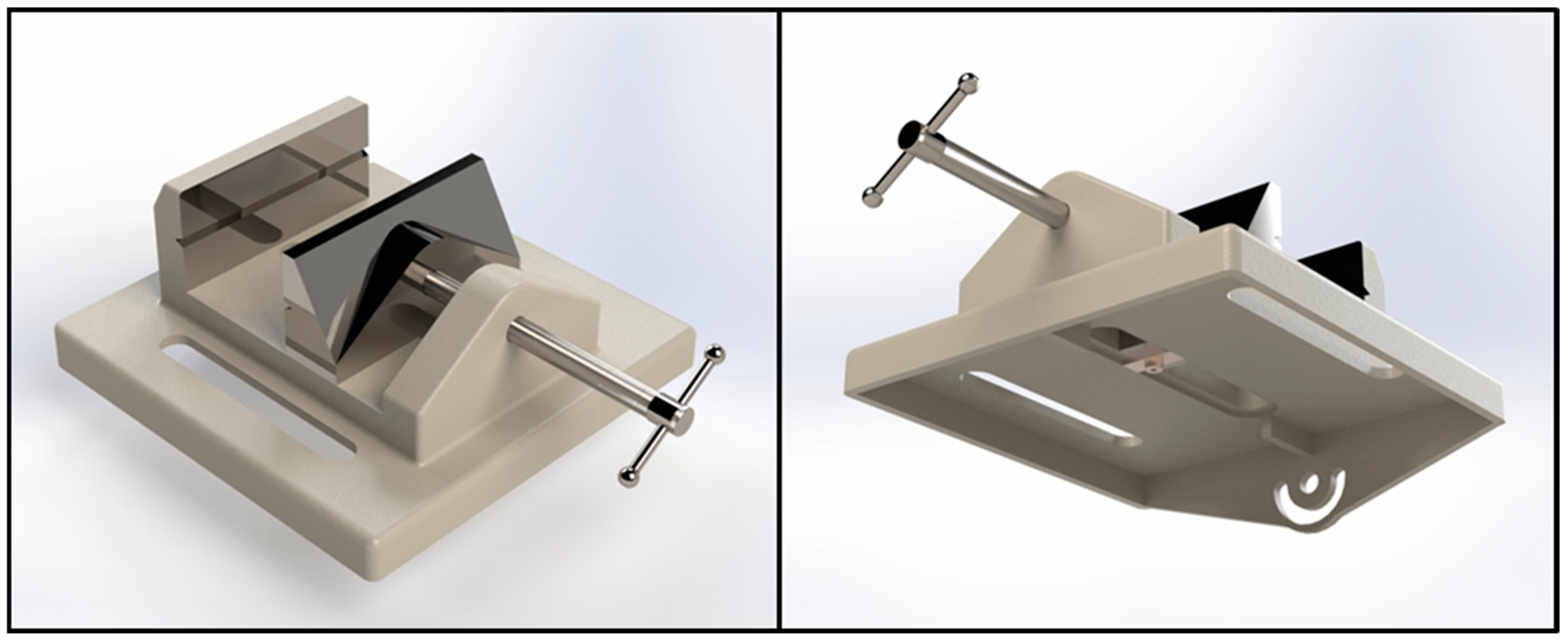
Several components modeled in SolidWorks will be presented, along with the final assembly of the drill press. The worktable with its vise (
Figure 2) serves as the primary surface responsible for securely holding the parts to be drilled. Made from milled cast iron, the table provides a stable foundation beneath the drill bit. It is mounted to the column using a yoke that permits vertical adjustment and a full 360° rotation around the column’s axis. The tabletop incorporates dual T-slots to accommodate various fixtures and clamping tools. Additionally, an integrated vise slot with compatible hardware ensures lateral immobilization of the workpiece, effectively resisting the thrust forces produced during drilling. Equipped with guiding elements and a vise mechanism, the system ensures the workpiece remains firmly in place, eliminating any unwanted displacement throughout the operation. The column not only supports the table but also enables height adjustments to accommodate different part dimensions. Furthermore, the table’s rotational capability around the column’s axis allows for flexible positioning during setup.
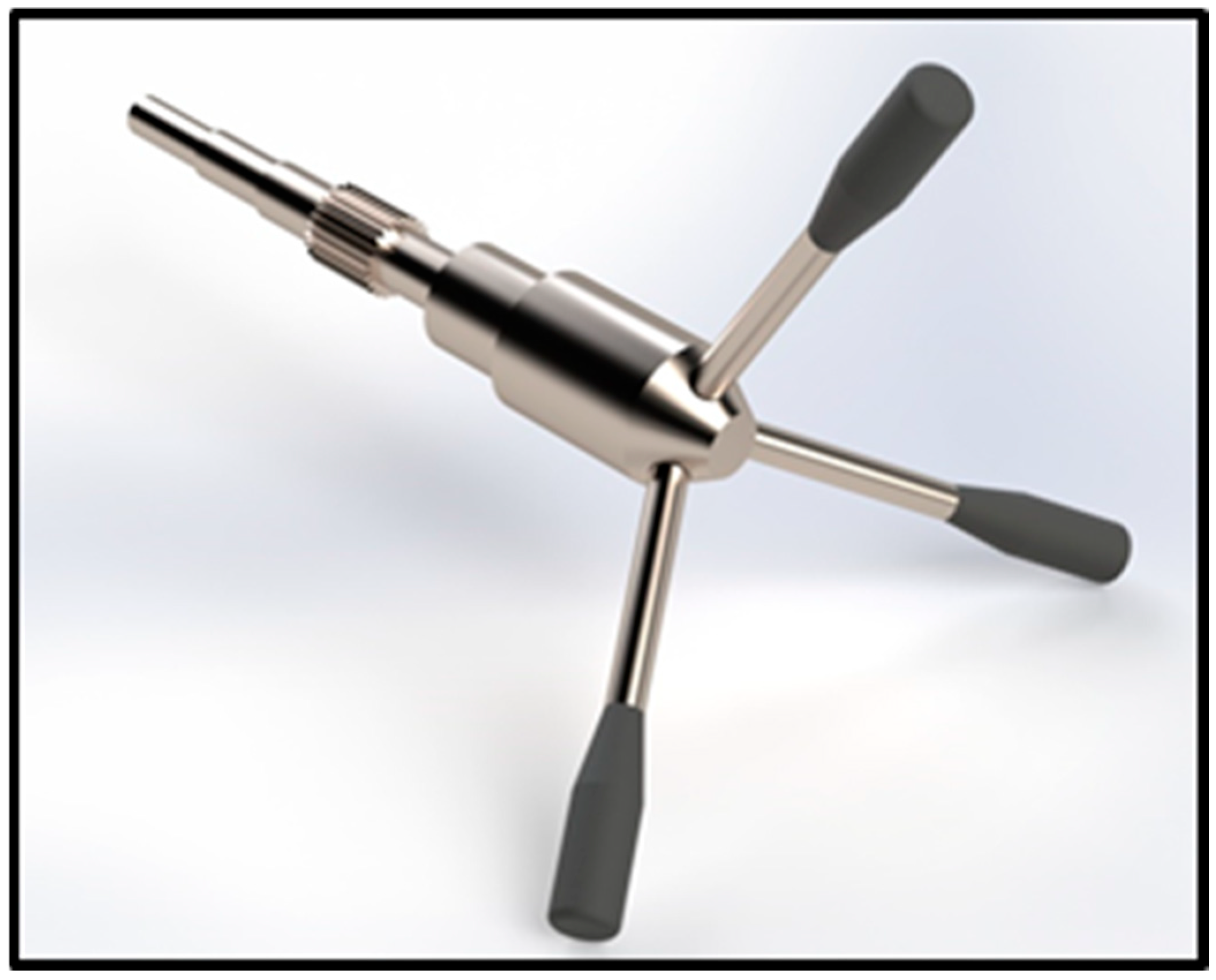
The feed handles (
Figure 3) play a fundamental role in the feed system, allowing the operator to control the drill’s vertical motion through rotational input. This mechanism integrates a gear system that governs the vertical displacement of the drill. The feed handles assembly comprises an axle, a central shaft, and three radial rods, each fitted with molded rubber handles to enhance grip. Acting as the operator’s depth control interface, the feed handles engage a 48-tooth brass gear when rotated. This gear meshes precisely with the internal rack of the sleeve, translating the feed handles’ motion into linear feed. The entire subassembly consists of a cast iron disc mounted on the axle and supported by three steel spokes, ensuring mechanical stability and smooth operation.
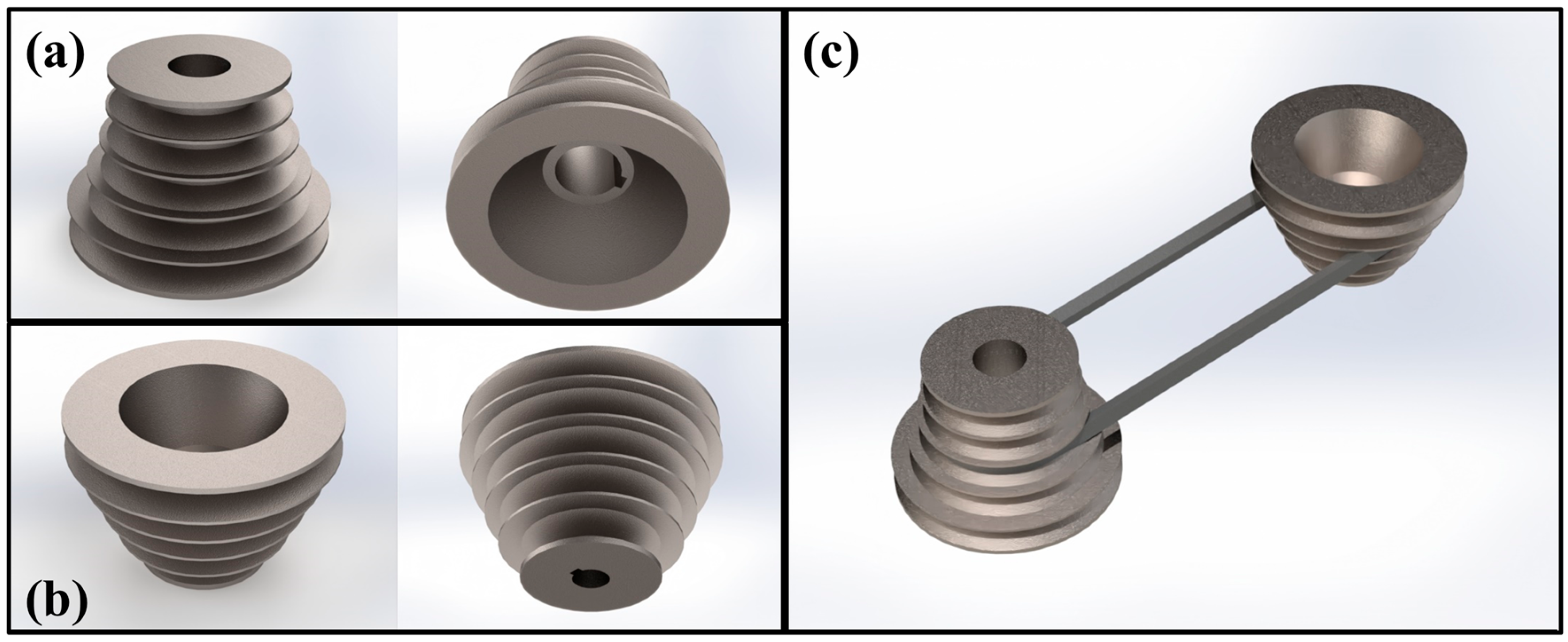
The pulleys, along with the belt, are essential for transmitting torque and generating the rotational motion of the drill chuck. There are two types of pulleys involved: the shaft pulley (
Figure 4a), which is directly connected to the drill chuck, and the motor pulley (
Figure 4b), which is linked to the motor. The movement is transferred between these two pulleys via a belt (
Figure 4c), completing the system.
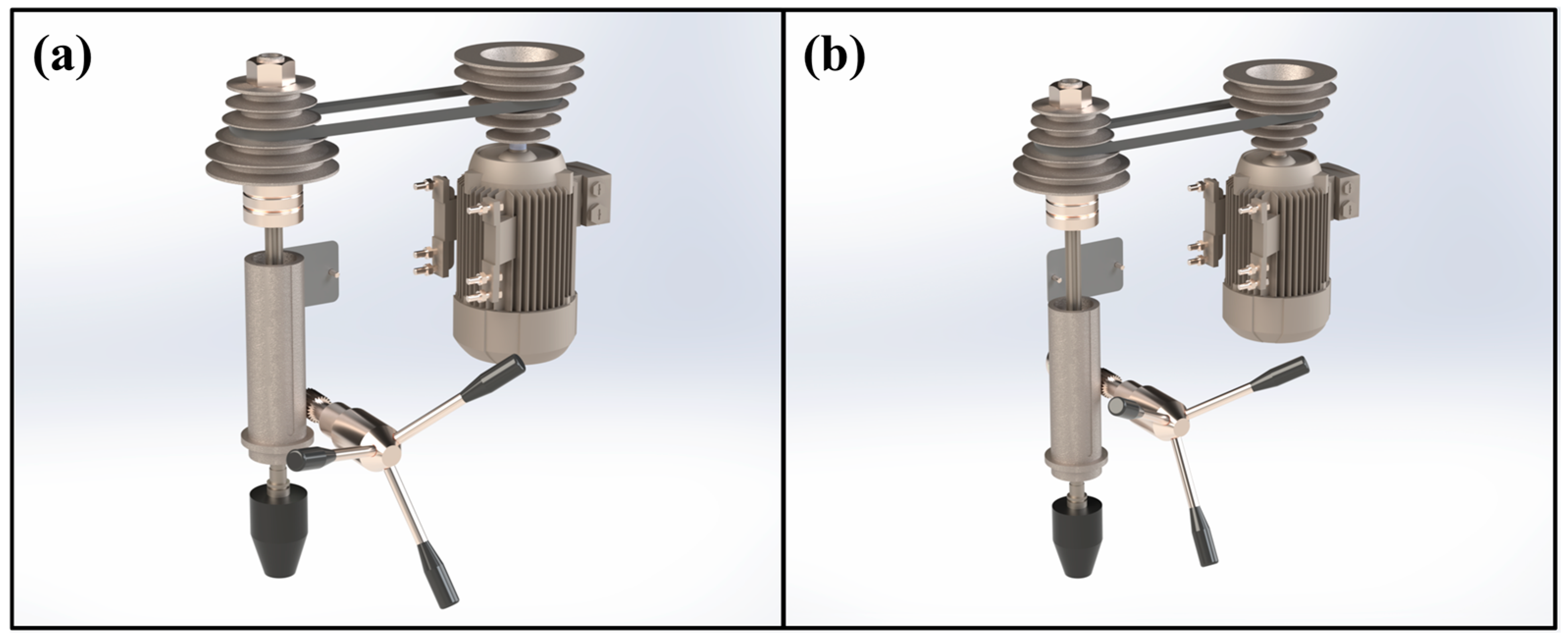
To explain how a drill operates, we begin with the first element that generates motion: the electric motor. This motor produces rotational motion with constant torque. To vary the torque and rotational speed of the drill, two pulleys connected by a belt are used. This configuration allows both the torque applied by the drill bit and its rotational speed to be adjusted. Both pulleys have the same number and shape of grooves, so the transmission ratio can be modified according to the requirements of the task.
Continuing with the drill’s operation, at this stage, both the required rotational speed and torque are transmitted to the drill spindle. Moving on to the head-lowering mechanism, it essentially consists of a shaft that slides along the internal teeth of the pulley. This allows its position, and therefore its height, to be varied while maintaining the transmission of speed and force at all times. This is possible because the shaft extends a considerable length into the pulley and slides along it.
Figure 5a shows the system in its initial position, while
Figure 5b shows the same system in a lowered position, simulating its movement during operation. The shaft is attached to the outer sleeve, which in turn is connected to the feed handles via a rack-and-pinion mechanism. The rack is located on the outer sleeve, and the pinion is mounted on the feed handle’s shaft. This arrangement allows the height of the drill shaft and sleeve assembly to be adjusted externally during drilling operations.
Finally, at the end of the drill shaft is the chuck, whose function is to hold the drill bit. This is achieved by three jaws that close simultaneously, allowing the chuck to adapt to different drill bit diameters. This connection must be sufficiently strong to prevent the drill bit from slipping within the chuck.
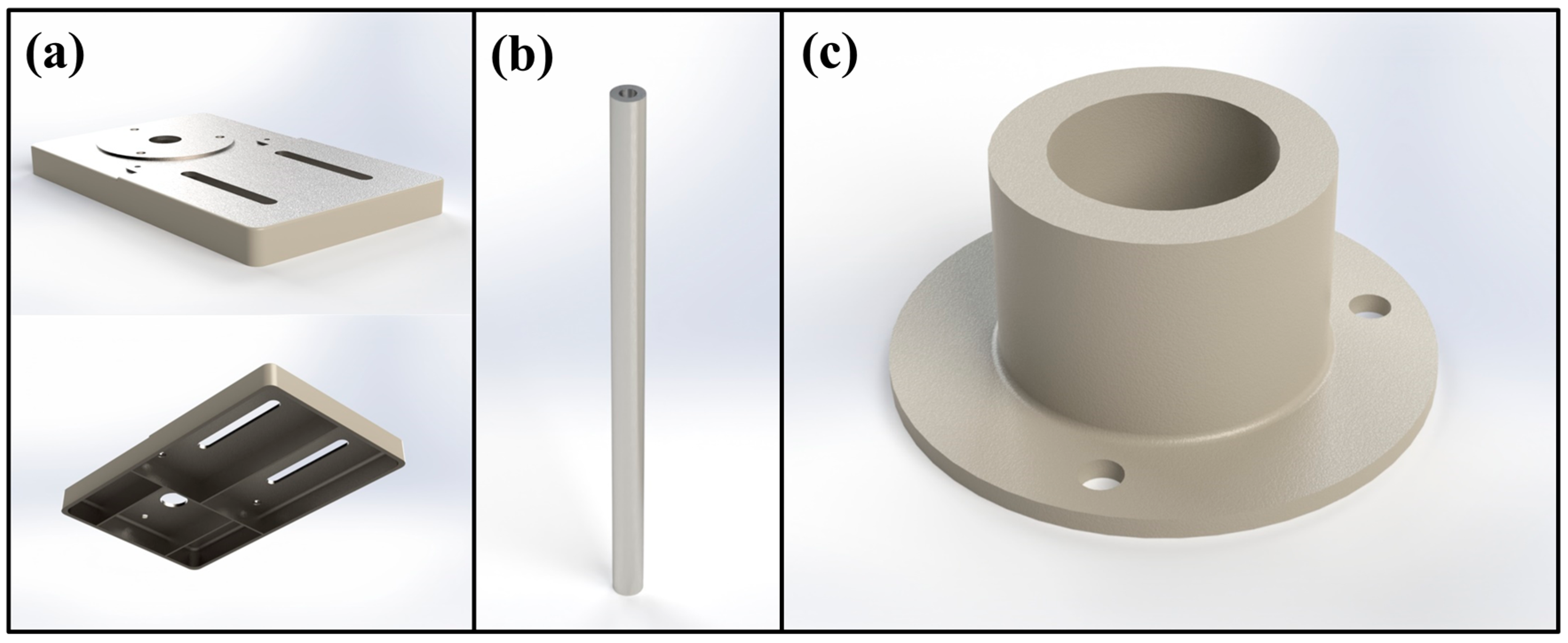
The vertical drill press is composed of a network of structural and functional elements. Each major component is described below, with figure references maintained for clarity. The base (
Figure 6a) forms the machine’s foundation, providing rigidity and absorbing operational vibrations. Manufactured from cast iron for high mass and damping, it incorporates mounting holes that allow anchoring it to the floor or a workbench. Integrated guide slots along its top surface align with the columns of the work table, ensuring stable attachment. A locking ring seated around the base’s circumference secures the column in place. The column (
Figure 6b) is the machine’s vertical backbone, offering a robust axis upon which the table, vise, and headstock move. Machined from solid steel, it resists bending under heavy loads. The column is bolted into the base via a set of high-tensile bolts. Along its length, a sliding collar (cuff) rides smoothly, supported by linear bearings. A cuff lock tightens the collar at any desired height, fixing the work table and vise assemblies. This clamping ring (
Figure 6c) forms the interface between the column and base, preventing relative motion. It utilizes three M20 × 40 fully threaded hex bolts, each paired with an M20 beveled flat washer, to compress the ring evenly. A thorough flush of special lubricant on the bolt threads helps maintain torque consistency and prevents galling over repeated adjustments.
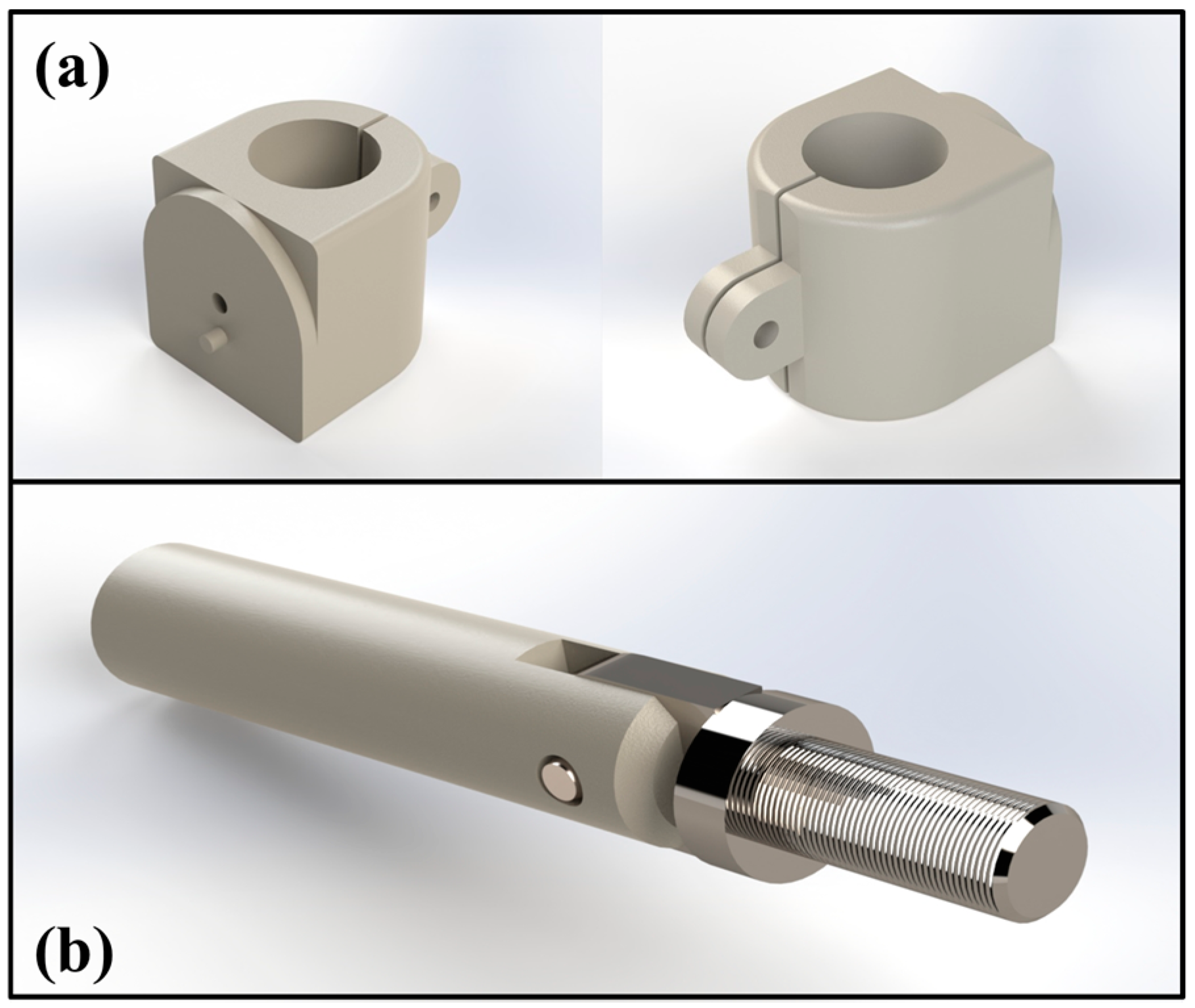
Attached to the work table yoke, the clamp (
Figure 7a) assembly locks the table’s vertical and rotational position. A single M20 × 40 hex screw threads through the clamp body, compressing it onto the column. The corresponding M20 beveled flat washer distributes load and ensures smooth, secure tightening. The clamp lock (
Figure 7b), also known as the cuff lock, this component pins the collar to the column. It consists of a lever-actuated threaded clamping collar and an M8 × 32 cylindrical pin that engages a detent in the column. Flipping the lever releases the pin, allowing rapid height changes. In the digital model, this locking mechanism has been represented with a simplified geometry, prioritizing the visualization of its functional principle rather than reproducing the small surface features, which are not essential to understanding its function within the assembly.
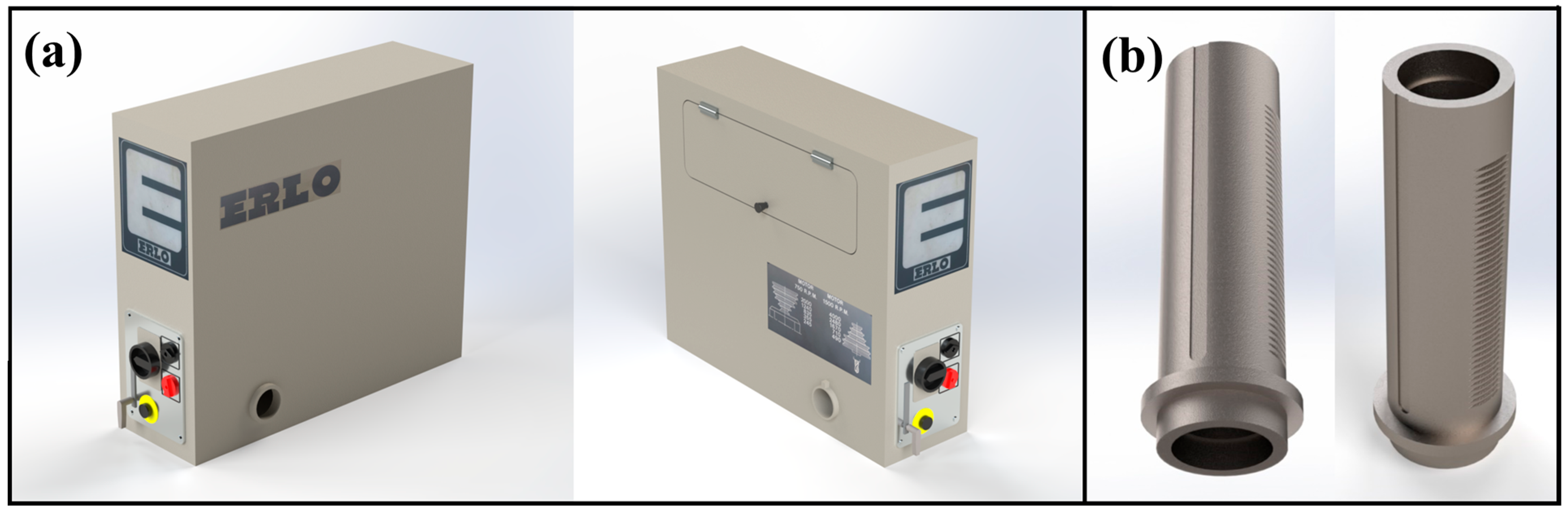
The headstock (
Figure 8a) forms the upper section of the vertical pillar drill and contains several key components, including the motor, sleeve, feed controls (e.g., feed handles), and electrical switches. The headstock provides the rotational power for drilling and regulates the tool’s movement. The motor is mounted at the rear of the body using threaded holes designed for secure attachment. The entire drivetrain is protected by the pulley cover. This cover protects the pulleys and belt from dust and debris and safeguards the user by preventing accidental contact with moving parts, forming a sealed and safe enclosure. The geometry of the headstock, which is the pulley cover, differs slightly from that of the specific machine observed in the workshop. This divergence reflects the need to adopt a representative yet simplified housing that conveys its protective function without introducing unnecessary modeling complexity. The sleeve (
Figure 8b), a steel tube that houses the spindle, also incorporates a rack on one side. The rack teeth mesh with the pinion of the feed handle mechanism, converting the rotational input into linear motion. The precise fit between the sleeve and the spindle carriage prevents backlash, ensuring controlled and repeatable feed. Although the external geometry of the headstock has been slightly simplified in the virtual model, its internal functional relationships have been preserved to ensure a clear representation of the feed mechanism and power transmission.
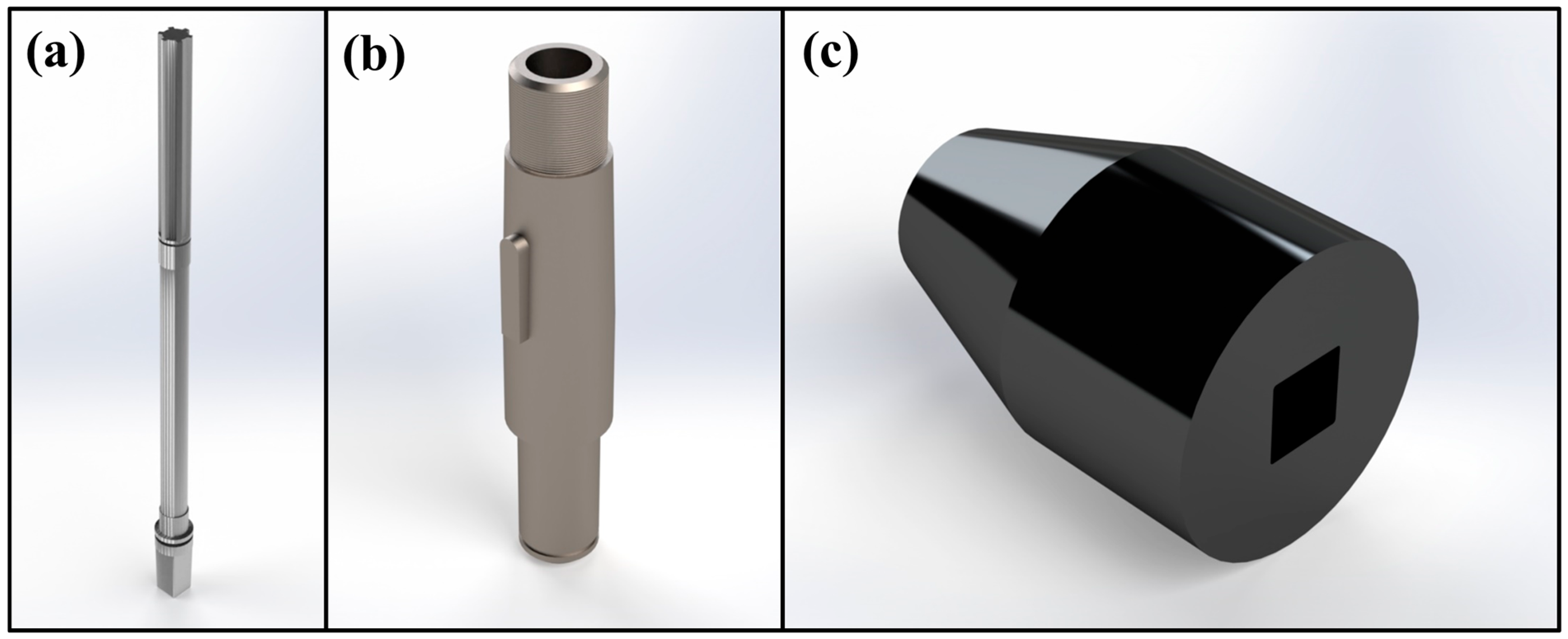
Machined from hardened alloy steel, the spindle (
Figure 9a) serves as the rotating axis. It is supported by a single row deep groove ball bearing in the headstock housing, permitting smooth, high-speed rotation. The spindle extends below the housing and slides within the sleeve. A keyed end on the top permits fine height adjustments via the feed mechanism. The pulley insert (
Figure 9b) serves as the mechanical link between the spindle and the pulley system, featuring machined grooves that engage matching splines on the spindle to ensure positive drive and accurate torque transmission. Its upper end includes a stepped projection with a built-in screw that secures a washer and an M36 hex nut, preventing axial movement and maintaining precise alignment under load. The shaft pulley mounts directly on the spindle shaft, while the motor pulley attaches to the motor output. These two stepped pulleys, connected by a reinforced V-belt, transmit torque and rotational motion to the drill chuck. By shifting the belt among the pulley steps, the operator can select different speed ranges to suit various materials and cutting conditions. The belt’s internal tensile cords provide high friction and minimal stretch, ensuring reliable power transfer even under heavy loads. The drill chuck (
Figure 9c) holds the drill bit in its three hardened steel jaws, ensuring concentric rotation during drilling. Operated using a chuck key, the drill chuck accommodates various drill shank sizes. In the virtual recreation, the internal locking mechanism of the chuck jaws has not been explicitly modeled. This design decision reflects a deliberate simplification, as modeling the internal components of the chuck was not considered essential for a first-level understanding of the drill press assembly. The purpose of the digital assembly is not to simulate cutting forces or machining accuracy, but to clearly illustrate how motion and power are transmitted through the main structural and functional elements of the column drill so that those interested, students or researchers in Industrial Heritage can better understand this machine.
3.2. Assembly and Complete Digital Model
The workpiece is supported on the worktable (
Figure 2), which serves as the platform for drilling operations. This table can be adjusted vertically to accommodate different workpiece heights and is capable of rotating to facilitate work. To advance the drill bit into the workpiece, the operator uses the feed handles’ axle (
Figure 3). The operator’s circular motion rotates the feed handles, engaging a gear mechanism that vertically moves the spindle through the sleeve, thus controlling feed rate and drilling depth. In the virtual model, this kinematic relationship between user input and spindle displacement is preserved at a functional level, allowing museum visitors or students to understand the feed mechanism without introducing unnecessary geometric complexity.
The electric motor forms the core of the machine’s operation, supplying rotational energy to the pulley and belt system. Torque is transmitted from the motor pulley to the shaft pulley (
Figure 4a), which in turn is powered by the motor shaft, turning the motor pulley itself (
Figure 4b). This mechanical linkage transfers the rotation needed to drive the spindle. The entire drilling assembly is mounted on a vertical column (
Figure 6b), which supports both the motor and the adjustable table. A clamp (
Figure 7a) is used to lock the workpiece in place, preventing unwanted movement due to the forces generated during drilling. The aim of the digital assembly is not to replicate cutting forces or machining precision, but to clearly show how movement and power flow through the main structural and functional components of the column drill, allowing interested individuals (such as students or Industrial Heritage researchers) to better understand the machine. When the operator turns the feed handles, its internal components transmit motion through gears that move the sleeve (
Figure 8b) up or down. Inside this sleeve, the spindle is housed and guided, ensuring precision in vertical displacement. The rotation from the pulley system is transferred to the spindle via the pulley insert. The external teeth of the insert engage directly with the internal gearing of the spindle (
Figure 9a), causing it to rotate at a controlled and selectable speed. The insert itself (
Figure 9b) is rigidly mounted, ensuring efficient torque transfer. At the bottom end of the spindle, the drill chuck (
Figure 9c) securely holds the drill bit, maintaining alignment and preventing slippage.
As mentioned previously, the internal mechanism for driving the chuck jaws has not been explicitly modeled. This simplification was adopted to prioritize conceptual understanding of the assembly over detailed recreation. The fluid supply system was intentionally excluded from the virtual reconstruction to focus the objective of the work on the machine itself, since cooling and lubrication can be achieved through an auxiliary cutting fluid system or through external application, either by manual application (with pure cutting oil) [
28] or by a Minimum Quantity Cutting Fluid (MQCF) system that places a thin layer of nanofluid at the contact point [
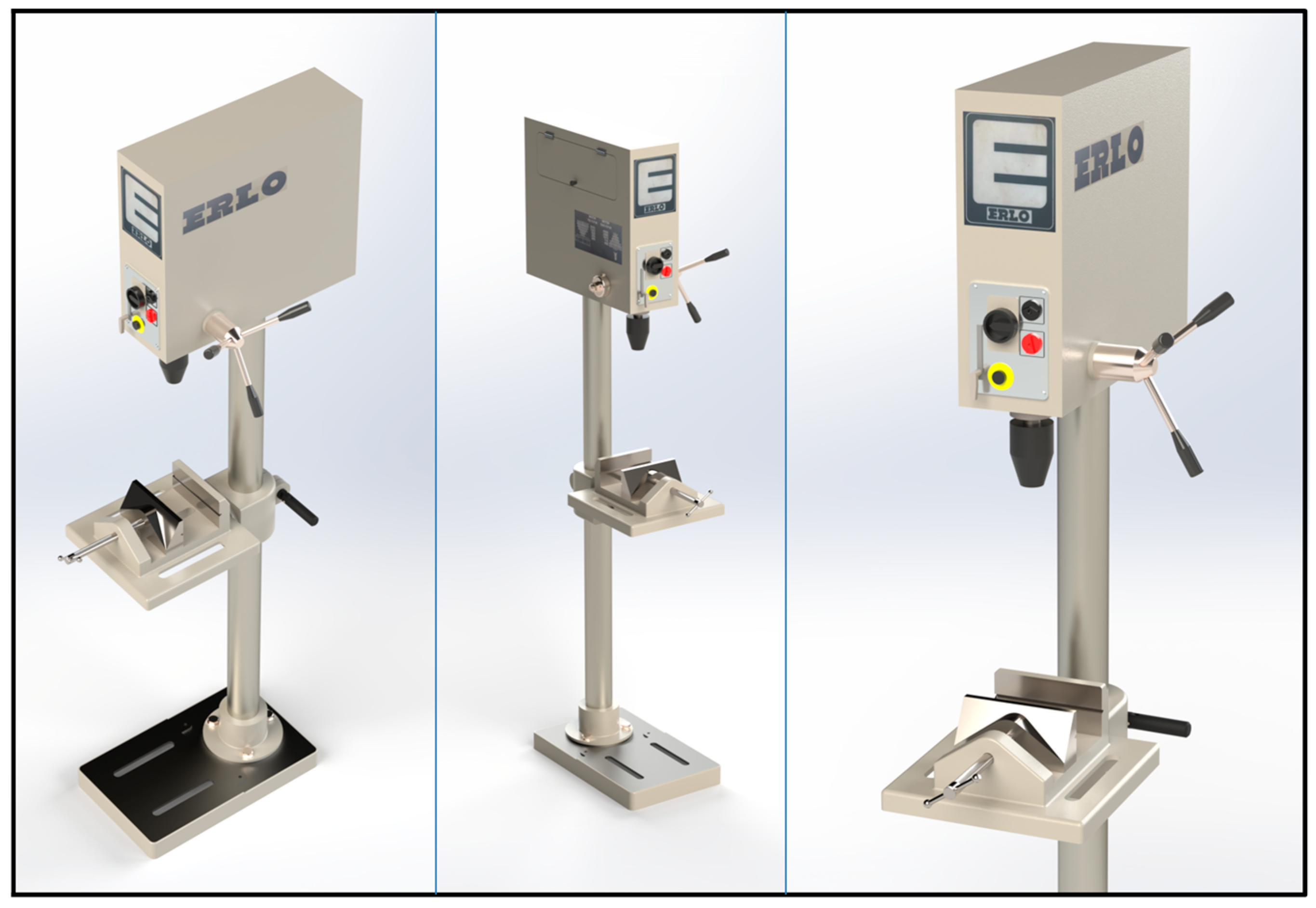
29], as an alternative possibility. Finally, all components and subassemblies are integrated into a single assembly file, with textures applied to enhance visual clarity and differentiate the components. The final results are presented in the images shown in
Figure 10, where the left side displays the assembly of the virtually created parts from the right and left perspectives, and the right side of
Figure 10 offers a close-up view in which the assembly details, such as the drill head and worktable, can be better appreciated.
Instead of striving for perfect geometric fidelity, the virtual recreation focuses on preserving the machine as a whole. Therefore, some elements have been simplified, omitted, or generalized to improve legibility and usability in heritage or educational contexts. The correspondence between the real machine and the virtual recreation is sufficient to convey the structure, design, and operating principles of the column drill. This level of correspondence makes these 3D resources valuable tools for Industrial Heritage, its students, or researchers, allowing the introduction of machine tool architecture and basic kinematic relationships before direct interaction with the physical equipment.