
Extended Reality Approaches to Cultural Representation: Spatializing the Experience of Traditional Chinese Opera


Abstract
1. Introduction
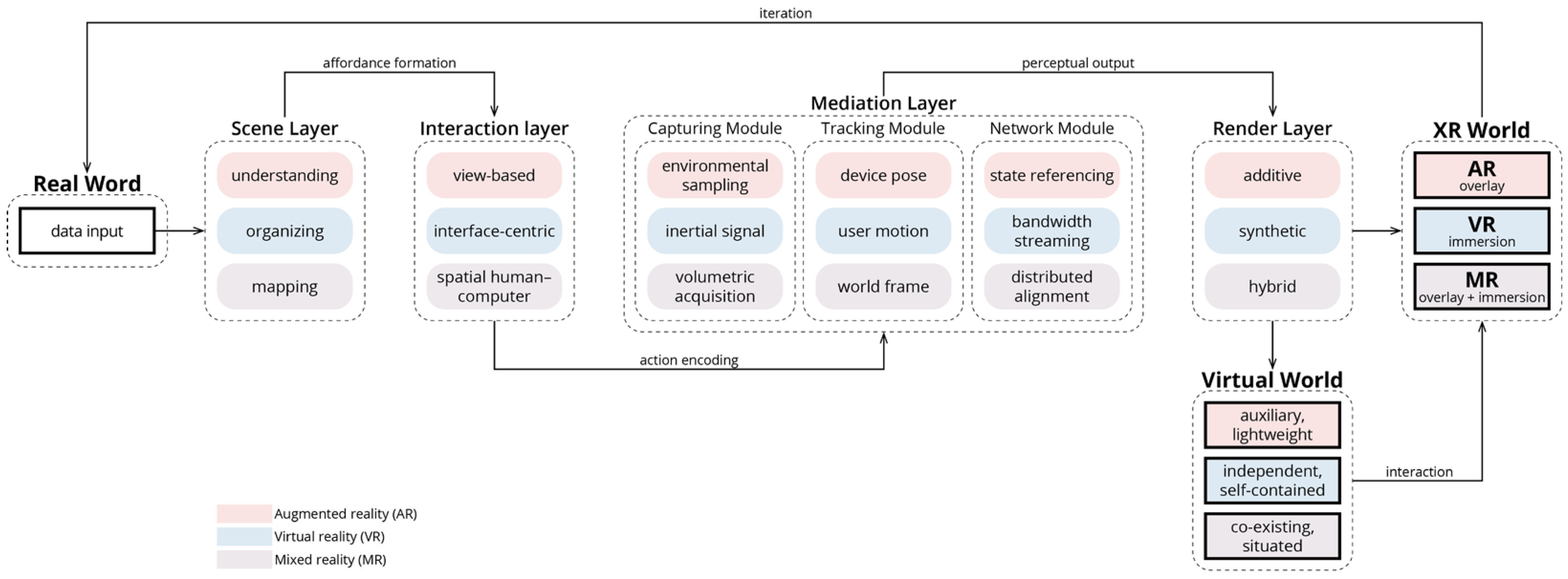
- How can XR technology create immersive interactive spaces through continuous iterations of generative environments?
- What distinct perceptual and communicative capacities do AR, VR, and MR offer for cultural experiences?
- Which representation and spatialization approaches can integrate AR, VR, and MR for the revival of traditional Chinese opera?
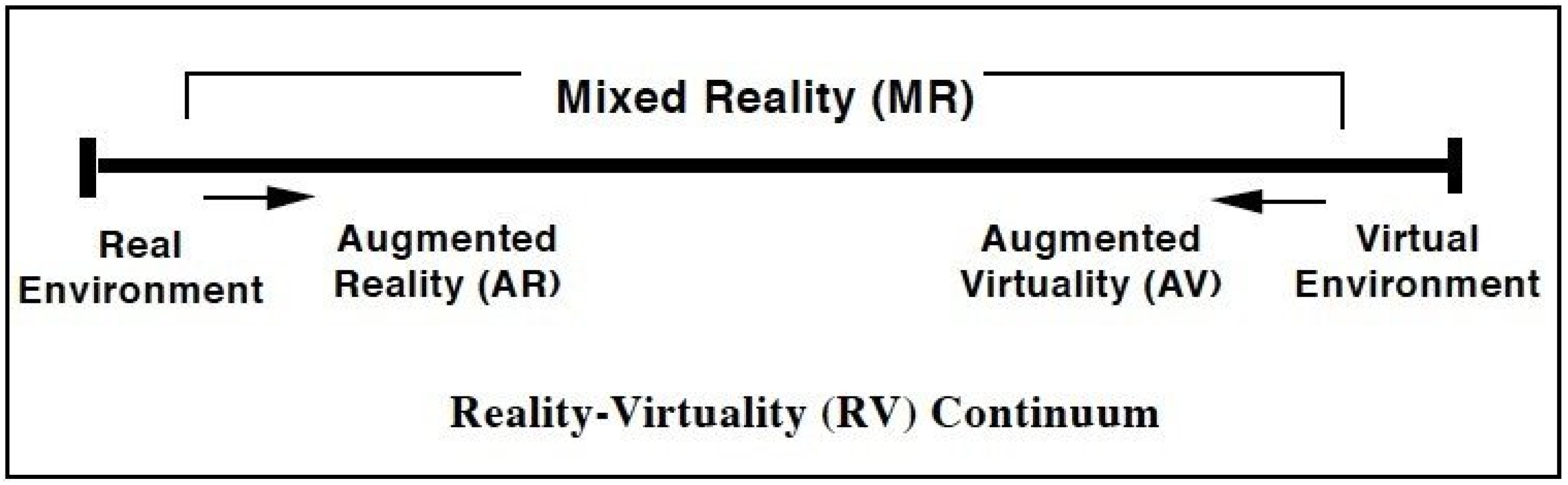
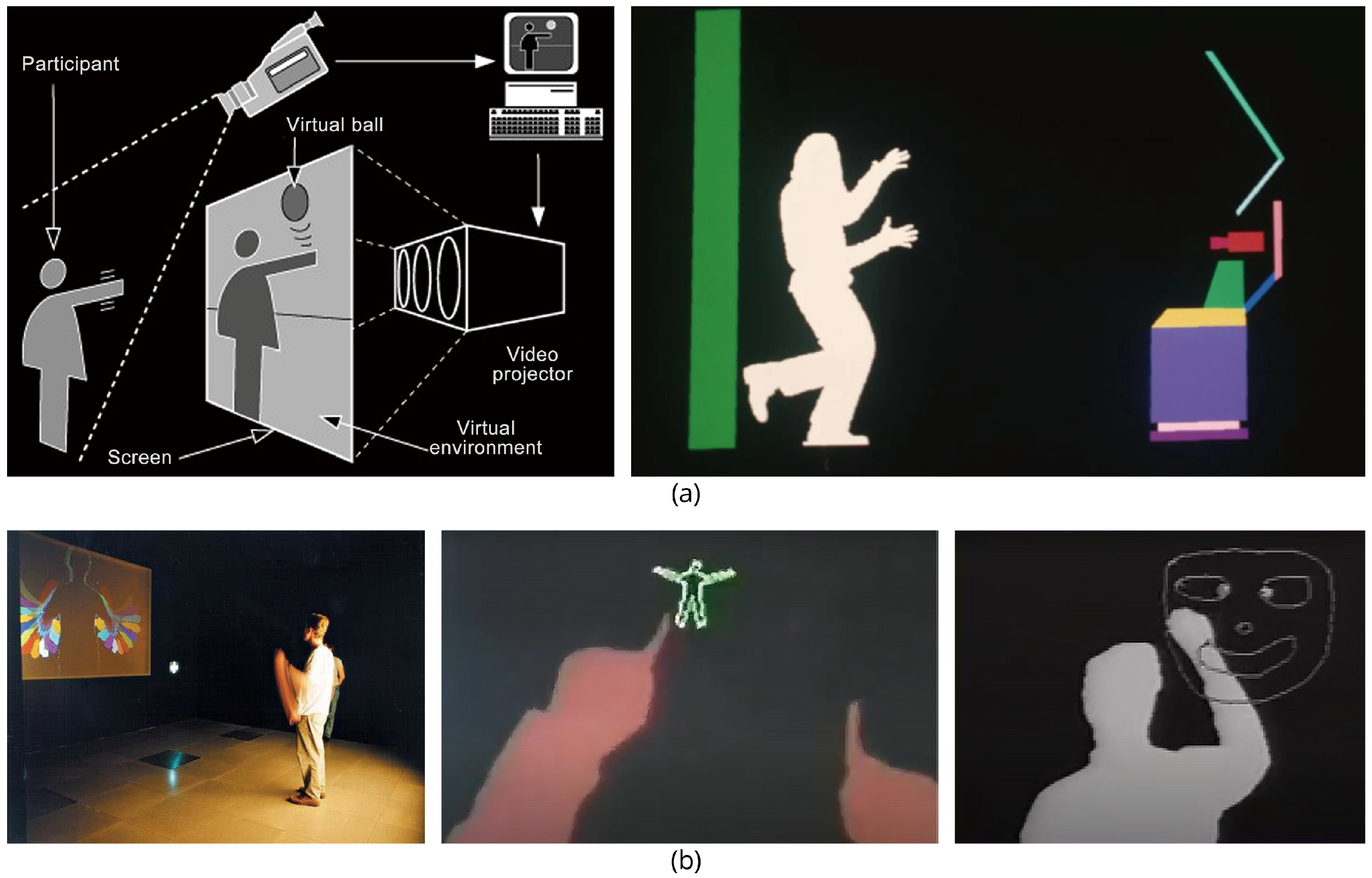
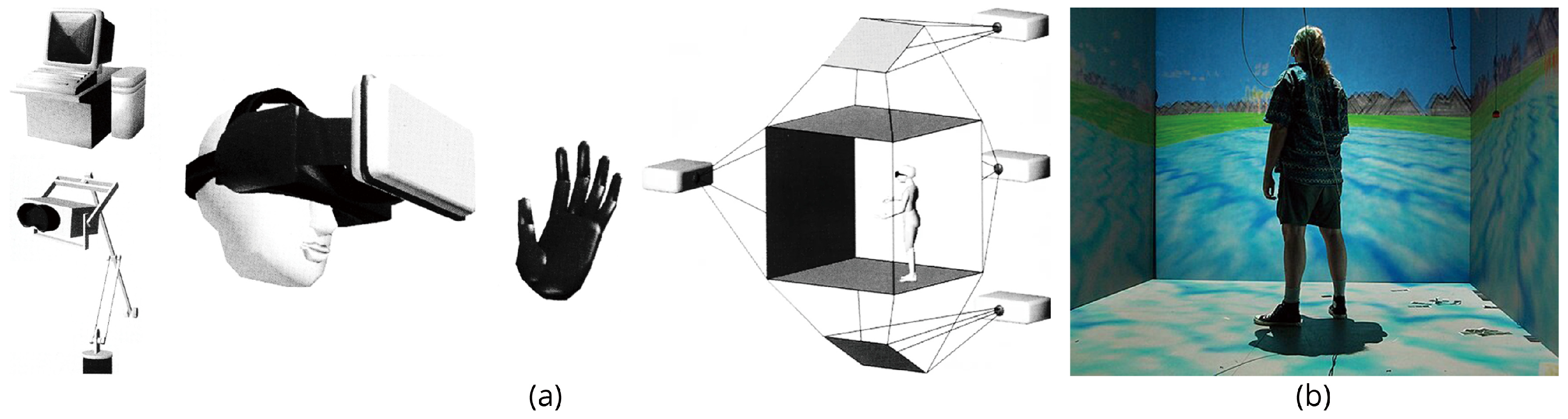
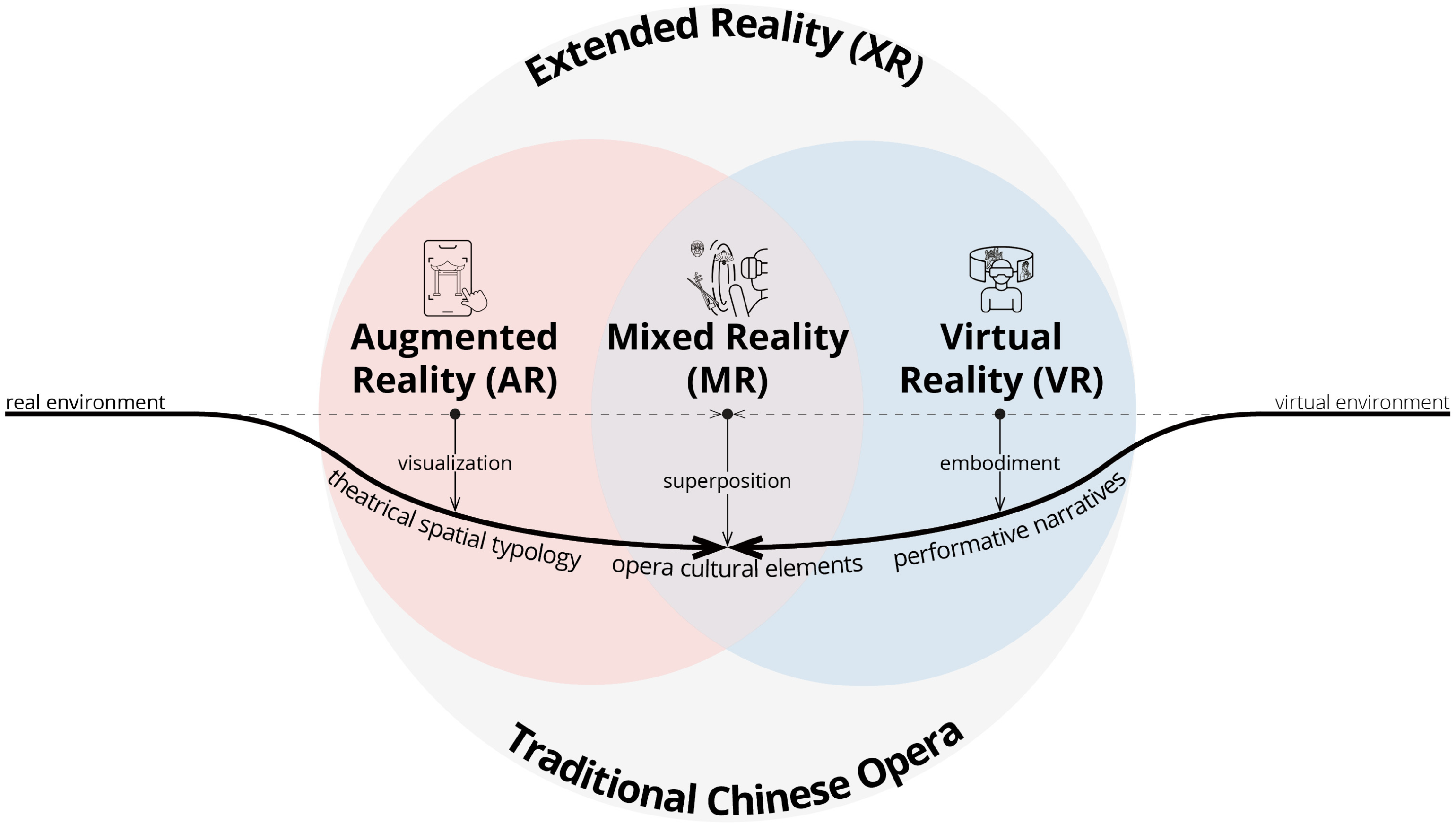
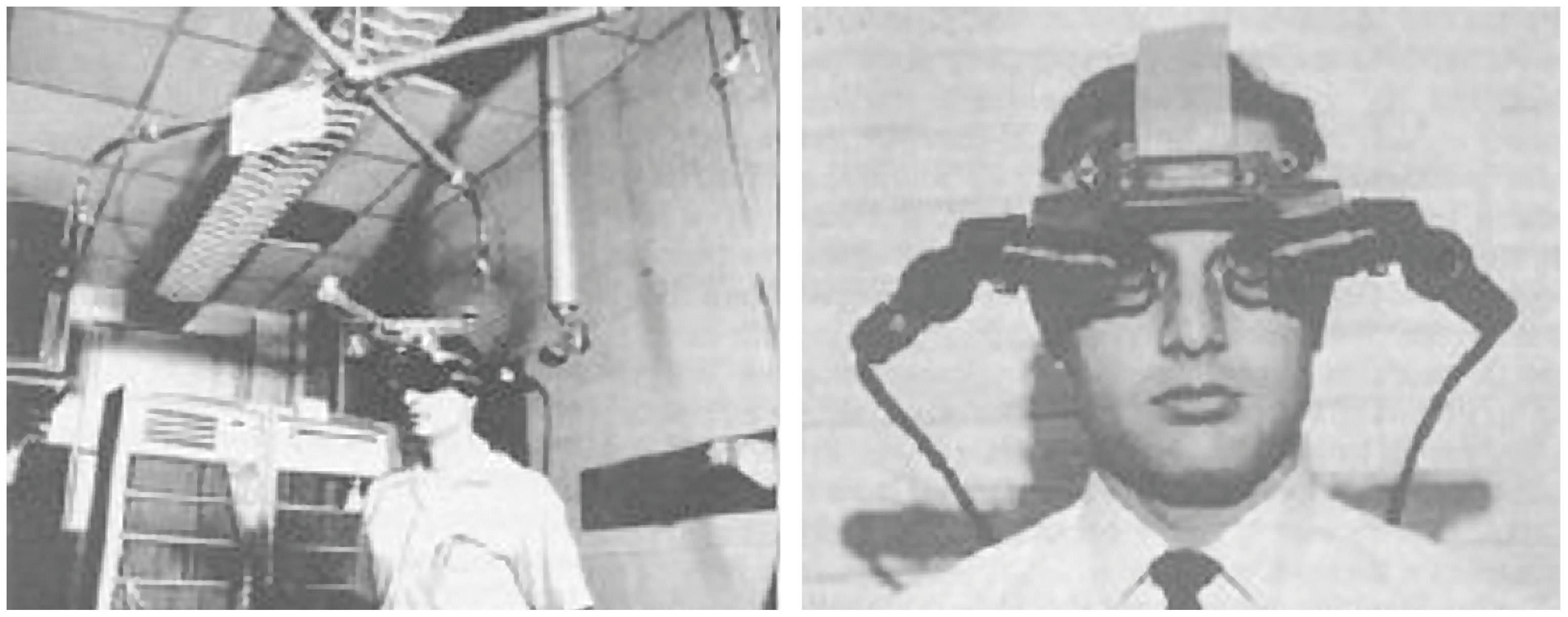
2. From Reality–Virtuality Continuum to Spatial Computing
3. Comparison of Adaptability of XR to User Experience in Traditional Culture
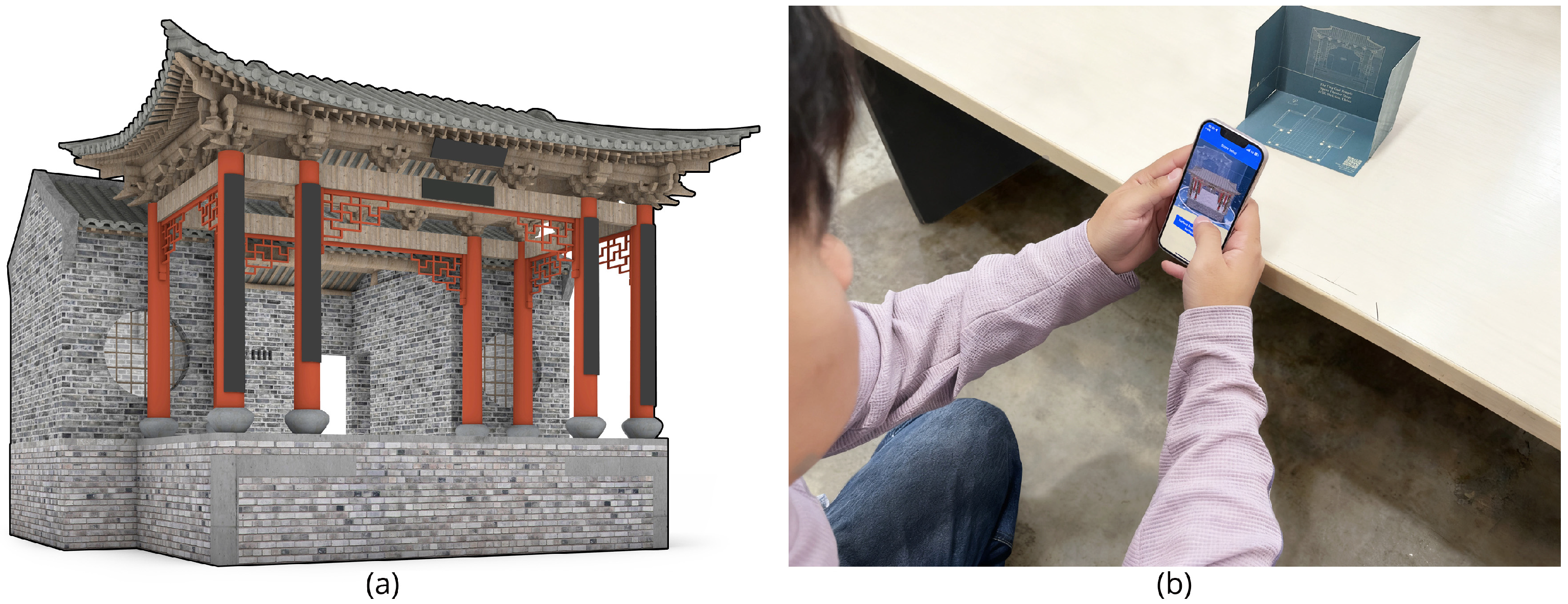
3.1. AR: Auxiliary Presentation for Architectural Heritage
3.2. VR: Immersive Roaming for Panoramic Scenarios
3.3. MR: Spatial HCI for Multi-Layered Overlay
3.4. Technical Comparison
3.5. Application Comparison
4. Three XR-Based Approaches for Spatial Representation and Experience of Traditional Chinese Opera
4.1. Visualization of Theatrical Spatial Typology Through AR
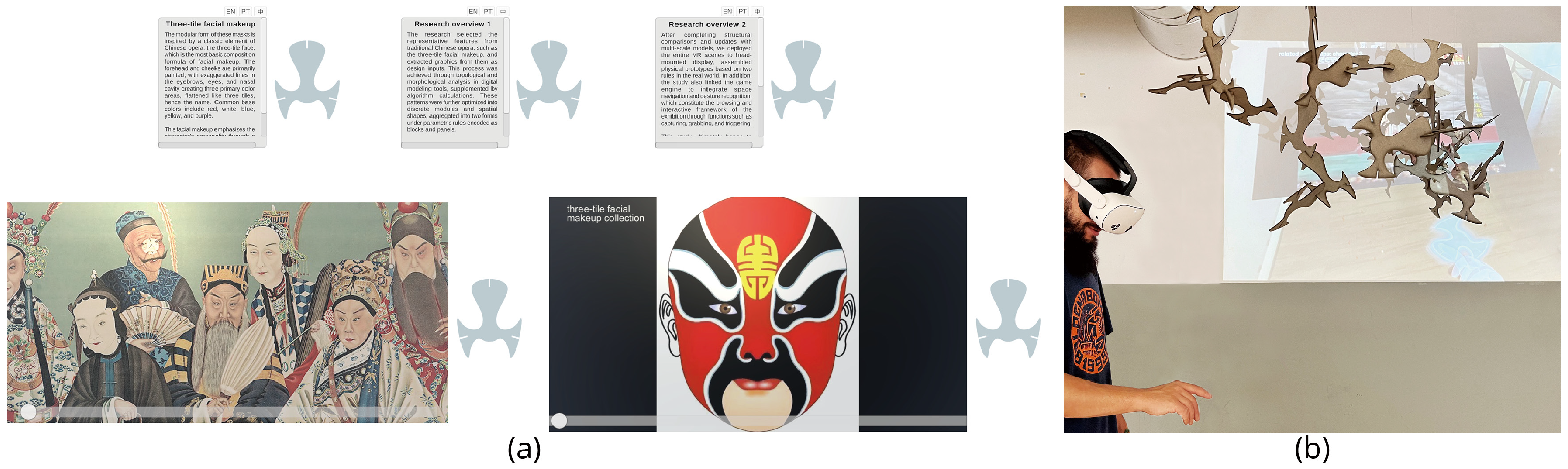
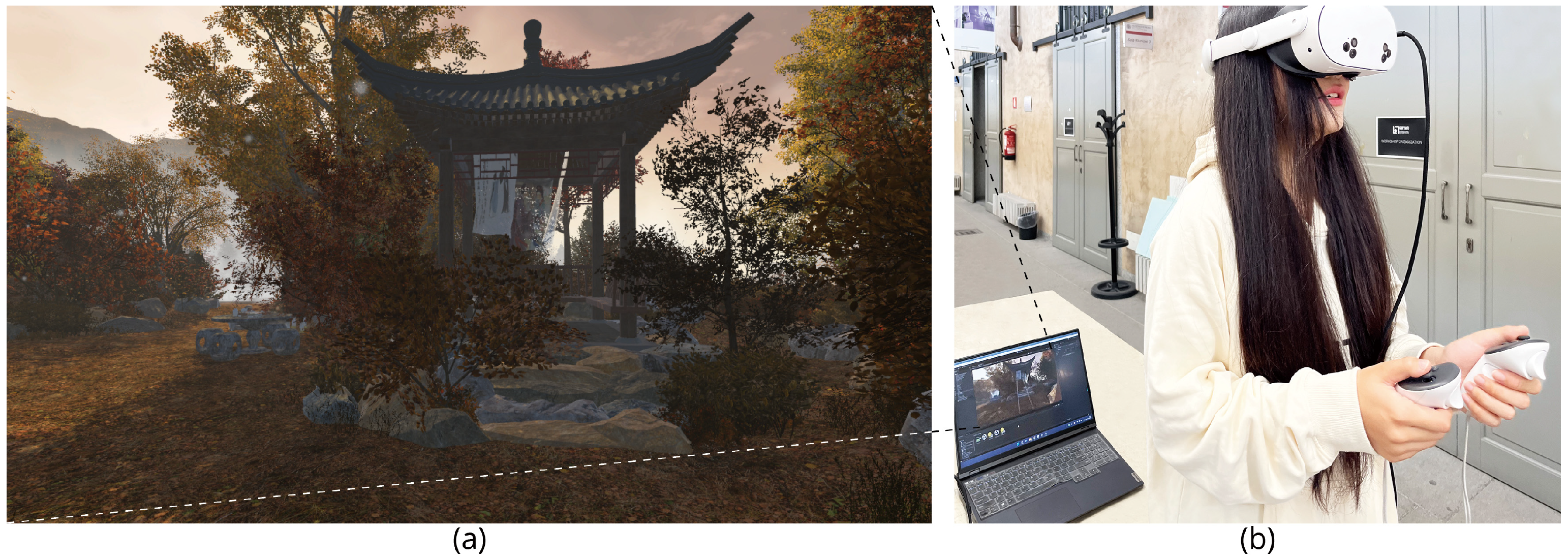
4.2. Embodiment of Performative Narratives Through VR
4.3. Superposition of Opera Cultural Elements Through MR
5. Discussion
5.1. AR, VR, and MR in Opera Reinterpretation
5.2. Limitations
5.3. Future Empirical Validation
6. Conclusions
Author Contributions
Funding
Data Availability Statement
Conflicts of Interest
Correction Statement
References
- Yu, N. Life as opera: A cultural metaphor in Chinese. In Advances in Cultural Linguistics; Sharifian, F., Ed.; Springer: Singapore, 2017; pp. 65–87. [Google Scholar] [CrossRef] [Scilit]
- UNESCO. Peking Opera. 2010. Available online: https://ich.unesco.org/en/RL/peking-opera-00418 (accessed on 21 August 2025).
- Yang, Y.; Lei, T. The inheritance and future development direction prediction of opera culture based on cloud communication under the background of big data. J. Sens. 2022, 2022, 1910766. [Google Scholar] [CrossRef] [Scilit]
- Zhang, X.; Zhang, A.; Xu, J.; Ma, R. Documentation and inheritance of ancient opera stage based on multidisciplinary approach and digital technology. Buildings 2022, 12, 977. [Google Scholar] [CrossRef] [Scilit]
- Heim, C. Audience as Performer: The Changing Role of Theatre Audiences in the Twenty-First Century; Routledge: Abingdon, UK, 2016. [Google Scholar] [CrossRef] [Scilit]
- Bekele, M.K.; Pierdicca, R.; Frontoni, E.; Malinverni, E.S.; Gain, J. A survey of augmented, virtual, and mixed reality for cultural heritage. J. Comput. Cult. Herit. 2018, 11, 1–36. [Google Scholar] [CrossRef] [Scilit]
- Çöltekin, A.; Lochhead, I.; Madden, M.; Christophe, S.; Devaux, A.; Pettit, C.; Lock, O.; Shukla, S.; Herman, L.; Stachoň, Z.; et al. Extended reality in spatial sciences: A review of research challenges and future directions. ISPRS Int. J. Geo-Inf. 2020, 9, 439. [Google Scholar] [CrossRef] [Scilit]
- Milgram, P.; Takemura, H.; Utsumi, A.; Kishino, F. Augmented reality: A class of displays on the reality-virtuality continuum. Telemanip. Telepresence Technol. 1994, 2351, 282–292. [Google Scholar] [CrossRef] [Scilit]
- Balakrishnan, S.; Hameed, M.S.S.; Venkatesan, K.; Aswin, G. Interaction of spatial computing in augmented reality. In Proceedings of the 2021 7th International Conference on Advanced Computing and Communication Systems (ICACCS), Coimbatore, India, 19–20 March 2021; pp. 1900–1904. [Google Scholar] [CrossRef] [Scilit]
- Sutherland, I.E. A head-mounted three dimensional display. In Proceedings of the December 9–11, 1968, Fall Joint Computer Conference, Part I, San Francisco, CA, USA, 9–11 December 1968; pp. 757–764. [Google Scholar] [CrossRef] [Scilit]
- Krueger, M.W.; Gionfriddo, T.; Hinrichsen, K. VIDEOPLACE-An artificial reality. In Proceedings of the SIGCHI Conference on Human Factors in Computing Systems—CHI ’85, San Francisco CA, USA, 14–18 April 1985; pp. 35–40. [Google Scholar] [CrossRef] [Scilit]
- Skarbez, R.; Smith, M.; Whitton, M.C. Revisiting Milgram and Kishino’s reality-virtuality continuum. Front. Virtual Real. 2021, 2, 647997. [Google Scholar] [CrossRef] [Scilit]
- Azuma, R.T. A survey of augmented reality. Presence Teleoper. Virtual Environ. 1997, 6, 355–385. [Google Scholar] [CrossRef] [Scilit]
- Billinghurst, M.; Kato, H. Collaborative mixed reality. In Proceedings of the First International Symposium on Mixed Reality; Springer: Berlin/Heidelberg, Germany, 1999; pp. 261–284. [Google Scholar]
- Burdea, G.C.; Coiffet, P. Virtual Reality Technology; John Wiley & Sons: Hoboken, NJ, USA, 2003. [Google Scholar]
- Pangilinan, E.; Lukas, S.; Mohan, V. Creating Augmented and Virtual Realities: Theory and Practice for Next-Generation Spatial Computing; O’Reilly Media: Newton, MA, USA, 2019. [Google Scholar]
- Cruz-Neira, C.; Sandin, D.J.; DeFanti, T.A.; Kenyon, R.V.; Hart, J.C. The CAVE: Audio visual experience automatic virtual environment. Commun. ACM 1992, 35, 64–72. [Google Scholar] [CrossRef] [Scilit]
- Schumacher, P. The metaverse as opportunity for architecture and society: Design drivers, core competencies. Archit. Intell. 2022, 1, 11. [Google Scholar] [CrossRef] [Scilit]
- Mele, C.; Russo-Spena, T. The architecture of the phygital customer journey: A dynamic interplay between systems of insights and systems of engagement. Eur. J. Mark. 2022, 56, 72–91. [Google Scholar] [CrossRef] [Scilit]
- Caudell, T.P.; Mizell, D.W. Augmented reality: An application of heads-up display technology to manual manufacturing processes. In Proceedings of the Twenty-Fifth Hawaii International Conference on System Sciences, Kauai, HI, USA, 7–10 January 1992; IEEE: Piscataway, NJ, USA, 1992; Volume 2, pp. 659–669. [Google Scholar] [CrossRef] [Scilit]
- Carmigniani, J.; Furht, B.; Anisetti, M.; Ceravolo, P.; Damiani, E.; Ivkovic, M. Augmented reality technologies, systems and applications. Multimed. Tools Appl. 2011, 51, 341–377. [Google Scholar] [CrossRef] [Scilit]
- Ramtohul, A.; Khedo, K.K. Augmented reality systems in the cultural heritage domains: A systematic review. Digit. Appl. Archaeol. Cult. Herit. 2024, 32, e00317. [Google Scholar] [CrossRef] [Scilit]
- Güleç Özer, D.; Nagakura, T.; Vlavianos, N. Augmented reality (AR) of historic environments: Representation of Parion Theater, Biga, Turkey. A/Z ITU J. Fac. Archit. 2016, 13, 185–193. [Google Scholar] [CrossRef] [Scilit]
- Liang, J.; Zeng, G.; Li, Y.; Dong, Y. ARTimeTravel: Understanding spatial changes in heritage sites over time through web-based augmented reality serious games. In Proceedings of the Extended Abstracts of the CHI Conference on Human Factors in Computing Systems, Yokohama, Japan, 26 April–1 May 2025. [Google Scholar] [CrossRef] [Scilit]
- Boboc, R.G.; Băutu, E.; Gîrbacia, F.; Popovici, N.; Popovici, D.-M. Augmented reality in cultural heritage: An overview of the last decade of applications. Appl. Sci. 2022, 12, 9859. [Google Scholar] [CrossRef] [Scilit]
- Chung, N.; Lee, H.; Kim, J.-Y.; Koo, C. The role of augmented reality for experience-influenced environments: The case of cultural heritage tourism in korea. J. Travel Res. 2018, 57, 627–643. [Google Scholar] [CrossRef] [Scilit]
- Steuer, J. Defining virtual reality: Dimensions determining telepresence. J. Commun. 1992, 42, 73–93. [Google Scholar] [CrossRef] [Scilit]
- Gong, Q.; Zou, N.; Yang, W.; Zheng, Q.; Chen, P. User experience model and design strategies for virtual reality-based cultural heritage exhibition. Virtual Real. 2024, 28, 69. [Google Scholar] [CrossRef] [Scilit]
- Zidianakis, E.; Partarakis, N.; Ntoa, S.; Dimopoulos, A.; Kopidaki, S.; Ntagianta, A.; Ntafotis, E.; Xhako, A.; Pervolarakis, Z.; Kontaki, E.; et al. The invisible museum: A user-centric platform for creating virtual 3D exhibitions with VR support. Electronics 2021, 10, 363. [Google Scholar] [CrossRef] [Scilit]
- Gonizzi Barsanti, S.; Caruso, G.; Micoli, L.L.; Covarrubias Rodriguez, M.; Guidi, G. 3D visualization of cultural heritage artefacts with virtual reality devices. Int. Arch. Photogramm. Remote Sens. Spat. Inf. Sci. 2015, XL-5/W7, 165–172. [Google Scholar] [CrossRef] [Scilit]
- Pei, W.; Lo, T.T.S.; Guo, X. Integrating virtual reality and interactive game for learning structures in architecture: The case of ancient Chinese dougong cognition. Open House Int. 2023, 48, 237–257. [Google Scholar] [CrossRef] [Scilit]
- Villena Taranilla, R.; Cózar-Gutiérrez, R.; González-Calero, J.A.; López Cirugeda, I. Strolling through a city of the Roman Empire: An analysis of the potential of virtual reality to teach history in primary education. Interact. Learn. Environ. 2022, 30, 608–618. [Google Scholar] [CrossRef] [Scilit]
- Wohlgenannt, I.; Simons, A.; Stieglitz, S. Virtual reality. Bus. Inf. Syst. Eng. 2020, 62, 455–461. [Google Scholar] [CrossRef] [Scilit]
- Speicher, M.; Hall, B.D.; Nebeling, M. What is mixed reality? In Proceedings of the 2019 CHI Conference on Human Factors in Computing Systems, Glasgow, UK, 4–9 May 2019. [Google Scholar] [CrossRef] [Scilit]
- Craig, A.B. Understanding Augmented Reality: Concepts and Applications; Newnes: Oxford, UK, 2013. [Google Scholar]
- Kaplan, A.D.; Cruit, J.; Endsley, M.; Beers, S.M.; Sawyer, B.D.; Hancock, P.A. The effects of virtual reality, augmented reality, and mixed reality as training enhancement methods: A meta-analysis. Hum. Factors J. Hum. Factors Ergon. Soc. 2021, 63, 706–726. [Google Scholar] [CrossRef] [Scilit] [PubMed]
- Mann, S.; Nolan, J.; Wellman, B. Sousveillance: Inventing and using wearable computing devices for data collection in surveillance environments. Surveill. Soc. 2002, 1, 331–355. [Google Scholar] [CrossRef] [Scilit]
- Pan, Z.; Cheok, A.D.; Yang, H.; Zhu, J.; Shi, J. Virtual reality and mixed reality for virtual learning environments. Comput. Graph. 2006, 30, 20–28. [Google Scholar] [CrossRef] [Scilit]
- Flavián, C.; Ibáñez-Sánchez, S.; Orús, C. The impact of virtual, augmented and mixed reality technologies on the customer experience. J. Bus. Res. 2019, 100, 547–560. [Google Scholar] [CrossRef] [Scilit]
- Plecher, D.A.; Wandinger, M.; Klinker, G. Mixed reality for cultural heritage. In Proceedings of the 2019 IEEE Conference on Virtual Reality and 3D User Interfaces (VR), Osaka, Japan, 23–27 March 2019. [Google Scholar] [CrossRef] [Scilit]
- Chen, F.; Guo, X.; Lo, T. MR game for historical experience: A study on the interplay between tangible and intangible heritage in Chaozhou ancient town. In Proceedings of the eCAADe 2021, Novi Sad, Serbia, 8–10 September 2021; University of Novi Sad; pp. 223–232. [Google Scholar] [CrossRef] [Scilit]
- Ioannides, M.; Magnenat-Thalmann, N.; Papagiannakis, G. (Eds.) Mixed Reality and Gamification for Cultural Heritage; Springer International Publishing: Berlin/Heidelberg, Germany, 2017. [Google Scholar] [CrossRef] [Scilit]
- Rahaman, H.; Champion, E.; Bekele, M. From photo to 3D to mixed reality: A complete workflow for cultural heritage visualisation and experience. Digit. Appl. Archaeol. Cult. Herit. 2019, 13, e00102. [Google Scholar] [CrossRef] [Scilit]
- Bae, S.; Jung, T.H.; Moorhouse, N.; Suh, M.; Kwon, O. The influence of mixed reality on satisfaction and brand loyalty in cultural heritage attractions: A brand equity perspective. Sustainability 2020, 12, 2956. [Google Scholar] [CrossRef] [Scilit]
- Aggarwal, R.; Singhal, A. Augmented reality and its effect on our life. In Proceedings of the 2019 9th International Conference on Cloud Computing, Data Science & Engineering (Confluence), Noida, India, 10–11 January 2019; IEEE: Piscataway, NJ, USA, 2019; pp. 510–515. [Google Scholar] [CrossRef] [Scilit]
- Zhang, Y.; Shen, Y.; Zhang, W.; Zhu, Z.; Ma, P. Interactive spatial augmented reality system for Chinese opera. In Proceedings of the SIGGRAPH ’19: Special Interest Group on Computer Graphics and Interactive Techniques Conference, Los Angeles, CA, USA, 28 July 2019. [Google Scholar] [CrossRef] [Scilit]
- Helin, K.; Reyes-Lecuona, A.; Runde, C. Creating Opera Utilising Augmented Reality and Virtual Reality Technologies; VTT Technical Research Centre of Finland: Espoo, Finland, 2022. [Google Scholar] [CrossRef]
- Marasco, A.; Balbi, B.; Icolari, D. Augmented La Traviata: Remediating opera through augmented reality technology. Int. J. Art Cult. Des. Technol. 2018, 7, 41–64. [Google Scholar] [CrossRef] [Scilit]
- Nicholas, M.J.; Daffara, S.C.; Paulos, E. Expanding the design space for technology-mediated theatre experiences. Des. Interact. Syst. Conf. 2021, 2021, 2026–2038. [Google Scholar] [CrossRef] [Scilit]
- Xiao, M.; Chen, Y.; Huang, H. The impact of interactive AR technology on the communication of intangible cultural heritage-Case study of Chaozhou opera in China. In Proceedings of the 14th International Conference on Applied Human Factors and Ergonomics (AHFE 2023), San Francisco, CA, USA, 20–24 July 2023. [Google Scholar] [CrossRef] [Scilit]
- Xu, N.; Chen, Y.; Ma, T.; Mao, Q.; Huang, X.; Zhou, H.; Sun, X. LanternOperAR: Integrating gamification and visualization to engage with Yue opera in a hybrid gift. In Proceedings of the Eurographics Workshop on Graphics and Cultural Heritage, Darmstadt, Germany, 16–18 September 2024; Eurographics Association: Eindhoven, The Netherlands, 2024. [Google Scholar] [CrossRef]
- Kelly, S.; Cordingley, S.; Nolan, P.; Rhemann, C.; Fanello, S.; Tang, D.; Osborn, J.; Busch, J.; Davidson, P.; Debevec, P.; et al. AR-ia: Volumetric opera for mobile augmented reality. In Proceedings of the SIGGRAPH Asia 2019 XR, Brisbane, QLD, Australia, 17–20 November 2019. [Google Scholar] [CrossRef] [Scilit]
- Lovrick, P. Chinese Opera: Images and Stories; UBC Press: Vancouver, BC, Canada, 2007. [Google Scholar]
- Saltz, D.Z. Live media: Interactive technology and theatre. Theatre Top. 2001, 11, 107–130. [Google Scholar] [CrossRef] [Scilit]
- Dixon, S. A history of virtual reality in performance. Int. J. Perform. Arts Digit. Media 2006, 2, 23–54. [Google Scholar] [CrossRef] [Scilit]
- Rose, T.; Klein, E.; Teixeira, F.F.L.A. Self-experiential prototyping for augmented and virtual reality opera creation. Chroma J. Australas. Comput. Music. Assoc. 2023, 39. Available online: https://journal.computermusic.org.au/chroma/article/view/10 (accessed on 25 January 2026).
- Parthenios, P.; Karagianni, A.; Geropanta, V.; Tzortzakakis, A.; Kalimeris, S.; Dania, P.; Delintadakis, C. A collaborative virtual reality platform for opera rehearsal: Designing for performing arts. In Proceedings of the eCAADe 2023, Graz, Austria, 20–23 September 2023; Graz University of Technology; pp. 681–690. [Google Scholar] [CrossRef] [Scilit]
- Jiang, Y.-P.; Su, C.; Li, X.-C. Virtual reality technology for the digital dissemination of traditional Chinese opera culture. Int. J. Hum. Comput. Interact. 2025, 41, 2600–2614. [Google Scholar] [CrossRef] [Scilit]
- Li, Z.Y.; Yang, C. Research on the display of VR animation technology in the cultural communication of “Méi School” art of Peking opera: Illustrated by the case of the image of Mu Guiying in the stone carving Lady General Mu Takes Command at the north end in Wangfeng Terrace of Nanshan Temple. In Proceedings of the 8th International Conference on Information and Education Innovations (ICIEI 2023), Manchester, UK, 13–15 April 2023; ACM: New York, NY, USA, 2023; pp. 152–156. [Google Scholar] [CrossRef] [Scilit]
- Lee, S.; Viola, I.; Rossi, S.; Guo, Z.; Reimat, I.; Ławicka, K.; Striner, A.; Cesar, P. Designing and evaluating a VR lobby for a socially enriching remote opera watching experience. IEEE Trans. Vis. Comput. Graph. 2024, 30, 2055–2065. [Google Scholar] [CrossRef] [Scilit] [PubMed]
- Striner, A.; Halpin, S.; Röggla, T.; Cesar, P. Towards immersive and social audience experience in remote VR opera. In Proceedings of the ACM International Conference on Interactive Media Experiences, Virtual, 21–23 June 2021; ACM: New York, NY, USA, 2021; pp. 311–318. [Google Scholar] [CrossRef] [Scilit]
- Attard, J. Opera Cinema: A New Cultural Experience; Bloomsbury Publishing: New York, NY, USA, 2022. [Google Scholar]
- Aloqaily, M.; Bouachir, O.; Karray, F.; Al Ridhawi, I.; El Saddik, A. Integrating digital twin and advanced intelligent technologies to realize the metaverse. IEEE Consum. Electron. Mag. 2023, 12, 47–55. [Google Scholar] [CrossRef] [Scilit]
- Lucas, J.-F.; Cornish, T.; Margolis, T. To a cultural perspective of mixed reality events: A case study of event overflow in operas and concerts in mixed reality. N. Rev. Hypermedia Multimed. 2012, 18, 277–293. [Google Scholar] [CrossRef] [Scilit]
- Weijdom, J. Mixed Reality and the Theatre of the Future: Arts and New Technologies; IETM—International Network for Contemporary Performing Arts: Brussels, Belgium, 2017. [Google Scholar]
- Vasilakos, A.V.; Wei, L.; Nguyen, T.H.D.; Thien Qui, T.C.; Chen, L.C.; Boj, C.; Diaz, D.; Cheok, A.D.; Marentakis, G. Interactive theatre via mixed reality and ambient intelligence. Inf. Sci. 2008, 178, 679–693. [Google Scholar] [CrossRef] [Scilit]
- Wang, G.; Lu, Z.; Zhang, Y.; Qian, Y.; Zhao, H.; Liu, D. Application of mixed reality technology in education with the case of a Huangmei opera cultural education system. In Proceedings of the 2020 IEEE 2nd International Conference on Computer Science and Educational Informatization (CSEI), Xinxiang, China, 12–14 June 2020; IEEE: Piscataway, NJ, USA, 2020; pp. 301–305. [Google Scholar] [CrossRef] [Scilit]
- Yan, M.; Xiong, R.; Shen, Y.; Jin, C.; Wang, Y. Intelligent generation of Peking opera facial masks with deep learning frameworks. Herit. Sci. 2023, 11, 20. [Google Scholar] [CrossRef] [Scilit]
- Zhao, H.; Ding, Y.; Yu, B.; Jiang, C.; Zhang, W. Design and implementation of Peking opera action scoring system based on human skeleton information. MATEC Web Conf. 2018, 232, 01026. [Google Scholar] [CrossRef] [Scilit]
- Chen, Q.; Zhao, W.; Wang, Q.; Zhao, Y. The sustainable development of intangible cultural heritage with AI: Cantonese opera singing genre classification based on CoGCNet model in China. Sustainability 2022, 14, 2923. [Google Scholar] [CrossRef] [Scilit]





| Dimension | Augmented Reality (AR) | Virtual Reality (VR) | Mixed Reality (MR) |
|---|---|---|---|
| Spatial configuration | Physical space with digital overlays | Fully virtual, computer-generated space | Hybrid space with real–virtual coexistence |
| Relation to reality | Augments existing environments | Replaces physical environments | Integrates and interacts with physical environments |
| Environmental perception | Camera-based recognition and tracking | Minimal perception of real world | Continuous spatial mapping and depth sensing |
| Interaction features | Limited interaction, mainly based on visual or touch inputs | Interaction within virtual environments through interfaces | Multimodal, real-time spatial interaction across human and computer |
| Embodiment and immersion | Partial embodiment, low immersion | Full virtual embodiment, high immersion | Situated embodiment, context-dependent immersion |
| Technical complexity | Low | Medium | High |
| Technology | Primary Application Focus | Limitations | Trade-Offs | Contextual Constraints |
|---|---|---|---|---|
| Augmented reality (AR) | Architectural presentation and structural visualization | Limited storyline and emotional depth | Accessibility over immersion | Dependent on external references |
| Virtual reality (VR) | Immersive roaming and narrative embodiment | Loss of live, site-specific authenticity | Immersion over physical reality | Primarily applicable in remote settings |
| Mixed reality (MR) | Multi-layered spatial interaction and element superposition | Fragmented and unfocused content | Balance of realism and immersion | Restricted to controlled real environments |
| Spatial Prototypes | Advantages | Disadvantages |
|---|---|---|
| AR visualized postcards of the reconstructed ancient stage | Enhances interest through external environments | Limited to general cultural overviews without representing actual dimensions |
| VR embodied plots of the representative repertoire | Improves comprehension of storytelling and operatic context | Restricted to panoramic experiences within headsets |
| MR superposed layers of the typical facial makeup | Enables interaction with stacked cultural elements | Confined to compact spaces and optimized, abstract aspects |
Disclaimer/Publisher’s Note: The statements, opinions and data contained in all publications are solely those of the individual author(s) and contributor(s) and not of MDPI and/or the editor(s). MDPI and/or the editor(s) disclaim responsibility for any injury to people or property resulting from any ideas, methods, instructions or products referred to in the content. |
© 2026 by the authors. Licensee MDPI, Basel, Switzerland. This article is an open access article distributed under the terms and conditions of the Creative Commons Attribution (CC BY) license.
Share and Cite
Han, T.; Alvelos, H.; Sousa, J.P. Extended Reality Approaches to Cultural Representation: Spatializing the Experience of Traditional Chinese Opera. Heritage 2026, 9, 61. https://doi.org/10.3390/heritage9020061
Han T, Alvelos H, Sousa JP. Extended Reality Approaches to Cultural Representation: Spatializing the Experience of Traditional Chinese Opera. Heritage. 2026; 9(2):61. https://doi.org/10.3390/heritage9020061
Chicago/Turabian StyleHan, Tianyu, Heitor Alvelos, and José Pedro Sousa. 2026. "Extended Reality Approaches to Cultural Representation: Spatializing the Experience of Traditional Chinese Opera" Heritage 9, no. 2: 61. https://doi.org/10.3390/heritage9020061
APA StyleHan, T., Alvelos, H., & Sousa, J. P. (2026). Extended Reality Approaches to Cultural Representation: Spatializing the Experience of Traditional Chinese Opera. Heritage, 9(2), 61. https://doi.org/10.3390/heritage9020061