


Abstract
The dynamic characterization of historical buildings located in a complex geological and seismological context is essential to assess seismic vulnerability and to guide conservation strategies. This study presents a non-invasive, ambient vibration-based, investigation of the Norman Castle of Aci Castello (Sicily, Italy), applying Horizontal to Vertical Spectral Ratio (HVSR), Horizontal to Horizontal Spectral Ratio (HHSR), and Random Decrement Method (RDM) to evaluate the structure’s dynamic behavior and potential Soil–Structure Interaction (SSI) effects. The fundamental site frequency, estimated within a broad plateau in the range 2.05–2.70 Hz, does not overlap with the structural frequencies of the castle, which range approximately from 6.30 Hz to 9.00 Hz in the N–S structural direction and from 3.50 Hz to 8.50 Hz in the E–W direction, indicating absence of global SSI resonance. However, the structure exhibits a complex multimodal response, with direction-dependent behavior evident both in spectral peaks and in damping ratios, ranging from 2.10–7.73% along N–S and 0.90–5.84% along E–W. These behaviors can be interpreted as possibly linked to structural complexity and the interaction with the fractured volcanic substrate, characterized by shallow cavities, as well as to the material degradation of the masonry. In particular, the localized presence of subsurface voids may induce a perturbation of the low-frequency ambient vibration wavefield (e.g., microseisms), producing a localized increase in spectral amplitude observed at Level I. The analysis indicates the absence of global SSI resonance due to the lack of overlap between site and structural fundamental frequencies, while significant local SSI effects, mainly related to cavity-induced wavefield perturbation, are observed and may represent a potential vulnerability factor. These findings highlight the relevance of vibration-based diagnostics for heritage vulnerability assessment and conservation strategies.
1. Introduction
The preservation of built cultural heritage, especially historical masonry structures [1], poses a significant challenge for both structural and conservation engineering. Effective preservation strategies must balance the mitigation of structural risks with the protection of Cultural Heritage (CH) values and social meanings. This balance requires non-invasive monitoring methods that provide reliable structural information while preserving the material and historical integrity of the monument.
The need for proactive preservation strategies is particularly critical for historic structures situated in earthquake-prone regions with moderate to high seismicity. These buildings, typically constructed without seismic design criteria, often present complex geometries, heterogeneous materials, such as stone, brick, adobe, and mortar, and a long history of structural modifications and accumulated damage. These features contribute to an inherently high vulnerability to seismic actions. Conventional seismic upgrading approaches developed for ordinary buildings are not directly applicable to heritage masonry constructions. This principle is explicitly stated in the Guidelines for the Assessment and Mitigation of Seismic Risk of CH (MiBAC, 2011; Circular No. 26/2010) [1] and the current Italian Building Code (NTC 2018) [2], which emphasize that seismic interventions on historical monuments must be based on a deep knowledge of the structure’s constructive history and aimed at compatible improvement actions preserving the material integrity of the building. The alignment of the MiBAC Guidelines with the Italian Building Code (NTC 2018), as established by Circular No. 26/2010, provides a dedicated framework for evaluating seismic vulnerability and defining mitigation strategies tailored to CH assets, thus enabling approaches that balance structural safety with conservation principles.
Although several methodologies have been proposed for the seismic vulnerability assessment of historical masonry structures, reflecting the intrinsic complexity of these systems and the limitations of conventional approaches [3], this remains a developing field where further investigations and comparative case studies are still required.
To address these limitations and to understand the mechanisms that govern seismic damage, it is essential to consider the interaction between ground motion and structural response. The spatial distribution and severity of earthquake-induced damage in buildings are largely governed by the dynamic interplay between site-specific ground motion characteristics, controlled by subsurface stratigraphy, impedance contrasts, and soil damping, and the structural response, determined by mass, stiffness, and geometry. These factors define the modal properties of the building, natural frequencies, mode shapes, and damping, which control how seismic energy is absorbed and redistributed. This complex interaction, known as Soil–Structure Interaction (SSI) [4], plays a critical role in the seismic performance of historical buildings, where irregular geometry, material degradation, and uncertainties in foundation conditions often amplify vulnerability.
Over the past two decades, Structural Health Monitoring (SHM) has become a well-established framework for assessing the integrity, performance, and safety of buildings and infrastructure over time [5,6]. Among the various techniques adopted within SHM, Operational Modal Analysis (OMA) has gained increasing relevance due to its ability to identify dynamic properties using only ambient vibrations without requiring artificial excitation [7,8,9,10,11,12,13,14]. This feature makes it particularly suitable for historic masonry structures, where invasive testing is often limited by architectural constraints, accessibility issues, or preservation needs [15,16].
Within this monitoring framework, geophysical methods provide non-invasive and complementary information about subsurface conditions and site response and are increasingly integrated into SHM protocols especially for CH structures. Several classical geophysical approaches have recently been adapted to the specific constraints of heritage studies, leading to the development of tailored and often multidisciplinary methodologies suitable for a wide range of historical and archaeological scenarios [17,18,19,20,21,22,23,24,25,26].
Ambient vibration-based techniques have become widely used not only for seismic site response analysis but also for the dynamic characterization of buildings, particularly historical masonry structures, thanks to their non-invasive nature, limited logistical demands, and ability to extract modal information under ordinary environmental excitation. These methods offer a practical and non-invasive solution for fragile or inaccessible heritage assets. Through the estimation of fundamental modal parameters—such as natural frequencies, damping ratios, and modal shapes—they enable both dynamic identification and the assessment of the conservation state of heritage buildings [27,28,29].
Seismic site characterization through ambient vibration analyses is widely performed using the Horizontal to Vertical Spectral Ratio (HVSR) method [30] that provides reliable estimates of the site fundamental frequency (fn_site), particularly in the absence of a nearby reference station [31]. More recently, the same spectral ratio principle has been extended from the site to the structure through the Horizontal-to-Horizontal Spectral Ratio (HHSR), which, by analyzing ambient vibration recordings at different elevations within the building, enables the identification of the structure’s fundamental frequencies (fn_struct) [32,33].
Several limitations accompany the vibrational-based techniques: ambient excitation does not replicate the amplitude and spectral content of earthquake loading; nonlinear structural behavior cannot be detected; and the frequency band of the acting forces—wind, traffic, microtremors—differs from that of strong ground motion [34]. The measured transfer functions therefore represent only the linear response of the system and tend to emphasize the fundamental mode, with reduced resolution for higher modes, especially in irregular or massive masonry. Even with these constraints, the stability of the fundamental frequency obtained from ambient vibrations, combined with the operational simplicity and repeatability of the method, has made HVSR- and HHSR-based approaches a consolidated option for the identification of dynamic properties of terrains and structures. The combined application of HVSR and HHSR provides an effective framework for preliminary assessments of SSI effects, which can strongly influence seismic performance [32,33,35]. The diagnostic value of this approach lies in the comparison between fn_site and fn_struct: their coincidence or close proximity is indicative of possible resonance conditions, implying dynamic coupling and potential amplification of the structural response under seismic action.
The increasing number of studies applying HVSR- and HHSR-based analyses to both modern and historical buildings confirms the consolidation of these methods within vibration-based structural identification. Applications on modern structures demonstrate the reliability of ambient-vibration techniques for extracting stable modal parameters, even in complex configurations [36], and references therein [37]. In the cultural heritage field, these approaches have been adopted for the dynamic characterization of historical masonry buildings—including churches, multi-story palaces, and slender towers—as well as for the evaluation of potential soil–structure interaction effects [32,33,35,36,38]. Overall, the literature indicates that vibration-based methods constitute an established tool for dynamic characterization and preliminary SSI assessment in historical masonry structures.
Building on this conceptual framework, this study presents a vibration-based geophysical investigation of the Norman Castle of Aci Castello (Catania, Sicily), aimed at characterizing its dynamic behavior with particular attention to potential SSI effects. In Trigona et al. [39] a preliminary outdoor investigation was accomplished at this castle with the aim of implementing energy harvesting from vibrations [40] and to implement kinetic monitoring through innovative sensing systems at macro and micro-scale (i.e., Silicon on Insulator based MEMS) [41,42].
The Norman Castle of Aci Castello represents a prominent example of medieval military architecture, with high historical and cultural significance, and has been repeatedly exposed to destructive seismic events, including the catastrophic 1693 earthquake. The structure is directly founded on a steep volcanic cliff characterized by natural fractures and cavities, which may modify the transmission of seismic energy and induce localized amplification effects. Owing to its architectural relevance, seismotectonic context, and geological complexity, the castle constitutes a representative case study for investigating the seismic response of heritage masonry structures founded on complex substrates.
In the absence of a reliable 1D stratigraphic profile for the site, the investigation relies exclusively on ambient vibration-based approaches, including HVSR and HHSR analyses. Furthermore, since the dynamic response of the castle under seismic loading is also governed by its energy dissipation capacity, the structural damping ratio was estimated through the Random Decrement Method (RDM) [43].
The combined application of these non-invasive techniques provides a consistent methodological framework aimed at (i) characterizing the dynamic behavior of the Norman Castle and (ii) evaluating potential resonance phenomena arising from SSI.
This study therefore contributes to advancing vibration-based methodologies for the seismic assessment of heritage masonry buildings. The quantitative parameters obtained for the Norman Castle of Aci Castello provide a reference dataset for future interventions and comparative analyses, offering a benchmark that may inform and refine the criteria established by the MiBAC Guidelines (2011) and the Italian Building Code (NTC 2018) in the broader framework of preventive conservation and risk-mitigation strategies.
2. Geological—Seismological Setting and the Norman Castle
2.1. Geological and Seismological Setting
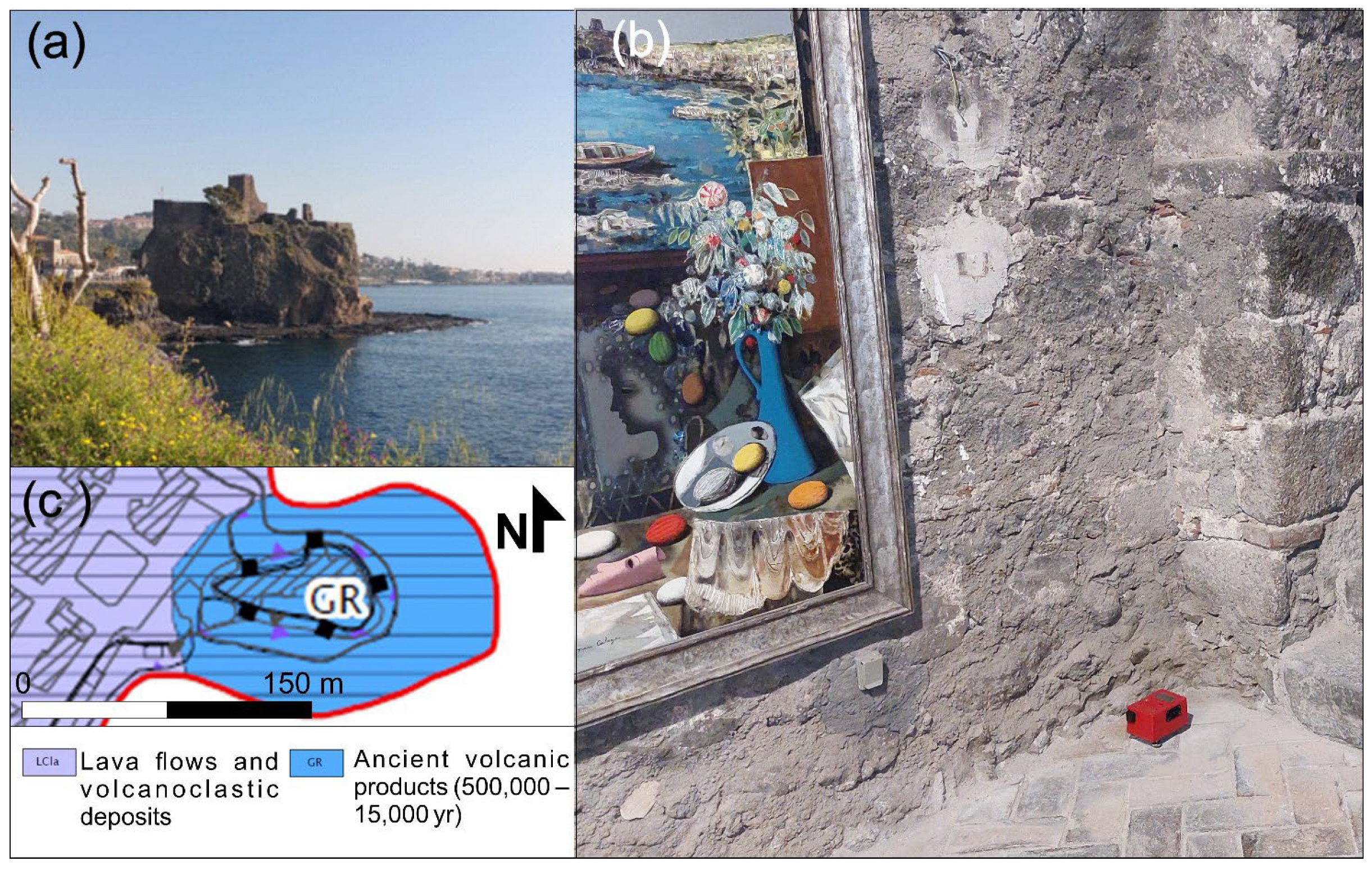
The Norman Castle of Aci Castello (a small town in the Municipality of Catania) stands atop a basaltic cliff overlooking the Ionian Sea (Figure 1a), occupying a prominent position along the eastern coast of Sicily. This basaltic promontory is primarily composed of submarine lava flows associated with the early phases of Mount Etna’s formation, dated through radiometric methods to approximately 500,000 years ago [44]. A prehistoric lava flow surrounds the area, with clearly visible exposures along the coastline. This volcanic rock belongs to the Pietracannone formation and is characterized by a vesicular and jointed texture [45] (Figure 1c).
According to the third-level seismic microzonation study for the municipality of Aci Castello [46], the area where the castle is located falls within Zone 2002—Granular Cemented Substrate (see GR in Figure 1c), characterized by pillow-bearing volcanic breccias up to approximately 30 m thick. These deposits overlie a pre-Etnean substrate of overconsolidated grey-blue marly clays, described as massive or weakly stratified. Based on regional stratigraphic models, this deeper unit exceeds 200 m in thickness. Nonetheless, no borehole data are currently available for the immediate surroundings of the castle, preventing the establishment of a reliable 1D stratigraphic sequence for local seismic response modeling.
Recently, Imposa et al. [47] conducted a geophysical investigation a few meters from the castle site, using ambient vibration techniques, including the HVSR method, to characterize subsurface stratigraphy and local site response. The resulting H/V spectral curves generally show amplitudes below unity, a feature likely related to the presence of pavement layers or anthropogenic cover. Although no distinct resonance peaks with amplitude factors exceeding 2 were identified, the spectra consistently display a broad, low-amplitude maximum in the 1–5 Hz frequency band.
The basaltic bedrock beneath the castle is heavily fractured and locally interrupted by subvertical voids and cavities. One significant feature is a large cistern, known as Grotta Tolos, carved directly into the volcanic rock below the central tower and extending in the east–west direction. This cavity, likely adapted from a pre-existing tholos tomb, is a typical example of medieval reuse of ancient hypogeal structures in Sicily. These underground features were also repurposed during World War II as air raid shelters for the local population. From a seismic response perspective, such geological discontinuities reduce the mechanical homogeneity of the rock mass and can significantly influence the propagation and amplification of seismic waves at the site.
Figure 1.
(a) View of the Norman Castle within its geological and rural context; (b) Tromino® sensors deployed during ambient vibration data acquisition inside the art gallery room located on the first level of the castle. On the wall in the background, a painting by the local Sicilian artist Jan Calogero (1927–2001) is visible, exemplifying the integration of cultural and artistic heritage within the site; (c) Geological map of the Aci Castello area, adapted from the “Carta Geologico-Tecnica del Comune di Aci Castello (1:5000)”, annexed to the MS3 Report [46], with lithological information based on Monaco et al. [48].
A historical seismicity analysis was performed for the Aci Castello municipal area, considering all known seismic events with an intensity equal to or greater than V on the Mercalli–Cancani–Sieberg (MCS) scale, corresponding to the threshold of structural damage. The objective was to assess the seismic hazard of the territory and to characterize the local seismogenic potential.
The seismic data were extracted from the Catalogo Parametrico dei Terremoti Italiani (CPTI15 v4.0) [49,50], which reports parametrized events with moment magnitude (Mw) ≥ 4.0 or epicentral intensity (I0) ≥ V MCS since the year 1000, and the Database Macrosismico Italiano (DBMI15 v4.0) [51], which provides complementary macroseismic intensity data for the same period. The Moment magnitude (Mw) represents the magnitude derived from the seismic moment (the product of fault area, average slip, and rock rigidity) and provides the most accurate measure of an earthquake’s true magnitude. Furthermore, the Database of Individual Seismogenic Sources (DISS) [52] that provides a compilation of potential fault sources in Italy capable of generating significant earthquakes (typically Mw > 5.5) was considered. Information on the effects of past earthquakes, for the municipality of Aci Castello, was gathered from the Catalogo dei Forti Terremoti in Italia (CFTI5Med) (Figure 2b), which documents strong seismic events in Italy from 461 B.C. to 1997 and in the broader Mediterranean region from 760 B.C. to 1500 [53,54]. The catalogue also includes descriptions of earthquake-induced effects on the natural environment and provides macroseismic observations for individual municipalities.
Figure 2.
(a) Time series of historical seismic events affecting the municipality of Aci Castello, derived from the DBMI15 v4.0 macroseismic database [51], covering the time span from the year 1000 to 2020. The vertical axis represents the maximum observed intensity on the MCS scale; (b) Map showing the spatial distribution of both historical and instrumental earthquakes that produced macroseismic effects in Aci Castello, modified according to the CFTI5Med catalogue [53,54]. The epicentral intensity and instrumental magnitudes are represented using standardized symbology; the yellow marker indicates the location of Aci Castello.
In addition to these official datasets, relevant scientific literature addressing the seismicity and tectonic framework of the study area was also reviewed, to refine the interpretation of local seismogenic sources and hazard scenarios [55,56,57].
The seismicity analysis revealed that a total of 30 historical seismic events with macroseismic intensity equal to or greater than V MCS or with moment magnitude Mw ≥ 4.0 affected the study area (Figure 2). Although no events are reported before the 17th century, the entire time span of the database (starting from AD 1000) is displayed in Figure 2a to emphasize the lack of earlier macroseismic information, which is a typical feature of historical seismic catalogues. The strongest event reported in the Aci Castello municipal territory is the 11 January 1693 earthquake (I0 = XI MCS, Mw ≈ 7.32 according to CPTI15), characterized by a local intensity of X–XI MCS (DBMI15), for the Aci Castello municipality (Figure 2a). Among other major earthquakes, the event of 20 February 1818 (I0 = IX–X MCS, Mw ≈ 6.3 according to CPTI15) (Figure 2a) is of particular relevance. This earthquake struck the Etna region and was widely felt across Sicily, with macroseismic effects also reported in the surrounding regions. According to the DBMI15 dataset, this event reached a macroseismic intensity of VII MCS in the municipality of Aci Castello.
In addition to regional tectonic earthquakes, the Aci Castello area is affected by seismic events directly related to the volcanic activity of Mt. Etna. The recent seismicity of the area is primarily associated with the complex structural configuration of the volcano, particularly on its eastern flank, where shallow fault systems are activated in response to magma intrusion and deformation of the edifice. Such fault systems are capable of generating earthquakes with relatively low magnitudes, typically not exceeding Mw 5.0 (Figure 2b); most recorded events fall within the 4.0–4.9 Mw range and display a high frequency of occurrence. However, these events are characterized by very shallow hypocentral depths, often limited to a few kilometers or even hundreds of meters from the surface. Despite their moderate energy release, the shallow depth of these events significantly amplifies their destructive potential in the epicentral area, especially when co-seismic fault rupture occurs, as evidenced by historical records from the Macroseismic Catalogue of Etnean Earthquakes (CMTE, 1633–2018) [58], which report several sequences linked to these fault systems. This type of near-surface seismicity represents a non-negligible threat to infrastructures and historical buildings, particularly in densely urbanized or culturally significant sites.
2.2. Historical-Architectural Context of the Norman Castle
From the few literary sources at disposition, we can assume that the Norman Castle was built on a former structure dating back to the Roman period (I cent. BC). This was later incorporated into a Byzantine fortress built between the 6th and 7th centuries AD. The current structure, primarily attributed to Norman construction in the 12th century, reflects successive reconstructions and restorations over the following centuries [59,60,61].
Conceived as a defensive stronghold, the castle integrates closely with the natural topography, resulting in a highly irregular structural layout shaped by the morphology of the volcanic cliff [46]. The south and east flanks are protected by vertical basaltic escarpments, while the more accessible northern and western sides are reinforced by man-made walls. This strategic configuration reduced the need for fortifications where the terrain provided sufficient natural defense. However, this topographic adaptation produced a non-uniform structural configuration in plan and elevation, with irregular wall alignments and variable wall thicknesses also depending on exposure and accessibility.
Architectural elements such as ribbed vaults, pointed arches, and reused masonry blocks indicate multiple construction phases spanning from the 11th to the 16th century. The cumulative effects of historical earthquakes (see Section 2.1) and war-related structural modifications have led to structural discontinuities and material heterogeneity, thereby increasing the overall structural complexity of the castle. The masonry fabric is predominantly composed of squared basalt blocks, locally combined with limestone elements and brick inserts, particularly in the ribbed vaults. Successive additions were often connected to pre-existing portions through uneven interfaces, generating stiffness contrasts and partial diaphragmatic discontinuities. The tower shows clear stratification between its lower medieval core and the upper reinforcements added in the 16th century, where horizontal bedding planes and bonding blocks reveal structural phases with distinct mechanical properties.
Although the CFTI5Med does not specifically mention damage to the Norman Castle, the historical-architectural study of Magnano [61] reports extensive damage during the 1693 event, including the collapse of the drawbridge, the chapel, and several vaulted elements, as well as severe cracking of other structural components. While some repairs were promptly undertaken, reconstruction of fewer essential parts was delayed due to limited resources. These descriptions provide valuable macroseismic data for reconstructing the intensity field of the 1693 event in Eastern Sicily and constitute direct evidence of the castle’s high vulnerability to strong ground shaking. The post-earthquake repairs introduced further structural irregularities, as several vaults, floors, and wall portions were rebuilt with different materials and construction techniques, increasing the heterogeneity of the structural system.
Restored between 1967 and 1969, the castle currently houses a small archaeological museum where finds from Prehistory to Medieval times are exposed, documenting local history, and a mineralogical exhibition (Figure 1b). The monument assumed through the ages a very important role in the collective imagination of people living in Aci Castello, becoming symbol of the town by embodying its culture and identity. Furthermore, it represents the main touristic attraction of the area and every year numerous cultural events are organized to improve and promote its value.
3. Materials and Methods
The dynamic response of the castle was investigated using ambient vibration records acquired with a three-component seismometer specifically designed for microtremor measurements. The fundamental frequencies of the site (fn_site) and of the structure (fn_struct) were estimated through HVSR and HHSR analyses, respectively, while the structural damping ratio was derived using the RDM. The integrated application of these techniques provides a rigorous framework for structural characterization, for the identification of potential resonance conditions, and for evaluating the role of SSI in seismic vulnerability.
3.1. Methodological Framework: Theoretical Principles
3.1.1. Spectral Analysis (HVSR and HHSR) and SSI Evaluation
The dynamic response of ground and structures to external excitations can be effectively characterized through the analysis of ambient vibrations, which represent the natural, continuously acting dynamic input generated by environmental and anthropogenic sources.
By applying spectral analysis techniques based on the Fourier Transform, these time-domain signals are decomposed into their frequency content, allowing the identification of dominant vibration modes and resonance frequencies. This approach provides a consistent framework for estimating the fundamental frequencies of the site, fn_site, commonly derived from the HVSR, and of the structure, fn_struct, obtained from the HHSR.
The HVSR method, originally introduced by Nakamura [30], assumes that the vertical component of ambient seismic noise is less affected by local amplification phenomena than the horizontal components, which are more sensitive to stratigraphic resonance. The standard analytic procedure, widely accepted in national and international scientific contexts [36,62], consists of computing the Fourier amplitude spectra of the two horizontal components, typically oriented along the N–S and E–W directions, and dividing their geometric mean by the amplitude spectrum of the vertical component, as expressed in Equation (1):
where H{NS} and H{EW} are the Fourier amplitude spectra of the horizontal components, and V is the Fourier amplitude spectrum of the vertical component. The dominant peak of the HVSR curve is commonly interpreted as the fn_site, which is mainly controlled by the shear-wave velocity contrast between surficial soft deposits and the underlying stiffer layers.
The HHSR method is based on computing the ratio between the Fourier amplitude spectra of a horizontal component (NS or EW) recorded at different heights within the building and that obtained from a reference measurement. This ratio approximates the transfer function between structural levels, providing information on modal frequencies and amplification effects associated with the dynamic response of the structure.
Two primary configurations are commonly adopted: the internal reference approach, in which the amplitude spectra at the different levels are compared to those at the ground floor, and the free-field reference approach, which employs an external free-field site, unaffected by the building’s response, as the input motion. The latter configuration provides a reference motion unaffected by soil–structure interaction, ensuring that the observed amplification reflects the building’s own dynamic response [35,63].
In this study, the HHSR was computed by comparing the Fourier amplitude spectra of the same horizontal component (NS or EW) recorded at different structural levels of the castle, along locally aligned vertical axes, with those obtained at an external free-field reference site. The resulting spectral ratio describes the relative amplification of the structure with respect to the input ground motion. The calculation is expressed as:
where Hi is the Fourier amplitude spectrum of the horizontal component at structural level i, and Href is the corresponding spectrum at the free-field reference site, both computed in the same horizontal direction.
Peaks in the HHSR curves indicate frequencies (fn_struct) at which the structural response is amplified relative to the input ground motion. An increase in HHSR amplitude is typically observed from the lower to the upper structural levels, reflecting the progressive amplification of motion with height that characterizes the expected dynamic response of vertically extended structures.
In this study, only those peaks that are consistently observed across multiple levels and exhibit a well-defined amplitude increase are considered reliable indicators of the building’s dynamic behavior.
The combined application of the HVSR and HHSR methods provides an effective framework for evaluating potential SSI effects, particularly the occurrence of global resonance conditions between the site and the structure [28]. Such resonance phenomena arise when the fundamental site frequency (fn_site) is close to the fundamental structural frequency (fn_struct), leading to dynamic coupling and a significant amplification of the structural response.
While this behavior can be identified under ambient vibration conditions, its effects become critically enhanced during seismic loading, when the same resonance mechanisms cause strong amplification of structural displacements. This condition, known as site–structure resonance, represents one of the most severe manifestations of SSI effect and can markedly increase seismic vulnerability, particularly in heritage masonry constructions characterized by irregular geometries, heterogeneous materials, and complex boundary conditions.
3.1.2. Damping Estimation Through the RDM
The amplitude of a structure’s dynamic response is largely controlled by its intrinsic damping capacity, which becomes particularly significant near resonance conditions under dynamic excitation.
In this study, the structural damping ratio was estimated by the RDM [43,64,65]. Such approach assumes that the structure behaves as a single-degree-of-freedom (SDOF) oscillator whose motion equation is:
with f(t) as the external force as a function of time; m, c, and k representing the system’s mass, viscous damping coefficient and stiffness, respectively; x, and representing displacement, velocity and acceleration, respectively. Following Brincker et al. [64], the equation of motion for a SDOF system subject to stationary white-noise excitation in its mass-normalized form is expressed as:
where Q(t) = f(t)/m represents a zero-mean stationary Gaussian white-noise process describing the broadband random ambient excitation, ω is the undamped natural angular frequency (Equation (5)), and ξ is the damping ratio (Equation (6)).
Under the assumptions of linear behavior, stationary white-noise excitation, and low damping (ξ < 1), the response of an SDOF system can be treated as a stochastic process whose autocorrelation function is proportional to the system’s free-vibration response [64]. Consequently, the homogeneous form of the equation of motion can be used to describe the impulse response of the structure, which corresponds to an exponentially decaying sinusoid:
h (t) = αe −ξωt sin (ω′ t)
Here, h(t) denotes the time-domain impulse response, α is an amplitude constant depending on the initial conditions, and t is time. The exponential term describes the energy decay of free vibrations, governed by the factor ξω.
In the RDM framework, the ambient vibration signal is modeled as the superposition of stochastic excitations and the deterministic free vibration response. By averaging multiple signal windows that share the same initial condition (typically zero-crossing with positive slope), incoherent noise is suppressed, and the deterministic part of the response is isolated. This averaged decay, δ(τ), is defined as:
where δ(τ) represents the experimentally estimated impulse response function, s(t) denotes the ambient vibration record, is the lag time within each window, ti is the time satisfying the chosen initial condition, and N is the number of windows.
The RDM signature, obtained by averaging multiple signal segments meeting specific initial conditions, provides an experimental estimate of the system’s free-vibration decay. A theoretical exponentially decaying sinusoid (Equation (7)) is fitted to this experimental signature, with the natural frequency fixed to the value determined through the HHSR analysis, thereby allowing the damping ratio to be computed from the fitted model.
3.2. Instruments, Experimental Survey and Data Processing
Ambient vibration measurements were performed using the Tromino® three-component seismometer (Figure 1b) (MoHo s.r.l., Marghera, Italy) [66]. Additional technical information about the instrument is available on the manufacturer’s website (www.moho.world accessed on 15 May 2025). Measurements were carried out both inside the Norman Castle and at a nearby free-field site, selected to represent local ground motion conditions unaffected by structural influence.
The device integrates orthogonally aligned velocimetric sensors (N–S, E–W, Z) with a dynamic range of ±1.5 mm/s and a frequency bandwidth from 0.1 to 300 Hz, with peak sensitivity around 4.5 Hz [66]. In its advanced configuration, it includes a tri-axial accelerometer and dual velocimetric channels (high- and low-gain), allowing acquisition of both low-amplitude microtremors and higher-intensity vibrations without saturation. Analog signals are digitized through a 24-bit low-noise acquisition system, with velocity sensitivity better than 10−4 mm/s and acceleration sensitivity on the order of 10−2 mm/s2.
The instruments were oriented with the North–South axis aligned approximately along the castle’s main longitudinal direction (azimuth ≈ N250°), ensuring consistency between internal and external datasets for spectral ratio calculations. Ambient vibration data were acquired over a duration of 30 min with a sampling rate of 512 Hz.
A total of 8 recordings, labeled AC E1 through AC E8, were acquired under free-field conditions around the structure (Table 1, Figure 3a).
Table 1.
Free-field ambient noise measurements conducted around the Norman Castle. The first HVSR peak listed is considered the most representative of the site resonance, even when it does not correspond to the maximum spectral amplitude.
Figure 3.
(a) Location of the ambient vibration measurement points acquired outside the Norman Castle; (b–d) maps of the Level I, II and III, respectively, and location of the acquisition points. Yellow dots in (b) indicate the stations exhibiting the ~0.7 Hz anomaly.
Inside the castle, 22 ambient vibration measurements were collected at three different structural levels (Table 2 and Table 3, Figure 3b–d). The Tromino® sensors were positioned in vertical alignment across the floors to enable comparative dynamic analysis. However, simultaneous acquisition at all three levels was not feasible since the castle’s floors are vertically offset and do not overlap along a common axis. Consequently, the analysis was performed using paired datasets—specifically between Level I and Level II, and between Level I and Level III.
Table 2.
First and second frequency peaks, representing frequency ratios, identified through HHSR analysis for the measurements of Level I and Level II.
Table 3.
First and second frequency peaks identified through HHSR analysis for the measurements of Level I and Level III.
To ensure that the data reflected the global dynamic behavior of the structure rather than localized effects, all instruments were placed near the center of each surveyed area, away from secondary structural elements such as walls, columns, and vaults.
To obtain the HVSR curves and the HHSR curves, the ambient vibration records were processed using Grilla® software Rel. 9.8.5 (MoHo s.r.l., Venice, Italy; https://moho.world/tromino/ingegneria/ accessed on 15 May 2025) [66]. Each continuous time series was segmented into 20 s time windows. Only stationary windows, free from transient disturbances such as vehicular traffic or human activity, were retained for further analysis. For each retained window, Fourier spectra were computed for all three components (N–S, E–W, and vertical) within the 0–30 Hz frequency band. Spectral smoothing was applied using the Konno–Ohmachi algorithm [67] with the standard bandwidth coefficient (b = 40), which reduces spectral fluctuations while maintaining adequate frequency resolution for reliable peak identification. Subsequently, HVSR and HHSR were calculated for each window according to Equations (1) and (2). The resulting spectral ratios were then averaged to obtain the final HVSR and HHSR curves at each measurement point.
The damping ratio analysis was performed using the Geopsy software Rel. 3.3.6 suite (http://www.geopsy.org/), which includes a dedicated RDM tool (https://www.geopsy.org/wiki/index.php/Geopsy:_Damping accessed on 30 May 2025).
As described in Section 3.1.2, the RDM procedure consists of deriving an experimental average curve from ambient vibration recordings and fitting a theoretical free-vibration function, described by Equation (7), to this averaged decay, with the fitting algorithm determining the model parameters that best reproduce the experimental signature, from which the damping ratio (ξ) is then obtained.
According to the Geopsy guidelines, a third-order Butterworth band-pass filter is applied to the recordings, centered on the natural frequency identified from spectral analysis and using a bandwidth of ±10%. In applying the RDM procedure, it is necessary to define both the duration of the signal segments (window length) and the fitting length, which determines the portion of the random decrement signal used for curve fitting and must not exceed the selected window length. Generally, the window length must cover a minimum of 20 cycles of the target frequency, to ensure statistical convergence and capture the full decay behavior, and the fitting length is set equal to the window length.
The graphical output of the RDM analysis is represented by one plot for each spatial direction (in this case, the N–S and E–W components, consistent with the HHSR analysis). In these plots the black curve represents the average of the experimental time histories extracted from the ambient vibration recordings, while the red curve shows the fitted exponential decay function.
When the resulting response function shows high damping and is no longer well represented by an exponentially decaying sine wave after a few cycles, the fitting length may be shortened, restricting the regression to the initial, more coherent vibration cycles. There is no standard procedure, but the fitting length is progressively reduced by small fractions of a second (up to about one second) until the best fit is achieved. This adjustment improves the agreement between the theoretical and experimental envelopes and yields more realistic damping estimates.
In this study, the window length was set to encompass 20 cycles of the target frequency (e.g., ~3.2 s for 6.30 Hz NS and ~3.5 s for 5.70 Hz EW), consistent with Geopsy recommendations. The fitting interval was generally taken equal to this window length; however, in high-damping cases, where the decay phase terminated before the end of the window, the fitting interval was shortened. A third-order Butterworth band-pass filter with ±10% bandwidth was applied to isolate the modal response, following the standard procedure implemented in Geopsy.
4. Results
4.1. HVSR and HHSR Analysis Results
4.1.1. HVSR Analysis Results
The HVSR method was applied to the ambient noise data acquired at free-field sites located outside the Norman Castle (Figure 3a). Fourier spectra were computed for each component (NS, EW and Z) using the Fast Fourier Transform (FFT), and the HVSR curves were derived accordingly.
According to Castellaro and Mulargia [68], the spectral signature of site resonance is characterized by an “eye-shaped” pattern in the Fourier spectra, with a simultaneous minimum in the vertical component and maxima in the horizontal components. This configuration produces a distinct peak in the HVSR curve. As recommended by the SESAME guidelines [62], an HVSR amplitude exceeding 2.0 can be considered a diagnostic indicator of significant site resonance, provided that the peak is stable across time windows and coherent between the two horizontal components. However, Castellaro and Mulargia [68] emphasize that in cases of shear-wave velocity inversions the HVSR curve may exhibit persistent amplitudes below 1, reflecting conditions such as stiff soils or thin artificial layers (e.g., asphalt, pavements, concrete) overlying softer or unconsolidated deposits, as well as the presence of natural or anthropogenic cavities. Under such conditions, the authors highlight that velocity inversions are more reliably detected by inspecting the single-component spectra, since the vertical component (Z) typically exhibits larger amplitudes than the horizontal ones, and the resulting HVSR curve falls below unity.
The results of the HVSR analysis are summarized in Table 1 and illustrated in the plots presented in Figure 4. This multi-panel figure (Figure 4a–h), shows one pair of plots for each measurement AC E1–8. In the upper panel, the HVSR curve is shown: the red line is the time-window-averaged HVSR spectral ratio, while the two black lines indicate the standard deviation around the mean. The x-axis represents the frequency (Hz) over the typical HVSR analysis range for buildings (0.1–30 Hz). In the lower panel, the mean Fourier amplitude spectra (in acceleration units, mm/s2) of the three components (NS, green line; EW, blue line; Z, magenta line) are plotted. These component spectra are used as a spectral consistency check and to support the interpretation of potential resonance peaks [62,68].
Figure 4.
Upper panels show HVSR curves and lower panels show the mean Fourier amplitude spectra of the three components (NS, EW, V) from measurement (a) AC E1; (b) AC E2; (c) AC E3; (d) AC E4; (e) AC E5; (f) AC E6; (g) AC E7 and (h) AC E8. In the HVSR plot, the red line shows the average HVSR spectral ratio from time-windowed analyses, while the black lines represent the standard deviation. In the mean Fourier amplitude spectra plot for single component, the green line refers to the N–S component, the blue line to the E–W component and the magenta line to the Z component.
In the graphs showing the amplitude spectra of the three components a minor peak is observed around 1 Hz, but it is not considered indicative of true site resonance, as it is associated with a general amplitude increase in all three components, with slightly stronger amplification in the horizontal directions. According to SESAME guidelines [62] and Castellaro and Mulargia [68], such spectral behavior does not reflect true site resonance, but rather the effects of non-stratigraphic or anthropogenic sources. Additionally, inversion velocity trends are identified in the frequency above 20 Hz for AC E1–4 and AC E8 and above 10 Hz for AC E5–7. This behavior can be attributed to the superposition of massive lava layers above underlying softer volcanic sediments. Such conditions are common in the Etnean area [51,69], where the subsurface is frequently characterized by alternating sequences of basaltic lava flows, pyroclastic deposits (scoria, ash, lapilli), reworked volcanic soils, and loosely compacted colluvial or anthropogenic fills. These lithological alternations can lead to HVSR spectral ratios with significantly attenuated peak amplitudes, sometimes falling below unity [68,70].
In the graph of AC E1 (Figure 4a), the HVSR curve exhibits a distinct high-frequency peak at 10.63 Hz, together with a broader bell-shaped amplification centered at 2.30 Hz. Similarly, in AC E2 (Figure 4b), two amplification peaks are observed at 11.80 Hz and at 3.00 Hz. The HVSR curve of AC E3 (Figure 4c) is broad and relatively flat in the frequency range between 1.20 Hz and 9.00 Hz, with a moderate peak at 2.05 Hz. For AC E4 (Figure 4d), the HVSR curve exhibits a broad response with a maximum amplitude at 2.68 Hz. The measurement AC E5 (Figure 4e) shows a relatively flat HVSR curve in its central part, with a maximum at 2.50 Hz. In the case of AC E6 (Figure 4f), the HVSR curve presents a broad amplification plateau with a clear peak at 2.16 Hz. The HVSR curve of AC E7 (Figure 4g) has a broad shape with a peak at 2.19 Hz, which aligns with the frequencies obtained from nearby measurements. Finally, AC E8 (Figure 4h) exhibits a broad HVSR curve with its maximum amplitude at 2.10 Hz.
The high-frequency peaks detected in AC E1 and AC E2 do not appear in the other measurements and can be explained by the local lithological conditions of these measurement points, which are located on the lava flows and volcaniclastic deposits surrounding the basaltic cliff on which the castle stands. Conversely, the HVSR curves from AC E3–8, all acquired on the same volcanic formation as the cliff supporting the structure, show a broad bell-shaped resonance in the 1–10 Hz band, with central frequencies consistently ranging between 2.05 and 2.70 Hz. The HVSR peaks are consistent with the trends observed in the single-component spectra; therefore, the 2.05–2.70 Hz interval is interpreted as the fundamental resonance of the local subsoil (fn_site) and is considered representative of the site conditions at the Norman Castle of Aci Castello. Additionally, the features identified in the HVSR curves are consistent with the results obtained by geophysical studies of the area surrounding the Norman Castle [47].
4.1.2. HHSR Analysis Results
For the HHSR analysis, the measurement AC E8, located in the free-field area outside the structure, was selected as the reference ambient vibration record, as it is the closest to the castle and exhibits the most stable and reliable HVSR spectral ratio.
Because the structural layout of the castle does not allow a continuous vertical alignment of all three levels, the HHSR analysis could not be performed simultaneously across Levels I, II, and III. Instead, it was carried out through pairwise comparisons of horizontal spectral ratios. Accordingly, the analysis was limited to two dataset pairings: Level I with Level II, and Level I with Level III.
The results of the HHSR analysis between Level I and Level II, using AC E8 as reference, are summarized in Table 2 and illustrated in Figure 5.
Figure 5.
HHSR plots for the N–S (a,c,e,g,i,k) and E–W (b,d,f,h,j,l) components, measurement pairs between Level I and Level II (stations C0–C5) with reference to the free-field station AC E8.
In the measurement pairs AC LI C1/AC LII C1, AC LI C2/AC LII C2, AC LI C3/AC LII C3, and AC LI C4/AC LII C4, a marked increase in the spectral amplitude below 1.00 Hz is systematically observed, especially along the EW component. In all these cases, the amplitude recorded at Level I exceeds that observed at Level II, which is contrary to the typical expectation of amplitude increasing with height.
For the measurement pair AC LI C0/AC LII C0, the NS component exhibits a first peak at approximately 6.34 Hz, followed by a second, higher peak at around 9.08 Hz. The EW component exhibits a most evident peak at 5.64 Hz followed by a secondary peak at 7.68 Hz.
For the pair AC LI C1/AC LII C1, the NS component shows a first spectral ratio peak at 6.40 Hz, which, although less pronounced, is well identifiable. The second peak, at 9.00 Hz, is significantly more prominent, reaching a maximum amplitude ratio of 78 in the measurement at Level II. In the EW component, the first peak appears at 5.78 Hz clearly visible in both measurements and a second peak is observed at 7.64 Hz. An additional peak at 8.74 Hz is present exclusively in the measurement from Level II.
For the pair AC LI C2/AC LII C2, in the NS component, a minor spectral ratio peak is observed at 6.35 Hz, followed by a much more pronounced peak at 8.99 Hz, with a strong amplitude increase in the Level II measurement. In the EW component, a first, less pronounced peak appears at 5.67 Hz, while a second peak is visible at 7.60 Hz. However, in the Level II recording, this second peak is less evident, as it is partially masked by an additional peak at 8.67 Hz, which is only present in the Level II measurement.
For the pair AC LI C3/AC LII C3, in the NS component, a small spectral ratio peak is detected at 6.21 Hz, followed by a more prominent one at 8.60 Hz, again with a significant increase in amplitude at Level II. In the EW component, a consistent first peak is observed in both measurements at 5.70 Hz. A second peak occurs at 7.60 Hz and an additional peak at 8.50 Hz is detected only in the Level II recording.
For the pair AC LI C4/AC LII C4, the NS component shows a first peak at 6.30 Hz. A coherent peak is observed in both measurements at 11.90 Hz, while an additional peak at 8.46 Hz appears only in the Level II recording. The EW component displays highly consistent peaks in both spectral ratio curves at 5.73 Hz and 7.60 Hz, indicating coherent dynamic behavior between the two levels along this direction.
For the pair AC LI C5/AC LII C5, the spectral ratio increase, previously observed at Level I below 1.00 Hz, disappears. Two distinct peaks are identified at 6.30 Hz and 11.90 Hz, both more pronounced in the spectral ratio curve of the Level II measurement. In the EW component, a first peak is observed at 5.80 Hz, followed by a second peak at 7.70 Hz.
Overall, for the north–south (NS) component, the analysis consistently identifies dominant frequencies around 6.30 Hz and within the 8.50–9.00 Hz range. In addition, for the measurements acquired on the northern side of the structure, specifically at stations AC LI C4/AC LII C4 and AC LI C5/AC LII C5, a further coherent peak is identified at 11.90 Hz. As for the east–west (EW) component, a first spectral peak is observed at around 5.70 Hz, followed by another peak in the range 7.50–8.50 Hz.
The results obtained from the HHSR analysis performed between Level I and Level III, referenced to the external free-field station AC E8, are summarized in Table 3 and illustrated in Figure 6.
Figure 6.
HHSR plots for the N–S (a,c,e,g,i) and E–W (b,d,f,h,j) components, measurement pairs between Level I and Level III (stations C6–C10) with reference to the free-field station AC E8.
For the measurement pair AC LI C6/AC LIII C6, the NS component exhibits a first peak at approximately 7.68 Hz, followed by a second peak at around 5.53 Hz. The EW component shows a first amplification peak at 3.60 Hz, with a second peak emerging at 5.80 Hz. For the pair AC LI C7/AC LIII C7, the NS component presents a primary peak at approximately 7.50 Hz and a secondary peak at 5.50 Hz. In the EW component, the first peak is located at 3.50 Hz, followed by a prominent amplification at 7.30 Hz. The pair AC LI C8/AC LIII 8 shows a primary NS peak at 7.68 Hz, with no secondary peak identified within the analyzed frequency range; the corresponding EW component reveals a first peak at 4.38 Hz and a second at 7.72 Hz. Similarly, the NS component of the AC LI C9/AC LIII 9 pair displays a first peak at 7.84 Hz, with no second peak clearly observed, while the EW component is characterized by a primary peak at 4.47 Hz and a secondary response at approximately 8.00 Hz. Finally, the pair AC LI C10/AC LIII 10 shows an NS component peak at 7.96 Hz, with no secondary amplification detected; in the EW direction, a single peak is observed at 4.42 Hz, with no further significant peaks recorded in the available data.
Overall, it is possible to identify a fundamental resonance frequency of 7.50–8.00 Hz for the N–S component and 3.50–4.50 Hz for the E–W component.
A consistent observation across the dataset is that, at frequencies below 1.00–2.00 Hz, the HHSR curve corresponding to measurements acquired at Level I is systematically higher than that at Level III. This trend, previously observed for the HHSR analysis performed between Level I and Level II, is unexpected, since the spectral amplitude is generally expected to increase with height in buildings.
To further investigate the nature of the spectral anomaly observed below 1 Hz at Level I, we analyzed the spectral traces for each component (Figure 7). For measurements AC LI C1–4 and AC LI C7–10, the analysis reveals an anomalous amplitude increase around 0.7 Hz simultaneously affecting all three motion components. Notably, the vertical (Z) component exhibits an amplitude increase comparable to, and in some cases exceeding, that of the horizontals. These patterns are found in the area where subsurface heterogeneities, including partially documented and inferred cavities, are present. Although this trend does not perfectly match the classical definition of velocity inversion as described by Castellaro and Mulargia [68], it may still reflect localized site conditions, due to the presence of cavities.
Figure 7.
Fourier amplitude spectra of the three motion components (N–S in blue, E–W in green, Z in magenta) recorded at Level I: (a) station AC LI C0; (b) station AC LI C1; (c) station AC LI C2; (d) station AC LI C3; (e) station AC LI C4; (f) station AC LI C5; (g) station AC LI C6; (h) station AC LI C7; (i) station AC LI C8; (j) station AC LI C9; (k) station AC LI C10.
4.2. Results of the RDM Analysis: Damping Ratio Estimation
The damping ratio was estimated from the horizontal components of the ambient vibration recordings using the RDM. The damping analysis focused on the fundamental mode, as it governs the overall structural response [71]. Although multiple modes were identified through HHSR at different levels of the castle, only the fundamental frequency, consistently observed across vertical measurement pairs, was considered. For the recordings acquired at Levels I and II, from AC LI/LII C0 to AC LI C5/AC LII C5, the resonance frequencies considered were 6.30 Hz for the NS component and 5.70 Hz for the EW component. For the recordings acquired at Levels I and III, specifically the record pairs from AC LI/LIII C6 to AC LI/LIII C10, the structural resonance frequencies used for the damping evaluation were 7.75 Hz for the north–south (NS) component and 4.00 Hz for the east–west (EW) component.
The results of the RDM analysis are reported in Table 4 and Table 5, while a representative example of the fitting graphs is shown in Figure 8.
Table 4.
Estimated damping ratios (%) for the N–S component based on RDM analysis.
Table 5.
Estimated damping ratios (%) for the E–W component based on RDM analysis.
Figure 8.
Damping ratio plot estimated using the RDM for station AC LI C3: (a) E–W component, (b) N–S component. The continuous black line represents the averaged random decrement function, the solid red line indicates the best-fit exponentially decaying function, and the dashed black lines indicate the standard deviation. The estimated damping ratio is ξ = 2.30% for the E–W component and ξ = 3.88% for the N–S component.
For each component, the graph reports the estimated damping ratio (ξ), obtained from Equation (7), and the corresponding resonance frequency (f) in Hz, within ±10% of the value identified through the HHSR analysis. These parameters are derived from the best-fit procedure applied to the RDM function to quantify the energy dissipation characteristics of the system under ambient excitation.
The damping ratios estimated for the two horizontal components were statistically analyzed using box-plot visualization (Figure 9). The distribution of values reveals a marked difference between the N–S and E–W components in terms of both amplitude and variability.
Figure 9.
Box plot of the damping ratios (%) obtained from the RDM analysis for the N–S and E–W components. The box spans from the first quartile (Q1) to the third quartile (Q3), representing the interquartile range (IQR). The horizontal line inside the box marks the median (Q2), while the “X” denotes the mean value of each dataset. The whiskers extend to the minimum and maximum non-outlier values according to the 1.5 × IQR criterion, and isolated dots indicate statistical outliers. The N–S component exhibits higher damping ratios and a broader distribution compared to the E–W component, highlighting a more variable dynamic response.
For the N–S component, damping ratios range from 2.10% (AC LIII C10) to 7.73% (AC LII C5), with a median around 5.5%. The interquartile range (IQR) is relatively wide, indicating substantial dispersion of the data. This behavior reflects a more heterogeneous dynamic response, with values spread across a broad interval.
In contrast, the E–W component exhibits significantly lower damping ratios and a much narrower distribution, with values spanning from 0.90% (AC LIII C6) to 5.84% (AC LI C7) and a median close to 3%. The compact IQR highlights the limited variability of this direction. A single statistical outlier appears at 5.84%, lying above the upper whisker and classified as an outlier according to the 1.5 × IQR criterion.
Overall, the box plot clearly shows that the N–S component is characterized by higher and more dispersed damping ratios, whereas the E–W component demonstrates lower values and a more constrained variability.
5. Discussion
To investigate the dynamic behavior of the Norman Castle and evaluate potential SSI effects, this study applied two passive seismic techniques: HVSR method to estimate the fundamental site frequency (fn_site), and HHSR to estimate the structural response and determine the building’s fundamental frequencies (fn_struct). A comparative analysis between fn_site and fn_struct was performed to identify possible resonance conditions or dynamic coupling phenomena that may indicate SSI effects, which can critically influence the seismic response and vulnerability of the structure during strong ground motion.
In addition, a damping ratio analysis was performed using the RDM to evaluate the structure’s capacity to dissipate vibrational energy under ambient excitation. This parameter provides further insight into the global dynamic behavior of the system and allows for a more complete assessment of its seismic vulnerability.
HVSR results from the free-field measurements acquired on the same volcanic formation as the cliff (AC E3–8) indicate a broad amplification plateau between 2.05 and 2.70 Hz (Figure 4 and Table 1), where the amplitude systematically exceeds the threshold value of 2.0 recommended by the SESAME guidelines [62], despite the absence of sharp peaks. This pattern, consistent with previous investigations [47] and typical of fractured lava flows interbedded with pyroclastic or reworked volcanic layers, confirms that the 2.05–2.70 Hz range represents a reliable estimate of the site’s fundamental frequency (fn_site).
HHSR comparison between Level I and Level II shows, for the north–south (NS) direction, a consistent dominant resonance at approximately 6.30 Hz, together with a secondary frequency band between 8.50 and 9.00 Hz (Figure 5 and Table 2). A further peak at 11.90 Hz is detected only at the northern stations (AC LI C4/AC LII C4 and AC LI C5/AC LII C5), indicating a localized response confined to that portion of the structure. In the east–west (EW) direction, the same Level I–Level II comparison identifies a primary spectral peak around 5.70 Hz, followed by additional contributions within the 7.50–8.50 Hz range. HHSR comparison between Level I and Level III shows spectral peaks in the 7.50–8.00 Hz range for the north–south (NS) direction and in the 3.50–4.50 Hz range for the east–west (EW) direction (Figure 6 and Table 3).
These frequencies represent the main resonant components emerging from the experimental data and provide the basis for interpreting the behavior along the two principal axes of the monument. Owing to the geometric configuration and structural characteristics of the castle, a joint analysis of all measurement levels is not feasible, and no numerical finite-element model is currently available to support a full modal reconstruction. For these reasons, the interpretation of the spectral peaks and the corresponding dynamic response presented below must be regarded as a qualitative, data-driven assessment based exclusively on the experimental HHSR measurements. The identified spectral peaks show a consistent increase in amplitude from Level I to Level II, indicating a deformation pattern compatible with global flexural behavior. The peak at approximately 5.70 Hz can be interpreted as the fundamental bending mode in the E–W direction, which corresponds to the laterally more flexible axis of the structure. The peak at around 6.30 Hz is instead associated with the fundamental bending response in the N–S direction, which exhibits higher lateral stiffness and therefore a slightly higher natural frequency. The stronger amplification observed at Level II in both directions supports the interpretation of a global bending mechanism, characterized by larger horizontal displacements at the upper level and distinct natural frequencies along the two principal axes due to their differing stiffness properties. The HHSR comparison between Level I and Level III shows strong amplification at Level III, whereas the corresponding peaks at Level I are weak, irregular, or station-dependent. The spectral patterns do not show the monotonic increase with height, or the directional separation characteristic of the global bending modes identified between Levels I and II. Instead, the marked amplification concentrated at Level III, together with the significant frequency dispersion across stations, indicates that the vibrations at 3.5–4.5 Hz (EW) and 7.5–8.0 Hz (NS) correspond to local or mixed vibration modes involving primarily the upper parts of the structure, which behave as a dynamically distinct subsystem.
The secondary peaks, consistently observed in the HHSR spectral ratios, indicate the activation of higher vibration modes. Given the absence of adjacent structures capable of influencing the building’s response, these results suggest that the presence of multiple oscillation modes is intrinsically related to the irregular geometry, mass distribution, and construction heterogeneity of the Norman Castle.
From an SSI perspective, the HHSR analysis revealed dominant structural frequencies significantly higher than those identified in the site response. For the NS component, the principal spectral peaks are observed at 6.30 Hz, in the range 8.50–9.00 Hz (Level I–II) and between 7.50 Hz and 8.00 Hz (Level I–III), with localized amplifications up to 11.90 Hz on the northern sector of the structure. The EW component showed consistent response at 5.70 Hz, in the range 7.50–8.50 Hz (Level I–II) and between 3.50 Hz and 4.50 Hz (Level I–III). The absence of spectral amplification in the 2.05–2.70 Hz interval confirms that none of the fundamental structural modes coincide with the site resonance frequencies, thereby excluding the possibility of SSI resonance effect.
Several HHSR measurements of the Level I revealed anomalous increase in spectral amplitude in the frequency below 1 Hz (Figure 5 and Figure 6). The amplitude spectra of these records are frequently higher than those recorded at upper levels, diverging from the expected trend of amplitude increasing with elevation. The analysis of the single-component spectra (Figure 7) reveals a distinct increase in spectral amplitude peak around 0.7 Hz in all three components, with the vertical (Z) sometimes exceeding the horizontal ones. The anomalous stations are located near the Grotta Tolos, presumed to extend beneath the northern side of the cliff, and near a second shallow cavity on the eastern side. This spectral pattern resembles the velocity-inversion signature described by Castellaro and Mulargia [68] and confirmed by subsequent studies on seismic response near subsurface voids [72,73,74], where vertical motion is locally enhanced. However, this behavior cannot be interpreted as a resonance of the cavity itself, since air-filled voids (μ = 0) do not support the propagation of shear or surface waves. Moreover, given the limited depth (≈3–5 m) and small lateral extent of the cavities, any true cavity resonance would occur at much higher frequencies (≈20–100 Hz). The observed spectral anomaly around 0.7 Hz therefore likely results from perturbation of the wavefield of low-frequency surface waves, typical of microseismic ambient noise in coastal environments [75]. When such waves interact with strong near-surface impedance contrasts, like those produced by cavities, local interference and energy focusing can amplify vertical motion and distort the spectral ratios (Z > H, HVSR < 1). Consequently, the cavities may act as perturbing heterogeneities rather than resonators, affecting the surface-wave field and modifying the local site response. Therefore, the 0.7 Hz anomaly is understood as a localized modulation of the microseism-dominated ambient wavefield by shallow cavities. Although further geophysical investigations are required—starting with detailed cavity mapping—these observations suggest that shallow subsurface heterogeneities may give rise to localized SSI effects, potentially modifying the dynamic response of the castle independently of the global structural modes.
The damping ratios estimated via the RDM provide critical insight into the energy dissipation mechanisms of the Norman Castle under ambient excitation. The estimated damping ratios show a marked directional dependency, with the north–south (N–S) component consistently exhibiting higher values (ranging from 2.10% to 7.73%) and greater dispersion compared to the east–west (E–W) component, which displays lower values (ranging from 0.90% to 5.84%) and a narrower distribution (Figure 9; Table 4 and Table 5). This behavior appears to reflect the structural configuration of the building, as the N–S axis coincides with its longitudinal development and is consistent with observations from similar elongated structures, where higher damping is observed along the principal longitudinal direction [76]. In several vertically aligned measurement pairs, particularly along the N–S direction, damping ratios increase with elevation, showing higher values at upper levels. This trend contrasts with the canonical behavior observed in slender, vertically regular buildings, where damping generally decreases with height following a power-law relationship [77]. The observed inversion may result from the irregular geometry, non-uniform mass and stiffness distribution, and complex boundary conditions that characterize the castle. A qualitative visual inspection indicated slightly more pronounced cracking and surface degradation in the upper portions of the structure. This condition may enhance energy dissipation and is consistent with the higher damping ratios observed at the upper levels, thereby providing a possible physical explanation for the ‘inverted’ damping trend with elevation. Furthermore, subsurface heterogeneities and local discontinuities at the rock–structure interface may further influence energy dissipation, making classical damping–height relationships not directly applicable. Overall, the results indicate that the Norman Castle exhibits a spatially variable damping behavior, controlled by both structural and geological irregularities. This non-uniform dissipation of vibrational energy has important implications for the dynamic response of the system, as it may locally modify amplification patterns and phase relationships during seismic excitation.
Although the spectral response of the castle does not indicate resonance with the fundamental site frequency (fn_site), thereby excluding classical site–structure double resonance effects commonly associated with severe earthquake damage, the structure displays a markedly complex dynamic behavior. This is evidenced by spectral anomalies, multiple vibration modes, and a non-uniform damping distribution. Such features, driven by the irregular geometry of the castle and its interaction with a heterogeneous volcanic substratum containing voids and cavities, suggest that under strong ground motion the monument may develop a spatially variable seismic response, with possible localized amplification effects in specific portions of the structure.
In a seismic context such as that of Aci Castello, characterized by both large historical earthquakes (e.g., 1693, 1818) and frequent shallow volcanic events associated with Mt. Etna, the dynamic characteristics identified in this study should be considered in the planning of future preservation, risk-mitigation, and structural monitoring strategies.
This work provides a preliminary but coherent framework for understanding the site–structure interaction and dynamic response of the Norman Castle. Future investigations should include detailed geophysical mapping of the shallow cavities—using non-invasive methods such as Ground Penetrating Radar and high-resolution seismic imaging—and the development of a calibrated 3D Finite Element Model. Such a model represents the natural extension of the present work, providing a diagnostic foundation for predictive modelling and for assessing the structural response under different seismic scenarios.
6. Concluding Remarks
This work investigates the dynamic behavior of the Norman Castle of Aci Castello, with particular attention to potential SSI effects. Non-invasive, vibration-based measurements were used to identify possible resonance phenomena between the site and the structure, characterize the dissipation mechanisms, and assess their implications for seismic vulnerability.
The main findings can be summarized as follows:
- The HVSR analysis performed at nearby free-field stations revealed a broad amplification plateau, with maxima in the range 2.05–2.70 Hz, which is interpreted as the fundamental site frequency (fn_site). The spectral amplitude exceeds the SESAME (2004) [62] reference threshold of 2.0, confirming the presence of a significant site resonance condition. The broad plateau of the HVSR curves, rather than a sharp peak, is consistent with the heterogeneous nature of the underlying volcanic substrate, characterized by alternating lava flows, pyroclastic layers, and fractured rock masses typical of the Etnean region.
- The HHSR analysis reveals a multimodal dynamic response, indicative of a complex structural behavior. Multiple spectral peaks are observed in both horizontal directions, reflecting the presence of several activated vibration modes. The structural frequencies range from 6.30 Hz to 9.00 Hz in the N–S direction and from 3.50 Hz to 8.50 Hz in the E–W direction. Nonetheless, consistent dominant peaks are identified across sensor pairs: for the N–S component, dominant frequencies appear at 6.30 Hz, between 8.50 Hz and 9.00 Hz (Level I–II) and in the range 7.50–8.00 Hz (Level I–III); for the E–W component, stable peaks are found at 5.70 Hz, in the range 7.50–8.50 Hz (Level I–II) and between 3.50 Hz and 4.50 Hz (Level I–III). The recurrence of secondary peaks and direction-dependent amplification suggests a non-uniform distribution of mass and stiffness, consistent with the irregular geometry of the castle.
- Despite the absence of a structural model, the experimental evidence allows a coherent identification of the principal vibration responses, distinguishing global bending behavior between Levels I and II from local or mixed modes predominantly involving the upper portion of the monument between Levels I and III. The conclusions presented here are based on the dynamic behavior inferred from the measurements and provide a consistent phenomenological framework for interpreting the structural response, within the limits imposed by the available experimental data. Since the current dataset does not allow a direct assessment of torsional modes, future targeted investigations—including three-dimensional modal analysis or numerical modelling—will be required to evaluate potential torsional effects. The absence of spectral overlap between the fundamental structural frequencies (fn_struct) and the site resonance (fn_site) rules out the occurrence of resonant SSI phenomena. The soil and structure appear dynamically decoupled in the frequency domain without inducing resonance amplification.
- The damping ratios estimated via RDM show marked variability with both direction and elevation. Higher values are systematically observed along the N–S axis (ranging from 2.10% to 7.73%), corresponding to the longitudinal development of the structure, and in some cases increase with height. In contrast, the E–W axis shows lower values and a narrower distribution (0.90–5.84%). The complex distribution of damping is interpreted as the result of architectural irregularity, material heterogeneity, and non-uniform subsoil conditions.
- The dynamic behavior of the structure is locally influenced by shallow subsurface heterogeneities, particularly the cavities along the cliff such as the Grotta Tolos. The low-frequency anomaly at ≈0.7 Hz, detected only at Level I near these cavities, is interpreted—based on the available data—as a localized modulation of the microseism-dominated ambient wavefield, rather than as a resonance phenomenon. These observations indicate that, in the absence of global SSI effects, shallow subsurface heterogeneities may still locally influence the dynamic response of the castle, independently of its global structural modes. Further targeted geophysical investigations will be required to validate this interpretation and to better constrain the role of shallow cavities in the observed low-frequency response.
This study highlights a complex and direction-dependent dynamic response of the Norman Castle, which could lead to critical amplification effects during seismic events. Such a behavior represents a potential vulnerability factor that should be explicitly considered in preventive conservation strategies and in the definition of intervention plans in accordance with the MiBAC Guidelines (2011) [1] and the NTC 2018 Code [2]. The study therefore brings attention to a relevant issue that requires further investigation through numerical modeling and continuous monitoring.
Beyond the specific case of Aci Castello, the results obtained provide useful reference parameters and interpretative insights that can support the assessment of other historical masonry structures founded on heterogeneous substrates, where comparable studies are still limited.
Author Contributions
Conceptualization, C.P. and S.I.; Methodology, C.P. and S.I.; Software, C.P.; Validation, C.P. and S.I.; Formal Analysis, C.P. and S.I.; Investigation, C.P.; Resources, C.P. and S.I.; Data Curation, C.P.; Writing—original draft preparation, C.P.; Writing—review and editing, C.P., S.I., C.T., E.P. and A.M.G.; Visualization, C.P. and S.I.; Supervision, C.P., S.I., C.T. and A.M.G.; Project Administration, A.M.G. and C.T.; Funding Acquisition, A.M.G. and C.T. All authors have read and agreed to the published version of the manuscript.
Funding
The research activity was funded by the European Union (NextGeneration EU), through the MUR-PNRR project SAMOTHRACE (Code: ECS00000022; CUP: E63C22000900006)) “SiciliAn MicronanOTecH Research And innovation CEnter”–Ecosistema dell’innovazione (PNRR, Mission 4, Component 2 Investment 1.5, Call n. 3277 dated 30 December 2021), Spoke 1–Università di Catania-Work Package 6 Cultural Heritage.
Data Availability Statement
Raw data supporting the findings of this study are available from the corresponding author upon reasonable request.
Acknowledgments
The authors would like to thank Carmelo Scandurra, Mayor of Aci Castello, and all the staff of the Norman Castle for their helpfulness and support. All the authors acknowledge the SAMOTHRACE project for its financial support.
Conflicts of Interest
The authors declare that there are no financial, professional, or other conflicts of interest.
Abbreviations
| CFTI5Med | Catalogo dei Forti Terremoti in Italia e nell’Area Mediterranea |
| CH | Cultural Heritage |
| CMTE | Catalogo Macrosismico dei Terremoti Etnei |
| CPTI15 | Catalogo Parametrico dei Terremoti Italiani |
| DBMI15 | Database Macrosismico Italiano |
| DISS | Database of Individual Seismogenic Sources |
| FFT | Fast Fourier Transform |
| fn_site | natural Site Frequency |
| fn_struct | natural Structural Frequency |
| HHSR | Horizontal-to-Horizontal Spectral Ratio |
| HVSR | Horizontal-to-Vertical Spectral Ratio |
| MCS | Mercalli–Cancani–Sieberg Scale |
| MiBAC | Ministero per i Beni e le Attività Culturali |
| Mw | Moment Magnitude |
| NTC | Norme Tecniche per le Costruzioni |
| OMA | Operational Modal Analysis |
| RDM | Random Decrement Method |
| SDOF | Single Degree of Freedom |
| SHM | Structural Health Monitoring |
| SSI | Soil–Structure Interaction |
References
- Ministero per i Beni e le Attività Culturali (MiBAC). Linee Guida per la Valutazione e Riduzione del Rischio Sismico del Patrimonio Culturale; MiBAC: Rome, Italy, 2011.
- Ministero delle Infrastrutture e dei Trasporti. Norme Tecniche per le Costruzioni (NTC 2018), Decreto Ministeriale 17 Gennaio 2018; Ministero delle Infrastrutture e dei Trasporti: Rome, Italy, 2018.
- Asteris, P.G.; Chronopoulos, M.P.; Chrysostomou, C.Z.; Varum, H.; Plevris, V.; Kyriakides, N.; Silva, V. Seismic vulnerability assessment of historical masonry structural systems. Eng. Struct. 2014, 62–63, 118–134. [Google Scholar] [CrossRef] [Scilit]
- Wolf, J.P. Dynamic Soil-Structure Interaction; Prentice-Hall: Englewood Cliffs, NJ, USA, 1985; ISBN 0-13-221565-9. [Google Scholar]
- Cigada, A.; Corradi Dell’Acqua, L.; Morlin Visconti Castiglione, B.; Scaccabarozzi, M.; Vanalid, M.; Zappa, E. Structural Health Monitoring of an Historical Building: The Main Spire of the Duomo Di Milano. Int. J. Archit. Herit. 2017, 11, 501–518. [Google Scholar] [CrossRef] [Scilit]
- Gentile, C.; Ruccolo, A.; Canali, F. Continuous monitoring of the Milan Cathedral: Dynamic characteristics and vibration-based SHM. J. Civ. Struct. Health Monit. 2019, 9, 671–688. [Google Scholar] [CrossRef] [Scilit]
- Gentile, C.; Saisi, A. Ambient vibration testing of historic masonry towers for structural identification and damage assessment. Constr. Build. Mater. 2007, 21, 1311–1321. [Google Scholar] [CrossRef] [Scilit]
- Rainieri, C.; Fabbrocino, G.; Cosenza, E. Fully automated OMA: An opportunity for smart SHM systems. In Proceedings of the XXVII International Modal Analysis Conference, Orlando, FL, USA, 9–12 February 2009. [Google Scholar]
- Westerkamp, C.; Hennewig, A.; Speckmann, H.; Bisle, W.; Colin, N.; Rafrafi, M. An Online System for Remote SHM Operation with Content Adaptive Signal Compression. In Proceedings of the 7th European Workshop on Structural Health Monitoring, Nantes, France, 8–11 July 2014. [Google Scholar]
- Rainieri, C.; Fabbrocino, G. Operational Modal Analysis of Civil Engineering Structures; Springer: New York, NY, USA, 2014; ISBN 978-1-4939-0766-3. [Google Scholar]
- Ubertini, F.; Comanducci, G.; Cavalagli, N. Vibration-based structural health monitoring of a historic bell-tower using outputonly measurements and multivariate statistical analysis. Struct. Health Monit. 2016, 15, 438–457. [Google Scholar] [CrossRef] [Scilit]
- Gentile, C.; Saisi, A.E. OMA-based structural health monitoring of historic structures. In Proceedings of the 8th International Operational Modal Analysis Conference, Copenhagen, Denmark, 13–15 May 2019. [Google Scholar]
- Fiandaca, D.; Di Matteo, A.; Patella, B.; Moukri, N.; Inguanta, R.; Llort, D.; Mulone, A.; Mulone, A.; Alsamahi, S.; Pirrotta, A. An integrated approach for structural health monitoring and damage detection of bridges: An experimental assessment. Appl. Sci. 2022, 12, 13018. [Google Scholar] [CrossRef] [Scilit]
- Pirrotta, A.; Russotto, S. A new OMA method to perform structural dynamic identification: Numerical and experimental investigation. Acta Mech. 2023, 234, 3737–3749. [Google Scholar] [CrossRef] [Scilit]
- Oliveira, D.V.; Ramos, L.F.; Lourenco, P.B.; Roque, J. Structural Monitoring of the Monastery of Jeronimos. In Proceedings of the 250th Anniversary of the 1755 Lisbon Earthquake: International Conference Proceedings, Lisbon, Portugal, 1–4 November 2005; pp. 466–473. [Google Scholar]
- Roca, P.; Cervera, M.; Pelà, L.; Clemente, R.; Chiumenti, M. Structural Assessment of Mallorca Cathedral. In Proceedings of the Structural Analysis of Historical Constructions, Wrocław, Poland, 15–17 October 2012; Jasieńko, J., Ed.; CRC Press/Balkema: Leiden, The Netherlands, 2012; ISBN 978-83-7125-216-7. ISSN 0860–2395. [Google Scholar]
- Barilaro, D.; Majolino, D.; Gresta, S.; Imposa, S.; Schillaci, A.; Leone, A. Geophysics and thermographic investigations addressed to the study of the church of “S. Maria del Rosario” in Sicily (Italy). Contrib. Geophys. Geodesy 2006, 36, 239–253. [Google Scholar]
- Barilaro, D.; Branca, C.; Gresta, S.; Imposa, S.; Leone, A.; Majolino, D. Ground Penetrating radar (G.P.R.) surveys applied to the research of crypts in San Sebastiano’s church in Catania (Sicily-Italy). J. Cult. Herit. 2007, 8, 73–76. [Google Scholar] [CrossRef] [Scilit]
- Imposa, S. Infrared thermography and Georadar techniques applied to the “Sala delle Nicchie” (Niches Hall) of Palazzo Pitti, Florence (Italy). J. Cult. Herit. 2010, 11, 259–264. [Google Scholar] [CrossRef] [Scilit]
- Cosentino, P.L.; Capizzi, P.; Martorana, R.; Messina, P.; Schiavone, S. From Geophysics to Microgeophysics for Engineering and Cultural Heritage. Int. J. Geophys. 2011, 2011, 428412. [Google Scholar] [CrossRef] [Scilit]
- Lourenço, P.B. The ICOMOS methodology for conservation of cultural heritage buildings: Concepts, research and application to case studies. In Proceedings of the International Conference on Preservation, Maintenance and Rehabilitation of Historical Buildings and Structures (REHAB 2014), Tomar, Portugal, 19–21 March 2014; Varum, H., Costa, A., Fernandes, J.M., Eds.; Green Lines Institute for Sustainable Development: Barcelos, Portugal, 2014; pp. 945–954. [Google Scholar] [CrossRef] [Scilit]
- Imposa, S.; Mele, G.; Coco, G.; Corrao, M.; Battaglia, G. Characterization of decay in the wooden roof of the S. Agata church of Ragusa Ibla (southern Sicily) by means of sonic tomography and resistograph penetration tests. Int. J. Archit. Herit. 2014, 8, 213–223. [Google Scholar] [CrossRef] [Scilit]
- Leucci, G. Geofisica Applicata All’archeologia e ai Beni Monumentali; Dario Flaccovio Editore: Palermo, Italy, 2015; 363p, ISBN 978-88-579-0506-8. [Google Scholar]
- Imposa, S.; Grassi, S. Georadar survey inside the Santa Maria Maggiore Church of Ispica (Sicily-Italy). Environ. Earth Sci. 2015, 73, 1939–1949. [Google Scholar] [CrossRef] [Scilit]
- Cozzolino, M.; Di Giovanni, E.; Mauriello, P.; Piro, S.; Zamuner, D. Management of Cultural Heritage: Contribution of Applied Geophysics. In Geophysical Methods for Cultural Heritage Management; Cozzolino, M., Di Giovanni, E., Mauriello, P., Piro, S., Zamuner, D., Eds.; Springer: Cham, Switzerland, 2018; pp. 1–4. [Google Scholar] [CrossRef] [Scilit]
- Grassi, S.; Patti, G.; Tiralongo, P.; Imposa, S.; Aprile, D. Applied geophysics to support the cultural heritage safeguard: A quick and non-invasive method to evaluate the dynamic response of a great historical interest building. J. Appl. Geophys. 2021, 189, 104321. [Google Scholar] [CrossRef] [Scilit]
- Saisi, A.; Gentile, C.; Guidobaldi, M. Post-earthquake continuous dynamic monitoring of the Gabbia Tower in Mantua, Italy. Constr. Build. Mater. 2015, 81, 101–112. [Google Scholar] [CrossRef] [Scilit]
- Pirrotta, C.; Gueli, A.M.; Imposa, S.; Salerno, G.A.; Trigona, C. Vibration Analysis at Castello Ursino Picture Gallery (Sicily, Italy) for the Implementation of Self-Generating AlN-MEMS Sensors. Sensors 2024, 24, 5617. [Google Scholar] [CrossRef] [Scilit] [PubMed]
- Pirrotta, C.; Gueli, A.M.; Trigona, C.; Imposa, S. Coherence Analysis for Vibration Monitoring Under High Variability Conditions: Constraints for Cultural Heritage Preventive Conservation. J. Sens. Actuator Netw. 2025, 14, 45. [Google Scholar] [CrossRef] [Scilit]
- Nakamura, Y. A method for dynamic characteristics estimation of subsurface using microtremor on the ground surface. Railway Technical Research Institute. Q. Rep. 1989, 30, 25–33. [Google Scholar]
- Lermo, J.; Chavez-Garcia, F.J. Site effect evaluation using spectral ratios with only one station. Bull. Seismol. Soc. Am. 1993, 83, 1574–1594. [Google Scholar] [CrossRef] [Scilit]
- Grassi, S.; Imposa, S.; Patti, G.; Boso, D.; Lombardo, G.; Panzera, F. Geophysical surveys for the dynamic characterization of a cultural heritage building and its subsoil: The S. Michele Arcangelo Church (Acireale, eastern Sicily). J. Cult. Herit. 2019, 36, 72–84. [Google Scholar] [CrossRef] [Scilit]
- Grassi, S.; Barbano, M.S.; Pirrotta, C.; Morreale, G.; Imposa, S. Seismic Soil–Structure Interaction of Three Historical Buildings of the University of Catania (Sicily, Italy). Heritage 2022, 5, 3562–3587. [Google Scholar] [CrossRef] [Scilit]
- Mucciarelli, M.; Contri, P.; Monachesi, G.; Calvano, G.; Gallipoli, M.R. An empirical method to assess the seismic vulnerability of existing buildings using the HVSR technique. Pure Appl. Geophys. 2001, 158, 2635–2647. [Google Scholar] [CrossRef] [Scilit]
- Imposa, S.; Lombardo, G.; Panzera, F.; Grassi, S. Ambient vibrations measurements and 1D site response modelling as a tool for soil and building properties investigation. Geosciences 2018, 8, 87. [Google Scholar] [CrossRef] [Scilit]
- Mucciarelli, M. Ambient noise measurements on soil and buildings. Bull. Earthq. Eng. 2010, 8, 483–500. [Google Scholar] [CrossRef] [Scilit]
- Castellaro, S.; Perricone, L.; Bartolomei, M.; Isani, S. Dynamic characterization of the Eiffel Tower. Eng. Struct. 2016, 126, 628–640. [Google Scholar] [CrossRef] [Scilit]
- De Angelis, A.; Lourenço, P.B.; Sica, S.; Pecce, M.R. Influence of the ground on the structural identification of a bell-tower by ambient vibration testing. Soil Dyn. Earthq. Eng. 2022, 155, 107102. [Google Scholar] [CrossRef] [Scilit]
- Trigona, C.; Derbel, A.; Karoui, M.A.; Politi, G.; Pappalardo, E.; Gueli, A.M. Exploiting Outdoor-Induced Vibrations at Castello Normanno-Svevo Aci Castello. In Proceedings of the 2025 IEEE 22nd International Multi-Conference on Systems, Signals & Devices (SSD), Montasir, Tunisia, 17–20 February 2025; IEEE: New York, NY, USA, 2025; pp. 1322–1328. [Google Scholar]
- Trigona, C.; Andò, B.; Baglio, S. Performance Measurement Methodologies and Metrics for Vibration Energy Scavengers. IEEE Trans. Instrum. Meas. 2017, 66, 3327–3339. [Google Scholar] [CrossRef] [Scilit]
- Trigona, C.; Graziani, S.; Baglio, S. Changes in sensors technologies during the last ten years: Evolution or revolution? IEEE Instrum. Meas. Mag. 2020, 23, 18–22. [Google Scholar] [CrossRef] [Scilit]
- Trigona, C.; Andò, B.; Baglio, S. Fabrication and Characterization of an MOEMS Gyroscope Based on Photonic Bandgap Materials. IEEE Trans. Instrum. Meas. 2016, 65, 2840–2852. [Google Scholar] [CrossRef]
- Dunand, F.; Bard, P.-Y.; Chatelain, J.L.; Gueguen, P.; Vassail, T.; Farsi, M.N. Damping and frequency from randomec method applied to in-situ measurements of ambient vibrations: Evidence for effective soil structure interaction. In Proceedings of the 12th European Conference on Earthquake Engineering, London, UK, 9–13 September 2002; Paper No. 868. Elsevier Science Ltd.: Amsterdam, The Netherlands, 2002. [Google Scholar]
- Corsaro, R.A.; Cristofolini, R. Subaqueous volcanism in the Etnean area: Evidence for hydromagmatic activity and regional uplift inferred from the Castle Rock of Acicastello. J. Volcanol. Geotherm. Res. 2000, 95, 209–225. [Google Scholar] [CrossRef] [Scilit]
- Branca, S.; Coltelli, M.; Groppelli, G.; Lentini, F. Geological map of Etna volcano, 1: 50,000 scale. Ital. J. Geosci. 2011, 130, 265–291. [Google Scholar] [CrossRef] [Scilit]
- Regione Siciliana—Dipartimento della Protezione Civile. Relazione illustrativa—Microzonazione Sismica di Livello 3 (MS3) del Comune di Aci Castello (CT); PO FESR Sicilia 2014–2020, Asse 5–Azione 5.3.2, 2020; 181p. Available online: https://www.protezionecivilesicilia.it/it/226-stato-di-attuazione-del-piano.asp (accessed on 20 May 2025).
- Imposa, S.; Cuomo, M.; Contrafatto, L.; Mineo, S.; Grassi, S.; Li Rosi, D.; Barbano, M.S.; Morreale, G.; Galasso, M.; Pappalardo, G. Engineering Geological and Geophysical Studies Supporting Finite Element Analysis of Historical Buildings after Dynamic Identification. Geosciences 2023, 13, 84. [Google Scholar] [CrossRef] [Scilit]
- Monaco, C.; De Guidi, G.; Ferlito, C. The morphotectonic map of Mt. Etna. Ital. J. Geosci. 2010, 129, 408–428. [Google Scholar] [CrossRef] [Scilit]
- Rovida, A.; Locati, M.; Camassi, R.; Lolli, B.; Gasperini, P. The Italian earthquake catalogue CPTI15. Bull. Earthq. Eng. 2020, 18, 2953–2984. [Google Scholar] [CrossRef] [Scilit]
- Rovida, A.; Locati, M.; Camassi, R.; Lolli, B.; Gasperini, P.; Antonucci, A. Catalogo Parametrico dei Terremoti Italiani (CPTI15), Versione 4.0 [Data Set] 2022. Istituto Nazionale di Geofisica e Vulcanologia (INGV). Available online: https://doi.org/10.13127/cpti/cpti15.4 (accessed on 24 July 2025).
- Locati, M.; Camassi, R.; Rovida, A.; Ercolani, E.; Bernardini, F.; Castelli, V.; Caracciolo, C.H.; Tertulliani, A.; Rossi, A.; Azzaro, R.; et al. Database Macrosismico Italiano (DBMI15), Versione 4.0 [Data Set], 2022. Istituto Nazionale di Geofisica e Vulcanologia (INGV). Available online: https://emidius.mi.ingv.it/CPTI15-DBMI15/ (accessed on 24 July 2025).
- DISS Working Group. Database of Individual Seismogenic Sources (DISS), Version 3.3.1: A Compilation of Potential Sources for Earthquakes Larger than M 5.5 in Italy and Surrounding Areas. Istituto Nazionale di Geofisica e Vulcanologia (INGV). 2025. Available online: https://diss.ingv.it/data/ (accessed on 25 July 2025).
- Guidoboni, E.; Ferrari, G.; Mariotti, D.; Comastri, A.; Tarabusi, G.; Sgattoni, G.; Valensise, G. CFTI5Med, Catalogo dei Forti Terremoti in Italia (461 a.C.-1997) e nell’area Mediterranea (760 a.C.-1500) (Version 5), 2018, April 1. Istituto Nazionale di Geofisica e Vulcanologia (INGV). Available online: https://storing.ingv.it/cfti/cfti5/ (accessed on 4 August 2025).
- Guidoboni, E.; Ferrari, G.; Tarabusi, G.; Sgattoni, G.; Comastri, A.; Mariotti, D.; Ciuccarelli, C.; Bianchi, M.G.; Valensise, G. CFTI5Med, the new release of the catalogue of strong earthquakes in Italy and in the Mediterranean area. Sci. Data 2019, 6, 80. [Google Scholar] [CrossRef] [Scilit]
- Azzaro, R.; Barbano, M.S. Analysis of seismicity of Southeastern Sicily: A proposed tectonic interpretation. Ann. Geofis. 2000, 43, 171–188. [Google Scholar] [CrossRef] [Scilit]
- Sirovich, L.; Pettenati, F. Seismotectonic outline of South-Eastern Sicily: An evaluation of available options for the earthquake fault rupture scenario. J. Seismol. 1999, 3, 213–233. [Google Scholar] [CrossRef] [Scilit]
- Pirrotta, C.; Barbano, M.S. New Macroseismic and Morphotectonic Constraints to Infer a Fault Model for the 9 (Mw6.1) and 11 January (Mw7.3) 1693 Earthquakes (Southeastern Sicily). Front. Earth Sci. 2020, 8, 550851. [Google Scholar] [CrossRef] [Scilit]
- Azzaro, R.; D’ Amico, S. Catalogo Macrosismico dei Terremoti Etnei (CMTE), 1633–2023. Istituto Nazionale di Geofisica e Vulcanologia (INGV). 2014. Available online: https://www.ct.ingv.it/macro/etna/index.html (accessed on 25 July 2025).
- Raccuglia, S. Storia di Aci; Accademia degli Zelanti e dei Dafnici: Acireale, Italy, 1987. [Google Scholar]
- Brocato, D.; Scarcella, G. Castelli e Luoghi Fortificati della Provincia di Catania; Azienda Provinciale Turismo (APT): Catania, Italy, 2004. [Google Scholar]
- Magnano, E. Di San Lio, 2021. In La Rocca di Aci: La Storia, L’architettura. Castra Siciliae; Edizioni Caracol: Catania, Italy, 2021; ISBN 8832240246. [Google Scholar]
- SESAME European Project. Guidelines for the Implementation of the H/V Spectral Ratio Technique on Ambient Vibrations. Measurements, Processing and Interpretation. Deliverable D23.12, WP12. Project EVG1-CT-2000-00026; European Commission—Research General Directorate: Brussels, Belgium, 2004.
- Michel, C.; Guéguen, P.; Bard, P.-Y. Dynamic parameters of structures extracted from ambient vibration measurements: An aid for the seismic vulnerability assessment of existing buildings in moderate seismic hazard regions. Soil Dyn. Earthq. Eng. 2008, 28, 593–604. [Google Scholar] [CrossRef] [Scilit]
- Rodrigues, J.; Brincker, R. Application of Random Decrement Technique in Operational Modal Analysis. In Proceedings of the 1st International Operational Modal Analysis Conference (IOMAC), Copenhagen, Denmark, 26–27 April 2005. [Google Scholar]
- Casiano, M.J. Extracting Damping Ratio from Dynamic Data and Numerical Solutions. Technical Memorandum NASA/TM–2016–218227; NASA Marshall Space Flight Center: Huntsville, AL, USA, 2016. [Google Scholar]
- MoHo. TROMINO User’s Manual; MoHo: Marghera, Italy, 2020; p. 144. [Google Scholar]
- Konno, K.; Ohmachi, T. Ground-motion characteristics estimated from spectral ratio between horizontal and vertical components of microtremor. Bull. Seismol. Soc. Am. 1998, 88, 228–241. [Google Scholar] [CrossRef] [Scilit]
- Castellaro, S.; Mulargia, F. The Effect of Velocity Inversions on H/V. Pure Appl. Geophys. 2009, 166, 567–592. [Google Scholar] [CrossRef] [Scilit]
- Panzera, F.; Lombardo, G.; Monaco, C.; Di Stefano, A. Seismic site effects observed on sediments and basaltic lavas outcropping in a test site of Catania, Italy. Nat. Hazards 2015, 79, 1–27. [Google Scholar] [CrossRef] [Scilit]
- Di Giacomo, D.; Gallipoli, M.R.; Mucciarelli, M.; Parolai, S.; Richwalski, S.M. Analysis and modeling of HVSR in the presence of a velocity inversion: The case of Venosa, Italy. Bull. Seismol. Soc. Am. 2005, 95, 2364–2372. [Google Scholar] [CrossRef] [Scilit]
- Kareem, A.; Gurley, K. Structural damping: Evaluation techniques and uncertainty quantification. J. Wind. Eng. Ind. Aerod. 1996, 59, 131–157. [Google Scholar] [CrossRef] [Scilit]
- Faraone, C.; Colantonio, F.; Vessia, G. Seismic amplification effects induced by ancient shallow cavities underneath the urban area of the historical city center of Chieti, Italy. Eng. Geol. 2023, 324, 107259. [Google Scholar] [CrossRef] [Scilit]
- Sgarlato, G.; Lombardo, G.; Rigano, R. Evaluation of seismic site response nearby underground cavities using earthquake and ambient noise recordings: A case study in Catania area, Italy. Eng. Geol. 2011, 122, 281–291. [Google Scholar] [CrossRef] [Scilit]
- Alielahi, H.; Nikkhah, H.R.; Hejazi, F. A numerical study on effect of underground cavities on seismic ground response due to Rayleigh wave propagation. SN Appl. Sci. 2023, 5, 64. [Google Scholar] [CrossRef] [Scilit]
- Bonnefoy-Claudet, S.; Cotton, F.; Bard, P.-Y. The nature of noise wavefield and its applications for site effects studies: A literature review. Earth-Sci Rev. 2006, 79, 205–227. [Google Scholar] [CrossRef] [Scilit]
- Chopra, A.K. Dynamics of Structures: Theory and Applications to Earthquake Engineering, 5th ed.; Pearson Education: London, UK, 2017. [Google Scholar]
- Cruz, C.; Miranda, E. Evaluation of soil–structure interaction effects on the damping ratios of buildings subjected to earthquakes. Soil Dyn. Earthq. Eng. 2017, 100, 183–195. [Google Scholar] [CrossRef] [Scilit]
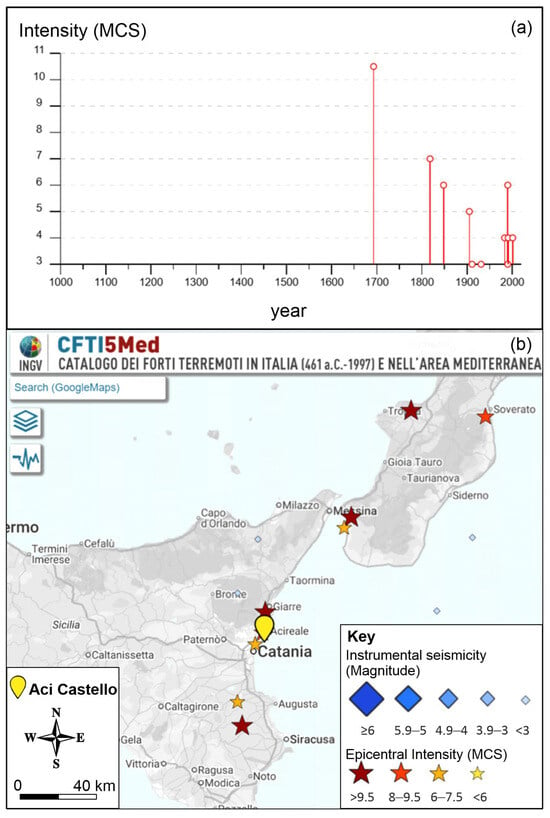
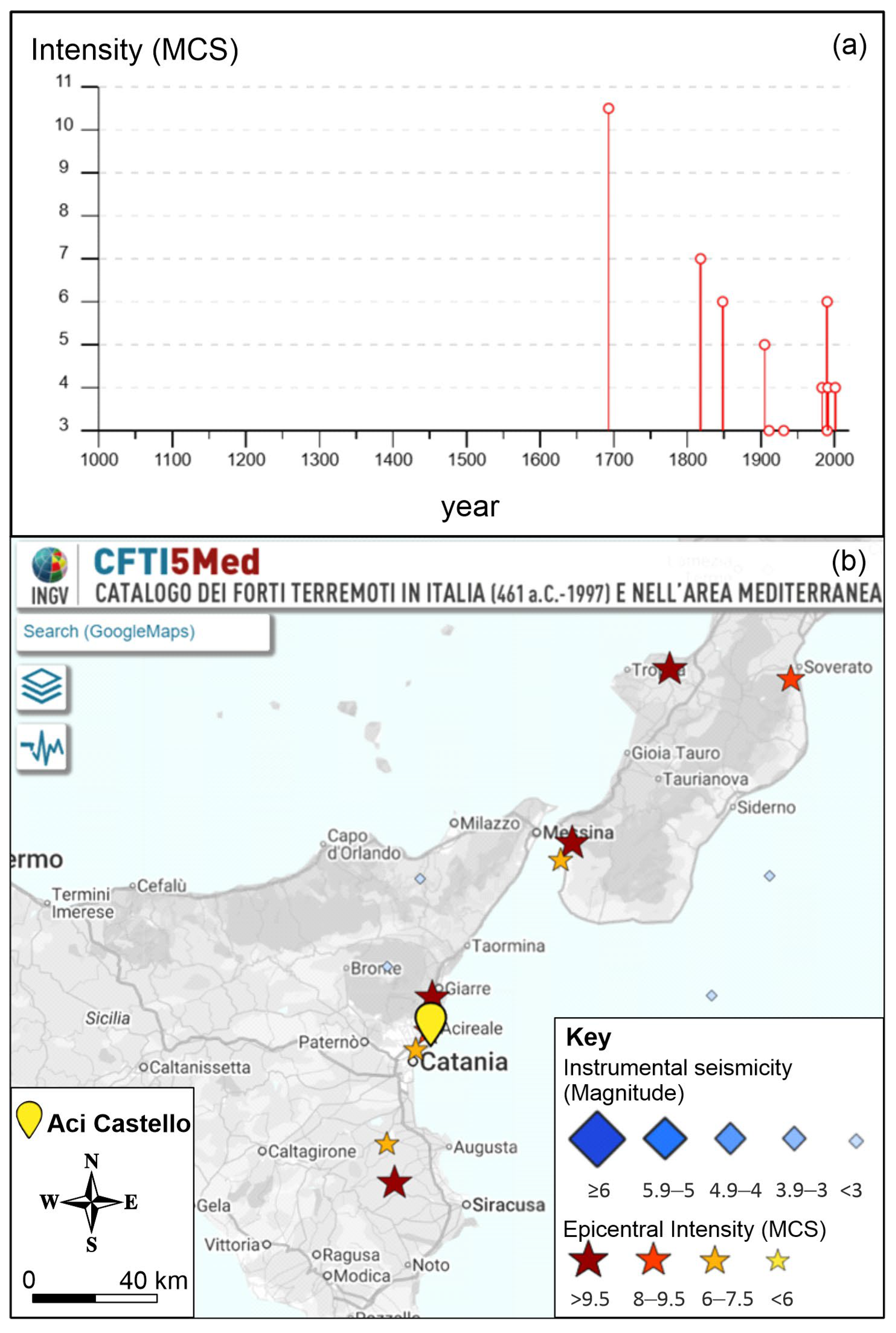
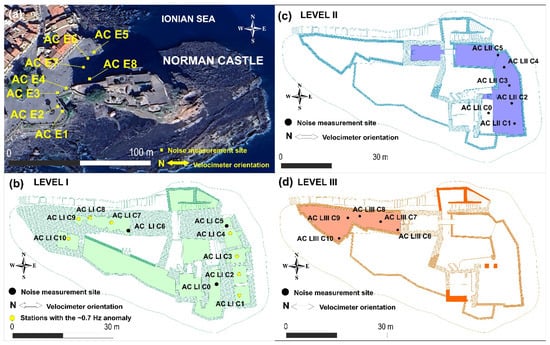
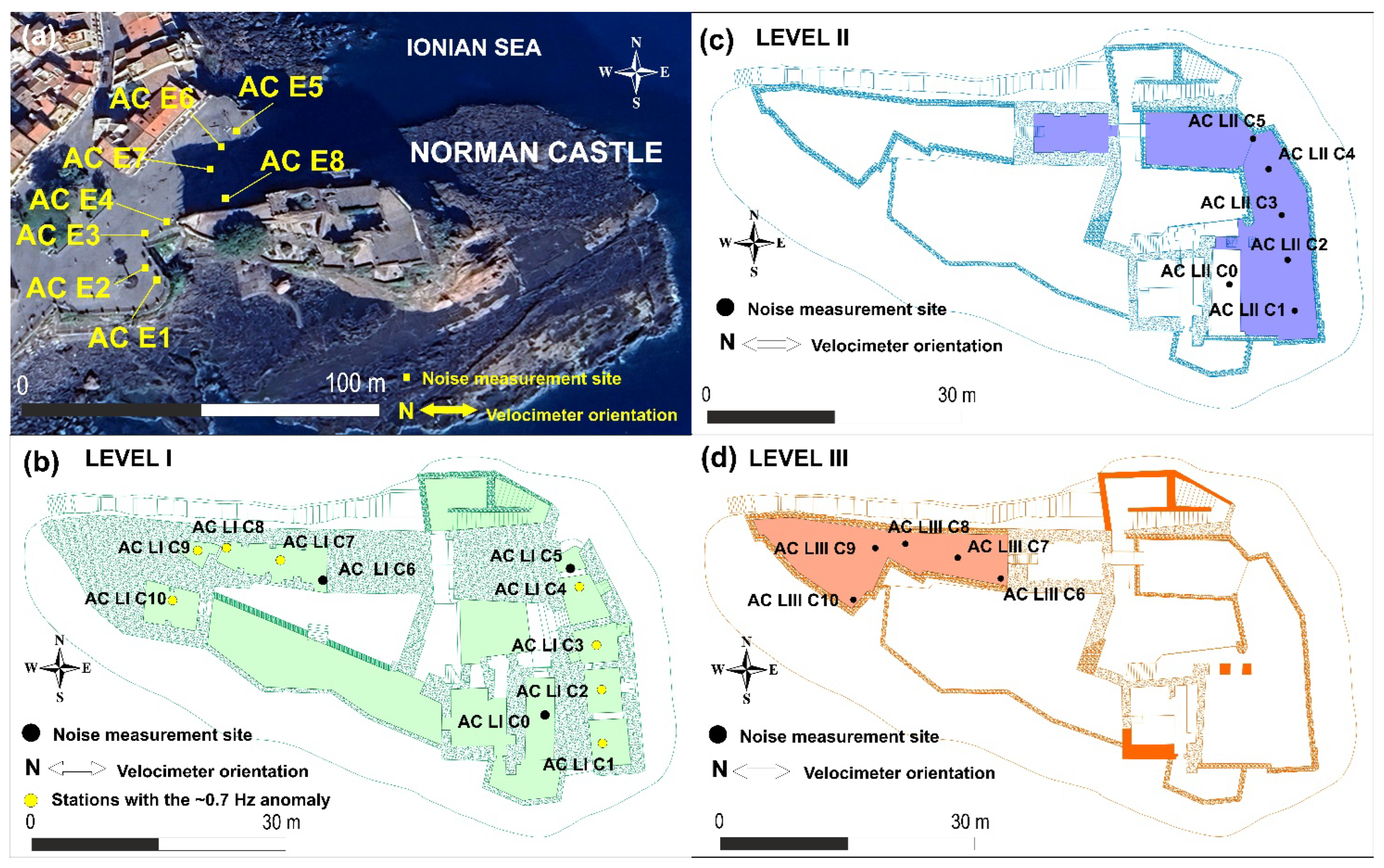
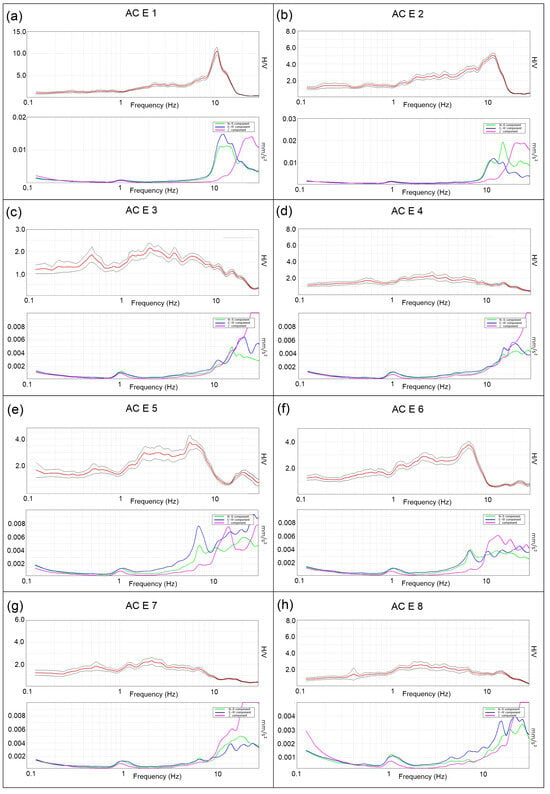
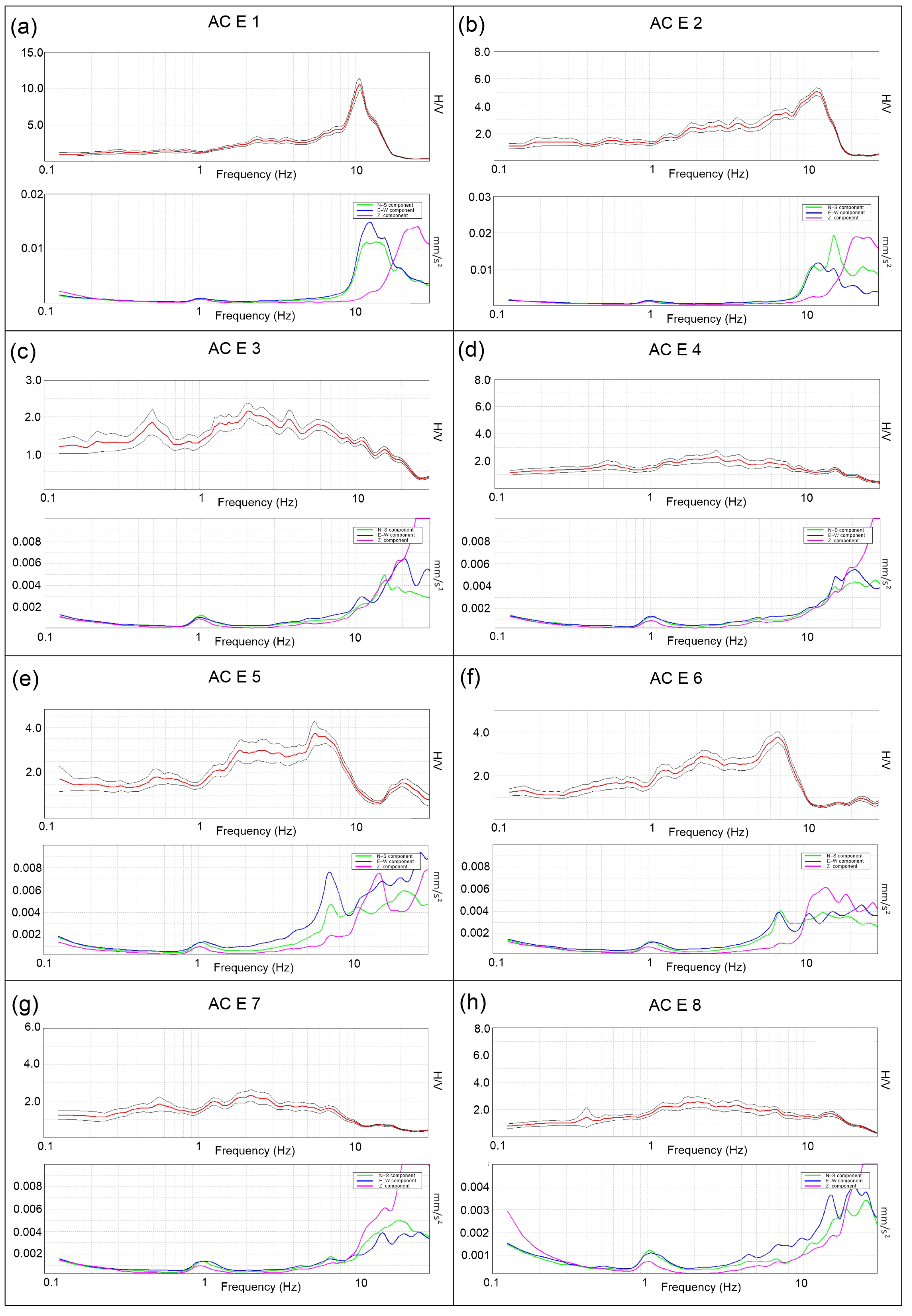
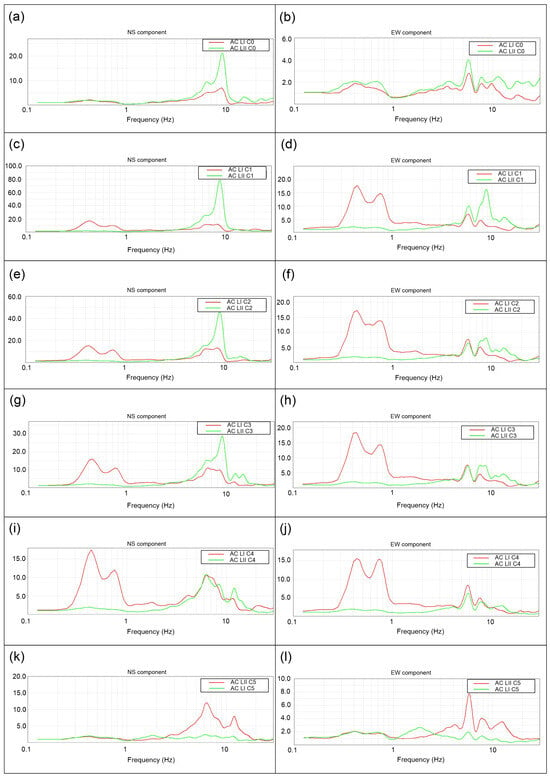
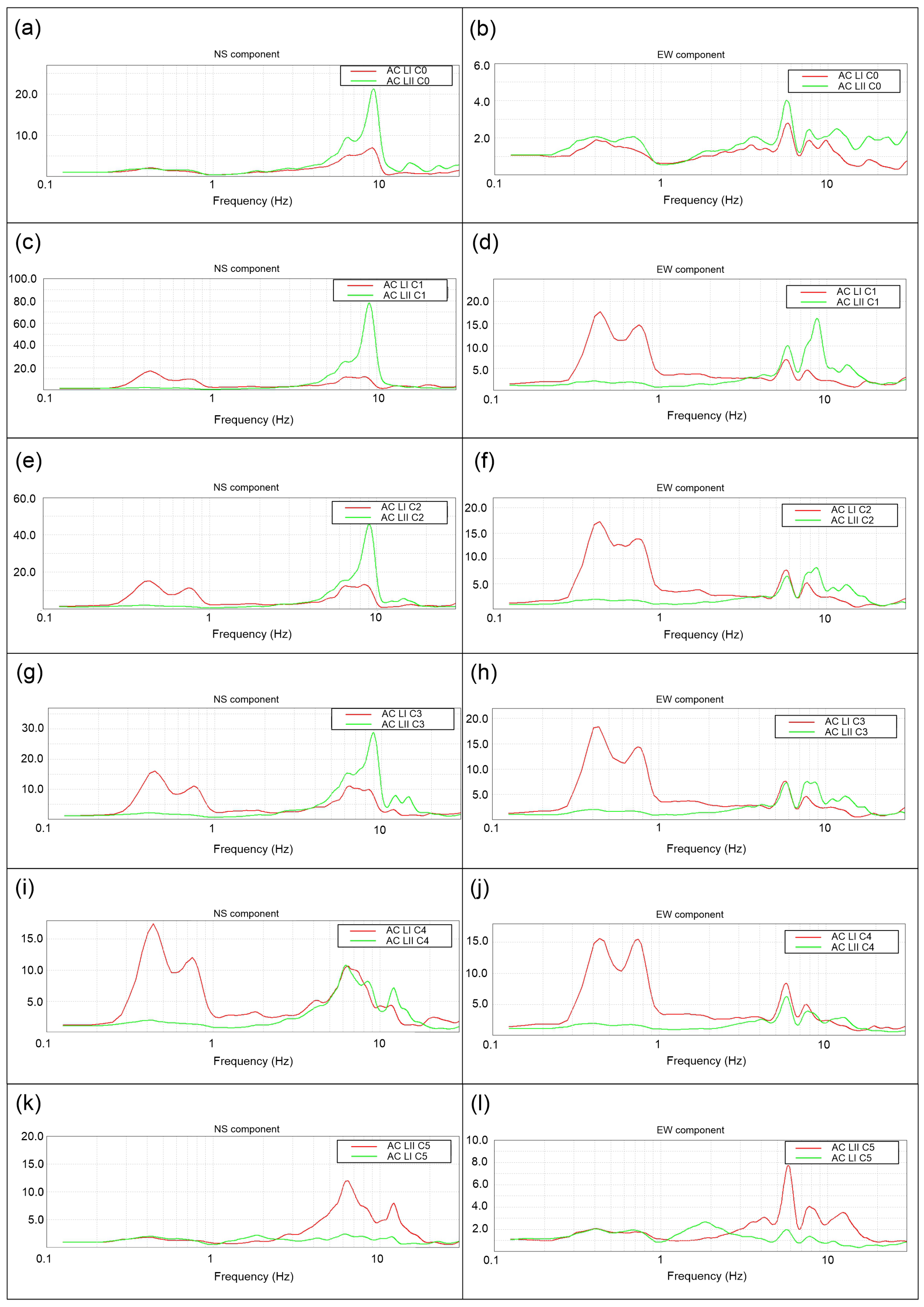
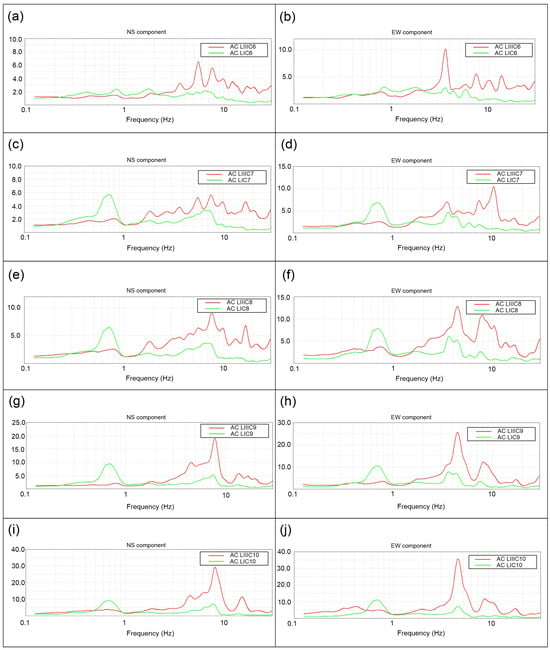
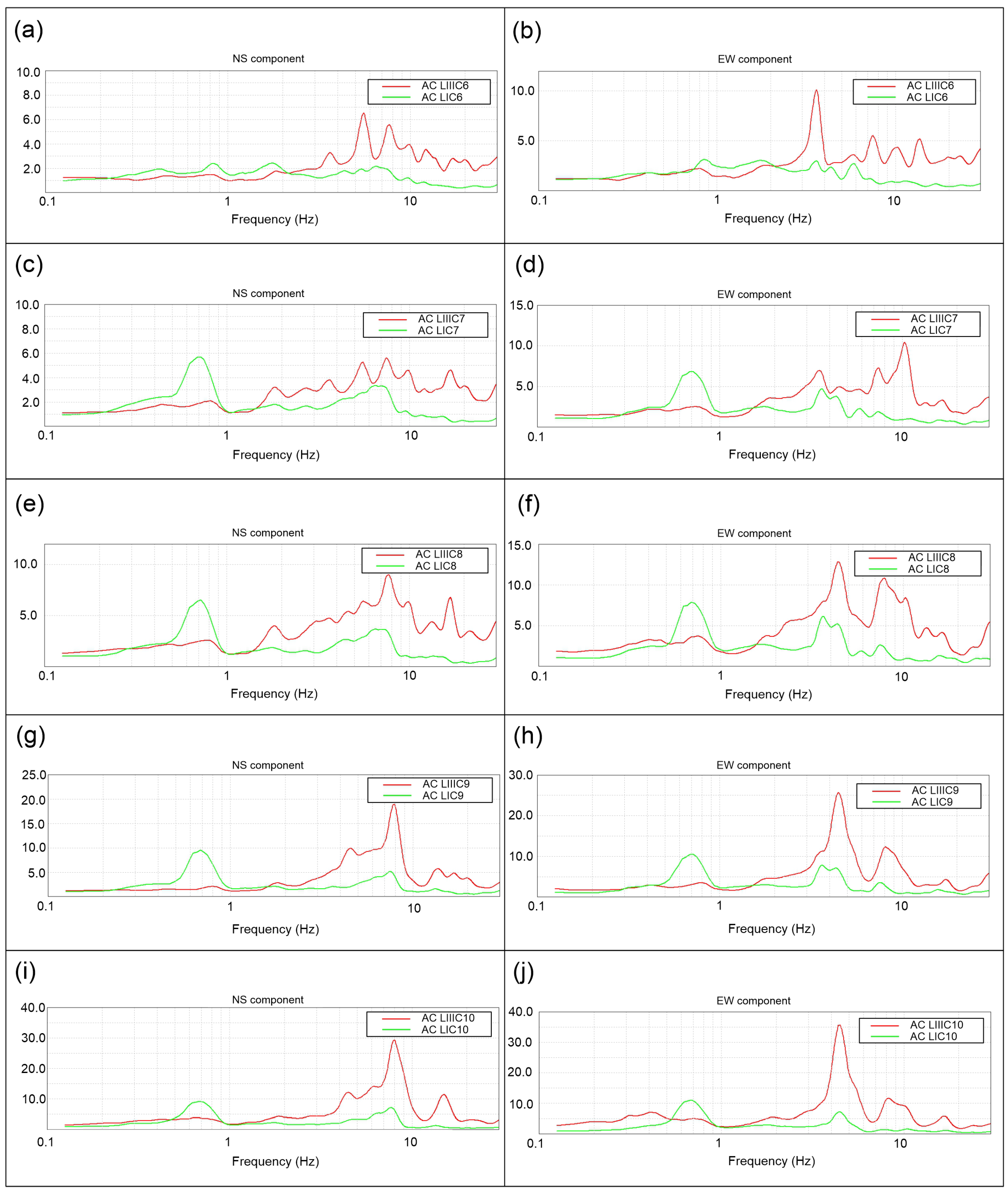
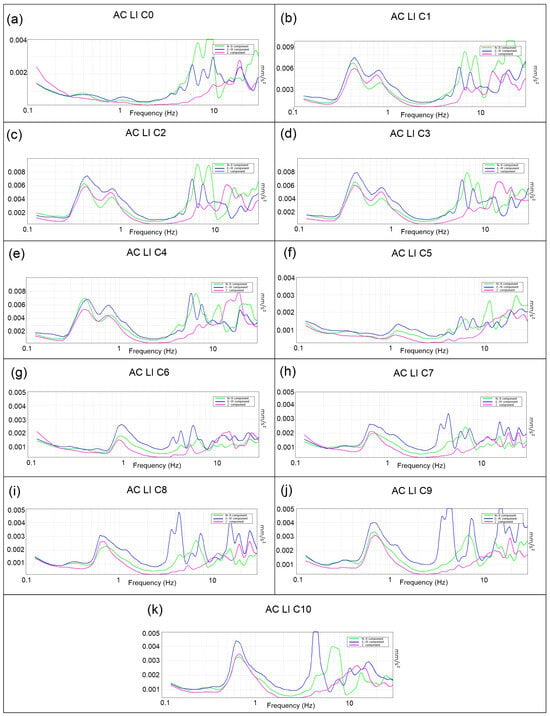
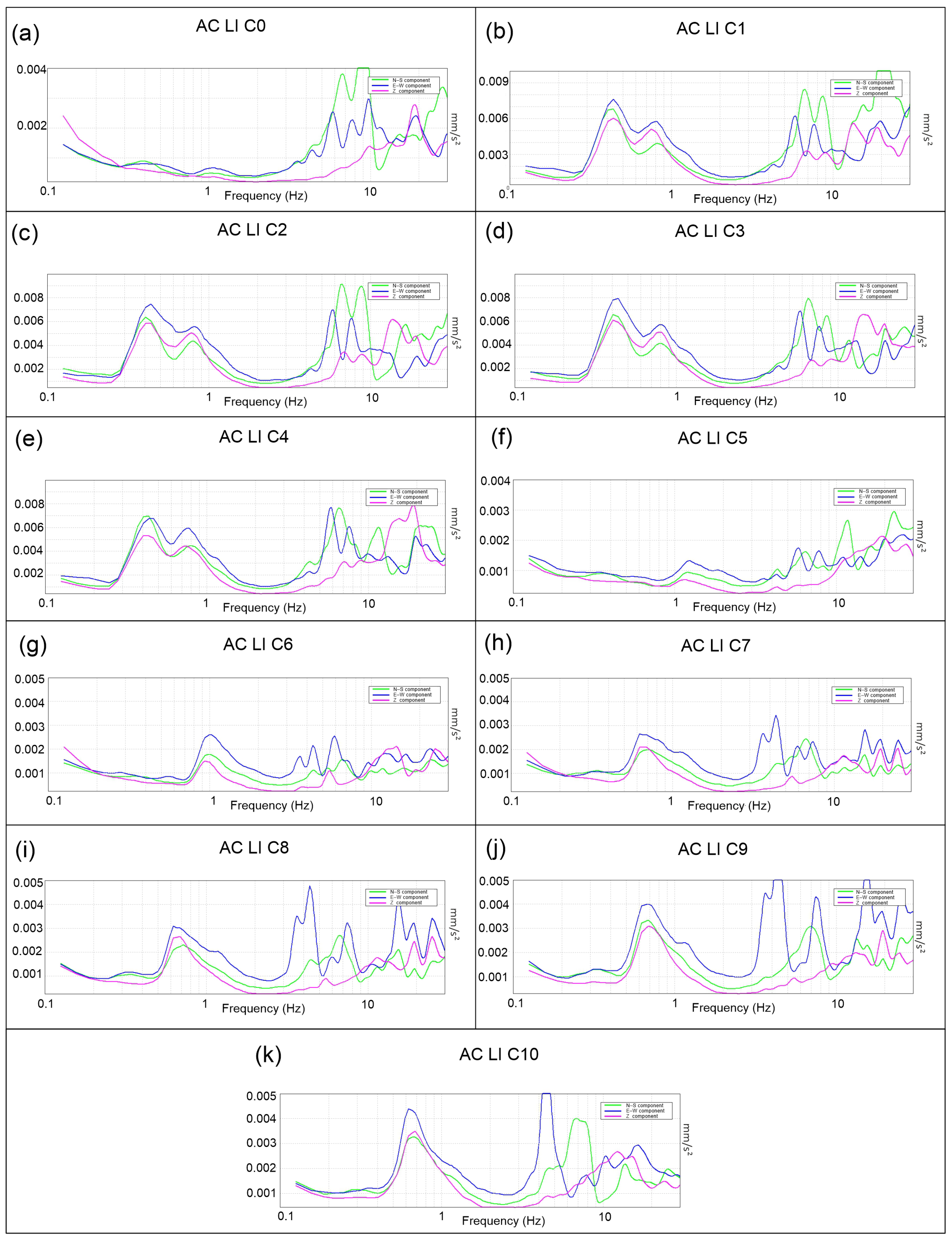
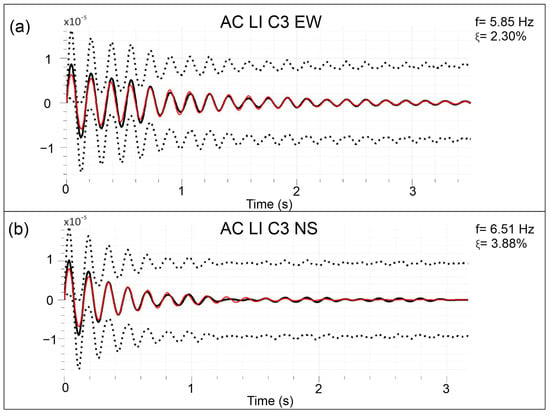
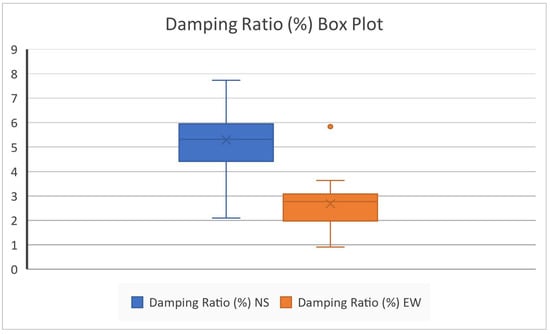
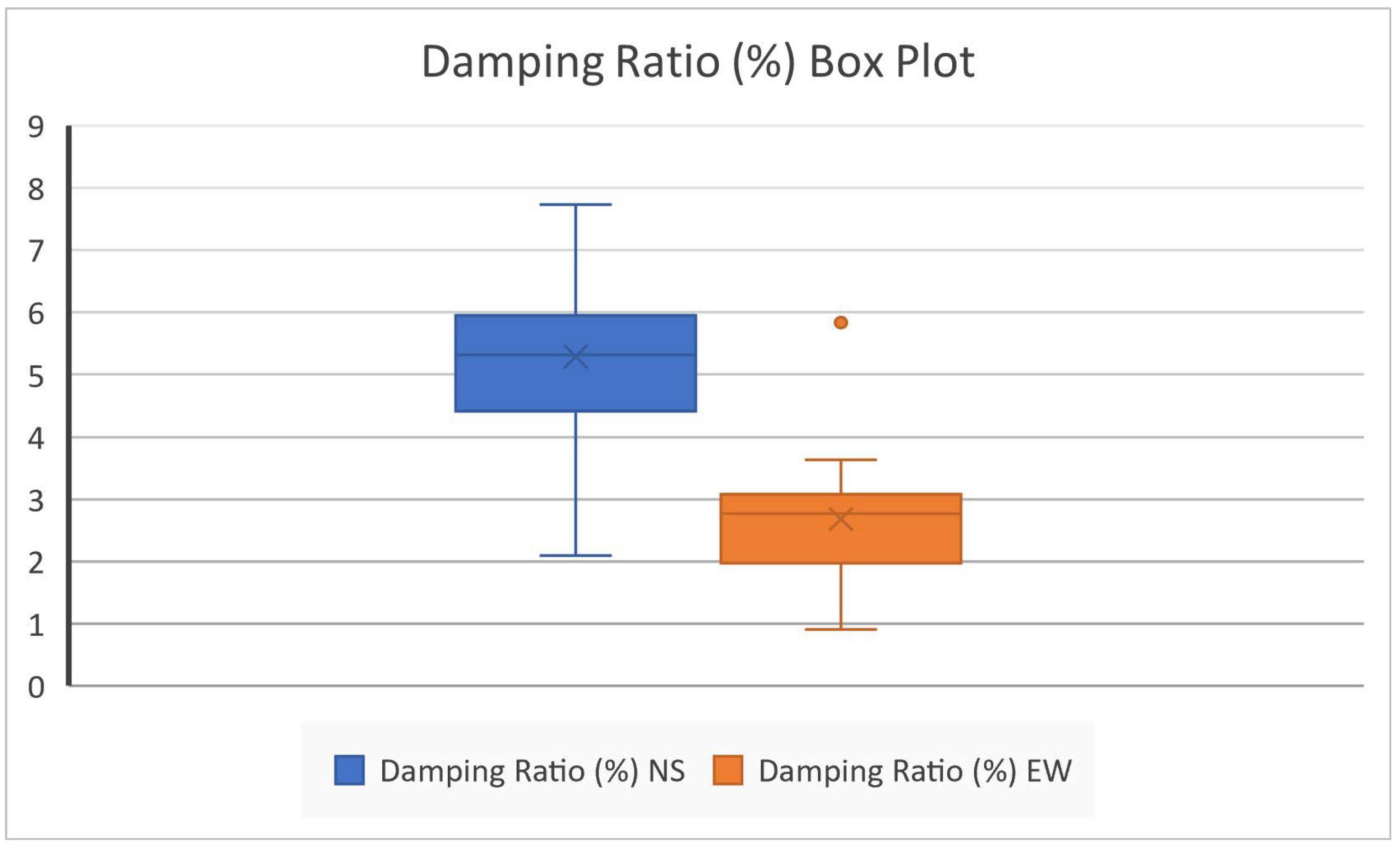

Disclaimer/Publisher’s Note: The statements, opinions and data contained in all publications are solely those of the individual author(s) and contributor(s) and not of MDPI and/or the editor(s). MDPI and/or the editor(s) disclaim responsibility for any injury to people or property resulting from any ideas, methods, instructions or products referred to in the content. |
© 2025 by the authors. Licensee MDPI, Basel, Switzerland. This article is an open access article distributed under the terms and conditions of the Creative Commons Attribution (CC BY) license (https://creativecommons.org/licenses/by/4.0/).