1. Introduction
The topic of storage facilities has only relatively recently emerged from the two-century-old debate on material cultural heritage and its conservation/exhibition, in all its various manifestations (museological and museographic, historical-political and social [
1,
2,
3]). Until a few decades ago, the main focus had been on how to display artefacts and to engage with the public, and for good reason. Modern-era ‘collections’, but also nineteenth-century museums, whether private, civic, or national, consisted largely of collections of objects meant to be displayed, for educational or propaganda purposes (e.g., Bologna: [
4]).
This was true not only for works of art but also for archaeological material, consisting mainly of what are now called ‘notable finds’: statues, epigraphical items, decorated vases, etc., deemed appropriate for public viewing. At best, the ‘second-rate’ material was collected in boxes placed under the display cases [
5] (p. 139). This choice was consistent with excavation practices which, especially in the field of Classical archaeology, involved only the recovery of the most important materials [
6,
7]. Furthermore, for most of the 20th century in Italy, institutional archaeology focused solely on the historical and artistic value of artefacts, disregarding their value as cultural heritage to be shared with the wider public.
The profound change witnessed in archaeological practice during the 20th century and the central role assumed by stratigraphy [
8] had important consequences. One such was the abandonment of the practice of discarding many items in favour of collecting only the most significant artefacts [
9]: this change did however result in an exponential increase in the quantity of fragments to be preserved. These additional objects were largely unsuitable for display, and so destined to be crammed into storage facilities, i.e., the warehouses of museums, superintendences’ offices and archaeological missions.
Despite the quantitative impact of this material, at least until the 2010s, there was no systematic approach to the problem of storage, i.e., in places of conservation not accessible to the public. Planning of post-excavation phases for the finds was perceived as secondary to the research and documentation phases. This can be seen both in preventive (or rescue) archaeology, where it is the more understandable, and in institutional archaeology. Archaeological warehouses were more or less adapted structures, where materials were crammed into boxes of various shapes, sizes and materials (predominantly wood) [
10]. The structures were often available for only temporary storage, and in many cases boxes were moved from one such storage facility to another [
11,
12]. In the best cases, premises originally intended for other purposes were made available by private individuals or local authorities, a practice that even so was not without risks [
13] (p. 19).
One consequence was the accumulation of material in situations of poor accessibility, whose documentary value was progressively diminished by the deterioration of information on provenance and content due to the deterioration of the relevant labels.
It was only at the dawn of the 21st century that interest in the subject of ‘invisible assets’ (including not only archaeological artefacts, but also minor works of art) [
14] began to develop. It focused on three areas: the revaluation of archives as a source of knowledge and communication; the serviceability of archives through adequate documentation of existing material; and the regulatory and practical adaptation of storage facilities.
The first aspect appears to be prevalent in conferences organised over the last 10 years [
14,
15]. The contributions highlight the importance of storage facilities as active agents of knowledge and not just passive appendages, introducing different strategies for their enhancement [
16], from visible storage facilities (e.g., Museo delle Navi di Pisa Sammito, [
17]), to ‘open’ ones or museum exhibitions.
The second aspect is that of cataloguing and inventorying through digitisation of information, and the use of increasingly sophisticated digital media [
14], especially in relation to archaeological heritage [
18,
19].
Less theorised about, but more often remarked upon in ministerial circulars and recommendations, especially since the 2000s, is the third aspect, the question of the physical conservation of artefacts, both in relation to storage facilities and the physical arrangement of artefacts (such as the circular of 17 April 2020 from the Archaeological Service of Venice). A separate matter was that of emergency storage facilities, which emerged dramatically following the earthquakes that have struck Italy in recent years [
20].
In the field of archaeology, however, the problems already highlighted still remain. Archaeological material is not only held in the storage facilities of archaeological museums, where it is generally well catalogued and which can be used to enrich exhibitions, but continues to be kept in other relatively nearby facilities (and at times further away still), generally conceived of as deep-storage places where boxes are piled up, rather than places where useful access is feasible. The problem is made more difficult by the obligation (in Italy) to send material found in excavations conducted by universities or research institutions to the respective Superintendence offices, as well as to meet requests for temporary storage in other locations (MIC Circular 31 March 2021). A third category is that of storage facilities built to house material from a specific excavation (e.g., Himera [
21]). Less common in Italy, these are found abroad where concessionary excavation missions are active, for which there is often a need to build independent warehouses in which to store the materials from said excavations.
We now come to the focus of our article: the archaeological site of Phaistos in Crete, one of the most representative of prehistoric Greece [
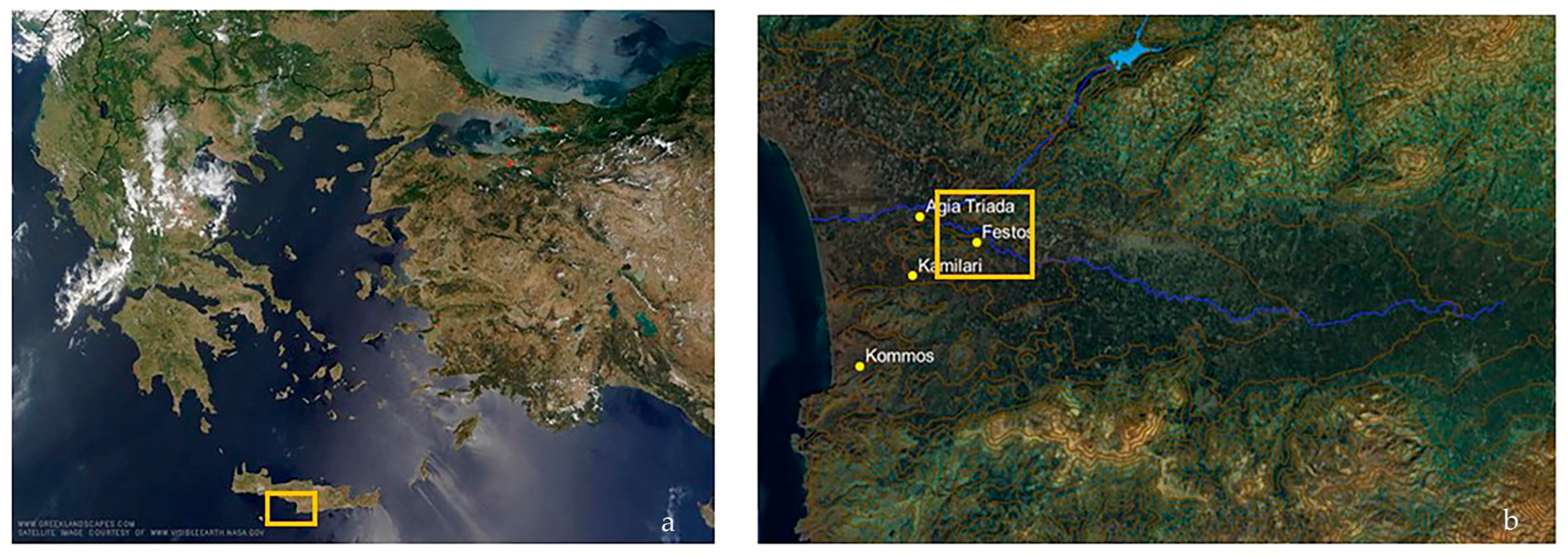
22], and designated a UNESCO site in 2025. Phaistos lies in the Mesara, the southern plain of Crete (
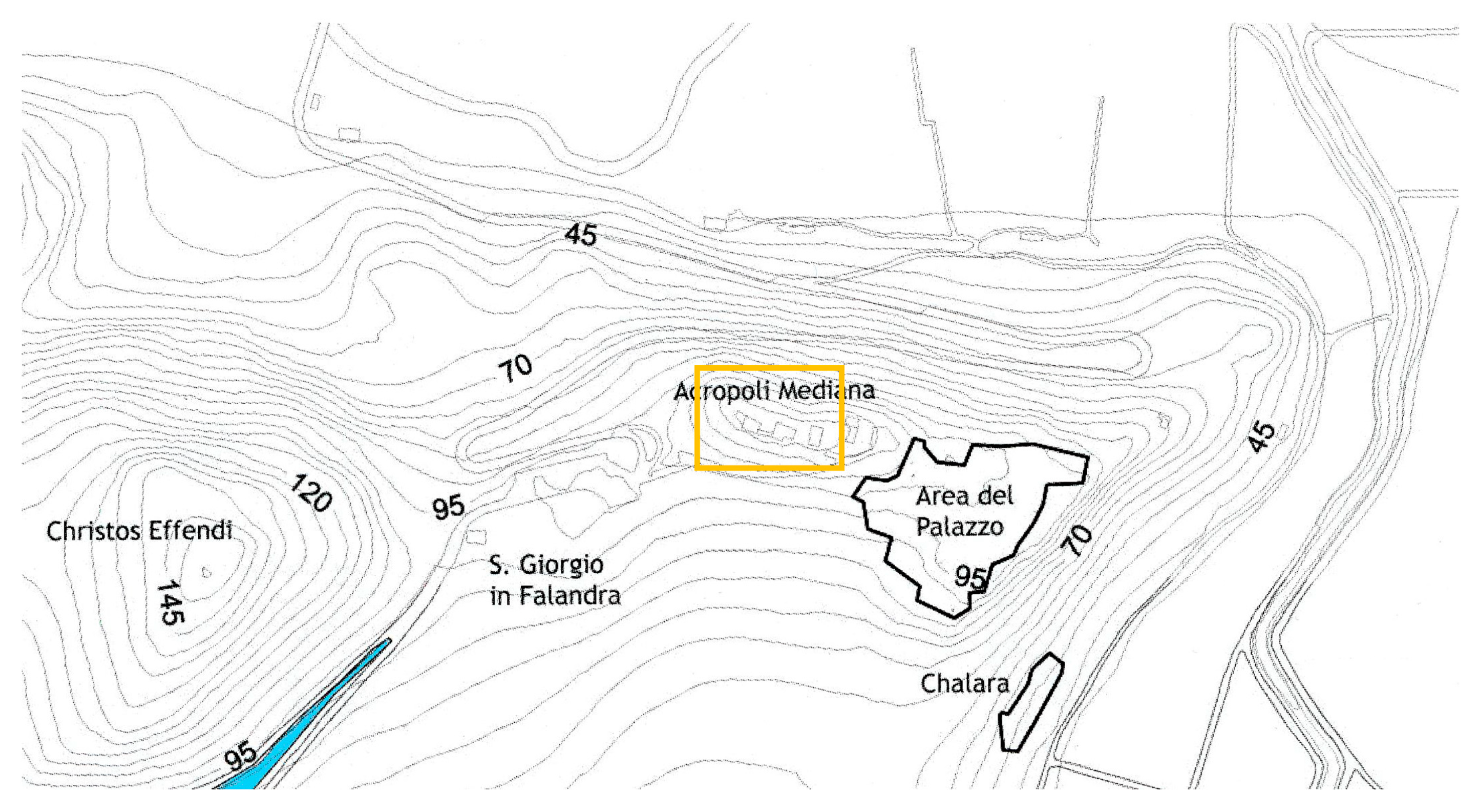
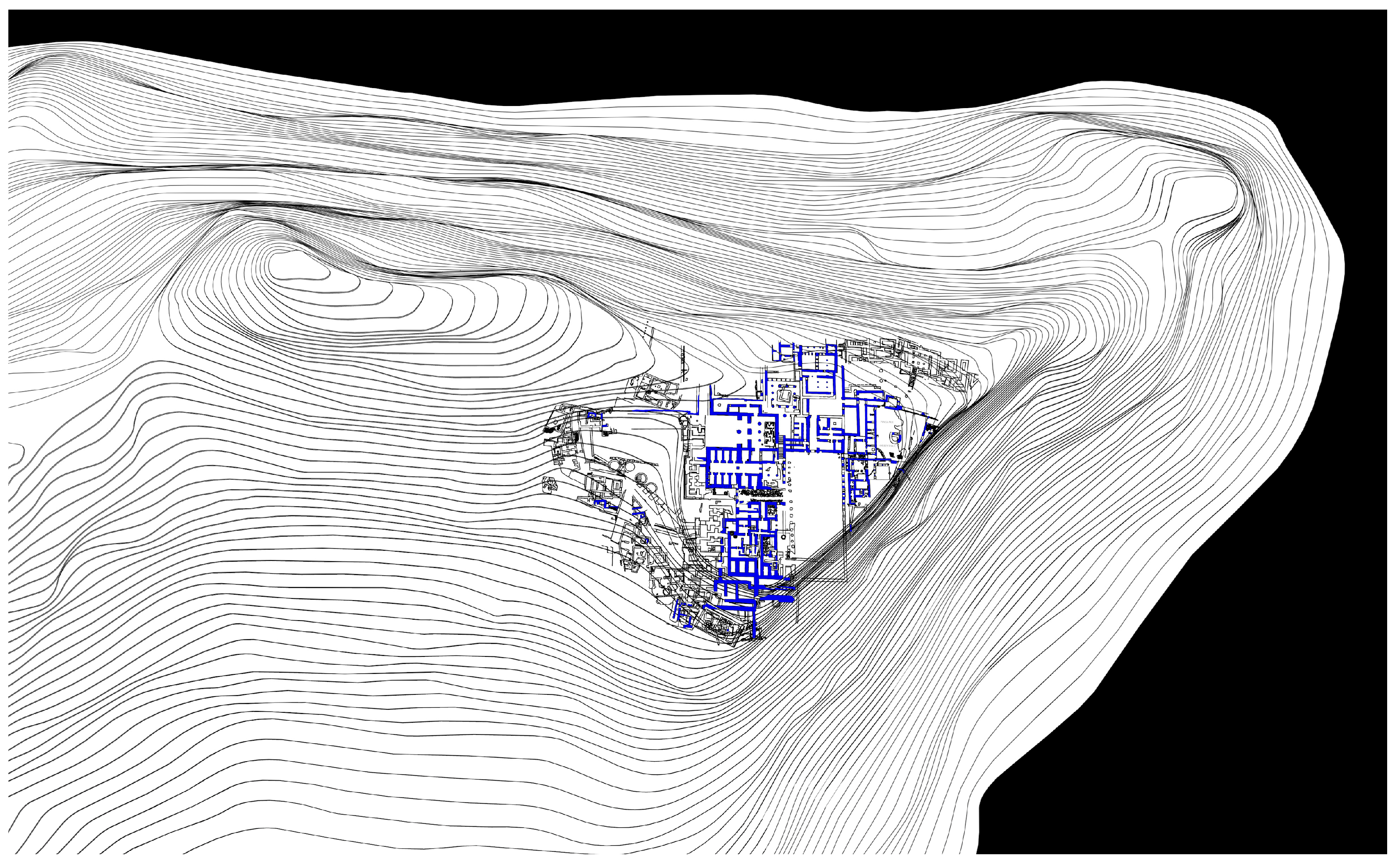
Figure 1). The ancient site extended along three hills (the Acropolis, the Acropoli Mediana and the lower hill), and the plain below (
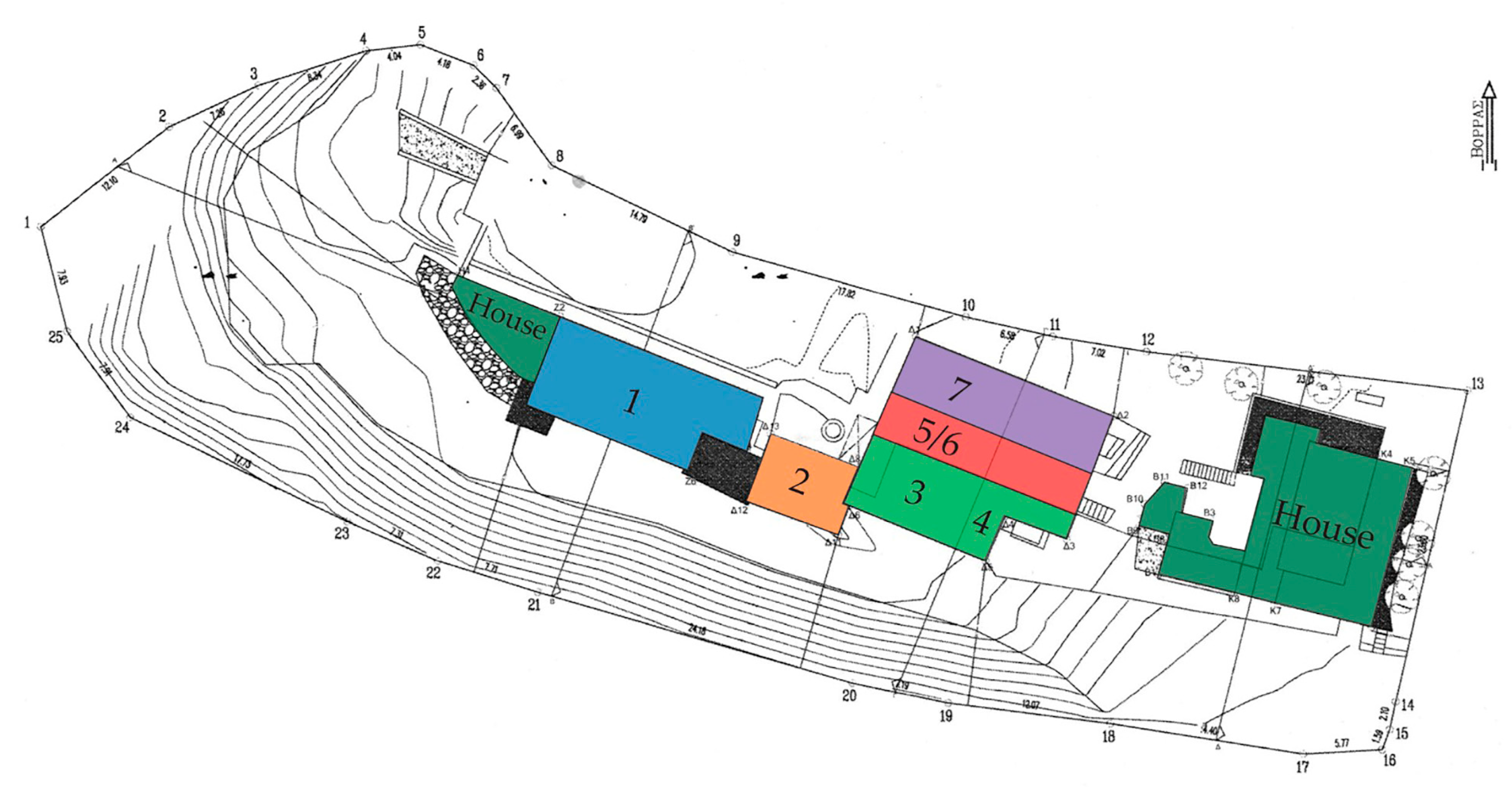
Figure 2), but the excavated area with the most important finds is on the lower hill, whereas the Acropoli Mediana hosts the houses and warehouses of the Italian Archaeological School at Athens (
Figure 3).
Phaistos belongs to sites granted for excavation by the Greek Ministry of Culture to foreign missions acting through the mediation of foreign ‘schools’ present in Athens [
23]. This is the result of the particular history of the modern Greek state and of the relationship it had with European countries at its inception, a relationship that developed within the climate of nationalism that characterised the second half of the 19th and first half of the 20th centuries [
24]. The establishment of foreign schools in Athens and the competition for the most prestigious sites shaped a geography of foreign missions that still exists today. Accused formerly of being a product of Western colonialism [
25,
26], foreign schools now operate in a radically changed climate of collaboration.
The Italian presence in Crete is determined not only by the prestige and activities of Federico Halbherr but also by the role played by Italy in establishing the protectorate over Crete at the end of the XIX century. Halbherr began excavations at Phaistos in 1900 and in 1902 at nearby Haghia Triada. In 1909, with the foundation of the Italian Archaeological School of Athens, the excavations came under the School’s aegis, with Luigi Pernier as director. In the early post-war period, activities continued at both sites with restoration work and small surveys. In the period after the Second World War, investigations were resumed first at Phaistos (1950–1966) by Doro Levi, director of the Italian Archaeological School of Athens, and then at Haghia Triada and Phaistos by Vincenzo La Rosa, professor at the University of Catania, in agreement with the Italian Archaeological School of Athens (1977–2013). These investigations have continued in recent years under the direction of Filippo Carinci (2014–2018) inside the archaeological area and of Fausto Longo outside the archaeological area. Today at Phaistos an Italian archaeological mission operates, led at present by the University of Catania under concession with the Italian Archaeological School of Athens (IASA) and with the permission of the Greek Ministry of Culture.
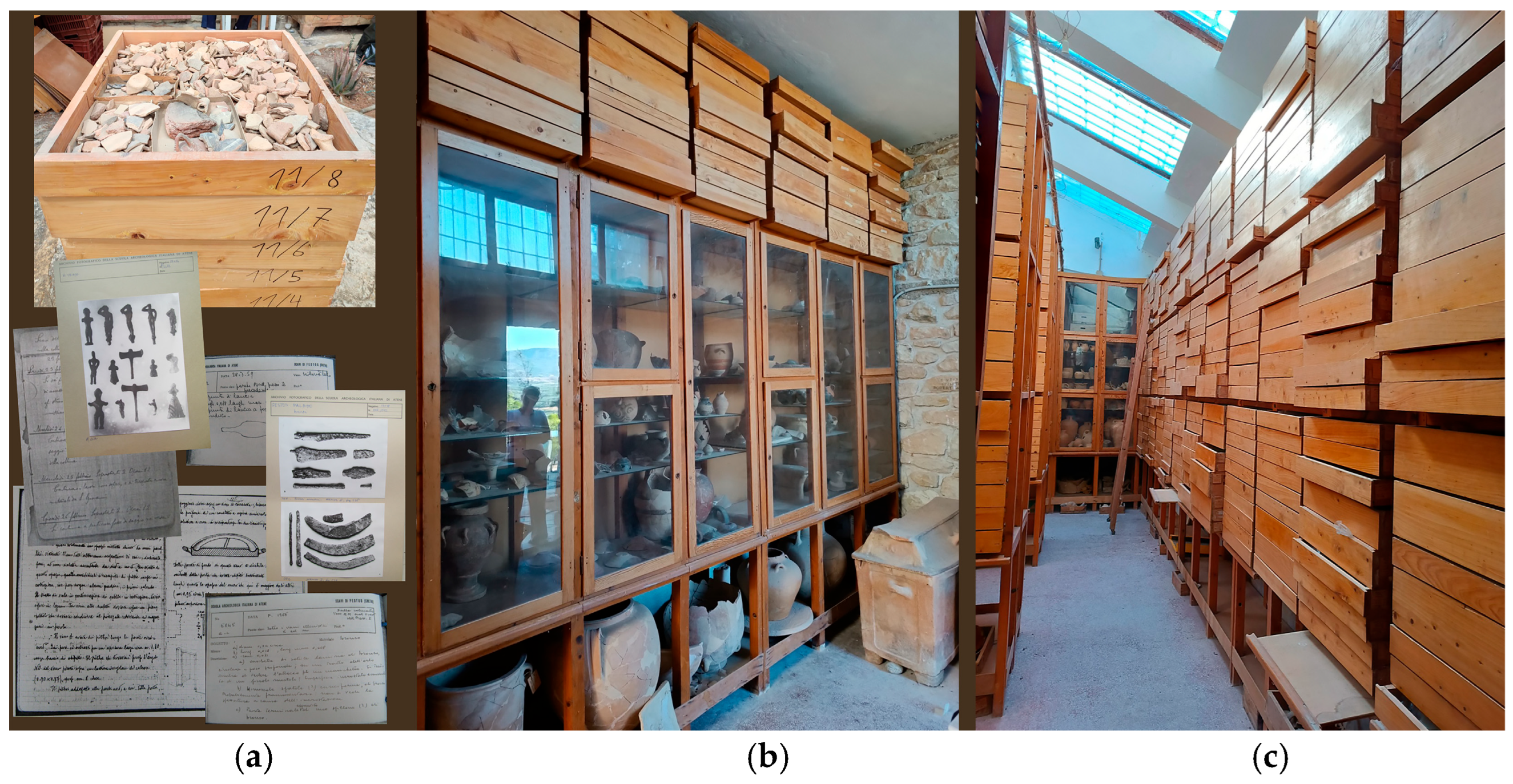
Since the very first excavations, the problem of the storage of finds will have been a very important one, but we do not know how it was dealt with in the first excavations. A systematic management of the material only started with the excavations by Doro Levi (1950–1966), who introduced a new form for the inventory of the most important pieces and started the construction of warehouses, which were completed only in the early 1980s (
Figure 4) by the new director of the excavations in Phaistos, Vincenzo La Rosa. He also began a process of digitizing the paper archives that continued, with various ups and downs, for almost a quarter of a century. In recent years, however, the limitations of this archiving system and also of the physical storage system in the warehouses became increasingly apparent. Although the solution implemented in Phaistos appeared innovative for its time, after 50 years the structures were showing their limitations, both structural and conceptual. These included corrosion of the iron used for reinforced concrete, decay of the glass skylight in the Stratigraphic Museum, warping of the wooden structures, with a consequent difficulty in moving the boxes, and the fading of the ink used to mark the provenance.
For this reason, the Italian Archaeological School of Athens launched a comprehensive restoration and digitisation project that also involved the Archaelogical Mission of Phaistos, and in particular the University of Catania, as leader of the mission. This was able to take advantage of funding from the project Changes, Spoke 6 (History, Conservation and Restoration of Cultural Heritage), which aims at a comprehensive approach to cultural heritage.
This project has been a formidable vehicle for carrying out this activity, both financially and conceptually. The experience in storage and restoration of materials developed by project partners, such as the Istituto Centrale del Restauro (Roma) and the Officina delle Pietre Dure (Firenze), together with the specific expertise of Spoke 6 researchers (RTD-A, research fellows, scholarship holders) in the thematic area of ‘innovative forms of storage’, made it possible to design the new organisation of the warehouses according to appropriate procedures.
The restoration and renovation of the warehouses involved the laborious task of moving the materials (approximately 4800 crates) from the Phaistos site to Haghioi Deka, where warehouses of the Italian Archaeological School of Athens are also located, in April–May 2024. This provided an opportunity to complete two further operations: the recovery of provenance documentation and the digitisation of related information. In the process of the transportation, the crates were re-examined and cleaned, and the old wooden or paper labels were transcribed onto new plastic-coated paper. The old containers were replaced with plastic bags or boxes, in accordance with current Italian regulations. It was decided not to standardise the information prior to the 2000s, which was transcribed exactly as reported, and to keep a selection of the containers then in use, which were recognised as having cultural value. At the same time, however, it was determined to digitise the heterogeneous documentation relating to the boxes of materials, some of which was preserved in paper form, handwritten or typewritten, and some in different versions of Write, Word, dbIII, Excel, formats, changing during the years. The diversity of the documentation was the result of several attempts at transcription (from manuscript to typescript) and then digitisation (at least three different digitisation activities were carried out between 1989 and 2004). The original documents were kept in the archive; digitisation was carried out through a process of standardization of provenance and stratigraphy to enable rapid retrieval of data.
One main problem still remained, that of the separation of archaeological information into separate sets that corresponded to different stages of the excavation and archiving process, something that had come about by the simple preference of the digital version over the paper equivalent in the last three decades. This has resulted in (digital) graphic, photographic, and topographical documentation; (digital) cataloging of materials; and a (digital) catalog of boxes. The ‘new’ process was therefore limited to translating the previous information into digital form but had no impact on the actual way in which the archaeological material was archived.
An even more negative consequence was that it emphasized the divide between the recovery phase (excavation), the task of archaeologists, and the storage phase, the task of conservators or curators.
Archaeological material, however, especially when it is not a work of art, only acquires its full meaning within the context in which it was found. Obviously, scholars can always trace the context through the labels on the materials and by consulting drawings and photographs, but the process is not easy, and it is difficult to get beyond stratigraphical information to recover a complete picture of how the finds were discovered, which can be obtained through the remaining information. The need for a holistic approach to the archaeological record becomes clear and predictable. The solution found here was to adopt and implement a QGIS plugin, namely PyArchInit.
The desire for a comprehensive and innovative data management system subsequently led (in 2025) to the adoption and expansion of an information system for collecting data from the excavation to the warehouse. The software PyArchInit, already in use at various Italian archaeological missions and institutions, was adopted and implemented with some innovations which will be illustrated in
Section 2. The aim was to achieve a unified perspective of the excavation activity, which is often divided into its various components (excavation, collection of materials, restoration, storage, use).
Moreover, the transfer of materials also provided an opportunity to contextualise the ‘legacy data’ and reconstruct the cultural context that led to the creation of the first Stratigraphic Museum, as well as the practices of preserving materials followed between the 1950s and 2000s.
2. Digital Archiving: The Phaistos Experience
2.1. Introduction. The Problem
The current digital path now followed in research and the so-called ‘datafication’ of academic disciplines generally have brought increased attention to these matters in archaeology as well. The vast amount of newly generated digital data, along with the need for its optimal management in accordance with the FAIR [
27] and CARE principles [
28], underscores the importance of proper data governance. If the FAIR principles (Findable, Accessible, Interoperable, Reusable) represent a fundamental point of reference for data management that ensures findability, uniqueness, and persistence, as well as full accessibility, interoperability, and proper reuse, the CARE principles (Collective Benefit, Authority to Control, Responsibility, Ethics) highlight the centrality of people and the purpose of data in all this process: the results should generate benefits for the community while guaranteeing inclusivity and equity. Holding institutions accountable on points such as data access and community engagement therefore means applying an ethical form of data management capable of respecting the cultural values that data inevitably embody.
These aspects take on particular relevance in the context of an international mission such as that at Phaistos. Interaction with the local community, the active involvement of some of its members, and the understanding of their communicative codes have, for instance, long been considered essential elements of the Cretan Mission [
29]. There is, in fact, full awareness of the role that Minoan archaeology has played and continues to play in shaping the sense of identity and belonging of modern local communities, thereby becoming a factor of social cohesion and inclusion [
30] avoiding both the “colonial attitude” (e.g., [
31] vs. [
32]) or of a misunderstanding of local perception of the past [
33,
34].
In this sense, responsible data management and ethical considerations are among the fundamental premises of any archaeological data digitization project. All of these matters must be taken into consideration, especially when engaging in dialogue with the valuable corpus of legacy data, that is data produced by past research efforts.
The challenges posed by legacy data and their transition into GISs involve both cartographic and alphanumeric data, and involves partially overlapping problems. Apropos the first point, the primary complexities relate to inaccuracies that frequently occur when converting paper-based data into a GIS environment. To better understand the difficulties, it is important to consider both methodological issues and practical problems related to the handling of raster data. Alphanumeric data typically refers to data accumulated both over decades (paper-based, digitized, or already digital) and newly acquired: both sets though derive from fieldwork activities and from post-fieldwork processes (cataloguing, inventorying, and storage). The complexity in these cases is related not only to the quantity of data but also to their ‘quality’, considering that the documentation in question—being from multiple sources—is characterized by a substantial lack of systematization. The challenges involved can be exemplified—in the use of non-scientific terminology, the wide range of vocabulary employed in the description of materials, the habit of using terms that are at times almost colloquial to indicate spatial references within sites, etc.
Even when a critical analysis of the data is carried out, based on systematic comparison, revision, and selection so as to highlight duplications and inconsistencies and to permit thus a standardization of the whole, the main risk in the digital conversion of such data remains the loss of information and the creation of inconsistencies. Such partial reuse of the data does not ensure its integrity. During normalization, there is a risk of losing information related to a provenance, so introducing a lack of transparency, and a fundamental impossibility of reproducibility.
In order to tackle these challenges, our strategy was subjected to three successive steps: standardization, unification and implementation. Finally, a testing and validation was performed.
2.2. First Step. Standardization. Legacy Data Management: The Challenge of Transitioning from Outdated Software to an Integrated System
The first activity of this project was the collection of the different templates used over the years to organize the archaeological material in the seven warehouses. We established a list of models and formats employed in the different periods to provide an overview of the internal organization of the Phaistos warehouses. Due to the large number of research groups over the years, the documentation presented a considerable variation in the type of archive files (raster scans, Word files, Excel files, simple Access databases), the data fields used, and the quality and quantity of recorded information (differences in vocabularies, presence/absence of detailed fields, long descriptive fields, etc.).
A research project was therefore initiated, to acquire a comprehensive review of all existing documentation related to the materials, inventories, and storage boxes preserved in various archives and formats dating back to the 1950s. All data were reorganized within a single Microsoft Access database, with the aim of providing a coherent and unified view of the documentary heritage. Previously, the information had been recorded in a fragmented manner, with separate documents for inventories, material tables, and storage boxes, and using heterogeneous formats, including raster images, non-queryable Word files, and Excel spreadsheets.
2.3. Second Step: Unification. Towards a New Data Management Paradigm: The Interspoke PyArchInit Project
In response to these challenges, the research activities of Spoke 6 (thematic area ‘Innovation in Management Methods’) and Spoke 8 (thematic area ‘Digital Archiving’) within the Changes Project were merged in an initiative focused on the innovative management of archaeological data. This initiative is being applied to the UNESCO World Heritage site of Phaistos (Crete), where the University of Catania leads an archaeological mission under concession from the Italian Archaeological School at Athens, and the CNR ISPC is responsible for coordinating survey and topographic activities.
The Phaistos case is highly complex as the material acquired over a century of research is distributed across both the Herakleion Archaeological Museum and seven warehouses in the site, including a Stratigraphic Museum. These are managed according to different systems (
Figure 5), and this quantity of information must be supported by an integrated GIS spatial data management system.
The management of legacy data has been a particular challenge for the Phaistos Archaeological Mission for several years [
35,
36,
37,
38]. As seen in other similar cases, long-term excavations generally yield a vast quantity of finds, with significant amounts of data accumulating over decades that originates from fieldwork as well as from cataloguing, inventorying, and archiving activities, all needing to be systematized and normalized.
Thus, the goal of the Phaistos team is to fully integrate all the above-mentioned data, taking account of the various cataloguing systems adopted over time and the necessity for standardization, endeavouring all the while to avoid information loss and to prevent inconsistencies. In all of this, the importance of methodological transparency regarding data collection and research workflows has to be observed.
For this purpose, the chosen approach was to use the QGIS PyArchInit [
39,
40] plugin conceived for the cataloguing, management, visualization, and analysis of data coming from archaeological excavations, surveys, and topographical studies. This offered the significant advantage of employing a unified system capable of handling alphanumeric data tables, GIS geometries, and multimedia content.
This tool was developed within the project ‘PyArchInit—Python for archaeology’ begun in 2005 by Luca Mandolesi and Enzo Cocca (AdArte S.r.l.) [
41,
42] to digitize archaeological data with a software that can handle alphanumeric tables, GIS geometries for topographical data, and multimedia—in a single system. It was initially used in Italy for daily activities in rescue archaeology, but for some years now, it has also been used in academic environments and in many scientific projects by Superintendencies, Universities, and Public Research Institutes [
40,
43].
We therefore took the decision to try it out in a complex, international context such as that of the Phaistos Palace. The Interspoke Project, in collaboration with the plugin developers, implemented PyArchInit so as to create an information system in which geospatial data interact with data related to archaeological materials—from excavation to inventory, archiving, and consultation. It integrates information from ongoing excavations with that produced over 125 years of previous investigations.
The PyArchInit plugin uses Python as a programming language and the DBMS is installed both in PostgreSQL/PostGIS and in SQLite/Spatialite ensuring stability, development, easy installation and updating [
39,
40]. A fundamental aspect of this tool is the ability to maintain the integrity of raw data as much as possible, and to offer a system open to changes and customizations by other developers. From a methodological point of view in the transition to digital and open-source technologies, it is crucial for us to leverage concepts such as accessibility, flexibility, and collaboration. PyArchInit is structured to provide many types of management user interfaces, i.e., ‘Stratigraphic Units’, ‘Sites’, ‘Finds’, ‘Pottery’, ‘Samples’, ‘Chronology’, ‘Buildings’, ‘Taphonomy Records’, ‘Topographical Units’, etc. [
40,
42].
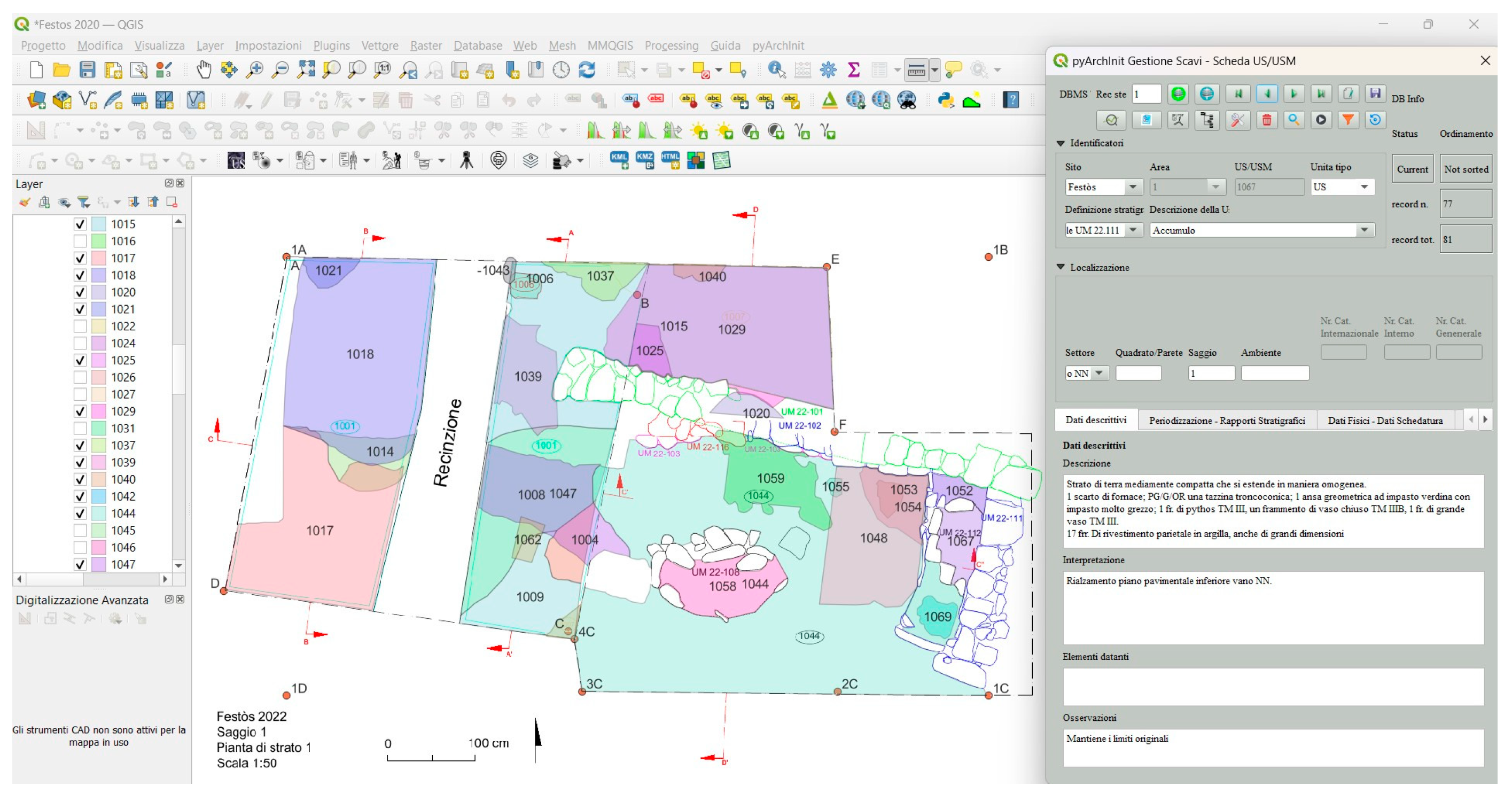
The first step consisted of testing and evaluating the plugin’s suitability and usability. For this purpose, our starting point was the management of data derived from current excavation records and materials, using the ‘Stratigraphic Units’ interface (SU) first. The tool was first trialed in managing the documentation of the Trench 1 archaeological excavation in 2022 by the Italian Mission. All the data contained in the classic SU sheets was entered into the database, and in parallel identified in the GIS environment of the stratum plans (about 70 stratigraphic units being involved), along with the insertion of all the elevation measurements (
Figure 6).
For this preliminary work on testing the plugin and understanding how adequately it performed with respect to our documentation, a master’s degree dissertation was assigned [
44]. During this work, we dealt with many methodological issues to evaluate the benefits and limitations of the plugin for the acquisition and processing of older data as well as future data. The open access and participative nature of PyArchInit allows dialogue with software developers to solve any methodological problems and to receive suggestions regarding implementation [
40] (p. 95).
The testing phase highlighted the tool’s suitability for addressing our documentation problems, in particular the positive aspects identified were the acceleration of the work of data collection by ensuring greater standardization and consistency in documentation. Furthermore, it allowed advanced analysis of archaeological data such as transversal reading of stratigraphical relationships, generating matrixes that highlight potential inconsistencies, and data queries. The ‘Thesaurus Sigle’ is another very useful tool for dealing with differences among terminologies: it allows us to implement the plugin vocabulary with specific ‘jargons’—i.e., the Aegean archaeology-related vocabulary—and can also be used, for example, to insert a value from the Munsell Table codes in the field related to the color of the SU soil, using a drop-down menu.
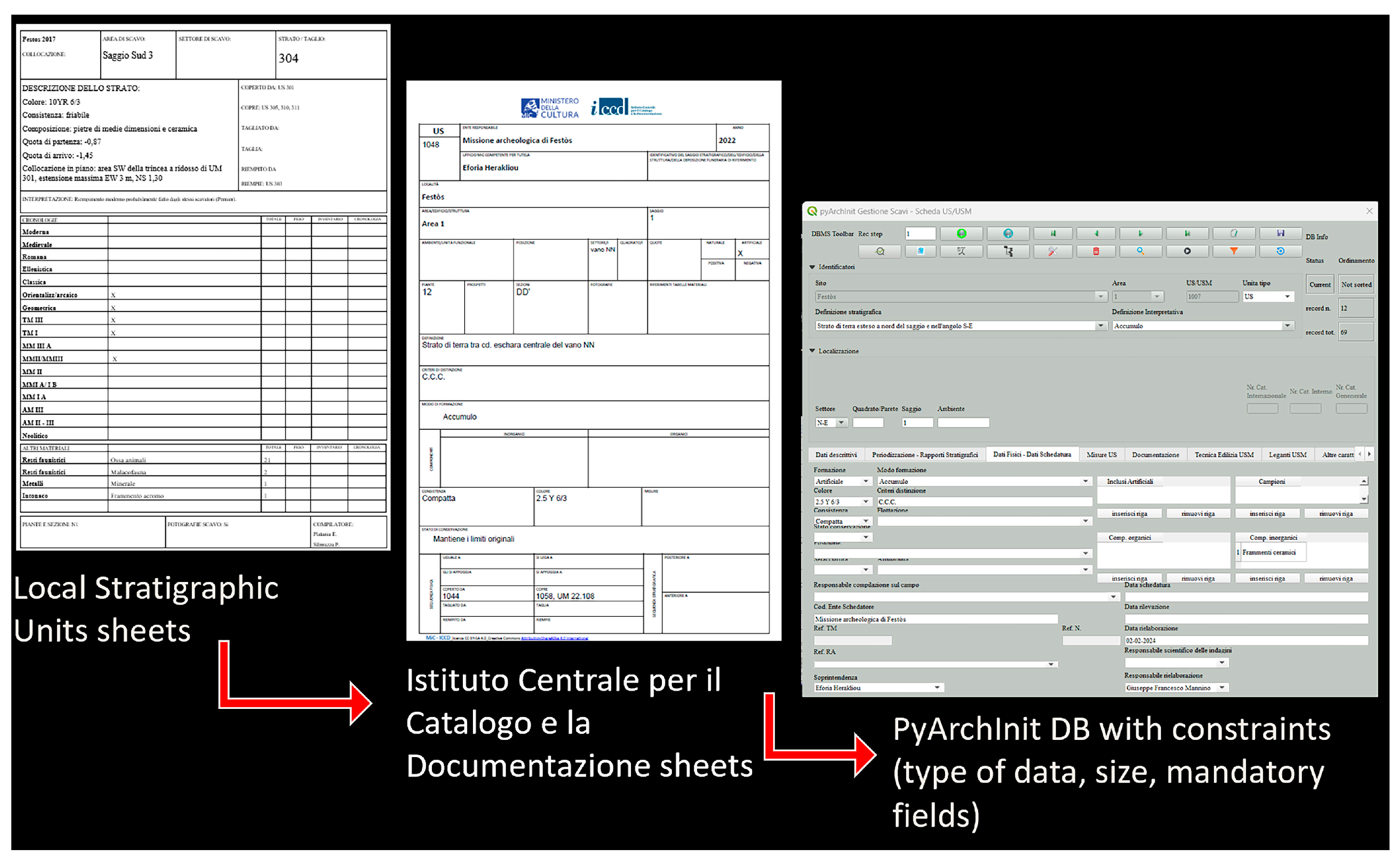
In addition to the standardization of vocabulary, an extra level includes the standardization of the SU sheets. The long tradition of studies and research in Phaistos required the use of SU sheets modelled on the specific needs of the context, and only partially on Italian cataloguing standards (by ICCD Central Institute for Cataloguing and Documentation). The adoption of PyArchInit implied the transfer of data from old SU sheets to a PyArchInit SU sheet based on the Italian standards (
Figure 7). This however created inconsistencies, some of which were owed to ‘interpretation’ during the transition from an essentially free form (such as the PDF sheets used until now) to a constrained database in terms of data types, size, and mandatory fields. Information and details with no corresponding fields in the PyArchInit SU sheet were entered in the ‘Description’ field. This was the most straightforward solution, despite the fact that it does not allow material-specific queries.
2.4. Third Step: Implementation. New Tools for Data Collection and Storage
Within the framework of the Interspoke Project, work was initiated to improve and expand the cataloguing tools used so far, with the aim of identifying weaknesses and gaps in the existing documentation.
The starting point was a review of the existing standards, which revealed, on the one hand, the need to adapt them to the specific requirements of the case study and, on the other, the lack of adequate cataloguing tools, a failing that led to the creation of new instruments for data collection. This work was carried out across three main areas: documentation relating to warehouses, zooarchaeological data, and rock-cut architecture.
For the data originating from the warehouses, a study of the ICCD standard was conducted. The so-called Table of Archaeological Materials (TMA) [
45] was used as a starting point, adapting it to the needs of Phaistos, while also taking into account the fields designated as ‘absolutely mandatory’ in order to define the required fields and design the structure of the form (see
Section 2.4.1).
With regard to field documentation, the digitisation of recording forms for zooarchaeological data (FR) and for underground architectural features, such as hypogea (AR), has recently begun through the development of standardised digital tools specifically designed for in situ recording (see
Section 2.4.2 and
Section 2.4.3). A critical assessment of current cataloguing standards—including the forms for Anthropological Remains (AT) [
46] (pp. 44–50), Naturalistic–Zoological Items (BNZ), Architecture (A), and Archaeological Monuments/Complexes (MA/CA), developed by the
Istituto Centrale per il Catalogo e la Documentazione (ICCD) [
47,
48], as well as those adopted by the
Commissione Nazionale per le Cavità Artificiali of the
Società Speleologica Italiana—has demonstrated a significant absence of documentation tools specifically designed for the recording of zooarchaeological data and underground architectural features.
Ensuring the integration of the newly designed recording system within established archaeological documentation workflows required the adoption of a digital environment capable of guaranteeing compatibility with consolidated excavation recording procedures, while simultaneously supporting the management of spatially referenced data through full interoperability with Geographic Information Systems (GIS), now an indispensable component of archaeological information infrastructures.
For this purpose, a data-management form for the warehouse records was designed and developed by extending the PyArchInit database with a custom-made module.
Within this methodological and technological framework, one of the projected future developments concerns the adaptation of two recording tools originally conceived for the on-site documentation of faunal remains (the FR sheet) and to the systematic recording of architectural features cut into the ground. These tools will be implemented as GIS-enabled instruments designed to interface seamlessly with the PyArchInit architecture, thereby ensuring coherent, standardised, and interoperable documentation procedures across multiple classes of archaeological evidence.
2.4.1. The TMA Form: Designing and Developing an Extension for the PyArchInit Plugin
During the plugin testing and evaluation phase, some points of weakness were identified (see
Section 2.3). One of the challenges was to connect the archaeological material inventories realized by the pottery specialists with the spatial context of provenance and to set up an integrated method of cataloguing all the excavation data, both in the field (structures and strata) and in the warehouses. We encountered some problems concerning the treatment of post-excavation data, due to the high variability among individual sites and archaeological missions with their own protocols, research approaches, and local standards.
To address these inconsistencies, in addition to reviewing all the existing documentation, an in-depth assessment of the available cataloguing practices was carried out (see
Section 2.4). In considering the points discussed, it became evident that the use of the pre-existing PyArchInit form for managing inventoried finds—the specific section of its DB called ‘Finds’—was not a viable option. In this interface it is possible to enter details about inventoried sherds, number of fragments, etc., allowing some quantifications, but the same cannot be achieved, however, for the thousands of non-inventoried pottery sherds because each find must be identified by a unique code in the DB, and this is not possible for every single artefact found in Phaistos. Currently, the plugin allows registering the presence of finds in the ‘Stratigraphic Units’ interface (SU), but we are not able to take advantage of the potential of the DB in terms of quantifying fragments or in presenting queries, for example.
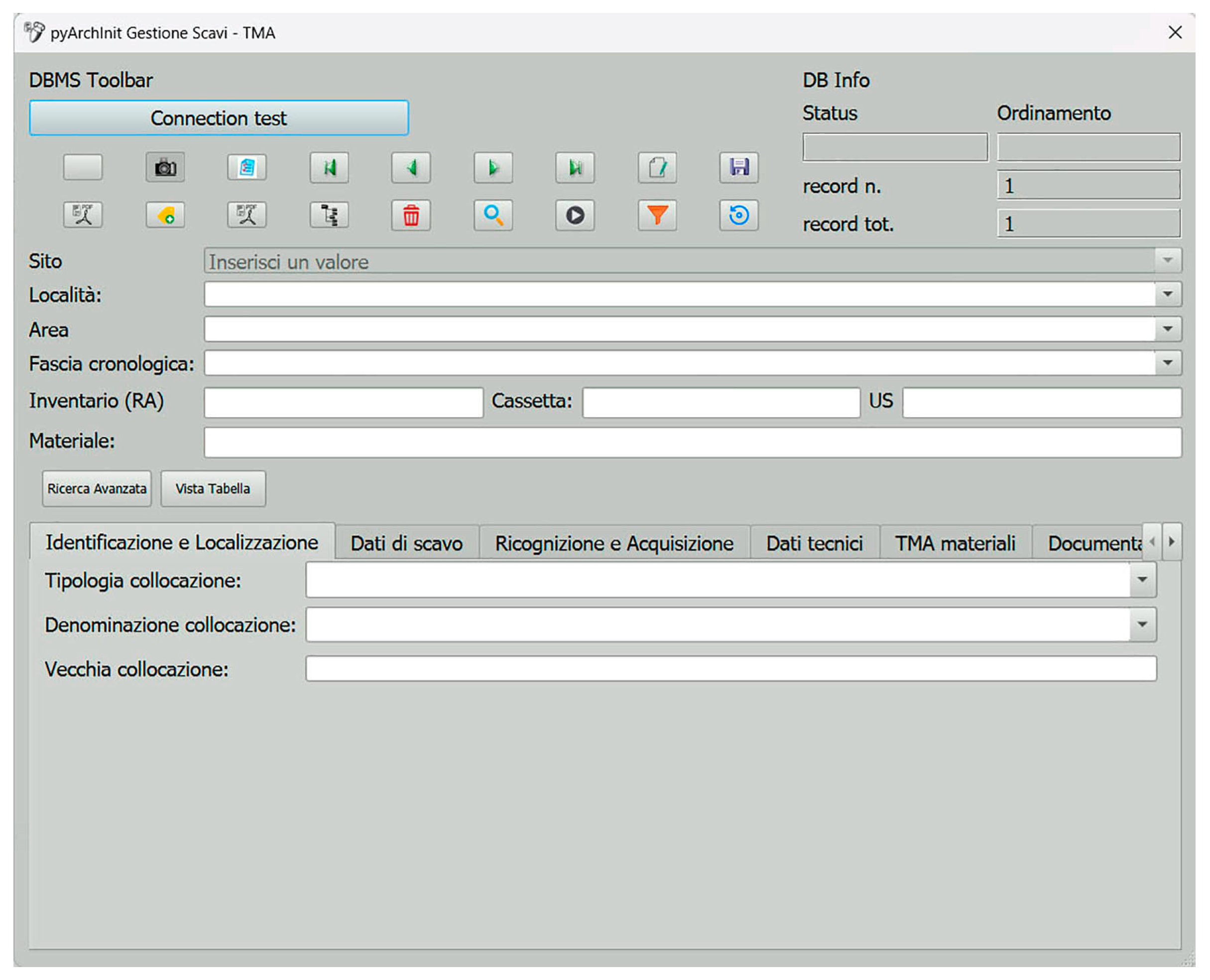
For the data originating from the warehouses, it was therefore necessary to develop an extension of the plugin through the creation of a dedicated table: the TMA form. This was conceived as a box/stratigraphic unit (SU) form capable of allowing integrated archiving and management of both excavation and warehouse data. The design process took into account the variability of the different models used over time (including terminological differences, the presence or absence of specific fields, and the use of extended descriptive fields, etc.).
To construct a relational database needed for scripting the PyArchInit extension, a data sheet was therefore designed containing fields related to the geographical and administrative location of the storage areas, the method of recovery of the finds and excavation data (area, trench, room/locus, SU, etc.), chronology, analytical data (historical-critical information, etc.), details of materials associated with each stratigraphical unit (category, class, typological specification, definition, etc.), and reference sources and documents (graphic and photographical documentation) (
Figure 8). For the management of inventoried finds, the Finds form was used, which integrates with both the SU and TMA forms.
During this process, several methodological matters were addressed to assess the advantages and limitations of the plugin. Overall, the tool significantly accelerated data collection, ensured greater standardization and consistency in documentation, and enabled advanced data analysis and querying, such as the identification of potential inconsistencies in stratigraphical relationships. Finally, through the implementation of the controlled vocabulary Thesaurus, terminology was also standardized across key domains, including chronologies, categories, classes, typologies, etc. The reference vocabularies created take into account the tradition of research related to the site of Phaistos and, more generally, the terminology used in the Aegean context.
2.4.2. FR Sheet: A Tool for the Management of Zooarchaeological Data in the Field
Within this framework, the opportunity arose to expand the discussion on the digital management of zooarchaeological data to encompass the documentation practices applied to faunal remains during excavation. This initiative revisited the long-standing concern of standardising recording methods, focusing specifically on the initial phase of data acquisition in the field—a critical stage for collecting information essential to the accurate interpretation of archaeological contexts, which is often difficult or impossible to reconstruct solely through post-excavation analysis. The recognition of persistent shortcomings in the archival and documentation practices associated with faunal assemblages consequently led to the development of an optimised recording tool aimed at improving documentation during excavation. The goal was to enhance the management of zooarchaeological data, safeguard the contextual relationships among the remains, and promote accurate and standardised digital archiving.
Despite significant methodological advancements and the increasing integration of digital technologies in zooarchaeology—which have facilitated the reassessment and reinterpretation of bioarchaeological datasets [
49]—key matters related to the documentation and archiving of faunal remains remain largely underexplored. In particular, there is a notable absence of standardized protocols and digital tools for recording faunal remains during excavation that are comparable to the documentation systems currently employed for field recording.
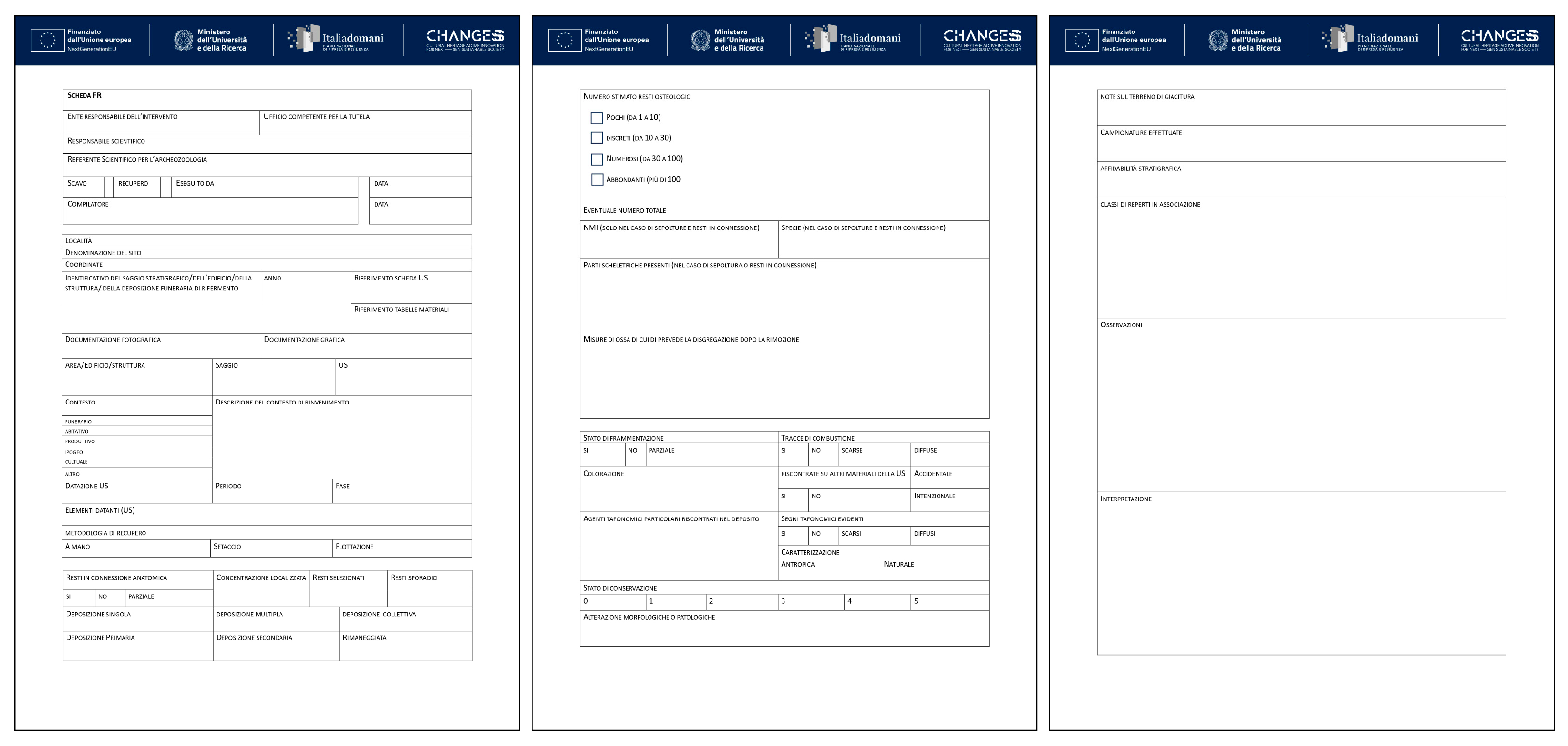
To address this, work was initiated to design a specific recording form dedicated to faunal remains: the
FR sheet (
Figure 9). The
FR sheet was conceived to capture the principal contextual variables that are fundamental for interpretative purposes, such as depositional processes and diagenetic dynamics contributing to deposit formation (e.g., orientation and accumulation patterns), associations with other categories of finds, evidence of taphonomic agents, and the distribution and characterisation of burning traces. Recording such information ensures the preservation of contextual data that would otherwise be irretrievably lost after excavation—data that are often poorly documented or insufficiently conveyed to the zooarchaeologist in the laboratory.
The
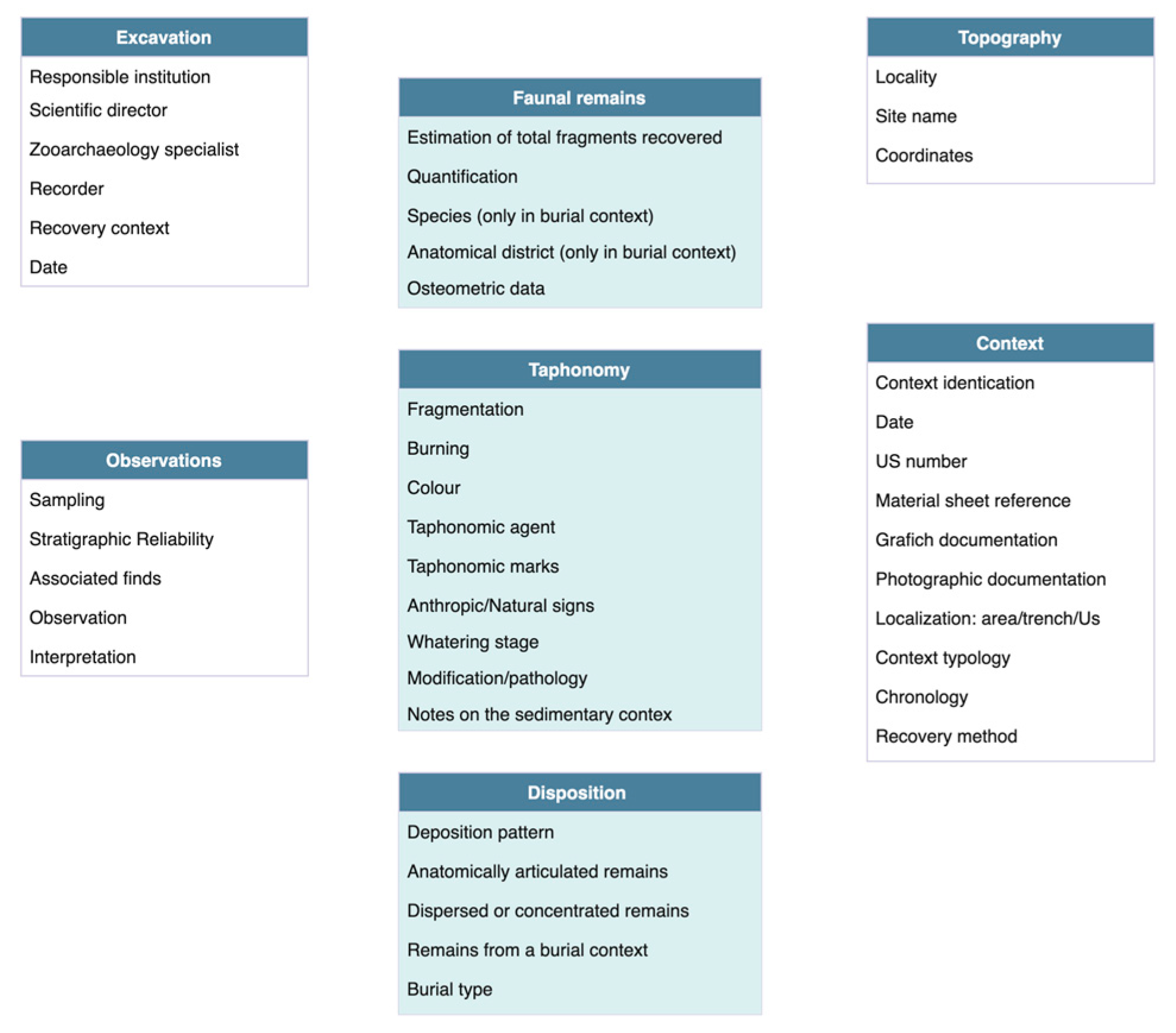
FR sheet itself is designed for use in both burial contexts, involving anatomically articulated remains, and in the documentation of isolated or mixed faunal finds. In burial contexts, a single sheet is completed for each individual context; in cases of dispersed assemblages, documentation proceeds by stratigraphical unit, ensuring that the faunal record is directly linked to its depositional context. The sheet is organised into seven sections, each encompassing different categories of information and levels of analytical detail (
Figure 10).
The form begins by documenting the basic identification details of the excavation, the institutions involved, and the personnel responsible. It then records the precise location of the find and provides the archaeological and archival references needed to situate it within its broader context. A further section outlines the characteristics, chronology, and recovery methods of the archaeological context itself.
The central part of the form focuses on zooarchaeological data. It describes the spatial arrangement and accumulation of the remains, helping distinguish between articulated burials, isolated finds, and concentrated deposits. It also includes preliminary quantitative information, such as estimates of fragment numbers and, when possible, the total count of remains visible in situ. Optional fields allow for taxonomic and anatomical identifications, MNI estimates, and measurements of fragile bones.
A dedicated section is used to record taphonomic observations available only during excavation, including burning traces, fragmentation, weathering, and comparable evidence from other materials in the same stratigraphic unit. The form concludes with space for descriptive notes and preliminary interpretations that help contextualise the assemblage within the archaeological record.
The development of a dedicated tool for the digital archiving of faunal data collected directly in the field, conceived as applicable across a wide range of excavation contexts, represents—particularly in the case of Phaistos—a further and strategically significant advance in the ongoing refinement of digital documentation practices promoted within the Changes Project. By enabling the structured, standardised, and contextually integrated recording of faunal evidence from the moment of recovery, this tool contributes to strengthening the coherence, accessibility, and long-term preservation of archaeological datasets.
2.4.3. RA Sheet: A Tool for the Management of Rock-Cut Architecture Features
Keeping the goal of creating a more effective cataloguing standards firmly in mind, a new form in the category of architecture has been proposed for recording rock-cut architecture (especially dwellings and rock tombs), whose distinctive features have not yet been sufficiently taken into account.
Not well attested in Phaistos or Haghia Triada, beyond a few examples, such features however are quite common in archaeological records. The opportunity to develop this model was offered by the study of the underground structures of the multi-layered site of Pantalica, Sicily (Sortino/Ferla, in the district of Syracuse), which boasts an extraordinary variety of artificial cavities.
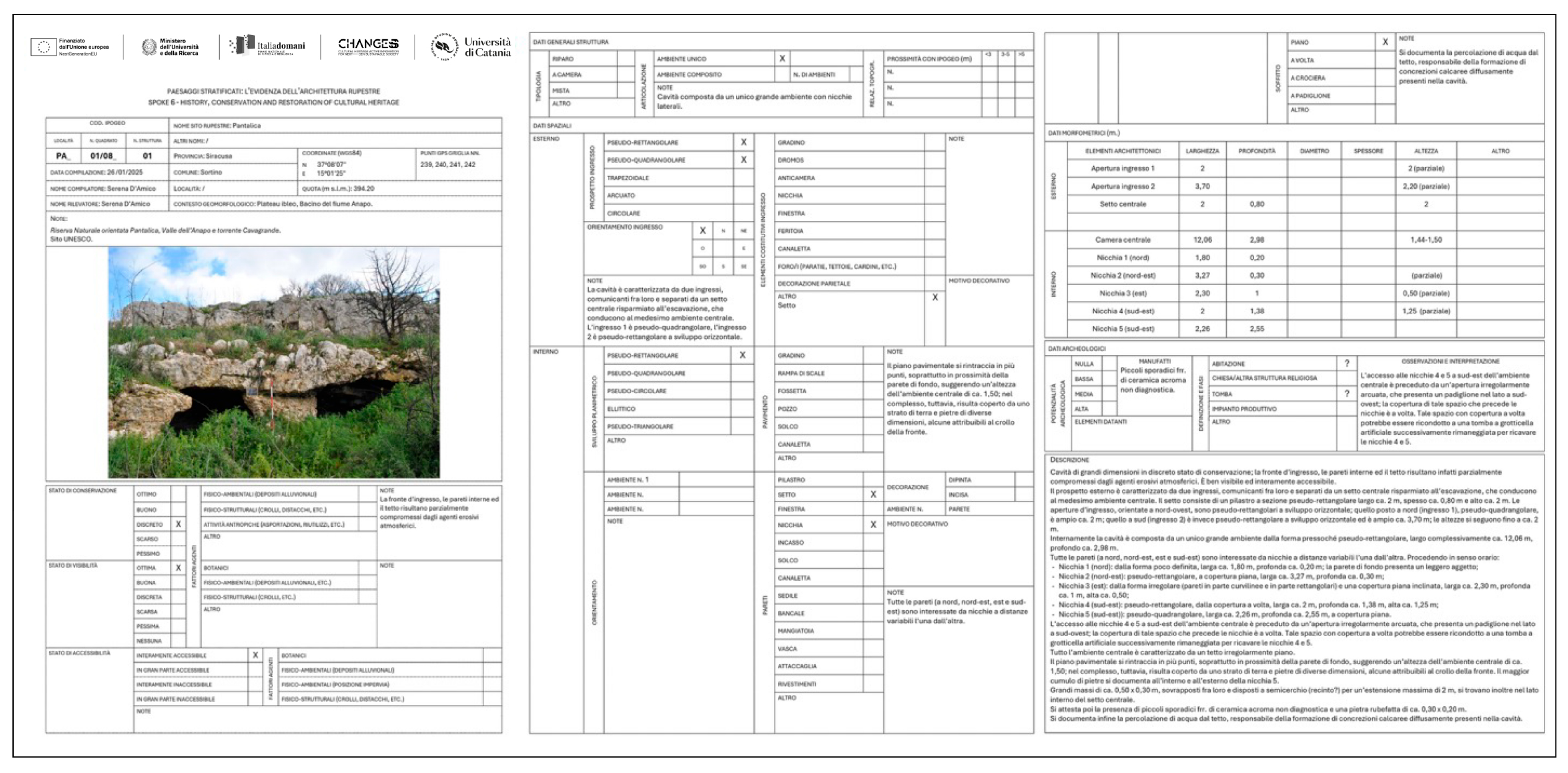
Several purposes were pursued in the creation of the RA sheet (
Figure 11): to simplify the timing and procedures for recording data in the field; to improve the informational value of the data with a view to a comparative study and a qualitative-quantitative analysis of rock structures; to develop a durable tool for data management and for enabling querying within the QGIS environment.
The Rock-cut Architecture forms are designed to describe archaeological evidence from a macro to micro scale, enabling an integrated, multi-level interpretation. The methodological value of this approach prevents archaeological interpretation from being disconnected from context.
The work carried out in the field therefore had a dual purpose. On the one hand, the in situ analysis of the architecture allowed the creation of technical data sheets in a repeated process that involved repeated insertion and correction of sections and subsections of the descriptive model. On the other hand, the compilation of the sheets during the survey made it possible to test this methodological tool and its real effectiveness. Usable in paper or digital formats, they facilitate the process of acquiring data in a quick manner without sacrificing the scientific rigour of the documentation activity.
Although the form is specifically designed for swift and flexible data collection in the field, this can also be carried out at a later stage. The template is organised into sections and subsections with fields that can be filled in using an X, providing basic information, with an additional field for free notes where specific features found can be documented in a more discursive and in-depth manner.
The first section primarily involves the Hypogeum Code, consisting of the initials of the location under investigation, the number(s) of the square(s) in which the structure is located (as defined during the survey), and the number assigned to it (e.g., PA_08_01). The generic entries relate to the date on which the sheet is filled in (coinciding with the investigation date), the name of the compiler, and the person responsible for the technical drawings (if different from the former). The next items concern geospatial and topographical data, starting with the specific name of the rock site and/or other names by which it is known locally, the province, municipality and locality, the geographical coordinates in the WGS84 system, the specific GPS points to be acquired and a more general reference to the geomorphological context in which the structure and site are located.
The next section of the sheet is reserved for inserting a photograph of the external façade, which allows for the immediate identification of its distinctive features.
The following section introduces a description of the condition of the premises so that the level of information obtained and/or obtainable from the examination of the structure is immediately clear. The sheet entries therefore include an indication of the state of conservation and visibility, expressed in degrees from excellent to poor, as well as the specific agents (physical-environmental, physical-structural, anthropogenic activities, etc.) responsible for this state. The second section of the sheet concludes with an indication of the state of accessibility, from fully accessible to completely inaccessible, with the relative contributing factors.
The third section delves into the architectural characteristics of the structures, starting with the more general ones relating to type (shelter, chamber, mixed, etc.) and internal layout (single room, composite room, number of rooms existing). It was then decided to create an entry in which it is possible to specify the topographical relationships between the cavity and others nearby in order to understand whether or not the structure is part of a single complex of cavities with different functional purposes.
The spatial data follows: the descriptive entries range from the external characteristics of the cavity, the type of entrance(s) (pseudo-rectangular, pseudo-quadrangular, trapezoidal, arched, circular, etc.) to its orientation; specific items also concern the component elements of the entrance (steps, dromos, antechambers, niches, windows, channels, any decorative elements, etc.). We then proceed with the descriptive items of the interior, from the type of planimetric development (pseudo-rectangular, pseudo-quadrangular, pseudo-circular, elliptical, pseudo-triangular, etc.) to the information on the orientation of the rooms; there are then items concerning the architectural elements potentially present on the floor (steps, hollows, grooves, wells, channels, etc.), on the walls (pillars, partitions, internal windows, niches, recesses, coverings, any painting elements, etc.) and an indication of the type of ceiling (flat, vaulted, cross-vaulted, pavilion, etc.).
The spatial information that can be obtained from the Rock-cut Architecture sheets also concerns morphometric data; these have been organised according to a tabular structure, recognizing the external/internal division of space, and with specific fields relating to width, depth, thickness, height, etc. The possibility is given to insert in the empty fields those elements that the archaeologist decides to measure based on the specific context (entrance opening, partitions, niches, etc.).
Purely archaeological data occupy a short, specific section; this is because the sheet is conceived for a rapid fieldwork compilation, in order to provide only the strictly necessary data at this stage. First of all, it was decided to indicate the degree of archaeological potential (from none to high) that the structure possesses in relation to its characteristics of conservation, visibility, accessibility and on the basis of the material traces present in the area near the entrance and in the interior spaces. This is followed by a blank field in which it is possible to indicate the type of artefacts visible on the surface. Among other data of archaeological interest, it was decided to indicate the functional definition of the cavity (dwelling, church, tomb, production facility, etc.), where the evidence suggests it, with the possibility of specifying more than one field in the rather common cases of reuse over the centuries. The archaeological section concludes with observations and an early interpretation of the evidence.
The last part of the sheet consists of a descriptive section, deliberately unstructured, which can be filled in on site or during the further processing of data. This allows archaeologists to describe the cavity using free text, integrating the standardised information contained in the rest of the sheet with more analytical information that cannot be included in an initial classification.
2.5. Assessment. From Software Testing to Validation
The choosing of components and sequencing of activities involved in the development and use of any digital tool require several fundamental steps: working out the requirements and their manner of analysis, preliminary testing and evaluation, system design, development and implementation, and final validation.
In this case the testing phase made it possible to identify technical issues, points of weakness and inconsistencies by verifying that the chosen plugin—PyArchInit.dev—performed as expected. The evaluation focuses on assessing the tool’s suitability and usability, ensuring that it effectively met the project’s needs and functional requirements. This phase, as mentioned earlier (see
Section 2.3), involved the evaluation of some of the already existing forms (SU, Finds). The plugin’s benefits and limitations were then discussed with the software developers, leading to the development of specific database implementations such as the TMA forms (see
Section 2.4.1). The evaluation of the tool’s suitability was also carried out with respect to its flexibility and its ability to manage all pre-existing documentation, the so-called legacy data, which, as previously mentioned (see
Section 2.2), exist in different formats (Word, Excel, Access, PDF, etc.) and are not standardised. For this purpose, the software developers created a parser capable of importing data from various formats, which includes tools for data cleaning and validation.
Finally, the validation phase was conducted in the field during the 2025 excavation campaign at Phaistos to test the tool ‘under stress’, by managing all data generated from field activities carried out simultaneously across four trenches. Stratigraphical and wall units were recorded using the dedicated database forms, and were graphically linked to stratigraphical plans, wall unit drawings, and elevation data, all mapped within the GIS environment. Moreover, the validation of the new TMA form confirms the overall reliability and effectiveness of the software in real operational contexts, demonstrating that it can be successfully applied to real data and workflows. Together, these steps ensure the creation of a robust, efficient and scientifically reliable digital solution capable of solving all the problems presented to it.
3. Physical Archiving: The Warehouses in Phaistos
3.1. History of Warehouses in Phaistos
The field investigations carried out during the first decade of the 19th century were impressive, bringing to light monumental remains dating back mainly to the 2nd millennium BC and an enormous quantity of material, most of which, however, was left in situ in the spoil heaps, with only the intact or most significant items being recovered. We do not know how the finds were stored immediately after their discovery, whether in temporary buildings or outdoors, but it is certain that the accepted practice was to transport them, after some time, to the newly established Archaeological Museum of Heraklion, as evidenced by the inventory numbers and dates of acquisition of the finds from Phaistos and Haghia Triada.
The late 1940s and early 1950s marked a crucial period for archaeological excavations at Phaistos. After the interruption caused by the Second World War, the direction of the Italian Archaeological School at Athens was strategically entrusted to Doro Levi [
50], a former student of the School, married to a Greek woman.
In 1950, he inaugurated a new and remarkable season of excavations at Phaistos, which led to the discovery of the best-preserved Protopalatial building in all Minoan Crete, located in the south-western quarter of the palace. The new policy of collecting ‘all’ the material, despite a continuing practice of ‘discarding’ the less significant ones, which in the early years amounted to around 20–30%, made it impossible to continue transferring the finds to the Heraklion Museum and necessitated the construction of special warehouses in the area. Between the 1950s and 1980s, seven warehouses were built, the history of which has been described by V. La Rosa [
51] in one of the very few articles dedicated to the subject of archaeological storage in Greece, after the guide to the Stratigraphical Museum of Knossos, written by J. Pendlebury [
52].
Built in masonry (unlike the wooden ones of the early years of Levi’s excavations), the warehouses were equipped with Dexion shelving (except, as we shall see, for Warehouse 1, or the ‘Stratigraphic Museum’), which allowed for easy handling of the boxes. These storage facilities were therefore designed with the idea of making the material accessible also in the future, albeit without the safety guarantees required today. Shelves were up to 4–5 m high, and simple iron ladders were used. More importantly, these facilities were designed to house most of the materials not by category, but by ‘stratigraphical’ context (actually relating to loci and levels). This aspiration finds its best expression in warehouse 1, called the Stratigraphic Museum.
3.2. Debates on Art and Archaeological Storage in the First Half of the 20th Century
The destructions caused by the Second World War, paradoxically, offered an extraordinary opportunity for the reorganization of the Italian State cultural heritage, as emerged in a survey of musicographical papers published by the Bollettino d’Arte between 1948 and 1960. Once buildings had been restored and collections rescued from improvised wartime shelters, more than thirty museums—including picture galleries, art museums, civic collections, and archaeological museums—were reopened to the public, following more scientific and functional models than those defined during the 1920s and 1930s [
53,
54,
55,
56,
57,
58]. Inspired by the American approach [
59,
60,
61], these were then adopted by the new established ICOM [
62].
Numerous museological reports reveal that Italian museum directors and superintendents were fully aware of the ongoing debate on the modernization and their new educational role [
63,
64,
65,
66,
67,
68] although they were confronted with a range of challenges, both theoretical [
69,
70], a practical [
63,
64,
65,
68,
71,
72,
73,
74,
75,
76] and a financial kind [
63,
66,
72]. For these reasons, most adaptations to modern criteria were therefore limited to interventions focused exclusively on the visible collections [
63,
64,
65,
66,
67,
68,
71,
73,
76,
77,
78,
79,
80,
81,
82,
83,
84].
Conversely, crucial issues—such as the rational reorganization of storage, the cataloguing of material necessary for comprehensive knowledge of collections, and the provision of consultation spaces—remained unresolved due to the lack of adequate facilities and the exhaustion of funds, with solutions postponed to future allocations [
63,
68,
80,
82], though with some exceptions [
68,
80,
82].
‘Study collections’ were arranged in other Italian museums [
64,
72,
78,
79,
80], in line with the principles set out in Coleman’s
vademecum [
85].
Two cases are particularly noteworthy for the innovative solutions adopted: the Galleria Nazionale della Sicilia in Palermo and the Archaeological Museum of Gela, both in Sicily. In both, the hand of two of the most celebrated architects specialized in conservation at the time is clearly visible: Carlo Scarpa [
86] (p. 186) in the former, and Franco Minissi [
87] (p. 342) in the latter.
At the Galleria Nazionale della Sicilia metal frames on ball-bearing running tracks were specially designed to store canvases, allowing them to be ‘leafed through’ with ease [
86] (p. 189). The study collections were all housed in a separate room [
86] (p. 190). The Archaeological Museum of Gela was purpose-built to house, study, and exhibit the archaeological evidence of Gela and its territory: it was equipped with offices, accommodation, and a guesthouse, as well as photographic and conservation laboratories [
87]. Moreover, the basement was entirely devoted to the storage of excavation finds, organized in rationally designed ‘furniture-cases’ that allowed a scientifically meticulous arrangement [
87] (p. 346).
These Italian cases show how the problem of archaeological warehouses could be addressed with temporary or experimental solutions. This comparison is an essential reference point for understanding the specific nature of the solution adopted at Phaistos, which will be discussed in the following section.
3.3. The Stratigraphic Museum at Phaistos: Research, Storage, and Innovation
The Stratigraphic Museum of Phaistos constitutes a somewhat distinct case from those structures examined thus far. Established in 1955 on the initiative of the Director, Doro Levi, it was never intended to be open to the public. However, the name itself and the way it was planned and realised, bring the Stratigraphic Museum into the orbit of the debate presented by Pietro Militello and in the previous section.
The structure responded to the necessity of developing a system of archiving material that would allow for more precise recording—compared to what had been done previously—of the provenance of finds from different excavation levels, and of their easy retrieval for scholarly purposes.
Probably inspired also by the Knossian model, where finds had been stored by context and not by typology since the very beginning of the excavations, thanks to Mackenzie’s and then to Pendelbury’s work [Christakis in press]—Doro Levi made a decision to preserve on site, for study purposes, the less remarkable finds, while the most significant pieces continued to be transferred to the Heraklion Museum.
The Stratigraphic Museum was conceived not simply as a repository for archaeological materials, but as an actual research laboratory. As in the exemplary instances of the Archaeological Museum of Gela and the Sicily National Gallery, the involvement of an architect specialized in cultural heritage proved decisive.
The construction project of the Museum was entrusted to the architect Enrica Fiandra, who arrived in Athens in 1955 as an affiliated student [
88]. Fiandra, a woman of determined, independent, and enthusiastic character, quickly and deservedly gained the trust of the then Director. Remaining for several months after the excavation season on Crete, skillfully managing engineers and workers, bills to be paid, and technical calculations, she completed within a few months a plan that Levi had already envisioned for several years.
Fiandra’s Museum design, and in particular the shelving system, exemplifies forward-thinking ingenuity and utility, meticulously designed to reconcile the practical exigencies of archaeological curation with the preservation of stratigraphical integrity.
The roof was designed as a large skylight, ensuring optimal interior lighting without the need for windows that would reduce space for shelving.
The drawers—constructed in heights adjusted to suit the varying dimensions and quantities of artefactual material—were arranged using adjustable wooden side supports, thereby enabling reconfiguration without the need for bespoke reconstruction. This system was in line with the suggestion made by Coleman [
85] (pp. 244–245), indicating how Fiandra was aware of the international debate and of ‘curatorial equipment’ storing solutions.
The result was secure, space-efficient storage that preserved the precise stratigraphical sequence of finds as they had emerged from the excavation. This modular adaptability also permitted future rearrangements to accommodate new discoveries, without jeopardising the initial stratigraphical documentation.
The museum housed approximately 2000 drawers in total. They were accommodated in 83 columns, each holding around 20/25 modular drawers each. For aesthetic reasons—likely following architectural rather than archaeological thinking—the drawers bore no external labels ‘in order to preserve the line of the wooden surfaces throughout’ [
89] (p. 95). Instead, labels with excavation data (date, area, trench, and sometimes elevation markers) were affixed to the left side of each drawer, which protruded slightly from the frame to keep the label visible.
Additional wooden frames were allocated for display cases, positioned at the entrance and in each of the four corners of the room, reserved for the most complete and diagnostic vessels, so stressing the museographical function of the collection. The concept was to create a study collection ready for chronological and typological comparisons. A system of pull-out shelves—of which Fiandra was particularly proud—was installed beneath each column, providing a temporary surface for materials under study and further underscoring the idea of the Museum as a living space for researchers.
At a time when most mid-twentieth-century museum storage solutions emphasised bulk accommodation or display priorities, Fiandra’s initiative stood apart as an original, purpose-built system—anticipating the integration of museological, conservation, and archaeological imperatives.
The Stratigraphic Museum was not merely a warehouse for the storage of excavation materials, but rather a true research workshop, where generations of archaeologists affiliated with the IASA, when completing their archaeological training at the Phaistos excavation, could be trained in the Phaistian chronologies and contribute to the development of the system that Levi was constructing about ‘Minoan civilization’ [
90].
3.4. Decay of Storage Facilities and Fragmented Documentation
More than a century has passed since excavations began at Phaistos in 1900 [
91,
92]. Over this long span, the seven warehouses of the Italian Archaeological Mission accumulated tens of thousands of finds from successive research phases at Phaistos, Haghia Triada, and nearby areas.
The first and most iconic of these storage facilities, the Stratigraphic Museum, by 2024, was showing advanced degradation on multiple levels. Structurally, the wooden shelving had warped; drawers had become impossible to move; fixtures and plasters had deteriorated; and the facilities no longer met modern safety and fire-prevention standards. Functionally, the warehouses had become overcrowded, and material from different excavation campaigns had been distributed unevenly across spaces.
Equally problematic was the state of the documentation. Each warehouse preserved its own separate inventory, often compiled on paper decades earlier, with inconsistent terminology for contexts, areas, strata, and materials. The absence of a unified system made it impossible to establish precise correspondence between deposits or integrate the information into digital environments.
These conditions created a double emergency: the need to restore and modernize the physical spaces, and the necessity to recover and restore the historical and scientific value embedded in decades of handwritten inventories and heterogeneous archival systems. The 2024–2025 intervention confronted this twofold challenge and transformed it into an opportunity for scientific renewal.
3.5. Planning New Warehouses and Managing Legacy Data
The transfer and reorganization of the Phaistos warehouses took place between 2024 and 2025 through a coordinated sequence of transport, processing, and reinstallation phases. In spring 2024, approximately 4900 boxes were removed from the seven warehouses of the so-called Acropoli Mediana and transferred to the facilities of the Italian Archaeological School at Athens in Haghioi Deka, under the supervision of Mission members who documented the operation and compiled shipping manifests in accordance with the directives of the Greek Archaeological Service. This relocation then enabled the year-long restoration of the warehouses structures, while temporarily concentrating the entire corpus of materials from Phaistos and Haghia Triada in the basement of the Haghioi Deka building. Here began the systematic processing of nearly 1917 wooden boxes from the Levi and La Rosa excavations (1952–1996) [
93,
94,
95] and 275 plastic boxes from more recent campaigns (Carinci and Militello, 2013–2023) [
96,
97].
Between April and May 2025, nine team members rehoused all finds into new standard fireproof polypropylene plastic boxes (40 × 60 × 15 cm), replacing deteriorated containers and bags, cleaning dust and residues, preserving all original internal subdivisions and labels, and adjusting volumes to respect the required 15 kg weight limit. Partially empty boxes were consolidated, and excessively heavy ones divided, improving both conservation and spatial efficiency. The boxes were processed according to a chronological-functional sequence reflecting the order of excavations, while the new numbering—printed and inserted into adhesive label holders—was aligned with the planned layout of the renovated Mission warehouses and paired with QR codes generated in QGIS via the pyArchInit extension. All correspondences between old and new box numbers, together with material categories and contextual information, were incorporated into the unified inventory of the Phaistos warehouses.
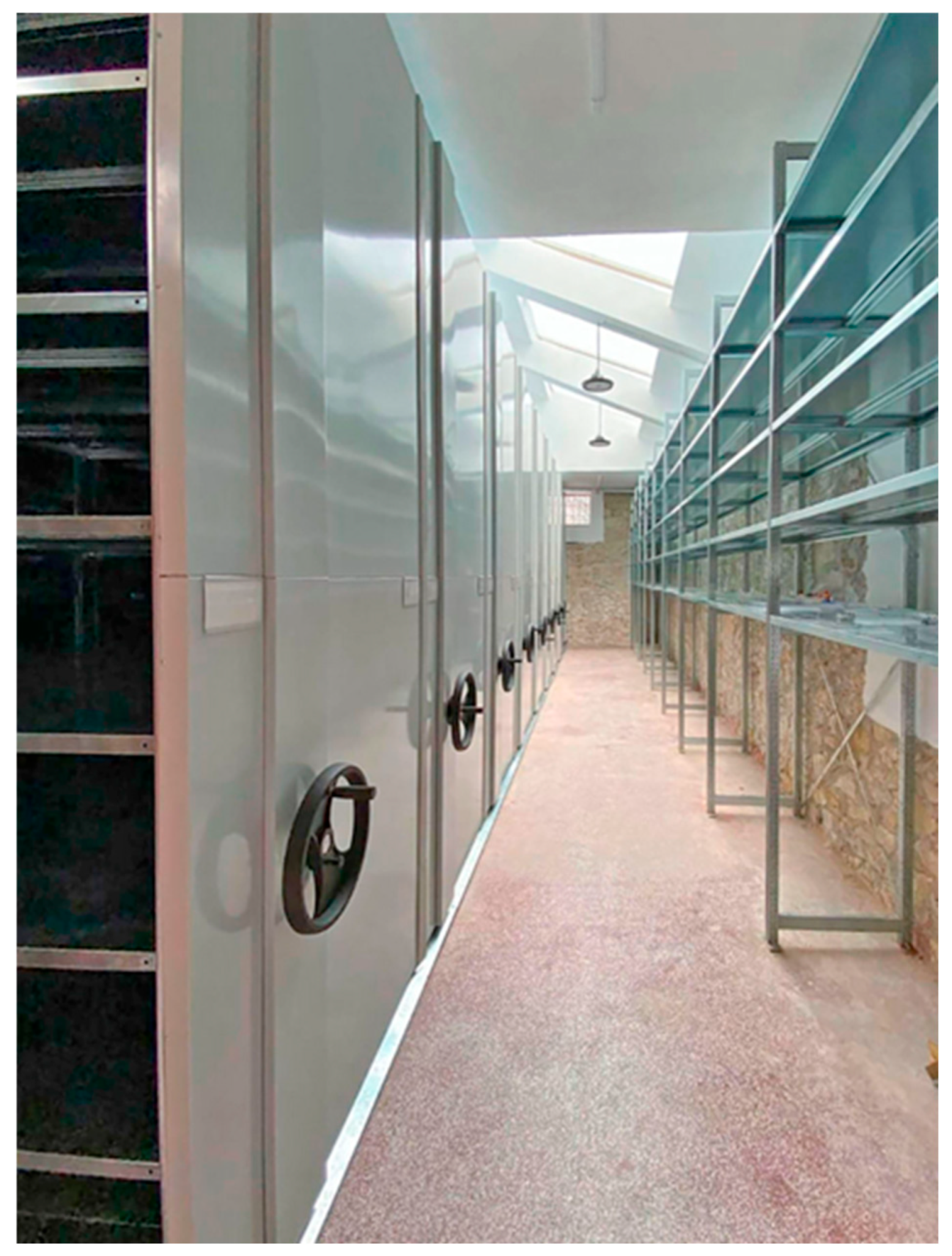
The final act of the operation was the installation (23 April–2 May 2025) (
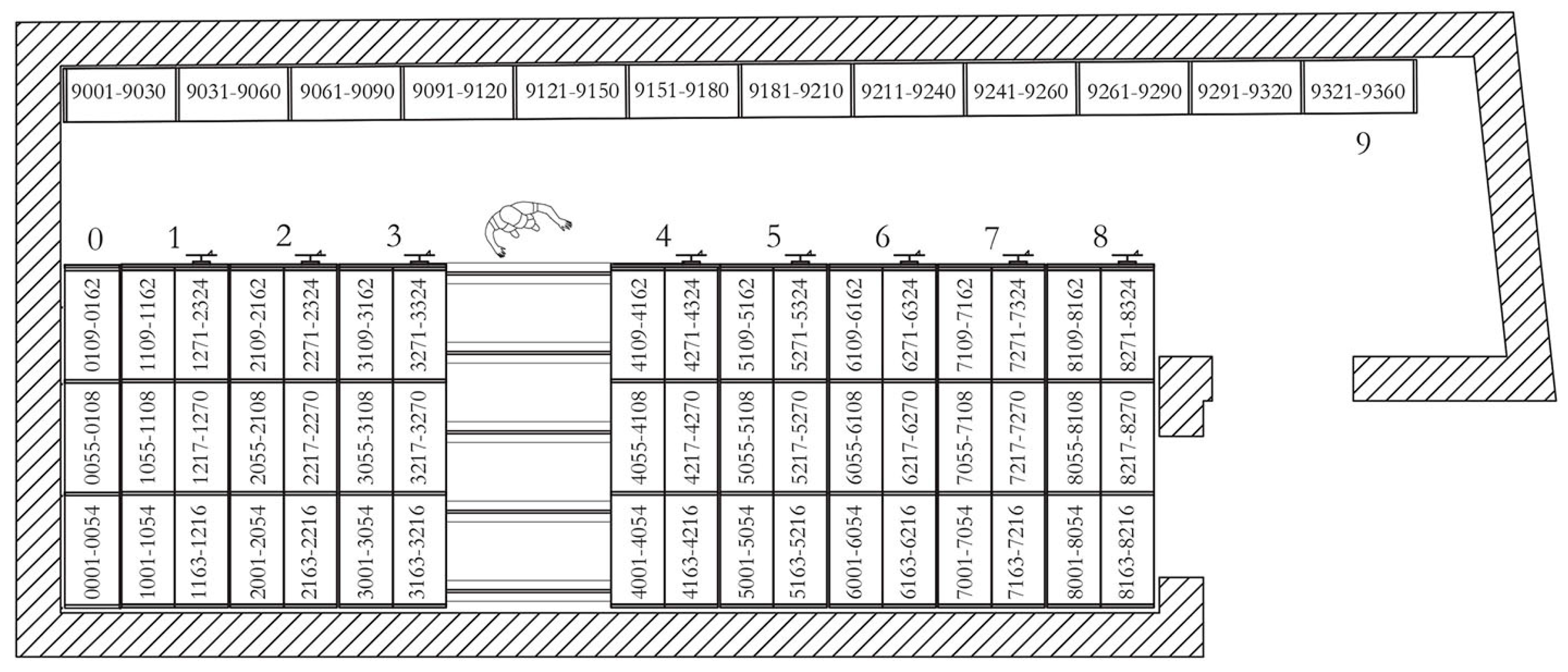
Table 1) of a new compact-shelving system for the Stratigraphic Museum by ICAM s.r.l., comprising eight mobile compactors (COMPATTA LIGHT handwheel shelving, 324 boxes each), a fixed west compactor (162 boxes), and a northern shelving unit (360 spaces, with the lower levels reserved for large vases), for a total capacity of 3114 box spaces (
Figure 12). A clear numerical logic now governs the spatial organisation (
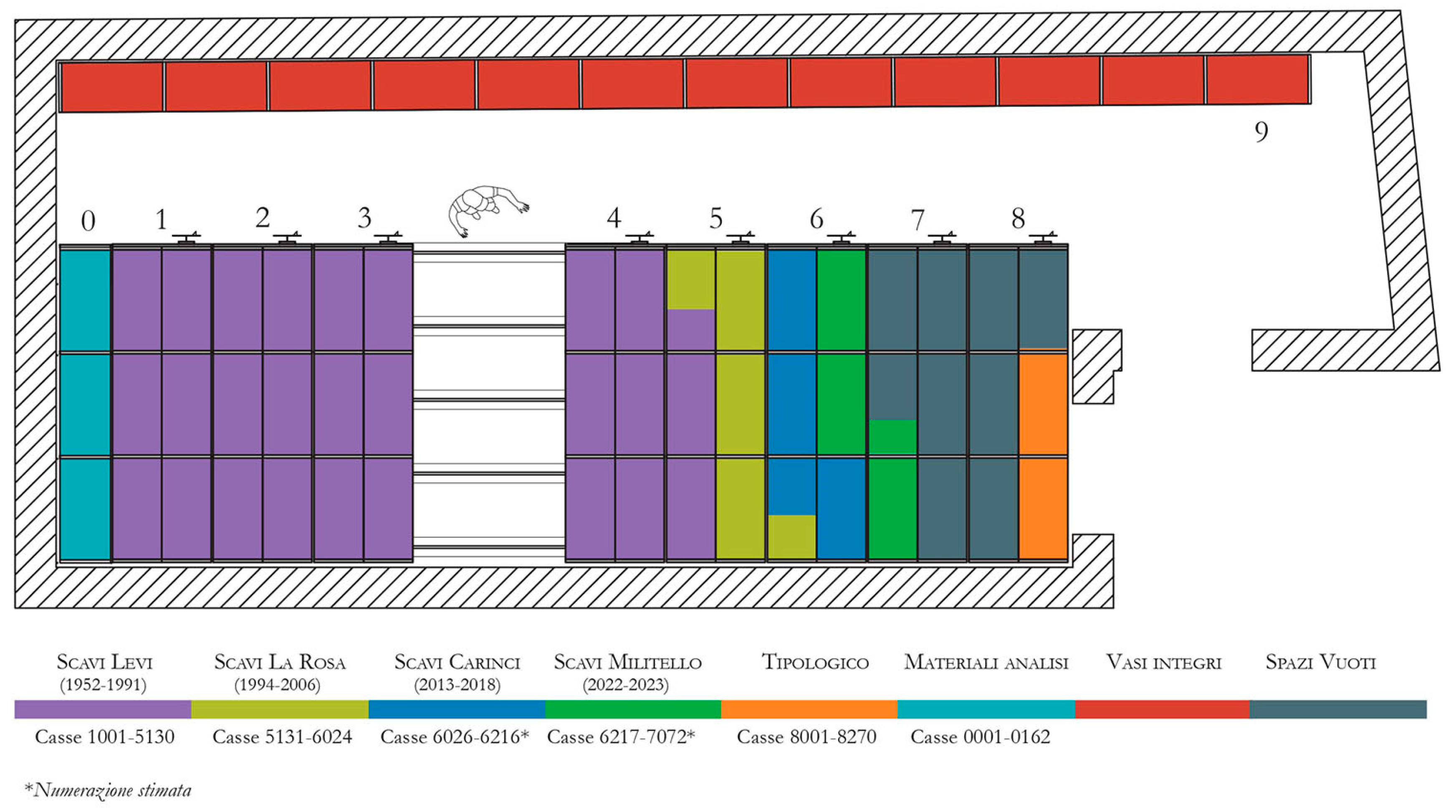
Figure 13): compactors are numbered west–east, with boxes arranged top–bottom, left–right (e.g., compactor 1: boxes 1001–1324; compactor 2: 2001–2324; west fixed unit: 0001–0162; north shelving: 9001–9360). Mostly a chronological distribution of materials is followed, from Levi’s 1950s campaigns through the more recent excavations by La Rosa, Carinci, and Militello, while the latter portion of the eighth compactor is reserved for the typological collection and other special materials (
Figure 14). The west fixed compactor houses finds destined for specific analyses, and the northern shelving retains large and intact vessels from the earlier layout. Overall, the transferal of the 1917 original wooden drawers into 1604 new boxes resulted in a net saving of more than 300 units. At present, 57% of the total capacity is occupied, while 24.9% remains available for future excavations.
The transfer highlighted a longstanding challenge: each warehouse had maintained its own inventory, often derived from paper lists produced decades earlier. Terminological inconsistencies abounded, especially in the designation of site areas, palace quarters, and contexts. Some records contained minimal information; others reflected idiosyncratic preferences of individual excavators. The 2024–2025 project produced, for the first time, a unified inventory of all seven warehouses. Implemented in Microsoft Excel and designed for future integration into GISs, the inventory standardized descriptors and created a coherent dataset. Each entry included warehouse number, crate number, excavation campaign, context, date, description, presence of inventoried finds, and material categories (ceramic, lithic, metal, faunal, botanical, etc.).
This unification served three purposes: (1) Harmonization: standardizing decades of heterogeneous documentation. (2) Control: enabling precise correspondence between old and new numbering systems, crucial for reorganization within the compactors. (3) Database creation: quantifying contents and volumes, paving the way for digital integration and future research.
3.6. Seizing the Occasion: Scientific Outcomes
The transfer of the Phaistos materials, an operation that required the physical handling of every crate and every object, created an exceptional opportunity for a comprehensive and direct engagement with the archaeological record preserved in the Stratigraphic Museum. Three major perspectives emerged.
Archaeological and contextual insights. The systematic processing of the crates enabled a full census of the materials from Phaistos, Haghia Triada, and nearby sites, producing a focused and more integrated perception of the corpus. Particularly striking was the volumetric predominance of Neolithic materials—an observation that not only confirms the significance of early settlement phases but also reflects the meticulous collection of still poorly known assemblages. The review also brought to light contexts that had remained unpublished, including the cremated human remains from the so-called Tomba del Mulino, excavated in 1954 during the construction of the road to Phaistos [
98]. At the same time, encountering entire ceramic series in rapid sequence sharpened the operators’ individual research sensibilities: some noted associations of Neolithic objects, others identified rare pieces of Kamares ware, sought parallels for the Late Minoan period, or isolated traces of the Early Iron Age. These ‘unexpected associations,’ generated in the basement of Hagioi Deka, exemplify how large-scale logistical operations can advance specialized archaeological inquiries.
History of archaeological practice. The transfer offered an unparalleled view of the evolving methods of conservation and documentation within the history of the Italian Mission. The transition from pencil-written notes on paper to plastic tags marked with permanent marker illustrates not only changes in materials employed, but also demonstrates the gradual shift from descriptions of locales based on depths of excavation and nearby fixed points towards the terminology and logic of modern stratigraphical excavation. The progressive predominance of plastic over cardboard and wood in internal crate subdivisions likewise traces the broader transformation of archaeological procedure.
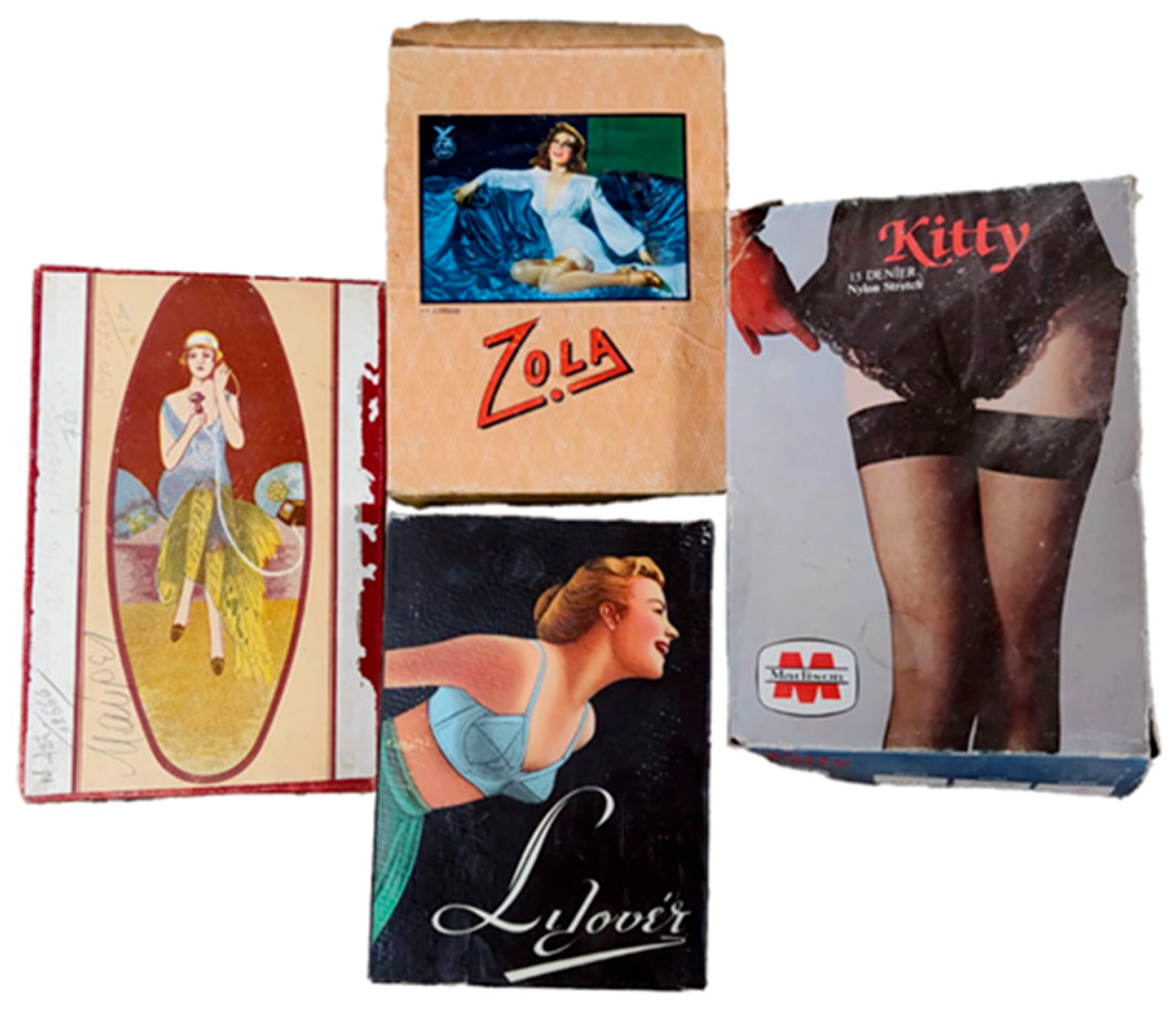
Meta-excavation: the traces of predecessors. The operation also revealed a small archive of past working lives. Vintage commercial packaging, such as for women’s clothing, cigarette boxes and hosiery packages, reused as containers for fragile finds (
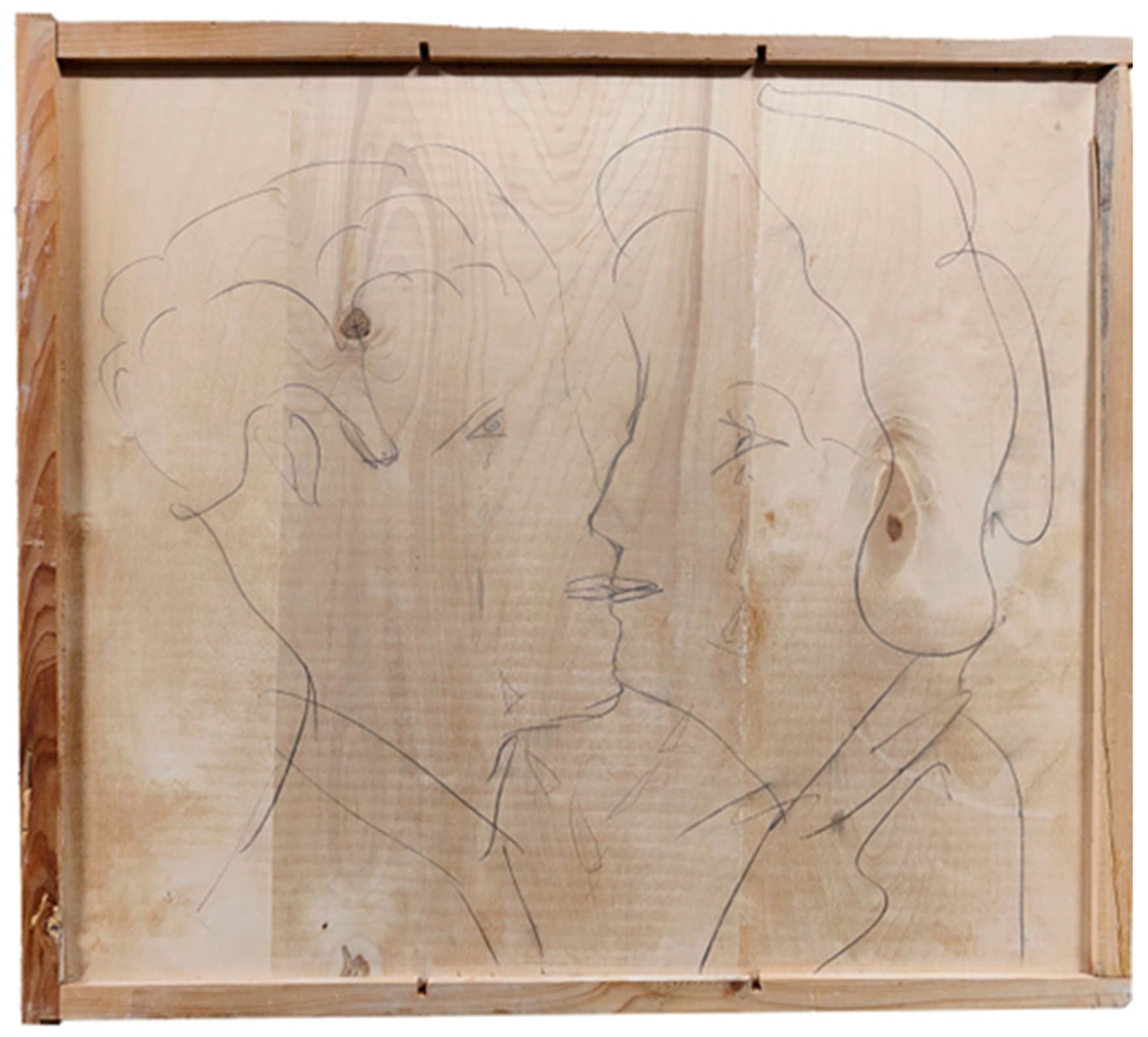
Figure 15), testify to pragmatic and ad hoc conservation solutions before the widespread adoption of plastic bags, while simultaneously reflecting the social and material worlds in which earlier archaeologists lived. Alongside these repurposed objects, pencil sketches discovered inside several 1950s wooden crates offered more personal glimpses: among them a refined drawing of a ‘tragic kiss’ between two lovers (
Figure 16). Although their creators remain unidentified, these images constitute intimate records of emotions, humour, and downtime during the early years of the Mission. Together, these traces underscore that warehouses preserve not only archaeological artefacts but also fragments of the histories and personalities of those who excavated them.



 ,
,