Article

Integrated Environmental Monitoring for Heritage Conservation: The Case of the King’s Apartment in the Royal Palace of Turin

by
Valessia Tango
1,
Laura Guidorzi
2,3,
Mariagrazia Morando
4,
Alice Cutullè
5,
Sergio Enrico Favero-Longo
4,
Silvia Ferrarese
2,
Davide Bertoni
2,
Tommaso Poli
1,
Maria Beatrice Failla
5 and
Dominique Scalarone
1,*
1
Department of Chemistry, University of Turin, Via Pietro Giuria 7, 10125 Turin, Italy
2
Department of Physics, University of Turin, Via Pietro Giuria 1, 10125 Turin, Italy
3
Istituto Nazionale di Fisica Nucleare, Section of Turin, Via Pietro Giuria 1, 10125 Turin, Italy
4
Department of Life Sciences and System Biology, University of Turin, Viale Mattioli 25, 10125 Turin, Italy
5
Department of Historical Studies, University of Turin, Via S. Ottavio 20, 10124 Turin, Italy
*
Author to whom correspondence should be addressed.
Heritage 2025, 8(12), 520; https://doi.org/10.3390/heritage8120520
Submission received: 23 October 2025 / Revised: 28 November 2025 / Accepted: 8 December 2025 / Published: 10 December 2025
(This article belongs to the Special Issue History, Conservation and Restoration of Cultural Heritage)

Abstract

The conservation of cultural heritage is highly influenced by environmental factors, including chemical and biological air quality and microclimatic conditions. Understanding their combined effects is essential for developing preventive conservation strategies. This study focuses on the indoor air quality in the King’s Apartment in the Royal Palace of Turin (Italy), a historic building lacking air-conditioning systems, where a multidisciplinary approach was applied to assess the conservation environment. Continuous monitoring of Total Volatile Organic Compounds (TVOC), particulate matter (PM2.5 and PM10), temperature and relative humidity was performed between March 2024 and July 2025 using portable sensors; aerobiological analyses were carried out through active and passive sampling, while volatile compounds were identified via SPME-GC/MS. Pollutants and biological monitoring revealed fluctuations influenced by microclimatic variations and spatial position. Notably, results showed that one room exhibited the highest levels of concern across all monitoring activities, representing the most vulnerable environment. The use of a multidisciplinary approach enabled a comprehensive understanding of the environmental conditions affecting the King’s Apartment, highlighting the relevance of collaboration in heritage science to guide evidence-based preventive conservation strategies.

1. Introduction

The integration of multiple disciplines in the study of conservation is essential to better understand the complex interactions between the constituent materials of cultural heritage and their surrounding environment. In addition, the knowledge of conservation history provides valuable insights into the transformations and interventions that may have affected the artworks and the objects over time.
Within this framework, the present work was carried out through the collaboration of research teams from the Departments of Chemistry, Physics, Biology and Historical Studies at the University of Turin focusing on the case study of the King’s Apartment in the Royal Palace of Turin (Italy). This multidisciplinary approach integrated historical perspective with scientific analyses, supporting preventive conservation strategies based on evidence and reflecting the inherently integrated nature of heritage science. The scientific activities considered key parameters influencing conservation environments, including chemical and biological air quality and microclimatic conditions.
In recent decades, indoor air quality has attracted growing scientific attention in cultural heritage environments [1,2,3,4,5,6,7,8,9,10,11,12]. Pollutants and suspended particles, including the bioaerosol, are considered a potential risk for the correct conservation of works of art, since they can initiate or accelerate chemical and physical degradation [1,13,14] as well as biodeterioration processes [15,16]. It is well known that pollutants and particles of biological origin can be dangerous also for human health [17,18] and in the context of museums and heritage sites, staff and visitors may experience prolonged exposure, making the control of indoor air quality crucial not only for conservation purposes but also for health and safety. Pollutants may originate from outdoor sources, such as traffic emissions, industrial activities, and combustion, which can infiltrate into indoor environment, where contaminants sources are also present: emissions can originate from construction and finishing materials, display cases, furniture, conservation treatments, cleaning agents and the heritage objects themselves [5,13,14].
Among the wide range of pollutants, Total Volatile Organic Compounds (TVOC) pose a serious risk and the evaluation of their concentrations is of fundamental importance in heritage conservation environments. These compounds can interact with cultural materials, leading to physical alterations, corrosion, discoloration, polymer degradation or changes in chemical composition that compromise their conservation [5,12,19].
The threshold limits for air pollutant concentrations in museums are not universally regulated but research institutes and conservation organizations in various countries [19], including the Canadian Conservation Institute [13] and the Getty Conservation Institute [5] defined recommendations. These recommendations suggest that TVOC concentrations up to approximately 200 ppb are generally considered tolerable for most collections, although continuous monitoring is advisable to detect any fluctuations or emerging sources. Concentrations between 200 and 500 ppb indicate a moderate risk, suggesting the application of preventive or corrective mitigation measures. Levels exceeding 700 ppb are considered potentially harmful, not only to sensitive materials but also to human health, given the possible presence of irritants, sensitizers, or toxic compounds within the TVOC mixture [17]. Maintaining TVOC concentrations below the threshold is critical for risk management strategies, since this contemplates not only periodic instrumental monitoring but also a proactive approach for the identification of the sources and their eventual mitigation or elimination before they become a serious risk.
Another potential harm for cultural heritage is particulate matter (PM), a complex mixture of solid particles suspended in air, varying widely in size, composition, and origin. PM is generally classified by aerodynamic diameter, with two widely monitored fractions: PM10 (particles with a diameter ≤ 10 µm) and PM2.5 (particles with a diameter ≤ 2.5 µm) [2,8].
From a health perspective, PM2.5 is considered more harmful than PM10 because of its deeper penetration into the respiratory system and its ability to translocate into the bloodstream, contributing to cardiovascular, respiratory, and systemic effects. The guidelines by the World Health Organization and Europe Commission set the 24 h mean exposure limits at 15 µg/m3 for PM2.5 and 45 µg/m3 for PM10 [17,20].
In heritage conservation, PM is also of concern for its impact on cultural materials as it can deposit on the surface of the object and interact with it. Coarse particles may cause soiling and abrasion, while fine particles can penetrate porous materials, induce chemical degradation, and contribute to the deterioration of pigments, metals, and organic substrates [2,13,21]. Limits for PM concentrations inside cultural buildings are not established; however, it is possible to refer to guidelines proposed by national and international organizations. The Italian Ministry of Cultural Heritage and Activities, through the Ministerial Decree of 10 May 2001 [22], recommends a threshold value of 20–30 µg/m3 for PM10. For PM2.5, the adopted reference limit corresponds to the ASHRAE maximum value of 10 µg/m3 [23].
Airborne microbes, including fungal aerosols (mycoaerosols), also influence the indoor air quality, as they can determine adverse health effects including allergies, infections and inflammations [24]. In the case of museums, libraries and other indoor heritage sites, airborne fungal spores can thus threaten operators and visitors, but they also pose a potential risk of biodeterioration to the heritage materials, as under suitable nutrient and microclimatic conditions they can germinate and start colonization [15,25]. Accordingly, aerobiological monitoring has been long included in the recommended practices for preventive conservation [26].
Despite this growing attention to indoor air quality, numerous studies have focused on understanding the microclimate conditions in collection spaces. However, as highlighted in the review by Vergelli et al. [27], investigations on organic chemical species in indoor conservation environments remain limited, and continuous monitoring devices are still underused in cultural heritage settings compared to their widespread application in health-related studies. Moreover, to the best of the authors’ knowledge, most studies have focused on a single type of monitoring (microclimate, aerobiology, or gaseous pollutants) or on combinations of two of them [21,28,29,30]. Integrated monitoring approaches covering all three aspects remain uncommon, and the few existing examples [4,31,32,33], generally rely on measurements conducted over relatively short periods.
The present study shows the results of the monitoring activities carried out in rooms of the King’s Apartment in the Royal Palace of Turin (Italy), with the aim of defining the microclimatic and air-quality conditions of this environment. Through the systematic and reasoned collection of data and their interpretation, the study provides valuable elements for planning preventive conservation actions.
The proposed monitoring plan combines low cost continuous instrumental measurements of microclimatic variables, TVOC and particulate matter (PM2.5 and PM10) with identification of chemical species through solid-phase microextraction coupled with gas chromatography mass spectrometry (SPME-GC/MS). The concentration of fungal spores, both viable and non-viable, and distinguished in different morphological classes, was also monitored using a Hirst-type volumetric sampler.
This integrated approach not only allows for the quantification of pollutant concentrations but also provides qualitative insight into their chemical nature, allowing a better understanding of potential emission sources. Furthermore, the study reveals significant spatial and temporal variations in pollutant levels that are critical for informing conservation strategies.

2. Materials and Methods

2.1. Historical and Environmental Context

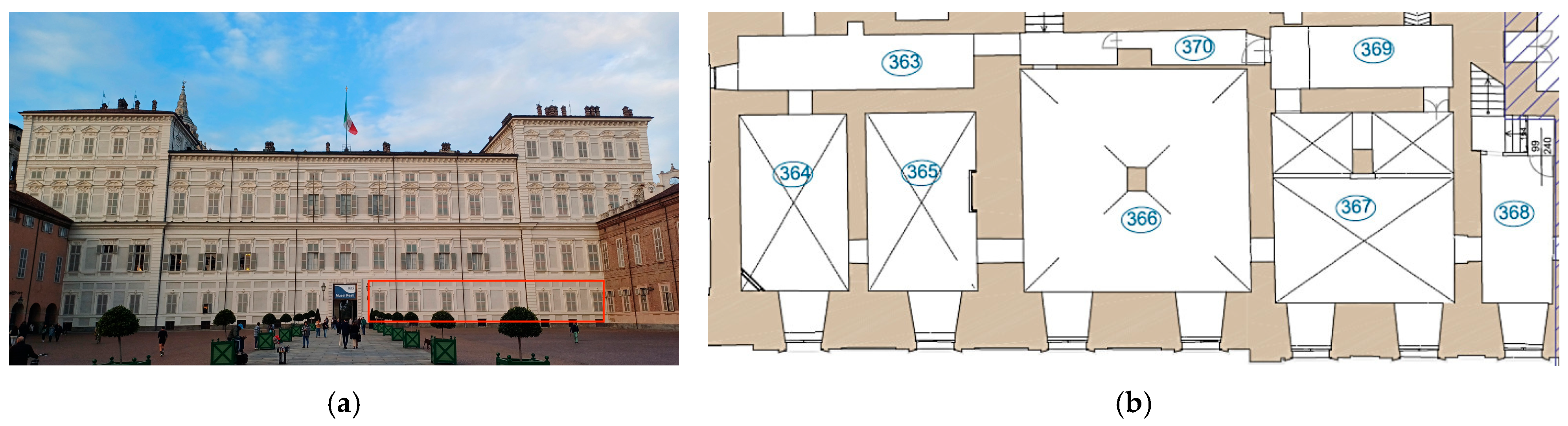
The King’s Apartment, located on the ground floor of the Royal Palace of Turin, Italy (Figure 1a), owes its name to Vittorio Emanuele III, King of Italy, who stayed there between the 1920s and 1946. Designed by Ascanio Vitozzi (1539–1615) and then completed by Maurizio Valperga (1605 ca–1688) and Carlo Morello (†1665), it is composed of 5 principal rooms along with several connecting and service spaces overlooking the Piazzetta Reale, a small external courtyard located within the Palace complex.
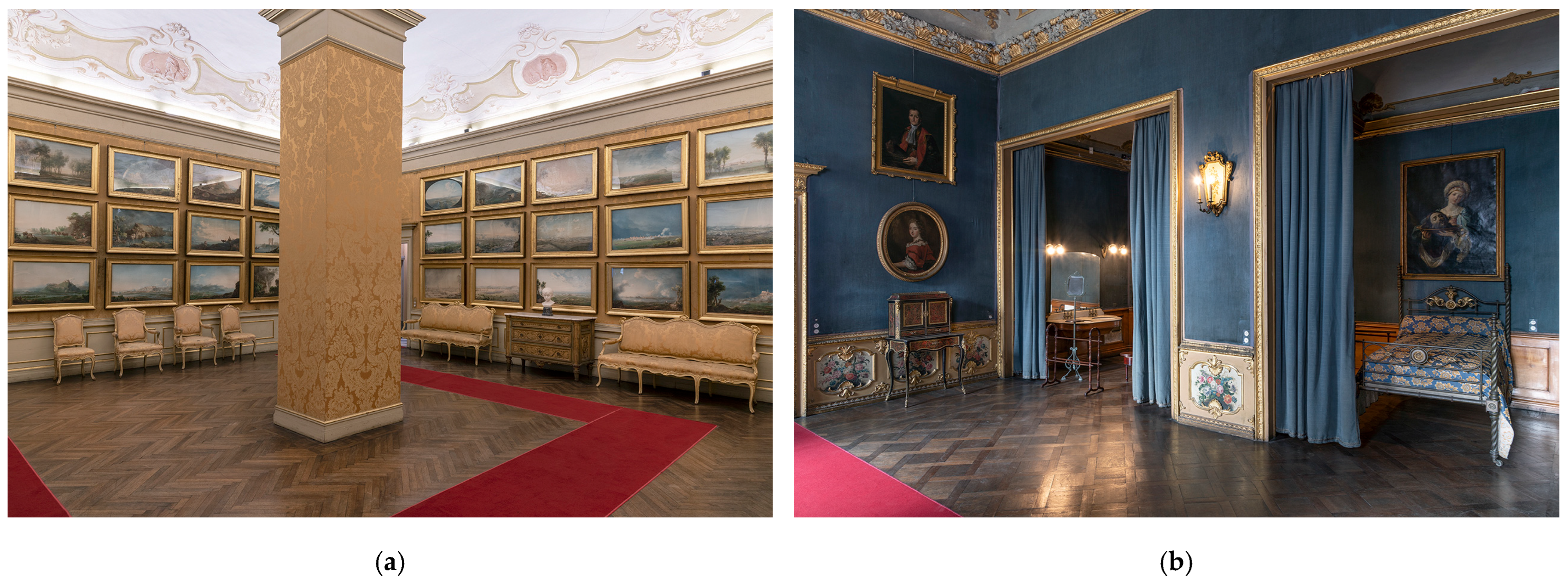
The apartment is in a generally good state of conservation, with some critical issues. It still contains various valuable furnishings, precious objects, and works of art (Figure 2). A brief description of the various rooms and their main features is provided in Table 1.
As Clemente Rovere testifies in his Description of the Royal Palace of Turin [33], from the second half of the 17th century onwards, the Apartment served as the accommodation of the Court nobles.
In the summer of 1693, during the reign of Vittorio Amedeo II (1666–1732), the decoration of the rooms of the King’s Apartment began. In 1753, by order of His Majesty Carlo Emanuele III, based on a design by Benedetto Alfieri, new interventions were carried out, mainly concerning the decorative apparatus of the late 17th century, which was removed.
At the beginning of the 19th century, the Apartment was the seat of the French governor of Turin. Later, during the reign of Carlo Alberto (1831–1849) many rooms were radically renovated under the direction of Pelagio Palagi (1775–1860). From 1870, it became the home of Princess Maria Clotilde (1843–1911), daughter of Vittorio Emanuele II and Queen Maria Adelaide.
When in 1925 the crown prince Umberto (1904–1983) settled on the second floor in what had been the apartment of the King and Queen, King Vittorio Emanuele III (1869–1947) moved into the Apartment, which has since taken on its current name.
With the birth of the Republic in 1946, it became state property and was transformed into a museum, partially opened for the first time in 1963 on the occasion of the Piedmont Baroque Exhibition curated by Vittorio Viale, and today it is still only opened on certain occasions.
With no active heating or air-conditioning systems, the internal environmental conditions reflect the historical character of the building, while also presenting unique challenges for the preservation of the rooms.
During the monitoring period presented in this study (March 2024–July 2025), the apartment remained closed to the public, with access limited to sporadic guided visits. In the weeks following July 2025, regular public access was restored, and environmental monitoring is currently ongoing to assess the impact of this change in visitor presence on indoor air quality.
To provide an external reference framework for the present study, we referred to two reports published by the Regional Agency for the Protection of the Environment of the Piedmont region (Agenzia Regionale per la Protezione Ambientale, ARPA Piemonte), [34,35], which summarize the state of outdoor air quality in the metropolitan city of Turin during the year 2024. These outdoor data were used solely as a contextual indicator of the general air quality conditions in the city since ARPA does not monitor TVOCs but specific pollutants (e.g., benzene, PM2.5, PM10). First, ARPA considers the area of interest of this study (center of Turin) as a traffic-urban area. Both documents indicate that benzene levels in the Turin metropolitan area remained below regulatory limits. As for particulate matter, PM10 meets the annual limit across all stations, although the daily limit exceeded in about 22% of monitoring sites and 2024 showed a deterioration compared with 2023. PM2.5 remained within the annual limit at all stations, with stable or slightly decreasing averages. These outdoor data served as a general background reference for interpreting indoor air quality in the King’s Apartment.

2.2. Methods

Sensors for continuous monitoring of air quality and thermo-hygrometric sensors were positioned in different points of the rooms and at different heights, from 1 m from the ground up to 3 m: the thermo-hygrometric sensors, more numerous, covered the entire area of the apartment, while the sensors for the detection of TVOC and PM were rotated over time at regular intervals in order to obtain information on the spatial (i.e., near the windows and on the opposite side of the room) and vertical distribution (at the level of 1 m from the floor and at about 3 m) of the pollutants.
Continuous TVOC detection was complemented by SPME-GC/MS analysis, which are non-invasive and suitable for historic environments, and allowed for the precise identification of the chemical species involved.
In addition, the air quality assessment was completed by bioaerosol analyses, specifically dedicated to the quantification of fungal spores (mycoaerosols), and carried out with a Hirst-type volumetric sampler [25,36,37].
The information on the types of devices used for monitoring, their placement in the various rooms of the Apartment, and the measurement methods and timing are collected in Table 2, while further experimental and instrumental details on the analyses performed are reported in Appendix A.1.

3. Results and Discussion

3.1. TVOC Monitoring

The analysis of indoor air quality in the five monitored rooms revealed both consistent trends and notable differences in the concentrations of total volatile organic compounds (TVOC). As for TVOC concentrations, substantial variability was observed not only between different rooms but also within the same room, depending on the sampling location.
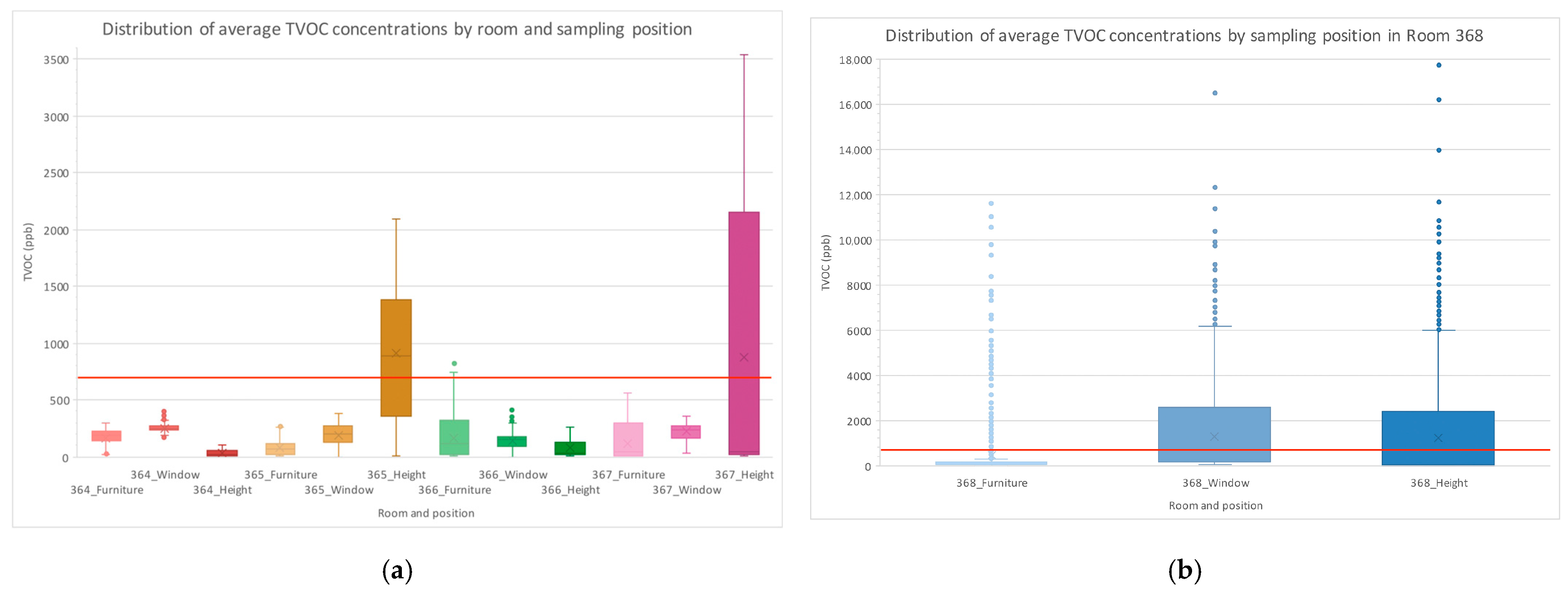
Figure 3 shows the box plots of average TVOC concentrations measured at different positions (furniture level, window and upper height) for each monitored room. Due to the markedly higher concentrations in Room 368, its data were plotted separately to preserve readability and allow a clearer comparison among Rooms 364–367. The data highlight a marked spatial heterogeneity, with higher values near the windows and at upper sampling positions. In particular, as already mentioned, Room 368 displays significantly higher concentrations compared to the other rooms. This suggests the presence of significant emission sources, whether internal or external, which warrant further investigation and targeted mitigation. It is worth noting that this space remains closed most of the time, limiting air exchange and allowing pollutants from internal sources (such as furnishings, finishes, and stored objects) to accumulate.
These results suggest that TVOCs represent a moderate risk for the conservation of cultural heritage objects in the King’s Apartment, as concentrations were generally below the commonly accepted threshold of 700 ppb. However, pollutant levels were not homogeneously distributed within the rooms: both vertical stratification and proximity to windows significantly influenced TVOC concentrations. The higher concentrations of TVOCs detected near windows may be attributed to the infiltration of outdoor pollutants. Notably, the anomalously high values observed in Room 368 point to the need for targeted diagnostic investigations aimed at identifying and mitigating the specific sources responsible. Data concerning standard deviations of the average values from each analyzed period are provided in Appendix A.2. The analysis of standard deviations further reveals marked variability, emphasizing the sensitivity of these compounds to environmental fluctuations and room-specific conditions.
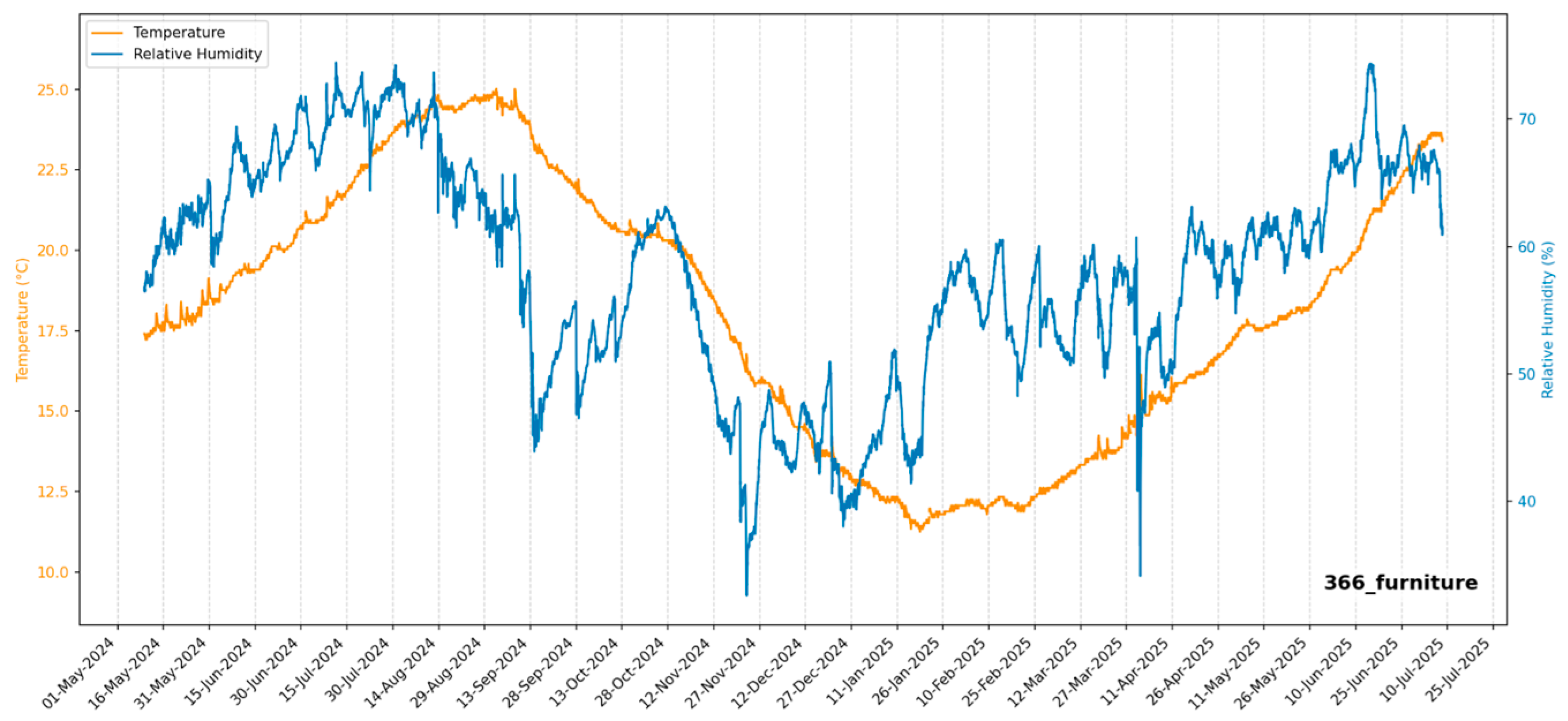
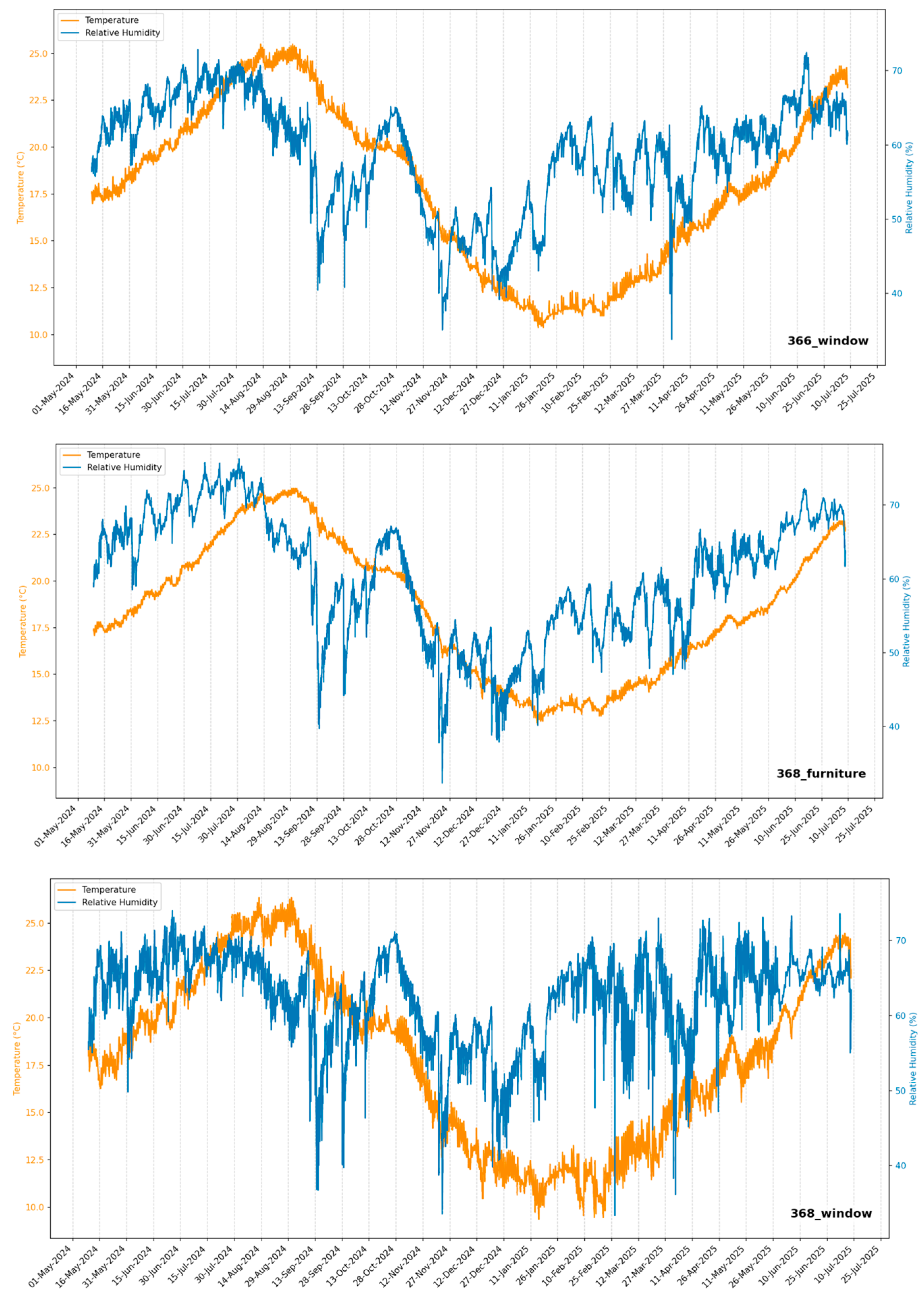
Moreover, the data show a seasonal variation. During the monitored period, T ranged between 10.9 and 22 °C during the colder months and 16.8 and 25.2 °C during the warmer months, while RH varied between 31.4 and 67.1% in the colder months and 39.8 and 76.3% in the warmer months. In Figure 4, T and RH values collected in Rooms 366 and 368 during the continuous monitoring are reported.
It is interesting to notice how, in such an isolated environment, each peculiar event has a great impact on the room microclimate. As an example, the abrupt drop in RH registered on 31 March 2025 corresponds to a private visit to the Apartment: the entrance door leads directly into Room 366, and the visit probably allowed dry air to suddenly enter the room. This effect is perceived in Room 368 only near the window, where single glass and historical wooden frames do not guarantee optimal insulation.
A marked seasonal trend was observed, with TVOC concentrations generally higher during the warmer months (April–September) and lower during the colder months (October–March). This pattern corresponds to variations in relative humidity, supporting the widely recognized relationship between microclimatic conditions and increased emission rates of volatile organic compounds from indoor materials and surfaces. Studies have demonstrated that higher T and RH can accelerate VOC release by enhancing the diffusion rate through material pores and by promoting the hydrolysis of certain chemical compounds, which increases their volatility [38,39,40].
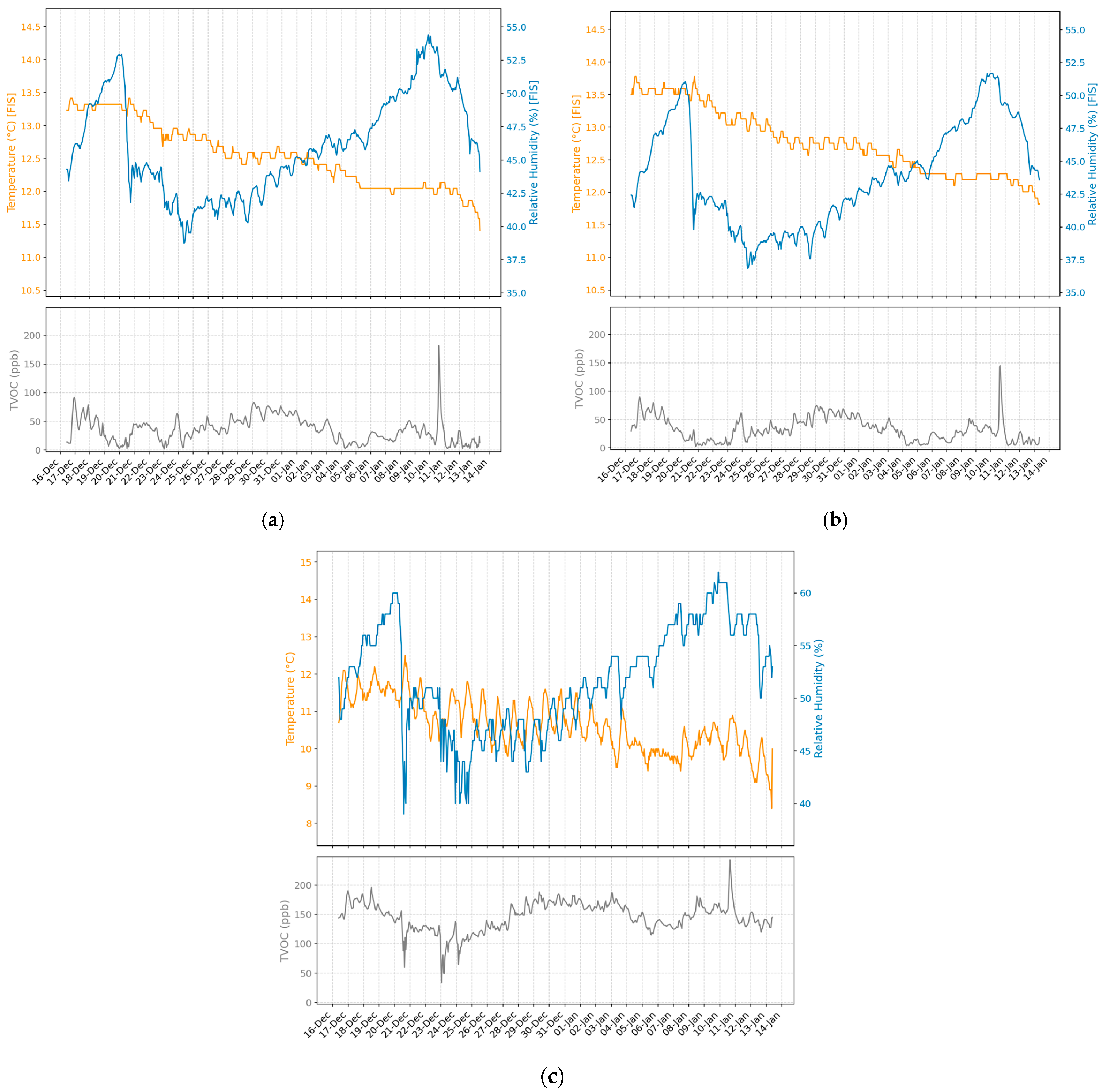
An example of a TVOC concentration trend, recorded between December 2024 and January 2025 in Room 367, is shown in Figure 5, together with the corresponding temperature (T) and relative humidity (RH) values.
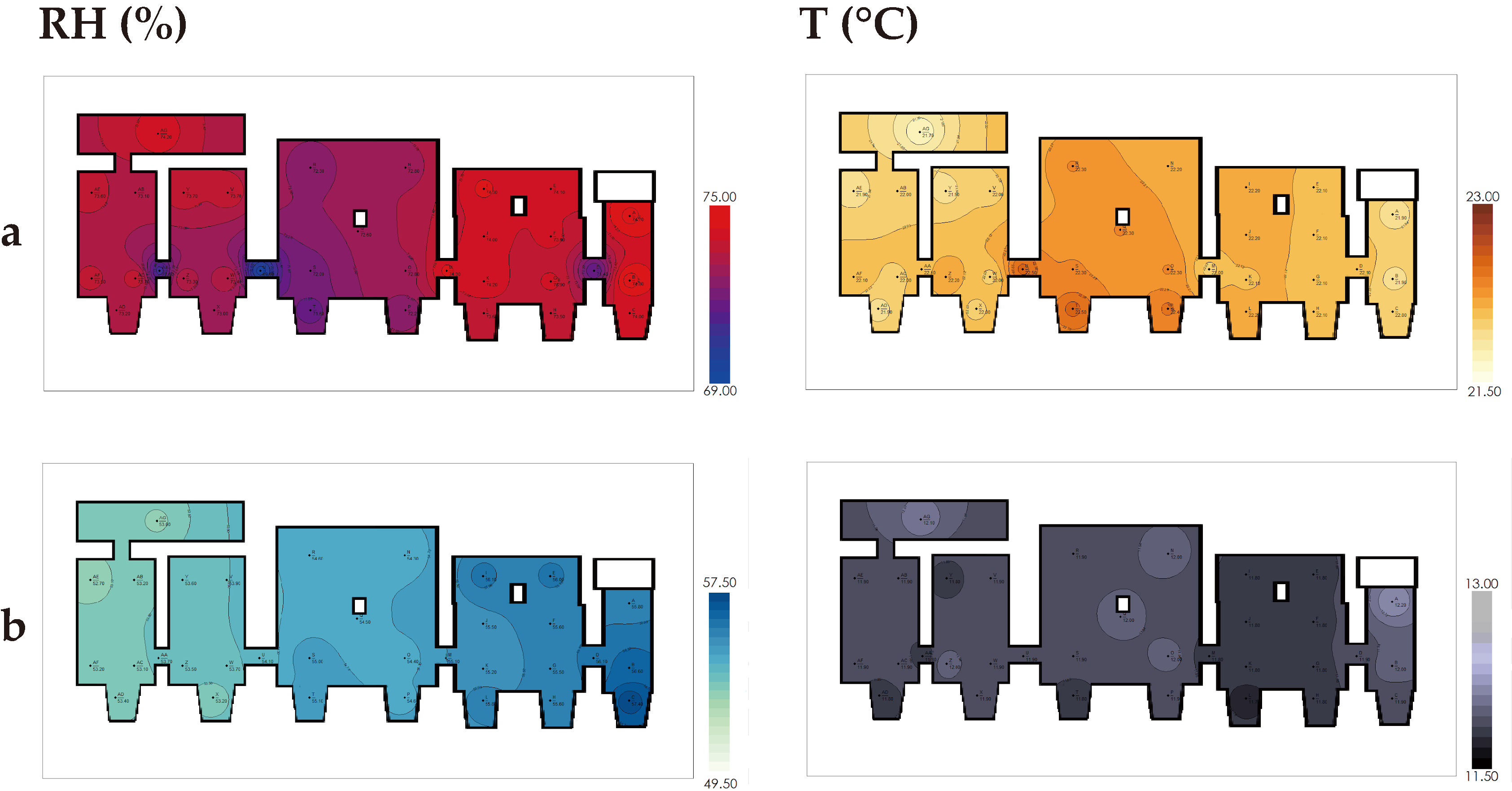
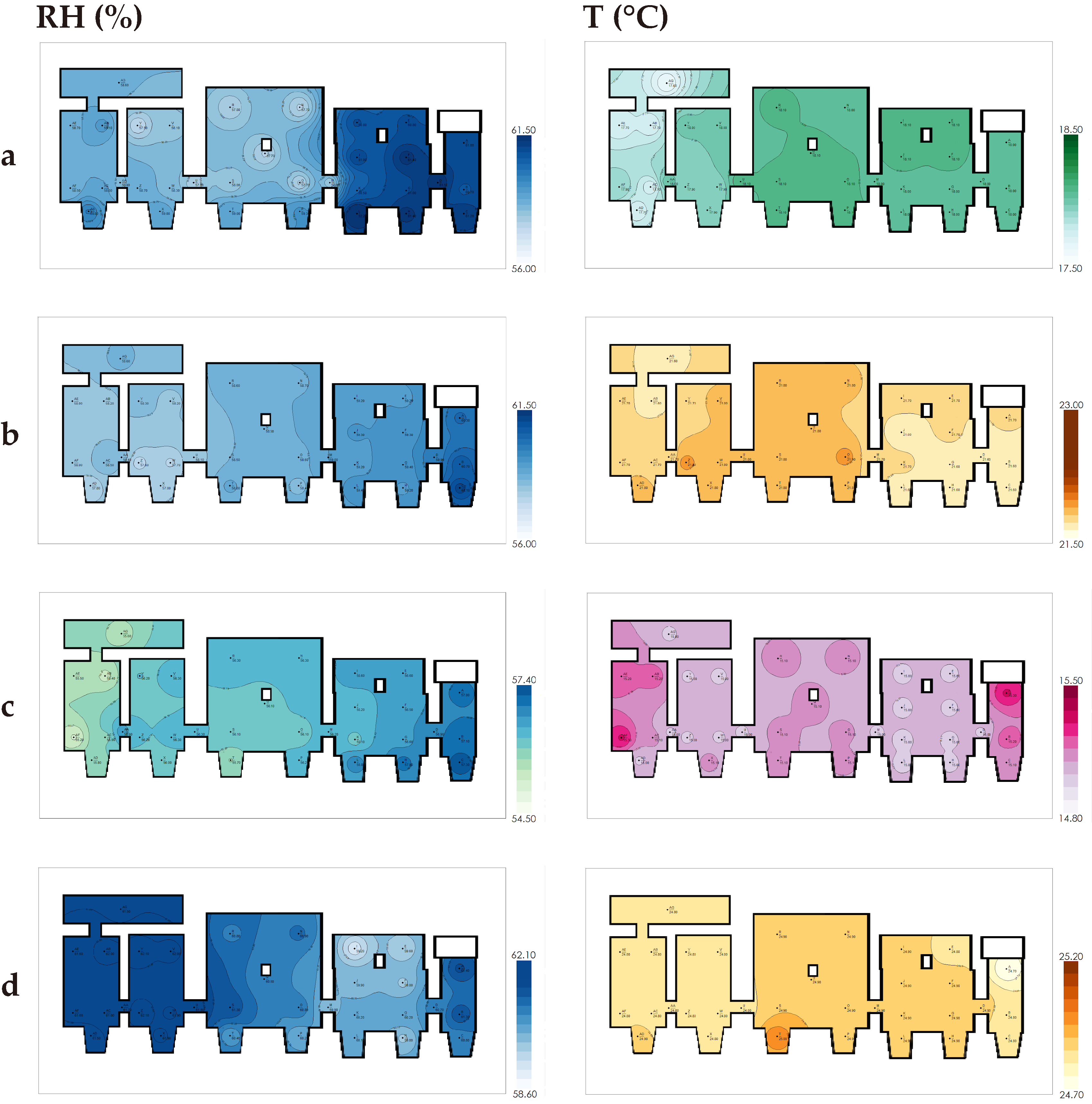
Spatial differences are visible: concentrations measured near the window were consistently higher than those recorded in the furniture area, suggesting possible infiltration of outdoor pollutants or enhanced emission processes induced by sunlight and temperature gradients. The peak observed on 10 January 2025 in Room 367, with higher values of TVOC near the window, corresponds to a particularly windy day, with gusts of wind up to 39.3 km/h, reinforcing the hypothesis of a relevant external source for pollutants. The observed variability suggests a possible correlation with RH, as higher TVOC levels tend to coincide with periods of increased RH, which is consistent with the known increase in VOC emissions from indoor materials due to humidity. Figure 6 shows that Room 368, where the highest values for TVOCs were found, is always the most humid room, even during the winter when it becomes the warmest room due to the heating system active in surrounding floors and buildings.

3.2. PM Monitoring

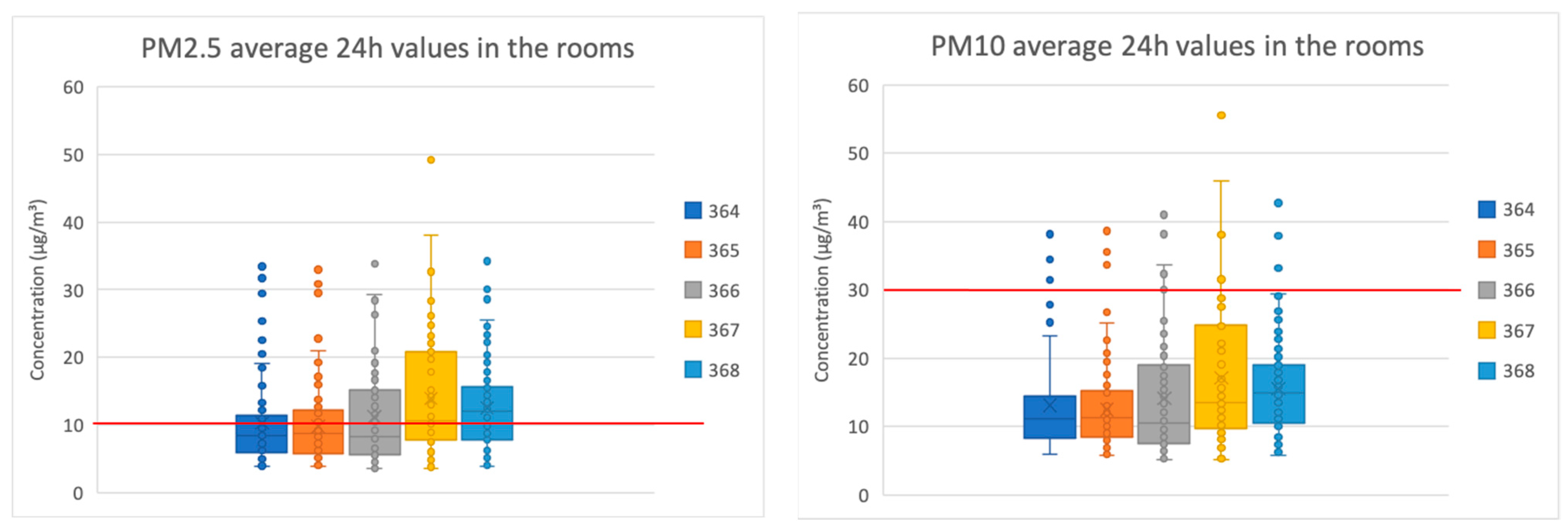
Particulate matter (PM2.5 and PM10) was monitored in all five rooms of the King’s Apartment. Daily averages of PM2.5 and PM10 monitored in the entire period for each room are shown in Figure 7.
The data revealed standard deviations ranging between 4 and 14 µg/m3, indicating a variability of PM levels over time, suggesting dynamic pollutant conditions, likely influenced by external infiltration and/or resuspension processes.
Within this framework, the measured PM2.5 concentrations consistently exceed the recommended limits for both heritage conservation and human health. PM10 levels generally remain within acceptable values, although occasional exceedances of the Italian recommendation threshold are observed.
This finding suggests a chronic exposure to airborne particulate pollutants, which may pose risks both to human health and to the conservation of sensitive materials. It is important to consider preventive strategies and corrective measures, including improved air filtration or source control and the mitigation of the pollutant by increasing ventilation and air-exchange rates.

3.3. SPME-GC/MS Analysis

Solid-phase microextraction (SPME) coupled to GC/MS represents a powerful and non-invasive tool used in the field of cultural heritage for detecting volatile (i.e., organic compounds that evaporate rapidly at room temperature and can accumulate in closed environments, reacting and causing alterations to objects and works of art) and semi-volatile organic compounds (i.e., organic substances that evaporate more slowly than VOC and can persist on surfaces). In the present study, SPME-GC/MS analysis was performed in the monitored rooms to qualitatively identify specific compounds present in the indoor environment. The results revealed a complex mixture of compounds, listed in Table 3.
Unless otherwise specified, the compounds discussed were detected in all monitored rooms, showing no significant differences in their composition.
A large number of linear and branched alkanes were detected, including nonane, decane, undecane, dodecane, tridecane, tetradecane, pentadecane, and hexadecane, together with their methylated and dimethylated derivatives (3-methylnonane; 2-,3-,4-methyldecane; 3,7-dimethyldecane; 2,6-dimethyldecane; 2-,3-,4-,6-methylundecane; 2,6-dimethylundecane). These compounds are commonly associated with emissions from building materials, cleaning products, furnishings, infiltration from outdoor traffic sources, and are typical markers of indoor air contamination [41]. Moreover, they are volatile organic products associated with cellulose and wood degradation [42,43,44].
Several alkylated benzenes were found (1,2,3-trimethylbenzene; 1,2,4-trimethylbenzene; 1,3,5-trimethylbenzene; 1-ethyl-2-methylbenzene; 1-ethyl-4-methylbenzene; 1,3-dimethylbenzene 1,2,3,4-tetramethylbenzene; 1-ethyl-3,5-dimethylbenzene; 1-ethenyl-3-ethylbenzene; 1-methyl-2-propylbenzene), together with toluene, p-xylene, o-xylene, benzothiazole hexylcyclopentane and pentylcyclohexane. They are considered tracers of traffic-related infiltration and industry-related pollutants [41]. Their persistence in indoor air raises concerns due to their potential reactivity with organic substrates [5]. Methoxy-phenyl oxime is a compound associated with the emission of silicone materials in indoor environments [45]. Benzaldehyde, nonanal and benzyl alcohol may originate from textiles and cellulose and lignin degradation [46]. Benzoic acid has also been identified. As reported by Chianese et al. [7], benzoic acid can originate from the oxidation of toluene, from the degradation of aromatic compounds in engine exhaust, and from ingredients used in fragrances. Bis(2-methylpropyl) esters of butanedioic and hexanedioic acids were identified in rooms 365 and 366, respectively, where oil paintings are present, suggesting possible contributions from resins, paints and solvents [47].
Naphthalene was also detected and may derive from outdoor infiltration (traffic and combustion sources) as well as from past use of naphthalene-containing materials, such as moth repellents [48]. It can still be found after many years, remaining absorbed within the materials and gradually being re-emitted over time [5]. 2-Ethyl-1-hexanol has been detected in room 364 and it has been identified as a typical emission from textiles [49] and as paper degradation product [43,44].
The analysis also revealed the presence of D-Limonene, a common monoterpene frequently detected in museum indoor air, typically linked to the natural off-gassing of wooden materials [50] and often serving as a marker of cleaning products used in maintenance activities.
Finally, camphor has been detected only once, in room 366, and its presence can be ascribable to the use of pesticide in previous conservation treatments [5].
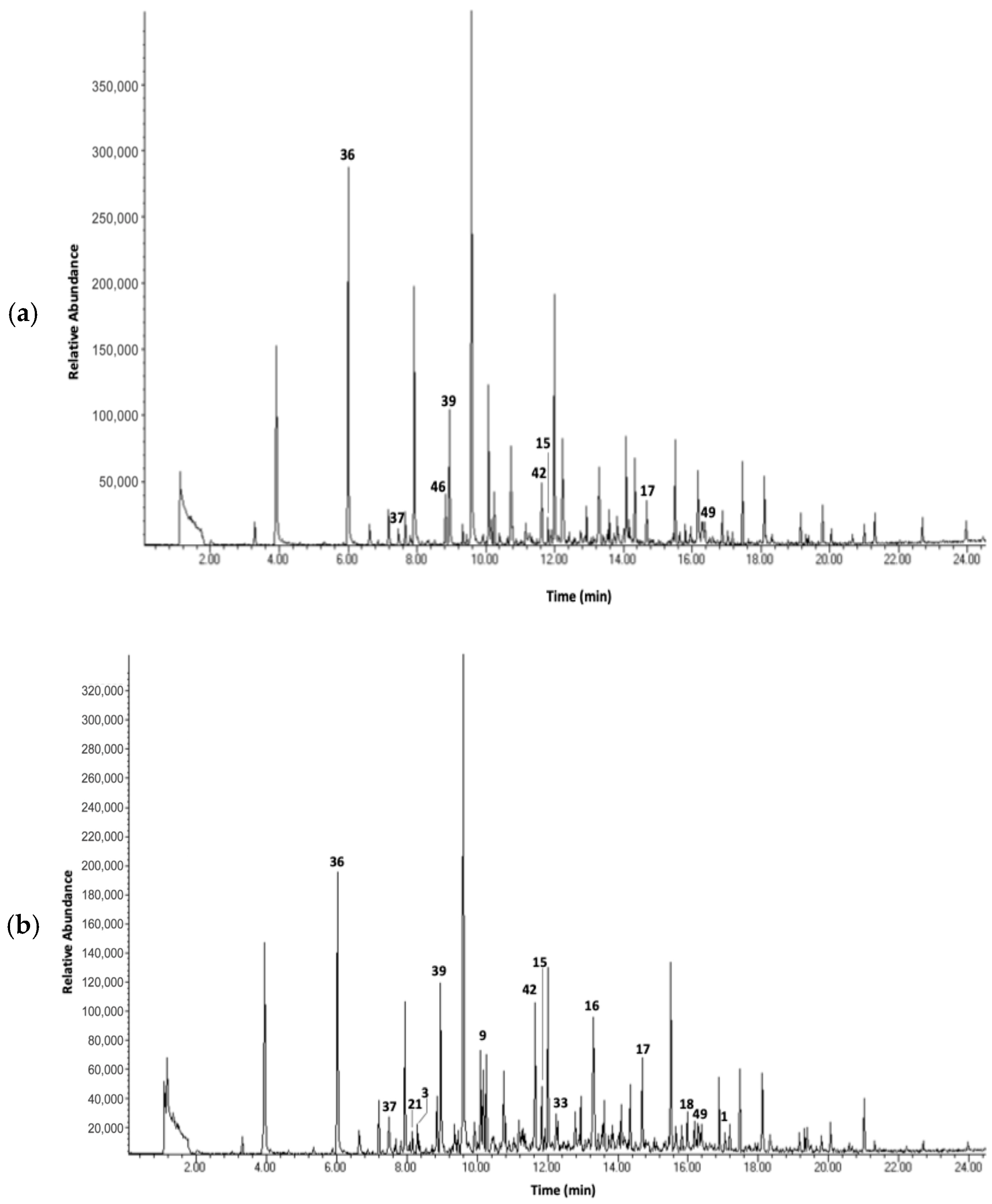
Figure 8 shows two examples of chromatograms obtained by placing the fibers on a piece of furniture and near the window, respectively. A higher presence of alkanes and benzene derivatives can be observed in the chromatogram from the sensor placed near the window, suggesting possible infiltration from the outside.

3.4. Monitoring of Mycoaerosol

Concentrations of fungal spores quantified in the five monitored rooms ranged between 240 and 1224 spores/m3 in April and between 83 and 1716 spores/m3 in July (Table 4). A strong variability, rather than a clear room- or season-related pattern, was the prominent feature. With this respect, the strongly different concentrations registered in July, when similar T (23–24 °C) and RH values (70–75%) characterized all the rooms, suggest some influence from external factors as in the case of PM2.5 and PM10. Nevertheless, the highest concentrations were recorded in room 368 (in July), followed by room 367 (in both April and July), where maxima TVOCs were registered.
Although limits for spore concentration are not regulated and the definition of a threshold for risks related to the mycoaerosol is considered a difficult task (Ministerial Decree [22], §2.8 of the Supplementary document), it is worth noting that the maximum registered concentrations are between one to two orders of magnitude higher than those registered in indoor heritage sites in Italy equipped with air-forced systems and a software-based control of the heating and cooling systems [16].

4. Conclusions

The monitoring campaign conducted in the King’s Apartment of the Royal Palace of Turin provided new insights into the indoor air quality of historic environments closed to the public for extended periods. This study exemplifies the importance of a multidisciplinary approach in heritage conservation, combining chemistry, physics, biology and historical studies to better understand the interactions between cultural materials and their environment and to support conservation strategies. Furthermore, the coupling of relatively complex, time-consuming and costly analyses, such as SPME-GC/MS, with much cheaper ‘black box’ air quality analyzers allows for qualitative comparison and mutual validation.
Continuous sensor-based measurements revealed that TVOC levels were generally below the threshold of 700 ppb, yet unevenly distributed within the rooms, with vertical stratification and proximity to windows emerging as key factors. The anomalously high VOC values in Room 368 (i.e., up to 18,000 ppb), associated with the highest detected spore concentration (i.e., 1716 spores/m3, approximately double the average concentration recorded in the apartment), further underline how enclosed and poorly ventilated spaces can promote pollutant accumulation.
Conversely, concentrations of particulate matter frequently exceeded recommended limits, with PM2.5 often reaching the 24 h mean exposure value of 30 µg/m3, and peaks of fungal spores were remarkable, confirming conditions of compromised air quality that may endanger the long-term preservation of sensitive materials. In the absence of a controlled air-forced system, influences from external factors are unbalanced and may promote conditions threatening material conservation and health.
The complementary use of SPME-GC/MS enabled the identification of a wide range of volatile organic compounds, tracing them back to sources, both internal (such as building materials, furniture, cleaning activities) and possibly external (traffic and industry emissions). The detection of specific markers underlines the importance of chemical characterization in understanding the origin of pollutants and their long-term impact on collections.
By combining continuous monitoring with targeted chemical analysis, this study demonstrates an integrated framework capable of capturing both real-time variations and the molecular fingerprint of indoor pollutants. This approach is particularly relevant in historic buildings, which often lack air conditioning and ventilation systems, and where complex interactions between materials, environmental conditions, and human presence call for multi-layered diagnostics.
Given the potential risks posed by chemical pollutants and biological contaminants, the systematic monitoring and assessment of indoor air quality constitute essential components of preventive conservation. This approach not only enables the identification of pollutant sources but also supports the development of targeted mitigation strategies, thereby reducing the potential for degradation and ensuring the preservation of cultural assets for future generations.


Author Contributions

Conceptualization, D.S.; methodology, S.E.F.-L., S.F., T.P. and D.S.; formal analysis, V.T., L.G., M.M. and D.B.; investigation, V.T., M.M., L.G., S.F. and D.B.; resources, S.F., M.M., S.E.F.-L., D.S. and T.P.; data curation, V.T., S.E.F.-L. and L.G.; writing—original draft preparation, V.T. and L.G.; writing—review and editing, V.T., S.E.F.-L., L.G., A.C. and D.S.; visualization, V.T. and L.G.; project administration, M.B.F. and D.S.; funding acquisition, M.B.F. All authors have read and agreed to the published version of the manuscript.

Funding

The project is funded by the European Union—NextGenerationEU under the National Recovery and Resilience Plan (PNRR)—Mission 4 Education and research—Component 2 From research to business—Investment 1.3, Project CHANGES—Cultural Heritage Active Innovation for Sustainable Society, Spoke 6 “History, Conservation and Restoration of Cultural Heritage” (CUPD53C22002530006).

Data Availability Statement

Data is contained within the article.

Acknowledgments

The authors would like to thank Lorenza Santa, Tiziana Sandri and the Directors of the Royal Palace of Turin, first Annamaria Bava and then Paola D’Agostino, for their valuable cooperation and continuous support throughout the research activities.

Conflicts of Interest

The authors declare no conflicts of interest.

Abbreviations

The following abbreviations are used in this manuscript:
TVOCTotal Volatile Organic Compounds
PMParticulate Matter
ASHRAEAmerican Society of Heating, Refrigerating and Air-Conditioning Engineers
SPMESolid Phase Micro Extraction
GC/MSGas Chromatography Mass Spectroscopy
TTemperature
RHRelative Humidity

Appendix A

Appendix A.1. Experimental Details

TVOC and particulate matter sensors: AirWits mobile sensors by Genano, Espoo, Finland; T accuracy: 0.2 °C; RH accuracy: 2%; TVOC accuracy: 15% of recorded value; TVOC resolution: 0.2% of recorded value; PM accuracy: ±10 µg/m3 (between 0 and 100 µg/m3) or ±10% of recorded value (between 100 and 1000 µg/m3).
SPME-GC/MS analyses: two manual Supelco SPME holders with PDMS/DVB (polydimethylsiloxane/divynilbenzene) fibers (Sigma Aldrich, 57310-U) were used. The gas chromatograph was the Agilent 6890 model, coupled with the Agilent 5973N Mass Detector (both Agilent Technologies, Santa Clara, CA, USA). The GC was equipped with a methylphenyl-polysiloxane cross-linked 5% phenyl methyl silicone (30 m, 0.25 mm i.d., 0.25 µm film thickness) capillary column. The carrier gas was helium (1.0 mL/min). The fiber was exposed inside the injector for 30 s. The following temperature program was used for the gas chromatographic separation: isotherm of 4 min at 50 °C, ramp of 10 °C/min up to 250 °C, isotherm at 250 °C for 5 min. The instruments were controlled by Enhanced Chem Station (MSD ChemStation ver. 9.00.00.38) software and the obtained chromatographic peaks were identified through comparison with the NIST2008 library.
Mycoaerosol analysis: it was conducted by continuously collecting air samples (10 L/min, equivalent to the av. human breathing rate) at 1.5 m from the ground along two periods of ten days in April (-May) and July 2024. In particular, a Hirst-type volumetric sampler VPPS 2010 (Lanzoni, Bologna, Italy) was positioned for 48 h (from 12 p.m. to 12 p.m.) in each of the rooms and the fungal spores impacted on the adhesive-tape during the central 24 h (from 12 a.m. to 12 a.m.) were examined at 400× magnification using a Nikon Eclipse 50i and performing counts along traverses of tangent fields. A datalogger Testo 174H (Testo; Kirchzarten, Germany) was also associated with the Hirst-type volumetric sampler during the aerobiological monitoring.
Thermohygrometric calibrated logger sensors: HOBO-UX100-011A, Onset, Bourne, MA, USA; T accuracy: 0.21 °C; T resolution: 0.024 °C; RH accuracy: 2.5%; RH resolution: 0.05%.
Manual thermohygrometer: Testo 625 (Testo; Kirchzarten; T accuracy: 0.5 °C; T resolution: 0.1 °C; RH accuracy: 2.5%; RH resolution: 0.1%).

Appendix A.2. TVOC Data

Tables of TVOC average, minimum and maximum values divided by room. Relative humidity (RH) is expressed in percentage (%), temperature (T) in degrees Celsius (°C), TVOC in part per billion (ppb). F = Furniture; W = Window; H = Height.
ROOM 364
Table A1. 23 May 2024–20 June 2024.
RHTTVOC AvgTVOC MinTVOC Max
F Mean6819230224238
F St. dev.31252525
W Mean6320280271291
W St. dev.21303032
Table A2. 18 September 2024–20 October 2024.
RHTTVOC AvgTVOC MinTVOC Max
F Mean5423130125138
F St. dev.41686868
W Mean5921251245259
W St. dev51171718
H Mean5322302438
H St. dev.41292929
Table A3. 19 February 2025–18 March 2025.
RHTTVOC AvgTVOC MinTVOC Max
F Mean5513167161175
F St. dev.31333333
W Mean5912233226242
W St. dev.41161716
H Mean5314312439
H St. dev.31161616
ROOM 365
Table A4. 2 May 2024–22 May 2024.
RHTTVOC AvgTVOC MinTVOC Max
F Mean6018208202215
F St. dev.30222223
W Mean5918269260279
W St. dev.31404141
Table A5. 21 October 2024–27 November 2024.
RHTTVOC AvgTVOC MinTVOC Max
F Mean5120262033
F St. dev.92272728
W Mean5718242236251
W St. dev.82727272
Table A6. 19 March 2025–04 May 2025.
RHTTVOC AvgTVOC MinTVOC Max
F Mean5716878194
F St. dev.41343434
W Mean5816113107122
W St. dev.52474748
H Mean5517183176192
H St. dev.41697069
ROOM 366
Table A7. 14 March 2024–2 May 2024.
RHTTVOC AvgTVOC MinTVOC Max
F Mean5017156148166
F St. dev.91666767
W Mean5316124115134
W St. dev.81848384
H Mean5317163156173
H St. dev.70838483
Table A8. 22 July 2024–17 September 2024.
RHTTVOC AvgTVOC MinTVOC Max
F Mean6525365353383
F St. dev.81574970
W Mean6027136127145
W St. dev.61616261
Table A9. 28 November 2024–15 December 2024.
RHTTVOC AvgTVOC MinTVOC Max
F Mean4516494357
F St. dev.21404040
W Mean5213121114130
W St. dev.21131313
H Mean4416251833
H St. dev.11171717
Table A10. 5 May 2025–12 June 2025.
RHTTVOC AvgTVOC MinTVOC Max
F Mean642011618
F St. dev.31666
W Mean6220174168182
W St. dev.22212120
H Mean6320595266
H St. dev.31464646
ROOM 367
Table A11. 20 June 2024–22 July 2024.
RHTTVOC AvgTVOC MinTVOC Max
F Mean7222329322339
F St. dev.21332940
W Mean6617219212229
W St. dev.27797078
H Mean7118123412051277
H St. dev.25112110981159
Table A12. 16 December 2024–12 January 2025.
RHTTVOC AvgTVOC MinTVOC Max
F Mean4613362945
F St. dev.41222123
W Mean5211145138155
W St. dev.51242623
H Mean4712332641
H St. dev.41212021
Table A13. 12 June 2025–9 July 2025.
RHTTVOC AvgTVOC MinTVOC Max
F Mean672413820
F St. dev.51111112
W Mean6325232225240
W St. dev.51252723
H Mean6525272035
H St. dev.61212021
ROOM 368
Table A14. 10 April 2024–5 February 2024.
RHTTVOC AvgTVOC MinTVOC Max
F Mean5016164415401767
F St. dev.142189717942014
W Mean6318383735904133
W St. dev.41160214361814
H Mean6816188017402056
W St. dev.83243622052775
Table A15. 13 January 2025–19 February 2025.
RHTTVOC AvgTVOC MinTVOC Max
F Mean5513766885
F St. dev.50373837
W Mean6411142134153
W St. dev.41283027
H Mean5314181126
H St. dev.40101011

Appendix A.3. PM Data

Tables of PM2.5 and PM10 values divided by room and period of monitoring. Relative humidity (RH) is expressed in percentage (%), temperature (T) in degrees Celsius (°C), PM in µg/m3.
ROOM 364
Table A16. 20 June 2024–20 July 2024.
RHTPM2.5PM10
Mean74221013
Standard deviation2168
Table A17. 18 September 2024–20 October 2024.
RHTPM2.5PM10
Mean562379
Standard deviation4146
Table A18. 19 February 2025–18 March 2025.
RHTPM2.5PM10
Mean57131417
Standard deviation311114
ROOM 365
Table A19. 23 May 2024–17 June 2024.
RHTPM2.5PM10
Mean6920811
Standard deviation2137
Table A20. 21 October 2024–27 November 2024.
RHTPM2.5PM10
Mean53201417
Standard deviation102911
Table A21. 19 March 2025–4 May 2025.
RHTPM2.5PM10
Mean581679
Standard deviation4136
ROOM 366
Table A22. 12 March 2024–9 April 2024.
RHTPM2.5PM10
Mean5716912
Standard deviation6168
Table A23. 28 November 2024–16 December 2024.
RHTPM2.5PM10
Mean46161922
Standard deviation21811
Table A24. 5 May 2025–11 June 2025.
RHTPM2.5PM10
Mean66201013
Standard deviation31912
ROOM 367
Table A25. 2 May 2024–22 May 2024.
RHTPM2.5PM10
Mean6518710
Standard deviation3058
Table A26. 16 December 2024–13 January 2025.
RHTPM2.5PM10
Mean47132024
Standard deviation311214
Table A27. 12 June 2025–10 July 2025.
RHTPM2.5PM10
Mean70241418
Standard deviation411013
ROOM 368
Table A28. 10 April 2024–2 May 2024.
RHTPM2.5PM10
Mean5316810
Standard deviation12257
Table A29. 22 July 2024–19 September 2024.
RHTPM2.5PM10
Mean67261113
Standard deviation9168
Table A30. 13 January 2025–18 February 2025.
RHTPM2.5PM10
Mean56131822
Standard deviation50912

Appendix A.4. Supplementary Aerobiological and Microclimatic Data

Table A31. Percentage distribution of morphological categories of counted fungal spores.
RoomsDateSpores/m3Circular HyalineCircular DematiaceousElongate HyalineElongated DematiaceousReniform Dematiaceous Uniseriate (Elongate) HyalineUniseriate (Fusiform) DematiaceousUniseriate (Elongate) DematiaceousCladosporium sp.Alternaria sp.Curvularia sp.Hyphae
36416 April 20241131.729.05.730.39.40.20.81.10.322.40.10.30.2
36518 April 2024481.238.96.324.09.60.100.70.818.7000.8
36620 April 2024254.238.73.035.26.700.201.014.5000.5
36723 April 20241223.642.62.725.88.40.70.61.70.317.0000.3
3684 May 2024440.628.23.036.52.40.60.94.91.621.400.30
36416 July 202483.0511.53.82.311.50.801.5066.4001.5
36518 July 2024967.4841.87.335.98.30.20.40.10.95.300.30.1
36620 July 2024439.3625.74.217.28.50.30.71.60.339.500.60.3
36723 July 20241218.5571.20.206.40.60.60.30.419.90.10.20.2
36825 July 20241715.6086.80.10.10.60.300.90.111.0000
Figure A1. Temperature and relative humidity measured in the Apartment at 1 m from the ground on (a) 9 May 2024; (b) 15 October 2024; (c) 28 March 2025; (d) 8 July 2025.
Heritage 08 00520 g0a1

References

  1. Brimblecombe, P. The composition of museum atmospheres. Atmos. Environ. B Urban Atmos. 1990, 24, 1–8. [Google Scholar] [CrossRef]
  2. Nazaroff, W.W. Airborne Particles in Museums. Research in Conservation 6; Getty Conservation Institute: Los Angeles, CA, USA, 1993. [Google Scholar]
  3. Mølhave, L.; Clausen, G.; Berglund, B.; De Ceaurriz, J.; Kettrup, A.; Lindvall, T.; Maroni, M.; Pickering, A.C.; Risse, U.; Rothweiler, H.; et al. Total Volatile Organic Compounds (TVOC) in Indoor Air Quality Investigations. Indoor Air 1997, 7, 225–240. [Google Scholar] [CrossRef]
  4. Camuffo, D.; Van Grieken, R.; Busse, H.J.; Sturaro, G.; Valentino, A.; Bernardi, A.; Blades, N.; Shooter, D.; Gysels, K.; Deutsch, F.; et al. Environmental monitoring in four European museums. Atmos. Environ. 2001, 35 (Suppl. S1), 127–140. [Google Scholar] [CrossRef]
  5. Grzywacz, C.M. Monitoring for Gaseous Pollutants in Museum Environments. Tools for Conservation; Getty Conservation Institute: Los Angeles, CA, USA, 2006. [Google Scholar]
  6. Deutsch, F. Characterization of indoor and outdoor atmospheric pollutants impacting architectural monuments: The case of San Jerónimo Monastery (Granada, Spain). Environ. Earth Sci. 2011, 63, 1433–1445. [Google Scholar] [CrossRef]
  7. Chianese, E.; Riccio, A.; Duro, I.; Trifuoggi, M.; Iovino, P.; Capasso, S.; Barone, G. Measurements for indoor air quality assessment at the Capodimonte Museum in Naples (Italy). Int. J. Environ. Res. 2012, 6, 509–518. [Google Scholar] [CrossRef]
  8. Grau-Bové, J.; Strlič, M. Fine particulate matter in indoor cultural heritage: A literature review. Herit. Sci. 2013, 1, 8. [Google Scholar] [CrossRef]
  9. Krupińska, B.; Van Grieken, R.; De Wael, K. Air quality monitoring in a museum for preventive conservation: Results of a three-year study in the Plantin-Moretus Museum in Antwerp, Belgium. Microchem. J. 2013, 110, 350–360. [Google Scholar] [CrossRef]
  10. Martellini, T.; Berlangieri, C.; Dei, L.; Carretti, E.; Santini, S.; Barone, A.; Cincinelli, A. Indoor levels of volatile organic compounds at Florentine museum environments in Italy. Indoor Air 2020, 30, 900–913. [Google Scholar] [CrossRef] [PubMed]
  11. Sciurpi, F.; Carletti, C.; Cellai, G.; Piselli, C. Indoor Air Quality in the Uffizi Gallery of Florence: Sampling, Assessment and Improvement Strategies. Appl. Sci. 2022, 12, 8642. [Google Scholar] [CrossRef]
  12. Paolin, E.; Strlič, M. Volatile Organic Compounds (VOCs) in Heritage Environments and Their Analysis: A Review. Appl. Sci. 2024, 14, 4620. [Google Scholar] [CrossRef]
  13. Control of Pollutants in Museums and Archives—Technical Bulletin 37. Available online: https://www.canada.ca/en/conservation-institute/services/conservation-preservation-publications/technical-bulletins/pollutants-museums-archives.html (accessed on 20 October 2025).
  14. Blades, N.; Oreszczyn, T.; Cassar, M.; Bordass, W. Guidelines on Pollution Control in Museum Buildings. Technical Report; University College London: London, UK, 2000. [Google Scholar]
  15. Mandrioli, P.; Caneva, G.; Sabbioni, C. Cultural Heritage and Aerobiology. Methods and Measurement Techniques for Biodeterioration Monitoring; Kluwer Academic Publishers: Dordrecht, The Netherlands, 2003. [Google Scholar]
  16. Ruga, L.; Orlandi, F.; Fornaciari, M. Preventive conservation of cultural heritage: Biodeteriogens control by aerobiological monitoring. Sensors 2019, 19, 3647. [Google Scholar] [CrossRef]
  17. World Health Organization. WHO Global Air Quality Guidelines. Particulate Matter (PM2.5 and PM10), Ozone, Nitrogen Dioxide, Sulfur Dioxide and Carbon Monoxide; World Health Organization: Geneva, Switzerland, 2021.
  18. Lancia, A.; Capone, P.; Vonesch, N.; Pelliccioni, A.; Grandi, C.; Magri, D.; D’Ovidio, M.C. Research progress on aerobiology in the last 30 years: A focus on methodology and occupational health. Sustainability 2021, 13, 4337. [Google Scholar] [CrossRef]
  19. Tétreault, J. The Evolution of Specifications for Limiting Pollutants in Museums and Archives. J. CAC 2018, 43, 21–37. [Google Scholar]
  20. Directive (EU) 2024/2881 of the European Parliament and of the Council of 23 October 2024 on Ambient Air Quality and Cleaner Air for Europe (Recast). Available online: http://data.europa.eu/eli/dir/2024/2881/oj (accessed on 20 October 2025).
  21. Marchetti, A.; Pilehvar, S.; Hart, L.; Leyva Pernia, D.; Voet, O.; Anaf, W.; Nuyts, G.; Otten, E.; Demeyer, S.; Schalm, O.; et al. Indoor environmental quality index for conservation environments: The importance of including particulate matter. Build. Environ. 2017, 126, 132–146. [Google Scholar] [CrossRef]
  22. Ministero per i Beni e le Attività Culturali. Decreto 10 Maggio 2001. Atto di Indirizzo sui Criteri Tecnico-Scientifici e Sugli Standard di Funzionamento e Sviluppo dei Musei (Art. 150, Comma 6, D.L. n. 112/1998); Ministero per i Beni e le Attività Culturali: Rome, Italy, 2001. [Google Scholar]
  23. American Society of Heating, Refrigerating, and Air-Conditioning Engineers (ASHRAE) Museums, Galleries, Archives, and Libraries. ASHRAE Handbook—Heating, Ventilating, and Air-Conditioning Applications (I-p Edition); ASHRAE: Atlanta, GA, USA, 2011. [Google Scholar]
  24. Li, X.; Liu, D.; Yao, J. Aerosolization of fungal spores in indoor environments. Sci. Total Environ. 2022, 820, 153003. [Google Scholar] [CrossRef] [PubMed]
  25. Nuntiis, P.D.; Palla, F. Bioaerosol. In Biotechnology and Conservation of Cultural Heritage; Springer International Publishing: Cham, Switzerland, 2022; pp. 31–50. [Google Scholar] [CrossRef]
  26. Caneva, G.; De Nuntiis, P.; Fornaciari, M.; Ruga, L.; Valenti, P.; Pasquariello, G. Aerobiology applied to the preventive conservation of cultural heritage. Aerobiologia 2020, 36, 99–103. [Google Scholar] [CrossRef]
  27. Vergelli, L.; Frasca, F.; Bertolin, C.; Favero, G.; Siani, A.M. Review of organic gaseous pollutant concentrations in indoor conservation spaces. Environ. Pollut. 2025, 368, 125829. [Google Scholar] [CrossRef] [PubMed]
  28. Bergomi, A.; Comite, V.; Guglielmi, V.; Borelli, M.; Lombardi, C.A.; Bonomi, R.; Pironti, C.; Ricciardi, M.; Proto, A.; Mariani, C.; et al. Preliminary Air Quality and Microclimatic Conditions Study in the Santuario della Beata Vergine dei Miracoli in Saronno (VA). Molecules 2023, 28, 1615. [Google Scholar] [CrossRef]
  29. Catrambone, M.; Cristiani, E.; Riminesi, C.; Onofri, E.; Pensabene Buemi, L. Assessing the Combined Influence of Indoor Air Quality and Visitor Flow Toward Preventive Conservation at the Peggy Guggenheim Collection. Atmosphere 2025, 16, 860. [Google Scholar] [CrossRef]
  30. Uring, P.; Chabas, A.; Alfaro, S.; Derbez, M. Assessment of indoor air quality for a better preventive conservation of some French museums and monuments. Environ. Sci. Pollut. Res. 2020, 27, 42850–42867. [Google Scholar] [CrossRef]
  31. Cappitelli, F.; Fermo, P.; Vecchi, R.; Piazzalunga, A.; Valli, G.; Zanardini, E.; Sorlini, C. Chemical–physical and microbiological measurements for indoor air quality assessment at the Ca’Granda Historical Archive, Milan (Italy). Water Air Soil Pollut. 2009, 201, 109–120. [Google Scholar] [CrossRef]
  32. Sturaro, G.; Camuffo, D.; Brimblecombe, P.; Van Grieken, R.; Busse, H.-J.; Bernardi, A.; Valentino, A.; Blades, N.; Gysels, K.; Deutsch, F.; et al. Multidisciplinary Environmental Monitoring at the Kunsthistorisches Museum, Vienna. J. Trace Microprobe Tech. 2003, 21, 273–294. [Google Scholar] [CrossRef]
  33. Rovere, C. Descrizione del Palazzo Reale di Torino; Eredi Botta: Turin, Italy, 1858. [Google Scholar]
  34. Arpa Piemonte. Uno Sguardo All’aria 2024. Relazione Annuale sui Dati Rilevati Dalla Rete Metropolitana di Monitoraggio Della Qualità Dell’aria. Anno 2024. Available online: https://www.arpa.piemonte.it/pubblicazione/uno-sguardo-allaria-anno-2024 (accessed on 12 November 2025).
  35. Arpa Piemonte. La Qualità Dell’aria in Piemonte. Relazione Sintetica 2024. 2024. Available online: https://www.arpa.piemonte.it/pubblicazione/qualita-dellaria-piemonte-relazione-sintetica-2024 (accessed on 12 November 2025).
  36. UNI. Beni Culturali—Materiali Lapidei Naturali ed Artificiali—Descrizione Della Forma di Alterazione—Termini e Definizioni; UNI: Milan, Italy, 2004. [Google Scholar]
  37. CEN. Conservation of Cultural Heritage—Guidelines for Improving the Energy Performance of Historic Buildings; CEN: Brussels, Belgium, 2019. [Google Scholar]
  38. Markowicz, P.; Larsson, L. Influence of relative humidity on VOC concentrations in indoor air. Environ. Sci. Pollut. Res. 2015, 22, 5772–5779. [Google Scholar] [CrossRef]
  39. Zhu, Y.; Guo, S.; Liang, W. A literature review investigating the impact of temperature and humidity on volatile organic compound emissions from building materials. Build. Environ. 2024, 262, 111845. [Google Scholar] [CrossRef]
  40. Zhou, S.; Liu, H.; Ding, Y.; Wu, Y. The effects of temperature and humidity on the VOC emission rate from dry building materials. IOP Conf. Ser. Mater. Sci. Eng. 2019, 609, 042001. [Google Scholar] [CrossRef]
  41. Schauer, J.J.; Kleeman, M.J.; Cass, G.R.; Simoneit, B.R. Measurement of emissions from air pollution sources. 5. C1-C32 organic compounds from gasoline-powered motor vehicles. Environ. Sci. Technol. 2002, 36, 1169–1180. [Google Scholar] [CrossRef]
  42. Gaspar, E.M.; Santana, J.C.; Lopes, J.F.; Diniz, M.B. Volatile organic compounds in paper—An approach for identification of markers in aged books. Anal. Bioanal. Chem. 2010, 397, 369–380. [Google Scholar] [CrossRef]
  43. Lattuati-Derieux, A.; Bonnassies-Termes, S.; Lavédrine, B. Identification of volatile organic compounds emitted by a naturally aged book using solid-phase microextraction/gas chromatography/mass spectrometry. J. Chromatogr. A 2004, 1026, 9–18. [Google Scholar] [CrossRef]
  44. Lattuati-Derieux, A.; Bonnassies-Termes, S.; Lavédrine, B. Characterisation of compounds emitted during natural and artificial ageing of a book. Use of headspace-solid-phase microextraction/gas chromatography/mass spectrometry. J. Cult. Herit. 2006, 7, 123–133. [Google Scholar] [CrossRef]
  45. Alvarez-Martin, A.; McHugh, K.; Martin, C.; Kavich, G.; Kaczkowski, R. Understanding air-tight case environments at the National Museum of the American Indian (Smithsonian Institution) by SPME-GC-MS analysis. J. Cult. Herit. 2020, 44, 38–46. [Google Scholar] [CrossRef]
  46. Alvarez-Martin, A.; Kavich, G. SPME-GC–MS for the off-gassing analysis of a complex museum object. Microchem. J. 2021, 167, 106276. [Google Scholar] [CrossRef]
  47. Namieśnik, J.; Górecki, T.; Kozdroń-Zabiega ła, B.; Łukasiak, J. Indoor air quality (IAQ), pollutants, their sources and concentration levels. Build. Environ. 1992, 27, 339–356. [Google Scholar] [CrossRef]
  48. Ormsby, M.; Johnson, J.; Heald, S.; Chang, L.; Bosworth, J. Investigation of solid phase microextraction sampling for organic pesticide residues on museum collections. Collect. Forum 2006, 20, 1–12. [Google Scholar]
  49. Zhu, H.; Lu, Z.; Cai, J.; Li, J.; Gao, L. Development of a headspace–SPME–GC/MS method to determine volatile organic compounds released from textiles. Polym. Test. 2009, 28, 521–527. [Google Scholar] [CrossRef]
  50. Schieweck, A.; Salthammer, T. Indoor air quality in passive-type museum showcases. J. Cult. Herit. 2011, 12, 205–213. [Google Scholar] [CrossRef]
Figure 1. (a) The Royal Palace of Turin, highlighting the position of the rooms of the King’s Apartment, indicated by the red rectangle; (b) the plan of the rooms.
Heritage 08 00520 g001
Figure 2. (a) Room 366, known as The Conference Room or Bagetti’s Room. (b) Room 367 known as the Alcove (photo courtesy of Musei Reali Torino).
Heritage 08 00520 g002
Figure 3. Distribution of TVOC concentrations by room and sampling position for Rooms 364–367 (a) and Room 368 (b). The red lines represent the thresholds recommended for heritage conservation.
Heritage 08 00520 g003
Figure 4. T and RH continuously recorded every 10 min in room 366 and 368, at the furniture level and by a window. Data acquired with HOBO sensors.
Heritage 08 00520 g004aHeritage 08 00520 g004b
Figure 5. TVOC concentration, temperature and relative humidity recorded between December 2024 and January 2025 in Room 367 in different positions: (a) furniture level, (b) upper level, (c) window. For (a,b) microclimatic data were obtained from the HOBO sensors; for (c) from AirWits Genano sensors.
Heritage 08 00520 g005
Figure 6. Temperature and relative humidity measured in the Apartment with manual thermohygrometers at 1 m from the ground on (a) 1 July 2024; (b) 21 January 2025. Each dot in the maps represents one single recorded measurement.
Heritage 08 00520 g006
Figure 7. PM2.5 and PM10 average 24 h concentrations in the rooms. The red lines represent the thresholds recommended for heritage conservation.
Heritage 08 00520 g007
Figure 8. Gas chromatogram profiles obtained by means of SPME-GC/MS in Room 364 on 20 September 2024. The SPME fibers were positioned (a) on a piece of furniture in the room and (b) near the window.
Heritage 08 00520 g008
Table 1. Rooms of the King’s Apartment and their main features.
RoomMain Features/ArtworksCurrent Conservation StatusNotes/Historical Highlights
Conference room or Bagetti’s room
(No. 366)
56 watercolors by Giuseppe Pietro Bagetti (1764–1831)Good overall condition of the room.
Visible conservation issues in some of the watercolors (i.e., stains, foxing, yellowing, small lacunas, possible biological colonization, and some retouching)
The watercolors have been moved several times within the Palace and to other residences of the Savoy family, underwent restoration in 1978 and maintenance in 2018
King’s bedroom
(No. 364)
Bed, bathroom with wood-lined tub, 12 watercolors by Giuseppe Pietro BagettiGood
King’s study
(No. 365)
Several paintings, busts, boiserie composed of 12 panels with winged cherubs, gray marble fireplaceGood
Alcove
(No. 367)
Bed, bathtub, and washbasin (19th–20th century), several unattributed paintings, oval canvas with winged cherubs in the center of the ceiling (first half of the 18th century)Good
Cabinet of Gregorio De Ferrari
(No. 368)
2 oval canvases in the center of the ceiling: “The Triumphant Warrior Presented to Jupiter and Juno and Jupiter Orders Fame to Spread Glory after Defeating Envy” by Gregorio De Ferrari (1647–1726), 6 canvases attributed to Giovanni Andrea Casella (ca. 1619–1685).Poor overall condition of the room.
Canvases on the ceiling: stains, small lacunas, loss of adhesion of the paint, poor tensioning, inconsistent or partially consistent deposits, retouching, overpainting, altered varnishes.
Canvas frames: local lifting of the frames from the supports, loss of material and disconnection, deposits, detachments and lifting of the gold leaf, retouching
Table 2. Technical details about the monitoring plan.
Measurement TypeSensor/Device TypePlacementMeasurement PeriodPurpose
T, RH, dew pointNo. 22 Onset HOBO-UX100-011° calibrated logger sensorsAt least 1 in each space. 3 different heights in the bigger rooms (1 m–2.8 m–4.5 m). 1 outside under the porch9 May 2024–ongoingContinuous recording (every 10 min) to evaluate trends and ranges
T, RHTesto 625 thermohygrometerManually moving around the Apartment to cover the whole area. At least 3 points recorded per room at 1 m from the ground, increasing to 7–8 points in the largest rooms.9 May 2024;
1 July 2024;
15 October 2024;
21 January 2025;
23 March 2025;
8 July 2025
Production of gradient maps for the spatial distribution of T and RH
Aerobiological monitoringHirst-type volumetric sampler VPPS 2010Sampler placed on a table (with the suction nozzle at 1.5 m) and moved from a room to another every 2–3 daysRooms:
364 (16 April 2024 & 16 July 2024), 365 (18 April 2024 & 18 July 2024), 366 (20 April 2024 & 20 July 2024), 367 (23 April 2024 & 23 July 2024), 368 (25 April 2024—repeated on 4 May 2024 because of technical issues—& 25 July 2024)
Monitoring of the concentration and diversity of airborne fungal spores in the different rooms, in two different seasons
TVOC, PM2.5, PM10, T, RHNo. 4 AirWits mobile
sensors by Genano (Espoo, Finland)
No. 2 TVOC sensors at different heights (1 m from the ground, and on the doors upper frame), No. 1 TVOC next to the window, No. 1 PM sensor at 1 m from the ground13 June 2024–12 July 2025.
Rotating between the rooms every 3–4 weeks.
Continuous recording to assess air quality
Semi-volatile and volatile compoundsNo. 2 Supelco SPME holders with PDMS/DVB
(polydimethylsiloxane/divinylbenzene) fibers (57310-U, Sigma Aldrich, St. Louis, MO, USA)
1 m from the ground, generally on a piece of furniture; next to the window.Once every month; exposition of the fiber for 24 h.Identification of pollutants
Table 3. Compounds detected and identified by SPME-GC/MS in the rooms of the King’s Apartment. The number of the peaks refers to the peaks present Figure 8.
Peak No.CompoundPossible Sources
1NonaneBuilding materials, cleaning products, furnishings, traffic combustion.
23-methylnonane
3Decane
42-methyldecane
53-methyldecane
64-methyldecane
73,7-dimethyldecane
82,6-dimethyldecane
9Undecane
102-methylundecane
113-methylundecane
124-methylundecane
136-methylundecane
142,6-dimethylundecane
15Dodecane
16Tridecane
17Tetradecane
18Pentadecane
19Hexadecane
201,2,3-trimethylbenzeneTraffic combustion, industry emission.
211,2,4-trimethylbenzene
221,3,5-trimethylbenzene
231-ethyl-2-methylbenzene
241-ethyl-4-methylbenzene
251,3-dimethylbenzene
261,2,3,4-tetramethylbenzene
271-ethyl-3,5-dimethylbenzene
281-ethenyl-3-ethylbenzene
291-methyl-2-propylbenzene
30Toluene
31p-Xylene
32o-Xylene
33Benzothiazole
34Hexyl-cyclopentane
35Pentyl-cyclohexane
36Methoxy-phenyl-oximeSilicon.
37BenzaldehydeTextiles, cellulose and lignin degradation.
38Nonanal
39Benzyl alcohol
40Bis(2-methylpropyl) hexanedioateResin, paint, solvent.
41Bis(2-methylpropyl) butanedioate
42NaphtaleneTraffic combustion, pesticide.
431-methyl-naphtalene
442-methyl-naphtalene
452,3-dimethyl-naphthalene
462-ethyl-1-hexanolTextiles, paper degradation.
47D-LimoneneWood, cleaning products.
48CamphorPesticide.
49Ethyl 4-ethoxybenzoateTextiles
Table 4. Spore concentrations quantified in the five rooms in April (-May) and July using a Hirst-type volumetric sampler (total viable and non-viable spores are counted; morphological classification of the observed spores is described in Table A31 in Appendix A.3).
April (-May) July
RoomsAv. TAv. RHSpores m−3 Av. TAv. RHSpores/m3
36417.2451.021132 22.9671.9383
36517.2141.42481 23.2274.6967
36618.0241.84254 23.6673.42439
36711.5560.361224 24.3070.481219
36816.9460.32441 24.1373.381716
Av ± SD 706 ± 642 885 ± 440
Disclaimer/Publisher’s Note: The statements, opinions and data contained in all publications are solely those of the individual author(s) and contributor(s) and not of MDPI and/or the editor(s). MDPI and/or the editor(s) disclaim responsibility for any injury to people or property resulting from any ideas, methods, instructions or products referred to in the content.