

Article

Ancestral Inca Construction Systems and Worldview at the Choquequirao Archaeological Site, Cusco, Peru, 2024

by
Doris Esenarro
1,2,
Silvia Bacalla
1,
Tatiana Chuquiano
1,
Jesica Vilchez Cairo
1,2,*,
Geoffrey Wigberto Salas Delgado
3,
Mauricio Renato Bouroncle Velásquez
4,
Alberto Israel Legua Terry
5 and
Ana Guadalupe Sánchez Medina
6
1
Faculty of Architecture and Urbanism, Ricardo Palma University (URP), Santiago de Surco, Lima 15039, Peru
2
Research Laboratory for Formative Investigation and Architectural Innovation (LABIFIARQ), Ricardo Palma University (URP), Santiago de Surco, Lima 15039, Peru
3
Postgraduate University School (EUPG), Federico Villarreal National University (UNFV), Cercado de Lima, Lima 15001, Peru
4
Faculty of Law and Political Science, Ricardo Palma University (URP), Santiago de Surco, Lima 15039, Peru
5
Faculty of Geographical, Environmental and Ecotourism Engineering (FIGAE), Federico Villareal National University UNFV, Cercado de Lima, Lima 15082, Peru
6
Faculty of Humanities and Modern Languages, Ricardo Palma University (URP), Santiago de Surco, Lima 15039, Peru
*
Author to whom correspondence should be addressed.
Heritage 2025, 8(12), 494; https://doi.org/10.3390/heritage8120494
Submission received: 5 October 2025 / Revised: 14 November 2025 / Accepted: 16 November 2025 / Published: 21 November 2025
(This article belongs to the Special Issue Cultural Heritage: Restoration and Conservation)

Abstract

Limited accessibility, mountainous geography, and seismic conditions have posed challenges to both the preservation and the transmission of knowledge inherited from the Incas. Therefore, this research aims to analyze the ancestral Inca construction systems and their relationship with the Inca worldview through an architectural and structural study of the archaeological site of Choquequirao, located in Cusco, Peru. The research integrates geographic, climatic, spatial, functional, and constructive dimensions, applying digital 3D modeling tools (AutoCAD 2025, SketchUp 2024, and Sun-Path 2024) to assess the orientation, stability, and symbolic configuration of the main sectors. The results of the functional and constructive analysis reveal that Choquequirao incorporates adaptive principles in response to seismic and microclimatic conditions, as well as constructive typologies planned from an integral architectural perspective. These elements allow a clearer understanding of the spatial organization of the site and its cultural significance. Moreover, the study covers ten sectors distributed across 1800 hectares. The upper sector (4 ha) stands out for its architecture and political–ceremonial function; the lower sector (4 ha) includes ritual, administrative, residential, and storage areas for camelids; the southern sector (5 ha) contains the ushnu and priestly enclosures on terraces; and the eastern (7 ha) and western (2 ha) slopes integrate agricultural and residential uses. The study of Choquequirao highlights its complex organization and addresses contemporary challenges in terms of conservation and development. These findings provide essential insights for future restoration and conservation strategies that respect traditional construction systems and their environmental adaptation.

1. Introduction

Archaeological complexes around the world are of great historical and cultural significance, offering invaluable insights into the lifestyles and beliefs of past civilizations in various regions [1].
These complexes vary in size and complexity, ranging from small settlements to vast ancient cities [1]. Although their heritage value depends on multiple variables and not always on their monumentality, many of these centers feature notable structures that reflect a high level of architectural and technical skill. Examples include the hydraulic engineering of the Maya civilization in Central America and the astronomical precision of Machu Picchu in Peru. Likewise, many archaeological complexes hold great cultural and religious significance, as they were often associated with religious rituals or ceremonies [1,2].
By enabling the study and understanding of human history through material remnants preserved over time, archaeological sites play a crucial role in archaeology [2,3]. Their importance can be seen in several ways. First, archaeology provides the opportunity to learn about and understand ancient cultures and societies that shaped history, reconstructing aspects of daily life, religious beliefs, social structures, and political systems, among other elements [3]. Additionally, archaeology is vital for preserving the cultural heritage of a region or country, safeguarding history and cultural identity for future generations to appreciate and learn from [4]. Furthermore, as a scientific discipline, archaeology employs rigorous methods and techniques to investigate and analyze material remains, generating new knowledge and advancing science in fields such as anthropology, history, and sociology [4,5]. Finally, archaeological sites attract tourists from around the globe, contributing to the economic development of the regions they are in and fostering appreciation and respect for cultural heritage [5]. Ancient architecture continues to exert a significant influence today. Its aesthetic elements, construction techniques, and urban planning remain relevant in contemporary architecture [6]. For this reason, the preservation of this heritage is crucial today, as it not only safeguards a legacy of technical and aesthetic knowledge but also protects the cultural identity and historical memory of societies. However, the risks facing architectural heritage today are not the same as in past centuries. In addition to the traditional challenges of natural deterioration, modern threats include unsustainable tourism, which generates high pressure and physical wear on sites; uncontrolled urban expansion; and the effects of climate change, all of which demand new conservation strategies [7].
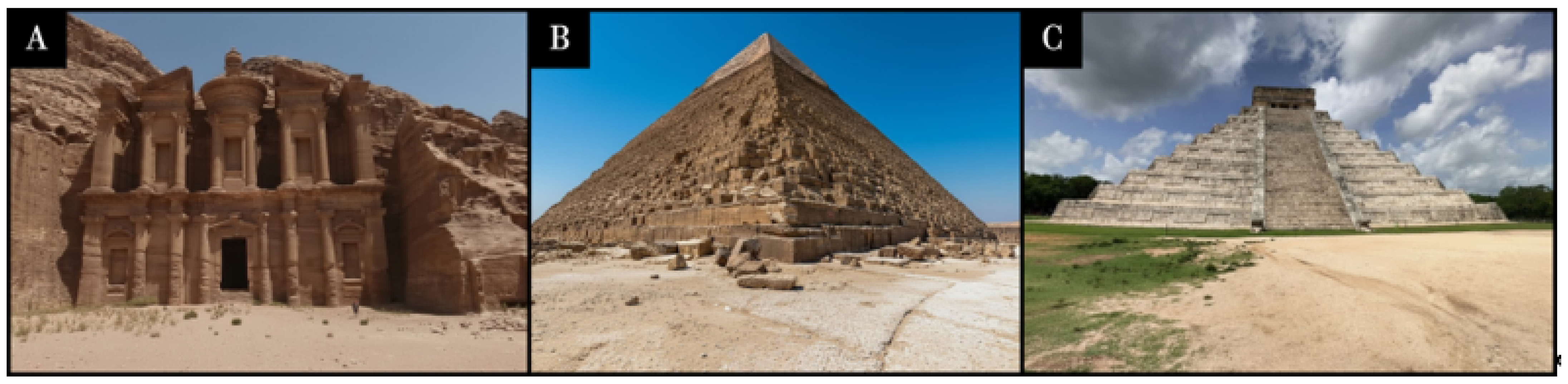
Figure 1 showcases some of the most representative archaeological sites in the world, according to UNESCO.
The preservation and conservation of archaeological complexes are important to maintain their historical and cultural integrity. Some famous examples include the mysterious city of Petra in Jordan, carved into the desert rocks, or the impressive pyramids of Giza in Egypt and Chichen Itza in Mexico, which are true architectural wonders [6,7].
Figure 2A shows that the architecture of Petra in Jordan stands out for its monumental facades carved into the rock, such as the Treasury and the Monastery [16]. The city also features advanced water channeling systems and residential and commercial structures along its main street. Additionally, it has tombs and temples carved into stone that showcase a unique architectural diversity [17]. Together, Petra’s architecture combines technical skills with impressive integration into the natural landscape, making it a remarkable archaeological site [16,17].
Similarly, in Figure 2B, the Pyramids of Giza are impressive examples of ancient Egyptian architecture. They stand out for their monumentality, technical precision, and elaborate internal design. Built over 4500 years ago, they represent the pinnacle of knowledge and skill of the Egyptian civilization of the time [18]. The Great Pyramid of Khufu, in particular, remains an iconic architectural marvel. Although the exact construction method is still debated, it is believed to have involved the use of ramps and a large workforce [18]. The internal design of the pyramids, including chambers and passages, displays profound astronomical knowledge and symbolic significance [19].
Finally, in Figure 2C, the architecture of Chichén Itzá reveals features that reflect a Toltec influence, evident in the simplification of geometric elements and the inclusion of motifs such as jaguars and serpents that pay homage to the feathered serpent deity, Kukulkán [20]. Among its most notable structures are the Temple-Pyramid of Kukulkán, the Temple of the Warriors, and several platforms that incorporate construction characteristics associated with Toltec architecture [21]. The Temple-Pyramid of Kukulkán, one of the most emblematic monuments of Maya architecture, rises 24 m high and rests on a rectangular platform measuring 55.5 m wide [20,21]. Its stepped design aligns with astronomical phenomena, and during the equinoxes, a serpent-like shadow descends along its stairways, symbolically evoking the deity to whom the temple is dedicated. Nevertheless, despite these signs of Toltec influence, scholarly debate persists. Some specialists argue that such similarities may stem from cultural exchange or the emergence of a distinctive architectural style born from interactions between Maya and other Mesoamerican peoples, rather than direct Toltec domination [21].
Figure 2. (A) The city of Petra, image source: Google Maps © Google, 2025 [22]; (B) The Pyramid of Khufu, image source: Google Maps © Google, 2025 [23]; and (C) Kukulkán Pyramid-temple, image source: Google Maps © Google, 2025 [24].
Heritage 08 00494 g002
In terms of the design and planning of human settlements in the Andean region of South America, Andean urbanism is characterized using agricultural terraces, the development of water systems, and the integration of important social and ceremonial spaces. Additionally, it includes the construction of defensive structures to protect against potential invasions and a harmonious adaptation to the geographical and climatic environment [25].
Peru stands as a prime example of the manifestations of Inca urbanism, evidenced by its rich history and extraordinary archaeological heritage. The nation’s archaeological sites present a generalized context of a valuable architectural legacy, one that spans from the ancient Inca civilization to preceding cultures. Sites such as Choquequirao, Moray, and Chavín de Huántar, among others, reflect the magnificence and architectural sophistication of pre-Columbian civilizations [26]. The architecture of these archaeological sites is not only impressive in terms of design and construction, but it also reveals the profound connection between the structures and the natural environment, as well as their religious, political, and cultural significance. These sites are living testaments to Peru’s history and identity, and they represent a valuable heritage that deserves to be preserved and appreciated [27].
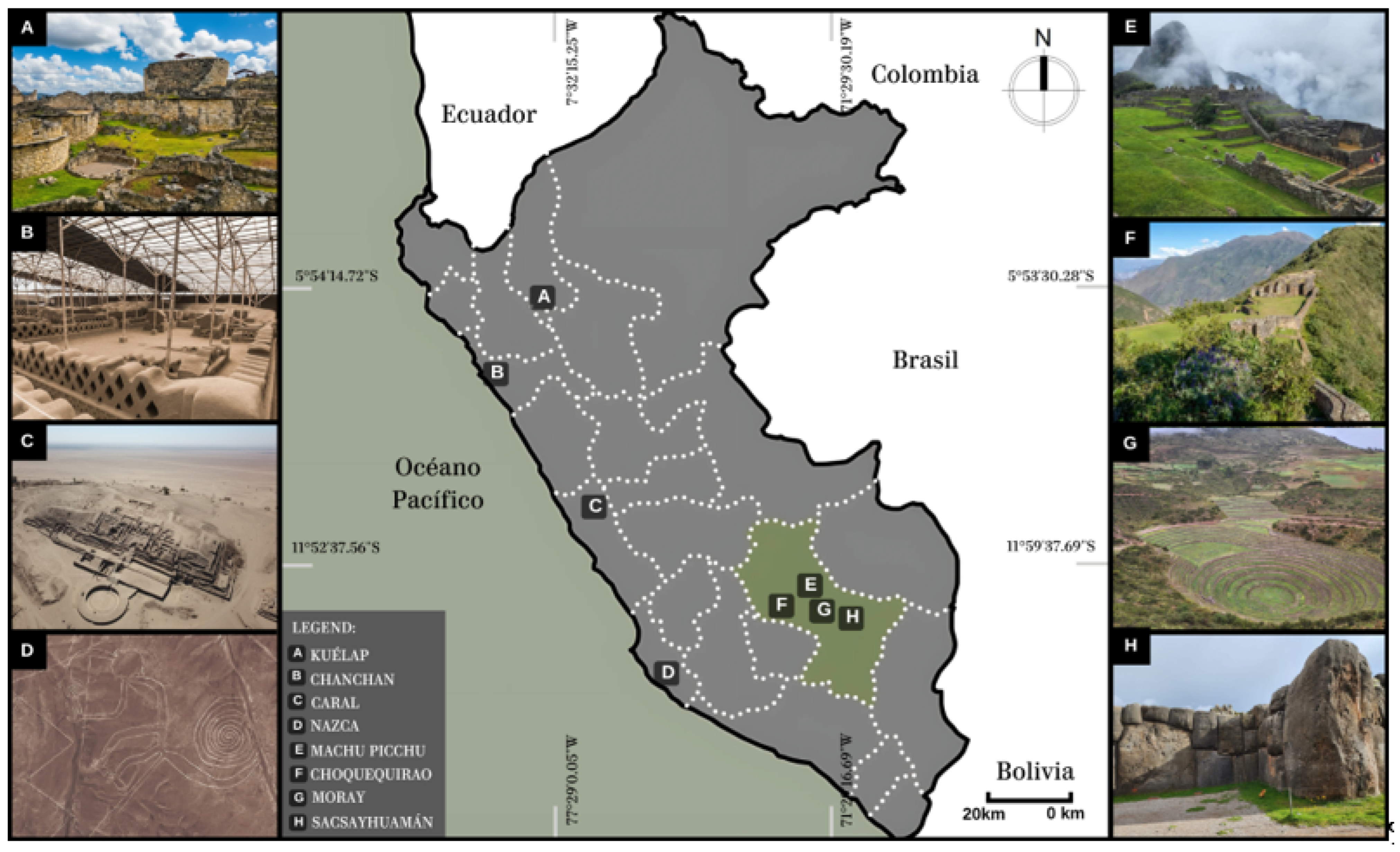
Figure 3 shows some of the most representative archaeological complexes in Peru according to the Ministry of Culture [28].
These archaeological sites display a variety of architectural styles and construction techniques that reflect the creativity and ingenuity of pre-Columbian cultures. Some of them, such as Machu Picchu, are globally known for their Inca architecture. Other archaeological centers, like Chavín de Huántar, showcase a pre-Inca architectural style with characteristics unique to the Chavín culture. Additionally, there are archaeological centers that served agricultural purposes, such as Moray [27,28].
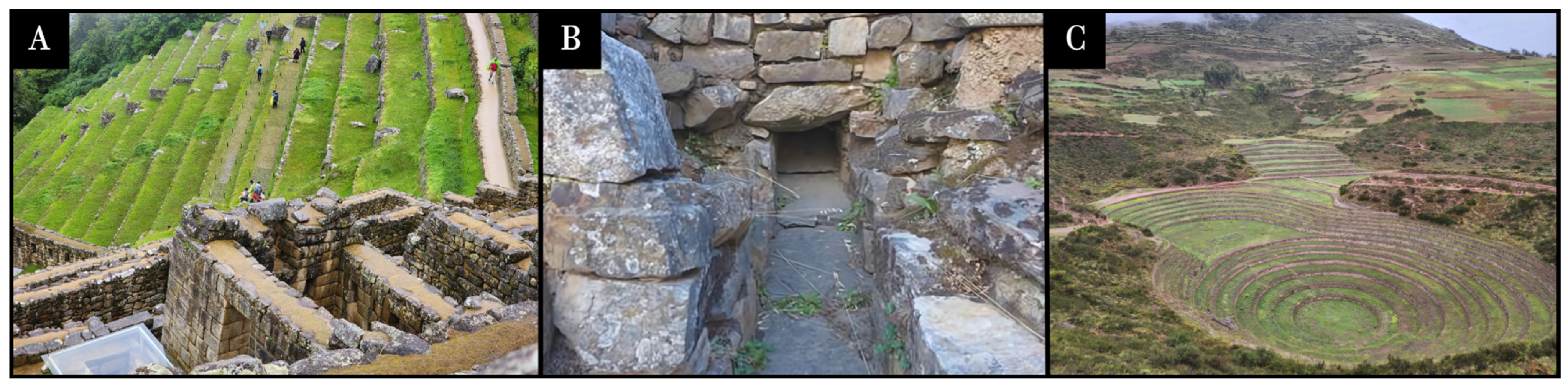
Figure 4A shows Machu Picchu, an archaeological site located in Cusco, Peru, considered one of the world’s most important architectural treasures. It is essential to note that its current state, as seen today, is the result of significant restoration and reconstruction efforts initiated in the early 20th century [32,33]. This process has made it possible to highlight its complex division into different sectors, each with its own function and significance. Among these are the agricultural sector, where cultivation terraces were built, and the urban sector, where dwellings were located and civil and religious activities took place. The architecture of Machu Picchu, which we can analyze thanks to this restoration, stands out for its engineering and meticulous planning [33].
Similarly, in Figure 4B, the architecture of Chavín de Huántar reflects the creativity and ingenuity of the Chavin culture. The constructions are primarily made of carved and assembled stone, with sloping walls and gabled roofs [34]. It features distinctive architectural elements such as underground galleries and assembled heads. Additionally, the Chavin people’s advanced knowledge of sound in hydraulic engineering is highlighted, with water channels that emitted sounds resembling a roar [35].
In Figure 4C, Moray is known for its stepped circular terraces, which form natural amphitheaters. These terraces were built using advanced engineering techniques to take advantage of temperature differences and create artificial microclimates [36]. It is believed that Moray was used as an agricultural experimental laboratory by the Incas, as each terrace had different climatic conditions that allowed for the testing and cultivation of a variety of crops. The architecture of Moray reflects the careful planning and advanced knowledge the Incas had in agriculture and design [36,37].
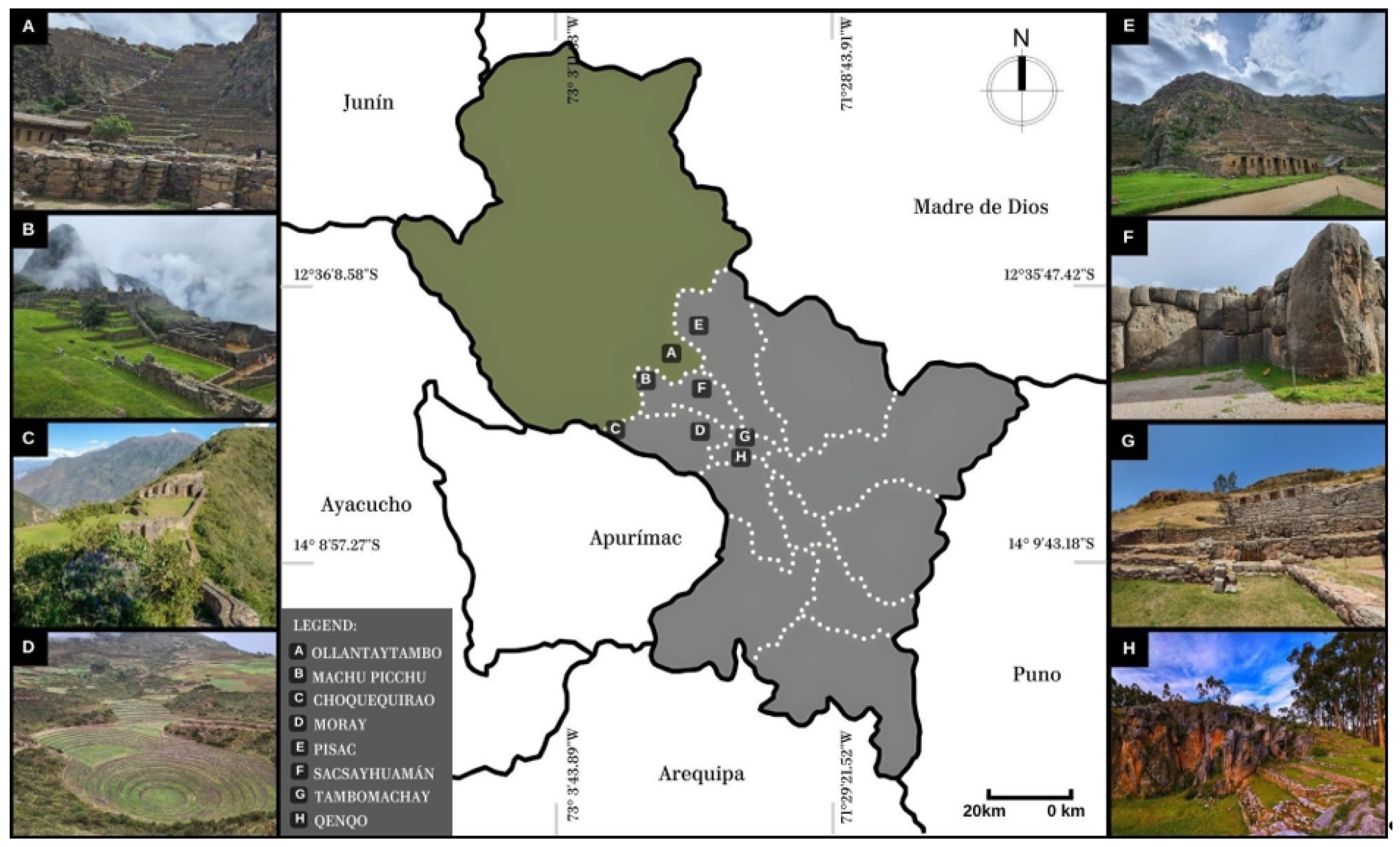
The archaeological sites in Cusco, one of the cultural hearts of the country, include Sacsayhuamán, an imposing fortress and ceremonial center; Qenqo, a ritual site with a sacrificial altar; Tambomachay, a sanctuary dedicated to water; Pisac, filled with ruins and an artisan market; and Ollantaytambo, an Inca city with agricultural terraces that demonstrate advanced hydraulic and agricultural planning [38,39,40].
In addition to their impressive architecture, these archaeological sites also hold deep cultural and religious significance. Many of them were important ceremonial and administrative centers, where rituals and celebrations took place [39]. The arrangement and distribution of the structures in these sites reflect the worldview and social organization of ancient civilizations [39,40].
It is important to note that these archaeological centers have been the subject of studies and conservation efforts to preserve their integrity and better understand their historical significance. Archaeological findings at these sites have provided valuable information about the life and beliefs of ancient civilizations in the Cusco region [41].
Figure 5 shows the location map of these archaeological sites in the department of Cusco according to the Ministry of Culture.
These Archaeological Centers are crucial for both history and the present due to their function as living records of ancient cultures, their understanding of the environment, and their remarkable construction excellence, all of which significantly contribute to cultural heritage and human knowledge [45,46].
Choquequirao is an Archaeological Center located on the border of the provinces of Abancay (Apurímac) and La Convención (Cusco), Peru. This site is part of the Vilcabamba Archaeological Park and dates from the Inca period [47]. The architecture of Choquequirao exhibits traits and characteristics typical of the Inca civilization, with pre-Hispanic constructions that include buildings, terraces, and plazas distributed at various levels [47,48]. The layout of the structures and their integration with the natural environment reflect the skill and technical knowledge of the Incas in constructing durable and functional edifices [48].
Although the site remained abandoned for decades, governmental interest in its recovery was formalized in 1986. In that year, architects Roberto Samanez Argumedo and Julinho Zapata Rodríguez, as part of the PER Plan COPESCO, drew up the “Proposal for the Restoration and Enhancement of the Choquequirao Archaeological Complex” [49]. It was on the basis of this proposal (the criteria) that, in 1993, Plan COPESCO initiated the restoration and enhancement work. This Archaeological Center is recognized today for its historical and cultural importance, and its architectural grandeur makes it an impressive place to visit and explore [50].
This Archaeological Center shares many features with Inca ceremonial and pilgrimage centers such as Isla del Sol, Quespiwanka (the palace of Huayna Capac), Machu Picchu/Llactapata, Tipón, and Sayhuite [51,52,53]. Architectural features are observed that indicate the direction of the June solstice at sunrise or sunset. Stone channels carried ceremonial water, and in certain channels, the traditional beverage chicha de jora was transported [53]. The ceremonial platform at Choquequirao is unique for its size and prominence. It can only be accessed through a double-jamb door, limiting its use to royalty and the priestly class. In other pilgrimage centers, participants were also separated by social class [54].
The significance of Choquequirao’s architectural wealth lies in its magnificence and cultural meaning. This site has been compared to Machu Picchu for its architectural and structural similarity, highlighting its historical and architectural importance. Choquequirao is recognized for its immense architectural wealth, comparable to that of Machu Picchu, positioning it as a highly relevant place in the history and culture of Peru [54].
Additionally, its location in a regional conservation area, along with its rich flora and fauna, underscores its value as both a natural and cultural heritage site. This site, which was a gathering place for public and ceremonial events such as the worship of the Sun god, the earth, and water, represents an important religious center occupied by priests and dedicated to deities [55].
Its strategic location in the mountains suggests it also had defensive purposes. Furthermore, it boasts an impressive system of agricultural terraces that extend across the mountain slopes, demonstrating the Incas’ ability to cultivate on steep terrain, and served to connect the Amazon jungle with the imperial city of Cusco [56].
However, despite its importance in the knowledge and understanding of the history of the civilizations that once inhabited this Archaeological Center, Choquequirao faces challenges today, including a lack of emphasis on preserving the site; physiographic, geological, and climatic conditions that make the archaeological center difficult to access [57]. Limited funding for scientific research at Choquequirao and ongoing pressures on the site and its surroundings also contribute to these difficulties.
Additionally, there is a lack of consideration for the conservation heritage area, with inadequate circulation for visitors [58]. Another issue with the Choquequirao Archaeological Center is its difficult access. The remote location and lack of proper infrastructure restrict visitor flow and complicate conservation and maintenance efforts [57,58].
Inca construction systems were not only functional responses to the environment, but also the demonstration of advanced technical knowledge. This is materialized in specific solutions, such as the calculated inclination of their walls, the precise spacing of the joints between lithic blocks, and the use of structural ties. Collectively, these elements reveal a sophisticated seismic-resistant strategy [58]. Likewise, the hierarchy of the materials employed was not merely utilitarian; it ranged from simple masonry, used for functional structures, to the dressed stone (piedra labrada) reserved for sacred enclosures [58]. Therefore, these construction choices were, in turn, material expressions of their cosmovision, structured around duality and reciprocity. This profound relationship between technical knowledge and cosmology forms the conceptual basis of this research.
Therefore, the objective of this research is to analyze the Ancestral Inca Construction Systems and Worldview at the Choquequirao Archaeological Site, Cusco, Peru, 2024.

1.1. State of the Art

1.1.1. Theoretical Framework

Ushnu
In the settlements of the Tahuantinsuyu, the Ushnu was the central element of the plaza and the most sacred space of the complex. It consisted of a platform, often containing a drainage system and a sacred stone, where offerings of water, chicha, and symbolic objects were made. It represented the axis of connection between the three worlds of the Andean worldview [59].
The Ushnu can be defined as an Inca ceremonial platform with ritual, political, and astronomical functions, regarded as the symbolic and organizing center of urban space. It served as a place for offerings and libations, while also acting as an axis of connection between the earthly and spiritual realms within the Andean worldview [60].
Pacha
In Aymara-Quechua culture, the concept of Pacha is related to time and space, which are fundamental to Andean life and production. It does not only mean “earth,” but also “world,” “universe,” and “time,” understood as a symbolic unity of space-time that connects the cosmic realm with natural cycles [61].
The term Pacha, regarded as the primordial word of the Andean peoples, is a fundamental pan-Andean concept with multiple meanings. Since the 16th century, it has been recognized as untranslatable due to its symbolic richness, encompassing notions such as world, universe, earth, time, and history, and expressing an integral vision of totality [62].
Kallanka
In recent decades, the Quechua term kallanka has become widely used among Andean archaeologists to refer to the elongated Inca structures that colonial chroniclers described as halls or warehouses. Its widespread adoption has made it an essential category for describing Inca architecture. However, the original meaning of the term and the circumstances of its introduction into the archaeological discourse remain unclear [63].
A kallanka is an elongated Inca building with a public and communal function, used for administration, collective housing, or ceremonial activities, characterized by its large size and its integration within the urban planning of the Tawantinsuyu [64].
Qolqa
Qolqas were Inca storage facilities used to keep food, textiles, tools, weapons, and other goods. Their main function was the redistribution of resources after harvests, ensuring that the population received both local and external products, thereby reinforcing state authority and community well-being. Colcas typically featured trapezoidal doors and spacious interiors, reflecting their storage capacity and their importance in the economic and social organization of the Tawantinsuyu [65].
A qolqa is an Inca warehouse designed to store goods, facilitate their preservation, and enable redistribution, equipped with ventilation systems and adapted to the terrain [66].
Chakra
It is a word of Quechua origin defining a plot of cultivated land or sown field, characterized by its relatively small size [67].

2. Materials and Methods

2.1. Methodological Framework

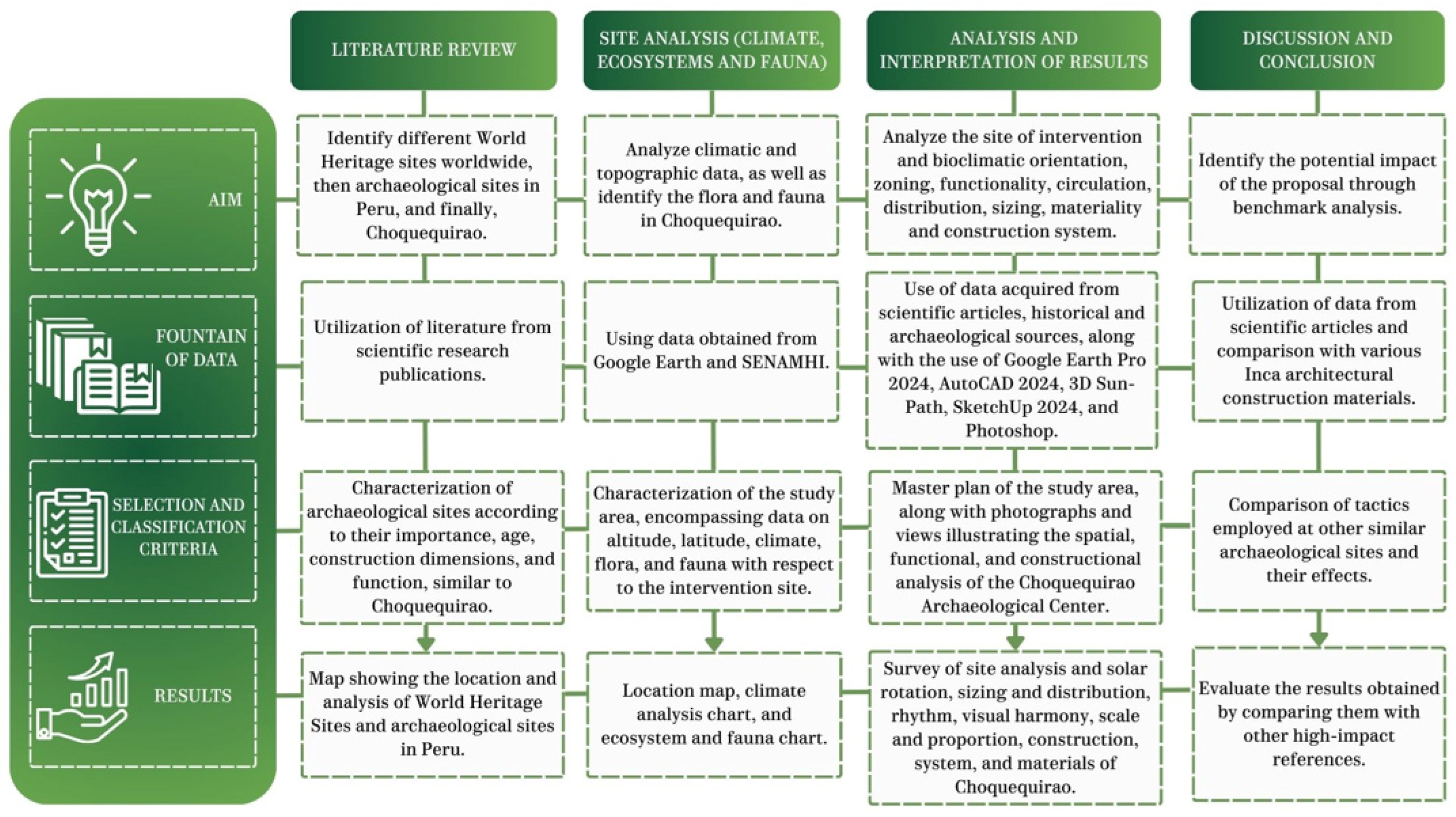
The research is classified into 4 phases, as illustrated in Figure 6, and was carried out according to the sections detailed below.

2.1.1. Literature Review

In the initial stage of the research, a thorough collection of information was carried out with the aim of contextualizing the analysis of the Choquequirao Archaeological Center, located in Cusco, Peru, from a constructive, spatial, functional, and symbolic perspective. This phase involved consulting various academic sources, scientific publications, and data provided by official entities such as UNESCO and the Ministry of Culture of Peru, which helped establish a solid theoretical and empirical foundation for the study.
Through this literature review, it was possible to identify different construction systems present in the site’s buildings, as well as structures with ceremonial, agricultural, residential, and administrative functions. These elements reveal not only the technical sophistication of the Inca builders but also their ability to adapt to the Andean natural environment. Furthermore, they reflect key aspects of the Inca worldview, which was based on a harmonious connection between humans, nature, and the spiritual realm. This holistic approach enabled a deeper understanding of how the architecture and construction techniques of Choquequirao are integrated with the landscape and the Andean worldview, reaffirming its role as a key ceremonial center within the Inca Empire.

2.1.2. Site, Climate, Ecosystems, and Fauna Analysis

The analysis of the study area is crucial for selecting the appropriate discovery techniques for these sites. It also defines the physical characteristics and general aspects, such as topography and geology, contributing to its identification using Google Earth, which allows for visualizing the surroundings, latitude, and longitude.
The study of the site’s climatology is essential for understanding the specific characteristics of the area where the work is being conducted. This tool allows us to accurately determine the geographic location of the intervention site, including its latitude and longitude. Additionally, it helps us understand the surrounding natural environment, analyze how the terraces and spaces are distributed, utilized, and function, as well as identify settlement patterns to effectively communicate the results. Furthermore, the analysis of the ecosystems and fauna of Choquequirao is vital for the biodiversity and ecological balance of the Andean region, providing critical habitats for endemic species and contributing to environmental health.
This procedure involves the study of the climate, evaluating aspects such as temperature, wind speed, humidity, and rainfall.
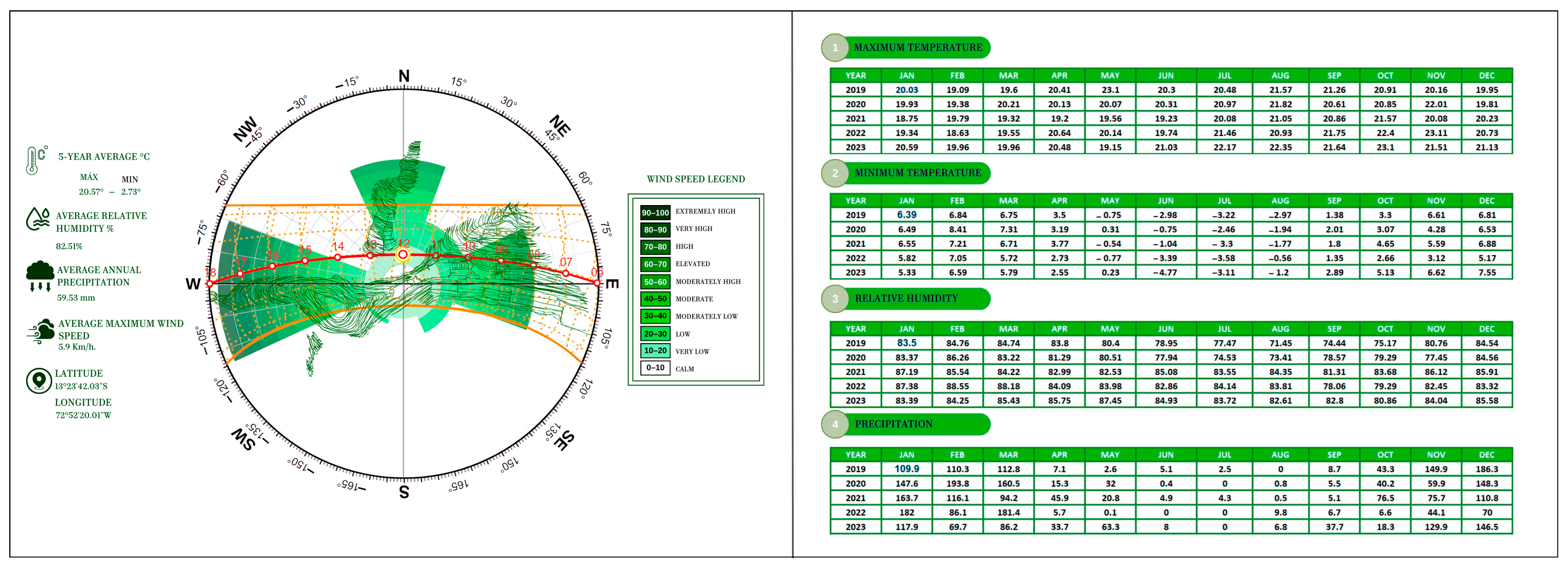
The process begins with the collection of climatological data from the Anta meteorological station of the National Service of Meteorology and Hydrology of Peru (SENAMHI) for the past five years (2019–2023), including maximum and minimum temperatures (°C), relative humidity (%), and precipitation (mm). It continues with the collection of meteorological data from Weather Spark EPW for the year 2024, which includes radiation (kWh) and wind speed (km/h) data provided by Weather Spark. This is followed by the rigorous statistical processing of all collected data. Additionally, ecosystem and fauna data specific to Choquequirao are gathered. Finally, graphs are generated to present the compiled data from the previous stages.
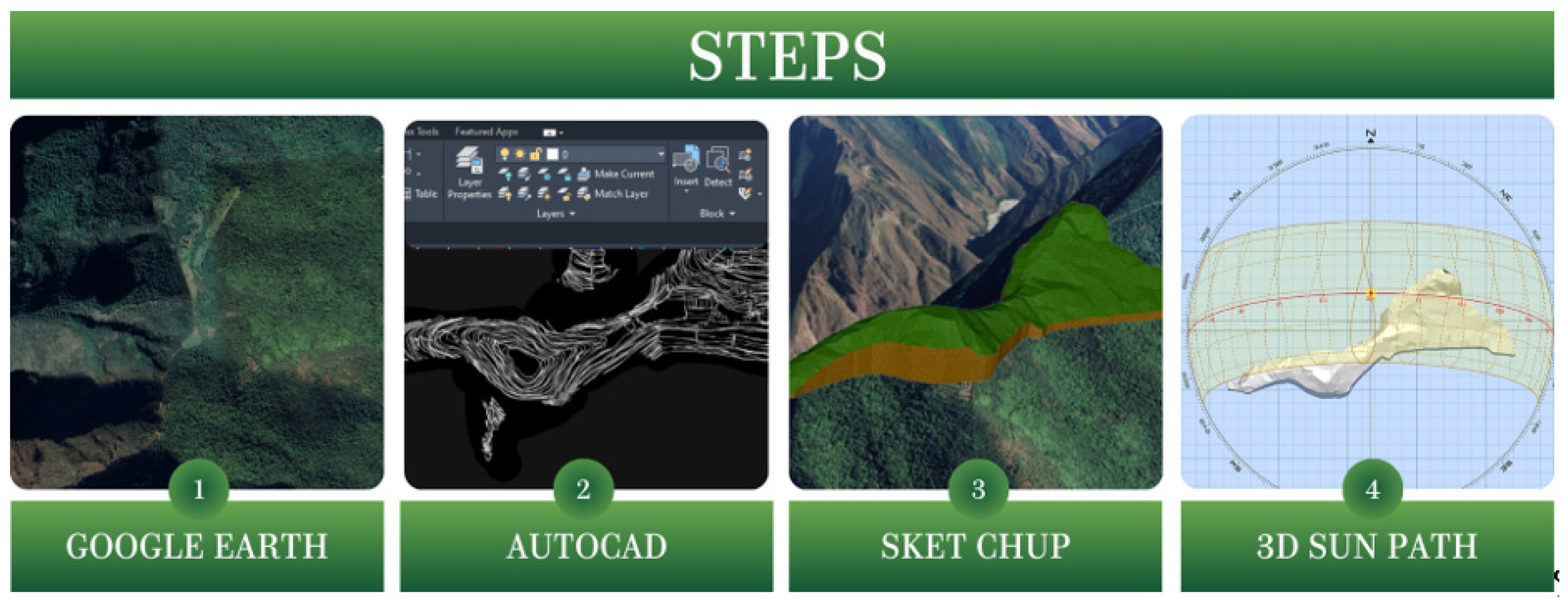
Figure 7 shows the process of modeling the Choquequirao Archaeological Center. Step 1, the initial phase, involves gathering terrain data using Google Earth. This platform supplies valuable information such as elevation profiles and cross-sections of the topography in the area where Choquequirao is located. These preliminary insights into the landform provide a foundational understanding of the site’s geographical setting and guide the direction of subsequent digital modeling. The extracted topographic profiles offer a clearer view of the terrain’s natural features, which influenced how the archaeological complex was originally established.
In Step 2, a more in-depth topographic analysis is performed in AutoCAD 2024, where the previously collected data is refined and organized. During this stage, the agricultural terraces—a defining feature of Choquequirao—are precisely outlined, along with the road axes that link various sectors of the site. This technical process helps map out the spatial organization, infrastructure layout, and the way built structures interact with the natural landscape.
In Step 3, a 3D model of the archaeological site is developed using SketchUp. Crucially, this reconstruction is grounded in empirical data sourced from the site. The modeling of the buildings was developed using official architectural plans from the Choquequirao archaeological center, which were cross-referenced and detailed with on-site photographic documentation captured during fieldwork. This model of the buildings was then integrated with the terraces, topography, and key natural elements, such as the steep slopes and surrounding vegetation. The final 3D model acts as a visual and analytical tool, helping to assess how the architectural layout adapts to the rugged terrain and facilitating future work related to research, conservation, or heritage enhancement strategies.
Finally, in Step 4, a comprehensive solar analysis is carried out in a 3D environment using Sun-Path 2024. This study tracks how solar radiation impacts the site throughout the day and across different seasons. It also explores how solar orientation and climatic factors may have influenced the design of the archaeological complex. These findings are critical for interpreting potential astronomical alignments, understanding the functional use of spaces, and evaluating the long-term exposure of materials to weather conditions.
These tools were applied not only for the geometric modeling of the architectural structures but also to understand their environmental orientation and symbolic organization. The methodological approach aimed to identify how constructive planning, spatial distribution, and orientation reflect adaptive principles and cultural meanings associated with the Inca worldview.

2.1.3. Discussion and Conclusions

Finally, in the fourth stage, a comparison will be made with previous findings from the archaeological sites of Pisac, Machu Picchu, and Choquequirao, focusing on the strategies used regarding space utilization, construction techniques, and ceremonial, agricultural, and defensive functions.

2.2. Study Area

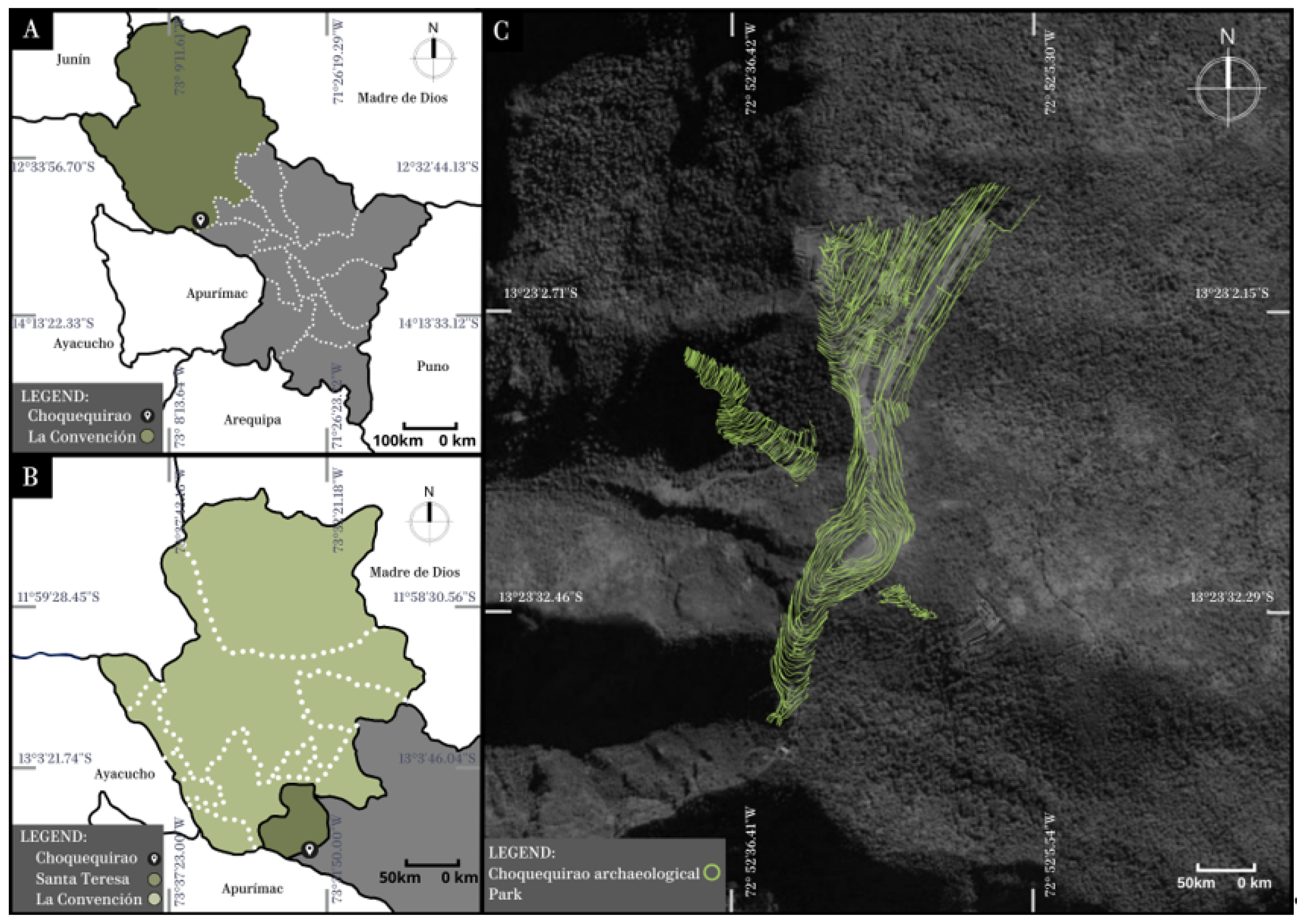
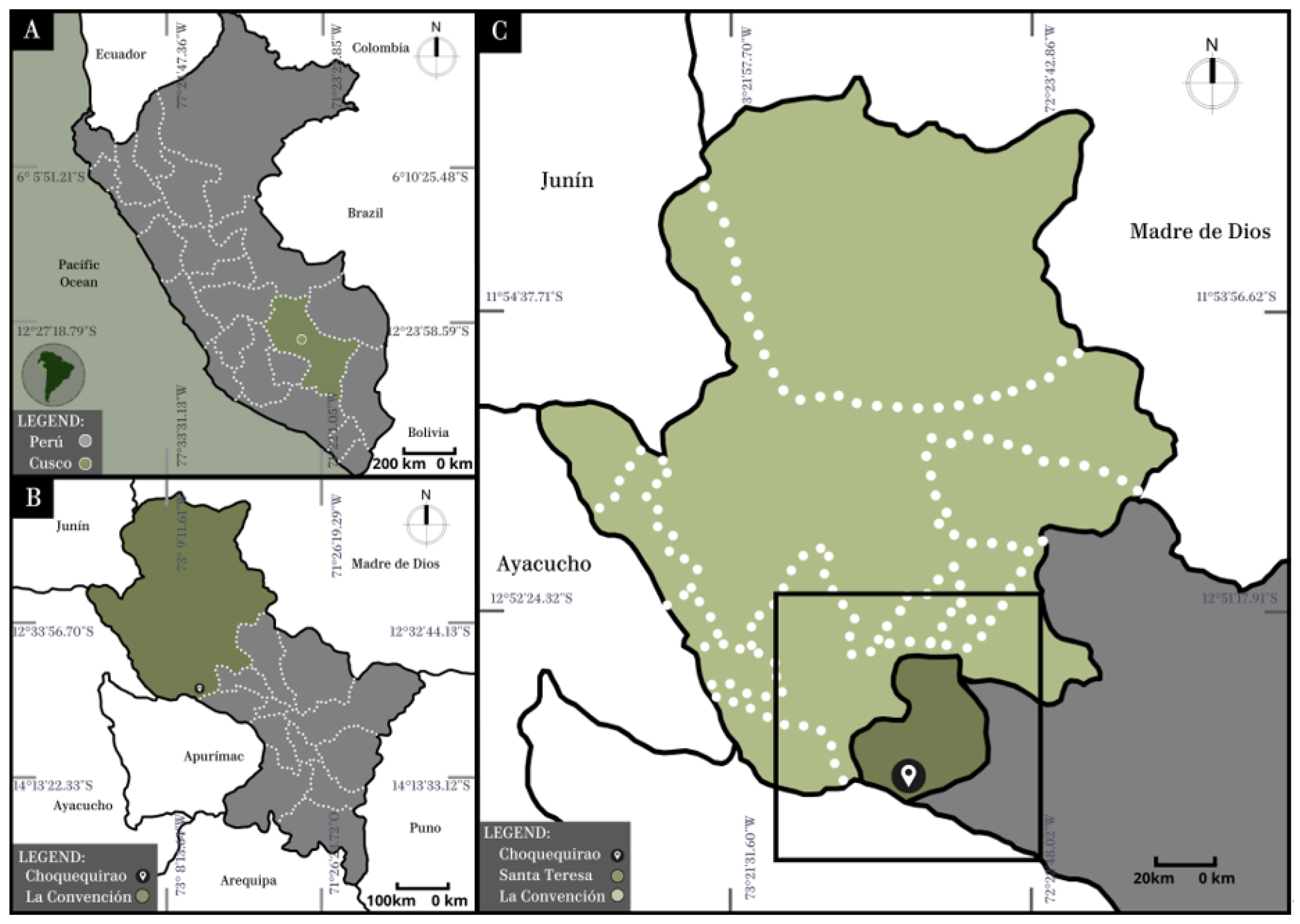
Figure 8 shows that Figure 8A situates the department of Cusco within the national geographical context of Peru; Figure 8B delineates the province of La Convención within said department; and Figure 8C specifies the location of Choquequirao within the boundaries of the Santa Teresa district [57]. Specifically, the site is located at 13°32′ south latitude and 72°44′ west longitude, at an altitude of 3033 m.a.s.l., in the foothills of the snow-capped Salcantay Mountain, north of the Apurimac River valley [58].

2.3. Climatic Analysis

According to the SENAMHI database, in Cusco, during the coldest seasons from May to July, temperatures can drop significantly, especially in higher altitude areas, where both maximum and minimum temperatures are recorded [68].
Figure 9 presents the empirical data baseline, which is crucial as it allows the analysis to move beyond the site’s mere functionality to interpret both past design decisions and current conservation risks [68].
Choquequirao’s climate is subtropical mountain, with an average maximum of 20.7 °C and minimums that can fall below 0 °C. This thermal oscillation has a dual analytical implication. For archaeology, the minimums below 0 °C would have been a determining factor in architectural design, explaining the orientation of structures and the reduced size of openings (doors and windows) as a deliberate strategy to maximize thermal gain. For conservation, this same freeze-thaw cycle is today one of the most severe agents of mechanical weathering (gelifraction), a direct risk that cracks and destabilizes the masonry [68].
On the other hand, the average annual maximum relative humidity is 82.51% (with peaks of 88.55%), and precipitation is markedly seasonal: high precipitation is recorded from October to March (with a peak in February of 193.8 mm) and a dry season from April to September (with a minimum of 0 mm). This stark seasonality is the key to interpreting the organization of Inca life. The dry season (0 mm) was the optimal window for construction and harvesting. Conversely, the volume of rain (193.8 mm) not only defined the agricultural cycle but also necessitated the sophisticated engineering of terraces and canals seen today, designed as a direct response to manage said flow and prevent erosion. In the present, that combination of 193.8 mm of rain and 82.51% humidity is the primary agent of biodeterioration (growth of lichens and mosses) that chemically degrades the structures.
Finally, the prevailing winds (North and Northeast), with a maximum speed of 5.9 km/h [43], which contribute to the wind chill factor, would have been another factor considered by Inca architects to orient openings and minimize cold air infiltration. While these data impact current logistics (such as the condition of trails and the risk of accidents [68], their true value lies in the fact that, by linking them to architectural and conservation analysis, we transform basic statistics into an interpretive tool for how the Incas inhabited the site and how we must scientifically prioritize its preservation.

2.4. Ecosystems

The environment of Choquequirao is one of the richest in biodiversity. However, the exact number of plant and animal species present in the area is not well known. Despite this gap and the limited scientific studies conducted in the region, several forms of life have been identified as inhabiting the area. To address this research gap, the regional government conducted a study of the Choquequirao Regional Conservation Area.
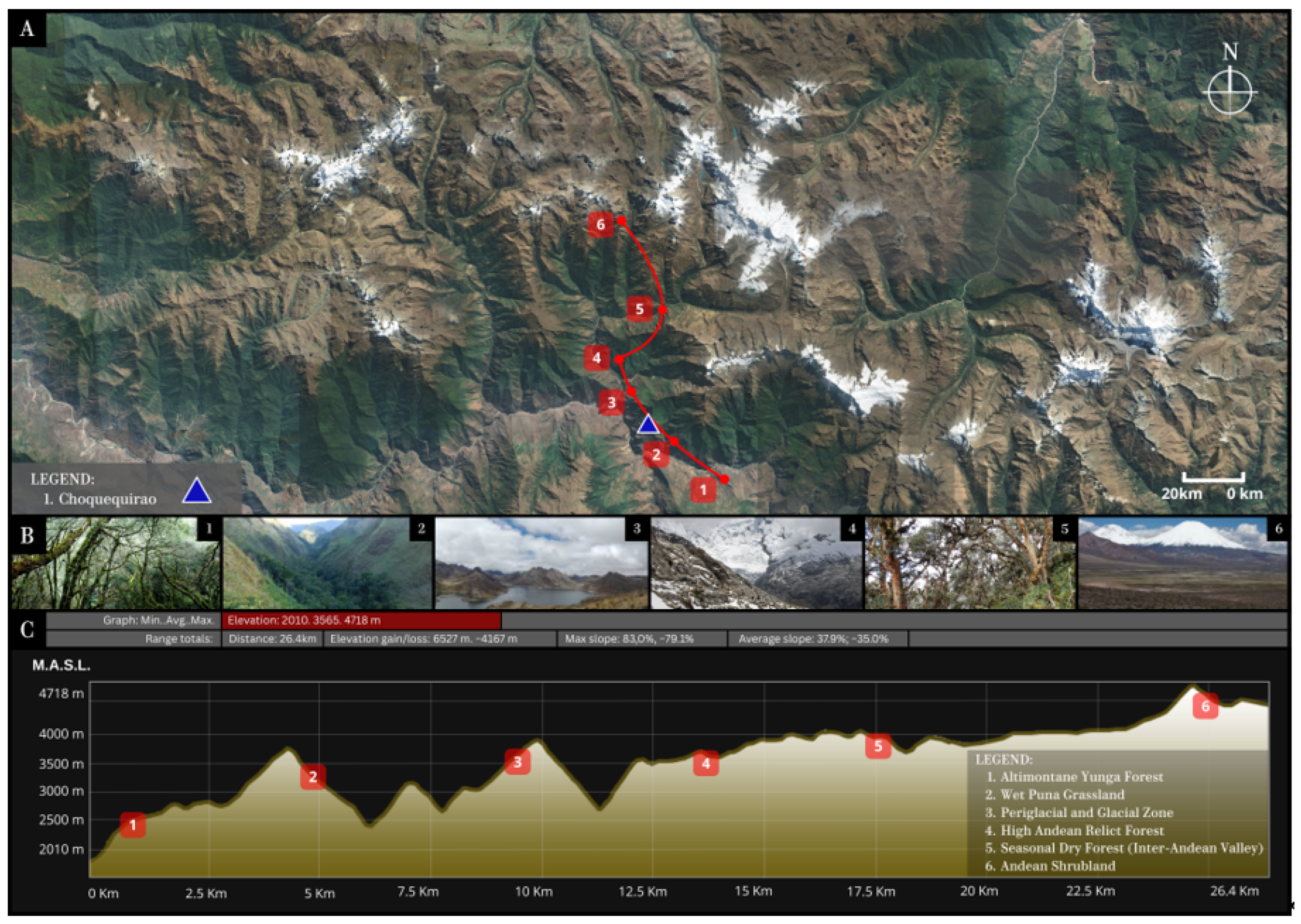
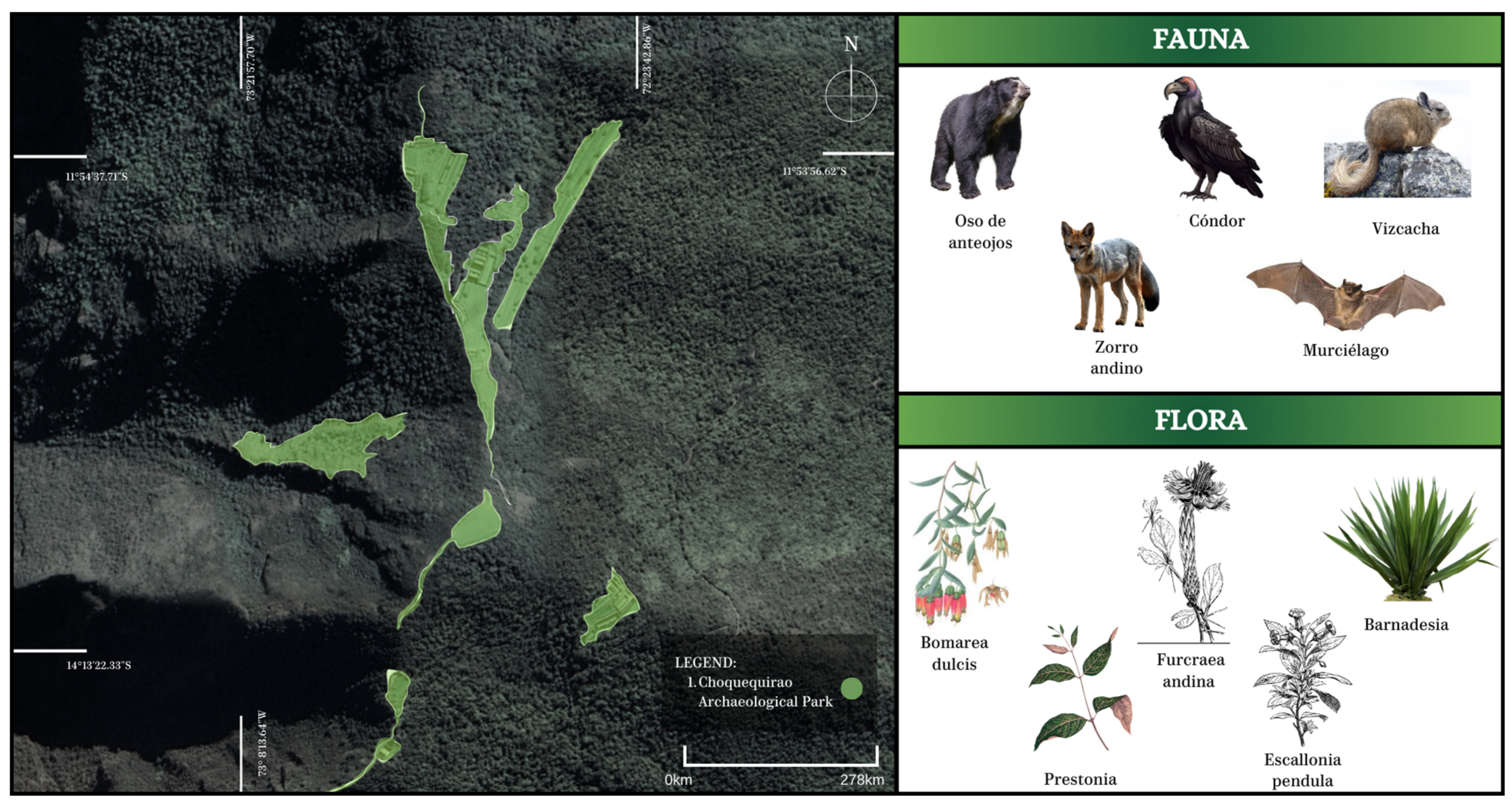
The Choquequirao Regional Conservation Area, established in 2010 through Supreme Decree N°. 022-2010-MINAM, covers 103,814.39 hectares in the districts of Mollepata and Santa Teresa, in the provinces of Anta and La Convención, Cusco. Within this area lies the Choquequirao Archaeological Park, which spans 522,878.30 hectares in the southern region of Vilcabamba, presenting a variety of ecosystems located between 1500 and 5800 m above sea level [69]. Figure 10 shows that the region hosts 10 types of ecosystems, including pristine forests, scrublands, and a rich diversity in endemic flora and fauna. The associated field guide seeks to fill information gaps about the ACR and can serve as a tool to identify representative species in its various sectors [70].
Choquequirao Regional Conservation Area hosts a diversity of ecosystems. According to the classification by Minam, it includes forests, grasslands, glacial zones, and areas impacted by human activities [45]. Among the ten types of ecosystems present are: the montane forest of the Yunga, the high montane forest of Yunga, the humid puna grassland, the periglacial and glacial zone, the relict high Andean Forest, the seasonal dry mountain forest of the inter-Andean Marañón, Mantaro, Pampas, and Apurímac regions, the Andean shrubland, rivers, lagoons and lakes, and intervened zones (secondary vegetation and agricultural areas) [70].
Figure 11 illustrates the classification of ecosystems according to Minam, providing a solid foundation for understanding the biological diversity of the region and developing sustainable tourism strategies that protect both the natural and cultural heritage of Choquequirao. Ultimately, achieving a balance between tourism and conservation is crucial to ensuring that future generations can enjoy this archaeological treasure in its intact natural environment [70,71].
The lush plant diversity not only enriches its natural environment but also plays a key role in the preservation and significance of the site. The presence of epiphytes, lichens, bromeliads, orchids, and tree ferns, along with the formation of dwarf forests, reflects a unique and well-preserved ecosystem in the Andes [71]. This botanical richness not only beautifies the landscape but also provides vital habitats for a variety of animal species, thus contributing to regional biodiversity. By highlighting the importance of conserving these ecosystems, the value of the Choquequirao Archaeological Center as a site of both cultural and natural importance is strengthened, where environmental preservation becomes a priority to ensure its long-term sustainability [71,72].

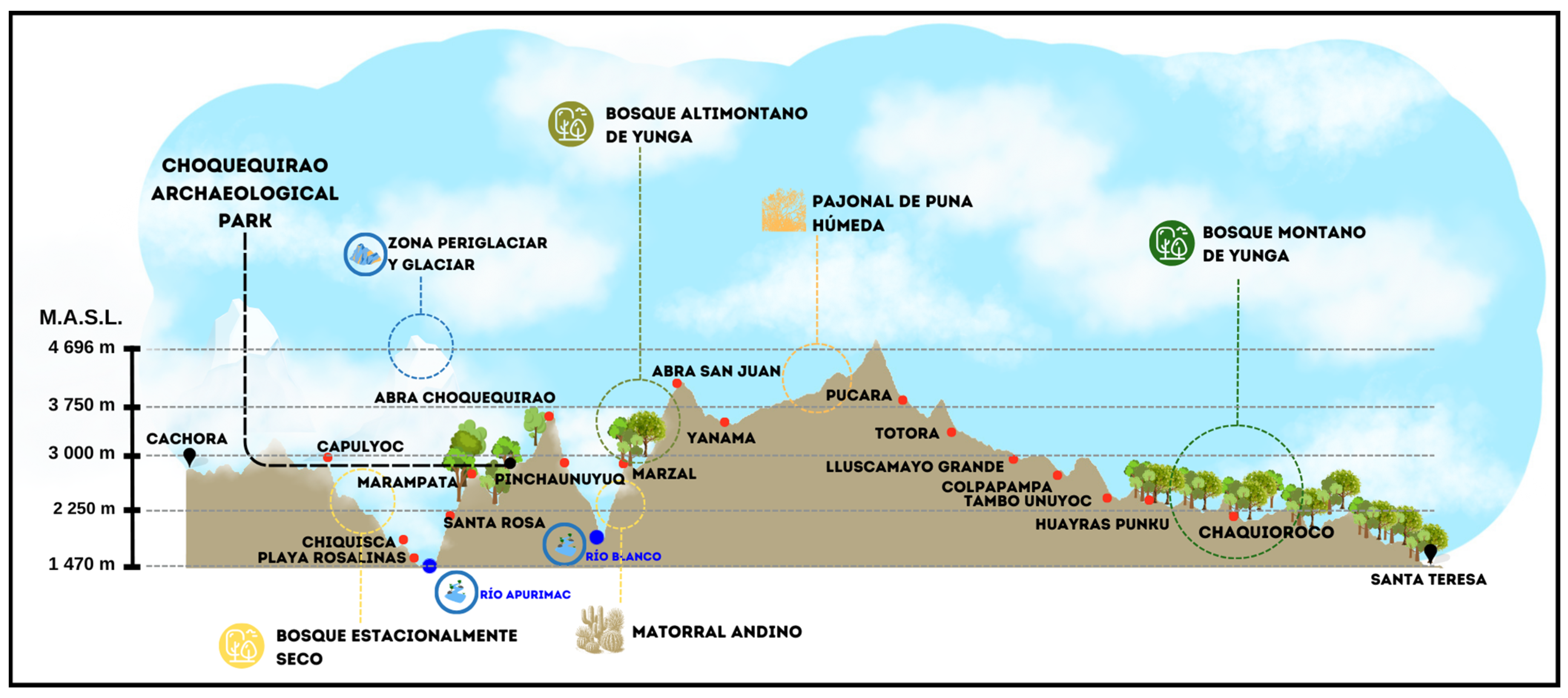
2.5. Fauna y Flora

The Choquequirao Regional Conservation Area (ACR), established by Supreme Decree No. 022-2010-MINAM [44], is based on the protection of the site’s biocultural matrix, recognizing that its natural and cultural values are inseparable. This space not only houses the Inca monuments but also the same landscape and ecotone that the Incas inhabited, managed, and venerated [70,73].
Figure 12 presents a schematic of the site and its flora and fauna. While this represents the current biodiversity, it offers a fundamental baseline for inferring the paleoenvironment and the biotic community with which the inhabitants of Choquequirao coexisted.
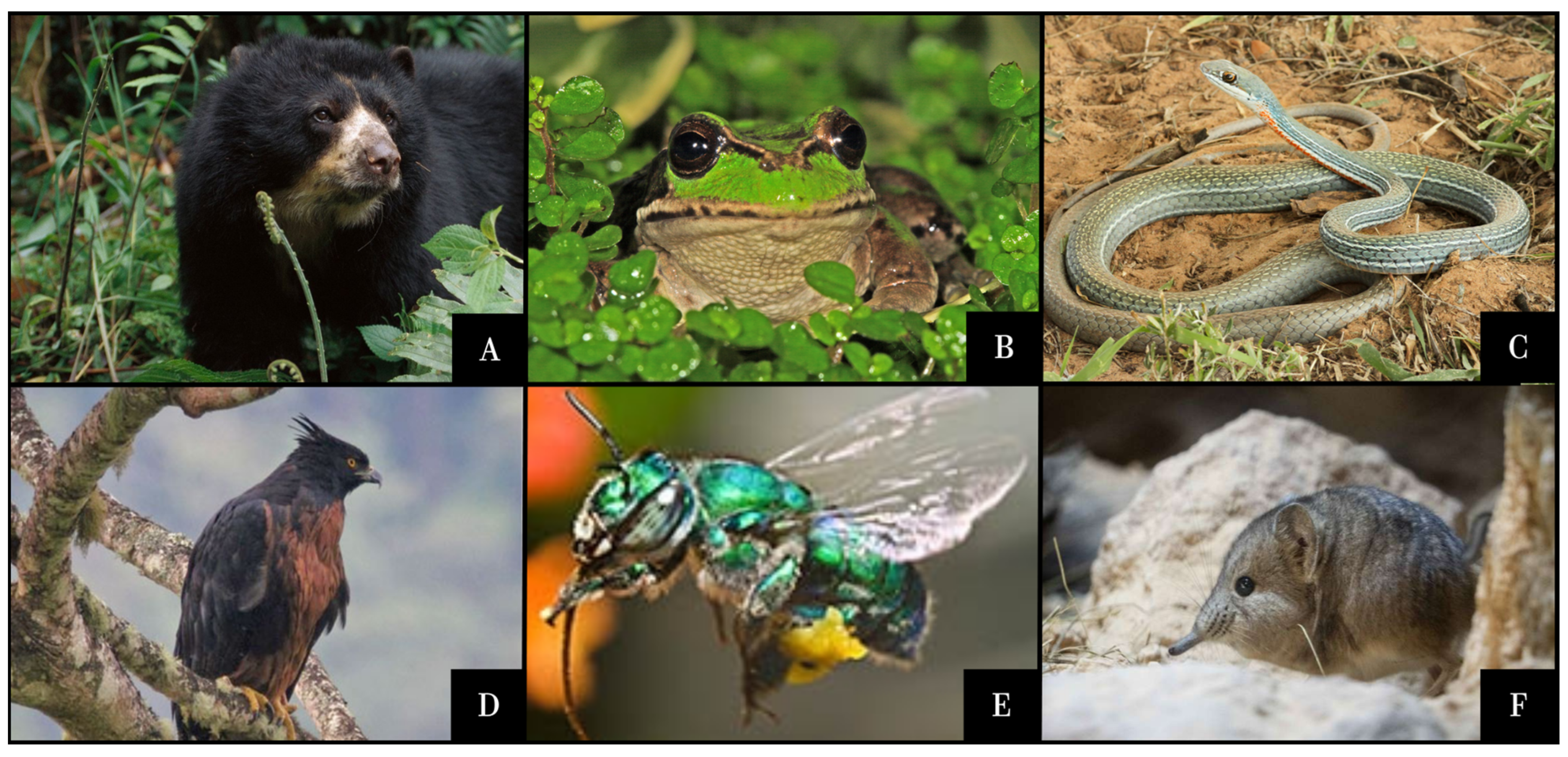
In Figure 13, it is observed that fauna is not merely a component of the local ecosystem but a key to understanding life in the past. Species such as the Andean bear, the black-and-chestnut eagle, the marsupial frog, and the mountain whipsnake [73] were not simply “animals” to the Incas; they were active agents within their worldview.
The bear (Ukuku), large raptors (associated with the Kuntur), and serpents (Amaru) are powerful beings in Andean mythology and ritual. Their presence in the site’s immediate environment would have had profound symbolic significance, influencing ritual life, diet, and even the organization of space.
Consequently, the conservation of this wildlife is not only essential for the integrity of the modern ecosystem and tourism, but it is also crucial for preserving the integral cultural and ideological context of the archaeological site. Protecting these species is, in effect, protecting the living components of the sacred world the Incas inhabited.

3. Results

3.1. Site of Intervention, Topography, and Solar Orientation

Choquequirao is located northwest of the town of Cachora and is one of the main landmarks of Inca culture. In Quechua, its name, “Choqekiraw,” means “cradle of gold.” Choquequirao is situated in the district of Santa Teresa, province of La Convención, in the Cusco Region. The main access to the site is through the town of Cachora, which belongs to the district of Cachora, province of Abancay, in the Apurímac Region. The Apurímac River serves as a natural boundary between the regions of Apurímac and Cusco. Compared to Machu Picchu, Choquequirao is approximately 45 km away in a straight line to the southwest [80].
The site contains a variety of architectural remains such as terraces, ceremonial plazas, temples, bridges, canals, and storage facilities, all interconnected by an extensive network of stairways and pathways [81]. Figure 14 illustrates the intervention site within a designated area, encompassing a dimension of 18 km2 [80].
The northern relief of Choquequirao responds to a guiding principle of Inca urbanism, one observed as a constant throughout Tawantinsuyu, which consists of the integration of the landscape as a calendrical and ritual instrument. Research on horizon astronomy and the Ushnus has demonstrated this practice [82]. In Choquequirao, as in Machu Picchu, this intentionality is manifested in the alignment of its structures and terraces with the snow-capped peaks, the Apurímac River, and solar movements [82]. This cosmological prioritization would justify the selection of a site with apparent instability, which was resolved and stabilized through a notable feat of engineering.
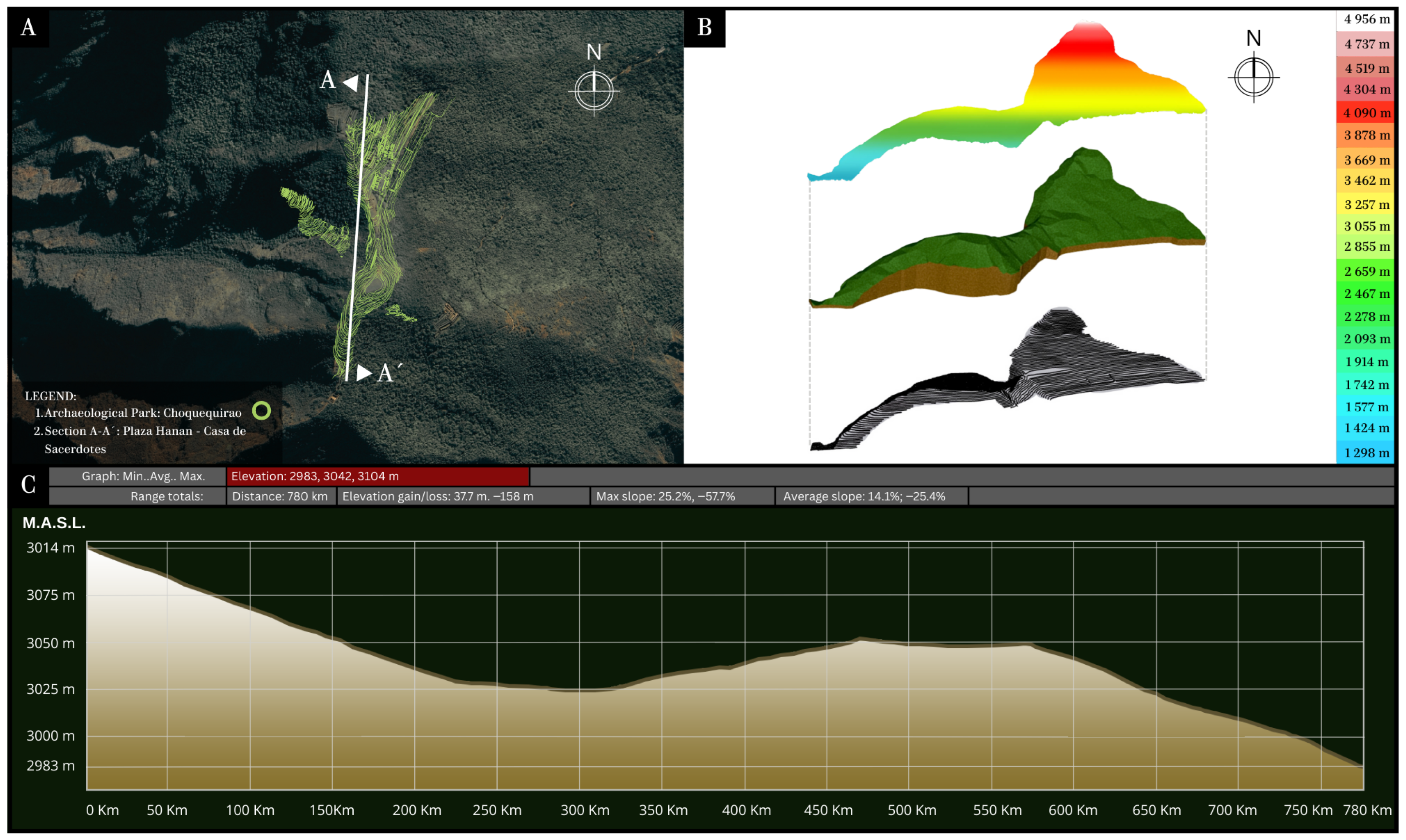
Figure 15 illustrates the intervention site in greater detail in Figure 15A, highlighting the extensive area it covers. In Figure 15B, the topographic cross-section reveals the structure of the terrain. The Choquequirao Archaeological Site extends from its highest point at 3033 m to its lowest at 1424 m, spanning a total distance of 1.06 km, with an elevation loss of −205 m and −50.3 m, respectively, and featuring a maximum slope of 47.9% and an average slope of −26.5% [82]. Lastly, in Figure 15C, a three-dimensional representation of the study area is presented, using a color gradient from blue to red to indicate decreasing altitude, which ranges between 3033 m and 1424 m.
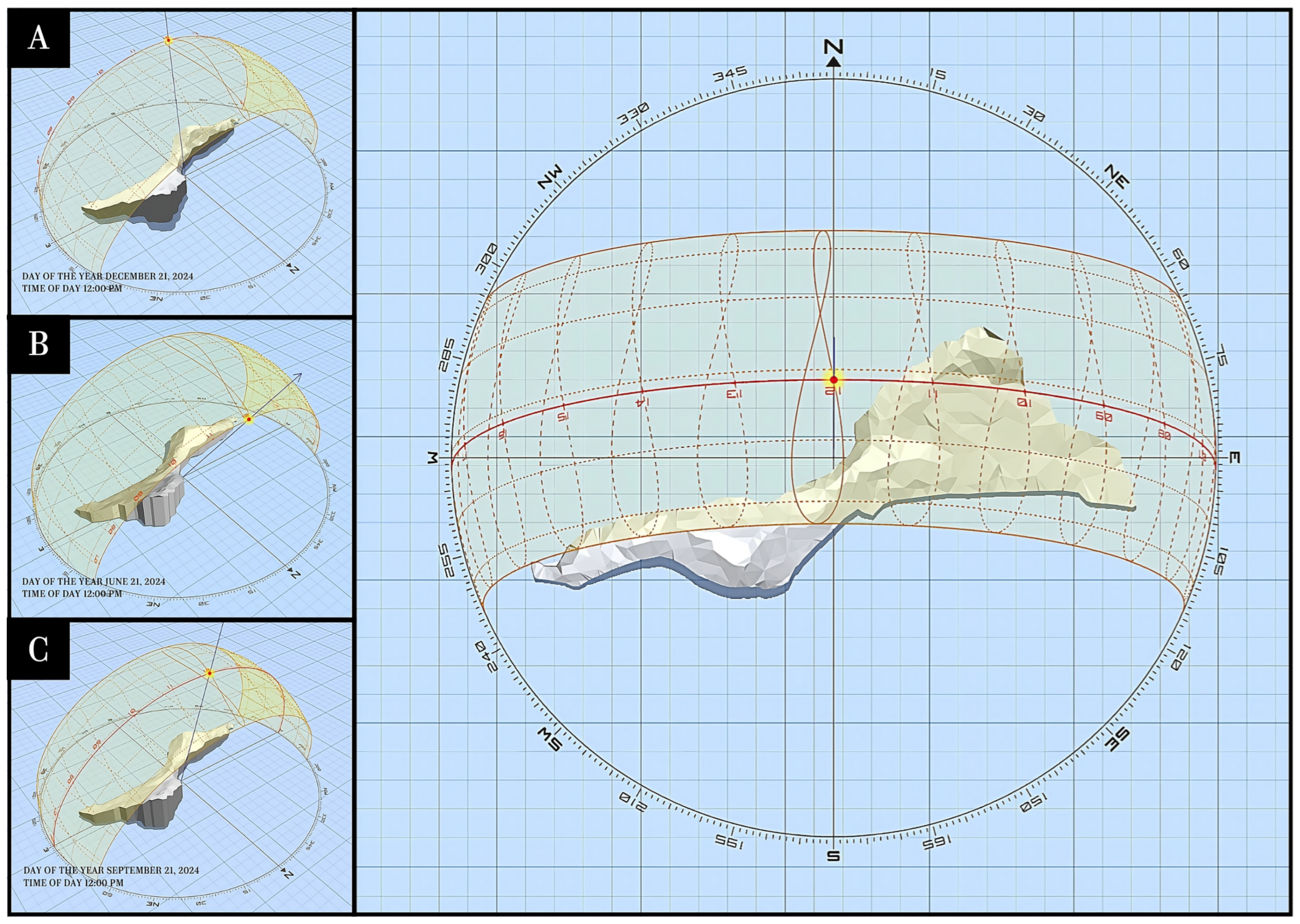
Figure 16 illustrates the solar rotation at Choquequirao, which results in greater sunlight incidence on slopes oriented north–south and east–west. This phenomenon is due to the region’s geographic position and the Earth’s tilt, causing slopes in these directions to receive more direct sunlight throughout much of the day [83]. North-facing slopes consistently receive sunlight year-round, while east- and west-facing slopes experience strong solar exposure during the afternoon. This significantly impacts temperature, microclimate, and vegetation in these areas [84].
Figure 16A shows how, during the summer solstice, around 21 December, when the sun reaches its highest point in the sky, the east-facing slopes of Choquequirao receive the most direct solar radiation, resulting in intense exposure and higher temperatures. Conversely, Figure 16B illustrates that during the winter solstice, around 21 June, when the sun is at its lowest position and the day is shorter, the north-facing slopes receive the greatest amount of sunlight, leading to reduced radiation and cooler temperatures. Finally, Figure 16C shows that during the spring equinox, around 21 September, when day and night are of equal length and the sun is positioned over the equator, sunlight is evenly distributed across the northern and southern slopes, providing balanced radiation and moderate thermal conditions.
Solar orientation influenced the design and placement of buildings to maximize natural light, ventilation, and thermal comfort—key factors for habitability. Examples include the Houses of the Artisans and the Priests. This understanding also provides insights into spatial usage, aiding archaeologists in reconstructing the daily lives and beliefs of the civilizations that inhabited the site. Additionally, solar exposure affects material degradation, making it essential to develop preservation strategies based on this knowledge.

3.2. Subsection Spatial Analysis

Master Plan: Area and Dimension Analysis

The Choquequirao Archaeological Site stands out for its impressive location, built on steep slopes with an agricultural terrace system at an average altitude of 3033 m above sea level [61]. The precision and adaptation to the terrain reflect the remarkable Inca construction system at this fascinating site [84].
The total area of Choquequirao is approximately 1800 hectares; within this extensive territory, the main structures and terraces cover around 6 km2 [85].
Choquequirao is structured into two main parts: The upper sector, known as Hanan, and the lower sector, called Hurin. Additionally, there are other sectors such as the Ceremonial Terraces, Pikiwasi, Paraqtepata, Phaqchayoq, Las Llamas, and Sunchupata [86].
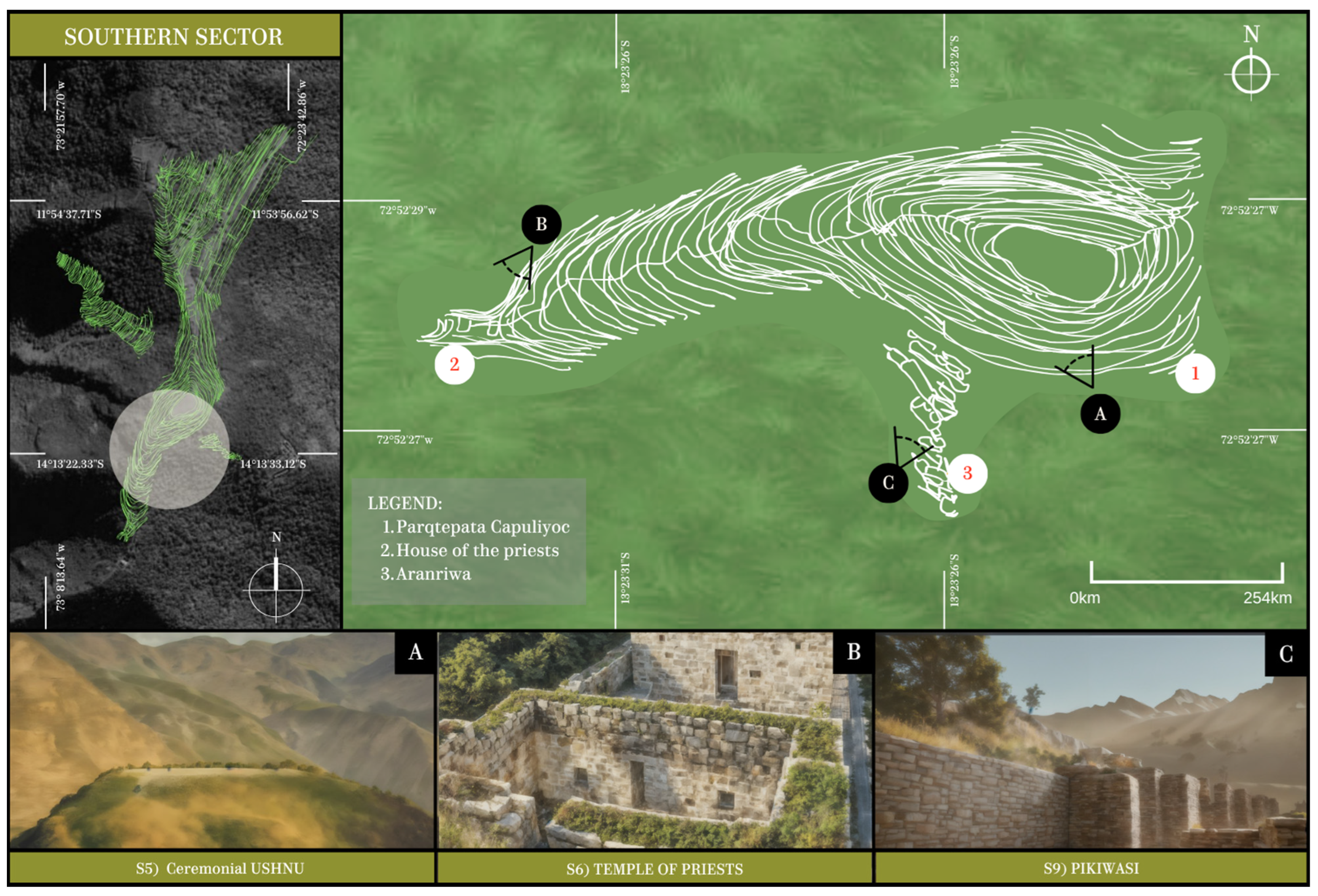
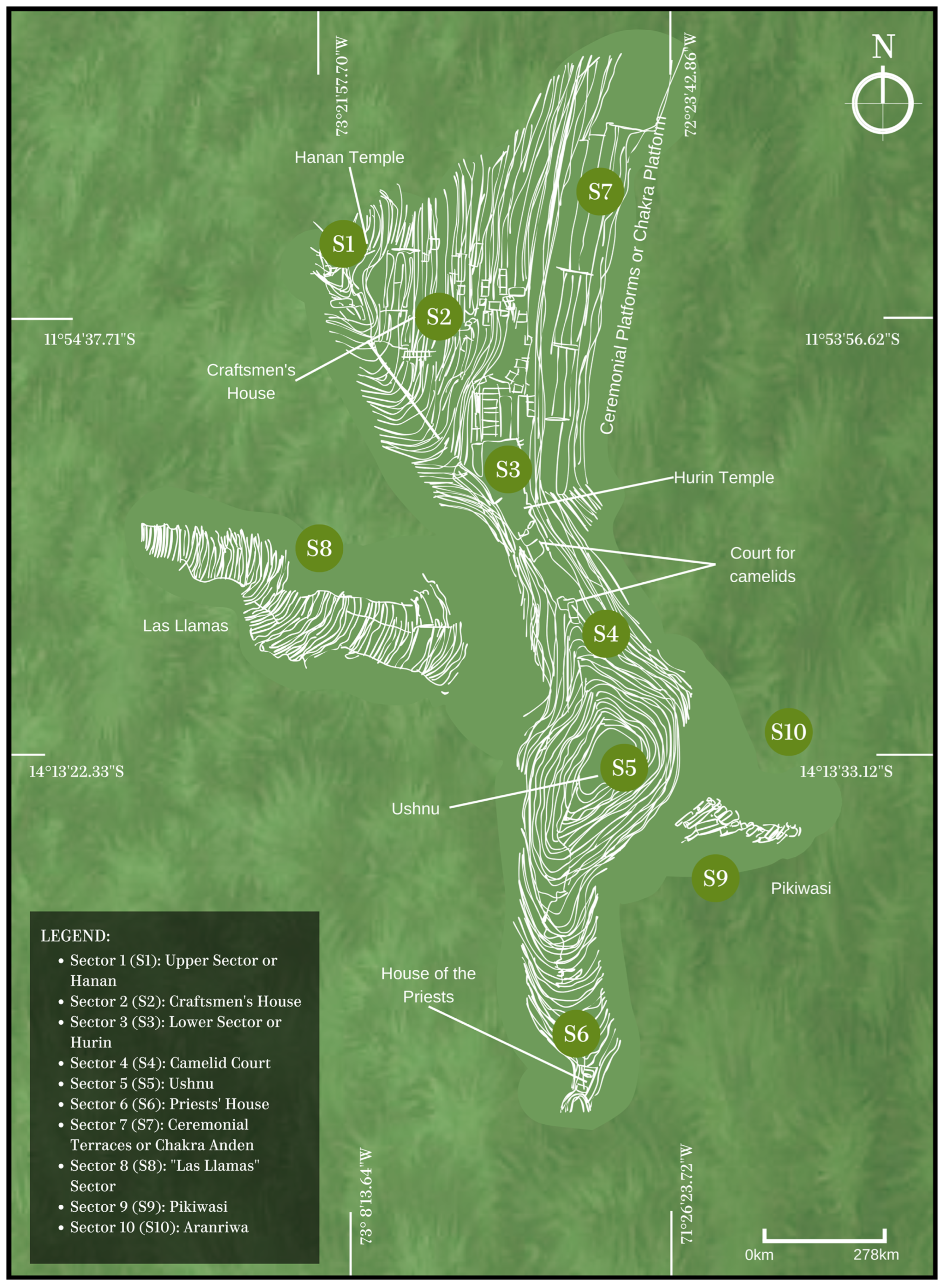
Figure 17 shows the upper sector (Hanan), which includes the main plaza, the core of social and ceremonial activities, as well as the kallankas, large rectangular halls used as communal spaces or temporary lodging. It also comprises the qolqas, storage facilities for food and goods; tombs associated with ritual contexts; and a canal that demonstrates the advanced Inca hydraulic engineering. In Sector 2, known as the House of the Artisans, kallankas and tombs related to productive and ceremonial activities can be observed. In the lower sector (Hurin), Sector 3, identified as the Hurin neighborhood, contains the Huacaypata Plaza, a center for public ceremonies, and the Sunturwasi, a possible administrative or ritual control space. Sector 4 corresponds to the Camelid Corral, intended for the care and management of these animals, covering approximately four hectares along with adjacent areas. Sector 5, known as the Ushnu, stands out for its ceremonial function as a ritual platform and symbolic axis mundi that articulated the sacred space, while Sector 6, the House of the Priests, likely housed the religious authorities. Together with Sectors 9 (Pikiwasi) and 10 (Aranwa), these areas cover around five hectares. Finally, the Ceremonial Terrace or Chakra Anden (Sector 7) and the Llama Terraces (Sector 8) occupy areas of seven and two hectares, respectively [86].
The research on the spatial analysis of Choquequirao aims to understand its architectural and urban organization, revealing its complexity in integrating with the natural environment [63]. For architecture students, this study is valuable as it allows exploration of the construction and urban planning strategies of a pre-Columbian civilization, fostering an appreciation for designs that respect topography and the environment [87]. Moreover, recognizing the spatial qualities enhances the cultural value of the site by highlighting its importance as an example of planning and adaptation, offering lessons applicable to contemporary projects seeking a balance between architecture and nature [64,86].

3.3. Functional Analysis

3.3.1. Zoning, Analysis, and Spatial Distribution

The spatiality of Choquequirao’s sectors reveals careful urban planning and the strategic distribution of functions and activities, ingeniously adapted to the mountainous environment of the Andes [82]. This spatial distribution provides invaluable insights into the social, economic, and religious organization of the civilization that inhabited the site.
Choquequirao, an archaeological center located in the Cusco region of Peru, is divided into the upper sector, southern sector, lower sector, and the terraces on the eastern and western slopes [86].
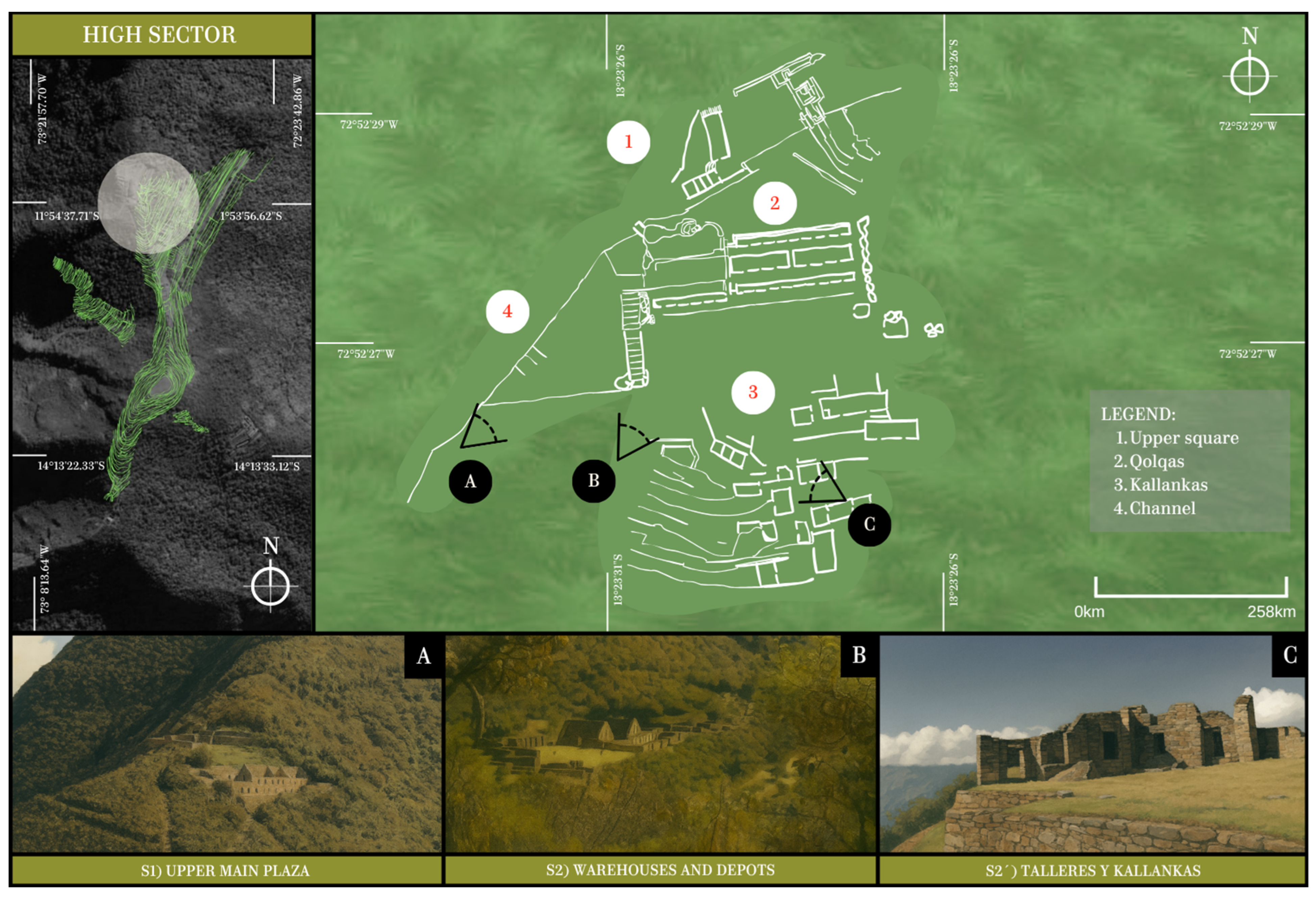
Figure 18 illustrates the upper sector and the areas that comprise it. In Figure 18A, the main plaza, which has a perimeter of 84.5 m and an area of 460 m2, includes a 36.1 m2 building with several corridors and terraces arranged in a quadrangular layout with interior access. A double-jamb niche and a narrow corridor measuring 1.90 m long and 0.65 m wide lead westward. This space features several niches and windows aligned along the southern wall [87]. In Figure 18B, the warehouses and storage facilities, which are part of the first division in the House of the Artisans, include nine platforms, five structures, and corridors. The first building, located northwest on the highest platform, measures 37.4 m in length and 1.7 m in width, with eight entrances facing southeast [86,87]. It contains 29 niches on the rear wall and 18 on the front wall. The buildings on a lower platform have two floors, measuring 20.4 m in length and 5.8 m in width, with three entrances on the east side and multiple niches on their walls. In Figure 18C, the second division of Sector 2, which includes workshops and kallankas, contains Building 4, a single-story structure measuring 40.1 m in length that features numerous niches and a frontal corridor. Building 5 measures 23.6 m in length and 1.55 m in width, with multiple niches and entrances. Subsector B contains 16 superimposed platforms, measuring 28 m in length, with internal stairs and niches on both sides [87].
Figure 19 illustrates the lower sector and the areas that comprise it. In Figure 19A, Sector 3 shows where the most prominent buildings of Choquequirao are located, arranged around a central plaza. Hauqaypata, covering an area of 1500 m2, is particularly noteworthy. It is surrounded by the Suntur Wasi and the Main Temple, which feature low internal niches intended for ceremonial purposes. The buildings are organized around courtyards, ranging from 10 to 20 m in length and 4 to 5 m in width, and were likely used as residences for members of the local elite [88]. In Figure 19B, Sector 4, which includes the Cancha para Camélidos, has an area of 6281 m2. This space was specifically organized for the storage and grazing of animals, particularly llamas and alpacas, serving as sources of meat and wool [88].
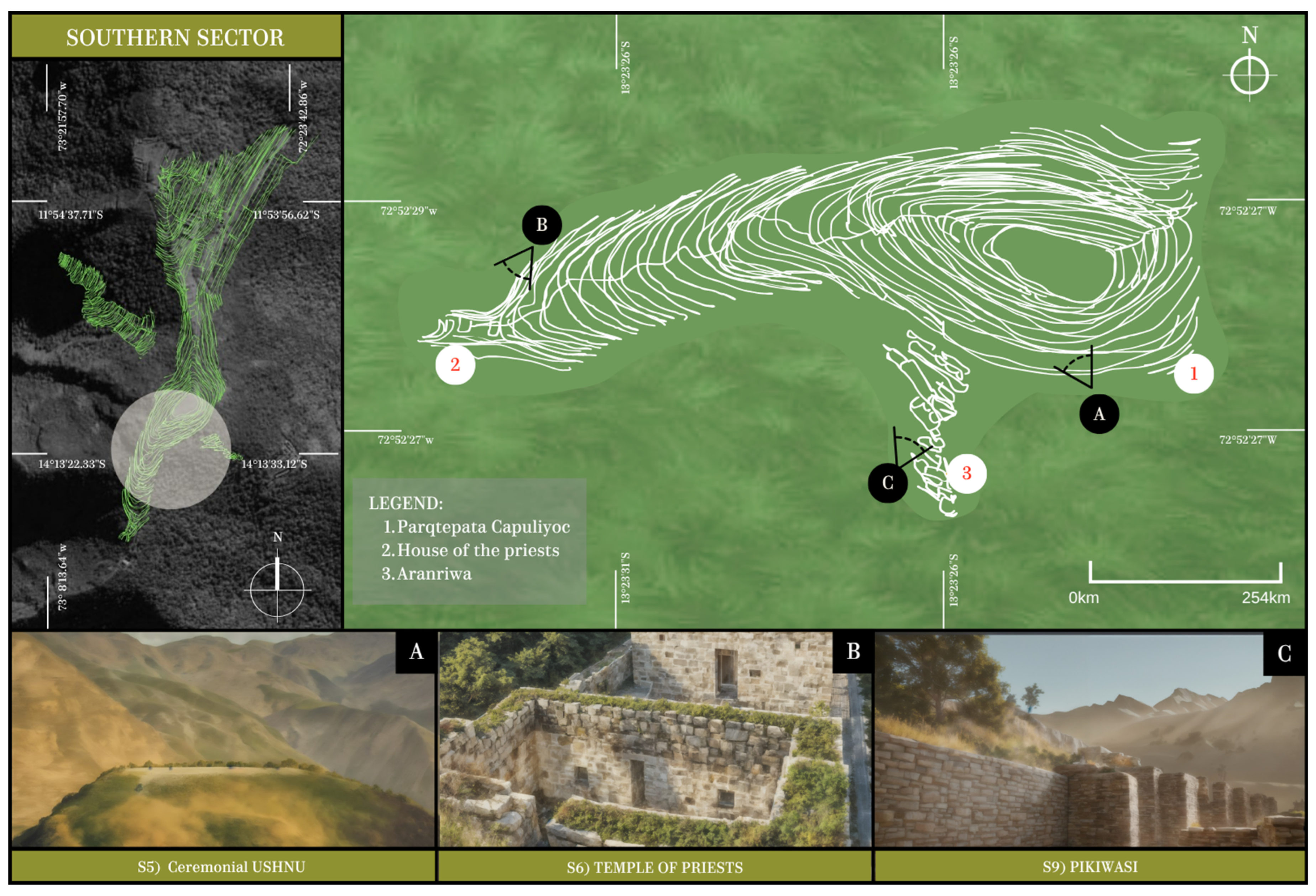
Figure 20 illustrates the following. Figure 20A shows Sector 5, which features the ceremonial Ushnu, covering an area of 80 m2. It served as a site of Inca cosmological significance, representing the political and spiritual authority of the Inca leader [88]. In Figure 20B, the House of the Priests comprises several buildings designated for rituals, administration, and housing. It covers approximately 190 m2, with dimensions of 24 m in length and 8 m in width. The priests residing here played a crucial role in conducting important rituals and ceremonies [89]. Figure 20C Sector 9, Pikiwasi. This area spans about 175 m2, with dimensions of 25 m in length and 7 m in width. Located in a prominent part of the study area, its layout facilitated access and the management of resources related to coca. It was likely used for storing dried coca leaves [88,89].
Choquequirao stands out for being built on very steep terrain, which led the Incas to create numerous terraces with a dual purpose: stabilizing the land and using it for agriculture.
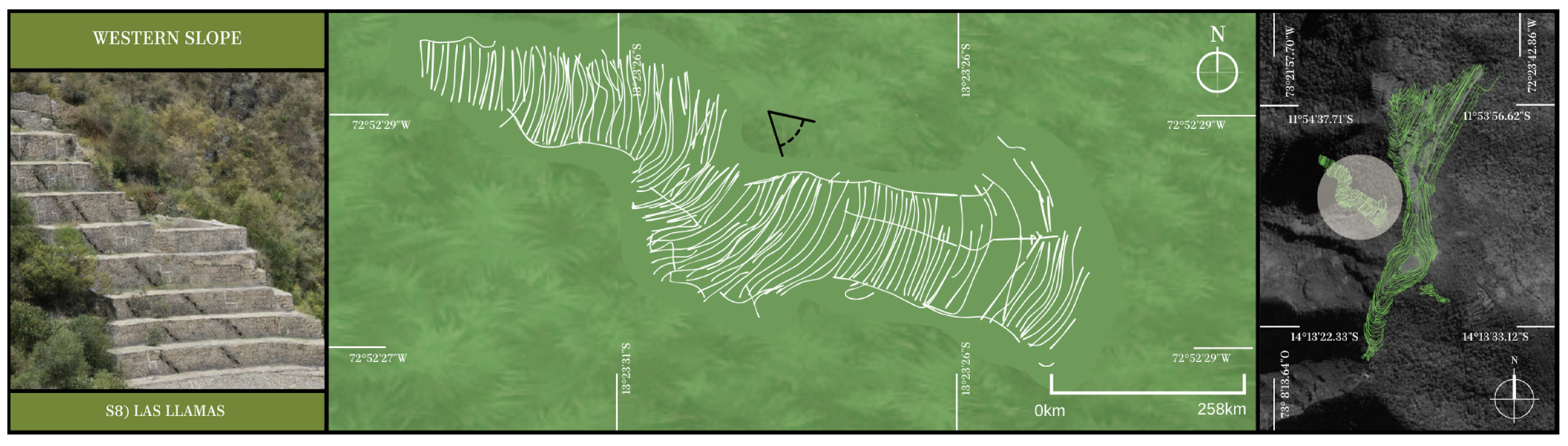
Figure 21 illustrates Sector 8, known as “Las Llamas”, situated at an average altitude of 2800 m above sea level, at the top of a ravine with altitudes ranging from 2700 to 2900 m. This sector contains approximately 129 narrow terraces, 25 of which feature retaining walls decorated with mosaics depicting twenty-eight designs of 23 llama figures aligned and oriented eastward. On the final main terrace, zigzag patterns are inscribed, possibly symbolizing the path to the mountains, where the llamas depicted on the walls appear to converge [89].
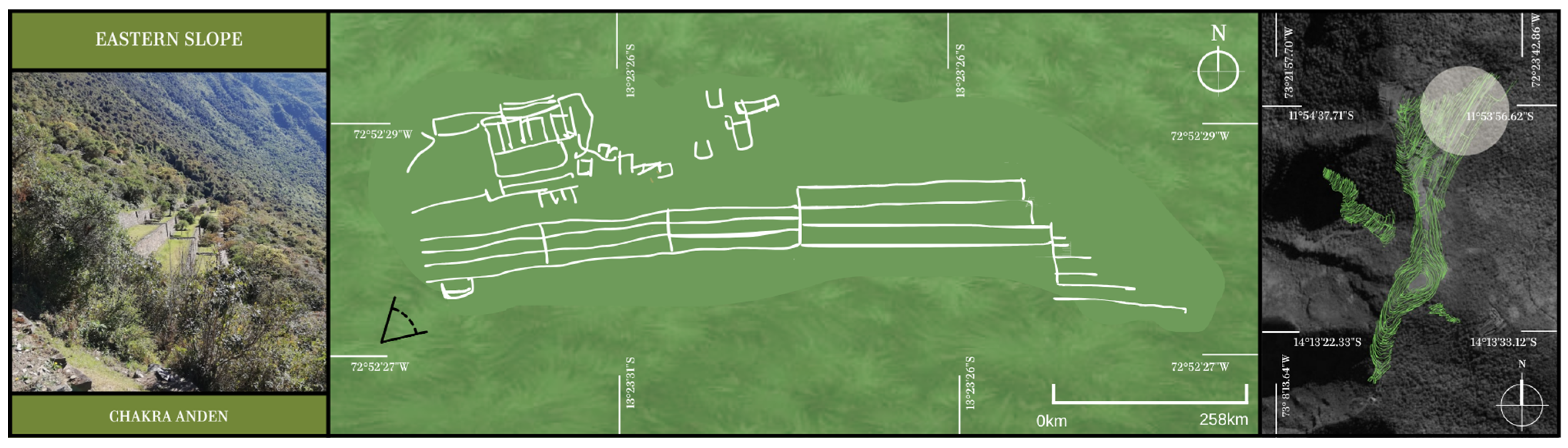
Figure 22 shows that on the eastern slope lies the Chaqra Anden or Sector 7, where the terraces are organized into four groups distributed across three levels, giving the site its distinctive character [88,89]. Each terrace is bounded by finely crafted retaining walls, both at the lower and upper edges. However, these walls also served to stabilize potential landslides that could severely impact the upper and lower parts of Choquequirao [90].
The zoning of Choquequirao reflects a hierarchy that materializes the intricate relationship between the political and religious spheres, a central tenet of Andean cosmopolitics [71]. The spaces at the highest elevations, such as the main plaza and temples, did not function as separate entities but rather as the nexus of a unified political–religious power, symbolizing the connection between the divine and the terrestrial [90].
These spaces, with access restricted to the elites, visually dominate the surroundings, reinforcing their sacred character and, simultaneously, their territorial control. Surrounding them extend the agricultural terraces, which transcended their purely economic function; by sustaining the ceremonial center, they also functioned as a mechanism of said territorial control and participated in the ritualized landscape [91]. The residential and productive areas are located on the lower levels, configuring an orderly structure that was articulated and functionally subordinated to this sacred nucleus of power [92,93,94]. This hierarchical organization allows us to understand how Choquequirao materialized the centrality of power and religion as an integrated system in daily life, offering valuable lessons to architects on how zoning can integrate social, political, and spiritual dimensions into contemporary designs [93].

3.3.2. Circulation Pattern and Flow Control

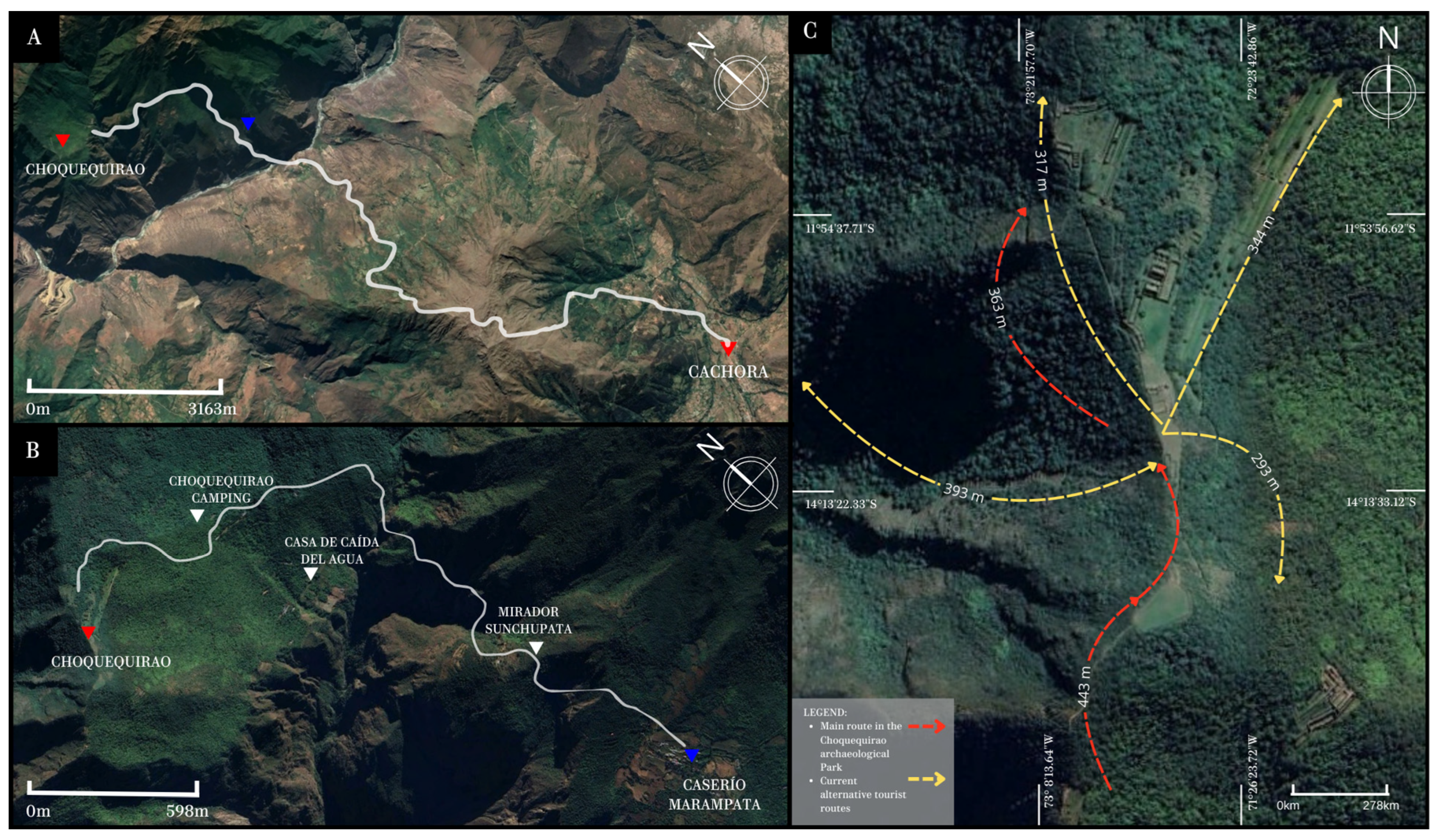
The spatial hierarchy and adaptation to the Inca environment in Choquequirao make the journey to its entrance challenging. Cachora, a small town in the Apurímac region, is located approximately 32 km from Choquequirao. From Cachora, visitors typically start the trek to Choquequirao, which involves descending to the Apurímac River, crossing it, and then climbing up the mountains to reach the Inca site. This demanding hike takes 2 to 3 days, traversing mountainous terrain and jungle, requiring good physical condition, ample water, and camping gear. Upon arrival, visitors can explore remarkable Inca ruins in a less crowded setting than Machu Picchu. Proper planning is crucial, especially considering the altitude, which reaches 3050 m above sea level. The descent trail is in Apurímac, while the ascent is in Cusco [95].
Figure 23 illustrates the following. Figure 23A: the path to the main plaza leading to the Qolqas; Figure 23B: the narrow trail that leads to the Hanan temple; Figure 23C: the main plaza culminating in the kanchas for camelids and the path to the Ushnu and the priests’ house.
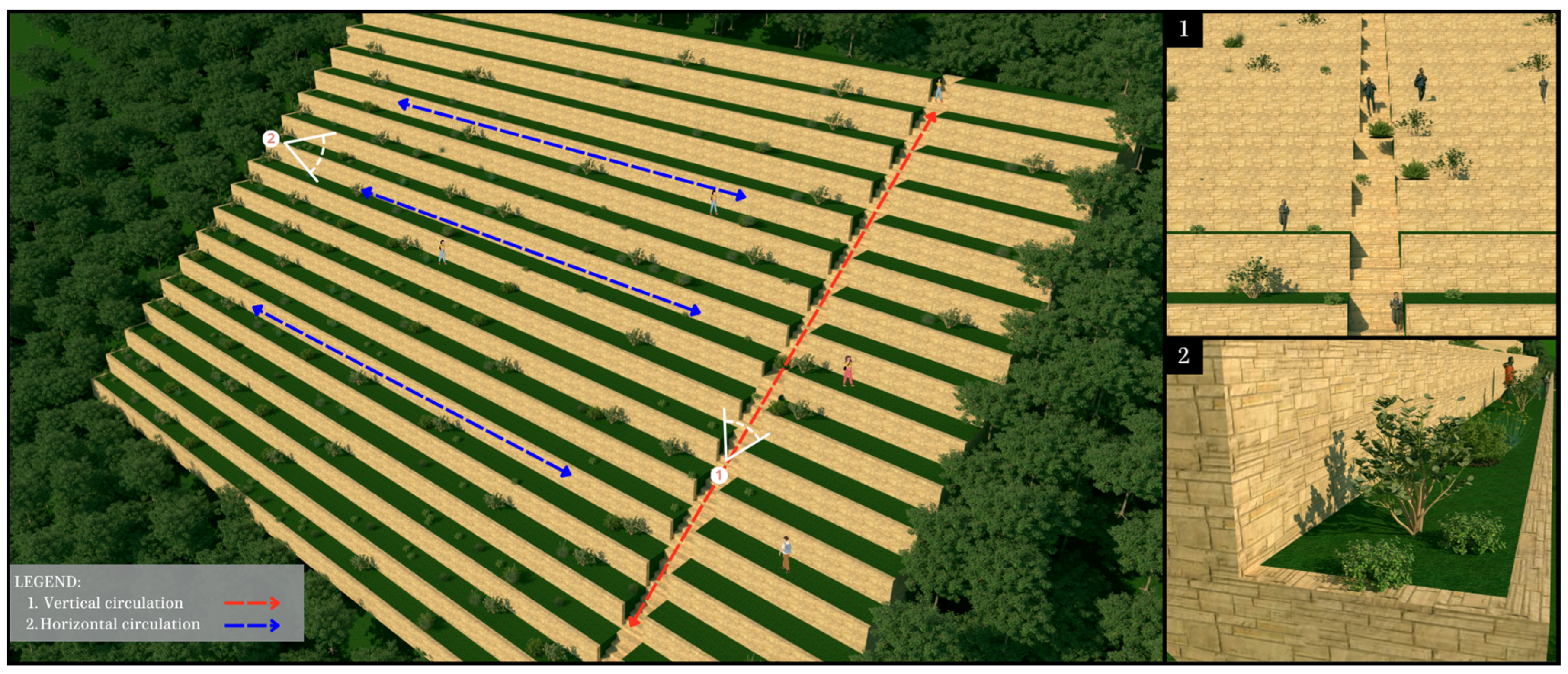
Figure 24 illustrates the existing circulation on the terraces. The agricultural terraces are stepped structures used both for land stabilization and cultivation. However, they were not employed interchangeably for a single crop; their design took advantage of the site’s pronounced altitudinal variation to create distinct ecological niches. The Incas cultivated maize, potato, and quinoa, but this production was vertically differentiated: maize, a staple crop for both daily consumption and ceremonial purposes, was grown on the lower-altitude, warmer terraces. In contrast, potato and quinoa, staple foods adapted to the region’s cold climatic conditions, thrived at higher elevations. This vertical zoning not only maximized production but also allowed for crop rotation and complementarity, ensuring the site’s subsistence. Furthermore, the design of these terraces enables safe and efficient movement along the steep slopes.
Horizontal circulation is organized through paths and trails that adapt to the mountainous topography, facilitating access to the site’s various structures. Stone-carved stairways effectively connect the upper and lower levels of the terrain, showcasing the ancient inhabitants’ skill in adapting to the landscape. Together, these elements enable smooth and functional circulation while demonstrating the site’s sophisticated planning [96].
The materials used in construction were primarily sourced from the surrounding region, utilizing local resources. Stone, extracted from nearby quarries, was carved with great precision. Additionally, adobe was used in some areas, and native vegetation like ichu was employed for roofing and coverings, ensuring a sustainable approach [97,98].
The stone stairways in Choquequirao have steps that typically range from 30 to 40 cm in height and 60 to 80 cm in width, adapting to the site’s natural topography. Circulation in Choquequirao is organized through a system of paths and stairways that connect the terraces and structures, enabling efficient vertical and horizontal movement along the steep slopes. The stairways, which vary in width from 4.4 m to 25 m, are primarily oriented southeast, following the terrain’s contours. The main paths average 2 m in width and link specific areas, such as the agricultural, ceremonial, and residential zones. These routes are also bordered by stone walls and strategically designed to facilitate access from the central plaza to the agricultural terraces [99,100].
The idea that social space in the Inca empire was actively constituted as an instrument of power has been defined as “landscape and domination” [101]. Choquequirao is a clear example of this principle. Access to the site, via long and challenging routes, was not a mere geographical obstacle but a mechanism of control. This difficulty materializes the hierarchy of the place, filtering access and reinforcing its perception as a sacred space.
This same logic of control is replicated in the articulation of the internal paths. These are arranged hierarchically, exerting deliberate control over the visitor’s spatial experience and access to religious and administrative sectors [102]. This intentional management of circulation offers architecture students valuable lessons on how route design can influence user experience and materialize the social and political organization of a civilization [103].

3.4. Visual Harmony

3.4.1. Strategic Positioning, Repetition, and Rhythm

From an elevated location, Choquequirao is strategically positioned to control one of the country’s most remarkable altitudinal routes. The settlement unfolds like an open book, with the Apurímac River flowing below and a mountain range stretching toward the eastern slopes, covered in dense tropical vegetation. This setting reflects the Andean aspiration to dominate the world from above [103].
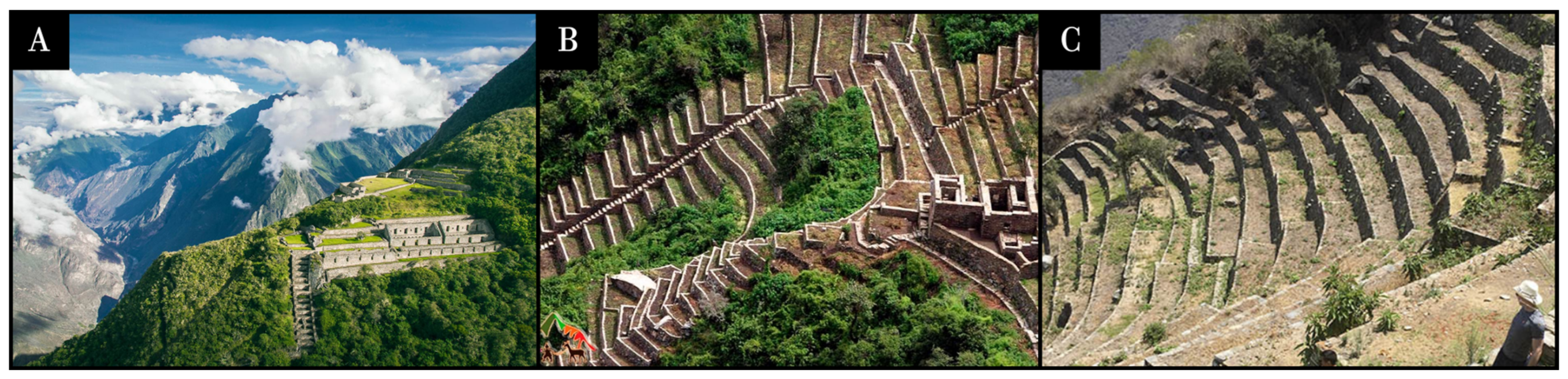
Figure 25, which includes a view of the Choquequirao archaeological site, showcases how it integrates into its surroundings and creates a distinct perspective of the place [104]. In Figure 25B, the visual coherence of Sector 7 highlights the sequential arrangement of elements. In Choquequirao, repetition is evident in every agricultural zone, with Chaqra Anden displaying repeated ceremonial terraces [103]. Figure 25C shows one of Choquequirao’s defining features, which is its extensive agricultural terraces, as previously mentioned, located on the mountain slopes. These terraces exhibit rhythmic patterns due to their spatial sequence, generating visual harmony [103].

3.4.2. Structural Symbolism

Structural symbolism in Choquequirao transcends the merely aesthetic to become the materialization of the Andean cosmovision. Defined as an integral philosophical system that structures the universe, it is based on axial principles such as complementary duality (Hanan/upper and Hurin/lower) and the conception of the landscape, including the Apus or mountains, as a living and sacred entity. This cosmovision is tangibly manifested in the layout of Choquequirao’s buildings. The site’s hierarchical organization, with its clear zoning between upper (Hanan) and lower (Hurin) sectors, does not respond to a merely functional logic but rather materializes concepts of power and cosmological ordering. Likewise, the deliberate orientation of its structures underscores the intrinsic spiritual connection with this sacralized natural environment.
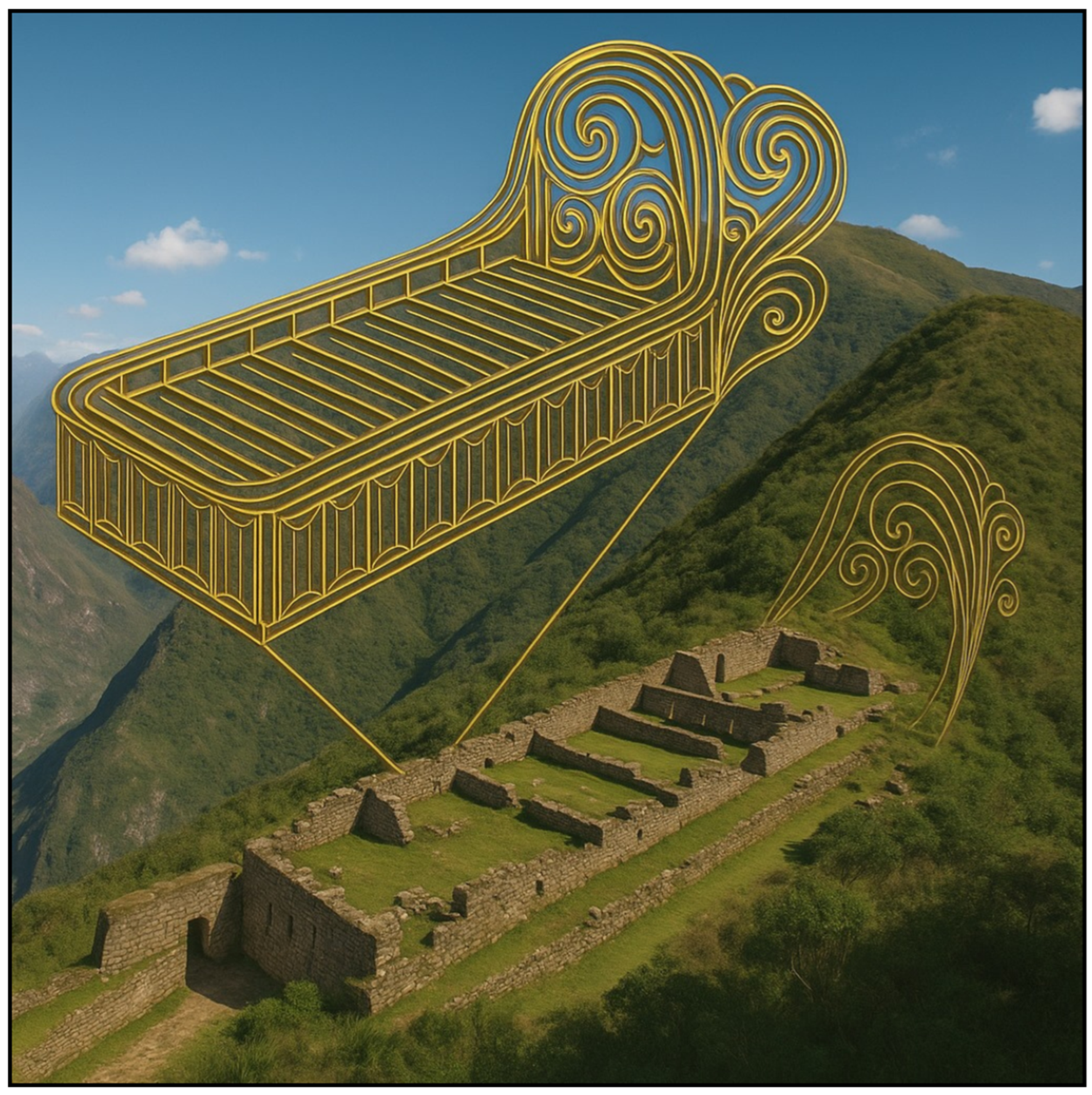
The “Cradle of Gold” refers to an architectural zone in Choquequirao distinguished by its significant ceremonial and religious function. Its name derives from the Aymara word “chuqui” (gold) and the Quechua word “k’iraw” (cradle), that is, “Cradle of Gold.” This designation alludes to the golden hue reflected by the metamorphic rocks used in the construction of the site, whose minerals produce a radiant shine under sunlight. Beyond its literal meaning, the “Cradle of Gold” symbolizes the Inca connection between the sun (Inti), gold, and divine power. Gold was considered the physical manifestation of the sun, a sacred element representing life, fertility, and the presence of the gods on Earth. Therefore, the luminous effect of its architecture was not merely aesthetic but a deliberate intention to evoke the sacred and celestial harmony [106].
It is also worth noting another possible interpretation regarding the origin of the name Choquequirao, according to which “Cradle of Gold” might not refer to material wealth but to the shape of the place itself. According to Hiram Bingham, the ridge on which Choquequirao is situated, when viewed from a distance, resembles a hammock or cradle suspended between mountains. The golden glow that the ruins acquire under the setting sun may have inspired the ancient Incas to name it in this way, evoking both the warmth of the sun and the image of a golden cradle gently swayed by the Andes [106].
From an architectural perspective, the layout, orientation, and spatial hierarchy of this sector reinforce its symbolic connection to the divine. The elevated platforms and restricted access suggest a space reserved for the Inca elite or priests, intended for offerings and rituals associated with sun worship. This design reflects how the Incas materialized their cosmological beliefs through architecture, using light, color, and form to express concepts of power, spirituality, and cosmic order [107].
Figure 26 illustrates the symbolic role of the Cradle of Gold within the southern sector, showing how its architecture embodied both material splendor and profound spiritual meaning.

3.5. Inca Construction Analysis

3.5.1. Materiality

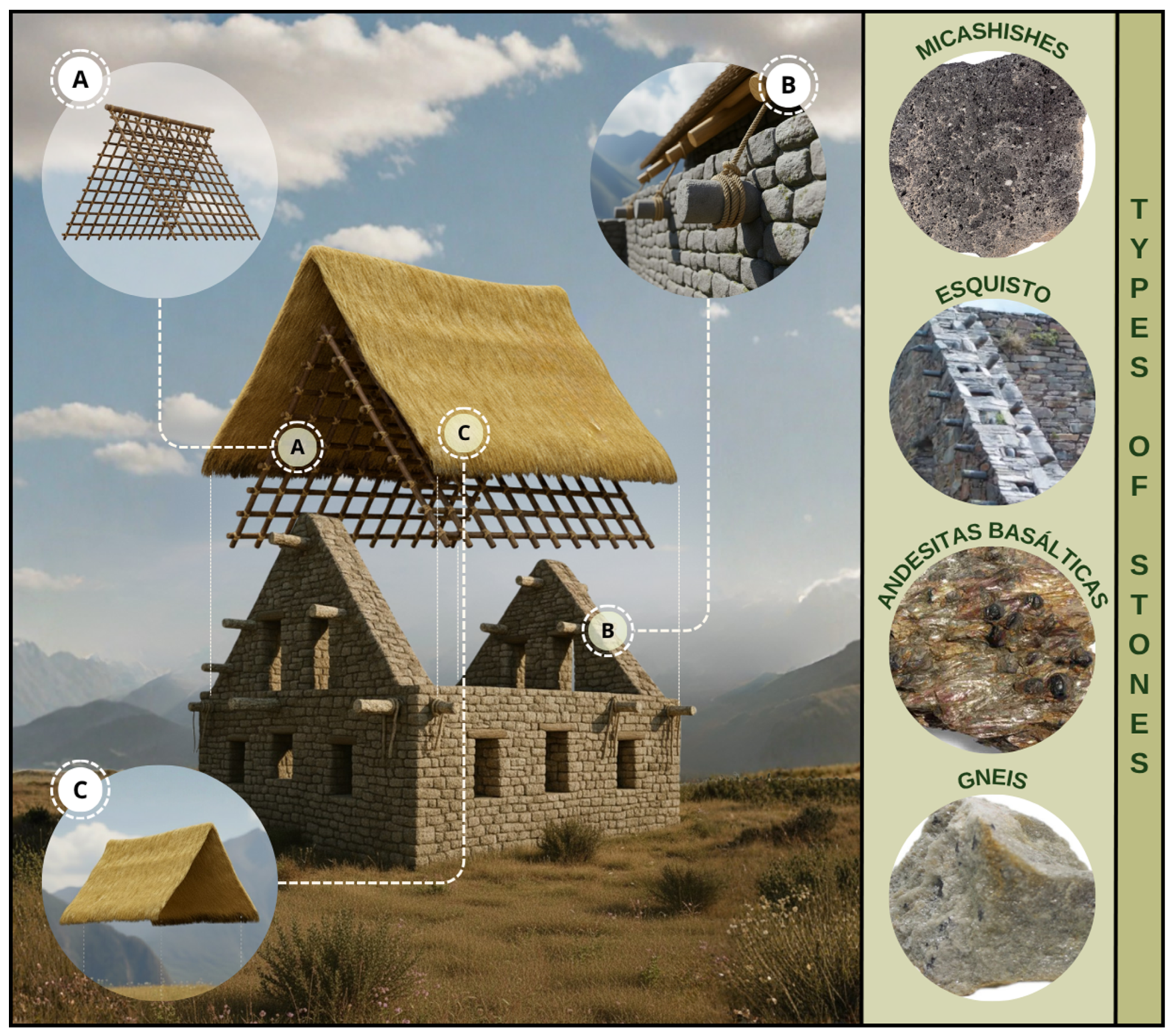
In Choquequirao, the primary construction materials were sourced from the immediate natural surroundings, a hallmark of Inca logistical efficiency. Various rocks were extracted from nearby quarries, predominantly metamorphic rocks such as schist and gneiss, and igneous rocks like basaltic andesites and micashishes [108]. Additionally, clay for adobe bricks and mortar was sourced from local soils, and the wood required for the structures was gathered from adjacent forests [109]. This proximity not only facilitated construction but also ensured a visual and material integration with the landscape. The site primarily consists of dressed stone masonry, bonded with clay mortar. Architecturally, notable features include two-story buildings, interior niches, and openings (doors and niches) with double jambs [110].
Figure 27 illustrates in detail the construction technology of a typical dwelling. Figure 27A shows the reticular (lattice) framework of wood or cane that comprised the roof structure. In turn, Figure 27B shows the masonry wall with embedded stone blocks, which functioned as “nails” to anchor and lash this framework to the dwelling. Finally, Figure 27C details the thick thatch (ichu) covering, which provided protection and waterproofing [111].
These data allow us to make inferences about life at the site and its spatial planning. The choice of masonry and the arrangement of openings were not merely aesthetic, but functional decisions that directly impacted habitability. In this context, the analysis of solar radiation becomes relevant, revealing how Inca architects actively designed the sun, not only to illuminate but to manage the thermal comfort of daily life [97,111]. The combination of thick stone walls, with their high thermal inertia, and the dense insulating thatch cover created a passive climate control system. This system captured heat during the day to release it slowly at night, adapting to domestic functions and seasonal climatic variations [98,111].
The importance of this technology is evident, as the loss of the thatch roofs drastically altered not only the silhouette but also the regulation of interior temperature and the luminous quality that defined the habitable space. This understanding has direct effects on current conservation and tourism [97,111]. Today, visitors primarily observe the stone walls exposed to the elements, which fundamentally alters the “technical and spatial reading” of the dwelling, hindering an understanding of the original luminous and thermal experience. Linking radiation data with the original design supports arguments for preservation strategies that balance material integrity with functional and spatial integrity (the experience of the dwelling), thereby offering a significant contribution to both archaeology and analysis [96,112].
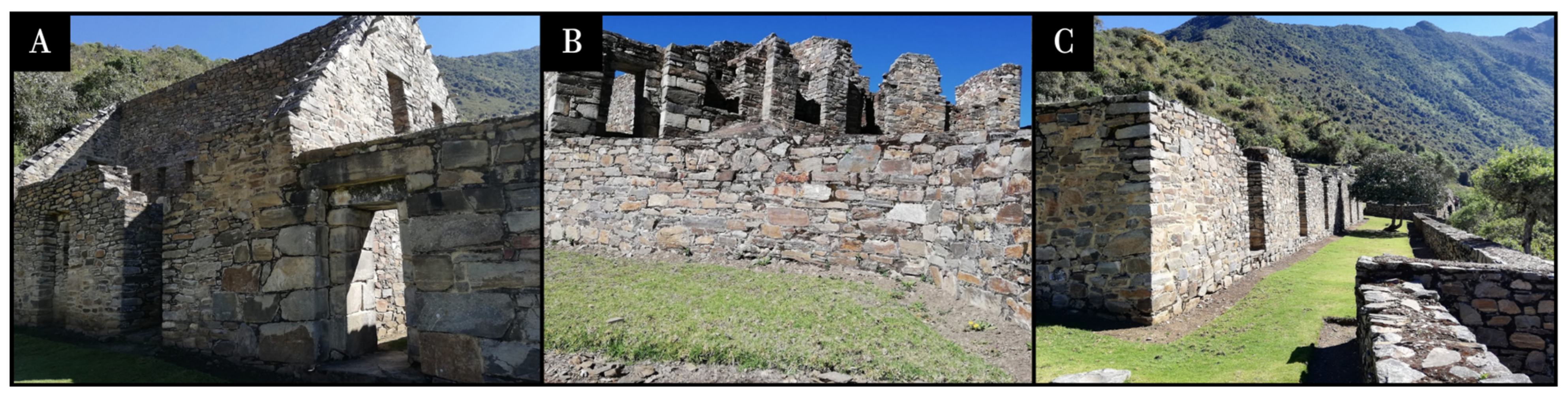
Figure 28A illustrates the double-jamb entrance of the enclosure, where a documented distance between the positioned intersections is oriented north to south. Additionally, a narrow passage at the rear of the temple reveals another separation of joints running east to west [98,112]. Figure 28B provides a closer view of the narrow terraces in Sector 9, Pikiwasi [98,112], while Figure 28C shows the low niches within the Huacaypata Temple [98,113]. These architectural features reflect the precision and planning with which Inca builders organized spaces, integrating structural, functional, and symbolic criteria that define the architecture of Choquequirao.
A new perspective emerges when these architectural data are linked to an analysis of differential solar radiation, which helps explain why the structures were built in this particular way. The lower niches of the Huacaypata Temple, for instance, do not appear to have served everyday storage purposes. Their placement suggests a ritual function (for offerings or sacred elements) in which light incidence may have played a symbolic role in the ceremonial experience [98,106]. Similarly, the narrow terraces of Pikiwasi may have responded not only to agricultural needs but also to an adaptive design aimed at optimizing specific microclimates, managing solar radiation for specialized crops [98,106].
Understanding this connection between design, sunlight, and function is essential for current conservation and tourism. Analyzing how radiation levels affect these spaces allows for the identification of structures most vulnerable to climatic degradation. Moreover, it enhances touristic interpretation, allowing Choquequirao to be presented not as a static set of ruins, but as a dynamic environment intelligently designed in relation to the sun, where each opening and niche served a purpose that balanced structural integrity, symbolic meaning, and habitability.

3.5.2. Dimensions and Construction Techniques

Understanding the dimensions and construction techniques of Choquequirao is essential for ensuring the functionality and durability of the space. This includes the careful planning of dimensions in different sectors and the construction methods applied in each sub-area. The site not only fulfilled operational objectives but was also integral to terrace farming.
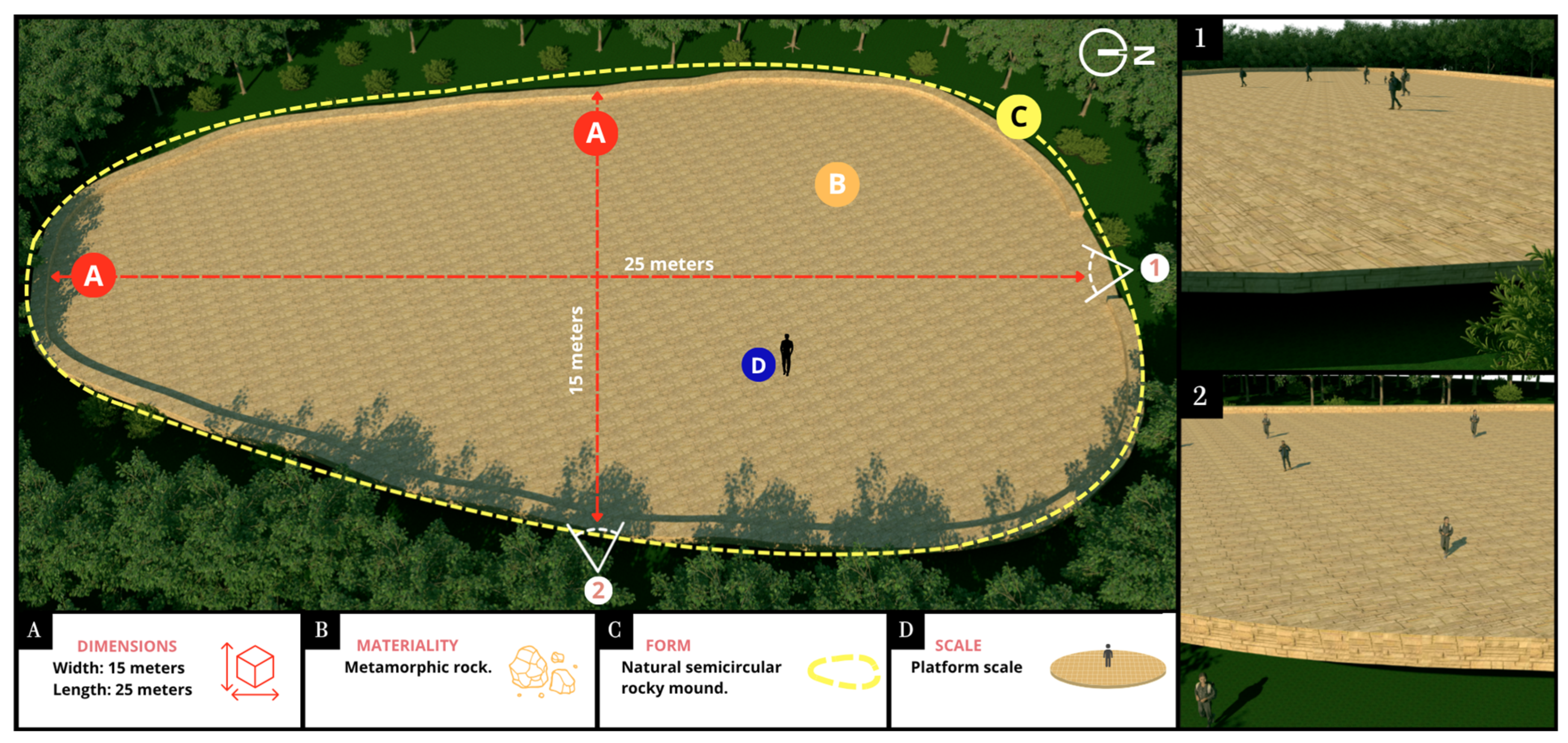
Figure 29 showcases the dimensions of Sector 5, highlighting its flattened shape and construction based on the leveling of metamorphic rock.
Positioned on a truncated semicircular hill, it features a large natural mound of rock with a leveled summit surrounded by a small parapet that is interrupted towards the northeast. It measures approximately 15 m in width and 25 m in length. From this vantage point, all the surrounding mountains are visible. Artifacts found at the top suggest that this area may have served as both an observatory and a place of worship [96].
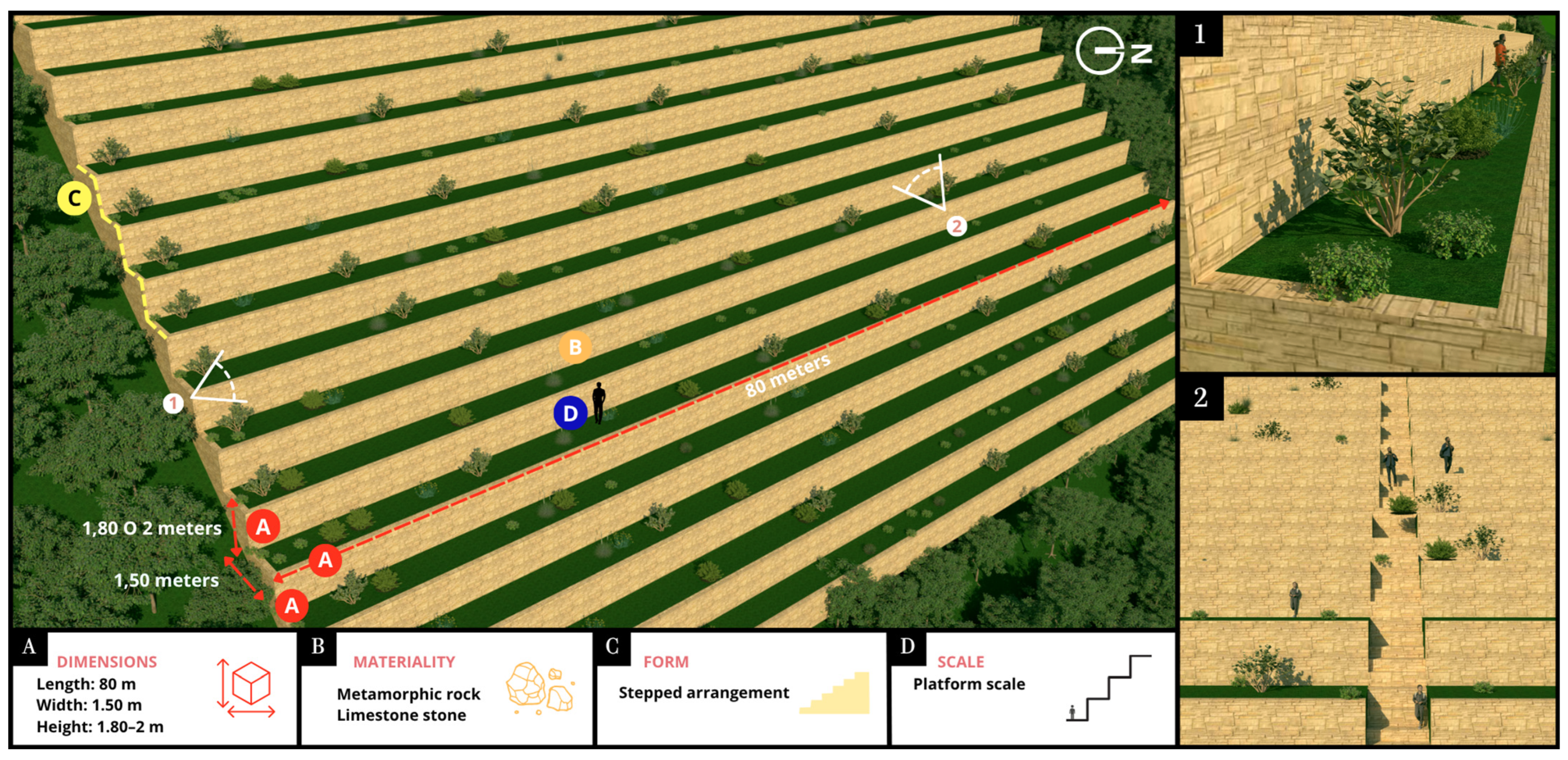
Figure 30 illustrates the dimensions of Sector 8 and the construction technique involving vertically placed stone blocks, highlighting details of mosaics and images of llamas.
These are massive retaining walls designed to stabilize landslides in the sector. They are constructed from gneiss and mica-schist blocks that decrease in size toward the top. The walls are built with horizontally arranged rock blocks separated by wide trenches. The base of the terraces was likely deep and designed to extend beyond the ground level for added stability [96].
The archaeological site features a notable structure, measuring 80 m in length, 1.50 m in width, and an average elevation of 1.80 to 2 m, distributed across 23 terraces. Its design includes decorative fragments with geometric patterns, anthropomorphic figures, and zoomorphic representations, prominently featuring llamas crafted from stones [70].
The vertical arrangement of stone blocks, with an elevation of 1.70 m and a width of 1.30 m, showcases a construction technique that combines structural solidity with high aesthetic value. This approach integrates symbolic iconography with architectural precision, reflecting the dual functional and cultural significance of the site [96,106].
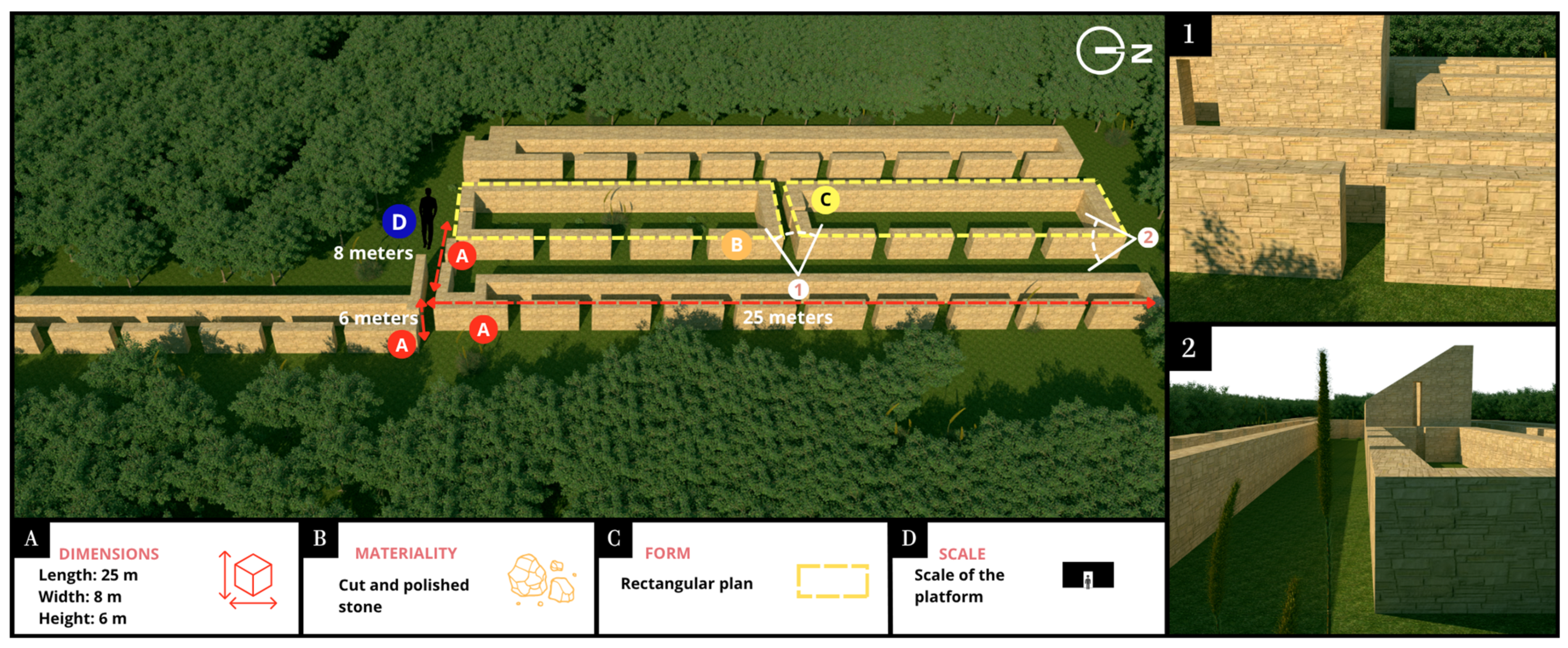
Figure 31 illustrates the dimensions of Subsector 2 (kallankas) and their construction technique based on Inca masonry, crafted from finely carved stones [98].
The kallankas, typical buildings of Inca architecture, have significant dimensions: 25 m in length, 8 m in width, and 6 m in height. These structures are characterized by stone walls built using Inca masonry techniques, employing precisely carved stones with a polished finish that highlights the high level of stoneworking skill [98].
Kallankas are often designed with multiple doors and windows symmetrically distributed along their walls. This design not only fulfills aesthetic criteria but also serves functional purposes, providing natural ventilation and lighting within the structure [99].
These sectors predominantly use schist stones with low mica content in their construction. These materials were utilized for building pacchas (ceremonial water channels), residential buildings, and structures, as well as for crafting carved niches [97,98,99].
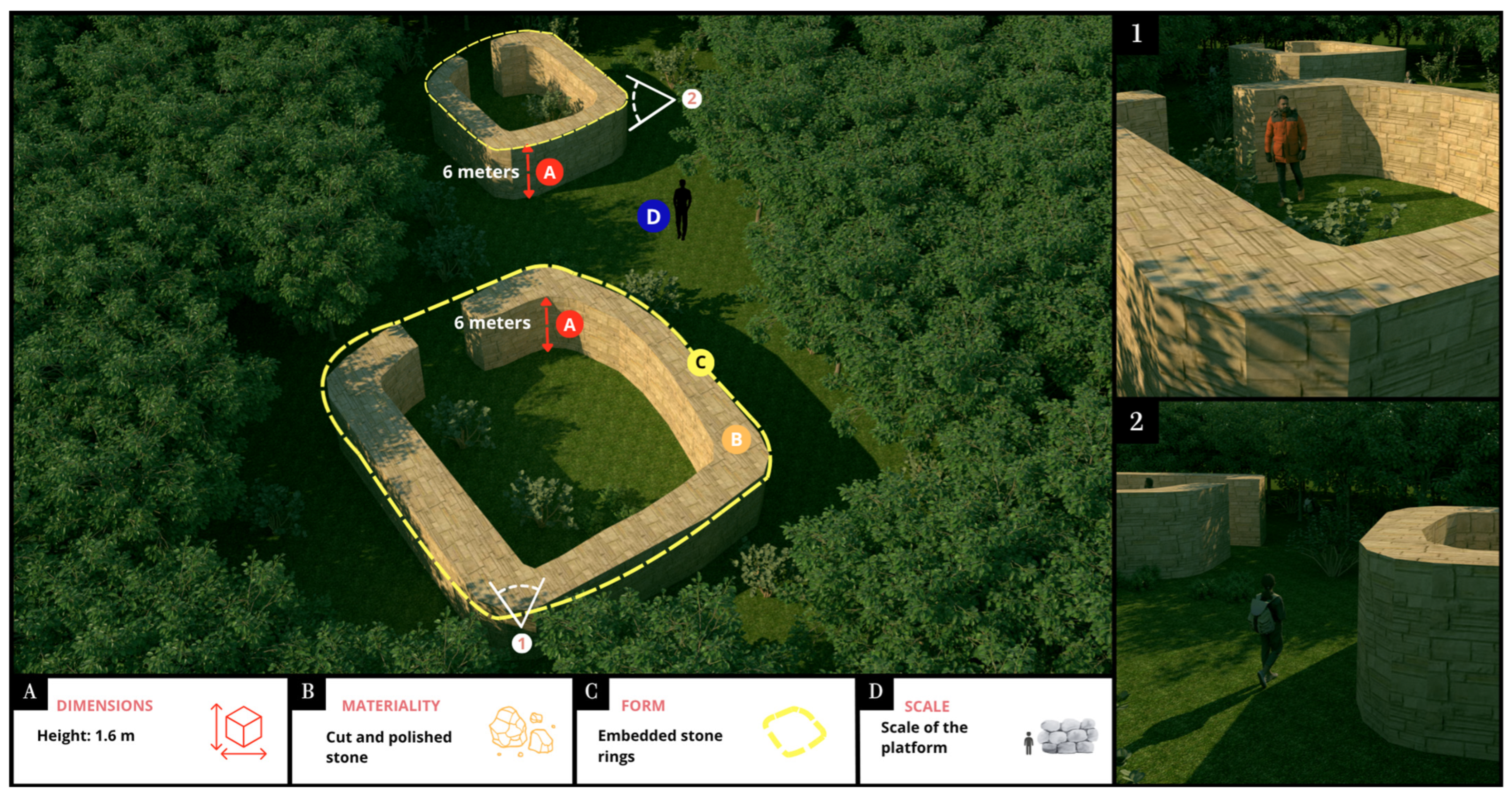
Figure 32 illustrates the architectural dimensions of the upper sector, showcasing the same construction technique found in most sectors, with structures taking the form of small rings embedded into the terrain.
Inca funerary niches, approximately 1.60 m in height, stand out due to their stone construction, employing the renowned Inca masonry technique. The walls of these niches consist of finely carved stones with a polished finish, highlighting the exceptional stoneworking skills characteristic of Inca craftsmanship.
These niches, shaped as rings of embedded stones, served as burial spaces for mummified individuals, preserving the funerary and ritual practices of the time [97,98,99,100,101,102,103,104,105,106].
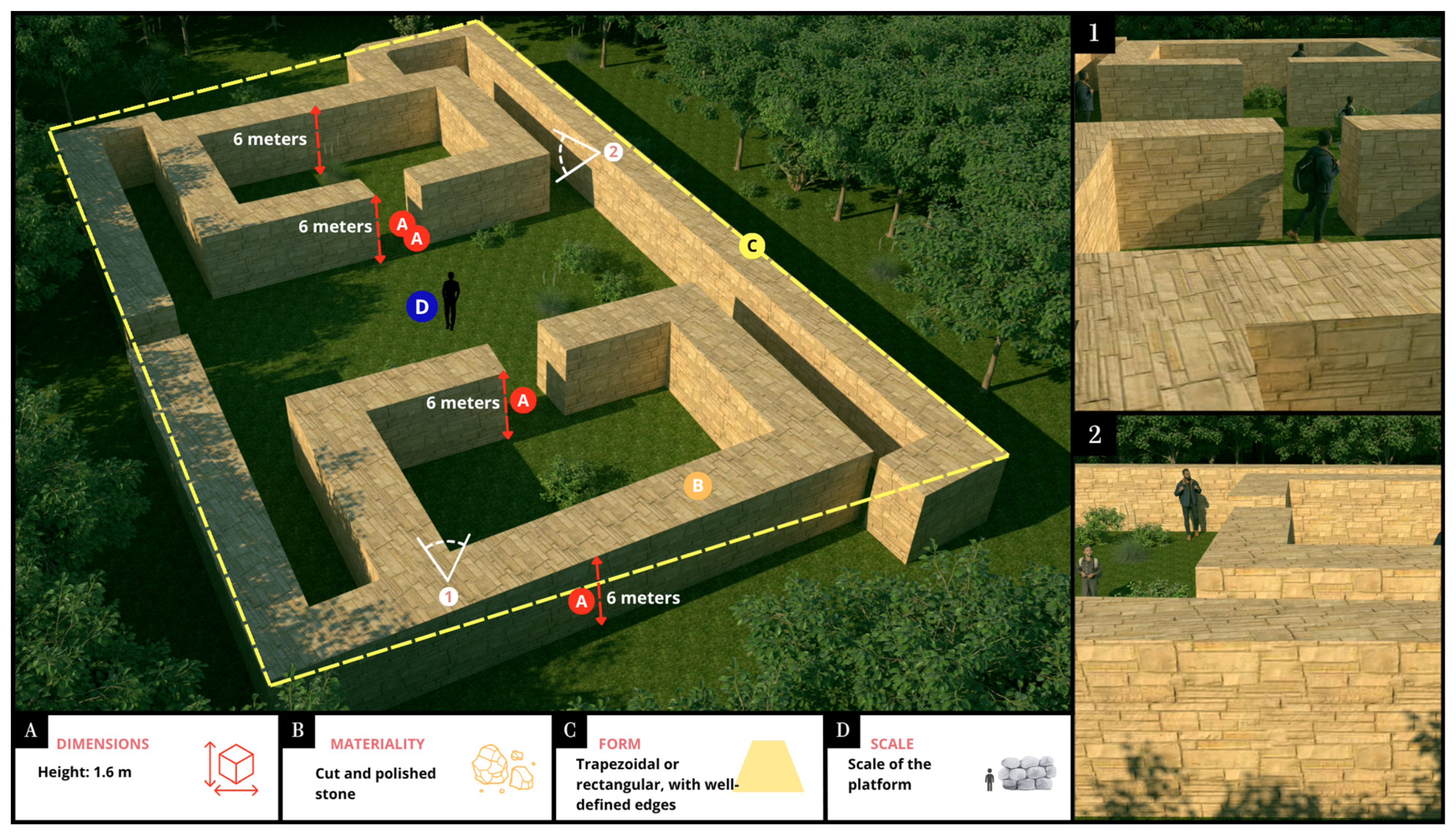
Figure 33 illustrates the architectural dimensions of Sector 6, highlighting the trapezoidal niches of the Inca priests, crafted from tightly fitted stones with a polished finish. These funerary niches measure approximately 1.60 m in height.
This sector also features a fountain alongside two-level buildings positioned symmetrically facing each other. These structures are notable for their strategic location and specific arrangement. Each building includes three trapezoidal niches on the east and west sides; two of these niches are sealed at the bottom, while one remains open at the top [97,98,99,100,101,102,103,104,105,106].
Studying construction techniques, such as the use of carved stone and terraces, shows how structural challenges were solved, offering valuable lessons on engineering and adaptation to the landscape, given the magnitude of their buildings and the methods used to erect structures adapted to the mountainous topography.

4. Discussion

The archaeological center of Pisac, located in Cusco, Peru, is famous for its extensive agricultural terraces that the Incas built on the slopes of the mountains to make the most of the available land and prevent erosion [95,96]. In addition to its agricultural function, Pisac has ceremonial temples such as the Temple of the Sun, reflecting its religious importance in Inca culture [97]. Strategically located in the Sacred Valley, it also served as a defense to protect the valley’s entrance [98,99]. The site has an advanced irrigation system that includes drainage and canals for efficient water use. Restoration work has been carried out on its terraces, temples, and structures to preserve this important site [99].
On the other hand, Machu Picchu contains temples and ceremonial structures like the Temple of the Sun and the Intihuatana Stone, used for religious and astronomical rituals [100]. It also includes residential areas for priests and nobles, indicating that it was a residence for the Inca elite [101]. Its agricultural terraces facilitated cultivation and prevented erosion, while a sophisticated hydraulic system ensured the supply of drinking water and controlled erosion [102,103]. Although restoration efforts have kept the site in good condition, the large influx of tourists remains a challenge for its preservation [104].
Similarly, the spatial, functional, and constructive analysis of the archaeological site of Choquequirao reveals several significant aspects that highlight its sophistication and complexity. First, the spatial analysis shows careful adaptation to the terrain, achieving efficient use of the available space while respecting principles of symmetry, rhythm, and varied proportions [105,106]. It consists of several sectors with different dimensions: the main plaza measures approximately 30 × 50 m, while the agricultural terraces range from 2 to 4 m in width and can extend more than 100 m. The sector of the llamas has terraces of 1 to 2 m in height, and the colcas occupy an area of 40 × 20 m. The temples and ceremonial enclosures usually measure around 10 × 15 m, and the Sacred Plaza measures approximately 30 × 20 m [107,108]. This site’s location not only provides it with natural defense and stunning views but also makes it an important connection point between the high jungle and the Sacred Valley, facilitating resource control and exchange in the region. Additionally, in terms of construction, the site reflects a smart use of local materials like schist, gneiss, and limestone, which harmoniously integrate with the natural environment [109]. It demonstrates not only a detailed understanding of the local context but also a deep knowledge of available resources and remarkable skill in creating structures that optimize efficiency and sustainability in agriculture. Therefore, Choquequirao stands as a remarkable example of Inca engineering, combining advanced skills in planning, design, and construction with profound knowledge of the natural environment [110].
Choquequirao faces various tourism-related challenges, the most relevant being its difficult accessibility. Currently, reaching the site requires a two-day hike, which significantly limits visitor flow and excludes those without sufficient physical fitness [111]. Furthermore, tourism infrastructure is scarce, with limited services such as accommodation and transportation, which hinders the region’s economic development [112,113]. In addition, the challenge of heritage conservation arises, as uncontrolled tourism growth could jeopardize both the archaeological site and the surrounding natural environment [113]. While initiatives, such as the construction of a cable car to facilitate access, have been proposed, their execution has been slow, raising concerns about how to balance tourism development with the protection of the cultural and ecological legacy of the area [114].

5. Conclusions

The spatial, functional, and constructive analysis of the sectors in Choquequirao provides a unique view of the Inca Empire, highlighting its importance as an archaeological center of significant cultural and historical value. This study emphasizes not only the spatial and functional organization of the sectors but also the advanced integration of ceremonial practices and agricultural techniques, reflecting the sophistication of Inca engineering. Although, like Machu Picchu, Choquequirao stands out for its size and splendor, it remains less studied and better preserved due to its partial tourist visitation [115,116].
Likewise, the spatial analysis examines how the structures and areas within the site are arranged. This includes the relationship between plazas, temples, and other buildings. The way these spaces connect demonstrates social hierarchies, access routes, and urban organization. The functional analysis focuses on how these spaces were used. Some may have been intended for religious ceremonies, such as the Ushnu, while others were used for daily life, storage, or defense, such as the camelid pen and the main plaza [116]. The correlation between space and function helps to understand the political, social, and economic life of the Inca civilization that inhabited Choquequirao.
The predominant construction materials were stone and wood, reflecting both local availability and the mastery of Inca builders. Stone was primarily used for walls and terraces, with precise assembly ensuring durability and resistance to earthquakes. Wood, though used in smaller quantities, was employed in roofs and auxiliary structures of the main plaza and some of the ceremonial and residential enclosures [117]. These materials not only guaranteed the stability and longevity of the buildings but also integrated the constructions harmoniously with the natural environment.
In conclusion, the analysis of Choquequirao highlights its excellence in urbanism and architecture, demonstrating how the Incas successfully integrated spatial, functional, and constructive planning with a deep respect for the natural environment. The arrangement of the sectors, the ceremonial and agricultural activities, and the use of local materials reflect the complexity and harmony of this civilization, leaving an invaluable legacy that expands our understanding of the Andean world, while also providing valuable lessons for contemporary conservation approaches. Recognizing the adaptive intelligence of ancestral Inca systems contributes to developing sustainable restoration strategies that integrate traditional knowledge with modern conservation practices.

Author Contributions

Conceptualization, S.B., T.C. and J.V.C.; methodology, D.E. and J.V.C.; software, G.W.S.D., M.R.B.V., A.I.L.T. and A.G.S.M.; validation, J.V.C.; formal analysis, S.B. and T.C. and J.V.C.; investigation, S.B., T.C. and J.V.C.; resources, D.E., G.W.S.D., M.R.B.V., A.I.L.T. and A.G.S.M.; data curation, J.V.C.; writing—original draft preparation, S.B., and T.C. and J.V.C.; writing—review and editing, S.B. and J.V.C.; visualization, S.B., T.C. and J.V.C.; supervision, D.E. and J.V.C.; project administration, D.E., G.W.S.D., M.R.B.V., A.I.L.T. and A.G.S.M.; funding acquisition, G.W.S.D., M.R.B.V., A.I.L.T. and A.G.S.M. All authors have read and agreed to the published version of the manuscript.

Funding

This research received no external funding.

Data Availability Statement

All the data are in the manuscript.

Acknowledgments

We sincerely thank our colleagues for the opportunity to develop an architectural design proposal for “Ancestral Inca Construction Systems and Worldview at the Choquequirao Archaeological Site, Cusco, Peru, 2024.”.

Conflicts of Interest

The authors declare no conflicts of interest.

References

  1. Van Valkenburgh, P.; Chase, Z.; Traslaviña, A.; Weaver, B.J.M. Arqueología Histórica en el Perú: Posibilidades y Perspectivas: 2016. Available online: https://revistas.pucp.edu.pe/index.php/boletindearqueologia/article/view/18662 (accessed on 13 November 2025).
  2. Zona Arqueológica Caral. ¿Cuál es la Importancia de la Arqueología en el Perú? Reflexionan Arqueólogos de Caral. Available online: https://www.zonacaral.gob.pe/cual-es-la-importancia-de-la-arqueologia-en-el-peru-reflexionan-arqueologos-de-caral/ (accessed on 13 November 2025).
  3. Cordero, L.M.; Zúniga, A.C. Aproximación del Estado del Arte Sobre: Importancia del Valor Patrimonial de Sitios Arqueológicos. Available online: https://portal.amelica.org/ameli/journal/387/3873792006/html/ (accessed on 13 November 2025).
  4. Rojano, M. Arqueología y Curiosidad en el ser Humano: La Protohistoria de la Disciplina Científica. Available online: https://www.redalyc.org/journal/4980/498062141012/html/ (accessed on 13 November 2025).
  5. Colmenares, D.M. La Importancia del Patrimonio Cultural. CEUPE: Madrid, Spain. Available online: https://www.ceupe.com/blog/importancia-del-patrimonio-cultural.html (accessed on 24 August 2024).
  6. Marín, D.; Buelvas, J.M.; Sarmiento, J.S.; Ricardo, J.C.; Correa, J.L.; Martínez, G.; Hernández, R.; Ghisays, G.; Díaz, J.; Guevara, O.; et al. Enfoques, Teorías y Perspectivas de la Arquitectura y sus Programas Académico; Osorio, G.M., Romero, M.C.A., Eds.; Corporación Universitaria del Caribe—CECAR: Sucre, Colombia, 2018; Available online: https://biblioteca-repositorio.clacso.edu.ar/bitstream/CLACSO/171259/1/Enfoques-arquitectura.pdf (accessed on 24 August 2024).
  7. EEA. Conservación y Restauración del Patrimonio Histórico Arquitectónico y Arqueológico; European Environment Agency: Copenhagen, Denmark, 2015; Available online: https://www.eea.csic.es/laac/investigacion-laac/conservacion-y-restauracion-del-patrimonio-historico-arquitectonico-y-arqueologico/ (accessed on 24 August 2024).
  8. Google Maps. Chaco Canyon National Historical Park. Available online: https://www.google.com/maps/place/Chaco+Canyon/@36.060732,-107.9656803,2a,90y,333.01h,88.05t/data=!3m7!1e1!3m5!1s42WukXP-oqKlGOwrifzBpA!2e0!6shttps:%2F%2Fstreetviewpixels-pa.googleapis.com%2Fv1%2Fthumbnail%3Fcb_client%3Dmaps_sv.tactile%26w%3D900%26h%3D600%26pitch%3D1.9532587324156054%26panoid%3D42WukXP-oqKlGOwrifzBpA%26yaw%3D333.00663250433075!7i13312!8i6656!4m7!3m6!1s0x873ca8da58ec928b:0xe9f1727039c6bed6!8m2!3d36.060293!4d-107.967008!10e5!16s%2Fg%2F1z449ybzt?entry=ttu&g_ep=EgoyMDI1MTExMS4wIKXMDSoASAFQAw%3D%3D (accessed on 13 November 2025).
  9. Google Maps. Chichen Itza Archaeological Site. Available online: https://www.google.com/maps/place/Chich%C3%A9n+Itz%C3%A1/@20.6836627,-88.5683725,3a,62.1y,199.92h,95.76t/data=!3m7!1e1!3m5!1sWTxCaemNROTfhEP4JpXznw!2e0!6shttps:%2F%2Fstreetviewpixels-pa.googleapis.com%2Fv1%2Fthumbnail%3Fcb_client%3Dmaps_sv.tactile%26w%3D900%26h%3D600%26pitch%3D-5.760000000000005%26panoid%3DWTxCaemNROTfhEP4JpXznw%26yaw%3D199.92!7i13312!8i6656!4m7!3m6!1s0x8f5138c6e391c0e7:0x7c1ea0a168994d9a!8m2!3d20.6842849!4d-88.5677826!10e5!16zL20vMDE3a3B2?entry=ttu&g_ep=EgoyMDI1MTExMS4wIKXMDSoASAFQAw%3D%3D (accessed on 13 November 2025).
  10. Google Maps. Tikal National Park. Available online: https://www.google.com/maps/place/Parque+Nacional+Tikal/@17.2220171,-89.6236539,2a,75y,296.78h,100.69t/data=!3m7!1e1!3m5!1sgVM__YVcWB1K922pvEMD4A!2e0!6shttps:%2F%2Fstreetviewpixels-pa.googleapis.com%2Fv1%2Fthumbnail%3Fcb_client%3Dmaps_sv.tactile%26w%3D900%26h%3D600%26pitch%3D-10.689999999999998%26panoid%3DgVM__YVcWB1K922pvEMD4A%26yaw%3D296.78!7i13312!8i6656!4m11!1m2!2m1!1sTikal!3m7!1s0x8f5fa6cb0262c673:0xdec9c33cf23e1155!8m2!3d17.2220409!4d-89.6236995!10e5!15sCgVUaWthbFoHIgV0aWthbJIBDW5hdGlvbmFsX3BhcmuqAS0QATIeEAEiGjlP6fvbYPOTT5gMUJL8nOwY_jACuWio56LEMgkQAiIFdGlrYWzgAQA!16zL20vMDE0aHd5?entry=ttu&g_ep=EgoyMDI1MTExMS4wIKXMDSoASAFQAw%3D%3D (accessed on 13 November 2025).
  11. Google Maps. Stonehenge Prehistoric Monument. Available online: https://www.google.com/maps/place/Stonehenge/@51.178896,-1.8259956,3a,90y,289.19h,86.21t/data=!3m7!1e1!3m5!1syxYAPYFywKdx_6BIjAgt5Q!2e0!6shttps:%2F%2Fstreetviewpixels-pa.googleapis.com%2Fv1%2Fthumbnail%3Fcb_client%3Dmaps_sv.tactile%26w%3D900%26h%3D600%26pitch%3D3.7900000000000063%26panoid%3DyxYAPYFywKdx_6BIjAgt5Q%26yaw%3D289.19!7i13312!8i6656!4m7!3m6!1s0x4873e63b850af611:0x979170e2bcd3d2dd!8m2!3d51.178882!4d-1.826215!10e5!16zL20vMDZ3Zmc?entry=ttu&g_ep=EgoyMDI1MTExMS4wIKXMDSoASAFQAw%3D%3D (accessed on 13 November 2025).
  12. Google Maps. Roman Colosseum. Available online: https://www.google.com/maps/place/Coliseo+de+Roma/@41.8891681,12.4921906,3a,75y,4.98h,90.55t/data=!3m7!1e1!3m5!1sDqEws0cUOihYSKbL6A4h_A!2e0!6shttps:%2F%2Fstreetviewpixels-pa.googleapis.com%2Fv1%2Fthumbnail%3Fcb_client%3Dmaps_sv.tactile%26w%3D900%26h%3D600%26pitch%3D-0.5499999999999972%26panoid%3DDqEws0cUOihYSKbL6A4h_A%26yaw%3D4.98!7i16384!8i8192!4m16!1m8!3m7!1s0x132f61b6532013ad:0x28f1c82e908503c4!2sColiseo+de+Roma!8m2!3d41.8902102!4d12.4922309!10e5!16zL20vMGQ1cXg!3m6!1s0x132f61b6532013ad:0x28f1c82e908503c4!8m2!3d41.8902102!4d12.4922309!10e5!16zL20vMGQ1cXg?entry=ttu&g_ep=EgoyMDI1MTExMS4wIKXMDSoASAFQAw%3D%3D (accessed on 13 November 2025).
  13. Google Maps. Acropolis of Athens. Available online: https://www.google.com/maps/place/Acr%C3%B3polis+de+Atenas/@37.9715834,23.7256594,3a,62.2y,101.31h,104.2t/data=!3m8!1e1!3m6!1sCIHM0ogKEICAgIChht-Z0QE!2e10!3e11!6shttps:%2F%2Flh3.googleusercontent.com%2Fgpms-cs-s%2FAPRy3c_y1g5MK07TIOoC7u95IPOLDRJ1ATQMhGTb0NsSlDLo9kADEnE7dQKeyKM3XSs16DdjBZVBPBz3VvEUbuwzNP-gGxBU5e0NQvh36o3T-icyO-gNPYuy1HsEHOX4YMMbqOsTacmwlg%3Dw900-h600-k-no-pi-14.200000000000003-ya101.31-ro0-fo100!7i4608!8i2304!4m7!3m6!1s0x14a1bd1837f5acf3:0x5c97c042f5eb0df6!8m2!3d37.9715323!4d23.7257492!10e5!16zL20vMHdqag?entry=ttu&g_ep=EgoyMDI1MTExMS4wIKXMDSoASAFQAw%3D%3D (accessed on 13 November 2025).
  14. Google Maps. Angkor Wat Temple Complex. Available online: https://www.google.com/maps/place/Angkor+Wat/@13.4125003,103.860239,3a,75y,82.44h,93.63t/data=!3m7!1e1!3m5!1s2ga34IvqITSM5l3d2DQ2xg!2e0!6shttps:%2F%2Fstreetviewpixels-pa.googleapis.com%2Fv1%2Fthumbnail%3Fcb_client%3Dmaps_sv.tactile%26w%3D900%26h%3D600%26pitch%3D-3.6299999999999955%26panoid%3D2ga34IvqITSM5l3d2DQ2xg%26yaw%3D82.44!7i13312!8i6656!4m16!1m8!3m7!1s0x3110168aea9a272d:0x3eaba81157b0418d!2sAngkor+Wat!8m2!3d13.4124693!4d103.8669857!10e5!16zL20vMDE5eGZs!3m6!1s0x3110168aea9a272d:0x3eaba81157b0418d!8m2!3d13.4124693!4d103.8669857!10e5!16zL20vMDE5eGZs?entry=ttu&g_ep=EgoyMDI1MTExMS4wIKXMDSoASAFQAw%3D%3D (accessed on 13 November 2025).
  15. Google Maps. Giza Pyramid Complex. Available online: https://www.google.com/maps/place/Pir%C3%A1mides+de+Giza/@29.9734559,31.1323504,3a,50.4y,327.7h,95.57t/data=!3m8!1e1!3m6!1sCIHM0ogKEICAgIDG8amJywE!2e10!3e12!6shttps:%2F%2Flh3.googleusercontent.com%2Fgpms-cs-s%2FAPRy3c9j102vCAAv9ViGMLfPgq-BldvYj-yrcGFwNu4kQ5QaoDiZTTvVq5OOMRQ_MDrb77NxouNFb1R3zFAfVfOBy3MF_XvJo0O5HPqW0MavmzjMhXMS84BkfciuLSdHdJ1-3EXKdBfKug%3Dw900-h600-k-no-pi-5.569999999999993-ya359.6161682128906-ro0-fo100!7i6080!8i3040!4m16!1m8!3m7!1s0x14584f7de239bbcd:0xca7474355a6e368b!2sPir%C3%A1mides+de+Giza!8m2!3d29.9772962!4d31.1324955!10e5!16s%2Fm%2F07s6gb8!3m6!1s0x14584f7de239bbcd:0xca7474355a6e368b!8m2!3d29.9772962!4d31.1324955!10e5!16s%2Fm%2F07s6gb8?entry=ttu&g_ep=EgoyMDI1MTExMS4wIKXMDSoASAFQAw%3D%3D (accessed on 13 November 2025).
  16. Arguello, J.A. Petra y el Reino Nabateo. Available online: https://www.scielo.org.mx/scielo.php?pid=S2448-654X2025000200401&script=sci_arttext (accessed on 13 November 2025).
  17. Sánchez, A. Arquitectura y Funcionalidad del Gran Templo de Requem. Available online: https://repositorio.uca.edu.ar/bitstream/123456789/6579/1/arquitectura-funcionalidad-gran-templo-requem.pdf (accessed on 13 November 2025).
  18. Simó, P. Cimientos y Estructura de las Pirámides de Giza. Available online: https://d1wqtxts1xzle7.cloudfront.net/35250600/Cimientos_y_estructura_de_las_piramides_de_Giza_i-with-cover-page-v2.pdf (accessed on 13 November 2025).
  19. Rango, M. La Geometría de la Pirámide de Khufu. Available online: https://funes.uniandes.edu.co/wp-content/uploads/tainacan-items/32454/1168068/Rango2013La.pdf (accessed on 13 November 2025).
  20. Ochoa, A. La fascinante arquitectura de la pirámide de Kukulkán en Chichén Itzá. In Architectural Digest; Condé Nast: New York, NY, USA, 2021; Available online: https://www.admagazine.com/arquitectura/piramide-kukulcan-arquitectura-en-chichen-itza-20210226-8182-articulos (accessed on 24 August 2024).
  21. National Geographic. Chichén Itzá: El Asombroso Legado de los Mayas y los Toltecas; Ediciones EL PAÍS S.L.: Madrid, Spain, 2015; Available online: https://elpais.com/cultura/2015/10/23/actualidad/1445612256_274708.html (accessed on 24 August 2024).
  22. Google Maps. The City of Petra. Available online: https://www.google.com/maps/place/Petra/@30.3284544,35.4443622,3a,75y,13.99h,102.51t/data=!3m8!1e1!3m6!1sCIHM0ogKEICAgICE37CGugE!2e10!3e11!6shttps:%2F%2Flh3.googleusercontent.com%2Fgpms-cs-s%2FAPRy3c8VBrSLnBgYT0c5W9fWMbXjleYrGalWGcbiFumdBjNXdslWapW1YY0vgUs_bDMlSbjaw_xseKXcj-rtASDTQLfKJu2KQdAEOXpKwQv1oj6gjuMlkSenfac2jdZFM0yLV1_un8Hgfw%3Dw900-h600-k-no-pi-12.510000000000005-ya13.99-ro0-fo100!7i7200!8i3600!4m16!1m8!3m7!1s0x15016ef1703b6071:0x199bf908679a2291!2sPetra!8m2!3d30.3284544!4d35.4443622!10e5!16zL20vMGM3enk!3m6!1s0x15016ef1703b6071:0x199bf908679a2291!8m2!3d30.3284544!4d35.4443622!10e5!16zL20vMGM3enk?entry=ttu&g_ep=EgoyMDI1MTExMC4wIKXMDSoASAFQAw%3D%3D (accessed on 13 November 2025).
  23. Google Maps. The Pyramid of Khufu. Available online: https://www.google.com/maps/place/Pir%C3%A1mides+de+Giza/@29.9773163,31.1336364,2a,75y,233.07h,100.6t/data=!3m7!1e1!3m5!1s4-ZxUJ4QyqTTipG7ao2fXw!2e0!6shttps:%2F%2Fstreetviewpixels-pa.googleapis.com%2Fv1%2Fthumbnail%3Fcb_client%3Dmaps_sv.tactile%26w%3D900%26h%3D600%26pitch%3D-10.604854117460448%26panoid%3D4-ZxUJ4QyqTTipG7ao2fXw%26yaw%3D233.06813600411846!7i13312!8i6656!4m10!1m2!2m1!1spiramide+de+giza!3m6!1s0x14584f7de239bbcd:0xca7474355a6e368b!8m2!3d29.9772962!4d31.1324955!15sChBwaXJhbWlkZSBkZSBnaXphWhIiEHBpcmFtaWRlIGRlIGdpemGSARNhcmNoYWVvbG9naWNhbF9zaXRlqgFDCggvbS8wMzZtaxABMh8QASIbENEerQBZKij0ig_L-KGcFvkFPlabSy6BtRdyMhQQAiIQcGlyYW1pZGUgZGUgZ2l6YeABAA!16s%2Fm%2F07s6gb8?entry=ttu&g_ep=EgoyMDI1MTExMS4wIKXMDSoASAFQAw%3D%3D (accessed on 13 November 2025).
  24. Google Maps. Kukulkán Pyramid-Temple. Available online: https://www.google.com/maps/place/El+Castillo/@20.6832753,-88.569522,3a,75y,110.29h,95.48t/data=!3m7!1e1!3m5!1sm4fh3QtrxZrYsCUfVey4ng!2e0!6shttps:%2F%2Fstreetviewpixels-pa.googleapis.com%2Fv1%2Fthumbnail%3Fcb_client%3Dmaps_sv.tactile%26w%3D900%26h%3D600%26pitch%3D-5.477774228131068%26panoid%3Dm4fh3QtrxZrYsCUfVey4ng%26yaw%3D110.28852258110919!7i13312!8i6656!4m14!1m7!3m6!1s0x8f5138b88e232523:0x1ef4200c7824ddf!2sEl+Castillo!8m2!3d20.6829859!4d-88.5686491!16zL20vMDY2N2R5!3m5!1s0x8f5138b88e232523:0x1ef4200c7824ddf!8m2!3d20.6829859!4d-88.5686491!16zL20vMDY2N2R5?entry=ttu&g_ep=EgoyMDI1MTExMS4wIKXMDSoASAFQAw%3D%3D (accessed on 13 November 2025).
  25. Instituto Peruano de Estudios Arqueológicos. Reseña: Urbanismo Andino, Centro Ceremonial y Ciudad en el Perú Prehispánico; Instituto Peruano de Estudios Arqueológicos: Lima, Peru, 2021; Available online: https://ipearqueologia.wordpress.com/2021/08/26/resena-urbanismo-andino-centro-ceremonial-y-ciudad-en-el-peru-prehispanico/ (accessed on 24 August 2024).
  26. El Peruano. Herencia Cultural. Available online: https://www.elperuano.pe/noticia/241808-herencia-cultural (accessed on 24 August 2024).
  27. Maganga, M. El Vínculo Entre Arqueología y Arquitectura; ArchDaily: Lima, Peru, 2021; Available online: https://www.archdaily.pe/pe/961943/el-vinculo-entre-arqueologia-y-arquitectura (accessed on 24 August 2024).
  28. SIGDA. Sistema de Información Geográfica para la Defensa del Patrimonio Arqueológico. Ministerio de Cultura del Perú: Lima, Peru. Available online: https://sigda.cultura.gob.pe/ (accessed on 23 August 2024).
  29. Google Maps. Chan Chan Citadel. Available online: https://www.google.com/maps/place/Chan+Chan/@-8.1101067,-79.0745124,3a,75y,171.29h,79.34t/data=!3m8!1e1!3m6!1sCIHM0ogKEICAgIDqhff72gE!2e10!3e11!6shttps:%2F%2Flh3.googleusercontent.com%2Fgpms-cs-s%2FAPRy3c-N_ddBaDfA5EqGhH-JOWLvIbCPEb_WywrQECyvbp2SKHe_S0KSYQEa5Ri5p7aXFUWwhrOQYiz4as98W_pQXrcNHhSWCz0WJXW8znoVW8_ySDU8-7hZGQfpklvNH2zaxjloN9Je%3Dw900-h600-k-no-pi10.659999999999997-ya171.29-ro0-fo100!7i6000!8i3000!4m16!1m8!3m7!1s0x91ad3c5aac618ac5:0xcb9b94821b72a829!2sChan+Chan!8m2!3d-8.1085762!4d-79.0752648!10e5!16zL20vMDRqamRi!3m6!1s0x91ad3c5aac618ac5:0xcb9b94821b72a829!8m2!3d-8.1085762!4d-79.0752648!10e5!16zL20vMDRqamRi?entry=ttu&g_ep=EgoyMDI1MTExMS4wIKXMDSoASAFQAw%3D%3D (accessed on 13 November 2025).
  30. Google Maps. Great Pyramid of Caral. Available online: https://www.google.com/maps/place/Caral+15161/@-10.8904442,-77.5221677,204m/data=!3m1!1e3!4m6!3m5!1s0x9107178335c178e1:0x52b23b360fa2d66a!8m2!3d-10.8920691!4d-77.5232461!16s%2Fg%2F11bc6n86p3?entry=ttu&g_ep=EgoyMDI1MTExMS4wIKXMDSoASAFQAw%3D%3D (accessed on 13 November 2025).
  31. Google Maps. ‘The Monkey’ Geoglyph in Nazca. Available online: https://earth.google.com/web/search/lineas+de+nazcamono+mazca/@-14.70684272,-75.13836589,456.71699429a,213.91410712d,35y,360h,0t,0r/data=CiwiJgokCQ3VgWT0ci3AEYtDFGz-qS3AGVsh0ju9vFLAIaxDfR1yzFLAQgIIAToDCgEwQgIIAEoNCP___________wEQAA?authuser=0 (accessed on 13 November 2025).
  32. Burger, R.L.; MacCurdy, C.L.; Salazar, L.C. Machu Picchu: Unveiling the Mystery of the Incas; Yale University Press: New Haven, CT, USA, 2004; Available online: https://books.google.com.pe/books?id=bBHrWwtr_pYC (accessed on 13 November 2025).
  33. Valcárcel, L.E. Machu Picchu El más Famoso Monumento Arqueológico del Perú. Available online: https://repositorio.uigv.edu.pe/item/09b648a9-dab3-4f66-8d71-1b896b0702f6 (accessed on 13 November 2025).
  34. Bustamante, J.; Crousillat, E.; Rick, J. Nuevos conceptos sobre la secuencia constructiva y usos de la red de canales de Chavín de Huántar. Devenir Rev. De Estud. Sobre Patrim. Edif. 2021, 8, 75–94. [Google Scholar] [CrossRef]
  35. Cueva, M. La Cultura Chavín en Perú; Sibila—Revista de Poesia e Crítica Literária: São Paulo, Brasil, 2011; Available online: https://sibila.com.br/cultura/la-cultura-chavin-en-peru/4710 (accessed on 24 August 2024).
  36. Villanueva, J. Moray Laboratorio Agrícola INCA. YouTube: Online. Available online: https://www.youtube.com/watch?v=NgIUiFpo2rc (accessed on 7 August 2024).
  37. Earls, J. Moray: Agua, Control y Biodiversidad de los Andes. Available online: https://www.minam.gob.pe/diadiversidad/wp-content/uploads/sites/63/2015/01/resumen2.pdf (accessed on 13 November 2025).
  38. Andina.pe. Siete Sitios Arqueológicos de Obligada Visita que Muestran la Grandeza Cultural del Perú. 2024. Available online: https://andina.pe/agencia/noticia-conoce-7-sitios-arqueologicos-obligada-visita-muestran-grandeza-cultural-peruana-993567.aspx (accessed on 24 August 2024).
  39. Huaman, F.; Esenarro, D.; Prado Meza, J.; Vilchez Cairo, J.; Vargas Beltran, C.; Alfaro Aucca, C.; Arriola, C.; Calle, V.P. Biophysical, Spatial, Functional, and Constructive Analysis of the Pre-Hispanic Terraces of the Ancient City of Pisaq, Cusco, Peru. Heritage 2024, 7, 6526–6565. [Google Scholar] [CrossRef]
  40. Vilchez, J.; Rodriguez, A.N.; Esenarro, D.; Ruiz, C.; Alfaro, C.; Ruiz, R.; Veliz, M. Green Infrastructure and the Growth of Ecotourism at the Ollantaytambo Archeological Site, Urubamba Province, Peru, 2024. Urban Sci. 2025, 9, 317. [Google Scholar] [CrossRef]
  41. PUCP. Acciones para la Conservación del patrimonio natural y cultural en el Parque Nacional Huascarán y el Santuario Histórico de Machu Picchu. 2023. Available online: https://www.pucp.edu.pe/climadecambios/noticias/acciones-para-la-conservacion-del-patrimonio-natural-y-cultural-en-el-parque-nacional-huascaran-y-el-santuario-historico-de-machu-picchu/ (accessed on 15 November 2025).
  42. Dirección Desconcentrada de Cultura de Cusco. Parques Arqueológicos. Instituto Colombiano de Antropología: Bogotá, Colombia. Available online: https://www.culturacusco.gob.pe/parques-arqueologicos/ (accessed on 24 August 2024).
  43. Google Maps. Tambomachay Archaeological Site. Available online: https://www.google.com/maps/@-13.4790027,-71.9673597,3a,90y,181.65h,100.64t/data=!3m8!1e1!3m6!1sCIHM0ogKEI-CAg-IDn1JrIzwE!2e10!3e11!6shttps:%2F%2Flh3.googleusercontent.com%2Fgpms-cs-s%2FAPRy3c__DK2WjOd-DiRt6U2pW6YmCJN_J_jzG3IbKfWeelHJwfSQQv6JEiUYK-oAKsMLB-8WSzWcupw588GTv1HWjLWknaVFKzdLtXKWMm9ubS5McBOa8Xko0B0sOJHwWmKqPvhsCcuR%3Dw900-h600-k-no-pi-10.64-ya341.65-ro0-fo100!7i8704!8i4352?entry=ttu&g_ep=EgoyMDI1MTExMS4wIKXMDSoASAFQAw%3D%3D (accessed on 13 November 2025).
  44. Google Maps. Qenqo Archaeological Complex. Complejo Arqueológico Q’enqo—Google Maps. Available online: https://www.google.com/maps/place/Complejo+Arqueol%C3%B3gico+Q’enqo/@-13.5090857,-71.971375,3a,15y,82.66h,92.2t/data=!3m7!1e1!3m5!1smwYJ-miyMlEWQqq8-sDTJg!2e0!6shttps:%2F%2Fstreetviewpixels-pa.googleapis.com%2Fv1%2Fthumbnail%3Fcb_client%3Dmaps_sv.tactile%26w%3D900%26h%3D600%26pitch%3D-2.203231723323867%26panoid%3DmwYJ-miyMlEWQqq8-sDTJg%26yaw%3D82.6617306962352!7i16384!8i8192!4m14!1m7!3m6!1s0x916dd61234a0e6bb:0xa80b297d8c27d!2sComplejo+Arqueol%C3%B3gico+Q’enqo!8m2!3d-13.5088984!4d-71.9706558!16s%2Fm%2F076yq31!3m5!1s0x916dd61234a0e6bb:0xa80b297d8c27d!8m2!3d-13.5088984!4d-71.9706558!16s%2Fm%2F076yq31?entry=ttu&g_ep=EgoyMDI1MTExNy4wIKXMDSoASAFQAw%3D%3D (accessed on 13 November 2025).
  45. Rodríguez, M. El Perú en el Sistema Internacional del Patrimonio Cultural y Natural de la Humanidad; Fondo Editorial de la Universidad de San Martín de Porres: Lima, Peru, 2019; Available online: http://catedraunesco.usmp.edu.pe/pdf/sistema_internacional_del_patrimonio.pdf (accessed on 13 November 2025).
  46. Esenarro, D.; Gutierrez, D.P.; Peña, K.S.C.; Cairo, J.V.; Anzualdo, V.I.T.; Garagatti, M.V.; Delgado, G.W.S.; Aucca, C.A. Water Efficiency in the Construction of Water Channels and the Ancestral Constructive Sustainability of Cumbemayo, Peru. Heritage 2025, 8, 345. [Google Scholar] [CrossRef]
  47. Gobpe, Z.A. De Choquequirao—Dirección Desconcentrada de Cultura de Cusco. Available online: https://www.culturacusco.gob.pe/wp-content/uploads/2017/07/DDC-Z.A.-DE-CHOQUEQUIRAO-2021.pdf (accessed on 24 August 2024).
  48. Burga, M. Choquequirao: Símbolo de la Resistencia Andina (Historia, Antropología y Lingüística); Institut Français D’études Andines: Lima, Peru, 2008; Available online: https://books.openedition.org/ifea/5995 (accessed on 24 August 2024).
  49. Bayona, D. 10 Sitios Arqueológicos que Todo Arquitecto Debería Visitar en el Perú; ArchDaily: Lima, Peru, 2017; Available online: https://www.archdaily.pe/pe/868585/10-sitios-arqueologicos-que-todo-arquitecto-deberia-visitar-en-el-peru (accessed on 24 August 2024).
  50. Arte Peruano. Machu Picchu. Arte Peruano: Cusco, Peru. Available online: https://arteperuano.com.pe/index.php/component/sppagebuilder/?view=page&id=81 (accessed on 24 August 2024).
  51. Fenando, P. Incarail.com. Choquequirao. 2024. Available online: https://blogs.incarail.com/es/choquequirao (accessed on 24 August 2024).
  52. Olmo, G.D. Cómo es Choquequirao, el “otro Machu Picchu” de Perú, y por qué no es tan Conocido ni Visitado; BBC: London, UK, 2023; Available online: https://www.bbc.com/mundo/articles/cyrjey50pe5o (accessed on 24 August 2024).
  53. Lévano, R.C.C. Choquequirao: La Próxima Maravilla del Mundo; Blog USIL: Lima, Peru, 2021; Available online: https://blogs.usil.edu.pe/facultad-htg/administracion-hotelera-turismo-y-gastronomia/choquequirao-la-proxima-maravilla-del-mundo (accessed on 24 August 2024).
  54. Bosuer Moto Perú. Las Áreas de Conservación Regional: Protegiendo lo Mejor de las Regiones. Bosuer Moto Perú: Lima, Peru. Available online: https://actualidadambiental.pe/acr/ (accessed on 24 August 2024).
  55. Kendall, A.; Rodríguez, A. Desarrollo y Perspectivas de los Sistemas de Andenería de los Andes Centrales del Perú; Institut Français D’études Andines: Lima, Peru, 2009; Available online: https://books.openedition.org/ifea/6110 (accessed on 8 November 2025).
  56. Peru.travel. Available online: https://www.peru.travel/es/atractivos/choquequirao (accessed on 24 August 2024).
  57. Edu.pe. Available online: https://revistas.lamolina.edu.pe/index.php/ne/article/download/1532/html_35?inline=1 (accessed on 28 August 2024).
  58. Google.com. Available online: https://earth.google.com/web (accessed on 24 August 2024).
  59. Stehberg, R. ¿Qué es un Ushnu?. Museo Nacional de Historia Natural. 2021. Available online: https://www.mnhn.gob.cl/noticias/que-es-un-ushnu (accessed on 8 November 2025).
  60. Sequeira, A.G.; Macome, A.S. El Ushnu Incaico en el Extremo Suroeste del Tawantinsuyu. 2004. Available online: https://www.scielo.cl/scielo.php?pid=S0717-73562004000200005&script=sci_arttext (accessed on 8 November 2025).
  61. Guaña p. LA PACHA. Scribd. 2009. Available online: https://es.scribd.com/doc/20389526/LA-PACHA (accessed on 8 November 2025).
  62. Poma, E. La Noción de Pacha: Un Pilar en la Cosmovisión Andina. Alteridades. 2019. Available online: https://www.scielo.org.mx/scielo.php?script=sci_arttext&pid=S1665-12002019000200165 (accessed on 8 November 2025).
  63. Barraza, S. El Ushnu de Choquequirao. Bull. L’institut Français D’études Andin 2014, 1, 46–113. Available online: https://es.scribd.com/document/494185941/Choquequirao-Burga-IFEA (accessed on 8 November 2025).
  64. Raffino, R.A.; Iturriza, R.D.; Gobbo, J.D. El ushnu y la tiana de El Shincal. In Arquitectura, Poder y Religion; Raffino, R., Ed.; El Shincal de Quimivil: Londres, Argentina, 2004; Available online: https://www.researchgate.net/publication/275328906_El_ushnu_y_la_tiana_de_El_Shincal_Arquitectura_poder_y_religion (accessed on 8 November 2025).
  65. Smithsonian National Museum of the American Indian. Colcas. Smithsonian National Museum of the American Indian. 2020. Available online: https://americanindian.si.edu/inkaroad/engineering/es/video/colcas.html (accessed on 8 November 2025).
  66. Echevarría, G.T.; Valencia, Z. Choquequirao, un Asentamiento Imperial Cusqueño del Siglo XV en la Amazonía Andina. Rev. Haucaypata. 2011. Available online: https://www.researchgate.net/publication/305378605_Choquequirao_un_asentamiento_imperial_cusqueno_del_siglo_XV_en_la_Amazonia_andina (accessed on 8 November 2025).
  67. SENAMHI. Pronóstico Meteorológico. SENAMHI: Lima, Peru. Available online: https://www.senamhi.gob.pe/?&p=pronostico-meteorologico (accessed on 24 August 2024).
  68. Ministerio del Ambiente. Available online: https://www.gob.pe/minam (accessed on 24 August 2024).
  69. EcoRegistros. Especies de Área de Conservación Regional Choquequirao—Listado Sistemático. EcoRegistros: Buenos Aires, Argentina. Available online: https://www.ecoregistros.org/site/lugar.php?id=11241 (accessed on 12 May 2024).
  70. INAIGEM. Políticas Ecosistemas. INAIGEM: Huaraz, Peru. Available online: https://inaigem.gob.pe/web2/politicas-ecosistemas/ (accessed on 24 August 2024).
  71. ACCA. ACR CHOQUEQUIRAO. 2021. Available online: https://acca.org.pe/acr-choquequirao-3/ (accessed on 22 August 2024).
  72. Chaparro, J.; Zolorzano, J.; Carrasco, A.; Bustamante, A. Field Guide of Flora and Fauna of the Choquequirao Regional Conservation Area. Available online: https://www.researchgate.net/publication/376516997_Guia_de_campo_de_Flora_y_Fauna_del_Area_de_Conservacion_Regional_Choquequirao (accessed on 15 May 2024).
  73. Cuadros, M.R. Preservation and Protection of Peru’s Cultural Heritage Within the Framework of the World Heritage Convention. Edu.pe. Available online: http://catedraunesco.usmp.edu.pe/wp-content/uploads/2019/11/conferencia_manuel_rodriguez.pdf (accessed on 24 October 2024).
  74. Por, P. Ecotourism Complex in Cusco. Edu.pe. Available online: https://repositorio.usmp.edu.pe/bitstream/20.500.12727/4078/1/ortiz_tp.pdf (accessed on 24 October 2024).
  75. Angulo, L.S. Analysis of Cultural Material Sector IX Pikiwasi—Choquequirao, Use and Function of Spaces; Universidad Nacional de San Antonio Abad del Cusco. 2016. Available online: https://pdfs.semanticscholar.org/a2f0/e8336ec0d63b0d78ca1a00df298af425c8af.pdf (accessed on 24 October 2024).
  76. National Geographic. Poaching Threatens the Only Bear Species of South America. Available online: https://www.nationalgeographicla.com/animales/2019/06/la-caza-furtiva-amenaza-las-unicas-especies-de-osos-de-america-del-sur (accessed on 17 August 2024).
  77. iNaturalist Ecuador. Quito Marsupial Frog (Gastrotheca riobambae). Available online: https://ecuador.inaturalist.org/taxa/24132-Gastrotheca-riobambae (accessed on 17 August 2024).
  78. iNaturalist Ecuador. Schott’s Whip Snake (Masticophis schotti). Available online: https://ecuador.inaturalist.org/taxa/29421-Masticophis-schotti (accessed on 17 August 2024).
  79. Aves de Peru. Black-and-Chestnut Eagle (Spizaetus isidori). Available online: https://avesdeperu.org/accipitridae/aguila-negra-y-castana-spizaetus-isidori/ (accessed on 17 August 2024).
  80. Arizona State University. The Jewel Bee. Available online: https://askabiologist.asu.edu/la-abeja-enjoyada (accessed on 17 August 2024).
  81. Vacas, C. Shrew or Elephant? This Tiny Animal Isn’t Quite Sure. National Geographic. 2024. Available online: https://www.nationalgeographic.com.es/mundo-animal/mirando-a-musaranas-trompa-elefante_21936 (accessed on 17 August 2024).
  82. Ministry of Culture of Peru. Republic of Peru. Available online: https://transparencia.cultura.gob.pe/sites/default/files/transparencia/2020/10/resoluciones-ministeriales/rm261-2020-dm-mc-anexo.pdf (accessed on 24 August 2024).
  83. Instituto Geológico, Minero y Metalúrgico (INGEMMET). Geology Bulletin of Choquequirao. Available online: https://repositorio.ingemmet.gob.pe/bitstream/20.500.12544/375/2/I-004-Boletin-Geologia_de_Choquequirao.pdf (accessed on 24 August 2024).
  84. Carlotto, V.; Cárdenas, J.; Fidel, L.; Oviedo, M. Geoarchaeology of Choquequirao and Its Relationship with Machu Picchu. Available online: https://repositorio.ingemmet.gob.pe/bitstream/20.500.12544/3240/1/Carlotto-Geoarquelogia_Choquequirao_Machupicchu.pdf (accessed on 24 August 2024).
  85. Bingham, H. The Ruins of Choqquequirau. Am. Anthr. 1910, 12, 505–525. [Google Scholar] [CrossRef]
  86. Edu.pe. Available online: https://revistasinvestigacion.unmsm.edu.pe/index.php/Arqueo/article/download/13295/11781/ (accessed on 24 August 2024).
  87. Apaza Huamani, J.; Gallegos Gutiérrez, H. Choquequirao and the textiles for the gods and Inca lords. In Archaeology and Society; Barnes & Noble: Washington, DC, USA, 1957; Available online: https://doi.org/10.15381/arqueolsoc.2014n27.e12205 (accessed on 24 August 2024).
  88. Academia.edu. Available online: https://www.academia.edu/download/65435064/John_Apaza_Huamani_EL_OTRO_CUSCO_CHOQUEQUIRAO.pdf (accessed on 24 August 2024).
  89. Angulo, L. Choquequirao: Use and Function of Spaces Through Cultural Evidence—Sector IX Pikiwasi. Science and Development. Available online: http://revistas.uap.edu.pe/ojs/index.php/CYD/article/view/1408 (accessed on 24 August 2024).
  90. Torres, C.A.F. Presentation. Archaeology and Society. Available online: https://revistasinvestigacion.unmsm.edu.pe/index.php/Arqueo/article/view/20257 (accessed on 24 October 2024).
  91. Ortiz de Orué, H. Estimation of Social Benefits Reported by Conservation and Tourism in the Choquequirao Natural Area. Let Verdes Rev Latinoam Estud Socioambientales. Available online: http://scielo.senescyt.gob.ec/scielo.php?pid=S1390-66312020000100167&script=sci_arttext (accessed on 24 August 2024).
  92. Gob.pe. Available online: https://alicia.concytec.gob.pe/vufind/Record/PUCP_6e0d33e01dab28889f18d7db59e9f3c1 (accessed on 24 August 2024).
  93. Revista Andina. Org.pe. Available online: https://revista.cbc.org.pe/ (accessed on 24 October 2024).
  94. Tomasini, M.C. The Cosmological Symbolism of Sacred Architecture. Edu.ar. Available online: https://repositorio.uca.edu.ar/bitstream/123456789/17955/1/simbolismo-cosmol%C3%B3gico-arquitectura.pdf (accessed on 24 October 2024).
  95. Santiago, C.C.V.; Dionicio, C.R.J.; Lionel, F.S.; Jhonatan, O.M.M.; Walter, P.P. Geology of Choquequirao—[Bulletin I 4]. Available online: https://repositorio.ingemmet.gob.pe/handle/20.500.12544/375 (accessed on 24 August 2024).
  96. Getyourguide.es. Available online: https://www.getyourguide.es/peru-l168997/cusco-explora-choquequirao-cuna-del-oro-3-dias-t653121/ (accessed on 3 August 2024).
  97. Choquequirao (III): Questions and Reflections/Choquequirao, Wonderings and Thoughts. Formentí Natura (Blog). 2012. Available online: https://formentinatura.wordpress.com/2012/01/01/choquequirao-iii-preguntas-y-reflexiones-choquequirao-wonderings-and-thoughts/ (accessed on 1 September 2024).
  98. Boletín de Arqueología PUCP. Edu.pe. Available online: https://revistas.pucp.edu.pe/index.php/boletindearqueologia (accessed on 24 October 2024).
  99. Gob.pe. Available online: https://app.ingemmet.gob.pe/biblioteca/pdf/CPG14-185.pdf (accessed on 24 November 2024).
  100. Huamani, J.A.; Yapura, W.B. The Other Cusco: Choquequirao. In Archaeology and Society; Barnes & Noble: Washington, DC, USA, 2016; pp. 165–196. Available online: https://www.researchgate.net/publication/353562874_EL_OTRO_CUSCO_CHOQUEQUIRAO (accessed on 24 August 2024).
  101. Le Scano, S.B. The Coastal Inca Materiality in the Discourse of Nineteenth and Early Twentieth Century Travelers and Pioneer Archaeologists. Cultura.pe. Available online: https://qhapaqnan.cultura.pe/sites/default/files/articulos/CQNn6Barraza.pdf (accessed on 24 October 2024).
  102. Edu.pe. Available online: https://repositorio.utea.edu.pe/items/4a773458-2b52-48dd-a8fb-879cdc1efc79 (accessed on 24 August 2024).
  103. Ziegler, G.R.; Malville, J.M. Choquequirao, Topa Inca’s Machu Picchu: A Royal Estate and Ceremonial Center. Proc. Int. Astron. Union 2011, 7, 162–168. Available online: https://www.cambridge.org/core/services/aop-cambridge-core/content/view/32882CCD4C95178F5F9DAE9B760B8B5E/S1743921311012580a.pdf/choquequirao-topa-incas-machu-picchu-a-royal-estate-and-ceremonial-center.pdf (accessed on 24 August 2024). [CrossRef]
  104. Coronel, J. Choquequirao—La Cuna de Oro de los Incas. TreXperience. Available online: https://trexperienceperu.com/es/blog/choquequirao#:~:text=El%20Parque%20Arqueol%C3%B3gico%20de%20Choquequirao,de%20La%20Convenci%C3%B3n%20en%20Cusco (accessed on 24 August 2024).
  105. Peru Mysteries. Chquekirao. Available online: https://www.perumysteries.com/es/choquequirao.html#:~:text=La%20ciudadela%20inca%20de%20Choquequirao,del%20valle%20del%20r%C3%ADo%20Apur%C3%ADmac (accessed on 24 August 2024).
  106. Barraza, S. Redefining an Inca Architectural Category: The Kallanka. Bull Inst. Études Andin 2010, 1, 167–181. [Google Scholar] [CrossRef]
  107. Farrington, I.S.; Zapata, J. New Canons of Inka Architecture: Investigations at the Site of Tambokan-cha-Tumibamba, Jaquijahuana, Cuzco. Bol Arqueol PUCP. 2003. Available online: https://revistas.pucp.edu.pe/index.php/boletindearqueologia/article/view/1985 (accessed on 24 August 2024).
  108. Institutional Repository—UNI: Home Page. Edu.pe. Available online: https://cybertesis.uni.edu.pe/ (accessed on 24 October 2024).
  109. Salkantay, C. Choquequirao: From the Cradle of Gold to the New York Times. Available online: https://www.caminosalkantay.com/blog/choquequirao-de-la-cuna-del-oro-al-new-york-times/ (accessed on 21 August 2024).
  110. Academia.edu. Available online: https://www.academia.edu/download/109786958/REVISTA_NAWPA_MARCA_2.pdf#page=93 (accessed on 24 August 2024).
  111. Guevara Flores, D.V.; Acero Valencia, M.P. Archaeology in Pukara Pantillijlla: Stratigraphic Analysis of the Visible Diagnostic Architecture, Pisac-Cusco; Universidad Nacional de San Antonio Abad del Cusco: Cusco, Peru, 2023; Available online: https://repositorio.unsaac.edu.pe/handle/20.500.12918/7753?show=full (accessed on 24 August 2024).
  112. Scielo.cl. Available online: https://www.scielo.cl/scielo.php?pid=S0718-10432003002600004&script=sci_arttext&tlng=en (accessed on 16 November 2024).
  113. Salas, A.C. Pre-Hispanic Terracing and Risk Management. Analysis of Its Valorization as a Factor of Cultural Development, Pisac-Cusco. Doctoral Dissertation, Universidad Nacional Mayor de San Marcos, Lima, Peru, 2017. Available online: https://repositorio.cultura.gob.pe/bitstream/handle/CULTURA/637/Paisajes%20Culturales%20en%20Am%C3%A9rica%20Latina.pdf?sequence=1&isAllowed=y (accessed on 24 August 2024).
  114. Santana, A. Centennial of Machu Picchu. Archipiélago 2011, 52–53. [Google Scholar]
  115. Maclean, M.G.A.D. Sacred Land, Sacred Water: Inca Landscape Planning in the Cuzco Area (Architecture, Peru, Machu Picchu). 1986. Available online: https://www.machupicc.hu/the-legacy-of-inca-landscape-planning/ (accessed on 16 November 2024).
  116. Novoa Sucari, Y.B.; Carcausto Herencia, L.D. Urban–Architectural Study of the Inca Llaqta of Machu Picchu. 2018. Available online: https://repositorio.unsaac.edu.pe/handle/20.500.12918/3764?locale-attribute=en (accessed on 16 November 2024).
  117. Edu.pe. Available online: https://tesis.pucp.edu.pe/repositorio/bitstream/handle/20.500.12404/23930/TINEO_LACMA_DANIEL_FRANCISCO.pdf?sequence=1 (accessed on 24 October 2024).
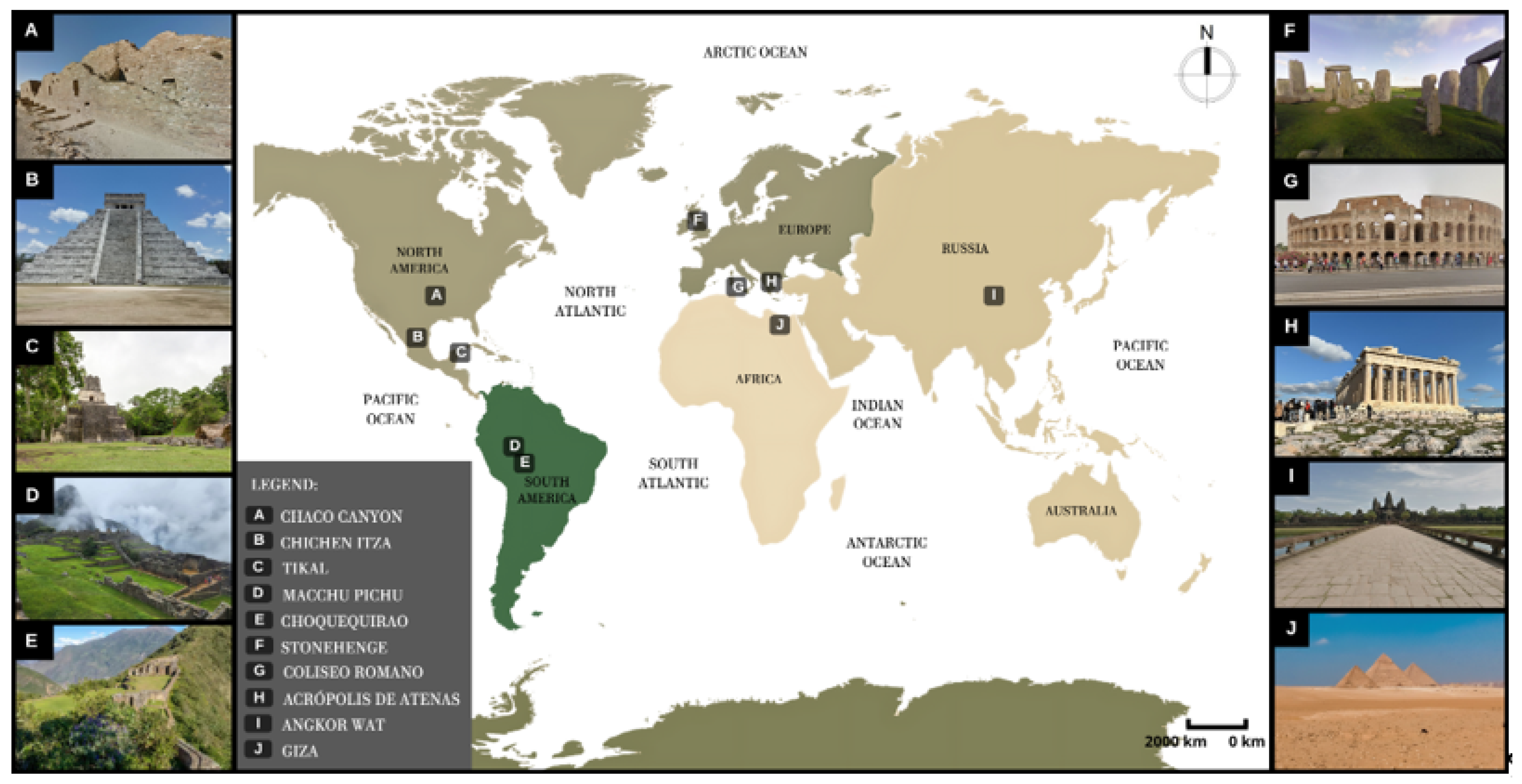
Figure 1. Map of archaeological sites in the world. (A) Chaco Canyon National Historical Park, image source: Google Maps © Google, 2025 [8]; (B) Chichen Itza Archaeological Site, image source: Google Maps © Google, 2025 [9]; (C) Tikal National Park, image source: Google Maps © Google, 2025 [10]; (D) Citadel of Machu Picchu; (E) Choquequirao Archaeological Site; (F) Stonehenge prehistoric monument, image source: Google Maps © Google, 2025 [11]; (G) Roman Colosseum, image source: Google Maps © Google, 2025 [12]; (H) Acropolis of Athens, image source: Google Maps © Google, 2025 [13]; (I) Angkor Wat Temple Complex, image source: Google Maps © Google, 2025 [14]; and (J) Giza Pyramid Complex, image source: Google Maps © Google, 2025 [15]. Photographs (D,E) were taken by Jesica Vilchez Cairo, one of the authors, using a digital camera.
Heritage 08 00494 g001
Figure 3. Map of Peru and the most prominent archaeological sites. (A) Kuélap Fortress; (B) Chan Chan Citadel, image source: Google Maps © Google, 2025 [29]; (C) Great Pyramid of Caral, image source: Google Maps © Google, 2025 [30]; (D) ‘The Monkey’ Geoglyph in Nazca, image source: Google Maps © Google, 2025 [31]; (E) Citadel of Machu Picchu; (F) Choquequirao Archaeological Site; (G) Moray Agricultural Terraces [32]; and (H) Sacsayhuamán Fortress. Photographs (A,EH) were taken by Jesica Vilchez Cairo, one of the authors, using a digital camera.
Heritage 08 00494 g003
Figure 4. (A) Agricultural terraces in Machu Picchu; (B) hydraulic engineering in Chavín, reprinted with permission from Ref. [34], 2021, Scielo Perú; and (C) terraces of the Moray Archaeological Center. Photographs (A,C) were taken by Jesica Vilchez Cairo, one of the authors, using a digital camera.
Heritage 08 00494 g004
Figure 5. Map of these archaeological sites in the department of Cusco according to the Ministry of Culture [42]. (A) Ollantaytambo Archaeological Site; (B) Citadel of Machu Picchu; (C) Choquequirao Archaeological Site; (D) Moray Agricultural Terraces; (E) Pisac Archaeological Site; (F) Sacsayhuamán Fortress; (G) Tambomachay Archaeological Site, image source: Google Maps © Google, 2025 [43]; and (H) Qenqo Archaeological Complex, image source: Google Maps © Google, 2025 [44]. Figure created by the authors using Adobe Photoshop 2024. Photographs (AF) were taken by Jesica Vilchez Cairo, one of the authors, using a digital camera.
Heritage 08 00494 g005
Figure 6. Scheme of study phases.
Heritage 08 00494 g006
Figure 7. Steps for developing the analysis.
Heritage 08 00494 g007
Figure 8. Location of the Choquequirao Archaeological Center. (A) Location of the Cusco department in Peru; (B) La Convención Province within the department; and (C) the archaeological site of Choquequirao in the Santa Teresa district. Figure created by the authors using Google Earth Pro 2024 and Adobe Photoshop 2024Figure created by the authors using Adobe Photoshop 2024.
Heritage 08 00494 g008
Figure 9. Climate analysis based on the Choquequirao wind rose. Figure created by the authors using PD: 3D Sun-Path 2024 and Adobe Photoshop 2024.
Heritage 08 00494 g009
Figure 10. (A) Map of existing ecosystems in the region; (B) view of the different ecosystems; and (C) Longitudinal profile of the location of ecosystems in the region. Figure created by the authors using Google Earth Pro 2024 and Adobe Photoshop 2024.
Heritage 08 00494 g010
Figure 11. Cross-section of the ecosystems. Figure created by the authors using Google Earth Pro 2024 and Adobe Photoshop 2024.
Heritage 08 00494 g011
Figure 12. Fauna located at the Choquequirao archaeological site. Figure created by the authors using Google Earth Pro 2024 and Adobe Photoshop 2024.
Heritage 08 00494 g012
Figure 13. (A) Andean bear, reprinted with permission from Ref. [74], 2019, National Geographic; (B) Marsupial frog, reprinted with permission from Ref. [75], 2007, iNaturalist; (C) mountain whip snake, reprinted with permission from Ref. [76], 2023, iNaturalist; (D) black and chestnut eagle, reprinted with permission from Ref. [77], 2024, Birds of Peru; (E) orchid bee, reprinted with per-mission from Ref. [78], 2024, Ask a Biologist; and (F) marsupial shrew, reprinted with permission from Ref. [79], 2024, National Geographic.
Heritage 08 00494 g013
Figure 14. (A) Map of the department of Cusco; (B) province of La Convencion, district of Santa Teresa; and (C) map of the Choquequirao archaeological center. Figure created by the authors using Google Earth Pro 2024 and Adobe Photoshop 2024.
Heritage 08 00494 g014
Figure 15. (A) Intervention location, indicating the delimited study area; (B) 3D topography; and (C) longitudinal topographic profile A–A’. Figure created by the authors using Google Earth Pro 2024 and Adobe Photoshop 2024.
Heritage 08 00494 g015
Figure 16. (A) Summer solstice, (B) winter solstice, and (C) spring equinox. Figure created by the authors using PD: 3D Sun-Path 2024 and Adobe Photoshop 2024.
Heritage 08 00494 g016
Figure 17. Map of Choquequirao.
Heritage 08 00494 g017
Figure 18. (A) Sector 1, main plaza; (B) Sector 2, warehouses and deposits; and (C) Sector 2′, workshops and kallankas.
Heritage 08 00494 g018
Figure 19. (A) Sector 3, Huacaypata main square; and (B) Sector 4, field for camelids. Figure created by the authors using SketchUp 2024, Lumion 2024, and Adobe Photoshop 2024.
Heritage 08 00494 g019
Figure 20. (A) Sector 5, ceremonial Ushnu; (B) Sector 6, temple of the priests; and (C) Sector 9, Pikiwasi.
Heritage 08 00494 g020
Figure 21. Sector 8 Las Llamas.
Heritage 08 00494 g021
Figure 22. Sector 7, Chaqra ceremonial platform.
Heritage 08 00494 g022
Figure 23. (A) Route from Canchora to Choquequirao; (B) route from Caserio Marampata to Choquequirao; and (C) route map of Choquequirao. Figure created by the authors using Google Earth Pro 2024 and Adobe Photoshop 2024.
Heritage 08 00494 g023
Figure 24. Horizontal circulation and vertical stairs in the Las Llamas sector. Figure created by the authors using SketchUp 2024, Lumion 2024, and Adobe Photoshop 2024.
Heritage 08 00494 g024
Figure 25. (A) Strategic position of the archaeological center, reprinted with permission from Ref. [80], 2023, GET YOU GUIDE; (B) representation of the repetition of ceremonial platforms, reprinted with permission from Ref. [104], 2022, Peru Choquequirao Trek; and (C) sequential rhythm of agricultural terraces, reprinted with permission from Ref. [105], 2023, Alternative Inka Trails.
Heritage 08 00494 g025
Figure 26. Cradle of Gold. Figure created by the authors using Adobe Photoshop 2024, reprinted with permission from Ref. [81], 2022, Peru Choquequirao Trek.
Heritage 08 00494 g026
Figure 27. Exploded view of a housing workshop in Choquequirao. (A) Wooden reticular framework. (B) Masonry wall with anchoring elements. (C) Thatch (ichu) roof. Figure created by the authors using SketchUp 2024, Lumion 2024, and Adobe Photoshop 2024.
Heritage 08 00494 g027
Figure 28. (A) Double-jamb entrance with spaces between the joints in the kallankas of the Main Temple; (B) narrow terraces in Pikiwasi; and (C) internal lower niches in the main plaza Huacaypata. Photographs taken by the authors using a digital camera.
Heritage 08 00494 g028
Figure 29. Construction Dimension—S5. Figure created by the authors using SketchUp 2024, Lumion 2024, and Adobe Photoshop 2024.
Heritage 08 00494 g029
Figure 30. Construction dimension—S8. Figure created by the authors using SketchUp 2024, Lumion 2024, and Adobe Photoshop 2024.
Heritage 08 00494 g030
Figure 31. Construction dimension—S2. Figure created by the authors using SketchUp 2024, Lumion 2024, and Adobe Photoshop 2024.
Heritage 08 00494 g031
Figure 32. Construction dimension—S1. Figure created by the authors using SketchUp 2024, Lumion 2024, and Adobe Photoshop 2024.
Heritage 08 00494 g032
Figure 33. Construction dimension—S6. Figure created by the authors using SketchUp 2024, Lumion 2024, and Adobe Photoshop 2024.
Heritage 08 00494 g033
Disclaimer/Publisher’s Note: The statements, opinions and data contained in all publications are solely those of the individual author(s) and contributor(s) and not of MDPI and/or the editor(s). MDPI and/or the editor(s) disclaim responsibility for any injury to people or property resulting from any ideas, methods, instructions or products referred to in the content.