

Article

Bitcoin Volatility Forecasting Through Market Sentiment, Blockchain Fundamentals, and Endogenous Market Uncertainty


by
Marcel Figura
1,*,
Martin Bugaj
1,
Elvira Nica
2 and
Gheorghe H. Popescu
3
1
Faculty of Operation and Economics of Transport and Communications, University of Zilina, Univerzitna 8215/1, 010 26 Zilina, Slovakia
2
Department of Administration and Public Management, The Bucharest University of Economic Studies, 010371 Bucharest, Romania
3
Department of Business Administration, “Dimitrie Cantemir” Christian University, 010001 Bucharest, Romania
*
Author to whom correspondence should be addressed.
Forecasting 2026, 8(3), 41; https://doi.org/10.3390/forecast8030041
Submission received: 16 March 2026 / Revised: 14 May 2026 / Accepted: 16 May 2026 / Published: 19 May 2026

Highlights

What are the main findings?
  • Market Uncertainty emerged as the strongest immediate predictor of Bitcoin’s Future Historical Volatility within the behavioural-network-uncertainty architecture.
  • Blockchain Fundamentals were associated with Future Historical Volatility primarily indirectly through Market Uncertainty, while the direct path was not statistically significant.
What are the implications of the main findings?
  • Integrating Market Sentiment, Blockchain Fundamentals, and Market Uncertainty within a single structural framework helps address the fragmentation of prior Bitcoin volatility research.
  • For Bitcoin risk monitoring, combining behavioural and on-chain signals with volatility-based uncertainty measures can support the anticipation of shifts in historical volatility.

Abstract

The study develops and empirically evaluates a forecasting-orientated structural model in which future Bitcoin historical volatility is modelled as being associated with market sentiment and blockchain fundamentals through market uncertainty. Market Sentiment (MS) is specified as a behavioural construct, Blockchain Fundamentals (BF) as network conditions, and Market Uncertainty (MU) as an endogenous regime construct that consolidates signals shaping historical volatility at t+1. Using 262 weekly observations from January 2021 to January 2026, the analysis applies partial least squares structural equation modelling (PLS-SEM) with formative constructs and a forward-dated volatility target to preserve temporal ordering. Paths are evaluated with bootstrapping, effect sizes, and mediation analysis, while predictive performance is assessed using PLSpredict, the cross-validated predictive ability test (CVPAT), benchmark-based comparison, and Diebold-Mariano (DM) tests. MU emerges as the dominant predictor of Future Historical Volatility, denoted as HV(t+1) in the structural model (β = 0.864, p-value < 0.001; f2 = 2.036). The effect of BF is largely indirect, with 91.02% of the total effect transmitted via uncertainty, indicating indirect-only mediation. The model explains substantial variation in HV(t+1) (R2 = 0.791) and shows predictive relevance (Q2 predict = 0.287), while the benchmark-based results indicate mixed but competitive forecasting performance relative to persistence-based and econometric alternatives. These findings are consistent with a regime-based interpretation of Bitcoin volatility and highlight the explanatory and predictive relevance of an integrated behavioural-network-uncertainty architecture.

1. Introduction

Financial markets are increasingly characterised by structural instability, rapid technological change, and persistent regime transitions that challenge conventional forecasting approaches. In such environments, volatility does not merely reflect stochastic fluctuation. It also embodies shifting expectations, behavioural amplification, and structural changes in market conditions [1,2]. The demand for advanced forecasting frameworks capable of capturing these multidimensional dynamics has intensified, particularly in digital asset markets where traditional valuation anchors are limited, and uncertainty is structurally embedded [3,4]. Established econometric models, including generalised autoregressive conditional heteroskedasticity (GARCH) models and heterogeneous autoregressive (HAR) specifications, have substantially advanced volatility modelling [5,6]. However, they predominantly treat volatility as a function of its own persistence structure or as the outcome of parallel predictors, often without explicitly modelling the structural transmission processes through which behavioural and technological forces are consolidated into forward-looking risk dynamics [7,8,9].
Bitcoin is an especially demanding case for forecasting under uncertainty. Its market structure is shaped not only by trading behaviour but also by blockchain-level fundamentals, digital attention cycles, and sentiment-driven participation patterns [10,11]. The decentralised architecture of the network and the absence of conventional cash flow anchors amplify the role of investor attention, adoption intensity, transaction demand, and perceived system robustness [12]. This contrasts with traditional asset classes, whose valuation is more closely linked to earnings, dividends, or broader macroeconomic fundamentals [13]. Existing research has documented associations between sentiment proxies and volatility, as well as between blockchain metrics and price formation [14,15]. However, these strands of literature have largely evolved in parallel. Less attention has been paid to specifying and empirically testing an integrated structural mechanism in which behavioural impulses are linked to network conditions, network conditions are associated with an endogenous uncertainty regime, and this regime serves as the immediate transmission channel for future historical volatility [16].
The absence of formally articulated transmission architectures, therefore, represents a critical research gap in advanced financial forecasting. Forecast accuracy may depend not only on the inclusion of additional predictors but also on their structural ordering within a coherent hierarchical framework [17]. If heterogeneous behavioural and technological signals are not modelled as being consolidated into regime-type uncertainty states, predictive relationships may appear unstable, fragmented, or sensitive to specification changes. A regime-based structural approach that explicitly differentiates between upstream constructs, intermediate consolidation mechanisms, and future volatility outcomes offers a conceptually rigorous complement to reduced-form forecasting specifications [18].
This need is further reinforced by contemporary developments in predictive modelling and artificial intelligence (AI)-powered finance, which increasingly emphasise the extraction of complex interdependencies from large-scale and heterogeneous data environments [19,20]. Behavioural attention indicators, blockchain activity metrics, and volatility-based uncertainty proxies represent distinct informational layers that are unlikely to operate independently in relation to volatility. Rather, their interaction may be mediated through endogenous regime dynamics associated with the magnitude and persistence of price fluctuations. Integrating these layers within a unified forecasting system aligns with the broader objective of enhancing risk assessment and strategic decision-making under market uncertainty [21,22].
The primary objective of this study is to develop and empirically evaluate a forecasting-oriented structural model that examines future Bitcoin historical volatility within a mediated behavioural-network-uncertainty transmission system. The proposed framework positions MS as an upstream behavioural construct, BF as structural network conditions, and MU as an endogenous regime construct that consolidates heterogeneous signals and serves as the immediate channel associated with Future Historical Volatility, operationalised as HV(t+1). By explicitly forward-dating the volatility target and preserving temporal precedence between antecedents and outcomes, the model follows predictive modelling principles and reduces simultaneity concerns common in contemporaneous volatility analyses [23,24]. The focus on future historical volatility reflects its suitability as a transparent and directly observable indicator of subsequent price variability. It is also more consistent with the weekly data structure used in this study than broader risk measures such as implied volatility or value at risk (VaR) [25,26].
Empirically, the proposed transmission architecture is tested using weekly observations from January 2021 to January 2026, yielding 262 consecutive time points across multiple volatility regimes. The analysis adopts a variance-based structural modelling approach grounded in PLS-SEM, which is particularly suitable for predictive research designs involving exclusively formative constructs. MS, BF, and MU are operationalised as first-order formative composites reflecting heterogeneous but theoretically coherent indicator domains. Future Historical Volatility is explicitly forward-dated to preserve temporal ordering and ensure a forecasting orientation. This design enables the simultaneous examination of direct, indirect, and mediated effects within a predictive structural framework and remains aligned with out-of-sample validation procedures, benchmark comparisons, and additional diagnostic checks.
The contribution of the study is threefold. First, it advances volatility forecasting research by introducing a formally specified transmission architecture that explicitly models regime consolidation rather than relying on additive predictor inclusion. Second, it bridges behavioural finance and blockchain economics by integrating sentiment-based attention measures and network-level fundamentals into a single predictive system anchored in an endogenous uncertainty construct. Third, it evaluates out-of-sample predictive performance through cross-validated procedures, benchmark comparisons with persistence-based and econometric alternatives, and comparative predictive diagnostics. In doing so, it assesses the practical forecasting relevance of the structural configuration.
By conceptualising volatility as regime-driven through endogenous uncertainty consolidation, the study contributes to the development of forecasting frameworks suited to environments characterised by technological change and behavioural intensity. The behavioural-network-uncertainty architecture proposed here provides a structured account of how rational expectations, emotional market forces, and infrastructural conditions are jointly associated with forward-looking volatility dynamics. Section 2 develops the theoretical foundation and hypothesis structure of the behavioural-network-uncertainty transmission mechanism. Section 3 describes the data, variable construction, structural modelling strategy, and benchmark-based forecasting protocol. Section 4 presents the empirical results, including structural estimates, predictive comparisons, additional diagnostics, and robustness checks. Section 5 discusses the main findings. Section 6 outlines the study’s limitations, implications, and directions for further research. Section 7 concludes the study.

2. Literature Review

2.1. Conceptual Framing of Bitcoin Volatility from a Forecasting Structural Perspective

Bitcoin markets present a particularly demanding environment for volatility modelling because volatility is not merely a statistical artefact but also a market state associated with behavioural attention, network-level conditions, and shifts in perceived uncertainty [27]. Unlike traditional financial assets, whose volatility is typically anchored in earnings expectations, dividend yields, and macroeconomic fundamentals, Bitcoin lacks conventional cash flow anchors and trades continuously across global venues. Moreover, its return dynamics are characterised by heavier tails, an inverse leverage effect, and structurally embedded jump behaviour, all of which distinguish it from more mature asset classes [28,29,30,31]. These properties suggest that forecasting architectures tailored to Bitcoin market conditions may be better suited to capture the interplay of behavioural, technological, and uncertainty-related factors associated with Bitcoin volatility. A considerable strand of research, therefore, examines cryptocurrency volatility as an endogenous market outcome linked to interrelated market forces rather than as an isolated stochastic feature [32]. This view is consistent with forecasting-oriented approaches that aim to predict a forward-looking volatility target, operationalised at time t+1, while preserving temporal ordering between antecedents and outcomes [24].
In this setting, the modelling challenge is not merely to identify individual predictors but also to specify a coherent transmission architecture in which upstream constructs are associated with volatility both directly and through intermediate market states, especially uncertainty [33]. A key organising concept is the regime, which is defined in the volatility modelling literature as a distinct and persistent market state characterised by a particular level of price variability, belief dispersion, and participation intensity [34,35]. Regimes reflect sustained shifts in the data-generating process rather than random deviations around a single equilibrium. In traditional equity markets, regime transitions are typically associated with macroeconomic shocks, monetary policy changes, or financial crises [16]. In Bitcoin markets, by contrast, they may arise endogenously from sentiment cycles, adoption waves, network congestion, and shifts in speculative intensity [1,36]. In the present framework, the term “endogenous uncertainty regime” denotes a sustained state of elevated or suppressed uncertainty associated with the internal interaction of behavioural attention, blockchain-level conditions, and volatility dynamics, rather than with exogenous triggers alone. This concept is central to the present analysis because it treats uncertainty not as a residual shock but as a structurally generated market condition that consolidates heterogeneous signals and serves as the immediate transmission channel associated with future historical volatility.
The proposed framework organises the prediction problem around four higher-order dimensions. First, MS captures behavioural attention and market mood through digital traces such as search intensity and crisis-related queries, as well as through composite measures such as the Fear and Greed Index [37]. Higher values of the sentiment indicators reflect intensified adverse attention or market tension rather than positive market optimism. Second, BF represents network-level conditions captured by network activity signals, computational security indicators such as hash rate, and measures reflecting throughput or congestion-related conditions [38,39]. Third, MU reflects a market state closely connected with volatility dynamics and is operationalised through range-based measures, historical volatility metrics, and volume-related volatility signals computed over rolling horizons [40]. Finally, the key dependent construct is Future Historical Volatility, denoted as HV(t+1) in the structural model, indicating that antecedent conditions at time t precede the volatility outcome at t+1 [41].
The term “historical volatility” is used instead of “realised volatility” to describe the weekly rolling volatility measure serving as the forecasting target. In financial econometrics, realised volatility conventionally refers to a measure constructed from high-frequency intraday returns, typically sampled at five-minute intervals, whose theoretical properties depend on a dense within-period sampling scheme [23,42]. This study constructs the volatility measure from weekly closing prices aggregated over an eight-week rolling window and annualised accordingly. Because this measure is based on low-frequency weekly data, the term “historical volatility” more accurately describes its empirical content and avoids conflation with the high-frequency realised volatility paradigm. Recent comparative studies have similarly distinguished between these measurement approaches [29,43,44].
HV(t+1) is chosen as the focal forecasting target rather than broader notions such as general risk, uncertainty, or VaR. This is because volatility captures the magnitude of price fluctuations in a directly observable and continuously measurable form that is well suited to structural modelling. Unlike VaR, which summarises downside risk at a single quantile, and implied volatility, which requires a liquid options market that remains comparatively underdeveloped for Bitcoin, historical volatility provides a transparent, model-free summary of price variability suitable as a dependent construct in a structural equation framework [44,45]. Furthermore, volatility forecasting has direct practical relevance for portfolio allocation, hedging, and risk management.
This conceptual decomposition is consistent with the broader literature on attention and sentiment in financial market dynamics [46], network-proxied fundamentals in cryptocurrency price formation [47], and the centrality of volatility measurement for modelling uncertainty and risk [48,49]. Recent reviews confirm that sentiment, on-chain activity, and volatility-based measures represent distinct informational layers that interact in complex ways within cryptocurrency markets [32,50]. The following sections develop the hypotheses in an order that mirrors the logic of the model.

2.2. Blockchain Fundamentals as Antecedents of Market Uncertainty

A central difficulty in cryptocurrency research lies in translating the notion of “fundamentals” into measurable constructs, particularly given the absence of conventional firm-level cash flow anchors. At a broad conceptual level, blockchain fundamentals encompass the architectural properties that define the technological and governance structure of a network, including decentralisation, immutability, transparency, consensus mechanisms, and security mechanisms [51]. These dimensions are collectively associated with the perceived reliability and trustworthiness of the network as an economic infrastructure. In the empirical literature, fundamentals are commonly operationalised through network-level indicators, including network activity as a proxy for utilisation and adoption, transaction intensity as a proxy for settlement demand and economic throughput, and mining-related indicators as proxies for security and network robustness [52,53,54]. Measures related to block space usage and congestion are also interpreted as signals of network pressure that may be associated with changes in user experience and costs, thereby informing market perceptions of operational frictions [55]. These elements are theoretically coherent as formative components because they jointly constitute the latent state of “fundamentals” rather than reflecting a single underlying trait [56].
This study operationalises BF through a narrower subset of empirically tractable on-chain proxies: Active addresses, Average block size, Average hashrate, and Number of transactions in blockchain. This narrowing is necessary because broader conceptual dimensions, such as decentralisation or immutability, are structural constants within a single-network analysis and exhibit insufficient temporal variation to serve as time-varying predictors in a weekly forecasting framework. The selected indicators capture meaningful variation in network utilisation, participation intensity, computational security commitment, and throughput conditions. This approach is consistent with recent studies that operationalise blockchain fundamentals through observable on-chain metrics, while acknowledging that such metrics represent a tractable subset of a broader conceptual domain [50,57,58].
Among the selected indicators, Active addresses deserves particular justification. The number of active addresses is widely used as a proxy for network participation and adoption intensity because it captures the extent to which distinct network endpoints participate in transaction activity during a given period [59,60]. Unlike aggregate transaction counts, which may be inflated by automated or self-referencing transactions, active addresses provide a participation-breadth signal that reflects the diversity of actors engaging with the network. Fiszeder et al. [50] identify address-based metrics as relevant predictors of Bitcoin variance using Bayesian model averaging (BMA) and machine learning selection. However, active addresses are not a perfect measure of unique users: a single user may control multiple addresses, custodial platforms may consolidate many users into a small number of addresses, and layer-two solutions such as the Lightning Network may divert activity from the base layer [57,60]. These limitations imply that the construct should be interpreted as a proxy for observable network participation breadth rather than as a direct count of individual users.
From the perspective of Market Uncertainty, blockchain fundamentals can serve as stabilising or destabilising signals. Stronger fundamentals can indicate sustained participation, credible security conditions, and resilient settlement infrastructure, which may be associated with lower perceived fragility and reduced uncertainty about the system’s capacity to support trading and usage [61,62]. Conversely, deterioration in network activity or security proxies may be associated with greater uncertainty about market depth, future adoption trajectories, and the reliability of transaction processing. The fundamentals construct is therefore linked to the market’s uncertainty state through expectations about the system’s integrity and utilisation, consistent with the broader price formation view that assigns a meaningful role to fundamentals in cryptocurrency dynamics [47,63]. Bakas et al. [64] identify on-chain circulation and network usage indicators as robust predictors of Bitcoin volatility, while Wang et al. [57] find that blockchain-derived features are positively associated with Bitcoin volatility alongside lagged volatility and trading volume.
Accordingly, the structural framework posits a negative relationship between BF and MU, reflecting the premise that stronger network conditions are associated with less uncertain market regimes. Based on the foregoing, hypothesis H1 is proposed:
H1. 
Blockchain Fundamentals negatively affect Market Uncertainty.

2.3. Blockchain Fundamentals and Future Historical Volatility

A second question concerns whether BF are directly associated with HV(t+1), beyond their indirect relationship through uncertainty. In principle, network fundamentals could be directly associated with lower volatility by providing informational anchors for expectations, lower perceived tail risk, and greater participation stability. If the network is viewed as robust and actively used, price discovery may occur under conditions of greater confidence, which may be associated with lower subsequent historical volatility [32,65]. This stabilising interpretation is consistent with the view that fundamentals are linked to risk conditions through the informational content they provide about market viability and utilisation trajectories [66].
At the same time, the literature does not imply that the direction of the fundamentals-volatility relationship is universally uniform. Some network conditions, especially those associated with congestion, rapid shifts in transaction demand, or changes in mining intensity, may coincide with periods of heightened speculative activity that are linked to volatility dynamics [67,68]. This ambiguity reinforces the relevance of examining the relationship within a structural framework. It therefore motivates an explicit hypothesis examining whether the net directional association is consistent with a stabilising interpretation when HV(t+1) is used as the forecasting target, while also allowing mediation mechanisms to be assessed. It is also important to note that empirical findings on the fundamentals-volatility relationship may depend on how blockchain fundamentals are operationalised. Studies using different subsets of on-chain indicators, aggregation frequencies, or sample periods may reach different conclusions about the sign and magnitude of this relationship [29,50]. The present framework addresses this concern by specifying a formative construct that captures multiple complementary dimensions of network conditions, thereby reducing sensitivity to any single indicator.
The forecasting orientation is particularly important here. By modelling HV(t+1) rather than contemporaneous volatility, the framework aligns with practical forecasting use cases and establishes a clearer temporal structure in which BF at time t are linked to HV(t+1) in the subsequent interval [23,24]. In line with the proposed stabilising interpretation of stronger fundamentals, the model therefore posits a negative direct relationship. Drawing on this evidence, Hypothesis H2 is advanced:
H2. 
Blockchain Fundamentals negatively affect Future Historical Volatility.

2.4. Market Sentiment as an Antecedent of Blockchain Fundamentals

Investor sentiment has long been examined as a meaningful factor associated with financial market behaviour, particularly in contexts characterised by heterogeneous beliefs, limited fundamental anchors, and episodic waves of attention [69]. Cryptocurrency markets are especially susceptible to sentiment dynamics because information discovery, participation, and narrative formation are closely mediated by digital platforms [70]. A widely used empirical proxy for attention is online search behaviour, which captures revealed information demand. In the broader finance literature, search intensity is formalised as a measure of attention, and its relevance for market behaviour has been widely documented [46]. In cryptocurrency contexts, search intensity measures based on Google Trends have been used to track attention cycles and their association with Bitcoin market dynamics, indicating systematic co-movement between search behaviour and market conditions [10,71].
Recent research continues to document the importance of search-based attention measures for cryptocurrency volatility and price dynamics. Bakas et al. [64] identify Google Trends as one of the most robust predictors of Bitcoin volatility using dynamic BMA across 22 candidate variables. Biswas and Sharma [72] construct a Cryptocurrency Fear Sentiment Index from nine fear-related Google search terms and report that this composite measure is significantly associated with higher Bitcoin and Ethereum volatility, with stronger associations during crisis periods. Aras et al. [73] develop a Google Trends Cryptocurrency Attention index, and report that combining attention-based measures with uncertainty indicators is associated with higher explanatory power and out-of-sample forecasting accuracy.
Complementing attention-based proxies, sentiment composites such as the Fear and Greed Index aim to summarise the prevailing market mood. While these composites differ in construction across settings, their theoretical role is broadly consistent. They represent states of elevated fear, risk aversion, or exuberance associated with how participants engage with the market [74,75]. Such sentiment regimes may plausibly be associated with blockchain fundamentals, not because sentiment alters the protocol itself, but because it is linked to participation intensity, transaction demand, and the willingness to transact and hold positions. Under adverse sentiment, market participants may withdraw activity, which may be reflected in reduced on-chain engagement and weaker utilisation signals. Under speculative conditions, activity may increase, potentially coinciding with network pressure or changing transaction patterns [76,77].
This behavioural transmission channel is also supported by recent empirical work. Baroiu et al. [58] combine on-chain variables with Twitter sentiment and find that sentiment shifts precede changes in network activity metrics during both bull and bear volatility regimes. Aysan et al. [78] show that Bitcoin sentiment dynamics differ materially before and during the COVID-19 pandemic, suggesting that the sentiment-participation nexus is regime-dependent. Since the sentiment construct captures adverse attention and fear-related regimes, higher sentiment values are expected to be associated with weaker network participation and less favourable BF. Accordingly, Hypothesis H3 is formulated:
H3. 
Market Sentiment negatively affects Blockchain Fundamentals.

2.5. Market Sentiment as an Antecedent of Market Uncertainty

Beyond its relationship with network activity proxies, sentiment is expected to be more directly associated with uncertainty. A behavioural market state characterised by heightened fear, crisis-oriented information demand, and negative narrative propagation may be associated with higher perceived risk, wider belief dispersion, more unstable expectations, and a more uncertain market environment [79,80]. This argument is consistent with the notion that attention and sentiment proxies are not merely correlates of market behaviour but represent informational and psychological conditions associated with more pronounced uncertainty regimes [81]. Empirical work has linked fear-related conditions to volatility behaviour in cryptocurrency markets, supporting the broader premise that sentiment regimes are materially related to uncertainty and risk dynamics [14]. Such findings are also consistent with the attention-based view that rapid increases in information demand may coincide with uncertainty shocks rather than with gradual learning processes [82].
Recent studies provide further support for this connection. Aysan et al. [83] find that news-based sentiment is significantly associated with jumps in cryptocurrency returns, providing evidence that sentiment shocks may be linked to discrete shifts in market uncertainty rather than smooth adjustments. Brauneis and Sahiner [5] report that AI-generated news sentiment improves machine learning forecasts of cryptocurrency realised variance, suggesting that sentiment carries incremental information content for uncertainty dynamics beyond what is captured by lagged volatility alone.
In the present framework, MU is conceptualised as a regime-like construct captured through volatility-based proxies. In cryptocurrency markets, where no universally accepted volatility-index benchmark exists, volatility-based proxies are commonly used to represent uncertainty states in an empirically tractable manner [84]. Range-based volatility reflects intraperiod uncertainty manifested through price extremes, while historical volatility summarises ex post variability over the interval. Volume-related volatility captures trading intensity fluctuations that are often intertwined with uncertainty regimes [16]. If sentiment regimes are associated with a higher uncertainty state, these proxies should reflect that state accordingly [81].
The regime interpretation is important because it distinguishes the proposed relationship from a simple contemporaneous correlation between sentiment and volatility. It also suggests that sentiment may be associated with a more sustained shift in the market’s uncertainty state. This distinction aligns with the endogenous uncertainty regime concept introduced in Section 2.1, in which uncertainty is treated as a structurally generated market condition rather than as a transient statistical artefact. In this sense, sentiment is expected to be positively associated with MU. Accordingly, Hypothesis H4 is formulated:
H4. 
Market Sentiment positively affects Market Uncertainty.

2.6. Market Uncertainty as the Immediate Predictor of Future Historical Volatility

The final hypothesised link conceptualises MU as the immediate predictor of HV(t+1). This is conceptually natural because uncertainty encapsulates the market’s state of unpredictability and perceived risk, which is closely associated with the magnitude of subsequent price fluctuations [85]. In environments where information arrives frequently and beliefs are heterogeneous, heightened uncertainty tends to be associated with stronger price reactions, larger intraperiod ranges, and more persistent volatility [18,79]. This is consistent with standard volatility modelling traditions and the use of historical volatility and range-based estimators as empirical representations of risk states [49,86].
It is important to acknowledge that uncertainty and future volatility are conceptually proximate, and that a strong positive association between current uncertainty proxies and future volatility could partly reflect volatility persistence. This distinction is important because the relationship might otherwise be reduced to a simple persistence effect. In forecasting-oriented structural settings, market uncertainty may be operationalised as a composite of range-based volatility, historical volatility, and volume-related volatility observed at time t, whereas the forecasting target is historical volatility at t+1. The temporal separation, combined with the formative specification of uncertainty as a composite of heterogeneous volatility signals rather than a single lagged measure, supports the interpretation that the uncertainty construct captures a broader market state than would be implied by simple autoregressive persistence alone.
Within forecasting-oriented structural approaches, uncertainty can be specified as the key transmission channel through which sentiment and fundamentals are linked to volatility outcomes [87]. This enables the model to distinguish between direct relationships with volatility and mediated relationships operating through the uncertainty regime. In forecasting terms, predicting future historical volatility at t+1 can benefit from modelling the uncertainty state at t, because uncertainty consolidates multiple upstream signals into a proximate predictor of the volatility process [33]. This transmission role is central to the conceptual logic of the study: uncertainty is treated not merely as a correlate of volatility but as a structural consolidation mechanism through which behavioural and network-level signals may be linked to forward-looking volatility outcomes. Consequently, a positive relationship between MU and HV(t+1) is expected. This reasoning motivates Hypothesis H5:
H5. 
Market Uncertainty positively affects Future Historical Volatility.

2.7. Synthesis of a Coherent Transmission Architecture for Forecasting Volatility

The behavioural-network-uncertainty architecture integrates behavioural attention and sentiment, network-related fundamentals, and an endogenous uncertainty state into a single transmission structure focused on future historical volatility. It accommodates both direct structural relationships and mediated pathways, specifying uncertainty as the immediate channel through which upstream signals are linked to volatility outcomes.
The novelty of this architecture becomes clearer when it is contrasted with the existing literature, which has predominantly examined the components of this framework in isolation. A substantial body of research has investigated the relationship between investor sentiment and Bitcoin volatility without incorporating on-chain fundamentals or specifying how sentiment signals are linked to intermediate market states [72,88,89]. A separate strand of research has examined the role of blockchain-derived metrics in cryptocurrency price formation and volatility without integrating behavioural attention or specifying a mediation architecture [57,59,60]. A third strand has focused on improving volatility forecasting accuracy through increasingly sophisticated statistical and machine learning methods, including regime-switching models, HAR specifications, neural networks, and gradient boosting approaches [29,45,90,91]. However, these models are typically not embedded within a structurally ordered behavioural-network-uncertainty transmission framework.
Against this background, the present study integrates these previously fragmented perspectives into a single coherent forecasting framework. Its distinctive feature lies not in the inclusion of additional predictors but in the explicit specification of a structural ordering in which sentiment is positioned as an upstream behavioural construct, blockchain fundamentals serve as network-level conditions linked to sentiment, and market uncertainty is specified as an endogenous regime construct that consolidates both behavioural and network signals in relation to future historical volatility. This mediated transmission logic allows the model to distinguish between direct and indirect relationships, assess whether uncertainty serves as the primary consolidation channel, and evaluate whether the behavioural-network-uncertainty hierarchy provides explanatory and predictive value beyond fragmented predictor-based approaches. Fiszeder et al. [50] provide complementary evidence for this integrative perspective by showing that the relative importance of Bitcoin volatility predictors, including lagged variances, trading volume, and Google search intensity, is time-varying. This supports the argument that a structural framework capable of capturing the dynamic interplay among these layers may provide insights beyond static, predictor-by-predictor analyses.
Table 1 provides a comparative summary of selected prior Bitcoin volatility studies and clarifies the research gap addressed by the present study. As the table shows, most prior studies examine either sentiment-based or on-chain predictors within reduced-form forecasting models, without specifying a mediated structural transmission architecture. This study responds to this gap by proposing and empirically testing an integrated behavioural-network-uncertainty framework with explicitly ordered structural pathways.

3. Materials and Methods

3.1. Research Design and Analytical Strategy

This study adopts a forecasting-orientated structural modelling approach grounded in PLS-SEM. The choice of PLS-SEM is consistent with the forecasting architecture developed in the literature review, which emphasises transmission mechanisms across behavioural, network, and uncertainty channels focused on future historical volatility. PLS-SEM is particularly appropriate in this context for three reasons. First, the model contains exclusively formative constructs, for which covariance-based structural equation modelling is less suitable because of identification constraints and the absence of reflective measurement assumptions [56]. Second, the research objective is predictive rather than confirmatory, which aligns with the variance-explaining orientation of PLS-SEM [92]. Third, PLS-SEM imposes minimal distributional assumptions and performs robustly in medium-sized samples, such as the present sample of 262 weekly observations [93]. This choice does not imply that PLS-SEM replaces standard time-series volatility models. Rather, it serves as the baseline structural framework for modelling predictive-associational linkages among formative constructs. Forecasting performance is evaluated separately against persistence-based and econometric benchmarks. All PLS-SEM analyses were conducted in SmartPLS 4, whereas benchmark forecasting models and additional diagnostic tests were implemented in R 4.5.1.

3.2. Data and Sample

The empirical analysis is based on weekly observations from 17 January 2021 to 18 January 2026, yielding 262 consecutive time points. The time span covers multiple volatility regimes, thereby enhancing structural variability and the conditions for predictive testing. Weekly aggregation was selected to balance noise reduction and dynamic responsiveness. No missing values were detected in the dataset, and no interpolation or imputation procedures were applied. All variables were constructed before model estimation to preserve temporal ordering. For PLS-SEM estimation, indicators were mean-centred and standardised to mitigate scale-induced dominance and ensure comparability across formative components.
Table 2 summarises the operationalisation of all variables, including their respective constructs, measurement units, and data sources. The indicators used to operationalise BF were obtained from the Blockchain Data Explorer, while those used to operationalise MS were sourced from Google Trends and CoinMarketCap. Volatility measures were constructed using weekly market data retrieved from Yahoo Finance. These included weekly closing prices for historical volatility, weekly high-low price ranges for Parkinson volatility, and weekly trading volume data for volume-based volatility measures.

3.3. Variable Construction

The construction of volatility-related variables follows standard financial econometric practice and remains aligned with the forecasting architecture of the structural model. Weekly price dynamics were transformed into continuously compounded returns to ensure time-additive properties and consistency with volatility aggregation frameworks. Logarithmic returns were computed as shown in Equation (1), where Pt denotes the weekly closing price, and Pt−1 denotes the corresponding price in the preceding week. These returns constitute the primary input for historical volatility estimation.
Historical volatility was calculated using an eight-week rolling window of squared log returns, a horizon commonly adopted in medium-frequency volatility modelling to balance responsiveness and noise reduction. The measure was annualised to maintain comparability with conventional volatility reporting standards. The annualisation factor of 52 reflects the weekly frequency of the data [42]. The formal definition is provided in Equation (2). In addition to return-based historical volatility, a range-based volatility measure was constructed using the Parkinson estimator [86], as defined in Equation (3). This estimator specifies an eight-week rolling annualised measure that exploits intraperiod high-low information, making it particularly informative in markets characterised by pronounced price swings. This specification also ensures consistency with the historical and volume volatility measures. Trading activity variability was captured using volume volatility. Weekly log changes in trading volume were first computed analogously to price returns, as shown in Equation (4), where Vt denotes the weekly trading volume, and Vt−1 denotes the corresponding volume in the preceding week. An eight-week rolling annualised volatility measure was then derived, as presented in Equation (5). To preserve temporal ordering and reduce simultaneity concerns, the dependent construct HV(t+1) was forward-dated so that explanatory variables observed at time t predict future historical volatility at time t+1 [23].
r t = ln P t P t 1
H V t = 52 × i = 1 8 r t i 2
P V t = 52 × i = 1 8 ln H i g h t i L o w t i 2 4 ln 2
v t = ln V t V t 1
V V t = 52 × i = 1 8 v t i 2

3.4. Measurement Model Specification and Assessment

The measurement model was specified exclusively using first-order formative constructs. In formative operationalisation, indicators are assumed to define and collectively constitute the latent construct rather than reflect a common underlying trait [94]. Consequently, the indicators are not expected to be interchangeable or highly correlated, making traditional internal consistency measures such as Cronbach’s alpha or composite reliability conceptually inappropriate in this context [95]. Instead, construct validity is assessed through collinearity, indicator relevance, and overall model fit.
Collinearity among formative indicators was evaluated using the variance inflation factor (VIF), since excessive multicollinearity may distort the estimation of outer weights and compromise interpretability. A conservative threshold of 3.3 was adopted to support robust estimation and minimise redundancy among predictors [95,96]. Such thresholds are commonly used in variance-based structural modelling to enhance parameter stability and reduce the risk of suppressor effects. All indicators remained below this boundary, indicating that the formative specifications did not exhibit problematic linear dependence.
The empirical relevance of formative indicators was examined through outer weights obtained from bootstrapping procedures with 5000 subsamples [97]. Statistical inference was conducted using two-tailed tests and bias-corrected confidence intervals. In formative measurement, outer weights represent the relative contribution of each indicator to the composite construct [98]. Indicators with statistically significant weights were interpreted as substantive contributors to the latent variable. When weights are statistically weaker but theoretically justified, formative modelling permits indicator retention if multicollinearity is absent and content validity is preserved [95]. This approach helps ensure that the construct captures its full conceptual domain rather than relying on purely statistical elimination criteria.
Although PLS-SEM is primarily variance-oriented, global model fit was also assessed to evaluate the discrepancy between empirical and model-implied correlation structures. The standardised root mean square residual (SRMR) was used as the primary global fit indicator. Values below 0.08 were considered acceptable, while values below 0.05 indicated strong correspondence [99]. To complement this evaluation, the geodesic discrepancy measures d_ULS (squared Euclidean distance) and d_G (geodesic distance) were examined to assess the distance between observed and reproduced covariance matrices. The joint evaluation of these indices supports the adequacy of the specified measurement structure [100,101].
Particular attention was devoted to the specification of MU as a formative construct. The selected volatility-based proxies, namely range-based volatility, historical volatility, and volume-related volatility, capture distinct but complementary dimensions of market uncertainty [16,85]. These indicators do not represent interchangeable reflections of a single latent factor [102]. Rather, they collectively define a regime-type uncertainty state by combining price dispersion, historical variability, and trading intensity fluctuations. Treating MU as formative is therefore theoretically consistent with its conceptualisation as an emergent market condition constructed from heterogeneous volatility signals instead of a reflective psychological attribute [97]. This specification aligns with the objective of modelling uncertainty as an endogenous structural mediator within a forecasting-oriented framework. The same formative assessment principles were applied in the robustness checks, where outer weights, their statistical significance, and collinearity diagnostics were re-examined under the modified model specifications.

3.5. Structural Model Assessment

The structural model was evaluated using estimated path coefficients, bootstrapped t-statistics, p-values, and bias-corrected confidence intervals. Statistical inference was conducted using 5000 bootstrap resamples to support stable parameter estimation and reliable significance testing, with all hypothesised relationships assessed using two-tailed tests at the 5% significance level. Beyond statistical significance, substantive interpretation focused on explanatory power and local effect magnitudes to assess the structural relevance of each hypothesised relationship.
The explanatory capacity of endogenous constructs was assessed using the coefficient of determination, R2. In accordance with established variance-based structural modelling conventions, R2 values of 0.25, 0.50, and 0.75 were interpreted as indicating weak, moderate, and substantial explanatory power, respectively [97]. These thresholds provide a useful basis for evaluating the extent to which exogenous constructs collectively explain variance in endogenous variables within the forecasting architecture.
Beyond overall explanatory power, the contribution of individual structural paths was examined using Cohen’s f2 effect size. This statistic quantifies the change in R2 when a specific predictor is omitted from the model, thereby capturing its incremental explanatory contribution. Effect size thresholds were interpreted according to established guidelines, with values of 0.02, 0.15, and 0.35 corresponding to small, medium, and large effects, respectively [103]. Values substantially exceeding the large-effect benchmark may be interpreted as indicating very strong structural relevance. This classification enables a nuanced assessment of structural importance beyond statistical significance alone. Given the time-series nature of the data, structural estimates were interpreted jointly with benchmark-based forecasting results, residual diagnostics, and robustness checks rather than as standalone evidence of forecasting superiority.

3.6. Predictive Assessment and Benchmark Comparison

Out-of-sample predictive performance was assessed using a combination of internal PLS-based diagnostics and benchmark-based forecast comparisons. Within the PLS framework, predictive relevance was first examined using PLSpredict with 10-fold cross-validation. Q2 predict statistics were then used to assess whether the model generated lower prediction errors than a naive mean benchmark [17]. At the latent-variable level, the CVPAT was used as a complementary internal predictive diagnostic [104]. The same 10-fold structure was used for the CVPAT assessment.
To place the structural model in a broader time-series forecasting context, out-of-sample forecasts were compared with benchmark models commonly used in volatility forecasting. The benchmark set included naive persistence, a first-order autoregressive model (AR(1)), a HAR-type model, and a GARCH(1,1) model aligned with the historical volatility target [43,105]. The HAR-type benchmark was implemented using weekly lagged historical volatility together with 4-week and 8-week average historical volatility components. This adapted the heterogeneous autoregressive logic to the weekly frequency of the data. The GARCH(1,1) benchmark was estimated on weekly log returns using the rugarch package in R, with an intercept in the mean equation and Student-t distributed innovations. The model was re-estimated recursively within each expanding-window step, and the resulting one-step-ahead conditional volatility forecasts were transformed to the same annualised scale as the historical volatility target to preserve comparability across models. Forecast accuracy was evaluated using mean squared error (MSE), root mean squared error (RMSE), and mean absolute error (MAE) [5].
The benchmark models were estimated using an expanding-window one-step-ahead design, with the first 80% of usable observations used as the initial estimation sample and the remaining 20% as the terminal out-of-sample evaluation period. The effective modelling sample comprised 253 usable weekly observations after accounting for the 8-week rolling construction of the predictors and the forward dating of HV(t+1). The initial estimation sample contained 202 observations, while the terminal holdout period consisted of 51 one-step-ahead forecasts. For the PLS-SEM specification, outer weights and path coefficients were estimated on the same training subsample. Out-of-sample predictions were then generated for the identical terminal holdout period. This procedure preserved temporal ordering and provided a common comparison window across all models.
Statistical comparison of one-step-ahead forecast errors was performed using the DM test under squared-error and absolute-error loss functions (h = 1) [106]. This benchmark-based evaluation was intended to complement the internal PLS predictive diagnostics and assess whether the structural model provided competitive forecasting performance relative to persistence-based and econometric alternatives.

3.7. Additional Predictive Diagnostics and Robustness Checks

To complement the benchmark-based predictive assessment, additional diagnostic and robustness analyses were conducted. Residual serial dependence in out-of-sample forecast errors was examined using the Ljung–Box test at lags 1, 4, and 8 for the forecast error series generated by each competing model [107]. These lags were selected to capture immediate, intermediate, and eight-week serial dependence linked to the rolling construction of the volatility variables.
Robustness was further assessed using two alternative specifications. First, the uncertainty construct was redefined by excluding Historical volatility (8-week rolling, t) to reduce proximity between the mediator and the target variable. Second, the baseline target HV(t+1) was replaced with HV(t+8) to reduce overlap between volatility-based predictors and the dependent variable. In both cases, the formative measurement properties were re-examined using outer-weight significance and collinearity diagnostics. These additional analyses were intended to assess whether the main directional relationships remained visible under modified specifications and reduced-overlap conditions, alongside additional residual diagnostics. Together, these checks were designed to evaluate the sensitivity of the main findings to overlap, volatility persistence, and residual serial dependence.

3.8. Mediation Analysis

Consistent with the predictive-associational orientation of the study, mediation is interpreted as the transmission of estimated relationships through intermediate constructs within the specified framework rather than as evidence of strong causal identification. Beyond direct structural relationships, the model allows for mediated transmission mechanisms through the endogenous uncertainty construct. The structural specification, therefore, implies that upstream constructs may be indirectly associated with future historical volatility via intermediate regime dynamics. To assess these mechanisms, both total indirect effects and specific indirect effects were estimated and evaluated using bias-corrected confidence intervals [97].
Total indirect effects reflect the aggregate mediated relationship of a predictor across all structural pathways, whereas specific indirect effects isolate individual transmission routes. This distinction enables a precise decomposition of structural relationships and clarifies whether predictive signals are transmitted primarily through a single mediating channel or across multiple cascades within the system. In the present forecasting architecture, this differentiation is particularly informative because it indicates whether uncertainty serves as a central consolidation mechanism linking sentiment and fundamentals to subsequent volatility outcomes [108,109].
The strength of mediation was quantified using the variance accounted for (VAF) index, as defined in Equation (6), which expresses the proportion of the total structural effect transmitted through the mediator in percentage terms. Values below 20% indicate negligible mediation, values between 20% and 80% suggest partial mediation, and values exceeding 80% are consistent with full mediation [110].
V A F = I n d i r e c t   E f f e c t D i r e c t   E f f e c t + I n d i r e c t   E f f e c t

4. Results

4.1. Measurement Model Results

Consistent with the formative specification of the constructs, the measurement model was first assessed using indicator-level collinearity diagnostics. These diagnostics were conducted using the VIF, with the detailed results reported in Table 3. Across all indicators, the obtained VIF values remained below the conservative threshold of 3.3 and the commonly applied threshold of 5, indicating no problematic multicollinearity. The highest VIF value was observed for Active addresses at 2.878, followed by Average hashrate at 2.394 and Number of transactions in blockchain at 2.061. All remaining indicators had VIF values ranging from 1.008 to 1.483, reflecting a low degree of linear dependence among predictors. These findings indicate that the formative measures do not exhibit excessive redundancy and that outer-weight estimation is not adversely affected by collinearity.
Discriminant validity was considered conceptually through clear theoretical differentiation of indicator domains and empirically through the inspection of inter-construct correlations alongside collinearity diagnostics. This approach is consistent with the formative specification of all constructs.
The statistical significance and empirical relevance of the formative indicators were then examined using bootstrapping procedures. The detailed results are reported in Table 4. All outer weights were statistically significant at conventional levels, supporting the empirical relevance of each indicator within its respective construct. For BF, Active addresses had a positive and statistically significant outer weight of 0.427, with a t-statistic of 3.623, whereas Average block size had a negative and statistically significant outer weight of −0.635, with a t-statistic of 6.351. Average hashrate and Number of transactions in blockchain also made positive contributions, with outer weights of 0.708 and 0.702 and corresponding t-statistics of 5.967 and 8.539, respectively.
Within MS, Bitcoin (Google Trends) made the strongest contribution, with an outer weight of 1.110 and a t-statistic of 14.486. Crypto crash (Google Trends) had a negative and statistically significant outer weight of −0.293, with a t-statistic of 3.171, while the Fear and Greed Index also contributed negatively, with an outer weight of −0.466 and a t-statistic of 3.821. For MU, Historical volatility (8-week rolling, t) made the largest contribution, with an outer weight of 0.805 and a t-statistic of 19.733. Parkinson volatility was also statistically significant, with an outer weight of 0.295 and a t-statistic of 5.565, while Volume volatility remained significant, although with a smaller positive outer weight of 0.086 and a t-statistic of 2.293. Across all indicators, p-values remained below 0.05, providing further evidence of indicator relevance within the formative measurement model.
Beyond the indicator-level assessment, model fit was evaluated using the SRMR together with the geodesic discrepancy measures d_ULS and d_G. The SRMR value of 0.040 remained below the conservative threshold of 0.05, indicating a satisfactory approximation between the empirical and model-implied correlation matrices. The discrepancy measures yielded values of 3.057 for d_ULS and 1.081 for d_G, both of which fell within acceptable limits. Although global fit indices in PLS-SEM are considered supplementary rather than primary model evaluation criteria, the obtained SRMR and discrepancy measures do not indicate substantial misfit between empirical and model-implied correlations. The satisfactory collinearity diagnostics and the statistical significance of all formative indicators suggest that the measurement model exhibits adequate empirical properties and offers an appropriate basis for the subsequent assessment of the structural model.

4.2. Structural Model Results

Before evaluating the structural paths, collinearity among predictor constructs was assessed using the VIF. The inner model collinearity statistics are presented in Table 5. All VIF values remained below the conservative threshold of 3.3 and the commonly applied threshold of 5, indicating no problematic multicollinearity among the predictor constructs. The highest VIF value was observed for the relationships BF → HV(t+1) and MU → HV(t+1), both with a value of 1.752. The remaining VIF values ranged from 1.000 to 1.337, further indicating a low degree of linear dependence among the exogenous constructs. These results suggest that collinearity is unlikely to materially distort the estimation of the structural path coefficients.
Following the assessment of collinearity, the explanatory power of the structural model was examined using the coefficient of determination, with the results reported in Table 6. The endogenous construct BF had an R2 value of 0.252 and an adjusted R2 of 0.249, indicating that the specified predictors explained approximately one quarter of its variance. MU showed substantially higher explanatory power, with an R2 of 0.559 and an adjusted R2 of 0.556. The highest explanatory power was observed for HV(t+1), with an R2 of 0.791 and an adjusted R2 of 0.789. The associated t-statistics and confidence intervals indicate that the coefficients of determination for all endogenous constructs were statistically different from zero, with all p-values below 0.001. Overall, these findings suggest that the structural model has substantial explanatory capacity, particularly in relation to future historical volatility.
The structural relationships were then assessed using the estimated path coefficients, their statistical significance, and the corresponding confidence intervals, with the detailed results reported in Table 7. The path from BF to MU was negative and statistically significant (β = −0.446, t-statistic = 9.552, p-value < 0.001). By contrast, the direct path from BF to HV(t+1) was negative but not statistically significant (β = −0.038, t-statistic = 0.980, p-value = 0.327), indicating that no direct association was identified within the specified model.
MS was negatively and statistically significantly associated with BF (β = −0.502, t-statistic = 6.915, p-value < 0.001). MS was also positively and statistically significantly associated with MU (β = 0.416, t-statistic = 7.518, p-value < 0.001). The largest structural coefficient in the model was observed for the relationship between MU and HV(t+1), with a substantial positive estimate (β = 0.864, t-statistic = 21.277, p-value < 0.001). The confidence intervals for all statistically significant paths excluded zero, whereas the interval for the non-significant path from BF to HV(t+1) crossed zero, consistent with the reported significance levels. Four of the five hypothesised structural relationships therefore received empirical support, whereas the direct path from BF to HV(t+1) did not.
The structural configuration of the estimated model is presented in Figure 1. For the formative indicators, the diagram reports the corresponding p-values, whereas the structural paths between latent constructs display the estimated standardised coefficients together with their p-values. The coefficients of determination for the endogenous constructs are shown within the circular nodes, providing a visual summary of the model’s explanatory capacity.
Substantive importance was further assessed using Cohen’s f2 statistic, which captures the relative contribution of each exogenous construct to the explained variance in endogenous variables. The results are reported in Table 8. The path from BF to MU was associated with an f2 value of 0.337, corresponding to a medium-to-large effect size (t-statistic = 4.259, p-value < 0.001). The MS → BF relationship had the same f2 value of 0.337, likewise indicating a medium-to-large contribution to the explained variance of the construct (t-statistic = 2.882, p-value = 0.004).
The MS → MU relationship had an f2 value of 0.294, corresponding to a medium effect size (t-statistic = 3.213, p-value = 0.001). By contrast, the direct path from BF to HV(t+1) had a negligible f2 value of 0.004 and was not statistically significant (t-statistic = 0.430, p-value = 0.667), suggesting a very limited direct contribution within the specified model. The largest contribution was observed for the MU → HV(t+1) relationship, which had an f2 value of 2.036 and exceeded the conventional large-effect benchmark (t-statistic = 3.411, p-value = 0.001). The associated confidence interval did not include zero, consistent with the reported significance level.
The effect size analysis suggests that the structural model is characterised by meaningful and, in several instances, substantial contributions of the predictor constructs to the endogenous variables, except for the non-significant direct path. These findings are consistent with the estimated structural configuration.
The out-of-sample predictive performance of the structural model was first assessed using the PLSpredict procedure. The results are summarised in Table 9, which reports Q2 prediction values together with RMSE comparisons between the PLS-SEM model and the linear model (LM) benchmark. At the indicator level, the primary forecasting target is “Historical volatility (8-week rolling, t+1)”, which operationalises the latent construct HV(t+1).
All Q2 prediction values were positive, indicating predictive relevance relative to a naive mean benchmark for each endogenous indicator. For the primary target indicator, “Historical volatility (8-week rolling, t+1)”, Q2 predict was 0.287. Within the MU construct, Parkinson volatility and Historical volatility had Q2 predict values of 0.384 and 0.267, respectively, while Volume volatility remained positive at 0.021.
The RMSE comparison indicated a mixed pattern across indicators. For “Historical volatility (8-week rolling, t+1)”, the PLS-SEM model showed a lower RMSE than the linear benchmark (0.182 versus 0.196), corresponding to ΔRMSE = −0.014. Several blockchain-related indicators, by contrast, had smaller Q2 predict values and higher RMSE than the linear benchmark.
These results suggest that the model retains internal predictive relevance within the PLSpredict framework and performs favourably for the primary target indicator relative to the linear benchmark. At the same time, these diagnostics are interpreted as supportive rather than conclusive evidence of predictive performance.
The CVPAT was also applied at the latent-variable level to complement the out-of-sample assessment of the PLS-SEM specification. The procedure compares the prediction loss of the estimated model with that of an indicator average (IA) benchmark, thereby providing an internal predictive diagnostic within the PLS framework.
The results are presented in Table 10. For the primary forecasting target, HV(t+1), the PLS-SEM model had a lower prediction loss than the IA benchmark (0.038 versus 0.053). The corresponding average loss difference of −0.015 was statistically significant (t-statistic = 4.012, p-value < 0.001). A similar pattern was observed for MU, where the PLS-SEM loss of 7.415 remained below the benchmark loss of 7.588, with a statistically significant average loss difference of −0.173 (t-statistic = 2.601, p-value = 0.010).
For BF, the PLS-SEM loss was numerically lower than the IA benchmark, but the difference was not statistically significant. The overall comparison across endogenous constructs was also not statistically significant. The CVPAT results provide selective support for the internal predictive relevance of the PLS-SEM model, particularly for HV(t+1) and MU, but do not indicate uniform predictive gains across endogenous constructs.
These results offer complementary evidence within the PLS-based predictive assessment and are not treated as a standalone basis for any claim of forecasting superiority. The broader evaluation of forecasting performance is based primarily on the benchmark comparison and the DM tests reported in the subsequent subsection.

4.3. Benchmark-Based Predictive Assessment

To complement the internal predictive diagnostics reported above, out-of-sample forecast performance was evaluated against benchmark models commonly used in volatility forecasting. The comparison included naive persistence, an AR(1) model, a HAR-type model, a GARCH(1,1) specification aligned with the historical volatility target, and the PLS-SEM model. Forecast accuracy was assessed using MSE, RMSE, and MAE, allowing a direct comparison of predictive loss across competing approaches.
As reported in Table 11, the benchmark comparison indicated a mixed pattern of forecast performance. The GARCH(1,1) specification aligned with the historical volatility target had the lowest forecast loss across all three criteria, with MSE = 0.001583, RMSE = 0.039792, and MAE = 0.031140. Naive persistence ranked second, followed by AR(1). The PLS-SEM model ranked fourth, with MSE = 0.003413, RMSE = 0.058422, and MAE = 0.041637, while the HAR-type specification had the highest forecast loss among the five models. These results indicate that the proposed structural model does not dominate the benchmark set in terms of raw forecast accuracy. At the same time, its performance remains broadly comparable to that of the naive, AR(1), and HAR-type alternatives, suggesting that the PLS-SEM specification retains competitive predictive performance, even though it is not the strongest model in this comparison.
To determine whether these differences in forecast loss were statistically meaningful, pairwise DM tests were conducted under squared-error and absolute-error loss functions. The first set of tests focused directly on the comparison between the PLS-SEM model and each benchmark.
Table 12 shows that the forecast errors of the PLS-SEM model did not differ statistically from those of naive persistence, AR(1), or the HAR-type specification under either the squared-error or absolute-error loss function. For the comparison with naive persistence, the squared-error test did not indicate a statistically significant difference (DM statistic = 0.872418, p-value = 0.387623). The same conclusion held for AR(1) (DM statistic = 0.285612, p-value = 0.776725) and HAR-type (DM statistic = −0.371428, p-value = 0.712481). By contrast, the comparison between PLS-SEM and GARCH(1,1) was statistically significant under both loss functions, indicating that the GARCH benchmark had lower forecast loss than the proposed structural model (squared-error DM statistic = 2.389134, p-value = 0.021139; absolute-error DM statistic = 2.648317, p-value = 0.011284). In this sense, the benchmark-based assessment does not support a claim of general forecasting superiority for PLS-SEM. However, it also does not indicate statistically inferior performance relative to the simpler naive, AR(1), and HAR-type alternatives.
The broader pairwise comparisons in Table 13 indicate that the benchmark hierarchy is not uniformly clear-cut. Among the benchmarks, the HAR-type model performed statistically worse than AR(1) under squared-error loss (DM statistic = 2.319345, p-value = 0.024588), whereas the remaining benchmark comparisons were not statistically significant at the 5% level.
While GARCH(1,1) ranked first in terms of forecast accuracy, its difference relative to naive persistence, AR(1), and HAR-type was not statistically significant in the DM tests. This pattern suggests that the strongest benchmark in raw loss terms is not uniformly dominant across the pairwise evaluations. Against this background, the PLS-SEM model can be interpreted as showing mixed but non-negligible forecasting performance. It is statistically indistinguishable from naive persistence, AR(1), and HAR-type, while performing significantly worse than the GARCH benchmark in the present out-of-sample comparison.
The benchmark-based evidence qualifies the earlier PLS-oriented predictive diagnostics. The model retains internal predictive relevance and remains competitive relative to several simple benchmark specifications, yet the results do not support a broad claim that the structural framework systematically outperforms established time-series forecasting alternatives. Its empirical contribution therefore, lies less in unconditional forecast dominance and more in the structured integration of MS, BF, and MU within a forecasting-orientated framework whose predictive performance remains benchmark-sensitive.

4.4. Additional Predictive Diagnostics

To complement the benchmark-based forecast comparison, residual serial dependence in out-of-sample forecast errors was examined using the Ljung–Box test. The test was applied at lags 1, 4, and 8 to forecast errors generated by naive persistence, AR(1), HAR-type, GARCH(1,1), and PLS-SEM. These lags were selected to capture immediate, intermediate, and eight-week serial dependence linked to the rolling construction of the volatility variables.
The results reported in Table 14 do not indicate statistically significant residual autocorrelation in the forecast errors of any evaluated model at the tested lags. For the PLS-SEM specification, the null hypothesis of no autocorrelation could not be rejected at lag 1 (Q-statistic = 0.198424, p-value = 0.655996), lag 4 (Q-statistic = 1.559042, p-value = 0.816134), or lag 8 (Q-statistic = 3.479162, p-value = 0.900801). A similar pattern was observed for the benchmark models, with all p-values remaining above conventional significance thresholds.
These diagnostics suggest that the out-of-sample forecast errors do not exhibit statistically detectable serial dependence at the short, intermediate, or rolling-window-relevant horizons considered in the analysis. They do not suggest that residual autocorrelation is a primary source of the reported predictive results. At the same time, the Ljung–Box test is interpreted as a diagnostic complement rather than as a complete resolution of all time-series dependence concerns. For this reason, the predictive assessment is considered jointly with the benchmark comparison and the reduced-overlap robustness checks reported in the following subsection.

4.5. Robustness Checks

To examine whether the main structural results were sensitive to the construction of the uncertainty composite and the overlap inherent in the rolling-window design, two additional robustness specifications were estimated. The first specification redefined MU by excluding Historical volatility (8-week rolling, t), thereby reducing proximity between the mediator and the target variable. The second specification retained the original uncertainty construct but extended the forecasting horizon to HV(t+8), thereby reducing overlap between volatility-based predictors and the dependent variable. In both cases, the formative measurement properties were re-examined. The outer-weight patterns remained substantively stable, the significance profile of the indicators did not suggest deterioration in construct composition, and VIF values remained within acceptable limits. The main robustness results are summarised using the key structural path coefficients and the explained variance of the endogenous constructs.
When Historical volatility (8-week rolling, t) was removed from the MU construct, the main directional structure of the model was broadly preserved, although the relative strength of the paths changed. As reported in Table 15, the path from BF to MU remained negative and statistically significant (β = −0.196, t-statistic = 2.831, p-value = 0.005), while MS remained significantly associated with both BF (β = −0.509, t-statistic = 4.247, p-value < 0.001) and MU (β = 0.609, t-statistic = 8.596, p-value < 0.001). The path from MU to HV(t+1) also remained positive and statistically significant (β = 0.323, t-statistic = 5.428, p-value < 0.001), although its magnitude was lower than in the baseline specification. At the same time, the direct path from BF to HV(t+1) became negative and statistically significant (β = −0.423, t-statistic = 4.623, p-value < 0.001).
The explained variance of the target construct declined to R2 = 0.482, whereas MU retained an R2 value of 0.531. This pattern suggests that the short-horizon uncertainty channel cannot be attributed exclusively to the inclusion of Historical volatility within MU, even though its prominence in the baseline specification was partly strengthened by that indicator.
The longer-horizon robustness specification showed a comparable pattern. When the target was redefined as HV(t+8), the main structural paths remained statistically significant and directionally consistent with the baseline model. As shown in Table 16, BF retained a negative and statistically significant association with MU (β = −0.413, t-statistic = 8.370, p-value < 0.001). MS remained significantly associated with both BF (β = −0.507, t-statistic = 7.753, p-value < 0.001) and MU (β = 0.472, t-statistic = 8.519, p-value < 0.001). The path from MU to HV(t+8) remained positive and statistically significant (β = 0.537, t-statistic = 7.791, p-value < 0.001), while the direct path from BF to HV(t+8) was also negative and statistically significant (β = −0.220, t-statistic = 3.762, p-value < 0.001). The longer-horizon specification was associated with R2 values of 0.257 for BF, 0.591 for MU, and 0.491 for HV(t+8). Relative to the baseline specification, the explanatory power of the target construct was lower, although the main directional relationships remained present. This result suggests that the behavioural-network-uncertainty architecture is not confined to the immediate t+1 horizon, even though the strength and relative importance of the predictive channels remain horizon-sensitive.
The two robustness checks refine the interpretation of the baseline specification while supporting the broader structural logic of the framework. The reduced-overlap uncertainty specification indicates that the uncertainty channel remains present even after removing the volatility indicator closest to the target, although with lower magnitude and reduced explanatory power. The longer-horizon specification shows that the main directional relationships remain visible when the forecasting horizon is extended, while also suggesting that part of the explanatory strength observed at t+1 is linked to the timing structure of the original design. These results support a cautious interpretation in which the proposed model retains structural coherence under alternative specifications, while the magnitude of its predictive relationships remains sensitive to specification choice and forecast horizon.

4.6. Indirect Effects and Mediation in the Baseline Specification

The indirect effects of the baseline structural specification were then examined to clarify how the estimated structural relationships operate through intermediate constructs within the original model. In line with the predictive-associational orientation of the study, the reported mediation results are interpreted as indirect structural pathways within the specified framework rather than as evidence of strong causal identification.
The total indirect effects are reported in Table 17. A statistically significant total indirect effect was observed from BF to HV(t+1) (β = −0.385, t-statistic = 8.401, p-value < 0.001), with the corresponding confidence interval excluding zero. This result suggests that, within the baseline specification, the relationship between BF and HV(t+1) is reflected primarily through intermediate structural channels rather than through the direct path. A statistically significant indirect effect was also observed for MS → MU (β = 0.224, t-statistic = 6.740, p-value < 0.001). A further statistically significant total indirect effect was identified from MS to HV(t+1) (β = 0.572, t-statistic = 10.777, p-value < 0.001), with the associated confidence interval remaining strictly above zero. These results suggest that the indirect pathways embedded in the baseline model are empirically relevant within the transmission structure of the model.
Specific indirect effects were then examined for the relevant structural chains to provide a more detailed view of the transmission mechanism. The results are reported in Table 18. A statistically significant indirect pathway was identified from BF to HV(t+1) through MU (β = −0.385, t-statistic = 8.401, p-value < 0.001), with the confidence interval remaining strictly below zero. This result is consistent with the interpretation that the relationship between BF and HV(t+1) is reflected primarily through MU within the baseline specification.
Several statistically significant indirect pathways were observed for MS. The MS → MU → HV(t+1) pathway showed a positive and statistically significant indirect effect (β = 0.360, t-statistic = 7.337, p-value < 0.001). The longer sequential chain MS → BF → MU → HV(t+1) was also statistically significant (β = 0.193, t-statistic = 6.154, p-value < 0.001). The MS → BF → MU pathway was likewise statistically significant (β = 0.224, t-statistic = 6.740, p-value < 0.001). By contrast, the indirect chain MS → BF → HV(t+1) did not reach statistical significance (β = 0.019, t-statistic = 0.953, p-value = 0.341), and its confidence interval crossed zero. This pattern suggests that not all indirect routes carry equal weight within the transmission structure and that the most relevant indirect pathways are those operating through the uncertainty channel.
The VAF statistic was calculated to quantify the proportion of each total effect accounted for by the corresponding indirect pathways. This measure enables the classification of the mediation patterns identified within the structural model.
For the relationship between BF and HV(t+1), the indirect effect via MU represented approximately 91.02% of the total effect. Given the statistical non-significance of the direct path, this pattern is consistent with an indirect-only mediation structure, suggesting that the relationship between BF and HV(t+1) is reflected primarily through the uncertainty construct.
In the relationship between MS and MU, the indirect pathway through BF accounted for 35.00% of the total effect. Because both the direct and indirect components remained statistically significant, the evidence is consistent with partial mediation, suggesting that sentiment is linked to uncertainty both directly and through sequential structural channels.
With respect to the relationship between MS and HV(t+1), no direct structural path was specified in the model. Accordingly, the total effect linking MS to HV(t+1) is fully represented by indirect mechanisms, corresponding mechanically to a VAF value of 100% because no direct structural path was specified.
The mediation diagnostics, therefore, suggest that, within the baseline specification, several structural relationships operate through intermediate constructs rather than through isolated direct paths.

5. Discussion

The empirical findings are broadly consistent with a structured behavioural-network-uncertainty transmission mechanism associated with future Bitcoin historical volatility. Rather than identifying isolated predictors, the results suggest a coherent and hierarchical architecture in which upstream sentiment dynamics are linked to blockchain fundamentals, consolidated within an endogenous uncertainty regime, and subsequently associated with future historical volatility. This layered structure contributes to the volatility forecasting literature by moving beyond fragmented predictor modelling and suggesting that volatility dynamics in cryptocurrency markets may be represented as a system of mediated structural relationships rather than solely as parallel linear effects. The integrative design responds to the observation, documented by Dudek et al. [29] and Fiszeder et al. [50], that the relative importance of Bitcoin volatility predictors is time-varying and that no single predictor dominates across all horizons. This observation supports the argument that a structural framework capable of accommodating dynamic interplay among behavioural, network, and uncertainty layers may provide insights beyond static predictor-by-predictor analyses. This interpretation also complements studies that seek to improve Bitcoin volatility forecasting through advanced machine learning or nonlinear specifications, such as Huang et al. [90] and Zhang et al. [91], but differs from them by shifting the emphasis from predictive algorithmic complexity toward an explicitly mediated behavioural-network-uncertainty structure. The explanatory power observed for the proposed specification was substantial within the PLS-SEM framework, with R2 = 0.791 for Future Historical Volatility (HV(t+1)). However, direct numerical comparisons with R2 values reported in studies using different model classes, estimation methods, or volatility targets would not be methodologically appropriate. The present result suggests that structural transmission modelling may capture volatility-relevant dynamics that are not always fully reflected in persistence-based or direct-predictor frameworks.
A central finding from the model is the prominent role of MU as the immediate channel linking the upstream constructs to HV(t+1). The structural coefficient linking uncertainty to HV(t+1) is substantial (β = 0.864, t-statistic = 21.277, p-value < 0.001; f2 = 2.036), with the corresponding effect size exceeding the conventional threshold of 0.35 for large effects [103]. Within the estimated structural system, this magnitude indicates a very strong predictive-associational relationship. The finding is compatible with regime-based interpretations of volatility dynamics, suggesting that future historical volatility is closely associated with an intermediate uncertainty state that consolidates heterogeneous behavioural and network signals. This interpretation is consistent with the literature on GARCH-mixed data sampling (GARCH-MIDAS) models. Xia et al. [111] report that mixing daily Bitcoin returns with lower-frequency uncertainty indices in an asymmetric GARCH-MIDAS specification improves volatility forecasts, and Wu et al. [112] decompose Bitcoin volatility into short-run persistent and long-run uncertainty-driven components. These findings suggest that the strong MU → HV(t+1) relationship identified here is compatible with a broader pattern in which uncertainty proxies capture a persistent, structurally generated component of Bitcoin volatility. The result is also consistent with volatility regime theories developed for traditional financial markets [79,85], and extends them into the cryptocurrency domain by illustrating how uncertainty can be interpreted as a consolidation layer between behavioural and network signals.
It is important, however, to interpret the strength of the MU → HV(t+1) relationship with appropriate caution. Because the MU construct is operationalised through volatility-based proxies, the strong positive association with HV(t+1) may partly reflect volatility persistence rather than a unique transmission mechanism. Wu et al. [112] demonstrate that uncertainty proxies and volatility persistence are partially overlapping constructs, with the short-run GARCH component quantifying persistence, while the slope coefficient in the long-run MIDAS component captures the uncertainty-driven effect. The robustness checks reported in Section 4.5 address this concern: when historical volatility (8-week rolling, t) was removed from the MU construct, the MU → HV(t+1) path remained positive and statistically significant (β = 0.323, p-value < 0.001), although its magnitude was substantially reduced and explanatory power declined to R2 = 0.482. Extending the forecasting horizon to HV(t+8) similarly preserved the directional relationship (β = 0.537, p-value < 0.001) while reducing overlap. These results suggest that the uncertainty channel is not exclusively an artefact of indicator overlap, but the findings should nevertheless be interpreted as predictive-associational evidence within the specified framework rather than as definitive proof of a transmission mechanism distinct from volatility persistence.
The benchmark-based forecasting assessment provides an essential complement to the structural interpretation. The out-of-sample comparison indicates that the proposed PLS-SEM specification does not dominate the benchmark set in terms of raw forecast loss. GARCH(1,1), aligned with the historical volatility target, had the lowest forecast error across all three accuracy criteria (MSE = 0.001583, RMSE = 0.039792, MAE = 0.031140), and the DM tests indicate that its difference relative to the PLS-SEM model is statistically significant under both squared-error and absolute-error loss functions. This result is consistent with the broader finding reported by Dudek et al. [29] that simple linear and persistence-based models often match or outperform more complex specifications for cryptocurrency volatility forecasting. At the same time, the PLS-SEM model remained competitive relative to several established alternatives: the DM tests did not indicate statistically significant differences between the PLS-SEM specification and naive persistence, AR(1), or the HAR-type model under either loss function. This pattern suggests that the integration of MS, BF, and MU within a mediated structural framework does not lead to statistically inferior forecast accuracy relative to naive persistence, AR(1), and HAR-type alternatives in the present sample. The competitive performance relative to the HAR-type specification is noteworthy given that HAR models are widely regarded as strong benchmarks for cryptocurrency volatility forecasting [43,113]. The study’s contribution, therefore, lies not in forecasting superiority but in combining structural interpretability with benchmark-aware predictive evaluation.
The absence of a statistically significant direct effect of BF on HV(t+1) provides an informative structural insight. The direct BF → HV(t+1) path indicates a negligible direct relationship once the uncertainty channel is incorporated (β = −0.038, t-statistic = 0.980, p-value = 0.327; f2 = 0.004). At the same time, the total effect transmitted through the uncertainty mediator reaches β = −0.385 with a VAF of 91.02%, corresponding to indirect-only mediation under the typology proposed by Zhao et al. [114]. This suggests that, within the specified model, BF are linked to HV(t+1) predominantly through the uncertainty regime rather than through a direct stabilisation channel. This finding is consistent with Wang et al. [57] report that on-chain features are positively associated with daily Bitcoin volatility but are dominated by lagged volatility and trading volume, suggesting that blockchain metrics function as secondary rather than primary direct volatility predictors. Hoang and Baur [115] provide complementary evidence by showing that exchange reserves and inflow–outflow dynamics respond to volatility shocks, which is compatible with the interpretation that on-chain signals are linked to the market’s risk environment rather than mechanically dampening price fluctuations. Prior research documents strong relationships between network metrics and Bitcoin market value [15]. The present findings complement this literature by clarifying a distinct structural role when HV(t+1) is the outcome of interest, namely that fundamentals are linked to the market’s risk environment indirectly through perceived network robustness, which is then reflected in the uncertainty regime and subsequently associated with HV(t+1). It is important to acknowledge that the non-significant direct path may be sensitive to how BF are operationalised. Alternative on-chain proxies, such as exchange reserves [115], network-value-to-transactions ratios [116], or stock-to-flow scarcity measures, may produce different direct-effect results. The present findings should therefore be interpreted in relation to the specific on-chain proxies used in this study rather than as a general statement that blockchain fundamentals lack direct volatility relevance.
The sequential mediation chain from MS to HV(t+1) through BF and MU represents a structurally rich component of the model. The sequential indirect pathway was statistically significant (β = 0.193, t-statistic = 6.154, p-value < 0.001), while the total indirect effect of MS on HV(t+1) was also significant (β = 0.572, t-statistic = 10.777, p-value < 0.001). These estimates are stable across bootstrap resamples, with confidence intervals excluding zero. The implied transmission mechanism suggests that behavioural signals are linked to volatility outcomes through intermediate adjustments in participation intensity, network conditions, and uncertainty regimes. This sequential mediation result is also consistent with Baroiu et al. [58], who combine on-chain indicators with social-media sentiment, but the present study extends this line of evidence by embedding behavioural and network signals within an explicitly mediated structural architecture and by evaluating predictive performance against benchmark models. The architecture is broadly consistent with multi-layered transmission mechanisms discussed in behavioural finance and network-based valuation research [46,47,81]. Bakas et al. [64] identify Google Trends and network usage indicators as robust predictors of Bitcoin volatility, while Biswas and Sharma [72] construct a Cryptocurrency Fear Sentiment Index and report that fear-related search composites are significantly associated with higher Bitcoin volatility, with stronger associations during crisis periods. These findings support the interpretation that sentiment and uncertainty interact systematically rather than operating as independent predictors, which is the structural logic embodied in the present mediated architecture.
Within the specified model, the total indirect effect of MS on HV(t+1) represents the entire specified transmission, as no direct path was modelled. This reflects the theoretical premise that sentiment is positioned as an upstream behavioural antecedent rather than as a proximate volatility determinant. The current findings help reconcile prior observations of bivariate sentiment–volatility associations by positioning attention as an upstream behavioural signal whose volatility relevance is reflected through fundamentals and uncertainty [5,7]. This structural placement offers a plausible explanation, within the specified model, for why sentiment proxies may exhibit bivariate associations with volatility while displaying less stable direct predictive power in multivariate or out-of-sample contexts.
The formative measurement results are consistent with the multidimensional nature of the specified composites [117]. Statistically significant outer weights and low VIF values support the empirical relevance of the indicators, while the coexistence of positive and negative outer weights reflects the compensatory logic of formative measurement. These patterns are consistent with the interpretation of BF and MS as heterogeneous but theoretically coherent composite constructs.
The internal predictive assessment provides complementary evidence of predictive relevance within the PLS framework, with positive Q2 predict values across indicators and selective CVPAT support for HV(t+1) and MU. These diagnostics suggest that the proposed transmission architecture retains out-of-sample predictive usefulness within the PLS setting. At the same time, the benchmark-based comparison qualifies this conclusion by showing that such internal predictive relevance does not translate into general superiority over established time-series models. In this sense, the choice of PLS-SEM reflects a deliberate trade-off between structural interpretability and raw predictive accuracy.
From a broader theoretical perspective, the study integrates behavioural finance, network economics, and volatility regime modelling within a unified forecasting-oriented framework. Cryptocurrency volatility can be interpreted as a structurally mediated phenomenon in which behavioural signals are associated with changes in network participation, network conditions are linked to uncertainty regimes, and uncertainty regimes are associated with subsequent historical volatility. This architecture complements persistence-based models such as GARCH and HAR-type specifications by specifying structural transmission channels in addition to temporal dependence. The GARCH-MIDAS literature provides an informative point of comparison. Jin and Yu [118] report that a low-frequency climate policy uncertainty (CPU) index improves cryptocurrency volatility forecasts when incorporated into a GARCH-MIDAS-CPU framework, while Alam et al. [119] apply a structural-break GARCH-MIDAS extension and find that threshold effects and regime awareness are associated with improved forecast performance. These findings are compatible with the present PLS-SEM results in the sense that both approaches identify uncertainty as a structurally important intermediate variable, although the GARCH-MIDAS framework captures this through mixed-frequency decomposition while the PLS-SEM specification models it through mediated structural pathways. The findings suggest that incorporating mediated regime dynamics may enhance explanatory coherence in volatility forecasting contexts. However, the benchmark results indicate that this explanatory gain does not automatically translate into unconditional forecast dominance over simpler persistence-based alternatives.
The results are consistent with the interpretation that future Bitcoin historical volatility is better understood as regime-related through endogenous uncertainty consolidation rather than as directly sentiment-driven or purely fundamentals-driven. The behavioural-network-uncertainty architecture offers a structured account of volatility dynamics that integrates attention dynamics, blockchain activity, and risk regimes into a coherent forecasting system. The contribution of the study lies primarily in integrating MS, BF, and MU into a single explicitly ordered architecture, modelling mediation rather than relying on a flat predictor structure, and combining structural modelling with benchmark-based forecasting evaluation. The study does not claim general forecasting superiority over standard volatility benchmarks. The combination of substantial explanatory power, meaningful mediated relationships, and benchmark-aware out-of-sample evaluation is consistent with the view that structural mediation frameworks may offer valuable insights for cryptocurrency volatility modelling and provide a basis for further refinement of regime-based forecasting architectures in digital asset markets.
At the same time, the findings remain specific to Bitcoin, weekly data, and the January 2021 to January 2026 sample period, so their generalisability should not be assumed. Prior evidence suggests that volatility connectedness differs across cryptocurrency types [120], and that uncertainty–volatility relationships can be examined through mixed-frequency extensions such as GARCH-MIDAS and threshold-MIDAS [111,118,119]. Accordingly, the proposed architecture should be interpreted as context-specific and open to further refinement across alternative asset settings and data structures.

6. Limitations, Implications, and Further Directions of Research

The study is subject to several limitations that delimit the scope of inference and provide opportunities for further refinement. The empirical design focuses on a single cryptocurrency market, Bitcoin, over the period from January 2021 to January 2026 and uses a weekly frequency. Although this frequency balances noise reduction and regime sensitivity, it does not capture the full historical evolution of the Bitcoin market, including earlier phases such as the pre-COVID period. Alternative temporal aggregations may also capture different dynamic patterns. Volatility regimes in digital asset markets can shift rapidly, and higher-frequency data may reveal additional short-term transmission dynamics that are not observable at the weekly level. Conversely, lower-frequency specifications may accentuate structural persistence. The present findings, therefore, pertain to the specified temporal resolution and sample window and should not be interpreted as frequency-invariant or necessarily stable across the broader historical development of Bitcoin markets.
The modelling strategy adopts a formative specification for all constructs and relies on variance-based structural equation modelling. While this approach aligns with the predictive and regime-oriented objectives of the study, alternative econometric frameworks may capture complementary aspects of volatility dynamics. The structural relationships identified here reflect a specific transmission architecture in which uncertainty is specified as a mediator. Other modelling traditions, including state-space and regime-switching frameworks, as well as mixed-frequency MIDAS, GARCH-MIDAS, or threshold-MIDAS specifications, might represent regime transitions differently. Similarly, despite the inclusion of naive persistence, AR(1), HAR-type, and GARCH(1,1) models, the benchmark set should not be regarded as exhaustive of all relevant volatility forecasting paradigms. The absence of direct comparison with alternative paradigms does not invalidate the structural findings, but it confines the conclusions to the adopted methodological lens.
The operationalisation of uncertainty as a composite of volatility-based proxies also merits careful interpretation. Although the selected indicators capture complementary dimensions of price dispersion and trading variability, they remain conceptually proximate to the dependent volatility target. This means that part of the strongest reported relationship may still reflect volatility persistence and rolling-window overlap, despite the robustness checks. Uncertainty in cryptocurrency markets may encompass additional informational or macro-financial elements that extend beyond price-based measures. Future research may enrich the uncertainty construct by incorporating cross-market spillover metrics, liquidity stress indicators, or macroeconomic uncertainty indices. It may also test non-overlapping or longer-horizon specifications to evaluate whether the transmission architecture retains its structural stability under an expanded conceptualisation.
The sample period spans multiple volatility regimes, yet structural relationships may evolve over time as market maturity increases, institutional participation deepens, and regulatory frameworks develop. The present analysis treats the structural coefficients as stable across the observed interval. Future research may investigate time-varying parameter specifications or sub-period analyses to examine whether the strength of the behavioural-network-uncertainty mechanism changes across different market phases. Such extensions would clarify whether the identified transmission architecture represents a persistent structural feature or a regime-contingent configuration. This would be particularly relevant across pre- and post-COVID environments and periods of differing market maturity.
From a practical perspective, the findings carry implications for market participants and risk managers engaged in digital asset markets. The central role of the uncertainty construct suggests that monitoring composite volatility-based regime indicators may provide more informative forward-looking signals than tracking isolated sentiment or network metrics. The results suggest that behavioural signals are linked to volatility primarily through structural consolidation mechanisms. This implies that risk assessment frameworks may benefit from explicitly modelling intermediate regime states rather than relying solely on direct predictor relationships. Portfolio managers and derivative market participants may incorporate regime-sensitive indicators to refine hedging strategies and volatility forecasting models. However, such use should be understood as an aid to risk monitoring rather than as a substitute for established econometric benchmark models.
The behavioural-network-uncertainty architecture also offers implications for the monitoring of market infrastructure and on-chain conditions. Network congestion, transaction intensity, and participation metrics are linked to volatility indirectly through perceived stability conditions. This suggests that changes in network robustness and transparency may be relevant for anticipating shifts in market uncertainty even when they do not translate into statistically significant direct relationships with future historical volatility. Accordingly, analysts and market participants may benefit from treating blockchain metrics as inputs into broader uncertainty-monitoring frameworks rather than as standalone direct predictors of future volatility.
Future research may extend the present framework in several directions. Cross-cryptocurrency comparative analyses could evaluate whether similar transmission architectures are observed across assets with differing consensus mechanisms and adoption structures. Multi-market models incorporating spillover channels between cryptocurrency and traditional financial markets may clarify whether external uncertainty regimes are linked to internal blockchain dynamics. Incorporating alternative behavioural proxies derived from social media analytics or sentiment classification models may further refine the behavioural layer of the transmission system. An additional direction for future research lies in the use of longer historical samples, higher-frequency or mixed-frequency designs, and richer blockchain-fundamental proxies such as exchange reserves or network-value-based measures. More extensive benchmark sets could also include additional regime-sensitive or machine-learning forecasting models. Finally, integrating machine learning techniques within the structural architecture could assess whether nonlinear interactions are associated with improved predictive performance while preserving conceptual interpretability. Greater transparency in data-construction procedures and replication code would further strengthen the reproducibility of this research stream.
The present study offers a regime-based structural account of Bitcoin volatility that integrates behavioural attention, network fundamentals, and endogenous uncertainty into a coherent forecasting system. These limitations delineate a research agenda aimed at refining and generalising the transmission logic across temporal, methodological, and cross-market dimensions, while retaining a predictive-associational and benchmark-aware perspective on Bitcoin volatility forecasting.

7. Conclusions

The study develops and empirically evaluates a forecasting-orientated structural architecture that conceptualises Bitcoin historical volatility within a mediated behavioural-network-uncertainty transmission system. Rather than modelling volatility solely as an autoregressive statistical process or as a function of isolated predictors, the analysis suggests that HV(t+1) is embedded in a layered structural architecture. In this architecture, MS is linked to BF, BF is associated with MU, and MU serves as the immediate channel linking upstream conditions to the future volatility outcome. The empirical results support the coherence of this architecture and suggest that the uncertainty construct serves as the principal consolidation channel through which heterogeneous signals are associated with volatility outcomes within the specified framework.
The findings suggest that BF do not show a statistically meaningful direct relationship with HV(t+1) once the uncertainty channel is incorporated. Instead, their relationship with HV(t+1) is reflected almost entirely through mediation. The magnitude of the indirect pathway and the high VAF value suggest that network-level conditions are primarily linked to volatility through the perceived stability and risk environment of the market. This clarifies an important structural distinction: fundamentals appear to be associated with the regime in which volatility emerges rather than with the mechanical dampening or amplification of price fluctuations in a direct manner. In this respect, the results refine existing interpretations of the role of blockchain metrics in cryptocurrency markets by positioning them as regime-conditioning variables rather than as standalone volatility predictors, while also acknowledging that alternative on-chain proxies may reveal different direct relationships in future research.
The model also suggests that MS is positioned as an upstream behavioural construct whose volatility relevance is reflected through sequential structural channels. Search-based attention measures and composite sentiment indicators are significantly associated with blockchain participation intensity and uncertainty conditions, with these intermediate patterns reflected in future historical volatility. The absence of a direct sentiment-to-volatility path supports the interpretation that behavioural signals are better understood through structural transmission channels than as direct sources of sustained volatility dynamics. This finding contributes to the broader behavioural finance literature by suggesting that, in the present setting, sentiment-related relationships may be more systematically understood within a mediated structural framework than through direct reduced-form relationships.
The substantial explanatory power observed for HV(t+1), together with positive internal predictive diagnostics and statistically significant cross-validated predictive results for the focal construct, supports the practical forecasting relevance of the proposed architecture within the PLS framework. At the same time, the benchmark comparison indicates that this contribution should not be interpreted as general forecasting superiority, since GARCH(1,1) had lower raw forecast error in the present sample, while the proposed model remained statistically competitive relative to naive persistence, AR(1), and HAR-type alternatives. The results suggest that modelling uncertainty as an endogenous regime construct can enhance explanatory coherence, although predictive performance remains benchmark-sensitive. The study, therefore, contributes to cryptocurrency volatility research by integrating behavioural attention, network economics, and regime-based risk modelling into a unified forecasting-oriented structural system. The structural configuration suggests that future Bitcoin volatility is better understood as uncertainty-related through endogenous consolidation of upstream signals rather than as directly sentiment-driven or purely fundamentals-driven.
Beyond the cryptocurrency context, the findings underscore the value of modelling financial volatility through interacting structural layers. The regime-based interpretation advanced here provides a conceptual basis for further development of transmission-oriented forecasting architectures in digital asset markets and other environments characterised by high behavioural intensity and evolving technological infrastructure. The mediated behavioural-network-uncertainty architecture offers a coherent and benchmark-aware framework for interpreting future Bitcoin historical volatility. The identified relationships should therefore be understood in predictive-associational terms.

Author Contributions

Conceptualization, M.F. and M.B.; methodology, M.F. and E.N.; software, M.B. and G.H.P.; validation, M.F. and M.B.; formal analysis, M.F. and E.N.; investigation, M.B. and G.H.P.; resources, M.F. and E.N.; data curation, M.F. and G.H.P.; writing—original draft preparation, M.F. and M.B.; writing—review and editing, M.F. and E.N.; visualization, M.B. and G.H.P.; supervision, M.B. and G.H.P.; project administration, M.F. and E.N.; funding acquisition, E.N. and G.H.P. All authors have read and agreed to the published version of the manuscript.

Funding

This research was financially supported by the Slovak Research and Development Agency Grant KEGA 009ZU-4/2026: BExLab–Interactive learning through behavioural experiments in economics and finance.

Data Availability Statement

The data presented in this research were obtained from publicly accessible sources, namely Google Trends, CoinMarketCap, the Blockchain Data Explorer, and Yahoo Finance, as identified in Table 2. The variable construction procedure is described in detail in Table 2 and Section 3.3.

Conflicts of Interest

The authors declare no conflicts of interest.

References

  1. El-Khatib, Y.; Hatemi-J, A. On a regime switching illiquid high volatile prediction model for cryptocurrencies. J. Econ. Stud. 2023, 51, 485–498. [Google Scholar] [CrossRef]
  2. Wehrli, A.; Sornette, D. The excess volatility puzzle explained by financial noise amplification from endogenous feedbacks. Sci. Rep. 2022, 12, 18895. [Google Scholar] [CrossRef]
  3. Barykin, S.E.; Strimovskaya, A.V.; Kapustina, I.; Kadyrova, O.V.; Senchin, P.K.; Golubetskaya, N.P.; Puchkov, A.I. Model-based holistic multidimensional view on digital engineering investments appraisal. Eng. Sci. 2024, 31, 1187. [Google Scholar] [CrossRef]
  4. Feng, L.; Qi, J.; Lucey, B. Enhancing cryptocurrency market volatility forecasting with daily dynamic tuning strategy. Int. Rev. Financ. Anal. 2024, 94, 103239. [Google Scholar] [CrossRef]
  5. Brauneis, A.; Sahiner, M. Crypto volatility forecasting: Mounting a HAR, sentiment, and machine learning horserace. Asia-Pac. Financ. Mark. 2026, 33, 379–411. [Google Scholar] [CrossRef]
  6. Marisetty, N. Applications of GARCH models in forecasting financial market volatility: Insights from leading global stock indexes. Asian J. Econ. Bus. Account. 2024, 24, 63–84. [Google Scholar] [CrossRef]
  7. Bernier, K.; Muzzioli, S. The role of attention, sentiment and uncertainty in the cryptocurrency market. N. Am. J. Econ. Financ. 2026, 84, 102627. [Google Scholar] [CrossRef]
  8. Frijns, B.; Lehnert, T.; Zwinkels, R.C.J. Modeling structural changes in the volatility process. J. Empir. Financ. 2011, 18, 522–532. [Google Scholar] [CrossRef][Green Version]
  9. Gokche, A.; Kazimova, N. Modeling exchange rate volatility using ARCH and GARCH frameworks: A comparative theoretical review. PAHTEI Proc. Azerbaij. High Tech. Educ. Inst. 2025, 53, 238–245. [Google Scholar] [CrossRef]
  10. Kristoufek, L. BitCoin meets Google Trends and Wikipedia: Quantifying the relationship between phenomena of the Internet era. Sci. Rep. 2013, 3, 3415. [Google Scholar] [CrossRef]
  11. Pečiulis, T.; Ahmad, N.; Menegaki, A.N.; Bibi, A. Forecasting of cryptocurrencies: Mapping trends, influential sources, and research themes. J. Forecast. 2024, 43, 1880–1901. [Google Scholar] [CrossRef]
  12. Venturini, M.; García-Costa, D.; Álvarez-García, E.; Grimaldo, F.; Squazzoni, F. Mapping network structures and dynamics of decentralised cryptocurrencies: The evolution of Bitcoin (2009–2023). PLoS ONE 2025, 20, e0329617. [Google Scholar] [CrossRef]
  13. Köstlmeier, S. Pricing and mispricing of accounting fundamentals: Global evidence. Q. Rev. Econ. Financ. 2024, 94, 71–87. [Google Scholar] [CrossRef]
  14. Akyildirim, E.; Corbet, S.; Lucey, B.; Sensoy, A.; Yarovaya, L. The relationship between implied volatility and cryptocurrency returns. Financ. Res. Lett. 2020, 33, 101212. [Google Scholar] [CrossRef]
  15. Wheatley, S.; Sornette, D.; Huber, T.; Reppen, M.; Gantner, R.N. Are Bitcoin bubbles predictable? Combining a generalized Metcalfe’s law and the log-periodic power law singularity model. R. Soc. Open Sci. 2019, 6, 180538. [Google Scholar] [CrossRef]
  16. Liu, W.; Garrett, I. Regime-dependent effects of macroeconomic uncertainty on realized volatility in the U.S. stock market. Econ. Model. 2023, 128, 106483. [Google Scholar] [CrossRef]
  17. Shmueli, G.; Sarstedt, M.; Hair, J.F.; Cheah, J.-H.; Ting, H.; Vaithilingam, S.; Ringle, C.M. Predictive model assessment in PLS-SEM: Guidelines for using PLSpredict. Eur. J. Mark. 2019, 53, 2322–2347. [Google Scholar] [CrossRef]
  18. Tong, C.; Huang, Z.; Wang, T.; Zhang, C. The effects of economic uncertainty on financial volatility: A comprehensive investigation. J. Empir. Financ. 2023, 73, 369–389. [Google Scholar] [CrossRef]
  19. Cao, S.S.; Jiang, W.; Lei, L.; Zhou, Q. Applied AI for finance and accounting: Alternative data and opportunities. Pac. Basin Financ. J. 2024, 84, 102307. [Google Scholar] [CrossRef]
  20. Mahjouby, M.E.; Bennani, M.T.; Lamrini, M.; Bossoufi, B.; Alghamdi, T.A.H.; Far, M.E. Predicting market performance using machine and deep learning techniques. IEEE Access 2024, 12, 82033–82040. [Google Scholar] [CrossRef]
  21. Oprea, S.-V.; Bâra, A. Regime-aware adaptive forecasting framework for Bitcoin prices using probabilistic generative models. Comput. Econ. 2026, 1–31. [Google Scholar] [CrossRef]
  22. Thélissaint, J. Assessing cryptomarket risks: Macroeconomic forces, market shocks and behavioural dynamics. SSRN Electron. J. 2025, 1–48. [Google Scholar] [CrossRef]
  23. Andersen, T.G.; Bollerslev, T.; Diebold, F.X.; Labys, P. Modeling and forecasting realized volatility. Econometrica 2003, 71, 579–625. [Google Scholar] [CrossRef]
  24. Tan, Y.; Tan, Z.; Tang, Y.; Zhang, Z. Functional volatility forecasting. J. Forecast. 2024, 43, 3009–3034. [Google Scholar] [CrossRef]
  25. Leushuis, R.M.; Petkov, N. Advances in forecasting realized volatility: A review of methodologies. Financ. Innov. 2026, 12, 14. [Google Scholar] [CrossRef]
  26. Plíhal, T.; Mampouya, J.O.; Deev, O.; Vágnerová Linnertová, D. Volatility forecasting under the political uncertainty of the second Trump presidency. Financ. Res. Lett. 2025, 86, 108754. [Google Scholar] [CrossRef]
  27. Zhu, P.; Zhang, X.; Wu, Y.; Zheng, H.; Zhang, Y. Investor attention and cryptocurrency: Evidence from the Bitcoin market. PLoS ONE 2021, 16, e0246331. [Google Scholar] [CrossRef]
  28. Brini, A.; Lenz, J. A comparison of cryptocurrency volatility—Benchmarking new and mature asset classes. Financ. Innov. 2024, 10, 122. [Google Scholar] [CrossRef]
  29. Dudek, G.; Fiszeder, P.; Kobus, P.; Orzeszko, W. Forecasting cryptocurrencies volatility using statistical and machine learning methods: A comparative study. Appl. Soft Comput. 2024, 151, 111132. [Google Scholar] [CrossRef]
  30. Liu, Y.; Tsyvinski, A.; Wu, X. Common risk factors in cryptocurrency. J. Financ. 2022, 77, 1133–1177. [Google Scholar] [CrossRef]
  31. Shen, D.; Urquhart, A.; Wang, P. Forecasting the volatility of Bitcoin: The importance of jumps and structural breaks. Eur. Financ. Manag. 2020, 26, 1294–1323. [Google Scholar] [CrossRef]
  32. Ahmed, M.S.; El-Masry, A.A.; Al-Maghyereh, A.I.; Kumar, S. Cryptocurrency volatility: A review, synthesis, and research agenda. Res. Int. Bus. Financ. 2024, 71, 102472. [Google Scholar] [CrossRef]
  33. Li, Z.-C.; Xie, C.; Wang, G.-J.; Zhu, Y.; Long, J.-Y.; Zhou, Y. Forecasting stock market volatility under parameter and model uncertainty. Res. Int. Bus. Financ. 2023, 66, 102084. [Google Scholar] [CrossRef]
  34. Ardia, D.; Bluteau, K.; Rüede, M. Regime changes in Bitcoin GARCH volatility dynamics. Financ. Res. Lett. 2019, 29, 266–271. [Google Scholar] [CrossRef]
  35. Ma, F.; Liang, C.; Ma, Y.; Wahab, M.I.M. Cryptocurrency volatility forecasting: A Markov regime-switching MIDAS approach. J. Forecast. 2020, 39, 1277–1290. [Google Scholar] [CrossRef]
  36. Pakštaitė, V.; Filatovas, E.; Juodis, M.; Paulavičius, R. Bitcoin Price Regime Shifts: A Bayesian MCMC and Hidden Markov Model Analysis of Macroeconomic Influence. Mathematics 2025, 13, 1577. [Google Scholar] [CrossRef]
  37. Heydarian, P.; Bifet, A.; Corbet, S. Understanding market sentiment analysis: A survey. J. Econ. Surv. 2024, 39, 1125–1147. [Google Scholar] [CrossRef]
  38. Kim, D.; Ryu, D.; Webb, R.I. Does a higher hashrate strengthen Bitcoin network security? Financ. Innov. 2024, 10, 79. [Google Scholar] [CrossRef]
  39. Misic, J.; Misic, V.B.; Chang, X.; Motlagh, S.G.; Ali, M.Z. Modeling of Bitcoin’s blockchain delivery network. IEEE Trans. Netw. Sci. Eng. 2019, 7, 1368–1381. [Google Scholar] [CrossRef]
  40. Jawadi, F.; Bourghelle, D.; Rozin, P.; Cheffou, A.I.; Uddin, G.S. Sentiment and energy price volatility: A nonlinear high frequency analysis. Energy Econ. 2024, 133, 107465. [Google Scholar] [CrossRef]
  41. Fei, T.; Liu, X.; Wen, C. Forecasting stock return volatility: Realized volatility-type or duration-based estimators. J. Forecast. 2023, 42, 1594–1621. [Google Scholar] [CrossRef]
  42. Barndorff-Nielsen, O.E.; Shephard, N. Econometric analysis of realized volatility and its use in estimating stochastic volatility models. J. R. Stat. Soc. Ser. B Stat. Methodol. 2002, 64, 253–280. [Google Scholar] [CrossRef]
  43. Bergsli, L.Ø.; Lind, A.F.; Molnár, P.; Polasik, M. Forecasting volatility of Bitcoin. Res. Int. Bus. Financ. 2022, 59, 101540. [Google Scholar] [CrossRef]
  44. Slim, S.; Tabche, I.; Koubaa, Y.; Osman, M.; Karathanasopoulos, A. Forecasting realized volatility of Bitcoin: The informative role of price duration. J. Forecast. 2023, 42, 1909–1929. [Google Scholar] [CrossRef]
  45. Catania, L.; Grassi, S. Forecasting cryptocurrency volatility. Int. J. Forecast. 2022, 38, 878–894. [Google Scholar] [CrossRef]
  46. Da, Z.; Engelberg, J.; Gao, P. In search of attention. J. Financ. 2011, 66, 1461–1499. [Google Scholar] [CrossRef]
  47. Ciaian, P.; Rajcaniova, M.; Kancs, D. The economics of BitCoin price formation. Appl. Econ. 2015, 48, 1799–1815. [Google Scholar] [CrossRef]
  48. Martens, M.; Van Dijk, D. Measuring volatility with the realized range. J. Econom. 2007, 138, 181–207. [Google Scholar] [CrossRef]
  49. Katsiampa, P. Volatility estimation for Bitcoin: A comparison of GARCH models. Econ. Lett. 2017, 158, 3–6. [Google Scholar] [CrossRef]
  50. Fiszeder, P.; Orzeszko, W.; Pietrzyk, R.; Dudek, G. Identification of Bitcoin volatility drivers using statistical and machine learning methods. Appl. Soft Comput. 2026, 188, 114384. [Google Scholar] [CrossRef]
  51. Cai, C.W.; Xue, R.; Zhou, B. Cryptocurrency puzzles: A comprehensive review and re-introduction. J. Account. Lit. 2023, 46, 26–50. [Google Scholar] [CrossRef]
  52. Aoyagi, J.; Adachi, D. Economic implications of blockchain platforms. arXiv 2018, arXiv:1802.10117. [Google Scholar] [CrossRef]
  53. Bhambhwani, S.M.; Delikouras, S.; Korniotis, G.M. Blockchain characteristics and cryptocurrency returns. J. Int. Financ. Mark. Inst. Money 2023, 86, 101788. [Google Scholar] [CrossRef]
  54. Vallarano, N.; Tessone, C.J.; Squartini, T. Bitcoin transaction networks: An overview of recent results. Front. Phys. 2020, 8, 286. [Google Scholar] [CrossRef]
  55. Tsang, K.P.; Yang, Z. The market for Bitcoin transactions. J. Int. Financ. Mark. Inst. Money 2021, 71, 101282. [Google Scholar] [CrossRef]
  56. Diamantopoulos, A.; Winklhofer, H.M. Index construction with formative indicators: An alternative to scale development. J. Mark. Res. 2001, 38, 269–277. [Google Scholar] [CrossRef]
  57. Wang, Y.; Andreeva, G.; Martin-Barragan, B. Machine learning approaches to forecasting cryptocurrency volatility: Considering internal and external determinants. Int. Rev. Financ. Anal. 2023, 90, 102914. [Google Scholar] [CrossRef]
  58. Baroiu, A.C.; Diaconita, V.; Oprea, S.V. Bitcoin volatility in bull vs. bear market—Insights from analyzing on-chain metrics and Twitter posts. PeerJ Comput. Sci. 2023, 9, e1750. [Google Scholar] [CrossRef] [PubMed]
  59. Aalborg, H.A.; Molnár, P.; de Vries, J.E. What can explain the price, volatility and trading volume of Bitcoin? Financ. Res. Lett. 2019, 29, 255–265. [Google Scholar] [CrossRef]
  60. Omole, O.; Enke, D. Using machine and deep learning models, on-chain data, and technical analysis for predicting Bitcoin price direction and magnitude. Eng. Appl. Artif. Intell. 2025, 154, 111086. [Google Scholar] [CrossRef]
  61. Avgouleas, E.; Kiayias, A. The promise of blockchain technology for global securities and derivatives markets: The new financial ecosystem and the ‘holy grail’ of systemic risk containment. Eur. Bus. Organ. Law Rev. 2019, 20, 81–110. [Google Scholar] [CrossRef]
  62. Hautsch, N.; Scheuch, C.; Voigt, S. Building trust takes time: Limits to arbitrage for blockchain-based assets. Rev. Financ. 2024, 28, 1345–1381. [Google Scholar] [CrossRef]
  63. Będowska-Sójka, B.; Górka, J.; Hemmings, D.; Zaremba, A. Uncertainty and cryptocurrency returns: A lesson from turbulent times. Int. Rev. Financ. Anal. 2024, 94, 103330. [Google Scholar] [CrossRef]
  64. Bakas, D.; Magkonis, G.; Oh, E.Y. What drives volatility in Bitcoin market? Financ. Res. Lett. 2022, 50, 103237. [Google Scholar] [CrossRef]
  65. Luo, R.; Zhao, S.; Zhou, J. Information network, public disclosure and asset prices. Pac. Basin Financ. J. 2022, 77, 101882. [Google Scholar] [CrossRef]
  66. Glasserman, P.; Mamaysky, H.; Shen, Y. Dynamic information regimes in financial markets. Manag. Sci. 2024, 70, 6069–6092. [Google Scholar] [CrossRef]
  67. Chiu, C.-W.; Harris, R.D.F.; Stoja, E.; Chin, M. Financial market volatility, macroeconomic fundamentals and investor sentiment. J. Bank. Financ. 2018, 92, 130–145. [Google Scholar] [CrossRef]
  68. Suri, R.; Singh, P.K. Interconnectedness and volatility dynamics in major cryptocurrency markets: A study of LTC-USD, BTC-USD, BNB-USD, and ETH-USD. VEETHIKA Int. Interdiscip. Res. J. 2024, 10, 1–15. [Google Scholar] [CrossRef]
  69. Cavalli, F.; Naimzada, A.; Pecora, N.; Pireddu, M. Market sentiment and heterogeneous agents in an evolutive financial model. J. Evol. Econ. 2021, 31, 1189–1219. [Google Scholar] [CrossRef]
  70. Akyildirim, E.; Aysan, A.F.; Cepni, O.; Serbest, Ö. Sentiment matters: The effect of news-media on spillovers among cryptocurrency returns. Eur. J. Financ. 2024, 30, 1577–1613. [Google Scholar] [CrossRef]
  71. Orăştean, R.; Mărginean, S.C.; Sava, R. Exploring the relationship between Google Trends and cryptocurrency metrics. Stud. Bus. Econ. 2024, 19, 368–379. [Google Scholar] [CrossRef]
  72. Biswas, P.; Sharma, C. Does fear sentiment drive cryptocurrency volatility? Evidence from Google Trends data. Financ. Res. Lett. 2025, 86, 108510. [Google Scholar] [CrossRef]
  73. Aras, S.; Özdemir, M.O.; Çılgın, C. Uncertainty or investor attention: Which has more impact on Bitcoin volatility? Res. Int. Bus. Financ. 2025, 77, 103002. [Google Scholar] [CrossRef]
  74. Breaban, A.; Noussair, C.N. Emotional state and market behavior. Rev. Financ. 2017, 22, 279–309. [Google Scholar] [CrossRef]
  75. Goel, G.; Dash, S.R.; Brooks, R.; Subramaniam, S. Asymmetric effect of FEARS sentiment on stock returns: Short-sale constraints, limits to arbitrage, and behavioural biases. Emerg. Mark. Financ. Trade 2022, 58, 3119–3135. [Google Scholar] [CrossRef]
  76. Corbet, S.; Hou, Y.; Hu, Y.; Oxley, L. Time varying risk aversion and its connectedness: Evidence from cryptocurrencies. Ann. Oper. Res. 2024, 338, 879–923. [Google Scholar] [CrossRef]
  77. Gemayel, R.; Preda, A. Herding in the cryptocurrency market: A transaction-level analysis. J. Int. Financ. Mark. Inst. Money 2024, 91, 101907. [Google Scholar] [CrossRef]
  78. Aysan, A.F.; Muğaloğlu, E.; Polat, A.Y.; Tekin, H. Whether and when did Bitcoin sentiment matter for investors? Before and during the COVID-19 pandemic. Financ. Innov. 2023, 9, 124. [Google Scholar] [CrossRef]
  79. Atmaz, A.; Basak, S. Belief dispersion in the stock market. J. Financ. 2018, 73, 1225–1279. [Google Scholar] [CrossRef]
  80. Das, K.K.; Yaghoubi, M. Migration fear and stock price crash risk. J. Int. Financ. Mark. Inst. Money 2024, 91, 101945. [Google Scholar] [CrossRef]
  81. Birru, J.; Young, T. Sentiment and uncertainty. J. Financ. Econ. 2022, 146, 1148–1169. [Google Scholar] [CrossRef]
  82. Benamar, H.; Foucault, T.; Vega, C. Demand for information, uncertainty, and the response of U.S. Treasury securities to news. Rev. Financ. Stud. 2020, 34, 3403–3455. [Google Scholar] [CrossRef]
  83. Aysan, A.F.; Caporin, M.; Cepni, O. Not all words are equal: Sentiment and jumps in the cryptocurrency market. J. Int. Financ. Mark. Inst. Money 2024, 91, 101920. [Google Scholar] [CrossRef]
  84. Wang, W.; An, R.; Zhu, Z. Volatility prediction comparison via robust volatility proxies: An empirical deviation perspective. J. Econom. 2024, 239, 105633. [Google Scholar] [CrossRef]
  85. Cascaldi-Garcia, D.; Sarisoy, C.; Londono, J.M.; Rogers, J.; Datta, D.; Ferreira, T.; Grishchenko, O.; Jahan-Parvar, M.R.; Loria, F.; Ma, S.; et al. What is certain about uncertainty? Int. Financ. Discuss. Pap. 2020, 1294. [Google Scholar] [CrossRef]
  86. Parkinson, M. The extreme value method for estimating the variance of the rate of return. J. Bus. 1980, 53, 61–65. [Google Scholar] [CrossRef]
  87. Berardi, M. Uncertainty and sentiments in asset prices. J. Econ. Behav. Organ. 2022, 202, 498–516. [Google Scholar] [CrossRef]
  88. Bouteska, A.; Mefteh-Wali, S.; Dang, T. Predictive power of investor sentiment for Bitcoin returns: Evidence from COVID-19 pandemic. Technol. Forecast. Soc. Change 2022, 184, 121999. [Google Scholar] [CrossRef]
  89. Mokni, K.; Bouteska, A.; Nakhli, M.S. Investor sentiment and Bitcoin relationship: A quantile-based analysis. N. Am. J. Econ. Financ. 2022, 60, 101657. [Google Scholar] [CrossRef]
  90. Huang, Z.-C.; Sangiorgi, I.; Urquhart, A. Forecasting Bitcoin volatility using machine learning techniques. J. Int. Financ. Mark. Inst. Money 2024, 97, 102064. [Google Scholar] [CrossRef]
  91. Zhang, Y.; He, M.; Wen, D.; Wang, Y. Forecasting Bitcoin volatility: A new insight from the threshold regression model. J. Forecast. 2022, 41, 633–652. [Google Scholar] [CrossRef]
  92. Hair, J.F., Jr.; Sarstedt, M.; Hopkins, L.; Kuppelwieser, V.G. Partial least squares structural equation modeling (PLS-SEM). Eur. Bus. Rev. 2014, 26, 106–121. [Google Scholar] [CrossRef]
  93. Edeh, E.; Lo, W.-J.; Khojasteh, J. Review of Partial Least Squares Structural Equation Modeling (PLS-SEM) Using R: A Workbook. Struct. Equ. Model. Multidiscip. J. 2022, 30, 165–167. [Google Scholar] [CrossRef]
  94. Hardin, A. A call for theory to support the use of causal-formative indicators: A commentary on Bollen and Diamantopoulos. Psychol. Methods 2017, 22, 597–604. [Google Scholar] [CrossRef]
  95. Hair, J.F.; Risher, J.J.; Sarstedt, M.; Ringle, C.M. When to use and how to report the results of PLS-SEM. Eur. Bus. Rev. 2019, 31, 2–24. [Google Scholar] [CrossRef]
  96. O’Brien, R.M. A caution regarding rules of thumb for variance inflation factors. Qual. Quant. 2007, 41, 673–690. [Google Scholar] [CrossRef]
  97. Hair, J.F., Jr.; Hult, G.T.M.; Ringle, C.M.; Sarstedt, M. A Primer on Partial Least Squares Structural Equation Modeling (PLS-SEM), 2nd ed.; SAGE Publications: Thousand Oaks, CA, USA, 2017. [Google Scholar]
  98. Diamantopoulos, A.; Siguaw, J.A. Formative versus reflective indicators in organizational measure development: A comparison and empirical illustration. Br. J. Manag. 2006, 17, 263–282. [Google Scholar] [CrossRef]
  99. Henseler, J.; Ringle, C.M.; Sarstedt, M. A new criterion for assessing discriminant validity in variance-based structural equation modeling. J. Acad. Mark. Sci. 2015, 43, 115–135. [Google Scholar] [CrossRef]
  100. Dijkstra, T.K.; Henseler, J. Consistent partial least squares path modeling. MIS Q. 2015, 39, 297–316. [Google Scholar] [CrossRef]
  101. Munasinghe, D.S.P.; Somaratne, S.; Weerakoon, S.R.; Ranasinghe, C. Application of path modelling to identify causal relationships of in vitro production of sesquiterpenes in Gyrinops walla Gaetner. J. Res. Multidiscip. 2022, 5, 584–601. [Google Scholar]
  102. Bollen, K.A.; Diamantopoulos, A. In defense of causal-formative indicators: A minority report. Psychol. Methods 2017, 22, 581–596. [Google Scholar] [CrossRef]
  103. Cohen, J. Statistical Power Analysis for the Behavioral Sciences, 2nd ed.; Routledge: New York, NY, USA, 2013. [Google Scholar] [CrossRef]
  104. Sharma, P.N.; Liengaard, B.D.; Hair, J.F.; Sarstedt, M.; Ringle, C.M. Predictive model assessment and selection in composite-based modeling using PLS-SEM: Extensions and guidelines for using CVPAT. Eur. J. Mark. 2023, 57, 1662–1677. [Google Scholar] [CrossRef]
  105. Alsamaani, A.; Aldhahi, H. Predicting the volatility of cryptocurrencies’ returns using high-frequency data: A comparative analysis of GARCH, EGARCH, IGARCH, GJR-GARCH, LRE, and HAR models. Int. J. Financ. Stud. 2026, 14, 90. [Google Scholar] [CrossRef]
  106. Diebold, F.X.; Mariano, R.S. Comparing predictive accuracy. J. Bus. Econ. Stat. 1995, 13, 253–263. [Google Scholar] [CrossRef]
  107. Ljung, G.M.; Box, G.E.P. On a measure of lack of fit in time series models. Biometrika 1978, 65, 297–303. [Google Scholar] [CrossRef]
  108. Bollen, K.A. Total, direct, and indirect effects in structural equation models. Sociol. Methodol. 1987, 17, 37. [Google Scholar] [CrossRef]
  109. Nitzl, C. The use of partial least squares structural equation modelling (PLS-SEM) in management accounting research: Directions for future theory development. J. Account. Lit. 2016, 37, 19–35. [Google Scholar] [CrossRef]
  110. Nitzl, C.; Roldan, J.L.; Cepeda, G. Mediation analysis in partial least squares path modeling. Ind. Manag. Data Syst. 2016, 116, 1849–1864. [Google Scholar] [CrossRef]
  111. Xia, Y.; Sang, C.; He, L.; Wang, Z. The role of uncertainty index in forecasting volatility of Bitcoin: Fresh evidence from GARCH-MIDAS approach. Financ. Res. Lett. 2023, 52, 103391. [Google Scholar] [CrossRef]
  112. Wu, C.-C.; Ho, S.-L.; Wu, C.-C. The determinants of Bitcoin returns and volatility: Perspectives on global and national economic policy uncertainty. Financ. Res. Lett. 2022, 45, 102175. [Google Scholar] [CrossRef]
  113. Qiu, Y.; Qu, S.; Shi, Z.; Xie, T. Forecast combination in cryptocurrency realized volatility. Econ. Model. 2025, 144, 106986. [Google Scholar] [CrossRef]
  114. Zhao, X.; Lynch, J.G.; Chen, Q. Reconsidering Baron and Kenny: Myths and truths about mediation analysis. J. Consum. Res. 2010, 37, 197–206. [Google Scholar] [CrossRef]
  115. Hoang, L.T.; Baur, D.G. Loaded for bear: Bitcoin private wallets, exchange reserves and prices. J. Bank. Financ. 2022, 144, 106622. [Google Scholar] [CrossRef]
  116. Hafner, C.M.; Majeri, S. Analysis of cryptocurrency connectedness based on network to transaction volume ratios. Digit. Financ. 2022, 4, 187–216. [Google Scholar] [CrossRef]
  117. Hair, J.F., Jr.; Hult, G.T.M.; Ringle, C.M.; Sarstedt, M.; Danks, N.P.; Ray, S. (Eds.) Evaluation of formative measurement models. In Partial Least Squares Structural Equation Modeling (PLS-SEM) Using R: A Workbook; Springer: Cham, Switzerland, 2021; pp. 91–113. [Google Scholar] [CrossRef]
  118. Jin, D.; Yu, J. Predicting cryptocurrency market volatility: Novel evidence from climate policy uncertainty. Financ. Res. Lett. 2023, 58, 104520. [Google Scholar] [CrossRef]
  119. Alam, M.S.; Amendola, A.; Candila, V.; Dehghan Jabarabadi, S. Is monetary policy a driver of cryptocurrencies? Evidence from a structural break GARCH-MIDAS approach. Econometrics 2024, 12, 2. [Google Scholar] [CrossRef]
  120. Charfeddine, L.; Benlagha, N.; Ben Khediri, K. An intra-cryptocurrency analysis of volatility connectedness and its determinants: Evidence from mining coins, non-mining coins and tokens. Res. Int. Bus. Financ. 2022, 62, 101699. [Google Scholar] [CrossRef]
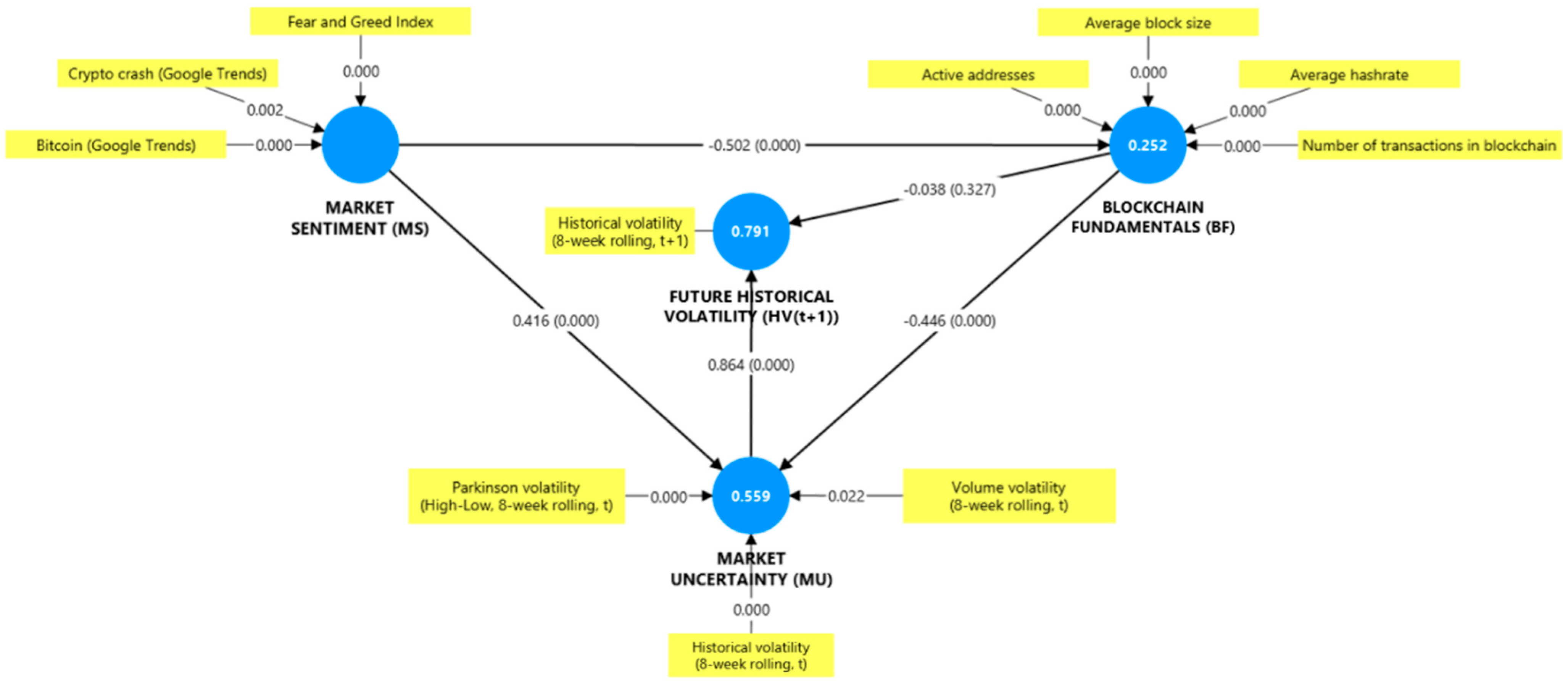
Figure 1. Structural model results, including standardised path coefficients with p-values and coefficients of determination.
Forecasting 08 00041 g001
Table 1. Comparative overview of selected Bitcoin volatility forecasting studies and research gaps.
StudyData, Frequency
and Horizon
Predictor ScopeModelling ApproachValidationMain Gap Relative to
Current Study
Bakas et al. [64]Monthly, 2010–2020;
1-month
Google Trends, BTC circulation, consumer confidence, S&P 500Dynamic BMAPosterior inclusion probabilitiesLow frequency; no structural ordering
Bergsli et al. [43]5-min to daily, 2013–2020;
1-day
Lagged volatility, returnsHAR-RV, GARCH familyOut-of-sample RMSE, MAEStrong volatility baseline, but no sentiment or blockchain fundamentals
Zhang et al. [91]Daily, 2011–2020;
1-day
Returns, lagged volatilityThreshold regressionOut-of-sample utility gainsNo sentiment, on-chain variables, or mediation
Baroiu et al. [58]Daily, 2018–2022;
bull/bear regimes
On-chain metrics and Twitter sentimentLSTMIn-sample accuracyNo out-of-sample validation or structural mediation
Wang et al. [57]Daily, 2017–2021;
1-day
Lagged volatility, Google Trends, mining difficulty, payments per blockRF, SVR, LASSO, RidgeOut-of-sample RMSEFlat predictor structure without mediation
Dudek et al. [29]Daily/weekly, 2018–2022;
1-day and 1-week
Lagged volatility, returns, volumeHAR, GARCH, LASSO, SVR, RF, LSTMOut-of-sample MSE, MAENo sentiment or on-chain layers
Huang et al. [90]High-frequency, 2017–2023; 1-day to 2-monthLagged volatility, market microstructureCNN-LSTM with Markov Transition FieldOut-of-sample comparison with GARCH and HARPurely endogenous; no behavioural or network variables
Fiszeder et al. [50]Daily/weekly, 2014–2024;
1-day and 1-week
Lagged volatility, volume, Google TrendsBMA, LASSO, Random ForestOut-of-sample RMSENo mediated structural architecture
Present studyWeekly, 2021–2026;
1-week (t+1)
Market sentiment, blockchain fundamentals, market uncertaintyPLS-SEMPLSpredict, CVPAT, DM tests, benchmark comparisonMediated behavioural-network-uncertainty framework
Table 2. Operationalisation of variables and data sources.
ConstructNotationIndicatorMeasurement UnitData Source
Market SentimentMSBitcoin (Google Trends)Index (0–100)Google Trends
Crypto crash (Google Trends)Index (0–100)Google Trends
Fear and Greed IndexIndex (0–100)CoinMarketCap
Blockchain FundamentalsBFActive addressesNumber of addressesBlockchain Data Explorer
Average block sizeBytesBlockchain Data Explorer
Average hashrateHashes per second (H/s)Blockchain Data Explorer
Number of transactions in blockchainNumber of transactionsBlockchain Data Explorer
Market UncertaintyMUParkinson volatility
(High-Low, 8-week rolling, t)
PercentageYahoo Finance
Historical volatility
(8-week rolling, t)
PercentageYahoo Finance
Volume volatility
(8-week rolling, t)
PercentageYahoo Finance
Future Historical VolatilityHV(t+1)Historical volatility
(8-week rolling, t+1)
PercentageYahoo Finance
Table 3. Collinearity statistics for the measurement model.
IndicatorVIF
Active addresses2.878
Average block size1.439
Average hashrate2.394
Bitcoin (Google Trends)1.406
Crypto crash (Google Trends)1.483
Fear and Greed Index1.220
Number of transactions in blockchain2.061
Parkinson volatility (High-Low, 8-week rolling, t)1.388
Historical volatility (8-week rolling, t)1.379
Volume volatility (8-week rolling, t)1.008
Table 4. Significance of outer weights in the formative measurement model.
Indicator → ConstructOuter WeightsStandard Deviationt-Statisticsp-Value
Active addresses → BF0.4270.1183.6230.000
Average block size → BF−0.6350.1006.3510.000
Average hashrate → BF0.7080.1195.9670.000
Bitcoin (Google Trends) → MS1.1100.07714.4860.000
Crypto crash (Google Trends) → MS−0.2930.0923.1710.002
Fear and Greed Index → MS−0.4660.1223.8210.000
Number of transactions in blockchain → BF0.7020.0828.5390.000
Parkinson volatility
(High-Low, 8-week rolling, t) → MU
0.2950.0535.5650.000
Historical volatility (8-week rolling, t) → MU0.8050.04119.7330.000
Volume volatility (8-week rolling, t) → MU0.0860.0372.2930.022
Table 5. Inner model collinearity diagnostics.
Path (Construct → Construct)VIF
BF → MU1.337
BF → HV(t+1)1.752
MS → BF1.000
MS → MU1.337
MU → HV(t+1)1.752
Table 6. Coefficient of determination and significance of endogenous constructs.
ConstructR2Adjusted R2t-Statisticsp-ValueConfidence Intervals
2.50%97.50%
BF0.2520.2494.1090.0000.1460.385
MU0.5590.55612.5640.0000.4710.645
HV(t+1)0.7910.78919.8600.0000.7080.865
Table 7. Structural path coefficients and hypothesis testing results.
HypothesisPath RelationshipβStandard Deviationt-Statisticsp-ValueConfidence Intervals
2.50%97.50%
H1BF → MU−0.4460.0479.5520.000−0.529−0.365
H2BF → HV(t+1)−0.0380.0390.9800.327−0.1150.038
H3MS → BF−0.5020.0736.9150.000−0.620−0.381
H4MS → MU0.4160.0557.5180.0000.3070.508
H5MU → HV(t+1)0.8640.04121.2770.0000.7810.939
Table 8. Effect size assessment of structural model paths.
Path Relationshipf2Standard Deviationt-Statisticsp-ValueConfidence IntervalsInterpretation
2.50%97.50%
BF → MU0.3370.0794.2590.0000.2090.517Medium to large effect
BF → HV(t+1)0.0040.0090.4300.6670.0000.033Negligible effect
MS → BF0.3370.1172.8820.0040.1700.626Medium to large effect
MS → MU0.2940.0923.2130.0010.1390.496Medium effect
MU → HV(t+1)2.0360.5973.4110.0011.2133.528Large effect
Table 9. PLSpredict results: out-of-sample predictive performance.
Prediction TargetQ2 PredictPLS-SEM RMSELM RMSEΔRMSE (PLS-LM)
Active addresses0.0041.672 × 1051.621 × 1055.124 × 103
Average block size0.0198.205 × 1047.062 × 1041.143 × 104
Average hashrate0.0422.818 × 10202.748 × 10207.019 × 1018
Number of transactions in blockchain0.1461.175 × 1051.134 × 1054.088 × 103
Parkinson volatility (High-Low, 8-week rolling, t)0.3840.2410.2220.019
Historical volatility (8-week rolling, t)0.2670.1990.1980.001
Volume volatility (8-week rolling, t)0.0214.7064.5480.158
Historical volatility (8-week rolling, t+1)0.2870.1820.196−0.014
Table 10. CVPAT predictive assessment.
ConstructPLS LossIA LossAverage Loss Differencet-Statisticsp-Value
BF1.986 × 10402.073 × 1040−8.771 × 10391.0680.287
MU7.4157.588−0.1732.6010.010
HV(t+1)0.0380.053−0.0154.0120.000
Overall9.928 × 10391.037 × 1040−4.386 × 10391.0680.287
Table 11. Out-of-sample forecast accuracy across benchmark models and PLS-SEM model.
RankModelMSERMSEMAE
1GARCH(1,1)0.0015830.0397920.031140
2Naive persistence0.0031010.0556840.035575
3AR(1)0.0033260.0576720.040534
4PLS-SEM0.0034130.0584220.041637
5HAR-type0.0035270.0593880.042076
Table 12. Diebold-Mariano tests comparing PLS-SEM with benchmark models.
ComparisonSquared-Error LossAbsolute-Error Loss
Mean Loss
Difference
DM Statisticp-ValueMean Loss
Difference
DM Statisticp-Value
PLS-SEM vs. Naive persistence0.0003120.8724180.3876230.0060621.8547290.070242
PLS-SEM vs. AR(1)0.0000870.2856120.7767250.0011030.5934180.556123
PLS-SEM vs. HAR-type−0.000114−0.3714280.712481−0.000439−0.2358140.814873
PLS-SEM vs. GARCH(1,1)0.0018302.3891340.0211390.0104972.6483170.011284
Table 13. Extended pairwise Diebold-Mariano comparisons.
ComparisonSquared-Error LossAbsolute-Error Loss
Mean Loss DifferenceDM Statisticp-ValueMean Loss
Difference
DM Statisticp-Value
AR(1) vs. Naive persistence0.0002250.6417200.5240460.0049591.6925900.096884
HAR-type vs. Naive persistence0.0004261.0117550.3166250.0065001.8821790.065757
HAR-type vs. AR(1)0.0002002.3193450.0245880.0015421.9655610.055030
GARCH(1,1) vs. Naive persistence−0.001515−1.6837770.098586−0.004435−0.7525700.455309
GARCH(1,1) vs. AR(1)−0.001743−1.7172020.092257−0.009394−1.6620770.102883
GARCH(1,1) vs. HAR-type−0.001944−1.8069960.076905−0.010936−1.8739460.066907
PLS-SEM vs. Naive persistence0.0003120.8724180.3876230.0060621.8547290.070242
PLS-SEM vs. AR(1)0.0000870.2856120.7767250.0011030.5934180.556123
PLS-SEM vs. HAR-type−0.000114−0.3714280.712481−0.000439−0.2358140.814873
PLS-SEM vs. GARCH(1,1)0.0018302.3891340.0211390.0104972.6483170.011284
Table 14. Ljung–Box diagnostics for out-of-sample forecast errors.
ModelLagQ-Statisticp-Value
Naive persistence10.0383620.844718
42.8374440.585387
87.8781290.445465
AR(1)10.3744590.540584
41.4819850.829828
86.5167070.589555
HAR-type10.5783760.446950
41.9599370.743128
85.8710080.661678
GARCH(1,1)10.1933590.660136
41.6420060.801223
83.8963170.866355
PLS-SEM10.1984240.655996
41.5590420.816134
83.4791620.900801
Table 15. Robustness check based on a reduced-overlap uncertainty specification.
Path RelationshipβStandard Deviationt-Statisticsp-ValueConfidence Intervals
2.50%97.50%
BF → MU−0.1960.0692.8310.005−0.307−0.068
BF → HV(t+1)−0.4230.0924.6230.000−0.521−0.319
MS → BF−0.5090.1204.2470.000−0.624−0.375
MS → MU0.6090.0718.5960.0000.4810.725
MU → HV(t+1)0.3230.0605.4280.0000.2030.436
ConstructR2Adjusted R2t-Statisticsp-ValueConfidence Intervals
2.50%97.50%
BF0.2590.2574.1920.0000.1490.390
MU0.5310.5278.5450.0000.4100.652
HV(t+1)0.4820.4798.7370.0000.3330.523
Table 16. Robustness check based on a longer-horizon target specification.
Path RelationshipβStandard Deviationt-Statisticsp-ValueConfidence Intervals
2.50%97.50%
BF → MU−0.4130.0498.3700.000−0.505−0.315
BF → HV(t+8)−0.2200.0583.7620.000−0.334−0.108
MS → BF−0.5070.0657.7530.000−0.623−0.390
MS → MU0.4720.0558.5190.0000.3630.571
MU → HV(t+8)0.5370.0697.7910.0000.3970.668
ConstructR2Adjusted R2t-Statisticsp-ValueConfidence Intervals
2.50%97.50%
BF0.2570.2554.2280.0000.1520.388
MU0.5910.58713.4470.0000.4990.675
HV(t+8)0.4910.4878.9370.0000.3920.605
Table 17. Total indirect effects and mediation analysis results.
Path RelationshipβStandard
Deviation
t-Statisticsp-ValueConfidence Intervals
2.50%97.50%
BF → HV(t+1)−0.3850.0468.4010.000−0.472−0.305
MS → MU0.2240.0336.7400.0000.1710.291
MS → HV(t+1)0.5720.05310.7770.0000.4810.654
Table 18. Specific indirect effects and sequential mediation results.
Path RelationshipβStandard Deviationt-Statisticsp-ValueConfidence Intervals
2.50%97.50%
BF → MU → HV(t+1)−0.3850.0468.4010.000−0.472−0.305
MS → MU → HV(t+1)0.3600.0497.3370.0000.2620.444
MS → BF → MU0.2240.0336.7400.0000.1710.291
MS → BF → HV(t+1)0.0190.0200.9530.341−0.0200.060
MS → BF → MU → HV(t+1)0.1930.0316.1540.0000.1430.259
Disclaimer/Publisher’s Note: The statements, opinions and data contained in all publications are solely those of the individual author(s) and contributor(s) and not of MDPI and/or the editor(s). MDPI and/or the editor(s) disclaim responsibility for any injury to people or property resulting from any ideas, methods, instructions or products referred to in the content.


