


Highlights
What are the main findings?
- An indigenous Bacillus isolate (P4; affiliated with Bacillus tropicus) recovered from pulp-and-paper mill activated sludge (PPMS) produced substantially higher protease activity than the reference strain Bacillus megaterium in the same sludge-based medium, reaching 134 U/mL after 48 h (more than threefold higher under the tested conditions).
- In shake-flask experiments, supplementing concentrated PPMS (25 g/L total solids) with 1% (v/v) Tween 80 gave the strongest protease enhancement among the additives tested, increasing activity by more than threefold compared with the unsupplemented sludge control. Bacillus tropicus P4 was successfully transferred from shake flasks to stirred-tank bioreactors (5 L and 150 L), reaching peak protease activities of 755 U/mL at 24 h (5 L) and 848 U/mL (150 L) under the tested operating conditions.
- The study demonstrates that a sludge-based PPMS medium, combined with limited supplementation, can sustain high protease production by a native sludge isolate from shake-flask to bioreactor scales.
What are the implications of the main findings?
- Indigenous bacteria isolated directly from PPMS can outperform established reference strains in sludge-based fermentation, supporting the bioprospecting value of industrial sludge environments for enzyme-producing microorganisms.
- A simple experimental condition set (PPMS concentration and Tween 80 supplementation) markedly improved protease production at laboratory scale and provides a practical basis for further optimization of sludge valorization processes.
- The transfer from shake flasks to 5 L and 150 L stirred-tank bioreactors indicates successful process transfer under the tested conditions, though additional replicate pilot-scale runs are still needed to confirm robustness and variability at scale.
- These results provide preliminary experimental evidence that pulp-and-paper mill sludge can serve as a fermentation feedstock for protease production, supporting resource recovery and circular bioeconomy strategies in the pulp-and-paper sector.
Abstract
This study explores the potential of using paper pulp mill sludge (PPMS) as an economical substrate for producing high-value protease enzymes with an indigenous bacterial strain, Bacillus tropicus P4. Isolated directly from PPMS, B. tropicus P4 showed high protease-producing ability, approximately 134 U/mL after 48 h—more than three times the yield of the benchmark strain (B. megaterium). Among various additives tested to boost enzyme production, Tween 80 emerged as the most effective, increasing enzyme activity by more than threefold compared to the control. Scale-up experiments in bioreactors of 5 L and 150 L confirmed that B. tropicus P4 maintains high protease yields under typical cultivation conditions with minimal modifications, specifically the addition of Tween 80 (1%) and increased total solids concentration (25 g/L). In the 5 L bioreactor, enzyme production peaked at approximately 755 U/mL within 24 h, while the 150 L bioreactor consistently achieved high enzyme activity (~848 U/mL). These results support the feasibility of a simple and scalable approach for converting industrial sludge into high-value protease enzymes, contributing to resource recovery and circular bioeconomy strategies.
1. Introduction
The pulp and paper industry is a major consumer of freshwater and a substantial generator of wastewater sludge. Key indicators illustrating the scale of water use and sludge generation are summarized in Table 1.
Table 1.
Key indicators related to water use and sludge generation in the pulp and paper industry.
Valorizing primary sludge, which is fiber-rich and accounts for 70% of total sludge in a paper mill, presents a promising waste-to-resource opportunity [3]. However, secondary sludge, also known as pulp and paper mill activated sludge (PPMS) holds onto most of the organic load from the treatment process because of microbial degradation and assimilation [2,4]. These microbes help reduce dissolved organic matter, chemical oxygen demand (COD), and biochemical oxygen demand (BOD), but their activity also incorporates or adsorbs recalcitrant compounds onto the microbial biomass, making the sludge difficult to process and dewater [5]. Managing PPMS remains a major challenge as improper disposal can lead to soil, air, and water pollution from toxic compounds such as chlorinated organics, resin acids, heavy metals, and other contaminants [6,7].
Beyond conventional disposal methods, microbial valorization of waste-activated sludge aligns with a “zero-sludge” strategy for wastewater treatment. Due to its diverse composition, sludge environments harbor a wide variety of resistant and adapted bacteria, making it a promising source of industrially relevant enzymes. Several studies have confirmed that paper mill sludge supports microbial diversity [8,9].
Despite their high production costs, industrial enzymes remain in strong demand, particularly proteases, which are experiencing significant global growth. In 2024, the protease market was valued at USD 3.4 billion and is projected to reach USD 5.01 billion by 2030, reflecting a compound annual growth rate (CAGR) of 5.7% (https://virtuemarketresearch.com/report/protease-market (accessed on 11 March 2026)). Bacteria and bacterial proteases are becoming increasingly important across various industries, including food and beverages, pharmaceuticals, detergents, and animal feed [10].
This study aims to isolate novel bacteria from PPMS that can act as microbial catalysts to convert sludge into high-value-added products such as proteases. These cost-effective enzymes could serve as green chemicals in various end-use industries, contributing to a circular bioeconomy.
2. Materials and Methodology
2.1. Sample Collection and Storage
Paper pulp mill sludge (PPMS; secondary activated sludge) from Kruger Inc. (Trois-Rivières, Québec City, QC, Canada) was collected during a single sampling event and stored at 4 °C. All experiments were performed using this same batch to ensure internal comparability; therefore, temporal variability in PPMS composition was not captured and is discussed as a limitation.
2.2. Medium Preparation
In this study, PPMS had the following composition (g/L): total solids (TS), 10.3 ± 0.36; total suspended volatile solids (TSV), 6.09 ± 0.37; suspended solids (SS), 9.4 ± 0.36; suspended volatile solids (SSV), 2.35 ± 0.18; total organic carbon (TOC), 14 ± 1.00; total organic nitrogen (TON), 1.4 ± 0.15; organic phosphorus (P_org), 2.3 ± 0.36; sodium (Na), 10.2 ± 0.56; iron (Fe), 0.4 ± 0.17; potassium (K), 1.4 ± 0.30; calcium (Ca), 22 ± 2.65; sulfur (S), 3.9 ± 0.95; glucose, 1.9 ± 0.75; fructose, 1.5 ± 0.30; lactose, 0.83 ± 0.05; sucrose, 0.97 ± 0.20; galactose, 1.4 ± 0.13; xylose, 1.1 ± 0.29; and trehalose, 0.53 ± 0.08 and pH 6.65 ± 0.35. These values correspond to the raw PPMS prior to the concentration step.
As the sludge was investigated in previous experiments in our laboratory [11], it was found that achieving higher protease activity requires a more concentrated nutrient supply than untreated PPMS. Accordingly, PPMS was concentrated by centrifugation to reach 25 g/L total solids (TS) for fermentation experiments.
2.3. Isolation of Microorganisms
A total of 0.5 mL of PPMS was aseptically transferred into 4.5 mL of sterile distilled water to obtain a 10−1 dilution. Serial dilutions were then performed up to 10−5 by transferring 0.5 mL from each dilution into 4.5 mL of sterile distilled water in subsequent tubes. From the 10−3, 10−4, and 10−5 dilutions, 100 µL of each sample was inoculated onto nutrient agar plates (10 g/L peptone, 3 g/L beef extract, 5 g/L NaCl; pH 7.0) supplemented with 1% (w/v) casein using the spread plate technique. The plates were then incubated at 30 °C for 48 h to allow for microbial growth and colony formation.
2.4. Screening of Protease-Producing Strains
The screening of protease-producing isolates was conducted in two successive stages. Initially, a qualitative assessment was performed using spot inoculation on selective agar plates, followed by quantitative evaluation through cultivation on sludge medium.
To evaluate enzyme production potential, Bacillus megaterium (BM) was included as a reference Bacillus strain as it initially demonstrated the ability to produce alkaline proteases in PPMS during the early stage of the project [11]. This comparison provides a practical benchmark to contextualize the performance of indigenous isolates under identical cultivation conditions. For the qualitative screening of protease-producing isolates, spot inoculation was performed on selective agar plates containing (per liter): K2HPO4, 2 g; glucose, 1 g; peptone, 5 g; and casein, 10 g. The plates were incubated at 30 °C for 48 h. Following incubation, the plates were flooded with 25% (w/v) trichloroacetic acid (TCA) and maintained at 45 °C for 15 min to precipitate unhydrolyzed proteins, thereby enhancing the visibility of proteolytic zones. The formation of clear zones surrounding the colonies was considered indicative of proteolytic activity.
For quantitative screening, isolates demonstrating clear proteolytic zones were cultured in PPMS liquid media under the following conditions: incubation at 30 °C, pH 7.0, for 48 h in an orbital shaker set at 180 rpm. Following fermentation, protease production was assessed to identify the most promising isolates for further characterization.
2.5. DNA Extraction and 16S rRNA Gene Amplification
Genomic DNA was extracted using the Promega Genomic DNA Purification Kit (USA). The 16S rDNA region was amplified by PCR with universal primers 27F (5′-TAACACATGCAAGTCGAACG-3′) and 1492R (5′-GGTTACCTTGTTACGACTT-3′). PCR conditions included an initial denaturation at 94 °C for 5 min, followed by 35 cycles of 94 °C for 45 s, 55 °C for 1 min, and 72 °C for 1 min, with a final extension at 72 °C for 10 min. The amplified product was sequenced and compared to reference sequences using BLASTN (NCBI BLAST+ version 2.15.0) (https://www.ncbi.nlm.nih.gov/BLAST (accessed on 11 March 2026)) to determine taxonomic identity based on sequence similarity.
2.6. Protease Inducers
The effect of different inducers (casein, wheat bran, Tween 20, and Tween 80) on protease production was evaluated by incorporating them into the culture medium and incubating shake flasks at 30 °C, pH 7.0, and 180 rpm for 48 h. Casein and wheat bran were tested at 0.5% and 1% (w/v), whereas Tween 20 and Tween 80 were tested at 1% (v/v). Each condition was prepared in three independent flasks, and protease activity was quantified in technical triplicate for each flask.
2.7. Inoculum Preparation
To prepare an active inoculum for large-scale experiments, a loopful of bacterial culture from a nutrient agar plate was transferred into 10 mL of nutrient broth in a 50 mL Erlenmeyer flask. The culture was incubated at 30 °C with shaking at 180 rpm for 12 h, allowing the cells to reach the exponential phase with a cell density of approximately 108 CFU/mL. Subsequently, 5 mL of this culture was inoculated into 250 mL of PPMS medium in a 1 L flask and incubated under the same conditions. This step facilitated the development of a metabolically active inoculum that is well-adapted to the nutrient composition of the wastewater used in 5 L bioreactor experiments. For the 150 L bioreactor setup, which required 1.8 L of inoculum, an additional scale-up step was implemented. Two 5 L Erlenmeyer flasks, each containing 1.2 L of PPMS, were inoculated and incubated under identical conditions to produce the required volume of active culture.
2.8. Bioreactor Studies
Fermentation was conducted in a Sartorius Biostat B 5 L glass bioreactor with a 3 L working volume containing PPMS (25 g/L total solids) supplemented with 1% (v/v) Tween 80. The bioreactor was equipped with a programmable logic controller (PLC) for monitoring and control of key parameters. In this study, temperature was controlled at 30 °C and dissolved oxygen (DO) was maintained between 30–50% via a cascade of agitation and aeration. The initial pH was adjusted to 7.0, but pH was not actively controlled thereafter (allowed to drift). Antifoam was added as needed. Fermentation was run for 48 h.
Scale-up was performed in a 150 L stirred-tank reactor with a 90 L working volume under the same operating conditions. In both bioreactor systems, DO levels were maintained between 30–50%, and samples were collected every 12 h to monitor protease production.
The 5 L fermentation trials were carried out in two independent replicates, while the 150 L scale-up experiment was conducted as a single run.
2.9. Protease Assay
To determine protease activity, the reaction mixture was prepared by combining 1 mL of appropriately diluted enzyme solution with 1 mL of 1% (w/v) casein dissolved in 50 mM Tris-HCl buffer (pH 7.0). The mixture was incubated at 50 °C for 10 min to allow for proteolysis. Following incubation, enzymatic activity was halted by adding 2 mL of 15% (w/v) trichloroacetic acid (TCA), which precipitated the undigested proteins. The resulting mixture was then centrifuged at 10,000 rpm for 10 min at 4 °C to separate the supernatant containing the soluble peptides. From the clear supernatant, 0.5 mL was mixed with 2.5 mL of 2% (w/v) sodium carbonate solution, followed by the addition of 0.25 mL of 1 N Folin–Ciocalteu reagent. This mixture was incubated at room temperature for 30 min. Absorbance was then measured at 660 nm using a spectrophotometer. One unit of protease activity is defined as the amount of enzyme required to liberate 1 µg of tyrosine under the specified assay conditions [11].
2.10. Statistical Analysis
Results are reported as mean ± standard deviation (SD). Where biological replicates were available (e.g., inducer screening and 5 L bioreactor batches), comparisons among multiple groups were evaluated using one-way ANOVA followed by Tukey’s post hoc test (α = 0.05). For two-group comparisons, a two-tailed Student’s t-test was used (α = 0.05).
3. Results and Discussion
3.1. Isolation of Protease-Producing Bacteria
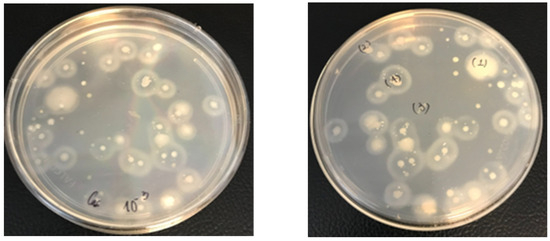
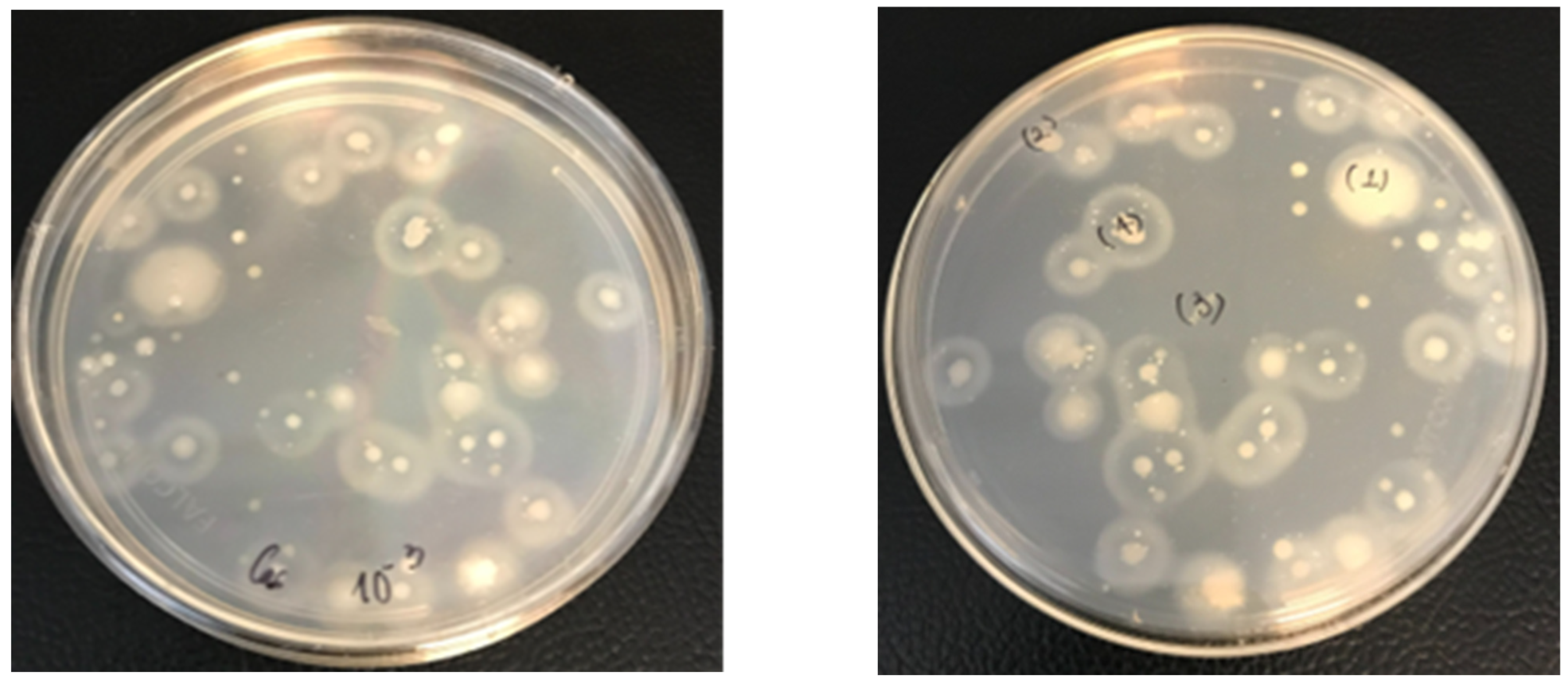
Isolation was conducted as described in the Section 2. After 2 days of incubation with the diluted sludge, visible bacterial colonies developed on Petri plates. On NA medium supplemented with 1% casein, four morphologically distinct strains were observed and designated as P1, P2, P3, and P4 (Figure 1). These strains were then purified on fresh NA plates and stored in a 10% glycerol solution at −20 °C.
Figure 1.
Isolation of protease producing bacteria. The numbers in the right subfigure indicate the four morphologically distinct bacterial colonies (P1, P2, P3, and P4) isolated on casein-supplemented nutrient agar.
3.2. Screening and Comparative Assessment
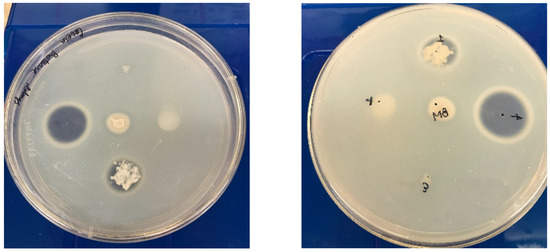
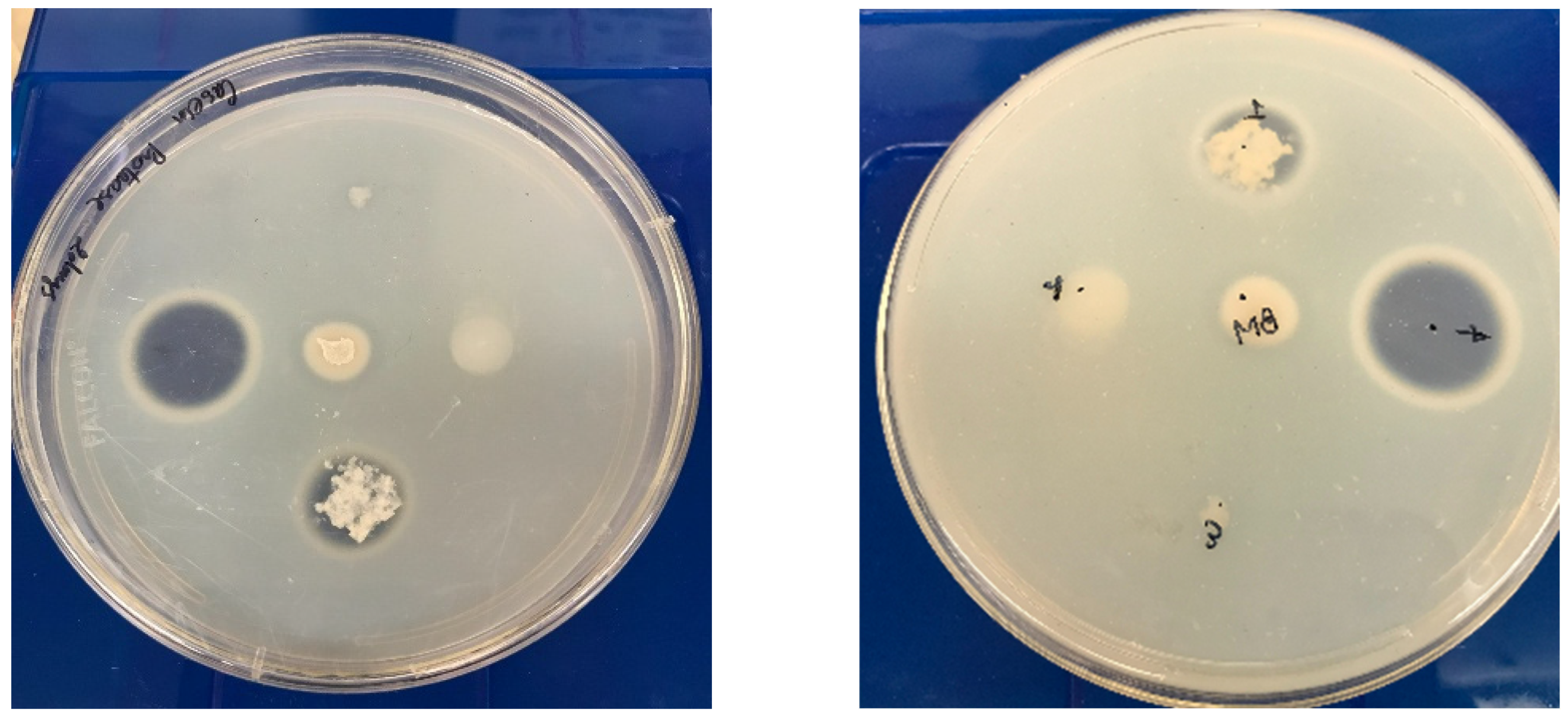
Following isolation, a rapid and sensitive agar plate assay was employed to assess extracellular protease activity of the four bacterial isolates and the reference strain Bacillus megaterium. After two days of incubation at 30 °C, isolate P4 exhibited the largest halo, indicating the highest protease activity, followed by P1. In contrast, Bacillus megaterium merely caused a slight discoloration of the medium, suggesting lower protease activity, while P2 and P3 showed no detectable activity as no halos were observed (Figure 2).
Figure 2.
Screening of protease-producing bacteria. Values are means ± SDs (n = 3).
Since P1 and P4 exhibited substantial protease activity, these two strains were selected for further investigation of protease production in flasks. For this purpose, 200 mL of sludge containing 25 g/L total solids was used in 1 L flasks, and protease production was monitored spectrophotometrically to ensure precise measurement. The cultivation was carried out under standardized conditions, with periodic sampling to assess enzyme activity throughout the incubation period (Table 2).
Table 2.
Protease activities of isolates (U/mL). Values are means ± SDs (n = 3).
Notably, Bacillus megaterium is widely recognized for its protease-producing ability across a broad range of synthetic and agro-industrial substrates, including mustard oilseed cake, rice bran, wheat bran, corn husk, gram husk, and soybean oil cake [12]. For instance, Mishra, Sethi [13] reported that Bacillus megaterium MTCC-9205 cultivated in soybean powder medium yielded a maximum of 46.75 ± 1.22 U/mL acidic protease and 38.47 ± 1.32 U/mL alkaline protease after 96 h of incubation. These findings are consistent with the results of the present study in which B. megaterium produced 39.6 ± 3.53 U/mL protease after 48 h, indicating that PPMS exhibits comparable effectiveness in supporting enzyme production. The inclusion of B. megaterium as a control thus provides a meaningful benchmark to assess the performance of a reference strain under identical conditions. Interestingly, after 48 h of cultivation in a sludge-based medium, the indigenous isolate P4 achieved a protease yield of approximately 134 U/mL, over three times higher than that of B. megaterium—suggesting strong proteolytic capacity under PPMS-based conditions (noting the limited replication of the screening experiment).
Although PPMS presents a cost-effective alternative for alkaline protease production, it also introduces challenges such as unfavorable growth conditions and stress-induced enzyme expression. Nevertheless, PPMS harbors a diverse microbial community, serving as a valuable reservoir of protease-producing candidates [8,9]. In this context, only four isolates were obtained from the PPMS on the selective media, and only two demonstrated protease production; this limited diversity suggests that the PPMS environment is relatively harsh for the survival of protease-producing bacteria. By contrast, this also implies a high potential for discovering valuable strains with strong adaptive capabilities and robust enzymatic potential. The sludge-derived isolate P4 demonstrated exceptional performance in a wastewater-based medium, further underscoring its capacity to fully harness the nutrient potential of this substrate. These findings underscore the strategic value of sourcing native strains from underexplored, selective environments, where harsh conditions drive the evolution of microorganisms with exceptional metabolic versatility and stress resilience. Consequently, wild isolate P4 was selected for further investigation to gain a deeper understanding into its enzymatic capabilities.
In nutrient agar, isolate P4 forms ivory-yellow, circular, smooth and creamy colonies. Isolate P4 was tested under different cultural conditions and demonstrated the ability to grow across a broad temperature range (15 °C to 45 °C), indicating its mesophilic nature. While growth was weak at the temperature of 15 °C, P4 exhibited robust growth with larger colony diameters at higher temperatures, even at 45 °C. However, no growth was observed at 50 °C. Additionally, it thrived across pH levels ranging from 6 to 9, highlighting its adaptability to diverse environmental conditions.
3.3. Identification of the Isolated Microorganism (P4)
The 16S rDNA nucleotide sequence (1543 bp) of the isolate was analyzed using BLASTN (NCBI BLAST+ version 2.15.0) against the NCBI GenBank database, revealing 98.62% similarity with several members of the Bacillus cereus group, including Bacillus tropicus MCCC 1A01406 (NR_157736.1), Bacillus paramycoides MCCC 1A04098 (NR_157734.1), and Bacillus nitratireducens MCCC 1A00732 (NR_157732.1). Due to the high sequence similarity among these species, additional functional and ecological traits were considered. While B. paramycoides BP-N07 was described as forming slimy white colonies [14], and no reports are available on protease production or colony morphology for B. nitratireducens; B. tropicus has been isolated from diverse habitats, including marine sediments, vegetable waste, poultry feather waste, rhizospheric soils, and sewage effluents [15,16,17].
Several B. tropicus strains have demonstrated industrially significant traits. Strain Y14, isolated from kitchen wastewater, produces a serine alkaline protease (PrA) with high thermal and chemical stability, comparable to commercial enzymes such as Alcalase [15]. Across the Bacillus genus, alkaline proteases have been applied for eco-friendly dehairing of hides and enzymatic stripping of the gelatin layer from waste X-ray/photographic films, enabling silver recovery [16]. Additionally, Gxun-17 could completely degrade feather waste within 48 h, while other strains have shown cellulase or pectinase activity when cultivated on agro-industrial residues [17,18]. Beyond enzyme production, B. tropicus has also been reported to degrade chlorpyrifos, pentachlorophenol, and low-density polyethylene, as well as reduce toxic heavy metals like Cr(VI) and Pb(II) [19,20].
Taken together, the 16S rRNA gene analysis and the functional profile of the isolate suggest affiliation with Bacillus tropicus within the Bacillus cereus group. However, due to the limited discriminatory power of 16S rRNA sequencing within this group, definitive identification typically requires a polyphasic approach combining phenotypic tests (e.g., according to Bergey’s Manual) with higher-resolution genotypic methods (e.g., whole-genome sequencing and average nucleotide identity). Accordingly, the present designation as B. tropicus P4 should be considered provisional pending additional characterization.
3.4. Protease Inducers
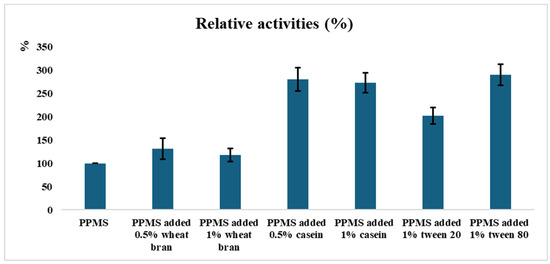
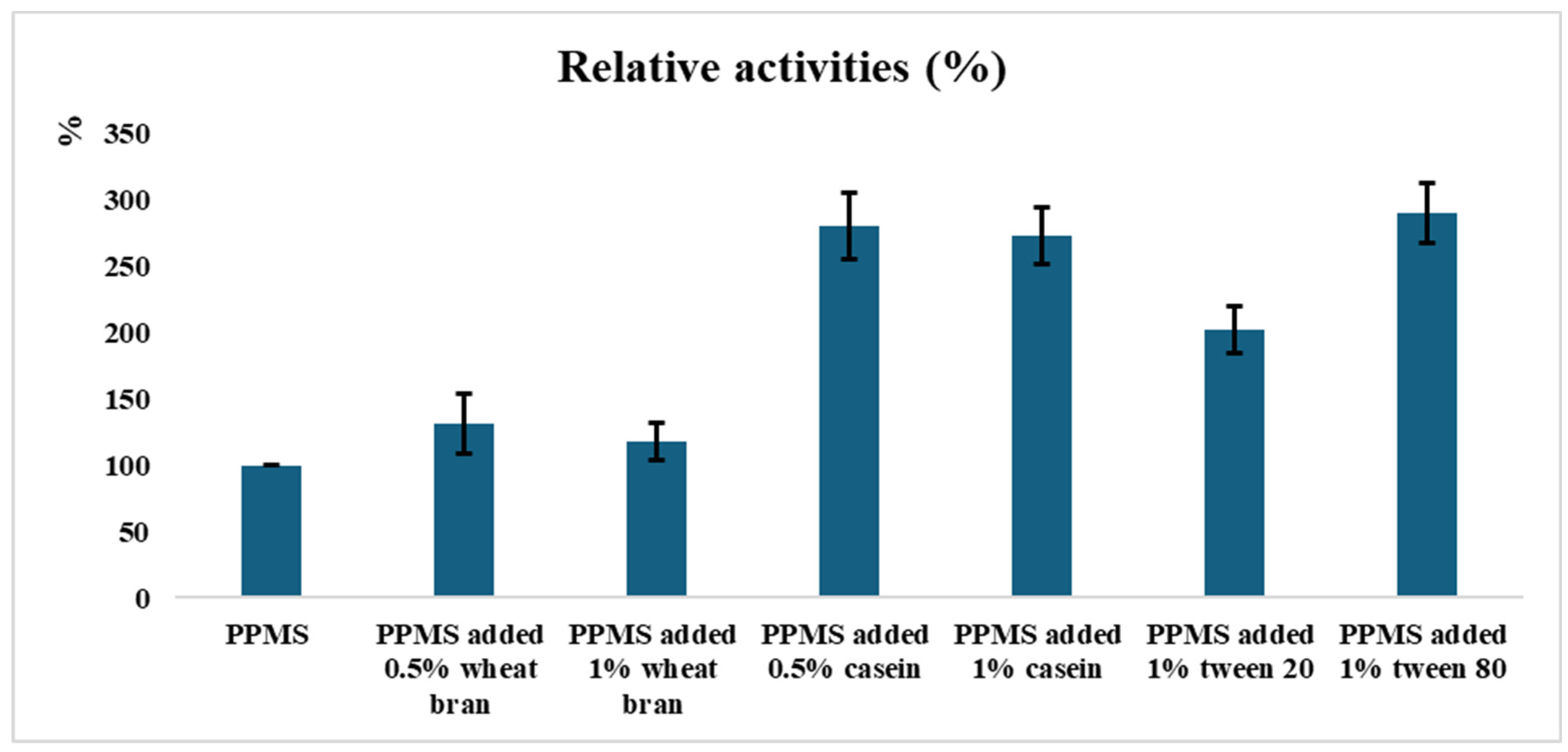
To assess the effect of each inducer, relative protease activities were expressed as percentages, calculated by comparing the activity from inducer-supplemented media to the baseline activity obtained from a medium containing only sludge (set as 100%). This approach allowed for the quantification of each inducer’s contribution to protease enhancement relative to the unsupplemented control.
The outcome of this experiment provides valuable insights into the influence of various inducers on protease production by Bacillus tropicus P4. All tested additives enhanced enzyme activity compared to the sludge-only control, indicating their stimulatory effect. Among them, wheat bran showed a modest impact, with relative activities increasing by 29.7% at 0.5% supplementation and 15.4% at 1%, possibly due to substrate inhibition, limited oxygen diffusion, or metabolic repression at higher concentrations. In contrast, Tween 80 (1%) exhibited the highest relative activity (290.58 ± 22.73%), followed closely by 0.5% casein (280.93 ± 25.07%) and 1% casein (273.36 ± 20.93%). These findings suggest that non-ionic surfactants and proteinaceous inducers are particularly effective in stimulating protease secretion, likely by enhancing cell membrane permeability (Tween 80) and providing readily metabolizable nitrogen sources or signaling molecules (casein) (Figure 3).
Figure 3.
Relative activities between different inducers. Bars represent means ± SDs (n = 3 independent flasks). Statistical comparisons were performed using one-way ANOVA followed by Tukey’s post hoc test (α = 0.05).
Several inducers are known to stimulate protease production, including a variety of carbon and nitrogen sources, biosurfactants, and environmental stress conditions [21,22]. In this study, the primary objective was to enhance protease production in a cost-effective and sustainable manner by utilizing waste biomass as the main substrate. To support this goal, a selection of inexpensive and readily available inducers was chosen, targeting both economic feasibility and improved enzyme yield. This included wheat bran, a lignocellulosic agro-industrial by-product rich in carbohydrates and residual proteins, serving as a low-cost carbon source that also acts as a natural inducer in many microbial systems [23,24,25]. Casein, a milk-derived protein, was selected as a nitrogen-rich inducer due to its proven ability to stimulate protease gene expression by mimicking the natural substrates of proteolytic enzymes [25]. Additionally, Tween 20 and Tween 80, non-ionic biosurfactants, were incorporated for their ability to enhance enzyme secretion by increasing membrane permeability and improving oxygen transfer, which are particularly beneficial in submerged fermentation [26].
Tween 80 has been widely recognized for its positive influence on microbial protease synthesis. For instance, in Streptomyces badius, Tween 80 led to a slight increase in protease activity during the peak enzyme production phase [27]. Additionally, a comparative study on rumen microbial enzymes demonstrated that Tween 80 significantly enhanced protease activity compared to Tween 60, likely due to its superior solubilizing ability associated with its marginally higher hydrophilic-lipophilic balance (HLB) (HLB of 15 vs. 14.9) [28]. In the present study, the addition of 1% Tween 80 resulted in a marked increase in protease activity induced by B. tropicus P4—from 148.52 ± 20.76 U/mL in the control to 474.22 ± 18.23 U/mL, representing a more than threefold enhancement. Similarly, a study by Grbavčić, Bezbradica [29] reported that Tween 80 boosted protease production in Pseudomonas aeruginosa by up to 157%. These findings are consistent with reports on Bacillus species, including Bacillus sp. L21 [30] and Bacillus cereus FT1 [26], further reinforcing its role as a potent enhancer of protease biosynthesis.
Beyond enzyme induction, Tween 80 plays a critical role in industrial fermentation. It reduces surface tension in submerged cultures, which improves broth homogeneity and enhances nutrient and oxygen transfer—essential factors for maximizing microbial productivity, especially at scale [30]. It also possesses low polarity, low toxicity, and high compatibility with microbial systems, along with a high solubilization capacity. Combined with its cost-effectiveness and significantly lower prices at industrial scale, these attributes make Tween 80 a highly viable option for large-scale applications [31].
Finally, the observed compatibility between Tween 80 and proteases is particularly beneficial in detergent formulations, where enzyme–surfactant interactions are crucial to performance [21,32]. Taken together, these characteristics make Tween 80 a versatile, efficient, and economical additive for both research and industrial enzyme production systems.
3.5. Bioreactor Studies
Scale-up is a critical next step in validating whether the conditions optimized at laboratory scale can be effectively applied to industrial bioprocesses. Despite its importance, achieving a successful scale-up presents undeniable challenges and often requires additional experimentation to gain a deeper understanding of the process. Therefore, protease production by Bacillus tropicus P4 was first conducted in repeated batches in a 5 L bioreactor, and subsequently scaled up to a 150 L system.
3.6. 5 L Bioreactor Production
In two independent batch fermentations, B. tropicus P4 exhibited a consistent pattern of protease production, with peak activity observed at 24 h. The first batch reached a peak of 685.96 ± 28.79 U/mL, while the second batch reached 755.02 ± 53.55 U/mL (Table 3). This difference between batches, although based on only two runs, likely reflects typical sources of variability in sludge-based fermentations, including heterogeneity of PPMS composition, differences in inoculum physiological state, foam formation affecting oxygen transfer, and small variations in mixing and sampling. Following the peak, enzyme activity gradually declined in both batches, with values dropping to 595.38 ± 1.51 U/mL and 555.29 ± 11.44 U/mL at 48 h for the first and second batches, respectively. The decline may be attributed to nutrient depletion, enzyme degradation, or the accumulation of inhibitory metabolites. Overall, the 24-h mark appears to be an appropriate harvesting time for maximal protease yield under the tested conditions. The shorter time to reach peak activity compared with shake flasks is consistent with improved mixing and oxygen transfer typically achieved in stirred-tank systems; in this study, this improvement is attributed to bioreactor hydrodynamics (agitation, sparging) rather than additional pH control, since pH was allowed to drift after initial adjustment.
Table 3.
Time course of protease production in bioreactor studies.
Although many cultivation parameters (temperature, pH trajectory, incubation time, and nutrient supplementation) can be optimized to maximize protease production, the objective of PPMS valorization is to limit pretreatment and avoid refined inputs. Accordingly, the present study prioritized simple operating conditions and minimal interventions. Because pH was not actively controlled during fermentation, future work should systematically assess the influence of pH control versus pH drift on yield, productivity, and contamination risk, and report the corresponding statistical comparisons.
3.7. 150 L Bioreactor Production
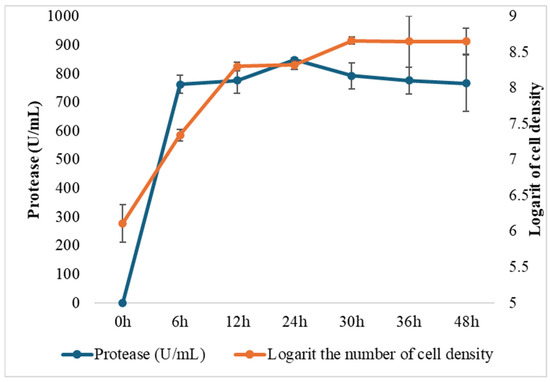
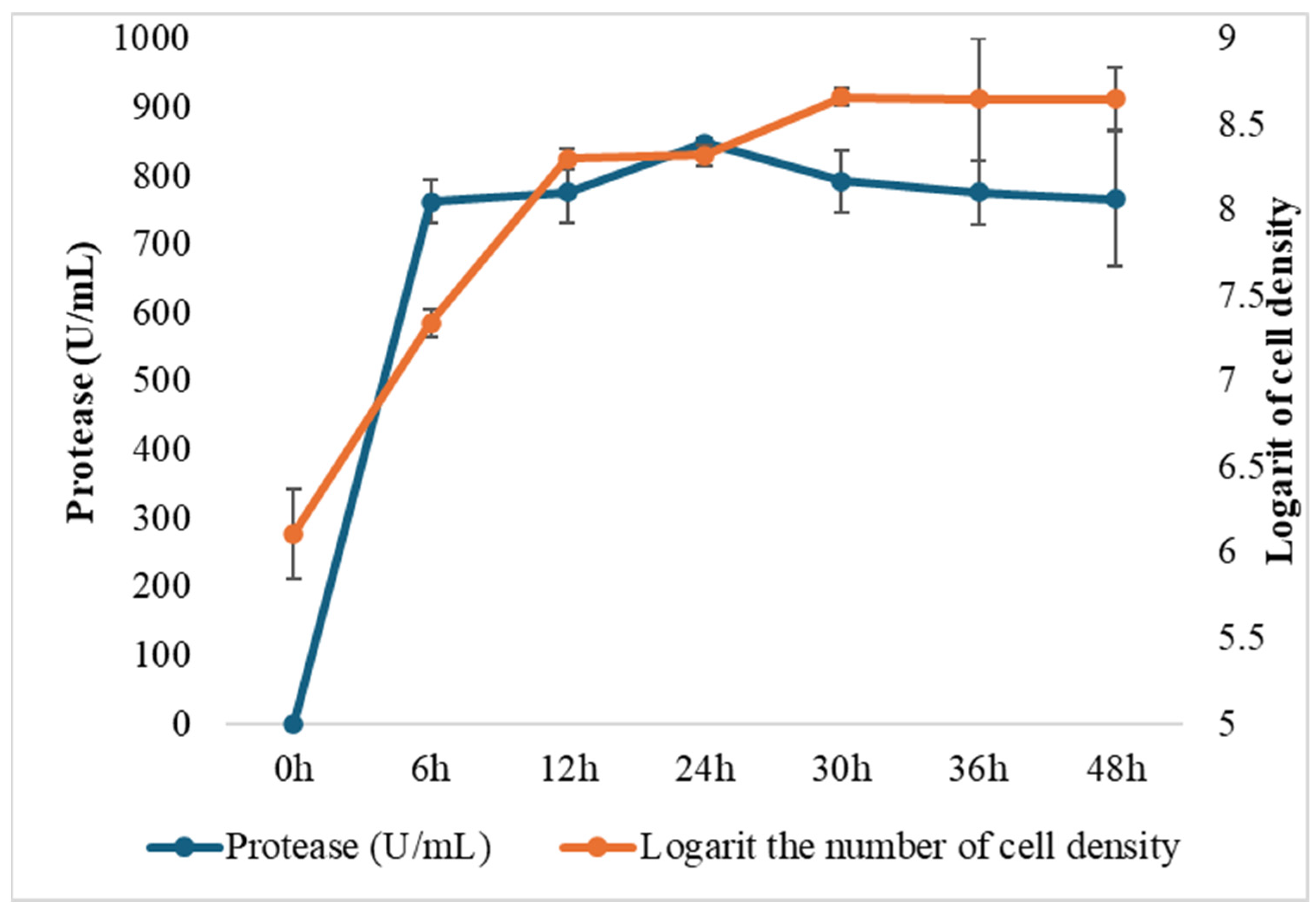
In the 150 L bioreactor experiment, both cell density and enzyme titer increased rapidly during the first 24 h, indicating that protease production was associated with active growth. Notably, while bacterial growth plateaued after 24 h, protease levels remained relatively stable throughout the remainder of the fermentation, declining only slightly from 847.64 U/mL to 710.58 U/mL by 48 h. This stability reflects a well-optimized large-scale process, where environmental conditions—such as pH, oxygen transfer, and agitation—likely contributed to both cellular viability and extracellular enzyme stability. The data suggest that the transition from exponential to stationary phase was smooth, allowing for prolonged protease accumulation without significant degradation. In the 150 L experiments, the effect of cell density (CFU/mL) on enzyme production was clear, particularly in the case of Bacillus tropicus P4. Protease activity remained high after peaking and was maintained at stable levels up to 48 h, corresponding to a relatively constant CFU/mL between 24 h and 48 h. Additionally, although the protease productivity achieved in the present study does not reach the exceptionally high levels reported in some studies (3000–8000 U/mL), it exceeds the yields in several publications from Bacillus subtilis PCSIR-5, Bacillus licheniformis, Bacillus sp. Y, and Bacillus subtilis IH-72. Moreover, it is comparable to that of Bacillus coagulans PSB- 07 (760.4 U/mL) and Bacillus sp. GA CAS10 (842.102 U/mL) [33,34]. Remarkably, the protease activity produced in our study using 25 g/L PPMS with 1% Tween 80 under basic conditions (30 °C, 2% inoculum, and initial pH 7.0) is similar to the 903 ± 4 U/mL obtained by Bacillus licheniformis when using wet-oxidation-pretreated waste activated sludge at pH 7.5 and with 30% inoculum [35].
These results suggest that the 150 L run sustained biomass and protease activity under the tested operating conditions, supporting the technical feasibility of scaling the process beyond flask cultures (Figure 4). However, because the 150 L experiment was conducted as a single run, additional replicate runs are required to confirm robustness and quantify variability at this scale. Future work should also refine downstream recovery steps and evaluate the impact of PPMS batch-to-batch variability on process performance.
Figure 4.
The growth and production kinetics in the 150 L bioreactor.
3.8. Circularity Considerations and Fate of Post-Fermentation Residues
Because the study targets waste valorization and a “zero-sludge” perspective, the management of the spent PPMS after fermentation is a relevant consideration. In this work, trichloroacetic acid (TCA, 15% w/v) was only used as an analytical reagent in the protease assay to precipitate undigested casein, and was not applied to the full fermentation broth as a process-scale recovery step. The post-fermentation sludge (after enzyme extraction from the supernatant) therefore remains available for conventional sludge handling or secondary valorization. Depending on site-specific constraints and regulatory requirements, plausible options include return to the mill’s wastewater treatment line, anaerobic digestion for biogas, co-composting/land application where permitted, or thermal routes (incineration/pyrolysis) for energy recovery and stabilization. If protein precipitation is considered at larger scales, greener downstream alternatives (e.g., membrane concentration/ultrafiltration, salt precipitation, or process-integrated clarification) should be evaluated to minimize chemical inputs and preserve circularity.
4. Conclusions
This study demonstrates the feasibility of producing extracellular protease from paper pulp mill sludge (PPMS) using an indigenous Bacillus isolate (P4) and simple cultivation conditions. Among the tested inducers, 1% Tween 80 showed the strongest enhancement of protease activity in shake flasks, and bench-scale bioreactor operation achieved peak activity at 24 h, supporting improved productivity relative to flask cultures. A pilot-scale demonstration at 150 L further suggests that the approach can be transferred to a larger stirred-tank system. Nevertheless, the experimental scope remains limited: PPMS was obtained from a single sampling event, bioreactor replication was limited (two 5 L runs and one 150 L run), and strain identification relied primarily on 16S rRNA sequencing. Therefore, conclusions regarding industrial robustness should be regarded as preliminary. Future work should include multi-batch PPMS sampling, replicate pilot-scale runs with full statistical analysis, and polyphasic strain characterization, alongside refinement of downstream recovery and evaluation of the fate and potential valorization routes for the post-fermentation sludge within a circular bioeconomy framework.
Author Contributions
Conceptualization, A.N., J.-F.B. and K.A.; Methodology, A.N. and K.A.; Formal analysis, A.N.; Investigation, A.N.; Resources, J.-F.B.; Data curation, A.N.; Writing—original draft, V.-M.-L.N. and A.N.; Writing—review & editing, A.N. and J.-F.B.; Visualization, A.N.; Supervision, J.-F.B. and K.A.; Project administration, J.-F.B. All authors have read and agreed to the published version of the manuscript.
Funding
The authors would like to acknowledge the Institut National de la Recherche Scientifique (INRS) and the Natural Sciences and Engineering Research Council of Canada (NSERC) for their financial support.
Data Availability Statement
The original contributions presented in this study are included in the article. Further inquiries can be directed to the corresponding author.
Conflicts of Interest
The authors declare no conflicts of interest.
References
- Pokhrel, D.; Viraraghavan, T. Treatment of pulp and paper mill wastewater–a review. Sci. Total Environ. 2004, 333, 37–58. [Google Scholar] [CrossRef] [Scilit] [PubMed]
- Kaur, R.; Tyagi, R.D.; Zhang, X. Review on pulp and paper activated sludge pretreatment, inhibitory effects and detoxification strategies for biovalorization. Environ. Res. 2020, 182, 109094. [Google Scholar] [CrossRef] [Scilit] [PubMed]
- Quintana, E.; Valls, C.; Roncero, M.B. Valorization of waste paper sludge as a sustainable source for packaging applications. Polym. Bull. 2024, 81, 9321–9345. [Google Scholar] [CrossRef] [Scilit]
- Geng, X.; Zhang, S.; Deng, J. Characteristics of paper mill sludge and its utilization for the manufacture of medium density fiberboard. Wood Fiber Sci. 2007, 39, 345–351. [Google Scholar]
- Kamali, M.; Khodaparast, Z. Review on recent developments on pulp and paper mill wastewater treatment. Ecotoxicol. Environ. Saf. 2015, 114, 326–342. [Google Scholar] [CrossRef] [Scilit]
- Ghribi, M.; Meddeb-Mouelhi, F.; Beauregard, M. Microbial diversity in various types of paper mill sludge: Identification of enzyme activities with potential industrial applications. SpringerPlus 2016, 5, 1492. [Google Scholar] [CrossRef] [Scilit]
- Faubert, P.; Barnabé, S.; Bouchard, S.; Côté, R.; Villeneuve, C. Pulp and paper mill sludge management practices: What are the challenges to assess the impacts on greenhouse gas emissions? Resour. Conserv. Recycl. 2016, 108, 107–133. [Google Scholar] [CrossRef] [Scilit]
- Maki, M.L.; Broere, M.; Leung, K.T.; Qin, W. Characterization of some efficient cellulase producing bacteria isolated from paper mill sludges and organic fertilizers. Int. J. Biochem. Mol. Biol. 2011, 2, 146. [Google Scholar]
- Karn, S.K.; Kumar, P.; Pan, X. Extraction of lipase and protease and characterization of activated sludge from pulp and paper industry. Prep. Biochem. Biotechnol. 2013, 43, 152–162. [Google Scholar] [CrossRef] [Scilit]
- Kumar, S.; Karan, R.; Kapoor, S.; Singh, S.P.; Khare, S.K. Screening and isolation of halophilic bacteria producing industrially important enzymes. Braz. J. Microbiol. 2012, 43, 1595–1603. [Google Scholar] [CrossRef] [Scilit]
- Nguyen, V.M.L.; Ndao, A.; Blais, J.-F.; Adjallé, K. Evaluation of Industrial Wastewaters as Low-Cost Resources for Sustainable Enzyme Production by Bacillus Species. Clean Technol. 2025, 7, 45. [Google Scholar] [CrossRef] [Scilit]
- Saxena, R.; Singh, R. Contemporaneous Production of Amylase and Protease through CCD Response Surface Methodology by Newly Isolated Bacillus megaterium Strain B69. Enzym. Res. 2014, 2014, 601046. [Google Scholar] [CrossRef] [Scilit] [PubMed]
- Mishra, R.; Sethi, B.; Das, S.; Thatoi, H. Evaluation of Protease Production by a Halotolerant Bacillus megaterium (MTCC-9205) in Different Agro-Industrial Wastes Through Submerged Fermentation. J. Adv. Microbiol. 2017, 3, 209–218. [Google Scholar] [CrossRef] [Scilit]
- Wang, Y.; Mo, H.; Hu, Z.; Liu, B.; Zhang, Z.; Fang, Y.; Hou, X.; Liu, S.; Yang, G. Production, Characterization and Application of a Novel Chitosanase from Marine Bacterium Bacillus paramycoides BP-N07. Foods 2023, 12, 3350. [Google Scholar] [CrossRef] [Scilit] [PubMed]
- Das, M.; Ghosh, M. Screening, characterization, and kinetic studies of a serine alkaline protease from kitchen wastewater bacteria P2S1An and evaluation of its application in nutraceutical production. Water Environ. Res. 2023, 95, e10848. [Google Scholar] [CrossRef] [Scilit]
- Hakim, A.; Bhuiyan, F.R.; Iqbal, A.; Emon, T.H.; Ahmed, J.; Azad, A.K. Production and partial characterization of dehairing alkaline protease from Bacillus subtilis AKAL7 and Exiguobacterium indicum AKAL11 by using organic municipal solid wastes. Heliyon 2018, 4, e00646. [Google Scholar] [CrossRef] [Scilit]
- Shen, N.; Yang, M.; Xie, C.; Pan, J.; Pang, K.; Zhang, H.; Wang, Y.; Jiang, M. Isolation and identification of a feather degrading Bacillus tropicus strain Gxun-17 from marine environment and its enzyme characteristics. BMC Biotechnol. 2022, 22, 11. [Google Scholar] [CrossRef] [Scilit]
- Thakur, P.; Singh, A.K.; Mukherjee, G. Isolation and characterization of alkaline pectinase productive Bacillus tropicus from fruit and vegetable waste dump soil. Braz. Arch. Biol. Technol. 2021, 64, e21200319. [Google Scholar] [CrossRef] [Scilit]
- Malik, D.K.; Singhmar, R.; Singh, V.; Rathi, M.; Ahlawat, V. Chlorpyrifos Degradation by Bacillus tropicus a Plant Growth Promoting Rhizobacteria. Biosci. Biotechnol. Res. Asia 2024, 21, 349–354. [Google Scholar] [CrossRef] [Scilit]
- Samanta, S.; Datta, D.; Halder, G. Biodegradation efficacy of soil inherent novel sp. Bacillus tropicus (MK318648) onto low density polyethylene matrix. J. Polym. Res. 2020, 27, 324. [Google Scholar] [CrossRef] [Scilit]
- Gupta, R.; Beg, Q.K.; Lorenz, P. Bacterial alkaline proteases: Molecular approaches and industrial applications. Appl. Microbiol. Biotechnol. 2002, 59, 15–32. [Google Scholar] [CrossRef] [Scilit] [PubMed]
- Rao, M.B.; Tanksale, A.M.; Ghatge, M.S.; Deshpande, V.V. Molecular and biotechnological aspects of microbial proteases. Microbiol. Mol. Biol. Rev. 1998, 62, 597–635. [Google Scholar] [CrossRef] [Scilit] [PubMed]
- Sandhya, C.; Sumantha, A.; Szakacs, G.; Pandey, A. Comparative evaluation of neutral protease production by Aspergillus oryzae in submerged and solid-state fermentation. Process Biochem. 2005, 40, 2689–2694. [Google Scholar] [CrossRef] [Scilit]
- Limkar, M.B.; Pawar, S.V.; Rathod, V.K. Statistical optimization of xylanase and alkaline protease co-production by Bacillus spp. using Box-Behnken Design under submerged fermentation using wheat bran as a substrate. Biocatal. Agric. Biotechnol. 2019, 17, 455–464. [Google Scholar] [CrossRef] [Scilit]
- Dutt, K.; Meghwanshi, G.; Gupta, P.; Saxena, R. Role of casein on induction and enhancement of production of a bacterial milk clotting protease from an indigenously isolated Bacillus subtilis. Lett. Appl. Microbiol. 2008, 46, 513–518. [Google Scholar] [CrossRef] [Scilit]
- Asha, B.; Palaniswamy, M. Optimization of alkaline protease production by Bacillus cereus FT 1 isolated from soil. J. Appl. Pharm. Sci. 2018, 8, 119–127. [Google Scholar]
- Liu, J.; Shi, J.; Li, J.; Yuan, X. Effects of surfactants tween 80 and rhamnolipid on the extracellular enzymes amylase, protease, CMCase and xylanase of one strain. In 2011 International Conference on Computer Distributed Control and Intelligent Environmental Monitoring; IEEE: New York, NY, USA, 2011. [Google Scholar]
- Kamande, G.; Baah, J.; Cheng, K.-J.; McAllister, T.; Shelford, J. Effects of Tween 60 and Tween 80 on protease activity, thiol group reactivity, protein adsorption, and cellulose degradation by rumen microbial enzymes. J. Dairy Sci. 2000, 83, 536–542. [Google Scholar] [CrossRef] [Scilit]
- Grbavčić, S.; Bezbradica, D.; Izrael-Živković, L.; Avramović, N.; Milosavić, N.; Karadžić, I.; Knežević-Jugović, Z. Production of lipase and protease from an indigenous Pseudomonas aeruginosa strain and their evaluation as detergent additives: Compatibility study with detergent ingredients and washing performance. Bioresour. Technol. 2011, 102, 11226–11233. [Google Scholar] [CrossRef] [Scilit]
- Tari, C.; Genckal, H.; Tokatlı, F. Optimization of a growth medium using a statistical approach for the production of an alkaline protease from a newly isolated Bacillus sp. L21. Process Biochem. 2006, 41, 659–665. [Google Scholar] [CrossRef] [Scilit]
- Cheng, M.; Zeng, G.; Huang, D.; Yang, C.; Lai, C.; Zhang, C.; Liu, Y. Advantages and challenges of Tween 80 surfactant-enhanced technologies for the remediation of soils contaminated with hydrophobic organic compounds. Chem. Eng. J. 2017, 314, 98–113. [Google Scholar] [CrossRef] [Scilit]
- Evans, E.C.; Abdullahi, A. Effect of surfactant inclusions on the yield and characteristics of protease from Bacillus subtilis. Proc. Rom. Acad. Ser. B 2012, 2, 108–112. [Google Scholar]
- Singh, S.K.; Singh, S.K.; Tripathi, V.R.; Khare, S.K.; Garg, S.K. Comparative one-factor-at-a-time, response surface (statistical) and bench-scale bioreactor level optimization of thermoalkaline protease production from a psychrotrophic Pseudomonas putida SKG-1 isolate. Microb. Cell Factories 2011, 10, 114. [Google Scholar] [CrossRef] [Scilit]
- Kamal, S.; Rehman, S.; Iqbal, H.M. Biotechnological valorization of proteases: From hyperproduction to industrial exploitation—A review. Environ. Prog. Sustain. Energy 2017, 36, 511–522. [Google Scholar] [CrossRef] [Scilit]
- Moreno, J.F.; Oulego, P.; Collado, S.; Díaz, M. Valorisation of waste activated sludge for protease production by Bacillus licheniformis. J. Clean. Prod. 2024, 445, 141282. [Google Scholar] [CrossRef] [Scilit]

Disclaimer/Publisher’s Note: The statements, opinions and data contained in all publications are solely those of the individual author(s) and contributor(s) and not of MDPI and/or the editor(s). MDPI and/or the editor(s) disclaim responsibility for any injury to people or property resulting from any ideas, methods, instructions or products referred to in the content. |
© 2026 by the authors. Licensee MDPI, Basel, Switzerland. This article is an open access article distributed under the terms and conditions of the Creative Commons Attribution (CC BY) license.