Article

Optimizing Biodegradable Waste Management in Catalonia Using Modeling and Simulation Tools

IQS School of Engineering, Universitat Ramon Llull, Via Augusta 390, 08017 Barcelona, Spain
*
Author to whom correspondence should be addressed.
Clean Technol. 2026, 8(2), 42; https://doi.org/10.3390/cleantechnol8020042
Submission received: 20 November 2025 / Revised: 25 January 2026 / Accepted: 4 March 2026 / Published: 17 March 2026

Highlights

What are the main findings?
  • A Catalonia-focused circular waste management framework is proposed that complies with EU landfill requirements by routing biodegradable organic waste to anaerobic digestion and composting, while also recovering methane-rich landfill gas for biogas production.
  • SuperPro Designer simulations suggest that the integrated strategy delivers multi-benefit outcomes and includes a 25% improvement in biogas plant efficiency, together with reduced landfilling and increased compost generation.
What are the implications of the main findings?
  • Integrating organic-waste diversion, landfill-gas capture, and biogas upgrading can measurably strengthen renewable energy output while lowering the climate footprint associated with municipal solid waste systems.
  • The study provides a transferable, model-based blueprint for regions implementing stricter landfill diversion policies, supporting decision-making on where investments in anaerobic digestion capacity and landfill gas recovery can yield the greatest returns.

Abstract

The environmental crisis and the growing need to reduce solid waste make it imperative to adopt integrated, scientifically sound, and environmentally friendly solid waste management practices in order to ensure a sustainable future. This study presents an alternative waste management proposal in accordance with the standards set out in the European Waste Directive (Directive 2018/850/EC) in order to lessen greenhouse gas emissions. The primary objective is to develop a circular waste management system that uses waste as feedstock for the production of biofuel in order to meet Catalonia’s energy needs and, at the same time, reduce its environmental footprint. Waste that is highly biodegradable and rich in organic matter cannot be disposed of in landfills, according to order TED/834/2023, and is therefore used to produce biogas through anaerobic digestion (AD) or to produce compost. In addition, gas emissions from landfills, which are rich in methane, are also collected and used for biogas production. Plans for biogas production at landfills and at an anaerobic digestion biogas plant, and for compost production from organic waste, were implemented using SuperPro Designer simulation software. The research has shown that this approach to solid waste management offers positive results in terms of energy due to biogas production, in terms of the environment due to waste reduction and compost production, and in terms of the economy due to a 25% increase in the efficiency of the biogas plant.

1. Introduction

Climate change and global warming are among the most serious environmental challenges, with major impacts on ecosystems and human health. The waste sector plays a critical role in tackling these issues: waste management is the fourth-largest anthropogenic source of greenhouse gas (GHG) emissions, accounting for about 5% of total emissions [1]. Therefore, improving waste management practices can make a substantial contribution to emission reduction and a more sustainable future [2,3].
The region of Catalonia has a population of 8,034,743 inhabitants, with a municipal solid waste generation rate of 477 kg·person−1·year−1, resulting in a total of 3,832,572 tonnes of waste produced annually [4]. In addition to sanitary landfills, Catalonia operates recycling centres, composting and anaerobic digestion facilities, and integrated material recovery facilities (eco-parks). However, the current level of activity of these facilities is insufficient to meet the energy and environmental targets set by the Catalan government. In 2024, the overall recycling rate was 40%, which remains below the 55% target established by the European Union for 2025 [5,6]. Recycling performance thus falls short of EU objectives and associated GHG emissions remain high, mainly due to inadequate separate collection of the organic fraction, which still largely ends up in the mixed residual waste stream.
The Organic Fraction of Municipal Solid Waste (OFMSW) accounts for 35–45% of the total mass of municipal waste [6]. Without effective management, no circular economy target is achievable. Furthermore, as part of environmental protection and the prevention of the negative impacts associated with landfill disposal of waste, Decree TED/834/2023 prohibits the disposal of highly biodegradable waste in landfills [7].
One sustainable solution is the conversion of organic waste into biogas. This practice not only decreases the volume of waste, but also produces a renewable source of energy, contributing to mitigating climate change and reducing dependence on fossil fuels. In addition to anaerobic digestion, organic wastes can be converted through acidogenic fermentation into organic acids and volatile fatty acids (VFAs), which represent important chemical building blocks and precursors for value-added products such as biopolymers [8]. Furthermore, the valorization of organic waste and anaerobic digestion effluents can also be achieved through bioelectrochemical systems (BES). These systems combine microbial activity and electrochemical processes, allowing for, among other things, the enhancement of biogas production [9].
Despite the existence of multiple pathways for OFMSW utilization, biogas production through anaerobic digestion remains the preferred option as it is a proven, reliable, and widely applied technology with high energy efficiency, and the ability to simultaneously produce renewable energy and stabilized digestate (digestate). In addition, biogas can be used directly for electricity and heat generation. Finally, unlike more specialized techniques (e.g., VFAs or BES), anaerobic digestion presents a lower technological risk and better economic viability for large volumes of organic waste.
Biogas production is a key element of Catalonia’s strategy to recover organic waste and reduce greenhouse gas emissions. Spain contributes only 1% of European biogas and biomethane production. However, according to the Association of Gas Companies [10], it has the potential to become the third largest producer in Europe by 2030, making full use of its potential. Through the Catalan Biogas Strategy 2024–2030, the Executive Council plans to achieve the management of 8.5 million tons of organic materials for the production of biogas, three times more than the current treatment [11].
In conclusion, Catalonia continues to invest in advanced waste management practices and the development of biogas plants, actively contributing to the achievement of environmental objectives and the promotion of sustainable development in the region [10].
The aim of this study is to optimize solid waste management in Catalonia using detailed simulations of biogas production though landfill, anaerobic digestion, and composting processes after biodegradability-based waste classification. Each waste management system (landfill, anaerobic digestion, and compost) is described in detail below, and its behavior is simulated with SuperPro Designer v13 (Academic Site Ed.), which is an advanced process simulation and techno-economic analysis (TEA) software.
SuperPro Designer provides the ability to develop comprehensive process flow diagrams, through which detailed computational simulation of systems is performed. In addition, the software accurately performs mass and energy balances, as well as dimensioning of the required equipment, taking into account the selected operating conditions and process characteristics.
SuperPro Designer is ideal for developing and simulating biodegradable solid waste management systems, as it offers a wide variety of equipment, enabling the creation of large-scale industrial systems. In addition, the software is characterized by a high degree of accuracy in the representation of processes, as it allows for the detailed definition of the composition of the raw material and its physicochemical properties, the introduction of all chemical reactions that take place in the process, and the operating parameters (such as residence time, temperature, yield etc).
In addition, the Landfill Gas Emissions Model (LandGEM) version 3.03 was utilized to estimate the air pollutants emitted from the landfill. The software employs a first-order decay rate equation to estimate emissions resulting from the decomposition of waste deposited in municipal solid waste (MSW) landfills.

2. Materials and Methods

2.1. Organic Fraction of Municipal Solid Waste

The OFMSW is the biodegradable part of municipal waste. It consists of food waste and small-sized plant waste and it is easily broken down by microorganisms. In Catalonia, the OFMSW comprises roughly 33% food and other organic waste and an additional 4% plant/garden waste [6].
It is the most unstable fraction of municipal waste, due to its high content of water (around 80% by weight) and organic material (carbohydrates, proteins and fats). The moisture content of OFMSW was measured by drying the samples at 105 °C until constant weight, following the standard UNE-EN 14346:2007 [12]. The loss in mass corresponds to the water content [12].
The organic matter (OM) content was determined by the loss-on-ignition (LOI) method that includes incineration of the sample at 550 °C for 6 h, causing the organic fraction to oxidize and volatilize, while the inorganic (ash) fraction remains. The organic matter content is calculated from the mass loss observed after ignition, following UNE-EN 15935:2021 [13].
The pH of OFMSW was determined in an aqueous extract of the sample, typically at a solid to liquid ratio of 1:10 w/v, according to UNE-EN ISO 10390:2022 [14]. Electrical conductivity was also determined in an aqueous extract of OFMSW using a conductivity meter. The carbon to nitrogen ratio (C/N) was determined indirectly by measuring total organic carbon and total nitrogen. Carbon is usually measured by elemental analysis (CHN analyzer), while nitrogen is measured by the Kjeldahl method (described below) [15].
The physical and chemical properties of the material are summarized in Table 1 [16,17].

2.2. Landfill

From the 3,832,572 tons of municipal waste produced in Catalonia in 2024, approximately 31.7% was sent to landfills, i.e., 1,214,925 tons. The remaining amount of waste was treated by different methods like mechanical–biological treatment, recycling, etc. [18]. The share of solid waste sent to landfills is considered high in relation to the targets set by the European Union. Specifically, by 2035, the quantity of waste disposed must be reduced from 31% to 10% [19]. Table 2 summarizes the current landfill data for Catalonia.
The landfill environment is conducive to the development of an anaerobic methanogenic bacterial ecosystem in which the biological process of organic waste decomposition takes place [22]. The chemical reaction representing the overall biodegradation process of the organic waste mass into methane and carbon dioxide is described by the following equation [23]:
C a H b O c N d + n H 2 O x C H 4 + y C O 2 + w N H 3 + z C 5 H 7 O 2 N
where CaHbOcNd is the chemical formulation of the biodegradable organic material in the waste and C5H7O2N is the chemical formula of the bacterial cell. The organic mass CaHbOcNd, which gives the stoichiometric ratio of C, H, O, N in the organic mass, is divided into rapidly biodegradable (with a maximum degradation time of about 5 years) and slowly biodegradable (with a degradation time of 5 to 50 years) [22].
Biogas and CH4 yield from biodegradable organic substrates (CaHbOcNd) can be predicted using Buswell’s equation [24]:
C a H b O c N d + 4 a b 2 c + 3 d 4 H 2 O 4 a + b 2 c 3 d 8 CH 4 + 4 a b + 2 c + 3 d 8 CO 2 + d N H 3
The biogas volume or methane yield per gram of the substrate, expressed as L g−1 [VS] can be determined assuming ideal gas behavior at standard pressure and temperature as [25]:
M y = 4 a + b 2 c 3 d 8 × 22.4 12 a + b + 16 c + 14 d
where My is the methane yield (m3 kg−1).
Assuming that the main components of biogas are methane (CH4) and carbon dioxide (CO2), and that ammonia (NH3) production is neglectable, the methane fraction can be calculated as [25]:
M c = 4 a + b 2 c 3 d 8 × 100 4 a + b 2 c 3 d 8 + 4 a b + 2 c + 3 d 8
where Mc is the methane fraction in the biogas in % (mole/mole or v/v).
Decomposition of organic matter in landfills produces landfill gas (LFG) emissions such as methane, carbon dioxide, volatile organic compounds, and hazardous air pollutants, which degrade air quality, aggravate the greenhouse effect, and may engender serious health problems [26,27]. Unfortunately, due to poor management and non-engineered landfill designs, approximately 40% of methane escapes into the atmosphere [27,28]. However, it can be captured and used as an alternative source of energy.
Landfill gas is primarily composed of methane (50–55%) and carbon dioxide (45–50%), whereas non-methane organic compounds (NMOCs) constitute less than 1% of the mixture, and inorganic compounds are present only in trace concentrations [29]. The quality and quantity of the landfill-generated methane depend on several factors, such as temperature, moisture, oxygen availability, and municipal solid waste decomposition. Factors such as landfill temperature, humidity, nutrient presence, and the proportion of small-particle, rapidly degradable MSW influence the methane generation rate constant (k). In contrast, the methane generation potential (L0) mainly depends on the organic content of MSW, landfill temperature, and microbial activity, and is additionally affected by waste degradability, agglomeration level, moisture content, and waste depth [30].
The mathematical expression of the first-order decomposition process is expressed as [31].
d L d t = k L = > L = L 0 e k t
d V d t = k L = > V = L 0 1 e k t
where, L is the potential volume of CH4 generation (m3), V is the cumulative CH4 volume generated (m3), t is the time elapsed from waste deposition (y), and k is the constant rate of decomposition (y−1).
L0 defines the potential of methane generation in Equations (5) and (6). The total methane generation rate is determined by differentiating Equation (7), which gives:
d V d t = d L d t = k L = k L 0 e k t
Assuming ‘M’ to be the overall mass of waste deposited during the year ‘t’, and ‘Q’ be the total volume of methane production, the rate can be expressed as [31]:
Q = M k L 0 e k t
Taking into account the amount of waste deposited in year i, the incorporation of methane-related factors, such as leachate infiltration, liner conditions, the use of intermediate or final cover, landfill fires, and similar parameters, allows for the estimation of annual CH4 emissions (Equation (9)).
Q C H 4 = M C F × F × i = 1 n k i L 0 i M i × e k i t i
The parameter QCH4 refers to the volumetric rate of methane generation, while MCF is the methane correction factor and F is the fire discount factor. The constant k represents the first-order methane generation rate (y−1), L0 is the methane generation potential (m3/Mg), M is the deposited waste mass (t), and t corresponds to the waste age (y). The table below (Table 3) contains the simulation data [30].

2.3. Anaerobic Digestion

Biogas in anaerobic digestors is formed from the anaerobic decomposition of biodegradable organic materials. This process proceeds through four distinct but interrelated stages. First, during hydrolysis, complex organic compounds are broken down into simpler, soluble compounds such as sugars, amino acids, and fatty acids. Next, during acidogenesis, these compounds are converted by acidogenic bacteria into volatile fatty acids, alcohols, hydrogen, and carbon dioxide. This is followed by acetogenesis, where the intermediate products are mainly converted into acetic acid, hydrogen, and CO2, while in the final stage, methanogenesis, specialized methanogenic microorganisms produce methane [32,33].
Finally, the biogas extracted from the digester is a mixture of gases consisting mainly of CH4, CO2, N2, O2, H2, and small quantities of other components such as H2S, water vapor, siloxanes, and hydrocarbons. However, some of the traces are undesirable and harmful to the application. For example, water vapor can damage equipment by corrosion. For this reason, biogas is considered dirty and requires prior purification before it can be used as a feedstock for energy production [34,35].
The traces that need to be reduced from biogas are hydrocarbons, hydrogen sulfide, siloxanes, and water vapor (moisture). The biogas purification process attempts to optimize the operation of machinery (engines, turbines, boilers, fuel cells, vehicles, etc.) in terms of the use of biogas as a fuel, and to reduce maintenance costs. It also aims to improve exhaust emissions by eliminating toxic concentrations such as H2S and aldehydes.
In addition to biogas, a second outflow exits from the digester, the digestate, which is a mixture of liquid and solid residue from anaerobic digestion, and is recycled in order to increase efficiency and reduce production costs. The table below (Table 4) shows all the chemical equilibrium reactions that take place during the procedure [36].
The yields of each component were calculated using the McCarty equation, modified to remove the phosphorus by producing phosphoric acid [36]:
1 2 · ( a + d · e 2 + ( c y · s · d d ) · 3 + f z · s · d d · 3 + 2 · g + x · s · d d ) H 2 O + C n H a O b N c P f S g s · d d C v H w O x N y P z + n d · e 8 v · s · d d C O 2 + d · e 8 C H 4 + c y · s · d d N H 3 + f z · s · d d H 3 P O 4 + g H 2 S
In which d = 4 · n + a − 2 · b − 3 · c + 5 · f − 2 · g and d′ = 4 · v + w − 2 · x − 3 · y + 5 · z.
The formula CnHaObNcPfSg denotes the elemental composition of OFMSW, while CvHwOxNyPz is the formula of the anaerobic sludge produced during the AD process. The coefficient s expresses the fraction of waste converted into sludge, while e represents the fraction of waste upgraded to CH4. The addition of s and e equals 1.
The equation below requires the molar composition representing the OFMSW as well as the elemental composition for the anaerobic sludge. The composition of OFWSW was obtained using an average of the mass fraction of each element from a dataset found in the literature, shown in Table 5, and converting it into molar fraction through the molar weight (MW) [36,37]. Meanwhile, for the chemical composition of the sludge, the empirical formula of bacterial dry mass was taken as representative [37].
The final equation is the following:
C 21.81 H 38.47 O 9.110 N P 0.0682 S 0.0337 + 7.5881 H 2 O 0.1527 C 5 H 7 O 2 N P 0.39 + 8.3699 C O 2 + 12.6764 C H 4 + 0.8473 N H 3 + 0.0086 H 3 P O 4 + 0.0337 H 2 S
The system is fed with a slurry consisting of 30% OFMSW and 70% moisture/H2O and is assumed to be available at 20 °C. Prior to its inlet to the digestor, the input is mixed with recycled liquid digestate, which brings the OFMSW content down to 11.5%. The range of the dry matter must be between 4 and 15%. It was considered that the biodegradability of OFMSW was equal to 0.7. The biodegradability factor was estimated based on the characteristics of OFMSW mentioned in Section 2.1 and the literature references [35,37].
The mixture must be heated to 40 degrees Celsius (digestion temperature) with a heat exchanger before being introduced into the bioreactor. The heat required to maintain the digester at its operating temperature was calculated considering heat losses to the environment:
Q = U A T
In this expression, U represents the overall heat transfer coefficient, A denotes the surface area, and ΔT corresponds to the temperature difference between the inside and outside (environment).
The determination of the coefficient U was based on the thickness and thermal conductivity of the heat exchanger materials (sᵢ and λᵢ, respectively), in combination with an external convective heat transfer coefficient of 25 W/m2/°C, as described in Equation (13) [37].
U = 1 i = 1 n s i λ i + 1 h e x t
The digester was modeled as a RYield reactor block with a hydraulic residence time of 30 days, as it was selected to carry out the process under mesophilic conditions, i.e., anaerobic digestion is performed at 38–40 degrees Celsius. This approach (mesophilic) offers greater chemical stability and lower energy demand [38].
After the biogas production in the digestor, the gas flow needs to pass through a condenser in order to remove the water from it. In the condenser the temperature of the biogas flow reduced from 40 °C to 5 °C. This has as result the separation of the water, due to the water at 5 °C is in liquid phase. On the other hand, the wet and solid digestion residues pass through a solids/water separator and 90% of the liquids are recirculated in the system to optimize the process [32,33].
For further cleaning of the gas flow activated carbon filters have been used. Specifically, they are used for the removal of H2S, siloxanes and halogenated hydrocarbons [32]. Its operation is simple and is based on physical–chemical processes, for which the biogas stream is passed through a bed of activated carbon previously selected for the type of compound to be removed [39]. The rate of H2S of the biogas was reduced 10-fols after passing through the filter [33,40]. After that, the biogas is ready, and it can be used to produce energy.

2.4. Composting Process

The composting process can be considered a method of sustainable waste treatment [41], and the resulting compost is used as a fertilizer and soil amendment agent [42]. The reaction representing the composting process is the following:
C a H b O c N d + 4 a + b 2 c 3 d 4 O 2 a C O 2 + b 3 d 2 H 2 O + d N H 3
where CaHbOcNd is the chemical formula of landfill residues which are highly biodegradable. OFMSW was used for the simulation of the composting process. The percentage of organic matter conversion was determined using the OM masses, as calculated by the following equation [43]:
K = m O T P m O T K m O T P · 100
mOTP—mass of organic matter at the beginning of the process (kg),
mOTK—mass of organic matter at the end of the process (kg).
Determination of nitrogen is carried out by the Kjeldahl method [44]. The value of the mass percentage of carbon (%C) is calculated using the Equation (16).
% C = % O M 1.8
d m O M d t = k · m O M n = > m O M t = m O M , i n i t i a l 1 n 1 n · k · t 1 1 n
where mOM is mass of organic matter (kg), t is time (h), n represents the reaction order, and k is the reaction rate constant (kg1−n h−1). The rate constant is a function of temperature, oxygen, pH, moisture, and free space for air:
k = k T k O 2 k p H k H 2 O k F A S
The corresponding functional expressions are detailed below. For the temperature correction function, the following modified Arrhenius-type relationship was applied:
k Τ = a · e β 1 293 1 T
The frequency factor A (denoted here as a, a = A) and the kinetic constant β, which is equal with the ratio E/R, together with the reaction order n in Equation (19), must be identified. In this framework, T represents the substrate’s thermodynamic temperature in Kelvin (K). The term E signifies the activation energy measured in J kmol−1 and R is the universal gas constant, also expressed in J kmol−1. The following term was used for oxygen correction:
k O 2 = O 2 k O 2 ( 0 ) · K O 2 + O 2
where O2 is oxygen concentration (%, v/v), kO2(0) presents the correction for oxygen concentration of the oxygen in the atmospheric air (20.95%, v/v), and KO2 is the half rate constant for oxygen (%, v/v).
The following table (Table 6) presents the values of the kinetic parameters that have been used. The mean-square deviation SD2 is 0.1020 [17].
Once all the necessary calculations had been completed, they were then applied by simulating the three solid waste management systems (landfill, anaerobic digestion, and composting process) in SuperPro Designer, which enables the modeling, assessment, and improvement of both batch and continuous manufacturing operations. Simulation is used to verify and validate the results of the mathematical modeling.

3. Results and Discussion

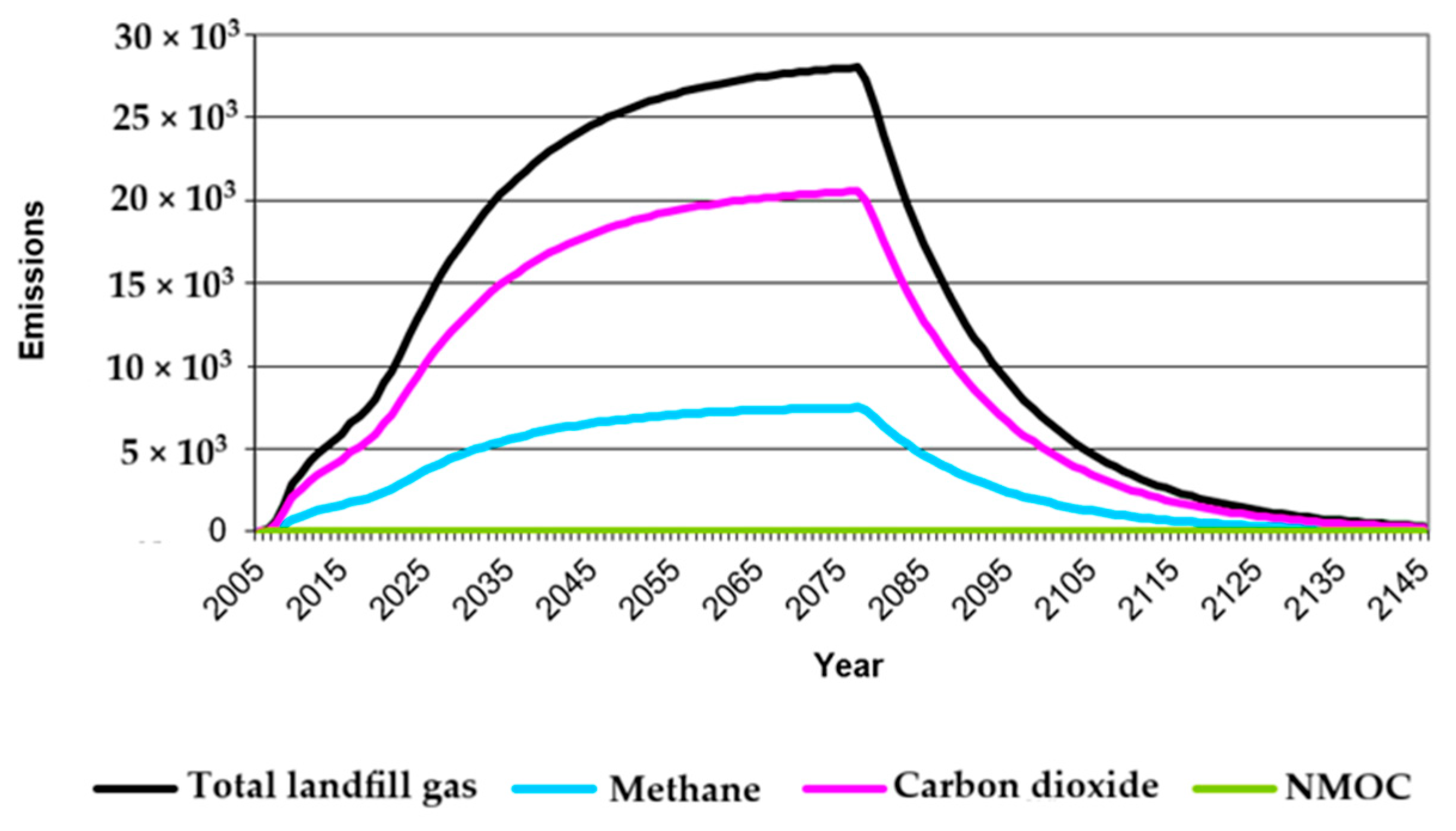
This study has produced several key results, which are described in the following sections. Figure 1 shows the Landgem diagram presenting the emissions of total landfill gas, CH4, CO2, and NMOC for the range of years 2005–2145.
Actual solid waste input data from a landfill in Catalonia for each year from 2005 to 2025 were entered into the software (LandGEM 3.03). This simulates the evolution of gas emissions not only during the active phase of waste disposal, but also for a long period thereafter. The specific time period up to 2145 was chosen to cover the entire gas production cycle, given that the biodegradation of organic waste and the emission of methane and carbon dioxide continue for decades. It should be noted that the estimate was made based on the data available to date, as the quality and quantity of waste that will be disposed of in the landfill in the future is not known. With the introduction of more waste, the curve is also expected to extend.
It can be observed that total landfill gas (LFG) mainly follows the behaviour of CO2 and CH4, which is logical and expected since these are its main components. Methane and carbon dioxide show a similar temporal evolution, with CO2 having slightly higher emissions, while NMOCs remain at significantly lower levels, although they are not negligible due to their toxicity. After the peak, all emissions gradually decrease, which can be explained by the depletion of the biodegradable organic load. Overall, the diagram gives us a clear picture of the quantity and quality of landfill gas emissions, which is useful in estimating biogas production potential.
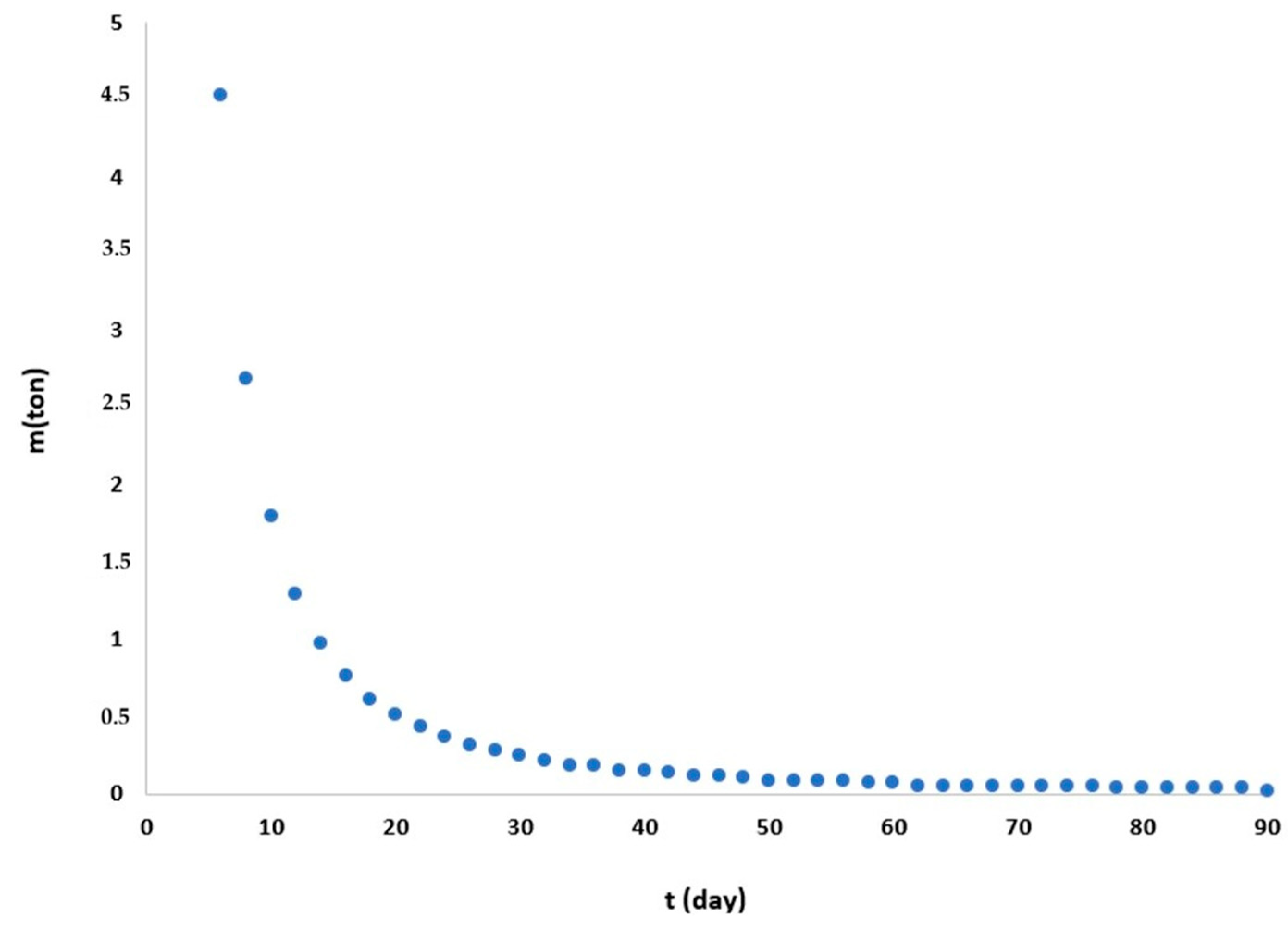
Figure 2 shows the percentage reduction in organic matter during composting. This diagram was created using mathematical modeling of the composting process as described. According to international literature, for OFMSW composted under thermophilic conditions, the total duration of the process usually ranges between 3 and 5 months, of which approximately 4–6 weeks correspond to the active thermophilic phase and 2–3 months to the maturation phase, so that the compost produced exhibits sufficient biological stability [45]. The figure shows that the organic matter is consumed almost entirely within the first 50 days of the process, and it demonstrates that for OFMSW, with the composition described in Section 2.1 and under thermophilic conditions, a period of 90 days is more than sufficient to produce a stable compost with high nutritional value.
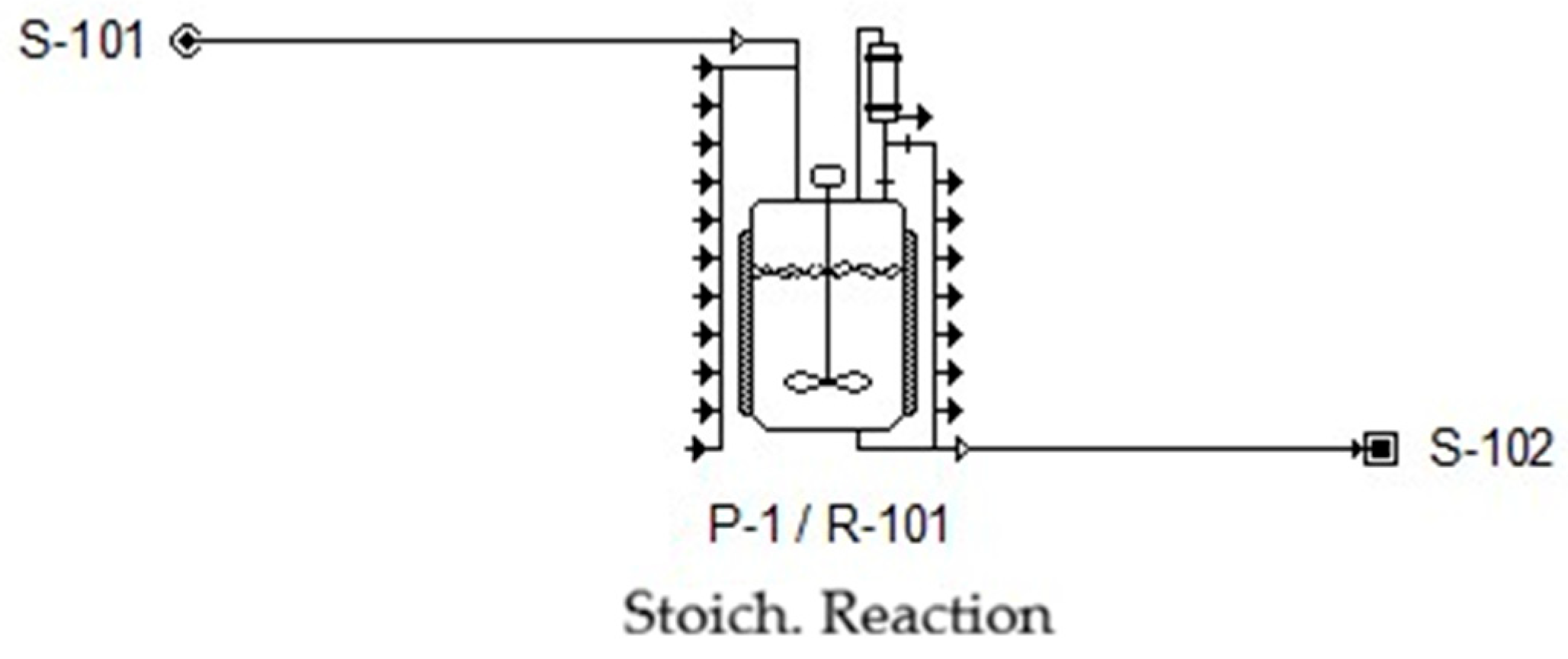
Τhe following Figure 3, Figure 4 and Figure 5 show the simulations as they appear in the simulation program SuperPro Designer.
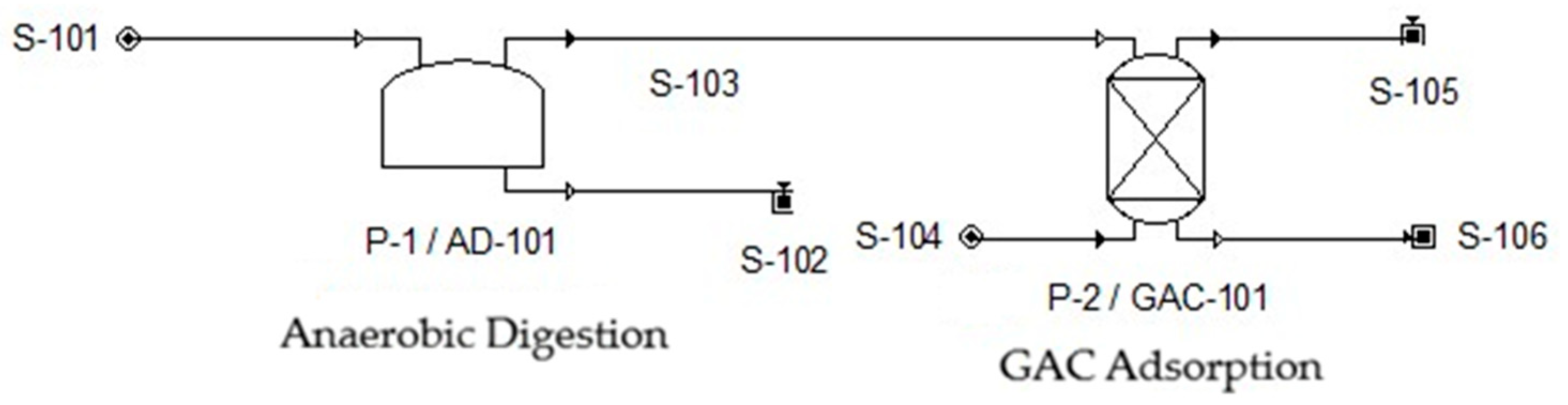
The Figure below demonstrates biogas production in the landfill.
Figure 3. Simulation of Landfill and biogas production in SuperPro Designer.
Cleantechnol 08 00042 g003
The steam S-101 is the total solid waste assessed as suitable for landfill. Τhe anaerobic digestion reactor AD-101 represents the landfill, the gas extracted from it (S-103) is filtered with a GAC adsorption filter GAC-101 in order to obtain the appropriate composition to be used as biogas. The biogas composition is shown in Table 7.
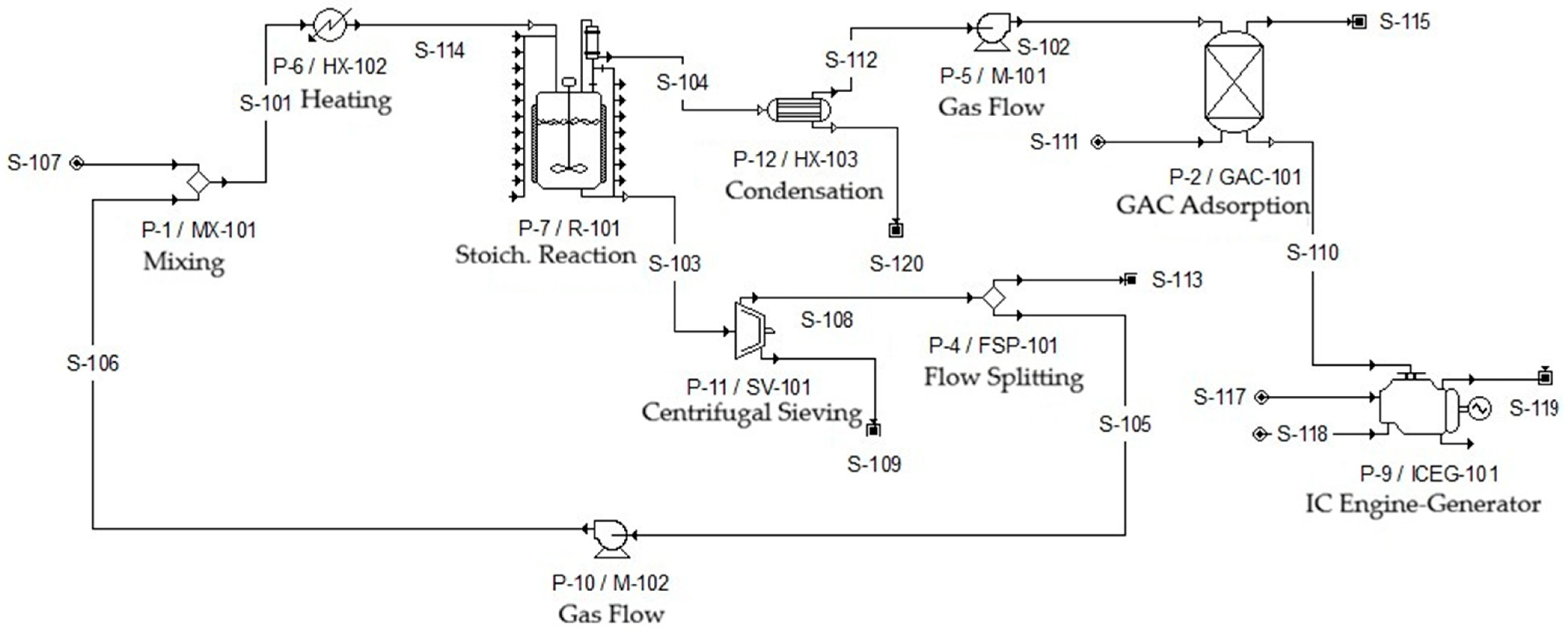
The Figure 4 demonstrates the anaerobic digestion biogas production plant.
Figure 4. Simulation of biogas production plant with anaerobic digestion in SuperPro Designer.
Cleantechnol 08 00042 g004
As shown in Figure 4, the OFMSW (S-107) mixes with the stream S-106, that is, H2O that has been recycled from the system, and then this mixture is heated with a heat exchanger HX-102 in order to arrive at the suitable temperature for the anaerobic digestion process. Subsequently, in the digester R-101, the biogas is produced (stream S-104), and the digestate (S-103), a mixture of liquids and solids, is also extracted. The digestate is placed in a separator SV-101, where the solids separate from the liquids. One part of the liquids is recycled (S-106) and the rest is rejected (S-113). On the other hand, the biogas that is extracted from the digester is placed in the condenser HX-103 in order to eliminate the water, and then passes through the filter GAC-101 in order to reduce H2S. Lastly, the biogas, the composition of which is shown in Table 8, is used in a motor/engine-generator ICEG-101 for electricity production.
The system’s performance is particularly high, achieving a productivity of 44 litres of biogas per kilogram of OFMSW, while conventional biogas production units in Catalonia produce between 20 and 35 litres of biogas per kilogram of OFMSW [10]. This means that a 25% increase in efficiency has been achieved. The yield was calculated as the ratio of the volume of biogas produced to the mass of solid waste input.
Τhe biogas production system through anaerobic digestion has prospects for expansion and improvement. In a future study, the process flow diagram could be modified to produce more than one product. For example, if anaerobic digestion is carried out in two stages using two separate reactors, where the first operates under conditions optimized for hydrolysis, acidogenesis, and acetogenesis, and the second optimized for methanogenesis, volatile fatty acids (VFAs) and hydrogen could be produced in the first reactor and biogas in the second.
Specifically, in the first reactor, the organic substrate is converted into VFAs, as confirmed by the results of the article in the literature [8]. Rapid hydrolytic and acidogenic degradation can also lead to the release of large amounts of hydrogen, which in turn can be captured and used as a biofuel. The second reactor operates under conditions suitable for methanogenesis, where the intermediate products produced (mainly acetic acid and hydrogen) are converted into methane.
This version can be used in the treatment of organic waste characterized by high COD concentrations, which are often a limiting factor for conventional single-stage anaerobic digestion, and also has the potential to improve the overall performance and stability of the process.
The following Figure 5 demonstrates the compost production from OFMSW.
Figure 5. Simulation of compost production in SuperPro Designer.
Cleantechnol 08 00042 g005
The organic wastes and atmospheric air (S-101) enter in a stoichiometric reactor R-101 where the composting takes place and after three months the compost (S-102) is ready for use. The component composition of the compost is shown in the Table 9.
This strategy contributes to a circular economy model, enhances energy self-sufficiency, and promotes long-term sustainability by converting waste into a renewable energy source. In addition to energy and environmental benefits, this waste management model also offers economic advantages, as minimizing the volume of waste going to landfill also reduces disposal and environmental compliance costs, while at the same time generating profit from the production of biogas from its gas emissions. Furthermore, although the biogas production unit has a high installation cost, due to recycling, the low cost of raw materials, and the high energy content of the biogas produced, it can offer high economic returns. Finally, compost can also generate profits from sales and create new jobs in rural areas of Catalonia.
It is worth noting that the simulations are not entirely realistic. An assessment as accurate as possible is made using bibliographic data and information from actual industries in Spain. However, the composition of the raw material may vary depending on its origin and affect the performance of the chemical reaction, or unstable factors (such as equipment malfunction) may modify the productivity of the system.

4. Conclusions

This study consists of the mathematical modeling and simulation of three solid waste management systems (landfill, anaerobic digestion, and composting process) based on international environmental protection regulations and the circular economy. Noteworthy results were revealed regarding process optimization and green energy development.
The study reveals an alternative approach to solid waste management that is environmentally sustainable, as a significant proportion of waste is reused as raw material for the production of valuable products. This approach not only reduces the volume of waste ending up in landfills, but also promotes green energy production by converting highly biodegradable waste into biogas. Even in the case of landfills, the gases emitted are effectively used to produce biogas, further minimizing the environmental impact.
In landfill modeling, gas emissions were estimated under actual conditions at the Catalonia landfill. The simulation of the landfill captures and utilizes these emissions so that they do not pose a risk to the ecosystems and human health. Using a filter with granular activated carbon, LFG is converted into biogas, which is a clean and renewable energy source with a wide range of applications
The design of the anaerobic digestion biogas plant differs from conventional biogas production units in Catalonia. A recycling system for the liquid waste from the bioreactor was used to optimize the process and it resulted in a 25% increase in overall biogas production efficiency compared to standard configurations and reduction of the operating costs. Last but not least, the compost production also contributes to the utilization of organic solid waste, which is rich in organic matter.
Overall, the integrated application of these waste management strategies represents a viable pathway toward a more ecofriendly and circular waste management system in Catalonia. The adoption of such strategies is essential to achieving a more sustainable future in Catalonia. Applying these methodologies on a regional scale can support the transition to a circular economy, in which biodegradable waste is used to produce energy and improve soil, rather than contributing to uncontrolled pollution.


Author Contributions

Conceptualization, J.O.P.; Methodology, I.N.; Formal analysis, I.N.; Investigation, I.N.; Data curation, I.N.; Writing—original draft, I.N.; Writing—review & editing, J.O.P. and M.A.; Supervision, M.A.; Project administration, M.A.; Funding acquisition, M.A. All authors have read and agreed to the published version of the manuscript.

Funding

This research was funded by Generalitat of Catalonia through the Agency for Business Competitiveness, ACCIÓ, grant number ACE100/23/000068.

Data Availability Statement

The original contributions presented in this study are included in the article. Further inquiries can be directed to the corresponding author.

Conflicts of Interest

The authors declare no conflict of interest.

References

  1. Oo, P.Z.; Prapaspongsa, T.; Strezov, V.; Huda, N.; Oshita, K.; Takaoka, M.; Ren, J.; Halog, A.; Gheewala, S.H. The role of global waste management and circular economy towards carbon neutrality. Sustain. Prod. Consum. 2024, 52, 498–510. [Google Scholar] [CrossRef]
  2. Allen, D. Methane emissions from natural gas production and use: Reconciling bottom-up and top-down measurements. Curr. Opin. Chem. Eng. 2014, 5, 78–83. [Google Scholar] [CrossRef]
  3. Olof, L. Pre-Combustion CO2 Capture: Analysis of Integrated Reforming Combined Cycle. Ph.D. Thesis, Norwegian University of Science and Technology, Trondheim, Norway, 2010. [Google Scholar]
  4. Maresme Circular, Waste Generation in the Maresme Decreased in 2023, Maresme Circular. 2024. Available online: https://maresmecircular.cat/en/consortium/waste-generation-in-the-maresme-decreased-in-2023/ (accessed on 19 January 2025).
  5. European Commission. Directive 2018/850/EC of the European Parliament and of the Council of 2018 Amending Directive 1999/31/EC on the Landfill of Waste; European Commission: Brussels, Belgium, 2018. [Google Scholar]
  6. Generalitat de Catalunya, Agència de Residus de Catalunya. Available online: https://residus.gencat.cat/en/ambits_dactuacio/recollida_selectiva/residus_municipals/materia_organica_form_-_fv/que_es_la_form/ (accessed on 15 December 2025).
  7. Teresa Ribera Rodríguez, Order TED/834/2023, Ministry for Ecological Transition and the Demographic Challenge «BOE» no. 174; Reference: BOE-A-2023-16891; Boletín Oficial del Estado (BOE): Madrid, Spain, 2023.
  8. Marchetti, A.; Palhas, M.; Villano, M.; Reis, M.A.; Fradinho, J. Unlocking the potential of food industry by-products: Sustainable volatile fatty acids production via mixed culture acidogenic fermentation of reground pasta. J. Clean. Prod. 2025, 526, 146633. [Google Scholar] [CrossRef]
  9. Zeppilli, M.; Pavesi, D.; Gottardo, M.; Micolucci, F.; Villano, M.; Majone, M. Using effluents from two-phase anaerobic digestion to feed a methane-producing microbial electrolysis. Chem. Eng. J. 2017, 328, 428–433. [Google Scholar] [CrossRef]
  10. Sedigas. A Study of the Capacity for Biomethane Production in Spain; Sedigas: Madrid, Spain, 2023. [Google Scholar]
  11. CEEC Clúster de l’Energia Eficient de Catalunya. 2024. Available online: https://clusterenergia.cat/news/the-government-approves-the-Catalan-biogas-strategy-2024-2030/ (accessed on 22 May 2025).
  12. UNE-EN 14346:2007; Characterization of Waste—Calculation of Dry Matter by Determination of Dry Residue or Water Content. Asociación Española de Normalización: Madrid, Spain, 2007.
  13. UNE-EN 15935:2021; Soil, Waste, Treated Biowaste and Sludge—Determination of Loss on Ignition. Asociación Española de Normalización: Madrid, Spain, 2021.
  14. UNE-EN ISO 10390:2022; Soil, Treated Biowaste and Sludge—Determination of pH. Asociación Española de Normalización: Madrid, Spain, 2022.
  15. CEN/TS 17776:2022; Organic and Organo-Mineral Fertilizers—Determination of the Total Organic Carbon (TOC) Content by Dry Combustion. European Committee for Standardization: Brussels, Belgium, 2022.
  16. Papračanin, E.; Petric, I. Mathematical modeling and simulation of the composting process in a pilot reactor. Bull. Chem. Technol. Bosnia Herzeg. 2017, 47, 39–48. [Google Scholar]
  17. Papračanin, E. Kinetic Parameters Estimation and Model Evaluation for the Aerobic Bioconversion Process of the Organic Fraction of Municipal Solid Waste. Chem. Ind. Kem. Ind. 2022, 71, 185–199. [Google Scholar] [CrossRef]
  18. Environmental Data Catalonia 2025, Generalitat de Catalunya. Available online: https://mediambient.repositori.gencat.cat/bitstream/handle/20.500.14343/1334/2025_MA_dades25_accessible_ENG_251013.pdf?sequence=3&isAllowed=y (accessed on 10 September 2025).
  19. Wegsco Spain. Catalonia to Close 13 Landfills in 10 Years. 2025. Available online: https://wegsco-spain.es/catalonia-to-close-13-landfills-in-10-years-the-challenge-of-moving-towards-zero-waste/ (accessed on 10 October 2025).
  20. WorldData.info. Available online: https://www.worlddata.info/europe/spain/climate-catalonia.php (accessed on 7 January 2026).
  21. Statistical Institute of Catalonia. 2025. Available online: https://www.idescat.cat/novetats/?lang=en (accessed on 1 December 2025).
  22. Paraskaki, E. Assessment of Emissions of Gaseous Pollutants from Waste Disposal Sites. Master’s Thesis, Polytechnic School of Crete, Chania, Greece, 2003. [Google Scholar]
  23. Andreottola, G.; Cossu, R.; Ritzkowski, M. Landfill Gas Generation Modeling. In Solid Waste Landfilling: Concepts, Processes, Technology; Elsevier: Amsterdam, The Netherlands, 2018. [Google Scholar] [CrossRef]
  24. Buswell, A.M.; Mueller, H.F. Mechanism of Methane Fermentation. Ind. Eng. Chem. 1952, 44, 550–552. [Google Scholar] [CrossRef]
  25. El Mashad, H.; Zhang, R. Biogas Energy from Organic Wastes. In Introduction to Biosystems Engineering; Holden, N.M., Wolfe, M.L., Ogejo, J.A., Cummins, E.J., Eds.; Virginia Tech: Blacksburg, VA, USA, 2020. [Google Scholar]
  26. Manfredini, S.; Tonini, D. Landfilling of waste: Accounting of greenhouse gases and global warming contributions. Waste Manag. Res. 2009, 8, 825–836. [Google Scholar] [CrossRef] [PubMed]
  27. Bian, R.; Chen, J.; Li, W.; Shi, W.; Lin, Y.; Chai, X.; Sun, Y. Methane emissions and energy generation potential from a municipal solid waste landfill based on inventory models: A case study. Environ. Prog. Sustain. Energy 2021, 40, e13654. [Google Scholar] [CrossRef]
  28. Duan, Z.; Kjeldsen, P.; Scheutz, C. Efficiency of gas collection systems at Danish landfills and implications for regulations. Waste Manag. 2022, 139, 269–278. [Google Scholar] [CrossRef] [PubMed]
  29. Duan, Z.; Scheutz, C.; Kjeldsen, P. Trace gas emissions from municipal solid waste landfills: A review. Waste Manag. 2021, 119, 39–62. [Google Scholar] [CrossRef] [PubMed]
  30. Rafey, A.; Siddiqui, F.Z. Modelling and simulation of landfill methane model. Clean. Energy Syst. 2023, 5, 100076. [Google Scholar] [CrossRef]
  31. Faour, A.A.; Reinhart, D.R.; You, H. First-order kinetic gas generation model parameters for wet landfills. Waste Manag. 2007, 27, 946–953. [Google Scholar] [CrossRef] [PubMed]
  32. Al Seadi, T.; Rutz, D.; Prassl, H.; Köttner, M. Biogas Handbook; University of Southern Denmark: Esbjerg, Denmark, 2008. [Google Scholar]
  33. Hernández, J.R. El Biogás Una Ecológica y Económica Fuente de Energía: Instalaciones de Captación, Limpieza y Acondicionamiento del Biogás. Máquinas, Equipos y Tecnologías; Grupo Editorial Círculo Rojo: Almería, Spain, 2022. [Google Scholar]
  34. Varnero Moreno, M.T. Manual de Biogas; Organización de las Naciones Unidas para la Alimentación y la Agricultura: Santiago, Chile, 2011. [Google Scholar]
  35. Morandin, E.; Barbera, E. Integrated Biogas and Microalgae Production Process: Techno-Economic Analysis by Process Simulation. Master’s Thesis, Università Degli Studi Di Padova, Padua, Italy, 2020. [Google Scholar]
  36. Serrano, R.P. Biogas Process Simulation Using Aspen Plus. Master’s Thesis, Syddansk Universitet, Odense, Denmark, 2011. [Google Scholar]
  37. Barbera, E.; Bertucco, A.; Nigam, K.D.; Kumar, S. Techno-economic analysis of a micro-scale biogas plant integrated with microalgae cultivation for the treatment of organic municipal waste. Chem. Eng. J. 2022, 450, 138323. [Google Scholar] [CrossRef]
  38. Alrowais, R.; Said, N.; Al-Otaibi, A.; Hatata, A.Y.; Essa, M.A.; Daiem, M.M.A. Comparing the effect of mesophilic and thermophilic anaerobic co-digestion for sustainable biogas production: An experimental and recurrent neural network model study. J. Clean. Prod. 2023, 392, 136248. [Google Scholar] [CrossRef]
  39. Greene, P. Anaerobic Digestion & Biogas; Environmental Protection Agency: Wexford, Ireland, 2014.
  40. Li, Y.; Alaimo, C.P.; Kim, M.; Kado, N.Y.; Peppers, J.; Xue, J.; Wan, C.; Green, P.G.; Zhang, R.; Jenkins, B.M.; et al. Composition and Toxicity of Biogas Produced from Different Feedstocks in California, National Center for Biotechnology Information. Environ. Sci. Technol. 2019, 53, 11569–11579. [Google Scholar] [CrossRef] [PubMed]
  41. Bonoli, A.; Dall’Ara, A. A bioremediation case of an ex-quarry area restored by paper sludge. J. Biotechnol. 2012, 157, 499–504. [Google Scholar] [CrossRef] [PubMed]
  42. Zah, C.; Saucius, A.; Dumitrescu, L.; Manciulea, I. Aspects regarding recycling sludge by composting. Environ. Eng. Manag. J. 2011, 10, 219–224. [Google Scholar] [CrossRef]
  43. Stloukal, P.; Pekařová, S.; Kalendova, A.; Mattausch, H.; Laske, S.; Holzer, C.; Chitu, L.; Bodner, S.; Maier, G.; Slouf, M.; et al. Kinetics and mechanism of the biodegradation of PLA/clay nanocomposites during thermophilic phase of composting process. Waste Manag. 2015, 42, 31–40. [Google Scholar] [CrossRef] [PubMed]
  44. ISO 12716:2001; Non-Destructive Testing—Acoustic. Austrian Standard: Vienna, Austria, 2001.
  45. Haug, R.T. The Practical Handbook of Compost Engineering; Lewis Publishers: Boca Raton, FL, USA; CRC Press LLC: Boca Raton, FL, USA, 1993; ISBN 0-87371-373-7. [Google Scholar]
Figure 1. Results of Landgem simulation of gas emissions in megagrams per year (Mg/yr).
Cleantechnol 08 00042 g001
Figure 2. Graph of organic matter mass consumption in composting process.
Cleantechnol 08 00042 g002
Table 1. Physical and chemical characteristics of OFMSW [16,17].
MaterialMoisture (% w.b.)Organic Matter (% d.b)pHElectr. Condutivity (dS m−1) C/N Ratio
OFMSW72.4488.176.71.7952.73
Table 2. Catalonia landfill parameters [4,18,20,21].
ParameterUnitValue
Average waste depthm40
Landfill operation timeyr25
Average daily landfill of MSWTPD3328
Annual precipitation ratemm/y600
Annual mean maximum temperature°C26
Per capita waste generationkg/capita/y477
Population of Catalonia people8,034,743
Table 3. Values of Catalonia landfill simulation factors [30].
Landfill Simulation FactorsValue
Methane generation rate constant k0.065
Methane generation potential L084
Methane correction factor MCF0.4
Fire discount factor F0.5
Table 4. Chemical equilibrium reactions [36].
IdReaction
1H2O + HPO42−↔H3O+ + PO43−
2H2O + HSO3↔H3O+ + SO32−
32H2O + SO2↔H3O+ + HSO3
4H2O + H2PO4↔H3O+ + HPO42−
5H2O + H3PO4↔H3O+ + H2PO4
6NH3 + HCO3↔H2O + NH2COO
7NH3 + H2O↔NH4+ + OH
8H2O + HCO3↔CO32− + H3O+
92H2O + CO2↔H3O+ + HCO3
10H2O + HS↔H3O+ + S2−
11H2O + H2S↔H3O+ + HS
122H2O↔H3O+ + OH
Table 5. Average mass composition of OFMSW and corresponding molar composition.
AtomsMWAverage Mass Fraction (%)Stoichiometric Coefficient in OFMSW
C12.010756.4921.81
H1.00798.36238.47
O15.999431.439.11
N14.00673.0211
P30.97380.45540.0682
S32.0660.23320.0337
Table 6. Kinetic parameters of the mathematical model for the composting process [17].
ParameterValueUnit
α0.0000966kg1−n h−1
β4914K
n1.5526-
kO2(0)0.1554-
KO20.8683% v/v
Table 7. Results SuperPro Designer—biogas composition (Stream S-106).
ComponentMass Flow (kg/h)Mass Comp. (%)Concentration (g/L)
CO222,70056.020.5569
CH417,19342.430.4218
NH3230.0570.0006
O24161.020.0102
H2O1870.460.0046
Total Mass Flow (kg/h)40,520Total Volumetric Flow (L/h)40,760,005
Table 8. Results SuperPro Designer- biogas composition (Stream S-110).
ComponentMass Flow (kg/h)Mass Comp. (%)Concentration (g/L)
CO2131,78154.75.6977
H2S0.8350.00030.00004
CH4108,11244.94.6743
NH38500.20350.0367
Total Mass Flow (kg/h)240,746Total Volumetric Flow (L/h)23,128,771
Table 9. Results in SuperPro Designer—compost composition (Stream S-102).
ComponentMass Flow (kg/h)Mass Comp. (%)Concentration (g/L)
CO22606.3641410.69921.354717
NH318.676890.07670.009708
O2365.3851.49990.189917
TBS13,252.1952554.40066.888129
H2O8117.7430233.32364.219381
Total Mass Flow (kg/h)24,360.36Total Volumetric Flow (L/h)1,923,917.88
Disclaimer/Publisher’s Note: The statements, opinions and data contained in all publications are solely those of the individual author(s) and contributor(s) and not of MDPI and/or the editor(s). MDPI and/or the editor(s) disclaim responsibility for any injury to people or property resulting from any ideas, methods, instructions or products referred to in the content.