
Article

Green CO2 Capture from Flue Gas Using Potassium Carbonate Solutions Promoted with Amino Acid Salts
1
Department of Chemical Engineering, Faculty of Chemical Engineering and Environmental Protection, “Gheorghe Asachi” Technical University of Iasi, 700050 Iasi, Romania
2
Department of Socio-Economic, Managerial and Statistical Studies, University “G. d’Annunzio” of Chieti-Pescara, Viale Pindaro 42, 65127 Pescara, Italy
3
Department of Pharmacy, University “G. d’Annunzio” of Chieti-Pescara, via dei Vestini 31, 66100 Chieti, Italy
4
Department of Environmental Engineering, Faculty of Chemical Engineering and Environmental Protection, “Gheorghe Asachi” Technical University of Iasi, 700050 Iasi, Romania
*
Authors to whom correspondence should be addressed.
Clean Technol. 2025, 7(4), 99; https://doi.org/10.3390/cleantechnol7040099
Submission received: 31 August 2025 / Revised: 26 September 2025 / Accepted: 30 September 2025 / Published: 5 November 2025
(This article belongs to the Special Issue Green Solvents and Materials for CO2 Capture)

Abstract

CO2 emissions from various anthropogenic activities have led to serious global concerns (climate change and global warming), and, therefore, CO2 capture by sustainable methods is a priority research topic. One of the most widely used and cost-effective technologies for post-combustion CO2 capture (PCC) is the chemical absorption method, where potassium carbonate solution is proposed as a solvent (with or without the addition of promoters, such as amines). An ecological alternative, presented in this study, is the use of amino acids instead of amines as promoters—alanine (Ala), glycine (Gly) and sarcosine (Sar)—in concentrations of 25% by weight of K2CO3 + 5 or 10% by weight of amino acid salt, thus resulting in the so-called green solvents, which do not show high toxicity and inertness to biodegradability. The studies had as a first objective the characterization of the proposed green solvents, in terms of density and viscosity, and then the comparative testing of their efficiency for CO2 retention from gaseous fluxes containing high CO2 concentrations. The experiments were performed at temperatures of 298 K, 313 K, and 333 K at atmospheric pressure. The best performance was observed with K2CO3 + 5% Sar salt at 313 K, reaching an absorption capacity of 2.58 mol CO2/L solvent, which is a promising improvement over the reference solution based on K2CO3. Increasing the amino acid concentration to 10% generally led to a reduced performance, especially for sarcosine, probably due to an increase in solution viscosity or a possible kinetic inhibition. This study provides valuable experimental data supporting the ecological potential of amino acid-promoted potassium carbonate systems, paving the way for further development of chemisorption processes and their implementation on an industrial scale.

1. Introduction

The demand for energy has been continuously increasing due to industrialization and population growth, leading to higher fossil fuel consumption [1]. Currently, around 80% of the world’s energy relies on fossil fuels, which produce large amounts of greenhouse gases (GHGs), with carbon dioxide (CO2) as the main component [2,3]. The release of CO2 has raised serious global concerns, such as climate change and global warming [4]. If fossil fuels continue to be used for energy production, the atmospheric CO2 concentration in the atmosphere could reach 900 ppm by 2050 [5]. As a result, an increasing interest in developing effective CO2 capture technologies is expanding. Among them, carbon capture and storage (CCS) has emerged as a promising method to reduce CO2 emissions from industrial flue gases, potentially lowering global CO2 emissions by 80–90% [6].
Several modern combustion techniques (e.g., oxy-fuel combustion), as well as specific pre- and post-combustion methods can be applied for CO2 capture [7,8]. Post-combustion CO2 capture (PCC) can be achieved through different pathways such as adsorption, membrane separation, or cryogenic distillation. Chemisorption in alkaline solutions is regarded as one of the most advantageous methods for CO2 removal, despite its relatively slow reaction rate and the difficulty in achieving high CO2 removal efficiency [9,10].
The use of alkaline aqueous solutions, based on carbonate/bicarbonate or ammonia, has been extensively investigated for CO2 capture over the past decades. Both types of solvents are considered promising due to their high stability and low cost. However, an ammonia-based system may generate NH3 emissions, representing a potential risk. To overcome such limitations, alkaline solutions have been combined with various amine promoters to form aqueous alkanolamine solutions. This method, known as amine scrubbing, is currently the most widely used technology for PCC. Indeed, approximately 95% of CO2 separation processes rely on amine-based scrubbing [11], employing different types of amines such as monoethanolamine (MEA), diethanolamine (DEA), methyldiethanolamine (MDEA), diglycolamine (DGA), and diisopropylamine (DIPA) [12].
Despite their widespread use, these solvents have several limitations [13], such as inadequate resistance to oxidative and thermal deterioration, solvent loss due to high volatility, formation of hazardous byproducts during CO2 capture, equipment corrosion, and high energy demand for absorbent regeneration. Moreover, MEA and DEA have limited CO2 loading capacity, i.e., about 0.5 mol of CO2/mol of amine.
Amino acid-based solvents have attracted significant attention due to growing concerns and sustained interest in identifying alternative solvents [14,15,16,17]. A variety of amino acids, including glycine, sarcosine, L-proline, L-phenylalanine, arginine, and taurine form salts with sodium, potassium and lithium. Solutions based on these salts have been investigated as potential novel solvents [18,19,20,21]. In particular, these offer significant advantages over alkanolamines including high CO2 solubility, low volatility, and strong resistance to thermal oxidative degradation [22,23]. Furthermore, since these salts are biodegradable and do not generate harmful intermediates, they are considered environmentally benign [24]. CO2 absorption in amino acid salts (AAS)—based solutions can result in precipitate formation [25]. The development of these precipitates shifts the reaction equilibrium, thereby enhancing CO2 absorption [26].
In addition, depending on the nature of precipitates—whether the amino acid salt themselves or carbonates can provide an opportunity for temporary CO2 storage. Although inorganic salts generally reduce the physical solubility of CO2 in water via the salting-out effect, in potassium carbonate solutions promoted with AAS, this drawback is compensated by the presence of amine groups which provide additional reactive sites. As a result, despite the reduced physical solubility, the overall CO2 absorption capacity is significantly enhanced by both precipitation effects and reactive interactions [27,28]. The constant CO2 equilibrium pressure induced by precipitation can enhance the solvent loading capacity, which is advantageous for both solvent recirculation and regeneration [17,26].
Potassium carbonate (K2CO3) solutions are widely employed for CO2 removal owing to their low toxicity, minimal degradation, reduced energy requirements, and the relatively high solubility of CO2 in the carbonate-bicarbonate system. For optimal absorption, aqueous K2CO3 solutions with concentrations of 20% and 40% are typically used, maintained as close as possible to saturation without inducing crystallization. However, the intrinsic CO2 absorption rate in K2CO3 is relatively slow, thereby necessitating the use of promoters (activators) to improve performance. Considerable research has investigated the promotion of CO2 absorption in K2CO3 solutions through the addition of amines [29,30,31,32], where primary and secondary amines are typically employed as promoters [33]. In contrast, tertiary amines are rarely applied, as they do not substantially enhance absorption rates [34,35].
The replacement of amines with amino acids as promoters or enhancers introduced additional advantages, leading to improve CO2 absorption performance [27]. Amino acids are commonly used to increase CO2 absorption rates. Although extensive studies have examined CO2 absorption using amino acids and amino acid-promoted K2CO3 solvents [36], the precipitation behavior of concentrated K2CO3 solutions in the presence of amino acids remains insufficiently explored.
Hu et al. [37] reviewed the effects of various amino acids, such as 2-piperazinecarboxylic acid, lysine, glycine, asparagine, leucine, aspartic acid, proline, serine, sarcosine, and valine, on K2CO3-based solvents. Among these, glycine is considered particularly cost-effective and highly efficient in promoting CO2 absorption. In their study, Thee et al. [38] employed a wetted wall column to investigate the reaction kinetics of different glycine concentrations in 30 wt.% K2CO3 solutions within the temperature range of 314–353 K. The authors demonstrated that addition of 1 M glycine (9.6 wt.%) enhanced CO2 absorption by more than 20-fold compared to K2CO3 solutions without promoters.
Smith et al. [39] demonstrated that adding glycine, sarcosine, and proline to a 30 wt.% K2CO3 solution enhanced the rate of CO2 absorption by 22-, 45-, and 14-fold, respectively [40].
Amino acids in aqueous solution can exist in different forms: deprotonated (basic), zwitterionic, or protonated (acidic). Since the protonated and zwitterionic forms are much less reactive toward CO2, the deprotonated form is the most effective for CO2 absorption. Moreover, high pH levels (>10) significantly enhance the absorption rate, with glycine predominantly in its anionic form (Gly). During the CO2 absorption process, carbamate (−GlyCOO) serves as an intermediate species.
Lee et al. [41] investigated the properties of glycine-promoted K2CO3 solutions (0.64–1.36 mol/kg) and found that glycine reduces CO2 partial pressure, thereby enhancing the absorption rate.
Sarcosine has proven to be highly promising for effective CO2 capture [42]. It behaves similarly to MEA, a compound widely used in industry, which exhibits high reactivity towards CO2 [43]. Owing to its secondary amine functional group, it allows for a broader concentration range for high CO2 loading without precipitate formation. Due to its ionic form, it also exhibits the advantageous properties of low volatility and high surface tension [44].
Aqueous solutions of alanine have been shown to be effective CO2 absorbents for flue gas treatment, outperforming MEA. In particular, its potassium salt exhibited a higher CO2 absorption capacity, making it suitable for flue gas applications [45]. Song et al. [46] evaluated 16 common amino acids for CO2 absorption and found that alanine’s aqueous salt solution had the fastest initial absorption and desorption rates, leading to a high CO2 absorption capacity. The two isomers of alanine, α-alanine and β-alanine, exhibit different behaviors. In α-alanine, the amino group bound to the carbon adjacent to the carboxyl group generates steric hindrance, which affects both the CO2 absorption capacity and the absorption/desorption rates [47]. Abdellah et al. [48] reported that the maximum CO2 loading capacity of 5.0 M solutions was approximately 10% higher for β-alanine than for α-alanine at 298 K.
Precipitation in 5.0 M α-alaninate. solutions occurred at CO2 loadings above 0.12 mol CO2/mol α-alaninate, whereas in β-alaninate solutions it began at CO2 loadings exceeding 0.52 mol CO2/mol β-alaninate.
A thorough understanding of the thermophysical property data is essential for designing the gas–liquid absorption system at industrial and laboratory scales. Since, to the best of the authors’ knowledge, no data on this topic has been documented in the literature, this study presents the thermophysical characteristics and adsorption data for three solutions tested as absorbents at various temperatures and concentration values. These parameter values are necessary for design of the absorber, regeneration column, process hydrodynamics, gas hold-up and mass transfer coefficient calculation, and are crucial for designing an effective gas absorption process and gas treatment facilities.
The novelty and original contribution of this work can be summarized in three main aspects: (a) The use of diluted potassium carbonate solutions combined with potassium salts of glycine, sarcosine and alanine for CO2 capture from gas streams; (b) the design of a simplified experimental setup, enabling rapid, efficient, and comparative evaluation of the performance of various absorption solutions, with minimal material and energy consumption, and (c) the establishing of a solid foundation for the future development of a dynamic model and control strategy tailored to MEA alternatives, using the experimental data obtained for the calibration of the equilibrium kinetic models.

2. Materials and Methods

2.1. Green Absorbent Characterization

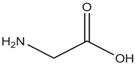
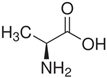
Eco-friendly compounds were selected, including alanine (Ala)—a highly soluble primary amine; glycine (Gly), a primary amine with a structure similar to MEA, and sarcosine (Sar)—a highly soluble and reactive secondary amine.
Potassium carbonate (99%) comes from Fluka Analytical (Seelze, Germany); sarcosine was purchased from Sigma Aldrich (St. Louis, MO, USA), while glycine and alanine were purchased from Carl Roth (Karlsruhe, Germany). Potassium hydroxide (Merck, Darmstadt, Germany) was used for the deprotonation of zwitterionic amino acids. CO2 gas cylinder (99.9% v/v purity) was purchased from Linde Gas Company (Timisoara), Romania. All chemicals, with a purity greater than 99%, were used as received. A series of solutions was prepared by dissolving analytical-grade potassium carbonate in distilled water in order to prepare a 25 wt.% concentration.
The reactions between CO2 and K2CO3 solution can be described as follows:
CO2 + H2O ⇌ HCO3 + H+
CO2 + OH ⇌ HCO3 (the rate-controlling reaction)
HCO3 + OH ⇌ CO32− + H2O
H2O ⇌ H+ + OH
Primary and secondary AAS can exist in aqueous solution in protonated (acidic), zwitterionic, and deprotonated (basic) forms. The first two exhibit much lower reactivity toward CO2, compared to the deprotonated form. Potassium salts of amino acids (AAKs) were prepared by adding equimolar amounts of amino acids and KOH, which dissociated completely in water [49]. The excess KOH was avoided by the stoichiometric addition of the reagents. The resulted salts are: SarK–Sarcosine potassium salt, AlaK–Alanine potassium salt and GlyK–Glycine potassium salt.
KOH (s) ⇌↔ K+ + OH
The deprotonation of the zwitterions can then be written:
+NH2R1R2COO + OH ⇌ NHR1R2COO + H2O
Since the AAS contain amino groups analogous to those of amines, their interaction with CO2 is most appropriately described by the zwitterion mechanism [38]:
CO2 + NHR1R2COOK+OOCNH+R1R2COOK+
Each amino acid salt (AAKs) was added into aqueous solution of K2CO3 at ratios of 5/25, 10/25 and 15/25 wt.% at temperatures between 313 K and 353 K, to prepare the novel mixed AAKs–K2CO3 absorbents. Ultrapure water was provided by a Millipore apparatus. The solutions were maintained under an inert atmosphere to prevent unwanted CO2 contamination from the air.
The key properties of the studied amino acids are summarized in Table 1, while green properties are compared in terms of ecotoxicity and biodegradability with the conventional amine (MEA) [50], as shown in Figure 1.
The Biological Oxygen Demand (BOD) is a measure of biodegradation, and the horizontal bars are the BOD in percent degraded amine relative to the theoretical oxygen demand (ThOD).
Densities were measured using an oscillating tube densitometer (Anto, n Paar DMA 4500, Anton Paar GmbH, Graz, Austria), which is equipped with a built-in Peltier temperature controller and a thermometer. The measurement precision is ±0.01 kg/m3, and the temperature accuracy is ±0.1 K. To prevent moisture or contamination, the U-tube was cleaned sequentially with acetone and distilled water, followed by air-drying with an internal air pump. The procedure employed follows recommended methods in the literature [17,29,51,52]. Each measurement was repeated three times at different concentrations and temperatures, and the average was reported as the final result.
A Ubbelohde viscometer (SI Analytics GmbH, Mainz, Germany) with a glass capillary was used to measure kinematic viscosities, with an error margin of ±0.004 mPa·s. To ensure accurate measurements, the viscometer was thoroughly cleaned using water and acetone, followed by air drying. The desired temperature stability during the measurement of efflux time was maintained via a transparent thermostat water bath (Koehler, KV3000, Koehler Instrument Company, Inc., Bohemia, NY, USA), with an accuracy of ±0.01 K. Depending on the expected viscosity of the mixture formed by the pure components involved, a certain capillary tube with a specific diameter was selected for the viscometer used, allowing various kinematic viscosity measurements.
The densimeter and viscometer were calibrated using certified standard solutions (density and viscosity, respectively) within the temperature range of 293–353 K. All measurements were repeated at least three times, with standard deviations below 0.5%.
The following equations were used to calculate kinematic viscosity (ν) and dynamic viscosity (η):
ν = k · t
η = ν · ρ
where t represents the efflux time, which is the duration for the liquid meniscus to flow through the capillary.
Measurements were taken twelve times for each sample using a standard chronometer with an accuracy of 0.01 s, while the maximum error for viscosity measurement was ±1%.

2.2. Absorption Studies

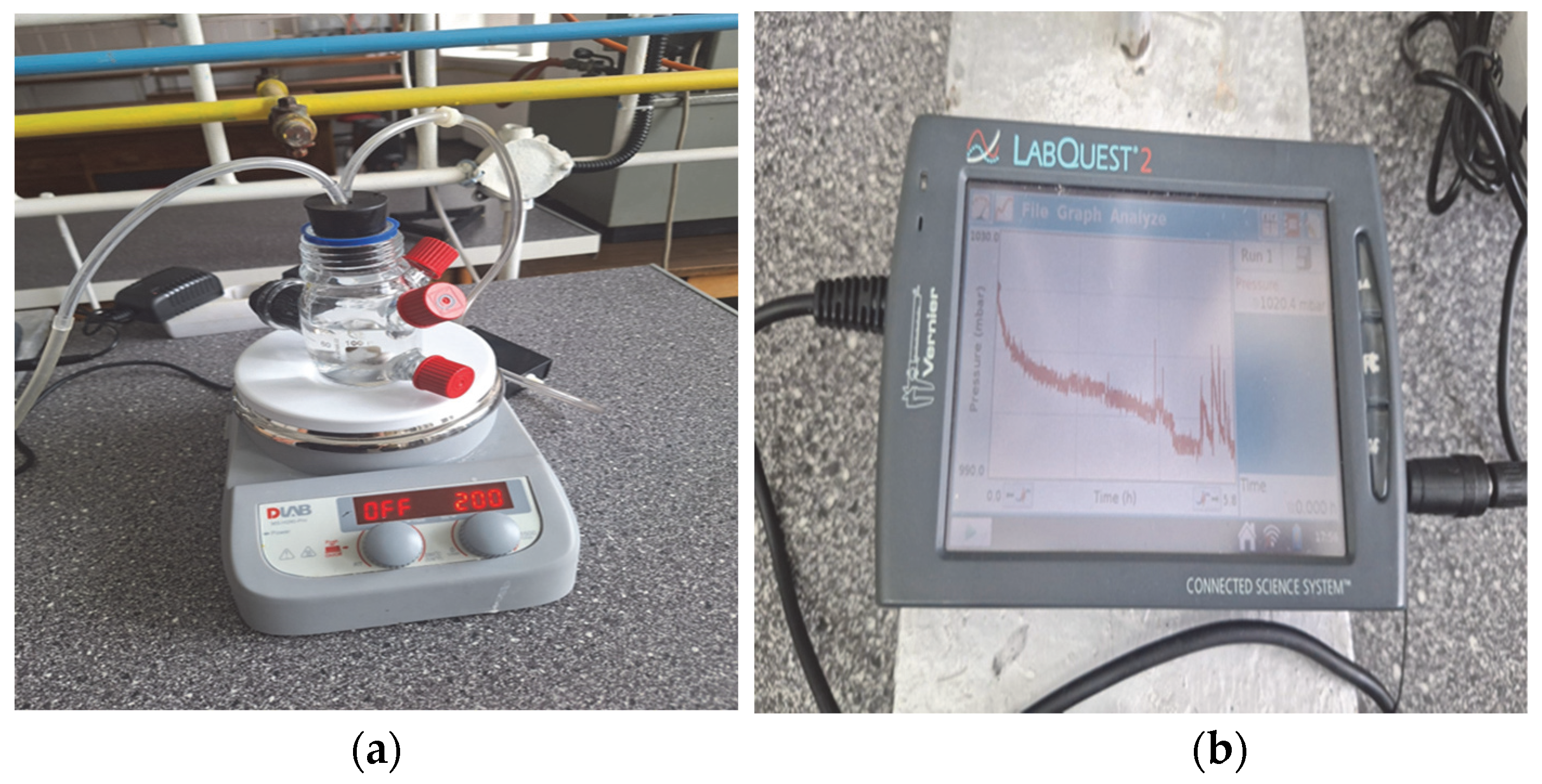
Absorption studies were carried out in a stirred gas–liquid reactor (Büchi Labortechnik AG, Flawil, Switzerland) operated at atmospheric pressure and three temperature values: 298 K, 313 K and 333 K. The reactor had a total working volume of 85 mL; see Figure 2a. The small volume of the reactor reduces stratification effects and ensures short thermal stabilization times. The stirring speed was set to avoid foaming. The reactor geometry (H/D ratio) and stirring power were kept constant between series for comparison.
Each absorption experiment was conducted over a period of 4 h to ensure sufficient contact time between gas and liquid phases for meaningful comparison of performance under different conditions. The 4 h per test duration was established based on preliminary ‘loading-versus-time’ runs, which showed reaching a plateau after ~3 h; 4 h was maintained to ensure proximity to the quasi-steady state and comparability between series. Carbon Dioxide Flow Meter (ASCO Carbon Dioxide Ltd., Romanshorn, Switzerland) with Pressure Regulator and flow Control Valve was used for controlling gas flow in the range between 1 and 25 L/min.
During the experiments, both temperature and pressure inside the reactor were continuously monitored using a LabQuest 2 data acquisition system equipped with appropriate sensors; see Figure 2b. This ensured precise tracking of the reaction environment and helped to keep the same experimental conditions during the process, which are essential for accurate interpretation of the results and assessment of solvent performance.
Liquid samples were collected and analyzed to assess CO2 loading at the beginning and at the end of each experiment. This was achieved via acid–base titration, using standardized hydrochloric acid (HCl). Two pH indicators were used during the titration: phenolphthalein, to determine the carbonate and bicarbonate transition point, and bromocresol green, to identify the complete neutralization endpoint. These dual-indicator titrations enabled the differentiation between free CO2, bicarbonate and carbonate species in the solution, offering a more accurate measurement of the total absorbed CO2.
All titrations were carried out at least in triplicate, and the reported values are presented as mean values. The reproducibility of the measurements was confirmed by replicate experiments, with a maximum variation of ±0.1 mL between titration endpoints. The uncertainties were estimated by taking into account the precision of the burette readings (±0.05 mL), the standard uncertainty of the HCl titrant concentration (±0.0002 mol·L−1), and weighing errors (±0.0002 g).
In addition to CO2 loading, changes in other physicochemical properties such as solution pH and potential precipitate formation were also noted.

3. Results and Discussions

3.1. Properties of Green Absorbents

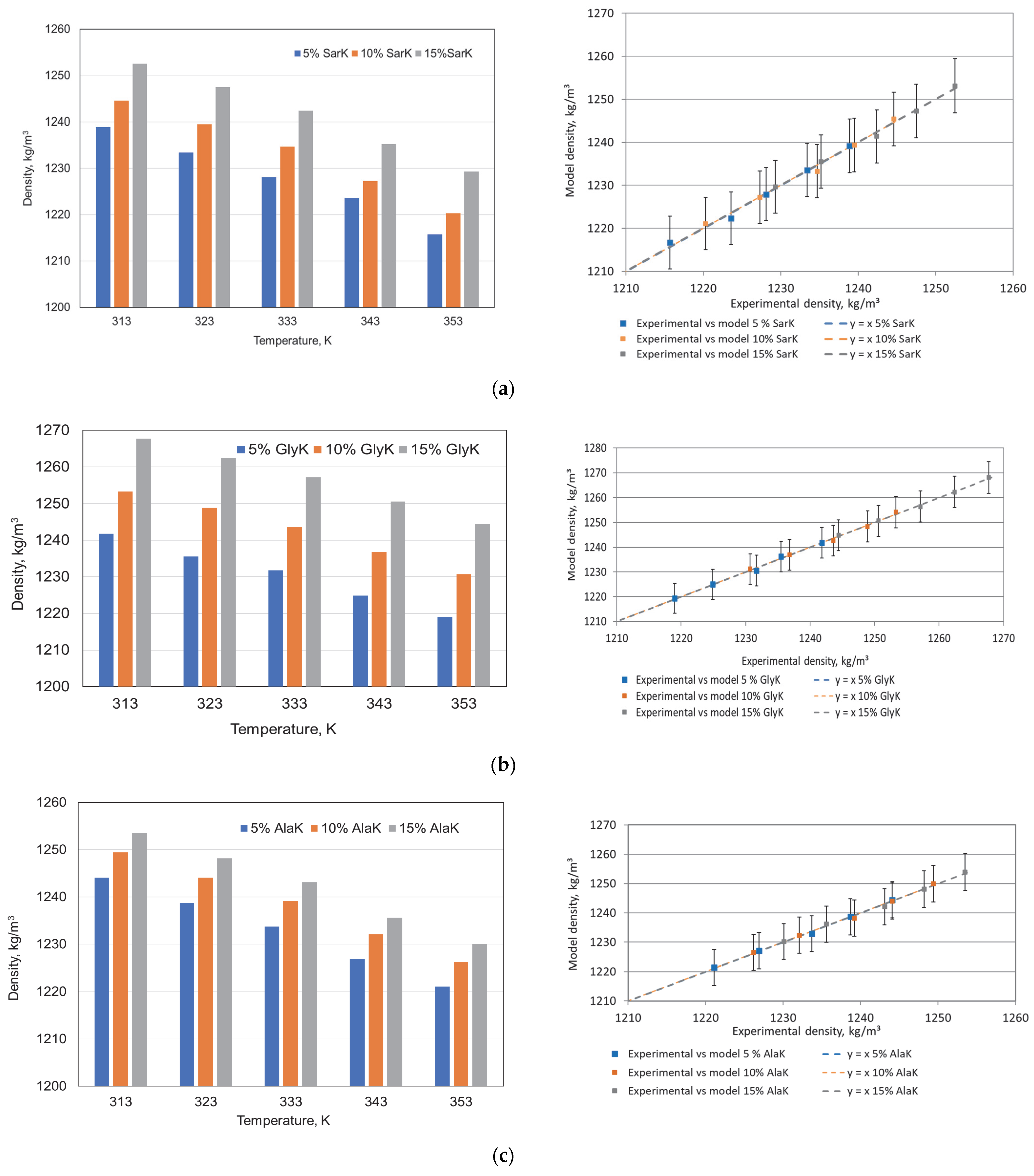
Figure 3 shows the density dependence on temperature at different concentrations of AAKs (5%, 10%, and 15%). A linear dependence could be confirmed; the obtained regression constants are presented in Table 2. In order to evaluate the accuracy of the model, the residual standard deviation (RSD) was determined, which reflects the average variation of the difference between the experimental and calculated values.
The density decrease with temperature is also influenced by AAKs nature, as shown in Figure 3. At a constant 25% K2CO3 concentration, higher amounts of AAS result in a denser solution, the differences being between 0.7 and 2.1%. At higher analyzed temperatures, the density decreases by about 1.83–1.99%.
The analysis of the experimental data highlights a distinct influence of AAS on the density of the solutions. Glycine determines the most pronounced increase, with variations of approximately 2% between the minimum and maximum concentration values. Sarcosine presents an intermediary effect, with density changes of the order of ~1%, while alanine exerts the lowest impact, with variations below 1%. These results confirm the role of the nature of the amino acid in modifying the physicochemical properties of the solution. These differences are small (up to 2%) but sufficient to impact calculations during simulation of mass transfer focused on liquid distribution and phase equilibrium in columns.
For aqueous solutions of AAS (SarK, GlyK, and AlaK), the accuracy of fitting the experimental density data to linear models was assessed through the RSD. For the 5% solutions, the calculated values were 0.83 kg/m3 for sarcosine (SarK), 0.68 kg/m3 for glycine (GlyK), and 0.47 kg/m3 for alanine (AlaK). When compared with the average density of these systems (~1230 kg/m3), the relative deviations remain below 0.1%, highlighting the excellent agreement between the experimental measurements and the model predictions. As illustrated in Figure 3, the experimental data are reported with error bars of ±0.5%, reflecting the accuracy of the density measurements. This narrow uncertainty range supports the reliability of the comparison between experimental and model values.
The viscosity influences the absorption rate, since lower viscosity typically increases the diffusion coefficient of CO2, leading to lower mass transfer resistance. Higher concentrations led to greater molecular resistance, explaining the increase in viscosity.
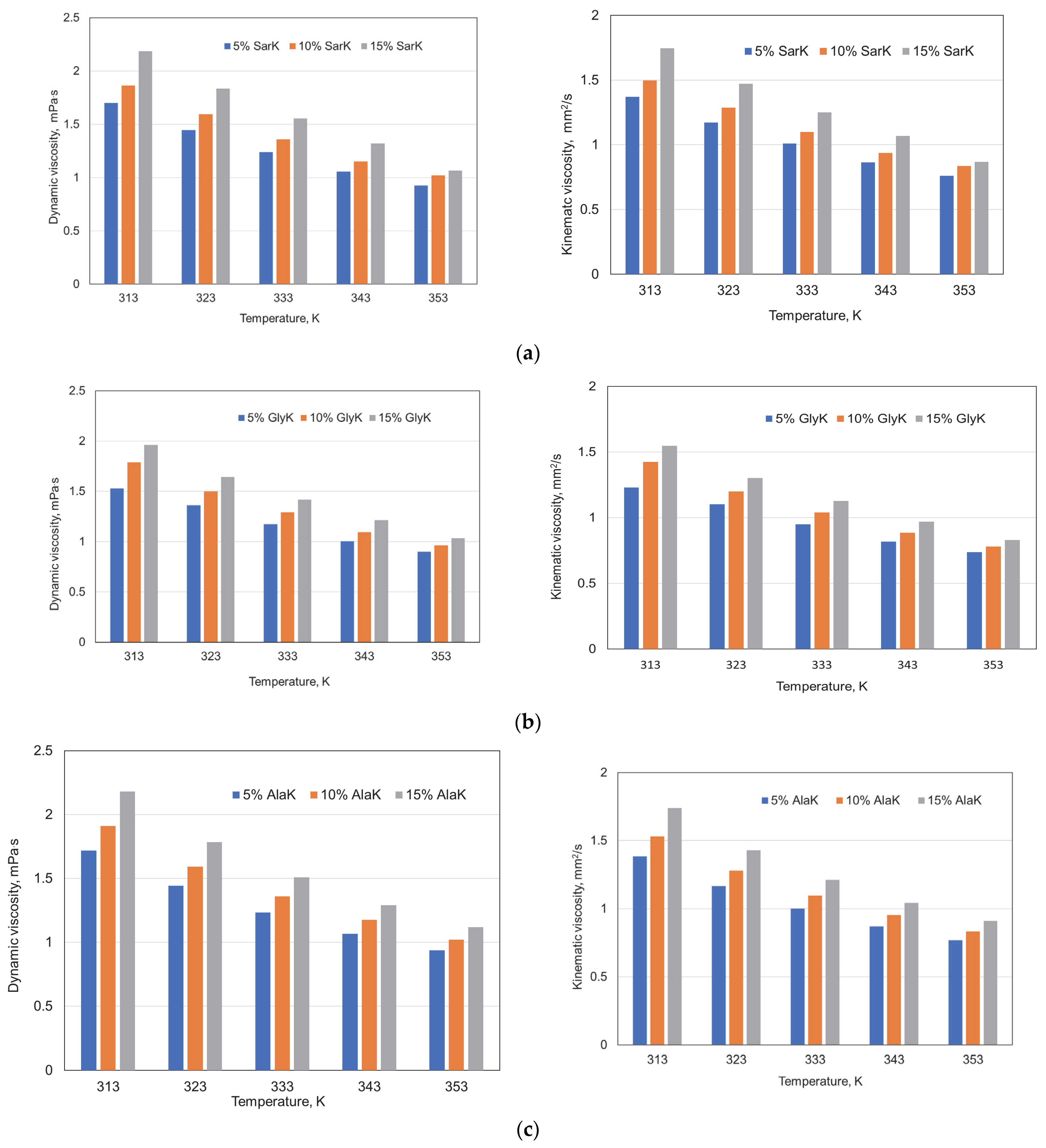
The experimental results obtained for viscosity (dynamic and kinematic) are presented in Figure 4, at 5%, 10% and 15 % AAS concentrations.
The viscosities of the studied solutions increase when the solute concentration rises, due to an increase in the number of intermolecular collisions and interactions. A concentration increasing from 5% to 15% SarK determined an average viscosity increment of 24.24%. The dynamic viscosity increased, on average, by 21.25% for GlyK and 22.60% for AlaK. The viscosity decreases with temperature. For SarK–K2CO3 mixture, increasing the temperature from 313 to 353 K led to a viscosity decrease from 2.18 to 1.06 mPa s. The same effect was observed in the case of GlyK and AlaK, but the decrease was less important. This phenomenon is explained by the reduction in the strength of cohesive intermolecular forces, responsible for the free movement of molecules. In our electrolyte solutions, the temperature had a dual influence: first, it decreases the viscosity by disrupting some of the hydrogen–bond networks, and secondly, it modifies the ion–solvent interactions. The combined influence of concentration and temperature is not always cumulative but often exhibits a complex influence. We found that at 15% AAKs, the solutions become more sensitive to the temperature increase.
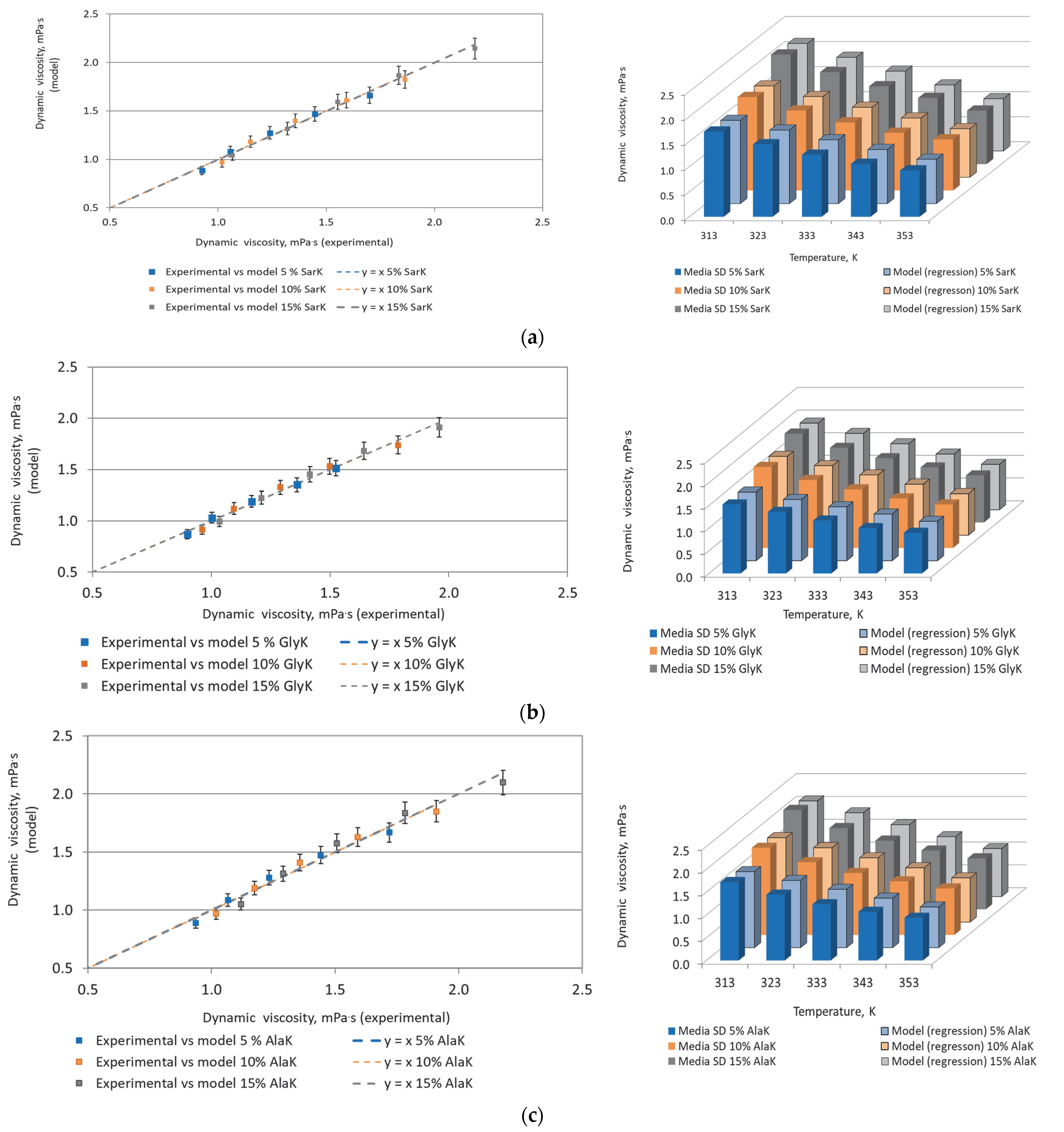
As in the case of density, a linear dependence was obtained for dynamic viscosity dependence on amino acid concentrations; the regression constants and R2 are presented in Table 3.
For the aqueous 5% amino acid salt solutions, the quality of the viscosity data fitting was assessed through the RSD. The calculated values were 0.036 kg/m·s for sarcosine (SarK), 0.024 kg/m·s for glycine (GlyK), and 0.045 kg/m·s for alanine (AlaK). Although the RSD values are low in absolute terms for all the AAS solutions, the deviations between experimental and modeled viscosities are on the order of 5%, which is significantly larger than the experimental uncertainty. This indicates that, while the regression captures the overall temperature trend, systematic discrepancies remain between model predictions and experimental data (Figure 5).

3.2. Influence of Parameters on Absorption

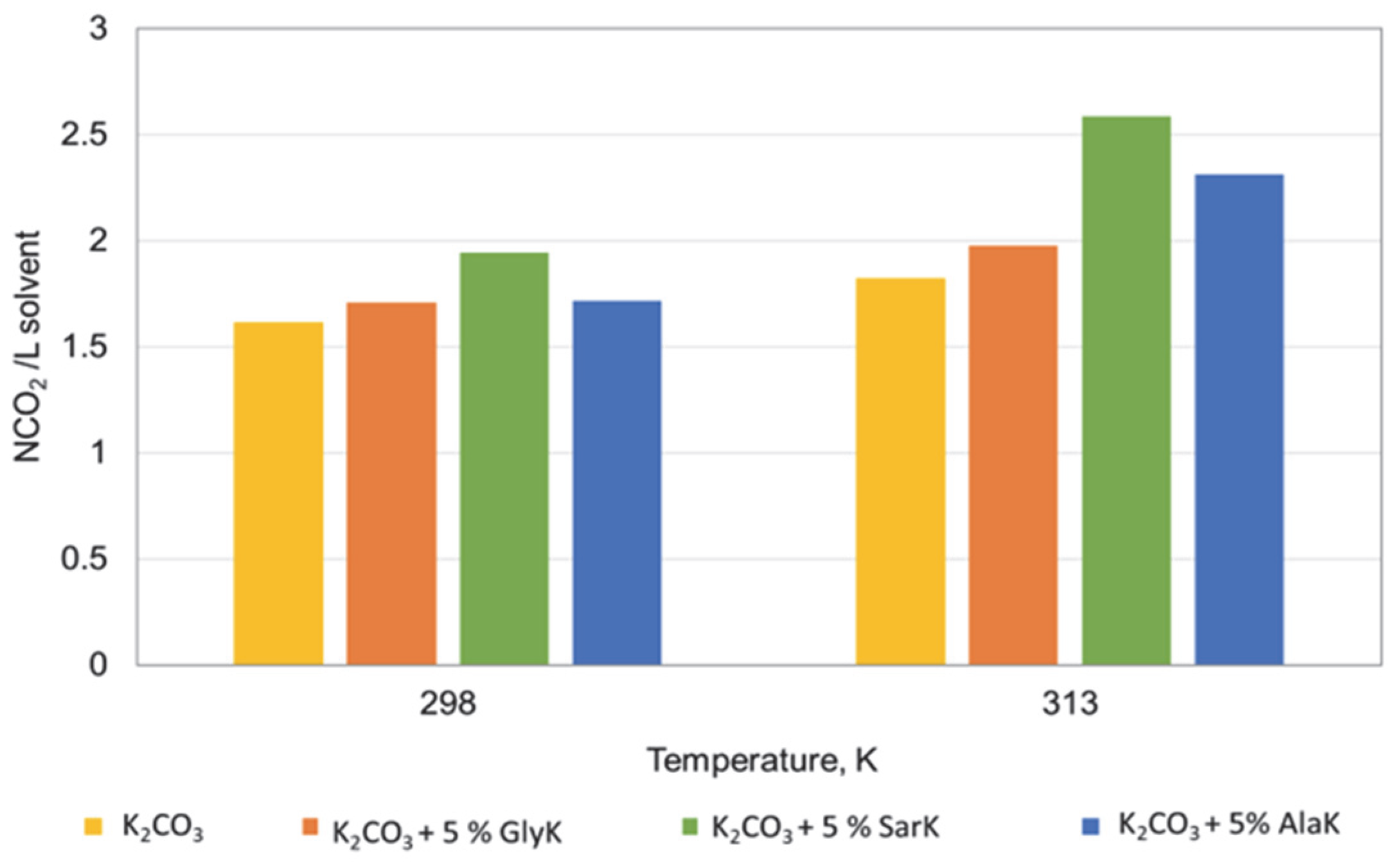
In order to point out the influence of adding AAKs on process performance, the experimental tests were performed in comparison with potassium carbonate solution without promoters (AAKs) as reference (Figure 6). The assessment of the process performance was made by the number of CO2 moles absorbed per liter of solution, which was calculated on the basis of chemical composition before and after absorption.
At both temperatures used in testing, the systems with SarK are the most effective promoters, showing the highest CO2 loading and best thermal performance. AlaK outperforms GlyK at elevated temperatures, making it a viable and eco–friendly alternative to traditional amino acids.
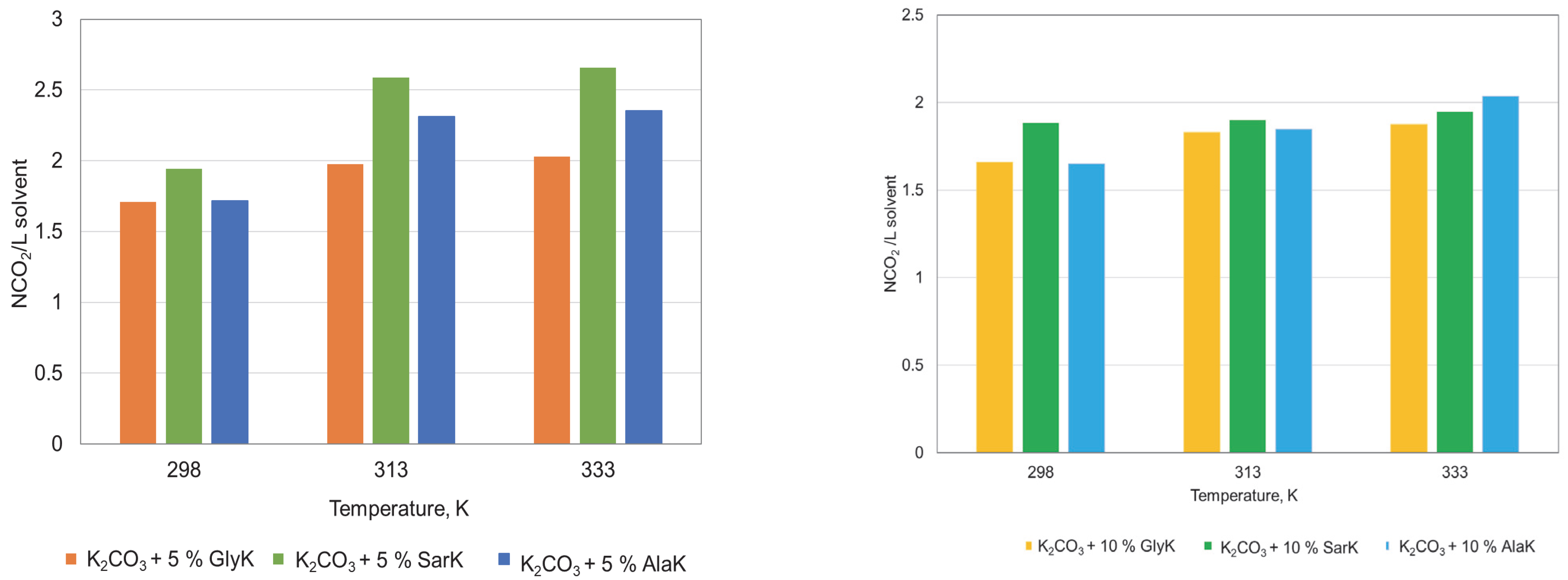
The temperature significantly enhances the CO2 absorption for all systems, but the degree of improvement varies with the chemical structure of the amino acid salt (Figure 7). The small increase in absorption capacity from 313 to 333 K for glycine and alanine suggests that, in these systems, the increasing temperature no longer favors the absorption process to the same extent.
At 10% concentration, the influence of temperature becomes even less pronounced. The absorption values remain relatively stable across the investigated temperature range, with only slight improvements for sarcosinate and alaninate, while glycine shows almost no variation. This suggests that at higher amino acid loadings, the beneficial effect of temperature is attenuated, and the systems tend to converge to absorption capacities close to 2 mol CO2/L solvent.
The results are explained by reaching an equilibrium between the kinetics of the process, determined by the high reaction and diffusion rates favored by higher temperatures and the thermodynamics of the process, on one hand, and the lower solubility of CO2, on the other.
In contrast, for sarcosine, the increase in absorption capacity remains high even at higher temperatures, which suggests a better stability of the carbamates formed and a better tolerance to the CO2 solubility decrease. Moreover, the intrinsically lower solubility of sarcosine in water, compared to the other investigated amino acids, leaves a larger fraction of water molecules available for CO2 solvation, as sarcosine perturbs the solvent structure to a lesser extent. Consequently, the absorption mechanism benefits both from the presence of the deprotonated amine group and from the enhanced availability of water as a dissolution medium [27,38,53].
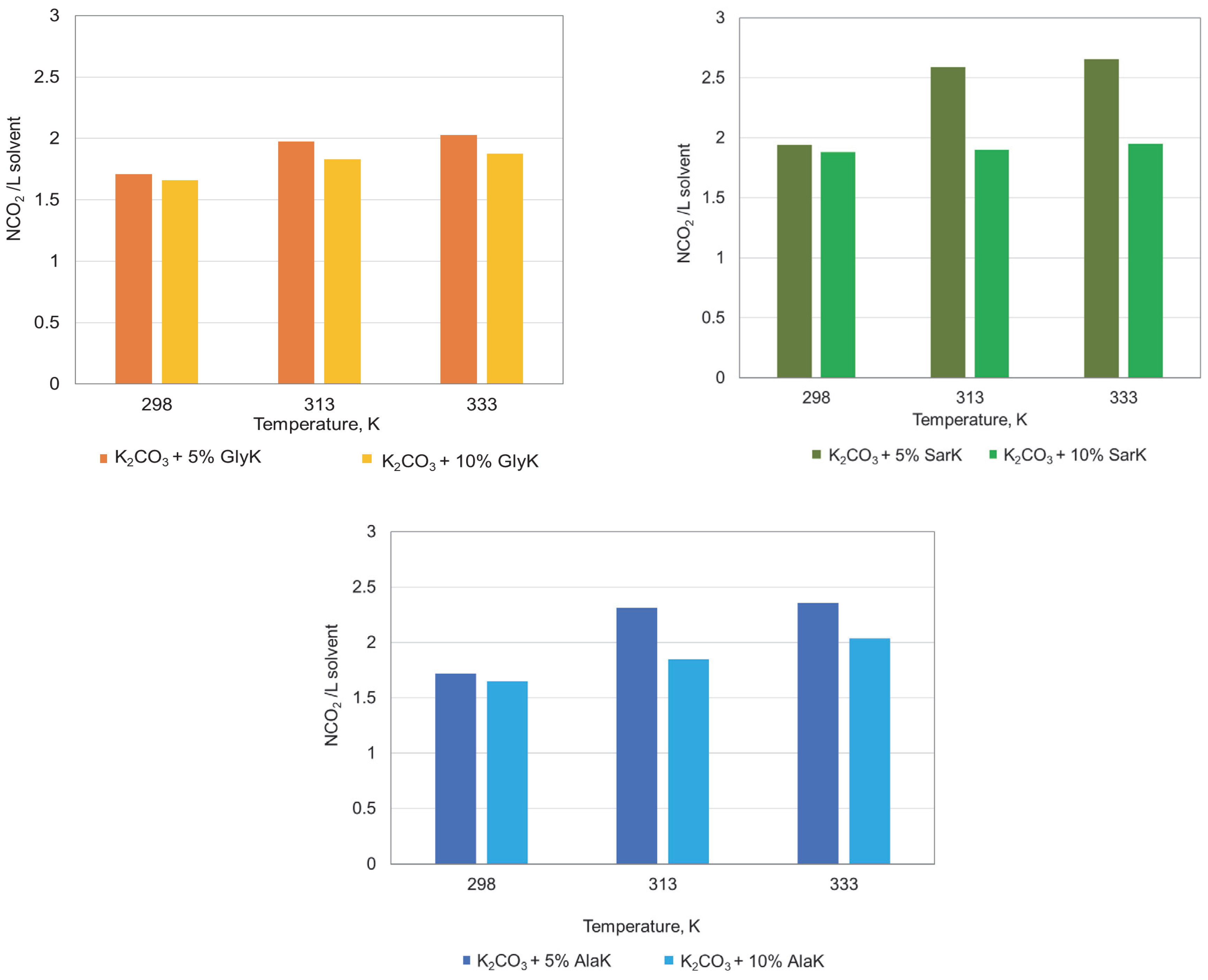
Initial concentration in AAKs significantly enhances CO2 absorption for all systems, as shown in Figure 8.
At a concentration of 5%, the active sites are sufficient to accelerate the kinetics of absorption and increase the apparent absorption capacity. At 10%, the excess amino acid is no longer as effective, as CO2 becomes the limiting species, leading to a saturation phenomenon. For this reason, absorption studies were only performed for 5 and 10% AAKs.
For GlyK, increasing the concentration from 5% to 10% leads to a slight decrease in CO2 capture capacity at both 298 K (from 1.71 to 1.65) and 313 K (from 1.97 to 1.83). For SarK, increasing the concentration from 5% to 10% leads to a slight decrease in the CO2 capture capacity at both temperatures (from 1.94 to 1.88 mol CO2/L solvent at 298 K, respectively, from 2.58 to 1.89 mol CO2/L solvent at 313 K). The highest effect was observed for K2CO3 + 5% SarK at 313 K, with a value of 2.58 mol CO2/L solvent, indicating a favorable synergy between temperature and sarcosine as a promoter.
The increase in temperature from 313 to 333 K determines an improvement in the absorption capacity of 2.65% for SarK and 1.85% for GlyK. This increase does not justify the additional energy consumption, except under some circumstances with associated operational benefits.
For AlaK, increasing the concentration from 5% to 10% also leads to a decrease in the CO2 capture capacity at all temperature values tested. At 298 K, the absorption capacity decreases from 1.75 to 1.69 mol CO2/L solvent, at 313 K from 2.31 to 1.87 mol CO2/L, and at 333 K, from 2.35 to 2.03 mol CO2/L solvent. These results indicate that, similar to glycine and sarcosine, higher alanine loadings do not improve the CO2 capture efficiency and may even limit the beneficial effect of temperature. However, AlaK still exhibits a relatively stable and constant absorption capacity over the investigated temperature range. This suggests that alanine provides a moderate promotional effect, less pronounced than sarcosine but slightly better than glycine.
Compared to 30 wt.% MEA reported in the literature (cyclic capacity ≈ 2.5–3.0 mole CO2/kg solvent), the 25% K2CO3 + 5% Sar system exhibited a maximum capacity of 2.58 mole CO2/L solvent at 313 K. This indicated that the proposed solvent has a similar performance range as MEA, while offering the advantages of higher thermal stability and lower regeneration energy (≈2.5–3.0 GJ/t CO2, according to literature).

4. Conclusions

Aqueous solutions of AAS have been explored and utilized for CO2 capture in comparison with those of conventional organic amine solutions. Their advantages are related to their low toxicity and low volatility, superior adsorption characteristics, and resistance to oxidative degradation.
The density and viscosities of aqueous potassium carbonate solutions containing SarK, GlyK and AlaK were measured at various concentrations and temperatures.
The AAS enhanced the CO2 absorption performance of potassium carbonate solutions, confirming the advantage of their use as chemical promoters.
Experimental data demonstrated that SarK is consistently the most effective promoter at all temperatures. Alaninate, while less studied, shows strong performance at 313 K and 323 K, surpassing glycinate.
At elevated temperature, all AAS enhance CO2 capture in potassium carbonate, with the following performance order:
SarK > AlaK > GlyK > K2CO3
Increasing the concentration of promoters from 5% to 10% leads to a decline in CO2 absorption performance. This behavior suggests that while low concentrations enhance CO2 uptake, higher promoter loadings may introduce limitations—possibly through increased solution viscosity, reduced CO2 diffusivity, or aggregation effects that hinder active site availability. This phenomenon suggests the importance of optimization of promoter concentration, as excessive amounts can abrogate the initial catalytic benefits.
The K2CO3 + 5% Sar system demonstrated a CO2 absorption capacity comparable to MEA, with the added benefits of higher thermal stability and lower regeneration energy. While the present work was performed with pure CO2, future studies under real flue gas conditions are needed to evaluate oxidative stability and the influence of impurities such as SOx and NOx.
At this stage, the present work should be considered as a proof of concept highlighting the absorption effectiveness of the proposed solvent blends. A direct extrapolation to industrial absorbers is not straightforward, since a systematic evaluation under different temperatures and pressures is still required in order to assess the efficiency under relevant operating conditions. Such studies will allow us to move from the current TRL 3 (Technology Readiness Level) toward TRL 5–6 and, eventually, to forecast an industrial application. The prediction of scaling-up performance and costs, as well as regeneration studies (e.g., thermal stripping), are indeed crucial aspects, but they fall beyond the scope of this preliminary paper and are planned as the focus of a follow-up study, which will be integrated into flexible and energy efficient CO2 capture schemes, adapted to the modern requirements of industrial processes related to the sustainability concept.

Author Contributions

Conceptualization, I.C. and M.H.; methodology, R.E.T.-F.; validation, R.E.T.-F., L.L. and L.T.; formal analysis, M.H., M.C. and F.C.; investigation, R.E.T.-F., F.C. and G.S.; resources, I.C., M.H. and G.S.; data curation, R.E.T.-F., L.L. and M.C.; writing—original draft preparation, M.H., R.E.T.-F. and M.C.; writing—review and editing, I.C., G.S., L.T. and F.C.; visualization, L.L.; supervision, I.C. and L.T.; funding acquisition, I.C. and L.T. All authors have read and agreed to the published version of the manuscript.

Funding

This research was funded by the European Union’s HORIZON–WIDERA–2021–ACCESS-05–01–European, grant number 101071321, and APC was funded by the “Gheorghe Asachi” Technical University of Iasi, Romania, as a partner of the INGENIUM Alliance of European Universities, which made possible this collaboration with the “G. d’Annunzio” University of Chieti-Pescara, Italy.

Data Availability Statement

The data presented in this study are available on request from the corresponding authors.

Acknowledgments

This research paper was supported by Boosting Ingenium for Excellence (BI4E) project, funded by the European Union’s HORIZON–WIDERA–2021–ACCESS–05–01–European Excellence Initiative under the Grant Agreement No. 101071321. I.C., R.E.T.F., L.L., M.H., G.S. acknowledges the INGENIUM Alliance of European Universities for the opportunity to spend training time at the University “G. d’Annunzio” of Chieti–Pescara.

Conflicts of Interest

The authors declare no conflicts of interest.

Abbreviations

The following abbreviations are used in this manuscript:
GHGsGreenhouse gases
CCSCarbon capture and storage
PCCPost-combustion CO2 capture
MEAMonoethanolamine
DEADiethanolamine
MDEAMethyldiethanolamine
DGADiglycolamine
DIPADiisopropylamine
AlaAlanine
GlyGlycine
SarSarcosine
AlaKAlanine potassium salt
GlyKGlycine potassium salt
SarKSarcosine potassium salt
AASAmino acid salts
AAKAmino acid potassium salt
EC–50Ecotoxicity
BODBiochemical oxygen demand
ThODTheoretical oxygen demand
RSDResidual Standard Deviation

References

  1. Siddik, M.; Islam, M.; Zaman, A.K.M.M.; Hasan, M. Current status and correlation of fossil fuels consumption and greenhouse gas emissions. Int. J. Energy Environ. Econ. 2021, 28, 103–119. [Google Scholar]
  2. Martins, F.; Felgueiras, C.; Smitkova, M.; Caetano, N. Analysis of fossil fuel energy consumption and environmental impacts in European countries. Energies 2019, 12, 964. [Google Scholar] [CrossRef]
  3. Vasiliu, L.; Gencel, O.; Damian, I.; Harja, M. Capitalization of tires waste as derived fuel for sustainable cement production. Sustain. Energy Technol. Assess. 2023, 56, 103104. [Google Scholar] [CrossRef]
  4. Vasiliu, L.; Lazăr, L.; Harja, M. Reducing the carbon dioxide footprint of inorganic binders industry. J. Int. Sci. Pub. Ecol. Safety 2023, 17, 35–43. [Google Scholar] [CrossRef]
  5. Vollmer, M.; Eberhardt, W. A simple model for the prediction of CO2 concentrations in the atmosphere, depending on global CO2 emissions. Eur. J. Phys. 2024, 45, 025803. [Google Scholar] [CrossRef]
  6. Liu, E.; Lu, X.; Wang, D. A systematic review of carbon capture, utilization and storage: Status, progress and challenges. Energies 2023, 16, 2865. [Google Scholar] [CrossRef]
  7. Hamedi, H.; Gonzales Calienes, G.; Shadbahr, J. Ex Situ Carbon Mineralization for CO2 Capture Using Industrial Alkaline Wastes—Optimization and Future Prospects: A Review. Clean Technol. 2025, 7, 44. [Google Scholar] [CrossRef]
  8. Li, X.; Peng, Z.; Pei, Y.; Ajmal, T.; Rana, K.J.; Aitouche, A.; Mobasheri, R. Oxy-fuel combustion for carbon capture and storage in internal combustion engines–A review. Int. J. Energy Res. 2022, 46, 505–522. [Google Scholar] [CrossRef]
  9. Harja, M.; Ciobanu, G.; Juzsakova, T.; Cretescu, I. New approaches in modeling and simulation of CO2 absorption reactor by activated potassium carbonate solution. Processes 2019, 7, 78. [Google Scholar] [CrossRef]
  10. Dragan, S.; Lisei, H.; Ilea, F.M.; Bozonc, A.C.; Cormos, A.M. Dynamic Modeling Assessment of CO2 Capture Process Using Aqueous Ammonia. Energy 2023, 16, 4337. [Google Scholar] [CrossRef]
  11. Yi, N.; Li, S.; Wang, X.; Kong, F.; Li, X.; Ren, Y.; Liu, H.; Xu, S. Novel amine emissions control methods for CO2 capture based on reducing amine concentration in the scrubbing liquid. Sep. Purif. Technol. 2025, 354, 129295. [Google Scholar] [CrossRef]
  12. Krótki, A.; Solny, L.W.; Stec, M.; Spietz, T.; Wilk, A.; Chwoła, T.; Jastrząb, K. Experimental results of advanced technological modifications for a CO2 capture process using amine scrubbing. Int. J. Greenh. Gas Control 2020, 96, 103014. [Google Scholar] [CrossRef]
  13. Odunlami, O.A.; Vershima, D.A.; Oladimeji, T.E.; Nkongho, S.; Ogunlade, S.K.; Fakinle, B.S. Advanced techniques for the capturing and separation of CO2—A review. Results Eng. 2022, 15, 100512. [Google Scholar] [CrossRef]
  14. Ooi, Z.L.; Tan, P.Y.; Tan, L.S.; Yeap, S.P. Amine-based solvent for CO2 absorption and its impact on carbon steel corrosion: A perspective review. Chin. J. Chem. Eng. 2020, 28, 1357–1367. [Google Scholar] [CrossRef]
  15. Hessel, V.; Tran, N.N.; Asrami, M.R.; Tran, Q.D.; Long, N.V.D.; Escribà-Gelonch, M.; Tejada, J.O.; Linke, S.; Sundmacher, K. Sustainability of green solvents–review and perspective. Green Chem. 2022, 24, 410–437. [Google Scholar] [CrossRef]
  16. Krishnan, A.; Gopinath, K.P.; Vo, D.V.N.; Malolan, R.; Nagarajan, V.M.; Arun, J. Ionic liquids, deep eutectic solvents and liquid polymers as green solvents in carbon capture technologies: A review. Environ. Chem. Lett. 2020, 18, 2031–2054. [Google Scholar] [CrossRef]
  17. Murshid, G.; Butt, W.A.; Garg, S. Investigation of thermophysical properties for aqueous blends of sarcosine with 1-(2-aminoethyl) piperazine and diethylenetriamine as solvents for CO2 absorption. J. Mol. Liq. 2019, 278, 584–591. [Google Scholar] [CrossRef]
  18. Zhang, Z.; Li, Y.; Zhang, W.; Wang, J.; Soltanian, M.R.; Olabi, A.G. Effectiveness of amino acid salt solutions in capturing CO2: A review. Renew. Sustain. Energy Rev. 2018, 98, 179–188. [Google Scholar] [CrossRef]
  19. Ramezani, R.; Mazinani, S.; Di Felice, R. State–of–the–art of CO2 capture with amino acid salt solutions. Rev. Chem. Eng. 2022, 38, 273–299. [Google Scholar] [CrossRef]
  20. Hu, G.; Smith, K.H.; Wu, Y.; Mumford, K.A.; Kentish, S.E.; Stevens, G.W. Carbon dioxide capture by solvent absorption using amino acids: A review. Chin. J. Chem. Eng. 2018, 26, 2229–2237. [Google Scholar] [CrossRef]
  21. Shariff, A.M.; Shaikh, M.S. Aqueous Amino Acid Salts and Their Blends as Efficient Absorbents for CO2 Capture. In Energy Efficient Solvents for CO2 Capture by Gas-Liquid Absorption. Green Energy and Technology; Budzianowski, W., Ed.; Springer: Cham, Switzerland, 2017. [Google Scholar] [CrossRef]
  22. Majchrowicz, M.E.; Brilman, D.W.; Groeneveld, M.J. Precipitation regime for selected amino acid salts for CO2 capture from flue gases. Energy Procedia 2009, 1, 979–984. [Google Scholar] [CrossRef]
  23. Brouwer, J.P.; Feron, P.H.M.; Ten Asbroek, N.A.M. Amino-acid salts for CO2 capture from flue gases. In Proceedings of the Fourth Annual Conference on Carbon Capture & Sequestration, Alexandria, VA, USA, 2–5 May 2005. [Google Scholar]
  24. Feron, P.H.; Asbroek, N. New solvents based on amino-acid salts for CO2 capture from flue gases. In Greenhouse Gas Control Technologies; Elsevier Science Ltd.: Amsterdam, The Netherlands, 2005; pp. 1153–1158. [Google Scholar]
  25. Wei, C.C.; Puxty, G.; Feron, P. Amino acid salts for CO2 capture at flue gas temperatures. Chem. Eng. Sci. 2014, 107, 218–226. [Google Scholar] [CrossRef]
  26. Zhang, Z.; Borhani, T.N.; Olabi, A.G. Status and perspective of CO2 absorption process. Energy 2020, 205, 118057. [Google Scholar] [CrossRef]
  27. Fan, W.; Liu, Y.; Wang, K. Detailed experimental study on the performance of Monoethanolamine, Diethanolamine, and Diethylenetriamine at absorption/regeneration conditions. J. Clean. Prod. 2016, 125, 296–308. [Google Scholar] [CrossRef]
  28. Li, Q.; Bao, Z.; Akhmedov, N.G.; Li, B.A.; Duan, Y.; Xing, M.; Wang, J.; Morsi, B.; Li, B. Unraveling the role of Glycine in K2CO3 solvent for CO2 removal. Ind. Eng. Chem. Res. 2022, 61, 12545–12554. [Google Scholar] [CrossRef]
  29. Hu, G.; Nicholas, N.J.; Smith, K.H.; Mumford, K.A.; Kentish, S.E.; Stevens, G.W. Carbon dioxide absorption into promoted potassium carbonate solutions: A review. Int. J. Greenh. Gas Control 2016, 53, 28–40. [Google Scholar] [CrossRef]
  30. Harja, M.; Hultuană, E.; Apostolescu, N.; Apostolescu, G.A.; Tataru Farmus, R.E. Viscosity of potassium carbonate solutions promoted by new amines. J. Eng. Sci. Innov. 2020, 5, 239–246. [Google Scholar] [CrossRef]
  31. Isa, F.; Zabiri, H.; Ng, N.K.S.; Shariff, A.M. CO2 removal via promoted potassium carbonate: A review on modeling and simulation techniques. Int. J. Greenh. Gas Control 2018, 76, 236–265. [Google Scholar] [CrossRef]
  32. Thee, H.; Suryaputradinata, Y.A.; Mumford, K.A.; Smith, K.H.; da Silva, G.; Kentish, S.E.; Stevens, G.W. A kinetic and process modeling study of CO2 capture with MEA-promoted potassium carbonate solutions. Chem. Eng. J. 2012, 210, 271–279. [Google Scholar] [CrossRef]
  33. Cullinane, J.T.; Rochelle, G.T. Carbon dioxide absorption with aqueous potassium carbonate promoted by piperazine. Chem. Eng. Sci. 2004, 59, 3619–3630. [Google Scholar] [CrossRef]
  34. Borhani, T.N.G.; Azarpour, A.; Akbari, V.; Alwi, S.R.W.; Manan, Z.A. CO2 capture with potassium carbonate solutions: A state-of-the-art review. Int. J. Greenh. Gas Control 2015, 41, 142–162. [Google Scholar] [CrossRef]
  35. Li, Y.; Tan, Z.; Zhang, Z.; Hu, X. Experimental studies on carbon dioxide absorption using potassium carbonate solutions with amino acid salts. Sep. Purif. Technol. 2019, 219, 47–54. [Google Scholar] [CrossRef]
  36. Wu, Y.; Alivand, M.S.; Hu, G.; Stevens, G.W.; Mumford, K.A. Nucleation kinetics of glycine promoted concentrated potassium carbonate solvents for carbon dioxide absorption. Chem. Eng. J. 2020, 381, 122712. [Google Scholar] [CrossRef]
  37. Hu, G.; Smith, K.H.; Wu, Y.; Kentish, S.E.; Stevens, G.W. Screening amino acid salts as rate promoters in potassium carbonate solvent for carbon dioxide absorption. Energy Fuels 2017, 31, 4280–4286. [Google Scholar] [CrossRef]
  38. Thee, H.; Nicholas, N.J.; Smith, K.H.; da Silva, G.; Kentish, S.E.; Stevens, G.W. A kinetic study of CO2 capture with potassium carbonate solutions promoted with various amino acids: Glycine, sarcosine and proline. Int. J. Greenh. Gas Control 2014, 20, 212–222. [Google Scholar] [CrossRef]
  39. Smith, K.; Lee, A.; Mumford, K.; Li, S.; Thanumurthy, N.; Temple, N.; Anderson, C.; Hooper, B.; Kentish, S.; Stevens, G. Pilot plant results for a precipitating potassium carbonate solvent absorption process promoted with glycine for enhanced CO2 capture. Fuel Process. Technol. 2015, 135, 60–65. [Google Scholar] [CrossRef]
  40. Xu, X.; Myers, M.B.; Versteeg, F.G.; Adam, E.; White, C.; Crooke, E.; Wood, C.D. Next generation amino acid technology for CO2 capture. J. Mater. Chem. A 2021, 9, 1692–1704. [Google Scholar] [CrossRef]
  41. Lee, A.; Wolf, M.; Kromer, N.; Mumford, K.A.; Nicholas, N.J.; Kentish, S.E.; Stevens, G.W. A study of the vapour–liquid equilibrium of CO2 in mixed solutions of potassium carbonate and potassium glycinate. Int. J. Greenh. Gas Control 2015, 36, 27–33. [Google Scholar] [CrossRef]
  42. Sang Sefidi, V.; Luis, P. Advanced amino acid-based technologies for CO2 capture: A review. Ind. Eng. Chem. Res. 2019, 58, 20181–20194. [Google Scholar] [CrossRef]
  43. Simons, K.; Brilman, W.; Mengers, H.; Nijmeijer, K.; Wessling, M. Kinetics of CO2 absorption in aqueous sarcosine salt solutions: Influence of concentration, temperature, and CO2 loading. Ind. Eng. Chem. Res. 2010, 49, 9693–9702. [Google Scholar] [CrossRef]
  44. Guo, D.; Thee, H.; Tan, C.Y.; Chen, J.; Fei, W.; Kentish, S.; Stevens, G.W.; da Silva, G. Amino acids as carbon capture solvents: Chemical kinetics and mechanism of the glycine+ CO2 reaction. Energy Fuels 2013, 27, 3898–3904. [Google Scholar] [CrossRef]
  45. Lim, J.A.; Kim, D.H.; Yoon, Y.; Jeong, S.K.; Park, K.T.; Nam, S.C. Absorption of CO2 into aqueous potassium salt solutions of L-alanine and L-proline. Energy Fuels 2012, 26, 3910–3918. [Google Scholar] [CrossRef]
  46. Song, H.J.; Park, S.; Kim, H.; Gaur, A.; Park, J.W.; Lee, S.J. Carbon dioxide absorption characteristics of aqueous amino acid salt solutions. Int. J. Greenh. Gas Control 2012, 11, 64–72. [Google Scholar] [CrossRef]
  47. Kim, M.; Song, H.J.; Lee, M.G.; Jo, H.Y.; Park, J.W. Kinetics and steric hindrance effects of carbon dioxide absorption into aqueous potassium alaninate solutions. Ind. Eng. Chem. Res. 2012, 51, 2570–2577. [Google Scholar] [CrossRef]
  48. Abdellah, M.H.; Kiani, A.; Conway, W.; Puxty, G.; Feron, P. A mass transfer study of CO2 absorption in aqueous solutions of isomeric forms of sodium alaninate for direct air capture application. Chem. Eng. J. 2024, 481, 148765. [Google Scholar] [CrossRef]
  49. Tătaru-Fărmuș, R.E.; Apostolescu, N.; Cernătescu, C.; Cobzaru, C.; Poroch, M. Screening of the amino acid-based solvents for carbon dioxide absorption. Bul. Inst. Polit. Iasi Chem. Chem. Eng. 2022, 68, 76–89. [Google Scholar]
  50. Shao, R.; Stangeland, A. Amines Used in CO2 Capture-Health and Environmental Impacts; The Bellona Foundation: Oslo, Norway, 2009. [Google Scholar]
  51. Garg, S.; Shariff, M.A.; Shaikh, M.S.; Lal, B.; Aftab, A.; Faiqa, N. Measurement and prediction of physical properties of aqueous sodium salt of L-phenylalanine. J. Serb. Chem. Soc. 2017, 82, 905–919. [Google Scholar] [CrossRef]
  52. Vakili-Nezhaad, G.R.; Al-Mammari, R.; Gujarathi, A.M.; Ahmad, W. Thermophysical properties for the binary mixtures of tert-amyl methyl ether with n–hexane, cyclopentane, benzene and m-xylene at different temperatures. J. Mol. Liq. 2018, 252, 475–487. [Google Scholar] [CrossRef]
  53. Ma’mun, S. Solubility of carbon dioxide in aqueous solution of potassium sarcosine from 353 to 393 K. Energy Procedia 2014, 51, 191–196. [Google Scholar] [CrossRef]
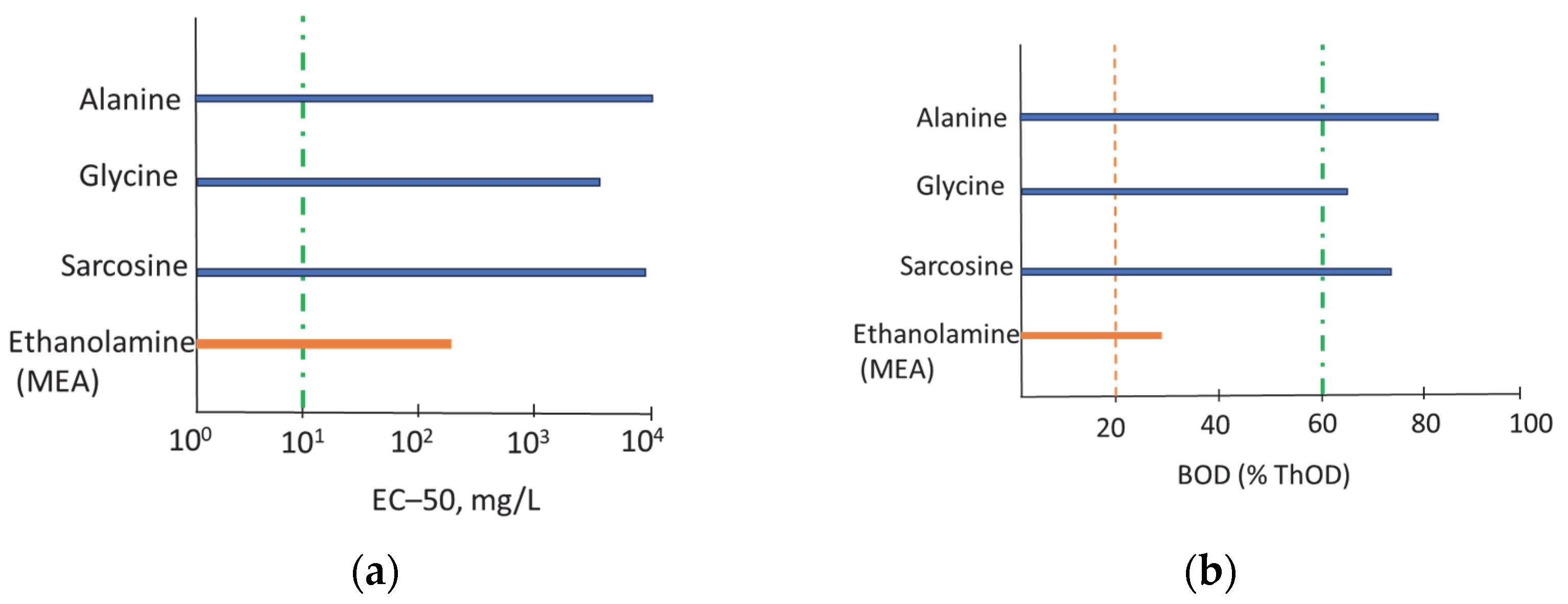
Figure 1. Ecotoxicity (EC–50) of proposed AAS compared to MEA (a); biodegradability of AAS, in terms of BOD (b) (BOD—biochemical oxygen demand).
Cleantechnol 07 00099 g001
Figure 2. Picture of experimental setup for studying the CO2 absorption (a); data acquisition system (b).
Cleantechnol 07 00099 g002
Figure 3. Density and linear fitting plot dependence of experimental vs. model for potassium carbonate solution promoted with potassium salts of (a) SarK, (b) GlyK and (c) AlaK.
Cleantechnol 07 00099 g003
Figure 4. Viscosity of analyzed solutions: (a) SarK, (b) GlyK, (c) AlaK.
Cleantechnol 07 00099 g004
Figure 5. Experimental and modeled dynamic viscosity of aqueous potassium carbonate—amino acid salt solutions (5%, 10%, 15%) as a function of temperature: comparison of regression results and parity plot: (a) SarK, (b) GlyK, (c) AlaK.
Cleantechnol 07 00099 g005
Figure 6. Influence of AAKs type.
Cleantechnol 07 00099 g006
Figure 7. Influence of temperature on absorption efficiency.
Cleantechnol 07 00099 g007
Figure 8. Influence of AAKs concentrations on CO2 absorption efficiency at different temperatures.
Cleantechnol 07 00099 g008
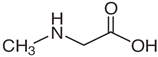
Table 1. The properties of used AAS.
PropertiesSarGlyAla
Chemical formulaC3H7NO2C2H5NO2C3H7NO2
-Cleantechnol 07 00099 i001Cleantechnol 07 00099 i002Cleantechnol 07 00099 i003
CAS107-97-156-40-656-41-7
Molecular weight (kg/kmol)89.09375.0789.10
Density at 293 K (kg/m3)109311611424
Solubility in water (g/L) (at 20 °C)89.09249.9167.2
pH of 1 wt.% solution11.649.69.87
Table 2. Constants and R2 for density.
AAKs-abR2RSD
SarK5%−0.5621415.10.99130.832
10%−0.6081435.70.99080.925
15%−0.5871436.90.99510.652
GlyK5%−0.5621417.70.99410.683
10%−0.5731433.50.99370.722
15%−0.5841450.90.99780.435
AlaK5%−0.5781425.40.99730.472
10%−0.5841432.70.99590.592
15%−0.5941439.90.99550.629
Table 3. Constants and R2 for dynamic viscosity.
AAKs-abR2RSD
SarK5%−0.01947.73250.98640.036
10%−0.02138.50300.98500.042
15%−0.027610.76770.99320.036
GlyK5%−0.01616.55420.99110.024
10%−0.02058.15840.98230.043
15%−0.02289.05070.98680.042
AlaK5%−0.01947.74610.97880.045
10%−0.02208.73750.97890.051
15%−0.026210.28490.97270.059
Disclaimer/Publisher’s Note: The statements, opinions and data contained in all publications are solely those of the individual author(s) and contributor(s) and not of MDPI and/or the editor(s). MDPI and/or the editor(s) disclaim responsibility for any injury to people or property resulting from any ideas, methods, instructions or products referred to in the content.