
Article

Phytoremediating a Wastewater-Irrigated Soil Contaminated with Toxic Metals: Comparing the Efficacies of Different Crops

1
Department of Botany, Institute of Pure and Applied Biology, Bahauddin Zakariya University, Multan 60800, Pakistan
2
Department of Entomology, Muhammad Nawaz Sharif University of Agriculture, Multan 66000, Pakistan
3
Soil and Water Testing Laboratory, Vehari, Multan 61100, Pakistan
4
Department of Geography and Planning, Global Institute for Water Security, University of Saskatchewan, Saskatoon, SK S7N 5C8, Canada
5
Department of Geography, University of Calgary, Calgary, AB T2N 1N4, Canada
*
Author to whom correspondence should be addressed.
Soil Syst. 2022, 6(4), 77; https://doi.org/10.3390/soilsystems6040077

Submission received: 14 September 2022 / Revised: 28 September 2022 / Accepted: 28 September 2022 / Published: 10 October 2022
(This article belongs to the Special Issue Advancements in Soil and Sustainable Agriculture)

Abstract

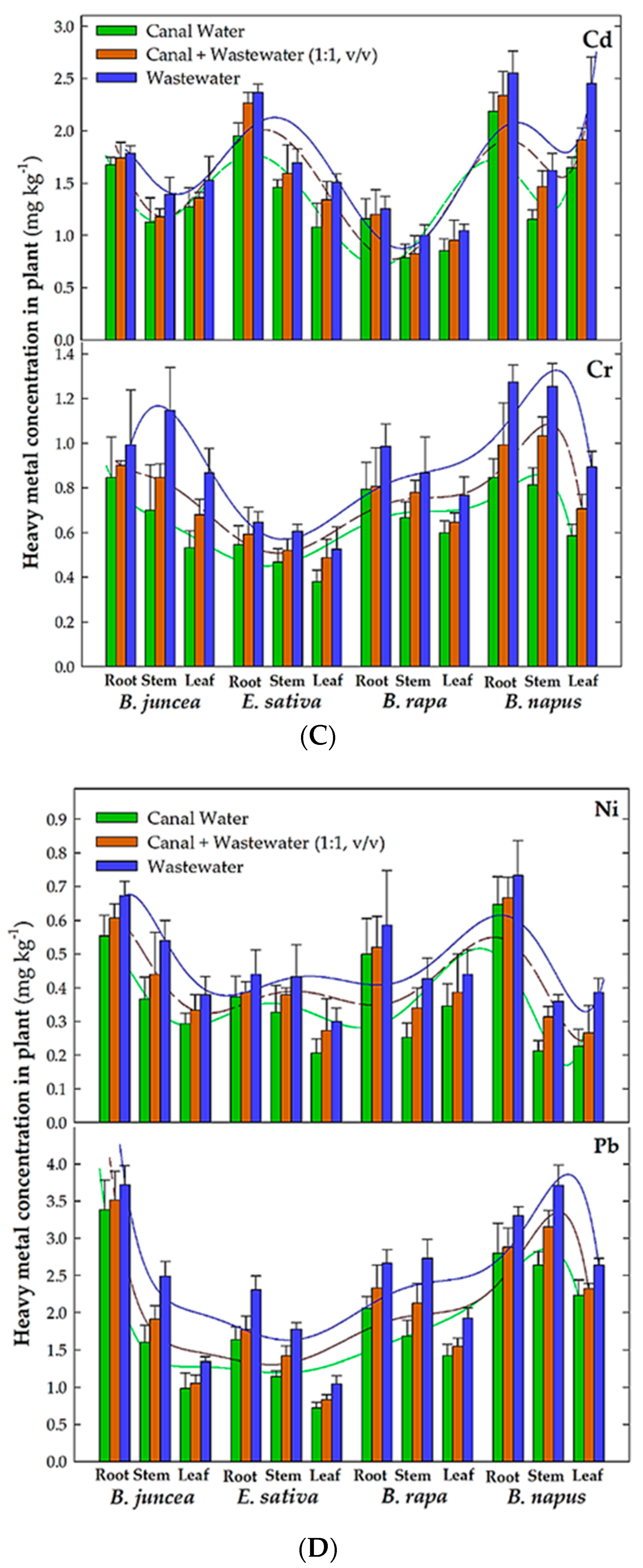
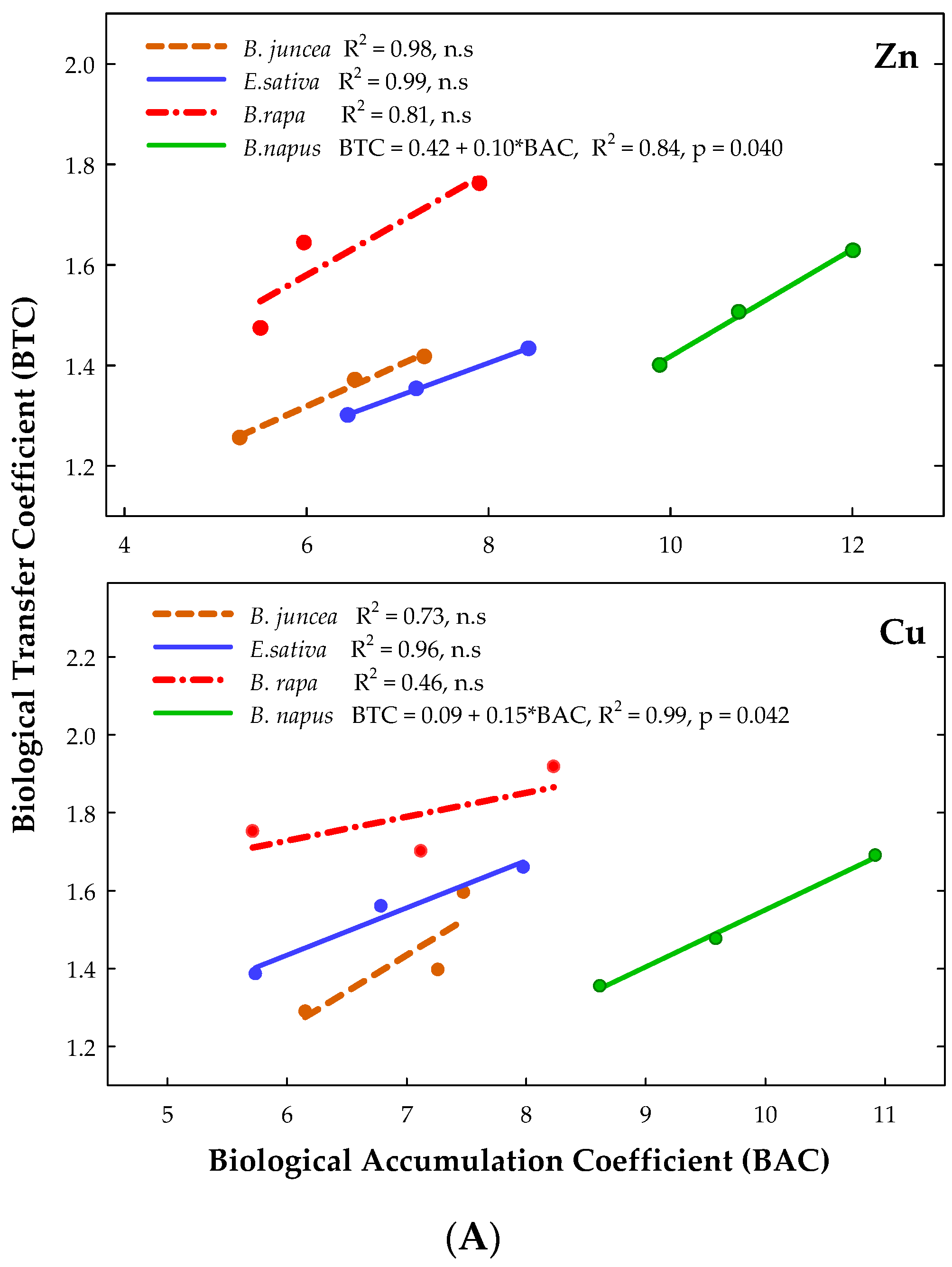
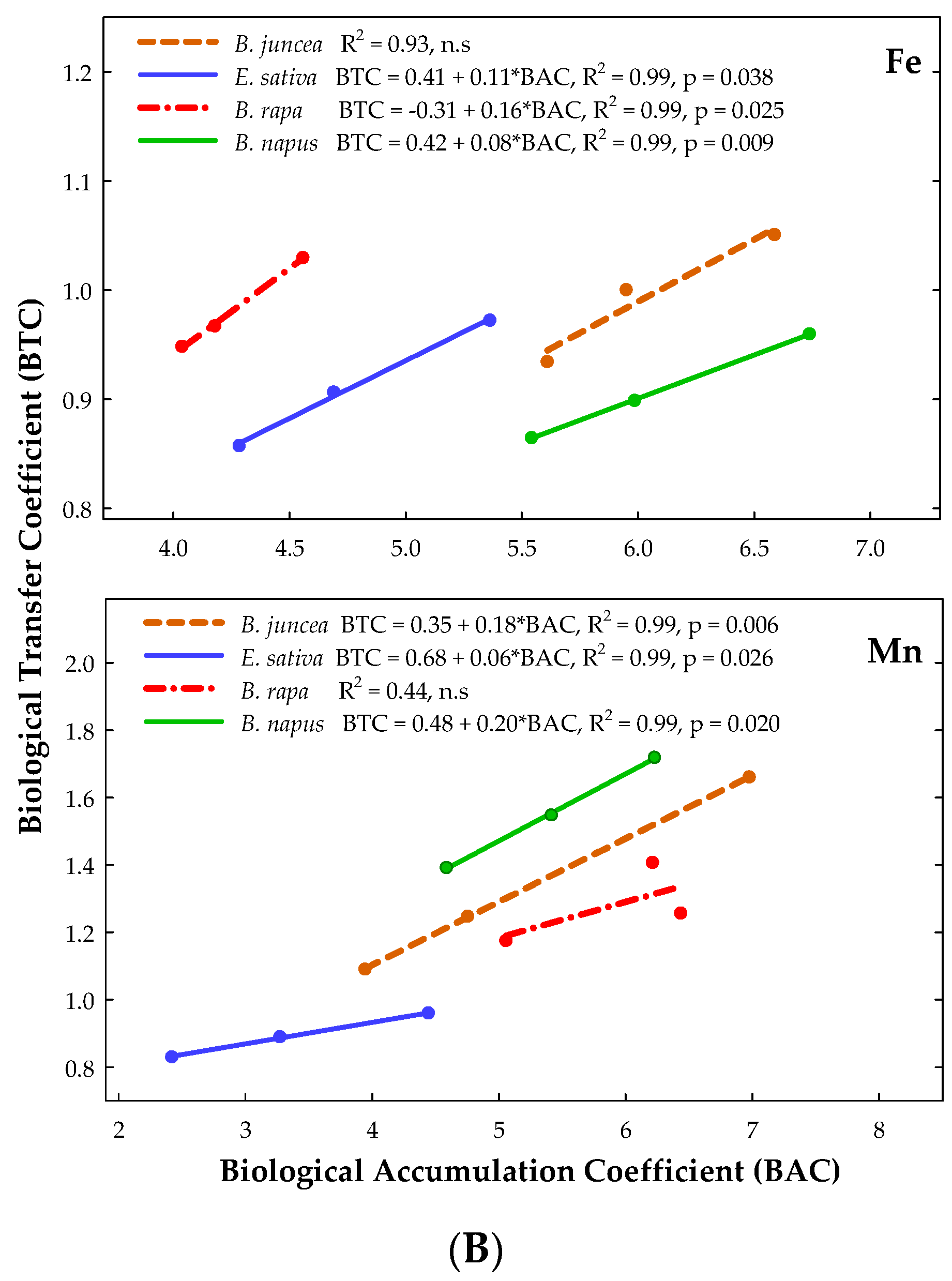
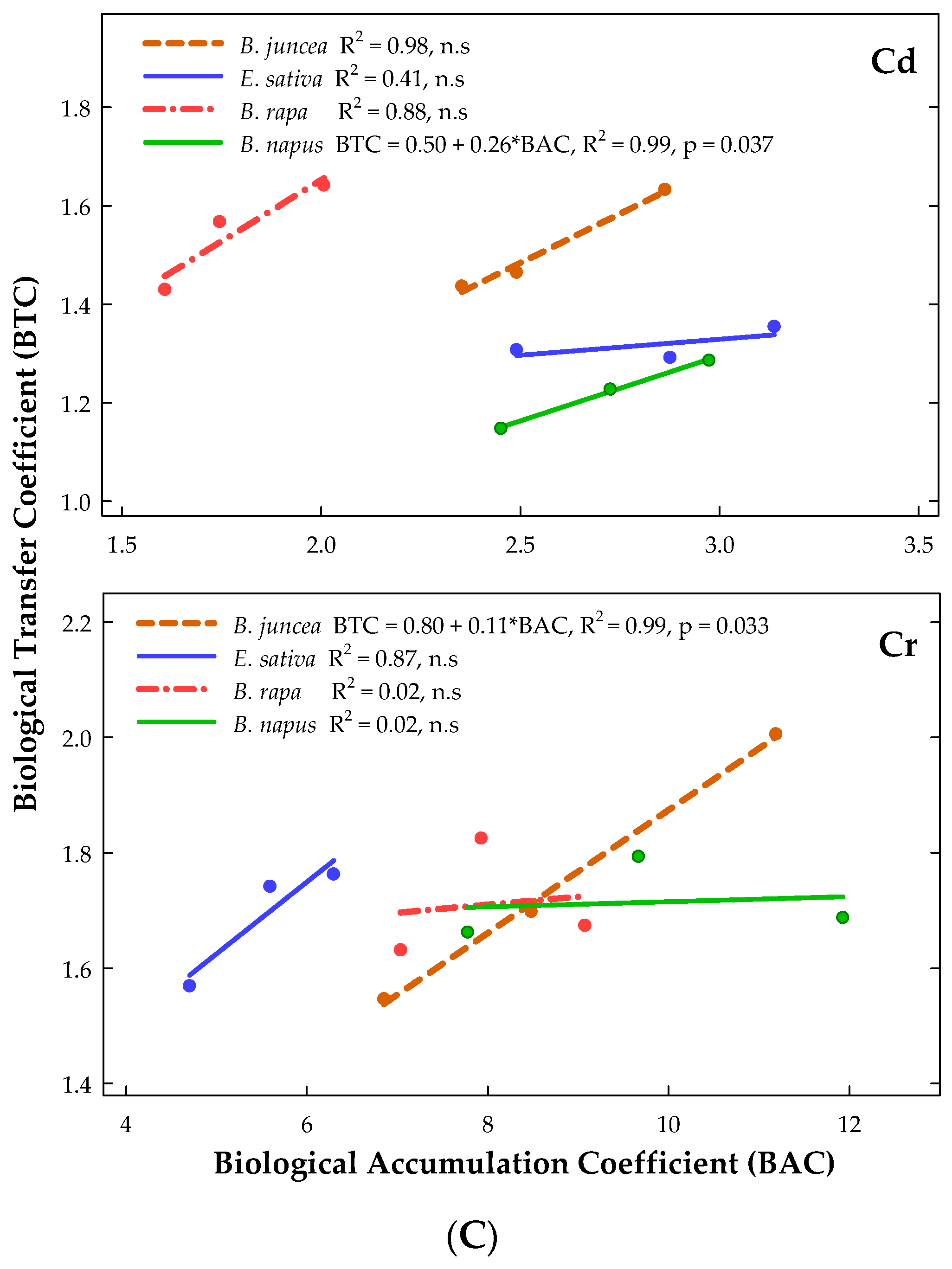
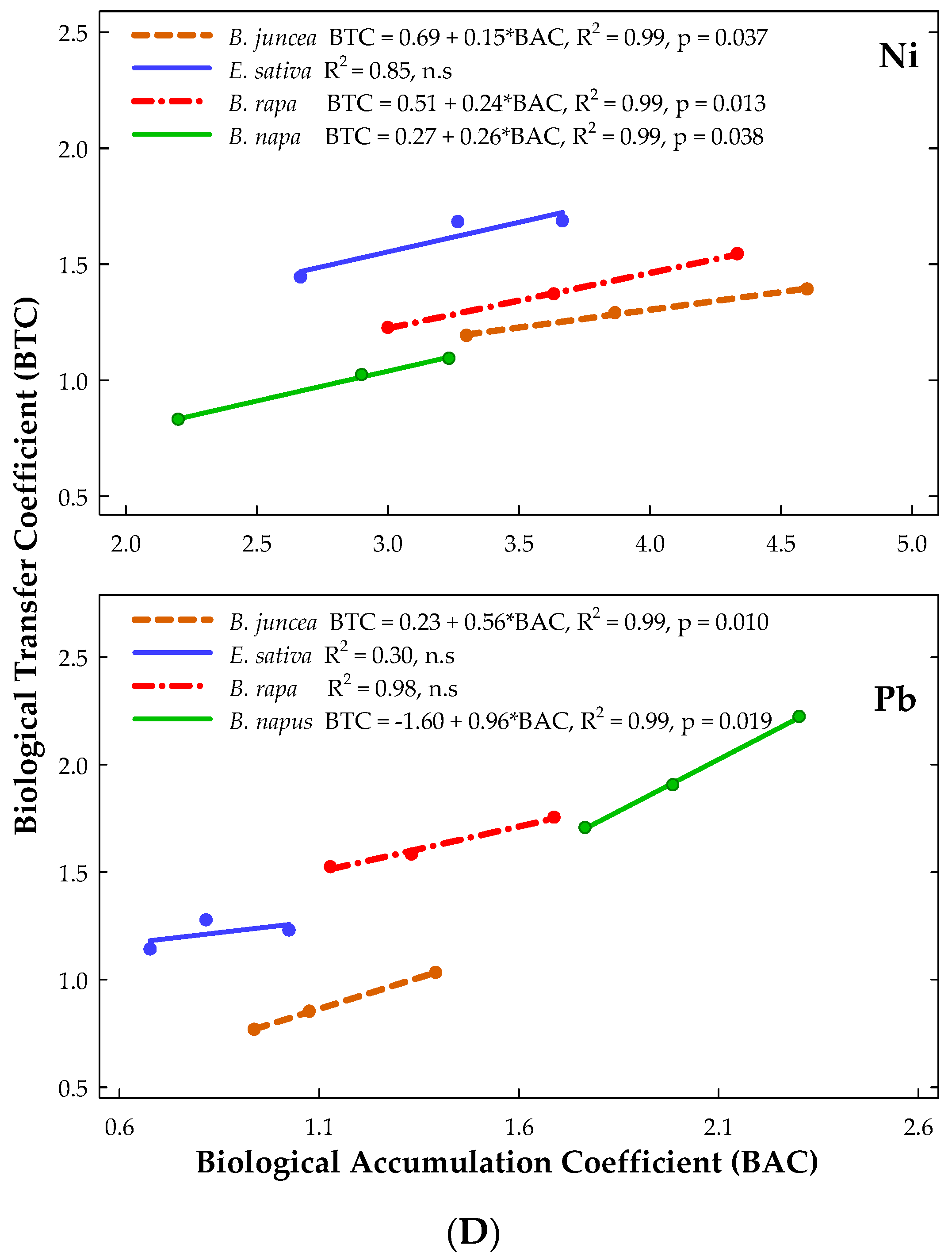
A formidable challenge in suburban agriculture is the sustainability of soil health following the use of wastewater for irrigation. The wastewater irrigation likely toxifies the crop plants making them unconsumable. We used a multivariate, completely randomized design in a greenhouse, comparing the phytoextraction capacities of Brassica juncea, Eruca sativa, Brassica rapa, and Brassica napus—all grown on silt loam soil irrigated with industrial wastewater, canal water, and a 1:1 mixture, during 2018. The studied Brassica plants were generally closely efficient in remediating toxic metals found in wastewater irrigated soil. Substantial differences between Brassica and Eruca plants/parts were recorded. For example, B. napus had significantly higher metal extraction or accumulation compared to E. sativa for Zn (71%), Cu (69%), Fe (78%), Mn (79%), Cd (101%), Cr (57%), Ni (92%). and Pb (49%). While the water and plant were the main predictors of metal extraction or accumulation, an interaction between the main effects substantially contributed to Cu, Mn, and Fe extractions from soil and accumulations in plants. Significant correlations between biological accumulation coefficient and biological transfer coefficient for many metals further supported the metal extraction or accumulation efficiencies as: B. napus > B. juncea > B. rapa > E. sativa. Root-stem mobility index correlation with stem-leaf mobility index indicated the metal translocation along the root-stem-leaf continuum. Therefore, we suggest that these crops may not be used for human or animal consumption when grown with industrial wastewater of toxic metal concentrations ≥ permissible limits. Rather these plants may serve as effective remediators of toxic metal-polluted soil.
Keywords: Brassica; canola; cauliflower; heavy metal; phytoremediation; pollution; soil health; toxic; wastewater Brassica; canola; cauliflower; heavy metal; phytoremediation; pollution; soil health; toxic; wastewater