

Article

Λ and Λ¯ Freeze-Out Distributions and Global Polarizations in Au+Au Collisions

by
Nikita Tsegelnik
1,
Evgeni Kolomeitsev
1,2,* and
Vadym Voronyuk
3
1
Laboratory of Theoretical Physics, Joint Institute for Nuclear Research, RU-141980 Dubna, Russia
2
Department of Physics, Faculty of Natural Sciences, Matej Bel University, SK-97401 Banska Bystrica, Slovakia
3
Laboratory of High Energy Physics, Joint Institute for Nuclear Research, RU-141980 Dubna, Russia
*
Author to whom correspondence should be addressed.
Particles 2023, 6(1), 373-384; https://doi.org/10.3390/particles6010019
Submission received: 1 February 2023 / Revised: 15 February 2023 / Accepted: 22 February 2023 / Published: 27 February 2023
(This article belongs to the Special Issue Selected Papers from "Physics Performance Studies at FAIR and NICA")

Abstract

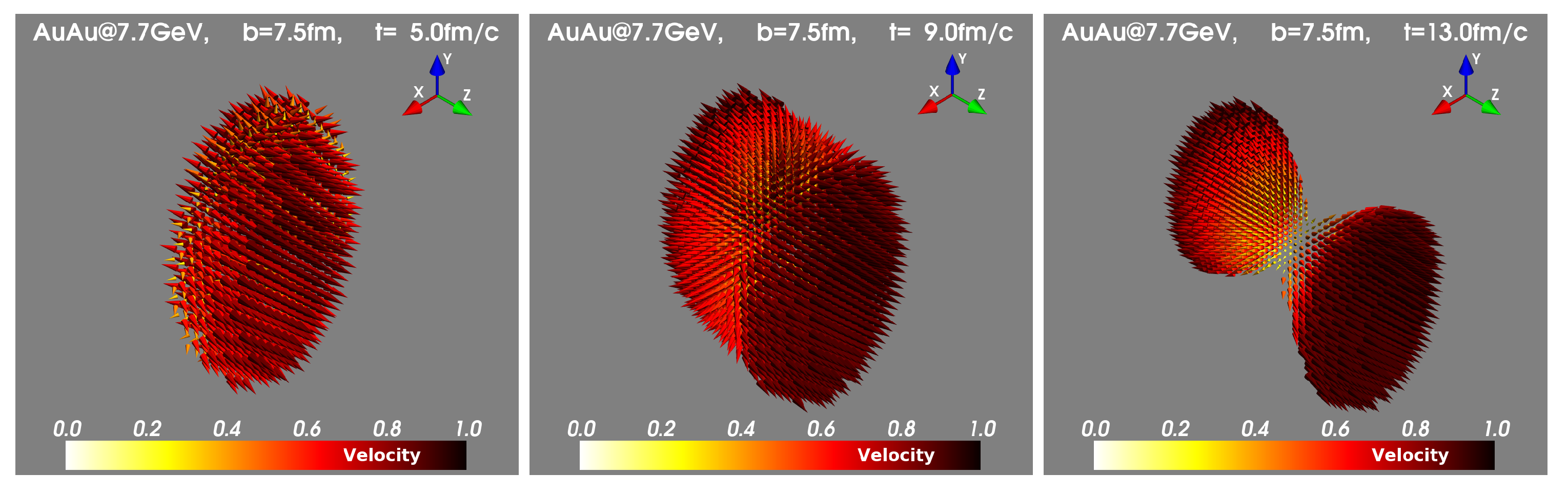
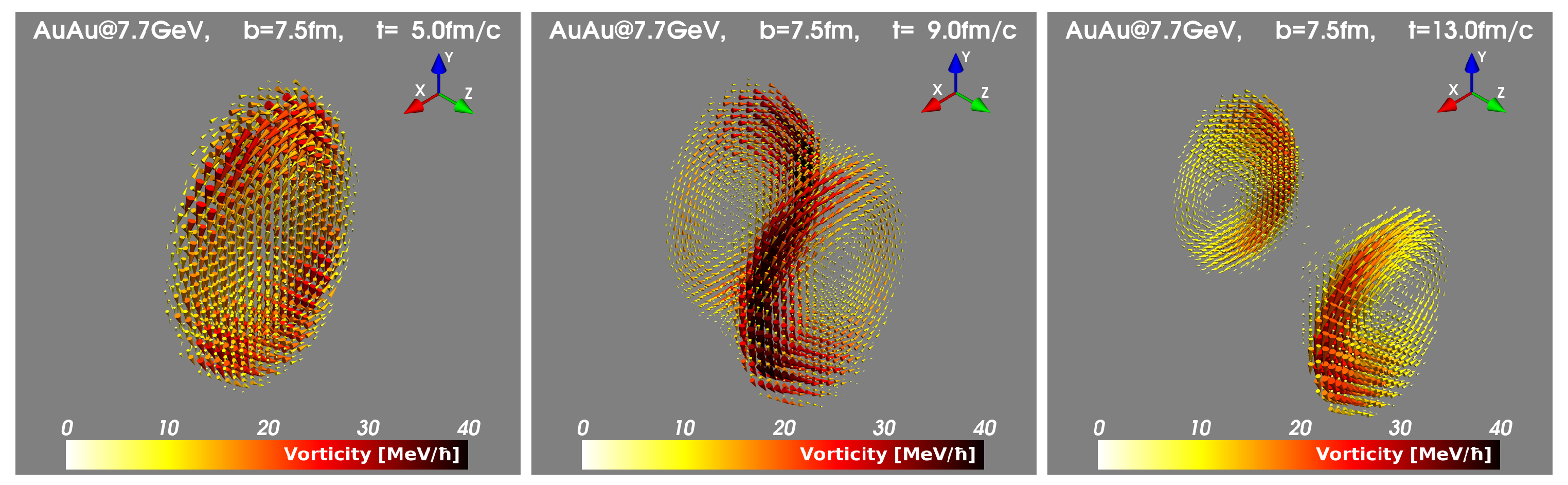
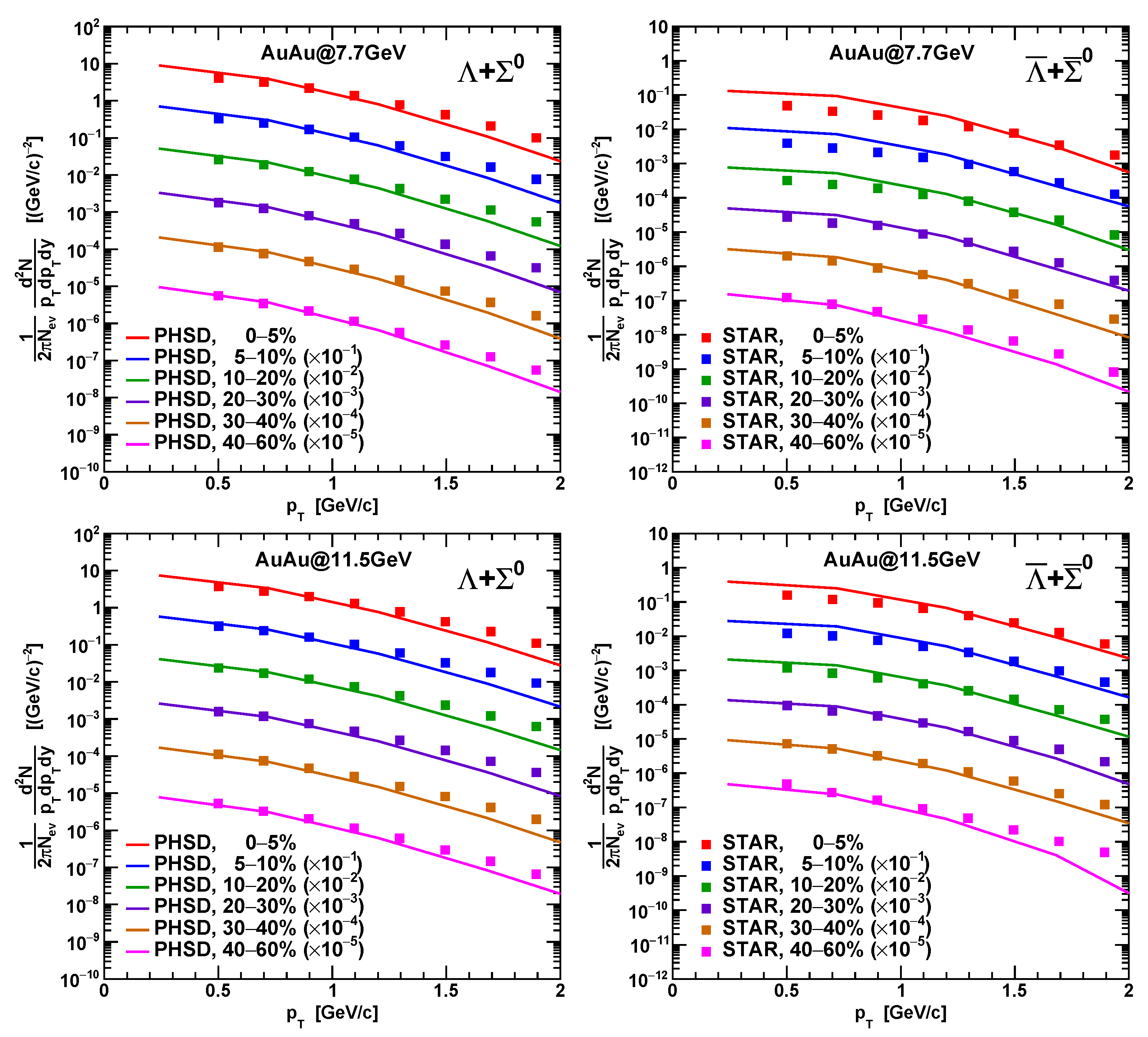
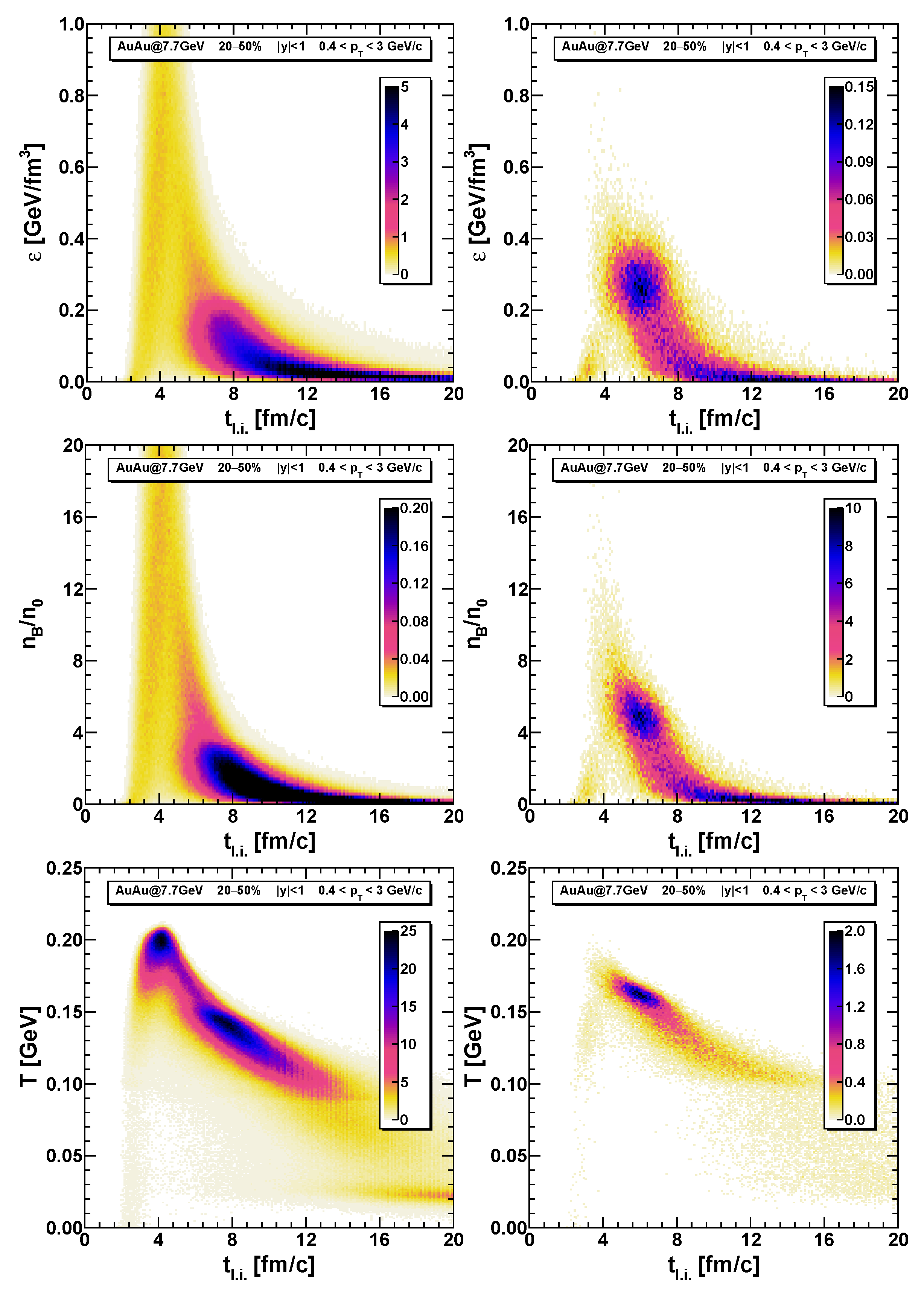
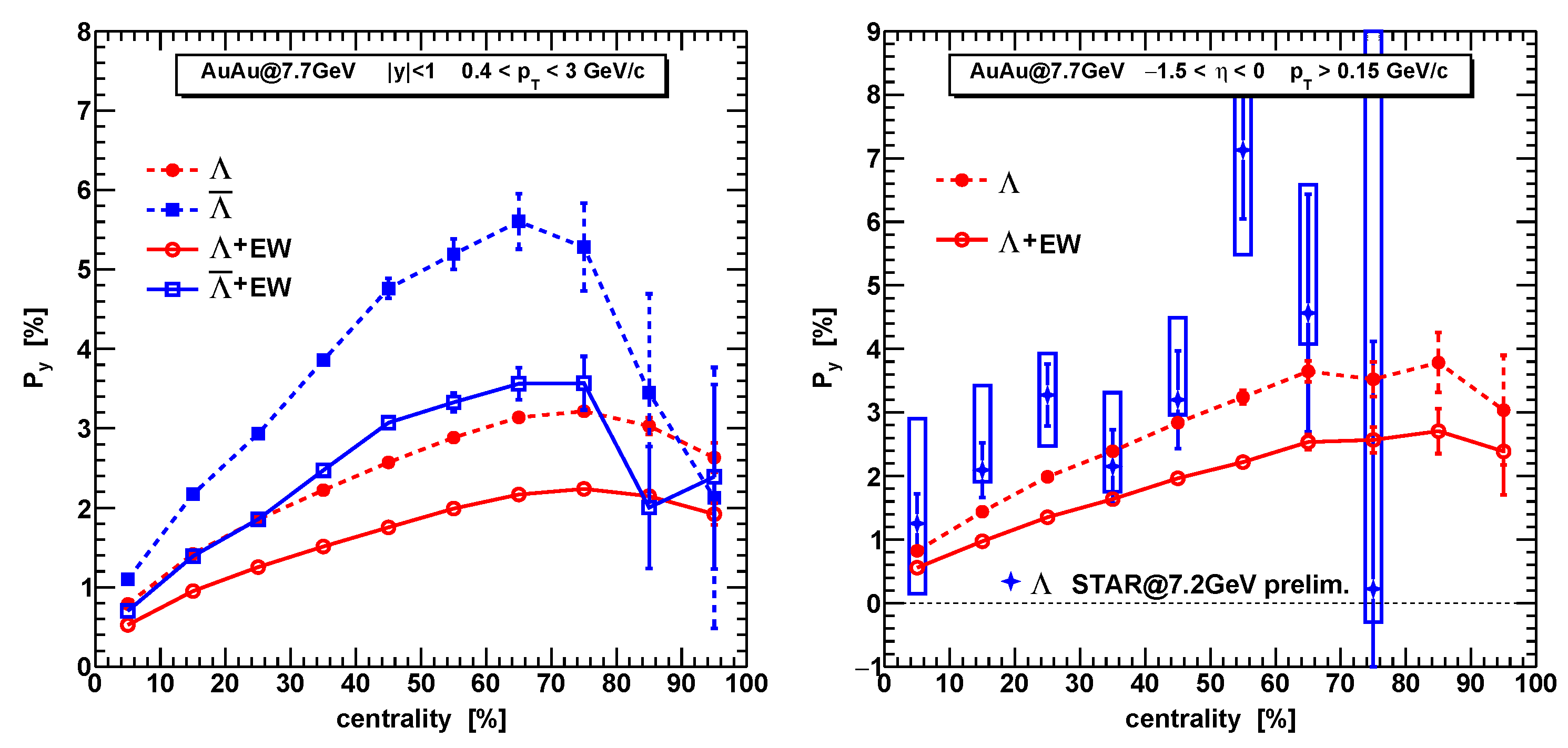
The gold–gold collisions at sNN=7.7 and 11.5 GeV are simulated within the PHSD transport model. In each collision event, the spectator nucleons are separated and the fluidization procedure for the participants is performed. The local velocities are determined in the Landau frame and the kinematic and thermal vorticity fields are evaluated. We analyze the thermodynamic properties of the cells where Λs and Λ¯s were born or had their last interaction. Such cells contribute to the formation of the observed global polarization of hyperons induced by the thermal vorticity of the medium. The Λ¯ polarization signal is found to be mainly determined by hot, dense, and highly vortical cells at the earlier stage of the collision, whereas the Λ polarization signal is accumulated over the longer time and includes cells with lower vorticity. The calculated global polarizations for both Λs and Λ¯s agree well with the experimental finding by the STAR collaboration at energy sNN=11.5 GeV. For collisions at sNN=7.7 GeV, we can reproduce the STAR data for Λ hyperons, but significantly underpredict the observed global polarization of Λ¯. Furthermore, we consider the centrality dependence of the hyperon polarization in collisions at 7.7 GeV. It increases with an increase of centrality, reaches a maximum at 65–75% and then starts decreasing rapidly for peripheral collisions.
Keywords: heavy-ion collisions; hydrodynamics; vorticity; hyperon polarization; vortex rings; dynamical freeze-out; NICA; PHSD heavy-ion collisions; hydrodynamics; vorticity; hyperon polarization; vortex rings; dynamical freeze-out; NICA; PHSD