


Abstract
This study investigates the effects of Cobalt Oxide (Co3O4) nanoparticles on engine performance as well as emission characteristics under various engine load situations in test fuel (MB10). Response Surface Methodology (RSM) was used to examine the experimental results to assess the impact of nanoparticle concentration (0–150 ppm) on combustion behavior. Brake thermal efficiency (BTE) and brake specific fuel consumption (BSFC) were performance metrics, and CO, HC, CO2, and NOx were emission characteristics. The findings demonstrated that the inclusion of nanoparticles and biodiesel had a major impact on emission behavior and performance. Because biodiesel contains more oxygen than diesel fuel, it reduces CO emissions while increasing CO2 and NOx emissions. By boosting heat transmission, the use of nanoparticles increased combustion efficiency; however, fuel atomization was adversely affected by high concentrations. With error rates under 10% for every response, RSM models showed excellent prediction accuracy. To achieve 21% BTE, 458.21 g/kWh BSFC, and minimum emission levels of 0.048% CO, 9.478 ppm HC, 5.415% CO2, and 601.09 ppm NOx, the optimization study identified the optimal operating condition with a 1.31 kW engine load and 80.36 ppm Co3O4 addition. The results verify that the proper dosage of nanoparticles can enhance the combustion performance of biodiesel while preserving acceptable emission levels.
1. Introduction
Global energy demand has been on the rise through population growth, industrialization, and technological change [1,2]. Transportation, being among the most energy-intensive sectors, constitutes nearly one-fifth of global energy demand. Maritime transportation plays a dominant role in global trade, accounting for approximately 80% of the world’s total trade volume [3]. It is primarily powered by diesel-engine-driven vessels, which are widely preferred due to their robust design, high thermal efficiency, and operational reliability [4]. However, fuel engines are especially dependent on fossil fuels, thus introducing a significant amount of environmental issues, including greenhouse gas (GHG) emissions, air pollution, and the negative repercussions of non-renewable resource depletion [5]. Moreover, maritime transport alone contributes to close to 3% of global CO2 emissions in combination with considerable amounts of nitrogen oxides (NOx) and sulfur oxides (SOx), all of which significantly threaten environmental and human health [6].
In response to global challenges stemming from environmental problems, international regulatory bodies have developed significant policies to reduce emissions. These include targets to reduce CO2 emissions per transportation activity by at least 40% by 2030 and to achieve net-zero greenhouse gas emissions around 2050 [7]. These are some of the positions pushing hard for developing feasible alternative fuels that are sustainable, renewable, and environmentally friendly: fuels that can be used in conjunction with the conventional diesel engines but have low adjustment requirements: the transition from fossil fuels to biofuels [8].
Biodiesel is a prospective candidate among several alternative fuels due to its renewable nature, biodegradable characteristic and slightly lower emissions [9]. Biodiesel exhibits similar physicochemical properties to conventional diesel fuel. This similarity allows it to be used in existing diesel engines without significant modifications. However, prior research has demonstrated that the impact of biodiesel on emissions and engine performance varies according to the fuel source, its physicochemical characteristics, and engine operating circumstances. Because of their oxygenated structure, biodiesel fuels generally have lower CO and HC emissions; nonetheless, increases in NOx emissions and specific fuel consumption (BSFC) are commonly documented. Table 1 summarizes a number of studies examining various biodiesel feedstocks and their quantitative effects on engine performance and emissions.
Table 1.
Biodiesel literature review *.
Table 1 illustrates that while biodiesel fuels significantly reduce incomplete combustion products like CO and HC, trends for NOx, BSFC, and BTE vary depending on the kind of biodiesel and engine operating circumstances. These conflicting results suggest that further measures for development are needed in order to concurrently improve emission performance and combustion efficiency. The sustainability of biodiesel, however, largely depends on the feedstock used for its production [15]. So, first-generation biodiesels are derived from edible crops and the issues concerning food insecurity and land use. Second-generation biodiesel, though derived from non-edible sources, still requires some form of agricultural land and resources. For now, the third-generation biodiesel from microalgae raises considerable interest, which is a common name derived from their exceptional characteristics [16].
Among the alternative solutions for biofuel production, microalgae undoubtedly show promise due to their rapid growth, high lipid content, and vast carbon sequestration ability [17]. Microalgae can often be grown in non-arable lands or wastewater without competition for any limited arable lands that normally produce food crops. Also, microalgae offer oil-production yields per unit area that are markedly higher than those observed for conventional oil crops and can also take up heavy doses of atmospheric CO2 during their growth periods [18]. These are some of the parameters that promote microalgae as ideal resources for sustainable energy systems operating under low CO2 emissions.
Despite the benefits, there are certain drawbacks to using microalgae-based biodiesel in internal combustion engines [19]. Some of these are that the biodiesel variants have a higher viscosity and density when compared to conventional diesel fuel. Furthermore, the calorific value is found to be lower, leading to incomplete combustion features observed; thus, the tendency of microalgae oil-based biodiesel to exhibit a higher brake specific fuel consumption (BSFC) is obvious and additional emissions, such as NOx, can increase [20]. These handicaps restrict their direct application, and therefore improvements must be made in the fuel properties and combustion efficiencies.
In recent years, nanotechnology has emerged as a viable option to overcome various challenges within the industrial sector. The placement of metal oxide nanoparticles into biodiesel blends is known to affect the combustion regime by improving fuel atomization, increasing the surface area-to-volume ratio, and acting as local oxygen buffers during burning [21]. Various studies reviewed the effects of nanoparticles such as cerium oxide (CeO2) [22], aluminum oxide (Al2O3) [23], iron oxide (Fe2O3) [24], and silicon dioxide (SiO2) [25] on biodiesel performance. In general, these reports observed that combustion efficiency improved and the emissions of CO and HC decreased at least while proper control ran between performance and emissions in some cases. However, increasing the amount of nanoparticles can negatively affect fuel properties; this can lead to agglomeration, poor atomization, and decreased combustion efficiency. Therefore, determining the appropriate nanoparticle type and concentration is an important research focus, and various methods and models can be used to achieve this optimization [26].
Among various types of metal oxides, Co3O4 nanoparticles are well known for their excellent catalytic activity, high thermal stability, and remarkable redox characteristics, making them highly effective in enhancing combustion-related processes. These properties are primarily attributed to their unique spinel structure and the coexistence of Co2+ and Co3+ oxidation states, which enable efficient redox cycling and facilitate oxidation reactions during energy conversion processes [27]. In addition, Co3O4 nanoparticles exhibit high thermal conductivity and large surface area, which significantly improve heat transfer, fuel evaporation, and air–fuel mixing characteristics [28]. Their incorporation into fuel blends has been shown to enhance combustion behavior by reducing ignition delay, increasing flame temperature, and promoting micro-explosion phenomena, which contribute to improved atomization and combustion efficiency [29]. Furthermore, the presence of Co3O4 nanoparticles facilitates oxidation reactions by utilizing lattice oxygen, thereby enhancing the conversion of intermediate species such as CO into CO2 and contributing to cleaner combustion. Beyond combustion systems, Co3O4-based nanomaterials have also demonstrated improved heat and mass transfer performance in nanofluid applications, indicating their versatility in thermal and energy-related processes [30]. Despite these promising characteristics, the literature providing comprehensive insights into the combined application of Co3O4 nanoparticles with microalgae-based biodiesel remains limited. To the best of our knowledge, there is still a lack of systematic experimental studies that thoroughly investigate the impact of Co3O4 nanoparticles on combustion characteristics, engine performance, and emission behavior when incorporated into microalgae biodiesel–diesel blends, highlighting a significant research gap in this field.
This study investigates the effects of adding Co3O4 nanoparticles on the emissions and performance characteristics of a diesel engine using biodiesel/diesel blends generated from microalgae. The impact of adding nanoparticles on fundamental engine reactions, such as BSFC, BTE, and CO, HC, CO2, and NOx emissions, was methodically examined in this context. Engine experiments were carried out under six distinct load circumstances and three distinct nanoparticle concentration levels. The relationship between input parameters and engine outputs was modeled and optimized using a thorough multi-objective optimization approach based on RSM in addition to the experimental inquiry. The application of Co3O4 nanoparticles in conjunction with microalgae-derived biodiesel under multiple load and different concentration conditions has not been extensively studied, therefore the study adds something new to the body of literature. The best operating settings that enhance both performance and emission results were found using the developed models. Through the synergistic integration of third-generation biodiesel fuels and nanoparticle-based performance enhancement techniques, the findings are anticipated to contribute to the creation of better, more efficient, and ecologically sustainable energy.
2. Materials and Methods
By adding Co3O4 to the diesel/biodiesel blend with 10% biodiesel by volume at three different concentrations, 50, 100, and 150 ppm, the impact of nanoparticles on engine performance and emissions was examined. Higher concentrations were not tried in the tests because performance declined, and emission values increased from 100 ppm to 150 ppm. RSM optimization was performed to determine the optimal nanoparticle quantity and load for the engine using the gathered experimental data.
2.1. Spirulina Microalgae Biodiesel Production
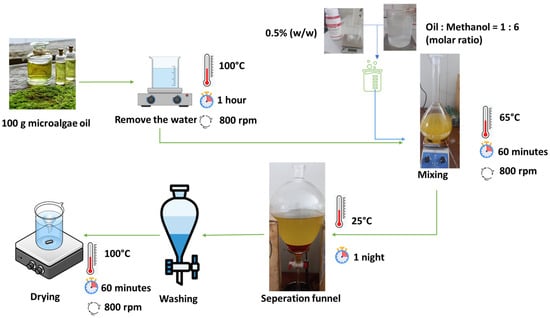
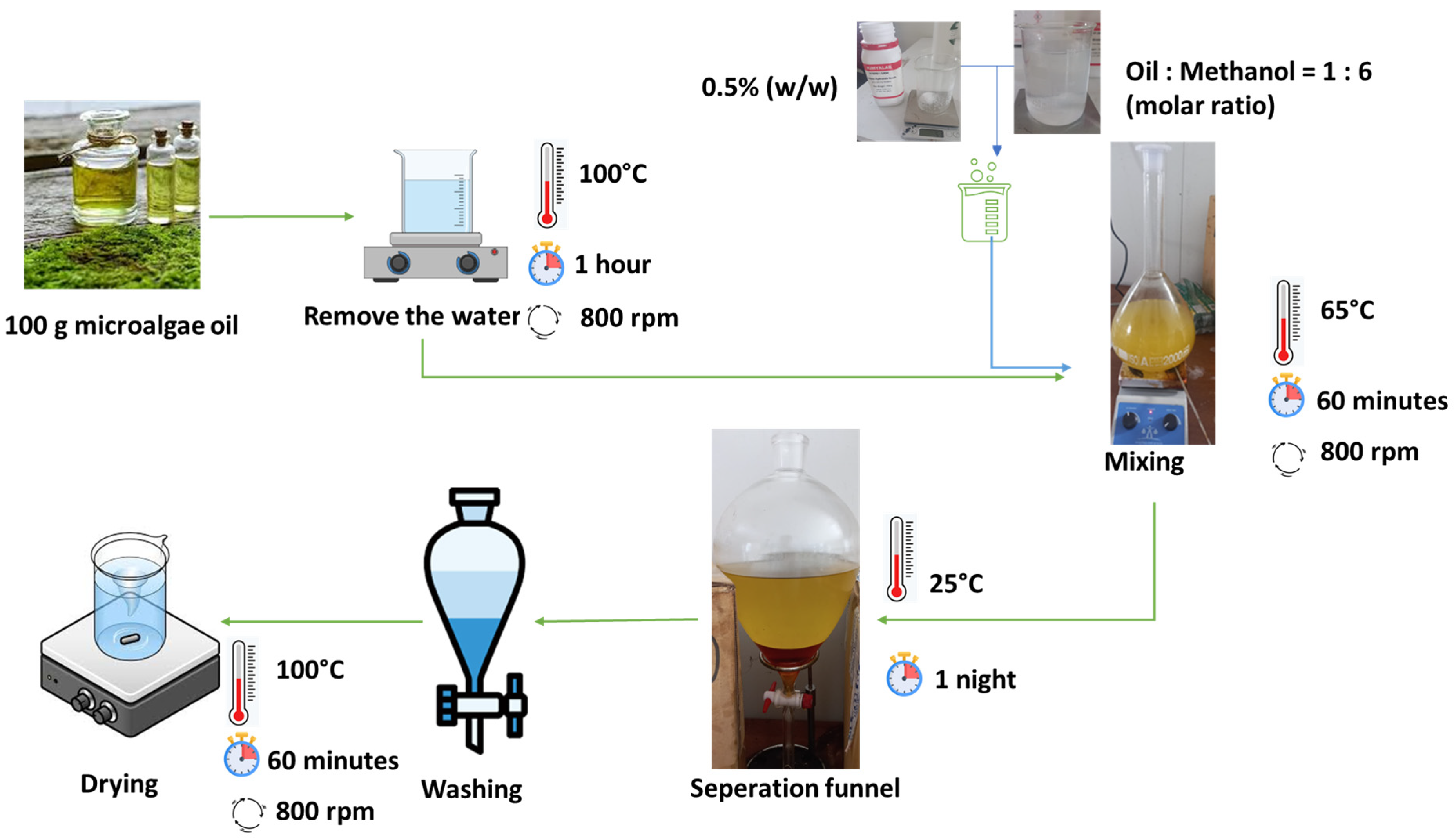
Biodiesel was produced using the most commonly used transesterification technique. Figure 1 shows a schematic representation of the production of biodiesel. To remove the water from the oil, the oil was first heated to approximately 100 °C, and the water was removed by evaporation. After the water was removed, the oil was cooled naturally to room temperature under atmospheric pressure. Meanwhile, the sodium hydroxide (NaOH) (purity at least 98%) and methanol (CH3OH) (purity at least 99.9%) required for the transesterification procedure were prepared. A methoxide solution was prepared by dissolving 0.5% (w/w) NaOH in CH3OH, followed by mixing with the oil at a molar ratio of oil to methanol of 1:6. The new mixture was created by adding the resultant mixture to oil that had cooled to about 65 °C. This mixture was stirred with a magnetic stirrer for 60 min at 800 rpm at a constant 65 °C. The WF-MIA1 model heated magnetic stirrer, manufactured by Weightlab Instruments, Türkiye, was used for continuous mixing and heating processes during the experiments. The device can perform heating and mixing operations for up to 2 L of liquid and has a maximum mixing speed of 2000 rpm. It can also heat the substance inside to 380 °C. The mixture was stirred and then allowed to settle for the entire night. In the bottom layer of the mixture, glycerin precipitated. The biodiesel was washed with hot water to get rid of any undesirable compounds after the glycerin was extracted. After the washing process, the biodiesel was heated and stirred continuously on a magnetic stirrer at 100 °C under atmospheric pressure for 60 min to completely remove any remaining water. No chemical drying agents were used throughout the process. The mixture created biodiesel that was ready for use.
Figure 1.
Spirulina microalgae biodiesel production.
2.2. Test Fuel Preparation
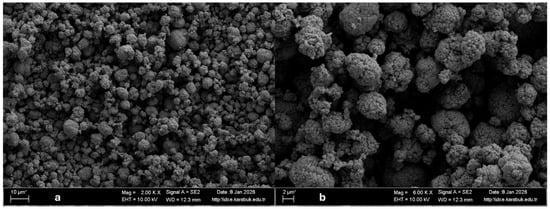
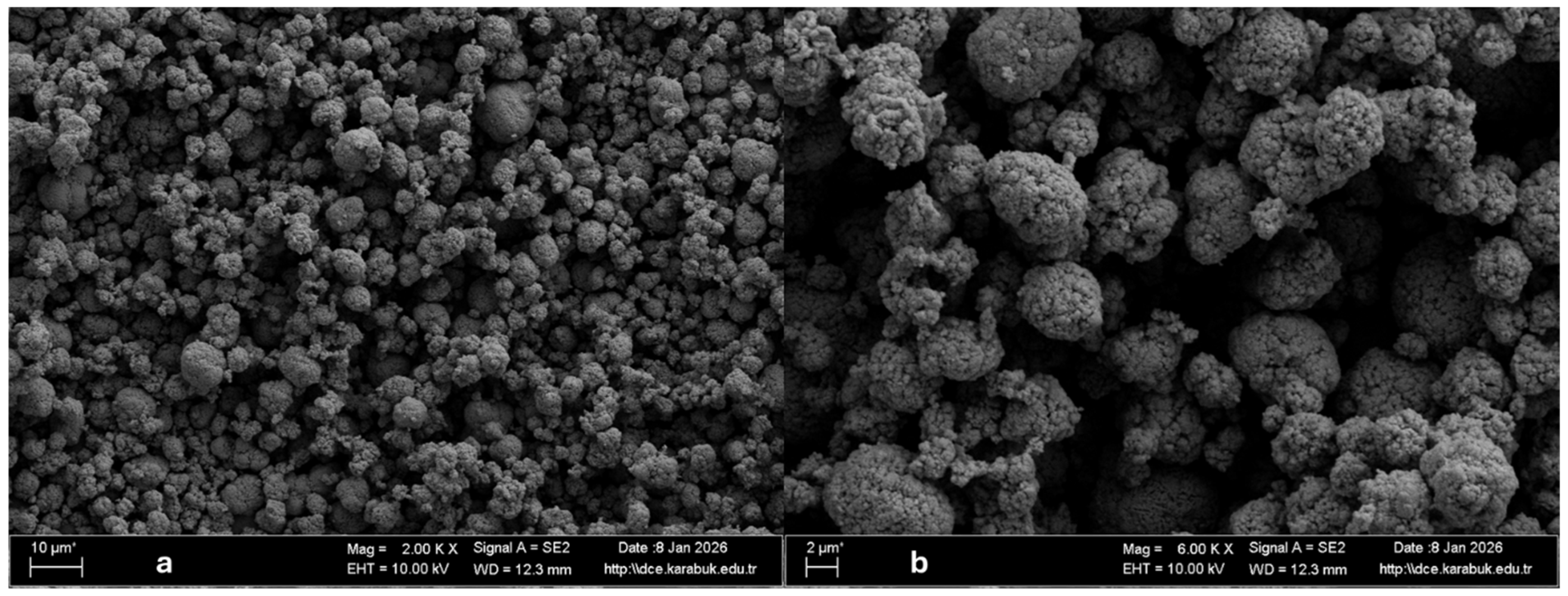
Throughout the investigation, each experiment was conducted three times to guarantee the data’s repeatability and dependability. Despite being categorized as antiferromagnetic transition metal oxides, Co3O4 nanoparticles were chosen because, at the nanoscale, surface defects, irregularities in cation distribution, and distortions in spin structure can result in weak ferromagnetic behavior or size-dependent magnetic properties. Additionally, they may facilitate fuel oxidation by enhancing combustion processes because of their large surface area and redox-active structures. The Co3O4 nanoparticle employed in this investigation has an average particle size of 8–28 nm and a purity of 99.5%. Although the actual density was 6.2 g/cm3, the typical surface area was 55–155 m2/g. Co3O4 nanoparticles are composed of agglomerated structures with spherical and hemispherical morphologies, as demonstrated by the Scanning electron microscopy (SEM) images shown in Figure 2a,b. SEM analysis was performed using the FE-SEM, Carl Zeiss Ultra Plus Gemini (Germany), located at the Karabük Iron and Steel Institute. With a working distance (WD) of approximately 12.3 mm and a corresponding acceleration grade (EHT) of 10.00 kV, the images were captured at magnifications of 2 kx and 6 kx, respectively. While the high-magnification image (b) makes it evident that the micro-sized agglomerates are made up of smaller nano-sized particles, the low-magnification image (a) shows that the particles are non-homogeneously dispersed and have a tendency towards dense aggregation. Co3O4 nanoparticles’ high surface area and rough surface structure are significant characteristics that can increase their catalytic activity. Additionally, by increasing the fuel’s contact surface area and enhancing combustion processes, this nanoscale porous/agglomerated structure can promote the oxygen transfer mechanism.
Figure 2.
SEM images of Co3O4 nanoparticles at (a) 2 kx and (b) 6 kx magnifications.
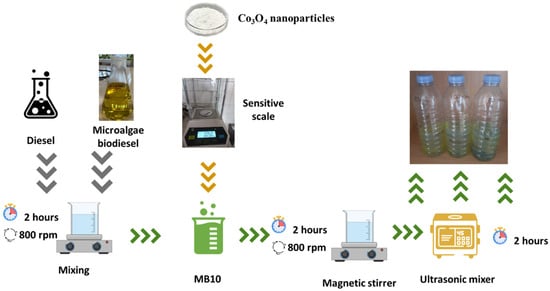
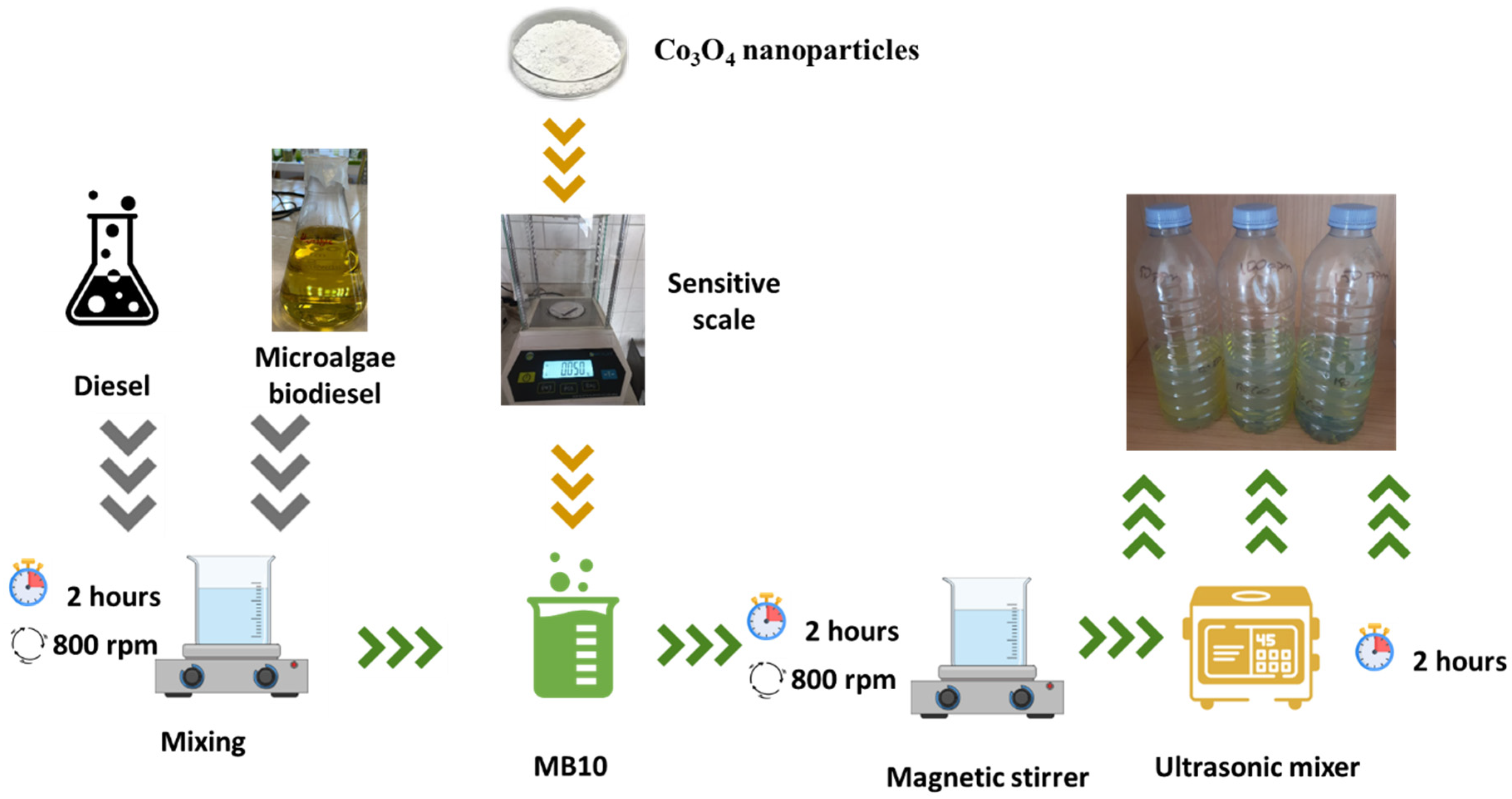
Diesel fuel was initially mixed with 10% biodiesel by volume to create the test fuels. A magnetic stirrer was used to combine 0.1 L of microalgae biodiesel and 0.9 L of diesel fuel in a beaker for MB10 (10% biodiesel + 90% diesel). The mixture was left in the magnetic stirrer for two hours to create a homogenous mixture. The nanoparticles that would be added to the fuel were manufactured concurrently with the MB10 fuel mixture. A precision balance was used to test 50 ppm of Co3O4 nanoparticles before adding them to the MB10 biodiesel. For all mass measurements, the Necklife FLY 500 model digital precision balance, manufactured by Necklife Türkiye, was used. The balance has a maximum capacity of 500 g and a readability accuracy of 0.001 g. The previously made MB10 biodiesel was mixed with the measured nanoparticles. To produce a homogenous 50MB10 (10% biodiesel + 90% diesel + 50 ppm Co3O4) test fuel, the mixture was first combined for an hour in a magnetic stirrer and then for two hours in an ultrasonic stirrer. The BAKU BK-1200 model, manufactured in China, was used for the ultrasonic mixing process. The device operates at a frequency of 40 kHz, with 60 W of ultrasonic power and 100 W of heating power. The water tank’s capacity is 1.47 L. To create 100MB10 (10% biodiesel + 90% diesel + 100 ppm Co3O4) and 150MB10 (10% biodiesel + 90% diesel + 150 ppm Co3O4) test fuels, the same procedure was performed independently for 100 ppm and 150 ppm Co3O4 nanoparticles. Figure 3 provides a schematic illustration of the test fuel preparation process. Through observation, the obtained test fuels’ homogeneity was ascertained. The generated fuel samples were stored for a day to assess the fuel’s homogeneity. No sedimentation was found at the end of the day. Engine operations were conducted under conditions where the particles were evenly distributed because they were finished within a single day of fuel preparation. Table 2 shows the fuel properties of the test fuels.
Figure 3.
Co3O4 nanoparticle addition.
Table 2.
Fuel properties.
2.3. The Process of Experimentation
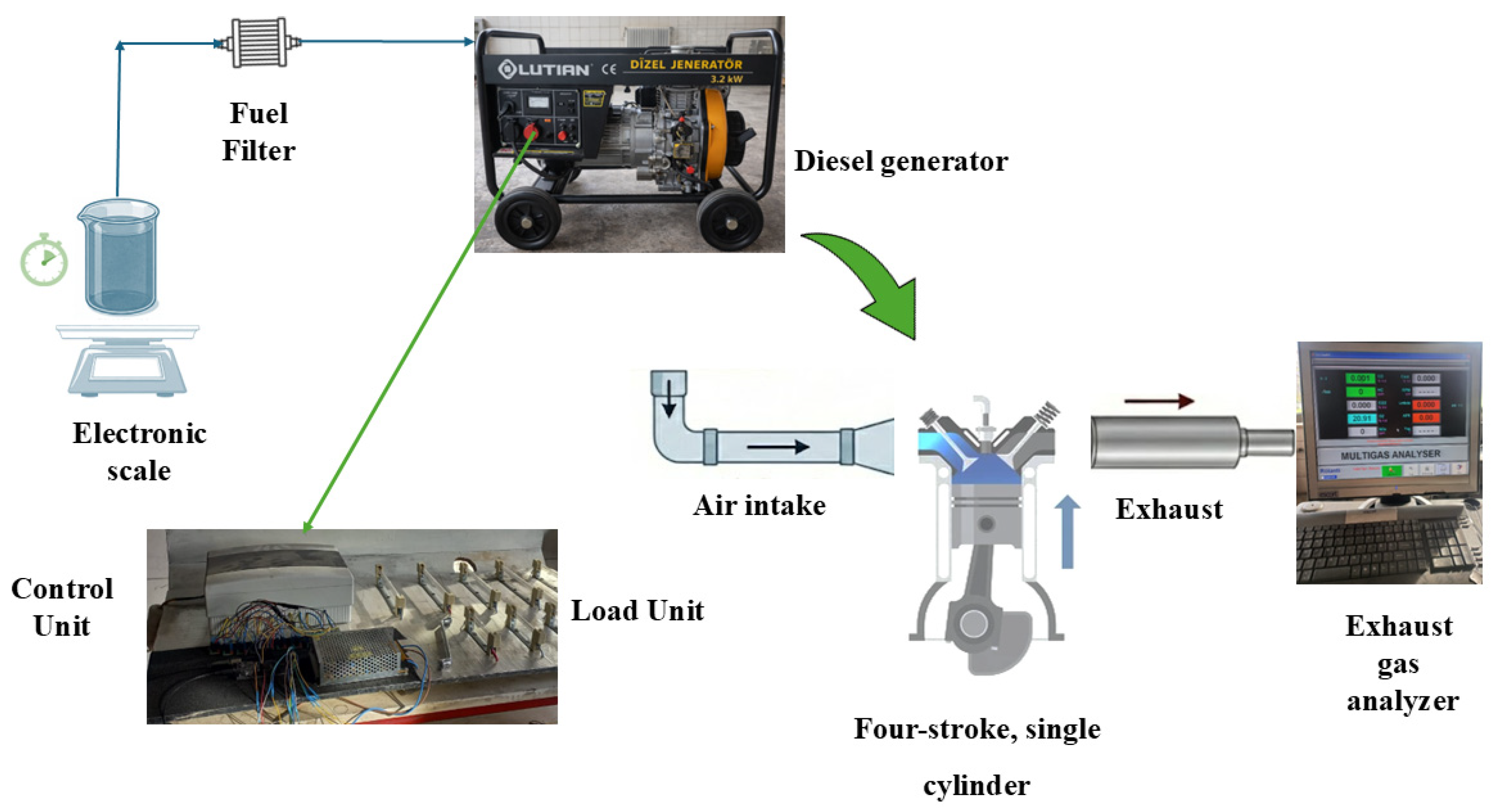
To determine how fuels affected emissions and engine performance, an air-cooled, direct-injection diesel engine was evaluated. Figure 4 shows the experimental setup. The engine characteristics used in the studies are highlighted in Table 3. Before the experiments started, all the instruments were calibrated. For ten minutes, the engine ran without any load until thermal equilibrium was attained. After reaching thermal equilibrium, the engine was run at a steady 3000 rpm at six different power levels (ranging from 0.5 to 3 kW), with a halogen lamp acting as an external electrical load to deliver the applied load. An opening in the engine exhaust line was used to insert an emission device probe. Table 4 displays the emission device’s technical parameters. The engine was running at no load for ten minutes at the conclusion of the experiment to burn the test fuel. Every experiment was conducted three times. To make sure the test results were reliable, an uncertainty analysis was carried out. The Kline and McClintock approach (Equation (1)) was used to determine the experimental system’s uncertainty analysis. Table 5 displays the experimental apparatus’s uncertainty values. It was found that the entire uncertainty value was ±3.68.
Figure 4.
Experimental Set-up.
Table 3.
The specifications of engine.
Table 4.
Technical specifications of the emission measurement device.
Table 5.
Uncertainty value.
2.4. RSM
Determining intermediate values is challenging since experimental investigations are expensive and time-consuming. To solve this issue and identify the ideal process conditions, optimization methods such as ANN, RSM, and Taguchi are employed [31]. Among these techniques, RSM stands out because of its advantages, which include fewer experiments, a low error rate, the ability to display the results, and the ability to ascertain how independent variables impact the responses [32]. A systematic examination of the mathematical relationship between solutions and independent factors is made possible by RSM. It has several advantages, especially when it comes to complex system optimization. This method can find optimal operating conditions by creating second-order prediction models that fit experimental data [33]. In the present investigation, prediction models that assess the effects of output parameters such as motor load and the amount of Co3O4 nanoparticles were developed and optimized using RSM. A 95% confidence interval was used for the optimization study. Table 6 displays the results of the experimental investigation. The experimental data was used to generate an experimental design matrix. Classical statistical methods like Box–Behnken or Central Composite Design were not directly applied to this experimental matrix. While realistically applicable experimental points depicting actual motor operating conditions were preferred, the developed experimental matrix guaranteed that the input parameters sufficiently represented the chosen operating ranges. This improved the model’s dependability. Design-Expert software was used for statistical analysis and experimental design. In order to minimize unnecessary experimental research and offer a realistic picture of motor behavior, this technique was used with experimentally controlled motor test conditions. Based on realistic motor operating limits, engine load (0.5–3 kW) and Co3O4 nanoparticle concentration (0–150 ppm) were chosen as independent input parameters. Steady-state motor tests provided experimental data; no artificial or simulated data were utilized.
Table 6.
Experimental data.
3. Results and Discussion
In this study, spirulina microalgae were initially used to produce biodiesel. Preliminary engine tests were conducted to determine the optimal biodiesel/diesel ratio for subsequent nanoparticle experiments. The produced biodiesel was added to diesel fuel at concentrations of 10%, 20%, and 30% in the initial experimental research. The effects of test fuels on engine performance and emissions are shown in Table 7 when compared to diesel fuel. After considering fuel properties, emissions, and performance criteria, the optimal mixing ratio was found to be 10%. Only the basic findings regarding mixture selection in the preliminary engine tests are briefly presented; the detailed research focuses on the selected MB10 fuel.
Table 7.
Parameter changes compared to the diesel engine *.
3.1. Experimental Results
3.1.1. CO Emissions
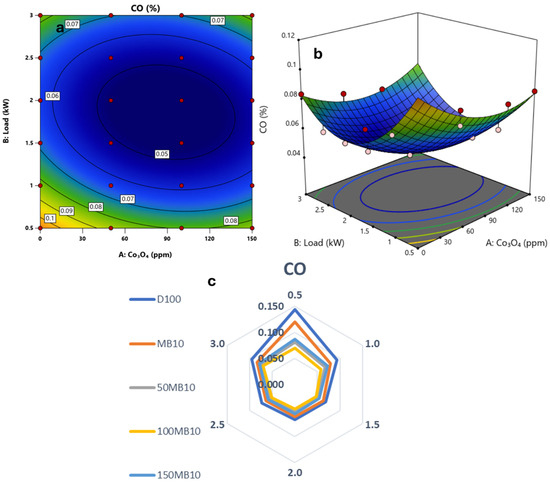
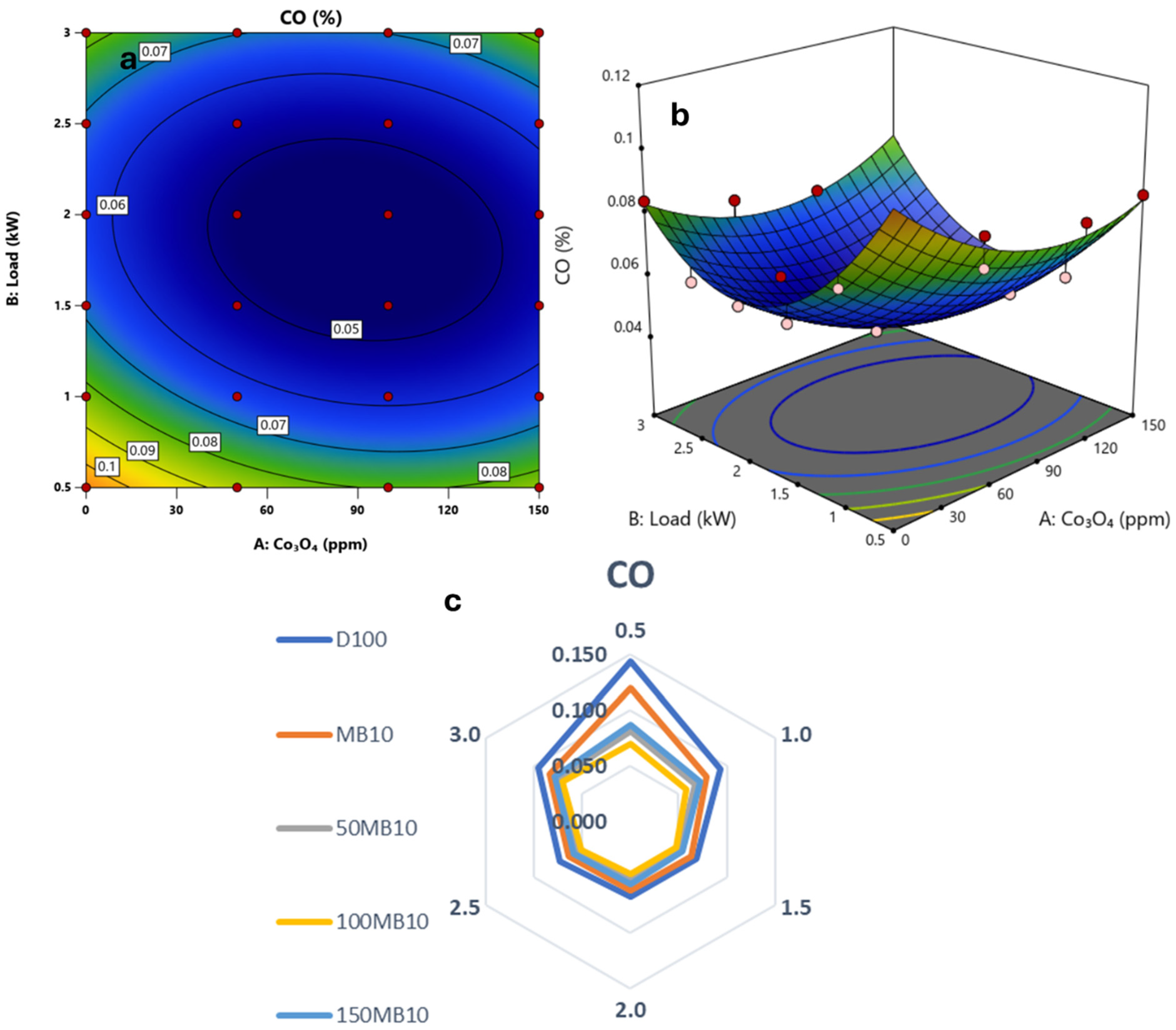
Incomplete fuel combustion is one of the primary causes of CO emissions in diesel engines. Lower in-cylinder temperatures, rich fuel–air mixture conditions, and insufficient oxygen availability in the combustion chamber hinder the oxidation of CO into CO2, thereby increasing CO emissions. Figure 5c presents the variation in CO emissions with respect to Co3O4 nanoparticle concentration and engine load. In addition, the inherent oxygen content of biodiesel enhances the combustion process and promotes more complete oxidation, resulting in lower CO emissions [34]. The CO emission value of MB10 fuel was 12.10% lower than that of D100 fuel. The usage of nanoparticles improves the fuel’s heat transport by increasing the rate of complete combustion and reducing CO emissions [35]. CO emission levels for the 50MB10 fuel were 17.33% compared to MB10 fuel and 27.24% compared to D100 gasoline. By contrast, 150MB10 fuel’s CO emissions dropped by 22.60% compared to D100 fuel and by 12.06% compared to MB10 fuel. In a similar vein, the 100MB10 fuel showed a reduction of 33.99% compared to D100 fuel and 21.58% compared to MB10 fuel. A comparable result was seen in the Torkzaban et al. study, which found that adding CQD nanoparticles to B20 fuel at 600 ppm decreased CO emissions by 33.85% [36]. Although adding nanoparticles enhances burning, they eventually interfere with fuel atomization, which lowers combustion efficiency and raises CO emissions. In comparison to the 100MB10 test fuel, the CO emission value of the 150MB10 test fuel rose by 17.83%. The fuel with a 90 ppm Co3O4 addition would emit the least CO at about a 2 kW load, according to an analysis of graphs a and b in Figure 5.
Figure 5.
CO emission behavior with respect to nanoparticle concentration and engine load is presented through (a) contour visualization, (b) three-dimensional surface representation, and (c) radar-based evaluation.
3.1.2. HC Emissions
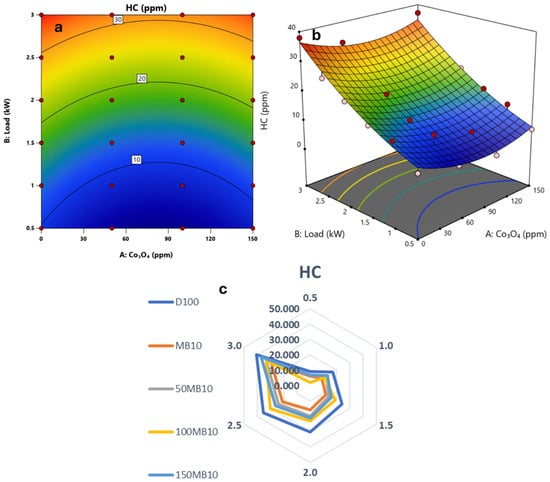
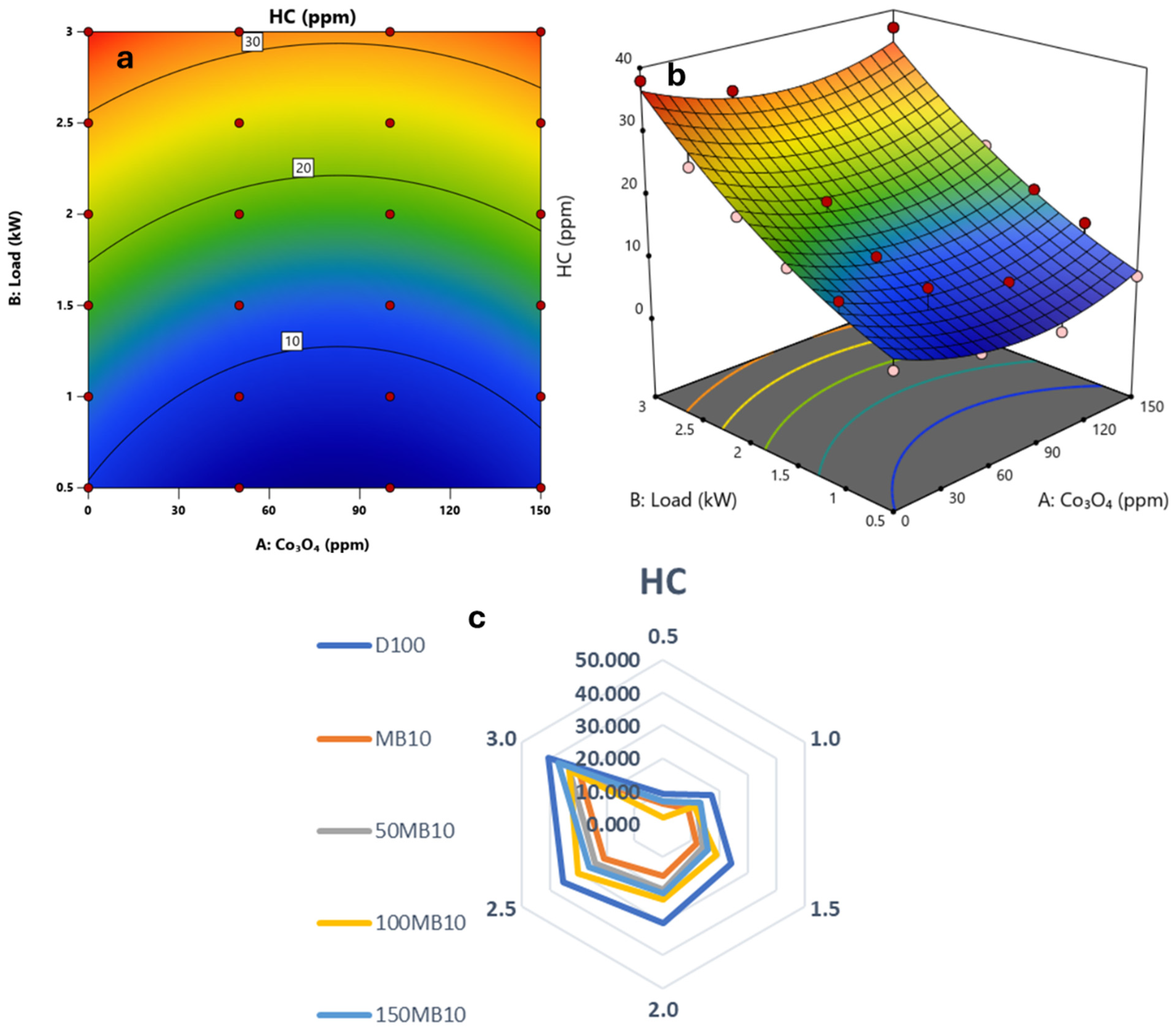
HC emissions are formed as a result of incomplete combustion when fuel molecules are not fully oxidized during the combustion process. These emissions are typically influenced by several factors, including air–fuel ratio, poor fuel atomization, and wall quenching effects due to low temperature regions near the combustion chamber walls [37]. The change in HC emissions based on engine load and the Co3O4 nanoparticle is depicted in Figure 6c. In all test fuels, there were notable increases in HC emissions as engine load increased. HC emissions decrease with increasing full combustion. The HC emission value of MB10 fuel was 18.56% lower than that of D100 fuel. HC emissions were also decreased by increased complete combustion when biodiesel was added. The 50MB10 test fuel exhibited HC emission reductions of 18.04% relative to MB10 fuel and 33.65% relative to D100 fuel. Similarly, the 100MB10 test fuel showed reductions in HC emissions of 28.58% compared to MB10 fuel and 46.96% compared to D100 fuel. In addition, the 150MB10 test fuel reduced HC emissions by 7.10% relative to MB10 fuel and by 24.45% relative to D100 fuel. Parallel to this work, Vellaiyan and Partheeban discovered that adding nanoparticles decreased HC emissions by 33.3% [38]. By raising the surface area/volume ratio, nanoparticles enhanced heat transport and increased the amount of complete combustion [39]. HC emissions dropped as complete combustion increased. However, the HC emission value of 150MB10 fuel was 50.32% higher than that of 100MB10 fuel. Fuel viscosity rises and combustion efficiency decreases when more nanoparticles are added. Examining the graphs in Figure 6a,b, the test fuel with 60–90 ppm Co3O4 added at a load of 0.5 kW had the lowest HC emission value.
Figure 6.
HC emission behavior with respect to nanoparticle concentration and engine load is presented through (a) contour visualization, (b) three-dimensional surface representation, and (c) radar-based evaluation.
3.1.3. CO2 Emissions
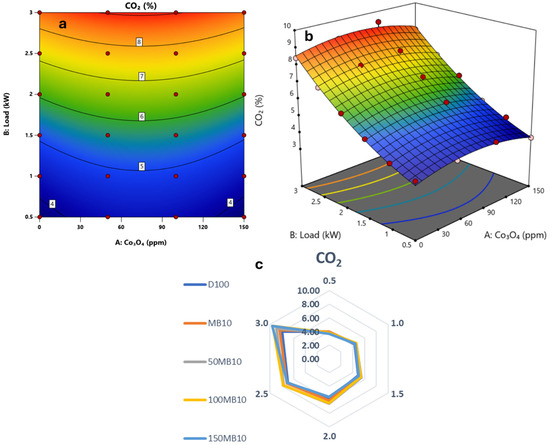
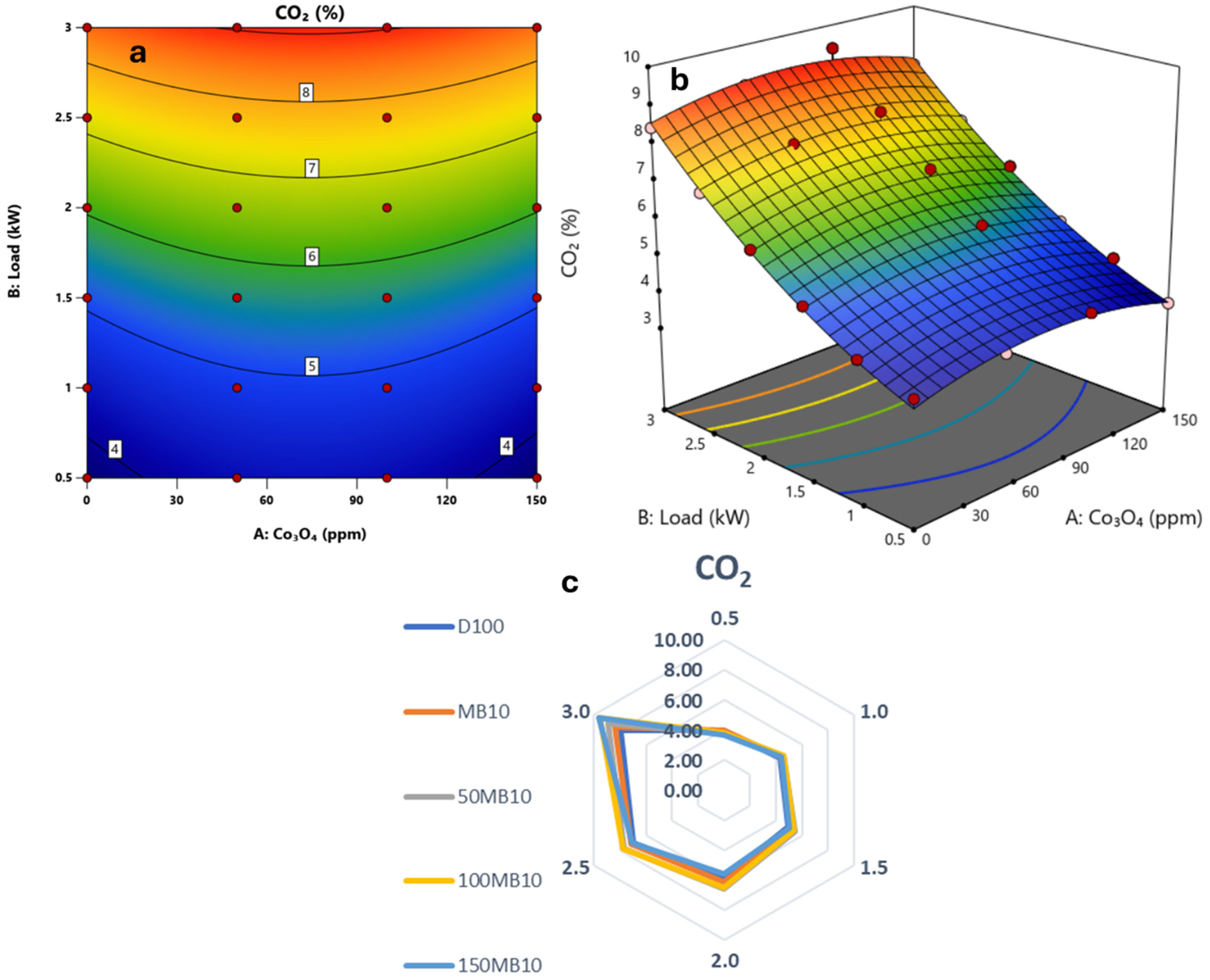
CO2 is one of the main products of the complete combustion of carbon-based fuels and is widely used as an indicator of combustion efficiency. Figure 7c illustrates the variation in CO2 emissions with respect to Co3O4 nanoparticle concentration and engine load. For all test fuels, CO2 emissions increased with increasing engine load [40]. The MB10 test fuel has 3.44% more CO2 emissions than D100 fuel. Biodiesels’ high oxygen content improved combustion efficiency, which raised CO2 emissions. While CO2 emissions in 100MB10 test fuel increased by 12.89% compared to D100 fuel and by 9.34% compared to MB10 test fuel, CO2 emissions in 50MB10 test fuel increased by 9.31% compared to D100 fuel and by 5.66% compared to MB10 test fuel. The 150MB10 test fuel’s CO2 emission value dropped by 2.09% when compared to the MB10 test fuel and rose by 1.38% when compared to the D100 fuel. In line with Savaş’s research, CO2 emissions increased by 13.83% when 100 ppm NiO nanoparticles were added to microalgae biodiesel [41]. By lowering the ignition delay, the nanoparticles added to the MB10 fuel increased combustion efficiency and, as a result, CO2 emissions [42]. After a certain point, combustion efficiency started to decline with increased nanoparticle content, lowering CO2 emissions. When comparing the 100MB10 fuel to the 150MB10 fuel, a 10.21% reduction in CO2 emissions was noted. The fuel’s increased nanoparticle content interfered with fuel injection, which decreased combustion efficiency. Examining the graphs in Figure 7a,b reveals that fuel containing 0–10 ppm or 140–150 ppm Co3O4 had the lowest CO2 emissions at low loads.
Figure 7.
CO2 emission behavior with respect to nanoparticle concentration and engine load is presented through (a) contour visualization, (b) three-dimensional surface representation, and (c) radar-based evaluation.
3.1.4. NOx Emissions
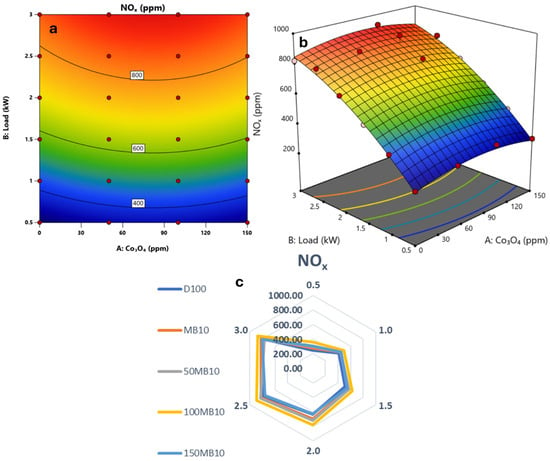
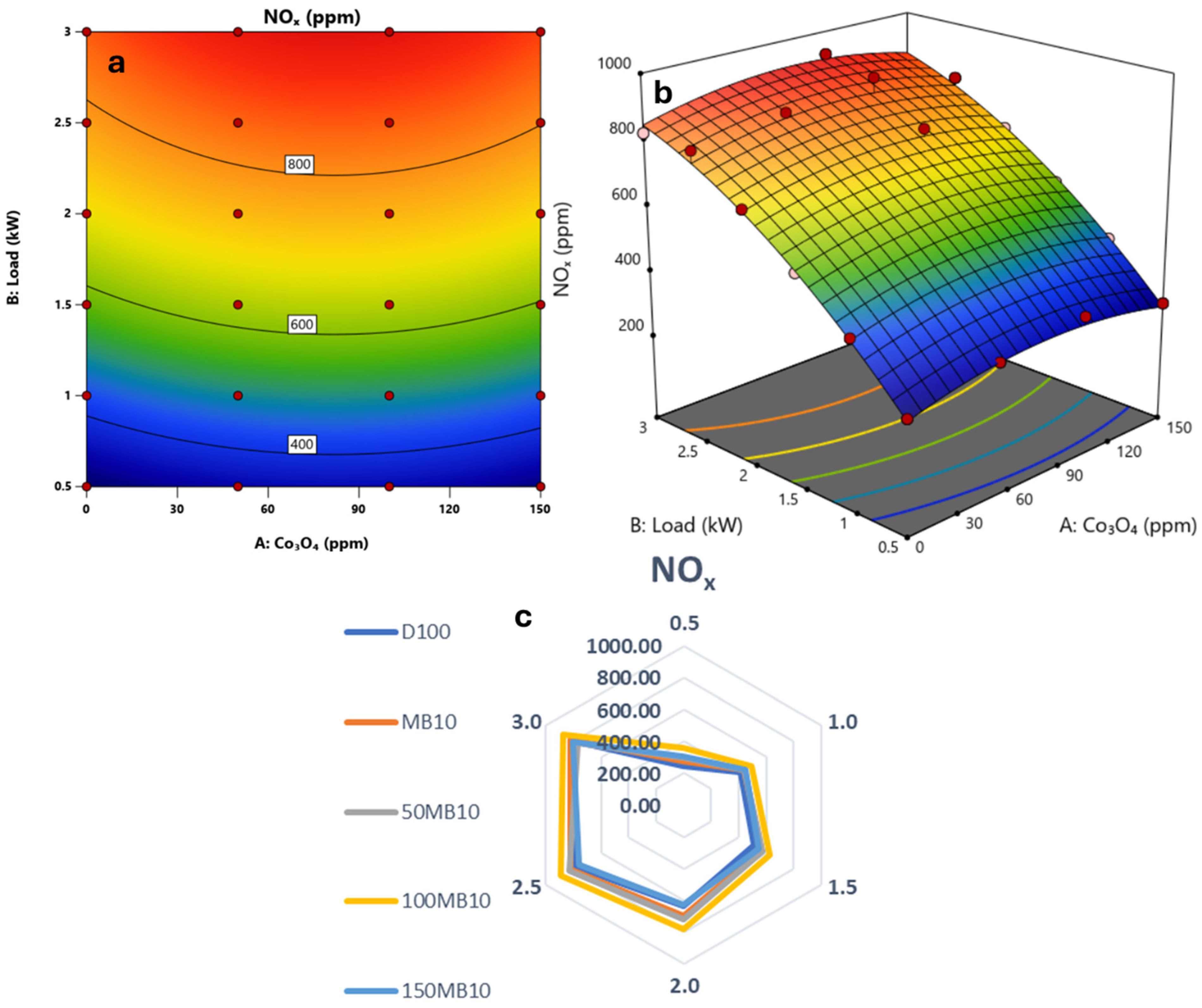
The Zeldovich mechanism explains that NOx emissions are formed at high local temperatures when sufficient oxygen is available [43]. NOx emissions pose significant environmental and health concerns and are primarily formed when nitrogen in the air reacts with oxygen under high-temperature and high-pressure conditions inside the combustion chamber. Figure 8c illustrates the variation in NOx emissions with respect to engine load and Co3O4 nanoparticle concentration. In all test fuels, NOx emissions increased with increasing engine load due to higher in-cylinder temperatures, which promote NOx formation. The NOx emission value of MB10 fuel was 7.78% higher than that of D100 fuel. The increase in NOx emissions can be attributed to the enhanced combustion characteristics and oxygen content of biodiesel, which promote higher combustion temperatures. Furthermore, the 50MB10 test fuel increased NOx emissions by 15.98% relative to D100 fuel and by 7.53% relative to MB10 fuel. Similarly, the 100MB10 test fuel exhibited increases of 23.16% compared to D100 fuel and 11.02% compared to MB10 fuel. In addition, the 150MB10 test fuel showed NOx emission increases of 10.67% relative to D100 fuel and 2.62% relative to MB10 fuel. According to Sanjeevarao et al.’s study, adding nanoparticles causes NOx emissions to rise [44]. The nanoparticles’ thermal conductivity characteristics enhanced combustion [45]. NOx emissions increase with improved combustion at lower nanoparticle concentrations due to higher in-cylinder temperatures and enhanced oxidation. However, at higher nanoparticle concentrations, deterioration in fuel atomization and particle agglomeration lead to locally non-uniform combustion, which reduces NOx formation. This balance between enhanced and impaired combustion characteristics governs the observed NOx emission trends. The 150MB10 NOx emission figure was 9.92% lower than that of 100MB10 fuel. The lowest NOx emissions were found at low loads and with fuel that contained 0–10 ppm or 140–150 ppm of Co3O4, as shown in Figure 8a,b.
Figure 8.
NOx emission behavior with respect to nanoparticle concentration and engine load is presented through (a) contour visualization, (b) three-dimensional surface representation, and (c) radar-based evaluation.
3.1.5. BSFC
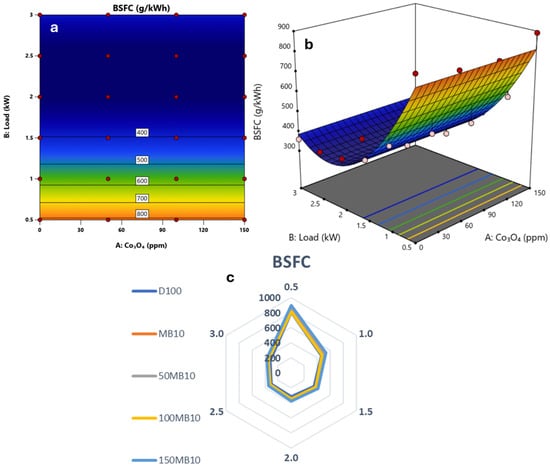
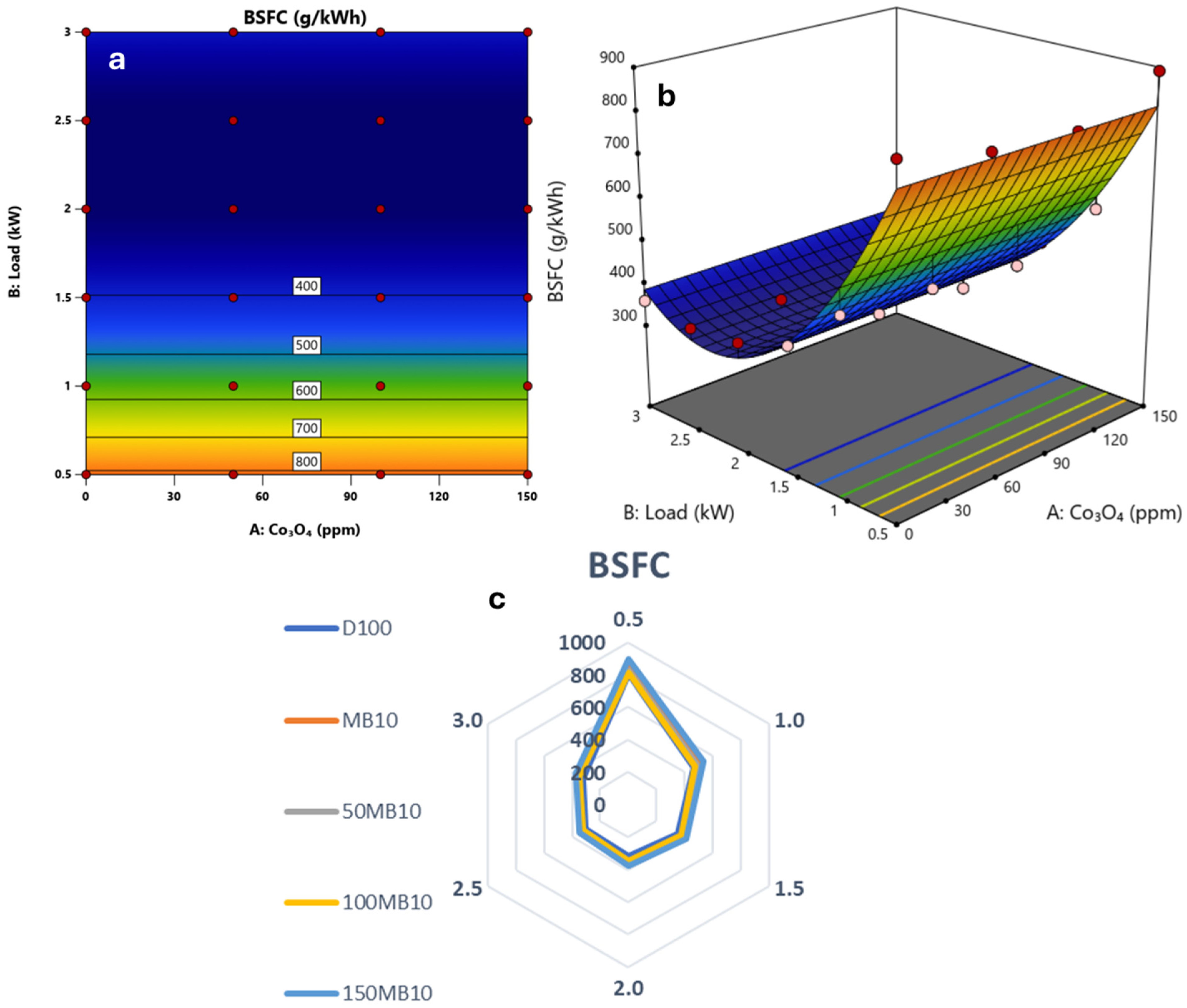
The BSFC variation with respect to engine load and Co3O4 nanoparticle concentration is shown in Figure 9c. The BSFC value of MB10 fuel was 10.91% higher than that of D100 fuel. This increase is attributed to the lower calorific value and higher viscosity of biodiesel compared to diesel fuel, which results in higher fuel consumption for the same power output [36]. The BSFC value of MB10 fuel was 5.52% higher than that of D100 fuel. In comparison, the 50MB10 test fuel exhibited a BSFC value that was 8.76% higher than D100 fuel but 1.96% lower than MB10 fuel. Similarly, the 100MB10 test fuel showed a BSFC increase of 16.06% relative to D100 fuel, while exhibiting a 4.46% reduction compared to MB10 fuel. In addition, the 150MB10 test fuel demonstrated a BSFC value that was 16.06% higher than D100 fuel and 4.48% lower than MB10 fuel. ZnO nanoparticles added to mango seed biodiesel decreased BSFC by 1.8%, according to Sajin et al.’s study [46], and Fe2O3 nanoparticles added to microalgae biodiesel likewise decreased BSFC, according to another study [47]. The addition of nanoparticles enhances in-cylinder heat transfer and promotes more efficient combustion, which contributes to a reduction in BSFC at lower concentrations [48]. However, at higher nanoparticle concentrations, particle agglomeration and deterioration of fuel atomization may occur, leading to reduced combustion efficiency and increased BSFC. The 150MB10 test fuel exhibited a 10.03% higher BSFC compared to the 100MB10 fuel. The lowest BSFC values were obtained in the 2–2.5 kW load range for fuels containing 60–90 ppm Co3O4 nanoparticles, indicating the existence of an optimum concentration range for improved combustion performance and fuel economy, as shown in Figure 9a,b.
Figure 9.
BSFC emission behavior with respect to nanoparticle concentration and engine load is presented through (a) contour visualization, (b) three-dimensional surface representation, and (c) radar-based evaluation.
3.1.6. BTE
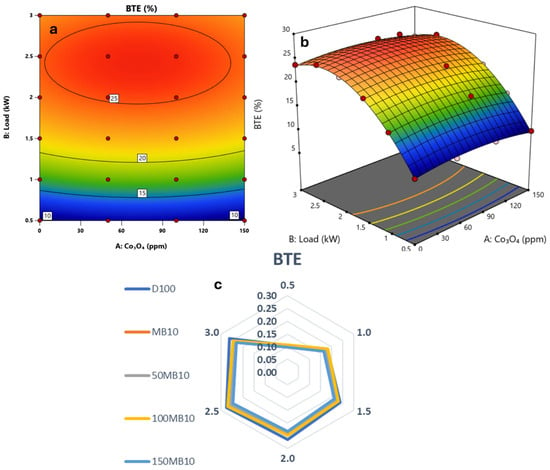
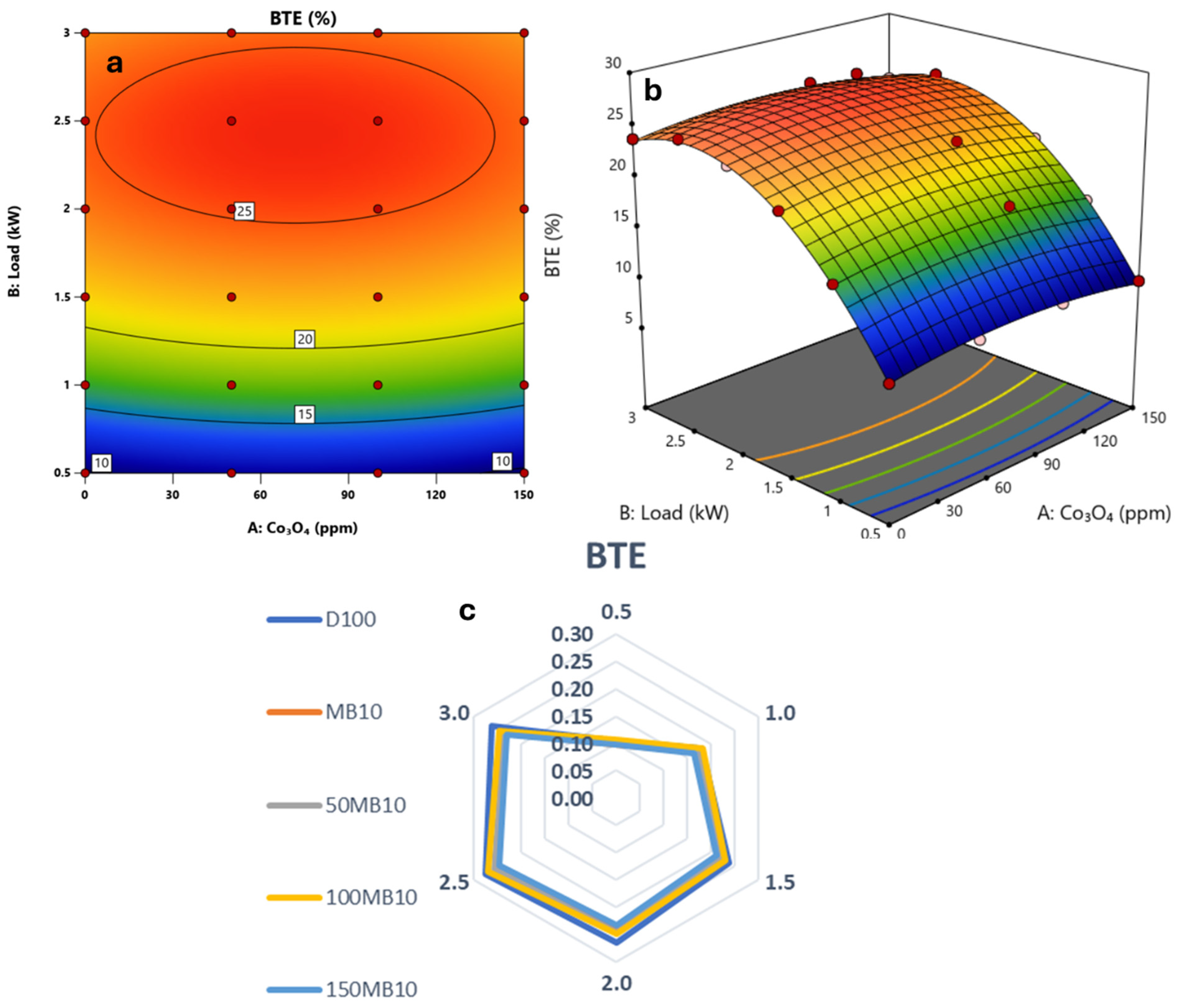
BTE is a crucial engine metric that shows how much fuel energy is transformed into meaningful power. The fluctuation of BTE based on engine load and Co3O4 is depicted in Figure 10c. The efficiency of biodiesel-added fuel is lower than that of diesel for several reasons, including the fact that biodiesel has a lower calorific value than diesel and that high viscosity adversely affects fuel atomization [49]. The BTE value of MB10 fuel decreased by 8.17% compared to D100 fuel. In comparison with MB10 fuel, the BTE values of the 50MB10 and 100MB10 test fuels increased by 2.77% and 6.11%, respectively, whereas the 150MB10 test fuel showed a decrease of 2.26%. When compared to D100 fuel, the BTE values of the 50MB10, 100MB10, and 150MB10 test fuels decreased by 6.61%, 2.14%, and 10.25%, respectively. Comparable to the results in this investigation, Arun et al. discovered that adding 100 ppm MgO raised the BTE value by 12.29% [50]. By decreasing ignition delay, nanoparticles improved combustion efficiency [51]. On the other hand, adding more nanoparticles made fuel more viscous and reduced combustion efficiency. The BTE value of 150MB10 fuel was 8.25% lower than that of 100MB10 fuel. With 60–90 ppm Co3O4 fuel, the maximum efficiency was found at a load of about 2.5 kW according to Figure 10a,b.
Figure 10.
BTE emission behavior with respect to nanoparticle concentration and engine load is presented through (a) contour visualization, (b) three-dimensional surface representation, and (c) radar-based evaluation.
Our findings are contrasted with similar studies that have been reported in the literature in Table 8. This demonstrates both the study’s position in the corpus of recent literature and the coherence of its conclusions.
Table 8.
Literature review.
The results of the table are generally consistent with studies that have been reported in the literature. Employing biodiesel tends to increase NOx emissions while decreasing CO and HC emissions, which is in line with previous studies. Furthermore, it was demonstrated that the application of nanoparticles enhanced emissions and performance by boosting combustion efficiency. This implies that the combined use of jojoba-based second-generation biodiesel and nanoparticle addition supports the study’s results, which are in line with similar findings in the literature.
3.2. Optimization
The created models are statistically significant (p < 0.0001), according to the F-value and p-value values shown in Table 9. With strong F-values across all replies, the load parameter (B-Load) was found to be one of the most important components. HC, CO2, NOx, BSFC, and BTE responses were found to be significantly impacted by load change. Furthermore, the relevance of the second-order terms (A2 and B2) for many responses demonstrates that the system behavior has a nonlinear structure and justifies the applicability of the RSM approach. However, several responses were affected by the interaction term AB in a limited or statistically inconsequential way. Overall, the generated models effectively capture engine performance and emission parameters, as indicated by the high F-values and low p-values.
Table 9.
F-value and p-value.
Table 10 displays terms with confidence levels greater than 0.05 (p < 0.05) that are not significant in the optimization. Back-elimination was used to exclude these words from the models based on their statistical significance. The created models provide good accuracy and reliability for all responses, as can be shown by looking at the fit statistics provided in Table 5. The high R2 and Adjusted R2 values for CO, HC, CO2, NOx, BSFC, and BTE show a high degree of agreement between model predictions and experimental data. The models’ adequate predictive power and lack of overfitting are demonstrated by the Predicted R2 values’ proximity to the Adjusted R2 values. Additionally, the fact that all replies’ Adeq Precision values are significantly higher than 4 suggests that the models are appropriate for optimization research and that the signal-to-noise ratio is adequate. High repeatability of experimental results and model stability are shown by low standard deviation and coefficient of variation (C.V.%) values.
Table 10.
Fit Statistics.
The relatively lower R2 and predicted R2 values observed for the CO response, compared with the other investigated outputs, can be attributed to the inherently higher variability of CO formation during combustion. CO emissions are highly sensitive to small fluctuations in local equivalence ratio, in-cylinder temperature gradients, and transient mixing quality, which may introduce additional experimental scatter. This sensitivity can lead to slightly reduced predictive accuracy of the regression model for CO when compared with more stable responses such as CO2 or BTE. Nevertheless, the close agreement between adjusted R2 and predicted R2 values, together with a highly significant model (p < 0.0001), confirms that the model retains adequate reliability and predictive capability without evidence of overfitting. Therefore, the developed RSM model for CO is considered statistically acceptable for optimization and response prediction purposes.
The regression equations for the output parameters acquired using RSM are shown in Table 11. The impacts of independent variables like motor load and Co3O4 nanoparticle concentration on CO, HC, CO2, NOx, BSFC, and BTE are expressed quantitatively in these established equations. To forecast experimental outcomes and identify ideal operating conditions, regression models with linear, interactional, and quadratic factors were employed. In this instance, B stands for the load and A for the concentration of Co3O4 nanoparticles.
Table 11.
Regression Equation.
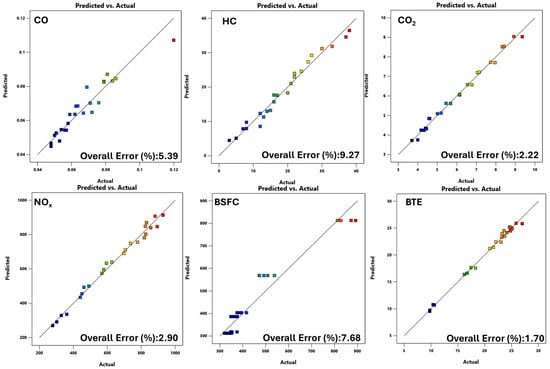
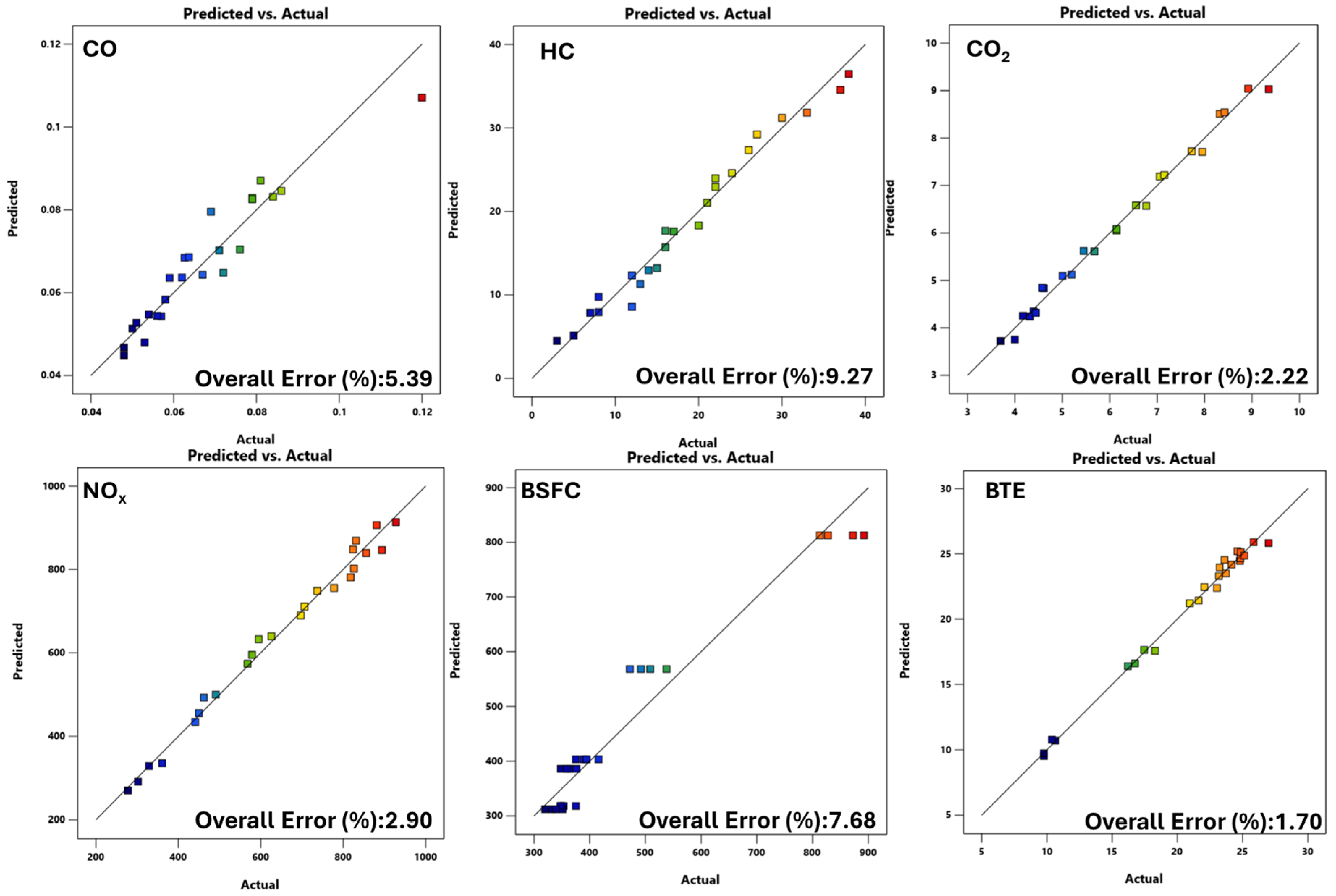
By comparing the data collected under actual experimental settings with the projected data generated using these equations, the study’s error rates were ascertained. In this case, the projected values were computed by applying each regression equation independently for each of the 24 experimental sets. The distribution of the predicted and experimental data is displayed in Figure 11. The average error rates were determined to be 5.39% for CO, 9.27% for HC, 2.22% for CO2, 2.90% for NOx, 7.68% for BSFC, and 1.70% for BTE. The created regression models successfully describe the experimental data and have an acceptable level of accuracy, as evidenced by the fact that all obtained error rates are less than 10%.
Figure 11.
Overall error of output parameters.
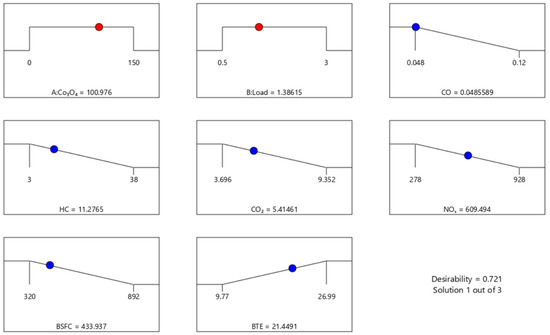
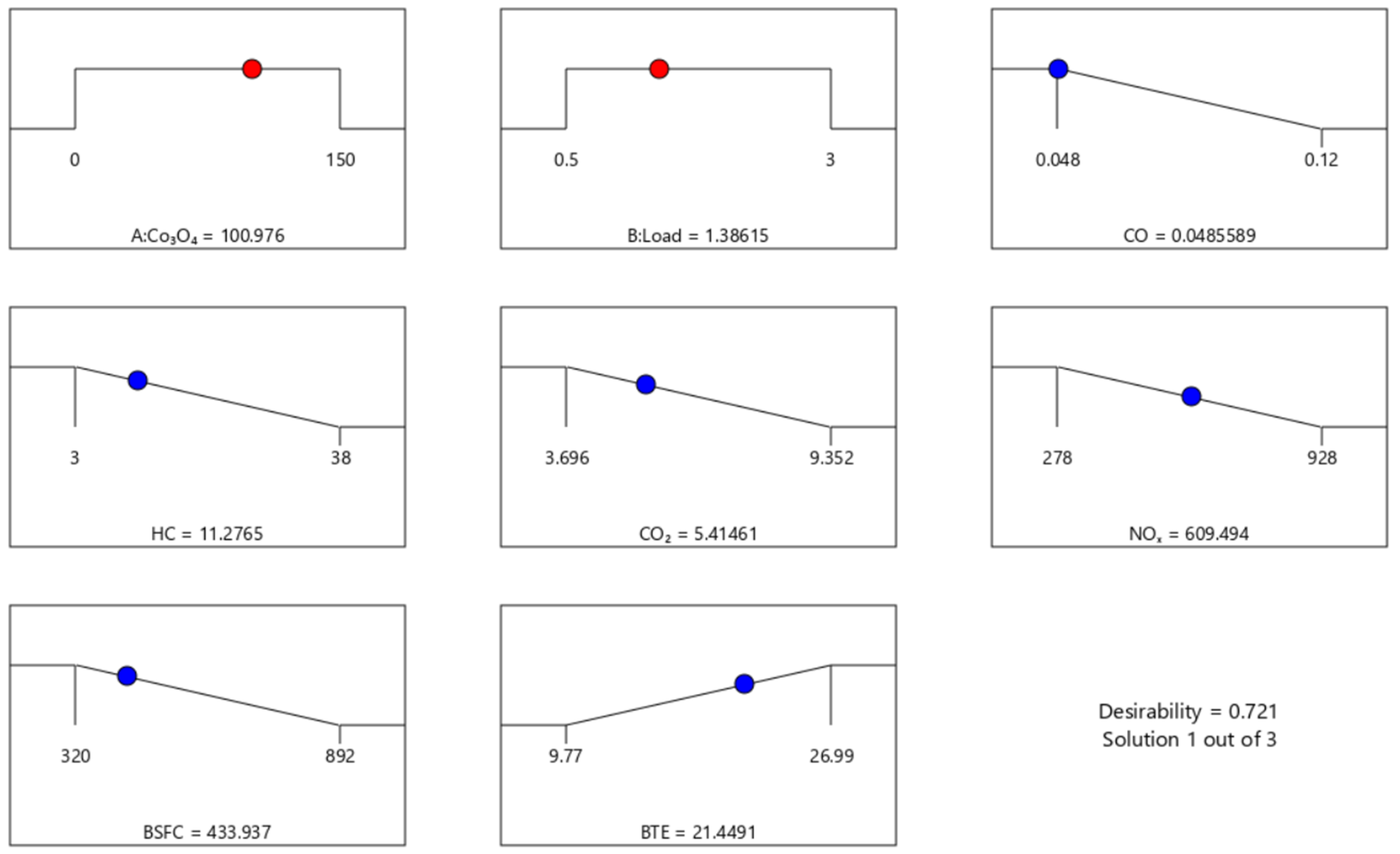
Using data from engine testing, optimization research was carried out to identify the ideal nanoparticle concentration and engine load circumstances that yield the highest performance and emission values. All output parameters were given equal weight throughout the optimization process, guaranteeing a fair assessment of each parameter’s influence on the outcomes. In this case, a maximization target was used for BTE, and a minimization target was set for emission parameters and BSFC. The optimization analysis results graph is portrayed in Figure 12. An engine load of 1.39 kW and a fuel mixture containing 100.98 ppm Co3O4 nanoparticles were found to be ideal operating conditions. The output parameters were found to be 21.45% for BTE and 433.94 g/kWh for BSFC under these ideal circumstances. The CO, HC, CO2, and NOx emission values were found to be 0.049%, 11.28 ppm, 5.415%, and 609.49 ppm, respectively. This optimal operating point does not just equate to maximum BTE or minimum emission and BSFC values, even though it typically offers balanced performance and emission values. This is due to the fact that performance and emission parameters must be balanced during the optimization process; an improvement in one response may result in a compromise in others. As a result, rather than being a maximum or lowest value intended to achieve a single goal, the selected optimal condition reflects a compromise option.
Figure 12.
Optimization.
The conditions corresponding to the precise optimum point have not been explicitly evaluated experimentally, even though the engine load values and nanoparticle quantity generated because of the optimization research fall within the range of the known experimental data. To assess the model’s accuracy and dependability, a validation experiment was carried out. The validation experiment was created with the actual experimental setup in mind. A fuel mixture containing 101 ppm Co3O4 was utilized as the nearest relevant value because it was impossible to properly prepare the ideal nanoparticle number of 100.98 ppm experimentally. In a similar vein, a load condition of 1.4 kW was favored over the ideal engine load value of 1.39 kW. RSM regression equations were used to theoretically derive the output parameters that corresponded to these conditions. Table 12 displays the validation experiment’s predicted and obtained values. The RSM model exhibits strong agreement with experimental data, and its prediction ability is typically accurate, as evidenced by the fact that the error rates reported for all parameters ranged from 1.39% to 8.86%.
Table 12.
Validation.
The performance and emission characteristics of the fuel containing 101 ppm Co3O4 nanoparticles at a 1.4 kW engine load, identified as the closest condition to the optimum operating point, were evaluated and compared with D100 and MB10 reference fuels under the same operating conditions. Compared to D100 fuel, the nanoparticle-added fuel reduced CO and HC emissions by 32.88% and 47.01%, respectively, while increasing CO2 and NOx emissions by 8.90% and 13.69%, respectively. In addition, BTE decreased by 1.35% and BSFC increased by 3.53%. When compared to MB10 fuel, CO and HC emissions decreased by 22.22% and 29.41%, respectively, whereas CO2 and NOx emissions increased by 5.46% and 10.56%, respectively. In this case, BTE increased by 2.09% and BSFC decreased by 4.59%.
4. Conclusions
The impacts of biodiesel diesel blends enhanced with Co3O4 nanoparticles on engine performance and emission characteristics were examined experimentally in this study, and RSM was effectively used to simulate and optimize the system responses.
- Strong agreement between experimental and anticipated data was confirmed by the constructed RSM models, which showed good predictive accuracy for all responses with coefficient of determination values more than 0.90. All outputs, including CO (5.39%), HC (9.27%), CO2 (2.22%), NOx (2.90%), BSFC (7.68%), and BTE (1.70%), had minimal average prediction errors.
- The near-optimal operating state was found by the optimization findings at an engine load of about 1.39–1.40 kW and a concentration of 101 ppm Co3O4 nanoparticles, resulting in 21.45% BTE and 433.94 g/kWh BSFC. Significant improvements in emissions were achieved in the optimal region. CO2 and NOx emissions increased by 8.90% and 13.69%, respectively, but CO and HC emissions decreased by 32.88% and 47.01% in comparison to D100 fuel. CO and HC emissions dropped by 22.22% and 29.41%, respectively, in comparison to MB10. Performance-wise, BTE slightly decreased by 1.35% while BSFC improved by 3.53% in comparison to D100. However, BSFC dropped by 4.59% and BTE rose by 2.09% as compared to MB10 fuel, suggesting better fuel usage under biodiesel mixing circumstances.
- Consistent patterns were confirmed by additional validation at the optimal operating point, where the addition of Co3O4 improved oxidation processes, resulting in increased combustion efficiency and decreased incomplete combustion products, albeit with a normal NOx trade-off.
Overall, the findings unequivocally show that adding Co3O4 nanoparticles to bi-odiesel–diesel blends greatly improve combustion quality and emission characteristics, especially by lowering CO and HC emissions. With all created models demonstrating good statistical validity (R2 > 0.90 and low prediction errors), the study further indicates that RSM is a robust and trustworthy technique for modeling, forecasting, and optimizing engine performance and emission responses. The results underline the necessity of NOx mitigation techniques in future applications while also highlighting the possibility of nanoparticle-assisted fuel strategies as an efficient method for enhancing diesel engine sustainability.
Limitations and Future Work
This investigation was carried out in a lab environment with certain presumptions and restrictions. As a result, when assessing the results, these restrictions should be taken into account. In addition, a number of recommendations for further research are made in view of the present constraints.
- The study investigated how engine load and the amount of nanoparticles affected performance and emission metrics. As a result, thorough evaluations of combustion, including heat release rate and in-cylinder pressure, were not carried out. Future research is advised to assess combustion characteristics as well.
- Only the effects of Co3O4 nanoparticles on diesel fuel with 10% microalgae biodiesel added by volume were examined in this study. The investigations did not look at alternative nanoparticles or biodiesel raw ingredients. Future research on the effects of various sources of biodiesel raw materials and types of nanoparticles is advised.
- To completely ascertain the impact of engine load, the investigations were carried out at a steady speed of 3000 rpm. Future research is advised to include a study that takes engine speed into account.
- This study excluded long-term consequences such engine attrition, sedimentation, and injector fouling in favor of concentrating on the immediate effects of nanoparticles. The filter surface was visually examined following each experiment, and no discernible nanoparticle buildup was found, despite the fact that the gasoline filter utilized in the experimental setup was not sensitive enough to fully retain nanoparticles. Nevertheless, SEM, EDX, or other comparable analytical tools were not used to thoroughly characterize potential particles retained on the filter surface. Future research is therefore advised to ascertain the quantity of nanoparticles released without reacting with the exhaust gas and to confirm the existence of nanoparticle residue on the filter using analytical techniques. To fully examine the effects on filter performance, injector cleanliness, and engine components, long-term durability testing is also recommended.
- Phase separation was not seen over the 24 h visual observation period used to evaluate fuel stability. Nevertheless, thorough stability analyses were not carried out, including sedimentation analysis, zeta potential measurement, and particle distribution characterization. In order to more thoroughly assess fuel homogeneity and nanoparticle dispersion stability, it is advised that pertinent analyses be used in subsequent research.
- This study used RSM-based prediction models to assess the impacts of engine load and Co3O4 nanoparticle concentration under carefully regulated experimental settings. Classical experimental design techniques like Box–Behnken (or Central Composite Design) were not explicitly used, despite the fact that the experimental dataset was created to represent actual motor working circumstances. Rather, steady-state motor operating conditions were reflected in the experimental points. Practically speaking, this method generates realistic data, but it has certain statistical drawbacks with regard to the homogenous coverage of the design space and the regularity of the experimental design structure. All tests were conducted under steady-state circumstances without the use of simulation or artificial data, and independent variables were chosen within the range of 0.5–3 kW motor load and 0–150 ppm nanoparticle concentration. Compared to full factorial DOE techniques, this method has certain drawbacks in terms of statistical generalizability and model validation, even though it more accurately captures motor behavior by lowering the number of experiments. In order to boost the model’s statistical strength, it is advised that standard experimental design techniques like BBD or CCD be used in further research.
Author Contributions
A.S. and R.Ş. contributed to the conceptualization and formal analysis of the study. The methodology was developed by G.U., S.U. and A.S. Software and visualization processes were carried out by O.D. and A.S., while investigation and data collection were performed by R.Ş., G.U. and S.U. The original draft of the manuscript was prepared by O.D., A.S. and R.Ş. Review and editing were conducted by G.U., S.U. and O.D. Project administration was supervised by R.Ş. and A.S., whereas funding acquisition was managed by S.U., O.D. and G.U. All authors have read and agreed to the published version of the manuscript.
Funding
This research was financially supported by the Scientific Research Projects Coordination Unit of Bandırma Onyedi Eylül University within the scope of project number BAP-25-1003-012.
Data Availability Statement
Data will be made available on request.
Conflicts of Interest
The authors declare no conflicts of interest.
References
- Ajith, B.S.; Patel, G.C.M.; Der, O.; Selvan, C.P.; Samuel, O.D.; Annadurai, S.; Thajudeen, K.Y.; Yadav, K.K. Microwave-assisted transesterification of hybrid Garcinia gummi-gutta and Garcinia indica oils: Optimization using RSM and meta-heuristic algorithms for high-yield biodiesel production. Biomass Bioenergy 2025, 202, 108223. [Google Scholar] [CrossRef] [Scilit]
- Öztürk, G.; Fırat, M. Fueling the Future: Condensate Petroleum as a Novel Alternative Fuel for Diesel Engines. Fire 2026, 9, 127. [Google Scholar] [CrossRef] [Scilit]
- Yildiz, R.O.; Koc, E.; Der, O.; Aymelek, M. Unveiling the Contemporary Research Direction and Current Business Management Strategies for Port Decarbonization Through a Systematic Review. Sustainability 2024, 16, 10959. [Google Scholar] [CrossRef] [Scilit]
- Bousbaa, H.; Kaid, N.; Alqahtani, S.; Maatki, C.; Naima, K.; Menni, Y.; Kolsi, L. Prediction and Simulation of Biodiesel Combustion in Diesel Engines: Evaluating Physicochemical Properties, Performance, and Emissions. Fire 2024, 7, 364. [Google Scholar] [CrossRef] [Scilit]
- Bayraktar, M.; Bayramoğlu, K.; Yuksel, O. Evaluating the Greenhouse Gas Fuel Intensity of Marine Fuels Under the Maritime Net-Zero Framework. Sustainability 2025, 18, 184. [Google Scholar] [CrossRef] [Scilit]
- Conesa, J.A.; Mortes, J. The Contribution of Commercial Flights to the Global Emissions of Inorganic and Organic Pollutants. Processes 2025, 13, 995. [Google Scholar] [CrossRef] [Scilit]
- Savaş, A.; Bilgili, L.; Uslu, S.; Şener, R. Life cycle assessment of jojoba (Simmondsia Chinensis) Biodiesel as a sustainable fuel for maritime decarbonization. Biomass Bioenergy 2025, 200, 108040. [Google Scholar] [CrossRef] [Scilit]
- Gucma, M. A critical analysis of the utilization of fossil fuels by the maritime sector concerning the decarbonization process. Transp. Res. Procedia 2025, 83, 165–169. [Google Scholar] [CrossRef] [Scilit]
- Zhu, C.; Samuel, O.D.; G C, M.P.; Der, O.; Abbas, M.; Hussain, F.; Ting, T.T. Enhancing CI engine performance and emission control using a hybrid RSM–Rao algorithm for ZnO-doped castor–neem biodiesel blends. Case Stud. Therm. Eng. 2025, 74, 106841. [Google Scholar] [CrossRef] [Scilit]
- Dhar, A.; Kevin, R.; Agarwal, A.K. Production of biodiesel from high-FFA neem oil and its performance, emission and combustion characterization in a single cylinder DICI engine. Fuel Process. Technol. 2012, 97, 118–129. [Google Scholar] [CrossRef] [Scilit]
- EL-Seesy, A.I.; He, Z.; Hassan, H.; Balasubramanian, D. Improvement of combustion and emission characteristics of a diesel engine working with diesel/jojoba oil blends and butanol additive. Fuel 2020, 279, 118433. [Google Scholar] [CrossRef] [Scilit]
- Simsek, S.; Uslu, S. Comparative evaluation of the influence of waste vegetable oil and waste animal oil-based biodiesel on diesel engine performance and emissions. Fuel 2020, 280, 118613. [Google Scholar] [CrossRef] [Scilit]
- Purushothaman, K.; Nagarajan, G. Performance, emission and combustion characteristics of a compression ignition engine operating on neat orange oil. Renew. Energy 2009, 34, 242–245. [Google Scholar] [CrossRef] [Scilit]
- Silitonga, A.S.; Masjuki, H.H.; Mahlia, T.M.I.; Ong, H.C.; Chong, W.T. Experimental study on performance and exhaust emissions of a diesel engine fuelled with Ceiba pentandra biodiesel blends. Energy Convers. Manag. 2013, 76, 828–836. [Google Scholar] [CrossRef] [Scilit]
- Mustafa, A.; Faisal, S.; Singh, J.; Rezki, B.; Kumar, K.; Moholkar, V.S.; Kutlu, O.; Aboulmagd, A.; Thabet, H.K.; El-Bahy, Z.M.; et al. Converting lignocellulosic biomass into valuable end products for decentralized energy solutions: A comprehensive overview. Sustain. Energy Technol. Assess. 2024, 72, 104065. [Google Scholar] [CrossRef] [Scilit]
- Savaş, A.; Şener, R.; Uslu, S.; Der, O. Experimental study on performance and emission optimization of MgO nanoparticle-enriched 2nd generation biodiesel: A method for employing nanoparticles to improve cleaner diesel combustion. J. Energy Inst. 2025, 120, 102024. [Google Scholar] [CrossRef] [Scilit]
- Nashath, F.Z.; Ng, Y.J.; Khoo, K.S.; Show, P.L. Current contributions of microalgae in global biofuel production; cultivation techniques, biofuel varieties and promising industrial ventures. Biomass Bioenergy 2025, 201, 108092. [Google Scholar] [CrossRef] [Scilit]
- Zhang, C.; Singh, R.P.; Yadav, P.; Kumar, I.; Kaushik, A.; Roychowdhury, R.; Mubeen, M.; Singh, S.K.; Kumar, A.; Wang, J. Recent advances in biotechnology and bioengineering for efficient microalgal biofuel production. Fuel Process. Technol. 2025, 270, 108199. [Google Scholar] [CrossRef] [Scilit]
- Olabi, A.G.; Alami, A.H.; Alasad, S.; Aljaghoub, H.; Sayed, E.T.; Shehata, N.; Rezk, H.; Abdelkareem, M.A. Emerging Technologies for Enhancing Microalgae Biofuel Production: Recent Progress, Barriers, and Limitations. Fermentation 2022, 8, 649. [Google Scholar] [CrossRef] [Scilit]
- Gupta, H.; Gangwar, J.N. A comprehensive review of algal biodiesel for compression ignition engines: Challenges, advances, and future prospects. Energy Environ. 2025. [Google Scholar] [CrossRef] [Scilit]
- Awogbemi, O.; Ojo, A.A.; Adeleye, S.A. Advancements in the application of metal oxide nanocatalysts for sustainable biodiesel production. Discov. Appl. Sci. 2024, 6, 250. [Google Scholar] [CrossRef] [Scilit]
- Mohan, S.; Dinesha, P. Performance and emissions of biodiesel engine with hydrogen peroxide emulsification and cerium oxide (CeO2) nanoparticle additives. Fuel 2022, 319, 123872. [Google Scholar] [CrossRef] [Scilit]
- Noor, C.W.M.; Ismail, A.A.; Fhatihah, A.N.; Ahmad, M.F.; Jarkoni, M.N.K.; Briggs, H.G. Assessing the Effect of Aluminium Oxide Nanoparticle Additives on Biodiesel Combustion in Marine Diesel Engines. IOP Conf. Ser. Earth Environ. Sci. 2024, 1372, 012029. [Google Scholar] [CrossRef] [Scilit]
- Bekhradinassab, E.; Esfandyari, M. Biodiesel production by iron oxide supported on light weight expanded clay aggregate (Fe2O3-f-LECA) Catalyst: Box-Behnken design-based optimization and ANFIS modeling with GA and PSO. Renew. Energy 2025, 251, 123466. [Google Scholar] [CrossRef] [Scilit]
- Ghanati, S.G.; Doğan, B.; Yeşilyurt, M.K. The effects of the usage of silicon dioxide (SiO2) and titanium dioxide (TiO2) as nano-sized fuel additives on the engine characteristics in diesel engines: A review. Biofuels 2024, 15, 229–243. [Google Scholar] [CrossRef] [Scilit]
- El-gharbawy, A.S.; Osman, A.I.; Ali, M.M.; Kasaby, M.A.; sadek, O.M.; Elwardany, A.E. Emission optimization of diesel-biodiesel blends (B30) using lab-synthesized metal oxide nanoparticles. Biomass Bioenergy 2025, 202, 108153. [Google Scholar] [CrossRef] [Scilit]
- Rathod, S.; Joshi, K.K.; Patel, D.; Pataniya, P.; Nandpal, M.N.; Patel, S.G.; Sumesh, C.K.; Kapatel, S. Facile surface reconstructions of cobalt–copper oxide heterostructures enable efficient electrocatalytic glycerol oxidation for energy-saving hydrogen evolution. J. Alloys Compd. 2025, 1048, 185267. [Google Scholar] [CrossRef] [Scilit]
- Raja, T.; Devarajan, Y. Development of hemp fiber-reinforced epoxy composite with cobalt oxide nanoparticles for fuel cell and energy storage applications. Results Eng. 2025, 25, 103839. [Google Scholar] [CrossRef] [Scilit]
- Balasubramanian, D.; Gnanavel, J.R.S.; Venugopal, I.P.; Wu, H.-W. Enhanced Combustion Characteristics of Diesel, Biodiesel Blends Infused with Cobalt Oxide Nanoparticles: Droplet-Scale Experimentation and Flame Analysis. Combust. Sci. Technol. 2026, 198, 1920–1963. [Google Scholar] [CrossRef] [Scilit]
- Mahariq, I.; Marzouki, R.; Ameen, H.F.M.; Abbas, M.; Abdullaeva, B.; Sidi, M.O.; Faqihi, A.A.; Akgül, A.; Galal, A.M. Thermophoretic particle deposition in thermo-bioconvection flow of diamond-SiC-Co3O4/water-based trihybrid nanofluid with oxytactic and gyrotactic microorganisms: Biotechnological applications. J. Therm. Anal. Calorim. 2025, 150, 7871–7885. [Google Scholar] [CrossRef] [Scilit]
- Şirin, T.B.; Der, O.; Kuş, H.; Avdan, Ç.G.; Yüksel, S.; Etyemez, A.; Ay, M. Optimization of End Mill Geometry for Machining 1.2379 Cold-Work Tool Steel Through Hybrid RSM-ANN-GA Coupled FEA Approach. Machines 2025, 14, 15. [Google Scholar] [CrossRef] [Scilit]
- Savaş, A.; Uslu, S.; Şener, R. Optimization of performance and emission characteristics of a diesel engine fueled with MgCO3 nanoparticle doped second generation biodiesel from jojoba by using response surface methodology (RSM). Fuel 2025, 381, 133658. [Google Scholar] [CrossRef] [Scilit]
- Yuksel, S.; Sirin, T.B.; Ay, M.; Uçar, M.; Kurt, M. A study on end mill tool geometry parameters for end milling of 316L: Finite element analysis and response surface methodology optimization based on resultant cutting force. J. Braz. Soc. Mech. Sci. Eng. 2024, 46, 452. [Google Scholar] [CrossRef] [Scilit]
- Zheng, F.; Cho, H.M. The Effect of Different Mixing Proportions and Different Operating Conditions of Biodiesel Blended Fuel on Emissions and Performance of Compression Ignition Engines. Energies 2024, 17, 344. [Google Scholar] [CrossRef] [Scilit]
- Şener, R.; Uslu, S.; Savaş, A. The role of magnetic maghemite (Fe2O3) nanoparticles for the improvement of 2nd generation biodiesel/diesel Blends: RSM based multi-objective optimization. Renew. Energy 2025, 249, 123211. [Google Scholar] [CrossRef] [Scilit]
- Torkzaban, S.; Feyzi, M.; Norouzi, L. A novel biodegradable nanoparticle as a robust biodiesel antioxidant, and fuel additive for improvement of diesel engine performance and exhaust emission. Renew. Energy 2025, 242, 122345. [Google Scholar] [CrossRef] [Scilit]
- Mofijur, M.; Ahmed, S.F.; Ahmed, B.; Mehnaz, T.; Mehejabin, F.; Shome, S.; Almomani, F.; Chowdhury, A.A.; Kalam, M.A.; Badruddin, I.A.; et al. Impact of nanoparticle-based fuel additives on biodiesel combustion: An analysis of fuel properties, engine performance, emissions, and combustion characteristics. Energy Convers. Manag. X 2024, 21, 100515. [Google Scholar] [CrossRef] [Scilit]
- Vellaiyan, S.; Partheeban, C.M.A. Combined effect of water emulsion and ZnO nanoparticle on emissions pattern of soybean biodiesel fuelled diesel engine. Renew. Energy 2020, 149, 1157–1166. [Google Scholar] [CrossRef] [Scilit]
- Zhang, R.; Zhang, X.; Qing, S.; Luo, Z.; Liu, Y. Investigation of nanoparticles shape that influence the thermal conductivity and viscosity in argon-based nanofluids: A molecular dynamics simulation. Int. J. Heat. Mass. Transf. 2023, 207, 124031. [Google Scholar] [CrossRef] [Scilit]
- Emaish, H.; Abualnaja, K.M.; Kandil, E.E.; Abdelsalam, N.R. Evaluation of the performance and gas emissions of a tractor diesel engine using blended fuel diesel and biodiesel to determine the best loading stages. Sci. Rep. 2021, 11, 9811. [Google Scholar] [CrossRef] [Scilit]
- Savaş, A. Sustainable energy application of third-generation Spirulina microalgae biodiesel with NiO nanoparticle additives: Experimental performance, emission characteristics, and multi-response optimization. Appl. Therm. Eng. 2026, 301, 131647. [Google Scholar] [CrossRef] [Scilit]
- Khan, S.; Dewang, Y.; Raghuwanshi, J.; Shrivastava, A.; Sharma, V. Nanoparticles as fuel additive for improving performance and reducing exhaust emissions of internal combustion engines. Int. J. Environ. Anal. Chem. 2022, 102, 319–341. [Google Scholar] [CrossRef] [Scilit]
- Kumar, M.; Ansari, N.A.; Gautam, R. Optimising CRDI engine performance using waste-derived biodiesel, bioethanol, and ceric oxide nanoparticles: An RSM approach for emission reduction and economic viability. Fuel 2026, 415, 138435. [Google Scholar] [CrossRef] [Scilit]
- Sanjeevarao, K.; Pavani, P.N.L.; Suresh, C.; Kumar, P.A. Experimental investigation on VCR diesel engine fuelled with Al2O3nanoparticles blended cottonseed biodiesel—Diesel blends. Mater. Today Proc. 2021, 46, 301–306. [Google Scholar] [CrossRef] [Scilit]
- Yusof, S.N.A.; Sidik, N.A.C.; Asako, Y.; Japar, W.M.A.A.; Mohamed, S.B.; Muhammad, N.M. A comprehensive review of the influences of nanoparticles as a fuel additive in an internal combustion engine (ICE). Nanotechnol. Rev. 2020, 9, 1326–1349. [Google Scholar] [CrossRef] [Scilit]
- Sajin, J.B.; Pillai, G.O.; Kesavapillai, M.; Varghese, S. Effect of nanoparticle on emission and performance characteristics of biodiesel. Int. J. Ambient. Energy 2021, 42, 1562–1568. [Google Scholar] [CrossRef] [Scilit]
- Anderson, A.; Gavurová, B.; Li, H.; Xia, C.; Zhang, X. Optimizing engine performance and reducing emissions of greenhouse gases through spirulina microalgae and nano-additive blends. Environ. Res. 2023, 231, 115958. [Google Scholar] [CrossRef] [Scilit]
- Polat, F.; Sarıdemir, S.; Gad, M.S.; El-Shafay, A.S.; Ağbulut, Ü. Enhancing diesel engine performance, combustion, and emissions reductions under the effect of cerium oxide nanoparticles with hydrogen addition to biodiesel fuel. Int. J. Hydrogen Energy 2024, 83, 884–896. [Google Scholar] [CrossRef] [Scilit]
- Al-Mashhadani, H.; Fernando, S. Properties, performance, and applications of biofuel blends: A review. AIMS Energy 2017, 5, 735. [Google Scholar] [CrossRef] [Scilit]
- Arun, S.B.; Yatish, K.V.; Tigari, G.; Prashanth, G.K.; Lalithamba, H.S.; Pramoda, K. Bio-based plant-extract facilitated MgO nanocatalyst for the transformation of agriculture waste derived-feedstock into biodiesel and as nano-additive in diesel engine. Renew. Energy 2026, 256, 124218. [Google Scholar] [CrossRef] [Scilit]
- Gad, M.S.; Kamel, B.M.; Badruddin, I.A. Improving the diesel engine performance, emissions and combustion characteristics using biodiesel with carbon nanomaterials. Fuel 2021, 288, 119665. [Google Scholar] [CrossRef] [Scilit]

Disclaimer/Publisher’s Note: The statements, opinions and data contained in all publications are solely those of the individual author(s) and contributor(s) and not of MDPI and/or the editor(s). MDPI and/or the editor(s) disclaim responsibility for any injury to people or property resulting from any ideas, methods, instructions or products referred to in the content. |
© 2026 by the authors. Licensee MDPI, Basel, Switzerland. This article is an open access article distributed under the terms and conditions of the Creative Commons Attribution (CC BY) license.