
Article

Comparative Analysis of Fire Resistance in Steel Columns Insulated with Sustainable Biomaterials

by
Nadia Otmani-Benmehidi
1,*,
Abdessalem Otmani
2,
Yasser Mohamed Aimen Zeltni
3,
Ali Ourdjini
4 and
Haithem Boumediri
5
1
Laboratory of Materials, Geomaterial and Environmental, Faculty of Technology, Badji Mokhtar-Annaba University, P.O. Box 12, Annaba 23000, Algeria
2
Department of Process and Energy Engineering, National Higher School of Technology and Engineering, Annaba 23005, Algeria
3
Department of Civil Engineering, Faculty of Technology, Badji Mokhtar-Annaba University, P.O. Box 12, Annaba 23000, Algeria
4
Faculty of Engineering, University of Ottawa, Ottawa, ON K1N 6N5, Canada
5
Mechanical Department, Institute of Applied Sciences and Techniques, University of Constantine 1, Constantine 25017, Algeria
*
Author to whom correspondence should be addressed.
Submission received: 16 October 2025 / Revised: 30 December 2025 / Accepted: 13 January 2026 / Published: 20 January 2026
(This article belongs to the Special Issue Advances in Fire Science and Fire Protection Engineering)

Abstract

This paper investigates the influence of fire protection systems and insulation materials on the thermal performance of steel columns. An unprotected column and several columns insulated with different fire protection materials were analyzed using the SAFIR® (2022 version) and ABAQUS simulation (2017 Version). Thermal and mechanical properties of steel were defined according to Eurocode (EC3), and fire exposure was simulated following the ISO-834 standard fire. The following two insulation systems were considered: contour encasement and box encasement. Results show that, for identical material properties and thickness, box encasement significantly slows the temperature rise compared to contour encasement. Vegetable-based fire protection materials such as wood fiber, sheep wool, and expanded cork reduced the steel temperature to 400 °C for up to 80 min and extended fire resistance of steel columns 40 to 310 min. These findings demonstrate that such insulation materials can markedly enhance the fire performance and structural integrity of steel columns, offering a sustainable and effective solution to fire protection.

1. Introduction

To ensure the safety and comfort of occupants, the design of a building must strike a balance between architectural integrity and economic considerations. Regardless of its function—whether a school, office, retail space, or residence—the main priority is to minimize risk to those inside [1]. An effective design must not only support everyday operations but also account for environmental factors such as snow and wind, as well as unforeseen events like earthquakes, fires, or explosions. Fire risk varies depending on the building’s condition and the effectiveness of its safety systems. While it is not possible to eliminate this risk entirely, especially given the presence of combustible materials, it is important to recognize that a completely failure-free or risk-free environment is not achievable.
The primary objective of fire safety is to protect occupants, firefighters, and the environment, while also minimizing property damage. Achieving these goals requires the implementation of effective fire protection measures with adherence to the relevant fire safety regulations. Research has demonstrated that elevated temperatures can significantly reduce the strength and stiffness of building materials [2,3,4,5,6], underscoring the importance of proper safety design.
Cai et al. [2] developed a dual-3D hybrid simulation framework (scheme) that integrates multiple sub-structural models and a 3D structural system model to investigate structural responses under fire conditions. This approach, using OpenSees for fire modeling and OpenFresco as middleware, was validated against traditional thermo-mechanical models and experimental results. Their findings highlighted the critical role of detailed modeling of central columns and floor slabs in predicting local failures and mitigating the risk of floor collapse due to column buckling and squashing. Faghihi et al. [3] proposed a novel thermal creep model derived from experimental data and applied it to structural members exposed to fire. Through comparative numerical analysis, they evaluated both protected and unprotected steel columns under varying stress ratios, fire intensities, and creep-induced buckling effects.
Pires et al. [4] conducted a series of fire resistance tests on cold-formed steel (CFS) columns, analyzing key performance parameters such as load levels, thermal expansion restraint, and the use of fire protection encasements. In their study, they developed a 3D non-linear finite element model that was calibrated against experimental data to simulate structural behavior under fire conditions. The results revealed that unprotected columns failed in less than 10 min, whereas columns with plasterboard hollow encasement achieved nearly 90 min of fire resistance, demonstrating the effectiveness of this protection method. Ojeda et al. [5], explored the applicability of existing simplified design models, originally developed for uniform temperature exposure, to cases involving non-uniform temperature distributions. Their numerical study focused on I-shaped columns subjected to linear temperature gradients across the cross-section.
Randaxhe et al. [6] proposed a cost-effective and easy-to-install fire protection system for steel columns, consisting of high-density rock wool boards encased in U-shaped steel sheets. Validation through small-scale experiments and numerical simulations using ABAQUS and SAFIR demonstrated the system’s effectiveness in maintaining steel temperatures below 550 °C for up to 120 min under standard fire exposure, for profiles with section factors ranging from 42 to 103 m−1.
The present research examines the effect of different fire protection systems and insulation materials on the temperature evolution of steel columns, with particular emphasis on innovative and sustainable materials such as wood fiber, sheep wool, expanded cork, gypsum, hemp concrete, and Promatect. Both unprotected columns and those insulated with various fire protection materials were analyzed. Using SAFIR® [7], and ABAQUS [8] software, the thermal and mechanical behavior of HEA 360 steel columns were investigated, acknowledging that steel loses more than 50% of its strength at 600 °C adopted from Eurocode (EC3) standards [9]. The study is centered on controlling temperature rise as a means of ensuring effective fire protection for steel columns. The following two criteria were applied as failure thresholds in our numerical model: (1) The temperature rise criterion—this is defined by the critical temperature of the steel, often taken as 500 °C (EN 1993-1-2) [9]; the fire protection is evaluated based on its ability to delay the temperature of the steel from reaching this critical threshold. (2) The standard indicator for incipient buckling failure under fire conditions—this is defined according to Eurocode 3 (EN 1993-1-2) as the point where the rate of axial shortening exceeds H/100 per minute.
The fire performance of the columns was evaluated in accordance with the ISO-834 [10], standard fire. The key research question posed is, “What is the most effective method of insulating steel columns to achieve optimal fire resistance?” To address this, two insulation strategies are evaluated—contour encasement and box or hollow encasement—both with uniform thicknesses. Their performance is assessed under standardized fire conditions to determine the more effective technique for enhancing fire resistance and ultimately improving structural safety. The findings are intended to provide critical data for ensuring compliance with building code fire-rating requirements, such as those stipulated in the International Building Code (IBC).

2. Materials and Methods

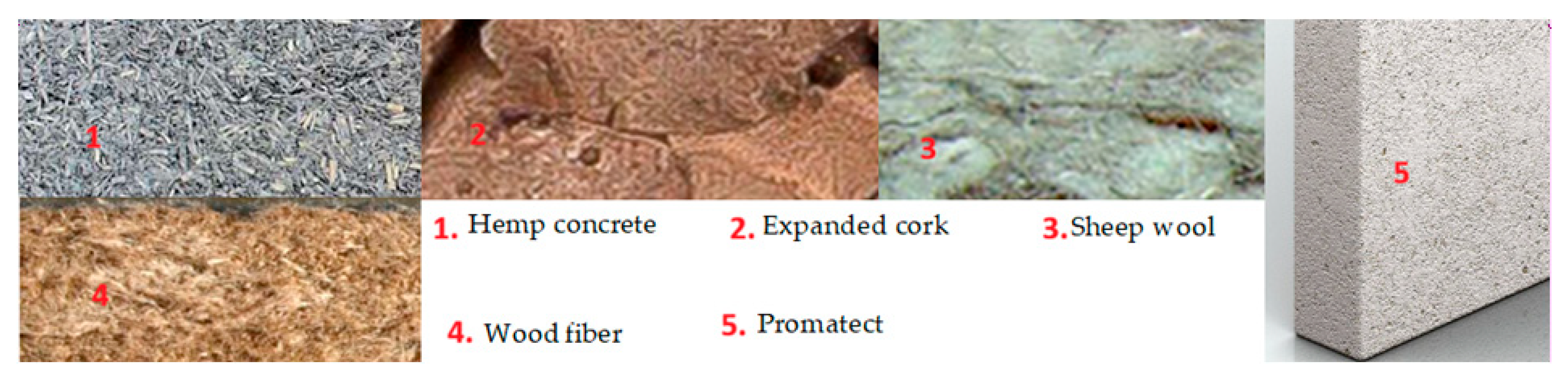
In this study, HEA 360 steel columns having a thermal conductivity of 50 W/mK were analyzed, including one unprotected column and several columns insulated with wood fiber, sheep wool, expanded cork, gypsum, hemp concrete, and Promatect (Figure 1).
The selected insulation materials were chosen for their sustainability, availability, and proven thermal performance under elevated temperatures. The processing of bio-based insulations (wood fiber, sheep wool, cork, and hemp concrete) relies on low-energy, renewable-resource-based manufacturing, which enhances their environmental profile and makes them promising alternatives to synthetic fireproofing products.
The HEA 360 structural element analyzed in this study is a hot-rolled steel column, commonly used in building frameworks. The material properties of structural steel were defined according to EN 1993-1-2 (Eurocode 3) recommendations for fire design.
Two insulation thicknesses, 10 mm and 15 mm, were considered. Numerical simulations were conducted using SAFIR and ABAQUS software. For fire protection, the steel columns were fully encased by attaching insulation plates of various materials to their external surfaces.
Using the SAFIR program, the analysis of a structure exposed to fire consists of several steps. The first step involves predicting the temperature distribution inside the structural members, referred to as “thermal analysis”.
ρ c T t = · ( k T )
where ρ is the density of steel, c is the specific heat, k is the thermal conductivity, T is the temperature, and t is time.
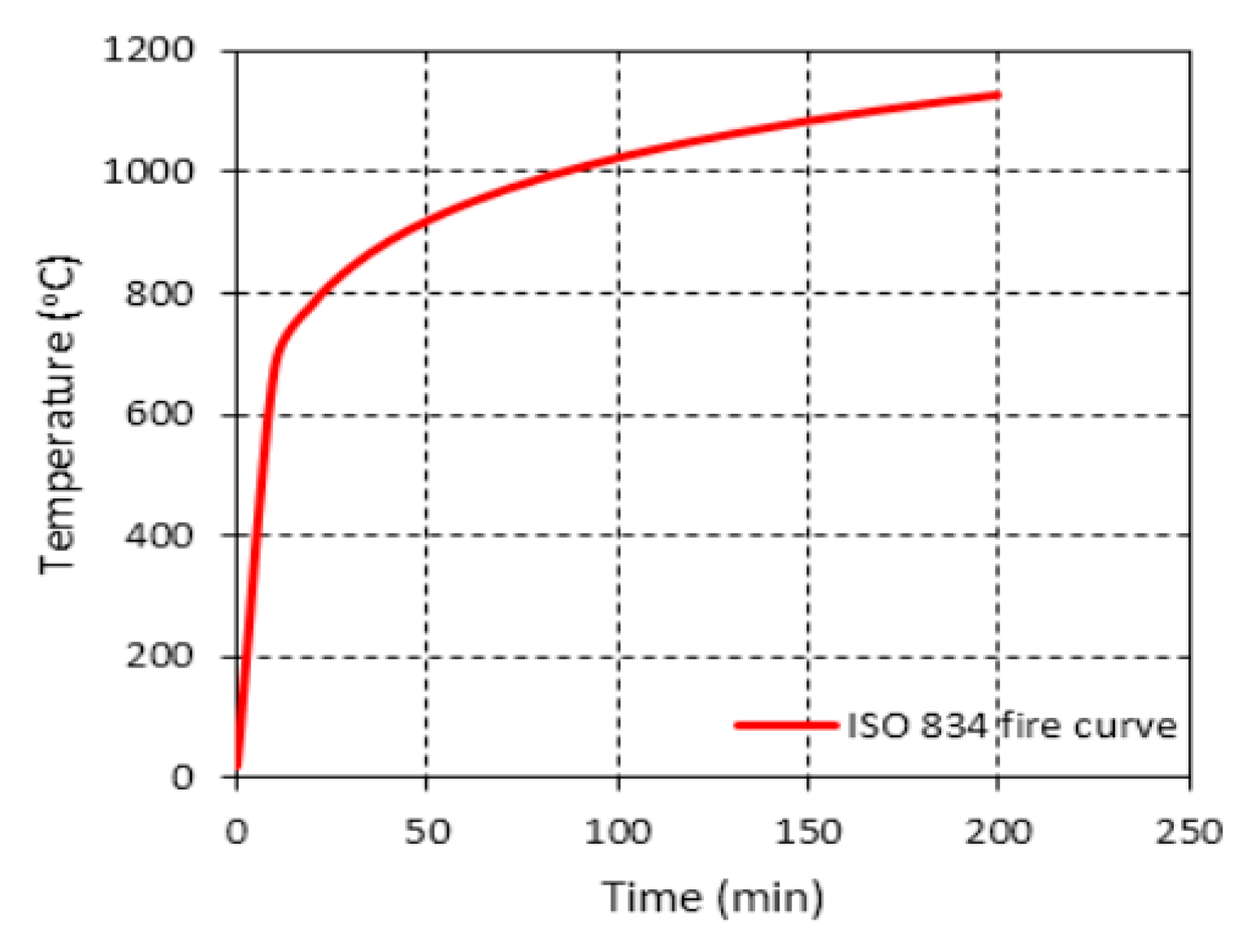
The column was discretized into finite elements to enable numerical analysis. SAFIR solves the transient heat conduction equation over time, accounting for the temperature-dependent thermal properties, thermal conductivity k(T) and specific heat c(T), for steel as specified in the Eurocode. The ISO-834 standard fire curve [10] (Figure 2) was applied as a combined convective and radiative boundary condition on the fire-exposed surface(s).
The second step of the analysis, termed the “structural analysis”, is carried out for the main purpose of determining the response of the structure due to static and thermal loading.
The finite element models generated in ABAQUS are usually nonlinear and can involve from a few to thousands of variables. In terms of these variables the equilibrium equations obtained by discretizing the virtual work equation can be written symbolically as
F N u M = 0
where F N is the force component conjugate to the N t h variable in the problem and u M is the value of the M t h variable. The basic problem is to solve Equation (2) for the u M throughout the history of interest.
The thermal response was simulated in ABAQUS using the ISO 834 standard time-temperature curve, from which nodal temperature data were derived.
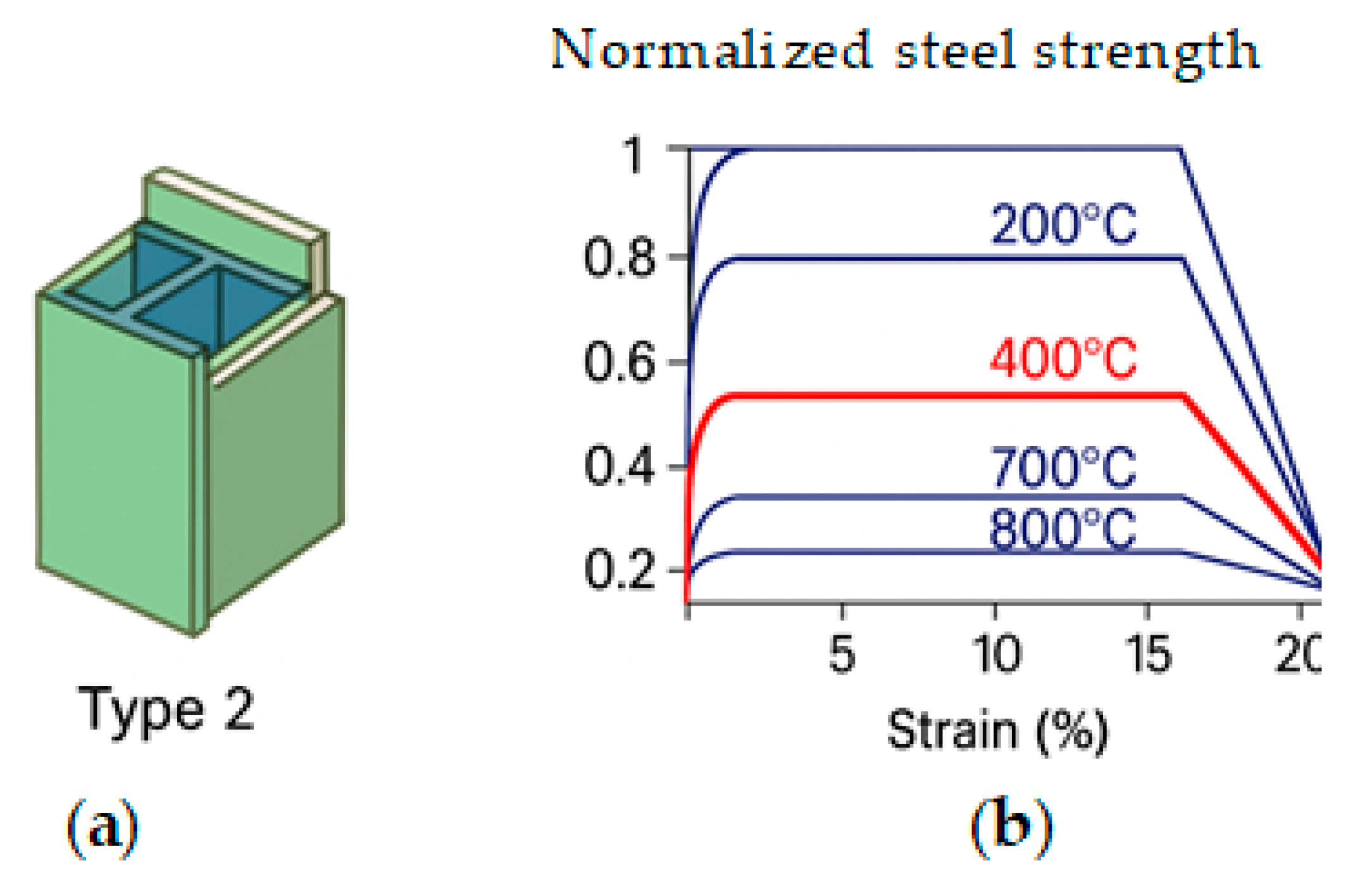
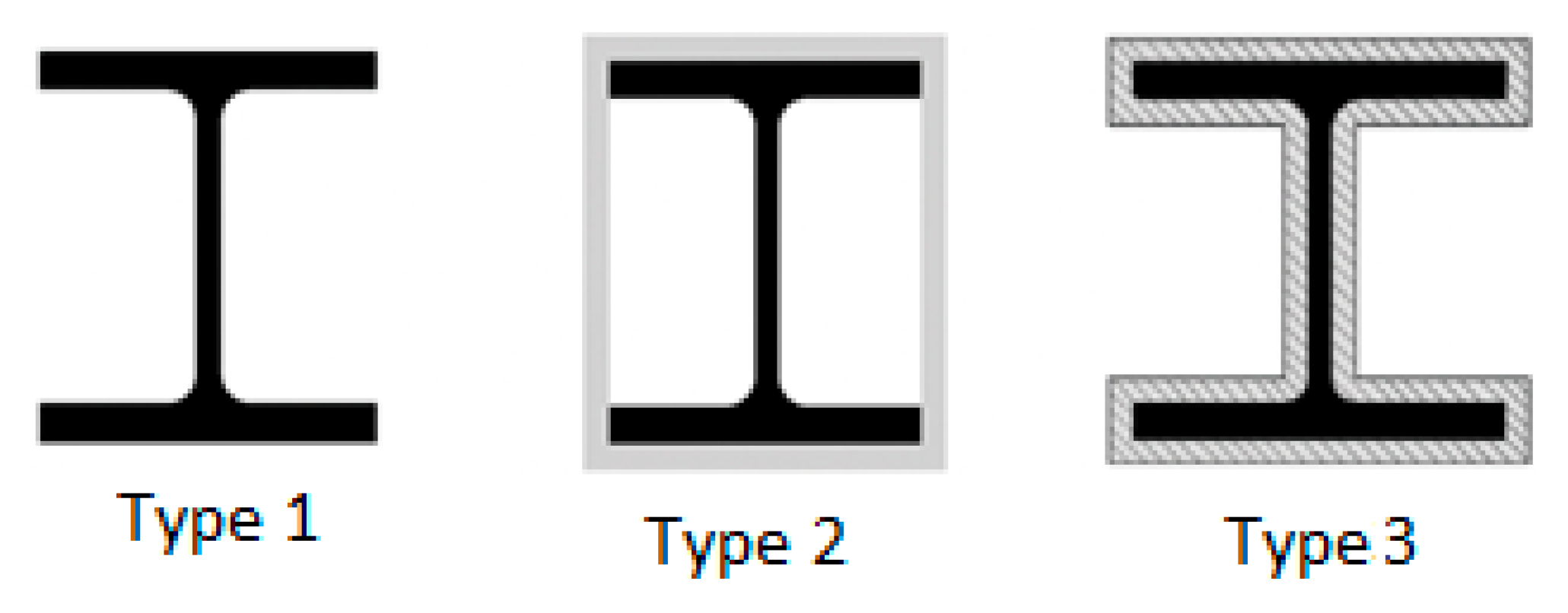
Thermal analyses were performed to determine the temperature distribution across each section. Since steel loses approximately 50% of its strength at around 600 °C (Figure 3), and heats rapidly due to its thin elements and high thermal conductivity, fire protection is primarily aimed at delaying heat transfer and ensuring sufficient fire resistance. Insulating plates were applied as the protection method, chosen for their esthetic suitability and effectiveness in protecting steel columns. Table 1 details the geometric characteristics in terms of height (h), width (b), flange thickness (tf) and web thickness (tw), protection thickness, and protection type (Figure 4) of the modeled columns, while Table 2 presents the thermal characteristics of the fire protection materials used [11,12,13,14,15].
Using adhesive fixed insulation is a common method; however, to ensure that there is no air movement behind the insulation, it is recommended that the adhesive fully covers the insulation.
Hempcrete is a mixture of hemp hurds (shives) and lime (possibly including natural hydraulic lime, sand, pozzolans or cement) [11] used as a material for construction and insulation. Wool insulation [12] is made from sheep wool fibers that are either mechanically held together or bonded using between 5% and 15% recycled polyester adhesive to form insulating batts and rolls. Cork insulation [13] is made from cork bark that is harvested from the tree every 25 years. Cork granules are expanded and then formed into blocks, using the natural resin, through high temperature and pressure. PROMATECT®-H [14] is an incombustible and imputrescible autoclaved calcium-silica plate; it is fireproof because of the special gypsum used and the fiberglass that covers it. Wood fiber insulation [15] is made from wood waste from producing other timber products. It is ground down into fibers and mixed with other products to produce rigid boards and flexible batts.

3. Results and Discussion

3.1. Thermal Analysis

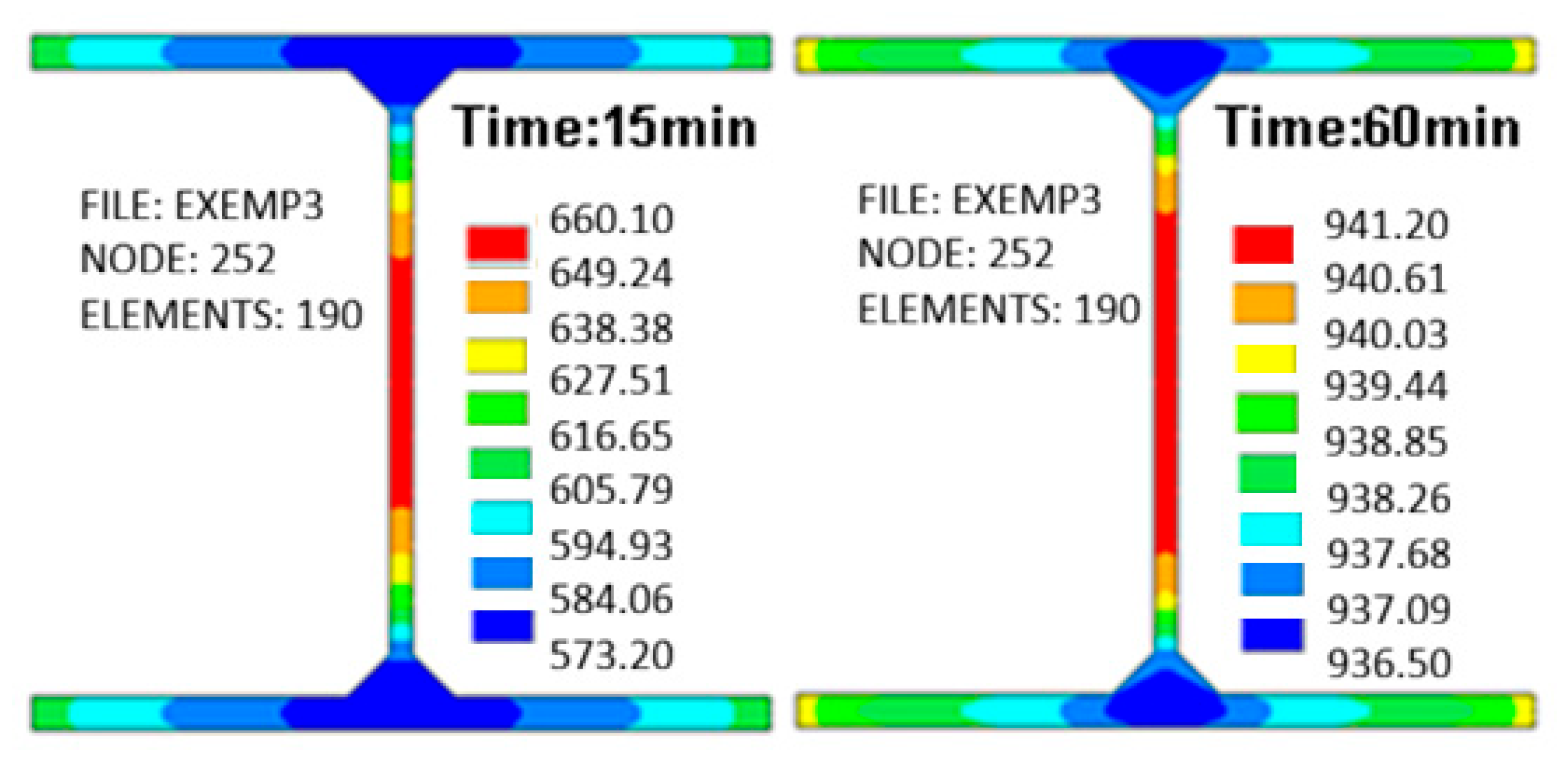
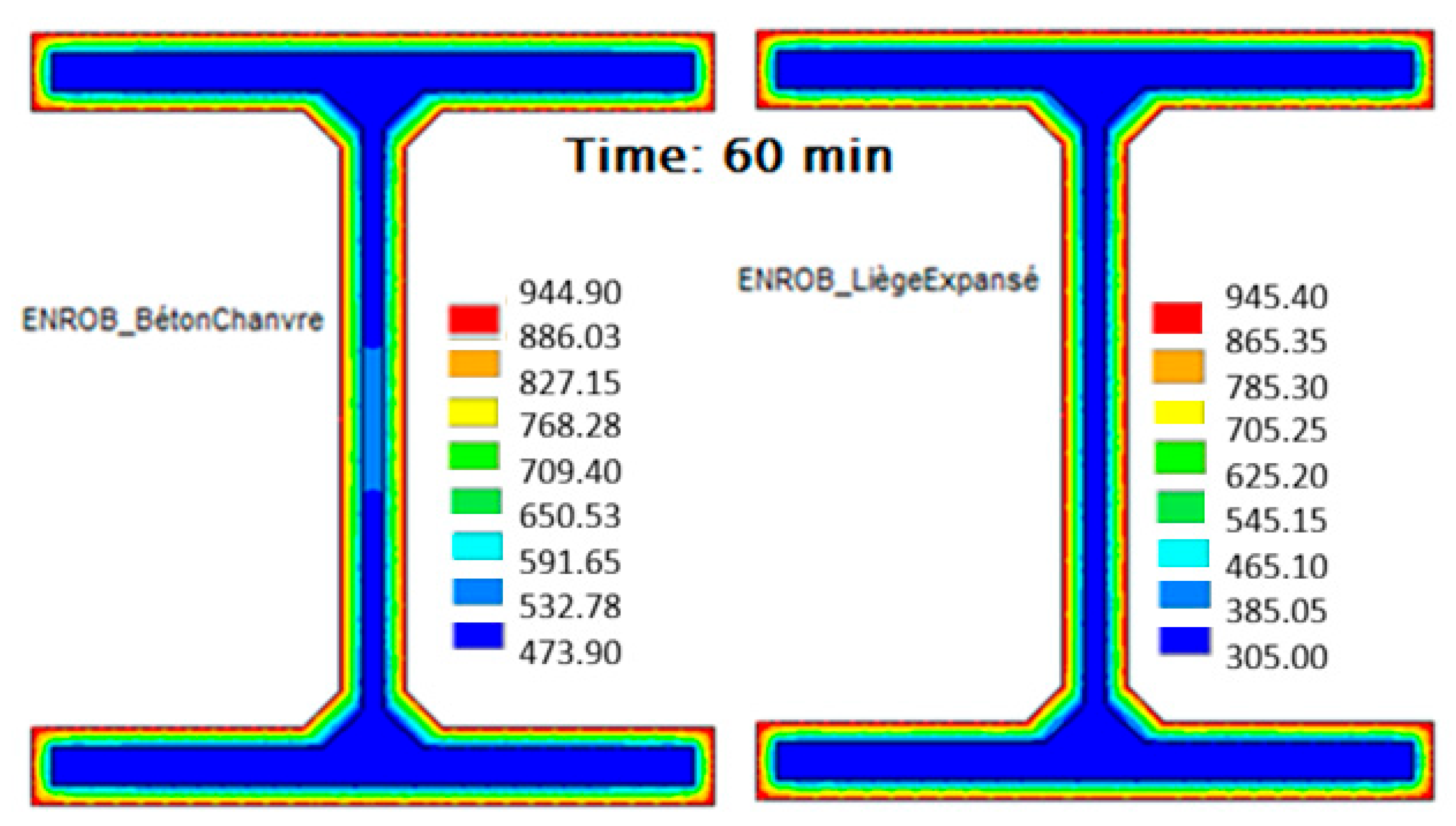
This section presents the simulation results for steel columns obtained using SAFIR, covering one unprotected column and several columns with different types of fire protection. As shown in Figure 5 and Figure 6, the maximum temperature occurs at the center of gravity of the column section. Therefore, the temperature evolution analysis of the columns is focused on this point.
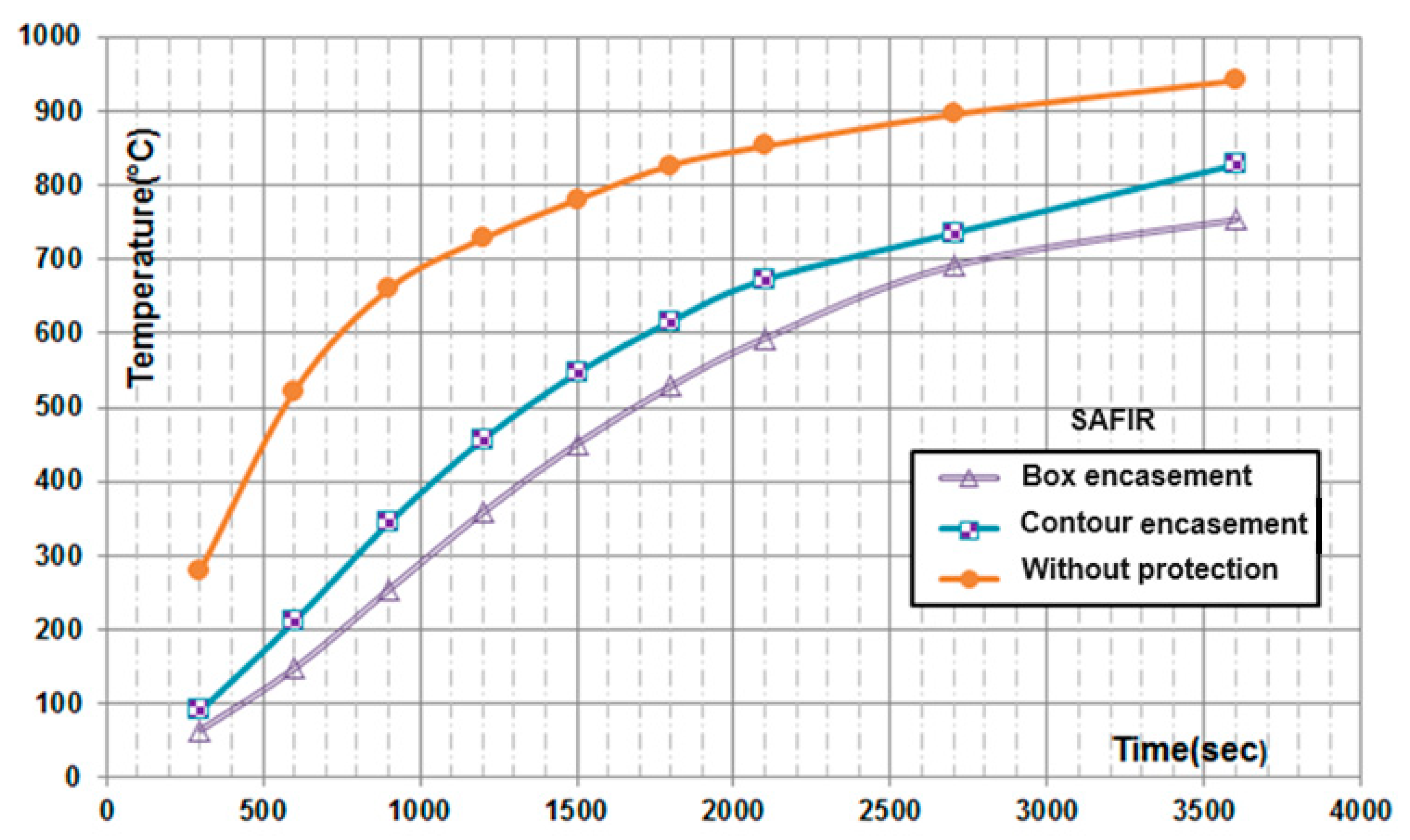
According to the SAFIR analysis, Figure 7 shows that the column with contour encasement protection attains higher temperatures than the column with box encasement protection. Nevertheless, the unprotected column exhibits a substantially greater temperature rise than both protected columns.
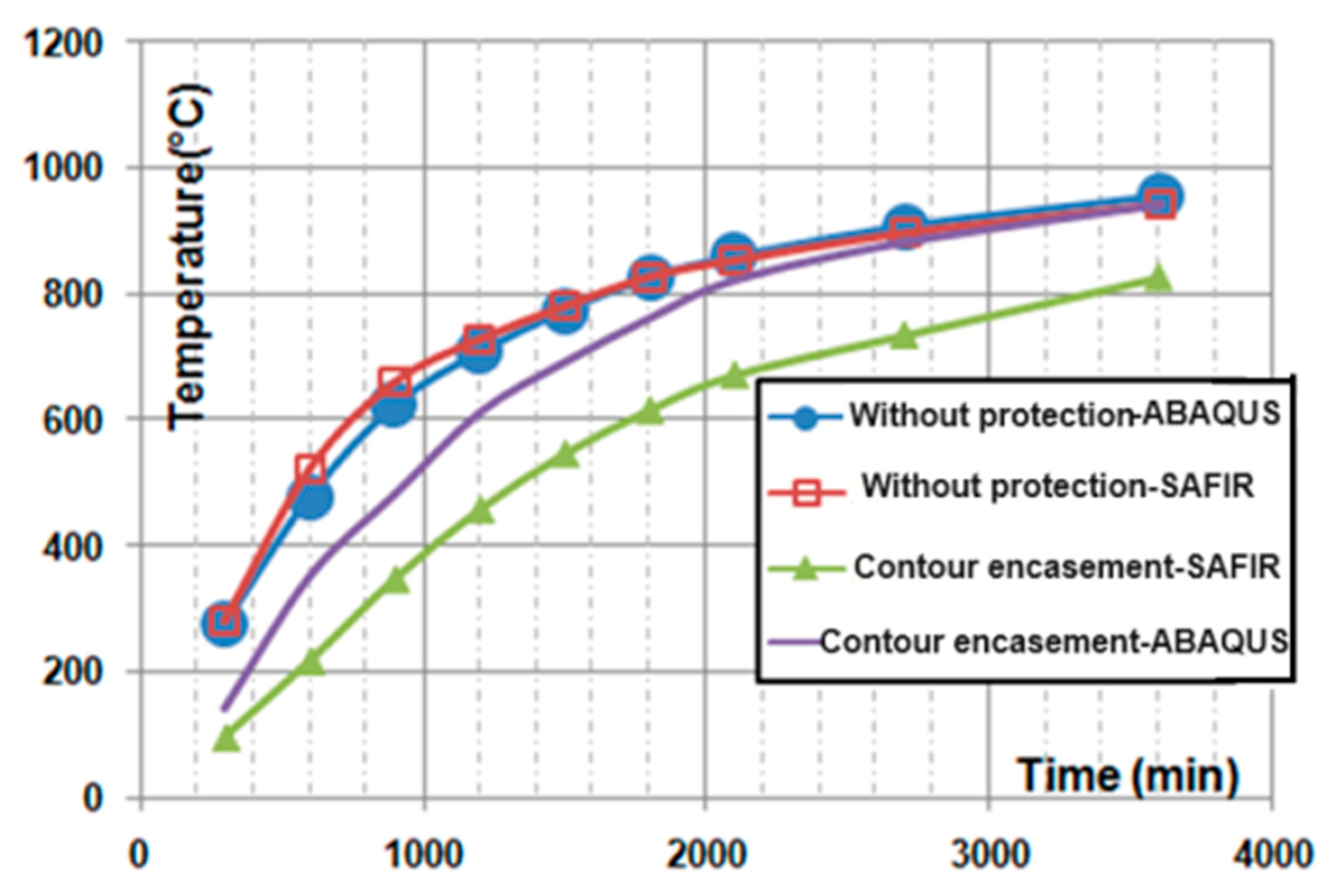
The results obtained from both SAFIR and ABAQUS show good agreement (Figure 8). The unprotected column maintains a considerably higher temperature throughout the one-hour heating period compared with the protected columns, consistent with observations reported in previous studies [6,16,17]. However, a temperature difference of approximately 100 °C is observed between the curves corresponding to the columns insulated with contour encasement protection.
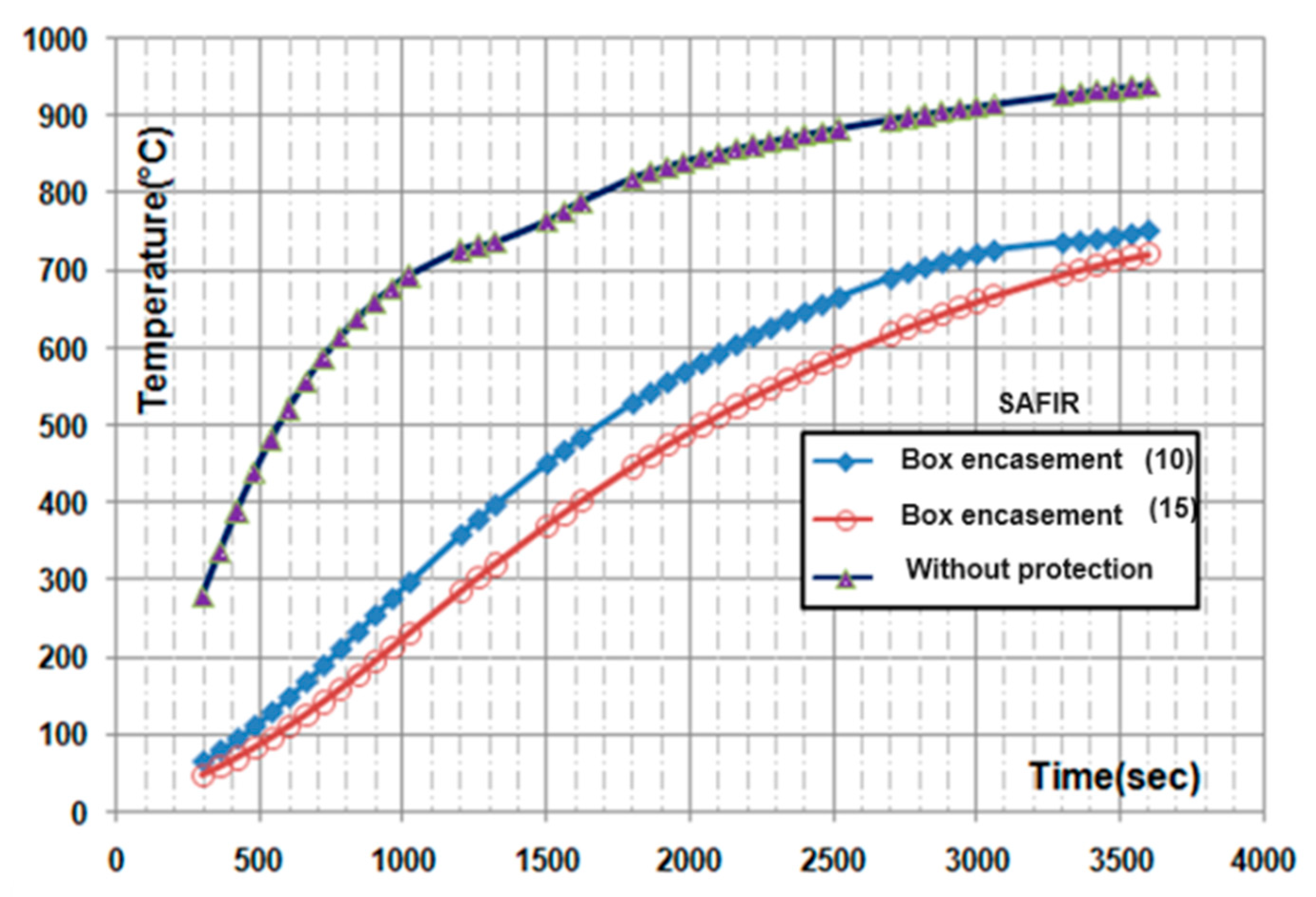
Figure 9 shows that increasing the thickness of fire protection materials reduces the rate of temperature rise, thereby improving the fire resistance of steel columns. The insulation thickness has a pronounced effect on heat transfer for both contour and hollow encasement systems. An unprotected column loses 50% of its stiffness within 15 min (900 s) as the steel temperature exceeds 600 °C, consistent with EN 1993-1-2, Eurocode 3 [18,19]. In comparison, a column insulated with a 10 mm box encasement reaches only about 250 °C during the same heating period, while increasing the thickness to 15 mm results in an even lower temperature, as shown in Figure 7.
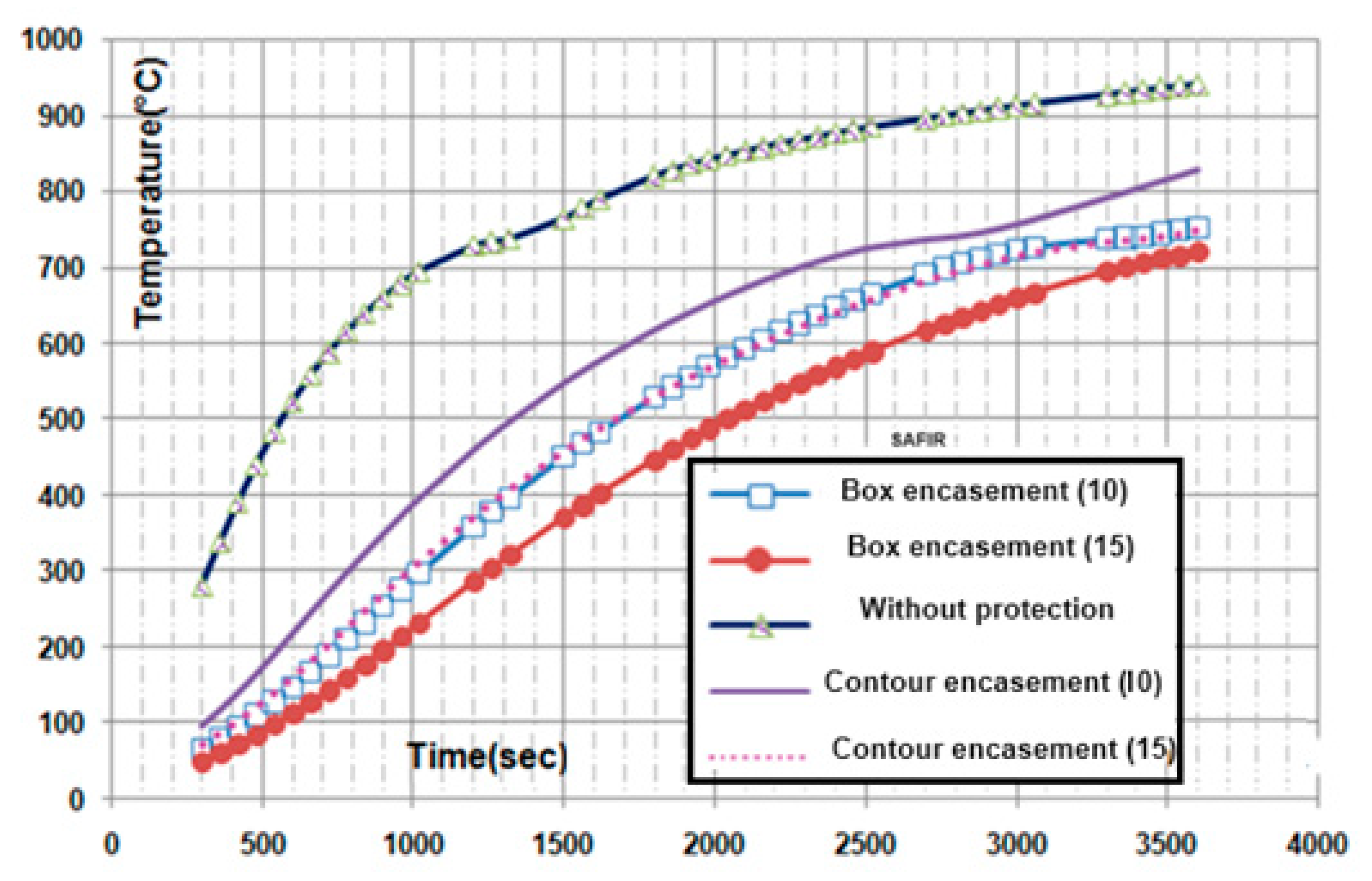
Figure 10 presents the simulation results for different columns. For all cases, the temperature exceeds 700 °C after 60 min of heating. The temperature profile of the column with a 15 mm contour encasement closely matches that of the column insulated with a 10 mm box encasement, while the lowest temperatures are observed in the column protected by a 15 mm box encasement.
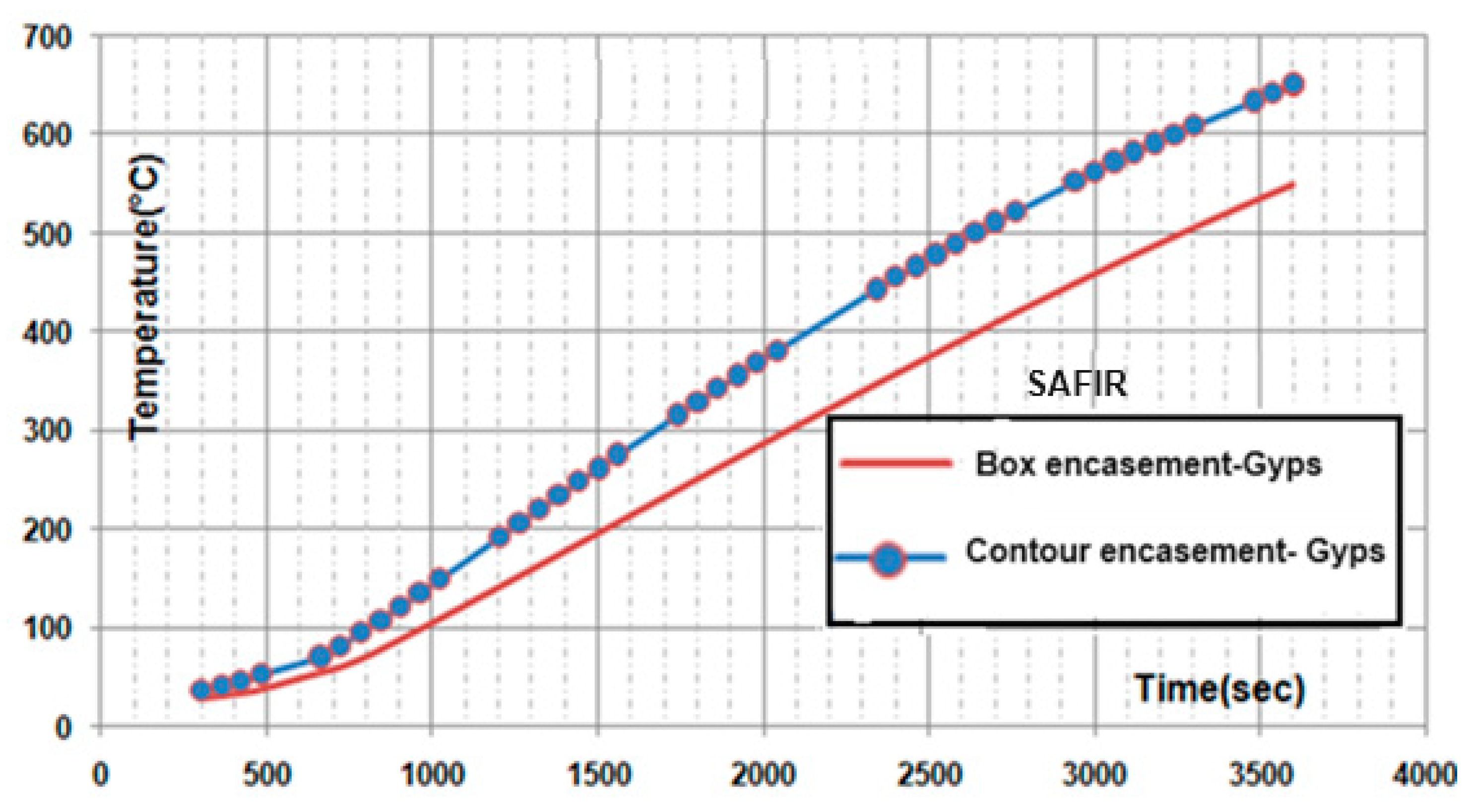
Figure 11 shows that the temperature within the section of the column insulated with hollow encasement (Box Encasement-Gyps) using gypsum plates is lower than that of the column insulated with contour encasement (Contour Encasement-Gyps) with a 10 mm thickness. This indicates that gypsum provides superior fire protection compared with the previously used material.
Yin et al. [20], reported that all tested specimens failed by full-section local buckling, with a maximum fire resistance duration of 183 min. After 15 min of heating, the temperature at the center of the column section was approximately 100 °C for both insulation systems (hollow and contour encasement). Furthermore, after one hour of heating, the temperature reached 550 °C for the hollow encasement and 650 °C for the contour encasement. Randaxhe et al. [6], developed a fire-protection system of only two components—rock wool boards and steel sheets—like box encasement configuration, which successfully limited the temperature to 400 °C for 60 min. Similarly, Nguyen et al. [21], demonstrated that wood provides effective thermal insulation for steel members, significantly reducing the temperature rise within the cross-section.

3.2. Effect of Fire-Protection Materials on the Evolution Temperature of Columns

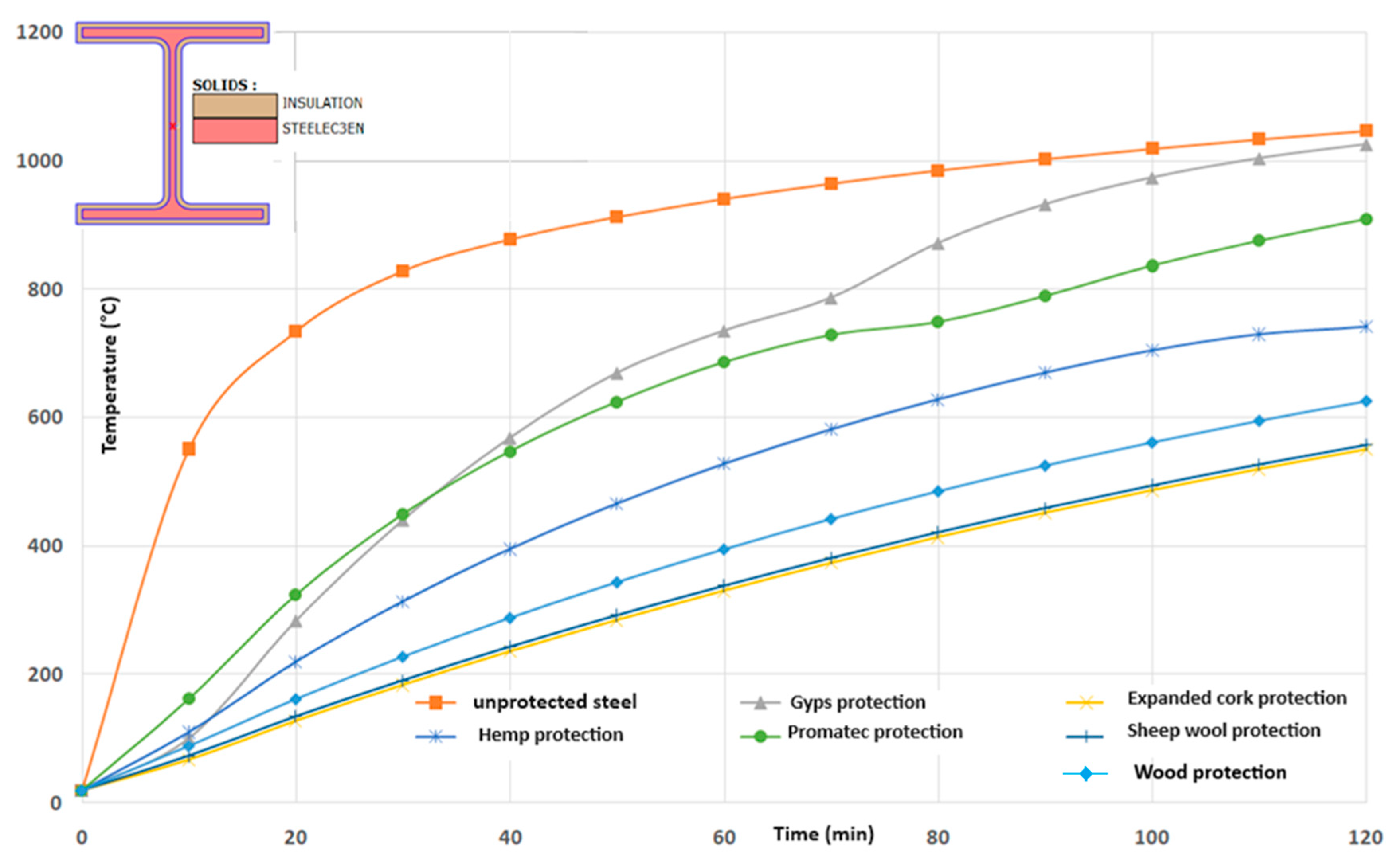
This section examines the influence of various fire-protection materials on the performance of steel columns, with particular attention to their effectiveness in slowing the heating rate and delaying the loss of structural resistance. Insulation plates composed of low-thermal-conductivity materials, each 10 mm thick, are applied to protect the steel columns against fire exposure. Figure 12 presents the temperature evolution of the columns exposed to ISO fire for 120 min. It can be seen that three materials of natural sources, expanded cork, sheep wool, and wood fiber, exhibit comparable thermal behavior, providing excellent protection by limiting the steel temperature to approximately 300 °C after one hour of fire exposure, thereby ensuring good fire resistance. For columns insulated with gypsum and hemp concrete, the temperature remains below 200 °C after 15 min of heating. In contrast, the column protected with Promatect reaches about 500 °C within the same period. However, increasing the thickness of this material could significantly reduce the rate of temperature rise.

3.3. Mechanical Analysis with SAFIR Software

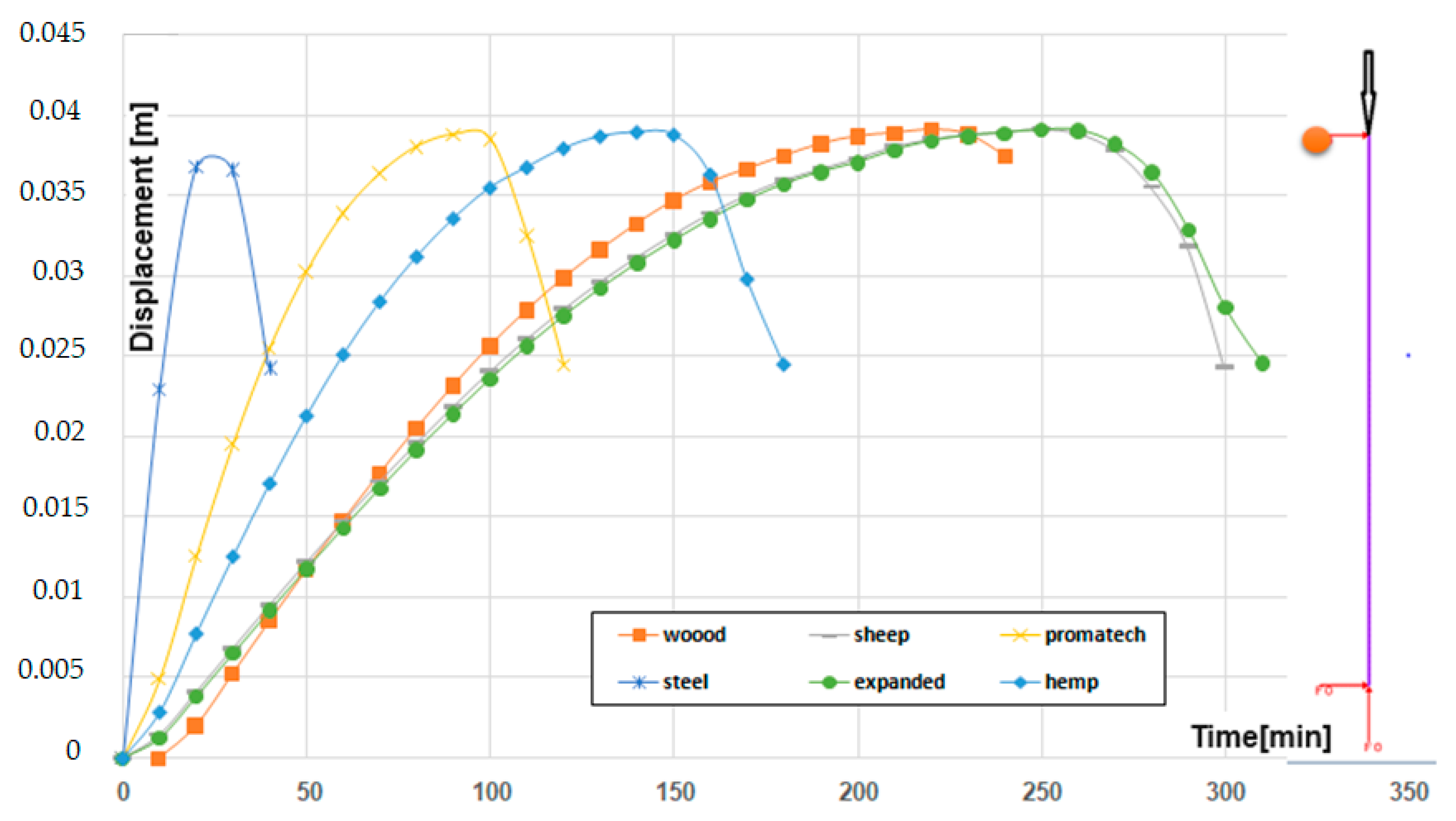
The failure time (fire resistance) obtained from the mechanical analysis based on the temperature results is summarized in Table 3 for the tested columns—one unprotected (C1) and the others insulated with contour encasement. The corresponding vertical displacement (V) at the upper end of the columns over time is presented in Figure 13. When selecting the most effective insulation method for the fire protection of steel columns, several factors must be considered, including thermal conductivity, ease of application, and cost. Based on the current findings, the following have been determined:
  • Bio-based materials such as expanded cork, sheep wool, and wood fiber demonstrate excellent fire protection by maintaining low temperatures even during prolonged exposure. These materials are not only efficient but also offer a sustainable and environmentally friendly solution. By comparison, Häßler’s [22] reported that intumescent fire protection coatings applied to structural steel resulted in higher temperatures during fire exposure.
  • Gypsum and Hemp Concrete provide effective protection, particularly during the early stages of fire exposure, maintaining temperatures below 200 °C for the first 15 min.
  • Promatect exhibits higher initial temperatures, but its performance can be significantly improved by increasing the material thickness.
For the unprotected column (C1), the displacement reaches a maximum value of 3.9 cm at 30 min and then decreases sharply until failure at 40 min. These results are consistent with the experimental findings of Qi et al. [23] and Lou et al. [24]. For column C2, insulated with a 10 mm layer of Promatect—a fire-protection material with characteristics similar to concrete—the failure time extends to 120 min (Table 3), which is three times longer than that of the unprotected column (C1). The maximum vertical displacement for C2 column occurs at 100 min into the heating period.
Column C3, protected with hemp concrete, exhibits superior performance compared to columns C1 and C2, resisting for up to 180 min (Table 3). It has been found that plant-based materials such as wood fibers and expanded cork, as well as sheep wool, demonstrate similar thermal behavior, significantly slowing the temperature rise. These materials also deliver the best mechanical performance, as shown in columns C4, C5 and C6 in Figure 11, with fire-resistance times of 240, 300 and 310 min, respectively. In addition to their excellent protective properties, these materials offer strong environmental benefits, being renewable and sustainable. They effectively delay the degradation and dislocation mechanisms in steel at elevated temperatures, a behavior consistent with the findings of Gutkin [25], and Mao [26].
Furthermore, it is observed that the columns expand and deform as temperature increases. This thermal expansion, combined with the loss of mechanical characteristics in steel, leads to buckling [6,23,27,28]. Distortional and local buckling have also been reported in the plain channels of built-up cross-sections [29,30]. The selection of the optimal insulation method depends on project-specific requirements, including the desired level of fire resistance, environmental impact, and budget constraints [31,32,33]. Generally, vegetable-origin materials demonstrate high effectiveness and sustainability, making them strong candidates for a wide range of applications.

4. Conclusions

This study demonstrates that bio-based insulation materials—wood fiber, sheep wool, and expanded cork—significantly enhance the fire resistance of steel columns by effectively limiting their temperature rise. Under one hour of standardized fire exposure, all three materials successfully maintained steel temperatures below the critical 400 °C threshold, far exceeding the 600 °C limit at which steel loses over half its strength, as defined by Eurocode 3.
Numerical simulations performed with SAFIR and ABAQUS revealed that the box encasement method consistently outperformed contour encasement at equal thickness, owing to its more comprehensive coverage of the steel profile. Consequently, the slowest temperature rise, and best overall fire performance were observed in columns with box encasement using these bio-based materials.
The present findings conclusively identify wood fiber, sheep wool, and expanded cork as not only efficient but also sustainable insulation solutions, offering a viable pathway to preserving structural integrity and improving fire safety in steel construction.

5. Limitations and Future Work

  • Our numerical model and parametric investigation do not account for the potential loss of adhesion or spalling of the insulation material under mechanical deformation.
  • The clear need for future experimental validation through standard fire tests that incorporate mechanical loading to quantify these effects is a crucial next step.

Author Contributions

Conceptualization, N.O.-B. and Y.M.A.Z.; methodology, N.O.-B.; software, N.O.-B. and Y.M.A.Z.; validation, N.O.-B., A.O. (Ali Ourdjini) and A.O. (Abdessalem Otmani); formal analysis, N.O.-B. and Y.M.A.Z.; investigation, N.O.-B.; resources, N.O.-B.; data curation, N.O.-B.; writing—original draft preparation, N.O.-B.; writing—review and editing, N.O.-B., A.O. (Ali Ourdjini), H.B. and A.O. (Abdessalem Otmani); visualization, N.O.-B. and H.B.; supervision, N.O.-B.; project administration, N.O.-B.; funding acquisition, N.O.-B. and H.B. All authors have read and agreed to the published version of the manuscript.

Funding

This research received no external funding.

Institutional Review Board Statement

Not applicable.

Informed Consent Statement

Not applicable.

Data Availability Statement

All necessary data is provided within this manuscript.

Acknowledgments

The authors would like to extend their gratitude to J-M Franssen, particularly in mastering the SAFIR software (Techniques and Methods).

Conflicts of Interest

The authors declare no conflicts of interest.

References

  1. Newman, G.M. Fire Safe Design a New Approach to Multi-Storey Steel Framed Buildings. 2000. Available online: http://www.steel-sci.org (accessed on 12 January 2026).
  2. Cai, X.; Jiang, L.; Qiu, J.; Orabi, M.A.; Yang, C.; Lou, G.; Khan, M.; Yuan, Y.; Li, G.; Usmani, A. Dual-3D hybrid fire simulation for modelling steel structures in fire with column failure. J. Constr. Steel Res. 2022, 197, 107511. [Google Scholar] [CrossRef]
  3. Faghihi, F.; Numanović, M.; Knobloch, M. The effect of thermal creep on the fire resistance of steel columns. Fire Saf. J. 2023, 137, 103750. [Google Scholar] [CrossRef]
  4. Pires, T.A.C.; Silva, J.J.D.R.; Santos, M.M.L.D.; Costa, L.M. Fire resistance of built-up cold-formed steel columns. J Constr. Steel Res. 2021, 177, 10645. [Google Scholar] [CrossRef]
  5. Ojeda, O.D.; Maljaars, J.; Abspoel, R. Fire exposed steel columns with a thermal gradient over the cross-section. Thin-Walled Struct. 2016, 98, 103–110. [Google Scholar] [CrossRef]
  6. Randaxhe, J.; Popa, N.; Vassart, O.; Tondini, N. Development of a plug-and-play fire protection system for steel columns. Fire Saf. J. 2021, 121, 103272. [Google Scholar] [CrossRef]
  7. Franssen, J.M.; Gernay, T. Modeling structures in fire with SAFIR®: Theoretical background and capabilities. J Struct. Fire Eng. 2017, 8, 300–323. [Google Scholar] [CrossRef]
  8. Available online: https://www.3ds.com/fr/edu/education/students/solutions/abaqus-le (accessed on 12 January 2026).
  9. EN 1993-1-2; Eurocode 3: Design of Steel Structures—Part 1–2: General Rules—Structural Fire Design. European Committee for Standardization: Brussels, Belgium, 1993.
  10. EN 1991-1-2; Eurocode 1: Actions on Structures—Part 1–2: General Actions—Actions on Structures Exposed to Fire. European Committee for Standardization: Brussels, Belgium, 2002.
  11. Available online: https://www.archiexpo.fr/prod/isohemp/product-148757-1793317.html# (accessed on 12 January 2026).
  12. Available online: https://www.sheepwoolinsulation.com/ (accessed on 12 January 2026).
  13. Available online: https://www.jungheinrich-profishop.co.uk/en/profi-guide/cork-insulation/?srsltid=AfmBOop8my3ag7jKhndxUt2-zz0gplvr-25f1yrbPYlSp71yhm_vyHeD (accessed on 12 January 2026).
  14. Available online: https://www.promat.com/fr-fr/construction/produits-et-systemes/produits/plaques/promatect-h/ (accessed on 12 January 2026).
  15. Available online: https://www.backtoearth.co.uk/wood-fibre-insulation/ (accessed on 12 January 2026).
  16. Chen, S.; Zhang, Y.; Yan, W.; Kim, K.S. Experimental study and analysis on the collapse behavior of an interior column in a steel structure under local fire. Adv Struct. Eng. 2016, 19, 173–186. [Google Scholar] [CrossRef]
  17. Possidente, L.; Couto, C.; Tondini, N.; Real, P.V. Review of design approaches for steel columns subjected to localised fires: Insights from the 2nd generation Eurocode model. Eng Struct. 2024, 315, 118424. [Google Scholar] [CrossRef]
  18. Usmani, A.S.; Rotter, J.M.; Lamont, S.; Sanad, A.M.; Gillie, M. Fundamental principles of structural behaviour under thermal effects. Fire Saf. J. 2001, 36, 721–744. [Google Scholar] [CrossRef]
  19. Yang, J.; Zhou, X.; Wang, W.; Xu, L.; Shi, Y. Fire resistance of box-shape cold-formed steel built-up columns failing in global buckling: Test, simulation and design. Thin-Walled Struct. 2023, 183, 110433. [Google Scholar] [CrossRef]
  20. Yin, L.; Li, R.; Wang, X.; Chen, W.; Ye, J.; Wu, X. Fire experiments on cold-formed steel square tubular columns with new gypsum sheathing configuration. Thin-Walled Struct. 2024, 198, 111727. [Google Scholar] [CrossRef]
  21. Nguyen, M.H.; Ouldboukhitine, S.E.; Durif, S.; Saulnier, V.; Bouchair, A. Passive fire protection of steel profiles using wood. Eng Struct. 2023, 275, 115274. [Google Scholar] [CrossRef]
  22. Häßler, D.; Hothan, S. Performance of intumescent fire protection coatings applied to structural steel tension members with circular solid and hollow sections. Fire Saf. J. 2022, 131, 103605. [Google Scholar] [CrossRef]
  23. Qi, H.H.; Hou, J.; Lou, G.B.; Jiang, Y.; Zhong, B.; Li, G.Q. Experimental and numerical study on fire-induced collapse of unprotected steel framed structures. J Constr. Steel Res. 2024, 218, 108730. [Google Scholar] [CrossRef]
  24. Lou, G.; Wang, C.; Jiang, J.; Jiang, Y.; Wang, L.; Li, G.Q. Experimental and numerical study on thermal-structural behavior of steel portal frames in real fires. Fire Saf. J. 2018, 98, 48–62. [Google Scholar] [CrossRef]
  25. Gutkin, M.Y.; Skiba, N.V. Emission of lattice dislocations from triple junctions of grain boundaries in high-temperature ceramics with amorphous intercrystalline layers. Mater Phys. Mech. 2024, 52, 39–48. [Google Scholar] [CrossRef]
  26. Mao, W.J.; Wang, W.D.; Zhou, K. Fire performance on steel-reinforced concrete-filled steel tubular columns with fire protection. J. Constr. Steel Res. 2022, 199, 107580. [Google Scholar] [CrossRef]
  27. Abreu, J.C.B. 7-Thermal performance of cold-formed steel structures in fire. In Recent Trends in Cold-Formed Steel Construction; Woodhead Publishing: Sawston, UK, 2016. [Google Scholar] [CrossRef]
  28. Jaya kumar, G.; Kiran, T.; Anand, N.; Anbarasu, M.; Lubloy, E. Post-fire flexural behaviour and performance of unrestrained cold-formed steel built-up section beams: Experimental and numerical investigation. Case Stud. Constr. Mater. 2023, 18, e01978. [Google Scholar] [CrossRef]
  29. Gernay, T.; Franssen, J.M. A performance indicator for structures under natural fire. Eng. Struct. 2015, 100, 94–103. [Google Scholar] [CrossRef]
  30. Craveiro, H.D.; Rodrigues, J.P.C.; Laím, L. Experimental analysis of built-up closed cold-formed steel columns with restrained thermal elongation under fire conditions. Thin-Walled Struct. 2016, 107, 564–579. [Google Scholar] [CrossRef]
  31. Tondini, N.; Franssen, J.M. Analysis of experimental hydrocarbon localised fires with and without engulfed steel members. Fire Saf. J. 2017, 92, 9–22. [Google Scholar] [CrossRef]
  32. Cao, Y.; Jiang, J.; Lu, Y.; Chen, W.; Ye, J. Progressive collapse of steel structures exposed to fire: A critical review. J. Constr. Steel Res. 2023, 207, 107985. [Google Scholar] [CrossRef]
  33. Tondini, N.; Thauvoye, C.; Hanus, F.; Vassart, O. Development of an analytical model to predict the radiative heat flux to a vertical element due to a localised fire. Fire Saf. J. 2019, 105, 227–243. [Google Scholar] [CrossRef]
Figure 1. Fire protection materials.
Fire 09 00045 g001
Figure 2. ISO-834 fire curve.
Fire 09 00045 g002
Figure 3. (a) Steel column insulated with box encasement. (b) Normalized steel strength versus temperature under fire exposure [9].
Fire 09 00045 g003
Figure 4. Insulation techniques: Exposed (Type 1), Box-type (Type 2), and Contoured (Type 3).
Fire 09 00045 g004
Figure 5. Unprotected steel column temperature.
Fire 09 00045 g005
Figure 6. Temperature of insulated steel columns, using contour encasement for fire protection with different materials.
Fire 09 00045 g006
Figure 7. Temperature evolution at the center of gravity of steel section versus insulation system.
Fire 09 00045 g007
Figure 8. Comparison of simulations results obtained by the two codes SAFIR and ABAQUS.
Fire 09 00045 g008
Figure 9. Effect of fire protection materials thickness (10 mm and 15 mm) on the temperature evolution, using box encasement protection.
Fire 09 00045 g009
Figure 10. Effect of insulation system and thickness (10 mm and 15 mm) on column temperature.
Fire 09 00045 g010
Figure 11. Temperature evolution at center of gravity of steel section for the two insulation systems with 10 mm thick gypsum.
Fire 09 00045 g011
Figure 12. Temperature evolution of columns insulated with different materials with contour encasement, using a thickness of 10 mm.
Fire 09 00045 g012
Figure 13. Vertical displacement (V) at the upper end of the columns with and without protection (contour encasement).
Fire 09 00045 g013
Table 1. Characteristics of investigated steel columns.
h, mmb, mmtw, mmtf, mmElastic Modulus, E (MPa)Poisson Ratio, νYield Strength, Fca (MPa)Protection ThicknessType
3503001017.5210,0000.335501
3503001017.5210,0000.335510, 152
3503001017.5210,0000.3355103
Table 2. Characteristics of fire protection materials.
Insulating MaterialDensity, γ
(kg/m3)
Thermal Conductivity, λ
(W/m·K)
Specific Heat Capacity, Csp, (J/kg·K)Reaction to Fire
Wood fiber500.05100A1–A2
Sheep wool12–350.041720A2
Expanded cork1200.041670B
Hemp concrete450–5500.0901000A1
Promatect8700.175960A1
Table 3. Fire-resistance columns without and with contour encasement protection.
ColumnHeight, h (m)Elastic Modulus, E (MPa)Poisson Ratio, νYield Strength, Fca (MPa)Thickness, e (mm)Insul-Sys
(Type 3)
Load (kN)Failure Time
(min)
C14210,0000.33550Without36040
C24210,0000.335510Promatec360120
C34210,0000.335510Hemp360180
C44210,0000.335510Wood360240
C54210,0000.335510Sheep360300
C64210,0000.335510Cork360310
Disclaimer/Publisher’s Note: The statements, opinions and data contained in all publications are solely those of the individual author(s) and contributor(s) and not of MDPI and/or the editor(s). MDPI and/or the editor(s) disclaim responsibility for any injury to people or property resulting from any ideas, methods, instructions or products referred to in the content.