Article

Dynamics of PM2.5 Emissions from Cropland Fires in Typical Regions of China and Its Impact on Air Quality

1
School of Public Affairs, Nanjing University of Science and Technology, Nanjing 210094, China
2
Institute of Geographic Sciences and Natural Resources Research, Chinese Academy of Sciences, Beijing 100101, China
3
College of Resources and Environment, University of Chinese Academy of Sciences, Beijing 100049, China
4
Key Laboratory of Natural Disaster Monitoring, Early Warning and Assessment of Jiangxi Province, Jiangxi Normal University, Nanchang 330022, China
*
Author to whom correspondence should be addressed.
Submission received: 15 December 2025 / Revised: 8 January 2026 / Accepted: 10 January 2026 / Published: 20 January 2026

Abstract

Cropland fires are an important source of air pollution emissions and have a significant impact on regional air quality and human health. Although straw-burning ban policies have been implemented to mitigate emissions, the dynamics of PM2.5 emissions from cropland fires under such stringent regulations are still not fully understood. This study utilizes PM2.5 emission data from the Global Fire Assimilation System (GFAS), land-cover data from CLCD, and PM2.5 concentration data from ChinaHighAirPollutants (CHAP) to examine the dynamic evolution of PM2.5 emissions from cropland fires under straw-burning ban policies across China and to assess their environmental impacts. The results show that the 2013 Air Pollution Prevention and Control Action Plan initiated the development of provincial straw-burning ban policies. These policies resulted in a drastic reduction in PM2.5 emissions from cropland fires in North China (NC), with a 65% decrease in 2022 compared to the 2012 peak. In contrast, a notable lagged effect was observed in Northeast China (NEC), where the increasing trend of PM2.5 emissions was not reversed until 2017. By 2022, emissions in this region had declined by 53% and 45% compared to the 2015 peak and 2017 sub-peak, respectively. Moreover, significant regional differences were found in the environmental impacts of PM2.5 emissions from cropland fires, with strong effects during summer in NC and during spring and autumn in NEC. This study provides empirical support for understanding the environmental impacts of cropland fires in key regions of China and offers critical insights to inform and refine related pollution control policies.

1. Introduction

Air pollution represents a critical environmental challenge in many developing countries, posing substantial risks to human health and ecosystem integrity [1,2,3]. Among air pollutants, PM2.5 is particularly detrimental, being a major contributor to haze formation and associated public health impacts [4,5,6,7]. It has been identified as the fifth leading global mortality risk factor, responsible for an estimated 4.2 million deaths and 103.1 million disability-adjusted life-years (DALYs) in 2015 alone [8]. Cropland fires significantly exacerbate air pollution levels and are frequently observed in peri-urban and rural regions, especially during harvest and pre-planting seasons [9,10]. Notably, recent research indicates that PM2.5 originating from biomass combustion—such as cropland fires—is more harmful to human health than PM2.5 from other sources [11]. Therefore, monitoring PM2.5 emissions from cropland fires across multiple scales to elucidate their spatiotemporal dynamics is critical for both scientific understanding and effective environmental policy formulation.
As one of the world’s four major grain producers, China generates the largest quantity of crop residues globally, accounting for 17.29% of the worldwide total [12]. Corn, wheat, and rice straw constitute the primary sources of crop straw in the country [13]. In recent years, alongside rapid economic development, straw burning has become a widespread practice for disposing of agricultural waste, particularly in key grain-producing regions such as North and Northeast China [14]. Between 2002 and 2016, annual emissions of air pollutants from cropland fires increased by more than 200% [15], establishing straw burning as a significant source of environmental pollution that has drawn sustained attention in air quality management research [16]. Yang et al. (2020) reported that straw burning contributed up to 52.7% of PM2.5 concentrations in Northeast China during the post-harvest period of November 2015 [17]. Yet, a significant gap remains in understanding the spatiotemporal characteristics of PM2.5 emissions from cropland fires across China’s key agricultural zones, as prior research has been primarily regional and statistic-based, lacking a systematic, spatiotemporally explicit comparison.
Satellite remote sensing has become a vital tool for fire monitoring, owing to its broad spatial coverage, short revisit cycles, rapid data acquisition, and cost efficiency [18,19,20]. Among the available datasets, the Global Fire Assimilation System (GFAS) integrates over two decades of MODIS Collection 6 (C6) active fire observations [18,21,22,23], converting satellite-derived fire radiative power (FRP) into near-real-time estimates of fire location, intensity, and biomass burning emissions [24]. As the longest continuously global fire emission product derived from MODIS data, GFAS has demonstrated considerable utility in monitoring fire-related pollution and assessing its environmental impacts [25], making it a preferred dataset for long-term fire emission studies.
North China and Northeast China represent two of China’s most critical grain-producing regions [26], yet they also face significant challenges associated with large-scale open straw burning [16]. A important policy shift occurred in 2013 when the State Council launched the Air Pollution Prevention and Control Action Plan to combat severe haze. This was followed by a series of policies on comprehensive utilization of crop straw and regulation of straw open burning in North China and Northeast China [9,27]. Despite these efforts, the effectiveness and regional heterogeneity of these policies remain inadequately assessed. By combining GFAS PM2.5 emission products (2003–2022) with CLCD land-cover data and CHAP PM2.5 concentrations, this paper employs GIS spatial analysis to compare the dynamic evolution of cropland fire PM2.5 emissions in North China and Northeast China under straw-burning ban policies, thereby revealing their environmental impacts.

2. Materials and Methods

2.1. Study Area

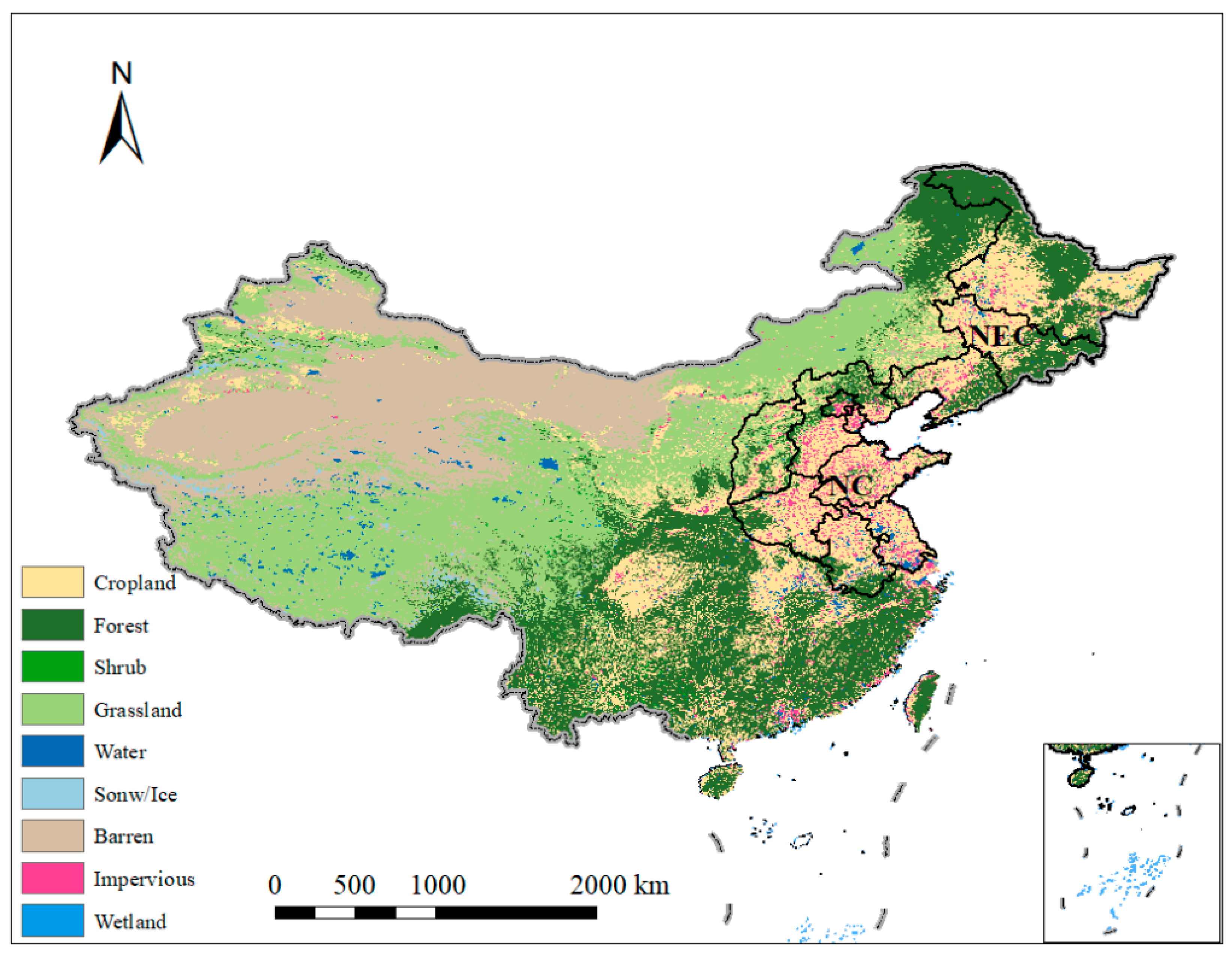
As the world’s largest agricultural producer, China consistently maintains the highest global crop yields [28], with an annual grain production of approximately 600 million tons [29]. Within China’s agricultural landscape, Northeast China (NEC) and North China (NC) stand as the nation’s most vital grain production bases. These areas not only contribute significantly to national food security but also represent regions most severely affected by cropland fires due to their extensive agricultural activities and prevalent straw-burning practices. The cropping systems in these regions exhibit distinct characteristics. In NC, the primary grain crops follow specific seasonal patterns: winter wheat (autumn planting and summer harvest), corn (summer sowing and autumn harvest), and rice (with early rice planted in spring and harvested in summer, and late rice sown in summer and harvested in autumn). In contrast, NEC’s agricultural system is dominated by corn, rice, and soybean cultivation. Among these, corn is the most extensively planted crop, primarily distributed across the Songnen Plain and Liaohe Plain, forming the backbone of NEC’s agricultural output. To facilitate provincial-level statistical analysis and policy evaluation, this study delineates NC as comprising eight provincial-level administrative units: Anhui, Henan, Shandong, Jiangsu, Hebei, Shanxi, Tianjin, and Beijing. Similarly, NEC is defined as encompassing the three northeastern provinces of Heilongjiang, Liaoning, and Jilin (Figure 1). This geographical framework enables systematic comparison of PM2.5 emission patterns from cropland fires across these critical agricultural zones under the influence of straw-burning ban policies.

2.2. Policies Related to Comprehensive Utilization of Straw

The emission of pollutants from straw burning poses a significant challenge to ecological and environmental protection. To mitigate the severe air pollution problem in China, both central and local governments have successively introduced a series of regulatory measures and policies. Following the State Council’s promulgation of the Air Pollution Prevention and Control Action Plan in 2013, the number of straw-burning-related policies has increased markedly, particularly in NC. Specifically, as shown in Table 1, provinces in NC issued at least 34 straw burning-related policies from 2003 to 2022, with only 3 policies introduced between 2003 and 2012, surging to 31 policies from 2013 to 2022. This indicates that since 2013, the region has maintained a high frequency of policy releases, reflecting a stringent and persistent regulatory stance against straw burning. In contrast, NEC demonstrated a delayed response in both the timing of policy introduction and the implementation of open burning bans compared to NC. Prior to 2017, only seven straw-related policies were issued across NEC, with Heilongjiang province accounting for merely two of these. The period from 2017 to 2022 saw an increase, with 14 straw management policies promulgated in NEC, nine of which were in Heilongjiang (Table 2). This pattern confirms that local policy development in NEC lagged behind that of NC. This delay can be partly attributed to the specific agricultural and climatic challenges in NEC, which required more time to develop and implement tailored strategies, including the promotion of straw utilization and bans on open burning.

2.3. PM2.5 Emission Data from Cropland Fires

The Global Fire Assimilation System (GFAS) is a fire emission dataset designed to estimate the emission fluxes of aerosols, reactive gases, and greenhouse gases into the atmosphere, based on satellite-derived fire radiative power (FRP) from active fire products [24]. It provides near-real-time global emission inventories at a spatial resolution of 0.1° and covers up to 40 types of emissions. The daily averaged GFAS data integrate FRP observations from both MODIS instruments aboard NASA’s EOS-Terra and EOS-Aqua satellites. In this study, we utilized the PM2.5 emission product from GFAS as one of its key outputs for assessing cropland fire-related particulate pollution.

2.4. Land Cover Data

The China’s Land Cover Dataset (CLCD), developed by Wuhan University researchers using 30 m Landsat imagery, categorizes land into nine types, including cropland, forest, and impervious surfaces. To ensure spatiotemporal consistency, an innovative post-processing method incorporating temporal filtering and logical reasoning was employed [30]. For this study, the CLCD data were resampled to match the GFAS product’s spatial resolution, and annual cropland layers were extracted for subsequent analysis.

2.5. PM2.5 Concentration Data

The ChinaHighAirPollutants (CHAP) dataset provides long-term, full-coverage, and high-resolution estimates of near-surface air pollutant concentrations across China. Developed by the research team of Jing Wei and Zhanqing Li at the University of Maryland [31], it offers data at a spatial resolution of 1 km and temporal resolutions ranging from hourly to daily. In this study, annual and monthly PM2.5 concentration data from CHAP were selected and spatially resampled to match the resolution of GFAS emissions data, enabling consistent assessment of the environmental impacts of cropland fires in China.

2.6. Calculation of PM2.5 Emissions from Cropland Fires and Environmental Impact Analysis

Global daily fire PM2.5 emission data were obtained from the official GFAS database and aggregated into annual and monthly totals from 2003 to 2022 using Python 3.x. On the platform of ArcGIS 10.x, this paper uses the raster data of cropland in land cover data to extract the cropland fire emission data from the fire PM2.5 emission data through masking tools. Zonal statistics were then applied within Chinese administrative units to quantify PM2.5 emissions at multiple spatiotemporal scales, enabling the characterization of national emission patterns. To assess the environmental impact of these emissions, correlation analysis was performed at the monthly scale between PM2.5 concentration data from the CHAP dataset and PM2.5 emission data from cropland fires. The strength of correlation was classified and mapped at the raster level according to the criteria specified in Table 3, revealing the influence of cropland fire emissions on regional air quality.

3. Results and Analyze

3.1. NEC Leads NC in Cropland Fire PM2.5 Emissions

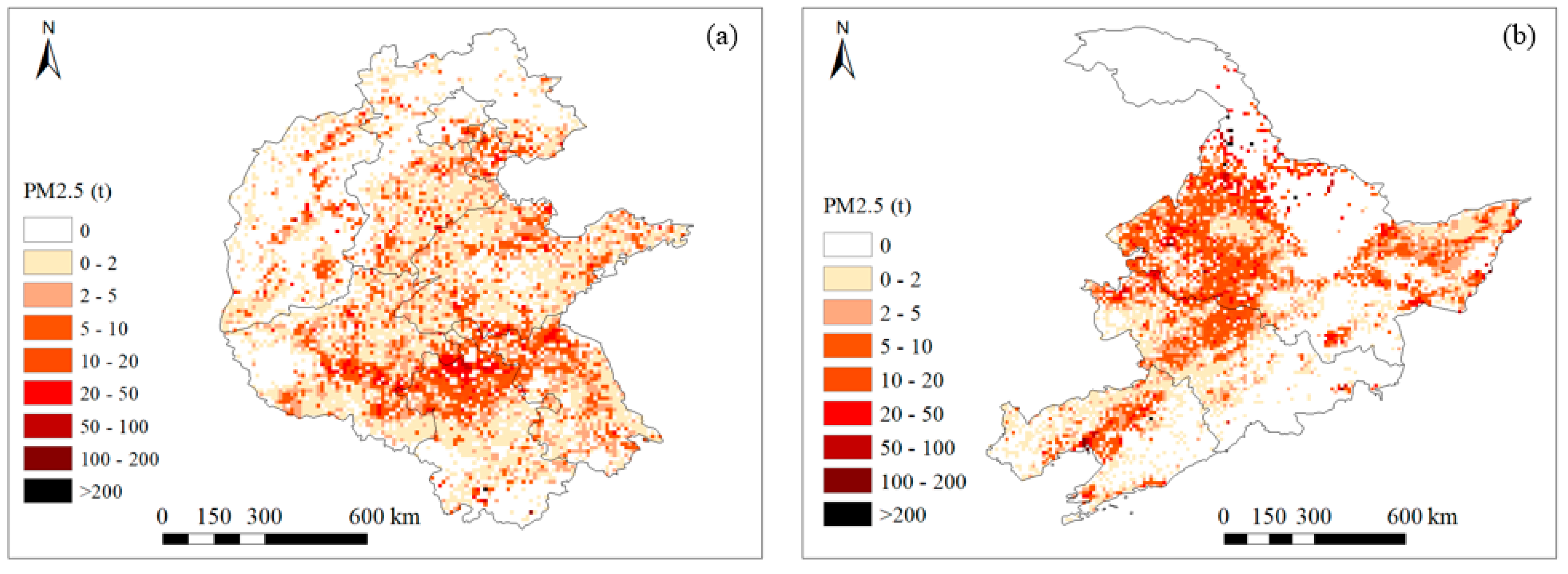
PM2.5 emissions from cropland fires in NC totaled 456.13 × 10³ t during the study period, with an annual average of 22.81 × 10³ t. Among the provincial units, Anhui contributed the highest proportion (25.90%, 118.12 × 10³ t), followed by Henan (20.85%), Shandong (17.48%), and Jiangsu (13.67%). Beijing recorded the lowest emissions, accounting for only 0.75% of the regional total. Spatially, high-emission areas were concentrated in northern Anhui, northwestern Jiangsu, southeastern Shandong, and eastern Henan—regions predominantly situated within the Huang-Huai Plain (Figure 2).
In comparison, NEC exhibited stronger PM2.5 emissions from cropland fires, with cumulative and annual averages reaching 624.89 × 10³ t and 31.24 × 10³ t, respectively. Heilongjiang was the dominant contributor, responsible for 70.10% (438.03 × 10³ t) of regional emissions, significantly exceeding those of Jilin (17.01%) and Liaoning (12.89%). Geographically, emissions were elevated in northeastern and southwestern Heilongjiang, central and western Jilin, and central Liaoning—areas corresponding to the Sanjiang, Songnen, and Liaohe plains (Figure 2).

3.2. Summer PM2.5 Emissions in NC, Spring-Autumn in NEC

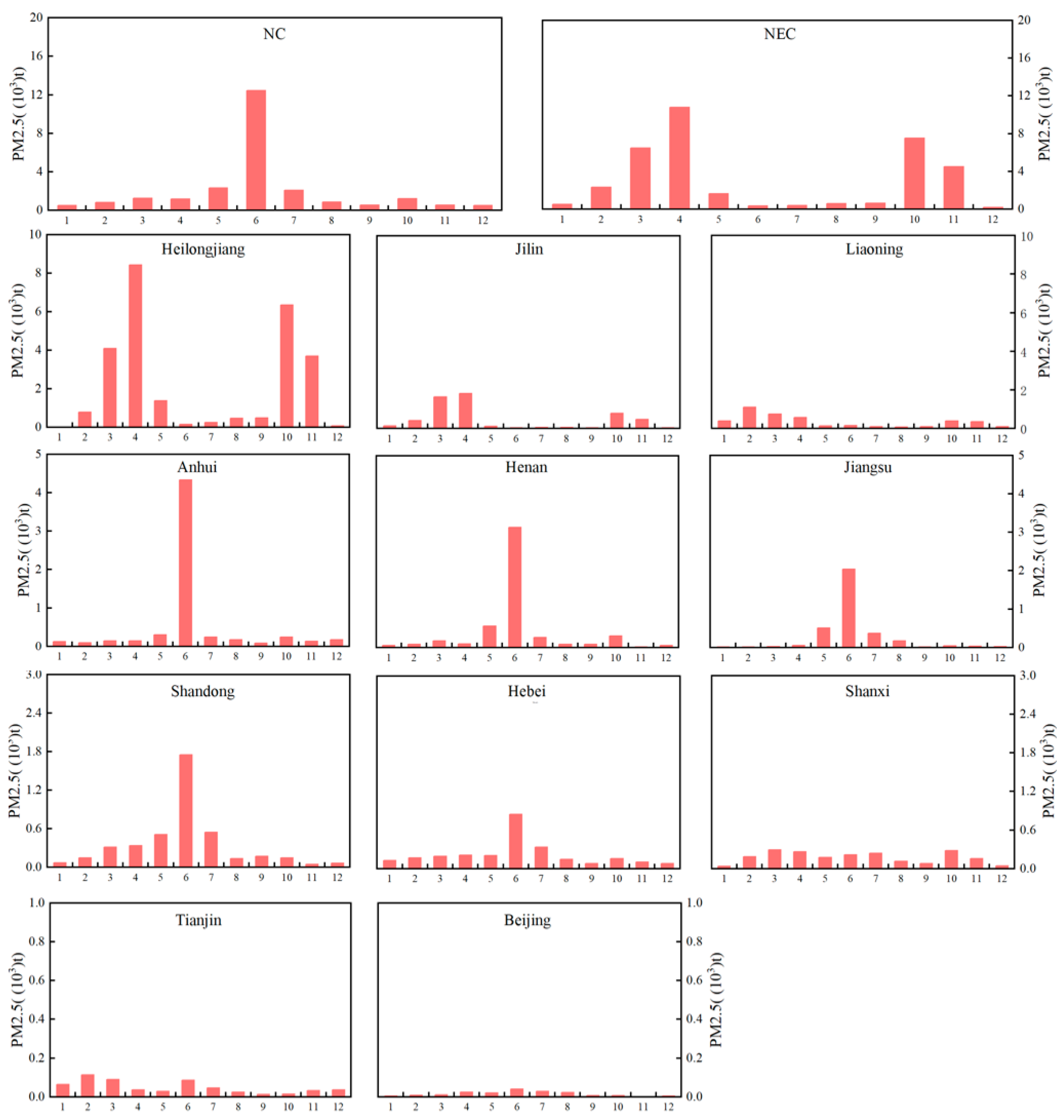
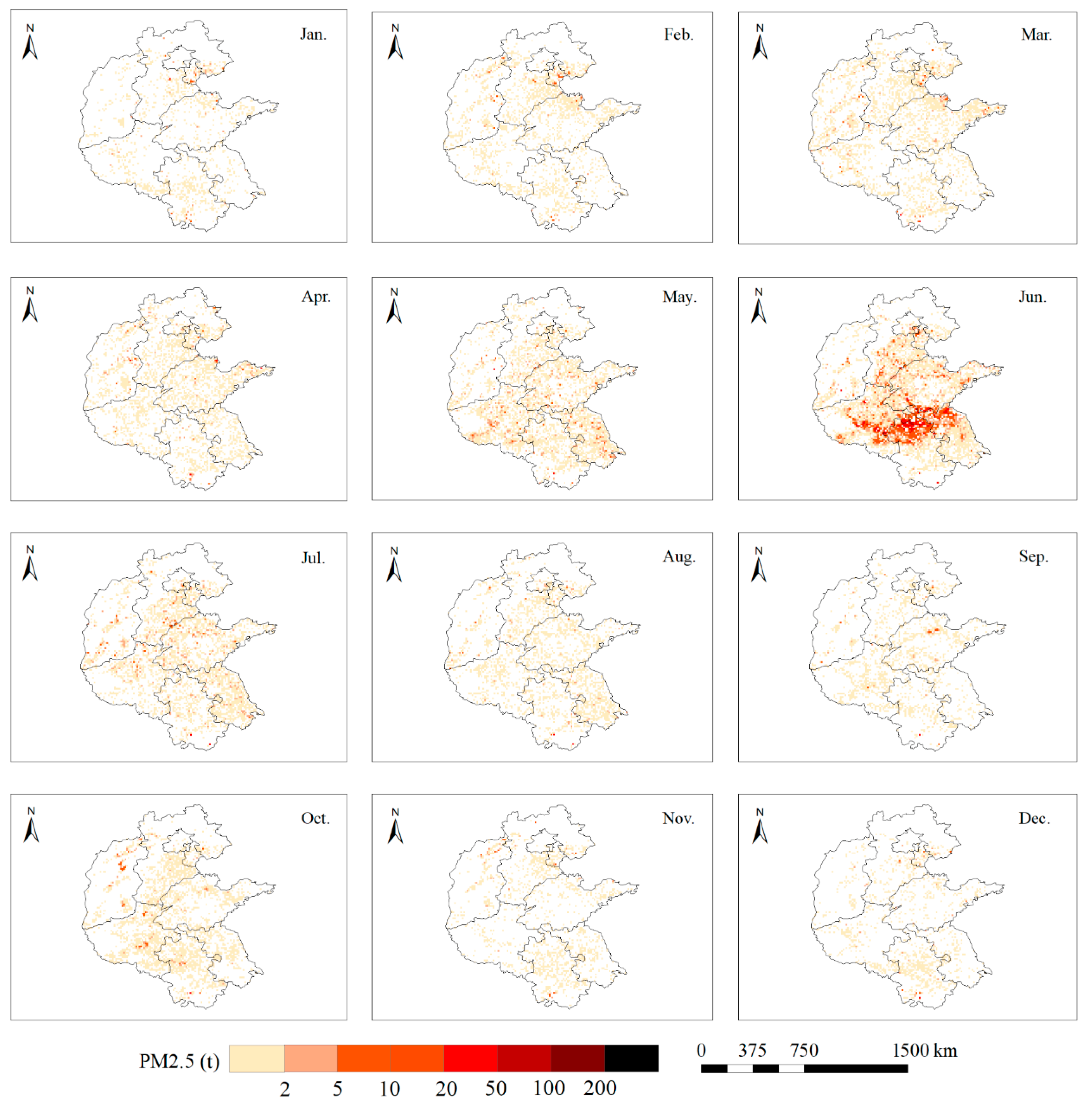
PM2.5 emissions from cropland fires in NC exhibited a distinct summer peak (Figure 3 and Figure 4), with a monthly average of 2.03 × 10³ t. Emissions peaked strongly in June at 12.46 × 10³ t, representing 50.99% of the annual total. This pattern aligns with the post-harvest burning of winter wheat straw, the region’s dominant crop [16]. A clear north–south gradient was observed among provinces: the proportion of annual emissions concentrated in June gradually decreased from Anhui (69.87%), Jiangsu (59.86%), and Henan (62.79%) in the south, to Shandong (41.11%), Hebei (31.64%), and Beijing (22.06%) further north. The high concentration (60–70% in June) in Anhui, Jiangsu, and Henan corresponds closely with the spatial distribution of emissions across the Huang-Huai Plain. In contrast, emissions in Shanxi were more evenly distributed throughout the year, reflecting its diverse climate and varied cultivation of multiple grain types [32]. Tianjin showed a multi-peak pattern, with primary emissions in February (19.28%), March (15.19%), and June (14.69%).
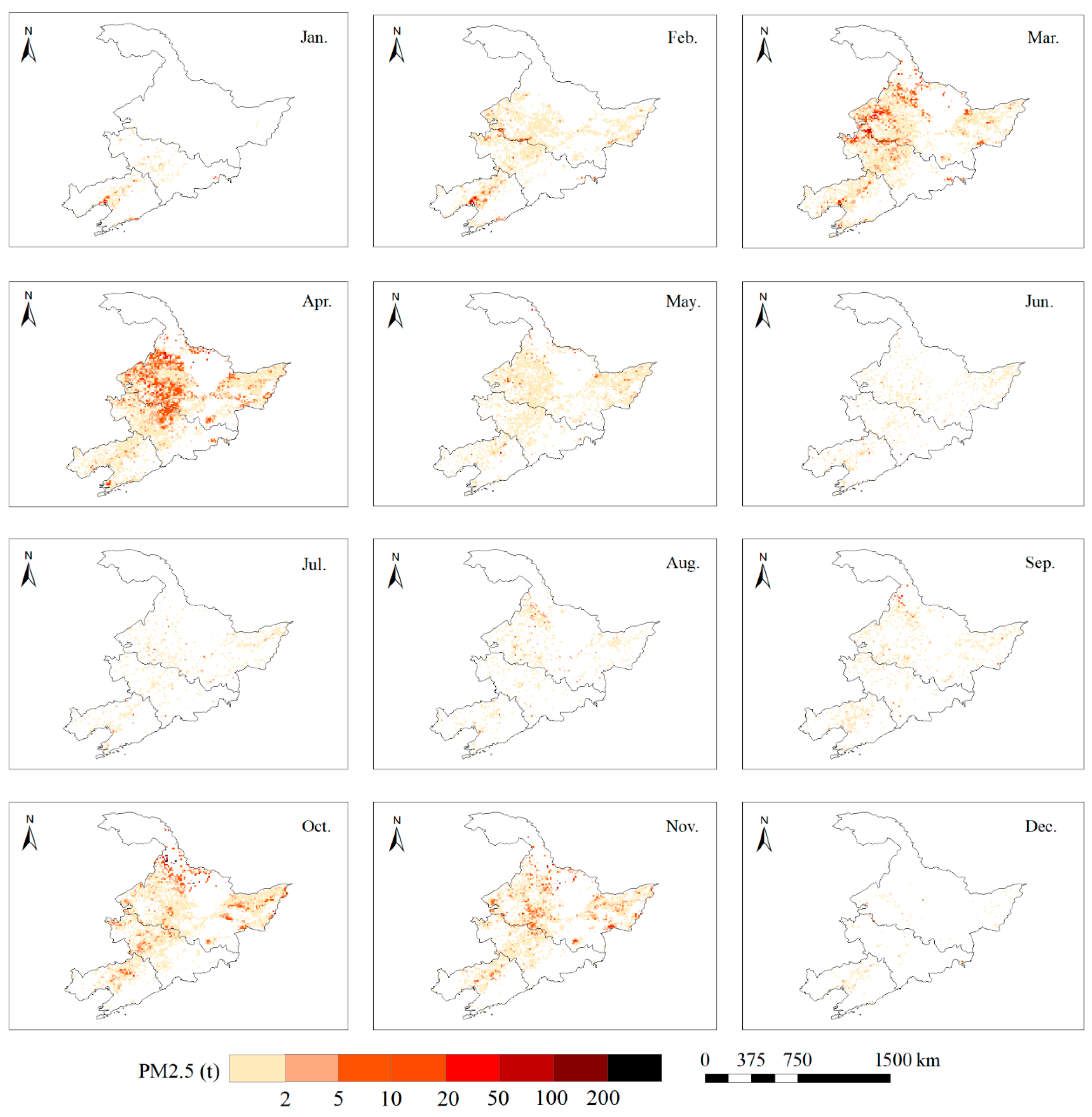
In NEC, PM2.5 emissions from cropland fires were predominantly concentrated in spring and autumn (Figure 3 and Figure 5), with a monthly average of 3.02 × 10³ t. The highest emissions occurred in April (10.82 × 10³ t, 29.86%), followed by October (7.54 × 10³ t, 20.81%) and March (6.52 × 10³ t, 17.98%). This bimodal seasonality corresponds to pre-planting and post-harvest burning of residues from corn, rice, and soybeans [33]. Provincial patterns showed a south-to-north progression in peak timing: Liaoning peaked earliest (mainly February–April), Jilin followed (peaks in March–April), and Heilongjiang displayed the most defined dual peaks (concentrated in April, October, March, and November). The stronger spring emissions are partly attributed to delayed burning of autumn harvest residues until the following spring planting season [13].

3.3. Policy-Driven PM2.5 Emissions Decline Lag in NEC Compared to NC

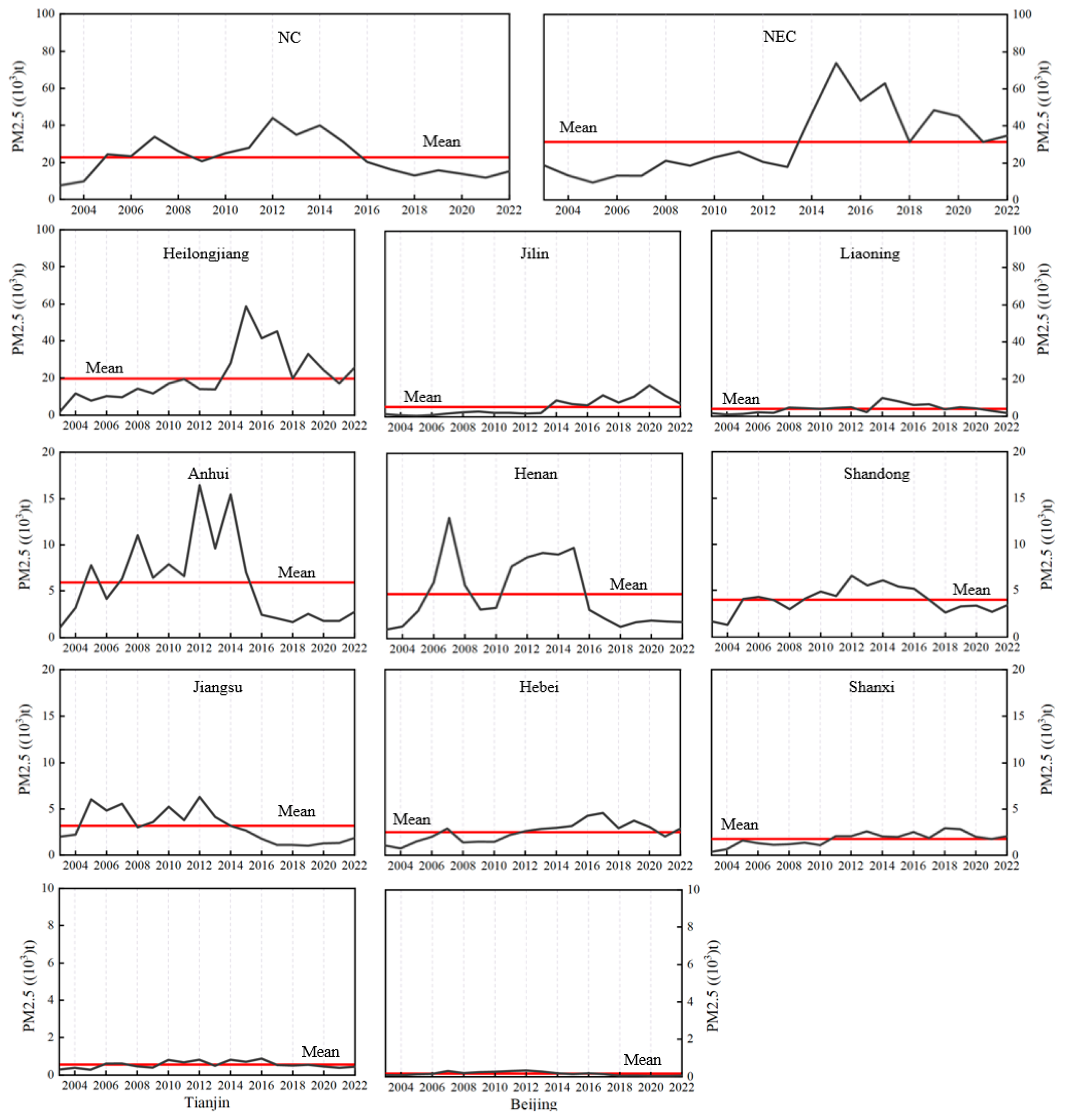
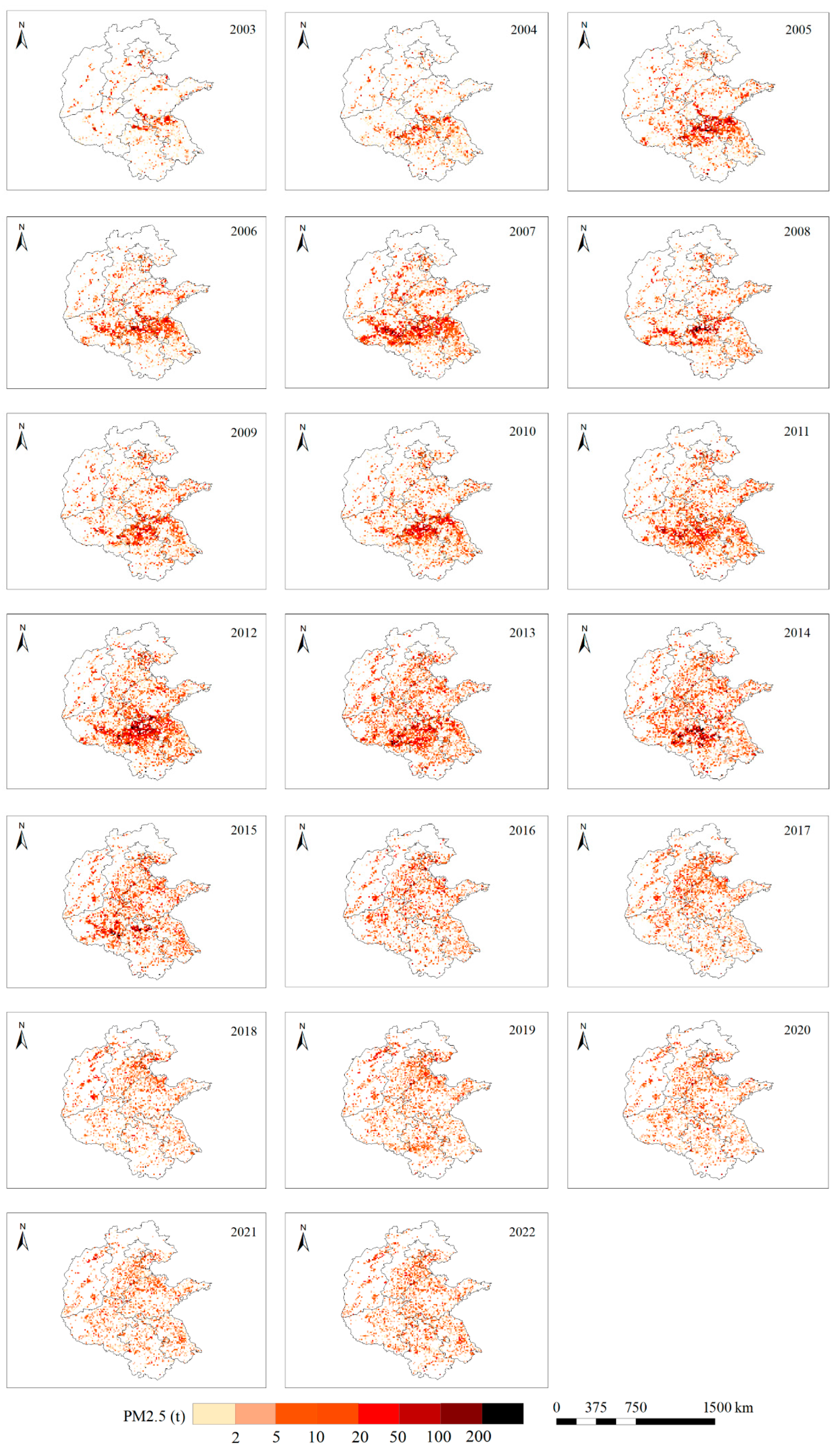
In NC, PM2.5 emissions from cropland fires exhibited a clear inverted U-shaped trend, with annual average emissions of 22.81 × 10³ t peaking in 2012 at 44.03 × 10³ t before declining by 65% by 2022 (Figure 6 and Figure 7). This reversal coincided with the continuous introduction of numerous straw-burning ban policies following the 2013 Air Pollution Prevention and Control Action Plan. Provincial analysis revealed distinct emission patterns and policy responses. Anhui, with the largest number of policies (nine policies since 2013), demonstrated the most representative trend—peaking in 2012 (16.47 × 10³ t) and declining by 83% by 2022. Henan, peaking earlier in 2007, achieved an 82% reduction following 2015–2016 policy interventions. The neighboring provinces of Shandong and Jiangsu both peaked in 2012, with Jiangsu’s six policies correlating with a stronger emission reduction (70%) compared to Shandong’s 48% reduction under three policies. Hebei exhibited a unique pattern with a later peak in 2017, showing a 36% emission reduction following policy implementation that year.
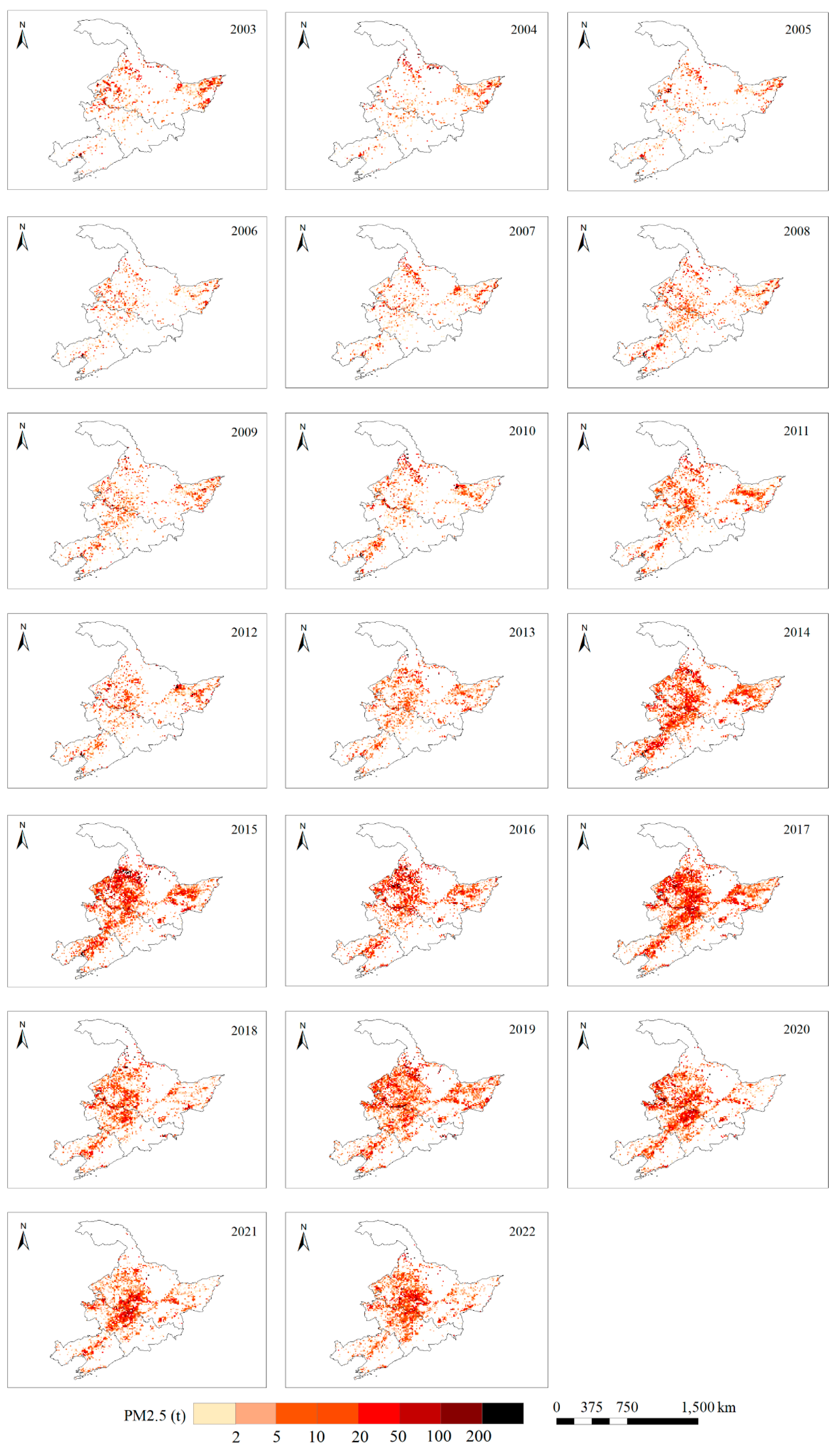
In NEC, PM2.5 emissions followed a different trajectory—characterized by a gradual increase followed by a sharp decrease (Figure 6 and Figure 8). The region’s annual average emissions reached 31.24 × 10³ t, peaking in 2015 (73.77 × 10³ t) with a secondary peak in 2017 (62.99 × 10³ t). This pattern reflects the delayed policy implementation in NEC compared to NC, with only seven straw treatment policies established before 2017. Heilongjiang dominated the regional emission profile (70% of total emissions) with peaks in 2015 (58.80 × 10³ t) and 2017 (45.08 × 10³ t). Jilin maintained lower emission levels but showed a concerning fluctuating upward trend, while Liaoning demonstrated an earlier emission pattern peaking in 2014. The 2017 “Action Program for Straw Treatment in the Northeast Region” marked a turning point, catalyzing substantial policy development—14 straw management policies were implemented during 2017–2022, including nine in Heilongjiang. This enhanced policy focus yielded significant emission reductions: regional emissions decreased by 53% and 45% compared to 2015 and 2017 peaks, respectively, with Heilongjiang achieving reductions of 56% and 43%, and Liaoning demonstrating an 82% decline from its 2014 peak.
The comparative analysis reveals substantial regional heterogeneity in policy impacts. NC provinces responded more rapidly to early policy interventions, while NEC demonstrated stronger emission reductions following delayed but more intensive policy implementation. These findings underscore the importance of considering regional characteristics in designing effective straw-burning management strategies.

3.4. Summer Strong Environmental Impacts of PM2.5 Emissions in NC, Spring-Autumn in NEC

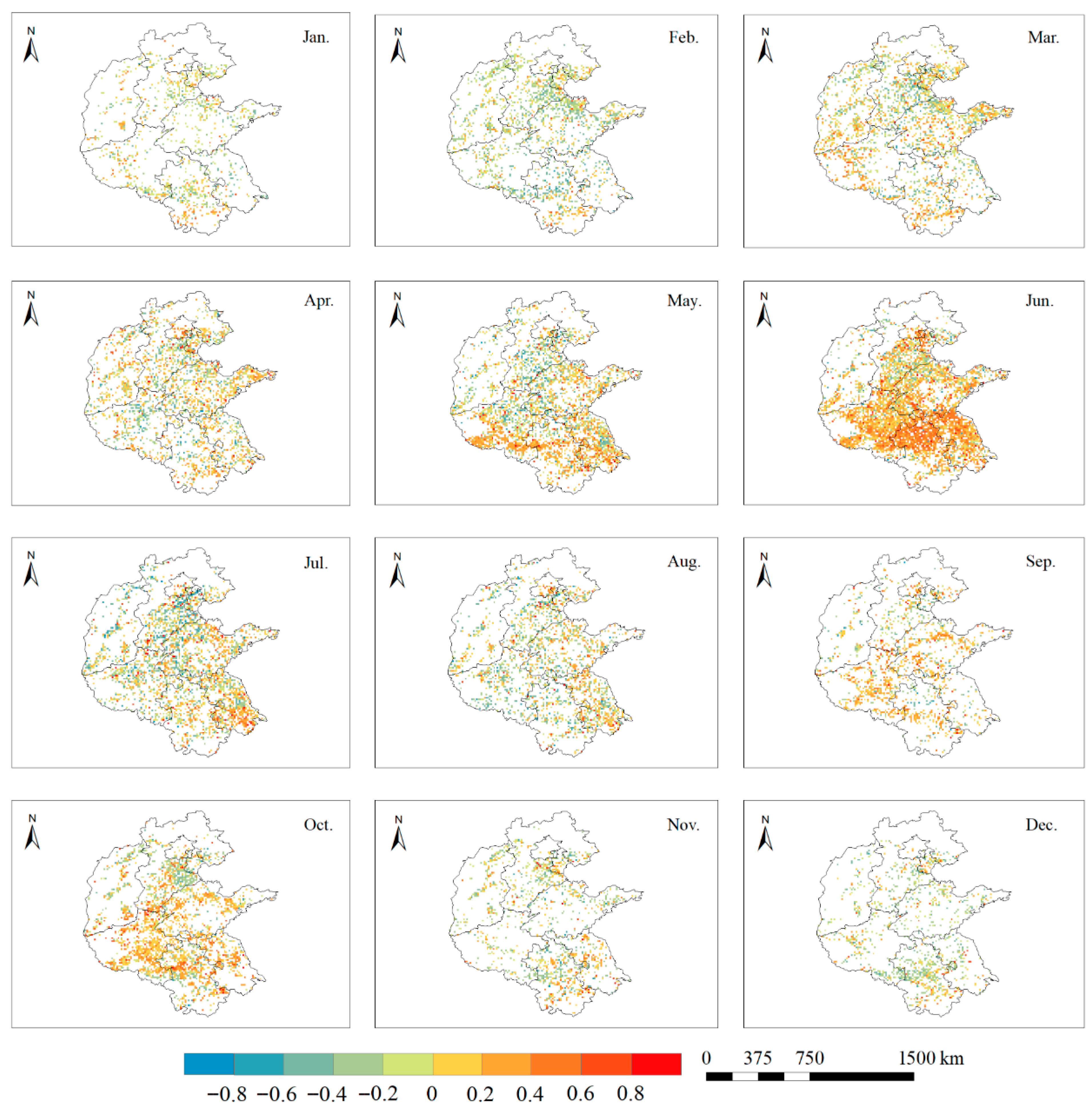
In NC, PM2.5 emissions from cropland fires exerted strong environmental impacts during the summer months. As shown in Figure 9, the correlation between fire emissions and atmospheric PM2.5 concentrations was most pronounced in June, coinciding with peak straw-burning activity in the region. In June, 76% of the North China Plain exhibited positive correlations, with 22% showing moderately strong correlations (r > 0.4), particularly concentrated in east-central Henan, northern Anhui, most of Jiangsu, and southeastern Shandong. October showed similarly strong correlations, with 12% of areas—mainly in eastern/northern Henan, central Anhui, central Jiangsu, southern Hebei, and northwestern Shandong—demonstrating moderately strong positive relationships.
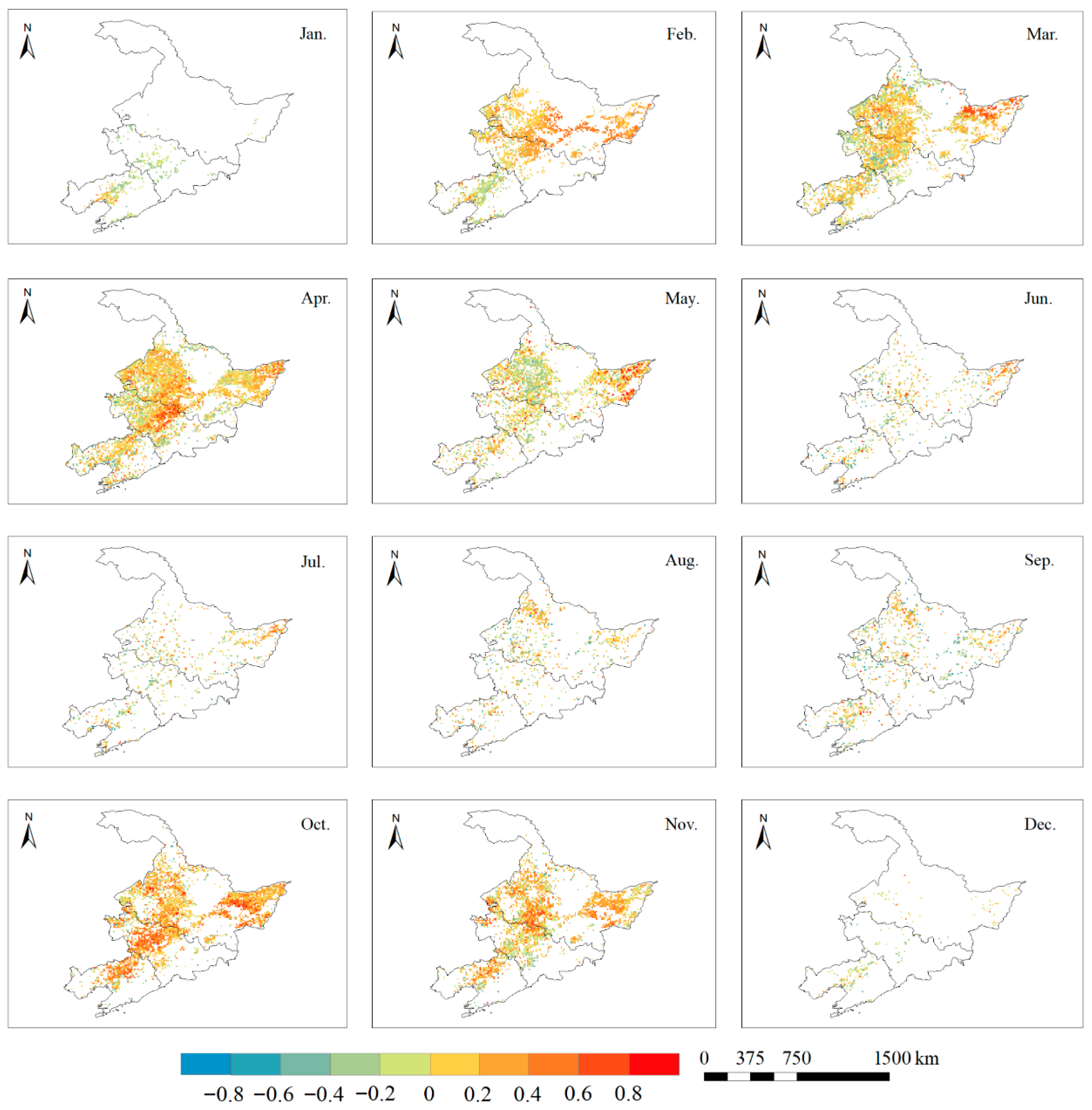
In NEC, the environmental impact of cropland fire emissions was most evident during spring and autumn (Figure 10). Strong correlations with atmospheric PM2.5 concentrations were observed in March, April, October, and November, with positive correlation coverage reaching 60%, 63%, 80%, and 67%, respectively, widely distributed across the Sanjiang, Songnen, and Liaohe plains. Notably, the proportion of regions exhibiting moderately strong correlations (r > 0.4) reached 30% in October, followed by 18% in November, 10% in April, and 8% in March. The Sanjiang Plain consistently demonstrated the strongest positive correlations across all months, highlighting its particular susceptibility to fire-induced pollution episodes.

4. Discussion

Our research confirms a distinct seasonal divergence in peak PM2.5 emissions from cropland fires: spring and autumn in Northeast China (NEC) versus summer in North China (NC). In NEC, the single annual harvest under a monocropping system creates two viable windows for straw burning—post-autumn harvest and pre-spring planting—leading to dual emission peaks [34]. In NEC, straw burning is tightly regulated by officially mandated forest fire prevention periods, which critically constrain the timing of disposal activities. In spring, burning cannot commence too early due to persistent snow cover, yet it must conclude before the onset of the strictly enforced spring fire prevention season. Similarly, in autumn, burning is only viable after crop maturity but must be completed prior to the autumn fire prevention period. This dual regulatory and phenological pressure compresses permissible burning into a narrow seasonal window, directly shaping the distinct bimodal peak of PM2.5 emissions observed in the region. In NC, particularly in the irrigated Huang-Huai-Hai Plain (e.g., Shandong Province), the prevalent winter wheat–summer maize double-cropping system drives a singular emission pattern [16]. The primary PM2.5 emission peak occurs in summer, following the wheat harvest and preceding maize planting, when field conditions are most conducive to straw burning. After the maize harvest, however, straw is predominantly crushed and incorporated into the soil through tillage to facilitate the immediate sowing of winter wheat. This widespread adoption of straw-returning practices effectively suppresses open burning during the autumn wheat-growing season, resulting in the absence of a significant secondary emission peak.
While satellite-based fire emission products like GFAS—derived from MODIS active fire observations with long-term coverage and appropriate spatiotemporal resolution [24,33,35]—are increasingly used by governments and researchers, this study acknowledges several limitations. First, the integration of GFAS emissions with land cover data may introduce errors due to spatial resolution discrepancies, necessitating more robust fusion techniques in future work. This scale mismatch may affect the precision of emission source attribution, particularly in heterogeneous agricultural landscapes. Subsequent investigations would benefit from implementing advanced data fusion techniques to minimize spatial allocation errors. The fundamental constraints of the MODIS-based GFAS present another consideration. The snapshot-based observational paradigm of polar-orbiting satellites creates temporal gaps that likely result in systematic underestimation of fire frequency and emissions [36], particularly for short-duration agricultural burns. Future monitoring frameworks would be enhanced by incorporating complementary data streams to achieve more continuous temporal coverage and improved detection sensitivity. Third, our policy assessment methodology, while providing valuable initial insights, adopted a primarily unidimensional approach by focusing on year-on-year PM2.5 emission changes. A more comprehensive evaluation framework would integrate multiple indicators to better capture the multifaceted nature of burning ban outcomes. Fourth, provincial-level policies were analyzed only qualitatively; quantitative evaluation of local implementation would enhance insight. Finally, other influencing factors—interannual climate variability (e.g., rainfall in NC or snowfall/temperature in NEC that may physically limit burning opportunities), variations in enforcement intensity, and differences in farmer compliance—were not considered; future studies should integrate these to establish a more holistic analytical framework. Despite these limitations, this research provides the first multi-scale assessment of China’s straw-burning ban policies using long-term spatial emission data, offering scientifically grounded and policy-relevant insights for future environmental governance.

5. Conclusions

In this paper, we employ an integrated analytical framework combining GFAS fire PM2.5 emissions, CLCD land-cover data, and CHAP PM2.5 concentrations to systematically evaluate the spatiotemporal patterns of cropland fire PM2.5 emissions and their environmental impacts under China’s straw-burning ban policies. Key findings reveal: (1) The 2013 Air Pollution Prevention and Control Action Plan catalyzed provincial policy development, driving a marked 65% reduction in NC’s PM2.5 emissions by 2022 relative to the 2012 peak; (2) NEC exhibited delayed policy responsiveness, with PM2.5 emissions continuing to rise until 2017 before declining by 53% and 45% compared to the 2015 and 2017 peaks, respectively; (3) Distinct regional heterogeneity emerged in environmental impacts, characterized by summer peaks in NC versus spring-autumn peaks in NEC. As the first systematic comparative analysis of straw-burning policy efficacy across China’s major agricultural zones, this research provides critical evidence for optimizing regionally differentiated pollution control strategies.

Author Contributions

Conceptualization, Z.F.; methodology, C.L.; software, C.L.; validation, C.L.; formal analysis, C.L.; investigation, C.L.; resources, C.L.; data curation, C.L.; writing—original draft preparation, C.L.; writing—review and editing, Z.F.; visualization, C.L.; supervision, Z.F.; project administration, Z.F.; funding acquisition, Z.F. All authors have read and agreed to the published version of the manuscript.

Funding

This research was funded by the National Natural Science Foundation of China (42130508), and the Opening Fund of Key Laboratory of Natural Disaster Monitoring, Early Warning and Assessment of Jiangxi Province (Jiangxi Normal University) (JXZRZH202305).

Data Availability Statement

The data that support the findings of this study are available from the corresponding author, upon reasonable request.

Conflicts of Interest

The authors declare no conflicts of interest.

References

  1. Lan, R.; Eastham, S.D.; Liu, T.; Norford, L.K.; Barrett, S.R.H. Air quality impacts of crop residue burning in India and mitigation alternatives. Nat. Commun. 2022, 13, 6537. [Google Scholar] [CrossRef]
  2. Lee, H.-H.; Iraqui, O.; Gu, Y.; Yim, S.H.-L.; Chulakadabba, A.; Tonks, A.Y.-M.; Yang, Z.; Wang, C. Impacts of air pollutants from fire and non-fire emissions on the regional air quality in Southeast Asia. Atmos. Chem. Phys. 2018, 18, 6141–6156. [Google Scholar] [CrossRef]
  3. Modaresi Rad, A.; Abatzoglou, J.T.; Kreitler, J.; Alizadeh, M.R.; AghaKouchak, A.; Hudyma, N.; Nauslar, N.J.; Sadegh, M. Human and infrastructure exposure to large wildfires in the United States. Nat. Sustain. 2023, 6, 1343–1351. [Google Scholar] [CrossRef]
  4. Peng, J.; Chen, S.; Lü, H.; Liu, Y.; Wu, J. Spatiotemporal patterns of remotely sensed PM2.5 concentration in China from 1999 to 2011. Remote Sens. Environ. 2016, 174, 109–121. [Google Scholar] [CrossRef]
  5. Singha, M.; Dong, J.; Ge, Q.; Metternicht, G.; Sarmah, S.; Zhang, G.; Doughty, R.; Lele, S.; Biradar, C.; Zhou, S.; et al. Satellite evidence on the trade-offs of the food-water–air quality nexus over the breadbasket of India. Glob. Environ. Change 2021, 71, 102394. [Google Scholar] [CrossRef]
  6. Burke, M.; Childs, M.L.; de la Cuesta, B.; Qiu, M.; Li, J.; Gould, C.F.; Heft-Neal, S.; Wara, M. The contribution of wildfire to PM2.5 trends in the USA. Nature 2023, 622, 761–766. [Google Scholar] [CrossRef]
  7. Requia, W.J.; Amini, H.; Mukherjee, R.; Gold, D.R.; Schwartz, J.D. Health impacts of wildfire-related air pollution in Brazil: A nationwide study of more than 2 million hospital admissions between 2008 and 2018. Nat. Commun. 2021, 12, 6555. [Google Scholar] [CrossRef] [PubMed]
  8. Liu, Q.; Wu, R.; Zhang, W.; Li, W.; Wang, S. The varying driving forces of PM2.5 concentrations in Chinese cities: Insights from a geographically and temporally weighted regression model. Environ. Int. 2020, 145, 106168. [Google Scholar] [CrossRef]
  9. Huang, L.; Zhu, Y.; Wang, Q.; Zhu, A.; Liu, Z.; Wang, Y.; Allen, D.T.; Li, L. Assessment of the effects of straw burning bans in China: Emissions, air quality, and health impacts. Sci. Total Environ. 2021, 789, 147935. [Google Scholar] [CrossRef] [PubMed]
  10. Bhardwaj, P.; Naja, M.; Kumar, R.; Chandola, H.C. Seasonal, interannual, and long-term variabilities in biomass burning activity over South Asia. Environ. Sci. Pollut. Res. 2015, 23, 4397–4410. [Google Scholar] [CrossRef]
  11. Aguilera, R.; Corringham, T.; Gershunov, A.; Benmarhnia, T. Wildfire smoke impacts respiratory health more than fine particles from other sources: Observational evidence from Southern California. Nat. Commun. 2021, 12, 1493. [Google Scholar] [CrossRef]
  12. Jin, Q.; Ma, X.; Wang, G.; Yang, X.; Guo, F. Dynamics of major air pollutants from crop residue burning in mainland China, 2000–2014. J. Environ. Sci. 2018, 70, 190–205. [Google Scholar] [CrossRef] [PubMed]
  13. Zhang, L.; Liu, Y.; Hao, L. Contributions of open crop straw burning emissions to PM2.5 concentrations in China. Environ. Res. Lett. 2016, 11, 014014. [Google Scholar] [CrossRef]
  14. Cui, S.; Song, Z.; Zhang, L.; Shen, Z.; Hough, R.; Zhang, Z.; An, L.; Fu, Q.; Zhao, Y.; Jia, Z. Spatial and temporal variations of open straw burning based on fire spots in northeast China from 2013 to 2017. Atmos. Environ. 2021, 244, 117962. [Google Scholar] [CrossRef]
  15. Mehmood, K.; Chang, S.C.; Yu, S.C.; Wang, L.Q.; Li, P.F.; Li, Z.; Liu, W.P.; Rosenfeld, D.; Seinfeld, J.H. Spatial and temporal distributions of air pollutant emissions from open crop straw and biomass burnings in China from 2002 to 2016. Environ. Chem. Lett. 2018, 16, 301–309. [Google Scholar] [CrossRef]
  16. Wang, L.; Xin, J.; Li, X.; Wang, Y. The variability of biomass burning and its influence on regional aerosol properties during the wheat harvest season in North China. Atmos. Res. 2015, 157, 153–163. [Google Scholar] [CrossRef]
  17. Yang, G.; Zhao, H.; Tong, D.Q.; Xiu, A.; Zhang, X.; Gao, C. Impacts of post-harvest open biomass burning and burning ban policy on severe haze in the Northeastern China. Sci. Total Environ. 2020, 716, 136517. [Google Scholar] [CrossRef]
  18. Giglio, L.; Descloitres, J.; Justice, C.O.; Kaufman, Y.J. An enhanced contextual fire detection algorithm for MODIS. Remote Sens. Environ. 2003, 87, 273–282. [Google Scholar] [CrossRef]
  19. Lian, C.; Xiao, C.; Feng, Z. Spatiotemporal Characteristics and Regional Variations of Active Fires in China since 2001. Remote Sens. 2023, 15, 54. [Google Scholar] [CrossRef]
  20. Lian, C.; Xiao, C.; Feng, Z.; Ma, Q. Accelerating decline of wildfires in China in the 21st century. Front. For. Glob. Change 2024, 6, 1252587. [Google Scholar] [CrossRef]
  21. Giglio, L.; Schroeder, W.; Justice, C.O. The collection 6 MODIS active fire detection algorithm and fire products. Remote Sens. Environ. 2016, 178, 31–41. [Google Scholar] [CrossRef]
  22. Giglio, L.; Boschetti, L.; Roy, D.P.; Humber, M.L.; Justice, C.O. The Collection 6 MODIS burned area mapping algorithm and product. Remote Sens. Environ. 2018, 217, 72–85. [Google Scholar] [CrossRef] [PubMed]
  23. Giglio, L.; Csiszar, I.; Restás, Á.; Morisette, J.T.; Schroeder, W.; Morton, D.; Justice, C.O. Active fire detection and characterization with the advanced spaceborne thermal emission and reflection radiometer (ASTER). Remote Sens. Environ. 2008, 112, 3055–3063. [Google Scholar] [CrossRef]
  24. Kaiser, J.W.; Heil, A.; Andreae, M.O.; Benedetti, A.; Chubarova, N.; Jones, L.; Morcrette, J.J.; Razinger, M.; Schultz, M.G.; Suttie, M.; et al. Biomass burning emissions estimated with a global fire assimilation system based on observed fire radiative power. Biogeosciences 2012, 9, 527–554. [Google Scholar] [CrossRef]
  25. Vadrevu, K.; Lasko, K. Intercomparison of MODIS AQUA and VIIRS I-Band Fires and Emissions in an Agricultural Landscape-Implications for Air Pollution Research. Remote Sens. 2018, 10, 978. [Google Scholar] [CrossRef]
  26. Li, T.; Long, H.; Zhang, Y.; Tu, S.; Ge, D.; Li, Y.; Hu, B. Analysis of the spatial mismatch of grain production and farmland resources in China based on the potential crop rotation system. Land Use Policy 2017, 60, 26–36. [Google Scholar] [CrossRef]
  27. Lian, C.; Li, P.; Feng, Z. Accelerated reduction in China’s cropland fires against the background of policy enhancement. Environ. Impact Assess. Rev. 2024, 106, 107512. [Google Scholar] [CrossRef]
  28. Frolking, S.; Xiao, X.; Zhuang, Y.; Salas, W.; Li, C. Agricultural land-use in China: A comparison of area estimates from ground-based census and satellite-borne remote sensing. Glob. Ecol. Biogeogr. 1999, 8, 407–416. [Google Scholar] [CrossRef]
  29. Yin, S.; Wang, X.; Xiao, Y.; Tani, H.; Zhong, G.; Sun, Z. Study on spatial distribution of crop residue burning and PM2.5 change in China. Environ. Pollut. 2017, 220, 204–221. [Google Scholar] [CrossRef]
  30. Yang, J.; Huang, X. The 30 m annual land cover dataset and its dynamics in China from 1990 to 2019. Earth Syst. Sci. Data 2021, 13, 3907–3925. [Google Scholar] [CrossRef]
  31. Wei, J.; Li, Z.; Lyapustin, A.; Sun, L.; Peng, Y.; Xue, W.; Su, T.; Cribb, M. Reconstructing 1-km-resolution high-quality PM2.5 data records from 2000 to 2018 in China: Spatiotemporal variations and policy implications. Remote Sens. Environ. 2021, 252, 112136. [Google Scholar] [CrossRef]
  32. Qin, M.; Gao, X.; Feng, M.; Jin, N.; Wang, C.; Cheng, W. Modeling of the potential geographical distribution of naked oat under climate change. Front. Plant Sci. 2023, 13, 1009577. [Google Scholar] [CrossRef]
  33. Wang, L.; Jin, X.; Wang, Q.; Mao, H.; Liu, Q.; Weng, G.; Wang, Y. Spatial and temporal variability of open biomass burning in Northeast China from 2003 to 2017. Atmos. Ocean. Sci. Lett. 2020, 13, 240–247. [Google Scholar] [CrossRef]
  34. Ke, H.B.; Gong, S.L.; He, J.J.; Zhou, C.H.; Zhang, L.; Zhou, Y.K. Spatial and temporal distribution of open bio-mass burning in China from 2013 to 2017. Atmos. Environ. 2019, 210, 156–165. [Google Scholar] [CrossRef]
  35. Hawbaker, T.J.; Radeloff, V.C.; Syphard, A.D.; Zhu, Z.; Stewart, S.I. Detection rates of the MODIS active fire product in the United States. Remote Sens. Environ. 2008, 112, 2656–2664. [Google Scholar] [CrossRef]
  36. Xiang, M.; Xiao, C. The neglected disproportionate contributions of active fires in greenhouse gas emissions globally. Resour. Environ. Sustain. 2025, 19, 100190. [Google Scholar] [CrossRef]
Figure 1. Land cover types and regional divisions distribution in China.
Fire 09 00046 g001
Figure 2. Spatial distribution of the annual average PM2.5 emissions from cropland fires in NC (a) and NEC (b) during 2003–2022.
Fire 09 00046 g002
Figure 3. Monthly average PM2.5 emissions from cropland fires in China during 2003–2022.
Fire 09 00046 g003
Figure 4. Spatial distribution of the monthly average PM2.5 emissions of cropland fires in NC during 2003–2022.
Fire 09 00046 g004
Figure 5. Spatial distribution of the monthly average PM2.5 emissions of cropland fires in NEC during 2003–2022.
Fire 09 00046 g005
Figure 6. Annual PM2.5 emissions from cropland fires in China during 2003–2022.
Fire 09 00046 g006
Figure 7. Spatial distribution of the annual PM2.5 emissions of cropland fires in NC during 2003–2022.
Fire 09 00046 g007
Figure 8. Spatial distribution of the annual PM2.5 emissions of cropland fires in NEC during 2003–2022.
Fire 09 00046 g008
Figure 9. Correlation of PM 2.5 emissions of cropland fires with PM 2.5 concentrations in NC.
Fire 09 00046 g009
Figure 10. Correlation of PM 2.5 emissions of cropland fires with PM 2.5 concentrations in NEC.
Fire 09 00046 g010
Table 1. List of policies related to straw burning and comprehensive utilization in NC, 2003–2022.
ProvinceYearThe Title of Policies
Hebei2012Notice on Doing a Good Job of Straw Burning Prohibition and Comprehensive Utilization in 2012
2014Hebei Province 2014–2015 comprehensive utilization of straw implementation plan
2017Hebei Province Crop Straw Full Quantitative Comprehensive Utilization Promotion Program
2021Implementation Plan for Comprehensive Utilization of Straw in Hebei Province (2021–2023)
Tianjin2013Notice on Doing a Good Job of Straw Burning Prohibition in Summer and Autumn of 2013
2015Notice on Doing a Good Job of Banning Straw Burning in Summer and Fall 2015
2017Decision on Comprehensive Utilization of Crop Straw and Ban on Open Burning
2017Notice on Further Strengthening the Supervision of Crop Straw Open Burning Ban
2018Tianjin Straw Comprehensive Utilization Plan (2018–2020)
Beijing2015Joint working mechanism for banning the burning of cropland straw and landscaping waste
2015Notice on Promoting Crop Straw Feed Utilization
Shanxi2014Further do a good job of straw burning ban and comprehensive utilization of the work of the notice
2018Decision to Promote the Comprehensive Utilization of Crop Straw and to Prohibit Open Burning of Crops
Jiangsu2010Circular on the Issuance of Planning for the Comprehensive Utilization of Crop Straw in Jiangsu Province (2010–2015)
2013Notice of Several Policy Measures to Accelerate the Comprehensive Utilization of Straw
2014Opinions on comprehensively promoting the comprehensive utilization of crop residues
2015Jiangsu Province, the comprehensive utilization of crop straw and burning ban on the work of the assessment methods
2015Note on the Implementation Plan for Comprehensive Utilization of Crop Straw in Jiangsu Province in 2015
2017Note on the comprehensive utilization of crop straw in Jiangsu Province in 2017
Shandong2016Pilot Program for Comprehensive Utilization of Crop Straw in Shandong Province
2016Implementation Plan for Accelerating Comprehensive Utilization of Straw in Shandong Province (2016–2020)
2017Pilot Work Program for Comprehensive Utilization of Crop Straw in Shandong Province in 2017
Henan2011Emergency Notice on Strengthening Straw Prohibition and Comprehensive Utilization Work
2015Notice on Strengthening Straw Prohibition and Comprehensive Utilization Work
2016Implementation Program of Straw Banning and Comprehensive Utilization Work in Henan Province in 2016
Anhui2014Provincial Straw Burning Ban Work Program in 2014
2014Anhui Provincial Crop Straw Burning Reward and Subsidy Measures
2015Notice on Further Improving the Work of Straw Burning Prohibition and Comprehensive Utilization
2017Notice on Further Strengthening the Management of the Use of Straw Ban and Comprehensive Utilization of Award Funds
2017Implementing Opinions on Vigorously Developing Modern Environmental Protection Industry Based on Crop Straw Resource Utilization
2017Notice on Doing a Good Job in Supervision and Inspection of Straw Comprehensive Utilization Upgrading Project
2018Anhui Province Crop Straw Comprehensive Utilization Three-Year Action Plan (2018–2020)
2020Anhui Province, the comprehensive utilization of crop straw subsidy funds management approach
2021Further do a good job of straw burning ban and comprehensive utilization of the work of the notice
Table 2. List of policies related to straw burning and comprehensive utilization in NEC, 2003–2022.
ProvinceYearThe Title of Policies
Liaoning2016Implementation Opinions on Promoting Comprehensive Utilization of Crop Straw and Banning Burning Work (2016–2018)
2016Interim Provisions on the Investigation of Responsibility for the Prevention and Control of Straw Burning in Liaoning Province
2017Liaoning Province Straw Treatment Action Plan
2017Liaoning Province 2017 Straw Comprehensive Utilization Pilot Work Plan
2018Liaoning Province Straw Burning Prevention and Control Responsibility Measures
Hei long
jiang
2015Emergency Notice on Further Promoting Straw Burning Banning
2016Implementation Plan for Heilongjiang Province to Prohibit Burning Straw in the Field to Improve the Quality of Atmospheric Environment
2017Notice on Further Strengthening the Province’s Straw Burning Banning Control Work
2017Emergency Notice on Strictly Controlling Fires Caused by Burning Straws
2017Heilongjiang Province Carrying out Comprehensive Utilization of Crop Straws and the Implementation Plan of the County-wide Pilot Work
20182018–2020 Straw Return to Field Tasks and Standards
2018Three-year Action Plan for Comprehensive Utilization of Straw in Harbin City, Suihua City, Zhaozhou County and Zhaoyuan County
2019Notice on the Implementation Plan for Comprehensive Utilization of Straw in Heilongjiang Province in 2019
2020Notice on the Implementation Plan for Comprehensive Utilization of Straw in Heilongjiang Province in 2020
2021Notice on the Implementation Plan for Comprehensive Utilization of Straw in Heilongjiang Province in 2021
2022Notice on the Implementation Plan for Comprehensive Utilization of Straw in Heilongjiang Province in 2022
Jilin2013Notice on Prohibiting Open Burning of Crop Straw
2014Notice on Further Promoting the Banning of Straw Burning in Autumn and Winter
2016Instructions on Promoting the Comprehensive Utilization of Crop Straw
2017Decision on the Prohibition of Open Burning and Comprehensive Utilization of Crop Straw
2018Work Plan for Banning Straw Burning in Autumn and Winter in Jilin Province 2018
Table 3. Correlation coefficient grade division table.
CategoriesStrong Negative
Correlation (SNC)
Medium
Negative
Correlation (MNC)
Weak Negative Correlation (WNC)Weak Positive Correlation (WPC)Medium Positive Correlation (MPC)Strong Positive Correlation
(SPC)
Coefficient−1.0~−0.6−0.6~−0.4−0.4~00~0.40.4~0.60.6~1.0
Disclaimer/Publisher’s Note: The statements, opinions and data contained in all publications are solely those of the individual author(s) and contributor(s) and not of MDPI and/or the editor(s). MDPI and/or the editor(s) disclaim responsibility for any injury to people or property resulting from any ideas, methods, instructions or products referred to in the content.