Abstract
An experimental study was conducted to quantitatively assess the separate effects of smoke-layer height and temperature on fire spread along a cable tray in a compartment. Smoke-layer height was controlled by varying the opening height (h) using side-wall configurations (SW0%, SW25%, and SW50%), while smoke-layer temperature was adjusted by changing the heat release rate (HRR) of an LPG burner (10, 14, and 18 kW). Fire spread was quantified using flame imaging and measurements of HRR, fire growth and spread rates, incident heat flux at tray height, and gas temperature and O2 concentration above and below the tray. At 10 kW, self-extinction occurred before the flame reached the tray end for all side-wall configurations. At 14 and 18 kW, fire spread to the tray end occurred under SW25% and SW50%. For a given HRR, SW50% produced higher heat flux and temperature near the tray but lower oxygen concentration, especially below the tray. These findings indicate that cable tray fire spread is governed by the combined effects of smoke-layer height and temperature through thermal feedback and local oxygen availability. Fire spread was promoted by stronger thermal feedback, but could be limited under a deeper smoke layer when oxygen availability near the tray was reduced.
1. Introduction
Power and communication cables are widely deployed in critical infrastructure, including power plants, industrial facilities, and data centers. As equipment density has increased, cable fires have been recognized as a major safety concern. Cable fire incidents have been reported to be associated with electrical faults such as insulation degradation, short circuits, and overheating, and these faults can lead to ignition and subsequent fire spread [1]. In facilities where cables are continuously installed on tray systems, a localized ignition can spread along interconnected horizontal and vertical trays. Because the fuel is arranged continuously, the potential for fire escalation can be higher than in typical compartment fires involving discrete fuel packages [2,3]. In compartment-type installation spaces, such as underground utility tunnels, early response and on-site suppression can be hindered by smoke accumulation and access limitations, which can increase the likelihood of fire escalation [4]. Therefore, a quantitative understanding of fire spread along cable trays is essential for establishing fire safety strategies in compartments, with smoke-layer formation and ventilation conditions considered [4,5].
To understand fire spread along cable trays, a range of full-scale experiments and standard tests have been conducted internationally [2,6,7,8,9]. In programs such as CHRISTIFIRE, ignition characteristics, heat release rate (HRR), and fire spread rate were systematically measured for horizontal and vertical cable tray configurations, and benchmark experimental data were established [2,3]. In addition, international standard tests, including the IEC 60332 series, IEEE 1202, and IEEE 383, have been widely used to evaluate cable flame-retardant performance and fire spread behavior [7,8,9,10]. However, it has been consistently noted that these standard tests have limitations in representing radiative heat feedback, flow structures, and ventilation changes encountered in actual installations [3,4]. Within compartments, smoke-layer formation can intensify thermal feedback around the tray while reducing local oxygen conditions near the tray, making it difficult to separate the contributions of these coupled effects using standard test outcomes alone [4,11,12]. For these reasons, cable tray fire spread studies under conditions representative of actual compartment installations have been repeatedly emphasized [3,4,5].
Many previous studies have been conducted under open conditions because such configurations are easier to implement experimentally and allow straightforward instrumentation. These studies have primarily examined how cable material properties and tray arrangements affect fire behavior. Bench-scale thermal analyses have shown that pyrolysis pathways and the effective heat of combustion can vary with the material composition of cable sheaths, which can influence ignition characteristics and HRR [13]. In addition, full-scale experiments conducted under open conditions, often using multiple trays, have reported that ignition delay, peak HRR, fire growth, and fire spread characteristics can vary substantially with tray layout and orientation, cable loading conditions, and nearby boundary conditions [6,14]. Nevertheless, it has been emphasized that results obtained under open conditions cannot adequately represent changes in ventilation, oxygen depletion, and the accumulation of hot gases and smoke within compartments [4,5,15]. Therefore, mechanistic examinations of fire spread under compartment conditions are required, with both thermal feedback and local oxygen conditions considered when a smoke layer is formed [12].
In compartments, hot smoke can accumulate beneath the ceiling and form a smoke layer. Radiative and convective thermal feedback from the smoke layer to cable surfaces can increase, thereby elevating the thermal exposure at tray height [16,17,18]. Comparative experiments have shown that, even for identical cable configurations, the HRR and fire growth can be markedly higher in compartments because thermal feedback from the smoke layer and enclosure boundaries is enhanced [5,15]. As combustion proceeds, oxygen concentration can decrease, and incomplete combustion has been reported under vitiated conditions [12]. Accordingly, previous studies have suggested that both the thermal state of the smoke layer and local oxygen conditions can strongly influence cable tray fire spread in compartments [4,5,12,15,19,20]. However, smoke-layer height and temperature are coupled through enclosure flow and heat transfer, which makes it difficult to isolate and quantify the effect of each factor experimentally. As a result, studies that independently assess the roles of smoke-layer height and temperature in cable tray fire spread remain limited. Moreover, because variations in smoke-layer conditions simultaneously alter the thermal environment at tray height, including incident heat flux and gas temperature, and local oxygen availability, experimental evidence remains insufficient to clarify how the resulting changes in oxygen concentration affect fire growth and fire spread rate along cable trays [12,19,20].
In this study, reduced-scale compartment experiments were conducted using a single cable tray. Smoke-layer height was varied by changing the opening height through changes in side-wall configurations. Smoke-layer temperature was varied by adjusting the HRR of an LPG burner. These variables were varied as independently as practicable. The HRR, fire growth, and fire spread characteristics were quantified relative to the cable ignition time. Incident heat flux at tray height and gas temperature within the smoke layer were measured. O2 concentration was measured above and below the tray. Based on these measurements, the effects of smoke-layer height and temperature on fire spread along a single cable tray were quantified, and the coupled influence of thermal feedback and local O2 availability was examined. The results are expected to support fire risk assessment for compartment installations with cable trays and to provide baseline information relevant to early response and on-site suppression design.
2. Experimental Setup and Methods
2.1. Overall Experimental Setup and Cable Specimen
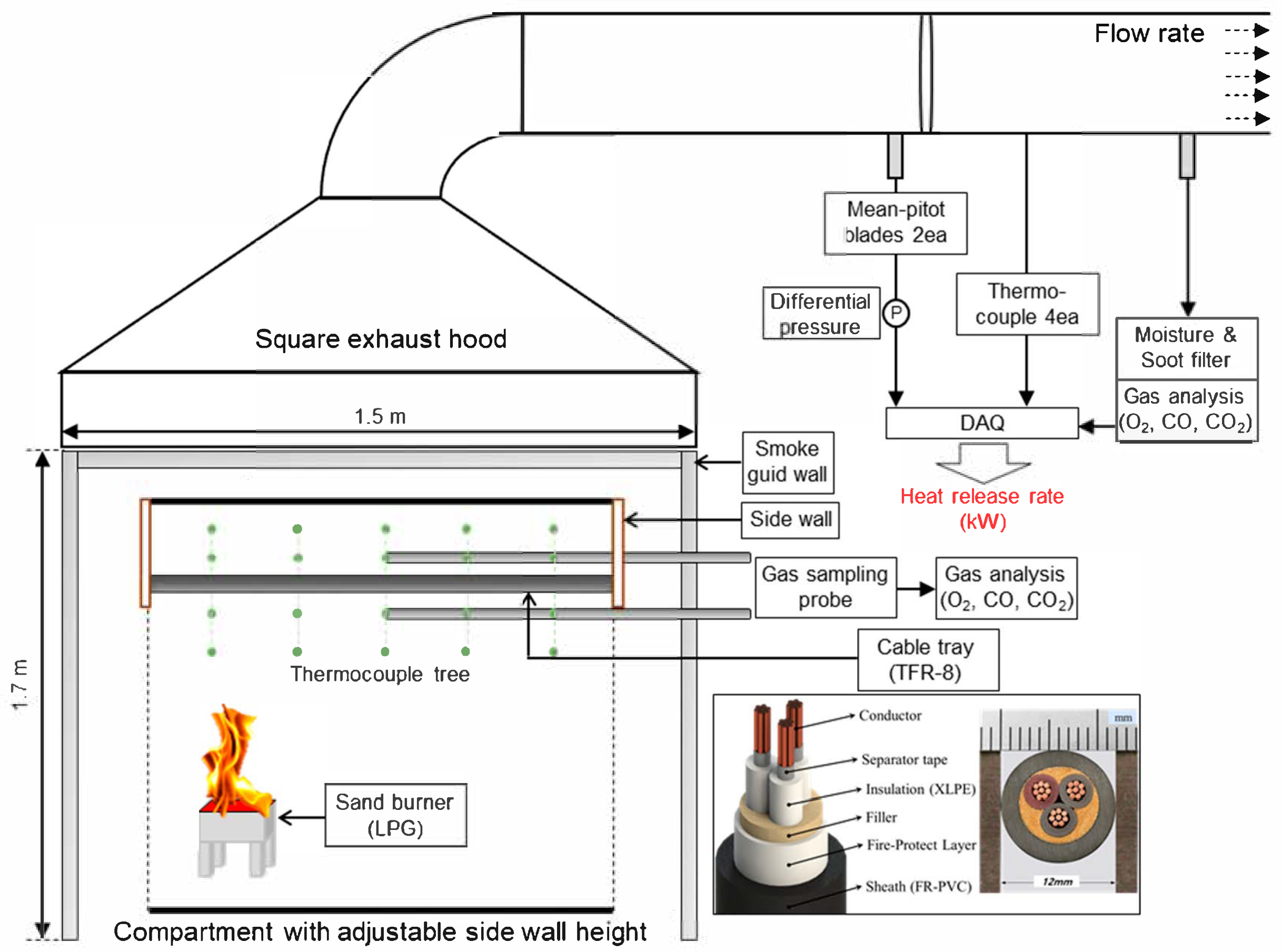
Figure 1 presents an overall scheme of the experimental apparatus configured to evaluate fire spread along a single cable tray. To examine fire spread behavior under variations in smoke-layer height and temperature, HRR was measured as a representative indicator of the overall fire behavior. A 300 kW medium-scale calorimeter (Fire Testing Technology, East Grinstead, UK) equipped with a 1.5 m × 1.5 m square exhaust hood was used, and HRR was determined based on the oxygen consumption principle [21]. For this purpose, the mean exhaust-duct velocity was obtained using mean-pilot blades (DEBIMO) and a differential pressure gauge, and the mean duct temperature was measured using thermocouples. In addition, the volume fractions of O2, CO, and CO2 were measured in real time using gas analyzers (OXYMAT and ULTRAMAT 23, Siemens AG, Munich, Germany).
Figure 1.
Overall schematic representation of the calorimeter system based on the oxygen consumption principle for evaluating fire spread along a single cable tray.
A compartment with an adjustable side-wall height was installed beneath the hood, and a smoke guide wall was added to ensure that smoke discharged through the side opening could be captured by the exhaust hood. All compartment surfaces were constructed from ceramic board. A single cable tray was installed inside the compartment, and an LPG-fueled sand burner was positioned below the left side of the tray as the ignition source. Instrumentation for temperature, heat flux, and gas measurements was also installed to quantify the thermal state of the smoke layer and changes in gas composition.
Based on preliminary experiments conducted under the present experimental conditions, a TFR-8 cable was selected as the test specimen to ensure that fire spread along the tray was sufficiently observable for quantitative analysis. The cable was representative of specifications commonly used for fire protection system applications and had a flame-retardant poly(vinyl chloride) (FR-PVC) sheath with cross-linked polyethylene (XLPE) insulation. In addition, the cable construction included a separator tape, filler, and a fire-protective layer.
2.2. Compartment Configuration, Instrumentation, and Test Parameters
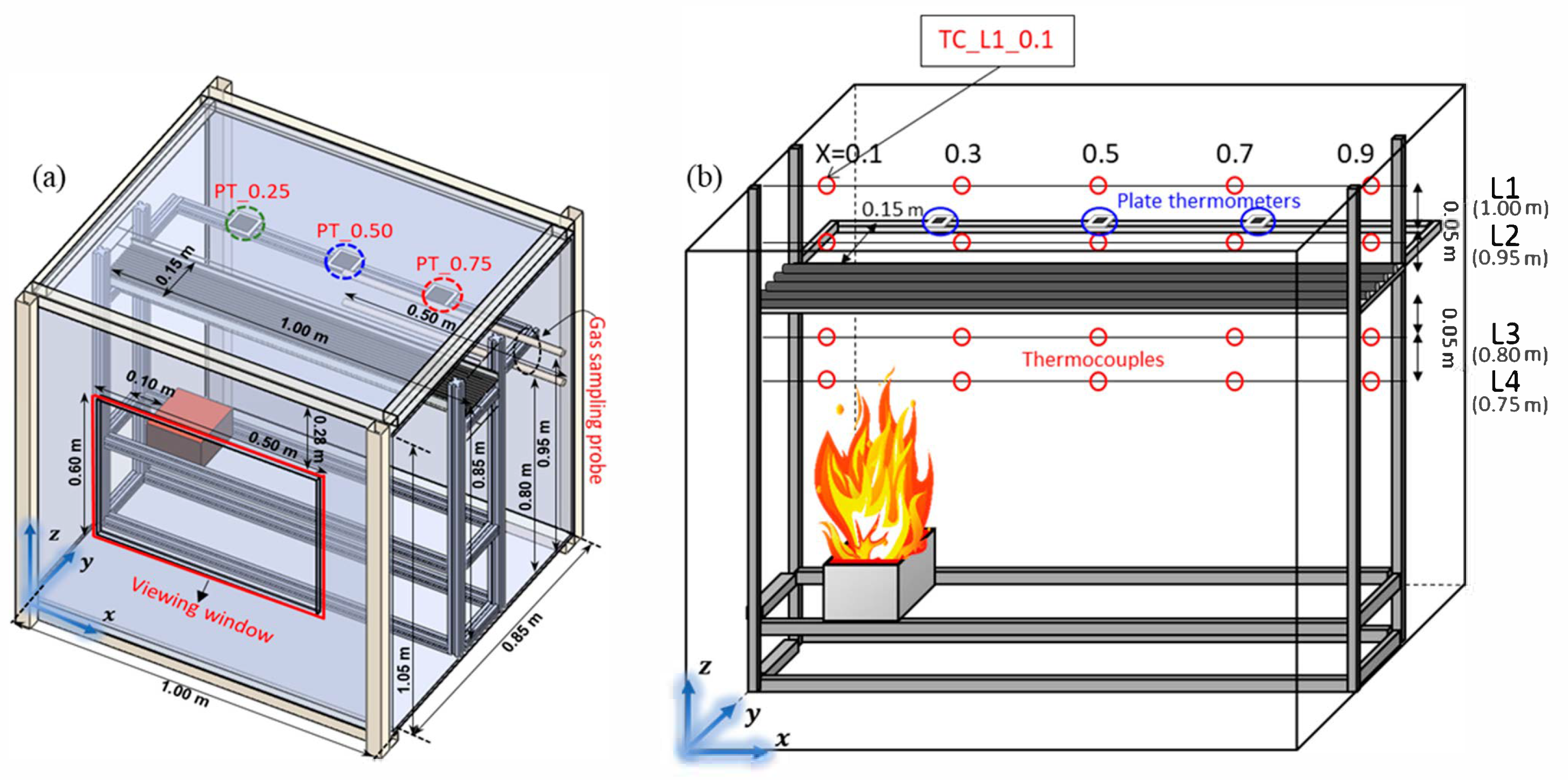
Figure 2a shows the compartment geometry, the layout of the single cable tray, and the installation locations of the main measurement devices. The internal dimensions of the compartment were 1.00 m (x) × 0.85 m (y) × 1.05 m (z), and the interior surfaces were constructed from ceramic board. A viewing window made of Robax glass-ceramic was installed on the front side to observe the fire spread process. The cable tray was installed longitudinally inside the compartment. The tray length and width were approximately 1.0 m and 0.15 m, respectively, and the tray height was set to z = 0.80 m from the floor. A sand burner was installed below the tray as the ignition source and was fabricated with a square cross-section of 0.15 m × 0.15 m. The LPG flow rate was controlled to provide the prescribed burner HRR condition, and the burner position was set to x = 0.10 m. To measure the total incident heat flux at the tray height from the hot upper smoke layer, three plate thermometers (PTs) [22] were installed at the same height as the cable tray and were denoted as PT_0.25, PT_0.50, and PT_0.75 according to their locations along the tray. Gas sampling probes were installed above and below the tray. Each probe had a double-tube structure, and the outer tube was water-cooled. The volume fractions of O2, CO, and CO2 were measured in real time using gas analyzers. All device locations were defined based on the coordinate system shown in Figure 2, including the origin and axis directions.
Figure 2.
Geometry and measurement locations in the compartment: (a) compartment and cable tray dimensions with gas sampling probe positions; (b) thermocouple and plate thermometer locations for measuring gas temperature and heat flux.
Figure 2b presents the detailed arrangement of the thermocouple trees used to measure the gas temperature distribution in the compartment. A total of five thermocouple trees were installed, and each tree consisted of four thermocouples arranged vertically. Thermocouple heights were categorized into four levels, L1 to L4, based on the vertical position of the cable tray, so that temperature variations above and below the tray could be measured simultaneously. Thermocouple locations were defined using the coordinate system in Figure 2. For example, a thermocouple was labeled as TC_L1_D0.1 by combining the level (L) and the distance along the tray (D). This instrumentation layout provided the data required to interpret the effects of smoke-layer formation and thermal stratification, heat flux distribution, and changes in gas composition on fire growth and fire spread along a single cable tray.
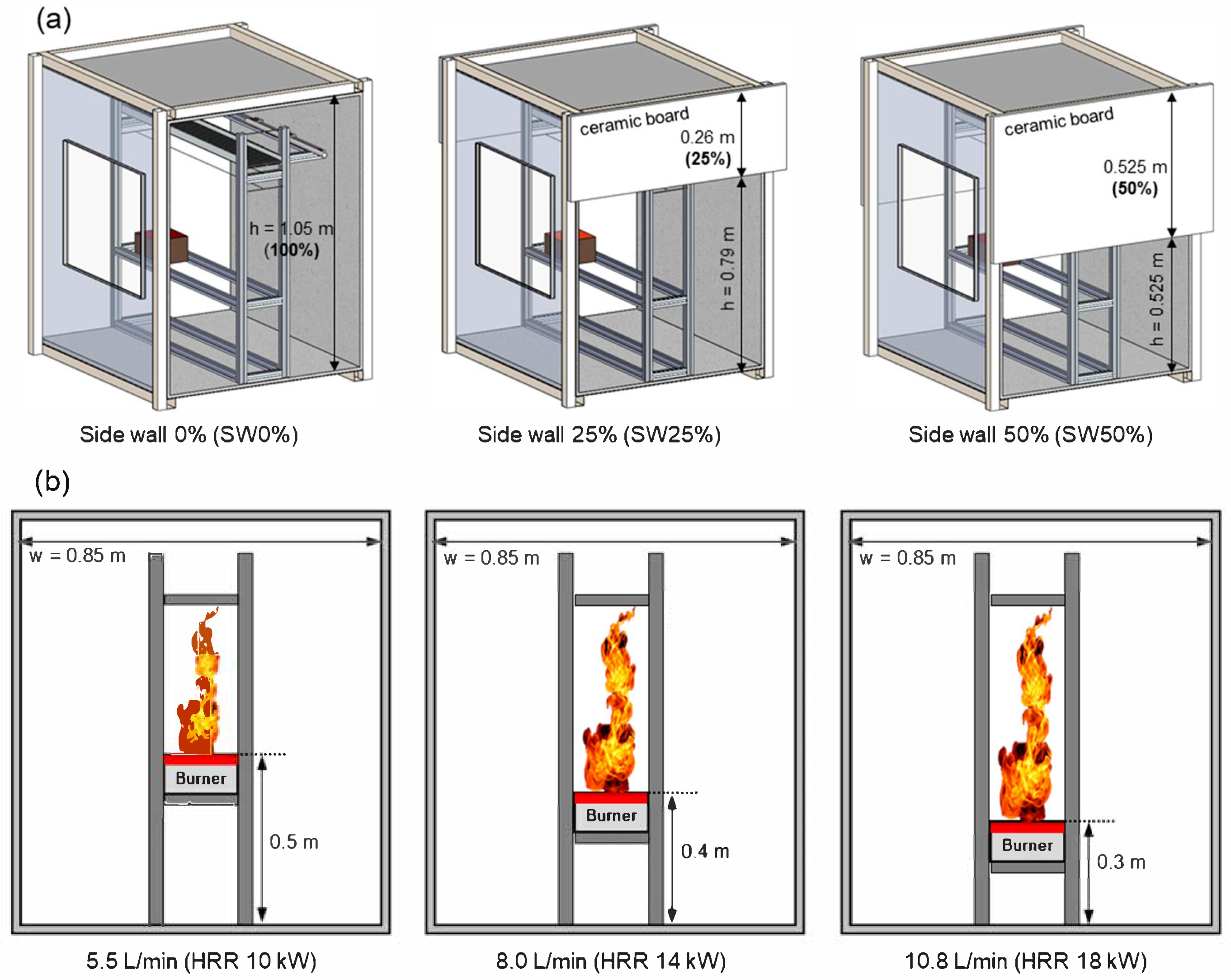
To quantitatively evaluate the separate effects of smoke-layer height and temperature on fire spread along a single cable tray, an experimental methodology was established to systematically vary smoke-layer conditions, as shown in Figure 3. Figure 3a illustrates the configuration used to vary smoke discharge by adjusting the side-wall height on both sides, thereby changing the mean smoke-layer height formed in the upper region of the compartment. The side-wall configuration was defined as the ratio of the vertical side-wall length to the total internal height of the compartment (1.05 m). Three configurations were considered, SW0%, SW25%, and SW50%. Here, h denotes the opening height from the floor. Under SW0%, SW25%, and SW50%, h was set to 1.05 m, 0.79 m, and 0.525 m, respectively. As the vertical side-wall length increased, h decreased. Consequently, smoke discharge from the upper region was restricted, and the mean smoke-layer height formed in the compartment varied with the side-wall configuration.
Figure 3.
Experimental parameters used to vary smoke-layer conditions: (a) side-wall vertical length configurations for varying smoke-layer height; (b) LPG flow rate and sand burner elevation for varying smoke-layer temperature.
Figure 3b shows the method used to vary the smoke-layer temperature by controlling the LPG flow rate supplied to the sand burner, thereby changing the burner HRR. The LPG flow rate was set to 5.5 L/min, 8.0 L/min, and 10.8 L/min, corresponding to burner HRR conditions of 10 kW, 14 kW, and 18 kW, respectively. As burner HRR increases, the flame length increases, and forced fire spread effects caused by direct flame contact with the underside of the tray or flame impingement can occur. To minimize the direct influence of the burner flame under each HRR condition, the burner height was adjusted so that the flame tip was located at the underside of the tray. The height from the floor to the upper surface of the burner was set to 0.5 m, 0.4 m, and 0.3 m for burner HRR values of 10 kW, 14 kW, and 18 kW, respectively, for all side-wall conditions. With this burner height adjustment, the direct influence of the ignition source flame was minimized, and fire spread characteristics driven by cable burning under different smoke-layer temperatures could be compared.
3. Results and Discussion
3.1. Effect of Smoke-Layer Height on Fire Spread Along a Single Cable Tray at a Burner HRR of 10 kW
In this section, the effects of smoke-layer height established by the side-wall configurations on fire spread along a single cable tray are examined with the ignition source conditions kept constant. The burner HRR was fixed at 10 kW, and the side-wall configurations were set to SW0%, SW25%, and SW50%. Fixing the burner HRR ensured that the plume generated by the ignition source provided comparable thermal and buoyancy forcing across tests, so that differences in fire spread could be attributed primarily to changes in the compartment smoke-layer environment. As defined in Figure 3a, changing the side-wall configuration alters the opening height (h) for smoke discharge. As h decreases, smoke discharge from the upper region is increasingly restricted, and smoke-layer formation is promoted. However, h does not necessarily coincide with the height of the lower smoke-layer interface, because the interface is not spatially uniform due to internal flow and mixing and can fluctuate over time. Accordingly, h is used as a nominal proxy for smoke-layer height under each side-wall configuration and is referred to hereafter as the smoke-layer height. The key factor governing fire spread is the relative position of the smoke layer with respect to the tray elevation, i.e., whether the tray is located within the smoke layer or near its lower boundary. For reference, the tray elevation was set to z = 0.80 m (Figure 2). Under SW25% (h = 0.79 m), the tray is nominally within, or very close to, the smoke layer. This proximity can simultaneously modify the gas temperature, incident heat flux at tray height, and local oxygen concentration near the tray, thereby influencing cable pyrolysis and fire spread.
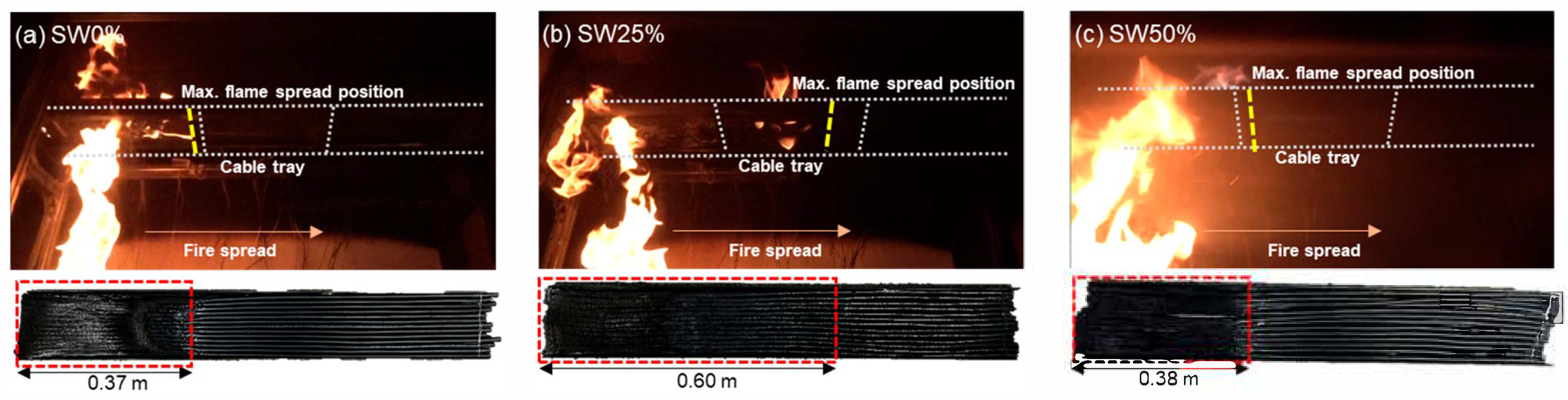
Figure 4 compares the fire spread state along the tray immediately before self-extinction with the cable damage area observed after complete extinction for the side-wall configurations SW0%, SW25%, and SW50%. Under all configurations, the flame front did not reach the right end of the tray. This indicates that, within the present test range, fire spread was constrained by the compartment thermal and ventilation conditions and ultimately terminated by self-extinction. However, the spread distance and the damaged area differed across configurations. Under SW0%, fire spread remained limited, and the damaged area was relatively small. Under SW25%, the longest spread distance and the largest damaged area were obtained. By contrast, the spread distance under SW50% was comparable to that under SW0%. These results indicate that fire spread may not increase monotonically with decreasing h (i.e., as the side-wall vertical length increases). As h decreases, the tray becomes more exposed to the smoke layer, and the local heat transfer environment around the tray can be modified. Thermal feedback by radiative and convective heat transfer can increase, which can promote cable pyrolysis and fire spread. However, when the smoke layer becomes overly developed, vitiation in the upper region can intensify and oxygen availability near the tray can be reduced. Under such conditions, sustained flaming can be inhibited even when thermal feedback is present, and fire spread can instead be suppressed. In the following sections, these differences in spread behavior are quantified using HRR, incident heat flux and gas temperature at tray height, and gas composition in the upper and lower layers.
Figure 4.
Photographs of cable fire spread just before self-extinction under different side-wall configurations (SW0%, SW25%, and SW50%) and the cable damage area after complete extinction.
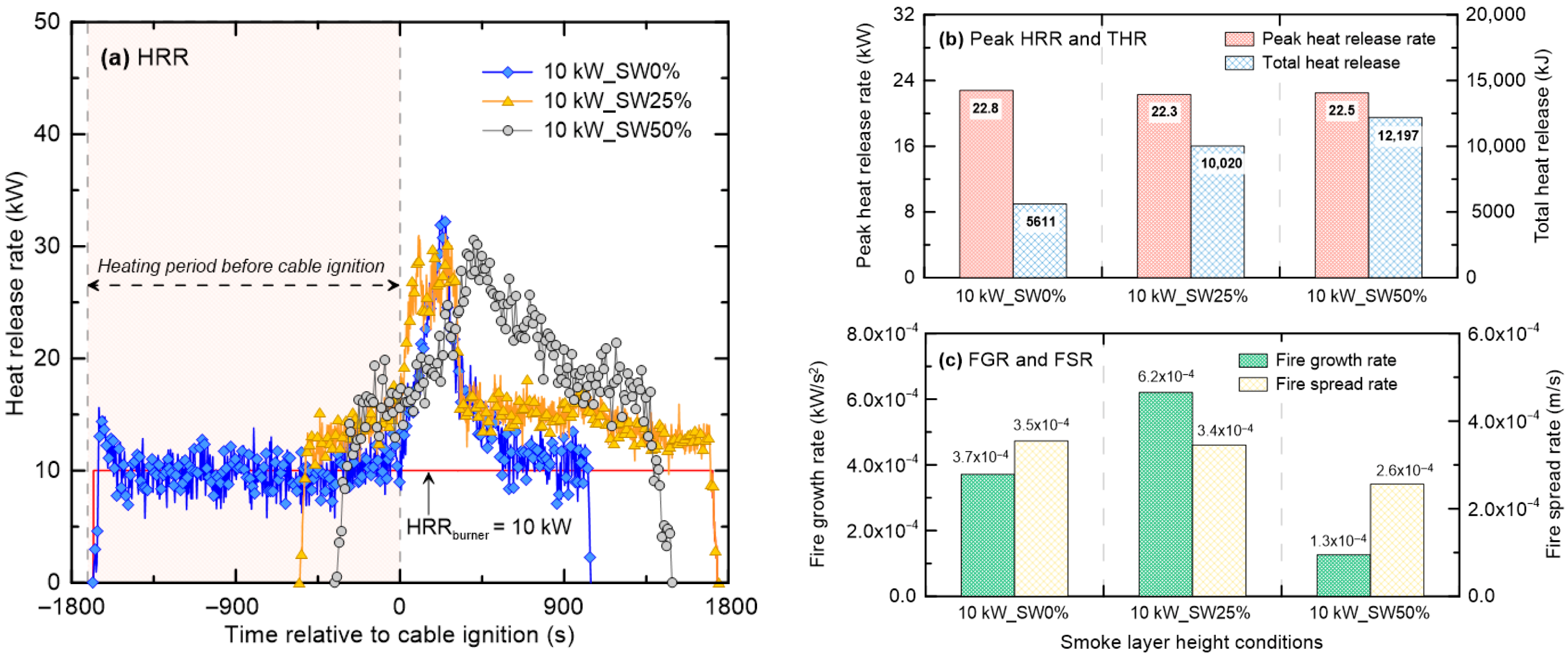
Figure 5 compares HRR histories measured based on the oxygen consumption principle for SW0%, SW25%, and SW50%. Figure 5a shows the time evolution of HRR generated by cable burning. The burner HRR of 10 kW is also indicated as a reference line to represent the nominal ignition source condition. The fuel supply was shut off when the cable tray fire reached self-extinction. In Figure 5a, the time axis is aligned with the cable ignition time identified through the viewing window. The period before ignition is denoted as the heating period before cable ignition. This alignment allows the growth, decay, and termination by self-extinction to be compared across configurations. The fire duration is defined as the interval from cable ignition to self-extinction, and it was 1043 s, 1717 s, and 1479 s for SW0%, SW25%, and SW50%, respectively. Figure 5b presents the peak HRR and the total heat release (THR). The peak HRR shows limited variation among configurations, whereas THR varies with the fire duration and the overall spread behavior. Notably, although Figure 4 indicates limited visible flame spread in the SW50% configuration, the higher THR implies that a larger fraction of the cable mass participated in burning, suggesting more extensive involvement of the cable cross-section (through-thickness) in the combustion process.
Figure 5.
Cable tray fire behavior for different smoke-layer heights (SW0%, SW25%, and SW50%) at a burner heat release rate (HRR) of 10 kW: (a) HRR versus time relative to cable ignition; (b) peak HRR and total heat release; (c) fire growth rate and mean fire spread rate.
Figure 5c presents the fire growth rate (FGR), estimated using the t2 law based on the cable ignition time and the time to reach the peak HRR, and the detailed procedure is described in Ref. [15]. In addition, the mean fire spread rate is defined as the maximum fire spread distance divided by the time required for the flame front to reach that location from cable ignition and is denoted hereafter as FSR. The FGR was highest under SW25%, indicating a more rapid initial rise in HRR. This suggests that early burning can be enhanced when increased thermal influence near the tray and local oxygen availability act together. Although the maximum fire spread distance was greatest under SW25%, the highest FSR was obtained under SW0%, with lower values under SW25% and SW50%. This trend is likely attributed to the spread history under SW0%, where the flame advanced rapidly over the initial portion of the tray, approximately one third of the tray length, and then terminated by self-extinction. As a result, the time to reach the maximum spread position was short, which increases the distance over time metric. This initial portion can be regarded as a region in which the cable was forcibly ignited by the direct influence of the burner flame. Therefore, the FSR under SW0% may not be fully representative of cable-driven fire spread independent of the ignition source. Under SW25%, both the spread distance and the fire duration were larger, so the mean FSR can appear relatively lower when expressed as a distance-over-time metric. Under SW50%, h was further reduced and the smoke layer became more developed, while the spread distance remained limited and the spread process became more gradual, resulting in the longest time and the lowest FSR. FSR should therefore be interpreted as a mean rate and discussed together with the maximum fire spread distance and fire duration, while accounting for the region directly affected by the ignition source.
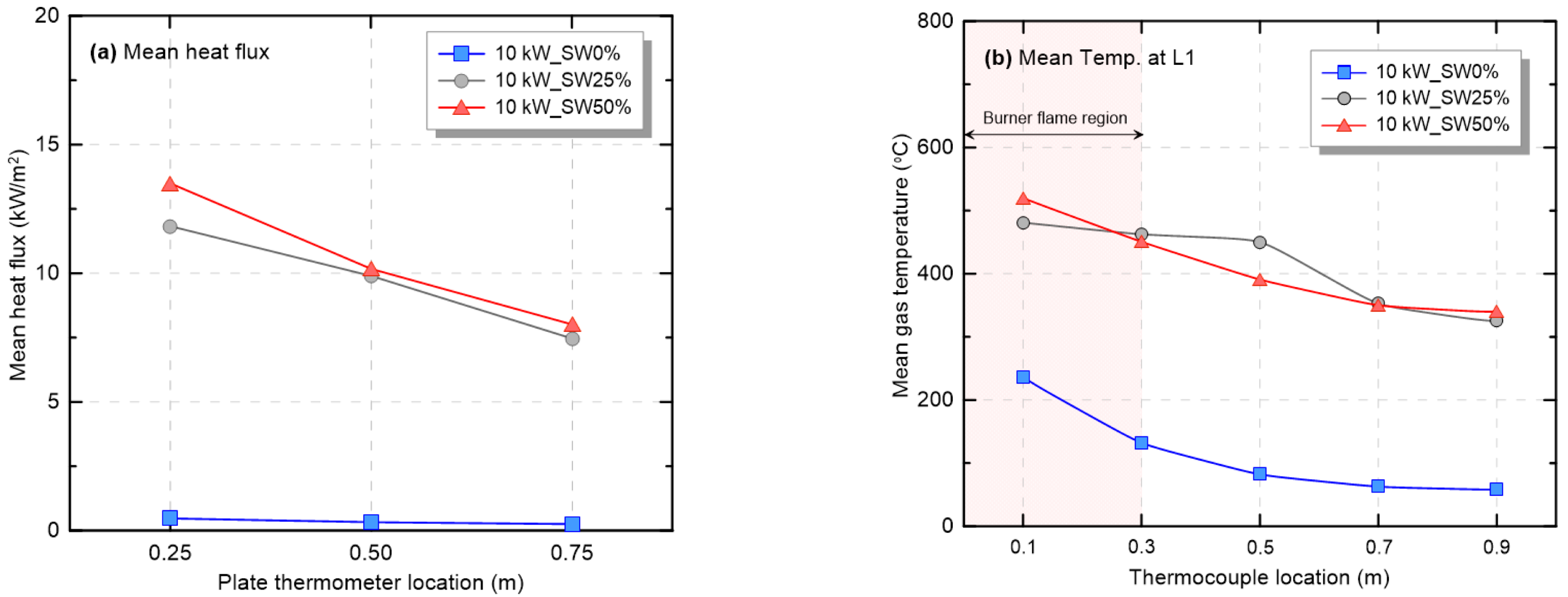
To quantify the thermal environment around the tray for different h values, Figure 6 presents the incident heat flux measured by plate thermometers (PTs) installed at the tray elevation and the gas temperature measured by thermocouples at the L1 level. Because the PT receiving surfaces faced the ceiling, the measured heat flux primarily represents radiative input from the upper smoke layer and the flame to the tray elevation. Depending on the test environment, a convective contribution can also be included and the measurement can be interpreted as an incident total heat flux. The heat flux and temperature shown in Figure 6 are time-averaged over the burning period from cable ignition to self-extinction. In Figure 6a, SW0% exhibits relatively low mean heat flux because smoke was discharged more readily before a sufficiently developed smoke layer was established, which limited thermal feedback at the tray height. In contrast, SW25% and SW50% show similar trends in the mean heat flux distributions with respect to PT location. At some locations, SW50% exhibits slightly higher values, but the difference between SW25% and SW50% remains limited. A similar trend is observed in Figure 6b for the mean gas temperature. The L1 thermocouples were installed approximately 0.05 m below the ceiling, and the region expected to be directly affected by the burner flame (x ≤ 0.3 m) is denoted as the burner flame region. For all configurations, the mean gas temperature decreased as x increased along the tray, and the lowest mean temperature at L1 was obtained under SW0%, consistent with a weakly developed smoke layer. SW25% and SW50% exhibit quantitatively similar overall temperature distributions. Under SW25%, locally higher mean temperatures were observed at some locations, which is consistent with the longer fire spread distance and the resulting influence of burning farther along the tray.
Figure 6.
Mean incident heat flux and gas temperature measured at the plate thermometer and thermocouple (L1) locations during the burning period from cable ignition to self-extinction: (a) mean heat flux; (b) mean gas temperature at L1.
These results show that, although faster and longer fire spread was observed under SW25% than under SW50%, the incident heat flux and gas temperature evaluated at tray height were overall similar between the two configurations. This suggests that, within the present test range, the observed differences in spread behavior cannot be explained solely by thermal factors. Instead, changes in oxygen concentration near the tray associated with decreasing h may have provided an additional controlling influence. Accordingly, the spread behavior observed in this section is interpreted as resulting from the combined effects of thermal feedback and local ventilation conditions near the tray. To examine this possibility, the oxygen concentration near the tray is evaluated below.
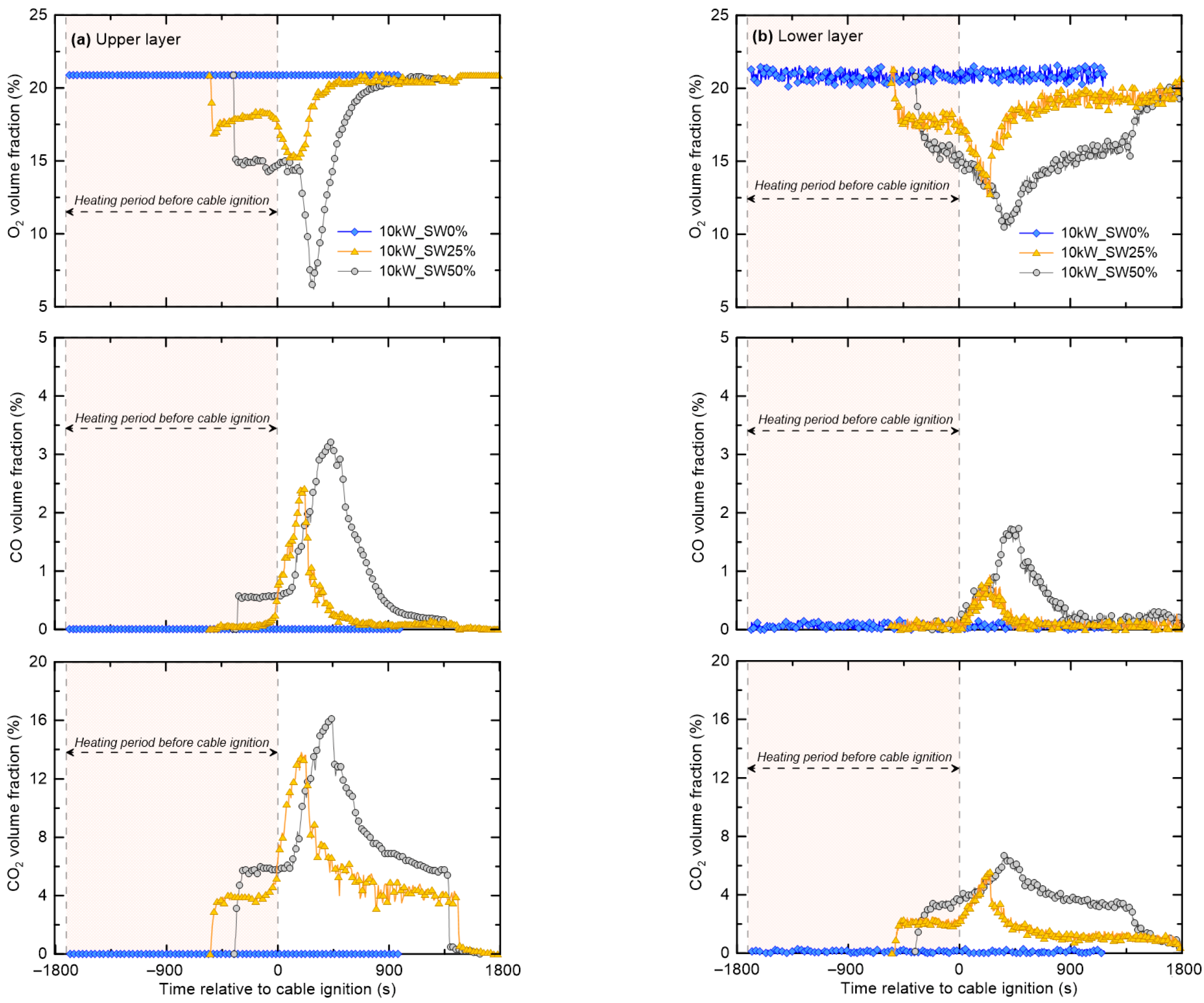
Figure 7 compares the time histories of gas composition, reported as the volume fractions of O2, CO, and CO2, measured above and below the tray for the side-wall configurations SW0%, SW25%, and SW50% at a burner HRR of 10 kW. In the upper layer measurements (Figure 7a), the SW0% configuration shows O2, CO, and CO2 levels close to ambient. This is attributed to the upper sampling probe being located in a region weakly influenced by the smoke layer. In contrast, under SW25% and SW50%, clear vitiation trends were observed in the upper layer, with decreased O2 and increased CO and CO2 associated with smoke-layer formation. Under SW50%, O2 was lower and CO and CO2 were higher than under SW25%, indicating that the upper region remained more vitiated. The increase in CO is consistent with a greater tendency toward incomplete combustion under reduced oxygen availability. The increase in CO2 can reflect sustained product formation together with changes in dilution and discharge, which can alter the measured volume fraction. The lower-layer measurements (Figure 7b) were more strongly influenced by air inflow, mixing, and entrainment than the upper layer. When the lower smoke-layer interface approached the tray elevation, the lower sampling probe could be affected by a transition region near the interface rather than sampling a uniform lower layer. For example, under SW25% (h = 0.79 m), the lower probe located at z = 0.80 m was positioned very close to the nominal interface. In this case, the measured composition can be influenced by mixing between smoke-layer gases and incoming air, leading to more gradual changes in O2, CO, and CO2 and larger temporal fluctuations than those observed in the upper layer. Although the thermal environment at tray height was evaluated as broadly similar for SW25% and SW50% in Figure 6, clear differences in fire spread, HRR behavior, and FSR were observed in Figure 4 and Figure 5. Collectively, the gas composition results indicate that oxygen availability near the tray differed across side-wall configurations. The lower O2 level maintained under SW50% suggests that oxygen supply to the vicinity of the tray was more restricted, supporting the interpretation that local oxygen availability contributed to the observed differences in fire spread behavior.
Figure 7.
Time histories of O2, CO, and CO2 volume fractions in (a) the upper and (b) lower layers measured by gas sampling probes above and below the cable tray at a burner HRR of 10 kW.
In summary, with the burner HRR fixed at 10 kW, fire spread along the cable tray differed markedly with the smoke-layer environment established by the side-wall configuration. Under SW25%, h was close to the tray elevation, indicating that the smoke layer extended to near the tray level. Under this condition, thermal feedback could be enhanced while oxygen availability sufficient to sustain burning appeared to be relatively maintained, resulting in the longest fire spread. Under SW50%, although the mean incident heat flux and gas temperature at tray height were broadly similar to those under SW25%, oxygen availability near the tray was reduced and fire spread was suppressed. These findings indicate that smoke-layer formation can promote fire spread by increasing thermal feedback, whereas an overly developed smoke layer can impose local oxygen depletion that limits sustained flaming and prevents the thermal promotion effect from translating into increased fire spread. The side walls can also affect local radiative feedback, but their limited area fraction relative to the total compartment surfaces suggests that the differences observed in the present tests were governed primarily by coupled changes in the thermal environment and oxygen availability near the tray associated with variation in h.
3.2. Combined Effects of Smoke-Layer Temperature and Oxygen Concentration on Fire Spread Along a Single Cable Tray Under Different Burner HRR Conditions
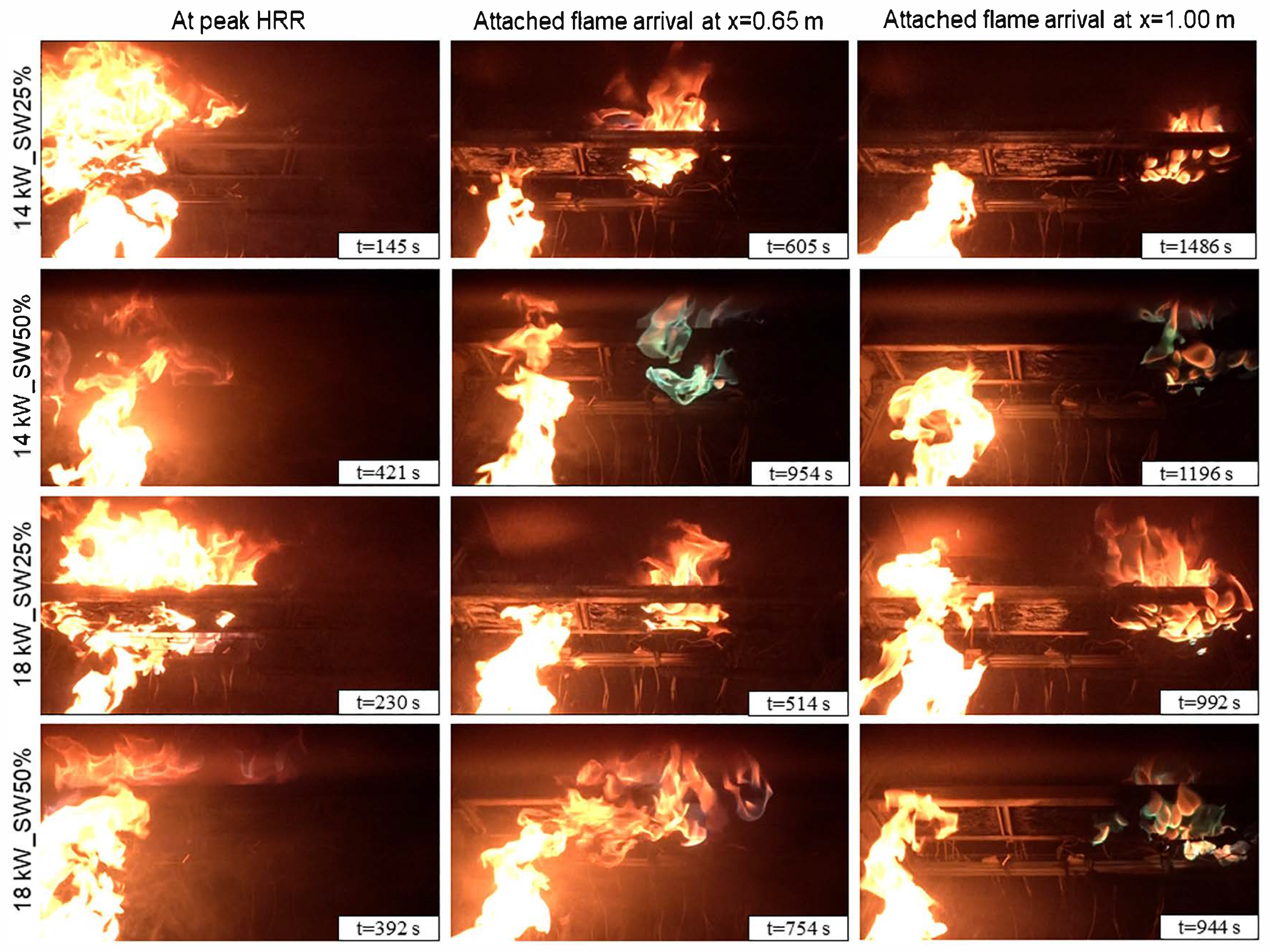
In the previous section, the effect of smoke-layer conditions induced by the side-wall configuration on fire spread was examined with the burner HRR fixed at 10 kW. In this section, as shown in Figure 3b, the burner HRR and burner elevation were varied so that the flame tip was positioned at the underside of the tray. This approach was used to compare fire spread under conditions where the smoke-layer temperature increased while oxygen availability near the tray changed concurrently. Figure 8 presents photographs for SW25% and SW50% at burner HRRs of 14 and 18 kW. The photographs show the fire spread state at the time of peak HRR, when the flame front reached x = 0.65 m (approximately two thirds of the tray length), and when it reached the tray end at x = 1.0 m. The elapsed time from cable ignition is provided in each image to facilitate a qualitative comparison of the temporal evolution of fire spread under different burner HRR and side-wall configurations. The SW0% configuration is excluded from the discussion because cable-driven fire spread remained limited after cable ignition even when the burner HRR was increased to 14 and 18 kW.
Figure 8.
Photographs of flames at the time of peak HRR and at the flame front arrival positions (x = 0.65 m and 1.00 m) for SW25% and SW50% conditions at a burner HRR of 14 and 18 kW.
Interpreting Figure 8 based on the elapsed times annotated in each image, the effect of changing the side-wall configuration (SW25% to SW50%) is evident at a given burner HRR. Under SW50%, h is reduced relative to SW25%, which promotes smoke accumulation in the upper region and results in a more developed smoke layer. Under such conditions, the supply of incoming air to the vicinity of the tray is more likely to be restricted, which is reflected in longer times to reach peak HRR and for the flame front to reach x = 0.65 m and x = 1.0 m. For a fixed side-wall configuration, increasing the burner HRR from 14 to 18 kW does not change h and thus is not expected to substantially alter the inflow condition. Because h is unchanged, the thermal effect of the higher burner HRR can become more prominent, strengthening the thermal environment near the tray, including the smoke-layer temperature, and thereby promoting cable pyrolysis and faster fire spread. This trend is observed under SW25%, where the time for the flame front to reach the tray end (x = 1.0 m) is shorter at 18 kW than at 14 kW. In addition, the SW50% images at 14 and 18 kW show a bluish green flame that was not observed under SW25%. This coloration may be related to the formation of copper halide-emitting species at elevated temperatures, arising from interactions between chlorine-containing products generated during PVC pyrolysis and copper from the cable conductor [23,24]. In the present study, this behavior is reported as an observation, and further investigation is required to determine the cause conclusively.
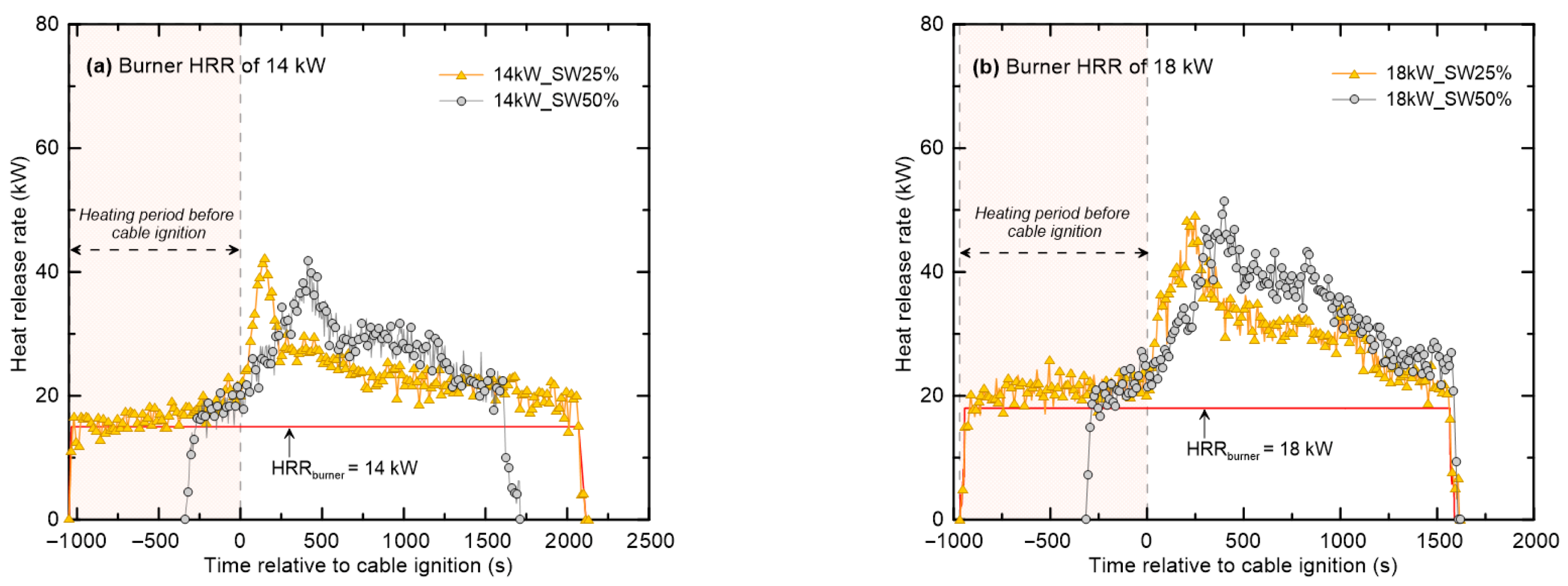
Figure 9 compares HRR time histories aligned to cable ignition for SW25% and SW50% at burner HRRs of 14 and 18 kW, showing the corresponding growth and decay behavior. The period before ignition can be interpreted as a preheating period in which the cable is heated by the external source until ignition occurs. After ignition, HRR increases, reaches a peak, and then decreases toward self-extinction. At 14 kW, both SW25% and SW50% exhibit a delayed rise in HRR, indicating the onset of sustained cable burning. The peak HRR level was similar for the two configurations, whereas the time to reach the peak was shorter under SW25%. This is consistent with the higher h under SW25%, which can allow relatively better oxygen supply near the tray and a more rapid strengthening of early burning. Under SW50%, a more developed smoke layer and stronger vitiation can reduce initial oxygen availability and delay the HRR rise.
Figure 9.
HRR time histories relative to cable ignition for SW25% and SW50% at a burner HRR of (a) 14 kW and (b) 18 kW.
In addition, the limited difference in peak HRR between SW25% and SW50% suggests that, at the present burner HRR levels (14–18 kW), fire spread along the tray progressed sufficiently after cable ignition. Once burning develops beyond an initial stage, the overall HRR behavior can be governed primarily by the thermal conditions established by the ignition source, including the smoke-layer temperature and the associated thermal feedback. Differences in oxygen availability induced by the side-wall configuration can still influence the temporal development, such as the rise rate and the time to reach the peak. However, when the thermal forcing is sufficiently strong, the peak HRR during the developed burning phase can approach a similar level across configurations. A similar trend was observed at 18 kW. Accordingly, the effect of a more developed smoke layer associated with reduced h is reflected more clearly in the growth process and timing than in the peak HRR magnitude. In the early growth stage, oxygen availability near the tray can act as a key limiting factor, which is consistent with the FGR comparison presented below.
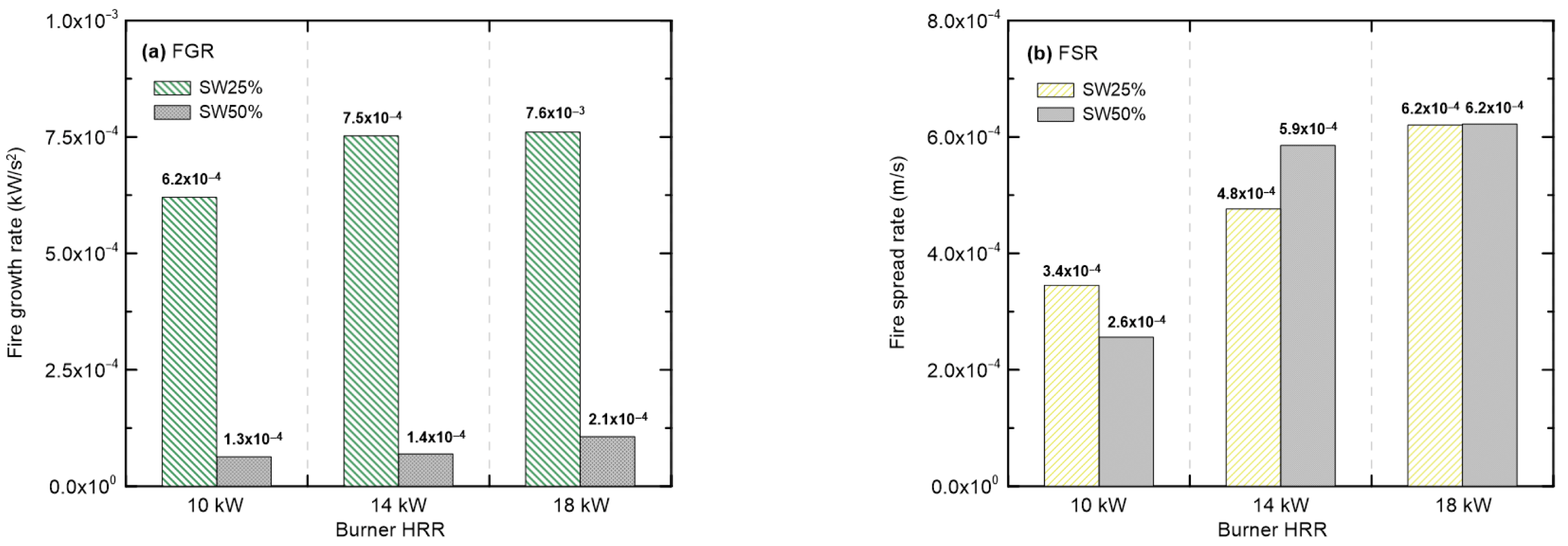
Figure 10 compares the fire growth rate (FGR) and fire spread rate (FSR) for SW25% and SW50% at burner HRRs of 10, 14, and 18 kW. In Figure 10a, the FGR under SW25% was higher than under SW50% for all burner HRR conditions, which is consistent with the trend observed in Section 3.1. Under SW25%, a higher h can allow relatively better oxygen supply near the tray, leading to an earlier and steeper rise in HRR after cable ignition and, consequently, a higher FGR. Under SW50%, reduced h promotes a more developed smoke layer and stronger vitiation, which can lower initial oxygen availability near the tray. The HRR rise can then be delayed or more gradual, yielding a lower FGR. This interpretation is in line with the longer time to reach peak HRR observed in Figure 9.
Figure 10.
Fire growth rate and fire spread rate as a function of burner HRR for SW25% and SW50%: (a) fire growth rate; (b) fire spread rate.
Figure 10b compares FSR along the tray after cable ignition. At burner HRRs of 14 and 18 kW, the flame front reached the tray end (x = 1.0 m), so the maximum fire spread distance was the same for SW25% and SW50%. Accordingly, differences in FSR were governed primarily by the time required for the flame front to reach x = 1.0 m. At 14 and 18 kW, the FGR under SW50% was lower than under SW25%, whereas the FSR under SW50% was comparable to, or slightly higher than, that under SW25%. This suggests that oxygen availability alone does not fully explain FSR during the spread phase and that changes in the fire spread mode may also contribute. Under SW50%, the flame was less stably attached to the cable surface and intermittently exhibited a partially lifted structure. In this mode, sustained surface burning can be locally weakened, while the flame front can advance relatively rapidly along regions where pyrolysis has been promoted. This behavior is consistent with the flame photographs in Figure 8. Accordingly, interpretation of FSR under elevated burner HRR conditions should consider the combined effects of enhanced thermal feedback associated with higher smoke-layer temperatures, oxygen availability near the tray, and changes in flame attachment stability.
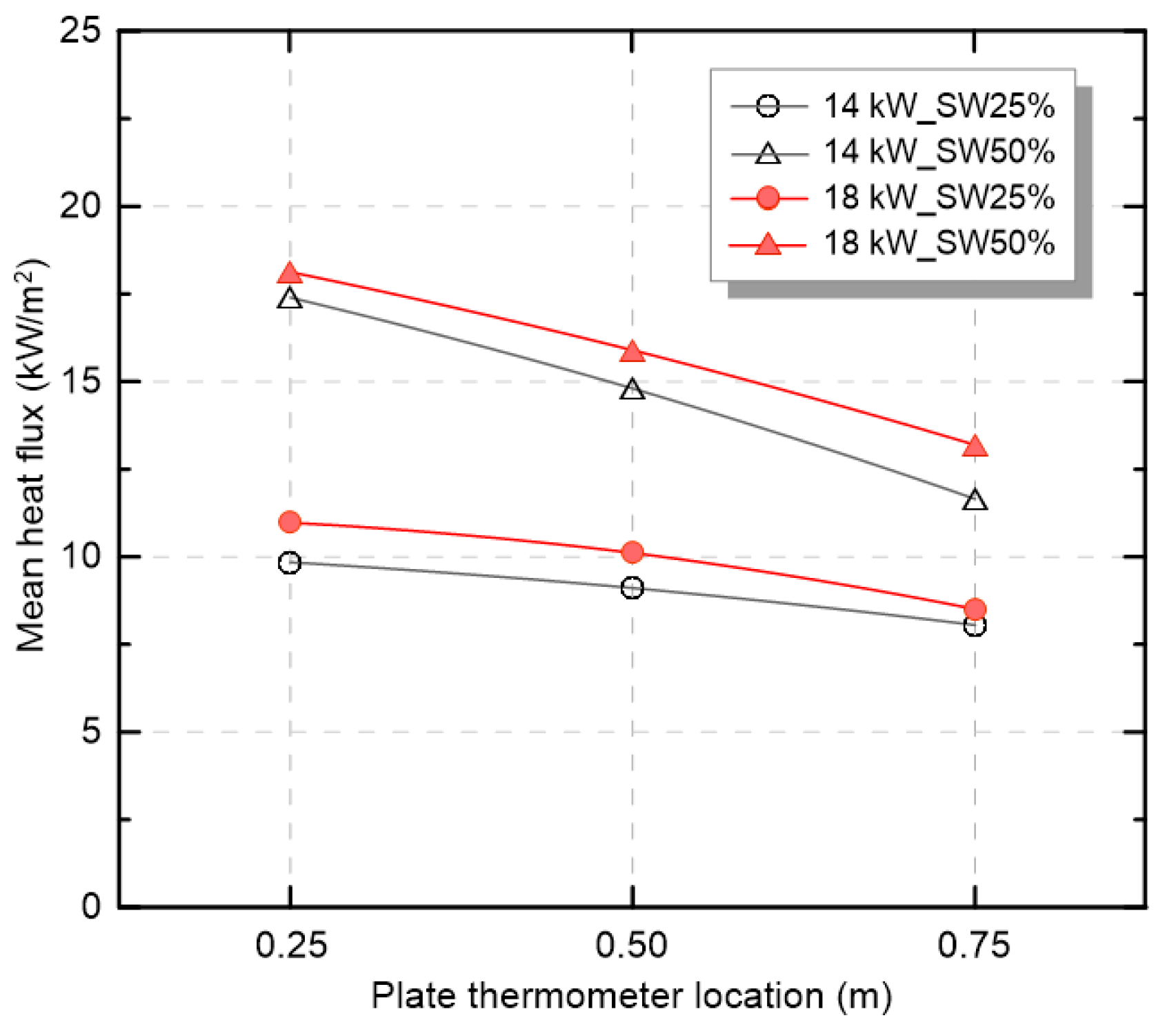
Figure 11 compares the mean incident heat flux measured by the plate thermometers (PTs) for SW25% and SW50% at burner HRRs of 14 and 18 kW. Because the PT receiving surfaces faced the ceiling, the measured heat flux is dominated by radiative input from the upper smoke layer and the flame to the tray height. At a given burner HRR, the mean incident heat flux was generally higher under SW50% than under SW25%. This trend is consistent with reduced h promoting stronger accumulation of hot gases and smoke in the upper region, which can increase thermal feedback to the tray height. Increasing the burner HRR from 14 to 18 kW increased the mean heat flux for both configurations, indicating that greater energy input elevated the smoke-layer temperature level and enhanced the radiative environment. The relatively higher heat flux under SW50% supports the interpretation that thermal feedback can contribute to the spread stage under elevated burner HRR conditions, which is consistent with the FSR trend observed in Figure 10b.
Figure 11.
Mean heat flux as a function of plate thermometer location for SW25% and SW50% at burner HRR of 14 and 18 kW.
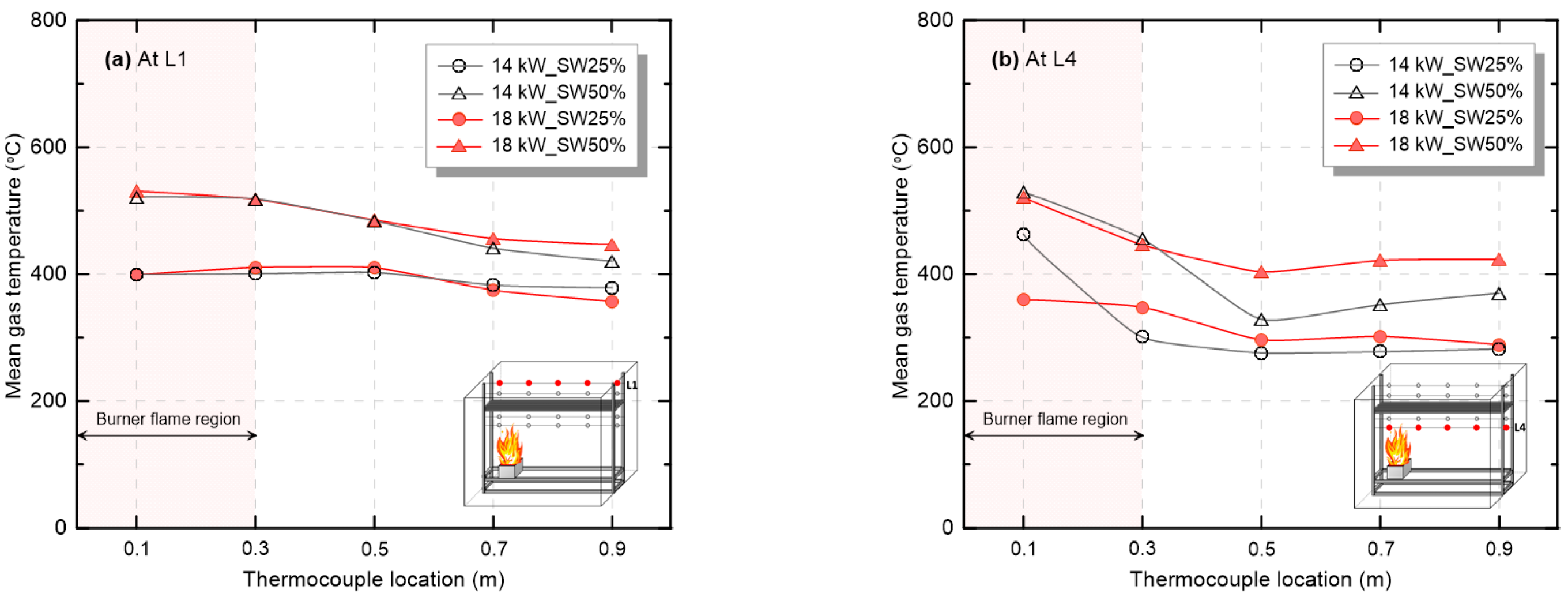
Figure 12 presents mean gas temperature distributions within the smoke layer measured using thermocouple trees. Each value was time-averaged over the burning period after cable ignition. The x-axis denotes thermocouple locations along the tray (0.1–0.9 m). In Figure 12a, the L1 results show that, within a given side-wall configuration, the mean temperature distributions at 14 and 18 kW were not well separated. In contrast, the overall temperature level differed more clearly between SW25% and SW50%. This suggests that, within the present range, the mean temperature level near the ceiling can be more directly affected by changes in h, through changes in smoke-layer development and in the accumulation, dilution, and discharge characteristics of hot gases and smoke, than by the increase in burner HRR. However, this observation does not imply that the burner HRR has a minor role. Once a sufficiently developed smoke layer is established, the upper-layer mean temperature can show limited variation, and time averaging can further reduce apparent differences between conditions. Moreover, increasing the burner HRR can be critical in determining whether fire spread can be sustained and whether the flame front can reach the tray end. This is supported by the contrast with Section 3.1, where the flame front did not reach the tray end at 10 kW under any configuration, whereas it reached x = 1.0 m at 14–18 kW.
Figure 12.
Mean gas temperature as a function of thermocouple locations for SW25% and SW50% at burner HRR of 14 and 18 kW: (a) L1; (b) L4.
In Figure 12b, the L4 results show a more distinct separation between side-wall configurations. Although the direct influence of the burner plume can vary with x location, higher mean temperatures were consistently maintained under SW50% than under SW25%. This trend suggests that reduced h promoted a more developed smoke layer and allowed the influence of accumulated hot gases to extend farther downward toward the tray region. The effect of increasing burner HRR can also be expressed more clearly near the tray, such as at L4, than near the ceiling, which is consistent with the mean incident heat flux distributions in Figure 11. The L1 results therefore suggest that the upper-region temperature level is more sensitive to side-wall configuration, whereas the L4 results indicate that increasing burner HRR elevates temperatures near the tray and strengthens the thermal conditions relevant to continued fire spread.
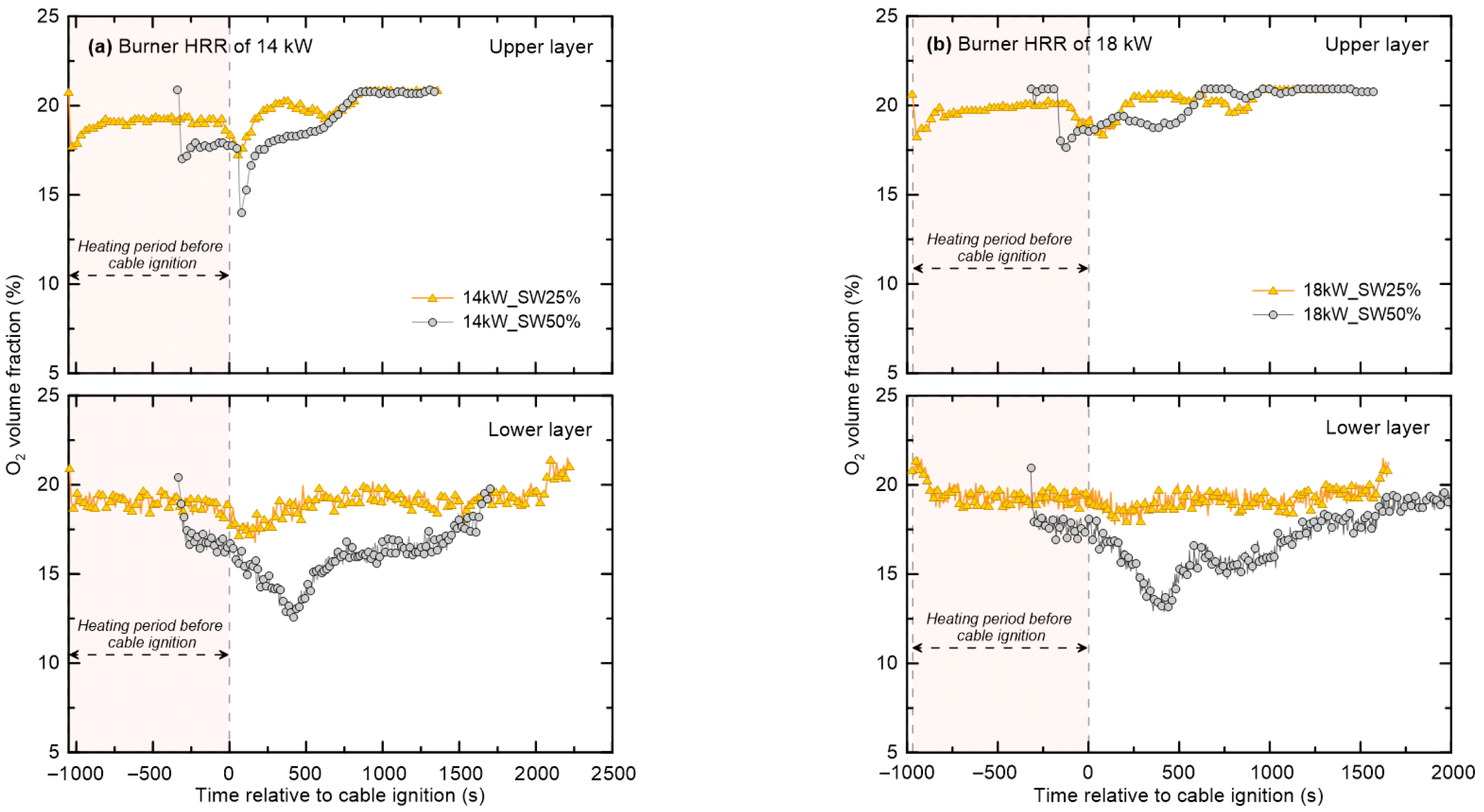
Figure 13 compares the time histories of O2 volume fraction measured above and below the tray for the side-wall configurations SW25% and SW50% at burner HRRs of 14 and 18 kW. For both HRR conditions, higher O2 levels were maintained under SW25% than under SW50% in both the upper and lower layers, and the upper–lower difference remained relatively small. Under SW50%, the lower layer exhibited consistently lower O2 than the upper layer, indicating more pronounced layer separation. This behavior persisted at 18 kW. These results indicate that reducing h can decrease the overall O2 level while also increasing the nonuniformity of local oxygen availability above and below the tray. The observed layer dependence can be attributed to changes in ventilation and internal mixing. Under SW25%, the larger h can allow more effective air inflow and mixing, which can reduce the upper–lower difference in O2. Under SW50%, a more developed smoke layer can modify the air supply paths and mixing patterns near the tray. In this case, oxygen in the lower layer can be consumed more rapidly because this region is closer to the burner and cable flames, and the influence of accumulation and recirculation of combustion products and pyrolysis gases can be strengthened. Local vitiation may therefore persist near the tray before sufficient exchange with the upper region occurs. This interpretation is consistent with the delayed HRR rise and the lower FGR observed under SW50% in Figure 9 and Figure 10a. Accordingly, spread behavior under elevated burner HRR conditions should be interpreted by considering the thermal environment together with local O2 availability above and below the tray and the degree of interlayer mixing.
Figure 13.
Time histories of O2 volume fraction in the upper and lower layers measured by gas sampling probes above and below the cable tray for SW25% and SW50% at burner HRR of (a) 14 kW and (b) 18 kW.
As observed under the 10 kW condition in Section 3.1, smoke-layer formation can increase thermal feedback near the tray while simultaneously reducing local oxygen availability. Fire spread can therefore differ depending on the relative importance of these two effects. Under the present conditions, with the burner HRR increased to 14 and 18 kW and the burner elevation adjusted, the flame front reached the tray end, unlike at 10 kW. This suggests that the thermal environment near the tray became more favorable for sustained spread. Variations in the side-wall configuration modify h and thereby alter smoke-layer development and the O2 distribution above and below the tray, such that the growth and spread stages can diverge in their relative prominence. Under SW25%, relatively high O2 levels were maintained in both layers with a small upper–lower difference, and the HRR rise was strengthened earlier, resulting in a higher FGR. Under SW50%, the incident heat flux and temperatures near the tray were higher, indicating stronger thermal feedback during the spread stage. Accordingly, FSR was comparable to, or in some cases higher than, that under SW25%. At the same time, the lower-layer O2 level remained below the upper-layer level, indicating enhanced local vitiation that may have contributed to delayed early growth and influenced the development toward sustained burning. These results show that, when fire spread to the tray end is possible, the relative prominence of growth (FGR) and spread (FSR) is governed by coupled changes in thermal feedback and local oxygen availability associated with the smoke-layer environment.

4. Conclusions
In this study, the effects of smoke-layer conditions on fire spread along a single cable tray were quantified. To enable, as far as practicable within the present test range, a separated assessment of smoke-layer height and smoke-layer temperature level, the two factors were treated as independent control variables. Smoke-layer height, representing the combined ventilation and accumulation condition, was adjusted by changing the side-wall configurations that varied the opening height (h). The smoke-layer temperature level, representing the thermal condition imposed by the ignition source, was controlled by varying the LPG burner HRR (10, 14, and 18 kW). Fire spread behavior was evaluated using flame imaging, HRR measured based on the oxygen consumption principle, the fire growth rate (FGR), the mean fire spread rate (FSR), incident heat flux at tray height measured by plate thermometers (PTs), gas temperature at tray height, and oxygen concentration measured above and below the tray.
At a burner HRR of 10 kW, fire spread terminated by self-extinction under all side-wall configurations before reaching the tray end, and the fire spread behavior differed across configurations. As h decreased, the thermal environment around the tray could be strengthened due to increased smoke-layer influence, while oxygen availability near the tray could be reduced, and the observed limitation reflected the competition between these effects. In contrast, when the burner HRR was increased to 14–18 kW, fire spread to the tray end was observed under SW25% and SW50%, indicating that increased burner HRR played a key role in establishing thermal conditions that support sustained fire spread. For a given burner HRR, oxygen levels above and below the tray were lower under SW50% than under SW25%, with a more pronounced reduction in the lower layer, suggesting that local oxygen availability associated with smoke-layer development influenced both the growth and fire spread processes. Overall, the results provide a quantitative basis for interpreting cable tray fire spread as an outcome of coupled thermal feedback and local oxygen availability near the tray under varying smoke-layer conditions. From an engineering perspective, the findings can inform qualitative and quantitative assessments of fire spread sensitivity to smoke discharge conditions and ignition source strength in compartment environments.
Author Contributions
Conceptualization, C.-H.H.; methodology, C.-H.H. and S.-Y.M.; validation, S.-Y.M. and J.-Y.P.; formal analysis, S.-Y.M. and J.-Y.P.; investigation, S.-Y.M. and J.-Y.P.; resources, C.-H.H.; data curation, J.-Y.P. and J.-M.K.; writing—original draft preparation, J.-Y.P.; writing—review and editing, C.-H.H.; visualization, J.-Y.P.; supervision, C.-H.H.; project administration, C.-H.H.; funding acquisition, C.-H.H. All authors have read and agreed to the published version of the manuscript.
Funding
This research was supported by Korea Electric Power Corporation. (Grant number: R24XO01-5).
Institutional Review Board Statement
Not applicable.
Informed Consent Statement
Not applicable.
Data Availability Statement
The data used to support the findings of this study are available from the corresponding author upon request.
Conflicts of Interest
The authors declare that this study received funding from Korea Electric Power Corporation. The funder was not involved in the study design, collection, analysis, interpretation of data, the writing of this article or the decision to submit it for publication.
References
- Nowlen, S.P.; Kazarians, M.; Wyant, F. Risk Methods Insights Gained from Fire Incidents; NUREG/CR-6738; Sandia National Laboratories; U.S. Nuclear Regulatory Commission: Washington, DC, USA, 2001. Available online: https://www.nrc.gov/reading-rm/doc-collections/nuregs/contract/cr6738/index (accessed on 11 December 2025).
- McGrattan, K.; Lock, A.; Marsh, N.; Nyden, M.; Bareham, S.; Price, M.; Morgan, A.B.; Galaska, M.; Schenck, K. Cable Heat Release, Ignition, and Spread in Tray Installations During Fire (CHRISTIFIRE), Phase 1: Horizontal Trays; NUREG/CR-7010; U.S. Nuclear Regulatory Commission: Washington, DC, USA, 2012; Volume 1. Available online: https://www.nrc.gov/reading-rm/doc-collections/nuregs/contract/cr7010/v1/index (accessed on 30 October 2025).
- McGrattan, K.; Bareham, S. Cable Heat Release, Ignition, and Spread in Tray Installations During Fire (CHRISTIFIRE), Phase 2: Vertical Shafts and Corridors (NUREG/CR-7010, Volume 2); National Institute of Standards and Technology: Gaithersburg, MD, USA; U.S. Nuclear Regulatory Commission: Washington, DC, USA, 2013. Available online: https://www.nrc.gov/reading-rm/doc-collections/nuregs/contract/cr7010/v2/index (accessed on 30 October 2025).
- Bai, Z.P.; Yao, H.W.; Zhang, H.H. Experimental study on fire characteristics in cable compartment of utility tunnel with natural ventilation. PLoS ONE 2022, 17, e0266773. [Google Scholar] [CrossRef] [PubMed]
- Zavaleta, P.; Audouin, L. Cable tray fire tests in a confined and mechanically ventilated facility. Fire Mater. 2017, 41, 709–728. [Google Scholar] [CrossRef]
- Zavaleta, P.; Charbaut, S.; Basso, G.; Audouin, L. Multiple horizontal cable tray fire in open atmosphere. In Proceedings of the 9th Asia-Oceania Symposium on Fire Science and Technology, Hefei, China, 17–20 October 2013; Available online: https://www.researchgate.net/publication/313902625 (accessed on 5 November 2025).
- IEC 60332-3-22; Tests on Electric and Optical Fibre Cables Under Fire Conditions—Part 3-22: Test for Vertical Flame Spread of Vertically-Mounted Bunched Wires or Cables—Category A. International Electrotechnical Commission (IEC): Geneva, Switzerland, 2018. Available online: https://cdn.standards.iteh.ai/samples/23523/cbb2d108281b44168742f0a97fe14a97/IEC-60332-3-22-2018.pdf (accessed on 19 October 2025).
- IEEE Std 1202-1991; IEEE Standard for Flame Testing of Cables for Use in Cable Tray in Industrial and Commercial Occupancies. Institute of Electrical and Electronics Engineers (IEEE): New York, NY, USA, 1991. [CrossRef]
- IEEE Std 383-2003; IEEE Standard for Qualifying Class 1E Electric Cables and Field Splices for Nuclear Power Generating Stations. Institute of Electrical and Electronics Engineers (IEEE): New York, NY, USA, 2004. [CrossRef]
- ISO 5660-1; Fire Tests—Reaction to Fire—Part 1: Rate of Heat Release from Building Products (Cone Calorimeter Method). International Organization for Standardization (ISO): Geneva, Switzerland, 2015. Available online: https://www.iso.org/standard/57957.html (accessed on 19 October 2025).
- Matala, A.; Hostikka, S. Probabilistic simulation of cable performance and water based protection in cable tunnel fires. Nucl. Eng. Des. 2011, 241, 5263–5274. [Google Scholar] [CrossRef]
- Ukleja, S.; Delichatsios, M.; Zhang, J.; Suzanne, M. Carbon monoxide production during underventilated fires in corridors. In Fire Safety Science—Proceedings of the First International Symposium; Hemisphere Pub: New York, NY, USA, 2014; Volume 11, pp. 316–330. [Google Scholar] [CrossRef]
- Yang, H.; Fu, Q.; Cheng, X.; Yuen, R.K.K.; Zhang, H. Investigation of the flammability of different cables using pyrolysis combustion flow calorimeter. Procedia Eng. 2013, 62, 778–785. [Google Scholar] [CrossRef]
- Zavaleta, P.; Bascou, S.; Suard, S. Effects of Cable Tray Configuration on Fire Spread. In Proceedings of the OECD PRISME-2 Project (CORE Campaign), Saint-Paul-Iez-Durance, France, 2017. Available online: https://www.researchgate.net/publication/314081269 (accessed on 5 December 2025).
- Yun, H.-S.; Hwang, C.-H. Effects of quantity and arrangement of a flame-retardant cable on burning characteristics in open and compartment environments. Energies 2023, 16, 845. [Google Scholar] [CrossRef]
- Karlsson, B.; Quintiere, J.G. Enclosure Fire Dynamics; CRC Press: Boca Raton, FL, USA, 2000. [Google Scholar]
- NBSIR 83-2730; On the Significance of a Wall Effect in Enclosures with Growing Fires. National Bureau of Standards: Washington, DC, USA, 1983. Available online: https://nvlpubs.nist.gov/nistpubs/Legacy/IR/nbsir83-2730.pdf (accessed on 4 October 2025).
- Organisation for Economic Co-operation and Development; Nuclear Energy Agency (OECD/NEA). Application of the OECD PRISME Results to Investigate Heat and Smoke Propagation Mechanism in Multi-Compartment Fire Scenarios; NEA/CSNI/R(2012)14; OECD Nuclear Energy Agency: Paris, France, 2012; Available online: https://one.oecd.org/document/NEA/CSNI/R(2012)14/en/pdf (accessed on 4 October 2025).
- Plumecocq, W.; Audouin, L.; Zavaleta, P. Horizontal cable tray fire in a well-confined and mechanically ventilated enclosure using a two-zone model. Fire Mater. 2019, 43, 530–542. [Google Scholar] [CrossRef]
- Viitanen, A.; Hostikka, S.; Vaari, J. CFD simulations of fire propagation in horizontal cable trays using a pyrolysis model with stochastically determined geometry. Fire Technol. 2022, 58, 3039–3065. [Google Scholar] [CrossRef]
- Janssens, M.L. Measuring rate of heat release by oxygen consumption. Fire Technol. 1991, 27, 234–249. [Google Scholar] [CrossRef]
- Yun, H.-S.; Han, H.-S.; Hwang, C.-H. Development and calibration of reduced-size plate thermometer for measuring incident heat flux. J. Fire Sci. 2020, 38, 19–35. [Google Scholar] [CrossRef]
- NBSIR 85-3286; Toxicity of the Pyrolysis and Combustion Products of Poly(Vinyl Chlorides): A Literature Assessment. National Bureau of Standards: Gaithersburg, MD, USA, 1986.
- Canadian Conservation Institute. The Beilstein Test: Screening Organic and Polymeric Materials for the Presence of Chlorine, with Examples of Products Tested. CCI Notes 17/1; Canadian Conservation Institute: Ottawa, ON, Canada, 1993; Available online: https://www.canada.ca/en/conservation-institute/services/preventive-conservation/guidelines-collections/caring-plastics-rubbers.html (accessed on 27 January 2026).
Disclaimer/Publisher’s Note: The statements, opinions and data contained in all publications are solely those of the individual author(s) and contributor(s) and not of MDPI and/or the editor(s). MDPI and/or the editor(s) disclaim responsibility for any injury to people or property resulting from any ideas, methods, instructions or products referred to in the content. |
© 2026 by the authors. Licensee MDPI, Basel, Switzerland. This article is an open access article distributed under the terms and conditions of the Creative Commons Attribution (CC BY) license.