
Article

Technological Aspects of Methane–Hydrogen Mixture Transportation through Operating Gas Pipelines Considering Industrial and Fire Safety


1
Department of Petroleum Engineering, Saint Petersburg Mining University, 2, 21st Line, 199106 Saint Petersburg, Russia
2
Department of System Analysis and Management, Saint Petersburg Mining University, 199106 Saint Petersburg, Russia
*
Author to whom correspondence should be addressed.
Fire 2023, 6(10), 409; https://doi.org/10.3390/fire6100409
Submission received: 1 September 2023 / Revised: 18 October 2023 / Accepted: 19 October 2023 / Published: 23 October 2023
(This article belongs to the Special Issue Hydrogen Safety: Challenges and Opportunities)

Abstract

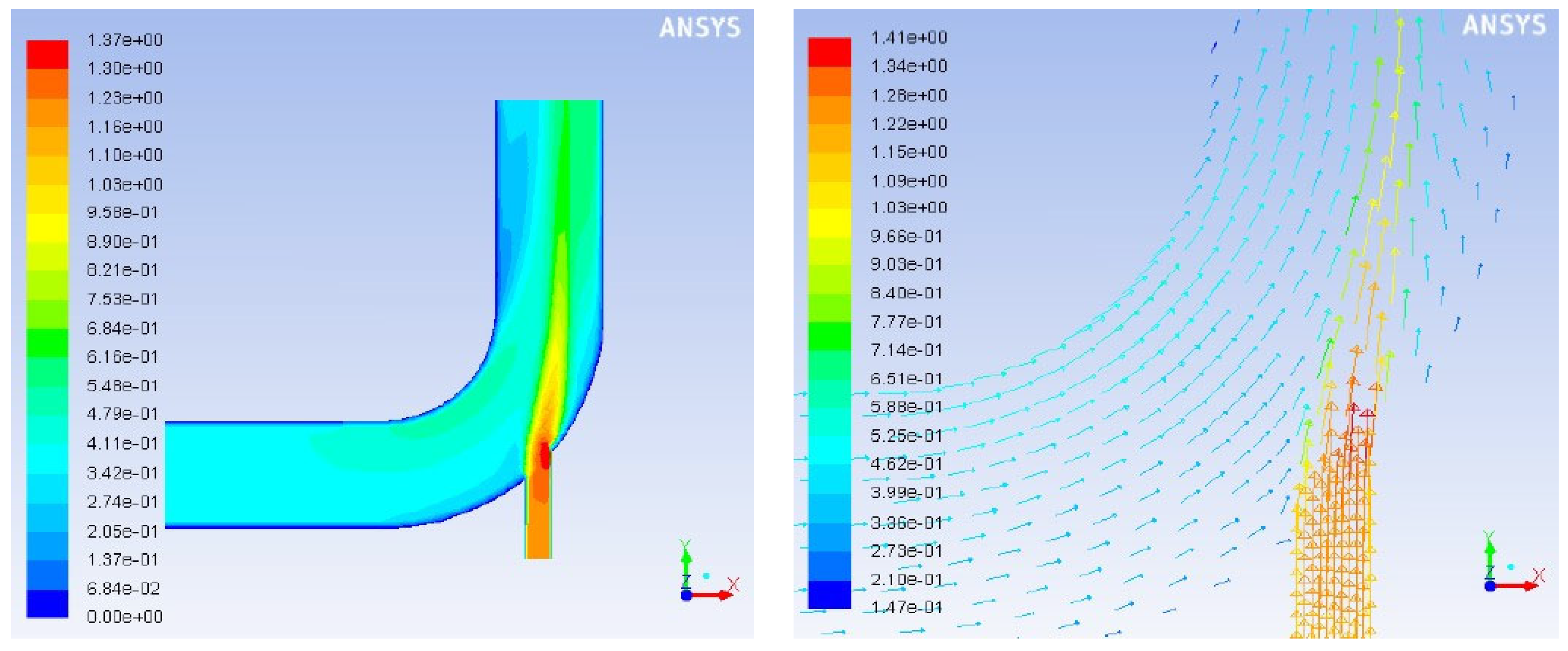
Pipeline transportation is widely regarded as the most cost-effective method for conveying substantial volumes of hydrogen across extensive distances. However, before hydrogen can be widely used, a new pipeline network must be built to reliably supply industrial users. An alternative way to rather expensive investments in new infrastructure could be to use the existing pipeline network to add pure hydrogen to natural gas and further transport the gas mixture in an industrially safe way. The new solution necessities will be examined for compression, transportation, and fire hazard accidents, which have not been scrutinized by other scholars. This study presents the results of a comprehensive analysis of the methane–hydrogen mixture compression process and a mathematical description of the main pipeline operation during gas mixture transportation, considering industrial fire safety issues. By examining a case study involving a main gas pipeline and its associated mathematical model for hydrogen transportation, it becomes feasible to assess the potential hazards associated with various leakage areas and the subsequent occurrence of fires. The findings of this investigation demonstrate that the spontaneous combustion of hydrogen due to leakage from a natural gas pipeline is directly influenced by the proportion of hydrogen present in the gas mixture. If the hydrogen percentage reaches a balanced ratio of 50–50%, it is plausible that the equipment at the compressor station could be subject to detrimental consequences, potentially leading to accidents and fires. Furthermore, the obtained results from modeling in ANSYS Fluent software propose two practical scenarios, which demonstrate that despite the limited research conducted on the safety aspects and the occurrence of fires during the operation of hydrogen gas pipelines, industrial and fire safety necessitate the inclusion of hydrogen transport infrastructure as a pivotal element within the broader framework of hydrogen infrastructure development.
Keywords: natural gas; methane–hydrogen mixture; hydrogen; mixing; pipeline transport; compression; industrial fire safety natural gas; methane–hydrogen mixture; hydrogen; mixing; pipeline transport; compression; industrial fire safety